The Displaced Nation

A home for international creatives

How to give Cupid’s Day an expat theme, whether you’re coupled up or not

Valentines Day 2016

Some expats may be glad they are living far away from home on Valentine’s Day: what a mushy holiday! Whereas others may be pining over love they’ve left behind…or haven’t yet found, but keep searching for, on their travels.

Now, I suspect that those in the first two categories equal or outnumber those who are enjoying new loves and ways of celebrating love! But no matter what category you are in, I hope I’ve got you covered with this list of ways to spend an expat-themed Cupid’s Day.

What to eat

Valentine’s Day is the perfect excuse to discover the aphrodisiac foods your new country offers. That’s how Displaced Nation founder Kate Allison saw it when she created this list of seven foods to seduce your valentine (or not), wherever your home and heart may be. The choices range from the predictable (oysters and chocolate) to the exotic: ever tried Coco de Mer?

Not in the mood? Join a party going out for a Chinese New Year’s feast. While there, reflect that this is the kind of meal that would be wasted on two people. Telegraph Travel has helpfully provided a list of where to celebrate in Chinatowns around the world.
oysters to chinese food

Where to go

Hey, you’re an overseas traveler, so what’s to stop you from booking a flight to one of the world’s most romantic destinations? A family of three who have traveled nonstop for a decade have narrowed the list of places with a certain je ne sais quoi to six.

Tahiti tops that family’s list, but if you’re someone who prefers urban beauty and sophistication, you might want to check out the world’s 50 most beautiful cities, as curated by two Condé Nast Traveler editors.

Or perhaps you’re envisioning a romantic drive to a picturesque small town, where you and your beloved can stroll hand in hand down the street and enjoy each other’s company at a leisurely pace? Smarter Travel offers a list of 10 such towns in North America, and Condé Nast Traveler has just published a list of the 10 most romantic small towns in Italy (the ultimate setting for romance, surely?).

Not in the mood? Try traveling solo. Fourteen editors at AFAR magazine recently collected their personal stories to argue that everyone, without exception, should travel abroad on their own, on the grounds that:

There is nothing quite as daunting or exhilarating as setting foot all alone in a place you’ve never been before.

lovey dovey to solo travel

What to read

This being a site for displaced creatives, I mustn’t neglect the romance that can be found in books, both fiction and non-, about overseas adventures. Expat author Tracy Slater has made it easy for me: she recently compiled a list of six romantic books with an expat theme in a post for WSJ Expat. She says her choices reflect love’s many moods: from sweet to sultry to bitter and beyond.

For “sweet” (and let’s keep it to sweet, since we’re celebrating Cupid’s Day), she suggests reading Where the Peacocks Sing: A Palace, a Prince, and the Search for Home, a memoir by Alison Singh Gee. It’s a modern-day fairy tale about how a Hong Kong-based journalist with a flair for fashion and a taste for high-born British men finds her prince, a humble foreign correspondent from India. She moves with him to the family “estate,” a crumbling palace in the Indian countryside, and all kinds of cross-cultural adventures ensue.

Not in the mood? Console yourself with the newly translated (from the French) How to Talk About Places You’ve Never Been, by Pierre Bayard, who is a French literature professor and psychoanalyst. Among other things, Bayard argues that the travel you do in your own mind is superior to any other and that all travel, really, is a search for self.
pro and no romance books

* * *

By the way, if none of the above appeals and you’re still feeling empty hearted, I suggest you study the results of the InterNations survey showing the top 10 places for expat romance.

According to the latest findings, you may want to move to the Philippines, Thailand, or Ecuador if the idea is to hook up with a local resident. Only promise me one thing: you’ll read my Cross-cultural marriage? 4 good reasons not to rush into it… post before you let the relationship get serious!

ML Awanohara, one of the Displaced Nation’s founders and its current editor, often composes pieces of this kind for the weekly Displaced Dispatch. Why not subscribe as a Valentine’s gift to yourself and/or encourage your beloved to do so as well?

STAY TUNED for more fab posts.

If you enjoyed this post, we invite you to register for The Displaced Dispatch, a round up of weekly posts from The Displaced Nation, and much, much more. Register for The Displaced Dispatch by clicking here!

Related posts:

Photo credits: All photos are from Pixabay.

THE PERIPATETIC EXPAT: Can an expat also have itchy feet?

Displaced creative Sally Rose: Is she coming…or going?!

Sally Rose, who was one of last year’s Wonderlanded guests, recently confessed to me that she’s a perpetually perplexed peripatetic expat. We decided she needed her own column to explain this contradiction in terms. This is her first attempt. Enjoy! —ML Awanohara

Hello, Displaced Nationers! I’ve been an expat for five years. That’s if you don’t count the five years I spent in New York before that. For a wide-eyed girl from rural Texas, living in New York felt like being in a whole new country, except that I didn’t need a visa.

Now, I’ve been in Santiago, Chile, for five years and I’m beginning to get itchy feet again. What’s that about? A friend accused me of having a five year maximum in any one location. Though I’ve lived longer than five years in several places, they ultimately didn’t stick either.

She could be right.

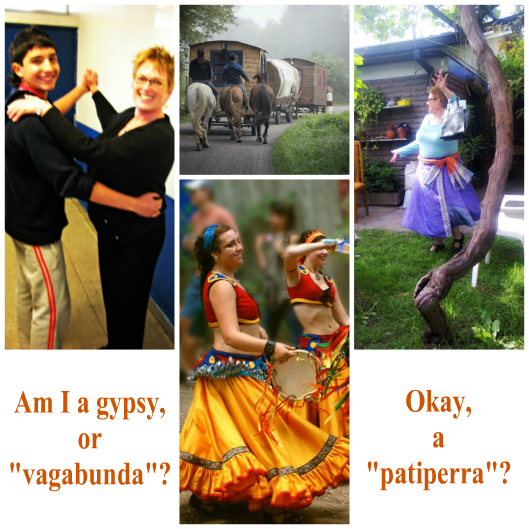
Am I a gypsy (or whatever you’d like to call it) at heart?

I used to tell people in Chile that I had gypsy blood, but in Chile, being associated with gypsies has a bad connotation, so I decided to tell them that I was a vagabunda, a vagabond, but I think that was as bad as gypsy.

My Spanish teacher tells me I’m a patiperra. It’s a Chilean term that means globe-trotter. One Chilean writer, who calls herself Patiperra, defines it as:

“A wanderer. Someone who doesn’t stay at home often, someone whose burning curiosity leads them on journeys to places they’ve never been.”

Guilty, as charged.

Maybe it’s simply my adult ADD kicking in, or I could be kind to myself and say it’s my inquiring mind that wants to know more places.

March 1 will be my five-year mark in Chile, and I’m thinking about making a change.
Sally Rose the Gypsy

Careful what you wish for…

I’m not a writer by profession. I went to Chile to be a volunteer English teacher. I even visited and volunteered four times before making the big leap. My book, A Million Sticky Kisses, chronicles my first visits to Chile as a volunteer teacher.

Volunteering in Chile was a dream-come-true—until I actually moved there. As American radio broadcaster Paul Harvey was fond of saying, here’s the “rest of the story.”

Between my final visit as a volunteer and the time I made the move in 2011, things had changed drastically at “my” school.

The administration had changed, and the director, who had been so kind and supportive of me, had been fired, along with an assistant director and several teachers whom I knew and liked.

A pall of anxiety hung over the school because teachers were being let go for minor infractions. The teachers who remained were terrified of the new director, who was a member of a conservative, rigid religious sect.

He viewed me suspiciously and made it clear that I was not welcome in the classrooms. The atmosphere of the previous two years had vanished.

My teacher friend, Marisol, invited me into her classroom, but even she, who had worked at the school for 40 years, was afraid of the new director’s power.

In the end, I went to the school for 45 minutes, once a week, to do cuentacuentos, story hour, in the library, under the strict supervision of the librarian and her assistant.

The happy days of volunteering in the classes at “my” school with “my” kids were a distant memory.
The Chilean Years
I made other volunteer attempts: doing a workshop for hyperactive fifth graders, singing “The Lion Sleeps Tonight” for three hours in a classroom of 40 nine-year-olds, assisting the English teacher who didn’t speak English.

“What is your name?” I asked her.

“I’m fine, thank you,” she responded.

The last year I volunteered was magical. I’d met a new friend, who happened to be a volunteer coordinator. She asked me to assist in a class of 16-year-olds.

“You want me to do what?!” I’d never worked with 16-year-olds before and just the thought of it gave me the willies.

By saying “Yes,” my pre-conceived notions were shattered when they turned out to be the most respectful, creative, fun kids I’d ever known.

I wanted to be at that school forever, but at the end of year, the owners, who were having financial problems, sold the school, and my students were scattered into the wind.

Should I twiddle my thumbs…or write?

The following year, Year Nº. 4 in Chile, I returned after my summer vacation, thinking that I would find another volunteer position. Something had always turned up before.

But not that year. Though I searched and searched, nothing materialized. I ended up without a purpose, twiddling my thumbs.

That’s when it hit me. I could rekindle my writing.

I had been blogging for years, and I’d previously taken a few stabs at novel writing. This time, I sat down and wrote a children’s book about Penny, a Golden Retriever puppy with a special mission.

The result was Penny Possible, the true story of a service dog in training.

I repatriated back to the US for six months while I revised A Million Sticky Kisses and self-published both books.

Sally Rose Great Works

When I returned to Chile again last year, I penned another children’s story, about a dog named Elvis who lives on the streets in Santiago. It’s currently being illustrated. The working title is Love Me Tender.

Hm…writing is portable!

There are other stories I’d like to complete. Some are half-finished, others are just a twinkle in my eye, but guess what, folks? Writing is portable. It doesn’t matter whether I’m in Chile, the US, or Timbuktu.

Almost at the five-year mark, my feet are itching again. Does this mean I’m leaving Chile?

I’m not sure, but it does mean I’m exploring. The world is a big place and I haven’t found my little piece of it yet.

Stay tuned!

* * *

Thank you, Sally, for sharing your quest to find your “little piece of the world.” Readers, where will Sally try (or not try) next, and how long will she stay? Is she a gypsy or a settler at heart? I hope you’ll join me in saying we look forward to the next installment! —ML Awanohara

Born and raised in the piney woods of East Texas, Sally Rose has lived in the Cajun Country of Louisiana, the plains of Oklahoma, the “enchanted” land of New Mexico, and the Big Apple, New York City. Then she fell in love with Santiago de Chile and has been “telling tall tales” from that long, skinny country since 2009, and living in that city for the past five years. But where will her next act take her? The author of a memoir and a children’s book, Sally has an author site where she keeps a blog, and is active on Facebook and Twitter.

STAY TUNED for next week’s fab posts!

If you enjoyed this post, we invite you to register for The Displaced Dispatch, a round up of weekly posts from The Displaced Nation, and SO much more. Register for The Displaced Dispatch by clicking here!

Related posts:

LOCATION, LOCUTION: Pining for her native Emerald Isle, Sheila Bugler writes crime novels with Irish connections

Location Locution
Columnist Lorraine Mace, aka Frances di Plino, is back with her latest interview guest.

Part of being an Irish emigrant, whether in the UK or farther afield, is a nostalgia for the homeland and its green fields and rich, dark soil—as my guest this month, crime writer Sheila Bugler, will attest.

Sheila grew up in a small town in the west of Ireland. After studying psychology at University College Galway, she left her native land for a life abroad, working in Italy, Spain, Germany, Holland and Argentina. Today she lives with her husband and two children in Eastbourne, a seaside resort town on the south coast of England. Despite being settled in the UK, she pines for Ireland and describes herself as a “reluctant emigrant.”

Sheila Bugler Ireland England

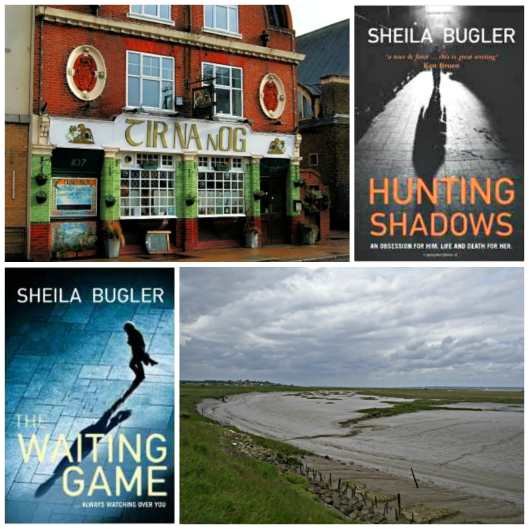
What’s more, these intense feelings for the Emerald Isle are what fuels her creative efforts. Sheila is the author of an acclaimed mystery series published by Brandon Books, an imprint of Ireland’s O’Brien Press, consisting so far of three books of a planned six: Hunting Shadows (2013), The Waiting Game (2014), and All Things Nice (forthcoming, April 2016). The series features Detective Inspector Ellen Kelly, a character whose “Irish roots shine through,” as one Amazon reviewer puts it, and is set amongst the displaced Irish community in southeast London.

As Sheila remarked in an interview with Triskele Books:

I adore Ireland and miss it (despite being very happy in the UK). For me, writing really is a way of connecting with my country. I write Irish characters (not exclusively, of course) and it was always very important to me that Ellen’s roots were Irish. At the moment, I can’t imagine writing a novel that doesn’t have some connection to Ireland.

Her characters, too, are inspired by place: by the bleak wilderness of the North Kent coast. Perhaps they find it reminiscent of the bleak and beautiful Aran Islands off the coast of Galway?

But let’s not get too carried away. It’s time to give Sheila the floor and hear what she has to say about location, locution.

* * *

Welcome, Sheila, to Location, Locution. You have a strong sense of place in your writing, but tell us, which tends to come first, story or location?

Thank you for inviting me, Lorraine. In answer to your question: Story. But often there is a single image, in a particular place, which is the inspiration for that story.

What techniques do you use for evoking place in your crime stories?

I am quite an instinctive writer and try not to overthink the process as it happens. Of course, like all writers I have had to learn the basic techniques, but I don’t think you can force yourself to write in a particular way. Although location plays an important part in my novels, this isn’t a deliberate choice—it’s something that happens naturally as I write.

I like the way location can enhance a particular atmosphere you are trying to create. In my first two novels, Hunting Shadows and The Waiting Game, parts of each book are based in the beautiful, bleak Hoo Peninsula of north Kent.

In Hunting Shadows, this is the perfect location for one of the central characters, Brian. He is an isolated loner and the isolated landscape is a great way of showing how Brian lives his life. In contrast, there is a character in The Waiting Game who uses the Hoo’s wide open spaces and big skies as a backdrop to her work as an artist.

If I am struggling to create a sense of place, I will do some or all of the following:

  • Close my eyes and try to get a picture in my head.
  • Play some music that has a connection with the landscape I’m trying to evoke (for example, bluegrass when I’m writing about the Hoo, traditional Irish music when writing about the west of Ireland).
  • I wait until I can see the place, hear it, smell it, feel it.
  • And then I write it.

Sheila Bugler locations

Which particular features have you used to create a sense of what clearly is to you a special location? Landscape, culture, food?

Obviously it’s all of those things. However, you don’t need to use every one of them to evoke a sense of place.

The author JJ Marsh, for example, puts a lot of importance on food when she is writing about the different locations in her novels (I should add she doesn’t just write about food!).

The Irish noir writer Ken Bruen perfectly evokes the city of Galway[https://en.wikipedia.org/wiki/Galway] with almost no reference to the external landscape. Instead, he brings the city to perfect life through his characters’ voices and the internal spaces, particularly the pubs. Likewise, Ian Rankin manages to perfectly evoke his home city of Edinburgh without ever needing to give us “in your face” descriptions.

As in real life, your characters move through a rich world of noises, smells, colours, places and other people. If you don’t forget that when you are writing, then neither will your readers.

I’m pleased you mentioned JJ Marsh. She was the original creator of this column! But returning to your own works: can you give a brief example from your writing that illustrates place?

I’m going to share two different examples.

First, a short scene from my novel, Hunting Shadows. In this scene, I tried to give an impression of the location through the reactions of the two characters:

Ellen stepped out of the car and looked around. The place reminded her of the black-and-white photos in her parents’ house of old Irish towns. It gave her that same feeling that she was observing somewhere from a time long past. Apart from a scattering of houses—a mixture of semi-derelict Victorian cottages and cheap, flat-roofed eyesores—there was nothing else.

From where she stood, the landscape sloped down to the Thames marshes, bleak and desolate under the heavy sky.

“Listen,” Dai whispered.

Ellen frowned. “What? I can’t hear anything.”

“Duelling banjos,” he said. “I knew it. “Deliverance” country. We’re not safe in a place like this.”

ThamesMarshes_quote
And here is a very different piece from a stand-alone novel I am working on called Walk Away. I don’t normally write this descriptively but my own love for this part of Ireland obviously influenced me:

The town was on the southern edge of Galway Bay, the hills of the Burren sloping up behind it, the vast sweep of the Atlantic Ocean stretching out in front of it. Next stop America. It was beautiful. He knew that. Probably always had.

Sydney was home these days. A modern, open-plan apartment with muted colours, floor to ceiling windows and views across Sydney Harbour. All very tasteful and perfect for a shit-hot, sharp-dressing, arse-kicking, wheeling-and-dealing corporate lawyer.

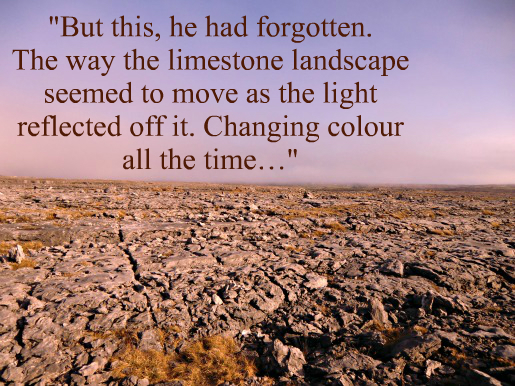
But this, he had forgotten. The way the limestone landscape seemed to move as the light reflected off it. Changing colour all the time from purple to pale pink to grey and back to purple again, in harmony and contrast with the sea.

The_Burren_in_the_evening_sun_515x_quote

How well do you need to know a place before using it as a setting?

If you are using a real location as a setting, you need to know enough about it so it seems real to your reader. In today’s world, there is no excuse not to do this. We all have access to the internet and Google maps. If you haven’t visited a place, do some basic research and make sure you include this in your novel. Using a real pub, for example, instead of making one up can really add to the sense of authenticity.

I once read a crime novel set in Lewisham (where I was living at the time). In one scene, a character is walking down Lewisham High Street and bemoaning the lack of a Marks and Spencer’s. We have M&S in Lewisham! This—and other aspects of the novel—made it clear to me the writer had never been to Lewisham and didn’t know anything about the place he was writing about.

Of course, we can also write about fictional locations. If you do that, your own sense of the place needs to be well-formed before you write about it. The important thing is this: whatever location you choose, it must feel authentic for the story you are writing.

Which writers do you admire for the way they use location?

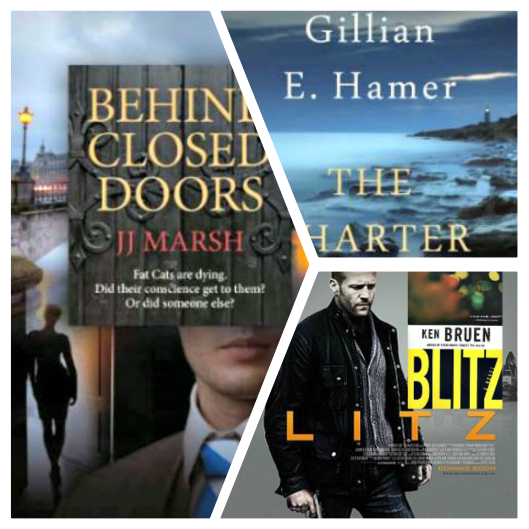
JJ Marsh writes beautifully in her European crime series featuring Beatrice Stubbs. Similarly, Gilly Hamer writes wonderful descriptions of the stunning Anglesea coastline where her novels are set.

For many reasons, I hold Ken Bruen up as a master when it comes to using location in his novels. He perfectly evokes Galway city, capturing not only its beauty but also the voices and characters of the people who live in that very special place. He is my absolute writing hero.

Bulger fave authors

Thanks so much, Sheila!

* * *

Readers, any questions for Sheila Bugler? Please leave them in the comments below.

And if you’d like to discover more about Sheila, why not visit her author site. You can also follow her on twitter.

Until next month!

Lorraine Mace writes for children with the Vlad the Inhaler books. As Frances di Plino, she writes crime in the D.I. Paolo Storey series. She is a columnist for both of the UK’s top writing magazines, has founded international writing competitions and runs a writing critique service, mentoring authors on three continents.

STAY TUNED for the next fab post!

If you enjoyed this post, we invite you to register for The Displaced Dispatch, a round up of weekly posts from The Displaced Nation, with weekly updates and much, much more. Register for The Displaced Dispatch by clicking here!

Related posts:

Photo credits: Top of page: The World Book (1920), by Eric Fischer via Flickr; “Writing? Yeah.” by Caleb Roenigk via Flickr (both CC BY 2.0). First collage: Sheila Bugler (supplied); County Galway, Eastbourne Pier & shamrock via Pixabay. Second collage: Book cover art; The Tir Na Nog Irish Pub, Wandsworth – London, by Jim Linwood (CC BY 2.0); All Hallows Marshes, Hoo, Kent, by Amanda Slater via Flickr (CC BY-SA 2.0). First quote: Hang on, is that grass over there?, by Andrew Bowden (CC BY-SA 2.0). Second quote: Burren landscape in the evening sun, by YvonneM via Wikimedia Commons (CC BY-SA 3.0). Favorite books collage: Cover art; Blitz Movie Poster via Wikimedia Commons.

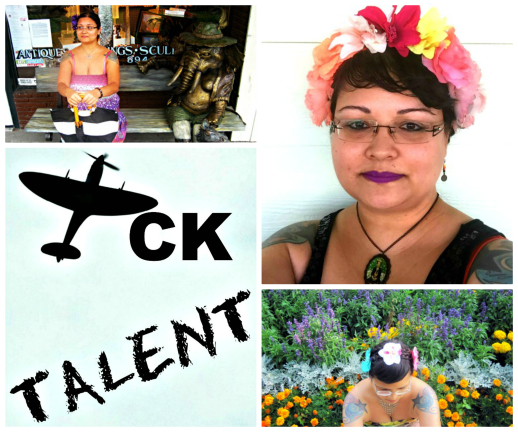
TCK TALENT: Sezín Koehler, multimedia artist, tatoo collector, editor and prodigious writer

Columnist Elizabeth (Lisa) Liang starts off 2016 with a guest who has been to the Displaced Nation before, albeit in different guises: as Alice, as film critic, as featured novelist, as repatriate…though never as a TCK Talent.

Happy 2016, readers! I hope your January has been splendid thus far. Today’s interviewee is writer, editor, tattoo collector, and Huffington Post contributor Sezín Koehler, who also calls herself Zuzu (a nickname she picked up when living in Prague). Sezín may already be familiar to some Displaced Nation readers as an early contributor, including a two-part series listing films that depict the horrors of being abroad, or otherwise displaced; a much-commented upon post called “The Accidental Repatriate”; and an Alice-in-Wonderland-themed post on her life in Prague (that was after she had received one of the Displaced Nation’s very first “Alice” awards).

But what some of you may not know is that Sezín is a Third Culture Kid. She was born in Colombo, Sri Lanka, to a Sri Lankan dad and Lithuanian-American mom. Her mom’s job with UNICEF moved the family from Sri Lanka to Zambia, Thailand, Pakistan, and India.

Sezín went to college in California—and then returned to her family, who were living in Switzerland and then in France (the move again being due to her mom’s job).

Next Sezín moved alone to Spain, where she met her husband, who is American. After living as expats in Turkey, Czech Republic, and Germany, the couple now call Lighthouse Point, Florida, home.

* * *

Welcome, Sezín. What a truly peripatetic life you’ve had! What made you decide to “repatriate” to the USA and come to Lighthouse Point? 
This area is where my husband grew up and has family, although his family moved further north just this year. Economics and a series of unfortunate events are what brought me back to the US—my husband and I returned with literally 15 euros between us.

Sounds like a tough reentry. While living as a nomad can also be tough, were you happiest in a certain place?
That’s a surprisingly difficult question! There was a lot of conflict in my family when I was growing up because of the tension between my American mum and conservative Sri Lankan dad—and all the cultural, social, etc., issues that come with having a multicultural and multiracial family before that became something of the norm. Plus, moving all the time was not a lifestyle that worked for me, and it created uncomfortable cycles of depression that were then compounded by having post-traumatic stress disorder (PTSD) after witnessing the murder of one of my best friends in our final year of university. The repatriation to Florida was one of the more miserable moves—especially since I had never planned to move back to the United States until they sort out more effective gun-control laws.

That sounds terribly painful. How have you coped since your return to the US?
My first two years back made me completely despondent, and then one day I just decided to make the best of the situation. It was time to choose happiness; otherwise I wasn’t going to survive. So now every day I wake up and I find something—big or small—to be happy about and I focus on that for the day. In that sense, and in a strange reversal, I suppose Florida is where I find myself happiest because this is where I learned that happiness isn’t something that happens to me passively because life is perfect. Happiness is a daily choice. And I actively make the choice to be happy however difficult my surroundings.

“That feeling of being an outsider never quite leaves you…”

Do you identify most with a particular culture or cultures, including the very broad “TCK culture”? 
You know, I think I identify with aspects of pretty much every culture under the sun—even ones where I didn’t actually live or visit. Being highly sensitive, coupled with having a TCK upbringing, has made it so I can identify with just about anyone who isn’t a bigot or misogynist, even if our backgrounds are nothing alike. I do find myself particularly drawn to other TCKs because, even if we didn’t live in the same places, there is something about the “universal” TCK personality that resonates with me, and it’s far easier to start on the same page rather than having to work hard to build bridges of understanding between myself and people who haven’t traveled or grown up abroad. I also find that many TCKs understand that just because growing up abroad sounds exciting, it might not have actually felt that way when we were getting yanked from place to place, leaving friends and family behind in those pre-social-media Dark Ages.

Did your TCK upbringing inform your career path as a writer?
To be honest, with all the moving around plus PTSD, it’s been hard to develop a career track other than writing. Being a writer means you take your passion with you wherever you go, and no matter where you are, there is always something new to write about. Writing has been my longest-standing support system and therapy through the variety of traumas that ended up shaping my life, and any day now I hope I’ll start being able to make a living doing it. 🙂

Did growing up as a TCK also influence your career as an editor?
As an editor I focus on academic writing by non-native English speakers, and having lived in so many places has definitely helped me understand all the different (incorrect) ways people use English and help them to get published in English-language publications where English fluency is a requirement.

“As a Third Culture Kid, I always related with monsters more than ‘norms.'”

Tell us about your tattoo collection. Any TCK connections there?
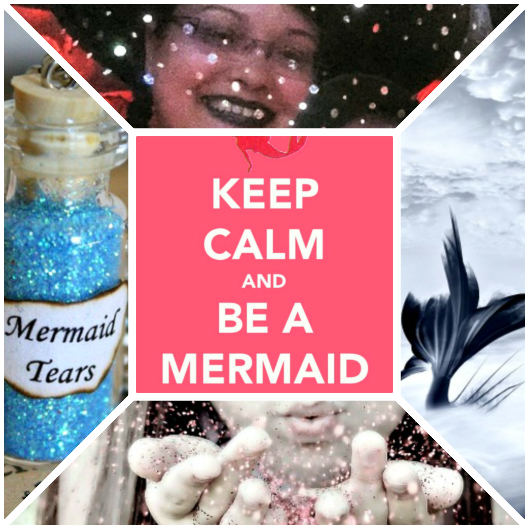
Other than my husband, tattoos are one of the great loves of my life. Tattoos for me have been a way to not just express myself creatively, but have also been a way to re-claim my own body after so many traumas. I have a hybrid identity that I often express in fantastical ways. Sometimes when people ask me where I’m from and I don’t feel like having an intimate conversation about my life I’ll say I’m a mermaid and I’m visiting from the ocean. I have a huge jellyfish on my right thigh and I say, “Meet my pet jelly.” Now that my hair is in a pixie cut, I might introduce myself as a fairy and since I actually have tattooed wings on my shoulders as well as often literally leaving a trail of glitter in my wake, I find it easier than getting into my TCK identity—especially when the person I’m talking to might have never left this corner of Florida.

Keep Calm & Be a Mermaid

So in a way, the tattoos serve as both explanation and protection.
For my entire life I’ve operated under an assumption of otherness—when I’m in the US people ask me where I’m from, and when I’m in Sri Lanka people ask me where I’m from. Being mixed race can be really complicated—and I get a lot of aggression from strangers who try to figure out “what” I am. In a way tattoos are a shield between me and curious eyes, as is much of my performance-of-the-fantastical-self art and being.

Have any of these careers/interests helped you to process your nomadic upbringing?
Writing, definitely! Writing has been my most effective and longest-standing therapeutic tool. Not just my non-fiction, but also my short stories and my novels have most certainly helped me situate my cultural self in lots of different ways that have been helpful and healing. As a writer I’m also an avid reader, and reading is another huge help in figuring out where my strange background and I fit in the grander scheme of culture and society.

“I revel in my boundaryless self…”

As an ATCK, do you have “itchy feet,” or would you prefer to have a home base and only travel for pleasure?
I have always hated moving and I might be the only TCK to say I have never had itchy feet. Ever since I was a little girl all I wanted was to stay in one place and even now at 36 I feel that way. But because of how I grew up moving around, I’ve also come to a point where everywhere seems pretty much the same—I always see the same kinds of people in disparate places, it’s weird—and yet nowhere ever feels like home. So now my concept of home has shifted and simply means being somewhere with people I love.

Moving is one thing, but how do you feel about traveling in general, including for pleasure?
After a lifetime spent on airplanes and traveling, I absolutely hate traveling now. I have crippling aerophobia, and if I’m forced to travel somewhere by plane, everything about the experience is miserable and I end up getting really ill before, during, and after. I find going to new places more stressful than enjoyable. My dream is one day to have a house with a beautiful view and some rescue dogs and never go anywhere ever again. Except through books, of course.

Speaking of books, you published your first novel, American Monsters, four years ago, and I understand the sequel has just come out!
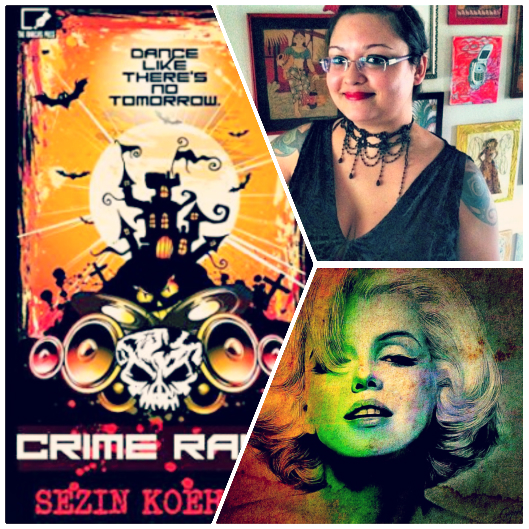
Yes indeed! My second novel, Crime Rave, came out in October 2015, and I don’t think I’ve ever been prouder of one of my creations in my life. Going back to your question about how being a TCK has shaped my writing, this book is a perfect example. The story itself defies genres—it has crime noir, supernatural, horror, and feminist themes just to name a few—and most of my characters are either mixed race or people of color who are not only TCKs themselves or ethno-cultural hybrids, but they’ve all gone through traumas that resulted in superpowers. If there was a label of Third Culture Fiction, my book would totally fit the bill.

The number of novels you have in progress, on top of what you’ve had published, is wildly impressive! Please tell us about them.
Thank you so much, Lisa. I’m currently working on my third, fourth, fifth, and potentially sixth novels—the third is a zombie tale set in Prague, the fourth will find recurring Crime Rave characters on Pine Ridge Reservation in South Dakota, Lighthouse Terror will be a grindhouse horror novel set in a gated community in southeast Florida, and finally I’m toying with the idea of an entire novel about Marilyn Monroe.

Yes, I know you are a big Marilyn fan. I believe she makes an appearance in Crime Rave?
Yes, in Crime Rave she not only lives but has a daughter.
Crime Rave Marilyn
What else are you working on?
As a HuffPost freelancer I’m working on a number of pieces featuring interviews with some badass individuals—authors, activists, artists, scientists, and more. I’m also in the process of starting my own publishing label that will focus on works by women and other marginalized writers who create genre-bending works in which women play all the major roles.

You’re so prodigious!
The one benefit of being an accidental shut-in who works from home here in Lighthouse Point is that I have nothing but time to work on all the creative projects I want, which is another dream come true.

Where can we find your work and follow your progress?
At sezin.org, my HuffPost column, my American Monsters site, and sezinkoehler.com. I’ve also recently revamped my Etsy store, Zuzu Art, with its gallery of sparkly-strange multimedia Alice in Wonderland and Frida Kahlo-inspired pieces. I have a Tumblr cabinet of curiosities called Hybrid/Monster that I continue to update with oddities of the visual nature, and I am rather fond of my Instagram account, where I post pics of my own art, my performance art, and snapshots of life in the tropics. Whew! I didn’t realize how much I produce online until this very moment.

* * *

Thank you so much, Sezín! I’m inspired to know that your artistic path has led to your healing, and that you’ve found daily happiness since the painful reentry to the United States. Congratulations on your many creative, career, and personal accomplishments! Readers, please leave questions or comments for Sezín below.

Editor’s note: All photos are from Koehler’s Hybrid Monsters site (apart from her book cover and the photo of one of her Etsy works) or from Pixabay. The quotes are from her “About the Curatrix” page.

Elizabeth (Lisa) Liang is a prime example of what she writes about in this column: an Adult Third Culture working in a creative field. A Guatemalan-American of Chinese-Spanish-Irish-French-German-English descent, she is an actor, writer, and producer who created the solo show Alien Citizen: an earth odyssey, which has been touring internationally. And now she is working on another show, which we hope to hear more about soon! To keep up with Lisa’s progress in between her columns, be sure to visit her blog, Suitcasefactory. You can also follow her on Twitter and on Facebook.

STAY TUNED for next week’s fab posts!

If you enjoyed this post, we invite you to register for The Displaced Dispatch, a round up of weekly posts from The Displaced Nation, and so much more! Register for The Displaced Dispatch by clicking here!

Related posts:

DIARY OF AN EXPAT WRITER: Back in full-time writing mode and full of resolution(s) for 2016!

Diary of an Expat Writer
We haven’t heard from American expat in Hong Kong and aspiring writer Shannon Young for a while. Does that mean she’s thrown in the towel on the full-time writing gig? Read on to find out…

Dear Displaced Diary,

It has been a few months since my last entry. When we left off, I had just completed the final book in my post-apocalyptic Seabound Chronicles, and I was working a part-time job that had me trekking to a different corner of Hong Kong each week to teach a reading program in local schools.

Well, it’s a new year, Dear Diary, and I’m starting fresh in a big way. The four titles in the Seabound Chronicles are now out in ebook and paperback, and they are being read by an ever-growing number of people. I’m back to full-time writing, with an even greater appreciation for the beauty of uninterrupted time. My sales ranks and income are trending in a decidedly positive direction.

My New Year’s resolution is to continue writing in a full-time capacity without needing to take piecemeal teaching work. If my calculations are correct, another two strategically positioned novels and a box set of the Seabound Chronicles will put me firmly into “don’t need to get a new job” territory.

Seabound Chronicles Collage

It’s more than a resolution: it’s my mission.

I’ve planned ahead a bit, so I already had rough drafts of the two novels in question when the year started.

Here’s the game plan for 2016:

  1. Finish and publish Ferry Tale, a love story set in Hong Kong, under the name Shannon Young.
  2. Compile and publish a box set of the Seabound trilogy.
  3. Finish and publish Duel of Fire, the first book in my new fantasy series, under the name Jordan Rivet.

There’s just one catch: I need to do all of these things by April!

I have three months before I may need to start looking at job openings again, and I don’t intend to waste them. Having limited time throughout the fall has given me new motivation to make the most of every hour.

So the challenge is there, and the stakes are set.

Here’s how it’s going to happen:

January is a serious writing and revision month. That means 7-8 hours a day at Starbucks for the writing, and more time at home for research and publishing miscellany. That means eating, sleeping, and breathing my stories. That means working some weekends. That means staying focused.

It has been awesome so far. I finished up the second draft and polished off the third draft of Duel of Fire and sent it my first round of readers in the first week of January. I did the same with the first and second drafts of Ferry Tale in the second week (it’s much shorter, in all fairness).

While my diligent and self-sacrificing beta readers are going through Duel of Fire and Ferry Tale, I started the sequel to Duel of Fire, which is tentatively titled King of Mist.

In Week 3, I wrote 50,000 words. That is one full NaNoWriMo.

I know the characters, used an outline, and spent a minimum of eight hours writing each day, which is the only way I could manage to reach that word count. I expect to complete the rough draft in the first half of the fourth week in January, around the time you are reading this.

One thing I learned from the Seabound Chronicles is that sales increase exponentially with multiple books out in a series and quick releases, so I’m aiming to have the sequel ready for publication by May.

But back to my game plan:

February, the month for love, is the month for Ferry Tale. The plan is to finish the final draft and publish in time for Valentine’s Day.

The Seabound box set will launch in March, three months after the publication of the final book in the series. Hopefully this will give it a nice boost while I prepare for the launch of the new Jordan Rivet series.

Meanwhile, work on Duel of Fire and its sequel will continue throughout February and March. I’ve booked an editor for March 9th, leaving no room to mess around. (The cover should be coming back from the designer around then as well, and it’s going to be wicked cool!) Pub Day should happen around April 1st—no fooling! I’m hoping that by the time the sequel launches I’ll have earned another few months in No-Day-Job Land.

Shannons Game Plan 2016

Doing whatever it takes.

It may sound like I’m rushing these books. But the honest truth is I’m still going to end up doing four to five drafts of each one, just like for the Seabound series. I’m simply spending more hours in the chair. It’s a far sight better than writing on a minibus as it swerves all over the New Territories, which is what I did during my teaching contract!

I’ve also found that—shockingly—I’m getting better at this. The more I write the easier it is. I’m creating increasingly detailed outlines for my books in advance, which makes the writing itself faster and the books better. My prose needs less polishing because it’s getting down on the page in better shape. And the knowledge that I am capable of completing books makes completing books less daunting.

So the plan for 2016 is to work harder, work smarter, work for more hours each day, and get these stories out into the world. I’m excited about the possibilities.

2015 was the warm-up. 2016 is going to be big.

By the way, Diary, if you see me at Starbucks too long after dark, you should probably tell me to go home.

Shannon go home

Yours,

Shannon Young
AKA Jordan Rivet

* * *

Wow, Shannon, I’m inspired! In fact, though I know your game plan reflects how indie book sales work, it makes me think of Victorian times, when novels appeared not all at once but in parts or installments, over a space of time. All of Charles Dickens’s novels were published that way, most of them in stand-alone monthly parts. Are we going back to the era of serial fiction? In which case, may you keep up your Dickensian pace. That said, when you’re burning too much of the midnight oil, please remember Dickens slept from midnight until seven in the morning every day. Readers, any more advice or words of encouragement for Shannon in achieving her ambitious goals of 2016? ~ML

STAY TUNED for more fab posts!

If you enjoyed this post, we invite you to register for The Displaced Dispatch, a round up of weekly posts from The Displaced Nation and much, much more. Register for The Displaced Dispatch by clicking here!

Related posts:

Photo credits:

IN CASE YOU MISSED IT: Best of expat fiction 2015

The title of this post is a lie: you didn’t miss anything. It’s we who missed our deadline of publishing, at the end of 2015, a list of books for, by and about expats.

Dare I suggest that our procrastination could prove fortuitous? Most of us have more time to read now that the holidays are over and the doldrums have set in—along with, for some of us (I refer to those on the East Coast of the USA), a spell of blizzardous weather. What better time to curl up with a book that in some way relates to the themes of international adventure and displacement?

Without further ado, allow me to offer my curated list of the best novels by, for, and about expats and other international creatives in 2015. (Nonfiction coming soon, we promise!)

PLEASE NOTE: The books, which include indie as well as traditionally published novels, are arranged in reverse chronological order.

* * *

Year of the GooseYearoftheGoose_cover_400x (Unnamed Press, December 2015)
Author: Carly J. Hallman
Expat credentials: A native Texan, Hallman lives in Beijing. This is her first novel.
Synopsis: A comic novel about China’s era of the instant tycoon, which has been described as “unhinged”, “outrageous”, “deranged” and “hilarious. The oligarchical, tabloid-driven society it portrays is not unlike our own, which may be why the book was listed as one of the BBC’s 10 books to read in December 2015 as well as selected for the December 2015 Indie Next list.
How we heard about: The Anthill blog


TheNavyWife_cover_400xThe Navy Wife (December 2016)
Author: Helena Halme
Expat credentials: Originally from Finland, Halme has lived in the UK with her British husband for many years.
Synopsis: The sequel to Halme’s well-received autobiographical novel The Englishman (reviewed here by Displaced Nation founder Kate Allison), which concerns a long-distance romance between a Finnish woman, Kaisa, and a British naval officer, Peter. We see the couple, despite having tied the knot, facing a number of obstacles and threats to living happily ever after—especially when Kaisa doesn’t take well to the life of a military spouse in a foreign country.How we heard about: Social media, and a comment by Halme on one of our posts.


Seafled_cover_400xSeafled (November 2015), Burnt Sea (August 2015) & Seaswept (April 2015)
Author: Jordan Rivet (aka Shannon Young)
Expat credentials: An American, Young has lived in Hong Kong for the past few years with her half-Chinese husband, a Hong Kong native.
Synopsis: A post-apocalyptic adventure series set on a souped-up cruise ship, featuring a prickly female mechanic named Esther. The series, called the Seabound Chronicles, consists of three books and a prequel.
How we heard about: Young writes the popular “Diary of an Expat Writer” column for the Displaced Nation.


TheJapaneseLover_cover_400xThe Japanese Lover (Atria Books, November 2015)
Author: Isabel Allende
Expat credentials: Born in Lima, Peru, to a Chilean diplomatic family, Allende lived in various countries, including Chile, Bolivia, and Beirut. As an adult she worked in Belgium and elsewhere in Europe; she also lived for over a decade in Venezuela. She currently lives in San Rafael, California.
Synopsis: A cross-cultural love story that sweeps from present-day San Francisco to WWII-era Poland the United States. It explores questions of identity, abandonment, and redemption.
How we heard about it: Who hasn’t heard about it? It was one of the most anticipated books of 2015!


TheDisobedientWife_cover_400xThe Disobedient Wife (Cinnamon Press, November 2015)
Author: Annika Milisic-Stanley
Expat credentials: Born to Swedish and Anglo-German parents, Milisic-Stanley grew up in England and now lives in Rome. She says she based the plot on stories she heard when living in Dushanbe as a humanitarian aid worker for several years.
Synopsis: The story of the friendship that forms between a poor, courageous local woman in Dushanbe, Tajikistan, and her employer, a trailing expat wife married to a British diplomat.
How we heard about: An interview with Kristin Louise Duncombe, an American writer who has lived in Europe since 2001.


CrimeRave_cover_400xCrime Rave (The Margins Press, November 2015)
Author: Sezin Koehler
Expat credentials: Koehler is an adult Third Culture Kid who lived in Prague for some years and now lives in Florida. She has written several posts for the Displaced Nation, including a two-part series listing movies that depict the horrors of being abroad or otherwise displaced.
Synopsis: The second installment to her debut novel, American Monsters. Picking up where that one left off while jumping genres, the new book presents an alternate universe in which goddesses have free reign over humans, trauma goes hand in hand with superpowers, and Marilyn Monroe lives.
How we heard about: A Facebook post by Koehler


ADecentBomber_cover_400xA Decent Bomber (November 2015)
Author: Alexander McNabb
Expat credentials: A Brit who has been working in, living in and traveling around the Middle East for some thirty years, McNabb was featured on The Displaced Nation three years ago for his “Levant Cycle” trilogy.
Synopsis: Another political thriller—but this one is set in Northern Ireland and concerns a former IRA bomb maker who is drafted against his will into joining the War on Terror.
How we heard about: He sent us a heads up, and Beth Green reviewed the book in her last column. She found it well researched, well written and an enjoyable read.


ThePalestInk_cover_400xThe Palest Ink (Lake Union Publishing, October 2015)
Author: Kay Bratt
Expat credentials: Bratt lived in China for almost five years, where she “fell in love enough with the people to want to write about them forever.” She has since repatriated to the hills of North Carolina. (She is also the author of a memoir, Silent Tears: A Journey of Hope in a Chinese Orphanage. )
Synopsis: A story that depicts the coming-of-age of a sheltered son from an intellectual family in Shanghai, during a tumultuous period of Chinese history: the Cultural Revolution.
How we heard about: Kindle promotion.


Olivia&Sophia_cover_400xOlivia & Sophia (Monsoon Books, October 2015)
Author: Rosie Milne
Expat credentials: A native Brit, Milne has lived all over Asia; she currently lives in Singapore, where she runs the Asian Books Blog.
Synopsis: A fictional account of the lives of the first and second wives of the founder of the British trading post of Singapore, Sir Thomas Stamford Raffles. Set in London, Java, Sumatra and Singapore, against the backdrop of the Napoleonic Wars—the story takes the form of two fictionalized diaries, one by each of Raffles’s wives: Olivia Devinish and Sophia Hull. Milne “takes us away from the cold, damp confines of Georgian London to the muggy, hostile tropics and to the titillations and tribulations of a life far away from home.”
How we heard about: When Rosie Milne was “wonderlanded” on our site, we published a couple of excerpts from the book.


NowhereChild_coverNowhere Child (Black Dot Publishing, October 2015)
Author: Rachel Abbott
Expat credentials: Abbott fled from the corporate life to Italy, which gave her the opportunity to start writing psychological thrillers. Her first one was a break-out hit on Kindle, and she hasn’t looked back. Currently, Abbott divides her time between Italy (where she lives in an apartment in an old fort, which overlooks the sea) and Alderney, in the Channel Islands (just off the coast of France). But although the expat life gave her a new career as a writer, Abbott sets her books mostly in her native Manchester.
Synopsis: A stand-alone novella featuring the same characters as Abbott’s Stranger Child. Eight months ago Tasha Joseph ran away, and her stepmother, Emma, has been searching for her ever since—as are the police, since Tasha could be a vital witness in a criminal trial.
How we heard about: Lorraine Mace interviewed Abbott for her Location, Locution column in December.


TheHundredYearFlood_cover_400xThe Hundred-Year Flood (Little A, September 2015)
Author: Matthew Salesses
Expat credentials: Salesses was adopted from Korea at the age of two and often writes about race and adoption. This is his first full-length novel.
Synopsis: The mythical and magical story of a 22-year-old Korean-American’s escape to Prague in the wake of his uncle’s suicide and the aftermath of 9/11. He tries to convince himself that living in a new place will mean a new identity and a chance to shed the parallels between himself and his adopted father.
How we heard about: Social media


TheDressmaker_cover_400xThe Dressmaker (Penguin Books, August 2015*)
Author: Rosalie Ham
Expat credentials: Born and raised in Jerilderie, Australia, Ham now lives in Melbourne. Like most Australians, she has had a period of traveling and living overseas.
Synopsis: A darkly satirical tale of love, revenge, and 1950s fashion. After twenty years spent mastering the art of dressmaking at couture houses in Paris, Tilly Dunnage returns to the small Australian town she was banished from as a child. She plans only to check on her ailing mother and leave. But Tilly decides to stay, and though she is still an outcast, her exquisite dresses prove irresistible to the prim women of Dungatar. Note: The book is soon to be a film starring Kate Winslet and Liam Hemsworth.
How we heard about: A book review in the New York Times
*Originally published in 2000, this is the film adaptation of the book.


CirclingtheSun_cover_400xCircling the Sun (Ballantine Books, July 2015)
Author: Paula McLain
Expat credentials: None! Her breakout novel, The Paris Wife, was about an expat: Ernest Hemingway’s first wife, Hadley Richardson, whose passionate marriage ended as her husband shot into literary stardom. This time her focus is the Happy Valley set, a decadent community of Europeans in 1920s colonial Kenya. As she told NPR in a recent interview:

You know, I wrote most of The Paris Wife in a coffee shop in Cleveland. I don’t have to tell you that a Starbucks in Cleveland is about as far away from a Parisian cafe as you can possibly get. And I also wrote about Kenya, the wild African frontier, from my home in Cleveland without having ever gone there. You can’t really visit colonial Kenya, can you? You can’t really visit Paris in 1922, except in your imagination.

Synopsis: Based on the real-life story of the fearless and captivating Beryl Markham, a record-setting aviator who became caught up in a passionate love triangle with safari hunter Denys Finch Hatton and Karen Blixen, who as Isak Dinesen wrote the classic memoir Out of Africa.
How we heard about: A New York Times review by the expat writer Alexandra Fuller.


TheAmbassadorsWife_cover_400xThe Ambassador’s Wife (Doubleday, July 2015)
Author: Jennifer Steil
Expat credentials: A Boston-born former journalist, Steil is married to a Brit who once served as ambassador to Yemen, where a suicide bomber attacked him. She is also the author of The Woman Who Fell from the Sky, a memoir about her experiences running a newspaper in Yemen. She lives in Bolivia, where her husband is the European Union ambassador.
Synopsis: A harrowing account of the kidnapping of an American woman in the Middle East and the heartbreaking choices she and her husband, the British ambassador to an Arab country, must make in the hope of being reunited.
How we heard about: Shortlisted in the New York Times Book Review as a “marriage plots” novel.


TheStarSideofBurnHill_cover_400xThe Star Side of Bird Hill (Penguin Press, June 2015)
Author: Naomi Jackson
Expat credentials: A Third Culture Kid, Jackson was born and raised in Brooklyn by West Indian parents. After attending the Iowa Writers’ Workshop, she traveled to South Africa on a Fulbright scholarship and earned an MA in creative writing from the University of Cape Town.
Synopsis: The story of two sisters, ages ten and sixteen, who are suddenly sent from Brooklyn to Bird Hill in Barbados after their mother can no longer care for them. The young Phaedra and her older sister, Dionne, live for the summer of 1989 with their grandmother Hyacinth, a midwife and practitioner of the local spiritual practice of obeah.
How we heard about: Shortlisted in the New York Times Book Review as a “coming of age” novel.


TheWolfBorder_cover_400xThe Wolf Border (Harper, June 2015)
Author: Sarah Hall
Expat credentials: Born in northwest England, Hall lived in Wales while attending Aberystwyth. She went on to study in Scotland (St. Andrews) for an MA, where she met and married an American law student. Though the marriage was short-lived, its legacy was substantial: a move to the US proved the catalyst she needed to embark on novel writing. The pair was based in the small town of Lexington, Virginia, after her husband was awarded a scholarship to a nearby law school. At that time, Hall visited the Idaho reservation that appears in this book. She currently lives in Norwich, UK.
Synopsis: About a controversial scheme to reintroduce the Grey Wolf to the English countryside, which brings zoologist Rachel Caine, who has lived a solitary existence in a remote section of Idaho, far away from her estranged family in England, back to the peat and wet light of the Lake District. The novel explores the fundamental nature of wilderness and wildness—as well as the frontier of the human spirit.
How we heard about: A book review in the New York Times


IntheCountry_cover_400xIn the Country: Stories (Knopf, June 2016)
Author: Mia Alvar
Expat credentials: Born in the Philippines, Alvar was raised in Bahrain and the United States. She now lives in New York City. This is her first book.
Synopsis: A collection of nine short stories about Filipinos living overseas. Alvar has imagined the lives of exiles, emigrants, and wanderers who uprooted their families from the Philippines to begin new lives in the Middle East, the United States, and elsewhere—and, sometimes, turned back again.
How we heard about: A book review in the New York Times


TheDiversClothesLieEmpty_cover_400xThe Diver’s Clothes Lie Empty (Ecco, June 2015)
Author: Vendela Vida
Expat credentials: Born and raised in San Francisco, Vida is the daughter of two immigrant parents: a Swedish mother and a Hungarian father. She has become known for producing “travel trauma” narratives, exploring the lives of competent women who feel disintegrating marriages for distant lands (i.e., the Philippines, Finland and Turkey). Her latest novel, considered to be her “finest work” to date, was inspired by a trip she took to Morocco where her bag was stolen.
Synopsis: A literary thriller that probes the malleability of identity, told with lush detail and a sense of humor. Robbed of her money and passport in Casablanca, Morocco, an American woman feels free to be anyone she chooses.
How we heard about: A book review in the New York Times.


ChinaRichGirlfriend_cover_400xChina Rich Girlfriend (Doubleday, June 2015)
Author: Kevin Kwan
Expat credentials: Born and raised in Singapore, Kwan has lived in Manhattan for the past two decades. He says he still craves “craves pineapple tarts and a decent plate of Hokkien mee.“
Synopsis: Follows the story of the culture-shocked Rachel Chu as she searches for her mysterious birth father in Shanghai in hopes he’ll walk her down the isle at her upcoming wedding. The book is a sequel to Kwan’s 2013 bestseller, Crazy Rich Asians, picking up a few years after those events. Both books take place in the world of Hong Kong and Singapore’s super-super elite.
How we heard about: A book review in the New York Times


TheRocks_cover_400xThe Rocks (Riverhead Books, May 2015)
Author: Peter Nichols
Expat credentials: Nichols grew up partially on Mallorca (while attending boarding school in England), where he got to know other Northern Europeans. He has worked in advertising and as a screenwriter, and a shepherd in Wales. He divides his time between Europe and the United States. In 1997 he produced a riveting memoir, Sea Change, telling of the time when he set off alone across the Atlantic in his beloved 27-foot wooden engineless sailboat, Toad, which he and his (now ex-) wife had lived on for six years, fixing it up, making it into their home, sharing adventures on it.
Synopsis: A tragic double romance, told in reverse, primarily set in a seaside resort in Mallorca and its enduring expat community.
How we heard about: From a book review in the New York Times.


coming-home_cover_400xComing Home (Mira, April 2015)
Author: Annabel Kantaria
Expat credentials: A Telegraph Expat blogger who has been featured on the Displaced Nation, Kantaria has lived in Dubai with her family for several years.
Synopsis: The story of a woman living in Dubai because she wants to flee the pain of her brother’s death but then heads for home upon receiving word of her father’s sudden death. Kantaria says that writing the book helped her “explore that push and pull and sense of displacement you feel when you have a foot in two countries.”
How we heard about: A Telegraph Expat post on expat-themed summer reads, by Rosie Milne


APlaceCalledWinter_cover_400xA Place Called Winter (Grand Central Publishing, March 2015)
Author: Patrick Gale
Expat credentials: Born in the Isle of Wight, Gale was an expat of sorts when his family moved to London. During his misspent youth, he lived at one point in a crumbling French chateau. He now lives on a farm near Land’s End.
Synopsis: The story of a privileged Edwardian man who has a homosexual affair and, for fear of arrest, is forced to abandon his wife and child: he signs up for emigration to the Canadian prairies. He reaches a world as far away as possible from the golden suburbs of turn-of-the-century England. The story is loosely based on a real-life family mystery of Gale’s gentleman great-grandfather. The plot in a nutshell: “To find yourself, you must sometimes lose everything.”
How we heard about: Gale was a featured author at the Port Eliot Festival, which takes place yearly on an ancient estate in Saint Germans, Cornwall, UK.


TheArtofUnpackingYourLife_cover_400xThe Art of Unpacking Your Life (Bloomsbury Reader, March 2015)
Author: Shireen Jilla
Expat credentials: A journalist-turned-novelist who now lives in London, Jilla has been an expat in Paris, Rome, and New York. The Displaced Nation did a feature on her first novel, Exiled, about a British expat wife in New York.
Synopsis: The story of a group of university friends who set out on the holiday of a lifetime, a safari in the Kalahari, only to find they don’t have much in common any more.
How we heard about: Social media and then Beth Green interviewed her.


TheTehranText_cover_400xThe Tehran Text – The Tana Standish Spy Series #2 (Crooked Cat Publishing, February 2015)
Author: Nik Morton
Expat credentials: Morton spent 23 years in the Royal Navy, during which he had the chance to visit (among others) Rawalpindi, the Khyber Pass, Sri Lanka, Tokyo, Zululand, Mombasa, Bahrain, Tangier, Turkey, Norway, Finland, South Georgia and the Falklands. He has also traveled widely in his private life. He and his wife are now retired in Alicante, Spain.
Synposis: Second of Morton’s Cold War thrillers featuring psychic spy Tana Standish (first was The Prague Papers). Iran is in ferment and the British Intelligence Service wants Tana Standish’s assessment. It appears that CIA agents are painting too rosy a picture, perhaps because they’re colluding with the state torturers…
How we heard about: Lorraine Mace interviewed Morton for her Location, Locution column last July.


Outline_cover_400xOutline (Farrar, Straus and Giroux, January 2015)
Author: Rachel Cusk
Expat credentials: Born in Canada, Cusk spent much of her childhood in Los Angeles. She moved to the UK in 1974 and is a graduate of Oxford University. She now lives in London.
Synopsis: About a divorced writer who lives in London with her two youngish children, covering the several days she spends in Athens, where she has gone to teach a writing class. She ends up spending time with a much older Greek bachelor she met on the plane.
How we heard about: A book review in the New York Times

* * *

Tell me, what have I missed? I’m sure I’ve missed loads!! Kindly leave your recommendations for novels for, by, and about expats that came out in 2015 in the comments!

ML Awanohara, one of the Displaced Nation’s founders and its current editor, has a section in the weekly Displaced Dispatch where she mentions the latest expat books. Why not subscribe for the new year?

STAY TUNED for next week’s fab posts.

If you enjoyed this post, we invite you to register for The Displaced Dispatch, a round up of weekly posts from The Displaced Nation, and much, much more. Register for The Displaced Dispatch by clicking here!

Related posts:

Photo credits: All photos via Pixabay or Morguefiles.

CULTURE SHOCK TOOLBOX: Expats, start the year off right: build something of value in your adopted culture

Transitions enthusiast H.E. Rybol has enlisted the help of her latest interview guest for advice on having a “constructive” 2016.
Culture Shock Toolbox January 2016
Happy new year, Displaced Nationers! It’s January, the month of new year’s resolutions, mentoring (yes, January is National Mentoring Month!), and curling up on the couch with a blanket, yummy tea and a good book.

To be honest, the idea of new year’s resolutions always felt a little random to me. Turns out, the date is actually “completely arbitrary,” making nothing more than a timekeeping convention. But according to American psychologist George Ainslie, it still matters because it provides “a clean line between our old and new selves.”

So, in the spirit of new goals and motivations, we’re kicking off 2016 with motivational speaker and personal brand strategist Shade Adu. Shade has worked in Kazakhstan, Ghana and the United States, and is particularly interested in empowering women entrepreneurs.

Originally from the United States, Shade stumbled upon an opportunity to move to Kazakhstan to teach English. She traded her comfortable life in Newark, New Jersey, for the majesty—and quirkiness—of life in Astana, Kazakhstan’s capital city. Keep reading to find out what happened…

* * *

Hi, Shade, and welcome to Culture Shock Toolbox. Tell us, which countries have you lived in and for how long?

I’ve lived in the Republic of Kazakhstan for three years. I was in the capital, Astana, for one year and now I’m in the smaller southern city of Taldykorgan, which is about 150 kilometers outside of the country’s former capital city, Almaty.

In the course of your transition to a Central Asian culture, have you ever ended up with your foot in your mouth?

All the time, as I’ve tracked on my blog, Kazakh Nights. When I first arrived in Kazakhstan, I told my students to “write” an assignment in their notebooks in Russian. Instead of saying the Russian word for “write”, I said “pee” and the entire class began to laugh at me. In Russian both words sound very similar.

How did you handle that situation? Would you handle it any differently now?

I shook my head. But it was funny then and it’s still funny now. I suppose I could see if there is a world record for butchering the most languages. I would be a shoe-in for first place. I have a working knowledge of Russian, Kazakh, French, & Spanish. Of those, my Russian is probably the best.

Can you think of a situation you handled with finesse, and why do you think that was?

As an African American woman in the former Soviet Union, I naturally stand out. It makes me the target of unwanted attention daily. When I went to the market, I stood out. If I went to restaurant, parade, wedding, local museum or event I was the center of attention.

During my first year in Kazakhstan, one of my amazing colleagues invited me to her wedding in a small Kazakh city outside of the capital. This wedding lasted all day and night with three venue changes. I was the center of attention. Everyone wanted to take pictures with me. It was uncomfortable—but I didn’t want to alarm my friend or ruin her big day. One of the guests said that I may be the first and the last black person some of these people see. This sent chills down my spine. But I handled the day and multiple photos (200+) like a champ, if I say so myself.

Kazakh wedding center of attention

If you had any advice for someone moving abroad for the first time, what tool would you suggest they develop first?

Don’t go into another country and culture with preconceived notions. I gave myself permission to live each day with a clean slate from what happened the previous day. I looked for opportunities to grow as a person. Also make an attempt to learn the language of the people. This skill has been extremely valuable to me. In addition to learning the dominant language, Russian, I’ve learned a couple of words in the local language, too. I felt it was important to learn Kazakh out of respect for my students and their families. Being able to say “hello” to my Kazakh neighbors or to one of my students’ elderly grandparents has been priceless. Last but far from least: always remember to add value—build something helpful with those tools of yours—and be willing to learn. That’s how to make the most of your experience.

Thank you so much, Shade. I love the idea of approaching interactions with the intention to add value. Our tools aren’t just for ourselves but for building relationships with others as well. It’s a great concept to keep in mind when you’re outside your comfort zone—and in everyday life as well. We couldn’t do better for a new year’s resolution!

* * *

Readers, what do you make of Shade’s advice? If you like what she has to say, I recommend you visit her blog and her business site for further inspiration. You are also welcome to contact her with questions about life in Kazakhstan, and can follow her on Twitter.

Well, hopefully this has you “fixed” until next month.

Until then. Prost! Santé!

H.E. Rybol is a TCK and the author of Culture Shock: A Practical Guide and Culture Shock Toolbox. She loves animals, piano, yoga and being outdoors. You can find her on Twitter, Linkedin and Goodreads. She recently launched a new Web site and is now working on her second book.  

STAY TUNED for more fab posts.

If you enjoyed this post, we invite you to register for The Displaced Dispatch, a round up of weekly posts from The Displaced Nation—and much, much more! Register for The Displaced Dispatch by clicking here!

Related post:

Photo credits for opening image: Shade Adu (supplied, by Nicholas Chen) with a man who asked to have a photo taken with her, at a mosque in Ekibastuz, Kazakhstan.

LOCATION, LOCUTION: Uprooted from life in the UK, Vanessa Couchman writes novels about people with roots

Location Locution
Columnist Lorraine Mace, aka Frances di Plino, is back with her latest interview guest.

This month’s guest, Vanessa Couchman, was uprooted from her native UK in 1997, when she moved, with her husband (who is Swedish) to an 18th-century farmhouse in the Midi-Pyrénées region, in southwest France. Between the pair of them (he has lived in France twice and in the UK) they have clocked up nearly 60 years of living abroad!

Like many Scandinavians, her better half is fluent in several languages, but Vanessa has done her best to catch up. “My French was hopeless when we first moved here,” she told me, “but, by force of perseverance, I am now almost fluent.”

She still enjoys occasional visits to London for art galleries, bookshops and museums, but in general, she says, England makes her feel like a fish out of water. As she puts it on Life on La Lune, the blog she keeps about her life in France:

I love living here, even if aspects of French life are still unfathomable.

As for work, like my guest last month, Rachel Abbott, Vanessa is a refugee from corporate life in the UK (she worked first in publishing and then in public sector auditing and research). Unlike Rachel, she still has a day job: running her own copywriting business and writing magazine and journal articles about aspects of French life.

But being an expat has also enabled her to become what she calls on her writer’s blog a “young author” of fiction (“young” because she started comparatively late): specifically, historical fiction, which harks back to one of her great passions in life (she read history at Oxford University). She produced her first novel, The House at Zaronza, a year-and-a-half ago with Crooked Cat Publishing.

Thanks to modern technology, Vanessa can live in rural France without being cut off from other English-language writers. She belongs to Writers Abroad, an online community of expat writers based in countries from Nova Scotia to Australia. “This is a great support network and has helped improve my writing no end,” she says. “The members have all become friends, even though I may never meet some of them.”

And these days there are more English-language writers in her local area—enough for Vanessa to help establish, in 2013, an annual Franco-British literary festival in the nearby village of Perisot.

But I mustn’t gloss over an extremely important detail about this expat author’s story. Although she has written short stories set in rural France, Vanessa chose to set her first novel in early 20th-century Corsica. As she told another interviewer:

Corsica is almost a character in its own right in “The House at Zaronza” and a lot of people have remarked that it comes over strongly. I ought to be getting commission from the Corsica Tourist Board!

Vanessa Cushman France and Corsica

Living in one place while dreaming of another. Photo credits: (top row) Midi-Pyrénées region in southwest France, where Vanessa Couchman lives (via Pixabay); the square tower of the Château of Cornusson, in Parisot, by Thérèse Gaigé via Wikimedia (CC BY-SA 3.0); (middle row) Vanessa Couchman and Nonza Paoline Tower, Corsica (both supplied); (bottom row) Corsican village and Filitosa IX stern face captured in granite (both supplied).

Corsica?! What’s more, the novel explores a topic that seemingly has not been nearly as important to Vanessa as it is to her characters: “how centuries of Corsican history and culture remain deeply rooted in people, even if they move away,” as she puts it. We see this dynamic in her main character, Maria, when she leaves Corsica to serve as a military nurse on the Western Front during World War I. Unlike her creator, Maria feels displaced.

So what has drawn Vanessa Couchman so powerfully to this particular location? Perhaps there is something about this Mediterranean island’s own displacement that appeals to her? Annexed by France in 1769, Corsica retains a distinctly Italian flavor. Vanessa, too, is some kind of mix: an Oxford-trained historian who feels more at home in the French countryside than in the UK, a “young author” of historical fiction…

But instead of speculating, let’s see what Vanessa herself has to say on the topic of location, locution.

* * *

Welcome, Vanessa, to Location, Locution. I can vouch for the fact that you have a strong sense of place in your writing, but tell us, which tends to come first, story or location?

Thank you for inviting me, Lorraine.

For my first novel, The House at Zaronza, story and location came together, really. As you said, it is set mostly on Corsica. In fact it is based on a true story my husband and I came across on holiday there. The owners of the B&B found some old love letters hidden in a niche in the attic when they restored the house. They were from the local schoolmaster to the daughter of the house in the 1890s. Her parents would have disapproved, so they met in secret. She was required to marry a cousin to keep the family property together, which was common in Corsica into the 20th century.

The story kept nagging at me, so I had to write it. I’m very attached to the Mediterranean island of Corsica, with its rugged and majestic scenery—we’ve visited six times! And so it made perfect sense to set the novel there, especially as it has distinct cultural and historical elements that I was able to use in the story. The house and the village of the title are loosely based on real life, which enabled me to visualise the place as I wrote it, although I changed a number of aspects, including the name. The name of the village in the title of my book, Zaronza, is invented.

The House at Zaronza_cover_pm

As you hinted in your introduction, Corsica won’t leave me alone and so my second novel—a work in progress—is set there, too. A third is in my head, also against the backdrop of the island.

That said, I do also want to set novels in southwest France, where I live, one day. As you also mentioned, a number of my short stories are already set here.

What techniques do you use for evoking the atmosphere of Corsica?

I believe it’s important for readers to feel they are there so that they get fully involved with the characters and their surroundings. That means evoking a complete sensory picture of the place. I went to a great workshop about creating a world for your novel. We were told to go outside for 10 minutes and make notes of what we saw, touched, heard, smelled and even tasted. This heightened sensory awareness is very valuable when describing a place.

I also think that using particular objects or landmarks in a novel gives them symbolic significance and helps to add depth to the setting. So, in The House at Zaronza, the front door often catches on the flagstones, a ruined tower on top of a hill is a place the heroine, Maria, always goes to think, and her father’s stylet (a Corsican dagger) becomes a symbol of him.

Which particular features have you used to create a sense of what clearly is to you a special location? Landscape, culture, food?

All of those things are important to me and I try to weave them into my writing. When it comes to Corsica, I am particularly interested in its culture. I’ve been greatly influenced by a wonderful book called Granite Island: Portrait of Corsica, by Dorothy Carrington, who first visited Corsica just after World War II. She was so taken with it that she eventually lived there and became an international authority on its history and culture. I wish I could have met her, but she died aged 91 in 2002.

Despite being French since 1768, and Genoese before that, Corsica has always been a land apart. It has been invaded, conquered and occupied from prehistoric times, so the island was a cultural melting pot, and as you speculated at the outset, I think that appeals to me. Different traditions have overlaid one another, such as Christianity on top of paganism. The hairs on the back of my neck stood up when we visited a megalithic site at Filitosa, where standing stones carved with stern human faces have been excavated.

Until very recently, the Corsicans had strong superstitious beliefs, some of which I am writing into my second novel. The geography of this mountainous island and the isolation of many of the villages also led to the development of solid clan bonds. The concept of honour is very deep-seated and to infringe someone’s honour was a serious matter that could lead to vendettas of long duration. I find all this fascinating, though it’s easy for people to parody it.

Which of your works provides the best illustration of place, and can you give us a brief example?

Here’s a short extract from The House at Zaronza. A young British woman has come to Corsica for the first time to find out more about her Corsican forebears:

She moved to the other window and opened it. A salt-laden breeze wafted in. For a moment, the sight of the purple-tinged mountains on the other side of the bay made her hold her breath. The sun’s lengthening rays tinted the sea with red and gold. Another scent prickled her nostrils, aromatic and dry like sun-baked mud. She closed her eyes and breathed it in. This was the unique aroma of Corsica, that many Corsicans claim they can detect miles out to sea: part of the magic of the island, the Circe that had enchanted many a traveller before Rachel.

VanessaCouchman_quotes_small

Photo credits: (left) Corsica Ferries, by Conan via Flickr (CC BY 2.0); The witch Circe poisons Odysseu’s men, by Alessandro Allori (1580), Wikimedia Commons (CC BY-SA 3.0).

How well do you need to know a place before using it as a setting?

I wouldn’t advise using a real place as a setting if you don’t know it at all. There are exceptions— the summit of Everest, for example, or the South Pole—which most people are unlikely ever to visit; and there are plenty of descriptions of them to draw on. Having said that, the novelist Rosie Thomas has been to both of those extreme locations and is a distinct example of someone who has visited all the exotic places she writes about. But if you really want your readers to get inside a place, I believe you have to know it yourself. I would feel uneasy trying to describe somewhere I have never been.

Having said that, I do think it’s possible to know a location too well. If you write about the place you live in, there’s a danger that you start taking for granted what visitors see as fresh and new. I try to prevent this by visiting places I know well in SW France, finding out new things about them and then recording them on my French life blog.

I also take many photos, both of Corsica when we are there and of my region in France. These visual prompts help me a lot when I’m writing.

Which writers do you admire for the way they use location?

There are so many! But some stand out for me and have influenced my own writing. Hannah Kent‘s first novel Burial Rites is set in 19th-century Iceland, and she evokes brilliantly the uncompromising landscape and climate, the hard and unforgiving life of the people and the plight of unmarried women at that time. Jessie Burton‘s The Miniaturist is set in 17th-century Amsterdam, a time when the city was wealthy and thriving but stifled by the strict morality that prevailed. They both evoke a strong sense of place in these two very different novels. This is challenging in any novel, but particularly in an historical novel, where you have to describe locations that may have changed significantly over time. Khaled Hosseini‘s novels set in Afghanistan have given me a much deeper insight into that troubled country and its modern history.

Vanessa Inspirational Reads

Vanessa’s picks for novelists who have mastered the art of writing about place

Thanks so much, Vanessa!

* * *

Readers, any questions for Vanessa Couchman? Please leave them in the comments below before she immerses herself in all things Corsican again…

And if you’d like to discover more about Vanessa, why not visit her site about living in France, Life on La Lune, as well as her author site. You can also follow her on twitter at @Vanessainfrance and Facebook.

Until next month!

Lorraine Mace writes for children with the Vlad the Inhaler books. As Frances di Plino, she writes crime in the D.I. Paolo Storey series. She is a columnist for both of the UK’s top writing magazines, has founded international writing competitions and runs a writing critique service, mentoring authors on three continents.

STAY TUNED for the next fab post!

If you enjoyed this post, we invite you to register for The Displaced Dispatch, a round up of weekly posts from The Displaced Nation, with weekly updates and much, much more. Register for The Displaced Dispatch by clicking here!

Related posts:

Photo credits (top of page): The World Book (1920), by Eric Fischer via Flickr; “Writing? Yeah.” by Caleb Roenigk via Flickr (both CC BY 2.0).

Expats, here’s to developing your own New Year’s rituals, preferably with a displaced twist!


Hello, Displaced Nationers! It’s been a while since our last post—but not too late, I hope, to wish you a productive and creative 2016!

Though American, I lived in Japan for a long time, which means I’ll always be somewhat Japanized. One piece of evidence for this? To this day, I’m more geared up to celebrate New Year’s than Christmas.

During my time in Japan, I came to love the New Year’s (正月 Shōgatsu) season. It was a time when the nation collectively relaxed and was in a comparatively good mood. Everyone would eat special foods, make jolly pilgrimages to temples and shrines for good luck, and, once back at work, greet their colleagues with a wish for their continued support in the year ahead.

I participated in each and every one of these rituals with gusto.

A tradition that left me sound as a bell

As often as I could manage it, I would go to a temple, usually Zōjō-ji, on New Year’s Eve, where I particularly enjoyed the joya no kane: the tolling of the bells at midnight 108 times (according to Buddhist belief, this number corresponds to the number of evil desires that we suffer from on earth). 107 out of the 108 times are tolled in the old year (on New Year’s Eve), and the last one is to ring in the new year.

Bonshō (Buddhist bells) do not contain clappers but are struck from the outside, usually from a beam suspended on ropes. The sound is made up of three parts:
1) Clean, clear tone when the bell is struck initially.
2) Prolonged reverberation, lasting for up to ten seconds.
3) Resonance heard as the vibration of the bell dies away, which can last up to a minute.

JapanFilms has provided this short video of the Daimonsho (big bell) at the aforementioned Zōjō-ji, which should give you an idea:

The low tone and deep resonance enable the sound to carry over great distances. As I can attest, even when you don’t make it the temple for new year’s, you won’t miss the repeated tollings…and in some ways, being far from the madding crowds has even greater impact. The sound of the bells never failed to take me into a state of mind in which I could let go of the old and face the new.

Ah, that rings a bell!

Fast forward to the present. I am living in New York City, having repatriated to the United States some years ago. What do I do for new year’s here? Well, I’ve never once gone to see the ball drop in Times Square. The thought of watching a ball slide down in a pole in the midst of a crowd does nothing for me.

On the contrary, my instinct is to get as far away as possible.

Accordingly, this New Year’s Eve, my husband and I traveled north to a beautiful house near the town of Hudson, which we were renting through January 6th, aka Epiphany, Three Kings’ Day, or Twelfth Night, when Christmas officially ends.

And you’ll never guess what? The first thing I noticed when we got to the house was that it had an outdoor bell!!

And, no, I didn’t ring it 108 times, only once or twice, for old expat times’ sake. (The neighbors may have wondered what I was up to—but, hey, hey, we’re in the Year of the Monkey.)

The bell had a clapper, of course, which doesn’t produce the same richness of tone as its Japanese counterparts. But, even though my little bell-ringing ritual was a pale imitation of what goes on at Japan’s greatest temples this time of year, I was flooded with memories of new years past, spent in the Land of the Rising Sun.

At the same time, ringing that little American bell had an oddly therapeutic effect of clearing my head. Out with the old, in with the new!

No doubt the Japanese Buddhist monks would approve.

Literally ringing in the new year

That said, I wonder if we Westerners actually need Buddhism to understand the appeal (no pun intended!) of bell ringing. We may not ring bells any more on New Year’s Eve (we clink glasses and blow horns), but we continue to use the expression “ringing in” the new year. Where does this come from?

An 1850 poem by Alfred, Lord Tennyson suggests that bells could once have been involved in our new year’s customs:

Ring out the old, ring in the new,
Ring, happy bells, across the snow:
The year is going, let him go;
Ring out the false, ring in the true.

Hmmm… I wonder if Japan’s bell-ringing custom, though as different as can be from the customs I grew up with in the United States, awakened in me some atavistic memory we Westerners possess of “happy bells,” which ring in better days for all?

But enough pontification. How about you—how did you spend new year’s? Did you come up with any new rituals, and if so, were they informed by your expat experiences? (If you’re looking for ideas, then I highly recommend outdoor bell ringing!)

* * *

ML Awanohara, one of the Displaced Nation’s founders and its current editor, often composes pieces of this kind for the weekly Displaced Dispatch. Why not subscribe for the new year?

STAY TUNED for next week’s fab posts.

If you enjoyed this post, we invite you to register for The Displaced Dispatch, a round up of weekly posts from The Displaced Nation, and much, much more. Register for The Displaced Dispatch by clicking here!

Related posts:

Photo credits: (Clockwise from top left): Happy New Year!! by Ryo2014; “Ringing in the new year by going back in time,” by Virginia State Parks; Bell house, by Tanaka Juuyoh; and The Monkey Celebrating with Ozoni (from an unidentified series) of New Year’s cards, unknown artist, 1932, by electrons_fishgils. All photos via Flickr (CC BY 2.0), except first one, which is via Flickr (CC BY-SA 2.0).

Alice in Expatland: Paying tribute as her 150th anniversary year winds to a close

Alice in Expatland

Curiouser and curiouser.

Once upon a time, I found myself chasing a white rabbit with a gloriously old-fashioned pocket watch and falling
d
o
w
n
a hOle into Aliceland, where people stood about in anoraks and talked about the weather.

I was an expat in the United Kingdom.

Next I stepped through a looking glass into a topsy-turvy wonder-world where commuters in suits sporting high-tech timepieces were dashing about, afraid to be late for apparently important dates.

I was an expat in Japan.

In 2015 the world celebrated the 150th birthday of Lewis Carroll’s first Alice story, Alice’s Adventures in Wonderland, and, although I’m no longer an expat—I repatriated back to East Coast USA some time ago—I have spent the year paying tribute to this Victorian heroine for being my role model, or muse, during the period when I lived abroad.

What drew me so powerfully to the Alice stories? Skeptics may surmise that this Alice obsession of mine comes from some childish need to exoticize the adventures that took place during my time overseas. By comparing myself to Alice, I’m implying that my expat life was even more extraordinary than it actually was.

These critics may also think I’m being condescending in implicitly likening the natives of the UK and Japan to talkative animals or mad people.

For anyone who’s not feeling the thing I have for Alice: My point is, being an expat made me feel like a child again, especially when I found myself struggling to communicate basic points or failing to understand what was happening around me.

At moments like those, if someone had told me lobsters could dance, cats could have grins that fade in and out, and men could be shaped like eggs—I would have believed them. (In fact, I did see a lobster dance. That was at a fish restaurant in Tokyo. It hadn’t mastered the quadrille, though.)

“Who in the world am I? Ah, that’s the great puzzle…”

Alice is a child on the verge of adolescence—and the expat me could relate to that portion of her story as well. Her statement “It’s no use going back to yesterday, because I was a different person then” echoed in my head throughout my expat life—especially towards the end, when I was an American who spoke with a British accent and, similar to Through the Looking Glass Alice, had lost my first name. (As the only foreigner in a Japanese office, I was always referred to by my last name, with the suffix “-san”.)

Psychologist Eve Hemming addresses what it feels like to lose one’s cultural bearings in her recently published Scatterlings: A Tapestry of Afri-expat Tales. As she tells it, her decision to emigrate from her native South Africa to New Zealand was traumatic. Her arrival in “the land of the long white cloud” of Māori legend was akin to “falling through Alice in Wonderland’s looking glass and waking up an extra-terrestrial in an alien landscape.” Not long after, she had the chance to return to her homeland for a brief visit, and felt as though she has “plummeted down the rabbit hole back into Africa.”

These descriptions make me think of the Cheshire Cat’s advice to poor disorientated Alice:

“Then it doesn’t matter which way you go.”

If you stay in the expat world long enough, you feel, and are treated like, an alien wherever you go. I can still recall going home to America and having people refuse to believe I was American because of my credible British accent. They also found it strange I was so apologetic, a trait that had come from working in a Japanese office.

I had become one of those people who are at home everywhere—and nowhere; an adult yet a Third Culture Kid.

“How do you know I’m mad?”

Although I didn’t know it at the time, Lewis Carroll’s wonderland story could be a textbook illustration of the four stages of expat acculturation, as outlined by psychologist Dr. Cathy Tsang-Feign in her manual, Living Abroad.

As soon as she lands at the bottom of the rabbit hole, Alice enters Stage One: Elation. She glimpses a “most fabulous” garden and samples a delightful drink that has “a sort of mixed flavour of cherry-tart, custard, pine-apple, roast turkey, toffee, and hot buttered toast.”

It is not long, however, before she enters Stage Two: Resistance. “It was much pleasanter at home,” thought poor Alice, “when one wasn’t always growing larger and smaller, and being ordered about by mice and rabbits.”

At the same time, though, she shows potential for entering Stage Three: Transformation, when, after saying she almost wishes she hadn’t gone down the rabbit hole, she reflects: ”…and yet—and yet—it’s rather curious, you know, this sort of life!”

And, although Alice never quite reaches Stage Four: Integration (when cultural barriers are bridged)—she leaves Wonderland still feeling a bit displaced—the memories of her adventures clearly have an impact. In the next Alice story, Carroll shows her as being keen for another adventure, why she steps through the looking-glass…

“And yet—and yet—it’s rather curious, you know, this sort of life!”

The quality that Alice develops in spades (and hearts, clubs, diamonds) is resilience—which by many expert accounts is the key on a glass plate that opens the door to a successful expat life.

As Linda Janssen puts it in her book The Emotionally Resilient Expat, to have a successful transition into living in another part of the world, we need to know how to adapt, adjust or simply accept what cannot be changed.

Janssen, an American, called the blog she kept while living in the Hague “Adventures in Expatland.” She said the title perfectly expressed her feelings about an experience that was “incredibly exhilarating, challenging, and occasionally maddening.”

I know what she means. There were several instances during my times in the UK and Japan when I needed to believe six impossible things before breakfast… By the same token, though, I knew that after a fall into expatland, I should think nothing of tumbling down stairs—a thought that kept me going through a second expat assignment, and now repatriation, possibly the curious-est wonderland of them all.

Thank you, Alice, for being my heroine, and I hope you enjoyed your big birthday. Now that you’re 150, you shouldn’t be taking any stuff and nonsense from the March Hare. Tell him to pour you that glass of wine! Cheers, kanpai, bottoms up—from one of your top expat fans xoxoxo

* * *

ML Awanohara, one of the Displaced Nation’s founders and its current editor, has been conducting a series of “wonderlanded” interviews with expat authors whose lives, and works, in some way echo Alice’s adventures. If you find her Alice comparisons amusing or even a bit nonsensical, be sure to subscribe to the weekly Displaced Dispatch, which has an “Alice Obsession” feature.

STAY TUNED for more fab posts.

If you enjoyed this post, we invite you to register for The Displaced Dispatch, a round up of weekly posts from The Displaced Nation, and much, much more. Register for The Displaced Dispatch by clicking here!

Related posts:

Photo credits: Top row: Ann Smith – Sleepy Summers Day – Lobster Quadrille, by sea +; Final Tea Party, by Joe Rice via Flickr; and Float in the Tres Reyes parade (Seville, Spain), by Paul Asman and Jill Lenoble. Bottom row: Night cat, by Raffaele Esposito; The Pool of Tears, by sea +; and Have I gone mad (Berlin), by onnola. All photos via Flickr (CC BY 2.0), except last one, which is via Flickr (CC BY-SA 2.0).