The Displaced Nation

A home for international creatives

Tag Archives: Repatriation

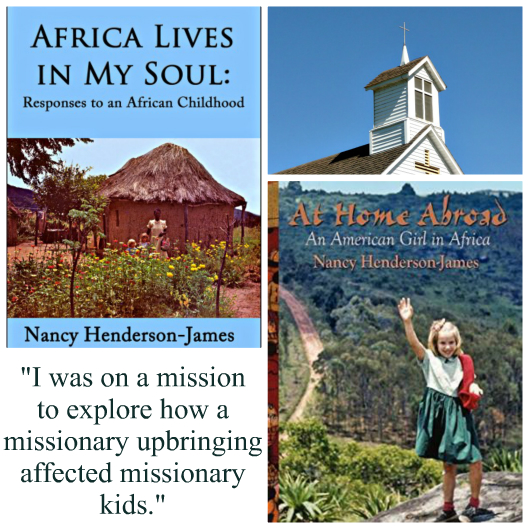
TCK TALENT: Nancy Henderson-James, Missionary Kid in Angola, Librarian in North Carolina, and Author/Memoirist

Nancy Henderson James TCK Talent
Columnist Elizabeth (Lisa) Liang has invited another fellow Writing out of Limbo contributor to be her guest this month.

Greetings, readers. Today’s interviewee is Nancy Henderson-James, my fellow ATCK author in the anthology Writing Out of Limbo: International Childhoods, Global Nomads and Third Culture Kids.

Nancy was born in Tacoma, Washington, to Congregational missionaries. Not long after, the family moved to Portugal to learn Portuguese in preparation for a life in Angola, then a Portuguese colony.

Nancy grew up mostly in Angola—except for a couple of years in Rhodesia (now Zimbabwe), where she boarded in a dorm run by an English couple, 2,000 kilometers away from her family. The Angolan war for independence from Portugal, in 1961, forced Nancy’s mother to bring her children “back” to Tacoma when Nancy was 16.

After high school graduation Nancy attended Carleton College, and then she and her husband settled in Durham, NC, where she worked as a librarian for 30 years.

The author of an acclaimed Third Culture Kid memoir At Home Abroad: An American Girl in Africa, about her childhood in Africa, Nancy has received honors from the Southern Women Writers Conference and the North Carolina Writers’ Network.

* * *

Welcome, Nancy. I’ve outlined some of your story already because I’d like to begin at the point where, after having “repatriated” with your mother and siblings to Tacoma, Washington, you were basically left on your own. Your older sister went to college and your mother took your younger siblings back to Angola to be reunited with your father. You, meanwhile, attended a high school in Tacoma for your senior year, living with a family you knew from church. In both your memoir and essay in the anthology Writing Out of Limbo, you write eloquently about the yearning you felt for family connection and “home,” which you sometimes confused with a need for spiritual connection. How do you define “home” now?
Thank you for inviting me, Lisa. The advantage of aging is the ability to look back and see how seemingly random decisions have knit into a coherent pattern. It is obvious to me now that a drive to create family and community has led me through life. Most recently it has manifested in the decision my husband and I made to form and move into a cohousing community in downtown Durham, North Carolina, called Durham Central Park Cohousing Community. Cohousing offers some of the best aspects of growing up as a missionary kid, such as sharing resources, supporting fellow community members, and working together toward a shared vision. Our urban condo community sometimes reminds me of the good times I had living in dorms. Of all my living situations growing up, dorms were the most congenial. Now the coho feels very much like home.

Were you happiest in a certain place at a certain time, and if so, why?
Zeroing in on one place and time is a challenge for me. With the exception of the years immediately after reentry to the United States when I was caught up in culture shock, almost every place I’ve lived has had its happy times. For pure unconscious happiness, my early years in Lobito, living with my family, swimming on the beach across from the house every day, and absorbing the cultural mix of the small city has to qualify. My children’s growing up years gave me the satisfaction of family. And now in my older years, settled into cohousing, I find the challenge of working with 38 other residents draws on my strengths and tests me in ways that help me grow.

“I had landed in the middle of my own mystery…

Do you identify most with a particular culture or cultures, or with people who have similar interests and perhaps similar cross-cultural backgrounds?  
My antenna immediately goes up when I hear someone talking about living in another country, whether as a child or adult. I attribute all sorts of wonderful characteristics to her, not always with good reason! I’ve spent decades reconciling to American culture and I am most of the way there. I married an American man who had not traveled much until I showed him its virtues. I have two American sons who have absorbed the best of American culture, contribute to it in the fields of affordable housing and community organizing, and bring me great happiness. That said, I pay special attention to what is happening in Angola and Portugal. I try to keep up my Portuguese and recently have had wonderful contacts via Facebook with young Angolans. I attend reunions of those who also grew up in Angola, at times the only way to know what is happening there since newspapers rarely cover Angola.

Did your TCK upbringing inform your choice to become a writer and memoirist?  Conversely, did writing the memoir and the essay for Writing Out of Limbo help you to process your TCK upbringing?
Both are true. Reading Mary Wertsch’s Military Brats in my 40s launched me on a mission, so to speak, to explore how a missionary upbringing affected missionary kids, or MKs, in the way that the military affected military brats. I found countless correspondences. The responses to the questionnaire I sent out—which were compiled in Africa Lives in My Soul: Responses to an African Childhood —provided rich sources for contemplating my life. The honesty and willingness of other missionary kids to respond affected me deeply and brought back memories of similar experiences I had had. Writing a memoir seemed like the logical next step. Faith Eidse helped me along the way by including my essay in Unrooted Childhoods, the memoir anthology she and Nina Sichel edited. Her confidence in my work was invaluable.

Missionary kids

…the mystery of life, really.”

It sounds like writing became part of the fabric of your life.
Writing continues to supply food for inquiry and expression. Our cohousing community has a small group of writers and artists that meets weekly to create and share. The group motivates me to write and provides helpful feedback. I also co-edit our monthly e-news.

What made you decide to settle in Durham and become a librarian?
We moved to Durham when my husband decided to attend Duke University’s graduate health administration program in 1974. As the wage earner with a newly minted library degree, I found a job working as a high school librarian—strange since I had hated attending American high school. Despite that, I worked at Jordan High School for 25 years and then for another five years at the UNC Children’s Hospital School (for children with chronic illnesses), as their first librarian.

Were you an avid reader as a kid, like so many TCKs?
As a child I was much more attracted to the outdoors (riding my bike, running, swimming) than reading inside. But when I graduated from high school I realized how much I didn’t know and started reading.

As an ATCK, do you have “itchy feet,” which still make you want to move frequently?
ATCKs seem to respond in two opposite fashions…to want to move frequently or to stay put. I discovered early on that I am in the second camp. I was a thrilled high school senior when President Kennedy announced the Peace Corps, certain I would join after college. But when the time came, I chose graduate school stateside to maintain ties with my boyfriend and his family, since my family still lived in Angola. The need for connection trumped the need for adventure. I have never lived outside the United States since leaving Africa in 1961. That said, I do travel for pleasure and took my sons on trips abroad, including on my first return trip to Angola after 44 years.

Never lived outside US

Your memoir, At Home Abroad: An American Girl in Africa, was well received. The chapter included in Unrooted Childhoods is gorgeous and haunting, and I love how you talk about the importance of language. (I agree! I think the ability to communicate trumps nationality, race, gender, religion, etc., in terms of person-to-person contact.) Where else may readers find your wonderful published writing?
My recent publications have been essays:

I’m currently working on another memoir that focuses on the many mothers and fathers who passed through my life growing up.

* * *

Thank you for sharing your story with us, Nancy! Readers: you may learn more about Nancy Henderson-James and her writings at her author site. And don’t forget to check out her books: At Home Abroad and the anthology, Africa Lives in My Soul. If you have any questions or comments for Nancy, be sure to leave them below.

Editor’s note: All photos of Africa are from Nancy Henderson-James’s Flickr albums; other photos (of the Tacoma school and the library) are from morguefiles. The quotes are from Nancy’s memoir (see excerpts).

Elizabeth (Lisa) Liang is a prime example of what she writes about in this column: an Adult Third Culture Kid working in a creative field. A Guatemalan-American of Chinese-Spanish-Irish-French-German-English descent, she is an actor, writer, and producer who created the solo show Alien Citizen: an earth odyssey, which has been touring internationally. And now she is working on another show, which we hope to hear more about soon! To keep up with Lisa’s progress in between her columns, be sure to visit her blog, Suitcasefactory. You can also follow her on Twitter and on Facebook.

STAY TUNED for next week’s fab posts!

If you enjoyed this post, we invite you to register for The Displaced Dispatch, a round up of weekly posts from The Displaced Nation, and so much more! Register for The Displaced Dispatch by clicking here!

Related posts:

REVERSE CULTURE SHOCK TOOLBOX: Expats, what kinds of tools do you need if you decide to repatriate?

Reverse Culture Shock RosesTransitions enthusiast H.E. Rybol is already having a constructive 2016: she is about to publish a second book, on reverse culture shock.

Reverse Culture Shock_coverHello, Displaced Nationers! This month, I have a very special preview for you! On March 30th, my book Reverse Culture Shock will be released! Unlike Culture Shock: A Practical Guide, this is not a how-to book. It’s a collection of adapted blog posts including some previously unpublished material.

Dealing with reverse culture shock is a continuously evolving process that requires constant adjustments, reflection and introspection. This collection is meant to bring you food for thought and give you a little nudge to ease a difficult transition.

Here’s an adapted excerpt, just for you… Even if you’re currently an expat, I hope you enjoy! Someday you, too, may face this phenomenon, if you decide to repatriate.

* * *

When I moved back from California to Europe, I spent the summer pruning trees, rosebushes and anything else I could find. It provided comfort in a way nothing else did. I got to be outdoors, didn’t have to interact, nobody asked me any questions or commented on how ‘American’ I sounded. I could just be. Quietly, peacefully.

What I needed the most was a set of gardening tools.

Yep, reverse culture shock was a doozy.

Here’s the thing about reverse culture shock: everything feels familiar and completely different at the same time. And no matter how hard you try to reconcile everything, it makes you feel like a puzzle put together wrong. Everything sort of fits but doesn’t.

Of course, intellectually, you reason with yourself. Your brain explains that both you and the place have changed, so what you’re feeling is natural. Meanwhile your insides are screaming bloody murder. That’s what it was like for me, anyway.

There is an aspect of mourning involved. You have to let go of the notion of home as a physical or geographical place (if that’s what it was to begin with) and of the idea that operating within a comfort zone is how things should be. You need to redefine what home and comfort mean to you.

And here’s the biggie: letting go of who you were before you left to incorporate the person you became while you were gone and see how both now fit into a new identity within that familiar environment that feels alien. It’s mind-boggling and the whole thing is a process.

The puzzle of home

Europe had changed…and I’d changed as well.

When I got back from the US, Europe had changed: there was a new currency (hello, Euro!), there were new streets, Starbucks and Subways had sprouted up all over the place, the use of language had changed, to name a few. For example, “Zähflüssiger Verkehr” had become “stop and go” and my French-speaking friends and colleagues said things like “c’est fun!”

Of course, I had changed as well. Not only in my eyes but also in the eyes of other people who kept reminding me that I wasn’t quite European anymore with a steady refrain of “You’re SO American!”

  • Accent: I had an American accent and naturally, people who knew me before I lived in America kept saying “you sound so American.” I understand the reaction, of course, but the effect was one of alienation all the same. What I heard was “you don’t sound European”. Which was fine too, except that I was in Europe trying to figure out how to fit back in after four years of being away.
  • Language: I couldn’t express myself the way I wanted to in my native languages, which can feel alarming. People kept correcting me, pointing out that I was speaking weirdly, which had a distancing effect on me and on them as well. I wasn’t the way they remembered and these new aspects of me were disconcerting for them.
  • Laugh: I was told I had an American laugh, whatever that means.
  • Attitude/ways of thinking/seeing things: I had developed a new approach and attitude towards problem solving, thinking and managing everyday life. That attitude was also pointed out to me as being American. But it wasn’t something I could shake, so living with that perspective in Europe can be alienating on multiple levels.

I spent four years becoming aware of my “Europeanness” to come back to a Europe that felt alien to me and where people kept and still keep pointing out my “Americanness”.

I’ve come to accept that I’m just in between. Someone once said to me that it’s like sitting on a fence: you can see both sides but that fence just isn’t very comfortable.

Over time though, we get comfortable being uncomfortable. That’s the good news!
Just in between

* * *

Readers who are or have been repats, hopefully this has you “fixed” until next month, when I’ll be back with one of my culture shock interviews. In future I plan to interview some repatriates as well.

Until then, here’s to discomfort! Cheers! Prost! Santé!

H.E. Rybol is a TCK and the author of Culture Shock: A Practical Guide and Culture Shock Toolbox and the soon-to-be-released Reverse Culture Shock. She loves animals, piano, yoga and being outdoors. You can find her on Twitter, Linkedin, Goodreads, and her author site.  

STAY TUNED for more fab posts.

If you enjoyed this post, we invite you to register for The Displaced Dispatch, a round up of weekly posts from The Displaced Nation—and much, much more! Register for The Displaced Dispatch by clicking here!

Related post:

Photo credits: All photos are from Pixabay.

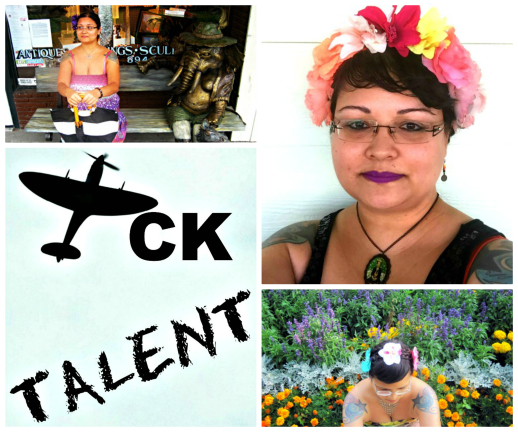
TCK TALENT: Sezín Koehler, multimedia artist, tatoo collector, editor and prodigious writer

Columnist Elizabeth (Lisa) Liang starts off 2016 with a guest who has been to the Displaced Nation before, albeit in different guises: as Alice, as film critic, as featured novelist, as repatriate…though never as a TCK Talent.

Happy 2016, readers! I hope your January has been splendid thus far. Today’s interviewee is writer, editor, tattoo collector, and Huffington Post contributor Sezín Koehler, who also calls herself Zuzu (a nickname she picked up when living in Prague). Sezín may already be familiar to some Displaced Nation readers as an early contributor, including a two-part series listing films that depict the horrors of being abroad, or otherwise displaced; a much-commented upon post called “The Accidental Repatriate”; and an Alice-in-Wonderland-themed post on her life in Prague (that was after she had received one of the Displaced Nation’s very first “Alice” awards).

But what some of you may not know is that Sezín is a Third Culture Kid. She was born in Colombo, Sri Lanka, to a Sri Lankan dad and Lithuanian-American mom. Her mom’s job with UNICEF moved the family from Sri Lanka to Zambia, Thailand, Pakistan, and India.

Sezín went to college in California—and then returned to her family, who were living in Switzerland and then in France (the move again being due to her mom’s job).

Next Sezín moved alone to Spain, where she met her husband, who is American. After living as expats in Turkey, Czech Republic, and Germany, the couple now call Lighthouse Point, Florida, home.

* * *

Welcome, Sezín. What a truly peripatetic life you’ve had! What made you decide to “repatriate” to the USA and come to Lighthouse Point? 
This area is where my husband grew up and has family, although his family moved further north just this year. Economics and a series of unfortunate events are what brought me back to the US—my husband and I returned with literally 15 euros between us.

Sounds like a tough reentry. While living as a nomad can also be tough, were you happiest in a certain place?
That’s a surprisingly difficult question! There was a lot of conflict in my family when I was growing up because of the tension between my American mum and conservative Sri Lankan dad—and all the cultural, social, etc., issues that come with having a multicultural and multiracial family before that became something of the norm. Plus, moving all the time was not a lifestyle that worked for me, and it created uncomfortable cycles of depression that were then compounded by having post-traumatic stress disorder (PTSD) after witnessing the murder of one of my best friends in our final year of university. The repatriation to Florida was one of the more miserable moves—especially since I had never planned to move back to the United States until they sort out more effective gun-control laws.

That sounds terribly painful. How have you coped since your return to the US?
My first two years back made me completely despondent, and then one day I just decided to make the best of the situation. It was time to choose happiness; otherwise I wasn’t going to survive. So now every day I wake up and I find something—big or small—to be happy about and I focus on that for the day. In that sense, and in a strange reversal, I suppose Florida is where I find myself happiest because this is where I learned that happiness isn’t something that happens to me passively because life is perfect. Happiness is a daily choice. And I actively make the choice to be happy however difficult my surroundings.

“That feeling of being an outsider never quite leaves you…”

Do you identify most with a particular culture or cultures, including the very broad “TCK culture”? 
You know, I think I identify with aspects of pretty much every culture under the sun—even ones where I didn’t actually live or visit. Being highly sensitive, coupled with having a TCK upbringing, has made it so I can identify with just about anyone who isn’t a bigot or misogynist, even if our backgrounds are nothing alike. I do find myself particularly drawn to other TCKs because, even if we didn’t live in the same places, there is something about the “universal” TCK personality that resonates with me, and it’s far easier to start on the same page rather than having to work hard to build bridges of understanding between myself and people who haven’t traveled or grown up abroad. I also find that many TCKs understand that just because growing up abroad sounds exciting, it might not have actually felt that way when we were getting yanked from place to place, leaving friends and family behind in those pre-social-media Dark Ages.

Did your TCK upbringing inform your career path as a writer?
To be honest, with all the moving around plus PTSD, it’s been hard to develop a career track other than writing. Being a writer means you take your passion with you wherever you go, and no matter where you are, there is always something new to write about. Writing has been my longest-standing support system and therapy through the variety of traumas that ended up shaping my life, and any day now I hope I’ll start being able to make a living doing it. 🙂

Did growing up as a TCK also influence your career as an editor?
As an editor I focus on academic writing by non-native English speakers, and having lived in so many places has definitely helped me understand all the different (incorrect) ways people use English and help them to get published in English-language publications where English fluency is a requirement.

“As a Third Culture Kid, I always related with monsters more than ‘norms.'”

Tell us about your tattoo collection. Any TCK connections there?
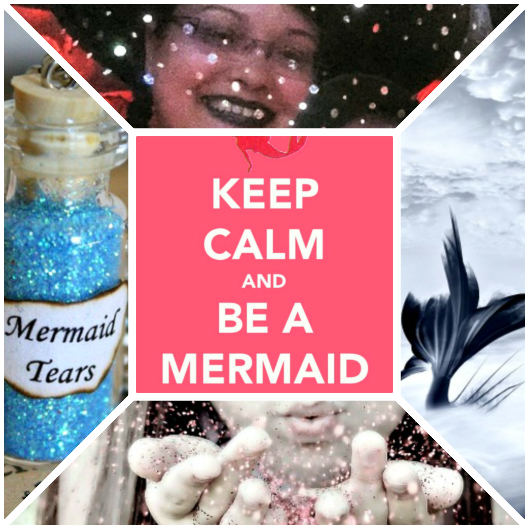
Other than my husband, tattoos are one of the great loves of my life. Tattoos for me have been a way to not just express myself creatively, but have also been a way to re-claim my own body after so many traumas. I have a hybrid identity that I often express in fantastical ways. Sometimes when people ask me where I’m from and I don’t feel like having an intimate conversation about my life I’ll say I’m a mermaid and I’m visiting from the ocean. I have a huge jellyfish on my right thigh and I say, “Meet my pet jelly.” Now that my hair is in a pixie cut, I might introduce myself as a fairy and since I actually have tattooed wings on my shoulders as well as often literally leaving a trail of glitter in my wake, I find it easier than getting into my TCK identity—especially when the person I’m talking to might have never left this corner of Florida.

Keep Calm & Be a Mermaid

So in a way, the tattoos serve as both explanation and protection.
For my entire life I’ve operated under an assumption of otherness—when I’m in the US people ask me where I’m from, and when I’m in Sri Lanka people ask me where I’m from. Being mixed race can be really complicated—and I get a lot of aggression from strangers who try to figure out “what” I am. In a way tattoos are a shield between me and curious eyes, as is much of my performance-of-the-fantastical-self art and being.

Have any of these careers/interests helped you to process your nomadic upbringing?
Writing, definitely! Writing has been my most effective and longest-standing therapeutic tool. Not just my non-fiction, but also my short stories and my novels have most certainly helped me situate my cultural self in lots of different ways that have been helpful and healing. As a writer I’m also an avid reader, and reading is another huge help in figuring out where my strange background and I fit in the grander scheme of culture and society.

“I revel in my boundaryless self…”

As an ATCK, do you have “itchy feet,” or would you prefer to have a home base and only travel for pleasure?
I have always hated moving and I might be the only TCK to say I have never had itchy feet. Ever since I was a little girl all I wanted was to stay in one place and even now at 36 I feel that way. But because of how I grew up moving around, I’ve also come to a point where everywhere seems pretty much the same—I always see the same kinds of people in disparate places, it’s weird—and yet nowhere ever feels like home. So now my concept of home has shifted and simply means being somewhere with people I love.

Moving is one thing, but how do you feel about traveling in general, including for pleasure?
After a lifetime spent on airplanes and traveling, I absolutely hate traveling now. I have crippling aerophobia, and if I’m forced to travel somewhere by plane, everything about the experience is miserable and I end up getting really ill before, during, and after. I find going to new places more stressful than enjoyable. My dream is one day to have a house with a beautiful view and some rescue dogs and never go anywhere ever again. Except through books, of course.

Speaking of books, you published your first novel, American Monsters, four years ago, and I understand the sequel has just come out!
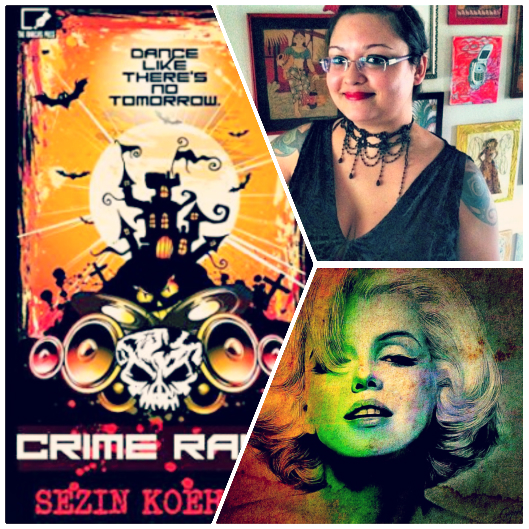
Yes indeed! My second novel, Crime Rave, came out in October 2015, and I don’t think I’ve ever been prouder of one of my creations in my life. Going back to your question about how being a TCK has shaped my writing, this book is a perfect example. The story itself defies genres—it has crime noir, supernatural, horror, and feminist themes just to name a few—and most of my characters are either mixed race or people of color who are not only TCKs themselves or ethno-cultural hybrids, but they’ve all gone through traumas that resulted in superpowers. If there was a label of Third Culture Fiction, my book would totally fit the bill.

The number of novels you have in progress, on top of what you’ve had published, is wildly impressive! Please tell us about them.
Thank you so much, Lisa. I’m currently working on my third, fourth, fifth, and potentially sixth novels—the third is a zombie tale set in Prague, the fourth will find recurring Crime Rave characters on Pine Ridge Reservation in South Dakota, Lighthouse Terror will be a grindhouse horror novel set in a gated community in southeast Florida, and finally I’m toying with the idea of an entire novel about Marilyn Monroe.

Yes, I know you are a big Marilyn fan. I believe she makes an appearance in Crime Rave?
Yes, in Crime Rave she not only lives but has a daughter.
Crime Rave Marilyn
What else are you working on?
As a HuffPost freelancer I’m working on a number of pieces featuring interviews with some badass individuals—authors, activists, artists, scientists, and more. I’m also in the process of starting my own publishing label that will focus on works by women and other marginalized writers who create genre-bending works in which women play all the major roles.

You’re so prodigious!
The one benefit of being an accidental shut-in who works from home here in Lighthouse Point is that I have nothing but time to work on all the creative projects I want, which is another dream come true.

Where can we find your work and follow your progress?
At sezin.org, my HuffPost column, my American Monsters site, and sezinkoehler.com. I’ve also recently revamped my Etsy store, Zuzu Art, with its gallery of sparkly-strange multimedia Alice in Wonderland and Frida Kahlo-inspired pieces. I have a Tumblr cabinet of curiosities called Hybrid/Monster that I continue to update with oddities of the visual nature, and I am rather fond of my Instagram account, where I post pics of my own art, my performance art, and snapshots of life in the tropics. Whew! I didn’t realize how much I produce online until this very moment.

* * *

Thank you so much, Sezín! I’m inspired to know that your artistic path has led to your healing, and that you’ve found daily happiness since the painful reentry to the United States. Congratulations on your many creative, career, and personal accomplishments! Readers, please leave questions or comments for Sezín below.

Editor’s note: All photos are from Koehler’s Hybrid Monsters site (apart from her book cover and the photo of one of her Etsy works) or from Pixabay. The quotes are from her “About the Curatrix” page.

Elizabeth (Lisa) Liang is a prime example of what she writes about in this column: an Adult Third Culture working in a creative field. A Guatemalan-American of Chinese-Spanish-Irish-French-German-English descent, she is an actor, writer, and producer who created the solo show Alien Citizen: an earth odyssey, which has been touring internationally. And now she is working on another show, which we hope to hear more about soon! To keep up with Lisa’s progress in between her columns, be sure to visit her blog, Suitcasefactory. You can also follow her on Twitter and on Facebook.

STAY TUNED for next week’s fab posts!

If you enjoyed this post, we invite you to register for The Displaced Dispatch, a round up of weekly posts from The Displaced Nation, and so much more! Register for The Displaced Dispatch by clicking here!

Related posts:

IN CASE YOU MISSED IT: Best of expat fiction 2015

The title of this post is a lie: you didn’t miss anything. It’s we who missed our deadline of publishing, at the end of 2015, a list of books for, by and about expats.

Dare I suggest that our procrastination could prove fortuitous? Most of us have more time to read now that the holidays are over and the doldrums have set in—along with, for some of us (I refer to those on the East Coast of the USA), a spell of blizzardous weather. What better time to curl up with a book that in some way relates to the themes of international adventure and displacement?

Without further ado, allow me to offer my curated list of the best novels by, for, and about expats and other international creatives in 2015. (Nonfiction coming soon, we promise!)

PLEASE NOTE: The books, which include indie as well as traditionally published novels, are arranged in reverse chronological order.

* * *

Year of the GooseYearoftheGoose_cover_400x (Unnamed Press, December 2015)
Author: Carly J. Hallman
Expat credentials: A native Texan, Hallman lives in Beijing. This is her first novel.
Synopsis: A comic novel about China’s era of the instant tycoon, which has been described as “unhinged”, “outrageous”, “deranged” and “hilarious. The oligarchical, tabloid-driven society it portrays is not unlike our own, which may be why the book was listed as one of the BBC’s 10 books to read in December 2015 as well as selected for the December 2015 Indie Next list.
How we heard about: The Anthill blog


TheNavyWife_cover_400xThe Navy Wife (December 2016)
Author: Helena Halme
Expat credentials: Originally from Finland, Halme has lived in the UK with her British husband for many years.
Synopsis: The sequel to Halme’s well-received autobiographical novel The Englishman (reviewed here by Displaced Nation founder Kate Allison), which concerns a long-distance romance between a Finnish woman, Kaisa, and a British naval officer, Peter. We see the couple, despite having tied the knot, facing a number of obstacles and threats to living happily ever after—especially when Kaisa doesn’t take well to the life of a military spouse in a foreign country.How we heard about: Social media, and a comment by Halme on one of our posts.


Seafled_cover_400xSeafled (November 2015), Burnt Sea (August 2015) & Seaswept (April 2015)
Author: Jordan Rivet (aka Shannon Young)
Expat credentials: An American, Young has lived in Hong Kong for the past few years with her half-Chinese husband, a Hong Kong native.
Synopsis: A post-apocalyptic adventure series set on a souped-up cruise ship, featuring a prickly female mechanic named Esther. The series, called the Seabound Chronicles, consists of three books and a prequel.
How we heard about: Young writes the popular “Diary of an Expat Writer” column for the Displaced Nation.


TheJapaneseLover_cover_400xThe Japanese Lover (Atria Books, November 2015)
Author: Isabel Allende
Expat credentials: Born in Lima, Peru, to a Chilean diplomatic family, Allende lived in various countries, including Chile, Bolivia, and Beirut. As an adult she worked in Belgium and elsewhere in Europe; she also lived for over a decade in Venezuela. She currently lives in San Rafael, California.
Synopsis: A cross-cultural love story that sweeps from present-day San Francisco to WWII-era Poland the United States. It explores questions of identity, abandonment, and redemption.
How we heard about it: Who hasn’t heard about it? It was one of the most anticipated books of 2015!


TheDisobedientWife_cover_400xThe Disobedient Wife (Cinnamon Press, November 2015)
Author: Annika Milisic-Stanley
Expat credentials: Born to Swedish and Anglo-German parents, Milisic-Stanley grew up in England and now lives in Rome. She says she based the plot on stories she heard when living in Dushanbe as a humanitarian aid worker for several years.
Synopsis: The story of the friendship that forms between a poor, courageous local woman in Dushanbe, Tajikistan, and her employer, a trailing expat wife married to a British diplomat.
How we heard about: An interview with Kristin Louise Duncombe, an American writer who has lived in Europe since 2001.


CrimeRave_cover_400xCrime Rave (The Margins Press, November 2015)
Author: Sezin Koehler
Expat credentials: Koehler is an adult Third Culture Kid who lived in Prague for some years and now lives in Florida. She has written several posts for the Displaced Nation, including a two-part series listing movies that depict the horrors of being abroad or otherwise displaced.
Synopsis: The second installment to her debut novel, American Monsters. Picking up where that one left off while jumping genres, the new book presents an alternate universe in which goddesses have free reign over humans, trauma goes hand in hand with superpowers, and Marilyn Monroe lives.
How we heard about: A Facebook post by Koehler


ADecentBomber_cover_400xA Decent Bomber (November 2015)
Author: Alexander McNabb
Expat credentials: A Brit who has been working in, living in and traveling around the Middle East for some thirty years, McNabb was featured on The Displaced Nation three years ago for his “Levant Cycle” trilogy.
Synopsis: Another political thriller—but this one is set in Northern Ireland and concerns a former IRA bomb maker who is drafted against his will into joining the War on Terror.
How we heard about: He sent us a heads up, and Beth Green reviewed the book in her last column. She found it well researched, well written and an enjoyable read.


ThePalestInk_cover_400xThe Palest Ink (Lake Union Publishing, October 2015)
Author: Kay Bratt
Expat credentials: Bratt lived in China for almost five years, where she “fell in love enough with the people to want to write about them forever.” She has since repatriated to the hills of North Carolina. (She is also the author of a memoir, Silent Tears: A Journey of Hope in a Chinese Orphanage. )
Synopsis: A story that depicts the coming-of-age of a sheltered son from an intellectual family in Shanghai, during a tumultuous period of Chinese history: the Cultural Revolution.
How we heard about: Kindle promotion.


Olivia&Sophia_cover_400xOlivia & Sophia (Monsoon Books, October 2015)
Author: Rosie Milne
Expat credentials: A native Brit, Milne has lived all over Asia; she currently lives in Singapore, where she runs the Asian Books Blog.
Synopsis: A fictional account of the lives of the first and second wives of the founder of the British trading post of Singapore, Sir Thomas Stamford Raffles. Set in London, Java, Sumatra and Singapore, against the backdrop of the Napoleonic Wars—the story takes the form of two fictionalized diaries, one by each of Raffles’s wives: Olivia Devinish and Sophia Hull. Milne “takes us away from the cold, damp confines of Georgian London to the muggy, hostile tropics and to the titillations and tribulations of a life far away from home.”
How we heard about: When Rosie Milne was “wonderlanded” on our site, we published a couple of excerpts from the book.


NowhereChild_coverNowhere Child (Black Dot Publishing, October 2015)
Author: Rachel Abbott
Expat credentials: Abbott fled from the corporate life to Italy, which gave her the opportunity to start writing psychological thrillers. Her first one was a break-out hit on Kindle, and she hasn’t looked back. Currently, Abbott divides her time between Italy (where she lives in an apartment in an old fort, which overlooks the sea) and Alderney, in the Channel Islands (just off the coast of France). But although the expat life gave her a new career as a writer, Abbott sets her books mostly in her native Manchester.
Synopsis: A stand-alone novella featuring the same characters as Abbott’s Stranger Child. Eight months ago Tasha Joseph ran away, and her stepmother, Emma, has been searching for her ever since—as are the police, since Tasha could be a vital witness in a criminal trial.
How we heard about: Lorraine Mace interviewed Abbott for her Location, Locution column in December.


TheHundredYearFlood_cover_400xThe Hundred-Year Flood (Little A, September 2015)
Author: Matthew Salesses
Expat credentials: Salesses was adopted from Korea at the age of two and often writes about race and adoption. This is his first full-length novel.
Synopsis: The mythical and magical story of a 22-year-old Korean-American’s escape to Prague in the wake of his uncle’s suicide and the aftermath of 9/11. He tries to convince himself that living in a new place will mean a new identity and a chance to shed the parallels between himself and his adopted father.
How we heard about: Social media


TheDressmaker_cover_400xThe Dressmaker (Penguin Books, August 2015*)
Author: Rosalie Ham
Expat credentials: Born and raised in Jerilderie, Australia, Ham now lives in Melbourne. Like most Australians, she has had a period of traveling and living overseas.
Synopsis: A darkly satirical tale of love, revenge, and 1950s fashion. After twenty years spent mastering the art of dressmaking at couture houses in Paris, Tilly Dunnage returns to the small Australian town she was banished from as a child. She plans only to check on her ailing mother and leave. But Tilly decides to stay, and though she is still an outcast, her exquisite dresses prove irresistible to the prim women of Dungatar. Note: The book is soon to be a film starring Kate Winslet and Liam Hemsworth.
How we heard about: A book review in the New York Times
*Originally published in 2000, this is the film adaptation of the book.


CirclingtheSun_cover_400xCircling the Sun (Ballantine Books, July 2015)
Author: Paula McLain
Expat credentials: None! Her breakout novel, The Paris Wife, was about an expat: Ernest Hemingway’s first wife, Hadley Richardson, whose passionate marriage ended as her husband shot into literary stardom. This time her focus is the Happy Valley set, a decadent community of Europeans in 1920s colonial Kenya. As she told NPR in a recent interview:

You know, I wrote most of The Paris Wife in a coffee shop in Cleveland. I don’t have to tell you that a Starbucks in Cleveland is about as far away from a Parisian cafe as you can possibly get. And I also wrote about Kenya, the wild African frontier, from my home in Cleveland without having ever gone there. You can’t really visit colonial Kenya, can you? You can’t really visit Paris in 1922, except in your imagination.

Synopsis: Based on the real-life story of the fearless and captivating Beryl Markham, a record-setting aviator who became caught up in a passionate love triangle with safari hunter Denys Finch Hatton and Karen Blixen, who as Isak Dinesen wrote the classic memoir Out of Africa.
How we heard about: A New York Times review by the expat writer Alexandra Fuller.


TheAmbassadorsWife_cover_400xThe Ambassador’s Wife (Doubleday, July 2015)
Author: Jennifer Steil
Expat credentials: A Boston-born former journalist, Steil is married to a Brit who once served as ambassador to Yemen, where a suicide bomber attacked him. She is also the author of The Woman Who Fell from the Sky, a memoir about her experiences running a newspaper in Yemen. She lives in Bolivia, where her husband is the European Union ambassador.
Synopsis: A harrowing account of the kidnapping of an American woman in the Middle East and the heartbreaking choices she and her husband, the British ambassador to an Arab country, must make in the hope of being reunited.
How we heard about: Shortlisted in the New York Times Book Review as a “marriage plots” novel.


TheStarSideofBurnHill_cover_400xThe Star Side of Bird Hill (Penguin Press, June 2015)
Author: Naomi Jackson
Expat credentials: A Third Culture Kid, Jackson was born and raised in Brooklyn by West Indian parents. After attending the Iowa Writers’ Workshop, she traveled to South Africa on a Fulbright scholarship and earned an MA in creative writing from the University of Cape Town.
Synopsis: The story of two sisters, ages ten and sixteen, who are suddenly sent from Brooklyn to Bird Hill in Barbados after their mother can no longer care for them. The young Phaedra and her older sister, Dionne, live for the summer of 1989 with their grandmother Hyacinth, a midwife and practitioner of the local spiritual practice of obeah.
How we heard about: Shortlisted in the New York Times Book Review as a “coming of age” novel.


TheWolfBorder_cover_400xThe Wolf Border (Harper, June 2015)
Author: Sarah Hall
Expat credentials: Born in northwest England, Hall lived in Wales while attending Aberystwyth. She went on to study in Scotland (St. Andrews) for an MA, where she met and married an American law student. Though the marriage was short-lived, its legacy was substantial: a move to the US proved the catalyst she needed to embark on novel writing. The pair was based in the small town of Lexington, Virginia, after her husband was awarded a scholarship to a nearby law school. At that time, Hall visited the Idaho reservation that appears in this book. She currently lives in Norwich, UK.
Synopsis: About a controversial scheme to reintroduce the Grey Wolf to the English countryside, which brings zoologist Rachel Caine, who has lived a solitary existence in a remote section of Idaho, far away from her estranged family in England, back to the peat and wet light of the Lake District. The novel explores the fundamental nature of wilderness and wildness—as well as the frontier of the human spirit.
How we heard about: A book review in the New York Times


IntheCountry_cover_400xIn the Country: Stories (Knopf, June 2016)
Author: Mia Alvar
Expat credentials: Born in the Philippines, Alvar was raised in Bahrain and the United States. She now lives in New York City. This is her first book.
Synopsis: A collection of nine short stories about Filipinos living overseas. Alvar has imagined the lives of exiles, emigrants, and wanderers who uprooted their families from the Philippines to begin new lives in the Middle East, the United States, and elsewhere—and, sometimes, turned back again.
How we heard about: A book review in the New York Times


TheDiversClothesLieEmpty_cover_400xThe Diver’s Clothes Lie Empty (Ecco, June 2015)
Author: Vendela Vida
Expat credentials: Born and raised in San Francisco, Vida is the daughter of two immigrant parents: a Swedish mother and a Hungarian father. She has become known for producing “travel trauma” narratives, exploring the lives of competent women who feel disintegrating marriages for distant lands (i.e., the Philippines, Finland and Turkey). Her latest novel, considered to be her “finest work” to date, was inspired by a trip she took to Morocco where her bag was stolen.
Synopsis: A literary thriller that probes the malleability of identity, told with lush detail and a sense of humor. Robbed of her money and passport in Casablanca, Morocco, an American woman feels free to be anyone she chooses.
How we heard about: A book review in the New York Times.


ChinaRichGirlfriend_cover_400xChina Rich Girlfriend (Doubleday, June 2015)
Author: Kevin Kwan
Expat credentials: Born and raised in Singapore, Kwan has lived in Manhattan for the past two decades. He says he still craves “craves pineapple tarts and a decent plate of Hokkien mee.“
Synopsis: Follows the story of the culture-shocked Rachel Chu as she searches for her mysterious birth father in Shanghai in hopes he’ll walk her down the isle at her upcoming wedding. The book is a sequel to Kwan’s 2013 bestseller, Crazy Rich Asians, picking up a few years after those events. Both books take place in the world of Hong Kong and Singapore’s super-super elite.
How we heard about: A book review in the New York Times


TheRocks_cover_400xThe Rocks (Riverhead Books, May 2015)
Author: Peter Nichols
Expat credentials: Nichols grew up partially on Mallorca (while attending boarding school in England), where he got to know other Northern Europeans. He has worked in advertising and as a screenwriter, and a shepherd in Wales. He divides his time between Europe and the United States. In 1997 he produced a riveting memoir, Sea Change, telling of the time when he set off alone across the Atlantic in his beloved 27-foot wooden engineless sailboat, Toad, which he and his (now ex-) wife had lived on for six years, fixing it up, making it into their home, sharing adventures on it.
Synopsis: A tragic double romance, told in reverse, primarily set in a seaside resort in Mallorca and its enduring expat community.
How we heard about: From a book review in the New York Times.


coming-home_cover_400xComing Home (Mira, April 2015)
Author: Annabel Kantaria
Expat credentials: A Telegraph Expat blogger who has been featured on the Displaced Nation, Kantaria has lived in Dubai with her family for several years.
Synopsis: The story of a woman living in Dubai because she wants to flee the pain of her brother’s death but then heads for home upon receiving word of her father’s sudden death. Kantaria says that writing the book helped her “explore that push and pull and sense of displacement you feel when you have a foot in two countries.”
How we heard about: A Telegraph Expat post on expat-themed summer reads, by Rosie Milne


APlaceCalledWinter_cover_400xA Place Called Winter (Grand Central Publishing, March 2015)
Author: Patrick Gale
Expat credentials: Born in the Isle of Wight, Gale was an expat of sorts when his family moved to London. During his misspent youth, he lived at one point in a crumbling French chateau. He now lives on a farm near Land’s End.
Synopsis: The story of a privileged Edwardian man who has a homosexual affair and, for fear of arrest, is forced to abandon his wife and child: he signs up for emigration to the Canadian prairies. He reaches a world as far away as possible from the golden suburbs of turn-of-the-century England. The story is loosely based on a real-life family mystery of Gale’s gentleman great-grandfather. The plot in a nutshell: “To find yourself, you must sometimes lose everything.”
How we heard about: Gale was a featured author at the Port Eliot Festival, which takes place yearly on an ancient estate in Saint Germans, Cornwall, UK.


TheArtofUnpackingYourLife_cover_400xThe Art of Unpacking Your Life (Bloomsbury Reader, March 2015)
Author: Shireen Jilla
Expat credentials: A journalist-turned-novelist who now lives in London, Jilla has been an expat in Paris, Rome, and New York. The Displaced Nation did a feature on her first novel, Exiled, about a British expat wife in New York.
Synopsis: The story of a group of university friends who set out on the holiday of a lifetime, a safari in the Kalahari, only to find they don’t have much in common any more.
How we heard about: Social media and then Beth Green interviewed her.


TheTehranText_cover_400xThe Tehran Text – The Tana Standish Spy Series #2 (Crooked Cat Publishing, February 2015)
Author: Nik Morton
Expat credentials: Morton spent 23 years in the Royal Navy, during which he had the chance to visit (among others) Rawalpindi, the Khyber Pass, Sri Lanka, Tokyo, Zululand, Mombasa, Bahrain, Tangier, Turkey, Norway, Finland, South Georgia and the Falklands. He has also traveled widely in his private life. He and his wife are now retired in Alicante, Spain.
Synposis: Second of Morton’s Cold War thrillers featuring psychic spy Tana Standish (first was The Prague Papers). Iran is in ferment and the British Intelligence Service wants Tana Standish’s assessment. It appears that CIA agents are painting too rosy a picture, perhaps because they’re colluding with the state torturers…
How we heard about: Lorraine Mace interviewed Morton for her Location, Locution column last July.


Outline_cover_400xOutline (Farrar, Straus and Giroux, January 2015)
Author: Rachel Cusk
Expat credentials: Born in Canada, Cusk spent much of her childhood in Los Angeles. She moved to the UK in 1974 and is a graduate of Oxford University. She now lives in London.
Synopsis: About a divorced writer who lives in London with her two youngish children, covering the several days she spends in Athens, where she has gone to teach a writing class. She ends up spending time with a much older Greek bachelor she met on the plane.
How we heard about: A book review in the New York Times

* * *

Tell me, what have I missed? I’m sure I’ve missed loads!! Kindly leave your recommendations for novels for, by, and about expats that came out in 2015 in the comments!

ML Awanohara, one of the Displaced Nation’s founders and its current editor, has a section in the weekly Displaced Dispatch where she mentions the latest expat books. Why not subscribe for the new year?

STAY TUNED for next week’s fab posts.

If you enjoyed this post, we invite you to register for The Displaced Dispatch, a round up of weekly posts from The Displaced Nation, and much, much more. Register for The Displaced Dispatch by clicking here!

Related posts:

Photo credits: All photos via Pixabay or Morguefiles.

Alice in Expatland: Paying tribute as her 150th anniversary year winds to a close

Alice in Expatland

Curiouser and curiouser.

Once upon a time, I found myself chasing a white rabbit with a gloriously old-fashioned pocket watch and falling
d
o
w
n
a hOle into Aliceland, where people stood about in anoraks and talked about the weather.

I was an expat in the United Kingdom.

Next I stepped through a looking glass into a topsy-turvy wonder-world where commuters in suits sporting high-tech timepieces were dashing about, afraid to be late for apparently important dates.

I was an expat in Japan.

In 2015 the world celebrated the 150th birthday of Lewis Carroll’s first Alice story, Alice’s Adventures in Wonderland, and, although I’m no longer an expat—I repatriated back to East Coast USA some time ago—I have spent the year paying tribute to this Victorian heroine for being my role model, or muse, during the period when I lived abroad.

What drew me so powerfully to the Alice stories? Skeptics may surmise that this Alice obsession of mine comes from some childish need to exoticize the adventures that took place during my time overseas. By comparing myself to Alice, I’m implying that my expat life was even more extraordinary than it actually was.

These critics may also think I’m being condescending in implicitly likening the natives of the UK and Japan to talkative animals or mad people.

For anyone who’s not feeling the thing I have for Alice: My point is, being an expat made me feel like a child again, especially when I found myself struggling to communicate basic points or failing to understand what was happening around me.

At moments like those, if someone had told me lobsters could dance, cats could have grins that fade in and out, and men could be shaped like eggs—I would have believed them. (In fact, I did see a lobster dance. That was at a fish restaurant in Tokyo. It hadn’t mastered the quadrille, though.)

“Who in the world am I? Ah, that’s the great puzzle…”

Alice is a child on the verge of adolescence—and the expat me could relate to that portion of her story as well. Her statement “It’s no use going back to yesterday, because I was a different person then” echoed in my head throughout my expat life—especially towards the end, when I was an American who spoke with a British accent and, similar to Through the Looking Glass Alice, had lost my first name. (As the only foreigner in a Japanese office, I was always referred to by my last name, with the suffix “-san”.)

Psychologist Eve Hemming addresses what it feels like to lose one’s cultural bearings in her recently published Scatterlings: A Tapestry of Afri-expat Tales. As she tells it, her decision to emigrate from her native South Africa to New Zealand was traumatic. Her arrival in “the land of the long white cloud” of Māori legend was akin to “falling through Alice in Wonderland’s looking glass and waking up an extra-terrestrial in an alien landscape.” Not long after, she had the chance to return to her homeland for a brief visit, and felt as though she has “plummeted down the rabbit hole back into Africa.”

These descriptions make me think of the Cheshire Cat’s advice to poor disorientated Alice:

“Then it doesn’t matter which way you go.”

If you stay in the expat world long enough, you feel, and are treated like, an alien wherever you go. I can still recall going home to America and having people refuse to believe I was American because of my credible British accent. They also found it strange I was so apologetic, a trait that had come from working in a Japanese office.

I had become one of those people who are at home everywhere—and nowhere; an adult yet a Third Culture Kid.

“How do you know I’m mad?”

Although I didn’t know it at the time, Lewis Carroll’s wonderland story could be a textbook illustration of the four stages of expat acculturation, as outlined by psychologist Dr. Cathy Tsang-Feign in her manual, Living Abroad.

As soon as she lands at the bottom of the rabbit hole, Alice enters Stage One: Elation. She glimpses a “most fabulous” garden and samples a delightful drink that has “a sort of mixed flavour of cherry-tart, custard, pine-apple, roast turkey, toffee, and hot buttered toast.”

It is not long, however, before she enters Stage Two: Resistance. “It was much pleasanter at home,” thought poor Alice, “when one wasn’t always growing larger and smaller, and being ordered about by mice and rabbits.”

At the same time, though, she shows potential for entering Stage Three: Transformation, when, after saying she almost wishes she hadn’t gone down the rabbit hole, she reflects: ”…and yet—and yet—it’s rather curious, you know, this sort of life!”

And, although Alice never quite reaches Stage Four: Integration (when cultural barriers are bridged)—she leaves Wonderland still feeling a bit displaced—the memories of her adventures clearly have an impact. In the next Alice story, Carroll shows her as being keen for another adventure, why she steps through the looking-glass…

“And yet—and yet—it’s rather curious, you know, this sort of life!”

The quality that Alice develops in spades (and hearts, clubs, diamonds) is resilience—which by many expert accounts is the key on a glass plate that opens the door to a successful expat life.

As Linda Janssen puts it in her book The Emotionally Resilient Expat, to have a successful transition into living in another part of the world, we need to know how to adapt, adjust or simply accept what cannot be changed.

Janssen, an American, called the blog she kept while living in the Hague “Adventures in Expatland.” She said the title perfectly expressed her feelings about an experience that was “incredibly exhilarating, challenging, and occasionally maddening.”

I know what she means. There were several instances during my times in the UK and Japan when I needed to believe six impossible things before breakfast… By the same token, though, I knew that after a fall into expatland, I should think nothing of tumbling down stairs—a thought that kept me going through a second expat assignment, and now repatriation, possibly the curious-est wonderland of them all.

Thank you, Alice, for being my heroine, and I hope you enjoyed your big birthday. Now that you’re 150, you shouldn’t be taking any stuff and nonsense from the March Hare. Tell him to pour you that glass of wine! Cheers, kanpai, bottoms up—from one of your top expat fans xoxoxo

* * *

ML Awanohara, one of the Displaced Nation’s founders and its current editor, has been conducting a series of “wonderlanded” interviews with expat authors whose lives, and works, in some way echo Alice’s adventures. If you find her Alice comparisons amusing or even a bit nonsensical, be sure to subscribe to the weekly Displaced Dispatch, which has an “Alice Obsession” feature.

STAY TUNED for more fab posts.

If you enjoyed this post, we invite you to register for The Displaced Dispatch, a round up of weekly posts from The Displaced Nation, and much, much more. Register for The Displaced Dispatch by clicking here!

Related posts:

Photo credits: Top row: Ann Smith – Sleepy Summers Day – Lobster Quadrille, by sea +; Final Tea Party, by Joe Rice via Flickr; and Float in the Tres Reyes parade (Seville, Spain), by Paul Asman and Jill Lenoble. Bottom row: Night cat, by Raffaele Esposito; The Pool of Tears, by sea +; and Have I gone mad (Berlin), by onnola. All photos via Flickr (CC BY 2.0), except last one, which is via Flickr (CC BY-SA 2.0).

GLOBAL FOOD GOSSIP: Upon repatriation, a chance to hatch my first farm-to-table plan (the coop came first!)

Global Food Gossip 062315
Serial expat—and now repat—Joanna Masters-Maggs is back with some tasty global food gossip to share—this time a rather entertaining chicken-and-egg story (but the coop came first).

“Right, that’s it, no more chickens,” muttered my husband darkly as he finished putting in the last stake supporting the electric fence which now circled a large part of our garden. “You’d think these eggs were gold plated.”

I had always wanted chickens and, returning to the English countryside after nearly twenty years of living abroad, I seized the opportunity, investing in a proper, farm-style coop. No silly Dutch barns or Irish caravans for me—this was to be serious stuff.

“What kind of chickens do you keep?” asked the friendly guy from the animal feed shop from whom I was buying a vast bag of hay and a substantial sack of layers meal (poultry feed).

“Er, well,” I muttered with embarrassment.“I don’t actually have any yet…but soon.”

“Well,” he smiled kindly, “you’d do worse than looking up Andy at Oak Farm, he’s got all sorts.”

The chickens arrived a week later. All went well, two more arrived and the eggs began to come….until…

The Girls...minus poor Abby (supplied).

The Girls…minus poor Abby (supplied).

Why did the chicken cross the road? (Don’t ask…)

One afternoon, I went out to check on my girls, to discover that one, Abby (a Wyandotte), was missing—and so too was Sophie, my gorgeous German Shepherd.

Nearly hysterical by now as I couldn’t possibly contemplate life without Sophie, I ran up and down the road in front of the house and down the lane calling and calling the dog. She always comes.

But this time it took fifteen minutes. When she at last emerged from the ditch behind the hedge—quiet but gleaming and bright eyed—I knew.

We never found traces of Abby and it was easy to convince ourselves that a fox had stolen the unfortunate bird, but, hours later, my husband caught Sophie, red in tooth and claw, with Keira, a light Sussex.

Dinner that night was chicken. “It’s not Keira, honestly.”

The atmosphere was bleak. Something had to be done and so the electric fence was organized. We now rest easy that Sophie won’t help herself to another expensive free-range chicken lunch. She clearly remembers her meal with relish—and I still occasionally catch her gazing wistfully at The Girls. But she now knows, and an electric shock serves to reinforce the lesson.

But the flavor? Just eggs-traordinary!

The eggs are worth all the trouble. Unless you have tasted an egg straight from nesting box to plate, you have not, I am sad to say, tasted egg.

A feast of poached eggs on toast at Joanna's house (supplied).

A feast of poached eggs on toast at Joanna’s house (supplied).

In England it isn’t easy to buy battery eggs any more. Free range is the thing in all supermarkets; many only stock free range.

Should you decide to stand firm against spending extra for your eggs, you might feel it prudent to hide the box under some curly kale as you complete your perambulations around the aisles, such is the disapproval you might attract.

Hardly a nest egg…

Yes, I have eaten my share of free-range eggs and so feel myself qualified, albeit poorly, to make two observations:

1) A free-range egg from a supermarket is not the same as the eggs The Girls produce. I think it may have more to do with freshness than free-rangeness. Freshly laid, my girls produce eggs with thick whites, which do not spread when they are cracked. It is very easy to poach them perfectly since they hold together well. Of course, it goes without saying that the yolks are deeper in colour and of a more unctuous texture.

2) It’s simply not clear how free-range eggs can be produced for any profit, even at the prices supermarkets charge. I have—thank you, Sophie—nine chickens. I am lucky if I get four eggs a day. Four. I have to feed these girls both regular feed and little treats and put cider vinegar in their water for strong shells. Then I must buy them straw, which I like to change daily both for hygiene and for their comfort and dignity—they are ladies, please. Then there is the cost of the coop and galvanized feeders and water dispensers. Then, of course, the electric fence. My girls aren’t even close to paying me back in eggs. Not close.

I suppose if I was of a suspicious mind, I would question how free range does a chicken need to be for her eggs to be sold as such. Does she range wantonly over the garden trampling peonies and pecking at pyrocantha with shameless disregard, or she rather more constrained? If so, exactly how constrained? Does she live outdoors, indoors? I just don’t know. The frightening thing is that, like so many others standing in the egg section of Waitrose, I’m not alone in not knowing what, precisely, is meant by “free range”.

There is also the matter of the moulting season, during which hens lay few eggs in order to conserve all protein for the growth of a new winter feathers. As my friends said, “Moulting season? But there are always eggs in Waitrose.”

He makes a fair point. How does that work? I’ll tell you how it works in Hambridge: I get no eggs, but I carry on caring for the princesses.

Still, let’s not brood over it!

Happily, like my chooks, I don’t have to exhaust myself worrying about these things. I have The Girls, the eggs, the sheer joy of feeling connected to food production albeit in such a small way. It feels so wholeseome to watch my family enjoy our own eggs. It is so snobbishly gratifying, too, to know we are eating probably amongst the world’s most expensive hens’ eggs.

Where’s is the champagne, darling?

colorful bountiful eggs

* * *

Readers, we invite you to continue the food gossip! What do you make of Joanna’s eggs-perience? Of course if you’re American your thoughts will be turning to turkey at this point, but surely you, too, can spare a few moments to think of the humble chicken? Let us know in the comments…

Joanna Masters-Maggs was displaced from her native England 17 years ago, and has since attempted to re-place herself in the USA, Holland, Brazil, Malaysia, Venezuela, Saudi Arabia, and France. She describes herself as a “global food gossip”, saying: “I’ve always enjoyed cooking and trying out new recipes. Overseas, I am curious as to what people buy and from where. What is in the baskets of my fellow shoppers? What do they eat when they go home at night?”

STAY TUNED for more fab posts!

If you enjoyed this post, we invite you to register for The Displaced Dispatch, a round up of weekly posts from The Displaced Nation—and much, much more! Register for The Displaced Dispatch by clicking here!

Related posts:

GLOBAL FOOD GOSSIP: Back in Britain, I can’t find a strong cup of black tea to save my constitution

Global Food Gossip 062315
Serial expat—and now repat!—Joanna Masters-Maggs is back with some tasty global food gossip to share, this time about England’s favo(u)rite drink.

“I’m not doing this again if you can’t stop going on about the tea,” declared my husband with a generous dose of irritation.

“But, really, it’s terrible,” I said. I couldn’t stop myself, you see, and his outrage was by now fully stirred.

“Okay, I’m leaving, that’s it.” He got up and headed for the door.

So ended our little tea break experiment.

Now that we have returned to England, my husband is working a great deal at home. It was my idea that, since he is talking to people around the world a lot in the evenings, we take a tea break together during the quieter mornings.

Though we are living in rural South Somerset, there are plenty of places we can choose. Our local pub does morning coffee and afternoon tea, with scones if you please. And there are little tea shops and cafes scattered around neighbouring villages.

I was ready to enjoy myself sampling them all.

Only now it seems I will do so alone, or not at all.

Food, glorious food! Sandwiches, cakes, full breakfasts…

Many of these places are serving wonderful sandwiches on hand sliced granary or flavourful white, chock full of local hams, cheeses, sausages and bacon.

Homemade cakes, too, are the order of the day.

Also noteworthy is how many of our local establishments realizing the potential in serving early breakfasts to those on their way to work. No longer is a “full English” only to be found in hotels or transport cafes, now you can enjoy one on shabby chic china while sitting at a distressed French provençal style table on a Cath Kidston cushion. You find people of all professions—from drivers to office workers, farmers to solicitors.

Breakers sandwiches cakes oh my

Photo credits (clockwise from top left): Georgian Tearoom, Topsham, by BazzaDaRambler via Flickr (CC BY 2.0); All-day yummy English breakfast via Pixabay; High tea for two at Tallula’s Tearooms, by Jessica Spengler via Flickr (CC BY 2.0).

It’s a lovely thing, but this brings me back to the tea. Surely, sandwiches, cakes—and now bacon-and-eggs with their many accompaniments—demand hot and strong tea? My husband believes I am the one out of step in being so unhappy with a spineless brew. But I cannot believe, I just cannot. What has happened to my compatriots in the years I have been away? Why are we accepting such mean servings of tea in our pots—and paying for it, too? Where is our backbone, our firm upper lip?

All I want is a good cup of spine-bracing black tea!

Keep calm and drink strong tea

Photo credits: Keep calm and drink tea! by Graham Hills; English Breakfast Tea, by Mark Hillary—both images via Flickr (CC BY 2.0).

Nowadays, instead of getting a nice pot of tea, we are offered a menu of teas: green ones, black ones, Chinese, Indian… We are told that these are special and tend to feel a little uneasy about demanding a little more of them. Perhaps two teabags in a pot is a little greedy, gross even.

There is, of course, a place for different tea from different places made with different temperatures of water and intended to be less bodied and more fragrant that the black teas I am primarily talking of. And the English are very interested in food and drink from far flung places and get much pleasure from experimenting with it.

But surely that doesn’t mean that we should allow our own food culture to be degraded?!

I’ve been away too long to know when the current tea culture sprung up, but to me it seems a little awkward. Extensive menus with flowery language makes me uncomfortable, and certain paraphernalia seems to try just too hard—muslin muslin tea bag with a stick instead of a string anyone?

Give me loose leaves and a little tea strainer any day! I truly believe, that as free chickens give better eggs, liberated leaves will give us happy tea. Leaves need space to develop. We must take time to give our tea leaves the correct environment to do their work.

Give Me a Tea Strainer Any Day

Photo credit: Straining, by Dave Crosby via Flickr (CC BY-SA 2.0).

The Americanization of British tea culture

What bothers me most is the uncomfortable realization that all this fancy talk and tea hides the truth that the American way has for some incomprehensible reason, taken over our own.

How have we fallen for this? America simply is not a tea-drinking culture.

How well I remember my first pot of American university tea. Tea warmed in the coffee maker and a cheap tea bag removed from its individual yellow paper back and hopefully dunked in the water and dangled in the vain hope it would tint and flavour the water.

Except for the presence of a spotty badly dressed student, tea is now made like this worldwide—even in Britain. We, too, are making tea like an 18-year-old American student whose only electrical appliance is a cheap coffee maker.

Interestingly, the only person I knew in my year at college in America did a fine job with a tea bag, but she knew well the need for a quick addition of boiling water. When I discovered her father was from Yorkshire, it all began to make sense—particularly her deft “mashing” technique with the back of a spoon. You see, a tea bag can be rescued if you remain mindful of the important things.

For the record, here’s what works (and why)

For me the recipe for a fine cup of tea was, and still is, a spoonful of tea leaves per person and one for the warmed pot. Onto this would be poured, boiling water, boiling. The pot would be lidded so it could be covered and left for a good five minutes before pouring.

The addition of milk and sugar is a personal thing, but the tea itself has to be strong, with a deep colour—and body.

Aunties Tea Shop Menu

Photo credit: Auntie Eileen’s Tea Shop, by Duncan Hall via Flickr (CC BY 2.0).

Back here in the England of 2015, cafes and hotels seem to think it elegant to offer our tea in a gimmicky and deconstructed manner. A pot of hot water and a paper-wrapped tea bag on a saucer. But in all that show the importance of boiling water is lost. Bring it quickly to the boil, warm the pot and then use it. Don’t boil and re-boil or boil for protracted period of time—but do make sure it is boiled and recently so.

While I’m in full flow, I’d like to add a quick grumble about the tea bags and strings. Why are these so often twisted around the handle of the pot? First, the leaves are confined to a bag then the bag itself is prevented from moving freely.

How in all of this can the tea properly infuse? It can’t.

A “No More Tea Bags” Manifesto

Since my husband has long since taken refuge from this rant, let me finally call for an end to the tea bag, particularly the irritatingly trendy ones, along with kettles that boil. Let me also call for a generous amount of tea in the pot.

Let’s say goodbye to tea that looks as though it has had a fright and welcome back to the kind of tea you need when you have had a nasty shock or need a comforting and strong arm, which happens to all of us at some point…

Call for an end to teabags

Photo credit: Last of Mom’s Tea, by Alan Levine via Flickr (CC BY 2.0).

* * *

Readers, we invite you to continue the food gossip! Can you relate to Joanna’s disappointment at finding England’s tea a shadow of its former self? Be sure to let us know in the comments!

Joanna Masters-Maggs was displaced from her native England 17 years ago, and has since attempted to re-place herself in the USA, Holland, Brazil, Malaysia, Venezuela, Saudi Arabia, and France. She describes herself as a “global food gossip”, saying: “I’ve always enjoyed cooking and trying out new recipes. Overseas, I am curious as to what people buy and from where. What is in the baskets of my fellow shoppers? What do they eat when they go home at night?”

STAY TUNED for next week’s fab posts!

If you enjoyed this post, we invite you to register for The Displaced Dispatch, a round up of weekly posts from The Displaced Nation—and much, much more! Register for The Displaced Dispatch by clicking here!

Related posts:


GLOBAL FOOD GOSSIP: To ease the stress of yet another international move, tea all round and some jammie biscuits?

Global Food Gossip 062315
Serial expat (and soon to be repat!) Joanna Masters-Maggs is back with some tasty global food gossip to share.

As I write this, we are in the middle of packing for our eighth international move.

By the way, I don’t count moves within countries as an actual move. Indeed, when people complain about having to move from one house to another, I have an unpleasant tendency to judge them for being just a little, well, weak.

Call me strange, but I have almost come to enjoy the stress because I know how deeply the memories will be imprinted as a result.

I especially relish the sweaty dirtiness of a move in a hot climate. You look dreadful and just don’t care. The joy of the dirt sloughing off you in the shower at the end of the day, is unspeakably satisfying. As they say, you never appreciate water until you have experienced thirst.

Memories set to the soundtrack of masking tape being torn from the roll and objects being wrapped in rustling paper—I have a few, including:

  • Watching the Malaysian movers slip on and off their shoes as the moved in and out of our house, no matter how heavy their load.
  • Spying the Brazilian workers taking a siesta under the removal van.
  • Above all, enjoying the sight of my children playing for days with empty boxes.

Tea, all round?

Tea all round

Photo credits: (clockwise from top left) “We’re Moving!” by David Goehring via Flickr (CC BY 2.0); Moving Day, by Cambodia4kids.org via Flickr (CC BY 2.0); Allied Movers, allied Moving Truck, by Mike Mozart via Flickr (CC BY 2.0); (overlay) Tea time, by Daniela Vladimirova via Flickr (CC BY 2.0).

In England it is customary to offer tea to anyone who comes to work around your house. It politely defines their status as providers of services rather than servants.

I have come to associate removal men with strong, sweetened tea and a biscuit to go with it. No move has ever been complete without these accompaniments—and my biscuit of choice under the circumstances is the Jammie Dodger.

A Jammie Dodger comprises two vanilla biscuits sandwiched together with a red jam and possibly buttercream, too. The upper biscuit boasts a little cut out to reveal a little filling—what a tease!

Jammie Dodgers are freely available in English supermarkets. The store-bought version used to do the trick, but I am afraid I have, like an addict, come to demand something more refined as my drug of choice.

No dodging the Jammie Dodger

Years ago, while living in Virginia as a student, I started to make my own Jammie Dodgers, craving as I did a taste of home. Come on, I had to tolerate Lipton Yellow Label tea, which lacks the body I demand. If I couldn’t magic up a suitable English blend, at least there was something I could do about the biscuit situation.

Jammie Dan[https://www.flickr.com/photos/lacuna007/3399511720/], by Andrea Black via Flickr (CC BY-SA 2.0)[https://creativecommons.org/licenses/by-sa/2.0/]

Jammie Dan, by Andrea Black via Flickr (CC BY-SA 2.0).

I hit on a good combination of a shortbread style biscuit and a good-quality jam. Imagine my surprise on discovering these were so much better than the factory version—so much so that I have never again willingly returned to the supermarket to buy them. I was young, remember. I still am. As the years passed I have tweaked that recipe until nothing surpasses it.

Arriving in France I was astonished discover that there was a chain of French bakeries that came very close to my recipe. What a disaster for my thighs! They could no longer look forward to being given a respite on the days when I don’t have time to bake.

Even the French can’t resist!

Known as sablé (literally, sand) for their sandy, crumbly texture, these confiture-filled delights are uncharacteristically large for a French pâtisserie. I relish the idea that even the French find them difficult to resist despite being a nation of “Oui, mais only one”.

I understand their dilemma. The sablé’s crumbly, buttery, shortbread-like texture offers what food technicians call “mouth fill”.

Talking of fillings, the French version comes generally in raspberry or chocolate as well as the ill-advised Nutella. Hm.. France really ought to give the concept of the Nutella sablé a rethink. This biscuit calls for a contrasting texture, so non merci to Nutella, here at least.

Photo credits: flickr black day[https://www.flickr.com/photos/29233640@N07/11273242073/], by Robert Couse-Baker (CC BY 2.0)[https://creativecommons.org/licenses/by/2.0/] ; nutella cookies[https://www.flickr.com/photos/ginnerobot/7095126765/], by Ginny via Flickr (CC BY-SA 2.0)[https://creativecommons.org/licenses/by-sa/2.0/]

Photo credits: flickr black day, by Robert Couse-Baker (CC BY 2.0); nutella cookies, by Ginny via Flickr (CC BY-SA 2.0).

Apart from the size, the other difference in a French Jammie dodger is that instead of one hole cut in the upper biscuit to expose the filling there can be as many as three. Alors, the French can actually do vulgar excess it would seem!

Personally, I love the idea of the French ditching the restrained elegance we are so used to seeing from them. I also love that it is a jammie biscuit that drove them to it.

Cate the Cake: She’s the biscuit!

This move is the most special of all my international moves, because this time, my daughter is providing the Jammie Dodgers that fuel us. Since arriving in France, Catherine has developed first an interest in baking and then in patisserie—developments that have made my heart sing a special version of the 1812 Overture.

Instead of the “La Marseillaise” being quieted by the Russian national anthem, we have a case of “God Save the Queen” being, if not crushed by the French anthem, at least over-laid and dusted down with a Gallic flourish.

Cate the Cake (a weak nickname, but I can’t resist) has taken courses in all sorts of things from éclairs to crème brûlée. She has brought a certain French flair to my Jammie Dodger, making them even more irresistible, if that were possible.

Cate the Cake She's the biscuit

Having the patience and perfectionism I so entirely lack, she is willing to stare through the oven door until just the right shade of pale delicacy is reached that ensures the texture is melting, but not cloying. Adhering strictly to butter only, the flavor is delectable and well worth an extra few centimeters to the waistline. These beauties scream for a strong cup of English blend tea made with leaves, not a bag, and steeped a full five minutes.

Talking of which, I think I’ll nip in to the kitchen before the teapot is packed and give the packers a cultural experience to remember. After all, it’s the presence of workmen in the house that provides the impetus (or excuse?) for an extra-special tea-and-biscuits ritual.

*****************************

Jammy Dodgers/Sablés

Ingredients
• 250g plain flour
• 200g butter, cut into small cubes
• 100g icing sugar
• pinch of salt
• 2 free-range egg yolks
• Raspberry or Strawberry Jam

Method
1. Preheat the oven to 170C/325F
2. Place the flour, butter, icing sugar and salt into a bowl. Using your fingertips, rub the ingredients together until the mixture resembles breadcrumbs.
3. Add the egg yolks and mix until a dough forms. Turn out onto a lightly floured work surface and roll out to a thickness of about 0.5cm. Cut out shapes using a 4cm cutter.
4. Divide the sablés in half. Using a 2cm, fluted cutter, make a hole in the middle of half of the sablé biscuits and discard the dough. Place all the sablés on a baking tray.
5. Liberally dust the tops with icing sugar passed through a fine sieve.
6. Bake the sablés for 10-12 minutes, or until pale golden-brown and crisp. Remove and transfer to a wire rack to cool.
7. Using a teaspoon, place a small dollop of jam on a whole sablé. Place a sablé (with a hole) over the whole sablé biscuit.

* * *

Readers, we invite you to continue the food gossip! Can you relate to Joanna’s instinct for strong tea and Jammie Dodgers? And can you offer any other food tips to alleviate the stress of an international move? Be sure to let us know in the comments!

Joanna Masters-Maggs was displaced from her native England 17 years ago, and has since attempted to re-place herself in the USA, Holland, Brazil, Malaysia, Venezuela, Saudi Arabia, and now France. She describes herself as a “global food gossip”, saying: “I’ve always enjoyed cooking and trying out new recipes. Overseas, I am curious as to what people buy and from where. What is in the baskets of my fellow shoppers? What do they eat when they go home at night?”

STAY TUNED for the next fab post!

If you enjoyed this post, we invite you to register for The Displaced Dispatch, a round up of weekly posts from The Displaced Nation—and much, much more! Register for The Displaced Dispatch by clicking here!

Related posts:

GLOBAL FOOD GOSSIP: When facing repatriation after 18 years of the expat life, bring on the comfort food!

Serial expat (and soon to be repat!) Joanna Masters-Maggs is back with some juicy global food gossip to share.
Global Food Gossip 062315
“Oh, I see, it’s that time again, is it?” My husband entered the kitchen and sniffed the air. “It’s smells like Christmas, but it’s 30 degrees outside. “You’ll be wanting tea with that gingerbread?” Sighing he reached for the kettle.

Now, I’m not saying that expat life calls for comfort food more than any other lifestyle, but it does have it’s own rhythm of needs. For me, the main calls for comfort come during the entry and exit period of a new location.

I am now facing moving on from France—and frankly, even my beloved madeleine is not up to the job.

I need the kind of comfort food that warms up the winter, as neither the glorious weather nor the proximity of pools and beaches here in Provence can distract me this time.

Bikini be damned, my next move will be a return to England.

It is hard to imagine that repatriation can be more alarming than a move from one foreign country to another. Yet, after 18 years abroad and seven intercontinental moves, I am discovering that it is.

Our house in England is our holiday home, and we have few of the friends and none of the social networks we would have built had we stayed put. All the friends we have made at various offices, playgroups, schools, dog training groups and sundry activities are scattered across several continents. We will be in the interesting position of not belonging, while giving every outward appearance of doing so and no possibility of joining a repat support group (do such things even exist?).

You understand why I am reaching for the gingerbread now?

gingerbread-repatriation

Gingerbread by roxymjones via Pixabay.

The act of making gingerbread is a comfort in itself. Just watching the butter, syrup and sugar melt together and swirl in the pan, gives one time to relax and think.

Mm…as I watch the ingredients swirl, I’m thinking about cultural comfort foods of locations past.

Morning sickness in New Orleans calls for Morning Call

For anyone into comfort eating, my former home of New Orleans is a dangerous place. There are just too many temptations along the path of righteous eating, beginning with crawfish stew, jambalaya, seafood gumbo…

But it was beignets with coffee from Café du Monde or Morning Call (the less touristy choice, favored by locals) that became my preferred source of solace.

"City Park 12-12-12 Morning Call Coffee Beignets Dunk," by Infrogmation of New Orleans (CC BY 2.0).

“City Park 12-12-12 Morning Call Coffee Beignets Dunk,” by Infrogmation of New Orleans via Flickr (CC BY 2.0).

Of course life in New Orleans is pretty fabulous, especially when you are lucky enough to live in the French Quarter and see the life that exists behind the touristy façade. But comfort requirements are still there. Coffee and beignets are a fabulous hangover buster for one thing and for another they sure beat morning sickness into retreat while providing a good dose of the additional calcium an expectant mum needs. For me, the beignet and café au lait was the multi-tasking workhorse of comfort foods.

When it came time to leave the Big Easy, the beignet soothed my sadness, and I was careful to ensure I had a good recipe (see end of post) should it be needed to help with my adjustment to the next location: Den Haag.

The only problem, of course, with making your own beignets is the terror one feels when cooking with large quantities of hot fat—so it was with relief that I quickly discovered a more convenient way to ease my emotional entry into The Hague.

A cold arrival in Holland calls for oliebollen

We arrived in the middle of a particularly cold Christmas season. You can only imagine my delight at catching my first whiff of oliebollen and appelflappen, which fills the air that time of year.

Oliebollen is a Dutch style of doughnut that is traditionally eaten on New Year’s Eve, and appelflappen are a kind of apple beignet—YES!—served with sugar and cinnamon and sold from little stands throughout the Christmas season.

What a happy Christmas that turned out to be. What joy to have a little bag of those to warm both your chilly fingers and the depths of your heart.

How can you not love living in such a place?

Dumpy in Brazil calls for Disk Cook

And then there was Brazil. Now Brazil provided a different sort of comfort food to get me through the hard times. Being pregnant and feeling dumpy in a land full of girls from Ipanema in tiny bikinis isn’t exactly fun—but then, suffering from the heat, I cut off all my hair. Short.

You don’t do that in Brazil. It’s akin to cutting off your femininity. It’s ugly.

Happily unaware of this and feeling as though I was channeling mid 1990s Meg Ryan, I returned home from the hairdresser. My housekeeper took one look of me and clapped her hands loudly to her cheeks with a look of pure horror. After a slight pause and in an unnaturally high voice, she said “Madame looks beautiful”—before making her excuses and disappearing for half an hour.

The next few days were a bit unsettling as Maria avoided eye contact. It wasn’t that I minded her thinking my hair was ugly, more that I was now aware of how little I understood the culture. How many other things was I getting wrong?

As insecure as it makes me sound, I decided not to compound one aesthetic error with that of gaining weight, too. I avoided thoughts of my beignet recipe and my go-to home remedy of buttered toast. I also steered clear of the local padarias (bakeries). Instead I filled up on fruit.

But the thing is, comfort food is the kind of thing that finds you and it doesn’t have to come in carbohydrate form. You just need to be open to it: it being a well-rounded flavor that puts your taste buds at ease.

The comfort food of Brazil found me rather quickly. Disc Cook is a service which will collect food from a huge list of restaurants and deliver to your house. A new restaurant opened in our area and we decided to try it out. Imagine my surprise when the healthy sounding chicken liver and spinach dish turned out to be my next comfort food.

Disk Cook screenshot.

Disk Cook screenshot, taken 24 June 2015.

No, hear me out. Full-flavoured meat that melted in the mouth, cooked with balsamic vinegar and pine nuts. Yes, I know it sounds odd, but it was so richly satisfying, I couldn’t get enough of it. I even took comfort in the cold leftovers of that dish, straight from the fridge.

In honesty, however, comforting as it was, it can never qualify as true comfort food. Firstly, it comes from a good restaurant and true comfort food should not be exclusive. Secondly, I was never able to find or make up that recipe for myself. If it is too hard to lay your hands on, it isn’t comfort food. Comfort food cannot be a cause of any stress—other than the weekly weigh-in, of course.

Enough of my unabashed wallowing, and now for my beignet recipe

As I write, I am beginning to feel a little nostalgic and rather sad again. The problem with being in a constant state of serial expatness is that each time you leave one place, you remember the pain of leaving the last. It is a sort of travellers’ emotional add-on game. Sometimes I have to walk away from it. That is true now.

Perhaps next time I can tell you how I found solace from homesickness and last-location-sickness in the foods of Malaysia, Venezuela and Saudi.

(If you have had enough of this unabashed wallowing, I apologise—but would politely point out that at least I haven’t descended to mentioning visits to certain popular fast food chains, which I have no doubt we perpetual expats have all indulged in at least once or twice. For that we must be grateful.)

New Orleans-style Beignets, adapted from The Ultimate Southern Living Cookbook
NOTE: I made the conversions to grams years ago. Metric rocks!

Ingredients:
1 package dried yeast
3 tablespoons warm water (hand hot)
180 ml milk
150g sugar
28g shortening (or lard—which I prefer)
1 tsp salt
375g all-purpose flour
1 large egg
Vegetable oil
Powdered sugar

Method
Combine the yeast and water and leave to stand for five minutes.

Combine the milk with the sugar, shortening and salt in a saucepan over a low heat until the fat melts. Remove from the heat and leave to cool until again hand hot. Very hot liquid will kill the yeast and so it will not rise. If your hand can tolerate the heat, so too can the yeast.

Combine yeast mixture, liquid mixture, two cups of the flour and the egg in a large mixing bowl. Beat at medium speed with an electric mixer for two minutes. Gradually stir in as much of the remaining flour as you need to make a soft dough.

Put dough onto a lightly floured surface and knead until smooth and elastic (about 10 minutes). Place in a buttered bowl, cover and leave to rise in a warm place for one hour until doubled in size.

Punch dough back, turn onto a floured surface and roll out into a 30 x 25cms rectangle. Cut into two-inch squares and place them onto a lightly floured surface where they can be covered and left to rise until double in size (about 45 minutes).

Pour oil into a pan to a depth of about 3 or 4” and heat to 375° F (190 °C). Fry the beignets four at a time until golden. Drain on paper towels. Sprinkle with icing sugar and serve warm. YUM.

* * *

Readers, we invite you to continue the food gossip! What new comfort foods have you added to your list on your moves around the globe? And do you have any words of comfort for Joanna on her imminent repatriation? Be sure to let us know in the comments!

Joanna Masters-Maggs was displaced from her native England 17 years ago, and has since attempted to re-place herself in the USA, Holland, Brazil, Malaysia, Venezuela, Saudi Arabia, and now France. She describes herself as a “global food gossip”, saying: “I’ve always enjoyed cooking and trying out new recipes. Overseas, I am curious as to what people buy and from where. What is in the baskets of my fellow shoppers? What do they eat when they go home at night?”

STAY TUNED for the next fab post!

If you enjoyed this post, we invite you to register for The Displaced Dispatch, a round up of weekly posts from The Displaced Nation—and much, much more! Register for The Displaced Dispatch by clicking here!

Related posts:

EMERALD CITY TO “KANSAS”: Lynne Door on seeing the Wizard of Expat Life and returning home too early

Lynne Door Emerald City to Kansas Collage

The Ruby Slippers (CC); corn path (Morguefiles); Lynne Door portrait, taken in her home (supplied).

Welcome to “Emerald City to ‘Kansas,'” a series in which we focus on expatriate-into-repatriate stories. Today’s subject is Lynne Door, a graphic designer and self-proclaimed “typophile” who runs her own business specializing in branding, web design and print. Originally from New England, Lynne is now based in California, but she also managed to squeeze in two years living, working and studying in Singapore. Let’s hear about how that overseas experience affected her life.

—ML Awanohara

To Oz? To Oz!

My boyfriend (now husband!) and I had been dating just a little over a month (I had known him for a year before that), but we knew there was something good between us. So when he received an offer from his company to work in business development in Singapore, we had an open and honest conversation and agreed it was something we both wanted to do together. We said: “Why not do this? Let’s have fun, let’s go do this and experience it together!” We couldn’t think of any reasons not to move, and if our relationship didn’t work out in the process, it would be okay, I would just fly home. At least we’d given it a shot. That’s why we were both willing to take the chance.

Follow the yellow brick road…

Well, the first feeling was, “Uh oh, I’m not a local anymore!” That felt weird and a little scary. I felt like I stuck out like a sore thumb. Especially since I only knew English. Luckily, Singapore is Asia for Beginners insofar as one of the main languages is English. At least I could navigate down the yellow brick road so to speak and converse with the people I encountered along the way.

What have you learned, Dorothy?

I had the pleasure of both working and going to school in Singapore, so my experience was very broad. I worked for a local Singaporean advertising/design company while also attending LASALLE College of the Arts to continue my studies towards a graphic design degree. Every day I would go from encountering people within a corporate business environment to hanging out with a group of young, artsy students. I had never lived outside of the United States before and was completely enthralled. The whole experience gave me a much broader perspective on myself and others. Ultimately what I learned was no matter where you are on the globe, we’re all human and ultimately we all go about our day with the same intentions. It’s only geography—and a smile goes a long way!

Oh dear! I keep forgetting I’m not in Kansas!

While working for the Singaporean company, I did experience an unusual business practice. “Scolding” is where managers shout at employees for doing something wrong in front of other colleagues and/or behind closed doors. For the manager it’s a way of getting everyone’s attention and reminding employees who is in charge and why mistakes won’t be tolerated. I remember my scolding like it was yesterday, the repeated shouts of “Why did you do this?”, “How could you do this?” and “What were you thinking?”. I was absolutely speechless. I felt perplexed and completely thrown off by such aggressive managerial behavior. After the incident, I told him I would have responded more positively had we sat and calmly talked about the situation with the team. Looking back, I think we both realized we had a significant culture clash.

I feel as if I’d known you all the time, but I couldn’t have, could I?

LynneDoor_Singapore

Lynne with her Singaporean student friends at LASALLE College of the Arts, a cherished photo (supplied).

I made some great friends at the design school and discovered the world isn’t such a big place. I keep this photo of me with my classmates on my desk. I just love it! It was an amazing time for me and hold them all so dear to my heart.

Going so soon?…Why, my little party’s just beginning!

We stayed in Singapore just two years. While it felt good to return to California life, I don’t know if I’d agree that there’s no place like home. In the comfort of being “home,” I went back to my usual routines, shutting out my surroundings. Whereas in unfamiliar territory, you need to be present every moment: observing, exploring, absorbing, learning about all that’s around you, making decisions. That’s the beauty of travel, expat life and experiencing new places, it opens up the mind completely. It’s invigorating and stimulating in every way—mentally, emotionally and physically. I miss those feelings! And I believe it can’t happen any other way but when traveling to new, unknown places!

LynneDoor_PalmSprings

Lynne with her husband, Jim, at their favorite Mexican restaurant in Palm Springs (supplied).

* * *

Thank you, Lynne, for being willing to be Dorothy and show us the yellow-brick-road you experienced in Singapore, as well as your mixed feelings about returning home. Having lived in Japan, I think I can relate to the “scolding” experience that took place in your Singaporean office. Definitely a Wicked-Witch-of-the-West moment! Readers, any questions for Lynne? If you’re curious about her design work, be sure to visit her design site, where you can peruse her personal collection of “wanderlust” photos. You can also follow her on Twitter, Pinterest, and Instagram. Finally, if you need a cover for that book you’re writing, Lynne can help you with that as well! (She designed the cover for HE Rybol’s Culture Shock. HE Rybol is of course our Culture Shock Toolbox columnist.)

STAY TUNED for our next fab post!

If you enjoyed this post, we invite you to register for The Displaced Dispatch, a round up of weekly posts from The Displaced Nation and much, much more! Register for The Displaced Dispatch by clicking here!

Related posts: