The Displaced Nation

A home for international creatives

Tag Archives: TCK

IN CASE YOU MISSED IT: Best of expat fiction 2015

The title of this post is a lie: you didn’t miss anything. It’s we who missed our deadline of publishing, at the end of 2015, a list of books for, by and about expats.

Dare I suggest that our procrastination could prove fortuitous? Most of us have more time to read now that the holidays are over and the doldrums have set in—along with, for some of us (I refer to those on the East Coast of the USA), a spell of blizzardous weather. What better time to curl up with a book that in some way relates to the themes of international adventure and displacement?

Without further ado, allow me to offer my curated list of the best novels by, for, and about expats and other international creatives in 2015. (Nonfiction coming soon, we promise!)

PLEASE NOTE: The books, which include indie as well as traditionally published novels, are arranged in reverse chronological order.

* * *

Year of the GooseYearoftheGoose_cover_400x (Unnamed Press, December 2015)
Author: Carly J. Hallman
Expat credentials: A native Texan, Hallman lives in Beijing. This is her first novel.
Synopsis: A comic novel about China’s era of the instant tycoon, which has been described as “unhinged”, “outrageous”, “deranged” and “hilarious. The oligarchical, tabloid-driven society it portrays is not unlike our own, which may be why the book was listed as one of the BBC’s 10 books to read in December 2015 as well as selected for the December 2015 Indie Next list.
How we heard about: The Anthill blog


TheNavyWife_cover_400xThe Navy Wife (December 2016)
Author: Helena Halme
Expat credentials: Originally from Finland, Halme has lived in the UK with her British husband for many years.
Synopsis: The sequel to Halme’s well-received autobiographical novel The Englishman (reviewed here by Displaced Nation founder Kate Allison), which concerns a long-distance romance between a Finnish woman, Kaisa, and a British naval officer, Peter. We see the couple, despite having tied the knot, facing a number of obstacles and threats to living happily ever after—especially when Kaisa doesn’t take well to the life of a military spouse in a foreign country.How we heard about: Social media, and a comment by Halme on one of our posts.


Seafled_cover_400xSeafled (November 2015), Burnt Sea (August 2015) & Seaswept (April 2015)
Author: Jordan Rivet (aka Shannon Young)
Expat credentials: An American, Young has lived in Hong Kong for the past few years with her half-Chinese husband, a Hong Kong native.
Synopsis: A post-apocalyptic adventure series set on a souped-up cruise ship, featuring a prickly female mechanic named Esther. The series, called the Seabound Chronicles, consists of three books and a prequel.
How we heard about: Young writes the popular “Diary of an Expat Writer” column for the Displaced Nation.


TheJapaneseLover_cover_400xThe Japanese Lover (Atria Books, November 2015)
Author: Isabel Allende
Expat credentials: Born in Lima, Peru, to a Chilean diplomatic family, Allende lived in various countries, including Chile, Bolivia, and Beirut. As an adult she worked in Belgium and elsewhere in Europe; she also lived for over a decade in Venezuela. She currently lives in San Rafael, California.
Synopsis: A cross-cultural love story that sweeps from present-day San Francisco to WWII-era Poland the United States. It explores questions of identity, abandonment, and redemption.
How we heard about it: Who hasn’t heard about it? It was one of the most anticipated books of 2015!


TheDisobedientWife_cover_400xThe Disobedient Wife (Cinnamon Press, November 2015)
Author: Annika Milisic-Stanley
Expat credentials: Born to Swedish and Anglo-German parents, Milisic-Stanley grew up in England and now lives in Rome. She says she based the plot on stories she heard when living in Dushanbe as a humanitarian aid worker for several years.
Synopsis: The story of the friendship that forms between a poor, courageous local woman in Dushanbe, Tajikistan, and her employer, a trailing expat wife married to a British diplomat.
How we heard about: An interview with Kristin Louise Duncombe, an American writer who has lived in Europe since 2001.


CrimeRave_cover_400xCrime Rave (The Margins Press, November 2015)
Author: Sezin Koehler
Expat credentials: Koehler is an adult Third Culture Kid who lived in Prague for some years and now lives in Florida. She has written several posts for the Displaced Nation, including a two-part series listing movies that depict the horrors of being abroad or otherwise displaced.
Synopsis: The second installment to her debut novel, American Monsters. Picking up where that one left off while jumping genres, the new book presents an alternate universe in which goddesses have free reign over humans, trauma goes hand in hand with superpowers, and Marilyn Monroe lives.
How we heard about: A Facebook post by Koehler


ADecentBomber_cover_400xA Decent Bomber (November 2015)
Author: Alexander McNabb
Expat credentials: A Brit who has been working in, living in and traveling around the Middle East for some thirty years, McNabb was featured on The Displaced Nation three years ago for his “Levant Cycle” trilogy.
Synopsis: Another political thriller—but this one is set in Northern Ireland and concerns a former IRA bomb maker who is drafted against his will into joining the War on Terror.
How we heard about: He sent us a heads up, and Beth Green reviewed the book in her last column. She found it well researched, well written and an enjoyable read.


ThePalestInk_cover_400xThe Palest Ink (Lake Union Publishing, October 2015)
Author: Kay Bratt
Expat credentials: Bratt lived in China for almost five years, where she “fell in love enough with the people to want to write about them forever.” She has since repatriated to the hills of North Carolina. (She is also the author of a memoir, Silent Tears: A Journey of Hope in a Chinese Orphanage. )
Synopsis: A story that depicts the coming-of-age of a sheltered son from an intellectual family in Shanghai, during a tumultuous period of Chinese history: the Cultural Revolution.
How we heard about: Kindle promotion.


Olivia&Sophia_cover_400xOlivia & Sophia (Monsoon Books, October 2015)
Author: Rosie Milne
Expat credentials: A native Brit, Milne has lived all over Asia; she currently lives in Singapore, where she runs the Asian Books Blog.
Synopsis: A fictional account of the lives of the first and second wives of the founder of the British trading post of Singapore, Sir Thomas Stamford Raffles. Set in London, Java, Sumatra and Singapore, against the backdrop of the Napoleonic Wars—the story takes the form of two fictionalized diaries, one by each of Raffles’s wives: Olivia Devinish and Sophia Hull. Milne “takes us away from the cold, damp confines of Georgian London to the muggy, hostile tropics and to the titillations and tribulations of a life far away from home.”
How we heard about: When Rosie Milne was “wonderlanded” on our site, we published a couple of excerpts from the book.


NowhereChild_coverNowhere Child (Black Dot Publishing, October 2015)
Author: Rachel Abbott
Expat credentials: Abbott fled from the corporate life to Italy, which gave her the opportunity to start writing psychological thrillers. Her first one was a break-out hit on Kindle, and she hasn’t looked back. Currently, Abbott divides her time between Italy (where she lives in an apartment in an old fort, which overlooks the sea) and Alderney, in the Channel Islands (just off the coast of France). But although the expat life gave her a new career as a writer, Abbott sets her books mostly in her native Manchester.
Synopsis: A stand-alone novella featuring the same characters as Abbott’s Stranger Child. Eight months ago Tasha Joseph ran away, and her stepmother, Emma, has been searching for her ever since—as are the police, since Tasha could be a vital witness in a criminal trial.
How we heard about: Lorraine Mace interviewed Abbott for her Location, Locution column in December.


TheHundredYearFlood_cover_400xThe Hundred-Year Flood (Little A, September 2015)
Author: Matthew Salesses
Expat credentials: Salesses was adopted from Korea at the age of two and often writes about race and adoption. This is his first full-length novel.
Synopsis: The mythical and magical story of a 22-year-old Korean-American’s escape to Prague in the wake of his uncle’s suicide and the aftermath of 9/11. He tries to convince himself that living in a new place will mean a new identity and a chance to shed the parallels between himself and his adopted father.
How we heard about: Social media


TheDressmaker_cover_400xThe Dressmaker (Penguin Books, August 2015*)
Author: Rosalie Ham
Expat credentials: Born and raised in Jerilderie, Australia, Ham now lives in Melbourne. Like most Australians, she has had a period of traveling and living overseas.
Synopsis: A darkly satirical tale of love, revenge, and 1950s fashion. After twenty years spent mastering the art of dressmaking at couture houses in Paris, Tilly Dunnage returns to the small Australian town she was banished from as a child. She plans only to check on her ailing mother and leave. But Tilly decides to stay, and though she is still an outcast, her exquisite dresses prove irresistible to the prim women of Dungatar. Note: The book is soon to be a film starring Kate Winslet and Liam Hemsworth.
How we heard about: A book review in the New York Times
*Originally published in 2000, this is the film adaptation of the book.


CirclingtheSun_cover_400xCircling the Sun (Ballantine Books, July 2015)
Author: Paula McLain
Expat credentials: None! Her breakout novel, The Paris Wife, was about an expat: Ernest Hemingway’s first wife, Hadley Richardson, whose passionate marriage ended as her husband shot into literary stardom. This time her focus is the Happy Valley set, a decadent community of Europeans in 1920s colonial Kenya. As she told NPR in a recent interview:

You know, I wrote most of The Paris Wife in a coffee shop in Cleveland. I don’t have to tell you that a Starbucks in Cleveland is about as far away from a Parisian cafe as you can possibly get. And I also wrote about Kenya, the wild African frontier, from my home in Cleveland without having ever gone there. You can’t really visit colonial Kenya, can you? You can’t really visit Paris in 1922, except in your imagination.

Synopsis: Based on the real-life story of the fearless and captivating Beryl Markham, a record-setting aviator who became caught up in a passionate love triangle with safari hunter Denys Finch Hatton and Karen Blixen, who as Isak Dinesen wrote the classic memoir Out of Africa.
How we heard about: A New York Times review by the expat writer Alexandra Fuller.


TheAmbassadorsWife_cover_400xThe Ambassador’s Wife (Doubleday, July 2015)
Author: Jennifer Steil
Expat credentials: A Boston-born former journalist, Steil is married to a Brit who once served as ambassador to Yemen, where a suicide bomber attacked him. She is also the author of The Woman Who Fell from the Sky, a memoir about her experiences running a newspaper in Yemen. She lives in Bolivia, where her husband is the European Union ambassador.
Synopsis: A harrowing account of the kidnapping of an American woman in the Middle East and the heartbreaking choices she and her husband, the British ambassador to an Arab country, must make in the hope of being reunited.
How we heard about: Shortlisted in the New York Times Book Review as a “marriage plots” novel.


TheStarSideofBurnHill_cover_400xThe Star Side of Bird Hill (Penguin Press, June 2015)
Author: Naomi Jackson
Expat credentials: A Third Culture Kid, Jackson was born and raised in Brooklyn by West Indian parents. After attending the Iowa Writers’ Workshop, she traveled to South Africa on a Fulbright scholarship and earned an MA in creative writing from the University of Cape Town.
Synopsis: The story of two sisters, ages ten and sixteen, who are suddenly sent from Brooklyn to Bird Hill in Barbados after their mother can no longer care for them. The young Phaedra and her older sister, Dionne, live for the summer of 1989 with their grandmother Hyacinth, a midwife and practitioner of the local spiritual practice of obeah.
How we heard about: Shortlisted in the New York Times Book Review as a “coming of age” novel.


TheWolfBorder_cover_400xThe Wolf Border (Harper, June 2015)
Author: Sarah Hall
Expat credentials: Born in northwest England, Hall lived in Wales while attending Aberystwyth. She went on to study in Scotland (St. Andrews) for an MA, where she met and married an American law student. Though the marriage was short-lived, its legacy was substantial: a move to the US proved the catalyst she needed to embark on novel writing. The pair was based in the small town of Lexington, Virginia, after her husband was awarded a scholarship to a nearby law school. At that time, Hall visited the Idaho reservation that appears in this book. She currently lives in Norwich, UK.
Synopsis: About a controversial scheme to reintroduce the Grey Wolf to the English countryside, which brings zoologist Rachel Caine, who has lived a solitary existence in a remote section of Idaho, far away from her estranged family in England, back to the peat and wet light of the Lake District. The novel explores the fundamental nature of wilderness and wildness—as well as the frontier of the human spirit.
How we heard about: A book review in the New York Times


IntheCountry_cover_400xIn the Country: Stories (Knopf, June 2016)
Author: Mia Alvar
Expat credentials: Born in the Philippines, Alvar was raised in Bahrain and the United States. She now lives in New York City. This is her first book.
Synopsis: A collection of nine short stories about Filipinos living overseas. Alvar has imagined the lives of exiles, emigrants, and wanderers who uprooted their families from the Philippines to begin new lives in the Middle East, the United States, and elsewhere—and, sometimes, turned back again.
How we heard about: A book review in the New York Times


TheDiversClothesLieEmpty_cover_400xThe Diver’s Clothes Lie Empty (Ecco, June 2015)
Author: Vendela Vida
Expat credentials: Born and raised in San Francisco, Vida is the daughter of two immigrant parents: a Swedish mother and a Hungarian father. She has become known for producing “travel trauma” narratives, exploring the lives of competent women who feel disintegrating marriages for distant lands (i.e., the Philippines, Finland and Turkey). Her latest novel, considered to be her “finest work” to date, was inspired by a trip she took to Morocco where her bag was stolen.
Synopsis: A literary thriller that probes the malleability of identity, told with lush detail and a sense of humor. Robbed of her money and passport in Casablanca, Morocco, an American woman feels free to be anyone she chooses.
How we heard about: A book review in the New York Times.


ChinaRichGirlfriend_cover_400xChina Rich Girlfriend (Doubleday, June 2015)
Author: Kevin Kwan
Expat credentials: Born and raised in Singapore, Kwan has lived in Manhattan for the past two decades. He says he still craves “craves pineapple tarts and a decent plate of Hokkien mee.“
Synopsis: Follows the story of the culture-shocked Rachel Chu as she searches for her mysterious birth father in Shanghai in hopes he’ll walk her down the isle at her upcoming wedding. The book is a sequel to Kwan’s 2013 bestseller, Crazy Rich Asians, picking up a few years after those events. Both books take place in the world of Hong Kong and Singapore’s super-super elite.
How we heard about: A book review in the New York Times


TheRocks_cover_400xThe Rocks (Riverhead Books, May 2015)
Author: Peter Nichols
Expat credentials: Nichols grew up partially on Mallorca (while attending boarding school in England), where he got to know other Northern Europeans. He has worked in advertising and as a screenwriter, and a shepherd in Wales. He divides his time between Europe and the United States. In 1997 he produced a riveting memoir, Sea Change, telling of the time when he set off alone across the Atlantic in his beloved 27-foot wooden engineless sailboat, Toad, which he and his (now ex-) wife had lived on for six years, fixing it up, making it into their home, sharing adventures on it.
Synopsis: A tragic double romance, told in reverse, primarily set in a seaside resort in Mallorca and its enduring expat community.
How we heard about: From a book review in the New York Times.


coming-home_cover_400xComing Home (Mira, April 2015)
Author: Annabel Kantaria
Expat credentials: A Telegraph Expat blogger who has been featured on the Displaced Nation, Kantaria has lived in Dubai with her family for several years.
Synopsis: The story of a woman living in Dubai because she wants to flee the pain of her brother’s death but then heads for home upon receiving word of her father’s sudden death. Kantaria says that writing the book helped her “explore that push and pull and sense of displacement you feel when you have a foot in two countries.”
How we heard about: A Telegraph Expat post on expat-themed summer reads, by Rosie Milne


APlaceCalledWinter_cover_400xA Place Called Winter (Grand Central Publishing, March 2015)
Author: Patrick Gale
Expat credentials: Born in the Isle of Wight, Gale was an expat of sorts when his family moved to London. During his misspent youth, he lived at one point in a crumbling French chateau. He now lives on a farm near Land’s End.
Synopsis: The story of a privileged Edwardian man who has a homosexual affair and, for fear of arrest, is forced to abandon his wife and child: he signs up for emigration to the Canadian prairies. He reaches a world as far away as possible from the golden suburbs of turn-of-the-century England. The story is loosely based on a real-life family mystery of Gale’s gentleman great-grandfather. The plot in a nutshell: “To find yourself, you must sometimes lose everything.”
How we heard about: Gale was a featured author at the Port Eliot Festival, which takes place yearly on an ancient estate in Saint Germans, Cornwall, UK.


TheArtofUnpackingYourLife_cover_400xThe Art of Unpacking Your Life (Bloomsbury Reader, March 2015)
Author: Shireen Jilla
Expat credentials: A journalist-turned-novelist who now lives in London, Jilla has been an expat in Paris, Rome, and New York. The Displaced Nation did a feature on her first novel, Exiled, about a British expat wife in New York.
Synopsis: The story of a group of university friends who set out on the holiday of a lifetime, a safari in the Kalahari, only to find they don’t have much in common any more.
How we heard about: Social media and then Beth Green interviewed her.


TheTehranText_cover_400xThe Tehran Text – The Tana Standish Spy Series #2 (Crooked Cat Publishing, February 2015)
Author: Nik Morton
Expat credentials: Morton spent 23 years in the Royal Navy, during which he had the chance to visit (among others) Rawalpindi, the Khyber Pass, Sri Lanka, Tokyo, Zululand, Mombasa, Bahrain, Tangier, Turkey, Norway, Finland, South Georgia and the Falklands. He has also traveled widely in his private life. He and his wife are now retired in Alicante, Spain.
Synposis: Second of Morton’s Cold War thrillers featuring psychic spy Tana Standish (first was The Prague Papers). Iran is in ferment and the British Intelligence Service wants Tana Standish’s assessment. It appears that CIA agents are painting too rosy a picture, perhaps because they’re colluding with the state torturers…
How we heard about: Lorraine Mace interviewed Morton for her Location, Locution column last July.


Outline_cover_400xOutline (Farrar, Straus and Giroux, January 2015)
Author: Rachel Cusk
Expat credentials: Born in Canada, Cusk spent much of her childhood in Los Angeles. She moved to the UK in 1974 and is a graduate of Oxford University. She now lives in London.
Synopsis: About a divorced writer who lives in London with her two youngish children, covering the several days she spends in Athens, where she has gone to teach a writing class. She ends up spending time with a much older Greek bachelor she met on the plane.
How we heard about: A book review in the New York Times

* * *

Tell me, what have I missed? I’m sure I’ve missed loads!! Kindly leave your recommendations for novels for, by, and about expats that came out in 2015 in the comments!

ML Awanohara, one of the Displaced Nation’s founders and its current editor, has a section in the weekly Displaced Dispatch where she mentions the latest expat books. Why not subscribe for the new year?

STAY TUNED for next week’s fab posts.

If you enjoyed this post, we invite you to register for The Displaced Dispatch, a round up of weekly posts from The Displaced Nation, and much, much more. Register for The Displaced Dispatch by clicking here!

Related posts:

Photo credits: All photos via Pixabay or Morguefiles.

Top 10 diverting holiday posts for expats and world travelers

Top 10 diverting holiday posts 2015

‘Twas the night before the night before Christmas, when all through the house, creatures were stirring…because they had jet lag!

This is how I imagine many of you expats and world travelers may be feeling at this point in the holiday season. If that description fits—or even if you’re simply remembering with a mix of relief and nostalgia (as I am) how you once were in that category—the following “holiday” posts may give you a much-needed injection of Christmas spirit. At the very least, they may divert you long enough so that you can sleep again.

I’ve chosen some of them with the thought of bringing you back to Christmases past, when your world was more predictable; others because I think they help to provide perspective on your present life of travel and adventure; and still others to stimulate thoughts about what kinds of Christmases we globetrotters can look forward to in future.

Posts (pun intended) of Christmas Past

1) Dreaming of a white Christmas? Check this out, Lonely Planet, by Roisin Agnew (14 December 2015)
Are White Christmases becoming a thing of the past because of global warming? Some of us may be losing sleep over this question ever since the climate summit was held in Paris. Visions are now dancing in our heads of melting ice flooding the world’s major cities. Also keeping some of us awake is the strongest El Niño in 50 years, which has brought mild, humid weather to North America. Today, Christmas Eve, it’s 70°F in New York City! Meanwhile, the UK and Ireland have been experiencing the ravages of Storm Desmond. Don’t despair yet, though. According to Roisin Agnew, there are still a few places with a reasonable probability of snow this year. (Agnew is a journalist at Lonely Planet Online and founding editor of Guts Magazine, for new Irish writers.) Try this quiz before reading: Which is the one state in the United States with a near 100% chance of a White Christmas?

2) Rick Steves’ European Christmas (Rick Steves Christmas pledge special, published on YouTube May 14, 2014, but an evergreen, so to speak!)
In this hour-long TV special, European travel authority Rick Steves invites his American audience to accompany him back to the old country, to the original Christmas customs that various immigrant groups brought to the United States.

3) The Sweet and Sticky Story of Candy Canes, by Rebecca Rupp, National Geographic Online (22 December 2015)
How did candy canes come into being? We actually don’t know very much about them—but can make an educated guess that they’re a displaced European treat. Read this, and visions of sugar plum-flavored candy canes may dance in your head when you at last drift off…

Posts of Christmases Present

4) Americans Try Norwegian Christmas Food (A production of the Embassy of the United States in Oslo, 21 December 2015)
Witness the somewhat goofy reactions of staff at the U.S. Embassy in Oslo as they try traditional Norwegian Christmas dishes such as lutefisk, smalahove, cabaret and more. Comments Siobhán O’Grady of Foreign Policy magazine: this short video “looks more like it belongs on Buzzfeed than on the diplomatic mission’s YouTube channel.” Hey, but at least it fits with the YouTube tradition of posting videos about people sampling other cultures’ foods for the first time.

5) Rupert the Expat Reindeer (UKinUAE, 14 December 2015)
Another embassy video! This one is part of the British Embassy in Dubai’s effort to ensure that British expats in the UAE behave themselves in the run-up to Christmas. Inspired by the Johnny Marks classic “Rudolph the Red-Nosed Reindeer,” the lyrics follow the story of a group of expatriate reindeer who get a crash course in getting to know the local laws, customs and climate the hard way. They learn about alcohol licenses, drinking in public, wearing appropriate clothing and the use of offensive language. No red noses, guys, okay?

6) “On a Christmas visit, expat thoughts turn to ‘going home,'” by Nicolas Gattig (Japan Times, 23 December 2015)
If you’re one of the expats who has gone all the way home for Christmas, will you also use it as an opportunity to consider whether you will go home for good: as in, repatriate? Nicolas Gattig has returned to San Francisco with with that in mind, only to find himself wondering whether he, and the city, has changed too much for a 2016 reunion…

Posts of Christmas Future

7) Life as a modern expat: Happy (virtual) holidays, by Melanie Haynes in the Local Denmark (14 December 2015)
Some expat families still choose to juggle complicated travel schedules—and will go to any length to set up a family Christmas tree, even if they find themselves rendezvousing in a place like Roatán (see Julia Simens’s recent post). But relocation expert Melanie Haynes has decided it’s time her child got used to celebrating virtual Christmases with his extended family. She and her husband are Brits but have become permanent expats in Copenhagen. Both sets of grandparents are expats, too—one in France and the other in the United States. She now arranges to have her son open his Christmas gifts from his grandparents on Skype “so they can share his delight firsthand.” The way she sees it, her family is simply building a new tradition:

As a child, my husband and I held Christmases that followed a very familiar and lovely pattern with all our family coming together for the day. Now, Christmas for us and our son is very different but just as special.

Is the Haynes’s virtual Christmas the wave of the future?
8) Happy Holidays! (BostonDynamics, 22 December 2015)
Now it’s time to look even further into the future, when technology leads us to the point where robots have inherited the Earth. How will robots, and the last remnants of homo sapiens, celebrate? According to a tech firm in Boston, Santa and his reindeer will still be delivering presents—but don’t be surprised if Santa is female!

9) Star Wars Should Give Power to the Dark Side, by Scott Meslow (The Week, 23 December 2015)
While we’re on such cosmic themes, it’s time to contemplate whether the universe portrayed in the new Star Wars, easily the biggest of this Christmas’s blockbusters, has enough moral nuance. As we who’ve traveled the world know perhaps better than anyone else, every country on Planet Earth has shades of gray, so why should other planets and galaxies be any different? Hollywood scriptwriters, however, remain blissfully unaware, having chosen to sustain a world where good guys have blue lightsabers and bad guys have red ones.

As Meslow puts it:

Compare Star Wars to Game of Thrones, which forces the viewer to interrogate their perspectives on heroes and villains until the lines between them barely exist. There’s no reason Star Wars can’t do the same.

Post of Christmas Past, Present & Future

10) A Christmas WISH LIST, by Cinda MacKinnon (22 December 2015)
Cinda MacKinnon and her novel, A Place in the World, have been featured several times on the Displaced Nation. As the book’s title suggests, anyone who grows up among several cultures, as Cinda did, or who has chosen an adult life of repeat expat experiences (as I have), may have trouble finding their place in the world, especially at Christmas. However, the final wish on Cinda’s list, for peace on earth, is one that belongs to all people, however displaced—and to Christmases past, present, and future. I for one am extremely grateful for that reminder, Cinda!

* * *

So, readers, if you are still reading at this stage and haven’t drifted back to sleep, does that mean you have other posts in mind that should be on the list? Do tell in the comments! And to all of you who celebrate Christmas: on behalf of the Displaced Nation team of writers, I’d like to wish and yours the happiest of times on December 25th. Oh, and don’t forget to extend the celebration into Boxing Day, a lovely tradition I picked up while living in the UK!

STAY TUNED for next week’s fab posts.

If you enjoyed this post, we invite you to register for The Displaced Dispatch, a round up of weekly posts from The Displaced Nation, and much, much more. Register for The Displaced Dispatch by clicking here!

Related posts:

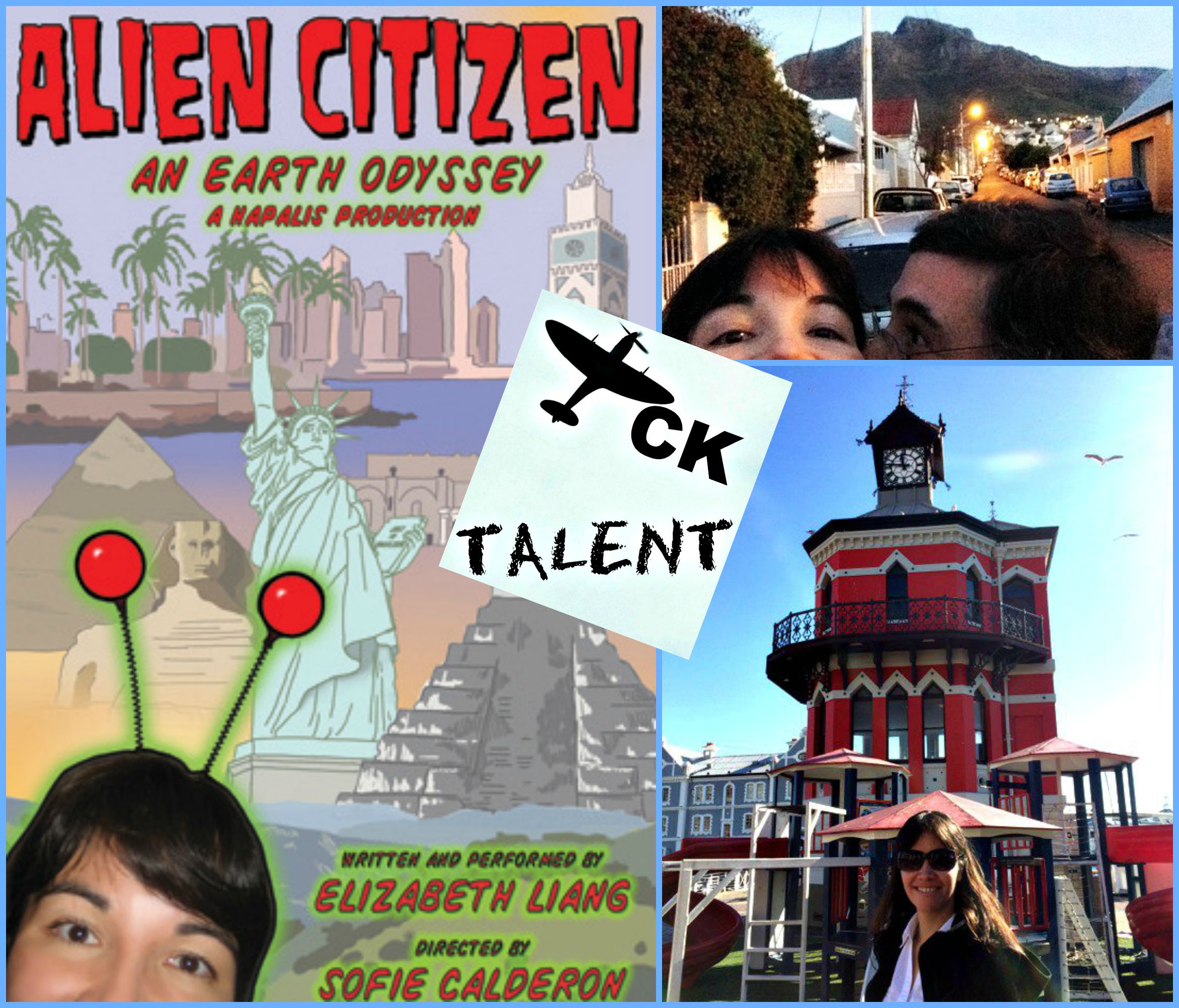
TCK TALENT: As 2016 approaches, Lisa Liang dares to dream big for her one-woman show, “Alien Citizen”

LisaLiang_onFilm

Photo credit (top right): Lights, camera, action! by Portable Antiquities Scheme via Flickr (CC BY 2.0).

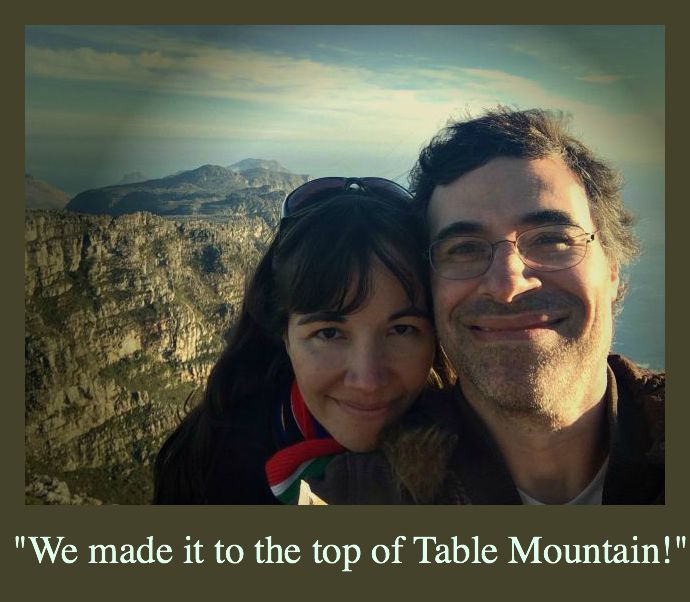
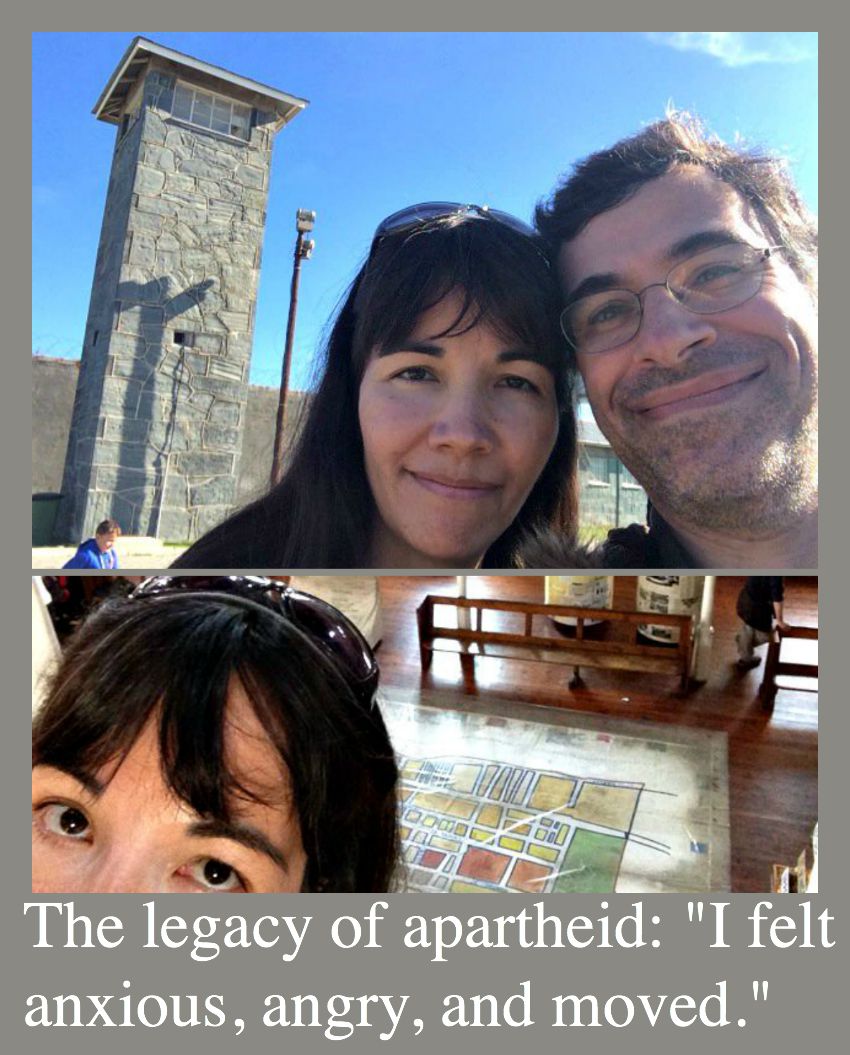
In a year that took her to Spain and South Africa for performances of her play Alien Citizen, columnist Lisa Liang is already making big plans for 2016. You go girl!

Hello, dear readers. This month’s column is devoted to my recent experience filming my one-woman show, Alien Citizen: an earth odyssey, in Los Angeles, California. The show is about growing up a TCK of mixed heritage.

Two years ago, I had Alien Citizen video-recorded so that I could

I had no budget and will be forever grateful to my friend, filmmaker Rod Bradley, for giving the video such high-caliber image quality. For readers who may be unfamiliar with my show, here is what we produced:

Taking it up a level

This year I wanted to film the show at an even higher level in order to…well, that’s the thing: I have many dreams for it. I want to sell it to individual customers and institutions. I also want to send it to the Sundance Channel, IFC, and PBS on the chance that they might like it enough to want to reshoot it as a “special” with a much higher budget. I would love for it to catch the attention of an off-Broadway producer who would give it a proper several-weeks run in Manhattan. I would love for it to inspire a studio to hire me to draft a screenplay or TV pilot based on it. I would love to get great stage and screen acting jobs from it. I would love for it to entice professional producers to come on board for my next solo show. I would love for it to get me great writing gigs.

I want a lot. I’m not sure how to pursue any of it. But I will try.

This all means that I need a filmed version that looks and sounds really good. So I took my ridiculously meager budget (at least I had a budget this time!) and rented a venue where years ago I was in the audience for the greatest live performance of a solo show I’ve ever seen.

Last month, at this tiny theatre, I produced as professional a film shoot as I could under the ultra-low-budget circumstances. We shot over two nights with two extremely high-end digital cameras on both nights—I got great deals on the cameras and equipment, largely thanks to my friend Rod again. I hired a DP (director of photography), a camera operator, and a professional sound recordist (who set up five microphones, including the lavalier attached to my sternum, for truly good sound quality).

My husband, Dan, ran the projections and sound cues, and I hired a stage manager to also hang lights, program the light board, and run lights.

My director, Sofie Calderon, worked tirelessly with the crew and me, having to “slate” the clapboard herself because we had no PA (production assistant) to do the job for her. She was wonderful.

Taking direction Alien Citizen

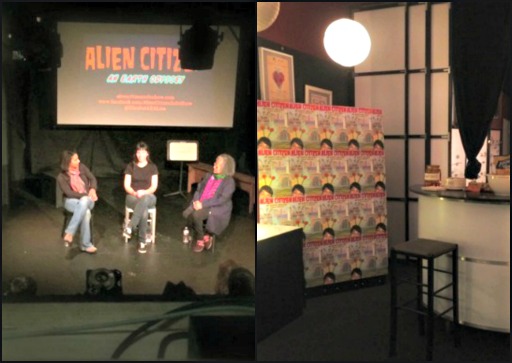
Director Sophie Calderon puts her all into helping Lisa Liang with the filming of Alien Citizen in November (photos supplied).

We had no audience on the first night when we shot close-ups and medium shots; we had a full audience on the second night of close-ups and wide shots.

This is what I’ll say about performing a solo show for cameras but without an audience, starting and stopping for technical and performance adjustments: it’s utterly exhausting. We were at the venue for a good eight hours that night and we must have shot for at least four-and-a-half of those hours. This meant that I had to perform alone for close to five hours. No costar to work off of, no audience to bounce off of, nobody but the silent cameras, the silent crew, and me. Mind you, doing the 80-minute show nonstop is already a tremendous workout. I always say it’s like doing a sprint triathlon while emoting—and I would know because I’ve done a sprint tri. So now imagine doing it for 270 minutes.

Gah!!!

Drama needs an audience

The next night’s shoot was much more fun, thanks to the warm, enthusiastic audience. They were mostly friends and friends-of-friends who were happy to be there, which made all the difference. I enjoyed myself and the performance felt “full.” We had to “hold” a few times due to sirens passing just outside the theatre—the bane of filming in a big city. But the audience was good humored and supportive throughout.

Afterward we had a Q&A moderated by one of my associate producers, Karen Smith, and people asked smart questions. I’ll include the Q&A on the DVD as an “extra” and maybe put it on YouTube as a promo. People stuck around for wine and goodies after that, and it was absolutely lovely to continue receiving support and enthusiasm well into the evening.

Alien Citizen Talkback

Associate producer Karen Smith conducts a talk back with Lisa and Sophie for a DVD “extra”; the lobby is decked out before the public show with an Alien Citizen backdrop for interviews later (photos supplied).

Have I mentioned that I performed with four injuries? I accidentally hurt my lower back in January, and the problem has flared up intermittently throughout the year. My left shoulder/neck area started bothering me over the summer. My right clavicle was injured accidentally at a chiropractic session for the first two injuries (!). And I hurt my right leg during a performance of an excerpt of the show in September. I’ve been doing all I can to take care of these problems: chiropractor, massage, acupuncture, cupping, at-home physical therapy, hot tub, you name it.

Stress with a capital “S”

So I can only think that the reason they all flared up (especially my back) with a vengeance in the weeks leading up to the shoot was: stress. It’s stressful to produce a film, even when it only shoots over two nights. If you’re the only actor in it, and it’s your “baby,” and you’re literally recording it for posterity, then the stress increases exponentially. So I felt more wrecked than usual on the mornings after both performances, and I laid low for a few days afterward. Luckily, Thanksgiving was soon upon us, so I used the holiday weekend as an excuse to stay in.

I look forward to editing the digital version of the show with my director’s input, and then sending it out into the world. The world has been very kind to Alien Citizen so far, so I’m allowing myself to hope for its future.

Meanwhile, my next live performance will be at Smith College on January 30, and my Asia-Pacific debut will be in Singapore in late April. The show still has legs and I’m so grateful to every single person who has supported it.

Since I’ve posted several entries about the show’s adventures in 2015, and you’ve been very indulgent of that, I’m pleased to announce that the first TCK Talent posting of the new year will be an interview of a wildly impressive creative ATCK. Happy holidays, all, and stay tuned!

* * *

Thank you, Lisa! It’s been quite a year for you and your solo show. I’m amazed you still had energy for a film shoot, especially given your injuries. You’re amazing! I think I speak for all the Displaced Nation readers in wishing the brightest of futures for Alien Citizen, in 2016…and beyond! —ML Awanohara

STAY TUNED for the next fab post!

If you enjoyed this post, we invite you to register for The Displaced Dispatch, a round up of weekly posts from The Displaced Nation, with news, book giveaways and other extras. Register for The Displaced Dispatch by clicking here!

Related posts:

BOOKLUST, WANDERLUST: Giving thanks for expat and repat writers whose novels have an international flavor

booklust-wanderlust-2015

Attention displaced bookworms! Our book review columnist, Beth Green, an American expat in Prague (she is also an Adult Third Culture Kid), is back with several recommended reads!

Hello again, Displaced Nationers!

This week is Thanksgiving in the USA. Many Americans abroad skip this holiday for one reason or another—one main reason being the cost of frozen turkey (a friend in Thailand recently posted a picture of one selling for $200 at the expat grocery store!).

But I always try to do something a little bit special. The way I see it, there can never be enough occasions to sit down with friends to a table full of good food!

In addition to planning for Thanksgiving and the holiday season, I’ve been cruising through the rest of my 2015 To-Be-Read list. This month, I’ve been feasting, so to speak, on three books by current or former expats who write fiction set against international landscapes. Two of them are first-time novels and the other is a thriller. One came out with a small press, and the other two are self-pubbed. Take a look!

1) Summer on the Cold War Planet, by Paula Closson Buck (Fomite, 2015)

Summer Cold War Buck

A first novel about expats in late 1980s Berlin, written by a former Fulbright fellow who has written poems and short stories about her travels? Sounds like a perfect choice for the Displaced Nation! Paula Closson Buck directs the creative writing program at Bucknell University in Pennsylvania, and is currently at work on a novel set in Venice—keep your eyes open for a review of that book, too, when it publishes.

Summer on the Cold War Planet tells the story of Lyddie, a young American woman who is living in Berlin a few years before reunification and studying architecture. She encounters a trio of German artists/activists and also meets her future husband, an American botanist named Phelps.

Most of the action takes place, as the title suggests, the summer before the Berlin Wall falls. At that time, Phelps disappears while conducting botanical research in Kurdistan and so Lyddie, now pregnant, returns to Berlin to examine her feelings for the absent Phelps—and rediscover who she is.

Buck brings the period to life through gorgeous details such as:

In the simple way the young East German at the border touched Lyddie’s face, tipping her chin this way and that as he scrutinized her features in relation to her passport, Lyddie felt she understood the meaning of Cold War. He returned her passport with a hint of a smirk and nodded her release.

But, although I was transported to the intense atmosphere of 1989 Berlin, I often felt at arm’s length from Lyddie, I think because, especially in the flashback scenes, she seemed to be letting others make choices for her.

Later, when the action shifts to the Cycladic Islands in Greece, Lyddie becomes more relatable. My favorite character in the novel, I’d like to add, is another point-of-view character, a Greek painter who learns to paint canvases underwater. A new thing to try next time I go scuba diving!

2) A Decent Bomber, by Alexander McNabb (November 2015)

McNabb Decent Bomber

This book also ticked two boxes for inclusion in this column—an expat author and an internationally relevant plot. Alexander McNabb is a former journalist who has lived abroad—mostly in the Middle East—for about 30 years. He is author of several other international thrillers, including the “Levant Cycle” books, all three of which were featured on the Displaced Nation.

The action of McNabb’s previous international thrillers centers on the Middle East, but he sets A Decent Bomber in Europe, mostly in Ireland.

Now, I find it fun to read thrillers (“fun” in that kind of macabre sense), and this one has an enjoyable premise. A retired, reformed bomb-maker for the Irish Republican Army reluctantly agrees to build new bombs, this time for African terrorists—and then tries to save the day before his bombs explode. McNabb keeps the pacing tight, the action scenes believable, and the violence just on this side of gruesome.

Perhaps because of recent current events, I was also impressed with how delicately he handles the multiculturalism of present-day Ireland, as well as the long, contentious history between the English and Irish. Take, for example, the following scene, set in a mosque in Northern Ireland:

“Welcome. I am Abdelkader Ul-Haq.”

“Hello, Father. My name’s Pat.”

Abdelkader hobbled to behind the desk and lowered himself into the wooden armchair. “I am not your father. May I sit?”

“Of course. I’m not holding you up. And father is we call our priests.”

“I know. I was joking with you. It is always best to joke with men who have guns, I am finding.”

“What gun?”

“I know the shapes guns make in clothes, Mister Pat. I come from a troubled place.’

“Well you’ve certainly hopped out of the frying pan into the fire.”

“Belfast? It is peaceful now. Before, there were troubles. No more. How may I be of assistance to you?”

Lest you be put off by the idea of following the adventures of a lone cowboy (indeed, Pat is such a cowboy that he actually owns cows), I should mention that our hero is rarely alone. He is joined on the chase by his college-student niece along with a group of police officers and politicians from both the Republic of Ireland and Northern Ireland, all of whom provide moments of comic relief. As we know from the Displaced Nation’s previous encounters with McNabb, he has a sense of humo(u)r.

3) I Have Lived Today, by Steven Moore (October 2014)

I have lived today Moore

I included this book in this particular round-up because of the author’s international credentials, and because it has received 130+ five-star reviews on Amazon. Steven Moore is the man behind the visually stunning travel blog, Twenty First Century Nomad (he also has an author site). He has been working and traveling abroad for at least twenty years. He now lives in Mexico, and one suspects his adventures aren’t over yet!

But, now, let’s burrow into the pages of Moore’s book, his first. Although the novel does have scenes both in the UK and in New York City, it is principally a coming-of-age story about a boy whose travels have to do with discovering his own conscience. I Have Lived Today takes place in the 1960s and follows the turbulent journey of Tristan Nancarrow, a boy so badly treated by his alcoholic father that he was never allowed to attend school.

Tristan’s mother is forced to run for her life, and not long after, Tristan makes his escape from the isolated island where the family lives. He spends the bulk of the book trying to reunite with his mother—having plenty of adventures, along with his share of small triumphs and bitter tragedies, along the way.

I especially enjoyed the parts of the novel when Tristan discovers what he was missing out on while under his father’s control. One of the first things he does after escaping is go to a bookstore and buy an atlas:

Tristan turned the pages delicately, as if he was looking at a priceless and ancient manuscript. To him it was an object of beauty, a treasure from a museum, and indeed the musty old store had a museum feel about it, or at least that’s how Tristan imagined a museum would seem, having never been to one.

There are times in I Have Lived Today when the tone takes on a moralistic edge and the pacing becomes steady and unrushed in a manner reminiscent of a Grimm’s fairy tale (though, to be sure, without any witches or other supernatural beings).

Our hero, Tristan, despite his father’s brutal abuse, remains an innocent who chooses to embrace a white-knight moral code even as the world shows him how cruel it can be. Through switches in point of view, Moore lets the reader peek into other characters’ motivations, but the focus is always on Tristan and his choice to reject his personal demons. This hero has resilience—the quality that we expats need—in spades.

* * *

So, Displaced Nationers, if you’re lucky enough to have a few moments to yourself over Thanksgiving or before the holiday season gets into full swing, you might want to check out these three books. They’re as different as the sides at a potluck Thanksgiving, and no less delicious for that!

p.s. And, since it’s Thanksgiving, may I say a hearty thank you to my readers! Please keep in touch and let me or ML know if you have any suggestions for books you’d like to see reviewed here! Last but not least, I urge you to sign up for the DISPLACED DISPATCH, which has at least one Recommended Read every week.

STAY TUNED for next week’s fab posts!

Beth Green is an American writer living in Prague, Czech Republic. She grew up on a sailboat and, though now a landlubber, continues to lead a peripatetic life, having lived in Asia as well as Europe. Her personal Web site is Beth Green Writes. She has also launched the site Everyday Travel Stories. To keep in touch with her in between columns, try following her on Facebook and Twitter. She’s a social media nut!

If you enjoyed this post, we invite you to subscribe to The Displaced Dispatch, a weekly round up of posts from The Displaced Nation and much, much more. Sign up for The Displaced Dispatch by clicking here!

Related posts:

CULTURE SHOCK TOOLBOX: Newbie expats, to keep waves of culture shock from crashing over you, practice the art of tacking

Culture Shock Toolbox Beth Green

Beth Green at a Buddhist temple in Cebu City in the Philippines, during Chinese New Year (supplied).

Transitions enthusiast H.E. Rybol is back with her latest interview guest.

Ahoy, Displaced Nationers! This month, fellow Displaced Nation columnist Beth Green takes us on a brief tour of her extensive, initially aquatic travels. You know how children test the waters? Well, Beth got to do that quite literally. That’s right, Beth spent her childhood on a sailboat! Doesn’t that sound mouth-watering? Though I must admit that with my predisposition for motion sickness I’d probably spend most of the time with my head over the railing.

Anyhoo, Beth now lives on land—in Prague, the Czech Republic—where she works as a freelance writer and English-language coach. She is also a member of the Sisters in Crime mystery writers’ association. Upon discovering she is a traveler, bookworm and lover of spookiness, I knew I had to interview Beth for this column! And luckily for us, she kindly agreed to share her culture shock stories.

Join us as we talk about opening a conversation with an apology, cringing at our own meltdowns, sending stuff back in restaurants (or not!), and working weekends to make up for weekday public holidays (say what?!). You never know, you may pick up a few items for your culture shock toolbox!

* * *

Hi, Beth. Welcome to my column! As a TCK and an ATCK, you’ve led a peripatetic life. Tell us a little about where you’ve lived…

I’ve never lived anywhere for very long! As a kid, I traveled with my parents on a sailboat. We were in the Caribbean for seven years and the South Pacific for two, with stops along the coastal United States in between. I went to high school in Alaska and to university in the continental USA, but my junior year of university I went to Spain on exchange for a year. That experience inspired me to move to Europe when I graduated and work for a bit. I lived in the Czech Republic for three years, where I met my now-husband (who’s Australian…of course!). Then, we moved to China together to teach English. We were there for four-and-a-half years all together—but with a break in the middle when we did a long backpacking tour of Southeast Asia and India that included living on an island in Thailand for five months. After touching down briefly in the Philippines and Thailand again, we’ve been back in the Czech Republic for the past two years.

In the course of these many transitions, have you ever ended up with your foot in your mouth?

Oh, sure! The first time I moved to the Czech Republic I quickly realized I needed to start every conversation in Czech with an apology. That way I could make up for the inevitable times when I forgot to whom I should give kisses on the cheek rather than shake hands, or failed to greet everyone properly (as is customary in many more situations in Central Europe than in other cultures—you say “hello” and “goodbye” even to strangers in elevators). China as well was a tricky place to stay on the right side of etiquette. Speaking of which, I can recall an embarrassing meltdown I had once in China after being served a mango-papaya smoothie (what I had actually ordered, I realized later) rather than a melon smoothie like I thought I was getting. I lost all kinds of “face” that day.

Art of European Cheek Kissing

Photo credit: Women kissing at bus stop in Paris, France, by Steven Depolo via Flickr (CC BY 2.0).

How should you have handled that situation? What if any tools have you developed to adapt to this kind of scenario?

What I should have done—and what I learned to do later when I inevitably ordered the wrong thing due to either fanciful names on the menu or my ham-tongued attempts to speak and understand Mandarin—was just to give my smoothie to someone else and order another one. In certain cultures, you just can’t send stuff back in a restaurant! In other words, I had to get better at tacking: that’s when you zigzag back and forth with your sailboat instead of sailing right into the wind. I had to reminding myself constantly that expect the unexpected and not to make too many waves. Like the time in China when I was told that we would all work on Saturday to make up for a public holiday on Monday. What? That’s considered normal? Well, this will be a fun story later! And, I’d better make a note to check my next contract veeerrry thoroughly!

Smoothie debacle collage

Photo credits: (Top) Charm- and confidence-boosting smoothie, Ghangzhou, China, by Cory Doctorow via Flickr (CC BY-SA 2.0); Breakfast (Shanghai, China), by Martin Slavin via Flickr (CC BY-SA 2.0); dissatisfied character via Pixabay.

Can you think of a situation you handled with finesse, and why do you think that was?

I feel like my latest move, back to Europe from Asia, went well because I made a decision not to hard on myself when the waters got choppy. I also decided to take measures right away that past experience had taught would help lower my stress; for instance:

  • hiring someone to help with my visa paperwork (instead of doing on my own);
  • asking for help finding an apartment instead of taking the DIY approach;
  • joining a co-working space right off the bat (even before the apartment) so that I had a quiet place to work even when everything else was up in the air; and
  • enrolling in a refresher language course.

Of course, I’m lucky that I had the option to do all of those things—not everyone will when they move cultures.

If you had any advice for someone moving abroad for the first time, what tool would you suggest they develop first and why?

This advice is easy to give and hard to follow: develop patience and also trust in yourself: you will make progress eventually. Patience for yourself for not “catching on” quickly to situations (I find that culture shock seems to lower your IQ a bit at first!), patience for local people who might not understand your expectations (even though they’re crystal clear to you), patience for the culture shock itself. If we go back to our sailing metaphor: By tacking, you move into the wind gradually. But the zigzagging doesn’t necessarily slow you down. You can learn to tack efficiently—that’s what I tried to do when seeking help for some of the more stressful challenges of settling back into life in Prague. Use your first few months wisely, and eventually your culture shock will go away! Tacking is the Blu-Tack of the culture shock toolkit.

Tacking is the Blu-Tack

Photo credits: Tacking upwind, by Tom Purves via Flickr (CC BY 2.0); Old blu-tack packaging, by Clive Darra via Flickr (CC BY-SA 2.0).

Thank you so much, Beth, for sharing your experience with us! Like you said, if you develop the sailor’s tacking skill, soon it’ll all be water under the bridge. Plus, as you also pointed out, you’ll have great travel yarns to share! In the end, it’s the situations that are most difficult to navigate that make for the best lessons, right?! That’s what I love about culture shock: the lessons we learn and the way our horizons shift as a result.

* * *

Readers, what do you make of Beth’s advice? If you like what she has to say, I recommend you visit her Booklust, Wanderlust book review column here on the Displaced Nation, as well as her personal site. And as those who frequent her column know, she’s a social media nut: find her on Facebook and Twitter.

Well, hopefully this has you “fixed” until next month.

Until then. Prost! Santé!

H.E. Rybol is a TCK and the author of Culture Shock: A Practical Guide and Culture Shock Toolbox. She loves animals, piano, yoga and being outdoors. You can find her on Twitter, Linkedin and Goodreads. She recently launched a new Web site and is now working on her second book.  

STAY TUNED for next week’s fab posts.

If you enjoyed this post, we invite you to register for The Displaced Dispatch, a round up of weekly posts from The Displaced Nation—and much, much more! Register for The Displaced Dispatch by clicking here!

Related post:

TCK TALENT: Donna Musil, Writer-Director, Lawyer, Activist & Proud Army Brat

The uber TCK-talented Donna Musil. Photo credit: Ray Ng.

The uber TCK-talented Donna Musil. Photo credit: Ray Ng.

Columnist Elizabeth (Lisa) Liang is back with her latest interview guest.

Welcome back, readers! It’s been awhile. But I think the wait will be worth it as my latest interviewee is the super-talented writer, filmmaker and social change agent Donna Musil. Donna is also a fitting choice for the month when America celebrates Veteran’s Day. She made the award-winning documentary BRATS: Our Journey Home, narrated by Kris Kristofferson, about what it is like to grow up in a military family and the long-term impact it can have on a person’s adult life.

She is also the founding director of Brats Without Borders, a nonprofit organization dedicated to increasing awareness and support for military brats and other Third Culture Kids.

Donna’s interest in the subculture of military brats is personal. Born into a career Army family, she went to 12 schools by the time she was 16 and never had a hometown. Her family moved almost every year until she was seven, from Fort Benning, Georgia, to two other bases in Georgia (Athens and Macon, the latter when her father was serving in Korea and Vietnam); then to the enormous Army installation in Fort Bragg, North Carolina, and to Charlottesville, Virginia, where her father was doing something at the university. They moved overseas twice: to Germany (Bad Kreuznach), followed by Fort Mason in San Francisco; and to South Korea—Yongsan Garrison in Seoul and then Camp Walker in Taegu (now Daegu), after which they were stationed in Fort Knox, Kentucky. Donna’s father died in the summer of 1976, two months after she turned 16, and her family had to leave base housing. They moved to Columbus, Georgia.

Talk about talent! BRATS was Donna’s very first directing effort. I had the privilege of getting to know her as one of my fellow authors in the TCK anthology Writing Out of Limbo.

* * *

Welcome to The Displaced Nation, Donna. Even though I’ve met and have interviewed plenty of Adult TCKs, my head is still spinning at the number of moves you experienced as a youngster. Once you reached young adulthood, did you settle in one spot or keep moving?
I stayed in Georgia for college, earning a degree in journalism from the University of Georgia and a law degree a few years later (the time in between I traveled and worked as an on-air radio newscaster). After law school, I practiced union-side labor law in Washington, DC and Atlanta. In the late 1980s, I quit practicing law to pursue a writing career, my childhood dream. After a few years in Atlanta, I moved to Los Angeles to “pay my dues” in the film business, but when the 1994 Northridge earthquake struck and destroyed half of my possessions, I stored the other half at my sister’s and moved to Dublin, Ireland, for two years to write. When I ran out of money, I returned to Georgia and began making the BRATS film. I lived in a crooked, old family lakehouse, which became my “base.” During the ten years it took to make and distribute the BRATS film, I also worked as a technical writer and/or attended writer’s residencies in Denmark, Spain, Paris, Taos, and Port Townsend (Washington).

Where do you live now?
In 2010, I moved to Denver to be near my sister and her family, and have lived there ever since, except when I’ve been on writer’s residencies—in France, Chicago, and San Francisco. (I’ll be living at a writer’s residency in Chiang Mai, Thailand, this coming winter.)

Donna Musil, already displaying her talents in Korea, 1975. (Photo supplied.)

Donna Musil, already displaying her talents in Korea, 1975. (Photo supplied.)

Were you happiest in a certain place at a certain time?
I was happiest when we lived at Fort Mason in San Francisco when I was 11 to 13 years old. Interestingly enough, it was one of the least “military” of all of our assignments, just a block away from the famed Ghirardelli Square, overlooking the bay. I attended public schools, populated by an eclectic array of children, whose parents were everything from authors to restaurant owners to ballerinas. The racial makeup of the student body was about a third Chinese, a third white, and a third black and brown. I loved it!

I can imagine you thriving on the diversity. Was there anything else that made that time special?
Yes, swimming! I joined the Presidio Swim Club after watching Mark Spitz bedazzle the tragic 1972 Olympics, and began dreaming of my own (albeit unlikely) Olympic run. I walked to school every day and to swim practice every afternoon. I think I still hold the Marina Junior High School record for the most pull-ups for a 13-year-old girl—12! I loved everything about San Francisco—the culture, the diversity, the hippies on the beach. It was also the last year before my father got sick, so I suppose it was the end of my innocence. The next year, we moved to Seoul, Korea, for six months and then to Taegu, where there was no swim team, and my dreams of Olympic glory evaporated. My freshman class had ten students, total. We were surrounded by jaded, war-struck soldiers on their way to or from Vietnam, bars, prostitutes, and easy access to drugs and alcohol. You can imagine the results.

Because everybody needs a place to call home…

Let’s talk about BRATS. For readers who aren’t familiar, here is the trailer:


Were you surprised by what a hit BRATS has been with adult military brats and ATCKs? 
The reaction to BRATS: Our Journey Home has been interesting. I initially made the movie to figure out “who I was and where I was from,” but it quickly became apparent that it was less about me and more about the brat/TCK culture in general. I had been separated from the military life for twenty years when I began filming so was somewhat surprised to discover that most of the issues the movie discusses are just as relevant today as they were when I was a child—particularly the emotional and trauma-related issues.

In your essay in Writing Out of Limbo, you mention a teenaged boy who loved the documentary because it was the first time he had seen a family like his portrayed on film. You state: “I would do it all over again to hear that one comment. To make a difference in just one child’s life—no honor, award, or monetary compensation could ever compare.” That’s tremendous! But let’s also talk about your goal of affecting change within the military itself. How has the military responded?
To be honest, I would have to say that the military-as-a-whole has not welcomed the film or the research of Brats Without Borders (or any other “brat” groups) with open arms, nor have they helped us implement programs or provide resources to current and retired families that address the emotional needs of military brats/TCKs. There have been pockets of institutional and corporate support for a related art exhibit and workshops, as well as the film distribution costs, and Armed Forces Network has broadcast the film multiple times. The reactions have always been universally positive, but we could be doing so much more (with so very little).

So there are no military groups who have interpreted the film as a call to action?
In general, the military clergy and soldiers have been most supportive of our work and the military educational system and spouses the least supportive. It took me a while to realize that it must be hard to hear that the life you’ve chosen for your family (often a life better than your own childhood) also has its flaws. Many (high-powered) spouses are willing to hear and promote the positive legacies of growing up brat/TCK but tend to gloss over the painful legacies and attribute them to bad parenting instead of institutional pressures, traditions, or combat trauma. As a result, nothing much changes, and (as it has always been), brats/TCKs are forced to take care of their own emotional needs. Nowadays, people talk a little bit more about the sacrifice of military kids and groups give them free “stuff”; but they’re still not addressing their emotional needs (among other things) or considering what institutional changes might be made to ease their transitions and difficulties.

You must find that frustrating.
It’s particularly frustrating when I hear the institution and the media talk about the “lack of research” in this area, because it’s simply not true. We have the research. We’ve had it for 25 years. They just don’t always like what the research says. The military wants to downplay the negatives and the media wants to downplay the positives. Meanwhile, millions of dollars are being thrown into programs for military kids that are designed by people who haven’t walked the walk, or whose loyalties lie more with the institution or perpetuating their own existence than they do with the children. That may seem harsh, but I think it’s the truth. Perhaps one day actual brats and TCKs will be invited to the table and given substantial support, but I’m not holding my breath. In the meantime, we’ll just keep helping ourselves!

“Like many brats,…I could talk to, but didn’t trust, anyone.” —Donna Musil in Writing Out of Limbo

Let’s move on to talk about the TCK experience. Many of the sections in your essay for Writing Out of Limbo resonated with me; for instance, when you said: “There are lessons each of us has to learn in our lives, and the more we avoid learning a particular lesson, the harder God will knock us down, until we have no choice but to learn it (and move on to the next lesson….). Still I didn’t learn.” You mention trust issues, inability to handle disagreement or confrontation, and more traits that are common among ATCKs, for which you needed to learn healthier coping mechanisms. Has making and touring BRATS helped you deal with this? Or do your old TCK survival mechanisms still crop up from time to time (like mine do even though creating Alien Citizen helped me a lot)?
For good or ill, I think all of my TCK survival mechanisms are alive and well! I’ve just learned to manage them better, with experiences from the BRATS film, my new film projects, some very good therapy, a lot of reading, and a very kind, understanding, and patient fiancé.

Has making and touring BRATS helped Donna to deal with some of the TCK issues Donna describes in Writing Out of Limbo? (Cover art; poster art, supplied.)

Has making and touring BRATS helped Donna to deal with some of the TCK issues she describes in Writing Out of Limbo? (Cover art and poster art, supplied.)

Are you tempted, for example, to run away from confrontation/disagreement?
Yes, I’d rather flee, move, break up or leave. I’ve learned to temper that impulse by isolating myself and dealing with it after I’ve calmed down. I also still have a visceral reaction to mean-spirited, unjust, authoritative, or self-centered people, but instead of confronting them like I used to, I try to avoid them. I’m much less black-and-white about things—but perhaps that’s just the wisdom of age. I do make people earn my trust instead of instantly bestowing it, and vice versa. There are so many ways “growing up brat/TCK” still affects my life today; it probably shapes almost everything I do. As I get older, though, I try to build on the positive aspects of my youth and temper the less-than-positive legacies, which is often much easier said than done!

Do you identify most with a particular culture or cultures, or with people who have similar interests and perhaps similar cross-cultural backgrounds?  
I don’t identify with any particular culture or ethnicity, other than the brat/TCK culture. I don’t even have any real nationalistic tendencies. I don’t think America is “the best country in the world.” I think all countries and all people have their good points and not-so-good points; it just depends on what you’re most comfortable with. That said, I am definitely the quintessential American—independent, strong-willed, feisty, rebellious. Daniel Boone was my (great-great) uncle, his oldest brother Samuel my (great-great) grandfather, so I come by that spirit honestly. But my political sensibilities are more Scandinavian, like my grandmother’s side of the family. I enjoy being around other curious, open-minded “outsiders,” many of whom tend to have cross-cultural backgrounds. I try very hard not to consider myself, or any group to which I feel I might belong, “special.” That kind of thinking is the source of most of the world’s ills.

Do you have “itchy feet,” which still make you want to move frequently? Or would you prefer to have a home base and only travel for pleasure?
My poor fiancé. He was an educator brat—but basically grew up in one town in Germany. When we first started dating, I’d tell him all of the places I dream about living in: Vancouver, Canada; Austin, TX; San Francisco, CA; Chiang Mai, Thailand; Asheville, NC; and Paris, etc. Like any man, he wanted to give me what I wanted, but he couldn’t pin me down on what I actually wanted (one of the banes of being a brat/TCK). I was born and raised to be geographically and intellectually curious (the best legacy of growing up brat/TCK!). I like to stay somewhere until I want to go somewhere else—and my fiancé is okay with that, too. I don’t have any children, and his are grown, so it’s possible for us to live this way. Perhaps we’ll settle down in one place in the future. Denver is a nice town. We like it—for now.

Donna’s next act(s)

Returning to your work: I believe you are making another documentary? Tell us about it.
Yes, the film is called Our Own Private Battlefield. It’s the first documentary about the intergenerational effects of combat PTSD on military children, and how one Marine family is using art to help heal the long-term wounds of the Vietnam War. I still have a few more interviews to shoot. I’m hoping the lessons learned from this family will help generations of current and future military families deal with the traumas of war, both here and abroad.

Battlefield sounds amazing.
It’s actually a byproduct of the combined efforts of Brats Without Borders and Marine brat Lora Beldon’s organization, Military Kid Art Project, which teaches customized art classes to military children.

Your mention of art reminds me: I think an art exhibit is one of your other projects?
Yes, Lora and I founded the BRAT Art Institute this year and will host our first Military BRAT Art Camp in 2016, in conjunction with Old Dominion University, in Norfolk, VA. Right now we have a museum exhibit currently touring the country, called “UNCLASSIFIED: The Military Kid Art Show.” It won a Newman’s Own Award in 2012 and features over fifty years of military brat and veteran art from around the world, historical artifacts, and films about using art to heal trauma. The art camps will be part of a larger research effort to study how art can help military children deal with the traumas of war and multiple deployments.

Do you have any projects that don’t relate to the military?
Yes, my personal projects are much more eclectic. Besides a TV show based on brats in Korea in the 1970s, I’m also shopping a children’s animated film script based on African folktales (with a producer from Ghana) as well as a feature film screenplay about a modern-day union campaign at a small-town nursing home. My current writing efforts are focused on a murder mystery, based on (what I believe) is an unjust incarceration of an innocent man for over thirty years.

How can we follow your progress?
People can see my brat/TCK projects at www.USAbrat.org. Later this year, I will be putting up a personal page, donnamusil.com, for my non-brat/TCK projects.

* * *

Thank you so much, Donna! I think I can speak for the entire Displaced Nation in asserting that you’ve blown us all away with all the important and necessary work you do for military brats, veterans, and TCKs. Congratulations on your many extraordinary achievements! Readers, please leave questions or comments for Donna below.

Elizabeth (Lisa) Liang is a prime example of what she writes about in this column: an Adult Third Culture working in a creative field. A Guatemalan-American of Chinese-Spanish-Irish-French-German-English descent, she is an actor, writer, and producer who created the solo show Alien Citizen: an earth odyssey, which has been touring internationally. And now she is working on another show, which we hope to hear more about soon! To keep up with Lisa’s progress in between her columns, be sure to visit her blog, Suitcasefactory. You can also follow her on Twitter and on Facebook.

STAY TUNED for more fab posts!

If you enjoyed this post, we invite you to register for The Displaced Dispatch, a round up of weekly posts from The Displaced Nation, and so much more! Register for The Displaced Dispatch by clicking here!

Related posts:

BOOKLUST, WANDERLUST: In “The Porcelain Thief,” ATCK and expat writer Huan Hsu assembles shards of his Chinese heritage

booklust-wanderlust-2015

Attention displaced bookworms! Our book review columnist, Beth Green, an American expat in Prague (she is also an Adult Third Culture Kid), is back with a new recommended read!

Hello again Displaced Nationers!

After a long absence (in which I got to satisfy some wanderlust, go me!), I’m resuming my column just in time for the crisp autumn weather that is conducive to some serious reading.

This month I’m excited to tell you about one book in particular I uploaded to my Kindle since we last met: The Porcelain Thief: Searching the Middle Kingdom for Buried China—a memoir of a journey through Mainland China and Taiwan by Chinese American journalist Huan Hsu.

Photo credits: Top third of an antique Chinese vase (Pixabay); cover art; Huan Hsu's author portrait by Martijn van Nieuwenhuyzen.

Photo credits: Top third of a Chinese antique porcelain vase (Pixabay); cover art; Huan Hsu’s author portrait, by Martijn van Nieuwenhuyzen.

Hsu currently lives in Amsterdam and teaches creative writing at Amsterdam University College, but he grew up in Utah. His parents had immigrated to the US from China via Taiwan. Hsu had never set foot in Asia until, as an adult, he started investigating the family legend that sparked this book.

I think one of the reasons Hsu’s account of his travels within China resonated with me so much is that I returned to the United States this summer after a two-year absence and, as usual, felt disoriented. In my case, of course, it was reverse culture shock. I just couldn’t get over the novelty of understanding everything. I started eavesdropping on conversations not because I wanted to but just because I could! Sometimes when people asked me questions, I would stare at them blankly before realizing I could understand what they were saying and respond. I found all the signs and labels, which I often tune out in my life in Prague, distracting. Man, counter culture shock can be tiring!

But whereas I was going home again, Hsu was recounting his very first journey to his homeland, another kind of (and more challenging, I think) Through-the-Looking-Glass experience.

Hsu goes to Shanghai ostensibly to work in an uncle’s semiconductor chip business, but really he wants to interview his grandmother to see what she knows about the family tale of his great-great grandfather having buried a vast collection of prized antique porcelain just before he and his family fled the town of Xingang, on the Yangtze River, to escape the Japanese occupation.

In a place he’s never been—but which many people expect him to regard as “home”

In Shanghai, Hsu finds himself in a place he’s never been—but which many people expect him to regard as “home.” Coming to China without fluent Mandarin, he’s just as much at-sea as many other American expats; but the people he encounters treat him differently than they do other foreigners. In fact, they don’t really consider him an “expat”; rather, they see him as “Chinese”—as much as he would have been if his family had never left that part of the world.

Invisible foreigner in Shanghai

Photo credits: “Just a ‘Small Crowd,'” by Kyle Taylor via Flickr (CC BY 2.0); invisible man (via Pixabay); middle third of Chinese antique porcelain vase (via Pixabay).

This honorary insider status frequently works to Hsu’s advantage as he tries to uncover the truth—if any is to be found—about the complicated events that led to his ancestor burying his precious porcelain pots before taking flight and becoming displaced.

To be honest, I would have been perfectly happy if Hsu’s entire book had been about his experiences as an American-born Chinese exploring China. As Hsu himself says in an essay published earlier this year just before The Porcelain Thief came out, “while books about the Chinese-American experience in America are plentiful, … the story of Chinese-Americans in China remains unstudied.”

It is a story that interests me personally as my now-husband, who is half Chinese, and I once lived in China, where he could pass for Chinese as long as he didn’t talk too much, whereas I was the visible foreigner. (Now that we live in Prague, our “visibilites” are reversed.)

Hsu talks about the times he had it easier adjusting to China because of his ancestry (fewer stares, more acceptance in some areas), but I was happy to see him also address the down side of this situation:

“…(F)etishization of Westerners was perhaps the most exasperating part of being an ABC [American-Born Chinese] in China…the Chinese still regarded laowai [foreigner] as an ethnicity, not a nationality, so we lacked the necessary skin tone and hair color.”

Likewise, other expats fail to see him:

“…I felt wounded when a fellow expat’s gaze passed over me without acknowledgment. Non-Chinese foreigners seemed to always notice one another on the street, sharing a knowing, conspiratorial glance, and when I tried to catch their eyes, they probably regarded me as just another impolite, ogling local. Though I stood out to the local Chinese, I was also invisible to many of my countrymen.”

Hsu’s refreshing honesty about the difficulties of living in China

One of the dangers of many travel memoirs (one that I sometimes fall prey to in my own writing) is to only write about the trip’s highlights. But perhaps because of his journalist background, Hsu is refreshingly honest. He calls it as he sees it:

“To face the absurdities of daily life, expats in Shanghai keep a mantra: This is China. The Middle Kingdom was not so much a foreign country as it was a parallel universe that managed to offend all five senses plus one more—common.”

Hmm… As I can attest from my own experience, it’s not only expats in Shanghai who feel that way!

And if he is honest about the difficulties of living in China, Hsu is also honest about the difficulties of studying Chinese. Anyone who has signed up for language classes after a move abroad will identify with this passage:

“Their Mandarin sounded familiar, and their speech didn’t seem fast to me, and sometimes I could even understand a good number of the words. But I couldn’t comprehend a thing because I was missing all the important ones, so I would hear something like, ‘Okay, and now we’re going to talk about [blank] and why you [blank] and [blank] because [blank] [blank] [blank] [blank] [blank] [blank] otherwise [blank] [blank] [blank]. Any questions?’”

Good memoirs are a little raw; this one is. Just as Hsu doesn’t pull any punches when describing China, he is equally blunt about owning up to his family’s quirks and talking about his own difficulties surmounting culture shock. Regarding this last, he writes about people having “the same personal space as puppies” on public transportation, and about his cringing embarrassment when he sees people drying their laundry on telephone poles in less-affluent areas of the city. I think anyone who has been an expat in China has made a similar list of initial observations. I can remember doing so after moving to China in 2006.

So much more than just a TCK-experiencing-Culture-One memoir

But in the end, the book is so much more than just a TCK-experiencing-Culture-One memoir. Tsu also introduces the reader to the art of Chinese porcelain, which serves in turn as a kind of symbol of modern China, a nation of fragments.

Photo credit: Chinese antique porcelain vase (Pixabay).

Photo credit: Chinese antique porcelain vase (Pixabay).

In fact the bulk of the book is devoted to Hsu actively searching for any remaining pieces of the family treasure. He flies to Taiwan and Hong Kong to locate the heart of the old porcelain industry. He finally visits the old family property that his great-greats had fled and in so doing turns up long-forgotten shirttail relations.

In the course of this quest, Hsu pieces together beautifully imagined scenes of his family’s escape from the Japanese into the Chinese diaspora.

I enjoyed The Porcelain Thief on all kinds of levels: as memoir, travelogue, art history, and social history. I’d particularly urge anyone who has lived as an expat in China, or who is thinking of doing so, to give it a try.

* * *

So, readers, have you ever had the experience of being an “invisible” expat or know someone who has felt that way? Let us know in the comments. And if you have ideas for books to review for this column, please leave a comment or let me know on Twitter! Last but not least, I urge you to sign up for the DISPLACED DISPATCH, which has at least one Recommended Read every week.

STAY TUNED for next week’s fab posts!

Beth Green is an American writer living in Prague, Czech Republic. She grew up on a sailboat and, though now a landlubber, continues to lead a peripatetic life, having lived in Asia as well as Europe. Her personal Web site is Beth Green Writes. She has also launched the site Everyday Travel Stories. To keep in touch with her in between columns, try following her on Facebook and Twitter. She’s a social media nut!

If you enjoyed this post, we invite you to subscribe to The Displaced Dispatch, a weekly round up of posts from The Displaced Nation and much, much more. Sign up for The Displaced Dispatch by clicking here!

Related posts:


CULTURE SHOCK TOOLBOX: Expats, when it comes to culture shock, it’s best to measure your progress in increments and be patient

Photo credit: Cecilia Haynes at Cappadocia, Turkey (supplied).

Photo credit: Cecilia Haynes at Cappadocia, Turkey (supplied).

For her column this month, transitions enthusiast H.E. Rybol interviews a fellow Adult Third Culture Kid and freelance writer, Cecilia Haynes.

Hello, Displaced Nationers!

I’d like to introduce you to this month’s guest: fellow Adult Third Culture Kid Cecilia Haynes. A self-described “state department brat,” Cecilia is the product of a Chinese mother and an American father. As she writes on the About page for her blog, Unsettled TCK:

Moving is all I have ever known.

Cecilia tells a number of stories about herself in one of her blog’s most popular posts, 10 TCK Quirks. I really like the first one, when she says she’d rather not admit how old she was when she discovered that “Visa” didn’t simply mean “that thing in your passport that allows you to go to different countries.” She says it took her a long while to realized it was a credit card brand as well. For me, this anecdote beautifully illustrates a line I keep seeing on social media that reads:

Collect memories, not things.

As an adult Cecilia continues to travel the world while making her living as a freelance writer, photographer, web moderator and editor. She’s the co-host of the awesome biweekly TCK chat on Twitter where participants discuss all things TCK. Her work has been published in The Worlds Within Anthology, The Places We’ve Been: Field Reports from Travelers Under 35 and Among Worlds.

Cecilia has kindly agreed to share some of her culture shock stories. Read on to find out where this seasoned traveler has lived, what she’s experienced—and the tools she recommends for others who are going through cultural transitions…

* * *

Hi, Cecilia. Welcome to The Displaced Nation! As a TCK and an ATCK, you’ve lived all over world. Tell us a little about those places…
I was born in Hong Kong and then we went to Calcutta, India, before moving to Taipei, Taiwan, for two years and then to Beijing, China, also for two years. That was before going to New Delhi, India, and then Mclean, Virginia, USA, each for four years. Then it was back to India (Chennai) for three years, and then on to Manila, the Philippines, for one year, where I graduated from high school. After high school I went to the University of Virginia for four years before moving to Hong Kong for a year and then backpacking around the Tibetan Plateau and northern India for about a year, after which I spent a year in Alanya, Turkey before finally moving to Florida, where I currently live.

Wow, that’s a lot of transitions! Did you ever accidentally transfer the wrong customs or behaviors to a new culture, thus ending up with your foot in your mouth?
I was brought up in so many cultures that weren’t my own that I was pretty culturally sensitive from an early age. Even in Hong Kong where my mom’s family lives and in Ohio where my dad’s family lives, I’m an outsider. I sometimes have this internal awkwardness as I feel out a new cultural situation. Take off shoes or leave them on? Eat with hands, chopsticks, or knife and fork? Moment of silence before eating—does that mean I have to pretend to pray or say amen? But I can’t really think of a truly humiliating cultural transition story where I acted out of turn. That said, I do have plenty of hilarious misadventure stories, such as sitting between two of the nastiest toilets you can imagine on a third-class train in southern India for eight hours(!).

Say amen take off shoes

Photo credits: (top) The big yawn, by Ali Edwards’s sister via Flickr (CC BY 2.0); Please take off shoes when reading the paper, by antjeverena via Flickr (CC BY-SA 2.0).

It sounds as though you fit in everywhere you go, even on an Indian train! What tools do you use?
I model my toolbox on those around me. I observe the local people and mimic their actions. If I am truly confused, I will just ask since it’s better to err on the side of caution than make a social blunder through being overconfident. My number one rule is to be respectful of other people’s customs.

Indian train misadventures

Indian Railways, by Grey Rocker via Flickr (CC BY-SA 2.0).

Absolutely, respect is paramount. Can you think of a situation you handled particularly well? 
Since I am a mix/hapa, I can blend into much of Southeast and East Asia, which means that local people often assume knowledge I don’t have. When you’re an invisible immigrant, you need some special tools. For instance, I’ve developed a certain finesse for handling the times when people approach me speaking the local language, asking for directions, or even just attempting to bond over food or jokes. Inevitably, they are disappointed when they think I have lost my cultural heritage and become “Americanized”—so I hasten to clarify I’m an outsider to their culture because I am only partially from the United States, the other part being from Hong Kong.

hapa predicament

Parsons Chameleon, by Leonora Enking via Flickr (CC BY-SA 2.0).

If you had any advice for someone moving abroad for the first time, what tool would you suggest they develop first and why?
I would tell them to develop patience. Maybe you need a folding ruler to measure your progress in stages. Be patient while you adjust to your new home as it won’t be the same as your old one. Be patient as you adjust to the customs of the local community because they are likely VERY different from what you are used to. The pace can be slower or faster, you may have access to less, and people’s ideas of personal space vary widely—those are just a few examples. And, most of all, be patient with yourself. It will take you a while to navigate and feel comfortable within a new cultural landscape.

Photo credit: Folding rule via Pixabay.

Photo credit: Folding rule via Pixabay.


Thank you so much, Cecilia! Observing and mimicking are two great tools to smooth over cultural transitions. Plus that’s part of the fun, in a way, to experiment with other kinds of behavior. Who knows? You might change your behavior permanently and maybe even your sense of identity if enough of the culture resonates. And three-pronged (for your home, the culture and yourself) patience will definitely help bring down any walls that may be preventing you from becoming a part of your new community. I love the idea of a folding ruler for measuring progress in increments: great tool!

* * *

Readers, what do you think of Cecilia’s advice about practicing patience and not trying to do everything at once? If you like what she has to say, I recommend you visit her professional site, ceciliahaynes.com, where you can find her blog, Unsettled TCK. You can also, of course, get to know her on Facebook and Twitter.

Well, hopefully this has you “fixed” until next month.

Until then. Prost! Santé!

H.E. Rybol is a TCK and the author of Culture Shock: A Practical Guide and Culture Shock Toolbox. She loves animals, piano, yoga and being outdoors. You can find her on Twitter, Linkedin and Goodreads. She recently launched a new Web site and is now working on her second book.  

STAY TUNED for the next fab post.

If you enjoyed this post, we invite you to register for The Displaced Dispatch, a round up of weekly posts from The Displaced Nation—and much, much more! Register for The Displaced Dispatch by clicking here!

Related post:

TCK TALENT: Lisa Liang takes her show back on the road; second stop: Cape Town, South Africa (2/2)

TCK Talent columnist Lisa and her husband (and techie), Dan, head to Cape Town. Photo credits: (from left) Alien Citizen poster; Lisa and Dan in front of Little Theatre on University of Cape Town campus (supplied, by Daniel Lawrence); and view of Table Mountain through bus window (supplied, by Lisa Liang).

Having delivered a successful show, TCK Talent columnist Lisa and her husband (and techie), Dan, explore Cape Town. Photo credits: (from left) Alien Citizen poster; Lisa and Dan on the street where they rented a cottage in Woodstock; Lisa in front of the clock tower on the V&A Waterfront. (All photos supplied, taken by either Lisa or her husband, Daniel Lawrence.)

TCK Talent columnist Elizabeth (Lisa) Liang has had an exciting summer, even by her own, well-traveled standards. First she performed her one-woman show about growing up as a mixed-race TCK in Valencia, Spain, after which she headed for Cape Town, South Africa, for another performance, which she told us about in her last post. Today we’ll be treated to Part Two of her South African adventure!

Howzit, dear readers—molweni! Kunjani?

As some of you may recall, in my previous post I described the experience of taking Alien Citizen: an earth odyssey, my one-woman show about growing up as a Third Culture Kid (TCK) of mixed heritage, to the Women Playwrights International Conference, held June 29–July 3 in Cape Town.

This month’s post is about the second half of said trip, during which my husband, Dan, and I explored the city and its surroundings. A travelogue, if you will.

The day after the conference ended, we took an Uber cab to our new digs in Woodstock, about half a mile east of the city centre. (We’re not fans of Uber as a company—but as the Cape Town drivers were excellent and we were on a budget, we compromised.) Our AirBnB guest cottage had an en suite bathroom with a big shower—an upgrade from the dorm life we’d experienced at the conference.

We took it easy that day because I was wiped out from a week of conferencing that had culminated in performing my show. (Dan had played a role in the performance, too, as my techie.) We went grocery shopping in what South Africans call a “lower rent” area, a couple of blocks away. It offered far fewer choices than you would find in the USA or Europe—similar to the shops of my childhood and adolescence, spent in Central America and North Africa. Our most memorable buys were the potato chips or “crisps” and the gingersnap cookies or “biscuits”: both excellent!

Regarding safety in the city: we had read warnings about crime, but we witnessed none. As we walked along the main road, young men shouted at us through the windows of vans speeding by, offering us rides. At first we were intimidated, but by the end of our stay it was so familiar that we would just call back “No thanks!”

On the way home, we stopped at a cafe, the Field Office, where we enjoyed a great lunch and decent WiFi connection.

Dan is a coffee aficionado and I love the way Cape Town serves chai lattes in pretty glass mugs, so we were especially happy hanging out at this cafe, which aspires to be an office-away-from-the-office (hence its name).

When we returned to the cottage, we nearly froze—my teeth literally chattered! As I mentioned last month, most homes in Cape Town don’t have heating or insulation for the colder months. Luckily, our host realized this and loaned us a space heater the next day. (We had foolishly assumed he didn’t have one.)

The next day we went to the V&A Waterfront, which I loved for the clock tower, the public art, the restaurants and shops—and the fact that so many of our fellow tourists were from African countries. It was a pleasure to be among travelers from the African continent for a change. We discovered some fantastic traditional arts-and-crafts shopping at the African Trading Port.

Impilo! (Cheers!)

The following day we took a winelands tour. The countryside was beautiful; we passed a farm that had a zebra, a springbok, an ostrich, and more animals you never see on US farmland. Without having eaten breakfast, we tasted five wines (!) in Paarl valley, which was perhaps not the healthiest way to begin the morning.

Our next stop was charming Franschhoek, where I insisted on getting breakfast—a lovely muffin-like scone with butter/cream/jam coupled with a caffe latte…I felt much better. We also bought chocolate at a pretty chocolate shop because…chocolate!

The second winery was very fancy; then we continued on to Stellenbosch, where we had a tasty lunch. The towns were pretty with Cape Dutch, Georgian, and Victorian architecture.

The final winery on our tour had lots of character in the form of gigantic spider webs hanging by the stained glass windows. It was there we learned that fortified wine is to port what sparkling wine is to champagne. In total that day we tasted 12 wines and three ports fortified wines. We liked the ports fortified wines the best.

A cobwebbed window at one of the wineries; a glass of port, a fortified wine[https://en.wikipedia.org/wiki/Fortified_wine#/media/File:Port_wine.jpg], by Jon Sullivan via Wikimedia Commons; Lisa at La Motte Winery.

A cobwebbed window at one of the wineries on Lisa and Dan’s tour; a glass of port, a fortified wine, by Jon Sullivan via Wikimedia Commons; Lisa at La Motte Winery.

Benza iKapa (Beautiful Cape Town)

The next day we took a city tour. We were supposed to go to the top of Table Mountain but it was too windy. (We were finally able to reach the top on our second-to-last day. It was so beautiful, I feel enormously lucky and grateful to have experienced it.)
Table Mountain_top
Our guide showed us some of the beaches near the town. The water was such a beautiful shade of light blue—I’ve never seen water like that before! And the view from Signal Hill was spectacular—I can’t use that word enough for the natural beauty surrounding Cape Town.

And on this tour, I finally had the chance to see the outside of all the places that Dan had visited during our first week while I was “conferencing”:

We walked through a small section of the Company’s Garden, a beautiful park with very old trees and Egyptian geese having Make Way for Ducklings moments, to the Iziko South African Museum.

This tour ended with the requisite visit to a diamond shop, which no one in the van was interested in, but we all ultimately decided to go in for the demonstration on how the jewels are made from gems (and, I’ll admit, for the free champagne). There was loads of tanzanite (named for Tanzania, where it was discovered) on display—a good investment, apparently. We didn’t invest.

Legacy of apartheid

While at the South African Museum, it was disturbing to learn that the museum’s first curators had created life-sized models from molds of actual living “Bushmen” (who were never credited) to demonstrate an “authentic, primitive, and it’s being lived today” lifestyle. Since the end of apartheid, the museum has been re-curated from the indigenous perspective.

On our second-to-last day we visited Robben Island, where Nelson Mandela was imprisoned for 18 of the 27 years he served behind bars before the fall of apartheid. (The prison is now a museum.) We had a great guide in the bus, who stressed that the prison was not about Nelson Mandela. The prisoners chose Mandela to speak for them, but they told him what to say and asked him to refashion their words because he was so eloquent and was also trained as a lawyer. At the prison itself, we had a former prisoner as our guide, who showed us Mandela’s cell. No white prisoners were held in that prison—only “blacks” and “coloureds,” who were not treated the same (there was worse treatment for blacks).

Mandela’s last prison was Drakenstein Correctional Centre (formerly Victor Verster Prison), which we’d seen during our winery tour. (We stopped to take pictures beneath the inspiring Nelson Mandela statue at the entrance.)

On our last day we went to the District Six Museum, which is a beautifully and intimately designed and curated memorial to the forced movement of 60,000 inhabitants of various races in District Six during 1970s apartheid. My eyes started welling up in the first five minutes. I felt anxious, angry, and moved.

(Top) Robben Island Prison Museum; District Six Museum.

(Top) Robben Island Prison Museum; District Six Museum.

At the conference I had remarked to a young South African theatremaker that I hadn’t perceived any racial tension among the diverse group of actors and directors who staged the play readings; she replied that that was because we were at the university, but things were different off campus. Dan and I were unpleasantly surprised when one of our tour guides, an older white man, stated that “black neighborhood” equaled “ghetto,” and pointed out a section of the city that he considered “awful”—but it looked like any populated section of a city in a developing nation to me.

I grew up mostly in poor countries, so I’m accustomed to the scrappy, grimy, not-at-all-pretty-yet-functional aspect of many an urban area. We actually bought our groceries on the block that the guide was pointing out.

Ubuhle bendalo (Spectacular scenery)

In disconcerting contrast to its painful history, South Africa has spectacular scenery. We went on a tour to the Cape Peninsula, including Cape of Good Hope and Cape Point. Spectacular vistas and beaches—again, I’ve never seen that color of ocean.

We also loved seeing animals that were new to us. We took a boat to see Cape fur seals on Duiker Island. Along the road throughout the day we passed zebras, baboons, bontebok, and ostriches—mostly not penned in—just by the road! And ever so many African penguins on Boulders Beach!

We ended that particular day at Kirstenbosch National Botanical Gardens, which were lush and green, and I treated myself to a new mug at the gift shop. (A mug of tea being part of my writing ritual!

South African animals collage

Clockwise, from top left: Ostrich between road and sea; South African farm animals; African penguins at Boulders Beach; the Egyptian geese in Company Gardens.

Glorious food

We had been wanting to try the best Cape Malay food in town. We were told it was at Biesmiellah, so went there for dinner. Best comfort food ever after a day that had run the emotional gamut from a grim yet inspiring prison-turned-museum, to one of the world’s natural wonders with jaw-dropping vistas, to a fantastic restaurant where the cooks are Muslim women who feed you after sunset during Ramadan (so you can only hope they’ve broken their own fasts while taking care of tourists).

We ate wonderfully well in Cape Town. I can also recommend:

Paradoxically, almost every day we were approached by a homeless person, each one of a
different ethnicity/race (white, black, Malaysian, etc.), often young, always deeply courteous, asking for a meal. It finally occurred to me to carry an energy bar in my coat for giving away.

Last but not least…

While at the District Six Museum on our last day, we happened to run into a few WPIC delegates, one of whom complimented my performance of Alien Citizen from the previous week: a great way to cap off our visit.

One of the last things we did was to return to Company’s Park to walk the length of it; there were numerous romantic couples on the grass, which reminded me of Rome’s Villa Borghese Gardens and L.A.’s Griffith Park. We also saw many guinea fowl in and around Cape Town—again, we loved seeing animals we never get to see in the States.

We also visited St. George’s Cathedral, which was lovely and smaller than I had expected. It’s so famous for Desmond Tutu that in my head it was the size of Chartres—until I actually saw it and went inside.

We even took in the South African National Gallery, which had two incredible exhibits by South African artists:

  1. photography and more by Omar Badsha, and
  2. a multimedia-with-moving-sculpture work by William Kentridge called The Refusal of Time.

Hamba kakuhle! (Go well!)

All too soon it was time to wend our way back to L.A. The first leg of our flight was at night. On the British Airways plane back to Heathrow, the flight attendants sprayed something throughout the cabin, saying that it was not toxic but that we should still take our contact lenses out and not lick the mist. Um…

I’ll spare you the details of our layover in Heathrow, but be warned: that airport goes well out of its way to make you miserable. Meanwhile, our flight out of Cape Town left late, so we missed the connection and were rerouted to San Francisco…and our luggage got lost at SFO. It was finally delivered to us four days later—intact! Hooray!

Looking back, I think we were lucky to have mostly clear weather during our time in Cape Town as I was able to take extraordinarily vivid impressions of the majestic Table Mountain, the city and its surroundings, which are still with me…

On another level, I found Cape Town stimulating as an artist. It’s the kind of place that compels you to be brave and keep trying to tell your story truthfully. That’s also what I took away from our trip, along with an abiding gratitude to the WPIC programming committee for choosing Alien Citizen as the closing show—and of course to my generous backers who made the trip possible. Without a doubt, it counts as one of the highlights of my creative international life.

* * *

Thank you, Lisa! I really appreciated hearing about your travels within and around Cape Town from your ATCK perspective: it was fascinating, as well as moving, to take this virtual tour. Readers, please leave questions or comments for Lisa below. —ML Awanohara

STAY TUNED for the next fab post!

If you enjoyed this post, we invite you to register for The Displaced Dispatch, a round up of weekly posts from The Displaced Nation, with news, book giveaways and other extras. Register for The Displaced Dispatch by clicking here!

Related posts:

TCK TALENT: Lisa Liang takes her show back on the road; second stop: Cape Town, South Africa (1/2)

TCK Talent columnist Lisa and her husband (and techie), Dan, head to Cape Town. Photo credits: (from left) Alien Citizen poster; Lisa and Dan in front of Little Theatre on University of Cape Town campus; and view of xxx through bus window (supplied).

TCK Talent columnist Lisa and her husband (and techie), Dan, head to Cape Town. Photo credits: (from left) Alien Citizen poster; Lisa and Dan in front of Little Theatre on University of Cape Town campus (supplied, by Daniel Lawrence); and view of Table Mountain through bus window (supplied, by Lisa Liang).

For the second month running, our TCK Talent columnist Elizabeth (Lisa) Liang updates us on her own creative life. This is the first of a two-part post on her South African experience.

Howzit, dear readers—molweni!

I’m devoting this month’s column to the experience of taking  Alien Citizen: an earth odyssey, my one-woman show about growing up as a Third Culture Kid (TCK) of mixed heritage, to Cape Town, South Africa.

The occasion was the 2015 Women Playwrights International (WPI) Conference, held June 29–July 3. WPI has brought together women playwrights and allied theatre artists, cultural workers, and scholars since 1988. It facilitates communication and collaboration among the international community of women in theatre by holding conferences every three years.

In last month’s column I remarked: “It sounds like my kind of crowd.”

Well…it was!!

It felt enormously special to be at the conference’s 10th assembly and its first gathering on the African continent—my first time back in Africa since I graduated from high school, and my first visit to Cape Town. I’ll always be grateful to the donors who financed the trip via my online crowd-funding campaign.

Into Africa

It takes a gajillion hours to get from Los Angeles, California, where I live, to Cape Town (with a layover at Heathrow). My husband (and techie), Dan, and I can’t sleep on planes (!) so were jet lagged on arrival—and only too glad to reach our lodging at Graça Machel Hall at the University of Cape Town (a residence hall, or dorm), the cost of which was generously covered by a housing grant from the Writers’ Guild of Norway.

The room and especially the communal bathrooms gave us flashbacks to our college years—except this dorm was cleaner and full of adult delegates to WPI and other conferences, which we appreciated. We were also happy that the bathrooms provided a good hot shower—and were taken aback (but ultimately impressed) by the free condoms offered in every bathroom on campus.

Note to travelers: If you visit Cape Town in winter (May–July), be warned: indoors is colder than outdoors. Virtually no one has heating or insulation, so bring thermal socks and long johns to wear beneath your pajamas at night, and a thick sweater for any day you lounge indoors—and you’ll be fine. I also recommend gloves and winter hats, unless you’re from a below-freezing-in-winter climate, in which case you’ll likely shake your head and chuckle at all the other tourists complaining of the cold. (The Canadian delegates seemed to be the most bemused by the rest of us.)

The conferencing experience

Every day Dan and I rode the shuttle taking WPIC delegates to the conference site on UCT’s Hiddingh Campus. During the 15-minute drive along the highway, we thrilled at the sight of Table Mountain, Lion’s Head, Devil’s Peak, the harbor, and the Atlantic. It’s impossible to miss the mountains—they loom over, or cradle (depending on your perspective), Cape Town and are magnificent.

My conferencing mornings began with a fantastic keynote by an African theatremaker or a fascinating panel of mostly African playwrights, all women. This was followed by a tea/coffee/yummy-snack break, then workshops led by theatremakers from all over the world, and then a tasty lunch provided by WPIC. Then: readings of excerpts from plays written by playwrights from everywhere and read by South African actors of every race/ethnicity, doing accents from all over Africa and the English-speaking world. Then another tea break, more readings, then panels/sessions/networking/presentations, then supper break (not provided, and we learned that we could not get a bad meal in Cape Town—every dinner out was delicious). The evenings ended with full-length performances.

I was conferencing 12–13 hours daily, and there was usually a smorgasbord of offerings from which to choose in any given hour.

She's really there! Typical beak between conference sessions 9selfie); conference poster on campus (supplied, by Daniel Lawrence).

She’s really there! Photo credits: Typical break between conference sessions (supplied, selfie); conference poster on campus (supplied, by Daniel Lawrence).

Prep for show time

Dan, meanwhile, toured around Cape Town—but joined me for the two technical rehearsals for Alien Citizen in the Little Theatre on campus. After the classroom debacle learning experience at SIETAR Europa in Valencia in May, we were so happy to be in an actual theatre again! The theatre was a bit run down, but it had a booth, professional lighting grid, and Sean (WPIC15’s excellent production manager), so we were stylin’.

If you’ve been following this column for at least a year, then you know what happened with my first old-fashioned slide projector in Iceland. (Woe.) Well, it nearly happened again. I forgot to attach the slide projector to the voltage converter that I bought expressly for Valencia and Cape Town. Instead, I plugged the projector to the wall with a little plug adapter…and it roared as a burning-wires-and-plastic smell permeated the air.

Gah!!!!

I unplugged everything, made adjustments, replaced the bulb, et voila! The projector worked normally…as long as you could ignore the lingering odor of burned something-or-other.

Conferencing highlights

After making sure that my laptop could communicate with the theatre’s screen projector (EVERY venue’s screen projector is its own special starflake), Dan went back to his Cape Town exploring while I attended another conference lunch. Lunches tended to be three quarters sociable (talktalktalk) and one quarter zombie apocalypse (many of us on iPads/iPhones while digesting). At every lunch, I sat with new people, all of whom were interesting and amiable and from everywhere. That was one of my favorite aspects of the conference.

Other highlights of the conference included:

  • the opening keynote by Zambian-born Mwenya Kabwe, who spoke humorously and eloquently about theatre and being an African woman theatremaker.
  • the performance of Walk: South Africa, which taught us a grim statistic, that half of all South African women will be raped in their lifetimes.
  • Kenyan actress-playwright Mũmbi Kaigwa’s reading of an excerpt from her smart, funny, and moving solo show, They Call Me Wanjikũ.
  • a panel of extraordinary South African theatremakers who told us that all theatre in South Africa in the 1980s was held in protest to Apartheid, but nowadays the theatre scene has become very segregated—it has regressed.
  • the workshop on Community Play Creation lead by Hope McIntyre of Sarasvàti Productions in Canada.
  • countless amazing women, including another ATCK playwright who grew up in many more countries than I did, and an Egyptian professor who was a budding playwright, which brought back happy memories of Egypt.
  • the final keynote by the incredibly accomplished Napo Masheane of South Africa. She spoke of working in a jewelry store as a teen, where adult white men would come in and immediately say: “Can I please talk to someone more intelligent?” She ended her speech with a poem that had a beautiful refrain, which she repeated with evocative gestures more and more quietly until she was only mouthing the words while making the gestures, and it made me cry:

    Do not shut your temple doors, whatever you seek seeks you, whatever you want wants you, whatever you need needs you.

    Do not shut your temple doors, there is enough space for all of us to shine, let us dance with fire under the stars.

SouthAfricatheatreconference_arrow

The delegates to the 2015 Women Playwrights International Conference, in Cape Town. Photo credit: Nardus Englebrecht Photography.

Show time!

After the final keynote, Dan and I had another tech rehearsal for Alien Citizen to program the lights. Sean gave the sandstorm-in-Casablanca a nice effect with upstage lights flickering, and the high-school-dance-in-Cairo was even more humorous because he spotlit me in purple with white polka dots that shimmied back and forth, reminiscent of a disco ball’s reflection.

And then it was showtime. After my experience in Valencia, I couldn’t help but have doubts over whether we would have a decent audience. But while I was waiting in the wings I heard delegates enter and sing along to some pre-show music (“Dancing Queen” and “Stand by Me”). I was glad they were getting into the mood, and it sounded like there were a lot more than 20! When I began the performance I could see that it was a “good house” (theatre jargon for “numerous seats filled”) and there were lots of laughs (which sounded slightly surprised, probably because most of the other shows at the conference had been about harrowing subject matter).

Afterwards I received amazing feedback from delegates from South Africa, Canada, Lebanon, Sweden, Egypt, India, Indonesia, Germany, Hungary, New Zealand, USA, Australia, Spain, Singapore, Kenya, Brazil, Jamaica, and more. Several said that the show was a great way to end the conference. I felt relieved, gratified, and honored.

That night, we met with other delegates at Addis in Cape for tasty Ethiopian food (and a cosmo for me). I’m always slightly braindead after performing, but it was lovely to “wind down” with other theatremakers who were very positive about the show. The next morning at breakfast, and again as we checked out of the dorm, more delegates praised Alien Citizen, which was the best way to end the conference for me.

Before, during, after the show. Photo credits: Drama of the slide projector (selfie by Lisa Liang, supplied); the show, which closed the conference; post-show cosmo at Addis in Cape Town (the latter two by Daniel Lawrence, supplied).

Can’t get over Africa

Thank you for reading, and stay tuned next month for Part 2 of Alien Citizen: an earth odyssey’s trip to Cape Town, to include tours of the winelands, the Cape Peninsula, Robben Island (where Nelson Mandela was imprisoned for 18 of the 21 years he served behind bars), District Six Museum (a tribute to the 60,000 inhabitants of District Six, a former residential area of Cape Town, who were displaced by the apartheid regime), the aforementioned Table Mountain, and more! Until then…hamba kahle!

* * *

Thank you, Lisa! Once again, you’ve taken us on a vicarious journey—not only into a part of the world to which I’ve never been but also into the midst of theatre people, your creative tribe! I found it fascinating, as I’m sure others will as well. Readers, please leave questions or comments for Lisa below.

STAY TUNED for the next fab post!

If you enjoyed this post, we invite you to register for The Displaced Dispatch, a round up of weekly posts from The Displaced Nation, with news, book giveaways and other extras. Register for The Displaced Dispatch by clicking here!

Related posts: