The Displaced Nation

A home for international creatives

Tag Archives: Multicultural

BECAUSE WE (ALMOST) MISSED IT: Best of expat nonfiction 2015

Best of Expat Nonfiction 2015

As some readers may recall, I posted, at the end of January, a “best of” list of fiction works by, for, and about expats and other international creatives that came out in 2015.

I know, I know, it should have come out in early December.

And now it’s nearly the end of February, and I still haven’t posted my list of nonfiction books that appeared last year: all of those lovely memoirs, photo guides, guides to expat life, and so on.

But then Leap Day arrived, and I thought to myself: we only get an extra day every four years; why not take the leap and tackle my nonfiction list (so much longer than the fiction one!) once and for all?

Today I present the fruits of my Leap Day labors. May I suggest that you follow my example by springing for one or more of these for your Kindle? Spring is, after all, just around the corner… 🙂

(Hm, if it’s not too late for a New Year’s resolution, I resolve to publish my “best of 2016” list in December. Harumph, do I hear you say? Yes, you are right: famous last words!)

PLEASE NOTE: The books, which include indie as well as traditionally published nonfiction works, are arranged in reverse chronological order.

* * *

The Other Paris_coverThe Other Paris (October 2015)
Author: Luc Sante
Expat credentials: Born in 1954 in Belgium, Sante emigrated to the United States with his family in the early 1960s. On his first visit to Paris, with his mother when he was not quite nine years old, he found the city exciting. Returning as a college student, he couldn’t get enough of the City of Light and spent time hanging out with the literary expat community. Sante currently lives in Ulster County, New York, and teaches at Bard College.
Synopsis: The book surveys the Paris underworld in the 19th and 20th centuries. It echoes Sante’s 1991 debut, Low Life, which provided a similar glance toward the history of New York City, where Sante lived for many years. Both books celebrate the outcast, the criminal, and the bohemian.
How we heard about: From a review by Molly Haskell in the New York Times’s Sunday Book Review.


My Life on the Road_coverMy Life on the Road (Springtime Books, October 2015)
Author: Gloria Steinem
Expat credentials: Born in Ohio and based for many years in New York, the 81-year-old Steinem had an itinerant childhood and has traveled widely throughout the world, first as a journalist and then as a feminist leader. We count her as an international creative!
Synopsis: In her first book in 20 years, Steinem recounts the highlights of her travels across the country and the world to champion women’s rights, listening to stories that changed her perspective. She picked up the idea of a “talking circle,” for instance, during her extensive travels in India.
How we heard about: Steinem’s interview with Charlie Rose.


Polish-Your-Poise-NYT-coverPolish Your Poise with Madame Chic: Lessons in Everyday Elegance (Simon & Schuster, October 2015)
Author: Jennifer Scott
Expat credentials: Jennifer was a foreign exchange student in Paris who lucked out when her hostess turned out to be the epitome of chic and also took the time to teach Scott, a keen learner, about how to develop a personal style and lead a stylish life. Now back in her native California, Scott has applied these lessons to her everyday life and has published a “Madame Chic” book series.
Synopsis: Recalling the tips she received from her Parisian mentor, Scott addresses topics such as proper attire at social events, good grooming, communication skills, hospitality, being a good guest, and interactions with neighbors and strangers. (This is the third book in the series.)
How we heard about: We interviewed Scott about her debut work just before Simon & Schuster came knocking.


Behind the Indian Veil_coverBehind the Indian Veil (Liah Design Private Limited, September 2015)
Author: Sephi Bergerson
Expat credentials: An award-winning Israeli photographer, Bergerson has lived in India for more than 13 years, of which seven were spent working on this project.
Synopsis: Bergerson traveled the length and breadth of India experiencing, witnessing and documenting a greater variety of Indian weddings than any person on the planet. The book presents images and written stories from nuptials that took place in a vast assortment of Indian communities.
How we heard about: Bergerson’s first book, Street Food of India, was listed by the New York Times as one of the top ten cookbooks of 2010.


Beautiful Affliction_coverBeautiful Affliction (She Writes Press, September 2015)
Author: Lene Fogelberg
Expat credentials: A native to Sweden, Fogelberg has lived elsewhere in Europe as well as in the United States, Indonesia, and now Malaysia.
Synopsis: Imagine finding out, just after you’ve made a big move to the United States with your family, that you’re in the last stages of a congenital fatal heart disease. Fogelberg, who is also a poet in Sweden, tells the story of her affliction with unflinching honesty, deep emotion, and exquisite detail.
How we heard about: Fogelberg was one of several expat writers to be “wonderlanded” on the Displaced Nation.


WaitingfortheTulipstoBloom_coverWaiting for the Tulips to Bloom: Adrift in Istanbul (September, 2015)
Author: Lisa Morrow
Expat credentials: Born in Sydney, Australia, Morrow dropped out of university to go overseas. She hitchhiked through the UK, traveled in Europe and arrived in Turkey just as the Iraq War was starting. She ended up staying three months in the Anatolian village of Göreme, in Cappadocia, an experience that changed her life. She trundled between Australia and Turkey while finishing her university degree and then moved to Göztepe, on the Asian side of Istanbul, for a time. She has produced two collections of stories about her experiences in Turkey in addition to this full-length travelogue, which covers her decision to move to Istanbul permanently more than five years ago, this time with her husband in tow.
Synopsis: This is the story of Morrow’s unexpectedly bumpy transition into becoming an expat in Istanbul with her husband. Morrow takes a deep look into the challenges of intercultural living: what is it like to live as an expat and adjust to a new culture? For a start, there is the need to master the language. And then there is the Turkish bureaucracy, which can’t be avoided because of the need for work permits, health insurance, and real estate. So, did the tulips eventually bloom?
How we heard about: Morrow’s works are on several “best books on Turkey” list, and we hope to feature her memoir on our site this year.


The Dead Ladies Project_coverThe Dead Ladies Project: Exiles, Expats and Ex-Countries (University of Chicago Press, September 2015)
Author: Jessa Crispin
Expat credentials: When Jessa Crispin was thirty, she burned her settled Chicago life to the ground and took off for Berlin with a pair of suitcases and no plan beyond leaving. Half a decade later, she’s still on the road. As it says on her author site: “She currently lives nowhere in particular.”
Synopsis: This is a memoir about Crispin’s personal journey, but the itinerary includes a number of locations that attracted artists who were in need of breaking free from their origins and starting afresh (e.g, Russian composer Igor Stravinsky, who started over from nothing in Switzerland), which gives Crispin pause for reflection.
How we heard about: From Crispin’s essay in the Boston Review: “How not to be Elizabeth Gilbert.”


WayofWanderlust_coverThe Way of Wanderlust: The Best Travel Writing of Don George (Travelers’ Tales, September 2015)
Author: Don George, with foreword by Pico Iyer
Expat credentials: Though he lives in California, George has visited 90 countries and is one of America’s most acclaimed travel writers. He is the author of the best-selling Lonely Planet’s Guide to Travel Writing. He qualifies as an “international creative”!
Synopsis: George takes us on a “mind travel” through Pakistan, Paris and Peru (among many other places) while also sharing something of his own life journey. A must-read for wannabe travel writers.
How we heard about: We follow Don George and National Geographic Traveler, where he is a columnist and editor at large, on Twitter.


Gap Year Girl_coverGap Year Girl: A Baby Boomer Adventure Across 21 Countries (She Writes Press, September 2015)
Author: Marianne C. Bohr
Expat credentials: Bohr is based in Bethesda, Maryland, but for her extensive travels we have given her a permanent pass into the land of international creatives.
Synopsis: In the 1960s and ’70s, thousands of baby boomers strapped packs to their backs and flocked to Europe, wandering the continent on missions of self-discovery. Many of these boomers still dream of “going back”―of once again cutting themselves free and revisiting the places they encountered in their youth, recapturing what was, and creating fresh memories along the way. This is the story of how Marianne Bohr and her husband, Joe, did just that.
How we heard about: Bohr is a Displaced Dispatcher and since last year has been contributing a “World of Words” column to the Displaced Nation.


Between River and Sea_coverBetween River and Sea: Encounters in Israel and Palestine (Eland Books, August 2015)
Author: Dervla Murphy
Expat credentials: Born in Ireland as an only child, Murphy developed a determination to travel and see the world from an early age. In the event, she became a superb adventurer and prolific writer. Her first book, Full Tilt, describes her bicycle ride from Ireland to India, through Iran and Afghanistan. Though she still lives in Ireland (the town where she grew up), she belongs to our tribe of “international creatives.”
Synopsis: In her late seventies, Murphy took buses and tramped through the cities, villages, olive groves and pathless hills of the West Bank over five months in 2009 and 2010. She also spent three months in Israel in the winter of 2008-9, and met a wide cross-section of its residents. This book reports on the open conversations Murphy had with people she encountered on both sides of the Israeli-Palestinian conflict.
How we heard about: From an essay in the Boston Review by Jessa Crispin: “How not to be Elizabeth Gilbert.”


How Not to Travel the World_coverHow Not to Travel the World: Adventures of a Disaster-Prone Backpacker (August 2015)
Author: Lauren Juliff
Expat credentials: Born in London, England, Lauren has spent the past several years visiting over 50 countries across five continents and is still searching for a place to call home. She blogs at Never Ending Footsteps.
Synopsis: Juliff tells the story of how someone who never thought she would venture out of her miniscule comfort zone has become a full-time traveler and writer, as well as a “walking disaster.” She says her example shows that transformation through travel is possible, even when terrible things happen to you.
How we heard about: Social media


Deconstructing Brazil_coverDeconstructing Brazil: Beyond Carnival, Soccer and Girls in Small Bikinis (Springtime Books, August 2015)
Author: Simone Torres Costa
Expat credentials: Born in Brazil, Costa has had successive international relocations throughout her adult life, both alone and with her family, with stays in the USA, Sweden, Poland, and Italy. After 15 years abroad, she moved back to Brazil and rediscovered an interest in Brazilian culture.
Synopsis: Costa attempts to “deconstruct” Brazil for foreign visitors. As she told editor Jane Dean in an interview, she wants expats to get beyond carnival, soccer, and girls in small bikinis to see what makes Brazil tick, which involves delving into the nation’s history.
How we heard about: From Jo Parfitt, the founder of Springtime Books.


From Venice to Istanbul_coverFrom Venice to Istanbul (BBC Digital, July 2015)
Author: Rick Stein
Expat credentials: Stein, who is an Englishman of German descent and was educated at Oxford, is a part-time expat in Sydney, Australia—his wife is Australian and he has a restaurant in New South Wales.
Synopsis: The book presents the recipes Chef Stein collected in his travels in the Eastern Mediterranean.
How we heard about: The book accompanies Stein’s BBC Two cookery series in the UK.


The Good Shufu_coverThe Good Shufu: Finding Love, Self & Home on the Far Side of the World (G.P. Putnam’s Sons, June 2015)
Author: Tracy Slater
Expat credentials: A writer and an academic in her native Boston, Slater was sent to Japan to teach in an executive MBA program, where she met and fell in love with one of her students, a Japanese salaryman in Osaka. They married and she moved to Japan, where she lives in Greater Tokyo with her husband and daughter.
Synopsis: Slater narrates a moving story of letting go of her identity as an independent American woman to become part of a couple and an entirely different culture, where her chief identity is that of foreigner (gaijin) and housewife (shufu).
How we heard about: The Displaced Nation is a big supporter of Tracy Slater and her work, and we hope vice versa!


year of Fire Dragons_coverYear of Fire Dragons: An American Woman’s Story of Coming in Age in Hong Kong (Blacksmith Books, June 2015)
Author: Shannon Young
Expat credentials: Originally from Arizona, Shannon lives in Hong Kong with her Eurasian husband.
Synopsis: In 2010, Young followed her Eurasian boyfriend to Hong Kong, eager to forge a new love story in his hometown. But when work sends him to London a month later, she embarked on a wide-eyed newcomer’s journey through Hong Kong – alone. This is the story of her adventures teaching English in a local school and exploring Asia with other young expats. Oh, and reader—she married him.
How we heard about: Young writes the popular Diary of an Expat Writer column for the Displaced Nation.


Inside the Crocodile_coverInside the Crocodile: The Papua New Guinea Journals (Matador, June 2015)
Author: Trish Nicholson
Expat credentials: Born in the Isle of Man, Nicholson was destined from an early age to become a world traveler, culminating in five years of living in the wilds of West Sepik province of Papua New Guinea. She has since retreated to a quiet New Zealand hillside.
Synopsis: Nicholson has written a memoir of her adventures of working in development aid and serving as Honorary Consul in the Land of Surprises, as PNG is known. While based in the province of West Sepik, she had to contend with crocodiles, sorcery, near-fatal malaria—the list goes on.
How we heard about: Lorraine Mace interviewed Trish Nicholson about her memoir and other “scribblings” for Location, Locution.


TurkeyStreet_coverTurkey Street: Jack and Liam move to Bodrum (Springtime Books, May 2015)
Author: Jack Scott
Expat credentials: Scott is a former expat in Turkey. He has since repatriated to Norwich, England.
Synopsis: In the sequel to his popular memoir, Perking the Pansies, which was based on his expat blog of this name, Scott continues to narrate, in his dryly entertaining style, the Anatolian adventures he and his partner, Liam, embarked on after moving from London to Bodrum. Note: This particular expat tale has a surprising finale.
How we heard about: Jack Scott is a former Displaced Nation columnist.


The Year of Living Danishly_coverThe Year of Living Danishly: Uncovering the Secrets of the World’s Happiest Country (Icon, May 2015)
Author: Helen Russell
Expat credentials: A British journalist and former editor for MarieClaire.co.uk, Russell traded London for Jutland, Denmark, when her husband got a job at Lego. She now works as a Scandinavia correspondent for the Guardian as well as writing a column on Denmark for the Telegraph.
Synopsis: When she was unexpectedly given an opportunity to live in rural Denmark, Russell decided to give herself a year to uncover the Danish formula for happiness. She presents her findings in this book: where the Danes get it right, where they get it wrong—and how we might just benefit from living a little more Danishly ourselves.
How we heard about: Helen Russell’s column in Telegraph Expat.


My Paris Dream_coverMy Paris Dream: An Education in Style, Slang, and Seduction in the Great City on the Seine (Spiegel & Grau, May 2015)
Author: Kate Betts
Expat credentials: Before she became a fashion editor at Vogue and the youngest-ever editor of Harper’s Bazaar, Betts was an expat in Paris. She moved there shortly after graduating from Princeton for a journalist internship, learning French, and ended up staying on. Although she now lives in New York, she says: “Paris has always stayed with me, close to me, and I’ve continually felt nourished by it.”
Synopsis: Betts reminisces about how she came of age as a fashion journalist while living in Paris in the 1980s, the highlight of which was working for Women’s Wear Daily under the legendary John Fairchild.
How we heard about: How we heard about: New York Times book review by Alexandra Jacobs (reviewed the same time as Brooks’s book).


Greekscapes_coverGreekscapes: Illustrated Journeys with an Artist, 2nd ed. (May 2015)
Author: Pamela Jane Rogers
Expat credentials: Born in North Carolina, Rogers left America after the break-up of her 12-year marriage and ended up settling on Poros, where for more than 26 years she has made her living as an artist.
Synopsis: This is Rogers’s memoir, edited by Bryony Sutherland. The second edition includes a selection of Rogers’s paintings, as requested by her readers.
How we heard about: Social media


Always Pack a Party Dress_coverAlways Pack a Party Dress: And Other Lessons Learned From a (Half) Life in Fashion (Blue Rider Press, May 2015)
Author: Amanda Brooks
Expat credentials: The ultimate American glamour girl, Brooks married the British artist Christopher Brooks and now lives with him and their two children on his family’s farm in Oxfordshire, UK.
Synopsis: After spending two decades in the fashion world that culminated in her appointment as creative director at Barney’s, Brooks abandons that plum post to become a Yankee in Queen Elizabeth’s court, moving to a farm in the English countryside where she spends her days on fields and in barns, among animals and children. This memoir is her swan song to the world of fashion.
How we heard about: New York Times book review by Alexandra Jacobs (reviewed the same time as Betts’s book).


The Expat Partners Survival Guide_coverThe Expat Partner’s Survival Guide: A light-hearted but authoritative manual for anyone accompanying their partner on an overseas assignment (April 2015)
Author: Clara Wiggins
Expat credentials: Born in Cuba to British diplomat parents, Wiggins started traveling as a baby and hasn’t stopped since. She has visited nearly 70 countries and lived in 12—the twelfth being South Africa, where she recently moved with her husband and two daughters.
Synopsis: Drawing on the expert advice of more than 70 expat partners who have been there, done that and survived to tell their tales, Wiggins has produced an authoritative how-to guide for expat partners, aka trailing spouses. She is of course an expert herself, having spent her childhood as a trailing daughter accompanying her diplomat parents on various postings including the Philippines and Venezuela. She later saw life from the other side, when posted to Jamaica. More recently, she has been moving around with her young family because of her husband’s postings to Islamabad, St Lucia, and South Africa.
How we heard about: Social media.


AdventuresofaRailwayNomad_coverAdventures of a Railway Nomad: How Our Journeys Guide Us Home (Café Society Press, April 2015)Author: Karen McCann
Expat credentials: A fourth-generation Californian, McCann lived in Cleveland, Ohio, with her husband for two decades before the couple moved to Seville, Spain, “for a year” and decided to make it their home.
Synopsis: McCann, who works as a freelance journalist and writer, provides an account of the attempt she and her husband made to recapture the spontaneity of travel in their youth by walking out of their Seville home with no more than a small bag and three-month Eurail pass in hand to see where life would take them.
How we heard about: One of her blog posts.


A Million Sticky Kisses_coverA Million Sticky Kisses: The Story of a Gringa Teacher in Chile (April 2015)
Author: Sally Rose
Expat credentials: Born and raised in the piney woods of East Texas, Sally Rose lived in the Cajun Country of Louisiana, the plains of Oklahoma, the “enchanted” land of New Mexico, and the Big Apple, New York City, before moving overseas to Santiago de Chile. She is now reviewing the prospects for her next overseas “home.”
Synopsis: In 2009, Sally Rose’s life-long dream of teaching English abroad becomes a reality when she goes to Chile as a volunteer teacher. Some days, her dream is more like a nightmare as she struggles with both the language and the culture. From avaricious school owners to chaotic classrooms, she is confronted with the complexities of being a “stranger in a strange land” while striving to make a difference for her students.
How we heard about: Rose was one of the writers to be “wonderlanded” on our site last year, and she is currently contributing a “perpetually perplexed peripatetic” expat column to the Displaced Nation.


HomersWheretheHeartIs_coverHomer’s Where The Heart Is: Two journalists, one crazy dog and a love affair with Greece (Pelagos Press, April 2015)
Author: Marjorie McGinn
Expat credentials: Born in Scotland, McGinn moved to Australia as a child. As an adult she has worked as a journalist in both Sydney and the UK. With a life-long passion for Greece, she set off in 2010 for an adventure in the Mani region of the southern Peloponnese. She and her partner, also a journalist, and their dog ended up staying four years. They are now back in Britain, living in East Sussex.
Synopsis: This is the second book in McGinn’s planned Peloponnese trilogy telling the story of what it was like to live in a remote village in southern Greece just as the country was sliding into economic crisis. The first was Things Can Only Get Feta, and the third is due out this summer.
How we heard about: From an article McGinn wrote for Telegraph Expat.


Daughters of the Samurai_coverDaughters of the Samurai: A Journey from East to West and Back (W. W. Norton, April 2015)
Author: Janice P. Nimura
Expat credentials: An American, Nimura married a Japanese man who was raised as a Third Culture Kid in Seattle; he refused to accompany his parents back to Japan when he was in his teens. After their marriage, the couple moved to Tokyo for a while. Nimura claims to have become more Japanized than her husband did, even learning the language. They couple now lives in New York City.
Synopsis: In 1871, five young girls were sent by the Japanese government to the United States. Their mission: learn Western ways and return to help nurture a new generation of enlightened men to lead Japan. Nimura reconstructs their Alice in Wonderland adventure.
How we heard about: Reviewed by Christopher Benfey for the New York Times‘s Sunday Book Review.


India Hicks Island Style_coverIndia Hicks: Island Style (Rizzoli, March 2015)
Author: India Hicks
Expat credentials: Born in England to famed decorator David Hicks and Lady Pamela Dicks (her grandfather was Lord Mountbatten, her godfather is Prince Charles, and she was a bridesmaid at his wedding to Lady Diana), Hicks has lived for many years on Harbour Island, in the Bahamas, with her partner, David Flint Wood, and their five children.
Synopsis: Hicks offers an illustrated guide to achieving her bohemian decorating style, which combines carefree Caribbean culture with British colonial form and formality. She takes us right insider her family’s enclave in the Bahamas.
How we heard about: A slideshow on Architectural Digest.


PassageoftheStork_coverPassage of the Stork, Delivering the Soul: One woman’s journey to self-realization and acceptance (Springtime Books, March 2015)
Author: Madeleine Lenagh
Expat credentials: Lenagh grew up as a Third Culture Kid and is a long-time expat (inpat?) in the Netherlands.
Synopsis: Using poetic vignettes and commentary by archetypes from Nordic mythology and fairy tales, Lenagh tells the story of her life-long struggle to put down roots and find a sense of permanency. She lived in Europe until age five because of her stepfather’s job as a military attaché; grew up in Connecticut; and then circled back to Europe, which she toured around, financed by her parents, at age 21. Her travels ended when she arrived in the Netherlands broke and took a job as an au pair. Did she know she would still be in Holland four decades later?
How we heard about: From her publisher Jo Parfitt; plus we have featured her photography in an “A Picture Says…” post.


Laughing All the Way to the Mosque_coverLaughing All the Way to the Mosque: The Misadventures of a Muslim Woman (Virago, March 2015)
Author: Zarqa Nawaz
Expat credentials: Born in Liverpool, England, to Pakistani parents, Nawaz was raised in Toronto. A successful Canadian journalist and broadcaster, she now lives in Regina, Saskatchewan.
Synopsis: Nawaz tells us what it’s like to be a practicing Muslim in Canada—from funeral rites to Rice Krispie squares—with a great sense of humor.
How we heard about: From one of the Virago editors, who said it was one of her favorite books of the year. She said it made her hoot with laughter while also teaching her about what it’s really like to be a Muslim in Western society.


Neurotic Beauty_coverNeurotic Beauty: An Outsider Looks at Japan (Water Street Press, March 2015)
Author: Morris Berman
Expat credentials: Berman emigrated from the US to Mexico in 2006, where he currently lives.
Synopsis: In Berman’s view, craftsmanship is Japan’s cultural soul, but in the 20th century, the country lost its way in trying to catch up to the West. This century, however, Japan has a chance to recapture its soul and become the first post-capitalist society, one where living is more important than owning.
How we heard about: Review by Peter Van Buren in HuffPostBooks.


Wonderlanded_coverWonderlanded: Life as an expat in China
(February 2015; note: also published in German)
Author: Kristina Kinder
Expat credentials: After working and studying in Spain, Kinder, who trained as an architect in her native Germany, decided to take the leap in 2010 and move to China. Initially she went to Shanghai—but then found herself in the running for a freelance architecture job in Kunming, a small city in Yunnan Province. She has since adopted Kunming as her home.
Synopsis: Kinder uses Alice in Wonderland allusions—for instance, she describes the three-and-a-half-hour-long flight to Kunming as a “crazy tea party,” where “everyone is chattering and shouting across the seats while holding the obligatory tea bottle”—along with her own whimsical illustrations, to tell the story of how living in China has enabled her to pursue her dream of becoming an artist.
How we heard about: Through our Alice in Wonderland connections, Alice being one of the themes on the Displaced Nation from its start nearly five years ago.


Going Gypsy_coverGoing Gypsy: One Couple’s Adventure from Empty Nest to No Nest at All (Skyhorse Publishing, February 2015)
Author: David and Veronica James
Expat credentials: Since becoming empty nesters, this American couple has led a life of “perpetual motion,” the highlights of which they report on their popular blog Gypsynester.com. We consider them to be honorary expats. They are certainly international as well as being highly creative!
Synopsis: In telling the story of their lives, David and Veronica James show that it’s possible to do things backwards: marry, have kids, and then go gypsy.
How we heard about: We follow them on Twitter.


Pearl River Drama_coverPearl River Drama: Dating in China: A Memoir (January 2015)
Author: Ray Hecht
Expat credentials: Born in Israel and raised in the Midwest, freelance journalist Hecht moved from California to China in 2008. He now lives in Shenzhen, China.
Synopsis: The story of a Western male’s sexploits in the Far East is as old as the hills, but Hecht somehow makes this a story about every expat. The book is based on stories he already told in his blog.
How we heard about: Through Jocelyn Eikenburg’s interview with Hecht on her blog about cross-cultural relationships in China, Speaking of China.


Leaving Before the Rains Come_coverLeaving Before the Rains Come (Penguin Books, January 2015)
Author: Alexandra Fuller
Expat credentials: Born in England and grew up in Rhodesia/Zimbabwe, Malawi, and Zambia, Fuller currently spends much of her time in a yurt near Jackson, Wyoming.
Synopsis: This is Fuller’s third expat memoir. Her first two covered the first 20 years of her life, which she spent on a farm in revolution-torn southern Africa, the child of British expats. In this book, the focus is on the men in her life: her fatalistic father and her American (now ex-) husband, with whom she relocates from the wilds of Africa to the tamer wilds of Wyoming. They have three children, but then the marriage unravels.
How we heard about: Fuller is an outstanding memoirist and a master of writing about the displaced condition.

* * *

Tell me, what have I missed? Kindly leave your recommendations for memoirs and other nonfiction works for, by, and about expats that came out in 2015 in the comments!

ML Awanohara, one of the Displaced Nation’s founders and its current editor, has a section in the weekly Displaced Dispatch where she mentions the latest expat books. Why not subscribe for the new(ish) year?

STAY TUNED for next week’s fab posts.

If you enjoyed this post, we invite you to register for The Displaced Dispatch, a round up of weekly posts from The Displaced Nation, and much, much more. Register for The Displaced Dispatch by clicking here!

Related posts:

Photo credits: All photos via Pixabay.
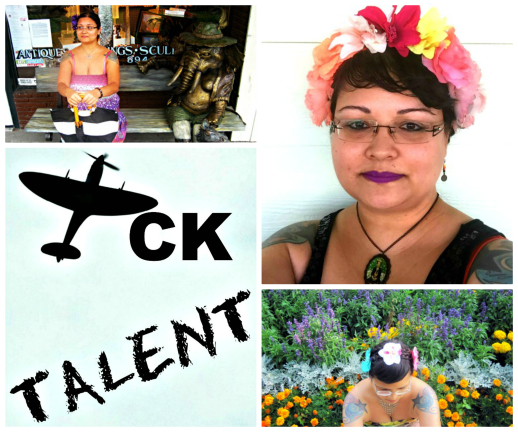
TCK TALENT: Sezín Koehler, multimedia artist, tatoo collector, editor and prodigious writer

Columnist Elizabeth (Lisa) Liang starts off 2016 with a guest who has been to the Displaced Nation before, albeit in different guises: as Alice, as film critic, as featured novelist, as repatriate…though never as a TCK Talent.

Happy 2016, readers! I hope your January has been splendid thus far. Today’s interviewee is writer, editor, tattoo collector, and Huffington Post contributor Sezín Koehler, who also calls herself Zuzu (a nickname she picked up when living in Prague). Sezín may already be familiar to some Displaced Nation readers as an early contributor, including a two-part series listing films that depict the horrors of being abroad, or otherwise displaced; a much-commented upon post called “The Accidental Repatriate”; and an Alice-in-Wonderland-themed post on her life in Prague (that was after she had received one of the Displaced Nation’s very first “Alice” awards).

But what some of you may not know is that Sezín is a Third Culture Kid. She was born in Colombo, Sri Lanka, to a Sri Lankan dad and Lithuanian-American mom. Her mom’s job with UNICEF moved the family from Sri Lanka to Zambia, Thailand, Pakistan, and India.

Sezín went to college in California—and then returned to her family, who were living in Switzerland and then in France (the move again being due to her mom’s job).

Next Sezín moved alone to Spain, where she met her husband, who is American. After living as expats in Turkey, Czech Republic, and Germany, the couple now call Lighthouse Point, Florida, home.

* * *

Welcome, Sezín. What a truly peripatetic life you’ve had! What made you decide to “repatriate” to the USA and come to Lighthouse Point? 
This area is where my husband grew up and has family, although his family moved further north just this year. Economics and a series of unfortunate events are what brought me back to the US—my husband and I returned with literally 15 euros between us.

Sounds like a tough reentry. While living as a nomad can also be tough, were you happiest in a certain place?
That’s a surprisingly difficult question! There was a lot of conflict in my family when I was growing up because of the tension between my American mum and conservative Sri Lankan dad—and all the cultural, social, etc., issues that come with having a multicultural and multiracial family before that became something of the norm. Plus, moving all the time was not a lifestyle that worked for me, and it created uncomfortable cycles of depression that were then compounded by having post-traumatic stress disorder (PTSD) after witnessing the murder of one of my best friends in our final year of university. The repatriation to Florida was one of the more miserable moves—especially since I had never planned to move back to the United States until they sort out more effective gun-control laws.

That sounds terribly painful. How have you coped since your return to the US?
My first two years back made me completely despondent, and then one day I just decided to make the best of the situation. It was time to choose happiness; otherwise I wasn’t going to survive. So now every day I wake up and I find something—big or small—to be happy about and I focus on that for the day. In that sense, and in a strange reversal, I suppose Florida is where I find myself happiest because this is where I learned that happiness isn’t something that happens to me passively because life is perfect. Happiness is a daily choice. And I actively make the choice to be happy however difficult my surroundings.

“That feeling of being an outsider never quite leaves you…”

Do you identify most with a particular culture or cultures, including the very broad “TCK culture”? 
You know, I think I identify with aspects of pretty much every culture under the sun—even ones where I didn’t actually live or visit. Being highly sensitive, coupled with having a TCK upbringing, has made it so I can identify with just about anyone who isn’t a bigot or misogynist, even if our backgrounds are nothing alike. I do find myself particularly drawn to other TCKs because, even if we didn’t live in the same places, there is something about the “universal” TCK personality that resonates with me, and it’s far easier to start on the same page rather than having to work hard to build bridges of understanding between myself and people who haven’t traveled or grown up abroad. I also find that many TCKs understand that just because growing up abroad sounds exciting, it might not have actually felt that way when we were getting yanked from place to place, leaving friends and family behind in those pre-social-media Dark Ages.

Did your TCK upbringing inform your career path as a writer?
To be honest, with all the moving around plus PTSD, it’s been hard to develop a career track other than writing. Being a writer means you take your passion with you wherever you go, and no matter where you are, there is always something new to write about. Writing has been my longest-standing support system and therapy through the variety of traumas that ended up shaping my life, and any day now I hope I’ll start being able to make a living doing it. 🙂

Did growing up as a TCK also influence your career as an editor?
As an editor I focus on academic writing by non-native English speakers, and having lived in so many places has definitely helped me understand all the different (incorrect) ways people use English and help them to get published in English-language publications where English fluency is a requirement.

“As a Third Culture Kid, I always related with monsters more than ‘norms.'”

Tell us about your tattoo collection. Any TCK connections there?
Other than my husband, tattoos are one of the great loves of my life. Tattoos for me have been a way to not just express myself creatively, but have also been a way to re-claim my own body after so many traumas. I have a hybrid identity that I often express in fantastical ways. Sometimes when people ask me where I’m from and I don’t feel like having an intimate conversation about my life I’ll say I’m a mermaid and I’m visiting from the ocean. I have a huge jellyfish on my right thigh and I say, “Meet my pet jelly.” Now that my hair is in a pixie cut, I might introduce myself as a fairy and since I actually have tattooed wings on my shoulders as well as often literally leaving a trail of glitter in my wake, I find it easier than getting into my TCK identity—especially when the person I’m talking to might have never left this corner of Florida.

Keep Calm & Be a Mermaid

So in a way, the tattoos serve as both explanation and protection.
For my entire life I’ve operated under an assumption of otherness—when I’m in the US people ask me where I’m from, and when I’m in Sri Lanka people ask me where I’m from. Being mixed race can be really complicated—and I get a lot of aggression from strangers who try to figure out “what” I am. In a way tattoos are a shield between me and curious eyes, as is much of my performance-of-the-fantastical-self art and being.

Have any of these careers/interests helped you to process your nomadic upbringing?
Writing, definitely! Writing has been my most effective and longest-standing therapeutic tool. Not just my non-fiction, but also my short stories and my novels have most certainly helped me situate my cultural self in lots of different ways that have been helpful and healing. As a writer I’m also an avid reader, and reading is another huge help in figuring out where my strange background and I fit in the grander scheme of culture and society.

“I revel in my boundaryless self…”

As an ATCK, do you have “itchy feet,” or would you prefer to have a home base and only travel for pleasure?
I have always hated moving and I might be the only TCK to say I have never had itchy feet. Ever since I was a little girl all I wanted was to stay in one place and even now at 36 I feel that way. But because of how I grew up moving around, I’ve also come to a point where everywhere seems pretty much the same—I always see the same kinds of people in disparate places, it’s weird—and yet nowhere ever feels like home. So now my concept of home has shifted and simply means being somewhere with people I love.

Moving is one thing, but how do you feel about traveling in general, including for pleasure?
After a lifetime spent on airplanes and traveling, I absolutely hate traveling now. I have crippling aerophobia, and if I’m forced to travel somewhere by plane, everything about the experience is miserable and I end up getting really ill before, during, and after. I find going to new places more stressful than enjoyable. My dream is one day to have a house with a beautiful view and some rescue dogs and never go anywhere ever again. Except through books, of course.

Speaking of books, you published your first novel, American Monsters, four years ago, and I understand the sequel has just come out!
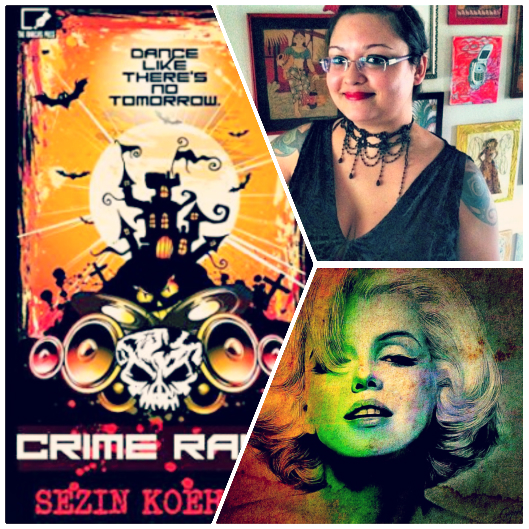
Yes indeed! My second novel, Crime Rave, came out in October 2015, and I don’t think I’ve ever been prouder of one of my creations in my life. Going back to your question about how being a TCK has shaped my writing, this book is a perfect example. The story itself defies genres—it has crime noir, supernatural, horror, and feminist themes just to name a few—and most of my characters are either mixed race or people of color who are not only TCKs themselves or ethno-cultural hybrids, but they’ve all gone through traumas that resulted in superpowers. If there was a label of Third Culture Fiction, my book would totally fit the bill.

The number of novels you have in progress, on top of what you’ve had published, is wildly impressive! Please tell us about them.
Thank you so much, Lisa. I’m currently working on my third, fourth, fifth, and potentially sixth novels—the third is a zombie tale set in Prague, the fourth will find recurring Crime Rave characters on Pine Ridge Reservation in South Dakota, Lighthouse Terror will be a grindhouse horror novel set in a gated community in southeast Florida, and finally I’m toying with the idea of an entire novel about Marilyn Monroe.

Yes, I know you are a big Marilyn fan. I believe she makes an appearance in Crime Rave?
Yes, in Crime Rave she not only lives but has a daughter.
Crime Rave Marilyn
What else are you working on?
As a HuffPost freelancer I’m working on a number of pieces featuring interviews with some badass individuals—authors, activists, artists, scientists, and more. I’m also in the process of starting my own publishing label that will focus on works by women and other marginalized writers who create genre-bending works in which women play all the major roles.

You’re so prodigious!
The one benefit of being an accidental shut-in who works from home here in Lighthouse Point is that I have nothing but time to work on all the creative projects I want, which is another dream come true.

Where can we find your work and follow your progress?
At sezin.org, my HuffPost column, my American Monsters site, and sezinkoehler.com. I’ve also recently revamped my Etsy store, Zuzu Art, with its gallery of sparkly-strange multimedia Alice in Wonderland and Frida Kahlo-inspired pieces. I have a Tumblr cabinet of curiosities called Hybrid/Monster that I continue to update with oddities of the visual nature, and I am rather fond of my Instagram account, where I post pics of my own art, my performance art, and snapshots of life in the tropics. Whew! I didn’t realize how much I produce online until this very moment.

* * *

Thank you so much, Sezín! I’m inspired to know that your artistic path has led to your healing, and that you’ve found daily happiness since the painful reentry to the United States. Congratulations on your many creative, career, and personal accomplishments! Readers, please leave questions or comments for Sezín below.

Editor’s note: All photos are from Koehler’s Hybrid Monsters site (apart from her book cover and the photo of one of her Etsy works) or from Pixabay. The quotes are from her “About the Curatrix” page.

Elizabeth (Lisa) Liang is a prime example of what she writes about in this column: an Adult Third Culture working in a creative field. A Guatemalan-American of Chinese-Spanish-Irish-French-German-English descent, she is an actor, writer, and producer who created the solo show Alien Citizen: an earth odyssey, which has been touring internationally. And now she is working on another show, which we hope to hear more about soon! To keep up with Lisa’s progress in between her columns, be sure to visit her blog, Suitcasefactory. You can also follow her on Twitter and on Facebook.

STAY TUNED for next week’s fab posts!

If you enjoyed this post, we invite you to register for The Displaced Dispatch, a round up of weekly posts from The Displaced Nation, and so much more! Register for The Displaced Dispatch by clicking here!

Related posts:

IN CASE YOU MISSED IT: Best of expat fiction 2015

The title of this post is a lie: you didn’t miss anything. It’s we who missed our deadline of publishing, at the end of 2015, a list of books for, by and about expats.

Dare I suggest that our procrastination could prove fortuitous? Most of us have more time to read now that the holidays are over and the doldrums have set in—along with, for some of us (I refer to those on the East Coast of the USA), a spell of blizzardous weather. What better time to curl up with a book that in some way relates to the themes of international adventure and displacement?

Without further ado, allow me to offer my curated list of the best novels by, for, and about expats and other international creatives in 2015. (Nonfiction coming soon, we promise!)

PLEASE NOTE: The books, which include indie as well as traditionally published novels, are arranged in reverse chronological order.

* * *

Year of the GooseYearoftheGoose_cover_400x (Unnamed Press, December 2015)
Author: Carly J. Hallman
Expat credentials: A native Texan, Hallman lives in Beijing. This is her first novel.
Synopsis: A comic novel about China’s era of the instant tycoon, which has been described as “unhinged”, “outrageous”, “deranged” and “hilarious. The oligarchical, tabloid-driven society it portrays is not unlike our own, which may be why the book was listed as one of the BBC’s 10 books to read in December 2015 as well as selected for the December 2015 Indie Next list.
How we heard about: The Anthill blog


TheNavyWife_cover_400xThe Navy Wife (December 2016)
Author: Helena Halme
Expat credentials: Originally from Finland, Halme has lived in the UK with her British husband for many years.
Synopsis: The sequel to Halme’s well-received autobiographical novel The Englishman (reviewed here by Displaced Nation founder Kate Allison), which concerns a long-distance romance between a Finnish woman, Kaisa, and a British naval officer, Peter. We see the couple, despite having tied the knot, facing a number of obstacles and threats to living happily ever after—especially when Kaisa doesn’t take well to the life of a military spouse in a foreign country.How we heard about: Social media, and a comment by Halme on one of our posts.


Seafled_cover_400xSeafled (November 2015), Burnt Sea (August 2015) & Seaswept (April 2015)
Author: Jordan Rivet (aka Shannon Young)
Expat credentials: An American, Young has lived in Hong Kong for the past few years with her half-Chinese husband, a Hong Kong native.
Synopsis: A post-apocalyptic adventure series set on a souped-up cruise ship, featuring a prickly female mechanic named Esther. The series, called the Seabound Chronicles, consists of three books and a prequel.
How we heard about: Young writes the popular “Diary of an Expat Writer” column for the Displaced Nation.


TheJapaneseLover_cover_400xThe Japanese Lover (Atria Books, November 2015)
Author: Isabel Allende
Expat credentials: Born in Lima, Peru, to a Chilean diplomatic family, Allende lived in various countries, including Chile, Bolivia, and Beirut. As an adult she worked in Belgium and elsewhere in Europe; she also lived for over a decade in Venezuela. She currently lives in San Rafael, California.
Synopsis: A cross-cultural love story that sweeps from present-day San Francisco to WWII-era Poland the United States. It explores questions of identity, abandonment, and redemption.
How we heard about it: Who hasn’t heard about it? It was one of the most anticipated books of 2015!


TheDisobedientWife_cover_400xThe Disobedient Wife (Cinnamon Press, November 2015)
Author: Annika Milisic-Stanley
Expat credentials: Born to Swedish and Anglo-German parents, Milisic-Stanley grew up in England and now lives in Rome. She says she based the plot on stories she heard when living in Dushanbe as a humanitarian aid worker for several years.
Synopsis: The story of the friendship that forms between a poor, courageous local woman in Dushanbe, Tajikistan, and her employer, a trailing expat wife married to a British diplomat.
How we heard about: An interview with Kristin Louise Duncombe, an American writer who has lived in Europe since 2001.


CrimeRave_cover_400xCrime Rave (The Margins Press, November 2015)
Author: Sezin Koehler
Expat credentials: Koehler is an adult Third Culture Kid who lived in Prague for some years and now lives in Florida. She has written several posts for the Displaced Nation, including a two-part series listing movies that depict the horrors of being abroad or otherwise displaced.
Synopsis: The second installment to her debut novel, American Monsters. Picking up where that one left off while jumping genres, the new book presents an alternate universe in which goddesses have free reign over humans, trauma goes hand in hand with superpowers, and Marilyn Monroe lives.
How we heard about: A Facebook post by Koehler


ADecentBomber_cover_400xA Decent Bomber (November 2015)
Author: Alexander McNabb
Expat credentials: A Brit who has been working in, living in and traveling around the Middle East for some thirty years, McNabb was featured on The Displaced Nation three years ago for his “Levant Cycle” trilogy.
Synopsis: Another political thriller—but this one is set in Northern Ireland and concerns a former IRA bomb maker who is drafted against his will into joining the War on Terror.
How we heard about: He sent us a heads up, and Beth Green reviewed the book in her last column. She found it well researched, well written and an enjoyable read.


ThePalestInk_cover_400xThe Palest Ink (Lake Union Publishing, October 2015)
Author: Kay Bratt
Expat credentials: Bratt lived in China for almost five years, where she “fell in love enough with the people to want to write about them forever.” She has since repatriated to the hills of North Carolina. (She is also the author of a memoir, Silent Tears: A Journey of Hope in a Chinese Orphanage. )
Synopsis: A story that depicts the coming-of-age of a sheltered son from an intellectual family in Shanghai, during a tumultuous period of Chinese history: the Cultural Revolution.
How we heard about: Kindle promotion.


Olivia&Sophia_cover_400xOlivia & Sophia (Monsoon Books, October 2015)
Author: Rosie Milne
Expat credentials: A native Brit, Milne has lived all over Asia; she currently lives in Singapore, where she runs the Asian Books Blog.
Synopsis: A fictional account of the lives of the first and second wives of the founder of the British trading post of Singapore, Sir Thomas Stamford Raffles. Set in London, Java, Sumatra and Singapore, against the backdrop of the Napoleonic Wars—the story takes the form of two fictionalized diaries, one by each of Raffles’s wives: Olivia Devinish and Sophia Hull. Milne “takes us away from the cold, damp confines of Georgian London to the muggy, hostile tropics and to the titillations and tribulations of a life far away from home.”
How we heard about: When Rosie Milne was “wonderlanded” on our site, we published a couple of excerpts from the book.


NowhereChild_coverNowhere Child (Black Dot Publishing, October 2015)
Author: Rachel Abbott
Expat credentials: Abbott fled from the corporate life to Italy, which gave her the opportunity to start writing psychological thrillers. Her first one was a break-out hit on Kindle, and she hasn’t looked back. Currently, Abbott divides her time between Italy (where she lives in an apartment in an old fort, which overlooks the sea) and Alderney, in the Channel Islands (just off the coast of France). But although the expat life gave her a new career as a writer, Abbott sets her books mostly in her native Manchester.
Synopsis: A stand-alone novella featuring the same characters as Abbott’s Stranger Child. Eight months ago Tasha Joseph ran away, and her stepmother, Emma, has been searching for her ever since—as are the police, since Tasha could be a vital witness in a criminal trial.
How we heard about: Lorraine Mace interviewed Abbott for her Location, Locution column in December.


TheHundredYearFlood_cover_400xThe Hundred-Year Flood (Little A, September 2015)
Author: Matthew Salesses
Expat credentials: Salesses was adopted from Korea at the age of two and often writes about race and adoption. This is his first full-length novel.
Synopsis: The mythical and magical story of a 22-year-old Korean-American’s escape to Prague in the wake of his uncle’s suicide and the aftermath of 9/11. He tries to convince himself that living in a new place will mean a new identity and a chance to shed the parallels between himself and his adopted father.
How we heard about: Social media


TheDressmaker_cover_400xThe Dressmaker (Penguin Books, August 2015*)
Author: Rosalie Ham
Expat credentials: Born and raised in Jerilderie, Australia, Ham now lives in Melbourne. Like most Australians, she has had a period of traveling and living overseas.
Synopsis: A darkly satirical tale of love, revenge, and 1950s fashion. After twenty years spent mastering the art of dressmaking at couture houses in Paris, Tilly Dunnage returns to the small Australian town she was banished from as a child. She plans only to check on her ailing mother and leave. But Tilly decides to stay, and though she is still an outcast, her exquisite dresses prove irresistible to the prim women of Dungatar. Note: The book is soon to be a film starring Kate Winslet and Liam Hemsworth.
How we heard about: A book review in the New York Times
*Originally published in 2000, this is the film adaptation of the book.


CirclingtheSun_cover_400xCircling the Sun (Ballantine Books, July 2015)
Author: Paula McLain
Expat credentials: None! Her breakout novel, The Paris Wife, was about an expat: Ernest Hemingway’s first wife, Hadley Richardson, whose passionate marriage ended as her husband shot into literary stardom. This time her focus is the Happy Valley set, a decadent community of Europeans in 1920s colonial Kenya. As she told NPR in a recent interview:

You know, I wrote most of The Paris Wife in a coffee shop in Cleveland. I don’t have to tell you that a Starbucks in Cleveland is about as far away from a Parisian cafe as you can possibly get. And I also wrote about Kenya, the wild African frontier, from my home in Cleveland without having ever gone there. You can’t really visit colonial Kenya, can you? You can’t really visit Paris in 1922, except in your imagination.

Synopsis: Based on the real-life story of the fearless and captivating Beryl Markham, a record-setting aviator who became caught up in a passionate love triangle with safari hunter Denys Finch Hatton and Karen Blixen, who as Isak Dinesen wrote the classic memoir Out of Africa.
How we heard about: A New York Times review by the expat writer Alexandra Fuller.


TheAmbassadorsWife_cover_400xThe Ambassador’s Wife (Doubleday, July 2015)
Author: Jennifer Steil
Expat credentials: A Boston-born former journalist, Steil is married to a Brit who once served as ambassador to Yemen, where a suicide bomber attacked him. She is also the author of The Woman Who Fell from the Sky, a memoir about her experiences running a newspaper in Yemen. She lives in Bolivia, where her husband is the European Union ambassador.
Synopsis: A harrowing account of the kidnapping of an American woman in the Middle East and the heartbreaking choices she and her husband, the British ambassador to an Arab country, must make in the hope of being reunited.
How we heard about: Shortlisted in the New York Times Book Review as a “marriage plots” novel.


TheStarSideofBurnHill_cover_400xThe Star Side of Bird Hill (Penguin Press, June 2015)
Author: Naomi Jackson
Expat credentials: A Third Culture Kid, Jackson was born and raised in Brooklyn by West Indian parents. After attending the Iowa Writers’ Workshop, she traveled to South Africa on a Fulbright scholarship and earned an MA in creative writing from the University of Cape Town.
Synopsis: The story of two sisters, ages ten and sixteen, who are suddenly sent from Brooklyn to Bird Hill in Barbados after their mother can no longer care for them. The young Phaedra and her older sister, Dionne, live for the summer of 1989 with their grandmother Hyacinth, a midwife and practitioner of the local spiritual practice of obeah.
How we heard about: Shortlisted in the New York Times Book Review as a “coming of age” novel.


TheWolfBorder_cover_400xThe Wolf Border (Harper, June 2015)
Author: Sarah Hall
Expat credentials: Born in northwest England, Hall lived in Wales while attending Aberystwyth. She went on to study in Scotland (St. Andrews) for an MA, where she met and married an American law student. Though the marriage was short-lived, its legacy was substantial: a move to the US proved the catalyst she needed to embark on novel writing. The pair was based in the small town of Lexington, Virginia, after her husband was awarded a scholarship to a nearby law school. At that time, Hall visited the Idaho reservation that appears in this book. She currently lives in Norwich, UK.
Synopsis: About a controversial scheme to reintroduce the Grey Wolf to the English countryside, which brings zoologist Rachel Caine, who has lived a solitary existence in a remote section of Idaho, far away from her estranged family in England, back to the peat and wet light of the Lake District. The novel explores the fundamental nature of wilderness and wildness—as well as the frontier of the human spirit.
How we heard about: A book review in the New York Times


IntheCountry_cover_400xIn the Country: Stories (Knopf, June 2016)
Author: Mia Alvar
Expat credentials: Born in the Philippines, Alvar was raised in Bahrain and the United States. She now lives in New York City. This is her first book.
Synopsis: A collection of nine short stories about Filipinos living overseas. Alvar has imagined the lives of exiles, emigrants, and wanderers who uprooted their families from the Philippines to begin new lives in the Middle East, the United States, and elsewhere—and, sometimes, turned back again.
How we heard about: A book review in the New York Times


TheDiversClothesLieEmpty_cover_400xThe Diver’s Clothes Lie Empty (Ecco, June 2015)
Author: Vendela Vida
Expat credentials: Born and raised in San Francisco, Vida is the daughter of two immigrant parents: a Swedish mother and a Hungarian father. She has become known for producing “travel trauma” narratives, exploring the lives of competent women who feel disintegrating marriages for distant lands (i.e., the Philippines, Finland and Turkey). Her latest novel, considered to be her “finest work” to date, was inspired by a trip she took to Morocco where her bag was stolen.
Synopsis: A literary thriller that probes the malleability of identity, told with lush detail and a sense of humor. Robbed of her money and passport in Casablanca, Morocco, an American woman feels free to be anyone she chooses.
How we heard about: A book review in the New York Times.


ChinaRichGirlfriend_cover_400xChina Rich Girlfriend (Doubleday, June 2015)
Author: Kevin Kwan
Expat credentials: Born and raised in Singapore, Kwan has lived in Manhattan for the past two decades. He says he still craves “craves pineapple tarts and a decent plate of Hokkien mee.“
Synopsis: Follows the story of the culture-shocked Rachel Chu as she searches for her mysterious birth father in Shanghai in hopes he’ll walk her down the isle at her upcoming wedding. The book is a sequel to Kwan’s 2013 bestseller, Crazy Rich Asians, picking up a few years after those events. Both books take place in the world of Hong Kong and Singapore’s super-super elite.
How we heard about: A book review in the New York Times


TheRocks_cover_400xThe Rocks (Riverhead Books, May 2015)
Author: Peter Nichols
Expat credentials: Nichols grew up partially on Mallorca (while attending boarding school in England), where he got to know other Northern Europeans. He has worked in advertising and as a screenwriter, and a shepherd in Wales. He divides his time between Europe and the United States. In 1997 he produced a riveting memoir, Sea Change, telling of the time when he set off alone across the Atlantic in his beloved 27-foot wooden engineless sailboat, Toad, which he and his (now ex-) wife had lived on for six years, fixing it up, making it into their home, sharing adventures on it.
Synopsis: A tragic double romance, told in reverse, primarily set in a seaside resort in Mallorca and its enduring expat community.
How we heard about: From a book review in the New York Times.


coming-home_cover_400xComing Home (Mira, April 2015)
Author: Annabel Kantaria
Expat credentials: A Telegraph Expat blogger who has been featured on the Displaced Nation, Kantaria has lived in Dubai with her family for several years.
Synopsis: The story of a woman living in Dubai because she wants to flee the pain of her brother’s death but then heads for home upon receiving word of her father’s sudden death. Kantaria says that writing the book helped her “explore that push and pull and sense of displacement you feel when you have a foot in two countries.”
How we heard about: A Telegraph Expat post on expat-themed summer reads, by Rosie Milne


APlaceCalledWinter_cover_400xA Place Called Winter (Grand Central Publishing, March 2015)
Author: Patrick Gale
Expat credentials: Born in the Isle of Wight, Gale was an expat of sorts when his family moved to London. During his misspent youth, he lived at one point in a crumbling French chateau. He now lives on a farm near Land’s End.
Synopsis: The story of a privileged Edwardian man who has a homosexual affair and, for fear of arrest, is forced to abandon his wife and child: he signs up for emigration to the Canadian prairies. He reaches a world as far away as possible from the golden suburbs of turn-of-the-century England. The story is loosely based on a real-life family mystery of Gale’s gentleman great-grandfather. The plot in a nutshell: “To find yourself, you must sometimes lose everything.”
How we heard about: Gale was a featured author at the Port Eliot Festival, which takes place yearly on an ancient estate in Saint Germans, Cornwall, UK.


TheArtofUnpackingYourLife_cover_400xThe Art of Unpacking Your Life (Bloomsbury Reader, March 2015)
Author: Shireen Jilla
Expat credentials: A journalist-turned-novelist who now lives in London, Jilla has been an expat in Paris, Rome, and New York. The Displaced Nation did a feature on her first novel, Exiled, about a British expat wife in New York.
Synopsis: The story of a group of university friends who set out on the holiday of a lifetime, a safari in the Kalahari, only to find they don’t have much in common any more.
How we heard about: Social media and then Beth Green interviewed her.


TheTehranText_cover_400xThe Tehran Text – The Tana Standish Spy Series #2 (Crooked Cat Publishing, February 2015)
Author: Nik Morton
Expat credentials: Morton spent 23 years in the Royal Navy, during which he had the chance to visit (among others) Rawalpindi, the Khyber Pass, Sri Lanka, Tokyo, Zululand, Mombasa, Bahrain, Tangier, Turkey, Norway, Finland, South Georgia and the Falklands. He has also traveled widely in his private life. He and his wife are now retired in Alicante, Spain.
Synposis: Second of Morton’s Cold War thrillers featuring psychic spy Tana Standish (first was The Prague Papers). Iran is in ferment and the British Intelligence Service wants Tana Standish’s assessment. It appears that CIA agents are painting too rosy a picture, perhaps because they’re colluding with the state torturers…
How we heard about: Lorraine Mace interviewed Morton for her Location, Locution column last July.


Outline_cover_400xOutline (Farrar, Straus and Giroux, January 2015)
Author: Rachel Cusk
Expat credentials: Born in Canada, Cusk spent much of her childhood in Los Angeles. She moved to the UK in 1974 and is a graduate of Oxford University. She now lives in London.
Synopsis: About a divorced writer who lives in London with her two youngish children, covering the several days she spends in Athens, where she has gone to teach a writing class. She ends up spending time with a much older Greek bachelor she met on the plane.
How we heard about: A book review in the New York Times

* * *

Tell me, what have I missed? I’m sure I’ve missed loads!! Kindly leave your recommendations for novels for, by, and about expats that came out in 2015 in the comments!

ML Awanohara, one of the Displaced Nation’s founders and its current editor, has a section in the weekly Displaced Dispatch where she mentions the latest expat books. Why not subscribe for the new year?

STAY TUNED for next week’s fab posts.

If you enjoyed this post, we invite you to register for The Displaced Dispatch, a round up of weekly posts from The Displaced Nation, and much, much more. Register for The Displaced Dispatch by clicking here!

Related posts:

Photo credits: All photos via Pixabay or Morguefiles.

TCK TALENT: Donna Musil, Writer-Director, Lawyer, Activist & Proud Army Brat

The uber TCK-talented Donna Musil. Photo credit: Ray Ng.

The uber TCK-talented Donna Musil. Photo credit: Ray Ng.

Columnist Elizabeth (Lisa) Liang is back with her latest interview guest.

Welcome back, readers! It’s been awhile. But I think the wait will be worth it as my latest interviewee is the super-talented writer, filmmaker and social change agent Donna Musil. Donna is also a fitting choice for the month when America celebrates Veteran’s Day. She made the award-winning documentary BRATS: Our Journey Home, narrated by Kris Kristofferson, about what it is like to grow up in a military family and the long-term impact it can have on a person’s adult life.

She is also the founding director of Brats Without Borders, a nonprofit organization dedicated to increasing awareness and support for military brats and other Third Culture Kids.

Donna’s interest in the subculture of military brats is personal. Born into a career Army family, she went to 12 schools by the time she was 16 and never had a hometown. Her family moved almost every year until she was seven, from Fort Benning, Georgia, to two other bases in Georgia (Athens and Macon, the latter when her father was serving in Korea and Vietnam); then to the enormous Army installation in Fort Bragg, North Carolina, and to Charlottesville, Virginia, where her father was doing something at the university. They moved overseas twice: to Germany (Bad Kreuznach), followed by Fort Mason in San Francisco; and to South Korea—Yongsan Garrison in Seoul and then Camp Walker in Taegu (now Daegu), after which they were stationed in Fort Knox, Kentucky. Donna’s father died in the summer of 1976, two months after she turned 16, and her family had to leave base housing. They moved to Columbus, Georgia.

Talk about talent! BRATS was Donna’s very first directing effort. I had the privilege of getting to know her as one of my fellow authors in the TCK anthology Writing Out of Limbo.

* * *

Welcome to The Displaced Nation, Donna. Even though I’ve met and have interviewed plenty of Adult TCKs, my head is still spinning at the number of moves you experienced as a youngster. Once you reached young adulthood, did you settle in one spot or keep moving?
I stayed in Georgia for college, earning a degree in journalism from the University of Georgia and a law degree a few years later (the time in between I traveled and worked as an on-air radio newscaster). After law school, I practiced union-side labor law in Washington, DC and Atlanta. In the late 1980s, I quit practicing law to pursue a writing career, my childhood dream. After a few years in Atlanta, I moved to Los Angeles to “pay my dues” in the film business, but when the 1994 Northridge earthquake struck and destroyed half of my possessions, I stored the other half at my sister’s and moved to Dublin, Ireland, for two years to write. When I ran out of money, I returned to Georgia and began making the BRATS film. I lived in a crooked, old family lakehouse, which became my “base.” During the ten years it took to make and distribute the BRATS film, I also worked as a technical writer and/or attended writer’s residencies in Denmark, Spain, Paris, Taos, and Port Townsend (Washington).

Where do you live now?
In 2010, I moved to Denver to be near my sister and her family, and have lived there ever since, except when I’ve been on writer’s residencies—in France, Chicago, and San Francisco. (I’ll be living at a writer’s residency in Chiang Mai, Thailand, this coming winter.)

Donna Musil, already displaying her talents in Korea, 1975. (Photo supplied.)

Donna Musil, already displaying her talents in Korea, 1975. (Photo supplied.)

Were you happiest in a certain place at a certain time?
I was happiest when we lived at Fort Mason in San Francisco when I was 11 to 13 years old. Interestingly enough, it was one of the least “military” of all of our assignments, just a block away from the famed Ghirardelli Square, overlooking the bay. I attended public schools, populated by an eclectic array of children, whose parents were everything from authors to restaurant owners to ballerinas. The racial makeup of the student body was about a third Chinese, a third white, and a third black and brown. I loved it!

I can imagine you thriving on the diversity. Was there anything else that made that time special?
Yes, swimming! I joined the Presidio Swim Club after watching Mark Spitz bedazzle the tragic 1972 Olympics, and began dreaming of my own (albeit unlikely) Olympic run. I walked to school every day and to swim practice every afternoon. I think I still hold the Marina Junior High School record for the most pull-ups for a 13-year-old girl—12! I loved everything about San Francisco—the culture, the diversity, the hippies on the beach. It was also the last year before my father got sick, so I suppose it was the end of my innocence. The next year, we moved to Seoul, Korea, for six months and then to Taegu, where there was no swim team, and my dreams of Olympic glory evaporated. My freshman class had ten students, total. We were surrounded by jaded, war-struck soldiers on their way to or from Vietnam, bars, prostitutes, and easy access to drugs and alcohol. You can imagine the results.

Because everybody needs a place to call home…

Let’s talk about BRATS. For readers who aren’t familiar, here is the trailer:


Were you surprised by what a hit BRATS has been with adult military brats and ATCKs? 
The reaction to BRATS: Our Journey Home has been interesting. I initially made the movie to figure out “who I was and where I was from,” but it quickly became apparent that it was less about me and more about the brat/TCK culture in general. I had been separated from the military life for twenty years when I began filming so was somewhat surprised to discover that most of the issues the movie discusses are just as relevant today as they were when I was a child—particularly the emotional and trauma-related issues.

In your essay in Writing Out of Limbo, you mention a teenaged boy who loved the documentary because it was the first time he had seen a family like his portrayed on film. You state: “I would do it all over again to hear that one comment. To make a difference in just one child’s life—no honor, award, or monetary compensation could ever compare.” That’s tremendous! But let’s also talk about your goal of affecting change within the military itself. How has the military responded?
To be honest, I would have to say that the military-as-a-whole has not welcomed the film or the research of Brats Without Borders (or any other “brat” groups) with open arms, nor have they helped us implement programs or provide resources to current and retired families that address the emotional needs of military brats/TCKs. There have been pockets of institutional and corporate support for a related art exhibit and workshops, as well as the film distribution costs, and Armed Forces Network has broadcast the film multiple times. The reactions have always been universally positive, but we could be doing so much more (with so very little).

So there are no military groups who have interpreted the film as a call to action?
In general, the military clergy and soldiers have been most supportive of our work and the military educational system and spouses the least supportive. It took me a while to realize that it must be hard to hear that the life you’ve chosen for your family (often a life better than your own childhood) also has its flaws. Many (high-powered) spouses are willing to hear and promote the positive legacies of growing up brat/TCK but tend to gloss over the painful legacies and attribute them to bad parenting instead of institutional pressures, traditions, or combat trauma. As a result, nothing much changes, and (as it has always been), brats/TCKs are forced to take care of their own emotional needs. Nowadays, people talk a little bit more about the sacrifice of military kids and groups give them free “stuff”; but they’re still not addressing their emotional needs (among other things) or considering what institutional changes might be made to ease their transitions and difficulties.

You must find that frustrating.
It’s particularly frustrating when I hear the institution and the media talk about the “lack of research” in this area, because it’s simply not true. We have the research. We’ve had it for 25 years. They just don’t always like what the research says. The military wants to downplay the negatives and the media wants to downplay the positives. Meanwhile, millions of dollars are being thrown into programs for military kids that are designed by people who haven’t walked the walk, or whose loyalties lie more with the institution or perpetuating their own existence than they do with the children. That may seem harsh, but I think it’s the truth. Perhaps one day actual brats and TCKs will be invited to the table and given substantial support, but I’m not holding my breath. In the meantime, we’ll just keep helping ourselves!

“Like many brats,…I could talk to, but didn’t trust, anyone.” —Donna Musil in Writing Out of Limbo

Let’s move on to talk about the TCK experience. Many of the sections in your essay for Writing Out of Limbo resonated with me; for instance, when you said: “There are lessons each of us has to learn in our lives, and the more we avoid learning a particular lesson, the harder God will knock us down, until we have no choice but to learn it (and move on to the next lesson….). Still I didn’t learn.” You mention trust issues, inability to handle disagreement or confrontation, and more traits that are common among ATCKs, for which you needed to learn healthier coping mechanisms. Has making and touring BRATS helped you deal with this? Or do your old TCK survival mechanisms still crop up from time to time (like mine do even though creating Alien Citizen helped me a lot)?
For good or ill, I think all of my TCK survival mechanisms are alive and well! I’ve just learned to manage them better, with experiences from the BRATS film, my new film projects, some very good therapy, a lot of reading, and a very kind, understanding, and patient fiancé.

Has making and touring BRATS helped Donna to deal with some of the TCK issues Donna describes in Writing Out of Limbo? (Cover art; poster art, supplied.)

Has making and touring BRATS helped Donna to deal with some of the TCK issues she describes in Writing Out of Limbo? (Cover art and poster art, supplied.)

Are you tempted, for example, to run away from confrontation/disagreement?
Yes, I’d rather flee, move, break up or leave. I’ve learned to temper that impulse by isolating myself and dealing with it after I’ve calmed down. I also still have a visceral reaction to mean-spirited, unjust, authoritative, or self-centered people, but instead of confronting them like I used to, I try to avoid them. I’m much less black-and-white about things—but perhaps that’s just the wisdom of age. I do make people earn my trust instead of instantly bestowing it, and vice versa. There are so many ways “growing up brat/TCK” still affects my life today; it probably shapes almost everything I do. As I get older, though, I try to build on the positive aspects of my youth and temper the less-than-positive legacies, which is often much easier said than done!

Do you identify most with a particular culture or cultures, or with people who have similar interests and perhaps similar cross-cultural backgrounds?  
I don’t identify with any particular culture or ethnicity, other than the brat/TCK culture. I don’t even have any real nationalistic tendencies. I don’t think America is “the best country in the world.” I think all countries and all people have their good points and not-so-good points; it just depends on what you’re most comfortable with. That said, I am definitely the quintessential American—independent, strong-willed, feisty, rebellious. Daniel Boone was my (great-great) uncle, his oldest brother Samuel my (great-great) grandfather, so I come by that spirit honestly. But my political sensibilities are more Scandinavian, like my grandmother’s side of the family. I enjoy being around other curious, open-minded “outsiders,” many of whom tend to have cross-cultural backgrounds. I try very hard not to consider myself, or any group to which I feel I might belong, “special.” That kind of thinking is the source of most of the world’s ills.

Do you have “itchy feet,” which still make you want to move frequently? Or would you prefer to have a home base and only travel for pleasure?
My poor fiancé. He was an educator brat—but basically grew up in one town in Germany. When we first started dating, I’d tell him all of the places I dream about living in: Vancouver, Canada; Austin, TX; San Francisco, CA; Chiang Mai, Thailand; Asheville, NC; and Paris, etc. Like any man, he wanted to give me what I wanted, but he couldn’t pin me down on what I actually wanted (one of the banes of being a brat/TCK). I was born and raised to be geographically and intellectually curious (the best legacy of growing up brat/TCK!). I like to stay somewhere until I want to go somewhere else—and my fiancé is okay with that, too. I don’t have any children, and his are grown, so it’s possible for us to live this way. Perhaps we’ll settle down in one place in the future. Denver is a nice town. We like it—for now.

Donna’s next act(s)

Returning to your work: I believe you are making another documentary? Tell us about it.
Yes, the film is called Our Own Private Battlefield. It’s the first documentary about the intergenerational effects of combat PTSD on military children, and how one Marine family is using art to help heal the long-term wounds of the Vietnam War. I still have a few more interviews to shoot. I’m hoping the lessons learned from this family will help generations of current and future military families deal with the traumas of war, both here and abroad.

Battlefield sounds amazing.
It’s actually a byproduct of the combined efforts of Brats Without Borders and Marine brat Lora Beldon’s organization, Military Kid Art Project, which teaches customized art classes to military children.

Your mention of art reminds me: I think an art exhibit is one of your other projects?
Yes, Lora and I founded the BRAT Art Institute this year and will host our first Military BRAT Art Camp in 2016, in conjunction with Old Dominion University, in Norfolk, VA. Right now we have a museum exhibit currently touring the country, called “UNCLASSIFIED: The Military Kid Art Show.” It won a Newman’s Own Award in 2012 and features over fifty years of military brat and veteran art from around the world, historical artifacts, and films about using art to heal trauma. The art camps will be part of a larger research effort to study how art can help military children deal with the traumas of war and multiple deployments.

Do you have any projects that don’t relate to the military?
Yes, my personal projects are much more eclectic. Besides a TV show based on brats in Korea in the 1970s, I’m also shopping a children’s animated film script based on African folktales (with a producer from Ghana) as well as a feature film screenplay about a modern-day union campaign at a small-town nursing home. My current writing efforts are focused on a murder mystery, based on (what I believe) is an unjust incarceration of an innocent man for over thirty years.

How can we follow your progress?
People can see my brat/TCK projects at www.USAbrat.org. Later this year, I will be putting up a personal page, donnamusil.com, for my non-brat/TCK projects.

* * *

Thank you so much, Donna! I think I can speak for the entire Displaced Nation in asserting that you’ve blown us all away with all the important and necessary work you do for military brats, veterans, and TCKs. Congratulations on your many extraordinary achievements! Readers, please leave questions or comments for Donna below.

Elizabeth (Lisa) Liang is a prime example of what she writes about in this column: an Adult Third Culture working in a creative field. A Guatemalan-American of Chinese-Spanish-Irish-French-German-English descent, she is an actor, writer, and producer who created the solo show Alien Citizen: an earth odyssey, which has been touring internationally. And now she is working on another show, which we hope to hear more about soon! To keep up with Lisa’s progress in between her columns, be sure to visit her blog, Suitcasefactory. You can also follow her on Twitter and on Facebook.

STAY TUNED for more fab posts!

If you enjoyed this post, we invite you to register for The Displaced Dispatch, a round up of weekly posts from The Displaced Nation, and so much more! Register for The Displaced Dispatch by clicking here!

Related posts:

TCK TALENT: Neil Aitken, Computer Gaming Whiz Kid Turned Award-Winning Poet

Neil Aitken Poet

Neil Aitken (photo supplied)

Elizabeth (Lisa) Liang is back with her column featuring interviews with Adult Third Culture Kids (ATCKs) who work in creative fields. Lisa herself is a prime example. A Guatemalan-American of Chinese-Spanish-Irish-French-German-English descent, she has developed her own one-woman show about growing up as a TCK, called Alien Citizen, which premiered nearly two years ago and is still going strong. In fact, she will soon be taking the production to Valencia, Spain, and Capetown, South Africa!

—ML Awanohara

Welcome back, readers! Today’s interviewee is poet Neil Aitken: winner of the prestigious Philip Levine Prize for Poetry for his book of poems, The Lost Country of Sight and founding editor of Boxcar Poetry Review. Neil and I met at the Mixed Roots Literary & Film Festival in 2009. I am so pleased to have the chance to interview him this month for TCK Talent.

* * *

Welcome to The Displaced Nation, Neil. I understand that you’re a multi-ethnic ATCK like me! Please tell us about your heritage.
My father was born in the Okanogan Valley in British Columbia, Canada, of Scottish and English descent. My mother was born on Hainan Island, south of China, in the midst of the conflict between the Nationalists and the Communists in China. Shortly after her birth, her parents—her father was a high-ranking officer in the Nationalist Army and her mother, the daughter of one of the elite island families—fled to Taiwan to escape the Communists. Despite growing up a world apart, my parents met in the middle, Hawaii, while both attending university there.

Where were you born, and where did you live growing up?
I was born in Vancouver. My father’s bachelor’s degree was in Linguistics & ESL. His first job took us to Dhuhran, Saudi Arabia, where he taught English in the oil universities. But then my mother developed severe asthma due to the extreme heat and dust, and the doctors warned her that if she stayed any longer, she would be putting her life in peril. So she took my younger sister and me (I was four, my sister two-and-half) to Taiwan to live with relatives while my father completed the last nine months of his teaching contract. While in Taiwan, my sister and I forgot all our English, switched completely to Mandarin Chinese, and attended a Chinese-speaking pre-school. When my father finally arrived to pick us up, apparently we were so frustrated in our inability to communicate with him, we refused to speak Chinese until we relearned English. By the time we returned to Canada, we’d made the switch—but lost our Chinese in the process. My father returned to school in Vancouver, concluding that it was too hard to raise a family as an ESL professor. He completed a Masters in Library Science degree at the University of British Columbia and, when I was eight, we moved to North Battleford, Saskatchewan, a small city surrounded by farmland in the northern part of the province. Later we moved to Regina, the province’s capital and a much more vibrant multicultural center, where my father took his dream job as the supervisor over a special book collection focused on local, regional, and family histories of the Central Plains and Prairie Provinces. I completed elementary school and high school there.

“It is dark always, then someone opens a door./Then another. Then another.” —Neil Aitken from “Prodigal”

Fascinating! Did you stay in Canada for college?
No, I moved to Provo, Utah, to attend Brigham Young University, but I took a two-year break from school to serve as a missionary in Taiwan, relearning Mandarin in the process and re-immersing myself in culture, family, and place. When I returned, I completed my studies and then returned to Canada—to Calgary, Alberta. I looked for work for a year and eventually landed a job in Los Angeles.

I understand that just as your background spans two very different cultures, your academic background spans two very different disciplines?
Yes, as an undergraduate I studied Computer Engineering with a minor in Mathematics. I also took a number of graduate courses in Creative Writing. My first job was working in the computer games industry, but after five years, I left programming to pursue an MFA in Creative Writing and then returned to Canada for a year to look for work and to care for my father, who was in rapid decline from ALS. I also spent that year writing and finishing my first book of poetry and then applying to PhD programs. I received a number of excellent offers from all over the US, but in the end chose to return to Los Angeles and pursue a PhD in Literature and Creative Writing at the University of Southern California. I’ve been here in Los Angeles ever since, but now, on the threshold of graduating, am likely to be packing up and moving again to somewhere as yet undetermined.

Binary code via Pixabay; cover art.

Binary code via Pixabay; cover art.

What has the transition been like, going from computer programmer to poet?
In truth, I’ve been writing poetry almost as long as I’ve been programming. I started writing poetry in earnest when I was around 10, about the same time my father brought home an IBM PC Jr with GW-BASIC on it. One of my very first original programs was a haiku generator that produced pretty awful haiku. Even as an undergraduate studying computer science, I sought permission to take creative writing classes at the graduate level. For a long time, I thought I could juggle writing poetry with computer programming. Eventually, however, programming lost its luster and I stopped loving the work, despite still being good at what I did. I knew at some point I needed to jump ship—I couldn’t bear the thought of spending my life in a field that no longer held my attention or affection. Working full time as a computer games programmer, I found myself putting in 60-, 70-, 80-, and occasionally 94-hour weeks. It was just too much. It was time to find a way out. At the same time, it was important to me that I avoid going into debt for my poetry degree, so I had to wait for the right offer. All the while, I continued programming and when possible, spent my evenings at open mic poetry venues, listening to all sorts of poets read their works. Eventually, I received a call from UC Riverside offering me a generous full-ride MFA scholarship, which made the transition possible.

“I wake already longing for those whom I soon will leave—” —Neil Aitken, from “Kundiman”

One of the judges for the Philip Levine Prize said that “Traveling Through the Prairies, I Think of My Father’s Voice” struck him as being a “perfectly made poem.” Was your family close?
I have many fond memories of time spent as a family together, whether it was picking through a coal seam at the side of a mountain highway with my father searching for fossils, or gathering together as a family on the eve of my graduation—the photo of which is the only family photo where we’re all smiling naturally, unrehearsed, unburdened by life’s later challenges and sorrows—or just simply lazing around the house at Christmas, listening to my father read Dylan Thomas’ A Child’s Christmas in Wales to us with his usual gusto and dramatic flair.

Where have you been happiest as an adult?
My happiest moments in recent years have been tied to my friends and fellow poets whom I met through Kundiman, an organization dedicated to the creation and cultivation of Asian American literature. The three years I attended the Kundiman Poetry Retreat set in motion lifetime friendships and bonds with people that, to this day, I count as my closest poetry kin—I was unprepared for how deeply and completely I would fall in love with the community, and how this group of Asian American poets would come to be a second family. When I showed up for my first Kundiman retreat in 2005, I was convinced that there had been an error—how had they let me in? What use could they have for a Chinese-Scottish-English Canadian poet who rarely wrote about identity, at least not directly? But on the first day, as we made our introductions in a classroom at the University of Virginia, I soon realized that many of the other participants felt the same way I did. We had all arrived convinced that our lives and our writing were somehow outside of what was expected and permitted—only to discover that what was happening on the front lines of Asian American literature was much more diverse and vibrant, much more compelling and dynamic, much more inclusive than whatever we had been led to believe from the anthologies we’d read and the classes we’d taken. To this day, I love running into a fellow Kundiman and can’t wait to hear about their work and discover what they have to offer to the conversation.

Your Kundiman experience sounds like a quintessentially good TCK experience. In general, do you find that “your people” tend to be other ATCKs, or cross-cultural people, or creative folk?
It varies quite a bit, but generally speaking I’ve found myself most at home with other Asian American writers (especially those I’ve met through Kundiman), other editors of literary journals, and other people who negotiate the fragile yet fertile space between faith, science, and compassion. On a broader level, I find my people are those who share a love of language and literature, whose eyes are on the forgotten spaces and figures of the world, and whose efforts and desires pointed outwards, with the ambition to make more room at the table. I love surrounding myself with people who are building bridges and tearing down arbitrary walls, who are not afraid to speak against the structures of oppression and forgetting, and who challenge themselves to do more and be more than who they were yesterday.

“There is always something that refuses to be contained…” —Neil Aitken in “Encapsulation”

On top of working toward your PhD, you won the DJS Translation Award for your co-translations of poetry from Mandarin to English. How do you feel about your two “native” languages? Do you prefer one to the other?
I love the strange and omnivorous nature of English. English is constantly devouring other languages, incorporating new terms into its lexicon, and expanding with each passing year and succeeding social revolution. In terms of tone, music, and range, very few languages can compete with English. That being said, I also have a big place in my heart for Mandarin Chinese, a language I learned once when I was very young, forgot, then relearned at 19.

What is it like to translate from Chinese into English?
The two languages could not be more different. Chinese is a language traditionally learned by the memorization of classical and literary texts. It relies heavily on allusion, each word and phrase carrying with it a wealth of cultural association and literary reference. It moves not just sonically but also visually, evoking the elements—fire and water, air and earth—and connecting words and ideas that share some common philosophical history. The act of translation is a humbling experience—I’m constantly reminded of how fluid concepts and relationships are between ideas once they are unshackled from one’s mother tongue. And yet, there is great pleasure in it as well. I enjoy puzzles—I enjoy this bit of creative play where the translator searches for a way to create an equivalent experience and gesture in a new language for something that they have encountered in the original. My childhood experiences with Chinese left a deep imprint in my mind that manifests itself now as a type of intuition when it comes to finding the right equivalent phrase or understanding the cultural impact or resonance of the original line. It’s an imperfect intuition, but one that nevertheless guides me through tricky places in the poems and helps me feel still a part of the Chinese culture.

Finally, I’d like to congratulate you on winning of the prestigious Philip Levine Prize for Poetry for The Lost Country of Sight. Is there a particular poem from that collection that expresses your feelings of transience or loneliness or instability—or freedom or curiosity or love of travel—that you are most proud of, and could you share it with us?
In many respects, my entire first book of poetry, The Lost Country of Sight, grapples with these themes and, therefore, it’s actually pretty hard to settle on just one poem. I’m going to suggest two, if I may:

In the Long Dream of Exile

You are counting the dark exit of crows
in the rear view mirror, or from the top of an overpass
looking back into the last flames of cloud.
Your car, steel to the world of flint, rests listless
with its windows wide, the stars slipping in
and settling down for the night.
Now, what you could not leave rides in boxes
heavy with numbers and places you’ve already
turned into poems. There is nothing left
in your pockets, your clothes worn down
to this list of miles taking you out of the known earth.
Outside your open window, the dark repeats
like the wind in late fall, twisting the names
of familiar back roads into a long rope of sighs.
You could lower yourself down with such longing.
It could be a woman or a young girl, the way the light
clings to that body like a sheet of immaculate heat,
invisible to the eye, but something, you are certain,
something that must be on the verge of love.

driving_abstractly

In the Country I Call Home

I have two countries, Cuba and the night.
~ José Marti

There is no Cuba, no other half of night.
No dark woman in her deep robe of grief,
no wooden doors flung open to emptiness. Nothing
of music. No city in flames. All this absent.

In me, there are as many countries as names.
As many versions of the world.

If there is a country, it is a white-limbed tree,
a wind-drifted plain of snow. It is a country buried.
Or a man holding a camera to his eye. Or a silence.

If there is a country, there are two countries.
A double exposure. The other world ghosting the first.
The second full of dark-haired strangers. Ink ground
from charcoal pressed to stone. Hard as raw rice.

If there are two countries, a third always rises.
Life preserver on the waves. A ship without reference.
Anywhere. Everywhere. A nation of one.

If there are three, there must be a fourth.
I will find it in your skin. Hear it resonate in your bones.
A ringing echo. Something of sound. It will be small.
Almost a hut. A thatched roof shack in the wilderness.
A hermitage for two. A boat in a river. Almost a home.

snowdrift

“Wind shapes,” by John Holm via Flickr (CC BY 2.0).

* * *

Thank you, Neil, for these two lyrical offerings. Again, congratulations on your numerous accomplishments in poetry and translation, and best of luck with post-PhD life! Readers, please leave questions or comments for Neil below.

STAY TUNED for more fab posts!

If you enjoyed this post, we invite you to register for The Displaced Dispatch, a round up of weekly posts from The Displaced Nation, and so much more! Register for The Displaced Dispatch by clicking here!

Related posts:

TCK TALENT: Maya Evans, Poet, Writer, Teacher, Translator, Consultant & Transition Facilitator

Maya Evans for TDN

Maya Evans (own photo)

Elizabeth (Lisa) Liang is back with her column featuring interviews with Adult Third Culture Kids (ATCKs) who work in creative fields. Lisa herself is a prime example. A Guatemalan-American of Chinese-Spanish-Irish-French-German-English descent, she has developed her own one-woman show about growing up as a TCK, called Alien Citizen, which premiered nearly two years ago and is still going strong. In fact, she is now raising funds to take the production to Valencia, Spain, and Capetown, South Africa, later this year.

—ML Awanohara

Greetings, readers. Today’s interviewee is Maya Evans, a poet and writer, transition facilitator, international education consultant, and translator based in Boston, Massachusetts. She is also my fellow ATCK author in the anthology Writing Out of Limbo, in which her poem “Le Français” appears. Currently, she is working on a memoir about her extraordinary life, which took her from the Middle East to Europe to South America and finally to her current home of the United States.

* * *

Welcome to The Displaced Nation, Maya. I understand that you were born to a Francophone Jewish Egyptian-Hungarian family in Alexandria, Egypt, and that you grew up there and in Caracas, Venezuela. Please tell us why your family moved.
My family moved from Alexandria, Egypt, in 1958 after what history termed the Suez Crisis, which is to say the nationalization of the Suez Canal. Built by the French in 1869, and jointly controlled by the British and French until 1956, the Canal was of strategic importance to Western powers. Egyptian President Gamal Abdel Nasser‘s actions to nationalize it provoked a brief war—a lot like the wars carried out presently in the Middle East. Nasser wanted to end Egypt’s colonization. We left because Jews were no longer welcome in Egypt. The revolutionary government confiscated Jewish properties and bank accounts, even expelling some Jewish people holding French or British passports. My father was demoted, the bank where he worked was taken over by the authorities, and clearly his career was finished. His brothers, sisters, and their families mostly went to Brazil, although some ended up in France, but none in Hungary, where they’d come from originally. (At the time, Hungary was occupied by the Soviet Union.) When we left, I was 12-and-a-half—and still have vivid memories.

Did your mother’s family leave as well?
My mother’s family, rooted in the area for generations, did not leave. My grandmother refused to leave her house. My uncles and one of my mother’s sisters, who were very close, all stayed, not daring to contradict their mother.

Where did your family end up going?
For a brief time we lived in Paris, scattered among relatives. We also stayed in Genoa, Italy, for a couple of months waiting for my father to clear his affairs and obtain a visa for emigrating to Venezuela. We were “stateless” at the time, having left Egypt with a travel document valid for one trip with no return. My father had managed to “transfer” money out of Egypt to Switzerland, which was needed to buy our passages to South America. This is a story on its own, one I’m attempting to describe in my memoir.

Achieving happiness in the midst of displacement

I find your story moving as it’s about exile, not the usual voluntary migration for TCK families (voluntary for the parents at least). Still, your moves from North Africa to Europe to the Americas is very relatable for this ATCK. Were you happiest in a certain place at a certain time?
I can recall the exact time when I realized I was truly happy. It was at Brenau College (now Brenau University), in Gainesville, Georgia. It took one year to convince my father to allow me to go to college in the U.S. He thought that a girl had to stay home and go to the university nearest to where her family lives which in my case would have been the Universidad Central de Venezuela (UCV), a 15-minute ride from our home in Caracas. The problem was that the Venezuelan government did not recognize my high school degree from Colegio Internacional de Caracas (CIC)—the school is only accredited in the United States. Besides, my Spanish was not at a high enough level for the entrance exam. A solution would be to transfer to the UCV from an accredited school in the U.S., after a year of university-level courses. Reluctantly, my father agreed as long as I went to a “girls only” school, properly chaperoned during my trip to the States. I was fortunate enough to meet a trustee of Brenau College at a tea sponsored by the American Association of University Women. She traveled with me from Caracas to Atlanta, and drove me to her college. For a variety of reasons, among them the lack of money, neither my father nor mother could have made the trip at that time.

What was it like being in a small southern town after living in Caracas?
At Brenau, I was one of a handful of international students. Besides Venezuela, there were also girls from Norway and Taiwan. Luckily, two Hungarian sisters from Venezuela, in their third and last year of college respectively, took me under their wing. Both were intelligent and poised, which made me a “cool girl” by association. Suddenly, there was no need to explain why French was my native language but I wasn’t French, etc. It was easy to say: “I am from Venezuela.” Period. I had a distinct identity, foreign but also exotic. It was also wonderful to be far from the dramas of home. I had postponed the moment of reckoning, which would occur upon my return to Venezuela, when I would find out what it would be like to be a university student in Caracas who had attended an American high school full of students with tenuous ties to the country.

Maya Universities

From studying at Brenau in Georgia to getting a degree at Universidad Central Caracas Venezuela to working at Harvard…

Eventually, though, you moved back to the United States. Why was that?
I was just starting to feel Caraqueña (from Caracas)—finding my bearings as a journalism student at the UCV by night and as a bilingual assistant in an export company by day, enjoying 80-degree Fahrenheit weather year-round, living in a beautiful apartment facing the mountain—when I met my husband, an American. (We met in Caracas.) We moved to the States in the early 1970s. His job moved us to Boston; then to Stanford, Connecticut, where our first child was born; and then back to Boston.

Allow me to bridge cultures, people and dreams…

At what point did you start your career…or careers I should say, as I know you’ve had more than one.
After the birth of my second child, I was determined to find a job that would link me to the Latino community, or better yet, send me on frequent trips to Latin America. I found that job at Harvard, in a department facilitating studies in the United States for professors and business executives from Latin America. I traveled all over Latin America, and in the mid-90s, was assigned to a project in Venezuela sponsored by Petróleos de Venezuela (PDVSA) to train a cadre of executives for studies in the United States. I left Harvard shortly after and worked directly as a consultant for PDVSA. I also trained as an interpreter, working for the Massachusetts courts, and taught Spanish at the University of Massachusetts.

Consultant, trainer, interpreter, teacher: your careers seem to have been influenced by your peripatetic upbringing…
True. I would slide in and out of professions just as I slid in and out of countries, and adjust like the chameleon I’d become. I was always being uprooted but then would find ways to adapt. This in turn led me to my life’s “calling”: to facilitate transitions for others. Whether working with foreign students at American universities, or with international researchers trying to find the right department to pursue their research, or with companies wanting to train their personnel to live somewhere else, I would bridge cultures and languages in an effort to help others ease into their new surroundings.

Who am I? Where am I from?

Have you found that “your people” tend to be Adult TCKs or other cross-cultural people?
Undoubtedly, I feel comfortable with other Adult TCKs as well as multicultural people. I am actually uncomfortable with monocultural, monolingual people, regardless of their education level or accomplishments. I find that I have little in common with them, or that I have to “explain” myself again—and at a certain stage in life, it gets tiresome. I also feel a kinship with artists and people who are a bit out of the mainstream. Like Adult TCKs, they tend to look at the world from the outside. For the longest time, I felt outside, looking in. Even now, that feeling hasn’t left me completely.

Not only for your sake but for the rest of us ATCKs, I’m happy you are now working on your memoir, a few parts of which I was privileged to hear you read. What inspired you to start writing it, and how far along are you in the process?
Thank you for your kind words. It’s been a long and tortuous road. For the longest time, from my days as a journalism student, I wanted to tell stories. Stories I heard around the world, and stories of my relatives who happen to be an eclectic bunch of multinational people. But I am always escaping into work, travel, poetry writing, whatever other excuse I can find. Now I’ve decided to work less and, while I still can conjure the memories, dedicate more time to writing what I like to call a “romanticized memoir,” with characters loosely built on the stories I heard about Egypt and on the memories I have of the places where we lived. I am still at the beginning of the process, and need to speed it up, lest it get buried alongside other writings.

Attempting to “capture all the voices in my head without sounding schizophrenic”

On top of all of this, you are a published poet. Is there a particular poem of yours that expresses your feelings of transience or loneliness or instability—or freedom or curiosity or love of travel—that you are most proud of? If so, could you share it with us?
Two years ago, a poem of mine I like the best, “Voz Ajena” (“Alien Voice”), was published in Spanish in the New England Translators Association’s newsletter. Although I translate other people’s work, I cannot translate my own. I don’t hear it in any other language but Spanish. In that poem, I attempted to capture all the “voices” in my head without sounding schizophrenic. To me, it is interesting to note that I can do this only in Spanish, which was the third language I acquired, after which it became my “go to” language. Even though French is rooted in me, Spanish carries Latin America with its music and colors, which trumps all others! I’ll give you that poem, but for those who don’t read Spanish, I’ll first give you a poem I wrote in English:

Notebook with a Missing Language

Only English is missing
in these familiar lines
that stretch quietly on a
tidy little notebook
filled in French with spatters of Spanish;
scents of places and of people long gone
leaving behind tender thoughts,
silent melodies, objects of desire,
histories of exiles and commencements
of lenities and humiliations,
of successes and exonerations;
tales of lost places, warm embraces,
mute voices, empty houses,
doors shut on bygone worlds.

door_shut_maya_poetry

The last line of “Notebook with a Missing Language,” a poem by Maya Evans


And now for those who read Spanish:

Voz Ajena

Le preguntó un día por su acento opaco,
esa manera que tiene ella
de tropezar con las erres,
saltar continentes al azar,
atar letras sin más sabor
en un ritmo extraño, ritmo de blanco.

Son recuerdos de otras voces,
las vivencias de mi memoria
de crêpe georgette y chantilly,
dijo ella con voz de seda, voz de sirena.

Yo no sabía de los fantasmas que te habitan,
No sabía de Egipto, España,
Francia y Hungría,
No sabía que te comían noche y día,
ocultándote la luz, clamando por aire,
y todos con ese afán de ser.

Y más aún le dijo ella,
tocan tambores y hacen ruidos,
se contorsionan en las tinieblas
por estallar en mil estrellas,
dejar arañas y demás vainas,
ser lentejuelas, champaña fino, jamón ibérico,
Ravel de fuego, Maria Callas reencarnada,
vistiendo toga, comiendo astros, tragando mundos.

Maya
Boston, 19 de abril de 2010

* * *

It’s been a pleasure, Maya, hearing about your many professional accomplishments and “romanticized memoir” in progress. And thank you so much for sharing two of your poems! Readers, please leave questions or comments for Maya below.

STAY TUNED for next week’s fab posts!

If you enjoyed this post, we invite you to register for The Displaced Dispatch, a round up of weekly posts from The Displaced Nation, and so much more! Register for The Displaced Dispatch by clicking here!

Related posts:

TCK TALENT: Rahul Gandotra, Oscar-shortlisted filmmaker

Rahul Gandotra CollageElizabeth (Lisa) Liang is back with her column featuring interviews with Adult Third Culture Kids (ATCKs) who work in creative fields. Lisa herself is a prime example. A Guatemalan-American of Chinese-Spanish-Irish-French-German-English descent, she has developed her own one-woman show about growing up as a TCK, which receives rave reviews wherever it goes.

—ML Awanohara

Hello again, dear readers. Today’s interviewee is filmmaker Rahul Gandotra, whose short film, The Road Home, has played in over 60 festivals around the world and won over 20 awards, including the Student Film Academy Award and British Independent Film Award, and was shortlisted for the 2012 Oscar nominations.

The film beautifully depicts a Third Culture Kid story; it also catapulted Rahul into the shortlist of up-and-coming filmmakers.

RoadHome_posterHere is the film synopsis:

Growing up in England, ten-year old Pico never wanted to go to boarding school in the Himalayas, and despite the beauty there, he struggles to fit in. When he’s bullied for insisting he’s British in spite of his Indian heritage, he runs away, determined to return to his home in London. As he journeys through a country foreign to him, Pico encounters others who mistake him for an Indian boy, forcing him to face the painful truth that the world does not see him the way he sees himself.

* * *

Welcome to The Displaced Nation, Rahul. I understand that you were born in Belfast, Northern Ireland, and grew up in eight countries across Europe, the Middle East, Asia, and the Americas. Why did your family move so much, and to which countries?
A lot of my moving around happened because of my father’s job—he was a doctor looking for new opportunities in different parts of the world. While it gets complicated with all the cities I’ve lived in, the general overview is: after being born in Belfast, I spent the first six years of my life in all four parts of the UK (England, Northern Ireland, Scotland, Wales). Then we moved to Saudi Arabia, where I spent three years before attending a boarding school in the Himalayas (in Northern India) for seven years.

How about college and beyond?
I received my undergraduate degree in the United States, where I lived for eleven years. After that I was in the Czech Republic for one year. Since moving to London for my graduate degree, I’ve been in England for the last ten years.

“If you want to see the Himalayas, they’re that way.” —Pico to a British couple touring India

Were you happiest in a certain place at a certain time, and if so, why?
Tough question. My happiest memories stem from when I was living in Saudi Arabia from age 6 to 9. Perhaps it was because I was a child? Perhaps it was because I was still with my parents (my mum was a homemaker) before I went to the boarding school in the Himalayas?

I just remember having happy memories in Saudi Arabia. I think my time at my boarding school was also quite enjoyable after I adjusted to life there.

Come to think about it, I’ve had good memories in places where there was a TCK-like / international environment. The more monocultural the environment was, the less I enjoyed the place.

What led you to become a filmmaker, and did it have anything to do with your peripatetic upbringing?
I don’t know if my moving around pushed me into filmmaking. I think the moving around has given me many gifts that I use in filmmaking. The ability to see things from different points of view, for example, helps me in seeing an actor’s point of view—especially when it’s different from mine.

Looking back, I learned a lot of my storytelling from my mother with all the stories she told me. I guess the patterns and rhythms of storytelling just seeped into me, as she recounted one story after the other!

At what point did you pick up the technical skills that turned you into a filmmaker?
That came from a combination of “doing it myself,” formal education, and a lot of reading!

“But I don’t feel Indian inside!” —Pico to an Indian taxi driver

Have you found that “your people” tend to be other Adult TCKs in creative fields or does it really depend on the individual and what s/he evokes in you, whether it’s a resonance that’s artistic or political or personality-related or life-experience related, etc.?
I seem to gravitate to people who are either TCKs or people who have done a significant amount of traveling. They don’t necessarily have to be in the creative fields though.

Congratulations on all the accolades your short film, The Road Home, has won! What inspired you to tell this story?
The plot was a fiction but the themes were autobiographical in nature. The idea of looking like you belong to a particular region because of your skin colour but feeling inside that you belong somewhere else is something that I wanted to illuminate in the short film.

Here is the trailer:

And if your readers would like to watch The Road Home, they may do so here.

I understand you are now making a feature-length version of The Road Home. Where are you in the pre-production phase?  
I’m in the financing stage where I’m hoping all the investments will be in place so I can shoot the feature film soon. (If there are any interested investors, please do contact me!)

“Why not speaking Hindi, huh? Important your knowing your mother tongue.” —Taxi driver to Pico

Are you working on other projects?
My screenwriting partner and I have been writing other screenplays but those are bigger in scope, and we’ll present those to the world when I’ve completed my first feature.

You’ve been directing commercials. Where are they airing and can we see them online?
I’ve just started directing commercials. Some of them have aired in the UK, while others have aired in India. The funny thing is that the commercial that was shot in the UK aired in India. And the commercial shot in India aired only in the UK! Here is one that was shot in India, for Rajah’s garam masala:


You can see more here.

Congratulations again, Rahul, on the success of The Road Home, all of the commercial work you’ve been doing, and the screenplays you’ve been writing. You’re a true “ATCK creative” and we’re hereby nominating you as Best Up-and-Coming Director for our Displaced Oscars!

Readers, please leave questions or comments for Rahul below.

STAY TUNED for next week’s fab posts!

If you enjoyed this post, we invite you to register for The Displaced Dispatch, a round up of weekly posts from The Displaced Nation, and so much more! Register for The Displaced Dispatch by clicking here!

Related posts:

TCK TALENT: Gene Bell-Villada, literary critic, Latin Americanist, novelist, translator and TCK memoirist

Gene B-V TCK Talent

Professor Gene Bell-Villada (own photo)

Elizabeth (Lisa) Liang is here with her first column of 2015. For those who haven’t been following: she is building up quite a collection of stories about Adult Third Culture Kids (ATCKs) who work in creative fields. Lisa herself is a prime example. A Guatemalan-American of Chinese-Spanish-Irish-French-German-English descent, she has developed her own one-woman show about growing up as a TCK, which is receiving rave reviews wherever it goes.

—ML Awanohara

Happy New Year, readers! Today I’m honored to be interviewing Gene Bell-Villada, author of the Third Culture Kid memoir Overseas American: Growing Up Gringo in the Tropics and co-editor of my first published essay in the TCK/global-nomad anthology: Writing Out of Limbo. Gene grew up in Latin America and “repatriated” to the USA for college and beyond; he is a Professor of Romance Languages (Spanish), Latin American Literature, and Modernism at Williams College in Williamstown, Massachusetts. He is also a published writer of fiction and nonfiction.

* * *

Welcome to The Displaced Nation, Gene. Like me, you’re an Adult Third Culture Kid of mixed heritage. Since you were born in Haiti and grew up in Puerto Rico, Cuba, and Venezuela as the son of an Asian-Polynesian mother from Hawaii and a WASP father from Kansas, your identity development was complex and nuanced, as you make clear in your memoir.  Can you tell us how you identify yourself these days?
Like the title of my memoir, I identify myself as an Overseas American, of mixed WASP and Chinese-Filipino-Hawaiian ethnicity, with a Caribbean-Hispanic upbringing. I wrote my memoir in great measure to disentangle and explain that background—for myself and others! More broadly, in my middle 20s, it dawned on me that, by default, I happened to be a cosmopolitan, and that I couldn’t feel “local” even if I wished to. And so, I set out to make the best of that cosmopolitanism and build on it.

OverseasAmerican_cover

Tell us two things you miss about each of your childhood countries.
From my three childhood countries, I miss mostly the Latin informality and warmth…and salsa dancing! From Puerto Rico, I’ve fond memories of the University campus that was next door to my first home in Río Piedras, and where my mother would take us for walks. From Cuba I miss the richness of the music and folk culture. About Caracas, 3,000 feet above sea level, I remember its mild climate and “eternal spring.”

“Puerto Ricans do a lot of hugging, Dickie reflected. His parents and relatives almost never did.”

Your TCK childhood had extra upheaval due to your parents’ divorce and your two years at a military school in Cuba while your parents each lived in other countries. I imagine that affected your feelings about where you lived.
I must admit, I don’t “miss” most of what I lived in my 17 years in the Spanish Caribbean. I had a very difficult childhood, in which I never really “belonged” to any of those countries, had little contact with the expat community, and was leading a painful, dysfunctional family life. Since my brother and I were put away in a military school in Cuba, it’s not a place that I would “miss.” The circumstances of my upbringing have made childhood nostalgia an elusive sentiment for me.

After a young adulthood in New Mexico (briefly), Arizona, California, Massachusetts, and New York—and some trips to Europe—you settled in Williamstown, MA.  When did you come to feel that it was home, inasmuch as any place can be for an ATCK?
My wife and I actually have had homes in two locations in Massachusetts: Williamstown and Cambridge. So we lived both in the city, where we had our home life, and the country, where I taught. And I guess I realized sometime in the 1970s that New England had become my home. The place had enough cultural density, layered history, and overall cosmopolitanism for me to feel at ease in those parts. (I’d also earned my Ph.D at Harvard.) I even turned down a job offer from UCLA in 1976 because by then I felt attached enough to Massachusetts to stay there. Plus, I didn’t look forward to living in my car on the LA freeways, or putting up with Los Angeles pollution, which was fairly serious back then!

“‘Ah, but you speak such good Spanish…'”

Have you returned to any of the Latin American countries in which you grew up? 
I’ve been back to Puerto Rico and to Venezuela, always experiencing those mixed feelings. When I visited my old neighborhood in Hato Rey, PR, in 2012, I found it largely changed. Moreover, during a previous visit to San Juan in 1985, I went for a stroll at the University grounds. At the sight of the palm trees at the entrance and the tower looming above it all, I fell to the ground, crying. It was a reminder that much of my youth there, when I’d believed that I was an “American” boy in the tropics, had been illusory.

As for Cuba, I could only go back under very specific conditions—not because of the regime, which I’m not against, but owing to my painful personal memories of the place. I worry that seeing certain streets and buildings might elicit a wrenching sadness in me.

Since you’re a professor of Latin American literature and have written about the heavyweights in the field, I presume you’ve also visited quite a few countries in the region at this point. What were your impressions?
Inasmuch as I’ve written books and articles about Borges, García Márquez, Vargas Llosa, and Mexican literature, I’ve been more than once to Argentina, Colombia, Perú, and Mexico. Going to and traveling in those countries brought insight into their literary works that one cannot get simply from reading them in one’s study. On the other hand, my Latin American and Caribbean background proved enormously helpful in accessing the culture and the society of those places. Indeed, García Márquez’s world is the Caribbean coast of Colombia; exploring that area in 1982 and 1988 was a lot like being back in San Juan and Havana! Writing about it was fun, a bit like a return to my childhood, without the pain.

“She was from New York. Didn’t people from New York listen to classical music?”

Although you have always had a passion for classical and Latin music, you ultimately found ways to express yourself through writing fiction and nonfiction. Does music still play a big role in your life? 
Music is my first love. If I hadn’t had a late start at the piano (a fact that unfortunately set me back several years), I might have stayed with it. I turned to literature, in some measure, because it didn’t require advanced hand-muscle skills! But once I got involved with the written word, I strived to make my prose style as artistic, expressive, and fun as music can be, and I worked to give it rhythm and melody. (Someone has remarked that I write like a musician.) I still play piano, though.

Is there a particular work that you are most proud of having written, and if so, why?
I feel equally attached to all of them! Each one has had its role in my life. My books on Borges and García Márquez (which have sold well and gone through second editions) are used in AP courses, and are consulted by general readers, here and abroad. From early on, I had set out to be a “cultural mediator” between Latin American literature and U.S. readers, and those volumes serve that purpose.

My book Art for Art’s Sake and Literary Life, on the other hand, grew out of my cosmopolitanism and my desire to deal with the uses of art as both escape and expression. (In some subliminal way, it’s autobiographical.) The volume covers the phenomenon of aestheticism in Europe, the U.S., and Latin America. I felt vindicated when the thing was a finalist for the 1997 National Book Critics Circle Award (there I was, sharing space with Cynthia Ozick and William H. Gass). It also got translated into Serbian and Chinese! When I asked my two translators just what had drawn them to the book, they both replied that what I’d said about Latin American aestheticism was also applicable to analogous 19th-century movements in Serbia and Taiwan. So my cosmopolitanism had shed light on some corners elsewhere in this world.

My two books of fiction focus in part on TCK issues, plus such cultural-specific matters as American relativism or the seductive influence of Ayn Rand.

But I finally turned to memoir because I felt it was the way to confront head-on the question of my crazy, mixed-up background, to make sense out of it all and give it a living shape. The process of remembering that past, and crafting it and getting it out there, has proved enormously therapeutic. It also led to my meeting Nina Sichel and, then, you, Lisa, via our essay collection, Writing Out Of Limbo!

My latest volume is a kind of experiment, starting with its very title: On Nabokov, Ayn Rand and the Libertarian Mind: What the Russian-American Odd Pair Can Tell Us about Some Values, Myths and Manias Widely Held Most Dear. Besides dissecting the two authors, I tease out my troubled relationship to them, delve once again into my own life history, and finally move on to the larger problem of a rising, spreading libertarianism in this country. There’s even an Appendix in which I throw in a number of spoofs of my own of hard-line libertarians! (I’ve been playing with satires of something or other ever since I was in middle school in Puerto Rico…)
on-nabokov-ayn-rand-and-the-libertarian-mind_cover

You’re a true international creative, with works that run the entire gamut! Tell us, what’s next? Fiction? Nonfiction? Something else?
I have stuff in the works, but am in the process of rethinking my projects in the wake of my wife’s death in 2013. (Widowerhood does things to your mind and spirit, alas.)

Where can people find your works?
All my books are available from Amazon and local bookstores, as well as from any good library!

Thank you, Gene, for sharing your wonderfully inspiring story with the Displaced Nation. So, readers, any questions or comments for Gene? Be sure to leave them in the comments!

Editor’s note: All subheadings are taken from Gene’s book The Pianist Who Liked Ayn Rand: A Novella & 13 Stories.

STAY TUNED for our next fab post.

If you enjoyed this post, we invite you to register for The Displaced Dispatch, a round up of weekly posts from The Displaced Nation, with seasonal recipes, book giveaways and other extras. Register for The Displaced Dispatch by clicking here!

Related posts: