The Displaced Nation

A home for international creatives

Category Archives: Golden Oldies

How to give Cupid’s Day an expat theme, whether you’re coupled up or not

Valentines Day 2016

Some expats may be glad they are living far away from home on Valentine’s Day: what a mushy holiday! Whereas others may be pining over love they’ve left behind…or haven’t yet found, but keep searching for, on their travels.

Now, I suspect that those in the first two categories equal or outnumber those who are enjoying new loves and ways of celebrating love! But no matter what category you are in, I hope I’ve got you covered with this list of ways to spend an expat-themed Cupid’s Day.

What to eat

Valentine’s Day is the perfect excuse to discover the aphrodisiac foods your new country offers. That’s how Displaced Nation founder Kate Allison saw it when she created this list of seven foods to seduce your valentine (or not), wherever your home and heart may be. The choices range from the predictable (oysters and chocolate) to the exotic: ever tried Coco de Mer?

Not in the mood? Join a party going out for a Chinese New Year’s feast. While there, reflect that this is the kind of meal that would be wasted on two people. Telegraph Travel has helpfully provided a list of where to celebrate in Chinatowns around the world.
oysters to chinese food

Where to go

Hey, you’re an overseas traveler, so what’s to stop you from booking a flight to one of the world’s most romantic destinations? A family of three who have traveled nonstop for a decade have narrowed the list of places with a certain je ne sais quoi to six.

Tahiti tops that family’s list, but if you’re someone who prefers urban beauty and sophistication, you might want to check out the world’s 50 most beautiful cities, as curated by two Condé Nast Traveler editors.

Or perhaps you’re envisioning a romantic drive to a picturesque small town, where you and your beloved can stroll hand in hand down the street and enjoy each other’s company at a leisurely pace? Smarter Travel offers a list of 10 such towns in North America, and Condé Nast Traveler has just published a list of the 10 most romantic small towns in Italy (the ultimate setting for romance, surely?).

Not in the mood? Try traveling solo. Fourteen editors at AFAR magazine recently collected their personal stories to argue that everyone, without exception, should travel abroad on their own, on the grounds that:

There is nothing quite as daunting or exhilarating as setting foot all alone in a place you’ve never been before.

lovey dovey to solo travel

What to read

This being a site for displaced creatives, I mustn’t neglect the romance that can be found in books, both fiction and non-, about overseas adventures. Expat author Tracy Slater has made it easy for me: she recently compiled a list of six romantic books with an expat theme in a post for WSJ Expat. She says her choices reflect love’s many moods: from sweet to sultry to bitter and beyond.

For “sweet” (and let’s keep it to sweet, since we’re celebrating Cupid’s Day), she suggests reading Where the Peacocks Sing: A Palace, a Prince, and the Search for Home, a memoir by Alison Singh Gee. It’s a modern-day fairy tale about how a Hong Kong-based journalist with a flair for fashion and a taste for high-born British men finds her prince, a humble foreign correspondent from India. She moves with him to the family “estate,” a crumbling palace in the Indian countryside, and all kinds of cross-cultural adventures ensue.

Not in the mood? Console yourself with the newly translated (from the French) How to Talk About Places You’ve Never Been, by Pierre Bayard, who is a French literature professor and psychoanalyst. Among other things, Bayard argues that the travel you do in your own mind is superior to any other and that all travel, really, is a search for self.
pro and no romance books

* * *

By the way, if none of the above appeals and you’re still feeling empty hearted, I suggest you study the results of the InterNations survey showing the top 10 places for expat romance.

According to the latest findings, you may want to move to the Philippines, Thailand, or Ecuador if the idea is to hook up with a local resident. Only promise me one thing: you’ll read my Cross-cultural marriage? 4 good reasons not to rush into it… post before you let the relationship get serious!

ML Awanohara, one of the Displaced Nation’s founders and its current editor, often composes pieces of this kind for the weekly Displaced Dispatch. Why not subscribe as a Valentine’s gift to yourself and/or encourage your beloved to do so as well?

STAY TUNED for more fab posts.

If you enjoyed this post, we invite you to register for The Displaced Dispatch, a round up of weekly posts from The Displaced Nation, and much, much more. Register for The Displaced Dispatch by clicking here!

Related posts:

Photo credits: All photos are from Pixabay.

IN CASE YOU MISSED IT: Best of expat fiction 2015

The title of this post is a lie: you didn’t miss anything. It’s we who missed our deadline of publishing, at the end of 2015, a list of books for, by and about expats.

Dare I suggest that our procrastination could prove fortuitous? Most of us have more time to read now that the holidays are over and the doldrums have set in—along with, for some of us (I refer to those on the East Coast of the USA), a spell of blizzardous weather. What better time to curl up with a book that in some way relates to the themes of international adventure and displacement?

Without further ado, allow me to offer my curated list of the best novels by, for, and about expats and other international creatives in 2015. (Nonfiction coming soon, we promise!)

PLEASE NOTE: The books, which include indie as well as traditionally published novels, are arranged in reverse chronological order.

* * *

Year of the GooseYearoftheGoose_cover_400x (Unnamed Press, December 2015)
Author: Carly J. Hallman
Expat credentials: A native Texan, Hallman lives in Beijing. This is her first novel.
Synopsis: A comic novel about China’s era of the instant tycoon, which has been described as “unhinged”, “outrageous”, “deranged” and “hilarious. The oligarchical, tabloid-driven society it portrays is not unlike our own, which may be why the book was listed as one of the BBC’s 10 books to read in December 2015 as well as selected for the December 2015 Indie Next list.
How we heard about: The Anthill blog


TheNavyWife_cover_400xThe Navy Wife (December 2016)
Author: Helena Halme
Expat credentials: Originally from Finland, Halme has lived in the UK with her British husband for many years.
Synopsis: The sequel to Halme’s well-received autobiographical novel The Englishman (reviewed here by Displaced Nation founder Kate Allison), which concerns a long-distance romance between a Finnish woman, Kaisa, and a British naval officer, Peter. We see the couple, despite having tied the knot, facing a number of obstacles and threats to living happily ever after—especially when Kaisa doesn’t take well to the life of a military spouse in a foreign country.How we heard about: Social media, and a comment by Halme on one of our posts.


Seafled_cover_400xSeafled (November 2015), Burnt Sea (August 2015) & Seaswept (April 2015)
Author: Jordan Rivet (aka Shannon Young)
Expat credentials: An American, Young has lived in Hong Kong for the past few years with her half-Chinese husband, a Hong Kong native.
Synopsis: A post-apocalyptic adventure series set on a souped-up cruise ship, featuring a prickly female mechanic named Esther. The series, called the Seabound Chronicles, consists of three books and a prequel.
How we heard about: Young writes the popular “Diary of an Expat Writer” column for the Displaced Nation.


TheJapaneseLover_cover_400xThe Japanese Lover (Atria Books, November 2015)
Author: Isabel Allende
Expat credentials: Born in Lima, Peru, to a Chilean diplomatic family, Allende lived in various countries, including Chile, Bolivia, and Beirut. As an adult she worked in Belgium and elsewhere in Europe; she also lived for over a decade in Venezuela. She currently lives in San Rafael, California.
Synopsis: A cross-cultural love story that sweeps from present-day San Francisco to WWII-era Poland the United States. It explores questions of identity, abandonment, and redemption.
How we heard about it: Who hasn’t heard about it? It was one of the most anticipated books of 2015!


TheDisobedientWife_cover_400xThe Disobedient Wife (Cinnamon Press, November 2015)
Author: Annika Milisic-Stanley
Expat credentials: Born to Swedish and Anglo-German parents, Milisic-Stanley grew up in England and now lives in Rome. She says she based the plot on stories she heard when living in Dushanbe as a humanitarian aid worker for several years.
Synopsis: The story of the friendship that forms between a poor, courageous local woman in Dushanbe, Tajikistan, and her employer, a trailing expat wife married to a British diplomat.
How we heard about: An interview with Kristin Louise Duncombe, an American writer who has lived in Europe since 2001.


CrimeRave_cover_400xCrime Rave (The Margins Press, November 2015)
Author: Sezin Koehler
Expat credentials: Koehler is an adult Third Culture Kid who lived in Prague for some years and now lives in Florida. She has written several posts for the Displaced Nation, including a two-part series listing movies that depict the horrors of being abroad or otherwise displaced.
Synopsis: The second installment to her debut novel, American Monsters. Picking up where that one left off while jumping genres, the new book presents an alternate universe in which goddesses have free reign over humans, trauma goes hand in hand with superpowers, and Marilyn Monroe lives.
How we heard about: A Facebook post by Koehler


ADecentBomber_cover_400xA Decent Bomber (November 2015)
Author: Alexander McNabb
Expat credentials: A Brit who has been working in, living in and traveling around the Middle East for some thirty years, McNabb was featured on The Displaced Nation three years ago for his “Levant Cycle” trilogy.
Synopsis: Another political thriller—but this one is set in Northern Ireland and concerns a former IRA bomb maker who is drafted against his will into joining the War on Terror.
How we heard about: He sent us a heads up, and Beth Green reviewed the book in her last column. She found it well researched, well written and an enjoyable read.


ThePalestInk_cover_400xThe Palest Ink (Lake Union Publishing, October 2015)
Author: Kay Bratt
Expat credentials: Bratt lived in China for almost five years, where she “fell in love enough with the people to want to write about them forever.” She has since repatriated to the hills of North Carolina. (She is also the author of a memoir, Silent Tears: A Journey of Hope in a Chinese Orphanage. )
Synopsis: A story that depicts the coming-of-age of a sheltered son from an intellectual family in Shanghai, during a tumultuous period of Chinese history: the Cultural Revolution.
How we heard about: Kindle promotion.


Olivia&Sophia_cover_400xOlivia & Sophia (Monsoon Books, October 2015)
Author: Rosie Milne
Expat credentials: A native Brit, Milne has lived all over Asia; she currently lives in Singapore, where she runs the Asian Books Blog.
Synopsis: A fictional account of the lives of the first and second wives of the founder of the British trading post of Singapore, Sir Thomas Stamford Raffles. Set in London, Java, Sumatra and Singapore, against the backdrop of the Napoleonic Wars—the story takes the form of two fictionalized diaries, one by each of Raffles’s wives: Olivia Devinish and Sophia Hull. Milne “takes us away from the cold, damp confines of Georgian London to the muggy, hostile tropics and to the titillations and tribulations of a life far away from home.”
How we heard about: When Rosie Milne was “wonderlanded” on our site, we published a couple of excerpts from the book.


NowhereChild_coverNowhere Child (Black Dot Publishing, October 2015)
Author: Rachel Abbott
Expat credentials: Abbott fled from the corporate life to Italy, which gave her the opportunity to start writing psychological thrillers. Her first one was a break-out hit on Kindle, and she hasn’t looked back. Currently, Abbott divides her time between Italy (where she lives in an apartment in an old fort, which overlooks the sea) and Alderney, in the Channel Islands (just off the coast of France). But although the expat life gave her a new career as a writer, Abbott sets her books mostly in her native Manchester.
Synopsis: A stand-alone novella featuring the same characters as Abbott’s Stranger Child. Eight months ago Tasha Joseph ran away, and her stepmother, Emma, has been searching for her ever since—as are the police, since Tasha could be a vital witness in a criminal trial.
How we heard about: Lorraine Mace interviewed Abbott for her Location, Locution column in December.


TheHundredYearFlood_cover_400xThe Hundred-Year Flood (Little A, September 2015)
Author: Matthew Salesses
Expat credentials: Salesses was adopted from Korea at the age of two and often writes about race and adoption. This is his first full-length novel.
Synopsis: The mythical and magical story of a 22-year-old Korean-American’s escape to Prague in the wake of his uncle’s suicide and the aftermath of 9/11. He tries to convince himself that living in a new place will mean a new identity and a chance to shed the parallels between himself and his adopted father.
How we heard about: Social media


TheDressmaker_cover_400xThe Dressmaker (Penguin Books, August 2015*)
Author: Rosalie Ham
Expat credentials: Born and raised in Jerilderie, Australia, Ham now lives in Melbourne. Like most Australians, she has had a period of traveling and living overseas.
Synopsis: A darkly satirical tale of love, revenge, and 1950s fashion. After twenty years spent mastering the art of dressmaking at couture houses in Paris, Tilly Dunnage returns to the small Australian town she was banished from as a child. She plans only to check on her ailing mother and leave. But Tilly decides to stay, and though she is still an outcast, her exquisite dresses prove irresistible to the prim women of Dungatar. Note: The book is soon to be a film starring Kate Winslet and Liam Hemsworth.
How we heard about: A book review in the New York Times
*Originally published in 2000, this is the film adaptation of the book.


CirclingtheSun_cover_400xCircling the Sun (Ballantine Books, July 2015)
Author: Paula McLain
Expat credentials: None! Her breakout novel, The Paris Wife, was about an expat: Ernest Hemingway’s first wife, Hadley Richardson, whose passionate marriage ended as her husband shot into literary stardom. This time her focus is the Happy Valley set, a decadent community of Europeans in 1920s colonial Kenya. As she told NPR in a recent interview:

You know, I wrote most of The Paris Wife in a coffee shop in Cleveland. I don’t have to tell you that a Starbucks in Cleveland is about as far away from a Parisian cafe as you can possibly get. And I also wrote about Kenya, the wild African frontier, from my home in Cleveland without having ever gone there. You can’t really visit colonial Kenya, can you? You can’t really visit Paris in 1922, except in your imagination.

Synopsis: Based on the real-life story of the fearless and captivating Beryl Markham, a record-setting aviator who became caught up in a passionate love triangle with safari hunter Denys Finch Hatton and Karen Blixen, who as Isak Dinesen wrote the classic memoir Out of Africa.
How we heard about: A New York Times review by the expat writer Alexandra Fuller.


TheAmbassadorsWife_cover_400xThe Ambassador’s Wife (Doubleday, July 2015)
Author: Jennifer Steil
Expat credentials: A Boston-born former journalist, Steil is married to a Brit who once served as ambassador to Yemen, where a suicide bomber attacked him. She is also the author of The Woman Who Fell from the Sky, a memoir about her experiences running a newspaper in Yemen. She lives in Bolivia, where her husband is the European Union ambassador.
Synopsis: A harrowing account of the kidnapping of an American woman in the Middle East and the heartbreaking choices she and her husband, the British ambassador to an Arab country, must make in the hope of being reunited.
How we heard about: Shortlisted in the New York Times Book Review as a “marriage plots” novel.


TheStarSideofBurnHill_cover_400xThe Star Side of Bird Hill (Penguin Press, June 2015)
Author: Naomi Jackson
Expat credentials: A Third Culture Kid, Jackson was born and raised in Brooklyn by West Indian parents. After attending the Iowa Writers’ Workshop, she traveled to South Africa on a Fulbright scholarship and earned an MA in creative writing from the University of Cape Town.
Synopsis: The story of two sisters, ages ten and sixteen, who are suddenly sent from Brooklyn to Bird Hill in Barbados after their mother can no longer care for them. The young Phaedra and her older sister, Dionne, live for the summer of 1989 with their grandmother Hyacinth, a midwife and practitioner of the local spiritual practice of obeah.
How we heard about: Shortlisted in the New York Times Book Review as a “coming of age” novel.


TheWolfBorder_cover_400xThe Wolf Border (Harper, June 2015)
Author: Sarah Hall
Expat credentials: Born in northwest England, Hall lived in Wales while attending Aberystwyth. She went on to study in Scotland (St. Andrews) for an MA, where she met and married an American law student. Though the marriage was short-lived, its legacy was substantial: a move to the US proved the catalyst she needed to embark on novel writing. The pair was based in the small town of Lexington, Virginia, after her husband was awarded a scholarship to a nearby law school. At that time, Hall visited the Idaho reservation that appears in this book. She currently lives in Norwich, UK.
Synopsis: About a controversial scheme to reintroduce the Grey Wolf to the English countryside, which brings zoologist Rachel Caine, who has lived a solitary existence in a remote section of Idaho, far away from her estranged family in England, back to the peat and wet light of the Lake District. The novel explores the fundamental nature of wilderness and wildness—as well as the frontier of the human spirit.
How we heard about: A book review in the New York Times


IntheCountry_cover_400xIn the Country: Stories (Knopf, June 2016)
Author: Mia Alvar
Expat credentials: Born in the Philippines, Alvar was raised in Bahrain and the United States. She now lives in New York City. This is her first book.
Synopsis: A collection of nine short stories about Filipinos living overseas. Alvar has imagined the lives of exiles, emigrants, and wanderers who uprooted their families from the Philippines to begin new lives in the Middle East, the United States, and elsewhere—and, sometimes, turned back again.
How we heard about: A book review in the New York Times


TheDiversClothesLieEmpty_cover_400xThe Diver’s Clothes Lie Empty (Ecco, June 2015)
Author: Vendela Vida
Expat credentials: Born and raised in San Francisco, Vida is the daughter of two immigrant parents: a Swedish mother and a Hungarian father. She has become known for producing “travel trauma” narratives, exploring the lives of competent women who feel disintegrating marriages for distant lands (i.e., the Philippines, Finland and Turkey). Her latest novel, considered to be her “finest work” to date, was inspired by a trip she took to Morocco where her bag was stolen.
Synopsis: A literary thriller that probes the malleability of identity, told with lush detail and a sense of humor. Robbed of her money and passport in Casablanca, Morocco, an American woman feels free to be anyone she chooses.
How we heard about: A book review in the New York Times.


ChinaRichGirlfriend_cover_400xChina Rich Girlfriend (Doubleday, June 2015)
Author: Kevin Kwan
Expat credentials: Born and raised in Singapore, Kwan has lived in Manhattan for the past two decades. He says he still craves “craves pineapple tarts and a decent plate of Hokkien mee.“
Synopsis: Follows the story of the culture-shocked Rachel Chu as she searches for her mysterious birth father in Shanghai in hopes he’ll walk her down the isle at her upcoming wedding. The book is a sequel to Kwan’s 2013 bestseller, Crazy Rich Asians, picking up a few years after those events. Both books take place in the world of Hong Kong and Singapore’s super-super elite.
How we heard about: A book review in the New York Times


TheRocks_cover_400xThe Rocks (Riverhead Books, May 2015)
Author: Peter Nichols
Expat credentials: Nichols grew up partially on Mallorca (while attending boarding school in England), where he got to know other Northern Europeans. He has worked in advertising and as a screenwriter, and a shepherd in Wales. He divides his time between Europe and the United States. In 1997 he produced a riveting memoir, Sea Change, telling of the time when he set off alone across the Atlantic in his beloved 27-foot wooden engineless sailboat, Toad, which he and his (now ex-) wife had lived on for six years, fixing it up, making it into their home, sharing adventures on it.
Synopsis: A tragic double romance, told in reverse, primarily set in a seaside resort in Mallorca and its enduring expat community.
How we heard about: From a book review in the New York Times.


coming-home_cover_400xComing Home (Mira, April 2015)
Author: Annabel Kantaria
Expat credentials: A Telegraph Expat blogger who has been featured on the Displaced Nation, Kantaria has lived in Dubai with her family for several years.
Synopsis: The story of a woman living in Dubai because she wants to flee the pain of her brother’s death but then heads for home upon receiving word of her father’s sudden death. Kantaria says that writing the book helped her “explore that push and pull and sense of displacement you feel when you have a foot in two countries.”
How we heard about: A Telegraph Expat post on expat-themed summer reads, by Rosie Milne


APlaceCalledWinter_cover_400xA Place Called Winter (Grand Central Publishing, March 2015)
Author: Patrick Gale
Expat credentials: Born in the Isle of Wight, Gale was an expat of sorts when his family moved to London. During his misspent youth, he lived at one point in a crumbling French chateau. He now lives on a farm near Land’s End.
Synopsis: The story of a privileged Edwardian man who has a homosexual affair and, for fear of arrest, is forced to abandon his wife and child: he signs up for emigration to the Canadian prairies. He reaches a world as far away as possible from the golden suburbs of turn-of-the-century England. The story is loosely based on a real-life family mystery of Gale’s gentleman great-grandfather. The plot in a nutshell: “To find yourself, you must sometimes lose everything.”
How we heard about: Gale was a featured author at the Port Eliot Festival, which takes place yearly on an ancient estate in Saint Germans, Cornwall, UK.


TheArtofUnpackingYourLife_cover_400xThe Art of Unpacking Your Life (Bloomsbury Reader, March 2015)
Author: Shireen Jilla
Expat credentials: A journalist-turned-novelist who now lives in London, Jilla has been an expat in Paris, Rome, and New York. The Displaced Nation did a feature on her first novel, Exiled, about a British expat wife in New York.
Synopsis: The story of a group of university friends who set out on the holiday of a lifetime, a safari in the Kalahari, only to find they don’t have much in common any more.
How we heard about: Social media and then Beth Green interviewed her.


TheTehranText_cover_400xThe Tehran Text – The Tana Standish Spy Series #2 (Crooked Cat Publishing, February 2015)
Author: Nik Morton
Expat credentials: Morton spent 23 years in the Royal Navy, during which he had the chance to visit (among others) Rawalpindi, the Khyber Pass, Sri Lanka, Tokyo, Zululand, Mombasa, Bahrain, Tangier, Turkey, Norway, Finland, South Georgia and the Falklands. He has also traveled widely in his private life. He and his wife are now retired in Alicante, Spain.
Synposis: Second of Morton’s Cold War thrillers featuring psychic spy Tana Standish (first was The Prague Papers). Iran is in ferment and the British Intelligence Service wants Tana Standish’s assessment. It appears that CIA agents are painting too rosy a picture, perhaps because they’re colluding with the state torturers…
How we heard about: Lorraine Mace interviewed Morton for her Location, Locution column last July.


Outline_cover_400xOutline (Farrar, Straus and Giroux, January 2015)
Author: Rachel Cusk
Expat credentials: Born in Canada, Cusk spent much of her childhood in Los Angeles. She moved to the UK in 1974 and is a graduate of Oxford University. She now lives in London.
Synopsis: About a divorced writer who lives in London with her two youngish children, covering the several days she spends in Athens, where she has gone to teach a writing class. She ends up spending time with a much older Greek bachelor she met on the plane.
How we heard about: A book review in the New York Times

* * *

Tell me, what have I missed? I’m sure I’ve missed loads!! Kindly leave your recommendations for novels for, by, and about expats that came out in 2015 in the comments!

ML Awanohara, one of the Displaced Nation’s founders and its current editor, has a section in the weekly Displaced Dispatch where she mentions the latest expat books. Why not subscribe for the new year?

STAY TUNED for next week’s fab posts.

If you enjoyed this post, we invite you to register for The Displaced Dispatch, a round up of weekly posts from The Displaced Nation, and much, much more. Register for The Displaced Dispatch by clicking here!

Related posts:

Photo credits: All photos via Pixabay or Morguefiles.

Expats, here’s to developing your own New Year’s rituals, preferably with a displaced twist!


Hello, Displaced Nationers! It’s been a while since our last post—but not too late, I hope, to wish you a productive and creative 2016!

Though American, I lived in Japan for a long time, which means I’ll always be somewhat Japanized. One piece of evidence for this? To this day, I’m more geared up to celebrate New Year’s than Christmas.

During my time in Japan, I came to love the New Year’s (正月 Shōgatsu) season. It was a time when the nation collectively relaxed and was in a comparatively good mood. Everyone would eat special foods, make jolly pilgrimages to temples and shrines for good luck, and, once back at work, greet their colleagues with a wish for their continued support in the year ahead.

I participated in each and every one of these rituals with gusto.

A tradition that left me sound as a bell

As often as I could manage it, I would go to a temple, usually Zōjō-ji, on New Year’s Eve, where I particularly enjoyed the joya no kane: the tolling of the bells at midnight 108 times (according to Buddhist belief, this number corresponds to the number of evil desires that we suffer from on earth). 107 out of the 108 times are tolled in the old year (on New Year’s Eve), and the last one is to ring in the new year.

Bonshō (Buddhist bells) do not contain clappers but are struck from the outside, usually from a beam suspended on ropes. The sound is made up of three parts:
1) Clean, clear tone when the bell is struck initially.
2) Prolonged reverberation, lasting for up to ten seconds.
3) Resonance heard as the vibration of the bell dies away, which can last up to a minute.

JapanFilms has provided this short video of the Daimonsho (big bell) at the aforementioned Zōjō-ji, which should give you an idea:

The low tone and deep resonance enable the sound to carry over great distances. As I can attest, even when you don’t make it the temple for new year’s, you won’t miss the repeated tollings…and in some ways, being far from the madding crowds has even greater impact. The sound of the bells never failed to take me into a state of mind in which I could let go of the old and face the new.

Ah, that rings a bell!

Fast forward to the present. I am living in New York City, having repatriated to the United States some years ago. What do I do for new year’s here? Well, I’ve never once gone to see the ball drop in Times Square. The thought of watching a ball slide down in a pole in the midst of a crowd does nothing for me.

On the contrary, my instinct is to get as far away as possible.

Accordingly, this New Year’s Eve, my husband and I traveled north to a beautiful house near the town of Hudson, which we were renting through January 6th, aka Epiphany, Three Kings’ Day, or Twelfth Night, when Christmas officially ends.

And you’ll never guess what? The first thing I noticed when we got to the house was that it had an outdoor bell!!

And, no, I didn’t ring it 108 times, only once or twice, for old expat times’ sake. (The neighbors may have wondered what I was up to—but, hey, hey, we’re in the Year of the Monkey.)

The bell had a clapper, of course, which doesn’t produce the same richness of tone as its Japanese counterparts. But, even though my little bell-ringing ritual was a pale imitation of what goes on at Japan’s greatest temples this time of year, I was flooded with memories of new years past, spent in the Land of the Rising Sun.

At the same time, ringing that little American bell had an oddly therapeutic effect of clearing my head. Out with the old, in with the new!

No doubt the Japanese Buddhist monks would approve.

Literally ringing in the new year

That said, I wonder if we Westerners actually need Buddhism to understand the appeal (no pun intended!) of bell ringing. We may not ring bells any more on New Year’s Eve (we clink glasses and blow horns), but we continue to use the expression “ringing in” the new year. Where does this come from?

An 1850 poem by Alfred, Lord Tennyson suggests that bells could once have been involved in our new year’s customs:

Ring out the old, ring in the new,
Ring, happy bells, across the snow:
The year is going, let him go;
Ring out the false, ring in the true.

Hmmm… I wonder if Japan’s bell-ringing custom, though as different as can be from the customs I grew up with in the United States, awakened in me some atavistic memory we Westerners possess of “happy bells,” which ring in better days for all?

But enough pontification. How about you—how did you spend new year’s? Did you come up with any new rituals, and if so, were they informed by your expat experiences? (If you’re looking for ideas, then I highly recommend outdoor bell ringing!)

* * *

ML Awanohara, one of the Displaced Nation’s founders and its current editor, often composes pieces of this kind for the weekly Displaced Dispatch. Why not subscribe for the new year?

STAY TUNED for next week’s fab posts.

If you enjoyed this post, we invite you to register for The Displaced Dispatch, a round up of weekly posts from The Displaced Nation, and much, much more. Register for The Displaced Dispatch by clicking here!

Related posts:

Photo credits: (Clockwise from top left): Happy New Year!! by Ryo2014; “Ringing in the new year by going back in time,” by Virginia State Parks; Bell house, by Tanaka Juuyoh; and The Monkey Celebrating with Ozoni (from an unidentified series) of New Year’s cards, unknown artist, 1932, by electrons_fishgils. All photos via Flickr (CC BY 2.0), except first one, which is via Flickr (CC BY-SA 2.0).

Top 10 diverting holiday posts for expats and world travelers

Top 10 diverting holiday posts 2015

‘Twas the night before the night before Christmas, when all through the house, creatures were stirring…because they had jet lag!

This is how I imagine many of you expats and world travelers may be feeling at this point in the holiday season. If that description fits—or even if you’re simply remembering with a mix of relief and nostalgia (as I am) how you once were in that category—the following “holiday” posts may give you a much-needed injection of Christmas spirit. At the very least, they may divert you long enough so that you can sleep again.

I’ve chosen some of them with the thought of bringing you back to Christmases past, when your world was more predictable; others because I think they help to provide perspective on your present life of travel and adventure; and still others to stimulate thoughts about what kinds of Christmases we globetrotters can look forward to in future.

Posts (pun intended) of Christmas Past

1) Dreaming of a white Christmas? Check this out, Lonely Planet, by Roisin Agnew (14 December 2015)
Are White Christmases becoming a thing of the past because of global warming? Some of us may be losing sleep over this question ever since the climate summit was held in Paris. Visions are now dancing in our heads of melting ice flooding the world’s major cities. Also keeping some of us awake is the strongest El Niño in 50 years, which has brought mild, humid weather to North America. Today, Christmas Eve, it’s 70°F in New York City! Meanwhile, the UK and Ireland have been experiencing the ravages of Storm Desmond. Don’t despair yet, though. According to Roisin Agnew, there are still a few places with a reasonable probability of snow this year. (Agnew is a journalist at Lonely Planet Online and founding editor of Guts Magazine, for new Irish writers.) Try this quiz before reading: Which is the one state in the United States with a near 100% chance of a White Christmas?

2) Rick Steves’ European Christmas (Rick Steves Christmas pledge special, published on YouTube May 14, 2014, but an evergreen, so to speak!)
In this hour-long TV special, European travel authority Rick Steves invites his American audience to accompany him back to the old country, to the original Christmas customs that various immigrant groups brought to the United States.

3) The Sweet and Sticky Story of Candy Canes, by Rebecca Rupp, National Geographic Online (22 December 2015)
How did candy canes come into being? We actually don’t know very much about them—but can make an educated guess that they’re a displaced European treat. Read this, and visions of sugar plum-flavored candy canes may dance in your head when you at last drift off…

Posts of Christmases Present

4) Americans Try Norwegian Christmas Food (A production of the Embassy of the United States in Oslo, 21 December 2015)
Witness the somewhat goofy reactions of staff at the U.S. Embassy in Oslo as they try traditional Norwegian Christmas dishes such as lutefisk, smalahove, cabaret and more. Comments Siobhán O’Grady of Foreign Policy magazine: this short video “looks more like it belongs on Buzzfeed than on the diplomatic mission’s YouTube channel.” Hey, but at least it fits with the YouTube tradition of posting videos about people sampling other cultures’ foods for the first time.

5) Rupert the Expat Reindeer (UKinUAE, 14 December 2015)
Another embassy video! This one is part of the British Embassy in Dubai’s effort to ensure that British expats in the UAE behave themselves in the run-up to Christmas. Inspired by the Johnny Marks classic “Rudolph the Red-Nosed Reindeer,” the lyrics follow the story of a group of expatriate reindeer who get a crash course in getting to know the local laws, customs and climate the hard way. They learn about alcohol licenses, drinking in public, wearing appropriate clothing and the use of offensive language. No red noses, guys, okay?

6) “On a Christmas visit, expat thoughts turn to ‘going home,'” by Nicolas Gattig (Japan Times, 23 December 2015)
If you’re one of the expats who has gone all the way home for Christmas, will you also use it as an opportunity to consider whether you will go home for good: as in, repatriate? Nicolas Gattig has returned to San Francisco with with that in mind, only to find himself wondering whether he, and the city, has changed too much for a 2016 reunion…

Posts of Christmas Future

7) Life as a modern expat: Happy (virtual) holidays, by Melanie Haynes in the Local Denmark (14 December 2015)
Some expat families still choose to juggle complicated travel schedules—and will go to any length to set up a family Christmas tree, even if they find themselves rendezvousing in a place like Roatán (see Julia Simens’s recent post). But relocation expert Melanie Haynes has decided it’s time her child got used to celebrating virtual Christmases with his extended family. She and her husband are Brits but have become permanent expats in Copenhagen. Both sets of grandparents are expats, too—one in France and the other in the United States. She now arranges to have her son open his Christmas gifts from his grandparents on Skype “so they can share his delight firsthand.” The way she sees it, her family is simply building a new tradition:

As a child, my husband and I held Christmases that followed a very familiar and lovely pattern with all our family coming together for the day. Now, Christmas for us and our son is very different but just as special.

Is the Haynes’s virtual Christmas the wave of the future?
8) Happy Holidays! (BostonDynamics, 22 December 2015)
Now it’s time to look even further into the future, when technology leads us to the point where robots have inherited the Earth. How will robots, and the last remnants of homo sapiens, celebrate? According to a tech firm in Boston, Santa and his reindeer will still be delivering presents—but don’t be surprised if Santa is female!

9) Star Wars Should Give Power to the Dark Side, by Scott Meslow (The Week, 23 December 2015)
While we’re on such cosmic themes, it’s time to contemplate whether the universe portrayed in the new Star Wars, easily the biggest of this Christmas’s blockbusters, has enough moral nuance. As we who’ve traveled the world know perhaps better than anyone else, every country on Planet Earth has shades of gray, so why should other planets and galaxies be any different? Hollywood scriptwriters, however, remain blissfully unaware, having chosen to sustain a world where good guys have blue lightsabers and bad guys have red ones.

As Meslow puts it:

Compare Star Wars to Game of Thrones, which forces the viewer to interrogate their perspectives on heroes and villains until the lines between them barely exist. There’s no reason Star Wars can’t do the same.

Post of Christmas Past, Present & Future

10) A Christmas WISH LIST, by Cinda MacKinnon (22 December 2015)
Cinda MacKinnon and her novel, A Place in the World, have been featured several times on the Displaced Nation. As the book’s title suggests, anyone who grows up among several cultures, as Cinda did, or who has chosen an adult life of repeat expat experiences (as I have), may have trouble finding their place in the world, especially at Christmas. However, the final wish on Cinda’s list, for peace on earth, is one that belongs to all people, however displaced—and to Christmases past, present, and future. I for one am extremely grateful for that reminder, Cinda!

* * *

So, readers, if you are still reading at this stage and haven’t drifted back to sleep, does that mean you have other posts in mind that should be on the list? Do tell in the comments! And to all of you who celebrate Christmas: on behalf of the Displaced Nation team of writers, I’d like to wish and yours the happiest of times on December 25th. Oh, and don’t forget to extend the celebration into Boxing Day, a lovely tradition I picked up while living in the UK!

STAY TUNED for next week’s fab posts.

If you enjoyed this post, we invite you to register for The Displaced Dispatch, a round up of weekly posts from The Displaced Nation, and much, much more. Register for The Displaced Dispatch by clicking here!

Related posts:

WORLD OF WORDS: There’s a word for that homesickness that grips expats and overseas travelers, and it’s French!

Marianne Bohr in the Luxembourg Gardens in Paris—is she reading or indulging in reveries about words?

Marianne Bohr in the Luxembourg Gardens in Paris—is she reading or indulging in reveries about French words?

Columnist Marianne Bohr, whose first book, Gap Year Girl, came out at the start of this month with She Writes Press, recounts a time during her travels in France when she and her husband felt suddenly out of place and full of longing for home. Ironically, however, the most apt expression she could think of to describe this feeling was French!

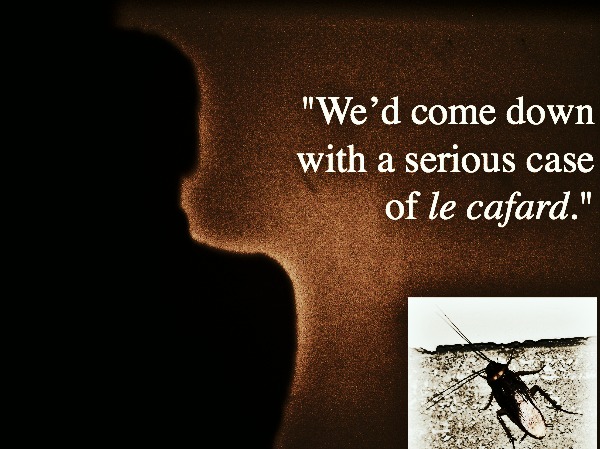
They’re inevitable. Those days that occasionally, and sometimes from out of nowhere, invade the life of a long-term international traveler or expat. You miss home, you’re a stranger in an alien place, you’re gripped by le cafard.

While French has an expression for homesickness (mal du pays), I prefer the other term, le cafard, to describe this dark visitor. It literally means “the cockroach”.

Le_cafard_cockroach

Photo credits: Alone In The Dark, Nobody Waiting, by Môsieur J.; (inset) Gaspard le cafard, by InOutPeaceProject. Both images via Flickr (CC BY-SA 2.0).

The creepy cockroach of homesickness

Seven weeks into our year of living in Europe, homesickness hit and hit hard. My husband, Joe, and I were in southwestern France. The fall weather had turned decidedly cold under steely gray skies and thick cloud cover—never good for lifting one’s spirits. Though we never imagined our adventure abroad would be daily champagne and constant merriment, we didn’t expect the blues to make their appearance so soon.

Exploring endless desolate, medieval stone hamlets had darkened our mood. Everything had been touched not only by the savagery of the Hundred Years’ War between the French and English in the 14th and 15th centuries but also by the 13th-century Cathar Crusade.

Prior to leaving for Europe, I’d read extensively about the Cathars and decided that we had to visit the region in which this shameful yet fascinating period of history took place.

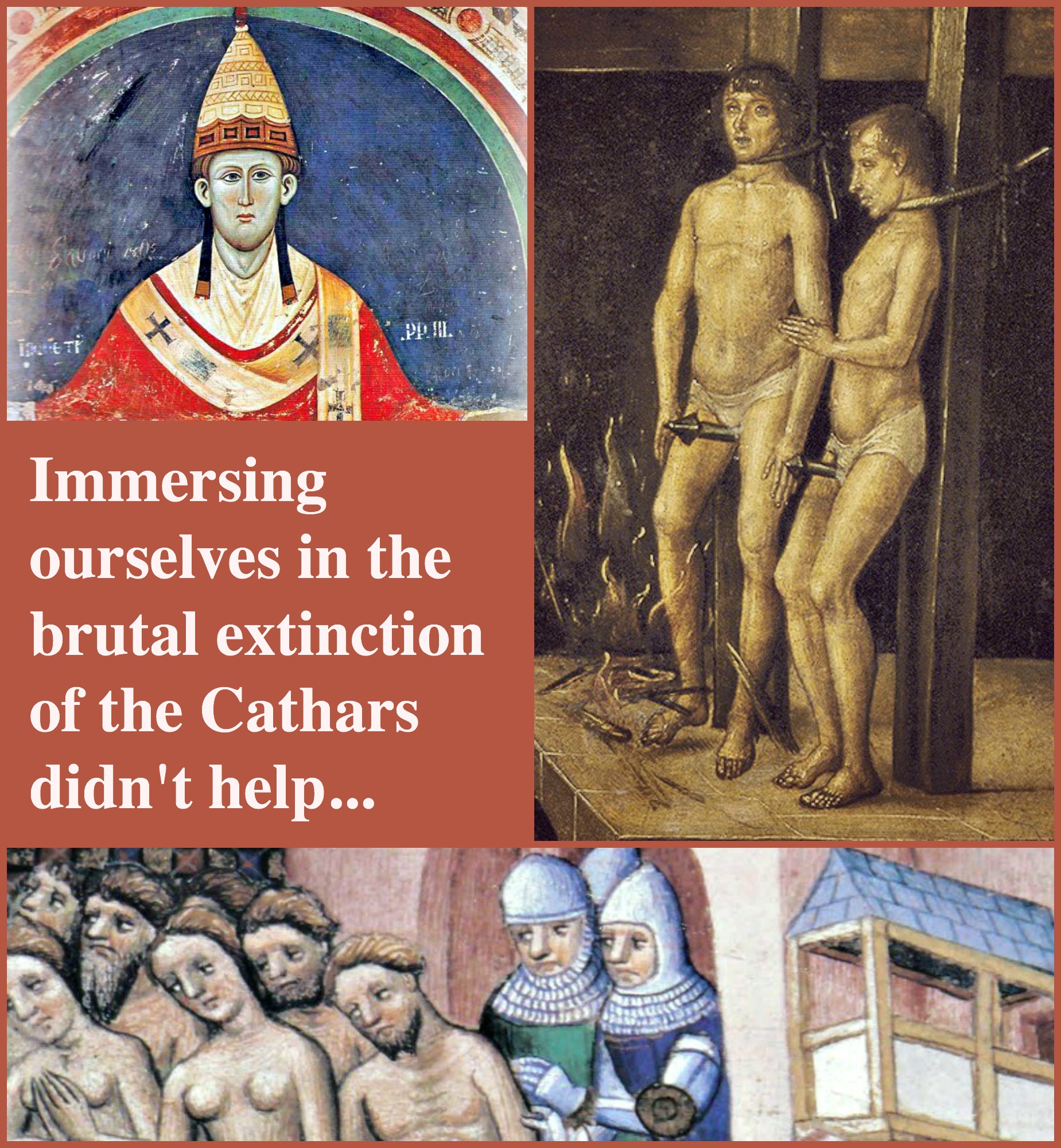
The bloodthirsty military campaign of the pope, ironically named Innocent III, to eliminate the dualist offshoot of Catholicism in Languedoc-Roussillon was conducted with abandon against the heretics. No one was spared—men, women, children, and the elderly were all slaughtered. And when Catholics refused to give up their Cathar neighbors, one religious leader (a monk, no less) famously declared: “Kill them all. God will know his own.”

In a sunnier clime, this history might have been remote and intriguing. But against a backdrop of unrelenting gray with no access to the Internet, it left us feeling fogged in and low. Very low. After visiting so many places that witnessed sieges, starvation, plagues, pestilence, and butchery, even the cheeriest of souls would have succumbed to its grip.

Cathar Crusade

Photo credits (clockwise from top left): Pope Innocent III wearing a Y-shaped pallium, by unknown 13th-century artist; “Saint Dominic presiding over an Auto da fe” (detail), by Pedro Berruguete; Expulsion of the inhabitants from Carcassone in 1209, taken from the manuscript Grandes Chroniques de France. All images via Wikimedia Commons.

It’s a bug that thrives in the dark—and in the Dark Ages!

Melancholia, tinged with some serious mal du pays, reared its ugly head without warning. Perhaps we’d had our fill of cold, antiquated spaces and lonely, abandoned stone villages. Or perhaps the total absence of others to provide even a bit of people-watching diversion had brought us down. But maybe we were just in a trough of the normal vicissitudes of travel.

To put it simply, we missed our children and we missed our country—we’d come down with a serious case of le cafard.

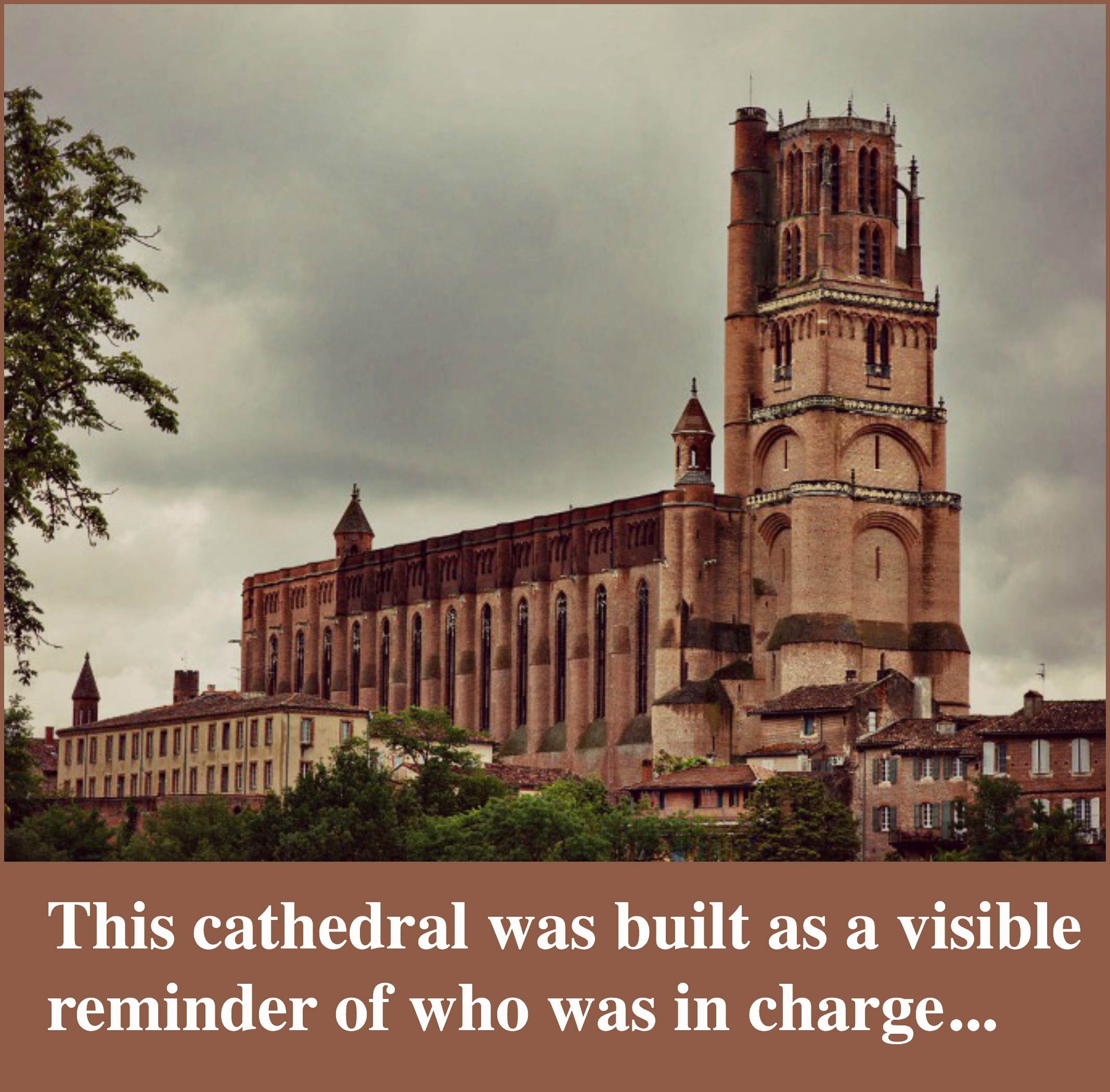
Despite knowing that immersing ourselves in the brutal extinction of the Cathars might not be what we needed to improve our dispositions, we plowed ahead toward our next destination: Caunes-Minervois, just north of Carcassonne. On the way, we stopped and hiked the steep Cathar hill town of Cordes-sur-Ciel, where the region’s alleged heretics had taken refuge, and took a long midday break for a sunny, outdoor lunch in Albi (home of Toulouse-Lautrec), with its austere, imposing redbrick cathedral of Sainte-Cécile, unlike any other church in the world. We noted that the cylindrical exterior of its nave looked like a space shuttle ready for launch. Sainte-Cécile was built after the Cathars were wiped out as a visible reminder to those who might be thinking of defying Rome not to forget who was in charge.

Sainte-Cécile Cathedrale

Photo credit: Cathédrale Sainte-Cécile d’Albi, vue de la rive opposée du Tarn, by Jean-Christophe BENOIST via Wikimedia Commons (CC BY-SA 3.0).

Back on the road, we drove farther south into the Montagne Noire to our ultimate destination: the constricted streets of Caunes-Minervois, where our Internet-enabled hotel awaited. It had been over a week since we’d communicated with our children, and we were lost in reverie about what we would learn when we fired up our laptops. Our son had had an interview the last time we spoke. Did he get the job? we wondered. Our daughter was coming down with a cold. Was she feeling better? Did my latest Amex payment process, and was the house we hoped to rent in Spain still available?

Just can’t get rid of it…

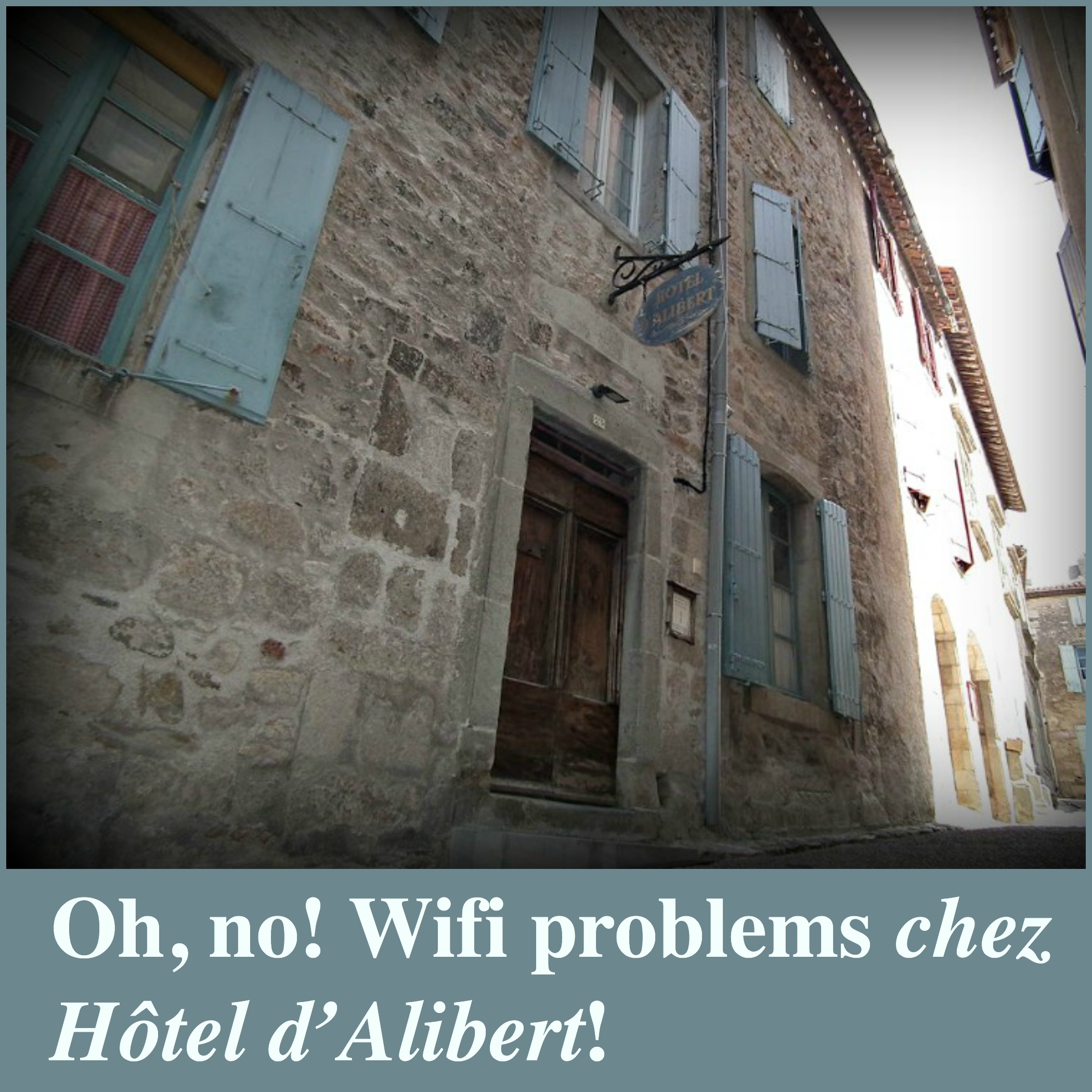
Our home for the next three nights was the Hôtel d’Alibert, an age-old townhome in the heart of the medieval quarter. The affable but quirky owner (you cannot arrive at the hotel between 2:00 and 5:00 p.m. because he is napping—it says so right on the door) lets us in through the French doors of the hotel’s restaurant at just after five. (The front portal remained inexplicably locked all day.)

The coda to our arrival in Caunes-Minervois was this: “Yes, the hotel has free Wi-Fi,” the proprietor confirmed, “but I’m afraid it’s not working; there have been problems.”

Wifi problems at Hotel dAlibert

Photo credit: Hôtel d’Alibert à Caunes-Minervois, by Gaël Gendrotvia Wikimedia Commons (CC BY-SA 3.0).

We were enraged and on the verge of tears. Here we were in yet another deserted town with no means to connect. We dragged our devastated spirits up the spiral stone stairway to our room and dropped our luggage. Le cafard attacked with a vengeance. For the rest of the evening, in a fit of pique, we seriously contemplated the possibility of returning home—of giving up on this gap year business—but finally agreed that all would be better in the morning.

After our night of frustration and reflection, the morning light bolstered our resolve to rally.

* * *

Now back stateside, I still refer to a bout with the blues as le cafard. It just seems so perfect a term. How do other languages express this feeling of profound melancholia? Are there expressions in other languages as accurate as the French?

* * *

Thank you, Marianne! How well you’ve described, with the help of that vivid French metaphor, the sense of alienation that at some point or another plagues all of us who venture beyond borders to travel or live. The word we use on this site, “displaced”, simply isn’t strong enough! Readers, do you have any suggestions for words or sayings in other languages that can convey these feelings? Do let us know in the comments!

Marianne C. Bohr is a writer, editor and French teacher whose book, Gap Year Girl: A Baby Boomer Adventure Across 21 Countries, was published in early September (She Writes Press). She married her high school sweetheart and travel partner, and with their two grown children, follows her own advice and travels at every opportunity. Marianne lives in Bethesda, Maryland, where after decades in publishing, she has followed her Francophile muse to teach French. She has an author site where she keeps a blog, and is active on Facebook and Twitter.

STAY TUNED for the next fab post!

If you enjoyed this post, we invite you to register for The Displaced Dispatch, a round up of weekly posts from The Displaced Nation, and SO much more. Register for The Displaced Dispatch by clicking here!

Related posts:

WORLD OF WORDS: How a mysterious passion for learning French has shaped the life of writer Marianne Bohr

Marianne Bohr in the Luxembourg Gardens in Paris—is she reading or indulging in reveries about words?

Marianne Bohr in the Luxembourg Gardens in Paris—is she reading or indulging in reveries about French words?

New columnist Marianne Bohr, whose first book, Gap Year Girl, is about to come out with She Writes Press, is here with her second post attesting to how a passion for learning languages can engender a passion for travel.

I decided long ago that I was born in the wrong country. There must have been some mistake. But then again, if I’d been born in l’Hexagone, my passion for all things French wouldn’t exist. I’d have been raised with the language’s romantic euphony, and the fluid succession of words would be part of my everyday world. Some other tongue and faraway culture would have caught my fancy—so perhaps, just perhaps, it’s fortuitous my birthplace was Fort Wayne, Indiana, and not Paris.

Passions are essential to a happy life. When we care about something, it shrinks the world to a human scale, breaking it into wieldy pieces to love and nurture. My passion for French shapes my world, yet why I love this lyrical language so dearly is an essential mystery I’ll never fully understand.

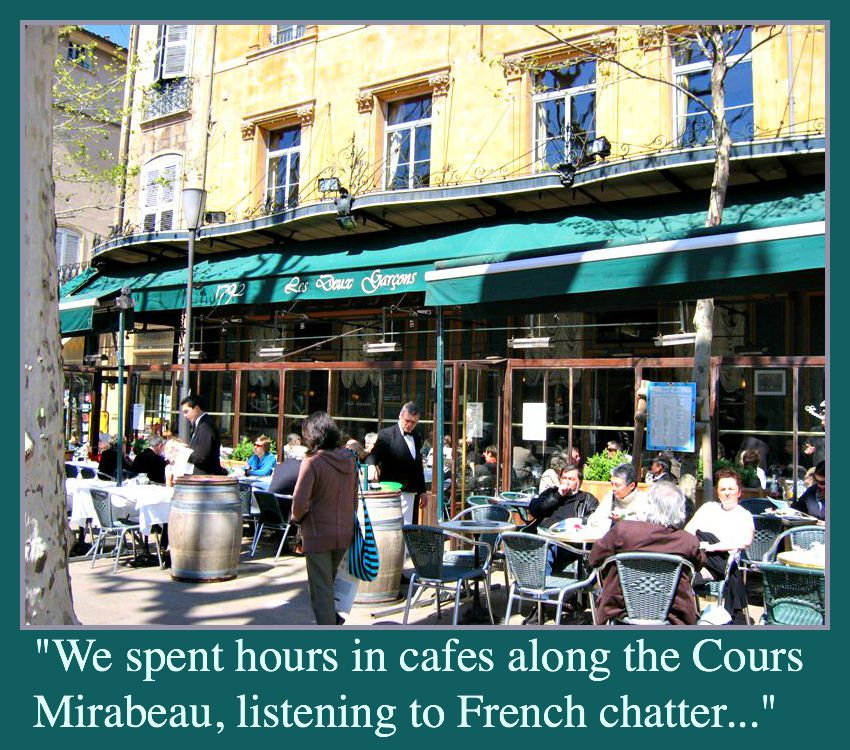
In my first post I spoke about the decision my husband, Joe, and I made to do a senior year abroad at age 55. For the final six weeks of our “gap year” traveling through Europe, we settled into Aix-en-Provence, a stylish, sun-kissed university town in the south of France. We delighted in the daily outdoor markets and spent hours in cafes along the Cours Mirabeau, sipping rosé wine and listening to the mellifluous French chatter around us.

Photo credit: Les Deux Garçons, by tpholland via Flickr (CC BY 2.0).

I signed up for daily French conversation classes, hoping to further exercise my sometimes-lazy American jaw in preparation for the new career that awaits me back in the States. Over thirty years in book publishing is behind me and armed with the degree I completed before we left for our gap year, I’m ready to embrace being a French teacher, full throttle.

First day of school

I’ve always loved being a student of French, no matter my age, but on the first day of my class at IS Aix-en-Provence (a language institute that specializes in teaching French to adults), I’m predictably nervous, as I’ve been on day one of every school year of my life. I lay out my clothes the night before and imagine first days of school gone by: my freshly ironed plaid uniform, crisp white blouse, just-purchased navy knee socks with tags still attached, and newly polished oxfords. I pack a snack, just as I did in grammar school, and I’m ready to go.

My giddy younger self emerges the moment I cross the classroom threshold, polished floorboards creaking, where I am once again a wide-eyed schoolgirl eagerly poised over a blank composition book, pencil sharpened and my ardor for the subject on my sleeve.

My class of ten includes students from Australia, Finland, the Netherlands, Spain, and Sweden, none of us a youngster and all on an educational vacation in summertime Aix. I introduce myself and stumble on the choice of tense. Do I use the present or the future tense of “to be”? Do I affirm I am a French teacher, or do I demur and say I’ll soon be a French teacher? I opt for the former, Je suis prof de français. It bolsters my confidence with a frisson of pride.

My prof is Céline—gorgeous, funny, and particularly warm. I so wish I could be like her—une jolie française who speaks lovely French. As I walk home from class, it hits me, as it has so often before: yes, I am a newly minted French teacher, but no matter how I try, no matter how I practice, no matter how fiercely I study, I’ll never be French. I’ll never be française. I’ll never sound like Céline. I’ll forever be on the outside looking in, my face and palms pressed against the linguistic glass. I plunge into a microflash of depression. But I proceed across town, under soaring sycamores, content to have a passion I can call my very own.

The French and their apocopes

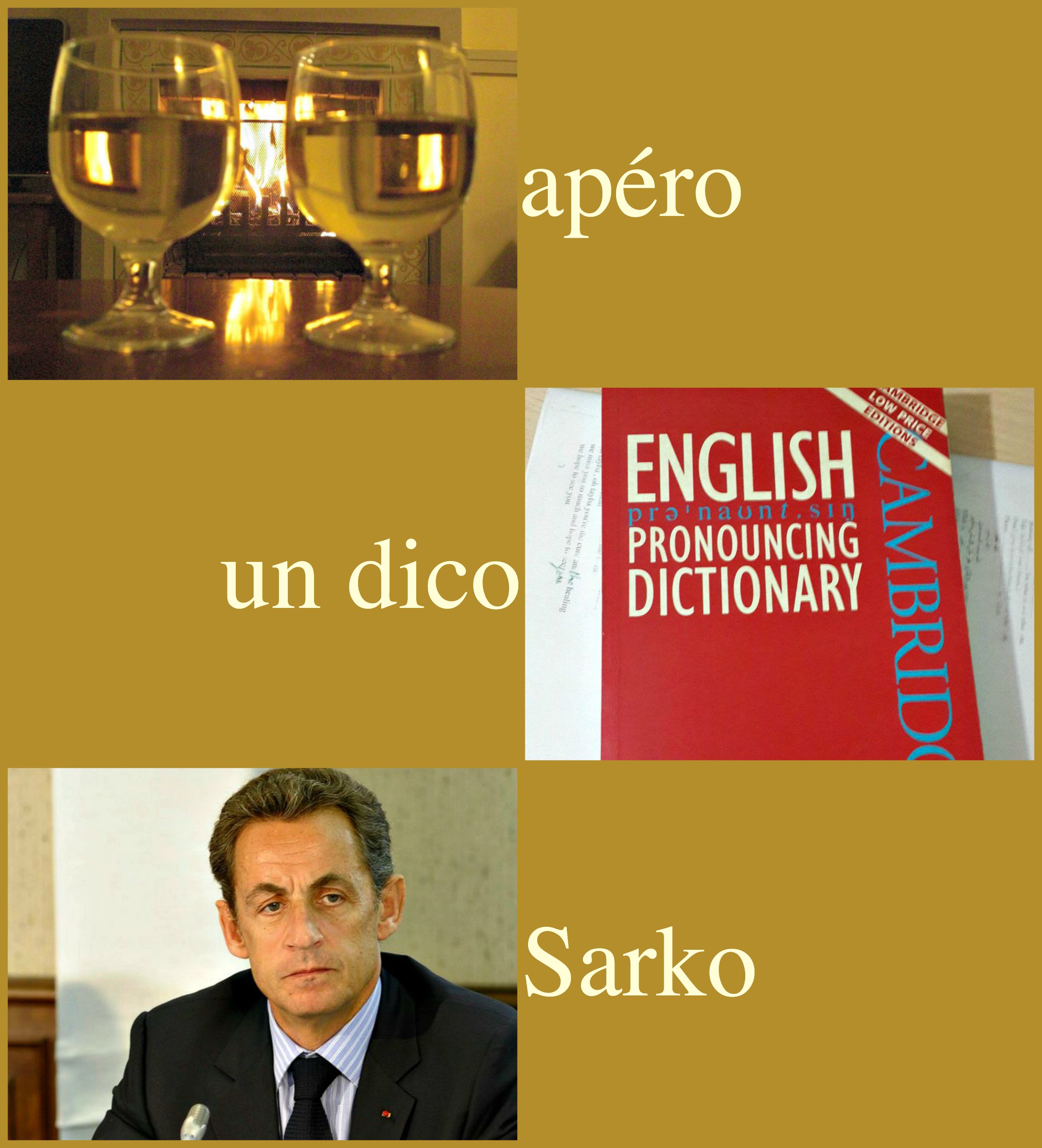
The French often truncate words by dropping the final syllables and adding an “o.” Apéro, McDo, and resto (aperitif, McDonald’s, and restaurant) have long been staples of my French vocabulary, but thanks to my classes, I add abbreviations to my repertoire:

  • accro hooked on
  • les actus (the news),
  • un ado (an adolescent),
  • bio (organic),
  • un dico (a dictionary),
  • perso (personal), and,
  • (my favorite) Sarko (Nicolas Sarkozy).
Shortened French words

A few examples of the Gallic fondness for apocopes. Photo credits: Apéro au coin du feu, by Sébastien Bertrand via Flickr (CC BY 2.0); English-language dictionary via Pixabay; _EPP Summit, by European People’s Party via Flickr (CC BY 2.0).

Each week in class, we prepare presentations about les actus, and I do one on social media. Twitter and blogger have now entered the daily lexicon as regular “-er” verbs. We learn the quirky French term for “walkie-talkie” (talkie-walkie), that the expression vachement bien (amazingly good), which was very popular thirty years ago, is much less in vogue nowadays, and that it is très chic to say super (pronounced “sue pair”—accent on the “sue”), especially if you’re a woman.

The café was super-bon; your dress is super-chic; he looks super. I imagine the French language police, the Académie Française, must be super-fâché (very angry) about all the new Franglais.

Why won’t anyone speak French with me?

Indeed, much has changed in France over the past 35 years. There’s a new generation with kinder attitudes, more customer-service orientation, and lots of English spoken, so unlike the France of days gone by. Everyone wants to speak English, but I want to speak French. I’m bolstered by Joe, who always encourages, “Make them speak French, babe,” so we have uneven, lopsided exchanges:

“Good evening, madame.”

“Bonsoir, monsieur.”

“Would you like an aperitif?”

“Oui, je prends un kir, s’il vous plaît.”

“Very good. And you, sir?”

“Un kir aussi, merci.”

It’s initially disconcerting, but they eventually get the point and give us what we want. They speak to us in French! We really do appreciate the attempt to be accommodating and their eagerness to practice our language. If only we Americans would exhibit the same passion for learning new tongues.

* * *

Thank you, Marianne! How about the rest of you out there? Do you have a passion for a foreign language and if so, what kind of lengths have you gone to in its pursuit? Do let us know in the comments!

Marianne C. Bohr is a writer, editor and French teacher whose book, Gap Year Girl: A Baby Boomer Adventure Across 21 Countries, will be published in September 2015 (She Writes Press). She married her high school sweetheart and travel partner, and with their two grown children, follows her own advice and travels at every opportunity. Marianne lives in Bethesda, Maryland, where after decades in publishing, she has followed her Francophile muse to teach French. She has an author site where she keeps a blog, and is active on Facebook and Twitter.

STAY TUNED for the next week’s fab posts!

If you enjoyed this post, we invite you to register for The Displaced Dispatch, a round up of weekly posts from The Displaced Nation, and SO much more. Register for The Displaced Dispatch by clicking here!

Related posts:

WORLD OF WORDS: For writer Marianne Bohr, travel is a way to indulge a craving for language

Marianne Bohr in the Luxembourg Gardens in Paris—is she reading or indulging in reveries about words?

Marianne Bohr in the Luxembourg Gardens in Paris—is she reading or indulging in reveries about words?

Today we welcome new columnist Marianne Bohr, whose first book, Gap Year Girl, is about to come out. Marianne contributes a post showing how her love of languages intersects with her love of travel.

At age 55, my husband and I took a “senior year abroad.” We quit our jobs, sold the house, the car and most of our belongings to travel across Europe in search of adventure.

Part of that adventure was physical. Highlights of our 12-month sojourn across 21 countries included running the Paris Marathon and doing a seven-day hike along the Tour du Mont Blanc.

Part of it was about meeting new people and trying new foods.

But for me the adventure also had to do with words. Having always been a “word” person, I was fascinated by the myriad languages we encountered. So often I’ve wondered: Is it possible to overstate the importance of language in forging friendships across borders? And my response has always been, I don’t think so.

Language itself can be a window on the world, one that opens wide when either a common tongue is shared or you look behind the vocabulary of a language other than your own.

In future posts, I’ll look at specific words and expressions, especially those in French, since I’m a Francophile through and through. But for now, I have adapted a few passages from my book that contain a few observations about language that I made during our year abroad. Enjoy!

* * *

The trip from Grindelwald, Switzerland to Chamonix, France, requires four train changes and one bus. As the crow flies, the distance isn’t far, but crossing the Alps can be a multilegged, many-houred proposition.

On one of the neat and tidy Swiss mountain trains, a Japanese couple traveling alone takes their places across from a dapper, middle-aged local gentleman on the banquette seats next to ours. He jumps up to help them with their luggage and once the bags are in place, proceeds to initiate a friendly conversation in Japanese. The look of pure, unadulterated joy on the couple’s faces lights up the train. They’re on their own, far from home, and the serendipity of selecting seats next to someone who speaks their mother tongue is priceless.

Lively conversation among the three fast friends ensues as the Swiss gentleman moves over to sit facing the twosome. He animatedly points to features of the surrounding peaks and comments on the houses we pass by as our train proceeds down the valley. I’m transfixed by the exchange. The travelers laugh, heads nodding and smiles widening, and my heart warms as I imagine the talk turning from our magnificent Alpine surroundings to families, travel, and Japan.

When the train slows for the native son’s stop, they exchange cards and, hands at their sides, quickly bow their goodbyes. Surely the encounter will be one of the most memorable of the visiting couple’s trip.

*

In Grindelwald, where we’ve arrived for eight days of hiking, we attend an evening barbecue at our hotel in the shadow of the Eiger and meet a couple that hails from Dresden, in the former East Germany. They speak passable English (which was significantly better than our almost nonexistent German). They tell us that nowadays, all schoolchildren learn English from a very early age, but that they didn’t take it up until they were adults. They apologize for their lack of fluency, acknowledging that Russian was the requirement when they were growing up. Subjugators, of course, demand that the subjugated learn their language in a decisive power play.

We end up thoroughly enjoying our outdoor buffet in the company of our new friends, having learned much about their formative years behind the Iron Curtain—all because our companions have breached the language barrier.

*

Language is key for forging ties across boundaries but it’s a delicate art. We were also amused on occasion during our gap year by the quirky use of English by some of the people we meet.

  • I overhear an Italian traveler in a quiet Roman museum triumphantly exclaim when his English friend caught up with him, “The bull has now entered into the china store.”
  • Our pretty young guide in Dubrovnik, after she asked us if we were familiar with an anecdote she shared about her city and St. Blaise inquires, “Is that bell not ringing for you?”

Such endearing errors highlight the subtle nature of language and the translation of idioms in particular, but they shouldn’t inhibit us from giving another tongue our best effort. Learning other languages has always helped me listen to and use my own language more carefully and to pay closer attention to expressions that could be difficult to understand by non-native speakers.

*

I snap back from my linguistic reverie as our Swiss train slows and we pull into the station near the French border. It’s time to transfer to the next train that will drop us at the bus depot for the final leg to Chamonix. We are our way to Provence, where we’ll retreat for the summer.

My heart flutters knowing we’ll soon be back in the promised land of the quintessential romance language—my beloved French—where once again my language window will be open on the world. I may at times speak it like a bull that’s entered into the china store, but le français will always help keep my language bell ringing.

* * *

Thank you, Marianne! How about the rest of you out there? How do you look at languages other than your native tongue: are they an impediment or a lure for overseas travel and/or living adventures? Do let us know in the comments!

Marianne C. Bohr is a writer, editor and French teacher whose book, Gap Year Girl: A Baby Boomer Adventure Across 21 Countries, will be published in September 2015 (She Writes Press). She married her high school sweetheart and travel partner, and with their two grown children, follows her own advice and travels at every opportunity. Marianne lives in Bethesda, Maryland, where after decades in publishing, she has followed her Francophile muse to teach French. She has an author site where she keeps a blog, and is active on Facebook and Twitter.

STAY TUNED for the next week’s fab posts!

If you enjoyed this post, we invite you to register for The Displaced Dispatch, a round up of weekly posts from The Displaced Nation, and SO much more. Register for The Displaced Dispatch by clicking here!

Related posts:

EXPAT ART AS THERAPY: Works that capture unexpectedly beautiful moments of life in other countries

ExpatArtasTherapy_principle_no_two

As the summer wears on—and I’m wondering what I am doing working long hours in a big city while everyone else seems to have escaped to beaches or mountains or on other adventures—I’m returning to my series based on the ideas of pop philosopher Alain de Botton. As those familiar with his work will recall, de Botton maintains that art can provide relief from as well as solutions to one’s angst.

But does the art we expats produce play a role in improving people’s lives? That’s what this series of posts explores.

No doubt, the works of international creatives has some appeal to what global soul Pico Iyer has called the great floating tribe of people “living in countries not their own.” (Expats currently number around 230 million, or about 3 percent of the world’s population.)

But are the works expats produce too specific to their own situations, or do these works, too, speak to broader life problems?

De Botton outlines six specific ways art can respond to human needs. My last post examined his first principle, that art can compensate for the fact that we have bad memories. I offered some examples of how international creatives have preserved precious moments of their lives in other countries in their works, not only for themselves but for posterity.

Today let’s look at de Botton’s

PRINCIPLE #2: Art can give us hope. Simple images of happiness touch us. We tend to be moved by small expressions of beauty—not because we are sentimental but precisely because so much of life is not pretty.

The example de Botton cites is Claude Monet’s Water Lilies, (or Nymphéas), a series of around 250 oil paintings that depict the French impressionist’s garden at Giverny. Monet painted the series during the last years of his life, while suffering from cataracts.

Claude_Monet_Nympheas_1915_Musee_Marmottan_Paris

Nymphéas, 1915, Musée Marmottan Monet, Paris. via Wikimedia Commons (public domain).

De Botton is of course stirring it up by insisting that beautiful art serves an important purpose. Artists of today seem to be in a race to outdo each other in the outrageous stakes. I’m thinking of Damien Hirst, who built his reputation on artworks displaying dead animals, or their parts, in formaldehyde tanks. Providing a respite from the ugliness of life is the last thing on his mind. Likewise for Jen Lewis, who uses her own menstrual blood to create abstract designs. Provocative, yes, but not my idea of beauty.

Returning to de Botton’s second principle: which expat artists have excelled at producing the kind of beauty that provides relief from life’s less pleasant aspects? (Who are our displaced Monets?)

By way of an answer I’ve arranged a small “exhibition” of works by four visual artists, three painters and one photographer, all of whom have been affiliated in some way with the Displaced Nation. As de Botton has done at several museum exhibitions, I’ve added post-it notes describing the therapeutic effects I’ve experienced upon viewing these artists’ works.

#1: “Lost on a Mountaintop,” by Candace Rose Rardon

Lost_on_a_Mountaintop_by_candace-rardon_800x

POST-IT: Those of us who have traversed international boundaries carry in our hearts the fear that we may someday lose our way—literally, of course, but even figuratively, with no family or old friends around to serve as mentors or sounding boards. Candace Rose Rardon shows us the flip side: how glorious to be lost on the top of a mountain range with the world stripped down to pines, sun, wind and hills, ready for you to paint your own scenes on it. Even a stay-at-home curmudgeon could be struck down with wanderlust, at such a prospect. Candace is a writer, sketch artist and illustrator without a location. She tells stories about the world through her words and watercolors.
OUR CONNECTION: Candace was the recipient of one of our Alice Awards.
SEE ALSO: Candace’s blog, The Great Affair; and her first book of travel sketches: Beneath the Lantern’s Glow: Sketches and stories from Southeast Asia and Japan.

#2: Les Mimosas de Mesubenomori,” by Julie Harmsworth

les-mimosas-de-mesubenomori-2013-800x-acrylique-et-pastel-c3a0-lhuile-sur-papier
POST-IT: My first (and only) visit to Nagasaki, made while I was living in Japan, had a lasting impact. To this day I carry around images of the damage wreaked on that city from my visit to the Atomic Bomb Museum. But for Julie, who moved to Nagasaki from the United States to teach English, the city was the place of her rebirth as an artist. She often walked to this local park, and this painting is her tribute to its flowering mimosa trees. For a moment her painting makes me forget the pain this city endured, along with the horror for war it engenders. Though one can never lose sight of the darkness, it’s possible to be touched by these simple, beautiful trees.
OUR CONNECTION: We are mutual blogging admirers. Julie, btw, has now moved to France, where she continues her work as a fine artist (hence the French title of her painting).
SEE ALSO: Julie’s portfolio site.

#3: “Russian Market—Phnom Penh,” by A. Spaice

Russian-Market-PhnomPenh_framed
POST-IT: I’ve never been to Phnom Penh but imagine it might be a variation on other Southeast Asian cities (Bangkok, Kuala Lumpur, Jakarta, Saigon) I’ve visited. From reading descriptions of the Russian Market, which lies in the southern part of Cambodia’s capital city, I can certainly picture it: a narrow warren of stalls, crowded, busy and sweltering, full of the kinds of goods you see in all of the markets in that part of the world (though apparently at better prices), everything from handicrafts to fake Swiss watches to pirated software to designer clothes considered unfit to be shipped abroad because of small flaws. The global economy at its finest! But what does writer and sometime photographer A. Spaice offer us? A glimpse of a splendidly isolated flower and flower-to-be. Such a beautiful reminder that the “I shop therefore I am” credo of Asia isn’t all there is to life!
OUR CONNECTION: A. Spaice was our first international creative to be “wonderlanded” (read her interview and an excerpt from her short book, Bangkok).
SEE ALSO: A. Spaice’s Design Kompany site and weekly e-zine.

#4: “End of the Drought,” by Antrese Wood

Endofthedrought_Antrese_Wood
POST-IT: The Pampas grasslands of Argentina are one of the most fertile areas in the world. When a drought occurs and its crops are destroyed, not only farmers—but also does the rest of the world—suffers, as world food prices are nudged higher. Antrese’s painting of the grasslands landscape “after the drought” reminds us that even when nature gives the earth and its inhabitants a terrible beating, the rain returns eventually and the beauty of the landscape is restored. If a glimpse of such beauty helps us forget the pain even for a moment, then perhaps it is possible to regroup and carry on. (Note to self: Come back to this painting once the dog days of August have arrived.) An American married to an Argentinian, Antrese has been living in Argentina since 2011.
OUR CONNECTION: Antrese was one of the interviewees in our long-running Random Nomad series. At that time she was about to embark on an ambitious project, “A Portrait of Argentina.”
SEE ALSO: Her portfolio site and her podcast series for artists, SavvyPainter.

Note: All four artists’ works are reproduced here with their permission.

* * *

So, readers, what do you think of the above “exhibition” of works that capture unexpected moments of appreciation for life’s beauty? I know that writing about these works helped to lift me out of my late-July funk, but did you, too, find it therapeutic? And are there other expat works you would recommend for this reason? Do tell in the comments.

STAY TUNED for the next fab post.

If you enjoyed this post, we invite you to register for The Displaced Dispatch, a round up of weekly posts from The Displaced Nation, with Alice nominations, book giveaways, and other extras. Register for The Displaced Dispatch by clicking here!

Related posts:

The Displaced Nation’s 4 wishes for birthday number 4 (no foolin’!)

Happy 4th Birthday to the Displaced Nation!

Photo credit: “Today I’m 4 years old,” by Emran Kassim via Flickr (CC BY 2.0).

Greetings Displaced Nationers, old and new.

How many of you have been with us from the beginning, could I see a show of hands?

Hmmm… Are there one or two hands out there? Thanks for sticking around! We’ve come a long way together since the Displaced Nation’s humble beginnings on April Fool’s Day 2011.

Actually, can you believe it’s been four years and we still haven’t run out of things to say about the displaced life?

We can’t!

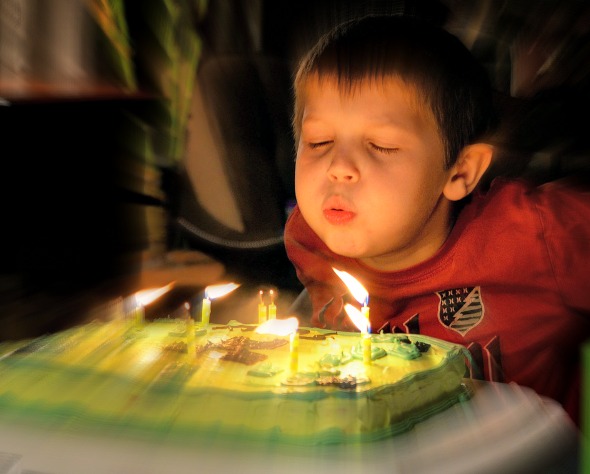
Still, today is not for introspection. It’s a special occasion, a day to celebrate with cake!

Photo credit: AlainAudet via Pixabay

Photo credit: AlainAudet via Pixabay.

And, although it’s not customary to do so, I’d like to reveal my four wishes for the coming year:

1) Reach a new milestone of 500 followers on Facebook.

For some reason we never tried very hard during these four years to get FB followers, and our numbers reflect this insouciance: we are now at 467. If any of you can help us find 33 more “likes”, we’d deeply appreciate. Of course we’d like to have even more than 500, but we’d be happy with that milestone for now. (We post on FB twice a day, and always strive to be amusing and/or thought-provoking…)

2) Have more people discover the new and much improved (if we say so ourselves!) Displaced Dispatch.

If you’re a subscriber, you’ll know that we’ve already celebrated our birthday in last Sunday’s issue by sharing the Danish idea of April Fool’s (no fooling’). Seriously (actually, I am serious), the Dispatch is now like chunky ice cream. It goes down smoothly but also contains six tasty morsels:

  • What to celebrate this week: Holidays and other commemorative occasions around the world.
  • While we were all on social media: New book releases and other milestones in the lives of international creatives.
  • TDN updates: Our past week’s posts.
  • Alice Obsession: Our latest discovery about Alice in Wonderland, whom we see as our muse.
  • Matters of debate: Contentious issues raised by various expat and travel bloggers over the past few weeks.
  • Surprising discoveries: Stuff we didn’t know before sifting through said sources. (Turns out: there’s a lot we don’t know!)

3) Deliver a fitting commemoration to Alice in Wonderland on behalf of the 150th birthday of Lewis Carroll’s celebrated book.

One hundred and fifty years, really? That puts our four years in perspective! As long-time readers will know, the Displaced Nation has treated Alice in Wonderland as our special muse from the very start, beginning with Kate Allison’s brilliant “5 lessons Wonderland taught me about the expat life, by Lewis Carroll’s Alice.” For the past three years, we gave out monthly Alice Awards to a number of international creatives. For that matter, we also have a thriving Alice in Wonderland Pinterest board. But for this special year in Alice’s life, we are planning a special “wonderlanded” series, to be rolled out starting this month. (Know anyone who would be game to channel Alice from the perspective of someone leading a life of global residency and travel? We are open to suggestions. Send to ml@thedisplacednation.com.)

4) Introduce a new look to the site.

Good news: I already have a theme picked out! Not-so-good news: I can’t seem to find the time to transfer the contents, resize the photos, and so on. (Blame the day job!)

* * *

And assuming I get another wish, to grow on, that one will be that we can always have a rich crop of international creatives as columnists.

Speaking of which, I’d like to give the first pieces of our birthday cake to Beth Green, Lisa Liang, JJ Marsh, Joanna Masters-Maggs, HE Rybol, and Shannon Young: The Displaced Nation would have little to celebrate were it not for the seven of you!!!

And if anyone out there is still with me, you deserve some cake as well. Thanks so much for your support.

Photo credit: blickpixel via Pixabay.

Photo credit: blickpixel via Pixabay.

Bottoms up, cheers, kampai—oh and thanks for all the prezzies! What prezzies, you may ask? Well, I assume that from now you’re going to:

And with that final pitch, I’m off to fetch another glass of champagne. Huzzah!!

STAY TUNED for more fab posts.

If you enjoyed this post, we invite you to register for The Displaced Dispatch, a round up of weekly posts from The Displaced Nation, and much, much more. Register for The Displaced Dispatch by clicking here!

Related posts:

The Displaced Nation responds to France’s 9/11

Solidarity with Solidarite

SOLIDARITE, by Patrick Janicek via Flickr (CC BY 2.0).

Time and again, the Displaced Nation has featured the works of displaced creatives who have been captivated by Paris, a city that has been beloved of expats for longer than anyone can remember. For today’s post, a few of us offer some responses to the terrorist attacks that beset the city last week. Our thoughts are with those expats who remain in the city as it attempts to move forward in the wake of disruption and tragedy, what some have labeled France’s 9/11. We express solidarity with your solidarité.

—ML Awanohara

ML_for_blogML AWANOHARA, Displaced Nation founding writer/editor: My first two experiences with terrorism occurred when I was living abroad: first in Britain, where I always felt the threat of an IRA attack when traveling into central London for my studies; and then in Japan: I was living just up the street from one of the subways that Aum Shinrikyo attacked with sarin gas.

Then, not long after I repatriated and moved to New York City, 9/11 occurred: a spectacle almost beyond belief. I still remember the gamut of emotions I felt in the weeks and months that followed, everything from practical considerations (should I take the bus since a rumor is flying about another attack on the subway today?) to large questions: why do they hate us so much?

Although in each of these cases the terrorists were tied to religion (even Aum Shinrikyo espoused a “new religion”), when I first heard about the Parisian attacks, I felt that something different was taking place. It sounds grand to call it a clash of civilizations, but that’s been my impression, this time around.

I spent my formative years in Britain, you see, where I learned to appreciate irreverent humor, so much so that I’ve had a tough time adjusting back to life back here in the U.S., where people take themselves a lot more seriously. Though I don’t think I’m Charlie (I draw the line at the kind of irreverence that magazine was up to), I do feel that artists should be free to explore the boundaries…

In fact, isn’t that what the Displaced Nation is about? My fellow founders, Kate Allison and Anthony Windram, and I conceived of this site as a space where one could be irreverent about the expat life (within certain limits, of course—and we occasionally argued about that). Humo(u)r and sending things up has been our stock-in-trade.

On that note, and in the spirit of artistic freedom, allow me to offer one final thought. In the days after the terrorists struck, I have also been thinking that, in a strange kind of way, I’m not unlike the perpetrators. I went abroad to be exposed to new ideas and in some sense I became “radicalized”—emerging from my European experience as more secular, more aware of the world, and with more of a social conscience than I’d developed while growing up in America.

That’s where the comparison ends, of course. Having a European, secular mindset means I’m much more afraid of my fellow Americans waging war on me with their fundamentalist beliefs, Biblical literalism and guns than the other way around. No doubt that’s why I now live in New York City—though ironically, this location makes me more vulnerable to terrorists with an axe to grind against this country.

I look to the Displaced Nation as a source of community while also knowing it cannot guarantee my safety. No nation can do that, not even one built in cyberspace. (I’m thinking of the Sony hackers.)

Rita GardnerRITA GARDNER, Adult Third Culture Kid, memoirist, and interviewee for the Displaced Nation’s “A Picture Says…” column: I am outraged and scared that the acts of a small group of radicals just shook the world. It’s not just Paris that is reeling from this blow. The number of lives affected spiral out widely beyond those who lost their lives, crossing continents and oceans, the pain an ever-expanding circle. When I first heard about the Paris attacks, my first instinct was to go into denial – and pull into a cocoon of self-protection. Selfishly, I can turn off the TV and not see the horror. It’s happening “somewhere else”, not in my immediate world. I realize hiding is just a defense mechanism. I think that because expats have had the experience of living far from our “passport country”, none of us can cocoon into unconsciousness for long. We have been in that “somewhere else”—we know this attack could have happened to any of us, any place on the globe. And yet—we must live, we must manage somehow to reconcile the fact that evil and good exist within mankind. That’s the hardest idea to contemplate or absorb at this time. Maybe all we can do right now is attempt to be good ambassadors wherever we find ourselves, and add love to that ever-expanding spiral.

Cinda MacKinnon_300x300CINDA MACKINNON, ATCK, novelist, and subject of one of our writer interview features: I wanted to write something profound, but what words can you say about terrorists? It is shocking and senseless. No cause can justify terrorism, yet hardly a week goes without innocent people being slaughtered. There is a feeling that the real target in Paris is Western civilization and values (and some say freedom of speech). The French are united in their grief, and they joined us after 9/11 when the newspaper Le Monde wrote: “Nous sommes tous Américains.” In response I would like to say: “Nous sommes tous Françaises.

Joanna_Masters_Maggs_300 x 300JOANNA MASTERS-MAGGS, Displaced Nation (“Global Food Gossip”) columnist and expat in France: I talked to my children, who’ve spent six years on their young lives in Muslim countries, about what happened. As I explained in yesterday’s post, I’m never shocked by terrorism as I knew it existed at an early age. When the attacks in Paris happened and my kids asked about it, I didn’t sugar the pill for them. I told them I didn’t have the definitive answer. I don’t know why people do this sort of thing. I can’t imagine caring that much about anything. I think I would shoot someone who hurt my kids, but for an idea, a belief? I told them not to get so uptight about things themselves and never say something as embarrassing as “Well, I’ve never been so insulted in all my life”. Get over yourself. The victims in last week’s attacks died for nothing. It was a waste of life. That’s what I tell them. Because someone had a gun and a shaky ego. That’s the truth. That’s what terrorism is.

While I was talking to my kids, I was thinking about the historian Niall Fergusson’s book on WWI. He says the war went on as long as it did for many reasons, not least that young men are turned on by danger. “Going over the top” gives them a massive adrenaline charge, which becomes addictive, and they can’t really believe “it” will happen to them. When I read this, it was a light bulb moment. I suddenly understood why the working-class boys I witnessed in Belfast growing up (I’m half Irish) turned to paramilitary groups: it gave them a sense of power and authority and purpose. There appears to be a limitless supply of such young men. The current situation in Syria makes me think of all the young British idealists who went to Spain to fight in the Civil War. Sometimes I wonder if National Service might actually fill the need for thrills in a safer way? My father for example did two years in Northern Ireland in the Intelligence Corps, and my father-in-law spent his youth in the Malaysian jungle during the insurgency. Aren’t we all turned on at times, by the gun-toting hard guy? Hollywood thrives on it!

* * *

Readers, do you have anything to add, or any comments on these heart-felt responses? We’d love to hear from you!

STAY TUNED for tomorrow’s Location, Locution post!

If you enjoyed this post, we invite you to register for The Displaced Dispatch, a round up of weekly posts from The Displaced Nation, with Alice nominees, exclusive book giveaways and other extras. Register for The Displaced Dispatch by clicking here!

Related posts: