The Displaced Nation

A home for international creatives

Tag Archives: Writers we love

LOCATION, LOCUTION: Writer Tracey Warr is a troubadour of medieval life, telling stories she collects from roaming far and wide

Location Locution
Columnist Lorraine Mace, aka Frances di Plino, is back with her latest, and last(!), interview guest.

My guest this month is Tracey Warr, a writer of fiction and nonfiction who was born in London and lived there for a substantial portion of her life—but these days can be found in Pembrokeshire, in the south west of Wales; on the Aveyron in southern France; or in transit.

Actually, Tracey is more than just a guest; from next month onwards, she will be assuming the reins of the Location, Locution column. I’ve enjoyed my time interviewing a variety of talented expat authors, and I thank you all for your comments and for being part of my writing life.

I know you will be in good hands with Tracey, who already has lots of interesting interviews lined up for you. But first, like Jill Marsh and I before her, Tracey will introduce herself and her writing by answering the Location, Locution interview questions.

Tracey has enjoyed two illustrious careers. Her day job for many years was as an academic specialist in contemporary art history and theory. She studied English Literature at Oxford University and holds a PhD in Art History. She held the post of senior lecturer for 15 years, teaching art history and theory in not only the UK but also Germany and the Netherlands. She has been involved in art curation projects all over the world, including in Australia, the USA, Spain, Lithuania, Norway and Finland. She has a long list of published books and articles and contributes art book reviews to Times Higher Education. Her most recent publication in the contemporary art field is the edited volume Remote Performances in Nature and Architecture, which came out last year with Routledge.

But if Tracey’s head is in the world of contemporary art, her heart belongs to historical fiction. After earning an MA in Creative Writing at University of Wales Trinity St Davids in Carmarthen, she entered her second career: writing fiction and biographies inspired by the landscapes and medieval histories of southern France and south west Wales.

If Tracey’s head is in the world of contemporary art, her heart belongs to historical fiction. Photo credits: (top row) The mind via Pixabay; cover art for Warr’s recent book; (middle row) Tracey Warr author photo; Map bastides in 1271, by FRAMYJO, Wikimedia Commons (public domain); (bottom row) Hearts via Pixabay; Ramon Berenguer I and his wife, Almodis de la Marche, counting out 2,000 ounces of gold coins, via Wikimedia Commons (public domain).

Thus far Tracey has published two novels set in early medieval France, Spain and Wales: Almodis the Peaceweaver (2011) and The Viking Hostage (2014). Her new novel, Conquest: Daughter of the Last King, due out later this year, focuses on the 12th-century Welsh princess Nest ferch Rhys and the Welsh resistance to the Normans. In addition, Tracey is working on a biography entitled Three Female Lords, charting the lives and interactions of three medieval sisters who ruled in 11th-century southern France and Catalonia.

Tracey has already garnered numerous awards in her new career as a novelist and biographer. I won’t go on to list them because I am eager to get to our interview, but I urge you to read about her accolades on the page created by her publisher, Impress Books.

And now let’s meet Tracey Warr and hear her views on location, locution.

* * *

Welcome, Tracey, to Location, Locution, a column that will soon be yours! You have a strong sense of place in your historical novels, but tell us, which comes first, story or location?

Thank you, Lorraine, for hosting me and I look forward to assuming the column reins next month. In answer to your question: location! I was staying in a friend’s house in a remote village in the Tarn Valley in southern France for four months during a very cold winter. I visited the nearby medieval castle and village of Brousse-le-Château with my nephew, who was around 10 at the time and asked me to write a story about the castle. He loved it when I made up stories, and actually had me under a “contract” to write him at least one story a year—a hard task-master! During my research I came across an extraordinary real woman, Almodis de La Marche—and realised she would make a fascinating adult novel. The incidents of her life astonished me and I had to become a self-taught historian to discover more and more about her and then imagine what had happened during the gaps in the historical evidence. The landscape in this part of France is littered with spectacular castles and medieval bastide towns clustered around hilltops and connected by rivers, which served as highways in medieval times, so it became a process of location initiating and then feeding the development of the story.

Almodis inspiration

During her research on the castle, Tracey Warr came across an extraordinary real woman, Almodis de La Marche. Photo credits: Brousse-le-Château and Almodis cover art (supplied).

I’m particularly fascinated by watery landscapes—rivers, estuaries, coasts and islands. My second novel and the third one I’m working on now also began with landscapes—the Welsh islands off the coast of Pembrokeshire and the great triple river estuary at Carmarthen Bay.

What techniques do you use for evoking place in your stories? After all, the action takes place long ago.

If possible go there, take photographs, experience it, make notes on how it smells, sounds, feels, looks. The small details you gain from walking the ground are invaluable. The novel I’m writing at the moment centres around a number of medieval castles in Wales. I spent a few days staying in the village of Llansteffan near one of the castles, walking the cliffs and looking down on the spectacular river estuary and the dangerous tides and sandbanks of Carmarthen Bay. Watching birds hovering in the wind, seeing the weather lowering and rain coming in fast—I’ve used all those details in the novel. Although I’m writing historical fiction and many things have changed in a place, there are also many things that don’t change.

Which particular features create a sense of location? Landscape, culture, food?

I use all of those, with landscape probably dominating, but I also use objects in museums, the literature of the times and places and medieval cookery books to help me evoke places. My characters need to eat, sleep, work, travel, use the garderobe and observe the rhythms of medieval life. A map of 11th-century Toulouse, a model of Viking Dublin, a Viking serpent brooch, medieval objects such as the Dunstable Swan Jewel, a medieval book of hours, the poetry of the female troubadours—all have been vital in helping me to create my fictional locations.

The Viking Hostage influences

Medieval objects such as the Dunstable Swan Jewel have been vital in helping Tracey create her fiction. Photo credits: (clockwise from top left) The Viking Hostage cover art, Dunstable Swan Jewel (British Museum), print from a Viking brooch (all supplied); Labors of the Months: May, from a Flemish Book of Hours (Bruges) via Wikimedia Commons (public domain).

Books such as medieval historian Ian Mortimer’s The Time Traveller’s Guide to Medieval England, which treats that distant time like the Rough Guide series, are full of helpful details on everyday life. I do a lot of historical, literary, material culture and visual research, picking out details that I can use and adapt to my story to create a credible world for my readers to step into. I started writing medieval fiction as a kind of holiday in time away from my academic work with contemporary art, so I try to recreate that experience for the reader. I hope that when they have their noses in my books, sitting on the Tube in London, on a train going to Birmingham, in their modern bedrooms and living rooms or on a crowded beach, they find themselves travelling with my characters to 11th-century Barcelona, 10th-century Tallinn (in Estonia), 12th-century Pembroke—or they are on a Viking ship or a medieval passenger boat plying up and down the Thames.

Can you give a brief example from your writing that illustrates place?

In The Viking Hostage I used my knowledge of traditional markets in France and modern-day Tallinn to help me create the opening scene in the 10th-century Tallinn slave market:

A list of items for sale was called out in the marketplace. I was described as one female Northchild, but my name is Sigrid Thorolfsdottir. I am for sale along with my brothers, Thorgils and Olafr, who stand either side, holding my hands.

‘Ease up Sigrid,’ Thorgils whispers to me, ‘you’re crunching the bones of my hand. It will be alright.’

I try to relax my grip on his knuckles and look out at the few buyers staring up at the platform where we stand barefoot. Most of the crowd have gone since we are the last and least interesting item. Around the edges of the market square tall, thin houses are painted in gay colours. Awnings above the stalls flap in the slight breeze, their colours leached out by sun. Apples, nuts and cheeses are carefully arranged in small mounds and circles. Chickens are panicking in wooden cages. If I squint my eyes I can just see the sun sparkling on the sea in the distance, beyond the square and the buildings, and the buyers.

‘Three fine children of the Northmen, already growing muscled and hard-working,’ Klerkon, the slaver, shouts to the sparse audience, pushing up the grimy sleeve of Thorgils’ shift and pinching the flesh of his bicep, leaving white fingerprints against the brown skin. I glance up at the angry muscle shifting in my brother’s cheek.

Medieval markets

“A list of items for sale was called out in the marketplace. I was described as one female Northchild…” Photo credits: Talinn, Estonia (Old Town) via Pixabay; Villefranche-de-Rouergue market (supplied).

Later on in the novel my heroines are held hostage by Vikings on a Welsh island. I blended together the real Welsh islands of Caldey and Skomer, which were actually occupied by Vikings, to create my fictional island.

We climb the hill in the direction Thorgils indicated. As we move up the path we alarm plump brown curlews with long curving beaks like darning needles that are nesting in the brilliant green bracken. Large dragon-flies fly towards us swerving at the last minute. From the top of the hill we can discern the rough diamond shape of the island, cliffs spearing out erratically into the blue sea on all sides and ravines full of white flowers. Our eyes crease against the brightness of the light reflecting from the surrounding water. There is an overwhelming sense of space. The grey cliffs are dotted with short bright green grass and yellow lichen. To the left comes the regular boom of the sea in a rocky blow-hole. The white foam of waves studded with black boulders look like a thin necklace slung around the coast. Thick green and yellow seaweed rolls back and forth on the strand. The irregular patchwork of fields established by the monks where the thralls now labour, blanket the rocks and undulations of the island. Planes of colour are visible in the sea—greens, dark blues, grey-blues, grey-greens and blacks. Strings of other islands in the distance look as if they have been dropped out of the sky from a giant’s hand.

The island is teeming with life. Raucous screeching seabirds wheel around us, sit on nests on the narrow ledges of the guano-streaked cliffs like a great shrieking city, skid across the surface of the ocean carrying flapping fish in their beaks, plunge-dive at dark clouds of mackerel. Aina and I lay on our bellies on the edge of the cliff, watching the birds. There are fat black and white birds with striped beaks and long talons like the fingers of a lute player.

Blend of two islands

“Planes of colour are visible in the sea—greens, dark blues, grey-blues, grey-greens and blacks.” Photo credits: (top) Sea cave right through Skomer; view of the sea through Llansteffan Castle (both supplied).

How well do you need to know a place before using it as a setting?

It helps to know a place well from living there or visiting and making detailed research. But I also sometimes completely imagine a place without going there, or I transpose my knowledge and experiences of one place to somewhere else. In my first novel I had to write about a journey across the Pyrenees. At the time I’d never been there so I used maps together with experiences of the Scottish Highlands to conjure it. Now I have spent quite a lot of time in writing residencies in the Pyrenees and would probably write it differently—but I hope the ‘Scottish’ version still worked in the novel for the readers. I find that if I really imagine a place or a building in my own head, such as the Norman motte-and-bailey castle at Cardiff that I’m writing about at the moment, this can drive the plot. Certain scenes and events happen because of the layout of a place, because I’m imagining moving through that place with my characters.

Which writers do you admire for the way they use location?

Donna Leon—in her Commissario Brunetti series, she makes me feel that I am in Venice, wandering the streets, riding boats in the canals with Brunetti, dropping into a corner bar for a glass of wine or a quick coffee, accompanying him on his way home for a delicious lunch with his smart, Henry-James-loving wife. Being in Venice with Brunetti is at least 60 percent of the charm of reading those books, and the murder mystery is the rest. British historical crime writer Antonia Hodgson—her 18th-century London in her recent novel, The Devil in Marshalsea, is absolutely believable and alarming. And Wilkie Collins—in The Moonstone, he creates a vivid landscape and mansion that his story unfolds within, and he infuses place with emotions and suspense.

Fave books for place Tracey Warr

Tracey’s picks for novelists who have mastered the art of writing about place

Thanks so much, Tracey!

* * *

Readers, any questions for Tracey? Please leave them in the comments below.

And if you’d like to discover more about Tracey before she begins her column next month, why not visit her author site. You can also follow her on twitter.

And with that, I bid you a fond adieu!

* * *

Thanks, Lorraine! You’ve introduced us to so many fabulous writers, an experience that has touched all of us who have been inspired by the landscapes we’ve visited, or in many cases, have made into our homes. We hope you’ll drop by the Displaced Nation every so often and see what we’re up to. Don’t be a stranger!! —ML Awanohara

Lorraine Mace writes for children with the Vlad the Inhaler books. As Frances di Plino, she writes crime in the D.I. Paolo Storey series. She is a columnist for both of the UK’s top writing magazines, has founded international writing competitions and runs a writing critique service, mentoring authors on three continents.

STAY TUNED for the next fab post!

If you enjoyed this post, we invite you to register for The Displaced Dispatch, a round up of weekly posts from The Displaced Nation, with weekly updates and much, much more. Register for The Displaced Dispatch by clicking here!

Related posts:

Photo credits: Top of page: The World Book (1920), by Eric Fischer via Flickr; “Writing? Yeah.” by Caleb Roenigk via Flickr (both CC BY 2.0).

BECAUSE WE (ALMOST) MISSED IT: Best of expat nonfiction 2015

Best of Expat Nonfiction 2015

As some readers may recall, I posted, at the end of January, a “best of” list of fiction works by, for, and about expats and other international creatives that came out in 2015.

I know, I know, it should have come out in early December.

And now it’s nearly the end of February, and I still haven’t posted my list of nonfiction books that appeared last year: all of those lovely memoirs, photo guides, guides to expat life, and so on.

But then Leap Day arrived, and I thought to myself: we only get an extra day every four years; why not take the leap and tackle my nonfiction list (so much longer than the fiction one!) once and for all?

Today I present the fruits of my Leap Day labors. May I suggest that you follow my example by springing for one or more of these for your Kindle? Spring is, after all, just around the corner… 🙂

(Hm, if it’s not too late for a New Year’s resolution, I resolve to publish my “best of 2016” list in December. Harumph, do I hear you say? Yes, you are right: famous last words!)

PLEASE NOTE: The books, which include indie as well as traditionally published nonfiction works, are arranged in reverse chronological order.

* * *

The Other Paris_coverThe Other Paris (October 2015)
Author: Luc Sante
Expat credentials: Born in 1954 in Belgium, Sante emigrated to the United States with his family in the early 1960s. On his first visit to Paris, with his mother when he was not quite nine years old, he found the city exciting. Returning as a college student, he couldn’t get enough of the City of Light and spent time hanging out with the literary expat community. Sante currently lives in Ulster County, New York, and teaches at Bard College.
Synopsis: The book surveys the Paris underworld in the 19th and 20th centuries. It echoes Sante’s 1991 debut, Low Life, which provided a similar glance toward the history of New York City, where Sante lived for many years. Both books celebrate the outcast, the criminal, and the bohemian.
How we heard about: From a review by Molly Haskell in the New York Times’s Sunday Book Review.


My Life on the Road_coverMy Life on the Road (Springtime Books, October 2015)
Author: Gloria Steinem
Expat credentials: Born in Ohio and based for many years in New York, the 81-year-old Steinem had an itinerant childhood and has traveled widely throughout the world, first as a journalist and then as a feminist leader. We count her as an international creative!
Synopsis: In her first book in 20 years, Steinem recounts the highlights of her travels across the country and the world to champion women’s rights, listening to stories that changed her perspective. She picked up the idea of a “talking circle,” for instance, during her extensive travels in India.
How we heard about: Steinem’s interview with Charlie Rose.


Polish-Your-Poise-NYT-coverPolish Your Poise with Madame Chic: Lessons in Everyday Elegance (Simon & Schuster, October 2015)
Author: Jennifer Scott
Expat credentials: Jennifer was a foreign exchange student in Paris who lucked out when her hostess turned out to be the epitome of chic and also took the time to teach Scott, a keen learner, about how to develop a personal style and lead a stylish life. Now back in her native California, Scott has applied these lessons to her everyday life and has published a “Madame Chic” book series.
Synopsis: Recalling the tips she received from her Parisian mentor, Scott addresses topics such as proper attire at social events, good grooming, communication skills, hospitality, being a good guest, and interactions with neighbors and strangers. (This is the third book in the series.)
How we heard about: We interviewed Scott about her debut work just before Simon & Schuster came knocking.


Behind the Indian Veil_coverBehind the Indian Veil (Liah Design Private Limited, September 2015)
Author: Sephi Bergerson
Expat credentials: An award-winning Israeli photographer, Bergerson has lived in India for more than 13 years, of which seven were spent working on this project.
Synopsis: Bergerson traveled the length and breadth of India experiencing, witnessing and documenting a greater variety of Indian weddings than any person on the planet. The book presents images and written stories from nuptials that took place in a vast assortment of Indian communities.
How we heard about: Bergerson’s first book, Street Food of India, was listed by the New York Times as one of the top ten cookbooks of 2010.


Beautiful Affliction_coverBeautiful Affliction (She Writes Press, September 2015)
Author: Lene Fogelberg
Expat credentials: A native to Sweden, Fogelberg has lived elsewhere in Europe as well as in the United States, Indonesia, and now Malaysia.
Synopsis: Imagine finding out, just after you’ve made a big move to the United States with your family, that you’re in the last stages of a congenital fatal heart disease. Fogelberg, who is also a poet in Sweden, tells the story of her affliction with unflinching honesty, deep emotion, and exquisite detail.
How we heard about: Fogelberg was one of several expat writers to be “wonderlanded” on the Displaced Nation.


WaitingfortheTulipstoBloom_coverWaiting for the Tulips to Bloom: Adrift in Istanbul (September, 2015)
Author: Lisa Morrow
Expat credentials: Born in Sydney, Australia, Morrow dropped out of university to go overseas. She hitchhiked through the UK, traveled in Europe and arrived in Turkey just as the Iraq War was starting. She ended up staying three months in the Anatolian village of Göreme, in Cappadocia, an experience that changed her life. She trundled between Australia and Turkey while finishing her university degree and then moved to Göztepe, on the Asian side of Istanbul, for a time. She has produced two collections of stories about her experiences in Turkey in addition to this full-length travelogue, which covers her decision to move to Istanbul permanently more than five years ago, this time with her husband in tow.
Synopsis: This is the story of Morrow’s unexpectedly bumpy transition into becoming an expat in Istanbul with her husband. Morrow takes a deep look into the challenges of intercultural living: what is it like to live as an expat and adjust to a new culture? For a start, there is the need to master the language. And then there is the Turkish bureaucracy, which can’t be avoided because of the need for work permits, health insurance, and real estate. So, did the tulips eventually bloom?
How we heard about: Morrow’s works are on several “best books on Turkey” list, and we hope to feature her memoir on our site this year.


The Dead Ladies Project_coverThe Dead Ladies Project: Exiles, Expats and Ex-Countries (University of Chicago Press, September 2015)
Author: Jessa Crispin
Expat credentials: When Jessa Crispin was thirty, she burned her settled Chicago life to the ground and took off for Berlin with a pair of suitcases and no plan beyond leaving. Half a decade later, she’s still on the road. As it says on her author site: “She currently lives nowhere in particular.”
Synopsis: This is a memoir about Crispin’s personal journey, but the itinerary includes a number of locations that attracted artists who were in need of breaking free from their origins and starting afresh (e.g, Russian composer Igor Stravinsky, who started over from nothing in Switzerland), which gives Crispin pause for reflection.
How we heard about: From Crispin’s essay in the Boston Review: “How not to be Elizabeth Gilbert.”


WayofWanderlust_coverThe Way of Wanderlust: The Best Travel Writing of Don George (Travelers’ Tales, September 2015)
Author: Don George, with foreword by Pico Iyer
Expat credentials: Though he lives in California, George has visited 90 countries and is one of America’s most acclaimed travel writers. He is the author of the best-selling Lonely Planet’s Guide to Travel Writing. He qualifies as an “international creative”!
Synopsis: George takes us on a “mind travel” through Pakistan, Paris and Peru (among many other places) while also sharing something of his own life journey. A must-read for wannabe travel writers.
How we heard about: We follow Don George and National Geographic Traveler, where he is a columnist and editor at large, on Twitter.


Gap Year Girl_coverGap Year Girl: A Baby Boomer Adventure Across 21 Countries (She Writes Press, September 2015)
Author: Marianne C. Bohr
Expat credentials: Bohr is based in Bethesda, Maryland, but for her extensive travels we have given her a permanent pass into the land of international creatives.
Synopsis: In the 1960s and ’70s, thousands of baby boomers strapped packs to their backs and flocked to Europe, wandering the continent on missions of self-discovery. Many of these boomers still dream of “going back”―of once again cutting themselves free and revisiting the places they encountered in their youth, recapturing what was, and creating fresh memories along the way. This is the story of how Marianne Bohr and her husband, Joe, did just that.
How we heard about: Bohr is a Displaced Dispatcher and since last year has been contributing a “World of Words” column to the Displaced Nation.


Between River and Sea_coverBetween River and Sea: Encounters in Israel and Palestine (Eland Books, August 2015)
Author: Dervla Murphy
Expat credentials: Born in Ireland as an only child, Murphy developed a determination to travel and see the world from an early age. In the event, she became a superb adventurer and prolific writer. Her first book, Full Tilt, describes her bicycle ride from Ireland to India, through Iran and Afghanistan. Though she still lives in Ireland (the town where she grew up), she belongs to our tribe of “international creatives.”
Synopsis: In her late seventies, Murphy took buses and tramped through the cities, villages, olive groves and pathless hills of the West Bank over five months in 2009 and 2010. She also spent three months in Israel in the winter of 2008-9, and met a wide cross-section of its residents. This book reports on the open conversations Murphy had with people she encountered on both sides of the Israeli-Palestinian conflict.
How we heard about: From an essay in the Boston Review by Jessa Crispin: “How not to be Elizabeth Gilbert.”


How Not to Travel the World_coverHow Not to Travel the World: Adventures of a Disaster-Prone Backpacker (August 2015)
Author: Lauren Juliff
Expat credentials: Born in London, England, Lauren has spent the past several years visiting over 50 countries across five continents and is still searching for a place to call home. She blogs at Never Ending Footsteps.
Synopsis: Juliff tells the story of how someone who never thought she would venture out of her miniscule comfort zone has become a full-time traveler and writer, as well as a “walking disaster.” She says her example shows that transformation through travel is possible, even when terrible things happen to you.
How we heard about: Social media


Deconstructing Brazil_coverDeconstructing Brazil: Beyond Carnival, Soccer and Girls in Small Bikinis (Springtime Books, August 2015)
Author: Simone Torres Costa
Expat credentials: Born in Brazil, Costa has had successive international relocations throughout her adult life, both alone and with her family, with stays in the USA, Sweden, Poland, and Italy. After 15 years abroad, she moved back to Brazil and rediscovered an interest in Brazilian culture.
Synopsis: Costa attempts to “deconstruct” Brazil for foreign visitors. As she told editor Jane Dean in an interview, she wants expats to get beyond carnival, soccer, and girls in small bikinis to see what makes Brazil tick, which involves delving into the nation’s history.
How we heard about: From Jo Parfitt, the founder of Springtime Books.


From Venice to Istanbul_coverFrom Venice to Istanbul (BBC Digital, July 2015)
Author: Rick Stein
Expat credentials: Stein, who is an Englishman of German descent and was educated at Oxford, is a part-time expat in Sydney, Australia—his wife is Australian and he has a restaurant in New South Wales.
Synopsis: The book presents the recipes Chef Stein collected in his travels in the Eastern Mediterranean.
How we heard about: The book accompanies Stein’s BBC Two cookery series in the UK.


The Good Shufu_coverThe Good Shufu: Finding Love, Self & Home on the Far Side of the World (G.P. Putnam’s Sons, June 2015)
Author: Tracy Slater
Expat credentials: A writer and an academic in her native Boston, Slater was sent to Japan to teach in an executive MBA program, where she met and fell in love with one of her students, a Japanese salaryman in Osaka. They married and she moved to Japan, where she lives in Greater Tokyo with her husband and daughter.
Synopsis: Slater narrates a moving story of letting go of her identity as an independent American woman to become part of a couple and an entirely different culture, where her chief identity is that of foreigner (gaijin) and housewife (shufu).
How we heard about: The Displaced Nation is a big supporter of Tracy Slater and her work, and we hope vice versa!


year of Fire Dragons_coverYear of Fire Dragons: An American Woman’s Story of Coming in Age in Hong Kong (Blacksmith Books, June 2015)
Author: Shannon Young
Expat credentials: Originally from Arizona, Shannon lives in Hong Kong with her Eurasian husband.
Synopsis: In 2010, Young followed her Eurasian boyfriend to Hong Kong, eager to forge a new love story in his hometown. But when work sends him to London a month later, she embarked on a wide-eyed newcomer’s journey through Hong Kong – alone. This is the story of her adventures teaching English in a local school and exploring Asia with other young expats. Oh, and reader—she married him.
How we heard about: Young writes the popular Diary of an Expat Writer column for the Displaced Nation.


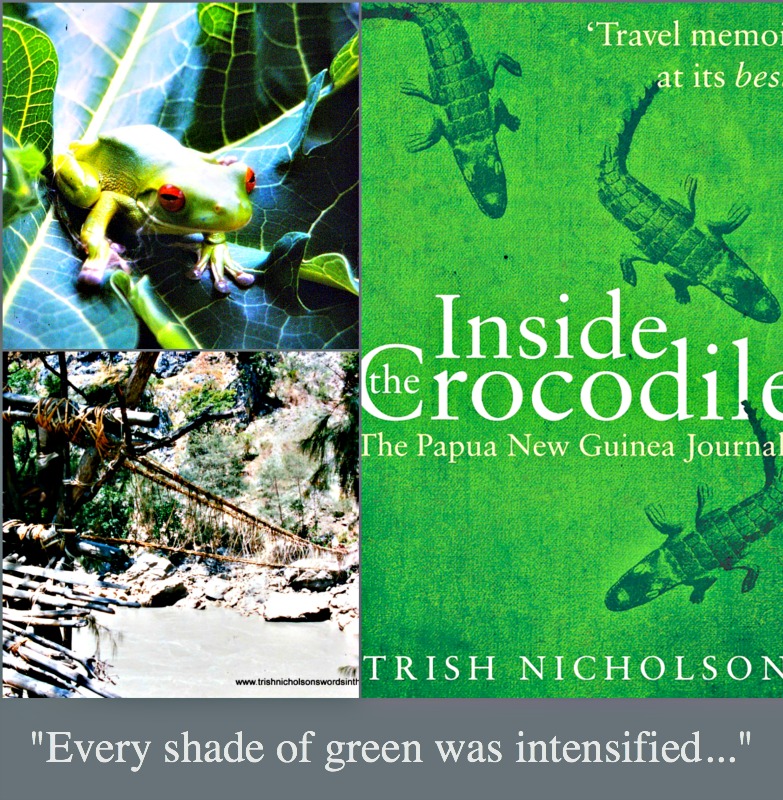
Inside the Crocodile_coverInside the Crocodile: The Papua New Guinea Journals (Matador, June 2015)
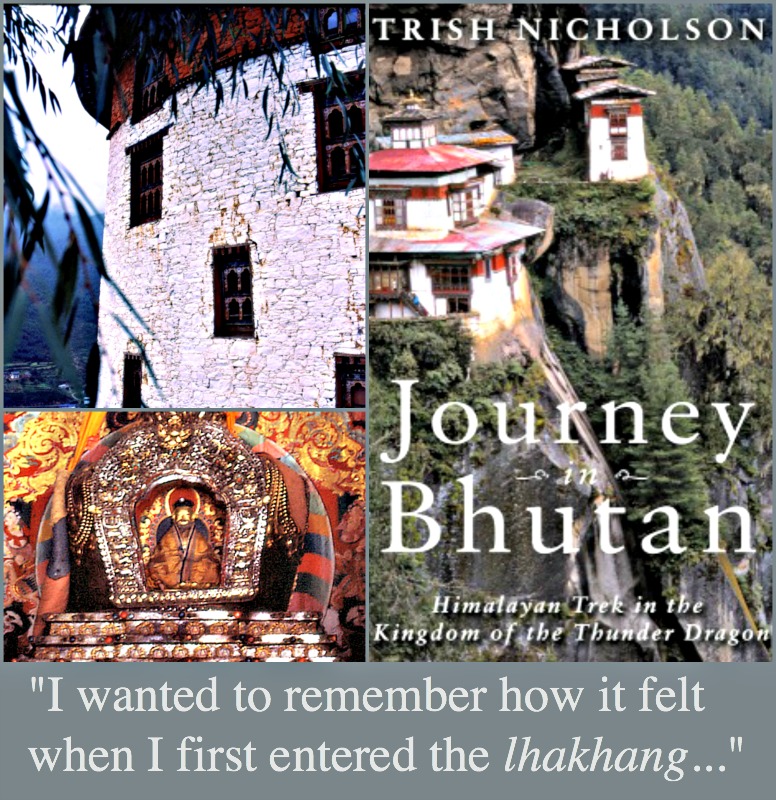
Author: Trish Nicholson
Expat credentials: Born in the Isle of Man, Nicholson was destined from an early age to become a world traveler, culminating in five years of living in the wilds of West Sepik province of Papua New Guinea. She has since retreated to a quiet New Zealand hillside.
Synopsis: Nicholson has written a memoir of her adventures of working in development aid and serving as Honorary Consul in the Land of Surprises, as PNG is known. While based in the province of West Sepik, she had to contend with crocodiles, sorcery, near-fatal malaria—the list goes on.
How we heard about: Lorraine Mace interviewed Trish Nicholson about her memoir and other “scribblings” for Location, Locution.


TurkeyStreet_coverTurkey Street: Jack and Liam move to Bodrum (Springtime Books, May 2015)
Author: Jack Scott
Expat credentials: Scott is a former expat in Turkey. He has since repatriated to Norwich, England.
Synopsis: In the sequel to his popular memoir, Perking the Pansies, which was based on his expat blog of this name, Scott continues to narrate, in his dryly entertaining style, the Anatolian adventures he and his partner, Liam, embarked on after moving from London to Bodrum. Note: This particular expat tale has a surprising finale.
How we heard about: Jack Scott is a former Displaced Nation columnist.


The Year of Living Danishly_coverThe Year of Living Danishly: Uncovering the Secrets of the World’s Happiest Country (Icon, May 2015)
Author: Helen Russell
Expat credentials: A British journalist and former editor for MarieClaire.co.uk, Russell traded London for Jutland, Denmark, when her husband got a job at Lego. She now works as a Scandinavia correspondent for the Guardian as well as writing a column on Denmark for the Telegraph.
Synopsis: When she was unexpectedly given an opportunity to live in rural Denmark, Russell decided to give herself a year to uncover the Danish formula for happiness. She presents her findings in this book: where the Danes get it right, where they get it wrong—and how we might just benefit from living a little more Danishly ourselves.
How we heard about: Helen Russell’s column in Telegraph Expat.


My Paris Dream_coverMy Paris Dream: An Education in Style, Slang, and Seduction in the Great City on the Seine (Spiegel & Grau, May 2015)
Author: Kate Betts
Expat credentials: Before she became a fashion editor at Vogue and the youngest-ever editor of Harper’s Bazaar, Betts was an expat in Paris. She moved there shortly after graduating from Princeton for a journalist internship, learning French, and ended up staying on. Although she now lives in New York, she says: “Paris has always stayed with me, close to me, and I’ve continually felt nourished by it.”
Synopsis: Betts reminisces about how she came of age as a fashion journalist while living in Paris in the 1980s, the highlight of which was working for Women’s Wear Daily under the legendary John Fairchild.
How we heard about: How we heard about: New York Times book review by Alexandra Jacobs (reviewed the same time as Brooks’s book).


Greekscapes_coverGreekscapes: Illustrated Journeys with an Artist, 2nd ed. (May 2015)
Author: Pamela Jane Rogers
Expat credentials: Born in North Carolina, Rogers left America after the break-up of her 12-year marriage and ended up settling on Poros, where for more than 26 years she has made her living as an artist.
Synopsis: This is Rogers’s memoir, edited by Bryony Sutherland. The second edition includes a selection of Rogers’s paintings, as requested by her readers.
How we heard about: Social media


Always Pack a Party Dress_coverAlways Pack a Party Dress: And Other Lessons Learned From a (Half) Life in Fashion (Blue Rider Press, May 2015)
Author: Amanda Brooks
Expat credentials: The ultimate American glamour girl, Brooks married the British artist Christopher Brooks and now lives with him and their two children on his family’s farm in Oxfordshire, UK.
Synopsis: After spending two decades in the fashion world that culminated in her appointment as creative director at Barney’s, Brooks abandons that plum post to become a Yankee in Queen Elizabeth’s court, moving to a farm in the English countryside where she spends her days on fields and in barns, among animals and children. This memoir is her swan song to the world of fashion.
How we heard about: New York Times book review by Alexandra Jacobs (reviewed the same time as Betts’s book).


The Expat Partners Survival Guide_coverThe Expat Partner’s Survival Guide: A light-hearted but authoritative manual for anyone accompanying their partner on an overseas assignment (April 2015)
Author: Clara Wiggins
Expat credentials: Born in Cuba to British diplomat parents, Wiggins started traveling as a baby and hasn’t stopped since. She has visited nearly 70 countries and lived in 12—the twelfth being South Africa, where she recently moved with her husband and two daughters.
Synopsis: Drawing on the expert advice of more than 70 expat partners who have been there, done that and survived to tell their tales, Wiggins has produced an authoritative how-to guide for expat partners, aka trailing spouses. She is of course an expert herself, having spent her childhood as a trailing daughter accompanying her diplomat parents on various postings including the Philippines and Venezuela. She later saw life from the other side, when posted to Jamaica. More recently, she has been moving around with her young family because of her husband’s postings to Islamabad, St Lucia, and South Africa.
How we heard about: Social media.


AdventuresofaRailwayNomad_coverAdventures of a Railway Nomad: How Our Journeys Guide Us Home (Café Society Press, April 2015)Author: Karen McCann
Expat credentials: A fourth-generation Californian, McCann lived in Cleveland, Ohio, with her husband for two decades before the couple moved to Seville, Spain, “for a year” and decided to make it their home.
Synopsis: McCann, who works as a freelance journalist and writer, provides an account of the attempt she and her husband made to recapture the spontaneity of travel in their youth by walking out of their Seville home with no more than a small bag and three-month Eurail pass in hand to see where life would take them.
How we heard about: One of her blog posts.


A Million Sticky Kisses_coverA Million Sticky Kisses: The Story of a Gringa Teacher in Chile (April 2015)
Author: Sally Rose
Expat credentials: Born and raised in the piney woods of East Texas, Sally Rose lived in the Cajun Country of Louisiana, the plains of Oklahoma, the “enchanted” land of New Mexico, and the Big Apple, New York City, before moving overseas to Santiago de Chile. She is now reviewing the prospects for her next overseas “home.”
Synopsis: In 2009, Sally Rose’s life-long dream of teaching English abroad becomes a reality when she goes to Chile as a volunteer teacher. Some days, her dream is more like a nightmare as she struggles with both the language and the culture. From avaricious school owners to chaotic classrooms, she is confronted with the complexities of being a “stranger in a strange land” while striving to make a difference for her students.
How we heard about: Rose was one of the writers to be “wonderlanded” on our site last year, and she is currently contributing a “perpetually perplexed peripatetic” expat column to the Displaced Nation.


HomersWheretheHeartIs_coverHomer’s Where The Heart Is: Two journalists, one crazy dog and a love affair with Greece (Pelagos Press, April 2015)
Author: Marjorie McGinn
Expat credentials: Born in Scotland, McGinn moved to Australia as a child. As an adult she has worked as a journalist in both Sydney and the UK. With a life-long passion for Greece, she set off in 2010 for an adventure in the Mani region of the southern Peloponnese. She and her partner, also a journalist, and their dog ended up staying four years. They are now back in Britain, living in East Sussex.
Synopsis: This is the second book in McGinn’s planned Peloponnese trilogy telling the story of what it was like to live in a remote village in southern Greece just as the country was sliding into economic crisis. The first was Things Can Only Get Feta, and the third is due out this summer.
How we heard about: From an article McGinn wrote for Telegraph Expat.


Daughters of the Samurai_coverDaughters of the Samurai: A Journey from East to West and Back (W. W. Norton, April 2015)
Author: Janice P. Nimura
Expat credentials: An American, Nimura married a Japanese man who was raised as a Third Culture Kid in Seattle; he refused to accompany his parents back to Japan when he was in his teens. After their marriage, the couple moved to Tokyo for a while. Nimura claims to have become more Japanized than her husband did, even learning the language. They couple now lives in New York City.
Synopsis: In 1871, five young girls were sent by the Japanese government to the United States. Their mission: learn Western ways and return to help nurture a new generation of enlightened men to lead Japan. Nimura reconstructs their Alice in Wonderland adventure.
How we heard about: Reviewed by Christopher Benfey for the New York Times‘s Sunday Book Review.


India Hicks Island Style_coverIndia Hicks: Island Style (Rizzoli, March 2015)
Author: India Hicks
Expat credentials: Born in England to famed decorator David Hicks and Lady Pamela Dicks (her grandfather was Lord Mountbatten, her godfather is Prince Charles, and she was a bridesmaid at his wedding to Lady Diana), Hicks has lived for many years on Harbour Island, in the Bahamas, with her partner, David Flint Wood, and their five children.
Synopsis: Hicks offers an illustrated guide to achieving her bohemian decorating style, which combines carefree Caribbean culture with British colonial form and formality. She takes us right insider her family’s enclave in the Bahamas.
How we heard about: A slideshow on Architectural Digest.


PassageoftheStork_coverPassage of the Stork, Delivering the Soul: One woman’s journey to self-realization and acceptance (Springtime Books, March 2015)
Author: Madeleine Lenagh
Expat credentials: Lenagh grew up as a Third Culture Kid and is a long-time expat (inpat?) in the Netherlands.
Synopsis: Using poetic vignettes and commentary by archetypes from Nordic mythology and fairy tales, Lenagh tells the story of her life-long struggle to put down roots and find a sense of permanency. She lived in Europe until age five because of her stepfather’s job as a military attaché; grew up in Connecticut; and then circled back to Europe, which she toured around, financed by her parents, at age 21. Her travels ended when she arrived in the Netherlands broke and took a job as an au pair. Did she know she would still be in Holland four decades later?
How we heard about: From her publisher Jo Parfitt; plus we have featured her photography in an “A Picture Says…” post.


Laughing All the Way to the Mosque_coverLaughing All the Way to the Mosque: The Misadventures of a Muslim Woman (Virago, March 2015)
Author: Zarqa Nawaz
Expat credentials: Born in Liverpool, England, to Pakistani parents, Nawaz was raised in Toronto. A successful Canadian journalist and broadcaster, she now lives in Regina, Saskatchewan.
Synopsis: Nawaz tells us what it’s like to be a practicing Muslim in Canada—from funeral rites to Rice Krispie squares—with a great sense of humor.
How we heard about: From one of the Virago editors, who said it was one of her favorite books of the year. She said it made her hoot with laughter while also teaching her about what it’s really like to be a Muslim in Western society.


Neurotic Beauty_coverNeurotic Beauty: An Outsider Looks at Japan (Water Street Press, March 2015)
Author: Morris Berman
Expat credentials: Berman emigrated from the US to Mexico in 2006, where he currently lives.
Synopsis: In Berman’s view, craftsmanship is Japan’s cultural soul, but in the 20th century, the country lost its way in trying to catch up to the West. This century, however, Japan has a chance to recapture its soul and become the first post-capitalist society, one where living is more important than owning.
How we heard about: Review by Peter Van Buren in HuffPostBooks.


Wonderlanded_coverWonderlanded: Life as an expat in China
(February 2015; note: also published in German)
Author: Kristina Kinder
Expat credentials: After working and studying in Spain, Kinder, who trained as an architect in her native Germany, decided to take the leap in 2010 and move to China. Initially she went to Shanghai—but then found herself in the running for a freelance architecture job in Kunming, a small city in Yunnan Province. She has since adopted Kunming as her home.
Synopsis: Kinder uses Alice in Wonderland allusions—for instance, she describes the three-and-a-half-hour-long flight to Kunming as a “crazy tea party,” where “everyone is chattering and shouting across the seats while holding the obligatory tea bottle”—along with her own whimsical illustrations, to tell the story of how living in China has enabled her to pursue her dream of becoming an artist.
How we heard about: Through our Alice in Wonderland connections, Alice being one of the themes on the Displaced Nation from its start nearly five years ago.


Going Gypsy_coverGoing Gypsy: One Couple’s Adventure from Empty Nest to No Nest at All (Skyhorse Publishing, February 2015)
Author: David and Veronica James
Expat credentials: Since becoming empty nesters, this American couple has led a life of “perpetual motion,” the highlights of which they report on their popular blog Gypsynester.com. We consider them to be honorary expats. They are certainly international as well as being highly creative!
Synopsis: In telling the story of their lives, David and Veronica James show that it’s possible to do things backwards: marry, have kids, and then go gypsy.
How we heard about: We follow them on Twitter.


Pearl River Drama_coverPearl River Drama: Dating in China: A Memoir (January 2015)
Author: Ray Hecht
Expat credentials: Born in Israel and raised in the Midwest, freelance journalist Hecht moved from California to China in 2008. He now lives in Shenzhen, China.
Synopsis: The story of a Western male’s sexploits in the Far East is as old as the hills, but Hecht somehow makes this a story about every expat. The book is based on stories he already told in his blog.
How we heard about: Through Jocelyn Eikenburg’s interview with Hecht on her blog about cross-cultural relationships in China, Speaking of China.


Leaving Before the Rains Come_coverLeaving Before the Rains Come (Penguin Books, January 2015)
Author: Alexandra Fuller
Expat credentials: Born in England and grew up in Rhodesia/Zimbabwe, Malawi, and Zambia, Fuller currently spends much of her time in a yurt near Jackson, Wyoming.
Synopsis: This is Fuller’s third expat memoir. Her first two covered the first 20 years of her life, which she spent on a farm in revolution-torn southern Africa, the child of British expats. In this book, the focus is on the men in her life: her fatalistic father and her American (now ex-) husband, with whom she relocates from the wilds of Africa to the tamer wilds of Wyoming. They have three children, but then the marriage unravels.
How we heard about: Fuller is an outstanding memoirist and a master of writing about the displaced condition.

* * *

Tell me, what have I missed? Kindly leave your recommendations for memoirs and other nonfiction works for, by, and about expats that came out in 2015 in the comments!

ML Awanohara, one of the Displaced Nation’s founders and its current editor, has a section in the weekly Displaced Dispatch where she mentions the latest expat books. Why not subscribe for the new(ish) year?

STAY TUNED for next week’s fab posts.

If you enjoyed this post, we invite you to register for The Displaced Dispatch, a round up of weekly posts from The Displaced Nation, and much, much more. Register for The Displaced Dispatch by clicking here!

Related posts:

Photo credits: All photos via Pixabay.

BOOKLUST, WANDERLUST: 11 Expat- and Travel-themed Books to Expand Our Horizons in 2016

booklust-wanderlust-2015

Attention displaced bookworms! Our book review columnist, Beth Green, an American expat in Prague (she is also an Adult Third Culture Kid), is back with her personal picks for expat- and travel-themed books to watch for in 2016.

Hello again, Displaced Nationers!

It’s been quite a long time since I last wrote to you here. Since my last column we’ve started 2016, celebrated the beginning of the Year of the Monkey, written and revised our new year’s resolutions, and (hopefully) read some really great books!

As part of my own (ever-evolving) New Year’s resolutions I signed up for the Goodreads Reading Challenge. It’s currently showing that I’m 22 books behind schedule for my overly optimistic goal of 300 books this year—but, hey, it wouldn’t be a challenge if it was easy, right?

Screen Shot 2016-02-11 at 7.33.56 PM
Now, usually in this column I talk about books I’ve already read, but this month I’d like to highlight some that I haven’t. There are, of course, lots of intriguing books coming out this year—more than I can cover adequately in one column! But, of the expat- or international-themed books coming out in 2016 that caught my eye, I’ve chosen 11 to feature in this post, one for each month left in 2016. Take a look!

* * *

Beginning with…a Thriller and a Mystery

CambodiaNoir_cover_300x200Cambodia Noir, by Nick Seeley (March 15, 2016)
The debut novel from an American journalist who has been working out of the Middle East and Southeast Asia, Cambodia Noir is a thriller that I’ve had on my to-be-read list ever since I first heard about it. The plot: A young American woman who is working as an intern at a local paper in Phnom Penh, June Saito, disappears. Her sister hires a retired photojournalist with first-hand knowledge of the corrupt, dissolute ways of the Cambodian capital, to look for her. Author Nick Seeley got his start as a foreign correspondent in Phnom Penh. He’s been hailed as a “fresh voice” exploring the depths of the Far East’s underworld.


InspectorSinghInvestigates_cover_300x200Inspector Singh Investigates: A Frightfully English Execution, by Shamini Flint (April 7, 2016)
Always the fan of international crime fiction, I’m excited that one of my favorite series—a series of charming crime novels featuring the portly, lovable Sikh policeman Inspector Singh—is getting a new addition this year. Author Shamini Flint is sending Singh to Britain Diary of a Tennis Prodigy_cover_300x200in the seventh book in her series. Each book provides not only a puzzle for the reader to solve but also a close-up look at the locations where the books are set. This is the Inspector’s first time out of Asia, and I’m looking forward to seeing what he discovers in the UK.

And, a special note for readers with kids: on January 1 Flint, who is a Singapore-based Malaysian, published a middle-grade book, Diary of a Tennis Prodigy, with illustrator Sally Heinrich (Sally formerly lived in Singapore and Malaysia but is now based in Adelaide, Australia).

And Now Let’s Add Three Travel Memoirs…

No Baggage_cover_300x200No Baggage: A Minimalist Tale of Love and Wandering, by Clara Bensen (January 5, 2016)
I love memoirs that read like novels, as I’m hoping this one will! Recovering from a quarter-life meltdown, 25-year-old Bensen signs up for an online dating account, and to her surprise, ends up meeting Jeff, a university professor who proposes they take a three-week experimental trip spanning eight countries, with no plans or baggage. Her story resonates with the adventurer in me—I can’t wait to take a look.


Little Dribbling_cover_300x200The Road to Little Dribbling, by Bill Bryson (January 19, 2016)
It may already be old news to anyone who’s been in a bookstore recently—or read our Displaced Dispatch!—but the world’s favorite traveler, humor writer and expat, Bill Bryson, has a new travelogue out. It’s another of his road-trip books. (I much prefer these to his other writings such as A Short History of Nearly Everything and At Home—they started out great, but I ended up leaving them unfinished…) Bryson made a journey through Britain 20 years ago, which was forever immortalized in his bestselling classic, Notes from a Small Island. In Little Dribbling, he follows the “Bryson line” from bottom to top of his adopted home country. I’m looking forward to being in his company again.


In Other Words_cover_300x200In Other Words, by Jhumpa Lahiri (and translations by Ann Goldstein) (February 9, 2016)
As a London-born Indian-American, world-class novelist Jhumpa Lahiri excels at writing in English—yet has long harbored a passion for the Italian language. Not wanting to miss out, she moved her family to Rome to immerse herself and quickly reached a point where she was writing only in Italian. She kept a journal in Italian that has evolved into this dual-language memoir. As an expat who’s now tried to learn three foreign languages while abroad, I’m curious to see how Lahiri’s experiences match up to my own. (The critics would apparently like to see her go back to English!)

…Along with Two Works of Literary Fiction and a Harlequin Romance

WhatBelongstoYou_cover_300x200What Belongs to You, by Garth Greenwell (January 19, 2016)
An American professor working in Sofia, Bulgaria, hooks up with a male prostitute in a public toilet and slowly becomes more involved than he anticipated. Reviewers cite Greenwell’s lyrical prose as reason alone for picking up his debut novel, but I’m interested in seeing how this young writer—who himself once worked as an expat English teacher in Bulgaria—depicts the city and the relationships between locals and foreigners. (This book, too, was mentioned in a recent Displaced Dispatch.)


TheHighMountainsofPortugal_cover_300x200The High Mountains of Portugal, by Yann Martel (February 2, 2016)
Going over this years’ publishers lists, I’m now looking forward to reading a book by an author whose last book I despised. My friends were all gushing over Yann Martel’s 2002 novel Life of Pi; but, while it has an admittedly awesome premise, the story left me cold. But I’m excited to check out the chronically traveling Canadian author’s next book, which is set in Portugal and intertwines the century-spanning stories of a young man reading an old journal, a mystery-loving pathologist, and a Canadian diplomat. I’m planning a trip to Lisbon later this year, and hope to read this book before I go.


UndertheSpanishStairs_cover_300x200Under the Spanish Stars, by Alli Sinclair (February 1, 2016)
I’m pleased to report that former expat Alli Sinclair—my friend and former co-blogger from Novel Adventurers—has published her second romantic mystery novel this month. (Congratulations, Alli!) The action takes place in her native Australia and also in Spain. The plot: an Australian woman travels to her grandmother’s homeland of Andalucía to unravel a family mystery. She ends up meeting a passionate flamenco guitarist and learns her grandmother’s past is not what she imagined.

Finally, to Top Things Off, How About a Couple of YA Books?

I don’t read a lot of young adult books, but descriptions of two novels I saw reviewed recently stuck with me. Funnily enough, both books’ titles start with “Up”—maybe it’s the implied optimism that caught me? We could use a bit of cheer in our displaced world…

Up from the Sea_cover_300x200Up from the Sea, by Leza Lowitz (January 12, 2016)
This is a novel in verse. It tells the story of a Japanese teenager, Kai, whose coastal village is obliterated by the March 2011 tsunami, after which he is offered a trip to New York to meet children who had been affected by the terrorist attacks of 9/11. The trip also provides an opportunity for him to go in search of his estranged American father. Author Leza Lowitz is an American expat writer and translator living in Tokyo, where she also runs a popular yoga studio. Her favorite themes to explore in her writing include the idea of place, displacement and what “home” means to expatriate women.


UPtothisPointe_cover_300x200Up to this Pointe, by Jennifer Longo (January 19, 2016)
I’m always fascinated by stories of Antarctica so have my eye on this book about a teenage girl who aspires to be a professional ballerina but, when her grand plan goes awry, sets out on an expedition to McMurdo Station (the U.S. Antarctic research center) in the footsteps of her relative and explorer Robert Falcon Scott. Notably, Seattle-based author Jennifer Longo wanted to be a ballerina until she finally had to admit that her talent for writing exceeded her talent for dance. Like me, she harbors an obsessive love of Antarctica. I admire the way she has woven these two themes together!

* * *

So, Displaced Nationers, what do you think? What are you looking forward to reading this year? Any much-anticipated displaced reads that should be added to my list?

As always, please let me or ML know if you have any suggestions for books you’d like to see reviewed here! And I urge you to sign up for the DISPLACED DISPATCH, which has at least one Recommended Read every week.

STAY TUNED for more fab posts!

Beth Green is an American writer living in Prague, Czech Republic. She grew up on a sailboat and, though now a landlubber, continues to lead a peripatetic life, having lived in Asia as well as Europe. Her personal Web site is Beth Green Writes. She has also launched the site Everyday Travel Stories. To keep in touch with her in between columns, try following her on Facebook and Twitter. She’s a social media nut!

If you enjoyed this post, we invite you to subscribe to The Displaced Dispatch, a weekly round up of posts from The Displaced Nation and much, much more. Sign up for The Displaced Dispatch by clicking here!

Related posts:

How to give Cupid’s Day an expat theme, whether you’re coupled up or not

Valentines Day 2016

Some expats may be glad they are living far away from home on Valentine’s Day: what a mushy holiday! Whereas others may be pining over love they’ve left behind…or haven’t yet found, but keep searching for, on their travels.

Now, I suspect that those in the first two categories equal or outnumber those who are enjoying new loves and ways of celebrating love! But no matter what category you are in, I hope I’ve got you covered with this list of ways to spend an expat-themed Cupid’s Day.

What to eat

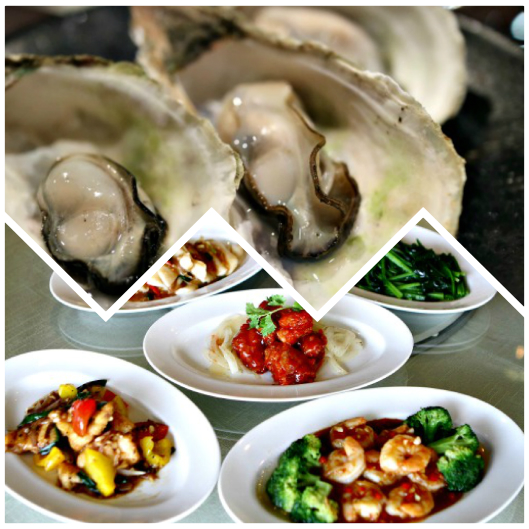
Valentine’s Day is the perfect excuse to discover the aphrodisiac foods your new country offers. That’s how Displaced Nation founder Kate Allison saw it when she created this list of seven foods to seduce your valentine (or not), wherever your home and heart may be. The choices range from the predictable (oysters and chocolate) to the exotic: ever tried Coco de Mer?

Not in the mood? Join a party going out for a Chinese New Year’s feast. While there, reflect that this is the kind of meal that would be wasted on two people. Telegraph Travel has helpfully provided a list of where to celebrate in Chinatowns around the world.
oysters to chinese food

Where to go

Hey, you’re an overseas traveler, so what’s to stop you from booking a flight to one of the world’s most romantic destinations? A family of three who have traveled nonstop for a decade have narrowed the list of places with a certain je ne sais quoi to six.

Tahiti tops that family’s list, but if you’re someone who prefers urban beauty and sophistication, you might want to check out the world’s 50 most beautiful cities, as curated by two Condé Nast Traveler editors.

Or perhaps you’re envisioning a romantic drive to a picturesque small town, where you and your beloved can stroll hand in hand down the street and enjoy each other’s company at a leisurely pace? Smarter Travel offers a list of 10 such towns in North America, and Condé Nast Traveler has just published a list of the 10 most romantic small towns in Italy (the ultimate setting for romance, surely?).

Not in the mood? Try traveling solo. Fourteen editors at AFAR magazine recently collected their personal stories to argue that everyone, without exception, should travel abroad on their own, on the grounds that:

There is nothing quite as daunting or exhilarating as setting foot all alone in a place you’ve never been before.

lovey dovey to solo travel

What to read

This being a site for displaced creatives, I mustn’t neglect the romance that can be found in books, both fiction and non-, about overseas adventures. Expat author Tracy Slater has made it easy for me: she recently compiled a list of six romantic books with an expat theme in a post for WSJ Expat. She says her choices reflect love’s many moods: from sweet to sultry to bitter and beyond.

For “sweet” (and let’s keep it to sweet, since we’re celebrating Cupid’s Day), she suggests reading Where the Peacocks Sing: A Palace, a Prince, and the Search for Home, a memoir by Alison Singh Gee. It’s a modern-day fairy tale about how a Hong Kong-based journalist with a flair for fashion and a taste for high-born British men finds her prince, a humble foreign correspondent from India. She moves with him to the family “estate,” a crumbling palace in the Indian countryside, and all kinds of cross-cultural adventures ensue.

Not in the mood? Console yourself with the newly translated (from the French) How to Talk About Places You’ve Never Been, by Pierre Bayard, who is a French literature professor and psychoanalyst. Among other things, Bayard argues that the travel you do in your own mind is superior to any other and that all travel, really, is a search for self.
pro and no romance books

* * *

By the way, if none of the above appeals and you’re still feeling empty hearted, I suggest you study the results of the InterNations survey showing the top 10 places for expat romance.

According to the latest findings, you may want to move to the Philippines, Thailand, or Ecuador if the idea is to hook up with a local resident. Only promise me one thing: you’ll read my Cross-cultural marriage? 4 good reasons not to rush into it… post before you let the relationship get serious!

ML Awanohara, one of the Displaced Nation’s founders and its current editor, often composes pieces of this kind for the weekly Displaced Dispatch. Why not subscribe as a Valentine’s gift to yourself and/or encourage your beloved to do so as well?

STAY TUNED for more fab posts.

If you enjoyed this post, we invite you to register for The Displaced Dispatch, a round up of weekly posts from The Displaced Nation, and much, much more. Register for The Displaced Dispatch by clicking here!

Related posts:

Photo credits: All photos are from Pixabay.

LOCATION, LOCUTION: Pining for her native Emerald Isle, Sheila Bugler writes crime novels with Irish connections

Location Locution
Columnist Lorraine Mace, aka Frances di Plino, is back with her latest interview guest.

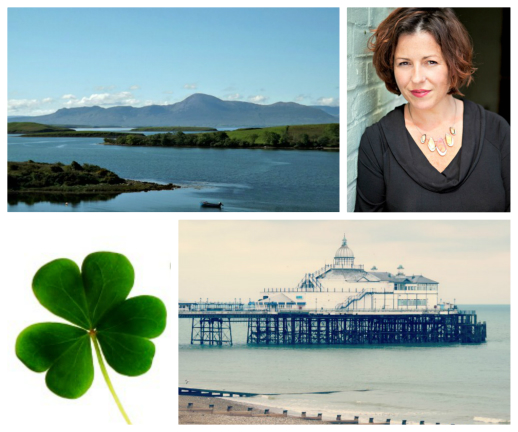
Part of being an Irish emigrant, whether in the UK or farther afield, is a nostalgia for the homeland and its green fields and rich, dark soil—as my guest this month, crime writer Sheila Bugler, will attest.

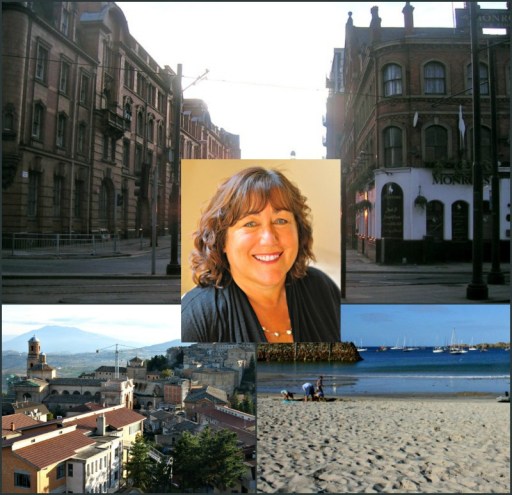
Sheila grew up in a small town in the west of Ireland. After studying psychology at University College Galway, she left her native land for a life abroad, working in Italy, Spain, Germany, Holland and Argentina. Today she lives with her husband and two children in Eastbourne, a seaside resort town on the south coast of England. Despite being settled in the UK, she pines for Ireland and describes herself as a “reluctant emigrant.”

Sheila Bugler Ireland England

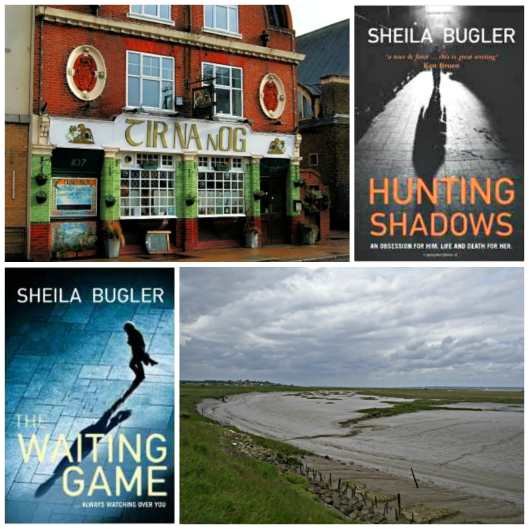
What’s more, these intense feelings for the Emerald Isle are what fuels her creative efforts. Sheila is the author of an acclaimed mystery series published by Brandon Books, an imprint of Ireland’s O’Brien Press, consisting so far of three books of a planned six: Hunting Shadows (2013), The Waiting Game (2014), and All Things Nice (forthcoming, April 2016). The series features Detective Inspector Ellen Kelly, a character whose “Irish roots shine through,” as one Amazon reviewer puts it, and is set amongst the displaced Irish community in southeast London.

As Sheila remarked in an interview with Triskele Books:

I adore Ireland and miss it (despite being very happy in the UK). For me, writing really is a way of connecting with my country. I write Irish characters (not exclusively, of course) and it was always very important to me that Ellen’s roots were Irish. At the moment, I can’t imagine writing a novel that doesn’t have some connection to Ireland.

Her characters, too, are inspired by place: by the bleak wilderness of the North Kent coast. Perhaps they find it reminiscent of the bleak and beautiful Aran Islands off the coast of Galway?

But let’s not get too carried away. It’s time to give Sheila the floor and hear what she has to say about location, locution.

* * *

Welcome, Sheila, to Location, Locution. You have a strong sense of place in your writing, but tell us, which tends to come first, story or location?

Thank you for inviting me, Lorraine. In answer to your question: Story. But often there is a single image, in a particular place, which is the inspiration for that story.

What techniques do you use for evoking place in your crime stories?

I am quite an instinctive writer and try not to overthink the process as it happens. Of course, like all writers I have had to learn the basic techniques, but I don’t think you can force yourself to write in a particular way. Although location plays an important part in my novels, this isn’t a deliberate choice—it’s something that happens naturally as I write.

I like the way location can enhance a particular atmosphere you are trying to create. In my first two novels, Hunting Shadows and The Waiting Game, parts of each book are based in the beautiful, bleak Hoo Peninsula of north Kent.

In Hunting Shadows, this is the perfect location for one of the central characters, Brian. He is an isolated loner and the isolated landscape is a great way of showing how Brian lives his life. In contrast, there is a character in The Waiting Game who uses the Hoo’s wide open spaces and big skies as a backdrop to her work as an artist.

If I am struggling to create a sense of place, I will do some or all of the following:

  • Close my eyes and try to get a picture in my head.
  • Play some music that has a connection with the landscape I’m trying to evoke (for example, bluegrass when I’m writing about the Hoo, traditional Irish music when writing about the west of Ireland).
  • I wait until I can see the place, hear it, smell it, feel it.
  • And then I write it.

Sheila Bugler locations

Which particular features have you used to create a sense of what clearly is to you a special location? Landscape, culture, food?

Obviously it’s all of those things. However, you don’t need to use every one of them to evoke a sense of place.

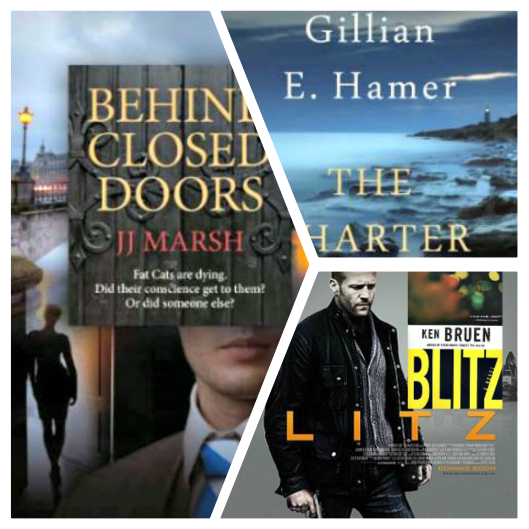
The author JJ Marsh, for example, puts a lot of importance on food when she is writing about the different locations in her novels (I should add she doesn’t just write about food!).

The Irish noir writer Ken Bruen perfectly evokes the city of Galway[https://en.wikipedia.org/wiki/Galway] with almost no reference to the external landscape. Instead, he brings the city to perfect life through his characters’ voices and the internal spaces, particularly the pubs. Likewise, Ian Rankin manages to perfectly evoke his home city of Edinburgh without ever needing to give us “in your face” descriptions.

As in real life, your characters move through a rich world of noises, smells, colours, places and other people. If you don’t forget that when you are writing, then neither will your readers.

I’m pleased you mentioned JJ Marsh. She was the original creator of this column! But returning to your own works: can you give a brief example from your writing that illustrates place?

I’m going to share two different examples.

First, a short scene from my novel, Hunting Shadows. In this scene, I tried to give an impression of the location through the reactions of the two characters:

Ellen stepped out of the car and looked around. The place reminded her of the black-and-white photos in her parents’ house of old Irish towns. It gave her that same feeling that she was observing somewhere from a time long past. Apart from a scattering of houses—a mixture of semi-derelict Victorian cottages and cheap, flat-roofed eyesores—there was nothing else.

From where she stood, the landscape sloped down to the Thames marshes, bleak and desolate under the heavy sky.

“Listen,” Dai whispered.

Ellen frowned. “What? I can’t hear anything.”

“Duelling banjos,” he said. “I knew it. “Deliverance” country. We’re not safe in a place like this.”

ThamesMarshes_quote
And here is a very different piece from a stand-alone novel I am working on called Walk Away. I don’t normally write this descriptively but my own love for this part of Ireland obviously influenced me:

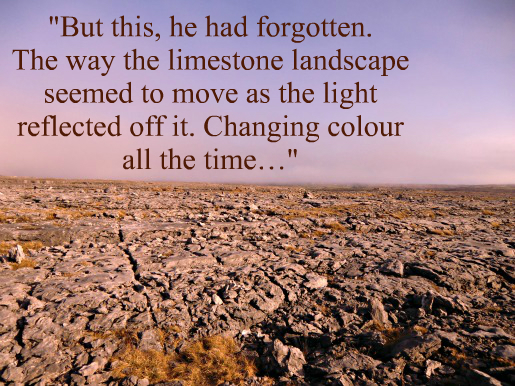
The town was on the southern edge of Galway Bay, the hills of the Burren sloping up behind it, the vast sweep of the Atlantic Ocean stretching out in front of it. Next stop America. It was beautiful. He knew that. Probably always had.

Sydney was home these days. A modern, open-plan apartment with muted colours, floor to ceiling windows and views across Sydney Harbour. All very tasteful and perfect for a shit-hot, sharp-dressing, arse-kicking, wheeling-and-dealing corporate lawyer.

But this, he had forgotten. The way the limestone landscape seemed to move as the light reflected off it. Changing colour all the time from purple to pale pink to grey and back to purple again, in harmony and contrast with the sea.

The_Burren_in_the_evening_sun_515x_quote

How well do you need to know a place before using it as a setting?

If you are using a real location as a setting, you need to know enough about it so it seems real to your reader. In today’s world, there is no excuse not to do this. We all have access to the internet and Google maps. If you haven’t visited a place, do some basic research and make sure you include this in your novel. Using a real pub, for example, instead of making one up can really add to the sense of authenticity.

I once read a crime novel set in Lewisham (where I was living at the time). In one scene, a character is walking down Lewisham High Street and bemoaning the lack of a Marks and Spencer’s. We have M&S in Lewisham! This—and other aspects of the novel—made it clear to me the writer had never been to Lewisham and didn’t know anything about the place he was writing about.

Of course, we can also write about fictional locations. If you do that, your own sense of the place needs to be well-formed before you write about it. The important thing is this: whatever location you choose, it must feel authentic for the story you are writing.

Which writers do you admire for the way they use location?

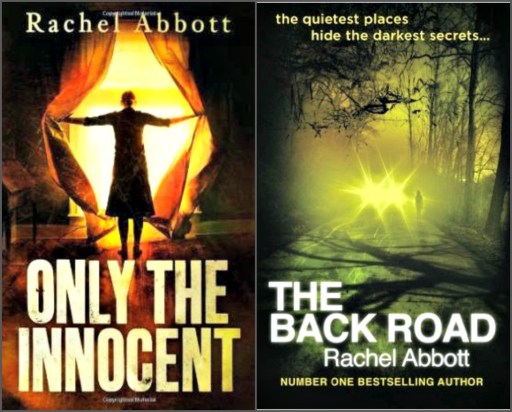
JJ Marsh writes beautifully in her European crime series featuring Beatrice Stubbs. Similarly, Gilly Hamer writes wonderful descriptions of the stunning Anglesea coastline where her novels are set.

For many reasons, I hold Ken Bruen up as a master when it comes to using location in his novels. He perfectly evokes Galway city, capturing not only its beauty but also the voices and characters of the people who live in that very special place. He is my absolute writing hero.

Bulger fave authors

Thanks so much, Sheila!

* * *

Readers, any questions for Sheila Bugler? Please leave them in the comments below.

And if you’d like to discover more about Sheila, why not visit her author site. You can also follow her on twitter.

Until next month!

Lorraine Mace writes for children with the Vlad the Inhaler books. As Frances di Plino, she writes crime in the D.I. Paolo Storey series. She is a columnist for both of the UK’s top writing magazines, has founded international writing competitions and runs a writing critique service, mentoring authors on three continents.

STAY TUNED for the next fab post!

If you enjoyed this post, we invite you to register for The Displaced Dispatch, a round up of weekly posts from The Displaced Nation, with weekly updates and much, much more. Register for The Displaced Dispatch by clicking here!

Related posts:

Photo credits: Top of page: The World Book (1920), by Eric Fischer via Flickr; “Writing? Yeah.” by Caleb Roenigk via Flickr (both CC BY 2.0). First collage: Sheila Bugler (supplied); County Galway, Eastbourne Pier & shamrock via Pixabay. Second collage: Book cover art; The Tir Na Nog Irish Pub, Wandsworth – London, by Jim Linwood (CC BY 2.0); All Hallows Marshes, Hoo, Kent, by Amanda Slater via Flickr (CC BY-SA 2.0). First quote: Hang on, is that grass over there?, by Andrew Bowden (CC BY-SA 2.0). Second quote: Burren landscape in the evening sun, by YvonneM via Wikimedia Commons (CC BY-SA 3.0). Favorite books collage: Cover art; Blitz Movie Poster via Wikimedia Commons.

IN CASE YOU MISSED IT: Best of expat fiction 2015

The title of this post is a lie: you didn’t miss anything. It’s we who missed our deadline of publishing, at the end of 2015, a list of books for, by and about expats.

Dare I suggest that our procrastination could prove fortuitous? Most of us have more time to read now that the holidays are over and the doldrums have set in—along with, for some of us (I refer to those on the East Coast of the USA), a spell of blizzardous weather. What better time to curl up with a book that in some way relates to the themes of international adventure and displacement?

Without further ado, allow me to offer my curated list of the best novels by, for, and about expats and other international creatives in 2015. (Nonfiction coming soon, we promise!)

PLEASE NOTE: The books, which include indie as well as traditionally published novels, are arranged in reverse chronological order.

* * *

Year of the GooseYearoftheGoose_cover_400x (Unnamed Press, December 2015)
Author: Carly J. Hallman
Expat credentials: A native Texan, Hallman lives in Beijing. This is her first novel.
Synopsis: A comic novel about China’s era of the instant tycoon, which has been described as “unhinged”, “outrageous”, “deranged” and “hilarious. The oligarchical, tabloid-driven society it portrays is not unlike our own, which may be why the book was listed as one of the BBC’s 10 books to read in December 2015 as well as selected for the December 2015 Indie Next list.
How we heard about: The Anthill blog


TheNavyWife_cover_400xThe Navy Wife (December 2016)
Author: Helena Halme
Expat credentials: Originally from Finland, Halme has lived in the UK with her British husband for many years.
Synopsis: The sequel to Halme’s well-received autobiographical novel The Englishman (reviewed here by Displaced Nation founder Kate Allison), which concerns a long-distance romance between a Finnish woman, Kaisa, and a British naval officer, Peter. We see the couple, despite having tied the knot, facing a number of obstacles and threats to living happily ever after—especially when Kaisa doesn’t take well to the life of a military spouse in a foreign country.How we heard about: Social media, and a comment by Halme on one of our posts.


Seafled_cover_400xSeafled (November 2015), Burnt Sea (August 2015) & Seaswept (April 2015)
Author: Jordan Rivet (aka Shannon Young)
Expat credentials: An American, Young has lived in Hong Kong for the past few years with her half-Chinese husband, a Hong Kong native.
Synopsis: A post-apocalyptic adventure series set on a souped-up cruise ship, featuring a prickly female mechanic named Esther. The series, called the Seabound Chronicles, consists of three books and a prequel.
How we heard about: Young writes the popular “Diary of an Expat Writer” column for the Displaced Nation.


TheJapaneseLover_cover_400xThe Japanese Lover (Atria Books, November 2015)
Author: Isabel Allende
Expat credentials: Born in Lima, Peru, to a Chilean diplomatic family, Allende lived in various countries, including Chile, Bolivia, and Beirut. As an adult she worked in Belgium and elsewhere in Europe; she also lived for over a decade in Venezuela. She currently lives in San Rafael, California.
Synopsis: A cross-cultural love story that sweeps from present-day San Francisco to WWII-era Poland the United States. It explores questions of identity, abandonment, and redemption.
How we heard about it: Who hasn’t heard about it? It was one of the most anticipated books of 2015!


TheDisobedientWife_cover_400xThe Disobedient Wife (Cinnamon Press, November 2015)
Author: Annika Milisic-Stanley
Expat credentials: Born to Swedish and Anglo-German parents, Milisic-Stanley grew up in England and now lives in Rome. She says she based the plot on stories she heard when living in Dushanbe as a humanitarian aid worker for several years.
Synopsis: The story of the friendship that forms between a poor, courageous local woman in Dushanbe, Tajikistan, and her employer, a trailing expat wife married to a British diplomat.
How we heard about: An interview with Kristin Louise Duncombe, an American writer who has lived in Europe since 2001.


CrimeRave_cover_400xCrime Rave (The Margins Press, November 2015)
Author: Sezin Koehler
Expat credentials: Koehler is an adult Third Culture Kid who lived in Prague for some years and now lives in Florida. She has written several posts for the Displaced Nation, including a two-part series listing movies that depict the horrors of being abroad or otherwise displaced.
Synopsis: The second installment to her debut novel, American Monsters. Picking up where that one left off while jumping genres, the new book presents an alternate universe in which goddesses have free reign over humans, trauma goes hand in hand with superpowers, and Marilyn Monroe lives.
How we heard about: A Facebook post by Koehler


ADecentBomber_cover_400xA Decent Bomber (November 2015)
Author: Alexander McNabb
Expat credentials: A Brit who has been working in, living in and traveling around the Middle East for some thirty years, McNabb was featured on The Displaced Nation three years ago for his “Levant Cycle” trilogy.
Synopsis: Another political thriller—but this one is set in Northern Ireland and concerns a former IRA bomb maker who is drafted against his will into joining the War on Terror.
How we heard about: He sent us a heads up, and Beth Green reviewed the book in her last column. She found it well researched, well written and an enjoyable read.


ThePalestInk_cover_400xThe Palest Ink (Lake Union Publishing, October 2015)
Author: Kay Bratt
Expat credentials: Bratt lived in China for almost five years, where she “fell in love enough with the people to want to write about them forever.” She has since repatriated to the hills of North Carolina. (She is also the author of a memoir, Silent Tears: A Journey of Hope in a Chinese Orphanage. )
Synopsis: A story that depicts the coming-of-age of a sheltered son from an intellectual family in Shanghai, during a tumultuous period of Chinese history: the Cultural Revolution.
How we heard about: Kindle promotion.


Olivia&Sophia_cover_400xOlivia & Sophia (Monsoon Books, October 2015)
Author: Rosie Milne
Expat credentials: A native Brit, Milne has lived all over Asia; she currently lives in Singapore, where she runs the Asian Books Blog.
Synopsis: A fictional account of the lives of the first and second wives of the founder of the British trading post of Singapore, Sir Thomas Stamford Raffles. Set in London, Java, Sumatra and Singapore, against the backdrop of the Napoleonic Wars—the story takes the form of two fictionalized diaries, one by each of Raffles’s wives: Olivia Devinish and Sophia Hull. Milne “takes us away from the cold, damp confines of Georgian London to the muggy, hostile tropics and to the titillations and tribulations of a life far away from home.”
How we heard about: When Rosie Milne was “wonderlanded” on our site, we published a couple of excerpts from the book.


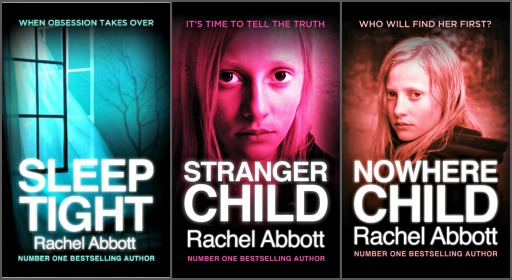
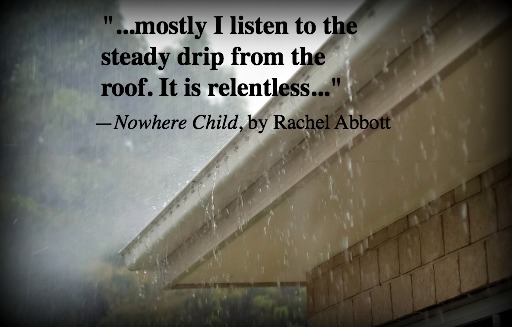
NowhereChild_coverNowhere Child (Black Dot Publishing, October 2015)
Author: Rachel Abbott
Expat credentials: Abbott fled from the corporate life to Italy, which gave her the opportunity to start writing psychological thrillers. Her first one was a break-out hit on Kindle, and she hasn’t looked back. Currently, Abbott divides her time between Italy (where she lives in an apartment in an old fort, which overlooks the sea) and Alderney, in the Channel Islands (just off the coast of France). But although the expat life gave her a new career as a writer, Abbott sets her books mostly in her native Manchester.
Synopsis: A stand-alone novella featuring the same characters as Abbott’s Stranger Child. Eight months ago Tasha Joseph ran away, and her stepmother, Emma, has been searching for her ever since—as are the police, since Tasha could be a vital witness in a criminal trial.
How we heard about: Lorraine Mace interviewed Abbott for her Location, Locution column in December.


TheHundredYearFlood_cover_400xThe Hundred-Year Flood (Little A, September 2015)
Author: Matthew Salesses
Expat credentials: Salesses was adopted from Korea at the age of two and often writes about race and adoption. This is his first full-length novel.
Synopsis: The mythical and magical story of a 22-year-old Korean-American’s escape to Prague in the wake of his uncle’s suicide and the aftermath of 9/11. He tries to convince himself that living in a new place will mean a new identity and a chance to shed the parallels between himself and his adopted father.
How we heard about: Social media


TheDressmaker_cover_400xThe Dressmaker (Penguin Books, August 2015*)
Author: Rosalie Ham
Expat credentials: Born and raised in Jerilderie, Australia, Ham now lives in Melbourne. Like most Australians, she has had a period of traveling and living overseas.
Synopsis: A darkly satirical tale of love, revenge, and 1950s fashion. After twenty years spent mastering the art of dressmaking at couture houses in Paris, Tilly Dunnage returns to the small Australian town she was banished from as a child. She plans only to check on her ailing mother and leave. But Tilly decides to stay, and though she is still an outcast, her exquisite dresses prove irresistible to the prim women of Dungatar. Note: The book is soon to be a film starring Kate Winslet and Liam Hemsworth.
How we heard about: A book review in the New York Times
*Originally published in 2000, this is the film adaptation of the book.


CirclingtheSun_cover_400xCircling the Sun (Ballantine Books, July 2015)
Author: Paula McLain
Expat credentials: None! Her breakout novel, The Paris Wife, was about an expat: Ernest Hemingway’s first wife, Hadley Richardson, whose passionate marriage ended as her husband shot into literary stardom. This time her focus is the Happy Valley set, a decadent community of Europeans in 1920s colonial Kenya. As she told NPR in a recent interview:

You know, I wrote most of The Paris Wife in a coffee shop in Cleveland. I don’t have to tell you that a Starbucks in Cleveland is about as far away from a Parisian cafe as you can possibly get. And I also wrote about Kenya, the wild African frontier, from my home in Cleveland without having ever gone there. You can’t really visit colonial Kenya, can you? You can’t really visit Paris in 1922, except in your imagination.

Synopsis: Based on the real-life story of the fearless and captivating Beryl Markham, a record-setting aviator who became caught up in a passionate love triangle with safari hunter Denys Finch Hatton and Karen Blixen, who as Isak Dinesen wrote the classic memoir Out of Africa.
How we heard about: A New York Times review by the expat writer Alexandra Fuller.


TheAmbassadorsWife_cover_400xThe Ambassador’s Wife (Doubleday, July 2015)
Author: Jennifer Steil
Expat credentials: A Boston-born former journalist, Steil is married to a Brit who once served as ambassador to Yemen, where a suicide bomber attacked him. She is also the author of The Woman Who Fell from the Sky, a memoir about her experiences running a newspaper in Yemen. She lives in Bolivia, where her husband is the European Union ambassador.
Synopsis: A harrowing account of the kidnapping of an American woman in the Middle East and the heartbreaking choices she and her husband, the British ambassador to an Arab country, must make in the hope of being reunited.
How we heard about: Shortlisted in the New York Times Book Review as a “marriage plots” novel.


TheStarSideofBurnHill_cover_400xThe Star Side of Bird Hill (Penguin Press, June 2015)
Author: Naomi Jackson
Expat credentials: A Third Culture Kid, Jackson was born and raised in Brooklyn by West Indian parents. After attending the Iowa Writers’ Workshop, she traveled to South Africa on a Fulbright scholarship and earned an MA in creative writing from the University of Cape Town.
Synopsis: The story of two sisters, ages ten and sixteen, who are suddenly sent from Brooklyn to Bird Hill in Barbados after their mother can no longer care for them. The young Phaedra and her older sister, Dionne, live for the summer of 1989 with their grandmother Hyacinth, a midwife and practitioner of the local spiritual practice of obeah.
How we heard about: Shortlisted in the New York Times Book Review as a “coming of age” novel.


TheWolfBorder_cover_400xThe Wolf Border (Harper, June 2015)
Author: Sarah Hall
Expat credentials: Born in northwest England, Hall lived in Wales while attending Aberystwyth. She went on to study in Scotland (St. Andrews) for an MA, where she met and married an American law student. Though the marriage was short-lived, its legacy was substantial: a move to the US proved the catalyst she needed to embark on novel writing. The pair was based in the small town of Lexington, Virginia, after her husband was awarded a scholarship to a nearby law school. At that time, Hall visited the Idaho reservation that appears in this book. She currently lives in Norwich, UK.
Synopsis: About a controversial scheme to reintroduce the Grey Wolf to the English countryside, which brings zoologist Rachel Caine, who has lived a solitary existence in a remote section of Idaho, far away from her estranged family in England, back to the peat and wet light of the Lake District. The novel explores the fundamental nature of wilderness and wildness—as well as the frontier of the human spirit.
How we heard about: A book review in the New York Times


IntheCountry_cover_400xIn the Country: Stories (Knopf, June 2016)
Author: Mia Alvar
Expat credentials: Born in the Philippines, Alvar was raised in Bahrain and the United States. She now lives in New York City. This is her first book.
Synopsis: A collection of nine short stories about Filipinos living overseas. Alvar has imagined the lives of exiles, emigrants, and wanderers who uprooted their families from the Philippines to begin new lives in the Middle East, the United States, and elsewhere—and, sometimes, turned back again.
How we heard about: A book review in the New York Times


TheDiversClothesLieEmpty_cover_400xThe Diver’s Clothes Lie Empty (Ecco, June 2015)
Author: Vendela Vida
Expat credentials: Born and raised in San Francisco, Vida is the daughter of two immigrant parents: a Swedish mother and a Hungarian father. She has become known for producing “travel trauma” narratives, exploring the lives of competent women who feel disintegrating marriages for distant lands (i.e., the Philippines, Finland and Turkey). Her latest novel, considered to be her “finest work” to date, was inspired by a trip she took to Morocco where her bag was stolen.
Synopsis: A literary thriller that probes the malleability of identity, told with lush detail and a sense of humor. Robbed of her money and passport in Casablanca, Morocco, an American woman feels free to be anyone she chooses.
How we heard about: A book review in the New York Times.


ChinaRichGirlfriend_cover_400xChina Rich Girlfriend (Doubleday, June 2015)
Author: Kevin Kwan
Expat credentials: Born and raised in Singapore, Kwan has lived in Manhattan for the past two decades. He says he still craves “craves pineapple tarts and a decent plate of Hokkien mee.“
Synopsis: Follows the story of the culture-shocked Rachel Chu as she searches for her mysterious birth father in Shanghai in hopes he’ll walk her down the isle at her upcoming wedding. The book is a sequel to Kwan’s 2013 bestseller, Crazy Rich Asians, picking up a few years after those events. Both books take place in the world of Hong Kong and Singapore’s super-super elite.
How we heard about: A book review in the New York Times


TheRocks_cover_400xThe Rocks (Riverhead Books, May 2015)
Author: Peter Nichols
Expat credentials: Nichols grew up partially on Mallorca (while attending boarding school in England), where he got to know other Northern Europeans. He has worked in advertising and as a screenwriter, and a shepherd in Wales. He divides his time between Europe and the United States. In 1997 he produced a riveting memoir, Sea Change, telling of the time when he set off alone across the Atlantic in his beloved 27-foot wooden engineless sailboat, Toad, which he and his (now ex-) wife had lived on for six years, fixing it up, making it into their home, sharing adventures on it.
Synopsis: A tragic double romance, told in reverse, primarily set in a seaside resort in Mallorca and its enduring expat community.
How we heard about: From a book review in the New York Times.


coming-home_cover_400xComing Home (Mira, April 2015)
Author: Annabel Kantaria
Expat credentials: A Telegraph Expat blogger who has been featured on the Displaced Nation, Kantaria has lived in Dubai with her family for several years.
Synopsis: The story of a woman living in Dubai because she wants to flee the pain of her brother’s death but then heads for home upon receiving word of her father’s sudden death. Kantaria says that writing the book helped her “explore that push and pull and sense of displacement you feel when you have a foot in two countries.”
How we heard about: A Telegraph Expat post on expat-themed summer reads, by Rosie Milne


APlaceCalledWinter_cover_400xA Place Called Winter (Grand Central Publishing, March 2015)
Author: Patrick Gale
Expat credentials: Born in the Isle of Wight, Gale was an expat of sorts when his family moved to London. During his misspent youth, he lived at one point in a crumbling French chateau. He now lives on a farm near Land’s End.
Synopsis: The story of a privileged Edwardian man who has a homosexual affair and, for fear of arrest, is forced to abandon his wife and child: he signs up for emigration to the Canadian prairies. He reaches a world as far away as possible from the golden suburbs of turn-of-the-century England. The story is loosely based on a real-life family mystery of Gale’s gentleman great-grandfather. The plot in a nutshell: “To find yourself, you must sometimes lose everything.”
How we heard about: Gale was a featured author at the Port Eliot Festival, which takes place yearly on an ancient estate in Saint Germans, Cornwall, UK.


TheArtofUnpackingYourLife_cover_400xThe Art of Unpacking Your Life (Bloomsbury Reader, March 2015)
Author: Shireen Jilla
Expat credentials: A journalist-turned-novelist who now lives in London, Jilla has been an expat in Paris, Rome, and New York. The Displaced Nation did a feature on her first novel, Exiled, about a British expat wife in New York.
Synopsis: The story of a group of university friends who set out on the holiday of a lifetime, a safari in the Kalahari, only to find they don’t have much in common any more.
How we heard about: Social media and then Beth Green interviewed her.


TheTehranText_cover_400xThe Tehran Text – The Tana Standish Spy Series #2 (Crooked Cat Publishing, February 2015)
Author: Nik Morton
Expat credentials: Morton spent 23 years in the Royal Navy, during which he had the chance to visit (among others) Rawalpindi, the Khyber Pass, Sri Lanka, Tokyo, Zululand, Mombasa, Bahrain, Tangier, Turkey, Norway, Finland, South Georgia and the Falklands. He has also traveled widely in his private life. He and his wife are now retired in Alicante, Spain.
Synposis: Second of Morton’s Cold War thrillers featuring psychic spy Tana Standish (first was The Prague Papers). Iran is in ferment and the British Intelligence Service wants Tana Standish’s assessment. It appears that CIA agents are painting too rosy a picture, perhaps because they’re colluding with the state torturers…
How we heard about: Lorraine Mace interviewed Morton for her Location, Locution column last July.


Outline_cover_400xOutline (Farrar, Straus and Giroux, January 2015)
Author: Rachel Cusk
Expat credentials: Born in Canada, Cusk spent much of her childhood in Los Angeles. She moved to the UK in 1974 and is a graduate of Oxford University. She now lives in London.
Synopsis: About a divorced writer who lives in London with her two youngish children, covering the several days she spends in Athens, where she has gone to teach a writing class. She ends up spending time with a much older Greek bachelor she met on the plane.
How we heard about: A book review in the New York Times

* * *

Tell me, what have I missed? I’m sure I’ve missed loads!! Kindly leave your recommendations for novels for, by, and about expats that came out in 2015 in the comments!

ML Awanohara, one of the Displaced Nation’s founders and its current editor, has a section in the weekly Displaced Dispatch where she mentions the latest expat books. Why not subscribe for the new year?

STAY TUNED for next week’s fab posts.

If you enjoyed this post, we invite you to register for The Displaced Dispatch, a round up of weekly posts from The Displaced Nation, and much, much more. Register for The Displaced Dispatch by clicking here!

Related posts:

Photo credits: All photos via Pixabay or Morguefiles.

LOCATION, LOCUTION: Uprooted from life in the UK, Vanessa Couchman writes novels about people with roots

Location Locution
Columnist Lorraine Mace, aka Frances di Plino, is back with her latest interview guest.

This month’s guest, Vanessa Couchman, was uprooted from her native UK in 1997, when she moved, with her husband (who is Swedish) to an 18th-century farmhouse in the Midi-Pyrénées region, in southwest France. Between the pair of them (he has lived in France twice and in the UK) they have clocked up nearly 60 years of living abroad!

Like many Scandinavians, her better half is fluent in several languages, but Vanessa has done her best to catch up. “My French was hopeless when we first moved here,” she told me, “but, by force of perseverance, I am now almost fluent.”

She still enjoys occasional visits to London for art galleries, bookshops and museums, but in general, she says, England makes her feel like a fish out of water. As she puts it on Life on La Lune, the blog she keeps about her life in France:

I love living here, even if aspects of French life are still unfathomable.

As for work, like my guest last month, Rachel Abbott, Vanessa is a refugee from corporate life in the UK (she worked first in publishing and then in public sector auditing and research). Unlike Rachel, she still has a day job: running her own copywriting business and writing magazine and journal articles about aspects of French life.

But being an expat has also enabled her to become what she calls on her writer’s blog a “young author” of fiction (“young” because she started comparatively late): specifically, historical fiction, which harks back to one of her great passions in life (she read history at Oxford University). She produced her first novel, The House at Zaronza, a year-and-a-half ago with Crooked Cat Publishing.

Thanks to modern technology, Vanessa can live in rural France without being cut off from other English-language writers. She belongs to Writers Abroad, an online community of expat writers based in countries from Nova Scotia to Australia. “This is a great support network and has helped improve my writing no end,” she says. “The members have all become friends, even though I may never meet some of them.”

And these days there are more English-language writers in her local area—enough for Vanessa to help establish, in 2013, an annual Franco-British literary festival in the nearby village of Perisot.

But I mustn’t gloss over an extremely important detail about this expat author’s story. Although she has written short stories set in rural France, Vanessa chose to set her first novel in early 20th-century Corsica. As she told another interviewer:

Corsica is almost a character in its own right in “The House at Zaronza” and a lot of people have remarked that it comes over strongly. I ought to be getting commission from the Corsica Tourist Board!

Vanessa Cushman France and Corsica

Living in one place while dreaming of another. Photo credits: (top row) Midi-Pyrénées region in southwest France, where Vanessa Couchman lives (via Pixabay); the square tower of the Château of Cornusson, in Parisot, by Thérèse Gaigé via Wikimedia (CC BY-SA 3.0); (middle row) Vanessa Couchman and Nonza Paoline Tower, Corsica (both supplied); (bottom row) Corsican village and Filitosa IX stern face captured in granite (both supplied).

Corsica?! What’s more, the novel explores a topic that seemingly has not been nearly as important to Vanessa as it is to her characters: “how centuries of Corsican history and culture remain deeply rooted in people, even if they move away,” as she puts it. We see this dynamic in her main character, Maria, when she leaves Corsica to serve as a military nurse on the Western Front during World War I. Unlike her creator, Maria feels displaced.

So what has drawn Vanessa Couchman so powerfully to this particular location? Perhaps there is something about this Mediterranean island’s own displacement that appeals to her? Annexed by France in 1769, Corsica retains a distinctly Italian flavor. Vanessa, too, is some kind of mix: an Oxford-trained historian who feels more at home in the French countryside than in the UK, a “young author” of historical fiction…

But instead of speculating, let’s see what Vanessa herself has to say on the topic of location, locution.

* * *

Welcome, Vanessa, to Location, Locution. I can vouch for the fact that you have a strong sense of place in your writing, but tell us, which tends to come first, story or location?

Thank you for inviting me, Lorraine.

For my first novel, The House at Zaronza, story and location came together, really. As you said, it is set mostly on Corsica. In fact it is based on a true story my husband and I came across on holiday there. The owners of the B&B found some old love letters hidden in a niche in the attic when they restored the house. They were from the local schoolmaster to the daughter of the house in the 1890s. Her parents would have disapproved, so they met in secret. She was required to marry a cousin to keep the family property together, which was common in Corsica into the 20th century.

The story kept nagging at me, so I had to write it. I’m very attached to the Mediterranean island of Corsica, with its rugged and majestic scenery—we’ve visited six times! And so it made perfect sense to set the novel there, especially as it has distinct cultural and historical elements that I was able to use in the story. The house and the village of the title are loosely based on real life, which enabled me to visualise the place as I wrote it, although I changed a number of aspects, including the name. The name of the village in the title of my book, Zaronza, is invented.

The House at Zaronza_cover_pm

As you hinted in your introduction, Corsica won’t leave me alone and so my second novel—a work in progress—is set there, too. A third is in my head, also against the backdrop of the island.

That said, I do also want to set novels in southwest France, where I live, one day. As you also mentioned, a number of my short stories are already set here.

What techniques do you use for evoking the atmosphere of Corsica?

I believe it’s important for readers to feel they are there so that they get fully involved with the characters and their surroundings. That means evoking a complete sensory picture of the place. I went to a great workshop about creating a world for your novel. We were told to go outside for 10 minutes and make notes of what we saw, touched, heard, smelled and even tasted. This heightened sensory awareness is very valuable when describing a place.

I also think that using particular objects or landmarks in a novel gives them symbolic significance and helps to add depth to the setting. So, in The House at Zaronza, the front door often catches on the flagstones, a ruined tower on top of a hill is a place the heroine, Maria, always goes to think, and her father’s stylet (a Corsican dagger) becomes a symbol of him.

Which particular features have you used to create a sense of what clearly is to you a special location? Landscape, culture, food?

All of those things are important to me and I try to weave them into my writing. When it comes to Corsica, I am particularly interested in its culture. I’ve been greatly influenced by a wonderful book called Granite Island: Portrait of Corsica, by Dorothy Carrington, who first visited Corsica just after World War II. She was so taken with it that she eventually lived there and became an international authority on its history and culture. I wish I could have met her, but she died aged 91 in 2002.

Despite being French since 1768, and Genoese before that, Corsica has always been a land apart. It has been invaded, conquered and occupied from prehistoric times, so the island was a cultural melting pot, and as you speculated at the outset, I think that appeals to me. Different traditions have overlaid one another, such as Christianity on top of paganism. The hairs on the back of my neck stood up when we visited a megalithic site at Filitosa, where standing stones carved with stern human faces have been excavated.

Until very recently, the Corsicans had strong superstitious beliefs, some of which I am writing into my second novel. The geography of this mountainous island and the isolation of many of the villages also led to the development of solid clan bonds. The concept of honour is very deep-seated and to infringe someone’s honour was a serious matter that could lead to vendettas of long duration. I find all this fascinating, though it’s easy for people to parody it.

Which of your works provides the best illustration of place, and can you give us a brief example?

Here’s a short extract from The House at Zaronza. A young British woman has come to Corsica for the first time to find out more about her Corsican forebears:

She moved to the other window and opened it. A salt-laden breeze wafted in. For a moment, the sight of the purple-tinged mountains on the other side of the bay made her hold her breath. The sun’s lengthening rays tinted the sea with red and gold. Another scent prickled her nostrils, aromatic and dry like sun-baked mud. She closed her eyes and breathed it in. This was the unique aroma of Corsica, that many Corsicans claim they can detect miles out to sea: part of the magic of the island, the Circe that had enchanted many a traveller before Rachel.

VanessaCouchman_quotes_small

Photo credits: (left) Corsica Ferries, by Conan via Flickr (CC BY 2.0); The witch Circe poisons Odysseu’s men, by Alessandro Allori (1580), Wikimedia Commons (CC BY-SA 3.0).

How well do you need to know a place before using it as a setting?

I wouldn’t advise using a real place as a setting if you don’t know it at all. There are exceptions— the summit of Everest, for example, or the South Pole—which most people are unlikely ever to visit; and there are plenty of descriptions of them to draw on. Having said that, the novelist Rosie Thomas has been to both of those extreme locations and is a distinct example of someone who has visited all the exotic places she writes about. But if you really want your readers to get inside a place, I believe you have to know it yourself. I would feel uneasy trying to describe somewhere I have never been.

Having said that, I do think it’s possible to know a location too well. If you write about the place you live in, there’s a danger that you start taking for granted what visitors see as fresh and new. I try to prevent this by visiting places I know well in SW France, finding out new things about them and then recording them on my French life blog.

I also take many photos, both of Corsica when we are there and of my region in France. These visual prompts help me a lot when I’m writing.

Which writers do you admire for the way they use location?

There are so many! But some stand out for me and have influenced my own writing. Hannah Kent‘s first novel Burial Rites is set in 19th-century Iceland, and she evokes brilliantly the uncompromising landscape and climate, the hard and unforgiving life of the people and the plight of unmarried women at that time. Jessie Burton‘s The Miniaturist is set in 17th-century Amsterdam, a time when the city was wealthy and thriving but stifled by the strict morality that prevailed. They both evoke a strong sense of place in these two very different novels. This is challenging in any novel, but particularly in an historical novel, where you have to describe locations that may have changed significantly over time. Khaled Hosseini‘s novels set in Afghanistan have given me a much deeper insight into that troubled country and its modern history.

Vanessa Inspirational Reads

Vanessa’s picks for novelists who have mastered the art of writing about place

Thanks so much, Vanessa!

* * *

Readers, any questions for Vanessa Couchman? Please leave them in the comments below before she immerses herself in all things Corsican again…

And if you’d like to discover more about Vanessa, why not visit her site about living in France, Life on La Lune, as well as her author site. You can also follow her on twitter at @Vanessainfrance and Facebook.

Until next month!

Lorraine Mace writes for children with the Vlad the Inhaler books. As Frances di Plino, she writes crime in the D.I. Paolo Storey series. She is a columnist for both of the UK’s top writing magazines, has founded international writing competitions and runs a writing critique service, mentoring authors on three continents.

STAY TUNED for the next fab post!

If you enjoyed this post, we invite you to register for The Displaced Dispatch, a round up of weekly posts from The Displaced Nation, with weekly updates and much, much more. Register for The Displaced Dispatch by clicking here!

Related posts:

Photo credits (top of page): The World Book (1920), by Eric Fischer via Flickr; “Writing? Yeah.” by Caleb Roenigk via Flickr (both CC BY 2.0).

LOCATION, LOCUTION: Rachel Abbott, proof positive it’s never too late to become a best-selling novelist—and expat

Location Locution
Columnist Lorraine Mace, aka Frances di Plino, is back with her latest interview guest.

My guest this month, Rachel Abbott, did not start out as a writer, though she claims she always had a novel in her head. Born in Manchester, she trained as a systems analyst but then ended up founding her own interactive media company, where, as managing director, she wrote everyday but mostly board reports, user manuals, and creative treatments for clients.

Around 15 years ago, she sold the company and moved with her husband to Le Marche, in central Italy. The pair set to work on renovating a ruined small monastery, where they lived for several years.

When six-foot snowdrifts prevented her from leaving the house for a couple of weeks, Rachel started writing and found she couldn’t stop. She self-published her first novel just over four years ago, a psychological thriller called Only the Innocent, which is set very briefly in Italy but mostly takes place in rural Oxfordshire.

Only the Innocent reached the number 1 spot in the Kindle store just over three months later and went on to become the second highest selling self-published title in 2012. It was subsequently published by Thomas and Mercer in the USA, where in just a few months it achieved number 1 in the US charts, making Rachel’s debut a number one bestseller on both sides of the Atlantic.

The Guardian newspaper dubbed Rachel “the e-publishing sensation of 2012” while The Observer stated “self-published authors such as Rachel Abbott are the trade’s hottest property.”

That’s how this Mancunian fell into a brilliant new career. Two years after her break-out success, Rachel released her long-awaited second novel, The Back Road—which quickly reached number 2 on the UK Kindle chart and has over 450 five-star reviews. (The back road of the title is in a made-up village called Little Melham, in the heart of the English countryside.)

Rachel's first two psychological thrillers, both international bestsellers.

Rachel’s first two psychological thrillers, both of which rapidly became international bestsellers.

Her latest works, Sleep Tight (partially set in Anglesey, one of the Channel Islands, which Rachel visited as a child), Stranger Child and Nowhere Child have followed the same pattern of success. All of them take place mainly within Rachel’s hometown of Manchester.

Rachel's latest three books. Stranger Child, a stand-alone novella but featuring the same characters as Stranger Child, came out in October.

Rachel’s latest three books. The very latest, Nowhere Child, came out in October. It’s a stand-alone novella but features the same characters as Stranger Child.

As far as the expat life goes, Rachel now divides her time between Italy (where she lives in her second property, an apartment in an old fort, which overlooks the sea) and Alderney, in the Channel Islands, which is just off the coast of France. She explains her decision to spend time on this beautiful island as follows:

“There are so many wonderful aspects of living in another country—not least getting to understand their culture. Italians are extreme in their emotions, and that—for me—was a joy to watch, even when they are shouting at each other (because it usually doesn’t last). I did, however, struggle with the language. I can now speak reasonable Italian, but as a writer I found it difficult not to be speaking English all the time! I discovered that from time to time I struggled to remember the correct English words, and I felt it was time to move back to an English-speaking country if I was to continue to write. So I moved to Alderney. Not quite the UK, but close. It’s a wonderful island, and life here is as perfect as it gets.”

Despite her new-found worldliness, Rachel insists she remains a Lancastrian at heart.

Photo credits: Rachel Abbott (inset); Whitworth Street, Manchester, by Mikey via Flickr (CC BY 2.0) ; Montalto delle Marche, by Sgobbone via Flickr (CC BY-SA 2.0); and Braye Beach (Alderney, Channel Islands), by TheOnlyMoxey via Flickr (CC BY 2.0) .

Photo credits: Rachel Abbott (inset, supplied); Whitworth Street, Manchester, by Mikey via Flickr (CC BY 2.0); Montalto delle Marche, by Sgobbone via Flickr (CC BY-SA 2.0); and Braye Beach (Alderney, Channel Islands), by TheOnlyMoxey via Flickr (CC BY 2.0) .

* * *

Welcome, Rachel, to Location, Locution. It seems your writing career and your expat life developed in tandem, but which comes first when you are writing, story or location?

Thank you for inviting me, Lorraine.

In all cases, my story has come first. My most recent books are set in Manchester, but the locations within Manchester are determined by the story. My concern is that I am going to run out of spooky places for the strange goings on that I need in my stories!

What techniques do you use for evoking the atmosphere of a place?

I have a very visual imagination, and in every major location in any of my books, I know exactly what it looks like. That’s my starting point. I can wander the halls of houses, or creep along canal banks at night. So I know what I can see. I then start to think about what it might smell like—and much of that is determined by what is happening. A house can smell of baking cakes, or of rotting food—so I imagine myself there, and think how it might smell. Finally, I listen. What will the sounds be like? Where is the location—outdoors or indoors? What are the surroundings like—are there trains nearby, or a distant motorway? I close my eyes, and I am there—feeling what my characters are feeling.

Which particular features create a sense of location? Landscape, culture, food?

It depends on the stage in the story. The character might be walking along a country lane, but if she is scared, the overhanging trees, dripping with rain from the recent storm would be the features to focus on. If it’s a happy day, it might be the cows munching contentedly on the grass in the fields. With this in mind, any feature can help to create that sense of the location.

Which of your works provides the best illustration of place, and can you give us a brief example?

Here’s a passage from my latest, Nowhere Child:

The freezing November wind is bouncing off the damp walls, hitting us in icy blasts as if someone keeps opening and closing a door. But there isn’t any door—just a gaping black hole. There are four or five groups of us down here, sitting in twos and threes huddled around our feeble fires. We keep to ourselves mostly. I can see the odd face, lit from below by the weak yellow flames, features hovering, disembodied, against the black walls, the eyes hollow pits. I can hear the occasional murmur of conversation but mostly I listen to the steady drip from the roof. It is relentless, and I’m not surprised when Andy says that dripping water is used as a form of torture. Another drop joins in, this time with a slightly different tone. There is a pause, and for a second I wonder if it’s stopped. But of course it hasn’t. Drip-drop. Drip-drop.

Nowhere_child_quote

How well do you need to know a place before using it as a setting?

Some settings exist in my imagination. Others have to be realistic. I am currently writing a story about an area of Manchester that I didn’t know existed—even though I lived there for a large proportion of my life. I have been unable to visit it myself in time to write the first draft of the book, but my sister lives nearby. So she has been out on research trips for me, taking photos and videos. I have used to map to pinpoint the places that I want her to take pictures of, and I’ve also used Google Maps—in walkabout mode—to get me close enough. I have studied this place in as much detail as possible without an actual visit, and I will visit it myself before the final version is written.

Which writers do you admire for the way they use location?

I love the sense of location in Daphne Du Maurier’s books—in particular, Rebecca and Jamaica Inn. One is set in a magnificent, if malevolent old property, the other a run down and gloomy inn, which is never open to the public. The locations are so vivid in these books that a mental image is formed even before seeing them on the big screen!

The locations of these two Daphne du Maurier classics are so vivid, you don't even need to see Hitchcock's films!

The locations of these two Daphne du Maurier classics are so vivid, you don’t even need to see Hitchcock’s films!

Thanks so much, Rachel!

* * *

Readers, any questions for Rachel Abbott? Please leave them in the comments below before she jets off to one of her exotic locales…

And if you’d like to discover more about Rachel, why not visit her author site. You can also follow her on twitter at @RachelAbbott.

Until next month!

Lorraine Mace writes for children with the Vlad the Inhaler books. As Frances di Plino, she writes crime in the D.I. Paolo Storey series. She is a columnist for both of the UK’s top writing magazines, has founded international writing competitions and runs a writing critique service, mentoring authors on three continents.

STAY TUNED for the next fab post!

If you enjoyed this post, we invite you to register for The Displaced Dispatch, a round up of weekly posts from The Displaced Nation, with weekly updates and much, much more. Register for The Displaced Dispatch by clicking here!

Related posts:

Photo credits (top of page): The World Book (1920), by Eric Fischer via Flickr; “Writing? Yeah.” by Caleb Roenigk via Flickr (both CC BY 2.0).

LOCATION, LOCUTION: Trish Nicholson, a writer whose talents have blossomed in unusual places

Location Locution
Columnist Lorraine Mace, aka Frances di Plino, is back with her latest interview guest.

My guest this month, Trish Nicholson, is something of an exotic plant—the kind one discovers flowering profusely in a far-flung part of the world.

Trish’s birthplace, the Isle of Man, sounds remote to many of us—but not so for Trish, who, despite being half Manx (a mix of Celtic and Nordic), wasn’t able to bloom where she was planted. Following in the footsteps of some of her intrepid ancestors, she left her birthplace and hasn’t looked back.

Her first destination was the UK, in pursuit of higher education and a career. Trish is also half-Scottish, but, though she lived in Scotland for 12 years, her roots did not prove deep enough and she moved on to Europe and much further afield…transplanting herself to Papua New Guinea!

Yes, Trish was stationed in the West Sepik (Sandaun) Province of Papua New Guinea for five years working on aid and development projects while also serving as Honorary Consul for the British High Commission. Rest assured, conditions here were exotic enough for Trish not only to put down roots but to blossom and thrive. As she attests in the travel memoir she published last month, PNG contains the wildest places in the tropics. Among other challenges, she had to contend with crocodiles (the book is titled Inside the Crocodile), sorcery and near-fatal malaria.

Photo credits (clockwise from upper left): Mooragh Park Lake, Ramsey (Isle of Man), by Tony Hisgett via Flickr (CC BY 2.0); Trisha Nicholson (supplied); Explosions (in PNG), by Taro Taylor via Flickr (CC BY 2.0) .

Photo credits (clockwise from upper left): Mooragh Park Lake, Ramsey (Isle of Man), by Tony Hisgett via Flickr (CC BY 2.0); Trisha Nicholson (supplied); Explosions (in PNG), by Taro Taylor via Flickr (CC BY 2.0) .

The so-called Land of Surprises must have been a hard act to follow, but Asia Pacific being Trish’s most nurturant habitat, she soon found other challenges—the next one being to direct the Voluntary Service Overseas (VSO) operations in the Philippines while completing her doctorate in social anthropology. After the Philippines, she obtained a research grant to study indigenous tourism in Vietnam and Australia.

And I mustn’t forget to mention that along the way there have also been frequent trips to South America and Africa, along with treks in Bhutan, Tibet and Nepal.

Trish did return to England eventually—only to decide the time had come to try transplanting herself to the “winterless” far north of New Zealand, where, as she says in her blog:

native trees grow even more in winter than summer because they have more moisture.

Hmmm… sounds a little like Trish?

And now let’s talk about Trish’s body of works. A compulsive scribbler, she has produced plenty of what she calls “creative nonfiction”—from articles for mainstream media to a book on responsible travel tourism—as well as short stories during her twenty years of wandering the globe.

More recently, since moving to New Zealand, she has published a series of e-books on her travels—one of the most popular of which is the illustrated travelogue Journey in Bhutan: Himalayan Trek in the Kingdom of the Thunder Dragon. And now there is the aforementioned Inside the Crocodile: The Papua New Guinea Journals.

Trish’s nonfiction output also includes a volume on creative reading/writing as well as a guide to becoming a non-fiction author. And let’s not forget the historical anthology of storytelling, which she intends to sit down and write now that she’s settled on a quiet New Zealand hillside. That’s when she’s not hiding in her tree house or blogging. Her blog is called, appropriately enough, “Words in the Treehouse.”

* * *

Welcome, Trish, to Location, Locution. I know that your travels have led to much of your writing, but which tends to come first, story or location?

Thank you for inviting me, Lorraine.

It depends on what kind of writing I’m doing, of course. For short stories it’s usually character that comes first for me, but it’s close because characters are an integral part of their setting. In building up the story, character and setting feed upon each other. Location can affect a character’s mood, sometimes their whole outlook on life, and a change of location can be a turning point. But, as I said, it’s a two-way influence; people can also have an impact on their surroundings.

For my travelogues, experience of location came first, but the same principle applies: people feed off setting and vice versa. In this case, of course, the “characters” are actual people I met along the way.

Notably, you were right in saying that my travels led to my writing. I did not set out to write a book at the beginning of either of the two travelogues I have produced. I was inspired to visit Bhutan by an article in a 1914 National Geographic magazine my aunt had left me in a box of dusty old books. It was full of the most amazing photographs of mist threaded mountains, exotic architecture, and distinguished looking men wearing what appeared to be navy blue dressing gowns with broad white cuffs… Papua New Guinea, as you explained in your introduction, was a five-year work assignment, fulfilling a teenage dream to work overseas. Only afterwards did these locations compel me to write about them.

What techniques do you use for evoking the atmosphere of a place? After all, you’ve faced the challenge of describing places very few of the rest of us have visited.

I’m not sure if it’s a technique because it’s not something I do consciously as I write, but your question made me think about it. It’s not so easy to explain, but I seem to identify a feature that is characteristic of a particular place and use my senses to link to it emotionally—trying to recreate in words what I felt when I was there. It’s not simply “place” though, but more a series of “moments-in-place.” The atmosphere of a place changes depending on time of day, seasons and events. It’s possible to keep track of these changes if you maintain a detailed journal as I always do—scraps of information about everything I see, hear, smell and feel. With buildings and landscapes, for example, I record how light and weather affect them. A grey stone wall, for instance, may look hard and forbidding in Scotland, but under a tropical sun it feels surprisingly soft and warm. I note sounds and snippets of overheard conversation, clothes, colours, rhythms of people’s movements—all of which suggest place. Scribbling is a bit of an obsession with me, perhaps a way of hanging on to something I don’t want to end. My other obsession is photography, probably for the same reason. In my early travelling days I used Kodachrome but film was expensive; now you can take large memory cards and click away without a thought. When I’m writing, I scroll through my images and they recall whole scenes for me. The jottings and photographs aid my memory for those sensuous details that I believe evoke atmosphere.

Two of Trish's tools for capturing the details of places. Photo credits: (top) Notebook collection, by Dvortygirl via Flickr (CC BY-SA 2.0); Kodachrome, by Pittaya Sroilong via Flickr (CC BY 2.0).

Two of Trish’s tools for capturing the details of place. Photo credits: (top) Notebook collection, by Dvortygirl via Flickr (CC BY-SA 2.0); Kodachrome, by
Pittaya Sroilong via Flickr (CC BY 2.0).

Which particular features create a sense of location? Landscape, culture, food?

They all can, of course, depending on the story and a writer’s personal interests. I’m certainly no foodie, but even I can feel the tropical heat of Papua New Guinea when recalling drinking kulau (Tok Pisin for “juice from a young green coconut”) straight from a young coconut—the rough, dry shell on my lips, the smooth sweet coolness dribbling down my chin. Language, too, has always been a significant feature for me. Many writers avoid using dialect or foreign words in dialogue so as not to stress the reader, but there are ways of making it easier, and readers enjoy a little challenge. I write dialect or local language in short stories and in travelogues because it draws readers closer to people. And if I want to create the sense of a very specific location, I focus on whatever features are found only in that one place—for example, in Bhutan, the painted red bands around a building that tells you there are sacred relics inside, or in Australia, the surreal landforms of the Bungle Bungles that seem to stride across the landscape enacting their own primordial drama.

Which of your works provides the best illustration of place, and can you give us a brief example?

From Inside the Crocodile, a jungle moment on the hair-raising trek from Oksapmin to Lake Kopiago:

The heavy shower was reduced to drizzle under the canopy and it invigorated the forest; every shade of green was intensified, glistening and vivid. Lazy drops of water glided along leaves, dripping silently onto moss beneath. Fine hairs on the ribs of fern fronds, usually invisible, were lit-up by tiny twinkling water droplets like miniature fairy lights. And the air was filled with the fecund mustiness of moist earth seasoned with the tang of wet foliage … the forest stood in strange, expectant silence, muffled by the press of growing, spreading vegetation all around us. Yet every surface, especially the dark underside, was teeming with life we could not see, or would not recognise if we did, and we couldn’t see beyond the next tree trunk or veil of hanging moss. The sense of being enclosed, entrapped within an unknowable multitude, was overpowering.

Photo credits: (top) A frog inside the papaya tree, one of many critters found in PNG; one of many disintegrating bamboo bridges in PNG (by Trish Nicholson, supplied).

Photo credits: (top) A frog inside the papaya tree, one of many critters found in PNG; one of many disintegrating bamboo bridges in PNG (by Trish Nicholson, supplied).

And if I’m allowed another little one, from Journey in Bhutan, my journal entry the evening after we visited the ancient temple of Kyichu Lhakhang:

… I want to remember how it felt when I first entered the lhakhang – the dark wooden floor, polished and worn into grooves by centuries of calloused feet; distant chanting heard through a haze of incense; Buddhas lustrous in the flickering light of butter lamps – thirteen centuries of reverence are distilled in that room creating an almost palpable sanctity. I feel the balm of its atmosphere as I write – it’s almost like a presence.

Photo credits: (clockwise from top left) Rinpung Dzong, a large dzong (Buddhist monastery and fortress) found in Paro District, Bhutan; book cover art; ancient religious relics inside the lhakhang (all photos supplied by Trish Nicholson).

Photo credits: (top) Rinpung Dzong, a large dzong (Buddhist monastery and fortress) found in Paro District, Bhutan; book cover art; ancient religious relics inside the lhakhang (by Trish Nicholson, supplied).

How well do you need to know a place before using it as a setting?

This is a particularly interesting question because I believe one can be in a location too long. The point is not how much time is spent in a place, but how well we “see” it. In an urban setting, I can spend an hour leaning against a wall on a street corner, or a day walking the streets at random, and gather a huge number of impressions and factual details. In remote areas it takes longer because the changing elements have a greater affect on atmosphere. But this may be enough for the setting of a single story. Obviously, for a travelogue, longer immersion is necessary to reach a depth of understanding across time and seasons. But it depends also on how one writes about a place, the scope of the account. I was in Bhutan for a month, much of that time trekking, so although I included monasteries and temples, and carried out a lot of research on cultural and historical background, Journey in Bhutan focuses on the trek rather than trying to cover the whole country superficially. So, how long is too long? After a few years in Papua New Guinea I noted in my journal:

I’m losing all sense of “normal”.

I began taking for granted what seemed extraordinary to a visitor. Fortunately, I had recorded early events that revealed my astonishment and joy and alienation as a greenhorn during those first months. Without the journals, Inside the Crocodile would have lacked that perspective on the location because, after a while, we cease to “see” so clearly.

Which writers do you admire for the way they use location?

Hard to pick a few from so many: Vikram Seth for his depiction of India—but his first book, From Heaven Lake, was a vivid travelogue of Sinkiang and Tibet; he was still a student but the novelist is already burgeoning in those pages. Khaled Hosseini, who so cleverly weaves his characters into the texture of place in The Kite Runner, and Nikolai Gogol, especially in Dead Souls, where his detailing of personal possessions in a room reveals not only a distinctly Russian steppes atmosphere, but also a character’s past and present. And one more: Ruth Rendell appears to break all the “rules” in The Keys to the Street by opening with almost two pages describing London’s ornamental iron railings—but in such a way that with the first paragraph we are already anxious about those spikes.

Trish's picks for writers who have mastered the art of writing about place.

Trish’s picks for writers who have mastered the art of writing about place.

Thanks so much, Trish! I can easily see why one reviewer described you as “full of humour, adventure, and iron determination…”

* * *

Readers, any questions for Trish Nicholson? Please leave them in the comments below before she disappears back into her treehouse.

And if you’d like to discover more about Trish, why not visit her author site. She also chirps on twitter at @TrishaNicholson.

Until next month!

Lorraine Mace writes for children with the Vlad the Inhaler books. As Frances di Plino, she writes crime in the D.I. Paolo Storey series. She is a columnist for both of the UK’s top writing magazines, has founded international writing competitions and runs a writing critique service, mentoring authors on three continents.

STAY TUNED for the next fab post!

If you enjoyed this post, we invite you to register for The Displaced Dispatch, a round up of weekly posts from The Displaced Nation, with weekly updates and much, much more. Register for The Displaced Dispatch by clicking here!

Related posts:

Photo credits (top of page): The World Book (1920), by Eric Fischer via Flickr; “Writing? Yeah.” by Caleb Roenigk via Flickr (both CC BY 2.0).

LOCATION, LOCUTION: The Way of expat author Joan Fallon lies in writing about the Camino and other Spain-related themes

Location Locution
Columnist Lorraine Mace, aka Frances di Plino, is back with her latest interview guest.

The theologian Richard Niebuhr once wrote:

Pilgrims are poets who create by taking journeys.

In that sense, today’s author, Joan Fallon, can be considered a modern-day pilgrim, of the kind often encountered within the Displaced Nation. She may not have walked the Camino de Santiago—but the path she took in her life led her to a place where she could write a novel about someone who did.

Joan was born with a foot in two cultural camps: her father was Irish and her mother, Scottish. Her first journey into a brand new culture was made as a child, when her family moved from Dumfries, Scotland, to the south of England, which many Celts consider to be a foreign country.

Joan went on to spend her formative years in England. She married, had a family (a son and a daughter), and worked as a teacher while also earning a BA from the Open University in History and Literature.

But in England, Joan was still a pilgrim; she hadn’t yet found the Way. In fact, she lost her way for some time after her son dropped dead unexpectedly when he was only 17. She abandoned her career in teaching (she couldn’t bear being around kids his age) to become a management trainer.

Soon, though, it was time to don her pilgrim’s boots again, this time for a journey into southern Spain. When her husband took early retirement, the couple set off just before the start of the new millennium for their new home in Benajarafe, a coastal village that is a few miles east of Málaga, in Andalusia.

This journey, which brings us to where we find Joan now, led her to the goal she was seeking all along: an opportunity to try out the life of full-time writer. As she put it in a recent interview:

It is something that I had been waiting all my life to do.

Joan completed an Open University course in creative writing, but it wasn’t until she’d spent six years taking journeys within Spain, learning the language and talking to people, that she would embrace her destiny fully. (She was also settling in, finding out how to cope with Spanish bureaucracy and generally dealing with the numerous everyday things that we take for granted in our home country or don’t need: obtaining an identity card, a social security card, becoming a tax resident, registering at the town hall, changing to Spanish number plates, making friends, finding a hairdresser that you like, a new dentist, a new doctor, a vet, a plumber…)

Eventually, her immersion in the Spanish language and local culture paid off. Always interested in social history, Joan decided to interview a number of older Spanish women about how their lives had changed since Franco had died in 1975. She translated the interviews into English, which led to her first published book, Daughters of Spain.

The research for this book also produced two novels:

Joan Fallon's writing career has flowered in Benajarafe, initially with books set in the Franco era

Joan Fallon’s writing career has flowered in Benajarafe, initially with books set in the Franco era. Photo credits: Joan Fallon’s author photo and book covers (supplied); Benajarafe, by Tony Bowden (CC BY-SA 2.0).

One of Joan’s subsequent novels grew out of her experiences of mixing with both Spanish and foreign nationals: Loving Harry, a story about two women in love with the same man, set in expat Spain.

Joan’s frequent visits to other parts of Spain have also inspired books. It was a trip to Galicia that gave her the idea of writing Santiago Talesabout a woman whose life is in tatters and who decides to walk the Camino de Santiago seeking solutions.

Likewise a visit to the Moorish ruins at Madinat al Zahra near Córdoba inspired her to research and write The Shining City, a novel set in Moorish Spain during 10th century.

All of Joan’s novels feature strong women as their heroineswomen who face some kind of difficulty and have to overcome it.

* * *

Welcome, Joan, to Location, Locution. Spain clearly has had a powerful effect on your writing, but which comes first, story or location?

Thank you for inviting me, Lorraine. It depends on the book I am writing whether location or story is the most important. Santiago Tales, as you’ve explained, was set on the Camino de Santiago in northern Spain—location was essential to the story. Spanish Lavender is a love story set in the Spanish Civil War, but it takes place specifically in Málaga, a city I know very well—and therefore I started with the location. In another of my books, The Only Blue Door, which you didn’t mention, I wrote about three children sent to Australia during wartime. Never having been to Australia, I found it hard to write about a place I did not know personally so had to rely on my research. In this case, it was the story that was predominant, not the location.

It sounds as though you like to know the place very well before using it as a setting?

Yes, I prefer to write about places I know. If I don’t know the location well, then I will visit it a number of times noting the layout, the atmosphere and anything else I can put into my writing. Sometimes I will interview someone about a place when I know that they have a greater knowledge of the location than I do. This is what I did with Santiago Tales. I knew the area well but not from the point of view of a pilgrim, so I interviewed a woman who had walked the 800 km of the Camino and was delighted to tell me of her exploits. This gave me the little details that I needed to make my story credible.

Photo credits: Puente rústico, by José Antonio Gil Martínez via Flickr (CC BY 2.0) .

Photo credits: Puente rústico, by José Antonio Gil Martínez via Flickr (CC BY 2.0); book cover art (supplied).

What’s your technique for evoking the atmosphere of a place?

I try to remember as many details as I can, imagining that I am there again and then imagining the character in the location as I knew it. If my story is set somewhere that I have only visited on a few occasions, then it needs more effort to conjure up the required atmosphere, and I will read about the location and look at photographs. Sometimes it is something as simple as knowing if there are hills in the area that the character has to climb or rivers that he has to cross or when he sits down what he can see. All this helps to transport the reader to the location that you have chosen. For me it is a mixture of combining what I know the place is like with the atmosphere I am trying to convey for the story.

Which of your works provides the best illustration of place, and can you give us a brief example?

Place is an especially important factor in The Shining City, which I wrote after visiting the ruins of a city near Córdoba called Madinat al Zahra. I was fascinated by the place and the fact that, although it was once a very prosperous and cultured city, it was abandoned and fell into complete disrepair after only 70 years. It seemed the ideal place to set a historical novel about the Moors in Spain.

Here is a passage from my book, depicting a character from England’s West Country who is following the French Way of the Way of St. James:

The Galician countryside is distinctive. It reminds her a little of her own West Country, with its small fields and dry-stone walls. The change was obvious as soon as she reached O’Cebreiro, set in the green, rolling hills across the border from León, and saw the round stone houses of the area, with their straw roofs and Iron Age design. She has even passed Celtic crosses at the roadside, so like the ones in Cornwall, and fields of fat, contented brown and white cattle. Just like the west coast of Britain and Ireland, Galicia receives its fair share of Atlantic wind and rain and this is evident in the verdure of its countryside. No, she is no longer walking through the dry Meseta; this part of Spain is very different and, to her, feels more like home.

Photo credits: Book cover art (supplied); Medina Azahara - Cordoba, by Roberto Venturini via Flickr (CC BY 2.0).

Photo credits: Book cover art (supplied); Medina Azahara – Cordoba, by Roberto Venturini via Flickr (CC BY 2.0).

Is landscape the only feature you look at to create a sense of location? What about culture, or even food?

All of those and more, depending on the location. Returning to the example of The Shining City, about a place that I had visited when it was a ruin, I had to do a lot of research into what it would have been like when it was a thriving city. I needed to know what food was available at the time, what they grew and what they imported, what type of housing people lived in, how they dressed and what the climate was like. Although this is a historical novel, set in 10th-century Spain, the fact that I live in Spain and know the area well made it so much easier to create the right atmosphere; I knew from experience what the weather was like at different times of the year, which flowers were in bloom and when; and I could imagine easily what the roads to the city were like then from what I could see today.

Which writers do you admire for the way they use location?

I read a book by John Lanchester called Capital, which was the story of a street in London told through the lives of the people who lived there. He used location very well and made it the central pivot for his novel. Donna Tartt also uses location very well and creates a rich and detailed background to her novels. Another writer that gives great importance to location in her novels is Barbara Kingsolver, and Elena Ferrante’s Neapolitan novels about two girls growing up in Naples recreate the atmosphere of that wild-child city beautifully.

Fallon Faves

Joan’s picks for writers who have mastered the art of writing about place

Thanks so much, Joan!

* * *

Readers, any questions for Spain-obsessed Joan Fallon? Please leave them in the comments below.

And if you’d like to discover more about Joan, why not visit her author site +/or her site dedicated to her books that are set in Spain, A Spanish Notebook. You can also follow her on twitter at @joan_fallon and @notesonspain +/or like her Facebook page.

Until next month!

Lorraine Mace writes for children with the Vlad the Inhaler books. As Frances di Plino, she writes crime in the D.I. Paolo Storey series. She is a columnist for both of the UK’s top writing magazines, has founded international writing competitions and runs a writing critique service, mentoring authors on three continents.

STAY TUNED for the next fab post!

If you enjoyed this post, we invite you to register for The Displaced Dispatch, a round up of weekly posts from The Displaced Nation, with weekly updates and much, much more. Register for The Displaced Dispatch by clicking here!

Related posts:

Photo credits (top of page): The World Book (1920), by Eric Fischer via Flickr; “Writing? Yeah.” by Caleb Roenigk via Flickr (both CC BY 2.0).