The Displaced Nation

A home for international creatives

Tag Archives: TCK

TCK TALENT: Dounia Bertuccelli, writer, editor, mentor and #TCKchat co-host

Dounia Bertuccelli TCK Talent

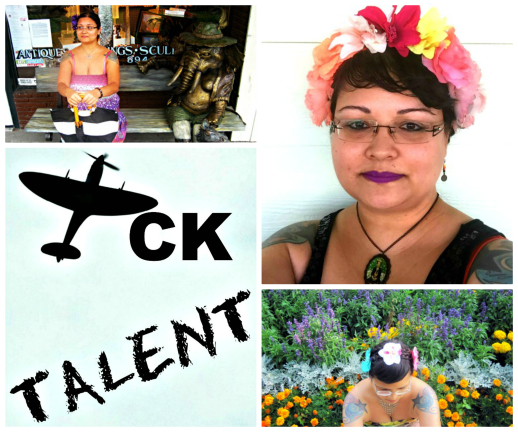
Columnist Elizabeth (Lisa) Liang‘s guest this month is a TCK of Lebanese origin, who has lived almost everywhere apart from Lebanon!

Greetings, readers. Today’s interviewee is Dounia Bertuccelli, writer, editor, mentor, and one of the moderators of #TCKchat, a Twitter chat for TCK kids around the globe. I first met Dounia at the Families in Global Transition 2014 conference, where she was a Parfitt Pascoe Writing Residency scholar and I was performing Alien Citizen: an earth odyssey as the final keynote. Since then, Dounia’s writing and my show have had positive trajectories, so I feel like our paths are parallel.

Dounia was born in Nicosia, Cyprus, to Lebanese parents—but has never lived in Lebanon. Her father worked for a US-based company with branches around the world, and Dounia spent her childhood and pre-teen years in the USA (Wisconsin), Mexico, and the Philippines, and her teens in Australia and France.

As an adult, Dounia has studied/lived in the U.K., France and the United States. She earned her undergraduate degree in History/Geography at Institut Catholique de Paris (actually not a religious institute) and her BA in History at the Sorbonne. After taking a year to work, she enrolled in the University of Surrey in the UK to pursue an MA in European Politics, Business and Law. She worked in France again for a while. Her latest move was to Connecticut six years ago with her husband, who also grew up as a TCK, for his job.

It’s a pleasure to interview Dounia for The Displaced Nation.

* * *

Welcome, Dounia. Your peripatetic, multilingual childhood must have included so many adventures and challenges. Were you happiest in a certain place at a certain time, and if so, why? 
That’s a really great and interesting question! It’s also a tough one but here goes… As a teenager, I found the two years I lived in Australia to be the happiest and most carefree. We moved there from the Philippines (where safety was an issue, especially for foreigners), and our newfound freedom was exhilarating. As a teenager, it was the ideal place: it was safe, and we had sunshine, beach and friends. Initially it was a very difficult transition, but once I settled in, I loved it—and it remains a very positive memory. As an adult, I have been happiest living in Paris. It’s where I’ve felt the most sense of belonging. I still don’t feel 100% like I belong there and I can still feel like an outsider—but less so than everywhere else. Paris is beautiful, vibrant and truly taught me independence. I also met the love of my life there, and it is where my family has settled down, so it will always hold a special place in my heart.

Do you identify most with a particular culture or cultures or with people who have similar interests and perhaps similar cross-cultural backgrounds?  
There is no black-and-white answer here. A lot of it comes down to the individual and their family background. I definitely identify with people who have similar cross-cultural/global-living backgrounds because there is an unspoken understanding and connection. But I also identify with those who come from a similar heritage and familial background. Not necessarily the same origin, but who were brought up with similar values and family ties.

“I long for somewhere,/ without knowing where.”

How do you like living in Connecticut?
It’s been a mixed experience. People have been nice and we live in a cute small town…but there is very little diversity and, although we may look and sound like everyone else, we are very different. That has made it difficult to meet people we connect with and to feel as though we belong. It’s also tough to live in a small American town after living in Paris for 10 years and having access to other European cities. And it’s definitely not easy being across the ocean from my parents and siblings.

Did your TCK upbringing inform your choice to become a writer—and has writing helped you to process your TCK upbringing?
I have always written, but I don’t know if that comes from my TCK upbringing or if it’s just my character. I think writing has helped me process my TCK experiences, as it has helped me process most things in my life. I’ve always written to express myself, to put my thoughts and emotions on paper—through journals, prose and poetry. As I was growing up I wrote about everyday life, and also during every move, in airports between homes and everything else in between. I still do that and I think it’s definitely helped me process my experiences as an adult TCK.
Heart vs home

“And yet I long to settle,/ To put down roots.”

As an ATCK, do you now have “itchy feet” or do you prefer to have a home base and only travel for pleasure?
I think it’s a bit of both. I’ve been in the same place for 5.5 years and that’s long. I’m ready for a change and to be somewhere new. But at the same time I’m not sure I want the constant upheaval of frequent moves. I think I would like to settle and have a home base, but only somewhere special to me and where I can also travel easily. Even if I settled down somewhere, I would need to travel frequently to feel the thrill of the unfamiliar, see new places and keep those “itchy feet” content.

Are you working on anything at the moment?
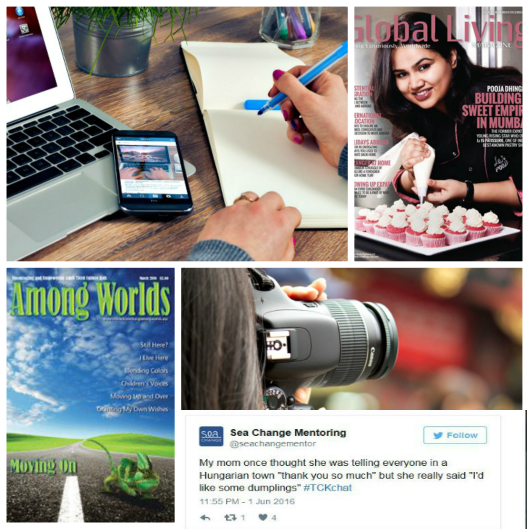
I have my ongoing work as a freelance writer and editor—I am the Expat Resource Manager for Global Living Magazine. In addition, I’m working on a variety of projects: I’m a moderator for #TCKchat (a twitter chat for TCKs around the globe); I write the TCKchat column for Among Worlds; and I work with the Parfitt Pascoe Writing Residency scholars as their mentor and editor (as you mentioned at the outset, it’s a scholarship program for new TCK/expat writers to attend and write about the Families in Global Transition Conference). You can find all my published works on my blog as well as on my LinkedIn page. It’s collection of non-fiction prose, poetry, occasional book reviews and photography.

* * *

Thank you so much, Dounia. Readers, please leave questions or comments for Dounia below. You can also follow her on Twitter, where you’ll be led into the monthly #TCKchats (#TCKchat is held on the 1st Wednesday/Thursday of each month with 2 sessions: 1st session at 15:00 GMT and 2nd session at 3:00 +1 GMT). And be sure to take a look at her creative works on her blog, the aptly named Next Stop.

Editor’s note: The two quotes are from Dounia Bertuccelli’s poem “Longing,” which was first published on her blog in 2014 and also appeared in Among Worlds (December 2015), a magazine for Adult Third Culture Kids (ATCKs).

Elizabeth (Lisa) Liang is a prime example of what she writes about in this column: an Adult Third Culture Kid working in a creative field. A Guatemalan-American of Chinese-Spanish-Irish-French-German-English descent, she is an actor, writer, and producer who created the solo show Alien Citizen: an earth odyssey, which has been touring internationally. And now she is working on another show, which we hope to hear more about soon! To keep up with Lisa’s progress in between her columns, be sure to visit her blog, Suitcasefactory. You can also follow her on Twitter and on Facebook.

STAY TUNED for next week’s fab posts!

If you enjoyed this post, we invite you to register for The Displaced Dispatch, a round up of weekly posts from The Displaced Nation, and so much more! Register for The Displaced Dispatch by clicking here!

Related posts:

Photo credits: Top visual: (top row) Eiffel Tower image via Pixabay; Coat of arms of the former university of Paris, France (Sorbonne), by Katepanomegas via Wikimedia (CC BY-SA 3.0); Connecticut 1980 camper trailer plate, by Jerry “Woody” via Flickr (CC BY-SA 2.0); and Dounia Bertuccelli (supplied); (bottom row) Lebanon via Pixabay; Selimiye Mosque (originally the Cathedral of Sainte Sophie), in Nicosia, Cyprus, by Chris06 via Wikimedia Commons (CC BY-SA 4.0); and The Surrey Scholar in Guildford, by Mike Peel via Wikimedia Commons (CC BY-SA 4.0). Middle visual: House and heart images via Pixabay; Avenue des Champs-Élysées photo via Pixabay; Hartford, Connecticut by Doug Kerr via Flickr (CC BY-SA 2.0). Bottom visual: Writing and photography images via Pixabay.

BOOKLUST, WANDERLUST: In honor of Mother’s Day, three books by and about strong international women

booklust-wanderlust-2015

Attention displaced bookworms! For this month’s column, Beth Green has some eclectic picks for displaced reads—all of which feature women who transcend national boundaries.

Hello again, Displaced Nationers!

Mother’s Day is coming up in the United States on May 8 (the UK celebrated its mums in March). As an American who lives abroad, I am marking the occasion by reading the beautiful, intriguing A Mother’s Secret, by Renita D’Silva, which came out in early April.

renita and a mother's secret

Now living in the UK, D’Silva grew up in a coastal village in South India. Reflecting that background, D’Silva’s debut novel, Monsoon Memories, was about an Indian woman who has been exiled from her family for more than a decade and is living in London (it was a Displaced Nation pick for 2014).

Her latest work, A Mother’s Secret, which came out in early April, tells the story of Jaya, the British-born daughter of immigrants. Jaya struggles with the unexpected death of her mother, Durga, followed by the loss of her baby son in a tragic cot death. Looking through her mother’s belongings, Jaya finds diaries that unlock the secrets of her mother’s unhappy past, before she emigrated to England. Part of the story is told by Durga, through diary excerpts, and part by Kali, a mad old lady who, like Durga, was doing her best to survive and succeed in traditional Indian culture.

I haven’t finished A Mother’s Secret yet—and hadn’t even planned on reviewing it—but I’m still willing to recommend it on the strength of D’Silva’s mesmerizing descriptions of India, along with the finely woven mystery connecting Jaya to her mother and to Kali. In D’Silva’s hands, the the India of several decades ago becomes a place of lush, gothic beauty. Take, for instance, her description of a ruined mansion feared by the villagers and rumored to be haunted:

“Oh there’s a curse all right,” the rickshaw driver huffs. “No boy child survives in that family. Everyone associated with that mansion is cursed with unhappiness, insanity, death. You must be out of your mind to go there, and I have warned you plenty. But it’s none of my business, as long as you pay me three times the fare like you promised.” The rickshaw driver’s hair drips with sweat as his ramshackle vehicle brings them closer and closer to the ruin, which looms over the earth-tinged emerald fields, painting the mud below the dark black of clotted blood.

While on the theme of women’s lives, allow me to segue into another book I finished recently, My Life on the Road, by American feminist activist Gloria Steinem. (It was on the Displaced Nation’s Best of 2015 list, and also a pick by fellow Displaced Nation columnist HE Rybol for a 2016 read.)

Gloria Steinem portrait and book

As one doesn’t automatically associate with Steinem with travel, I was surprised to learn how much time she has actually spent “on the road.” Her childhood, I was fascinated to discover, consisted of a series of road trips across the United States with her nomadic parents, who made a living selling antiques. She credits these childhood travels with shaping her later talents as a journalist and organizer. And although she no longer leads a peripatetic life—she bought property and established a home base—she estimates she spends more nights out of her house than in it.

Steinem writes:

Taking to the road—by which I mean letting the road take you—changed who I thought I was. The road is messy in the way that real life is messy. It leads us out of denial and into reality, out of theory and into practice, out of caution and into action, out of statistics and into stories— in short, out of our heads and into our hearts. It’s right up there with life-threatening emergencies and truly mutual sex as a way of being fully alive in the present.

Notably, one of Steinem’s formative experiences came after her graduation from Smith College, when she won a fellowship to study in India for two years. Living in India broadened her horizons and made her aware of the extent of human suffering in the world. India was also where she learned about the “talking circle”—an intimate form of storytelling “in which anyone may speak in turn, everyone must listen, and consensus is more important than time.”

The book isn’t a chronological history of this 82-year-old iconic figure’s travels in America and abroad, but rather a (sometimes disjointed) collection of thoughts about why she enjoys constant movement, and a series of vignettes about the people—and personalities—she’s met along the way.

One of the biggest personalities is her father—a larger-than-life figure from whom Steinem has inherited a love of the nomadic life:

I can’t imagine my father living any other life. When I see him in my mind’s eye, he is always the traveler, eating in a diner instead of a dining room, taking his clothes out of a suitcase instead of a closet, looking for motel VACANCY signs instead of a home, making puns instead of plans, choosing spontaneity over certainty.

When I first picked up the book, I was a little apprehensive that it would be all about Steinem’s political views. (Given that this is an election year in the United States, I’m getting my quota of political reading from the daily news!)

Naturally, Steinem does write about politics—after 40 years devoted to leading a revolution for women’s equality, how could she not? For example, Steinem was at Dr. Martin Luther King’s “I Have a Dream” speech and she drops the usual names you’d expect from that era.

But the majority of her stories are what the title suggests—tales about ordinary people she has encountered on the road, such as taxi drivers or people she met at roadside diners or in airports while on her way to conferences or political events. An example:

Our older driver is like a rough trade character from a Tennessee Williams play— complete with an undershirt revealing tattoos, and an old Marine Corps photo stuck in the frame of his hack license. Clearly, this is his taxi and his world.

The friendships she forges with people across the country, particularly with Native American activists, enliven the book and underscore Steinem’s interest in getting to know local communities—though I sometimes got the bittersweet feeling that, given her restlessness, she will never be more than observer of these grassroots circles. In one such passage, Steinem details a trip she once took to a Native American site in Ohio with the author Alice Walker and Walker’s assistant, Deborah Matthews:

That night we join Deborah’s mother, her eighty-six-year-old grandmother, and teachers and neighbors at a community potluck supper in the school gym. It’s a welcome for us. With the slow-paced humor and warmth I’ve come to cherish, they talk about the history of small-town Ohio, and are delighted that we are interested. Deborah’s grandmother has lived her entire life near Adena mounds that may be even older than the one we just saw. They reminisce about everything from romantic outings in the Great Circle Earthworks to the connection they feel to people they just call “the ancients.”

In short, I’d recommend My Life on the Road not only to anyone interested in Steinem herself and the 1960s American feminist movement, but also to anyone with a passion for travel. (That said, if you’re fed up with hearing about American politics already this year, you might wait until after November to start reading!)

Before I sign off for this month, a book I’d like to mention to any readers thirsting for some armchair adventure is Displaced Nationer and current expat Jennifer S. Alderson’s Down and Out in Kathmandu, which came out at the end of last year and was in my to-be-read pile for 2016.

Jennifer Alderson and book cover

The first in a planned series of international thrillers, the book introduces us to protagonist Zelda Richardson, a burnt-out Seattle-based computer programmer who is heading to Nepal for a volunteer teaching gig.

Teaching English in Nepal is nothing like Zelda expects—relationships with her host families are fraught, facilities are limited and the students are less than impressed with Zelda herself. While struggling to deal with the strange culture and her unruly classroom, she crosses paths with Ian, an Australian backpacker who is on a teaching sabbatical and simply searching for the best weed he can find.

And then, of course, as often happens when you link up with backpackers, Zelda finds herself entangled with an international gang of smugglers who believe she and Ian have stolen their diamonds. They also cross paths with Tommy, a shady Canadian in Thailand…

Alderson’s next Zelda book, The Lover’s Portrait, is set in Amsterdam and is due out at the end of next month.

* * *

Until next time, happy reading!

As always, please let me or ML know if you have any suggestions for books you’d like to see reviewed here! And I urge you to sign up for the DISPLACED DISPATCH, which has at least one Recommended Read every week.

STAY TUNED for next week’s fab posts!

Beth Green is an American writer living in Prague, Czech Republic. She grew up on a sailboat and, though now a landlubber, continues to lead a peripatetic life, having lived in Asia as well as Europe. Her personal Web site is Beth Green Writes. She has also launched the site Everyday Travel Stories. To keep in touch with her in between columns, try following her on Facebook and Twitter. She’s a social media nut!

If you enjoyed this post, we invite you to subscribe to The Displaced Dispatch, a weekly round up of posts from The Displaced Nation and much, much more. Sign up for The Displaced Dispatch by clicking here!

Related posts:

TCK TALENT: Benjamin Jancewicz, missionary kid, socially responsible graphic designer and pioneering vector artist

Photo credits: (top row) Kawawachikamach Band (flag) of the Naskapi, via Wikimedia Commons (CC BY-SA 3.0); (middle row) Ben Jancewicz self-portrait (supplied); (bottom row) Lights, Camera, Action (Fed Hill), by Bill Mill via Flickr (CC BY-SA 2.0), Zerflin logo.

Columnist Elizabeth (Lisa) Liang‘s guest this month is an adult Missionary Kid (and Third Culture Kid) who expresses his creativity as a visual artist.

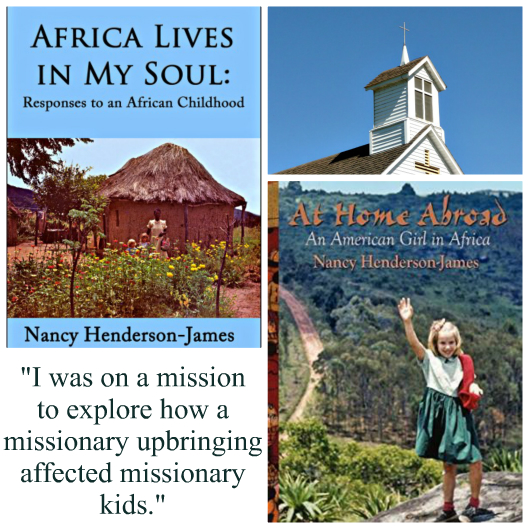
Welcome back, readers. Today’s ATCK interviewee is artist, illustrator, and graphic designer Benjamin Jancewicz. Benjamin grew up in Northern Quebec, on the Naskapi Native American Reservation of Kawawachikamach, to an Irish-American mother and Polish-American missionary father who is a linguist and Bible translator to the Naskapi Native Americans.

His Twitter blurb says he was raised “Native, Interracial, MK” (MK being Missionary Kid).

Benjamin’s parents met tobogganing at a Youth Group in their hometown of Norwich, Connecticut, and Ben was born in Connecticut. He now lives in Baltimore with his wife, Tamika, where he runs his own graphic design company, Zerflin (the name belonged to a cartoon alien Benjamin drew as a kid) and creates original vector artwork, which has been exhibited in galleries, cafes and homes around the United States and Canada. His current show, Who Said What, is, in his own words,

a collection that combines my love for engaging people in the creation of my art as well as my desire to reimagine quotes that move people to live better lives. The creation process begins with a call for quotes to be submitted. I then do careful research and select a unique photograph of the quote’s author, typically in their youth, imagining them as my peer. Using the reference image, I draw the piece itself inspired by 1950s and 60s screenprinting, interior design and album covers. Each piece has a unique color palette and font from an up-and-coming typographer.

You can get a taste of the work, and the vector art process, of which Ben is a pioneer, from this short video:

* * *

Welcome, Benjamin. I understand your family traveled quite a bit before settling in the Naskapi Native American Reservation.
Yes, my family moved to Chicago (where my parents went to school), Texas (where they had training), Mexico (where they had field testing), and Sherbrooke, a city in southern Quebec (where they learned French), all before I was four years old. I remember bits and pieces of that time and I’m told I picked up Spanish, but I ended up losing it and learning Naskapi, French, Innu and English instead.

Those are some very peripatetic early years (not to mention impressive multilingualism on your part). Did the traveling continue after you moved to the Reservation?
To raise support for the work, my parents had to travel to the States almost every summer. So there was a lot of visiting churches and road trips through the states, listening to my Father give slideshow presentations about what our family was up to. He continues that to this day in a blog I built for him: http://bill.jancewicz.com. We also moved quite a bit on the Reservation (we call it “the Rez”) as well. We stayed at people’s houses, either with them or when they weren’t there. Eventually when I was older we moved to the nearby town, but living on the Rez was some of the happiest time of my life. Summers filled with bike riding, exploring the woods, swimming in the lake…it was heaven.

“You never find yourself until you face the truth.” —Pearl Baily

What drew you to art and illustration?
I always drew as a kid. As I got older, life on the Rez got harder. Kids got involved in drugs and alcohol. Their parents being absent for the same reasons took a toll. I began losing friends to suicide, overdose. And as TV crept into the Rez, so did an attitude of treating white people differently. I was singled out because I was different. Bullies began attacking me more and more frequently at school—until my parents pulled me out and homeschooled me for a few years. I ultimately went back to the Rez school for most of secondary school, but drawing, computers and piano were often how I dealt with depression and loneliness.

It’s striking, how many ATCKs’ creative pursuits begin as—or become—coping mechanisms during childhood/adolescence. I’m very sorry you were bullied and am glad you found creative outlets to help you handle it. Did your interest in art and illustration evolve naturally into a career in graphic design?
I never really considered art and illustration to be a viable career, and originally went to school for engineering. After two years, I began to learn more about graphic design and after much deliberation, I switched majors. I didn’t find out until later that my father had done graphic design when he was younger as well. Once I switched, I had to do a lot of extra work to catch up, and started my design company, Zerflin, while still in class.

Creation of Zerflin

Photo credits: (top row) Camp amérindien MANTEO MATIKAP, by Guillaume Cattiaux via Flickr (CC BY-SA 2.0); (middle row) screen shots of Ben; (bottom row) Zerflin logo and banner.

That’s impressive!

“Power & control will never outweigh love.” —Jada Koren Pinkett Smith

In college, did you identify most with a particular culture or cultures, or with people who had cross-cultural backgrounds similar to yours?  
While I was in college, in a small town in the States, I was bullied again, this time in the dormitories, and again for being different. But this time it was because I was Canadian, because I grew up on a Rez, and had perspectives that were considered strange by my white dorm mates. I sought refuge in a place on campus called the Rafiki House, a house dedicated to helping TCK and international students adjust to life in the US (rafiki means “friend” in Swahili). I ended up being the first freshman ever to live in the house. I stayed there all four years, getting involved in the protests and fights for its survival when the college tried to shut it down.

I’m sure many current TCKs and international students at the college are grateful for the House’s existence. What made you decide to move to Baltimore?
Baltimore was only an hour-and-a-half drive from college, so I’d often come down with friends to explore, and Tamika and I would come on dates. We fell in love with the city and decided to stay. Tamika originally wanted to teach in the public school system, and I got a job working at a non-profit in DC. Baltimore is much cheaper to live in, so we bought a house here.

“If you have an opportunity to use your voice you should use it.” —Samuel Leroy Jackson

As an ATCK, do you now have “itchy feet,” or do you prefer to have a home base and only travel for pleasure?
I have a very strong wanderlust, but the Recession pretty much killed any opportunities to travel. I try to travel as much as I can with my business, and now have art shows in L.A. that I frequently travel for. We organized with a group of friends and traveled to South Africa for the first time this past winter, which was amazing. It was the first time off the continent for me. Baltimore is really feeling more and more like home, though. Getting involved in the local social justice movements has given me life, and I’m glad to have a base here.

Per your design agency’s website, Zerflin’s staff “champion underdog clients and believe running a company without being evil is paramount.” This is admirable! Did your TCK background influence this mission/vision/value, or did something else, or were there a combination of influences?
Growing up on a Rez, there’s a certain amount of “wokeness” that just comes with living and experiencing how white people in town would treat my friends differently. And as someone who looks white, it was crazy hearing some of the conversations other white people would have about African Americans and Africans, Natives, Latinos, and Asians. As I got more and more involved in social justice on campus and began reading more and more books from black nationalist, feminist, womanist, and social justice authors, I knew I wanted to be involved in that work in some capacity. I also recognized that most companies (especially in design) are more large-client focused. As a social justice action, I wanted to do something different.

Congratulations on your show, which I understand will be at Impact Hub Baltimore for most of May into early June. Are you working on any more big art projects at the moment?
Continuously. I’ve been doing a lot more with art over the past couple years, which is strange for me. I knew some artists in college, and the way they acted really turned me off to art. I already felt looked down upon just being there as a TCK, but artists really seemed to take it to the next level. Tamika greatly encouraged me to pursue art, and as it took off, I’ve been getting more into illustration as a profession. You can see more of my work here.

Ben Jancewicz’s artwork. (Clockwise from top): Trumpeter plays the blues (hand-drawn, digitally rendered); West African Girl, available for purchase at Zerflin (Etsy shop); screenshot of Oprah work at Who Said What exhibition; Fayette Regina Pinkney, commissioned portrait.

* * *

Thank you so much, Ben. Congratulations on your successful business and ongoing artwork! Readers, please leave questions or comments for Benjamin below. Besides checking out his art site, you can also follow him on Facebook and Twitter. You can commission his artwork here and buy select pieces (on paper or canvas), including from the current show, here.

Editor’s note: All quotes are taken from the artwork in Benjamin Jancewicz’s current show, Who Said What.

Elizabeth (Lisa) Liang is a prime example of what she writes about in this column: an Adult Third Culture Kid working in a creative field. A Guatemalan-American of Chinese-Spanish-Irish-French-German-English descent, she is an actor, writer, and producer who created the solo show Alien Citizen: an earth odyssey, which has been touring internationally. And now she is working on another show, which we hope to hear more about soon! To keep up with Lisa’s progress in between her columns, be sure to visit her blog, Suitcasefactory. You can also follow her on Twitter and on Facebook.

STAY TUNED for next week’s fab posts!

If you enjoyed this post, we invite you to register for The Displaced Dispatch, a round up of weekly posts from The Displaced Nation, and so much more! Register for The Displaced Dispatch by clicking here!

Related posts:

CULTURE SHOCK TOOLBOX: Expats, don’t wear ear protectors when neighbors offer advice, and confidence works like a charm!

Clockwise from top left: Rashmi Dalai author photo (supplied); one of her kids’ Bali t-shirts (for sale online); toolbox (Pixabay); and cover of Dail’s cookbook.

Transitions enthusiast H.E. Rybol talks to a star writer for Wall Street Journal Expat for this month’s column.

Hello, Displaced Nationers!

Today, I’m introducing you to Rashmi Jolly Dalai, a writer and communications strategist who divides her time between New York City and Singapore. Rashmi writes about cultural diversity, identity, Third Culture Kids and more on her blog and for Wall Street Journal Expat. One of her most popular articles for the latter concerns the addictive nature of expat life (yes!).

Rashmi grew up in rural Pennsylvania, the child of Indian immigrants. She claims she hasn’t retained much of her Indian heritage, calling herself in a recent blog post

“an ABCD, American Born Confused Desi, someone who should hang on to her culture but didn’t.”

Her own two children, both under age nine, have parents from America and India, grew up in China, and now live in Singapore. While raising her son and daughter, Rashmi has published a rhyming bilingual (Chinese-English) picture book called Mika the Picky Eater, followed by a bilingual collection of recipes for kids of all ages called The Picky Eater’s Cookbook and another bilingual children’s book, Sasha the Stubborn Sleeper.

And now she has helped her children launch a creative project called Smiling Designs for Kids. “The kids designed their own t-shirts in Bali and have started selling them online,” she explains. “It’s the modern-day third culture kid version of a global lemonade stand, complete with a social mission. They donate 25 percent of the proceeds to Pencils of Promise, a charity that builds schools around the world.”

Rashmi also serves on the board of Kundiman, an organization “dedicated to the creation and cultivation of Asian American literature.”

She kindly took the time out of her intense schedule to share some of her culture shock stories with us. Join us as we talk about not listening to your neighbor, good luck charms and more…

* * *

Hi, Rashmi, and welcome to Culture Shock Toolbox. Tell us, which countries have you lived in and for how long?

Outside the United States (my home, as you explained), I’ve lived in London (two years), Shanghai (seven years), Indonesia (six months) and Singapore (since August of last year). We moved to London for my work, to Shanghai for my husband’s work, to Singapore for both of our works. Our son suffered from a lot of pollutant-related respiratory issues in Shanghai, so that explains our stay in Indonesia for six months. We took him to Bali to get healthy. Plus, I wanted to live there.

In the course of your many cultural transitions, have you ever ended up with your foot in your mouth?

Sure, I’ve had many awkward cross-cultural moments. Like most Americans, I’ve made the mistake of calling trousers “pants” in London—“pants” means underwear in British English. When learning Mandarin during our stay in China, I frequently confused the word “four” for the word “dead”. People rolled their eyes, laughed a bit and corrected me. I find that people are very forgiving of strange foreigner behavior, especially when it’s not badly intentioned. I also once spent a month eating tofu and spinach to lose weight—blithely ignoring my Chinese neighbor’s warnings that the combination can cause kidney stones. It did.

How did you handle that situation? Would you handle it any differently now? What are the tools that you think are most useful for adapting to this kind of scenario?

If given a second chance, I definitely would’ve listened to my neighbor’s advice about the kidney stones.

Photo credit: Spinach-Tofu, by Kenneth Lu via Flickr (CC BY 2.0).

Right! Did you hear that? Don’t wear ear protectors if it means tuning out advice from local residents. Rashmi, can you think of a situation you handled with finesse, and why do you think that was?

While in Bali, I learned how to drive stick shift. This was no small feat as the roads are dangerously busy and narrow, but I was determined to experience the island on my own terms. I think my positive attitude acted like a good-luck charm. I managed to drive a local van for six months without knocking over a person or damaging the car—total wins under the circumstances.

I like that story! If you had any advice for someone moving abroad for the first time, what tool would you suggest they develop first?

Don’t take yourself too seriously. Ask questions before you judge. Learn, learn, learn. And make sure you consult with locals about which tools to use for coping with unfamiliar foods and living conditions.

Photo credits: (top row) Scooter, by Frank Douwes via Flickr (CC BY 2.0); Shiva shell charm via Pixabay (it transforms and mutes negative energy); (bottom row) An all too common sight in Asia, by Rollan Budi via Flickr (CC BY-SA 2.0); Good old stick shift, by Matt via Flickr (CC BY 2.0).

Thank you so much, Rashmi, for taking the time to share your culture shock stories with us! We travelers can always use a reminder about the need to take our cues from local residents, or else we may need to invest in a new tool—a pop-out punch to get rid of those kidney stones?! And adding some good luck charms, such as positivity and humo(u)r, to our toolboxes is particularly welcome advice for the Displaced Nation. We’re a site that prides itself on not taking cross-cultural tensions too seriously and finding a path to a more relaxed expat life.

* * *

Have I got that right, Displaced Nationers? How long did it take you to realize the importance of seeking out, and heeding, local advice? And how about humor: has it played an important role in helping you manage intercultural situations? I’d love to hear your stories! Share them in the comments below…

If you want to learn more about what Rashmi Jolly Dalai has to say, I recommend you visit her author site and keep an eye out for her Wall Street Journal Expat posts for further inspiration. You can also like her Facebook page and follow her on Twitter.

Well, hopefully this has you “fixed” until next month.

Until then. Prost! Santé!

H.E. Rybol is a TCK and the author of Culture Shock: A Practical Guide and Culture Shock Toolbox and the newly published Reverse Culture Shock. She loves animals, piano, yoga and being outdoors. You can find her on Twitter, Linkedin, Goodreads, and, of course, her author site.  

STAY TUNED for more fab posts.

If you enjoyed this post, we invite you to register for The Displaced Dispatch, a round up of weekly posts from The Displaced Nation—and much, much more! Register for The Displaced Dispatch by clicking here!

Related posts:

TCK TALENT: Mary Bassey, Writer, Storyteller, Advocate and Scientist

Mary Bassey TCK Talent

Columnist Elizabeth (Lisa) Liang has invited a member of the up-and-coming generation of talented Adult Third Culture Kids to be her guest this month.

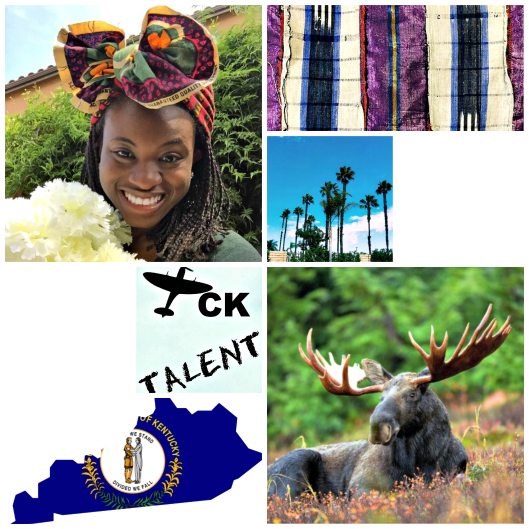
Welcome back, readers. This month’s guest is Mary Bassey, the first ATCK interviewee for this column whose talents extend from writing all the way to biochemistry! Mary is a self-described multiethnic (Efik & Igbo) Nigerian-Canadian-American. She was born in Nigeria, grew up mostly in Canada (the West Coast) and Kentucky, and currently resides in Southern California.

Mary has a talent and a passion for storytelling and writing, particularly when it sparks cross-cultural discussion and helps to effect change. She contributes to The Black Expat, a site that features first-hand accounts, personal narratives and key advice about cross-cultural living from members of the Black Diaspora. She has her own site, Verily Merrily Mary, where she coaches writers in how to have an impact, and she recently started a new blog on the Huffington Post. (Her first post was about the need for millennials to always be hustling, to the detriment of self-care.)

Mary received a prestigious TCK award to take part in this year’s Families in Global Transition (FIGT) conference, in Amsterdam, where she spoke on a panel about storytelling as a means of communicating the experience of a global or Third Culture Kid lifestyle.

I met Mary on Twitter at #TCKchat, a bimonthly Twitter event for which she is one of several co-hosts (@verilymary). I found her so interesting, I decided I had to learn more of her story.

* * *

Welcome, Mary. Please tell us all the places where you grew up and why your family moved.
I was born in Ilorin, Nigeria, a city mostly populated by those from the Yoruba ethnic group. My father is Efik and my mother is Igbo and I fluently spoke both Yoruba and English as a small child, so even before leaving Nigeria for North America, my early childhood was already quite multicultural. My sights were set even further along the global cultural landscape once my father landed jobs as a physics professor in various cities and my mother, siblings, and I moved along with him. Our first move was to Victoria in British Columbia, Canada (on the Southern tip of Vancouver Island), for nearly three years. Then we moved to Kentucky for about seven years. Our last move was to Southern California, which has been my home for over eight years.

Were you happiest in a certain place at a certain time, and if so, why?
My life in Victoria was by far the highlight of my life. Growing up, my siblings and I were involved in the activities of the city’s community center, which catered to the needs of kids living in the city, providing parents with time off while giving us the opportunity to play and explore the outdoors. I had my first camping experience in Victoria and actually saw a moose in person at around age six (one of the most Canadian moments of my life!). Hiking, swimming, and wading in the lakes and beaches were normal, nearly everyday parts of my life. Victoria opened up a new world of outdoor life, and I absolutely loved it. I was so carefree.

“Being in a STEM field has given me another avenue to put my mind to use.”

What drew you to studying biochemistry?
I decided to get my bachelors degree in biochemistry because science was something I have always liked, especially the life sciences. I couldn’t choose between biology or chemistry so I decided to pick biochemistry. My task now as a graduate is to figure out how to merge my intellectual curiosity in the sciences with my love of culture and storytelling.

Science and storytelling

The world could use your combination of gifts! Speaking of storytelling, which makes me think of writing, what made you decide to work as a writing coach in California?
When my family moved to California because of my father’s job as a physics professor at a university here, I was entering my second year of high school. I’m now in my early 20s and am still here. I decided to become a writing coach because I knew that I had something to offer to those who are struggling with their writing voice and/or need guidance in order to effectively communicate their message. I have been helping people with their writing since middle school. I decided to make my services more public and created an online platform to do so. It has been a blast working with so many brilliant and smart writers.

“I never thought of myself as a global citizen because I am not a citizen of the globe; I am a citizen of two countries.”

Do you identify most with a particular culture or cultures?
I only partially identify with the cultures that I have grown up in. When I say that I am Nigerian, Canadian, or American, there is an invisible asterisk attached to each nationality because they each require a bit more of an explanation. For example, I am Nigerian, but I have spent most of my life living in North America. This may cause some people to question the validity of my Nigerianness because it is inevitably in juxtaposition with my Canadianness and my Americanness. Regardless, I know that my being Nigerian is valid.

Did your TCK upbringing inform your choice to become a writer? 
I think so. With so much of my life in transition and in flux, writing has been one of the few constants. Paper and pen is readily available in every place I have lived, and nowadays, of course, we also have laptops and tablets. When you are living a cross-cultural life, you become introspective by force. As a kid, I had plenty of those moments of introspection—though I may not have taken them to heart or perhaps was not yet able to understand my feelings fully.

Has writing helped you to process your TCK upbringing?
I only found out about the term “TCK” four years ago! It has helped me put words to my childhood experiences and write more about my TCK life. Finding other TCKs in the blogosphere and via social media encouraged me to be more confident in making my stories and experiences public on blogs and other kinds of publications. But even with the various opportunities I have been given to write on public platforms, I do not neglect writing for myself (journaling, etc.). I am such a strong believer in people—writers especially—journaling privately. It’s like the socially acceptable version of talking to yourself.

“How many of us millennials are more concerned with growing our ‘Countries I’ve Been To’ list instead of having in-depth interactions with the citizens of those countries?”

As an ATCK, do you have “itchy feet”?
One thing I like to say is that I find instability in stability. My obsession with wordplay aside, the statement rings so true for me. The fact that I can say I have been in the same spot (here in California) for over eight years is mind boggling—and makes me feel a bit anxious. The idea of being anything close to 100% established and settled in a place is not a source of comfort for me at all. My upbringing was not like that. I liked looking forward to my next plane, ferryboat, or long-distance bus ride during school holidays as a kid. My childhood was indeed nomadic. However, already this year, for the first time in five years, I took two international trips, giving me a whopping total of 10 planes already taken this year. That constant movement has kept me sane. It’s the madness of travel that keeps me centered.

Do you prefer to travel for business, pleasure, or both?
I would not mind a lifestyle that affords my moving frequently. And, while vacations are fun, I would not want all of my travel to be rooted in pleasure alone. My latest trip to Amsterdam was around the middle of March of this year. As you mentioned at the outset, I traveled there to attend the Families in Global Transition (FIGT) conference and I was one of five ATCKs to be awarded the Pollock Scholarship, which covers our cost of attending. I was also one of the conference presenters! I was on the plenary panel led by Julia Simens, called “Stories You Need to Tell.” There was a strong sense of purpose and duty with my going to Amsterdam. While the city was gorgeous, it was not just a vacation for me. That is the kind of thing that I want to happen regularly in my life: traveling with a purpose beyond pleasure.

The Worlds Within

I can relate and I’m sure it will continue to happen for you. Per your site, Verily Merrily Mary, you’re involved in many worthy causes: you’ve worked with organizations that aim to encourage grade school kids to get excited about STEM fields, especially children from underrepresented groups. You also support and volunteer with organizations that empower cancer patients and cancer researchers. Last July, you received the title Miss Efik USA, and you advocate for the Nigerian Efik people who live in the United States as well as in Nigeria. Congratulations on these contributions and achievements! Is there anything else you would like to share?
I had the absolute honor to be published in the book The Worlds Within: An Anthology of TCK Art and Writing: Young, Global and Between Cultures, which was launched in 2014 as a way of giving children and adolescents a voice regarding their TCK experience.
Editor’s note: The Worlds Within made our Best of Expat Books for 2014.


* * *

Thank you, Mary. Readers: you may learn more about Mary, her writing, and her various projects at her Verily Merrily site. If you have any questions or comments for her, please be sure to leave them below.

Editor’s note: All photos were supplied by Mary Bassey or are from Pixabay, with the exception of the two FIGT conference photos, which are from their Facebook page. The quotes are from Mary’s posts on Verily Merrilly.

Elizabeth (Lisa) Liang is a prime example of what she writes about in this column: an Adult Third Culture Kid working in a creative field. A Guatemalan-American of Chinese-Spanish-Irish-French-German-English descent, she is an actor, writer, and producer who created the solo show Alien Citizen: an earth odyssey, which has been touring internationally. And now she is working on another show, which we hope to hear more about soon! To keep up with Lisa’s progress in between her columns, be sure to visit her blog, Suitcasefactory. You can also follow her on Twitter and on Facebook.

STAY TUNED for more fab posts!

If you enjoyed this post, we invite you to register for The Displaced Dispatch, a round up of weekly posts from The Displaced Nation, and so much more! Register for The Displaced Dispatch by clicking here!

Related posts:

BOOKLUST, WANDERLUST: 6 writers talk expat- and travel-themed books: last year’s faves, this year’s must-reads

booklust-wanderlust-2015

Attention displaced bookworms! Our book review columnist, Beth Green, an American expat in Prague (she is also an Adult Third Culture Kid), has canvassed several international creatives for their favorite expat- and travel-themed books of 2015, along with what’s on their bedside tables in 2016.

Hello, Displaced Nationers!

Last month I wrote to you about my Goodreads Reading Challenge, which, at 34 books and counting, is still proving (ahem) something of a challenge.

For this month’s column, instead of focusing on my 300-book goal, I decided to find out what other international creatives, several of whom have been featured in this column and/or on the Displaced Nation, have been reading.

I asked each of them to answer these two questions:

  1. What were the best books you read last year on displaced/expat/travel themes?
  2. What books are you looking forward to this year in the same or similar genres?  

Their responses are nothing short of tantalizing!

So much so that I’m now wondering…can I squeeze any more in?!

Please take a look:

* * *

MARK ADAMS, bestselling author

For the last several months I’ve been working on a new book about Alaska, so the 49th State has occupied a lot of my reading hours. Naturally, I’ve reread John McPhee’s classic Coming into the Country and Jon Krakauer’s Into the Wild. But two slightly less well-known books with an Alaska connection have really stuck with me.

John Muir and the Ice That Started a Fire_coverThe first is John Muir and the Ice that Started a Fire: How a Visionary and the Glaciers of Alaska Changed America, by Kim Heacox (Lyons Press, 2014). This is a great example of history that comes alive by weaving names, dates and events with passion for a cause, in this case environmentalism. Today, Alaska’s shrinking glaciers are viewed mostly by passengers aboard cruise ships who look up while sampling their breakfast buffets. To Muir, though, they were living things, mysteries that held timeless wisdom. Heacox makes a stirring argument that Muir’s early trips to Alaska jump-started the modern conservation movement.

Deadliest_State_coverThe second book is Kalee Thompson’s The Deadliest Sea: The Untold Story Behind the Greatest Rescue in Coast Guard History (Harper-Collins, 2010). When I realized that my book research was going to take me deep into the Bering Sea, which I wasn’t even sure I could place on a map, I reached for a copy of this. I’m not sure it was the right choice for someone who’ll be sailing those frigid and famously turbulent waters soon, but any readers who like tales along the lines of The Perfect Storm or Black Hawk Down will find that Thompson’s tick-tock re-creation of this lifesaving mission really places them amid the freezing chaos of the action.

Sunnys_Nights_coverOne book I’ve already read and loved in 2016 takes place very far from Alaska. It’s Tim Sultan’s delightful Sunny’s Nights: Lost and Found at a Bar on the Edge of the World, a memoir that tells the story of a curious young man who lands in Brooklyn in the mid-1990s after a peripatetic and somewhat disorienting youth in Laos, the Ivory Coast and Germany. Sultan finds a home at what must be the strangest tavern north of New Orleans—Sunny’s opens only one night a week and its clientele runs from Mafiosi to nuns—and takes on the bar’s namesake owner as a sort of surrogate father. It’s a stained-glass window offering a nostalgic glimpse of a Brooklyn that has largely vanished.

The Seven Storey Mountain_coverNow, a book I’m looking forward to reading this year: The Seven Storey Mountain, by Thomas Merton (Harcourt Brace; Fiftieth Anniversary ed., 1998). When I attended Catholic school in the 1970s, there were probably copies of Thomas Merton’s huge bestseller in every classroom, which is a shame, because most grade schoolers would be more interested in reading the phone book. Now that I’m older and no longer required to recite the Lord’s Prayer along with the Pledge of Allegiance every morning, I have the life experience that pushes one to ponder big questions, such as the meaning of life. Merton made that leap much earlier; he was an urbane, Ivy League-educated writer who abandoned a budding career at age 23 to cloister himself in a Kentucky monastery. (As a writer, I’m almost as awed by his decision to donate all royalties to his monastic order.) This is the story of his circuitous path toward embracing a life of pure spirituality.

Mark Adams is the bestselling author of Meet Me in Atlantis: My Obsessive Quest to Find the Sunken City, which was reviewed for this column in May of last year.


JENNIFER ALDERSON, expat and author

Savage Harvest_coverLast year, while researching my third novel, I was lucky enough to come across Carl Hoffman’s Savage Harvest: A Tale of Cannibals, Colonialism, and Michael Rockefeller’s Tragic Quest for Primitive Art (2014) It is simply one of the best nonfiction travel adventure stories I have read in a very long time. An award-winning American journalist, Hoffman recounts his fascinating journey to Papua New Guinea, where he retraces the last art-collecting expedition made by anthropologist Michael Rockefeller. He juxtaposes his own travels through the Asmat region with a fictive reconstruction of Rockefeller’s final days before his mysterious disappearance, based on extensive archival research and new eyewitness accounts. He effortlessly combines mystery, adventure, personal self-discovery and colonial history into one captivating novel.

The Travelers_cover
When reviewing my bookshelf last week, I noticed I’ve bought quite a few international thrillers and mysteries featuring American expat protagonists this past year. So in that vein, I’m most looking forward to reading Chris Pavone’s The Travelers, (Crown, March 2016). Pavone is an American writer whose first novel, The Expats, is set primarily in the capitals of Luxembourg, Belgium and France. That book was a stylish, fast-paced thriller, yet what caught my attention the most was the lyrical and natural way in which he described these cities without slowing the plot down. His latest thriller promises to crisscross South America and Europe. I can’t wait to read it!

Gallery Pieces_coverAnother mystery/thriller I just learned about is Gallery Pieces: An Art Mystery, by Larry Witham (Archway Publishing, 2015). It’s about an American art expert who travels through Europe attempting to track down artwork stolen during World War Two. it sounds like a great story. Editor’s note: Larry Witham is a former journalist and foreign correspondent who became a full-time writer and artist (painting and drawing) around ten years ago.

Jennifer S. Alderson is the author of Down and Out in Kathmandu and American expat in the Netherlands.


MARIANNE BOHR, Displaced Nation columnist and memoirist

TheRentCollectorOf the travel/expat books I read in 2015, three come to mind immediately. The first is The Rent Collector, by Camron Wright (Shadow Mountain, 2013). This gritty yet heart-warming story is set in the largest municipal dump located on the outskirts of Phnom Penh, Cambodia, a country about which I knew little. A couple with a chronically ill son live in a hovel in the dump, surviving day-to-day from what they can salvage and sell. They struggle to pay the titular rent collector, a bitter, alcoholic woman, every month. Books play a key role in this tale of perseverance.

Wright was inspired to write the book by his son Trevor’s 2012 documentary, River of Victory, who in turn was inspired by the people he met when volunteering as a humanitarian aid worker for the Cambodian Children’s Fund.

A Sport and a Pastime_coverLast year I also enjoyed reading the classic novel A Sport and a Pastime, by James Salter, which was originally published in 1967. (it was republished by Open Road Media in 2012). It’s an erotic tale told in tight prose that takes place in a small town in France. I couldn’t put it down.
Editor’s note: James Salter, who died last year, had a passion for European culture and particularly for France. Though he eventually became a full-time writer, he started his life as an officer in the United States Air Force, just after the end of World War II, and was stationed overseas, in Korea, Germany and France.

Coconut Latitudes_coverAnother book I enjoyed was The Coconut Latitudes: Secrets, Storms and Survival in the Caribbean, by Rita M. Gardner. It’s a coming-of-age memoir set in the Dominican Republic, where Gardner’s father transplanted his young American family. What begins as a dream of life in paradise soon takes a few wrong turns. The book, which came out a year before mine with She Writes Press, was a Gold Medal Winner for Autobiography/Memoir at the IBPA Benjamin Franklin Awards. Editor’s Note: Rita Gardner is a Displaced Nationer who was interviewed for A Picture Says… and featured for Valentine’s Day. Her book was on our “Best of 2014” list.)

Things Can Only Get Feta_coverThis year, I’m looking forward to reading Things Can Only Get Feta: Two journalists and their crazy dog living through the Greek crisis, by Marjory McGinn (2nd Ed.; Pelagos Press, 2015)
I’ve read many memoirs about expats on the isles of Greece, but this one by a transplanted Scottish couple intrigues me because of its location on the Mani Peninsula of the Peloponnese. The rugged landscape and fierce independent people of this part of Greece has always been on my list to visit for an extended period of time, and I can’t wait to delve into this volume. Editor’s note: Marjory McGinn’s sequel, Homer Is Where the Heart Is, made the Displaced Nation’s Best of 2015 nonfiction expat books.

TheDiscoveryofFrance_coverAnother volume on my bedside table is The Discovery of France: A Historical Geography, by Graham Robb (W.W. Norton & Company, 2008). I have owned this book for almost eight years, ever since it was published. I am a Francophile through and through and yet, the book keeps getting pushed aside for others. A history of France from the perspective of its provinces, it received outstanding reviews when it was published, and I am determined to read it in 2016. Editor’s note: For those who like stories of displacement, the author, Graham Robb, is originally from Manchester, UK, but took his Ph.D. in French literature from the University of Tennessee. He married an alumna of Vanderbilt University, and they live in Oxford, UK.

Peanut Butter and Naan_cover Another book on my to-read list is Jennifer Hillman-Magnuson’s Peanut Butter and Naan: Stories of an American Mom in the Far East, which came out with She Writes Press in 2014. This story by a woman whose husband is transferred from the US to India intrigued me the moment I read a review. They uproot their family of five children from their pampered existence in Nashville, Tennessee, to India, where they encounter extreme poverty, malaria, and no conveniences. I’m particularly interested in reading about how the children reacted to the move.

Marianne C. Bohr is the author of Gap Year Girl: A Baby Boomer Adventure Across 21 Countries, which came out last year with She Writes Press. It was on the Displaced Nation’s Best of 2015 list for expat nonfiction. She also contributes an occasional column, World of Words, to the Displaced Nation.


JESSICA PAN, expat and memoirist

TheUnbecoming_coverThe best book I read last year about displaced/expat/travel themes was The Unbecoming, by Rebecca Scherm (Viking, 2015). It’s about a first-class jewel thief Julie from California, who’s really Grace from Tennessee. She makes her way to Paris, where she works for a shady antiques restorer, turning out objets d’art that are exquisite fakes. I loved how the protagonist re-invents herself in Paris—and yet, of course, her past comes back to find her. Gripping and inventive, with an unpredictable love story.

This year I’m looking forward to reading Cities I’ve Never Lived In: Stories, by Sara Majka, which came out with Graywolf Press in January. Cities_Ive_Never_Lived_In_coverOnce again, these linked short stories are about reinvention, which is one of my favorite things about living abroad (and I like to think about the many versions of myself I’ve formed and perhaps left in Beijing, Melbourne and now London).

Majka’s is the second book to come out in a collaboration between Graywolf and the journal A Public Space, to which Majka has contributed (they are also promoting her book). She made her debut in the journal seven years ago with the short story “Saint Andrews Hotel”; you can read it here.

Jessica Pan is the co-author of the 2014 memoir Graduates in Wonderland: The International Misadventures of Two (Almost) Adults. A graduate of Brown University, she worked as an editor of an expat magazine and a TV report in Beijing, earned a journalism degree in Melbourne, Australia, and now makes her living as a London-based writer.


H.E. RYBOL, Displaced Nation columnist, adult TCK and author

Write_This_Second_coverOne of the best books I read last year was Write This Second, by Kira Lynne Allen (Prashanti Press, 2015). Written in verse, the book tells the author’s story about overcoming trauma and reclaiming her life. Allen searingly chronicles a childhood blown apart by racism, incest, and rape, and a young adulthood marred by addiction, domestic violence and post-traumatic stress—but then she finds redemption in the recovery process and healing in her art. A sense of displacement permeates part of the book. Like other readers, I found the experience of this book life changing.

Thank You for Being Expendable_coverAnother book I enjoyed reading last year was Thank You For Being Expendable: And Other Experiences, by Colby Buzzell (Byliner, 2015). Buzzell is an Iraq War veteran, and he wrote these stories, 36 in total, over a decade of making his way back home. Though there were aspects of his adventures I didn’t appreciate, I really took to his style. Like Kira Lynne Allen, he is honest and unfiltered. I also liked that he takes his readers to China, England and other places exploring underground culture while he attempts to return to civilian life and the sense of being expendable.

Florence_and_Me_coverMy last pick for top 2015 reads is Florence and Me: The story of how the city of Florence befriended an American girl from Brooklyn, by Elaine Bertolotti (self-published, 2014). Bertolotti is a proud Italian American whose grandparents were born in Italy. She moved to Florence in the 1970s and taught English while also somehow managing to start up her own art studio and sustain an artistic career. She took pains to master the Italian language as well. Bertolotti says she likes to think of herself as one of the pioneers who paved the road for all the Americans who’ve followed her into the expat life in Italy. Her book is a short, fun read.

My Life on the Road_coverThis year I’m looking forward to reading Gloria Steinem’s My Life on the Road (Random House, 2015). Can’t wait!
Beth’s note: I’m also reading this, this month. It’s great so far!
Editor’s note: Steinem’s book, her first in 20 years, is on the Displaced Nation’s Best of 2015 expat nonfiction list. We gave her the status of honorary expat for her extensive travels within and outside the United States.

HE Rybol is the author of Culture Shock: A Practical Guide and contributes the Culture Shock Toolbox column to the Displaced Nation.


SHANNON YOUNG, expat, author, and Displaced Nation columnist

Here Comes the Sun_coverOne of the best books I read last year was the memoir Here Comes the Sun: A Journey to Adoption in 8 Chakras, by Leza Lowitz (Stone Bridge Press, 2015). Lowitz is an American woman who travels to Japan and falls in love with a Japanese man and begins a life with him in Tokyo. Together they pursue adoption and start a yoga studio. What I liked: Lowitz writes about her experiences with heartfelt vulnerability. Her prose is often poetic as she gets at the heart of the displaced experience and explores a longing for motherhood that took her by surprise. Editor’s note: Leza Lowitz still lives in Tokyo with her husband and son. She calls herself an “accidental global citizen.” She is the author of 17 books in several different genres.

Seafaring Women_coverAnother book I enjoyed was Seafaring Women: Adventures of Pirate Queens, Female Stowaways, and Sailors’ Wives, by David Cordingly (Random House, 2009). It’s an account of the lives of women during the golden age of sail. These are true stories of women who left their homes to go to sea and settle in port towns all over the globe. What I liked: This book is a different take on the displaced theme. It explores the lives of real women who had a unique kind of expat experience in the great seafaring days. As with modern expats, some went to sea for adventure, some were pursuing employment opportunities (occasionally but not always disguised as men), and some were accompanying spouses. One thing’s for sure: nothing is better than real-life female pirates!

The Expatriates A Novel_coverThis year, I’m most looking forward to The Expatriates, by Janice Y.K. Lee (Viking, January 2016). Lee’s novel follows the lives of three expatriate women in Hong Kong. Why I’m interested: Lee’s first novel, The Piano Teacher, was one of the first books I read about Hong Kong. In fact, I bought it on the plane after visiting my now-husband several months before moving to Hong Kong to be with him. I’m looking forward to reading her new novel about the expatriate experience and comparing it to my own life as an expat here.

Shannon Young is a Hong Kong-based expat, Displaced Nation columnist (she contributes the bimonthly column Diary of an Expat Writer) and author of the new release Ferry Tale.

* * *

Thanks, everyone, for your contributions!

Still not seeing the right book for your next armchair adventure? Browsing ML’s great posts about fiction and nonfiction reads for 2016 is an excellent place to start. And, if you’re interested in Asia, I’d also recommend this blog post by Australian-born British novelist and writer Renae Lucas Hall, who writes about Japan. She’s listed some very intriguing books about Japan that she read in 2015 or will be reading in 2016.

So, readers, what’s on your bedside tables, and are you planning to add any of the above books?

Till next time and happy reading!

As always, please let me or ML know if you have any suggestions for books you’d like to see reviewed here! And I urge you to sign up for the DISPLACED DISPATCH, which has at least one Recommended Read every week.

STAY TUNED for more fab posts!

Beth Green is an American writer living in Prague, Czech Republic. She grew up on a sailboat and, though now a landlubber, continues to lead a peripatetic life, having lived in Asia as well as Europe. Her personal Web site is Beth Green Writes. She has also launched the site Everyday Travel Stories. To keep in touch with her in between columns, try following her on Facebook and Twitter. She’s a social media nut!

If you enjoyed this post, we invite you to subscribe to The Displaced Dispatch, a weekly round up of posts from The Displaced Nation and much, much more. Sign up for The Displaced Dispatch by clicking here!

Related posts:

BECAUSE WE (ALMOST) MISSED IT: Best of expat nonfiction 2015

Best of Expat Nonfiction 2015

As some readers may recall, I posted, at the end of January, a “best of” list of fiction works by, for, and about expats and other international creatives that came out in 2015.

I know, I know, it should have come out in early December.

And now it’s nearly the end of February, and I still haven’t posted my list of nonfiction books that appeared last year: all of those lovely memoirs, photo guides, guides to expat life, and so on.

But then Leap Day arrived, and I thought to myself: we only get an extra day every four years; why not take the leap and tackle my nonfiction list (so much longer than the fiction one!) once and for all?

Today I present the fruits of my Leap Day labors. May I suggest that you follow my example by springing for one or more of these for your Kindle? Spring is, after all, just around the corner… 🙂

(Hm, if it’s not too late for a New Year’s resolution, I resolve to publish my “best of 2016” list in December. Harumph, do I hear you say? Yes, you are right: famous last words!)

PLEASE NOTE: The books, which include indie as well as traditionally published nonfiction works, are arranged in reverse chronological order.

* * *

The Other Paris_coverThe Other Paris (October 2015)
Author: Luc Sante
Expat credentials: Born in 1954 in Belgium, Sante emigrated to the United States with his family in the early 1960s. On his first visit to Paris, with his mother when he was not quite nine years old, he found the city exciting. Returning as a college student, he couldn’t get enough of the City of Light and spent time hanging out with the literary expat community. Sante currently lives in Ulster County, New York, and teaches at Bard College.
Synopsis: The book surveys the Paris underworld in the 19th and 20th centuries. It echoes Sante’s 1991 debut, Low Life, which provided a similar glance toward the history of New York City, where Sante lived for many years. Both books celebrate the outcast, the criminal, and the bohemian.
How we heard about: From a review by Molly Haskell in the New York Times’s Sunday Book Review.


My Life on the Road_coverMy Life on the Road (Springtime Books, October 2015)
Author: Gloria Steinem
Expat credentials: Born in Ohio and based for many years in New York, the 81-year-old Steinem had an itinerant childhood and has traveled widely throughout the world, first as a journalist and then as a feminist leader. We count her as an international creative!
Synopsis: In her first book in 20 years, Steinem recounts the highlights of her travels across the country and the world to champion women’s rights, listening to stories that changed her perspective. She picked up the idea of a “talking circle,” for instance, during her extensive travels in India.
How we heard about: Steinem’s interview with Charlie Rose.


Polish-Your-Poise-NYT-coverPolish Your Poise with Madame Chic: Lessons in Everyday Elegance (Simon & Schuster, October 2015)
Author: Jennifer Scott
Expat credentials: Jennifer was a foreign exchange student in Paris who lucked out when her hostess turned out to be the epitome of chic and also took the time to teach Scott, a keen learner, about how to develop a personal style and lead a stylish life. Now back in her native California, Scott has applied these lessons to her everyday life and has published a “Madame Chic” book series.
Synopsis: Recalling the tips she received from her Parisian mentor, Scott addresses topics such as proper attire at social events, good grooming, communication skills, hospitality, being a good guest, and interactions with neighbors and strangers. (This is the third book in the series.)
How we heard about: We interviewed Scott about her debut work just before Simon & Schuster came knocking.


Behind the Indian Veil_coverBehind the Indian Veil (Liah Design Private Limited, September 2015)
Author: Sephi Bergerson
Expat credentials: An award-winning Israeli photographer, Bergerson has lived in India for more than 13 years, of which seven were spent working on this project.
Synopsis: Bergerson traveled the length and breadth of India experiencing, witnessing and documenting a greater variety of Indian weddings than any person on the planet. The book presents images and written stories from nuptials that took place in a vast assortment of Indian communities.
How we heard about: Bergerson’s first book, Street Food of India, was listed by the New York Times as one of the top ten cookbooks of 2010.


Beautiful Affliction_coverBeautiful Affliction (She Writes Press, September 2015)
Author: Lene Fogelberg
Expat credentials: A native to Sweden, Fogelberg has lived elsewhere in Europe as well as in the United States, Indonesia, and now Malaysia.
Synopsis: Imagine finding out, just after you’ve made a big move to the United States with your family, that you’re in the last stages of a congenital fatal heart disease. Fogelberg, who is also a poet in Sweden, tells the story of her affliction with unflinching honesty, deep emotion, and exquisite detail.
How we heard about: Fogelberg was one of several expat writers to be “wonderlanded” on the Displaced Nation.


WaitingfortheTulipstoBloom_coverWaiting for the Tulips to Bloom: Adrift in Istanbul (September, 2015)
Author: Lisa Morrow
Expat credentials: Born in Sydney, Australia, Morrow dropped out of university to go overseas. She hitchhiked through the UK, traveled in Europe and arrived in Turkey just as the Iraq War was starting. She ended up staying three months in the Anatolian village of Göreme, in Cappadocia, an experience that changed her life. She trundled between Australia and Turkey while finishing her university degree and then moved to Göztepe, on the Asian side of Istanbul, for a time. She has produced two collections of stories about her experiences in Turkey in addition to this full-length travelogue, which covers her decision to move to Istanbul permanently more than five years ago, this time with her husband in tow.
Synopsis: This is the story of Morrow’s unexpectedly bumpy transition into becoming an expat in Istanbul with her husband. Morrow takes a deep look into the challenges of intercultural living: what is it like to live as an expat and adjust to a new culture? For a start, there is the need to master the language. And then there is the Turkish bureaucracy, which can’t be avoided because of the need for work permits, health insurance, and real estate. So, did the tulips eventually bloom?
How we heard about: Morrow’s works are on several “best books on Turkey” list, and we hope to feature her memoir on our site this year.


The Dead Ladies Project_coverThe Dead Ladies Project: Exiles, Expats and Ex-Countries (University of Chicago Press, September 2015)
Author: Jessa Crispin
Expat credentials: When Jessa Crispin was thirty, she burned her settled Chicago life to the ground and took off for Berlin with a pair of suitcases and no plan beyond leaving. Half a decade later, she’s still on the road. As it says on her author site: “She currently lives nowhere in particular.”
Synopsis: This is a memoir about Crispin’s personal journey, but the itinerary includes a number of locations that attracted artists who were in need of breaking free from their origins and starting afresh (e.g, Russian composer Igor Stravinsky, who started over from nothing in Switzerland), which gives Crispin pause for reflection.
How we heard about: From Crispin’s essay in the Boston Review: “How not to be Elizabeth Gilbert.”


WayofWanderlust_coverThe Way of Wanderlust: The Best Travel Writing of Don George (Travelers’ Tales, September 2015)
Author: Don George, with foreword by Pico Iyer
Expat credentials: Though he lives in California, George has visited 90 countries and is one of America’s most acclaimed travel writers. He is the author of the best-selling Lonely Planet’s Guide to Travel Writing. He qualifies as an “international creative”!
Synopsis: George takes us on a “mind travel” through Pakistan, Paris and Peru (among many other places) while also sharing something of his own life journey. A must-read for wannabe travel writers.
How we heard about: We follow Don George and National Geographic Traveler, where he is a columnist and editor at large, on Twitter.


Gap Year Girl_coverGap Year Girl: A Baby Boomer Adventure Across 21 Countries (She Writes Press, September 2015)
Author: Marianne C. Bohr
Expat credentials: Bohr is based in Bethesda, Maryland, but for her extensive travels we have given her a permanent pass into the land of international creatives.
Synopsis: In the 1960s and ’70s, thousands of baby boomers strapped packs to their backs and flocked to Europe, wandering the continent on missions of self-discovery. Many of these boomers still dream of “going back”―of once again cutting themselves free and revisiting the places they encountered in their youth, recapturing what was, and creating fresh memories along the way. This is the story of how Marianne Bohr and her husband, Joe, did just that.
How we heard about: Bohr is a Displaced Dispatcher and since last year has been contributing a “World of Words” column to the Displaced Nation.


Between River and Sea_coverBetween River and Sea: Encounters in Israel and Palestine (Eland Books, August 2015)
Author: Dervla Murphy
Expat credentials: Born in Ireland as an only child, Murphy developed a determination to travel and see the world from an early age. In the event, she became a superb adventurer and prolific writer. Her first book, Full Tilt, describes her bicycle ride from Ireland to India, through Iran and Afghanistan. Though she still lives in Ireland (the town where she grew up), she belongs to our tribe of “international creatives.”
Synopsis: In her late seventies, Murphy took buses and tramped through the cities, villages, olive groves and pathless hills of the West Bank over five months in 2009 and 2010. She also spent three months in Israel in the winter of 2008-9, and met a wide cross-section of its residents. This book reports on the open conversations Murphy had with people she encountered on both sides of the Israeli-Palestinian conflict.
How we heard about: From an essay in the Boston Review by Jessa Crispin: “How not to be Elizabeth Gilbert.”


How Not to Travel the World_coverHow Not to Travel the World: Adventures of a Disaster-Prone Backpacker (August 2015)
Author: Lauren Juliff
Expat credentials: Born in London, England, Lauren has spent the past several years visiting over 50 countries across five continents and is still searching for a place to call home. She blogs at Never Ending Footsteps.
Synopsis: Juliff tells the story of how someone who never thought she would venture out of her miniscule comfort zone has become a full-time traveler and writer, as well as a “walking disaster.” She says her example shows that transformation through travel is possible, even when terrible things happen to you.
How we heard about: Social media


Deconstructing Brazil_coverDeconstructing Brazil: Beyond Carnival, Soccer and Girls in Small Bikinis (Springtime Books, August 2015)
Author: Simone Torres Costa
Expat credentials: Born in Brazil, Costa has had successive international relocations throughout her adult life, both alone and with her family, with stays in the USA, Sweden, Poland, and Italy. After 15 years abroad, she moved back to Brazil and rediscovered an interest in Brazilian culture.
Synopsis: Costa attempts to “deconstruct” Brazil for foreign visitors. As she told editor Jane Dean in an interview, she wants expats to get beyond carnival, soccer, and girls in small bikinis to see what makes Brazil tick, which involves delving into the nation’s history.
How we heard about: From Jo Parfitt, the founder of Springtime Books.


From Venice to Istanbul_coverFrom Venice to Istanbul (BBC Digital, July 2015)
Author: Rick Stein
Expat credentials: Stein, who is an Englishman of German descent and was educated at Oxford, is a part-time expat in Sydney, Australia—his wife is Australian and he has a restaurant in New South Wales.
Synopsis: The book presents the recipes Chef Stein collected in his travels in the Eastern Mediterranean.
How we heard about: The book accompanies Stein’s BBC Two cookery series in the UK.


The Good Shufu_coverThe Good Shufu: Finding Love, Self & Home on the Far Side of the World (G.P. Putnam’s Sons, June 2015)
Author: Tracy Slater
Expat credentials: A writer and an academic in her native Boston, Slater was sent to Japan to teach in an executive MBA program, where she met and fell in love with one of her students, a Japanese salaryman in Osaka. They married and she moved to Japan, where she lives in Greater Tokyo with her husband and daughter.
Synopsis: Slater narrates a moving story of letting go of her identity as an independent American woman to become part of a couple and an entirely different culture, where her chief identity is that of foreigner (gaijin) and housewife (shufu).
How we heard about: The Displaced Nation is a big supporter of Tracy Slater and her work, and we hope vice versa!


year of Fire Dragons_coverYear of Fire Dragons: An American Woman’s Story of Coming in Age in Hong Kong (Blacksmith Books, June 2015)
Author: Shannon Young
Expat credentials: Originally from Arizona, Shannon lives in Hong Kong with her Eurasian husband.
Synopsis: In 2010, Young followed her Eurasian boyfriend to Hong Kong, eager to forge a new love story in his hometown. But when work sends him to London a month later, she embarked on a wide-eyed newcomer’s journey through Hong Kong – alone. This is the story of her adventures teaching English in a local school and exploring Asia with other young expats. Oh, and reader—she married him.
How we heard about: Young writes the popular Diary of an Expat Writer column for the Displaced Nation.


Inside the Crocodile_coverInside the Crocodile: The Papua New Guinea Journals (Matador, June 2015)
Author: Trish Nicholson
Expat credentials: Born in the Isle of Man, Nicholson was destined from an early age to become a world traveler, culminating in five years of living in the wilds of West Sepik province of Papua New Guinea. She has since retreated to a quiet New Zealand hillside.
Synopsis: Nicholson has written a memoir of her adventures of working in development aid and serving as Honorary Consul in the Land of Surprises, as PNG is known. While based in the province of West Sepik, she had to contend with crocodiles, sorcery, near-fatal malaria—the list goes on.
How we heard about: Lorraine Mace interviewed Trish Nicholson about her memoir and other “scribblings” for Location, Locution.


TurkeyStreet_coverTurkey Street: Jack and Liam move to Bodrum (Springtime Books, May 2015)
Author: Jack Scott
Expat credentials: Scott is a former expat in Turkey. He has since repatriated to Norwich, England.
Synopsis: In the sequel to his popular memoir, Perking the Pansies, which was based on his expat blog of this name, Scott continues to narrate, in his dryly entertaining style, the Anatolian adventures he and his partner, Liam, embarked on after moving from London to Bodrum. Note: This particular expat tale has a surprising finale.
How we heard about: Jack Scott is a former Displaced Nation columnist.


The Year of Living Danishly_coverThe Year of Living Danishly: Uncovering the Secrets of the World’s Happiest Country (Icon, May 2015)
Author: Helen Russell
Expat credentials: A British journalist and former editor for MarieClaire.co.uk, Russell traded London for Jutland, Denmark, when her husband got a job at Lego. She now works as a Scandinavia correspondent for the Guardian as well as writing a column on Denmark for the Telegraph.
Synopsis: When she was unexpectedly given an opportunity to live in rural Denmark, Russell decided to give herself a year to uncover the Danish formula for happiness. She presents her findings in this book: where the Danes get it right, where they get it wrong—and how we might just benefit from living a little more Danishly ourselves.
How we heard about: Helen Russell’s column in Telegraph Expat.


My Paris Dream_coverMy Paris Dream: An Education in Style, Slang, and Seduction in the Great City on the Seine (Spiegel & Grau, May 2015)
Author: Kate Betts
Expat credentials: Before she became a fashion editor at Vogue and the youngest-ever editor of Harper’s Bazaar, Betts was an expat in Paris. She moved there shortly after graduating from Princeton for a journalist internship, learning French, and ended up staying on. Although she now lives in New York, she says: “Paris has always stayed with me, close to me, and I’ve continually felt nourished by it.”
Synopsis: Betts reminisces about how she came of age as a fashion journalist while living in Paris in the 1980s, the highlight of which was working for Women’s Wear Daily under the legendary John Fairchild.
How we heard about: How we heard about: New York Times book review by Alexandra Jacobs (reviewed the same time as Brooks’s book).


Greekscapes_coverGreekscapes: Illustrated Journeys with an Artist, 2nd ed. (May 2015)
Author: Pamela Jane Rogers
Expat credentials: Born in North Carolina, Rogers left America after the break-up of her 12-year marriage and ended up settling on Poros, where for more than 26 years she has made her living as an artist.
Synopsis: This is Rogers’s memoir, edited by Bryony Sutherland. The second edition includes a selection of Rogers’s paintings, as requested by her readers.
How we heard about: Social media


Always Pack a Party Dress_coverAlways Pack a Party Dress: And Other Lessons Learned From a (Half) Life in Fashion (Blue Rider Press, May 2015)
Author: Amanda Brooks
Expat credentials: The ultimate American glamour girl, Brooks married the British artist Christopher Brooks and now lives with him and their two children on his family’s farm in Oxfordshire, UK.
Synopsis: After spending two decades in the fashion world that culminated in her appointment as creative director at Barney’s, Brooks abandons that plum post to become a Yankee in Queen Elizabeth’s court, moving to a farm in the English countryside where she spends her days on fields and in barns, among animals and children. This memoir is her swan song to the world of fashion.
How we heard about: New York Times book review by Alexandra Jacobs (reviewed the same time as Betts’s book).


The Expat Partners Survival Guide_coverThe Expat Partner’s Survival Guide: A light-hearted but authoritative manual for anyone accompanying their partner on an overseas assignment (April 2015)
Author: Clara Wiggins
Expat credentials: Born in Cuba to British diplomat parents, Wiggins started traveling as a baby and hasn’t stopped since. She has visited nearly 70 countries and lived in 12—the twelfth being South Africa, where she recently moved with her husband and two daughters.
Synopsis: Drawing on the expert advice of more than 70 expat partners who have been there, done that and survived to tell their tales, Wiggins has produced an authoritative how-to guide for expat partners, aka trailing spouses. She is of course an expert herself, having spent her childhood as a trailing daughter accompanying her diplomat parents on various postings including the Philippines and Venezuela. She later saw life from the other side, when posted to Jamaica. More recently, she has been moving around with her young family because of her husband’s postings to Islamabad, St Lucia, and South Africa.
How we heard about: Social media.


AdventuresofaRailwayNomad_coverAdventures of a Railway Nomad: How Our Journeys Guide Us Home (Café Society Press, April 2015)Author: Karen McCann
Expat credentials: A fourth-generation Californian, McCann lived in Cleveland, Ohio, with her husband for two decades before the couple moved to Seville, Spain, “for a year” and decided to make it their home.
Synopsis: McCann, who works as a freelance journalist and writer, provides an account of the attempt she and her husband made to recapture the spontaneity of travel in their youth by walking out of their Seville home with no more than a small bag and three-month Eurail pass in hand to see where life would take them.
How we heard about: One of her blog posts.


A Million Sticky Kisses_coverA Million Sticky Kisses: The Story of a Gringa Teacher in Chile (April 2015)
Author: Sally Rose
Expat credentials: Born and raised in the piney woods of East Texas, Sally Rose lived in the Cajun Country of Louisiana, the plains of Oklahoma, the “enchanted” land of New Mexico, and the Big Apple, New York City, before moving overseas to Santiago de Chile. She is now reviewing the prospects for her next overseas “home.”
Synopsis: In 2009, Sally Rose’s life-long dream of teaching English abroad becomes a reality when she goes to Chile as a volunteer teacher. Some days, her dream is more like a nightmare as she struggles with both the language and the culture. From avaricious school owners to chaotic classrooms, she is confronted with the complexities of being a “stranger in a strange land” while striving to make a difference for her students.
How we heard about: Rose was one of the writers to be “wonderlanded” on our site last year, and she is currently contributing a “perpetually perplexed peripatetic” expat column to the Displaced Nation.


HomersWheretheHeartIs_coverHomer’s Where The Heart Is: Two journalists, one crazy dog and a love affair with Greece (Pelagos Press, April 2015)
Author: Marjorie McGinn
Expat credentials: Born in Scotland, McGinn moved to Australia as a child. As an adult she has worked as a journalist in both Sydney and the UK. With a life-long passion for Greece, she set off in 2010 for an adventure in the Mani region of the southern Peloponnese. She and her partner, also a journalist, and their dog ended up staying four years. They are now back in Britain, living in East Sussex.
Synopsis: This is the second book in McGinn’s planned Peloponnese trilogy telling the story of what it was like to live in a remote village in southern Greece just as the country was sliding into economic crisis. The first was Things Can Only Get Feta, and the third is due out this summer.
How we heard about: From an article McGinn wrote for Telegraph Expat.


Daughters of the Samurai_coverDaughters of the Samurai: A Journey from East to West and Back (W. W. Norton, April 2015)
Author: Janice P. Nimura
Expat credentials: An American, Nimura married a Japanese man who was raised as a Third Culture Kid in Seattle; he refused to accompany his parents back to Japan when he was in his teens. After their marriage, the couple moved to Tokyo for a while. Nimura claims to have become more Japanized than her husband did, even learning the language. They couple now lives in New York City.
Synopsis: In 1871, five young girls were sent by the Japanese government to the United States. Their mission: learn Western ways and return to help nurture a new generation of enlightened men to lead Japan. Nimura reconstructs their Alice in Wonderland adventure.
How we heard about: Reviewed by Christopher Benfey for the New York Times‘s Sunday Book Review.


India Hicks Island Style_coverIndia Hicks: Island Style (Rizzoli, March 2015)
Author: India Hicks
Expat credentials: Born in England to famed decorator David Hicks and Lady Pamela Dicks (her grandfather was Lord Mountbatten, her godfather is Prince Charles, and she was a bridesmaid at his wedding to Lady Diana), Hicks has lived for many years on Harbour Island, in the Bahamas, with her partner, David Flint Wood, and their five children.
Synopsis: Hicks offers an illustrated guide to achieving her bohemian decorating style, which combines carefree Caribbean culture with British colonial form and formality. She takes us right insider her family’s enclave in the Bahamas.
How we heard about: A slideshow on Architectural Digest.


PassageoftheStork_coverPassage of the Stork, Delivering the Soul: One woman’s journey to self-realization and acceptance (Springtime Books, March 2015)
Author: Madeleine Lenagh
Expat credentials: Lenagh grew up as a Third Culture Kid and is a long-time expat (inpat?) in the Netherlands.
Synopsis: Using poetic vignettes and commentary by archetypes from Nordic mythology and fairy tales, Lenagh tells the story of her life-long struggle to put down roots and find a sense of permanency. She lived in Europe until age five because of her stepfather’s job as a military attaché; grew up in Connecticut; and then circled back to Europe, which she toured around, financed by her parents, at age 21. Her travels ended when she arrived in the Netherlands broke and took a job as an au pair. Did she know she would still be in Holland four decades later?
How we heard about: From her publisher Jo Parfitt; plus we have featured her photography in an “A Picture Says…” post.


Laughing All the Way to the Mosque_coverLaughing All the Way to the Mosque: The Misadventures of a Muslim Woman (Virago, March 2015)
Author: Zarqa Nawaz
Expat credentials: Born in Liverpool, England, to Pakistani parents, Nawaz was raised in Toronto. A successful Canadian journalist and broadcaster, she now lives in Regina, Saskatchewan.
Synopsis: Nawaz tells us what it’s like to be a practicing Muslim in Canada—from funeral rites to Rice Krispie squares—with a great sense of humor.
How we heard about: From one of the Virago editors, who said it was one of her favorite books of the year. She said it made her hoot with laughter while also teaching her about what it’s really like to be a Muslim in Western society.


Neurotic Beauty_coverNeurotic Beauty: An Outsider Looks at Japan (Water Street Press, March 2015)
Author: Morris Berman
Expat credentials: Berman emigrated from the US to Mexico in 2006, where he currently lives.
Synopsis: In Berman’s view, craftsmanship is Japan’s cultural soul, but in the 20th century, the country lost its way in trying to catch up to the West. This century, however, Japan has a chance to recapture its soul and become the first post-capitalist society, one where living is more important than owning.
How we heard about: Review by Peter Van Buren in HuffPostBooks.


Wonderlanded_coverWonderlanded: Life as an expat in China
(February 2015; note: also published in German)
Author: Kristina Kinder
Expat credentials: After working and studying in Spain, Kinder, who trained as an architect in her native Germany, decided to take the leap in 2010 and move to China. Initially she went to Shanghai—but then found herself in the running for a freelance architecture job in Kunming, a small city in Yunnan Province. She has since adopted Kunming as her home.
Synopsis: Kinder uses Alice in Wonderland allusions—for instance, she describes the three-and-a-half-hour-long flight to Kunming as a “crazy tea party,” where “everyone is chattering and shouting across the seats while holding the obligatory tea bottle”—along with her own whimsical illustrations, to tell the story of how living in China has enabled her to pursue her dream of becoming an artist.
How we heard about: Through our Alice in Wonderland connections, Alice being one of the themes on the Displaced Nation from its start nearly five years ago.


Going Gypsy_coverGoing Gypsy: One Couple’s Adventure from Empty Nest to No Nest at All (Skyhorse Publishing, February 2015)
Author: David and Veronica James
Expat credentials: Since becoming empty nesters, this American couple has led a life of “perpetual motion,” the highlights of which they report on their popular blog Gypsynester.com. We consider them to be honorary expats. They are certainly international as well as being highly creative!
Synopsis: In telling the story of their lives, David and Veronica James show that it’s possible to do things backwards: marry, have kids, and then go gypsy.
How we heard about: We follow them on Twitter.


Pearl River Drama_coverPearl River Drama: Dating in China: A Memoir (January 2015)
Author: Ray Hecht
Expat credentials: Born in Israel and raised in the Midwest, freelance journalist Hecht moved from California to China in 2008. He now lives in Shenzhen, China.
Synopsis: The story of a Western male’s sexploits in the Far East is as old as the hills, but Hecht somehow makes this a story about every expat. The book is based on stories he already told in his blog.
How we heard about: Through Jocelyn Eikenburg’s interview with Hecht on her blog about cross-cultural relationships in China, Speaking of China.


Leaving Before the Rains Come_coverLeaving Before the Rains Come (Penguin Books, January 2015)
Author: Alexandra Fuller
Expat credentials: Born in England and grew up in Rhodesia/Zimbabwe, Malawi, and Zambia, Fuller currently spends much of her time in a yurt near Jackson, Wyoming.
Synopsis: This is Fuller’s third expat memoir. Her first two covered the first 20 years of her life, which she spent on a farm in revolution-torn southern Africa, the child of British expats. In this book, the focus is on the men in her life: her fatalistic father and her American (now ex-) husband, with whom she relocates from the wilds of Africa to the tamer wilds of Wyoming. They have three children, but then the marriage unravels.
How we heard about: Fuller is an outstanding memoirist and a master of writing about the displaced condition.

* * *

Tell me, what have I missed? Kindly leave your recommendations for memoirs and other nonfiction works for, by, and about expats that came out in 2015 in the comments!

ML Awanohara, one of the Displaced Nation’s founders and its current editor, has a section in the weekly Displaced Dispatch where she mentions the latest expat books. Why not subscribe for the new(ish) year?

STAY TUNED for next week’s fab posts.

If you enjoyed this post, we invite you to register for The Displaced Dispatch, a round up of weekly posts from The Displaced Nation, and much, much more. Register for The Displaced Dispatch by clicking here!

Related posts:

Photo credits: All photos via Pixabay.

TCK TALENT: Nancy Henderson-James, Missionary Kid in Angola, Librarian in North Carolina, and Author/Memoirist

Nancy Henderson James TCK Talent
Columnist Elizabeth (Lisa) Liang has invited another fellow Writing out of Limbo contributor to be her guest this month.

Greetings, readers. Today’s interviewee is Nancy Henderson-James, my fellow ATCK author in the anthology Writing Out of Limbo: International Childhoods, Global Nomads and Third Culture Kids.

Nancy was born in Tacoma, Washington, to Congregational missionaries. Not long after, the family moved to Portugal to learn Portuguese in preparation for a life in Angola, then a Portuguese colony.

Nancy grew up mostly in Angola—except for a couple of years in Rhodesia (now Zimbabwe), where she boarded in a dorm run by an English couple, 2,000 kilometers away from her family. The Angolan war for independence from Portugal, in 1961, forced Nancy’s mother to bring her children “back” to Tacoma when Nancy was 16.

After high school graduation Nancy attended Carleton College, and then she and her husband settled in Durham, NC, where she worked as a librarian for 30 years.

The author of an acclaimed Third Culture Kid memoir At Home Abroad: An American Girl in Africa, about her childhood in Africa, Nancy has received honors from the Southern Women Writers Conference and the North Carolina Writers’ Network.

* * *

Welcome, Nancy. I’ve outlined some of your story already because I’d like to begin at the point where, after having “repatriated” with your mother and siblings to Tacoma, Washington, you were basically left on your own. Your older sister went to college and your mother took your younger siblings back to Angola to be reunited with your father. You, meanwhile, attended a high school in Tacoma for your senior year, living with a family you knew from church. In both your memoir and essay in the anthology Writing Out of Limbo, you write eloquently about the yearning you felt for family connection and “home,” which you sometimes confused with a need for spiritual connection. How do you define “home” now?
Thank you for inviting me, Lisa. The advantage of aging is the ability to look back and see how seemingly random decisions have knit into a coherent pattern. It is obvious to me now that a drive to create family and community has led me through life. Most recently it has manifested in the decision my husband and I made to form and move into a cohousing community in downtown Durham, North Carolina, called Durham Central Park Cohousing Community. Cohousing offers some of the best aspects of growing up as a missionary kid, such as sharing resources, supporting fellow community members, and working together toward a shared vision. Our urban condo community sometimes reminds me of the good times I had living in dorms. Of all my living situations growing up, dorms were the most congenial. Now the coho feels very much like home.

Were you happiest in a certain place at a certain time, and if so, why?
Zeroing in on one place and time is a challenge for me. With the exception of the years immediately after reentry to the United States when I was caught up in culture shock, almost every place I’ve lived has had its happy times. For pure unconscious happiness, my early years in Lobito, living with my family, swimming on the beach across from the house every day, and absorbing the cultural mix of the small city has to qualify. My children’s growing up years gave me the satisfaction of family. And now in my older years, settled into cohousing, I find the challenge of working with 38 other residents draws on my strengths and tests me in ways that help me grow.

“I had landed in the middle of my own mystery…

Do you identify most with a particular culture or cultures, or with people who have similar interests and perhaps similar cross-cultural backgrounds?  
My antenna immediately goes up when I hear someone talking about living in another country, whether as a child or adult. I attribute all sorts of wonderful characteristics to her, not always with good reason! I’ve spent decades reconciling to American culture and I am most of the way there. I married an American man who had not traveled much until I showed him its virtues. I have two American sons who have absorbed the best of American culture, contribute to it in the fields of affordable housing and community organizing, and bring me great happiness. That said, I pay special attention to what is happening in Angola and Portugal. I try to keep up my Portuguese and recently have had wonderful contacts via Facebook with young Angolans. I attend reunions of those who also grew up in Angola, at times the only way to know what is happening there since newspapers rarely cover Angola.

Did your TCK upbringing inform your choice to become a writer and memoirist?  Conversely, did writing the memoir and the essay for Writing Out of Limbo help you to process your TCK upbringing?
Both are true. Reading Mary Wertsch’s Military Brats in my 40s launched me on a mission, so to speak, to explore how a missionary upbringing affected missionary kids, or MKs, in the way that the military affected military brats. I found countless correspondences. The responses to the questionnaire I sent out—which were compiled in Africa Lives in My Soul: Responses to an African Childhood —provided rich sources for contemplating my life. The honesty and willingness of other missionary kids to respond affected me deeply and brought back memories of similar experiences I had had. Writing a memoir seemed like the logical next step. Faith Eidse helped me along the way by including my essay in Unrooted Childhoods, the memoir anthology she and Nina Sichel edited. Her confidence in my work was invaluable.

Missionary kids

…the mystery of life, really.”

It sounds like writing became part of the fabric of your life.
Writing continues to supply food for inquiry and expression. Our cohousing community has a small group of writers and artists that meets weekly to create and share. The group motivates me to write and provides helpful feedback. I also co-edit our monthly e-news.

What made you decide to settle in Durham and become a librarian?
We moved to Durham when my husband decided to attend Duke University’s graduate health administration program in 1974. As the wage earner with a newly minted library degree, I found a job working as a high school librarian—strange since I had hated attending American high school. Despite that, I worked at Jordan High School for 25 years and then for another five years at the UNC Children’s Hospital School (for children with chronic illnesses), as their first librarian.

Were you an avid reader as a kid, like so many TCKs?
As a child I was much more attracted to the outdoors (riding my bike, running, swimming) than reading inside. But when I graduated from high school I realized how much I didn’t know and started reading.

As an ATCK, do you have “itchy feet,” which still make you want to move frequently?
ATCKs seem to respond in two opposite fashions…to want to move frequently or to stay put. I discovered early on that I am in the second camp. I was a thrilled high school senior when President Kennedy announced the Peace Corps, certain I would join after college. But when the time came, I chose graduate school stateside to maintain ties with my boyfriend and his family, since my family still lived in Angola. The need for connection trumped the need for adventure. I have never lived outside the United States since leaving Africa in 1961. That said, I do travel for pleasure and took my sons on trips abroad, including on my first return trip to Angola after 44 years.

Never lived outside US

Your memoir, At Home Abroad: An American Girl in Africa, was well received. The chapter included in Unrooted Childhoods is gorgeous and haunting, and I love how you talk about the importance of language. (I agree! I think the ability to communicate trumps nationality, race, gender, religion, etc., in terms of person-to-person contact.) Where else may readers find your wonderful published writing?
My recent publications have been essays:

I’m currently working on another memoir that focuses on the many mothers and fathers who passed through my life growing up.

* * *

Thank you for sharing your story with us, Nancy! Readers: you may learn more about Nancy Henderson-James and her writings at her author site. And don’t forget to check out her books: At Home Abroad and the anthology, Africa Lives in My Soul. If you have any questions or comments for Nancy, be sure to leave them below.

Editor’s note: All photos of Africa are from Nancy Henderson-James’s Flickr albums; other photos (of the Tacoma school and the library) are from morguefiles. The quotes are from Nancy’s memoir (see excerpts).

Elizabeth (Lisa) Liang is a prime example of what she writes about in this column: an Adult Third Culture Kid working in a creative field. A Guatemalan-American of Chinese-Spanish-Irish-French-German-English descent, she is an actor, writer, and producer who created the solo show Alien Citizen: an earth odyssey, which has been touring internationally. And now she is working on another show, which we hope to hear more about soon! To keep up with Lisa’s progress in between her columns, be sure to visit her blog, Suitcasefactory. You can also follow her on Twitter and on Facebook.

STAY TUNED for next week’s fab posts!

If you enjoyed this post, we invite you to register for The Displaced Dispatch, a round up of weekly posts from The Displaced Nation, and so much more! Register for The Displaced Dispatch by clicking here!

Related posts:

BOOKLUST, WANDERLUST: 11 Expat- and Travel-themed Books to Expand Our Horizons in 2016

booklust-wanderlust-2015

Attention displaced bookworms! Our book review columnist, Beth Green, an American expat in Prague (she is also an Adult Third Culture Kid), is back with her personal picks for expat- and travel-themed books to watch for in 2016.

Hello again, Displaced Nationers!

It’s been quite a long time since I last wrote to you here. Since my last column we’ve started 2016, celebrated the beginning of the Year of the Monkey, written and revised our new year’s resolutions, and (hopefully) read some really great books!

As part of my own (ever-evolving) New Year’s resolutions I signed up for the Goodreads Reading Challenge. It’s currently showing that I’m 22 books behind schedule for my overly optimistic goal of 300 books this year—but, hey, it wouldn’t be a challenge if it was easy, right?

Screen Shot 2016-02-11 at 7.33.56 PM
Now, usually in this column I talk about books I’ve already read, but this month I’d like to highlight some that I haven’t. There are, of course, lots of intriguing books coming out this year—more than I can cover adequately in one column! But, of the expat- or international-themed books coming out in 2016 that caught my eye, I’ve chosen 11 to feature in this post, one for each month left in 2016. Take a look!

* * *

Beginning with…a Thriller and a Mystery

CambodiaNoir_cover_300x200Cambodia Noir, by Nick Seeley (March 15, 2016)
The debut novel from an American journalist who has been working out of the Middle East and Southeast Asia, Cambodia Noir is a thriller that I’ve had on my to-be-read list ever since I first heard about it. The plot: A young American woman who is working as an intern at a local paper in Phnom Penh, June Saito, disappears. Her sister hires a retired photojournalist with first-hand knowledge of the corrupt, dissolute ways of the Cambodian capital, to look for her. Author Nick Seeley got his start as a foreign correspondent in Phnom Penh. He’s been hailed as a “fresh voice” exploring the depths of the Far East’s underworld.


InspectorSinghInvestigates_cover_300x200Inspector Singh Investigates: A Frightfully English Execution, by Shamini Flint (April 7, 2016)
Always the fan of international crime fiction, I’m excited that one of my favorite series—a series of charming crime novels featuring the portly, lovable Sikh policeman Inspector Singh—is getting a new addition this year. Author Shamini Flint is sending Singh to Britain Diary of a Tennis Prodigy_cover_300x200in the seventh book in her series. Each book provides not only a puzzle for the reader to solve but also a close-up look at the locations where the books are set. This is the Inspector’s first time out of Asia, and I’m looking forward to seeing what he discovers in the UK.

And, a special note for readers with kids: on January 1 Flint, who is a Singapore-based Malaysian, published a middle-grade book, Diary of a Tennis Prodigy, with illustrator Sally Heinrich (Sally formerly lived in Singapore and Malaysia but is now based in Adelaide, Australia).

And Now Let’s Add Three Travel Memoirs…

No Baggage_cover_300x200No Baggage: A Minimalist Tale of Love and Wandering, by Clara Bensen (January 5, 2016)
I love memoirs that read like novels, as I’m hoping this one will! Recovering from a quarter-life meltdown, 25-year-old Bensen signs up for an online dating account, and to her surprise, ends up meeting Jeff, a university professor who proposes they take a three-week experimental trip spanning eight countries, with no plans or baggage. Her story resonates with the adventurer in me—I can’t wait to take a look.


Little Dribbling_cover_300x200The Road to Little Dribbling, by Bill Bryson (January 19, 2016)
It may already be old news to anyone who’s been in a bookstore recently—or read our Displaced Dispatch!—but the world’s favorite traveler, humor writer and expat, Bill Bryson, has a new travelogue out. It’s another of his road-trip books. (I much prefer these to his other writings such as A Short History of Nearly Everything and At Home—they started out great, but I ended up leaving them unfinished…) Bryson made a journey through Britain 20 years ago, which was forever immortalized in his bestselling classic, Notes from a Small Island. In Little Dribbling, he follows the “Bryson line” from bottom to top of his adopted home country. I’m looking forward to being in his company again.


In Other Words_cover_300x200In Other Words, by Jhumpa Lahiri (and translations by Ann Goldstein) (February 9, 2016)
As a London-born Indian-American, world-class novelist Jhumpa Lahiri excels at writing in English—yet has long harbored a passion for the Italian language. Not wanting to miss out, she moved her family to Rome to immerse herself and quickly reached a point where she was writing only in Italian. She kept a journal in Italian that has evolved into this dual-language memoir. As an expat who’s now tried to learn three foreign languages while abroad, I’m curious to see how Lahiri’s experiences match up to my own. (The critics would apparently like to see her go back to English!)

…Along with Two Works of Literary Fiction and a Harlequin Romance

WhatBelongstoYou_cover_300x200What Belongs to You, by Garth Greenwell (January 19, 2016)
An American professor working in Sofia, Bulgaria, hooks up with a male prostitute in a public toilet and slowly becomes more involved than he anticipated. Reviewers cite Greenwell’s lyrical prose as reason alone for picking up his debut novel, but I’m interested in seeing how this young writer—who himself once worked as an expat English teacher in Bulgaria—depicts the city and the relationships between locals and foreigners. (This book, too, was mentioned in a recent Displaced Dispatch.)


TheHighMountainsofPortugal_cover_300x200The High Mountains of Portugal, by Yann Martel (February 2, 2016)
Going over this years’ publishers lists, I’m now looking forward to reading a book by an author whose last book I despised. My friends were all gushing over Yann Martel’s 2002 novel Life of Pi; but, while it has an admittedly awesome premise, the story left me cold. But I’m excited to check out the chronically traveling Canadian author’s next book, which is set in Portugal and intertwines the century-spanning stories of a young man reading an old journal, a mystery-loving pathologist, and a Canadian diplomat. I’m planning a trip to Lisbon later this year, and hope to read this book before I go.


UndertheSpanishStairs_cover_300x200Under the Spanish Stars, by Alli Sinclair (February 1, 2016)
I’m pleased to report that former expat Alli Sinclair—my friend and former co-blogger from Novel Adventurers—has published her second romantic mystery novel this month. (Congratulations, Alli!) The action takes place in her native Australia and also in Spain. The plot: an Australian woman travels to her grandmother’s homeland of Andalucía to unravel a family mystery. She ends up meeting a passionate flamenco guitarist and learns her grandmother’s past is not what she imagined.

Finally, to Top Things Off, How About a Couple of YA Books?

I don’t read a lot of young adult books, but descriptions of two novels I saw reviewed recently stuck with me. Funnily enough, both books’ titles start with “Up”—maybe it’s the implied optimism that caught me? We could use a bit of cheer in our displaced world…

Up from the Sea_cover_300x200Up from the Sea, by Leza Lowitz (January 12, 2016)
This is a novel in verse. It tells the story of a Japanese teenager, Kai, whose coastal village is obliterated by the March 2011 tsunami, after which he is offered a trip to New York to meet children who had been affected by the terrorist attacks of 9/11. The trip also provides an opportunity for him to go in search of his estranged American father. Author Leza Lowitz is an American expat writer and translator living in Tokyo, where she also runs a popular yoga studio. Her favorite themes to explore in her writing include the idea of place, displacement and what “home” means to expatriate women.


UPtothisPointe_cover_300x200Up to this Pointe, by Jennifer Longo (January 19, 2016)
I’m always fascinated by stories of Antarctica so have my eye on this book about a teenage girl who aspires to be a professional ballerina but, when her grand plan goes awry, sets out on an expedition to McMurdo Station (the U.S. Antarctic research center) in the footsteps of her relative and explorer Robert Falcon Scott. Notably, Seattle-based author Jennifer Longo wanted to be a ballerina until she finally had to admit that her talent for writing exceeded her talent for dance. Like me, she harbors an obsessive love of Antarctica. I admire the way she has woven these two themes together!

* * *

So, Displaced Nationers, what do you think? What are you looking forward to reading this year? Any much-anticipated displaced reads that should be added to my list?

As always, please let me or ML know if you have any suggestions for books you’d like to see reviewed here! And I urge you to sign up for the DISPLACED DISPATCH, which has at least one Recommended Read every week.

STAY TUNED for more fab posts!

Beth Green is an American writer living in Prague, Czech Republic. She grew up on a sailboat and, though now a landlubber, continues to lead a peripatetic life, having lived in Asia as well as Europe. Her personal Web site is Beth Green Writes. She has also launched the site Everyday Travel Stories. To keep in touch with her in between columns, try following her on Facebook and Twitter. She’s a social media nut!

If you enjoyed this post, we invite you to subscribe to The Displaced Dispatch, a weekly round up of posts from The Displaced Nation and much, much more. Sign up for The Displaced Dispatch by clicking here!

Related posts:

TCK TALENT: Sezín Koehler, multimedia artist, tatoo collector, editor and prodigious writer

Columnist Elizabeth (Lisa) Liang starts off 2016 with a guest who has been to the Displaced Nation before, albeit in different guises: as Alice, as film critic, as featured novelist, as repatriate…though never as a TCK Talent.

Happy 2016, readers! I hope your January has been splendid thus far. Today’s interviewee is writer, editor, tattoo collector, and Huffington Post contributor Sezín Koehler, who also calls herself Zuzu (a nickname she picked up when living in Prague). Sezín may already be familiar to some Displaced Nation readers as an early contributor, including a two-part series listing films that depict the horrors of being abroad, or otherwise displaced; a much-commented upon post called “The Accidental Repatriate”; and an Alice-in-Wonderland-themed post on her life in Prague (that was after she had received one of the Displaced Nation’s very first “Alice” awards).

But what some of you may not know is that Sezín is a Third Culture Kid. She was born in Colombo, Sri Lanka, to a Sri Lankan dad and Lithuanian-American mom. Her mom’s job with UNICEF moved the family from Sri Lanka to Zambia, Thailand, Pakistan, and India.

Sezín went to college in California—and then returned to her family, who were living in Switzerland and then in France (the move again being due to her mom’s job).

Next Sezín moved alone to Spain, where she met her husband, who is American. After living as expats in Turkey, Czech Republic, and Germany, the couple now call Lighthouse Point, Florida, home.

* * *

Welcome, Sezín. What a truly peripatetic life you’ve had! What made you decide to “repatriate” to the USA and come to Lighthouse Point? 
This area is where my husband grew up and has family, although his family moved further north just this year. Economics and a series of unfortunate events are what brought me back to the US—my husband and I returned with literally 15 euros between us.

Sounds like a tough reentry. While living as a nomad can also be tough, were you happiest in a certain place?
That’s a surprisingly difficult question! There was a lot of conflict in my family when I was growing up because of the tension between my American mum and conservative Sri Lankan dad—and all the cultural, social, etc., issues that come with having a multicultural and multiracial family before that became something of the norm. Plus, moving all the time was not a lifestyle that worked for me, and it created uncomfortable cycles of depression that were then compounded by having post-traumatic stress disorder (PTSD) after witnessing the murder of one of my best friends in our final year of university. The repatriation to Florida was one of the more miserable moves—especially since I had never planned to move back to the United States until they sort out more effective gun-control laws.

That sounds terribly painful. How have you coped since your return to the US?
My first two years back made me completely despondent, and then one day I just decided to make the best of the situation. It was time to choose happiness; otherwise I wasn’t going to survive. So now every day I wake up and I find something—big or small—to be happy about and I focus on that for the day. In that sense, and in a strange reversal, I suppose Florida is where I find myself happiest because this is where I learned that happiness isn’t something that happens to me passively because life is perfect. Happiness is a daily choice. And I actively make the choice to be happy however difficult my surroundings.

“That feeling of being an outsider never quite leaves you…”

Do you identify most with a particular culture or cultures, including the very broad “TCK culture”? 
You know, I think I identify with aspects of pretty much every culture under the sun—even ones where I didn’t actually live or visit. Being highly sensitive, coupled with having a TCK upbringing, has made it so I can identify with just about anyone who isn’t a bigot or misogynist, even if our backgrounds are nothing alike. I do find myself particularly drawn to other TCKs because, even if we didn’t live in the same places, there is something about the “universal” TCK personality that resonates with me, and it’s far easier to start on the same page rather than having to work hard to build bridges of understanding between myself and people who haven’t traveled or grown up abroad. I also find that many TCKs understand that just because growing up abroad sounds exciting, it might not have actually felt that way when we were getting yanked from place to place, leaving friends and family behind in those pre-social-media Dark Ages.

Did your TCK upbringing inform your career path as a writer?
To be honest, with all the moving around plus PTSD, it’s been hard to develop a career track other than writing. Being a writer means you take your passion with you wherever you go, and no matter where you are, there is always something new to write about. Writing has been my longest-standing support system and therapy through the variety of traumas that ended up shaping my life, and any day now I hope I’ll start being able to make a living doing it. 🙂

Did growing up as a TCK also influence your career as an editor?
As an editor I focus on academic writing by non-native English speakers, and having lived in so many places has definitely helped me understand all the different (incorrect) ways people use English and help them to get published in English-language publications where English fluency is a requirement.

“As a Third Culture Kid, I always related with monsters more than ‘norms.'”

Tell us about your tattoo collection. Any TCK connections there?
Other than my husband, tattoos are one of the great loves of my life. Tattoos for me have been a way to not just express myself creatively, but have also been a way to re-claim my own body after so many traumas. I have a hybrid identity that I often express in fantastical ways. Sometimes when people ask me where I’m from and I don’t feel like having an intimate conversation about my life I’ll say I’m a mermaid and I’m visiting from the ocean. I have a huge jellyfish on my right thigh and I say, “Meet my pet jelly.” Now that my hair is in a pixie cut, I might introduce myself as a fairy and since I actually have tattooed wings on my shoulders as well as often literally leaving a trail of glitter in my wake, I find it easier than getting into my TCK identity—especially when the person I’m talking to might have never left this corner of Florida.

Keep Calm & Be a Mermaid

So in a way, the tattoos serve as both explanation and protection.
For my entire life I’ve operated under an assumption of otherness—when I’m in the US people ask me where I’m from, and when I’m in Sri Lanka people ask me where I’m from. Being mixed race can be really complicated—and I get a lot of aggression from strangers who try to figure out “what” I am. In a way tattoos are a shield between me and curious eyes, as is much of my performance-of-the-fantastical-self art and being.

Have any of these careers/interests helped you to process your nomadic upbringing?
Writing, definitely! Writing has been my most effective and longest-standing therapeutic tool. Not just my non-fiction, but also my short stories and my novels have most certainly helped me situate my cultural self in lots of different ways that have been helpful and healing. As a writer I’m also an avid reader, and reading is another huge help in figuring out where my strange background and I fit in the grander scheme of culture and society.

“I revel in my boundaryless self…”

As an ATCK, do you have “itchy feet,” or would you prefer to have a home base and only travel for pleasure?
I have always hated moving and I might be the only TCK to say I have never had itchy feet. Ever since I was a little girl all I wanted was to stay in one place and even now at 36 I feel that way. But because of how I grew up moving around, I’ve also come to a point where everywhere seems pretty much the same—I always see the same kinds of people in disparate places, it’s weird—and yet nowhere ever feels like home. So now my concept of home has shifted and simply means being somewhere with people I love.

Moving is one thing, but how do you feel about traveling in general, including for pleasure?
After a lifetime spent on airplanes and traveling, I absolutely hate traveling now. I have crippling aerophobia, and if I’m forced to travel somewhere by plane, everything about the experience is miserable and I end up getting really ill before, during, and after. I find going to new places more stressful than enjoyable. My dream is one day to have a house with a beautiful view and some rescue dogs and never go anywhere ever again. Except through books, of course.

Speaking of books, you published your first novel, American Monsters, four years ago, and I understand the sequel has just come out!
Yes indeed! My second novel, Crime Rave, came out in October 2015, and I don’t think I’ve ever been prouder of one of my creations in my life. Going back to your question about how being a TCK has shaped my writing, this book is a perfect example. The story itself defies genres—it has crime noir, supernatural, horror, and feminist themes just to name a few—and most of my characters are either mixed race or people of color who are not only TCKs themselves or ethno-cultural hybrids, but they’ve all gone through traumas that resulted in superpowers. If there was a label of Third Culture Fiction, my book would totally fit the bill.

The number of novels you have in progress, on top of what you’ve had published, is wildly impressive! Please tell us about them.
Thank you so much, Lisa. I’m currently working on my third, fourth, fifth, and potentially sixth novels—the third is a zombie tale set in Prague, the fourth will find recurring Crime Rave characters on Pine Ridge Reservation in South Dakota, Lighthouse Terror will be a grindhouse horror novel set in a gated community in southeast Florida, and finally I’m toying with the idea of an entire novel about Marilyn Monroe.

Yes, I know you are a big Marilyn fan. I believe she makes an appearance in Crime Rave?
Yes, in Crime Rave she not only lives but has a daughter.
Crime Rave Marilyn
What else are you working on?
As a HuffPost freelancer I’m working on a number of pieces featuring interviews with some badass individuals—authors, activists, artists, scientists, and more. I’m also in the process of starting my own publishing label that will focus on works by women and other marginalized writers who create genre-bending works in which women play all the major roles.

You’re so prodigious!
The one benefit of being an accidental shut-in who works from home here in Lighthouse Point is that I have nothing but time to work on all the creative projects I want, which is another dream come true.

Where can we find your work and follow your progress?
At sezin.org, my HuffPost column, my American Monsters site, and sezinkoehler.com. I’ve also recently revamped my Etsy store, Zuzu Art, with its gallery of sparkly-strange multimedia Alice in Wonderland and Frida Kahlo-inspired pieces. I have a Tumblr cabinet of curiosities called Hybrid/Monster that I continue to update with oddities of the visual nature, and I am rather fond of my Instagram account, where I post pics of my own art, my performance art, and snapshots of life in the tropics. Whew! I didn’t realize how much I produce online until this very moment.

* * *

Thank you so much, Sezín! I’m inspired to know that your artistic path has led to your healing, and that you’ve found daily happiness since the painful reentry to the United States. Congratulations on your many creative, career, and personal accomplishments! Readers, please leave questions or comments for Sezín below.

Editor’s note: All photos are from Koehler’s Hybrid Monsters site (apart from her book cover and the photo of one of her Etsy works) or from Pixabay. The quotes are from her “About the Curatrix” page.

Elizabeth (Lisa) Liang is a prime example of what she writes about in this column: an Adult Third Culture working in a creative field. A Guatemalan-American of Chinese-Spanish-Irish-French-German-English descent, she is an actor, writer, and producer who created the solo show Alien Citizen: an earth odyssey, which has been touring internationally. And now she is working on another show, which we hope to hear more about soon! To keep up with Lisa’s progress in between her columns, be sure to visit her blog, Suitcasefactory. You can also follow her on Twitter and on Facebook.

STAY TUNED for next week’s fab posts!

If you enjoyed this post, we invite you to register for The Displaced Dispatch, a round up of weekly posts from The Displaced Nation, and so much more! Register for The Displaced Dispatch by clicking here!

Related posts: