The Displaced Nation

A home for international creatives

Tag Archives: TCK

THE LADY WHO WRITES: Expats, there may be a novel in your novel life!

LadyWhoWrites_brandMeagan Adele Lopez has always been on the move. By the time she was 12, she had lived in 12 places within the U.S. As a young adult, she moved to Paris and then Bristol, UK. She repatriated to the U.S. but recently crossed The Pond again to settle in London. Meagan’s talents include actress, blogger (she kept the blog “The Lady Who Lunches” while in Bristol), novelist and social media guru. And now, for the Displaced Nation audience, she will deliver advice on writing a novel. Introducing…THE LADY WHO WRITES!

—ML Awanohara

When ML Awanohara asked me to write a series of guest posts about writing a novel, I was a bit taken aback. Who am I to tell you lovely readers how to write a novelI’ve only written one, and it wasn’t a bestseller on the New York Times!

Then I started thinking about what I could contribute to the Displaced Nation, what I know I did really well, and what I know I didn’t do well. Surely the successes and learnings from any first-time author are worth a contribution of, say, a series of at least six guest posts?

After all, I did have 30,000 people download the book in the first six monthsthat’s worth something, right?

Plus, being an expat myself (this is my third try!), hopefully I will be coming from a perspective that you all know and understand. I was lucky enough to be able to write my novel, Three Questions: Because a quarter-life crisis needs answers, while living abroad in England back in 2008. I’m back in England again (London, to be specific) after living in Chicago for three yearsand, yes, I’ve started writing again.

The odd thing is that I found it difficult to write in my own country. My imagination isn’t sparked like it is when I am abroad, and out of my comfort zone. Living in America (where I’m from), I go through the motions of my day-to-day life without digging deeperand this, in my mind, makes my writing dull and uninspired.

When I’m in Europe, I question more, observe more, and simply write more because I have to in order to survive. My writing in Europe comes almost out of a necessity.

It’s more than that, though. For me, when I’m in Europe, I’m curious about everything around me—I am constantly walking around with a slight tilt of my head, wondering how humans are so much alike and yet so different. I question my own actions and why I do the things I do, because the Brits, the French, the Germansthey don’t act the way I act. Simple phrases I would say without thinking in an American bar, like “double fisting” (to carry and consume two alcoholic beverages simultaneously), can cause serious offense, or fits of giggles, in Britain. Saying my name in France makes people think of a car. Even walking on the sidewalk in England I don’t seem to do right.

When walking becomes a struggle, writing becomes a source of solace.

Do you feel this way at all, fellow expats? We all need inspiration in order to write, and for me that comes when I’m put in situations that are out of the ordinary.

So, this blog series won’t be about telling the musts and mustn’ts of novel writing in a step-by-step manner. We all have a different method, and there is no right/wrong way. Rather, this column will provide six things to think about before, during and after writing a novel that maybe you’ve thought about, maybe you haven’t. I hope you will find my ideas inspiring, and never boring!

I’ll be back tomorrow with my first suggestion, which has to do with READING, the first step to writing…

* * *

Readers, any questions for our new monthly columnist, THE LADY WHO WRITES? Anything in particular you would like to see her cover in her series?

Meagan Adele Lopez grew up in the U.S. with a Cuban-born father and American mother, and at one time enjoyed an acting/casting career in Hollywood, something you can detect in the beautiful trailer for her novel, Three Questions. Her day job these days is in social media advertising. To learn more about Meagan, go to her personal site.

STAY TUNED for Meagan’s first piece of writing advice, scheduled for tomorrow!

If you enjoyed this post, we invite you to register for The Displaced Dispatch, a round up of weekly posts from The Displaced Nation, with seasonal recipes, book giveaways and other extras. Register for The Displaced Dispatch by clicking here!

Related posts:

Two expats in Senegal spin “wax” into Western lifestyle brand

6 Bougies Collage Drop Shadow

Clockwise from top: Six Bougies logo; Kim at the fabric market in Dakar; Megan at a craft fair in Dakar. Photo credit: Six Bougies.

Having repatriated some years ago to the United States, I occasionally still crave the adventure of living abroad. But then I console myself by recalling the Internet journeys I make every week on behalf of the Displaced Nation, in search of international creatives. Those virtual journeys can open my eyes to whole new worlds full of breathtaking color—rather literally in the case of Six Bougies, a siteI landed on from Pinterest several weeks ago.

It turned out to be the companion blog for a business of the same name, run by two American expats in Senegal, the equally bedazzling Kim Rochette and Megan Carpenter.

Kim and Megan are my guests today and will talk about how they came to a life of spinning Western clothes, accessories and home wares out of gorgeous West African fabrics.

In addition, Kim and Megan have kindly agreed to GIVE AWAY A SIX BOUGIES DUFFEL BAG (see photo below) TO THE PERSON WHO LEAVES THE BEST COMMENT! (Wow, a non-book giveaway, a first…)

And one more: Displaced Dispatch subscribers will receive a discount code for use in the Six Bougies Etsy shop. How cool is that? (What, not a subscriber yet? SIGN UP NOW!!)

But before we proceed, I want to make sure you know how to pronounce “bougie.” I initially made the mistake of pronouncing it with a hard “g”—which led to a vision of two American women in colorful garb boogying down the streets of Dakar, Senegal’s capital city.

Outlandish, I know. (Besides, who were the other four?) So take my advice and start practicing now practicing how to say “bougie” with a soft “g”: boo-gee boo-gee boo-gee boo-gee boo-gee boo-gee.

As for why there are six boo-gees, read on. Almost needless to say, it’s a colorful story!

* * *

Greetings, Kim and Megan. Before we get to the meaning of “Six Bougies,” something we’re all curious to know, let’s cover a few of the basics. How long have you been running the business?
KIM: For a little under a year. And don’t forget: it’s “boo-gee.”

In your Etsy shop you describe Six Bou-GEES as “a lifestyle brand that fuses West African textiles, colors and patterns with a Western aesthetic.” What do you mean by a “lifestyle brand”?
MEGAN: We’ve conceived of Six Bougies as a brand that appeals to people who yearn for travel and love to surround themselves with beautiful objects from around the world. Our pillows, neckties and bags can add a little of that spice to everyday life.

I understand that you have a blog that supports this brand?
KIM: Yes, as I try to show with the Six Bougies blog (I’m the the writer of our team, while Megan is the artist), the concept goes far beyond a selection of home wares and accessories for sale. I post about fashion, expat life in Africa, local decor, cultural events in Senegal, and related topics. A few months ago I did a post full of tips on how to have Western clothing made by African tailors. Dakar, where we both live, has affordable tailors at every street corner and a wealth of vibrant textiles for sale at the fabric market. Soon I will write about my attempt to commission furniture for my apartment with local materials from Senegalese artisans, but with a Western aesthetic.

Ah, that sounds like a good example of “African-Western fusion”—true of your product line as well?
KIM: Yes. We use fabrics purchased (and mostly made) in Africa and rely on the expertise of local tailors to execute Megan’s Western-influenced designs, with an international audience in mind. The duffel bags Megan designed are a perfect example of this African-Western fusion, as is our line of neckties in wax.

6 Bougies Merch collage

Six Bougies products: cushion, tie, and duffel bag (we’re giving one away!). Photo credit: Six Bougies.

Please tell me what “wax” is.
KIM: “Wax” is short for “wax print,” which is similar to batik printing. In Africa, these prints are made on colorful cotton cloths, which are mostly industrially produced.

When life gives you scraps…

So, where did the idea for Six Bougies originate?
MEGAN: I had been teaching in Senegal for about a year, acquiring (stockpiling?) wax fabric, beads, and other locally produced goods. It was everywhere, in just about every room and closet of my apartment. But I never had anything made because I was nervous as to how my vision would be executed. But at the end of my first year, I decided to bite the bullet and have 15 pairs of size 8 shorts made in wax. Most of my friends and family (females) are the same size-ish, and I would just give them out as gifts when I went home. They were a huge hit: some friends and family actually wanted more than one pair! That gave me the confidence to start making more products, and eventually transition this into a business.

KIM: About a year ago, I felt the itch to start my own blog on life in Senegal—but beyond the travel blog I had previously updated for family and friends, I wanted to create a space for telling the story of what it’s like for a young, international woman to live in West Africa and travel the region for work, trying to carve out a place in this sometimes crazy and always invigorating place. I also have a great love for design and textiles, which has grown exponentially living in such a tactile, sensory locale. Megan and I decided to join forces and build a brand that melds our passion for West African textiles while also empowering women in the process.

Before we get to the topic of women’s empowerment, it’s high time we learned how you got that unusual name…as I think it relates to that goal?
KIM: We named the business “Six Bougies” after an iconic African pattern by Vlisco that depicts six bougies (spark plugs). A person would wear this fabric to signal that they had a six-cylinder car, a sign of wealth. Eventually, the fabric came to symbolize female empowerment in Africa. Thus “Six Bougies” perfectly marries our passions for design and women’s rights.

Tailors Penda and Adji at work in Dakar

Tailors Penda and Adji at work in Dakar. Photo credit: Six Bougies.

Please tell me that I’m not the only one who mispronounces “bougie”?
KIM: People do mispronounce it sometimes, but it was a risk we were willing to take!

Moving over to your decision to donate a portion of your business’s profits to support and empower women: why that cause in particular?
KIM: In Senegal, tailoring is traditionally a male-oriented career path. Honestly, there aren’t a lot of jobs out there for women, especially single women and/or mothers. So when I meet a female tailor, I try to help them out by giving them business because I know how hard it is to branch out and do something different. And, as Megan and I are both involved in education, we hope to steer our business efforts to this cause as well. We are both very inspired by Della, a similar business based out of Ghana and LA which has really taken off in the past year, partnering with Apple, Urban Outfitters, and Vans to build a veritable social enterprise in Hohoe, Ghana.

“Sew” very happy in Dakar!

Moving on to your expat life in Senegal. What brought you to Dakar originally?
KIM: I first studied abroad in Dakar when I was a junior in college and returned after I graduated. I’ve been living here for nearly four consecutive years. I had always been drawn to African literature, film, and history; and then when I had the opportunity to live in Africa for a semester, I was drawn to Senegal for its complex history with France (I am half-French) and role as as a hub for development in West and Francophone Africa. After studying in Dakar, I was hooked.

MEGAN: I was working at an inner city charter school is Los Angeles as a teacher and decided it was time to teach in a different part of the world to have more access to places that would otherwise be difficult and expensive to reach. There were lots of offers for the Middle East and one for my current school in Senegal. I chose Senegal because the school is highly regarded as a stand out in the region and the country seemed like a fascinating mix of modern yet traditional ideologies. I’ve been here three years and am so happy I took the leap.

What do you like most about life in Dakar?
KIM: I love so much about it! I love the inspiration at every turn—the textiles and local arts, the warm and embracing people, the ocean and cliffs, the music scene. I also love living outside all year round in this coastal, tropical climate, especially after growing up on the East coast with such frigid and long winters! I love how nearly every experience, even and especially the challenges I encounter as an outsider, lead to personal growth. But in many ways, Dakar is also easy; as an expat, I am able to live a comfortable life, eating out, living in a spacious apartment, enjoying all the cultural events the city has to offer, and escaping much of the patriarchy to which most Senegalese women are subject. I am privileged in Dakar and I try not to take that for granted.

MEGAN: Even after three years, there is still so much to discover in this city. I am constantly finding new inspiration in the culture and the people.

Do you ever feel “displaced”?
KIM: I know what you’re saying: what’s a nice girl like me doing living in a boisterous, developing African capital?! It has taken four years, but I have definitely found my niche in Dakar—sometimes to the surprise of friends and family back in the U.S. and France. But there are inevitably moments I feel “displaced,” especially as women living in a patriarchal society. I encounter sexism on a daily basis and there are still cultural nuances that boggle my mind. I’ve written about Dakar’s “Bottom Ten” on the blog.

I also travel throughout West Africa for my “day job,” which entails working extensively in the male-dominated commercial sector. I’ve fielded many advances that might border on sexual harassment in the U.S., and sometimes I don’t feel taken seriously as a woman. In certain settings, I have to be very aware of how my “Western” actions (like direct eye contact!) might be interpreted by men and women of vastly different backgrounds. But learning how to carry myself and to pick up on cultural cues in these extremely diverse settings has also become some of my greatest strengths. I wouldn’t trade these formative experiences for the world!

MEGAN: I’m not going to lie, the first year was tough. The Air France flight I was on landed in the middle of the night, which is when most flights arrive and depart from Dakar. The director of my school picked me up from the airport, which is probably one of the most depressing ones I’ve ever seen, and then drove me through the main thoroughfare, La Corniche, to my apartment, which, in the dead of night, looked like block after block of deserted burnt-out buildings. I thought to myself, “I think I’ve made a terrible decision and how the $@&*% can I get out of here!?” Luckily, my impression of the city has changed dramatically. Getting to know a bit of the culture and cultivating meaningful friendships with locals as well as the expat community has helped me feel at ease.

Do you sometimes feel more comfortable in Dakar than you do back in the U.S.?
KIM: For now, Dakar is home to me. I have a solid group of friends, a real sense of community, and I live here with my boyfriend. But I’m able to travel back to the U.S. two to four times per year for work and holidays, and I relish these opportunities. To be honest, I feel comfortable in both countries. I grew up living between countries—France and the U.S.—and I think this has conditioned me to adapt easily to new environments and transitioning between them. That being said, I do plan to “settle” in the United States eventually, and suspect that reintegrating into American life will be challenging as I moved to Dakar right after graduation and haven’t really lived a typical adult life in the U.S. I’m sure it will be more difficult to build the kind of community you find easily with fellow expats living abroad. We’ll see if life goes according to plan!

MEGAN: When I first moved to Senegal I was in the downtown area people watching and spotted two young talibé boys, probably around seven or eight years old, having an argument. It escalated into blows but then was quickly broken up by a passerby, who was only a few years older than the boys. Watching this teenager mediate the fight instead of walking by like nothing was happening (or worse yet recording and posting it on YouTube) made me feel good about being here. The way people treat each other feels a little more humane, a little more civilized.

Words to sew by…

Was opening up your own business something you always wanted to do?
KIM: Honestly, its not something I had ever really considered! I studied Political Science and envisioned working in the development sector. And now I’m doing both… building a creative business while working as a consultant on various development initiatives.

MEGAN: Being an entreprenuer is in my blood. My dad has started several companies and family dinner conversations often included new business ideas. When I went to Summer Art Camp in high school I used my fake ID to sell cigarettes. I had a streak of badass in me back then 😉 I also set up a impromptu face-painting stand with my friends at an art festival, donation based. Between those two enterprises I made a killing that summer and was able to afford…you guessed it…more art supplies!

During college I studied fine art, mostly drawing and painting, which I now teach. Making paintings for example can be extremely consuming (time and otherwise) and has the possibility to take over your life, while making jewelry is instantly gratifying as well as therapeutic. So I really enjoy making jewelry and designing totes and accessories in my spare time.

What has been the biggest challenge?
KIM: With a demanding “day job,” it has been challenging giving Six Bougies the time and dedication the company really needs to get off the ground. I’m transitioning to pursuing freelance projects so as to devote a lot more time to Six Bougies in 2014—which I’m very excited about!

From a business perspective, it has also been very challenging developing reliable systems to support our creative pursuits. For example, it can be difficult to find tailors who are consistently available for work or willing to teach other women the skills necessary for making our products. In Senegal, most tailors are men so we are still trying to develop the most sustainable system for training women that we can work with longer term.

MEGAN: Kim summed it up pretty well. We are working on sustainability and exposure!

The most fulfilling aspect?
KIM: As the primary blogger in the duo, I absolutely love connecting with people through my posts, especially women who are moving to Dakar or are interested in following a similar path. And as Six Bougies’ social programs develop, I really look forward to the deeper connections and impact we will hopefully make in our Senegalese community.

MEGAN: I love it when people buy my products and really LOVE them. When I see customers wearing the products I make, it makes my heart smile 🙂

“Sew” much fabric, “sew” little time!

If you could do anything else, what would it be?
KIM: I already feel rather stretched, so for now I’d just like to work on Six Bougies and my other professional endeavors to my best ability and see the fruits of that labor!

MEGAN: I think I have the best of both worlds right now, but I would love to be able to be in my studio more and really dedicate time to my personal artistic pursuits.

What’s on your bucket list?
KIM: I have always wanted to live in Madrid and become fluent in Spanish—need to brush up on those high school courses! And I want to attend graduate school in the next couple of years. Let the applications begin…

MEGAN: Actually taking the leap and traveling for a year…or longer.

Do you have any advice for others who are thinking about setting up their own lifestyle brand and selling fashion/homewares? For instance, you’re selling your merchandise through an Etsy shop. Is that working for you?
MEGAN: Etsy is great for where we are at right now, very small scale. I think if business continues to grow and we need to do more shipping overseas, we may have to change our distribution system.

Do you have any big plans, travel or business wise, for 2014?
MEGAN: I’m traveling to Nigeria next month for a volleyball tournament with my students. Then the trifecta of New York, Texas, and California to see family and friends later this summer. As far as the business goes, I’d like to focus on perfecting the quality of our goods and hopefully getting them into boutiques in Dakar and New York.

KIM: I miss traveling for pleasure! I have a trip to South Africa planned for April with my mom and I’m thrilled. I also look forward to growing Six Bougies and pursuing my professional passions more freely. 2014 is going to be good, inshallah 😉

* * *

Inshallah, indeed. Readers, has this interview boo-gee-ed, I mean sparked, any thoughts or questions? Make your comments colorful, why don’t you…there’s an African-Western-fusioned duffel bag on offer!

STAY TUNED for next week’s fab posts.

If you enjoyed this post, we invite you to register for The Displaced Dispatch, a round up of weekly posts from The Displaced Nation, with seasonal recipes, book giveaways and other extras. Register for The Displaced Dispatch by clicking here!

Related posts:

TCK TALENT: Why do so many Adult Third Culture Kids gravitate toward acting, and is that the best use of their talents?

Com & Trag Collage

Tragedy and Comedy, Scarborough Hotel, Bishopgate, Leeds. Photo credit: Tim Green via Flickr.

Elizabeth (Lisa) Liang is back with her monthly column about Adult Third Culture Kids (ATCKs) who work in creative fields, Lisa herself being a prime example. A Guatemalan-American of Chinese-Spanish-Irish-French-German-English descent, she has developed her own one-woman show about being a TCK, which will be the closing keynote at this year’s Families in Global Transition (FIGT) conference, “The Global Family.”

In my last column, I interviewed Laura Piquado, a professional actress based in New York who grew up in six countries, including Egypt, where we were drama classmates in high school. As a result of the interview, Laura, editor ML Awanohara, and I had a lively discussion about Laura’s career change from education/activism to acting.

ML said she was puzzled as to why so many intelligent, well-educated Adult Third Culture Kids feel so at home in the acting world. She expressed concern that acting might cultivate a narcissistic outlook on life, which is the opposite of a TCK’s worldly upbringing. She said she found it particularly jarring that Laura could go from go from almost doing a PhD on women’s education in post-conflict societies, to enrolling in acting school—and not look back.

Laura’s response was so eloquent that I am posting it here.

Before you read it, I recommend watching this TED Talk by British actor Thandie Newton:

Born to a Zimbabwean mother and English father, Newton always felt disconnected or “other” while growing up in the UK:

“From about the age of 5, I was aware that I didn’t fit. I was the black, atheist kid in the all-white, Catholic school run by nuns. I was an anomaly.”

Acting gave her a chance to play with her different selves.

And now from Laura Piquado:

I had a similar reaction to yours, Lisa, in seeing acting described by ML as a narcissistic endeavor. While I can certainly understand that reputation (indeed, the Golden Globe awards), I have always idealized what theatre can be: life-changing, hopeful, inspiring, and necessary. It’s the worst to be onstage with someone who’s “masturbating” their way through a show (and equally as painful for an audience member).

I was in Maine a few years ago at a craft school (I’m a potter), and I sat next to a visiting artist at dinner (the amazing Hungarian-born sculptor Gyöngy Lake). She asked me what I did. When I told her I was an actor she said:

“We love you! We need you! You tell the stories of our lives!”

Now while that sounds uber-maudlin, I was completely overwhelmed. I had known this woman for less than two minutes, but she had described, for me, what the essence of art is.

On the other hand, I don’t want to get beaten over the head with social and political commentary every time I go to the theatre. I mean, I love Brecht, but can you imagine if that’s all theatre was? Mother Courage after Mother Courage, after The Caucasian Chalk Circle, after Arturo Ui…ugh. People would stop going. There’s room for pomp-y, wacky, ridiculousness (all hail The Book of Mormon), and everything in between. But I do think theatre at its best, the stories that stay with you, are the ones that connect to a deeper human context.

I was reading an interview with Supreme Court Justice Stephen Breyer in the New York Review of Books where he recounts a story he heard while a law student:

At the turn of the last century, the court was called upon to decide a case on prices for theater tickets—could they be considered basic necessities, and could they be regulated as such? The majority thought the theatre was not a necessity. The great Justice Olive Wendell Holmes Jr. replied in his dissent: “We have not that respect for art that is one of the glories of France. But to many people, the superfluous is the necessary.”

The interview was a larger discourse on France and Proust, but the point Holmes made about the necessity of art resonates.

ML also made the comment:

An interest in international affairs implies that you care about effecting positive social change on behalf of less fortunate people… Do you foresee bringing those two strands of your life together at some point?

The notion of “effecting positive social change” is what I’ll respond to. Again, it’s what I believe theatre can be, from Winter Miller‘s In Darfur to Moisés Kaufman‘s The Laramie Project. Being a part of that kind of theatre is deeply gratifying and something I always seek out. (Or as a potter: being able to go to communities to work with local artisans to make pots that filter clean, potable water falls into that same category.)

The leap from one discipline (social justice through academia) to another (theatre) wasn’t so quantum for me. And while they are vastly different on so many practical and actual levels, “effecting positive social change,” for me, lies at the heart of both.

* * *

So, readers, do you have anything to add to the debate? Are we ATCKs doing ourselves, and the world, a disservice by turning to acting, or can acting be one of our more profound contributions?

STAY TUNED for next week’s fab posts!

If you enjoyed this post, we invite you to register for The Displaced Dispatch, a round up of weekly posts from The Displaced Nation, with seasonal recipes, book giveaways and other extras. Register for The Displaced Dispatch by clicking here!

Related posts:

TCK TALENT: Laura Piquado, New York City Actress & One Well-Traveled Kid!

Laura Piquado Collage FINALWelcome to Elizabeth (Lisa) Liang’s monthly column about Adult Third Culture Kids (ATCKs) who work in creative fields, Lisa herself being a prime example. A Guatemalan-American of Chinese-Spanish-Irish-French-German-English descent, she recently debuted her one-woman show about being a TCK, which I had the pleasure of seeing during its too-short run in New York City in September of last year: stupendous!

—ML Awanohara

Happy new year, readers! Let’s start today’s interview by plunging right in. My guest is Laura Piquado, a professional actress based in New York who grew up in six countries, including Egypt, where we were drama classmates in high school.

* * *

Welcome to The Displaced Nation, Laura. It’s wonderful to reconnect with a Cairo classmate! I know you grew up as the daughter of a pair of teachers who were full of wanderlust. Can you give us a run-down of the countries you lived in as a kid?
My mother always told me that her earliest dream memory was of wanting to move to Africa. And as soon as she graduated from university in Canada, that’s what she did. She met my father in Sierra Leone in the mid 1960s. He was there with the Peace Corps, while she was being sponsored by CUSO (Canadian University Service Overseas)—a Peace Corps-style organization. They left when my mother was six months pregnant with my brother. My mother is tall, almost 5’11”, but at that time weighed only 120 lbs. I think having parasites, or the occasional bout of malaria was commonplace, but the risk to her health became too great.

After my (healthy) brother was born in Washington, DC, my parents decided to go overseas again. The first job my dad got was as an English teacher in a small village in northern Newfoundland, where I was born. Less than a year later, we moved to Beirut, Lebanon. Four years after that, when war broke out, we were evacuated to Shahin-Shahr, Iran, for almost four years. War broke out again, and we were evacuated again. The next stop was São Paulo, Brazil, for two years. My mom and dad hated the city, and we left every other weekend and holiday to get away from it. Consequently, my memories of Brazil are of travel, and of everywhere but São Paulo. After Brazil, we lived for four years in Bontang, Indonesia, which is in the province of East Kalimantan on the island of Borneo. After seventh grade we moved again, to Cairo, Egypt, where I graduated high school. That’s where you and I first met! My parents then moved on to Ecuador and China for 16 more years.

My parents loved being overseas, and at no point did they yearn to “come home.” They wanted their lives to be as teachers in international schools, and for 40 years that’s what they did. They retired a few years ago to a small town in New Hampshire.

A hard landing into adulthood

How did you feel about living in so many places?
I loved it, actually. Adjusting to new environments, new friends, new cultures, languages, was never difficult for me. I don’t know why. Perhaps I just got used to it. But I don’t think you ever get used to leaving friends and people you love—that’s always hard.

As an adult, do you find yourself drawn to other TCKs?
I definitely identify with other TCKS, though it’s not always a given we will hit it off. In fact, I used to be magnetically drawn to anyone who was a visible minority. “You’re from Indonesia?! I used to live in Indonesia!” “Hey, you’re Alexandrian! I lived in Cairo for 5 years!” I was always wanting to make a connection with a world that was no longer mine—and maybe never was mine, if I adhere to the rules of 3rd culture. But just because someone grew up all over the world as I did, or just because they are an actor like me, doesn’t guarantee I’ll be friends with that person—but it’s a starting point. And if a person grew up in different countries, at least their eyes won’t glass over when I answer the question, “Where are you from?”

You now live in New York City. How do you find life in the USA?
I’ve lived in the United States longer than I’ve lived anywhere else. Yet it’s the first place I’ve ever lived that doesn’t feel like home. For the first 20 years of my life I played with my friends, explored the jungle, hiked the Andes, swam in the Red Sea and the East Timor Straights, climbed salt flats, made forts in the desert, went horse-back riding around the Great Pyramids, woke to gibbon songs and the muezzin’s call to prayer. And then I came back here to go to school, get some degrees, get a job, and try to figure things out… I had this exhilarating childhood, and then this less-than-thrilling transition to adulthood.

Does your identity revolve around any one particular culture that you’ve lived in?
I am Dyak and atheist, Muslim, Christian, Bahá’í, Jain, Egyptian, Italian, Canadian—there is nowhere in the world that has ever felt foreign to me. I am all of these things, and none of them. After moving to the United States for the first time for college, being able to be all of them at the same time was what mattered the most. I was striving to understand who I was and what my life had been, and trying to share that with others, even if I couldn’t articulate it to myself. It’s taken a long time, and I suppose I’m still working at it. That said, I love meeting the kind of person who, unlike me, was raised in the same town he or she was born in, and still goes back there for family visits and holidays. I am attracted to the sense of being anchored somewhere, to a particular place. That perceived sense of belonging somewhere: it’s something I just don’t have; I don’t know what it feels like.

From an actor on the global stage, to an actor on a real stage

Tell us what you studied in college and how you made the leap to pursuing an acting career.
I did my master’s degree in Islamic Studies at McGill University in Montreal. I wanted, as an adult, to understand the cultural, political, and social environments in which I grew up. On some level I was looking for a path that would take me overseas again, which I was aching to do. I wanted to work in the development of women’s education in post-conflict societies because it was work that I was passionate about.

Just as I was finishing my degree, and thinking about streamlining into a doctoral program, I went back to Cairo. I hadn’t been back since high school. For a whole month I walked through the streets of my old neighborhood, saw my friends, went to mosques and bazaars and the Red Sea, and smelled and ate and absorbed Egypt again. It was glorious. But something changed in me after that, and made it okay for me to move on.

When I came back to Montreal, I started applying to drama schools. Although I had been involved in theatre since I was a kid, I hadn’t wanted to study it as an undergrad. There were other things in my life that I needed to address before I embarked on that.

But now I was ready for drama school—I enrolled in the London Academy of Music and Dramatic Art. At LAMDA, I felt like I was flying. I was so happy. To allow myself the ability to change horses mid stream, and for it to feel natural and fluid and right—that was tremendous. I don’t think any of us is just one person, and we aren’t the same person at 15, 25, 35, 55. We have multiple loves and lives and wants, and finding ways to marry them all, if we’re lucky enough to know what they are in the first place, can be overwhelming.

How did your family react to your decision to pursue an acting career?
I’ve only ever had a supportive family. So instead of calling me a flake, or accusing me of lacking any sense of stick-to-itiveness when I told them I wanted to go to drama school, they became, again, my most enthusiastic supporters.

I think our peripatetic childhoods trained us to be actors—to observe, listen, and adjust our behavior to our surroundings. Do you agree?
I do agree, for the most part. But I also think personality has a lot to do with it. Just because you grew up all over the world doesn’t de facto make you a keen observer, or an astute listener, and not all kids who move around a lot are able to adjust to their changing environment. On the other hand, if you have had a peripatetic life, and you also happen to be a good listener, observer, etc., it seems it can only enrich your depths as an actor (and certainly as a human being). For me, adaptability became a defining aspect of my personality.

I think that for us TCKs, the challenge of convincing a casting director that you truly can be this other person is made easier because of all of those things we bring to the table—listening, observing, adjusting, maybe even having lived or known the character’s life. But also for that reason, many of us find it even harder to put up with being typecast.

Which sorts of roles are you attracted to, and do you think your upbringing influenced this?
I’m usually attracted to damaged characters, or quirky ones. And accents are always juicy! I’ve always been a mimic, and am grateful for that gift as it makes it easier to play a variety of roles. Why I’m drawn to quirky characters is less apparent. Does it have something to do with my upbringing? That’s an interesting thought. I’ve never made that correlation, but it makes complete sense.

So which parts have been your faves?
I loved playing Goneril in King Lear with the Texas Shakespeare Festival. I’ve always thought that she’s been inappropriately maligned as a character. Lear is not the easiest father—demanding, impulsive—and to require his daughters to prove, to prove, their undying love for him—for the sole purpose of measuring it against their inheritance—makes him something of a jerk in my book.

Playing the painter in Ionesco‘s The Painting with the Phoenix Theatre Ensemble was pretty great as well. Aside from the play’s absurdism, the part was perverse because of the the vocal and physical qualities we decided on. It’s not often that you get to play grotesque and obsequious, mismanage your voice, throw out your back, and sprain your jaw because the part demands it. Fantastic! 🙂

And a role on the damaged front, I suppose, was Charlotte in Sharr White‘s Sunlight, for its world premiere with the New Jersey Rep. While I’m less attracted to straightforward, modern dramas (though in truth, I love it all), the whole premise for who Charlotte is, for what motivates and oppresses her, is her having been in the Towers on September 11th and losing her child as a result of the trauma. And while that’s not what the play’s about (thank God!), it defines who she is able to become (or not become) in the ensuing decade.

* * *

Wow, that’s an impressive list! Thank you, Laura! I wish you the very best in your career and hope to see you on stage and/or screen soon. Readers, please leave questions or comments for Laura below.

STAY TUNED for tomorrow’s post, from our Global Food Gossip!

If you enjoyed this post, we invite you to register for The Displaced Dispatch, a round up of weekly posts from The Displaced Nation, with seasonal recipes, book giveaways and other extras. Register for The Displaced Dispatch by clicking here!

Related posts:

2013 Holiday Special: Notable books for, by and about expats

Looking for last-minute gifts—or have your holiday celebrations brought you to the point where you might need an escape for yourself?

In the tradition of looking back at the past year’s highlights, I present, on behalf of the Displaced Nation team, a list of books for, by, and about expats that were featured in some way on this site in 2013.

Click on the category that interests you:

  1. FICTION
  2. MEMOIRS
  3. HANDBOOKS & GUIDEBOOKS
  4. COOKBOOK (singular because we have only one!)
  • Books in each category are arranged from most to least recent.
  • Unless otherwise noted, books are self-published.

Go on, download a few! It’s the time of the year to be generous to one’s fellow human beings. That said, on the Displaced Nation it’s always the season to support the creative output of those who’ve embraced the life of global residency and travel.

* * *

Fiction

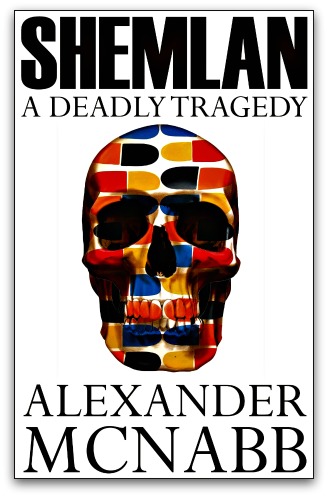
Shemlan Ebook_coverShemlan: A Deadly Tragedy (November 2013)
Author: Alexander McNabb
Genre: International thriller
Synopsis: The third in McNabb’s Levant Cycle, Shemlan tells the story of a retired British foreign service officer who, dying from cancer, returns to Beirut in hopes of meeting the Lebanese love of his youth one last time. But then his past catches up with him, threatening to do him in before the disease does—until British spy Gerald Lynch gallops to the rescue…
Expat credentials: Born in London, McNabb has lived in the Middle East for more than a quarter century. He often receives praise for getting the historical and cultural details right in his books.
How we heard about: We encountered McNabb a year ago when we were doing a series of food posts! We love his books and are giving away Shemlan this month, as well as doing an offer for Displaced Dispatch subscribers on all three books in the cycle. Check it out!
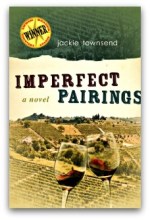
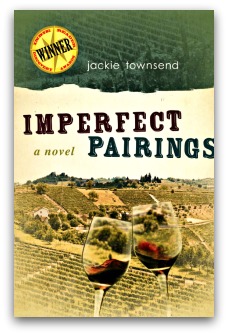
ImperfectPairings_cover_pmImperfect Pairings (May 2013)
Author: Jackie Townsend
Genre: Women’s fiction
Synopsis: American career woman Jamie had not intended to fall in love—and to a foreigner no less, a man who tells her his name is Jack, short for John, but it’s really short for Giovanni. Insanely handsome and intense but unreadable, Giovanni has left a complicated family life back home in Italy. Is this more than Jamie signed up for?
Displaced credentials: In real life, Townsend is married to an Italian and has spent 16 years backing and forthing to her husband’s family in Italy.
How we heard about: ML Awanohara, who rightly or wrongly considers herself something of an expert on cross-cultural marriage, read the book on her Kindle and was so impressed with its depiction of cross-cultural relationship woes that she asked Townsend to be our featured author of November. Read the interview.

SuiteDubai-cover_dropshadowSuite Dubai (April 2013)
Author: Callista Fox
Genre: “New adult” lit
Synopsis: As Callista tells it, the book grew out of a story that entered her head that wouldn’t go away: “There was this girl, young, vulnerable, naive, walking along a concourse in an airport, among men in white robes and checkered scarves and woman in black gauzy material. Where was she going? What would happen to her there?”
Expat credentials: Fox moved to Saudi Arabia when she was eight and lived there off and on until turning 19. She went to boarding schools in Cyprus and Austria. Now back in the United States, she thinks of herself as an adult Third Culture Kid, or TCK.
How we heard about: Noticing our fondness for serial fiction (see Kate Allison’s book below), Fox sent us a note saying she’d written a serial novel reflecting her experience of growing up in the Middle East. We responded by asking if we could publish her series in even smaller parts. Part 1 and Part 2 have already gone up, and there are six more parts to come in 2014. Warning: Highly addictive!

Libby'sLifeTakingFlight_coverLibby’s Life: Taking Flight (April 2013)
Author: Kate Allison
Genre: Women’s fiction
Synopsis: 30-something Libby Patrick is just regaining some post-baby control over her life when a change in husband’s job means they must move from their English home to Woodhaven, a town in rural Massachusetts. The book is Libby’s journal covering the first year of her life as trailing spouse.
Expat credentials: Born and raised in Britain, Kate has lived in the United States with her family for almost two decades.
How we heard about: We were the first to know! Kate is a founding member of the Displaced Nation and has been publishing regular episodes of Libby’s Life (on which the book is based) since the blog began. She has accrued countless fans, the most faithful of whom is Janice. (Libby to Janice: xoxo for your support in 2013!)

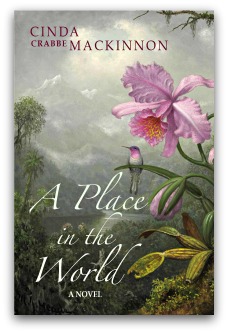
APlaceintheWorld_coverA Place in the World (March 2013)
Author: Cinda Crabbe MacKinnon
Genre: Romance
Synopsis: Third Culture Kid Alicia meets a young Colombian man at college in the United States. She follows him to Bogotá and the pair end up marrying and settling on his family’s remote coffee finca (farm) in the Andes. Educated as a biologist, Alicia revels in the surrounding cloud-forest. But then her idyllic life starts to unravel…
Expat credentials: Crabbe MacKinnon grew up in several countries as a military brat and diplomatic kid and, though she has since repatriated to the United States, still thinks of Latin America as home.
How we heard about: Crabbe MacKinnon commented on one of Elizabeth Liang’s “TCK Talent” posts and ended up becoming October’s featured author. Read the interview. We love her and her work, and are sure you will, too!

CoffeeandVodka_coverCoffee and Vodka (March 2013)
Author: Helena Halme
Genre: Women’s fiction
Synopsis: A Finnish family emigrate to Sweden in the 1970s and find themselves in turmoil, caused partly by the displacement, but also by the cracks in family dynamics. At its heart, the book reveals what it is like for a young girl to be uprooted and transplanted to a country where she doesn’t speak the language and is despised for her nationality.
Expat credentials: Halme grew up in Tampere, central Finland, and moved to Britain at the age of 22 via Stockholm and Helsinki, after marrying “The Englishman” (how she always refers to him on her blog, Helena’s London Life). She spent her first ten years in Britain working as journalist and translator for the BBC. She and The Englishman now live in North London.
How we heard about: Halme is a big favorite of ours! She was one of our earliest Random Nomads as well as serving as an expat style icon back in the days when we covered fashion. More recently, Kate Allison reviewed Halme’s first book: The Englishman: Can Love Go the Distance?, and we did a giveaway of Coffee and Vodka. And that’s not all: Halme’s latest book, The Red King of Helsinki, received an “Alice” Award in July. (As noted then, the Alices could hardly ignore a book of that title!)

MonkeyLoveAndMurder_dropshadowMonkey Love and Murder (February 2013)
Author: Edith McClinton
Genre: Adventure mystery
Synopsis: A jungle environment in Suriname (spider monkeys and all) is the setting for a closed-door mystery surrounding the death of the renowned director of the International Wildlife Conservation followed by the machete murder of one of the researchers. None of this bodes well for poor Emma Parks, who has joined the research project on a whim. (So much for that budding primatologist career!)
Expat credentials: MacClintock volunteered for the Peace Corps in Suriname for two years, and joined a monkey research project afterwards.
How we heard about: One of our Random Nomads, Patricia Winton, referred us to the now-defunct blog Novel Adventurers, where Edith was one of the writers. We invited her to guest blog for us about the muses behind her monkey mystery.

ArchangelofMercy_dropshadowArchangel of Mercy (Berkley – Penguin Group, December 2012)
Author: Christina Ashcroft
Genre: Paranormal romance
Synopsis: The first storyline in Ashcroft’s new series focusing on a group of angels and archangels and the lives of the people they come in contact with every day.
Expat credentials: Ashcroft is an expat Brit who now lives in Western Australia with her high school sweetheart and their three children.
How we heard about it: We encountered Christina online and asked her to be one of our Random Nomads for a Valentine’s Day special. In that interview, she said she attributes her success as a writer at least in part to her expat status: “I’ve often wondered whether my career would have followed the same route if we’d stayed in the UK. While I’ve always loved writing it wasn’t until we moved to Australia that I decided to to write with the aim of publication.”

SpiritofLostAngels_dropshadowSpirit of Lost Angels (May 2012)
Author: Liza Perrat
Genre: Historical novel
Synopsis: Set against a backdrop of rural France during the French Revolution, the story centers on Victoire Charpentier, a young peasant woman whose mother was executed for witchcraft and who herself suffers abuse at the hands of a nobleman. Can she muster the bravery and skill to join the revolutionary force gripping France, and overthrow the corrupt aristocracy?
Expat credentials: Liza grew up in Wollongong, Australia, where she worked as a general nurse and midwife for fifteen years. When she met her French husband on a Bangkok bus, she moved to France, where she has been living with her husband and three children for twenty years.
How we heard about: The redoubtable JJ Marsh (see below) interviewed Perrat on writing a location to life, for her monthly column, “Location, Locution.”

BehindClosedDoors_dropshadowBehind Closed Doors (June 2012)
Author: JJ Marsh
Genre: Crime mixed with literary fiction
Synopsis: A smart, technologically sophisticated mystery set in Zürich and surrounding countries, featuring a bipolar detective named Beatrice Stubbs, and quite a few surprises… NOTE: JJ Marsh was listed in the Guardian “readers’ recommended self-published authors” this year, for Behind Closed Doors.
Expat credentials: JJ Marsh grew up in Wales, Africa and the Middle East, where her curiosity for culture took root and triggered an urge to write. After living in Hong Kong, Nigeria, Dubai, Portugal and France, she has finally settled in Switzerland.
How we heard about: We owe displaced author Helena Halme (see above) a king’s ransom for telling us about JJ, who since April has been contributing a monthly “Location, Locution” column. Don’t miss her posts under any circumstances! Highly stimulating and cerebral.
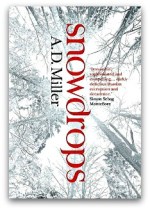
snowdrops_dropshadowSnowdrops (Anchor/Random House, February 2011)
Author: AD Miller
Genre: Literary fiction
Synopsis: Lawyer Nick Platt trades his dull British life for pushing paper in Moscow at the turn of the 21st century. He is soon seduced by a culture he fancies himself above. Snowdrops was shortlisted for the Man Booker Prize in 2011.
Expat credentials: British born and educated at Cambridge and Princeton, Andrew Miller joined The Economist and was appointed, in 2004, to become their Moscow correspondent. He covered, among other things, the Orange Revolution in the Ukraine.
How we heard about: JJ Marsh interviewed AD this past July about bringing foreign locations to life in fiction.

odessa_brit_cover_smallMoonlight in Odessa (Bloomsbury, August 2010)
Author: Janet Skeslien Charles
Genre: Women’s fiction
Synopsis: With an engineering degree and perfect English, Daria longs for a life beyond Odessa, Ukraine. And then she moonlights for a dating agency that facilitates hasty, long-distance matches between lustful American men and impoverished Ukrainian women. Her big chance?
Expat credentials: Skeslien Charles went to Odessa, Ukraine, as a Soros Fellow, living through blackouts, heatless winters, corruption and so on. She stayed for two years before returning to the U.S. Then she found a job in France and met her husband. She now lives in Paris but leads a multicultural life. As she puts it: “The novel is set in Odessa, Ukraine. My agent is English. My editor’s assistant is Japanese-Danish, my copy editor is from New Zealand. I’m American. The book was written in France and typeset in Scotland. My first fan letter came from a Swede.”
How we heard about: JJ Marsh picked Skeslien Charles’s brain on “location, locution”, in her November column.

Memoirs

AddictedtoLove_cover_dropshadowAddicted to Love (April 2013)
Author: Lana Penrose
Synopsis: Penrose is the kind of Australian who throws herself wholeheartedly into adventure, which is why her years spend living in Europe have merited not one but three memoirs! This one is the third. In the first memoir (published by Penguin/Viking), To Hellas and Back, she marries the love of her life, an Australian Greek, and accompanies him back to Greece, only to find him becoming increasingly Greek and herself increasingly isolated. In the second, Kickstart My Heart, she moves to London, single and desperate to find love again. And in this third memoir, she returns to Greece, where she encounters a seemingly perfect man named Adonis. (Hey, she never gives up!)
Expat credentials: From Sydney originally (she is back there now), Penrose lived in Athens for five years before moving to London.
How we heard about it: We happened across Penrose online and asked her to guest-post for us a year ago on what it was like to spend Christmas in Greece. At that time, we also did a giveaway of her first memoir. We invited her back this past April to write about Addicted to Love.

MagicCarpetSeduction_cover_pmMagic Carpet Seduction: Travel Tales Off the Beaten Path (May 2013)
Author: Lisa Egle
Synopsis: Travel with the author to China, Latin America, Turkey and the Middle East, and watch while she takes risks off the beaten path, and dances with strangers in strange lands…
Expat credentials: Egle characterizes herself as a lover of offbeat travel. She’s been to 36 countries on five continents and has been an expat twice: in Ecuador for a year and half, and in Spain for a year.
How we heard about: We got to know Egle first through her blog, Chicky Bus, and when we heard she’d put out a book, asked her to be one of our featured authors. Read the interview.

Pilgrimage-Cover_pmRunning the Shikoku Pilgrimage: 900 Miles to Enlightenment (Volcano Press, January 2013)
Author: Amy Chavez
Synopsis: After losing her job at a Japanese university, Chavez undertakes a solo journey running Japan’s 900-mile Buddhist pilgrimage, a distance equal to running from San Diego, California to Oregon. A Buddhist priest who is also a friend gives her “cosmic tools” to take with her.
Expat credentials: American expat Amy Chavez has been a columnist for Japan’s oldest English-language newspaper, The Japan Times, since 1997. She lives with her husband and cat on Shiraishi Island in Japan’s Seto Inland Sea.
How we heard about: We interviewed Chavez about her pilgrimage, and what it took to write the book, in April.

Don'tNeedtheWholeDog_dropshadowDon’t Need the Whole Dog! (December 2012)
Author: Tony James Slater
Synopsis: In the summer of 2004, Slater went to Ecuador, thinking that the experience would turn him into a man. He went back to his native England fueled by a burning desire to do something that mattered—and, ideally, to get the heck out of England in the process. He dreamed of going to Thailand and becoming a professional diver. This is the story of what happened next.
Expat credentials: A Brit, Slater now lives in Perth, Australia, with his Australian wife.
How we heard about: Slater made himself known to us for failing to include his first book, The Bear That Ate My Pants: Adventures of a Real Idiot Abroad, about his time volunteering at an animal shelter in Ecuador, in our 2011 holiday round-up. He probably should have left well enough alone, though, as next thing he knew, we had him writing for the Displaced Nation. His post on the world’s best parties remains one of our most popular!

TruckinginEnglish-dropshadowTrucking in English (December 2012)
Author: Carolyn Steele
Synopsis: This is the tale of what happens when a middle-aged mum from England decides to actually drive 18-wheelers across North America instead of just dreaming about it. Nothing goes well, but that’s why there’s a book.
Expat credentials: Born and bred in London, Carolyn and her son are now Canadian citizens and live permanently in Kitchener, Ontario.
How we heard about: One of our featured authors in 2012, Martin Crosbie, sent Steele our way, and Kate Allison reviewed her book in March. Steele later contributed an amusing post to our “New vs Olde World” series, about the difficulties of mastering the Canadian “R”.
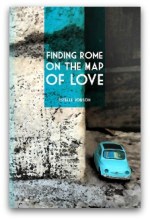
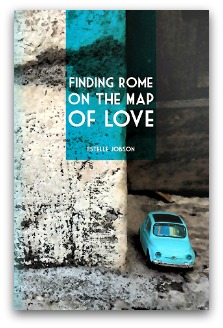
Finding-Rome-on-the-Map-of-Love_dropshadowFinding Rome on the Map of Love (September 2012)
Author: Estelle Jobson
Synopsis: When her Italian diplomat boyfriend gets posted to Rome, Jobson throws up her career in publishing in her native South Africa to accompany him. There, she reinvents herself as Signora Stella, a casalinga (housewife). The book captures a year’s worth of quirky observations about life amongst the Italians.
Expat credentials: Originally from South Africa, Jobson now lives in Geneva, where she works as a writer and editor.
How we heard about: Jobson was our featured author in February. Her book and sense of humor are terrific!
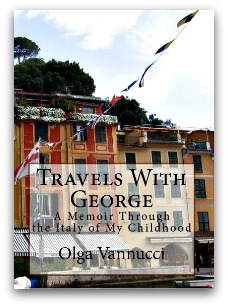
Travels with George Book CoverTravels with George: A Memoir Through the Italy of My Childhood (April 2012)
Author: Olga Vannucci
Synopsis: In five separate trips to Italy with her young son, George, in tow, Vannucci strolls and hikes through the landscapes of her Italian childhood. She looks at Italy both as local native and awed visitor.
Expat credentials: Born in Italy, Vannucci lived in Brazil and came to the United States to attend Brown University. She lives in rural New Jersey with her son.
How we heard about: Vannucci was our featured author in September. Read the interview. We loved this quote from her son: “Where are we going? How much longer? I have something in my shoe. I want to go back. Why are we doing this? Do you know where we are? Do you know where we’re going? Mammaaaaaaa!”
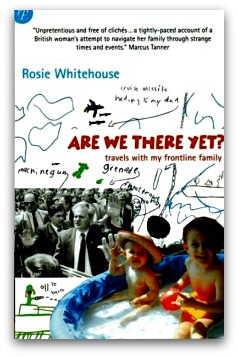
AreWeThereYet_cover_dropshadowAre We There Yet? Travels with My Frontline Family (May 2009)
Author: Rosie Whitehouse
Synopsis: A vivid, funny, and very human account of the author’s travels with her family through war-torn Europe.
Expat credentials: Whitehouse spent five years as a housewife in the war-torn Balkans married to a correspondent of The Economist, caring for their growing family.
How we heard about: We happened across Whitehouse’s work online and asked her to be a featured author last summer. Read the interview. She’s absolutely fascinating, as one might expect of the kind of woman who trails her spouse into a war zone.

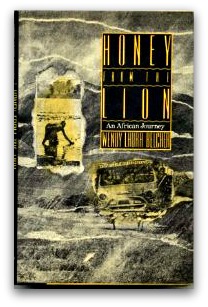
HoneyfromtheLion_coverHoney from the Lion: An African Journey (Dutton Adult, 1988)
Author: Wendy Laura Belcher
Synopsis: Brought up in Africa, Belcher returned to Ghana in the early 1980s to work with a “national linguistic group” that is spreading literary into rural areas by translating the Bible into native languages. A coming-of-age story that was called “lyrical” by the New York Times when first issued.
Expat credentials: An adult Third Culture Kid, Belcher grew up in East and West Africa, where she became fascinated with the richness of Ghanaian and Ethiopian intellectual traditions. She is now an assistant professor of African literature at Princeton.
How we heard about: Elizabeth Liang interviewed Belcher for her TCK Talent series.

Handbooks & Guidebooks

cathy_feign_coverKeep Your Life, Family and Career Intact While Living Abroad, 3rd Ed. (Stvdio Media, September 2013)
Author: Cathy Tsang-Feign
Synopsis: A survival manual for those who are living abroad, with real-life examples and easy-to-understand explanations about the unique issues faced by expats: from preparing to move, to daily life overseas, to returning home.
Expat credentials: Tsang-Feign is an American psychologist who lives in Hong Kong, specializing in expat psychology and adjustment issues. She has also lived in London.
How we heard about: When Kate Allison learned about the book, she decided it merited one of our “Alice” awards for the understanding displayed of the “through the looking glass” complex.
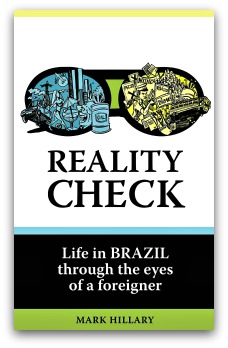
realitycheck_bookcoverReality Check: Life in Brazil through the eyes of a foreigner (September 2013)
Author: Mark Hillary
Synopsis: Targeted at those who plan on living, working or just visiting Brazil, it covers issues such as the difficulties of finding new friends, using a new language, and finding a job. Also provided is some background on the fast-changing society in Brazil that resulted in extensive street protests during 2013.
Expat credentials: Hillary is a British writer who moved to Brazil in 2010, bought a home, started a company, and has experienced both difficulties and joys.
How we heard about it: Andy Martin, another Brit in Brazil and a writer for the Displaced Nation in 2013, is a friend of Hillary’s and was jealous he’d produced a book that is not only a practical guide but also provides much of the cultural backdrop an international resident needs for a country as complex as Brazil. The next best thing, Martin thought, would be to do an interview with Hillary, which he delivered in two parts. Read Part 1 and Part 2.

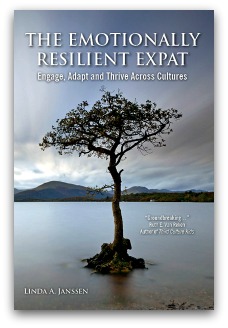
TERE_cover_dropshadowThe Emotionally Resilient Expat: Engage, Adapt and Thrive Across Cultures (Summertime, July 2013)
Author: Linda A. Janssen
Synopsis: A guide for those facing the challenge of cross-cultural living, with candid personal stories from experienced expats and cross-culturals, and a wealth of practical tools, techniques and best practices for developing the emotional resilience for ensuring a successful transition.
Expat credentials: Janssen lived for several years in the Netherlands while her husband, an adult TCK, worked in the Hague. She recently repatriated to the United States.
How we heard about: We’ve had many satisfying interactions with Janssen since starting the Displaced Nation and were thrilled to hear about her new book—a natural for one of this year’s “Alice” awards, particularly as Janssen has been running a popular blog called Adventures in Expatland.

AmericanExbratinSaoPaulo_cover_pmAn American Exbrat in São Paulo: Advice, Stories, Tips and Tricks for Surviving South America’s Largest City (May 2013)
Author: Maggie Foxhole (Megan Farrell)
Synopsis: Aimed at those who are moving or traveling to São Paulo, it is designed to be a companion on the journey through the ups and down, ins and outs, and the curious roundabouts of life in that city.
Expat credentials: Megan/Maggie moved to Brazil with her Brazilian husband and their daughter. She keeps a blog: Born Again Brazilian.
How we heard about: Farrell/Foxhole was one of our early Random Nomads. She kept in touch and we were very pleased to learn about her book, which ML Awanohara read and admired for its comprehensiveness. Andy Martin, a Brit who also lives in São Paulo with a Brazilian spouse, reviewed the book for our site this past July.

101reasons_dropshadow101 Reasons to Live Abroad and 100 Reasons Not to (March 2013)
Author: Chris Alden
Synopsis: Targeted at the wannabe expat, the aim is to help you discover if living abroad is right for you. It’s an uplifting guide to the positive sides of life as an expatriate and a reality check about the challenges that relocation brings.
Expat credentials: A professional writer, Alden lived for three years in a beautiful village in the Troodos foothills of Cyprus, which resulted in his first travel guidebook: 250 Things to Do in Cyprus on a Sunny Day.
How we heard about: Alden was the recipient of one our “Alice” awards for this book. We were impressed that he offered a final, 101st reason to live abroad for those of us who, having been offered as many as a hundred reasons both for and against, still find ourselves dithering…
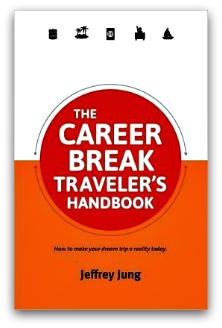
career-break-travelers-handbook_dropshadowThe Career Break Traveler’s Handbook (September 2012)
Author: Jeffrey Jung
Synopsis: Intended to inspire people to go for it and take the break they’ve been seeking from their jobs and go travel, with tips and tricks Jung learned from his own and other career breakers’ experiences.
Expat credentials: Having left the corporate ladder, Jung now lives in Colombia, where he founded his own business to help others do the same: CareerBreakSecrets.com.
How we heard about: Jung was one of our Random Nomads. He let us know about his book, and we reviewed it this past February. Not that he needed our help—it also got a shout-out in Forbes!
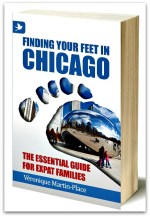
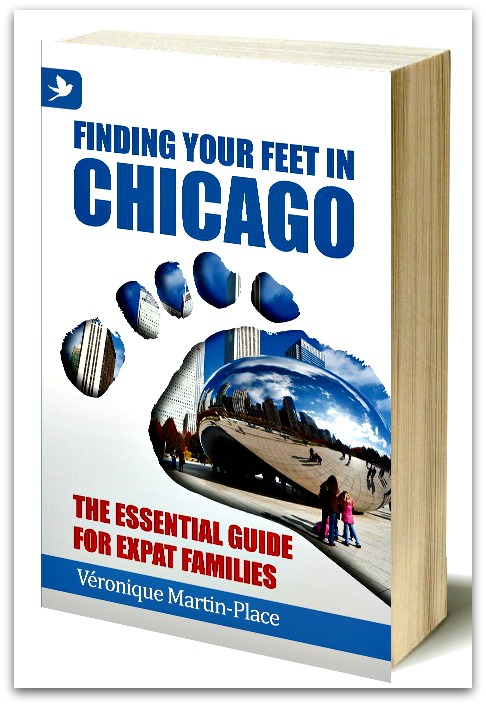
finding-your-feet-in-chicago-3D-Book CoverFinding Your Feet in Chicago: The Essential Guide for Expat Families (Summertime Publishing, August 2012)
Author: Véronique Martin-Place
Synopsis: A down-to-earth pocket guide to help expats settle into the USA’s third largest city with their families.
Expat credentials: As the wife of a French diplomat (they have two daughters), Martin-Place is accustomed to moving around the world. Chicago was one of her more enjoyable stops, but she also enjoyed Sri Lanka(!). The family is now in Shanghai.
How we heard about: ML Awanohara had interviewed Martin-Place on her blog, Seeing the Elephant. She had fun interviewing her again, this time about the process of composing a guidebook.

Cookbook

FromtheGlobalScottishKitchen_cover_tdnFrom the Global Scottish Kitchen (Self-published, November 2012)
Author: Sharon Lorimer
Genre: Cooking
Synopsis: Recipes based on Scottish cuisine but influenced by the restaurants and other kinds of cuisines Lorimer has experienced as an expat: e.g., Cock a’ Leekie Udon!
Expat credentials: Born in Scotland, Lorimer now lives in New York City and is married to an Asian American.
How we heard about it: We interviewed Lorimer about her decision to start up Doshebu, a business providing training to company employees being sent abroad on the “art” of being an expat.

* * *

Questions: Have you read any of the above works and if so, what did you think of them? And can you suggest other works to add to the list? My colleagues and I look forward to reading your comments below!

STAY TUNED for some upcoming posts, though we’ll be taking a bit of a break over the holidays!

If you enjoyed this post, we invite you to subscribe to The Displaced Dispatch, a weekly round up of posts from The Displaced Nation, plus some extras such as seasonal recipes and occasional book giveaways. Sign up for The Displaced Dispatch by clicking here!

Related posts:

An expat novel in episodes: SUITE DUBAI #1 – Arriving (2/8)

Suite Dubai Collage Drop Shadow

Image: Top: Book cover & author image (supplied by Callista Fox); bottom: By vahiju (Morguefiles).

It’s midDecember—perfect timing for the second installment of Suite Dubai, a serial novel by adult Third Culture Kid Callista Fox. As Callista tells it, the book grew out of a story that entered her head that wouldn’t go away: “There was this girl, young, vulnerable, naive, walking along a concourse in an airport, among men in white robes and checkered scarves and woman in black gauzy material. Where was she going? What would happen to her there?” Missed the opening installment? Get caught up now!!! NOTE: Highly addictive! Six more parts to come in 2014.

ML Awanohara

Her parents hadn’t wanted her to take this job. “Where?” her dad had asked, like he’d misheard her. “Dubai?”

Her mom had put her hand to her mouth. “All the way over there? In the middle of all those bombings? Can’t you wait a few more months, you know … see if something comes up here?”

A few more months? She’d already waited a few months. Twelve, to be exact. She’d already filled out more applications than she could count, for jobs she didn’t want until they’d rejected her. She had a degree in journalism and couldn’t get a job working the desk at the Motel 6. “Have you ever worked in hospitality?” a woman named Melinda had asked her over the phone, missing the irony of her own inhospitable tone.

In hospitality? What did that even mean? She’d spent her whole life being unnecessarily nice to people, on the phone, at the store, even in heavy traffic. She was certain she could hand someone a room key without causing a scene.

This job, the one waiting for her on the other side of the crowd, had been advertised on a website with an international employment section that she read mostly to pass the time, something she’d had plenty of since graduation. The public-relations position caught her eye, but she didn’t apply. She didn’t even know where Dubai was.

Then, rather than ask her mom for gas money—again—she threw some old clothes into the back of her Honda and headed for a consignment store. At a busy intersection she saw a guy dressed as a mattress, dancing on the side of the road, flashing a 15 PERCENT off sign at oncoming traffic. While she waited at the light, a gust of wind came and caught the inflatable costume like a sail and blew him back a few feet. He stumbled, almost fell, and then regained his footing, but his sign was blowing along the strip of grass and he had to turn and chase after it, the wind blowing against the back side of his costume now. His legs, outfitted in gray tights, stumbled along as he tried to slow himself down lest he become airborne and delivered to the brick wall of the nearby Chick-fil-A. She was scared for him, and she was even more scared she might recognize him from one of her writing classes.

That day she drove home and rewrote her résumé.

She added that she had done some public-relations work for a local nonprofit (omitting that it was her mother’s nonprofit). She had promoted an art auction that raised over $120,000 for at-risk teens (omitting that she’d really paraded paintings, like a woman on a game show, around a banquet hall, encouraging people to bid). She had been more of an art Sherpa than an event planner. Yes, she embellished. That’s what writers do. She wrote a kick-ass cover letter about the lost art of storytelling in the business world and clicked send.

“Where. The hell. Did you find this job?” her friend Emily asked, scribbling down the name of the website with a pen she’d chewed until it cracked. It was her tenth day without a cigarette. “I’d do it. I’d go in a heartbeat. I’m so tired of serving penny beer to drunk college guys.”

When they’d started their journalism degrees, they had both expected a job with the local newspaper that would lead to a column with the New York Times or a wire assignment that required a khaki blazer and a handsome translator. Now all they heard was, “Journalism is dead. You need to start a blog.” She and Emily scraped up money for domain names but neither of them got very far. Her life had become so dull and disappointing she was too embarrassed to write about it.

Emily was having the same problem. “I could describe the texture of the vomit delivered to my left sandal by a guy in a Georgia Tech jersey, or how I’ve started stealing my parents’ dog’s antidepressants.”

“Don’t worry,” Rachel said as she moved her chair into the shifting shade of the umbrella in Emily’s backyard. “I won’t get it. I’m not really qualified. Five years’ experience? Everyone wants five years’ experience. What I really need is a time machine.”

“But what if you do get it?” Emily said squinting at her. “I mean, a real job. One your parents wouldn’t be embarrassed to tell their friends about. I see my mom’s lip quiver before she tells people I’m a waitress at Kelly’s. She’s embarrassed. I don’t blame her. All those ballet lessons, cello lessons, Saturday Spanish classes, SAT prep courses, so I could get ahead. That’s what they said. So I could get ahead. Ahead of what?” She leaned back in her chair. “I wear a green apron with a pin that says ASK ABOUT OUR BUCKET SPECIALS. I count out change and signal to the bouncer when he needs to intervene. But see, I use the word “intervene” instead of “throw his ass out.” So it was all worth it, right? Because…vocabulary.”

“At least you’re good at something. I was a horrible waitress. Always forgetting who got the water, who got the wine. Twice I left a family sitting there, at a table, for almost an hour before even taking their order. The tips they gave me were out of pity. I saw it in their eyes.”

“You’re good at something. You just don’t know what it is yet,” Emily said, unwrapping a piece of gum and folding it into her mouth. “I should go back to school, take some architecture classes. That sounds so much better, right? ‘My daughter’s studying to be an architect.’ Especially if you go off to Dubai and leave me here alone.” Her eyes got shiny with tears. She looked away. “Or you could take me with you.”

“Well, there’s no way I’ll get this job.”

None of it was awful. They weren’t starving. They weren’t homeless. But enough days repeat themselves and you can’t imagine any day in the future being different than the one before it. This is how people fail, Rachel thought. A little bit at a time.

Two weeks went by without a reply. Then one night she remembered the business card in her nightstand. The one she’d had for over a year. The one she’d almost tossed in the garbage. When she had put it in the drawer she’d wondered why she was keeping it, but she knew she’d never get another business card with the word “sheikh” on it. She dumped the drawer on her bed and dug through the gum wrappers, hair ties, and scraps of bad poetry she’d written late at night when she couldn’t sleep. There it was, a simple white card embossed with the name Sheikh Ahmed Al Baz. He lived in a city called Riyadh, not Dubai. Wherever it was, it was closer to Dubai than Atlanta. So she wrote him an e-mail, asking if he remembered her, asking if he’d heard of the Al Zari Hotel.

* * *

So, readers, how are you enjoying the story so far? Let us know in the comments… And if you can’t wait until next month, you can always download the complete episode of “Arriving” (this is just the beginning) —as well as the next episode, provocatively entitled “Party on Palm Island”—from Amazon.

Callista Fox moved to Saudi Arabia when she was eight and lived there off and on until turning 19. she went to boarding schools in Cyprus and Austria. She has written two travel books and a travel column in the Sunday Oklahoman. Currently, she writes proposals for a consulting firm that provides technology and management solutions to governments and nonprofits around the world.

STAY TUNED for tomorrow’s post, an interview with this month’s featured author, Alexander McNabb, back by popular request. We’ll be talking about, and giving away, the final book in his Middle East trilogy: Shemlan!!!

If you enjoyed this post, we invite you to register for The Displaced Dispatch, a round up of weekly posts from The Displaced Nation, with seasonal recipes, book giveaways and other extras. Register for The Displaced Dispatch by clicking here!

Related posts:

TCK TALENT: Amber Godfrey, Diplomatic Kid Turned Performer-Writer

Amber Godfrey Collage

Photo credits: left: RoganJosh (MorgueFiles); right: Amber Godfrey, from her portfolio.

Welcome to Elizabeth (Lisa) Liang’s monthly column about adult Third Culture Kids (TCKs) who work in creative fields. Lisa is herself a prime example. A Guatemalan-American of Chinese-Spanish-Irish-French-German-English descent, she recently debuted her one-woman show about being a TCK, which I had the pleasure of seeing during its too-short run in New York City in September: stupendous!

—ML Awanohara

Happy Thanksgiving, readers! I’m thankful to be bringing you today’s guest, a kindred spirit of mine. She is Amber Godfrey, an actress-writer who, like me, has written and performed her own solo show about growing up as a TCK of mixed heritage.

* * *

Welcome to The Displaced Nation, Amber! I’m happy to have met another solo performer whose TCK story parallels my own. Since your dad is a Canadian diplomat, you grew up in eight countries. Can you tell us which ones?
Besides Canada, I’ve lived in the USA, Ecuador, Trinidad, India, Hong Kong, Sri Lanka and England.

Growing up, which of these countries do you identify most strongly with?
I identified, and continue to identify, strongly as a Canadian probably because of my dad’s job and the fact that we always connected with the Canadian expat community wherever we went. I also heard on more than one occasion (usually when I was being busted for some rebellious act): “You represent Canada!!” I’ve spent most of my adult life in Canada and the US, so I feel very “North American” at this point. At the same time, though, I do feel like a “citizen of the world,” and the bond that I feel with other TCKs is unique.

“Are you adopted?”

Your family is particularly diverse. Let’s see if I can get this right. You are the daughter of an Ecuadorian mom and an African American father, but you were raised by your mom and a Caucasian-Jewish Canadian stepdad, who then had your brother, David. Was your family’s status ever challenged by strangers, like mine was? In grade school, no one believed my brother was my brother, and people asked my mom if I was adopted.
Yes! This still happens all the time. When the four of us go out for dinner, servers will assume my brother and I are a couple. If I check into a hotel with my Dad, we get stares. When I was in fifth grade, I had to go to the school nurse and, when she realized who my brother was, she asked pointedly: “Are you adopted?” I panicked and said “Yes,” even though that wasn’t the whole truth. Looking back—what an inappropriate question to ask a 10-year-old!

Do you feel offended when that happens?
Honestly, it sort of tickles me that people don’t know what to make of us. I figure, that’s their problem and it doesn’t have to ruin my day. As an actor, I get irritated by the under-portrayal of mixed-race families on stage and in film. When I was auditioning a lot, I became really frustrated realizing I would most likely not be considered for “sister of” so-and-so because the other actor had already been cast as white.

Love the place you’re in

I completely relate! So, with such a mixed background, which culture(s) form the core of your identity?
I grew up with a lot of focus on Jewish history, tradition and heritage, which I resisted up to a point—I chose not to be Bat Mizvah’d—but to which I also really connected. As a pre-teen I was obsessed with The Diary of Anne Frank and wrote short stories about young Jewish girls in the Nazi era. In my early 20s, the combination of acting roles I was being sent out for and my burgeoning adulthood piqued a stronger curiosity in the African-American side of me, which ultimately led to me reaching out to find my birth father. Now, in my 30s, I find myself seeking to connect with my Latin American roots. Of course I also identify with the cultures of the countries I grew up in! I think the quest to understand my “identity” is ongoing…

Were you happiest in a certain place at a certain time?
I guess the short answer is: I aim to be happiest in the moment I am in. Every place I went to had its good and bad moments…

What were your school experiences like growing up?
I went to private school in California, international schools in India, HK and Sri Lanka, and the local public school in Canada. During high school I had to contend with three completely different school systems, which was a challenge to say the least.

How about college?
I went back to Canada for college: I studied theatre at Acadia University, in Nova Scotia. It was hard to get good information back then (the Internet was just a baby!), but my Dad pointed out that as a small school in a small town, it might be an easier transition than if I went to a big school in a bigger city like Toronto. And Acadia has a good theatre program.

“It’s all in me…”

Did your TCK upbringing influence your desire to become a performer?  
Being in school plays or performance groups was a good way to get involved and make friends when moving from place to place. But I also think that portraying characters on stage allowed different parts of myself to come forth and was a way for me to work out my identity. I’m laughing because I’m thinking of Whitney Houston’s “I’m Every Woman”—I’m a hippy at heart and believe we are all one and connected. Seeking to experience and understand life/truth from multiple viewpoints is an essential part of who I am.

Before we get into your solo show, let’s talk about your series of performances of Anna Deavere Smith‘s solo show Fires in the Mirror, a docudrama for a solo performer about the racial tensions that erupted between blacks and Jews in Brooklyn in 1991.
I was asked to do Fires in the Mirror by Jesse Freedman, a fellow performer and prolific director, whom I met in a SITI Company Suzuki/Viewpoints workshop. I jumped at the chance to engage with this epic piece because it is constructed so thoughtfully and allows me to play with my Black/Jewish roots. I initially performed Fires in the Mirror at the Limmud Conference, which took place in Coventry, England. Then the Jewish Theatre Workshop in Baltimore requested the show as part of an initiative to continue dialogue between Blacks and Jews who share space in that community. I also had a short run in NYC at the New Yiddish Repertory Company Theatre.

Moving over to your autobiographical solo show: why did you create DipKid?
I’d been thinking for many years about telling my story but couldn’t decide which way to tell it. After taking a Soulo-Show Workshop with Tracey Erin Smith, I finally started writing. I submitted a proposal to a small festival in NY, and when I got in, I realized it was time to start making the show! My efforts resulted in a short but sweet twenty-minute piece (you can watch it here).

How was it received?
The reaction was fascinating. I had assumed my story was unique, but it seemed that people could relate to it, and wanted more! That’s where the struggle began for me. I didn’t know how to finish the piece because I felt I wanted it to link up with my current situation—but that kept changing! The next time I performed the show, I expanded it to 45 minutes but felt less satisfied. I’d watched the video of my first performance so many times I felt sort of stuck in the past. I also found myself listening to many differing opinions on where my show should go and how it should be crafted—my vision got a little lost in the din. Finally, the festival format was crazy-making—especially as I was holding down a full-time job. Trying to write and rehearse this piece all for just one evening was too much pressure. My dream would be to take the show to the countries I lived in and beyond. I’d love to perform it at international schools and for expat communities worldwide.

As the interviewer, I think I can permit one question that’s of particular interest to me, which is: how do you like solo performing?
Solo performance is relatively new for me and I do miss getting to work with other actors on stage. That said, the medium allows me to be a bit more in control of the work and my approach. And it’s wonderfully vulnerable!

I understand you’re planning to film a documentary. What will it be about?
The focus will be on other children of diplomats (i.e., “dip kids”) and how their lives have been shaped by their upbringing and the jobs of their parent(s). I plan to tell the story from my perspective and also weave in my experiences as a mixed-race individual who continues to search for an understanding of and connection to my identity, heritage and all the parts that I am made of.

Do you have any other projects coming up?
I am writing a memoir that will delve deeper into the stories I reveal in DipKid.

Best and worst (Canadian) Thanksgiving memories

Canadian Thanksgiving was in October, but since American Thanksgiving is today, please share with us your best and worst Thanksgivings.
The best occurred when we were living in New Delhi. We were invited to the Official Residence of the High Commissioner for a Canadian Thanksgiving celebration. It was a big party with live music and food sprawled out on the grounds. At dusk everyone looked up and gasped as hundreds of bats swarmed the sky. It was the coolest thing I had ever seen!

I think the worst was my first Thanksgiving away from home. My parents were in Sri Lanka and I was in Wolfville, Nova Scotia (where Acadia U is). Everyone I knew at school had family nearby, but it was only October and I hadn’t bonded with anyone enough to get an invite. I ate Pop-Tarts and drank Dr. Pepper and felt homesick for my family and a bit sorry for myself…

* * *

Thank you, Amber, for being you, a fellow TCK theatre-maker! Readers, please leave questions and comments for Amber below. And if you want to keep up with her creative undertakings, I suggest you also follow her on Twitter: @DipKidAmber.

STAY TUNED for next week’s/month’s fab posts!

If you enjoyed this post, we invite you to register for The Displaced Dispatch, a round up of weekly posts from The Displaced Nation, with seasonal recipes, book giveaways and other extras. Register for The Displaced Dispatch by clicking here!

Related posts:

An expat novel in episodes: SUITE DUBAI #1 – Arriving (1/8)

Suite Dubai Collage Drop Shadow

Image: Top: Book cover & author image (supplied by Callista Fox); bottom: By vahiju (Morguefiles).

Today we begin a serial novel by Callista Fox, called Suite Dubai. Recalling her childhood as a Third Culture Kid in the Middle East, Callista had a story in her head that wouldn’t go away: “There was this girl, young, vulnerable, naive, walking along a concourse in an airport, among men in white robes and checkered scarves and woman in black gauzy material. Where was she going? What would happen to her there?” Sounds tantalizing, doesn’t it? On that note, here’s the very first part of Episode 1…with 7 more parts to come. (Warning: Highly addictive!)

ML Awanohara

When Rachel walked through the sunlit terminal at the Dubai airport, her student-loan payment was a month past due; her credit card, maxed. She had thirty-six dollars in her bank account and twenty-three in her purse, minus the ten she’d converted to euros to buy a stale ham-and-cheese croissant from a vendor at the Charles de Gaulle Airport. Now she couldn’t find the name of the man sent to pick her up. She’d printed the e-mail back in her mother’s office, folded it into a neat square. But where was it? Not in her purse or her carry-on bag. She’d checked them twice. It was a man’s name, something that started with an S. Her phone was no help. When she turned it on, the word ROAMING flashed across the screen. She was definitely roaming. At least Sallie Mae couldn’t reach her here. Not for a few weeks, anyway. And when they did, Rachel would finally have the money to make a payment. Unless her new boss realized she was a fraud and sent her home.

They wouldn’t have hired you if they thought you couldn’t do it. That’s what she’d been telling herself since Paris, since before Paris, really. Since she’d gotten the job offer.

You will do it, she whispered.

Down an escalator and along a series of moving walkways, she followed a family she recognized from her flight: a man in loose-hipped pants and long tunic, his wife in a bright green sari, the end of her scarf trailing behind her sequined shoes. Between them, holding their hands, a tiny girl in a yellow dress kept bending her legs, lifting her feet off the floor and letting her parents carry her along. The little girl shrieked and giggled, and in spite of the strain on their arms, her parents smiled down at her. In front of them, two men wore long, floor-length dress shirts. Checkered scarves flipped away from their faces like long hair. To her right, in the aisles of a duty-free shop, a woman covered in black gauze moved like a shadow among the perfume displays.

Rachel switched both bags to her other shoulder and smoothed the front of her wrinkled t-shirt. Her pants were no better. All those hours of travel had left a dull film on her skin and her head felt like it was filled with cotton.

She needed something. A trip to the bathroom to splash more water on her face. Something to eat. Several hours of real sleep—not the kind you did while trying to sit straight up until, desperate to finish your dream, your head slipped down and found a comfortable spot on the shoulder of the man sitting in 32F. “Excuse me…miss…”

She handed her passport to a man behind a high counter, who studied her picture then thumbed through the pages to her visa.

“You are here for work?” He asked.

“Yes,” she said. “The Al Zari Hotel.”

“The Al Zari Hotel,” he repeated. He looked at her t-shirt, her pants and then down at her tennis shoes. “Housekeeper?”

The customs line was long but it moved quickly. A man straightened his black beret before motioning for her to put her suitcase on the counter and open it. “Medications?” he asked. She shook her head. “Cash over ten thousand dollars?” She laughed. No. “Gifts over three thousand AED?” She had exactly no gifts worth any AED, as far as she knew.

“You have nothing to declare?” He said, looking annoyed.

“No,” she said. “Nothing to declare.”

“You are in the wrong place.”

She stared at him, not sure what to do next.

He pointed across the room to the Indian family who was waiting for their luggage to travel along a conveyor belt through an x-ray machine. “There,” the man said.

She grabbed her suitcase first, then her carry-on by the strap, tipping it over and spilling an envelope of pictures onto the counter. Together she and the customs man began to scoop them into a pile. He lifted one and squinted at it. Then he turned it around so she could see it. It was her with Truman, taken by a stranger while they stood in front of the roller coaster at Dollywood. They were doing that couples pose they’d perfected the one with their heads tilted toward each other. She was holding a mass of fluffy cotton candy and his face was scribbled out with a black marker.

“Oh, yeah.” She took the picture from him. “I should just throw this away.” She turned and slipped the picture into the side pocket of her bag.

On the other side of customs some sliding doors parted to reveal a crowd. People craned their necks to see who was coming through. Some held signs in Arabic. Some in Chinese or Japanese. The only English sign had the name Mr. Duncan written in marker. She walked along, looking for someone looking for her. The family from the airplane walked past her, the man pushing a luggage cart and the woman carrying the girl, who had fallen asleep on her shoulder.

Someone touched her arm.

“Rachel, eh, Lewis?” A short man with a horseshoe of black hair on an otherwise bald head, wearing delicate gold spectacles, stood a few feet from her. “You arrre Rachel Lewis?” His rolled rs made the question sound dramatic.

“Yes,” she said, and gave him a smile that remained on her face against her will. This was not the professional look she’d practiced but the face of a girl watching a friend of her father’s pretend to pull a quarter from behind her ear. “I’m Rachel Lewis.”

“I am Sayeed,” he said. “The car is outside.” He picked up her suitcase and headed for the exit.

Outside there was no sky, just the sun’s glare. It stung her tired eyes and she had to blink just to see where she was going. The heat felt thick as fur against her skin, too thick to breathe in all at once. Sayeed crossed a road and led the way along a row of cars, finally stopping at a white Mercedes.

The city looked nothing like she’d hoped. She saw no ancient markets shaded with draped fabric, no tents, no camels. It was as modern as downtown Atlanta with silver skyscrapers and wide, smooth multi-lane highways and perfectly painted crosswalks. A Rolls-Royce passed them on the right, then a big truck hauling men like cargo. They were packed tight on benches bolted to the truck bed; the ones on the end braced with their feet to stay seated. Their faces sagged, their shoulders, their arms and hands. They looked as tired as she felt. . . .

* * *

So, readers, would you like to hear more? Let us know in the comments… And if you can’t wait until next month, you can always download the complete episode of “Arriving” (this is just the beginning) —as well as the next episode, provocatively entitled “Party on Palm Island”—from Amazon.

Callista Fox moved to Saudi Arabia when she was eight and lived there off and on until turning 19. she went to boarding schools in Cyprus and Austria. She has written two travel books and a travel column in the Sunday Oklahoman. Currently, she writes proposals for a consulting firm that provides technology and management solutions to governments and nonprofits around the world.

STAY TUNED for tomorrow’s post, some musings on Thanksgiving from an expat point of view, by Anthony Windram.

If you enjoyed this post, we invite you to register for The Displaced Dispatch, a round up of weekly posts from The Displaced Nation, with seasonal recipes, book giveaways and other extras. Register for The Displaced Dispatch by clicking here!

Related posts:

Image: Top: Book cover & author image (supplied by Callista Fox); bottom: By vahiju (Morguefiles).

Jackie Townsend’s novel examines a cross-cultural relationship up close, imperfections and all

Jackie_Townsend

Jackie Townsend in Rome (photo used with her permission)

As a veteran of cross-cultural relationships (I am now on my second marriage to someone from another country), I tend to fancy myself as something of an expert on the topic. On the one hand, I know the joys of living in an intimate relationship with someone from another culture. On the other, I am only too aware of the pitfalls, a few of which I listed in an early post that still gets lots of hits: “Cross-cultural marriage: Four good reasons not to rush into it.”

I was therefore delighted to come across the novel Imperfect Pairings, by Jackie Townsend. From the outset of the book, I could see that here is a writer who understands that marrying someone from another country not only means marrying the family—but marrying the culture, by which one means the REAL culture, not the tourist version.

The imperfect pairing at the center of Jackie’s novel are Jamie, an American career woman, and Jack/Giovanni, who received his education at MIT but is from an old Italian family. The reason he has two names? Because, when he gets to Italy, he “literally turns into another person with another name,” as Jamie informs her mother at one stage.

Unsure of the relationship at first, Jamie finds herself powerfully drawn to Jack/Giovanni. Not only is he physically attractive, but he’s a man of hidden depths, who seems to understand her better than anyone else.

Eventually, the pair get married—but it’s not a fairytale wedding in the Italian countryside. Rather, it happens in city hall—Jamie has offered to help Jack get his green card. But despite this rather unromantic beginning, the couple grow close, and Jamie gradually immerses herself in Giovanni’s life, especially after he quits his job in the United States to help out with resurrecting the vineyards on his family’s estate.

As one reviewer said of Jackie’s novel:

It’s a brilliantly-written small gem, with exquisite detail and equally exquisite crafting of language, by an American author with her own Italian husband and her own Italian experience. It’s a guidebook to Italy, and a guidebook to how Italians really live their lives.

So can love cross borders? Fortunately, Jackie has agreed to answer some questions about her own life and the book. And she has kindly offered to GIVE AWAY ONE FREE E-COPY to the person who leaves the most interesting comment!

* * *

ImperfectPairings_cover_pmHi / ciao, Jackie. Thanks so much for agreeing to be our featured author this month. First can you tell us what made you decide to write a novel focusing on a cross-cultural relationship between an American woman and an Italian man?
I am 16 years married to an Italian who came to the U.S. for university and stayed.

And you called the novel “Imperfect Pairings”–why?
I got tired hearing all the oohs and ahs: “Oh you’re married to an Italian, how wonderful!” It’s so much more complex than that, and I wanted to dispel the notion of the romantic Italian love story, but in a real and true way, which means also dispelling the romanticism of relationships. The novel is about a couple dealing with real issues and real life, and learning to love each other even more in the midst of all that.

Did writing the book help you to process your own experience of getting into a cross-cultural relationship?
My own experience of being married to a foreigner exposed me to the parallels between cultural differences and marital differences. Entering a foreign country can be like entering a relationship and vise versa. To get to know someone, to understand them, you need the cross the border into their country, the country of their mind and soul. But even if you do eventually learn their “language,” you will never speak their native tongue, not really anyway. Which leaves the question, “Is it possible to ever really know the person you love?”

How much of the book is autobiographical?
Only about thirty percent of the story is autobiographically based. It took me much longer than Jamie to truly open myself up to my Italian family. Part of my writing the book, is homage to that, and them.

The Italian wine-making industry figures large in the novel. Did that emerge from an actual experience?
My husband’s family lives outside Turin, in Northern Italy, not far from the Barolo region. They did once have a summer villa there, where they made wine, and this is what inspired me to use wine and the resurrection of the family vineyard as a catalyst for the story. I love the way Italians treat wine, casually, like a member of the family, an old friend. Wine is a relationship. It requires love and care and tending to if it’s going to survive and grow, and, still, you don’t know what that wine will ultimately be, how it will taste. It became the perfect metaphor for the book.

Why a novel and not a memoir?
I’ve always written fiction, that’s the genre that comes naturally to me. I like the freedom, the idea of letting the characters take the story where they want to go, as when Jamie and Giovanni head to Southern Italy, to Napoli, at the end of the story.

Staying on the theme of your own life and travels, how and where did you meet your Italian husband?
My husband grew up in Italy, Australia, and Bangkok. He moved to the United States for college. We met four years later at business school in Berkeley. I had no idea he was Italian. He was raised in international schools and learned English very early on and worked hard to fit in, to have no Italian accent. But in Italy, he’s the opposite, staunchly Italian and working hard to rid himself of his American accent because he needs this sense of heritage, of home.

The inner nuances of Italian life

In the book you describe Jamie’s many displaced moments: her initial discomfort at being thrown into a physically demonstrative family that loves sitting down to home-cooked meals; her surprise at discovering that her American values of self-reliance and a can-do spirit do not really register with Giovanni’s people; and, perhaps most shockingly of all, her perception that her husband’s allegiance to football trumps all else. At one point she actually wonders if she and he have been “raised on different planets.” What was your most displaced moment when visiting Italy with your husband?
In the beginning of our relationship, it was knowing that he might be embarrassed my me, and my rather bawdy Americanism.

That reminds me of the first time Jamie and Giovanni visit Italy, not long after they’ve met, and she suggests that he sleep in her room. He gets angry and says: “It’s just not something you do here.” I know that you and your husband live in New York City. Have you ever considered moving to Italy?
Early on we had lofty dreams about living in Italy. The idea sounded romantic, but the reality was that the more and more we visited, the more and more I realized that moving to Italy would mean essentially moving in with his family—more disconcertingly his mother, a lovely kind woman, but also, well, I’ll let you imagine. The other reality was that it’s not easy to move to Italy and work. Job opportunities there just can’t compete with those in the States. Will we give it all up some day and move there? We’ll see.

What was your least displaced moment, when the Italian way of life made sense, and you felt as though you belonged in that part of the world—or as Jamie puts it when she comes to tolerate football, “accidentally entered some alternative universe”?
Three years ago our Roman cousin (the inspiration for the character Silvestro) asked me to be the godmother to his third child. Italians take this duty seriously, and I was very touched that he asked me, for Romans can often be all about Rome, and yet he skipped over all these other family members, even my husband, for the Americana. I’ve never felt so naturally a part of things (this, after 12 years)—standing in this magnificent church in the center of Rome, holding his baby in my arms as the priest christened him, trying not to shake or trip or fumble, surrounded by all of our Italian family, those who had so easily and truly made me part of their lives. I think I finally let myself believe it. It takes time, years, for cultural barriers to fall down, to really get to know someone from another country. But what I’ve learned is that you can. It’s something I would never have believed earlier on in my relationship with my in-laws.

That’s a touching story. Does having a non-American husband make you look at life in the United States any differently? In the book, Jamie comes to reappraise her sister and brother-in-law’s values after being exposed to a different part of the world.
Absolutely. It gives me perspective. My husband’s view is always global, from the outside in, sometimes infuriatingly so. While my view, the view of most Americans, will be from the inside out. We are the center of the world. But in fact, we are not. You can’t get this perspective, I don’t believe, unless you are intimately involved with another country, you “marry” them. I feel so lucky to have this experience and perspective in my life.

Self-publishing, a Writer’s Digest prize & praise from Italian Americans

Moving on to the book: What was the most difficult part of the book-writing process?
My writing is very subtle. I want my readers to read between the lines, to feel what’s going on in the quiet places. In as such, bringing out the romance between Jamie and Giovanni proved difficult. Because I believe that love is very personal and private, between two people only, and so to expose Jamie and Giovanni’s love felt like I was tainting it. I had to get past this. Knowing when to let love surface, getting the balance right, was difficult. It took a lot of time, and many of rewrites.

What was your path to getting it published?
I self-publish my novels through my own imprint, Ripetta Press. It’s a decision I came to a few years back when my first novel, Reel Life, came close but ultimately had no success in finding a publisher. When Imperfect Pairings came along, I didn’t even bother trying to find a publisher. I became accustomed to the freedom of being able to do what I wanted with the book. And I was going to have to market it myself anyway.

Are you comfortable with indie publishing—is it working for you?
It’s become relatively easy to self-publish, though it might not be for everyone. In my case, I’m able to garner enough press and sales to sustain myself and find inspiration. Speaking of self-publishing, Imperfect Pairings just won an honorable mention award for literary fiction in the Writer’s Digest Self-Published Book awards, which of course I was very pleased about. My plan is to have the book translated, first in Italian, and work to find an international distributer.

Wow, congratulations! And well deserved. I must say, was impressed by how elegantly and lyrically you write. So what audience did you have in mind for the book? Has it been reaching those people?
Some people from the pure Romance genre got a hold of my book early on, and were wildly disappointed. This is not your typical Italian love story, and far from your steamy romance. It’s an adult romance, and people who get that really enjoy it.

The best reception of the book has been from the Italian American community, people who have some connection with Italy, second or third generation transplants. Many of those readers can really relate to the idea of an Italian’s displacement and the differing cultural dynamics between America and Italy.

I noticed your first book was about sisters, and this book has a sister relationship at its heart. Are you working on the next book now? What is about, and will it have a pair of sisters?
Funny you should ask. Yes, my next book has a sister theme. Two young adult women from different countries and cultures—one is Italian and one is American—will discover that they have the same father.

I presume you have a sister or sisters in real life?
Yes, I have two sisters (and a brother) who drive me crazy. But I love them. They provide inspiration for a lot of material!

10 Questions for Jackie Townsend

Finally, I’d like to ask a series of questions that I’ve asked some of our other featured authors, about your reading and writing habits:
1. Last truly great book you read: Hologram for a King, by Dave Eggers.
2. Favorite literary genres: Fiction, novels and short story collections, both classical and contemporary.
3. Reading habits on a plane: I travel frequently, and often far. Planes are my excuse to spend uninterrupted hours getting lost in a novel. I travel with my Kindle. It gives me this sense, tucked into my purse, that I’m traveling with all my books.
4. The one book you’d require President Obama to read, and why: 1984, by George Orwell but only because I couldn’t think of anything else.

5. Favorite books as a child: To Kill A Mockingbird; Catcher in the Rye.
6. Favorite heroine: Dorothea in Middlemarch
7. The writer, alive or dead, you’d most like to meet: Joan Didion
8. Your reading habits: At night, before bed, but I will also sometimes get up and read in the morning, for inspiration. I am always inspired to write when I read great fiction.

9. The book you’d most like to see made as a film: Mine.

10. The book you plan to read next: The Lowland, by Jhumpa Lahiri

* * *

Thank you, Jackie! As mentioned, I loved the book—everything from the big picture of the cross-cultural relationship to the little details, like Jamie having to get used to the fact that Italians don’t snack between meals. I also love something you said just now: “Entering a foreign country can be like entering a relationship and vise versa.” I believe there’s something in this book for every expat or serious traveler.

Readers, how about you? Any further questions for Jackie, or comments? Remember that if you leave a comment, you’ll be eligible to receive a free e-copy of the book! So, comment away! Extra points, as always, if you’re a Displaced Dispatch subscriber!

The winner will be announced in our Displaced Dispatch on November 30, 2013.

Can’t wait to read the book? You can always order a copy at Amazon.

STAY TUNED for next week’s fab posts!

If you enjoyed this post, we invite you to register for The Displaced Dispatch, a round up of weekly posts from The Displaced Nation, with seasonal recipes, book giveaways and other extras. Register for The Displaced Dispatch by clicking here!

Related posts:

Images: Jackie Townsend in Rome; book cover art.

And the October 2013 Alices go to … these 4 international creatives

 © Iamezan | Dreamstime.com Used under license

© Iamezan | Dreamstime.com
Used under license

If you are a subscriber to our weekly newsletter, Displaced Dispatch, you’re already in the know. But if you’re not (and why aren’t you? off with your head!), listen up. Every week, when that esteemed publication comes out, we present an “Alice Award” to a writer or other kind of creative person who we think has a special handle on the curious and unreal aspects of being a global resident or voyager. Not only that, but this person tries to use this state of befuddlement to their advantage, as a spur to greater creative heights.

Today’s post honors October’s four Alice recipients.

Starting with the most recent, and this time with annotations, they are (drumroll…):

1) CATHY TSANG-FEIGN, American psychologist in Hong Kong, specializing in expat psychology and adjustment issues

For her book: Keep Your Life, Family and Career Intact While Living Abroad
Published: September 2013
Snippet:
Cathy_Feign_cover

[Benjamin is a marketing buyer who was transferred to Hong Kong on a two-year contract. Having been through the phase of “elation,” he now finds himself in phase of “resistance,” with “transformation” and “integration” yet to come.]

Benjamin is getting annoyed by the frantic pace of life in Hong Kong, the indirectness of Chinese people in business, the crowds and difficulties in being understood. He is frustrated at the narrow choice of English-language entertainment on television or in cinemas and theaters. He finds himself missing his old friends, favorite foods, and the ways of doing things back home. Many foreigners in this [resistance] stage tend to associate only with others from their own country. They constantly compare everything to “back in England” (or New York or Frankfurt). Such people remain separate from the local community and establish their own secluded, privileged society. Many expatriates remain in this stage until the day they move back home.

Citation: Dr. Tsang-Feign, we wonder if in addition to Benjamin (who is presumably fictional) you might consider treating Alice in Wonderland as a textbook example of the four phases of acculturation? As you may recall from your own reading of Lewis Carroll’s story, Alice’s elation at falling down the rabbit-hole is rapidly followed by a period of resistance to the wonders found beneath. Down, down, down—Alice’s fall eventually culminates in unlocking a door to a passage through which yields the sight of the most fabulous garden. And her first taste of Wonderland is equally delightful: a drink that has “a sort of mixed flavour of cherry-tart, custard, pine-apple, roast turkey, toffee, and hot buttered toast.” However, it is not long before Alice begins to resist the local community:

“It was much pleasanter at home,” thought poor Alice, “when one wasn’t always growing larger and smaller, and being ordered about by mice and rabbits. I almost wish I hadn’t gone down that rabbit-hole—and yet—and yet—it’s rather curious, you know, this sort of life!”

Still, and as the latter statement attests, even at the height of her resistance Alice shows some potential for “transformation.” And though she never quite achieves “integration” before leaving Wonderland—she always feels a bit what we like to call displaced—her sister predicts that she will forever cherish the memories of her adventures. We can only speculate, not being psychologists ourselves, that this progress is owed to her not having had the opportunity to isolate herself with other Alices, to her having had a solo, and singular, set of experiences. Does that seem a fair assessment?

2) ANONYMOUS BLOGGER at Midwest to Midlands, who describes herself as “an American from the Midwest married to a Brit living in the English Midlands”

For her post: “First a Revisit in England”
Posted on: 23 September 2013
Snippet:

… it has taken me a while to get back on track since returning to England from out visit in the States. What do you do when you need to get yourself in gear? This time for me, some action was needed, or rather lack of action and enjoying the English countryside.

Citation:  M-to-M, we love the idea of getting over the often-rough transitions from homeland to adopted land by doing nothing and simply immersing yourself in your surroundings—we only hope you realize how lucky you are to have landed in the Cotswolds, which has been designated as an Area of Outstanding Natural Beauty. (If you lived in, say, smog-covered Shanghai, this technique would have required more imagination.) In fact, your photographic record of your desultory wanderings—first stop, a magnificent house or two made of Cotswold stone; next stop, a tea room; next, a window-box; next, a shop; next, a tree covered in golden leaves; next, an 18th-century house with an American letterbox—put us in mind of this charming passage from Lewis Carroll’s classic:

“I should see the garden far better,” said Alice to herself, “if I could get to the top of that hill: and here’s a path that leads straight to it—at least, no, it doesn’t do that—” (after going a few yards along the path, and turning several sharp corners), “but I suppose it will at last. But how curiously it twists! It’s more like a corkscrew than a path! Well, THIS turn goes to the hill, I suppose—no, it doesn’t! This goes straight back to the house! Well then, I’ll try it the other way.”

3) MANAL AHMAD KHAN: Journalist, poet, world traveler, and blogger at Windswept Words

For her post: “Thoughts on Leaving Pakistan” (her first post in a year-and-a-half, since she and her husband moved back to Pakistan from the United States, and just before they left for a new adventure in Spain)
Posted on: 4 October 2013
Snippet:

It was a parallel universe, where we all lived free, modern lives, like citizens of a free, modern country, utterly disconnected from the “other” Pakistan, the bigger Pakistan, and for all intents and purposes, the “real” Pakistan. Yet perhaps it was our only survival, the only way to keep sane and creative and happy for those of us who chose to live in our native country.

Citation: Manal, your deep love for your native land shines through your many beautiful photos and stories—as does your frustration about its “overwhelming religiosity and self-righteousness.” We are glad that, unlike Alice, you were able to get out of “that dark hall, and wander about among those beds of bright flowers and those cool fountains” from time to time. And a very pleasant little Wonderland it sounds, that part of Lahore where people meet up in New York-style cafés for mocha cappuccinos, and have children who dress up for Halloween and parties where alcohol flows freely. By the same token, we can appreciate how happy you were to leave this “schizophrenic” life for Madrid. Readers, we will hear about Manal’s latest adventures this month as she has agreed to be one of November’s featured authors!

4) KAY XANDER MELLISH, Wisconsin-born journalist and now an expat entrepreneur in Copenhagen and blogger at How to live in Denmark: An irreverent guide

For her post: Danes and Privacy—Why public nudity is OK and public ambition is not
Posted on: 24 August 2013
Snippet:

Shortly before I arrived in Denmark in 2000, one of the famous guards outside the queen’s palace at Amalieborg was fired.

… She was the first woman to guard the Royal Palace at Amalieborg. … Unfortunately, this young lady also had a part-time job. She was a prostitute. She would guard the palace by day and run her business out of the royal barracks in the evening.

… But she was NOT fired because she was a prostitute. She was fired because she’d been ordered by her commander to stop moonlighting after her side-job was first discovered, and she did not stop. … She was fired for not following orders.

Citation:  Kay, we don’t know which experience is stranger: Alice’s discovery that the Queen of Hearts has cards for guards, or yours that Margrethe II had a prostitute for a guard. But leaving that matter aside, what’s even stranger in both cases is that the rules by which a guard’s behavior is judged are far from transparent, even after an explanation is offered. The Danes you queried about the incident told you that as far as they were concerned, even a Queen’s guard can do what she wants in her private time; but insubordination is unacceptable: off with her job! Likewise, when Alice asks a couple of the Card Guards why they are painting the roses, she gets this response:

Five and Seven said nothing, but looked at Two. Two began in a low voice, “Why the fact is, you see, Miss, this here ought to have been a RED rose-tree, and we put a white one in by mistake; and if the Queen was to find it out, we should all have our heads cut off, you know. So you see, Miss, we’re doing our best, afore she comes.”

We expect you can empathize!

*  *  *

So, readers, do you have a favorite from the above, or have you read any recent posts you think deserve an Alice Award?  We’d love to hear your suggestions! And don’t miss out on these weekly sources of inspiration. Get on our subscription list now!

STAY TUNED for tomorrow’s post, another installment on blogging from JACK THE HACK.

Writers and other international creatives: If you want to know in advance whether you’re one of our Alice Award winners, sign up to receive The Displaced Dispatch, a round up of weekly posts from The Displaced Nation, with news of book giveaways, future posts, and of course, our weekly Alice Award!. Register for The Displaced Dispatch by clicking here!

Related posts: