The Displaced Nation

A home for international creatives

Tag Archives: Repatriation

TCK TALENT: Gene Bell-Villada, literary critic, Latin Americanist, novelist, translator and TCK memoirist

Gene B-V TCK Talent

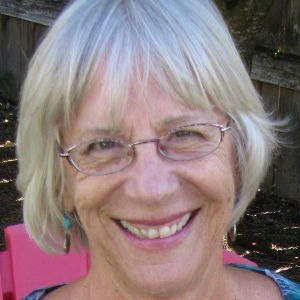
Professor Gene Bell-Villada (own photo)

Elizabeth (Lisa) Liang is here with her first column of 2015. For those who haven’t been following: she is building up quite a collection of stories about Adult Third Culture Kids (ATCKs) who work in creative fields. Lisa herself is a prime example. A Guatemalan-American of Chinese-Spanish-Irish-French-German-English descent, she has developed her own one-woman show about growing up as a TCK, which is receiving rave reviews wherever it goes.

—ML Awanohara

Happy New Year, readers! Today I’m honored to be interviewing Gene Bell-Villada, author of the Third Culture Kid memoir Overseas American: Growing Up Gringo in the Tropics and co-editor of my first published essay in the TCK/global-nomad anthology: Writing Out of Limbo. Gene grew up in Latin America and “repatriated” to the USA for college and beyond; he is a Professor of Romance Languages (Spanish), Latin American Literature, and Modernism at Williams College in Williamstown, Massachusetts. He is also a published writer of fiction and nonfiction.

* * *

Welcome to The Displaced Nation, Gene. Like me, you’re an Adult Third Culture Kid of mixed heritage. Since you were born in Haiti and grew up in Puerto Rico, Cuba, and Venezuela as the son of an Asian-Polynesian mother from Hawaii and a WASP father from Kansas, your identity development was complex and nuanced, as you make clear in your memoir.  Can you tell us how you identify yourself these days?
Like the title of my memoir, I identify myself as an Overseas American, of mixed WASP and Chinese-Filipino-Hawaiian ethnicity, with a Caribbean-Hispanic upbringing. I wrote my memoir in great measure to disentangle and explain that background—for myself and others! More broadly, in my middle 20s, it dawned on me that, by default, I happened to be a cosmopolitan, and that I couldn’t feel “local” even if I wished to. And so, I set out to make the best of that cosmopolitanism and build on it.

OverseasAmerican_cover

Tell us two things you miss about each of your childhood countries.
From my three childhood countries, I miss mostly the Latin informality and warmth…and salsa dancing! From Puerto Rico, I’ve fond memories of the University campus that was next door to my first home in Río Piedras, and where my mother would take us for walks. From Cuba I miss the richness of the music and folk culture. About Caracas, 3,000 feet above sea level, I remember its mild climate and “eternal spring.”

“Puerto Ricans do a lot of hugging, Dickie reflected. His parents and relatives almost never did.”

Your TCK childhood had extra upheaval due to your parents’ divorce and your two years at a military school in Cuba while your parents each lived in other countries. I imagine that affected your feelings about where you lived.
I must admit, I don’t “miss” most of what I lived in my 17 years in the Spanish Caribbean. I had a very difficult childhood, in which I never really “belonged” to any of those countries, had little contact with the expat community, and was leading a painful, dysfunctional family life. Since my brother and I were put away in a military school in Cuba, it’s not a place that I would “miss.” The circumstances of my upbringing have made childhood nostalgia an elusive sentiment for me.

After a young adulthood in New Mexico (briefly), Arizona, California, Massachusetts, and New York—and some trips to Europe—you settled in Williamstown, MA.  When did you come to feel that it was home, inasmuch as any place can be for an ATCK?
My wife and I actually have had homes in two locations in Massachusetts: Williamstown and Cambridge. So we lived both in the city, where we had our home life, and the country, where I taught. And I guess I realized sometime in the 1970s that New England had become my home. The place had enough cultural density, layered history, and overall cosmopolitanism for me to feel at ease in those parts. (I’d also earned my Ph.D at Harvard.) I even turned down a job offer from UCLA in 1976 because by then I felt attached enough to Massachusetts to stay there. Plus, I didn’t look forward to living in my car on the LA freeways, or putting up with Los Angeles pollution, which was fairly serious back then!

“‘Ah, but you speak such good Spanish…'”

Have you returned to any of the Latin American countries in which you grew up? 
I’ve been back to Puerto Rico and to Venezuela, always experiencing those mixed feelings. When I visited my old neighborhood in Hato Rey, PR, in 2012, I found it largely changed. Moreover, during a previous visit to San Juan in 1985, I went for a stroll at the University grounds. At the sight of the palm trees at the entrance and the tower looming above it all, I fell to the ground, crying. It was a reminder that much of my youth there, when I’d believed that I was an “American” boy in the tropics, had been illusory.

As for Cuba, I could only go back under very specific conditions—not because of the regime, which I’m not against, but owing to my painful personal memories of the place. I worry that seeing certain streets and buildings might elicit a wrenching sadness in me.

Since you’re a professor of Latin American literature and have written about the heavyweights in the field, I presume you’ve also visited quite a few countries in the region at this point. What were your impressions?
Inasmuch as I’ve written books and articles about Borges, García Márquez, Vargas Llosa, and Mexican literature, I’ve been more than once to Argentina, Colombia, Perú, and Mexico. Going to and traveling in those countries brought insight into their literary works that one cannot get simply from reading them in one’s study. On the other hand, my Latin American and Caribbean background proved enormously helpful in accessing the culture and the society of those places. Indeed, García Márquez’s world is the Caribbean coast of Colombia; exploring that area in 1982 and 1988 was a lot like being back in San Juan and Havana! Writing about it was fun, a bit like a return to my childhood, without the pain.

“She was from New York. Didn’t people from New York listen to classical music?”

Although you have always had a passion for classical and Latin music, you ultimately found ways to express yourself through writing fiction and nonfiction. Does music still play a big role in your life? 
Music is my first love. If I hadn’t had a late start at the piano (a fact that unfortunately set me back several years), I might have stayed with it. I turned to literature, in some measure, because it didn’t require advanced hand-muscle skills! But once I got involved with the written word, I strived to make my prose style as artistic, expressive, and fun as music can be, and I worked to give it rhythm and melody. (Someone has remarked that I write like a musician.) I still play piano, though.

Is there a particular work that you are most proud of having written, and if so, why?
I feel equally attached to all of them! Each one has had its role in my life. My books on Borges and García Márquez (which have sold well and gone through second editions) are used in AP courses, and are consulted by general readers, here and abroad. From early on, I had set out to be a “cultural mediator” between Latin American literature and U.S. readers, and those volumes serve that purpose.

My book Art for Art’s Sake and Literary Life, on the other hand, grew out of my cosmopolitanism and my desire to deal with the uses of art as both escape and expression. (In some subliminal way, it’s autobiographical.) The volume covers the phenomenon of aestheticism in Europe, the U.S., and Latin America. I felt vindicated when the thing was a finalist for the 1997 National Book Critics Circle Award (there I was, sharing space with Cynthia Ozick and William H. Gass). It also got translated into Serbian and Chinese! When I asked my two translators just what had drawn them to the book, they both replied that what I’d said about Latin American aestheticism was also applicable to analogous 19th-century movements in Serbia and Taiwan. So my cosmopolitanism had shed light on some corners elsewhere in this world.

My two books of fiction focus in part on TCK issues, plus such cultural-specific matters as American relativism or the seductive influence of Ayn Rand.

But I finally turned to memoir because I felt it was the way to confront head-on the question of my crazy, mixed-up background, to make sense out of it all and give it a living shape. The process of remembering that past, and crafting it and getting it out there, has proved enormously therapeutic. It also led to my meeting Nina Sichel and, then, you, Lisa, via our essay collection, Writing Out Of Limbo!

My latest volume is a kind of experiment, starting with its very title: On Nabokov, Ayn Rand and the Libertarian Mind: What the Russian-American Odd Pair Can Tell Us about Some Values, Myths and Manias Widely Held Most Dear. Besides dissecting the two authors, I tease out my troubled relationship to them, delve once again into my own life history, and finally move on to the larger problem of a rising, spreading libertarianism in this country. There’s even an Appendix in which I throw in a number of spoofs of my own of hard-line libertarians! (I’ve been playing with satires of something or other ever since I was in middle school in Puerto Rico…)
on-nabokov-ayn-rand-and-the-libertarian-mind_cover

You’re a true international creative, with works that run the entire gamut! Tell us, what’s next? Fiction? Nonfiction? Something else?
I have stuff in the works, but am in the process of rethinking my projects in the wake of my wife’s death in 2013. (Widowerhood does things to your mind and spirit, alas.)

Where can people find your works?
All my books are available from Amazon and local bookstores, as well as from any good library!

Thank you, Gene, for sharing your wonderfully inspiring story with the Displaced Nation. So, readers, any questions or comments for Gene? Be sure to leave them in the comments!

Editor’s note: All subheadings are taken from Gene’s book The Pianist Who Liked Ayn Rand: A Novella & 13 Stories.

STAY TUNED for our next fab post.

If you enjoyed this post, we invite you to register for The Displaced Dispatch, a round up of weekly posts from The Displaced Nation, with seasonal recipes, book giveaways and other extras. Register for The Displaced Dispatch by clicking here!

Related posts:

The Displaced Nation responds to France’s 9/11

Solidarity with Solidarite

SOLIDARITE, by Patrick Janicek via Flickr (CC BY 2.0).

Time and again, the Displaced Nation has featured the works of displaced creatives who have been captivated by Paris, a city that has been beloved of expats for longer than anyone can remember. For today’s post, a few of us offer some responses to the terrorist attacks that beset the city last week. Our thoughts are with those expats who remain in the city as it attempts to move forward in the wake of disruption and tragedy, what some have labeled France’s 9/11. We express solidarity with your solidarité.

—ML Awanohara

ML_for_blogML AWANOHARA, Displaced Nation founding writer/editor: My first two experiences with terrorism occurred when I was living abroad: first in Britain, where I always felt the threat of an IRA attack when traveling into central London for my studies; and then in Japan: I was living just up the street from one of the subways that Aum Shinrikyo attacked with sarin gas.

Then, not long after I repatriated and moved to New York City, 9/11 occurred: a spectacle almost beyond belief. I still remember the gamut of emotions I felt in the weeks and months that followed, everything from practical considerations (should I take the bus since a rumor is flying about another attack on the subway today?) to large questions: why do they hate us so much?

Although in each of these cases the terrorists were tied to religion (even Aum Shinrikyo espoused a “new religion”), when I first heard about the Parisian attacks, I felt that something different was taking place. It sounds grand to call it a clash of civilizations, but that’s been my impression, this time around.

I spent my formative years in Britain, you see, where I learned to appreciate irreverent humor, so much so that I’ve had a tough time adjusting back to life back here in the U.S., where people take themselves a lot more seriously. Though I don’t think I’m Charlie (I draw the line at the kind of irreverence that magazine was up to), I do feel that artists should be free to explore the boundaries…

In fact, isn’t that what the Displaced Nation is about? My fellow founders, Kate Allison and Anthony Windram, and I conceived of this site as a space where one could be irreverent about the expat life (within certain limits, of course—and we occasionally argued about that). Humo(u)r and sending things up has been our stock-in-trade.

On that note, and in the spirit of artistic freedom, allow me to offer one final thought. In the days after the terrorists struck, I have also been thinking that, in a strange kind of way, I’m not unlike the perpetrators. I went abroad to be exposed to new ideas and in some sense I became “radicalized”—emerging from my European experience as more secular, more aware of the world, and with more of a social conscience than I’d developed while growing up in America.

That’s where the comparison ends, of course. Having a European, secular mindset means I’m much more afraid of my fellow Americans waging war on me with their fundamentalist beliefs, Biblical literalism and guns than the other way around. No doubt that’s why I now live in New York City—though ironically, this location makes me more vulnerable to terrorists with an axe to grind against this country.

I look to the Displaced Nation as a source of community while also knowing it cannot guarantee my safety. No nation can do that, not even one built in cyberspace. (I’m thinking of the Sony hackers.)

Rita GardnerRITA GARDNER, Adult Third Culture Kid, memoirist, and interviewee for the Displaced Nation’s “A Picture Says…” column: I am outraged and scared that the acts of a small group of radicals just shook the world. It’s not just Paris that is reeling from this blow. The number of lives affected spiral out widely beyond those who lost their lives, crossing continents and oceans, the pain an ever-expanding circle. When I first heard about the Paris attacks, my first instinct was to go into denial – and pull into a cocoon of self-protection. Selfishly, I can turn off the TV and not see the horror. It’s happening “somewhere else”, not in my immediate world. I realize hiding is just a defense mechanism. I think that because expats have had the experience of living far from our “passport country”, none of us can cocoon into unconsciousness for long. We have been in that “somewhere else”—we know this attack could have happened to any of us, any place on the globe. And yet—we must live, we must manage somehow to reconcile the fact that evil and good exist within mankind. That’s the hardest idea to contemplate or absorb at this time. Maybe all we can do right now is attempt to be good ambassadors wherever we find ourselves, and add love to that ever-expanding spiral.

Cinda MacKinnon_300x300CINDA MACKINNON, ATCK, novelist, and subject of one of our writer interview features: I wanted to write something profound, but what words can you say about terrorists? It is shocking and senseless. No cause can justify terrorism, yet hardly a week goes without innocent people being slaughtered. There is a feeling that the real target in Paris is Western civilization and values (and some say freedom of speech). The French are united in their grief, and they joined us after 9/11 when the newspaper Le Monde wrote: “Nous sommes tous Américains.” In response I would like to say: “Nous sommes tous Françaises.

Joanna_Masters_Maggs_300 x 300JOANNA MASTERS-MAGGS, Displaced Nation (“Global Food Gossip”) columnist and expat in France: I talked to my children, who’ve spent six years on their young lives in Muslim countries, about what happened. As I explained in yesterday’s post, I’m never shocked by terrorism as I knew it existed at an early age. When the attacks in Paris happened and my kids asked about it, I didn’t sugar the pill for them. I told them I didn’t have the definitive answer. I don’t know why people do this sort of thing. I can’t imagine caring that much about anything. I think I would shoot someone who hurt my kids, but for an idea, a belief? I told them not to get so uptight about things themselves and never say something as embarrassing as “Well, I’ve never been so insulted in all my life”. Get over yourself. The victims in last week’s attacks died for nothing. It was a waste of life. That’s what I tell them. Because someone had a gun and a shaky ego. That’s the truth. That’s what terrorism is.

While I was talking to my kids, I was thinking about the historian Niall Fergusson’s book on WWI. He says the war went on as long as it did for many reasons, not least that young men are turned on by danger. “Going over the top” gives them a massive adrenaline charge, which becomes addictive, and they can’t really believe “it” will happen to them. When I read this, it was a light bulb moment. I suddenly understood why the working-class boys I witnessed in Belfast growing up (I’m half Irish) turned to paramilitary groups: it gave them a sense of power and authority and purpose. There appears to be a limitless supply of such young men. The current situation in Syria makes me think of all the young British idealists who went to Spain to fight in the Civil War. Sometimes I wonder if National Service might actually fill the need for thrills in a safer way? My father for example did two years in Northern Ireland in the Intelligence Corps, and my father-in-law spent his youth in the Malaysian jungle during the insurgency. Aren’t we all turned on at times, by the gun-toting hard guy? Hollywood thrives on it!

* * *

Readers, do you have anything to add, or any comments on these heart-felt responses? We’d love to hear from you!

STAY TUNED for tomorrow’s Location, Locution post!

If you enjoyed this post, we invite you to register for The Displaced Dispatch, a round up of weekly posts from The Displaced Nation, with Alice nominees, exclusive book giveaways and other extras. Register for The Displaced Dispatch by clicking here!

Related posts:

In this novel of displacement, water shapes the land, the country and people’s lives, almost beyond recognition

Ruth Hartley Collage

The Shaping of Water cover art; Ruth Hartley author portrait; Ruth Hartley’s painting of her father’s farm.

My guest today, Ruth Hartley, is a writer and an artist—but from the point of view of the Displaced Nation, she is something else as well: an expert on displacement.

Ruth has lived a life of displacement. She grew up in Africa, a continent that continues to have the world’s largest number of forcibly displaced peoples. She grew up on her father’s farm in Zimbabwe, which at that point was known as Rhodesia, at a time when struggles for independence in European-ruled African territories were spreading like a wave. As a young woman, she moved to South Africa to study art and then had to escape to England because of her political activities.

Ruth took refuge in London, where she married and started raising a family—but still felt the pull of her native Africa and chose to become an “expatriate economic migrant” in Zambia (formerly Northern Rhodesia). She lived with her husband and children in Zambia for 22 years, returning to the UK in 1994 to practice and teach art. Five years ago she set out on a long tour of Europe and Turkey. She now lives in Southern France.

Manzi ni moyo (water is life) —Chinyanja saying

Ruth recently published her first novel, The Shaping of Water, which, perhaps not surprisingly, reads like an ode, a kind of paean, to displacement. The action follows the progress of a decision by Rhodesia’s rulers to build a dam across the mighty Zambezi. They called it the Kariba Dam because the dam wall spans the narrowest and steepest of the gorges along the river, known locally as kariwa (a trap). Completed in 1959, the Kariba Dam created a vast man-made lake, Lake Kariba, in the Zambezi Valley. The lake displaced the river people, the Tonga, and forever changed the ecology of the region.

The book’s protagonists are a colonial couple, Margaret and Charles. They decide to build a lake-front cottage in Siavonga, a settlement that springs up to accommodate the displaced Tonga.

Ironically, although the ramshackle cottage sits in a spot that would never have existed had it not been for the building of the dam, which shaped the river in a new way, it is the one constant, a kind of retreat from the forces that displace practically everyone during the African liberation wars that ensue. Margaret and Charles use it as a place of sanctuary, and eventually two other couples come to do so as well: South African freedom fighters Marielise (Margaret’s niece) and Jo, and NGO worker Nick and his UK-raised African wife, Manda.

The cottage also provides a livelihood for Milimo, the son of a Tonga woman whose home was drowned by the lake. Margaret hires Milimo as gardener and caretaker for the property at the suggestion of Father Patrick, a missionary who worked in the Zambezi Valley before its shaping by water.

As a kind of review of the many layers of displacement in this novel, I offer this quote from the book, which I think also demonstrates Ruth’s lyrical style of storytelling:

Here near Kariba, ‘the trap’, in the middle of a wilderness, is a place called Siavonga, which is a name without meaning. It is a place that will be a town but a place that is not yet built. It is a place that is presently isolated by poor and inadequate roads and it is difficult to reach. It is in a country that is becoming another country, with another name. It is here that there is a plot where a contractor builds a cottage above a lake not yet filled with water. All this takes place in the newly created Central African Federation of the Rhodesias and Nyasaland that will be no more in a few short years. Two of these countries will change into independent states with different names when that happens.

It is an exercise in madness and dreams, in magic and megalomania, and the Tonga people know it to be impossible.

And now I think it’s time to get to know Ruth a little better, and hear some more about her book as well as the other creative projects she is working on.

* * *

Hi, Ruth, and welcome to the Displaced Nation. I expect you will feel entirely at home here. I wonder, did you consciously set out to write a book exploring displacement?
Displacement is a good way of describing what happens in the story. Displacement can lead to new opportunities but it is also damaging. I deliberately structured the book so that it explored three main themes:

  • Damage to the environment.
  • Damage done for political reasons.
  • Damage that is personal, emotional and private. It includes damage done by racism and sexism and deals with both in subtle ways.

Though each of these themes gets its own part in the book, they are also interwoven. I passionately wanted to bring the issues of contemporary Africa to life in a truthful, but also empathetic and positive, way.

I know you lived through many of the events that are depicted in this novel. To what extent is your work autobiographical fiction and to what extent historical fiction?
My novel is about entirely fictional characters living through actual and verifiable political and social events. I grew up in an intense political climate in Africa with a strong personal commitment to human rights. I did live through those events and have always made notes and collected newspaper articles and books throughout my life. But because I respect and love the individuals I knew in Africa I was careful to invent the people in my story. None of them is me either though like Margaret, I, too, am a gardener. The cottage, however, is real and the cottage guest book provided me with records of the weather and the lake levels.

“…all that I have left of my life, work, and friendships is stored on my computer” —Marielise

For me, the cottage assumed the role of the central character. You said it was real. Was it a place where you actually stayed?
If a cottage can be a character, then the one real and existing “character” in the novel apart from historical political figures is the “Cottage”. The book was in part, written as an elegy for a place I loved. Built before Zambian independence, the cottage belonged to a group of friends who were no longer resident in Zambia and my husband and I became its caretakers and at times its only guests. Here are some photos of how it looked:

TSOW cottage 001 (2)

The cottage in Zambia on Lake Kariba that Ruth Hartley and her family often visited. Photo credit: Ruth Hartley.

view from the cottage to the lake 001

The view from the cottage to Lake Kariba; photo credit: Ruth Hartley.

The steps leading down to Lake Kariba from the cottage; photo credit: Ruth Hartley.

The steps leading down to Lake Kariba from the cottage; photo credit: Ruth Hartley.

In 1975 I gave the owners a Visitor’s Book to record happy weekends spent there with friends. The book became my sole responsibility and I kept it as a log of the cottage and the lake from 1975 until 1994. It was finally returned to me after 2000 when the cottage was sold.

TSOW guestbook DN 001 (2)

The original Guest Book from the cottage, which Ruth inherited and used to inspire her novel. Photo credit: Ruth Hartley.

Looking at these materials makes me wonder: did you ever consider writing a memoir instead?
I wrote a fictionalized memoir called The Love and Wisdom Crimes in 1999 in which I was careful to protect people’s identities. It is about how I became politicized and fell in love when I lived in South Africa in 1965. Though I was told it is good and poetic, I had countless rejections because the African setting was not considered to be easily marketable. I have just completed a no-holds-barred memoir of the year that followed when I survived as a single mother in London. It is titled A Bad Girl in Search of Love.

Goodness, you are prolific! Can you describe your path to publishing The Shaping of Water?
At 70, I didn’t want to waste time or energy on rejections so I went for self-publication and self-promotion. I believe the market is moving this way in any case. I used Troubador Publishing because they offer a comprehensive printing and marketing package at a reasonable cost and with integrity. I don’t expect to recoup my investment but I will self-publish again. Hopefully it will be cheaper because of what I have learnt.

What kind of audience did you intend for the book?
I think that my audience is anyone who reads for pleasure and who also likes to make journeys of discovery into new worlds and ideas with believable and interesting characters.

“It’s not sensible—this—this racism!” —Margaret

I enjoyed reading the book because it gave me a feeling for contemporary African history, while also making me realize how little I actually know about Africa. I think I identified most strongly with Margaret and Charles. I felt bad that they saw a future Africa that would have a place for them, only to have that vision eradicated as the violence of the liberation wars escalated. It seemed to me that even if you wanted to do the right thing for Africa, after a while it was hard to know what the right thing was.
I have been thrilled to find readers who do not know Africa or its politics but who still have enjoyed the book and its characters. I didn’t intend this book as a lesson in African history, but I expect it would be good background material.

So what are you working on next and will you continue exploring some of these same themes?
I am working on two more novels. I am more than half way through writing The Tin Heart Gold Mine, a book that is set half in a fictional African country and half in London. The setting and the plot are quite different to The Shaping of Water, but the themes should be of universal interest. It is the story of Lara who begins in Africa as a wildlife artist and the lover of Oscar, an entrepreneur who owns a defunct gold mine and is also a political manipulator. Her journey takes her to London and a life with Tim (a journalist) and Adam, a child of doubtful paternity. She makes, owns and uses art that is troubling and troublesome.

I enjoyed looking at some of your art on your author site. I look forward to reading your book about an African wildlife artist. What’s your other novel about?
I have plans for another novel titled Hannah’s Housekeeping. Hannah is a mature woman who has seen the world and had many lovers. She runs a B&B but though Hannah cleans up the dirt in her house, her husband is missing and she doesn’t know if she can keep death from her door…

Sounds tantalizing! Finally, are there any pieces of advice you could impart to other international creatives?
I am an artist and writer who was effectively prevented from writing and painting for a good part of my adult life though I did teach and work in support of artists for many years. I learnt that it is important and essential to make art and to write, though very few artists and writers make a living from their art or get much recognition for it. Creative people, however reclusive, need an audience and to communicate.

How about lessons for other wannabe novelists?
It is important to write well and that takes practice and humility and many, many redrafts. I am always anxious about what my readers think even when I know I have written a good book. My readers matter to me so I have to keep on improving my craft as a writer.

Thank you, Ruth, for being with us today and for sharing some more of the story behind The Shaping of Water. On your Web site you describe yourself as a compulsive storyteller. I think we got a feeling for this today as well.

* * *

So, readers, any COMMENTS or QUESTIONS for Ruth? To learn more the Kariba Dam and the experiences that inspired the story Ruth tells in her novel, please watch this short video interview with Ruth and also be sure to visit her author’s site.

And if you think you’d like to read Ruth’s novel (we highly recommend it as a Christmas read!), Ruth has kindly arranged for Displaced Nation readers to get a 50 percent discount when ordering a paperback copy at the Troubadour site (enter the code: HARTLEY).

You can also buy the book in a Kindle format, not only from Troubadour but also from Amazon UK and Amazon US.

STAY TUNED for next week’s fab posts!

If you enjoyed this post, we invite you to register for The Displaced Dispatch, a round up of weekly posts from The Displaced Nation, with seasonal recipes, book giveaways and other extras. Register for The Displaced Dispatch by clicking here!

Related posts:

TCK TALENT: Nina Sichel, writer, editor, and guiding light on the Third Culture Kid experience

Nina Sichel_TCK TalentElizabeth (Lisa) Liang is back with her monthly column about Adult Third Culture Kids (ATCKs) who work in creative fields, Lisa herself being a prime example. A Guatemalan-American of Chinese-Spanish-Irish-French-German-English descent, she has developed her own one-woman show about growing up as a TCK, which she has taken all over the country. In fact, she turned up as the convocation speaker at Carleton College on October 31st, where my niece, now a Carleton freshman, had the pleasure of watching her perform some excerpts!

—ML Awanohara

Welcome back, readers! Today I’m honored to be interviewing Nina Sichel, co-editor of the seminal TCK / global-nomad anthology Unrooted Childhoods, which includes essays by several famous TCK writers such as:

  • Pico Iyer: “I fold up my self and carry it round with me as if it were an overnight case”;
  • Isabel Allende (she fled her homeland for political survival); and
  • Military brat Pat Conroy: “Each year I began my life all over again . . . and I think it damaged me.”

In addition, she co-edited the TCK / global-nomad anthology Writing Out of Limbo—to which I contributed. Thank you, Nina, for the hard work you did on my first published essay!

Nina grew up in Venezuela and “repatriated” to the USA for college and beyond; she is a writer, editor, and leader of memoir-writing workshops in Virginia.

* * *

Welcome to The Displaced Nation, Nina. I understand that you grew up in a multicultural household as a TCK in Caracas—the daughter of an American mom and a German-Jewish dad. With Thanksgiving around the corner, my thoughts are turning to the upcoming holidays. Did any particular holiday traditions or celebrations take precedence over others in your household as you were growing up?
My father had to leave Germany when he was 11 and grew up in Uruguay. He seldom spoke about his childhood. He came to the U.S. for college, and, after marrying my mother, lived in Puerto Rico and the Dominican Republic before settling in Venezuela. After all of those moves, his identity was not at all tied to nationality, and, like so many other choices in his life, citizenship was a matter of practicality. So national holidays were completely unimportant.

What about your mother?
My mother was a nostalgic American—more so when she was in Venezuela than when she was anywhere else. But she was an expat, and U.S. national holidays were not celebrated in that country. My parents’ friends were multinationals—our social circle was not defined by nationality. And, even though my father’s sister and mother, Uruguayan citizens by then, lived in Caracas, close by, we were secular Jews, only going to synagogue on the High Holidays and mostly not even then. We had an abbreviated seder, we lit candles at Chanukah. That Jewish identity, more ethnic, perhaps, than religious, was important to my parents. Yet we had very little religious training. I think things were assumed more than instructed… I remember going to summer camp in the States with Jewish girls from Long Island—and feeling I had absolutely nothing in common with them.

Did you celebrate other holidays?
We had a Christmas tree with lots of presents and sang carols. Santa Claus came till we were too old for him, but there were still gifts afterwards. We dressed up for carnaval, and the Easter bunny came to visit us. Hmmm… I’ve given you a long answer to what should be a simple question—but then, some things are not so simple. Like composite identities.

I was raised with no real roots, an American child in Venezuela…

Writing_Out_of_Limbo_coverWhich brings us to your wonderful essay, “Outsider,” which appears in Writing Out of Limbo. You mention in that piece that there was a lot of turnover among your friends at your international schools. Can you tell us a little more about what that was like?
I never knew, from one school year to the next, which of my classmates would actually be back. I don’t remember ever talking about it; this was normal, nothing remarkable. I remember a few friends who left with advance notice, and I tried to keep in touch with them—pen pals during a time when letters would take one or two weeks to reach their destinations. Those friendships faded over time. Quite a few friends were sent away to boarding school once they reached high school; sometimes they’d be back for summer vacations, but by then I’d usually be in the States. There were also, of course, quite a few children whose parents would stay in Venezuela indefinitely, till retirement and after. And then there were the kids who rotated in and out every couple of years, many of whom were Americans. Recently, I’ve been thinking a lot about how different the ones who stayed as long-term residents were from the ones who rotated in and out. And how difficult it is to make general statements about any of this—there are layers and layers of outsiderness, not just one sort of expat or TCK identity.

Have you still got friends from that period?
I’ve kept strong ties to some friends from my youth, and to me this is very special—they are more like family than friends now. I’ve learned to invest deeply in relationships I hope will last, perhaps because the chances are so fleeting. I’ve felt incredibly lucky to be able to contact some people from my past via the Internet, and rekindle friendships from long ago, and learn how TCK life has affected them, their choices, their lives.

Our memories are the part of life we get to keep and take with us…

After an entire adulthood in the USA, tell us what you still miss about Venezuela. I’m also curious to know how many of those things can still be found there, and how many are connected to memories of family and/or friends who are no longer there?
Though I have lived my adulthood in the U.S., my parents remained in Venezuela, and I went back often to visit until they passed away. The place changed—all places do—and I also changed. My memories now are interwoven with nostalgia for what was or might have been. But there are also tangible things. Venezuela is a beautiful country, and there are things about nature I miss. I miss smells—that thick Caribbean salt air, the tangy grass. I miss tropical light, and will miss it more and more now that we’re approaching winter here.

Nowadays, do you feel at home in the United States?
I do feel “at home” in the States in general; just not rooted in any particular place. As you know from my essays, I’ve lived in several places. I lived in a small town in upstate New York, then Manhattan; I lived in the Deep South two different times; in rural Michigan; in West Palm Beach and then urban Miami; and now I live outside Washington, DC. In the smaller towns, what I missed was diversity—of language, ethnicity, experience, culture. I had to seek it out in the people I befriended and the kind of work I chose to do. But even in the cities, I felt outside the mainstream. Remember, coming to the States was not coming home for me; it was immersion in a different culture.

Unrooted_Childhoods_coverIn Unrooted Childhoods, your co-editor, Faith Eidse, writes about her yearning “for thick gumbo-limbo roots.” Do you sometimes wish your roots were deeper in this country?
I remember being fascinated by a friend’s roots in the Deep South that went back many generations. As my family does not have that history, it was something new and rather foreign to me, an oddity. But it was not something I wanted, as it felt too confining, to be defined by your predecessors that way.

Do you have “itchy feet,” which still make you want to move frequently? Or are you the kind who prefers to have a home base and travel only for pleasure?
Yes yes yes. All of the above. o I have to choose?

You mentioned longing to find other people with the experience of having lived overseas. Have you found that “your people” tend to be other ATCKs in creative fields—or does it really depend on the individual and what s/he evokes in you, whether it’s a resonance that’s artistic or political or personality-related or life-experience related, etc.?
I tend to fall in love with people, with aspects of people, and am constantly surprised that all my friends don’t automatically feel the same about each other as I feel about each of them! So, yes, I think it’s about that resonance that you mentioned, but it’s a different resonance in each person, a different connection I respond to. In any case, I never knew about TCKs or ATCKs until I began to work on Unrooted Childhoods.

I want to choose and gather the markers by which to remember our years here…

Like other ACTKs including myself, you were drawn to the craft of writing as a means of self-expression. Is there a particular piece that you think expresses your feelings of transience or loneliness or instability—or freedom or curiosity or love of travel—that you are most proud of? And where can we read it?
I’m not going to choose among my babies, but anyone who is interested can read my essays in Unrooted Childhoods and Writing Out of Limbo. I also wrote much of the introductory material in both books. There was an essay of mine published recently in Brain, Child Magazine, titled “Leaving,” which many of the readers of this column will surely respond to. And I’ve been posting short blogs on the Children’s Mental Health Network website, to inform readers about issues concerning TCKs.

We both lead workshops for people who want to write about their own lives. Tell us what got you started as a memoir workshop leader.
I’ve always felt torn between creative expression and nurturing others—as though I had to choose, as though the work I’d always done (teaching, counseling, raising children) wasn’t already a combination of the two. When I moved to the Washington, DC area, I developed the memoir and other writing programs I currently offer and am always expanding the menu of choices. The workshops are theme-based, and range in topic from creative change and transformation to intercultural exchange to turning points to writing about place to parenting to… I had a program that I developed once specifically for au pairs, which I’d like to offer again at some point. I keep the workshops small, intimate, supportive. We do not engage in critiquing—most of my writers are beginners in memoir, and need to both give and receive positive feedback to grow into the writers they are becoming. I feel honored by their trust, in bearing witness to their journeys.

It’s wonderful that you enjoy helping others make the most of this genre. Of course a good example of that is Unrooted Childhoods, which is a book of memoirs by people who grew up in multiple countries.
Memoir is a wonderful genre, open to many forms, and helping writers find their voices, their unique expression, their subject, is a joy for me. There are strands in life that one thinks of as separate, and I have figured out a way to braid them together. There is so much self-discovery in the process—I can’t tell you how many times students have told me, “I had no intention of writing about that. And I’m so glad I did.”

Where can people find those workshops?
My regular memoir-writing workshops are offered through Northern Virginia Community College in Annandale, outside Washington, DC. I’ve offered other types of reflective writing programs in various community and art centers in the area, and am open to offers elsewhere. I’m happy to share more detailed information upon request.

Thank you, Nina, for sharing the story of your creative life with readers at the Displaced Nation. So, any questions or comments for Nina? Be sure to leave them in the comments!

*All subheds are quotes from Nina’s essay for Brain, Child Magazine, “Leaving” (April 2014).

STAY TUNED for our next fab post.

If you enjoyed this post, we invite you to register for The Displaced Dispatch, a round up of weekly posts from The Displaced Nation, with seasonal recipes, book giveaways and other extras. Register for The Displaced Dispatch by clicking here!

Related posts:

TCK TALENT: Alaine Handa’s fringe fest dance performance immortalized on the big screen

One year later (August 2014), Alaine Handa finds herself dancing in Spain. (Photo credit: Alaine Handa)

One year after her Edinburgh Fringe adventure, Alaine Handa finds herself in the land of flamenco: Valencia, Spain to be precise. (Photo credit: Eveline Chang, July 2014)

Elizabeth (Lisa) Liang started up this column in summer 2013 with a two-part conversation with today’s guest, fellow TCK performing artist Alaine Handa. By the end, I for one had come to believe in the truth of Martha Graham’s assertion: “The body says what words cannot.”

—ML Awanohara

Welcome back, readers! It’s a pleasure to have choreographer/dancer and adult third culture kid Alaine Handa back with us at the Displaced Nation. As ML says, Alaine was my very first interviewee when this column made its debut last year.

I am circling back to Alaine to see what happened with her dance performance at the Edinburgh Fringe and also because, rumor has it, one of the performers has made a short documentary about this artistic adventure.

Dance and film: that’s quite a pas de deux!

* * *

Welcome back, Alaine! When we spoke to you last year you were about to premiere your newest show, Habitat, at the Edinburgh Festival Fringe. The piece “shows how different people from different backgrounds change the way they behave around others and when they are alone.” How was it received at the fest?
The Fringe is the largest arts festival in the world, so we worked very hard to get the word out about our production. We blasted out press releases, distributed physical flyers everywhere (and befriended some local shopkeepers!), and performed excerpts at the venue. All of these promotional efforts starting paying off in audience numbers as the festival progressed. The feedback from audience members was mostly positive—the stories portrayed on stage were relatable. Our negative feedback was that the performance should be longer! I guess that isn’t really a bad thing: to have the audience wanting to see more.

As I recall, the members of your multicultural ensemble lived in different countries during rehearsals, so you relied on Skype, YouTube, and email a lot. What was it like to finally rehearse and perform the piece together at Edinburgh?
I rented a studio from Dance Base in Edinburgh a week before we opened for intensive rehearsals. We also lived together for the duration of the festival run so got more comfortable with each other. The rehearsal process through the 2-D medium of video was frustrating, to be quite honest. The time difference of 12 hours between New York and Singapore meant that feedback via email would be received hours later. The rare moments when we Skyped during rehearsal, we would run into problems with connectivity. I rehearsed weekly with another dancer based in Singapore and videotaped everything to send to the other dancers in New York. By the time we came together physically, it was a dream come true but also a whirlwind. We had to fit together all the puzzle pieces and find the missing links. It proved a bit of a challenge.

One of your dancers, Laura Lamp, is also a filmmaker who made a documentary short, Dreaming to Escape, about taking Habitat to Edinburgh while also exploring your philosophical and aesthetic approach to dance. Please tell us what it was like to be the subject of a documentary when you were in the middle of premiering a new work.
Laura partnered with Kevin Tadge, who runs the film company Nesby Darbfield, to make the film. They shot a lot of their material on stage, backstage, in rehearsal, at warm-ups before the performances, during dinners, in taped interviews, and everything in between. I was a bit self-conscious at first, but after a while, I just learnt to ignore the camera like a reality TV star! Upon seeing the short, I realized I should’ve cared a bit more about my appearance during rehearsals!

Where is Dreaming to Escape being screened?
Here’s what Laura reports:

“We hope to take it to documentary and dance film festivals around the world. It would be great if it screens at the Singapore Film Festival later this year. We’ve really only begun to send it out… It’s a bit of a slow process, but we’re excited to share it with everyone.”

Alaine, I understand you have relocated back to Singapore, where you were born and spent your adolescence. What has been the best part, the worst part, and the biggest surprise about living in Singapore again?
Reverse culture shock has been hitting me hard, living back in Southeast Asia. It’s been a little over two years now and I still go through culture shock every single day I am here. Singapore has changed so much in the 2000s. I barely recognized the country when I returned. The biggest surprise is how expensive it’s gotten to live here. The cost of living has gone up tremendously!

I know one of the things you’ve been doing in Singapore is teaching dance. Please tell us where prospective students can find your classes.
Yes, I’ve been teaching at multiple locations around the island. The best way to learn more is to join my mailing list by sending me an email at ahdancecompany@gmail.com and/or join my Facebook group.

Thanks, Alaine! Readers, here is a tiny taste of what you might see in Laura Lamp’s short documentary, the trailer created last year for Habitat:

Questions or comments for Alaine? Be sure to leave them in the comments section!

STAY TUNED for Thursday’s fab post.

If you enjoyed this post, we invite you to register for The Displaced Dispatch, a round up of weekly posts from The Displaced Nation, with seasonal recipes, book giveaways and other extras. Register for The Displaced Dispatch by clicking here!

Related posts:

Soccer players for sure, but shouldn’t Germany also be loaning us words? With cherries! say British expat comedy writing duo (huh?)

Denglish 3 Collage

Adam Fletcher (bald) and Paul Hawkins at a book fair, in a screenshot from their Denglish video; Paul atop his Batman car in Prague. All photos supplied by Paul Hawkins.

Like other U.S.-based World Cup fans, I’ve been thinking a lot about Germany lately. The nation certainly has been generous in loaning the U.S. national team all kinds of soccer coaching and playing talent. Coach Jürgen Klinsmann is a German soccer legend, and five players on the U.S. squad spent most of their lives in Germany, including one of the team’s star players, Jermaine Jones (his father, an African American U.S. army soldier, met his German mother while stationed in West Germany; they later divorced).

But is it possible Germany should be offering us even more, as in new words and language possibilities? The answer to this question will require the help of today’s guest, Paul Hawkins, a young British expat in Berlin. With his writing partner and fellow British expat, Adam Fletcher, Paul recently produced Denglish for Better Knowers, an illustrated book of German words and sayings that, in the view of this comedy duo, ought to be imported into the English language.

(German, really? Doesn’t it have lots of rules and too much grammar??)

AND WE ARE GIVING AWAY A SIGNED (PAPERBACK) COPY! Just leave a comical comment on this post, to be eligible.

Paul and Adam may be expats but they are tapping into the long and great British tradition of finding comedy in the quirkiness of everyday life, something I came to value during my expat years in the UK (and still miss). What’s unusual about this pair, however, is that they aren’t afraid to dig for material in a country that has long been reviled by the English (see my recent post on the World Cup). It helps, no doubt, that they’re Millennials. But has their creativity also been sparked by the sheer act of being displaced, of having to navigate another cultural and linguistic tradition? Let’s hear what Paul has to say.

* * *

HowtobeGerman_cover_ds

The book was published in German and English, each language beginning at either side of the book, by C H Beck.

Hi, Paul, and welcome to the Displaced Nation. Before you and Adam came out with Denglish for Better Knowers, Adam produced an earlier work, How to Be German in 50 Easy Steps. What exactly was the impetus for this series?
Well, How to be German was sort of this big, happy accident of Adam’s, where he poked and prodded the various eccentricities of his long-suffering German girlfriend, Annett, and then extrapolated his findings to about 80 million people. But to be fair, he’d also lived in Berlin for seven or so years, during which time he’d had lots of humorous experiences with the curious creatures known as Germans. In fact, the book grew out of an article of the same name Adam wrote, full of his observations about what makes Germans German, from their love for sparkling apple juice to collecting insurance contracts and tilting their windows. His post struck a massive nerve and went viral. Adam describes the book as a “love letter to the German people,” who had somehow adopted him for having such profound insights into their national character. Thanks to him, they were no longer being portrayed as eating sausages, drinking beer, and wearing leather shorts…

Is your German not the yellow from the egg?

And Denglish?
Denglisch for Better Knowers is a follow-up of sorts, a kind of “love letter to the German language,” where we get to celebrate and poke fun at Deutsch (even as we struggle to learn it!), in hopefully a way that only dumb aliens to the language could. Oh, and although I’d assisted Adam with the first book, this time around he roped me into being a co-author. I don’t remember why, but I think it might because I have hair.

And the pair of you also run an online business of sorts, called The Hipstery. In fact, that’s how I first discovered you. How does your entrepreneurial venture fit in with the book writing projects?
Adam and I are creative, but we don’t have very long attention spans.The Hipstery has proved the perfect way to exploit these independently useless character traits. It’s a kind of long-running shambles of a gift business. In fact, it’s been a few different things at a few different times, depending mostly on mismanaged excitement, deluded whims, and confused expectations—perhaps the least impressive of which was an actual shop in Berlin, which, by the end of its short, lazy lifespan was only open for about two hours a week, on a Thursday afternoon, sometimes, maybe. We would get excited, make a little product (a poster, a T-shirt, a game, for example) and quickly release it, after which we got bored and moved on to the next thing.

denglishforbetterknowers_cover_ds

Published in German and English, each language beginning at either side of the book, by Ullstein Verlag.

And at some point the “next thing” became Denglisch for Better Knowers?
In fact, the book began its life as a nice design on a poster, and then one day we saw a lot more humorous potential in the concept.

Let’s talk about Denglisch the word. What does it mean exactly?
Denglisch refers to the increasing amount of English words sneaking into the German language, in place of working, pre-existing German alternatives. It gets used a lot in the German media and tends to consist of ‘”cool”, buzzy, international, marketing-type words such as upgedated, downgeloadet, outgesourcet… Well, our idea was that German has so many great and often humorously unique words that English doesn’t, it should lend us some words, too. In the book, we make a case for our favorite “German” ways to enrich the English language.

With the German language is very good cherry eating

I visited the picture gallery of ten colorful German expressions, watched the promotional video, and even took the Denglish Quiz (got 70%) on the book site. Of all the German words and expressions that appear in your work, which are your top three faves and why?
I guess my three personal favorites would be:
1) Ear worm (Ohrwurm)—describes the phenomenon of getting a song stuck in your head. It’s such a simple, perfect word, it’s amazing English has nothing like it.
2) Hand shoes (Handschuhe)—German for gloves. It’s so lovely. I know this flies in the face of everything I just said about German words that English doesn’t have, but I don’t care. I want it!
3) Is it art, or can I chuck it? (Ist das Kunst, oder kann das weg?)—a wonderful idiom and great example of German humor. I don’t think it needs explaining. It just needs using. It becomes especially useful whenever the British artist Tracey Emin is selling something…

Hmmm… Were there any German words or expressions that didn’t make the book, as the concepts they express are too foreign to be used in English?
There’s quite a lot which didn’t make the book, but I have the time-bothered memory of a deranged old lunatic, so I can’t think of that many examples now. Oh, there was that expression Himmel, Arsch und Zwirn!, which we didn’t include for some reason. It translates literally as “Sky, Arse, and Thread!” and serves as an exclamation of annoyance, like shouting “Damn!” or “Blast!” or “Bollocks!” (if you’re English). It’s pure nonsense (or “nonsense, with sauce,” as you’d say in German), and I guess that’s why we couldn’t include it. You can’t fight fire with fire, and you can’t write nonsense with nonsense, because galactic haircut trouser squabbling. Indeed.

OooKay! Probably I need to read the book to interpret that last statement. I’m curious, how did you and Adam meet, and was it “collaboration” at first sight?
Despite us both being English and both living in Berlin, in fact we first met in the Czech Republic. Basically, I flew out to Prague on a whim in 2012 because friends of mine were driving a convertible painted like Superman there as part of a car rally, after which they planned to dump it. I told them to give it to me. I didn’t have any plans or ideas what to do with the car… all I knew was that if you can get a Superman convertible for free in Prague, you’d be an damned fool/respectable citizen not to do so. Not long after my arrival in the Czech Republic capital, I posted a message on CouchSurfing…something like, “Hello, I’m an idiot who came to Prague, and I don’t know any one, and I’m bored, and do you want to meet for a coffee or a beer?” Well, Adam, who was also in Prague with a friend, replied to my message, and we met up. We soon got talking about what we did: writing, well, actually comedy writing…actually, fairly absurd comedy writing. And upon realizing we were pretty much writing the same kinds of stuff, in the same kind of style, with the same kind of humor, it wasn’t long before we decided to try something together. Pretty weird, right?

Um, what’s the best and worst part of working as a team?
Writing as a team is mostly very fun. The best part is getting to make and hear jokes all day—as opposed to sitting alone, typing gibberish, and always wondering: “Is this funny…? Maybe it’s funny… I don’t know…” The worst part, however, is when you come up with a hilarious punchline like “Congratulations, Binky!”, only to find Adam wont let you use it for some boring reason like: “It doesn’t make any sense.” Which might be true, of course, but let’s not take Adam’s side here.

Is your English all under the pig?

Which part of the UK do you and Adam come from?
I come from London, or North London, or North of London, or Broxbourne, depending on whether I think you know where it is. Adam is from a different place, most notable for it being totally unmemorable. I guess he’s told me about forty times where he’s from, and the only thing I can tell you about it for sure is it has a dreadful school and might be vaguely near Norwich.

And how did you end up choosing to live in Berlin?
Adam moved to Leipzig for a job around seven years ago and then to Berlin about two years later when he became self-employed. I moved here a year and a half ago, for similar reasons. It’s a great place to live and roam free amongst all the freelancers. We call it the Mecca of Delayed Responsibility.

Do you think you will ever repatriate back to the UK?
I don’t think Adam will repatriate because he was never a big fan of England (small talk, weather, having to think before speaking, etc.) and because he’s increasingly becoming somewhat of a reluctant, and highly unqualified, pundit of German culture—something he’s trying to correct throughout his next book, Make Me German. As for me, I could still imagine living in London, just as soon as I become a mega rich oil-baron oligarch with unlimited Oyster card funding. One key difference between me and Adam is the amount of German we’ve learned. The more time you’ve invested in the language, the less you can bear the thought of wasting it by leaving! He’s a lot more invested than I am…

You said that Adam is working on another book. How about you: any more creative projects in the pipeline?
Yes, Adam is hard at work on his next book, Make Me German, which entails undertaking a series of amusing challenges in pursuit of finally learning enough about Germans and Germany to justify his nonsensical position as a spokesperson for their sense of humor. He was last seen trying to write a Schlager song and Nordic-walking in the most German place of all German places, Majorca. As for me, I’ve just finished a book, which comes out in Germany at the end of August, called How to Operate a Human (Gebrauchsanleitung Mensch, in German!) It’s a fun little book rather like an iPhone manual (except for people), which I won’t be able to read.

What do you mean you won’t be able to read it? How is your German coming along these days?
Mein Deutsch hat sich verbessert, aber ich kann meinen eigenen Unsinn immer noch nicht lesen.

Which leaves me with only one thing left to say: Alles klar!

* * *

So, readers, any COMMENTS or QUESTIONS for Paul? Or do you find yourself nonplussed, without words, for what you’ve just heard? In case his rants have made you curious, be sure to:

YOU CAN ALSO LEAVE A COMMENT BELOW to be eligible to win your own free copy!

Can’t wait to order the book? Paul suggests doing so from the Hipstery site, which offers worldwide shipping.

Finally, should you wish to follow Paul’s brilliant career, he can be found at his author site, Hencewise, on Twitter and on Facebook.

To reiterate, alles klar!

STAY TUNED for next week’s fab posts!

If you enjoyed this post, we invite you to register for The Displaced Dispatch, a round up of weekly posts from The Displaced Nation, with seasonal recipes, book giveaways and other extras. Register for The Displaced Dispatch by clicking here!

Related posts:

TCK TALENT: Alice Shu-Hsien Wu, Cultural Bridge Builder and Global Nomad Videographer

Alice Wu TCK TALENT Collage

Alice Shu-Hsien Wu (her own photo).

Elizabeth (Lisa) Liang is back with her monthly column about Adult Third Culture Kids (ATCKs) who work in creative fields, Lisa herself being a prime example. A Guatemalan-American of Chinese-Spanish-Irish-French-German-English descent, she has developed her own one-woman show about being a TCK, which was the closing keynote at this year’s Families in Global Transition (FIGT) conference.

—ML Awanohara

Happy summer/winter/rainy season, international readers! As some of you may recall, last month I talked to Cathleen Hadley, a fellow ATCK contributor to the anthology Writing Out of Limbo, dedicated to telling the stories of those of us who grew up among different countries. Today I’m interviewing another Limbo contributor, Alice Shu-Hsien Wu. An intercultural communication consultant and lecturer at Cornell University, Alice is particularly interested in intercultural adjustment and in internationally mobile families. She has produced two acclaimed videos about college students who have led internationally mobile, nomadic lives, in which the students themselves discuss such challenges as transition, cultural identity, and rootlessness.

* * *

Welcome to The Displaced Nation, Alice. I understand that you were internationally mobile while growing up, living in England, Finland and Sweden in addition to the United States.
Yes, my father was a biochemistry professor and had sabbaticals in various places. We went from New York City to Palo Alto, California, when I was 6 and to Upstate New York when I was 7, and then to England when I was 11 and back to New York State when I was 12. We also sometimes traveled to various countries where my father had meetings. I was a Rotary exchange student in Finland when I was 17; went to college and grad school in New York; and then, at age 26, went to Sweden to study and work, returning two years later to Ithaca, New York, where I still live.

Were you happiest in a certain place at a certain time?
I’ve been happy in many places—one of my favorites was California because of the sunny weather, fruit trees and flowers in my yard, and sand in the playgrounds (I was 6 then, remember). This was a welcome change from living in NYC—where the playgrounds were concrete and you weren’t allowed to walk on the small amounts of grass.

“Then when I got here it was a big adjustment identity thing: I didn’t feel American…” – Lynn, US

How did you find your various “repatriation” experiences?
My repatriation from Sweden was probably the most challenging—since I had lived there longer and gotten more immersed in the culture through school, work, and friends. I remember thinking American TV newscasters smiled and laughed too much compared to Swedish commentators and that college and grad students in the United States dressed very informally compared to students in Stockholm. Everything in the U.S. seemed bigger than I had become accustomed to in Sweden—gigantic tableware and portions in restaurants (especially in California), huge shopping carts and vast numbers of products in supermarkets. Also, I was surprised by the general lack of discussion about current world events in the U.S., compared to the amount and frequency of these discussions in Europe.

Now you sound like the other Alice: in Wonderland! (I mention because she’s the Displaced Nation’s mascot.) As an instructor at Cornell, you’ve made two important documentaries about global nomads/TCKs, Global Nomads: Cultural Bridges for the Future (1994) and Global Nomads: Cultural Bridges for the New Millennium (2001). What did you like best about the creative process?
Meeting the students and getting to know them—they were fascinating, honest, and articulate. I screened the first global nomads video for the student interviewees at the end of the school year, and they liked it so much they decided to form a global nomads club. They asked me to be their advisor and I ended up working with them for the next three years. They were amazingly creative, active, and energetic and brought a lot to the campus community.

“Global Nomads have the ability to educate others…” – Liliona, Ghana

What attracted you to the documentary format? I have talked to other ATCK actors like myself and to novelists and artists, but you are my first videographer.
Clearly, there are many effective ways to portray the GN/TCK experience, but I was more familiar with the documentary format since I’d used it in teaching. For example, I’d used videos during intercultural training sessions for students and staff at Cornell to introduce topics like cultural adjustment, culture shock, and reentry shock. I also videoed international students as well as first-generation Americans who were participating in panels about aspects of American culture, as well as some international students who were teaching and doing role-plays. So I was very comfortable with the format. I really like being able to feature students’ own words and impressions—especially when I can capture them interacting with other students. In the first video, all of the students were from Cornell. In the second video, the students were from six different schools across the United States: San Diego State University, Colorado State University, The College of Wooster, George Mason University, Syracuse University, and Cornell.

Limbo_coverIn your essay in Writing Out of Limbo, you describe the impact of the videos not only on the college students who participated in them but also on the TCKs in your audiences. You produced these two documentaries in the era before social media. How did the news spread?
I showed the videos to as many groups at Cornell as I could: students, including Resident Advisors in dorms and the members of an international student discussion group, as well as groups of staff. I also screened them at international and intercultural conferences. Also, the students who appeared in the first video were great with promotions. They showed it to their dorm-mates to help them understand the GN experience, as well as at an initial meeting of their global nomads club to introduce prospective members to the concept. And they traveled together to a Global Nomads International (GNI) collegiate conference in Virginia where they screened it for GNs and TCKs from other colleges. Audience members who’d been TCKs/GNs could really relate to the students on screen, and word soon spread.

“I never wanted to put down roots…”- Brian, US

Did making these videos help you to better understand yourself as an ATCK?
I could relate to many things that the students talked about, and making the videos helped me think about some of my own experiences such as leaving my friends many times and having friends in many different places.

Do you identify most with a particular culture or cultures? Or are you like many TCKs who are more likely to identify with people who have similar interests and perhaps similar cross-cultural backgrounds? (And of course it’s not a given that we’ll identify with them!)
I identify with some aspects of Nordic cultures like Sweden and Finland, some aspects of Chinese culture (due to my family background), and some aspects of American culture. I always seem to meet global nomads and Third Culture Kids wherever I go: I really enjoy it. After learning about the concept of global nomads and Third Culture Kids at the Summer Institute for Intercultural Communication and from the late, great David Pollock, I realized that a lot of the friends I’d made at college were global nomads (and they were very interested in learning more once I’d informed them).

As an ATCK, do you want to move frequently, or do you prefer to have a home base and only travel for pleasure?
My suitcase is always partly packed so it is easy to go on the next trip. On a recent trip to the West Coast, I was thinking about how much I love seeing all the gates listing flights to various parts of the world. I like to imagine what it would be like to jump on one of these planes and end up in a new part of the world. That said, I also enjoy having a home base, especially since I have kids who are quite rooted and don’t like me to be away for very long.

Are you working on a new TCK video project?
Yes. This spring I filmed three panels of Cornell students at Cornell’s Language House. This time I am looking at the influence of technology on the global nomad/TCK experience and how this compares to the experiences of GN/TCK students in my previous two videos. In addition, I am making a video that follows up on some of the students who participated in my first two films, and am planning to use social media tools.

* * *

Thank you, Alice! Readers, if you’re interested in learning more about Alice’s work or obtaining a copy of either of her documentaries, you can go to the Families in Global Transition (FIGT) website. And, to reiterate, you can read her chapter describing her work in Writing Out of Limbo: International Childhoods, Global Nomads and Third Culture Kids. The subheds above are all quotes from the students featured in her second documentary. Please leave any questions or comments for Alice below.

STAY TUNED for our next fab post!

If you enjoyed this post, we invite you to register for The Displaced Dispatch, a round up of weekly posts from The Displaced Nation, with seasonal recipes, book giveaways and other extras. Register for The Displaced Dispatch by clicking here!

Related posts:

From soccer hater to World Cup fanatic: A most peculiar expat tale

FIFA World Cup Collage

The Brazilian player Edmilson Santos, by AK Bijuraj; CocaCola FIFA World Cup Soccer, by Mike Mozart; FIFA World Cup trophy, by Warrenski (all CC).

To mark the start of the 2014 World Cup in Brazil, I have updated a post I wrote four years ago, in time for 2010 World Cup, in South Africa. I wrote it for the now-defunct Pond Parleys, the brainchild of esteemed writers Toni Hargis (a British expat in the US, with an American husband) and Mike Harling (an American expat in the UK, with an English wife).

In America, of course, we call it soccer. But I am content to say “football.” If there’s one thing I learned from living in England for nearly ten years, it’s to use the English language with precision (in which case, shouldn’t it be “foot-and-head ball”?).

So, herewith, an attempt to tell the rather twisted tale of my conversion to football fandom, though part of me will always wonder: is my story more typical than one imagines? Surely, a taste for football isn’t easily acquired by those who don’t have it in their national DNA?

PART I: Why I Never Liked Football Whilst Living in England

This little tale of mine begins on a dark and stormy night in the latter years of the 20th century. I am living in football-mad England but am rapidly developing an aversion to the sport, squandering my first real opportunity to see it played at a professional level.

Chalk it up to my contrarian nature. I’m not one to throw myself into chanting, banner waving, and other tribal behaviors before I’ve had a chance to study what’s going on and make a full appraisal. And it did not take me long to find things I was less than enamored of, including:

1) The game itself—the endless running up and down the pitch with hardly any scoring. The few times I watched a football match, I inevitably got up to make a cup of tea, or dozed off, just as the one goal of the match was being made.

2) The fans—mostly male, many of them yobbos (some of whom are now chavs?). But even if we leave social class out of the equation, a good number of the UK’s football fans appeared to be hooligans, not exactly the most appealing lot—especially to a grad student like me, whose images of England had been formed from a steady diet of Jane Austen novels and Merchant-Ivory period movies. Occasionally violent male bonding rituals weren’t on the agenda. (I’m sure it didn’t help that my arrival in England coincided with football hooliganism reaching new levels of hysteria.)

3) The jingoistic tabloid coverage—which reaches its height whenever England plays Germany. I happened to be living in London in 2006, when the semifinals of the European finals, between England and Germany, took place at Wembley Stadium. What a palaver! The British mass-circulation paper The Daily Mirror ran a front-page headline “Achtung! Surrender!” over a photo of two England stars wearing World War II helmets. Years later, when England met Germany in the 2010 World Cup, held in South Africa, John F. Burns contributed an article to the New York Times contending that such “rib-poking” has provided catharsis for England and Germany over the years. Who am I to contradict Burns, the Times‘s London bureau chief and an expert on interpreting his native culture? Still, I couldn’t help but think of the late American historian Howard Zinn‘s warning that harmless pride can become an “arrogant nationalism dangerous to others and to ourselves.” Red card!

It’s perhaps worth noting that of all the reasons I came up with not to like football, none of them included the argument that occasionally surfaces in right-wing circles in the United States, which is that football is collectivist and carries the threat of “socializing” Americans’ taste in sports.

As an expat, I had a choice: keep skating along the surface and pretend football doesn’t exist, or else try and go closer to the beating heart of my adopted culture and see what makes it tick.

So I gave football a miss and moved back to pursuing a life of cream teas, theatre performances, cricket…wait did I just say “cricket”? I must be getting batty… (hahaha)

PART II: How I Came to Change My Mind About Football, or At Least the World Cup

Am I looking forward to this year’s World Cup championship games in Brazil? Why soitenly! Numbskull that I am, I’ve finally gotten with the program!!

Herewith, the second part of my most peculiar tale. As explained in Part I, I never paid much attention to the sport despite nearly a decade of exposure; on the contrary, I developed an abhorrence for it.

But four years ago all of that changed. Having settled back in the United States, I found myself powerfully drawn to the championship that took place in South Africa, and I expect it will be no different this time around, with the World Cup being hosted by Brazil. (While I’m sad that Paul the Octopus is no longer with us, I take comfort in the thought of Nelly the Elephant taking his place—her punditry is apparently on a similar level.)

I can’t pinpoint the precise moment when my conversion happened, especially as football still has all the same drawbacks I’d once noted: goals are few and far between, the fans are predominantly male, and jingoism reigns, particularly between the English and the Germans.

All I know is that it wasn’t until I was back in my own culture that I felt comfortable giving the sport a chance. Yes, I know this is ironic considering that the UK is considered to be the cradle of the game (the English have been kicking balls competitively since at least 1314), whereas we Yanks still aren’t quite there.

My top three reasons for fanning football are:

1) It’s the World Cup, stupid. Living in England, I couldn’t see the World Cup forest from the local English football club trees. But when watching the very best players in the world compete, even a hardened skeptic like me can start to appreciate why they call it The Beautiful Game. Those feet of theirs—they are using them like hands! That Messi fellow: it looks as though the ball is glued to his feet; how extraordinary! Xavi Hernández and Andrés Iniesta: it’s incredible how they can pass the ball through the midfields! And let’s not forget Yaya Touré and the way he switches gears. Robin van Persie has a left foot to die for! And so on…

2) It’s a much-needed distraction from other kinds of world events. There’s nothing quite like a soaring soccer ball to lift the spirits, not to mention the vicarious pleasure of seeing a team, and a nation, carry off the trophy. I can still recall the thrill of watching the first European team win outside Europe, at the tournament in South Africa. ‪Viva España!‬

3) It’s on a par with, or perhaps even better than, the Olympics. Ironically, even though there is nothing quite like football to arouse nationalistic urges, the World Cup is, as the name suggests, a world competition, with 32 nations competing. (Compare that to America’s World Series—now that’s a misnomer!) Repeat expats like me, who are a hybrid of nationalities, are the ideal supporters of such sporting events. I think it also helps that I don’t really have a dog in the race. Though America competes, we aren’t yet a serious contender for the cup. This leaves me free to throw my support behind almost any athlete or team that I think are the world’s best. The Olympics of course provide many such opportunities; but that’s the problem: there’s too much choice. What I love about the FIFA World Cup is that it’s a singular occasion. There can be no bigger stage, literally as well as figuratively, than the vast pitch on which this ultimate sporting drama takes

*  *  *

It’s time to hear from you, dear reader. Is my conversion complete, or should I be bending the case for football still more, by stressing its potential for opening up intergalactic communication and fostering truly universal harmony? And even if you don’t share this new-found enthusiasm of mine, can you at least relate to the experience of getting to know and love a sport outside the ones you grew up playing and watching? Do tell!

STAY TUNED for next week’s fab posts!

If you enjoyed this post, we invite you to register for The Displaced Dispatch, a round up of weekly posts from The Displaced Nation, with seasonal recipes, book giveaways and other extras. Register for The Displaced Dispatch by clicking here!

Related posts:

Some funny things happened on the way to paradise, as recorded in this brilliant new expat memoir

Paradise Imperfect Collage

Clockwise from top left, surrounding Margot Page’s author photo (center): Monteverde waterfall; the family’s front yard; Margot, her husband,and their three kids; sunset; their youngest child, Ivy, on the vine outside their house; first day of school. All photos courtesy of Margot Page.

Before introducing today’s guest, Margot Page, I’d like to make one thing clear. When I first read of her decision to uproot herself, her husband and three young kids from their comfortable life in Seattle to spend a year in Costa Rica, I thought it made perfect sense.

In fact, it reminded me of my initial decision to try living abroad. While I wasn’t married with kids, nor was I looking to land in paradise, I sensed that I needed to get a wider perspective on my own country. It was before the era of the dot com boom and crazy Wall Street wealth, but even then, we Americans were becoming a pretty spoiled and entitled lot. I almost couldn’t bear to watch it and wondered: would my life be enriched if I tried living with less?

Now that I’ve made that clear, let’s return to Margot’s story. As she notes toward the beginning of her wonderful memoir, Paradise Imperfect, Seattle in 2003 could drive a person crazy:

It was an environment that made a person constantly aware of how rich other people are.

Thanks to all the overnight Microsoft millionaires, her family often felt “downright poor,” she says, despite enjoying a high standard of living and a reasonable amount of money.

Margot missed out on her opportunity to go abroad while still single—to “confront her privilege,” as she might say. But she is feisty enough to think that she need not forgo the expat experience of her dreams. A dozen years into her marriage, she finagles it so that she and her husband, Anthony, could quit their jobs, rent out their house, and head off with their three children, 4, 9 and 12, into the mountains of Central America, for a year.

The family settles down in the cloud forest of Monteverde, where the kids attend a “school in the clouds” with many Tico classmates and the entire family works hard on mastering Spanish. While it is enjoyable to read about their adventures in that part of the world—which at one point include a trip to Nicaragua, where they received a “full-on truth assault” about what poverty really is and hence their “own, unimaginable wealth”—there are plenty of other reasons to read the book as well, not least of which is that Margot is a gifted writer possessed of a self-deprecating sense of humor (always a huge plus at the Displaced Nation). She is, in short, jolly good company, as we shall see in the interview that follows. NOTE: Margot has generously offered to GIVE AWAY ONE FREE COPY to the person who leaves the most compelling comment about why they’d like to read her book.

* * *

PI_FrontCoverMargot, pura vida! Welcome to the Displaced Nation. Many people may not realize that you waited ten years before writing a memoir about the year you and your family spent in Costa Rica. Why was that?
Actually, I did try to write the book when we first got back—I just couldn’t get it done! But the great thing about that initial effort is that I wrote down a lot of the events when they were still fresh. Then, when I was actually ready to write the book, I was able take those stories and stand back from them, and see the picture they formed. You might liken it to an impressionist painting. Up close, I could have looked at an event from that year and said “Hmm, nice dot.” But with the distance of time, I could see that all the dots made a picture, with form and theme and sense. Had I managed to get it written right away, Paradise Imperfect would have been a completely different book.

Did you ever think of writing a novel instead?
More than one publisher suggested I turn Paradise Imperfect into a novel. Fictionalizing your story really lets you pile on the crises. Memoir only has a chance with the big publishing houses these days if you’re either already a celebrity (Tina Fey, Hillary), or if something truly hideous happened to you. If I’d had to saw off my arm or a couple of the kids were on meth, the big houses would have been all over me. As it was, they were very “Ooooh, we love your writing! Can you turn it into a novel?” Because then of course I could introduce some addictions or incest or something—you know, the stuff that really makes a story pop.

You went from a harried existence with very little work-life balance in Seattle, to a carefree, pura vida existence in Monteverde. Looking back, what do you think was your strongest impetus for packing it all in like that?
I think my impetus was about the same as anyone’s who’s living a busy, full life and has one of those days where you just feel like you’re running the whole time. The only difference is that a lot of people take a bubble bath at the end of that day, maybe pour a glass of wine—whereas I rented out the house and bought airplane tickets. It’s still not entirely clear to me what made that night different from a bubble bath night. Although clearly, the bubbles weren’t doing it for me anymore.

From reading the book, I know that even though you didn’t work in Costa Rica, you were far from idle. You applied yourself to learning Spanish and also did some volunteering—which had the added benefit of helping you practice your Spanish.
Yes, I went from working more than full time to volunteering a few hours each week at an amazing art gallery/studio; one of the owners painted me the piece of a woman in a hammock, stretching her toes to heaven, which became the cover of Paradise Imperfect. So while the kids did their homework, I would work on my Spanish, or practice painting assignments.

“The mind is its own place, and in itself can make a heaven of hell, a hell of heaven…”

No doubt you’re familiar with the expression “Be careful what you wish for”. Was all the family togetherness as wonderful as you were hoping?
The initial period, when it was just the five of us, on top of each other all the time—that was a real challenge. It’s a good thing to have done, but it wasn’t so delightful in the doing. Of course, as we grew into our lives there, other people got incorporated, which was great. Kids would go off with friends, people would come over. And, as time passed and we adjusted to the conditions, we found all kinds of goofy things to do with ourselves. We had dance parties in the living room, just the five of us. We’d walk several kilometers just to get a milkshake and go to the library. There was much flopping around in hammocks with books and conversation. And with no sports practices to work around, dinner was a nightly togetherness event, with kids helping cook and clean the kitchen.

When I saw the title to your book, I was thinking of Milton’s Paradise Lost. In your case, paradise was imperfect. Why is that?
Paradise is imperfect because people are. We just ARE, and putting us in front of a really pretty waterfall just means you have flawed, funny people in front of a really pretty waterfall. In Costa Rica, we were strangers in a strange land together, and that made us incredibly close—which was wonderful, but you know, the closer you are, the more blemishes you can see. Wherever we go in the world, we take our human frailties with us.

You were the one with the original idea to take your family to Costa Rica. Were there any moments for you personally when you could say that you felt displaced and had made a mistake? 
Honestly, I never had that moment. At Christmas during our Costa Rica year—I put this in the book—the kids were lonely, and the possibility hit me hard that maybe the whole escapade was just a tremendously selfish act, bringing the kids on this adventure that was really for ME. But I never once felt like it was the wrong thing for me.

Here at the Displaced Nation, we call that your “pool of tears” moment.

“Sweet is the breath of morn…/With charm of earliest birds…/fragrant the fertile earth/After soft showers”

Was there a particular moment when you felt you were born to be Costa Rican rather than American? Having read the book, I can think of quite a few: when visiting your children’s “school in the sky,” when coming across new flora & fauna, or when tasting the fried chicken from El Super Pollo in Monteverde.
I had those moments almost every day, that Costa Rica was exactly where I belonged. But I think it was usually tinged with “I am exactly where I belong right now.” And although it was hard to leave, coming back to the States felt right, too. One of the fun things about that year, paradoxically, was that it gave me the chance to fall back in love with being an American. Back home, I’d been pretty upset with the political landscape. But when you travel, you get a different perspective on what truly corrupt government can look like, and you think “You know, we all wish Congress would do their jobs, but it appears that not having your shit together is not, in fact, the very worst crime a government can perpetrate on its people.”

You say you were happy to get back to Seattle, but did you miss Costa Rica once you returned? 
We definitely missed Costa Rica, and the way we got to live there. My son, Harry, spent a semester in Monteverde a few years after our family returned. When he got home, he smelled fried chicken and had this super strong sense memory of Super Pollo in Monteverde. He said:

I love it there so much. And I love Seattle so much. And it’s great, having two places to love. But it also means that, no matter where I am, I’m always just a little bit homesick.

Unlike many of our readers who are long-term expats, you stayed abroad only for a year. But the impact appears to have been lasting.
All our kids are travelers, now. And I can’t see a freighter without wanting to jump on it. My husband, Anthony, seems to have the travel bug the least, but that is not surprising. As I mention in the book, he’s a congenitally satisfied person 🙂

“Thou shalt possess a Paradise within thee, happier far.”

When you got back to Seattle, was it back to the grind for you and your husband, or was your outlook somehow different?
The hours went back to being a similar breakdown to what we had before, though there was much less parental shuttling as our kids had become brilliant walkers and public-transit-takers. 
But the most important change was internal: We knew in a much clearer way that we had made a choice to live in this way. And our family also had a core togetherness as a result of that year in Costa Rica. Even when we’re geographically scattered, we feel together in a way I didn’t feel before. I attribute it to our common challenge of spending a year figuring out a new language and culture. Think about it: When do parents and kids ever have the opportunity to learn something so fundamental as how to speak, all at the same time?

And one more repat question: Did your family retain its social conscience, developed over the course of that year of learning to live with less?
I think we’ve kept an in-our-bones awareness of the fact of our own, sheer luck. I used to tell myself “I’ve worked really hard for what we have,” which is true! But you know what else is true? A lot of people work just as hard, and don’t have any cushion, and never will. That year in Costa Rica also developed us as people who will keep getting out there. Our son, Harry, was recently in South America, and while many of his peers tend to backpack and look at things until their parents’ money gives out, he got a job waiting tables. Our older daughter, Hannah, recently graduated college and moved to a new city; she hasn’t asked for a dime to help get started, and the housing she can afford is frankly a little appalling—but she is so spunky and awesome about it! And Ivy, the youngest, is currently back in Costa Rica, where she goes to school and helps out in the small hotel that her family runs.

Treading the publishing path

Moving back to the book: what was the most difficult part of the writing process?
Finding the discipline to cut was just excruciating. There are so many fun little stories that didn’t make it into the book. Stories I slaved over! Sentences I loved! But the difference between writing a legit book and just publishing your journal all cleaned up is that you really do have to kill your darlings, as Faulkner or whoever said. At the time I was finalizing, I thought I had cut absolutely down to the bone. But now, looking back—I think I could have killed more darlings.

Why did you publish with a small press?
That decision was made on the advice of my agent. As already mentioned, the big publishing houses told me I needed more crisis, but my agent loved the book and wanted me to be true to my experience. I simply don’t grant that there isn’t interest and beauty in true stories of normal people. You have to tell them well, of course.

What audience did you have in mind for the book?
My ideas about audience went from something pretty specific to something much more general. People always think we’re this crazy alt family that’s always up to wild shenanigans. Or else they think we’re obscenely wealthy, and had no economic issue in quitting our jobs. But we’re actually so mainstream! So I wanted to show regular people: “If we could do this, you totally could.”

But it quickly became clear the audience is basically everyone who likes a good story. Men, women, people with kids, people without kids, people with grown kids—the different populations that have responded has been really lovely. Some people are planning a big adventure and are actively looking for inspiration, but the vast majority just love the people they meet and the events that unfold in the book.

The most fun for me is when women say “I got your book but I haven’t read it yet, because my husband is totally hogging it!” I can’t say why it’s so rewarding for me that Paradise isn’t just a chick book, but it really, really is.

What’s next for the indefatigable Margot—more books? Other creative projects?
I write for magazines about topics that interest me. Although I’m not Catholic, I’m nuts about the head of their church—I call him Pope Frantastic. And in the next year, I’m going to seriously embark on the novel that’s been in my head. I’m trying very hard to be a Twitter user, but really? I find the whole idea enormously intimidating.

How’s your Spanish these days, your art?
My Spanish and art—ack. Let’s just say I really hit my zenith during that year away.

10 Questions for Margot Page

Finally, I’d like to ask a series of questions that I’ve asked some of our other featured authors, about your reading and writing habits:
1. Last truly great book you read: Wow, that is a hard question! It’s the “truly” that’s stressing me out. I’m going with Fidelity, a five-story collection by Wendell Berry. It is the most beautiful arrangement of sentences ever organized about how to be a person.
2. Favorite literary genre: Any book that someone in my family read and then gave it to me saying: “You HAVE to read this; you will love it so much.”
3. Reading habits on a plane: I’m actually really smug about what a light traveler I am, so my reading usually tends to be any book I’ve been meaning to read that I won’t mind leaving behind. Or airport magazines (Harper’s, The Atlantic). I try to read trashy magazines because it seems like that’s what you’re supposed to do, but honestly I just can’t bring myself to give money to the people who are putting this crap in the world.
4. The one book you’d require President Obama to read, and why: The Complete Calvin and Hobbes, by Bill Watterson. I just don’t trust anyone to run the country who doesn’t love Calvin. That’s my litmus test, right there.
5. Favorite books as a child: Mandy, by Julie Edwards. I must have read that book a hundred times. It’s about a girl who finds a garden and makes it hers. It’s like The Secret Garden but has a lot more soul and a lot fewer sideshows. It’s just a beautiful story of a lonely girl who sets out to heal her own little heart, and in the process finds people to help. And Julie Edwards (who, amazingly enough, is also the actress Julie Andrews) wrote it because she lost a bet about swearing to her daughter. I have a lot of respect for that whole situation.
6. Favorite heroine: Claudia from From the Mixed-up Files of Mrs. Basil E. Frankweiler, by E.L. Konigsburg. I love Claudia. I never was her, as a kid—I was much more like her reckless little brother, Jamie. But as an adult and a parent, I relate to Claudia much more. She went to the museum for reasons not unlike the ones that took me to Costa Rica. She had to go get a piece of her self back, a piece she had lost to her role as responsible big sister. Mine was as responsible mama and breadwinner, but those roles are not so dissimilar. Claudia’s cooler than I am, though, just by nature of being 12. And in New York.
7. The writer, alive or dead, you’d most like to meet: The thing is, my fantasies around meeting writers all revolve around how incredible it will be that this amazing, brilliant human is interested in ME. But writers are total crazed narcissists! Have you noticed? So my scenario is unlikely. That said, I think Donald Barthelme and I could have a pretty good time, if he’d just stop being dead for a minute. He wouldn’t be interested in what I had to say and I wouldn’t really care. I’d just listen to what he said and then we’d have pie.
8. Your reading habits: I read every single day on the bus to and from the office. This makes going to an office infinitely more tolerable.
9. The book you’d most like to see made as a film: I gotta be honest here. Paradise Imperfect.
10. The book you plan to read next: Mr. Penumbra’s 24-Hour Bookstore, by Robin Sloan. I’m traveling right now, and it’s next to me on the seat.

* * *

So, readers, any COMMENTS or QUESTIONS for Margot? Do you admire her decision to trade in her family’s packed schedules for a life of monkeys and footpaths, which is almost paradise? Or do you think she was crazy? Do you identify with any of her motives or epiphanies, thinking (as I do) that extended trips overseas should be encouraged for Americans?

Don’t forget, there’s a FREE digital copy on offer that will go to the best commenter…

And if you can’t wait to read the book or don’t win, Paradise Imperfect is available from Amazon (among other venues). Peruse the many five-star reviews, and be sure to grab a copy! You can also visit the book’s companion site (where you can read about Margot’s other writings, including a Modern Love column for the New York Times), like its Facebook page +/or follow Margot on Twitter, where she’s now testing her wings.

STAY TUNED for more fab posts!

If you enjoyed this post, we invite you to register for The Displaced Dispatch, a round up of weekly posts from The Displaced Nation, with seasonal recipes, book giveaways and other extras. Register for The Displaced Dispatch by clicking here!

Related posts:
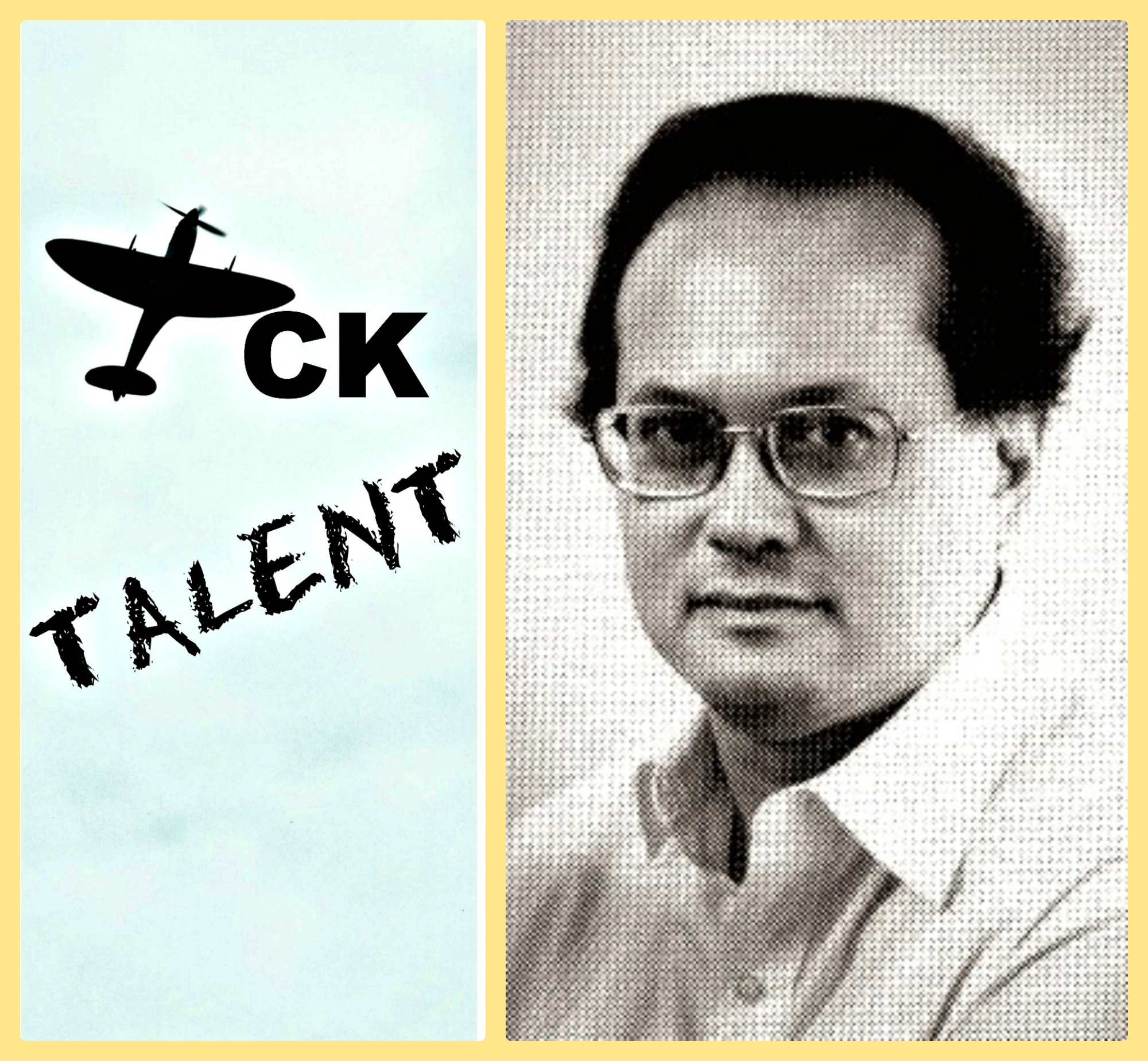
4 observations after 3 years of holding up a mirror to expat (& repat) life

Las Meninas, by Diego Velázquez [Public domain], via Wikimedia Commons

Las Meninas, by Diego Velázquez [Public domain], via Wikimedia Commons

Earlier this month, I wrote a post in celebration of the Displaced Nation’s third birthday, which occurred on April 1st.

For three years we’ve held up a mirror, as it were, to what we’ve been calling the displaced life, writing and commissioning posts on what motivates people to venture across borders to travel and live.

During the past three years, here’s what our looking-glass has revealed:

1) We aspire to be the fairest of them all.

If our site stats are anything to go by, the Fountain of Youth myth is still alive and well. We may not be searching for water with restorative powers on our travels, but we never tire of reading about Jennifer Scott’s top 20 lessons she learned from Madame Chic while living in Paris, TCK Marie Jhin’s advice on Asian beauty secrets, or my post summarizing beauty tips I picked up on two small islands, England and Japan (three of our most popular posts to date). Heck, even 5 tips on how to look good when you backpack still gets plenty of hits.

2) We mostly just want to have fun.

The popularity of two of Tony James’s Slater’s posts—one listing his five favorite parties around the world and other other telling the tale of his attempt to overcome language barriers in pursuit of an Ecuadorian woman—suggest that good times and love still rank high on the list of reasons why people opt for the road much less traveled. That said, some of us worry about going too far with the latter, if the enduring popularity of my post four reasons to think twice before embarking on cross-cultural marriage is anything to go by.

3) But we love hearing stories about international travelers with a higher purpose.

Most of us do not venture overseas in hopes of changing the world, but we are inspired by tales of those who once did—how else to explain the golden oldie status of 7 extraordinary women with a passion to save souls? And our fascination with the international do-gooder of course continues to the present. Kate Allison’s interview with Robin Wiszowaty, who serves as Kenya Program Director for the Canadian charity Free the Children, still gets lots of hits, as does my post about Richard Branson and other global nomads who delve into global misery. Perhaps we like to bask in reflected glory?!

4) Last but not least, we think we know things other people don’t.

Indeed, the most common phenomenon that has occurred when holding up our mirror to international adventurers is to find our mirror reflected in theirs, and theirs reflected in the lives of people they depict, ad infinitum, in a manner not unlike a Diego Velázquez painting (see above). In my view, this mise en abyme owes to the conviction among (particularly long-term) expats that in venturing so far afield, they have uncovered things about our planet that are worth examining, reporting, and creating something with, be it a memoir of what they’ve experienced (think Jack Scott’s Perking the Pansies: Jack and Liam Move to Turkey, Janet Brown’s Tone Deaf in Bangkok, or Jennifer Eremeeva’s soon-to-be featured Lenin Lives Next Door: Marriage, Martinis, and Mayhem in Moscow), a novel based on their overseas adventures (think Kate Allison’s Libby’s Life or Cinda MacKinnon’s A Place in the World), and/or an art work that springs from what they saw and felt when living in other cultures (eg, Elizabeth Liang’s one-woman show about growing up a TCK).

In short, although many of us can relate to Alice’s feeling of having stepped through the looking glass, we also aren’t afraid to hold up a looking glass to that experience. I often think of Janet Brown telling us she almost went home “a gibbering mess” upon discovering that her Thai landlord was spreading salacious rumors about her, but the point is, she survived to tell us about the experience in her gem of a book. Surely, that’s the kind of hero/ine Linda Janssen has in mind for her self-help book The Emotionally Resilient Expat?

* * *

No doubt there are even more insights our three years of running the Displaced Nation have revealed, but I’ll stop here to see what you make of this list of traits. Does it strike you as being accurate, or perhaps a bit distorted? (Hmmm… Given this site’s proclivity for humor and sending things up, how can you be sure this isn’t a funhouse mirror and I’m not pulling your leg? Har har hardy har har.)

STAY TUNED for next week’s fab posts.

If you enjoyed this post, we invite you to register for The Displaced Dispatch, a round up of weekly posts from The Displaced Nation, with seasonal recipes, book giveaways and other extras. Register for The Displaced Dispatch by clicking here!

Related posts: