The Displaced Nation

A home for international creatives

Tag Archives: Italy

Trevi Fountain blesses American woman’s coins, granting her true love, a new life abroad, and now a book (we’re giving it away!)

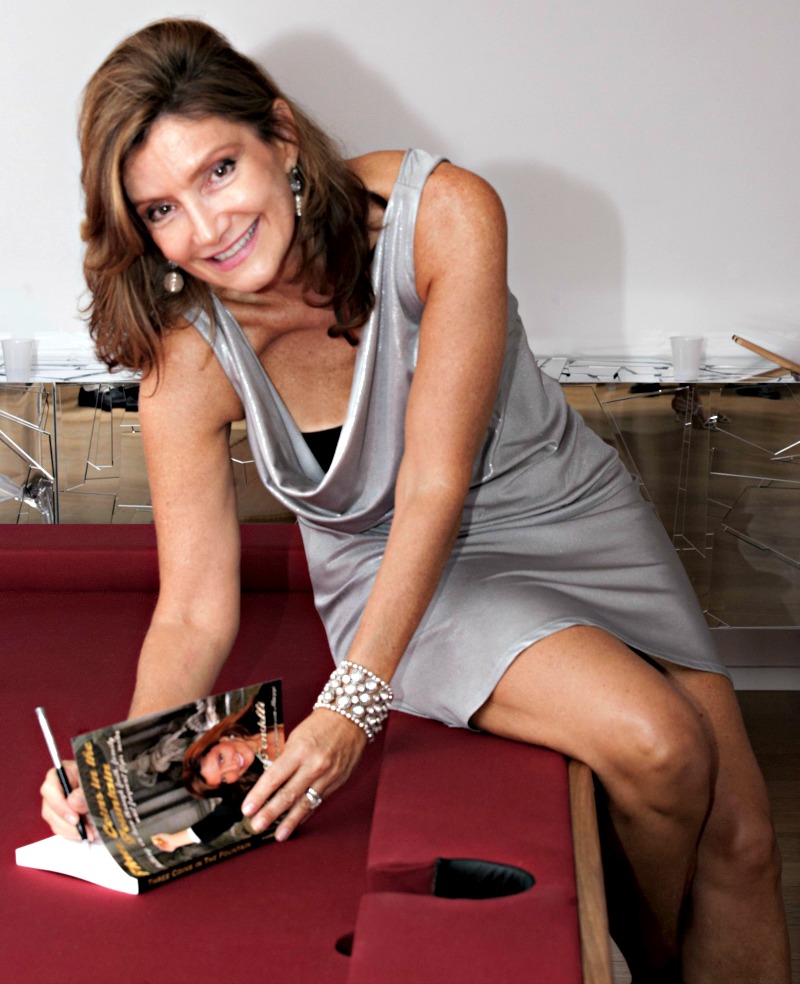
Catherine Tondelli book signing photoWhile an expat in Japan, I mastered the ritual of tossing coins into the offering box, or saisenbako, at the Shinto shrine or Buddhist temple while clapping twice (to attract divine attention) and then making a short prayer.

In the West, of course, we toss coins into fountains and make a wish, but I’d never been one for doing that.

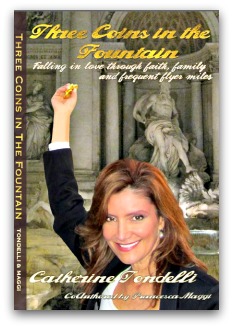
I might start trying it, though, now I’ve read Catherine Tondelli’s memoir, Three Coins in the Fountain, which recounts the luck she had in finding a mate the moment she tossed three coins into the Trevi fountain in the Città Eterna.

Sounds like a pitch for a Hollywood film, doesn’t it? Except, wait a minute, that film has already been done (in the 1950s)!

And it’s real life we are talking about here, not the movies.

Besides, Tondelli has kindly granted me three wishes:

  1. She will answer some questions about her memoir as well as her writing process (see below).
  2. She will GIVE AWAY TWO COPIES (hard copy or Kindle) to the two readers who toss in the best comment below.
  3. She will make the book available for free download for a short period—to be revealed at some point in our weekly Displaced Dispatch. (What? Not a subscriber? SIGN UP NOW!)

Before we start, I should mention that Tondelli’s book has been likened to another book recounting travels in the wake of divorce: Eat, Pray, Love, by Elizabeth Gilbert. But for me, a half-Italian American, Tondelli’s more restricted itinerary makes a a lot more sense. Who needs India and Bali when you can easily get the whole package—great food, a renewed faith in relationships and family, and love—in Bella Italia?

Like me, Tondelli is half-Italian, and I like to think it’s that ancestry that made her realize the truth of Madonna Louise Ciccone’s assertion: “Italians do it better.”

* * *

3-Coins-in-Fountain-by-Catherine-Tondelli_dropshadowWelcome, Catherine. I read your book not long after I’d finished Imperfect Pairings, by Jackie Townsend, which we featured in this space this past November. But that was an autobiographical novel based on Jackie’s marriage to an Italian man. So here’s my question: did you ever consider telling your story as fiction, or perhaps using it to develop a film script for a romantic comedy?
I originally thought about writing it as a novel, but my story was so unique and it gave so much hope to women who have given up all hope of ever finding the man of their dreams after 40 years old. Most people would never believe that stories like this really do happen and that true love will find you as easily as tossing some coins in a fountain. I also felt that many people could relate to my crazy stories of growing up in a large family. In the 1960s it was normal to have families of seven or more children; but, with the exception of Cheaper by the Dozen, there is very little written about large families. You have a lot of crazy stories when you grow up with ten siblings!

Yes, I noticed in the press release for the book that you grew up in Chicago as one of 11 kids who were left behind by a deadbeat, jazz musician dad. Can you tell us a little more about your relationship with the man who bequeathed you the surname “Tondelli”? After all, he features in the book quite a bit as well.
I had a very challenging relationship with my father and harbored resentment towards him for many years. I was only 12 years old when he walked out on my mother. It had a huge impact on the relationships I had and the men I chose. A daughter’s first bonding with any man is with her father: he is her first boyfriend, role model for the men she chooses. We often repeat what we know rather than what we want: we need “familiar,” even if it’s unhealthy. I kept choosing unsuitable men until fate stepped in and finally tossed me a “get a good man” coin to throw in the Trevi fountain.

Did you and your father ever reconcile?
I didn’t speak to him for twenty years. We finally reunited when I was attending a conference in Las Vegas and he was a musician playing on the strip. I called him and we had dinner together. We hugged and kissed at the end of the evening: it was a huge healing moment in my life. I was never as close to him as I was to my mother but we had a good relationship up until the day he passed away one year ago. Writing about him also helped me to heal.

Sono pazzo di te (I’m crazy about you…or am I just crazy?!)

Now turning to the man who would become your husband, the handsome and irrepressible Fausto. Since romance is a big part of what your book is about, I’d like to recount the first moment when the pair of you set eyes on each other. Newly divorced, you were traveling in Italy with your mom and had by that time reached Rome and the Fontana di Trevi, where your mother handed you three coins and urged you to wish for a nice man to come into your life. At that very moment, you heard an Italian man say: “Eeffa you wanta your wish to comb true, you avv to trow the coins witah your layft (h)and as eet’s closer to your (h)art…”
Yes, and then he asked if I knew “de meaning of da tree coins”:

“Da first coin, you find your love in Rome, da second coin, you return to Rome and the t(h)ird coin, you marry in Rome.”

And that’s what happened: he and I fell in love, I returned, and we got married.

Chi ama me, ama il mio gatto (Whoever loves me, loves my cat)

Jackie Townsend entitled her book “Imperfect Pairings” because she thinks Americans have an idyllic view of cross-cultural marriage with Europeans, thinking it sounds very romantic—whereas the reality tends to be culture clash after culture clash. You seem to believe in the romance while also acknowledging there were hurdles along the way. After you got over assuming Fausto was gay, you suspected you might be just one in a long line of fountain pick-ups. And even after he at last won your trust, you and he had to struggle to get used to each other’s habits. He did not take well at first to sleeping with your beloved Siamese cats, for instance.
Three Coins is not your stereotypical girl-on-holiday-meets-man-of-her-dreams-and-lives-happily-ever-after. Yes, we did meet on my trip to Italy, but falling in love and moving to Italy was the last thing I’d expected. I came to Italy only after I had worked for three years in London and only when finding a good job in Rome. And when he proposed, I called my sister.

I like that you put a map at the beginning of the book, showing all the destinations you and Fausto traveled to together, before you decided to live in the same place. I presume Italy and Italian culture were an adjustment?
Even though I grew up in an Italian American household, the cultural learning curve for me was huge.
My mother descends from Irish stock, and Fausto couldn’t believe his ears when I told him my Irish grandmother had put money aside in her will to host a luncheon following her funeral for all her friends and family. When his father passed away, we went down to the morgue to say our last goodbye and then off to the church and finally the cemetery, all within two hours. No lunch, no funeral home, no photographs—it was all too fast, no time to mourn to grieve with family or friends. A real Mork & Mindy moment for me.

Was that your most displaced moment: when you thought, what’s a nice girl like me doing with an Italian?
That’s one, and another would be the Christmas after we moved into our new palazzo in Rome. I went to our five neighbors in the building and brought them Christmas cookies I made and a bottle of Spumante. Fausto looked at me with all my plates of cookies and bottles of Asti in my hand and said: “My love, what are you doing??” I went on to explain that we always bring something over to the next door neighbors in America for Christmas. He just stood there and smiled and said “We don’t do that in Italy.” I said, well, we’re going to start now!

Can you also pinpoint your least displaced moment, the first time you realized you felt much more comfortable with him and in Italy than you do with a man from your own culture in the U.S.?
I think it was when there was a Lazio (Rome) football game on TV and instead he took me to see a classical music concert at the Auditorium. He wasn’t telling me all night how much he was giving up for me…he really enjoyed the concert! I am a big baseball fan, not soccer. I was thrilled.

Non si serra mai una porta che non se n’apra un’altra (When one door closes another opens)

Moving on to the writing of the book: What was the most difficult part of the writing process?
Being constantly turned down by traditional publishers. Also, people I knew who already had books published weren’t very encouraging. Luckily, I didn’t let them get me down. After shopping it around for about six months, I decided to self publish. I realized with all my marketing and PR experience I could do a better job then they could in promoting my book in getting it to the right audience.

I see that you’ve listed Francesca Maggi as a co-author. How did that relationship work?
I was lucky as she was an editor and also an author and a friend. She had just published Burnt by the Tuscan Sun, and I asked for her help on the editing process. I gave her my manuscript and she polished and refined it pointing out my weaknesses and suggested options to strengthen those areas. She was instrumental in getting the flow right and helped with the technical elements. She was a natural choice for me as we share a common love of Italy and America, and she knew my husband well.

Can you offer any advice for others who are writing memoirs and hoping to publish them?
Don’t get discouraged. Publishing a book is not easy but if you have a good story, you now at least have options to get it out there. I love this quote by women’s fiction writer Jennifer Weiner:

The difference between people who believe they have books inside of them and those who actually write books is sheer cussed persistence—the ability to make yourself work at your craft, every day—the belief, even in the face of obstacles, that you’ve got something worth saying.

What audience did you have in mind for the book, and has it been reaching those people?
I really thought the target would be women between 20 and 60 (I do get a lot of emails from women like myself, and am happy they can relate), but I have been amazed at how many men also have written to me to say how much they enjoyed reading it. Obviously anyone who loves Italy, old-time romance, or stories of expat life in Europe would find it entertaining.

What do men like about the book?
I’ve had some nice comments from men who said that they were taking notes on Fausto’s techniques… Many of them also grew up in a large family. Also, Fausto was still a bachelor at 50. His story, too, can be inspiring!

Living La Dolce Vita

In your book you question whether Americans have their values in the right place given that we take so little vacation compared to people in Europe. Have you continued to feel this way about the U.S. since marrying Fausto and settling down in Rome?
Two years ago I decided to live like the Romans do and started working for myself so I could spend more time in the US visiting family and friends and also have more time to enjoy La Dolce Vita.

Do you think you could come back to live in the United States? What would be the adjustments?
After living in Italy for more than 12 years it would be very difficult for me to return to live in the US. Fausto and I have discussed moving back to California as he also acts in film and there are many more opportunities, but then we thought: how can we go and live in a city where they close the restaurants at ten o’clock? It would be very difficult to replace our lifestyle in the US. That said, I would love to transport the US postal office here as Italy still doesn’t have postal stamp machines. I bring my book and my computer now when I go to the post office as I know I’ll be spending the day there.

10 Questions for Catherine Tondelli

Finally, I’d like to ask a series of questions that I’ve asked some of our other featured authors, about your reading and writing habits:
1. Last truly great book you read: Blood from a Stone, by Donna Leone, part of her crime series set in Venice.
2. Favorite literary genre: Biographies or autobiographies: real-life stories are always so much more interesting than anything you could make up. That said, I also enjoy reading fiction.
3. Reading habits on a plane: I usually have long flights as my mother lives in San Diego and I fly from Rome three or four times per year to see her couple that with all the travel I do for my work (am working on events in Dubai, Nairobi, Singapore and London at the moment). I always have three or four books in my library at home that I wait eagerly to put in my carry-on bag for my long, hopefully peaceful journey. I am old fashioned and still like to feel the paper when i read a book.
4. The one book you’d require President Obama to read, and why: Jimmy Carter’s book Our Endangered Values: America’s Moral Crisis. I believe that Jimmy Carter has been one of our great leaders yet he is so humble. He was my 95-year-old grandmother’s favorite president. He tells us that for example the USA gives far less foreign aid to developing countries than most people imagine. And, much of this aid goes to certain select countries whose loyalty we are trying to buy rather than because we want to help the poor. The book opened up my eyes to understand how we are perceived internationally. It will give Obama a good reminder that values and morals are more important than being powerful.
5. Favorite books as a child: Charlotte’s Web, The Adventures of Tom Sawyer
6. Favorite heroine: I have many but at the moment it is Malala, the girl who stood up for education and was shot by the Taliban and survived.
7. The writer, alive or dead, you’d most like to meet: Beatrix Potter. I loved her books as a child, and she was also one of the early pioneer woman who broke the male barrier in publishing.
8. Your reading habits: I like to read in bed with my two Siamese cats (Stella and Luisa) on my lap.
9. The book you’d most like to see made as a film: Three Coins in the Fountain, of course!
10. The book you plan to read next: E-Squared: Nine Do-It-Yourself Energy Experiments That Prove Your Thoughts Create Your Reality, by Pam Grout. She provides experiments that prove our thoughts really do create our reality.

* * *

Thanks so much, Catherine. Readers, your turn! Any COMMENTS or QUESTIONS for Catherine? What would YOU wish for with your three coins, having heard her story? Come on, Valentine’s Day is coming! Surely, someone out there aspires to be the next heart wearing the valentine of the Frank Sinatra song?

STAY TUNED for tomorrow’s TCK TALENT column, by Lisa Liang.

If you enjoyed this post, we invite you to register for The Displaced Dispatch, a round up of weekly posts from The Displaced Nation, with seasonal recipes, book giveaways and other extras. Register for The Displaced Dispatch by clicking here!

Related posts:

2013 Holiday Special: Notable books for, by and about expats

Looking for last-minute gifts—or have your holiday celebrations brought you to the point where you might need an escape for yourself?

In the tradition of looking back at the past year’s highlights, I present, on behalf of the Displaced Nation team, a list of books for, by, and about expats that were featured in some way on this site in 2013.

Click on the category that interests you:

  1. FICTION
  2. MEMOIRS
  3. HANDBOOKS & GUIDEBOOKS
  4. COOKBOOK (singular because we have only one!)
  • Books in each category are arranged from most to least recent.
  • Unless otherwise noted, books are self-published.

Go on, download a few! It’s the time of the year to be generous to one’s fellow human beings. That said, on the Displaced Nation it’s always the season to support the creative output of those who’ve embraced the life of global residency and travel.

* * *

Fiction
Shemlan Ebook_coverShemlan: A Deadly Tragedy (November 2013)
Author: Alexander McNabb
Genre: International thriller
Synopsis: The third in McNabb’s Levant Cycle, Shemlan tells the story of a retired British foreign service officer who, dying from cancer, returns to Beirut in hopes of meeting the Lebanese love of his youth one last time. But then his past catches up with him, threatening to do him in before the disease does—until British spy Gerald Lynch gallops to the rescue…
Expat credentials: Born in London, McNabb has lived in the Middle East for more than a quarter century. He often receives praise for getting the historical and cultural details right in his books.
How we heard about: We encountered McNabb a year ago when we were doing a series of food posts! We love his books and are giving away Shemlan this month, as well as doing an offer for Displaced Dispatch subscribers on all three books in the cycle. Check it out!
ImperfectPairings_cover_pmImperfect Pairings (May 2013)
Author: Jackie Townsend
Genre: Women’s fiction
Synopsis: American career woman Jamie had not intended to fall in love—and to a foreigner no less, a man who tells her his name is Jack, short for John, but it’s really short for Giovanni. Insanely handsome and intense but unreadable, Giovanni has left a complicated family life back home in Italy. Is this more than Jamie signed up for?
Displaced credentials: In real life, Townsend is married to an Italian and has spent 16 years backing and forthing to her husband’s family in Italy.
How we heard about: ML Awanohara, who rightly or wrongly considers herself something of an expert on cross-cultural marriage, read the book on her Kindle and was so impressed with its depiction of cross-cultural relationship woes that she asked Townsend to be our featured author of November. Read the interview.

SuiteDubai-cover_dropshadowSuite Dubai (April 2013)
Author: Callista Fox
Genre: “New adult” lit
Synopsis: As Callista tells it, the book grew out of a story that entered her head that wouldn’t go away: “There was this girl, young, vulnerable, naive, walking along a concourse in an airport, among men in white robes and checkered scarves and woman in black gauzy material. Where was she going? What would happen to her there?”
Expat credentials: Fox moved to Saudi Arabia when she was eight and lived there off and on until turning 19. She went to boarding schools in Cyprus and Austria. Now back in the United States, she thinks of herself as an adult Third Culture Kid, or TCK.
How we heard about: Noticing our fondness for serial fiction (see Kate Allison’s book below), Fox sent us a note saying she’d written a serial novel reflecting her experience of growing up in the Middle East. We responded by asking if we could publish her series in even smaller parts. Part 1 and Part 2 have already gone up, and there are six more parts to come in 2014. Warning: Highly addictive!
Libby'sLifeTakingFlight_coverLibby’s Life: Taking Flight (April 2013)
Author: Kate Allison
Genre: Women’s fiction
Synopsis: 30-something Libby Patrick is just regaining some post-baby control over her life when a change in husband’s job means they must move from their English home to Woodhaven, a town in rural Massachusetts. The book is Libby’s journal covering the first year of her life as trailing spouse.
Expat credentials: Born and raised in Britain, Kate has lived in the United States with her family for almost two decades.
How we heard about: We were the first to know! Kate is a founding member of the Displaced Nation and has been publishing regular episodes of Libby’s Life (on which the book is based) since the blog began. She has accrued countless fans, the most faithful of whom is Janice. (Libby to Janice: xoxo for your support in 2013!)

APlaceintheWorld_coverA Place in the World (March 2013)
Author: Cinda Crabbe MacKinnon
Genre: Romance
Synopsis: Third Culture Kid Alicia meets a young Colombian man at college in the United States. She follows him to Bogotá and the pair end up marrying and settling on his family’s remote coffee finca (farm) in the Andes. Educated as a biologist, Alicia revels in the surrounding cloud-forest. But then her idyllic life starts to unravel…
Expat credentials: Crabbe MacKinnon grew up in several countries as a military brat and diplomatic kid and, though she has since repatriated to the United States, still thinks of Latin America as home.
How we heard about: Crabbe MacKinnon commented on one of Elizabeth Liang’s “TCK Talent” posts and ended up becoming October’s featured author. Read the interview. We love her and her work, and are sure you will, too!
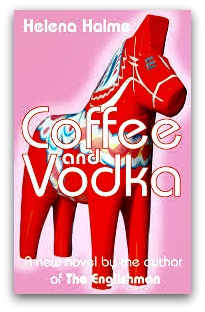
CoffeeandVodka_coverCoffee and Vodka (March 2013)
Author: Helena Halme
Genre: Women’s fiction
Synopsis: A Finnish family emigrate to Sweden in the 1970s and find themselves in turmoil, caused partly by the displacement, but also by the cracks in family dynamics. At its heart, the book reveals what it is like for a young girl to be uprooted and transplanted to a country where she doesn’t speak the language and is despised for her nationality.
Expat credentials: Halme grew up in Tampere, central Finland, and moved to Britain at the age of 22 via Stockholm and Helsinki, after marrying “The Englishman” (how she always refers to him on her blog, Helena’s London Life). She spent her first ten years in Britain working as journalist and translator for the BBC. She and The Englishman now live in North London.
How we heard about: Halme is a big favorite of ours! She was one of our earliest Random Nomads as well as serving as an expat style icon back in the days when we covered fashion. More recently, Kate Allison reviewed Halme’s first book: The Englishman: Can Love Go the Distance?, and we did a giveaway of Coffee and Vodka. And that’s not all: Halme’s latest book, The Red King of Helsinki, received an “Alice” Award in July. (As noted then, the Alices could hardly ignore a book of that title!)

MonkeyLoveAndMurder_dropshadowMonkey Love and Murder (February 2013)
Author: Edith McClinton
Genre: Adventure mystery
Synopsis: A jungle environment in Suriname (spider monkeys and all) is the setting for a closed-door mystery surrounding the death of the renowned director of the International Wildlife Conservation followed by the machete murder of one of the researchers. None of this bodes well for poor Emma Parks, who has joined the research project on a whim. (So much for that budding primatologist career!)
Expat credentials: MacClintock volunteered for the Peace Corps in Suriname for two years, and joined a monkey research project afterwards.
How we heard about: One of our Random Nomads, Patricia Winton, referred us to the now-defunct blog Novel Adventurers, where Edith was one of the writers. We invited her to guest blog for us about the muses behind her monkey mystery.

ArchangelofMercy_dropshadowArchangel of Mercy (Berkley – Penguin Group, December 2012)
Author: Christina Ashcroft
Genre: Paranormal romance
Synopsis: The first storyline in Ashcroft’s new series focusing on a group of angels and archangels and the lives of the people they come in contact with every day.
Expat credentials: Ashcroft is an expat Brit who now lives in Western Australia with her high school sweetheart and their three children.
How we heard about it: We encountered Christina online and asked her to be one of our Random Nomads for a Valentine’s Day special. In that interview, she said she attributes her success as a writer at least in part to her expat status: “I’ve often wondered whether my career would have followed the same route if we’d stayed in the UK. While I’ve always loved writing it wasn’t until we moved to Australia that I decided to to write with the aim of publication.”
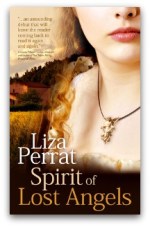
SpiritofLostAngels_dropshadowSpirit of Lost Angels (May 2012)
Author: Liza Perrat
Genre: Historical novel
Synopsis: Set against a backdrop of rural France during the French Revolution, the story centers on Victoire Charpentier, a young peasant woman whose mother was executed for witchcraft and who herself suffers abuse at the hands of a nobleman. Can she muster the bravery and skill to join the revolutionary force gripping France, and overthrow the corrupt aristocracy?
Expat credentials: Liza grew up in Wollongong, Australia, where she worked as a general nurse and midwife for fifteen years. When she met her French husband on a Bangkok bus, she moved to France, where she has been living with her husband and three children for twenty years.
How we heard about: The redoubtable JJ Marsh (see below) interviewed Perrat on writing a location to life, for her monthly column, “Location, Locution.”

BehindClosedDoors_dropshadowBehind Closed Doors (June 2012)
Author: JJ Marsh
Genre: Crime mixed with literary fiction
Synopsis: A smart, technologically sophisticated mystery set in Zürich and surrounding countries, featuring a bipolar detective named Beatrice Stubbs, and quite a few surprises… NOTE: JJ Marsh was listed in the Guardian “readers’ recommended self-published authors” this year, for Behind Closed Doors.
Expat credentials: JJ Marsh grew up in Wales, Africa and the Middle East, where her curiosity for culture took root and triggered an urge to write. After living in Hong Kong, Nigeria, Dubai, Portugal and France, she has finally settled in Switzerland.
How we heard about: We owe displaced author Helena Halme (see above) a king’s ransom for telling us about JJ, who since April has been contributing a monthly “Location, Locution” column. Don’t miss her posts under any circumstances! Highly stimulating and cerebral.
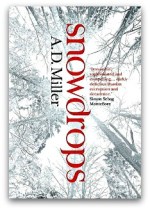
snowdrops_dropshadowSnowdrops (Anchor/Random House, February 2011)
Author: AD Miller
Genre: Literary fiction
Synopsis: Lawyer Nick Platt trades his dull British life for pushing paper in Moscow at the turn of the 21st century. He is soon seduced by a culture he fancies himself above. Snowdrops was shortlisted for the Man Booker Prize in 2011.
Expat credentials: British born and educated at Cambridge and Princeton, Andrew Miller joined The Economist and was appointed, in 2004, to become their Moscow correspondent. He covered, among other things, the Orange Revolution in the Ukraine.
How we heard about: JJ Marsh interviewed AD this past July about bringing foreign locations to life in fiction.
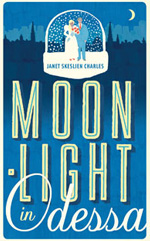
odessa_brit_cover_smallMoonlight in Odessa (Bloomsbury, August 2010)
Author: Janet Skeslien Charles
Genre: Women’s fiction
Synopsis: With an engineering degree and perfect English, Daria longs for a life beyond Odessa, Ukraine. And then she moonlights for a dating agency that facilitates hasty, long-distance matches between lustful American men and impoverished Ukrainian women. Her big chance?
Expat credentials: Skeslien Charles went to Odessa, Ukraine, as a Soros Fellow, living through blackouts, heatless winters, corruption and so on. She stayed for two years before returning to the U.S. Then she found a job in France and met her husband. She now lives in Paris but leads a multicultural life. As she puts it: “The novel is set in Odessa, Ukraine. My agent is English. My editor’s assistant is Japanese-Danish, my copy editor is from New Zealand. I’m American. The book was written in France and typeset in Scotland. My first fan letter came from a Swede.”
How we heard about: JJ Marsh picked Skeslien Charles’s brain on “location, locution”, in her November column.

Memoirs

AddictedtoLove_cover_dropshadowAddicted to Love (April 2013)
Author: Lana Penrose
Synopsis: Penrose is the kind of Australian who throws herself wholeheartedly into adventure, which is why her years spend living in Europe have merited not one but three memoirs! This one is the third. In the first memoir (published by Penguin/Viking), To Hellas and Back, she marries the love of her life, an Australian Greek, and accompanies him back to Greece, only to find him becoming increasingly Greek and herself increasingly isolated. In the second, Kickstart My Heart, she moves to London, single and desperate to find love again. And in this third memoir, she returns to Greece, where she encounters a seemingly perfect man named Adonis. (Hey, she never gives up!)
Expat credentials: From Sydney originally (she is back there now), Penrose lived in Athens for five years before moving to London.
How we heard about it: We happened across Penrose online and asked her to guest-post for us a year ago on what it was like to spend Christmas in Greece. At that time, we also did a giveaway of her first memoir. We invited her back this past April to write about Addicted to Love.

MagicCarpetSeduction_cover_pmMagic Carpet Seduction: Travel Tales Off the Beaten Path (May 2013)
Author: Lisa Egle
Synopsis: Travel with the author to China, Latin America, Turkey and the Middle East, and watch while she takes risks off the beaten path, and dances with strangers in strange lands…
Expat credentials: Egle characterizes herself as a lover of offbeat travel. She’s been to 36 countries on five continents and has been an expat twice: in Ecuador for a year and half, and in Spain for a year.
How we heard about: We got to know Egle first through her blog, Chicky Bus, and when we heard she’d put out a book, asked her to be one of our featured authors. Read the interview.

Pilgrimage-Cover_pmRunning the Shikoku Pilgrimage: 900 Miles to Enlightenment (Volcano Press, January 2013)
Author: Amy Chavez
Synopsis: After losing her job at a Japanese university, Chavez undertakes a solo journey running Japan’s 900-mile Buddhist pilgrimage, a distance equal to running from San Diego, California to Oregon. A Buddhist priest who is also a friend gives her “cosmic tools” to take with her.
Expat credentials: American expat Amy Chavez has been a columnist for Japan’s oldest English-language newspaper, The Japan Times, since 1997. She lives with her husband and cat on Shiraishi Island in Japan’s Seto Inland Sea.
How we heard about: We interviewed Chavez about her pilgrimage, and what it took to write the book, in April.

Don'tNeedtheWholeDog_dropshadowDon’t Need the Whole Dog! (December 2012)
Author: Tony James Slater
Synopsis: In the summer of 2004, Slater went to Ecuador, thinking that the experience would turn him into a man. He went back to his native England fueled by a burning desire to do something that mattered—and, ideally, to get the heck out of England in the process. He dreamed of going to Thailand and becoming a professional diver. This is the story of what happened next.
Expat credentials: A Brit, Slater now lives in Perth, Australia, with his Australian wife.
How we heard about: Slater made himself known to us for failing to include his first book, The Bear That Ate My Pants: Adventures of a Real Idiot Abroad, about his time volunteering at an animal shelter in Ecuador, in our 2011 holiday round-up. He probably should have left well enough alone, though, as next thing he knew, we had him writing for the Displaced Nation. His post on the world’s best parties remains one of our most popular!

TruckinginEnglish-dropshadowTrucking in English (December 2012)
Author: Carolyn Steele
Synopsis: This is the tale of what happens when a middle-aged mum from England decides to actually drive 18-wheelers across North America instead of just dreaming about it. Nothing goes well, but that’s why there’s a book.
Expat credentials: Born and bred in London, Carolyn and her son are now Canadian citizens and live permanently in Kitchener, Ontario.
How we heard about: One of our featured authors in 2012, Martin Crosbie, sent Steele our way, and Kate Allison reviewed her book in March. Steele later contributed an amusing post to our “New vs Olde World” series, about the difficulties of mastering the Canadian “R”.
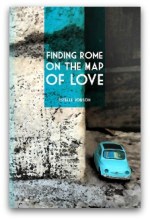
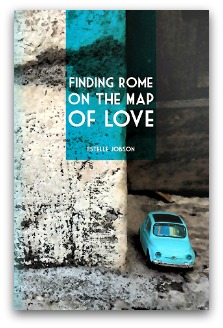
Finding-Rome-on-the-Map-of-Love_dropshadowFinding Rome on the Map of Love (September 2012)
Author: Estelle Jobson
Synopsis: When her Italian diplomat boyfriend gets posted to Rome, Jobson throws up her career in publishing in her native South Africa to accompany him. There, she reinvents herself as Signora Stella, a casalinga (housewife). The book captures a year’s worth of quirky observations about life amongst the Italians.
Expat credentials: Originally from South Africa, Jobson now lives in Geneva, where she works as a writer and editor.
How we heard about: Jobson was our featured author in February. Her book and sense of humor are terrific!
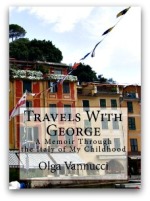
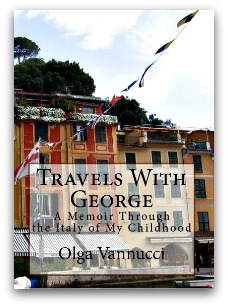
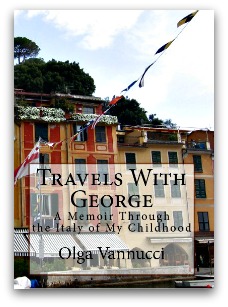
Travels with George Book CoverTravels with George: A Memoir Through the Italy of My Childhood (April 2012)
Author: Olga Vannucci
Synopsis: In five separate trips to Italy with her young son, George, in tow, Vannucci strolls and hikes through the landscapes of her Italian childhood. She looks at Italy both as local native and awed visitor.
Expat credentials: Born in Italy, Vannucci lived in Brazil and came to the United States to attend Brown University. She lives in rural New Jersey with her son.
How we heard about: Vannucci was our featured author in September. Read the interview. We loved this quote from her son: “Where are we going? How much longer? I have something in my shoe. I want to go back. Why are we doing this? Do you know where we are? Do you know where we’re going? Mammaaaaaaa!”
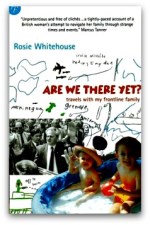
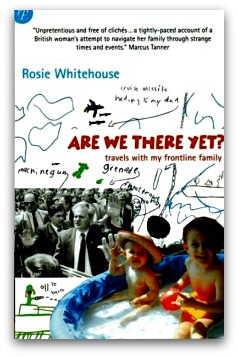
AreWeThereYet_cover_dropshadowAre We There Yet? Travels with My Frontline Family (May 2009)
Author: Rosie Whitehouse
Synopsis: A vivid, funny, and very human account of the author’s travels with her family through war-torn Europe.
Expat credentials: Whitehouse spent five years as a housewife in the war-torn Balkans married to a correspondent of The Economist, caring for their growing family.
How we heard about: We happened across Whitehouse’s work online and asked her to be a featured author last summer. Read the interview. She’s absolutely fascinating, as one might expect of the kind of woman who trails her spouse into a war zone.

HoneyfromtheLion_coverHoney from the Lion: An African Journey (Dutton Adult, 1988)
Author: Wendy Laura Belcher
Synopsis: Brought up in Africa, Belcher returned to Ghana in the early 1980s to work with a “national linguistic group” that is spreading literary into rural areas by translating the Bible into native languages. A coming-of-age story that was called “lyrical” by the New York Times when first issued.
Expat credentials: An adult Third Culture Kid, Belcher grew up in East and West Africa, where she became fascinated with the richness of Ghanaian and Ethiopian intellectual traditions. She is now an assistant professor of African literature at Princeton.
How we heard about: Elizabeth Liang interviewed Belcher for her TCK Talent series.

Handbooks & Guidebooks

cathy_feign_coverKeep Your Life, Family and Career Intact While Living Abroad, 3rd Ed. (Stvdio Media, September 2013)
Author: Cathy Tsang-Feign
Synopsis: A survival manual for those who are living abroad, with real-life examples and easy-to-understand explanations about the unique issues faced by expats: from preparing to move, to daily life overseas, to returning home.
Expat credentials: Tsang-Feign is an American psychologist who lives in Hong Kong, specializing in expat psychology and adjustment issues. She has also lived in London.
How we heard about: When Kate Allison learned about the book, she decided it merited one of our “Alice” awards for the understanding displayed of the “through the looking glass” complex.
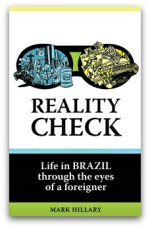
realitycheck_bookcoverReality Check: Life in Brazil through the eyes of a foreigner (September 2013)
Author: Mark Hillary
Synopsis: Targeted at those who plan on living, working or just visiting Brazil, it covers issues such as the difficulties of finding new friends, using a new language, and finding a job. Also provided is some background on the fast-changing society in Brazil that resulted in extensive street protests during 2013.
Expat credentials: Hillary is a British writer who moved to Brazil in 2010, bought a home, started a company, and has experienced both difficulties and joys.
How we heard about it: Andy Martin, another Brit in Brazil and a writer for the Displaced Nation in 2013, is a friend of Hillary’s and was jealous he’d produced a book that is not only a practical guide but also provides much of the cultural backdrop an international resident needs for a country as complex as Brazil. The next best thing, Martin thought, would be to do an interview with Hillary, which he delivered in two parts. Read Part 1 and Part 2.

TERE_cover_dropshadowThe Emotionally Resilient Expat: Engage, Adapt and Thrive Across Cultures (Summertime, July 2013)
Author: Linda A. Janssen
Synopsis: A guide for those facing the challenge of cross-cultural living, with candid personal stories from experienced expats and cross-culturals, and a wealth of practical tools, techniques and best practices for developing the emotional resilience for ensuring a successful transition.
Expat credentials: Janssen lived for several years in the Netherlands while her husband, an adult TCK, worked in the Hague. She recently repatriated to the United States.
How we heard about: We’ve had many satisfying interactions with Janssen since starting the Displaced Nation and were thrilled to hear about her new book—a natural for one of this year’s “Alice” awards, particularly as Janssen has been running a popular blog called Adventures in Expatland.

AmericanExbratinSaoPaulo_cover_pmAn American Exbrat in São Paulo: Advice, Stories, Tips and Tricks for Surviving South America’s Largest City (May 2013)
Author: Maggie Foxhole (Megan Farrell)
Synopsis: Aimed at those who are moving or traveling to São Paulo, it is designed to be a companion on the journey through the ups and down, ins and outs, and the curious roundabouts of life in that city.
Expat credentials: Megan/Maggie moved to Brazil with her Brazilian husband and their daughter. She keeps a blog: Born Again Brazilian.
How we heard about: Farrell/Foxhole was one of our early Random Nomads. She kept in touch and we were very pleased to learn about her book, which ML Awanohara read and admired for its comprehensiveness. Andy Martin, a Brit who also lives in São Paulo with a Brazilian spouse, reviewed the book for our site this past July.

101reasons_dropshadow101 Reasons to Live Abroad and 100 Reasons Not to (March 2013)
Author: Chris Alden
Synopsis: Targeted at the wannabe expat, the aim is to help you discover if living abroad is right for you. It’s an uplifting guide to the positive sides of life as an expatriate and a reality check about the challenges that relocation brings.
Expat credentials: A professional writer, Alden lived for three years in a beautiful village in the Troodos foothills of Cyprus, which resulted in his first travel guidebook: 250 Things to Do in Cyprus on a Sunny Day.
How we heard about: Alden was the recipient of one our “Alice” awards for this book. We were impressed that he offered a final, 101st reason to live abroad for those of us who, having been offered as many as a hundred reasons both for and against, still find ourselves dithering…
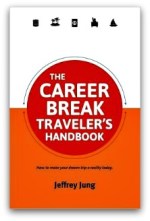
career-break-travelers-handbook_dropshadowThe Career Break Traveler’s Handbook (September 2012)
Author: Jeffrey Jung
Synopsis: Intended to inspire people to go for it and take the break they’ve been seeking from their jobs and go travel, with tips and tricks Jung learned from his own and other career breakers’ experiences.
Expat credentials: Having left the corporate ladder, Jung now lives in Colombia, where he founded his own business to help others do the same: CareerBreakSecrets.com.
How we heard about: Jung was one of our Random Nomads. He let us know about his book, and we reviewed it this past February. Not that he needed our help—it also got a shout-out in Forbes!
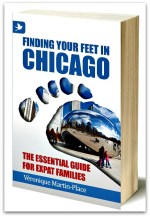
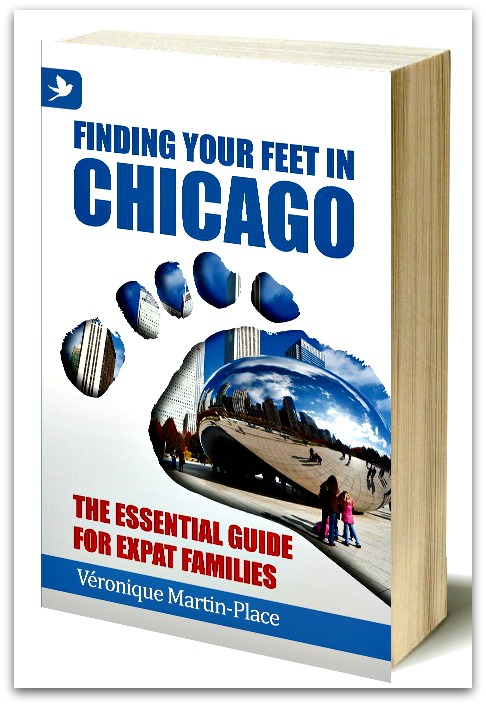
finding-your-feet-in-chicago-3D-Book CoverFinding Your Feet in Chicago: The Essential Guide for Expat Families (Summertime Publishing, August 2012)
Author: Véronique Martin-Place
Synopsis: A down-to-earth pocket guide to help expats settle into the USA’s third largest city with their families.
Expat credentials: As the wife of a French diplomat (they have two daughters), Martin-Place is accustomed to moving around the world. Chicago was one of her more enjoyable stops, but she also enjoyed Sri Lanka(!). The family is now in Shanghai.
How we heard about: ML Awanohara had interviewed Martin-Place on her blog, Seeing the Elephant. She had fun interviewing her again, this time about the process of composing a guidebook.

Cookbook

FromtheGlobalScottishKitchen_cover_tdnFrom the Global Scottish Kitchen (Self-published, November 2012)
Author: Sharon Lorimer
Genre: Cooking
Synopsis: Recipes based on Scottish cuisine but influenced by the restaurants and other kinds of cuisines Lorimer has experienced as an expat: e.g., Cock a’ Leekie Udon!
Expat credentials: Born in Scotland, Lorimer now lives in New York City and is married to an Asian American.
How we heard about it: We interviewed Lorimer about her decision to start up Doshebu, a business providing training to company employees being sent abroad on the “art” of being an expat.

* * *

Questions: Have you read any of the above works and if so, what did you think of them? And can you suggest other works to add to the list? My colleagues and I look forward to reading your comments below!

STAY TUNED for some upcoming posts, though we’ll be taking a bit of a break over the holidays!

If you enjoyed this post, we invite you to subscribe to The Displaced Dispatch, a weekly round up of posts from The Displaced Nation, plus some extras such as seasonal recipes and occasional book giveaways. Sign up for The Displaced Dispatch by clicking here!

Related posts:
For this peripatetic Argentine, now an expat in Queensland, a picture says…

Canon zoom lens; photo credit: Morguefiles. Belu in Buddha Truth Relic Temple, Singapore; photo credit: Belu.

Canon zoom lens; photo credit: Morguefiles. Belu in Buddha Truth Relic Temple, Singapore; photo credit: Belu.

Welcome back to our series “A picture says…”, created to celebrate expats and other global residents for whom photography is a creative outlet. The new series host is English expat, blogger, writer, world traveler and photography enthusiast James King, who blogs at Jamoroki and truly believes a camera is a mirror with memory…

Greetings, Displaced Nation-ers. My guest today is the 35-year-old Argentine Belu: an expat, blogger, world traveller and photography enthusiast. Belu studied industrial design at university in Argentina and then moved to Europe. Not long ago, she relocated to Australia, where she sells her designs at street markets and travels as much as her finances allow.

Belu brings her experiences and unique view of the world to her photography blog, BeluChi, and to the travel blog, Travel Tips and Pictures, where she is the main travel writer.

I have followed Belu for a short while and love the simple, down-to-earth way she brings her pictures and the stories behind them to life through her writings.

* * *

South American but with deep European roots

Hi, Belu. Thanks for agreeing to this interview. Can we begin by having you tell us: where did you live in Argentina, and when did you spread your wings, leave the nest and start your world travels?
I was born in Mar del Plata, a pretty big town located 500km south of Buenos Aires. I lived there until I was 25, and it was about that time that I became curious about travel and ended up moving to Europe.

So you got the travel bug. I can relate to that—but what really inspired you to travel?
Travelling for me is a way to get connected with people and to nature. I so love meeting people, and I knew travelling would give me that opportunity better than anything else. I love it when people tell me about their lives, their cultures and traditions, stories and dreams. I learn so much from my travels.

I know exactly what you mean. It’s quite addictive and I can see you are a compulsive globe-trotter. Tell me what countries have you visited so far?
Aside from Argentina and southern Brazil, I’ve travelled mostly around Europe: Portugal, Spain, France, Italy, Monaco, Belgium, England, Scotland and Ireland. And now, because I live in Australia, I’m starting to be more in touch with Oceania and Asia—Indonesia and Singapore, for example. I’m planning a trip to China next year, and in 2015 I hope to travel to India and some countries in Africa.

Wow, that’s quite a package! Tell us, how did you end up in Australia, and what is life like for you your new home?
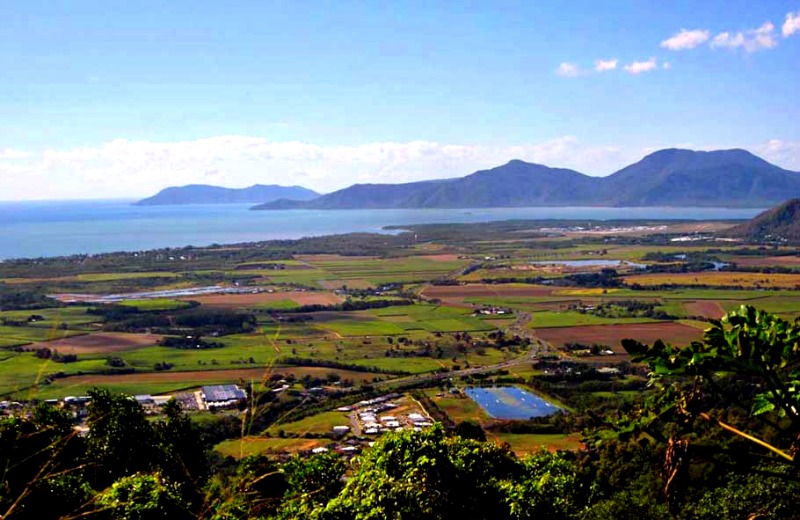
I met my partner when travelling in Australia over two years ago, when living in Barcelona. So, after going back and forth several times, we decided to live together here in beautiful Cairns, a city in the far north of Queensland. So far, so good. I believe that how you feel in a different place and culture depends mostly on how you connect and interact with the people in your new environment, at least in my case. Weather is also important to me because I’m a “sunlight” lover.

Pizza San Marco, Venice Italy. Photo credit: Belu

Piazza San Marco, Venice, Italy. Photo credit: Belu

You offered this photo—of you and all the pigeons in the Piazza San Marco in Venice—as one of your favorite shots that captures cherished memories. Thank you for sharing it. Can you tell us more about why it’s so special?
This photo brings me back to the first time my parents came to Barcelona to visit me. We went to Venice and Rome—spectacular!—and then to Lettopalena, a tiny little village up on the top of a mountain in Chieti Province, around 200km from Rome. It was the place where my grandmother was born. I met my Italian family, who are still living there. That trip was exiting because of the contrasts.

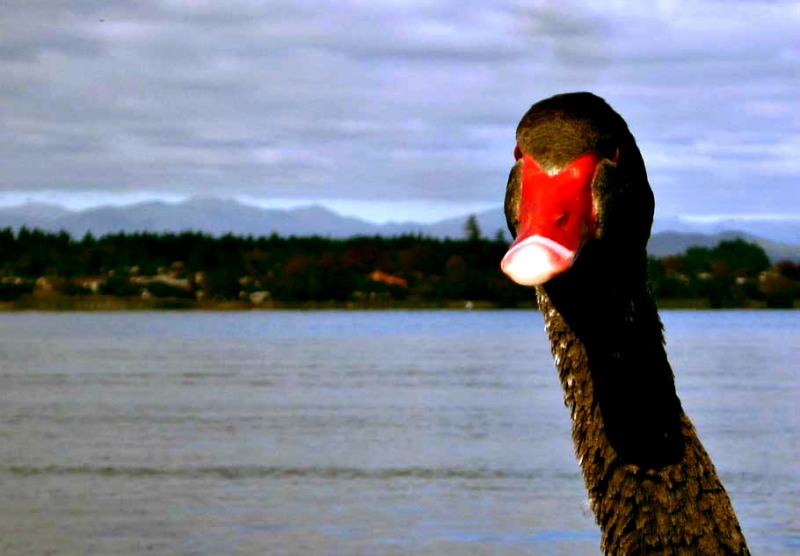
Taupo Lake, Taupo, New Zealand. Photo credit: Belu.

Black swan on Lake Taupo, New Zealand. Photo credit: Belu.

Solo travel and staying with locals

That must be a very personal piece of your life. Now moving on to your photo of a beautiful black swan on Lake Taupo in Taupo, New Zealand.
Lake Taupo is in the centre of the North Island. My trip to New Zealand was unforgettable because of the natural beauty. It was also solo-travel, so I could be more in contact with locals and travellers from everywhere. I love this kind of travel. I usually have a “tentative plan” that I hardly ever follow. I love the freedom of changing and re-organising my itinerary according to my feelings.

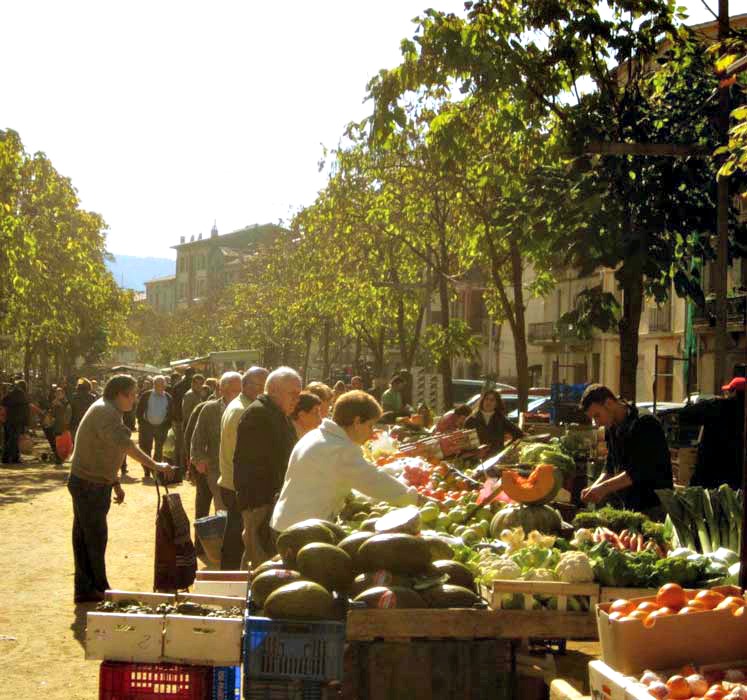
Oh! I know the feeling well. No one to nag you. Free as a bird (so to speak). Okay, so now for a photo of the everyday scene—a street market in Ripoll, Girona (one of the four provinces comprising Catalonia), Spain. My favourite country!

Street market in Ripoll, Spain. Photo credit: Belu.

Street market in Ripoll, Spain. Photo credit: Belu.

I spent a Saturday morning strolling around the heart of Catalonia, in southeastern Spain. I had the honour of staying at my friend’s parents’ home, always with locals… that made this travel special. I did visit popular tourist spots in that area, but when you are with local inhabitants, it makes the place so much more interesting and you learn so much more about their culture. They told me folk tales and stories that you’ll never find in any guidebook.

I seem to be agreeing with everything you say, but it’s difficult to argue with that. So many people travel but never really integrate with the local people. They miss so much. But we must move on now. Where were or are your favourite spots to take photographs?
My favourite spots are high viewpoints and streets.From high viewpoints you get to admire the whole picture, almost like aerial photography. I find that very exhilarating. And when I am in the streets I am close to the people and can really feel the ambiance and capture the essence of the place.

High vs low, scenery vs people

The last three photos you’ve chosen illustrate the difference between high (looking down) and low (streets at ground level) admirably:

Cairns, Queensland, Australia. Photo credit: Belu.

Cairns, Queensland, Australia. Photo credit: Belu.

Back street, Bali, Indonesia. Photo credit: Belu.

Back street, Bali, Indonesia. Photo credit: Belu.

London (near St. Paul's), England. Photo credit: Belu.

London (near St. Paul’s), England. Photo credit: Belu.

The photo of Bali is so typical of a Southeast Asian back street. And the one of London, showing a tramp walking between a dust cart and a City businessman with St. Paul’s Cathedral as the backdrop, is an absolute gem. Actually, this photo leads to my next question: do you ever feel reserved about snapping photos of people, particularly when they are conscious that you are doing so? And do you ask permission before taking people’s photographs? How do you get around any problem of language?
It usually depends on the situation and the local culture. I sometimes ask permission by words or sign language, especially if I feel the person is uncomfortable because of the camera. Fortunately, I have never had any problem about that. Most of the time people say “yes”.

That must make it easier to take natural shots; so would you say that photography and the ability to be able to capture something unique which will never be seen again is a powerful force for you?
For me the answer to that is “most definitely, yes!” When I left Argentina I, maybe unconsciously, realised what a powerful force pictures are. To be able to produce something that can never be repeated exactly is quite amazing.

Let’s get technical

Now for the technical stuff which I am not very good at. What kind of camera and lenses do you use?
I have a Canon Ixus 107 called “Anastasia”. She is always in my bag. It isn’t a professional camera but it works as it were! A useful camera for me must be compact and not too expensive, because I don’t want to be too worried about it when travelling.

Finally, do you have any advice for wannabe photographers (like me) who are travelling or living abroad?
Well, the Internet has plenty of information, videos, etc, for those in search of photography tips. But I can tell you what I do: stay curious, learn from others, and meet people.

* * *

Readers, what do you make of Belu’s experiences and her photography advice? And do you have any questions for her on her photos and/or travels? Please leave them in the comments! 

Once again, if you want to read more of Belu, don’t forget to visit her sites (see links above). You can also contact her via aquibeluchi@gmail.com.

(If you are a photographer and would like to be interviewed by James for this series, please send your information to ml@thedisplacednation.com.)

STAY TUNED for next week’s fab posts, including an interview with this month’s featured author!

If you enjoyed this post, we invite you to register for The Displaced Dispatch, a round up of weekly posts from The Displaced Nation, with seasonal recipes, book giveaways and other extras. Register for The Displaced Dispatch by clicking here!

Related posts:
Jackie Townsend’s novel examines a cross-cultural relationship up close, imperfections and all

Jackie_Townsend

Jackie Townsend in Rome (photo used with her permission)

As a veteran of cross-cultural relationships (I am now on my second marriage to someone from another country), I tend to fancy myself as something of an expert on the topic. On the one hand, I know the joys of living in an intimate relationship with someone from another culture. On the other, I am only too aware of the pitfalls, a few of which I listed in an early post that still gets lots of hits: “Cross-cultural marriage: Four good reasons not to rush into it.”

I was therefore delighted to come across the novel Imperfect Pairings, by Jackie Townsend. From the outset of the book, I could see that here is a writer who understands that marrying someone from another country not only means marrying the family—but marrying the culture, by which one means the REAL culture, not the tourist version.

The imperfect pairing at the center of Jackie’s novel are Jamie, an American career woman, and Jack/Giovanni, who received his education at MIT but is from an old Italian family. The reason he has two names? Because, when he gets to Italy, he “literally turns into another person with another name,” as Jamie informs her mother at one stage.

Unsure of the relationship at first, Jamie finds herself powerfully drawn to Jack/Giovanni. Not only is he physically attractive, but he’s a man of hidden depths, who seems to understand her better than anyone else.

Eventually, the pair get married—but it’s not a fairytale wedding in the Italian countryside. Rather, it happens in city hall—Jamie has offered to help Jack get his green card. But despite this rather unromantic beginning, the couple grow close, and Jamie gradually immerses herself in Giovanni’s life, especially after he quits his job in the United States to help out with resurrecting the vineyards on his family’s estate.

As one reviewer said of Jackie’s novel:

It’s a brilliantly-written small gem, with exquisite detail and equally exquisite crafting of language, by an American author with her own Italian husband and her own Italian experience. It’s a guidebook to Italy, and a guidebook to how Italians really live their lives.

So can love cross borders? Fortunately, Jackie has agreed to answer some questions about her own life and the book. And she has kindly offered to GIVE AWAY ONE FREE E-COPY to the person who leaves the most interesting comment!

* * *

ImperfectPairings_cover_pmHi / ciao, Jackie. Thanks so much for agreeing to be our featured author this month. First can you tell us what made you decide to write a novel focusing on a cross-cultural relationship between an American woman and an Italian man?
I am 16 years married to an Italian who came to the U.S. for university and stayed.

And you called the novel “Imperfect Pairings”–why?
I got tired hearing all the oohs and ahs: “Oh you’re married to an Italian, how wonderful!” It’s so much more complex than that, and I wanted to dispel the notion of the romantic Italian love story, but in a real and true way, which means also dispelling the romanticism of relationships. The novel is about a couple dealing with real issues and real life, and learning to love each other even more in the midst of all that.

Did writing the book help you to process your own experience of getting into a cross-cultural relationship?
My own experience of being married to a foreigner exposed me to the parallels between cultural differences and marital differences. Entering a foreign country can be like entering a relationship and vise versa. To get to know someone, to understand them, you need the cross the border into their country, the country of their mind and soul. But even if you do eventually learn their “language,” you will never speak their native tongue, not really anyway. Which leaves the question, “Is it possible to ever really know the person you love?”

How much of the book is autobiographical?
Only about thirty percent of the story is autobiographically based. It took me much longer than Jamie to truly open myself up to my Italian family. Part of my writing the book, is homage to that, and them.

The Italian wine-making industry figures large in the novel. Did that emerge from an actual experience?
My husband’s family lives outside Turin, in Northern Italy, not far from the Barolo region. They did once have a summer villa there, where they made wine, and this is what inspired me to use wine and the resurrection of the family vineyard as a catalyst for the story. I love the way Italians treat wine, casually, like a member of the family, an old friend. Wine is a relationship. It requires love and care and tending to if it’s going to survive and grow, and, still, you don’t know what that wine will ultimately be, how it will taste. It became the perfect metaphor for the book.

Why a novel and not a memoir?
I’ve always written fiction, that’s the genre that comes naturally to me. I like the freedom, the idea of letting the characters take the story where they want to go, as when Jamie and Giovanni head to Southern Italy, to Napoli, at the end of the story.

Staying on the theme of your own life and travels, how and where did you meet your Italian husband?
My husband grew up in Italy, Australia, and Bangkok. He moved to the United States for college. We met four years later at business school in Berkeley. I had no idea he was Italian. He was raised in international schools and learned English very early on and worked hard to fit in, to have no Italian accent. But in Italy, he’s the opposite, staunchly Italian and working hard to rid himself of his American accent because he needs this sense of heritage, of home.

The inner nuances of Italian life

In the book you describe Jamie’s many displaced moments: her initial discomfort at being thrown into a physically demonstrative family that loves sitting down to home-cooked meals; her surprise at discovering that her American values of self-reliance and a can-do spirit do not really register with Giovanni’s people; and, perhaps most shockingly of all, her perception that her husband’s allegiance to football trumps all else. At one point she actually wonders if she and he have been “raised on different planets.” What was your most displaced moment when visiting Italy with your husband?
In the beginning of our relationship, it was knowing that he might be embarrassed my me, and my rather bawdy Americanism.

That reminds me of the first time Jamie and Giovanni visit Italy, not long after they’ve met, and she suggests that he sleep in her room. He gets angry and says: “It’s just not something you do here.” I know that you and your husband live in New York City. Have you ever considered moving to Italy?
Early on we had lofty dreams about living in Italy. The idea sounded romantic, but the reality was that the more and more we visited, the more and more I realized that moving to Italy would mean essentially moving in with his family—more disconcertingly his mother, a lovely kind woman, but also, well, I’ll let you imagine. The other reality was that it’s not easy to move to Italy and work. Job opportunities there just can’t compete with those in the States. Will we give it all up some day and move there? We’ll see.

What was your least displaced moment, when the Italian way of life made sense, and you felt as though you belonged in that part of the world—or as Jamie puts it when she comes to tolerate football, “accidentally entered some alternative universe”?
Three years ago our Roman cousin (the inspiration for the character Silvestro) asked me to be the godmother to his third child. Italians take this duty seriously, and I was very touched that he asked me, for Romans can often be all about Rome, and yet he skipped over all these other family members, even my husband, for the Americana. I’ve never felt so naturally a part of things (this, after 12 years)—standing in this magnificent church in the center of Rome, holding his baby in my arms as the priest christened him, trying not to shake or trip or fumble, surrounded by all of our Italian family, those who had so easily and truly made me part of their lives. I think I finally let myself believe it. It takes time, years, for cultural barriers to fall down, to really get to know someone from another country. But what I’ve learned is that you can. It’s something I would never have believed earlier on in my relationship with my in-laws.

That’s a touching story. Does having a non-American husband make you look at life in the United States any differently? In the book, Jamie comes to reappraise her sister and brother-in-law’s values after being exposed to a different part of the world.
Absolutely. It gives me perspective. My husband’s view is always global, from the outside in, sometimes infuriatingly so. While my view, the view of most Americans, will be from the inside out. We are the center of the world. But in fact, we are not. You can’t get this perspective, I don’t believe, unless you are intimately involved with another country, you “marry” them. I feel so lucky to have this experience and perspective in my life.

Self-publishing, a Writer’s Digest prize & praise from Italian Americans

Moving on to the book: What was the most difficult part of the book-writing process?
My writing is very subtle. I want my readers to read between the lines, to feel what’s going on in the quiet places. In as such, bringing out the romance between Jamie and Giovanni proved difficult. Because I believe that love is very personal and private, between two people only, and so to expose Jamie and Giovanni’s love felt like I was tainting it. I had to get past this. Knowing when to let love surface, getting the balance right, was difficult. It took a lot of time, and many of rewrites.

What was your path to getting it published?
I self-publish my novels through my own imprint, Ripetta Press. It’s a decision I came to a few years back when my first novel, Reel Life, came close but ultimately had no success in finding a publisher. When Imperfect Pairings came along, I didn’t even bother trying to find a publisher. I became accustomed to the freedom of being able to do what I wanted with the book. And I was going to have to market it myself anyway.

Are you comfortable with indie publishing—is it working for you?
It’s become relatively easy to self-publish, though it might not be for everyone. In my case, I’m able to garner enough press and sales to sustain myself and find inspiration. Speaking of self-publishing, Imperfect Pairings just won an honorable mention award for literary fiction in the Writer’s Digest Self-Published Book awards, which of course I was very pleased about. My plan is to have the book translated, first in Italian, and work to find an international distributer.

Wow, congratulations! And well deserved. I must say, was impressed by how elegantly and lyrically you write. So what audience did you have in mind for the book? Has it been reaching those people?
Some people from the pure Romance genre got a hold of my book early on, and were wildly disappointed. This is not your typical Italian love story, and far from your steamy romance. It’s an adult romance, and people who get that really enjoy it.

The best reception of the book has been from the Italian American community, people who have some connection with Italy, second or third generation transplants. Many of those readers can really relate to the idea of an Italian’s displacement and the differing cultural dynamics between America and Italy.

I noticed your first book was about sisters, and this book has a sister relationship at its heart. Are you working on the next book now? What is about, and will it have a pair of sisters?
Funny you should ask. Yes, my next book has a sister theme. Two young adult women from different countries and cultures—one is Italian and one is American—will discover that they have the same father.

I presume you have a sister or sisters in real life?
Yes, I have two sisters (and a brother) who drive me crazy. But I love them. They provide inspiration for a lot of material!

10 Questions for Jackie Townsend

Finally, I’d like to ask a series of questions that I’ve asked some of our other featured authors, about your reading and writing habits:
1. Last truly great book you read: Hologram for a King, by Dave Eggers.
2. Favorite literary genres: Fiction, novels and short story collections, both classical and contemporary.
3. Reading habits on a plane: I travel frequently, and often far. Planes are my excuse to spend uninterrupted hours getting lost in a novel. I travel with my Kindle. It gives me this sense, tucked into my purse, that I’m traveling with all my books.
4. The one book you’d require President Obama to read, and why: 1984, by George Orwell but only because I couldn’t think of anything else.

5. Favorite books as a child: To Kill A Mockingbird; Catcher in the Rye.
6. Favorite heroine: Dorothea in Middlemarch
7. The writer, alive or dead, you’d most like to meet: Joan Didion
8. Your reading habits: At night, before bed, but I will also sometimes get up and read in the morning, for inspiration. I am always inspired to write when I read great fiction.

9. The book you’d most like to see made as a film: Mine.

10. The book you plan to read next: The Lowland, by Jhumpa Lahiri

* * *

Thank you, Jackie! As mentioned, I loved the book—everything from the big picture of the cross-cultural relationship to the little details, like Jamie having to get used to the fact that Italians don’t snack between meals. I also love something you said just now: “Entering a foreign country can be like entering a relationship and vise versa.” I believe there’s something in this book for every expat or serious traveler.

Readers, how about you? Any further questions for Jackie, or comments? Remember that if you leave a comment, you’ll be eligible to receive a free e-copy of the book! So, comment away! Extra points, as always, if you’re a Displaced Dispatch subscriber!

The winner will be announced in our Displaced Dispatch on November 30, 2013.

Can’t wait to read the book? You can always order a copy at Amazon.

STAY TUNED for next week’s fab posts!

If you enjoyed this post, we invite you to register for The Displaced Dispatch, a round up of weekly posts from The Displaced Nation, with seasonal recipes, book giveaways and other extras. Register for The Displaced Dispatch by clicking here!

Related posts:
Images: Jackie Townsend in Rome; book cover art.

Don Quixote & Sancho, John Steinbeck & Charley…Olga & George? A travelogue for the expat annals (plus we’re giving away a copy!)

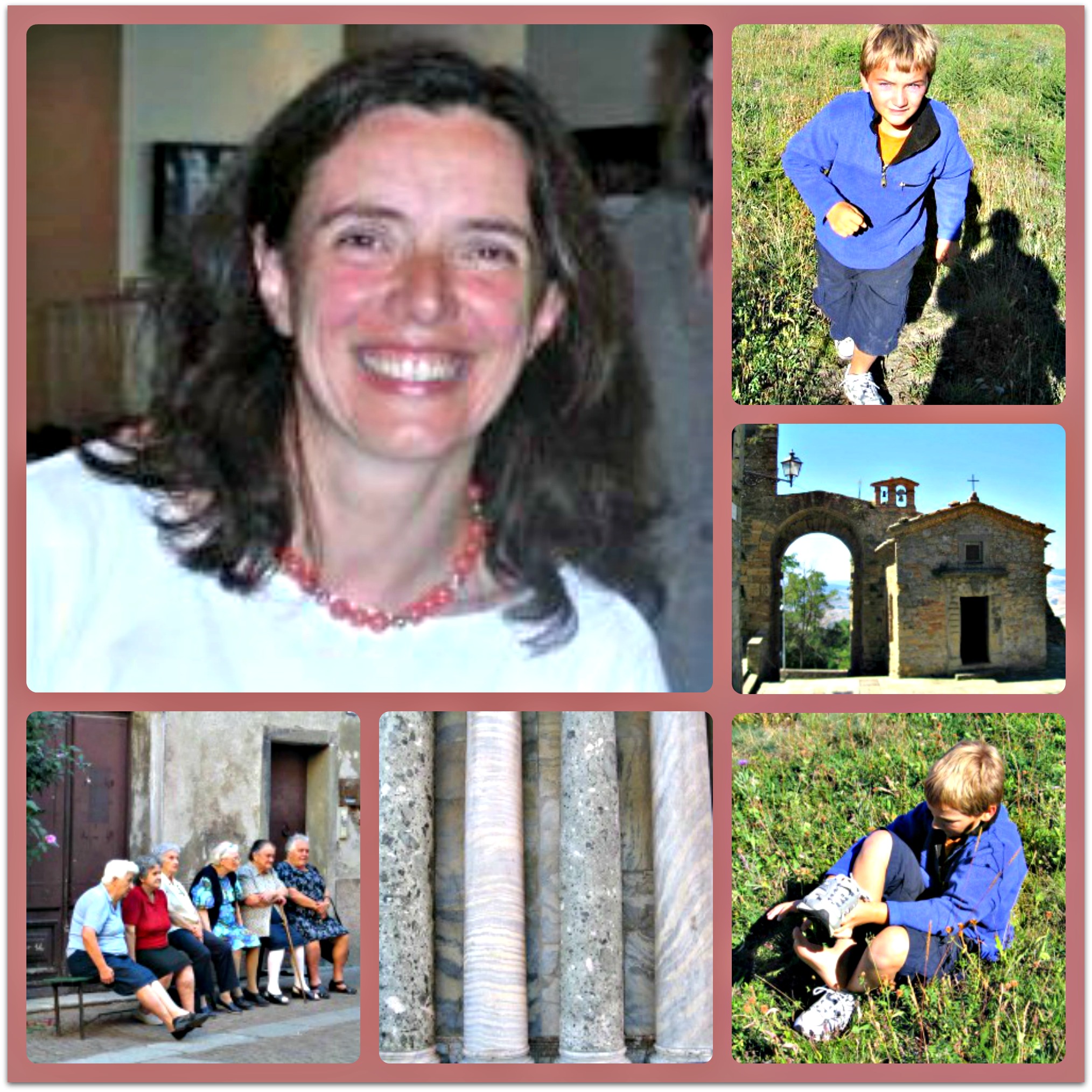
Olga Vannucci CollageWhen I first stumbled across Olga Vannucci’s memoir, Travels with George, I wondered whether the title alluded to John Steinbeck’s book Travels with Charley, about his road trip across America in the company of his French standard poodle, Charley.

Turns out, I got it right. Born in Italy, Olga went to Brown University and currently lives in rural New Jersey. As she tells it, she was driving through Doylestown, Pennsylvania, one day when Steinbeck’s travelogue popped into her head, and she knew she wanted to call her book “Travels with George.” When she announced this to her son (the “George” of the title), he said: “So I’m the dog?”

As you can gather from this story, mother and son make quite a pair.

Olga says she’s no Steinbeck, though she does prefer a plain and honest writing style. Also like Steinbeck, she had the desire to see her native land again.

So, how did she find the Italy of today: did she still fit in? And what did her sidekick, George, the blonde all-American kid, make of his mammina‘s homeland? Did he enjoy these escapades or feel puzzled by his mother’s motives? Perhaps the story he saw himself in wasn’t Steinbeck’s at all, but a modern Italian version of Don Quixote, in which he occupied the role of a skeptical Sancho Panza?

Olga has kindly agreed to give away one copy of the book to the reader who is keenest to find out the answers to these questions (see giveaway details below).

But before we get into that, let’s talk to Olga and hear some more about the travels that inspired her to put pen to paper…

* * *

Travels with George Book CoverCiao, Olga! Let’s begin at the beginning. Tell us more about your decision to take a trip to Italy with your young son and write about it.
I was born in Italy (Milano), lived in Brazil two different times as a child, and came to the United States to attend college. I’ve been here ever since. When my son was seven years old, I realized suddenly that I hadn’t been back to Italy in ten years, and I went, taking him along. I thought he would learn about Italy and acquire a feel for what it’s like. I also hoped he would learn some Italian. I don’t know how much of that was accomplished, but I loved showing him around. We went back four more times over the course of six years (he is now 14). I wrote the book about those trips: a mix of travelogue, personal history, and little anecdotes, with some humor.

What impact did writing about the experience have on you—did it help you process your childhood memories?
It was wonderful to see the locales of my childhood again. At this point, my memories are either indelibly fixed or just gone—for instance, I can remember clearly sitting on the steps with my friends Sassello, in Ligurio, as I recount here:

[My sister and I] had two friends in Sassello, two girls the same age as [us]—Paola and Maria Elena. They spent their summers thirty meters from where we spent ours, and we spent hours and hours of every day together.

[George and I] walk by the steps where we used to sit. I expect to see them, I expect them to be there, but they’re not. No one is. It’s all the same, but it isn’t.

Did you also learn something about yourself, in taking these excursions down Memory Lane?
I did find out about my current self through the book, but primarily from what others told me my words said about me—for example that I’m kind, funny, and honest. It was also interesting to hear from others about the things that they could relate to in the book, ranging from the more profound to the totally mundane situations. That was amazing, to realize that what I wrote spoke to others.

George’s ordeal

Do you think it will help George someday, in understanding part of his heritage that might not otherwise be accessible?
George has not read the book because, he says, “I was there, I don’t need to read about it.” I do hope and trust that both the experience and the writing will be a part of him, that he will consider the book a gift.

What was your most displaced moment when you & George were touring Italy, when you thought of yourself as a stranger within your homeland?
I always struggle with whether I am Italian or, at this point, American, or, more likely, not really either one. What makes me feel at home in Italy is the fact that it’s largely so unchanged. What makes me feel displaced is that the people of the older generation, my parents’ generation, who are the people I particularly associate with Italy, are passing. They’re my biggest connection with Italy, and they will soon be gone. After that, I may feel displaced…

I gather you don’t feel nearly as comfortable with younger generations of Italians?
Yes. I’m not sure why not. Possibly because the younger generation is doing its own thing and is more all over the place, unlike the older, which has stayed put.

What was your least displaced moment, when it all seemed to make sense for you and George to be there—that you fit right in?
On all the trips we visited my aunt, my mother’s sister, and stayed at her house, where we slipped naturally into being part of the family. I had coffee with her in the morning, we planned meals, I helped her water her garden, George fed her goldfish, and we watched television in the evening.  There was not an ocean or even a smidge of formality between us.

I love the description you provide of your aunt in the book:

My aunt is a lovely person, she’s beautiful and she likes to dress well. She’s 80 now, and she still looks good in her clothes, she wears fashionable clothes. She is cheerful and tells funny stories. She loves to do stuff and see people, she’s chatty. She’s fun to be around.

In that same passage, you mention the “recurring nightmare” of finding food that George likes to eat. What was the most challenging thing about traveling with a young child?
I did not realize how jarring the experience would be for George. To me, Italy is pleasant, and while I knew it would all be new to him, I didn’t realize how different it really was. Being in a completely unrecognizable place where he didn’t understand the language was way outside his comfort zone. I also probably didn’t verbalize things enough. I could have prepared him more and explained things better.

The other thing about traveling with a small child is that I, as the adult, had to be “on” 100% of the time.  Not only did I have to plan and handle everything, but I also had to manage him and make sure I didn’t lose him, which was something I actually worried about, and when I became stressed I had to try to hide it so he wouldn’t become stressed, which I didn’t do very well. He’s very perceptive.

What do you think he took from the experience?
The knowledge that he can survive a terrible ordeal… Possibly I took him on a few too many hikes up hills. It wasn’t always fun and idyllic. I do believe that the trips will serve as a foundation for him to understand that the world is large and diverse and for him to appreciate differences.

The potential perils of writing about one’s offspring

What was the most difficult part of the book-writing process?
It was hard to write about others and protect their privacy at the same time, particularly with my son. I find him very amusing, but he doesn’t intend to amuse me, and he is sensitive to it. He thinks I’m making fun of him, basically. So I’m always walking that line, writing about him, but trying to be respectful of him.

I understand you decided to self-publish the book. Why is that, and do you have any advice for other writers who opt for self-publishing?
I made some attempts to get an agent but ultimately I went with self-publishing because I didn’t have the patience to wait. What I like about self-publishing is that it’s all mine, I created the book cover, I chose the font, I decided to favor the comma over all other punctuation, and it’s been incredibly fun and very rewarding.

There are so many options today to publish and distribute and get the word out, and it can be done without a big financial investment. All you need is the investment of time. Given that this is your passion, you want to spend your time on it anyway. And there are so many people who are open to help. I would encourage other writers not to be afraid to ask. Putting your thoughts out there to share with others is a gift, and people respond very kindly.

What audience did you intend for the book, and has it been reaching those people?
I thought it was a mother/son book, which it is, but it’s very much a book for people who love Italy, who have been there, or who plan to go. My writing is very direct and the book is written in the present tense, so readers feel like they’re there along with me. It combines some very personal time in Italy–with family or revisiting places of personal significance—with visits to the big tourist destinations like Venice and Rome.

Are you working on any other ambitious writing projects?
I am working on a book about traveling with George in America. It’s not an organized itinerary, it’s just places we’ve been or will go to. Mostly in the northeast, plus San Fran and Arizona. It’s still in the infant stages, this project. But I promise it will be extra funny!

10 questions for Olga Vannucci

Finally, I’d like to ask a series of questions that I’ve asked some of our other featured authors, about your reading and writing habits:
1. Last truly great book you read: Don’t Let’s Go to the Dogs Tonight, by Alexandra Fuller, about growing up in Africa.
2. Favorite literary genre: Definitely travel!
3. Reading habits on a plane: I don’t like to fly so I bring an easy-reading book that I know will keep me engaged, and paperback so it’s lightweight.
4. The one book you’d require President Obama to read, and why: He has such a tough job. I would wish, not require exactly but only wish, for him to read a book that his daughters like, so he can have a topic of conversation that they can share and enjoy. He will then tackle his job rejuvenated.
5. Favorite book as a child: Mary Poppins—the P.L. Travers book and the Disney movie, too. I think I had it in both languages. It was just magical, different, not at all like my daily life with my mother and sister.
6. Favorite heroine: Martha Gellhorn, who was a great journalist and writer. She was married to the literary giant Ernest Hemingway yet always retained a strong sense of herself.
7. The writer, alive or dead, you’d most like to meet: I would like Calvin Trillin to take me out to eat in New York, in the Village, to all his favorite eating places. It might take several days because he has a lot of favorite eateries. I would like to hear all about Alice, about his daughters, and about his long and brilliant career.
8. Your reading habits: I read in bed every single night, and I have been reading more during the day recently. I’ve been deliberate about carving out more time in the day, when it’s otherwise easy to get caught up in other activities.
9. The book you’d most like to see made as a film: Any book that takes place overseas, so I can see the place in which the events take place.
10. The book you plan to read next: Hard to tell… I have a stack of some thirty books in my bedroom, and I’m not sure which one is next. I may need to devise a lottery system to determine the reading order…

* * *

Grazie tanto, Olga! Your story certainly sounds amusing while also saying something profound about parent-child relationships and the quest to go home again. Something to rival the wisdom of Steinbeck or Miguel de Cervantes, for sure.

Readers, it’s time for you to ENTER OUR DRAW TO WIN A FREE COPY of Olga Vannucci’s book, by entering a comment below. Olga says she will favor comments that tell her why you’d like to read about her and George’s adventures.

Extra points, as always, if you’re a Displaced Dispatch subscriber!

The winner will be announced in our Displaced Dispatch on September 28, 2013.

To read more excerpts from Travels with George, go to Olga Vannucci’s author site. You can also keep up with her on the book’s very active Facebook page. Also feel free to order the book from Amazon.com.

STAY TUNED for tomorrow’s quota of Global Food Gossip. Rumor has it, Joanna Masters-Maggs has something particularly tasty in store for us!

If you enjoyed this post, we invite you to register for The Displaced Dispatch, a round up of weekly posts from The Displaced Nation, with seasonal recipes, book giveaways and other extras. Register for The Displaced Dispatch by clicking here!

Related posts:
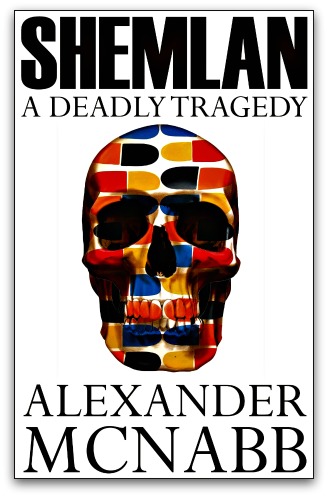
Images: Olga Vannucci and George, interspersed with Italian scenery. Of the George photos, Olga writes:

Let me provide the audio from George: “Where are we going? How much longer? I have something in my shoe. I want to go back. Why are we doing this? Do you know where we are? Do you know where we’re going? Mammaaaaaaa!”

And the June 2013 Alices go to… these 5 international creatives

 © Iamezan | Dreamstime.com Used under license

© Iamezan | Dreamstime.com
Used under license

As subscribers to our weekly newsletter know, each week our Displaced Dispatch presents an “Alice Award” to a writer who we think has a special handle on the curious and unreal aspects of the displaced life of global residency and travel. Not only that, but this person has used their befuddlement as a spur to their own (or others’) creativity.

Today’s post honors June’s five Alice recipients, beginning with the most recent and this time including citations.

So, without further ado: The June 2013 Alices go to (drumroll…):

1) LILLIAN AFRICANO, president of the Society of American Travel Writers

Source:How to use words to cinematic effect in your travel writing.” in Matador Network
Posted on: 21 June 2013
Snippet:

Once a satisfying story has been told, it needs an ending, ideally, one that circles around to the beginning and gracefully achieves a satisfying sense of closure. If a good travel story is like a cinema of the mind, then whoever heard of a movie that had no ending?

Citation: Lillian, your advocacy of the cinematic style puts us in mind of Alice, who, before plunging into her adventures, expresses a similar thought:

…once or twice she had peeped into the book her sister was reading, but it had no pictures or conversations in it, “and what is the use of a book,” thought Alice “without pictures or
conversation?”

And although Alice’s creator, Lewis Carroll, died around the time the first motion picture camera was invented, he clearly believed in telling stories in clear, vivid word pictures. What’s more, the story of Alice’s wonderland adventures circles round to where it began, with Alice waking up on the lap of her sister, who is brushing stray leaves from her face. Like many of us who return from a long international journey, Alice can’t quite believe that she actually underwent such a metamorphosis. Still, she manages to persuade her sister, who after sending Alice to get her tea, dozes off while watching the sun set half-believing herself to be in Wonderland. (Hmmm…if you can persuade the kind of person who doesn’t read picture books, that’s some pretty good storytelling!)

2) ACe Callwood & the other creators of Coffitivity

Source: “How the Hum of a Coffee Shop Can Boost Creativity“— a report on Coffitivity by Anahad O’Connor in the New York Times
Posted on: 21 June 2013
Snippet: As the Times article explains, Coffitivity plays an ambient coffee shop soundtrack that, according to researchers, helps people concentrate. Co-founder ACe Callwood says that, although the site attracted only just over a hundred page views when it first started on March 4th, since then traffic has “exploded”:

Seoul, Korea, is our top user city. New York City is second, followed by London, L.A. and Chicago.

Citation: ACe, we understand that you and your partners are now developing new coffee shop soundtracks tailored to specific countries. For the sake of us creative internationals (see #4, Mike Sowden, below), we wonder if you’d also consider a “Lewis Carroll” track since many of us in that category are trying to account for topsy-turvy ideas of life we’ve obtained from living overseas. We are aware it will take some research to find the right sounds, but our hunch is that some mix of rustling grass, rippling waters, tinkling sheep-bells, a bit of Victorian singing, and Pre-Raphaelite Brotherhood chatter will do the trick.

3) ANNABEL KANTARIA, Telegraph Expat blogger

Source: “Do you suffer from fake accent syndrome?” in Telegraph Expat blog
Posted on: 6 June 2013
Snippet:

Just like the “transatlantic twang” of those who divide their time between the UK and US, the generic global accent of the UAE takes a little from English, Arabic, Hindi and Tagalog, and spits out some sort of accent and vocabulary that we all hope everyone will be able to understand.

Citation: Hmmm… Annabel, especially given those blonde locks of yours, are you sure you’re not Alice reincarnated? Because this is the SECOND time we’ve awarded you an Alice. Either you know the works of Lewis Carroll very well and/or life in the Emirates has given you a special grasp on his canon of works. Last time you received an Alice, it was for a post that told us about the importance of playing by the rules, which reminded us of Alice’s croquet match under the Queen of Hearts’s stern command. This time, you talk about the odd, fake-sounding accents people pick up in foreign spots—which reminds us of poor Alice’s initial meeting with Mouse:

“Perhaps it doesn’t understand English,” thought Alice; “I daresay it’s a French mouse, come over with William the Conqueror.” … So she began again: “Ou est ma chatte?: which was the first sentence in her French lesson-book. The Mouse gave a sudden leap out of the water, and seemed to quiver all over with fright. “Oh, I beg your pardon!” cried Alice hastily, afraid that she had hurt the poor animal’s feelings. “I quite forgot you didn’t like cats.”

Stuff and nonsense, to be sure!

4) MIKE SOWDEN, travel writer

Source: “Why I Blog (On A Napkin)” in Fevered Mutterings—Misadventures in Travel & Storytelling blog
Posted on: 26 May, 2013
Snippet: Notably, Sowden should be a consultant for Coffitivity’s “international creative” app (see #2 above). He reports that he is writing this post

…next to a sunlit window in a Costa coffee house in Birmingham… A regular Chai latte is to the right of my laptop, and I’m fascinated by the lazy snow of cinnamon drifting to the bottom of the glass.

But the passages we really love refer to his napkin diagram:

  • “[Potential blog] [s]ponsors hover in the middle reaches of napkin-space.”
  • “Let’s soar into the upper napkinsphere. … It’s the ideal audience of your blog: anyone with a brain and a pulse.”
  • “This is what the fold in the napkin is all about, just under that line/curve. It’s a mountain you have to climb. A mountain made of enormous amounts of hard work, business planning, Art, applied psychology, smart, non-spammy marketing and all sorts of heart-on-sleeve public-facing transparency and vulnerability. It’s a process of learning how to make something those people will genuinely find meaningful. In business, this is the hardest thing in the world. It’s a mountain littered with the remains of failed expeditions, and it’ll probably end up littered with some of your own.”

Citation: Wow, Mike, you are certainly drinking the coffee if you can see a mountain in the folds of a Costa napkin, and use that image to tell a story about the thru-the-looking-glass challenges most bloggers face. Say, no wonder they pay you (or should be paying you) the big bucks for travel writing! I think other expat and travel bloggers will agree with us that it’s a fantasy feat worthy of Carroll.

5) PATRICIA WINTON, crime writer, food guru and American expat in Rome

Source: “The Tiramisù Is Out of This World” in Italian Intrigues blog
Posted on: 23 May 2013
Snippet: In this post, Winton reports that Chef Davide Scabin, whose restaurant (near Turin) ranks as one of the world’s 50 best, was chosen to prepare a new menu of Italian foods for the astronauts who took off in the European supply spacecraft Albert Einstein ATV [automated transfer vehicle], on June 5th (note: it successfully docked with the International Space Station on June 15th):

Each meal must also have a 36-month shelf life and be prepared without salt. Against this rigorous backdrop, Chef Scabin discovered another challenge. “The olfactory system doesn’t function at 100 percent in space. The astronauts eat with the sensation of having a cold,” he said…

Thanks to Chef Scabin’s efforts, the crew—who include one Italian, Luca Parmitano—are now feasting not on food from NASA or Roskosmoson (its Russian counterpart), but on lasagna, risotto, caponata, eggplant Parmesan, and for dessert—tiramisù.
Citation: To be honest, we weren’t sure whether to award the Alice to Chef Scabin, for spending two years thinking about how to translate Italian food for outer space without turning it into a Mad Hatter’s tea party; Luca Parmitano, for blogging(!) about his “out of this displaced world” experience from the spacecraft; or to Patricia Winton, for making this strange tale known to the expat and travel community. But we decided to go with Winton. Given her penchant for mystery and deceit, could it even be that she fabricated this story just because she fancied a world where astronauts could feast on tiramisù instead of the freeze-dried ice cream served by NASA on the Apollo missions? Stranger things have happened! 🙂

* * *

So, readers, do you have a favorite from the above, and do you have any posts you’d like to see among July’s Alice Awards? We’d love to hear your suggestions! And don’t miss out on these weekly sources of inspiration. Get on our subscription list now!

Speaking of creative chefs, STAY TUNED for tomorrow’s post, by Global Food Gossip Joanna Masters-Maggs.

Writers and other international creatives: If you want to know in advance whether you’re one of our Alice Award winners, sign up to receive The Displaced Dispatch, a round up of weekly posts from The Displaced Nation, with news of book giveaways, future posts, and of course, our weekly Alice Award!. Register for The Displaced Dispatch by clicking here!

Related posts:
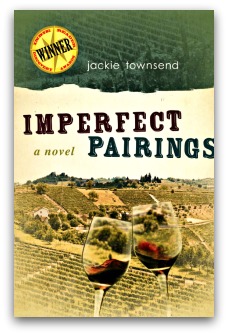
LOCATION, LOCUTION: Expat author JJ Marsh on bringing a location to life through writing

jill 3Today we welcome expat crime writer JJ Marsh to the Displaced Nation. JJ grew up in Wales, Africa and the Middle East, where her curiosity for culture took root and triggered an urge to write. Having at this point lived in Hong Kong, Nigeria, Dubai, Portugal and France—she finally settled in Switzerland—JJ certainly belongs in our midst! But what makes her even more special is that she has offered to impart her knowledge to other international creatives about the portrayal of “place” in one’s works.

Currently halfway through her European crime series, set in compelling locations all over the continent and featuring detective inspector Beatrice Stubbs (on loan from Interpol), today JJ begins a new series for us, entitled “Location, Locution.” In the opening post, she will answer the questions she plans to ask other displaced authors in future posts.

JJ, we are positively THRILLED (in more ways than one!) to have you as a new columnist. Welcome! And now to get to know you a little better…

Which comes first, story or location?
Story, always. Or at least the bare bones of the plot. Then I audition various places before beginning to write. I have to know the setting, even before populating the novel with characters. The place IS a character. For example, once I knew the victims would be corporate Fat Cats in Behind Closed Doors, the first in my Beatrice Stubbs series, I looked around for a financial centre with the right kind of atmosphere. Turns out my home town of Zürich fitted the bill and even gave me the title.

How do you go about evoking the atmosphere of a place?
I’d say by really looking at it and digging deep. Not only that, but try to look at it from the perspective of your reader. It’s no coincidence that in many European languages, one asks for a description using the word “How”.

Como é?
Wie war es?

Yet in English, we say “What is it like?” We want comparisons to what we know. I actively chose to use a foreigner arriving in a strange country/city, so as to look at it with new eyes.

Which particular features create a sense of location? Landscape, culture, food?
I start with the senses. We notice sights, sounds and smells first, and add to our impressions with tastes and textures, all the while comparing them to our expectations. Food and drink are essential, as they reveal something of the region but also much about the characters. Cultural differences have to be treated with great care in fiction. Lumpen great dumps of information are poison to pace. But subtle observations can be woven into the story, provided they are relevant. I’ve just abandoned a book set in Rome which was clumsily pasted chunks of guidebook against a sub-par Eat, Pray, Love plot. The reader wants to be immersed in the world of the book, not subjected to the author’s holiday snaps.

How well do you need to know the place before using it as a setting?
Speaking for myself, extremely well. I feel insecure describing an area I’ve never visited. But that’s not true for everyone. Stef Penney, who wrote The Tenderness of Wolves, created a beautiful story set against the backdrop of the frozen wastes of Canada. She’d never even been there.

While I am awed by that achievement, I don’t think I could do it. I need to ‘feel’ the place and also, to understand the people.

My nomadic past and interest in culture led me to study the work of Geert Hofstede and Fons Trompenaars. One of their models is to analyze culture like an onion. The outer layer is Symbols—what represents the country to outsiders/its own people? The next is Heroes—who do the people worship and venerate? Peel that away and explore its Rituals—on a national and personal level. At the centre of the Onion, you will find its values, the hardest part of a culture to access. But that’s where the heart is.

Could you give a brief example from your work which you feel brings the location to life?
The recent UK horsemeat scandal amused me, as it’s part of the average menu in Switzerland. Here my combative detectives, one Swiss, one British, have just finished lunch.

Beatrice patted her mouth with her napkin. “Herr Kälin, your recommendation was excellent. I thoroughly enjoyed that meal.”

“Good. Would you like coffee, or shall I get the bill?”

“I’ve taken up enough of your time. Let’s pay up and head for home.” Beatrice finished her wine.

Kälin hailed the waitress. “I wasn’t sure you’d like this kind of farmer’s food.”

“Farmer’s food is my favourite sort. Solid and unpretentious. Not the sort of fare they would serve in those crisp white tents at the polo park.”

Kälin let out a short laugh. Beatrice cocked her head in enquiry.

“It would definitely be inappropriate at the polo park, Frau Stubbs. We’ve just eaten Pferdefleisch. Horse steak.”

Which writers do you admire for the way they use location?
Val McDermid, particularly for A Place of Execution. Not only place but period done with impressive subtlety. Kate Atkinson, for making the environment vital to the plot in a book such as One Good Turn. Monique Roffey for bringing Trinidad to life in The White Woman on the Green Bicycle. Alexander McCall Smith enriches his stories with a wealth of local detail, be it Botswana or Edinburgh. And Kathy Reichs for making her dual identity an advantage. Donna Leon’s Venetian backdrop, Scotland according to Iain Banks in Complicity, and Peter Høeg’s Copenhagen in Smilla’s Sense of Snow.

There are many, many more.

* * *

Thank you, JJ! Readers, any further questions to JJ on her portrayal of “place”, or authors you’d like to see her interview in future posts? Please leave your suggestions in the comments. You may also enjoy checking out the first three books in JJ Marsh’s Beatrice Stubbs series:

  • Behind Closed Doors: Takes place in Zürich, where someone is bumping off bankers.
  • Raw Material: Takes place between London and Pembrokeshire. Here Beatrice is joined by wannabe sleuth, Adrian. Amateur detectives and professional criminals make a bad mix.
  • Tread Softly: Unfolds in the Basque Country of Northern Spain. Beatrice is supposedly on sabbatical, but soon finds herself up to her neck in corruption, murder and Rioja.

STAY TUNED for tomorrow’s interview with Lisa Egle, author of Magic Carpet Seduction, two copies of which we’ll be giving away!

If you enjoyed this post, we invite you to register for The Displaced Dispatch, a round up of weekly posts from The Displaced Nation, with seasonal recipes, book giveaways and other extras. Register for The Displaced Dispatch by clicking here!

Images: Typewriter from MorgueFile; picture of JJ Marsh and her book cover supplied by herself; map from MorgueFile

And the April 2013 Alices go to … these 5 international creatives

 © Iamezan | Dreamstime.com Used under license

© Iamezan | Dreamstime.com
Used under license

As subscribers to our weekly newsletter, The Displaced Dispatch, may have noticed, we are now presenting our “Alice Awards” in that esteemed publication. Each week, we give an “Alice” to someone who has a special handle on the the curious and unreal aspects of the displaced life of global residency and travel. Not only that, but they have used their befuddlement as a spur to creativity of all kinds.

Today’s post honors our first five Alice recipients, beginning with the most recent and this time including citations.

So, without further ado: The April 2013 Alices went to …

1) MICHELLE GARRETT, expat blogger

Source:Has Your Expat Life Inspired You To Write A Book?” in Expat Focus (e-zine for anyone moving or living abroad)
Posted on: 19 April 2013
Snippet:

By definition is an “expat novel” about an expat? Or does it need to be more than that—does an expat novel need to be about an expat experiencing expat life? You know, the culture shock, the language differences, the homesickness …

I have always written and always wanted to be a Writer so for me the motivation to write a novel was more about “you want to write? Start by writing what you know’” rather than, “I’m an expat with adventures—I think I’ll write about them!”

Citation: Should we expats write books about the wonderlands we’ve experienced on our travels, or should we write because we enjoy writing (and just so happen to live abroad)? Michelle, you’re sounding a little Mad Hatterish by posing this riddle with no answer, and we feel duty bound to point out that Alice herself felt that her adventures could be worth writing about:

When I used to read fairy-tales, I fancied that kind of thing never happened, and now here I am in the middle of one! There ought to be a book written about me, that there ought!

But listen, if our enjoyment of your blog, The American Resident, is any indication, we’re going to love the novel you’re writing about an expat woman but that isn’t an expat novel. We also look forward to your book of tips for expats with long and sad tales, like the Mouse’s.

2) JUDY LEE DUNN, award-winning blogger on blogging and former humanitarian aid worker

Source:Judy Lee Dunn on words, maps, and inspiration“—an interview with Judy conducted by author Lisa Ahn (notably, Lisa’s own favorite words are “once upon a time”!).
Posted on: 17 April 2013
Snippet:

For as long as I can remember, I have been enchanted by the power of words to transport readers to a world they don’t yet know.

And when I was a child, maps were a metaphor for a world I had not yet seen …

Whenever my two passions intersected, I was truly inspired. As manager of Writing Resources for World Vision, words and maps perfectly converged to send me to West Africa as part of a documentary team to tell the stories of projects helping third world families become self-sufficient. …

Now, I’ve finally reached the point where I am putting together the pieces of my life, word by word, shining a light on one of the recurring themes of my life. Finding just the right words to express a life map of sorts: to understand where I started and where I am going.

Citation: Judy, we feel certain you would approve of our fondness for Lewis Carroll, believing as you do in the power of words to transport us to other worlds (and also having worked as a first-grade teacher!). We’re with you on the map thing, too, as evidenced by our “Here be dragons” banner. And we love the idea of someone who has worked abroad, as you have (in West Africa), writing a “life map.” May we borrow this term?

3) ANN PATCHETT, best-selling American author

Source:What now? Advice on Writing and Life from Ann Patchett“—a post by Maria Popova on her Brain Pickings blog, containing extracts from Patchett’s 2006 commencement address at Sarah Lawrence, which has been published as a book, What Now?
Snippet:

Coming back is the thing that enables you to see how all the dots in your life are connected, how one decision leads you to another, how one twist of fate, good or bad, brings you to a door that later takes you to another door, which aided by several detours—long hallways and unforeseen stairwells—eventually puts you in the place you are now. … But when you look ahead there isn’t a bread crumb in sight—there are just a few shrubs, a bunch of trees, a handful of skittish woodland creatures.

Citation: Ann, we know you intended your words for the ears of graduates from your alma mater, but they could easily apply to us displaced types, who spend a good deal of our time feeling lost and clueless. You go on to say: “Sometimes not having any idea where we’re going works out better than we could possibly have imagined.” What a marvelous assertion! Far more reassuring than the series of unhelpful responses Alice elicits from the Cheshire Cat after asking him: “Would you tell me, please, which way I ought to go from here?” (What’s more, you’ve followed your own advice, booking a trip to the Amazon as soon as you decided to set your sixth novel there.)

4) LAINIE LIBERTI, world traveler and blogger

Source:Reentry Observations—Washington DC,” an entry on her blog, Raising Milo on the Road of Life—a single mom and son’s nomadic adventures as they travel around the world together.
Posted on: 29 March 2013
Snippet:

I imagined this country’s politicians, their assistants, their staff, all rushing away from the Capital, eager to go somewhere else. I imagined this was the group of stressed people who were running the United States of America. … I clearly have a different feeling about the United States now. I feel as if I’m on foreign soil. I don’t perceive the energy as welcoming.

Citation: Lainie, your description of Washington VIPs dashing about reminds us of Alice’s encounters with the White Rabbit. And we join you in wondering: don’t they realize that someday their actions will seems as trivial as some might perceive the ancient cultures of Peru? (Certainly puts it in perspective!)

5) LAURA J. STEPHENS, psychotherapist and author

Source: “Overcoming Isolation,” an entry on her author blog (she is the author of An Inconvenient Posting: an expat wife’s memoir of lost identity).
Posted on: 9 March 2013
Snippet:

For me, there was nothing in my experience quite so isolating as arriving in an unfamiliar country and trying to orientate myself, whilst experiencing the losses of “home” and all the while thinking I should be grateful for my new existence.

Citation: Laura, it’s great to know that someone out there understands the tendency for us expat Alices to declare “I am so very tired of being all alone here!” and then to suffer “pool of tears” moments… Not only that, but you provide practical tips to keep from drowning. What more can we ask?

* * *

So, readers, do you have a favorite from the above, and do you have any posts you’d like to see among May’s Alice Awards? We’d love to hear your suggestions! And don’t miss out on these weekly sources of inspiration. Get on our subscription list now!

STAY TUNED for tomorrow’s post—more writing advice from Jack (the Hack) Scott!

Writers and other international creatives: If you want to know in advance whether you’re one of our Alice Award winners, sign up to receive The Displaced Dispatch, a round up of weekly posts from The Displaced Nation, with news of book giveaways, future posts, and of course, our weekly Alice Award!. Register for The Displaced Dispatch by clicking here!

Related posts:
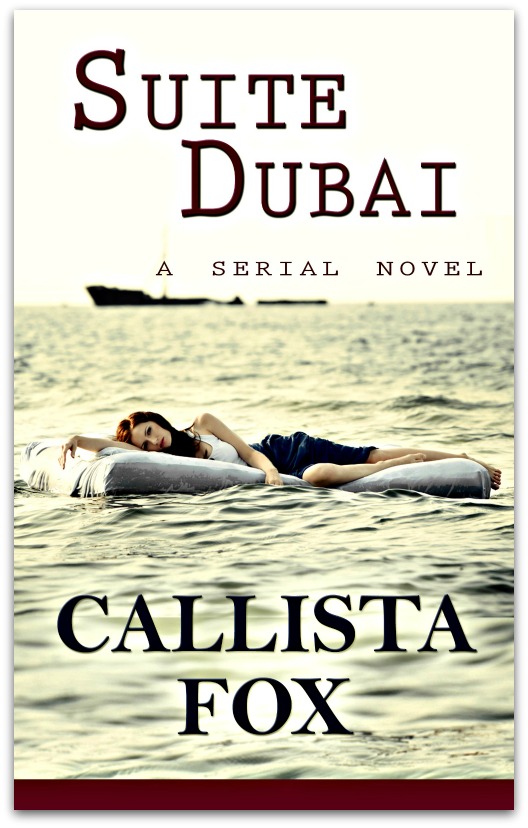
The artichoke of cross-cultural love: Italy calls!

Signora Stella CollageAmore é gioia, amore é gelosia, amore é soffrire, amore é tenerezza, amore é calore. Amore sei tu! Is it any wonder that Italians always make the top-10 list whenever women are asked to rate the world’s best lovers? We are truly fortunate, then, in having the displaced author Estelle Jobson as today’s guest blogger. As you will see, this South African likens falling in love with an Italian man to feasting on a succulent artichoke — a rather curious analogy, to be sure, until one remembers that artichokes are cultivated in the Mediterranean. It is also a rather mysterious vegetable. How exactly do you eat it? As Jobson shows, it’s a matter of  peeling off the outer petals, one at a time… We are also fortunate in that Signora Stella is giving away an autographed copy of the book she wrote on her Roman love story! Grazie mille, Signora! (Details below.)

— ML Awanohara

The first call to write about Italy came when I was ten. With a smudgy HB pencil, I outlined an epic in my lockable, pink diary. It was to be about an extended Italo-American family who would make it big selling tyres. The main character, Pia, was to be my age, torn (theatrically) between her Italian roots and her American life. There would be family dramas (dramatic!), cascades of curls (curly!), Virgin Maries (statues and exclamations), and a stout grandma overseeing boiling pots of pasta. The novel would be shot through with shouting, gesticulating, and emotional-blackmail-meets-amore.

This literary project was soon shelved on the grounds of inadequate content knowledge: I knew nothing of the tyre business and had exhausted my repertoire on Italians. So the plot was filed amongst my many “books to write one day”.

Loving the individual

??????????What I did finish writing, in my thirties, is Finding Rome on the Map of Love, in which travel narrative meets love story. It is an autobiographical account of moving to Rome with an Italian man. It is about love radiating out from the heart of my Italo-South African couple, to love for a family, language, people, culture, and country. Just like the concentric rings within an artichoke. This happens in all relationships, however it is much more pronounced when the language, culture, and people are not those you grew up with. The rings within the artichoke make it very difficult to know which characteristic belongs to whom. Is it your beloved who is prone to interrupting others mid-speech? A family trait? Or that of the whole nation?

Just as Italians are sometimes drawn to the prudish, earnest, and ploddish Protestant way, so are we Anglo-Saxons drawn to their swaggering, flamboyant charm — and sometimes alarmingly cavalier approach to work. It threatens us to the core, yet opposites attract. And how! A part of us secretly longs to become the other. But since we can’t quite pull it off, the next best is to have them close to our hearts. Or better still, right in the bed. We say “Be mine.”

So the beloved in question — termed “the Meterosexual” for his dapper grooming — was in varied and bewitching ways the very opposite of what I grew up with. Unlike the wooden, roughly-hewn South African man, an Italian one may adore you, quite tangibly and vocally (poetically even), from head to toe. Because in his culture, your coiffure and your shoes are crucial. Core-shakingly so. The Meterosexual debated how I should do my hair for a job interview (“Hup? Down? No, hup. More professional!”) and set me straight on shoes that were an insult to an outfit. Certain footwear was actually banned from leaving the cupboard!

For a woman to have her appearance critiqued by a man, even an exquisitely stylish one, demands a certain thickness of skin.

But being South African, I had it.

Loving the family and culture

The next ring of artichoke love is that for your sweetheart’s family and culture. First I had la mamma pressing a hairdryer upon me lest I got a cervicale (the special Italian, wet-hair induced crick in the neck).

And soon thereafter, I was up against what felt like an entire nation (in this case, 60 million citizens) all clucking, fussing, and advising on health, the risk of catching a cold, and what food may be consumed at specific times of day, linked to its digestibility. This counsel was dispatched entirely unsolicited, but with tenderness.

Which is almost the same as love, isn’t it?

Italians regarded me, being Anglo-Saxon, as afflicted with a lumpishly undiscerning cultural palate. I was urged by strangers to read Dante Alighieri, listen to Vivaldi, and, above all, focus on what went into my mouth. The Meterosexual brought home gifts of emerald olive oil, popping with vitality, and parcels of pastries wrapped in a bow, popping with calories. His mother served me the Tuscan carciofini fritti (deep-fried artichokes). And his countryfolk served me regional cuisine, ubiquitous coffees, plus the unloseable gift: an ability to discern the superiority of mozzarella di bufala (female buffalo) over mucca (cow).

Loving a language

Further spirals of love lay in the process of gaining Italian language skills. Italian has delightful suffixes, to make words bigger, smaller, cosier, cuter, or nastier and uglier versions of themselves. This, to an English-speaker, is like playing Lego® with language.

With my ability to converse came a gradual adaptation to local ways. Although, truth be told, it’s easier to learn a foreign language than, for example, to wend your way successfully through the Italian national health system or to fathom the quasi-pagan fetishizing of the modern Catholic saint.

Loving the modus operandi

Living in Rome, I learned to ride a scooter in the city’s hair-raising traffic. This turned out to be a superbly transferable skill, relevant to many other Italian things, such as being honest. Telling the truth, the Italian way, is a flexible, savvy and self-preserving art. People lie with flair. In fact, it isn’t really lying at all, they explain. It’s being diplomatic, being furbo (smart). Banging your head against all this with rigid Protestant morals will only make your cranium ring. The Italians have taught me that blurting out the truth willy-nilly is ill-advised. It is gauche, hurts other people’s feelings, and counter-productive.

Now I know: one good lie deserves another.

Becoming the other

So it is that you start off in love with a foreign person and you end up assimilating their culture. Over time, some of the once-exotic features become yours and you may even lose bits of your cultural DNA, for lack of use (e.g., wearing ugly shoes). When I find myself using an Italian gesture or expression, because nothing else will do, I know I am no longer mimicking.

This is a moment of profound integration: deeper than love, more metaphysical than the first sip of the first cappuccino of the day. It will always be yours. It’s like becoming your own artichoke.

* * *

Readers, I have a confession to make. I’ve always found the artichoke a bit intimidating. I’m not sure I’m any less intimidated after hearing what Estelle has to say — but thanks to her, I’m can now appreciate its succulent taste and tender heart. And I know I prefer it steamy!

I can imagine her dashing Roman metrosexual calling her not just Stella but mia stella polare — his polar star! (And how can I get me a pair of those cool red shoes?)

What about you? Are you eager to hear more about Estelle’s love adventure with an Italian, and with Italy itself?

Listen to what readers of her book had to say:

Liesl Jobson (Estelle’s sister, still in South Africa and also a writer — one who wins awards for her short stories!):

Finding Rome on the Map of Love is an utterly enchanting and fabulously funny journey outwardly, into the city of Rome, but inwardly, Estelle bravely squares up her options in love and life. Her sharp eye investigates the real and the imagined and her inimitable voice always rings true. … [W]hile the focus is Rome, it is as much about being a stranger in a foreign country and the resourcefulness that is required to learn a language, understand the customs and become familiar with the ways of any new place.

Amazon reviewer:

You will adore this book; Estelle and her quirks will delight you, you’ll fall passionately in lust with the Eternal City and its people and be sad when it’s over. … Estelle’s writing skills will astonish you and you will ask, “Where has this writer been and why have I not heard of her?”

Amazon reviewer:

When I started reading Estelle Jobson’s observations on Italian culture, I felt I had run into an old friend on a common wavelength. Yes, me too!

Amazon reviewer:

Estelle Jobson is a very talented writer with a wonderful ear for the nuance and absurdity of language, and for the cross-culturally bizarre. … The book also boasts an extensive glossary that is bound to satisfy even the most pedantic of linguists.

And let’s not forget the back-cover blurb:

Estelle has an admirable career in publishing and a hectic, yet rich life. When her Italian diplomat boyfriend gets posted to Rome, she throws it all up to accompany him. There, she reinvents herself as Signora Stella, a casalinga (housewife) on the city’s highest hill, Monte Mario. Starting in autumn, she muses on life amongst the Italians and cycles through the seasons and sentiments of the Italian psyche. Signora Stella commences and ends at the same place: Follie, the local hairdresser run by Salvatore, a gay Neapolitan. This book captures a year’s worth of quirky, humorous, vivid observations about life amongst the Italians.

Can’t wait to read it? Jobson has published an excerpt on Italian Intrigues, the blog kept by one of our recent Random Nomads, Patricia Winton.

And now it’s your chance to ENTER OUR DRAW TO WIN A FREE AUTOGRAPHED COPY!!! Simply leave a comment in answer to the question:
**What has been your most entertaining experience with a cross-cultural relationship?**
Extra points for likening it to a vegetable; double the points if you’re a Displaced Dispatch subscriber!!!

The winner will be announced in our Displaced Dispatch on March 2, 2013.

NOTE: If you’re not the lucky winner but would still like a print copy, send an e-mail to findingrome@gmail.com.

Estelle Jobson has over a dozen years’ experience in book publishing and a Masters in Publishing from New York University which she attended on a Fulbright. She speaks five languages and has lived in as many countries; three years in Rome. She now lives in Geneva. To find out more about the book and follow its promotion, like the Finding Rome FB page. You can also follow Jobson on Twitter and read her occasional blog posts — for instance, this one on adopting Italian nationality, which she wrote for Novel Adventurers.

STAY TUNED for tomorrow’s post, when we announce the films that have qualified for this year’s Displaced Oscars!

If you enjoyed this post, we invite you to register for The Displaced Dispatch, a round up of weekly posts from The Displaced Nation, with seasonal recipes, book giveaways and other extras. Register for The Displaced Dispatch by clicking here!

Related posts:

Images: All photos supplied by Estelle Jobson.

The 10 Muses of Expat & International Adventure Writing and their 5 most popular tunes

10 muses collageGreetings, Displaced Nation-ers! Ready for a little more intellectual stimulation?

A couple of weeks ago, I wrote about Great Thinkers who can help with task of embracing the well-traveled life and teasing out its deeper meaning, in the new year.

And today I will address the needs of those who have resolved to tackle a major writing project in 2013.

It’s a well-known fact that many of us who live in foreign lands aspire to write novels, memoirs and travelogues about our overseas adventures. But many of us also live in isolated situations (by definition).

So who can aid us, provide our inspiration?

Why, the muses of course!

Tell us, O muses, how to tell our stories…

And we don’t even have to look heavenwards to invoke them! The 10 Muses (that’s one more than the ancients got!) of Expat and International Travel Writing are right in our midst. They have already shared the joys, wonders and value of writing with Displaced Nation readers:

  1. Barbara Conelli, author of the Chique Travel Book series, filled with the charm, beauty, secrets and passion of Italy…
  2. Martin Crosbie, who is writing a trilogy entitled My Temporary Life; in December of last year, he published Book Two: My Name Is Hardly.
  3. Helena Halme, author of the novel The Englishman (2012)
  4. Laura Graham, author of the novel Down a Tuscan Alley (2011)
  5. Matt Krause, author of the memoir A Tight Wide-open Space: Finding love in a Muslim land (2011)
  6. Meagan Adele Lopez, author of the novel Three Questions: Because a quarter-life crisis needs answers (2011)
  7. Edith McClintock, author of the mystery novel Monkey Love and Murder (2013)
  8. Alexander McNabb, who is writing the Levant Cycle, a trilogy of books about the Middle East; he released the second book, Beirut — An Explosive Thriller, last September.
  9. Tony James Slater, erstwhile regular at the Displaced Nation and author of a two-book series: The Bear That Ate My Pants: Adventures of a real idiot abroad (2011) and Don’t Need the Whole Dog!, which came out in December.
  10. Wendy Nelson Tokunaga, author of Marriage in Translation: Foreign Wife, Japanese Husband (2011) and of several novels that explore cross-cultural themes between the United States and Japan.

Over the past year on our site, if you were listening closely, these heaven-sent muses were singing a number of tunes. Here are their five top hits:

SONG #1: “Yes, it’s hard; yes it’s uphill. But you’re living the dream, which makes writing a thrill!”

In one of the Displaced Nation’s most popular posts of the past year, Tony James Slater tried to make it out that the life of an expat writer is far from glamorous. Don’t believe him. He was pulling your leg, as usual — or singing off key, to continue the metaphor.

Alexander McNabb has the more accurate rendition. Here’s his account of the prep for his latest thriller, Beirut:

While writing it, I spent hours walking around the city, along the curving corniche and up into the busy streets that cling to the foothills rising from the coast up to the snow-capped mountains. Walking with friends, walking alone — day and night, spring and summer. From the maze of funky little bars of Hamra to the boutiques of Verdun, from the spicy Armenian groceries of Bourj Hammoud to the cafés overlooking the famous rocks at Raouché…

Barbara Conelli is another inspirational example. She explores every nook and cranny of Milan so as to take the reader on an armchair journey. And now she is doing the same with Rome, which will be the subject of her third book in the Chique Travel series.

Great work, if you can get it!

SONG #2: “It’s time to make your creative debut — so why not make it all about you?”

These days it’s hard to tell the difference between a heavily autobiographical novel and a memoir, though one of our muses, Helena Halme, insists that there is a distinction. When questioned about her decision to write The Englishman as a novel — it’s about a young Finnish woman, Kaisa, who meets a dashing British naval officer, a plot that echoes very closely her own life story — she had the following to say:

I tried to write a memoir, but couldn’t! Much of this story is, however, true — but I didn’t think I could call it a memoir as some things were pure fiction. I am a novelist and just keep making stories up.

Hmmm… By that reckoning, perhaps Tony James Slater should be a novelist, too? As regular readers of this blog will know, his favorite topic consists of his own, rather daring but also bumbling, world adventures.

But did a bear really eat his pants, or is he exaggerating for comic effect?

The mind boggles…

But whatever the form, the point is that quite a few of our muses have found plenty of material in their own life experiences. Besides Halme and Slater, we have

  • Martin Crosbie: His protagonist, Malcolm, leaves Scotland for Canada at a formative age, just as he did.
  • Laura Graham: Her protagonist, Lorri, arrives in Italy as a forty-something single and finds a younger Italian man, just as she did.
  • Matt Krause: He has written a memoir on the portion of his life that involved meeting a Turkish woman on a plane and following her back to Turkey. (Reader, he married her!)
  • Meagan Adele Lopez: The protagonist of her debut novel, Del, is offered three questions by her British fiancé (just as Lopez was offered three questions by hers).
  • Edith McClintock: Her protagonist, Emma, works as a researcher in the very Amazonian rainforest where she once conducted her own research.

To conclude, the old adage is alive and well, even (especially?) in expat and travel writing: “Write about what you know and care for…”

SONG #3: “Looking for inspiration from above? The answer lies in cross-cultural love.”

Another theme running through the works of several of our muses is the love that takes place across cultures, usually resulting in marriage. I just now referred to the cross-cultural love stories at the heart of the books produced by Helena Halme (Finnish woman, English man), Laura Graham (Englishwoman, Italian man), Matt Krause (American man, Turkish woman) and Meagan Adele Lopez (American woman, Scotsman).

To this list should be added Wendy Nelson Tokunaga, who has written about Western women getting involved with Japanese men — one of the stranger of all possible unions, to be sure! 😉 — in both fiction and nonfiction (the latter being a bit of a self-help book).

SONG #4: “As your brainstorming proceeds apace, never forget the appeal of place.”

Since travel is a constant for all of us, it should come as no surprise that particular places can become a pull for certain expat writers. They cannot rest until they’ve depicted a place they’ve experienced so that others can live vicariously. Several of our muses represent this principle:

  • Barbara Conelli and her love for “capricious, unpredictable” Milan. To quote from her book: “When the streets of Milan ask you to dance, there’s nothing else to do but put on your ballet shoes and surrender…”
  • Alexander McNabb and his obsession with Beirut. “There can be few places on earth so sexy, dark, cosmopolitan and brittle…,” he writes in his Displaced Nation post.
  • Edith McClintock and her preoccupation with the rainforest and a place called Raleighvallen in the Central Suriname Nature Reserve. As her main character, Emma, says:

    I fell completely and irretrievably in love with the rainforest that week — the deep rich smells of dirt and decay and teeming, thriving life; the warm soft light of the rocky moss-covered paths hidden beneath layers of climbing and tumbling lianas and roots; soaring tree trunks wrapped in colorful bromeliads, orchids, moss, and lichens; and the canopy of leaves of every conceivable size and shape….

SONG #5: “Growing weary of fruitless writing sessions? Time to take some acting lessons!”

Four of our ten muses could double as the muses of acting and entertainment:

  • Tony James Slater and Meagan Adele Lopez trained as actors (Lopez actually starred in a bad horror film!) before embarking on their world travels.
  • Laura Graham enjoyed a long career as a stage actress in Britain, working for the Royal Shakespeare Company and the Young Vic, and on television, before setting herself up as an expat in Tuscany.
  • Wendy Nelson Tokunaga first went to Japan because she won a prize in a songwriting contest sponsored by Japan Victor Records. She is an accomplished karaoke artist who can sing jazz as well as j-pop and enka, a type of sentimental ballad.

Why are so many of the Muses of Expat Writing multi-talented, you may ask? Does a former acting/singing career work to one’s advantage when it comes to overseas travel and writing? I like to think so.

Just as Dickens used to act out the dialogue of his characters, I like to think of Tony James Slater reenacting his wild adventures on the road, in the confines of his flat in Perth…

And sometimes this versatility can add a further dimension to the writing. Last we heard from Lopez, she had created a trailer for her book and was trying to convert it to a screenplay. Tokunaga composed and sang an enka to accompany her novel Love in Translation. (It’s impressive!)

Plus these four could always hew to the tradition of wandering minstrel, one of the oldest careers in the book, if their works don’t sell. (Hey, it’s never a bad idea to have a fallback option when you’re a long ways away from family and friends…)

* * *

So, writers out there, did our 10 Muses sing to you? And will you listen to some of their songs again as you face the blank page in 2013? Let me know in the comments. (Only, be careful of criticizing the Muses — they have been known to be vengeful!)

STAY TUNED for tomorrow’s post, another installment in the life of our fictional expat heroine, Libby. (What, not keeping up with Libby? Read the first three episodes of her expat adventures.)

If you enjoyed this post, we invite you to register for The Displaced Dispatch, a round up of weekly posts from The Displaced Nation, with seasonal recipes, book giveaways and other extras. Register for The Displaced Dispatch by clicking here!

Related posts:
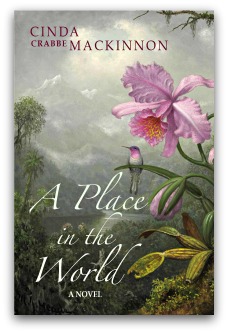
Images: Our Ten Muses (left to right, top to bottom) — Edith McClintock, Barbara Conelli, Tony James Slater; Laura Graham, Martin Crosbie, Helena Halme, Alexander McNabb; Meagan Adele Lopez, Wendy Nelson Tokunaga, Matt Krause.