The Displaced Nation

A home for international creatives

Tag Archives: Europe

A classic TCK dilemma: Which of my 3 heritages counts for the Olympics?

We welcome back Third Culture Kid Tiffany Lake-Haeuser to the Displaced Nation. (She last joined us during fashion month.) Born in the United States to German parents, Tiffany returned “home” to Frankfurt when she was six. But then at age 13, she moved with her family to Abu Dhabi, UAE. Now back in Frankfurt, this 16-year-old divides her time between this city and Paris, where her father currently resides. So which team(s) does Tiffany support in the Olympics? That’s the million-euro (or is it dollar?) question.

I was never really very interested in sports. This year, during the Olympics, that changed. You still won’t find me glued to the television to see all the events, but I’m definitely more interested than in the past.

Then of course, there is the somewhat confusing decision of which country to cheer for. Do I support my heritage and the country I now live in, Germany? Or do I support the country I was born in and often associate with, the USA? Well for me it was easy to decide. You see, I am extremely competitive and enjoy cheering for the country that wins, which for the most part leads to me cheering for the USA.

I watched the pre-Olympic trials for the American gymnastics team when I was in the United States visiting childhood friends earlier this summer. I was gobsmacked — not only by the amazing talent of the athletes, but also by the enthusiasm shown by the spectators.  I think that’s when I caught the Olympic bug. Suddenly I was eager to see the team compete for gold in London.

German apathy

But when I got back in Germany, there was barely any sign that the Games were fast approaching. Maybe I was just in the wrong environment, but no one was even talking about it. Even when the Games started, it felt like no one cared. The most excitement I observed was a small promotional program by a pharmacy(!). Unless I was on some social networking site, I barely ever exchanged views with anyone about what was happening at the Olympics.

While waiting for the Games to start, I did some research and found out that since the modern Olympic Games began, the USA has always been in the top three countries when it came to the number of medals won.

This history made me even more inclined to support my other “home” country. I love cheering for countries that are doing well. I love being a fan.

Go USA! Hmmm…unless it’s soccer?

As anyone who read my March interview with The Displaced Nation knows, I’m something of a fashionista. I love the idea of showing some pride for the US team by wearing red, white and blue. It may seem petty, but half the fun of watching the Olympics for a non-athlete like me is getting dressed up and painting your face in your team’s colors.

That’s something I picked up from Germany, in fact. Germans get truly pumped up for one thing: soccer. It’s our pride and joy. During the European Cup or the World Cup, Germany is transformed into a black, red and golden country. While in the USA people have flags hanging by their doors all year long, in Germany that happens only during these major soccer events.

One test of which side I was on in the Olympics came when a friend tried to bug me by saying that Germany was being beaten by his country in some sport. To be honest, I didn’t mind that much. All I could think about how well Gabby Douglas was doing in gymnastics.

Does this mean I am not proud of my German heritage? It definitely doesn’t; by the next soccer game you will see me losing my voice for cheering on Germany.

So it really isn’t that straightforward or clear. You never truly stop cheering for a country that means something to you. All you can really hope for is that the two countries’ teams never play against each other…

Go women athletes!

On a different note, I was excited to hear about how every country sent women to the Olympics this year. I wouldn’t call myself a feminist, but I do think gender equality is important, and that a country that is sending its women athletes to compete in the Olympics for the first time is taking a big step. I hope that gender equality in sports can become the new standard. Some day, perhaps, it will be considered so normal it won’t even make the headlines.

Having lived for three years in Abu Dhabi, I was particularly interested in the news about Saudi Arabian women participating in the Games. I know from experience how easy it is for us Westerners to look at Arab women wearing the hijab and think they are less liberated than we are. When I saw the Saudi women walking behind the men during the London opening ceremony, I was not surprised so much as humbled. Not everyone sees equality in the same way as we Westerners do.

Likewise, I didn’t think it was fair for the International Olympic Committee to consider banning the judo wrestler Wodjan Ali Seraj Abdulrahim Shahrkhani from dressing according to the traditions by which she was raised.  (In the end, they compromised on a cap for her to wear instead of the hijab.) To some degree, I admire Saudi Arabia for insisting upon preserving its cultural identity and traditions in face of the influence of Westernization.

By the time the Games end on Sunday, I think my favorite part will not be about having supported a particular country. The best part, in my opinion, has been seeing the people who rise to the occasion and do phenomenally well. It sounds cheesy, but you can see in their eyes the joy and relief that all their hard work and training has finally paid off — in the moment that counted, they were able to be the best they could be.

* * *

Readers, any thoughts on or reactions to Tiffany Lake-Haeuser’s dilemma? Please put them in the comments. You can also follow what she is up to on her blog, Girl on the Run.

STAY TUNED for tomorrow’s episode in the life of our fictional expat heroine, Libby. (What, not keeping up with Libby? Read the first three episodes of her expat adventures.)

If you enjoyed this post, we invite you to register for The Displaced Dispatch, a round up of weekly posts from The Displaced Nation, with seasonal recipes, book giveaways and other extras. Register for The Displaced Dispatch by clicking here!

Related posts:


BOOK REVIEW: “Expat Life Slice By Slice” by Apple Gidley

TITLE: Expat Life Slice by Slice
AUTHOR: Apple Gidley
AUTHOR’S CYBER COORDINATES:
Website: www.expatapple.com
Blog: my.telegraph.co.uk/applegidley
Twitter: @ExpatApple
PUBLICATION DATE: March 2012 (Summertime Publishers)
FORMAT: Ebook (Kindle) and Paperback, available from Amazon
GENRE: Memoir
SOURCE: Review copy from author

Author Bio:

Apple Gidley became an expat at the tender age of one month old, in Kano, Nigeria. Since her early initiation into global wandering, she has relocated 26 times through 12 countries, acquiring a husband and two children en route.

Apple is known to thousands as ExpatApple, through her popular blog at the Daily Telegraph.

Summary:

“From marauding monkeys to strange men in her bedroom, from Africa to Australasia to America, with stops in Melanesia, the Caribbean and Europe along the way, Apple Gidley vividly sketches her itinerant global life. The challenges of expatriation, whether finding a home, a job, or a school are faced mostly with equanimity. Touched with humour and pathos, places come alive with stories of people met and cultures learned, with a few foreign faux pas added to the mix.”

(Source: Amazon.com book description)

Review:

If anyone is qualified to issue advice on expat life, Apple Gidley is that person. Born to an English father and Australian mother, she takes the label “Serial Expat” to new heights.  She was a TCK before the term was invented (instead classed unflatteringly as an “expat brat”) and continued the global wandering throughout her adult life, with 26 relocations through 12 countries to date.

Her memoir provides fascinating reading, about places and lifestyles that most of us will never experience, and at times is almost anachronistic:  reading her reminiscences about servants, voluntary work, and charity committees, there’s a time warp sensation of stepping into a Somerset Maugham short story.

Although the book is a record of Apple’s patchwork life, most expats will relate to the emotional experiences she describes, no matter where in the world they are or  how many countries they’ve lived in. For example, we worry that leaving our family and friends behind will increase the emotional distance as well as the physical. After a while, we realise that this is mostly not the case, and that those who allow physical distance to become an obstacle weren’t so emotionally close in the first place. In Chapter 8, “Eighth Slice: Staying Connected”, she says:

As we age we draw closer still. We believe in family but do not see each other for years at a time, and yet we are all aware of where each of us is in the world, still scattered and testaments to a global upbringing.

In “Ninth Slice: Death at a Distance”, Apple deals with the elephant-in-the-room topic: the illness or death of a family member while we are thousands of miles away. During such times, it’s easy to beat ourselves up for choosing a nomadic lifestyle;  if our associated guilt trips were eligible for air miles, we could afford to fly back and forth to be with our loved ones as often as we wanted. In describing her own experiences of bereavement, Apple’s practical, matter-of-fact approach, plus her insights gleaned from other cultures’ attitudes to old age and death, reminds us that the old cliché of “life goes on” holds true, even after “death at a distance”.

Whether you’re a veteran expat, a re-pat, or are just about to embark upon your first move to another country, “Expat Life Slice By Slice” should be on your reading list.

Words of wisdom:

On TCKs:

For those children brought up as TCKs…a nonjudgmental and accepting attitude to different customs, colours and cultures is the norm. As this demographic grows, let’s hope for an even greater understanding of cultural differences for all our children.

On voluntary work:

Volunteering is work, sometimes harder than a paid position because it is the cause keeping you there and not the salary.

On making new connections:

Picking up people around the world to share your life with is one of the greatest pleasures in life, and sometimes you know straight away they will continue to stay in it.

On “Home”

Home is with me wherever I go…It is not a single building or a single country, but many of them.

.

STAY TUNED for Wednesday’s post.

Image:  Book cover – “Expat Life Slice By Slice”

If you enjoyed this post, we invite you to register for The Displaced Dispatch, a round up of weekly posts from The Displaced Nation, with seasonal recipes, book giveaways and other extras. Register for The Displaced Dispatch by clicking here!

Related posts:


For former expat Matt Krause, a second act as a heathen pilgrim

For some of us, starting a new life overseas is challenge enough. But for others, it represents an opportunity to take things to the next level. It’s fair to say that Matt Krause falls into the latter category. Returning to California after following a Turkish woman back to her native land, he used the material for his first book. And now he’s preparing to set out on a 1,300-mile solo walk across Turkey — a country he still regards as his second home. I caught up with Matt recently to ask about this latest, much more athletic challenge.

Hi again, Matt. Welcome back to The Displaced Nation. It seems like only yesterday that we were reviewing your expat memoir, A Tight Wide-open Space, and now we find you preparing for an epic travel adventure. Can you say a little more about it?
On Saturday, September 1, 2012, I will start an eight-month solo walk across Turkey, from the Aegean to Iran — 1,305 miles (2,100 km) in all. I will carry a backpack, a tent, and a sleeping bag.

Why are you doing this?
To put my life where my mouth is.

In 2003 I met a girl on an airplane to Hong Kong. We ended up going out, then moving together to her hometown of Istanbul and getting married there. We lived in Turkey for six years, but in 2009 things unraveled and I came back home to the US.

When I came back to the US, people kept asking me about the differences I had seen in Turkey. Political differences, religious differences, cultural differences, gender differences, just about every kind of difference you could think of.

But I really wanted to tell them about how people are so much the same. Living in Turkey had reminded me that most of what we are as human beings, and how we act in any given situation, is pretty much the same. Human nature being what it is, though, we can’t take our eyes off our differences, and I think that this focus makes us more afraid of each other than we need to be.

I don’t want to talk about this in theory. If these similarities are so profound, I should be able to walk, alone and unprotected, across the country I still think of as my second home.

Going to the dogs

What have you done to prepare for this odyssey?
I walked 1,200 miles (almost 2,000 km), 700 of them with a fully loaded backpack. That’s four hours a day, five days a week, for five months.

I walked the same four 12-mile routes about 25 times each — those were 1,200 very repetitive and boring miles.

However, I love dogs, and the dogs added some flavor to the walks. The first few times I walked those routes, the dogs all acted ferocious, but week by week they warmed up to me. The Labs were the first, of course — I only had to walk past them once or twice before they’d run out to me wagging their behinds like I was an old friend.

The last to go was one particular Doberman Pinscher. He spent about four months acting like he was going to rip my head off each time I passed by, and then one day when I walked by he was busy talking to another dog. He looked over at me like, “Are you serious, are you going to make me interrupt this perfectly good conversation in order to come chase you?” He broke down quickly after that, and now when I walk past his house he just playfully runs alongside me, glancing back at the house every few seconds to make sure nobody’s watching. He’s got a reputation to think about, after all.

How will you finance the trip?
I have savings, which I’ve supplemented by working in the peach and plum orchards near my hometown of Reedley, California. I was grafting, which is basically cutting off the top of an old tree and sticking a new kind of wood into it. The new wood takes over, and within a couple years the tree is producing a new variety of fruit.

I will also be raising some money on Kickstarter in a few weeks.

Will you be grafting any electronic devices onto yourself while you walk?
I’ll have a pocket camera and a cell phone connection so that I can post daily updates (people photos, landscape photos, short written updates, etc) on my Web site, Heathen Pilgrim. Most of the time, of course, I’ll be out in the middle of nowhere. It’s not like I’ll be able to run into the nearest Starbucks and connect over wifi, so I had to figure some things out. I’ve been doing a lot of equipment testing.

An oxymoronic concept?

“Heathen Pilgrim” — that’s a curious name for a project.
I picked that name for a couple of reasons. The main reason is that a heathen is a person who does not share one’s religion. Christians see non-believers as pagan; Muslims see them as infidels; and as far as Jews are concerned, gentiles can never be members of God’s chosen people.

One thing we all have in common is that someone, somewhere considers us heathen. And if you want to travel outside of your own circle, you must be willing to be considered a heathen by someone else. If the people around you are not considering you heathen yet, you have not traveled far enough from home.

I also have a tongue-in-cheek reason. A secondary definition of “heathen” is “a rude or uncivilized person.” I’m a fairly polite and well-mannered person. So calling myself a heathen pilgrim is a bit of an attempt at self-deprecating humor.

Well, particularly when you juxtapose it with a word like “pilgrim,” since pilgrims are supposed to be on a journey to a holy place. Your itinerary is pretty ambitious. Do you identify at all with the athletes who are now preparing for the Olympics?
No, not at all. Those guys train all their lives. I’m just a guy who likes to eat donuts and walk — although I did have to turn a lot of things upside down in my life in order to do this.

On the subject of ways of looking at this project, there’s a relevant saying I like, that we are not entitled to the fruits of our labors, only to the labors themselves.

In this case, I have no control over the meanings people might assign to my walk. I only have a say in whether or not I do it.

A few last-minute jitters

What’s left by way of preparation for this unholy journey of yours?
Not much. At some point you’ve just got to take the leap of faith (no pun intended!), and that time has arrived for me. Right now I’m preparing for the Kickstarter campaign in a few weeks, and there are still a few things I still need to get, like a sleeping pad and a small whiteboard. But I’m as prepared as I’ll ever be without actually doing it. It’s time to go.

But what about psychological preparation? Are you nervous? Despite your affection for Turkey, do you worry about feeling out of your element, displaced in ways you’ve never been before?
You bet I’m nervous. I’ve never walked across a country before. I’ll be displaced and out of my element 24 hours a day, seven days a week, for the entire trip.

What makes me most nervous is that I don’t know where I’ll be sleeping at night. I don’t want to stay in hotels, because then I’d just be doing the tourist thing. So I’ll be taking people up on their offers to pitch my tent in their front yard, or let me sleep on their living room floors, or even sleep on their roofs (many of the roofs in that part of the world are flat, and people use them like a front porch).

For a while, I was really worried about approaching all these strangers and asking for help. In fact, until a few months ago I would wake up in the middle of the night worrying about how that was going to pan out. But then I talked to a young woman who had backpacked through that part of the world many times. She said don’t worry about them, they’ll be fine with it. The worry is in you. Get over it quickly by knocking on a stranger’s door the very first night.

How to follow Matt’s progress

If people want to follow your progress, what should they do?
I’ve put out an open invitation to anyone who wants to come walk part of the route with me. So if you can, get yourself a backpack and a sleeping bag, and join me on the road somewhere.

However, if you can’t join me in person, follow the trip vicariously. There’s the aforementioned Heathen Pilgrim site, a weekly email newsletter, a Facebook page, and my Twitter account (@mattkrause). Use whichever of those you prefer — they’ll be showing pretty much the same content.

I assume you’ll also be getting some books out of this?
I’ll also be writing four books at the end of the trip: two books tentatively titled “Turkey on 12 Miles a Day” and “Walking Turkey”; and two photo essays, tentatively titled “Walk Turkey: The Landscape” and “Walk Turkey: The People.”

Those books will be available later on Amazon, but you can sign up for them early, and get some other trip-related goodies, by backing the trip on Kickstarter. The Kickstarter campaign isn’t live yet, but if you keep an eye on my cyber-coordinates, in early August you’ll hear about it when it starts.

Thanks, Matt. You may not think of yourself as an Olympic athlete, but I’m impressed by your determination and all the meticulous preparations. Readers, make sure you follow Matt’s journey in one of the ways he suggests and spread the word about his Kickstarter campaign. You can also support him by downloading his memoir on his expat life in Turkey — as Kate Allison said in her review, “For all that this is a love story, Matt pulls no punches in the telling of it.” He’s honest, as well as humble. Two great qualities for a pilgrim, even if he is a bit of a heathen! 🙂

STAY TUNED for tomorrow’s Displaced Q on the Olympic Games and the sometimes awkward issues they raise for us displaced types about national loyalties, by Tony James Slater.

If you enjoyed this post, we invite you to register for The Displaced Dispatch, a round up of weekly posts from The Displaced Nation, with seasonal recipes, book giveaways and other extras. Register for The Displaced Dispatch by clicking here!

Related posts:

5 reasons why American aviatrix Amelia Earhart could be an expat heroine

The American aviatrix Amelia Earhart has been propelling her way into the news headlines this week. Yesterday marked the 75th anniversary of her Lockheed Electra disappearing over the Pacific Ocean.

And today marked the beginning of an expedition, led by an American nonprofit group, to locate the wreckage from her plane. The group plans to scan the depths of the Pacific Ocean near a remote island where they believe Earhart and her navigator, Fred Noonan, died as castaways.

With America’s most famous aviatrix back on our horizons, it seems a timely moment to nominate her for our Displaced Hall of Fame, where we put all of our expat heroes and heroines.

What, was she an expat, too? I can hear you asking. In fact, she was an expat briefly — during World War I, when she went to visit her sister in Toronto and ended up staying on as a nurse’s aide in a military hospital.

But I’ll admit that Earhart seems more of a domestic heroine — as American as apple pie, you might say. Born in Atchison, Kansas, in America’s heartland, Amelia grew up tall and willowy like the corn in the fields. As the Reigning Queen of the Air, she became the nation’s sweetheart and to this day retains a special place in the hearts of young American women.

What’s more, recruiting her to serve as a heroine for global nomads, many of whom have hybrid nationalities, might not fly with my fellow Americans. Secretary of State Hillary Clinton has endorsed the expedition to hunt for Earhart’s plane, saying that Earhart embodies the “spirit of America coming of age and increasingly confident, ready to lead in a quite uncertain and dangerous world…”

But in reviewing the main facts of Earhart’s life, I have found plenty of aspects that show how “displaced” she actually was — “displaced” in the sense of being “removed from the usual or proper place” (see definition on our About page) — and hence belongs in our orbit. Here are five of my top reasons:

1) She was born with wings.

Veteran expats and long-term travelers cannot afford to have fear, or dislike of, flying. Should we incline at all in this direction, it may help to lie back in your airplane seat (or pretend you have a seat where it’s possible to lie back) and think of Earhart, who took to the skies without hesitation, as though the airplane wings were her own. Legend has it that she first caught the aviation bug while an expat in Canada. She went to see an exhibition of stunt flying at a fair in Toronto and later wrote about the sensation she’d felt as a pilot began diving at her and her friend:

I remember the mingled fear and pleasure which surged over me as I watched that small plane at the top of its earthward swoop. I did not understand it at the time, but I believe that little red airplane said something to me as it swished by.

From then on, it was all she could do to keep her feet on the earth. Of her first airplane flight she said: “As soon as we left the ground, I knew I had to fly.” In 1921 she took her first flying lesson, and soon saved enough money to buy a second-hand plane.

Of course it helped that in the early days, flying was a romantic sport for the lucky few, not a form of transport where everyone from pilot to passenger feels as though they’re herding or being treated like cattle. Earhart named her first plane “Canary” because of its bright yellow color. Perhaps she felt like a canary when setting her first women’s record: rising to an altitude of 14,000 feet.

By the time she became the first female pilot to cross the Atlantic solo (Charles Lindbergh was first to do so), she had her own little red airplane — a cherry-colored Lockheed Vega, reputed to be the world’s fastest aircraft and therefore favored by pioneering aviators. Hmmm… Did it make her feel like a cardinal?

2) Always restless with the status quo, she let it drive her adventures.

What’s the litmus test for being a travel or expat type? A person who is always upping the ante. We’re a gang of permanent malcontents!

No sooner had Earhart become the first woman to cross the Atlantic (as a passenger) — a flight that made headlines because three women had died within the same year in trying to achieve it — but she sought to become the first woman to fly solo across the Atlantic (1932) and the first person to fly solo across the Pacific, from Honolulu to Oakland (1935), among other achievements.

At that point, there was nothing for it but to make a bid to become the first person to fly around the world (1937).

One wonders what Earhart might have done next, had she not gone down in her plane on the very last leg of the journey. Perhaps she would she have concluded that she’d peaked out too early? (No doubt many of you serial expats and repats can relate…)

3) She had no qualms whatsoever about the risks involved in an adventuresome life.

In the lore surrounding Earhart, great emphasis is placed on her early feminism. Much of it is said to be due to her mother, who had very little interest in bringing up Amelia and her younger sister as “nice little girls” — she even allowed them to wear bloomers!

Clad in this comfortable attire (Amelia would later design a clothing line for women who wanted comfort), the Earhart sisters climbed trees, hunted rats with a rifle, and “belly-slammed” their sleds downhill.

The young Amelia also kept a scrapbook of newspaper clippings about successful women in predominantly male fields, including film direction and production, law, advertising, management, and mechanical engineering.

Although she did marry eventually — to the publisher George Putnam — she always referred to the marriage as a “partnership” with “dual control,” and did not change her last name.

When she became the first woman to fly solo across the Atlantic, Earhart said it proved that men and women were equal in “jobs requiring intelligence, coordination, speed, coolness and willpower.”

(No doubt she would be knocked out to learn that women’s boxing will be included in the London 2012 Olympics for the very first time.)

But to me, what’s even more impressive about Earhart’s life is that she knew about the risks involved in her chosen occupation — but decided not to let them hold her back. That same kind of risk-taking is at the heart of the overseas travel enterprise, which goes against the grain of most people’s common sense. (“You want to go THERE? And FOR HOW LONG?” Expats and global nomads know the drill of fielding constant questions and doubts from the people back home.)

When Earhart set out on her second attempt to circumnavigate the world (the first had ended in a crash when a tire blew out on take-off), she wrote to her husband: “Please know I am quite aware of the hazards.” And then she went ahead and packed a jar of freckle cream. (I say that because a jar of freckle cream was found on the Pacific Island that’s now being searched.)

4) She was never more in her element than when out of her element (quite literally).

There is something that draws all of us to the displaced life. Since it’s a life of challenges, I have to assume that for most of us, it’s that feeling of being a pioneer, of going the way no one else in our circles has gone before…

In Earhart’s case, the displacement was quite literal: she loved being in the empty sky and facing the unknown. In that sense she was like a character out of Greek myth — a female Icarus. As she once said of an early flight:

The stars seemed near enough to touch and never before have I seen so many. I always believed the lure of flying is the lure of beauty…

Jane Mendelsohn was inspired to write her first novel, I Was Amelia Earhart, after reading that a piece of what may have been Earhart’s plane had been recovered on an atoll in the Pacific. Imagining the life that Earhart and Noonan might have led as castaways, Mendelsohn shows Earhart coming into her own in the desert-island setting, and finding peace of mind.

Random House editor Kristin Fritz commends Mendelsohn for creating a whole new iteration of Earhart as

a woman who had perhaps “taken this journey in order to escape the madness of the world,” a woman who “didn’t give a damn if she was alone” and finally a woman who would “live the rest of her long and brilliant life on this wild and desolate island.”

Now that’s displaced! And if Fritz is right and Medelsohn captured the essence of Earhart in her novel, then we should not feel too bad that she perished on an island out in the middle of nowhere. That’s how she would have wanted it…

5) Last but not least, she appears to have known the value of chocolate.

Here we come to the true test of an expat or international traveler: do they like chocolate? Are they addicted to that sudden charge of energy, the little lift, one gets from the sugar and the caffeine? Most seasoned expats and international travelers know that we could never have prevailed during the inevitable moments of loneliness and displacement the life entails without a chocolate supply of some sort.

When Earhart embarked on her 2,408-mile solo flight across the Pacific in 1935, she packed a thermos of hot chocolate in case she felt chilled. As she later observed:

Indeed, that was the most interesting cup of chocolate I have ever had sitting up eight thousand feet over the middle of the Pacific Ocean, quite alone.

* * *

Now that we’re touching down, I feel the need to quote from Mendelsohn’s recent op-ed for the New York Times:

We still wonder what happened to Amelia Earhart — perhaps soon we may even find out — but do we know what to do with her? Do we know how to make not just her mysterious disappearance but also her miraculous life relevant and inspiring to our global society? And could she matter across the globe, that ball around which she tried to fly that feels so much smaller today but is in fact exactly the same size as it was then?

For me there’s an easy answer to all three of Mendelsohn’s questions: YESSSSSSS!!! It’s time Amelia Earhart went global, and not just literally…don’t you agree?

STAY TUNED for Wednesday’s post, another in our Expat Moments series by Anthony Windram — and yes, it does have to do with the 4th of July!

If you enjoyed this post, we invite you to register for The Displaced Dispatch, a round up of weekly posts from The Displaced Nation, with seasonal recipes, book giveaways and other extras. Register for The Displaced Dispatch by clicking here!

Related posts:


RANDOM NOMAD: Lynne Murphy, American Expat in UK & Champion Linguist

Place of birth: Western New York State, USA
Passports: USA + UK
Overseas history: South Africa (Johannesburg): 1993-97; Texas, USA (Waco): 1997-99 — definitely a different country!; England, UK (Brighton): 2000 – present.
Occupation: Senior Lecturer in Linguistics, University of Sussex
Cyberspace coordinates: Separated by a Common Language — observations on British and American English by an American linguist in the UK (blog); @LynneGuist (Twitter handle).

What made you leave your homeland in the first place?
What made me move were jobs. I am a theoretical lexicologist. Not many places want a theoretical lexicologist, so I applied far and wide and have been rewarded with some very interesting jobs and living experiences.

Is anyone else in your immediate family “displaced”?
I was the first person in my immediate family-of-birth to own a passport.

Can you describe the moment when you felt the most displaced?
The night after the American student Amy Biehl was killed in South Africa, in August 1993. At that point, I lived in a granny flat — an outbuilding behind a house in a Johannesburg suburb. I came home to find my neighbours in the main house packing up and leaving for a safe place to stay, as they’d been robbed during the day. As they left, they told me the thieves had taken the spare keys to my flat — and had already come back to steal the bicycles from the garage. At that point, I had no car, no telephone (setting one up there took FOREVER), nowhere to go and no way to get there. I stayed up all night with the lights on and with a newspaper with the story of Biehl’s murder on the front page, feeling very alone and very scared.

Is there any particular moment that stands out as your “least displaced”?
Sometimes it’s funny to reflect on the fact that my own child speaks with an English accent, and I feel most absolutely at home with her. But I also often feel really divorced from the US when I read the news. When the hullabaloo about “Obamacare” was going on, I just couldn’t believe that I came from a place where many people seem not to see good medical care as a basic right for all. And it especially galled when I saw some Americans spreading lies about how British healthcare works and others willing to believe those lies. The National Health Service isn’t perfect, but it has saved my life, and I have more confidence in its care for me than I had in the insurance-industry-driven care I had in the US.

You may bring one curiosity you’ve collected from your adopted country into The Displaced Nation. What’s in your suitcase?
From South Africa: It’s the art that’s lasted! Two pieces by Ezekiel Madiba, a print and one of his printing blocks — which is nice because it’s sturdy enough to put in a suitcase and to hug every once in a while.
From Texas: My doctor’s instructions on what to do the next time I’m stung by a fire ant (to try to avoid being bed-ridden for a week, like the first time).
From England: My wedding ring. It’s a one-off, made by a Brighton goldsmith, and it’s a curiosity, because I hadn’t thought I was the marrying type.

You are invited to prepare one meal based on your travels for other members of The Displaced Nation. What’s on your menu?

Starter/Appetizer: South African biltong. A nice peppery one—but I don’t mind if it’s beef or game. Maybe a selection.
Main course: For this, I’ll bring together the British and the American — not fancy but delicious. I haven’t given it a name, but here’s the recipe: Toast crumpets. cover with cheddar cheese and put under the broiler/grill. Slather on A1 Steak Sauce. Eat with knife and fork.
Dessert: Eton mess with raspberries instead of strawberries.
Drinks: South African wine (I never had a South African wine I didn’t like while I was in South Africa– the exported stuff is of more variable quality, in my experience); Castle Lager (a South African beer); and Schweppes Bitter Lemon (a popular soft drink in South Africa, no longer being produced in this part of the world as far as I know).

And now you may add a word or expression from each of the countries where you’ve lived to The Displaced Nation argot. What will you loan us?
From South Africa: Putting hey? on the ends of sentences. It was so easy to start doing, since I’d grown up using the “Canadian” eh? (Though I hadn’t realized I said it till I moved from upstate New York to Massachusetts, where they don’t say it.) It’s been a while since I lived in South Africa, but I still find myself doing it.
From the UK: There are so many great expressions, but the thing that’s invaded my language most is lovely. When I write emails, I have to go back at the end and take out half of the lovelies because I say it so terrifically much.

This month we have been doing some posts on Queen Elizabeth’s Diamond Jubilee. How did you spend the Bank Holiday weekend? Did you celebrate?
We’re not much into the monarchy in my house, so we just enjoyed the extra time off. But we did go to a friend’s house and eat red-white-and-blue cupcakes — which we should probably have called “fairy cakes” if we wanted to take the whole Rule Britannia thing seriously.

A couple of us on The Displaced Nation team thinks that the Queen deserves an Olympic medal for being on the throne for so long. Do you agree?
I respect the queen for handling many awkward situations with grace, but all she has done to be on the throne so long is not die yet. She got a national holiday for the occasion—I think that’s sufficient!

Readers — yay or nay for letting Lynne Murphy into The Displaced Nation? Tell us your reasons. (Note: It’s fine to vote “nay” as long as you couch your reasoning in terms we all — including Lynne — find amusing!)

STAY TUNED for tomorrow’s episode in Libby’s Life, our fictional expat series set in small town New England. (What, not keeping up with Libby? Read the first three episodes of her expat adventures and/or check out “Who’s Who in Libby’s Life.”)

If you enjoyed this post, we invite you to register for The Displaced Dispatch, a round up of weekly posts from The Displaced Nation, with seasonal recipes, book giveaways and other extras. Register for The Displaced Dispatch by clicking here!

Related posts:

img: Lynne Murphy looking rather other-worldly — or  “out of this displaced world,” as we like to say — in a Brighton pub.

BOOK REVIEW: “The Chalk Circle,” by Tara L. Masih, Ed.

TITLE: The Chalk Circle
AUTHOR: Tara L. Masih (Editor)
LITERARY AWARDS: 2012 Skipping Stones Honor Award
AUTHOR’S CYBER COORDINATES:
Website: www.taramasih.com
PUBLICATION DATE: May 2012 (Wyatt-MacKenzie Publishing)
FORMAT: Ebook (Kindle) and Paperback
GENRE: Anthology/Autobiography
SOURCE: Review copy from author

Author Bio:

Tara L. Masih, a native of Long Island, N.Y., is the editor of The Rose Metal Press Field Guide to Writing Flash Fiction (a ForeWord Book of the Year) and The Chalk Circle: Intercultural Prizewinning Essays, and the author of Where the Dog Star Never Glows: Stories (a National Best Books Award finalist). She has published fiction, poetry, and essays in numerous anthologies and literary magazines (including ConfrontationHayden’s Ferry ReviewNatural Bridge,The PedestalNight Train, and The Caribbean Writer); and several limited edition illustrated chapbooks featuring her flash fiction have been published by The Feral Press. Awards for her work include first place in The Ledge Magazine‘s fiction contest and Pushcart Prize, Best New American Voices, and Best of the Web nominations.

(Source: Author’s website)

Summary:

Award-winning editor Tara L. Masih put out a call in 2007 for intercultural essays dealing with the subjects of  “culture, race, and a sense of place.” The prizewinners are gathered for the first time in a ground-breaking anthology that explores many facets of culture not previously found under one cover. The powerful, honest, thoughtful voices — Native American, African American, Asian, European, Jewish, White — speak daringly on topics not often discussed in the open, on subjects such as racism, anti-Semitism, war, self-identity, gender, societal expectations.

(Source: Amazon.com book description)

Review:

I’ll be honest: anthologies are not what I head for when I enter a bookshop. My gripe is that the tales are too short, and that just as you are getting into the swing of a story, it ends.

This collection of real-life snapshots, on the other hand, is different. Like most other writers, I have an addiction to people-watching and surreptitious eavesdropping, so an anthology of confessions on multicultural issues, by prize-winning writers, is right up my alley.

Because of the book’s broad topic of “culture, race, and a sense of place,” the essay subjects range widely, as each writer offers his or her own perspective on the topic. Not all of the pieces are about living abroad in another country. One such essay, which also struck me as the most poignant, was “A Dash of Pepper in the Snow,” by Samuel Autman. An African-American who grew up in an all-black neighbourhood of St. Louis, Missouri, Autman became the first black reporter for the Salt Lake Tribune in Utah during the early 1990s. His recollections of that time show, clearly, that one does not need to cross oceans to feel like a fish out of water in the worst possible way.

The essay that will probably strike the loudest chord with TDN readers is “Fragments: Finding Center,” by Sarah J. Stoner. An American-born writer who, until the age of 18, had never lived in the country of her passport but had grown up in Uganda, Morocco, Belgium, and Thailand, Stoner writes of her first days at college. This pivotal life experience also coincided with her first days of living in America, a country she can technically call “home” but which feels like anything but:

A pronounced British accent or status as an exchange student would work wonders for me in this moment. But my bland and unremarkable exterior offers no such grace. I appear deceptively American.

Because everyone’s experiences are unique, different essays will appeal to different readers. A solitary person myself, I was fascinated by “Connections,” by Betty Jo Goddard, in which the 78-year-old writer describes her isolated existence in Alaska, and her feelings about using modern technology to stay connected to the world.

Everyone, though, will be touched by “Tightrope Across the Abyss,” by Shanti Elke Bannwart, a woman born in Germany at the start of World War II. In this piece, Bannwart tells the story of her neighbor, Bettina Goering. Goering is the great-niece of Herman Göring, right-hand man of Adolf Hitler, who swallowed cyanide two hours before he was due to be hanged at Nuremberg. Her  struggles to reconcile herself with her Nazi ancestry have already been documented in the film Bloodlineswhere she “seeks redemption by facing Holocaust survivor and artist Ruth Rich in Sidney, Australia.” Bannwart, with her own 70-year burden of having a Nazi father decorated by Hitler, meets her neighbor Goering, and in doing so finds the nugget of peace and self-forgiveness that has evaded her for so long.

Words of wisdom:

On the convenience of the label “TCK”:

Yes. I’m a Third Culture Kid.

I was relieved to finally have a shortened version of, “Well, I am American but I never lived in America until college. I went to high school in Thailand and before that I lived in Belgium and then Morocco before that. Yes, I was born in the U.S., but we left for Uganda when I was seventeen days old.”

(From “Fragments: Finding Center,” by Sarah J. Stoner)

On getting to know a place:

Places are best soaked in through the tongue, sent stomach-ward, digested and incorporated into the body. To know a place is to visit local markets, order things with unpronounceable names, and eat street food no matter the time of day.

(From “Assailing Otherness” by Katrina Grigg-Saito)

On using technology to stay in touch:

Such connections [phone and email]…are available even to “hermits” living on a ridge-top at the end of nowhere. Are they needed? No. But they enrich my life. My life is full of potential connections.

(From “Connections,” by Betty Jo Goddard)

Verdict:

Although this anthology of autobiographical experiences is a slight departure from the usual books we review at Displaced Nation, it’s a valuable and high quality addition to our stable of “displaced reading.” The sheer variety of experiences depicted in the book means that all readers, wherever they hale from and wherever they are at present, will find something that resonates.

“The Chalk Circle” can be purchased here. 

STAY TUNED for Thursday’s trip to Woodhaven, where Libby is feeling more and more like an exhibit on  the Jerry Springer Show.

Image:  Book cover – “The Chalk Circle”

If you enjoyed this post, we invite you to register for The Displaced Dispatch, a round up of weekly posts from The Displaced Nation, with seasonal recipes, book giveaways and other extras. Register for The Displaced Dispatch by clicking here!

Related posts:


For the displaced writer Martin Crosbie, a life between two cultures is the stuff of literary fiction

Readers who’ve been paying attention will know that a couple of days ago, in honor of The Displaced Nation’s first birthday, we fleshed out a prospectus for a literary festival for authors who’ve been expats, third culture kids and/or global nomads.

Should this litfest ever happen, this month’s featured author, Martin Crosbie, would make an exciting addition to the line-up.

Last year he published a sensitive, partly autobiographical first novel, My Temporary Life, telling the story of Malcolm, a young half-Scot half-Canadian. As Malcolm informs us towards the start of the book:

I live with a father [in Scotland], who didn’t intend to have a son with no wife, or I spend my summers in Canada, with a mother who forgets that I’m there.
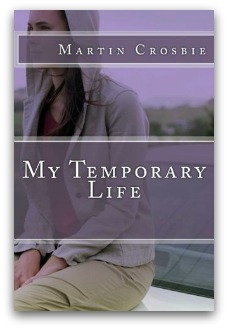
Eventually, circumstances make it impossible for Malcolm to continue this peripatetic life, and he heads to Canada to finish up his schooling. Even then, he feels unsettled:

It really does feel like everything is going to be okay, or at least it might be for a little while. Nothing in my life has ever been forever anyways. Everything is always just temporary, always temporary.

The novel has taken the Amazon charts by storm, garnered rave reviews and turned Crosbie into an overnight publishing sensation.

In fact, I recommend you become part of the storm by reading the book RIGHT NOW — or as soon as you’ve finished this post.

Here’s a link to the book on Amazon: My Temporary Life.

Alternatively, you can sign up for our DISPLACED DISPATCH — and cross your fingers that you’ll be one of this month’s two lucky winners!

And now for some highlights from my exchange with Martin Crosbie…

Is Malcolm Martin?

Hi there, Martin!
Hi, Tony!

Can you tell me a bit about your upbringing — where you were born and how you ended up in Vancouver?
I was born in Aberdeen in Scotland but I was adopted and transplanted to Kilmarnock when I was still an infant. I lived there until I was ten and my family moved us to the west coast of Canada. Other than a few years in Toronto and in Ontario when I was in my twenties, I have always lived here, just outside of Vancouver, British Columbia.

I’ve read your book My Temporary Life, and I loved it. I was particularly impressed by the way your writing flows, which is the mark of a very accomplished writer.
Thanks for saying that, I really appreciate it. This is my first novel and I think one of the reasons that it’s done well is that it went through so many re-writes and revisions. The novel that is out there today is very unlike the first few drafts.

You’ve lived in both Scotland and Canada, the two locations in the book. You also share the main character’s love of running… So I have to ask — how much of this character is autobiographical?
I had a writing teacher who would say “What is truth, in fiction? Write something down!”

Then, he’d sit down and wouldn’t answer any questions until the class had all written something, anything.

Once we shared what we’d written, he’d talk about the fact that when you read something and it “rings true” — in that you get lost in the scene — the reason is that the emotions the writer has conveyed are coming from a true place.

So, I appreciate your question because it means that my story probably worked when you read it.

But did the events in the book really happen — the boy with two parents from two cultures (Malcolm), his best friend whose parents beat him up (Hardly), and his dream woman, who, too, has had an abusive childhood (Heather)?
A lot of the incidents did in fact happen — but to different people at different times. The book is most definitely fictional.

But it is true?
Without wanting to become the next James Frey, yes, on some level it is. I had the daughter of a friend read the novel and really enjoy it, and she asked me if I was Malcolm. I told her that some days I feel like Malcolm and some days I feel like Hardly — lol.

The ups and downs of self-publishing

Quite a few authors in The Displaced Nation’s circle have self-published their works, myself included. Can you tell us what was behind your decision to self-publish My Temporary Life?
I self-published My Temporary Life because I was turned down over one hundred times by agents and publishers. The strange thing, though, was I’d pass my work to readers and they enjoyed it — very few of them didn’t. Oh, there were changes that I made along the way because of readers’ input, but the feedback was almost always decent. And they all wanted to know the same thing: “When’s the next book?”

So I self-published through Amazon, and it’s been an incredible ride. In less than three months 85,000 copies of my book are out there. I say that number and it absolutely astounds me that so many people have taken the time to give My Temporary Life a chance.

Is there a particular group of readers who’ve found particular resonance with your story?
One of the challenges with my novel has been that it doesn’t fit any specific genre, and when that happens you don’t know where to market your work. This has been good and bad. Not knowing whether to call it a coming-of-age story, a romance, or a thriller has been challenging. But not knowing exactly to whom it might appeal has also been a good thing, because I now have women and men readers of all ages.

I guess Malcolm is a reluctant, flawed hero and we can all kind of relate to that.

Self-publishing , as I know from my own experience, can be time consuming, however rewarding it is. Have you found it that way?
Without self-publishing, my story would not have reached anyone. It’s as simple as that. Having said that, the downside is that it’s a lot of work — and I mean, a lot of work. I promote my book anywhere that I can online where I think folks might be interested. Unfortunately, this takes me away from writing my next book, and that’s what I really want to be doing these days.

The positive of self-publishing is that I enjoy interacting with folks who’ve read or are reading My Temporary Life. I’m very accessible. I answer every email. I am on chat loops, Facebook groups, Yahoo groups — anywhere that somebody wants to talk about self-publishing or writing or my work. And, in doing that, I’ve formed some incredible friendships.

You know when you meet someone, whether it’s virtually or in person, and you just know that they’re going to be in your life for a long time? Well, I have met friends like that because of my book.

In the past week, I’ve had instant messages, tweets and emails from all kinds of people. One lady was ribbing me because she had to call in sick after being up all night reading my book. Another woman sent me a barbecued salmon recipe — she’d liked the recipe in my book but thought hers was better. And a gentleman sent me a message who is a huge fan of the book. He said that he’d told his wife that if she didn’t read it, she had to pack her bags, lol.

And, the readers that I am “meeting” are from all over: Taiwan, Luxembourg, lots in Australia, the UK of course, and the US.

It’s an amazing world that we live in that I’m able to experience that, and it’s all because I self-published my book.

Cross-cultural relationships

Malcolm gets involved with Heather, who’s a born-and-bred Canadian from a secluded little town in Northern Ontario. Heather says to Malcolm when they first meet: “You have this Scottish look to you, like you just got off the boat and are still lost; it’s very cute.” What’s your view on cross-cultural relationships? Do you see them as particularly challenging? (Many Displaced Nation readers are in them, which is why I ask…)
It’s funny that you bring that up as I’m trying to address it in my work in progress. I don’t really know if I’m properly qualified to comment… I live in an area of Vancouver where I have friends from pretty much every culture you can imagine. I’m lucky in that respect, and of course because of that, I get to eat lots and lots of different foods. Food is very very important to me, Tony, I do love to eat.

The importance of being Scottish

You’ve lived in Canada a long time. But does Scotland still exert some kind of pull?
Scotland calls me back every few years. Right now it’s been three years since I was there and it’s whispering in my ear again, so I’ll be back there soon.

You see, when you’re a Scot, you’re always a Scot. There are third and fourth generation Scots who live in Canada who still call themselves Scottish.

Well, I was born and bred there and have been back many times, and even though I am a Canadian citizen now, you can’t not be a Scot. It’s more than just being born there. It’s much more than that.

When I arrive at Glasgow airport and present my European passport (yes, I have a Canadian and European one), and the customs agent sees my birthplace and says, “Welcome home, Mr Crosbie,” I always get a tear in my eye.

And, there are many many things that I miss about Scotland.

I miss the passion that they have for football, real football. I miss big sour pickled onions. I miss the way the rain can be lashing in your face and somebody will say to you that it’s a “grand” day. I miss the way that Scottish history is real history, real old history.

The dream of partial repatriation

Would you ever go back to live in Scotland?
I’m fortunate that I can go back from time to time, and in the movie of my life that plays in my head, I do live there part time too. One day I hope to make it happen. I already have the city picked out in Scotland where I’d like to live…

But wouldn’t you have to make some adjustments?
During the months when I’m living in Scotland, I expect I’d miss the mountains that we have here on the Vancouver coast — but I’d sure like to try it for a little while.

If my next book is as successful as My Temporary Life, I might just find a way to fulfill my dream and live part time in both countries.

A Temporary Life — The Sequel

Rumor has it you’ll be doing a sequel following the life of Malcolm’s Scottish friend, Hardly. What can you tell us about this work in progress?
I can tell you that I’ve seldom been as excited about anything as much as I’m excited about my next novel. Yes, it is the story of Hardly. I’m having so much fun writing it.

Just what the final product will look like I don’t really know, so at this point I’ll just say that it’s like the first novel in the sense that it’s an in-depth character study of a man and his motivations, and in terms of how the novel reads, well, I do love plot twists, Tony, and I can absolutely guarantee you that this book will have them.

Sounds fantastic! Thanks so much for your time, Martin.
Thanks for doing this Tony, and of course now I’m going to be dreaming tonight about the wee chip shop in Stewarton, and the farm house that my cousins live in in Inverness, and a multitude of other Scottish things.

* * *

Anyone who’d like to know more about Martin’s life and his work, you can check out his author site and follow his escapades on Twitter: @martinthewriter

And if you have any questions for Martin, please feel free to ask them in the comments!

And don’t forget to sign up for our Dispatch to be eligible for the giveaway of Martin’s book!

STAY TUNED for tomorrow’s installment in the life of our fictional expat heroine, Libby, which will be another party-themed post — this time, of course, it’s a baby shower! (What, not keeping up with Libby? Read the first three episodes of her expat adventures.)

If you enjoyed this post, we invite you to register for The Displaced Dispatch, a round up of weekly posts from The Displaced Nation, with seasonal recipes, book giveaways and other extras. Register for The Displaced Dispatch by clicking here!

Related posts:

Wedding celebrations: Who does it better, Britain or America?

We’ve spent the last two weeks looking at festivals and parties around the world, and today it’s time to take a glimpse at nuptial celebrations, with a guest post by Meagan Adele Lopez. As an American who once lived in the UK — she also has a British boyfriend — Lopez can be considered an unofficial expert on British versus American weddings.

Please don’t invite my British beau and me to a wedding unless you really want us to come — we are more than likely going to reply “yes”!

Many have made that mistake. For some reason, it is impossible for us to say “no” — perhaps we are living vicariously through the bride and groom (going to a wedding is much cheaper than throwing one, let’s be honest).

Over the course of four years we have been invited to 28 weddings, 23 of which we will attend/have attended. These weddings span four countries (Wales, England, Dominican Republic and the USA) and 14 cities.

I wish I could say I was a professional wedding guest, getting paid to attend these lavish affairs. But no, we just happen to have many friends who are getting engaged at this time of my life. Some are even going through their second weddings.

One of the many benefits of dating a British guy is being able to attend British weddings — complete with hats, fascinators, castles and tail coats. I’ve become a bit of an expert on both.

So, I’ve been keeping a running tally of the best things that British and American wedding celebrations have to offer. Right now Britain is winning, but only by one, so that could change!

4 great things about British weddings

1) Less financial outlay for bridesmaids
It’s kind of atrocious that Americans still “invite” their best friends in the world to have the “honor” of becoming a bridesmaid only to pick out the most expensive dress they can find, make their best friends pay for it, and take them on a lavish bachelorette party that they must also pay for.

The British have it right. I mean, if you’re paying £25,000 on a wedding already, why not shell out an extra thousand to make your poor bridesmaids happy? After all, they didn’t choose to get married, you did.

2) Betting on the speeches
Let’s face it — sometimes speeches at a wedding can be really, really hilarious and entertaining. They can be so entertaining and hilarious that you have no idea how much time has gone by, whether or not you’ve eaten, or if the dancing has even happened yet. But, a lot of times, they can be painful and long, and somewhat boring. So, what better way to keep the crowd entertained than by going to each table and getting the guests’ bets on how long the speeches will last?

Personally, I love speeches and find it fascinating to see how each person tackles this challenge to charm a crowd of 150 people — 20 of whom you probably know personally. However, knowing that I have the chance to win a pot of 200 quid makes it that much better!

3) The Groom’s Speech
I actually find it a travesty that American grooms aren’t made to give a speech. Perhaps it’s because a woman marrying a British man knows that this one speech might be the only time she will hear her husband tell her how gorgeous, wonderful and amazing she is, and how he is the luckiest man on the planet. After all, British men aren’t known for being overly flattering or sentimental. I blubber like an idiot, wiping the mascara from my eyes, when I hear a doting British man, for the first (and probably only) time, open up to his friends and family about why he is truly in love with this woman.

But I’m sure most brides who marry a British man will tell you that the groom’s speech is one of the best moments of their wedding night. For me, as a guest, it beats the father’s speech and even the first dance. Perhaps the vows are the only thing that trump it.

4) Romantic venues
I’ve attended weddings in a ninth-century castle, in a tenth-century church, in an old manor house in Sussex, on a farm in the West Country, in a hotel where prime ministers stay, and next to a marsh in West Wales. Something about a British wedding makes it that much more romantic. Of course, it’s every girl’s dream to get married in a castle, but in Great Britain, you actually can!

3 great things about American weddings

1) Open bar
The first time I truly found out about the horror that is a cash bar at a wedding, I was invited to just the evening part. You see, my boyfriend and I had been together for over a year, but since the groom had never met me, he didn’t think it important to invite (ah hem, “pay”) for me to come to dinner, or attend the ceremony.

Apparently, it’s quite normal in England for a significant other not to be invited to the entire evening with their partner if they have never met the girlfriend. Being an American, I was already incredibly offended — especially since we had traveled an hour to be there, stayed in a really expensive hotel (the only one in the entire town), and paid for two separate £40 cab rides to the venue from the hotel (since we weren’t leaving together). So, you can imagine my dismay when I got to the reception and had to pay for my own drinks! I understand that not everyone can afford to have an open bar, but I most certainly prefer the American mentality that when you invite a guest, they are to be treated as such.

2) The women’s speeches
In Great Britain, traditionally, the speeches include the Father of the Bride, the Groom and the Best Man. I agree with all of these choices for speeches, but I have to admit, I did find it a teeny bit sexist that no women spoke at weddings the first time I saw it happen. Most British women don’t mind since they would rather the attention be off of them for the night, but what happened to the Maid of Honor? Why can’t she throw in a speech?

Women bring a different take to speech land, and I definitely prefer the American tradition of allowing us to speak.

3) Creative venues
Where the British score points for tradition, history, elegance and romance, American weddings score points for creativity, grandiosity and variety. Obviously, America is a much bigger country with many more choices for venues, and many more options for good weather. I have been to a wedding on a cliff overlooking the Pacific Ocean, at a museum in the middle of downtown Chicago, a country club in Maryland, and by a river at a historic house in Austin, Texas. The possibilities are truly endless in America, and always keep you guessing. While many British weddings have struck me as being similar, it’s hard for me to say that any American wedding has resembled another. This is also probably due to the diversity of the American population and the variety of religions in this country.

Combining the two traditions — still working on that!

I’d be lying if I didn’t admit that with all of these weddings I didn’t think about how I would like my half British, half American wedding to go…but I simply can’t admit to what I dream of just yet. Call it superstition or what have you, but until I get engaged I won’t disclose my dream wedding. My worst nightmare is having my dream wedding down on paper, and then it never happening!

In the meantime, I’ll continue to break down the weddings I go to and figure out which bits I want to keep for myself.

Editor’s note: This post is adapted from a post that appeared on Smitten by Britain: “British vs. American Weddings” (25 January 2012).

Question for readers: Have you been to weddings in the country where you live? How do they compare?

MEAGAN ADELE LOPEZ is the author of Three Questions: Because a quarter-life crisis needs answers, which was featured in February on The Displaced Nation. You can learn more about Lopez and her book at her author site and by following her on Twitter: @meaganadele.

STAY TUNED for tomorrow’s post, an interview with first-time novelist Martin Crosbie. (Sign up for our Dispatch to be eligible for the giveaway of his book, A Temporary Life!)

If you enjoyed this post, we invite you to register for The Displaced Dispatch, a round up of weekly posts from The Displaced Nation, with seasonal recipes, book giveaways and other extras. Register for The Displaced Dispatch by clicking here!

Related posts:

RANDOM NOMAD: Wendy Williams, Canadian Expat in Austria

Place of birth: Northern Ontario, Canada
Passport: Canadian, and apparently I can live in Austria forever now with my unlimited Aufenhaltsbewilligung.
Overseas history: Austria (present), Germany, Switzerland, Slovak Republic, UK. I have also worked on a project basis for extended periods in Sweden, Tunisia, Holland and Estonia.
Occupation: Author*
Cyberspace coordinates: The Glolo Blog; The Globalisation of Love (Facebook page); and @WilliamsGloLo (Twitter handle)
*Wendy Williams is the author of The Globalisation of Love, one of the top books for expats in 2011.

What made you leave your homeland in the first place?
Burning curiosity! I just love to know what is around the next corner — and the corner after that, too. My grandparents are all immigrants to Canada from Europe, and I guess listening to their stories about their homelands got me thinking that “home” can be very different and it can be anywhere.

Is anyone else in your family “displaced” besides your grandparents?
I am the only of my siblings who went back across the pond, as my grandmother would say — though they certainly come to visit me in Austria (and to ski!).

You’ve lived in quite a few places in Europe before moving to Vienna with your Austrian husband. Does any one moment of that time abroad stand out as your “most displaced”?
While vacationing on one of the Canary Islands, which belong to Spain, I fell ill and required an injection in my, ahem, gluteus maximus. It was 1995, when the so-called Turbot War took place between Canada and Spain — a dispute over fishing rights along the coast of Canada that challenged international diplomatic relations between the two countries. The doctor held up the rather long needle and said, “So, you’re from Canada are you? You like to fish?” I remember thinking, “Uh-oh, this is going to hurt!” It may be conjecture, but I felt the jab of the needle was particularly forceful.

Is there any particular moment that stands out as your “least displaced”?
It happens all the time while skiing in Austria. I grew up skiing on a tiny little bump of a hill and always dreamed about the long alpine slopes of Austria. I was lucky enough to marry an Austrian who is also a passionate skier, and we ski frequently throughout the winter. I feel right at home as I swish, swish down the slopes. I enjoy the après ski, too!

You may bring one curiosity you’ve collected from your adopted country into The Displaced Nation. What’s in your suitcase?
From Georgia in the Caucasus: Antique brass candle holders
From Murano, a series of islands in the Venetian Lagoon: A red Murano chandelier
From Morocco: An onyx stone bathroom sink
From Austria: An 18th-century Tyrolean kitchen table
From France: A yellow ceramic Pernot jug
My house is a diary of my travels through life, and as you can see, I plan to continue living that way on The Displaced Nation — even though it will entail dragging in a rather large and heavy suitcase!

You are invited to prepare one meal based on your travels for other members of The Displaced Nation. What’s on your menu?

Appetizer: My husband’s pumpkin soup with 100% pure Austrian pumpkin seed oil
Salad: Arugula mixed salad with blue cheese, grapes, cranberries, pear and pistachios — as served at the Loriot in Washington, D.C.
Main course: Viennese Schnitzel with potato salad … of course!
Dessert: My mom’s lemon meringue pie
Drinks: Bubbly to start — Crémant d’Alsace is one of my favourites; and for the main course, red wine from Burgenland in Austria.

And now you may add a word or expression from the country where you live in to The Displaced Nation argot. What will you loan us?
Actually, I would like to loan you an expression that my husband picked it up while living in Australia: Happy as Larry. (I picked it up from him while living in Austria.)

This month we are looking into parties and celebrations abroad. What has been your most memorable party or celebration since you became “displaced” from your native land?
The celebration of my 10th wedding anniversary, in 2008! My husband and I had about 50 friends in a small restaurant in Vienna that served elegant, locally-sourced organic food. An opera singer sang “‘O Sole Mio” so beautifully we thought the wine glasses would burst like in a cartoon. We gave a speech about our 10 years together and then announced what we had planned for the upcoming years — I was four months pregnant. The crowd went wild with excitement and gave a 10-minute standing ovation amongst congratulatory hugs, tears and high fives. It was total kitsch and corny Hollywood romance — and we loved every minute of it!

The Displaced Nation has just turned one year old. Can you give us some advice on themes to cover in our second year — anything you think should be on our radar?
Multicultural couples — what I call GloLo couples — usually meet in interesting ways. Chance and coincidence often conspire to bring two people together. It would be fun if The Displaced Nation could feature some stories from GloLo couples about how they met — and whether their displaced lives brought them together — and how they worked things out so they can stay together.

Editor’s note: In February Wendy Williams contributed a post to The Displaced Nation that has remained very popular: Why “expat” is a misleading term for multicultural couples.

Readers — yay or nay for letting Wendy William into The Displaced Nation? Tell us your reasons. (Note: It’s fine to vote “nay” as long as you couch your reasoning in terms we all — including Wendy — find amusing.)

STAY TUNED for tomorrow’s installment from our displaced fictional heroine, Libby, as she discovers that Oliver’s mum and her own mother have more in common than she’d realized. (What, not keeping up with Libby? Read the first three episodes of her expat adventures.)

If you enjoyed this post, we invite you to register for The Displaced Dispatch, a round up of weekly posts from The Displaced Nation, with seasonal recipes, book giveaways and other extras. Register for The Displaced Dispatch by clicking here!

Related posts:
img: Wendy wrapped up against the elements — but is she in Austria, her adopted home, or Northern Ontario, her birthplace? (Hint: It was minus 25 degrees Celsius.)

How to throw a party for a bunch of global nomads

One year has passed since our first random nomad, Anita McKay, crashed through the gates of The Displaced Nation, bribing the guards with chicken tikka masala and cranachan and shouting “bollocks” at several of us who tried to stop and question her.

And now there are 40 such nomads within our ranks — the latest being Annabel Kantaria, who insisted on bringing an alarm clock that looks like a miniature mosque — it rings every morning with the call to prayer. (Note to other founders: perhaps we need to find guards who aren’t so easily intimidated when travelers show a bit of temerity…)

Still, as we now have 40 nomads, randomly selected, why not make the best of the situation and throw a party? And what better excuse than The Displaced Nation’s 1st birthday — which, as announced by Kate Allison in a post a couple of days ago, took place on April 1 (no fooling!).

Further to that end, I’ve come up with a Party Primer that I think should work for this group — as well as for similar gatherings.

PARTY PRIMER FOR DISPLACED NOMADS

Click on the headlines below to go to each section:

  1. INVITATIONS
  2. DRESS CODE
  3. DECORATIONS
  4. MUSIC
  5. TABLE ASSIGNMENTS
  6. FOOD
  7. TOPICS FOR SMALL TALK
  8. PHOTOGRAPHY
  9. GAMES
  10. SONGS

INVITATIONS

As this party marks a special occasion (who ever thought we’d make it to be one year old?), a deluxe printed invitation is in order. The only thing is, our invitees are a bunch of nomads! We’ll be lucky if we can catch them on email, let alone at a fixed address. Let’s compromise on an attractively designed message: see mock-up at top of this page.

DRESS CODE

As some of you may know, Cleopatra recently paid a visit to The Displaced Nation. Based on her observations of today’s international travelers, we’ll be doing well if we can get the men to shower and change before joining us. As for the women, well, allow me to offer these pearls of wisdom from Jennifer Scott — the American guru of Parisian chic who was featured on this blog last week. Jennifer says:

There are certain occasions that always warrant dressing up. Generally any gathering … where others went to a lot of effort for your sake.

DECORATIONS

The theme is easy: the wide wide world! (Rather the opposite of Disney’s “It’s a small world after all” concept.) This calls for tablecloths imprinted with the world map (to make it easy for guests to point out where exactly “Moldova” etc is); globe-patterned balloons (can we coin a new term: globalloons?); and for the centerpieces, flags from each of the adopted country represented at the table in question.

Optional extras include party hats, noisemakers and loot bags. It’s fun when the loot contains some surprises. Given all the items our nomads have insisted upon carrying into The Displaced Nation, we should have plenty to choose from, eg:

  • mosque alarm clocks (thanks, Annabel!)
  • hairy coo fluffy toys (thanks, Nerissa!)
  • fake Harry Potter glasses (thanks, Charlotte!)
  • boomerangs (thanks, Kim & Vicki!)
  • brie bakers (thanks, Toni!)

MUSIC

As Todd Lyon, author of a number of party and lifestyle books, puts it:

Without music, a party isn’t a party. It might be an assembly, a meeting, or a bee, but it can never be a shindig, a bust-up or a ball unless there’s fine tunes that never stop.

Not being a party tunes buff myself, I’ve consulted with The Displaced Nation’s resident music expert, Kate Allison, about the kind of soundtrack that would cultivate just the right ambience. Her suggestions include:

Everybody all around the world, gotta tell you what I just heard
There’s gonna be a party all over the world…

TABLE ASSIGNMENTS

8-10 person tables work well. Since we’ll have 40 guests, I’ve decided on five tables of eight people each, and to mix everyone up as much as possible. Hostesses must also, of course, take steps to reduce the risk of a “silent table,” where people just eat and don’t talk. To be honest, I don’t there is too much risk of that with this crowd — have you ever watched a bunch of expats try to outdo each other with stories of their (cross-cultural, linguistic and travel) adventures? But just in case, I’m offering some “hostess notes” for each table (the hostess’s job being to introduce everyone and make sure the conversation keeps flowing!).

TABLE 1
Matthew Chozick (American expat in Japan)
Tom Frost (American expat in China)
Lyn Fuchs (American expat in Mexico — Sacred Ground Travel Magazine)
Turner Jansen (American canine in Holland)
Annabel Kantaria (English expat in Dubai — Telegraph Expat blog)
Kirsty Rice (Australian expat in Qatar — 4 kids, 20 suitcases and a beagle)
Jack Scott (English expat in Turkey — Perking the Pansies)
Karen van der Zee (Dutch/American expat in Moldova — Life in the Expat Lane)
Hostess notes: Introduce Tom Frost to Matthew Chozick — Tom used to live in Japan and speaks Japanese. Kirsty Rice should sit next to Turner Jansen, as she travels around with a beagle. Annabel Kantaria, Jack Scott and Kirsty all have in common life in the Middle East. Karen van der Zee and and Lyn Fuchs should find each other fascinating, as both have had some extraordinary adventures (Karen could entertain Lyn with her crocodile tale and Lyn, keep Karen amused talking about the time he went paddling with orcas.)

TABLE 2
Balaka Basu (Indian American in New York City)
Santi Dharmaputra (Indonesian expat in Australia)
Michelle Garrett (American expat in UK — The American Resident)
Robin Graham (Irish expat in Spain — a lot of wind)
Anita McKay (Indonesian expat in Australia — Finally Woken)
Brian Peter (Scottish expat in Brazil — A Kilt and a Camera)
Kate Reuterswärd (American expat in Sweden — Transatlantic Sketches)
Wendy Tokunaga (Former American expat in Japan)
Hostess notes: You might want to break up Santi Dharmaputra and Anita McKay, who are the same nationality (Indonesian) and already friends. Anita should definitely be introduced to Brian Peter, who like her hubby, is Scottish, and will probably be amused by her stories of toasting oatmeal in whisky. And make sure Anita also talks to Wendy Tokunaga — I know from personal experience how intrigued Anita is by stories of Western woman marrying Asian men. To be honest, everyone at this table should really be socializing with everyone else, as each and every one of them has a partner of a different nationality! (Now if that isn’t a talking point, I don’t know what is…)

TABLE 3
Kim Andreasson (Swedish expat in Vietnam)
Jo Gan (American expat in China– Life behind the wall)
Jennifer Greco (American expat in France — Chez Loulou)
David Hagerman (American expat in Malaysia — SkyBlueSky)
Helena Halme (Finnish expat in UK — Helena’s London Life)
Vicki Jeffels (Kiwi expat in UK — Vegemite Vix)
Janet Newenham (Irish internationalist — Journalist on the run)
Adria Schmidt (former Peace Corps worker in the Dominican Republic)
Hostess notes: Seat David Hagerman next to Jennifer Greco — since his wife is a well-known food writer and expert cook, he’ll find nothing strange in her quest to sample all the known French cheeses. Janet Newenham should be near Adria Schmidt and Kim Andreasson as they are all interested in international affairs. Vicki should be introduced to Helena as I’m sure the latter would love to hear about her recent spa experience in Cyprus. Jo Gan, too, should meet Vicki as she is now experiencing visa problems with the Chinese authorities — on a level that may even surpass Vicki’s own nightmare experience in Britain.

TABLE 4
Aaron Ausland (American expat in Colombia — Staying for Tea)
Emily Cannell (American expat in Japan — Hey from Japan)
Charlotte Day (Australian expat in UK)
Toni Hargis (English expat in USA — Expat Mum)
Vilma Ilic (Former aid worker in Uganda)
Jennifer Lentfer (Former American expat in Africa — How Matters)
Camden Luxford (Australian expat in Argentina — The Brink of Something Else)
Piglet in Portugal (English expat in Portugal — Piglet in Portugal)
Hostess notes: Aaron Ausland will naturally gravitate towards Jennifer Lentfer as they are both deeply involved in global aid and development. Make sure you introduce the pair of them to Piglet in Portugal — she’ll ask them some thought-provoking questions about whether it’s better to save the world or cultivate your own garden. Jennifer should also be near Vilma as the two will want to share their Africa experiences, and you might urge Emily Cannell to join that conversation as well — she has such an adventuresome spirit! Along with Toni Hargis, who runs her own charity supporting a school in Ghana. As for Camden Luxford, she’s an easy one: a social butterfly! Perhaps she could take fellow Aussie Charlotte Day under her wing (ha ha) and make sure she gets plenty of material to write about for her courses at Oxford next year!

TABLE 5
Lei Lei Clavey (Australian expat in New York City)
Matt Collin (American expat in UK)
Megan Farrell (American expat in Brazil — Born Again Brazilian)
Liv Hambrett (Australian expat in Germany — A Big Life)
Mardi Michels (Australian expat in Canada — eat. live. travel. write | culinary adventures, near and far)
Iain Mallory (English adventurer — Mallory on Travel | Making Everyday an Adventure)
Nerissa Muijs (Australian expat in Holland — Adventures in Integration)
Simon Wheeler (English expat in Slovakia — Rambling Thoughts of Moon)
Hostess notes: As soon as Lei Lei Clavey, Liv Hambrett, Mardi Michels and Nerissa Muijs discover they all have Australia in common, they will be blabbing away — just hope it doesn’t turn into an Ozfest! Also, make sure Mardi connects with Matt — I suspect he may need her counseling about how to seek creative refuge from academia. Iain Mallory and Simon Wheeler will form a natural pair, exchanging stories of their travel adventures and perhaps even breaking into a rousing chorus of “Jerusalem.” But should their antics get too raucous, ask Mardi to step in: she teaches cooking classes to 9-11-year-old boys in Canada. Megan Farrell should connect with Nerissa and Simon on the topic of what it’s like to raise a child in a nationality (and language) other than your own.

FOOD

One of the purposes of gathering together nomads from the four corners of the earth has to be eating, especially if each of them brings along some of their favorite dishes. For our party, we will have a dazzling tableaux brimming over with rare and exotic foods. (We know that because our Random Nomads have already described their faves to us in their interviews.)

Shall we go over the list? (Warning: Don’t read on an empty stomach, or if on a restricted diet!)

NIBBLES/STARTERS

  • Guacamole & chips (Kim — recipe provided)
  • Selection of mezze with pita bread (Annabel Kantaria)
  • Assorted pinchos (Megan Farrell)
  • Avocado & mango salad (Matt Collin)
  • Bhelpuri (Tom Frost)
  • Satay sticks (Nerissa Muijs)
  • Four kinds of eggs: tea eggs, thousand-year-old eggs, fried eggs with tomato, and boiled salted eggs with a chicken embryo inside (Jo Gan)
  • Shrimp & grits (Lei Lei Clavey)
  • Vietnamese caramelized chili prawns (Mardi)
  • Ceviche (Camden Luxford)
  • Bluff oysters from New Zealand (Vicki Jeffels)
  • Gravad lax with Finnish rye bread (Helena Halme)
  • Tuna sashimi with ponzu sauce (Emily Cannell)

COCKTAILS

  • Traditional Bloody Marys (Lei Lei Clavey)
  • Caipirinhas (Megan Farrell)
  • Margaritas (Kirsty Rice)

WINE

  • Rich red wines from Lebanon (Annabel K)
  • Red wine from Macedonia (Vilma Ilic)
  • Malbec wine from Argentina (Camden Luxford)
  • Shiraz from Australia (Vicki Jeffels)
  • White wine from Australia (Simon Wheeler)
  • Chilled sake (Tom Frost)
  • Rice wine (Jo Gan)

BEER

  • Carlsberg browns (Matt Collin)
  • Cusqueña beer (Camden Luxford)
  • Mexican Pacifico (Tom Frost)
  • Harbin beer (Jo Gan)
  • Coopers beer (Simon Wheeler)

MAINS
Meat dishes:

  • Carne de Porco a Alentejana (Piglet in Portugal)
  • Schnitzel served with rotkohl (Liv Hambrett)
  • Bondiola-chevre-basil wraps and nattō (Tom Frost)
  • Fried chicken sandwiches with hand-cut fries (Lei Lei Clavey)
  • Chicken tikka masala (Anita McKay)
  • Libyan soup (Kirsty Rice — recipe provided)
  • Cuban ropa vieja (Mardi)
  • Argentinian steak cooked rare (Camden Luxford)
  • Tapola black sausage with lingonberry jam (Helena Halme)
  • Barbecued steak, snags & lamb chops (Nerissa Muijs)

Fish dishes:

  • Paella Valenciana (Megan Farrell)
  • Llish in mustard and chili paste, smoked in banana leaves (Balaka Basu)
  • Chambo curry with nsima (Matt Collin)
  • Moreton Bay bugs (Vicki Jeffels)
  • Grilled salmon on a plank (Emily Cannell)
  • Sushi (Simon Wheeler)

Vegetarian offerings:

  • Peanut butter vegetable stew (Jennifer Lentfer)
  • Overcooked spaghetti with carnation milk, canned tomatoes and corn (Adria Schmidt)

DESSERTS

  • Summer pudding (Toni Hargis)
  • Apple crumble (Matt Collin)
  • Cranachan (Anita McKay)
  • Hot fudge sundaes (Lei Lei Clavey)
  • Blackberry gelato (Balaka Basu)
  • Caramel cheesecake (Kirsty Rice)
  • Bread pudding with Bourbon sauce (Jennifer Greco)
  • Île flottante (Mardi)
  • Molotof cake (Piglet in Portugal)
  • Mouse de maracujá (Megan Farrell)
  • Tiramisu (Camden Luxford)
  • Homemade Slovakian cream cakes (Simon Wheeler)
  • Dutch waffles (Turner Jansen)
  • Oblande, tulumbe, kadaif & krempite (Vilma Ilic)
  • Umm Ali (Annabel Kantaria)
  • Sigara borek (Jack Scott)
  • Juustoleipä with fresh cloudberries and cream (Helena Halme)
  • Yangmei fruit (Jo Gan)
  • Languedoc cheese: Roquefort, Pélardon and Tomette des Corbières (Jennifer Greco)

AFTER-DINNER DRINKS

  • Chlicanos (Camden Luxford)
  • Rakija (Vilma Ilic)
  • Fernet (Tom Frost)
  • Homemade Slivovica (Simon Wheeler)
  • Dragon-wall green tea (Jo Gan)
  • Espresso (Balaku Basu)
  • Large “flat whites” (Charlotte Day)

FOR THE TOAST(S):
New Zealand champenoise (Vicki Jeffels)

NOTE: Charlotte Day will be cooking a Sydney-style breakfast for diehards who care to linger to the next morning. (And Nerissa Muijs will be frying up some bacon!)

TOPICS FOR SMALL TALK

There are some topics that should be avoided at all costs. As style writer Rita Konig puts it,

It is very dull to talk about journeys. Once you have arrived somewhere, try to keep quiet about how long it took you to get there.

Should you notice anyone engaging in this, put the kibosh on it by asking them to help with pouring drinks, or with putting away coats in the spare room.

PHOTOGRAPHY

Fortunately, there’s usually one great photographer or two in a group of global nomads, thereby saving unnecessary expenditure. (We will ask David Hagerman — he’s sensational!)

GAMES

Games are a great ice breaker. Here are a few that might be appropriate for a well-traveled crowd:
1) Musical countries: Draw a big map on a piece of vinyl (back of a Twister mat might do), and give everyone a flagpole. When the music stops, they must place the flagpole on a country, Anyone whose flagpole ends up in the ocean is out.

2) Variation on “Pin the Donkey”: Pin the rudder on the 747! (Contributed by Kate Allison.)

3) Word games: As we’ve found out from our interviews, global nomads pick up words and expressions from here and there. Taking some of these and mixing them together, we can come up with some pretty strange exchanges. (Prizes for anyone who manages to decipher!)

A: Prego, could you get me a ba ba ba? Kippis!
B: Inshallah, a barbie would also be awesome. And how about la ziq?
A: Avustralyalılaştıramadıklarımızdanmışsınızcasına.
B: So desu ne!

A: Tudo bem? You look a bit daggy.
B: Life can be arbit sometimes.
A: Zvakaoma.

A: Hey.
B: Hey. Das stimmt, sorry to be such a Debbie Downer but I’m knackered after all this work.
A: Bless!
B: Zikomo.

A: Oh la vache! You are lost. Siga, siga. Ni chifan le ma?
B: Bollocks! [Sucking air through gritted teeth.] I think I got lost in the wopwops.
A: Well, there’s the big ol’ tree out the front.
B: Bula! Okay-la. Le bon ton roule!

TOASTS

Toasts should be made repeatedly throughout the latter half of the dinner. Just in case no one feels inspired, prepare one or two classics for the host or hostess to offer, eg:

I’d rather be with all of you than with the finest people in the world.

SONGS

Songs can be sung in several languages. In this case, a stirring rendition of “Happy Birthday” is called for, sung not only in English but in:
Dutch (Karen, Nerissa)
Finnish (Helena)
French (Jennifer, Mardi)
Indonesian (Anita & Santi)
Japanese (Emily, Matthew, Tom, Wendy)
Spanish (Aaron, Adria, Camden, Lyn, Megan, Robin)
Swedish (Kate, Kim)
Woof-woof (Turner)

Finally, the party should end with the Displaced Nation founders treating the guests to a round of:

For you are all jolly good fellows, for you are all jolly good fellows,
For you are all jolly good fellows…
Kate, Anthony, Tony: And so say all of us!
ML: Which nobody can deny!

* * *
Have I left out any important details? Any tweaks you can suggest? Your turn!!! Let’s work together to make this the most awesome gathering of global nomads ever. Onegaishimasu, shokran — and all that!

STAY TUNED for tomorrow’s installment from our displaced fictional heroine, Libby. She is expecting a visitor: her own mother, who is — in theory — coming to help as her due date gets closer. Will Granny Jane be an improvement on Sandra, the MIL from hell — or will she prove to be one more spanner in the works for our poor displaced heroine? (What, not keeping up with Libby? Read the first three episodes of her expat adventures.)

If you enjoyed this post, we invite you to register for The Displaced Dispatch, a round up of weekly posts from The Displaced Nation, with seasonal recipes, book giveaways and other extras. Register for The Displaced Dispatch by clicking here!

Related posts: