The Displaced Nation

A home for international creatives

Tag Archives: Gothic tales

The accidental repatriate

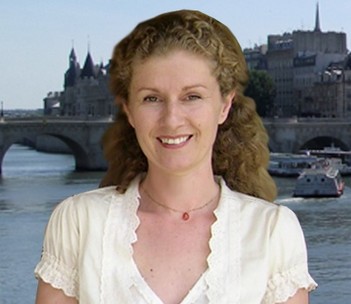
Last time Sezin Koehler wrote for us, she was bidding farewell to “strange, Lovecraftian” Prague, where she and her husband had lived for four years. Also in the Czech Republic, Koehler succeeded in producing her first (horror) novel, American Monsters. After a short stint in Germany, the couple is now saying hello to sunny, but bugbear-filled, Florida. Koehler describes the emotional transition.

When I left the US for Europe in 2002 I had no intention of ever again living in America. Violence, backwards politics, a horrible job market, and a provincial outlook on the world made an extreme contrast with my global, Third Culture Kid background. I am half American, half Sri Lankan, and my mother worked for UNICEF, so the family lived all over the world.

Not to mention I was suffering from extreme post-traumatic stress disorder after witnessing the murder of a dear friend when the two of us were robbed at gunpoint by a gang banger in Hollywood.

Ten years later and a forced repatriation determined by economics rather than desire, I am at a loss for how much worse off this country is since I left. I know a decade is a long time — but surely not long enough to usher in political rhetoric that would take this nation back to pre-1950s? My mind boggles.

One big dark nation

Gun violence has ever increased — to the point where we find so-called Stand Your Ground laws that allow citizens to kill each other with impunity, under the guise of “I felt threatened” — even when that threat consists merely of a young African-American boy, armed with nothing but iced tea and a bag of Skittles.

I’m back in the world of mad gunmen going on shooting sprees. Sikhs mistaken for Muslims and murdered. Women getting abducted and raped at gunpoint while waiting for a bus — this happened just recently not far from where I live.

Post-9/11 America has seen the sharpest increase in the infringement of civil liberties as matters of homeland security and anti-terrorism. The arrests of journalists covering Occupy Wall Street events brought the US’s rank of journalistic freedom down 27 points, putting the country at 47, just behind Comoros and Romania.

Xenophobia abounds as states pass laws against the teaching of ethnic studies, and even literature written by Native and Mexican Americans, in schools. Such developments are exponentially more ironic when considering that this country’s immigrant history.

The worst (and rudest!) of times

After college it took me almost a year to get a proper job. Upon returning, I’ve had trouble securing even a retail job: all applications are now submitted online and don’t give you an option to upload a cover letter or even your full resume. Not only are American jobs outsourced to China, the application process has been tech-sourced to boot, as machines vet your application — even if you live right down the street from the store to which you’re applying.

I was shocked to find that retail jobs pay exactly what they did a whole ten years ago. Way to move forward, America.

America might have progressed in terms of technology; I see a smart phone in every hand. However, common courtesy has gone out the window as people text, Facebook, Tweet, right in the middle of an actual face-to-face interaction, without even a twinge of remorse.

Call me old fashioned, or a kindred spirit to Hannibal Lecter, in believing it’s the epitome of rude to fiddle with one’s phone (or any other such object of distraction) whilst another human being is talking to you.

The wheels on the bus go back-backwards.

Monsters are the best friends I ever had

To add insult to injury, I find myself in a particularly devoid area of Florida, easily one of the most vapid places on the planet. Plastic people who can spend an hour telling you about their lunch salad are the antithesis of the cultured individuals with whom I spent my time while living elsewhere.

Who would have thought the rabbit hole I fell down when I left Prague would lead to a place scarily resembling Hell, with its torturous circles and its staggering temperatures?

Each day I force myself to review the positives:

It seems incredible that the America I left ten years ago — the one that traumatized me so badly — is actually a better version than the one in which I live now.

So frustrated have I been by absurd American conservatism and the zombie hordes of consumerism around me, I’ve resorted to a new persona: Zuzu Grimm, a creature who writes wicked dystopic visions of where this country is headed if it continues down this current path of willful ignorance and fear mongering.

Bored now

But that’s not been the only struggle: For years I defined myself as an expat. My blog was filled with anthropological tales of living in Switzerland, France, Spain, Turkey, the Czech Republic and Germany. More than that: stories of growing up in Sri Lanka, Zambia, Thailand, Pakistan, India.

While I’m still a Third Culture Kid — never really at home anywhere — my expat identity became a cornerstone of who I was. It worked, and was so much less confusing to explain. The expat label made me feel ultimately more interesting. Writing a novel in Prague sounds infinitely more exotic than writing from an essentially retiree community of ten thousand.

Oy vey.

Accepting that this is who I am now, and this is where I am, has been even harder than the absolute culture shock upon repatriation.

Being an expat gives a person a sense of uniqueness that may or may not be deserved. Yes, you’re a foreigner who must negotiate language/cultural/social barriers. But it’s also your choice. And for many people economics determines whether you can or can’t participate.

Kind of like having kids. You can complain all you want about how hard it is, but it’s something you elected to do, not something that was forced upon you.

(Well…unless Republicans head up the White house; with their insane ideas on abortion there’ll be thousands more women forced to carry rapists’ babies to term. Disgusting. Terrifying. Yet another grotesque example of the New America I find on return.)

I’m nobody, who are you?

My former life as an expat has taken on so many more shades of meaning as I consider how it must have seemed to those in my position right now: How glamorous. How decadent. How lucky. How dare they criticize my government when they’ve jumped ship. I have to live here. I’m thousands of dollars in debt. I don’t have the luxury of leaving.

Maybe one day when my husband wins the lottery, that’s just what we’ll do. Leave. Maybe for Buenos Aires, or Addis Ababa. Maybe in the meantime we’ll find a better city in the US, one that offers more by way of creativity, culture, and history — the things I miss most about life in Europe.

Until then, I have to make peace with being plain old Sezin Koehler who lives in and writes from Florida. Hopefully some time soon I’ll be okay with that. Any minute now. It’s going to happen.

That’s fine. I’ll wait.

And pray I don’t get sick in the meantime, because even with Obamacare, I still can’t afford health insurance.

Sezin Koehler, author of American Monsters, is a woman either on the verge of a breakdown or breakthrough writing from Lighthouse Point, Florida. Culture shock aside, she’s working on four follow-up novels to her first, progress of which you can follow on her Pinterest boards. Her other online haunts are Zuzu’s Petals‘, Twitter, and Facebook — all of which feature eclectic bon mots, rants and raves.

STAY TUNED for tomorrow’s post, another displaced Q from anti-foodie Tony James Slater.

If you enjoyed this post, we invite you to register for The Displaced Dispatch, a round up of weekly posts from The Displaced Nation, with seasonal recipes, book giveaways and other extras. Register for The Displaced Dispatch by clicking here!

Related posts:

img: Sezin Koehler in St. Petersburg, Florida, by Steven Koehler (2012).

We interrupt this Olympic broadcast…with breaking news about a travel book that’s going for free on Amazon!

Now as some of you may know, Displaced Nation contributor Tony James Slater is also an author. What you don’t know (yet) is that for today and tomorrow — 17th & 18th July — his book will be available FREE to download from Amazon! Take it away, Tony! If anyone can sell us something, you can! Except in this case, we don’t even have to pay… 🙂

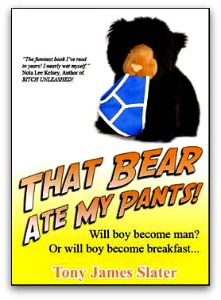
Hi there, folks! Yes, I’m here today to do a bit of shameless self-promotion. Can you ever forgive me? Listen, my book is called That Bear Ate My Pants. As the title suggests, it’s a ridiculous romp of a travel book, based in an animal refuge in Ecuador where I spent three months volunteering. (Some of you have already had a taste of these adventures from the first post I wrote for the Displaced Nation: “I traveled in search of adventure, and ended up embracing a simpler life.”)

To say that working for an Ecuadorian animal shelter was a struggle is an understatement. To say it was a struggle to stay alive — and avoid being eaten by bears and other exotic animals — well, that’s a little closer to the truth…hence the book’s rather provocative title!

Writing a book has often been likened to a Herculean task (usually by the author responsible, who inevitably believes himself to be unappreciated!)

Well, this one — my first — took me six years to complete. Not because the level of effort needed to write it was greater than for any other book; rather, because  — to continue the Olympic analogy — I’m an exceptionally lazy athlete. I’m pretty much guaranteed to come last, but then, nice guys usually do. 🙂

In fact, the only thing remotely Olympian about this book is the number of free downloads it’s had! In one sense, new authors and budding athletes are exactly alike: we all REALLY care about are our stats! My book has only been available for free on Amazon once before, in February, and there were a staggering (if I say so myself) 22,701 copies downloaded in just two days! Needless to say, this earned the book a place right at the top of the charts, which is exactly here I’m hoping to send it today.

So without further ado, here is a brief excerpt from my adventures, to tempt you, and all of your travel-(and animal-)loving friends, to want to read more.

Excerpt from That Bear Ate My Pants!

“MONKEY!” I shouted, as a brown blur swung out of the cage and onto the path.

The chase was on.

He skipped away with incredible speed, dodging around the corner and heading for freedom as though he’d thought of nothing but this moment for years. I bolted after him, grabbing the edge of a cage to swing me round in hot pursuit. The monkey was a good way ahead of me, and far more maneuverable. But I was faster on the straight. I accelerated down the narrow corridor between enclosures, and was closing the distance between us when he reached the steps down to the main road through the farm. This was my chance — if he paused, if he found the stairs confusing, I’d be on him. But no. Being a monkey, he didn’t have much use for stairs. He just jumped.

He made the ten-foot leap to the ground with ease, landed on all fours, and scurried off down the road. Pounding along behind him I had less than a second to make the choice. If I slowed to negotiate the stairs even part of the way down, it would all be over. Once he reached the trees by the first bend in the road he’d be gone for good.

Time was up. I reached the top of the steps at a dead run and launched myself over the edge.

In the seconds I was airborne my entire life flashed before my eyes. I seemed to have spent a disproportionate amount of it chasing monkeys.

Somehow I landed on my feet, with bone-jarring force. I was only a step behind the monkey — my leap had taken me considerably further than his — but my body was moving too fast for my legs. I managed to push off with my feet at the same moment as I started to fall headlong on the ground. The result: I bounced forwards another metre, sailing high above the form of the fleeing monkey, then crashed to earth and flattened the fella.

The impact knocked the stuffing out of me. It temporarily turned the monkey two-dimensional. Pain shot through me. I felt like I’d fallen ten feet onto a small primate. For the monkey it must have been like being beaten around the head with a banana tree. For a split second neither of us could move.

He recovered quicker than I did. Amazingly he wriggled out from under me and leapt towards freedom, just as I, still lying prone, reached out with both arms and caught him.

Unfortunately I could only catch him around the middle. Which meant that while he wasn’t going anywhere, he wasn’t particularly happy about it.

In far less time than it takes to tell the monkey writhed around in my grasp and sank his fangs into my hand.

“ARGH!”

The monkey switched his attention to my other hand and bit down hard.

“Arrr!” I shrieked. I let go with the recently bitten hand, but I had no other options — I had to grab him again or lose him. As I tried to grab his neck he bit me again, puncturing the thick leather glove easily and scoring my vulnerable flesh. Again and again he bit down, faster than I could even register the damage.

I lay on my belly, flat out on the floor, both arms outstretched in front of me and both hands wrapped around a frantically flailing ball of teeth and rage. There was sod all I could do — without my hands free I couldn’t get to my feet, and without standing up I had no way of controlling the beast. It was not the first time I had the thought; what the hell was I doing in Ecuador?

To Be Continued…

*  *  *

So if you’re a Kindle owner (or want to be), head straight on over to Amazon and grab a copy while it’s free.
If you’d like to read a copy but don’t have a Kindle, here’s a link to the free software that allows you to read Kindle books on any PC or Mac, tablet or smartphone.  (Otherwise, I’m afraid you’ll have to wait for the paperback…)

And let me know what you think in the comments!

STAY TUNED for tomorrow’s installment in ML Awanohara’s new series, “Lessons from Two Small Islands.” NOTE: The post by Tony James Slater that was scheduled for today — a Displaced Q on the Olympics and nationalism — has been postponed to early August.

If you enjoyed this post, we invite you to register for The Displaced Dispatch, a round up of weekly posts from The Displaced Nation, with seasonal recipes, book giveaways and other extras. Register for The Displaced Dispatch by clicking here!

Related posts:

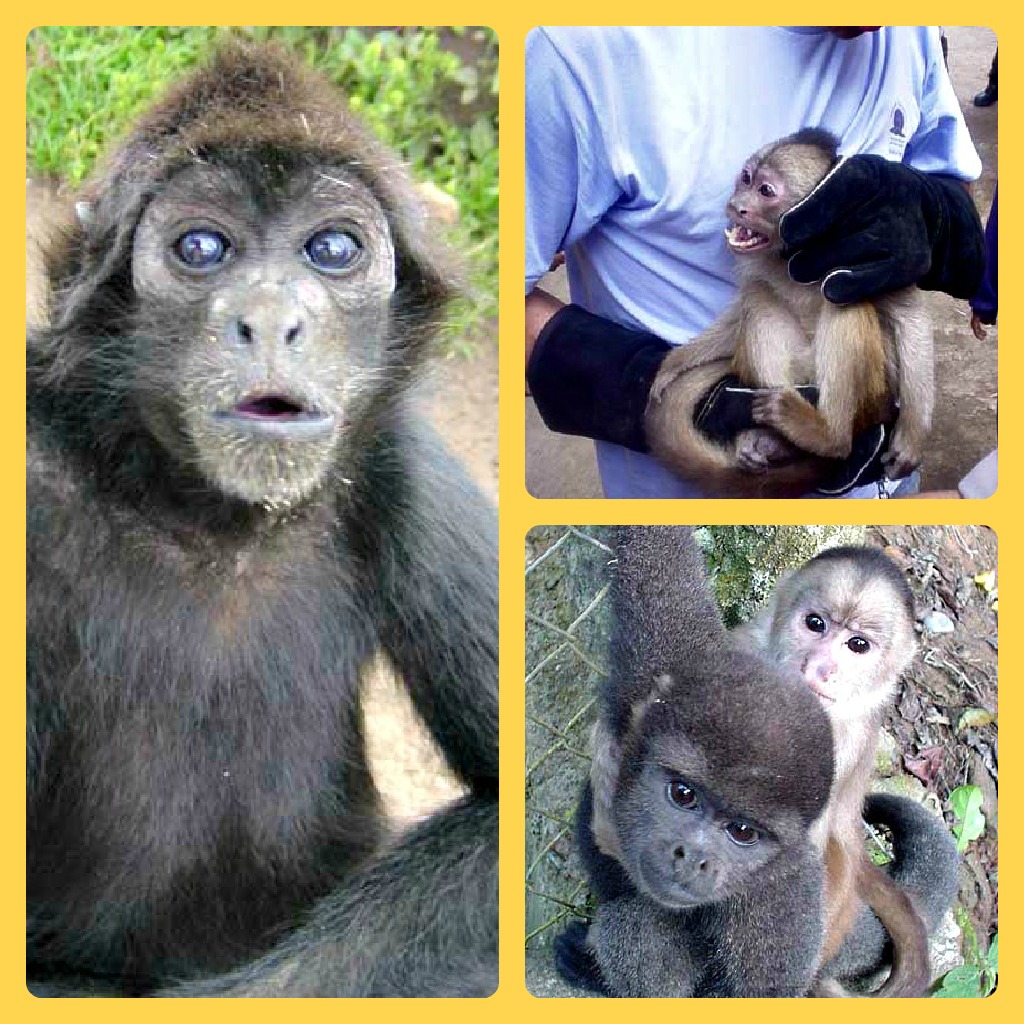
Images: Tony James Slater in Ecuador with his simian “friends”; book cover.

5 reasons why American aviatrix Amelia Earhart could be an expat heroine

The American aviatrix Amelia Earhart has been propelling her way into the news headlines this week. Yesterday marked the 75th anniversary of her Lockheed Electra disappearing over the Pacific Ocean.

And today marked the beginning of an expedition, led by an American nonprofit group, to locate the wreckage from her plane. The group plans to scan the depths of the Pacific Ocean near a remote island where they believe Earhart and her navigator, Fred Noonan, died as castaways.

With America’s most famous aviatrix back on our horizons, it seems a timely moment to nominate her for our Displaced Hall of Fame, where we put all of our expat heroes and heroines.

What, was she an expat, too? I can hear you asking. In fact, she was an expat briefly — during World War I, when she went to visit her sister in Toronto and ended up staying on as a nurse’s aide in a military hospital.

But I’ll admit that Earhart seems more of a domestic heroine — as American as apple pie, you might say. Born in Atchison, Kansas, in America’s heartland, Amelia grew up tall and willowy like the corn in the fields. As the Reigning Queen of the Air, she became the nation’s sweetheart and to this day retains a special place in the hearts of young American women.

What’s more, recruiting her to serve as a heroine for global nomads, many of whom have hybrid nationalities, might not fly with my fellow Americans. Secretary of State Hillary Clinton has endorsed the expedition to hunt for Earhart’s plane, saying that Earhart embodies the “spirit of America coming of age and increasingly confident, ready to lead in a quite uncertain and dangerous world…”

But in reviewing the main facts of Earhart’s life, I have found plenty of aspects that show how “displaced” she actually was — “displaced” in the sense of being “removed from the usual or proper place” (see definition on our About page) — and hence belongs in our orbit. Here are five of my top reasons:

1) She was born with wings.

Veteran expats and long-term travelers cannot afford to have fear, or dislike of, flying. Should we incline at all in this direction, it may help to lie back in your airplane seat (or pretend you have a seat where it’s possible to lie back) and think of Earhart, who took to the skies without hesitation, as though the airplane wings were her own. Legend has it that she first caught the aviation bug while an expat in Canada. She went to see an exhibition of stunt flying at a fair in Toronto and later wrote about the sensation she’d felt as a pilot began diving at her and her friend:

I remember the mingled fear and pleasure which surged over me as I watched that small plane at the top of its earthward swoop. I did not understand it at the time, but I believe that little red airplane said something to me as it swished by.

From then on, it was all she could do to keep her feet on the earth. Of her first airplane flight she said: “As soon as we left the ground, I knew I had to fly.” In 1921 she took her first flying lesson, and soon saved enough money to buy a second-hand plane.

Of course it helped that in the early days, flying was a romantic sport for the lucky few, not a form of transport where everyone from pilot to passenger feels as though they’re herding or being treated like cattle. Earhart named her first plane “Canary” because of its bright yellow color. Perhaps she felt like a canary when setting her first women’s record: rising to an altitude of 14,000 feet.

By the time she became the first female pilot to cross the Atlantic solo (Charles Lindbergh was first to do so), she had her own little red airplane — a cherry-colored Lockheed Vega, reputed to be the world’s fastest aircraft and therefore favored by pioneering aviators. Hmmm… Did it make her feel like a cardinal?

2) Always restless with the status quo, she let it drive her adventures.

What’s the litmus test for being a travel or expat type? A person who is always upping the ante. We’re a gang of permanent malcontents!

No sooner had Earhart become the first woman to cross the Atlantic (as a passenger) — a flight that made headlines because three women had died within the same year in trying to achieve it — but she sought to become the first woman to fly solo across the Atlantic (1932) and the first person to fly solo across the Pacific, from Honolulu to Oakland (1935), among other achievements.

At that point, there was nothing for it but to make a bid to become the first person to fly around the world (1937).

One wonders what Earhart might have done next, had she not gone down in her plane on the very last leg of the journey. Perhaps she would she have concluded that she’d peaked out too early? (No doubt many of you serial expats and repats can relate…)

3) She had no qualms whatsoever about the risks involved in an adventuresome life.

In the lore surrounding Earhart, great emphasis is placed on her early feminism. Much of it is said to be due to her mother, who had very little interest in bringing up Amelia and her younger sister as “nice little girls” — she even allowed them to wear bloomers!

Clad in this comfortable attire (Amelia would later design a clothing line for women who wanted comfort), the Earhart sisters climbed trees, hunted rats with a rifle, and “belly-slammed” their sleds downhill.

The young Amelia also kept a scrapbook of newspaper clippings about successful women in predominantly male fields, including film direction and production, law, advertising, management, and mechanical engineering.

Although she did marry eventually — to the publisher George Putnam — she always referred to the marriage as a “partnership” with “dual control,” and did not change her last name.

When she became the first woman to fly solo across the Atlantic, Earhart said it proved that men and women were equal in “jobs requiring intelligence, coordination, speed, coolness and willpower.”

(No doubt she would be knocked out to learn that women’s boxing will be included in the London 2012 Olympics for the very first time.)

But to me, what’s even more impressive about Earhart’s life is that she knew about the risks involved in her chosen occupation — but decided not to let them hold her back. That same kind of risk-taking is at the heart of the overseas travel enterprise, which goes against the grain of most people’s common sense. (“You want to go THERE? And FOR HOW LONG?” Expats and global nomads know the drill of fielding constant questions and doubts from the people back home.)

When Earhart set out on her second attempt to circumnavigate the world (the first had ended in a crash when a tire blew out on take-off), she wrote to her husband: “Please know I am quite aware of the hazards.” And then she went ahead and packed a jar of freckle cream. (I say that because a jar of freckle cream was found on the Pacific Island that’s now being searched.)

4) She was never more in her element than when out of her element (quite literally).

There is something that draws all of us to the displaced life. Since it’s a life of challenges, I have to assume that for most of us, it’s that feeling of being a pioneer, of going the way no one else in our circles has gone before…

In Earhart’s case, the displacement was quite literal: she loved being in the empty sky and facing the unknown. In that sense she was like a character out of Greek myth — a female Icarus. As she once said of an early flight:

The stars seemed near enough to touch and never before have I seen so many. I always believed the lure of flying is the lure of beauty…

Jane Mendelsohn was inspired to write her first novel, I Was Amelia Earhart, after reading that a piece of what may have been Earhart’s plane had been recovered on an atoll in the Pacific. Imagining the life that Earhart and Noonan might have led as castaways, Mendelsohn shows Earhart coming into her own in the desert-island setting, and finding peace of mind.

Random House editor Kristin Fritz commends Mendelsohn for creating a whole new iteration of Earhart as

a woman who had perhaps “taken this journey in order to escape the madness of the world,” a woman who “didn’t give a damn if she was alone” and finally a woman who would “live the rest of her long and brilliant life on this wild and desolate island.”

Now that’s displaced! And if Fritz is right and Medelsohn captured the essence of Earhart in her novel, then we should not feel too bad that she perished on an island out in the middle of nowhere. That’s how she would have wanted it…

5) Last but not least, she appears to have known the value of chocolate.

Here we come to the true test of an expat or international traveler: do they like chocolate? Are they addicted to that sudden charge of energy, the little lift, one gets from the sugar and the caffeine? Most seasoned expats and international travelers know that we could never have prevailed during the inevitable moments of loneliness and displacement the life entails without a chocolate supply of some sort.

When Earhart embarked on her 2,408-mile solo flight across the Pacific in 1935, she packed a thermos of hot chocolate in case she felt chilled. As she later observed:

Indeed, that was the most interesting cup of chocolate I have ever had sitting up eight thousand feet over the middle of the Pacific Ocean, quite alone.

* * *

Now that we’re touching down, I feel the need to quote from Mendelsohn’s recent op-ed for the New York Times:

We still wonder what happened to Amelia Earhart — perhaps soon we may even find out — but do we know what to do with her? Do we know how to make not just her mysterious disappearance but also her miraculous life relevant and inspiring to our global society? And could she matter across the globe, that ball around which she tried to fly that feels so much smaller today but is in fact exactly the same size as it was then?

For me there’s an easy answer to all three of Mendelsohn’s questions: YESSSSSSS!!! It’s time Amelia Earhart went global, and not just literally…don’t you agree?

STAY TUNED for Wednesday’s post, another in our Expat Moments series by Anthony Windram — and yes, it does have to do with the 4th of July!

If you enjoyed this post, we invite you to register for The Displaced Dispatch, a round up of weekly posts from The Displaced Nation, with seasonal recipes, book giveaways and other extras. Register for The Displaced Dispatch by clicking here!

Related posts:


THE DISPLACED Q: What’s your most memorable birthday abroad?

Hi everyone!

Now, since it’s our one-year birthday here at the Displaced Nation — okay, let’s hear some crazy party horns <|8-P~ <|8-P~ — I thought I’d ask you about your most memorable birthday experiences whilst traveling. Crazy drunken escapades? Chance meetings with exotic strangers?

Everyone has a tale inside them, so it’s said.

Here’s mine… 🙂

It is better to wear out than to rust out.
Bishop Richard Cumberland

It was cold. Chillingly, bone-achingly cold — and wet. Rain drenched the outside of me, remorselessly overpowering every chink in my defenses. Neckline, accidentally exposed cuffs — all were soaking wet in spite of my otherwise impenetrable Gore-Tex-clad outline.

My fingers and toes were freezing. My feet were blistered. The bag on my back was so heavy I could barely breathe beneath its crushing weight, and the effort of carrying it was causing me to sweat profusely. It was very nearly as moist inside my clothes as it was outside them.

It was my birthday, and I was utterly, utterly miserable.

Now, spending a birthday hiking through the vast Australian wilderness can sound like a dream to some — whereas other people, more sensible than I, might think of it as more of a nightmare.

I was torn between the two. On the one hand, I was out there, achieving something awesome with the people I loved most in the world — my girlfriend and my sister. On the other hand…well, did I mention the rain?

It hadn’t stopped for two weeks straight.

So far the three of us had hiked over 150 miles in it, and to be honest my enthusiasm was getting a little damp.

I remember wondering what kind of idiot hikes nearly twenty miles in the filthiest weather known to man, with his only goal being to reach a three-sided wooden shelter where he could collapse exhausted? I would then go to sleep — on a bed made of planks — only to wake up the next morning and do it all over again!

Apparently, I am just that kind of idiot.

But extremes of hardship give you more than a feeling of triumph just for surviving; they also make you appreciate the little things.

On that particular evening, as I stripped off my sopping trousers and unrolled my sleeping bag, I had all but forgotten about my birthday. Back home I might have hoped for a novel the size of a house-brick or some awesome piece of electronic gadgetry; here, with no power, the light failing rapidly and a rucksack already verging on the spine-snapping, all I wanted was sleep.

But my girlfriend, Roo, was determined to celebrate. And she was nothing if not resourceful. It had been three days since we’d seen another human soul (unless you count my sister; I usually don’t) — yet somehow Roo had acquired and carefully preserved my present until now.

She unveiled it with a flourish: a marshmallow!

Unbeknownst to me, she’d carried it all the way from home unsquashed, in some hidden corner of her bag. In the top she stuck a tiny candle which she must have begged off the last group of hikers we met. The plan had been to use a match in lieu of a candle, she said, until by pure chance she’d met an old lady who’d been carrying this. Amazing!

I blew it out and made a wish. Actually I made two. “Please, God,” I thought, “let me be in a better place this time next year. Or, ideally, tomorrow morning. And more than anything, tonight, let me sleep…”

The marshmallow I would save for breakfast.

I slept remarkably well that night.

In the morning I woke up in the same place — but the sun was shining, a phenomenon I’d started to think I’d never see again! I stood outside in my underwear and luxuriated in the warmth, safe in the knowledge that no one would see me. Something was going right for a change, and that by itself was a minor miracle.

A pity the same couldn’t be said for my marshmallow.

I’d placed it next to my tiny travel pillow as I slept; mere inches from my nostrils (which were the only part of me that dared protrude from the sleeping bag).

Now, the bright sunlight revealed the damage; my marshmallow was half eaten, having been thoroughly enjoyed in the middle of the night by some kind of rodent. I could only be grateful that the tip of my nose hadn’t shared the same fate.

Did I eat the rest of it though? That’s what you really want to know, isn’t it?

Well, you know what? There are some things better left unsaid…

“I’ll do better next year,” Roo promised as we shouldered our rucksacks for the hike ahead.

“Ipad?” I asked.

“Hm. We’ll work up to that. Next year you can have two marshmallows…”

I’ve had birthdays on four different continents, but this one has always stood out for me. So what I’d like to know from you kind folks is this:

What is YOUR most memorable birthday abroad?

Tell me about ’em in the comments!

I’m looking forward to reading… <l:0

STAY TUNED for Wednesday’s post, a virtual celebration with all of our Random Nomads of the past year!

If you enjoyed this post, we invite you to register for The Displaced Dispatch, a round up of weekly posts from The Displaced Nation, with seasonal recipes, book giveaways and other extras. Register for The Displaced Dispatch by clicking here!

Related post:

Best of 2011: Books for, by and about expats

One of our Random Nomads in November, Aaron Ausland, had this to say about those of us who venture across borders:

Travel to a new place for three weeks and you can write a book, travel for three months and you can write an article, travel for three years and you’ll likely have nothing to say.

While that may be true, I’m afraid it hasn’t stopped many of us who’ve spent large chunks of our lives gallivanting around the globe trying out life in different countries, from taking up the pen.

As with any other group, some are born writers (and thrive on new surroundings), while others have become writers (attempting to make sense of their adventures), while still others have had writing thrust upon them (responding to invitations to share their experiences).

At the Displaced Nation, we revere people who publish books, fiction or non, that in some way assist those of us who are (or have been) engaged in overseas travel and residency. We feature — and do giveaways of — their works. And, for established writers with a global following, we’ve created a unique “category” called the Displaced Hall of Fame.

In this spirit — and in the December tradition of looking back at the past year’s highlights — I present the following (admittedly incomplete) list of books for, by, and about expats that were published in 2011, in these five sections (click on the title to go to each section):

  1. NOVELS ABOUT EXPATS
  2. NOVELS ABOUT “HOME”
  3. EXPAT MEMOIRS
  4. SELF-HELP, CROSS-CULTURAL & OTHER NONFICTION WORKS
  5. INSPIRATIONAL ANTHOLOGIES

A few more points to note:

  • Books in each category are arranged from most to least recent.
  • I’ve mixed indie books with those by conventional publishers (it suits our site’s somewhat irreverent tone).
  • To qualify for the list, authors must have been expats for at least six months at some point.

* * *

NOVELS ABOUT EXPATS

Three Questions: Because a quarter-life crisis needs answers (CreateSpace, October 2011)
Author: Meagan Adele Lopez
Genre: Women’s fiction
Synposis: A love story based loosely on the author’s own romance with a lad from Bristol, the action traverses continents through letters and features a quarter-life crisis, a road trip to Vegas, and two crazy BFFs.
Expat credentials: An American, Lopez lived as an expat in the UK for a while (she is now back in Chicago).
How we heard about it: Melissa of Smitten by Britain was a fan of Lopez’s blog (originally titled The Lady Who Lunches). The pair met her London in the summer of 2010, when Lopez was still living in England. Recently, Melissa has been supporting Lopez’s attempt to gain sponsorship for turning the novel into a screenplay.
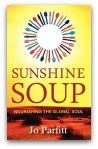
Sunshine Soup: Nourishing the Global Soul (Summertime, October 2011)
Author: Jo Parfitt
Genre: Women’s fiction
Synopsis: Six expat women from the UK, US, Thailand, Ireland, Norway and Holland converge in Dubai in 2008. The action centers on a Brit, who is on her first posting, and an American, who is on her 25th. The Brit learns the ropes and settles in, while the American woman’s world begins to crumble.
Expat credentials: A prolific author, publisher and pioneer in addressing the issues of accompanying spouses and aspiring expat writers worldwide, Parfitt has been an expat for nearly a quarter of a century. Born British, she now lives in the Hague.
How we heard about it: We noticed a couple of interviews with Parfitt — one by expat coach Meg Fitzgerald and another by Expat Women.

The Beautiful One Has Come: Stories (Wyatt-MacKenzie Publishing, July 2011)
Author: Suzanne Kamata
Genre: Cross-cultural romance
Synopsis: Twelve short stories reveal the pains and the pleasures experienced by expat women, most of whom live in Japan.
Expat credentials: Kamata is an American who has lived in Japan for 20 years.
How we heard about it: Kamata and her book were featured on Kristin Bair O’Keeffe’s Writerhead Wednesday in July of this year.

Hidden in Paris (Carpenter Hill Publishing, April 2011)
Author: Corine Gantz
Genre: Women’s fiction
Synopsis: Three strangers — all American women — have reached the point of terminal discomfort with their lives so run away to Paris to begin anew.
Expat credentials: Gantz is a French expat living near Los Angeles. She is getting her own back by writing about American expats in Paris.
How we heard about it: We are long-time fans of Gantz’s blog, Hidden in France — in fact, we promoted one of her posts (about falling into her swimming pool) with the launch of TDN in April. We also interviewed her about her first novel as part of our “gothic tales” theme this past May.

Exiled (Quartet Books, April 2011)
Author: Shireen Jilla
Genre: Psychological thriller
Synopsis: The wife of an ambitious British diplomat, whose first posting brings them to New York, looks forward to escaping from Kent and leading the high-profile life of a successful expat — only to find her world being threatened by dark psychological forces on a par with those depicted in Rosemary’s Baby.
Expat credentials: A Third Culture Kid (she is half English, half Persian, and grew up in Germany, Holland and England), Jilla has also been an expat in Paris, Rome, and New York.
How we heard about it: TDN writer ML Awanohara read a review of Jilla’s novel by Kate Saunders in the Sunday Times. She approached Jilla in May about having an exchange with our readers about the gothic themes in her novel, in line with our site’s own delvings into the gothic aspects of expat life. Our readers loved her!

NOVELS ABOUT “HOME”

Lady Luck (Colorado Mountain Series)
Author: Kristen Ashley
Genre: Romance
Synopsis: Ex-con hero, wrongly imprisoned, gets mixed up with unlucky heroine, who will stop at nothing to help him get revenge.
Expat credentials: Born in Gary, Indiana, Ashley grew up in Brownburg and then moved to Denver, where she lived for 12 years. She now lives with her husband in a small seaside town in Britain’s West Country, where she has produced more than twenty books featuring rock-chick, Rocky Mountain, and other all-American heroines.
How we heard about it: Ashley is the friend of an old schoolfriend of TDN writer Kate Allison, who invited her to do a guest post for us on Britain’s (lack of) Royal Wedding preparations  for our Royal Wedding coverage.

Queen by Right: A Novel (Touchstone, May 2011)
Author: Anne Easter Smith
Genre: Historical romance
Synopsis: This is the fictional story of Cecily of York, mother of two kings and said to be one of the most intelligent and courageous women in English history.
Expat credentials: The daughter of an English army colonel, Easter Smith spent her childhood in England, Germany and Egypt. She came to New York City at age 24, and as she puts it:

Many years, two marriages, two children and five cross-country moves later I’m very definitely a permanent resident of the U.S. — but my love for English history remains.

(She now lives in Plattsburgh, New York.)
How we heard about it: Easter Smith and her book were featured on Kristin Bair O’Keeffe’s Writerhead Wednesday in October.

Dance Lessons (Syracuse University Press, March 2011)
Author: Áine Greaney
Genre: Irish Studies, Women’s Fiction
Synopsis: The action centers on a woman of French-Canadian background who marries an Irish emigrant who is working illegally in a bar in Boston. After his death by drowning, she visits Ireland for the first time and finds out what a shattered man he actually was.
Expat credentials: She may be a resident of Boston’s North Shore, but Greaney continues to identify herself as an Irish writer (County Mayo).
How we heard about it: Greaney and her book were featured on Kristin Bair O’Keeffe’s Writerhead Wednesday in October.
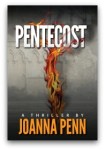
Pentecost: A Thriller (The Creative Penn, January 2011)
Author: Joanna Penn
Genre: Thriller
Synopsis: The Keepers of the stones from Jesus’s tomb — which enabled the Apostles to perform miracles — are being murdered. The stones have been stolen by those who would use them for evil in a world. An Oxford University psychologist spearheads a search for them in a race against time…
Expat credentials: English by birth, Penn grew up as a third-culture-kid and at the time of producing her first novel, was living in Australia.
How we heard about it: We are avid followers of Penn’s blog, The Creative Penn. Several months ago, TDN writer ML Awanohara deconstructed Penn’s post about what “home” means for writers for what it might teach expats and others who struggle with this issue as well. For Penn, home means some sort of spiritual kinship, which she has with two places: Oxford, where she went to university and near where her father now lives, and Jerusalem, which she’s visited at least ten times because she loves it there so much. Not surprisingly, she chose to set much of the action for her debut novel in these two cities.

EXPAT MEMOIRS
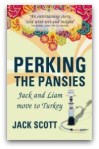
Perking the Pansies: Jack and Liam move to Turkey (Summertime Publishing, December 2011)
Author: Jack Scott
Synopsis: Dissatisfied with suburban life and middle management, Scott and his civil partner, Liam, abandon the sanctuary of liberal London for an uncertain future in Bodrum, Turkey. The book is based on Scott’s irreverent blog of the same name, which after its launch in 2010, quickly became one of the most popular English language blogs in Turkey.
How it came to our attention: Scott was featured as one of our Random Nomads in May of this year and since then, has done us the favor of commenting on and liking several of our posts. **Kate Allison will be reviewing his book for our site on Wednesday.**

Ramblings of a Deluded Soul (CreateSpace, September 2011)
Author: Jake Barton
Synopsis: In his inimitable style, the British-born Barton strings together snippets from new novels and try-outs with reminiscences and, for the first time, insight into his own remarkable experiences as a traveler and expat in Europe (he once owned a small French vineyard and had another job he’s not supposed to talk about). NOTE: Barton’s first novel, Burn, Baby, Burn, burned its way into the Top Ten of the Amazon All Books list.
How it came to our attention: Barton is an online acquaintance of TDN writer Kate Allison. We celebrated him in the early days of our blog for his insights on foreign-language learning in Spain.

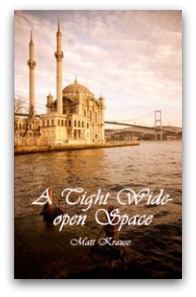
A Tight Wide-open Space: Finding Love in a Muslim Land (Delridge Press, August 2011)
Author: Matt Krause
Synopsis: A Californian who is now a Seattle-ite recounts how he became an Istanbullu, all for the love of a beautiful Turkish woman he met on a airplane. The year is 2003, and he can still hear the echoes of 9/11 as well as being acutely conscious of America’s engagement in two wars in Muslim countries. Eventually, he comes to love his new home more deeply than he might have expected.
How we heard about it: Linda Janssen, who writes the blog Adventures in Expatland, interviewed Krause about his book in October.

Planting Dandelions: Field Notes from a Semi-Domesticated Life (Penguin, April 2011)
Author: Kyran Pittman
Synopsis: A native of Newfoundland (her father was a well-known Newfoundler poet), Pittman writes about co-parenting with her charming Southern U.S. hubbie (they have three rambunctious boys); keeping the fiscal wolf from the door of their home in Little Rock, Arkansas; and honoring her marriage vows despite her refusal to give up her party-girl persona.
How we heard about it: Pittman came to our notice when she was a guest on Kelly Ryan Keegan‘s Bibliochat in late September.

Big in China: My Unlikely Adventures Raising a Family, Playing the Blues, and Becoming a Star in Beijing (Harper, March 2011)
Author: Alan Paul
Synopsis: Paul tells the story of trailing his journalist-wife to China and unwittingly becoming a rock star. His Chinese American blues rock band, called Woodie Alan, even earned the title of Beijing’s best band.
How we heard about it: We were early fans of Alan Paul’s back in the days of his Wall Street Journal online column, “The Expat Life.” Also, Paul and his book were featured on Kristin Bair O’Keeffe’s Writerhead Wednesday this past April.

The Foremost Good Fortune (Knopf, February 2011)
Author: Susan Conley
Synopsis: Conley, her husband, and their two young sons say good-bye to their friends, family, and house in Maine for a two-year stint in a high-rise apartment in Beijing. All goes well until Conley learns she has cancer. She goes home to Boston for treatment and then returns to Beijing, again as a foreigner — to her own body as well.
How we heard about it: Conley and her book were featured on Kristin Bair O’Keeffe’s Writerhead Wednesday in early October.

SELF-HELP, CROSS-CULTURAL AND OTHER NONFICTION WORKS

The Globalisation of Love (Summertime, November 2011)
Author: Wendy Williams
Genre: Relationships, self-help, humor
Synopsis: Williams interviews multicultural, interfaith and biracial partners from all over the world on what it feels like to “marry out” of one’s culture, religion and/or race. She also talks to experts on the topic and coins a term for it: “GloLo.”
Expat credentials: From a British-Ukrainian-Canadian family, Williams has been married to an Austrian for 13 years and lives in Vienna.
How we heard about it: TDN writer ML Awanohara listened to Jo Parfitt’s interview with Williams on her Writers Abroad show (Women’s International Network) and was attracted to the ideas of a book that treats this topic with humor. **TDN writer Anthony Windram will review the book for our site tomorrow (Tuesday).**

Modern Arab Women — The New Generation of the United Arab Emirates (Molden Verlag, November 2011)
Author: Judith Hornok
Genre: Women’s studies
Synopsis: The book consists of 20 chapters, each a stand-alone interview with an Emirati woman from disciplines as varied as business, film, medicine and politics. The women talk to Hornok about their careers, philosophies of life and plans for the future. The book, which is published in German and English, aims to dispel some of the Western myths surrounding Arab women.
Expat credentials: While not quite an expat, Hornok has been moving between the UAE and her home in Vienna, Austria, for eight years.
How we heard about it: TDN writer ML Awanohara read an article on the book in The National (UAE English-language publication) and became intrigued.

Expat Women: Confessions — 50 Answers to Your Real-life Questions about Living Abroad (Expat Women Enterprises Pty Ltd ATF Expat Women Trust, May 2011)
Authors: Andrea Martins and Victoria Hepworth (foreword by Robin Pascoe)
Genre: Women’s self-help, family, relationships
Synopsis: Experienced expats share wisdom and tips on topics that most expat women face, such as the trauma of leaving family back home, the challenges of transitioning quickly, intercultural relationships, parenting bilingual children and work-life balance. They also tackle more difficult issues such as expat infidelity, divorce, alcoholism and reverse culture shock. The book is based on the “confessions” page of Expat Women, the largest global Web site helping women living overseas.
Expat credentials: Andrea Martins is the director and co-founder of Expat Women. An Australian who has spent many years abroad, she began dreaming of connecting expat women worldwide when an expat in Mexico City. Victoria Hepworth is a New Zealander who has lived in Japan, China, Russia, Sweden, India and is currently living in Dubai, UAE. She is a trained psychologist who specializes in expat issues.
How we heard about it: Andrea Martins announced the publication of the book to much fanfare on Twitter and in other social media venues. It has been widely reviewed on expat blogs.

Marriage in Translation: Foreign Wife, Japanese Husband (CultureWave Press, April 2011)
Author: Wendy Nelson Tokunaga
Genre: Relationships, self-help
Synopsis: Tokunaga conducts a series of candid conversations with 14 Western women about the challenges in making cross-cultural marriages work both inside and outside Japan. She quizzes them about the frustrations, as well as the joys, of adapting to a different culture within married life.
Expat credentials: Born in San Francisco, Tokunaga has spent numerous years studying, living, working and playing in Japan. She is the author of two Japan-related novels, published by St. Martins Griffin. Oh, and did we mention her Japanese “surfer-dude” husband?
How we heard about it: Sometimes one tweet is all it takes! (We follow Wendy Tokunaga on Twitter.)

A Modern Fairytale: William, Kate and Three Generations of Royal Love (Hyperion/ABC Video Book, April 2011)
Author: Jane Green
Genre: Romance, royalty
Synopsis: In this video book for ABC News, produced just in time for the Royal Wedding in March, best-selling chick-lit novelist Jane Green follows the stories of three generations of royal love from their meeting up to and after their respective wedding days. She concludes that Kate and William have a much better chance than William’s parents of enjoying a relationship on their own terms.
Expat credentials: Born in London, Green worked as a feature writer for The Daily Express before trying her hand at writing novels. She now lives in Westport, Connecticut, with her second husband and their blended family.
How we heard about it: One of us noticed that Jane Green had been tapped to provide coverage of the Royal Wedding for ABC News. We then invited her to talk about her e-book and engage with our readers in a debate on whether women should still aspire to be “princesses” in the 21st century — a post that received a record number of comments.

INSPIRATIONAL ANTHOLOGIES

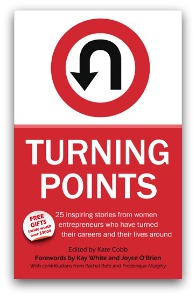
Turning Points: 25 inspiring stories from women entrepreneurs who have turned their careers and their lives around (Summertime Publishing, November 2011)
Editor: Kate Cobb
Synopsis: In this collection of stories from women all over the world, the focus is on the moments, or short passages of time, when a woman was facing something challenging and came out the other side smiling.
Expat credentials: Cobb is a British woman living in France, and about a third of the contributors — including Jo Parfitt and Linda Janssen — are expats who now run their own businesses.
How we heard about it: Linda Janssen promoted the book on her blog, Adventures in Expatland.

Indie Chicks: 25 Women 25 Personal Stories (Still Waters Publishing, October 2011)
Compiler: Cheryl Shireman
Synopsis: 25 indie novelists share personal stories in hopes of inspiring other women to live the life they were meant to live. (All proceeds go to the Susan G. Komen Foundation for breast cancer research.)
Expat credentials: Close to half of these indie authors are expats or have done significant overseas travel. To take a few examples: After living in Portland, Oregon, for most of her life, Shéa MacLeod now makes her home in an Edwardian town house in London just a stone’s throw from the local cemetery. Linda Welch was born in a country cottage in England, but then married a dashing young American airman, left her homeland, raised a family, and now lives in the mountains of Utah. Julia Crane is from the United States but recently moved to Dubai with her huband and family (her personal story concerns the adjustment process).
How we heard about it: Again, sometimes all it takes it a tweet (we picked up one of Linda Welch’s).

* * *

Questions: Have you read any of the above works and if so, what did you think of them? And can you suggest other works to add to the list? My colleagues and I look forward to reading your comments below!

STAY TUNED for tomorrow’s post, a review of The Globalisation of Love, by Wendy Williams, and for Wednesday’s post, a review of Perking the Pansies, by Jack Scott.

If you enjoyed this post, we invite you to subscribe to The Displaced Dispatch, a weekly round up of posts from The Displaced Nation, plus some extras such as seasonal recipes and occasional book giveaways. Sign up for The Displaced Dispatch by clicking here!

Related posts:
The Displaced Nation’s Halloween post is…mysteriously displaced!

Kate Allison was supposed to post today, for Halloween…but then, pouf, she vanished without a trace!

How very strange, we think you’ll agree…

Her topic was going to be Halloween costumes for expats. Given her offbeat sense of humor, none of us would have been the least bit surprised had she suggested we dress up as:

  • Dorothy, staggering around with a sign that says “I’m not in Kansas any more.”
  • Pocahontas &  John Rolfe — suitable for cross-cultural, bi-racial couples with large age differences.
  • Mary-Sue Wallace, to give ourselves a break from feeling displaced for a few hours.
  • A giant red snail, to signal enthusiastic support for the slow-food movement that began in Italy and is s-l-o-w-l-y spreading around the world.
  • Marcel Proust, carrying a madeleine and looking very displaced.

But instead of speculating what Kate might have written about, perhaps we should be spending our time wondering where she has gone. ML Awanohara and Anthony Windram have a few hypotheses — do let us know if you can think of any others!

  1. She enjoyed a repast of the seven deadly dishes from around the world, overdosed on snake wine, took a nap to recover, and hasn’t yet woken up.
  2. She is out flying on a broomstick with her fictional sidekick, Libby — or, even more likely, with Libby’s nemesis, Melissa (and they are evilly plotting Melissa’s next move on Libby).
  3. She was the victim of some sort of gothic expat tale — either a trick-or-treater dressed up as Hannibal Lecter, who thought she looked tasty and got carried away; or else some sort of natural disaster, such as a bizarre October blizzard, leading to widespread power outages.

Kate, chills are running down our spines as we fantasize about all the spooky things that might have befallen you on this All Hallows’ Eve. New England is not the same as Merry Olde, as no doubt you and your English family have discovered…

Of course, knowing you as well as we do, you may simply be playing a prank by not treating us with one of your posts.

But if that’s not the case and you truly have been spirited away, send us a signal, and the citizens of The Displaced Nation will perform some incantations on your behalf over a bubbling cauldron — a molten mix of Marmite, Fluff and chocolate, with the odd tongue-in-cheek thrown in…

STAY TUNED for Tuesday’s post, introducing November’s theme, on those who displace themselves on behalf of those less fortunate.

If you enjoyed this post, we invite you to subscribe to The Displaced Dispatch, a weekly round up of posts from The Displaced Nation, plus some extras such as seasonal recipes and occasional book giveaways. Sign up for The Displaced Dispatch by clicking here!

Image: MorgueFile

RETURN TRIP: Even in Paris, expats can’t escape former lives: A celebration of displaced novelist Corine Gantz

As summer draws to a close, The Displaced Nation is reissuing some posts that, for one reason or another, have enchanted our readers. Enjoy these “return trips”!
This past spring, The Displaced Nation interviewed Corine Gantz, a popular expat blogger, about her newly published novel, Hidden in Paris. The action centers on a group of expat Americans trying to start their lives afresh in the City of Light. At that time, TDN was exploring the theme of Gothic Tales. We wanted Mme Gantz to tell us more about the premise at the heart of her book — the idea that people travel to other lands to escape their former lives. How does it usually play out: as a dream come true or as a recurring nightmare?

The Displaced Nation has been examining the “gothic” side of expat life over the past couple of weeks. Thus it may seem odd that today we have chosen to celebrate a book that takes place in La Ville-Lumière (“The City of Light” or “The Illuminated City”) by an author who lives near the City of Angels.

But looks can be deceiving — and the cover of Corine Gantz’s debut novel, Hidden in Paris, is quite a cunning ruse. It shows a Parisian balcony with French doors reflecting the Eiffel Tower, and a flower box bursting with hot-pink geraniums. What could possible be amiss within such a picture-perfect setting, you may wonder? Plenty, it turns out.

But before we get into that, let’s begin our fête in honor of Mme Gantz and her book. To put ourselves in the proper mood, we have prepared a special cocktail, a French 75. We’ve also gone all out with our canapés. There’s a savory gougère, brie en croûte, duck rillettes, chilled asparagus with mustard sauce, a Puy lentil salad — and, in honor of Mme Gantz, her family favorite, taramasalata on toast (see her father’s recipe below).

Okay, seats, please! Our honored guest has agreed to kick off the festivities by answering a few questions from The Displaced Nation team. After that, the floor is yours, dear reader.

Hidden in Paris coverYour new novel, Hidden in Paris, may not tell a gothic tale per se, but we think it relates to our theme because it centers on three women who are running away from their lives. Is that a fair assessment?
People who say they love to be scared amuse me. They have a fascination with horror flicks, they read vampire books, they ride roller coasters. Yet they might be the same people who walk great circles around a pile of bills or make every effort to avoid a difficult phone call. What can be scarier than real life?

I think there is a limit to what we can handle, and at some point the tendency is to want to run way, literally or figuratively. In Hidden in Paris three strangers — all American women — have reached the point of terminal discomfort, when tackling real issues feels more terrifying than running away abroad.

Lola is running away from her husband, Althea from an eating disorder, and Annie, although she pretends to be the most high functioning member of the group, is hiding the biggest secret of all. (Just to add some spice, there is also a male character, Lucas, who is hiding his love for Annie.)

People often fantasize that “elsewhere” — particularly Paris because of the attached notion of romance — will solve their problems, or at least make the problems go away for a while. Well, we long-term expats know better. Moving to another country brings great logistical changes to one’s life, which can distract you into thinking you’ve left your pathos behind, when, in fact, you’ve brought it along in your suitcase. Wherever you go, you bring your own personal gothic tale with you.

In the case of these three female characters, the disruptions to their routines, along with new encounters, bring them to the tipping point toward change.

The thing is, as in real life, my characters fight the change they need kicking and screaming, which makes for fun story telling.

Food is another obsession of ours at The Displaced Nation. We detect from reading an excerpt from Hidden in Paris that it also plays a big role in your book.
You detect correctly. For me, writing a novel is a barely disguised way for me to talk about food — the novel being a vehicle for food just as grilled toast is a vehicle for foie gras.

I grew up in France on my mother’s terrific cooking. But she is the type of cook who wants no help in the kitchen, so at age 23 I arrived in the United States never having cooked an egg. I was terribly homesick and depressed and needed to “taste home” again — so had no choice but to teach myself how to cook. The saving grace was that I had a copy of a recipe book filled with my mother’s recipes, so I proceeded to recreate the food, and jolly myself out of my depression. Cooking gave my life a purpose: it became my creative outlet.

I think the preparation of food can be extremely healing, meaningful and joyful. Food is, after all, the soul and spirit of a home. I enjoy cooking as much as I enjoy eating, and when I’m not doing one or the other I’m telling stories where food turns out to be one of the principal characters.

You are a Française who has been “displaced” to the Los Angeles area for a couple of decades, where you live with your American husband and two sons. Does your novel echo that experience?
Had I landed on an alien planet I doubt I would have been any more confused and out of place. I understood none of the codes, none of the cultural references, of Los Angeles. I could not understand people or express myself — and I resented them for that.

Writing sprouted from this: the frustrated need for self-expression and communication. Like my protagonist, Annie, I had to figure out how to function, and I would be lying to say I functioned well. Also like Annie, I resisted my country of adoption for years. I did not have both feet in it. A part of me felt in limbo: I was standing by for my eventual return to my home country.

Twenty years later I don’t even feel French anymore, but no one here lets me forget I’m not American either. Americans seem fascinated with my Frenchness, as though it defines me. For example, it’s often about how I say things rather than what I say. Yesterday I was saying to a friend: “On the envelope my husband gave me for mother’s day there was a…” She interrupted and said: “Could you repeat that?” I repeated and she fell into peals of laughter: “I just love how you said the word ‘envelope’!”

In Hidden in Paris, I wanted to transpose my experience and reverse it. I wanted to bring American women to France and see how well they coped with that set of codes and cultural idiosyncrasies. That’s only fair, don’t you think? I’m a little miffed to report that they are more adaptable than I was.

You have a popular blog, Hidden in France, where you’ve been entertaining Francophiles and others with stories of the writing life, décor, food, family, travel and all things French. In fact, The Displaced Nation has featured one of your posts — about the time you fell into your swimming pool when the first day of spring brought heavy rains to the LA area. Tell us, has your blog had an influence on your writing? Also, why have you chosen the trope “hidden in”?
The blog has everything to do with my writing. Before the blog, I was a closet writer, ashamed that my English was too imperfect. The blog gave me a sense of just how forgiving and supportive readers were. I have readers now, and I have fans! Had I based my self-worth as a writer on agent rejections, I would have changed my hobby to fly-fishing. Readers are what make someone a writer.

The word “hidden” is significant only in the sense that I was hiding for years behind an alias as a blogger, and I just recently came out as writer for the world to see (speaking of fear…).

When it came time to settle on a title for the book, it felt natural to give it the same title as the blog — but I decided against it because there was already a memoir by that name. So Hidden in France became Hidden in Paris.

Finally, The Displaced Nation supports a fictional character, Libby, who is about to move from London to Boston with her husband. Do you have any advice for her?
Well, how about if I let my own fictional character, Annie — who moved from Boston to Paris to follow her own husband twelve years ago — speak to Libby directly:

Don’t do it, Libby! Kidding! Well I would suggest you have more babies, some siblings for your son, Jack, and fast. They will keep you busy and busy is the name of the game: no time to think! And if you decide against having more babies, then take on a hobby (such as cooking and eating) to keep your sanity without demanding that your husband become your everything for companionship, friendship and intellectual stimulation.

Don’t be like me in other words. Don’t forget that the man has a job and he is tired at the end of the day and nobody needs a needy wife. (Sorry for the harsh words, Libby, but this is the truth.)

You could also take a run-down house and remodel it. I did. You will have no skin left on your fingers but lifting bags of concrete makes for pretty shapely biceps. The remodeling might bring you to financial ruin but if that becomes the case, you will always have eating, which you can become very good at.

Without further ado, let’s pour the champagne for a toast to Corine Gantz. Tchin-tchin! And now, patient reader, it’s your turn. Questions, please, for this très gentille debut novelist… If you want to check out her book a little more, go to her author’s site, and to buy it, go to her Amazon page.

Taramasalata on toast — Corine Gantz’s family recipe
You will need:

  • one packet of smoked cod roe (seriously, can you even find this in the US?)
  • 8 tablespoons safflower oil
  • 2 tablespoons lemon juice.

Mix fish roe and lemon juice, then slowly beat with a fork and add the oil as you would do to make mayonnaise.Spread thinly on toasts and serve with very good champagne, et voilà! Très festif.

Images: Author’s photo; Hidden in Paris cover, artwork by Robin Pickens.

If you enjoyed this post, we invite you to subscribe to The Displaced Dispatch, a weekly round up of posts from The Displaced Nation, plus some extras such as seasonal recipes and occasional book giveaways. Sign up for The Displaced Dispatch by clicking here!

Related posts:
RETURN TRIP: Seven deadly dishes — global grub to die for

While our writers take off on what they hope will be enchanting August breaks, The Displaced Nation will occasionally be reissuing some posts that, for one reason or another, enchanted our readers. Enjoy these “return trips”!
Some months ago, The Displaced Nation explored the theme of Gothic tales — the idea that many of us return from our world travels with some horrific stories to tell. That’s assuming we return at all, of course. Displaced Nation writer Kate Allison contributed this piece on deadly dishes as part of our “It’s Food!” category. It’s one of our most popular posts to date.

A Briton abroad spends a surprising amount of time defending his native national cuisine. I remember going to a steak house in Connecticut where the waitress, upon taking our order and hearing our accents, said brightly, “From England, huh? I hear you don’t get anything good to eat over there. ” When she brought the filet mignon to the table, she did so with the pitying smile of one delivering alms to the starving.

British super-chefs like Gordon Ramsay and Jamie Oliver may be taking the US by storm, but still this delusion of bad food persists. To which I say: whatever the perceived faults of English cuisine, at least no one has to take out extra life insurance before eating Yorkshire pudding.

Yet there are quite a few delicacies from countries without this dismal food reputation, where a top-up premium might be useful before you take that first bite.

In ascending order of danger or toxicity:

7. Snake wine – Vietnam, Southeast Asian, Southern China.

An assortment of herbs, small snakes, and a large venomous snake are steeped for many months in a glass jar of rice wine, then consumed in small shots for medicinal purposes. Fortunately, the ethanol renders snake venom harmless.

6. Surströmming – Sweden.

Fermented Baltic herring. Stored in cans, where the fermentation continues, causing the cans to bulge. In 2006, Air France and British Airways banned surstromming from their flights because they said the cans were potentially explosive. According to a Japanese study, the smell of this Scandinavian rotten fish is the most putrid food smell in the world.

5. Fried tarantula – Cambodia.

Tarantulas, tossed in MSG, sugar, and salt, are fried with garlic until their legs are stiff and the abdomen contents less liquid. The flesh tastes a little like chicken or white fish, and the body is gooey inside. Certain breeds of tarantula have urticating hairs on their abdomen, which they use for self-defense. If the spiders are not prepared properly – i.e., if the offending hairs are not removed with a blow torch or similar – these hairs can cause pharyngeal irritation in the consumer.

4. Sannakji – Korea.

Small, live, wriggling octopus, seasoned with sesame and sesame oil. The suction cups are still active, so bits of tentacle may stick to your throat as you swallow, especially if you’ve had one too many drinks before dinner. The trick is to chew thoroughly so no piece is big enough to take hold of your tonsils. Some veteran sannakji eaters, however, enjoy the feel of longer pieces of writhing arm and are prepared to take the risk.

3. Stinkhead – Alaska

Heads of salmon, left to ferment in a hole in the ground for a few weeks. Traditionally, the fish was wrapped in long grasses and fermented in cool temperatures, but then someone discovered Baggies and plastic buckets, which increase the speed of the process. Unfortunately, they also increase the number of botulism cases.

2. Casu Marzu – Sardinia

Made by introducing the eggs of the cheese fly to whole Pecorino cheese (hard cheese made from sheep’s milk) and letting the cheese ferment to a stage of terminal decomposition. Locally, the cheese is considered dangerous to eat when the maggots are dead, so you eat them live and squirming. As the larvae can jump six inches in the air, it is advisable to cover your cheese sandwich with your hand while eating to prevent being smacked in the face by grubs. An alternative is to put the cheese in a paper bag to suffocate the maggots, then eat it straight away. The maggots will jump around in the bag for a while, making a sound, I imagine, not unlike that of popcorn in the microwave. Although the European Union outlawed this food for a while, it has since been classified as a “traditional” food and therefore exempt from EU food hygiene regulations.

1. Fugu (Puffer fish) – Japan

Considered to be the second most toxic vertebrate in the world, puffer fish is a delicacy in Japan, but preparation of the food is strictly controlled, with only specially trained chefs in licensed restaurants permitted to deal with the fish. Fugu contains tetrodotoxin, a poison about 1200 times stronger than cyanide, which is most highly concentrated in the fish’s liver — the tastiest part. Sadly, for gourmets who like to live life on the edge, fugu liver in restaurants was banned in Japan in 1984.

Question: What is the most adventurous dish you’ve ever eaten?

If you enjoyed this post, we invite you to subscribe for email delivery of The Displaced Dispatch, a round up of the week’s posts from The Displaced Nation. Sign up for The Displaced Dispatch by clicking here!

The Displaced Nation’s monthly themes — witty, wacky, wise, all or none of the above?

Before drawing up the charter, as it were, for The Displaced Nation in April, the site’s two Founding Mothers — Kate Allison and myself — and its one Founding Father, Anthony Windram, engaged in some vigorous debate over what the site’s “categories” should be.

We had met through our blogs. What topics did we all have in common?

One of them was easy: cultural discombobulation, to borrow a phrase from Anthony Windram’s blog title. Except we had now come up with a new term: displacement.

Now what do we mean by “displacement” in the context of global travel and residency? My favorite analogy is to an old-fashioned fruit slot machine — but where each fruit is assigned a national identity. I suspect, for instance, that my two colleagues, both of whom are Brits who are living in the U.S., sometimes have days when they spin the reels and get two gooseberries (British fruit) and one cranberry (American fruit) — meaning they’re feeling a lot more British than American. Whereas for me — an American who has lived in both the UK and Japan — I’ll often get one cranberry, one gooseberry and one mikan (Japanese fruit), an outcome that makes my head spin, as I simply don’t know where or who I am. That, btw, is what’s known as hitting the jackpot in our displaced world!

Thus the category What a Displaced World was born, the default category for most of our articles.

Speaking of fruits, food was another obvious category. It was something that had drawn the three of us together in the first place. Indeed, Kate Allison’s blog — Marmite & Fluff — even has food (two of her favorites) in its title.

For this category, we came up with It’s Food! — which, if less than original, we hope does the job thanks to the exclamation mark.

Around the time we spoke about starting this blog, Kate was beginning to serialize a fictional account of a trailing spouse, Libby, on her blog. She proposed moving Libby’s Life to the new site, and we came up with the category It’s Fiction! Libby now shares that real estate with our posts consisting of interviews with novelists who’ve written about the expat life or travel.

Sometimes truth is stranger than fiction, and the category Random Nomads sprung out of our decision to have me continue the interviews with expats and repats I’d started on my blog, Seen the Elephant. If “nomad” was obvious, the three of us felt that “random” worked well with it, since we’re constantly bumping into — actually as well as virtually — the kind of people who strike us as being interesting because of their displacement.

As for the Displaced Hall of Fame, this came about because of Anthony Windram’s desire to explore the writings of famous people who’ve been displaced both in centuries past and our own time. While he has a bent for the classics — and has chosen to feature literary giants such as Vladimir Nabokov and James Joyce in his posts — Kate and I have occasionally expanded the category to include celebrity types, ranging from the actress Mia Wasikowska (a Third Culture Kid) to the model India Hicks to the chef Jamie Oliver.

The “monthly theme” idea

But then once the blog got underway, we decided that in addition to these categories, we enjoyed organizing our posts around monthly themes, rather like a magazine (the fashion issue, the cheap eats issue, the summer issue, etc.).

This came about rather by accident as Kate Middleton and Prince William’s nuptials took place around the time we launched, prompting us to do a series of Royal Wedding posts focusing on what a global event this quintessentially British occasion had become.

Other initial themes were:

  • Domestic expats — the idea that you didn’t have to go abroad to feel displaced (apt in these economically troubled times), anchored by Kate Allison’s The domestic expat.

But then something (we’re not quite clear what) happened, and our thinking morphed again. We started exploring themes based on particular characters, historical and literary, that have inspired us, as well as books:

And September will be — wait for it! — Zen and the Art of Motorcycle Maintenance month, a series of posts inspired by Robert M. Pirsig’s 1974 philosophical novel.

Some say they like the way we cover themes, while we suspect others find it rather zany.

How about you, what do you think? And if you’re pro-theme, can you suggest any you might like us to cover?

STAY TUNED for tomorrow’s post on films and TV series that take vacations to other lands.

If you enjoyed this post, we invite you to subscribe to The Displaced Dispatch, a weekly round up of posts from The Displaced Nation, plus some extras such as seasonal recipes and occasional book giveaways. Sign up for The Displaced Dispatch by clicking here!

Related posts:
“Zuzu in Prahaland”: A departing expat takes inventory of strange, Lovecraftian Prague

For much of June, The Displaced Nation has been looking at what the story of Alice in Wonderland can tell us about displacement of the curious, unreal kind — as anchored by Kate Allison’s 5 Lessons Wonderland taught me about the expat life, by Lewis Carroll’s Alice. Today we welcome guest blogger Sezin Koehler, who received one of our Alice Awards for writing about her current home, Prague, in this vein. Koehler and her husband plan to leave the Czech Republic on August 2. Here, she credits their four-year stay in its capital city for bringing out the Alice in Wonderland, or Zuzu*, in her character.

When I first moved to Prague I had no idea I’d be entering a living snow globe rather than going down the proverbial rabbit hole. Not just any old snow globe, but one incessantly shaken by a petulant child, refusing to let but a glimmer of sunlight through the gray haze. I also had no idea that Prague was not so much a city, but rather some kind of unpronounceable Lovecraftian entity with a mind of its own.

The old mother with claws

Kafka called Prague “the old mother with claws,” and he struggled his whole life to escape from her clutches. He never managed.

After four years in her grasp, I myself feared I would never get out from her cruel and cold embrace. My suspicion is that if you die in Prague, your soul is trapped here forever, unable to move on or away, locked in a limbo that the entity within feeds upon, like a relentless vampire queen.

Since the Velvet Revolution that ended the reign of Communism in 1989, Prague has welcomed fresh blood in the form of expats with open arms. There is an entire community of American, Australian, British, Canadian and other expats who have lived here since the 1990s, and they make up their own insulated subculture within greater Prague. The mother claws have them, and good.

These long-term expats joke that Prague is a city that draws you in, makes you comfortable — and then, in the snap of a bony hand, chews you up and spits you out.

In my brief tenure I have witnessed this phenomenon several times: expats, happy as pie, loving the beer and the high life Prague affords — only to find themselves unceremoniously booted out of the country with no friends, no money and only a drinking problem to show for their life here.

Many of those who remain in the clutches for too long have, in the process, become a mutant strain of Czech: wary of outsiders, unwelcoming and generally cold people unless surrounded by their own.

The mother claws are a fickle bunch, taking what they need and discarding of you when there is nothing left.

Prague isn’t just a city, but an entity of some kind. My creativity in Its abode has come with often hefty prices. Two years into my stint here, I developed tendinitis in both wrists simultaneously from a combination of overwork and the extreme cold. I spent three months with both wrists in braces, unable to wash or clothe myself; it took steroid shots and brutal physiotherapy to finally get my hands back in working order.

Now I have the uncanny knack of predicting rain and cold snaps.

Looking back at this strange, sometimes nightmarish interlude, I offer up 20 stream-of-consciousness memories:

1. The place where my husband and I went from being just a couple to being a team.

2. A fairytale land on this side of the rainbow where my dreams started to come true — published in print for the first time, wrote my first screenplay, published my first novel and began work on its three sequels, started building my own platform as a writer. I can call myself what I wanted to be ever since I can remember.

3. Neo-Nazis and being screamed at by a racist Czech granny on the 18 tram.

4. Getting caught in the blizzard of 2010 and finally understanding that it’s not only people that can threaten you — the very elements themselves are forces of their own will and we live at their whim.

5. The phenomenal view of the University Botanical Garden from our living room window, as well as the original 6th century settlement of Prague, right smack in the middle of the city.

6. Chapeau Rouge, the friendliest bar in Prague — but only if you are there with me. I’ll make sure you pay homage to what I call Our Lady of the Music: an art installation featuring a Mary with a disco ball above her head and a record between her praying hands.

7. Discovering Afghan cuisine and vegetarian restaurants; also remembering South Indian cuisine and ordering Indian delivery online — useful especially when the streets were knee-deep in snow.

8. Bara, the world’s most talented tattoo artist: she gave me wings, stars, Falcor and Edward Scissorhands.

9. Cold that sinks right into your bones, feet aching and joints swelling from trudging through it across treacherous cobblestones and hidden patches of ice.

10. Bonsai and carnivorous plant exhibits at the Botanical Garden.

11. Sitting in our apartment, feeling my ears pop like I’m on an airplane from the rising and falling air pressure.

12. Lady Gaga’s monster brawl at the O2 arena: the Czechs marked the 21-year anniversary of the Velvet Revolution by punching people who wanted to dance; MGMT at Divadlo Archa; free passes to the Irish-American funk band Flogging Molly at Retro Music Hall — and hanging out with them afterwards.

13. Dancing in what was then Klub Kostel (literally, Church Club) on Hallowe’en, dressed as a witch.

14. Yearly fireworks and light shows over Vyšehrad (castle on a hill over the Vitava River), with a stage front view right from our window.

15. Mourning the deaths of, from a distance, Heath Ledger, Michael Jackson, Patrick Swayze, Corey Haim, Ryan Dunn … and close up, Curtis Jones, an American expat performance artist who’d been living in Prague since 1989 — a dear friend to many dear friends of mine in this city.

16. Cleaning up my first ever poop-drenched child, at an international pre-school where I worked. (I don’t and never will have kids.)

17. The vista of Prague from the tram on the way up to the castle, skyline scraped with spires and a cloud of fog overhead, feeling like I had somehow escaped the evil snow globeness if only for a moment.

18. Working for a newspaper, a mentally unbalanced artist, a shady off-shore investment banking firm, an international relocation company, a British school, and the largest university in central and eastern Europe.

19. The stench of Prague’s walking dead — homeless people with rotting parts of their bodies or insides, including one fellow with a black foot, the gangrene working its way up his leg. The worst thing I have ever smelled in my life, and I’ve lived in India and Africa; impossible to describe how awful and sad it is.

20. Seeing open graves for the first time ever, in Olšanské hřbitovy (Prague’s largest cemetery) — and imagining an imminent zombie invasion.

Na shledanou, Prahaland

I have made a tenuous peace with Prague.

This has been a place of great pain and great inspiration. The Entity is letting me go without a struggle: It knows that I will be telling stories about It for years to come.

It doesn’t even care if I paint Its portrait with darkness and horror — It wants to be seen, It wants to scare, It wants to fascinate so it can feed.

It knows the things I write, good and bad, will help bring many more people into Its icy embrace.

Prague is always hungry for fresh blood. Will yours be next?

*Sezin Koehler owes her nickname “Zuzu” to Rebi and Tereza, two Czech girls she took care of in an after-school program she organized. “Good afternoon, Miss Zuzu,” they would say. “Zuzu” is a common Czech nickname, short for “Zuzana.” This tickled Koehler’s fancy as one of her favorite films of all time — It’s a Wonderful Life — features a character named Zuzu Bailey. She has even named her blog Zuzu’s Petals — which, she says, “signify the most beautiful turning point in the film.”

Sezin Koehler is a half-American, half-Sri Lankan global nomad, horror novelist, writer and editor. Her first novel, American Monsters, was released last year. It has since been picked up by Ghostwoods Books, and an illustrated 2nd edition will be released by Fall 2011. Koehler’s Twitter moniker is @SezinKoehler.

img: “NO REST FOR THE WINGÉD — Zuzu Kahlo,” by Steven Koehler.

STAY TUNED for tomorrow’s post consisting of quotes attesting to the curious, unreal nature of Wimbledon tennis — which, to the more discerning observer, can seem disturbingly akin to the Queen of Hearts’ game of croquet.

If you enjoyed this post, we invite you to subscribe for email delivery of The Displaced Nation. That way, you won’t miss a single issue. SPECIAL OFFER: New subscribers receive a FREE copy of “A Royally Displaced Tea.”

Related posts: