The Displaced Nation

A home for international creatives

For this dreamer of dreams, artist at heart, and American Russophile, a picture says…

Steve Hague Collage

Canon zoom lens, photo credit: Morguefiles; Steve Hague and his Russian bride at St. Peter and Paul Cathedral in Kazan, Russia, on their wedding day. The ceremony was followed by a reception where the happy couple danced, ate, laughed, toasted, and kissed—every time the guests shouted “Gorko, Gorko, Gorko!” (Kiss the bride!).

Writer, world traveler and photography enthusiast James King is back with his ever-popular “A picture says…” column. Born in England, James is now semi-retired in Thailand. If you like what you see here, be sure to check out his blog, Jamoroki.

My February guest is 58-year-old American national Steve Hague, who a few years ago left everything behind to start up a new life in Kazan, Russia.

Steve says that although he is American in the mind he is Russian in the heart. He keeps a fascinating blog, Life in Russia, which is aptly subtitled “The bridge between two countries”. Steve has put a lot of time, research and energy into bringing us information, both written and visual, about his adopted homeland, in an enthusiastic way.

He also belongs to the ranks of what the Displaced Nation calls “international creatives.” Besides being an avid photographer, he is currently writing a novelette called Under the Blood Moon.

Today I hope he will convey some of the enthusiasm he has about his new life and pursuits, along with sharing a selection of his photos.

* * *

Hi, Steve. We have been following each other’s blogs for a while now, and I am very pleased that we have the opportunity to meet in this interview. Let’s start with some background on you, shall we—beginning with where you were born and when you spread your wings to start travelling.
Well, the hospital where I was born almost refused my mother admittance because she had high cheek bones and dark skin, like a Native American Indian. My father managed to convince the staff she was white, and my arrival into the world occurred in Grand Junction Hospital, Colorado. Because my father worked for the government, my family moved every four years or so. I think we moved back and forth between Colorado and Maryland six times. Eventually, my mother put her foot down and we all graduated from high school in Boulder City, Nevada. But my father had itchy feet, and I appear to have followed in his footsteps, so to speak.

And in your adulthood you’ve become quite an experienced traveller. Tell me more.
I’d love to say I’ve traveled the world but it just isn’t so. I’ve traveled a lot within the United States. Thanks to my family, I’ve seen nearly every major national park in the United States, and in my early adulthood I did a lot of traveling on the West Coast. This stone finally stopped rolling in Portland, Oregon. Exploring the great Northwest was a wonderful experience.

But you didn’t venture outside the country?
Like every brave American I visited Canada several times. My best trip was to Prince George in British Columbia in the dead of winter. I guess I was preparing for exploits outside of the States without knowing it. And there were a couple of forays into Mexico when I was younger, before it became Gangland Я Us.

What about your working life—how did that evolve?
I started my career as an architect, back in the 1970s. That evolved into studying naturopathic medicine, which lasted approximately ten years until I founded the precious metals business, which I turned over to my partners before coming to Russia. Here in Kazan I found my niche in teaching English. Honestly, I never thought there was much value to being a native speaker; that only came after escaping America. Today along with teaching I write, which has been in my heart since childhood. It find it adds balance to my life.

Что ни город, то и норов (Another city—another temper). —Russian proverb

So Russia was your first time out of the United States? That was quite a leap! What led you there, and how did you cope with the cultural and language differences?
Yes, I met my wife through a dating website, and now Russia is my home (until I get itchy feet again). Some people may have thought I was crazy but with her by my side I felt more secure about living somewhere else. And what an experience it’s been! It’s truly opened my eyes to what it means to be a global citizen. In fact, where we live we resembles any major city in America minus one thing: the sidewalks are terrible here. Otherwise, it’s pretty much the same—malls, grocery stores, McDonald’s, the movies, it’s all here. There’s one oddity though. I see a greater variety of cars here than I ever saw in the States.

You have also really embraced Russia itself.
I believe I can trace my first love of Russia back to my childhood. My father brought home a record, How to Learn Russian Easy—I was probably only 11 years old at the time. The only word I learned was здравствуйте (hello). Later in high school I wanted to learn the language, but the choice was either French or Spanish. I chose French but never went to the class.

I know from my experiences in Thailand how valuable having a local partner or wife is. However, it can make you a little lazy on the language front and ultimately more dependent. But I’m sure that’s not the case with you, Steve! How often do you travel out of Russia to explore other places?
My wife and I love travel, and since moving here I’ve had the opportunity to visit Cyprus and Israel, both fascinating countries with incredible beauty and charm. I’m sure I will get to other places as well, eventually. Right now we have a couple of trips planned, one to the Altai Mountains, where Russia, China, Mongolia and Kazakhstan come together, and the other, hopefully, to Europe. If anyone out there is into adventure travel, we’ve invited a small group to join us on the Altai trip. There’s still space.

Now let’s see some photos that capture a few of your favourite memories.
This first photo shows the canals of St. Petersburg. I took it during the blue hour of the summer solstice, close to midnight:
SH_StPetersburg_canals

The next photo is of the ancient town of Bolgar, which is located on the Volga about 75 miles away from Kazan—for me, it captures the essence of the place (which I found hard to do!):
SH_Bolgar

For the next one, I happened to be walking by the lake near my home when the fog started to lift. I saw the stump sticking up out of the water, the fog in the background, and the changing colors of the leaves. I knew this was one of those moments I would never see again. More than any other photo it changed how I viewed my photography:
SH_near home in Russia

The last one is indeed a lovely capture and I agree such moments aren’t ten a penny. Now I’m keen to see some of your favorite places for photography and hear about why you found them so inspirational. Let’s have a look.
The next photo shows the type of scene I love to capture. I was in Suzdal and just happened to be standing on a bridge looking over the river, towards one of the many churches within this small, historic town:
SH_river&church_Russia

While in Israel we traveled all over, from Haifa to the Sea of Galilee. We got to see Nazareth (which I didn’t like), Tel Aviv (much like any big city), and then Jerusalem, a fascinating city of culture, history, religion, and much more. We even made it to Eilat, Israel’s southernmost city, at the northern tip of the Red Sea, which is a beautiful in its own right. I took many pictures of scenery, but here is a view of Haifa:
SH_Israel

Also in Israel, I snapped a few photos of people. One that stands out to me is this one, of a homeless man. I captured it on the sly and unfortunately came out blurred but it still speaks volumes to me:
SH_Homeless_in_Israel
I can understand why this one is special. It’s that beady eye watching your every move. I can forgive the blur when it has so much meaning for you.
Another photo that stands out for me is this one of a Druze woman. She was preparing food for us in an outdoor oven in what felt like the middle of nowhere, on Mount Carmel:
SH_DruzeWoman

It’s a lovely, natural picture. Tell me something, do you feel reserved about taking photos of people, particularly when they are conscious that you are doing so, and do you ask permission before taking people’s photographs?
I will look at them and try to understand their mood. If I can see a smile, I’ll just go ahead and take a picture; if not, I’ll ask permission. Then at other times if I can’t detect a mood, I’ll ask permission or try to take a picture without attracting attention. Sometimes it works; other times it doesn’t.

Всяк глядит, да не всяк видит. (Everything has beauty but not everyone sees it.) —Russian proverb

From your descriptions, it sounds as though photography and the ability to be able to capture something unique, which will never be seen again, is a powerful force for you.
Photography and art have been part of my life for as long as I can remember. There have been times when I dreamed of becoming a professional artist or photographer. Then I came to understand that the reason I love photography so much is the freedom I feel when I manage to capture that special moment or scene. I wait for my eye to tell me: here it is, your model or subject. Relying on my inner instincts brings a sense of wonder and happiness to my soul. Being a professional would rob me of that freedom. And this way I am also free to share my photos with others.

That’s an interesting, and unselfish, perspective. From a technical point of view, some readers will want to know what kind of camera and lenses you use.
All my images so far have come from my Canon EOS 10D, I use long-range and mid-range lenses and occasionally a fish-eye lens when I feel it will capture what I’m looking for. There’s nothing really special. The post processing software I use is Picasa since it’s free and does most everything I need to do.

So all in all, it’s a simple and uncluttered approach that works for you. Finally, do you have any advice for wannabe photographers who are traveling or living abroad?
Enjoy where you’re at, don’t worry about the subject matter (each one is a lesson), and don’t let anybody tell you to take lots and lots of pictures.

I must say I agree with what you just said, assuming you mean taking loads of shots randomly in the hope that you might get a good one. That’s a lazy approach that seldom works. It’s not a good way to learn the art, and it also means you have a lot of sorting and deletions to do. I only take a lot of shots when I’m doing blurs. Sorry, I interrupted. You were saying?
Explore different angles, walk around your subject looking for the right look, imagine it, see it in your mind, then shoot. A camera isn’t a shotgun; it’s a finely tuned instrument ready to capture whatever you want. A camera is nothing more than a fancy paintbrush. You the photographer are free to decide the final look and feel. The world is your subject and the photo your canvas. Good luck!

Sound advice, Steve. I’d like to thank you for taking the time to tell the story of your exciting journey and for sharing so much interesting and useful information in this interview.

* * *

Readers, what do you make of Steve’s experiences? If you have any questions for him on his travels and/or photos, please leave them in the comments!

If you want to get to know Steve and his work better, I suggest you visit his blog (which you can read snippets from his novelette, Under the Blood Moon), follow him on twitter and/or friend him on Facebook.

(If you are a travel-photographer and would like to be interviewed by James for this series, please send your information to ml@thedisplacednation.com.)

STAY TUNED for more fab posts!

If you enjoyed this post, we invite you to register for The Displaced Dispatch, a round up of weekly posts from The Displaced Nation and so much more! Register for The Displaced Dispatch by clicking here!

Related posts:

An expat’s valentine to her adopted home is podcast series and now book

Kay Mellish Valentine CollageThe Displaced Nation aspires to be a home to international creatives. As such, we are fond of showcasing memoirs written by those who have spent large chunks of their lives abroad or novels that were in some way inspired by international travels.

Very occasionally, though, we come across an expat who has written a guide to life in their new country that strikes us as being highly creative. Not long before the Brazilian Olympics, for instance, we featured works by two expats living in Brazil because of having a Brazilian spouse: Mark Hillary’s Reality Check: Life in Brazil Through the Eyes of a Foreigner; and Meagan Farrell’s American Exbrat in São Paulo: Advice, Stories, Tips and Tricks for Surviving South America’s Largest City.

Both authors felt justified in producing their own guides to Brazilian life because they’d noticed so many newbie expats falling into the trap of becoming an “exbrat” (to borrow Meagan’s term)—constantly complaining about Brazilian food, prices, bureaucracy, and crime and thus missing out on one of the world’s most fascinating cultures and friendliest peoples.

And both books, while offering practical information and advice, also communicated the authors’ affection, even love, for the land of carnival and samba, beaches and jungles—warts and all.

My guest today, Kay Xander Mellish, has composed a similar kind of ode to her adopted home of Denmark, which, too, has its attractions even if if Danes are far less sociable than Brazilians and their culture a great deal less lively.

Yet apparently not all visitors seem to appreciate the many appealing features of the country that was recently crowned the the world’s happiest, which is what led Kay to produce her podcast series, How to Live in Denmark, and now a book of the same name.

Born in Wisconsin and educated in New York City, Kay has lived in Denmark since 2000, speaks Danish, and after working in the corporate world has founded her own company to help Danish companies communicate in English. She hasn’t married into the culture but is a single mother bringing up a daughter.

Ironically, Kay’s valentine to Denmark has come out at a time when another foreigner in Denmark, the British journalist Michael Booth, is in the news for a book expressing disillusionment with the Scandinavian way of life. We’ll talk to Kay about that development as well.

But first let’s get to know her a little more.

 * * *

“Santa Claus has the right idea: visit people once a year”—Victor Borges, Danish-born American comedian

Hi, Kay! I once lived in England and then in Japan, and there were times in reading your book that the Danes reminded me of the English and the Japanese: easy enough to like but not so easy to love. Is that a fair description?
It can be difficult for outsiders to make friends in Denmark, because for Danes friendship is a serious business. A real friendship is a lifelong relationship, sometimes starting in kindergarten or even before – my daughter, for example, has a friend she “met” when they were four weeks old! The idea of casual chat with strangers is alien to Danes: they have to force themselves to do it, and it is nearly always uncomfortable for them unless a great deal of alcohol is involved. Once you are within their friendship circle, Danes are excellent friends, reliable, supportive and direct. But it is difficult to come into that circle. Danish society is based on trust, and it takes Danes a while to be sure that they can trust you.

HTLID_cover_and_hearts

Kay Xander Mellish’s book cover; random Valentine’s hearts and one kiss.

Humor is of course an important element in any long-term relationship, and your have subtitled your book “a humorous guide.” Tell me, are you laughing with or at?
With! Danes are very good at making fun of themselves; in fact, one of the highest compliments they can give a famous or accomplished person is that he or she has “self-irony,” or the ability to make fun of himself. By contrast, anyone who is selvfede (literally, “self-fat”) and thinks he or she is God’s gift to the world is held in contempt. So, in general, humor is not hard to come by in Denmark. You just have to be willing to make fun of yourself. Danes have an old tradition that if you’ve fallen down in public or otherwise made a big mistake or fool of yourself, you’re supposed to buy kvajebager (failure beer) for everyone who saw you. My book, which is based on a podcast series, is very popular among Danes, which it would not be if they could not make light of themselves. Occasionally I get a few crabby emails from people with Danish names, but not many. I’ve found a lot of Danes buy the book for their foreign friends.

“To be of use to the world is the only way to be happy.”—Hans Christian Andersen

Oxford Research recently published a study finding that 9 out of 10 expats enjoy living and working in Denmark and close to half choose to prolong their stay—mainly because of career opportunities. What makes Copenhagen’s work opportunities so loveable?
If you can get a job in Copenhagen, the working conditions and benefits are excellent. Most people work 8:00 a.m. to 4:00 p.m. and then go home to their families, so it’s common to see an office entirely empty by 5:00 p.m. And there is less of the cutthroat competition, both internally and externally within companies, that you see elsewhere in business life. You also have the ability to do work you will be proud of: Danes demand quality, so you rarely meet anyone who is incompetent. But getting a job is difficult, even for the Danes, and it is extremely difficult for foreigners who do not speak Danish. Many foreigners with only rudimentary Danish either work in the “caring professions,” such as state-sponsored jobs caring for the elderly or the very young, or in IT roles that there are not enough Danes to fill. If you are looking for anything else, besides the usual cleaning and waiting tables, plan for at least a 6-month job search, possibly a year.

“I’m afraid I have to set you straight…”—Michael Booth, Copenhagen-based British journalist

Meanwhile, the journalist Michael Booth has just published a book The Almost Nearly Perfect People: Behind the Myth of the Scandinavian Utopia.
Denmark is a small country where everyone knows everyone, so I should start by saying that Michael Booth is the friend of a friend, although I have not met him myself. Michael has developed a great shtick for himself, which is running down the Scandinavian countries while continuing to enjoy their benefits. (The fact that Michael is a white male from a friendly country allows him to get away with this performance: I don’t want to even think of what the reaction might have been if such a book had been written by someone from the Middle East.) At any rate, his timing is excellent: it’s become fashionable, particularly in left-wing Western circles, to paint Scandinavia as a utopia, which it most certainly is not. Michael’s book is a strong antidote to that.

An excerpt from Booth’s book appeared recently in The Atlantic, where he says Denmark is “stultifyingly dull” and “boring” because of its “suffocating monoculture.” You don’t agree with any of that?
Personally, I don’t find Copenhagen dull, and this is from someone who used to live in downtown Manhattan and be very involved in the New York art and nightlife scene. I find Copenhagen sophisticated without being too intense. There is certainly less of a gallery or theater scene here, but by contrast people have more time to enjoy the arts events that take place.

“I come from a culture where you don’t divide it up [between] what you can do on TV and what you can do on film.”—Danish actor Mads Mikkelsen

You are a professional voice actor, and, unusually, your book is based on a podcast series. Since we’re talking about love today: which do you love more, podcasting or writing?
The podcast series was actually based on an old group of essays that had been mouldering on a rarely-updated website I started when I still I lived in New York. (In those days, the days before podcasts and before the web, I used to put up parts of my stories as flyposters in a graffiti format—but that was the 1990s!) When I came to Denmark, I wrote a few essays about the experience, but then I pretty much abandoned the site while working full-time at a corporate job while raising my daughter. The site was still online, and newcomers to Denmark kept finding these old postings and emailing me, saying how much I had helped them adjust to living here. I began to feel an obligation to help people just arriving in Denmark. It can be a difficult place to get used to. So when I left corporate life and was in the process of building my own voiceover business, doing the podcast How to Live in Denmark was a natural move. I soon found out that many people weren’t listening to the recordings at all: they were just reading the transcripts available on the podcast site. By this time, I was spending so much time on the podcasts that I needed to earn a little money off the project, so I turned the transcripts into an eBook. Customers then kept asking for a paper book, so I published one of those as well. Now we also have the Chinese version, and there are so many Syrian refugees in Denmark that there have been requests for an Arabic-language version, so we are working on that as well. I really feel it’s important for me to serve to others who may be facing the same challenges I once did.

“Give to a pig when it grunts and a child when it cries, and you will have a fine pig and bad child.”—Danish proverb

Turning to your daughter: what do you love most about raising and educating a child in Denmark?
Children in Denmark given much more freedom and responsibility than children in many countries. My daughter has been riding the Copenhagen trains and buses alone since she was eight, for example. Even when they are very young, children are expected to sort out their own playground disagreements with little interference from adults. There’s no such thing as a “helicopter parent” here. Also, children don’t spend most of their childhoods trying to get into a good university, going to cram schools and trying to build up their CV with impressive-sounding activities. They relax; they have time to play, time to think, time to develop themselves and their creativity. There is very little standardized testing in Denmark and not many grades of any kind until the kids are 13 or 14. I think that’s a healthy way to go about things. My daughter enjoys living here; she enjoys her school, where there is very little pressure but the kids learn to put knowledge together in a holistic way, which I think will be much more useful for the future just learning how to spit out facts or repeat the teacher’s viewpoint back to her. Most importantly, parents in Denmark have a lot more free time to spend with their kids, since working hours aren’t particularly long here. So we do a lot of stuff together—sports, travel, crafts. I don’t know if I would have had the time and energy to do those things had I been a single mother in the US.

Do you think she misses out on anything by not being in the United States?
Of course, she’s missing out on the ethnic diversity of the US, as well as the ambition and drive and energy of living there. But she speaks frequently of going to college in the US, so she’ll have a chance to experience those aspects when she’s a little older.

“There was the constant, tinny squeak of a thousand rusty bike chains.”—Greg Hanscom, senior editor at Grist: “An American in Denmark”

You’ve now lived in Denmark for nearly 15 years, longer than many marriages last. If you had one irritating habit about the place you could change, what would it be?
I suppose it would the Danes’ general rudeness in public places. When someone brushes closely by you, or even runs right into you, there’s never an ‘Excuse me’ or the Danish equivalent. Instead, you get a sour look or a grunt that signifies “Why were you in my way?” Customer service in Danish shops or restaurants is not much better: in Denmark, the customer is always wrong. Some of the nonwhite foreigners I’ve met here assumed that they were being treated so badly because of racism or racial discrimination, but that is not the case. Sad to say, everybody gets bad customer service, even other Danes.

And if you and Denmark were to “divorce” and go your separate ways one day, what would you miss the most about it?
Probably the biking culture and the great mass transit. While I have a drivers’ license and enjoy driving a car, I love that I can hop on a bike and get anywhere quickly. No parking problems, no stopping to buy gas, and it’s a very easy and convenient way to keep fit. That said, bringing home groceries on your bicycle can be a headache. And trying to bring home fresh dry cleaning on your bicycle is the worst!

Thanks, Kay! It’s been a pleasure. Taking a closer look at your work, we see you’ve created an intricate valentine to your adopted home, full of love and irreverent humor, the perfect tribute.

* * *

Readers, if this interview has piqued your curiosity about Kay Xander Mellish and her creative output, we encourage you to visit her author site, like the How to Live in Denmark page on Facebook and/or follow her on Twitter: she has a personal account and a podcast/book account. Also please note that Kay was the recipient of one of our Alice Awards for an irreverent post explaining why public nudity is okay in Denmark, whereas public ambition is not.

STAY TUNED for next week’s fab posts!

If you enjoyed this post, we invite you to register for The Displaced Dispatch, a round up of weekly posts from The Displaced Nation, with seasonal recipes, book giveaways and other extras. Register for The Displaced Dispatch by clicking here!

Related posts:

LOCATION, LOCUTION: Kiwi-Brit author team produce first in eco-thriller series spanning continents where they’ve lived

JJ LN Collage

Columnist JJ Marsh (left) talks to Lambert Nagle, Kiwi/Brit co-writers of international thrillers.

Today we welcome JJ Marsh back to the Displaced Nation for this month’s “Location, Locution.” If you are new to the site, JJ, who is a crime series writer (see her bio below), talks to fellow fiction writers about their methods for portraying place in their works. We’re excited that her guest today is the better half of a husband-wife team who have composed an eco-thriller that takes place all over the world, including places where they’ve been expats.

—ML Awanohara

Lambert Nagle is the pen name of co-authors Alison Ripley Cubitt and Sean Cubitt. They write thrillers set in sunny climes.

Sean’s day job is Professor of Film and Television, Goldsmiths, University of London. He has been published by leading academic publishers.

Alison worked in TV and film production for companies including the BBC and Walt Disney but her passion has always been for writing. She is an author, screenwriter and novelist.

Serial expats, Lambert Nagle have lived in Malaysia, Canada, New Zealand, Australia and are now based in leafy Hampshire.

Now let’s find out how they perceived the connection between location and locution for their debut novel, Revolution Earth. (Alison is answering for the pair.)

* * *

Which comes first, story or location?

We knew that Revolution Earth had to have a circular structure as one of the themes is that an event in one part of the world will have an impact in another. We needed a major global city for the inciting incident as well as the conclusion and we chose the one we know best—London. Sean was once a bicycle courier and he knew what it was like to have to dodge potholes and taxis in Soho and still get the delivery there on time.

We wrote the New Zealand section after we’d reluctantly left my native land and moved to Melbourne. It was a bit of a love letter to a place we adored but needed to leave in order to pursue professional opportunities abroad. In southeast Australia we were thrilled to find that there was an oil refinery—identical to one we had driven past in Cheshire years ago, which inspired the story.

What’s your technique for evoking the atmosphere of a place?

For the Antarctica portion of the story, Sean had spent four years in Canada as a post-graduate student. The memory of cold is something that never leaves you, so we drew on that, starting from the physical experience and expanding out into the visual side of things.

Photo credits (clockwise from top left): Kakadu in the Australian outback, by Muireann Ní Cheallacháin via Flickr; book cover with photo of Snowy Mountain region of New South Wales, Australia, taken by Alison Ripley Cubitt; lady bicyclist in London, by Danica via Flickr; Alberta, Canada, by davebloggs007 via Flickr (all Flickr photos CC BY 2.0).

How well do you need to know the place before using it as a setting?

Revolution Earth was originally a screenplay. As a screenwriter you have to know a place extremely well before you’d dare use it as a setting. Film is a literal medium and your job is to give very clear instructions about an actual place—as a camera has to be able to film the location exactly as you’ve described it. So we went to extremes: including a trip to a uranium mine in the Outback, thousands of miles from where we lived in Australia.

Eventually we realised we needed to write a novel first, before we could interest film-makers. But by then, we knew we couldn’t get to every location and would have to inhabit some places purely through imagination. The important thing is that the imagined places have to be just as detailed, just as carefully tuned to the physical experience of being there, as the real ones. Something really familiar like a dusty, disorganised office in a backstreet in the East End of London should be as deeply felt as battling a storm in a leaky boat in the Southern Ocean encircling Antarctica. As someone who goes green at the mention of the phrase “rough seas,” this is where the imagination comes in as well.

The liberation of cresting the top of a hill on a bicycle before swooping down towards the valley is the same everywhere, but knowing the twists of the road, the steepness of it, how it burns up your lungs before filling them with joy, is all the richer if you can take your reader into what is special about this road, this time of year, for this character.

Which particular features create a sense of location: landscape, culture, food?

Whether it’s real or imagined, a place comes as a feeling first. Then you identify the elements of that feeling: what can you hear, smell, see, taste. How do people talk? Hot, cold, windy or still? What plants and animals, how personal or impersonal, what sense of the past, ancient or recent, does it communicate and what are the things that carry that sense—things like the absence of birdsong or the sound of a kettle boiling. Sometimes you reach out to the reader to share an experience, but sometimes you have to lead them into an experience they have never had, and then it’s often the emotion of the characters and scene that drive the description rather than its physical elements.

Can you give an example from Revolution Earth that illustrates place?

Great mountains of blue-white floating in a sea caught between the colour of the sky and the fresh green of young pine forests under mid-summer sun. Between them, smaller floes drifted about aimlessly, as though in some kind of trance. On the horizon she saw, thanks to Novak, a steep rise of endless white cliffs. This must be where the glaciers came down to the sea, where the icebergs calved. It was as alien a place as she had ever seen, more alien even than a science fiction film because it was right there, illuminated for her in the startling clarity of dazzling sunshine.

Which writers do you admire for the way they use location?

For Sean, Dickens immediately comes to mind: hardly a scene goes by that isn’t redolent of a life lived in it—stuffy banqueting rooms, Essex marshes, debtors’ prison… I admire Tim Winton who writes about his home state of Western Australia in such a way that I just want to jump on a plane and go there. He’s as comfortable describing what life’s like for the struggling poor living in beachside shacks as he is showing the reader what the inside of a wave looks like from a surfer’s point-of-view.

* * *

Readers, if this interview has piqued your curiosity about Lambert Nagle and the Cubitts, we encourage you to visit their author site.

JJ Marsh grew up in Wales, Africa and the Middle East, where her curiosity for culture took root and triggered an urge to write. After living in Hong Kong, Nigeria, Dubai, Portugal and France, JJ finally settled in Switzerland, where she is currently halfway through her European crime series, set in compelling locations all over the continent and featuring detective inspector Beatrice Stubbs.

STAY TUNED for next month’s Location, Locution, with Carl Plummer, who lives in China and writes comic thrillers as Robert E. Towsie.

If you enjoyed this post, we invite you to register for The Displaced Dispatch, a round up of weekly posts from The Displaced Nation, with seasonal recipes, book giveaways and other extras. Register for The Displaced Dispatch by clicking here!

Related posts:

BOOKLUST, WANDERLUST: 2014–2015 books recommended by expats & other international creatives (2/2)

Globe Bookshelf Part TwoHello Displaced Nationers! As those who caught Part One of this post last week will know, we are continuing the party we had at the end of last year in publishing a Best of 2014 in expat books list by soliciting various international creatives and other “displaced” contacts for more recommended books.

In Part One, several of my bookworm friends from a previous blog, Novel Adventurers, along with ML and JJ Marsh (JJ writes the Location, Locution column for Displaced Nation), revealed their favorite 2014 reads.

In Part Two, below, kicking off with yours truly, we talk about releases we’re hotly anticipating this year.

A “forthcoming reads” roundtable, if you will.

—Beth Green

* * *

BETH GREEN: I actively search out books by Elizabeth George, the American author of the Inspector Lynley mystery novels set in Britain, and Elizabeth Gilbert, who achieved fame with her travel memoir, Eat, Pray, Love. 2015 is a great year for me as both Elizabeths have books coming out.

A_Banquet_of_Consequence_300s_coverA Banquet of Consequences (Inspector Lynley Book 19), by Elizabeth George, due out in October.
Synopsis: Lynley and Havers are drawn from Cambridge to London to the windswept town of Shaftesbury during one of their most complex cases yet: the murder of a feminist writer and speaker.
Why I’m excited: Though actually not in the “expat” realm, I have to confess it’s the book I’m most looking forward to reading. I’m a huge fan of George’s diverse characters and elaborate stories.

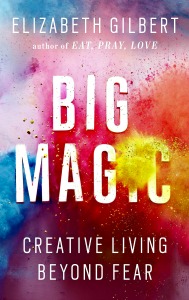
BigMagic_cover_300Big Magic: Creative Living Beyond Fear, by Elizabeth Gilbert, due out in September.
Synopsis: Gilbert digs deep into her own creative process to share her wisdom and unique perspective about creativity.
Why I’m excited: As some readers may recall, I reviewed her novel The Signature of All Things last fall for this column. It seems that Gilbert is now turning her hand to self-help/motivational books for us creatives. I’m intrigued, and I figure other international creatives should be as well.

Three other upcoming books, by authors I’ve not come across before, have also caught my eye:

Displacement_cover_300Displacement, by Lucy Knisley, due out February 8th.
Synopsis: A graphic-novel-style/comic-book travelogue reporting on a cruise ship trip to the Caribbean Knisley took with her grandparents.
What interests me: Even though I seldom read graphic novels, I’m curious to pick it up, especially given its title(!). Knisley has two previous travelogues in graphic form: French Milk (her six-week trip to Paris to celebrate a milestone birthday) and An Age of License (her all-expenses trip to Europe/Scandinavia).
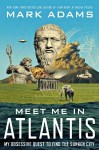
Meet_Me_in_Atlantis_cover_300Meet Me in Atlantis: My Obsessive Quest to Find the Sunken City, by Mark Adam, due out in March
Synopsis: A few years ago, travel writer Mark Adams made a strange discovery: everything we know about the lost city of Atlantis comes from the work of one man, the Greek philosopher Plato. Then he made a second, stranger discovery: amateur explorers are still actively searching for this sunken city all around the world, based entirely on the clues Plato left behind. Adams decides to track these people down. He reports on what he learns from scientists and amateur historians who all share his curiosity about the facts and fiction surrounding the “lost city.”
What interests me: Count me in that curious group!

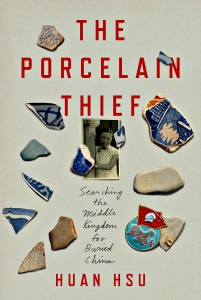
The Porcelain Thief: Searching for the Middle Kingdom in Buried China, by Huan Hsu (forthcoming in March).
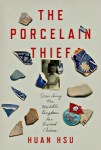
The_Porcelain_Thief_cover_300Synopsis: The author, raised in Utah, goes back to his ancestral homeland in China, in part to look for porcelain and other treasures his great-great-grandfather may have buried before the family fled the Sino-Japanese War.
What interests me: As a former expat in China, I love anything about this part of the world, and this displaced family saga sounds particularly fascinating!


ML AWANOHARA: I am always on the lookout for books that could be of interest to the Displaced Nation readership. (Whether I end up reading them or not is a different matter!) I’m sure this is just the tip of the iceberg, but thus far in 2015 I have my eye on one novel and several memoirs.

First, the novel:

The_Art_of_Unpacking_Your_Life_cover_300The Art of Unpacking Your Life, by Shireen Jilla (forthcoming in March)
Synopsis: A million miles away from their daily concerns, on a safari in the Kalahari Desert, two women who were once best friends see if they can reconnect.
What interests me: We featured Jilla’s first novel, Exiled, on the Displaced Nation shortly after we started the site as we were curious to as to why, after her own expat life in New York City, she had produced such a dark, dysfunctional family psychodrama concerning a British expat family living on the Upper East Side of New York. (Her answer was extremely satisfying!)

As to memoirs, here are three that were issued in January:
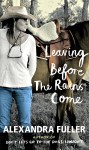
Leaving_Before_the_Rains_Come_cover_300Leaving Before the Rains Come, by Alexandra Fuller (came out in January)
Synopsis: A child of the Rhodesian wars and daughter of two deeply complicated parents, Alexandra Fuller is no stranger to pain. But the disintegration of her own marriage leaves her shattered. Looking to pick up the pieces of her life, she finally confronts the tough questions about her past, about the American man she married in hopes of being saved from the madness of her early life, and about the family she left behind in Africa.
What interests me: I so enjoyed Fuller’s first memoir, Don’t Let’s Go to the Dogs Tonight, about growing up in a white family during the Rhodesian Bush War, I have come to think of her as a modern-day displaced heroine, or goddess: larger than life, an extraordinary mix of beauty and brains, out of this displaced world… (Hmmm… No wonder her marriage to a mere mortal didn’t last.)

Russian_Tattoo_cover_300Russian Tattoo: A Memoir, by Elena Gorokhova
SYNOPSIS: In her first memoir, A Mountain of Crumbs, Gorokhova detailed her life growing up with an iron-willed mother in Soviet-era St. Petersburg. In this follow-up, she escapes both mother and country by entering into an unsuitable marriage with an American. When her husband first brings her to live in Austin, Texas, the culture shock is extreme. He then ships her off to Princeton to live with his psychotherapist mother. There she meets her second husband and a happier future.
WHAT INTERESTS ME: Maybe because I lived abroad for so long and then had to readjust to life in the U.S., I identify very closely with immigrant stories. And for personal reasons, I’m always attracted to stories that revolve around the challenges of cross-cultural marriage.

Whipping_boy_cover_300Whipping Boy: The Forty-Year Search for My Twelve-Year-Old Bully, by Allen Kurzweil
SYNOPSIS: As a 10-year-old American shipped to a Swiss boarding school, Kurzweil endured a year of torment. Years later he set out to search for the chief bully, Cesar, who, it turned out, had gone to prison twice, having become a professional con man. In circling the globe to find Cesar, Kurzweil stands up for all who’ve been the victim of bullies.
WHAT INTERESTS ME: As we’ve always recognized on this site, some of us who are “displaced” have gothic tales to tell. Thank goodness in this case the villain picked on a man who was destined to become a world-class writer, hence able to exact an exquisite revenge.

Finally, I just now heard about another memoir whose title alone has me panting to know more: The Dead Ladies Project: Exiles, Ex-Pats and Ex-Countries, by litblog founder and book reviewer Jessa Crispin, who moved to Berlin in 2009. It’s due out in September; no book cover yet.


JJ MARSH, crime series author and Displaced Nation columnist (Location, Locution): I have a novel and a poem on my list, along with one publishing house.

A_Spool_of_Blue_Thread_300A Spool of Blue Thread: A Novel, by Anne Tyler (forthcoming this month).
Synopsis: It’s not an expat story but rather the opposite: a domestic family saga. The family, Whitshanks, have lived in Baltimore for several generations.
What interests me: Tyler wrote The Accidental Tourist (about the ultra-insular Leary family, who also live in Baltimore) and I’m curious.

“Sentenced to Life”, by Clive James (James, for those who don’t know, is an Australian writer and personality who has long lived in Britain.)
Synopsis: It’s one of James’s recent poems, published in May of last year, and can be read in full on her author site.
What interests me: I heard James on the radio talking about writing poetry about facing death and it humbled me.

I also look forward to whatever Galley Beggar Press puts out because they’re exciting and adventurous and try things other publishers will not. This strategy paid off with their Baileys Prize success of A Girl is a Half-Formed Thing by Eimear McBride last year.


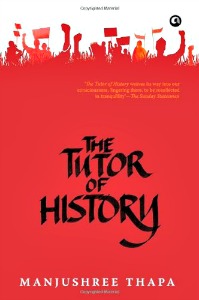
The_Tutor_of_History_cover_300HEIDI NOROOZY, adult TCK, translator and author (@heidinoroozy): This year I’ve resolved to read more books in translation and stories from far-flung parts of the world. And, as I enjoy novels set in foreign locations that are told in local voices, I’ve got these two on my list:

The Tutor of History, written in English by the Nepali author Manjushree Thapa
SYNOPSIS: One of South Asia’s best-known writers, Thapa follows the lives of a variety of characters in the lead-up to local and national elections in a small town in central Nepal.
NOTE: This novel came out in 2012, but I haven’t gotten round to reading it yet.

The_Little_Paris_Bookshop_cover_300The Little Paris Bookshop, by the German author Nina George (forthcoming in English in June).
SYNOPSIS: Monsieur Perdu calls himself a literary apothecary. From his floating bookstore in a barge on the Seine, he prescribes novels for the hardships of life. The only person he can’t seem to heal through literature is himself…but will he manage to do that on a mission he takes to the south of France, with an Italian chef as his companion?
NOTE: I already read the novel in German. In Germany it spent over a year on the bestseller lists.


My_Fellow_Prisoners_cover_300KELLY RAFTERY, translator and writer: In 2015, I am looking forward to being able to read Mikhail Khodorkovsky’s collection of short stories entitled My Fellow Prisoners. Already available in Europe, it is due to have its U.S. release in late February. Convicted on thinly disguised, politically motivated charges, Mikhail Khodorkovsky went from being Russia’s richest man to a labor camp inmate in Siberia. In the decade of his incarceration, Khodorkovsky scribbled short sketches of the men he encountered, jailers and prisoners alike.


SUPRIYA SAVKOOR, editor and mystery writer: In the last roundtable, I mentioned having recently read two gripping memoirs: Not My Father’s Son, by Alan Cumming, and A Long Way Home, by Saroo Brierley. In 2015 I’m looking forward to more books that surprise me as these two did, particularly ones in which the new stories are intertwined with the old ones and make me see the grander scheme of things.
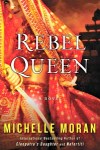

Rebel_Queen_cover_300ALLI SINCLAIR, world traveler and novelist (www.allisinclair.com): I’m a huge fan of Michelle Moran’s books and any book of hers is an automatic buy for me. Moran has an interesting story. Born in Southern California, she was a public high school teacher before becoming a writer, using her summers to travel around the world. It was her experiences as a volunteer on archaeological digs that inspired her to write historical fiction. Moran’s upcoming work, Rebel Queen, will be released in March. It’s about Queen Lakshmi—also known as India’s Joan of Arc because she stood up to the British invasion of her beloved Kingdom of Jhansi. The queen raises two armies—one male and one female—and they go into battle against the well-prepared British.

Moran’s books are rich in historical facts but the stories are so enthralling it never feels like a history lesson. Another reason I’m a fan is because she usually chooses the point of view of someone not so well known. For example, in this story the main character is Sita, one of the Queen’s trusted soldiers and companions, a device that serves to paint a less-biased picture of the more famous Queen Lakshmi.

* * *

Thank you, ML, JJ and guests! Readers, do you have any further 2015 recommendations? Please leave a comment below. And then let’s get our noses back into our books!

Finally, please be sure to sign up for the DISPLACED DISPATCH, which has a Recommended Read every week. You can also follow the Displaced Nation’s DISPLACED READS Pinterest board.

STAY TUNED for next week’s fab posts!

If you enjoyed this post, we invite you to subscribe to The Displaced Dispatch, a weekly round up of posts from The Displaced Nation, plus some extras such as seasonal recipes and occasional book giveaways. Sign up for The Displaced Dispatch by clicking here!

Related posts:

A valentine to displaced creatives: Let a thousand friendships flourish!

Valentine_Displaced_Friendships

Photo credit: PublicDomainPictures via Pixabay.

In my nearly four years of managing the Displaced Nation, I’ve had about as many face-to-face meet-ups with the creatives I’ve “met” on this site. Let me see…the last one was was about eight months ago, when the delightful Jennifer Eremeeva and I had coffee. Among many other things, we talked about her autobiographical novel based on her two decades of living in Russia: Lenin Lives Next Store: Marriage, Martinis and Mayhem in Moscow (don’t you love the alliteration?).

I suppose it’s not surprising how rare these real-life encounters are, given that, by definition, displaced creatives tend to be on the move and/or opt to live in far-flung corners of the globe. (Jennifer was on her way to her summer home—or dacha, as she jokingly referred to it—in Northampton, Massachusetts, when we met, but would soon be heading “home” to Russia.)

Still, putting a gravatar to a name is one thing, putting an actual face to a name quite another. It cements your friendship in a way that nothing else can.

No doubt that’s why I was so thrilled to learn that another such meet-up has taken place between two writers who first encountered each other here: Cinda MacKinnon, author of the novel A Place in the World, and Rita Gardner, author of the memoir The Coconut Latitudes.

Both Cinda and Rita have kindly agreed to answer a few questions about their flourishing friendship (there’s that alliteration again!). This being February, I offer it as a kind of valentine to the pair of them, who have been great friends not only to each other but to TDN, as well as what they represent about the site’s potential to be a haven from the storm of the displaced life, a “home”.

* * *

Rita and Cinda, welcome back to the Displaced Nation! Why don’t we start by having you recount how you discovered each other on this site?

Cinda&Rita
RITA: I first discovered Cinda when she posted a comment on James King’s interview with me in his delightful “A Picture Says” column for the Displaced Nation. I immediately responded to her and we began our online friendship, which evolved into our discovering we were practically neighbors in the San Francisco Bay Area—and subsequent in-person get-togethers.

CINDA: It is ironic to think that James, who lives in Thailand, is responsible for connecting two writers who now live in the San Francisco Bay Area. James’s blog, Jamorocki, and the Displaced Nation are my two favorites.

Thank you for that lovely compliment, Cinda! We’ll be sure to pass on to James… Tell us, what was the thing that immediately drew you the two of you together?

CINDA: We were both expats who grew up in Latin American and her story reminded me of other foreigners I knew, whose parents exchanged a comfortable life for a more adventurous, exotic one…but sometimes with devastating consequences—have you read/seen Mosquito Coast? Actually, I told Rita that Cocoloco—the name of her family’s coconut finca (plantation) in the Dominican Republic—would have served as an apt alternative title for her book. She said it was her working title but then she changed it to The Coconut Latitudes just before publication.

RITA: Besides the obvious—that Cinda was an expat and a TCK who grew up in Latin America—I was intrigued that she’d written a novel that is set in Colombia.

Cinda, you’ve also been a guest of James King’s photography column. Can each of you tell me what which photo of each other’s you liked best?

Rita & Cinda Fave Pix
RITA: My favorite photo of Cinda’s was “A Profusion of Wildflowers in Arvin.” I liked the subtle angles and composition and it reminded me of the unexpected beauty that can be encountered everywhere flowers bloom.

CINDA: I think the “Wading Chairs.” That is so Latino! You can just picture a couple of islanders lounging there and keeping their feet cool.

By now, I assume you’ve read each other’s books. What were your impressions?

Cinda&Rita covers
RITA: I read the TDN interview with Cinda before reading her book. The first line struck a chord, about how her fiction “was a way to revisit homes she has cherished.” I also appreciated learning about Cinda’s life and her writing process and her list of favorite books, many of which mirrored my own. Once I got to reading the novel itself: I loved so much about it! The first thing was its sensory lushness; I could see, smell, taste, and feel the cloud forest setting and the coffee finca. I felt for Alicia, the main character, as she ached to find her own place in that world amid complicated relationship struggles. It was a satisfying read.

CINDA: I loved reading Rita’s memoir. The honesty—a lot of soul searching went into this work. Although her upbringing was difficult and her entry into adult life harsh, the writing is straightforward. And I have to say, her mother must have done a marvelous job with home schooling. For those who aren’t aware: Rita mostly taught herself to write, I believe. The results are extremely impressive.

One of you chose to write a novel based on your TCK life, whereas the other wrote a memoir. Do you think those were the right choices?

CINDA: If Rita had written this story as fiction, we would have assumed that she was exaggerating any real life background that went in to it. It is a haunting and compelling memoir.

RITA: I wondered of course if Cinda’s novel was autobiographical (which I’ve learned it is not, other than being influenced by her South American roots and her love of botany). I thought it was perfect as fiction. A memoir would not have produced A Place in the World—and since I liked this book just as it is, I’m glad she chose that route. However, I’d love to see her write a memoir, too!

Both of you grew up as Third Culture Kids, which gives you something in common right away, though not all adult TCKs become fast friends, of course. What are the closest parallels you’ve discovered?

RITA: Goodness—the parallels are uncanny: We both grew up in families that roamed the world before settling in Latin America. We both love nature, writing, photography, many of the same authors and books. We both wrote our books as ways to revisit our own past. We both arrived in the U.S. as teens, wearing “the wrong clothes” and struggled to basically “become” North Americans. I could go on!

CINDA: I could immediately relate to this line in Rita’s author bio: “She continues to dream in Spanish and dance the merengue.” Like many TCKs we are multilingual and have a tolerance for and interest in other cultures. Both of us had parents that were somewhat negligent and we were on our own by the time we were 18 (maybe 17 for Rita—and I did have some encouragement elsewhere).

You almost sound like the Bobbsey Twins, but I guess you also have some differences?

CINDA: One major difference is that as children, Rita lived in a very isolated village, home-schooled and restricted to certain contacts, whereas I went to international schools with a mélange of teachers and friends. My siblings and I didn’t see our parents as often as most kids, but they were stable individuals. Also, between the ages of 6 and 12, I spent a month every summer stateside with my cousins and affectionate aunts; this helped me both emotionally and gave me a glimpse of American life.

RITA: Also in terms of our adult lives: Cinda pursued a life as an environmental scientist and has had a successful academic career. She possesses a deep knowledge of botany and geology I’ll never have. I’m sure there are a lot of other differences—and look forward to continuing our friendship and discovering more about each other, whether differences or connections.

Finally, can you each tell me something about the other you think might be interesting to Displaced Nation readers?

CINDA: Rita is not just as a writer but has had a big job reporting to the Vice Chancellor of Administration at UC Berkeley. She also garnered a good review from the acclaimed Dominican American author/professor Julia Alvarez, who declared her an “honorary Dominicana”. Rita is an accomplished artist as well; supporting the TDN theory of the creativity of expats .

RITA: Cinda has a generous heart—evident both in person and through her blog posts. For example: Through her blog I’ve learned about a Cuban musician who defected to the US and now is in the San Francisco Bay Area; she did an excellent interview with him and included links to his music. In ways like that, she expands everyone’s horizons. Likewise, she has gotten the word out to friends and readers about my book, and has introduced me to other writers in the area. Oh, and she loves Burmese food!

* * *

Thank you, Cinda and Rita! Readers, be sure to check out their books if you haven’t already! Any further questions for these two writers and adult third culture kids? Any of your own meet-ups to report?! Let a thousand friendships bloom!! As usual, please let us know in the comments…

STAY TUNED for PART 2 of our 2014-2015 reads!

If you enjoyed this post, we invite you to subscribe to The Displaced Dispatch, a weekly round up of posts from The Displaced Nation, plus some extras such as seasonal recipes and occasional book giveaways. Sign up for The Displaced Dispatch by clicking here!

Related posts:

DIARY OF AN EXPAT WRITER: There’s no place like home, especially when your compatriots are reading your books!

DiaryExpatWriterShannon Young, an expat writer based in Hong Kong, decided last year to quit her day job to become a full-time writer. Since October she has been writing a diary for us about this new phase of her life. We last heard from Shannon when was heading home to Arizona for the holidays. And now let’s find out what happened during her stay in her home country.

—ML Awanohara

Dear Displaced Diary,

A belated Happy New Year! This is my fifth update on my new life as an expat writer in Hong Kong. As you know, I spent the holidays in Phoenix, Arizona, for a bunch of family events—a birth, a wedding, the adoption of a baby tortoise(!).

During my last week, I also managed to fit in some writerly activities—two school visits, a seminar, a book club meeting—where I spent a lot of time talking to others about what I’ve learned on this writing journey so far.

But before I tell you about that…

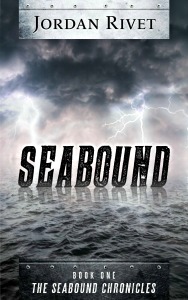
Seabound_coverartArizona is where I first got to hold the Seabound paperback in my hands! It has been available online since mid-November, but shipping to Hong Kong takes forever. (I’m sure you expats can appreciate the joys of international shipping. 4–6 weeks—from Amazon?!)

Anyway, the copies I ordered didn’t arrive until after I left for the United States. So the night I arrived in Arizona, I picked up the thumbed copy of Seabound that one of my family members had been reading and flipped through the pages for the first time.

I’ve gotta say: the book looks awesome! Even though I mostly read e-books these days, I can still appreciate a hefty paperback. (400 pages!)

And now back to my Arizona chronicle, beginning with my visit to a high school where I used to teach…

On the recommendation of a mutual acquaintance, I met up with two high school student writers to drink coffee and talk about our work. We covered general subjects including the likelihood of making a living as an author as well as specifics such as how to choose the right POV for a story and whether majoring in creative writing is a good idea.

I enjoyed our conversation, and I guess the students liked what I had to say because they invited me to their high school writing club meeting the following day!

As it happens, I had taught at their high school my first year after graduation from college. I got to catch up with my old teaching friends before the writing club meeting began. It was nice to come full circle like that.

As for the students, they asked lots of sharp questions. They especially wanted to know about plot—both how it’s structured and how to come up with something interesting. We also talked about how important it is to write the kind of books you want to read.

Continuing with a book club discussion of…my book!

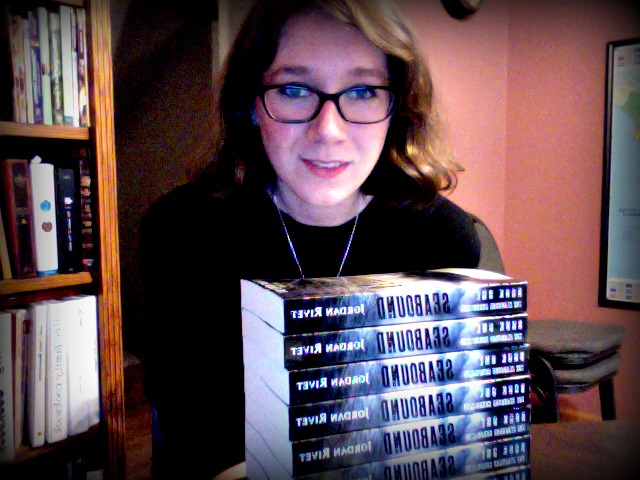
Perhaps the highlight of my writerly activities in Arizona was being invited to attend a book club meeting where the group was discussing one of my books! That’s right, the entire group had read Seabound. We spent several hours talking about the story and about my writing life. They made me feel like a real celebrity—and I even got to sign a bunch of books! (I wrote a bit more about this experience on my Jordan Rivet blog.)
SeaboundArizona_Book_Club

…a self-publishing seminar at my old local library

Next up was a seminar on self-publishing at the local library I always used to walk to when growing up. It was a bit surreal returning there to learn about something I strongly associate with my adult life in Hong Kong.

It’s funny how we respond to old familiar places after we’ve gone out into the world, isn’t it?

The teacher, Barbara Hinske, is a successful self-publisher who has sold over 50,000 books in her Rosemont series. Some of the information she covered is stuff I have read before in my research, but it was exciting to meet a self-pub success story in the flesh. She also had some cool ideas to share about how she does her marketing. I’ll be applying some of her advice to my own promo strategies.

After the session I showed her the Seabound paperback because we were talking about formatting, and I’d used a template she was considering. In addition to the layout, she was quite impressed with my cover and blurb, which I found encouraging!

…and one last school visit!

Before leaving Arizona, I made one more school visit. My sister is a teacher, and she invited me to speak to her two 5th-grade classes about being a writer. Boy, were her students excited! They asked great questions, but my favorite was when one little girl asked if I know Lemony Snickett.

The kids had so much energy. They participated enthusiastically when I asked them for their ideas about what Hong Kong is like (one wanted to know if we have Panda Express in Hong Kong). They stayed totally focused when I explained how a book is made. They even asked my advice on dealing with writers block (short answer: you just stay in your chair and write through it).

The one point that I tried to make over and over again was that a book is never perfect on the first draft or even the second or third or fourth. I told them that even if a book isn’t very good the first time through, I just keep rewriting. I tried to encourage them not to get frustrated if they don’t think their essays and stories are good the first time. Real writers rewrite lots of times too!

Which brings me back to Hong Kong…

I’m now back in Hong Kong, deep into the revision process for the second draft of the prequel to Seabound. Meanwhile, I’ve been getting feedback on the third draft of the sequel and should be ready to dive into the final revision by next month if all goes well.

Shannon Young and Seabounds

You may remember that I decided to give myself until Chinese New Year to decide whether or not to keep writing full time. Well, that starts on February 19th…and February is just around the corner.

Come back next month, folks, when all will be revealed!!

Thank you for following my writing journey.

Shannon
www.shannonyoungwriter.com

* * *

Readers who are also writers, have you ever presented on your works in your home country, and if so, how did you find the experience?

STAY TUNED for next week’s fab posts!

If you enjoyed this post, we invite you to register for The Displaced Dispatch, a round up of weekly posts from The Displaced Nation, with snippets of worldly wisdom, exclusive book giveaways and our nominees for the monthly Alice Awards. Register for The Displaced Dispatch by clicking here!

Related posts:

BOOKLUST, WANDERLUST: 2014–2015 books recommended by expats & other international creatives (1/2)

Global Bookshelf Part OneHello Displaced Nationers! Looking back at the our popular series Best of 2014 in expat books, published at the end of last year, I decided we should continue the fun at the start of the year—and managed to convince our redoubtable editor, ML Awanohara, that the pair of us should canvass our “displaced” contacts to see what they’d enjoyed reading from last year’s crop of new books, as well as books they’re looking forward to reading in 2015.

A “best reads” roundtable, if you will.

In Part One, which appears below, several of my bookworm friends from a previous blog, Novel Adventurers, along with ML and JJ Marsh (JJ writes the Location, Locution column for Displaced Nation), discuss their favorite 2014 reads.

In Part Two, a similar group of us will talk about releases we’re hotly anticipating this year.

Having already shared my 2014 faves in last year’s series, I’ll concede the floor to others, beginning with ML.

—Beth Green

* * *

ML AWANOHARA: Thanks, Beth. These days, I seem to be more of a collector than a reader (I simply can’t keep up with all the titles I hear about!). If you’ll allow me to bend the rules, I’d like to highlight five more 2014 books I’ve discovered since our Best of 2014 in expat books went live. While I can’t personally recommend any of these titles, I feel justified in presenting them as an addendum to our series.

I’ll start with these four “displaced” novels, listed from most to least recent:

IHaveLivedToday_cover_300x200I Have Lived Today (October 2014)
Author: Steven Moore
Synopsis: Having barely survived his Dickensian childhood in 1960s Britain, Tristan Nancarrow sets out on a journey that will take him through the alleys of London and New York, to the rocky shores of ancient islands, and on pub crawls in dark and gloomy ports. The book is a classic coming-of-age adventure.
Expat creds: Originally from England, Moore is a writer, photographer, traveler and part-time ESL teacher who splits his time between Mexico, Korea and the world.
How we learned about: From his blog, Twenty-first Century Nomad.

SleepwalkersGuide_cover_300x200The Sleepwalker’s Guide to Dancing (Random House, July 2014)
Author: Mira Jacob
Synopsis: This debut novel takes us on a journey that ranges from 1970s India to suburban 1980s New Mexico to Seattle during the dot.com boom. It follows the fortunes of the Eapens, an Indian American family dealing with tragedy and loss. Alternating between past and present, it shows the family’s transition from India to the United States. As one Indian critic writes, the story is “firmly rooted in an immigrant home, its peculiar methods and madness.”
Expat creds: Jacob is an Adult Third Culture Kid, whose Syrian Christian parents came over from Kerala, India, to New Mexico, in the 1960s. She now lives in Brooklyn with her Jewish American husband and son.
How we found out about: Recommended by Condé Nast Traveler as a book to read on a plane.

SummerattheLake_cover_300x200Summer at the Lake (Orion, June 2014)
Author: Erica James
Synopsis: An Oxford Tour guide, Floriana, a property developer, Adam, and Esme, an elderly woman who lives next door to a recent purchase by Adam, meet by chance and develop a lovely friendship, which takes them from the glittering spires of Oxford to the balmy shores of Lake Como. The story blends the tale of an old romance with a modern love affair.
Expat creds: James divides her time between living in Cheshire, UK, in a small rural hamlet and Lake Como, Italy, giving her plenty to draw upon in her books.
How we heard about: Pinterest.

TheBalladofaSmallPlayer_cover_300x200The Ballad of a Small Player: A Novel (Deckle Edge, April 2014)
Author: Lawrence Osborne
Synopsis: Lord Doyle decamps from the stuffy legal courtrooms of London to the smoky back-alley casinos of Macau, where he tries to capitalize on the ill-gotten gains that forced his flight from his homeland. But can he game the system at the island’s glitzy baccarat tables? With its expat angst and debauched air of moral ambiguity set amid the sinister demimonde of the Far East’s corrupt gambling dens, the book is an introspective study of decline and decay.
Expat creds: Lawrence Osborne was born in England and lives in New York City. A widely published and widely traveled journalist, he has lived a nomadic life in Mexico, Italy, France, Morocco, Cambodia and Thailand, places that he draws on in his fiction and non-fiction. His first novel was The Forgiven, which Beth Green reviewed for the Displaced Nation last year.
How we learned about: From Amazon.

Lastly, I have another expat memoir that was issued in 2014 and I think deserves a spot on our shelves:

FallinginHoney_cover_300x200Falling in Honey: How a Tiny Greek Island Stole My Heart (Sourcebooks, March 2014)
Author: Jennifer Barclay
Synopsis: Barclay first visited the tiny Greek island of Tilos, in the south Aegean, with friends, including a lover with promising prospects. In her mid-thirties when those prospects fell apart, she decides to reconnect with herself by returning to Tilos for a month and immersing herself in Greek culture, food, language, and dance. Emotionally healed and recharged, she returns to England, where she meets a man who wants what she wants, only to discover… (I won’t ruin it for you.)
Expat creds: Born in Manchester, UK, Barclay subsequently grew up on the edge of the Pennines—but has lived in Greece, Canada and France, with longish stays in Guyana and South Korea. She now lives mostly on Tilos. Notably, she previously produced a memoir about life in South Korea, amusingly titled Meeting Mr. Kim: Or How I Went to Korea and Learned to Love Kimchi.
How we learned about: Barclay’s “Gathering Road” podcast interview with Elaine Masters.


TheShadowoftheWind_coverJJ MARSH, crime series author and Displaced Nation columnist (Location, Locution): My best book of 2014 is The Shadow of the Wind, by Carlos Luis Záfon. All booklovers will fall hopelessly in love with this tale of a boy and a book he swears to protect after he is taken to the Cemetery of Forgotten Books by his bookseller father. Which of us could resist doing the same? Readers know how a story can act as a portal to otherwhere. This is the most perfect example, not to mention illuminating Barcelona in addition to the Franco dictatorship, love, loyalty and growth.


TheLie_coverHEIDI NOROOZY, adult TCK, translator and author (@heidinoroozy): One of the most remarkable and memorable books I’ve read recently is The Lie, by Hesh Kestin. Set in Israel, it features a Jewish human rights lawyer whose commitment to her principles is put to the test when her soldier son is kidnapped by Arab militants and whisked over the border to Lebanon. I love stories that explore the human spirit and are set against a backdrop of real-life events. The heart of this novel is the question of how far a mother is willing to go to save her child. Very chilling at times, heartbreaking at others and masterfully told overall.


PointofDirection_cover_300x200KELLY RAFTERY, translator and writer: In 2014, I loved Point of Direction, by Rachel Weaver. A starkly beautiful tale set in the Alaskan outback, it reads like a cross-cultural adventure. Most expats will recognize the feelings of culture shock, disorientation and unreality that haunt Anna, a woman on the run from her own ghosts. The sharp writing style perfectly mirrors the jagged mountains and rough seas that inhabit the novel as surely as another character.


SUPRIYA SAVKOOR, editor and mystery writer: I haven’t read many memoirs, but in recent months, I read two that blew me away. The first, Not My Father’s Son, by Alan Cumming, is a must-read, even if celebrity memoirs aren’t your thing or you don’t know much about this Scottish actor, now a dual American-British citizen based in New York City. NotMyFathersSon_cover_300x200Cumming, it turns out, is a genius storyteller, and he takes us on an extraordinary journey through two juicy family mysteries across four countries and three time periods. It is, in turns, emotional, tragic, exciting, suspenseful, and funny. The colorful cast of characters, with names like Tommy Darling and Sue Gorgeous, are real people. Along the way, you’ll learn all kinds of fascinating little tidbits, much of it cross-cultural, about genealogy, history, pop culture, language, psychology. Even Cumming’s anecdotes about his life as a TV and film star are surprisingly interesting, largely because of the author’s clear-eyed, honest wisdom. (I also highly recommend the audiobook, narrated by Cumming himself. Alongwayhome_cover_300x200 His lovely Scottish accent and intonations are an additional treat.)

A Long Way Home: A Memoir, by Saroo Brierley, is another great read. The story is simple but powerful: a five-year-old boy in rural India gets lost, is ultimately adopted to a family in Australia, then, as an adult, tracks down his birth family and reunites with them. How he pieces together his past and finds his roots is one of several beautiful mysteries in this small book. Loss and identity are obvious themes, but not just for the author. A truly unique story. (Side note: Modern technology is one of this book’s heroes.)


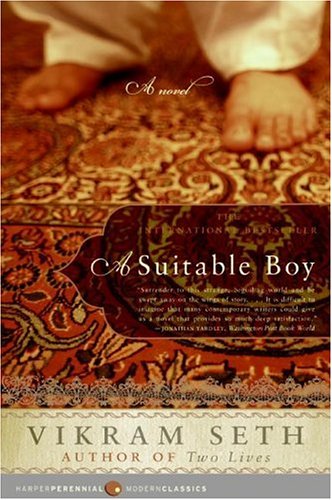
ASuitableBoy_coverALLI SINCLAIR, world traveler and novelist (www.allisinclair.com): I recently re-read A Suitable Boy by Vikram Seth. It was released way back in 1993 and caused quite a stir in the literary world as it was one of the longest novels ever to be published in English (1,349 pages hardcover). I first read it then, and, while it’s highly unusual for me to give a book a second or third read, every few years I return to this wonderful novel rich with Indian history, family saga, and a heartbreaking romance. It’s set in post-partition India and explores the political issues at the time (1950s), along with the Hindu-Muslim issues and the caste system. It’s quite an undertaking to read this book but I enjoy revisiting the characters I love. I am very fond of stories written by Indian authors as there is a beautiful style and interesting points of view I find appealing. There’s a sequel in 2016—I can’t wait!

* * *

Thank you, ML, JJ and guests! Readers, have you read any of the above or do you have further 2014 recommendations? Please leave a comment below. And stay tuned for Part Two of this post, books to look forward to in 2015!

Finally, please be sure to sign up for the DISPLACED DISPATCH, which has a Recommended Read every week. You can also follow the Displaced Nation’s DISPLACED READS Pinterest board.

STAY TUNED for PART 2 of this post: 2015 reads!

If you enjoyed this post, we invite you to subscribe to The Displaced Dispatch, a weekly round up of posts from The Displaced Nation, plus some extras such as seasonal recipes and occasional book giveaways. Sign up for The Displaced Dispatch by clicking here!

Related posts:

For this former contractor in Iraq, now an expat in Thailand, a picture says…

Jackie Littletaylor portrait

Canon zoom lens, photo credit: Morguefiles; Jackie Littletaylor in Iraq in 2005 (own photo). Yes, it’s a real tank, which disappeared a year after this photo was taken.

English expat, blogger, writer, world traveler and photography enthusiast James King is back with his first “A picture says…” column of the new year. If you like what you see here, be sure to check out his blog, Jamoroki.

Happy new year, readers! My very first guest of 2014 is 64-year-old Jackie Littletaylor, who, like me, is an expat living in Thailand with a passion for photography. Unlike me, though, Jackie had a past incarnation as a professional photographer in his home country, the United States, which he is now putting to use in his new life abroad.

Jackie keeps a blog as well as a travel site, where he shares information about his travels around Southeast Asia, particularly Thailand. He speaks more in pictures, full of vibrant colors, less in words, about what he has seen and observed.

Today I hope he will give us his 1,000+-word story as well as some background behind a few of his favorite photos.

* * *

Welcome to the Displaced Nation, Jackie. I have been looking forward to discussing your photo-travel experiences ever since I discovered your blog some months ago. What first intrigued me was that although you were a professional photographer, you now seem to be intent on breaking the rules and creating your own unique style that flies in the face of convention. But before we go into that, can you fill me in on what led you to travel in the first place?
At an early age, I traveled with my family from Alabama, where I was born, to Texas, where I spent most of my life. My family loved to travel. Thanks to them, I’ve backpacked many of the great national parks including the Grand Canyon, Yellowstone, and Rocky Mountain, and have seen almost all of Western USA. But I didn’t venture overseas until the age of 55. Never, for a moment, did I anticipate that my greatest travel adventure would come so late in life.

How did you end up in Iraq at the ripe old age of 55?
My approach to life changed after I went through a bad divorce. I thought, why not go have an adventure? I was no longer taking care of kids so there was not much holding me back. I took off for Iraq in 2005 and spent six of the best years of my life there. Actually, I hated it when I was there, but looking back, all I can think is how simple life was: just day-to-day living, with good money and some great friends.

Why Iraq?
At that time I was living in Houston. I heard about the opportunity to work for a company providing services to the armed forces in Iraq. I went to check them out and the rest is history.

“He’s so busy you’d think he was twins.”

I can relate as I did a similar thing after my divorce at 48. Up sticks and off I went to South Africa. What happened once you arrived in Iraq?
Work and more work. We worked 7 days a week, 12 hours a day. The first year’s average week was 102 hours. But then every 4-6 months we were given some vacation time. I traveled all over Iraq, from the Syrian border to the Iranian border, and also to Kuwait—that’s where I spent Christmas in 2005. In 2006–07 we were very busy, and there were many days I had no sleep—but it was still the adventure of a lifetime. Many of us left in 2010, when troops were being pulled out. I have a vivid memory of being at the airport in Baghdad and seeing the tears in the eyes of a retired general who’d been one of our leaders. He knew this was a once-in-a-lifetime experience that could never be repeated. I went back for another year and could have stayed when the US military pulled out, but decided six years was enough.

You probably saw and experienced more in six years than many people do in a lifetime, but let’s move on with your story.
I had friends in Iraq who went to Thailand for their vacations and always had good tales to tell. So, having become an intrepid explorer, I decided to check it out. I flew to Phuket via Dubai with a good friend. Thailand captivated me at first sight: the people and the culture, along with the opportunities for more travel. Although most of my time has been spent here since Iraq, I have also visited Burma, Cambodia, Malaysia, Oman, France, and Kuwait.

I would definitely place you in the seasoned traveller category! So where in Thailand do you call home now, and what is life like in a new place?
As I was saying, I fell in love with Thailand—and with a Thai woman. We now have two young kids! Imagine, at my age! So Thailand has become my home. My wife is from a village in Isaan, in the northeastern region, near Sisaket. We live in Phuket because I love the sea, but we visit her family regularly in Isaan.

“There’s no slack in his rope.”

I know Sisaket as I lived in Buriram, which is nearby, for three years. I understand you are retired now. Tell me, how do you keep busy?
I love to work so have taken up fine art photography. Last year I started a blog on life here in SE Asia. Along with taking care of the kids, these activities keep my mind and body busy. I’ve been learning a lot.

But photography hasn’t always been a hobby for you.
No. When living in the US I was a wedding and sports photographer, where the challenge was to capture the shot and, through skillful editing, please the customer. It is a real pleasure seeing the customer’s smile when you present some good work. I discovered Fine Art rather by accident while I was doing post processing.

It’s fascinating how, so often, we stumble across exciting things by pure accident. And now let’s have a look at some of the shots you’ve selected for this interview, which capture a few of your favourite memories.
This first photo, of a rice field in Isaan, is what set me free as a photographer. When taking the shot, I envisioned it in my mind’s eye in a certain way, and through processing I managed to achieve this vision. I took my inspiration from impressionist artists, such as Monet and Gauguin, not from other photographers as you may think. Here is the before and after:

Jackie Collage

Rice fields in Isaan, Thailand, before and after processing. The experiment led to Jackie’s “a ha” moment. Photo credit: Jackie Littletaylor.

I took the next photo on my first trip to Isaan. A young woman, Nicha, took me to Prasat Ban Prasat Khmer temple ruins on a motorbike from her village. She did not know I was taking her photo:

IssanPraying_pm

Nicha’s quiet moment of prayer at a shrine in Isaan, Thailand; photo credit: Jackie Littletaylor.

Preah Vihear Khmer Temple ruins on the Cambodia-Thailand border (Southern Isaan) has been the subject of dispute between the two countries for some time now. On this trip, in 2006, I was with my family. We had no idea where we were going or the significance of what we were seeing. These ruins are now off limits to tourists:

CambodiaRuins_pm

What remains of the spiritual life of the six-centuries-long Khmer Empire, now listed as a UNESCO World Heritage Site; photo credit: Jackie Littletaylor.

This next one you will recognize: the restaurant scene on the paved promenade along Rawai Beach, located at the south end of Phuket Island. I love taking photos at night or late evening using a tripod sometimes but with a slow shutter. It takes a lot of editing but is fun:

RawaiinEvening_pm

The seafood restaurants along Rawai Beach, Phuket, affording beautiful views on the many nearby islands; photo credit: Jackie Littletaylor.

On a more personal note, here is an old photo of my parents, in an old-fashioned pose:

Jackiesmom&dad_pm

Dad and Mom Littletaylor, back in Texas, USA; photo credit: Jackie Littletaylor.

Last but not least, my two adorable little angels—I love this photo!

ThaiKiddiewinkles_pm

Jackie’s kiddiewinkles, son and daughter; photo credit: Jackie Littletaylor.

Indeed, I do recognise the one in Phuket. Thank you for sharing this special collection of your photos, including a couple of family portraits. I wonder, do you ever feel reserved about taking shots of people you haven’t met?
I do feel reserved about taking photos of people unless it’s a crowd of them, and I usually ask if I want only one person in the frame. I don’t find language a problem. People can see there is a camera so they know what is happening. In the Thai villages I now have people who actually ask me to take their photo, which is great. In my wife’s village in the past I made 8×10 prints of the villagers for her to give away as gifts.

“He’s got more guts than you could hang on a fence.”

That’s one way to boost your popularity. I believe there is a history of photography in your family?
Yes, photography runs in my family starting with my great grandfather and then my grandfather. But I think I’ve also been influenced by my time in Iraq. That experience reminded me that life can be short and should not be taken for granted. Without being over dramatic, every evening before we left the “wire” or base, I would get out and look at the moon or setting sun, not knowing if it was going to be my last. No sadness or fear. I feel the same with people. You never know when you see someone if it will be the last time. Photography can refresh the memory even after a long time, so it has become a part of my life and it would be strange to be without it. I also just love the beauty of landscapes. I know my photos are quite different. Some like them and some don’t. But most importantly I like them.

I have to agree with you there, Jackie. Trying to create art just to please others rarely works, and it’s a bonus when you find others with similar taste. On the technical side, some of our readers may want to know what kind of camera and lenses you use.
I have always used Canon and now have a Canon EOS1 along with my L lenses which are in the US. Darn! When I left Iraq the last time I was told not to bring them back. These days I use a Canon G1X, which is small and has a great processor but not much lens for zooming. For post processing I use Adobe Lightroom for my basic editing and Nik for most of my artistic editing.

Finally, do you have any advice for wannabe photographers who are traveling or living abroad?
My advice to others is simple. Take LOTS of pictures. I started in analogue where you bought the film and had to pay for processing to see the good and bad shots. Those were costly days. Now we have digital cameras the exposures are free so you don’t have to worry about cost and can experiment freely. Steve McCurry is the photographer who took that famous photo of the Afghan girl with the green eyes in a refugee camp near Peshawar, Pakistan, which ended up on the 1985 cover of National Geographic. But he didn’t know the photo was so good until he was back in New York editing. That wouldn’t happen now. So, learn what your camera can do. Forget the flash and buy the best lens you can afford. On prints, don’t accept poor printing as no two printers or processors are alike. As to timing, I prefer early sunrise or the last two hours of sunset. But to repeat: experiment and use your own judgement; the photo is yours.

Thank you, Jackie, for the tips and for taking the time to tell us your fascinating story.

* * *

Readers, what do you make of Jackie’s experiences? If you have any questions for him on his photo–travel adventures, please leave them in the comments!

If you want to get to know Jackie and his work better, I suggest that you follow:

You can also contact him by email.

(If you are a travel-photographer and would like to be interviewed by James for this series, please send your information to ml@thedisplacednation.com.)

Editor’s note: All subheadings in the above post are old Texan sayings or adages.

STAY TUNED for next week’s fab posts!

If you enjoyed this post, we invite you to register for The Displaced Dispatch, a round up of weekly posts from The Displaced Nation, with Alice nominees, exclusive book giveaways and other extras. Register for The Displaced Dispatch by clicking here!

Related posts:

TCK TALENT: Gene Bell-Villada, literary critic, Latin Americanist, novelist, translator and TCK memoirist

Gene B-V TCK Talent

Professor Gene Bell-Villada (own photo)

Elizabeth (Lisa) Liang is here with her first column of 2015. For those who haven’t been following: she is building up quite a collection of stories about Adult Third Culture Kids (ATCKs) who work in creative fields. Lisa herself is a prime example. A Guatemalan-American of Chinese-Spanish-Irish-French-German-English descent, she has developed her own one-woman show about growing up as a TCK, which is receiving rave reviews wherever it goes.

—ML Awanohara

Happy New Year, readers! Today I’m honored to be interviewing Gene Bell-Villada, author of the Third Culture Kid memoir Overseas American: Growing Up Gringo in the Tropics and co-editor of my first published essay in the TCK/global-nomad anthology: Writing Out of Limbo. Gene grew up in Latin America and “repatriated” to the USA for college and beyond; he is a Professor of Romance Languages (Spanish), Latin American Literature, and Modernism at Williams College in Williamstown, Massachusetts. He is also a published writer of fiction and nonfiction.

* * *

Welcome to The Displaced Nation, Gene. Like me, you’re an Adult Third Culture Kid of mixed heritage. Since you were born in Haiti and grew up in Puerto Rico, Cuba, and Venezuela as the son of an Asian-Polynesian mother from Hawaii and a WASP father from Kansas, your identity development was complex and nuanced, as you make clear in your memoir.  Can you tell us how you identify yourself these days?
Like the title of my memoir, I identify myself as an Overseas American, of mixed WASP and Chinese-Filipino-Hawaiian ethnicity, with a Caribbean-Hispanic upbringing. I wrote my memoir in great measure to disentangle and explain that background—for myself and others! More broadly, in my middle 20s, it dawned on me that, by default, I happened to be a cosmopolitan, and that I couldn’t feel “local” even if I wished to. And so, I set out to make the best of that cosmopolitanism and build on it.

OverseasAmerican_cover

Tell us two things you miss about each of your childhood countries.
From my three childhood countries, I miss mostly the Latin informality and warmth…and salsa dancing! From Puerto Rico, I’ve fond memories of the University campus that was next door to my first home in Río Piedras, and where my mother would take us for walks. From Cuba I miss the richness of the music and folk culture. About Caracas, 3,000 feet above sea level, I remember its mild climate and “eternal spring.”

“Puerto Ricans do a lot of hugging, Dickie reflected. His parents and relatives almost never did.”

Your TCK childhood had extra upheaval due to your parents’ divorce and your two years at a military school in Cuba while your parents each lived in other countries. I imagine that affected your feelings about where you lived.
I must admit, I don’t “miss” most of what I lived in my 17 years in the Spanish Caribbean. I had a very difficult childhood, in which I never really “belonged” to any of those countries, had little contact with the expat community, and was leading a painful, dysfunctional family life. Since my brother and I were put away in a military school in Cuba, it’s not a place that I would “miss.” The circumstances of my upbringing have made childhood nostalgia an elusive sentiment for me.

After a young adulthood in New Mexico (briefly), Arizona, California, Massachusetts, and New York—and some trips to Europe—you settled in Williamstown, MA.  When did you come to feel that it was home, inasmuch as any place can be for an ATCK?
My wife and I actually have had homes in two locations in Massachusetts: Williamstown and Cambridge. So we lived both in the city, where we had our home life, and the country, where I taught. And I guess I realized sometime in the 1970s that New England had become my home. The place had enough cultural density, layered history, and overall cosmopolitanism for me to feel at ease in those parts. (I’d also earned my Ph.D at Harvard.) I even turned down a job offer from UCLA in 1976 because by then I felt attached enough to Massachusetts to stay there. Plus, I didn’t look forward to living in my car on the LA freeways, or putting up with Los Angeles pollution, which was fairly serious back then!

“‘Ah, but you speak such good Spanish…'”

Have you returned to any of the Latin American countries in which you grew up? 
I’ve been back to Puerto Rico and to Venezuela, always experiencing those mixed feelings. When I visited my old neighborhood in Hato Rey, PR, in 2012, I found it largely changed. Moreover, during a previous visit to San Juan in 1985, I went for a stroll at the University grounds. At the sight of the palm trees at the entrance and the tower looming above it all, I fell to the ground, crying. It was a reminder that much of my youth there, when I’d believed that I was an “American” boy in the tropics, had been illusory.

As for Cuba, I could only go back under very specific conditions—not because of the regime, which I’m not against, but owing to my painful personal memories of the place. I worry that seeing certain streets and buildings might elicit a wrenching sadness in me.

Since you’re a professor of Latin American literature and have written about the heavyweights in the field, I presume you’ve also visited quite a few countries in the region at this point. What were your impressions?
Inasmuch as I’ve written books and articles about Borges, García Márquez, Vargas Llosa, and Mexican literature, I’ve been more than once to Argentina, Colombia, Perú, and Mexico. Going to and traveling in those countries brought insight into their literary works that one cannot get simply from reading them in one’s study. On the other hand, my Latin American and Caribbean background proved enormously helpful in accessing the culture and the society of those places. Indeed, García Márquez’s world is the Caribbean coast of Colombia; exploring that area in 1982 and 1988 was a lot like being back in San Juan and Havana! Writing about it was fun, a bit like a return to my childhood, without the pain.

“She was from New York. Didn’t people from New York listen to classical music?”

Although you have always had a passion for classical and Latin music, you ultimately found ways to express yourself through writing fiction and nonfiction. Does music still play a big role in your life? 
Music is my first love. If I hadn’t had a late start at the piano (a fact that unfortunately set me back several years), I might have stayed with it. I turned to literature, in some measure, because it didn’t require advanced hand-muscle skills! But once I got involved with the written word, I strived to make my prose style as artistic, expressive, and fun as music can be, and I worked to give it rhythm and melody. (Someone has remarked that I write like a musician.) I still play piano, though.

Is there a particular work that you are most proud of having written, and if so, why?
I feel equally attached to all of them! Each one has had its role in my life. My books on Borges and García Márquez (which have sold well and gone through second editions) are used in AP courses, and are consulted by general readers, here and abroad. From early on, I had set out to be a “cultural mediator” between Latin American literature and U.S. readers, and those volumes serve that purpose.

My book Art for Art’s Sake and Literary Life, on the other hand, grew out of my cosmopolitanism and my desire to deal with the uses of art as both escape and expression. (In some subliminal way, it’s autobiographical.) The volume covers the phenomenon of aestheticism in Europe, the U.S., and Latin America. I felt vindicated when the thing was a finalist for the 1997 National Book Critics Circle Award (there I was, sharing space with Cynthia Ozick and William H. Gass). It also got translated into Serbian and Chinese! When I asked my two translators just what had drawn them to the book, they both replied that what I’d said about Latin American aestheticism was also applicable to analogous 19th-century movements in Serbia and Taiwan. So my cosmopolitanism had shed light on some corners elsewhere in this world.

My two books of fiction focus in part on TCK issues, plus such cultural-specific matters as American relativism or the seductive influence of Ayn Rand.

But I finally turned to memoir because I felt it was the way to confront head-on the question of my crazy, mixed-up background, to make sense out of it all and give it a living shape. The process of remembering that past, and crafting it and getting it out there, has proved enormously therapeutic. It also led to my meeting Nina Sichel and, then, you, Lisa, via our essay collection, Writing Out Of Limbo!

My latest volume is a kind of experiment, starting with its very title: On Nabokov, Ayn Rand and the Libertarian Mind: What the Russian-American Odd Pair Can Tell Us about Some Values, Myths and Manias Widely Held Most Dear. Besides dissecting the two authors, I tease out my troubled relationship to them, delve once again into my own life history, and finally move on to the larger problem of a rising, spreading libertarianism in this country. There’s even an Appendix in which I throw in a number of spoofs of my own of hard-line libertarians! (I’ve been playing with satires of something or other ever since I was in middle school in Puerto Rico…)
on-nabokov-ayn-rand-and-the-libertarian-mind_cover

You’re a true international creative, with works that run the entire gamut! Tell us, what’s next? Fiction? Nonfiction? Something else?
I have stuff in the works, but am in the process of rethinking my projects in the wake of my wife’s death in 2013. (Widowerhood does things to your mind and spirit, alas.)

Where can people find your works?
All my books are available from Amazon and local bookstores, as well as from any good library!

Thank you, Gene, for sharing your wonderfully inspiring story with the Displaced Nation. So, readers, any questions or comments for Gene? Be sure to leave them in the comments!

Editor’s note: All subheadings are taken from Gene’s book The Pianist Who Liked Ayn Rand: A Novella & 13 Stories.

STAY TUNED for our next fab post.

If you enjoyed this post, we invite you to register for The Displaced Dispatch, a round up of weekly posts from The Displaced Nation, with seasonal recipes, book giveaways and other extras. Register for The Displaced Dispatch by clicking here!

Related posts:

LOCATION, LOCUTION: Author and part-time expat Susan Jane Gilman, who plunders her life for memoir and fiction

JJ Marsh Susan Jane GilmanWe welcome JJ Marsh back to the Displaced Nation for her first “location, locution” column of the new year, in which she talks to current authors about their methods for portraying place in their works.

My guest this month is the precocious and prolific Susan Jane Gilman. She is the author of three acclaimed nonfiction works:
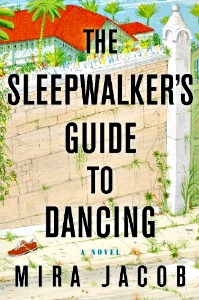
  1. A travel memoir, Undress Me in the Temple of Heaven
  2. A memoir of her upbringing in New York City Hypocrite in a Pouffy White Dress, and
  3. An advice book, Kiss My Tiara.

And now she has a novel, a work of historical fiction called The Ice Cream Queen of Orchard Street, which came out in February of last year.

Gilman has also contributed to numerous anthologies, worked as journalist, and written for many well-known publications including the New York Times, Los Angeles Times, Real Simple, and Us magazine. And she claims to have opened the Susan Jane Gilman Institute for Advanced Gelato Studies here in Geneva.

Oh, did I mention she is an expat?

Though made, born, and raised in New York City, and educated at Brown University and the University of Michigan (MFA in Creative Writing), Gilman currently divides her time between Switzerland and the United States.

Perhaps she developed her wanderlust through exposure to her high school English teacher (she went to Stuyvesant), the Pulitzer Prize-winning Irish-American memoirist Frank McCourt. In any event, she holds him accountable for her decision to become a writer.

Now let’s find out how Gilman perceives the connection between location and locution.

* * *

Which comes first, story or location?
Before I sit down to write, I need a sense of narrative, of a who-what-where, but so often, story and location are intertwined. Undress Me in the Temple of Heaven, for example, is the true story of a disastrous backpacking trip I made through the People’s Republic of China in 1986. To separate the story from the place is simply impossible; so much of what made the trip horrific was the poverty and totalitarianism of China itself; I can’t imagine that my travel companion and I would have disintegrated in the same way at, say, the Canyon Ranch Spa or a luxury resort in the Maldives. Similarly, my novel, The Ice Cream Queen of Orchard Street, is a rags-to-riches-to-indictment story that begins with a child immigrating to the USA in 1913. New York City was simply the logical place to have it begin. It is not only my hometown but, of course, the great immigrant gateway to America.

location locution gilman

Lower East Side New York City @1910, credited to the Brown Brothers [Public domain], via Wikimedia Commons; cover art.

What’s your technique for evoking the atmosphere of a place?
First, I usually describe vivid, visual details so that readers can see a place in their mind’s eye. Then I go for are the smells. Smell is the most evocative of all the senses. It brings a place to life more potently than anything else. Add sounds, and there you are. I’m afraid I’m sounding glib in the way that I’m saying this—”use all the senses”—it sounds easy, and it sounds like a recipe. But it’s not. I really struggle and strive to conjure a place, be it a roadside restaurant, a German city, an abandoned tenement, using incisive, significant details. I’m always on “cliche alert.”

Which particular features create a sense of location? Landscape, culture, food?
Background noises, cooking smells, shadow and light, voices, architecture…there are no given particulars. I try to find what is most unique and evocative and go with it.

How well do you need to know the place before using it as a setting?
Saul Bellow wrote a whole novel set in Africa, apparently without having set foot once on the continent. I find this presumptuous. That said, I have written about places that I’ve only been in briefly, or glimpsed, or created out as a composites of other places I’ve been. But I like to have a feel for a place; I need to be able imagine it throughly, to exist in it. Often, if a character needs to be in a place that I’ve never been to, I research it as much as possible. The Internet is a godsend; I find old photographs or use Google Earth. I try to travel there in whatever way I can.

Can you give a brief example of your work which illustrates place?
I don’t have any of my books in front of me because I’m on the road, but read the very first paragraph of The Ice Cream Queen of Orchard Street and you’ll immediately find yourself on the Lower East Side of Manhattan in 1913. Read the first page of Undress Me in the Temple of Heaven and you’re on board a plane plummeting into Hong Kong; the next six pages take you right into downtown Kowloon at night, with all its lurid traffic, neon, and squalor. I’ve been told by readers that these sections have utterly transported them…

Gilman Kowloon Undress_medium

“Typical street scene in downtown Kowloon,” by VasenkaPhotography via Flickr (CC BY 2.0); cover art.

Which writers do you admire for the way they use location?
I love the way Richard Ford conjures up the American West, John Cheever the Connecticut suburbs, Junot Díaz the Dominican community in New York City and Dominica. That said, I usually don’t admire writers so much as specific books, eg:
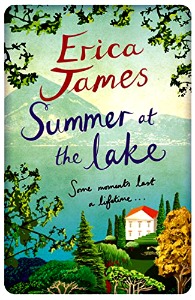
And, in a different way, I have always admired Anne Tyler for the way she conjures up so well these cosy, fraught, detailed middle class American households. She is stunning in her ability to make you see rooms, houses, offices—small, intimate tableaux—in such a rich way.

Locations need not be exotic or epic, just alive and relevant.

* * *

Readers, if this interview has piqued your curiosity about Susan Jane Gilman and her writings, I encourage you to visit her author site. You can also follow her on Twitter.

JJ Marsh grew up in Wales, Africa and the Middle East, where her curiosity for culture took root and triggered an urge to write. After living in Hong Kong, Nigeria, Dubai, Portugal and France, JJ finally settled in Switzerland, where she is currently halfway through her European crime series, set in compelling locations all over the continent and featuring detective inspector Beatrice Stubbs.

STAY TUNED for next week’s fab posts!

If you enjoyed this post, we invite you to register for The Displaced Dispatch, a round up of weekly posts from The Displaced Nation, with seasonal recipes, book giveaways and other extras. Register for The Displaced Dispatch by clicking here!

Related posts: