The Displaced Nation

A home for international creatives

CULTURE SHOCK TOOLBOX: Expats and TCKs, when choosing tools for adjusting to a brand new culture, study the safety instructions

This month transitions enthusiast H.E. Rybol consults with a fellow Adult Third Culture Kid for culture shock, and reverse culture shock, advice.

Hello, Displaced Nationers!

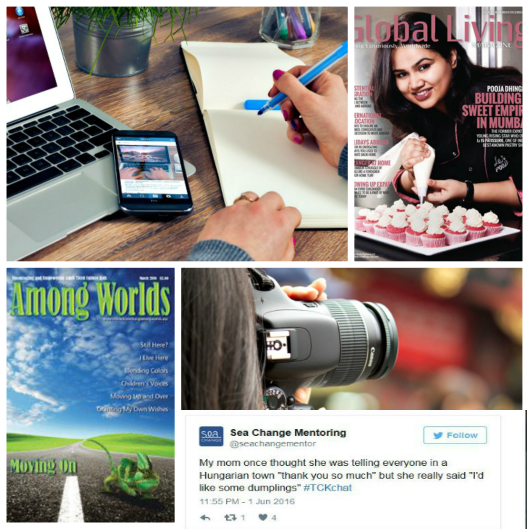
My guest this month is fellow Adult Third Culture Kid Amanda Bate, who co-founded the awesome #TCKchat, a bi-weekly event on Twitter that fosters conversation and provides insights and information for Third Culture Kids, in the spirit of mutual support.

(Some of you may remember Lisa Liang’s recent interview with Dounia Bertuccelli? She is one of Amanda’s co-hosts.)

Amanda was raised both in the United States and in Cameroon, a country in Central Africa. Her interest in navigating multicultural environments started young—and now it has become part of her career. A product of international schools in Africa and of American universities, she currently works in higher education from a base in Richmond, Virginia. She has her own consultancy offering counseling for college admissions to Third Culture Kids. In addition, she directs a college access program, helping disadvantaged students understand their options for college. She is excited about all things related to higher education, travel, and cross-cultural experiences.

Amanda recently founded TheBlackExpat.com, which has been featured on the Wall Street Journal Expat, to address global mobility and black identity. As she told freelance writer Debra Bruno:

We highlight the rich, international experiences of the Black Diaspora with firsthand accounts, personal narratives and key advice about cross cultural living. (…) With the black perspective so limited in visibility, we want provide a stage for the voices of the growing number of black travelers to be heard.

What else is important to know about Amanda? Well, she has an endless love for mangoes, airport terminals and makossa. Hm…what’s that?! Read on to find out…

Also read on to see what she has to say about the tango, manners (or the lack), and methods of bonding over shared interests (without necessarily sharing a language!).

* * *

Hi, Amanda, and a warm welcome to Culture Shock Toolbox. Can you tell us, which countries have you lived in and for how long?

I have lived in the United States and Cameroon. As you mentioned in your kind introduction, I grew up a Third Culture Kid, or TCK—so split my time from age 10 to 20 between both countries. I’ve been in the United States full time since 2000. I’ve also done some traveling in South America and Europe—and am currently navigating a possible move abroad.

In the context of cultural transitions, did you ever end up with your foot in your mouth? Any memorable stories?

It’s probably the Third Culture Kid in me, but I actually worry about making a misstep in a new locale. I spend a lot of time observing before making any comments that could be misinterpreted. I’m careful not to embrace stereotypes about cultural practices or customs. On the occasions where I’m feeling unsure, I’ll consult with a trusted acquaintance privately. I’ve been in enough situations where other people have made borderline rude comments based on limited information—and desperately don’t want to follow in their footsteps, to extend your foot metaphor.

Can you give us an example?

I’m thinking of a time when I was in Buenos Aires watching an Argentinean tango performance. I thought it was absolutely beautiful and enthralling, but the man next to me, another American, didn’t agree. He leaned in to me while stating loudly: “Oh, they’re not doing it well enough. It’s not sexy. It’s not like how they do it in Dancing With the Stars!” Dancing with the Stars? Was he really comparing an indigenous dance form to something he had seen on an American reality show? I bit my tongue and didn’t say anything—but was embarrassed just the same!

tango and dancing with the stars

Yes, that example really argues for reading the instruction manual for the tools in one’s Culture Shock Toolbox. Can you think of a situation you handled with finesse, and why do you think that was?

You are right about studying the instruction manual! I tend to do research about a place before I travel. It helps to get at least basic information about the culture—especially food, music and sports—which can help me connect with folks. Once, while still in Argentina, a really friendly taxi driver, who happened to be from neighboring Uruguay, took me to the airport. His English was about as good as my Spanish. However, we were able to fully communicate over a common interest—football. I mentioned some of the Uruguayan footballers I knew, and his face lit up. I am pretty sure he wasn’t expecting that by his facial expression—but then he started mentioning the Cameroonian players he knew…and the conversation (helped by lots of hand gestures) took off from there.

Shared passion for football

Ah, yes, football, or soccer as the Americans call it! Always a good topic and at this moment rather timely, for those of us who are following Euro 2016… If you had to give advice to new expats, what’s the tool you’d tell them to develop first and why?

Whenever you’re in a new place, you’re struggling to take it in. Your previous experiences inform how you organize your world. You have a set of rules and routines that worked for you in those spaces. A new place has the potential to uproot that—more so if it’s very different from other places you’ve been. My advice would be to embrace your new location as it is, without condition. I think it’s easier. Otherwise, you’ll end up playing a game of comparison—and your new location will have the hardest time competing with your past home, of which you’ll have only the fondest memories. Besides, it keeps you from making new friends and having new experiences—which some day will become your fondest memories.

And since you are also familiar with reverse culture shock, can I ask: What was it like for you? Do any experiences stand out?

Moving back to the United States after years of living in Cameroon was a rough transition, truthfully. My mind had fragmented memories of what life was like in America—most of which proved to be inaccurate. I was missing significant cultural references, the weather was colder than I preferred, and my family was far away, on another continent. Because my move correlated with starting university, I had a hard time adjusting. I was terribly homesick. I was calling my family every day. My phone bill was atrocious!

What tools have helped you to cope with reverse culture shock?

Honestly, what helped me was connecting to my old friends, many of whom were going, or had already been, through the same or similar transitions. They provided much-needed support through it all. Talking about what you’re feeling is a good first step. No one can know what exactly you’re going through, especially if you’re good at hiding your struggles. Finding people who have been there helps—not just to vent but also to figure out some coping mechanisms.

Thank you so much, Amanda, for sharing your experiences with us! Research, consultations with trusted acquaintances, an unconditional embrace of your new place, and efforts to connect with empathetic friends…it’s all such great advice! Connecting with those who’ve been through similar experiences is, if I’m to be honest, one of the tools that has helped me the most. It might not change my situation but it gives me some much-needed context. Simply finding out that someone else has felt the same way makes me feel less isolated.

* * *

So, Displaced Nationers, have you ever plunged into a cultural situation without adequate preparation? Do tell!

To keep in touch with Amanda, I suggest you follow the monthly #TCKchat. #TCKchat is held twice at 15:00 GMT and 3:00 +1 GMT on the 1st and 3rd Wednesday of each month. (Amanada’s own twitter handle is @bateconsult.) And don’t forget to check out her new site, The Black Expat.

Wait, I almost forgot! Anyone still wondering what makossa is? Amanda has suggested the following for your listening enjoyment:


Well, hopefully this has you “fixed” until next month.

Until then. Prost! Santé!

H.E. Rybol is a TCK and the author of Culture Shock: A Practical Guide and Culture Shock Toolbox and the newly published Reverse Culture Shock. She loves animals, piano, yoga and being outdoors. You can find her on Twitter, Linkedin, Goodreads, and, of course, her author site.  

STAY TUNED for next week’s fab post.

If you enjoyed this post, we invite you to register for The Displaced Dispatch, a round up of weekly posts from The Displaced Nation—and much, much more! Register for The Displaced Dispatch by clicking here!

Related posts:

Photo credits: Top visual: (top row) Toolbox and globe via Pixabay; Sobriety Test, by Eli Christman via Flickr (CC BY 2.0); Amanda Bate (supplied); (bottom row) images of Cameroon and instructions via Pixabay; The Black Expat logo. Second visual: Tango, by Gisele Pereira via Flickr (CC BY-SA 2.0); 4.21.08 Dancing With The Stars, by Robbie Wagner via Flickr (CC BY 2.0). Last visual: Luis Suarez celebrates his Gol to put Uruguay 1 – Netherlands 0, by Jimmy Baikovicius via Flickr (CC BY-SA 2.0); Dorge Kouemaha playing for Foolad, by Morteza Jaberian via Wikimedia Commons (CC BY 4.0).

THE PERIPATETIC EXPAT: Going home again due to a devastating personal loss

Displaced creative Sally Rose

We expats may sound like we’re living in a dream or fairy tale, but many of us have lived through nightmares, too. Last time we heard from Sally, her story was running along the lines of her wonderlanded interview for this site. Having spent five years in Santiago, Chile, she was in need of new thrills and was trying to figure out where to go next. But then, one day, just as she felt her plans were coming together, her entire world came crashing down. Sally, I commend you for her honesty in telling this part of your story. Readers, I hope you will join me in offering your condolences for Sally’s heart-breaking loss. —ML Awanohara

I went to church today. Just stopped in, as I’ve often done over the past five years. I’m not Catholic, but I like to sit and look at the statue of the Virgin Mary at the Basilica de la Merced in downtown Santiago.

It’s cool and peaceful inside, painted to resemble pink marble. There’s a center aisle and the pews are lined up on either side, in two sections, before and after the hanging pulpit.

The statue of the Virgin Mary is set into a niche behind the altar. The back of the niche is painted royal blue. She’s wearing a flowing, white cape and a silver crown.

I read somewhere that she protects the innocent by bringing them close and covering them with her cape. I love that idea.

Virgin Mary with Cape

The basilica always smells of floor polish and candle wax. The first three years that I lived in Chile, there was a caretaker who, every time I went in, was there, polishing the wooden floor with a buffing machine.

Nowadays, I still see him from time to time. Today he recognizes me and greets me cordially. I find out his name for the first time: Fabián. He agrees to let me take his photo.

Fabian floor polisher

At noon, on weekdays, the church chimes ring out, just after the cañonazo, the firing of the cannon at Cerro Santa Lucia.

For five years, at straight-up twelve o’clock, I heard “Boom!” And then, the sweet notes of a recognizable song. I don’t know what its title is, but like an old friend, it became familiar to me over time. I will miss it.

Everything is falling into place…

I arrived back in Santiago on April 1. My apartment lease was expiring on June 4, and I had decided not to renew it. Since, for the past couple of years, I’ve been traveling a lot and spending as much time outside of Chile as I have in Chile, it no longer makes sense to maintain a year-round apartment here.

My goal was to turn myself into a global nomad and visit several places every year, spending a few months in each one. Hyper-organized nerd that I am, I immediately went to work, selling off furniture and clearing out my apartment. Within two weeks, every stick of furniture had been sold. I felt like Wile E. Coyote in the old cartoons, left spinning around after the roadrunner whizzed by me.

Everything was falling into place, as if the Universe were whispering, “Yes, yes. This is the right move for you.”

Cleared apartment nostalgia

Nostalgia kicked in. And sadness, a sort of grief. I started missing Santiago, even though I’m still here. I started thinking of all the places I’d meant to visit, all the things that I didn’t get around to doing since I’ve been here. Wishing I had more time. Wishing I weren’t leaving. Wondering if I were doing the right thing, wondering where I’m going next, wondering whether I’ll ever be back.

I found an apart-hotel and got halfway moved in, expecting to be in Santiago until my usual “can’t-stand-the-heat” date of mid-September. Then, I would go back to the US to sort out some business and to spend time with my son and his fiancée, before heading out again to Parts Unknown.

…until the phone call no parent should get

That’s when the phone call came. That most horribly personal phone call that no parent should ever have to receive.

My son had died in the early morning of May 4. He was 34 years old. The coroner took his body away for an autopsy because why does a 34-year old die? He hadn’t been sick. Or had he?

He had been, but he had not told me. Because I was so far away, I wasn’t aware of his physical condition. Not that I could have prevented his death had I been closer. But if I had known, I would have tried.

In tribute to Phillip

In tribute to Phillip

So began another grief. Deep, heavy waves of shock and sadness and guilt that left me with almost no energy to continue doing what I needed to do. To finish moving out, packing up, and getting myself back to the States for an indefinite period of time.

Sooner now than I had expected. Not to see my son. The best I’ll be able to do is memorialize him. His fiancée and I will be getting to know each other without him, and I will be a “repat,” at least for awhile.

My suitcases are already bulging, but I will be taking back a small replica of this Virgin Mary, Virgen de la Merced. I hope that she brings me as much comfort from afar as she has in the church that’s named after her.

Signed~
Perpetually Perplexed, and Now Devastated

* * *

Sally, I honestly can’t imagine the grief you must be feeling. You were planning where to go next, only to land on the dark side of the moon. Thank you for taking us on this part of your journey as well. If it helps to know, we are all here for you. We are privileged to share in your heart-felt tribute to your son, whom I feel certain was as remarkable a human being as his mother. —ML Awanohara

Born and raised in the piney woods of East Texas, Sally Rose has lived in the Cajun Country of Louisiana, the plains of Oklahoma, the “enchanted” land of New Mexico, and the Big Apple, New York City. Then she fell in love with Santiago de Chile and has been “telling tall tales” from that long, skinny country since 2009, and living in that city for the past five years. But where will her next act take her? The author of a memoir and a children’s book, Sally has an author site where she keeps a blog, and is active on Facebook and Twitter.

STAY TUNED for next week’s fab posts!

If you enjoyed this post, we invite you to register for The Displaced Dispatch, a round up of weekly posts from The Displaced Nation, and SO much more. Register for The Displaced Dispatch by clicking here!

Related posts:

LOCATION, LOCUTION: Under pseudonym A.J. MacKenzie, Canadian expat couple set crime fiction series in 18th-century Kent village

Location Locution Mackenzie
Tracey Warr is back, this time with a Canadian couple who are practically British—to the point where they have even started writing quintessentially British crime fiction! **Who would like to win a wonderfully atmospheric murder mystery set in Romney Marsh? Two copies on offer. Details below.**

My guests this month, Marilyn Livingstone and Morgen Witzel, have written more than twenty non-fiction books between them, on subjects ranging from doing business in China and managing for success (Morgen) to medieval warfare and economic history (Marilyn). They are also the joint authors of The Road to Crécy: The English Invasion of France, 1346.

But today we’ll be talking about a work of fiction they have produced. The Body on the Doorstep is their first novel as a couple—and the fulfilment of a long-held dream. Fiction writing is where their heart lies, and this novel is just the beginning of a planned series featuring a pair of unlikely sleuths: the tipsy Reverend Hardcastle and the widow, Amelia Chaytor.

Marilyn grew up in Ontario, in the suburbs of Toronto, while Morgen’s family come from northern British Columbia. They met at the University of Victoria, where both were studying history, and married two years later, taking two years out from university to work and travel in Europe before returning to complete their degrees. They were determined to come back to Britain and settle there if possible. “From almost the first moment of arrival, I felt at home here,” says Marilyn.

They came back to Britain in 1987, living in London and then for 12 years in Kent before moving to Devon in 2000. After nearly thirty years living in Britain, both are a little confused by the question, “What is it like to live abroad?”

For them, England is home; Canada is abroad, even though both still have strong family ties in the latter. Questions of ethnicity and belonging, for them, are complex. While both feel that Devon and England are home, they are also very much aware of being Canadians, immigrants.

That sense of being an immigrant, of being from somewhere else, was helpful when it came to the two lead characters of The Body on the Doorstep. Reverend Hardcastle knows his smuggling parishioners well, but is well aware he is not one of them. Amelia Chaytor is also an outsider, a widow still bitterly grieving, and craving solitude. The immigrant experience, say Marilyn and Morgen, taught them about the self-reliance and self-sufficiency, qualities they have passed on to their characters.

Growing up in northern Canada in the 1960s, Morgen lived an essentially pre-modern lifestyle without electricity, running water or most of the conveniences of modern life. That, he says, makes it easier to empathise with people living their lives by candlelight and drawing water from wells in late 18th-century England. Whereas Marilyn feels a little displaced: how did a medievalist end up writing novels set in the late 18th century? She is still looking for an answer.

* * *

Welcome, Morgen and Marilyn, to Location, Locution. Can I ask which came first, story or location?

We had to stop and think about this one, because we couldn’t remember! But probably it was the location, Romney Marsh, because that is so crucial to the book. Romney Marsh is a very distinctive and particular space, a flat open plain jutting out into the sea and fenced off from the rest of Kent by hills. In the early 19th century the Reverend Barham nicknamed the Marsh “the Fifth Continent” because it was so obviously different from the land around it.

This is a historical novel, set during the time of the French Revolution, and the themes involve smuggling, spying and the threat of imminent invasion. You couldn’t ask for a better location for this story; and to a large extent, the location shaped the story and became part of it.
Body on the Doorstep_cover_400x

What techniques do you use for evoking place in your novel? After all, the action takes place long ago.

For us, the key thing is to engage the senses. We like to do more than just describe the visual image of a place. We try to engage as many of the senses as possible, to make the reader feel as if they are actually there.

Sound is vital: the hiss of wind in trees, the suck and roar of waves on shingle beaches, the bleating of sheep, the sound of bees, the rattle of silver in the dining room. Sounds evoke very powerful images, as do smells: of mud, dung, fine wine, perfume, gunsmoke. One feels the glow of a fire, the hot sun on one’s face that causes sweat to break out, the bitter tang of a north wind bearing snow. And taste too: on a stormy day by the sea you taste salt spray on your lips. You taste the food you eat, from stale ship’s biscuit to quails with Madeira sauce. Combining all the senses can make people feel they are part of the scene, not just onlookers, and that is what we try to do.

Also, we tend not to stop and engage in long descriptions of landscape or scene. Most of our descriptions of the landscape/location are made while characters are on the move. Their interaction with the location is key. Those are okay if the landscape or scene is particularly important, or dramatic, but there is always a risk that you will interrupt the flow. We try to introduce a sense of movement into our descriptions.

Ideally, the scene should be dynamic, not static. Even it is just lambs jumping and playing in a meadow, there is something happening so that readers can focus their attention. Just as with the sensory details, the aim is to make readers feel like they have stepped through the looking glass. They are not just watching, they are there, participating.

Which particular features create a sense of location? Landscape, culture, food?

Everything. We’re historical novelists, and everything about people’s lives can be used to give a sense of place, and most importantly, of place-in-time; that is, a particular place at a defined moment in time. So it is landscape, culture, food, dress, methods of transport, housing, drugs, servants, weapons; all the things that tell readers where and when the action is happening.

We also find weather an important scene-setter because weather affects mood so much; it can impact on the mood of the characters, and if we get it right, even the readers. Again, as historical novelists, weather is even more important because, except for the very well-to-do, there was no escape from it. There was no central heating, no rubber boots, no Gortex. People lived with the weather and in the weather, and experienced and felt it far more than we do now.

That said, it is really important not to go overboard and start sounding like an encyclopedia when describing a location. We have a term we use when we think we are indulging in too much description: “Reykjavik”.

Yes, we’d better explain that, hadn’t we? While travelling in Europe on honeymoon, during a very cold winter many years ago, we both read a thriller that happened to be lying around. In the course of the story, the hero is travelling on a plane from Washington to Moscow. Midway through the journey the plane lands in Reykjavik. There then follows a short essay on Iceland, its geography, history, economy, politics, culture and so on, all very accurate and detailed. We waited to see how the story would unfold in Iceland. Instead, the plane refuelled and took off again, without the hero setting foot on the ground! So, “Reykjavik” is code for “interesting detail which does not actually set the scene or advance the story”.
Reykjavic code

Can you give a brief example from your writing that illustrates place?

We’ll offer two, if we may, each of which illustrates a particular way of how we (try to) do it. In the first, the two heroes, Mrs Chaytor and Reverend Hardcastle, are driving back to St Mary in the Marsh. Mrs Chaytor has the reins.

They trotted briskly through Brenzett, and once past the village she whipped up on the long straight to Old Romney. The gig flew down the road, so fast that the rector had to hold onto his hat.

‘What puzzles you now?’ she called over the noise of iron-shod hooves and iron-rimmed wheels.

‘Two men died that night, half a mile apart and within five minutes of each other.’

‘I see. You wonder if the two events might be related. Either your killer, or your victim, or both, might have had some connection with the smugglers.’

‘What other reason would either have for being out on the Marsh on the night of a new moon?’

‘I see your point,’ said his companion thoughtfully, shaking the reins and urging the horse to further speed. ‘It does not feel like a coincidence, does it?’

‘Over the years, I have learned to distrust the very idea of coincidence,’ said the rector, clutching again at his hat. ‘My dear Mrs Chaytor, there is a dray in the road ahead.’

There was indeed a dray in the road ahead, loaded with timber and drawn by two plodding horses. Mrs Chaytor touched the reins to guide the pony and, without slackening speed, pulled around the dray on the outside, one wheel running onto the grass verge, and then swerved back onto the road. The driver of the dray, startled out of his doze, yelled abuse after her. The rector stared at his companion, wondering where she had learned to drive. Thereafter he concentrated on holding his seat as they shot through Old Romney at a speed that left chickens squawking indignantly in the road behind them, and raced on towards the coast. Only on the outskirts of St Mary did she slacken speed, and she trotted the gig sedately up the high street towards the church.
Hold your seat Old Romney

Here, we’re trying to keep things moving. The emphasis is on both picture and speed; that’s the dynamic aspect we talked about.

In contrast, here is the scene where a group of smugglers are ambushed on the Marsh:

From somewhere up ahead there was a hissing noise, like a snake preparing to strike. Suddenly light exploded across the Marsh, an eerie, shivering, unearthly blue light that showed the scene before them in garish contrast. The light glowed off a column of men making their way silently across the Marsh, masked and hooded men with weapons cradled in their arms. Nearer at hand, other men crouched in the grass or in a ditch, their own weapons levelled.

The imperative here is different. Something very violent is about to happen. The scene is deliberately static; we give you detail of what you can see, so that you have it clear in your heads before everything explodes. We use the blue light of the flare to make the scene shocking and disturbing.

In general, how well do you think you need to know a place before using it as a setting?

Very well, but not too well. You have to know it well enough to appreciate its distinctiveness, for your purposes, the things that make it stand out. That means visiting the place, of course, and not just driving through it. It is really important to get out and walk the ground, get your boots dirty, as anthropologists say. Look at the landscapes and the buildings, and talk to people: they will give you all sorts of details you will find nowhere else.

As historical novelists, we also need to get to know that place-in-time, which means stripping away the veneer of roads and bridges and power stations and housing estates and trying to work out what the places looked like in 1796. Documentary sources are a great help with this, as are maps. For example, Romney Marsh today is crossed by modern, tarmacked roads. In our period, as the geographer Hasted writes, apart from the high road from Appledore to New Romney and on to Dymchurch, most roads on the Marsh were distinguished from their surrounding fields only by the presence of a fence on either side.

But you can get to know a landscape almost too well. Again, there comes the urge to describe it in such intimate detail that you lose sight of the story. When that happens: time to call “Reykjavik!”

Which writers do you admire for the way they use location?

Lindsey Davis does a marvelous job with ancient Rome. Fountain Court, where her detective hero, Falco, lives, comes alive; we can see it, and hear its sounds, and smell its smells (she is particularly good with smells). Dorothy Dunnett made the Scottish borders feel like an old friend long before we ever visited them; years after first reading The Game of Kings, walking in Yarrowdale we expected to see Lymond and his horsemen sweeping over the hills. Dick Francis makes you absolutely feel like you are on the back of a horse. Andrea Camilleri evokes Sicily in the same way that Donna Leon evokes Venice; reading their books, you can close your eyes and you are there. But the master is Tolstoy. Be it a battlefield, a ball or a sleigh ride in a winter forest, he does it with both artistry and craft. He puts you there, in the middle of it all, as a participant. One can only admire.

Fave Books Mackenzie

AJ MacKenzie’s picks for novelists who have mastered the art of writing about place

Thanks so much, Marilyn and Morgen, for your thoughtful answers.

* * *

Readers, any questions for Marilyn and Morgen? Please leave them in the comments below.

And if you would like to discover more about A.J. MacKenzie, you can visit their author site and blog. You can also follow them on Twitter.

BOOK GIVEAWAY***********
I have two free copies of A.J. MacKenzie’s new novel to give away to the first two readers to send the correct answer to the question: How many wheels does an 18th-century gig have? Please email your answers ASAP to traceykwarr@gmail.com
***********************

À bientôt! Till next time when my guest will be a Finnish novelist who lives in England, and writes about the future.

* * *

Thank you so much, Tracey! I love the way AJ MacKenzie bring the past alive in the Kent marshes. And to think, they are both Canucks! —ML Awanohara

Tracey Warr is an English writer living mostly in France. She has published two medieval novels and her forthcoming novel, Conquest: Daughter of the Last King, set in 12th century Wales and England, will be published by Impress Books in the autumn.

STAY TUNED for next week’s fab posts!

If you enjoyed this post, we invite you to register for The Displaced Dispatch, a round up of weekly posts from The Displaced Nation, with weekly updates and much, much more. Register for The Displaced Dispatch by clicking here!

Related posts:

Photo credits: Top of page: The World Book (1920), by Eric Fischer via Flickr (CC BY 2.0); “Writing? Yeah.” by Caleb Roenigk via Flickr (CC BY 2.0). All other photos supplied by the authors or downloaded from Pixabay, with the exception of: Two Gigs in Trouble, a painting by Thomas Rowlandson, located at Yale Center for British Art, via Wikimedia Commons (public domain)..

TCK TALENT: Dounia Bertuccelli, writer, editor, mentor and #TCKchat co-host

Dounia Bertuccelli TCK Talent

Columnist Elizabeth (Lisa) Liang‘s guest this month is a TCK of Lebanese origin, who has lived almost everywhere apart from Lebanon!

Greetings, readers. Today’s interviewee is Dounia Bertuccelli, writer, editor, mentor, and one of the moderators of #TCKchat, a Twitter chat for TCK kids around the globe. I first met Dounia at the Families in Global Transition 2014 conference, where she was a Parfitt Pascoe Writing Residency scholar and I was performing Alien Citizen: an earth odyssey as the final keynote. Since then, Dounia’s writing and my show have had positive trajectories, so I feel like our paths are parallel.

Dounia was born in Nicosia, Cyprus, to Lebanese parents—but has never lived in Lebanon. Her father worked for a US-based company with branches around the world, and Dounia spent her childhood and pre-teen years in the USA (Wisconsin), Mexico, and the Philippines, and her teens in Australia and France.

As an adult, Dounia has studied/lived in the U.K., France and the United States. She earned her undergraduate degree in History/Geography at Institut Catholique de Paris (actually not a religious institute) and her BA in History at the Sorbonne. After taking a year to work, she enrolled in the University of Surrey in the UK to pursue an MA in European Politics, Business and Law. She worked in France again for a while. Her latest move was to Connecticut six years ago with her husband, who also grew up as a TCK, for his job.

It’s a pleasure to interview Dounia for The Displaced Nation.

* * *

Welcome, Dounia. Your peripatetic, multilingual childhood must have included so many adventures and challenges. Were you happiest in a certain place at a certain time, and if so, why? 
That’s a really great and interesting question! It’s also a tough one but here goes… As a teenager, I found the two years I lived in Australia to be the happiest and most carefree. We moved there from the Philippines (where safety was an issue, especially for foreigners), and our newfound freedom was exhilarating. As a teenager, it was the ideal place: it was safe, and we had sunshine, beach and friends. Initially it was a very difficult transition, but once I settled in, I loved it—and it remains a very positive memory. As an adult, I have been happiest living in Paris. It’s where I’ve felt the most sense of belonging. I still don’t feel 100% like I belong there and I can still feel like an outsider—but less so than everywhere else. Paris is beautiful, vibrant and truly taught me independence. I also met the love of my life there, and it is where my family has settled down, so it will always hold a special place in my heart.

Do you identify most with a particular culture or cultures or with people who have similar interests and perhaps similar cross-cultural backgrounds?  
There is no black-and-white answer here. A lot of it comes down to the individual and their family background. I definitely identify with people who have similar cross-cultural/global-living backgrounds because there is an unspoken understanding and connection. But I also identify with those who come from a similar heritage and familial background. Not necessarily the same origin, but who were brought up with similar values and family ties.

“I long for somewhere,/ without knowing where.”

How do you like living in Connecticut?
It’s been a mixed experience. People have been nice and we live in a cute small town…but there is very little diversity and, although we may look and sound like everyone else, we are very different. That has made it difficult to meet people we connect with and to feel as though we belong. It’s also tough to live in a small American town after living in Paris for 10 years and having access to other European cities. And it’s definitely not easy being across the ocean from my parents and siblings.

Did your TCK upbringing inform your choice to become a writer—and has writing helped you to process your TCK upbringing?
I have always written, but I don’t know if that comes from my TCK upbringing or if it’s just my character. I think writing has helped me process my TCK experiences, as it has helped me process most things in my life. I’ve always written to express myself, to put my thoughts and emotions on paper—through journals, prose and poetry. As I was growing up I wrote about everyday life, and also during every move, in airports between homes and everything else in between. I still do that and I think it’s definitely helped me process my experiences as an adult TCK.
Heart vs home

“And yet I long to settle,/ To put down roots.”

As an ATCK, do you now have “itchy feet” or do you prefer to have a home base and only travel for pleasure?
I think it’s a bit of both. I’ve been in the same place for 5.5 years and that’s long. I’m ready for a change and to be somewhere new. But at the same time I’m not sure I want the constant upheaval of frequent moves. I think I would like to settle and have a home base, but only somewhere special to me and where I can also travel easily. Even if I settled down somewhere, I would need to travel frequently to feel the thrill of the unfamiliar, see new places and keep those “itchy feet” content.

Are you working on anything at the moment?
I have my ongoing work as a freelance writer and editor—I am the Expat Resource Manager for Global Living Magazine. In addition, I’m working on a variety of projects: I’m a moderator for #TCKchat (a twitter chat for TCKs around the globe); I write the TCKchat column for Among Worlds; and I work with the Parfitt Pascoe Writing Residency scholars as their mentor and editor (as you mentioned at the outset, it’s a scholarship program for new TCK/expat writers to attend and write about the Families in Global Transition Conference). You can find all my published works on my blog as well as on my LinkedIn page. It’s collection of non-fiction prose, poetry, occasional book reviews and photography.

* * *

Thank you so much, Dounia. Readers, please leave questions or comments for Dounia below. You can also follow her on Twitter, where you’ll be led into the monthly #TCKchats (#TCKchat is held on the 1st Wednesday/Thursday of each month with 2 sessions: 1st session at 15:00 GMT and 2nd session at 3:00 +1 GMT). And be sure to take a look at her creative works on her blog, the aptly named Next Stop.

Editor’s note: The two quotes are from Dounia Bertuccelli’s poem “Longing,” which was first published on her blog in 2014 and also appeared in Among Worlds (December 2015), a magazine for Adult Third Culture Kids (ATCKs).

Elizabeth (Lisa) Liang is a prime example of what she writes about in this column: an Adult Third Culture Kid working in a creative field. A Guatemalan-American of Chinese-Spanish-Irish-French-German-English descent, she is an actor, writer, and producer who created the solo show Alien Citizen: an earth odyssey, which has been touring internationally. And now she is working on another show, which we hope to hear more about soon! To keep up with Lisa’s progress in between her columns, be sure to visit her blog, Suitcasefactory. You can also follow her on Twitter and on Facebook.

STAY TUNED for next week’s fab posts!

If you enjoyed this post, we invite you to register for The Displaced Dispatch, a round up of weekly posts from The Displaced Nation, and so much more! Register for The Displaced Dispatch by clicking here!

Related posts:

Photo credits: Top visual: (top row) Eiffel Tower image via Pixabay; Coat of arms of the former university of Paris, France (Sorbonne), by Katepanomegas via Wikimedia (CC BY-SA 3.0); Connecticut 1980 camper trailer plate, by Jerry “Woody” via Flickr (CC BY-SA 2.0); and Dounia Bertuccelli (supplied); (bottom row) Lebanon via Pixabay; Selimiye Mosque (originally the Cathedral of Sainte Sophie), in Nicosia, Cyprus, by Chris06 via Wikimedia Commons (CC BY-SA 4.0); and The Surrey Scholar in Guildford, by Mike Peel via Wikimedia Commons (CC BY-SA 4.0). Middle visual: House and heart images via Pixabay; Avenue des Champs-Élysées photo via Pixabay; Hartford, Connecticut by Doug Kerr via Flickr (CC BY-SA 2.0). Bottom visual: Writing and photography images via Pixabay.

DIARY OF AN EXPAT WRITER: How to swashbuckle your way into productivity (whether you’re a writer or not)

Diary of an Expat Writer
American expat in Hong Kong and aspiring writer Shannon Young officially met her monthly income target in April, and in May had already achieved that target in 20 days. How did she get so productive?

Dear Displaced Diary,

It’s hard to believe it has already been two months since my last entry. The past five months have been exceptionally productive. As I mentioned in a previous entry, I wanted to get my new fantasy series off the ground by publishing the first two books within two months of each other. At that time, the first book, Duel of Fire, had just come out.

Well, I’m happy to report that Book 2, King of Mist, launched this past week!

First two steel and fire books

For this entry I thought I’d take a step back to tell you about how I stay focused now that I am self-employed and my deadlines are generally self-imposed. (Even if you’re not a writer but are one of those expats with a side-gig or remote career—I suspect many trailing partners fall into this category—my strategies may be useful to you as well.)

The other reason I want to talk about this is that I’ve had a rather unproductive week—at least from a writing standpoint. The weeks when I release a book, it’s way too tempting to spend all my time refreshing my sales graph. So I also want to remind myself what I do to stay productive in hopes that it will get me back in the groove.

So here it is: Shannon’s Productivity Plan or, given that I’m now writing swashbuckling fantasy: How to Swashbuckle Your Way into Productivity.

Keep regular hours.

I go to Starbucks every day at 11:00 a.m. and stay until 6:00 or 7:00 p.m. My mood and feelings on any given morning do not dictate whether or not I show up for work. I’ve tried going in earlier, but I find that I don’t usually get in the zone until 11:00 anyway, so I don’t force it. (Between you and me, not having to get up early is the best part of being a writer!) I catch up on news and social media, read emails, and check sales stats over breakfast before I leave the apartment, so I won’t be distracted by those things when it’s time to get to work.

Don’t take weekdays off.

It’s all too easy to reward yourself with days off when you work for yourself. I honestly think the biggest key to my productivity is that I don’t take days off except on extremely rare occasions. If I finish a book or draft on Wednesday, I start the next one on Thursday. Starting a new project is hard. If you simply roll right into it, you get to keep your momentum, and don’t have time to feel daunted by the challenges a new project presents.

Do take weekends off.

Burnout is real. I want to sustain this career for the long haul, so I don’t work weekends unless I’m on a serious roll or approaching a big deadline. I’ll sometimes go to a café for a few hours on a weekend afternoon—but I treat that as a bonus (as I quite enjoy writing), rather than a necessity.

Use the chunky method.

I block out my to-do lists by week rather than by day. I find it’s a lot more effective to set a word-count goal of, say, 15,000 in a week versus 3,000 per day. That way if you have a rough day, you’ll have a chance to make it up. Feeling like you’ve failed or haven’t lived up to your expectations for yourself can kill your productivity.

This method is especially helpful for edits, which are much harder to divide up by word count. One day you might edit 20,000 words and the next you might only get through 10,000 with the same amount of time and effort. If you plan to finish a draft within a given two-week period, you have some leeway on your day-to-day progress.

This method also makes it easier to figure out when a book will be finished so I can reserve my editor and cover designer at the right time. I also often group related tasks and tackle them all at once. Don’t feel bad if you miss a task on any given day. And if you finish your tasks early in the week, you can get more writing done!

Use breaks strategically

I’m now at the point where I can write for 6–8 hours in a single day, but I do usually hit a wall around the 4- or 5-hour mark. This is when I eat a late lunch and sometimes switch to another task (like email) for a little while before jumping back into the book. I don’t need to tell you how important it is to control your Internet and phone usage. Keep it confined to your lunch breaks! I’ve written before about the importance of sustaining writing focus: it’s a muscle you have to exercise.

What if you get stuck?

I’m definitely in the “writer’s block is a myth” camp. I believe if you show up and keep working, you will eventually break through the wall. No existential angst required! However, sometimes you have days where it’s harder to get in the zone. When this happens I have three tactics that usually work:

1 – Stay in the chair.
Keep your usual working hours, even if you’re not getting much done. Chances are you will find your groove a lot sooner than if you give up and go home.

2 – Work on something else.
You’re writing more than one book, right? Switch to a different one. Work on your outline by hand. Do a different essential task. Make sure you’re still in your chair. Checking something else off your to-do list is a great way to get back the motivation you need to keep writing. This is the strategy I’ve been using this week. I prepared an audition script for the forthcoming Seabound audio book and listened to samples from dozens of narrators. It was really exciting to wake up to a handful of completed auditions this morning!

3 – Read something good.
This is the method for when all else fails. Nothing helps to get the juices flowing in your head like reading a good, fast-paced novel. Make sure you choose a story you can get lost in without your writer or editor brain getting in the way. I have a few trusted authors who I know will give me a satisfying reading experience, including Lindsay Buroker and Sarah J. Maas. This isn’t a time to try a new writer. Stick to your favorites when you’re stuck.

Set big goals.

I’ve written before about what keeps me motivated. I want to build a career that I can sustain indefinitely without having to get piecemeal teaching work. The thought of that keeps the fire alive, even when work becomes a slog. I’ve barely looked up from my computer for the past five months. But I’ve also finished and published three novels in that time, one of which I hadn’t even started before the beginning of 2016.

In April of this year, I officially met the monthly income target I established as a signifier of whether I was going to make it or not. In May I passed that milestone in 20 days. So I guess this is my job!

Thanks for staying with me, diary. Reaching this target has taken longer than I expected at first, but it has been a great journey. I still feel like I’m just getting started!

Readers, I hope some of these tips will be useful in your own writing or self-employment journey. Do you have any other productivity strategies you’d like to share?

Now it’s time to jump back in to Steel and Fire Book 3!

Yours,

Shannon Young
AKA Jordan Rivet
www.shannonyoungwriter.com
www.jordanrivet.com

* * *

Shannon, I am definitely one of those people who needs to swashbuckle my way into  self-discipline, particularly when it comes to writing. I can always think of an excuse to procrastinate! I really value your advice, and am sure other readers will as well. Thank you, as always! ~ML

STAY TUNED for more fab posts!

If you enjoyed this post, we invite you to register for The Displaced Dispatch, a round up of weekly posts from The Displaced Nation and much, much more. Register for The Displaced Dispatch by clicking here!

Related posts:

Photo credit: The swashbuckler was downloaded from Pixabay.

CULTURE SHOCK TOOLBOX: Expats, know when to put a clamp on your native mannerisms, and remember: patience works


This month our transitions enthusiast H.E. Rybol has found a remarkable polyglot (not unlike herself?) and multi-country expat to quiz for culture shock, and reverse culture shock, advice.

Buongiorno, Displaced Nationers!

How have you been? This month, I’m introducing you to the lovely Claudia Landini. She is the founder of Expatclic.com, a treasure trove of resources for expat families, provided in several languages.

A native Italian, Claudia speaks Italian, English, French, German, Spanish and (what she remembers of) Portuguese, and thrives on coming up with creative ways to communicate in languages she hasn’t yet mastered. She has lived all over the world and has had some pretty intense experiences that have taught her many things about culture shock, which she has kindly agreed to share with us today. Along the way, she learned to dance salsa and to cook Balinese fish, among many other skills. She is most proud of her two sons, whom she sees as living proof that “growing up changing countries, languages and homes is absolutely beneficial to the person and to the world at large.”

Like many of us, Claudia is often glued to her computer, which she says she loves almost as much as her sons. She manages four websites, including a blog and a platform for her online courses. When not staring at the screen, she might be found with her nose in a book. Like me, she is a bookworm and prefers reading paperbacks.

And Displaced Nationers should note that she’s keen to encourage creativity. In fact her latest article for Expatclic, written in French, is about a Frenchwoman in Indonesia who has mastered the art of batik. It’s called Créativité sans frontières.

Now let’s talk to Claudia about the difficulty of overcoming one’s own, deeply ingrained cultural habits, the possibility of having one’s native mannerisms misinterpreted, and the importance of developing meaningful personal projects to help ease the trauma of moving from one country to the next.

* * *

Hi, Claudia, and welcome to Culture Shock Toolbox. I understand you’ve lived abroad for over twenty years. Which countries have you lived in and for how long?

The short answer is that I’ve lived in four African countries, two Latin American ones, Israel (Jerusalem), and am presently in Jakarta. The long answer: Indonesia, where I am at the moment, for 1½ years; Jerusalem, 4½ years; Peru, 6 years; Honduras, 4 years; and Africa, 7 years: Congo (Brazzaville) 2½, Guinea-Bissau 2½, Angola 1 year, Sudan 1 year. When I was very young, before meeting my husband, with whom I lived in all the above-mentioned countries, I spent one year in London to improve my English.

In the course of so many cultural transitions, have you ever ended up with your foot in your mouth?

You know, as much as I strive to remember, I can’t seem to come up with anything really interesting, which is surprising given the sheer number of foreign cultures I’ve come in contact with. Like anyone else, I have the typical stories of cross-cultural misunderstandings when greeting people (such as offering hands to men in Sudan and Palestine, to be met with cold stares or looks of pity). In general I’ve had to control my overly expansive Italian manners, which are not always interpreted in the right way by other cultures. I have to control my spontaneous reactions, those gut instincts that come from my own deeply ingrained cultural frame. Sometimes I am too open and warm with people who perceive this as a violation of their privacy. Sometimes I talk too much, when the local norm would require discretion and silence.

Recently, and despite all my cross-cultural experience and my work as an intercultural trainer, I rushed to kiss my Indonesian maid good-bye. She was so shocked I thought she would resign. Indonesians do not appreciate close physical contact and intimacy, especially in a well-defined hierarchical situation.

How did you handle that situation? Would you handle it any differently now? What are the tools that you think are most useful for adapting to this kind of scenario?

Well, I have learned that when you do something that clearly violates local cultural rules, and you realize the extent of the offense you may have committed, it’s sometimes worse to try to take out that toolbox right away and try to mend the situation. In the case of my maid, I simply turned around and went away, knowing she would soon regain her composure (as a matter of fact, when I came back from Italy to Jakarta, she was the one who kissed me!).

Other tools I use to control my spontaneous reactions, those gut instincts that come from my own deeply ingrained cultural frame, include counting to three before I speak, and observing myself from the outside before acting. These techniques help me quite a lot.

In other words, there may be times when we expats and international travelers might need some light-duty clamps to keep us from saying or doing the wrong thing. So can you think of a situation you handled with finesse, and why do you think that was?

I don’t know if we can call this finesse, but all the times I left from the Tel Aviv airport, I lied with embarrassing nonchalance… Israeli authorities are hard on people who admit to living in occupied Eastern Jerusalem and to having Palestinian friends. After a few months, my ideals gave way to the fear of being searched and interrogated in isolation by the airport authorities, so I lied about where I lived and who my friends were. I had gained quite an insight on Israeli culture and understood what was okay to say and what wasn’t. I even had a list of Israeli names I used as my dear friends, and I was so convinced when I recited them, that sometimes I even felt a rush of affection for these people who did not exist…

That’s quite a story! If you had any advice for someone moving abroad for the first time, what tool would you suggest they develop first?

Patience. It takes time to get to know a culture and to feel confident enough to move around in it. It takes moments of loneliness, confusion and isolation. Of course, if you can give it that time, it pays back in the end. Be patient and know that the moment will come when you’ll feel familiar with what is going on around you, and you’ll be able to relax and enjoy it because you no longer have to worry about getting things wrong, or will know how to fix things when you do. Sometimes it’s better to leave well enough alone instead of pulling out our tools and trying to fix things right away.

And since you are also familiar with reverse culture shock, can I ask: Do any experiences stand out for you?

When we had to leave Congo in ’97 because the civil war suddenly broke out, I spent two years in Italy waiting for the next mission abroad. It was awful. Not only had all those years of living in Africa changed me a lot, but I also had the traumatic experience of having to say good-bye to country and friends in a matter of hours, knowing I was leaving them behind in a horrifying situation. People in Milan tried to be sympathetic but simply could not understand the magnitude of what I was going through. I felt very isolated. Besides, after having had such powerful experiences (not only the war, but also all the other amazing things I had gone through in Africa), life back in Italy seemed sort of dull. I did not want to offend anyone, so I kept that to myself. It was a pretty rough time.

What tools have helped you to cope with reverse culture shock?

Three things helped me a lot:

  1. Realizing that if I was going through such a terrible time “back home,” it was because my experience in Africa had really touched my deepest core. That made me proud and gave a lot of value to my life abroad. It reinforced my conviction that living outside my passport country was a strong and valuable experience, and that it was okay to pursue it again.
  2. Being able to identify a few people who showed interest in my stories and with whom I felt I got along well. It was clear I should invest in those relationships.
  3. Hanging onto projects I had started back in Africa that were meaningful to me. Being able to continue gave me a sense of structure, and helped me through some very confused times.


Thank you so much, Claudia, for giving us the bonus of your repatriate advice! I can relate to that sense of isolation you describe when you returned to Italy. And I like the idea of building meaningful personal projects with the tools you’ve picked up in a new country. Those are the kinds of activities that can sustain you during the transition back home, or when moving on to the next culture.

* * *

So, Displaced Nationers, do you ever have to clamp down on some of your “natural” traits for fear you may offend others, and do you know when to leave well enough alone? Do tell!

And if you want to learn more about what Claudia Landini has to say, I recommend you check out:

You can also check out her blog and her online courses, and you can follow her on Twitter and Facebook.

Well, hopefully this has you “fixed” until next month.

Until then. Prost! Santé!

H.E. Rybol is a TCK and the author of Culture Shock: A Practical Guide and Culture Shock Toolbox and the newly published Reverse Culture Shock. She loves animals, piano, yoga and being outdoors. You can find her on Twitter, Linkedin, Goodreads, and, of course, her author site.  

STAY TUNED for next week’s fab post.

If you enjoyed this post, we invite you to register for The Displaced Dispatch, a round up of weekly posts from The Displaced Nation—and much, much more! Register for The Displaced Dispatch by clicking here!

Related posts:

Photo credits: All photos supplied by Claudia Landini or else from Pixabay, with the exception of the two women greeting each other in the second collage, which is from Flickr: TED Fellows – The arrival[], by afromusing (CC BY 2.0).

LOCATION, LOCUTION: Deborah Lawrenson’s latest novel is inspired by the beautiful and dramatic Algarve coast—plus she’s giving away a copy!

Tracey Warr is back with her latest interview guest, the novelist Deborah Lawrenson, who started out life as a diplomatic kid (in America we call them “foreign service brats,” with “brat” being used in a good way). **NOTE: Deborah is giving away a copy of her latest book, 300 Days of Sun. Details below.**

My guest this month is British novelist Deborah Lawrenson—who, as the child of diplomatic service parents, was displaced from an early age, spending her childhood moving from Kuwait to China, Belgium, Luxembourg and Singapore.

After graduating from Cambridge University, Deborah worked as a journalist in London, the highlight of which was working under gossip columnist Nigel Dempster, until she built up her confidence to start writing novels. She has now produced eight, including:

  • The Lantern, a modern gothic tale set in the lush countryside of Provence, in the tradition of Daphne de Maurier’s Rebecca; has been a bestseller on both sides of the Atlantic; featured on Channel 4’s TV Book Club (watch discussion HERE).
  • The Art of Falling, which was chosen for the prestigious WHSmith Fresh Talent promotion (2005)—set mostly in Italy, past and present.
  • The Sea Garden, consisting of three novellas set in southern France.
  • Songs of Blue and Gold, a love story set in a lush, richly imagined Corfu, inspired by the life of British writer Lawrence Durrell (incidentally, ITV recently screened a hit drama series based on the Durrells’ expat life in Corfu).

Deborah’s latest novel, 300 Days of Sun, which came out in April, is an atmospheric tale of spies and lies set in Portugal.

Deborah lives in Kent with her husband and daughter—though the family spends as much time as possible at a crumbling hamlet in the Luberon region of Provence, France.

* * *

Welcome, Deborah, to Location, Locution. Can I ask which came first, story or location?

In the case of my new novel, 300 Days of Sun, it was definitely location (though this isn’t always the case with my books). I went to Faro, in southern Portugal, to accompany my 17-year-old daughter when she enrolled in a two-week Portuguese course in the town. While she got to grips with a new language, I wandered around the old town with my notebook and camera, and let my imagination flow. Once I was inspired by the setting, I began to research the history of the country—and was drawn to the fascinating years of the Second World War when Portugal, as a neutral country, was a cauldron of intrigue, spies, enemies, opportunists and double-dealers. Since then, the beautiful and dramatic Algarve coast has become known as a wonderful, friendly place to spend time in the sun—three hundred days of it a year—but there have been some dark events there too, in particular, a notorious case of child abduction.

What techniques do you use for evoking place in your stories? After all, the action takes place long ago.

I’m quite a visual person, so I will always try to paint a vivid picture of the landscapes and immediate surroundings of my characters. Recently someone very kindly—and perceptively—told me that when I evoke a sense of place, it should more accurately be termed “the senses” of place. That is what I try to do: to write sensuously, to make the narrative conjure up the sounds and feel, and the smells, of the story. It’s the details that help the reader feel immersed in a place or time, and I do carefully research to make the transportation as accurate as possible.

Which particular features create a sense of location? Landscape, culture, food?

It’s all of these. You could argue that they are all interlinked anyway, as the culture of a place develops from its unique landscape. Whether that’s the harsh pragmatism of a people scratching a living from the soil of the Provençal uplands, or the geographical situation of Portugal that made it an historically outward-looking seafaring nation and the last escape hatch of Europe during WWII, the physical attributes of a place will influence the character and achievements of its inhabitants. If there was one unifying factor in the novels I write, it would probably be that. And food is simply another aspect of it: fish by the sea; cheese in the mountains from the goats and sheep that are the most viable form of livestock; endless variety in the melting pots of the great cosmopolitan cities.

Can you give a brief example from your writing that illustrates place?

Here are a couple of paragraphs setting the scene in Faro, from the opening pages of 300 Days of Sun:

“My first few days in the country, I was astonished by how many Russian tourists there were here, chattering in the shops and streets. Then I realised: to the uninitiated, Portuguese sounds like Russian. The language is nothing like the soft singsong of Spanish or Italian. The sounds shush and slip around like the shining, sliding cobblestones under your feet.”

“The temperature was climbing. The air was heavy with orange dust from the Sahara that fell like a sprinkling of paprika powder over the town’s white sills and ledges. I walked down to the ferry, needing to get out over water to catch some fresh wind. As the boat ploughed through green salt marshes, I did breathe more easily.”

"The air [in Faro] was heavy with orange dust from the Sahara..."

“The air [in Faro] was heavy with orange dust from the Sahara…”

In general, how well do you think you need to know a place before using it as a setting?

Obviously, knowing a place well will give a novel real depth, as I hope I achieved in The Lantern and The Sea Garden, both set in the South of France, which is my second home. However, I do think it’s possible to visit somewhere relatively briefly but to look hard and use what you see as the basis of a setting, so long as you do some decent research as well. After all, the characters in a novel might only visit a particular place once, and in that case, first impressions will be very useful.

The Lantern and The Sea Garden are both set in the South of France, Deborah's second home.

The Lantern and The Sea Garden are both set in the South of France, Deborah’s second home.

Which writers do you admire for the way they use location?

For me, Lawrence Durrell is the undisputed master. I also love the way Mary Stewart and Daphne du Maurier combined evocative locations with romantic suspense.

Deborah's picks for novelists who have mastered the art of writing about place

Deborah’s picks for novelists who have mastered the art of writing about place

Thanks so much, Deborah.

* * *

Readers, any questions for Deborah? Please leave them in the comments below.

And if you would like to discover more about Deborah you can visit her author site and blog, where she writes not only about her books but all things inspired by the South of France. You can also follow her on Twitter and Instagram.

BOOK GIVEAWAY*******************************
Deborah is offering a free copy of her new novel as a prize. To enter the competition please “Like” Deborah Lawrenson’s Facebook page. Then find the link on her page to this interview and enter a comment underneath.
***************************************************

À bientôt! Till next time when my guests will be a Canadian husband and wife team who write novels together about a pair of unusual sleuths in an 18th-century Kent village, and who are themselves displaced inhabitants there.

* * *

Thank you so much, Tracey! I note that one of the Channel 4 reviewers raved about Deborah’s first book for its “extraordinary description of place and descriptions of smell”; and readers have asked her if they can get the perfume, Lavande de Nuit, she describes in that work. (As it turns out, it exists only in her imagination!) —ML Awanohara

Tracey Warr is an English writer living mostly in France. She has published two medieval novels and her forthcoming novel, Conquest: Daughter of the Last King, set in 12th century Wales and England, will be published by Impress Books in the autumn.

STAY TUNED for next week’s fab posts!

If you enjoyed this post, we invite you to register for The Displaced Dispatch, a round up of weekly posts from The Displaced Nation, with weekly updates and much, much more. Register for The Displaced Dispatch by clicking here!

Related posts:

Photo credits: Top of page: The World Book (1920), by Eric Fischer via Flickr (CC BY 2.0); “Writing? Yeah.” by Caleb Roenigk via Flickr (CC BY 2.0). All other photos supplied by the author, apart from those of Kuwait and Cambridge, which are from Pixabay.

BOOKLUST, WANDERLUST: In honor of Mother’s Day, three books by and about strong international women

booklust-wanderlust-2015

Attention displaced bookworms! For this month’s column, Beth Green has some eclectic picks for displaced reads—all of which feature women who transcend national boundaries.

Hello again, Displaced Nationers!

Mother’s Day is coming up in the United States on May 8 (the UK celebrated its mums in March). As an American who lives abroad, I am marking the occasion by reading the beautiful, intriguing A Mother’s Secret, by Renita D’Silva, which came out in early April.

renita and a mother's secret

Now living in the UK, D’Silva grew up in a coastal village in South India. Reflecting that background, D’Silva’s debut novel, Monsoon Memories, was about an Indian woman who has been exiled from her family for more than a decade and is living in London (it was a Displaced Nation pick for 2014).

Her latest work, A Mother’s Secret, which came out in early April, tells the story of Jaya, the British-born daughter of immigrants. Jaya struggles with the unexpected death of her mother, Durga, followed by the loss of her baby son in a tragic cot death. Looking through her mother’s belongings, Jaya finds diaries that unlock the secrets of her mother’s unhappy past, before she emigrated to England. Part of the story is told by Durga, through diary excerpts, and part by Kali, a mad old lady who, like Durga, was doing her best to survive and succeed in traditional Indian culture.

I haven’t finished A Mother’s Secret yet—and hadn’t even planned on reviewing it—but I’m still willing to recommend it on the strength of D’Silva’s mesmerizing descriptions of India, along with the finely woven mystery connecting Jaya to her mother and to Kali. In D’Silva’s hands, the the India of several decades ago becomes a place of lush, gothic beauty. Take, for instance, her description of a ruined mansion feared by the villagers and rumored to be haunted:

“Oh there’s a curse all right,” the rickshaw driver huffs. “No boy child survives in that family. Everyone associated with that mansion is cursed with unhappiness, insanity, death. You must be out of your mind to go there, and I have warned you plenty. But it’s none of my business, as long as you pay me three times the fare like you promised.” The rickshaw driver’s hair drips with sweat as his ramshackle vehicle brings them closer and closer to the ruin, which looms over the earth-tinged emerald fields, painting the mud below the dark black of clotted blood.

While on the theme of women’s lives, allow me to segue into another book I finished recently, My Life on the Road, by American feminist activist Gloria Steinem. (It was on the Displaced Nation’s Best of 2015 list, and also a pick by fellow Displaced Nation columnist HE Rybol for a 2016 read.)

Gloria Steinem portrait and book

As one doesn’t automatically associate with Steinem with travel, I was surprised to learn how much time she has actually spent “on the road.” Her childhood, I was fascinated to discover, consisted of a series of road trips across the United States with her nomadic parents, who made a living selling antiques. She credits these childhood travels with shaping her later talents as a journalist and organizer. And although she no longer leads a peripatetic life—she bought property and established a home base—she estimates she spends more nights out of her house than in it.

Steinem writes:

Taking to the road—by which I mean letting the road take you—changed who I thought I was. The road is messy in the way that real life is messy. It leads us out of denial and into reality, out of theory and into practice, out of caution and into action, out of statistics and into stories— in short, out of our heads and into our hearts. It’s right up there with life-threatening emergencies and truly mutual sex as a way of being fully alive in the present.

Notably, one of Steinem’s formative experiences came after her graduation from Smith College, when she won a fellowship to study in India for two years. Living in India broadened her horizons and made her aware of the extent of human suffering in the world. India was also where she learned about the “talking circle”—an intimate form of storytelling “in which anyone may speak in turn, everyone must listen, and consensus is more important than time.”

The book isn’t a chronological history of this 82-year-old iconic figure’s travels in America and abroad, but rather a (sometimes disjointed) collection of thoughts about why she enjoys constant movement, and a series of vignettes about the people—and personalities—she’s met along the way.

One of the biggest personalities is her father—a larger-than-life figure from whom Steinem has inherited a love of the nomadic life:

I can’t imagine my father living any other life. When I see him in my mind’s eye, he is always the traveler, eating in a diner instead of a dining room, taking his clothes out of a suitcase instead of a closet, looking for motel VACANCY signs instead of a home, making puns instead of plans, choosing spontaneity over certainty.

When I first picked up the book, I was a little apprehensive that it would be all about Steinem’s political views. (Given that this is an election year in the United States, I’m getting my quota of political reading from the daily news!)

Naturally, Steinem does write about politics—after 40 years devoted to leading a revolution for women’s equality, how could she not? For example, Steinem was at Dr. Martin Luther King’s “I Have a Dream” speech and she drops the usual names you’d expect from that era.

But the majority of her stories are what the title suggests—tales about ordinary people she has encountered on the road, such as taxi drivers or people she met at roadside diners or in airports while on her way to conferences or political events. An example:

Our older driver is like a rough trade character from a Tennessee Williams play— complete with an undershirt revealing tattoos, and an old Marine Corps photo stuck in the frame of his hack license. Clearly, this is his taxi and his world.

The friendships she forges with people across the country, particularly with Native American activists, enliven the book and underscore Steinem’s interest in getting to know local communities—though I sometimes got the bittersweet feeling that, given her restlessness, she will never be more than observer of these grassroots circles. In one such passage, Steinem details a trip she once took to a Native American site in Ohio with the author Alice Walker and Walker’s assistant, Deborah Matthews:

That night we join Deborah’s mother, her eighty-six-year-old grandmother, and teachers and neighbors at a community potluck supper in the school gym. It’s a welcome for us. With the slow-paced humor and warmth I’ve come to cherish, they talk about the history of small-town Ohio, and are delighted that we are interested. Deborah’s grandmother has lived her entire life near Adena mounds that may be even older than the one we just saw. They reminisce about everything from romantic outings in the Great Circle Earthworks to the connection they feel to people they just call “the ancients.”

In short, I’d recommend My Life on the Road not only to anyone interested in Steinem herself and the 1960s American feminist movement, but also to anyone with a passion for travel. (That said, if you’re fed up with hearing about American politics already this year, you might wait until after November to start reading!)

Before I sign off for this month, a book I’d like to mention to any readers thirsting for some armchair adventure is Displaced Nationer and current expat Jennifer S. Alderson’s Down and Out in Kathmandu, which came out at the end of last year and was in my to-be-read pile for 2016.

Jennifer Alderson and book cover

The first in a planned series of international thrillers, the book introduces us to protagonist Zelda Richardson, a burnt-out Seattle-based computer programmer who is heading to Nepal for a volunteer teaching gig.

Teaching English in Nepal is nothing like Zelda expects—relationships with her host families are fraught, facilities are limited and the students are less than impressed with Zelda herself. While struggling to deal with the strange culture and her unruly classroom, she crosses paths with Ian, an Australian backpacker who is on a teaching sabbatical and simply searching for the best weed he can find.

And then, of course, as often happens when you link up with backpackers, Zelda finds herself entangled with an international gang of smugglers who believe she and Ian have stolen their diamonds. They also cross paths with Tommy, a shady Canadian in Thailand…

Alderson’s next Zelda book, The Lover’s Portrait, is set in Amsterdam and is due out at the end of next month.

* * *

Until next time, happy reading!

As always, please let me or ML know if you have any suggestions for books you’d like to see reviewed here! And I urge you to sign up for the DISPLACED DISPATCH, which has at least one Recommended Read every week.

STAY TUNED for next week’s fab posts!

Beth Green is an American writer living in Prague, Czech Republic. She grew up on a sailboat and, though now a landlubber, continues to lead a peripatetic life, having lived in Asia as well as Europe. Her personal Web site is Beth Green Writes. She has also launched the site Everyday Travel Stories. To keep in touch with her in between columns, try following her on Facebook and Twitter. She’s a social media nut!

If you enjoyed this post, we invite you to subscribe to The Displaced Dispatch, a weekly round up of posts from The Displaced Nation and much, much more. Sign up for The Displaced Dispatch by clicking here!

Related posts:

TCK TALENT: Benjamin Jancewicz, missionary kid, socially responsible graphic designer and pioneering vector artist

Photo credits: (top row) Kawawachikamach Band (flag) of the Naskapi, via Wikimedia Commons (CC BY-SA 3.0); (middle row) Ben Jancewicz self-portrait (supplied); (bottom row) Lights, Camera, Action (Fed Hill), by Bill Mill via Flickr (CC BY-SA 2.0), Zerflin logo.

Columnist Elizabeth (Lisa) Liang‘s guest this month is an adult Missionary Kid (and Third Culture Kid) who expresses his creativity as a visual artist.

Welcome back, readers. Today’s ATCK interviewee is artist, illustrator, and graphic designer Benjamin Jancewicz. Benjamin grew up in Northern Quebec, on the Naskapi Native American Reservation of Kawawachikamach, to an Irish-American mother and Polish-American missionary father who is a linguist and Bible translator to the Naskapi Native Americans.

His Twitter blurb says he was raised “Native, Interracial, MK” (MK being Missionary Kid).

Benjamin’s parents met tobogganing at a Youth Group in their hometown of Norwich, Connecticut, and Ben was born in Connecticut. He now lives in Baltimore with his wife, Tamika, where he runs his own graphic design company, Zerflin (the name belonged to a cartoon alien Benjamin drew as a kid) and creates original vector artwork, which has been exhibited in galleries, cafes and homes around the United States and Canada. His current show, Who Said What, is, in his own words,

a collection that combines my love for engaging people in the creation of my art as well as my desire to reimagine quotes that move people to live better lives. The creation process begins with a call for quotes to be submitted. I then do careful research and select a unique photograph of the quote’s author, typically in their youth, imagining them as my peer. Using the reference image, I draw the piece itself inspired by 1950s and 60s screenprinting, interior design and album covers. Each piece has a unique color palette and font from an up-and-coming typographer.

You can get a taste of the work, and the vector art process, of which Ben is a pioneer, from this short video:

* * *

Welcome, Benjamin. I understand your family traveled quite a bit before settling in the Naskapi Native American Reservation.
Yes, my family moved to Chicago (where my parents went to school), Texas (where they had training), Mexico (where they had field testing), and Sherbrooke, a city in southern Quebec (where they learned French), all before I was four years old. I remember bits and pieces of that time and I’m told I picked up Spanish, but I ended up losing it and learning Naskapi, French, Innu and English instead.

Those are some very peripatetic early years (not to mention impressive multilingualism on your part). Did the traveling continue after you moved to the Reservation?
To raise support for the work, my parents had to travel to the States almost every summer. So there was a lot of visiting churches and road trips through the states, listening to my Father give slideshow presentations about what our family was up to. He continues that to this day in a blog I built for him: http://bill.jancewicz.com. We also moved quite a bit on the Reservation (we call it “the Rez”) as well. We stayed at people’s houses, either with them or when they weren’t there. Eventually when I was older we moved to the nearby town, but living on the Rez was some of the happiest time of my life. Summers filled with bike riding, exploring the woods, swimming in the lake…it was heaven.

“You never find yourself until you face the truth.” —Pearl Baily

What drew you to art and illustration?
I always drew as a kid. As I got older, life on the Rez got harder. Kids got involved in drugs and alcohol. Their parents being absent for the same reasons took a toll. I began losing friends to suicide, overdose. And as TV crept into the Rez, so did an attitude of treating white people differently. I was singled out because I was different. Bullies began attacking me more and more frequently at school—until my parents pulled me out and homeschooled me for a few years. I ultimately went back to the Rez school for most of secondary school, but drawing, computers and piano were often how I dealt with depression and loneliness.

It’s striking, how many ATCKs’ creative pursuits begin as—or become—coping mechanisms during childhood/adolescence. I’m very sorry you were bullied and am glad you found creative outlets to help you handle it. Did your interest in art and illustration evolve naturally into a career in graphic design?
I never really considered art and illustration to be a viable career, and originally went to school for engineering. After two years, I began to learn more about graphic design and after much deliberation, I switched majors. I didn’t find out until later that my father had done graphic design when he was younger as well. Once I switched, I had to do a lot of extra work to catch up, and started my design company, Zerflin, while still in class.

Creation of Zerflin

Photo credits: (top row) Camp amérindien MANTEO MATIKAP, by Guillaume Cattiaux via Flickr (CC BY-SA 2.0); (middle row) screen shots of Ben; (bottom row) Zerflin logo and banner.

That’s impressive!

“Power & control will never outweigh love.” —Jada Koren Pinkett Smith

In college, did you identify most with a particular culture or cultures, or with people who had cross-cultural backgrounds similar to yours?  
While I was in college, in a small town in the States, I was bullied again, this time in the dormitories, and again for being different. But this time it was because I was Canadian, because I grew up on a Rez, and had perspectives that were considered strange by my white dorm mates. I sought refuge in a place on campus called the Rafiki House, a house dedicated to helping TCK and international students adjust to life in the US (rafiki means “friend” in Swahili). I ended up being the first freshman ever to live in the house. I stayed there all four years, getting involved in the protests and fights for its survival when the college tried to shut it down.

I’m sure many current TCKs and international students at the college are grateful for the House’s existence. What made you decide to move to Baltimore?
Baltimore was only an hour-and-a-half drive from college, so I’d often come down with friends to explore, and Tamika and I would come on dates. We fell in love with the city and decided to stay. Tamika originally wanted to teach in the public school system, and I got a job working at a non-profit in DC. Baltimore is much cheaper to live in, so we bought a house here.

“If you have an opportunity to use your voice you should use it.” —Samuel Leroy Jackson

As an ATCK, do you now have “itchy feet,” or do you prefer to have a home base and only travel for pleasure?
I have a very strong wanderlust, but the Recession pretty much killed any opportunities to travel. I try to travel as much as I can with my business, and now have art shows in L.A. that I frequently travel for. We organized with a group of friends and traveled to South Africa for the first time this past winter, which was amazing. It was the first time off the continent for me. Baltimore is really feeling more and more like home, though. Getting involved in the local social justice movements has given me life, and I’m glad to have a base here.

Per your design agency’s website, Zerflin’s staff “champion underdog clients and believe running a company without being evil is paramount.” This is admirable! Did your TCK background influence this mission/vision/value, or did something else, or were there a combination of influences?
Growing up on a Rez, there’s a certain amount of “wokeness” that just comes with living and experiencing how white people in town would treat my friends differently. And as someone who looks white, it was crazy hearing some of the conversations other white people would have about African Americans and Africans, Natives, Latinos, and Asians. As I got more and more involved in social justice on campus and began reading more and more books from black nationalist, feminist, womanist, and social justice authors, I knew I wanted to be involved in that work in some capacity. I also recognized that most companies (especially in design) are more large-client focused. As a social justice action, I wanted to do something different.

Congratulations on your show, which I understand will be at Impact Hub Baltimore for most of May into early June. Are you working on any more big art projects at the moment?
Continuously. I’ve been doing a lot more with art over the past couple years, which is strange for me. I knew some artists in college, and the way they acted really turned me off to art. I already felt looked down upon just being there as a TCK, but artists really seemed to take it to the next level. Tamika greatly encouraged me to pursue art, and as it took off, I’ve been getting more into illustration as a profession. You can see more of my work here.

Ben Jancewicz’s artwork. (Clockwise from top): Trumpeter plays the blues (hand-drawn, digitally rendered); West African Girl, available for purchase at Zerflin (Etsy shop); screenshot of Oprah work at Who Said What exhibition; Fayette Regina Pinkney, commissioned portrait.

* * *

Thank you so much, Ben. Congratulations on your successful business and ongoing artwork! Readers, please leave questions or comments for Benjamin below. Besides checking out his art site, you can also follow him on Facebook and Twitter. You can commission his artwork here and buy select pieces (on paper or canvas), including from the current show, here.

Editor’s note: All quotes are taken from the artwork in Benjamin Jancewicz’s current show, Who Said What.

Elizabeth (Lisa) Liang is a prime example of what she writes about in this column: an Adult Third Culture Kid working in a creative field. A Guatemalan-American of Chinese-Spanish-Irish-French-German-English descent, she is an actor, writer, and producer who created the solo show Alien Citizen: an earth odyssey, which has been touring internationally. And now she is working on another show, which we hope to hear more about soon! To keep up with Lisa’s progress in between her columns, be sure to visit her blog, Suitcasefactory. You can also follow her on Twitter and on Facebook.

STAY TUNED for next week’s fab posts!

If you enjoyed this post, we invite you to register for The Displaced Dispatch, a round up of weekly posts from The Displaced Nation, and so much more! Register for The Displaced Dispatch by clicking here!

Related posts:

CULTURE SHOCK TOOLBOX: Expats, don’t wear ear protectors when neighbors offer advice, and confidence works like a charm!

Clockwise from top left: Rashmi Dalai author photo (supplied); one of her kids’ Bali t-shirts (for sale online); toolbox (Pixabay); and cover of Dail’s cookbook.

Transitions enthusiast H.E. Rybol talks to a star writer for Wall Street Journal Expat for this month’s column.

Hello, Displaced Nationers!

Today, I’m introducing you to Rashmi Jolly Dalai, a writer and communications strategist who divides her time between New York City and Singapore. Rashmi writes about cultural diversity, identity, Third Culture Kids and more on her blog and for Wall Street Journal Expat. One of her most popular articles for the latter concerns the addictive nature of expat life (yes!).

Rashmi grew up in rural Pennsylvania, the child of Indian immigrants. She claims she hasn’t retained much of her Indian heritage, calling herself in a recent blog post

“an ABCD, American Born Confused Desi, someone who should hang on to her culture but didn’t.”

Her own two children, both under age nine, have parents from America and India, grew up in China, and now live in Singapore. While raising her son and daughter, Rashmi has published a rhyming bilingual (Chinese-English) picture book called Mika the Picky Eater, followed by a bilingual collection of recipes for kids of all ages called The Picky Eater’s Cookbook and another bilingual children’s book, Sasha the Stubborn Sleeper.

And now she has helped her children launch a creative project called Smiling Designs for Kids. “The kids designed their own t-shirts in Bali and have started selling them online,” she explains. “It’s the modern-day third culture kid version of a global lemonade stand, complete with a social mission. They donate 25 percent of the proceeds to Pencils of Promise, a charity that builds schools around the world.”

Rashmi also serves on the board of Kundiman, an organization “dedicated to the creation and cultivation of Asian American literature.”

She kindly took the time out of her intense schedule to share some of her culture shock stories with us. Join us as we talk about not listening to your neighbor, good luck charms and more…

* * *

Hi, Rashmi, and welcome to Culture Shock Toolbox. Tell us, which countries have you lived in and for how long?

Outside the United States (my home, as you explained), I’ve lived in London (two years), Shanghai (seven years), Indonesia (six months) and Singapore (since August of last year). We moved to London for my work, to Shanghai for my husband’s work, to Singapore for both of our works. Our son suffered from a lot of pollutant-related respiratory issues in Shanghai, so that explains our stay in Indonesia for six months. We took him to Bali to get healthy. Plus, I wanted to live there.

In the course of your many cultural transitions, have you ever ended up with your foot in your mouth?

Sure, I’ve had many awkward cross-cultural moments. Like most Americans, I’ve made the mistake of calling trousers “pants” in London—“pants” means underwear in British English. When learning Mandarin during our stay in China, I frequently confused the word “four” for the word “dead”. People rolled their eyes, laughed a bit and corrected me. I find that people are very forgiving of strange foreigner behavior, especially when it’s not badly intentioned. I also once spent a month eating tofu and spinach to lose weight—blithely ignoring my Chinese neighbor’s warnings that the combination can cause kidney stones. It did.

How did you handle that situation? Would you handle it any differently now? What are the tools that you think are most useful for adapting to this kind of scenario?

If given a second chance, I definitely would’ve listened to my neighbor’s advice about the kidney stones.

Photo credit: Spinach-Tofu, by Kenneth Lu via Flickr (CC BY 2.0).

Right! Did you hear that? Don’t wear ear protectors if it means tuning out advice from local residents. Rashmi, can you think of a situation you handled with finesse, and why do you think that was?

While in Bali, I learned how to drive stick shift. This was no small feat as the roads are dangerously busy and narrow, but I was determined to experience the island on my own terms. I think my positive attitude acted like a good-luck charm. I managed to drive a local van for six months without knocking over a person or damaging the car—total wins under the circumstances.

I like that story! If you had any advice for someone moving abroad for the first time, what tool would you suggest they develop first?

Don’t take yourself too seriously. Ask questions before you judge. Learn, learn, learn. And make sure you consult with locals about which tools to use for coping with unfamiliar foods and living conditions.

Photo credits: (top row) Scooter, by Frank Douwes via Flickr (CC BY 2.0); Shiva shell charm via Pixabay (it transforms and mutes negative energy); (bottom row) An all too common sight in Asia, by Rollan Budi via Flickr (CC BY-SA 2.0); Good old stick shift, by Matt via Flickr (CC BY 2.0).

Thank you so much, Rashmi, for taking the time to share your culture shock stories with us! We travelers can always use a reminder about the need to take our cues from local residents, or else we may need to invest in a new tool—a pop-out punch to get rid of those kidney stones?! And adding some good luck charms, such as positivity and humo(u)r, to our toolboxes is particularly welcome advice for the Displaced Nation. We’re a site that prides itself on not taking cross-cultural tensions too seriously and finding a path to a more relaxed expat life.

* * *

Have I got that right, Displaced Nationers? How long did it take you to realize the importance of seeking out, and heeding, local advice? And how about humor: has it played an important role in helping you manage intercultural situations? I’d love to hear your stories! Share them in the comments below…

If you want to learn more about what Rashmi Jolly Dalai has to say, I recommend you visit her author site and keep an eye out for her Wall Street Journal Expat posts for further inspiration. You can also like her Facebook page and follow her on Twitter.

Well, hopefully this has you “fixed” until next month.

Until then. Prost! Santé!

H.E. Rybol is a TCK and the author of Culture Shock: A Practical Guide and Culture Shock Toolbox and the newly published Reverse Culture Shock. She loves animals, piano, yoga and being outdoors. You can find her on Twitter, Linkedin, Goodreads, and, of course, her author site.  

STAY TUNED for more fab posts.

If you enjoyed this post, we invite you to register for The Displaced Dispatch, a round up of weekly posts from The Displaced Nation—and much, much more! Register for The Displaced Dispatch by clicking here!

Related posts: