The Displaced Nation

A home for international creatives

Tag Archives: South Africa

Top 5 photos from “A Picture Says” in 2014

Top 5 Pix 2014For the final post in this year’s “A picture says…”, host James King highlights some of the photos that spoke to him most eloquently, from this year’s series. (If you like what you see, be sure to check out his blog, Jamoroki.)

My heartiest holiday greetings to one and all. I hope you enjoying the festive season, and I wish you a wonderful New Year.

As ML says, we’re doing an End-of-Year Special instead of the regular monthly interview. But before I get started with my picks, I really want to thank the 10 wonderful people who have contributed so much to my column over the past year by subjecting themselves to my tortuous interviews. Without exception, every single one of you has had a fascinating story to tell which has been beautifully illustrated with the personal photographs you were kind enough to share with the Displaced Nation readership.

After it was suggested to me that I should select my five favorite photos out of the 70 posted, I dived in head first, only to realize I could upset some of the 10 new friends I have made in 2014.

So I want to say before we start that this is not a competition. I would like to pick all 70 photos but of course that’s not possible so here are my 5 (in random order) along with my reasons for choosing them. There were a few close shaves by the way.

1) “Pumpkin Field,” by Aisha Ashraf

Irish expat, blogger, traveller and photographer Aisha Ashraf is currently based in Canada with her husband and three children. A freelance features writer, Aisha has published articles in newspapers, magazines and a range of expat and mental health websites. She says she has been a cultural chameleon since she first emigrated from Ireland to England at the age of eight. She is also a friend to the Displaced Nation and a recipient of one of its “Alice Awards” for a post on her Expatlog blog, provocatively entitled “My mother was a nun.”

I have chosen this photo of Aisha’s daughter in a field full of pumpkins because it is so vital, and the naturalness of the colours brings her lovely composition to life. Not only this but the viewer can only guess how or why a picture was created and Aisha’s words offer a whole new dimension.
No 1 Pick 2014 Ashraf

Aisha says:

“I love nature—perhaps it was growing up on a farm and spending most of my time outdoors. I have a condition called Borderline Personality Disorder (BPD) and getting outside is a big factor in alleviating its debilitating hold. I see incredible, uncomplicated beauty in the natural world that I find soothing and strengthening. I try to capture it with my camera in a way that may allow others to be moved and nourished by it, too.”

2) “Church on Skyrne Hill,” by Ed Mooney

The story of Irishman Ed Mooney is quite different from others guests for several reasons, the main one being that he is not an expat. On the contrary, he travels within the confines of his native Ireland.

That said, Ed does cross boundaries, at least in a temporal sense. He loves nothing more than to immerse himself in an obscure historical site, exploring Irish history, lore and mythology while also photographing the surrounding ruins, to keep a record of what remains from generations past.

I really like the name Ed has given to his hobby: “ruin-hunting”. Ed tells me that ruin-hunting merges Past, Present & Future. By researching the history behind a place, he pays tribute to the Past. By writing about the experience, he brings it into the Present. And by posting his article, along with his photos, on his blog, he preserves his findings for the future. I love the way Ed weaves historic research into (mostly) black-and-white images.

I have chosen Ed’s photo of the church that sits on Skryne Hill, the site of an early Christian settlement. Ed says his memory of Skryne remains vivid. The tower is inaccessible due to a very heavy iron gate that appears to be rusted shut. As with all Ed’s pictures there seems to be a ghostly atmosphere, which is not surprising considering his subjects. Ed’s story of his experience is spooky to say the least and drew me into the picture more closely than usual.
No 2 Pick Mooney

Ed describes his visit to the church as follows:

“I shone my torch through the bars on one of the windows. Inside were a number of interesting stone artefacts that I wanted to capture. So I set up my flashgun and shot through the bars. On the second or third flash something physically grabbed my camera strap and pulled it into the tower. It all happened so fast, but somehow I managed to pull that camera away from the window while shouting a few expletives. At first I wondered if it might have been a draught of some kind that had caught my strap, but it could not have been as I was pressed right up against the opening and there was no wind to cause a draught. Then I thought that maybe someone was inside, but there was no way for a person to get in or out of the tower. To this day I still can’t explain what happened. But it certainly left a lasting memory.”

3) Monteseel by Andy Harvard

South African photographer, traveller and chef Andrew (Andy) Harvard is by nature a creative person. His creative talents, ideas and passion spill over into his passion for photography, which he indulges on travels in South Africa and worldwide. His blog celebrates all three of his passions under the descriptive title “snap fly cook”.

An early bird, Andy often wakes-up at 03h00 in summer to be on the beach in Durban, where he lives, in time for first light and sunrise an hour or so later. He is also fond of seeking out “hard to access” locations and revels in the hours spent working and reworking his photos through his favourite software packages.

Andy says “I find this process very calming and am sometimes like a kid in awe when something magical happens. It is a meditation of sorts for me, an ‘addiction’ that has to be fed. Oh! The wonders of HDR processing.”
Pick No 3 2014 Harvard Collage
I have chosen Andy’s beautiful picture of Monteseel because, having lived in Durban for a while way back in 1990, I know how awe inspiring the landscape is. Andy has perfectly captures the essence of the Kwa Zulu Natal in this photo. I can feel the heat as the day dawns and, as Andy says:

“Huge mountains, deep valleys, tranquillity, big skies, rural living, clean fresh breezes, golden light—Monteseel, in the Valley of One Thousand Hills, makes one realize how small and insignificant certain problems we all have actually are.”

4) “Boy in the Door,” by Cornish Kylie

Kylie Millar was born and bred in Cornwall, England, and, though she now finds herself in Thailand, just like me, she remains proud of her Cornish heritage, having branded herself on her travel blog as Cornish Kylie.

Not only that but Kylie informs me that the Cornish were granted official minority status earlier this year. Being born and bred in Cornwall now means, technically, that a person is identified as Cornish first, British second—with the latter identity being confined largely to one’s passport. Well, it is true that Cornwall was its own Celtic nation before the Norman Conquest, and they have their own language, Kernewek, which is distinct from Welsh.

I had little hesitation in choosing Kylie’s “Boy in the Door” as one of my five. Adjectives like dirty, dusty, colourful, old and intriguing come to mind when I look at her picture. And each time I look at it, I expect the boy to be gone.
Pick No 4 2014 Kylie
Kylie describes it thus:

“When I was in the Atlas Mountains of Morocco, I couldn’t resist taking pictures of the many beautifully decorated doorways. This picture was accidental as the boy emerged from the doorway just as I pressed the shutter release. Then I realised how people can add an extra dimension and started to include people in more of my photographs. This trip to Morocco was special: it opened my eyes to a very different part of the world.”

5) “Hampi,” by Maverick Bird

Born and raised in India, Svetlana Baghawan, who calls herself Maverick Bird, is a mother and writer as well a traveller. She describes herself as a compulsive shopper, foodie, bad cook (her words) and animal lover. She likes to travel solo across continents, sometimes completely alone, often with her five-year-old daughter in tow. Having worked as a flight attendant for quite a few years, she was bitten by the travel bug early, and for good.

I have chosen Svetlana’s picture of Hampi, a village in Karnataka State in South West India. It is famed for being located within the ruins of Vijayanagara, an empire that came to prominence at the end of the 13th century. Svetlana has clearly been touched by the places she has visited on her travels and in this picture she conveys feelings of solitude in the wilderness and tranquility. I find it very moving.
Pick No 5 2014 Maverick
Svetlana says:

“Although it was tough to decide between Hampi and Kashmir, I love Hampi more for its surreal mix of a tangible ghostly civilization lying scattered amidst one of the most beautiful landscapes in India (think balancing boulder, rice fields, forests and obscure rivers) and little pockets of villages. The enchanting blend of the dead and living is breath-taking and this photo represents Hampi’s larger-than-life beauty. You have to see it to believe it.”

I believe you. Svetlana.

* * *

Readers, do you agree with my picks or do you have other favorites? Please leave any questions or feedback in the comments!

(If you are a travel-photographer and would like to be interviewed by James for the 2015 series, please send your information to ml@thedisplacednation.com.)

STAY TUNED for our next fab post!

If you enjoyed this post, we invite you to register for The Displaced Dispatch, a round up of weekly posts from The Displaced Nation, with Alice nominees, exclusive book giveaways and other extras. Register for The Displaced Dispatch by clicking here!

Related posts:

In this novel of displacement, water shapes the land, the country and people’s lives, almost beyond recognition

Ruth Hartley Collage

The Shaping of Water cover art; Ruth Hartley author portrait; Ruth Hartley’s painting of her father’s farm.

My guest today, Ruth Hartley, is a writer and an artist—but from the point of view of the Displaced Nation, she is something else as well: an expert on displacement.

Ruth has lived a life of displacement. She grew up in Africa, a continent that continues to have the world’s largest number of forcibly displaced peoples. She grew up on her father’s farm in Zimbabwe, which at that point was known as Rhodesia, at a time when struggles for independence in European-ruled African territories were spreading like a wave. As a young woman, she moved to South Africa to study art and then had to escape to England because of her political activities.

Ruth took refuge in London, where she married and started raising a family—but still felt the pull of her native Africa and chose to become an “expatriate economic migrant” in Zambia (formerly Northern Rhodesia). She lived with her husband and children in Zambia for 22 years, returning to the UK in 1994 to practice and teach art. Five years ago she set out on a long tour of Europe and Turkey. She now lives in Southern France.

Manzi ni moyo (water is life) —Chinyanja saying

Ruth recently published her first novel, The Shaping of Water, which, perhaps not surprisingly, reads like an ode, a kind of paean, to displacement. The action follows the progress of a decision by Rhodesia’s rulers to build a dam across the mighty Zambezi. They called it the Kariba Dam because the dam wall spans the narrowest and steepest of the gorges along the river, known locally as kariwa (a trap). Completed in 1959, the Kariba Dam created a vast man-made lake, Lake Kariba, in the Zambezi Valley. The lake displaced the river people, the Tonga, and forever changed the ecology of the region.

The book’s protagonists are a colonial couple, Margaret and Charles. They decide to build a lake-front cottage in Siavonga, a settlement that springs up to accommodate the displaced Tonga.

Ironically, although the ramshackle cottage sits in a spot that would never have existed had it not been for the building of the dam, which shaped the river in a new way, it is the one constant, a kind of retreat from the forces that displace practically everyone during the African liberation wars that ensue. Margaret and Charles use it as a place of sanctuary, and eventually two other couples come to do so as well: South African freedom fighters Marielise (Margaret’s niece) and Jo, and NGO worker Nick and his UK-raised African wife, Manda.

The cottage also provides a livelihood for Milimo, the son of a Tonga woman whose home was drowned by the lake. Margaret hires Milimo as gardener and caretaker for the property at the suggestion of Father Patrick, a missionary who worked in the Zambezi Valley before its shaping by water.

As a kind of review of the many layers of displacement in this novel, I offer this quote from the book, which I think also demonstrates Ruth’s lyrical style of storytelling:

Here near Kariba, ‘the trap’, in the middle of a wilderness, is a place called Siavonga, which is a name without meaning. It is a place that will be a town but a place that is not yet built. It is a place that is presently isolated by poor and inadequate roads and it is difficult to reach. It is in a country that is becoming another country, with another name. It is here that there is a plot where a contractor builds a cottage above a lake not yet filled with water. All this takes place in the newly created Central African Federation of the Rhodesias and Nyasaland that will be no more in a few short years. Two of these countries will change into independent states with different names when that happens.

It is an exercise in madness and dreams, in magic and megalomania, and the Tonga people know it to be impossible.

And now I think it’s time to get to know Ruth a little better, and hear some more about her book as well as the other creative projects she is working on.

* * *

Hi, Ruth, and welcome to the Displaced Nation. I expect you will feel entirely at home here. I wonder, did you consciously set out to write a book exploring displacement?
Displacement is a good way of describing what happens in the story. Displacement can lead to new opportunities but it is also damaging. I deliberately structured the book so that it explored three main themes:

  • Damage to the environment.
  • Damage done for political reasons.
  • Damage that is personal, emotional and private. It includes damage done by racism and sexism and deals with both in subtle ways.

Though each of these themes gets its own part in the book, they are also interwoven. I passionately wanted to bring the issues of contemporary Africa to life in a truthful, but also empathetic and positive, way.

I know you lived through many of the events that are depicted in this novel. To what extent is your work autobiographical fiction and to what extent historical fiction?
My novel is about entirely fictional characters living through actual and verifiable political and social events. I grew up in an intense political climate in Africa with a strong personal commitment to human rights. I did live through those events and have always made notes and collected newspaper articles and books throughout my life. But because I respect and love the individuals I knew in Africa I was careful to invent the people in my story. None of them is me either though like Margaret, I, too, am a gardener. The cottage, however, is real and the cottage guest book provided me with records of the weather and the lake levels.

“…all that I have left of my life, work, and friendships is stored on my computer” —Marielise

For me, the cottage assumed the role of the central character. You said it was real. Was it a place where you actually stayed?
If a cottage can be a character, then the one real and existing “character” in the novel apart from historical political figures is the “Cottage”. The book was in part, written as an elegy for a place I loved. Built before Zambian independence, the cottage belonged to a group of friends who were no longer resident in Zambia and my husband and I became its caretakers and at times its only guests. Here are some photos of how it looked:

TSOW cottage 001 (2)

The cottage in Zambia on Lake Kariba that Ruth Hartley and her family often visited. Photo credit: Ruth Hartley.

view from the cottage to the lake 001

The view from the cottage to Lake Kariba; photo credit: Ruth Hartley.

The steps leading down to Lake Kariba from the cottage; photo credit: Ruth Hartley.

The steps leading down to Lake Kariba from the cottage; photo credit: Ruth Hartley.

In 1975 I gave the owners a Visitor’s Book to record happy weekends spent there with friends. The book became my sole responsibility and I kept it as a log of the cottage and the lake from 1975 until 1994. It was finally returned to me after 2000 when the cottage was sold.

TSOW guestbook DN 001 (2)

The original Guest Book from the cottage, which Ruth inherited and used to inspire her novel. Photo credit: Ruth Hartley.

Looking at these materials makes me wonder: did you ever consider writing a memoir instead?
I wrote a fictionalized memoir called The Love and Wisdom Crimes in 1999 in which I was careful to protect people’s identities. It is about how I became politicized and fell in love when I lived in South Africa in 1965. Though I was told it is good and poetic, I had countless rejections because the African setting was not considered to be easily marketable. I have just completed a no-holds-barred memoir of the year that followed when I survived as a single mother in London. It is titled A Bad Girl in Search of Love.

Goodness, you are prolific! Can you describe your path to publishing The Shaping of Water?
At 70, I didn’t want to waste time or energy on rejections so I went for self-publication and self-promotion. I believe the market is moving this way in any case. I used Troubador Publishing because they offer a comprehensive printing and marketing package at a reasonable cost and with integrity. I don’t expect to recoup my investment but I will self-publish again. Hopefully it will be cheaper because of what I have learnt.

What kind of audience did you intend for the book?
I think that my audience is anyone who reads for pleasure and who also likes to make journeys of discovery into new worlds and ideas with believable and interesting characters.

“It’s not sensible—this—this racism!” —Margaret

I enjoyed reading the book because it gave me a feeling for contemporary African history, while also making me realize how little I actually know about Africa. I think I identified most strongly with Margaret and Charles. I felt bad that they saw a future Africa that would have a place for them, only to have that vision eradicated as the violence of the liberation wars escalated. It seemed to me that even if you wanted to do the right thing for Africa, after a while it was hard to know what the right thing was.
I have been thrilled to find readers who do not know Africa or its politics but who still have enjoyed the book and its characters. I didn’t intend this book as a lesson in African history, but I expect it would be good background material.

So what are you working on next and will you continue exploring some of these same themes?
I am working on two more novels. I am more than half way through writing The Tin Heart Gold Mine, a book that is set half in a fictional African country and half in London. The setting and the plot are quite different to The Shaping of Water, but the themes should be of universal interest. It is the story of Lara who begins in Africa as a wildlife artist and the lover of Oscar, an entrepreneur who owns a defunct gold mine and is also a political manipulator. Her journey takes her to London and a life with Tim (a journalist) and Adam, a child of doubtful paternity. She makes, owns and uses art that is troubling and troublesome.

I enjoyed looking at some of your art on your author site. I look forward to reading your book about an African wildlife artist. What’s your other novel about?
I have plans for another novel titled Hannah’s Housekeeping. Hannah is a mature woman who has seen the world and had many lovers. She runs a B&B but though Hannah cleans up the dirt in her house, her husband is missing and she doesn’t know if she can keep death from her door…

Sounds tantalizing! Finally, are there any pieces of advice you could impart to other international creatives?
I am an artist and writer who was effectively prevented from writing and painting for a good part of my adult life though I did teach and work in support of artists for many years. I learnt that it is important and essential to make art and to write, though very few artists and writers make a living from their art or get much recognition for it. Creative people, however reclusive, need an audience and to communicate.

How about lessons for other wannabe novelists?
It is important to write well and that takes practice and humility and many, many redrafts. I am always anxious about what my readers think even when I know I have written a good book. My readers matter to me so I have to keep on improving my craft as a writer.

Thank you, Ruth, for being with us today and for sharing some more of the story behind The Shaping of Water. On your Web site you describe yourself as a compulsive storyteller. I think we got a feeling for this today as well.

* * *

So, readers, any COMMENTS or QUESTIONS for Ruth? To learn more the Kariba Dam and the experiences that inspired the story Ruth tells in her novel, please watch this short video interview with Ruth and also be sure to visit her author’s site.

And if you think you’d like to read Ruth’s novel (we highly recommend it as a Christmas read!), Ruth has kindly arranged for Displaced Nation readers to get a 50 percent discount when ordering a paperback copy at the Troubadour site (enter the code: HARTLEY).

You can also buy the book in a Kindle format, not only from Troubadour but also from Amazon UK and Amazon US.

STAY TUNED for next week’s fab posts!

If you enjoyed this post, we invite you to register for The Displaced Dispatch, a round up of weekly posts from The Displaced Nation, with seasonal recipes, book giveaways and other extras. Register for The Displaced Dispatch by clicking here!

Related posts:

For this global travel buff who meditates with camera in hand and HDR on screen, a picture says…

Andy Harvard A Picture Says Collage

Canon zoom lens; photo credit: Morguefiles. Andy Harvard enjoying an ice-cold Hansa in a hotel bar off the coast of Durban (photo source: Andy Harvard).

Welcome to our monthly series “A picture says…”, created to celebrate expats and other global residents for whom photography is a creative outlet. The series host is English expat, blogger, writer, world traveler and photography enthusiast James King, who thinks of a camera as a mirror with memory. If you like what you see here, be sure to check out his blog, Jamoroki.

My guest this month is the 45-year-old South African photographer, traveller and chef Andrew (Andy) Harvard. Most chefs enjoy eating and are by nature creative people. Andy is no exception and his creative talents, ideas and passion spill over into his passion for photography, which he indulges on travels in South Africa and worldwide. He has a blog that celebrates all three passions under the descriptive title “snap fly cook”.

An early bird, Andy often wakes-up at 03h00 in summers to be on the beach in Durban, where he lives, in time for first light and sunrise an hour or so later. He is also fond of seeking out “hard to access” locations and revels in the hours spent working and reworking his photos through his favorite software packages. As he puts it:

I find this process very calming and am sometimes like a kid in awe when something magical happens. It is a meditation of sorts for me, an “addiction” that has to be fed. Oh! The wonders of HDR processing.

* * *

Hi, Andy. Even though we haven’t met face to face, we’ve had a fair amount of electronic communication over the past six months, and I’m pleased we’re finally doing this interview. Before we start I’d like to thank you for the support you gave me when I was grappling with the real basics of DLSR and HDR photographylike how to take the lens cap off so my photos wouldn’t look so dark! I know you were born in Durban, which was the first place I visited in South Africa, in 1990. When did you spread your wings and start travelling around photographing different places?
It all started in 1999 at the end of a relationship. My ex-girlfriend and I had travelled to destinations such as Mauritius and the Maldives luxuriating in 4 & 5 star hotels and resorts. As part of our very amicable breakup, she gave me a free return flight to England, where I met my (now) best friend, Jason. He and I flew from England to Amsterdam for three nights. Remember the adage “what goes on tour stays on tour”? Well, I will say no more than it was a good tour and the start of my real travel and photography adventures.

Now we all want to know more; please carry on, Andy.
Well, I have mostly travelled alone and up until meeting my wife, have enjoyed adventuring by myself. I found that travelling with others has the potential to cause unnecessary complications. Maybe you want to eat Italian and your companion wants to eat Indian. One wants to head into Northern India, and the other wants to go spend a week in a houseboat in Kerala, a state in southwest India. I have no problem talking to strangers, mingling and keeping myself very busy. Budget accommodation and street food are my favorites, although I have been known to spend 5,000 INR (Indian rupees, around 80 USD) on a lobster and 14,000 INR (around $2,300 USD) on a hotel room in Mumbai, as well as similar amounts in other locations. But that is only once in a blue moon. It will, therefore, come as no surprise that on each occasion I have been to India, I have suffered from food poisoning.

Concentrate the mind on the present moment – Buddhist precept

You’ve been to quite a number of places in the world. Can you give us a clearer idea of the range?
I have travelled on business to Swaziland and many other destinations in South Africa. In pursuit of the Buddhist spiritual path, I have been to Germany, Spain and the UK to participate in retreats and festivals. I have an appetite for grassroots communication that has taken me to countries such as Brazil, Thailand, Croatia, Turkey and Lesotho. Meeting people from various cultures has been a great inspiration. According to Trip Advisor, I have been to 18 countries and 115 cities.

I understand you like to disconnect completely when you’re on a trip?
When I travel, I have minimal to nil contact with my home country. I purposely detach myself from everyday life for the time I am away so that I can dissolve into a dreamland of new discoveries and possibilities.

Despite having gone North, South, East and West, you are currently living in your birthplace, Durban, a city of which I have fond memories. It’s so long since I was there! What is life like in your hometown these days?
Durban (Zulu: eThekwini, from itheku, meaning “bay/lagoon’), for those who don’t know it as well as you do, is the largest city in the South African province of KwaZulu-Natal and the busiest port in South Africa and Africa. Though a major manufacturing hub, it’s also a major centre of tourism because of its subtropical climate and fabulous beaches. I don’t think it’s changed much since you left. We Durbanites have always been “laid back”. Our roads are nowhere near as busy as those in the capital, Johannesburg. The beach is still magnificent for surfers and sun lovers, but swimmers must take care. The surf is big and the sharks bite! It’s never cold as you will know, but often the humidity is high. Let’s see, what else can I tell you? Oh, I know. Durban is the home of the Sharks Rugby Union, who are usually title contenders (rugby being our national sport).

It still sounds like a great place to be, but as I became an adopted Capetonian, I afraid I can’t support the Sharks. It’s the Stormers for me.

Receive the present moment, pleasant or unpleasant, just as it is… – Buddhist precept

Let’s get down to one of your passions that is fast becoming one of mine, too—photography. First, you have kindly agreed to share three photos that capture some of your favorite memories. Can you describe the story behind each one and what makes them so special for you?
These three photos are from 2009 and 2010, before the photography bug really bit me hard. But they have each etched a place in my heart.

Calcutta_1

The grim reality of poverty in Kolkata; photo credit: Andy Harvard.

This photograph, taken in Kolkata (aka Calcutta), India, shows an elderly, thin, grey-haired lady in an orange sari. The lady in the white sari, lying curled up on the ground, I’d previously seen walking hunchbacked, slowly and in considerable pain, toward Mother Teresa’s home. I had a strong suspicion she was desperately trying to reach Mother Teresa’s Home for the destitute, sick and dying. I do not recall having ever having seen poverty of this magnitude when walking the main and side roads of South Africa, or anywhere else.

The picture alone tells a tragic story but your explanation adds a lot more. Thank you.

Calcutta_2

Another view of poverty in Kolkata, slightly more uplifting; photo credit: Andy Harvard.

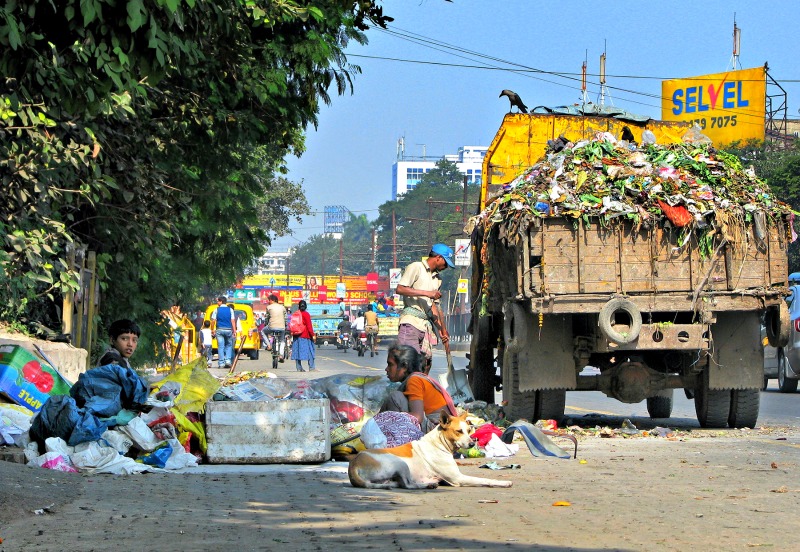
This photo, also taken in Kolkata, indicates how desperate the lives of some people still are. The driver shovels refuse onto the truck while the crows watch in anticipation of scraps as a lady and her son appear to do so as well. The lady was searching for food and maybe something of value whilst her son sat quietly guarding their personal belongings. The dog, relaxed, watched as drivers constantly hooted and maneuvered around one another. A lot of noise but minimal fuss, no road rage or the time-consuming jams we tend to associate with dense traffic. The Kolkata experience was very brief, but I felt a sense of spirituality here. Small shrines are erected on the sides of most roadssometimes seen every fifty metres or so. Every person (other than the beggars at the temple), including the crows, dogs and cows appeared to be busy, desperately doing something meaningful in their quest for survival.

Knowing the story behind this photo helps us to appreciate how well you have captured a small corner of peace and quiet surrounded by a cacophony of noise.

WorldCup_SouthAfrica

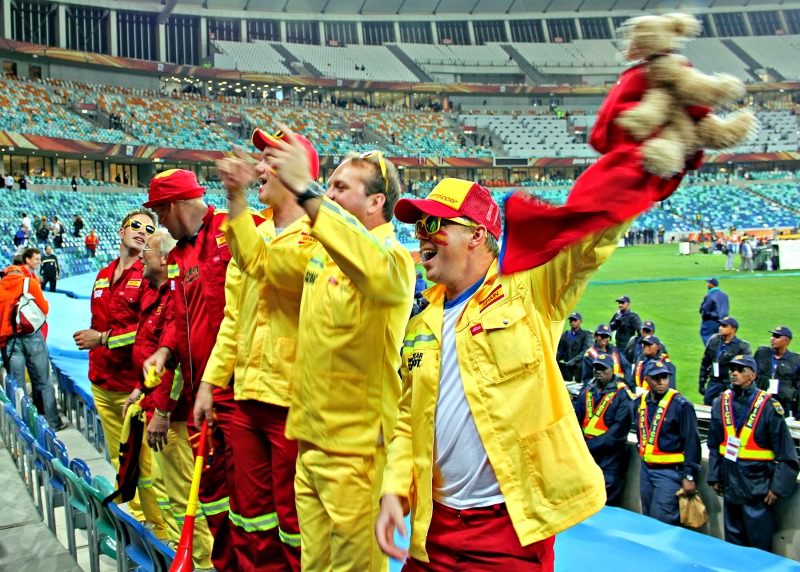
The 2010 World Cup quarter-final match Uruguay vs. Spain, held in Durban, SA (Spain won to eventually take home the title); photo credit: Andy Harvard

Spain beat Germany in Durban on 7 July 2010. They reached a World Cup final for the first time and went on to beat Holland in Johannesburg. The only goal in Durban came from a header by Carles Puyol. This was the first time I had witnessed extreme soccer fever, and this photo won a competition in one of Durban’s newspapers.

In this photo you have captured the spirit of the occasion, which is now upon us again in Brazil. Congratulations on your award.

The key to happiness is inner peace – Buddhist precept

Next we’re going to talk about some of your current favorite places to take photographs. Can you explain why these three places inspire you and how it shows in the photos you’ve selected?
1) Huge mountains, deep valleys, tranquillity, big skies, rural living, clean fresh breezes, golden lightMonteseel, in the Valley of One Thousand Hills, makes one realize how small and insignificant certain problems we all have actually are:

Monteseel, in the  Valley of 1000 Hills, South Africa; photo credit: Andy Harvard.

Monteseel, in the Valley of 1000 Hills, South Africa; photo credit: Andy Harvard.

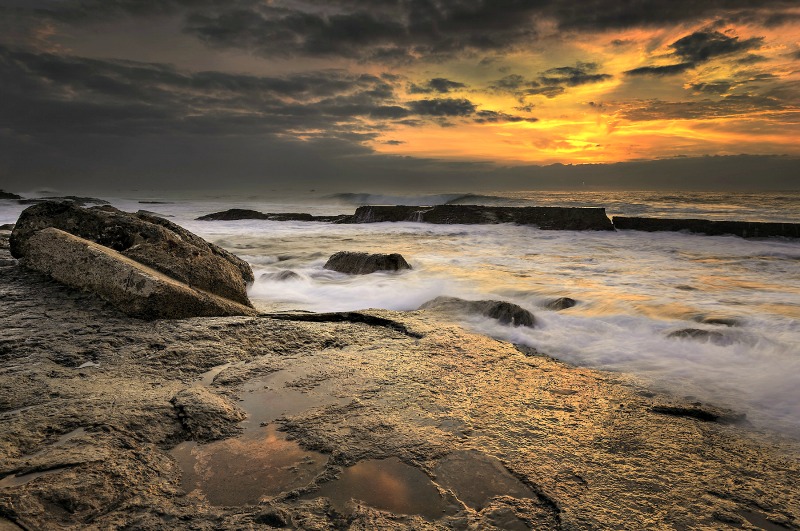
2) This unspoiled coastline with restricted access is literally around the corner from Durban’s Central Business District, which we call CBD. It’s a photographer’s paradise:

SouthAfricanBeach

Northern Bluff coastline, Durban, South Africa; photo credit: Andy Harvard.

3) Early mornings at this spot are full of activity: surfers, ski boats, fishermen, sailboats, people exercising, seine netters, photographers, holiday makers, recovering late night revellers and more. After a year of hard slogging, I managed to take this serene pier shot:

MoyoPier

Moyo uShaka Pier, Durban, South Africa; photo credit: Andy Harvard.

This photo actually won first place in my photo club’s monthly competition. The chairman said:

Brilliant, love the symmetric composition with a warm and cold side, slightly reminiscent of Turner’s sky in The Fighting Temeraire.

I know that Monteseel is an awesome place, so powerful it’s almost overpowering. It’s a great capture. Your photo of CBD is so dramatic that, although I know how warm the sea is, it looks positively cold. Why have you never shown me this before? It’s awesome. So you had to work a bit to get the last one! Well done.

You should move with a sharp consciousness… – Buddhist precept

Would you say that photography and the ability to be able to capture something unique, which will never be seen again, is a powerful force for you?
Yes, but more importantly, photography is the way I choose to meditate. I go into a semi-transcendental state when shooting and later when processing the photos on the computer. I believe the habit dates from my mother’s death in early 2013. When we visited her in hospital, we would all sit on the veranda outside the ward while I took night-time photos. Later, when going through some boxes of photos she had taken in her youth, I learned that she had been a photographer of “social” note. Not long after, I got hooked on HDR photography. I was a member of a Buddhist tradition for two years, attending teachings and meditation classes about 6–7 hours a week. Now my “meditation” is taking photos while a new day dawns in near complete silence and then sitting for hours post-processing photos to create a work of art. It isn’t a jobit’s a passion; and I want to keep it that way and share the results with others.

Thank you, Andy, for sharing such a fascinating personal story. Now for the technical stuff. What kind of camera and lenses do you use?
I have a Canon 6D, 17/40mm and 24/105mm. I also have my “old” baby Canon 550D which uses either lens above when not in use by “big brother”.

And which software do you use for post-processing?
Which software do I not use? I will use any software available to manipulate my photos to achieve the look I want to see. I know no bounds in this regard. I started with Photomatix HDR software and would attempt to “HDR” everything I could at any time of the dayi.e., dogs, people, machinery and trees. Later I learnt that this was a little foolish but, as I realized when reading this article on the topic, a necessary part of my progression. Lately, I’ve been shooting fewer exposures and manually blending them in Photoshop with layers and masks. I am new at this and on another learning curve.

Sounds like you are a post-processing junkie. I can identify with that and hope to move up to your level when I understand a lot more about the various programs. Finally, do you have any advice for wannabe photographers who are traveling or living abroad?
Be confident and take charge. Keep the camera in hand or on a sling (not deep in a bag). Take lots of photos and even different angles on the same scene. Go into a tunnel zone where you are only thinking about and taking photos. Get down on the street and get dirty. Find top photographers who you admire and follow them. Study their work and every word on their pages (great tips sometimes come hidden in a few sentences). Look at the best photo you find and think “I can do this and better, it might just take some time”. Some really kind photographers offer free tutorials in video or written formatmake the time to find them and work through them.

* * *

Thank you, Andy. I have really enjoyed our interview. Your story is so compelling and you do approach things from a different angle to many of us.

Readers, what do you make of Andy’s experiences and his photography advice? And do you have any questions for him on his photos and/or experiences? Please leave them in the comments!

And if you want to know more about Andy, don’t forget to visit his blog, Snap Fly Cook. You can also connect with him on Facebook and visit his gallery of “special” photos on Pixels.com.

(If you are a photographer and would like to be interviewed by James for this series, please send your information to ml@thedisplacednation.com.)

STAY TUNED for next week’s fab posts!

If you enjoyed this post, we invite you to register for The Displaced Dispatch, a round up of weekly posts from The Displaced Nation, with seasonal recipes, book giveaways and other extras. Register for The Displaced Dispatch by clicking here!

Related posts:

From soccer hater to World Cup fanatic: A most peculiar expat tale

FIFA World Cup Collage

The Brazilian player Edmilson Santos, by AK Bijuraj; CocaCola FIFA World Cup Soccer, by Mike Mozart; FIFA World Cup trophy, by Warrenski (all CC).

To mark the start of the 2014 World Cup in Brazil, I have updated a post I wrote four years ago, in time for 2010 World Cup, in South Africa. I wrote it for the now-defunct Pond Parleys, the brainchild of esteemed writers Toni Hargis (a British expat in the US, with an American husband) and Mike Harling (an American expat in the UK, with an English wife).

In America, of course, we call it soccer. But I am content to say “football.” If there’s one thing I learned from living in England for nearly ten years, it’s to use the English language with precision (in which case, shouldn’t it be “foot-and-head ball”?).

So, herewith, an attempt to tell the rather twisted tale of my conversion to football fandom, though part of me will always wonder: is my story more typical than one imagines? Surely, a taste for football isn’t easily acquired by those who don’t have it in their national DNA?

PART I: Why I Never Liked Football Whilst Living in England

This little tale of mine begins on a dark and stormy night in the latter years of the 20th century. I am living in football-mad England but am rapidly developing an aversion to the sport, squandering my first real opportunity to see it played at a professional level.

Chalk it up to my contrarian nature. I’m not one to throw myself into chanting, banner waving, and other tribal behaviors before I’ve had a chance to study what’s going on and make a full appraisal. And it did not take me long to find things I was less than enamored of, including:

1) The game itself—the endless running up and down the pitch with hardly any scoring. The few times I watched a football match, I inevitably got up to make a cup of tea, or dozed off, just as the one goal of the match was being made.

2) The fans—mostly male, many of them yobbos (some of whom are now chavs?). But even if we leave social class out of the equation, a good number of the UK’s football fans appeared to be hooligans, not exactly the most appealing lot—especially to a grad student like me, whose images of England had been formed from a steady diet of Jane Austen novels and Merchant-Ivory period movies. Occasionally violent male bonding rituals weren’t on the agenda. (I’m sure it didn’t help that my arrival in England coincided with football hooliganism reaching new levels of hysteria.)

3) The jingoistic tabloid coverage—which reaches its height whenever England plays Germany. I happened to be living in London in 2006, when the semifinals of the European finals, between England and Germany, took place at Wembley Stadium. What a palaver! The British mass-circulation paper The Daily Mirror ran a front-page headline “Achtung! Surrender!” over a photo of two England stars wearing World War II helmets. Years later, when England met Germany in the 2010 World Cup, held in South Africa, John F. Burns contributed an article to the New York Times contending that such “rib-poking” has provided catharsis for England and Germany over the years. Who am I to contradict Burns, the Times‘s London bureau chief and an expert on interpreting his native culture? Still, I couldn’t help but think of the late American historian Howard Zinn‘s warning that harmless pride can become an “arrogant nationalism dangerous to others and to ourselves.” Red card!

It’s perhaps worth noting that of all the reasons I came up with not to like football, none of them included the argument that occasionally surfaces in right-wing circles in the United States, which is that football is collectivist and carries the threat of “socializing” Americans’ taste in sports.

As an expat, I had a choice: keep skating along the surface and pretend football doesn’t exist, or else try and go closer to the beating heart of my adopted culture and see what makes it tick.

So I gave football a miss and moved back to pursuing a life of cream teas, theatre performances, cricket…wait did I just say “cricket”? I must be getting batty… (hahaha)

PART II: How I Came to Change My Mind About Football, or At Least the World Cup

Am I looking forward to this year’s World Cup championship games in Brazil? Why soitenly! Numbskull that I am, I’ve finally gotten with the program!!

Herewith, the second part of my most peculiar tale. As explained in Part I, I never paid much attention to the sport despite nearly a decade of exposure; on the contrary, I developed an abhorrence for it.

But four years ago all of that changed. Having settled back in the United States, I found myself powerfully drawn to the championship that took place in South Africa, and I expect it will be no different this time around, with the World Cup being hosted by Brazil. (While I’m sad that Paul the Octopus is no longer with us, I take comfort in the thought of Nelly the Elephant taking his place—her punditry is apparently on a similar level.)

I can’t pinpoint the precise moment when my conversion happened, especially as football still has all the same drawbacks I’d once noted: goals are few and far between, the fans are predominantly male, and jingoism reigns, particularly between the English and the Germans.

All I know is that it wasn’t until I was back in my own culture that I felt comfortable giving the sport a chance. Yes, I know this is ironic considering that the UK is considered to be the cradle of the game (the English have been kicking balls competitively since at least 1314), whereas we Yanks still aren’t quite there.

My top three reasons for fanning football are:

1) It’s the World Cup, stupid. Living in England, I couldn’t see the World Cup forest from the local English football club trees. But when watching the very best players in the world compete, even a hardened skeptic like me can start to appreciate why they call it The Beautiful Game. Those feet of theirs—they are using them like hands! That Messi fellow: it looks as though the ball is glued to his feet; how extraordinary! Xavi Hernández and Andrés Iniesta: it’s incredible how they can pass the ball through the midfields! And let’s not forget Yaya Touré and the way he switches gears. Robin van Persie has a left foot to die for! And so on…

2) It’s a much-needed distraction from other kinds of world events. There’s nothing quite like a soaring soccer ball to lift the spirits, not to mention the vicarious pleasure of seeing a team, and a nation, carry off the trophy. I can still recall the thrill of watching the first European team win outside Europe, at the tournament in South Africa. ‪Viva España!‬

3) It’s on a par with, or perhaps even better than, the Olympics. Ironically, even though there is nothing quite like football to arouse nationalistic urges, the World Cup is, as the name suggests, a world competition, with 32 nations competing. (Compare that to America’s World Series—now that’s a misnomer!) Repeat expats like me, who are a hybrid of nationalities, are the ideal supporters of such sporting events. I think it also helps that I don’t really have a dog in the race. Though America competes, we aren’t yet a serious contender for the cup. This leaves me free to throw my support behind almost any athlete or team that I think are the world’s best. The Olympics of course provide many such opportunities; but that’s the problem: there’s too much choice. What I love about the FIFA World Cup is that it’s a singular occasion. There can be no bigger stage, literally as well as figuratively, than the vast pitch on which this ultimate sporting drama takes

*  *  *

It’s time to hear from you, dear reader. Is my conversion complete, or should I be bending the case for football still more, by stressing its potential for opening up intergalactic communication and fostering truly universal harmony? And even if you don’t share this new-found enthusiasm of mine, can you at least relate to the experience of getting to know and love a sport outside the ones you grew up playing and watching? Do tell!

STAY TUNED for next week’s fab posts!

If you enjoyed this post, we invite you to register for The Displaced Dispatch, a round up of weekly posts from The Displaced Nation, with seasonal recipes, book giveaways and other extras. Register for The Displaced Dispatch by clicking here!

Related posts:

EMERALD CITY TO “KANSAS”: Amy Rogerson on seeing the Wizard of Expat Life and returning home (for just six months)

Amy Rogerson wrapping up warm in the UK at Christmas (her own photo); the Ruby Slippers (CC); corn path (Morguefiles).

Amy Rogerson wrapping up warm in the UK at Christmas (her own photo); the Ruby Slippers (CC); corn path (Morguefiles).

Welcome to “Emerald City to ‘Kansas,'” a series in which we focus on expatriate-into-repatriate stories. This month our subject is Amy Rogerson, an Englishwoman who blogs at The Tide That Left about trailing her husband (aka “Mr Tide”), at breathless pace, all around the globe. The couple now live in Dar es Salaam in Tanzania, but in the past four years have also made homes in South Africa, Angola, Qatar, Russia, and Libya. As we catch up with Amy, she is back to the UK (as of April 7th) for a six-month stay. What is it like going “home” again after such a life of adventure? Without further ado, let’s dig into a slice of Amy’s “back to Kansas” story.

—ML Awanohara

To Oz? To Oz!

I didn’t really choose expat life. Rather, it chose me when I fell head over heels in love with a nomadic man. I met my husband five years ago in his final weeks in the UK before he moved to Libya. We continued our relationship long distance for a year, but eventually knew that one of us had to move. I was in a job that made me miserable, whilst he was welcoming new opportunities at work, so it seemed for the best that I move to Benghazi to be with him.

Lions and tigers and bears, oh my!

Moving to Libya was so far beyond my comfort zone that I shocked both myself and those who loved me most. All I knew is that I wanted to be with the man I loved. I never expected my life to become that of a serial expat. As well as living in Libya, we’ve also lived in Russia, Qatar, Angola, South Africa and Tanzania together. In fact, my home is still in Tanzania; repatriation to the UK is just a temporary move for a project I am working on, and I fully intend to return to Dar es Salaam and my wonderful husband in just under six months from now.

We’ve been gone such a long time…

I’m surprised at how much I’ve grown to love my new lifestyle. I’d never wanted to travel or live abroad before I met my husband, but now I struggle with the idea of ever “going back to Kansas” permanently (not that I don’t think I will one day!). I’ve discovered that life can be different from what I was brought up to believe. If choosing the expat life has meant I’ve had to say goodbye to any dreams I had of the picket fence, the family home, the stable job—that isn’t going to happen, at least not for a while—it isn’t necessarily a bad thing.

What have you learned, Dorothy?

Living in six countries in four years, I’ve learned to adapt to change. Nothing stays the same, and I’ve had to be flexible. That flexibility doesn’t just apply to where we live and work, or what our holiday plans are. I’ve also had to learn that there is not just one way of doing something, especially once I started working for a South American company in the Middle East and now in Africa. I’ve had no choice but to get my head round different ways of doing things that I used to believe we do best “at home”. As a Brit working with people from different parts of the world, I’ve often felt as though my colleagues and I weren’t talking the same language when it came to business practices and relationships. But I’ve come to see that instead of believing the British way is right, it helps if I can open my mind to other approaches, some of which may work if you’re willing to give them a try. With time I’ve been able to overcome the differences and pick up skills that will no doubt help me in future.

No place like home?!

Repatriation is bitter-sweet for me. I didn’t really want to return to the UK right now, but circumstances have dictated otherwise. Having been gone from the UK for four years I’m really struggling with settling back in. Much of what I knew before now seems unfamiliar. My time abroad has coloured my behaviour and expectations. In a sense, I’m having to relearn some of that most basic stuff that I found so hard to let go of when I became an expat.

Oh dear! I keep forgetting I’m not in Kansas!

I once thought huge shopping centres where I could buy everything I needed in one go were the perfect solution to hectic British life. Now I find myself shying away from the crowds of people, the flashy goods, and the elevated prices for things with a short shelf life. During my life abroad, I often missed the choices that were available to me in the UK, be it in the supermarket, on the high street, even on the television, but now I just feel overwhelmed and a tad spoilt by all the options. In adapting to new ways of living and thinking abroad, I no longer completely fit in the country I was born and raised in. Perhaps I need to look at this six-month repatriation like a new expat assignment and approach it like I would any other move. I need to be open to adapting. I need to forgive myself for not “feeling at home” immediately when I wouldn’t ask that of myself anywhere else. I’m incredibly lucky to have so many wonderful connections here in the UK. I expect it won’t be long before I feel more settled at home than I do after a few weeks. One thing I do know: the call of expat life hasn’t quietened yet.

* * *

Thank you, Amy, for such an honest, heart-felt account about what it feels like to go home again, if only for half a year. It’s interesting that you’re now having to apply the adaptability you learned from expat life to feeling more at home in your native UK. Readers, can you relate to what Amy says?

STAY TUNED for tomorrow’s fab post!

If you enjoyed this post, we invite you to register for The Displaced Dispatch, a round up of weekly posts from The Displaced Nation, with seasonal recipes, book giveaways and other extras. Register for The Displaced Dispatch by clicking here!

Related posts:

2013 Holiday Special: Notable books for, by and about expats

Looking for last-minute gifts—or have your holiday celebrations brought you to the point where you might need an escape for yourself?

In the tradition of looking back at the past year’s highlights, I present, on behalf of the Displaced Nation team, a list of books for, by, and about expats that were featured in some way on this site in 2013.

Click on the category that interests you:

  1. FICTION
  2. MEMOIRS
  3. HANDBOOKS & GUIDEBOOKS
  4. COOKBOOK (singular because we have only one!)
  • Books in each category are arranged from most to least recent.
  • Unless otherwise noted, books are self-published.

Go on, download a few! It’s the time of the year to be generous to one’s fellow human beings. That said, on the Displaced Nation it’s always the season to support the creative output of those who’ve embraced the life of global residency and travel.

* * *

Fiction

Shemlan Ebook_coverShemlan: A Deadly Tragedy (November 2013)
Author: Alexander McNabb
Genre: International thriller
Synopsis: The third in McNabb’s Levant Cycle, Shemlan tells the story of a retired British foreign service officer who, dying from cancer, returns to Beirut in hopes of meeting the Lebanese love of his youth one last time. But then his past catches up with him, threatening to do him in before the disease does—until British spy Gerald Lynch gallops to the rescue…
Expat credentials: Born in London, McNabb has lived in the Middle East for more than a quarter century. He often receives praise for getting the historical and cultural details right in his books.
How we heard about: We encountered McNabb a year ago when we were doing a series of food posts! We love his books and are giving away Shemlan this month, as well as doing an offer for Displaced Dispatch subscribers on all three books in the cycle. Check it out!
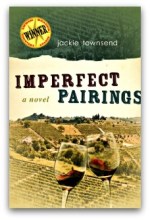
ImperfectPairings_cover_pmImperfect Pairings (May 2013)
Author: Jackie Townsend
Genre: Women’s fiction
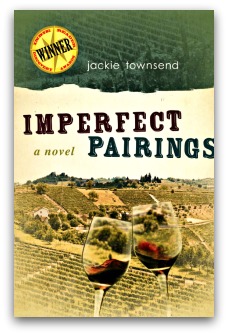
Synopsis: American career woman Jamie had not intended to fall in love—and to a foreigner no less, a man who tells her his name is Jack, short for John, but it’s really short for Giovanni. Insanely handsome and intense but unreadable, Giovanni has left a complicated family life back home in Italy. Is this more than Jamie signed up for?
Displaced credentials: In real life, Townsend is married to an Italian and has spent 16 years backing and forthing to her husband’s family in Italy.
How we heard about: ML Awanohara, who rightly or wrongly considers herself something of an expert on cross-cultural marriage, read the book on her Kindle and was so impressed with its depiction of cross-cultural relationship woes that she asked Townsend to be our featured author of November. Read the interview.

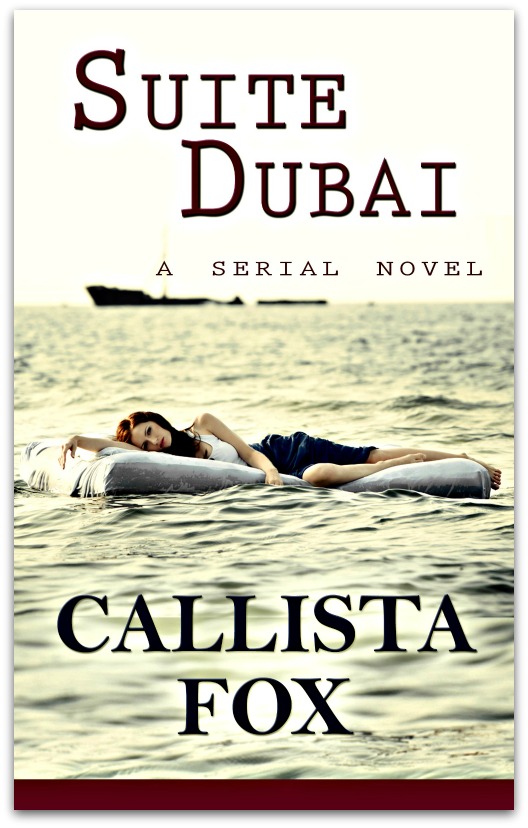
SuiteDubai-cover_dropshadowSuite Dubai (April 2013)
Author: Callista Fox
Genre: “New adult” lit
Synopsis: As Callista tells it, the book grew out of a story that entered her head that wouldn’t go away: “There was this girl, young, vulnerable, naive, walking along a concourse in an airport, among men in white robes and checkered scarves and woman in black gauzy material. Where was she going? What would happen to her there?”
Expat credentials: Fox moved to Saudi Arabia when she was eight and lived there off and on until turning 19. She went to boarding schools in Cyprus and Austria. Now back in the United States, she thinks of herself as an adult Third Culture Kid, or TCK.
How we heard about: Noticing our fondness for serial fiction (see Kate Allison’s book below), Fox sent us a note saying she’d written a serial novel reflecting her experience of growing up in the Middle East. We responded by asking if we could publish her series in even smaller parts. Part 1 and Part 2 have already gone up, and there are six more parts to come in 2014. Warning: Highly addictive!
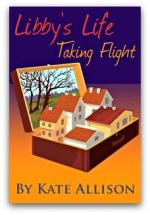
Libby'sLifeTakingFlight_coverLibby’s Life: Taking Flight (April 2013)
Author: Kate Allison
Genre: Women’s fiction
Synopsis: 30-something Libby Patrick is just regaining some post-baby control over her life when a change in husband’s job means they must move from their English home to Woodhaven, a town in rural Massachusetts. The book is Libby’s journal covering the first year of her life as trailing spouse.
Expat credentials: Born and raised in Britain, Kate has lived in the United States with her family for almost two decades.
How we heard about: We were the first to know! Kate is a founding member of the Displaced Nation and has been publishing regular episodes of Libby’s Life (on which the book is based) since the blog began. She has accrued countless fans, the most faithful of whom is Janice. (Libby to Janice: xoxo for your support in 2013!)

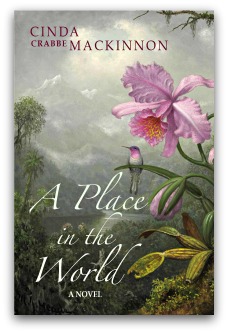
APlaceintheWorld_coverA Place in the World (March 2013)
Author: Cinda Crabbe MacKinnon
Genre: Romance
Synopsis: Third Culture Kid Alicia meets a young Colombian man at college in the United States. She follows him to Bogotá and the pair end up marrying and settling on his family’s remote coffee finca (farm) in the Andes. Educated as a biologist, Alicia revels in the surrounding cloud-forest. But then her idyllic life starts to unravel…
Expat credentials: Crabbe MacKinnon grew up in several countries as a military brat and diplomatic kid and, though she has since repatriated to the United States, still thinks of Latin America as home.
How we heard about: Crabbe MacKinnon commented on one of Elizabeth Liang’s “TCK Talent” posts and ended up becoming October’s featured author. Read the interview. We love her and her work, and are sure you will, too!
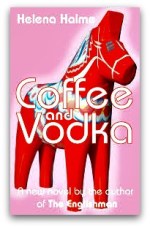
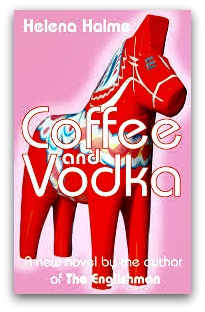
CoffeeandVodka_coverCoffee and Vodka (March 2013)
Author: Helena Halme
Genre: Women’s fiction
Synopsis: A Finnish family emigrate to Sweden in the 1970s and find themselves in turmoil, caused partly by the displacement, but also by the cracks in family dynamics. At its heart, the book reveals what it is like for a young girl to be uprooted and transplanted to a country where she doesn’t speak the language and is despised for her nationality.
Expat credentials: Halme grew up in Tampere, central Finland, and moved to Britain at the age of 22 via Stockholm and Helsinki, after marrying “The Englishman” (how she always refers to him on her blog, Helena’s London Life). She spent her first ten years in Britain working as journalist and translator for the BBC. She and The Englishman now live in North London.
How we heard about: Halme is a big favorite of ours! She was one of our earliest Random Nomads as well as serving as an expat style icon back in the days when we covered fashion. More recently, Kate Allison reviewed Halme’s first book: The Englishman: Can Love Go the Distance?, and we did a giveaway of Coffee and Vodka. And that’s not all: Halme’s latest book, The Red King of Helsinki, received an “Alice” Award in July. (As noted then, the Alices could hardly ignore a book of that title!)

MonkeyLoveAndMurder_dropshadowMonkey Love and Murder (February 2013)
Author: Edith McClinton
Genre: Adventure mystery
Synopsis: A jungle environment in Suriname (spider monkeys and all) is the setting for a closed-door mystery surrounding the death of the renowned director of the International Wildlife Conservation followed by the machete murder of one of the researchers. None of this bodes well for poor Emma Parks, who has joined the research project on a whim. (So much for that budding primatologist career!)
Expat credentials: MacClintock volunteered for the Peace Corps in Suriname for two years, and joined a monkey research project afterwards.
How we heard about: One of our Random Nomads, Patricia Winton, referred us to the now-defunct blog Novel Adventurers, where Edith was one of the writers. We invited her to guest blog for us about the muses behind her monkey mystery.

ArchangelofMercy_dropshadowArchangel of Mercy (Berkley – Penguin Group, December 2012)
Author: Christina Ashcroft
Genre: Paranormal romance
Synopsis: The first storyline in Ashcroft’s new series focusing on a group of angels and archangels and the lives of the people they come in contact with every day.
Expat credentials: Ashcroft is an expat Brit who now lives in Western Australia with her high school sweetheart and their three children.
How we heard about it: We encountered Christina online and asked her to be one of our Random Nomads for a Valentine’s Day special. In that interview, she said she attributes her success as a writer at least in part to her expat status: “I’ve often wondered whether my career would have followed the same route if we’d stayed in the UK. While I’ve always loved writing it wasn’t until we moved to Australia that I decided to to write with the aim of publication.”
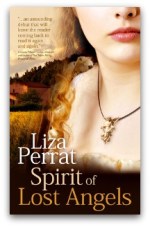
SpiritofLostAngels_dropshadowSpirit of Lost Angels (May 2012)
Author: Liza Perrat
Genre: Historical novel
Synopsis: Set against a backdrop of rural France during the French Revolution, the story centers on Victoire Charpentier, a young peasant woman whose mother was executed for witchcraft and who herself suffers abuse at the hands of a nobleman. Can she muster the bravery and skill to join the revolutionary force gripping France, and overthrow the corrupt aristocracy?
Expat credentials: Liza grew up in Wollongong, Australia, where she worked as a general nurse and midwife for fifteen years. When she met her French husband on a Bangkok bus, she moved to France, where she has been living with her husband and three children for twenty years.
How we heard about: The redoubtable JJ Marsh (see below) interviewed Perrat on writing a location to life, for her monthly column, “Location, Locution.”

BehindClosedDoors_dropshadowBehind Closed Doors (June 2012)
Author: JJ Marsh
Genre: Crime mixed with literary fiction
Synopsis: A smart, technologically sophisticated mystery set in Zürich and surrounding countries, featuring a bipolar detective named Beatrice Stubbs, and quite a few surprises… NOTE: JJ Marsh was listed in the Guardian “readers’ recommended self-published authors” this year, for Behind Closed Doors.
Expat credentials: JJ Marsh grew up in Wales, Africa and the Middle East, where her curiosity for culture took root and triggered an urge to write. After living in Hong Kong, Nigeria, Dubai, Portugal and France, she has finally settled in Switzerland.
How we heard about: We owe displaced author Helena Halme (see above) a king’s ransom for telling us about JJ, who since April has been contributing a monthly “Location, Locution” column. Don’t miss her posts under any circumstances! Highly stimulating and cerebral.
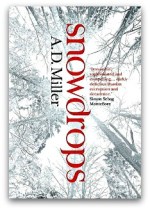
snowdrops_dropshadowSnowdrops (Anchor/Random House, February 2011)
Author: AD Miller
Genre: Literary fiction
Synopsis: Lawyer Nick Platt trades his dull British life for pushing paper in Moscow at the turn of the 21st century. He is soon seduced by a culture he fancies himself above. Snowdrops was shortlisted for the Man Booker Prize in 2011.
Expat credentials: British born and educated at Cambridge and Princeton, Andrew Miller joined The Economist and was appointed, in 2004, to become their Moscow correspondent. He covered, among other things, the Orange Revolution in the Ukraine.
How we heard about: JJ Marsh interviewed AD this past July about bringing foreign locations to life in fiction.
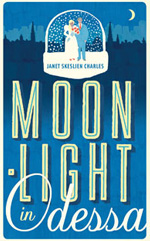
odessa_brit_cover_smallMoonlight in Odessa (Bloomsbury, August 2010)
Author: Janet Skeslien Charles
Genre: Women’s fiction
Synopsis: With an engineering degree and perfect English, Daria longs for a life beyond Odessa, Ukraine. And then she moonlights for a dating agency that facilitates hasty, long-distance matches between lustful American men and impoverished Ukrainian women. Her big chance?
Expat credentials: Skeslien Charles went to Odessa, Ukraine, as a Soros Fellow, living through blackouts, heatless winters, corruption and so on. She stayed for two years before returning to the U.S. Then she found a job in France and met her husband. She now lives in Paris but leads a multicultural life. As she puts it: “The novel is set in Odessa, Ukraine. My agent is English. My editor’s assistant is Japanese-Danish, my copy editor is from New Zealand. I’m American. The book was written in France and typeset in Scotland. My first fan letter came from a Swede.”
How we heard about: JJ Marsh picked Skeslien Charles’s brain on “location, locution”, in her November column.

Memoirs

AddictedtoLove_cover_dropshadowAddicted to Love (April 2013)
Author: Lana Penrose
Synopsis: Penrose is the kind of Australian who throws herself wholeheartedly into adventure, which is why her years spend living in Europe have merited not one but three memoirs! This one is the third. In the first memoir (published by Penguin/Viking), To Hellas and Back, she marries the love of her life, an Australian Greek, and accompanies him back to Greece, only to find him becoming increasingly Greek and herself increasingly isolated. In the second, Kickstart My Heart, she moves to London, single and desperate to find love again. And in this third memoir, she returns to Greece, where she encounters a seemingly perfect man named Adonis. (Hey, she never gives up!)
Expat credentials: From Sydney originally (she is back there now), Penrose lived in Athens for five years before moving to London.
How we heard about it: We happened across Penrose online and asked her to guest-post for us a year ago on what it was like to spend Christmas in Greece. At that time, we also did a giveaway of her first memoir. We invited her back this past April to write about Addicted to Love.

MagicCarpetSeduction_cover_pmMagic Carpet Seduction: Travel Tales Off the Beaten Path (May 2013)
Author: Lisa Egle
Synopsis: Travel with the author to China, Latin America, Turkey and the Middle East, and watch while she takes risks off the beaten path, and dances with strangers in strange lands…
Expat credentials: Egle characterizes herself as a lover of offbeat travel. She’s been to 36 countries on five continents and has been an expat twice: in Ecuador for a year and half, and in Spain for a year.
How we heard about: We got to know Egle first through her blog, Chicky Bus, and when we heard she’d put out a book, asked her to be one of our featured authors. Read the interview.

Pilgrimage-Cover_pmRunning the Shikoku Pilgrimage: 900 Miles to Enlightenment (Volcano Press, January 2013)
Author: Amy Chavez
Synopsis: After losing her job at a Japanese university, Chavez undertakes a solo journey running Japan’s 900-mile Buddhist pilgrimage, a distance equal to running from San Diego, California to Oregon. A Buddhist priest who is also a friend gives her “cosmic tools” to take with her.
Expat credentials: American expat Amy Chavez has been a columnist for Japan’s oldest English-language newspaper, The Japan Times, since 1997. She lives with her husband and cat on Shiraishi Island in Japan’s Seto Inland Sea.
How we heard about: We interviewed Chavez about her pilgrimage, and what it took to write the book, in April.

Don'tNeedtheWholeDog_dropshadowDon’t Need the Whole Dog! (December 2012)
Author: Tony James Slater
Synopsis: In the summer of 2004, Slater went to Ecuador, thinking that the experience would turn him into a man. He went back to his native England fueled by a burning desire to do something that mattered—and, ideally, to get the heck out of England in the process. He dreamed of going to Thailand and becoming a professional diver. This is the story of what happened next.
Expat credentials: A Brit, Slater now lives in Perth, Australia, with his Australian wife.
How we heard about: Slater made himself known to us for failing to include his first book, The Bear That Ate My Pants: Adventures of a Real Idiot Abroad, about his time volunteering at an animal shelter in Ecuador, in our 2011 holiday round-up. He probably should have left well enough alone, though, as next thing he knew, we had him writing for the Displaced Nation. His post on the world’s best parties remains one of our most popular!

TruckinginEnglish-dropshadowTrucking in English (December 2012)
Author: Carolyn Steele
Synopsis: This is the tale of what happens when a middle-aged mum from England decides to actually drive 18-wheelers across North America instead of just dreaming about it. Nothing goes well, but that’s why there’s a book.
Expat credentials: Born and bred in London, Carolyn and her son are now Canadian citizens and live permanently in Kitchener, Ontario.
How we heard about: One of our featured authors in 2012, Martin Crosbie, sent Steele our way, and Kate Allison reviewed her book in March. Steele later contributed an amusing post to our “New vs Olde World” series, about the difficulties of mastering the Canadian “R”.
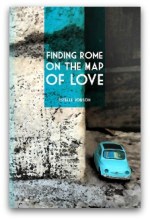
Finding-Rome-on-the-Map-of-Love_dropshadowFinding Rome on the Map of Love (September 2012)
Author: Estelle Jobson
Synopsis: When her Italian diplomat boyfriend gets posted to Rome, Jobson throws up her career in publishing in her native South Africa to accompany him. There, she reinvents herself as Signora Stella, a casalinga (housewife). The book captures a year’s worth of quirky observations about life amongst the Italians.
Expat credentials: Originally from South Africa, Jobson now lives in Geneva, where she works as a writer and editor.
How we heard about: Jobson was our featured author in February. Her book and sense of humor are terrific!
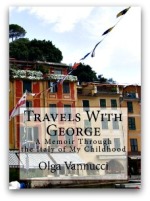
Travels with George Book CoverTravels with George: A Memoir Through the Italy of My Childhood (April 2012)
Author: Olga Vannucci
Synopsis: In five separate trips to Italy with her young son, George, in tow, Vannucci strolls and hikes through the landscapes of her Italian childhood. She looks at Italy both as local native and awed visitor.
Expat credentials: Born in Italy, Vannucci lived in Brazil and came to the United States to attend Brown University. She lives in rural New Jersey with her son.
How we heard about: Vannucci was our featured author in September. Read the interview. We loved this quote from her son: “Where are we going? How much longer? I have something in my shoe. I want to go back. Why are we doing this? Do you know where we are? Do you know where we’re going? Mammaaaaaaa!”
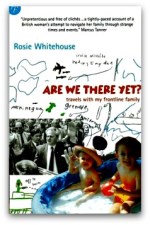
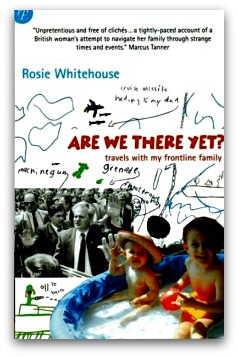
AreWeThereYet_cover_dropshadowAre We There Yet? Travels with My Frontline Family (May 2009)
Author: Rosie Whitehouse
Synopsis: A vivid, funny, and very human account of the author’s travels with her family through war-torn Europe.
Expat credentials: Whitehouse spent five years as a housewife in the war-torn Balkans married to a correspondent of The Economist, caring for their growing family.
How we heard about: We happened across Whitehouse’s work online and asked her to be a featured author last summer. Read the interview. She’s absolutely fascinating, as one might expect of the kind of woman who trails her spouse into a war zone.

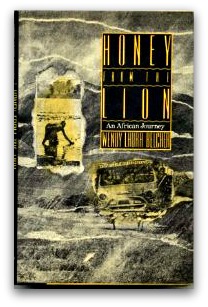
HoneyfromtheLion_coverHoney from the Lion: An African Journey (Dutton Adult, 1988)
Author: Wendy Laura Belcher
Synopsis: Brought up in Africa, Belcher returned to Ghana in the early 1980s to work with a “national linguistic group” that is spreading literary into rural areas by translating the Bible into native languages. A coming-of-age story that was called “lyrical” by the New York Times when first issued.
Expat credentials: An adult Third Culture Kid, Belcher grew up in East and West Africa, where she became fascinated with the richness of Ghanaian and Ethiopian intellectual traditions. She is now an assistant professor of African literature at Princeton.
How we heard about: Elizabeth Liang interviewed Belcher for her TCK Talent series.

Handbooks & Guidebooks

cathy_feign_coverKeep Your Life, Family and Career Intact While Living Abroad, 3rd Ed. (Stvdio Media, September 2013)
Author: Cathy Tsang-Feign
Synopsis: A survival manual for those who are living abroad, with real-life examples and easy-to-understand explanations about the unique issues faced by expats: from preparing to move, to daily life overseas, to returning home.
Expat credentials: Tsang-Feign is an American psychologist who lives in Hong Kong, specializing in expat psychology and adjustment issues. She has also lived in London.
How we heard about: When Kate Allison learned about the book, she decided it merited one of our “Alice” awards for the understanding displayed of the “through the looking glass” complex.
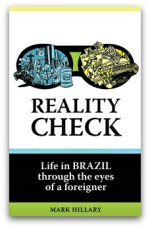
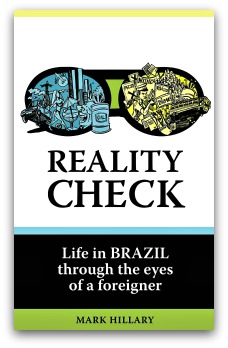
realitycheck_bookcoverReality Check: Life in Brazil through the eyes of a foreigner (September 2013)
Author: Mark Hillary
Synopsis: Targeted at those who plan on living, working or just visiting Brazil, it covers issues such as the difficulties of finding new friends, using a new language, and finding a job. Also provided is some background on the fast-changing society in Brazil that resulted in extensive street protests during 2013.
Expat credentials: Hillary is a British writer who moved to Brazil in 2010, bought a home, started a company, and has experienced both difficulties and joys.
How we heard about it: Andy Martin, another Brit in Brazil and a writer for the Displaced Nation in 2013, is a friend of Hillary’s and was jealous he’d produced a book that is not only a practical guide but also provides much of the cultural backdrop an international resident needs for a country as complex as Brazil. The next best thing, Martin thought, would be to do an interview with Hillary, which he delivered in two parts. Read Part 1 and Part 2.

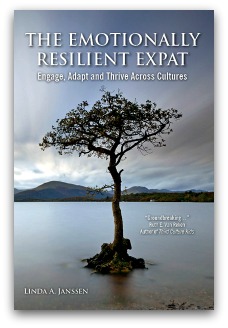
TERE_cover_dropshadowThe Emotionally Resilient Expat: Engage, Adapt and Thrive Across Cultures (Summertime, July 2013)
Author: Linda A. Janssen
Synopsis: A guide for those facing the challenge of cross-cultural living, with candid personal stories from experienced expats and cross-culturals, and a wealth of practical tools, techniques and best practices for developing the emotional resilience for ensuring a successful transition.
Expat credentials: Janssen lived for several years in the Netherlands while her husband, an adult TCK, worked in the Hague. She recently repatriated to the United States.
How we heard about: We’ve had many satisfying interactions with Janssen since starting the Displaced Nation and were thrilled to hear about her new book—a natural for one of this year’s “Alice” awards, particularly as Janssen has been running a popular blog called Adventures in Expatland.

AmericanExbratinSaoPaulo_cover_pmAn American Exbrat in São Paulo: Advice, Stories, Tips and Tricks for Surviving South America’s Largest City (May 2013)
Author: Maggie Foxhole (Megan Farrell)
Synopsis: Aimed at those who are moving or traveling to São Paulo, it is designed to be a companion on the journey through the ups and down, ins and outs, and the curious roundabouts of life in that city.
Expat credentials: Megan/Maggie moved to Brazil with her Brazilian husband and their daughter. She keeps a blog: Born Again Brazilian.
How we heard about: Farrell/Foxhole was one of our early Random Nomads. She kept in touch and we were very pleased to learn about her book, which ML Awanohara read and admired for its comprehensiveness. Andy Martin, a Brit who also lives in São Paulo with a Brazilian spouse, reviewed the book for our site this past July.

101reasons_dropshadow101 Reasons to Live Abroad and 100 Reasons Not to (March 2013)
Author: Chris Alden
Synopsis: Targeted at the wannabe expat, the aim is to help you discover if living abroad is right for you. It’s an uplifting guide to the positive sides of life as an expatriate and a reality check about the challenges that relocation brings.
Expat credentials: A professional writer, Alden lived for three years in a beautiful village in the Troodos foothills of Cyprus, which resulted in his first travel guidebook: 250 Things to Do in Cyprus on a Sunny Day.
How we heard about: Alden was the recipient of one our “Alice” awards for this book. We were impressed that he offered a final, 101st reason to live abroad for those of us who, having been offered as many as a hundred reasons both for and against, still find ourselves dithering…
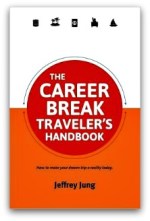
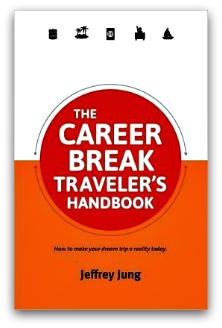
career-break-travelers-handbook_dropshadowThe Career Break Traveler’s Handbook (September 2012)
Author: Jeffrey Jung
Synopsis: Intended to inspire people to go for it and take the break they’ve been seeking from their jobs and go travel, with tips and tricks Jung learned from his own and other career breakers’ experiences.
Expat credentials: Having left the corporate ladder, Jung now lives in Colombia, where he founded his own business to help others do the same: CareerBreakSecrets.com.
How we heard about: Jung was one of our Random Nomads. He let us know about his book, and we reviewed it this past February. Not that he needed our help—it also got a shout-out in Forbes!
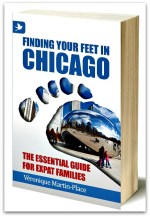
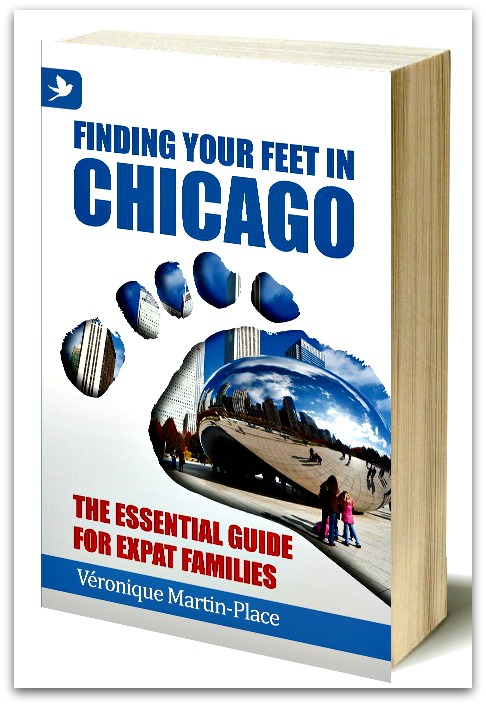
finding-your-feet-in-chicago-3D-Book CoverFinding Your Feet in Chicago: The Essential Guide for Expat Families (Summertime Publishing, August 2012)
Author: Véronique Martin-Place
Synopsis: A down-to-earth pocket guide to help expats settle into the USA’s third largest city with their families.
Expat credentials: As the wife of a French diplomat (they have two daughters), Martin-Place is accustomed to moving around the world. Chicago was one of her more enjoyable stops, but she also enjoyed Sri Lanka(!). The family is now in Shanghai.
How we heard about: ML Awanohara had interviewed Martin-Place on her blog, Seeing the Elephant. She had fun interviewing her again, this time about the process of composing a guidebook.

Cookbook

FromtheGlobalScottishKitchen_cover_tdnFrom the Global Scottish Kitchen (Self-published, November 2012)
Author: Sharon Lorimer
Genre: Cooking
Synopsis: Recipes based on Scottish cuisine but influenced by the restaurants and other kinds of cuisines Lorimer has experienced as an expat: e.g., Cock a’ Leekie Udon!
Expat credentials: Born in Scotland, Lorimer now lives in New York City and is married to an Asian American.
How we heard about it: We interviewed Lorimer about her decision to start up Doshebu, a business providing training to company employees being sent abroad on the “art” of being an expat.

* * *

Questions: Have you read any of the above works and if so, what did you think of them? And can you suggest other works to add to the list? My colleagues and I look forward to reading your comments below!

STAY TUNED for some upcoming posts, though we’ll be taking a bit of a break over the holidays!

If you enjoyed this post, we invite you to subscribe to The Displaced Dispatch, a weekly round up of posts from The Displaced Nation, plus some extras such as seasonal recipes and occasional book giveaways. Sign up for The Displaced Dispatch by clicking here!

Related posts:

For semi-retired expat blogger James King, a picture says…

Welcome back to our series “A picture says…”, which we created to celebrate those for whom photography is a creative outlet—who rely on a camera to register the look, character, and ambiance of the people and places that capture their fancy as they move around the globe.

Today’s guest is English expat, blogger, writer, world traveler and photography enthusiast James King. From December onwards, James will take over the hosting of this column from Andy Martin and publish it monthly.

As James plans to ask his interviewees to provide a selection of photos that help to tell their personal travel stories, it seems only fair that we require him to undergo the same exercise. What pix would he use to illustrate his peripatetic life of the past 25 years?

Indeed, “peripatetic” seems an apt descriptor for James. Semi-retired and now living in Chiang Mai, Thailand, he has traveled to over twenty countries. He lived in South Africa for a couple of decades and Thailand for the past five years. Here, in summary, are his vital travel stats:
Place of birth: England, UK
Passports: UK and EU (British citizen)
Resident in: UK (Bristol): 1942 to 1995; South Africa (Durban, Johannesburg, Cape Town): 1995 to 2008; Thailand (Chiangmai): 2008 to present.
Main countries visited: France, Spain, Greece, Italy, Morocco, Gambia, Kenya, Botswana, South Africa, USA, Thailand, Malaysia, West Indies.
Business interests: Majority shareholder in WestJewel (Pty) Ltd., a Cape Town jewelry wholesaler he founded in 2004.
Social media coordinates:
Twitter: @JimKing28265666
Facebook: Jim King
Linkedin: James King
Google+: jamoroki@gmail.com
Blog: Jamoroki.com

* * *

A bloomin’ late bloomer!

Hi, James. I see you were born in England during World War II. When did you actually start traveling?
Life was pretty austere after the war, we had rationing and people lived a fairly simple life. There were very few restaurants and I don’t actually remember ever going out to eat with my parents. Don’t get me wrong, we weren’t on the “bread line”; but it just didn’t happen in those days. We had TV for the first time in 1953, and it wasn’t until I was 24 that I first traveled overseas; to Paris in fact. When I got into my thirties, then I really started to spread my wings but I was very busy trying to make a living so I didn’t have the freedom I gained later in life. Only then was the adventurous side of me given wings, so to speak. Eventually, at the age of 53, I packed my bags and emigrated to South Africa after a few sorties there in the three years before.

SouthAfricanBeach_JK

Photo credit: James King

Okay, time to see your first photo. What’s the story behind this one?
This guy wears many hats and makes a living selling his wares on the beach at Bloubergsands, which is close to the house that I bought (and am now trying to sell!) in Table View in Cape Town. Generally these traders are not South African. They often travel a very long way from neighboring countries such as Zimbabwe, Zambia and Mozambique. Many of them dodge border posts by hiding in the back of goods trucks. They all hope to make a new life in South Africa after escaping from oppressive regimes or poverty. Some of them are intelligent, articulate and well educated, as I remember this guy was.

What do you like most about this shot?
I like that it highlights the harshness of Cape Town light. The ozone layer is so thin there—I had to be far more careful of the sun than I do in the tropics. I also like the photo because at that time, I wasn’t into photography at all and had even less idea about what I was doing than I do now. I always have to be aware of what harsh light can do to my pics.

Okay, let’s move along to another photo that speaks to your South Africa experience.
Can I have two shots, please? One of the Cape of Good Hope and the other of Table Mountain, with Cape Town below.

EndoftheEarth_JK

Photo credit: James King

TableMountain

Photo credit: James King

For me, these photos bring back memories of how wonderful the landscape is in that part of the world. So overwhelming, you really have to experience it in person. Just think, we are at the Cape of Good Hope, the bottom of Africa! And, despite how beautiful it looks, you don’t want to know how cold that water is. Naked you may survive ten minutes in there!

What particularly appeals to you about the Table Mountain photo?
I love how the clarity changes as soon as you hit the shore line below the mountain. It really is like that and not a cock-up on my part. It won’t win awards, but it is very personal so I love it.

How did you end up in Cape Town?
How long have you got? Things went a bit wrong for me in England after I got divorced, and then I met a guy who used to live in Durban and still had some business interests there. His wife had died the previous year so we were both single and hit it off. He had to go to South Africa again, so we decided to go and work together. That’s the “nutshell” version.

Semi-retirement in the Thai tropics

And now 20 years later you are in Thailand. How did that happen?
I’ll have to get the “nutshell” out again. In 2004, with some backing, I bought a jewelry wholesale business. Most of our silver is sourced and manufactured in Thailand, and I took on the responsibility of buying overseas. So I started traveling to Bangkok to meet suppliers and go to the Gems and Jewelry Fair in March and September. I met so many new people and also took a couple of holidays in Phuket before going back to Cape Town. Gradually I got a taste for SE Asia and, after a few years, decided to stay for four months getting to know more whilst still working remotely. That was it. Semi-retirement in the tropics beckoned and I was hooked!

I imagine it’s all been plain sailing since you moved to Thailand. Just kidding! I see from your blog you’ve had your struggles.
It is very difficult to précis my life over the last four years. I wrote my first book, the memoir MASK, to try and show the different sides to Thailand, its people and their culture. The book isn’t everybody’s cup of tea, but it was a cathartic exercise and helped me a lot. I should add that I didn’t include everything in it. The rest may come out later. But now I have a new lease of life and am so pleased I found blogging and photography because I believe the two go hand in glove. Writing, which has been a passion of mine for a long time, can embellish the photos and photos can enhance the writing, so in blogging you have the best of both worlds.

You say that photography gives you the ability to be able to capture something unique, which will never be seen again. What brought you to this realization?
I have always admired great photography while not having time to pursue it because I was working. Now, through my blog, I am learning how to incorporate photos into my posts. It’s fair to say my appreciation is growing as I hope will my knowledge. Writing is still my primary passion, but I now have another tool in my observation box. Although late in life for me, we are so lucky to be living in a technological age where we have the tools to enable us to express ourselves like never before. Sorry to take over the interviewing, but don’t you think it is so amazing?

Thailand2_JK

Photo credit: James King

But of course! Getting back to you and the photos that capture special memories: what do you choose next?
Actually, on my “to do” list is scanning some of the photos from my pre-digital collection, beginning in the 1970s, a number of which carry powerful memories and should help to create some rather interesting blog posts. In the meantime I have selected three of my more recent favorites for you.

The first one shows this guy and his wife who live in their little house at the end of Kata Noi, a beach on Koh Phuket. Every grain of sand is polished every day, they welcome everyone whether you want a drink or something to eat or just to say hello. They have a few beach loungers as well if you want to relax there. If you can have a more simple stress free existence, I’d like to know about it. On this particular day, I visited early one morning before the tourists woke up, and they made me feel most welcome.

Thailand3_JK

Photo credit: James King

This little seven-year-old boy lives in my village in Chiang Mai. As you can imagine he is very naughty and the older children tease him unmercifully. So he comes to my house at weekends to annoy me and get chocolate and biscuits. He always wants me to take his pic, and on this occasion I caught him waiting for the school bus. He felt very proud.

Let’s not get technical

What kind of camera and lenses do you use?
Please don’t ask me anything technical. It says on the bottom “Canon PC1130” and on the front “Power Shot S2 IS”. One fixed lens 12x Optical Zoom with lots of numbers on it. It has lots of settings but I don’t know what they are for so I leave it on auto-pilot and hope for the best. Oh, and most importantly, the rechargeable batteries are held in with an elastic band. I haven’t got a clue whether it is any good or not: I just shoot and ask questions afterwards. But sometimes I do worry that my photos are not so good when I see many accomplished photographers blogs. I just console myself I must work extra hard on the subject matter.

ThaiWhiteTemple_jk

Photo credit: James King

I think you have one more Thai photo?
Yes, this one: the white temple in the forest, which can be viewed from my village. This is very special because most of the time, although I know it is there, I can’t see it for mist or haze. Then one evening it was there and so was I with my camera!

Where have been your very favorite places to take photographs?
On safari in Kenya, Mykonos Island in Greece, and here in Chiang Mai where, even though I say it myself, I’ve managed to capture some beautiful morning and evening landscapes.

MykonosTown_JK

Photo credit: James King

Do you have a shot that’s your all-time favorite?
I pick this one, of a house in Mykonos Town, taken in 2005. I think it will always be one of my favorites.

A few parting shots

Do you feel reserved about taking photos of people, particularly when they are conscious that you are doing so?
It’s a very good question because I am always conscious that they may be shy and so I try and make a quick judgement call. But I do have an aversion to posed photos in the natural environment, so getting the balance right is important to me.

Do you ask permission before taking people’s photographs?
I just try and feel how they feel if they are aware I want to shoot them. I prefer to take them when they are unaware, then smile and say thanks. Otherwise I don’t get the naturalness I want. Look, I’m not experienced so I am not over-confident and I need all the advantages I can get. I find people will show you pretty quickly if they don’t want their picture taken.

But how do you get around problems of language?
Funnily enough I find not speaking the same language gives me an excuse not to ask. I have a smattering of Thai so the people here know I’m not a tourist, which definitely helps a bit.

Finally, do you have any advice for wannabe photographers who are traveling or living abroad?
In a nutshell (there I go again!), here are two pieces of advice:

  1. Never leave your camera at home or you may miss the shot of a lifetime out of nowhere. (Up until recently I have regretted not taking my camera on so many occasions. Now I hardly go anywhere without it, so much so that I often feel like a Japanese tourist. Believe it or not, most of my best shots were taken when I forgot to put in the SD card!)
  2. If, like me, you are not proficient, use other skills such as writing and storytelling or bizarre scenes, so that the photos don’t have to stand alone, to be judged naked.

* * *

Thank you, James! Readers, what do you make of James’s experiences and his photography advice? And do you have any questions for him on his photos and/or travels? Please leave them in the comments! (If you are a photographer and would like to be interviewed by James for this series, please let me know: ml@thedisplacednation.com.)

Once again, if you want to read more of James, be sure to check out his blog, Jamoroki.com. (Hmmm…I suspect there’s a story in that name!)

STAY TUNED for tomorrow’s post, an interview with November’s featured author, a novelist!

If you enjoyed this post, we invite you to register for The Displaced Dispatch, a round up of weekly posts from The Displaced Nation, with seasonal recipes, book giveaways and other extras. Register for The Displaced Dispatch by clicking here!

Related posts:

Main image at top of page: Camera lens from Morguefile; James King at the Khao Panong Rung Khmer Temple near Buriram, NE Thailand. All other images by James King.

The artichoke of cross-cultural love: Italy calls!

Signora Stella CollageAmore é gioia, amore é gelosia, amore é soffrire, amore é tenerezza, amore é calore. Amore sei tu! Is it any wonder that Italians always make the top-10 list whenever women are asked to rate the world’s best lovers? We are truly fortunate, then, in having the displaced author Estelle Jobson as today’s guest blogger. As you will see, this South African likens falling in love with an Italian man to feasting on a succulent artichoke — a rather curious analogy, to be sure, until one remembers that artichokes are cultivated in the Mediterranean. It is also a rather mysterious vegetable. How exactly do you eat it? As Jobson shows, it’s a matter of  peeling off the outer petals, one at a time… We are also fortunate in that Signora Stella is giving away an autographed copy of the book she wrote on her Roman love story! Grazie mille, Signora! (Details below.)

— ML Awanohara

The first call to write about Italy came when I was ten. With a smudgy HB pencil, I outlined an epic in my lockable, pink diary. It was to be about an extended Italo-American family who would make it big selling tyres. The main character, Pia, was to be my age, torn (theatrically) between her Italian roots and her American life. There would be family dramas (dramatic!), cascades of curls (curly!), Virgin Maries (statues and exclamations), and a stout grandma overseeing boiling pots of pasta. The novel would be shot through with shouting, gesticulating, and emotional-blackmail-meets-amore.

This literary project was soon shelved on the grounds of inadequate content knowledge: I knew nothing of the tyre business and had exhausted my repertoire on Italians. So the plot was filed amongst my many “books to write one day”.

Loving the individual

??????????What I did finish writing, in my thirties, is Finding Rome on the Map of Love, in which travel narrative meets love story. It is an autobiographical account of moving to Rome with an Italian man. It is about love radiating out from the heart of my Italo-South African couple, to love for a family, language, people, culture, and country. Just like the concentric rings within an artichoke. This happens in all relationships, however it is much more pronounced when the language, culture, and people are not those you grew up with. The rings within the artichoke make it very difficult to know which characteristic belongs to whom. Is it your beloved who is prone to interrupting others mid-speech? A family trait? Or that of the whole nation?

Just as Italians are sometimes drawn to the prudish, earnest, and ploddish Protestant way, so are we Anglo-Saxons drawn to their swaggering, flamboyant charm — and sometimes alarmingly cavalier approach to work. It threatens us to the core, yet opposites attract. And how! A part of us secretly longs to become the other. But since we can’t quite pull it off, the next best is to have them close to our hearts. Or better still, right in the bed. We say “Be mine.”

So the beloved in question — termed “the Meterosexual” for his dapper grooming — was in varied and bewitching ways the very opposite of what I grew up with. Unlike the wooden, roughly-hewn South African man, an Italian one may adore you, quite tangibly and vocally (poetically even), from head to toe. Because in his culture, your coiffure and your shoes are crucial. Core-shakingly so. The Meterosexual debated how I should do my hair for a job interview (“Hup? Down? No, hup. More professional!”) and set me straight on shoes that were an insult to an outfit. Certain footwear was actually banned from leaving the cupboard!

For a woman to have her appearance critiqued by a man, even an exquisitely stylish one, demands a certain thickness of skin.

But being South African, I had it.

Loving the family and culture

The next ring of artichoke love is that for your sweetheart’s family and culture. First I had la mamma pressing a hairdryer upon me lest I got a cervicale (the special Italian, wet-hair induced crick in the neck).

And soon thereafter, I was up against what felt like an entire nation (in this case, 60 million citizens) all clucking, fussing, and advising on health, the risk of catching a cold, and what food may be consumed at specific times of day, linked to its digestibility. This counsel was dispatched entirely unsolicited, but with tenderness.

Which is almost the same as love, isn’t it?

Italians regarded me, being Anglo-Saxon, as afflicted with a lumpishly undiscerning cultural palate. I was urged by strangers to read Dante Alighieri, listen to Vivaldi, and, above all, focus on what went into my mouth. The Meterosexual brought home gifts of emerald olive oil, popping with vitality, and parcels of pastries wrapped in a bow, popping with calories. His mother served me the Tuscan carciofini fritti (deep-fried artichokes). And his countryfolk served me regional cuisine, ubiquitous coffees, plus the unloseable gift: an ability to discern the superiority of mozzarella di bufala (female buffalo) over mucca (cow).

Loving a language

Further spirals of love lay in the process of gaining Italian language skills. Italian has delightful suffixes, to make words bigger, smaller, cosier, cuter, or nastier and uglier versions of themselves. This, to an English-speaker, is like playing Lego® with language.

With my ability to converse came a gradual adaptation to local ways. Although, truth be told, it’s easier to learn a foreign language than, for example, to wend your way successfully through the Italian national health system or to fathom the quasi-pagan fetishizing of the modern Catholic saint.

Loving the modus operandi

Living in Rome, I learned to ride a scooter in the city’s hair-raising traffic. This turned out to be a superbly transferable skill, relevant to many other Italian things, such as being honest. Telling the truth, the Italian way, is a flexible, savvy and self-preserving art. People lie with flair. In fact, it isn’t really lying at all, they explain. It’s being diplomatic, being furbo (smart). Banging your head against all this with rigid Protestant morals will only make your cranium ring. The Italians have taught me that blurting out the truth willy-nilly is ill-advised. It is gauche, hurts other people’s feelings, and counter-productive.

Now I know: one good lie deserves another.

Becoming the other

So it is that you start off in love with a foreign person and you end up assimilating their culture. Over time, some of the once-exotic features become yours and you may even lose bits of your cultural DNA, for lack of use (e.g., wearing ugly shoes). When I find myself using an Italian gesture or expression, because nothing else will do, I know I am no longer mimicking.

This is a moment of profound integration: deeper than love, more metaphysical than the first sip of the first cappuccino of the day. It will always be yours. It’s like becoming your own artichoke.

* * *

Readers, I have a confession to make. I’ve always found the artichoke a bit intimidating. I’m not sure I’m any less intimidated after hearing what Estelle has to say — but thanks to her, I’m can now appreciate its succulent taste and tender heart. And I know I prefer it steamy!

I can imagine her dashing Roman metrosexual calling her not just Stella but mia stella polare — his polar star! (And how can I get me a pair of those cool red shoes?)

What about you? Are you eager to hear more about Estelle’s love adventure with an Italian, and with Italy itself?

Listen to what readers of her book had to say:

Liesl Jobson (Estelle’s sister, still in South Africa and also a writer — one who wins awards for her short stories!):

Finding Rome on the Map of Love is an utterly enchanting and fabulously funny journey outwardly, into the city of Rome, but inwardly, Estelle bravely squares up her options in love and life. Her sharp eye investigates the real and the imagined and her inimitable voice always rings true. … [W]hile the focus is Rome, it is as much about being a stranger in a foreign country and the resourcefulness that is required to learn a language, understand the customs and become familiar with the ways of any new place.

Amazon reviewer:

You will adore this book; Estelle and her quirks will delight you, you’ll fall passionately in lust with the Eternal City and its people and be sad when it’s over. … Estelle’s writing skills will astonish you and you will ask, “Where has this writer been and why have I not heard of her?”

Amazon reviewer:

When I started reading Estelle Jobson’s observations on Italian culture, I felt I had run into an old friend on a common wavelength. Yes, me too!

Amazon reviewer:

Estelle Jobson is a very talented writer with a wonderful ear for the nuance and absurdity of language, and for the cross-culturally bizarre. … The book also boasts an extensive glossary that is bound to satisfy even the most pedantic of linguists.

And let’s not forget the back-cover blurb:

Estelle has an admirable career in publishing and a hectic, yet rich life. When her Italian diplomat boyfriend gets posted to Rome, she throws it all up to accompany him. There, she reinvents herself as Signora Stella, a casalinga (housewife) on the city’s highest hill, Monte Mario. Starting in autumn, she muses on life amongst the Italians and cycles through the seasons and sentiments of the Italian psyche. Signora Stella commences and ends at the same place: Follie, the local hairdresser run by Salvatore, a gay Neapolitan. This book captures a year’s worth of quirky, humorous, vivid observations about life amongst the Italians.

Can’t wait to read it? Jobson has published an excerpt on Italian Intrigues, the blog kept by one of our recent Random Nomads, Patricia Winton.

And now it’s your chance to ENTER OUR DRAW TO WIN A FREE AUTOGRAPHED COPY!!! Simply leave a comment in answer to the question:
**What has been your most entertaining experience with a cross-cultural relationship?**
Extra points for likening it to a vegetable; double the points if you’re a Displaced Dispatch subscriber!!!

The winner will be announced in our Displaced Dispatch on March 2, 2013.

NOTE: If you’re not the lucky winner but would still like a print copy, send an e-mail to findingrome@gmail.com.

Estelle Jobson has over a dozen years’ experience in book publishing and a Masters in Publishing from New York University which she attended on a Fulbright. She speaks five languages and has lived in as many countries; three years in Rome. She now lives in Geneva. To find out more about the book and follow its promotion, like the Finding Rome FB page. You can also follow Jobson on Twitter and read her occasional blog posts — for instance, this one on adopting Italian nationality, which she wrote for Novel Adventurers.

STAY TUNED for tomorrow’s post, when we announce the films that have qualified for this year’s Displaced Oscars!

If you enjoyed this post, we invite you to register for The Displaced Dispatch, a round up of weekly posts from The Displaced Nation, with seasonal recipes, book giveaways and other extras. Register for The Displaced Dispatch by clicking here!

Related posts:

Images: All photos supplied by Estelle Jobson.

RANDOM NOMAD: Lynne Murphy, American Expat in UK & Champion Linguist

Place of birth: Western New York State, USA
Passports: USA + UK
Overseas history: South Africa (Johannesburg): 1993-97; Texas, USA (Waco): 1997-99 — definitely a different country!; England, UK (Brighton): 2000 – present.
Occupation: Senior Lecturer in Linguistics, University of Sussex
Cyberspace coordinates: Separated by a Common Language — observations on British and American English by an American linguist in the UK (blog); @LynneGuist (Twitter handle).

What made you leave your homeland in the first place?
What made me move were jobs. I am a theoretical lexicologist. Not many places want a theoretical lexicologist, so I applied far and wide and have been rewarded with some very interesting jobs and living experiences.

Is anyone else in your immediate family “displaced”?
I was the first person in my immediate family-of-birth to own a passport.

Can you describe the moment when you felt the most displaced?
The night after the American student Amy Biehl was killed in South Africa, in August 1993. At that point, I lived in a granny flat — an outbuilding behind a house in a Johannesburg suburb. I came home to find my neighbours in the main house packing up and leaving for a safe place to stay, as they’d been robbed during the day. As they left, they told me the thieves had taken the spare keys to my flat — and had already come back to steal the bicycles from the garage. At that point, I had no car, no telephone (setting one up there took FOREVER), nowhere to go and no way to get there. I stayed up all night with the lights on and with a newspaper with the story of Biehl’s murder on the front page, feeling very alone and very scared.

Is there any particular moment that stands out as your “least displaced”?
Sometimes it’s funny to reflect on the fact that my own child speaks with an English accent, and I feel most absolutely at home with her. But I also often feel really divorced from the US when I read the news. When the hullabaloo about “Obamacare” was going on, I just couldn’t believe that I came from a place where many people seem not to see good medical care as a basic right for all. And it especially galled when I saw some Americans spreading lies about how British healthcare works and others willing to believe those lies. The National Health Service isn’t perfect, but it has saved my life, and I have more confidence in its care for me than I had in the insurance-industry-driven care I had in the US.

You may bring one curiosity you’ve collected from your adopted country into The Displaced Nation. What’s in your suitcase?
From South Africa: It’s the art that’s lasted! Two pieces by Ezekiel Madiba, a print and one of his printing blocks — which is nice because it’s sturdy enough to put in a suitcase and to hug every once in a while.
From Texas: My doctor’s instructions on what to do the next time I’m stung by a fire ant (to try to avoid being bed-ridden for a week, like the first time).
From England: My wedding ring. It’s a one-off, made by a Brighton goldsmith, and it’s a curiosity, because I hadn’t thought I was the marrying type.

You are invited to prepare one meal based on your travels for other members of The Displaced Nation. What’s on your menu?

Starter/Appetizer: South African biltong. A nice peppery one—but I don’t mind if it’s beef or game. Maybe a selection.
Main course: For this, I’ll bring together the British and the American — not fancy but delicious. I haven’t given it a name, but here’s the recipe: Toast crumpets. cover with cheddar cheese and put under the broiler/grill. Slather on A1 Steak Sauce. Eat with knife and fork.
Dessert: Eton mess with raspberries instead of strawberries.
Drinks: South African wine (I never had a South African wine I didn’t like while I was in South Africa– the exported stuff is of more variable quality, in my experience); Castle Lager (a South African beer); and Schweppes Bitter Lemon (a popular soft drink in South Africa, no longer being produced in this part of the world as far as I know).

And now you may add a word or expression from each of the countries where you’ve lived to The Displaced Nation argot. What will you loan us?
From South Africa: Putting hey? on the ends of sentences. It was so easy to start doing, since I’d grown up using the “Canadian” eh? (Though I hadn’t realized I said it till I moved from upstate New York to Massachusetts, where they don’t say it.) It’s been a while since I lived in South Africa, but I still find myself doing it.
From the UK: There are so many great expressions, but the thing that’s invaded my language most is lovely. When I write emails, I have to go back at the end and take out half of the lovelies because I say it so terrifically much.

This month we have been doing some posts on Queen Elizabeth’s Diamond Jubilee. How did you spend the Bank Holiday weekend? Did you celebrate?
We’re not much into the monarchy in my house, so we just enjoyed the extra time off. But we did go to a friend’s house and eat red-white-and-blue cupcakes — which we should probably have called “fairy cakes” if we wanted to take the whole Rule Britannia thing seriously.

A couple of us on The Displaced Nation team thinks that the Queen deserves an Olympic medal for being on the throne for so long. Do you agree?
I respect the queen for handling many awkward situations with grace, but all she has done to be on the throne so long is not die yet. She got a national holiday for the occasion—I think that’s sufficient!

Readers — yay or nay for letting Lynne Murphy into The Displaced Nation? Tell us your reasons. (Note: It’s fine to vote “nay” as long as you couch your reasoning in terms we all — including Lynne — find amusing!)

STAY TUNED for tomorrow’s episode in Libby’s Life, our fictional expat series set in small town New England. (What, not keeping up with Libby? Read the first three episodes of her expat adventures and/or check out “Who’s Who in Libby’s Life.”)

If you enjoyed this post, we invite you to register for The Displaced Dispatch, a round up of weekly posts from The Displaced Nation, with seasonal recipes, book giveaways and other extras. Register for The Displaced Dispatch by clicking here!

Related posts:

img: Lynne Murphy looking rather other-worldly — or  “out of this displaced world,” as we like to say — in a Brighton pub.

THE DISPLACED POLL: Which of these 4 exotic sports should be part of the Olympics?

One thing everyone in Britain knows at the moment — if not everyone in the world — is that the Games of the XXX Olympiad (July 27 – August 12, 2012) are coming to London!

Although this grandest of international sporting events is still a ways off, we’re already starting to get into the mood at The Displaced Nation.

So I’ve decided to review some of the sports I’ve observed in my travels around the world that I’d like to see making an appearance at the Summer Olympic Games. And I’ll need your help with deciding on the most suitable candidate, which I’ll of course put forward to the International Olympic Committee — which will of course guarantee its inclusion if not this year then in four years’ time. Well, maybe. 🙂

Because I’m a recent addition to the population of the Southern Hemisphere, I’ve picked some of the more interesting and praiseworthy activities from my part of the world, which, I believe, have been under-represented at a set of games that had their origins in ancient Greece.

I know there’s loads of candidates in the UK, in Europe and the US — we’ve all heard about cheese-rolling and bog snorkeling and beard-growing…haven’t we? Ah well, maybe we’ll get to those crazy sports next week.

I’ll open with an oddly appropriate quote from the American sports journalist Robert Strauss, on how success is achieved:

It’s a little like wrestling a gorilla. You don’t quit when you’re tired; you quit when the gorilla is tired.

With that in mind, let’s get down to the voting for the Next Olympic Sport. Here are your four candidates:
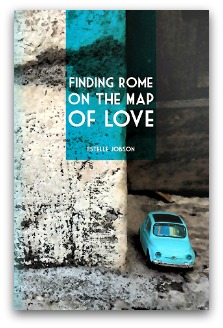
1) From Australia: SHEEP SHEARING
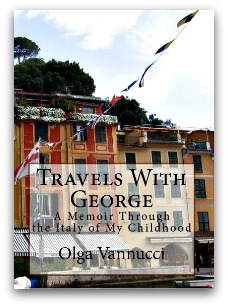
It’s a job; it’s a sport; it’s a hobby…the Aussies even hold a world championship of their own! Apparently seasoned shearers (or “guns”) can have the complete fleece off a medium-sized sheep is as little as two minutes. The current champion is Aussie Brendan Boyle, who in 2007 singlehandedly deprived 841 sheep of their coats in 24 hours! Hell, I think he deserves a medal just for wanting to. Or perhaps something more akin to a straight-jacket…

2) From South Africa: OSTRICH RACING

Yes, it’s true. It’s a sport and everything! They have jockeys and racetracks and…well, everything else you would expect, though it certainly isn’t sponsored by Goodyear. There are ostrich farms that occasionally let tourists have a go — but it’s not for the faint-hearted. Not only are ostriches damn hard to get on, harder to stay on and capable of doing over 40 mph — they’re also quite dangerous. Near Oudtshoorn, where the sport is most famously practiced, there are two or three people killed every year by ostriches — and up to a hundred world-wide! Brilliant. Kicked to death by an ostrich is going on my list of all-time weirdest ways to die!

Amazingly enough, this sport is on the increase. If you happen to live in New Jersey, you might get chance to see some — there’s a camel and ostrich race coming to the Meadowlands Racetrack in four days’ time!

3) From India: ROLLER SKATING LIMBO

I know, not exactly Southern Hemisphere — but this sport is so amazing it has to be given a chance! Check it out:

Like most sports, this probably goes on in other places too. Other, equally crazy places… But for the feat of flexibility this activity requires, you really can’t beat the Birthplace of Yoga when it comes to training. In India, when roller-skating under bars and beams ceases to be enough of a challenge, they try skating under cars! And when that’s no enough — under LOTS of cars!

In October of last year, an 11-year-old boy Rohan Ajit Kokane took advantage of the 35cm ground clearance and skated, blindfolded, underneath 20 cars in a row — a new Guinness World Record! If asked how he’d felt during the challenge, I’m sure he’d have replied “a little low…”

4) From New Zealand: ZORBING

Well, it’s hard to see how rolling down a hill in a giant inflatable ball could become competitive enough for a spot in the Olympics —  unless the challenge was to see how many times you could do it without being violently sick all over yourself, whilst still inside…! (Oh yeah, that would take some cleaning up!)

As an athletic activity though, you can’t beat zorbing. Trust the New Zealanders to come up with such an immensely fun sport! I can foresee zorbing obstacle courses coming into vogue in the not-distant future — after all, you can literally walk on water in one of these things. Or, wait — is that the next Olympic sport? White-water zorbing! Now surely there’s something medal-worthy in that? As for an athlete who would like to compete? Me. I’ll do it! Please…?

So what do you think, Displaced Nation-ers?

Which of these four is worthy of being the next Olympic sport?

Cast your votes in our poll — and if you have any other suggestions, I’d love to hear ‘em! Comment below, or hit us up on Twitter: @DisplacedNation and/or @TonyJamesSlater

Img: Tony James Slater celebrates his zorbing success (2009).

STAY TUNED for Wednesday’s Random Nomad interview with a champion linguist.

If you enjoyed this post, we invite you to register for The Displaced Dispatch, a round up of weekly posts from The Displaced Nation, with seasonal recipes, book giveaways and other extras. Register for The Displaced Dispatch by clicking here!

Related posts: