The Displaced Nation

A home for international creatives

Tag Archives: Crosscultural

BOOKLUST, WANDERLUST: 2014–2015 books recommended by expats & other international creatives (1/2)

Global Bookshelf Part OneHello Displaced Nationers! Looking back at the our popular series Best of 2014 in expat books, published at the end of last year, I decided we should continue the fun at the start of the year—and managed to convince our redoubtable editor, ML Awanohara, that the pair of us should canvass our “displaced” contacts to see what they’d enjoyed reading from last year’s crop of new books, as well as books they’re looking forward to reading in 2015.

A “best reads” roundtable, if you will.

In Part One, which appears below, several of my bookworm friends from a previous blog, Novel Adventurers, along with ML and JJ Marsh (JJ writes the Location, Locution column for Displaced Nation), discuss their favorite 2014 reads.

In Part Two, a similar group of us will talk about releases we’re hotly anticipating this year.

Having already shared my 2014 faves in last year’s series, I’ll concede the floor to others, beginning with ML.

—Beth Green

* * *

ML AWANOHARA: Thanks, Beth. These days, I seem to be more of a collector than a reader (I simply can’t keep up with all the titles I hear about!). If you’ll allow me to bend the rules, I’d like to highlight five more 2014 books I’ve discovered since our Best of 2014 in expat books went live. While I can’t personally recommend any of these titles, I feel justified in presenting them as an addendum to our series.

I’ll start with these four “displaced” novels, listed from most to least recent:

IHaveLivedToday_cover_300x200I Have Lived Today (October 2014)
Author: Steven Moore
Synopsis: Having barely survived his Dickensian childhood in 1960s Britain, Tristan Nancarrow sets out on a journey that will take him through the alleys of London and New York, to the rocky shores of ancient islands, and on pub crawls in dark and gloomy ports. The book is a classic coming-of-age adventure.
Expat creds: Originally from England, Moore is a writer, photographer, traveler and part-time ESL teacher who splits his time between Mexico, Korea and the world.
How we learned about: From his blog, Twenty-first Century Nomad.

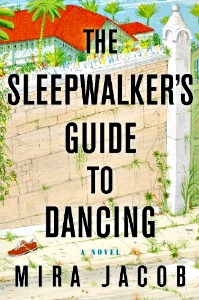
SleepwalkersGuide_cover_300x200The Sleepwalker’s Guide to Dancing (Random House, July 2014)
Author: Mira Jacob
Synopsis: This debut novel takes us on a journey that ranges from 1970s India to suburban 1980s New Mexico to Seattle during the dot.com boom. It follows the fortunes of the Eapens, an Indian American family dealing with tragedy and loss. Alternating between past and present, it shows the family’s transition from India to the United States. As one Indian critic writes, the story is “firmly rooted in an immigrant home, its peculiar methods and madness.”
Expat creds: Jacob is an Adult Third Culture Kid, whose Syrian Christian parents came over from Kerala, India, to New Mexico, in the 1960s. She now lives in Brooklyn with her Jewish American husband and son.
How we found out about: Recommended by Condé Nast Traveler as a book to read on a plane.

SummerattheLake_cover_300x200Summer at the Lake (Orion, June 2014)
Author: Erica James
Synopsis: An Oxford Tour guide, Floriana, a property developer, Adam, and Esme, an elderly woman who lives next door to a recent purchase by Adam, meet by chance and develop a lovely friendship, which takes them from the glittering spires of Oxford to the balmy shores of Lake Como. The story blends the tale of an old romance with a modern love affair.
Expat creds: James divides her time between living in Cheshire, UK, in a small rural hamlet and Lake Como, Italy, giving her plenty to draw upon in her books.
How we heard about: Pinterest.

TheBalladofaSmallPlayer_cover_300x200The Ballad of a Small Player: A Novel (Deckle Edge, April 2014)
Author: Lawrence Osborne
Synopsis: Lord Doyle decamps from the stuffy legal courtrooms of London to the smoky back-alley casinos of Macau, where he tries to capitalize on the ill-gotten gains that forced his flight from his homeland. But can he game the system at the island’s glitzy baccarat tables? With its expat angst and debauched air of moral ambiguity set amid the sinister demimonde of the Far East’s corrupt gambling dens, the book is an introspective study of decline and decay.
Expat creds: Lawrence Osborne was born in England and lives in New York City. A widely published and widely traveled journalist, he has lived a nomadic life in Mexico, Italy, France, Morocco, Cambodia and Thailand, places that he draws on in his fiction and non-fiction. His first novel was The Forgiven, which Beth Green reviewed for the Displaced Nation last year.
How we learned about: From Amazon.

Lastly, I have another expat memoir that was issued in 2014 and I think deserves a spot on our shelves:

FallinginHoney_cover_300x200Falling in Honey: How a Tiny Greek Island Stole My Heart (Sourcebooks, March 2014)
Author: Jennifer Barclay
Synopsis: Barclay first visited the tiny Greek island of Tilos, in the south Aegean, with friends, including a lover with promising prospects. In her mid-thirties when those prospects fell apart, she decides to reconnect with herself by returning to Tilos for a month and immersing herself in Greek culture, food, language, and dance. Emotionally healed and recharged, she returns to England, where she meets a man who wants what she wants, only to discover… (I won’t ruin it for you.)
Expat creds: Born in Manchester, UK, Barclay subsequently grew up on the edge of the Pennines—but has lived in Greece, Canada and France, with longish stays in Guyana and South Korea. She now lives mostly on Tilos. Notably, she previously produced a memoir about life in South Korea, amusingly titled Meeting Mr. Kim: Or How I Went to Korea and Learned to Love Kimchi.
How we learned about: Barclay’s “Gathering Road” podcast interview with Elaine Masters.


TheShadowoftheWind_coverJJ MARSH, crime series author and Displaced Nation columnist (Location, Locution): My best book of 2014 is The Shadow of the Wind, by Carlos Luis Záfon. All booklovers will fall hopelessly in love with this tale of a boy and a book he swears to protect after he is taken to the Cemetery of Forgotten Books by his bookseller father. Which of us could resist doing the same? Readers know how a story can act as a portal to otherwhere. This is the most perfect example, not to mention illuminating Barcelona in addition to the Franco dictatorship, love, loyalty and growth.


TheLie_coverHEIDI NOROOZY, adult TCK, translator and author (@heidinoroozy): One of the most remarkable and memorable books I’ve read recently is The Lie, by Hesh Kestin. Set in Israel, it features a Jewish human rights lawyer whose commitment to her principles is put to the test when her soldier son is kidnapped by Arab militants and whisked over the border to Lebanon. I love stories that explore the human spirit and are set against a backdrop of real-life events. The heart of this novel is the question of how far a mother is willing to go to save her child. Very chilling at times, heartbreaking at others and masterfully told overall.


PointofDirection_cover_300x200KELLY RAFTERY, translator and writer: In 2014, I loved Point of Direction, by Rachel Weaver. A starkly beautiful tale set in the Alaskan outback, it reads like a cross-cultural adventure. Most expats will recognize the feelings of culture shock, disorientation and unreality that haunt Anna, a woman on the run from her own ghosts. The sharp writing style perfectly mirrors the jagged mountains and rough seas that inhabit the novel as surely as another character.


SUPRIYA SAVKOOR, editor and mystery writer: I haven’t read many memoirs, but in recent months, I read two that blew me away. The first, Not My Father’s Son, by Alan Cumming, is a must-read, even if celebrity memoirs aren’t your thing or you don’t know much about this Scottish actor, now a dual American-British citizen based in New York City. NotMyFathersSon_cover_300x200Cumming, it turns out, is a genius storyteller, and he takes us on an extraordinary journey through two juicy family mysteries across four countries and three time periods. It is, in turns, emotional, tragic, exciting, suspenseful, and funny. The colorful cast of characters, with names like Tommy Darling and Sue Gorgeous, are real people. Along the way, you’ll learn all kinds of fascinating little tidbits, much of it cross-cultural, about genealogy, history, pop culture, language, psychology. Even Cumming’s anecdotes about his life as a TV and film star are surprisingly interesting, largely because of the author’s clear-eyed, honest wisdom. (I also highly recommend the audiobook, narrated by Cumming himself. Alongwayhome_cover_300x200 His lovely Scottish accent and intonations are an additional treat.)

A Long Way Home: A Memoir, by Saroo Brierley, is another great read. The story is simple but powerful: a five-year-old boy in rural India gets lost, is ultimately adopted to a family in Australia, then, as an adult, tracks down his birth family and reunites with them. How he pieces together his past and finds his roots is one of several beautiful mysteries in this small book. Loss and identity are obvious themes, but not just for the author. A truly unique story. (Side note: Modern technology is one of this book’s heroes.)


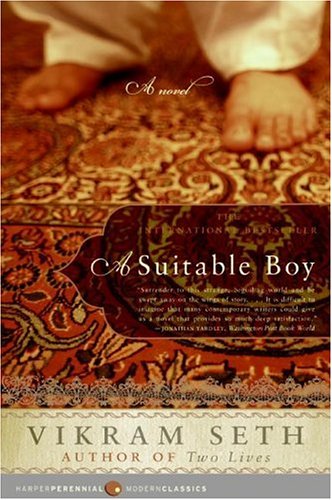
ASuitableBoy_coverALLI SINCLAIR, world traveler and novelist (www.allisinclair.com): I recently re-read A Suitable Boy by Vikram Seth. It was released way back in 1993 and caused quite a stir in the literary world as it was one of the longest novels ever to be published in English (1,349 pages hardcover). I first read it then, and, while it’s highly unusual for me to give a book a second or third read, every few years I return to this wonderful novel rich with Indian history, family saga, and a heartbreaking romance. It’s set in post-partition India and explores the political issues at the time (1950s), along with the Hindu-Muslim issues and the caste system. It’s quite an undertaking to read this book but I enjoy revisiting the characters I love. I am very fond of stories written by Indian authors as there is a beautiful style and interesting points of view I find appealing. There’s a sequel in 2016—I can’t wait!

* * *

Thank you, ML, JJ and guests! Readers, have you read any of the above or do you have further 2014 recommendations? Please leave a comment below. And stay tuned for Part Two of this post, books to look forward to in 2015!

Finally, please be sure to sign up for the DISPLACED DISPATCH, which has a Recommended Read every week. You can also follow the Displaced Nation’s DISPLACED READS Pinterest board.

STAY TUNED for PART 2 of this post: 2015 reads!

If you enjoyed this post, we invite you to subscribe to The Displaced Dispatch, a weekly round up of posts from The Displaced Nation, plus some extras such as seasonal recipes and occasional book giveaways. Sign up for The Displaced Dispatch by clicking here!

Related posts:

BOOKLUST, WANDERLUST: Best of 2014 in Expat Books (2/2)

Best of Expat Books 2014 Part 2Season’s greetings again, Displaced Nationers. And welcome back to our end-of-the-year bookfest!

Pass the eggnog!! (She takes a swig…)

Moving right along (hic!). In the first part of this BOOKLUST WANDERLUST series, posted yesterday, our BOOKLUST, WANDERLUST columnist Beth Green and I presented a list of 2014 expat books in the categories of Travel, Memoirs, and Cross-cultural Challenges.

In Part Two, we present our last three categories (hic, hic—hey, it’s the holidays!):

  1. IT’S FOOD!
  2. THIRD CULTURE KIDS
  3. COUNTRY GUIDES/TRIBUTES


A few points to note:

  • Books in each category are arranged from most to least recent.
  • Unless otherwise noted, books are self-published.
  • Contributions by Beth are in green (most appropriate, given her surname!).

* * *

IT’S FOOD!

Colour_of_Maroc_cover_smallColour of Maroc: A Celebration of Food and Life (Murdoch Books, October 2014)
Authors: Rob Palmer and Sophie Palmer
Synopsis: A collection of Moroccan recipes, both traditional and contemporary, interwoven with stories and anecdotes inspired by people, food and travel experiences as seen through the eyes of Rob, an Australian photographer, and Sophia, his French/Moroccan wife.
Expat Credentials: Rob first met Sophia in Sydney, who had freshly arrived in Australia from France. They were both on a food photo shoot for an ad agency. Fascinated by her half-Moroccan (she was born in Casablanca), half-French heritage, he was only too happy to join her on an extended tour of Morocco, which resulted in both marriage and this book.
How we heard about: Social media.


Cucina_Siciliana_cover_smallCucina Siciliana: A taste of the authentic Sicilian flavors (August 2014)
Author: Wanita
Synopsis: Wanita shares recipes she has collected from her elderly neighbor, her mother-in-law, and Italian friends she has made during her six years in Sicily—recipes that have passed down from generations, several of which, she suspects, have never been outside Sicily!
Expat creds: Wanita met her Sicilian husband on the Internet. After a 3-month online romance, he visited her in California; two weeks later, she accompanied him back to Sicily to get married. They now have an infant daughter.
How we found out about: We’ve pinned several of her Sicilian recipes to our IT’S FOOD! board.


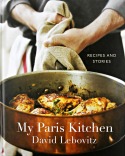
My_Paris_Kitchen_cover_smallMy Paris Kitchen: Recipes and Stories (Ten Speed Press, April 2014)
Author: David Lebovitz
Synopsis: A collection of 100 sweet and savory recipes that reflect the way modern Parisians eat today, combined with Lebovitz’s personal stories of life in the world’s culinary capital. The book also features lush photos of Paris and of Lebovitz’s kitchen.
Expat creds: Lebovitz is an American pastry chef who has been living the sweet life in Paris for a decade. Before moving to France, he made his name at Chez Panisse in Berkeley, California, with celebrity chef Alice Waters as his mentor.
How we found out about: We are among his throngs of followers, keeping up with him any way we can: Facebook, Twitter, Pinterest, his monthly e-newletter… My Paris Kitchen (his 7th book!) has been named best cookbook of the year by Amazon.


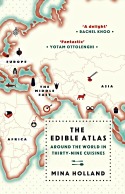
The_Edible_Atlas_cover_smallThe Edible Atlas: Around the World in 39 Cuisines (Canongate, March 2014)
Author: Mina Holland
Genre: International cookery
Synopsis: Not just a cookbook, The Edible Atlas introduces readers to the cultures behind the flavors and looks at why people eat what they do.
Expat credentials: Mina Holland, from the UK, has lived both in the USA and in Spain. She’s the acting editor of Guardian Cook.
How we heard about: Titles about food always catch our eye, and the idea of traveling around the world a mouthful at a time? Tantalizing! A review in Guardian Books first brought it to my attention.


THIRD CULTURE KIDS

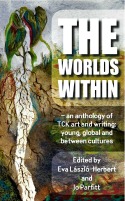
TheWorldsWithin_cover_smallThe Worlds Within, an anthology of TCK art and writing: young, global and between cultures (Summertime, November 2014)
Editors: Jo Parfitt and Eva László-Herbert
TCK Credentials: As the editors point out, that this is a rare book BY third culture kids, not about them.
Synopsis: Your mother is Swiss, your father is from the Philippines and you have so far lived in five countries, none of them your passport country. Who are you? Where are you from? Where is home? And what did you eat for breakfast? If you are a friend, this book will guide you. If you are a teacher, it will enlighten you. If you are a parent, it will spell it out for you and if you are an employer, it will convince you. Here they are, the cultural chameleons, the young global nomads, the TCKs—Third Culture Kids—from around the world, telling you their story.
How we heard about it: Initially from a Facebook post. Word is spreading fast on social media. One of the coolest things about this book? It features TCK art as well as writing.


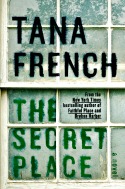
The_Secret_Place_cover_smallThe Secret Place (Dublin Murder Squad Book 5) (Penguin, August 2014)
Author: Tana French
Genre: Mystery
Synopsis: In Book 5 of the Dublin Murder Squad series, two detectives are given new information about a cold case—a boy’s murder on the grounds of an exclusive school for girls.
(A)TCK credentials: Tana French was born in Ireland but grew up in Italy, the USA, and Malawi during the years her family traveled with her father’s career as a development economist.
How we heard about it: I’m an avid reader of murder mysteries and fell in love with this series by French last year. In fact, I wrote about her Dublin Murder Squad series , and how it deals with issues of displacement, for my first Booklust, Wanderlust column.


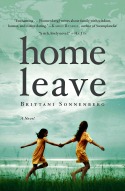
Home_Leave_sonnenberg_cover_smallHome Leave (Hachette, June 2014)
Author: Brittani Sonnenberg
Genre: Expat fiction
Synopsis: In a story that mirrors the author’s own life as a TCK, an expat family’s daughters search for their own identity and confront tragedy.
(A)TCK credentials: Sonnenberg was born in the USA but lived in the UK, Germany, China and Singapore as a child and teenager. She now lives in Berlin and treats Hong Kong as her second home.
How we heard about it: ML is always on the hunt for a good book about TCKs, so when she mentioned having read a review of the book last summer in the New York Times, I agreed to write a column about it.


COUNTRY GUIDES/TRIBUTES

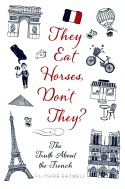
They_Eat_Horses_cover_smallThey Eat Horses, Don’t They? The Truth about the French (Thomas Dunne Macmillan, December 2014)
Author: Piu Marie Eatwell
Genre: Multicultural nonfiction
Synopsis: A series of entertaining mini-essays examines the stereotypes of French life, so beloved of the British in particular, only to discover that many are completely false.
Expat credentials: Eatwell, of mixed Asian and British descent, went to France for a long weekend one August summer holiday many years ago, and never left (how could she, with a surname like that?). After graduating from Oxford University, she trained first as a BBC television producer and then as a lawyer. Over the years she has worked as a documentary film maker, barrister, teacher, mother, and—most recently—full-time writer, both in London and Paris. They Eat Horses, Don’t They? is her first book.
How we heard about: Eatwell’s book is the winner of the 2014 Next Generation Indie Book Award in Amazon’s Multicultural Non-Fiction category.


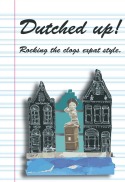
Dutched_Up_cover_smallDutched Up! Rocking the Clogs Expat Style (November 2014)
Authors: Various
Genre: Anthology
Synopsis: A compilation of stories by expat bloggers in the Netherlands.
Expat credentials: Too numerous to relay.
How we heard about: From a tweet by one of the contributors, Australian expat in Almere Nerissa Muijs. Once upon a time, Muijs was featured on our site as a Random Nomad. (She definitely rocks—we can vouch for it!)


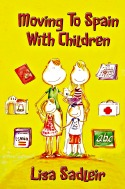
Moving_to_Spain_cover_smallMoving to Spain with Children: Essential reading for anyone thinking about moving to Spain (November 2014)
Author: Lisa Sadleir
Genre: Expat self-help
Synopsis: Spiced with the author’s own heart-warming anecdotes, the book aims to help you arrive at the same place her own family is now—but in half the time: living and loving family life in Spain!
Expat credentials: British born Lisa Sadleir is mother to two young, bilingual children. Educated in the UK and France, she has been a resident in Spain for over 23 years. She works as an independent relocation advisor and personal property finder.
How we heard about: Social media.


Paris_in_Love_cover_smallParis in Love (Chronicle Books, November 2014)
Author: Nichole Robertson
Genre: Photography
Synopsis: A photographic love letter to Paris from the author of the best-selling Paris in Color, capturing the hidden corners and secret moments that make Paris the most romantic city in the world.
Expat credentials: After a successful career in New York City as a writer and creative director for ad agencies, Robertson moved to Paris, which rekindled her love of photography and led to creating a series of prints and now books celebrating her relationship with the City of Light.
How we heard about: Social media.


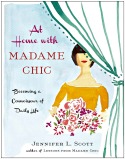
At_Home_with_Madame_Chic_cover_smallAt Home with Madame Chic: Becoming a Connoisseur of Daily Life (Simon & Schuster, October 2014)
Author: Jennifer L. Scott
Genres: Beauty/Fashion, How-to, Home Improvements
Synopsis: In this follow-up to her best-selling Lessons from Madame Chic, Scott has divided the book into two sections: 1) Chez Vous: exploring how to get your home in order and how to love it again; 2) Les Routines de la Journée: covering the pleasures of the morning, the pleasures of the afternoon, and the pleasures of the evening.
Expat credentials: Once upon a time, Scott was a college student living with a “chic” family in Paris, France, and her books represent her attempt to translate all that she learned from that European experience into her American lifestyle.
How we heard about: I interviewed Scott about her first book just before it was picked up by Simon & Schuster, and have been a big fan of hers ever since. (Her interview still gets lots of hits!)


How_to_live_in_Denmark_coverHow to Live in Denmark: A humourous guide for foreigners and their Danish friends (July 2014)
Author: Kay Zander Mellish
Synopsis: Life as a foreigner in Denmark, one of the world’s most homogenous countries, isn’t always easy. In this book, based on her popular podcast series, Kay Xander Mellish offers a fun guide to Danish culture and Danish manners, as well as tips on how to find a job, a date, someone to talk to or something to eat.
Expat credentials: An Wisconsin-born journalist, Mellish has lived in Denmark for more than a decade.
How we heard about: Mellish’s humorous and somewhat irreverent take on expat life caught our attention about a year ago, when she posted a story about the first woman to guard the Royal Palace at Amalieborg, who was fired not for being a prostitute but for refusing to follow orders and stop moonlighting—a post for which Mellish earned her one of our coveted (?!) Alice Awards. We were pleased to learn she’d published a book, and plan to feature it soon.


SoYou're_Moving_to_Australia_cover_smallSo, you’re moving to Australia?: The 6 essential steps to moving Down Under (June 2014)
Author: Sharon Swift
Genre: Self-help
Synopsis: Swift has distilled her formula for a successful international relocation into a 6-step process, outlined in this book for those making the big leap from the UK to Australia.
Expat credentials: Since her birth in Singapore to a British father and Singaporean mother, Swift has lived across five continents, experiencing life and cultures of 14 countries. Her move to Sydney from London in 2005 was her 18th international relocation. She lives in Sydney Inner West with her husband, both now Australian citizens.
How we heard about: Pinterest.

* * *

Your turn again, readers! Have you read any of the above works and if so, what did you think of them? And can you suggest other works to add to these three categories or to the ones presented yesterday? Beth and I look forward to reading your comments below.

From Beth:
Intrigued by some of these titles? Go ahead, download a few! ‘Tis the season to support the output of other international creatives.

In closing, please note: Beth and I may repeat this exercise in six months (summer reads). But if you can’t wait until then, I suggest that you sign up for our DISPLACED DISPATCH, which has a Recommended Read every week, and also follow our Pinterest board: DISPLACED READS.

Without further ado, we thank you for making this year great and wish you a season full of mirth and good cheer, along with the odd quiet moment for a displaced read or two!

(Oh, and pass that eggnog!!)

STAY TUNED for more fab posts.

If you enjoyed this post, we invite you to subscribe to The Displaced Dispatch, a weekly round up of posts from The Displaced Nation, plus some extras such as seasonal recipes and occasional book giveaways. Sign up for The Displaced Dispatch by clicking here!

Related posts:

BOOKLUST, WANDERLUST: Best of 2014 in expat books (1/2)

Best of Expat Books 2014

Kindle Amazon e-reader by Unsplash via Pixabay (CC0 1.0)

Seasons greetings, Displaced Nationers. That special time of the year is here again, when we publish our selection of this year’s books with meaningful connections to expats, Third Culture Kids, global wanderers, and others of us who have in some way led “displaced lives”.

Having assembled this list on my own in years past, I am pleased to be joined this year by Beth Green, our BOOKLUST, WANDERLUST columnist, who has also graciously agreed to sign over her column space for the month.

Let’s give Beth the floor:

Happy holidays, all! Preparing for this yearly special, I went back through all of the books I’ve read since January—not such an easy task; I read a lot!—and realized that I hadn’t actually read all that many that were published in 2014. I just now took a look at my TBR list, to which I’m constantly adding—and saw it includes a few that were written a couple of hundred years ago!

As is the case I suspect for many a well-traveled reader, I read most often on my Kindle, which means that I don’t often look at the title and publication pages to see when the book came out. Probably the book that has stayed with me for the longest this year is The Tiger’s Wife, the debut novel by Téa Obreht, an American writer of Bosniak/Slovene origin. But that came out in 2011!

* * *

And now for some 2014 picks in these three categories (stay tuned for a follow-up post with THREE MORE CATEGORIES!!):

  1. TRAVEL
  2. MEMOIRS
  3. CROSS-CULTURAL CHALLENGES

A few points to note:

  • Books in each category are arranged from most to least recent.
  • Unless otherwise noted, books are self-published.
  • Contributions by Beth are (appropriately enough!) in green.

* * *

TRAVEL

My_Gutsy_story_cover_smallMy Gutsy Story Anthology: Inspirational Short Stories About Taking Chances and Changing Your Life (Volume 2) (October 2014)
Compiled by: Sonia Marsh
Synopsis: Marsh celebrates the gutsy in each of us with this collection of stories from 64 authors who found the courage to face their fears and live their dreams.
Expat credentials: Born to a Danish mother and British father, who brought her to live in West Africa at the age of three months, Marsh has lived in many countries—Demark, Nigeria, France, England, the U.S. and Belize—and considers herself a citizen of the world. With a degree in environmental science from the University of East Anglia, U.K., she is currently living in Southern California with her husband but in 2015 intends to start a new chapter as a Peace Corps volunteer.
How we heard about: We have long enjoyed Marsh’s collection of “gutsy” travel stories and have followed her on Twitter for some time.
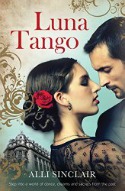

Luna_Tango_Cover_smallLuna Tango (The Dance Card Series Book 1) (Harlequin Mira, July 2014)
Author: Alli Sinclair
Genre: Romance
Synopsis: Tango is a mysterious—and deadly—influence in journalist Danni McKenna’s life. She looks for answers about her mother’s and grandmother’s lives, and finds romance in the process.
Expat credentials: Alli Sinclair is from Australia but lived for many years in South America, where she worked as a mountain and tour guide. She considers herself a citizen of the world.
How we heard about it:  I used to blog with Alli on the now-retired Novel Adventurers and have enjoyed hearing about her book’s path to publication. I was especially thrilled when Luna Tango won Book of the Year in the inaugural AusRom Today Reader’s Choice Awards last month. Congratulations, Alli!
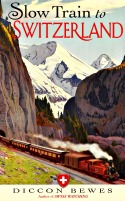

Slow-Train-final-cover_smallSlow Train to Switzerland (Nicholas Brealey Publishing, April 2014)
Author: Diccon Bewes
Genre: Travel history
Synopsis: Bewes follows “in the footsteps” of Miss Jemima Morrell, a customer on Thomas Cook’s first guided tour of Switzerland in 1863, and discovers how this plucky Victorian woman helped shape the face of modern tourism and Switzerland itself, transforming it into the Cinderella of Europe.
Expat creds: An Englishman who grew up in “deepest Hampshire”, Bewes worked for ten years at Lonely Planet and the UK consumer magazine Which? Travel, before moving to Bern, Switzerland, where he is now a full-time writer. He considers himself a “permanent expat.”
How we discovered: I came across Bewes’s blog through a Google Alert and was impressed by how prolific he is. I also liked the fact that he admits to being a chocolate lover. (No wonder he has a thing for Switzerland!)


Kamikaze_kangaroos_cover_smallKamikaze Kangaroos!: 20,000 Miles Around Australia. One Van,Two Girls… And An Idiot (February 2014)
Author: Tony James Slater
Synopsis: Tony James Slater knew nothing about Australia. Except for the fact that he’d just arrived there. The stage is set for an outrageous adventure: three people, one van, on an epic, 20,000-mile road trip around Australia. What could possibly go wrong?…
Expat credentials: As a former writer for the Displaced Nation, what more creds does Tony need?
How we heard about: The Displaced Nation is committed to tracking Tony’s progress as a writer. We are especially fond of his ability to make fun of himself! He wears his travels lightly, you might say…


MEMOIRS

Year_of_Fire_Dragons_cover_smallYear of Fire Dragons: An American Woman’s Story of Coming of Age in Hong Kong (Blacksmith, forthcoming June 2015; available for pre-order)
Author: Shannon Young
Synopsis: When 22-year-old Shannon follows her Eurasian boyfriend to his hometown of Hong Kong, she thinks their long distance romance is over. But a month later his company sends him to London. The city enchants her, forcing her to question her plans. Soon, she will need to choose between her new life and the love that first brought her to Asia.
Expat creds: Shannon is an American twenty-something currently living in Hong Kong. (Reader, she married him!)
How we knew about: Shannon writes our “Diary of an Expat Writer” column and has also been sharing “chunks” from an anthology she edited of writings by women expats in Asia (see listing below: under “Crosscultural Challenges”).


Coming_Ashore_cover_smallComing Ashore (October 2014)
Author: Catherine Gildiner
Synopsis: The third and final in a series of best-selling memoirs by this American who has worked for many years as a psychologist in Toronto and writes a popular advice column in the Canadian women’s magazine Chatelaine. The book begins with Gildiner’s move to Canada in 1970 to study literature at the University of Toronto, where she ends up rooming with members of the FLQ (Quebec separatists), among other adventures.
How we heard about: Book #2 in Chatelaine’s 7 must-read books for November.
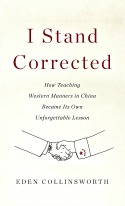

I_stand_corrected_cover_smallI Stand Corrected: How Teaching Manners in China Became Its Own Unforgettable Lesson (Nan A. Talese, October 2014)
Author: Eden Collinsworth
Synopsis: Collinsworth tells the story of the year she spent living among the Chinese while writing an advice manual covering such topics as personal hygiene (non-negotiable!), the rules of the handshake, and making sense of foreigners. (She has since returned to live in New York City.)
How we heard about: Book #3 in Conde Nast Traveler’s 7 Books to Get You Through Travel Delays, Bad Company.


Seven_Letters_from_Paris_cover_smallSeven Letters from Paris: A Memoir (Sourcebooks, October 2014)
Author: Samantha Vérant
Synopsis: At age 40, Samantha Verant’s life is falling apart—she’s jobless, in debt, and feeling stuck…until she stumbles upon 7 old love letters from Jean-Luc, the sexy Frenchman she’d met in Paris when she was 19. She finds him through a Google search, and both are quick to realize that the passion they felt 20 years prior hasn’t faded with time and distance.
How we heard about: From an interview with Vérant by British expat in Greece Bex Hall on her new blog, Life Beyond Borders.


Becoming_Home_cover_smallBecoming Home: A Memoir of Birth in Bali (October 2014)
Author: Melinda Chickering
Synopsis: Though born in small-town USA, Melinda never felt quite at home there. As an adult, her search for herself led her to the Indonesian island of Bali, where she found herself living a life she hadn’t anticipated, becoming a housewife and mother. This memoir of her experience with pregnancy and birth offers a window on life for a western woman living in an Asian culture that respects the forces of darkness as well as the light.
Expat credentials: Originally from Iowa, Chickering has settled in Bali.
How we heard about it: Displaced Nationer Melinda contacted me earlier this year to tell us the exciting news that her memoir was being published. Congratulations, Melinda!
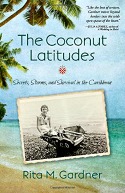

The_Coconut_Latitudes_cover_smallThe Coconut Latitudes: Secrets, Storms, and Survival in the Caribbean (September 2014)
Author: Rita M. Gardner
Synopsis: Rita is an infant when her father leaves a successful career in the US to live in “paradise”—a seaside village in the Dominican Republic. The Coconut Latitudes is her haunting, lyrical memoir of surviving a reality far from the envisioned Eden—and of the terrible cost of keeping secrets.
How we heard about: Displaced Nation columnist James King interviewed Rita for “A picture says”.
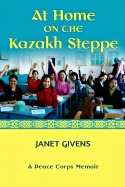

At_home_on_Kazakh_Steppe_cover_smallAt Home on the Kazakh Steppe: A Peace Corps Memoir (August 2014)
Author: Janet Givens
Synopsis: The story a middle-aged grandmother who left behind a life she loved and forged a new identity as an English teacher, mentor, and friend in Kazakhstan, a newly independent country determined to find its own identity after generations under Soviet rule.
How we heard about: Recommended by the We Love Memoirs Facebook Community.


Good_Chinese_Wife_cover_smallGood Chinese Wife: A Love Affair with China Gone Wrong (Sourcebooks, July 2014)
Author: Susan Blumberg-Kason
Synopsis: A shy Midwesterner, Blumberg-Kason spent her childhood in suburban Chicago dreaming of the neon street signs and double-decker buses of Hong Kong. She moved there for graduate school, where she fell for Cai, the Chinese man of her dreams. As they exchanged vows, she thought she’d stumbled into an exotic fairy tale, until she realized Cai—and his culture—where not what she thought. One of our featured authors, Wendy Tokunaga, says: “A fascinating, poignant and brutally honest memoir that you won’t be able to put down. Good Chinese Wife is riveting.”
How we heard about: We had known about the book for some time but hadn’t realized it came out this year Jocelyn Eikenburg tipped us off in her comment below. She, too, highly recommends.
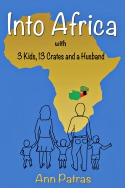

Into_Africa_cover_smallInto Africa: 3 kids, 13 crates and a husband (June 2014)
Author: Ann Patras
Synopsis: Patras was born and raised in Burton-upon-Trent, in the English Midlands. When her husband, Ziggy, is offered a two-year contract as site manager for building a new cobalt plant in Zambia, they discuss the pros and cons of leaving luxuries and England behind—and then decide it could be an “interesting” family adventure. They end up raising three kids, countless dogs and living in Africa for over thirty years. (She and Ziggy now live in Andalucía, Spain, and have absolutely no intention of ever moving again. Hmmm…have they encountered Charlotte Smith yet? See next item.)
How we heard about: E-book promotion.
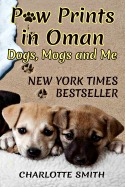

PawPrintsinOman_cover_smallPaw Prints in Oman: Dogs, Mogs and Me (April 2014)
Author: Charlotte Smith
Synopsis: Smith was born, raised and lived in West Sussex, UK, until her persuasive husband, Nick, swept her and their youngest daughter off to live in mystical Oman. Her love of animals helped her to shape an extraordinary life in the Middle East—her first step being to convince a local veterinary clinic to employ her. (Note: Smith now lives in Andalucía, in southern Spain.)
How we heard about: Recommended by the We Love Memoirs Facebook community. The book was also on the New York Times best-seller list (“animals”) in October.


loveyoubye_cover_smallLoveyoubye: Holding Fast, Letting Go, And Then There’s the Dog (She Writes Press, April 2014)
Author: Rossandra White
Synopsis: A collision of crises on two continents forces Rossandra White to face the truth. Just as her American husband disappears to Mexico, her brother’s health crisis calls her back home to Africa, and her beloved dog receives a fatal diagnosis. She faces down her demons to make a painful decision: stay in a crumbling marriage, or leave her husband of 25 years and forge a new life alone.
How we heard about: Through a Facebook share of White’s Good Reads giveaway.
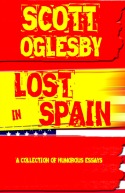

Lost_in_Spain_cover_smallLost in Spain: A Collection of Humorous Essays (March 2014)
Author: Scott Oglesby
Synopsis: Scott Oglesby moved to Spain to start over. When he discovered he was still the same person, now six thousand miles from home, the result was dysfunction, delusion, chaos and this book, which many readers have described as “hilarious” and “brilliant”.
How we heard about: E-book promotion.


Journey_to_a_Dream_cover_smallJourney to a Dream: A voyage of discovery from England’s industrial north to Spain’s rural interior (February 2014)
Author: Craig Briggs
Synopsis: Craig, his wife Melanie and their dog, Jazz, left their home town of Huddersfield, in England’s industrial north, and set off for Galicia: a remote and little-known autonomous province in the northwest corner of Spain. And so began their Journey to a Dream…
How we heard about: E-book promotion, as a result of which I am currently reading this on my Kindle. It’s very well written and entertaining.


Paris_Letters_cover_smallParis Letters: One woman’s journey from the fast lane to a slow stroll in Paris (February 2014)
Author: Janice Macleod
Synopsis: MacLeod found herself age 34 and single, suffering from burn-out and dissatisfaction. So she abandoned her copywriting job and headed off to Europe, where she ended up finding love and freedom in a pen, a paintbrush…and Paris! Macleod says her journey was inspired by The Artist’s Way, written by Julie Cameron.
How we heard about: From an interview with MacLeod by American expat in Paris Lindsey Tramuta, which appeared on Lindsey’s blog, Lost in Cheeseland.


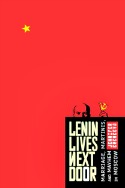
lenin_smallLenin Lives Next Door: Marriage, Martinis, and Mayhem in Moscow (Small Batch Books, January 2014)
Author: Jennifer Eremeeva
Synopsis: Based on Eremeeva’s two decades in Russia, Lenin Lives Next Door is a work of self-described “creative nonfiction.” It knits together vignettes of cross-cultural and expatriate life with sharp observation, historical background, and humor. Each chapter explores an aspect of life in today’s Russia, told with the help of a recurring cast of eccentric Russian and expat characters, including HRH, Eremeeva’s Handsome Russian Husband (occasionally a.k.a. Horrible Russian Husband), and their horse-mad daughter.
How we heard about: Eremeeva sent me a review copy and we met up for coffee at Columbia University. I found her a delightful conversationalist. No wonder several reviewers have likened her style to Jane Austen’s.


CROSS-CULTURAL CHALLENGES
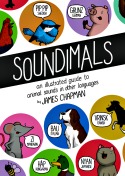
Soundimals_cover_smallSoundimals: An illustrated guide to animal sounds in other languages (November 2014)
Author/illustrator: James Chapman.
Synopsis: In English, we say dogs go WOOF, but in Romanian they go HAM HAM. Chapman regularly publishes illustrations of onomatopoeia and animal sounds in other languages on his Tumblr blog. This book (available through his Etsy shop) collects some of those plus a lot of new sounds that weren’t in the original comics, and a few new animals that haven’t been posted at all.
Expat creds: None that we know of; would love to hear more about how he got started collecting these sounds.
How we heard about: Pinterest.
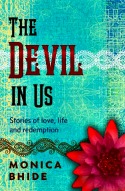

The_Devil_in_us_cover_smallThe Devil in Us (CreateSpace, October 2014)
Author: Monica Bhide
Genre: Literary fiction
Synopsis: Short stories that carry you to a far away place, amidst people seemingly very foreign to you, but somehow create a connection—from the Indian-American cancer survivor escaping her pain and finding passion in Mumbai, to the Japanese teen in Georgetown discovering forbidden love. Bhide is known for her writings about Indian food. This is her first work of fiction.
Expat creds: Monica is originally from Delhi, India, but has lived in Bahrain ad now in the United States.
How we found out about: Pinterest.
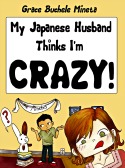

Japanese_Husband_cover_smallMy Japanese Husband Thinks I’m Crazy! The comic book: Surviving and thriving in an intercultural, interracial marriage in Tokyo (October 2014)
Author: Grace Buchelle Mineta
Genre: Comics/manga; humor
Synopsis: The autobiographical misadventures of a native Texan freelancer and her Japanese “salaryman” husband, in comic book form.
Expat credentials: Mineta grew up mostly in Texas, but also spent her teenage years in Accra, Ghana and Sapporo (Hokkaido), Japan. She now lives in Tokyo with her Japanese husband (they got married in January) and blogs at Texan in Tokyo.
How we found out about: From a guest post by Mineta on Jocelyn Eikenburg’s blog, Speaking of China, titled The “Dark Side” to Moving Across the World for Love.
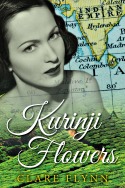

Kurinji_Flowers_cover_smallKurinji Flowers (October 2014)
Author: Clare Flynn
Genre: Historical romance
Synopsis: Set in South India during World War II and India’s struggle for independence, the book is centered on a young British colonial, Ginny Dunbar, who has arrived in India for a new start in life. She has to battle her inner demons, the expectations of her husband, mother-in-law, and colonial British society, and her prejudices towards India and its people.
Expat credentials: Flynn is a repeat expat, having lived for two years each in Paris and Brussels, three years in Milan, and six months in Sydney, though never in India. She now lives in London but spends as much time as she can in Italy. Almost needless to say, Flynn loves travel and her idea for this book came while she was on holiday in Kerala, India.
How we knew about: Flynn was interviewed by JJ Marsh for the latter’s popular column, LOCATION LOCUTION.
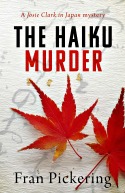

The_Haiku_Murder_cover_smallThe Haiku Murder (Josie Clark in Japan mysteries Book 2) (October 2014)
Author: Fran Pickering
Genre: Expat mystery series
Synopsis: A haiku-writing trip turns to tragedy when a charismatic financier falls from the top of Matsuyama castle. But was he pushed? Expat Londoner Josie Clark thinks he was, and that’s when the trouble starts…
Expat credentials: Pickering has lived and worked in Tokyo, and though she is now back in London (literally next door to where she was born), she travels back to Japan frequently to visit friends and do research for the Josie Clark mystery series.
How we heard about: Pickering was interviewed by JJ Marsh for the latter’s popular column, LOCATION LOCUTION.
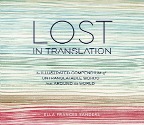

LostinTranslation_cover_smallLost in Translation: An Illustrated Compendium of Untranslatable Words from Around the World (September 2014)
Author: Ella Frances Sanders
Genre: Illustration/Translation
Synopsis: Did you know that the Japanese language has a word to express the way sunlight filters through the leaves of trees? Or that there’s a Finnish word for the distance a reindeer can travel before needing to rest? This book is an artistic collection of more than 50 drawings featuring unique, funny, and poignant foreign words that have no direct translation into English.
Expat credentials:  A self-described “intentional” global nomad, Sanders has lived all over the place—most recently Morocco, the United Kingdom, and Switzerland.
How we heard about: From a post about the book by Maria Popova on her much-acclaimed Brain Pickings site.


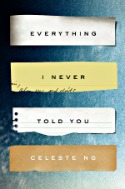
Everything_I_Never_Told_You_cover_smallEverything I Never Told You (Penguin, June 2014)
Author: Celeste Ng
Genre: Thriller
Synopsis: A mixed-race family in the 1970s tries to unravel a family tragedy.
Expat credentials: Celeste Ng isn’t an expat, but she has a deep understanding of what it means to feel displaced. Her work deals with multiculturalism and race issues in the United States.
How we heard about it: It was voted the Amazon Book of the Year.
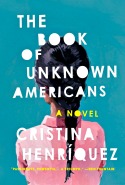

TheBook_Of_Unknown_Americans_smallThe Book of Unknown Americans (Knopf, June 2014)
Author:  Cristina Henríquez
Genre: Literary fiction
Synopsis: Arturo and Alma Rivera have lived their whole lives in Mexico. One day, their beautiful fifteen-year-old daughter, Maribel, sustains a terrible injury, one that casts doubt on whether she’ll ever be the same. And so, leaving all they have behind, the Riveras come to America with a single dream: that in this country of great opportunity and resources, Maribel can get better.
Expat credentials: Henríquez isn’t an expat, but her father was—he came to the US from Panama to attend university.
How we heard about it: Henríquez’s novel was Amazon’s No. 1 bestseller this year in the Hispanic American Literature & Fiction category.


TheOtherLanguage_cover_smallThe Other Language (Pantheon, April 2014)
Author: Francesca Marciano
Synopsis: A collection of short stories involving women who are confronted by radical change or an old flame, in locations that range from New York to India to Kenya to southern Italy.
Expat credentials: Marciano is an Italian novelist who left Rome at age 21 to live in the United States. She later moved to Kenya, where she lived for a decade. Although Italian is her first language, she chooses to write in English.
How we found out: From an essay by William Grimes in the New York Times Book Review: “Using the Foreign to Grasp the Familiar: Writing in English, Novelists Find Inventive New Voices.”


Dragonfruit_cover_smallHow Does One Dress to Buy Dragon Fruit: True Stories of Expat Women in Asia (April 2014)
Editor: Shannon Young
Genre: Expat non-fiction; anthology
Synopsis: In this collection, 26 women reveal the truth about expatriate life in modern East Asia through original works of memoir and creative non-fiction.
Expat credentials: To qualify for inclusion in the volume, writers had to be able to say they were, or had once been, expats.
How we heard about: We have followed Shannon Young ever since she contributed to the Displaced Nation on the topic of the London Olympics. She currently writes a column for us about being an expat writer, and we’ve been sharing “chunks” from her Dragonfruit anthology for the past few months.


Chasing_Athens_cover_smallChasing Athens (April 2014)
Author: Marissa Tejada
Genre: Romance
Synopsis: When Ava Martin’s new husband unexpectedly ditches her months after they’ve relocated across the world to Greece, the heartbroken American expat isn’t sure where home is anymore. On the verge of flying back to the States with her tail between her legs, she makes an abrupt decision to follow her gut instead and stay on in Greece, until a crisis back home forces her to decide where she truly belongs.
Expat credentials: A Native New Yorker, Tejada is an author, writer and journalist based in Athens, Greece. Living the expat life in Europe inspired her to write her debut novel.
How we heard about it: Again, from an interview conducted by British expat in Greece Bex Hall on her blog, Life Beyond Borders.


Moving_without_Shaking_cover_smallMoving Without Shaking: The guide to expat life success (from women to women) (April 2014)
Author: Yelena Parker
Genre: Guidebook-meets-memoir
Synopsis: Parker draws from the experiences and views of 9 women who have lived across 12 countries, to craft a resource for those who are dreaming of—or already facing—relocation abroad.
Expat creds: Parker herself is originally from Eastern Ukraine but has lived and worked in the US, Switzerland, the UK and Tanzania. She has chosen London as her latest expat location.
How we heard about: From a Google Alert.
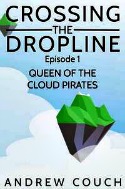

QueenOfCloudPirates_cover_smallQueen of the Cloud Pirates (Crossing the Dropline Book 1) (March 2014)
Author: Andrew Couch
Genre: Fantasy novella
Synopsis: Far to the North of the Iron League core cities lies the Dropline. Beyond this line of cliffs the power of elemental Air rules supreme. The crucial region is threatened and two young men stand at the tipping point. In order to survive, they must learn to work together and rise above their own shortcomings. Oh yeah, and escape from pirates. Don’t forget the pirates….
Expat credentials: An American abroad, Couch lives with his wife in Freiburg, Germany. He says that much of the inspiration for the worlds he writes about is a mix of a wild and crazy imagination (he grew up reading fantasy books) and his travels around the world.
How we found out about: Couch contributes the HERE BE DRAGONS column to the Displaced Nation, focusing on the connection between the displaced life and fantasy writing (more powerful than any skeptics out there might think!).
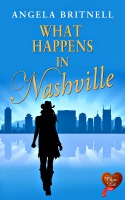

What_Happens_in_Nashville_cover_smallWhat Happens in Nashville (March 2014)
Author: Angela Britnell
Genre: Romance (“choc lit”)
Synopsis: Claire Buchan, a straight-laced barrister from Exeter, UK, flies to Nashville, Tennessee, to organize her sister Heather’s bridal bash—and quickly finds herself out of her comfort zone and into the arms of a most unsuitable beau…
Expat credentials: Britnell grew up in a small Cornish village in southwestern England. She served in the Royal Navy for almost six years, culminating in an assignment in Denmark, where she met her American husband. Thus began a chronic expat life. The couple, now empty nesters, have settled in Brentwood, Tennessee.
How we heard about: Rosie Milne wrote about Britnell in an article that appeared on Telegraph Expat: “Expat romantic novelists inspired by real life.” (Milne btw lives in Singapore and runs Asian Books Blog.)


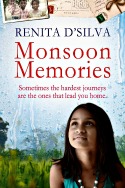
Monsoon_Memories_cover_smallMonsoon Memories (January 2014)
Author: Renita D’Silva
Genre: Literary fiction
Synopsis: Sometimes the hardest journeys are the ones that lead you home. Exiled from her family in India for more than a decade, Shirin and her husband lead a comfortable but empty life in London. Memories of her childhood fill Shirin with a familiar and growing ache for the land and the people that she loves. With the recollections, though, come dark clouds of scandal and secrets. Secrets that forced her to flee her old life and keep her from ever returning…
Expat credentials: Now living in the UK, Renita grew up in a picturesque coastal village in South India.
How we heard about: Amazon.
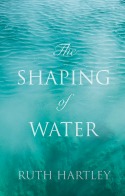

The_Shaping_of_Water_cover_smallThe Shaping of Water (December 2013—we’re letting it squeak in!)
Author: Ruth Hartley
Genre: Literary fiction
Synopsis: The story concerns the overlapping lives of several different people, expats and locals or some mix, who are connected to a ramshackle cottage by a man-made lake in Central Africa during the Liberation wars across its region.
Expat credentials: Hartley grew up on her father’s farm in Zimbabwe, which at that point was known as Rhodesia, at a time when struggles for independence in European-ruled African territories were spreading like a wave. As a young woman, she moved to South Africa to study art and then had to escape to England because of her political activities. She later moved back to Africa, as an expat. She now lives in Southern France.
How we heard about: I discovered Hartley via one of my social networks and then decided to approach her about being interviewed for the Displaced Nation.

* * *

Your turn readers: Have you read any of the above works and if so, what did you think of them? And can you suggest other works to add to the list? Beth and I look forward to reading your comments below!

From Beth:
Intrigued by some of these titles? Go on, download a few! ‘Tis the season to support the output of other international creatives!

Finally, please note: Beth and I may repeat this exercise in six months (summer reads!). But if you can’t wait until then, I suggest that you sign up for our DISPLACED DISPATCH, which has a Recommended Read every week, and also follow our Pinterest board: DISPLACED READS.

STAY TUNED for PART 2 of this post: IT’S FOOD!, THIRD CULTURE KIDS & COUNTRY GUIDES/TRIBUTES.

If you enjoyed this post, we invite you to subscribe to The Displaced Dispatch, a weekly round up of posts from The Displaced Nation, plus some extras such as seasonal recipes and occasional book giveaways. Sign up for The Displaced Dispatch by clicking here!

Related posts:
TCK TALENT: Even without slide projector, projection of life as a Third Culture Kid engages Reykjavík audiences

TCK in Iceland Collage

Elizabeth Liang in front of Tjarnarbíó, in downtown Reykjavík, where she performed her one-woman autobiographical show, Citizen Alien, on growing up as a TCK of mixed heritage. Photo courtesy Elizabeth Liang.

This month Elizabeth (Lisa) Liang updates us on her own creative life, which this past summer veered in the direction of an island situated at the confluence of the North Atlantic and Arctic Oceans!

Halló, vinir mínir! Hello, my friends! I’m addressing you in Icelandic because in this month’s column I’ll be re-creating my journey to Reykjavík, where I traveled in August to perform ALIEN CITIZEN: An Earth Odyssey, my one-woman show about growing up as a Third Culture Kid, or TCK, of mixed heritage.

How did I end up performing my show in Iceland? I have a friend in that part of the world who put me in touch with the artistic director of Tjarnarbíó, a creative center for professional live art in Reykjavík, who enthusiastically offered to host the show if I could cover my travel and lodging. Presented with a chance to combine three of my favorite activities—acting, writing and travel—how could I resist?

Engum flýgur sofanda steikt gæs i munn (“One cannot expect to benefit without making some effort”)—Icelandic proverb

My husband, Dan, agreed to work as my stage manager, which was perfect because he knows the show so well. I launched a successful Kickstarter campaign to raise the requisite funds for our trip, found a cozy house in Reykjavík on AirBnB for us to rent, bought our flights, started promoting the show on social media—and then off we went to the Land of Fire and Ice.

We arrived in ideal weather, cool and dry, which many Icelanders told us was lucky because it had been raining all summer. We were relieved to find that our lodgings were in a quiet, pleasant residential area that was a seven-minute walk to downtown and a 15-minute walk to Tjarnarbíó.

Tjarnarbíó is a beautiful venue with state-of-the-art technology. At the technical rehearsal, the two “techies” who adjusted the lights and projector were friendly and professional. (Incidentally, we never met anyone in Iceland who was unfriendly, and the Icelanders we encountered all spoke perfect English, some with gorgeous British accents.)

That said, we had an unexpected snafu at the tech rehearsal. There are two kinds of projections in the show:

  1. Pictures and videos that are projected onto a screen via my laptop, and
  2. Words that I project onto my torso using an old-fashioned slide projector.

During the tech rehearsal, the slide projector I’d used in the show for over a year konked out. The stage hand and I stared at the plume of smoke rising from the top and said: “It’s smoking.”

No, the problem was not the power converter. We had the right one. Nor was it the bulb. We replaced it but the projector still didn’t revive. So my Icelandic friend’s father-in-law generously loaned us his. More on this later…

Citizen Alien Photo Strip

(top to bottom) At the tech rehearsal, the lights were lowered from the ceiling–fancy!; opening night; closing night; post-show celebratory drink; with Dan in front of Hallgrímskirkja Church; with Dan in Þingvellir National Park. All photos courtesy Elizabeth Liang.

August 20, 2014: Opening Night

We had an audience! I only knew of five people who were planning to attend (of whom I’d actually met only one—my Icelandic friend). What a pleasant surprise to see twenty or so people in the house!

And they laughed! I guess the show’s humor translates.

Dan stage managed wonderfully and the light board operator did a great job, too. The only hitch was that when it came time to project slides onto my torso, the borrowed projector didn’t work, even though we’d tested it earlier. I improvised and the audience went right along with this. (Afterward, a very kind audience member offered to loan us his projector, but when we met later, he realized it had a part missing. So Iceland never got to see words projected onto my torso. Ah, well.)

The best part of opening night was the fact that I enjoyed myself on stage, which hadn’t happened in a while. There were two curtain calls and people stayed afterward to shake my hand, thank me, and say lovely things. It was such a pleasure. About half were Icelandic and the other half internationals—once again, the right people had found me and my show. Several said they would spread the word for the next performance.

A few people from Spain, France, the Czech Republic, and Iceland hung out with us at Tjarnarbíó’s cafe afterwards. They all mentioned different parts of the show that resonated for them, and one said she felt that the show does a service for nomadic and non-nomadic people—it’s like a bridge between them. They thought it should be filmed, which I’m planning to do in December.

All hail my director, Sofie Calderon, for making this show such a dynamic experience for the audience! People from far and wide have enjoyed the production, and that’s Sofie’s doing. If it had been up to me, I would have found ways to hide onstage, because performing a solo show is super scary.

August 22, 2014: Closing Night

More people in the audience, which was very moving, because I knew none of them. The word of mouth from opening night must have been good. And maybe all those promos I sent to the international school and Facebook groups helped…?

The performance didn’t feel as good—I was having less fun and getting fewer laughs—but I forged ahead. Afterward Dan and the light board operator said “No way, it was TIGHT, really good show!” Yet more proof that we actors have no idea how well we’re doing. We only know if the audience is responsive or quiet.

Just like on opening night, a bunch of people waited to speak to me afterward. One was a young adult TCK who was very moved by the show. Another was a professor at the University of Rekjavík whose field of study is TCKs. Their compliments, along with all the words of support from other audience members, was tremendously encouraging.

Because the truth is: before embarking on this Northern European adventure, I had no idea how audiences would react, or if there would be any audiences at all. I had girded myself to perform for a handful of kindly people on opening night and then possibly cancel closing night because who knew if there would be enough interest?

Reykjavík may be a small capital, but as it turns out, it has plenty of residents who are international or international in outlook, and open to trying new things.

Kleina & coffee, Björks in boots, Lutherans & lava…

Beyond the show, Dan and I had a glorious time exploring small but pretty Reykjavík; the Blue Lagoon, a thermal spa located in a lava field in Grindavík; and the Golden Circle, a route the loops from Reykjavík to central Iceland and back. Other highlights included:

  • snacking on kleina, a donut-like pastry in the shape of a trapezoid;
  • visiting Hallgrímskirkja, the Lutheran cathedral designed to resemble the lava flows of Iceland’s landscape, and Settlement House;
  • hanging out at the Boston, said to be one of the world’s best bars, and at several coffee houses; and
  • last but not least, watching singers and dancers all over town on Culture Day/Night, a day and night-long program of cultural events that takes place in August every year and is one of the country’s largest festivals.

I also got a kick out of Icelandic fashion—bright colors, unusual cuts—and, as I love boots, was pleased to see practically every woman sporting boots of some kind: ankle, knee-high, sexy, hiking, and everything in between. (Did I buy a pair? Nope. Iceland is expensive.)

On our last night, we stepped out onto our little street to see fireworks, which felt like a final burst of congratulations. I got teary-eyed!

Overall, it was a delightful trip. Dan and I left thinking we’d like to go back someday. We want to see more of the island (puffins! volcanoes!), enjoy the friendly vibe…and hopefully bring another solo show for Icelanders’ entertainment—but without any cantankerous 1980s equipment.

* * *

Thank you, Lisa! Having only been to the Blue Lagoon as a round trip from Keflavík International Airport, I really appreciated this vicarious journey into the heart of the city’s cultural scene. And, as always, I’m impressed that you were contributing to the culture as well as taking something from it! Readers, please leave questions or comments for Lisa below.

STAY TUNED for next week’s fab posts!

If you enjoyed this post, we invite you to register for The Displaced Dispatch, a round up of weekly posts from The Displaced Nation, with news, book giveaways and other extras. Register for The Displaced Dispatch by clicking here!

Related posts:

TCK TALENT: Cathleen Hadley, Porteña at Heart and Artist by Calling

Cathleen Hadley Collage

Cathleen Hadley in the transit lounge nervously awaiting her son’s arrival from Afghanistan, taken by her husband, Roger.

Elizabeth (Lisa) Liang is back with her monthly column about Adult Third Culture Kids (ATCKs) who work in creative fields, Lisa herself being a prime example. A Guatemalan-American of Chinese-Spanish-Irish-French-German-English descent, she has developed her own one-woman show about being a TCK, which was the closing keynote at this year’s Families in Global Transition (FIGT) conference.

—ML Awanohara

Greetings, readers! My guest today is Cathleen Hadley, my fellow ATCK author in the anthology Writing Out of Limbo: International Childhoods, Global Nomads and Third Culture Kids. Cathleen grew up in South America and the USA; she is a visual-turned-conceptual artist now living in Oviedo, Florida.

* * *

Welcome to The Displaced Nation, Cathleen. I understand that as the US-born TCK child of American parents—a Foreign Service dad and a homemaking mom—you lived in the United States (Washington, DC and Maryland), Venezuela, and Argentina before enrolling in Hartford Art School, part of the University of Hartford in Connecticut, and starting your adult life back in your “home” country. Recalling these many transitions, do you have a place and a time where you felt happiest, as in least displaced?
I had a happy childhood in Maryland, but of all the places I lived while growing up, I liked Buenos Aires the best. BA was like a first love; I had come to it fresh, and found it fascinating. It gave me the freedom to explore, discover joy in my life and youth, find myself in the arts… The depth of my feelings for this city are perhaps best summed up in my reaction to the first book I read by the Argentine writer Jorge Louis Borges (who was a living celebrity at the time), his short story collection Labyrinths. I likened myself to one of his halls of mirrors, and felt as though I lived in his circular time travel of art: prose to dreams or dreams to canvas and so on.

Was it an adjustment coming back to the U.S. after such a heady experience?
When I left, I carried as many things Argentine as I could. I had a lot to relearn. In BA, for example, I was courteously late for all appointments, but that was unacceptable in the USA. I had forgotten that if a class started at 8:00 a.m., I should arrive 15 minutes earlier or at least be on time. This reset to my inner clock was harsh. I still carry the music of the language spoken with soft “che” sounds. It grates on my ears to hear the City of Good Airs mispronounced.

But I presume you enjoyed attending art school?
My first art school: the smell, lighting, and echoes in those rooms resonated with my awareness of being in a circle of like-minded souls. Each project was an awakening, a revelation of inner potential.

Becoming a tourist in her own country

Limbo_coverIn your essay in the anthology Writing Out of Limbo, called “Artist in Transit,” you write about the difficulties of repatriation. I can relate! Eventually, you married a U.S. Navy officer and the pair of you ended up living in several different states.
After years of meeting Germans, Indians, and other assorted nationalities who congratulated me on my awareness of the culture of others but admonished me for my lack of knowledge about my native land, I decided that the Navy could serve as my passport to the United States—I would follow my husband, Roger, in his career. I particularly enjoyed being stationed in the Pacific Northwest, our final destination while he was active Navy. It offered the combination of climate from where I grew up in Maryland (think gardening), the temperate weather of Buenos Aires, and the emerald green and mists of the Indonesian Islands.

How did moving to different states compare to your earlier experience of moving from country to country?
The experiences were not dissimilar. Each place we lived in the United States had a different routine and a distinct local culture. Living in Ridgecrest, California (the Mojave Desert) was vastly different from living in San Diego—and that was within the same state! The Navy culture and traditions—those we carried with us everywhere. And having a child, a son, rooted me in life/home.

And now you live in Florida?
Now I am in a place that was not on my map—Florida, where I moved to be near my parents. Roger and I are rooted here by necessity, by the roof over our heads, his job, and my disability (chronic back pain).

I’m so sorry to hear about your back pain. That would be hard for anyone to endure, but especially an artist and a traveler! Going back to your upbringing: are you like many of us TCKs in that you tend to gravitate towards people who have similar interests and perhaps similar cross-cultural backgrounds? (And of course it’s not a given we’ll become fast friends…)
Identifying with people from my own culture is an ongoing process, and to this day I often find myself failing when making an effort to blend in. I suppose I am happiest with my dear old friends from my traveling TCK days and with those Navy folks from my ATCK days. And I was drawn to you, fellow author—Limbo brought us together because of the “resonance” we find in each other’s stories. Though we’ve never met in person, I am certain that if we did, we’d be comfortable and familiar with each other.

“Painting is silent poetry.” — Plutarch

Something that resonated with me from your Limbo essay was your description of how you behaved on home leave during your adolescent years: “I began wearing a mask, holding back information, or my true stories and feelings.” I gather you found ways to express yourself through your art, as I did through acting. Are there particular art works of yours that express these feelings of transience or loneliness or instability—and what about the freedom, curiosity, and love of travel you’ve also experienced?
Yes. I can share several examples:

ch_arrival

“Arrival,” by Cathleen Hadley

I created this painting, “Arrival”, a cleaned-up version of which was used on the cover of Limbo, when imagining what my son would see when serving in Afghanistan. That was a speechless, visual time for me. I wanted to paint endless versions of the same horizon until he came home.

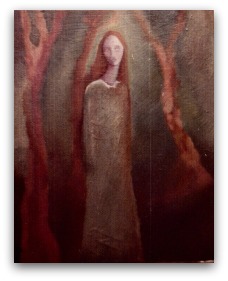
"Phantom in the Woods," by Cathleen Hadley

“Phantom in the Woods,” by Cathleen Hadley

Here I painted myself looking like a phantom standing in a dark and gloomy woods, which symbolized the closed-in feelings I had about transience, loneliness, and instability. The ghost is passing through the landscape of an imaginary world because “place” did not yet exist.

CH_Bug Quilt

Bug Quilt, created by Cathleen Hadley for her son, Alan.

I asked my son to pick out whatever quilt pattern he wanted and I would make it for him. Of course he picked one that required a complicated technique called appliqué, which requires attaching small pieces of fabric to a larger piece. It was way out of my league—not on my list of quilting goals. But making Bug Quilt represented my love for him and my husband, and what it took to make a home for all of us.

What sort of artwork do you find yourself doing now? And is it influenced by any culture(s) and/or by your peripatetic upbringing?
Today, I am a conceptual artist adapting by necessity. I had worked with many wonderful local artists—but had to give that up in 2012 due to my recurring back pain, which influences the mediums I can and cannot use. For one year—as I sat on my terraced porch—with a view over trees directly across from where I sat, I took photos of the sunrise and the changing clouds. That view became my canvas. It was the most accessible art I had at the time. I call it the cloud photo series:

Three of the photos in C Hadley's "cloud series."

Three of the photos in Cathleen Hadley’s “cloud series.”

Today’s painting are these words on paper:

Grey mountain, Green grass. Yellow sky. Blue water.

Time to open those boxes?!

I imagine that due to your back pain, you can no longer travel as you used to. But do you still have the ACTK’s “itchy feet”?
I have worse than itchy feet. How about itchy underworked imagination? Some days I’ll move wall hangings, rearrange the photos on display. Other days, it’s the furniture, or the books…anything that isn’t nailed down. My poor husband! For the first time, I am focusing on “place”. What would I do, what will I keep, to make this place more than a temporary home? As far as travel goes, the urge to travel and live elsewhere remains, but I am becoming a person who wants a home base as well. I consider myself to be in the transit lounge of my life. When we relocated to Florida, I became homesick for the first time for the Pacific Northwest. I am over that now.

Are you working on a new art project or projects?
I am in a period of transformation. From years of having to change or make do, I recognize it as a moment before something new emerges. It’s a slow and alone time and I hope to use it wisely (well). I am feeling remarkably undefined—and that is okay. I am making an art of managing expectations, trying to lose some of my structured behavior and let things unfold. Find my place and be satisfied. Not every day has to be an answer to an existential question. I am on a quest to be a homemaker—lay down the past and make a homey home. A home as a place to speak from, somewhere to simply be. Time to open those boxes!

* * *

Thank you, Cathleen. I do hope we get the chance to meet in person some day! Readers, I hope you’ve enjoyed getting to know Cathleen through this post. Please leave any questions or comments for her below.

STAY TUNED for next month’s fab posts!

If you enjoyed this post, we invite you to register for The Displaced Dispatch, a round up of weekly posts from The Displaced Nation, with seasonal recipes, book giveaways and other extras. Register for The Displaced Dispatch by clicking here!

Related posts:
TCK TALENT: Lisa Liang performs “Alien Citizen” before fellow aliens

Alien Citizen Collage_dropshadowThis month Elizabeth (Lisa) Liang takes a break from interviewing fellow Adult Third Culture Kids (ATCKs) who work in creative fields, to tell us about what it was like to perform her one-woman show about being a TCK as the closing keynote at last month’s Families in Global Transition (FIGT) conference.

Hello again, Displaced Nationers! I was excited and anxious about performing my solo show, ALIEN CITIZEN: An Earth Odyssey, as the closing keynote at the Families in Global Transition (FIGT) conference, held March 21-23 in Virginia.

Excited because the FIGT audience comprises ATCKs, global nomads, TCK parents, and various professionals (cross-cultural experts, therapists, school administrators, etc.) who help expat families with issues specific to their lifestyles—in other words, my target audience. I hoped that if conference participants liked the show, it could lead to more bookings.

But if I was excited, I was also anxious. What if my work didn’t resonate with the FIGT crowd? That would signal a massive failure on my part as performer/writer.

On the other hand, what if it resonated with them too much? Maybe the FIGT participants would be looking for something light-hearted by the end of two-and-a-half days. While my show uses humor, it also goes to some dark places. Would it make people uncomfortable?

Of course I never know how my shows will be received, but I felt more was at stake at FIGT. As with other performances, I wanted people to laugh, but I also wanted them to be moved.

* * *

Here’s what happened:

1) The audience was quiet at first. I couldn’t tell if they were bored or listening intently—we were in a ballroom and I was on a platform, not close enough to see anyone’s expression. But I didn’t want to lose sight of the storytelling so charged ahead as usual.

2) To my relief, they started laughing at the right places, including lines I like but that don’t always get laughs, such as:

“So I sit in the back until I make friends with another misfit. Also known as an Australian.”

3) They listened intently. I began to realize this about twenty minutes in, which gave me the confidence to tweak some lines. The majority of the audience were my generation and older, so I sensed that if I said “I first fell in love with [Clark Gable] when I saw Judy Garland sing to him in THAT’S ENTERTAINMENT on our Betamax,” they would laugh. Normally I say “on video” because anyone younger than I am has no idea what a Betamax is.

4) I got a standing ovation as soon as the lights came up at the end. It felt warm and sincere and lasted a while.

The keynote of my keynote: Special effects

I hoped the FIGT audience would be pleasantly surprised by the show’s video projections and sound effects, since those are unusual elements in a conference setting.

Everything I attended at the conference was fascinating and of excellent quality. But my piece was something else, something purely theatrical. At the show’s beginning, the room fades to darkness as you hear David Bowie’s “Space Oddity” and then see a projection of the moon flashing past the Earth. The lights come up and I’m standing on the platform with kooky headgear and a bobbly alien headband, grinning at you.

Showtime!

One of my favorite memories of the whole experience was the Q2Q (or cue-to-cue) rehearsal the day before. The hotel staff were busy setting tables and preparing for the following day’s events. Several of them seemed bemused as they watched me performing excerpts so that the projections and sound cues could be rehearsed.

My brother John was my techie, running the cues off of my laptop in the back of the room while telling the hotel’s A/V technician when to fade down/up the lights.

John hadn’t worked in a theatre booth in something like 25 years, but you would never have guessed. And as my brother was taking on the mantle of stage manager/techie, the A/V guy started telling us how he could do some sound mixing during a tricky part of the show.

Then another hotel staffer offered to give me some background lighting to enhance the effect, until the A/V guy told him it wouldn’t be possible to run light cues, so the staffer said he could at least set up the lights to have a nice glow for me from the start.

To our delight, there were showbiz folks among the hotel staff. They loved having something to do other than give people mikes and set tables and were jazzed about what they saw, which boosted my confidence.

After the show, shows of emotion and gratitude

My brother said that when the lights came up there were people who were trying to compose themselves before they stood for the ovation. For the next half hour, people came up to thank me. Some talked at length about how the show affected them, while others just gave me big hugs. A few ATCKs with swollen eyes lodged a complaint: they felt it should have been mandatory to have a box of tissues at every table!

I recall one woman thanking me for “coming out” with my painful adolescent experiences, saying she had experienced the same when growing up in a foreign country.

Another one said the show had changed her mind about theatre—she had no idea it could be moving and transformative. That’s a compliment to my director, Sofie Calderon, who made the show far more dynamic than I could on my own.

Several parents of TCKs told me the show had given them a lot to think about, and one said she could now appreciate some of the issues she ought to be dealing with on behalf of her kids.

To my relief given my initial trepidations, the response was overwhelmingly positive. I also felt, and continue to feel, gratified that people have continued discussing their impressions on blogs, Twitter, Facebook, and email. This confirmed what I’ve learned since the world premiere and through the show’s international tour: the story is relatable and interesting; it’s a testament to TCKs’ strength; and if a story is told with humor, people will listen to the darker side of it, and empathize.

As I had hoped, FIGT has led to a new booking: I’m performing excerpts at the gala dinner for the World Bank Family Network, to be held in Washington, DC, on May 13. That’s right after my San Francisco premiere at the United States of Asian America Festival, sponsored by the Asian Pacific Islander Cultural Center, on May 10.

Hey, if the show has antennae, it also has legs!

Also, since I posted about ALIEN CITIZEN: An Earth Odyssey a year ago on the Displaced Nation, my dream of taking it Off Off Broadway came true this past September. And my goal to take it on the college circuit has come to fruition: I’ve performed the show or excerpts at Princeton, M.I.T., and CSULA, and today, April 10th, I’m taking it to my alma mater, Wesleyan University.

Another desire of mine was to perform the show at international schools, and this, too, is beginning to be fulfilled: right after FIGT, I performed excerpts at two international schools and the U.S. Embassy in Panama.

I’ve also led workshops on how to create a solo show / memoir / personal essay at Princeton, CSULA, FIGT (in 2013 and 2014), and in private classes in Los Angeles.

I’m astonished, thrilled, and humbled by the show’s life and hope to take it all over the world.

* * *

Thank you, Lisa! Your experience at the FIGT conference sounds out of this world (figuratively as well as literally), and it’s wonderful to hear news of all the progress you’ve made since this time last year, when we first “discovered” your talent! Readers, please leave questions or comments for Lisa below.

STAY TUNED for next week’s fab posts!

If you enjoyed this post, we invite you to register for The Displaced Dispatch, a round up of weekly posts from The Displaced Nation, with seasonal recipes, book giveaways and other extras. Register for The Displaced Dispatch by clicking here!

Related posts:
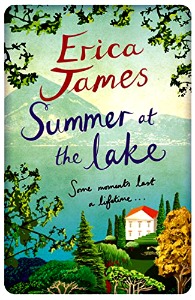
TCK TALENT: Heidi Durrow, Afro-Viking Renaissance Woman and Award-winning Novelist

Heidi Durrow Collage Drop ShadowElizabeth (Lisa) Liang is back with her monthly column about Adult Third Culture Kids (ATCKs) who work in creative fields, Lisa herself being a prime example. A Guatemalan-American of Chinese-Spanish-Irish-French-German-English descent, she has developed her own one-woman show about being a TCK, which will be the closing keynote at this month’s Families in Global Transition (FIGT) conference, “The Global Family.”

Today I’m excited to introduce Heidi Durrow, the author of the New York Times best-selling novel The Girl Who Fell From the Sky (Algonquin Books), which received writer Barbara Kingsolver’s 2008 PEN/Bellwether Prize for Socially Engaged Fiction. Heidi grew up in Turkey, the USA, and Germany. She and I first met at the Mixed Roots Literary & Film Festival that Heidi co-founded, which celebrates storytelling of the Mixed racial and cultural experience.

* * *

Welcome to The Displaced Nation, Heidi. As the TCK child of an American Air Force dad and a Danish mom, you’ve lived in North Carolina, Turkey, Washington state, and Germany. Can you tell us a little more about the chronology of the moves?
I was born in Seattle and moved to Turkey at the age of six months. The next years until I was 11, I was in North Carolina and Germany, with summers and holidays in Denmark. Since college, which was at Stanford, I have lived in NYC for grad school, Connecticut for law school, and now I split my time between the East and West Coasts.

Do you remember being happier in one place in particular?
I was pretty happy in all the places where I grew up—I was still very young. I never felt out of place or unwelcome.

Repatriations can be the hardest moves of all for TCKs, and repeated repatriation can be particularly tough, so I’m curious to know if this was true for you whenever you returned to the United States.
I had never thought of the moves as “repatriations” but that’s interesting. I think when I was very young I wasn’t aware of a lot of difficulties. But when we finally moved back to the States when I was 11, it was very difficult.  I was at an age of awareness. I felt more like an immigrant. It was so interesting to me that I had an idea of what America was when I lived overseas, and I learned quickly that America didn’t operate the way I’d imagined it from far away.

“We family.”—African-American proverb

Tell us about your summers and holidays in Denmark with your mom’s family.
It was awesome for me—in particular because my mother raised us speaking Danish and English. I am forever grateful that I have both languages. It made me infinitely closer to my aunts and cousins, whom I adore. As an adult, it’s been interesting to see how Denmark is changing. I remember going back when I was in college. I hadn’t been in ten years. My cousins had Copenhagen boyfriends, and they’d laugh whenever I talked. It wasn’t because they didn’t understand what I was saying, but they found my country accent strange. I guess I sounded like someone from Birmingham, Alabama, visiting NYC. It’s English, but it sounds very different. For years after that visit, I have often wondered whether certain traditions or sayings I learned were in fact Danish or just my mom’s own quirks.

Do you identify most with a particular culture or cultures? Or are you like many TCKs who are more likely to identify with people who have similar interests and perhaps similar cross-cultural backgrounds? (And of course it’s not a given that we’ll identify with them, either.)
I identify myself as an Afro-Viking—that is a small but growing demographic, by the way! In terms of who I am most likely to identify with—well, I think for many years in my adulthood I was very interested in finding other “mixed” friends. I wanted to know how they negotiated being multiracial and multicultural. I have found that I still have that affinity, but now I am more drawn to people who have the same career interests, who are moving on the same path at the same rate.

Studies have shown that TCKs have similar identity issues and struggles to children of mixed heritage. You and I are TCKs of mixed heritage, which makes our identities more layered than most, and makes for quite an identity struggle during adolescence. And sometimes there are shifts. I was culturally Guatemalan when I was very little, but that hasn’t been my main identity for decades.  
I haven’t shed any of my identities—I feel like I’ve added on to them over time. I remember in college I was essentially “passing” as Latina. I lived in the Hispanic-theme dorm, took Spanish classes and became the second-vice-chair of the Latino Electrical Engineering Society. I liked the idea that in latino culture they had already thought about the idea of the mestizo. So I added that on to my identity. And then when I moved to NYC I found that people thought I was what they were. Bangladeshis thought I was Bangladeshi, Puerto Ricans thought I was Puerto Rican, Greeks thought I was Greek. I’m not any of those things, but I feel like the fact that people see me as part of their own tribes has added another layer to my identity: a layer of belonging.

“He hath need of his wits who wanders wide.”—Old Norse proverb

I can relate: I was very pleased to be mistaken for Turkish when my husband and I honeymooned in Turkey. As an adult TCK, do you ever suffer from “itchy feet,” which make you want to move (locations, jobs, etc.) frequently?
You got me. I actually live on two coasts—flying back and forth every few days. I fly more than 100,000 miles per year. I can’t stay still. The same has been true for my career: I’ve been a Hallmark greeting-card writer, a journalist, a lawyer, a life skills trainer to NFL and NBA players, a podcaster, a festival producer and now a writer. Who knows what’s next?!

I often wonder if ATCKs who pursue writing careers do so because the story is entirely in their hands as opposed to the experienced upheaval of their peripatetic childhoods. Meanwhile, a peripatetic childhood fosters so many incredible experiences and thus stories to tell! Did your TCK upbringing influence your desire to become a writer?
My TCK upbringing has been great fuel for my writing, but it’s not the reason I wanted to become a writer. I do remember having a special feeling about writing as a child because of my upbringing—I loved to write letters. I’d write letters to the friends I moved away from and to my family—they were always far away. I was the kid who would save money to buy stationary and stamps.

girl-who-fell-from-sky-coverBut isn’t it fair to say that your choice of topic for your debut novel, The Girl Who Fell from the Sky, was influenced by your TCK upbringing and mixed-race heritage?
The story is autobiographical only insofar as it is about a biracial and bicultural girl growing up in the Northwest. I guess that is to say: the confusion of the character is a confusion I experienced. But the story—about a girl who survives a family tragedy—well, that was inspired by a real story I’d read in the news many years ago.

The Girl Who Fell from the Sky was fantastically well received. Did you learn something pivotal about yourself and your TCK upbringing in the process of writing it?
Oh gosh. I learned so much. I am still learning—in particular as the book reaches students in high school and college as required reading. I’m always so interested in the ways in which readers identify their own “displacement” with that of the main character, Rachel. I think the TCK experience is one of being an outsider in all places—and, strangely, that feeling is universal, familiar even to those who have grown up in one place their whole lives.

On your author site and your blog, Light-Skinned-ed Girl, as well as on your Mixed Experience Podcast, you mention that you’re working on a second novel. Can you tell us anything about it?
The new novel is still a work in progress. I’m on the verge of finishing a good complete draft at last! All I can say about it is that it’s about my obsessions again—about identity, and race and culture and grief; it’s about beauty and connectedness. Hopefully it’s something folks can relate to.

* * *

Thank you, Heidi! I wish you all the best in your endeavors, and feel confident you’ll soon be repeating your amazing successes. I understand you’ve got the Mixed Remixed Festival coming up in mid-June here in LA, which will celebrate the stories of the Mixed experience through films and books—something Displaced Nationers would love to hear more about. Readers, please leave questions or comments for Heidi below.

STAY TUNED for next week’s fab posts!

If you enjoyed this post, we invite you to register for The Displaced Dispatch, a round up of weekly posts from The Displaced Nation, with seasonal recipes, book giveaways and other extras. Register for The Displaced Dispatch by clicking here!

Related posts:

TCK TALENT: Why do so many Adult Third Culture Kids gravitate toward acting, and is that the best use of their talents?

Com & Trag Collage

Tragedy and Comedy, Scarborough Hotel, Bishopgate, Leeds. Photo credit: Tim Green via Flickr.

Elizabeth (Lisa) Liang is back with her monthly column about Adult Third Culture Kids (ATCKs) who work in creative fields, Lisa herself being a prime example. A Guatemalan-American of Chinese-Spanish-Irish-French-German-English descent, she has developed her own one-woman show about being a TCK, which will be the closing keynote at this year’s Families in Global Transition (FIGT) conference, “The Global Family.”

In my last column, I interviewed Laura Piquado, a professional actress based in New York who grew up in six countries, including Egypt, where we were drama classmates in high school. As a result of the interview, Laura, editor ML Awanohara, and I had a lively discussion about Laura’s career change from education/activism to acting.

ML said she was puzzled as to why so many intelligent, well-educated Adult Third Culture Kids feel so at home in the acting world. She expressed concern that acting might cultivate a narcissistic outlook on life, which is the opposite of a TCK’s worldly upbringing. She said she found it particularly jarring that Laura could go from go from almost doing a PhD on women’s education in post-conflict societies, to enrolling in acting school—and not look back.

Laura’s response was so eloquent that I am posting it here.

Before you read it, I recommend watching this TED Talk by British actor Thandie Newton:

Born to a Zimbabwean mother and English father, Newton always felt disconnected or “other” while growing up in the UK:

“From about the age of 5, I was aware that I didn’t fit. I was the black, atheist kid in the all-white, Catholic school run by nuns. I was an anomaly.”

Acting gave her a chance to play with her different selves.

And now from Laura Piquado:

I had a similar reaction to yours, Lisa, in seeing acting described by ML as a narcissistic endeavor. While I can certainly understand that reputation (indeed, the Golden Globe awards), I have always idealized what theatre can be: life-changing, hopeful, inspiring, and necessary. It’s the worst to be onstage with someone who’s “masturbating” their way through a show (and equally as painful for an audience member).

I was in Maine a few years ago at a craft school (I’m a potter), and I sat next to a visiting artist at dinner (the amazing Hungarian-born sculptor Gyöngy Lake). She asked me what I did. When I told her I was an actor she said:

“We love you! We need you! You tell the stories of our lives!”

Now while that sounds uber-maudlin, I was completely overwhelmed. I had known this woman for less than two minutes, but she had described, for me, what the essence of art is.

On the other hand, I don’t want to get beaten over the head with social and political commentary every time I go to the theatre. I mean, I love Brecht, but can you imagine if that’s all theatre was? Mother Courage after Mother Courage, after The Caucasian Chalk Circle, after Arturo Ui…ugh. People would stop going. There’s room for pomp-y, wacky, ridiculousness (all hail The Book of Mormon), and everything in between. But I do think theatre at its best, the stories that stay with you, are the ones that connect to a deeper human context.

I was reading an interview with Supreme Court Justice Stephen Breyer in the New York Review of Books where he recounts a story he heard while a law student:

At the turn of the last century, the court was called upon to decide a case on prices for theater tickets—could they be considered basic necessities, and could they be regulated as such? The majority thought the theatre was not a necessity. The great Justice Olive Wendell Holmes Jr. replied in his dissent: “We have not that respect for art that is one of the glories of France. But to many people, the superfluous is the necessary.”

The interview was a larger discourse on France and Proust, but the point Holmes made about the necessity of art resonates.

ML also made the comment:

An interest in international affairs implies that you care about effecting positive social change on behalf of less fortunate people… Do you foresee bringing those two strands of your life together at some point?

The notion of “effecting positive social change” is what I’ll respond to. Again, it’s what I believe theatre can be, from Winter Miller‘s In Darfur to Moisés Kaufman‘s The Laramie Project. Being a part of that kind of theatre is deeply gratifying and something I always seek out. (Or as a potter: being able to go to communities to work with local artisans to make pots that filter clean, potable water falls into that same category.)

The leap from one discipline (social justice through academia) to another (theatre) wasn’t so quantum for me. And while they are vastly different on so many practical and actual levels, “effecting positive social change,” for me, lies at the heart of both.

* * *

So, readers, do you have anything to add to the debate? Are we ATCKs doing ourselves, and the world, a disservice by turning to acting, or can acting be one of our more profound contributions?

STAY TUNED for next week’s fab posts!

If you enjoyed this post, we invite you to register for The Displaced Dispatch, a round up of weekly posts from The Displaced Nation, with seasonal recipes, book giveaways and other extras. Register for The Displaced Dispatch by clicking here!

Related posts:

TCK TALENT: Laura Piquado, New York City Actress & One Well-Traveled Kid!

Laura Piquado Collage FINALWelcome to Elizabeth (Lisa) Liang’s monthly column about Adult Third Culture Kids (ATCKs) who work in creative fields, Lisa herself being a prime example. A Guatemalan-American of Chinese-Spanish-Irish-French-German-English descent, she recently debuted her one-woman show about being a TCK, which I had the pleasure of seeing during its too-short run in New York City in September of last year: stupendous!

—ML Awanohara

Happy new year, readers! Let’s start today’s interview by plunging right in. My guest is Laura Piquado, a professional actress based in New York who grew up in six countries, including Egypt, where we were drama classmates in high school.

* * *

Welcome to The Displaced Nation, Laura. It’s wonderful to reconnect with a Cairo classmate! I know you grew up as the daughter of a pair of teachers who were full of wanderlust. Can you give us a run-down of the countries you lived in as a kid?
My mother always told me that her earliest dream memory was of wanting to move to Africa. And as soon as she graduated from university in Canada, that’s what she did. She met my father in Sierra Leone in the mid 1960s. He was there with the Peace Corps, while she was being sponsored by CUSO (Canadian University Service Overseas)—a Peace Corps-style organization. They left when my mother was six months pregnant with my brother. My mother is tall, almost 5’11”, but at that time weighed only 120 lbs. I think having parasites, or the occasional bout of malaria was commonplace, but the risk to her health became too great.

After my (healthy) brother was born in Washington, DC, my parents decided to go overseas again. The first job my dad got was as an English teacher in a small village in northern Newfoundland, where I was born. Less than a year later, we moved to Beirut, Lebanon. Four years after that, when war broke out, we were evacuated to Shahin-Shahr, Iran, for almost four years. War broke out again, and we were evacuated again. The next stop was São Paulo, Brazil, for two years. My mom and dad hated the city, and we left every other weekend and holiday to get away from it. Consequently, my memories of Brazil are of travel, and of everywhere but São Paulo. After Brazil, we lived for four years in Bontang, Indonesia, which is in the province of East Kalimantan on the island of Borneo. After seventh grade we moved again, to Cairo, Egypt, where I graduated high school. That’s where you and I first met! My parents then moved on to Ecuador and China for 16 more years.

My parents loved being overseas, and at no point did they yearn to “come home.” They wanted their lives to be as teachers in international schools, and for 40 years that’s what they did. They retired a few years ago to a small town in New Hampshire.

A hard landing into adulthood

How did you feel about living in so many places?
I loved it, actually. Adjusting to new environments, new friends, new cultures, languages, was never difficult for me. I don’t know why. Perhaps I just got used to it. But I don’t think you ever get used to leaving friends and people you love—that’s always hard.

As an adult, do you find yourself drawn to other TCKs?
I definitely identify with other TCKS, though it’s not always a given we will hit it off. In fact, I used to be magnetically drawn to anyone who was a visible minority. “You’re from Indonesia?! I used to live in Indonesia!” “Hey, you’re Alexandrian! I lived in Cairo for 5 years!” I was always wanting to make a connection with a world that was no longer mine—and maybe never was mine, if I adhere to the rules of 3rd culture. But just because someone grew up all over the world as I did, or just because they are an actor like me, doesn’t guarantee I’ll be friends with that person—but it’s a starting point. And if a person grew up in different countries, at least their eyes won’t glass over when I answer the question, “Where are you from?”

You now live in New York City. How do you find life in the USA?
I’ve lived in the United States longer than I’ve lived anywhere else. Yet it’s the first place I’ve ever lived that doesn’t feel like home. For the first 20 years of my life I played with my friends, explored the jungle, hiked the Andes, swam in the Red Sea and the East Timor Straights, climbed salt flats, made forts in the desert, went horse-back riding around the Great Pyramids, woke to gibbon songs and the muezzin’s call to prayer. And then I came back here to go to school, get some degrees, get a job, and try to figure things out… I had this exhilarating childhood, and then this less-than-thrilling transition to adulthood.

Does your identity revolve around any one particular culture that you’ve lived in?
I am Dyak and atheist, Muslim, Christian, Bahá’í, Jain, Egyptian, Italian, Canadian—there is nowhere in the world that has ever felt foreign to me. I am all of these things, and none of them. After moving to the United States for the first time for college, being able to be all of them at the same time was what mattered the most. I was striving to understand who I was and what my life had been, and trying to share that with others, even if I couldn’t articulate it to myself. It’s taken a long time, and I suppose I’m still working at it. That said, I love meeting the kind of person who, unlike me, was raised in the same town he or she was born in, and still goes back there for family visits and holidays. I am attracted to the sense of being anchored somewhere, to a particular place. That perceived sense of belonging somewhere: it’s something I just don’t have; I don’t know what it feels like.

From an actor on the global stage, to an actor on a real stage

Tell us what you studied in college and how you made the leap to pursuing an acting career.
I did my master’s degree in Islamic Studies at McGill University in Montreal. I wanted, as an adult, to understand the cultural, political, and social environments in which I grew up. On some level I was looking for a path that would take me overseas again, which I was aching to do. I wanted to work in the development of women’s education in post-conflict societies because it was work that I was passionate about.

Just as I was finishing my degree, and thinking about streamlining into a doctoral program, I went back to Cairo. I hadn’t been back since high school. For a whole month I walked through the streets of my old neighborhood, saw my friends, went to mosques and bazaars and the Red Sea, and smelled and ate and absorbed Egypt again. It was glorious. But something changed in me after that, and made it okay for me to move on.

When I came back to Montreal, I started applying to drama schools. Although I had been involved in theatre since I was a kid, I hadn’t wanted to study it as an undergrad. There were other things in my life that I needed to address before I embarked on that.

But now I was ready for drama school—I enrolled in the London Academy of Music and Dramatic Art. At LAMDA, I felt like I was flying. I was so happy. To allow myself the ability to change horses mid stream, and for it to feel natural and fluid and right—that was tremendous. I don’t think any of us is just one person, and we aren’t the same person at 15, 25, 35, 55. We have multiple loves and lives and wants, and finding ways to marry them all, if we’re lucky enough to know what they are in the first place, can be overwhelming.

How did your family react to your decision to pursue an acting career?
I’ve only ever had a supportive family. So instead of calling me a flake, or accusing me of lacking any sense of stick-to-itiveness when I told them I wanted to go to drama school, they became, again, my most enthusiastic supporters.

I think our peripatetic childhoods trained us to be actors—to observe, listen, and adjust our behavior to our surroundings. Do you agree?
I do agree, for the most part. But I also think personality has a lot to do with it. Just because you grew up all over the world doesn’t de facto make you a keen observer, or an astute listener, and not all kids who move around a lot are able to adjust to their changing environment. On the other hand, if you have had a peripatetic life, and you also happen to be a good listener, observer, etc., it seems it can only enrich your depths as an actor (and certainly as a human being). For me, adaptability became a defining aspect of my personality.

I think that for us TCKs, the challenge of convincing a casting director that you truly can be this other person is made easier because of all of those things we bring to the table—listening, observing, adjusting, maybe even having lived or known the character’s life. But also for that reason, many of us find it even harder to put up with being typecast.

Which sorts of roles are you attracted to, and do you think your upbringing influenced this?
I’m usually attracted to damaged characters, or quirky ones. And accents are always juicy! I’ve always been a mimic, and am grateful for that gift as it makes it easier to play a variety of roles. Why I’m drawn to quirky characters is less apparent. Does it have something to do with my upbringing? That’s an interesting thought. I’ve never made that correlation, but it makes complete sense.

So which parts have been your faves?
I loved playing Goneril in King Lear with the Texas Shakespeare Festival. I’ve always thought that she’s been inappropriately maligned as a character. Lear is not the easiest father—demanding, impulsive—and to require his daughters to prove, to prove, their undying love for him—for the sole purpose of measuring it against their inheritance—makes him something of a jerk in my book.

Playing the painter in Ionesco‘s The Painting with the Phoenix Theatre Ensemble was pretty great as well. Aside from the play’s absurdism, the part was perverse because of the the vocal and physical qualities we decided on. It’s not often that you get to play grotesque and obsequious, mismanage your voice, throw out your back, and sprain your jaw because the part demands it. Fantastic! 🙂

And a role on the damaged front, I suppose, was Charlotte in Sharr White‘s Sunlight, for its world premiere with the New Jersey Rep. While I’m less attracted to straightforward, modern dramas (though in truth, I love it all), the whole premise for who Charlotte is, for what motivates and oppresses her, is her having been in the Towers on September 11th and losing her child as a result of the trauma. And while that’s not what the play’s about (thank God!), it defines who she is able to become (or not become) in the ensuing decade.

* * *

Wow, that’s an impressive list! Thank you, Laura! I wish you the very best in your career and hope to see you on stage and/or screen soon. Readers, please leave questions or comments for Laura below.

STAY TUNED for tomorrow’s post, from our Global Food Gossip!

If you enjoyed this post, we invite you to register for The Displaced Dispatch, a round up of weekly posts from The Displaced Nation, with seasonal recipes, book giveaways and other extras. Register for The Displaced Dispatch by clicking here!

Related posts:

2013 Holiday Special: Notable books for, by and about expats

Looking for last-minute gifts—or have your holiday celebrations brought you to the point where you might need an escape for yourself?

In the tradition of looking back at the past year’s highlights, I present, on behalf of the Displaced Nation team, a list of books for, by, and about expats that were featured in some way on this site in 2013.

Click on the category that interests you:

  1. FICTION
  2. MEMOIRS
  3. HANDBOOKS & GUIDEBOOKS
  4. COOKBOOK (singular because we have only one!)
  • Books in each category are arranged from most to least recent.
  • Unless otherwise noted, books are self-published.

Go on, download a few! It’s the time of the year to be generous to one’s fellow human beings. That said, on the Displaced Nation it’s always the season to support the creative output of those who’ve embraced the life of global residency and travel.

* * *

Fiction

Shemlan Ebook_coverShemlan: A Deadly Tragedy (November 2013)
Author: Alexander McNabb
Genre: International thriller
Synopsis: The third in McNabb’s Levant Cycle, Shemlan tells the story of a retired British foreign service officer who, dying from cancer, returns to Beirut in hopes of meeting the Lebanese love of his youth one last time. But then his past catches up with him, threatening to do him in before the disease does—until British spy Gerald Lynch gallops to the rescue…
Expat credentials: Born in London, McNabb has lived in the Middle East for more than a quarter century. He often receives praise for getting the historical and cultural details right in his books.
How we heard about: We encountered McNabb a year ago when we were doing a series of food posts! We love his books and are giving away Shemlan this month, as well as doing an offer for Displaced Dispatch subscribers on all three books in the cycle. Check it out!

ImperfectPairings_cover_pmImperfect Pairings (May 2013)
Author: Jackie Townsend
Genre: Women’s fiction
Synopsis: American career woman Jamie had not intended to fall in love—and to a foreigner no less, a man who tells her his name is Jack, short for John, but it’s really short for Giovanni. Insanely handsome and intense but unreadable, Giovanni has left a complicated family life back home in Italy. Is this more than Jamie signed up for?
Displaced credentials: In real life, Townsend is married to an Italian and has spent 16 years backing and forthing to her husband’s family in Italy.
How we heard about: ML Awanohara, who rightly or wrongly considers herself something of an expert on cross-cultural marriage, read the book on her Kindle and was so impressed with its depiction of cross-cultural relationship woes that she asked Townsend to be our featured author of November. Read the interview.

SuiteDubai-cover_dropshadowSuite Dubai (April 2013)
Author: Callista Fox
Genre: “New adult” lit
Synopsis: As Callista tells it, the book grew out of a story that entered her head that wouldn’t go away: “There was this girl, young, vulnerable, naive, walking along a concourse in an airport, among men in white robes and checkered scarves and woman in black gauzy material. Where was she going? What would happen to her there?”
Expat credentials: Fox moved to Saudi Arabia when she was eight and lived there off and on until turning 19. She went to boarding schools in Cyprus and Austria. Now back in the United States, she thinks of herself as an adult Third Culture Kid, or TCK.
How we heard about: Noticing our fondness for serial fiction (see Kate Allison’s book below), Fox sent us a note saying she’d written a serial novel reflecting her experience of growing up in the Middle East. We responded by asking if we could publish her series in even smaller parts. Part 1 and Part 2 have already gone up, and there are six more parts to come in 2014. Warning: Highly addictive!

Libby'sLifeTakingFlight_coverLibby’s Life: Taking Flight (April 2013)
Author: Kate Allison
Genre: Women’s fiction
Synopsis: 30-something Libby Patrick is just regaining some post-baby control over her life when a change in husband’s job means they must move from their English home to Woodhaven, a town in rural Massachusetts. The book is Libby’s journal covering the first year of her life as trailing spouse.
Expat credentials: Born and raised in Britain, Kate has lived in the United States with her family for almost two decades.
How we heard about: We were the first to know! Kate is a founding member of the Displaced Nation and has been publishing regular episodes of Libby’s Life (on which the book is based) since the blog began. She has accrued countless fans, the most faithful of whom is Janice. (Libby to Janice: xoxo for your support in 2013!)

APlaceintheWorld_coverA Place in the World (March 2013)
Author: Cinda Crabbe MacKinnon
Genre: Romance
Synopsis: Third Culture Kid Alicia meets a young Colombian man at college in the United States. She follows him to Bogotá and the pair end up marrying and settling on his family’s remote coffee finca (farm) in the Andes. Educated as a biologist, Alicia revels in the surrounding cloud-forest. But then her idyllic life starts to unravel…
Expat credentials: Crabbe MacKinnon grew up in several countries as a military brat and diplomatic kid and, though she has since repatriated to the United States, still thinks of Latin America as home.
How we heard about: Crabbe MacKinnon commented on one of Elizabeth Liang’s “TCK Talent” posts and ended up becoming October’s featured author. Read the interview. We love her and her work, and are sure you will, too!

CoffeeandVodka_coverCoffee and Vodka (March 2013)
Author: Helena Halme
Genre: Women’s fiction
Synopsis: A Finnish family emigrate to Sweden in the 1970s and find themselves in turmoil, caused partly by the displacement, but also by the cracks in family dynamics. At its heart, the book reveals what it is like for a young girl to be uprooted and transplanted to a country where she doesn’t speak the language and is despised for her nationality.
Expat credentials: Halme grew up in Tampere, central Finland, and moved to Britain at the age of 22 via Stockholm and Helsinki, after marrying “The Englishman” (how she always refers to him on her blog, Helena’s London Life). She spent her first ten years in Britain working as journalist and translator for the BBC. She and The Englishman now live in North London.
How we heard about: Halme is a big favorite of ours! She was one of our earliest Random Nomads as well as serving as an expat style icon back in the days when we covered fashion. More recently, Kate Allison reviewed Halme’s first book: The Englishman: Can Love Go the Distance?, and we did a giveaway of Coffee and Vodka. And that’s not all: Halme’s latest book, The Red King of Helsinki, received an “Alice” Award in July. (As noted then, the Alices could hardly ignore a book of that title!)

MonkeyLoveAndMurder_dropshadowMonkey Love and Murder (February 2013)
Author: Edith McClinton
Genre: Adventure mystery
Synopsis: A jungle environment in Suriname (spider monkeys and all) is the setting for a closed-door mystery surrounding the death of the renowned director of the International Wildlife Conservation followed by the machete murder of one of the researchers. None of this bodes well for poor Emma Parks, who has joined the research project on a whim. (So much for that budding primatologist career!)
Expat credentials: MacClintock volunteered for the Peace Corps in Suriname for two years, and joined a monkey research project afterwards.
How we heard about: One of our Random Nomads, Patricia Winton, referred us to the now-defunct blog Novel Adventurers, where Edith was one of the writers. We invited her to guest blog for us about the muses behind her monkey mystery.

ArchangelofMercy_dropshadowArchangel of Mercy (Berkley – Penguin Group, December 2012)
Author: Christina Ashcroft
Genre: Paranormal romance
Synopsis: The first storyline in Ashcroft’s new series focusing on a group of angels and archangels and the lives of the people they come in contact with every day.
Expat credentials: Ashcroft is an expat Brit who now lives in Western Australia with her high school sweetheart and their three children.
How we heard about it: We encountered Christina online and asked her to be one of our Random Nomads for a Valentine’s Day special. In that interview, she said she attributes her success as a writer at least in part to her expat status: “I’ve often wondered whether my career would have followed the same route if we’d stayed in the UK. While I’ve always loved writing it wasn’t until we moved to Australia that I decided to to write with the aim of publication.”

SpiritofLostAngels_dropshadowSpirit of Lost Angels (May 2012)
Author: Liza Perrat
Genre: Historical novel
Synopsis: Set against a backdrop of rural France during the French Revolution, the story centers on Victoire Charpentier, a young peasant woman whose mother was executed for witchcraft and who herself suffers abuse at the hands of a nobleman. Can she muster the bravery and skill to join the revolutionary force gripping France, and overthrow the corrupt aristocracy?
Expat credentials: Liza grew up in Wollongong, Australia, where she worked as a general nurse and midwife for fifteen years. When she met her French husband on a Bangkok bus, she moved to France, where she has been living with her husband and three children for twenty years.
How we heard about: The redoubtable JJ Marsh (see below) interviewed Perrat on writing a location to life, for her monthly column, “Location, Locution.”

BehindClosedDoors_dropshadowBehind Closed Doors (June 2012)
Author: JJ Marsh
Genre: Crime mixed with literary fiction
Synopsis: A smart, technologically sophisticated mystery set in Zürich and surrounding countries, featuring a bipolar detective named Beatrice Stubbs, and quite a few surprises… NOTE: JJ Marsh was listed in the Guardian “readers’ recommended self-published authors” this year, for Behind Closed Doors.
Expat credentials: JJ Marsh grew up in Wales, Africa and the Middle East, where her curiosity for culture took root and triggered an urge to write. After living in Hong Kong, Nigeria, Dubai, Portugal and France, she has finally settled in Switzerland.
How we heard about: We owe displaced author Helena Halme (see above) a king’s ransom for telling us about JJ, who since April has been contributing a monthly “Location, Locution” column. Don’t miss her posts under any circumstances! Highly stimulating and cerebral.

snowdrops_dropshadowSnowdrops (Anchor/Random House, February 2011)
Author: AD Miller
Genre: Literary fiction
Synopsis: Lawyer Nick Platt trades his dull British life for pushing paper in Moscow at the turn of the 21st century. He is soon seduced by a culture he fancies himself above. Snowdrops was shortlisted for the Man Booker Prize in 2011.
Expat credentials: British born and educated at Cambridge and Princeton, Andrew Miller joined The Economist and was appointed, in 2004, to become their Moscow correspondent. He covered, among other things, the Orange Revolution in the Ukraine.
How we heard about: JJ Marsh interviewed AD this past July about bringing foreign locations to life in fiction.

odessa_brit_cover_smallMoonlight in Odessa (Bloomsbury, August 2010)
Author: Janet Skeslien Charles
Genre: Women’s fiction
Synopsis: With an engineering degree and perfect English, Daria longs for a life beyond Odessa, Ukraine. And then she moonlights for a dating agency that facilitates hasty, long-distance matches between lustful American men and impoverished Ukrainian women. Her big chance?
Expat credentials: Skeslien Charles went to Odessa, Ukraine, as a Soros Fellow, living through blackouts, heatless winters, corruption and so on. She stayed for two years before returning to the U.S. Then she found a job in France and met her husband. She now lives in Paris but leads a multicultural life. As she puts it: “The novel is set in Odessa, Ukraine. My agent is English. My editor’s assistant is Japanese-Danish, my copy editor is from New Zealand. I’m American. The book was written in France and typeset in Scotland. My first fan letter came from a Swede.”
How we heard about: JJ Marsh picked Skeslien Charles’s brain on “location, locution”, in her November column.

Memoirs

AddictedtoLove_cover_dropshadowAddicted to Love (April 2013)
Author: Lana Penrose
Synopsis: Penrose is the kind of Australian who throws herself wholeheartedly into adventure, which is why her years spend living in Europe have merited not one but three memoirs! This one is the third. In the first memoir (published by Penguin/Viking), To Hellas and Back, she marries the love of her life, an Australian Greek, and accompanies him back to Greece, only to find him becoming increasingly Greek and herself increasingly isolated. In the second, Kickstart My Heart, she moves to London, single and desperate to find love again. And in this third memoir, she returns to Greece, where she encounters a seemingly perfect man named Adonis. (Hey, she never gives up!)
Expat credentials: From Sydney originally (she is back there now), Penrose lived in Athens for five years before moving to London.
How we heard about it: We happened across Penrose online and asked her to guest-post for us a year ago on what it was like to spend Christmas in Greece. At that time, we also did a giveaway of her first memoir. We invited her back this past April to write about Addicted to Love.

MagicCarpetSeduction_cover_pmMagic Carpet Seduction: Travel Tales Off the Beaten Path (May 2013)
Author: Lisa Egle
Synopsis: Travel with the author to China, Latin America, Turkey and the Middle East, and watch while she takes risks off the beaten path, and dances with strangers in strange lands…
Expat credentials: Egle characterizes herself as a lover of offbeat travel. She’s been to 36 countries on five continents and has been an expat twice: in Ecuador for a year and half, and in Spain for a year.
How we heard about: We got to know Egle first through her blog, Chicky Bus, and when we heard she’d put out a book, asked her to be one of our featured authors. Read the interview.

Pilgrimage-Cover_pmRunning the Shikoku Pilgrimage: 900 Miles to Enlightenment (Volcano Press, January 2013)
Author: Amy Chavez
Synopsis: After losing her job at a Japanese university, Chavez undertakes a solo journey running Japan’s 900-mile Buddhist pilgrimage, a distance equal to running from San Diego, California to Oregon. A Buddhist priest who is also a friend gives her “cosmic tools” to take with her.
Expat credentials: American expat Amy Chavez has been a columnist for Japan’s oldest English-language newspaper, The Japan Times, since 1997. She lives with her husband and cat on Shiraishi Island in Japan’s Seto Inland Sea.
How we heard about: We interviewed Chavez about her pilgrimage, and what it took to write the book, in April.

Don'tNeedtheWholeDog_dropshadowDon’t Need the Whole Dog! (December 2012)
Author: Tony James Slater
Synopsis: In the summer of 2004, Slater went to Ecuador, thinking that the experience would turn him into a man. He went back to his native England fueled by a burning desire to do something that mattered—and, ideally, to get the heck out of England in the process. He dreamed of going to Thailand and becoming a professional diver. This is the story of what happened next.
Expat credentials: A Brit, Slater now lives in Perth, Australia, with his Australian wife.
How we heard about: Slater made himself known to us for failing to include his first book, The Bear That Ate My Pants: Adventures of a Real Idiot Abroad, about his time volunteering at an animal shelter in Ecuador, in our 2011 holiday round-up. He probably should have left well enough alone, though, as next thing he knew, we had him writing for the Displaced Nation. His post on the world’s best parties remains one of our most popular!
TruckinginEnglish-dropshadowTrucking in English (December 2012)
Author: Carolyn Steele
Synopsis: This is the tale of what happens when a middle-aged mum from England decides to actually drive 18-wheelers across North America instead of just dreaming about it. Nothing goes well, but that’s why there’s a book.
Expat credentials: Born and bred in London, Carolyn and her son are now Canadian citizens and live permanently in Kitchener, Ontario.
How we heard about: One of our featured authors in 2012, Martin Crosbie, sent Steele our way, and Kate Allison reviewed her book in March. Steele later contributed an amusing post to our “New vs Olde World” series, about the difficulties of mastering the Canadian “R”.

Finding-Rome-on-the-Map-of-Love_dropshadowFinding Rome on the Map of Love (September 2012)
Author: Estelle Jobson
Synopsis: When her Italian diplomat boyfriend gets posted to Rome, Jobson throws up her career in publishing in her native South Africa to accompany him. There, she reinvents herself as Signora Stella, a casalinga (housewife). The book captures a year’s worth of quirky observations about life amongst the Italians.
Expat credentials: Originally from South Africa, Jobson now lives in Geneva, where she works as a writer and editor.
How we heard about: Jobson was our featured author in February. Her book and sense of humor are terrific!

Travels with George Book CoverTravels with George: A Memoir Through the Italy of My Childhood (April 2012)
Author: Olga Vannucci
Synopsis: In five separate trips to Italy with her young son, George, in tow, Vannucci strolls and hikes through the landscapes of her Italian childhood. She looks at Italy both as local native and awed visitor.
Expat credentials: Born in Italy, Vannucci lived in Brazil and came to the United States to attend Brown University. She lives in rural New Jersey with her son.
How we heard about: Vannucci was our featured author in September. Read the interview. We loved this quote from her son: “Where are we going? How much longer? I have something in my shoe. I want to go back. Why are we doing this? Do you know where we are? Do you know where we’re going? Mammaaaaaaa!”

AreWeThereYet_cover_dropshadowAre We There Yet? Travels with My Frontline Family (May 2009)
Author: Rosie Whitehouse
Synopsis: A vivid, funny, and very human account of the author’s travels with her family through war-torn Europe.
Expat credentials: Whitehouse spent five years as a housewife in the war-torn Balkans married to a correspondent of The Economist, caring for their growing family.
How we heard about: We happened across Whitehouse’s work online and asked her to be a featured author last summer. Read the interview. She’s absolutely fascinating, as one might expect of the kind of woman who trails her spouse into a war zone.

HoneyfromtheLion_coverHoney from the Lion: An African Journey (Dutton Adult, 1988)
Author: Wendy Laura Belcher
Synopsis: Brought up in Africa, Belcher returned to Ghana in the early 1980s to work with a “national linguistic group” that is spreading literary into rural areas by translating the Bible into native languages. A coming-of-age story that was called “lyrical” by the New York Times when first issued.
Expat credentials: An adult Third Culture Kid, Belcher grew up in East and West Africa, where she became fascinated with the richness of Ghanaian and Ethiopian intellectual traditions. She is now an assistant professor of African literature at Princeton.
How we heard about: Elizabeth Liang interviewed Belcher for her TCK Talent series.

Handbooks & Guidebooks

cathy_feign_coverKeep Your Life, Family and Career Intact While Living Abroad, 3rd Ed. (Stvdio Media, September 2013)
Author: Cathy Tsang-Feign
Synopsis: A survival manual for those who are living abroad, with real-life examples and easy-to-understand explanations about the unique issues faced by expats: from preparing to move, to daily life overseas, to returning home.
Expat credentials: Tsang-Feign is an American psychologist who lives in Hong Kong, specializing in expat psychology and adjustment issues. She has also lived in London.
How we heard about: When Kate Allison learned about the book, she decided it merited one of our “Alice” awards for the understanding displayed of the “through the looking glass” complex.

realitycheck_bookcoverReality Check: Life in Brazil through the eyes of a foreigner (September 2013)
Author: Mark Hillary
Synopsis: Targeted at those who plan on living, working or just visiting Brazil, it covers issues such as the difficulties of finding new friends, using a new language, and finding a job. Also provided is some background on the fast-changing society in Brazil that resulted in extensive street protests during 2013.
Expat credentials: Hillary is a British writer who moved to Brazil in 2010, bought a home, started a company, and has experienced both difficulties and joys.
How we heard about it: Andy Martin, another Brit in Brazil and a writer for the Displaced Nation in 2013, is a friend of Hillary’s and was jealous he’d produced a book that is not only a practical guide but also provides much of the cultural backdrop an international resident needs for a country as complex as Brazil. The next best thing, Martin thought, would be to do an interview with Hillary, which he delivered in two parts. Read Part 1 and Part 2.

TERE_cover_dropshadowThe Emotionally Resilient Expat: Engage, Adapt and Thrive Across Cultures (Summertime, July 2013)
Author: Linda A. Janssen
Synopsis: A guide for those facing the challenge of cross-cultural living, with candid personal stories from experienced expats and cross-culturals, and a wealth of practical tools, techniques and best practices for developing the emotional resilience for ensuring a successful transition.
Expat credentials: Janssen lived for several years in the Netherlands while her husband, an adult TCK, worked in the Hague. She recently repatriated to the United States.
How we heard about: We’ve had many satisfying interactions with Janssen since starting the Displaced Nation and were thrilled to hear about her new book—a natural for one of this year’s “Alice” awards, particularly as Janssen has been running a popular blog called Adventures in Expatland.

AmericanExbratinSaoPaulo_cover_pmAn American Exbrat in São Paulo: Advice, Stories, Tips and Tricks for Surviving South America’s Largest City (May 2013)
Author: Maggie Foxhole (Megan Farrell)
Synopsis: Aimed at those who are moving or traveling to São Paulo, it is designed to be a companion on the journey through the ups and down, ins and outs, and the curious roundabouts of life in that city.
Expat credentials: Megan/Maggie moved to Brazil with her Brazilian husband and their daughter. She keeps a blog: Born Again Brazilian.
How we heard about: Farrell/Foxhole was one of our early Random Nomads. She kept in touch and we were very pleased to learn about her book, which ML Awanohara read and admired for its comprehensiveness. Andy Martin, a Brit who also lives in São Paulo with a Brazilian spouse, reviewed the book for our site this past July.

101reasons_dropshadow101 Reasons to Live Abroad and 100 Reasons Not to (March 2013)
Author: Chris Alden
Synopsis: Targeted at the wannabe expat, the aim is to help you discover if living abroad is right for you. It’s an uplifting guide to the positive sides of life as an expatriate and a reality check about the challenges that relocation brings.
Expat credentials: A professional writer, Alden lived for three years in a beautiful village in the Troodos foothills of Cyprus, which resulted in his first travel guidebook: 250 Things to Do in Cyprus on a Sunny Day.
How we heard about: Alden was the recipient of one our “Alice” awards for this book. We were impressed that he offered a final, 101st reason to live abroad for those of us who, having been offered as many as a hundred reasons both for and against, still find ourselves dithering…

career-break-travelers-handbook_dropshadowThe Career Break Traveler’s Handbook (September 2012)
Author: Jeffrey Jung
Synopsis: Intended to inspire people to go for it and take the break they’ve been seeking from their jobs and go travel, with tips and tricks Jung learned from his own and other career breakers’ experiences.
Expat credentials: Having left the corporate ladder, Jung now lives in Colombia, where he founded his own business to help others do the same: CareerBreakSecrets.com.
How we heard about: Jung was one of our Random Nomads. He let us know about his book, and we reviewed it this past February. Not that he needed our help—it also got a shout-out in Forbes!

finding-your-feet-in-chicago-3D-Book CoverFinding Your Feet in Chicago: The Essential Guide for Expat Families (Summertime Publishing, August 2012)
Author: Véronique Martin-Place
Synopsis: A down-to-earth pocket guide to help expats settle into the USA’s third largest city with their families.
Expat credentials: As the wife of a French diplomat (they have two daughters), Martin-Place is accustomed to moving around the world. Chicago was one of her more enjoyable stops, but she also enjoyed Sri Lanka(!). The family is now in Shanghai.
How we heard about: ML Awanohara had interviewed Martin-Place on her blog, Seeing the Elephant. She had fun interviewing her again, this time about the process of composing a guidebook.

Cookbook

FromtheGlobalScottishKitchen_cover_tdnFrom the Global Scottish Kitchen (Self-published, November 2012)
Author: Sharon Lorimer
Genre: Cooking
Synopsis: Recipes based on Scottish cuisine but influenced by the restaurants and other kinds of cuisines Lorimer has experienced as an expat: e.g., Cock a’ Leekie Udon!
Expat credentials: Born in Scotland, Lorimer now lives in New York City and is married to an Asian American.
How we heard about it: We interviewed Lorimer about her decision to start up Doshebu, a business providing training to company employees being sent abroad on the “art” of being an expat.

* * *

Questions: Have you read any of the above works and if so, what did you think of them? And can you suggest other works to add to the list? My colleagues and I look forward to reading your comments below!

STAY TUNED for some upcoming posts, though we’ll be taking a bit of a break over the holidays!

If you enjoyed this post, we invite you to subscribe to The Displaced Dispatch, a weekly round up of posts from The Displaced Nation, plus some extras such as seasonal recipes and occasional book giveaways. Sign up for The Displaced Dispatch by clicking here!

Related posts: