Welcome to our new series: “A picture says …”, featuring interviews with displaced creatives for whom a camera is a mode of artistic expression for the sights and people they encounter in their nomadic wanderings.
To kick off the series, I have the pleasure of conversing with Ildrim Valley, an intrepid adventurer who is also an economist(!) and travel photographer. It is, of course, this last point we’ll be focusing on, so to speak…
But first a few of Ildrim’s vital statistics:
Place of birth:Baku, Azerbaijan Passports: Canada; Azerbaijan Overseas history: From least to most recent: Azerbaijan (Baku); Switzerland (Geneva); Kenya (Nairobi); Canada (Vancouver, British Columbia); Hungary (Budapest); France (Toulouse)—2012 to present. Occupations: Graduate student of economics; travel photographer; amateur snowboarder; adventurer! Cyberspace coordinates:Curious Lines (photography blog)
Without further ado, let’s find out more about Ildrim and the way he uses photography as a creative outlet for his international adventures.
Peripatetic from an early age
Hello there, Ildrim. Welcome to the Displaced Nation. Let’s begin by having you tell us a bit about your travels. What inspired you to set off and what has motivated you to keep on going?
My first travel experiences come from traveling with my mom and brother. My mom is eager to change her surroundings, so thanks to her I was lucky to move around and travel early in life. At an early age I’ve been amazed at how life can be so different for people elsewhere than my hometown.
I think that this early fascination developed into a strong curiosity about lifestyles. Now that my mom no longer takes me on adventures (she gets herself into trouble without me!), I try to find my own means of traveling and satisfying my curiosity about places around the world.
You are a self-described adventurer. Do you prefer going and going, or do you sometimes settle in one place for a time?
As I travel more, I realize that it’s not just about seeing a new place that excites me the most. As fun as it is to keep going and going, simply being somewhere new isn’t always satisfying. Settling somewhere for a time gives me an opportunity to live through something different and possibly understand it.
I understand you recently moved to Toulouse, France?
Yes, I moved to Toulouse in September 2012 for graduate school. I felt like grad school would open a few doors to pursue some of my other interests, and it presented a fairly easy way to move to another country. So I set out to look for good schools around the world that fit my background as well as academic interests. At the time I was interested in southern Europe, and Toulouse offers the right kind of balance: it’s a great school with welcoming people and fine landscapes to be explored. Plus an opportunity to finally master French was very appealing—though I have to say I’m not doing a very satisfactory job so far.
On your photography blog, Curious Lines, you say:
Photography for me isn’t just an art form, it’s a way to share experiences.
When and why did you start using DSLR cameras?
I got my first DSLR in 2010, shortly before moving to Budapest. I got it in order to document the move.
Does the process itself of capturing a place or moment affect the relationship you have with that place? For example, does capturing a good set of photos increase the fondness you have for that place?
The process of capturing a moment does affect the way I experience a place, which in turn affects my relationship with it. But how I feel about a place has a lot to do with how I feel about the people from that place. So when I spend enough time in one spot, I get to meet people and build relationships. However, when the stays are short, the camera has a more significant role as it facilitates a connection with others. It helps me get a reaction, an emotional response—a smile or maybe a conversation.
But it’s important to point out that in some places around the world, carrying a camera can have a negative affect. People are fast to judge you on how you look. In Kenya, for example, I have a lighter skin tone, which results in the locals treating me differently, not necessarily in a positive way.
Likewise, having a large camera around your neck or in your hand will send a different signal and will be interpreted in a different way depending on where you are in the world.
I would just like to add that one way in which camera affects my experiences is that it taught me how to look at things differently without a lens. It helps me appreciate things differently and it’s important to know when to put the camera away and enjoy things with your own eyes. It’s easy for me to get sucked into continuous photo taking when I’m in a new place. Though I enjoy it, there are still other things to be enjoyed behind the lens, which is even more true when you’re traveling with someone else. But it doesn’t have to be one or the other; with time I’ve been learning how to balance the two.
For me, the camera has to be an extension of the adventure and not the purpose for it.
Looking back on all the places where you’ve taken photos, which have been your top three favorite places to shoot?
Although my opinion changes with time, my top spot for now is Mongolia. Last year I spent about a month there. The people and their lifestyles around the country fascinate me. The landscapes are pure and surreal. When you have such a keen interest and curiosity about your subject, shooting becomes that much more enjoyable. I’m actually redesigning my Website to present more content via other channels than a blog. One of the new sections will be about my experiences in Mongolia. The other two places that I love for photography are coastal British Columbia and Croatia.
An eye for the London Eye
On your blog you also say:
Once I started using a DSLR I’ve realized that scenes that come out on my computer screen don’t reflect the whole beauty of the moment. They don’t transmit the same type of emotion I felt standing behind the lens. So I tried and am still experimenting with different techniques to bring myself and others closer to how it actually was, at least in my mind. I don’t always try to achieve the most “realistic” looking photos, but rather try to transmit the feeling of the scene.
I notice that one of the techniques you’ve used is High Dynamic Range Imaging (HDR), an example of which can be seen in this striking image of my hometown London (original here)—by the way, you’ve now made me feel a little homesick! Tell me a little about HDR and how a novice photographer like myself can go about trying to achieve similar effects with a DSLR camera.
I have a very basic example of what High Dynamic Range (HDR) does in one of my blog posts. In a nutshell, cameras don’t capture the range of light the same way our eyes do. Our eyes adjust to both bright and dark spots in the same scene while for cameras it’s always a trade off.
HDR photography allows you to capture more light by taking multiple shots of different exposures. I take three: one normal, one overexposed bright photo, and one underexposed dark photo. By combining these three shots together you get a higher range of light information available to play with. Some people take five or even seven photos, but three is enough in most situations.
To achieve this HDR effect, I take my three shots bearing these points in mind:
The auto-bracketing option on modern-day cameras helps you take three photos with a single click.
Set the camera on Aperture priority mode (“AV” or “A” on most cameras) to have the same aperture and depth of field in all three shots.
Ensure that the three shots are as identical in composition as possible. A tripod could be useful. (The surroundings or simply holding your breath will do in many cases.)
Use software* to combine all three shots together and then let your imagination take charge.
*Some of the most popular softwares are Photomatix Pro, HDR EFEX PRO and HDR Darkroom. Then there are options like Luminance HDR, which is free (open source) but will take some time getting used to. Whichever software you choose, it will help you combine all this light information into one image. Then it’s almost always a good idea to take it into your preferred photo editing software and continue working as you would with any other photo.
People pix
Tell me about this recent photo you took of a street vendor in Kiev (original here). How did you find yourself in Kiev?
I was on a long earthbound trip in 2012 from Budapest to Hong Kong, which took me through Kiev.
How did you come across this street vendor? Did you converse with him before taking his photo?
There was no verbal communication. Rather, I nodded at the guy while moving the camera in my hand slowly, indicating that I wanted to take his photo. His face was blank in acceptance so I went ahead and snapped the photo.
Do you always try to try get permission from people when trying to take a photo?
I prefer to ask for permission, but sometimes it’s the spontaneity that makes the photo and asking would yield a different result when they prepare themselves for the photo. Either way, I make sure the subject knows I’m taking their photo.
Is it difficult to obtain permission when facing a language barrier?
It’s important to learn how to communicate with your facial expressions and your body as well as being able to read others. In my experience, regardless of whether your communications are verbal or non-verbal, the more confident and subtle you are, the more likely you are to get approval.
One thing about the street vendor picture that really stands out for me is the boldness of the colors. Can you tell me why and how you set up the shot like this?
Initially, I tried to achieve an effect that would provoke an emotional response akin to the one I had in that moment. A new environment can be emotionally overwhelming—a feeling that can be difficult to capture. First impressions are special. So when I first started editing it was the exaggeration of colors that made me feel the closest to “re-experiencing” the place. Although you can never really re-live the moment, you can come up with something that reminds you of it.
In a way it’s like when a friend tells you a “you really had to be there” story—and exaggerates the details to make the point. It’s not that the true story needs any exaggeration to be interesting, but you need to have the exaggeration to translate the feeling.
Many of these aspects of photography are, of course, a matter of experience and taste. Believe it or not, my earlier photos were even more color crazy. With more experience I’m leaning away from it and trying to express the moment in other ways. I really like black-and-white photography and the subtlety of its expression. I find it trickier and am experimenting with it more at the moment.
Parting shots…
When you take a look at the two photos mentioned above, what’s the first thing you remember?
The London photo reminds me of my host, a friend I haven’t seen in years.
The photo of the Ukrainian street vendor reminds me of a young violinist I met on the train and spent the day with. It also reminds me of how hot the day was and my craving for kvass (a fermented drink made from rye bread). Believe me, a hot day in Ukraine can make you crave kvass as a refreshment.
Are you hoping that these photos will evoke similar emotions in other viewers?
The intent is not always to prompt the same reaction I had. The same photo can prompt many different reactions. I like it when visitors to my site send messages expressing how my photos reminded them of their own experiences.
Finally, do you have any advice for wannabe photographers who are traveling or living abroad, on getting started?
I’d say to take photos for yourself first and not to think about what others would want to see or to try to meet their expectations. The first person your photos should move is yourself.
Thank you, Ildrim! Readers, what do you make of our first photographer post? Some wise words here, and who knew that autobracketing could be so useful? So, any further questions for Ildrim? Please leave them in the comments!
STAY TUNED for tomorrow’s post from expat author, Helena Halme, who is giving away THREE COPIES of her latest novel! 🙂
If you enjoyed this post, we invite you to register for The Displaced Dispatch, a round up of weekly posts from The Displaced Nation, with seasonal recipes, book giveaways and other extras. Register for The Displaced Dispatch by clicking here!
Images (from left): Camera lens from MorgueFile; Ildrim Valley (on right) with a traveler he met last summer in Ulaanbaatar in Mongolia. Says Ildrim: “He was originally from Slovenia but didn’t like being associated with any particular place. He’d been traveling on his bicycle for about four years at that point.”
For just over two years, readers of the Displaced Nation have been following a novel-in-progress by Kate Allison called Libby’s Life. It’s the running diary of Libby Patrick, an Englishwoman who has trailed her spouse to a town just outside Boston. Libby’s Life is rich in Kate’s observations about life in New England vs. England. In the weeks when she doesn’t publish an episode, we plan to feature posts by writers who are sensitive to the often-subtle differences between new and old worlds.
It’s a useful thing, the Canadian R. There are times that I wish my English way of speaking—my inherent BBC accent—could learn to incorporate it. The technique would have helped a lot with a potentially disastrous spot of linguistic difficulty. The discovery that I am still prone to linguistic difficulty is surprising in itself. I have been through the initial culture shock associated with realizing that no-one in Canada knows that Brits speak a different language. I have come to terms with the fact that old episodes of Are You Being Served on TVO don’t help me when I want to buy petrol, crisps or knickers.
I came through all that and emerged on the other side the sort of wise and whimsical Brit who uses the language barrier for fun but can turn it off at will when there is serious work to be done. I went native vocabulary-wise and thought I knew it all. Well guess what? Vocabulary isn’t always enough. An inability to produce the Canadian R can get you into just as much trouble as a car with a bonnet.
It all began with an email from a friend; another ex-pat from London, transplanted to Ontario. Another mascot with a quaint accent who entertains all and sundry on a regular basis with jolly misunderstandings of a transatlantic nature. After a few years of gags about putting trunks in the boots and boots in the trunks of our cars, asking for tomatoes that don’t rhyme with potatoes just to confuse people, and clinging doggedly to trousers and torches and lorries, we both considered ourselves adept at mangling the language for pleasure; the deliberate, linguistically delicious cabaret.
Light dawns…or should that be “dorns”?
So, what strange alignment of the planets, which unheard of synchronicity of biorhythms, caused us both to discover in the same week that Canadians pronounce ‘pawn’ and ‘porn’ somewhat differently? Of course, I am very grateful to have received the email. Without it (typed amid tears of glee I understand, after what sounds like a classic cabaret day) I would not have known. And that is the big difference between his story and mine, his listeners put him right. There and then. Embarrassment, laughter, beer, funny anecdote.
Mine were polite. Without the anecdotal email I still might not have known quite how I had managed to horrify a couple of guests at my B&B. I would only have known that they appeared to think me a little strange. If my ex-pat pal had not been among work colleagues who consider it their inalienable right to poke fun, and if he had refrained from kindly sharing the joke with me, I would still be none the wiser.
If you’re not using the Canadian R — be specific.
It might have helped if I had told them I was looking for a TV to upgrade one of our bedrooms but I didn’t. They told me all about their day and I told them all about mine. About finding this great little pawn shop where the people were so friendly and helpful. My guests looked a little nonplussed but smiled encouragingly. They appeared to want me to continue with an explanation, so I did. “They have this great scratch and dent section for electrical goods,” I wittered. “All new stuff, nothing used…and I have a 30 day guarantee too.”
If you are reading this, dear guests, I am truly sorry if you thought I was running a brothel out of the room next to yours. I wasn’t you see; I was a landed immigrant who would have been deported for breaking the law. It was a beautiful little TV and I was delighted with it, I am quite normal really.
I have been practicing my diction ever since. I thought I could be relatively Canadian when I chose, after all I could do a really authentic howarya on the telephone sometimes after a beer or two, so this bothered me. I tried really hard to make ‘pawn’ and ‘porn’ sound different just in case I ever needed to use either word again. Different people thought I was mad but I got there in the end. I run little podcasts on my blog these days and when I listen to them back while editing I can hear the BBC accent plus randomly sprinkled Canadian Rs.
Should I ever frequent a pawn shop again it’ll be ok.
* * *
Readers: what linguistic trouble have you unwittingly landed yourself in? Please leave your thoughts in the comments!
A Londoner born and bred, Carolyn Steele is now a Canadian citizen and lives in Kitchener, Ontario, where she ran a Bed & Breakfast for five years before trying her hand at negotiating 18-wheelers. Depending on who is asking, she “maintains that she is either multi-faceted or easily bored”. Confirming this, her résumé states that, in addition to being a lady trucker, she has also been a psychologist and a London Ambulance Service paramedic, while her hobbies include tatting, a form of lace-making.
If you enjoyed this post, we invite you to register for The Displaced Dispatch, a round up of weekly posts from The Displaced Nation, with seasonal recipes, book giveaways and other extras. Register for The Displaced Dispatch by clicking here!
Today we review Carolyn Steele’s Trucking in English:a memoir of being a woman in what is very much a man’s world: that of long-haul tractor-trailor driving in North America. A Londoner born and bred, Carolyn is now a Canadian citizen and lives in Kitchener, Ontario, where she ran a Bed & Breakfast for five years before trying her hand at negotiating 18-wheelers. Depending on who is asking, she “maintains that she is either multi-faceted or easily bored”. Confirming this, her résumé states that, in addition to being a lady trucker, she has also been a psychologist and a London Ambulance Service paramedic, while her hobbies include tatting, a form of lace-making.
Trucking in English is available from Smashwords, Amazon (Canada, USA, UK), and Barnes & Noble, but this week we at TDN are in luck: Carolyn is giving away 3 ebook copies to Displaced Nation readers! (Details below.)
“So here’s the plan. I’m going to train to drive a truck and go long-haul. I can get paid and maybe write a book at the same time. What do you reckon?” “Go for it Mum, how bad can it be?” This is the tale of what happens when a middle-aged mum from England decides to actually drive 18-wheelers across North America instead of just dreaming about it. From early training (when it becomes apparent that negotiating 18 wheels and 13 gears involves slightly more than just learning how to climb in) this rookie overcomes self-doubt, infuriating companions and inconsiderate weather to become a real trucker. She learns how to hit a moose correctly and how to be hijacked. She is almost arrested in Baltimore Docks and survives a terrifying winter tour of The Rockies. Nothing goes well, but that’s why there’s a book. Trucking in English began as a blog from the cab and became a popular podcast before taking book form. It is part of Carolyn’s ‘Armchair Emigration’ series.
Review:
“Why would a fifty-something, nicely brought-up mother suddenly decide to go trucking?”
Indeed. Until I read this book, I’d considered trucks to be part of the roads’ parallel universe: menacing beasts that slow you down going uphill, hurtle dangerously fast behind you downhill, or who scatter remnants of blown tires across three lanes, strategically positioned to rip open your door skins like sardine cans.
Carolyn Steele, however, has given me a glimpse inside this parallel universe, and I’ll say this: she’s braver than I’ll ever be. If I announced to my own family my intention of learning to drive one of these shiny monsters, the reaction would be unflattering: “You?” (Cue gales of incredulous laughter.) “You can’t even reverse a Mini.” I’m not one of Life’s natural drivers, which makes me all the more admiring of people who are, particularly “fifty-something, nicely brought-up mothers.”
Trucking in English starts at Carolyn’s pipe dream to become a truck driver:
Why not get paid to see North America? I’d driven for a living before, I’d seen little of Canada and nothing of the States, how hard could it be?
— takes us through the training period which was more demanding than she’d anticipated:
I’d assumed it was merely a matter of getting used to where the corners were and developing a technique for climbing in.
— and recounts Carolyn’s adventures once she was let loose on the road.
These long-haul expeditions across Canada and the USA are peppered with frustrations deriving from red tape (seriously — Campbell’s Chicken Soup requires a Customs’ Meat Inspection certificate before it can cross the border?) and the sexism, both unintentional and blatant, that a female truck driver will encounter.
Red-faced squaddie escorted us outside and managed not to look too confused when we [Carolyn and her male co-driver] headed for the wrong sides of our vehicle and it became horribly apparent that I was driving.
Throughout the book shines Carolyn’s good humor, frankness, and sense of the ridiculous. The characters and events she encounters are described so vividly that they seemed as real to me as they were to her, and in such a way that I had to stifle snorts of laughter if I was reading my Kindle in a public place.
Finally, as March is Style and Beauty Month at TDN, it would be remiss of me not to share a few of Carolyn’s style tips for lady truck drivers:
1. Do not go anywhere without a large supply of baby wipes. You never know when or where your next shower will be.
2. Use a bathroom whenever you see one, even if you don’t need to. (Ever wondered what happens when truckers are taken short in the middle of nowhere during a Canadian blizzard?)
3. Most important of all — dress androgynously. Do not, under any circumstances, let other truck drivers on the road know you are a woman.
A chap in a slower truck does not like to be overtaken by a woman and some of them can get quite snippy about it…With a cap over my eyes (so long as it isn’t pink) hair tucked up into it, large sunglasses and a golf-shirt I can just about pass for anybody… I left the cap off one day due to being so hot that even my hair was sweating. Overtook a truck just south of Toledo and he tried extremely hard to run [me] off the road.
And now it’s your chance to ENTER OUR DRAW TO WIN A FREE COPY!!! You can either:
1) Leave a comment on this post, saying why you’d like your own copy of Trucking in English, or
2) Head across to Twitter and tweet the following:
“I want a copy of Trucking in English by Carolyn Steele: http://wp.me/p11cxT-55G via @Trucking_Lady @DisplacedNation”
The winner will be announced in our Displaced Dispatch in April.
.
STAY TUNED for tomorrow’s author interview!
Image: Book cover — “Trucking in English”
If you enjoyed this post, we invite you to register for The Displaced Dispatch, a round up of weekly posts from The Displaced Nation, with seasonal recipes, book giveaways and other extras. Register for The Displaced Dispatch by clicking here!
Place of birth:Basingstoke*, Hampshire, United Kingdom Passports: UK & Australia Overseas history: Canada (Vancouver and Ottawa): 2003-06; Australia (Sydney, New South Wales): 2006 – present. Occupation: Civil servant in New South Wales (state) government; blogger; wannabe fiction writer and entrepreneur — currently setting up a corporate writing business. Cyberspace coordinates:In Search of a Life Less Ordinary (2012 finalist in the Best Australian Blogs competition); In Search of a Life Less Ordinary (Facebook page); @RussellVJWard (Twitter handle).
*Basingstoke (aka Amazingstoke) is a small commuter town in the south of England that is occasionally voted one of the less preferred towns in Britain — though not by me!
So tell me, how did a bloke from Basingstoke end up in the lovely harbour city of Sydney?
As much as I like Basingstoke, displacement came easy! I always had a burning desire to experience life in a country different to my own. I wanted to explore new environments, opportunities and activities. I was initially drawn to Canada as my grandfather was Canadian, and I had a long-held desire to explore this great country. I left England in 2003 in pursuit of less stress, more emphasis on the greater outdoors, and for a healthier and fuller way of living life. In Canada I lived by mountains and the snow. I blame my Australian wife for the subsequent move to Australia — she wanted to come back home for a while, and knew I was a soft touch for living by the ocean. These days, when spending every available minute doing something, anything, by the beach, I blame her and curse her and blame her some more…
Is anyone else in your immediate family “displaced”?
My grandfather is my opposite number. He met my grandmother while serving with the Canadian Army in Europe during World War II and married her while based in the UK. He returned to Canada several times but ultimately lived out the rest of his life in England.
And wasn’t your wife also displaced at some point? Otherwise, the pair of you would never have met…
Yes, my wife was working in England for a year, while also spending time with her English family (her mother is English and moved to Australia when she was 12). We met in my home town at the gym of all places — she always used to go to the same classes as me.
It sounds as though you’re living the dream in Sydney, but I can imagine you’ve had your displaced moments. Which one stands out?
It occurred just after we arrived in Sydney with our two dogs. I was walking them at a small park opposite our rental house. The younger pup was playing under a tree with his ball when I noticed something dangling out of the tree immediately above him. As I got closer, I realized said dangly thing was a humungous python wrapped around a branch, with its head swinging perilously close to my dog’s own. Thankfully, he’s an obedient little guy (my dog, not the snake) so he came to me as soon as I called. I remember standing there muttering over and over to myself: “What have I done? Where have I taken us? Did I just see a python hanging from a tree?” It became even more surreal when an elderly couple strolled past the tree while out for their morning walk. “Watch out for the python!” I called out. “Oh, don’t worry about him,” the white haired gent replied. “He’s just a harmless diamond python.” I knew then that I was truly displaced … and a lonnnnnnng way from Kansas, Dorothy.
When have you felt the least displaced?
The moment last November when our son, Elliot, was born. Australia was now his place of birth and it suddenly had a new, much more personal, meaning for me. This wild and rugged, unashamedly and devastatingly beautiful country will always be his home, wherever we are as a family in the future. He is an Australian first and foremost — and I’m incredibly proud of having provided that for him.
I’ve seen some of Elliott’s baby pix on Facebook and I must say, he’s adorable! No wonder you’re a proud papa! Besides your wife and new baby, you may bring one precious item or curiosity you’ve collected from the country (or each of the countries) you’ve lived in to The Displaced Nation. What’s in your suitcase? From Canada: A bowl of poutine — a bowl full of french fries coated with brown gravy and topped off with curd cheese (which is a strange thing to be carrying in your suitcase and no doubt illegal to carry on your travels, but there you go). I’ve always had a penchant for the odd hot chip or fry. When I landed in Canada and somebody introduced me to this delightful French-Canadian dish, I knew I’d found my manna from heaven. Poutine. The very word itself makes me salivate. From Australia: Probably a pair of budgie smugglers, which, though I’ve never worn — I can never quite get my head around the concept of wearing — would remind me of Oz as the majority of Australian men over the age of 40 wear them. FYI, the budgie smuggler — otherwise known as the “tighty-whitey” or “banana hammock” — is Australian slang for men’s tight-fitting Speedo-style swimwear. It’s something I shall never be seen wearing unless on a desert island by myself.
Don’t even think about it once you’re inside The Displaced Nation. We like to keep a sense of decorum. Next question: Can you donate any words or expressions from your travels to our displaced argot? From Canada: It has to be “eh?”. “Canada, eh?” is something of a legendary sentence! “How’s it going, eh?” Used often and everywhere, it’s cute, quaint and so very Canadian. I also adore the way Canadians say “out”. Next time you’re near a Canadian, ask him or her to say it and you’ll see why. From Australia: I’m going to avoid the “g’day” and “no worries” stereotypes and go with “ah yeah” — which I’m told I say all the time and which my friends tell me sounds very Australian. I think I probably used to say it in Amazingstoke, but years later, with the Aussie twang, it sounds less Jude Law and more Steve Irwin.
Let’s move on (or back) to food. You are invited to prepare a meal for the Displaced Nation, based on your travels. What’s on the menu? No poutine, please, we’re displaced! Appetizer: From Canada — okay, no poutine but possibly a serving of waffles with Canadian maple syrup. I know, it’s not all that healthy and it’ll fill you up as a starter, but it was either that or the BeaverTails (fried dough pastry that resemble a beaver’s tail). Main: I’ll revert to my current Australian habitat and chuck a couple of steaks with a few prawns on the barbie. (I know it’s an overused cliche — but one I’ve found to be true of life in the land down under.) Dessert: I’ll whip up a key lime pie — a taste acquired from my short period of time working in the US. The pie was served on my arrival and, after seven hours of cattle-class airplane food, was quite easily the most delicious thing I’d tasted all day. Drinks: I could share a few schooners of Australian lager, but instead I’ll opt for a jug of iced tea for the non-alcohol drinkers out there — I used to consume it by the gallon when living in Vancouver.
A theme we’ve been exploring this month, in honor of Valentine’s Day, is cross-cultural love. Thanks to your Aussie wife, you qualify! Tell me, what’s your idea of a romantic evening for two — and has it changed since the time when you were an unattached male who hadn’t yet left Britain?
It’s quite similar to when I lived in Britain: i.e., dinner for two, flowers, chocolates, a card and so on. In other words, fairly traditional. The difference now is the setting. In Sydney we’ll sit by the water at a local restaurant, maybe at the edge of the sand on one of the Northern Beaches. The sound of the ocean can be quite soothing … but is it an aphrodisiac, I hear you ask? Next time, I’ll order the oysters and let you know!
😀 Our other theme of the month is film, in honor of the Oscars. Can you recommend any films that speak to the situation of expats and their displacement?
A film I watched recently that I’d thoroughly recommend and which completely spoke to the expat situation was The Best Exotic Marigold Hotel. It’s a British comedy-drama about a group of retirees who travel to India to take up residence in what they believe is a newly restored hotel. The most interesting part for me was the way in which the different characters deal with their displacement, especially to such a polar-opposite country to their own. Some cope well, others not so. And the parallels with everyday expat living are apparent throughout.
That’s actually one of the films we nominated for this year’s Displaced Oscars — results to be announced in our Dispatch on Saturday! We’ll be sure to register your vote before then.
So, readers — yay or nay for letting Russell Ward into The Displaced Nation? Among other contradictions, he’s an Aussie citizen but can’t seem to cope with nonpoisonous snakes and refuses to don a budgie smuggler. And he claims to be loyal to Basing/Amazingstoke, but wants to serve us Canadian (sweet) iced tea. (Note: It’s fine to vote “nay” as long as you couch your reasoning in terms we all — including Russell — find amusing!)
STAY TUNED for tomorrow’s post, a review of Jeff Jung’s new book on mid-life career changes involving travel and the expat life.
If you enjoyed this post, we invite you to register for The Displaced Dispatch, a round up of weekly posts from The Displaced Nation, with seasonal recipes, book giveaways and other extras. Register for The Displaced Dispatch by clicking here!
Images (top to bottom): Banner from Russell VJ Ward’s blog; with his wife on Sydney Harbour (2010); photo he uses for his blog — taken in Launceston, Tasmania, in 2011; wearing Canadian mittens on Avalon Beach, Sydney, just before the Vancouver 2010 Winter Olympics — his way of showing his Canadian friends that he was supporting their athletes: “You should have seen the looks I got from the locals; it was a 35 degree Celsius day and I looked like a madman!”
Don’t miss our 4 polls below! Results to be announced in March 2nd Displaced Dispatch! Enjoy!
When I first repatriated to the United States, I relished the chance to watch the Oscars again. For some reason — I’m not sure why, particularly as I was never a big movie buff — I regretted missing out on the pinnacle of Hollywood glamour during my years of living overseas, first in England and then in Japan.
It did not take long, however, before the novelty wore off. I grew bored with the dresses — they all seemed so same-y. And a tux is a tux is a tux.
I also grew bored with the selection of films. Typically, Oscar-nominated films take place within a single country’s borders — and when people cross these borders, it is in the service of maintaining them (IT’S WAR!!!). Apart from when Sofia Coppola was singled out for her Lost in Translation screenplay, the plots do not exactly speak to me and my prior situation of displacement.
Case-in-point: 2013 Oscar nominees
A great example of what I’m talking about are the two historical — or, more accurately, historically informed — movies that are up for this year’s Oscars:
Steven Spielberg’s Lincoln — the quintessential American biographical period piece that the Academy loves (it is predicted to win five Oscars, including best director for Spielberg).
Les Misérables, the film of the musical theatre adaptation — which in turn is based on an historical novel by Victor Hugo (1862), depicting life in the aftermath of the French Revolution. (Les Mis is likely to win for its score, sound mixing, makeup and hair styling, and best supporting actress for Anne Hathaway.)
Actually, make that three historical films, as Quentin Tarantino’s Django Unchained (up for best picture, cinematography and best original screenplay) can come under that rubric as well. The first half is a mock Western and the second, a mock-revenge melodrama about slavery. At least, though, it has one foreign character: German bounty hunter King Schultz (Christoph Waltz). Posing as a dentist, he gallivants around Texas, speaking perfect English. And you’ll never guess what? He’s a villain. He does have manners — but does that mitigate or enhance his villainy? One can never tell with Mr Tarantino…
Likewise, Argo (likely to win best picture along with some other prizes) and Zero Dark Thirty (likely to win for best original screenplay) depict epic events in the — albeit much more recent — American past. And although each of these films portrays Americans abroad, it shows them acting in the service of president and country — with the aim of protecting other Americans. Nothing too displaced about that.
The comedy-drama Silver Linings Playbook (likely to win Best Actress for Jennifer Lawrence) is about two people who bond over shared neuroses — could anything be more American? Not to mention their common love of pro-football (no, Andy, not the soccer kind!).
Perhaps the best of this year’s films for anyone with a proclivity for venturing across borders is Life of Pi (likely to win for best original score and visual effects). The story is about an Indian family that is emigrating to Winnipeg, Canada. Yet, as even those of us who haven’t seen the film know by now, Pi Patel (Suraj Sharma) gets stranded on a lifeboat in the Pacific with a Bengal tiger. (That’s after the steamliner carrying his family’s zoo is pulled underwater during a freak storm.)
Over the course of months, the two unlikely castaways must depend on each other to survive — a scenario that provides an occasion for reflecting on cross-spiritualism, not cross-culturalism. (Pi, who was born a Hindu, loves Jesus and practices Islam.)
It also provides an occasion for displaced Taiwanese filmmaker Ang Lee to try his hand at 3D storytelling.
Why are we trying so hard to fit in when we were born to stand out?
WELCOME TO THE 2013 DISPLACED OSCARS. If we don’t fit into the Hollywood version, we may as well host our own event. We invite you to vote on your favorite films in the four categories we have created below. Preliminary results were announced in the Displaced Dispatch that came out on Saturday, February 23rd. Final results will appear in the Dispatch that comes out on Saturday, March 2nd. Be sure to sign up if you haven’t already!
1) Best Film Exploring Themes of Interest to Expats & International Travelers
This category honors the films that put cross-cultural themes right at the center. And the nominees are:
1) Shanghai Calling (2012, dir. by Daniel Hsia) SUMMARY: Manhattanite Sam (Daniel Henney), an arrogant young lawyer, is transferred to his firm’s Shanghai office. He bungles his first assignment and finds his career in jeopardy. With the help of his beautiful relocation specialist, among others, he just might be able to save his job and learn to appreciate the wonders that Shanghai has to offer. WHAT CRITICS ARE SAYING: How often do we get to see Shanghai on the big screen? That said, the plot is somewhat shallow and fails to make the most of Sam’s background as a Chinese American.
2) The Best Exotic Marigold Hotel (2012, dir. by John Madden) SUMMARY: A group of British retirees — played by British acting greats like Judi Dench, Maggie Smith and Bill Nighy — have outsourced their retirement, attracted by the less expensive and seemingly exotic India. They are enticed by advertisements about the newly restored Marigold Hotel and given false dreams of a life with leisure. WHAT CRITICS ARE SAYING: At the 2012 Mumbai Film Festival, the film was honored for showcasing Indian filming locations — a view not necessarily shared by viewers outside the subcontinent. Some of us feel that India was slighted by being treated as the shimmering background to a story about retirement-age self-renewal.
3) The Imposter (2012, dir. by Bart Layton) SUMMARY: Thirteen-year-old Nicholas Barclay disappeared from his home in San Antonio, Texas, in 1994. Three and a half years later, he is allegedly found alive, thousands of miles away in a village in southern Spain with a story of kidnapping and torture. His family is overjoyed to bring him home. But all is not quite as it seems. The boy bears many of the same distinguishing marks he always had, but why does he now have a strange accent? Why does he look so different? This British documentary concerns the 1997 case of French serial imposter Frédéric Bourdin. WHAT CRITICS ARE SAYING: By common consensus, The Imposter is one of the year’s most provocative pictures. Certainly, Displaced Nation writer Anthony Windram found it that way. In one of our most popular posts of last year, he mused that Bourdin’s story is not entirely unfamiliar to expats, all of whom have chameleon-like qualities.
CAST YOUR VOTE HERE!
2) Best Foreign Displaced Film
This category honors films about displacement that take place in non-English speaking countries and therefore require English speakers to read subtitles while learning about other cultures. And the nominees are:
1) Tabu (2012, dir. by Portugal’s Miquel Gomes) SUMMARY: The action in this experimental fiction ranges from contemporary Lisbon to an African colony in the distant past, in what was Portuguese Mozambique. First we are introduced to a cantankerous elderly Portuguese lady with a gambling addition. Then we flashback to her youth as a beautiful young woman living a kind of White Mischief existence at the foot of Mount Tabu, where she falls in love with a handsome adventurer…(Notably, the film’s title references the 1931 German silent film of that name, which took place in the South Seas.) WHAT CRITICS ARE SAYING: The film shows what happens to expats who live too long — there are no remnants of “paradise” left. But some — e.g., A.O. Scott of the New York Times — have faulted the director for glossing over the issues of colonialism in the film in favor of simple aestheticism.
2) Clandestine Childhood (2011, dir. by Benjamín Ávila) SUMMARY: A cinematic memoir drawn from Ávila’s own experiences, the film paints an unsettling portrait of families affected by military dictatorships. The year is 1979, five years after Perón’s death, and the family of 12-year-old Juan, who have been living in exile in Cuba, returns secretly to Argentina. Juan’s parents are members of an underground organization and for sake of their cover, he must assume the name of “Ernesto” and pretend to be a newcomer from northern Argentina. WHAT CRITICS ARE SAYING: Juan’s parents aren’t fleeing the law because of their past misdeeds but are trying violently to overthrow a current dictatorship. The film therefore raises the question: do urban guerrillas make good parents? After all, they are asking their son, a Third Culture Kid, to act the part of a native in the homeland he never knew, for the sake of their political ideals. But while this question is intriguing, the story is driven almost entirely by clichés. As one critic remarked:
[T]he writing needs to be sharper to avoid feeling like a generic coming-of-ager.
3) Let My People Go (2011, dir. by Mikael Buch) SUMMARY: French immigrant Reuben (Nicolas Maury) is living in fairytale Finland — where he got his MA in “Comparative Sauna Cultures” — with his gorgeous Nordic boyfriend Teemu (Jarkko Niemi). He works as the mailman in a neighborhood whose colorful houses look like Scandinavian Skittles. Then, after a misunderstanding involving a parcel full of Euros, Teemu casts his lover out of Eden, sending him back to where he came from: Paris. WHAT CRITICS ARE SAYING: Ruben’s return to Paris — where he finds his family weathering various crises as well as emotional instability — demonstrates why he left in the first place. (Aren’t most expats escaping something?) However, the scenes with his wacky, feuding family members soon become tedious. As one critic puts it:
The movie’s labored attempt at creating comedy mostly means lots of scenes with Ruben cringing as relatives shout.
CAST YOUR VOTE HERE!
3) Most Displaced Director
This category honors the director who has shown the most chutzpah in raiding the literature of other cultures to make a commercially successful movie (note: they do not cast the natives!). This year’s nominees are:
1) Joe Wright for doing a British version of Anna Karenina (2012), casting his muse (Keira Knightly) in the titular role WHAT CRITICS ARE SAYING: Some enjoyed Wright’s bold new interpretation of this classic Russian novel, while others felt that he did Tolstoy a terrible injustice — for instance, New Yorker critic Richard Brody had this to say:
Wright, with flat and flavorless images of an utterly impersonal banality, takes Tolstoy’s plot and translates it into a cinematic language that’s the equivalent of, say, Danielle Steel, simultaneously simplistic and overdone.
2) Tom Hooper for casting a bunch of Aussies, Brits and Americans in Les Misérables WHAT CRITICS ARE SAYING: Since Hooper previously won the Best Director Oscar for the terribly English drama The King’s Speech (historical drama, yay!), many found it odd that he would choose to take on this sprawling French story, and beloved musical, to create what he calls “an oil tanker of a picture.” But for what it’s worth, Hooper had no qualms about directing a film having to do with French history instead of his own. He is persuaded that Victor Hugo’s story speaks to issues of concern today:
Hugo’s story of populist uprising in 1832 Paris resounds in an era of the Arab Spring, the Occupy protests and general frustration over economic inequality.
3) Korean director Hur Jin-ho for making an Asian version of Dangerous Liaisons (2012) — which was originally an 18th-century novel by Pierre Choderlos de Laclosset — and setting it in 1930s Shanghai WHAT CRITICS ARE SAYING: Many have complimented Hur Jin-ho’s decorous adaptation, saying it was clever of him to swap the insular, decadent world of de Laclos’ book, which takes place pre-French Revolution, with the similarly gilded cage of Chinese aristocrats just prior to the Japanese invasion. But the film isn’t particularly sophisticated on a political or historical level. As one critic writes: “It’s all just window-dressing: pretty, but substance-free.”
CAST YOUR VOTE HERE!
4) Most Displaced Actor/Actress
This category honors the actor who has performed this year’s greatest feat of playing a role that requires them to take on a whole new nationality. We’re talking Versatility Plus! And the nominees are:
1) Daniel Day-Lewis, the Anglo-Irish actor who portrayed Abe Lincoln in Lincoln WHAT CRITICS ARE SAYING: Apparently, there was no American actor good enough to play one of the most exceptional presidents the nation has ever known as critics have had nothing but praise for Day Lewis’s performance. Here is a sampling:
His Lincoln is tall and tousled and bent over with the weight of melancholy responsibility in the fourth year of the Civil War.
[Day-Lewis] manages to inject so much quiet humour into what could have been a very reverential portrait.
[The actor] inhabits the ageing figure of the 16th President of the United States with exquisite poise, intellect and grace.
2) Anne Hathaway for playing saintly prostitute Fantine in Les Misérables WHAT CRITICS ARE SAYING: Many find it impressive that Hathaway, cast as the tragic Fantine, sings the show-stopping “I Dreamed a Dream” in one take. (Tom Hooper’s contribution to the genre was having the actors sing rather than lip synch.) And some say that her willingness to have her locks shorn off on screen shows her commitment to her craft. That said, her performance is not to everyone’s taste. “Rarely have the movies seen such an embarrassingly naked plea for applause,” writes Australian film critic Jake Wilson — the implication being the Victor Hugo’s Fantine would have had more dignity.
3) Swedish actress Alicia Vikander for taking on two non-Swedish roles: Caroline Matilda of Great Britain (she served as Queen of Denmark and Norway in the 18th century) in A Royal Affair (2012); and Kitty in Anna Karenina (2012) WHAT CRITICS ARE SAYING: Vikander’s “moxie” is apparently what landed her both of these parts. According to A Royal Affair director Nikolaj Arcel, every actress in Denmark wanted the role of Mathilde, but only Vikander had the requisite “regal quality.” She even went to Copenhagen two months before shooting began to learn to speak Danish fluently. Likewise, Anna Karenina director Joe Wright saw in her the qualities to play Kitty, a flirtatious young woman who believes the dashing Count Vronsky is her Prince Charming, only to find love with a kind-hearted farmer named Levin. It is not uncommon for movie-goers to remark that she outshines Kiera Knightly’s Anna.
CAST YOUR VOTE HERE!
* * *
Are we missing out on any films/categories? Please leave your suggestions in the comments below.
If you enjoyed this post, we invite you to register for The Displaced Dispatch, a round up of weekly posts from The Displaced Nation, with seasonal recipes, book giveaways and other extras. Register for The Displaced Dispatch by clicking here!
Greetings, Displaced Nation-ers! Ready for a little more intellectual stimulation?
A couple of weeks ago, I wrote about Great Thinkers who can help with task of embracing the well-traveled life and teasing out its deeper meaning, in the new year.
And today I will address the needs of those who have resolved to tackle a major writing project in 2013.
It’s a well-known fact that many of us who live in foreign lands aspire to write novels, memoirs and travelogues about our overseas adventures. But many of us also live in isolated situations (by definition).
So who can aid us, provide our inspiration?
Why, the muses of course!
Tell us, O muses, how to tell our stories…
And we don’t even have to look heavenwards to invoke them! The 10 Muses (that’s one more than the ancients got!) of Expat and International Travel Writing are right in our midst. They have already shared the joys, wonders and value of writing with Displaced Nation readers:
Barbara Conelli, author of the Chique Travel Book series, filled with the charm, beauty, secrets and passion of Italy…
Martin Crosbie, who is writing a trilogy entitled My Temporary Life; in December of last year, he published Book Two: My Name Is Hardly.
Helena Halme, author of the novel The Englishman (2012)
Laura Graham, author of the novel Down a Tuscan Alley (2011)
Matt Krause, author of the memoir A Tight Wide-open Space: Finding love in a Muslim land (2011)
Meagan Adele Lopez, author of the novel Three Questions: Because a quarter-life crisis needs answers (2011)
Edith McClintock, author of the mystery novel Monkey Love and Murder (2013)
Alexander McNabb, who is writing the Levant Cycle, a trilogy of books about the Middle East; he released the second book, Beirut — An Explosive Thriller, last September.
Tony James Slater, erstwhile regular at the Displaced Nation and author of a two-book series: The Bear That Ate My Pants: Adventures of a real idiot abroad (2011) and Don’t Need the Whole Dog!, which came out in December.
Wendy Nelson Tokunaga, author of Marriage in Translation: Foreign Wife, Japanese Husband (2011) and of several novels that explore cross-cultural themes between the United States and Japan.
Over the past year on our site, if you were listening closely, these heaven-sent muses were singing a number of tunes. Here are their five top hits:
SONG #1: “Yes, it’s hard; yes it’s uphill. But you’re living the dream, which makes writing a thrill!”
In one of the Displaced Nation’s most popular posts of the past year, Tony James Slater tried to make it out that the life of an expat writer is far from glamorous. Don’t believe him. He was pulling your leg, as usual — or singing off key, to continue the metaphor.
Alexander McNabb has the more accurate rendition. Here’s his account of the prep for his latest thriller, Beirut:
While writing it, I spent hours walking around the city, along the curving corniche and up into the busy streets that cling to the foothills rising from the coast up to the snow-capped mountains. Walking with friends, walking alone — day and night, spring and summer. From the maze of funky little bars of Hamra to the boutiques of Verdun, from the spicy Armenian groceries of Bourj Hammoud to the cafés overlooking the famous rocks at Raouché…
Barbara Conelli is another inspirational example. She explores every nook and cranny of Milan so as to take the reader on an armchair journey. And now she is doing the same with Rome, which will be the subject of her third book in the Chique Travel series.
Great work, if you can get it!
SONG #2: “It’s time to make your creative debut — so why not make it all about you?”
These days it’s hard to tell the difference between a heavily autobiographical novel and a memoir, though one of our muses, Helena Halme, insists that there is a distinction. When questioned about her decision to write The Englishman as a novel — it’s about a young Finnish woman, Kaisa, who meets a dashing British naval officer, a plot that echoes very closely her own life story — she had the following to say:
I tried to write a memoir, but couldn’t! Much of this story is, however, true — but I didn’t think I could call it a memoir as some things were pure fiction. I am a novelist and just keep making stories up.
Hmmm… By that reckoning, perhaps Tony James Slater should be a novelist, too? As regular readers of this blog will know, his favorite topic consists of his own, rather daring but also bumbling, world adventures.
But did a bear really eat his pants, or is he exaggerating for comic effect?
The mind boggles…
But whatever the form, the point is that quite a few of our muses have found plenty of material in their own life experiences. Besides Halme and Slater, we have
Martin Crosbie: His protagonist, Malcolm, leaves Scotland for Canada at a formative age, just as he did.
Laura Graham: Her protagonist, Lorri, arrives in Italy as a forty-something single and finds a younger Italian man, just as she did.
Matt Krause: He has written a memoir on the portion of his life that involved meeting a Turkish woman on a plane and following her back to Turkey. (Reader, he married her!)
Meagan Adele Lopez: The protagonist of her debut novel, Del, is offered three questions by her British fiancé (just as Lopez was offered three questions by hers).
Edith McClintock: Her protagonist, Emma, works as a researcher in the very Amazonian rainforest where she once conducted her own research.
To conclude, the old adage is alive and well, even (especially?) in expat and travel writing: “Write about what you know and care for…”
SONG #3: “Looking for inspiration from above? The answer lies in cross-cultural love.”
Another theme running through the works of several of our muses is the love that takes place across cultures, usually resulting in marriage. I just now referred to the cross-cultural love stories at the heart of the books produced by Helena Halme (Finnish woman, English man), Laura Graham (Englishwoman, Italian man), Matt Krause (American man, Turkish woman) and Meagan Adele Lopez (American woman, Scotsman).
To this list should be added Wendy Nelson Tokunaga, who has written about Western women getting involved with Japanese men — one of the stranger of all possible unions, to be sure! 😉 — in both fiction and nonfiction (the latter being a bit of a self-help book).
SONG #4: “As your brainstorming proceeds apace, never forget the appeal of place.”
Since travel is a constant for all of us, it should come as no surprise that particular places can become a pull for certain expat writers. They cannot rest until they’ve depicted a place they’ve experienced so that others can live vicariously. Several of our muses represent this principle:
Barbara Conelli and her love for “capricious, unpredictable” Milan. To quote from her book: “When the streets of Milan ask you to dance, there’s nothing else to do but put on your ballet shoes and surrender…”
Alexander McNabb and his obsession with Beirut. “There can be few places on earth so sexy, dark, cosmopolitan and brittle…,” he writes in his Displaced Nation post.
Edith McClintock and her preoccupation with the rainforest and a place called Raleighvallen in the Central Suriname Nature Reserve. As her main character, Emma, says:
I fell completely and irretrievably in love with the rainforest that week — the deep rich smells of dirt and decay and teeming, thriving life; the warm soft light of the rocky moss-covered paths hidden beneath layers of climbing and tumbling lianas and roots; soaring tree trunks wrapped in colorful bromeliads, orchids, moss, and lichens; and the canopy of leaves of every conceivable size and shape….
SONG #5: “Growing weary of fruitless writing sessions? Time to take some acting lessons!”
Four of our ten muses could double as the muses of acting and entertainment:
Tony James Slater and Meagan Adele Lopez trained as actors (Lopez actually starred in a bad horror film!) before embarking on their world travels.
Laura Graham enjoyed a long career as a stage actress in Britain, working for the Royal Shakespeare Company and the Young Vic, and on television, before setting herself up as an expat in Tuscany.
Wendy Nelson Tokunaga first went to Japan because she won a prize in a songwriting contest sponsored by Japan Victor Records. She is an accomplished karaoke artist who can sing jazz as well as j-pop and enka, a type of sentimental ballad.
Why are so many of the Muses of Expat Writing multi-talented, you may ask? Does a former acting/singing career work to one’s advantage when it comes to overseas travel and writing? I like to think so.
Just as Dickens used to act out the dialogue of his characters, I like to think of Tony James Slater reenacting his wild adventures on the road, in the confines of his flat in Perth…
And sometimes this versatility can add a further dimension to the writing. Last we heard from Lopez, she had created a trailer for her book and was trying to convert it to a screenplay. Tokunaga composed and sang an enka to accompany her novel Love in Translation. (It’s impressive!)
Plus these four could always hew to the tradition of wandering minstrel, one of the oldest careers in the book, if their works don’t sell. (Hey, it’s never a bad idea to have a fallback option when you’re a long ways away from family and friends…)
* * *
So, writers out there, did our 10 Muses sing to you? And will you listen to some of their songs again as you face the blank page in 2013? Let me know in the comments. (Only, be careful of criticizing the Muses — they have been known to be vengeful!)
If you enjoyed this post, we invite you to register for The Displaced Dispatch, a round up of weekly posts from The Displaced Nation, with seasonal recipes, book giveaways and other extras. Register for The Displaced Dispatch by clicking here!
Images: Our Ten Muses (left to right, top to bottom) — Edith McClintock, Barbara Conelli, Tony James Slater; Laura Graham, Martin Crosbie, Helena Halme, Alexander McNabb; Meagan Adele Lopez, Wendy Nelson Tokunaga, Matt Krause.
Welcome back to the holiday party we are throwing for the expats and other global voyagers who washed up on our shores in 2012. Remember all those Random Nomads who proposed to make us exotic meals based on their far-ranging meanderings? Not to mention their suitcases full of treasures they’d collected and their vocabularies full of strange words… How are they doing these days, and do they have any exciting plans for the holidays? Second in a three-part series (Part One here).
The second third of 2012 brought quite an intriguing (albeit as random as ever) bunch of nomads our way — intriguing because most of them have had experience with spouses from other cultures, suggesting that the point made by one of their number, Wendy Williams, about the globalization of love has some validity. They are:
Wendy Williams, the Canadian who is as happy as Larry living with her Austrian husband and their daughter in Vienna.
Suzanne Kamata, an American writer who went to Japan on the JET program, married a Japanese man, and made her home on Shikoku Island.
Isabelle Bryer, a French artist who feels as though she’s on a permanent vacation because of landing in LA — she’s lived there for years with her American husband and family.
Jeff Jung, formerly of corporate America but now an entrepreneur who promotes career breaks from his new base in Bogotá, Colombia.
Lynne Murphy, the lovely lexicologist who landed in — I want to say “London” for the alliteration, but it’s Sussex, UK. And yes, despite not being the marrying type, she now treasures her wedding ring of Welsh gold!
Melissa Stoey, the former expat in Britain who, despite no longer living in the UK, has a half-British son and remains passionate about all things British.
Antrese Wood, the American artist who is busy painting her way around Argentina, having married into the culture.
I’m happy to say that three of this esteemed group are with us today. What have they been up to since nearly a year ago, and are they cooking up anything special for the holidays?
1) WENDY WILLIAMS
Have there been any big changes in your life since we last spoke?
Yes, I’ve spent less time at my desk and more time travelling since the publication of my book, The Globalisation of Love. Given the title, I guess I should have expected it.
Where will you be spending the holidays this year?
Since I have “gone native” in Austria, I will be skiing during the holidays. Yipppeeee!
What do you most look forward to eating?
I most look forward to eating a Germknödel, which is a big ball of dough filled with plum sauce and covered in melted butter. Apparently, it has 1,000 calories and I savour every last one. If no one is looking, I lick the plate.
Can you recommend any books you came across in 2012 that speak to the displaced life?
Mint Tea to Maori Tattoo!, by Carolina Veranen-Phillips, an account from a fearless female backpacker — is there anywhere she hasn’t been?!
Secrets of a Summer Village, by Saskia Akyil: an intercultural coming-of-age novel for young adults, but a cute read for adults, too.
Have you made any New Year’s resolutions for 2013?
More time with friends & family and more writing, the two of which are completely counter-productive in my case.
Any upcoming travel plans?
I am only happy when I have a plane ticket in my pocket so there are always trips planned. Didn’t René Descartes write, “I travel, therefore I am” — or something like that? The year will start with Germany, Ukraine, Spain and Canada.
2) SUZANNE KAMATA
Have there been any big changes in your life since we last spoke?
I sold my debut YA novel, Gadget Girl: The Art of Being Invisible, about a biracial (Japanese/American) girl who travels to Paris with her sculptor Mom, to GemmaMedia. It will be published in May 2013. I was also honored to receive a grant for my work-in-progress, a mother/daughter travel memoir, from the Sustainable Arts Foundation.
How will you be spending the holidays?
We are planning a little jaunt to Osaka between Christmas and New Year’s, but mostly, we’ll be staying at home.
What’s the thing you most look forward to eating?
I’m looking forward to eating fried chicken and Christmas cake, which is what we traditionally have here in Japan on Christmas Eve. There are all kinds of Christmas cakes, but my family likes the kind made of ice cream.
Can you recommend any books you came across in 2012 that speak to the displaced life?
The Girl with Borrowed Wings is a beautifully written contemporary paranormal novel featuring a biracial Third Culture Kid. The author herself, Rinsai Rossetti, is a TCK. She wrote this book when she was a student at Dartmouth. It’s unique and lovely and captures that in-between feeling of those who live in lots of different countries.
Do you have any New Year’s resolutions for 2013?
Hmmm. Exercise more (same as last year). Also, I resolve to finish a draft of my next novel.
Last but not least, any upcoming travel plans?
Yes! I’m planning on taking my daughter to Paris.
3) JEFF JUNG
Have there been any big changes in your life since we last spoke?
Since the interview, I launched my first book, The Career Break Traveler’s Handbook. It’s available online at most major book stores in both print and e-versions. And, we’re on the verge of launching Season 1 of our TV show, The Career Break Travel Show, internationally. It includes adventures in South Africa, Spain, New Zealand and Patagonia. We’re just waiting for the new channel to launch.
How will you be spending the holidays this year?
After spending a quiet Christmas in Bogotá, I’ll head off to Washington, DC for my best friend’s wedding on New Year’s Eve. Then I’m off to Texas to see my parents for about ten days.
What’s the thing you most look forward to eating?
As far as food goes, I’m most looking forward to turkey and my dad’s award-winning BBQ.
Can you recommend any books you came across in 2012 that speak to the displaced life?
This year I read Dream. Save. Do., by Betsy and Warren Talbot. It’s a great book to help people achieve whatever goal they have.
Speaking of goals, any New Year’s resolutions for 2013?
Personally, I need to drop a bit of weight. I spent too much time writing and editing in 2012! Professionally, I want to see The Career Break Travel Show find its audience so we can head out to film Season 2!
Last but not least, any exciting travel plans?
I plan to travel for the filming of our second season (countries still to be determined). I also have the chance to go to Romania to volunteer at a bear rescue with Oyster Worldwide. It’ll be a mini-career break for me. I can’t wait.
* * *
Readers, this lot seems just as productive, if not more so, than the last one! Any questions for them — don’t you want to know their secret?
STAY TUNED for tomorrow’s post by the Displaced Nation’s agony aunt, Mary-Sue — she wraps up 2012 by paying a visit to several of this year’s questioners: did they take her advice?!
If you enjoyed this post, we invite you to register for The Displaced Dispatch, a round up of weekly posts from The Displaced Nation, with seasonal recipes, book giveaways and other extras. Register for The Displaced Dispatch by clicking here!
Today’s guest blogger, Kristin Bair O’Keeffe, is a cultural spelunker. With a husband from Ireland, a daughter from Vietnam, nearly five years as an expat in Shanghai, China, and an insatiable appetite for place, how could she not be? She’s also an author with an MFA degree in fiction writing, 18 years of experience as a writing instructor, a writerhead passionista, and the curator of #38Write, a monthly series of online writing workshops for place-passionate culture junkies around the world. Let’s listen up and hear why Kristin thinks Thanksgiving is a time for us displaced writers to shine!
— ML Awanohara
On Thursday, November 22, friends and families all over the United States (as well as oodles of displaced/replaced U.S.-ians around the world) will gather together to celebrate Thanksgiving. While this holiday can be traced back to the English Reformation and Henry VIII, it is now a secular holiday during which participants are expected to do just three simple things:
eat turkey and pumpkin pie until we groan and bloat up like petrified puffer fish.
endure our Great Aunt Pru, who smells like mothballs and passes out linty lozenges that look like they’ve been in the bottom of her purse since the Reformation.
give thanks.
Writers of all ilk love this holiday. After all, it’s a day for us to shine! A day for us to show off by expressing our thanks far more eloquently than the neighbor who is slouched in front of his television in a tryptophan-induced haze.
We do, of course, have a lot to live up to:
“Thanksgiving Day, a function which originated in New England two or three centuries ago when those people recognized that they really had something to be thankful for—annually, not oftener—if they had succeeded in exterminating their neighbors, the Indians, during the previous twelve months instead of getting exterminated by their neighbors, the Indians.” ~ Mark Twain
“There is one day that is ours…Thanksgiving Day is the one day that is purely American.” ~ O. Henry [except, Mr. Henry forgot to add, those damn Canadians a bit to our north, who horn in on our gratefulness territory and dare to give thanks of their own, albeit on a different day]
“I come from a family where gravy is considered a beverage.” ~ Erma Bombeck
But no matter how splendid the thanks of those who came before us, this is a day on which writers can strut their best stuff!
So whether or not you’re American (U.S. American, that is), grab this opportunity to make a list of things for which you are thankful. Hurl yourself into the craft of thanks! Then, when your Thanksgiving host pauses just before cutting the first slice of turkey and says, “Would anyone like to share a thing or two for which you’re grateful?” you can whip out that slip of paper, clear your throat, and in your best writerly voice, make ’em weep in their cranberry sauce.
Here are a handful of mine:
1) Despite my great love for China, I am wildly thankful I will not be sitting face to face with the still-raw, almost-gobbling, dripping-blood, trying-to-limp-away turkey I once faced in Shanghai (ordered weeks in advance, mind you, from a fancy, well-respected, Western-y hotel and for which we paid a pretty-pretty RMB). All hail the year of mashed potatoes as the main dish! (We should have stuck with jiaozi.)
2) I am so, so, so grateful I am not living during the English Reformation and that I am not required to wear contraptions like this on my head:
4) I am thankful for my amazing family and friends from Ireland, Vietnam, Germany, India, China, the U.S., the U.K., and so many more places—all those who guide me, teach me, love me, and put up with me in my best and worst moments as a human being.
5) I am thankful and excited and inspired that writers around the world are flocking to my #38Write workshops and that my vision for contributing—and helping other writers contribute—to the global conversation of story is being realized. Whoop! Whoop!
6) I am grateful that there are writers all around the globe (like you!) who are driven to explore, write stories about the cultures and places in which they live, and connect.
Your turn! What are you thankful for?
CONNECT: If you’d like to learn more or if you’d like to register for one of Kristin Bair O’Keeffe’s #38Write workshops, grab a cup of coffee and pop over to her Web site and blog WRITERHEAD. Registration for December’s #38Write workshop is now open. You can Tweet Kristin at @kbairokeeffe, friend her on Facebook, and/or check out the #38Write group boards on Pinterest.
STAY TUNED for tomorrow’s post, Part 2 of Zeynep Kilic’s search for love in her adopted country.
If you enjoyed this post, we invite you to register for The Displaced Dispatch, a round up of weekly posts from The Displaced Nation, with seasonal recipes, book giveaways and other extras. Register for The Displaced Dispatch by clicking here!
And today marked the beginning of an expedition, led by an American nonprofit group, to locate the wreckage from her plane. The group plans to scan the depths of the Pacific Ocean near a remote island where they believe Earhart and her navigator, Fred Noonan, died as castaways.
With America’s most famous aviatrix back on our horizons, it seems a timely moment to nominate her for our Displaced Hall of Fame, where we put all of our expat heroes and heroines.
What, was she an expat, too? I can hear you asking. In fact, she was an expat briefly — during World War I, when she went to visit her sister in Toronto and ended up staying on as a nurse’s aide in a military hospital.
But I’ll admit that Earhart seems more of a domestic heroine — as American as apple pie, you might say. Born in Atchison, Kansas, in America’s heartland, Amelia grew up tall and willowy like the corn in the fields. As the Reigning Queen of the Air, she became the nation’s sweetheart and to this day retains a special place in the hearts of young American women.
What’s more, recruiting her to serve as a heroine for global nomads, many of whom have hybrid nationalities, might not fly with my fellow Americans. Secretary of State Hillary Clinton has endorsed the expedition to hunt for Earhart’s plane, saying that Earhart embodies the “spirit of America coming of age and increasingly confident, ready to lead in a quite uncertain and dangerous world…”
But in reviewing the main facts of Earhart’s life, I have found plenty of aspects that show how “displaced” she actually was — “displaced” in the sense of being “removed from the usual or proper place” (see definition on our About page) — and hence belongs in our orbit. Here are five of my top reasons:
1) She was born with wings.
Veteran expats and long-term travelers cannot afford to have fear, or dislike of, flying. Should we incline at all in this direction, it may help to lie back in your airplane seat (or pretend you have a seat where it’s possible to lie back) and think of Earhart, who took to the skies without hesitation, as though the airplane wings were her own. Legend has it that she first caught the aviation bug while an expat in Canada. She went to see an exhibition of stunt flying at a fair in Toronto and later wrote about the sensation she’d felt as a pilot began diving at her and her friend:
I remember the mingled fear and pleasure which surged over me as I watched that small plane at the top of its earthward swoop. I did not understand it at the time, but I believe that little red airplane said something to me as it swished by.
From then on, it was all she could do to keep her feet on the earth. Of her first airplane flight she said: “As soon as we left the ground, I knew I had to fly.” In 1921 she took her first flying lesson, and soon saved enough money to buy a second-hand plane.
Of course it helped that in the early days, flying was a romantic sport for the lucky few, not a form of transport where everyone from pilot to passenger feels as though they’re herding or being treated like cattle. Earhart named her first plane “Canary” because of its bright yellow color. Perhaps she felt like a canary when setting her first women’s record: rising to an altitude of 14,000 feet.
By the time she became the first female pilot to cross the Atlantic solo (Charles Lindbergh was first to do so), she had her own little red airplane — a cherry-colored Lockheed Vega, reputed to be the world’s fastest aircraft and therefore favored by pioneering aviators. Hmmm… Did it make her feel like a cardinal?
2) Always restless with the status quo, she let it drive her adventures.
What’s the litmus test for being a travel or expat type? A person who is always upping the ante. We’re a gang of permanent malcontents!
No sooner had Earhart become the first woman to cross the Atlantic (as a passenger) — a flight that made headlines because three women had died within the same year in trying to achieve it — but she sought to become the first woman to fly solo across the Atlantic (1932) and the first person to fly solo across the Pacific, from Honolulu to Oakland (1935), among other achievements.
At that point, there was nothing for it but to make a bid to become the first person to fly around the world (1937).
One wonders what Earhart might have done next, had she not gone down in her plane on the very last leg of the journey. Perhaps she would she have concluded that she’d peaked out too early? (No doubt many of you serial expats and repats can relate…)
3) She had no qualms whatsoever about the risks involved in an adventuresome life.
In the lore surrounding Earhart, great emphasis is placed on her early feminism. Much of it is said to be due to her mother, who had very little interest in bringing up Amelia and her younger sister as “nice little girls” — she even allowed them to wear bloomers!
Clad in this comfortable attire (Amelia would later design a clothing line for women who wanted comfort), the Earhart sisters climbed trees, hunted rats with a rifle, and “belly-slammed” their sleds downhill.
The young Amelia also kept a scrapbook of newspaper clippings about successful women in predominantly male fields, including film direction and production, law, advertising, management, and mechanical engineering.
Although she did marry eventually — to the publisher George Putnam — she always referred to the marriage as a “partnership” with “dual control,” and did not change her last name.
When she became the first woman to fly solo across the Atlantic, Earhart said it proved that men and women were equal in “jobs requiring intelligence, coordination, speed, coolness and willpower.”
(No doubt she would be knocked out to learn that women’s boxing will be included in the London 2012 Olympics for the very first time.)
But to me, what’s even more impressive about Earhart’s life is that she knew about the risks involved in her chosen occupation — but decided not to let them hold her back. That same kind of risk-taking is at the heart of the overseas travel enterprise, which goes against the grain of most people’s common sense. (“You want to go THERE? And FOR HOW LONG?” Expats and global nomads know the drill of fielding constant questions and doubts from the people back home.)
When Earhart set out on her second attempt to circumnavigate the world (the first had ended in a crash when a tire blew out on take-off), she wrote to her husband: “Please know I am quite aware of the hazards.” And then she went ahead and packed a jar of freckle cream. (I say that because a jar of freckle cream was found on the Pacific Island that’s now being searched.)
4) She was never more in her element than when out of her element (quite literally).
There is something that draws all of us to the displaced life. Since it’s a life of challenges, I have to assume that for most of us, it’s that feeling of being a pioneer, of going the way no one else in our circles has gone before…
In Earhart’s case, the displacement was quite literal: she loved being in the empty sky and facing the unknown. In that sense she was like a character out of Greek myth — a female Icarus. As she once said of an early flight:
The stars seemed near enough to touch and never before have I seen so many. I always believed the lure of flying is the lure of beauty…
Jane Mendelsohn was inspired to write her first novel, I Was Amelia Earhart, after reading that a piece of what may have been Earhart’s plane had been recovered on an atoll in the Pacific. Imagining the life that Earhart and Noonan might have led as castaways, Mendelsohn shows Earhart coming into her own in the desert-island setting, and finding peace of mind.
a woman who had perhaps “taken this journey in order to escape the madness of the world,” a woman who “didn’t give a damn if she was alone” and finally a woman who would “live the rest of her long and brilliant life on this wild and desolate island.”
Now that’s displaced! And if Fritz is right and Medelsohn captured the essence of Earhart in her novel, then we should not feel too bad that she perished on an island out in the middle of nowhere. That’s how she would have wanted it…
5) Last but not least, she appears to have known the value of chocolate.
Here we come to the true test of an expat or international traveler: do they like chocolate? Are they addicted to that sudden charge of energy, the little lift, one gets from the sugar and the caffeine? Most seasoned expats and international travelers know that we could never have prevailed during the inevitable moments of loneliness and displacement the life entails without a chocolate supply of some sort.
When Earhart embarked on her 2,408-mile solo flight across the Pacific in 1935, she packed a thermos of hot chocolate in case she felt chilled. As she later observed:
Indeed, that was the most interesting cup of chocolate I have ever had sitting up eight thousand feet over the middle of the Pacific Ocean, quite alone.
We still wonder what happened to Amelia Earhart — perhaps soon we may even find out — but do we know what to do with her? Do we know how to make not just her mysterious disappearance but also her miraculous life relevant and inspiring to our global society? And could she matter across the globe, that ball around which she tried to fly that feels so much smaller today but is in fact exactly the same size as it was then?
For me there’s an easy answer to all three of Mendelsohn’s questions: YESSSSSSS!!! It’s time Amelia Earhart went global, and not just literally…don’t you agree?
STAY TUNED for Wednesday’s post, another in our Expat Moments series by Anthony Windram — and yes, it does have to do with the 4th of July!
If you enjoyed this post, we invite you to register for The Displaced Dispatch, a round up of weekly posts from The Displaced Nation, with seasonal recipes, book giveaways and other extras. Register for The Displaced Dispatch by clicking here!
Hi there, folks! In keeping with our summer theme — we’ve been talking up the Olympics, in case you haven’t noticed — today I’ll be taking a look at some travely-types who have performed what can only be described as Herculean endeavors.
Which one of these travel worthies would you vote onto the gold medal podium for their efforts? Register your choice in our poll below.
1) THE SPRINTER: Gunnar Garfors
The 30-something Norwegian Gunnar Garfors (he’s a tech and new media guy as well as an avid traveler and former footballer) will never forget where he was on June 18th, 2012. Because he was in Istanbul (Asia), Casablanca (Africa), Paris (Europe), Punta Cana (North America) and Caracas (South America). Yup — all of ’em! He managed to create a new world record by visiting five different continents in one day!
Although the “day” was quite a long one, as Gunnar used the advancing dateline to squeeze a few more hours into his schedule.
It’s hard to believe that something like this is possible… I’m guessing he didn’t use Qantas for any of the flights. (Okay, that little dig was meant for Australians!)
Seriously, he makes me tired just thinking about it! Can you remember what you did on Monday? I think I got a hair cut…
Definitely an Olympian achievement.
2) THE MARATHONER: Jean Béliveau (no, not the ice hockey icon; we’re talking summer Olympics!)
Montrealer Jean Béliveau took a little longer to accomplish his feat than Gunnar Garfors — because Jean walked all the way around the word. No, really! 47,000 miles… It took him 11 years — and 53 pairs of shoes!
At 45, Jean went through a mid-life crisis with the failure of his neon sign business. In his own words:
“I played the game. It left me empty.”
Jean liked the idea of sailing around the world, but ocean-going yachts cost too much. Instead, he began to imagine running away as far as he could. He started jogging and working out but told no one of his plans — not even his life partner, Luce Archambault. When he finally told Luce, she gave him her blessing — but insisted that he do it for a cause. Jean chose world peace and the safety of children, something no one could disagree with (at that point, he was after some peace of mind).
He began by running south, but by the time he’d reached Atlanta, his knees had started bothering him, so he switched to walking. He waked through the rest of America, Mexico, Latin America, Africa, Europe and Asia — six continents and 64 countries.
His interest in promoting peace didn’t stop him from being mugged, as well as imprisoned (the latter in Ethiopia). But he carried on and eventually even came to embrace his cause, telling people that to achieve peace, we must see the world through “eyes of love.”
It’s an achievement so staggering it begs the question: what can he possibly do next? Where do you go from there?
“Hey honey, let’s celebrate with a holiday…”
“NO! Already been there.”
Another record, of course, belongs to Luce, who has remained loyal to Jean despite his absence of 11 years from their home in Montreal and his falling for a woman in Mexico. Once a year, she would come to him and they would spend three weeks together, in one place.
Jean walked back into Montreal in October of last year. How does the couple find it being under one roof again? Rumor has it, they’re writing a book together! Talk about Olympian challenges…
3) THE PREPOSTEROUS POLYGLOT: Benny Lewis
Brendan (Benny) Lewis is a polyglot who hails from Cavan County in Ireland. (No, “polyglot” isn’t a type of glue; it’s a person who speaks four or more languages fluently.) Benny earned this title — he is also a vegetarian and a teetotaler — after nine years on the road, during which he taught himself to speak eight languages fluently (with more than a smattering of half a dozen more).
I know nothing about Benny’s musculature, but it’s clear his tongue has gotten plenty of exercise.
Benny now considers himself to be a “technomad” — a full-time technology-enabled globe-trotter. His Web site, Fluent in Three Months, is a treasure trove of tips and tricks for picking up languages (called “language hacks”), as well as a tribute to his mind-boggling achievement. (I’m actually surprised that his head hasn’t exploded from the pressure of all that knowledge.)
According to him, it is no big deal — anyone can do what he has done. All they need is dedication, hard work…and more of the same. (Times a million!)
You know, I have to hand it to Benny, he’s the very essence of — sorry, I can’t resist — a cunning linguist. (Well, I said I was sorry! Please stop throwing things at me.)
4) THE MASTER OF EXTREME ENDURANCE: Ben Hatch
The British novelist and travel writer Ben Hatch is the author of a hugely popular (and very entertaining) book about a recent adventure of his: driving 8,000 miles around Britain in a cramped Vauxhall Astra, while researching a guidebook for Frommers.
“But why is that worthy of an Olympics gold medal?” I hear you ask. “Novelists usually aren’t athletes. And he only traveled around his own neck of the woods, Britain.”
Well, there are lots of reasons I could pick: because he practically lived in his car for five months, because he purposefully inflicted dozens of tourist attractions on himself every week, because he had a car crash en route, or because he stayed in a haunted Scottish castle.
But the one I like best is the fact that he did all this with his wife and two children — aged four and two! — in tow.
Can you imagine? While the family was attempting fine dining in a posh hotel restaurant, his children engaged in food fights and eating mashed potatoes with their bare hands. There were tears and tantrums in the car — every single day. For months. It sounds like my worst nightmare! And I don’t even have kids…
The resulting trauma became his best-selling book Are We Nearly There Yet? 8,000 Misguided Miles Round Britain in a Vauxhall Astra — which I can only assume was written cathartically, in a desperate attempt to cling on to what remained of his sanity after such a grueling experience. I think he deserves a medal just for surviving the first week. And of course, once the kids are old enough to read what he’s written about them, he’ll be in for a whole new world of trouble…
* * *
Right! There’s my suggestions. What do think. folks? I just know there are loads of people out there making epic journeys, achieving the unachievable, and generally making the rest of us look like couch potatoes in comparison. Do you know of any? (Olympians, I mean, not couch potatoes — I’ve got enough of the latter in my house.) BTW, I toyed with the idea of including an older traveler, as unlike sport, there seems to be no real age limit on world travel, especially with all the recent growth in the international cruise-ship industry (see photo above).
In any event, I’d love to hear from you — let me know in the comments, or hit us up on Twitter: @DisplacedNation and/or @TonyJamesSlater
And don’t forget to vote in our poll!
STAY TUNED for Tuesday’s post on a historical traveler worthy of a gold medal or two.
If you enjoyed this post, we invite you to register for The Displaced Dispatch, a round up of weekly posts from The Displaced Nation, with seasonal recipes, book giveaways and other extras. Register for The Displaced Dispatch by clicking here!
CLICK HERE TO REGISTER for THE DISPLACED DISPATCH. It’s delivered to your inbox and features:
* new works by expats or other international creatives;
* debate-worthy topics in the expat realm;
* surprising discoveries expats have made; &
* a couple of the latest Displaced Nation posts. SIGN UP NOW. (On temporary hiatus; next issue to appear in Spring 2018)
FOR, BY & ABOUT DISPLACED CREATIVES
We have interviewed many displaced creatives: memoirists, novelists, entrepreneurs & artists of various kinds. Check out the collection for possible soulmates!
About The Displaced Nation
The founders of The Displaced Nation share a passion for what we call the "displaced life" of global residency and travel—particularly when it leads to creative pursuits, be it writing, art, food, business or even humo(u)r.
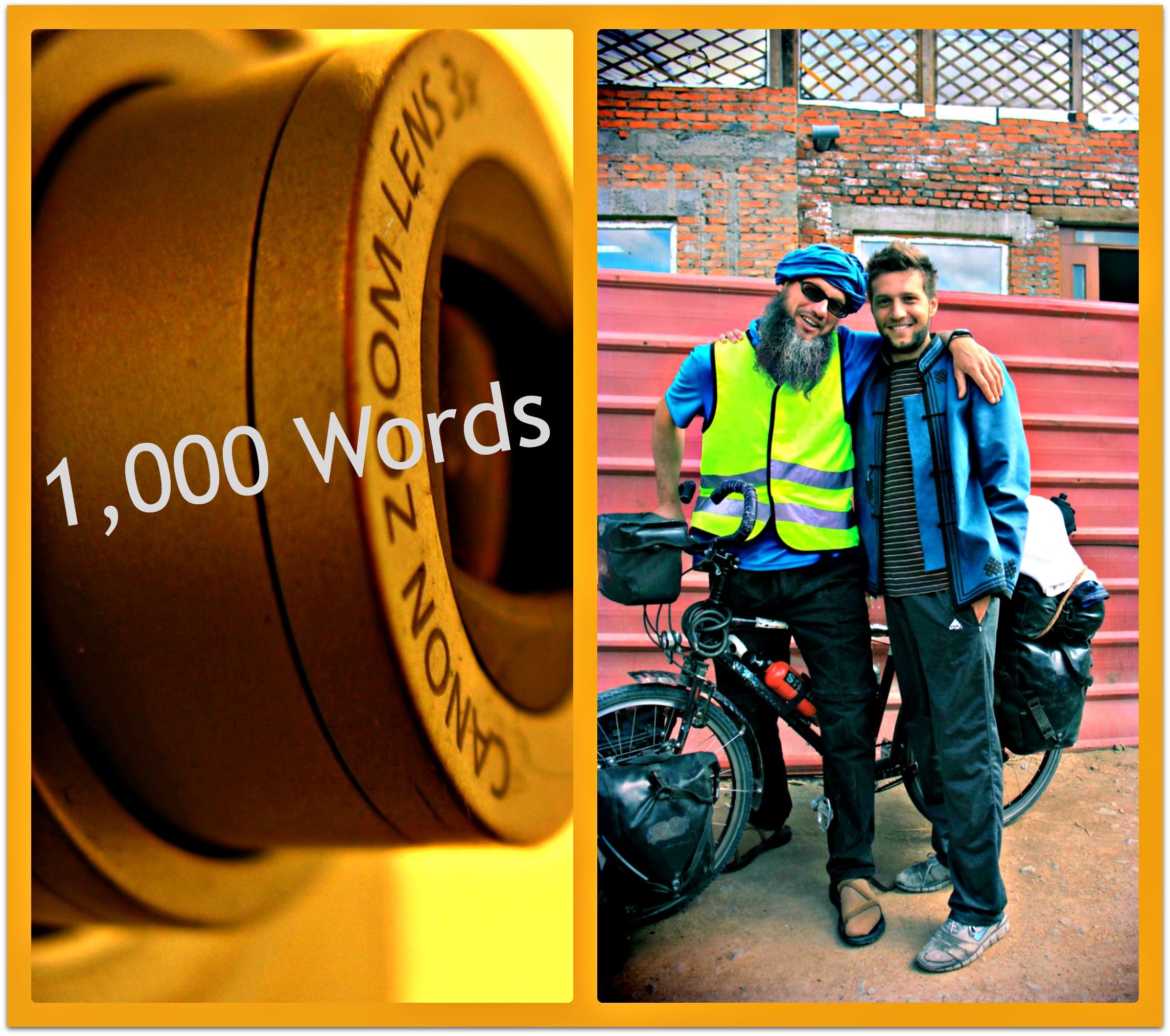

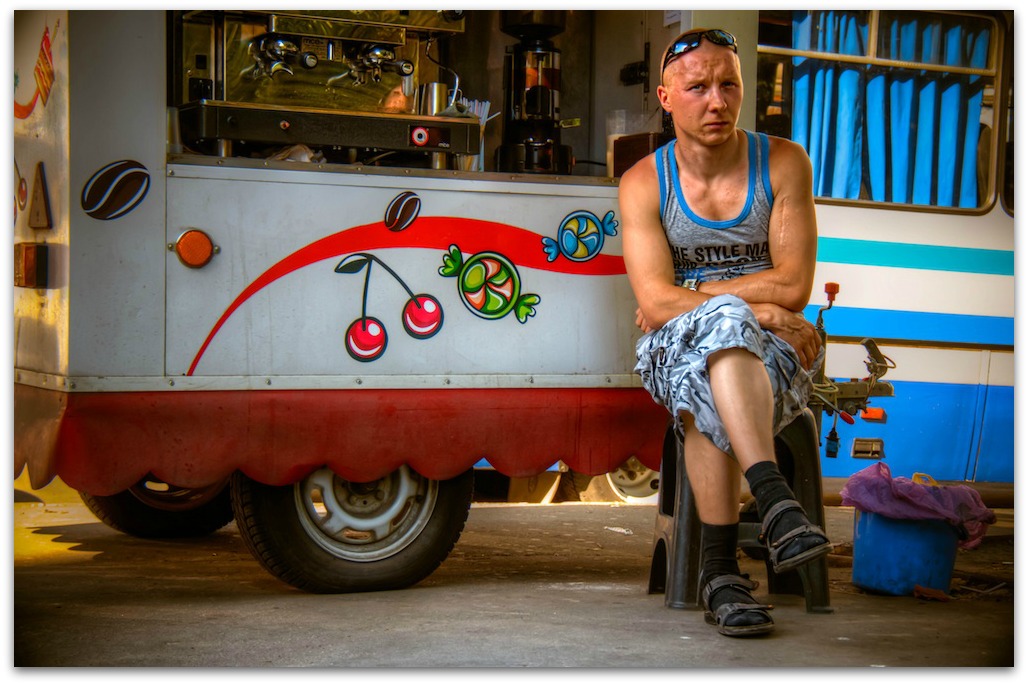


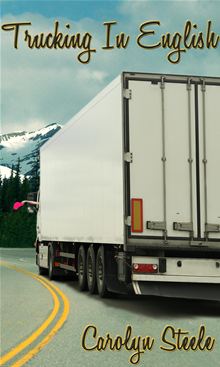


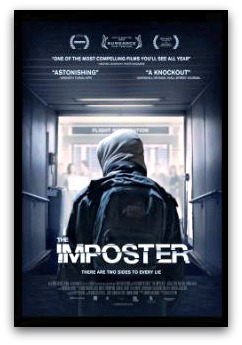

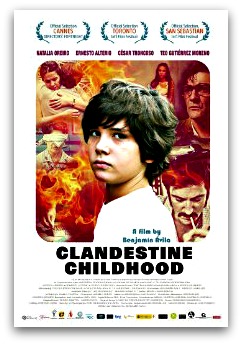
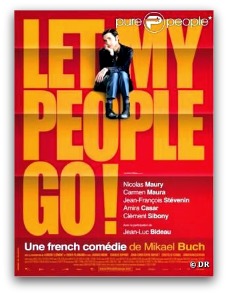
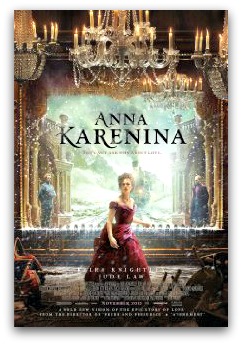


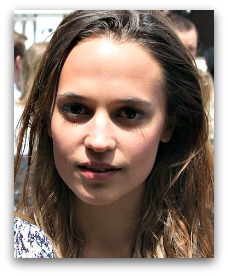
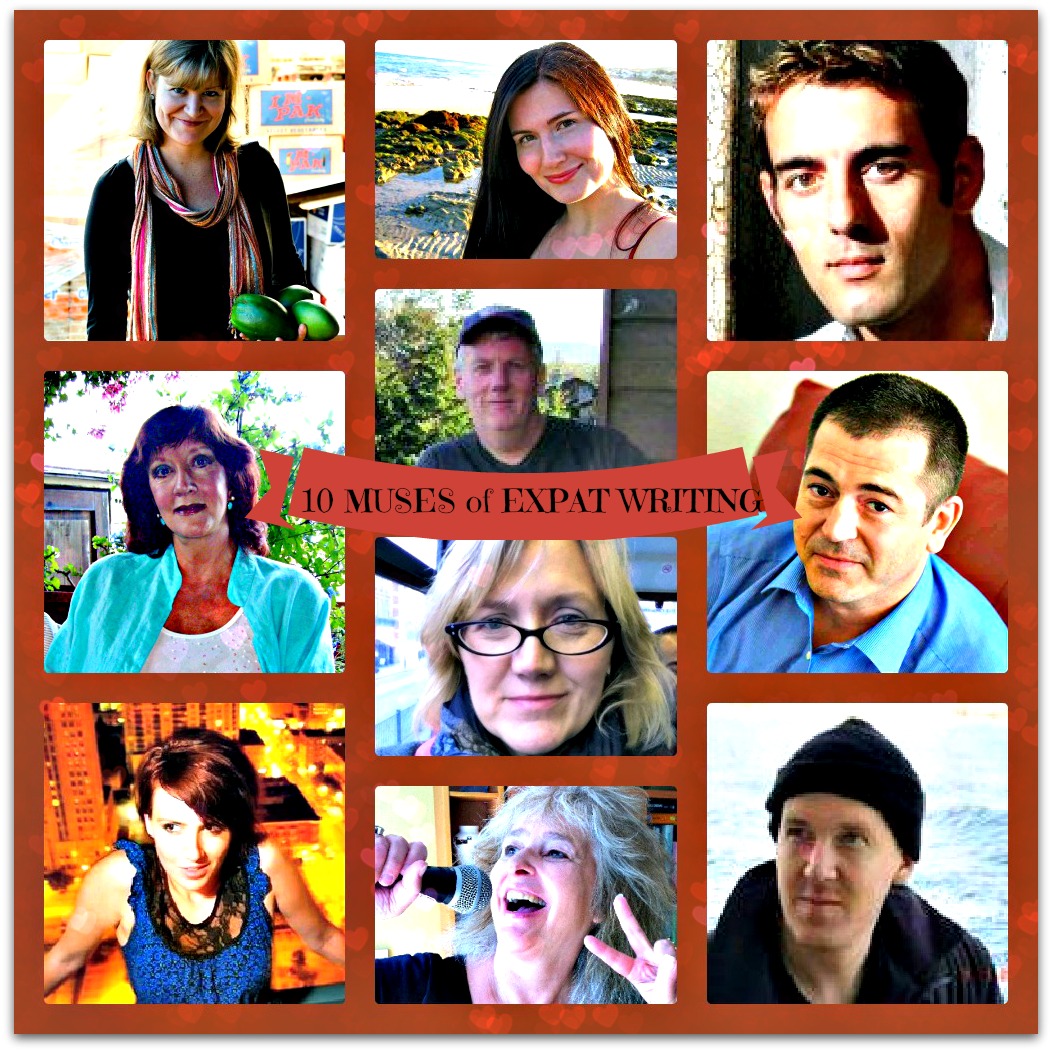










 The Displaced Nation