The Displaced Nation

A home for international creatives

TCK TALENT: Wendy Laura Belcher, best-selling author, memoirist, and distinguished scholar of her adopted cultures

wendy-l-belcher-tck-collageWelcome to the third installment of “TCK Talent,” Elizabeth (Lisa) Liang’s monthly column about adult Third Culture Kids who work in creative fields. As some readers may recall, Lisa—a Guatemalan-American of Chinese-Spanish-Irish-French-German-English descent—has written and performed a one-woman show about being a Third Culture Kid, or TCK. It debuted in LA in the spring, and I had the pleasure of seeing it during its too-short run in New York City last month. It was stupendous!

—ML Awanohara

Greetings, readers, and thanks, ML, for that vote of confidence in my work. But it cannot compare to the output of today’s guest, a woman of extraordinary talents. Wendy Laura Belcher is a professor of African literature at Princeton University as well as a published memoirist, produced playwright, popular workshop leader, and author of the best-selling Writing Your Journal Article in Twelve Weeks: A Guide to Academic Publishing Success.

Wendy grew up in Ethiopia, Ghana, and the USA, and has been a writer since childhood. Her most recent book, Abyssinia’s Samuel Johnson: Ethiopian Thought on the Making of an English Author, is a finalist for the African Studies Association’s 2013 Ogot Award (to be announced in Baltimore at the end of next month).

* * *

Welcome to The Displaced Nation, Wendy, and thank you for joining us. I’ve known you for years and yet don’t know as much as I should about your TCK childhood, so am happy to take this opportunity to learn more. You are the daughter of an American dad and a Canadian mom. What’s the story behind why your family moved to Ethiopia and Ghana?
My father is a physician and my mother always loved to travel, so she convinced him to move to Ethiopia. Her idea was that he would teach and do clinical work at a public health college in Gondar, and she would be the college librarian. My first memories are of Ethiopia. I moved back to the US when I was 14. But my specific geographical trajectory is as follows: Philadelphia (birth), Boston, Seattle, Gondar (Ethiopia), Seattle, Accra (Ghana), Seattle, and South Hadley (Massachusetts). After that I lived in Tamale (Ghana). Then back to Washington DC, Accra, Los Angeles, Princeton, Addis Ababa (Ethiopia), and now Princeton again.

That’s an impressively peripatetic life! When and where were you happiest while growing up?
As a child, I loved Ethiopia the best, perhaps because it was the first place my family went and perhaps because, as a child who loved reading, it seemed like a magical place. There was a castle in my backyard as well as oxen threshing grain like in the Bible. On the throne was a descendant of King David. From a child’s perspective, it was like living in a book.

How did you find your first “repatriation” to the United States, at age 14?
I never got used to Seattle, it was very parochial in the 1970s when we moved there, and the weather was too gloomy for someone who had spent a significant part of her childhood in the tropics.

At home, but without a role, in Africa

Has your relationship to Africa evolved as an adult?
As an adult, I settled in the US and not Africa, returning to Africa only a few times until 1997, after which I started going every third year or so. Since 2009, I’ve gone every year to Ethiopia. I thought I might settle in Africa, but as an adult my relationship with Africa was more vexed.

That is, what could my role in Africa be as a white American woman?

I wasn’t particularly interested in “helping,” as it seemed to me that Africans were perfectly adept at solving their own problems and only didn’t do so because of all the “help” they received from the West.

But also, I was in a bind. In the US I often didn’t feel a strong sense of calling in my work, but I felt more satisfied emotionally. In Africa, I felt a strong sense of calling in my work, but I was often lonely.

The problem for me as an adult in Africa as a single woman without children was the lack of female friendships. In the 1980s and 1990s I found it difficult to find in Africa other career women like myself with whom I would have something in common.

One of the reasons I’ve found it easier to return to Ethiopia and have done so regularly in the recent past is that I’ve found some good Ethiopian female friends.

Where do you think of as “home” these days?
My mother always thought that my father never really had a sense of home as a particular place, because he had an identical twin brother. It was the presence of one other human being from the beginning that meant home was someone to him, not somewhere. He didn’t really know what loneliness was, she thought.

I may be somewhat similar albeit for different reasons. I don’t think of anywhere as home.

I lived in Los Angeles for 20 years and loved many things about it, but I mostly think of it as a place where my network of affection is. It isn’t the place so much but the people who make it a kind of home.

At the same time, I still have good friends in Seattle, and my family of origin is still there, so it is also a kind of home.

Are you like many TCKs in finding yourself drawn to people of similar backgrounds?
Almost all my friends are people who live straddling some boundary: either geographically, being from elsewhere or spending significant time outside the US, or racially (growing up as minorities). I am almost never in a room with people who mostly look like me.

Writing calls from an early age

I often wonder if TCKs who pursue writing careers do so because the story is entirely in their hands as opposed to the experienced upheaval of their itinerant childhoods. Did your TCK upbringing influence a) your desire to be a writer and b) what you wrote about?
Growing up in Africa, I was surrounded by literary culture. In Ethiopia, a country with a 3,000-year-old written civilization, people read illuminated manuscripts on sheepskin bound with wood. In Ghana, hand-written epigrams adorned most vehicles, and my father’s Ghanaian colleagues traded bon mots in Latin. At school, I would pick a promising library shelf and work my way through it from left to right. I wrote my first novel when I was nine, titled Shipwrecked at Silver Lagoon. I had set myself the task of writing the best title for a book ever and, after I came up with this, decided it was too good to go unwritten. It was about two English girls in the 17th century who, after their ship is wrecked off the American coast, go on to discover what happened to the disappeared colony of Roanoke: it had moved into an underground, underwater kingdom. The book ground to a halt on page 40, perhaps because, as I tried to articulate issues that were all too real to me (the loss of home and the entry into the hybrid colonial world), my imagination foundered on the demands of the adventure form.

After that, I wrote for my middle school and high school newspapers, where I was the editor.

I was shy, partly due to all the moving and not being sure how to fit in, so I spent most of my time reading. Reading allowed me to immerse myself in a world where I could watch and not be watched (or judged). It also allowed me to develop skills in “reading” people and situations, which is essential to surviving so much moving.

HoneyfromtheLion_coverTell us what drew you to write your memoir, Honey from the Lion: An African Journey, when you were in your twenties.
I had enough credits to graduate from Mount Holyoke in three years so I spent my junior year back in Ghana. While working for a nonprofit organization that was spreading literacy and translating the Bible into local languages, I spent a weekend in a village with an Irish Bible translator. A series of events transpired, the impact of which was so powerful I decided I wanted to write about it. It was a gift: the story was so fascinating that I didn’t worry about writing it. Even if I wrote it poorly, I thought people would find it compelling.

Do you ever go back to the memoir now, and if so, does it resonate very differently due to the passage of time?
I can’t bring myself to read the book now. It seems like a different self wrote itsomeone who was more religious for one.

Congratulations on Abyssinia’s Samuel Johnson being selected as a finalist for a prestigious academic award. Please tell us what inspired you to write the book.
Belcher_AbyssiniaSamJohnson_coverIn 2002, I was talking with an Ethiopian friend about reading Samuel Johnson’s Rasselas, an eighteenth-century fiction he wrote about an Ethiopian prince. This Ethiopian friend surprised me by saying that he had read the book and quite liked it. When I asked him why, he said the book was “very Ethiopian.” I started to correct him, but then I began to wonder if he could be right, if a book written by a European could be Africanin particular, if it could be animated by African discourse. It’s my hope that my book will be convince others about the importance of African thought to the European canon.

From offering TCK courses at Princeton to helping junior faculty

At Princeton you teach courses that I wish had been offered when I was in college, like “Growing Up Global: Novels and Memoirs of Transnational Childhoods” and “Model Memoirs: The Life Stories of International Fashion Models.” You also teach workshops around the world to aid faculty in publishing academic articles. Please tell us the countries in which you’ve taught the workshops.
The workshops have taken place in Norway, Sudan, Malawi, Ethiopia, Indonesia, Canada and all over the USA.

What led you to teach academics about how to write for publication?

belcher_writingyourjournalarticle_coverI did two master’s degrees in the early nineties and I struggled in writing my classroom papers. What did these professors want and why did some papers succeed and others didn’t? I decided not to go on for a doctorate and when people asked me why, I said I just didn’t feel like I got the hang of being a graduate student and in particular about how to write in graduate school.

To my surprise, I found that most other graduate students felt the same way and were as confused and uncertain as I had been. Then UCLA Extension asked me to teach a writing class. I had always sworn I would never teach, but I think you grow when you do things you are terrified of, so I agreed and found that three of my first six students were academics looking for help with their writing.

UCLA Extension agreed to let me restructure the next class around writing for academic journals. The restructured class was a massive success and changed my life.

Within a few years I was teaching “Writing and Publishing the Academic Article” twice a year at UCLA to graduate students, where the class was in great demand, as well as at other universities and institutes around the world. I wrote the workbook Writing Your Journal Article in Twelve Weeks: A Guide to Academic Publishing Success for people who could not take the workshop.

Turning back to your writing, can you tell us what you are working on at present?
I have several writing and translation projects; here are the top three:
1) The Life and Struggles of Our Mother Walatta Petros: A Translation of the Earliest African Biography of an African Woman. Thirty years after the death of a revered African religious leader who led a successful nonviolent movement against European incursions, her Ethiopian disciples (many of whom were women) wrote this vivid book, full of dialogue and drama. The original text, which was written in 1672 by Africans for Africans in an African language, is unknown in the United States (Walatta Petros does not have a Wikipedia entry, for instance). Thanks to the Fulbright US Scholar Award that I held during my third year at Princeton, I was able to spend ten months in Ethiopia devoting myself to archival research. I worked on the translation with Michael Kleiner, a leading scholar and translator of Ge’ez. We believe it will electrify the fields of early modern and gender studies.
2) The Black Queen of Sheba: A Global History of an Ethiopian Idea. Those familiar with the sixth century BCE biblical tale of the Queen of Sheba’s visit to King Solomon may be surprised to hear that there is also an Ethiopian version, variations on which have in fact circulated for centuries, far beyond the Ethiopian highlands. According to the medieval text Kəbrä Nägäśt, the biblical Queen of Sheba was an Ethiopian woman—the wisest, the wealthiest, and the most powerful woman in the world. Tricked by Solomon into sleeping with him, she gives birth to their biracial son, who later takes the Ark of the Covenant to Ethiopia forever. My book traces how the Ethiopian tale came about and the impact it had on not just literature but the world. The emergence of the religion of Rastafari is one of its most far-reaching effects…
3) A Wardrobe of Selves: The Literature of Transnational Childhoods. Based on my life experiences, observing those of my TCK friends, and reading lots of memoirs, I am thinking of writing a book about memoirs by those who have spent their childhood crossing boundaries (in terms of culture, nation, state, language, gender, school, etc.). It would attend to how the narrators like Barack Obama, John McCain, Edward Said, Eva Hoffman, Gloria Anzaldua, Diana Abu-Jaber, Alice Kaplan, Gene Luen Yang, and Mohsin Hamid construct meaningful identities through narrative. These writers—usually considered separately, as part of American ethnic literatures like Arab American, African American, Asian American, or Latino—often negotiate the intricacies of identity in similar ways and should be considered together. That is, this would be a broad comparative project on diasporic memoir in the context of American ethnic literature.

* * *

Thanks, Wendy! You are so prolific, it’s an inspiration to all of us creatives! If we could accomplish just a fraction of what you’ve already done, what a life we’d be leading! Readers, any questions or comments for the amazing Wendy? Please leave them below. And…see you next month!

STAY TUNED for tomorrow’s post, when we hear from an international traveler who has started up her own business in New York City, catering to expats.

If you enjoyed this post, we invite you to register for The Displaced Dispatch, a round up of weekly posts from The Displaced Nation, with seasonal recipes, book giveaways and other extras. Register for The Displaced Dispatch by clicking here!

Related posts:

Images: Wendy Belcher; Wendy with her brother in front of a castle in Gondar, Ethiopia; detail from the cover of Wendy’s latest book, Abyssinia’s Samuel Johnson.

LOCATION, LOCUTION: Paulo Coelho, on the monuments that immortalise cities

2010-26In this month’s “Location, Locution”, expat crime writer JJ Marsh talks with Paulo Coelho, the Brazilian best-selling author of The Alchemist, The Devil and Miss Prym, and The Witch of Portobello, among many others.

*  *  *

When I asked Paulo Coelho to take part in the “Location, Locution” concept, he was happy to oblige.

But he wanted to do it his way. So in a change to our usual format, here’s Paulo Coelho on place.

The moving monument

I have visited many monuments in this world that try to immortalize the cities that erect them in prominent places. Imposing men whose names have already been forgotten but who still pose mounted on their beautiful horses. Women who hold crowns or swords to the sky, symbols of victories that no longer even appear in school books. Solitary, nameless children engraved in stone, their innocence for ever lost during the hours and days they were obliged to pose for some sculptor that history has also forgotten.

And when all is said and done, with very rare exceptions (Rio de Janeiro is one of them with its statue of Christ the Redeemer), it is not the statues that mark the city, but the least expected things. When Eiffel built a steel tower for an exposition, he could not have dreamed that this would end up being the symbol of Paris, despite the Louvre, the Arc de Triomphe, and the impressive gardens. An apple represents New York. A not much visited bridge is the symbol of San Francisco. A bridge over the Tagus is also on the postcards of Lisbon. Barcelona, a city full of unresolved things, has an unfinished cathedral (The Holy Family) as its most emblematic monument. In Moscow, a square surrounded by buildings and a name that no longer represents the present (Red Square, in memory of communism) is the main reference. And so on and so forth.

Perhaps thinking about this, a city decided to create a monument that would never remain the same, one that could disappear every night and re-appear the next morning and would change at each and every moment of the day, depending on the strength of the wind and the rays of the sun. Legend has it that a child had the idea just as he was … taking a pee. When he finished his business, he told his father that the place where they lived would be protected from invaders if it had a sculpture capable of vanishing before they drew near. His father went to talk to the town councilors, who, even though they had adopted Protestantism as the official religion and considered everything that escaped logic as superstition, decided to follow the advice.

Another story tells us that, because a river pouring into a lake produced a very strong current, a hydroelectric dam was built there, but when the workers returned home and closed the valves, the pressure was very strong and the turbines eventually burst. Until an engineer had the idea of putting a fountain on the spot where the excess water could escape.

With the passing of time, engineering solved the problem and the fountain became unnecessary. But perhaps reminded of the legend of the little boy, the inhabitants decided to keep it. The city already had many fountains, and this one would be in the middle of a lake, so what could be done to make it visible?

And that is how the moving monument came to be. Powerful pumps were installed, and today a very strong jet of water spouts 500 liters per second vertically at 200 km per hour. They say, and I have confirmed it, that it can even be seen from a plane flying at 10,000 meters. It has no special name, just “Water Fountain” (Jet d’Eau), the symbol of the city of Geneva (where there is no lack of statues of men on horses, heroic women and solitary children).

Once I asked Denise, a Swiss scientist, what she thought of the Water Fountain.

“Our body is almost completely made of water through which electric discharges pass to convey information. One such piece of information is called Love, and this can interfere in the entire organism. Love changes all the time. I think that the symbol of Geneva is the most beautiful monument to Love yet conceived by any artist.”

I don’t know how the little boy in the legend would feel about it, but I think that Denise is absolutely right.

© Translated by James Mulholland

www.paulocoelhoblog.com

Read JJ Marsh’s 2011 interview with Paulo Coelho for Words with JAM magazine

Next on Location, Locution: Janet Skeslien Charles, author of Moonlight in Odessa

* * *

JJ Marsh grew up in Wales, Africa and the Middle East, where her curiosity for culture took root and triggered an urge to write. After living in Hong Kong, Nigeria, Dubai, Portugal and France, JJ finally settled in Switzerland, where she is currently halfway through her European crime series, set in compelling locations all over the continent and featuring detective inspector Beatrice Stubbs.

STAY TUNED for next week’s posts!

If you enjoyed this post, we invite you to register for The Displaced Dispatch, a round up of weekly posts from The Displaced Nation, with seasonal recipes, book giveaways and other extras. Register for The Displaced Dispatch by clicking here!

Related posts:

Image: Paulo Coelho, 2010 – PauloCoelho.com, used with permission.

For TCK writer Cinda MacKinnon, fiction is a way to revisit “homes” she has cherished

Cinda MacKinnon CollageWhen I first returned to the United States after my extended expat journey, I remember humming to myself:

There’s a place for me,
Somewhere a place for me.

But then last month, when I went to see our monthly columnist Elizabeth Liang perform her one-woman show, Alien Citizen, I realized that my displacement, which took place as an adult, does not compare to that of Third Culture Kids. Most expats have been global residents by choice, whereas TCKs had no choice in being dragged around the globe by their parents. They and they alone have earned the epithet of “global nomad”.

Elizabeth has found a place for herself in theatrical circles. And today we talk to another adult TCK, Cinda Crabbe MacKinnon, who has found a place in fiction writers’ groups. Based on the first novel she produced, tellingly entitled A Place in the World, it seems fair to say that Cinda thrives on creating fictional characters whose lives resemble her own in some way, and then placing them in a part of the world where she has fond memories of spending some portion of her formative years, as a TCK.

In brief, A Place in the World centers around a young American woman named Alicia, who marries a Colombian and goes to live on his family’s remote coffee finca in the “cloud” forests of the Andes Mountains. Calamities strike one after another and Alicia ends up running the finca alone.

According to the book description, A Place in the World is a romantic adventure story, with a multicultural cast of characters, in the same vein as Isak Dineson’s Out of Africa.

Unlike Dineson’s work, however, it is not a memoir. Cinda may have loved her time in Colombia, but she didn’t marry a Colombian. And though she always wanted to be a biologist, she became an environmental scientist instead.

Well, enough from me. Let’s find out more about Cinda, why she wrote the book, and the book-writing process. And don’t forget to comment at the end of the interview! As Cinda has agreed to be this month’s featured author, we will be giving away ONE FREE E-COPY of her book to the person who leaves the most interesting comment!

* * *

APlaceintheWorld_coverCinda, pura vida. Thanks so much for agreeing to this interview. Let’s begin at the beginning: what made you decide to write a novel about an American woman who lives in the cloud forests of Colombia?
Well, like all writers the story was simply in my head. Contrary to what I’d been told to do, I wrote for myself, without the idea of publishing—at least when I first got started. But I guess there were also some motivating factors. As you mentioned, I grew up as a Third Culture Kid, or TCK. My family lived in Greece, Germany, Colombia, and Costa Rica because my father was in the United States Air Force and then worked as an attaché to American embassies. I spent my formative years—and by far the longest time—in Colombia and Costa Rica. I wanted to be a rainforest biologist. That didn’t happen, but I’ve been able to live this dream through my protagonist, Alicia. Writing the book gave me an excuse to visit and study tropical nature in several places.

What impact did writing about the experience have on you overall—did it help you process what you’d been through as a TCK?
I love Latin America—the setting and culture are comfortable to me. The book gave me a chance to write about the people in that part of the world who were enormously kind to me. Growing up as a girl without a country, I came “home” for the first time to the States for college and felt totally out of place. Writing gave expression to some of this unanticipated culture shock.

What kinds of books have influenced you as a writer?
When I look at my Goodreads list of top 40 favorite books I see there is a definite multicultural theme: 30 are set in other countries, written by foreign authors or about expats. A few eclectic examples:

  • The Poisonwood Bible, by Barbara Kingsolver
  • Crime and Punishment, by F. Dostoyevsky
  • Zorba the Greek, by N. Kazantzakis
  • Tortilla Curtain, by T.C  Boyle
  • Small Kingdoms, by A. Hobbet
  • How the García Girls Lost Their Accents, by J. Alvarez
  • Eva Luna, by I. Allende
  • Caravans and Hawaii, by James Michener
  • The Thorn Birds, by C. McCullough
  • Pillars of the Earth, by K. Follett;
  • The Paris Wife, P. McLain;
  • Lost in Translation (different from the movie), by N. Mones
  • Dreaming in Cuban, by C. Garcia.

A fish out of water…

As you know, we like to talk about “displacement” on this site. When you were growing up as a TCK, what was your most displaced moment?
When I was working in New Zealand as a young adult. I’d lived in four or five different countries and could make myself understood in several languages so wasn’t expecting that to be a problem in NZ. I remember being with a colleague trying to order a milkshake, and the lady behind the counter asked me to repeat myself. “A chocolate milkshake, please,” I said as clearly as I could. She looked at me blankly and said, “Say it one more time dear, I’m trying very hard to understand you, but your accent is so thick.” As we left the shop, I told my work mate, “I don’t know what I got, but it sure isn’t chocolate!” Alistair smiled and replied, “I thought you asked for ‘banahnah’”!  Go figure!

Yes, having been to New Zealand, I can kind of imagine that! What was your least displaced moment, when you felt that the peripatetic life suited you, and you were at “home”?
As an eighth grader arriving in Costa Rica from Colombia. My first week I was accepted as part of the class and invited to a party. I spoke Spanish and felt I fit in. Costa Ricans are a hospitable people, but I think I was also especially lucky to have been in that particular class. They were—and are—an exceptionally nice group of people; they still meet every month or so for dinner, and any classmate who happens to be in town is invited to drop in. I found life in Costa Rica to be nurturing.

You mentioned the counter culture shock you experienced when coming back to America for college. What was the biggest challenge you faced at that moment?
Well, it wasn’t one thing but all the little things: I was dressed “wrong”, didn’t know the music, had never been to a football game… I just really felt like a fish out of water and wanted to go back to Costa Rica—so, after a couple years, I did! (For a while…)

Clearing the writing & publishing hurdles

Moving on to A Place in the World: what was the most difficult part of the book-writing process?
Beginnings are the most difficult for me, as well as writing synopses for agents and publishers. In general, however, the answer is: time. Finding time to write while I was still working; finding time to meet my indispensable writing critique group; and once edited and published, finding time to speak at bookstores, do interviews, and write posts for my own blog!

What was your path to publishing?
Like any previously unpublished author, I had a difficult time. I had one agent hold onto my novel for six months as we discussed strategies and then (with the downturn in the markets) told me they had decided not to handle unpublished writers anymore. This has become a mantra with traditional publishers. (J.K. Rowlings was turned down dozens of times before finding a publisher for Harry Potter.) After a couple of years (during which time I was polishing the manuscript with my critique group), I decided to “indie” publish. There is a range of providers between traditional publisher and self publishing; and my publisher, VirtualBookworm, is one of those in the middle. I paid for my own editor (she was great—an expat who married a Latino) and a very small fee towards printing; but I get a bigger percentage per book than with a big publisher. I’ve been happy with all the support they have given me and would do it again.

What audience did you intend for the book? Has it been reaching those people?  Can other kinds of expats, who haven’t lived in Latin America, relate to Alicia’s story as well?
I think of it as “mainstream” fiction that will appeal to anyone who likes to read about other places and cultures; but yes, it has been popular with expats. I rather thought that alumni from the overseas schools I went to would be interested, and that has been the case. I’m heartened and amazed at the support and e-mails I’ve received from adults of all ages.

Are you working on any other writing projects?
Yes (she says hesitantly). Hesitantly because, as you might guess from what I’ve already told you, I’m working pretty much FT—and finding time for creative writing is harder than usual! I do have several ideas that I’ve started: one set in Hawaii, another in Costa Rica, and a third in Europe. This last might be of interest to your followers, as it will be about a group of kids in an international school in Switzerland written from the point of view several different characters, taking their experiences into adulthood. And then my writers group thinks I should do a memoir. So I don’t know which of these schemes will “win”, but I intend to set priorities before the New Year.

10 Questions for Cinda MacKinnon

Finally, I’d like to ask a series of questions that I’ve asked some of our other featured authors, about your reading and writing habits:
1. Last truly great book you read: The Help, by Kathryn Stockett, comes to mind, but how great is great? I could go back to Zorba the Greek, by Nikos Kazantzakis.
2. Favorite literary genre: Literary and mainstream—especially multicultural or historical.

3. Reading habits on a plane: Anything—even the airline magazine in a pinch, but I usually take my Kindle with a good novel. Also, planes provide great down time to write!

4. Book(s) you would recommend to other TCKs, expats: Other than my “multicultural” fiction list above, it would be two books: Tales of Wonder, a fascinating autobiography about growing up in China almost a century ago, by Huston Smith; and I’m a Stranger Here Myself—Bill Bryson’s funny take on coming home after years abroad.

5. Favorite books as a child: Fairy Tales, by Brothers Grimm. When I was a little older, the Nancy Drew mysteries and I enjoyed reading Dr. Seuss to my little brother.
6. Favorite heroine: In fiction: Nancy Drew? In real life: There are too many to choose just one.

7. The writer, alive or dead, you’d most like to meet: Barbara Kingsolver and John Steinbeck.
8. Your reading habits: I take a break every afternoon and I get a little reading in, and then my husband and I always read before turning out the light.
9. The book you’d most like to see made as a film: A Place in the World! Seriously, two fans have suggested this and I love the idea. I visualize the opening as the cloud forest seen from the air and then zooming in to the tiled roof house with the veranda and bougainvillea. (This is actually a possibility! A colleague of mine is a script writer and mentioned that it would make a good movie.)
10. The book you plan to read next:  I just started Flight Behavior, by Barbara Kingsolver. Then I’ll probably read The Old Way: A Story of the First People, by Elizabeth Marshall Thomas, or Cristina García’s new novel, King of Cuba.

* * *

Thanks, Cinda! Though I’ve never been to Colombia, I find myself enamoured of the idea of finding a place for myself in a cloud forest. It’s actually an apt metaphor for how many of us “displaced” types live: with our heads in the clouds, pretending we are somewhere else half the time.

Readers, how about you? Is your head in the cloud (forest) after listening to Cinda? BTW, if you’re as new to Colombian cloud forests as I am, I suggest that you check out Cinda’s Pinterest boards. You can also get to know her better by visiting her author site and blog, and liking her Facebook page.

And don’t forget to comment on this post! Extra points, as always, if you’re a Displaced Dispatch subscriber!

The winner will be announced in our Displaced Dispatch on November 2, 2013.

NOTE: If you can’t wait to read the book, you can always get a softcover copy here and the e-book version in various formats on Smashwords or Amazon.

STAY TUNED for tomorrow’s post, when monthly columnist JJ Marsh talks “location, locution” with best-selling Brazilian author Paulo Coelho.

If you enjoyed this post, we invite you to register for The Displaced Dispatch, a round up of weekly posts from The Displaced Nation, with seasonal recipes, book giveaways and other extras. Register for The Displaced Dispatch by clicking here!

Related posts:

Images (left to right): Valle de Cocora in Columbia, with wax palms towering over the cloud forest, courtesy McKay Savage on Flickr (Creative Commons license CC BY 2.0); Cinda MacKinnon as a child in Colombia; Cinda MacKinnon now (she lives in northern California); and Cinda with her husband in front of Monserrate, a mountain that dominates the city center of Bogotá, Colombia, taken just this past summer.

After 6 years, this expat still finds his adopted home utterly enchanting

Michael in CuritibaLand CollageMany of us “international creatives” are attracted to the world’s major cities. Take me, for instance. I live in, and write about, São Paulo, the largest city in Brazil, and in the Southern Hemisphere. Today I’m happy to introduce a fellow expat who has ventured out as far as Curitiba, the largest city in Brazil’s South Region. B. Michael Rubin has a creative job, and he also finds Curitiba, a forerunner of the eco-city, a source of daily enchantment.

—Andy Martin

My first night in Curitiba, I awoke at 3:00 a.m., jet lagged after too many hours of solo travel with a ridiculous amount of luggage. I got up and drank some water, and it was then I noticed birds singing outside my window. I wondered if all expats were greeted by nocturnal serenades.

In the morning, surprisingly, it seemed the same birds were still singing. I could hear their melodious songs even though my apartment was on the tenth floor, making them a flock of super-birds.

The conclusion of an American on his first expat experience: the birds here are so happy they can’t stop singing; they must think they’re in paradise.

Adam and Eve discovered that paradise can be transitory, but after six years I have no desire to leave the lovely city of Curitiba, in the Brazilian state of Paraná.

Through the Curitiban looking glass

As every expat ascertains, adjusting to a new world is not easy; it’s a challenge simply to be polite in a foreign culture. I’ve learned to say “Excuse me” when I enter someone’s home, and that it’s acceptable to kiss a woman I’m meeting for the first time.

I’ve discerned it’s impolite to ask anyone to close her window at home or in the car, even on a cold winter day in the south of Brazil. Unfortunately, this lesson was revealed while asking my frail Brazilian mother-in-law why she had her apartment windows open, as she sat buried under a mountain of blankets.

For expats, daily life is an adventure in wonderment. I wonder how no one expects a tip herenot the taxi driver, the barber, or the pizza delivery guy.

I wonder how the price of everything is negotiable, and when I negotiate with an offer of cash, I can still pay with a credit card if I don’t want parcelas [paying in installments]. When I pay a doctor, I get a discount if I don’t request a receipt.

I marvel at the everyday site of twenty people in a Curitiba restaurant having a pleasant family lunch. In the US, this only happens at a wedding or a funeral because twenty family members don’t live in the same city. If they did, there would be trouble.

There is always more mystery…

Living in a new world becomes easier when we focus on the similarities—aren’t we all humans sharing the same planet? There’s a crazy comfort in knowing Brazilians are as preposterous as everyone else.

In other words, every country is a mystery.

For instance, I can’t explain how Brazilians have so effortlessly embraced the 21st century: Forty years ago, no one in Curitiba had a telephone, a car, or had been on an airplane.

I don’t understand politics in Brazil. How can a country govern itself with more than thirty political parties? In the US, two parties are sufficient to create chaos.

Meanwhile, the electronic banking system here is outstanding. Americans don’t believe me when I tell them it’s possible to pay the mortgage at an ATM.

Another wonderful mystery: In the days of the military government, Curitiba “elected” a visionary urban planner to be mayor for 12 years. It is a rare opportunity when an urban planner/architect runs a city. During that time, Jaime Lerner built one of the best urban bus systems anywhere; established mandatory recycling for all homes and businesses; created the first outdoor pedestrian mall in Brazil; and expanded a park system that made Curitiba one of the greenest cities in the world. Senhor Lerner was so good at city planning that the population has doubled in 40 years. Who knew.

After I’d survived my first melodic night in Curitiba, my future wife suggested a leisurely walk around the neighborhood. Having moved from New York, I was accustomed to seeing the homeless camped out on sidewalks. I remarked that I hadn’t seen any in Curitiba. “Don’t worry,” she said, “you will.”

Sure enough, a few minutes later we entered the local mall, and I observed three young men in the mall’s restroom brushing their teeth. My girlfriend, however, refused to accept my homeless sighting, a trio no less, and insisted we wait nearby.

When the three men emerged from the restroom, I noticed they were very well-dressed for homeless. “See, they work in the mall,” she said, with a look of “I thought Americans were smart?”

It was my first, but not my last, moment of supreme cultural stupidity. Men in their twenties brushing their teeth at work. Who knew.

The myths are true!

Today, I know that my wife keeps a toothbrush in her office so clients won’t see food in her teeth. For the same reason, women in the supermarket on Saturday morning are in full make-up and high heels with silk scarves that match their nail polish.

Like the proud, beautiful city of Curitiba, Brazilians are a proud, beautiful people.

The myths I’d heard are true. Who knew.

* * *

Readers, your turn! Do you feel similarly enamoured of your adopted land, or has the enchantment worn off? Please leave your thoughts for Michael and me in the comments!

B. Michael Rubin is an American living in Curitiba, Paraná, Brazil. He is the editor of the online magazine Curitiba in English.

STAY TUNED for tomorrow’s interview with this month’s featured author, Cinda MacKinnon!

If you enjoyed this post, we invite you to register for The Displaced Dispatch, a round up of weekly posts from The Displaced Nation, with seasonal recipes, book giveaways and other extras. Register for The Displaced Dispatch by clicking here!

Related posts:

Images (from left): B. Michael Rubin in João Pessoa (no, he doesn’t have a photo of himself in Curitiba!) and the Curitiba tubo, courtesy marcusrg via Flickr (Creative Commons license CC BY 2.0). We think it doesn’t take much imagination to see the cylindrical, clear-walled tube bus stations as the Curitiban equivalent of Alice’s rabbit hole or looking glass. After all, the city’s Rapid Bus Transit System (Rede Integrada de Transporte, or RIT) is rather wondrous: the first of its kind in the world.

FOOTLOOSE & FANCIFUL: Margaret Drabble’s “The Red Queen”

Welcome to Footloose & Fanciful, an occasional series of posts where we talk about books, films or other art forms that have inspired us to travel to new places or appraise familiar places with fresh eyes.

I’m probably not the best person to kick off this series. As much as I adore fiction, I’m not one to travel on a whim, because of something I read in a book. Especially not these days, when my expat years, spent in England and Japan, are behind me and I have to take time off from work. Typically, I arrive at my destination and collapse in a heap of exhaustion. It’s not until I’ve had a good rest that I am able to take in my surroundings. I peer out the window and say: “Really, I’m in xxx?!”

At that point I go to the other extreme, manically trying to find out as much as possible about where I’ve landed, visiting bookstores with an English-language section to stock up on translated novels, expat memoirs, the lot…

The second time I went to Seoul, South Korea, though, was different, and I’ll make that the subject of today’s post. That trip marked a rare time when a book had piqued my interest in a country to the point of influencing what I wanted to do and see and talk about during my stay.

Finding the soul of Seoul

I said my second visit to Seoul. The first had occurred a few years before. It followed the typical pattern. I arrived tired and unprepared, although on that occasion, I got an immediate lesson in the local culture.

Just as my husband and I were landing in Incheon International Airport, the news was breaking that Dr. Hwang Woo Suk—a veterinary researcher who had achieved world fame by cloning an Afghan hound named Snuppy—had falsified his latest results to make it look as though he’d made advances in human cloning.

“It’s a very Korean story,” some Korean friends of my husband’s informed us. I wasn’t sure what they meant, but little by little, I pieced it together. The Korean government, desperate to project a modern, high-tech face to the world, had turned Dr. Hwang into a national hero. He appeared in many of their promotional campaigns. The post office sold stamps to commemorate his research, and Dr and Mrs Hwang enjoyed a decade of first-class tickets on Korea Air, because of his status as “national treasure.”

Interestingly, our Korean friends were reluctant to condemn him outright. He’d been under a phenomenal amount of pressure to produce results and bring his country greater glory. If you were under that much pressure, you’d probably be tempted to skip a few rounds of clinical trials, too, they seemed to be saying.

I had to think about that for a while. Already, I was inclined to feel sorry for the Koreans because I knew how they’d suffered under Japanese rule. They are the Central Europeans of Asia, if you will. Just as the Hungarians, Poles and Czechs have had to put up with Germany and Russia, the Koreans, due to being sandwiched between China and Japan, have had to put up with incursions from both.

Gradually, I came round to the Korean point of view. My thought process went something like this:

Okay, the Koreans have been victims of some bad geography. But then why do they make things so much worse for themselves by setting such impossibly high standards? What Dr. Hwang did was wrong, a violation of ethical standards in medical research. But, okay, if I can feel sorry for all the Korean schoolchildren cramming like crazy for exams, I guess I can spare a bit of sympathy for Snuppy’s creator…

After arriving home from that trip, I was eager to read more about the country (I hadn’t found much in translation in Seoul’s bookstores).

That was when I happened upon the novel The Red Queen, by Margaret Drabble.

Seeing Korea in shades of red

A novel on Korean history by one of the writers I’d most admired when living in the UK: what could be a more perfect bridge between the two parts of my expat life?

The Red Queen of the book’s title refers to Lady Hyegyong, a Korean woman who lived in the 18th and early 19th centuries. She was plucked from obscurity to marry the Crown Prince of Korea, Sado, who turned out to be…a HOMICIDAL MANIAC, I kid you not.

The reason we know all of this is that Lady Hyegyong left behind a diary, and Part 1 of the novel is Drabble’s version of that document, which she based on JaHyun Kim Haboush’s translation of The Memoirs of Lady Hyegyong: The Autobiographical Writings of a Crown Princess of Eighteenth-Century Korea.

In Part 1, the Crown Princess tells us about what it was like to live with a husband and in a court where daily, several dead bodies would be carried out of the palace (whenever Sado felt agitated or depressed, he would seek relief by murdering his servants) or reports would arrive of another court lady being raped. After he murders his concubine, he starts harassing his own sister, too.

At about this point, I concluded that the only thing worse than discovering you’re married to psychopath would be to find out you’re confined with him in a palace, from which there’s no escape. Terror within a claustrophobic setting must be the worst kind there is!

The story has a further twist. The Crown Prince’s father, King Yongjo, turns out to have been deeply Confucian. He is the kind of Korean parent who sets impossibly high standards for his son, which—it is hinted in the Crown Princess’s diaries—may be part of what triggers the son’s madness.

In the end, the cruel father proves more than the psycho son’s match. On a hot day in July 1762, he summons Sado and orders him to get into a heavy wooden chest, ordinarily used for storing rice or grain. The lid is shut and locked, and Sado is left to starve. It takes eight days.

The Crown Princess is traumatized all over again at witnessing her father-in-law execute her husband in such a cruel manner.

In part 2 of the book, an Oxford academic travels to Seoul with the Crown Princess’s diary in hand (which has been sent to her anonymously via Amazon.com) and finds parallels between her own life and hers. Professor Halliwell feels that the Princess “has entered her, like an alien creature in a science-fiction movie.” She becomes possessed by her—just as I was by the end of the book, just as I’m sure Drabble was, which was what inspired her to create (in her words) this “transcultural tragi-comedy.”

More questions than answers

I went back to Korea for a second time not long after reading the novel, accompanying my husband on some work he had there. So moved had I been by Drabble’s book that I was determined to find a way to pay tribute to the Red Queen, so called because of all the blood that flowed during her husband’s reign.

But here’s the strange thing. All of my attempts to find out about Lady Hyegyong came to naught. My Korean friends said I needed special permission to visit Changgyeong Palace, where this tragic series of events took place. They did not seem to want to engage in a conversation about this period of their history.

I left Korea with more questions than answers: Do Koreans repress this part of their past, and if so, what does that tell us about them? Is my previous view of them as helpless victims all wrong? Did other countries walk in and take over because Korea had weakened itself through its impossibly high Confucian ideals, which had led to total anarchy by the end of the 18th century?

But the weirdest thing is, I wasn’t that surprised by the Korean reaction. While the Western part of me applauds Drabble for resurrecting Lady Hyegyeong as feminist hero, one who lived long enough to write her tale (the existence of her memoirs, incidentally, served to refute later attempts to restore Sado to a position of honor in Korean history books), the Asian part thinks that poor Lady Hyegyeong must feel displaced in Drabble’s novel. Relationships are, after all, a central theme to Confucianism. The husband is the head of the household and the wife is obedient to him, full stop.

This inner dilemma of mine, along with the spirit of Lady Hyegyeong, which Drabble portrays so vividly in her novel, still haunts me to this day…

* * *

Readers, have you ever read a book that has colored your impressions of a place in weird ways? Also, if you would like to contribute to this new series—perhaps an uplifting tale of being inspired by a book set in the idyllic Tuscan countryside would be in order after this rather macabre story?—please don’t hesitate to get in touch: ml@thedisplacednation.com.

STAY TUNED for next week’s fab posts!

If you enjoyed this post, we invite you to register for The Displaced Dispatch, a round up of weekly posts from The Displaced Nation, with seasonal recipes, book giveaways and other extras. Register for The Displaced Dispatch by clicking here!

Related posts:

Notes and fears on living an expat life in the digital age

imageSome loose thoughts on expat life in the digital life, partly inspired by a Frank Bruni article in The New York Times:

Note 1: The late night scribblings on a post-it note of a random neurosis

That being away from my home country for a prolonged period only serves to make me an oddity there, and that as time moves forward the image that I have of home is from when I emigrated. Everyone and everything else has moved on. Me: obsolete, anachronistic, no longer conversant in the local idiom, a visitor from 2007. I’m still operating Britain iOS 6 when everyone else have updated to Britain iOS 7.

Note 2: Recent Article I read

“Traveling Without Seeing” by Frank Bruni. Published in The New York Times on September 2, 2013. In it Bruni laments the digital world we live in, how it alters our ability to experience travel in a foreign country.  What does this say about expat living? What is it to be an expat in a digital world? How dangerous can the “cocoon” Bruni writes about be?

“Before I left New York, I downloaded a season of “The Wire,” in case I wanted to binge, in case I needed the comfort. It’s on my iPad with a slew of books I’m sure to find gripping, a bunch of the music I like best, issues of favorite magazines: a portable trove of the tried and true, guaranteed to insulate me from the strange and new.

I force myself to quit “The Wire” after about 20 minutes and I venture into the streets, because Baltimore’s drug dealers will wait and Shanghai’s soup dumplings won’t. But I’m haunted by how tempting it was to stay put, by how easily a person these days can travel the globe, and travel through life, in a thoroughly customized cocoon. . .

I’m talking about our hard drives, our wired ways, “the cloud” and all of that. I’m talking about our unprecedented ability to tote around and dwell in a snugly tailored reality of our own creation, a monochromatic gallery of our own curation.”

Note 3: Availability of media: finding the Test score

Bruni downloads The Wire. Expat living need not be terrifying in the digital world, you need not let go. My apartment and digital habit is a curation of my own making, one that ties me to a notion of Britishness that I wouldn’t, other than a PBS viewing habit, have been able to maintain with as much ease twenty years ago. With only a cursory knowledge of technology it is possible to keep watching British television. British newspapers are easily available. In The Lady Vanishes there is a running joke about a buffoonish double-act on a train across Europe who in vain try to find out what the Test Match score is. I watch highlights on YouTube. If I don’t let go, am I actually an expat?  Am I no better than those British expats that sit in the Spanish sun drinking McEwans and eating eggs and chips? My media diet remains resolutely British in a way that wouldn’t formerly have been possible.

Note 4: Recollection of a joke heard on a podcast

The current England football manager, Roy Hodgson, has had a long (and varied) career managing abroad. When he returned to the UK to manage in the Premiership I remember a joke being made on Football Weekly, a Guardian newspaper podcast that is a regular feature in my digital cocoon, that Hodgson’s voice was that of an old cockney gent, the sort of voice you never encounter in London anymore but that was ubiquitous in the 50s and 60s. The inference was that the UK had moved on and in returning Hodgson was like a time traveller coming from Britain’s recent past. Is that the lot of the expat? You move somewhere exotic, but also find yourself stuck in aspic at that moment you left? Does that digital “cocoon” help or does it make it worse? This is that random neurosis again (see Note 1).

Note 5: Breakfast, Southern California, August 2013

Staying in a hotel in LA. Pleasant chat with some British tourists over the hotel’s breakfast buffet. Alarmingly they don’t believe me when I say I’m British, too. I’ve never had this before. They mention some pop culture references I do not get and talk about the Olympics. Realize they are talking about a shared experience I didn’t share in. Maybe they were right to be disbelieving about my nationality. After all, I’ve politely engaged tourists in conversation – how un-British can you get?  Digital cocoon breaking?

Note 6: 30,000 feet above Greenland, September 2013

Embarking on what will be the first trip home in nearly three years. Wonder if anyone else, like the tourists, will not think me British.

Note 7: Passport control, Heathrow, September 2013

I carry my baby daughter through passport control. I hand over her UK passport.

Note 8: Kings Cross, September 2013

imageFirst trip “home” in nearly three years. Struggling with suitcases into lift (writing that rather than elevator feels more a grumpy affectation than a reflex now) at King’s Cross. Press button for . . . “mezzanine level”. Mezzanine level? King’s Cross has a mezzanine now? Walk out of lift onto this mezzanine. wanting to discover more This is not my grimy King’s Cross. All that digital curation and this passed me by. The station has been poncified.. Wonder where the prostitutes  hang out now.

Note 9: Gregg’s

When did all the Gregg’s bakeries appear? There seems to be one on every street corner now. I know they’ve been around a while, but they seem to have been multiplying like rabbits.

Note 10: Coffee shop, London, September 14, 2013

I’m waiting for my order to be taken. It’s one of those moments where the term “inordinate” seems to be appropriate. An actual look at my phone (one of those devices that allows my curation and that had been tricking me into thinking I was still au fait with home) reveals that it’s only been three minutes, but that feels inordinate when you’re at the counter, the only customer, waiting to be served and two servers chat amongst themselves and do other tasks rather than make eye contact and acknowledge me. Not even a “sorry about the wait, we’ll be with you in a moment.” This is that British customer service foreigners used to tell me about and I thought they were exaggerating about. God, I’ve never felt so American as at this moment.

Note 11: Rhythm is a dancer . . . you can feel it everywhere

You notice that you are out-of-step, not in line with the rhythm of your home. You’re off the pace, don’t know the right moves. Of course, that would come in time. This is a dance you can relearn, but, for the moment, does it make you feel foreign.

Note 12: Living without seeing

Bruni’s piece (Note 2) is concerned with the traveler – “traveling without seeing”. My worry is living without seeing. A willful effort to cocoon myself away from the culture I find myself in, and attempting to curate that which I’m from. It leaves me an outsider to both.

Note 13: Passport control, SFO, September 2013

I carry my baby daughter through passport control. I hand over her US passport.


img:awindram

GLOBAL FOOD GOSSIP: Keeping food real in Brazil

JoannaJoanna Masters-Maggs, our resident repeat-expat Food Gossip and Creative Chef, is back with her column for like-minded food lovers, which includes pretty much every expat we’ve ever encountered. This month: Authenticity, Brazilian-style.

* * *

“What’s the most depressing thing I’ve seen this morning?” I demanded of my husband as we arrived at our hotel on that first day in Brazil.

Was it something in my tone of voice that made my husband stick out his jaw? Having your wife positive about a new location is always a good thing. Any hint of wifely discontent can put the terrors into most expat husbands, even the most rufty-tufty oil field types.

“The favelas on either side of the motorway for the entire journey from the airport?” His voice had a slight tone of —  could it be? — belligerence. He’d decided to meet head on what he feared was my Western European squeamishness over visible poverty. I’d agreed to come, after all; it wasn’t his doing that the favelas existed.

“Oh.” I felt a pin pricking my outrage. “Actually no. It was the model of the Statue of Liberty outside the shopping mall we passed, the one with the Hard Rock Café.”

Not the voice of a woman with a strong social conscience, then.

“Aren’t we in Brazil?” I asked lamely.

Living in the shadow of the USA

In my defense, I was afraid that this most exciting and culturally rich of countries appeared in thrall to the ego of a foreign superpower. Here, where Christ the Redeemer looks down calmly over Rio and Guanabara Bay, it distressed me that he was unable to turn his cheek from the abominable reproduction Liberty. Such are the drawbacks of being made of stone.

My frustration really hadn’t abated much by the time we left several years later, but it was tempered. Here was a country that had its own great music, landscape, history and food. Brazil’s son Santos Dumont’s first flight had been overshadowed by the earlier but aided take off of the Wright Brothers’ heavier than air plan.

But surely the same could not happen to Brazilian fast food – and at their own hands?

Coxinha  — wins the Pepsi Challenge against the Chicken McNugget, any day

When I was in Brazil, workers could fill a canteen with beans, rice, a little meat and some pasta for 5 reais. A meal from McD costs four times that and cannot keep a belly as full for as long. Yet not only was there a Hard Rock Café, Dominos and McDonald’s, but the bloody Statue of Liberty to boot, holding her torch triumphantly aloft as if lighting the invasion of foreign fast food. (I know, I need to get over that tacky statue.)

Brazilian fast food choices, which can be grabbed on the run in a similar way to a hamburger, are extensive. Kibe consists of meat and bulgur wheat shaped into rugby balls and deep-fried. Empadhinas are little pastry pies often filled with palm hearts but options are endless. There are bollinhas de arroz (rice balls) and, a slightly more costly option these days, bollinhas de bacallao (salt cod).

Then there is the coxinha. Oooh, heaven. It is a pear-shaped, breadcrumb-coated, deep-fried confection of pulverized chicken, creamy catupiry cheese, and onion. I don’t want to be rude, but for heaven’s sake, Brazil — how could you choose a chicken nugget over that?

Please. It’s time for a Coxinhas R Brazil brand to sweep all before it.

Turn the milk sour with your grouse? Or simply dance the samba?

Brazilians probably have a greater openness and sense of fun than I do. They seem to tolerate kitschy statues and dodgy food for what it is, just a bit of fun not to be taken as a serious threat to national pride. There is a great deal of pride in being Brazilian and, I’m told, there are as many Americans trying to emigrate to Brazil as vice versa – it is a new land of opportunity.

Brazilians seem less sulky or passive aggressive than many in dealing with what they don’t like. One amusing example came in the immediate aftermath of 9/11 when America required passengers arriving on planes to America from Brazil to be subject to the same security searches, and delays, as planes coming from countries deemed a threat. Brazil has no history of terrorism and people were offended. However a cheerful approach was chosen. Officials simply decided to apply the same principle to American planes landing in Sao Paolo, Brazilian style. To ease the pain of the wait, passengers were treated to smiling samba bands and charming dancers. Nothing was ever going to change, but the point was made and relations not permanently soured.

A meal fit for a (Burger) King

Perhaps this non-confrontational approach is best. The invasion of American fast food is all-conquering everywhere. Its advance hasn’t been slowed by a thousand angry French farmers and restauranteurs, or by the Italian Slow Food movement. But its growth in Brazil alongside a rapidly emerging obesity crisis comes alongside economic improvements. According to a recent BBC Programme on the rise of obesity around the world and particularly in developing and BRIC countries, the answer is to be found less in the innate appeal of the food, but in the message that is sent out when you’re seen eating it. McDonald’s is an “aspirational food”.

(You might notice that I started a new paragraph rather suddenly. It was to give you a moment to recover from the shock of seeing the words “McDonalds” and “aspiration”, not only in the same sentence, but right next to each other. The idea of being proud to be seen eating fast food is a difficult one that takes time to absorb. I too enjoy the odd foray into the depths of culinary depravity, but I hide the bags – I admit hypocrisy right here. May I continue now?)

You might think you would aspire to a Wolf oven or even a Meile vacuum cleaner, but McDonald’s? No — bear with me. A Brazilian McDonald’s meal costs four times that of a plate of rice and beans. Its cost would buy you any number of coxinhas. It is impressive conspicuous consumption. You pay to eat a meal which won’t actually fill you and you will have to pay to eat again soon after, but the point is: you can.

It’s a fairly modest aspiration for the new middle class. Thousands of Brazilians have been lifted out of poverty over the last 10 years. But potential hunger is still a recent memory and the fear of slipping back must be strong for many. An outrageously priced Big Mac is still less expensive than a ritzy restaurant in Leblon and it’s certainly easier to avoid potentially embarrassing etiquette gaffes for those not yet accustomed to what is known in America as “fine dining”. This is what fast food companies can trade on, and before you know it, new habits are formed.

If you’re going to gain Brazilian pounds, make them worthwhile

Why get fat on this so-so food, though, when you can get gloriously fat on real cooking? You can easily pile on the pounds with Brazilian feijoida, Let the weight gain be a result of leisurely, indulgent meals and not sandwiches grabbed in plastic furnished, fluorescent lighted “restaurants” that are tiled like public lavatories.

I’d say the same to America. Ditch the McD and get fat on Southern and Soul Food, some of the most luscious food in the world. Wow, those Southerners know how to take a healthy low-calorie green vegetable and give it the cholesterol punch of cheesecake. My two personal favourites: collard greens cooked in fatty port cuts and sweet potatoes mashed with butter and topped with a crumble made of brown sugar pecans and a handful of marshmallows. Sounds appalling, but it is the closest thing to ambrosia since Zeus was a viable god to worship.

Both Brazilian and American Soul food has the opulence and indulgence to deaden and dazzle the senses at the same time. It has what a dried up hamburger and flabby white bun bread cannot hope to rival even with liberal dollops of ketchup.

Oh please. Get fat on real fat and be patriotic about that: your nation’s fat.

Make it worth your while.

Make it worth your money.

Aspire.

* * *

Joanna was displaced from her native England 16 years ago, and has since attempted to re-place herself and blend into the USA, Holland, Brazil, Malaysia, Venezuela, Saudi Arabia, and now France. She describes herself as a “food gossip”, saying: “I’ve always enjoyed cooking and trying out new recipes. Overseas, I am curious as to what people buy and from where. What is in the baskets of my fellow shoppers? What do they eat when they go home at night?”

Fellow Food Gossips, share your own stories with us!

STAY TUNED for tomorrow’s post!

If you enjoyed this post, we invite you to register for The Displaced Dispatch, a round up of weekly posts from The Displaced Nation, with seasonal recipes, book giveaways and other extras. Register for The Displaced Dispatch by clicking here!

Related posts:

LIBBY’S LIFE #85 – A trick of the light

Talk about déjà vu. January 2012 all over again.

I sit on an uncomfortable plastic chair on one side of a teacher’s desk. On the other side of the desk, in a larger, more padded chair, sits Patsy Traynor: Jack’s ex-preschool teacher and now kindergarten teacher. Behind her is an expansive window, west-facing, and the afternoon sun blasts through the glass, forcing me to squint if I want to read her expression. This is a little intimidation trick of hers that I’ve encountered once before; although in this case forewarned doesn’t mean forearmed.

A hostile silence hovers between us as she opens a manila folder labeled “Jack Patrick” and runs a fingernail down the middle crease — her shell-pink nail varnish is chipped, I note with satisfaction — then picks out a sheet of paper with the heading “Behavioral Report”.

She looks up and smiles. I don’t smile back, because it’s not a friendly smile. It’s a smile of pleasurable anticipation, and the pleasure belongs only to her.

“Mrs. Patrick,” she says. No cosy first-names today, although she knows mine well enough. She looks down at the report in front of her. “Mrs Patrick. I asked you to meet me here today because—”

“I know why you asked me here,” I interrupt her. “Actually, the letter you sent home with Jack was addressed to both me and my husband, so if you don’t mind, we’ll wait until he arrives before we start.”

The smile falters a little, and she looks pointedly at the clock on the classroom wall.

“The appointment was for four p.m., and we are already running five minutes late.”

“Some people work full-time,” I say, and smirk to myself as Patsy swells up with indignation.

If you really want to piss off a teacher, simply insinuate that their workday finishes at three-thirty.

I fold my arms and sit back in my chair, waiting, avoiding catching Patsy’s eye. In the far corner of the room, inside an igloo-shaped tent, Jack is ordering around Beth and George. He’s trying to make them sit still and listen to his newfound skill of reading a Dr. Seuss book about dogs and cars. Beth and George aren’t impressed with his instructions to stay in the tent when there are so many exciting playthings outside it to scatter and destroy; George registers his disapproval with a determined “No!” (his current favourite word) while Beth lets out a high scream. There is the sound of a hard object hitting the floor with some force. After a pause, Jack’s voice cuts clearly across the room:

“If you don’t behave, I’m going to tell M and she will break your favourite toys.”

I feel rather than see Patsy’s smug moue, and I squeeze my eyes shut. It’s a defensive reaction, against both Patsy and the sunshine behind her that dazzles me.

Hurry up, Oliver. I need some backup here.

On cue, to my relief, the classroom door opens and Oliver strides across to the desk. He’s in his best suit, not for Patsy’s benefit but because he’s been meeting new customers today, and is still in professional work mode. He exudes brisk confidence and an air of brooking no nonsense.

I’ve never been so glad to see him in all my life, and that includes the time he was late for our own wedding because his best man was in the throes of an almighty hangover and drove to the wrong church. Oliver must also have had an almighty hangover, because the pair of them waited outside for half an hour before realising that a locked church, a lack of guests, and no vicar might be significant.

Oliver shakes hands with Patsy, introducing himself, then, before sitting down, he moves to Patsy’s side of the desk and twiddles with the venetian blind behind her chair, moving the slats so that the sun shines upwards instead of directly in my eyes.

“Better?” he asks me.

We exchange small, conspiratorial winks, and I bite my lip to stop myself laughing at Patsy’s expression. Her face is red and her eyes very wide, as if she can’t believe that someone has had the gall to do now what she should have done out of courtesy fifteen minutes ago.

She picks up Jack’s Behavioral Report again, although with not as much assurance as before. Oliver seems to have flustered her.

“I asked to speak to you both because of issues Jack is having in the classroom. He appears not to be able to differentiate between fact and fiction, and while we encourage strong, lively imaginations, we do try, at this point in child development, to make it clear to our students that the two viewpoints are separate.”

“So in other words, you’re saying Jack is a liar.” Oliver slices neatly through the spiel of edu-jargon.

Patsy’s face reddens further. “Not at all, but—”

“In that case, you must be saying that he’s telling the truth?”

“Not quite, but—”

“You must be saying one or the other. Which is it that he’s telling you? Fact or fiction?”

“Well—”

“Fact or fiction? Quick!”

Oliver’s not giving Patsy a chance to get a word in. He reminds me of Samuel L Jackson in Pulp Fiction: “Say ‘What’ again! I dare you! I double-dare you!”

“Imaginary friends are one thing!” Patsy bursts out. “But his obsession with this particular friend, whatever her name is—”

“Her name’s M,” Jacks voice says from inside the nylon igloo, and I stifle a giggle with my hand. “M, like the letter M.”

“—This obsession is out of hand. And I would like your permission to refer him to the school district’s educational psychologist for further assessment.”

Oliver stands up. “If that’s all you called us in for,” he says, “you might as well have phoned. Because the answer is No. Jack is not a liar, and he’s not a psycho either. You, on the other hand, I have always had my doubts about, and I’m not about to take child-rearing advice from someone who accepts bribes from parents. Come on Libs. Kids!” he shouts in the direction of the igloo. “Time to go home now. If we have to be in a madhouse, I prefer the homegrown type. No wonder homeschooling is so popular,” he adds to Patsy.

* * *

“And then what?” Maggie asks me the following day, when Jack is at school and I’ve taken the twins to see their adopted granny. Their adopted ex-grandpa, thank goodness, is busy in the back yard, splitting logs for Maggie’s wood-burning stove.

I shrug. “We went home, and Oliver sat down with Jack and lectured him long and hard about differentiating between fact and fiction.”

“So he was only standing up for Jack against Patsy at school. He doesn’t really believe the story that there is the ghost of a little girl in your house. Although you do?”

I think back to the day we found the shattered Dresden shepherdess. It was in the centre of the dining room floor, a long way from the shelf where I’d put it. To get to its final resting place, it would have had to jump seven or eight feet through the air. We don’t own a cat, and to my knowledge, there had been no freak earthquake that morning. And yet, all my life, I have pooh-poohed the idea of ghosts and ghouls.

In other words, I am having a crisis of faith.

“I believe there is something,” I say finally. “I just don’t know what, exactly. The china shepherdess broke in the dining room, which happens to be the room that won’t warm up, no matter what you do to it. And there’s Fergus — he wouldn’t come in the house at all. I’ve heard that dogs are sensitive to… things.” I shiver, despite the warm sunshine that is shining through Maggie’s living room windows. “It could just be circumstantial, of course. Logic tells me that it probably is, and everything can be explained by rational argument. But whenever I start to explain things away with logic, I come up against the biggest obstacle — that I honestly believe Jack thinks he is telling the truth.”

Maggie nods thoughtfully, and rocks back and forth in her rocking chair. Beth, who is sitting on her lap and playing with Maggie’s long string of amber beads, leans back, puts her thumb in her mouth, and closes her eyes.

“I remember Cathy saying that Chuck had an imaginary friend when he was a little boy,” she says at last. “In that very house.”

“So you said, in one of your emails. He grew out of it, though.”

Maggie wiggles her hand in a comme ci comme ça gesture. “He was very old to have a pretend friend. Eleven, twelve. And I don’t know, but… I got the impression that he said he’d grown out of it, to humour her. I remember visiting the house once, and he didn’t know I was there, and he was talking to someone – someone who wasn’t there. He’d have been about fifteen at the time.”

I sit still, turning over possibilities in my mind. George waddles over to me and puts his head on my knee. Any minute now, he will go to sleep, standing up where he is.

“He was very keen that I read the folder of old documents relating to the house. It’s full of papers to do with plumbing and roofs, but there’s also records of people who used to live there, a couple of hundred years ago. Perhaps I should read it more carefully.”

But later, in bright sunshine, when the house is full of real people and real laughter. Right now, I’m not very keen on going back to my silent, empty house with two sleepy toddlers.

“Does Jack’s friend have a name?” Maggie asks.

“He calls her M. Like the character in James Bond. Or Dial M for Murder.”

I shiver again., then notice that Maggie has stopped rocking in her chair and is rubbing her arms.

“Are you cold?” I ask. “I thought it was just me. Shall I turn the heat up?”

Maggie shakes her head, and I see that she has lost some colour from her cheeks.

“Chuck used to love the film The Wizard of Oz. Cathy said he’d named his imaginary friend after one of the characters.”

I laugh. “Like, Dorothy? Toto? Tin Man?”

Maggie is still shaking her head. “No. Cathy always thought it was an odd choice, but assumed it was because Cathy and her husband didn’t have any brothers or sisters. He named her after the aunt.”

I stare at Maggie, and start to rub my own arms which, like Maggie’s, have sprung a rash of goosepimples.

Aunt Em.

Em.

M.

.

Next post: LIBBY’S LIFE #86

Previous post: LIBBY’S LIFE #84 – Stages of youth

Read Libby’s Life from the first episode.

Want to read more? Head on over to Kate Allison’s own site, where you can find out more about Libby and the characters of Woodhaven, and where you can buy Taking Flight, the first year of Libby’s Life — now available as an ebook.

STAY TUNED for next week’s posts!

If you enjoyed this post, we invite you to subscribe for email delivery of The Displaced Dispatch, a round up of the week’s posts from The Displaced Nation. Sign up for The Displaced Dispatch by clicking here!

JACK THE HACK: Expat authors, let’s reopen that blogging can of worms (1/3)

JACK THE HACK _writingtipsA pressured existence in the UK led Jack Scott and his partner, Liam, to seek sanctuary in the Turkish port town of Bodrum. This expat experience was literally something to write home about (as in a book!), after which the pair returned to the UK, where they are living the life of Riley in Norwich.

We have invited Jack, now reinvented as Jack the Hack, to submit a monthly column targeted at those of you who are still displaced and hacking away at travelogues-cum-memoirsor, in some cases, autobiographical novels. Warning to non-Brits: Don’t be put off by his wry sense of humo(u)r!

—ML Awanohara

As far as the book malarkey goes, unless you’re lucky enough to bag a big boy in the publishing world, you will carry the can to get the word out. These days, this means developing a strong and dynamic online presence.

To some, this seems like a step too far. I’ve worked with a number of new authors who just don’t have the time, skill or inclination to do what it takes.

“I wrote the damn book. Isn’t that enough?” I’ve been told.

Well, no, it isn’t, I’m afraid, not by a long chalk.

So I work with them to take the pain away. You see, it doesn’t need to be a can of worms. Those who regularly dip into Jack the Hack will know that I’m a passionate advocate of blogging—for fun and for glory. With a little effort and imagination, you really can make the Web work for you, and blogging is a very good place to start (cue Julie Andrews, the old Dame who tragically lost her fabulous soprano timbre).

Still not convinced?

Then let’s start at the very beginning…

So what is a blog?

The word is an abbreviation of “weblog”. Put simply, a blog is a journal where the entries (posts) are published online, with the most recent first (the reverse of a traditional hand-penned diary). A blog can take many forms and is a perfect vehicle to reflect our multi-media world of words, music, video and images.

Importantly, blogs differ from standard websites. They are dynamic (rather than static) and constantly evolving (assuming they are kept up to date).

Why do people blog?

It may sound grandiose, but blogging is an important democratizing force, giving a real voice to those who might otherwise not have one. It’s a great social leveler tooanyone can do it, no qualification required. There’s no editor to correct your flabby grammar and no one to censure your words (unless, of course, you live somewhere with lively Internet police).

While this means a fair amount of dross is floating round the crowded blogosphere, there are roses among the weedsand you could be one of them.

Bloggers blog for all sorts of reasons and to continue the tenuous Sound of Music theme, here are a few of my favo(u)rite (things):

• Because they have something to say about an issue they care about (the campaigners and spleen-ventors);
• To tell their world what they’re up to and to keep in touch with friends and family (a common topic for expat blogs);
• To help others (health-related blogs are often written for this purpose);
• To be seen as an expert or influencer in a particular arena or place (the Arts, politics and travel leap to mind);
• To connect with like-minded people (this blog, The Displaced Nation, is a good example);
• To flog a service, brand or product (oh, like a book).

Most successful blogs tend to focus around a particular theme or niche. I know a blogger who writes about knitting patterns. It’s hugely popular, attracting thousands of hits a week.

Among the big hitters are travel, politics, food, family life and…ta-da! books and creative writing.
Blogs are a boundless, no-to-low-cost way to lay out your stall in a way an ordinary Website might not. Why so? Because Internet search engines like Google love content that’s new, fresh and frequently updated.

Even well-established businesses take blogging seriously these days. So why wouldn’t you?

Has Jack converted you to the cause? If you’re hooked, let him reel you next month with tips to launch your blog with bang.

BLOGGING TIP FOR EXPAT AUTHORS NO 1:

Blogging increases the chances of getting your mug shot on the first page of Googleand that just might sell a book or two.

* * *

Readers, any comments, further questions for Jack the Hack? He’ll be back next month with the second in his blogging advice trilogy…

Jack Scott’s debut book, Perking the Pansies—Jack and Liam move to Turkey, is a bitter-sweet tragi-comedy that recalls the first year of a British gay couple in a Muslim country. For more information on this and Jack’s other titles, go to his author site.

STAY TUNED for tomorrow’s post, another installment in the life of our fictional expat heroine, Libby. (What, not keeping up with Libby? Read the first three episodes of her expat adventures.)

If you enjoyed this post, we invite you to register for The Displaced Dispatch, a round up of weekly posts from The Displaced Nation, with seasonal recipes, book giveaways and other extras. Register for The Displaced Dispatch by clicking here!
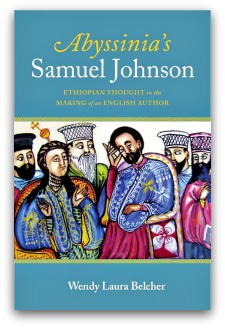
Related posts:

Images: from top, clockwise: Hand with pen / MorgueFile.com; Boats in King’s Lynn, Norfolk / MorgueFile.com; Jack Scott, used with his permission; Turkish boats / MorgueFile.com

And the September 2013 Alices go to … these 4 international creatives

 © Iamezan | Dreamstime.com Used under license

© Iamezan | Dreamstime.com
Used under license

If you are a subscriber to our weekly newsletter, Displaced Dispatch, you’re already in the know. But if you’re not (and why aren’t you? off with your head!), listen up. Every week, when that esteemed publication comes out, we present an “Alice Award” to a writer or other kind of creative person who we think has a special handle on the curious and unreal, who knows what it means to be truly displaced as a global resident or voyager. Not only that, but this person tries to use this state of befuddlement to their advantage, as a spur to greater creative heights.

Today’s post honors September’s four Alice recipients.

Starting with the most recent, and this time with annotations, they are (drumroll…):

1) SHERRY OTT, travel photographer and blogger

Source: Photographing Vietnam’s Rainy Season,” on Everything Everywhere
Posted on: 20 September 2013
Snippet:

From a cultural experience and photography standpoint, inclement weather seasons are a wonderful opportunity to see how the locals really live in situations that we would deem less desirable. You get a true feel for the country and local culture and traditions through the “tough” times. On top of it you get introduced to a number of new products that are used in that inclement weather season that you probably never even dreamed of…

Citation: Sherry, we have to stop you there. Right now we are picturing Alice sloshing through her own tears:

As she said these words her foot slipped, and in another moment, splash! she was up to her chin in salt water. Her first idea was that she had somehow fallen into the sea, “and in that case I can go back by railway,” she said to herself.

But what interests us about you, Sherry—what’s curiouser and curiouser, as Alice might put it—is that, unlike her, you were not having a pool-of-tears moment. As you set foot in Saigon at the height of the monsoon season, your first thought was, my, how lucky I am to see “the skies open up and pour down their wrath on city streets.” And you know what, Sherry? We agree with you. Unlike Alice, who had no means of transport except possibly the train, you had your own motorbike. Also unlike her, you were privy to some unusual sights: double-headed ponchos and ponchos with headlight windows! Poor Alice, on the other hand, when she heard something splashing about in a pool a little ways off, thought she might encounter a walrus or hippopotamus, only to find … a mouse.

2) ALYSSA JAMES Canadian blogger, journalist, traveler

Source: How fast can you slow travel?” on Matador Network
Posted on: 13 September 2013
Snippet:

Because of regulations on how long a truck driver is allowed to be on the road in a day, I was able to explore the city [of Chicago] for exactly 1 hour and 19 minutes.

In those 79 minutes, I was still able to slow travel. I visited the sculpture and centerpiece of Millennium Park known as the Bean (actually called Cloud Gate) and went to the Art Institute. More importantly, I talked with people who lived there. I received interesting insights about the place I wouldn’t have gathered otherwise, like where to get the most delicious Chicago-style pizza ever (Giordano’s deep-dish, double-crusted and stuffed deliciousness).

Citation: Alyssa, we appreciate that you were able to plumb the depths of the Windy City, the largest city in the Midwest, America’s third largest, in just over an hour (hey, that’s no mean feat given how deep the pizza is!). And all this without the benefit of the Queen’s insights in Through the Looking Glass:

“A slow sort of country!” said the Queen. “Now, HERE, you see, it takes all the running YOU can do, to keep in the same place. If you want to get somewhere else, you must run at least twice as fast as that!”

Our only question is, had you followed the Queen’s advice and run twice as fast, do you think you might have at least sampled the stuffed pizza? And of course, had you run twice as fast, you could have sampled it guilt-free! That’s a thought. Next time, perhaps?

3)  ANNE COPELAND, founder and Executive Director of The Interchange Institute

Source: “Tiger Moms, Bébés, and Warm Eskimos” on FIGT blog
Posted on: 1 September 2013
Snippet:

[A]s an interculturalist, I’m at once fascinated, excited … and disappointed by these accounts of parenting in other cultures…. In each case, the message is roughly, “Here’s a new and superior way to raise your children; the result is better than what you’re doing; try it, you’ll like it.” But nowhere do they describe the deep values underlying the parenting choices, the ultimate goals for the kind of adult parents are trying to raise, or the cultural milieu into which the children will be expected to grow.

Citation: Anne, we feel certain that Alice could relate to your woes. She was, after all, rather discombobulated by what she saw of the Duchess’s parenting style. To quote from her account:

While the Duchess sang the second verse of the song, she kept tossing the baby violently up and down, and the poor little thing howled so, that Alice could hardly hear the words:—
“I speak severely to my boy,
I beat him when he sneezes;
For he can thoroughly enjoy
The pepper when he pleases!”

Just imagine, a child that enjoys unlimited amounts of pepper thanks to harsh parenting. It totally makes sense in the Wonderland context. Except…achoo! or should we say: hach-chu (Bengali), hāt-chī (Cantonese), atsjú (Hungarian), aatsjoo (Norwegian), or atchoum (French)? In any case, some sort of onomatopoeia must be required. Parenting may vary from place to place, but not sneezing! But wait, the Japanese say hakushon. Are they trying to stifle the sneeze while frantically searching for a face mask? (Anne, please tell us: will intercultural wonders ever cease?)

4)  NIKKI HODGSON, blogger & traveler

Source: “What is lost (and gained) when the traveler settles down” on Matador Network
Posted on: 16 August 2013
Snippet:

“…Every day that passes separates me from the places I used to belong to, the places I learned to belong to. As I dig my roots deeper into the rocky Colorado soil, I must relinquish my grasp of the banks of the Neckar where I first studied abroad, the mountains of Grenoble that stood guard over me as I fell apart, the dusty hills of Bethlehem where I put myself back together.

And I know that I will never belong to these places the way I once did.”

Citation: Nikki, you put us in mind of Alice’s sister, who like you after your travels, was old and wise enough to know that Wonderland wouldn’t, couldn’t last. Here is the relevant passage:

So she sat on, with closed eyes, and half believed herself in Wonderland, though she knew she had but to open them again, and all would change to dull reality—the grass would be only rustling in the wind, and the pool rippling to the waving of the reeds…

Crazy Wonderland or dull reality? Or, in your case: dusty hills or rocky soil? That is THE expat question… Not much of a choice, is it?

*  *  *

So, readers, do you have a favorite from the above, or have you read any recent posts you think deserve an Alice Award?  We’d love to hear your suggestions! And don’t miss out on these weekly sources of inspiration. Get on our subscription list now!

STAY TUNED for our next post!

Writers and other international creatives: If you want to know in advance whether you’re one of our Alice Award winners, sign up to receive The Displaced Dispatch, a round up of weekly posts from The Displaced Nation, with news of book giveaways, future posts, and of course, our weekly Alice Award!. Register for The Displaced Dispatch by clicking here!

Related posts:

