The Displaced Nation

A home for international creatives

10 summer hacks picked up from an expat (& repat) life spanning Japan, the UK and the US

summerhacks_US

The summer ideal, so rarely achieved (apart from the cocktail), Public Domain CC0 via Pixar.

New York City, where I now live after years of being an expat on two small islands, the UK and Japan, had a particularly brutal winter in 2014. You would think I’d now be in the mood for summer.

But no. It hasn’t worked that way.

The moment the temperature and humidity levels skyrocketed here in the city, I realized my feelings about summer haven’t changed. Basically, and as expressed in this space before, I can’t stand it. Or, in the somewhat more poetic words of Swedish black metal trio Woods of Infinity:

Summer is not my friend. Satan, let it end.
Sunshine, hurting my eyes. Making my skin look like…argh.

Which brings me to today’s topic: summer hacks. What hacks have I picked up from the three countries where I’ve lived—Japan, the US and the UK—that can help me through summer’s doggiest days?

FROM JAPAN:

1) Avoid the sun at all costs.

Japanese women seem to have been the first to get the memo about avoiding sun damage. During the summer, which in Tokyo can be particularly brutal, most would not venture out in the heat of the day without a hat or a UV parasol, sometimes both. (Note: A regular umbrella will do in lieu a proper parasol.)

2) Carry a fan and a handkerchief.

If the heat becomes unbearably hot, say, when standing on the subway platform or getting into a car, one of the easiest ways to get cool is via a simple fan, either the kind that folds or an uchiwa. And if you find yourself perspiring profusely in a public place, try dabbing your face and neck with a handkerchief folded into a neat square. (When living in Japan, I used to find it entertaining to go into a department store and look at the vast array of handkerchiefs on display in the ground floor accessories. Every major Western designer has done one, meaning they’ve all had to struggle with translating their unique look into a small square of cloth. Who knew?)

3) Eat sparingly (cold soba) or else for energy (grilled eel).

On a hot and humid day, one of the healthiest meals is the simplest: a plate of cold buckwheat noodles, or soba, which have been cooked al dente. The noodles are dipped into a cup containing a special sauce (consisting of dashi, sweetened soy sauce and mirin), to which has been added fresh wasabi and sliced spring onions. Alternatively, if your body feels depleted during a heat wave, you can go to the other extreme and have a meal of unagi kabayaki, freshwater eel that has been glaze-grilled: it is served over white rice, typically with a cold beer to accompany. (By tradition, Japanese favor this meal from mid-July through early August, to counteract the lethargy and debilitation that occurs mid-way through their blistering summers.)

4) Drink plenty of cold tea and, for short bursts of energy, iced coffee with milk and a shot of gum syrup.

In Japan you can buy, at every convenience store, huge plastic bottles of green tea or oolong cha (my fave) to refrigerate so that cold tea (most people don’t ice it) is always on hand. You can also make mugicha: a caffeine-free barley infusion, said to be the “flavor of summer” in Japan and always served a room temperature. Before moving to Japan, I had never before tried iced coffee , where apparently the Japanese have been drinking it since the 1920s. Usually, it’s served in a glass to accompany or finish a restaurant meal—not in a plastic disposable cup (it’s impolite to eat and drink on the streets in that part of the world). Although hesitant at first, I became an immediate fan and was pleased to see it had caught on in the West by the time I returned. Now you can even get iced coffee in Dunkin’ Donuts. And, whereas I don’t usually add sugar to coffee, I will sometimes add to the iced version as I find my body needs that extra bit of energy to get from A to B. (In Japan, one always adds gum syrup, which dissolves much better than sugar, but it’s hard to find that here.)

FROM THE US:

5) If you can’t stand the heat, move to a cold dark box, aka a movie theatre.

Maybe it’s a New York City thing, but I’m thinking of Michael Maslin’s New Yorker cartoon showing a movie theatre with a marquee that says:

AIR
CONDITIONING

and a movie

6) Eat ice cream.

One or two scoops of freshly made ice cream in a dish or a regular sugar cone (nothing heavier or fancier) is one of life’s simple pleasures. Many people die in heat waves (no joke), so this is one to have, and keep, on your bucket list.

7) Seek invites to places where you can swim—in a pool, a lake, the ocean.

Nothing is more refreshing on a hot day than plunging into some cool water. Another tip is to put on a shirt or dress that is slightly damp—it will be dry by the time you reach the subway.

8) No opportunity to escape to a house in the Hamptons or equivalent? Have a cocktail.

See my still-relevant post of three summers ago on cocktails as mini-summer escapes to exotic locales, entitled Some enchanted drinking…

FROM THE U.K.:

9) Seize the moment and go crazy.

British summer tends to be short and sweet—and blissful (not too humid). Should you have a day where the heat breaks and temperatures and humidity levels are bearable, EMBRACE SUMMER AS YOUR FRIEND. Now, British people go to extremes by stripping down, as noted in this recent post by Annabel Kantaria in her Telegraph Expat blog, hence risking sunburn and melanoma. (As an aside: Did you know we once did an interview with Annabel? Check it out if you haven’t seen it.) At the very least, perhaps you could pull off an impromptu picnic or bike ride, or else try to score an outdoor table at a popular restaurant or pub.

10) Have a cuppa.

Contrary to the Japanese and American customs, tea is drunk hot in Britain because it makes you sweat and therefore cool down. This hack is one of the more practical legacies from the days when the Brits occupied India. To this day, I will sometimes make a cuppa when I’m boiling hot. Think the science sounds dubious? Listen to this NPR story. In any event, tea is an important summer drink in all three cultures, for good reason. It sustains you. See my post on the virtues of tea-drinking.

* * *

Readers, it’s your turn. What can you add to my list before that Woods of Infinity song starts haunting me again:

Awake at night again. No tears to weep and too restless to sleep. Thinking of all and nothing and got stuck in between.

Hurry, please! Any foods, drinks, rituals, Bacchanalian festivities or other hacks you’ve picked up from your lives of displacement? How about current films you’d recommend? SOS, I’m melting over here…

STAY TUNED for next week’s fab posts!

If you enjoyed this post, we invite you to register for The Displaced Dispatch, a round up of weekly posts from The Displaced Nation, with seasonal recipes, book giveaways and other extras. Register for The Displaced Dispatch by clicking here!

Related posts:

LOCATION, LOCUTION: JJ Marsh looks back on a year with TDN

jill 3One year ago, Displaced Nation asked me to conduct a series of regular interviews with writers on their use of location. Place is vitally important to my writing and that of my colleagues at  Triskele Books . It’s our USP. After a year of interviews with authors from Brazil, America, South Africa, Ireland, France, India, Hungary/China, I’m looking back.

First, I’ve selected ten of favourite answers, on how these writers approach weaving literary magic carpets to transport readers to Bombay or Berlin, Syria or Odessa.
Secondly, I’ve added five of the most books that held me spellbound; works which make place a character in its own right.

Happy Anniversary!

Which came first, story or location?

 Jeet Thayil, author of Narcopolis:
“I knew Narcopolis would be set in Bombay. I started with that city and that period in mind. It was about telling a story that hadn’t been told before, in a way that Indian fiction doesn’t really tell stories. Unsentimental, brutal and beautiful. When I realised that was what the book would be like, it revealed itself to me.”

Charlotte Otter, author of Balthasar’s Gift:
“The two are intertwined. When the first images began to flash in my head more than eight years ago, the setting was immediately clear: my home town in South Africa, Pietermaritzburg. BV is a post-apartheid novel and PMB is struggling to become an effective post-apartheid city. It was the natural setting for the story that was starting to unspool before me.”


How do you go about evoking the atmosphere of a place?

Chris Pavone, author of The Expats and The Accident:
“I love walking around cities, looking around at the architecture and the shops and the restaurants, at the people and their pet. My characters do the same, using all their senses to inhabit the world around them. Of course walking around, in and of itself, isn’t the type of action that does much to drive a plot forward, so characters should also be doing something else while walking around. Something such as spying.”

JD Smith, author of Tristan and Iseult, and The Rise of Zenobia:
“With great difficulty. In writing Tristan and Iseult I evoked the wet and wind the British know only too well. I’ve always lived on the coast, though in the north, not Cornwall (Kernow), but those salt winds and perpetually grey skies are the same. The Rise of Zenobia is based in 3rd century Syria, and I’m finding that much harder. I didn’t grow up with the atmosphere ingrained in me. I haven’t spent years of my childhood visiting the remains, the palaces and the fortifications. I rely on films a lot. Being a designer I’m an incredibly visual person, and seeing it played out, filmed in the locations I’m trying to conjure on the written page, helps immensely.”

Which particular features create a sense of location? Landscape, culture, food?

Amanda Hodgkinson, author of Spilt Milk:
“All those but also I find the light is important. I adore Edward Hopper’s paintings for his use of light and I find writing can experiment in a similar way with light, creating mystery or clarity and deepening character.”

Janet Skeslien Charles, author of Moonlight in Odessa:
“For me, it is how characters react to situations. Odessa is the humor capital of the former Soviet Union, which means that my characters use humor as a shield to ward off painful situations. Odessans are capable of laughing at things that would make me bawl. Their mental toughness is impressive. So for me, the sense of city is the sense of self.”

How well do you need to know the place before using it as a setting?

Steven Conte, author of The Zookeeper’s War:
“With skill, only moderately well, though it’s probably wise to minimise the difference between your characters’ supposed knowledge of a setting and your own. This aside, the best fiction implies more than it states (Hemingway’s iceberg principle), and a few vivid details can be enough to evoke an entire town or city or region. I’d recommend not writing about famous landmarks, since locations such as the Brooklyn Bridge, the Eiffel Tower and the Brandenburg Gate will remain clichés of place however brilliantly they might be described.”

AD Miller, author of Snowdrops:
“You need to know it, and then you need to unknow it. A novel isn’t a travelogue or an encyclopaedia; you enlist only those aspects or details of a place that serve the narrative.”

Which writers do you admire for the way they use location?

James Ferron Anderson, author of The River and the Sea:
“Charles Dickens in Chapter Three of Great Expectations uses the weather to bring alive his location when Pip runs in the morning to meet Magwitch. ‘The mist was heavier yet when I got out upon the marshes, so that instead of my running at everything, everything seemed to run at me.’ Wonderful stuff that took me to that location so effectively I still picture it. Anton Chekhov is marvellous for both countryside and city. Yalta is so alive, so liveable-in, in Lady With a Lapdog. W.G. Sebald, not a favourite writer of mine, is nevertheless someone whose ability to put me in his location I much admire.”

Share an extract from your work which illustrates place.

Paulo Coelho, author of The Alchemist and Eleven Minutes, on Geneva’s Water Fountain:

“Our body is almost completely made of water through which electric charges pass to convey information. One such piece of information is called Love, and this can interfere in the entire organism. Love changes all the time. I think that the symbol of Geneva is the most beautiful monument to Love yet conceived by any artist.”

Books I’d recommend for use of location:

* * *

In next month’s Location, Locution, our guest will be Jessica Bell, an Australian expat living in Greece, who writes fiction, advice for authors, and makes music too.

JJ Marsh grew up in Wales, Africa and the Middle East, where her curiosity for culture took root and triggered an urge to write. After living in Hong Kong, Nigeria, Dubai, Portugal and France, JJ finally settled in Switzerland, where she is currently halfway through her European crime series, set in compelling locations all over the continent and featuring detective inspector Beatrice Stubbs.

_(75_of_75)

Author photo: J J Marsh

STAY TUNED for our next post!

If you enjoyed this post, we invite you to register for The Displaced Dispatch, a round up of weekly posts from The Displaced Nation, with seasonal recipes, book giveaways and other extras. Register for The Displaced Dispatch by clicking here!

Related posts:


And the June 2014 Alices go to … these 4 international creatives

 © Iamezan | Dreamstime.com Used under license

© Iamezan | Dreamstime.com
Used under license

If you are a subscriber to our weekly newsletter, the Displaced Dispatch, you’re already in the know. But if you’re not, listen up. (Hey, why aren’t you? Off with your head!)

Every week, when that esteemed publication comes out, we present contenders for a monthly “Alice Award,” most of whom are writers or other kinds of international creatives who appear to have a special handle on the curious and unreal aspects of being a global resident or voyager.

Not only that, but this person tries to use this state of befuddlement as a spur to greater creative heights.

Today’s post honors June’s four Alice recipients. They are (drumroll…):

1) ANDREW CREELMAN, British expat in São Paulo, blogger and author of the memoir Trying to Understand Brazilian Culture

For his post: What It’s Like to Watch World Cup Games on the Streets of São Paulo, on his blog, What About São Paulo?
Posted on: 19 June 2014
Snippet:

Watching England vs Italy
The day I’d been waiting for had arrived! I’d managed to recruit a Dane, an American and a couple of Brazilians to support England with me, and we all headed over to the Fan fest area just in time for the English national anthem. I belted this out with gusto, and I noticed I wasn’t alone; there were at least 100 other Brits I could almost hear singing too.

Then the Italian anthem started, and things took an unexpected turn. It was as if EVERYONE else was singing along to this, waving their Italian flags. But then São Paulo is home to a huge number of Brazilians of Italian descent, and for some reason, I hadn’t even thought about this before arriving. To make things worse, there was a group of big, burly Italians stood by us, clearly very passionate about this song and the team.

Citation: Andrew, we’re surprised you didn’t perfect your capoeira kicks before venturing into the FIFA Fan Fest area of São Paulo to watch England play Italy. But it seems you were that clueless. Your story in fact puts us in mind of Alice when she was handed a flamingo and gopher and told to play croquet. She was “in such confusion that she never knew whether it was her turn or not.” Likewise, we note that you were jumping up and down when you imagined England had scored a goal when in fact the ball had hit the outside of the net. Still, it’s a good thing you were mistaken or else those “big, burly” Brazilians of Italian descent might have screamed “Off with his head!”. As it was, their smirks must have made you feel a right wally. Welcome to the Fédération Internationale de Alice (FIA). And, yes, it’s time to invest in the Brazilian equivalent of Spec Savers.

2) CLAIRE BOLDEN MCGILL, British expat in Maryland and blogger at UKDesperateHousewifeUSA

For her post: Brazil 2014: The World Cup Widow’s Guide to Surviving It Stateside, to Lawrence Brown’s blog, Lost in the Pond
Posted on: 12 June 2014
Snippet:

List of activities for making World Cup widowhood fun

3. Buy a big hat and pretend you’re a rich British aristocrat. There is no other reason to do this, other than it’s something fun to do when the game is on.

Really go to town on the British accent. Order or make tea and be all lah-dee-dah, and poo-poo lemon and sweetener, get a proper milk jug and dunk in a Custard Cream. Keep being posh and drink tea and say posh British things during the game.

Citation: Love it, love it, love it, Claire! Only can we make just one wee suggestion, that while outfitted in this rather outlandish garb, you borrow a line from the March Hare and say to your husband, very earnestly: “Take some more tea.” Then when he says he hasn’t had any tea yet so can hardly take more, you can say:

“You mean you can’t take LESS. It’s very easy to take MORE than nothing.”

Just think, he may look away from the screen for an instant, wondering whether you’ve gone totally barking. Mmmmm… Okay, probably not. Still, a Mad Hatter Tea Party would be marginally more entertaining than playing World Cup bingo with yourself (No 6).

3) JANE DEAN, blogger, editor, writer; English-born global resident (but currently in the Netherlands)

For her post: The Non-Expat Expat: Not Fitting The Box to her blog, Wordgeyser
Posted on: 28 May 2014
Snippet:

Today we have no concept of “home” in a geographic sense. This used to worry me and I know it caused consternation for our families that we no longer felt, or identified ourselves as, “British”. I used to feel wholly American, now not so much. I find I can’t identify with any given nationality, but am most comfortable surrounded by people like me, who are from everywhere.

Citation: Jane, at a time when America is about to celebrate its independence from Britain, we find it refreshing to encounter your “nothing is permanent, not even nationality” perspective. British one day and “wholly American” the next—it’s a pivot that can only be rivaled by the German football players on Team USA. What’s more, it’s impressive that you’ve renounced expat-hood as an alternative identity. We, too, have never identified with the expat label and, upon reading your post, suddenly understood why: it’s because we’ve all been “local” (only one of us has had an expat package, in Japan). Like you, we would advise others who feel they are “from everywhere” not to spend too much time on the Alice-in-Wonderland puzzle of “Who in the world am I?” The sooner one can get over the feeling of having arms and feet poking out of the windows and doors of the White Rabbit’s house—or, as you would put it, Jane, “not fitting the box”—the better. To echo your words: “The worst disasters make the best stories down the years.”

4) BRITTANY JORDT, diehard Wisconsinite, “almost expat” in New Zealand and travel blogger

For her post: Reflections on a year and a half abroad, from an almost expat on her blog, Today I’m 20-Something
Posted on: 13 May 2014
Snippet:

Which brings me to my point: anyone who tells you they don’t miss home is either lying or doesn’t have a home worth missing. In the first case, you can hardly blame a person for denying how much they long for the land of their birth, especially when (as is often the case) it’s not feasible to go back. The second scenario is one I don’t envy, even if the homesickness sometimes drags me down.

Citation: Well said, Brittany! Listen, a rainy day in Auckland, the kind that makes you wear socks with your slippers and huddle around the propane heater, would bring out the homesick in anyone, even those of us who don’t have homes worth missing. But your point is well taken. You’re not in Wisconsin any more. To return to Alice (don’t you imagine she and Dorothy would be friends?), a person who is living abroad, particularly on the other side of the world, in the Land of Feijoas no less, would be lying if they didn’t occasionally admit to having a moment like this:

“It was much pleasanter at home,” thought poor Alice, “when one wasn’t always growing larger and smaller, and being ordered about by mice and rabbits. I almost wish I hadn’t gone down that rabbit-hole—and yet—and yet—it’s rather curious, you know, this sort of life!”

We also love that you refer to yourself as an “almost expat—a person who still feels the tug of home on her heart”. It’s the perfect way to describe the existential ambivalence that goes hand in hand with a life of displacement, that persistent feeling of: “There’s no place like home…There’s no place…” Is it any wonder that the Kiwi granny thought you were a keeper? 🙂

*  *  *

So, readers, do you have a favorite from the above, or have you read any recent posts you think deserve an Alice Award? We’d love to hear your suggestions! And don’t miss out on the shortlist of Alice contenders we provide in each week’s Dispatch, which are sources of creative thought if nothing else! Get on our subscription list now!

STAY TUNED for more fab posts.

Writers and other international creatives: If you want to know in advance the contenders for our monthly Alice Award winners, sign up to receive The Displaced Dispatch, a round up of weekly posts from The Displaced Nation, with news of book giveaways, future posts, and of course, our weekly Alice Award!. Register for The Displaced Dispatch by clicking here!

Related posts:

Soccer players for sure, but shouldn’t Germany also be loaning us words? With cherries! say British expat comedy writing duo (huh?)

Denglish 3 Collage

Adam Fletcher (bald) and Paul Hawkins at a book fair, in a screenshot from their Denglish video; Paul atop his Batman car in Prague. All photos supplied by Paul Hawkins.

Like other U.S.-based World Cup fans, I’ve been thinking a lot about Germany lately. The nation certainly has been generous in loaning the U.S. national team all kinds of soccer coaching and playing talent. Coach Jürgen Klinsmann is a German soccer legend, and five players on the U.S. squad spent most of their lives in Germany, including one of the team’s star players, Jermaine Jones (his father, an African American U.S. army soldier, met his German mother while stationed in West Germany; they later divorced).

But is it possible Germany should be offering us even more, as in new words and language possibilities? The answer to this question will require the help of today’s guest, Paul Hawkins, a young British expat in Berlin. With his writing partner and fellow British expat, Adam Fletcher, Paul recently produced Denglish for Better Knowers, an illustrated book of German words and sayings that, in the view of this comedy duo, ought to be imported into the English language.

(German, really? Doesn’t it have lots of rules and too much grammar??)

AND WE ARE GIVING AWAY A SIGNED (PAPERBACK) COPY! Just leave a comical comment on this post, to be eligible.

Paul and Adam may be expats but they are tapping into the long and great British tradition of finding comedy in the quirkiness of everyday life, something I came to value during my expat years in the UK (and still miss). What’s unusual about this pair, however, is that they aren’t afraid to dig for material in a country that has long been reviled by the English (see my recent post on the World Cup). It helps, no doubt, that they’re Millennials. But has their creativity also been sparked by the sheer act of being displaced, of having to navigate another cultural and linguistic tradition? Let’s hear what Paul has to say.

* * *

HowtobeGerman_cover_ds

The book was published in German and English, each language beginning at either side of the book, by C H Beck.

Hi, Paul, and welcome to the Displaced Nation. Before you and Adam came out with Denglish for Better Knowers, Adam produced an earlier work, How to Be German in 50 Easy Steps. What exactly was the impetus for this series?
Well, How to be German was sort of this big, happy accident of Adam’s, where he poked and prodded the various eccentricities of his long-suffering German girlfriend, Annett, and then extrapolated his findings to about 80 million people. But to be fair, he’d also lived in Berlin for seven or so years, during which time he’d had lots of humorous experiences with the curious creatures known as Germans. In fact, the book grew out of an article of the same name Adam wrote, full of his observations about what makes Germans German, from their love for sparkling apple juice to collecting insurance contracts and tilting their windows. His post struck a massive nerve and went viral. Adam describes the book as a “love letter to the German people,” who had somehow adopted him for having such profound insights into their national character. Thanks to him, they were no longer being portrayed as eating sausages, drinking beer, and wearing leather shorts…

Is your German not the yellow from the egg?

And Denglish?
Denglisch for Better Knowers is a follow-up of sorts, a kind of “love letter to the German language,” where we get to celebrate and poke fun at Deutsch (even as we struggle to learn it!), in hopefully a way that only dumb aliens to the language could. Oh, and although I’d assisted Adam with the first book, this time around he roped me into being a co-author. I don’t remember why, but I think it might because I have hair.

And the pair of you also run an online business of sorts, called The Hipstery. In fact, that’s how I first discovered you. How does your entrepreneurial venture fit in with the book writing projects?
Adam and I are creative, but we don’t have very long attention spans.The Hipstery has proved the perfect way to exploit these independently useless character traits. It’s a kind of long-running shambles of a gift business. In fact, it’s been a few different things at a few different times, depending mostly on mismanaged excitement, deluded whims, and confused expectations—perhaps the least impressive of which was an actual shop in Berlin, which, by the end of its short, lazy lifespan was only open for about two hours a week, on a Thursday afternoon, sometimes, maybe. We would get excited, make a little product (a poster, a T-shirt, a game, for example) and quickly release it, after which we got bored and moved on to the next thing.

denglishforbetterknowers_cover_ds

Published in German and English, each language beginning at either side of the book, by Ullstein Verlag.

And at some point the “next thing” became Denglisch for Better Knowers?
In fact, the book began its life as a nice design on a poster, and then one day we saw a lot more humorous potential in the concept.

Let’s talk about Denglisch the word. What does it mean exactly?
Denglisch refers to the increasing amount of English words sneaking into the German language, in place of working, pre-existing German alternatives. It gets used a lot in the German media and tends to consist of ‘”cool”, buzzy, international, marketing-type words such as upgedated, downgeloadet, outgesourcet… Well, our idea was that German has so many great and often humorously unique words that English doesn’t, it should lend us some words, too. In the book, we make a case for our favorite “German” ways to enrich the English language.

With the German language is very good cherry eating

I visited the picture gallery of ten colorful German expressions, watched the promotional video, and even took the Denglish Quiz (got 70%) on the book site. Of all the German words and expressions that appear in your work, which are your top three faves and why?
I guess my three personal favorites would be:
1) Ear worm (Ohrwurm)—describes the phenomenon of getting a song stuck in your head. It’s such a simple, perfect word, it’s amazing English has nothing like it.
2) Hand shoes (Handschuhe)—German for gloves. It’s so lovely. I know this flies in the face of everything I just said about German words that English doesn’t have, but I don’t care. I want it!
3) Is it art, or can I chuck it? (Ist das Kunst, oder kann das weg?)—a wonderful idiom and great example of German humor. I don’t think it needs explaining. It just needs using. It becomes especially useful whenever the British artist Tracey Emin is selling something…

Hmmm… Were there any German words or expressions that didn’t make the book, as the concepts they express are too foreign to be used in English?
There’s quite a lot which didn’t make the book, but I have the time-bothered memory of a deranged old lunatic, so I can’t think of that many examples now. Oh, there was that expression Himmel, Arsch und Zwirn!, which we didn’t include for some reason. It translates literally as “Sky, Arse, and Thread!” and serves as an exclamation of annoyance, like shouting “Damn!” or “Blast!” or “Bollocks!” (if you’re English). It’s pure nonsense (or “nonsense, with sauce,” as you’d say in German), and I guess that’s why we couldn’t include it. You can’t fight fire with fire, and you can’t write nonsense with nonsense, because galactic haircut trouser squabbling. Indeed.

OooKay! Probably I need to read the book to interpret that last statement. I’m curious, how did you and Adam meet, and was it “collaboration” at first sight?
Despite us both being English and both living in Berlin, in fact we first met in the Czech Republic. Basically, I flew out to Prague on a whim in 2012 because friends of mine were driving a convertible painted like Superman there as part of a car rally, after which they planned to dump it. I told them to give it to me. I didn’t have any plans or ideas what to do with the car… all I knew was that if you can get a Superman convertible for free in Prague, you’d be an damned fool/respectable citizen not to do so. Not long after my arrival in the Czech Republic capital, I posted a message on CouchSurfing…something like, “Hello, I’m an idiot who came to Prague, and I don’t know any one, and I’m bored, and do you want to meet for a coffee or a beer?” Well, Adam, who was also in Prague with a friend, replied to my message, and we met up. We soon got talking about what we did: writing, well, actually comedy writing…actually, fairly absurd comedy writing. And upon realizing we were pretty much writing the same kinds of stuff, in the same kind of style, with the same kind of humor, it wasn’t long before we decided to try something together. Pretty weird, right?

Um, what’s the best and worst part of working as a team?
Writing as a team is mostly very fun. The best part is getting to make and hear jokes all day—as opposed to sitting alone, typing gibberish, and always wondering: “Is this funny…? Maybe it’s funny… I don’t know…” The worst part, however, is when you come up with a hilarious punchline like “Congratulations, Binky!”, only to find Adam wont let you use it for some boring reason like: “It doesn’t make any sense.” Which might be true, of course, but let’s not take Adam’s side here.

Is your English all under the pig?

Which part of the UK do you and Adam come from?
I come from London, or North London, or North of London, or Broxbourne, depending on whether I think you know where it is. Adam is from a different place, most notable for it being totally unmemorable. I guess he’s told me about forty times where he’s from, and the only thing I can tell you about it for sure is it has a dreadful school and might be vaguely near Norwich.

And how did you end up choosing to live in Berlin?
Adam moved to Leipzig for a job around seven years ago and then to Berlin about two years later when he became self-employed. I moved here a year and a half ago, for similar reasons. It’s a great place to live and roam free amongst all the freelancers. We call it the Mecca of Delayed Responsibility.

Do you think you will ever repatriate back to the UK?
I don’t think Adam will repatriate because he was never a big fan of England (small talk, weather, having to think before speaking, etc.) and because he’s increasingly becoming somewhat of a reluctant, and highly unqualified, pundit of German culture—something he’s trying to correct throughout his next book, Make Me German. As for me, I could still imagine living in London, just as soon as I become a mega rich oil-baron oligarch with unlimited Oyster card funding. One key difference between me and Adam is the amount of German we’ve learned. The more time you’ve invested in the language, the less you can bear the thought of wasting it by leaving! He’s a lot more invested than I am…

You said that Adam is working on another book. How about you: any more creative projects in the pipeline?
Yes, Adam is hard at work on his next book, Make Me German, which entails undertaking a series of amusing challenges in pursuit of finally learning enough about Germans and Germany to justify his nonsensical position as a spokesperson for their sense of humor. He was last seen trying to write a Schlager song and Nordic-walking in the most German place of all German places, Majorca. As for me, I’ve just finished a book, which comes out in Germany at the end of August, called How to Operate a Human (Gebrauchsanleitung Mensch, in German!) It’s a fun little book rather like an iPhone manual (except for people), which I won’t be able to read.

What do you mean you won’t be able to read it? How is your German coming along these days?
Mein Deutsch hat sich verbessert, aber ich kann meinen eigenen Unsinn immer noch nicht lesen.

Which leaves me with only one thing left to say: Alles klar!

* * *

So, readers, any COMMENTS or QUESTIONS for Paul? Or do you find yourself nonplussed, without words, for what you’ve just heard? In case his rants have made you curious, be sure to:

YOU CAN ALSO LEAVE A COMMENT BELOW to be eligible to win your own free copy!

Can’t wait to order the book? Paul suggests doing so from the Hipstery site, which offers worldwide shipping.

Finally, should you wish to follow Paul’s brilliant career, he can be found at his author site, Hencewise, on Twitter and on Facebook.

To reiterate, alles klar!

STAY TUNED for next week’s fab posts!

If you enjoyed this post, we invite you to register for The Displaced Dispatch, a round up of weekly posts from The Displaced Nation, with seasonal recipes, book giveaways and other extras. Register for The Displaced Dispatch by clicking here!

Related posts:

TCK TALENT: Alice Shu-Hsien Wu, Cultural Bridge Builder and Global Nomad Videographer

Alice Wu TCK TALENT Collage

Alice Shu-Hsien Wu (her own photo).

Elizabeth (Lisa) Liang is back with her monthly column about Adult Third Culture Kids (ATCKs) who work in creative fields, Lisa herself being a prime example. A Guatemalan-American of Chinese-Spanish-Irish-French-German-English descent, she has developed her own one-woman show about being a TCK, which was the closing keynote at this year’s Families in Global Transition (FIGT) conference.

—ML Awanohara

Happy summer/winter/rainy season, international readers! As some of you may recall, last month I talked to Cathleen Hadley, a fellow ATCK contributor to the anthology Writing Out of Limbo, dedicated to telling the stories of those of us who grew up among different countries. Today I’m interviewing another Limbo contributor, Alice Shu-Hsien Wu. An intercultural communication consultant and lecturer at Cornell University, Alice is particularly interested in intercultural adjustment and in internationally mobile families. She has produced two acclaimed videos about college students who have led internationally mobile, nomadic lives, in which the students themselves discuss such challenges as transition, cultural identity, and rootlessness.

* * *

Welcome to The Displaced Nation, Alice. I understand that you were internationally mobile while growing up, living in England, Finland and Sweden in addition to the United States.
Yes, my father was a biochemistry professor and had sabbaticals in various places. We went from New York City to Palo Alto, California, when I was 6 and to Upstate New York when I was 7, and then to England when I was 11 and back to New York State when I was 12. We also sometimes traveled to various countries where my father had meetings. I was a Rotary exchange student in Finland when I was 17; went to college and grad school in New York; and then, at age 26, went to Sweden to study and work, returning two years later to Ithaca, New York, where I still live.

Were you happiest in a certain place at a certain time?
I’ve been happy in many places—one of my favorites was California because of the sunny weather, fruit trees and flowers in my yard, and sand in the playgrounds (I was 6 then, remember). This was a welcome change from living in NYC—where the playgrounds were concrete and you weren’t allowed to walk on the small amounts of grass.

“Then when I got here it was a big adjustment identity thing: I didn’t feel American…” – Lynn, US

How did you find your various “repatriation” experiences?
My repatriation from Sweden was probably the most challenging—since I had lived there longer and gotten more immersed in the culture through school, work, and friends. I remember thinking American TV newscasters smiled and laughed too much compared to Swedish commentators and that college and grad students in the United States dressed very informally compared to students in Stockholm. Everything in the U.S. seemed bigger than I had become accustomed to in Sweden—gigantic tableware and portions in restaurants (especially in California), huge shopping carts and vast numbers of products in supermarkets. Also, I was surprised by the general lack of discussion about current world events in the U.S., compared to the amount and frequency of these discussions in Europe.

Now you sound like the other Alice: in Wonderland! (I mention because she’s the Displaced Nation’s mascot.) As an instructor at Cornell, you’ve made two important documentaries about global nomads/TCKs, Global Nomads: Cultural Bridges for the Future (1994) and Global Nomads: Cultural Bridges for the New Millennium (2001). What did you like best about the creative process?
Meeting the students and getting to know them—they were fascinating, honest, and articulate. I screened the first global nomads video for the student interviewees at the end of the school year, and they liked it so much they decided to form a global nomads club. They asked me to be their advisor and I ended up working with them for the next three years. They were amazingly creative, active, and energetic and brought a lot to the campus community.

“Global Nomads have the ability to educate others…” – Liliona, Ghana

What attracted you to the documentary format? I have talked to other ATCK actors like myself and to novelists and artists, but you are my first videographer.
Clearly, there are many effective ways to portray the GN/TCK experience, but I was more familiar with the documentary format since I’d used it in teaching. For example, I’d used videos during intercultural training sessions for students and staff at Cornell to introduce topics like cultural adjustment, culture shock, and reentry shock. I also videoed international students as well as first-generation Americans who were participating in panels about aspects of American culture, as well as some international students who were teaching and doing role-plays. So I was very comfortable with the format. I really like being able to feature students’ own words and impressions—especially when I can capture them interacting with other students. In the first video, all of the students were from Cornell. In the second video, the students were from six different schools across the United States: San Diego State University, Colorado State University, The College of Wooster, George Mason University, Syracuse University, and Cornell.

Limbo_coverIn your essay in Writing Out of Limbo, you describe the impact of the videos not only on the college students who participated in them but also on the TCKs in your audiences. You produced these two documentaries in the era before social media. How did the news spread?
I showed the videos to as many groups at Cornell as I could: students, including Resident Advisors in dorms and the members of an international student discussion group, as well as groups of staff. I also screened them at international and intercultural conferences. Also, the students who appeared in the first video were great with promotions. They showed it to their dorm-mates to help them understand the GN experience, as well as at an initial meeting of their global nomads club to introduce prospective members to the concept. And they traveled together to a Global Nomads International (GNI) collegiate conference in Virginia where they screened it for GNs and TCKs from other colleges. Audience members who’d been TCKs/GNs could really relate to the students on screen, and word soon spread.

“I never wanted to put down roots…”- Brian, US

Did making these videos help you to better understand yourself as an ATCK?
I could relate to many things that the students talked about, and making the videos helped me think about some of my own experiences such as leaving my friends many times and having friends in many different places.

Do you identify most with a particular culture or cultures? Or are you like many TCKs who are more likely to identify with people who have similar interests and perhaps similar cross-cultural backgrounds? (And of course it’s not a given that we’ll identify with them!)
I identify with some aspects of Nordic cultures like Sweden and Finland, some aspects of Chinese culture (due to my family background), and some aspects of American culture. I always seem to meet global nomads and Third Culture Kids wherever I go: I really enjoy it. After learning about the concept of global nomads and Third Culture Kids at the Summer Institute for Intercultural Communication and from the late, great David Pollock, I realized that a lot of the friends I’d made at college were global nomads (and they were very interested in learning more once I’d informed them).

As an ATCK, do you want to move frequently, or do you prefer to have a home base and only travel for pleasure?
My suitcase is always partly packed so it is easy to go on the next trip. On a recent trip to the West Coast, I was thinking about how much I love seeing all the gates listing flights to various parts of the world. I like to imagine what it would be like to jump on one of these planes and end up in a new part of the world. That said, I also enjoy having a home base, especially since I have kids who are quite rooted and don’t like me to be away for very long.

Are you working on a new TCK video project?
Yes. This spring I filmed three panels of Cornell students at Cornell’s Language House. This time I am looking at the influence of technology on the global nomad/TCK experience and how this compares to the experiences of GN/TCK students in my previous two videos. In addition, I am making a video that follows up on some of the students who participated in my first two films, and am planning to use social media tools.

* * *

Thank you, Alice! Readers, if you’re interested in learning more about Alice’s work or obtaining a copy of either of her documentaries, you can go to the Families in Global Transition (FIGT) website. And, to reiterate, you can read her chapter describing her work in Writing Out of Limbo: International Childhoods, Global Nomads and Third Culture Kids. The subheds above are all quotes from the students featured in her second documentary. Please leave any questions or comments for Alice below.

STAY TUNED for our next fab post!

If you enjoyed this post, we invite you to register for The Displaced Dispatch, a round up of weekly posts from The Displaced Nation, with seasonal recipes, book giveaways and other extras. Register for The Displaced Dispatch by clicking here!

Related posts:

For this global travel buff who meditates with camera in hand and HDR on screen, a picture says…

Andy Harvard A Picture Says Collage

Canon zoom lens; photo credit: Morguefiles. Andy Harvard enjoying an ice-cold Hansa in a hotel bar off the coast of Durban (photo source: Andy Harvard).

Welcome to our monthly series “A picture says…”, created to celebrate expats and other global residents for whom photography is a creative outlet. The series host is English expat, blogger, writer, world traveler and photography enthusiast James King, who thinks of a camera as a mirror with memory. If you like what you see here, be sure to check out his blog, Jamoroki.

My guest this month is the 45-year-old South African photographer, traveller and chef Andrew (Andy) Harvard. Most chefs enjoy eating and are by nature creative people. Andy is no exception and his creative talents, ideas and passion spill over into his passion for photography, which he indulges on travels in South Africa and worldwide. He has a blog that celebrates all three passions under the descriptive title “snap fly cook”.

An early bird, Andy often wakes-up at 03h00 in summers to be on the beach in Durban, where he lives, in time for first light and sunrise an hour or so later. He is also fond of seeking out “hard to access” locations and revels in the hours spent working and reworking his photos through his favorite software packages. As he puts it:

I find this process very calming and am sometimes like a kid in awe when something magical happens. It is a meditation of sorts for me, an “addiction” that has to be fed. Oh! The wonders of HDR processing.

* * *

Hi, Andy. Even though we haven’t met face to face, we’ve had a fair amount of electronic communication over the past six months, and I’m pleased we’re finally doing this interview. Before we start I’d like to thank you for the support you gave me when I was grappling with the real basics of DLSR and HDR photographylike how to take the lens cap off so my photos wouldn’t look so dark! I know you were born in Durban, which was the first place I visited in South Africa, in 1990. When did you spread your wings and start travelling around photographing different places?
It all started in 1999 at the end of a relationship. My ex-girlfriend and I had travelled to destinations such as Mauritius and the Maldives luxuriating in 4 & 5 star hotels and resorts. As part of our very amicable breakup, she gave me a free return flight to England, where I met my (now) best friend, Jason. He and I flew from England to Amsterdam for three nights. Remember the adage “what goes on tour stays on tour”? Well, I will say no more than it was a good tour and the start of my real travel and photography adventures.

Now we all want to know more; please carry on, Andy.
Well, I have mostly travelled alone and up until meeting my wife, have enjoyed adventuring by myself. I found that travelling with others has the potential to cause unnecessary complications. Maybe you want to eat Italian and your companion wants to eat Indian. One wants to head into Northern India, and the other wants to go spend a week in a houseboat in Kerala, a state in southwest India. I have no problem talking to strangers, mingling and keeping myself very busy. Budget accommodation and street food are my favorites, although I have been known to spend 5,000 INR (Indian rupees, around 80 USD) on a lobster and 14,000 INR (around $2,300 USD) on a hotel room in Mumbai, as well as similar amounts in other locations. But that is only once in a blue moon. It will, therefore, come as no surprise that on each occasion I have been to India, I have suffered from food poisoning.

Concentrate the mind on the present moment – Buddhist precept

You’ve been to quite a number of places in the world. Can you give us a clearer idea of the range?
I have travelled on business to Swaziland and many other destinations in South Africa. In pursuit of the Buddhist spiritual path, I have been to Germany, Spain and the UK to participate in retreats and festivals. I have an appetite for grassroots communication that has taken me to countries such as Brazil, Thailand, Croatia, Turkey and Lesotho. Meeting people from various cultures has been a great inspiration. According to Trip Advisor, I have been to 18 countries and 115 cities.

I understand you like to disconnect completely when you’re on a trip?
When I travel, I have minimal to nil contact with my home country. I purposely detach myself from everyday life for the time I am away so that I can dissolve into a dreamland of new discoveries and possibilities.

Despite having gone North, South, East and West, you are currently living in your birthplace, Durban, a city of which I have fond memories. It’s so long since I was there! What is life like in your hometown these days?
Durban (Zulu: eThekwini, from itheku, meaning “bay/lagoon’), for those who don’t know it as well as you do, is the largest city in the South African province of KwaZulu-Natal and the busiest port in South Africa and Africa. Though a major manufacturing hub, it’s also a major centre of tourism because of its subtropical climate and fabulous beaches. I don’t think it’s changed much since you left. We Durbanites have always been “laid back”. Our roads are nowhere near as busy as those in the capital, Johannesburg. The beach is still magnificent for surfers and sun lovers, but swimmers must take care. The surf is big and the sharks bite! It’s never cold as you will know, but often the humidity is high. Let’s see, what else can I tell you? Oh, I know. Durban is the home of the Sharks Rugby Union, who are usually title contenders (rugby being our national sport).

It still sounds like a great place to be, but as I became an adopted Capetonian, I afraid I can’t support the Sharks. It’s the Stormers for me.

Receive the present moment, pleasant or unpleasant, just as it is… – Buddhist precept

Let’s get down to one of your passions that is fast becoming one of mine, too—photography. First, you have kindly agreed to share three photos that capture some of your favorite memories. Can you describe the story behind each one and what makes them so special for you?
These three photos are from 2009 and 2010, before the photography bug really bit me hard. But they have each etched a place in my heart.
Calcutta_1

The grim reality of poverty in Kolkata; photo credit: Andy Harvard.

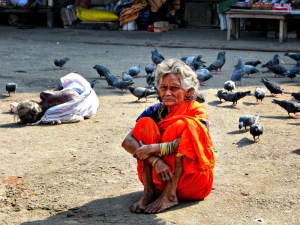
This photograph, taken in Kolkata (aka Calcutta), India, shows an elderly, thin, grey-haired lady in an orange sari. The lady in the white sari, lying curled up on the ground, I’d previously seen walking hunchbacked, slowly and in considerable pain, toward Mother Teresa’s home. I had a strong suspicion she was desperately trying to reach Mother Teresa’s Home for the destitute, sick and dying. I do not recall having ever having seen poverty of this magnitude when walking the main and side roads of South Africa, or anywhere else.

The picture alone tells a tragic story but your explanation adds a lot more. Thank you.

Calcutta_2

Another view of poverty in Kolkata, slightly more uplifting; photo credit: Andy Harvard.

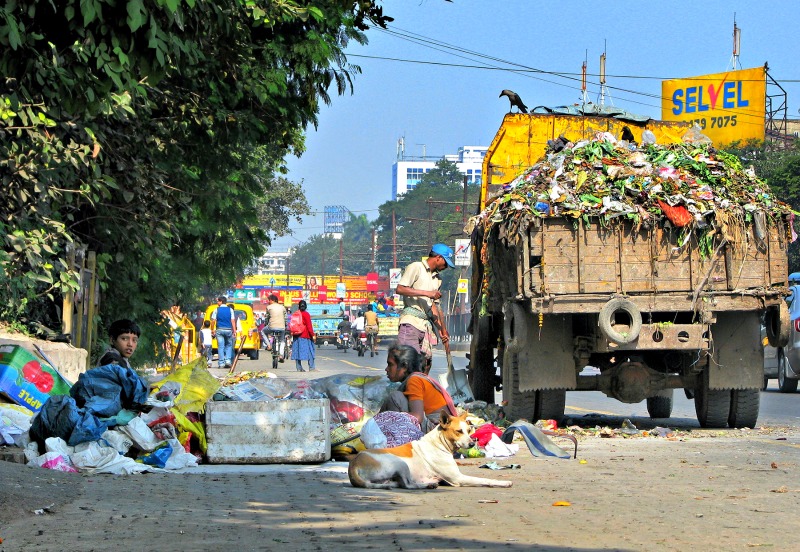
This photo, also taken in Kolkata, indicates how desperate the lives of some people still are. The driver shovels refuse onto the truck while the crows watch in anticipation of scraps as a lady and her son appear to do so as well. The lady was searching for food and maybe something of value whilst her son sat quietly guarding their personal belongings. The dog, relaxed, watched as drivers constantly hooted and maneuvered around one another. A lot of noise but minimal fuss, no road rage or the time-consuming jams we tend to associate with dense traffic. The Kolkata experience was very brief, but I felt a sense of spirituality here. Small shrines are erected on the sides of most roadssometimes seen every fifty metres or so. Every person (other than the beggars at the temple), including the crows, dogs and cows appeared to be busy, desperately doing something meaningful in their quest for survival.

Knowing the story behind this photo helps us to appreciate how well you have captured a small corner of peace and quiet surrounded by a cacophony of noise.

WorldCup_SouthAfrica

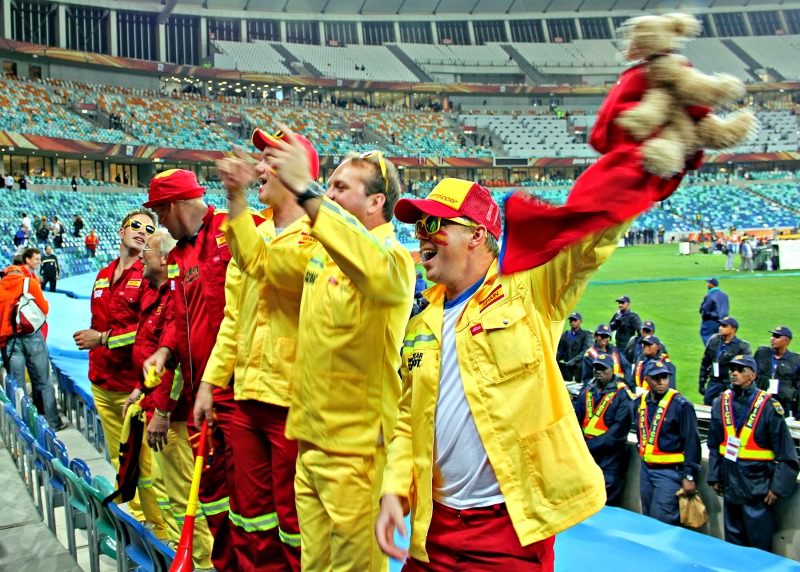
The 2010 World Cup quarter-final match Uruguay vs. Spain, held in Durban, SA (Spain won to eventually take home the title); photo credit: Andy Harvard

Spain beat Germany in Durban on 7 July 2010. They reached a World Cup final for the first time and went on to beat Holland in Johannesburg. The only goal in Durban came from a header by Carles Puyol. This was the first time I had witnessed extreme soccer fever, and this photo won a competition in one of Durban’s newspapers.

In this photo you have captured the spirit of the occasion, which is now upon us again in Brazil. Congratulations on your award.

The key to happiness is inner peace – Buddhist precept

Next we’re going to talk about some of your current favorite places to take photographs. Can you explain why these three places inspire you and how it shows in the photos you’ve selected?
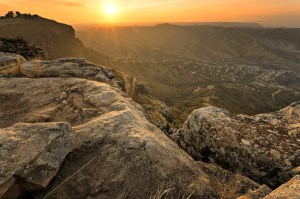
1) Huge mountains, deep valleys, tranquillity, big skies, rural living, clean fresh breezes, golden lightMonteseel, in the Valley of One Thousand Hills, makes one realize how small and insignificant certain problems we all have actually are:
Monteseel, in the  Valley of 1000 Hills, South Africa; photo credit: Andy Harvard.

Monteseel, in the Valley of 1000 Hills, South Africa; photo credit: Andy Harvard.

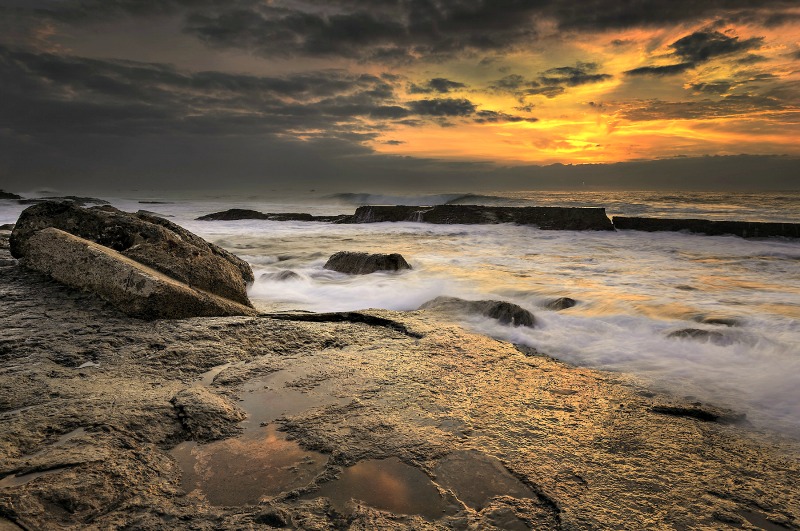
2) This unspoiled coastline with restricted access is literally around the corner from Durban’s Central Business District, which we call CBD. It’s a photographer’s paradise:

SouthAfricanBeach

Northern Bluff coastline, Durban, South Africa; photo credit: Andy Harvard.

3) Early mornings at this spot are full of activity: surfers, ski boats, fishermen, sailboats, people exercising, seine netters, photographers, holiday makers, recovering late night revellers and more. After a year of hard slogging, I managed to take this serene pier shot:

MoyoPier

Moyo uShaka Pier, Durban, South Africa; photo credit: Andy Harvard.

This photo actually won first place in my photo club’s monthly competition. The chairman said:

Brilliant, love the symmetric composition with a warm and cold side, slightly reminiscent of Turner’s sky in The Fighting Temeraire.

I know that Monteseel is an awesome place, so powerful it’s almost overpowering. It’s a great capture. Your photo of CBD is so dramatic that, although I know how warm the sea is, it looks positively cold. Why have you never shown me this before? It’s awesome. So you had to work a bit to get the last one! Well done.

You should move with a sharp consciousness… – Buddhist precept

Would you say that photography and the ability to be able to capture something unique, which will never be seen again, is a powerful force for you?
Yes, but more importantly, photography is the way I choose to meditate. I go into a semi-transcendental state when shooting and later when processing the photos on the computer. I believe the habit dates from my mother’s death in early 2013. When we visited her in hospital, we would all sit on the veranda outside the ward while I took night-time photos. Later, when going through some boxes of photos she had taken in her youth, I learned that she had been a photographer of “social” note. Not long after, I got hooked on HDR photography. I was a member of a Buddhist tradition for two years, attending teachings and meditation classes about 6–7 hours a week. Now my “meditation” is taking photos while a new day dawns in near complete silence and then sitting for hours post-processing photos to create a work of art. It isn’t a jobit’s a passion; and I want to keep it that way and share the results with others.

Thank you, Andy, for sharing such a fascinating personal story. Now for the technical stuff. What kind of camera and lenses do you use?
I have a Canon 6D, 17/40mm and 24/105mm. I also have my “old” baby Canon 550D which uses either lens above when not in use by “big brother”.

And which software do you use for post-processing?
Which software do I not use? I will use any software available to manipulate my photos to achieve the look I want to see. I know no bounds in this regard. I started with Photomatix HDR software and would attempt to “HDR” everything I could at any time of the dayi.e., dogs, people, machinery and trees. Later I learnt that this was a little foolish but, as I realized when reading this article on the topic, a necessary part of my progression. Lately, I’ve been shooting fewer exposures and manually blending them in Photoshop with layers and masks. I am new at this and on another learning curve.

Sounds like you are a post-processing junkie. I can identify with that and hope to move up to your level when I understand a lot more about the various programs. Finally, do you have any advice for wannabe photographers who are traveling or living abroad?
Be confident and take charge. Keep the camera in hand or on a sling (not deep in a bag). Take lots of photos and even different angles on the same scene. Go into a tunnel zone where you are only thinking about and taking photos. Get down on the street and get dirty. Find top photographers who you admire and follow them. Study their work and every word on their pages (great tips sometimes come hidden in a few sentences). Look at the best photo you find and think “I can do this and better, it might just take some time”. Some really kind photographers offer free tutorials in video or written formatmake the time to find them and work through them.

* * *

Thank you, Andy. I have really enjoyed our interview. Your story is so compelling and you do approach things from a different angle to many of us.

Readers, what do you make of Andy’s experiences and his photography advice? And do you have any questions for him on his photos and/or experiences? Please leave them in the comments!

And if you want to know more about Andy, don’t forget to visit his blog, Snap Fly Cook. You can also connect with him on Facebook and visit his gallery of “special” photos on Pixels.com.

(If you are a photographer and would like to be interviewed by James for this series, please send your information to ml@thedisplacednation.com.)

STAY TUNED for next week’s fab posts!

If you enjoyed this post, we invite you to register for The Displaced Dispatch, a round up of weekly posts from The Displaced Nation, with seasonal recipes, book giveaways and other extras. Register for The Displaced Dispatch by clicking here!

Related posts:

GLOBAL FOOD GOSSIP: Summer in a bottle…we’re jammin’

global food gossipJoanna Masters-Maggs, our resident repeat-expat Food Gossip and Creative Chef, is back with her column for like-minded food lovers.

* * *

“I heard that wine makers in the Napa Valley have found that picking grapes at night yields better wine,” I said to my husband as we walked the dog around our little neighbourhood.

He followed my line of vision to an apricot tree, which, every June, heaves with the luscious yellow fruit.

“I still think it would be a stretch for that snippet of hearsay to justify nicking the neighbour’s apricots to make jam,” he said.

“As if I would think of it,” I snapped.

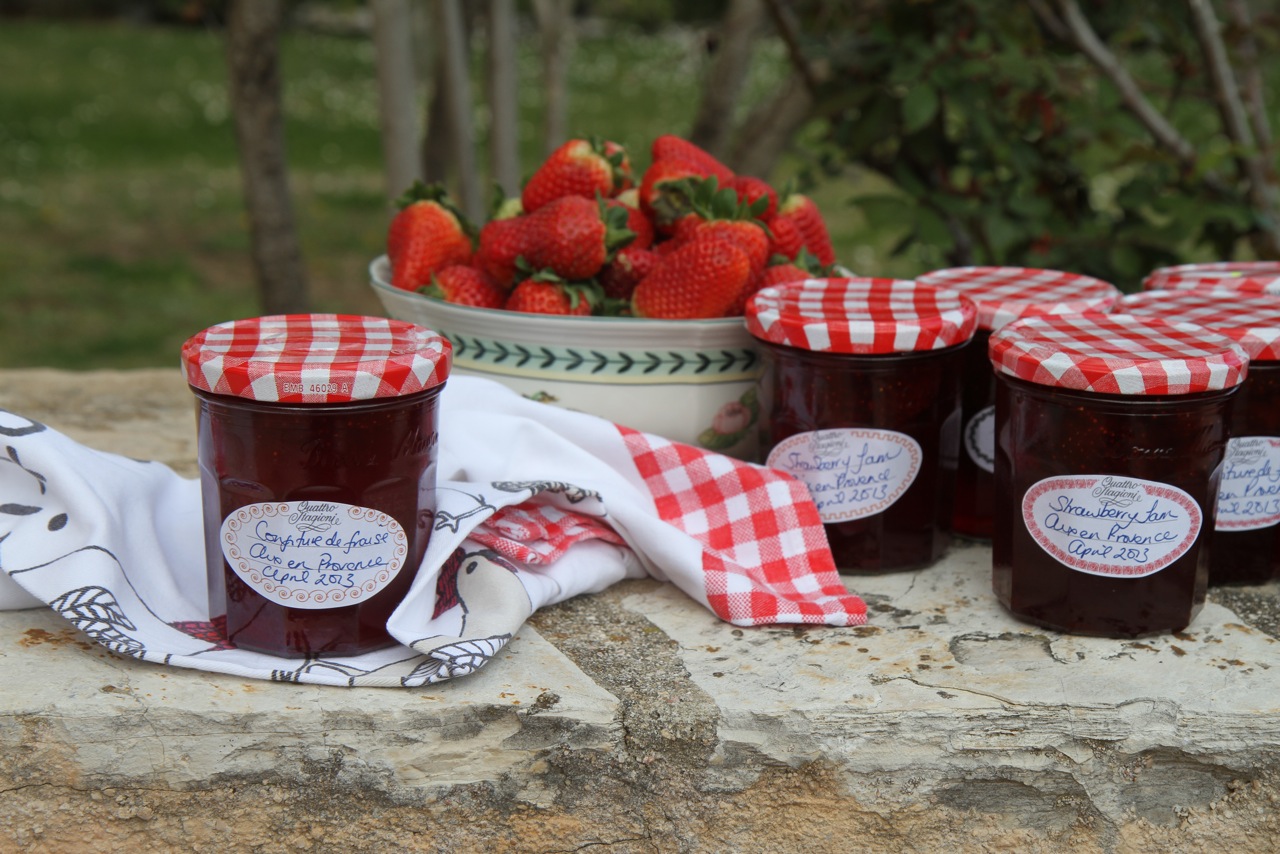
But of course, I have thought of it, and often. After three years of living in France, I realize that I have entered into the kind of seasonal cooking that would make the hearts of certain editors of food magazines sing. Preserving has become a huge part of my life. Whenever I see a tree bursting with fruit, I am mentally pulling my preserving pan out of the pantry. Indeed, no tree is safe. My own cherry tree has been stripped bare of its rich dark cherries, which are now satisfyingly preserved in jars with wide red and white checked lids and little fruit decorated labels. Kitsch? Twee? Call it what you will.

Preserving the past

Seasonal preserving not only makes me feel smugly capable, it also provides a connection with a past where preserving was a necessity and not a lifestyle choice. In France the changing seasons are very clear and marked by the varieties of available produce. This is not always the case in other countries where I have lived. Sometimes seasons are blurred due to imports for those able to pay, while in others there is a shortage of actual seasons.  I have always thought we should be grateful Vivaldi was not born in Malaysia.

Jo's strawberrys and raspberrys

At the market

Here in Aix I buy my fruit and vegetables in a large farm shop. As the year progresses, the produce changes. Strawberries come in around April or May and I watch the prices drop and drop until 4 Euros buys you 2 kilos and you are happy to macerate and preserve to your heart’s content. As the supply of strawberries peaks and peters out, in come the apricots, at jaw-droppingly low prices. In England I would feel guilty to pay that much and make jam, preferring instead to use fewer and to put them where they are visible. So the season goes on with harvests of figs, walnuts, grapes and avocados. Even after years of living overseas, it still amazes me that something as special to a Brit as artichokes or avocados can be displayed in barrels as if they were as common as potatoes in Ireland.

I hope I never lose the delight in this aspect of expat life.

Gorgeous Cheddar, where seasonal quality trumps year-round quantity

I can get quite upset thinking of the English strawberry. The best of the best, produced in the county of my birth, Somerset, in the little village of Cheddar. Poor Cheddar, famous for its wonderful cheese, which has been knocked off and plasticized the world over until most people outside the UK don’t even know what real Cheddar is. On top of this, the reduction of its strawberry industry too. The problem was that for all its well-drained and optimal facing slopes, the season was only weeks long. It couldn’t produce enough fruit to satisfy the appetite of the nation which stamped its foot and demanded more and cheaper strawberries, and a longer season to boot.

The nation should be careful what it wishes for. Fruit varieties have been tampered with and grown under plastic so that we can enjoy strawberries for longer than the two weeks of Wimbledon. Flavor has been compromised — of that there can be no doubt. But you can still buy the real thing in Cheddar, or grow your own, and it’s well worth doing if only to see what this fruit should actually taste like: strawberry, if you are interested, and not water.

Then there are the imports. I am all for world travel, but not for soft fruit on which an indefinite travel ban should be imposed. The waxy Spanish strawberry is not only nearly devoid of the flavor of strawberry, but its texture is decidedly unappealing, being as coarse and waxy as an ageing fruit-pickers cheeks.

How much do I love a good strawberry? A bushel and a peck and some in a gourd.

Having said all that, I am (somewhat surprisingly) delighted to see the vast quantities of Spanish strawberries in my French market. There are two points in my rather shifty defense. Firstly, they are cheap, which justifies their use in jam. Turning a perfectly grown, traditional Cheddar strawberry into jam would be a crime, but boiling the heck out of the Spanish and adding sugar can only act to improve the flavor they lack. Secondly, the presence of the Carpentras strawberry gives a taste of how things should be.

The village of Carpentras, in the Vaucluse region of Southern France, hosts a strawberry festival in April each year. I like to think of this village as Soft Fruit Soul Sister to Cheddar. Yet, unlike Cheddar, Carpentras has been successful, in that typically French way, of protecting its strawberry: as fiercely as Champagne growers have protected their name under a registered trademark since 1987. We have much to learn from them.

Several varieties are grown. 90% of production is given over to the parajo, while its posher cousins, the ciflorette and the garriguette, are favored respectively by patissieres and those who like their fruit as it comes. These elite strawberries have retained their, well, strawberrishness with a deeper, fuller flavor. Price is higher but it is a price that locals and fancy restaurants alike are willing to pay for flavor. My favorite is the garriguette which, at 3.90 Euros this morning for 250g (16 strawberries), is nearly double the price of the regular Carpentras, but so well worth it.

This is the taste of the homegrown strawberries I remember from my youth, complete with that rich, almost caramel-like flavour. Heaven, and worth every centime.

Joanna's jam

Joanna’s jam

Bottling summer sunshine for winter days ahead

So here in France I can enjoy quality in my tarts and quantity for my preserves, and that, I think, is a perfect combination. In England it is less of a clear cut and easy situation. Most of my local Pick Your Own farms have closed in recent years and, outside of two or three beloved greengrocers, everything is plastic punneted mediocrity. Not awful, but not good and definitely not strawberry.

Back in France, as the year progresses, so my level of stress rises. Two batches of strawberry, one of cherry, brined olives rinsed and now bottled in olive oil, and apricot in the making, have placed considerable strain on my supply of jars. Yet I am always thinking greedily ahead. Figs are already on my mind, yet here I am in the throes of moving house. Somehow, the making of that Fig Confit must happen. I can’t miss figs at those sorts of prices. They must be preserved before my pans are packed. Or immediately after arriving at the new place before my boxes are fully unloaded. Will I be able to do it? I feel the panic rising. No amount of telling myself that I don’t actually have to do it this year has any effect. I have to. I must. It’s just the rhythm of the year and I can’t bear to miss the joy of opening a jar at Christmas in the midst of an English winter. Just a little ray of Provence sunshine from my other home on a cold, cold day. A little fig confit to serve with the foie gras adds a French touch to the festive season.

The stress is intensive by that Apricot tree which still preys on my mind. Those wasted golden globes are just asking for my attention. It really would be a crime to let them wither on the tree. Wouldn’t it?

* * *

Joanna was displaced from her native England 17 years ago, and has since attempted to re-place herself and blend into the USA, Holland, Brazil, Malaysia, Venezuela, Saudi Arabia, and now France. She describes herself as a “food gossip”, saying: “I’ve always enjoyed cooking and trying out new recipes. Overseas, I am curious as to what people buy and from where. What is in the baskets of my fellow shoppers? What do they eat when they go home at night?”

Fellow Food Gossips, share your own stories with us!

STAY TUNED for tomorrow’s post!

If you enjoyed this post, we invite you to register for The Displaced Dispatch, a round up of weekly posts from The Displaced Nation, with seasonal recipes, book giveaways and other extras. Register for The Displaced Dispatch by clicking here!

Related posts:

Images: All images from Joanna’s personal photo albums, and used here with her permission

BOOKLUST, WANDERLUST: Tana French’s Dublin Murder Squad series is made in the shade for expats and Third Culture Kids

Booklust Wanderlust Collage

Left: Oleh Slobodeniuk (CC BY-NC-SA 4.0); right: Beth Green (her own photo).

Today we welcome brand new columnist Beth Green to the Displaced Nation. An American who lives in Prague, Beth is an intrepid traveler and voracious reader, who mixes booklust with wanderlust in equal measures. In other words, she has the perfect background for reviewing recent book releases on behalf of international creatives. Hmmm…but will we enjoy her reviews more than the actual works?

—ML Awanohara

Thanks, ML! Displaced Nationers, for my first column we’ll be plunging into the world of crime fiction in which a city plays a major role. As I’m sure you know, many popular crime novels are set in Los Angeles, New York, London, or Chicago, where that setting is as important as the crimes committed there.

So, let me introduce another city with an underbelly you might enjoy: Dublin.

In contrast to the shamrock-and-Guinness tourist propaganda, Dublin can have a grittier, noir aspect, at least in the hands of skilled writer Tana French.

If you’re looking for a nice read where setting bolsters plot, and where some of the themes related to the experiences of those who lead the international creative life, French’s series about the Dublin Murder Squad is a fine place to start. The series, currently consisting of four books, features the members of Ireland’s fictional homicide unit, each of whom is given narration duties for one of the books—a device by which we constantly get new perspectives on the other detectives in the team as well as a chance to see the Irish Republic’s capital city through a new pair of eyes.

Various Dublins

For example, when the narrator is an experienced cop who was born to a poor family, the city doesn’t get a glossy treatment. He describes, with equal honesty, the run-down parts of town where members of his family live and the middle-class suburb where his ex-wife now resides.

Another detective, who has lived abroad, describes Dublin with more of a tourist’s eye when it’s her turn to narrate a novel.

Yet another is obsessed with appearances; and the fourth alternately seems to love and hate the city.

Cultural challenges

Though born in the USA, Tana French grew up as a Third Culture Kid. Her father was a development economist, and she spent her childhood in Ireland, Italy, the USA, and Malawi. She went to university, and ultimately chose to settle, in Ireland. Perhaps reflecting this early experience, French has each of her main characters navigate some kind of cultural shift in addition to playing his or her role in the solving (or making) of a murder.

IntheWoods_cover_pmIn the Woods is French’s debut, Edgar-winning novel. The action centers on homicide detective Rob Ryan and his partner, Cassie Maddox, both of whom feel culturally conflicted. Ryan, who grew up in the same village he must now investigate, was sent away to school after a horrifying childhood experience. He returns to Ireland as an adult but retains a carefully learned prep-school accent and manner of dress that marks him as an outsider even while standing in front of his childhood home.

Maddox, on the other hand, spent part of her childhood with relatives in France. She speaks French fluently and readily adapts to new surroundings and diverse situations. While this chameleon-like quality often comes in handy, it also gives her a sense of alienation in her home country. As Maddox says in The Likeness, the next book in the series:

I take after the French side. Nobody thinks I’m Irish, till I open my mouth.

Love of disguises

TheLikeness_cover_pmIn The Likeness, Maddox narrates the story of how she must go undercover impersonating someone—a foreigner, it turns out, who in turn is impersonating an undercover role (that of a college student) Maddox had previously assumed.

Controlling these layers of identity becomes intoxicating to Maddox (and to the reader, I might add) while also putting her career, and that of her superior officer, Frank Mackey, at risk.

Reading The Likeness, I was impressed by how much detail French provides to show that Maddox undergoes a believable transformation.

The domestic expat

In French’s third book, Faithful Place, Maddox’s boss, Mackey, gets his chance to prove himself in navigating the shifting subtleties of Irish culture and society.

Set in an area of Dublin known as The Liberties— not far from the tourist highlights in terms of distance but miles away in terms of economic progress and commitment to law and order—Faithful Place requires Mackey to return to the home he grew up in and attempt to solve the disappearance of his high school sweetheart, who he had always thought simply dumped him.

FaithfulPlace_cover_pmThough Mackey is thought of as down-to-earth and street-smart by his colleagues (one of the joys of the Dublin Murder Squad books is seeing different characters from inside and out over the course of several books), his time as a cop has not endeared him to his family or neighbors. He also married “up”, and there’s a great minor plot line concerning his decision to introduce his young daughter, Holly, to his “lower-class” relations.

At the beginning of the novel, Mackey says:

Both Jackie and Olivia have tried hinting, occasionally, that Holly should get to know her dad’s family. Sinister suitcases aside, over my dead body does Holly dip a toe in the bubbling cauldron of crazy that is the Mackeys at their finest.

No safe harbors

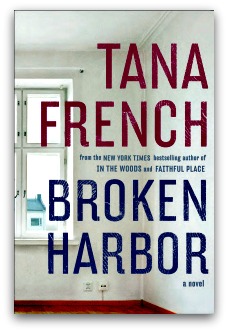
Broken Harbor_cover_pmIn the latest book in the series, Broken Harbor, a minor character from Faithful Place, Mike “Scorcher” Kennedy, takes the lead in investigating a gruesome crime committed in a rundown (yet half-finished) housing development on the same site his family used to vacation when he was a child.

Kennedy introduces the housing site to us as follows:

I used to know Broken Harbor like the back of my hand, when I was a skinny little guy with home-cut hair and mended jeans. Kids nowadays grew up on sun holidays during the boom, two weeks in the Costa del Sol is their bare minimum. But I’m forty-two and our generation had low expectations.

Why French speaks to international creatives

Though common plot and character threads hold a detective series together, there’s always a danger the author will fall back on the same formula to help her main characters solve the crimes in question. French succeeds in weaving common themes throughout the four books while also treating these themes afresh in each work. Most excitingly for us expats, she visits and revisits the feeling of being out-of-place in a culture (or subculture) not your own as well as the clashes that can occur when working with someone from a different background. Another favorite theme of hers, which also aligns with some expat experiences, is the stress of being evaluated on one’s exterior appearance.

But one of the most important common themes in Broken, Faithful and Woods is the power that a special place from one’s childhood can have—to which French’s fellow ATCK readers can surely relate. In Woods, Ryan must solve a crime in the very forest a crime was committed against him as a child—a crime he cannot remember but desperately wishes he could. In Faithful, Mackey discovers the ties to the past can last fast and strong, even years after he thought he’d broken them. And, in Broken, Kennedy’s memories from his childhood make the seaside scenery both delightful and sad, while the importance of the spot to the victims is equally powerful and alluring albeit for different reasons.

Moreover in Likeness, perhaps my favorite of the series so far, the main character doesn’t return to a place that’s important to her, but it’s just as important for her to realize that she—like the victim—doesn’t have a particular place on Earth to call her own in memory or deed.

French’s next novel, The Secret Place, will continue the Murder Squad series but with a new set of protagonist detectives drawn from the supporting characters of the first four novels. It comes out in August.

* * *

Thanks, Beth, for such a fascinating column! I felt completely transported to the noir underbelly of Dublin. BTW, I noticed that in an interview with French that is posted on Amazon, she says she can’t imagine herself setting her books anywhere other than Dublin as she knows the city like the back of her hand. Hard to imagine she started life as an American! And I must say, her crime series sounds like perfect summer reading. What do others think? Have you read French, and if so, do you concur that her books would suit expats and TCKs?

Beth Green is an American writer and English teacher living in Prague, Czech Republic. She grew up on a sailboat and, though now a landlubber, continues to lead a peripatetic life, having lived in Asia as well as Europe. Her personal Web site is Beth Green Writes, and she is about to launch a new site called Everyday Travel Stories. To keep in touch with her in between columns, try following her on Facebook and Twitter. She’s a social media nut!

STAY TUNED for the next fab post!

If you enjoyed this post, we invite you to register for The Displaced Dispatch, a round up of weekly posts from The Displaced Nation, with seasonal recipes, book giveaways and other extras. Register for The Displaced Dispatch by clicking here!

Related posts:

LOCATION, LOCUTION: Charlotte Otter – South African expat and crime writer living in Germany

charlotte otter

Author photo: Charlotte Otter

In this month’s “Location, Locution”, expat crime writer JJ Marsh interviews Charlotte Otter, a South African crime writer who lives in Germany.

Charlotte has worked as a writer since leaving university. Balthasar’s Gift is her first novel. It was published in Germany in 2013 as as Balthasars Vermaechtnis, by Argument Verlag mit Ariadne, a Hamburg publisher that focuses on crime fiction by women. It is also available as an e-book, published by Culturbooks. The English version will be published in June 2014 by South Africa’s Modjaji Books.

Charlotte blogs at Charlotte’s Web and takes coffee breaks on Twitter (@charlwrites). She is presently working on her second novel – an eco-conspiracy called Karkloof Blue.

When she is not thinking up ways to kill people, Charlotte is a corporate hack, mother of three, reader, traveller, feminist and optimist. She is happily married to the love of her life.

Check out her author site.

* * *

Which comes first, story or location?
The two are intertwined. When the first images for Balthasars Vermaechtnis began to flash in my head more than eight years ago, the setting was immediately clear: my home town in South Africa, Pietermaritzburg, often informally abbreviated as PMB. BV is a post-apartheid novel and PMB is struggling to become an effective post-apartheid city. It was the natural setting for the story that was starting to unspool before me.

How do you go about evoking the atmosphere of a place?
I wrote a blog post a few years ago called I am from, and someone said to me they would love to read a novel with those elements in. I realised that my childhood memories of monkeys in the garden, chameleons on a bush and eating granadillas off the vine were not everyone’s memories and that some of them could be put to good use in landscaping a novel.

Which particular features create a sense of location? You’ve mentioned animals and fruits. Is it landscape, culture, food, all of the above?
All of the above. However, as I’m sure all writers say, they have to serve the story. The elements of location have to be sprinkled through the story with a light hand, serving to shine a light on the narrative and not distracting from it. Huge chunks of location, just like huge chunks of ill-disguised research, serve to pull the reader out of the story and that’s the last thing a writer wants. I try to be sparing and frugal with my detail, but at the same time apt. Location details are highlighters or amplifiers of the core narrative, never the story itself.

How well do you need to know the place before using it as a setting?
In my case, I knew it very well. I would never be brave enough to set a novel in a place I didn’t know, because I would be nervous about making mistakes and looking like an idiot. For me authenticity is everything.

Could you give a brief example from your work which you feel brings the location to life?

The city centre hummed with Saturday shoppers carrying glistening bags full of summer bargains from the fashion palaces on Church Street, gangs of teenagers flirting with each other, pavement hairdressers giving people their weekend dos. Radios blared, taxis hooted and added to the chaos by swerving across lanes, risking the lives of their passengers and all pedestrians. She dodged one self-styled ‘Road Warrior’ and swore. The driver leant out of his window and winked at her. ‘Calm down.’ Was this a message from the universe? Or had all the town’s taxi drivers ganged up to irritate her with their insistence on her remaining serene and tranquil?”

Which writers do you admire for the way they use location?
I think Barbara Kingsolver is a master of location. She is the best nature writer I know and she mostly sets her novels in rural surroundings. She does an incredible job of evoking a sense of place through her deep, abiding love of nature.

I Am From
I am from Africa. I am from blue skies, tropical breezes, and sunshine on my back. I am from tall trees that throw great shadows. I am from monkeys in the garden and a chameleon on a bush. I am from mountains that rarely see snow, beaches with huge waves, sharks behind the shoreline. I am from banana plants, sugar-cane and mealies. I am from huge moths and flying ants. I am from humidity, from thunderstorms that build up as black towers in the sky, and rain so hard it hurts my skin.

I am from eating outside. I am from the intense smell of a slightly under-ripe naartjie that I pick from its tree, dig open with dirty fingernails, and devour despite the sourness. I am from plucking granadillas off the vine and greedily sucking the juice. I am from braai meat, salad and crunchy white rolls. I am from mussels gathered from the sea.

I am from lucky beans. I am from a hoary old magnolia tree that bursts forth luscious, vanilla-scented blooms that decorate the Christmas table. I am from a red-brick house that looks out over trees and a hot town. I am from black and white tiles that cool hot summer feet. I am from the smell of dogs being washed. I am from the sound of Zulu hymns as I fall asleep.

I am from Marmite sandwiches. I am from a schoolbag digging into my shoulder as I walk home. I am from the smell of an over-chlorinated swimming-pool in my wet hair. I am from giggling. I am from eating all the cookie mixture. I am from marathon card games. I am from the thwack of tennis balls. I am from kissing boys.

I am from little brothers playing cricket on the lawn. I am from long car journeys. I am from beach holidays. I am from sand in my hair, from fairy gardens and dreaming I can fly. I am from blonde people. I am from children go to bed early. I am from fragrant grandmothers and laughing aunts. I am from a funny dad. I am from a little brother who shared my nightmares. I am from a mother who said, “You can do anything.”

Where are you from?

* * *

Next month’s Location, Locution:  Incredibly, it is now a year since Jill wrote her first “Location, Locution” column! In next month’s post, Jill will pick some of her favorite responses from her interviewees.

JJ Marsh grew up in Wales, Africa and the Middle East, where her curiosity for culture took root and triggered an urge to write. After living in Hong Kong, Nigeria, Dubai, Portugal and France, JJ finally settled in Switzerland, where she is currently halfway through her European crime series, set in compelling locations all over the continent and featuring detective inspector Beatrice Stubbs.

_(75_of_75)

Author photo: J J Marsh

STAY TUNED for our next post!

If you enjoyed this post, we invite you to register for The Displaced Dispatch, a round up of weekly posts from The Displaced Nation, with seasonal recipes, book giveaways and other extras. Register for The Displaced Dispatch by clicking here!

Related posts:

From soccer hater to World Cup fanatic: A most peculiar expat tale

FIFA World Cup Collage

The Brazilian player Edmilson Santos, by AK Bijuraj; CocaCola FIFA World Cup Soccer, by Mike Mozart; FIFA World Cup trophy, by Warrenski (all CC).

To mark the start of the 2014 World Cup in Brazil, I have updated a post I wrote four years ago, in time for 2010 World Cup, in South Africa. I wrote it for the now-defunct Pond Parleys, the brainchild of esteemed writers Toni Hargis (a British expat in the US, with an American husband) and Mike Harling (an American expat in the UK, with an English wife).

In America, of course, we call it soccer. But I am content to say “football.” If there’s one thing I learned from living in England for nearly ten years, it’s to use the English language with precision (in which case, shouldn’t it be “foot-and-head ball”?).

So, herewith, an attempt to tell the rather twisted tale of my conversion to football fandom, though part of me will always wonder: is my story more typical than one imagines? Surely, a taste for football isn’t easily acquired by those who don’t have it in their national DNA?

PART I: Why I Never Liked Football Whilst Living in England

This little tale of mine begins on a dark and stormy night in the latter years of the 20th century. I am living in football-mad England but am rapidly developing an aversion to the sport, squandering my first real opportunity to see it played at a professional level.

Chalk it up to my contrarian nature. I’m not one to throw myself into chanting, banner waving, and other tribal behaviors before I’ve had a chance to study what’s going on and make a full appraisal. And it did not take me long to find things I was less than enamored of, including:

1) The game itself—the endless running up and down the pitch with hardly any scoring. The few times I watched a football match, I inevitably got up to make a cup of tea, or dozed off, just as the one goal of the match was being made.

2) The fans—mostly male, many of them yobbos (some of whom are now chavs?). But even if we leave social class out of the equation, a good number of the UK’s football fans appeared to be hooligans, not exactly the most appealing lot—especially to a grad student like me, whose images of England had been formed from a steady diet of Jane Austen novels and Merchant-Ivory period movies. Occasionally violent male bonding rituals weren’t on the agenda. (I’m sure it didn’t help that my arrival in England coincided with football hooliganism reaching new levels of hysteria.)

3) The jingoistic tabloid coverage—which reaches its height whenever England plays Germany. I happened to be living in London in 2006, when the semifinals of the European finals, between England and Germany, took place at Wembley Stadium. What a palaver! The British mass-circulation paper The Daily Mirror ran a front-page headline “Achtung! Surrender!” over a photo of two England stars wearing World War II helmets. Years later, when England met Germany in the 2010 World Cup, held in South Africa, John F. Burns contributed an article to the New York Times contending that such “rib-poking” has provided catharsis for England and Germany over the years. Who am I to contradict Burns, the Times‘s London bureau chief and an expert on interpreting his native culture? Still, I couldn’t help but think of the late American historian Howard Zinn‘s warning that harmless pride can become an “arrogant nationalism dangerous to others and to ourselves.” Red card!

It’s perhaps worth noting that of all the reasons I came up with not to like football, none of them included the argument that occasionally surfaces in right-wing circles in the United States, which is that football is collectivist and carries the threat of “socializing” Americans’ taste in sports.

As an expat, I had a choice: keep skating along the surface and pretend football doesn’t exist, or else try and go closer to the beating heart of my adopted culture and see what makes it tick.

So I gave football a miss and moved back to pursuing a life of cream teas, theatre performances, cricket…wait did I just say “cricket”? I must be getting batty… (hahaha)

PART II: How I Came to Change My Mind About Football, or At Least the World Cup

Am I looking forward to this year’s World Cup championship games in Brazil? Why soitenly! Numbskull that I am, I’ve finally gotten with the program!!

Herewith, the second part of my most peculiar tale. As explained in Part I, I never paid much attention to the sport despite nearly a decade of exposure; on the contrary, I developed an abhorrence for it.

But four years ago all of that changed. Having settled back in the United States, I found myself powerfully drawn to the championship that took place in South Africa, and I expect it will be no different this time around, with the World Cup being hosted by Brazil. (While I’m sad that Paul the Octopus is no longer with us, I take comfort in the thought of Nelly the Elephant taking his place—her punditry is apparently on a similar level.)

I can’t pinpoint the precise moment when my conversion happened, especially as football still has all the same drawbacks I’d once noted: goals are few and far between, the fans are predominantly male, and jingoism reigns, particularly between the English and the Germans.

All I know is that it wasn’t until I was back in my own culture that I felt comfortable giving the sport a chance. Yes, I know this is ironic considering that the UK is considered to be the cradle of the game (the English have been kicking balls competitively since at least 1314), whereas we Yanks still aren’t quite there.

My top three reasons for fanning football are:

1) It’s the World Cup, stupid. Living in England, I couldn’t see the World Cup forest from the local English football club trees. But when watching the very best players in the world compete, even a hardened skeptic like me can start to appreciate why they call it The Beautiful Game. Those feet of theirs—they are using them like hands! That Messi fellow: it looks as though the ball is glued to his feet; how extraordinary! Xavi Hernández and Andrés Iniesta: it’s incredible how they can pass the ball through the midfields! And let’s not forget Yaya Touré and the way he switches gears. Robin van Persie has a left foot to die for! And so on…

2) It’s a much-needed distraction from other kinds of world events. There’s nothing quite like a soaring soccer ball to lift the spirits, not to mention the vicarious pleasure of seeing a team, and a nation, carry off the trophy. I can still recall the thrill of watching the first European team win outside Europe, at the tournament in South Africa. ‪Viva España!‬

3) It’s on a par with, or perhaps even better than, the Olympics. Ironically, even though there is nothing quite like football to arouse nationalistic urges, the World Cup is, as the name suggests, a world competition, with 32 nations competing. (Compare that to America’s World Series—now that’s a misnomer!) Repeat expats like me, who are a hybrid of nationalities, are the ideal supporters of such sporting events. I think it also helps that I don’t really have a dog in the race. Though America competes, we aren’t yet a serious contender for the cup. This leaves me free to throw my support behind almost any athlete or team that I think are the world’s best. The Olympics of course provide many such opportunities; but that’s the problem: there’s too much choice. What I love about the FIFA World Cup is that it’s a singular occasion. There can be no bigger stage, literally as well as figuratively, than the vast pitch on which this ultimate sporting drama takes

*  *  *

It’s time to hear from you, dear reader. Is my conversion complete, or should I be bending the case for football still more, by stressing its potential for opening up intergalactic communication and fostering truly universal harmony? And even if you don’t share this new-found enthusiasm of mine, can you at least relate to the experience of getting to know and love a sport outside the ones you grew up playing and watching? Do tell!

STAY TUNED for next week’s fab posts!

If you enjoyed this post, we invite you to register for The Displaced Dispatch, a round up of weekly posts from The Displaced Nation, with seasonal recipes, book giveaways and other extras. Register for The Displaced Dispatch by clicking here!

Related posts: