The Displaced Nation

A home for international creatives

Tag Archives: Writers we love

Catching up with this year’s Random Nomads over the holidays (1/3)

RandomNomadXmasPassportThe holiday season is here — the perfect time for the Displaced Nation to catch up with the expats and other global voyagers who washed up on our shores in 2012. Remember all those Random Nomads who proposed to make us exotic meals based on their far-ranging meanderings? Not to mention their suitcases full of treasures they’d collected and their vocabularies full of strange words… How are they doing these days, and do they have any exciting plans for the holidays? First in a three-part series.

In the first part of 2012, quite an array of Random Nomads arrived at the Displaced Nation’s gates, including:

  • Toni Hargis, a Brit married to an American and living in Chicago (she goes by the moniker “Expat Mum”);
  • Megan Farrell, an American married to a Brazilian and living in São Paulo;
  • Liv Hambrett, an Australian moving cities in Germany to be with her SG (Significant German);
  • Lei Lei Clavey, an Australian working in New York City’s fashion industry; and
  • Annabel Kantaria, an Englishwoman living in Dubai (one of the Telegraph Expat bloggers).

Unfortunately, Liv and Lei Lei cannot be with us today as they’ve both headed back to their native Australia. Lei Lei is living in Perth with her boyfriend — and still feeling somewhat displaced as she’s from Melbourne. (Still, her mum, one of our featured authors, Gabrielle Wang, is glad she’s a little closer.)

Liv — who has moved her blog, A Big Life, over to her portfolio site — says she is “now hopelessly pulled in opposing directions by my home country and adopted home, Germany.” Back with her family in Sydney, she is planning a return to Germany in early 2013. Between now and then, SG will have completed his maiden voyage to Oz to pay her a visit.

But now let’s start the party with the three Random Nomads who still qualify as expats. What have they been up to since nearly a year ago, and are they cooking up anything special for the holidays?

ToniHargis_Xmas1) TONI HARGIS

Have there been any big changes in your life since we last spoke?
Yes, I got a new gig writing for BBC America’s “Mind the Gap” column, which is very exciting. I have also just completed a 55,000-word manuscript for a new expat book which should be coming out late Spring 2013. Can’t give any more details at the moment I’m afraid.

Where will you be spending the holidays this year?
We have been going to Copper Mountain, Colorado for the last few years and this year will be the same.

What do you most look forward to eating?
My husband goes mad cooking “skier’s dinners” as he calls them — gumbo, lasagna, chili etc. He will also probably take care of most of the Xmas dinner. Unfortunately, I usually suffer from mild altitude sickness so food isn’t always at the top of my list!

Can you recommend any books you read in 2012 that speak to the displaced life? 
Yes, I read three great books this year on that theme, all from Summertime Publishers:

  1. Expat Life Slice by Slice, by Apple Gidley, which is memoir style and chronicles her (so far) amazing expat adventures.
  2. Finding Your Feet in Chicago, which is a great book for newly arrived expats to the Windy City, by Veronique Martin-Place.
  3. Sunshine Soup: Nourishing the Global Soul, by Jo Parfitt, which came out in 2011 and is a lovely novel set in Dubai about expat women there. (Jo is the founder of Summertime Publishers.)

Do you have any New Year’s resolutions for 2013?
Hmmm…. I try not to make resolutions because it can just be a set up for failure and bitterness (just kidding). There will be a lot of background work to do on my upcoming book, so I suppose my resolution should be to keep my energy levels up and work hard while not ignoring my children for too long!

Last but not least, do you have any upcoming travel plans?
Other than Colorado, I have no definite plans but there will be the annual summer trip to England and perhaps a trip somewhere else in Europe if we can fit it in.

meganfarrell_xmas2) MEGAN FARRELL

Hi there, Megan. Have you had any big changes since we last spoke?
I am currently writing a book, titled American Exbrat in São Paulo: Advice, Stories, Tips and Tricks to Surviving South America’s Largest City, which will be available via Amazon in the next few weeks. And we moved from Jardim Paulista to Higienópolis. The Higienópolis neighborhood feels much more family friendly to me, without losing options for great restaurants and activities.

How will you be spending the holidays this year?
For the holidays, we will be visiting Petrópolis (Brazil’s “City of Emperors” and a lovely mountain resort) and Búzios (known for its magnificent beaches and crystal-clear water), both towns in the state of Rio de Janeiro. I am looking forward to the beach and mountain time.

What’s the thing you most look forward to eating?
Churrasco (Brazilian style barbecue)!

Can you recommend any books you came across in 2012 that speak to the displaced life?
Dark Star Safari: Overland from Cairo to Capetown, by Paul Theroux. I’m also reading Eat, Pray, Love again, but this time in Portuguese (Comer Rezar Amar).

Do you have any New Year’s resolutions for 2013?
I do. My resolutions are to spend more time working on my writing projects and further develop my business. I currently guide executives and managers in their business communications to help them gain advantages in the global market, but I really need to expand my marketing strategy. I also have a large list of São Paulo experiences I have yet to enjoy.

Do you have any upcoming travel plans?
I’m hoping to get back to the States early this year and hit not only Chicago but also Los Angeles and New York City.

AnnabelKantaria_Xmas3) ANNABEL KANTARIA

Have there been any big changes in your life since we last spoke?
None to speak of.

Where will you be spending the holidays this year?
We love to spend Christmas in Dubai as the weather is exactly how a British summer day should be: clear, sunny, blue sky and temperatures of about 28°C (around 82°F).

What’s the thing you most look forward to eating?
We always have a big Christmas lunch in the garden with friends. This year another friend is playing host to us. I feel very lucky as she is practically the “Martha Stewart” of Dubai and I just know the food, decor and company will be divine. I’m vegetarian, so I won’t be eating turkey — I think we’re barbecuing this year.

Can you recommend any books you came across in 2012 that speak to the displaced life?
I read a new book called The Expats, by Chris Pavone, but I was more inspired to revisit old favorites such as White Mischief, by James Fox.

Do you have any New Year’s resolutions for 2013?
To finish writing my book, find an agent and/or publisher and get it published!

Any upcoming travel plans?
We usually go away in the February half-term holidays. Last year we visited family in Kenya before taking a few days in the Seychelles. This year I’m looking East — maybe Thailand, Malaysia (I’ve always wanted to go to Langkawi) or perhaps Bali.

* * *

Readers, before we lose these three Random Nomads to their various holiday (and half-term) adventures, do you have any more questions? Perhaps some of you are wondering, like I am, how they manage to be so productive — each of them has children but also a book to publish in 2013!

STAY TUNED for another episode in the life of our fictional expat heroine, Libby. (What, not keeping up with Libby? Read the first three episodes of her expat adventures.)

If you enjoyed this post, we invite you to register for The Displaced Dispatch, a round up of weekly posts from The Displaced Nation, with seasonal recipes, book giveaways and other extras. Register for The Displaced Dispatch by clicking here!

Related posts:

Images: Passport photo from Morguefile; portrait photos are from the nomads.

Highlight of 2012: “Pinning” down expat, TCK, travel & other displaced themes on Pinterest

Would it be mixing my metaphors too much to say we stumbled upon Pinterest in 2012? I suppose so. But that’s really what happened.

By the end of last year, Kate Allison and I were debating about Pinterest: should the Displaced Nation be participating in a pinboard-style photo-sharing site that some commentators were predicting might surpass Facebook in popularity? Kate felt cautious about making another major commitment to social media, whereas I was gung-ho to give it a whirl.

Kate also pointed out, very sensibly, that the Displaced Nation isn’t trading primarily in food, fashion and weddings — the most popular Pinterest topics. Not wishing to be dissuaded, I reminded her of our “IT’S FOOD!” category, adding: “We also do fashion, and multicultural marriage…”

It came to pass that one day in early April, Kate, for reasons still unknown to me, took the Pinterest plunge. She told me about it afterwards and said we’d been missing out on a whole lot of fun! As anyone who reads Kate’s posts will know, for her to say something is fun is a high recommendation. “I wanna get me some of that,” I said to myself.

The bubble tea of the social media world

The first time I pinned, I was reminded, in a strange kind of way, of my first experience with Taiwanese bubble tea. Just as I wasn’t sure what to do with all the tapioca balls or pearls, I wasn’t sure what to do with all the images on a Pinterest page. But as with the tapioca balls, which proved to be chewy and addictive, so with Pinterest. It was not long before I was pinning with the best of ’em.

This pinning business is amusing, that’s for sure, as well as mildly addictive. But let’s not overlook the fundamental question. Do collections of photos that are archived on Pinterest bring more attention to issues that are important to the Displaced Nation? We’re talking not only food but expat stories, TCK experiences, travel yarns, books about the displaced life, movies about said life, and so on.

As New York Times senior writer C.J. Chivers said in a Poynter article listing the ways journalists are trying to use Pinterest:

Used poorly, [Pinterest] would be just as much as a time suck on work and on life as the rest of the Internet can be.

Two dozen boards and counting…

The Displaced Nation currently has 28 boards and has accepted invites to several shared boards, including the one for #hybridambassadors, a group put together by Anastasia Ashman, and two on travel.

The boards that get the most traffic, by far and away, are the shared boards on travel.

Why is it that comparatively few have discovered our other collections? Especially as five of those boards would qualify as a useful “visual index” of themes I would posit to be the core of the shared displaced identity.

Here is just a small sample of what people in our circles may be missing:

1) Displaced Reads
Purpose: Originally created to keep track of all the books by and/or about expats we’d been featuring on the Displaced Nation, this board has become a repository for any books we happen upon that involve global voyages or living in other countries.
Recent pins: Tequila Oil: Getting Lost in Mexico by Hugh Thomson; Beirut: An Explosive Thriller, by Alexander McNabb; and To Hellas and Back, by Lana Penrose.
Recent repin: An Inconvenient Posting: An expat wife’s memoir of lost identity, by Laura Stephens (via BlogExpat, their “Expat Books” board).

2) The Displaced Oscars
Purpose: To keep track of the films we’ve been reviewing since launching our Displaced Oscars theme last March. As with Displaced Books, Displaced Oscars has morphed into a record of all the films we hear about that involve expats, displacement and/or global travel.
Recent pins: The Iran Job, a documentary about an American pro basketball player who signs up to play for an Iranian team for a year; Infancia Clandestina (Clandestine Childhood), a cinematic memoir about a family returning to Argentina after many years in political exile; and Tabu, an experimental fiction that ranges from contemporary Lisbon to an African colony (Portuguese Mozambique) in the distant past.
Recent repin: Notting Hill from the Jetpac blog — they’d pinned it to their “Movies to Fuel Your Wanderlust” board.

3) Third Culture Kids
Purpose: To highlight the third culture kids who’ve contributed to this blog, along with other accomplished people who fall into this category.
Recent pins: Fashion designer Joseph Altuzarra, who was born in Paris to a French-Basque father and Chinese American mother, and now lives in the U.S.; Maggi Aderin Pocock, who was born in Britain to Nigerian parents and is now the BBC’s “face of space”; and Isabel Fonesca, a writer born to an American mother and Uruguayan sculptor father, who ended up living in London (she is the wife of Martin Amis, and they’ve now moved to Brooklyn).
Recent repin: President Obama, via Kristin Bair O’Keefe (her Inspiration board).

4) Multicultural Love
Purpose: To continue one of the blog’s most popular themes, especially after the momentum gained this past February, when we did a whole slew of posts in honor of Valentine’s Day.
Recent pins: Helena Bonham Carter and Tim Burton; Carla Bruni and Nicholas Sarkozy; Martin Amis and Isabel Fonesca.
Recent repin: Becky Ances and her Chinese boyfriend, in Shanghai, via Jocelyn Eikenburg (pinned to her board “Chinese Men and Western Women in Love”).

5) Displaced Hall of Fame (Historical) & Displaced Hall of Fame (Contemporary)
Purpose: To flesh out a category that has been somewhat neglected on our live blog — not for want of examples.
Recent pins: Historical: Robert Sterling Clark, heir to the Singer sewing machine fortune except that he preferred to explore the Far East; Josef Frank, the Hungarian-born architect and designer who became a Swedish citizen and lived in New York; and P.L. Travers, the Australian-born author who moved to Britain in her twenties and composed Mary Poppins in a Sussex cottage. | Contemporary: Writer and literary critic Francine du Plessix Gray; Pakistani writer and journalist Mohammed Hanif; model and actress Diane Kruger.
Recent repins: Historical: Lady Sarah Forbes Bonetta Davies, a West African royal who was taken to England and presented as a “gift” to Queen Victoria, from #hybridambassadors. | Contemporary: David Beckham, via Smitten by Britain (her “My Favourite Brits” board).

Is Pinterest Pinter-esque?

There’s such a wealth of images on Pinterest that I sometimes feel that, as in a Harold Pinter drama where what the characters don’t say speaks volumes, it’s what you don’t pin that’s more important than what you do, in shaping your Pinterest presence.

Right now we are in a period of excess — it was just so right-brain-stimulating to become immersed in the Pinterest world. Or, to put it another way: I’ve done so much pinning, my head is now spinning!

But might we move to more curated collections in 2013? Instead of pinning all of our Random Nomads onto a single board, for instance — with their food choices in another board and their favorite objects in yet another — could we give each one a board of their own, with all of these items?

Readers, we are dizzy and would appreciate your help in getting our balance back. Can you answer these questions please:

  1. What are the rules of the Pinterest game?
  2. What’s a “secret board”?
  3. Should we have fewer boards, more boards?
  4. Are there any other topics we should be covering?

I apologize if you’re fearfully bored (hahaha) but I’m on pins and needles awaiting your advice. What’s more, if I don’t hear from you soon, I may go back to pinning (yes, I’m pining away!).

STAY TUNED for tomorrow’s post from the author of a displaced read (yes, her works have been pinned to our “Displaced Reads” board!).

If you enjoyed this post, we invite you to register for The Displaced Dispatch, a round up of weekly posts from The Displaced Nation, with seasonal recipes, book giveaways and other extras. Register for The Displaced Dispatch by clicking here!

Related posts:


An expat author on why he can’t get enough of Beirut — and your chance to win his thriller named for that city!

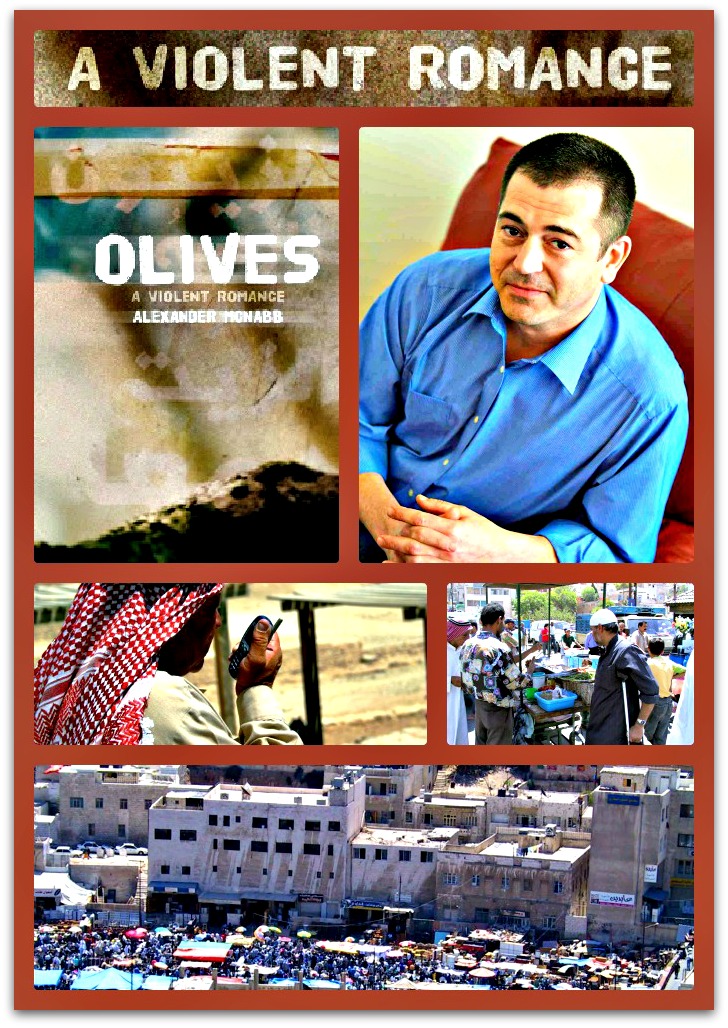
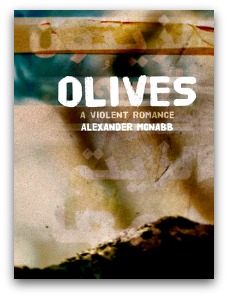
Beirut Collage 3We here at the Displaced Nation simply can’t get enough of the displaced thriller-writer Alexander McNabb. Last month he gave away his first book in his Levant series, Olives — A Violent Romance, to several lucky Displaced Nation readers. (Yes, they were thrilled!) And today we announce a couple of more McNabb giveaways, including of his second book, Beirut (see below). But before we explode with excitement, let’s hear what Alexander has to say about that notoriously dangerous city…

— ML Awanohara

To start off, I’d like to present a passage from my new book, Beirut, that I hope captures the flavor of this historic and extremely dynamic Middle Eastern city. The scene centers on the displaced Gerald Lynch, the British Secret Intelligence Service officer we encountered in Olives:

It was late in the afternoon as Gerald Lynch hopped along the uneven paving that lined Gouraud Street, the heart of Beirut’s bustling Gemayze area. He wore jeans and a leather jacket against the chill spring air, his hands in his pockets as he squeezed between the parked cars.
Gouraud’s bars, as ever, welcomed those who wanted to party and forget the woes of a world where violence and conflict were a distant memory but a constant worry. Orphaned by Belfast’s troubles, Lynch appreciated Beirut’s fragile peace and sectarian divides, the hot embers under the white ash on the surface of a fire that looked, to the casual observer, as if it had gone out. Lynch scowled as he passed a poster carrying Michel Freij’s smiling face, encircled in strong black script: “One Leader. One Lebanon.”

There can be few places on earth so sexy, dark, cosmopolitan and brittle as Beirut. At night the city celebrates with a vigour that borders on the manic. Louche young things puff cigarette smoke up into the air, DJs make music, poets dream and artists stencil the walls with the painful irony of youth. Drinkers drink, dancers dance. They celebrate life there as only people who realize how slender the tightrope they walk is — as only a people who collaborated in a 15-year-long enterprise designed to wipe themselves, and their country, off the face of the earth can.

But first, the country

It’s important to understand that Lebanon is a country of divides: north and south; mountain and coast; Shia, Sunni, Christian and Druze.

The country was born out of Greater Syria and the collapse of the Ottoman Empire following World War II. The French as the reigning colonial power created it by cobbling together communities who had been in conflict since the Crusades and legislating their way through ancient attitudes and rivalries.

Lebanon’s answer? To enshrine the sectarianism in its constitution, with each religious sect being given its own proscribed role.

Beirut, the Monte Carlo of the East

From its early days as Roman Berytus, Beirut — Lebanon’s capital and largest city — has been a city with greatness in her heart. Surrounded by lush Mediterranean countryside, the verdant Chouf mountains and the glorious fecundity of the Bekaa Valley, served by the sea and a history of maritime trade going back to the Phoenicians, Beirut developed in the course of the 20th century into a major financial center and trade entrepôt.

It was “the Monte Carlo of the East,” the jewel of the Mediterranean. Rich Arab playboys tossed cash around them like leaves; mean-eyed British spies clung to the hotel bars, trading waspish observations and gathering undiplomatic innuendoes. And the women! The olive-skinned beauties of the Levant, like Beirut itself, were so welcoming, so corrupting!

The impact of the Lebanese Civil War (1975-1990)

Lebanon tore itself apart in a war as senseless as any other, admirably abetted by the Palestine Liberation Organization, Syria and Russia, America and Israel. It’s always the outsiders who throw kindling on the hot passions of Lebanon’s divisions. And then the Lebanese pay a heavy price for their lack of moderation and willingness to invite those outsiders in.

After the war, Beirut dragged itself wearily to its feet, slowly but surely rebuilding its commercial heart — the efforts to rebuild dogged by constant conflict, corruption and terrible old men who weave together influence and fear to maintain their profitable status quo.

When the war finally ended, in 1990, the travel magazines were starting to gush about Beirut again — its stunning restaurants, funky bars and glorious sights.

But the potential for violence remains. As you may recall, a deadly car bomb attack occurred in October of this year. It tore a busy square in Ashrafiyeh apart, killing the head of Lebanese intelligence.

A bomb as big as the monstrous blast that had taken the life of Rafiq Hariri in 2005, the man who had led the effort to rebuild Beirut — an explosion big enough to make the Syrians finally quit Lebanon.

Both of these car-bomb assassinations left three-meter craters.

The book Beirut

Although Beirut — An Explosive Thriller is set across a swathe of Europe and not just Beirut, the book is about Beirut at its core. It’s about sectarianism and power, corruption and sex. It’s about wealth and poverty, love and betrayal.

While writing it, I spent hours walking around the city, along the curving corniche and up into the busy streets that cling to the foothills rising from the coast up to the snow-capped mountains.

Walking with friends, walking alone — day and night, spring and summer. From the maze of funky little bars of Hamra to the boutiques of Verdun, from the spicy Armenian groceries of Bourj Hammoud to the cafés overlooking the famous rocks at Raouché, I have long reveled in the city’s beautiful wealth and its grim poverty.

How can you not write books set in the Levant? I’m only amazed I’m in such scant company. As a playground for spies and powerful men, beautiful women and deadly conflicts you can’t beat it. And yet, as a writer of novels, I have it pretty much to myself.

* * *

Now it’s time for the freebies! Displaced Nation readers, you can get your very own copy of my latest book. Here are 2 ways to do so:

1) For TDN readers with an iPad or ePub compatible reader (Nook, Sony, Kobo, Android etc): Get your copy of Beirut — An Explosive Thriller free of charge (and save $4.99) on Smashwords. But first, you’ll need to sign up for the DISPLACED DISPATCH to get the code (it will come in the issue delivered this Saturday, December 8). NOTE: The code is valid ONLY FROM THIS SATURDAY, DECEMBER 8th TO MONDAY DECEMBER 10 — and then, pfft, it’ll disappear. Dear readers, you are MORE than welcome to share that code with family, friends, strangers, dogs in the street — even lawyers.

2) For TDN readers with Kindles: Leave a comment on this post with your e-mail, and I will send a Kindle file and instructions how to install it. Best I can do, I’m afraid — Amazon doesn’t let me do freebies! Do remember to use “name dot name at domain dot com” so the spambots don’t find you! Or you can hit me up directly at @AlexanderMcNabb on Twitter.

If you miss out on these opportunities and/or would like to read something else I’ve written, my first novel, Space (a spoof of international spy thrillers), is available for free download on Amazon from today onwards for three days.

TO ALL READERS: If anyone wants to add their voice (whichever way it leans) about my books on Amazon or Goodreads, that’s welcome feedback. The more people know they exist, the merrier! 🙂

Finally, congrats to Apple Gidley, who left an engaging comment on my last post and will be getting a print copy of Olives by post!

STAY TUNED for tomorrow’s post, consisting of some 2012 highlights from the Anthony Windram series, Expat Moments.

If you enjoyed this post, we invite you to register for The Displaced Dispatch, a round up of weekly posts from The Displaced Nation, with seasonal recipes, book giveaways and other extras. Register for The Displaced Dispatch by clicking here!

Related posts:

Images (of the book, of Beirut): All from Alexander McNabb.

LESSONS FROM TWO SMALL ISLANDS — 5) Keep calm and pour some tea

Teatime CollageDecember greetings, everyone! Can you see us twinkling? The Displaced Nation wants to be part of your Festival of Lights this December — a source of brightness and enLIGHTenment during the dark days of winter. (Unless, of course, you reside in the Southern Hemisphere, in which case, you should be helping all of us to feel brighter!)

But before we get to that — Kate Allison will be delivering some tips tomorrow on generating holiday cheer regardless of location — do you fancy what the Brits would call a cuppa?

If you said no, that you’d prefer coffee or cold beverage, I suspect you may be a compatriot of mine. Once upon a time, I was an American like you — I didn’t drink any caffeinated beverages apart from Diet Coke. But then I traveled to Europe and Asia, and now I can’t imagine a life without tea. As the Chinese lady who owns Ching Ching Cha, a traditional Chinese tea house in Georgetown, DC, once remarked to me, when I told her how much I’d grown to like tea from my travels: “For me, tea is a way of life.”

Those who already know what I’m talking about may read no further. But for the unconvinced, here are 10 lessons I learned while living in two major tea-drinking nations, Britain and Japan, for many years. (If you’re the bucket-list-keeping type, think of it is as 10 reasons to develop a tea-drinking habit before you die!)

1) Even if coffee is more your cup of tea, so to speak, give tea a chance.

Coffee is great for that jolt to the system. One of its most effective uses, apart from first thing in the morning when you’re going to work, is for the jet lag that occurs after a really long international flight — say between the United States and Japan. (Japanese, btw, love coffee as much as the English do — and perhaps thanks to German influence, can make an even better cup than anyone in the UK or the USA.) But unlike coffee, tea is what keeps you going day in day out, putting one foot in front of the other. It’s the sustenance beverage for the marathon known as life.

2) I mean tea, not tisanes.

I apologize to those expats who’ve spent their formative years in France. I have nothing against those herbal drinks with medicinal qualities. I just think it would be a shame to miss out on the kind of caffeine that tea has to offer — the kind that produces sustained mental alertness. Not to mention tea’s own medicinal qualities — all of those lovely antioxidants. Why do you think the Japanese live so long, with all their bad habits of smoking, drinking to excess and overwork? Likewise, the English writer, George Orwell, was able to sustain himself on cups of tea when living “down and out” in Paris and London.

3) Tea has a special role to play in the holiday season.

It’s the perfect libation to help you recover when your feet are aching after a full day of shopping and wrapping gifts (surely, the bane of any adult female’s existence this time of year!) or when you think your hand will drop off if you have to write one more Christmas card. It’s also the perfect drink to serve, because so convivial and relaxing, when meeting up with friends or family you haven’t seen in a long time.

4) Tea is a primary aid for developing a more stoical attitude towards life.

As explained in the very first post in this series, I found it a bit of a challenge to adapt to the brand of stoicism-cum-fatalism both of these small islands, England and Japan, have cultivated over the centuries. But the day I worked out the connection between tea-drinking and stoicism marked the beginning of the end of my struggle. If only I’d paid closer attention to Orwell, who said:

All true tea lovers not only like their tea strong, but like it a little stronger with each year that passes.

5) Tea may also be the key to a philosophical approach to life.

The process of drinking a cuppa slows you down for long enough to clear your head of pressing thoughts and work out what is important. Strangely, I found Brits to be almost as insistent on the importance of a regular tea-drinking habit as the Japanese — even though it’s the latter who are renowned for their Zen approach to tea. Take these words of Rudyard Kipling’s, for example:

We haven’t had any tea for a week…
The bottom is out of the Universe

It reads like a haiku, doesn’t it? Certainly, his sentiments are not far removed from the Japanese proverb:

If man has no tea in him, he is incapable of understanding truth and beauty.

6) The rituals are just as important as the tea itself.

After nearly a decade of living in Britain, I had it all down to a fine art: boiling water to serve tea, heating the pot, putting the milk in the cup first, and pouring the tea without spilling. To this day, I cannot imagine making a pot of tea without pouring hot water in it first to heat the pot. The water and the pot need to be at the right temperature to brew the tea properly. Imagine the affront I experienced upon returning to this country and being served a cup of either semi-warm water or boiling water with a Lipton’s tea bag on the side. And though I found some of the Japanese tea-drinking rituals a bit obscure, especially those related to the tea ceremony — twirl the cup around three times, really? — I still took delight in the spectacle.

7) Tea should be served with something sweet.

“Tea and biccies, anyone?” as they say in England — usually meaning the chocolate-coated digestive biscuits. And the perfect way to offset the super bitter green tea (macha) of the Japanese tea ceremony is with the almost sickeningly sweet kashi and wagashi — confections that are usually served beforehand. A tad of sugar helps this most medicinal of teas go down. Not only that but it’s a beautiful combination, as anyone who has sampled green tea ice cream, by now a classic flavor, will attest.

8) Tea should be served in an aesthetically pleasing cup — never paper or plastic!

Part of the pleasure of taking tea at Fortnum & Mason’s or the Ritz is the bone china it is served in. If the world had a treasure chest, surely it would contain a full set of Wedgwood or Royal Doulton? In Japan, by contrast, it is the roughness and imperfection of the tea cup that provides aesthetic pleasure, or, if you’re drinking Western tea (usually served with lemon, not milk), the sheen of a fine china tea cup — either English (Wedgwood Wild Strawberry is very popular there) or a Japanese version (eg, Noritake). Can’t be bothered with china? At the very least, make your tea in a proper mug.

9) Tea is the ultimate social drink.

Perhaps the British writer known as Saki (yes, he was born in the Far East) put it best when he wrote:

Find yourself a cup of tea; the teapot is behind you. Now tell me about hundreds of things.

Japanese may not be as fond of having a natter when they take tea; nevertheless, they see it as a custom that fosters social harmony.

10) No one should ever be too busy for a tea break.

My fellow Americans, are you still with me? This pointer is particularly for you — particularly those of you who are always crazy busy — although as Tim Kreider pointed out on the New York Times‘s Opinionator blog, it’s often not clear why what you’re doing is so important. Perhaps if you took time out for a regular tea break, you would slow down a bit — see 5) — and find an escape from your self-imposed “busy trap.”

****

And now I must leave you as the clock says ten to three — only, is there still honey for my tea?

Readers, do you agree that tea may be the answer? Or is this just another of my moonbat pronouncements that’s put you in need of a strong cup of Joe?!

STAY TUNED for tomorrow’s post from Kate Allison.

If you enjoyed this post, we invite you to register for The Displaced Dispatch, a round up of weekly posts from The Displaced Nation, with seasonal recipes, book giveaways and other extras. Register for The Displaced Dispatch by clicking here!

Related posts:

Img: Collage made of two photos available on Flickr via Creative Commons: (left) “High tea,” by John Heaven, and “Japanese tea ceremony,” by JoshBerglund19.

Thanksgiving: Shine, shine, shine, dear writers, however displaced

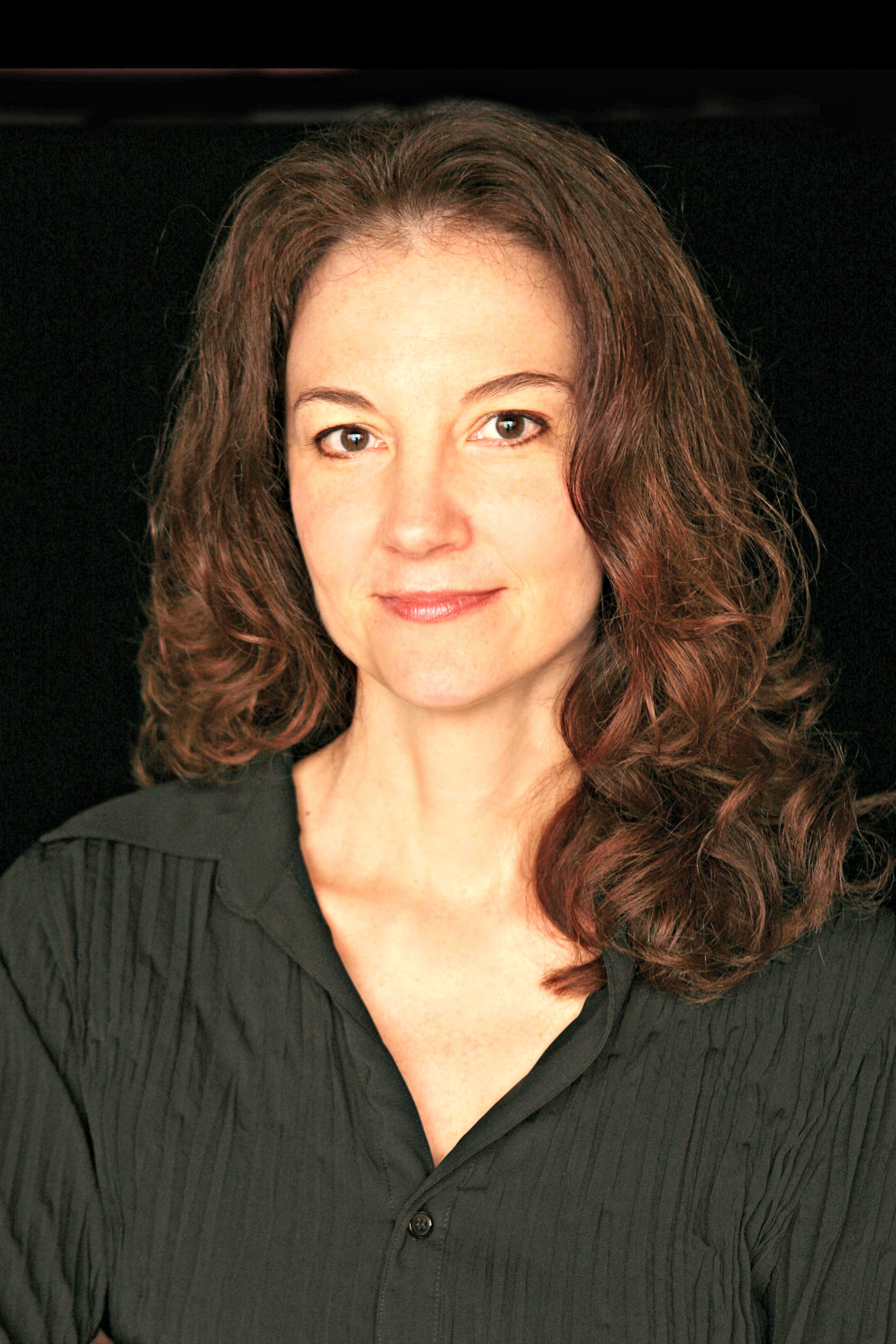
Today’s guest blogger, Kristin Bair O’Keeffe, is a cultural spelunker. With a husband from Ireland, a daughter from Vietnam, nearly five years as an expat in Shanghai, China, and an insatiable appetite for place, how could she not be? She’s also an author with an MFA degree in fiction writing, 18 years of experience as a writing instructor, a writerhead passionista, and the curator of #38Write, a monthly series of online writing workshops for place-passionate culture junkies around the world. Let’s listen up and hear why Kristin thinks Thanksgiving is a time for us displaced writers to shine!

— ML Awanohara

On Thursday, November 22, friends and families all over the United States (as well as oodles of displaced/replaced U.S.-ians around the world) will gather together to celebrate Thanksgiving. While this holiday can be traced back to the English Reformation and Henry VIII, it is now a secular holiday during which participants are expected to do just three simple things:

  1. eat turkey and pumpkin pie until we groan and bloat up like petrified puffer fish.
  2. endure our Great Aunt Pru, who smells like mothballs and passes out linty lozenges that look like they’ve been in the bottom of her purse since the Reformation.
  3. give thanks.

Writers of all ilk love this holiday. After all, it’s a day for us to shine! A day for us to show off by expressing our thanks far more eloquently than the neighbor who is slouched in front of his television in a tryptophan-induced haze.

We do, of course, have a lot to live up to:

“Thanksgiving Day, a function which originated in New England two or three centuries ago when those people recognized that they really had something to be thankful for—annually, not oftener—if they had succeeded in exterminating their neighbors, the Indians, during the previous twelve months instead of getting exterminated by their neighbors, the Indians.” ~ Mark Twain

“There is one day that is ours…Thanksgiving Day is the one day that is purely American.” ~ O. Henry [except, Mr. Henry forgot to add, those damn Canadians a bit to our north, who horn in on our gratefulness territory and dare to give thanks of their own, albeit on a different day]

“I come from a family where gravy is considered a beverage.” ~ Erma Bombeck

But no matter how splendid the thanks of those who came before us, this is a day on which writers can strut their best stuff!

So whether or not you’re American (U.S. American, that is), grab this opportunity to make a list of things for which you are thankful. Hurl yourself into the craft of thanks! Then, when your Thanksgiving host pauses just before cutting the first slice of turkey and says, “Would anyone like to share a thing or two for which you’re grateful?” you can whip out that slip of paper, clear your throat, and in your best writerly voice, make ’em weep in their cranberry sauce.

Here are a handful of mine:

1) Despite my great love for China, I am wildly thankful I will not be sitting face to face with the still-raw, almost-gobbling, dripping-blood, trying-to-limp-away turkey I once faced in Shanghai (ordered weeks in advance, mind you, from a fancy, well-respected, Western-y hotel and for which we paid a pretty-pretty RMB). All hail the year of mashed potatoes as the main dish! (We should have stuck with jiaozi.)

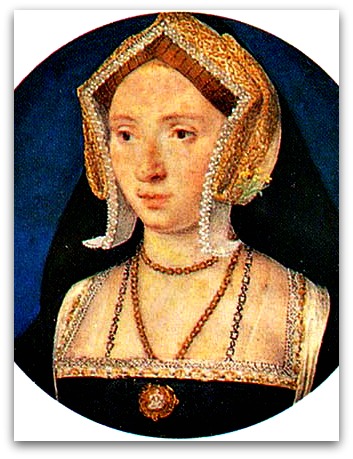
2) I am so, so, so grateful I am not living during the English Reformation and that I am not required to wear contraptions like this on my head:

Anne Boleyn

3) I am grateful that Maya Angelou called to read me a new poem. (Sorry, sorry, sorry! This is actually one of Oprah’s moments of thankfulness, not mine. But it sounds good, doesn’t it?)

4) I am thankful for my amazing family and friends from Ireland, Vietnam, Germany, India, China, the U.S., the U.K., and so many more places—all those who guide me, teach me, love me, and put up with me in my best and worst moments as a human being.

5) I am thankful and excited and inspired that writers around the world are flocking to my #38Write workshops and that my vision for contributing—and helping other writers contribute—to the global conversation of story is being realized. Whoop! Whoop!

6) I am grateful that there are writers all around the globe (like you!) who are driven to explore, write stories about the cultures and places in which they live, and connect.

Your turn! What are you thankful for?

CONNECT: If you’d like to learn more or if you’d like to register for one of Kristin Bair O’Keeffe’s #38Write workshops, grab a cup of coffee and pop over to her Web site and blog WRITERHEAD. Registration for December’s #38Write workshop is now open. You can Tweet Kristin at @kbairokeeffe, friend her on Facebook, and/or check out the #38Write group boards on Pinterest.

STAY TUNED for tomorrow’s post, Part 2 of Zeynep Kilic’s search for love in her adopted country.

If you enjoyed this post, we invite you to register for The Displaced Dispatch, a round up of weekly posts from The Displaced Nation, with seasonal recipes, book giveaways and other extras. Register for The Displaced Dispatch by clicking here!

Related posts:

Images: Kristin Bair O’Keeffe portrait; Anne Boleyn, courtesy Wikimedia Commons.

An expat author on what it’s like to write “controversial” books — and your chance to win one!

The London-born Alexander McNabb has spent nearly half of his life in the United Arab Emerites. Last month we interviewed him about his series of books on Middle Eastern themes, the first of which, Olives — A Violent Romance, has been sparking some controversy. (“Bring it on!” he told us.) Alexander is back at the Displaced Nation to share some good news: He is giving away several copies of Olives to our readers!! (See details below.) He is also here to discuss: does the book deserve its notoriety?

The Jordanian Web site Albawaba did a lovely interview with me in which they played up the “controversial novelist” angle quite nicely — I am, apparently, “scandalous.” Now, as any fule kno, if you want to sell books a whiff of scandal is quite handy.

That said, I have always shied away from that sales strategy — at least in part born of my dislike of the way the British author Geraldine Bedell’s publisher attempted to hijack the first Emirates Airline Festival of Literature (which I usually attend) to promote her mediocre book, The Gulf Between Us. Penguin claimed the festival organizers had tried to ban the book for its inclusion of a homosexual sheikh. (For more details, go to my post on this story.)

And yet bucketloads of controversy have dogged me since Olives — A Violent Romance was published a year ago. It’s much easier to be a “controversial author” in the Middle East than it is in the West these days.

Where is speech truly free?

We tend to forget how the film Monty Python’s Life of Brian (1979) was picketed by Christian groups, and how in 1988 Scorsese’s Last Temptation of Christ an adaption of a 1953 novel, was picketed and banned in some countries.

Let alone Lady Chatterley’s Lover (an unexpurgated edition could not be published in the UK until 1960), Frankie Goes to Hollywood (their controversial single, “Relax”) or many other shameful bans on music and literature in my own country in my own lifetime.

We think of ourselves as secular, tolerant and free-minded — yet our recent history has been filled with our failing to come to terms with free speech and literature that brings up topics we find uncomfortable.

Imagine how it is, then, in the Middle East, a region not only more sensitive to discussion of religious, cultural and social issues but with many more taboos to play with.

Some inconvenient truths

In Olives, my first book, a Muslim family is depicted drinking alcohol. This caused considerable comment online and from reviewers in the region, some of whom thought this was unnecessary and meretricious. A few tried to portray this scenario as unrealistic, but that didn’t really wash. Alcohol and the Arab world have a fraught — and frequently secretive — relationship.

Even more controversy followed with the fact that a Muslim woman sleeps with a British, Christian, man in the book. This was a humdinger that sparked debate about my motivations, the possibility this could happen and, once again, why I had to include such unsavory behavior.

Talk about inconvenient truth.

But the money shot was my decision to use real names in the book: real Jordanian and Palestinian family names. It wasn’t much of a decision, really, more of a no-brainer — you wouldn’t set a novel in the Highlands of Scotland and call characters MacShuggy or MacSquarepants because you were afraid of the clans, would you? And yet that expectation very much exists in Jordan today!

One member of a family with the same name as the female protagonist, Dajani, posted a comment on the Olives blog on behalf of the whole family demanding that the name be changed:

It would have been entirely feasible for you as an author to have contrived/fabricated a fictional name which does not infringe or violate our good family’s history and reputation and [we] do not believe that you have exercised good judgement in this choice.

The row spilled over to Facebook and other platforms and quickly got out of hand. One commenter on Jordanian blog 7iber (pronounced “hiber”) noted:

…this would be worth some honor killings if these names were abused.

Umm, that’s a death threat. (No matter that it’s probably something silly typed by an anonymous pimply onanist showing off, it does tend to stop one in the old tracks when you first read it.)

Worse, distributors in Jordan had refused to carry the print edition, citing concerns over the book’s use of that prominent Palestinian family name. Olives wasn’t banned in Jordan by government censors — but it was blocked by what a sympathetic commentator quite rightly called “a more insidious form of censorship.”

Fact vs fiction

Why has this been happening — because people in the Middle East can’t separate fact from fiction? Absolutely! It’s a real issue in the region. There is all too little fiction produced in and about the region: people simply don’t read very much in the main. A bestselling Arabic novel might sell a few thousand copies at most — the vast majority of Arabic writers pay to have their books printed.

So quite a few people, not unsurprisingly, find it hard to separate fiction from fact. Strangely enough, another branch of the Dajani family (which is very large and widespread, part of the reason I used the name) is passionately pro Olives — and I have to say the same thing to them: “Guys, it’s fiction!”

But the fact remains, my book set in Jordan can’t be sold in the country it’s set in.

As I said, it’s all too easy to be scandalous in the Middle East. Mind you, wait ‘till they see Beirut – An Explosive Thriller

*  *  *

Now it’s time for the freebies! Displaced Nation readers, you can get your very own copy of the book that’s been making waves in my part of the world. Here are 3 ways to do so:

1) For TDN readers with an iPad or ePub compatible reader (Nook, Sony, Kobo, Android etc): Get your copy of Olives — A Violent Romance free of charge (and save $4.99) on Smashwords. But first, you’ll need to sign up for the DISPLACED DISPATCH to get the code (it will come in the issue delivered this Saturday). NOTE: The code is valid until 1st December — and then, pfft, it’ll disappear. Dear readers, you are MORE than welcome to share that code with family, friends, strangers, dogs in the street — even lawyers.

2) For TDN readers with Kindles: Leave a comment on this post with your e-mail, and I will send a Kindle file and instructions how to install it. Best I can do, I’m afraid — Amazon doesn’t let me do freebies! Do remember to use name dot name at domain dot com so the spambots don’t find you! Or you can hit me up directly at @alexandermcnabb on Twitter…

3) For TDN readers who still like shiny PRINT books: If anyone would like to win Olives — A Violent Romance in print, delivered to their doorsteps anywhere in the world, just leave a comment and let us know where, if you could move to live anywhere on earth tomorrow, you’d go — and why!

TO ALL READERS: Olives — A Violent Romance has (wonderfully) met with considerable critical acclaim — if anyone wants to add their voice (whichever way it leans) on Amazon or Goodreads, that’s welcome feedback. The more people know the book exists, the merrier! 🙂

STAY TUNED for tomorrow’s post, the first in a two-part series on an expatriate’s love life.

If you enjoyed this post, we invite you to register for The Displaced Dispatch, a round up of weekly posts from The Displaced Nation, with seasonal recipes, book giveaways and other extras. Register for The Displaced Dispatch by clicking here!

Related post:

Images: All from Alexander McNabb.

19 more films that depict the horrors of being abroad, or otherwise displaced

Readers, we have to confess, ever since horror novelist, former expat and Third Culture Kid Sezin Koehler suggested 15 horror films on travel and the expat life, we’ve become rather addicted — and have invited her back here today for another hit. Go ahead and indulge yourselves — it’s Halloween, after all!

Being the horror-obsessed film nut that I am — and loving how my expat/traveller life has collided with my scary movie self — I offer here are a few more honorable mentions within the three sub-genres I presented in last week’s post:

  1. The expat.
  2. The world traveler.
  3. The otherwise displaced.

1. Expat Horror: Caveat expat, or expat beware (or in some cases, beware of the expat!).

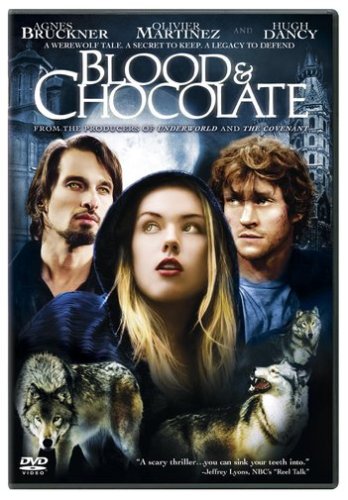
1) Blood and Chocolate, about an American orphan who goes to live with her aunt in Bucharest. Oh, and the orphan is a werewolf.


2) Drag Me To Hell, in which a Romany shaman in the US is evicted from her home and takes her rage out on the lowly loan officer who refused to give her a mortgage.


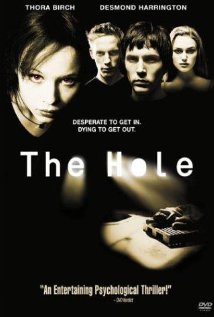
3) In The Hole we find an American student in a British boarding school who gets trapped in a World War II bomb shelter with a few classmates. So we’re led to think…


4) In The Grudge, Sarah Michelle Gellar gets far more than she ever bargained for living and working in Japan as a nurse, when a malevolent creature in her house begins an awful campaign of harassment, mayhem and torture.


5) Orphan finds us with a family interested in adopting a young Russian girl, only the longer she’s with them the more the mother suspects she’s not the child she claims to be.


6) + 7) The Joss Whedon marvels Buffy the Vampire Slayer and Angel, both of
which feature a number of prominent expats — a few are slayer trainers sent over to California from the Old World (Britain), a few are expat vampires who’ve decided the anonymity of the United States better suits their feeding habits.


2. Traveler Horror: “Let your suitcases gather dust!”, cry these films.

8) In Shrooms, a group of young Americans go to meet their Irish friend on his home turf in order to experience the hallucinogenic mushrooms indigenous to the fairylands of Ireland’s bonnie green forests. He forgot to tell them that their chosen “tripping” site is also the home of a haunted and abandoned insane asylum. And that not all the mushrooms are the magic type.


9) In Open Water, two Carribbean cruise snorkelers are left behind, to be tormented by a shark. Based on a true story — and one of many reasons why I keep my feet on dry land despite now living in Florida.


10) In the same vein we have Piranha 3D, in which half-naked spring-breakers are set upon by prehistoric piranha that have been released through an underground fault.


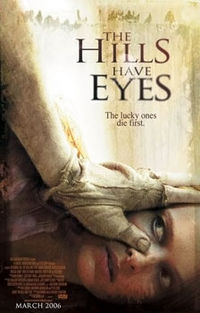
11) The Hills Have Eyes features a family on a road trip through the post-nuclear testing New Mexico desert are set upon by a group of psychopaths who live in the hills.


12) Worlds collide in From Dusk Till Dawn when a reverend on a road trip to Mexico with his children is hijacked by two ruthless killers on the lam from the law after a series of brutal murders and robberies. They find themselves like fish out of water when their rest-stop bar turns out to be a haven for vampires.


13) When a group of friends go white water rafting in Appalachia, the idylic back country scene turns nightmare when a group of inbred locals terrorizes the group, and one of its members in particular. Deliverance is not for the faint of heart.


I could keep going with this sub-genre, but surely you get the point by now. Stay home!

3. Displaced Horror: “Think twice about moving or taking a sojourn outside the ‘hood” is the moral here.

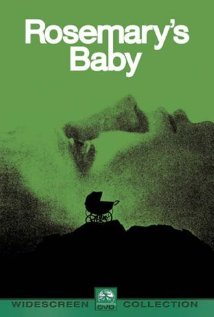
14) Rosemary’s Baby, in which Mia Farrow discovers that her new Manhattan residence is also the home to a group of mad Satanists who’ve got their sights on her unborn baby.


15) The slasher musical Don’t Go In the Woods features a band on the verge of a breakthrough go camping to write some new tunes. Only, there’s something else in there with them that’s picking them off one by one.


16) Every incarnation of the Alien series brings us a group of Earth’s citizens in outer space, battling a wretched and basically unkillable xenomorph. Keep your feet on land. Save yourself the trouble.


17) In Friday the 13th, a group of summer-camp goers are stalked by a relentless killer. Man, this one makes me glad I never went to summer camp, even though growing up I always wanted to.


18) A writer on a summertime retreat to a supposedly peaceful cabin is brutalized by a gang of locals. One of my personal favorites, I Spit On Your Grave is a grotesque revenge fantasy come to life and suggests one might be better off simply working from home.


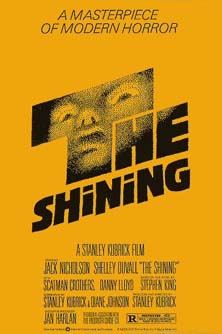
19) And we can’t forget one of the most iconic examples of Displaced Horror: The Shining, in which Jack Torrance, temporary caretaker of the historically creepy and ever haunted evil Overlook Hotel, goes mad and tries to murder his family. All work and no play makes Jack a dull boy, eh?

Happy Hallowe’en!

* * *

So, are you ready to burn your passport and throw away all your travel gear yet? 😉

And while we’re still at it, do you have any other films you’d add to Sezin’s best-of abroad horror list?

Sezin Koehler, author of American Monsters, is a woman either on the verge of a breakdown or breakthrough writing from Lighthouse Point, Florida. Culture shock aside, she’s working on four follow-up novels to her first, progress of which you can follow on her Pinterest boards. Her other online haunts are Zuzu’s Petals, Twitter, and Facebook — all of which feature eclectic bon mots, rants and raves.

STAY TUNED for tomorrow’s post, in which our fictional expat heroine, Libby Oliver, checks in and lets us know how she’s doing back at “home” in Merry Olde.

If you enjoyed this post, we invite you to register for The Displaced Dispatch, a round up of weekly posts from The Displaced Nation, with seasonal recipes, book giveaways and other extras. Register for The Displaced Dispatch by clicking here!

Related posts:

RANDOM NOMAD: Patricia Winton, Crime Writer, Expat in Rome & Lover of La Dolce Vita

Place of birth: In a farmhouse belonging to my paternal grandparents near Pelham, Tennessee, on a snowy December night
Passport: USA
Overseas history: Italy (Marina di Pisa, Livorno, Rome): 1969-70; 1970-71; 2002 – present.
Occupation: Crime Writer. My protag is an Italian American journalist rebuilding a career as a food writer in Italy. She first appeared in “Feeding Frenzy,” one of the mystery stories in Fish Tales: The Guppy Anthology, edited by Ramona DeFelice Long (Wildside Press, 2011). She’s waiting in the wings in an as yet unsold manuscript, set in Rome. She will solve another crime in the novel I’m beginning next week (for National Novel Writing Month), set in Florence.
Cyberspace coordinates: Italian Intrigues — Notes about life in Italy, food and wine, mysteries and crime (blog); Novel Adventurers — Seven writers blog about their passion for culture, travel, and storytelling (collaborative blog); @patriciawinton (Twitter handle); and Novel Adventurers (FB page).

What made you abandon your homeland for Italy?
I had the opportunity to come live in Italy when I was quite a young woman, and I lost my heart to the land, the people, and the cuisine — not to mention the wine. I talked about coming back to live for years, but life intervened. Following 9/11 (I worked a block from the White House at the time), I really felt my mortality and decided it was time to make the move. Or to stop talking about it.

Was anyone else in your immediate family displaced?
One of my sisters lived in Panama for three years. Another lives in New Mexico, a state that many people think is a foreign country. One classic example: New Mexicans had trouble trying to get tickets to the Atlanta Olympics and were told to go the the Mexican consulate. The situation is so ridiculous that New Mexico Magazine runs a monthly column called “One of Our 50 Is Missing.”

Tell me about the moment during your various stays in Italy when you felt the most displaced.
“Bureaucracy” may be a French word, but the Italians invented it. If you don’t believe me, I invite you to consider the Biblical story of Christmas: a decree went out from Caesar Augustus that all the world should be taxed, each to his own city.

Getting together the paperwork to file for permanent residency was a nightmare. After almost a year of compiling documents, it all came down to what the Italians saw as a discrepancy: my passport lists my place of birth as Tennessee while my birth certificate, issued by the state of Tennessee, listed my place of birth as Pelham. Getting that sorted out took six months. During the interregnum, every document including my permission to stay expired. I couldn’t renew anything until the residency question was settled.

When did you feel the least displaced?
It’s always at table. On the edge of a Tuscan vineyard enjoying homemade pasta and good wine, sharing laughter with friends. Before a roaring fire in a chilly stately home with simple chicken and salad, but more laughter and wine. With a group of strangers in at a local market luncheonette, querying a table-mate about her meal and being offered a share.

You may bring one curiosity you’ve collected from each of the countries where you’ve traveled or lived into The Displaced Nation. What’s in your suitcase?
A morsa di prosciutto (prosciutto holder). While most prosciutto crudo sold in Italy as elsewhere is machine-sliced, traditional purists want it cut by hand. To hold the ham steady, it’s placed in the morsa, a large clamp that hold it, while a knife is used to slice.

Hmmm… I hope it won’t be deployed by the murderer in one of your crime novels as an instrument of torture! I understand that when you first went to Italy, you learned to make pasta by hand, and then took a pasta machine back to the United States, where you taught many others how to make it, while also writing a food column for a newspaper. We are therefore looking forward to the meal you are invited to prepare for Displaced Nation members, based on your travels. What’s on the menu?

Indeed, I’ll be serving a traditional Italian meal:
Antipasto (appetizer): Fiori di zucca faraciti (zucchini blossoms stuffed with mozzarella and anchovies, dipped in batter and fried)
Primo piatto (first plate — traditionally the pasta, rice, or soup course): Gnocchi di Zucca alla Gorgonzola (pumpkin dumplings with gorgonzola sauce)
Secondo piatto (main course): Grigliata Mista di Pesce (mixed fish grill)
Contorni (vegetable accompaniment): Finocchio (fennel)
Frutta: Pesca (peach)
Dolce (dessert): Tiramisù
Bevande (drinks): Acqua minerale frizzante (fizzy mineral water); and Falanghina (white wine made from one of the oldest grapes grown in Italy)
.

And now can you please suggest an Italian word or expression for the Displaced Nation’s argot?
One that I’m currently enjoying is in gamba, meaning “in the leg.” In general, it means “to be an expert” or “to be good at what you do.” But it means so much more. I wrote an extensive piece about the phrase at Novel Adventurers recently.

Halloween is nearly upon us, and many of our posts of late have been about horror and that sort of thing. Tell me, do you keep up American Halloween celebrations in Rome?
I haven’t really celebrated Halloween since I was a child. I spent much of my adult life working on political campaigns. With Halloween falling days before the election, I never seemed to get organized for it. Here in Italy, it’s a relatively new holiday and more for adults than children, really. Children dress up for carnival, wearing their costumes to school for days before Martedì Grasso (Italian for Mardi Gras).

There are Halloween-related items for sale (plastic Jack O’ Lanterns and such), but no pumpkins for making Jack O’ Lanterns. Those are reserved for cooking. If I do anything to celebrate, I cook pumpkin, either as a vegetable or as part of the primo piatto.

Also in keeping with the season, we’ve started exchanging expat horror stories on the site. What’s the creepiest situation you’ve encountered on your travels?
The creepiest thing that ever happened to me occurred many years ago on a train from Munich to Florence. It started off pleasantly enough. I shared a compartment with five or six other people. A couple of them spoke only German. One woman spoke Italian and German, a man spoke German and English, and I spoke English and Italian. We had a polyglot conversation, with people translating for others and listening to see how much of the foreign tongues we could decipher. It was lots of fun. They all left the train before I did, and each warned me to be careful on my long journey as they descended one by one.

Alone, I moved near the window, and the rocking of the train lulled me to sleep. Quite some time later, I was awakened by the conductor turning on the lights to check tickets. I discovered that I had been joined in the compartment by a man who was in the act of pleasuring himself in the dark while I slept.

Now THAT’s creepy! Readers — yay or nay for letting Patricia Winton into The Displaced Nation? Not only can she cook, but she can tell a shocking story! (Note: It’s fine to vote “nay” as long as you couch your reasoning in terms we all — including Patricia — find amusing!)

STAY TUNED for tomorrow’s post, another horrifying Displaced Q by Tony James Slater!

If you enjoyed this post, we invite you to register for The Displaced Dispatch, a round up of weekly posts from The Displaced Nation, with seasonal recipes, book giveaways and other extras. Register for The Displaced Dispatch by clicking here!

Related posts:

Img: Patricia Winton (author photo)

15 films that depict the horrors of being abroad, or otherwise displaced

Readers, we’re getting goosebumps and our blood is curdling. Horror novelist, former expat and Third Culture Kid Sezin Koehler is here to remind us that, however glamorous the life of an expat or world traveler may seem, it has a netherworld — one that horror movie makers are fond of depicting. To proceed is at your peril.

As if moving or traveling abroad isn’t scary enough, there is a whole host of films that would put the kibosh on even the most adventurous of people. For today’s guest post for The Displaced Nation, I’m breaking down these tales of terror into three groups:

  1. The expat.
  2. The world traveler.
  3. The otherwise displaced.

What follows is a rundown of some of the best horror films that will make you never want to leave home again.

1. Expat Horror: Caveat expat, or expat beware (or in some cases, beware of the expat!).

1) Ils (Them) (2006), dir. David Moreau and Xavier Palud.
In this terrifying French film, two expat partners, a teacher and a writer, living outside Bucharest in Romania are terrorized and psychologically tortured by an unknown group for days before their murder. Based on a true story, the villains — who were apprehended in real life — turn out to be even more shocking than the events they perpetrated.

My big question: Why on earth do you choose to live out in the middle of nowhere in Romania? Tragic story indeed, but really, they should have known better. Now you do.

2) Suspiria (1977), dir. Dario Argento.
Considered one of the classic horror films and what many now consider to be the father of the arthouse horror genre, Argento’s dark and twisted tale features a ballet school in Rome full of young girls from all around the world who live and study within walls haunted by a chilling presence that picks off the girls one by one. The score by Goblin is enough to give you nightmares and make you reconsider sending your children away to school. Ever.

3) & 4) Red Dragon (2002), dir. Bret Rattner; & The Silence of the Lambs (1991), dir. Jonathan Demme.
In Red Dragon Dr. Hannibal Lector is just a British expat living and practicing psychiatry in the United States. In fact, he’s helping the police with a brutal series of murders in which specific body parts had been taken as trophies. Detective Will Graham eventually discovers that not only is psychiatrist-to-the-stars Dr. Lector responsible for these grisly killings, he’s also eating the missing pieces.

The next time we meet Hannibal the Cannibal is in The Silence of the Lambs, where he is safely tucked away in a maximum security prison until the FBI needs his profiling assistance in uncovering the identity of a man who is kidnapping and skinning women.

Maybe Dr. Lector is a reason why locals are so wary of expats around the world?

5) The Omen (1976), dir. Richard Donner.
It’s hard enough being the wife of the American ambassador to the UK, but when Lee Remick discovers that there is something very wrong, very evil with her son, Damien, matters only get worse.

In many ways this is the kind of expat horror to which we can most relate: being in a foreign country, going through a difficult time, and not having the kind of support one might have at home. Even though the Thorns are wealthy and have a full staff at their beck and call, Mrs. Thorn cannot confide in them her misgivings that her son is the Antichrist — nor can she with anyone else since she’s the ambassador’s wife. In the end she goes mad from fear and frustration.

As expats, we’ve all been there. Luckily, though, we didn’t have the incarnation of Satan as our son. At least I hope not.

6) Freaks (1932), dir. Tod Browning.
This magnificent film follows a group of sideshow circus performers in Dust Bowl America — the majority of whom are European expats from all over the continent. As foreigners as well as displaying physical deformities of all kinds, this group is the marginalized of the most marginalized in America not just at that time, but even today.

The gorgeous German and “normal” trapeze artist Cleopatra finds out that Hans, the midget, is fabulously wealthy and sets out to steal him away from his same-sized girlfriend Frieda — with disastrous consequences as the group of freaks tries to bring the wicked Cleopatra into their embrace. Cleo finds out well and good that one does not mess with members of the sideshow.

The message here? Respect your local customs, even if you think them freakish. It could be what stands between your body as it is or being turned into a human-chicken hybrid.

2. Traveler Horror: “Let your suitcases gather dust!”, cry these films.

1) Hostel (2005), dir. Eli Roth.
A group of backpackers passing through the Slovakian capital city, Bratislava — it has no semblance to the real place whatsoever — gets kidnapped by an organization that sells young people to the highest bidders so that they can be tortured and murdered in the Slovakian outback with impunity. While the film is rife with cultural and geographical blunders, it nonetheless preys on a legitimate fear of kidnapping and/or human trafficking while traveling, especially for young women as we see in the two follow-up films in this gory franchise.

Kids, don’t fall for the local pretty girl/handsome boy who picks you up in a bar. You have no idea whom they could be working for.

2) American Werewolf in London (1981), dir. John Landis.
Two American backpackers (uh-oh) in the Scottish highlands stray from the road and are attacked by a wild beast. One dies, the other is in a coma for three days with horrible gashes across his chest. When the doctor informs him he was attacked by a madman he’s confused, claiming it was a wolf that had killed his friend and wounded him. Come full moon, young David Kessler finds out it was neither man nor wolf, and he’s becoming one.

There’s nothing like a story about a horrific accident taking place while traveling, especially when said accident turns you into a monster. Always remember, STAY AWAY FROM THE MOORS/MUIRS!

3) The Descent (2005), dir. Neil Marshall.
After the tragic death of Sarah’s husband and daughter in a wicked car accident, her fellow British extreme-sporting friends decide to take a trip across the pond to Appalachia for a spelunking expedition. Why anyone would think that crawling around in caves would be a good idea I haven’t a clue — let alone choose to take an already-traumatized woman into that scenario. But hey, they do. And not only do they find themselves in an unmapped cave system that has no way back to the surface, there are others down there in the dark who’d like to ensure the girls never leave.

Dear People Traveling to America: For Pete’s sake, avoid the US’s back country! Monsters are above and below.

4) Wolf Creek (2005), dir. Greg Mclean.
Two British tourists in Australia pair up with a local to check out a supposed alien-landing site in the middle of nowhere. All is fine until their car battery dies. Stranded in the badlands of Oz, grateful are they when a mechanic rolls up and tows them to his place to fix their vehicle. But oh, he’s not a mechanic at all. He’s a serial murderer who waits for tourists to come out to the Wolf Creek Crater, and takes his good time torturing them before their slow death.

The film is based on a true story — one of the British girls actually survived and made it to the authorities. It turned out the man had killed hundreds of people over decades, and nobody even suspected a thing. Shiver

5) Primeval (2007), dir. Michael Katleman.
During the Rwanda-Burundi conflict, bodies were dumped into the Ruzizi River at such alarming rates that the crocs began eating human flesh. One of these crocs, nicknamed Gustave by the locals, gets a taste for human flesh and begins hunting humans inland. An American team of journalists are sent to capture and bring back the beast amidst an ongoing civil conflict between warlords and villagers.

The best thing about this movie is that there really is a 70-year-old, 22-feet-long croc named Gustave who swims the Ruzizi. He was last sighted in 2008, but I know he’s still out there. I can feel him.

3. Displaced Horror: “Think twice about moving or taking a sojourn outside the ‘hood” is the moral here.

1) The Amityville Horror (1979), dir. Stuart Rosenberg.
As if moving doesn’t suck enough, can you imagine moving into a house that not only was the site of a brutal family murder but is also haunted? I don’t even know how many whammies that makes the scene. Also based on the true story of the Lutz family, who were terrorized by their house to the point where they fled without any of their belongings and never went back to collect them.

Word to the wise: Always check about the house’s history before you move in, and always remember to burn sage throughout, even in cabinets and drawers, before you move anything in anything at all. Trust me on this one.

2) Se7en (1995), dir. David Fincher.
Heralding a promotion to detective, Brad Pitt gets transferred to an anonymous city with a reputation of being among the worst in America. *Cough* Detroit *Cough*. His wife is miserable as she wants to have a family, but cannot imagine raising children in that town. The first case he lands is a serial killer murdering people based on the Seven Deadly Sins — one that quickly sucks both him and his wife into a horrific spiral of torture and murder.

Women, don’t let your husband drag you to a horrible city. Just don’t. Your life very well may depend on it.

3) The Texas Chainsaw Massacre (2003), dir. Marcus Nispel.
A group of friends on a road trip through Texas and — oh crap! — their car breaks down. It’s just their luck that the person who finds them is the patriarch of the psychotic and inbred Hewett family, known for killing and cooking their victims. There are no happy endings here, people.

If you’re going on a road trip, stick to the main roads, for God’s sake! I mean, jeez, everybody knows that. And while you’re at it, stay the bloody hell out of Texas!

4) El laberinto del fauno (Pan’s Labyrinth) (2006), dir. Guillermo del Toro.
Set in 1944 fascist Spain, the film tells the story of Ofelia, a young girl who accompanies her mother to live with her new stepfather, a barbarous Spanish general. Amidst the horror, Ofelia discovers a fairy world underneath the very grounds of their home, a place to which she escapes when the torture around her becomes too much to bear. But even fairy worlds have their horrors, as she soon finds out.

Moms, jeez, don’t marry jerks and then don’t agree to live in their military camp. Seems like logic to me, but I guess it needs to be said.

* * *

So, are you ready to burn your passport and throw away all your travel gear yet? 😉

And do you have any other films you’d add to my best-of abroad horror list?

Sezin Koehler, author of American Monsters, is a woman either on the verge of a breakdown or breakthrough writing from Lighthouse Point, Florida. Culture shock aside, she’s working on four follow-up novels to her first, progress of which you can follow on her Pinterest boards. Her other online haunts are Zuzu’s Petals, Twitter, and Facebook — all of which feature eclectic bon mots, rants and raves.

STAY TUNED for tomorrow’s post, which has Kate Allison continuing our horror theme.

If you enjoyed this post, we invite you to register for The Displaced Dispatch, a round up of weekly posts from The Displaced Nation, with seasonal recipes, book giveaways and other extras. Register for The Displaced Dispatch by clicking here!

Related posts:

Images: From MorgueFile: Cinema; Hat and suitcase;  Bridge from biplane.

Photo of Sezin, from her newest FB page, ZUZUHULK, used with her permission.

Oblivious to controversy, this expat author stirs up tales of violence, romance and tragedy in the Middle East

Alexander McNabb isn’t afraid of ghoulies, ghosties, long-leggedy beasties, and things that go bump in the night — which, as Kate Allison announced the week before last, is this month’s theme at the Displaced Nation.

How do I know he isn’t afraid? Because he is too busy tuning into other sources of thrills, chills and excitement for his books — namely, Middle Eastern politics and intrigue.

Though he doesn’t seek controversy, he doesn’t shy away from it either. His books are violent, explosive, and deadly. One has actually been banned in Jordan.

I now have the pleasure of giving Mr McNabb the floor to tell us more about his affinity for such dastardly topics. Don’t worry, he doesn’t have fangs but is a gentle sort with a great sense of humo(u)r… He is also a lively conversationalist, with his own radio show in Dubai, and a cook.

Welcome, Alexander. Shall we start out with what should be a basic question (though it rarely is for us displaced types): where are you from?
I was born in London, in Edgware General Hospital, which they have since knocked down, presumably to stop lightning striking twice. I grew up in various countryside areas north of London and was unwillingly educated at The Haberdashers’ Aske’s Boys’ School in Elstree.

When did you first go to the Middle East?
In 1986. I was selling an insanely visionary software package put together by a directory publisher that had the wonderful idea of selling its information as an integrated database. I presented this to a number of puzzled Saudis who lost no time in introducing me to their most junior members of staff and leaving me there. It taught me an important lesson — Gulf Arabs never say “no,” it’s considered rude. And “not no” doesn’t mean “yes”!

How did you end up living in Dubai?
When that project and, ultimately, the company failed I got involved in the publishing side of things. And so in 1993 I moved out to Dubai to start a subsidiary of the publishing company I worked for. And got myself shut down by the Ministry of Information. But that’s another story…

We will talk about your trio of books set in the Middle East shortly. But first: do you have any other published works?
The first book I wrote was a spoof of international spy thrillers, called just Space. I re-read the manuscript a couple of months ago and it made me laugh a lot, so I published that as a $2.99 Kindle-only book. I worked for ten years as an editor and publisher and for longer than that as a writer and journalist, so there are millions of my words out there — lost and crying out plaintively…
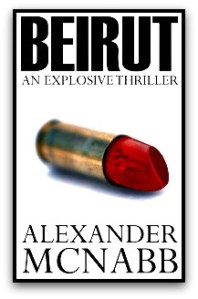
No need for them to mourn as you’ve just now published Beirut — An Explosive Thriller, which is the second in three books you are writing that are set in the Middle East, called The Levant Cycle. The first was Olives — A Violent Romance and the third will be Shemlan — A Deadly Tragedy. Could you say a little more about the Levant Cycle?
The Levant Cycle was never meant to be — the three books just happen to be set in the same region, contain some of the same characters and be roughly contiguous. But they are very different. Olives is really a novel — the story follows young British journalist, Paul Stokes as he arrives in Jordan and quickly falls afoul of the law — while Beirut is a hardcore international spy thriller. And they’re independent works in themselves. I had always thought of a book that would form an interlinear to Olives, a telling of that story from another perspective, possibly that of Gerald Lynch, the British Secret Intelligence Service officer that Paul encounters. Beirut wasn’t meant to follow on from Olives and then it just did, sort of taking up from when Paul moves to Beirut. And of course Beirut shows a very different Gerald Lynch, because in Olives you only see Lynch from Paul’s somewhat jaundiced perspective. So the books can be grouped, but I didn’t want a trilogy — a cycle seemed more appropriate.

Are you now working on the third book?
Yes, I’m about halfway through Shemlan and loving it. It’s a great deal darker than the other two books. It’s about a retired diplomat who’s dying of cancer going back to his past and finding that past is likely to kill him before the disease does.

What does “shemlan” mean?
Shemlan is a tiny village high in the hills above Beirut. It’s a little-known fact that Shemlan was for many years home to the Middle East Centre for Arabic Studies, where the British government taught its diplomats — and its spies — Arabic. A lot of my research for the book has consisted of taking friends and colleagues up there for lunch at Al Sakhra (The Cliff House), the lovely Arabic restaurant in the village. I know, it’s hard…

What made you decide to center the action of your books around the politics of the Middle East?
No one else was writing fiction centered on this region. There hasn’t been an interesting Middle Eastern spy thriller since Eric Ambler’s The Levanter. Olives was intended to introduce a Western audience that doesn’t care very much to some of the more complicated aspects of life in that part of the world — to some of the human issues that lie behind the glib headlines.

I presume you aren’t afraid of controversy?
Bring it on! Actually, I was amazed at the “controversy” that Olives provoked because of my having depicted Muslims drinking alcohol and Arab women having sex with foreigners. These things never happen in the Arab World! And then the Great Naming Scandal, when my use of a real Palestinian name (Dajani, for the Palestinian family Paul gets involved with) was deemed by distributors in Jordan to make the book too hot for them to handle. It still can’t be sold there!

How about Beirut?
I was truly blown away when the UAE’s National Media Council granted the necessary “Permission to Print” for Beirut. I’m sure someone, somewhere will find some aspect of the book controversial, but I think that’s more a product of the lack of narrative literature in the region than it is any quest for controversy on my part. And yes, you do actually have to get permission to print a book here — and government clearance to import books into any country in the region.

What audience did you have in mind for Olives?
Olives was written for a British audience but has appealed broadly across Europe and the US as well as in the Arab World. I’ve been more than pleased at Western readers who have enjoyed Olives and said, “I didn’t know about all that stuff.” And, because I thought I might lose Arab friends, I have been truly overjoyed that so many Palestinian and Arab readers have loved it.

At one point in Olives, Paul, the British journalist, becomes romantically involved with his Palestinian coworker, Aisha Dajani. Do you think Westerners can have successful relationships with Arabs and live happily ever after?
I really don’t see it as a “Westerner/Arab” thing at all – it’s an awful cliché, but love transcends nationality, culture and, yes, religion. I have seen relationships founder on that particular rock, where the partners can’t clear the hurdle of converting to or from Islam, but I have also seen couples deal with that. And, of course, there are still a great number of Christians in the Arab world and Muslims in the West. East and West doesn’t have to be about Islam, even if it often is.

Did you base the hero, Paul, on anyone in particular?
Paul Stokes is modeled on a number of callow Brits I have encountered arriving in the Middle East over the years, most of them journalists. You get a lot of credit in the Arab World for having tried to understand things, for actually bothering to learn something about the region and its people before you go leaping in blindly, as Paul does. I have often been highly amused at the way Arab friends have reacted to the behavior of British people new to the region — funny little things like different approaches to generosity, family, children and manners. I remember once walking into the office to be met by horrified glares from the girls, all trying to catch my attention and draw it to the new Brit who was happily — and loudly — clipping his nails at his desk. Or the British staffer who labelled her things in the office fridge. To the Arabs, you just share and if we’re out of something, you get it — someone labeling a bottle of milk was a source of appalled amusement.

Paul becomes “localized,” even becomes a smoker, which is why he is so torn between “home,” represented by his girlfriend Anne, and “away,” which of course is Aisha. And she, of course, is the hero of the book. You’re not actually supposed to like Paul, really. Perhaps sympathize with him…

You characterize Olives as a “violent romance.” What does that mean exactly?
The book’s working title for years was just “Olives.” The problem with that is that when you google “Olives,” you get Crespo, cookbooks or restaurants. So I decided on a defining subtitle — and nothing else seemed to suit other than “violent romance.” Olives is both a romance and a spy thriller. Thriller readers would find it too slow or romantic, romance readers would find it a little rough was the general concern. I hate how publishing brackets and pigeonholes us like that. The love story part of it has been popular, for sure — but a lot of people didn’t know about the region’s water crisis and learned about it from Olives, which has been cool.

Will Beirut attract the same readers?
Beirut is a totally different book and I was perhaps a little gleeful at how Olives readers would react to its much more hardcore spy thriller nature, particularly female readers. I was also a little scared, because I was setting out to kill what little fan base Olives has won for me. Readers, including females, have loved Beirut so far, which has me slack-jawed to be honest. But then it shows how wrong those traditional publishing preconceptions are — women actually reading a thriller? Oh, the shock of it all!

Is that why you are self-publishing The Levant Cycle — because the books do not fit in traditional publishing categories? I ask because quite a few expat authors we’ve featured on The Displaced Nation have self-published their works.
Let’s start with 250 rejections from agents for, respectively, Space, Olives and Beirut. When London agent Robin Wade signed me, it was for Beirut. I thought I was made, I really did. 250 rejections — and then an agent comes along and makes like a scrooch owl! Robin shopped Beirut around to 14 top publishers (there’s an image of the list I had of them, one after another struck off as the news came in, posted up on the Beirut site) and they, to a man, rejected it.

Why do you think that happened?
The ignorance about the Middle East from agents and editors alike has been shocking: “We have terrorism here at home, I don’t think people want to read about that” and “This novel, set in war-torn city Beirut” were two low points. But the worst was the editor who praised Beirut’s pace, setting, style and dialogue, compared it to Le Carré — but said he didn’t think it would fly in supermarkets. After that, I decided to see what readers thought without waiting for the gatekeepers. I am so glad I did.

Funnily enough, I discovered your books last month, when the Displaced Nation was dedicating itself to a series of food posts and I happened upon your collective blog about food, The Fat Expat.
Blogging became an outlet for me between frustrated bouts of writing. My partner in foodie crime, Simon “HalfManHalfBeer” McCrum, and I tried bringing others on board — but in the end The Fat Expat was doomed to tempus fugit failure. Still, I loved it while it lasted. I used to run a food magazine so am quite experienced in food preparation, photography and so on — and I love cooking.

Last month we were asking all of our interviewees: would you travel for food?
Damn right I would! Sweden this year, stunning food at stunningly high prices but you haven’t lived until you’ve eaten sour cream and crayfish on toast for breakfast. Estonia last year, a gorgeous holiday of art, museums and culture interspersed with the world’s largest, cheapest Martinis and top class cuisine — pelmeni in chicken stock, venison in red wine! But you want to really eat? There are stunning restaurants in Jordan — puffed up flatbreads fresh from the brick oven, potato pan-fried with egg and Mediterranean herbs. And, of course, Beirut — French food that makes Parisians blush alongside mountains of mezze, splashes of Armenian spice and of course Lebanese wines. I had to edit out my descriptions of Château Musar from Beirut because they crossed that threshold between what matters in a book and what readers need to know. But Musar is one of the world’s great wines. And the rosé from Château Ksara? Barmy, quite barmy. Do not, if you have the chance, neglect Massaya — a lovely wine from the achingly beautiful Bekaa Valley.

Next month’s Displaced Nation theme will be expats and politics — in honor of the U.S. elections. Do you have a horse in that particular race?
Obama. I don’t think anyone should forget that the people behind Romney are the people who took America to war against Iraq for no reason other than profit and dominance. There were never any WMDs and there was no link whatever between the murderously secular Saddam and the New Caliphate of Al Qaeda. Over a million people have died, the Middle East is lurching from crisis to crisis — and those old men are still doing three-martini lunches and planning their next move to make the world a safer place. At least Obama represents a hope of inclusion and reason.

Do you think expats should stay in touch with their home country’s politics? Do you?
Living in the Middle East, US politics are something you tend to follow because it pretty much shapes the region. I follow British politics to a degree, but it’s hard to be passionate about a system that has become so centrist and messaged. It’s something of a sitcom really.

What’s next, after the Cycle is finished?
I can’t even begin to think about what’s next, but there are plenty of contenders for next project, including a book set in Ireland and one about a traumatized teacher coming back from Iraq. Neither feature Mr. Lynch.

Readers, why not give those witches, ghosts, zombies, werewolves and vampires of yours a break and try Alexander McNabb’s wonderful cocktails of romance, intrigue, and high-stakes international politics instead?

STAY TUNED for tomorrow’s episode in the life of our fictional expat heroine, Libby. (What, not keeping up with Libby? Read the first three episodes of her expat adventures.)

If you enjoyed this post, we invite you to register for The Displaced Dispatch, a round up of weekly posts from The Displaced Nation, with seasonal recipes, book giveaways and other extras. Register for The Displaced Dispatch by clicking here!

Related posts:

Images: Alexander McNabb author image and book covers.