The Displaced Nation

A home for international creatives

Tag Archives: What a Displaced World

LOCATION, LOCUTION: JD Smith – from Cornwall to 3rd century Syria

Book cover art, Tristan & Iseult; JD Smith author photo; JJ Marsh author photo

Book cover art, Tristan & Iseult; JD Smith author photo; JJ Marsh author photo

In this month’s “Location, Locution”, expat crime writer JJ Marsh interviews  JD Smith, author of the novella Tristan and Iseult and the first in The Rise of Zenobia series, Overlord, based in ancient Palmyra, to be released in early 2014.

JD Smith lives in the English Lake District. She has worked in the graphic design industry for over a dozen years, and now specialises in book cover design and typesetting.

The pseudonym JD Smith was adopted as her preferred Editor’s title when launching the writing magazine Words with JAM.

Which comes first, story or location?
Always the story. The location is influential to the story, but the story is the most important thing, the part which excites me as a reader. The location is the background upon which the story is played out, and the history is the framework upon which it is hung.

How do you go about evoking the atmosphere of a place?
With great difficulty. In writing Tristan and Iseult I evoked the wet and wind the British know only too well. I’ve always lived on the coast, though in the north, not Cornwall (Kernow), but those salt winds and perpetually grey skies are the same. The Rise of Zenobia is based in 3rd century Syria, and I’m finding that much harder. I didn’t grow up with the atmosphere ingrained in me. I haven’t spent years of my childhood visiting the remains, the palaces and the fortifications. I rely on films a lot. Being a designer I’m an incredibly visual person, and seeing it played out, filmed in the locations I’m trying to conjure on the written page, helps immensely.

Which particular features create a sense of location? Landscape, culture, food?
All of the above, definitely. Although I think in order to relate better to a reader I am all in favour of sacrificing certain aspects which readers might not gel with, and using others to push plotlines forward. Of course, all of these things give a clue as to the time, as well as the place, in which a book is set.

How well do you need to know the place before using it as a setting?
I’ve never visited Syria but I’m writing about it. You need to know it to a degree, but I think you need to know your characters more. Location is secondary. You can paint the background afterwards. Of course it depends. I write historical novels based on historical events and people, and knowing them and the history of the place, rather than the place as it stands, is key.

Could you give a brief example from your work which you feel brings the location to life?
These two extracts are my favourite descriptions of the weather in Britain which for me was a huge part of the setting of Tristan and Iseult:

Rustling emanates from the dense forest, even though the wind has dropped. White mist shrouds us. I tense to stop cold shivers taking hold. The rain is fine, yet a hand through my hair proves it is wetter than the streams in springtime and my footing slides on the muddy grass as we pick our way through undergrowth.

And:

‘Ireland is no home for me,’ she says. ‘I was at home with the sea and the sand and the shingle of my shores, with the salt spray in my hair.’

Which writers do you admire for the way they use location?
Tricky one. I tend to admire writers for their story, and their characters, not for their use of location. And for me it’s both the time and the place that work together as one with any author’s writing, because I love historical fiction. Time and place are tied so tightly together one does not exist without the other. Sarah Bower’s descriptions are second to none.  Philippa Gregory evokes the royal court with ease. And Bernard Cornwell can describe a battle on any field.

Next month on Location, Locution:  award-winning author Amanda Hodgkinson.

 * * *

JJ Marsh grew up in Wales, Africa and the Middle East, where her curiosity for culture took root and triggered an urge to write. After living in Hong Kong, Nigeria, Dubai, Portugal and France, JJ finally settled in Switzerland, where she is currently halfway through her European crime series, set in compelling locations all over the continent and featuring detective inspector Beatrice Stubbs.

STAY TUNED for tomorrow’s post!

If you enjoyed this post, we invite you to register for The Displaced Dispatch, a round up of weekly posts from The Displaced Nation, with seasonal recipes, book giveaways and other extras. Register for The Displaced Dispatch by clicking here!

Related posts:

And the December 2013 Alices go to … these 2 international creatives

 © Iamezan | Dreamstime.com Used under license

© Iamezan | Dreamstime.com
Used under license

If you are a subscriber to our weekly newsletter, Displaced Dispatch, you’re already in the know. But if you’re not (and why aren’t you? off with your head!), listen up. Every week, when that esteemed publication comes out, we present contenders for a monthly “Alice Award,” most of whom are writers or other kinds of international creatives who appear to have a special handle on the curious and unreal aspects of being a global resident or voyager. Not only that, but this person tries to use this state of befuddlement to their advantage, as a spur to greater creative heights.

Today’s post honors December’s two Alice recipients.

Starting with the most recent, and this time with annotations, they are (drumroll…):

1) LAURENCE BROWN, British expat in Indiana and blogger at Lost in the Pond

For his post: “7 British Christmas Songs That Somehow Never Made it Big in the US” 
Posted on: 27 November 2013
Snippet:

Growing up in the United Kingdom, one of the more memorable elements of Christmas was the music that bombarded the airwaves day-in-day-out from November onward. And I’m talking huge hits, many of which shot to number one and continued their popularity some twenty, thirty, perhaps forty years after their release. And yet, as I embark on my sixth Christmas in the United States, it has come to my attention that these same hits—ones I initially assumed were likely just as big in the U.S.—are nowhere to be heard.

Citation:  Frankly, Lawrence, we were so busy lamenting the lack of attention given to Carols from Kings that it hadn’t yet dawned on us that Americans are also missing out on Cliff Richard crooning “Christmas time, mistletoe and wine…” And you have a point: Why would anyone States-side wish to hear yet another rendition of Andy Williams singing “Everybody knows some turkey”—yep, that’s you, Andy!—”and some mistletoe/Help to make the season bright…” when they could break it up with Cliff from time to time? And you are so right, the song’s Christian overtones would not go amiss in this part of the world. (Forgive the aside, but does anyone in Indiana know the words to the Robert-Burns-poem-converted-to-New-Year’s-dirge “Auld Lang Syne”, or is that a lacuna as well? Genuinely curious…) We congratulate you for uncovering some prime through-the-looking-glass territory. It’s jolly difficult to have a proper holiday if the music is missing or doesn’t sound right, as anyone who spends Christmas in Vietnam will tell you—there the bands in the restaurants serenade you with things like: “Have yourself a merry little Crease-mass.” And as Alice herself found out when she joined the Mad Hatter for what she thought would be a proper tea party:

“’Twinkle, twinkle, little bat!
How I wonder what you’re at!’

You know the song, perhaps?”

“I’ve heard something like it,” said Alice.

“It goes on, you know,’ the Hatter continued, “in this way:—

‘Up above the world you fly,
Like a tea-tray in the sky.
Twinkle, twinkle—'”

2) JULIE FALCONER, travel writer and social media consultant, Californian based in London, and blogger at A LADY IN LONDON

For her post: Lady’s Expat Holiday Blunders
Posted on: 28 November 2013
Snippet:

I picked [a cracker] up, pulled both ends, popped out the surprise gift and paper crown, and looked up to find everyone at the table staring at me in horror. It was one of a long series of expat moments when I knew that I had done something wrong, and that nobody was going to tell me exactly what.

I gently set the cracker and its contents down, flashed my most sheepish “sorry, I’m a foreigner” smile, and waited. Slowly, each person at the table picked up one end of a cracker, offered the other end to someone else, and played a little game of tug of war. So that’s what I did wrong.

Citation:  Julie, we are sorry to have to inform you of this, but it’s time to crack on with the old cracker techniques because, crackpot as it may sound, crackers have arrived over here in the United States, at Target no less! Though the difference is that you have to show your driver’s license when you buy them because they are technically “firecrackers.” Now that’s crackers, if you ask us! Now, we do hope the English friends who witnessed their rather unfortunate self-cracking episode were a little more tolerant than Alice’s Red Queen (perhaps they thought it fitting in this era of selfies?) and let you keep the surprise gift and paper crown. In which case, you can count yourself a little luckier than our poor sweet heroine:

“You look a little shy; let me introduce you to that leg of mutton,” said the Red Queen. “Alice—Mutton; Mutton—Alice.” The leg of mutton got up in the dish and made a little bow to Alice; and Alice returned the bow, not knowing whether to be frightened or amused.

“May I give you a slice?” she said, taking up the knife and fork, and looking from one Queen to the other.

“Certainly not,” the Red Queen said, very decidedly: “it isn’t etiquette to cut any one you’ve been introduced to. Remove the joint!”

*  *  *

So, readers, do you have a favorite from the above, or have you read any recent posts you think deserve an Alice Award?  We’d love to hear your suggestions! And don’t miss out on the shortlist of Alice contenders we provide in each week’s Dispatch, which are sources of creative thought if nothing else! Get on our subscription list now!

STAY TUNED for tomorrow’s post, a TCK Talent interview by Lisa Liang!

Writers and other international creatives: If you want to know in advance the contenders for our monthly Alice Award winners, sign up to receive The Displaced Dispatch, a round up of weekly posts from The Displaced Nation, with news of book giveaways, future posts, and of course, our weekly Alice Award!. Register for The Displaced Dispatch by clicking here!

Related posts:

2013 Holiday Special: Notable books for, by and about expats

Looking for last-minute gifts—or have your holiday celebrations brought you to the point where you might need an escape for yourself?

In the tradition of looking back at the past year’s highlights, I present, on behalf of the Displaced Nation team, a list of books for, by, and about expats that were featured in some way on this site in 2013.

Click on the category that interests you:

  1. FICTION
  2. MEMOIRS
  3. HANDBOOKS & GUIDEBOOKS
  4. COOKBOOK (singular because we have only one!)
  • Books in each category are arranged from most to least recent.
  • Unless otherwise noted, books are self-published.

Go on, download a few! It’s the time of the year to be generous to one’s fellow human beings. That said, on the Displaced Nation it’s always the season to support the creative output of those who’ve embraced the life of global residency and travel.

* * *

Fiction

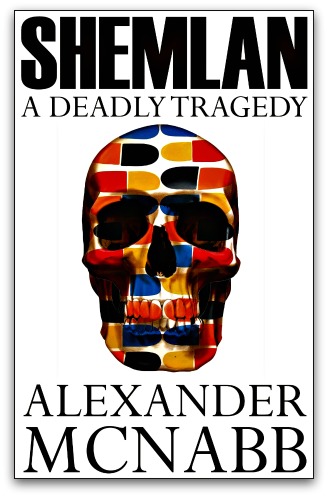
Shemlan Ebook_coverShemlan: A Deadly Tragedy (November 2013)
Author: Alexander McNabb
Genre: International thriller
Synopsis: The third in McNabb’s Levant Cycle, Shemlan tells the story of a retired British foreign service officer who, dying from cancer, returns to Beirut in hopes of meeting the Lebanese love of his youth one last time. But then his past catches up with him, threatening to do him in before the disease does—until British spy Gerald Lynch gallops to the rescue…
Expat credentials: Born in London, McNabb has lived in the Middle East for more than a quarter century. He often receives praise for getting the historical and cultural details right in his books.
How we heard about: We encountered McNabb a year ago when we were doing a series of food posts! We love his books and are giving away Shemlan this month, as well as doing an offer for Displaced Dispatch subscribers on all three books in the cycle. Check it out!
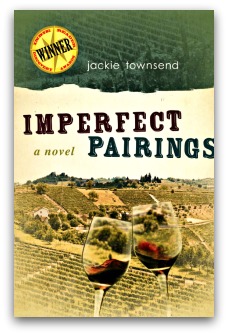
ImperfectPairings_cover_pmImperfect Pairings (May 2013)
Author: Jackie Townsend
Genre: Women’s fiction
Synopsis: American career woman Jamie had not intended to fall in love—and to a foreigner no less, a man who tells her his name is Jack, short for John, but it’s really short for Giovanni. Insanely handsome and intense but unreadable, Giovanni has left a complicated family life back home in Italy. Is this more than Jamie signed up for?
Displaced credentials: In real life, Townsend is married to an Italian and has spent 16 years backing and forthing to her husband’s family in Italy.
How we heard about: ML Awanohara, who rightly or wrongly considers herself something of an expert on cross-cultural marriage, read the book on her Kindle and was so impressed with its depiction of cross-cultural relationship woes that she asked Townsend to be our featured author of November. Read the interview.

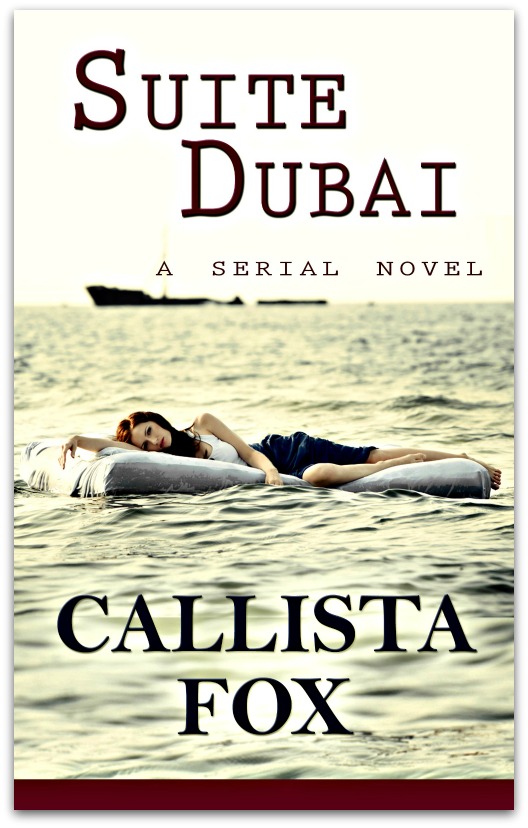
SuiteDubai-cover_dropshadowSuite Dubai (April 2013)
Author: Callista Fox
Genre: “New adult” lit
Synopsis: As Callista tells it, the book grew out of a story that entered her head that wouldn’t go away: “There was this girl, young, vulnerable, naive, walking along a concourse in an airport, among men in white robes and checkered scarves and woman in black gauzy material. Where was she going? What would happen to her there?”
Expat credentials: Fox moved to Saudi Arabia when she was eight and lived there off and on until turning 19. She went to boarding schools in Cyprus and Austria. Now back in the United States, she thinks of herself as an adult Third Culture Kid, or TCK.
How we heard about: Noticing our fondness for serial fiction (see Kate Allison’s book below), Fox sent us a note saying she’d written a serial novel reflecting her experience of growing up in the Middle East. We responded by asking if we could publish her series in even smaller parts. Part 1 and Part 2 have already gone up, and there are six more parts to come in 2014. Warning: Highly addictive!
Libby'sLifeTakingFlight_coverLibby’s Life: Taking Flight (April 2013)
Author: Kate Allison
Genre: Women’s fiction
Synopsis: 30-something Libby Patrick is just regaining some post-baby control over her life when a change in husband’s job means they must move from their English home to Woodhaven, a town in rural Massachusetts. The book is Libby’s journal covering the first year of her life as trailing spouse.
Expat credentials: Born and raised in Britain, Kate has lived in the United States with her family for almost two decades.
How we heard about: We were the first to know! Kate is a founding member of the Displaced Nation and has been publishing regular episodes of Libby’s Life (on which the book is based) since the blog began. She has accrued countless fans, the most faithful of whom is Janice. (Libby to Janice: xoxo for your support in 2013!)

APlaceintheWorld_coverA Place in the World (March 2013)
Author: Cinda Crabbe MacKinnon
Genre: Romance
Synopsis: Third Culture Kid Alicia meets a young Colombian man at college in the United States. She follows him to Bogotá and the pair end up marrying and settling on his family’s remote coffee finca (farm) in the Andes. Educated as a biologist, Alicia revels in the surrounding cloud-forest. But then her idyllic life starts to unravel…
Expat credentials: Crabbe MacKinnon grew up in several countries as a military brat and diplomatic kid and, though she has since repatriated to the United States, still thinks of Latin America as home.
How we heard about: Crabbe MacKinnon commented on one of Elizabeth Liang’s “TCK Talent” posts and ended up becoming October’s featured author. Read the interview. We love her and her work, and are sure you will, too!
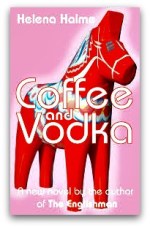
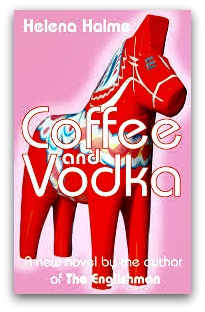
CoffeeandVodka_coverCoffee and Vodka (March 2013)
Author: Helena Halme
Genre: Women’s fiction
Synopsis: A Finnish family emigrate to Sweden in the 1970s and find themselves in turmoil, caused partly by the displacement, but also by the cracks in family dynamics. At its heart, the book reveals what it is like for a young girl to be uprooted and transplanted to a country where she doesn’t speak the language and is despised for her nationality.
Expat credentials: Halme grew up in Tampere, central Finland, and moved to Britain at the age of 22 via Stockholm and Helsinki, after marrying “The Englishman” (how she always refers to him on her blog, Helena’s London Life). She spent her first ten years in Britain working as journalist and translator for the BBC. She and The Englishman now live in North London.
How we heard about: Halme is a big favorite of ours! She was one of our earliest Random Nomads as well as serving as an expat style icon back in the days when we covered fashion. More recently, Kate Allison reviewed Halme’s first book: The Englishman: Can Love Go the Distance?, and we did a giveaway of Coffee and Vodka. And that’s not all: Halme’s latest book, The Red King of Helsinki, received an “Alice” Award in July. (As noted then, the Alices could hardly ignore a book of that title!)

MonkeyLoveAndMurder_dropshadowMonkey Love and Murder (February 2013)
Author: Edith McClinton
Genre: Adventure mystery
Synopsis: A jungle environment in Suriname (spider monkeys and all) is the setting for a closed-door mystery surrounding the death of the renowned director of the International Wildlife Conservation followed by the machete murder of one of the researchers. None of this bodes well for poor Emma Parks, who has joined the research project on a whim. (So much for that budding primatologist career!)
Expat credentials: MacClintock volunteered for the Peace Corps in Suriname for two years, and joined a monkey research project afterwards.
How we heard about: One of our Random Nomads, Patricia Winton, referred us to the now-defunct blog Novel Adventurers, where Edith was one of the writers. We invited her to guest blog for us about the muses behind her monkey mystery.

ArchangelofMercy_dropshadowArchangel of Mercy (Berkley – Penguin Group, December 2012)
Author: Christina Ashcroft
Genre: Paranormal romance
Synopsis: The first storyline in Ashcroft’s new series focusing on a group of angels and archangels and the lives of the people they come in contact with every day.
Expat credentials: Ashcroft is an expat Brit who now lives in Western Australia with her high school sweetheart and their three children.
How we heard about it: We encountered Christina online and asked her to be one of our Random Nomads for a Valentine’s Day special. In that interview, she said she attributes her success as a writer at least in part to her expat status: “I’ve often wondered whether my career would have followed the same route if we’d stayed in the UK. While I’ve always loved writing it wasn’t until we moved to Australia that I decided to to write with the aim of publication.”
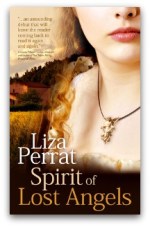
SpiritofLostAngels_dropshadowSpirit of Lost Angels (May 2012)
Author: Liza Perrat
Genre: Historical novel
Synopsis: Set against a backdrop of rural France during the French Revolution, the story centers on Victoire Charpentier, a young peasant woman whose mother was executed for witchcraft and who herself suffers abuse at the hands of a nobleman. Can she muster the bravery and skill to join the revolutionary force gripping France, and overthrow the corrupt aristocracy?
Expat credentials: Liza grew up in Wollongong, Australia, where she worked as a general nurse and midwife for fifteen years. When she met her French husband on a Bangkok bus, she moved to France, where she has been living with her husband and three children for twenty years.
How we heard about: The redoubtable JJ Marsh (see below) interviewed Perrat on writing a location to life, for her monthly column, “Location, Locution.”

BehindClosedDoors_dropshadowBehind Closed Doors (June 2012)
Author: JJ Marsh
Genre: Crime mixed with literary fiction
Synopsis: A smart, technologically sophisticated mystery set in Zürich and surrounding countries, featuring a bipolar detective named Beatrice Stubbs, and quite a few surprises… NOTE: JJ Marsh was listed in the Guardian “readers’ recommended self-published authors” this year, for Behind Closed Doors.
Expat credentials: JJ Marsh grew up in Wales, Africa and the Middle East, where her curiosity for culture took root and triggered an urge to write. After living in Hong Kong, Nigeria, Dubai, Portugal and France, she has finally settled in Switzerland.
How we heard about: We owe displaced author Helena Halme (see above) a king’s ransom for telling us about JJ, who since April has been contributing a monthly “Location, Locution” column. Don’t miss her posts under any circumstances! Highly stimulating and cerebral.
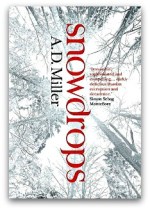
snowdrops_dropshadowSnowdrops (Anchor/Random House, February 2011)
Author: AD Miller
Genre: Literary fiction
Synopsis: Lawyer Nick Platt trades his dull British life for pushing paper in Moscow at the turn of the 21st century. He is soon seduced by a culture he fancies himself above. Snowdrops was shortlisted for the Man Booker Prize in 2011.
Expat credentials: British born and educated at Cambridge and Princeton, Andrew Miller joined The Economist and was appointed, in 2004, to become their Moscow correspondent. He covered, among other things, the Orange Revolution in the Ukraine.
How we heard about: JJ Marsh interviewed AD this past July about bringing foreign locations to life in fiction.
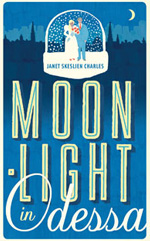
odessa_brit_cover_smallMoonlight in Odessa (Bloomsbury, August 2010)
Author: Janet Skeslien Charles
Genre: Women’s fiction
Synopsis: With an engineering degree and perfect English, Daria longs for a life beyond Odessa, Ukraine. And then she moonlights for a dating agency that facilitates hasty, long-distance matches between lustful American men and impoverished Ukrainian women. Her big chance?
Expat credentials: Skeslien Charles went to Odessa, Ukraine, as a Soros Fellow, living through blackouts, heatless winters, corruption and so on. She stayed for two years before returning to the U.S. Then she found a job in France and met her husband. She now lives in Paris but leads a multicultural life. As she puts it: “The novel is set in Odessa, Ukraine. My agent is English. My editor’s assistant is Japanese-Danish, my copy editor is from New Zealand. I’m American. The book was written in France and typeset in Scotland. My first fan letter came from a Swede.”
How we heard about: JJ Marsh picked Skeslien Charles’s brain on “location, locution”, in her November column.

Memoirs

AddictedtoLove_cover_dropshadowAddicted to Love (April 2013)
Author: Lana Penrose
Synopsis: Penrose is the kind of Australian who throws herself wholeheartedly into adventure, which is why her years spend living in Europe have merited not one but three memoirs! This one is the third. In the first memoir (published by Penguin/Viking), To Hellas and Back, she marries the love of her life, an Australian Greek, and accompanies him back to Greece, only to find him becoming increasingly Greek and herself increasingly isolated. In the second, Kickstart My Heart, she moves to London, single and desperate to find love again. And in this third memoir, she returns to Greece, where she encounters a seemingly perfect man named Adonis. (Hey, she never gives up!)
Expat credentials: From Sydney originally (she is back there now), Penrose lived in Athens for five years before moving to London.
How we heard about it: We happened across Penrose online and asked her to guest-post for us a year ago on what it was like to spend Christmas in Greece. At that time, we also did a giveaway of her first memoir. We invited her back this past April to write about Addicted to Love.

MagicCarpetSeduction_cover_pmMagic Carpet Seduction: Travel Tales Off the Beaten Path (May 2013)
Author: Lisa Egle
Synopsis: Travel with the author to China, Latin America, Turkey and the Middle East, and watch while she takes risks off the beaten path, and dances with strangers in strange lands…
Expat credentials: Egle characterizes herself as a lover of offbeat travel. She’s been to 36 countries on five continents and has been an expat twice: in Ecuador for a year and half, and in Spain for a year.
How we heard about: We got to know Egle first through her blog, Chicky Bus, and when we heard she’d put out a book, asked her to be one of our featured authors. Read the interview.

Pilgrimage-Cover_pmRunning the Shikoku Pilgrimage: 900 Miles to Enlightenment (Volcano Press, January 2013)
Author: Amy Chavez
Synopsis: After losing her job at a Japanese university, Chavez undertakes a solo journey running Japan’s 900-mile Buddhist pilgrimage, a distance equal to running from San Diego, California to Oregon. A Buddhist priest who is also a friend gives her “cosmic tools” to take with her.
Expat credentials: American expat Amy Chavez has been a columnist for Japan’s oldest English-language newspaper, The Japan Times, since 1997. She lives with her husband and cat on Shiraishi Island in Japan’s Seto Inland Sea.
How we heard about: We interviewed Chavez about her pilgrimage, and what it took to write the book, in April.

Don'tNeedtheWholeDog_dropshadowDon’t Need the Whole Dog! (December 2012)
Author: Tony James Slater
Synopsis: In the summer of 2004, Slater went to Ecuador, thinking that the experience would turn him into a man. He went back to his native England fueled by a burning desire to do something that mattered—and, ideally, to get the heck out of England in the process. He dreamed of going to Thailand and becoming a professional diver. This is the story of what happened next.
Expat credentials: A Brit, Slater now lives in Perth, Australia, with his Australian wife.
How we heard about: Slater made himself known to us for failing to include his first book, The Bear That Ate My Pants: Adventures of a Real Idiot Abroad, about his time volunteering at an animal shelter in Ecuador, in our 2011 holiday round-up. He probably should have left well enough alone, though, as next thing he knew, we had him writing for the Displaced Nation. His post on the world’s best parties remains one of our most popular!

TruckinginEnglish-dropshadowTrucking in English (December 2012)
Author: Carolyn Steele
Synopsis: This is the tale of what happens when a middle-aged mum from England decides to actually drive 18-wheelers across North America instead of just dreaming about it. Nothing goes well, but that’s why there’s a book.
Expat credentials: Born and bred in London, Carolyn and her son are now Canadian citizens and live permanently in Kitchener, Ontario.
How we heard about: One of our featured authors in 2012, Martin Crosbie, sent Steele our way, and Kate Allison reviewed her book in March. Steele later contributed an amusing post to our “New vs Olde World” series, about the difficulties of mastering the Canadian “R”.
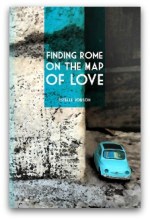
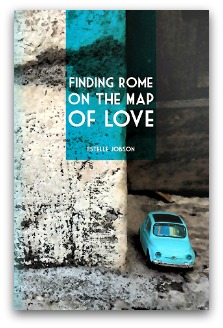
Finding-Rome-on-the-Map-of-Love_dropshadowFinding Rome on the Map of Love (September 2012)
Author: Estelle Jobson
Synopsis: When her Italian diplomat boyfriend gets posted to Rome, Jobson throws up her career in publishing in her native South Africa to accompany him. There, she reinvents herself as Signora Stella, a casalinga (housewife). The book captures a year’s worth of quirky observations about life amongst the Italians.
Expat credentials: Originally from South Africa, Jobson now lives in Geneva, where she works as a writer and editor.
How we heard about: Jobson was our featured author in February. Her book and sense of humor are terrific!
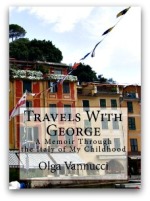
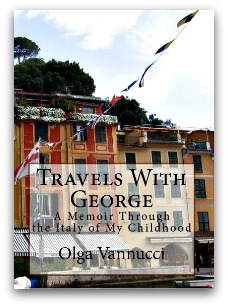
Travels with George Book CoverTravels with George: A Memoir Through the Italy of My Childhood (April 2012)
Author: Olga Vannucci
Synopsis: In five separate trips to Italy with her young son, George, in tow, Vannucci strolls and hikes through the landscapes of her Italian childhood. She looks at Italy both as local native and awed visitor.
Expat credentials: Born in Italy, Vannucci lived in Brazil and came to the United States to attend Brown University. She lives in rural New Jersey with her son.
How we heard about: Vannucci was our featured author in September. Read the interview. We loved this quote from her son: “Where are we going? How much longer? I have something in my shoe. I want to go back. Why are we doing this? Do you know where we are? Do you know where we’re going? Mammaaaaaaa!”
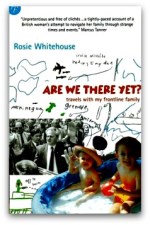
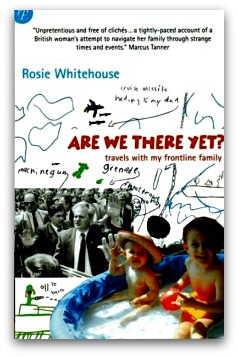
AreWeThereYet_cover_dropshadowAre We There Yet? Travels with My Frontline Family (May 2009)
Author: Rosie Whitehouse
Synopsis: A vivid, funny, and very human account of the author’s travels with her family through war-torn Europe.
Expat credentials: Whitehouse spent five years as a housewife in the war-torn Balkans married to a correspondent of The Economist, caring for their growing family.
How we heard about: We happened across Whitehouse’s work online and asked her to be a featured author last summer. Read the interview. She’s absolutely fascinating, as one might expect of the kind of woman who trails her spouse into a war zone.

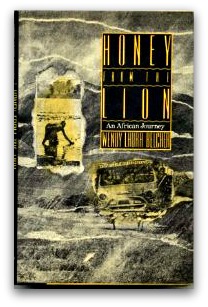
HoneyfromtheLion_coverHoney from the Lion: An African Journey (Dutton Adult, 1988)
Author: Wendy Laura Belcher
Synopsis: Brought up in Africa, Belcher returned to Ghana in the early 1980s to work with a “national linguistic group” that is spreading literary into rural areas by translating the Bible into native languages. A coming-of-age story that was called “lyrical” by the New York Times when first issued.
Expat credentials: An adult Third Culture Kid, Belcher grew up in East and West Africa, where she became fascinated with the richness of Ghanaian and Ethiopian intellectual traditions. She is now an assistant professor of African literature at Princeton.
How we heard about: Elizabeth Liang interviewed Belcher for her TCK Talent series.

Handbooks & Guidebooks

cathy_feign_coverKeep Your Life, Family and Career Intact While Living Abroad, 3rd Ed. (Stvdio Media, September 2013)
Author: Cathy Tsang-Feign
Synopsis: A survival manual for those who are living abroad, with real-life examples and easy-to-understand explanations about the unique issues faced by expats: from preparing to move, to daily life overseas, to returning home.
Expat credentials: Tsang-Feign is an American psychologist who lives in Hong Kong, specializing in expat psychology and adjustment issues. She has also lived in London.
How we heard about: When Kate Allison learned about the book, she decided it merited one of our “Alice” awards for the understanding displayed of the “through the looking glass” complex.
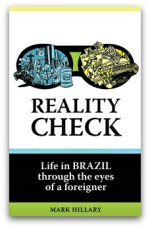
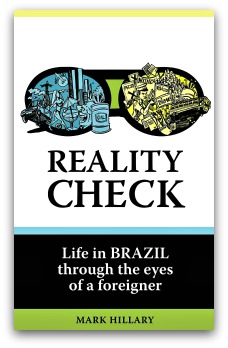
realitycheck_bookcoverReality Check: Life in Brazil through the eyes of a foreigner (September 2013)
Author: Mark Hillary
Synopsis: Targeted at those who plan on living, working or just visiting Brazil, it covers issues such as the difficulties of finding new friends, using a new language, and finding a job. Also provided is some background on the fast-changing society in Brazil that resulted in extensive street protests during 2013.
Expat credentials: Hillary is a British writer who moved to Brazil in 2010, bought a home, started a company, and has experienced both difficulties and joys.
How we heard about it: Andy Martin, another Brit in Brazil and a writer for the Displaced Nation in 2013, is a friend of Hillary’s and was jealous he’d produced a book that is not only a practical guide but also provides much of the cultural backdrop an international resident needs for a country as complex as Brazil. The next best thing, Martin thought, would be to do an interview with Hillary, which he delivered in two parts. Read Part 1 and Part 2.

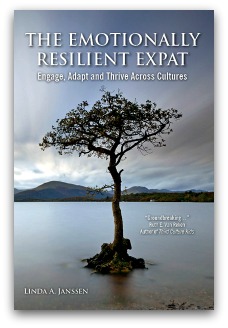
TERE_cover_dropshadowThe Emotionally Resilient Expat: Engage, Adapt and Thrive Across Cultures (Summertime, July 2013)
Author: Linda A. Janssen
Synopsis: A guide for those facing the challenge of cross-cultural living, with candid personal stories from experienced expats and cross-culturals, and a wealth of practical tools, techniques and best practices for developing the emotional resilience for ensuring a successful transition.
Expat credentials: Janssen lived for several years in the Netherlands while her husband, an adult TCK, worked in the Hague. She recently repatriated to the United States.
How we heard about: We’ve had many satisfying interactions with Janssen since starting the Displaced Nation and were thrilled to hear about her new book—a natural for one of this year’s “Alice” awards, particularly as Janssen has been running a popular blog called Adventures in Expatland.

AmericanExbratinSaoPaulo_cover_pmAn American Exbrat in São Paulo: Advice, Stories, Tips and Tricks for Surviving South America’s Largest City (May 2013)
Author: Maggie Foxhole (Megan Farrell)
Synopsis: Aimed at those who are moving or traveling to São Paulo, it is designed to be a companion on the journey through the ups and down, ins and outs, and the curious roundabouts of life in that city.
Expat credentials: Megan/Maggie moved to Brazil with her Brazilian husband and their daughter. She keeps a blog: Born Again Brazilian.
How we heard about: Farrell/Foxhole was one of our early Random Nomads. She kept in touch and we were very pleased to learn about her book, which ML Awanohara read and admired for its comprehensiveness. Andy Martin, a Brit who also lives in São Paulo with a Brazilian spouse, reviewed the book for our site this past July.

101reasons_dropshadow101 Reasons to Live Abroad and 100 Reasons Not to (March 2013)
Author: Chris Alden
Synopsis: Targeted at the wannabe expat, the aim is to help you discover if living abroad is right for you. It’s an uplifting guide to the positive sides of life as an expatriate and a reality check about the challenges that relocation brings.
Expat credentials: A professional writer, Alden lived for three years in a beautiful village in the Troodos foothills of Cyprus, which resulted in his first travel guidebook: 250 Things to Do in Cyprus on a Sunny Day.
How we heard about: Alden was the recipient of one our “Alice” awards for this book. We were impressed that he offered a final, 101st reason to live abroad for those of us who, having been offered as many as a hundred reasons both for and against, still find ourselves dithering…
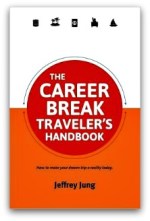
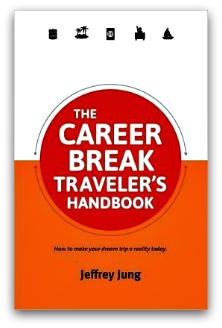
career-break-travelers-handbook_dropshadowThe Career Break Traveler’s Handbook (September 2012)
Author: Jeffrey Jung
Synopsis: Intended to inspire people to go for it and take the break they’ve been seeking from their jobs and go travel, with tips and tricks Jung learned from his own and other career breakers’ experiences.
Expat credentials: Having left the corporate ladder, Jung now lives in Colombia, where he founded his own business to help others do the same: CareerBreakSecrets.com.
How we heard about: Jung was one of our Random Nomads. He let us know about his book, and we reviewed it this past February. Not that he needed our help—it also got a shout-out in Forbes!
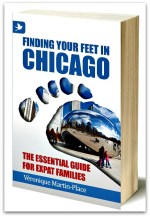
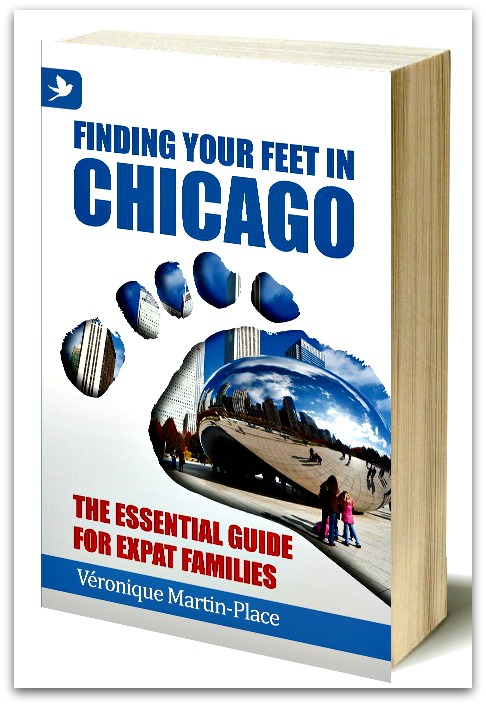
finding-your-feet-in-chicago-3D-Book CoverFinding Your Feet in Chicago: The Essential Guide for Expat Families (Summertime Publishing, August 2012)
Author: Véronique Martin-Place
Synopsis: A down-to-earth pocket guide to help expats settle into the USA’s third largest city with their families.
Expat credentials: As the wife of a French diplomat (they have two daughters), Martin-Place is accustomed to moving around the world. Chicago was one of her more enjoyable stops, but she also enjoyed Sri Lanka(!). The family is now in Shanghai.
How we heard about: ML Awanohara had interviewed Martin-Place on her blog, Seeing the Elephant. She had fun interviewing her again, this time about the process of composing a guidebook.

Cookbook

FromtheGlobalScottishKitchen_cover_tdnFrom the Global Scottish Kitchen (Self-published, November 2012)
Author: Sharon Lorimer
Genre: Cooking
Synopsis: Recipes based on Scottish cuisine but influenced by the restaurants and other kinds of cuisines Lorimer has experienced as an expat: e.g., Cock a’ Leekie Udon!
Expat credentials: Born in Scotland, Lorimer now lives in New York City and is married to an Asian American.
How we heard about it: We interviewed Lorimer about her decision to start up Doshebu, a business providing training to company employees being sent abroad on the “art” of being an expat.

* * *

Questions: Have you read any of the above works and if so, what did you think of them? And can you suggest other works to add to the list? My colleagues and I look forward to reading your comments below!

STAY TUNED for some upcoming posts, though we’ll be taking a bit of a break over the holidays!

If you enjoyed this post, we invite you to subscribe to The Displaced Dispatch, a weekly round up of posts from The Displaced Nation, plus some extras such as seasonal recipes and occasional book giveaways. Sign up for The Displaced Dispatch by clicking here!

Related posts:

Never fear, Santa McNabb is here, with a sack full of Middle Eastern spy thrillers!

Alexander_McNabb_santa

Expat author Alexander McNabb (his own photo)

I’ve always thought of international creative Alexander McNabb as a person who wears many hats, including (but hardly limited to) those of software package salesman, magazine publisher, journalist, radio commentator, literary conference chair, digital communications strategist, and writer of international thrillers. Wait, I almost forgot: talented chef. (In fact, I first discovered him through his now-defunct collective foodie blog, The Fat Expat. Note: The recipes are still available.)

And to this lengthy list I must now add a fur-trimmed Santa hat.* As faithful readers may recall, Alexander visited the Displaced Nation around this time last year, bearing gifts consisting of his first two Middle Eastern spy thrillers: Olives: A Violent Romance and Beirut: An Explosive Thriller.

And here we are again, mid-December, and there he is trudging towards us with a huge sack full of shiny new toys, consisting of the third and final book in what he has branded as his Levant Cycle: Shemlan: A Deadly Tragedy.

What is more, he’ll be GIVING AWAY ONE COPY to the reader who makes the best comment below, as well as DISCOUNTING ALL THREE BOOKS on December 21 and 22 (code available only to Dispatch subscribers).

Readers, I have just finished reading Shemlan, and I can heartily endorse it as a PERFECT READ for the holidays: well written, well paced, and as one of his readers put it in her Amazon review “so very le Carré.” And if you’re a person who loves international travel, you will find yourself learning quite a lot about a part of the world that for many remains a black box.

But enough of the hype. The time has come to welcome the Wise Man and let him do the honors of presenting his latest offerings.

* Alexander, if you don’t like what I’ve done to this photo, I’ll remove the beard, but the hat stays!

* * *

McNabb Giveaway CollageTwo olives, and some extra-dry wit

Hello again, Alexander. First I want to congratulate you on producing three thrillers on the Middle East in relatively rapid succession: Olives, Beirut and now Shemlan. When you first started writing Olives, did you have any idea that two more books would follow?
No idea at all.

Can you remind us of the Olives plot?
Olives centers on a character called Paul Stokes, a young British journalist who travels to Jordan to work on a contract magazine project for the Jordanian Ministry of Natural Resources, which is working on privatizing Jordan’s water network. He falls in love with Aisha, his “minder” from the Ministry. Her brother is bidding against the British for the privatization. Gerald Lynch, a British Secret Intelligence Service officer, turns up and blackmails Paul into spying on Aisha’s family.

As I began to envision a second book, I had in mind a sort of interlinear gloss to Olives, which I was going to call (don’t ask me why!) The Olive Line, showing Lynch’s side of the story. In Olives we always see Lynch through Paul’s very jaded eye (rarely do we like those blackmailing us), while there is a whole other story in there of Lynch negotiating with the Israelis and Jordanian intelligence and figuring out how all three intelligence agencies with vested interests in the water resource issue (the Israeli, British and Jordanians) can work on this together.

But then Beirut happened, almost by accident. All my books have started with dreams, which is sort of cool.

Hmmm… I rather like the idea of The Olive Line.
I’m messing around with a screenplay of Olives, which incorporates some of that material, but it’s on the back burner ‘cos I’ve started writing another book. I can’t stop, it’s like a bad habit.

Somehow that doesn’t surprise me! So tell me: has writing three books based around the Middle East, where you’ve lived for 25 years, helped you to process your own experiences in the region, or is it complete escapism?
I’m sure a lot of my experiences have filtered in there in one way or another, but it’s really about escapism. I’ve stolen people, situations, scenery and feelings of course. It’s true that writing makes thieves of us. But I’ve never been shot at or killed any Albanian hookers, let alone slept with gorgeous madams from Rue Monot [a nightlife street in Beirut]. The world is probably a safer place now I’ve got all that stuff out of my system, but there’s more in there pounding on the gates to get out.

Yes, I can definitely sense that writing has brought out your suppressed desires, especially when it comes to the character of Gerald Lynch, that gritty British spy who appears in all three books and has some definite Bond-like traits. For example, he appears to enjoy women, food and drink, and never meets a firearm he doesn’t excel at using.
Bond? Nah. My British spy in Olives was originally a Terry-Thomas kind of character called Nigel Soames, a sort of gingery spook. He’s got a cameo in Shemlan. This character wasn’t working for me, and I had a business meeting with a big Irish businessman from a rural background in Dubai called Gerald who, during the meeting, uttered the immortal line: “I don’t like being called Gerry. I’ve been twenty years escaping Gerry blablabla” (I can’t tell you his surname). I left the meeting punching the air—Gerald Lynch had just come into being. He’s the anti-Bond. He never uses gadgets, and his idea of sophistication is a servee [shared taxi] and a beer in a shady bar… And he has got SUCH a big authority problem…

401px-James_Nesbitt_July_2008

James Nesbitt. Photo credit: Richard Redshaw, Wikimedia Commons.

You said you’re writing a screenplay for Olives: have you got anyone in mind to play Lynch?
I played a game of “Which film stars would play your protagonists?” with some writer friends a couple of years ago and it was then I realized the only person who could play Lynch would be Irish actor James Nesbitt. Nesbitt is very good at portraying the dark, violent side of characters, and since we played that damn game, he and Lynch have morphed.

Gold, frankincense—and now myrhh

Moving on to Shemlan, which I’ve just finished and very much enjoyed: did you find it any easier to write than the other two books? Did you learn things that you were able to apply?
Oh, yes, you learn. When Olives was published, I was forced to come to the realization that not only was there a third person suddenly involved with my relationship with my books, but that I wasn’t actually welcome in the room anymore!

It’s about you—the reader—and the book, if it works, should never reveal any mark of my passing. It’s like hotel rooms. Every day someone is living in that room, frequently someone new each day—but you never, ever want to see any trace of the others. That hair in the bath, that stain on the sheets. Revolting. Books are the same deal—if you ever catch sight of me, I’ve failed—and you’ve been rudely yanked out of the misty springtime mountainside above Beirut back to wherever you are sitting and wanting not to be…

I’ve been amazed at how much people question books as well—I’d never been conscious of it myself, despite being a lifelong bookworm—but people ask me questions like “Why did Lynch do this?” or “How did Paul do that?” or “Why did you kill so and so?” and you realize they have immersed themselves, invested of themselves, in the world you made up. That’s pretty humbling, to tell the truth.

I’ve also learned loads from my editors. You get to come to terms with your quirks and bad habits and eradicate them. I have a list of lazy words and silly phrases I use too much and I do a search for them and find better ways of putting it.

Let’s talk about Shemlan the place, “a Christian village in a Druze area” as you explain in the book. Can you translate that for the uninitiated?
Shemlan is a village in the Chouf mountains above Beirut. Like many other villages in this area, it is inhabited by Druze families, which is a form of Islam that diverged from the mainstream centuries ago, but also Christian families and perhaps Sunni Muslims. Lebanon is a patchwork of faiths and sectarianism is really part of the national DNA—to the point where even the roles of the national leadership are assigned on sectarian lines.

Why did you name the novel after that place?
Purely because the Middle East Centre for Arab Studies (MECAS) was there—the “British spy school.” It really existed! (I was originally going to call the book “Hartmoor”, but heard of Sarah Ferguson’s plan to release a novel of that name and thought I’d be best getting out of her way.) It’s also the only one of the three novels with decent search engine results built in—I own “Shemlan” on Amazon, for instance, when you search for it. Crespo owns “olives”—I’ll never forgive them for it!

In the latter part of the book, we travel with Lynch to Estonia.
Estonia sort of just happened because of the man Lynch is chasing: Dmitri, a Russian military intelligence operative turned modern-day hood. I made him Estonian, and then I went there on holiday and fell in love, love, love. Tallinn is magnificent, fun, sexy and gloriously historic.

A window on the Middle East

The events you portray in Shemlan are extremely violent. The Middle East is of course known for its violence, and it’s said that all major Western empires have become unraveled there. Why do you think the area brings out the worst in everyone so to speak?
It’s Lebanon’s tragedy to possess remarkable beauty and wealth and constantly squander both. The wealth is agricultural as well as creative and intellectual. I think it’s the washing up of the world’s revealed religions, the clash of interests over resources such as water and, of course, the thorny issue of Israel (and the side effects of America’s involvement in that country and the region as a whole). Add corrupt, lazy governance, some good old-fashioned despotism and a legacy of home-made post-colonial lines slashed on a map and you’ve got yourself a nice potboiler! I’m amazed I seem to be one of very few people setting novels in an area as fascinating, complex and just plain screwed up, to be honest!

Your readers who are based in the Middle East, including some natives, have praised your novels for getting the political details right. Did you do a lot of research?
There’s a lot of research there, but not so much into the politics, which is something that’s just a part of everyday life and conversation in these parts, but certainly into whizzbangs [firearms]. The water crisis that drives Olives is very real, for instance—as are the Oka missile warheads in Beirut—the Soviets actually “lost” 180-odd of the blasted things—and so is MECAS (the “spy school” in Shemlan). You can land a helicopter with no engine, kill someone using champagne and drive a two-tonne truck across the Baltic Sea—all of these are true and the result of quite a bit of research. I do try hard not to let that show too much—I’ve always hated books where the hero hefts his 8.2 calibre Poon and Nargle semi-automatic gas-powered carbine with the double hefted shoulder randomizers—you know, where the research is paraded with a pub bore’s infinite, dreary precision.

Leaving aside the whizzbangs for a moment (I’m way out of my depth), I’d like to move on to the love affair between the British diplomat, Jason Hartmoor, and a Lebanese woman from Shemlan, Mai. When Jason leaves Beirut because of the Civil War, he also leaves Mai, to his everlasting regret. He writes her letters, in which he pours out his heart out, including all his work frustrations. Believable?
There are two romances in the books, that between Paul and Aisha and then that between Jason and Mai. In Jason’s case, it’s as much about frustration with his subsequent marriage to a fellow Brit, Lesley, which is just horrible. And it’s about his yearning, his sense of loss at having left Beirut and being in the situation where he can’t go back. Mai understands him, is sympathetic and an intelligent correspondent who is easy to talk to, where Jason’s own wife is contemptuous of him. But —of course—as we find out, things are never quite as simple as they seem…

Words to the wise on self-publishing

I noticed on your blog that you decided to end your relationship with your agent because of his feedback on this book (or the lack). Can you say a little more about that?
He didn’t feel he could “shop” the book to publishers and I thought that was pretty useless. I mean, not even trying. What’s the point of having an agent who basically says he can’t be bothered to try and sell your book? If he doesn’t feel he can sell a thriller set in the Middle East, then we’re never really going to get on, are we?

I know you worked in editing. What is your editorial process?
I always do a number of edits, both by myself and in response to beta readers and then, of course, it goes for professional editing. In the case of Shemlan, Gary Smailes at Bubblecow did the edit and a fine job he did, too. He also cut 30,000 words from the manuscript, which left some reconstruction work to do, but he had made a valid structural point and I accepted that yes, I had to rebuild the West Wing if the house was going to work. My best beta reader (now everyone else is going to hate me) is a chap called Bob Studholme, who is actually an English lecturer in a university here. He’s very good at “yep, that works; nope, that doesn’t gel” feedback, which is what you really want. And Katie Stine proofread the edited MS and found no less than 230 flubs still in there. She’s a fantastic proofreader. And, yes, it takes all that to polish a manuscript if you’re going to take publishing seriously!

Now that you’ve finished The Levant Cycle, what’s next? And can we look forward to your return here next December?
I’ve just started on a new book that’s set in the UK, about a woman who can’t remember what happened to her when she was working as a teacher in Iraq (that might change to Southern Lebanon). She comes back to the UK to teach here in an institute for talented kids and finds her life starts to unravel as the amnesia fades. Her friend is a journalist who sets out to find out what happened to her before she loses her mind completely. I might junk it after a few chapters and move on to something else, but that’s the current plan and I’m enjoying writing it so far!

10 Questions for Alexander McNabb

Finally, I’d like to ask a series of questions that I’ve asked some of our other featured authors, about your reading and writing habits:
1. Last truly great book you read: I’ve just finished re-reading The True Deceiver, by Tove Jansson. Oh me oh my but that book is glorious. Stark, brooding and oppressive—but glorious!
2. Favorite literary genre: I don’t really have one. I’ll read almost anything – except dystopian paranormal chick lit with vampires. I avoid that.
3. Reading habits on a plane: I tend to watch films on the plane and never at any other time. 99% of my reading now is on my Kindle.
4. The one book you’d require PM Cameron to read, and why: Ulysses by James Joyce. Because it would cause him great pain and therefore gladden me.
5. Favorite books as a child: Oh dear. Confesses. I loved Enid Blyton‘s Famous Five books. By the time I was eight I’d moved on to The Bridge over The River Kwai. I was a terrible bookworm. I once got a detention for reading Scottish author Alister Maclean‘s The Way to Dusty Death during an English class. It had a lurid cover and I hadn’t even bothered to cover it in brown paper. I recently re-read the book, incidentally, and was angered at how utterly crap it was. Awful, awful stuff. Proper shocked at just how bad a piece of writing had become a big bestseller back then.
6. Favorite heroine/hero: I always liked Smilla in the Danish novel Miss Smilla’s Feeling for Snow, and Kristen Scott Thomas in the film version of The English Patient… For heroes: Bertie Wooster.
7. The writer, alive or dead, you’d most like to meet: Lawrence Durrell. He was an atrocious human but a writer of genius. And an expat, though he preferred to be thought of as cosmopolitan.
8. Your reading habits: Kindle all the way. Capricious. I’ll read a good book anywhere. Waiting rooms, toilets, bed, hanging upside down from a tree, I don’t care.
9. The book you’d most like to see made as a film: Olives, without a doubt! As mentioned, I’m working on it…
10. The book you plan to read next: There are several lined up on my Kindle and it could be any one of them—or something I stumble across on Amazon. That’s the wonderful thing about Kindles—the next book is just a click away!

* * *

Thanks so much, Santa McNabb. Does anyone have any COMMENTS for this right jolly old elf? Hurry, before these special offers go up the chimney! The winner of Shemlan (for best comment) will be announced in our January 3rd Displaced Dispatch. And the CODE FOR ALL THREE BOOKS will be in the Dispatch published this weekend, on Saturday the 21st, GOOD FOR JUST TWO DAYS: DEC 21 & 22!!!

STAY TUNED for tomorrow’s post, some last-minute suggestions for expat and international travel e-books to buy for the holidays, including, of course, this one!

If you enjoyed this post, we invite you to register for The Displaced Dispatch, a round up of weekly posts from The Displaced Nation, with seasonal recipes, book giveaways and other extras. Register for The Displaced Dispatch by clicking here!

Related posts:

LOCATION, LOCUTION: Jeet Thayil on bringing location to life in a semi-dream state

Jeet Thayil

Clockwise from top: author photo Jeet Thayil; book cover art “Narcopolis”; author photo JJ Marsh

In this month’s “Location, Locution”, expat crime writer JJ Marsh interviews Jeet Thayil, author of  Narcopolis.

Jeet Thayil was born in Kerala, India, in 1959 and educated in Hong Kong, New York and Bombay. He is a performance poet, songwriter, librettist and guitarist, and has published four collections of poetry: These Errors Are Correct (Tranquebar, 2008), English (2004, Penguin India, Rattapallax Press, New York, 2004), Apocalypso (Ark, 1997) and Gemini (Viking Penguin, 1992). He is also the editor of The Bloodaxe Book of Contemporary Indian Poets (2008). His first novel, Narcopolis (Faber & Faber, 2012), won the DSC Prize for South Asian Literature and was shortlisted for the 2012 Man Booker Prize and the Hindu Literary Prize 2013. He currently lives in Berlin.

Which came first, story or location?
I knew Narcopolis would be set in Bombay. I started with that city and that period in mind. It was about telling a story that hadn’t been told before, in a way that Indian fiction doesn’t really tell stories. Unsentimental, brutal and beautiful. When I realised that was what the book would be like, it revealed itself to me.

What’s your technique for evoking the atmosphere of a place?
When I was working on Narcopolis, I would work till very late at night, go to bed, wake up and start on it again, without really thinking. I found that when you’re in that oneiric, half-oneiric state, still slightly in the dream, very interesting things would happen. I’d come up with things I’d never have thought of later in the day. I was astonished about how much I remembered from that time, 25 years earlier, when I had no idea I would write a novel, when I was not exactly in the clearest of mental states. I was also surprised how unhealthy it was, the process of remembering.

A negative experience?
Absolutely. It was the opposite of cathartic.

Which particular features create a sense of location? Landscape, culture, food?
All of those. I’m a big fan of crime fiction, the bloodier the better. I’m addicted to crime thrillers. That, and poetry, is what I read on a daily basis. I’m sure a lot of that atmospheric noir milieu seeped into Narcopolis.

That’s curious. Not a link I would have made. I was going to ask you if you had a guilty reading pleasure, but you obviously don’t feel guilty.
Not at all. I hold those books up proudly on the train.

How well do you need to know the place before using it as a setting?
I’ve set poems in places I’ve never been to, and that can be a huge liberation. I think the worst is to know a place glancingly. To visit a place for a few days, get a false sense of it and then try to write about it. It might even be better to have never been there than read a guide about it.

Because it’s too superficial?
I think so. Either never go there or have been there too long.

Which writers do you admire for the way they use location?
I mentioned my love for crime writers and the way they do exactly that, evoking streets and cities and ambiance. But I’m also tremendously fond of the fiction that’s set in the opposite of cities: William Trevor, Henry James, E.M. Forster. Writers that do evoke a sense of place but often in the most mysterious and indirect of ways.

Next on Location, Locution … JD Smith, author of Tristan and Iseult (12th-century Cornwall) and Overlord: The Rise of Zenobia (3rd-century Syria), to be released in early 2014.

 * * *

JJ Marsh grew up in Wales, Africa and the Middle East, where her curiosity for culture took root and triggered an urge to write. After living in Hong Kong, Nigeria, Dubai, Portugal and France, JJ finally settled in Switzerland, where she is currently halfway through her European crime series, set in compelling locations all over the continent and featuring detective inspector Beatrice Stubbs.

STAY TUNED for tomorrow’s post!

If you enjoyed this post, we invite you to register for The Displaced Dispatch, a round up of weekly posts from The Displaced Nation, with seasonal recipes, book giveaways and other extras. Register for The Displaced Dispatch by clicking here!

Related posts:

And the November 2013 Alices go to … these 5 international creatives

 © Iamezan | Dreamstime.com Used under license

© Iamezan | Dreamstime.com
Used under license

If you are a subscriber to our weekly newsletter, Displaced Dispatch, you’re already in the know. But if you’re not (and why aren’t you? off with your head!), listen up. Every week, when that esteemed publication comes out, we present an “Alice Award” to a writer or other kind of creative person who we think has a special handle on the curious and unreal aspects of being a global resident or voyager. Not only that, but this person tries to use this state of befuddlement to their advantage, as a spur to greater creative heights.

Today’s post honors November’s five Alice recipients.

Starting with the most recent, and this time with annotations, they are (drumroll…):

1) MATT HERSHBERGER, intrepid traveler, former expat in UK, and blogger at A Man Without a Country

For his post: Why I don’t take pictures when I travel, on Matador Network
Published: 18 November 2013
Snippet:

If you’re a good photographer, by all means, keep taking pictures. I need something to fuel my nostalgia addiction when I’m trapped in my cubicle at work. But if you’re not a great photographer, put down the camera. Enjoy the giraffe.

Citation: Matt, as you may know, Charles Lutwidge Dodgson, aka Lewis Carroll, fancied himself as something of a photographer, even toying with the idea of making a living from his photos. But it’s a good thing for posterity that he decided to turn to words instead (while still leaving us with a photo or two of his youthful muse, Alice Liddell). And probably also a good thing that he left off illustrating the book; otherwise, we’d be deprived of the extraordinary drawings of Sir John Tenniel. (That said, Carroll’s own drawings of Alice aren’t half bad.) We suspect that Charles/Lewis would chime in with you and say: “Like me, you moderns should find your niche and stick to it; practice your craft and stop faffing about.” Unfortunately, though, we suspect that even (especially?) Mr. Carroll would be fatally attracted to some of our modern-day gadgetry and communications techniques, the ubiquitous cell phone having turned us all into Victorian tinkerers of a sort, who attempt to do everything from blogging to design to photography to videos without much (if any) training—a case of doing many things badly instead of a few things well. And the presence of social media encourages us to share the rather meager fruits of our labors with everyone else, as though they were works of staggering genius. Still, we unreservedly endorse your “enjoy the giraffe” campaign—so much more creative.

2) Architectural historian JANIE RICE BROTHER, American expat in UK and blogger at FH & FAG

For her post: “The Geffrye Museum and the History of the Almshouse” for the Smitten by Britain blog
Posted on: 22 November 2013
Snippet (after noting that the Geffrye Museum in Shoreditch occupies the building and grounds of a former almshouse, or poorhouse):

The Geffrye is the only museum in the United Kingdom dedicated to the history of the domestic interiors of the urban middle class. . . . [I]t took an excellent collection of buildings—home for many people over the generations—and preserved not only the structures themselves but the fleeting and changing sense of home and its traditions over the years.

Citation:  Janie-Rice, we love the sense of wonder with which you approach this almshouse-turned-museum. It reminds us of Alice’s excitement when showing her black kitten, Kitty, the “little PEEP of the passage in Looking-glass House”:

Oh, Kitty! how nice it would be if we could only get through into Looking-glass House! I’m sure it’s got, oh! such beautiful things in it! Let’s pretend there’s a way of getting through into it, somehow, Kitty.

A Looking-glass House, an almshouse, a museum of houses…whatever floats your (house)boat and spurs your creativity, we heartily approve.

3) JOSH, blogger at Real Life English

For his post: How Your Personality Changes When You Speak in a Foreign Language
Posted on: 16 April 2012
Snippet:

…what happens when you speak a foreign language using the rhythm from your native language? The effect is that even if everything else is perfect, the listener might not understand everything you say because it still seems like you’re speaking a foreign language. The following video demonstrates this concept quite well. In it there are a group of Italians singing in what seems to be English, but if you listen carefully you will realize that they are speaking gibberish. . . .

Citation: Josh, we love the idea of developing another personality when living in another culture. Far too many of us internationals cling to the naive belief that we can go around the world just being ourselves. As you point out, the only way to be yourself is to adopt the rhythms of the other language/culture, which paradoxically entails acting like someone else. And here is where Alice comes in: she tries to use reasoning suited to the above-ground world, only to find that no one understands her, and some even feel quite offended by what she says. (Mind you, it was a tad culturally insensitive of her to mention her cat, Dinah, in front of Mouse, and to go on about Dinah’s hunting skills to the creatures in the Caucus Race.) Gradually it dawns on her that she must adopt Wonderland’s logic of nonsense, even if that means risking becoming someone she doesn’t recognize:

But if I’m not the same, the next question is ‘Who in the world am I?’ Ah, that’s the great puzzle!

International creatives, if you take nothing else from this citation please remember that having an identity crisis is a positive sign. At some point, you will find it an asset to have multiple personalities to draw on.

4) DAWN RUTHERFORD MARCHANT, American expat in London and Quora community member

For her post: US Expat Describes The Best And Worst Things About England (a re-publication of her answer to a Quora question: What is it like to move to England from the United States?)
Posted on: 2 November 2013
Snippet:

Houses are very expensive and you will live in a house half the size you’d expect in the US, often attached to your neighbour and with a one car garage (if you are lucky). There are no basements, so you feel cramped and everything is cluttered—I’ve never seen a walk-in closet to date. You will cram everything into a ‘wardrobe’ the size of your coat closet.

Citation: Dawn, at this point in your narrative, we began to picture you as Alice when, after drinking an unmarked bottle of liquid, grows into a giant with her arms and legs shooting out the windows and doors of the White Rabbit’s house. Perhaps the only consolation is that with one of your arms out the window, you should find it easier to hang the laundry out to dry (another of the bugbears you mention about life in the UK). Further to which, we wouldn’t advise “giving up your arm” for an American washer and dryer. That said, you do have a point about the ironing. It can’t be easy bending an elbow under such conditions! In any event, thank you for painting such a vivid portrait of life in the UK, cramps and all.

4) AISHA ASHRAF, Irish expat in Canada, freelance writer and blogger at Expatlog

For her post: My mother was a nun
Posted on: 7 March 2013
Snippet (pertaining to the times she and her sisters would accompany their mother on visits to her former convent):

Looking back, I see that we were also entering a different culture, an insulated bubble within the larger alien culture of middle England. Like Inception—a dream within a dream. It was all very different from the Irish farm, but it felt like being part of a family, something I came to idealise later on when mine turned out to be so dysfunctional.

Citation: Aisha, leave it to you to bring us to even greater depths by suggesting that expats can find alien worlds within alien worlds, wonderlands within wonderlands, ad infinitum, rather like the mirror reflecting the mirror in Velázquez’s baroque masterpiece, Las Meninas. What’s more, you’ve suggested that a person can come to appreciate the relationships formed within these wonderlands even more than their original relationships with family. If that isn’t going through the looking glass, we’re not sure what is! Thanks for such a cosmic post, from which we’re still reeling (in a good way, of course!).

*  *  *

So, readers, do you have a favorite from the above, or have you read any recent posts you think deserve an Alice Award?  We’d love to hear your suggestions! And don’t miss out on these weekly sources of inspiration. Get on our subscription list now!

STAY TUNED for tomorrow’s post, another installment on blogging from JACK THE HACK.

Writers and other international creatives: If you want to know in advance whether you’re one of our Alice Award winners, sign up to receive The Displaced Dispatch, a round up of weekly posts from The Displaced Nation, with news of book giveaways, future posts, and of course, our weekly Alice Award!. Register for The Displaced Dispatch by clicking here!

Related posts:
An expat’s thoughts on flying and the journey “home”

20131128-020743.jpg

Photo credit: A Windram

This is my third attempt at writing this post. The previous two attempts were quickly aborted; I had tried drafting them during two separate flights back to the UK, but quickly gave up in frustration.

Flying—for me, at least—is not conducive to creativity (if hastily scribbled blog posts can be described as such). I can never settle on a flight, I can never forget that I am 30,000 feet above the earth trapped in a metal tube powered by 36,000 gallons of jet fuel.

But, of course, flying remains an occupational hazard for the expat. No matter how long you may have been away, the call home is at some point unavoidable. After an absence from “home” of nearly three years, over the last few months I’ve had to make two trips back. One for reasons pleasant; one for reasons unpleasant.

Flying, when you think about it, and when I am flying I find I would much rather not think about it (those 36,000 gallons of highly flammable jet fuel remain heavy on my mind), is astonishing. Indeed, it is so astounding that we have to go out of our way to avoid that fact and focus on the banal. The aviation industry is helpful on this point. You wait in a terminal, shitty retail and even shittier food your scant choices to kill time, but it helps numb you, I suppose. Makes you unthinking about the journey ahead, your entry into the heavens.

When I was flying back for more pleasant reasons I began reading French philosopher Michel SerresAngels: A Modern Myth. Serres opens his work with a fictional couple meeting at an airport. He a traveling inspector; she a doctor at the airport medical center. For Serres, the couple see angels when they look around the airport:

I see angels—which, incidentally, in case you didn’t know, comes from the ancient Greek word for messengers. Take a good look around. Air hostess and pilots; radio messages; all the air crew just flown in from Tokyo and just about to leave Rio; those dozen aircraft neatly lined up, wing to wing on the runaway, as they wait to take off; yellow postal vans delivering parcels, packets and telegrams; staff calls over the tannoy; all these bags passing in front of us on the conveyor, endless announcements for Mr X or Miss Y recently arrived from Stockholm or Helsinki; boarding announcements for Berlin and Rome, Sydney and Durban; passengers crossing paths with each other and hurrying for taxis and shuttles while escalators move silently and endlessly up and down . . . like the ladder in Jacob’s dream . . . Don’t you see—what we have here is angels of steel, carrying angels of steel, carrying angels of flesh and blood, who in turn send angel signals across angel air waves . . .

I don’t see any angels sitting around me in the terminal, and I don’t think our messages are worth conveying across the world. I would have enjoyed reading the Serres anywhere other than here, in a terminal.

“Business or pleasure?”

For the expat, the answer is neither. I am going home. I am leaving home. I am leaving the present. I am returning to the past.

On the plane, I put the Serres away and try to read a book (The Journey of Theophanes: Travel, Business, and Daily Life in the Roman Middle East) about a Roman lawyer journeying to Antioch. Over six months he slowly makes his way, noticing the slight changes in geography. Compared to that, what I am doing seems a cheat. I put the book away. I can’t concentrate enough, there’s slight lurch in the plane’s movement that suggests we are beginning to enter turbulence. I just try to watch Iron Man 3 instead.

I am going home. I am leaving home.

STAY TUNED for tomorrow’s post, a TCK Talent interview by monthly columnist Elizabeth Liang.

If you enjoyed this post, we invite you to register for The Displaced Dispatch, a round up of weekly posts from The Displaced Nation, with seasonal recipes, book giveaways and other extras. Register for The Displaced Dispatch by clicking here!

Related posts:
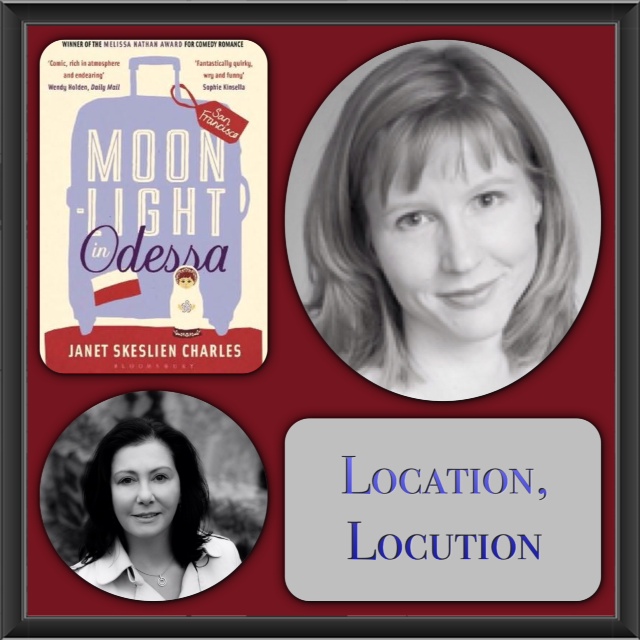
LOCATION, LOCUTION: Janet Skeslien Charles, bringing Odessa to life through writing

2013-11 jsc visual

Images, clockwise from top: Moonlight in Odessa cover art; Janet Skeslien Charles author photo; JJ Marsh author photo

In this month’s “Location, Locution”, expat crime writer JJ Marsh interviews Janet Skeslien Charles, author of Moonlight in Odessa.

Janet, welcome! Tell us a little about yourself.
I grew up on the plains of Montana, in a town of two thousand people. I have always been a writer, with a journal for observations, prose, and poetry, though for me, writing is a very private activity.

At the University of Montana, I studied English, French, and Russian. I also spent a year on a university exchange at the University of Maryland. After graduation, I went to Odessa, Ukraine, for two years as a Soros Fellow.

I found a job in France and intended to stay for a year. On my first day in France, I met the man who became my husband, and I’ve been in Paris for over ten years.

Moonlight in Odessa is truly an international effort. The novel is set in Odessa, Ukraine. My agent is English. My editor’s assistant is Japanese-Danish, my copy editor is from New Zealand. I’m American. The book was written in France and typeset in Scotland. My first fan letter came from a Swede. Rights have been sold in Germany, Italy, the Netherlands, Brazil, Sweden, Iceland, Serbia, Romania, Taiwan, and Denmark.

When you’re writing, which comes first, story or location?
My novel was an ode to Odessa, a city I love. The story grew from the place.

How do you go about evoking the atmosphere of a place?
The way my characters speak, what they eat, how they dress, who they believe, how they love, and where they go are all very particular to the city of Odessa.

Which particular features create a sense of location? Landscape, culture, food?
For me, it is how characters react to situations. Odessa is the humor capital of the former Soviet Union, which means that my characters use humor as a shield to ward off painful situations. Odessans are capable of laughing at things that would make me bawl. Their mental toughness is impressive. So for me, the sense of city is the sense of self.

Also, trying to understand what is important to characters is important. My character Daria is defined by her ambitions, which exist because of her experiences in Odessa, a comsmopolitan sea port.

How well do you need to know the place before using it as a setting?
I was immersed in Odessa for two years and am still in touch with friends there, so it was easy for me to write about the city, but I love that Jeanette Winterson wrote The Passion without visiting Venice. It is one of my favorite books and so evocative of time and place. I don’t think you need to know a place, though it helps. I think imagination and observation are the most important tools when creative a setting.

Could you give a brief example from your work which you feel brings the location to life?
Daria, my main character, is at a job interview and must decide whether she is able to do the job and stay ahead of the lecherous boss:

Chess. There’s a reason the former Soviet Union has more world champion players than any other country. Chess is strategy, persistence, cunning, and the ability to look farther into the future than an opponent. The bloodlust of killing off others, one at a time. Chess is every man for himself. Building traps and avoiding them. It is mental toughness. And sacrifice. In Odessa, life is chess. Moves. Countermoves. Feigns. Knowing your adversary and staying one step ahead of him.

I took the job.

Which writers do you admire for the way they use location?
I absolutely love Venice in Jeanette Winterson’s The Passion. Michael Perry’s Population: 485 and Julia Alvarez’s How the Garcia Girls Lost Their Accents are also great examples of how place shapes the narrative. I have also read two unpublished novels by friends — one evokes North London, the other life in small-town France — and six months later, I am still savoring these two places I have never been.

The authors are Marie Houzelle, a French woman who writes in English, and Katya Jezzard-Puyraud, who wrote about North London so convincingly, I finished her novel feeling as if I had grown up there.

Next month’s Location, Locution guest  will be Jeet Thayil, the winner of the DSC Prize for South Asian Literature, shortlisted for the 2012 Man Booker Prize and the Hindu Literary Prize 2013.

 * * *

JJ Marsh grew up in Wales, Africa and the Middle East, where her curiosity for culture took root and triggered an urge to write. After living in Hong Kong, Nigeria, Dubai, Portugal and France, JJ finally settled in Switzerland, where she is currently halfway through her European crime series, set in compelling locations all over the continent and featuring detective inspector Beatrice Stubbs.

STAY TUNED for tomorrow’s post!

If you enjoyed this post, we invite you to register for The Displaced Dispatch, a round up of weekly posts from The Displaced Nation, with seasonal recipes, book giveaways and other extras. Register for The Displaced Dispatch by clicking here!

Related posts:
And the October 2013 Alices go to … these 4 international creatives

 © Iamezan | Dreamstime.com Used under license

© Iamezan | Dreamstime.com
Used under license

If you are a subscriber to our weekly newsletter, Displaced Dispatch, you’re already in the know. But if you’re not (and why aren’t you? off with your head!), listen up. Every week, when that esteemed publication comes out, we present an “Alice Award” to a writer or other kind of creative person who we think has a special handle on the curious and unreal aspects of being a global resident or voyager. Not only that, but this person tries to use this state of befuddlement to their advantage, as a spur to greater creative heights.

Today’s post honors October’s four Alice recipients.

Starting with the most recent, and this time with annotations, they are (drumroll…):

1) CATHY TSANG-FEIGN, American psychologist in Hong Kong, specializing in expat psychology and adjustment issues

For her book: Keep Your Life, Family and Career Intact While Living Abroad
Published: September 2013
Snippet:
Cathy_Feign_cover

[Benjamin is a marketing buyer who was transferred to Hong Kong on a two-year contract. Having been through the phase of “elation,” he now finds himself in phase of “resistance,” with “transformation” and “integration” yet to come.]

Benjamin is getting annoyed by the frantic pace of life in Hong Kong, the indirectness of Chinese people in business, the crowds and difficulties in being understood. He is frustrated at the narrow choice of English-language entertainment on television or in cinemas and theaters. He finds himself missing his old friends, favorite foods, and the ways of doing things back home. Many foreigners in this [resistance] stage tend to associate only with others from their own country. They constantly compare everything to “back in England” (or New York or Frankfurt). Such people remain separate from the local community and establish their own secluded, privileged society. Many expatriates remain in this stage until the day they move back home.

Citation: Dr. Tsang-Feign, we wonder if in addition to Benjamin (who is presumably fictional) you might consider treating Alice in Wonderland as a textbook example of the four phases of acculturation? As you may recall from your own reading of Lewis Carroll’s story, Alice’s elation at falling down the rabbit-hole is rapidly followed by a period of resistance to the wonders found beneath. Down, down, down—Alice’s fall eventually culminates in unlocking a door to a passage through which yields the sight of the most fabulous garden. And her first taste of Wonderland is equally delightful: a drink that has “a sort of mixed flavour of cherry-tart, custard, pine-apple, roast turkey, toffee, and hot buttered toast.” However, it is not long before Alice begins to resist the local community:

“It was much pleasanter at home,” thought poor Alice, “when one wasn’t always growing larger and smaller, and being ordered about by mice and rabbits. I almost wish I hadn’t gone down that rabbit-hole—and yet—and yet—it’s rather curious, you know, this sort of life!”

Still, and as the latter statement attests, even at the height of her resistance Alice shows some potential for “transformation.” And though she never quite achieves “integration” before leaving Wonderland—she always feels a bit what we like to call displaced—her sister predicts that she will forever cherish the memories of her adventures. We can only speculate, not being psychologists ourselves, that this progress is owed to her not having had the opportunity to isolate herself with other Alices, to her having had a solo, and singular, set of experiences. Does that seem a fair assessment?

2) ANONYMOUS BLOGGER at Midwest to Midlands, who describes herself as “an American from the Midwest married to a Brit living in the English Midlands”

For her post: “First a Revisit in England”
Posted on: 23 September 2013
Snippet:

… it has taken me a while to get back on track since returning to England from out visit in the States. What do you do when you need to get yourself in gear? This time for me, some action was needed, or rather lack of action and enjoying the English countryside.

Citation:  M-to-M, we love the idea of getting over the often-rough transitions from homeland to adopted land by doing nothing and simply immersing yourself in your surroundings—we only hope you realize how lucky you are to have landed in the Cotswolds, which has been designated as an Area of Outstanding Natural Beauty. (If you lived in, say, smog-covered Shanghai, this technique would have required more imagination.) In fact, your photographic record of your desultory wanderings—first stop, a magnificent house or two made of Cotswold stone; next stop, a tea room; next, a window-box; next, a shop; next, a tree covered in golden leaves; next, an 18th-century house with an American letterbox—put us in mind of this charming passage from Lewis Carroll’s classic:

“I should see the garden far better,” said Alice to herself, “if I could get to the top of that hill: and here’s a path that leads straight to it—at least, no, it doesn’t do that—” (after going a few yards along the path, and turning several sharp corners), “but I suppose it will at last. But how curiously it twists! It’s more like a corkscrew than a path! Well, THIS turn goes to the hill, I suppose—no, it doesn’t! This goes straight back to the house! Well then, I’ll try it the other way.”

3) MANAL AHMAD KHAN: Journalist, poet, world traveler, and blogger at Windswept Words

For her post: “Thoughts on Leaving Pakistan” (her first post in a year-and-a-half, since she and her husband moved back to Pakistan from the United States, and just before they left for a new adventure in Spain)
Posted on: 4 October 2013
Snippet:

It was a parallel universe, where we all lived free, modern lives, like citizens of a free, modern country, utterly disconnected from the “other” Pakistan, the bigger Pakistan, and for all intents and purposes, the “real” Pakistan. Yet perhaps it was our only survival, the only way to keep sane and creative and happy for those of us who chose to live in our native country.

Citation: Manal, your deep love for your native land shines through your many beautiful photos and stories—as does your frustration about its “overwhelming religiosity and self-righteousness.” We are glad that, unlike Alice, you were able to get out of “that dark hall, and wander about among those beds of bright flowers and those cool fountains” from time to time. And a very pleasant little Wonderland it sounds, that part of Lahore where people meet up in New York-style cafés for mocha cappuccinos, and have children who dress up for Halloween and parties where alcohol flows freely. By the same token, we can appreciate how happy you were to leave this “schizophrenic” life for Madrid. Readers, we will hear about Manal’s latest adventures this month as she has agreed to be one of November’s featured authors!

4) KAY XANDER MELLISH, Wisconsin-born journalist and now an expat entrepreneur in Copenhagen and blogger at How to live in Denmark: An irreverent guide

For her post: Danes and Privacy—Why public nudity is OK and public ambition is not
Posted on: 24 August 2013
Snippet:

Shortly before I arrived in Denmark in 2000, one of the famous guards outside the queen’s palace at Amalieborg was fired.

… She was the first woman to guard the Royal Palace at Amalieborg. … Unfortunately, this young lady also had a part-time job. She was a prostitute. She would guard the palace by day and run her business out of the royal barracks in the evening.

… But she was NOT fired because she was a prostitute. She was fired because she’d been ordered by her commander to stop moonlighting after her side-job was first discovered, and she did not stop. … She was fired for not following orders.

Citation:  Kay, we don’t know which experience is stranger: Alice’s discovery that the Queen of Hearts has cards for guards, or yours that Margrethe II had a prostitute for a guard. But leaving that matter aside, what’s even stranger in both cases is that the rules by which a guard’s behavior is judged are far from transparent, even after an explanation is offered. The Danes you queried about the incident told you that as far as they were concerned, even a Queen’s guard can do what she wants in her private time; but insubordination is unacceptable: off with her job! Likewise, when Alice asks a couple of the Card Guards why they are painting the roses, she gets this response:

Five and Seven said nothing, but looked at Two. Two began in a low voice, “Why the fact is, you see, Miss, this here ought to have been a RED rose-tree, and we put a white one in by mistake; and if the Queen was to find it out, we should all have our heads cut off, you know. So you see, Miss, we’re doing our best, afore she comes.”

We expect you can empathize!

*  *  *

So, readers, do you have a favorite from the above, or have you read any recent posts you think deserve an Alice Award?  We’d love to hear your suggestions! And don’t miss out on these weekly sources of inspiration. Get on our subscription list now!

STAY TUNED for tomorrow’s post, another installment on blogging from JACK THE HACK.

Writers and other international creatives: If you want to know in advance whether you’re one of our Alice Award winners, sign up to receive The Displaced Dispatch, a round up of weekly posts from The Displaced Nation, with news of book giveaways, future posts, and of course, our weekly Alice Award!. Register for The Displaced Dispatch by clicking here!

Related posts:

Beth Geglia’s calling to make films on Central American human rights stories

Beth_Geglia_tdn

Beth Geglia (photo supplied by Beth and used with her permission)

Since the Displaced Nation began billing itself as a “home for international creatives,” we have covered plenty of fiction writers, memoirists, and foodies, as well as a few entrepreneurs (I contributed to the latter with an interview with Alison McGowan about her tourism-related business in Brazil).

But there are also expats whose creativity is expressed in political activism: they work for the causes within (and across) the countries they visit.

Today I talk to one such activist, Beth Geglia, an American who, having dedicated her life to human rights issues in Central America, has now developed filmmaking skills and released a feature-length documentary on the resilience displayed by an extraordinary group of Afro-Hondurans.

* * *

Buenas, Beth, and thanks so much for agreeing to be interviewed. Let’s start by having you tell us a bit about yourself. What first awakened your interest in human rights?
I got involved in high school, after the September 11th attacks. I was adamantly against war in both Afghanistan and Iraq, and participated in student walk-outs, teach-ins—all the big mobilizations. Next I volunteered with the Indigenous People’s Council of Oaxaca in Mexico and the Movement of Worker-Occupied Factories in Argentina, which got me working on issues of economic justice and alternative economies as part of the student fair trade movement.

Guatemala has figured large in your life. What led you there in the first place?
As a student activist, I worked closely with a local fair trade coffee-roasting cooperative in Madison, Wisconsin, called Just Coffee. They sent me to Guatemala to do work with a coffee cooperative of former revolutionary combatants and returned refugees from the country’s internal conflict, known as Santa Anita La Unión. Later we organized a delegation of student activists from Wisconsin to meet with Guatemalan producer cooperatives, and I went back a few times.

Making a life in Guatemala

I understand you ended up living in Guatemala?
I became overwhelmed with the history of Guatemala, the U.S.’s interventionist role there, and the movements to restore the memory of the violence that had taken place. I felt I was learning and changing an incredible amount, so I moved there ten days after graduating college. I stayed for two years.

I assume you speak Spanish, but were there any moments when you felt displaced, in the sense of being alienated from your surroundings?
Yes, I spoke Spanish so language was not much of an issue. However, many communities in Guatemala speak their indigenous languages, none of which I was able to learn. There were definitely moments of struggle, but I wouldn’t necessarily relate them to feelings of displacement. After all, I was working with communities who were trying to defend their rights against gold mining and other resource extraction companies—it was they who were facing displacement. Some had been forcibly displaced, while others were threatened with displacement from environmental destruction, militarization, and loss of land. The communities were still healing from the violence of the internal conflict, and some people were experiencing the threat of being locked up or assassinated. Seeing this kind of suffering close up was the hardest, most painful part of my experience. Then there’s always the challenge of understanding your role as a foreigner: what’s appropriate, what’s helpful—fully aware of the privilege of being there by choice and able to leave.

I usually tell people that living in Guatemala was the hardest thing I ever did—and, at the same time, the most important and dearest to my heart. It truly transformed me.

So, for the most part, living in war-torn Guatemala felt right to you?
Things make sense to me whenever I am surrounded by good people doing good work. The people I lived and worked with in Guatemala City, for example, are still some of the people I most respect. Cooking meals with them, hanging out on the roof or patio with a few chelas (beers)—these things really felt like home.

Practicing the filmmaking craft

At what point did you decide to become a filmmaker?
It wasn’t until I moved back to the United States and quit my job with a human rights organization a year later that I began to study documentary filmmaking. Video and film are one of the most useful tools for helping people who are struggling to get their voices heard. It’s an important skill.

RevolutionaryMedicine_poster

Poster for the film screening at Columbia School of Social Work

You have just now released a documentary, Revolutionary Medicine: A Story of the First Garífuna Hospital, a collaboration with journalist Jesse Freeston. The film is set in Honduras and tells the story of the Garífuna people and the community hospital that they built. Can you fill us in a little more?
Sure. Garífuna history has been rife with forced displacement and resistance, from the slave trade to expulsion by the British from the island of St. Vincent. Most Garífunas in Honduras live on the northern coast, on lands their people have occupied for 216 years. They continue to face many pressures, such as a lucrative foreign tourism industry, the expansion of African palm production by the country’s largest landowners, resource extraction, and foreign investors wanting to build charter cities. In addition, they face ongoing discrimination and neglect from the state, which has failed to provide them with medical services. This film is about the community coming together to build their own hospital, while fighting for their human right to health care. It’s a story about self-organization and persistence, but also about a different model of medicine having to do with community survival. According to this model, improving the health of the community is a first step in addressing structural and political issues in need of change.

It really is the “first” Garífuna Hospital?
Yes. It’s the first hospital to exist in the Garífuna’s territory.

“For the health of our people…”

How did the making of the film come about?
I was still in Guatemala when the military coup in Honduras happened in June of 2009. The people around me were remembering Guatemala’s internal conflict, which lasted 36 years and amounted to genocide: it been sparked by a CIA-orchestrated coup. Everyone was feeling the weight of that history, and there was a sense of urgency around what Honduras could suffer as a result of the coup. Upon returning to the U.S., I got involved in local activism that was exposing the DC-based lobbyists who’d been hired by Honduras’s interim coup government to essentially whitewash the coup and restore normal relations with international institutions and the Organization of American States.

That’s when I met Dr. Luther Castillo, one of the founding doctors of the First Garífuna Hospital. He was on a speaking tour denouncing the political violence and repression taking place in Honduras. I took up his invitation to come visit the hospital.

Jesse Freeston and I knew each other from DC. He had been working as a journalist in Honduras and other parts of Central America for a few years and had also gotten to know the story of the Hospital and what Garífuna communities were working to create.

It was great working with Jesse. He had years of documentary experience under his belt and in fact is now finishing up a feature-length film called Resistencia, about land-occupying farmers in the Aguán Valley of Honduras. It should be released in the spring. I think we made a good team, and I learned a lot from the collaboration.

When was the film released, and what has been the reaction amongst the Garífuna people?
We started screening the film in August. Jesse took it down the West coast of the U.S. and I went to screen it in Honduras. The Garífuna community of Ciriboya reacted very positively. You know when you make a film, you can’t cover nearly everything you’d like to, but I think the doctors in particular felt it presented a balanced version of their story. They’re now using it to raise awareness and educate others. Actually, the most gratifying thing was to see the reaction of medical students who attend the public university in the capital city, Tegucigalpa. They were so excited, they ended up organizing their own screening of the film and have entered into a longer-term relationship with the Garífuna Hospital.

What about in the United States?
In the U.S. we’ve screened for lots of different audiences, including activists, organized medical professionals, social work students, med students, and youth. We’ve worked with the Garífuna Health and Education Support Institute in New York to reach Garífuna diaspora audiences, mainly in the Bronx, and the response has been phenomenal. It’s been exciting to help connect diaspora communities with what’s going on back in their homeland. Generally, people seem to come away feeling proud and/or inspired to act. I think the best compliment we received was: “This is a great organizing tool.”

If our readers are interested in watching the film how can they go about it?
Very soon anyone will be able to order a copy of the documentary online. Until then, I suggest you follow our Facebook page to find out about screenings and distribution. You are also welcome to contact Jesse and me directly by email: me@jessefreeston.com or bgeglia@gmail.com.

What further hopes do you have for the film?
Besides the documentary being used as an educational and network-building tool—that’s why we’ve been focusing on community-based and university screenings—we hope it will give ideas to people who are working on related projects. Particularly in the U.S. I would like for it to make people think about our own health care system and what might be possible.

Having already lived in Guatemala, did making the film help you to connect with Central America in any new ways?
I learned a ton about a part of Central America I knew very little about. One thing that continuously inspired me was the resilience of communities—in particular, their ability to construct alternatives that challenge our assumptions of how society can be organized. Also, the idea of doctors playing the role of protagonist in the process wasn’t something I’d anticipated. Now I’m learning that there is a long history of health workers playing a central role in social movements, to which I’d been largely oblivious.

What are your plans for the future, both with the film and your activism?
I’m actually back in school now in DC, studying for a Ph.D. in Public Anthropology. It’s an interesting program because it leaves room to use documentary film as opposed to simply writing academic papers that will have little reach. The program promotes activism as well as embedded and participatory research, so I feel it’s a good home for me. I don’t have much free time, but when I do, I like to volunteer with a local documentary project called Lessons from the ’60s. It’s an oral history project organized by a group of older activists who want to document memories of the movements that took place in DC in the 1960s and ’70s before they are lost forever. Preserving historical memory was one of the reasons I wanted to do documentary film, so it’s great to be able to participate in this kind of a project in my hometown.

10 Questions for Beth Geglia

Finally, we’d like to ask a series of questions that we’ve asked some of our other featured authors, about your reading and writing habits:
1. Last truly great book you read: Golden Gulag, by Ruth Wilson Gilmore, on the prison system in California (being in school means I only read non-fiction).
2. Favorite literary genre: Science fiction.
3. Reading habits on a plane: It’s actually really hard for me to stay awake on planes! I’m usually passed out, and when I’m awake I listen to music to calm my nerves because I’m scared of flying.
4. The one book you’d require Barack Obama to read, and why? Am I allowed to say Open Veins of Latin America: Five Centuries of the Pillaging of a Continent? Maybe The New Jim Crow, by Michelle Alexander.
5. Favorite books as a child: I was a huge fan of Roald Dahl books when I was a kid. The Witches was my favorite one. I also loved The Chronicles of Narnia.
6. Favorite heroine: Itzá in The Inhabited Woman, by Giaconda Belli.
7. The writer, alive or dead, you’d most like to meet: Audre Lorde.
8. Your reading habits: Since I’m in school, I read all the time and I skim a lot. Coffee in hand is usually a necessity.
9. The book you’d most like to see made as a film: The Inhabited Woman, by Giaconda Belli.
10. The book you plan to read next: Pathologies of Power, by Paul Farmer.

* * *

Readers, did you find Beth’s story as inspiring as I did? Be sure to check out her documentary if you get a chance. And feel free to leave further questions or comments for her below.

STAY TUNED for tomorrow’s post, some species of Halloween confection by Anthony Windram.

If you enjoyed this post, we invite you to register for The Displaced Dispatch, a round up of weekly posts from The Displaced Nation, with seasonal recipes, book giveaways and other extras. Register for The Displaced Dispatch by clicking here!

Related posts:
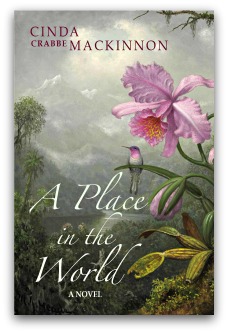
images: Beth Geglia; poster for the film screening at Columbia School of Social Work.