The Displaced Nation

A home for international creatives

Tag Archives: What a Displaced World

An expat’s valentine to her adopted home is podcast series and now book

Kay Mellish Valentine CollageThe Displaced Nation aspires to be a home to international creatives. As such, we are fond of showcasing memoirs written by those who have spent large chunks of their lives abroad or novels that were in some way inspired by international travels.

Very occasionally, though, we come across an expat who has written a guide to life in their new country that strikes us as being highly creative. Not long before the Brazilian Olympics, for instance, we featured works by two expats living in Brazil because of having a Brazilian spouse: Mark Hillary’s Reality Check: Life in Brazil Through the Eyes of a Foreigner; and Meagan Farrell’s American Exbrat in São Paulo: Advice, Stories, Tips and Tricks for Surviving South America’s Largest City.

Both authors felt justified in producing their own guides to Brazilian life because they’d noticed so many newbie expats falling into the trap of becoming an “exbrat” (to borrow Meagan’s term)—constantly complaining about Brazilian food, prices, bureaucracy, and crime and thus missing out on one of the world’s most fascinating cultures and friendliest peoples.

And both books, while offering practical information and advice, also communicated the authors’ affection, even love, for the land of carnival and samba, beaches and jungles—warts and all.

My guest today, Kay Xander Mellish, has composed a similar kind of ode to her adopted home of Denmark, which, too, has its attractions even if if Danes are far less sociable than Brazilians and their culture a great deal less lively.

Yet apparently not all visitors seem to appreciate the many appealing features of the country that was recently crowned the the world’s happiest, which is what led Kay to produce her podcast series, How to Live in Denmark, and now a book of the same name.

Born in Wisconsin and educated in New York City, Kay has lived in Denmark since 2000, speaks Danish, and after working in the corporate world has founded her own company to help Danish companies communicate in English. She hasn’t married into the culture but is a single mother bringing up a daughter.

Ironically, Kay’s valentine to Denmark has come out at a time when another foreigner in Denmark, the British journalist Michael Booth, is in the news for a book expressing disillusionment with the Scandinavian way of life. We’ll talk to Kay about that development as well.

But first let’s get to know her a little more.

 * * *

“Santa Claus has the right idea: visit people once a year”—Victor Borges, Danish-born American comedian

Hi, Kay! I once lived in England and then in Japan, and there were times in reading your book that the Danes reminded me of the English and the Japanese: easy enough to like but not so easy to love. Is that a fair description?
It can be difficult for outsiders to make friends in Denmark, because for Danes friendship is a serious business. A real friendship is a lifelong relationship, sometimes starting in kindergarten or even before – my daughter, for example, has a friend she “met” when they were four weeks old! The idea of casual chat with strangers is alien to Danes: they have to force themselves to do it, and it is nearly always uncomfortable for them unless a great deal of alcohol is involved. Once you are within their friendship circle, Danes are excellent friends, reliable, supportive and direct. But it is difficult to come into that circle. Danish society is based on trust, and it takes Danes a while to be sure that they can trust you.

HTLID_cover_and_hearts

Kay Xander Mellish’s book cover; random Valentine’s hearts and one kiss.

Humor is of course an important element in any long-term relationship, and your have subtitled your book “a humorous guide.” Tell me, are you laughing with or at?
With! Danes are very good at making fun of themselves; in fact, one of the highest compliments they can give a famous or accomplished person is that he or she has “self-irony,” or the ability to make fun of himself. By contrast, anyone who is selvfede (literally, “self-fat”) and thinks he or she is God’s gift to the world is held in contempt. So, in general, humor is not hard to come by in Denmark. You just have to be willing to make fun of yourself. Danes have an old tradition that if you’ve fallen down in public or otherwise made a big mistake or fool of yourself, you’re supposed to buy kvajebager (failure beer) for everyone who saw you. My book, which is based on a podcast series, is very popular among Danes, which it would not be if they could not make light of themselves. Occasionally I get a few crabby emails from people with Danish names, but not many. I’ve found a lot of Danes buy the book for their foreign friends.

“To be of use to the world is the only way to be happy.”—Hans Christian Andersen

Oxford Research recently published a study finding that 9 out of 10 expats enjoy living and working in Denmark and close to half choose to prolong their stay—mainly because of career opportunities. What makes Copenhagen’s work opportunities so loveable?
If you can get a job in Copenhagen, the working conditions and benefits are excellent. Most people work 8:00 a.m. to 4:00 p.m. and then go home to their families, so it’s common to see an office entirely empty by 5:00 p.m. And there is less of the cutthroat competition, both internally and externally within companies, that you see elsewhere in business life. You also have the ability to do work you will be proud of: Danes demand quality, so you rarely meet anyone who is incompetent. But getting a job is difficult, even for the Danes, and it is extremely difficult for foreigners who do not speak Danish. Many foreigners with only rudimentary Danish either work in the “caring professions,” such as state-sponsored jobs caring for the elderly or the very young, or in IT roles that there are not enough Danes to fill. If you are looking for anything else, besides the usual cleaning and waiting tables, plan for at least a 6-month job search, possibly a year.

“I’m afraid I have to set you straight…”—Michael Booth, Copenhagen-based British journalist

Meanwhile, the journalist Michael Booth has just published a book The Almost Nearly Perfect People: Behind the Myth of the Scandinavian Utopia.
Denmark is a small country where everyone knows everyone, so I should start by saying that Michael Booth is the friend of a friend, although I have not met him myself. Michael has developed a great shtick for himself, which is running down the Scandinavian countries while continuing to enjoy their benefits. (The fact that Michael is a white male from a friendly country allows him to get away with this performance: I don’t want to even think of what the reaction might have been if such a book had been written by someone from the Middle East.) At any rate, his timing is excellent: it’s become fashionable, particularly in left-wing Western circles, to paint Scandinavia as a utopia, which it most certainly is not. Michael’s book is a strong antidote to that.

An excerpt from Booth’s book appeared recently in The Atlantic, where he says Denmark is “stultifyingly dull” and “boring” because of its “suffocating monoculture.” You don’t agree with any of that?
Personally, I don’t find Copenhagen dull, and this is from someone who used to live in downtown Manhattan and be very involved in the New York art and nightlife scene. I find Copenhagen sophisticated without being too intense. There is certainly less of a gallery or theater scene here, but by contrast people have more time to enjoy the arts events that take place.

“I come from a culture where you don’t divide it up [between] what you can do on TV and what you can do on film.”—Danish actor Mads Mikkelsen

You are a professional voice actor, and, unusually, your book is based on a podcast series. Since we’re talking about love today: which do you love more, podcasting or writing?
The podcast series was actually based on an old group of essays that had been mouldering on a rarely-updated website I started when I still I lived in New York. (In those days, the days before podcasts and before the web, I used to put up parts of my stories as flyposters in a graffiti format—but that was the 1990s!) When I came to Denmark, I wrote a few essays about the experience, but then I pretty much abandoned the site while working full-time at a corporate job while raising my daughter. The site was still online, and newcomers to Denmark kept finding these old postings and emailing me, saying how much I had helped them adjust to living here. I began to feel an obligation to help people just arriving in Denmark. It can be a difficult place to get used to. So when I left corporate life and was in the process of building my own voiceover business, doing the podcast How to Live in Denmark was a natural move. I soon found out that many people weren’t listening to the recordings at all: they were just reading the transcripts available on the podcast site. By this time, I was spending so much time on the podcasts that I needed to earn a little money off the project, so I turned the transcripts into an eBook. Customers then kept asking for a paper book, so I published one of those as well. Now we also have the Chinese version, and there are so many Syrian refugees in Denmark that there have been requests for an Arabic-language version, so we are working on that as well. I really feel it’s important for me to serve to others who may be facing the same challenges I once did.

“Give to a pig when it grunts and a child when it cries, and you will have a fine pig and bad child.”—Danish proverb

Turning to your daughter: what do you love most about raising and educating a child in Denmark?
Children in Denmark given much more freedom and responsibility than children in many countries. My daughter has been riding the Copenhagen trains and buses alone since she was eight, for example. Even when they are very young, children are expected to sort out their own playground disagreements with little interference from adults. There’s no such thing as a “helicopter parent” here. Also, children don’t spend most of their childhoods trying to get into a good university, going to cram schools and trying to build up their CV with impressive-sounding activities. They relax; they have time to play, time to think, time to develop themselves and their creativity. There is very little standardized testing in Denmark and not many grades of any kind until the kids are 13 or 14. I think that’s a healthy way to go about things. My daughter enjoys living here; she enjoys her school, where there is very little pressure but the kids learn to put knowledge together in a holistic way, which I think will be much more useful for the future just learning how to spit out facts or repeat the teacher’s viewpoint back to her. Most importantly, parents in Denmark have a lot more free time to spend with their kids, since working hours aren’t particularly long here. So we do a lot of stuff together—sports, travel, crafts. I don’t know if I would have had the time and energy to do those things had I been a single mother in the US.

Do you think she misses out on anything by not being in the United States?
Of course, she’s missing out on the ethnic diversity of the US, as well as the ambition and drive and energy of living there. But she speaks frequently of going to college in the US, so she’ll have a chance to experience those aspects when she’s a little older.

“There was the constant, tinny squeak of a thousand rusty bike chains.”—Greg Hanscom, senior editor at Grist: “An American in Denmark”

You’ve now lived in Denmark for nearly 15 years, longer than many marriages last. If you had one irritating habit about the place you could change, what would it be?
I suppose it would the Danes’ general rudeness in public places. When someone brushes closely by you, or even runs right into you, there’s never an ‘Excuse me’ or the Danish equivalent. Instead, you get a sour look or a grunt that signifies “Why were you in my way?” Customer service in Danish shops or restaurants is not much better: in Denmark, the customer is always wrong. Some of the nonwhite foreigners I’ve met here assumed that they were being treated so badly because of racism or racial discrimination, but that is not the case. Sad to say, everybody gets bad customer service, even other Danes.

And if you and Denmark were to “divorce” and go your separate ways one day, what would you miss the most about it?
Probably the biking culture and the great mass transit. While I have a drivers’ license and enjoy driving a car, I love that I can hop on a bike and get anywhere quickly. No parking problems, no stopping to buy gas, and it’s a very easy and convenient way to keep fit. That said, bringing home groceries on your bicycle can be a headache. And trying to bring home fresh dry cleaning on your bicycle is the worst!

Thanks, Kay! It’s been a pleasure. Taking a closer look at your work, we see you’ve created an intricate valentine to your adopted home, full of love and irreverent humor, the perfect tribute.

* * *

Readers, if this interview has piqued your curiosity about Kay Xander Mellish and her creative output, we encourage you to visit her author site, like the How to Live in Denmark page on Facebook and/or follow her on Twitter: she has a personal account and a podcast/book account. Also please note that Kay was the recipient of one of our Alice Awards for an irreverent post explaining why public nudity is okay in Denmark, whereas public ambition is not.

STAY TUNED for next week’s fab posts!

If you enjoyed this post, we invite you to register for The Displaced Dispatch, a round up of weekly posts from The Displaced Nation, with seasonal recipes, book giveaways and other extras. Register for The Displaced Dispatch by clicking here!

Related posts:

BOOKLUST, WANDERLUST: 2014–2015 books recommended by expats & other international creatives (2/2)

Globe Bookshelf Part TwoHello Displaced Nationers! As those who caught Part One of this post last week will know, we are continuing the party we had at the end of last year in publishing a Best of 2014 in expat books list by soliciting various international creatives and other “displaced” contacts for more recommended books.

In Part One, several of my bookworm friends from a previous blog, Novel Adventurers, along with ML and JJ Marsh (JJ writes the Location, Locution column for Displaced Nation), revealed their favorite 2014 reads.

In Part Two, below, kicking off with yours truly, we talk about releases we’re hotly anticipating this year.

A “forthcoming reads” roundtable, if you will.

—Beth Green

* * *

BETH GREEN: I actively search out books by Elizabeth George, the American author of the Inspector Lynley mystery novels set in Britain, and Elizabeth Gilbert, who achieved fame with her travel memoir, Eat, Pray, Love. 2015 is a great year for me as both Elizabeths have books coming out.

A_Banquet_of_Consequence_300s_coverA Banquet of Consequences (Inspector Lynley Book 19), by Elizabeth George, due out in October.
Synopsis: Lynley and Havers are drawn from Cambridge to London to the windswept town of Shaftesbury during one of their most complex cases yet: the murder of a feminist writer and speaker.
Why I’m excited: Though actually not in the “expat” realm, I have to confess it’s the book I’m most looking forward to reading. I’m a huge fan of George’s diverse characters and elaborate stories.

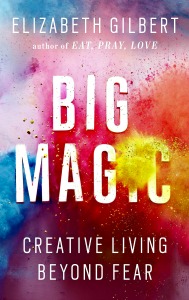
BigMagic_cover_300Big Magic: Creative Living Beyond Fear, by Elizabeth Gilbert, due out in September.
Synopsis: Gilbert digs deep into her own creative process to share her wisdom and unique perspective about creativity.
Why I’m excited: As some readers may recall, I reviewed her novel The Signature of All Things last fall for this column. It seems that Gilbert is now turning her hand to self-help/motivational books for us creatives. I’m intrigued, and I figure other international creatives should be as well.

Three other upcoming books, by authors I’ve not come across before, have also caught my eye:

Displacement_cover_300Displacement, by Lucy Knisley, due out February 8th.
Synopsis: A graphic-novel-style/comic-book travelogue reporting on a cruise ship trip to the Caribbean Knisley took with her grandparents.
What interests me: Even though I seldom read graphic novels, I’m curious to pick it up, especially given its title(!). Knisley has two previous travelogues in graphic form: French Milk (her six-week trip to Paris to celebrate a milestone birthday) and An Age of License (her all-expenses trip to Europe/Scandinavia).

Meet_Me_in_Atlantis_cover_300Meet Me in Atlantis: My Obsessive Quest to Find the Sunken City, by Mark Adam, due out in March
Synopsis: A few years ago, travel writer Mark Adams made a strange discovery: everything we know about the lost city of Atlantis comes from the work of one man, the Greek philosopher Plato. Then he made a second, stranger discovery: amateur explorers are still actively searching for this sunken city all around the world, based entirely on the clues Plato left behind. Adams decides to track these people down. He reports on what he learns from scientists and amateur historians who all share his curiosity about the facts and fiction surrounding the “lost city.”
What interests me: Count me in that curious group!

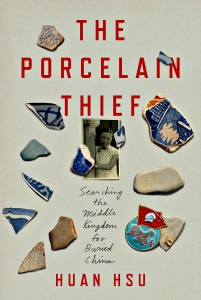
The Porcelain Thief: Searching for the Middle Kingdom in Buried China, by Huan Hsu (forthcoming in March).
The_Porcelain_Thief_cover_300Synopsis: The author, raised in Utah, goes back to his ancestral homeland in China, in part to look for porcelain and other treasures his great-great-grandfather may have buried before the family fled the Sino-Japanese War.
What interests me: As a former expat in China, I love anything about this part of the world, and this displaced family saga sounds particularly fascinating!


ML AWANOHARA: I am always on the lookout for books that could be of interest to the Displaced Nation readership. (Whether I end up reading them or not is a different matter!) I’m sure this is just the tip of the iceberg, but thus far in 2015 I have my eye on one novel and several memoirs.

First, the novel:

The_Art_of_Unpacking_Your_Life_cover_300The Art of Unpacking Your Life, by Shireen Jilla (forthcoming in March)
Synopsis: A million miles away from their daily concerns, on a safari in the Kalahari Desert, two women who were once best friends see if they can reconnect.
What interests me: We featured Jilla’s first novel, Exiled, on the Displaced Nation shortly after we started the site as we were curious to as to why, after her own expat life in New York City, she had produced such a dark, dysfunctional family psychodrama concerning a British expat family living on the Upper East Side of New York. (Her answer was extremely satisfying!)

As to memoirs, here are three that were issued in January:

Leaving_Before_the_Rains_Come_cover_300Leaving Before the Rains Come, by Alexandra Fuller (came out in January)
Synopsis: A child of the Rhodesian wars and daughter of two deeply complicated parents, Alexandra Fuller is no stranger to pain. But the disintegration of her own marriage leaves her shattered. Looking to pick up the pieces of her life, she finally confronts the tough questions about her past, about the American man she married in hopes of being saved from the madness of her early life, and about the family she left behind in Africa.
What interests me: I so enjoyed Fuller’s first memoir, Don’t Let’s Go to the Dogs Tonight, about growing up in a white family during the Rhodesian Bush War, I have come to think of her as a modern-day displaced heroine, or goddess: larger than life, an extraordinary mix of beauty and brains, out of this displaced world… (Hmmm… No wonder her marriage to a mere mortal didn’t last.)

Russian_Tattoo_cover_300Russian Tattoo: A Memoir, by Elena Gorokhova
SYNOPSIS: In her first memoir, A Mountain of Crumbs, Gorokhova detailed her life growing up with an iron-willed mother in Soviet-era St. Petersburg. In this follow-up, she escapes both mother and country by entering into an unsuitable marriage with an American. When her husband first brings her to live in Austin, Texas, the culture shock is extreme. He then ships her off to Princeton to live with his psychotherapist mother. There she meets her second husband and a happier future.
WHAT INTERESTS ME: Maybe because I lived abroad for so long and then had to readjust to life in the U.S., I identify very closely with immigrant stories. And for personal reasons, I’m always attracted to stories that revolve around the challenges of cross-cultural marriage.

Whipping_boy_cover_300Whipping Boy: The Forty-Year Search for My Twelve-Year-Old Bully, by Allen Kurzweil
SYNOPSIS: As a 10-year-old American shipped to a Swiss boarding school, Kurzweil endured a year of torment. Years later he set out to search for the chief bully, Cesar, who, it turned out, had gone to prison twice, having become a professional con man. In circling the globe to find Cesar, Kurzweil stands up for all who’ve been the victim of bullies.
WHAT INTERESTS ME: As we’ve always recognized on this site, some of us who are “displaced” have gothic tales to tell. Thank goodness in this case the villain picked on a man who was destined to become a world-class writer, hence able to exact an exquisite revenge.

Finally, I just now heard about another memoir whose title alone has me panting to know more: The Dead Ladies Project: Exiles, Ex-Pats and Ex-Countries, by litblog founder and book reviewer Jessa Crispin, who moved to Berlin in 2009. It’s due out in September; no book cover yet.


JJ MARSH, crime series author and Displaced Nation columnist (Location, Locution): I have a novel and a poem on my list, along with one publishing house.

A_Spool_of_Blue_Thread_300A Spool of Blue Thread: A Novel, by Anne Tyler (forthcoming this month).
Synopsis: It’s not an expat story but rather the opposite: a domestic family saga. The family, Whitshanks, have lived in Baltimore for several generations.
What interests me: Tyler wrote The Accidental Tourist (about the ultra-insular Leary family, who also live in Baltimore) and I’m curious.

“Sentenced to Life”, by Clive James (James, for those who don’t know, is an Australian writer and personality who has long lived in Britain.)
Synopsis: It’s one of James’s recent poems, published in May of last year, and can be read in full on her author site.
What interests me: I heard James on the radio talking about writing poetry about facing death and it humbled me.

I also look forward to whatever Galley Beggar Press puts out because they’re exciting and adventurous and try things other publishers will not. This strategy paid off with their Baileys Prize success of A Girl is a Half-Formed Thing by Eimear McBride last year.


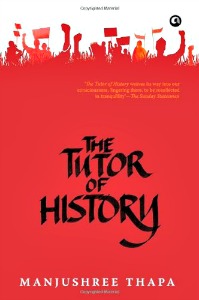
The_Tutor_of_History_cover_300HEIDI NOROOZY, adult TCK, translator and author (@heidinoroozy): This year I’ve resolved to read more books in translation and stories from far-flung parts of the world. And, as I enjoy novels set in foreign locations that are told in local voices, I’ve got these two on my list:

The Tutor of History, written in English by the Nepali author Manjushree Thapa
SYNOPSIS: One of South Asia’s best-known writers, Thapa follows the lives of a variety of characters in the lead-up to local and national elections in a small town in central Nepal.
NOTE: This novel came out in 2012, but I haven’t gotten round to reading it yet.

The_Little_Paris_Bookshop_cover_300The Little Paris Bookshop, by the German author Nina George (forthcoming in English in June).
SYNOPSIS: Monsieur Perdu calls himself a literary apothecary. From his floating bookstore in a barge on the Seine, he prescribes novels for the hardships of life. The only person he can’t seem to heal through literature is himself…but will he manage to do that on a mission he takes to the south of France, with an Italian chef as his companion?
NOTE: I already read the novel in German. In Germany it spent over a year on the bestseller lists.


My_Fellow_Prisoners_cover_300KELLY RAFTERY, translator and writer: In 2015, I am looking forward to being able to read Mikhail Khodorkovsky’s collection of short stories entitled My Fellow Prisoners. Already available in Europe, it is due to have its U.S. release in late February. Convicted on thinly disguised, politically motivated charges, Mikhail Khodorkovsky went from being Russia’s richest man to a labor camp inmate in Siberia. In the decade of his incarceration, Khodorkovsky scribbled short sketches of the men he encountered, jailers and prisoners alike.


SUPRIYA SAVKOOR, editor and mystery writer: In the last roundtable, I mentioned having recently read two gripping memoirs: Not My Father’s Son, by Alan Cumming, and A Long Way Home, by Saroo Brierley. In 2015 I’m looking forward to more books that surprise me as these two did, particularly ones in which the new stories are intertwined with the old ones and make me see the grander scheme of things.


Rebel_Queen_cover_300ALLI SINCLAIR, world traveler and novelist (www.allisinclair.com): I’m a huge fan of Michelle Moran’s books and any book of hers is an automatic buy for me. Moran has an interesting story. Born in Southern California, she was a public high school teacher before becoming a writer, using her summers to travel around the world. It was her experiences as a volunteer on archaeological digs that inspired her to write historical fiction. Moran’s upcoming work, Rebel Queen, will be released in March. It’s about Queen Lakshmi—also known as India’s Joan of Arc because she stood up to the British invasion of her beloved Kingdom of Jhansi. The queen raises two armies—one male and one female—and they go into battle against the well-prepared British.

Moran’s books are rich in historical facts but the stories are so enthralling it never feels like a history lesson. Another reason I’m a fan is because she usually chooses the point of view of someone not so well known. For example, in this story the main character is Sita, one of the Queen’s trusted soldiers and companions, a device that serves to paint a less-biased picture of the more famous Queen Lakshmi.

* * *

Thank you, ML, JJ and guests! Readers, do you have any further 2015 recommendations? Please leave a comment below. And then let’s get our noses back into our books!

Finally, please be sure to sign up for the DISPLACED DISPATCH, which has a Recommended Read every week. You can also follow the Displaced Nation’s DISPLACED READS Pinterest board.

STAY TUNED for next week’s fab posts!

If you enjoyed this post, we invite you to subscribe to The Displaced Dispatch, a weekly round up of posts from The Displaced Nation, plus some extras such as seasonal recipes and occasional book giveaways. Sign up for The Displaced Dispatch by clicking here!

Related posts:

BOOKLUST, WANDERLUST: 2014–2015 books recommended by expats & other international creatives (1/2)

Global Bookshelf Part OneHello Displaced Nationers! Looking back at the our popular series Best of 2014 in expat books, published at the end of last year, I decided we should continue the fun at the start of the year—and managed to convince our redoubtable editor, ML Awanohara, that the pair of us should canvass our “displaced” contacts to see what they’d enjoyed reading from last year’s crop of new books, as well as books they’re looking forward to reading in 2015.

A “best reads” roundtable, if you will.

In Part One, which appears below, several of my bookworm friends from a previous blog, Novel Adventurers, along with ML and JJ Marsh (JJ writes the Location, Locution column for Displaced Nation), discuss their favorite 2014 reads.

In Part Two, a similar group of us will talk about releases we’re hotly anticipating this year.

Having already shared my 2014 faves in last year’s series, I’ll concede the floor to others, beginning with ML.

—Beth Green

* * *

ML AWANOHARA: Thanks, Beth. These days, I seem to be more of a collector than a reader (I simply can’t keep up with all the titles I hear about!). If you’ll allow me to bend the rules, I’d like to highlight five more 2014 books I’ve discovered since our Best of 2014 in expat books went live. While I can’t personally recommend any of these titles, I feel justified in presenting them as an addendum to our series.

I’ll start with these four “displaced” novels, listed from most to least recent:

IHaveLivedToday_cover_300x200I Have Lived Today (October 2014)
Author: Steven Moore
Synopsis: Having barely survived his Dickensian childhood in 1960s Britain, Tristan Nancarrow sets out on a journey that will take him through the alleys of London and New York, to the rocky shores of ancient islands, and on pub crawls in dark and gloomy ports. The book is a classic coming-of-age adventure.
Expat creds: Originally from England, Moore is a writer, photographer, traveler and part-time ESL teacher who splits his time between Mexico, Korea and the world.
How we learned about: From his blog, Twenty-first Century Nomad.

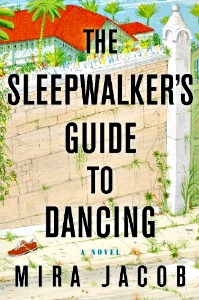
SleepwalkersGuide_cover_300x200The Sleepwalker’s Guide to Dancing (Random House, July 2014)
Author: Mira Jacob
Synopsis: This debut novel takes us on a journey that ranges from 1970s India to suburban 1980s New Mexico to Seattle during the dot.com boom. It follows the fortunes of the Eapens, an Indian American family dealing with tragedy and loss. Alternating between past and present, it shows the family’s transition from India to the United States. As one Indian critic writes, the story is “firmly rooted in an immigrant home, its peculiar methods and madness.”
Expat creds: Jacob is an Adult Third Culture Kid, whose Syrian Christian parents came over from Kerala, India, to New Mexico, in the 1960s. She now lives in Brooklyn with her Jewish American husband and son.
How we found out about: Recommended by Condé Nast Traveler as a book to read on a plane.

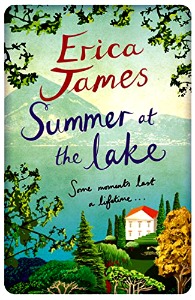
SummerattheLake_cover_300x200Summer at the Lake (Orion, June 2014)
Author: Erica James
Synopsis: An Oxford Tour guide, Floriana, a property developer, Adam, and Esme, an elderly woman who lives next door to a recent purchase by Adam, meet by chance and develop a lovely friendship, which takes them from the glittering spires of Oxford to the balmy shores of Lake Como. The story blends the tale of an old romance with a modern love affair.
Expat creds: James divides her time between living in Cheshire, UK, in a small rural hamlet and Lake Como, Italy, giving her plenty to draw upon in her books.
How we heard about: Pinterest.

TheBalladofaSmallPlayer_cover_300x200The Ballad of a Small Player: A Novel (Deckle Edge, April 2014)
Author: Lawrence Osborne
Synopsis: Lord Doyle decamps from the stuffy legal courtrooms of London to the smoky back-alley casinos of Macau, where he tries to capitalize on the ill-gotten gains that forced his flight from his homeland. But can he game the system at the island’s glitzy baccarat tables? With its expat angst and debauched air of moral ambiguity set amid the sinister demimonde of the Far East’s corrupt gambling dens, the book is an introspective study of decline and decay.
Expat creds: Lawrence Osborne was born in England and lives in New York City. A widely published and widely traveled journalist, he has lived a nomadic life in Mexico, Italy, France, Morocco, Cambodia and Thailand, places that he draws on in his fiction and non-fiction. His first novel was The Forgiven, which Beth Green reviewed for the Displaced Nation last year.
How we learned about: From Amazon.

Lastly, I have another expat memoir that was issued in 2014 and I think deserves a spot on our shelves:

FallinginHoney_cover_300x200Falling in Honey: How a Tiny Greek Island Stole My Heart (Sourcebooks, March 2014)
Author: Jennifer Barclay
Synopsis: Barclay first visited the tiny Greek island of Tilos, in the south Aegean, with friends, including a lover with promising prospects. In her mid-thirties when those prospects fell apart, she decides to reconnect with herself by returning to Tilos for a month and immersing herself in Greek culture, food, language, and dance. Emotionally healed and recharged, she returns to England, where she meets a man who wants what she wants, only to discover… (I won’t ruin it for you.)
Expat creds: Born in Manchester, UK, Barclay subsequently grew up on the edge of the Pennines—but has lived in Greece, Canada and France, with longish stays in Guyana and South Korea. She now lives mostly on Tilos. Notably, she previously produced a memoir about life in South Korea, amusingly titled Meeting Mr. Kim: Or How I Went to Korea and Learned to Love Kimchi.
How we learned about: Barclay’s “Gathering Road” podcast interview with Elaine Masters.


TheShadowoftheWind_coverJJ MARSH, crime series author and Displaced Nation columnist (Location, Locution): My best book of 2014 is The Shadow of the Wind, by Carlos Luis Záfon. All booklovers will fall hopelessly in love with this tale of a boy and a book he swears to protect after he is taken to the Cemetery of Forgotten Books by his bookseller father. Which of us could resist doing the same? Readers know how a story can act as a portal to otherwhere. This is the most perfect example, not to mention illuminating Barcelona in addition to the Franco dictatorship, love, loyalty and growth.


TheLie_coverHEIDI NOROOZY, adult TCK, translator and author (@heidinoroozy): One of the most remarkable and memorable books I’ve read recently is The Lie, by Hesh Kestin. Set in Israel, it features a Jewish human rights lawyer whose commitment to her principles is put to the test when her soldier son is kidnapped by Arab militants and whisked over the border to Lebanon. I love stories that explore the human spirit and are set against a backdrop of real-life events. The heart of this novel is the question of how far a mother is willing to go to save her child. Very chilling at times, heartbreaking at others and masterfully told overall.


PointofDirection_cover_300x200KELLY RAFTERY, translator and writer: In 2014, I loved Point of Direction, by Rachel Weaver. A starkly beautiful tale set in the Alaskan outback, it reads like a cross-cultural adventure. Most expats will recognize the feelings of culture shock, disorientation and unreality that haunt Anna, a woman on the run from her own ghosts. The sharp writing style perfectly mirrors the jagged mountains and rough seas that inhabit the novel as surely as another character.


SUPRIYA SAVKOOR, editor and mystery writer: I haven’t read many memoirs, but in recent months, I read two that blew me away. The first, Not My Father’s Son, by Alan Cumming, is a must-read, even if celebrity memoirs aren’t your thing or you don’t know much about this Scottish actor, now a dual American-British citizen based in New York City. NotMyFathersSon_cover_300x200Cumming, it turns out, is a genius storyteller, and he takes us on an extraordinary journey through two juicy family mysteries across four countries and three time periods. It is, in turns, emotional, tragic, exciting, suspenseful, and funny. The colorful cast of characters, with names like Tommy Darling and Sue Gorgeous, are real people. Along the way, you’ll learn all kinds of fascinating little tidbits, much of it cross-cultural, about genealogy, history, pop culture, language, psychology. Even Cumming’s anecdotes about his life as a TV and film star are surprisingly interesting, largely because of the author’s clear-eyed, honest wisdom. (I also highly recommend the audiobook, narrated by Cumming himself. Alongwayhome_cover_300x200 His lovely Scottish accent and intonations are an additional treat.)

A Long Way Home: A Memoir, by Saroo Brierley, is another great read. The story is simple but powerful: a five-year-old boy in rural India gets lost, is ultimately adopted to a family in Australia, then, as an adult, tracks down his birth family and reunites with them. How he pieces together his past and finds his roots is one of several beautiful mysteries in this small book. Loss and identity are obvious themes, but not just for the author. A truly unique story. (Side note: Modern technology is one of this book’s heroes.)


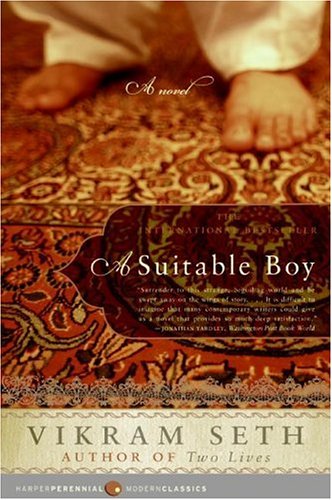
ASuitableBoy_coverALLI SINCLAIR, world traveler and novelist (www.allisinclair.com): I recently re-read A Suitable Boy by Vikram Seth. It was released way back in 1993 and caused quite a stir in the literary world as it was one of the longest novels ever to be published in English (1,349 pages hardcover). I first read it then, and, while it’s highly unusual for me to give a book a second or third read, every few years I return to this wonderful novel rich with Indian history, family saga, and a heartbreaking romance. It’s set in post-partition India and explores the political issues at the time (1950s), along with the Hindu-Muslim issues and the caste system. It’s quite an undertaking to read this book but I enjoy revisiting the characters I love. I am very fond of stories written by Indian authors as there is a beautiful style and interesting points of view I find appealing. There’s a sequel in 2016—I can’t wait!

* * *

Thank you, ML, JJ and guests! Readers, have you read any of the above or do you have further 2014 recommendations? Please leave a comment below. And stay tuned for Part Two of this post, books to look forward to in 2015!

Finally, please be sure to sign up for the DISPLACED DISPATCH, which has a Recommended Read every week. You can also follow the Displaced Nation’s DISPLACED READS Pinterest board.

STAY TUNED for PART 2 of this post: 2015 reads!

If you enjoyed this post, we invite you to subscribe to The Displaced Dispatch, a weekly round up of posts from The Displaced Nation, plus some extras such as seasonal recipes and occasional book giveaways. Sign up for The Displaced Dispatch by clicking here!

Related posts:

And the December 2014 Alices go to … these 4 international creatives

 © Iamezan | Dreamstime.com Used under license

© Iamezan | Dreamstime.com
Used under license

If you are a subscriber to our weekly newsletter, the Displaced Dispatch, you’re already in the know. But if you’re not, listen up. (Hey, why aren’t you? Off with your head!)

Every week, when that esteemed publication comes out, we present contenders for a monthly “Alice Award,” most of whom are writers or other kinds of international creatives who appear to have a special handle on the curious and unreal aspects of being a global resident or voyager.

Not only that, but this person tries to use this state of befuddlement as a spur to greater creative heights.

Today’s post hono(u)rs our four Alice recipients for December 2014. Listed in order of most to least recent, they are (drumroll…):

1) Lani Cox, half-Thai expat in Chiangmai, Thailand

For her comment on a post: “Dealing with Loneliness Abroad (and at home),” by Mary, former expat in Japan and blogger at The Ruby Ronin. (NOTE: Lani’s own blog is Life, the Universe and Lani.)
Posted on: 9 December 2014

2) Amanda Mouttaki, American expat in Morocco and blogger

For her post: The NOT-SO-NICE Side of Expat Life to her blog, MarocMama
Posted on: 25 November 2014

Alice Connection:
Pool of Tears Quote

LANI: “When I first moved to Thailand, … I was deeply confused over what I was expected to do and where I was supposed to go and basically get the help that I needed for my visa. So, I spent the day crying into my pillow! It didn’t help that we lived by this horrible electrical monster thingy and had squatters outside our window.”

AMANDA: “I cried. And cried. And cried. Over nothing specifically…”

Citation: Lani and Amanda, is it any wonder we have associated your writings with Alice in Wonderland’s “pool of tears” moment? Let us begin by saying how much we admire you both for overcoming the feeling of shame that comes with realizing, and admitting to others, that even “great girls” cry.

Lani, it seems that you blamed yourself, thinking that Thailand shouldn’t have confused you so much since you were raised in the United States by a Thai mother (she’d married an American soldier she’d met during the Vietnam War). But that of course is silly, especially as she didn’t teach you any Thai language (knowing some Thai would have helped with getting your visa sorted). On the other hand, maybe it’s good she didn’t teach you the language, you might have been further disappointed. (We speak from experience, having been Brits in the US or Yanks in the UK.)

Amanda, you say you didn’t want your readers to think you were complaining, especially when so many of them find your story romantic—and it is romantic, meeting and falling in love in fairy-tale fashion on the streets of Marrakesh. In any event, becoming catatonic over nothing specific sounds perfectly normal to us. We’re just glad MarocBaba was there to give you a hug—more than Alice could count on!

3) Kevin Lynch, American expat in Hong Kong

For his interview: “My Airbnb year in Hong Kong: ‘Big fat American’ discovers hidden sides to the city”, by Vanessa Yung, in the South China Morning Post
Posted on: 5 December 2014
Big Alice Quote

“Part of it is I’m a big fat American, which makes things even smaller. It’s just such a different scale of living. Just when I’m used to it—I don’t even take pictures of most of the small things any more—and then something will surprise me.”

Citation: Hats off to you, Kevin—even the Mad Hatter is removing his—for deciding to forgo Western digs to stay in Airbnb accommodation during your first 14 months in Hong Kong, a city that is challenged for space and known for its cramped accommodations. Recall that Alice, who isn’t fat, found the White Rabbit’s house a bit of an uncomfortable fit. You are right, of course: serviced apartments for expats don’t afford many opportunities to meet the natives even if they do have taller ceilings, longer beds, fatter sofas, and proper cutlery. Kudos to you for learning how to tilt your head when standing up in the low-ceilinged rooms and to sleep “in the fetal position” when beds are too short. You had the kind of Hong Kong experience not usually available to the generous of flesh.

4) Amanda van Mulligen, British expat in Holland, blogger, and one of the contributors to the new book Dutched Up! Rocking the Clogs Expat Style

For her post: “My Love Hate Relationship with Sinterklaas” to her personal blog, Expat Life with a Double Buggy
Posted on: 4 December 2014
Mock Tortoise SongAlice Connection:

“Now, I’m all for a good sing song. I’ll croon away with the best of them. But Sinterklaas songs get tedious sang at the top of a child’s voice for weeks on end.”

Citation: Amanda, surely a song repeatedly begging Sinterklaas to leave something nice in one’s shoe or boot is preferable to a song about green soup, such as the Mock Turtle sings to Alice? That’s after she had to withstand the Lobster Quadrille, with repeated refrains of:

Will you come and join the dance?
So, will you, won’t you, won’t you,
Will you, won’t you join the dance?
Will you, won’t you, will you,
Won’t you, won’t you join the dance?

But we do appreciate your attempt to convey the strange, Wonderland-like experience of raising children in a country other than the one in which you grew up. And we grant that you’re not as lucky as Alice, who was saved from having to hear the soup song in its entirety by the announcement of the trial, whereas for you the Sinterklaas din carries on until May! Sinterklaas bloody kapoentje indeed.

*  *  *

So, readers, do you have a favorite from the above, or have you read any recent posts you think deserve an Alice Award? We’d love to hear your suggestions! And don’t miss out on the shortlist of Alice contenders we provide in each week’s Dispatch, which are sources of creative thought if nothing else! Get on our subscription list now!

STAY TUNED for more fab posts.

Writers and other international creatives: If you want to know in advance the contenders for our monthly Alice Award winners, sign up to receive The Displaced Dispatch, a round up of weekly posts from The Displaced Nation, with news of book giveaways, future posts, and of course, our weekly Alice Award!. Register for The Displaced Dispatch by clicking here!

Related posts:

Top 5 photos from “A Picture Says” in 2014

Top 5 Pix 2014For the final post in this year’s “A picture says…”, host James King highlights some of the photos that spoke to him most eloquently, from this year’s series. (If you like what you see, be sure to check out his blog, Jamoroki.)

My heartiest holiday greetings to one and all. I hope you enjoying the festive season, and I wish you a wonderful New Year.

As ML says, we’re doing an End-of-Year Special instead of the regular monthly interview. But before I get started with my picks, I really want to thank the 10 wonderful people who have contributed so much to my column over the past year by subjecting themselves to my tortuous interviews. Without exception, every single one of you has had a fascinating story to tell which has been beautifully illustrated with the personal photographs you were kind enough to share with the Displaced Nation readership.

After it was suggested to me that I should select my five favorite photos out of the 70 posted, I dived in head first, only to realize I could upset some of the 10 new friends I have made in 2014.

So I want to say before we start that this is not a competition. I would like to pick all 70 photos but of course that’s not possible so here are my 5 (in random order) along with my reasons for choosing them. There were a few close shaves by the way.

1) “Pumpkin Field,” by Aisha Ashraf

Irish expat, blogger, traveller and photographer Aisha Ashraf is currently based in Canada with her husband and three children. A freelance features writer, Aisha has published articles in newspapers, magazines and a range of expat and mental health websites. She says she has been a cultural chameleon since she first emigrated from Ireland to England at the age of eight. She is also a friend to the Displaced Nation and a recipient of one of its “Alice Awards” for a post on her Expatlog blog, provocatively entitled “My mother was a nun.”

I have chosen this photo of Aisha’s daughter in a field full of pumpkins because it is so vital, and the naturalness of the colours brings her lovely composition to life. Not only this but the viewer can only guess how or why a picture was created and Aisha’s words offer a whole new dimension.
No 1 Pick 2014 Ashraf

Aisha says:

“I love nature—perhaps it was growing up on a farm and spending most of my time outdoors. I have a condition called Borderline Personality Disorder (BPD) and getting outside is a big factor in alleviating its debilitating hold. I see incredible, uncomplicated beauty in the natural world that I find soothing and strengthening. I try to capture it with my camera in a way that may allow others to be moved and nourished by it, too.”

2) “Church on Skyrne Hill,” by Ed Mooney

The story of Irishman Ed Mooney is quite different from others guests for several reasons, the main one being that he is not an expat. On the contrary, he travels within the confines of his native Ireland.

That said, Ed does cross boundaries, at least in a temporal sense. He loves nothing more than to immerse himself in an obscure historical site, exploring Irish history, lore and mythology while also photographing the surrounding ruins, to keep a record of what remains from generations past.

I really like the name Ed has given to his hobby: “ruin-hunting”. Ed tells me that ruin-hunting merges Past, Present & Future. By researching the history behind a place, he pays tribute to the Past. By writing about the experience, he brings it into the Present. And by posting his article, along with his photos, on his blog, he preserves his findings for the future. I love the way Ed weaves historic research into (mostly) black-and-white images.

I have chosen Ed’s photo of the church that sits on Skryne Hill, the site of an early Christian settlement. Ed says his memory of Skryne remains vivid. The tower is inaccessible due to a very heavy iron gate that appears to be rusted shut. As with all Ed’s pictures there seems to be a ghostly atmosphere, which is not surprising considering his subjects. Ed’s story of his experience is spooky to say the least and drew me into the picture more closely than usual.
No 2 Pick Mooney

Ed describes his visit to the church as follows:

“I shone my torch through the bars on one of the windows. Inside were a number of interesting stone artefacts that I wanted to capture. So I set up my flashgun and shot through the bars. On the second or third flash something physically grabbed my camera strap and pulled it into the tower. It all happened so fast, but somehow I managed to pull that camera away from the window while shouting a few expletives. At first I wondered if it might have been a draught of some kind that had caught my strap, but it could not have been as I was pressed right up against the opening and there was no wind to cause a draught. Then I thought that maybe someone was inside, but there was no way for a person to get in or out of the tower. To this day I still can’t explain what happened. But it certainly left a lasting memory.”

3) Monteseel by Andy Harvard

South African photographer, traveller and chef Andrew (Andy) Harvard is by nature a creative person. His creative talents, ideas and passion spill over into his passion for photography, which he indulges on travels in South Africa and worldwide. His blog celebrates all three of his passions under the descriptive title “snap fly cook”.

An early bird, Andy often wakes-up at 03h00 in summer to be on the beach in Durban, where he lives, in time for first light and sunrise an hour or so later. He is also fond of seeking out “hard to access” locations and revels in the hours spent working and reworking his photos through his favourite software packages.

Andy says “I find this process very calming and am sometimes like a kid in awe when something magical happens. It is a meditation of sorts for me, an ‘addiction’ that has to be fed. Oh! The wonders of HDR processing.”
Pick No 3 2014 Harvard Collage
I have chosen Andy’s beautiful picture of Monteseel because, having lived in Durban for a while way back in 1990, I know how awe inspiring the landscape is. Andy has perfectly captures the essence of the Kwa Zulu Natal in this photo. I can feel the heat as the day dawns and, as Andy says:

“Huge mountains, deep valleys, tranquillity, big skies, rural living, clean fresh breezes, golden light—Monteseel, in the Valley of One Thousand Hills, makes one realize how small and insignificant certain problems we all have actually are.”

4) “Boy in the Door,” by Cornish Kylie

Kylie Millar was born and bred in Cornwall, England, and, though she now finds herself in Thailand, just like me, she remains proud of her Cornish heritage, having branded herself on her travel blog as Cornish Kylie.

Not only that but Kylie informs me that the Cornish were granted official minority status earlier this year. Being born and bred in Cornwall now means, technically, that a person is identified as Cornish first, British second—with the latter identity being confined largely to one’s passport. Well, it is true that Cornwall was its own Celtic nation before the Norman Conquest, and they have their own language, Kernewek, which is distinct from Welsh.

I had little hesitation in choosing Kylie’s “Boy in the Door” as one of my five. Adjectives like dirty, dusty, colourful, old and intriguing come to mind when I look at her picture. And each time I look at it, I expect the boy to be gone.
Pick No 4 2014 Kylie
Kylie describes it thus:

“When I was in the Atlas Mountains of Morocco, I couldn’t resist taking pictures of the many beautifully decorated doorways. This picture was accidental as the boy emerged from the doorway just as I pressed the shutter release. Then I realised how people can add an extra dimension and started to include people in more of my photographs. This trip to Morocco was special: it opened my eyes to a very different part of the world.”

5) “Hampi,” by Maverick Bird

Born and raised in India, Svetlana Baghawan, who calls herself Maverick Bird, is a mother and writer as well a traveller. She describes herself as a compulsive shopper, foodie, bad cook (her words) and animal lover. She likes to travel solo across continents, sometimes completely alone, often with her five-year-old daughter in tow. Having worked as a flight attendant for quite a few years, she was bitten by the travel bug early, and for good.

I have chosen Svetlana’s picture of Hampi, a village in Karnataka State in South West India. It is famed for being located within the ruins of Vijayanagara, an empire that came to prominence at the end of the 13th century. Svetlana has clearly been touched by the places she has visited on her travels and in this picture she conveys feelings of solitude in the wilderness and tranquility. I find it very moving.
Pick No 5 2014 Maverick
Svetlana says:

“Although it was tough to decide between Hampi and Kashmir, I love Hampi more for its surreal mix of a tangible ghostly civilization lying scattered amidst one of the most beautiful landscapes in India (think balancing boulder, rice fields, forests and obscure rivers) and little pockets of villages. The enchanting blend of the dead and living is breath-taking and this photo represents Hampi’s larger-than-life beauty. You have to see it to believe it.”

I believe you. Svetlana.

* * *

Readers, do you agree with my picks or do you have other favorites? Please leave any questions or feedback in the comments!

(If you are a travel-photographer and would like to be interviewed by James for the 2015 series, please send your information to ml@thedisplacednation.com.)

STAY TUNED for our next fab post!

If you enjoyed this post, we invite you to register for The Displaced Dispatch, a round up of weekly posts from The Displaced Nation, with Alice nominees, exclusive book giveaways and other extras. Register for The Displaced Dispatch by clicking here!

Related posts:

BOOKLUST, WANDERLUST: Best of 2014 in expat books (1/2)

Best of Expat Books 2014

Kindle Amazon e-reader by Unsplash via Pixabay (CC0 1.0)

Seasons greetings, Displaced Nationers. That special time of the year is here again, when we publish our selection of this year’s books with meaningful connections to expats, Third Culture Kids, global wanderers, and others of us who have in some way led “displaced lives”.

Having assembled this list on my own in years past, I am pleased to be joined this year by Beth Green, our BOOKLUST, WANDERLUST columnist, who has also graciously agreed to sign over her column space for the month.

Let’s give Beth the floor:

Happy holidays, all! Preparing for this yearly special, I went back through all of the books I’ve read since January—not such an easy task; I read a lot!—and realized that I hadn’t actually read all that many that were published in 2014. I just now took a look at my TBR list, to which I’m constantly adding—and saw it includes a few that were written a couple of hundred years ago!

As is the case I suspect for many a well-traveled reader, I read most often on my Kindle, which means that I don’t often look at the title and publication pages to see when the book came out. Probably the book that has stayed with me for the longest this year is The Tiger’s Wife, the debut novel by Téa Obreht, an American writer of Bosniak/Slovene origin. But that came out in 2011!

* * *

And now for some 2014 picks in these three categories (stay tuned for a follow-up post with THREE MORE CATEGORIES!!):

  1. TRAVEL
  2. MEMOIRS
  3. CROSS-CULTURAL CHALLENGES

A few points to note:

  • Books in each category are arranged from most to least recent.
  • Unless otherwise noted, books are self-published.
  • Contributions by Beth are (appropriately enough!) in green.

* * *

TRAVEL

My_Gutsy_story_cover_smallMy Gutsy Story Anthology: Inspirational Short Stories About Taking Chances and Changing Your Life (Volume 2) (October 2014)
Compiled by: Sonia Marsh
Synopsis: Marsh celebrates the gutsy in each of us with this collection of stories from 64 authors who found the courage to face their fears and live their dreams.
Expat credentials: Born to a Danish mother and British father, who brought her to live in West Africa at the age of three months, Marsh has lived in many countries—Demark, Nigeria, France, England, the U.S. and Belize—and considers herself a citizen of the world. With a degree in environmental science from the University of East Anglia, U.K., she is currently living in Southern California with her husband but in 2015 intends to start a new chapter as a Peace Corps volunteer.
How we heard about: We have long enjoyed Marsh’s collection of “gutsy” travel stories and have followed her on Twitter for some time.
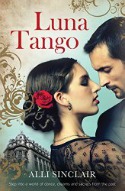

Luna_Tango_Cover_smallLuna Tango (The Dance Card Series Book 1) (Harlequin Mira, July 2014)
Author: Alli Sinclair
Genre: Romance
Synopsis: Tango is a mysterious—and deadly—influence in journalist Danni McKenna’s life. She looks for answers about her mother’s and grandmother’s lives, and finds romance in the process.
Expat credentials: Alli Sinclair is from Australia but lived for many years in South America, where she worked as a mountain and tour guide. She considers herself a citizen of the world.
How we heard about it:  I used to blog with Alli on the now-retired Novel Adventurers and have enjoyed hearing about her book’s path to publication. I was especially thrilled when Luna Tango won Book of the Year in the inaugural AusRom Today Reader’s Choice Awards last month. Congratulations, Alli!
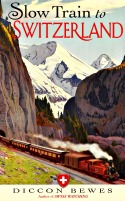

Slow-Train-final-cover_smallSlow Train to Switzerland (Nicholas Brealey Publishing, April 2014)
Author: Diccon Bewes
Genre: Travel history
Synopsis: Bewes follows “in the footsteps” of Miss Jemima Morrell, a customer on Thomas Cook’s first guided tour of Switzerland in 1863, and discovers how this plucky Victorian woman helped shape the face of modern tourism and Switzerland itself, transforming it into the Cinderella of Europe.
Expat creds: An Englishman who grew up in “deepest Hampshire”, Bewes worked for ten years at Lonely Planet and the UK consumer magazine Which? Travel, before moving to Bern, Switzerland, where he is now a full-time writer. He considers himself a “permanent expat.”
How we discovered: I came across Bewes’s blog through a Google Alert and was impressed by how prolific he is. I also liked the fact that he admits to being a chocolate lover. (No wonder he has a thing for Switzerland!)


Kamikaze_kangaroos_cover_smallKamikaze Kangaroos!: 20,000 Miles Around Australia. One Van,Two Girls… And An Idiot (February 2014)
Author: Tony James Slater
Synopsis: Tony James Slater knew nothing about Australia. Except for the fact that he’d just arrived there. The stage is set for an outrageous adventure: three people, one van, on an epic, 20,000-mile road trip around Australia. What could possibly go wrong?…
Expat credentials: As a former writer for the Displaced Nation, what more creds does Tony need?
How we heard about: The Displaced Nation is committed to tracking Tony’s progress as a writer. We are especially fond of his ability to make fun of himself! He wears his travels lightly, you might say…


MEMOIRS

Year_of_Fire_Dragons_cover_smallYear of Fire Dragons: An American Woman’s Story of Coming of Age in Hong Kong (Blacksmith, forthcoming June 2015; available for pre-order)
Author: Shannon Young
Synopsis: When 22-year-old Shannon follows her Eurasian boyfriend to his hometown of Hong Kong, she thinks their long distance romance is over. But a month later his company sends him to London. The city enchants her, forcing her to question her plans. Soon, she will need to choose between her new life and the love that first brought her to Asia.
Expat creds: Shannon is an American twenty-something currently living in Hong Kong. (Reader, she married him!)
How we knew about: Shannon writes our “Diary of an Expat Writer” column and has also been sharing “chunks” from an anthology she edited of writings by women expats in Asia (see listing below: under “Crosscultural Challenges”).


Coming_Ashore_cover_smallComing Ashore (October 2014)
Author: Catherine Gildiner
Synopsis: The third and final in a series of best-selling memoirs by this American who has worked for many years as a psychologist in Toronto and writes a popular advice column in the Canadian women’s magazine Chatelaine. The book begins with Gildiner’s move to Canada in 1970 to study literature at the University of Toronto, where she ends up rooming with members of the FLQ (Quebec separatists), among other adventures.
How we heard about: Book #2 in Chatelaine’s 7 must-read books for November.
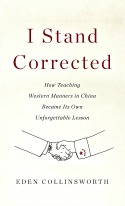

I_stand_corrected_cover_smallI Stand Corrected: How Teaching Manners in China Became Its Own Unforgettable Lesson (Nan A. Talese, October 2014)
Author: Eden Collinsworth
Synopsis: Collinsworth tells the story of the year she spent living among the Chinese while writing an advice manual covering such topics as personal hygiene (non-negotiable!), the rules of the handshake, and making sense of foreigners. (She has since returned to live in New York City.)
How we heard about: Book #3 in Conde Nast Traveler’s 7 Books to Get You Through Travel Delays, Bad Company.


Seven_Letters_from_Paris_cover_smallSeven Letters from Paris: A Memoir (Sourcebooks, October 2014)
Author: Samantha Vérant
Synopsis: At age 40, Samantha Verant’s life is falling apart—she’s jobless, in debt, and feeling stuck…until she stumbles upon 7 old love letters from Jean-Luc, the sexy Frenchman she’d met in Paris when she was 19. She finds him through a Google search, and both are quick to realize that the passion they felt 20 years prior hasn’t faded with time and distance.
How we heard about: From an interview with Vérant by British expat in Greece Bex Hall on her new blog, Life Beyond Borders.


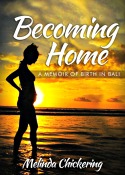
Becoming_Home_cover_smallBecoming Home: A Memoir of Birth in Bali (October 2014)
Author: Melinda Chickering
Synopsis: Though born in small-town USA, Melinda never felt quite at home there. As an adult, her search for herself led her to the Indonesian island of Bali, where she found herself living a life she hadn’t anticipated, becoming a housewife and mother. This memoir of her experience with pregnancy and birth offers a window on life for a western woman living in an Asian culture that respects the forces of darkness as well as the light.
Expat credentials: Originally from Iowa, Chickering has settled in Bali.
How we heard about it: Displaced Nationer Melinda contacted me earlier this year to tell us the exciting news that her memoir was being published. Congratulations, Melinda!
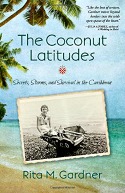

The_Coconut_Latitudes_cover_smallThe Coconut Latitudes: Secrets, Storms, and Survival in the Caribbean (September 2014)
Author: Rita M. Gardner
Synopsis: Rita is an infant when her father leaves a successful career in the US to live in “paradise”—a seaside village in the Dominican Republic. The Coconut Latitudes is her haunting, lyrical memoir of surviving a reality far from the envisioned Eden—and of the terrible cost of keeping secrets.
How we heard about: Displaced Nation columnist James King interviewed Rita for “A picture says”.
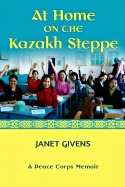

At_home_on_Kazakh_Steppe_cover_smallAt Home on the Kazakh Steppe: A Peace Corps Memoir (August 2014)
Author: Janet Givens
Synopsis: The story a middle-aged grandmother who left behind a life she loved and forged a new identity as an English teacher, mentor, and friend in Kazakhstan, a newly independent country determined to find its own identity after generations under Soviet rule.
How we heard about: Recommended by the We Love Memoirs Facebook Community.


Good_Chinese_Wife_cover_smallGood Chinese Wife: A Love Affair with China Gone Wrong (Sourcebooks, July 2014)
Author: Susan Blumberg-Kason
Synopsis: A shy Midwesterner, Blumberg-Kason spent her childhood in suburban Chicago dreaming of the neon street signs and double-decker buses of Hong Kong. She moved there for graduate school, where she fell for Cai, the Chinese man of her dreams. As they exchanged vows, she thought she’d stumbled into an exotic fairy tale, until she realized Cai—and his culture—where not what she thought. One of our featured authors, Wendy Tokunaga, says: “A fascinating, poignant and brutally honest memoir that you won’t be able to put down. Good Chinese Wife is riveting.”
How we heard about: We had known about the book for some time but hadn’t realized it came out this year Jocelyn Eikenburg tipped us off in her comment below. She, too, highly recommends.
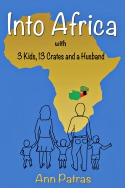

Into_Africa_cover_smallInto Africa: 3 kids, 13 crates and a husband (June 2014)
Author: Ann Patras
Synopsis: Patras was born and raised in Burton-upon-Trent, in the English Midlands. When her husband, Ziggy, is offered a two-year contract as site manager for building a new cobalt plant in Zambia, they discuss the pros and cons of leaving luxuries and England behind—and then decide it could be an “interesting” family adventure. They end up raising three kids, countless dogs and living in Africa for over thirty years. (She and Ziggy now live in Andalucía, Spain, and have absolutely no intention of ever moving again. Hmmm…have they encountered Charlotte Smith yet? See next item.)
How we heard about: E-book promotion.
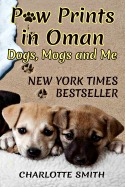

PawPrintsinOman_cover_smallPaw Prints in Oman: Dogs, Mogs and Me (April 2014)
Author: Charlotte Smith
Synopsis: Smith was born, raised and lived in West Sussex, UK, until her persuasive husband, Nick, swept her and their youngest daughter off to live in mystical Oman. Her love of animals helped her to shape an extraordinary life in the Middle East—her first step being to convince a local veterinary clinic to employ her. (Note: Smith now lives in Andalucía, in southern Spain.)
How we heard about: Recommended by the We Love Memoirs Facebook community. The book was also on the New York Times best-seller list (“animals”) in October.


loveyoubye_cover_smallLoveyoubye: Holding Fast, Letting Go, And Then There’s the Dog (She Writes Press, April 2014)
Author: Rossandra White
Synopsis: A collision of crises on two continents forces Rossandra White to face the truth. Just as her American husband disappears to Mexico, her brother’s health crisis calls her back home to Africa, and her beloved dog receives a fatal diagnosis. She faces down her demons to make a painful decision: stay in a crumbling marriage, or leave her husband of 25 years and forge a new life alone.
How we heard about: Through a Facebook share of White’s Good Reads giveaway.
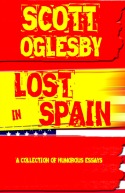

Lost_in_Spain_cover_smallLost in Spain: A Collection of Humorous Essays (March 2014)
Author: Scott Oglesby
Synopsis: Scott Oglesby moved to Spain to start over. When he discovered he was still the same person, now six thousand miles from home, the result was dysfunction, delusion, chaos and this book, which many readers have described as “hilarious” and “brilliant”.
How we heard about: E-book promotion.


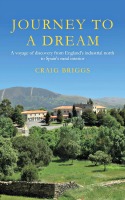
Journey_to_a_Dream_cover_smallJourney to a Dream: A voyage of discovery from England’s industrial north to Spain’s rural interior (February 2014)
Author: Craig Briggs
Synopsis: Craig, his wife Melanie and their dog, Jazz, left their home town of Huddersfield, in England’s industrial north, and set off for Galicia: a remote and little-known autonomous province in the northwest corner of Spain. And so began their Journey to a Dream…
How we heard about: E-book promotion, as a result of which I am currently reading this on my Kindle. It’s very well written and entertaining.


Paris_Letters_cover_smallParis Letters: One woman’s journey from the fast lane to a slow stroll in Paris (February 2014)
Author: Janice Macleod
Synopsis: MacLeod found herself age 34 and single, suffering from burn-out and dissatisfaction. So she abandoned her copywriting job and headed off to Europe, where she ended up finding love and freedom in a pen, a paintbrush…and Paris! Macleod says her journey was inspired by The Artist’s Way, written by Julie Cameron.
How we heard about: From an interview with MacLeod by American expat in Paris Lindsey Tramuta, which appeared on Lindsey’s blog, Lost in Cheeseland.


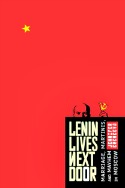
lenin_smallLenin Lives Next Door: Marriage, Martinis, and Mayhem in Moscow (Small Batch Books, January 2014)
Author: Jennifer Eremeeva
Synopsis: Based on Eremeeva’s two decades in Russia, Lenin Lives Next Door is a work of self-described “creative nonfiction.” It knits together vignettes of cross-cultural and expatriate life with sharp observation, historical background, and humor. Each chapter explores an aspect of life in today’s Russia, told with the help of a recurring cast of eccentric Russian and expat characters, including HRH, Eremeeva’s Handsome Russian Husband (occasionally a.k.a. Horrible Russian Husband), and their horse-mad daughter.
How we heard about: Eremeeva sent me a review copy and we met up for coffee at Columbia University. I found her a delightful conversationalist. No wonder several reviewers have likened her style to Jane Austen’s.


CROSS-CULTURAL CHALLENGES
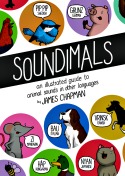
Soundimals_cover_smallSoundimals: An illustrated guide to animal sounds in other languages (November 2014)
Author/illustrator: James Chapman.
Synopsis: In English, we say dogs go WOOF, but in Romanian they go HAM HAM. Chapman regularly publishes illustrations of onomatopoeia and animal sounds in other languages on his Tumblr blog. This book (available through his Etsy shop) collects some of those plus a lot of new sounds that weren’t in the original comics, and a few new animals that haven’t been posted at all.
Expat creds: None that we know of; would love to hear more about how he got started collecting these sounds.
How we heard about: Pinterest.
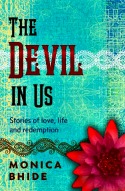

The_Devil_in_us_cover_smallThe Devil in Us (CreateSpace, October 2014)
Author: Monica Bhide
Genre: Literary fiction
Synopsis: Short stories that carry you to a far away place, amidst people seemingly very foreign to you, but somehow create a connection—from the Indian-American cancer survivor escaping her pain and finding passion in Mumbai, to the Japanese teen in Georgetown discovering forbidden love. Bhide is known for her writings about Indian food. This is her first work of fiction.
Expat creds: Monica is originally from Delhi, India, but has lived in Bahrain ad now in the United States.
How we found out about: Pinterest.
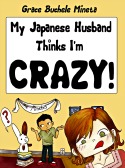

Japanese_Husband_cover_smallMy Japanese Husband Thinks I’m Crazy! The comic book: Surviving and thriving in an intercultural, interracial marriage in Tokyo (October 2014)
Author: Grace Buchelle Mineta
Genre: Comics/manga; humor
Synopsis: The autobiographical misadventures of a native Texan freelancer and her Japanese “salaryman” husband, in comic book form.
Expat credentials: Mineta grew up mostly in Texas, but also spent her teenage years in Accra, Ghana and Sapporo (Hokkaido), Japan. She now lives in Tokyo with her Japanese husband (they got married in January) and blogs at Texan in Tokyo.
How we found out about: From a guest post by Mineta on Jocelyn Eikenburg’s blog, Speaking of China, titled The “Dark Side” to Moving Across the World for Love.
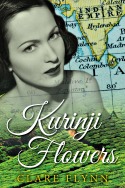

Kurinji_Flowers_cover_smallKurinji Flowers (October 2014)
Author: Clare Flynn
Genre: Historical romance
Synopsis: Set in South India during World War II and India’s struggle for independence, the book is centered on a young British colonial, Ginny Dunbar, who has arrived in India for a new start in life. She has to battle her inner demons, the expectations of her husband, mother-in-law, and colonial British society, and her prejudices towards India and its people.
Expat credentials: Flynn is a repeat expat, having lived for two years each in Paris and Brussels, three years in Milan, and six months in Sydney, though never in India. She now lives in London but spends as much time as she can in Italy. Almost needless to say, Flynn loves travel and her idea for this book came while she was on holiday in Kerala, India.
How we knew about: Flynn was interviewed by JJ Marsh for the latter’s popular column, LOCATION LOCUTION.
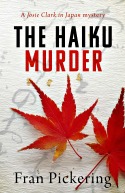

The_Haiku_Murder_cover_smallThe Haiku Murder (Josie Clark in Japan mysteries Book 2) (October 2014)
Author: Fran Pickering
Genre: Expat mystery series
Synopsis: A haiku-writing trip turns to tragedy when a charismatic financier falls from the top of Matsuyama castle. But was he pushed? Expat Londoner Josie Clark thinks he was, and that’s when the trouble starts…
Expat credentials: Pickering has lived and worked in Tokyo, and though she is now back in London (literally next door to where she was born), she travels back to Japan frequently to visit friends and do research for the Josie Clark mystery series.
How we heard about: Pickering was interviewed by JJ Marsh for the latter’s popular column, LOCATION LOCUTION.
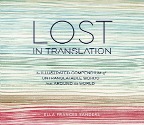

LostinTranslation_cover_smallLost in Translation: An Illustrated Compendium of Untranslatable Words from Around the World (September 2014)
Author: Ella Frances Sanders
Genre: Illustration/Translation
Synopsis: Did you know that the Japanese language has a word to express the way sunlight filters through the leaves of trees? Or that there’s a Finnish word for the distance a reindeer can travel before needing to rest? This book is an artistic collection of more than 50 drawings featuring unique, funny, and poignant foreign words that have no direct translation into English.
Expat credentials:  A self-described “intentional” global nomad, Sanders has lived all over the place—most recently Morocco, the United Kingdom, and Switzerland.
How we heard about: From a post about the book by Maria Popova on her much-acclaimed Brain Pickings site.


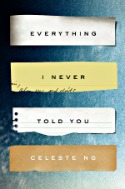
Everything_I_Never_Told_You_cover_smallEverything I Never Told You (Penguin, June 2014)
Author: Celeste Ng
Genre: Thriller
Synopsis: A mixed-race family in the 1970s tries to unravel a family tragedy.
Expat credentials: Celeste Ng isn’t an expat, but she has a deep understanding of what it means to feel displaced. Her work deals with multiculturalism and race issues in the United States.
How we heard about it: It was voted the Amazon Book of the Year.
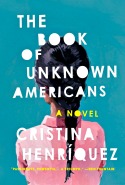

TheBook_Of_Unknown_Americans_smallThe Book of Unknown Americans (Knopf, June 2014)
Author:  Cristina Henríquez
Genre: Literary fiction
Synopsis: Arturo and Alma Rivera have lived their whole lives in Mexico. One day, their beautiful fifteen-year-old daughter, Maribel, sustains a terrible injury, one that casts doubt on whether she’ll ever be the same. And so, leaving all they have behind, the Riveras come to America with a single dream: that in this country of great opportunity and resources, Maribel can get better.
Expat credentials: Henríquez isn’t an expat, but her father was—he came to the US from Panama to attend university.
How we heard about it: Henríquez’s novel was Amazon’s No. 1 bestseller this year in the Hispanic American Literature & Fiction category.


TheOtherLanguage_cover_smallThe Other Language (Pantheon, April 2014)
Author: Francesca Marciano
Synopsis: A collection of short stories involving women who are confronted by radical change or an old flame, in locations that range from New York to India to Kenya to southern Italy.
Expat credentials: Marciano is an Italian novelist who left Rome at age 21 to live in the United States. She later moved to Kenya, where she lived for a decade. Although Italian is her first language, she chooses to write in English.
How we found out: From an essay by William Grimes in the New York Times Book Review: “Using the Foreign to Grasp the Familiar: Writing in English, Novelists Find Inventive New Voices.”


Dragonfruit_cover_smallHow Does One Dress to Buy Dragon Fruit: True Stories of Expat Women in Asia (April 2014)
Editor: Shannon Young
Genre: Expat non-fiction; anthology
Synopsis: In this collection, 26 women reveal the truth about expatriate life in modern East Asia through original works of memoir and creative non-fiction.
Expat credentials: To qualify for inclusion in the volume, writers had to be able to say they were, or had once been, expats.
How we heard about: We have followed Shannon Young ever since she contributed to the Displaced Nation on the topic of the London Olympics. She currently writes a column for us about being an expat writer, and we’ve been sharing “chunks” from her Dragonfruit anthology for the past few months.


Chasing_Athens_cover_smallChasing Athens (April 2014)
Author: Marissa Tejada
Genre: Romance
Synopsis: When Ava Martin’s new husband unexpectedly ditches her months after they’ve relocated across the world to Greece, the heartbroken American expat isn’t sure where home is anymore. On the verge of flying back to the States with her tail between her legs, she makes an abrupt decision to follow her gut instead and stay on in Greece, until a crisis back home forces her to decide where she truly belongs.
Expat credentials: A Native New Yorker, Tejada is an author, writer and journalist based in Athens, Greece. Living the expat life in Europe inspired her to write her debut novel.
How we heard about it: Again, from an interview conducted by British expat in Greece Bex Hall on her blog, Life Beyond Borders.


Moving_without_Shaking_cover_smallMoving Without Shaking: The guide to expat life success (from women to women) (April 2014)
Author: Yelena Parker
Genre: Guidebook-meets-memoir
Synopsis: Parker draws from the experiences and views of 9 women who have lived across 12 countries, to craft a resource for those who are dreaming of—or already facing—relocation abroad.
Expat creds: Parker herself is originally from Eastern Ukraine but has lived and worked in the US, Switzerland, the UK and Tanzania. She has chosen London as her latest expat location.
How we heard about: From a Google Alert.

QueenOfCloudPirates_cover_smallQueen of the Cloud Pirates (Crossing the Dropline Book 1) (March 2014)
Author: Andrew Couch
Genre: Fantasy novella
Synopsis: Far to the North of the Iron League core cities lies the Dropline. Beyond this line of cliffs the power of elemental Air rules supreme. The crucial region is threatened and two young men stand at the tipping point. In order to survive, they must learn to work together and rise above their own shortcomings. Oh yeah, and escape from pirates. Don’t forget the pirates….
Expat credentials: An American abroad, Couch lives with his wife in Freiburg, Germany. He says that much of the inspiration for the worlds he writes about is a mix of a wild and crazy imagination (he grew up reading fantasy books) and his travels around the world.
How we found out about: Couch contributes the HERE BE DRAGONS column to the Displaced Nation, focusing on the connection between the displaced life and fantasy writing (more powerful than any skeptics out there might think!).

What_Happens_in_Nashville_cover_smallWhat Happens in Nashville (March 2014)
Author: Angela Britnell
Genre: Romance (“choc lit”)
Synopsis: Claire Buchan, a straight-laced barrister from Exeter, UK, flies to Nashville, Tennessee, to organize her sister Heather’s bridal bash—and quickly finds herself out of her comfort zone and into the arms of a most unsuitable beau…
Expat credentials: Britnell grew up in a small Cornish village in southwestern England. She served in the Royal Navy for almost six years, culminating in an assignment in Denmark, where she met her American husband. Thus began a chronic expat life. The couple, now empty nesters, have settled in Brentwood, Tennessee.
How we heard about: Rosie Milne wrote about Britnell in an article that appeared on Telegraph Expat: “Expat romantic novelists inspired by real life.” (Milne btw lives in Singapore and runs Asian Books Blog.)


Monsoon_Memories_cover_smallMonsoon Memories (January 2014)
Author: Renita D’Silva
Genre: Literary fiction
Synopsis: Sometimes the hardest journeys are the ones that lead you home. Exiled from her family in India for more than a decade, Shirin and her husband lead a comfortable but empty life in London. Memories of her childhood fill Shirin with a familiar and growing ache for the land and the people that she loves. With the recollections, though, come dark clouds of scandal and secrets. Secrets that forced her to flee her old life and keep her from ever returning…
Expat credentials: Now living in the UK, Renita grew up in a picturesque coastal village in South India.
How we heard about: Amazon.

The_Shaping_of_Water_cover_smallThe Shaping of Water (December 2013—we’re letting it squeak in!)
Author: Ruth Hartley
Genre: Literary fiction
Synopsis: The story concerns the overlapping lives of several different people, expats and locals or some mix, who are connected to a ramshackle cottage by a man-made lake in Central Africa during the Liberation wars across its region.
Expat credentials: Hartley grew up on her father’s farm in Zimbabwe, which at that point was known as Rhodesia, at a time when struggles for independence in European-ruled African territories were spreading like a wave. As a young woman, she moved to South Africa to study art and then had to escape to England because of her political activities. She later moved back to Africa, as an expat. She now lives in Southern France.
How we heard about: I discovered Hartley via one of my social networks and then decided to approach her about being interviewed for the Displaced Nation.

* * *

Your turn readers: Have you read any of the above works and if so, what did you think of them? And can you suggest other works to add to the list? Beth and I look forward to reading your comments below!

From Beth:
Intrigued by some of these titles? Go on, download a few! ‘Tis the season to support the output of other international creatives!

Finally, please note: Beth and I may repeat this exercise in six months (summer reads!). But if you can’t wait until then, I suggest that you sign up for our DISPLACED DISPATCH, which has a Recommended Read every week, and also follow our Pinterest board: DISPLACED READS.

STAY TUNED for PART 2 of this post: IT’S FOOD!, THIRD CULTURE KIDS & COUNTRY GUIDES/TRIBUTES.

If you enjoyed this post, we invite you to subscribe to The Displaced Dispatch, a weekly round up of posts from The Displaced Nation, plus some extras such as seasonal recipes and occasional book giveaways. Sign up for The Displaced Dispatch by clicking here!

Related posts:

GLOBAL FOOD GOSSIP: ‘Tis the season to be jolly—and for that I recommend crunchy sweet potatoes

Crunchy Sweet Potato Collage

Joanna Masters-Maggs portrait; “Pecan Sweet Potato Casserole,” by Vox Efx and “Thanksgiving feast,”  by Star Mama, both via Flickr (CC-BY 2.0).

Joanna Masters-Maggs was displaced from her native England 17 years ago, and has since attempted to re-place herself in the USA, Holland, Brazil, Malaysia, Venezuela, Saudi Arabia, and now France. She describes herself as a “food gossip”, saying: “I’ve always enjoyed cooking and trying out new recipes. Overseas, I am curious as to what people buy and from where. What is in the baskets of my fellow shoppers? What do they eat when they go home at night?”

* * *

Last month I had intended to contribute a pleasant little piece invoking “memories of Thanksgivings past”—but I am afraid I just wasn’t feeling in a terribly thankful sort of mood.

That was a shame, really, as Thanksgiving is one of the few holidays I have been lucky enough to experience overseas that my crabby little heart actually embraces. As a foreigner living in the United States, my experience could be likened to that of a grateful orphan, adopted warmly by a family as a vaguely interesting addition to proceedings.

Really, what is there not to like? Good food, and plenty of it, a lot of wine, usually in the host family’s nice crystal—and ABSOLUTELY NO PRESENT-GIVING other than generous hostess gifts.

Et tu, le shopping?

It was actually the contemplation of present-BUYING that prompted my spell of bad humour. Black Friday, the day after Thanksgiving—which Americans traditionally spend at pre-Christmas sales, in a frenzy that can take on the appearance of contact sports with credit cards—has now arrived in France, my current home.

France!

It seems that even the French have lost their ability to say non to foreign habits that threaten their own culture.

Le shopping, too. 😦

Veggies, glorious veggies!

All of that said, I regret that I never sat down and wrote the column I originally had in mind. Soon after I made that decision, the thought of those cosy Thanksgivings where outdoor grey light gives way to the warmth of candles and fires began to get the better of my jour noir.

Especially when I remembered the BEST THING OF ALL about Thanksgiving: it affords an opportunity for Americans to demonstrate their magical ability to convert healthy, vitamin-brimming vegetables into artery-clogging, heart-stopping not-much-time-left-bombs.

The general principle seems to be to cook out as much of the vegetable’s vitamin content as possible, along with its texture and possibly colour. Next comes the flavour makeover. Those green beans must taste of ham hock and bacon, not bean. The loss of beanly texture is viewed as desirable—and really, who enjoys the blackboard squeak of green beans on teeth?

However, I cannot approve of the makeover given to the sweet potato, whose texture when cooked is always soft. Sweet potatoes require a little more bite—and how!

The joy of this vegetable is that, even after the rather horrifying treatment meted out to it, often involving marshmallows, the B vitamins remain intact allowing it to count as a health food still.

God Bless America indeed.

Let’s talk turkey, or where’s the beef?

If there are to be any complaints about Thanksgiving and, given my heritage, there must be complaints, it would be about the bird. As my own father once said of Christmas lunch in the UK:

If it’s meant to be a fancy there should be proper meat.

For him this means beef, I believe. I’m open to other meats, other birds even, but I agree with my dad’s sentiment that the Turkey is a duffer in pretty much every respect. Even at its most organic, just shot and plucked best, it’s just a stomach filler for crowds. Does anyone, I wonder, ever consider serving two smaller but glorious geese rather than one ho hum turkey?

On the bright side, though, who needs meat at all when you can have sides like green-bean-and-bacon casserole?

Since my mood has lifted somewhat with all this talk of misbehaving veggies, I have decided to share the cheer by offering you the sweet potato recipe I love. It was given to me years ago and involves brown sugar, pecans and cinnamon baked to a crisp and crumble like finish—plenty of crunch and bite!

It’s wonderful for Christmas and it’s wonderful anytime. Bon appétit!

pecan sweet potato casserole

Sweet Potato Casserole

Ingredients:
½ kilo (just over a pound) of sweet potatoes
115g (half a cup) white sugar
2 large eggs
salt to taste
50g (3.5 tbsp) butter
120 ml (half a cup) of milk
1tsp of cinnamon powder

For the topping:
100g (half a cup) brown sugar
40 g (one third a cup) plain flour
40g (one third of a stick) butter
140 g (around one and one third cups) chopped pecans—you can substitute with other nuts if necessary, but I do think pecan is the best for this as it has a pleasing sweetness. (Walnuts, the natural substitute, can be a little bitter.)

Method
Cover sweet potatoes with cold water and bring to boil. Cook gently until tender.

Mash sweet potatoes with the sugar, beaten eggs, salt, butter milk and vanilla extract if desired.

Spread the sweet potato mixture into a casserole dish measuring 22 x 33 centimeters (8.5″ x 13″).

Preheat the oven to 165°C (around 350ºF).

To make the topping, rub the butter into the flour with your fingertips until the mixture resembles breadcrumbs. Stir in the sugar and nuts. Sprinkle evenly over the potato mixture.

Bake for half an hour until golden brown—keep an eye on it, though, as pecans burn easily.

* * *

Fellow Food Gossips,do you have any post-Thanksgiving (or pre-Christmas) food stories & recipes to share? And also please let us know: do you agree with Joanna’s take on the sweet potato?

STAY TUNED for our next fab post!

If you enjoyed this post, we invite you to register for The Displaced Dispatch, a round up of weekly posts from The Displaced Nation, with seasonal recipes, book giveaways and other extras. Register for The Displaced Dispatch by clicking here!

Related posts:

In this novel of displacement, water shapes the land, the country and people’s lives, almost beyond recognition

Ruth Hartley Collage

The Shaping of Water cover art; Ruth Hartley author portrait; Ruth Hartley’s painting of her father’s farm.

My guest today, Ruth Hartley, is a writer and an artist—but from the point of view of the Displaced Nation, she is something else as well: an expert on displacement.

Ruth has lived a life of displacement. She grew up in Africa, a continent that continues to have the world’s largest number of forcibly displaced peoples. She grew up on her father’s farm in Zimbabwe, which at that point was known as Rhodesia, at a time when struggles for independence in European-ruled African territories were spreading like a wave. As a young woman, she moved to South Africa to study art and then had to escape to England because of her political activities.

Ruth took refuge in London, where she married and started raising a family—but still felt the pull of her native Africa and chose to become an “expatriate economic migrant” in Zambia (formerly Northern Rhodesia). She lived with her husband and children in Zambia for 22 years, returning to the UK in 1994 to practice and teach art. Five years ago she set out on a long tour of Europe and Turkey. She now lives in Southern France.

Manzi ni moyo (water is life) —Chinyanja saying

Ruth recently published her first novel, The Shaping of Water, which, perhaps not surprisingly, reads like an ode, a kind of paean, to displacement. The action follows the progress of a decision by Rhodesia’s rulers to build a dam across the mighty Zambezi. They called it the Kariba Dam because the dam wall spans the narrowest and steepest of the gorges along the river, known locally as kariwa (a trap). Completed in 1959, the Kariba Dam created a vast man-made lake, Lake Kariba, in the Zambezi Valley. The lake displaced the river people, the Tonga, and forever changed the ecology of the region.

The book’s protagonists are a colonial couple, Margaret and Charles. They decide to build a lake-front cottage in Siavonga, a settlement that springs up to accommodate the displaced Tonga.

Ironically, although the ramshackle cottage sits in a spot that would never have existed had it not been for the building of the dam, which shaped the river in a new way, it is the one constant, a kind of retreat from the forces that displace practically everyone during the African liberation wars that ensue. Margaret and Charles use it as a place of sanctuary, and eventually two other couples come to do so as well: South African freedom fighters Marielise (Margaret’s niece) and Jo, and NGO worker Nick and his UK-raised African wife, Manda.

The cottage also provides a livelihood for Milimo, the son of a Tonga woman whose home was drowned by the lake. Margaret hires Milimo as gardener and caretaker for the property at the suggestion of Father Patrick, a missionary who worked in the Zambezi Valley before its shaping by water.

As a kind of review of the many layers of displacement in this novel, I offer this quote from the book, which I think also demonstrates Ruth’s lyrical style of storytelling:

Here near Kariba, ‘the trap’, in the middle of a wilderness, is a place called Siavonga, which is a name without meaning. It is a place that will be a town but a place that is not yet built. It is a place that is presently isolated by poor and inadequate roads and it is difficult to reach. It is in a country that is becoming another country, with another name. It is here that there is a plot where a contractor builds a cottage above a lake not yet filled with water. All this takes place in the newly created Central African Federation of the Rhodesias and Nyasaland that will be no more in a few short years. Two of these countries will change into independent states with different names when that happens.

It is an exercise in madness and dreams, in magic and megalomania, and the Tonga people know it to be impossible.

And now I think it’s time to get to know Ruth a little better, and hear some more about her book as well as the other creative projects she is working on.

* * *

Hi, Ruth, and welcome to the Displaced Nation. I expect you will feel entirely at home here. I wonder, did you consciously set out to write a book exploring displacement?
Displacement is a good way of describing what happens in the story. Displacement can lead to new opportunities but it is also damaging. I deliberately structured the book so that it explored three main themes:

  • Damage to the environment.
  • Damage done for political reasons.
  • Damage that is personal, emotional and private. It includes damage done by racism and sexism and deals with both in subtle ways.

Though each of these themes gets its own part in the book, they are also interwoven. I passionately wanted to bring the issues of contemporary Africa to life in a truthful, but also empathetic and positive, way.

I know you lived through many of the events that are depicted in this novel. To what extent is your work autobiographical fiction and to what extent historical fiction?
My novel is about entirely fictional characters living through actual and verifiable political and social events. I grew up in an intense political climate in Africa with a strong personal commitment to human rights. I did live through those events and have always made notes and collected newspaper articles and books throughout my life. But because I respect and love the individuals I knew in Africa I was careful to invent the people in my story. None of them is me either though like Margaret, I, too, am a gardener. The cottage, however, is real and the cottage guest book provided me with records of the weather and the lake levels.

“…all that I have left of my life, work, and friendships is stored on my computer” —Marielise

For me, the cottage assumed the role of the central character. You said it was real. Was it a place where you actually stayed?
If a cottage can be a character, then the one real and existing “character” in the novel apart from historical political figures is the “Cottage”. The book was in part, written as an elegy for a place I loved. Built before Zambian independence, the cottage belonged to a group of friends who were no longer resident in Zambia and my husband and I became its caretakers and at times its only guests. Here are some photos of how it looked:

TSOW cottage 001 (2)

The cottage in Zambia on Lake Kariba that Ruth Hartley and her family often visited. Photo credit: Ruth Hartley.

view from the cottage to the lake 001

The view from the cottage to Lake Kariba; photo credit: Ruth Hartley.

The steps leading down to Lake Kariba from the cottage; photo credit: Ruth Hartley.

The steps leading down to Lake Kariba from the cottage; photo credit: Ruth Hartley.

In 1975 I gave the owners a Visitor’s Book to record happy weekends spent there with friends. The book became my sole responsibility and I kept it as a log of the cottage and the lake from 1975 until 1994. It was finally returned to me after 2000 when the cottage was sold.

TSOW guestbook DN 001 (2)

The original Guest Book from the cottage, which Ruth inherited and used to inspire her novel. Photo credit: Ruth Hartley.

Looking at these materials makes me wonder: did you ever consider writing a memoir instead?
I wrote a fictionalized memoir called The Love and Wisdom Crimes in 1999 in which I was careful to protect people’s identities. It is about how I became politicized and fell in love when I lived in South Africa in 1965. Though I was told it is good and poetic, I had countless rejections because the African setting was not considered to be easily marketable. I have just completed a no-holds-barred memoir of the year that followed when I survived as a single mother in London. It is titled A Bad Girl in Search of Love.

Goodness, you are prolific! Can you describe your path to publishing The Shaping of Water?
At 70, I didn’t want to waste time or energy on rejections so I went for self-publication and self-promotion. I believe the market is moving this way in any case. I used Troubador Publishing because they offer a comprehensive printing and marketing package at a reasonable cost and with integrity. I don’t expect to recoup my investment but I will self-publish again. Hopefully it will be cheaper because of what I have learnt.

What kind of audience did you intend for the book?
I think that my audience is anyone who reads for pleasure and who also likes to make journeys of discovery into new worlds and ideas with believable and interesting characters.

“It’s not sensible—this—this racism!” —Margaret

I enjoyed reading the book because it gave me a feeling for contemporary African history, while also making me realize how little I actually know about Africa. I think I identified most strongly with Margaret and Charles. I felt bad that they saw a future Africa that would have a place for them, only to have that vision eradicated as the violence of the liberation wars escalated. It seemed to me that even if you wanted to do the right thing for Africa, after a while it was hard to know what the right thing was.
I have been thrilled to find readers who do not know Africa or its politics but who still have enjoyed the book and its characters. I didn’t intend this book as a lesson in African history, but I expect it would be good background material.

So what are you working on next and will you continue exploring some of these same themes?
I am working on two more novels. I am more than half way through writing The Tin Heart Gold Mine, a book that is set half in a fictional African country and half in London. The setting and the plot are quite different to The Shaping of Water, but the themes should be of universal interest. It is the story of Lara who begins in Africa as a wildlife artist and the lover of Oscar, an entrepreneur who owns a defunct gold mine and is also a political manipulator. Her journey takes her to London and a life with Tim (a journalist) and Adam, a child of doubtful paternity. She makes, owns and uses art that is troubling and troublesome.

I enjoyed looking at some of your art on your author site. I look forward to reading your book about an African wildlife artist. What’s your other novel about?
I have plans for another novel titled Hannah’s Housekeeping. Hannah is a mature woman who has seen the world and had many lovers. She runs a B&B but though Hannah cleans up the dirt in her house, her husband is missing and she doesn’t know if she can keep death from her door…

Sounds tantalizing! Finally, are there any pieces of advice you could impart to other international creatives?
I am an artist and writer who was effectively prevented from writing and painting for a good part of my adult life though I did teach and work in support of artists for many years. I learnt that it is important and essential to make art and to write, though very few artists and writers make a living from their art or get much recognition for it. Creative people, however reclusive, need an audience and to communicate.

How about lessons for other wannabe novelists?
It is important to write well and that takes practice and humility and many, many redrafts. I am always anxious about what my readers think even when I know I have written a good book. My readers matter to me so I have to keep on improving my craft as a writer.

Thank you, Ruth, for being with us today and for sharing some more of the story behind The Shaping of Water. On your Web site you describe yourself as a compulsive storyteller. I think we got a feeling for this today as well.

* * *

So, readers, any COMMENTS or QUESTIONS for Ruth? To learn more the Kariba Dam and the experiences that inspired the story Ruth tells in her novel, please watch this short video interview with Ruth and also be sure to visit her author’s site.

And if you think you’d like to read Ruth’s novel (we highly recommend it as a Christmas read!), Ruth has kindly arranged for Displaced Nation readers to get a 50 percent discount when ordering a paperback copy at the Troubadour site (enter the code: HARTLEY).

You can also buy the book in a Kindle format, not only from Troubadour but also from Amazon UK and Amazon US.

STAY TUNED for next week’s fab posts!

If you enjoyed this post, we invite you to register for The Displaced Dispatch, a round up of weekly posts from The Displaced Nation, with seasonal recipes, book giveaways and other extras. Register for The Displaced Dispatch by clicking here!

Related posts:

And the November 2014 Alices go to … these 3 international creatives

 © Iamezan | Dreamstime.com Used under license

© Iamezan | Dreamstime.com
Used under license

If you are a subscriber to our weekly newsletter, the Displaced Dispatch, you’re already in the know. But if you’re not, listen up. (Hey, why aren’t you? Off with your head!)

Every week, when that esteemed publication comes out, we present contenders for a monthly “Alice Award,” most of whom are writers or other kinds of international creatives who appear to have a special handle on the curious and unreal aspects of being a global resident or voyager.

Not only that, but this person tries to use this state of befuddlement as a spur to greater creative heights.

Today’s post hono(u)rs our three Alice recipients for November. Listed in order of most to least recent, they are (drumroll…):

1) Becky Ances, American expat in China and creator behind the Moo-Cow Fan Club, an award-winning children’s magazine & book series

For her post: “No I DO NOT Want to Drink F&%#%$ Hot Water,” to her personal blog, Writer Traveler Tea Drinker: Doing all three in China
Posted on: 18 November 2014
Queen Alice Drink CollageAlice Connection:

“Drink more hot water”
This is the most annoying piece of advice you hear ALL THE TIME when living in China. My friend smashed her elbow, the bone, and went to the hospital. Their recommendation? Drink hot water.

Citation: Becky, please forgive us for having found your post about what happened when you came down with a “major disgusting, hocking, snotty nose, bleary-eyed” case of flu in your adopted home of China highly amusing. That is actually a compliment, coming from us! We also think, moreover, that you may have overreacted slightly to being told repeatedly by Chinese students and friends to drink hot water. We refer you to the “Queen Alice” chapter in Through the Looking Glass, specifically the section where Alice, having found herself wearing a golden crown, arrives at a party being held in her honor. She is surprised to be serenaded by a solo singer with a shrill voice pretending to be her stand-in. She is even more surprised when the hundreds of looking-glass creatures (animals, birds, even a few flowers) who are attending as guests join in a refrain that proposes concocting drinks full of cats and mice, treacle and ink, etc., for a special toast. Looping back to your situation in China: Be grateful it was only hot water they were prescribing (besides, isn’t hot water safer to drink in China?). Under other circumstances, your Chinese friends might have been foisting snake wine or other therapeutic drinks on you as curatives. You are absolutely right, however, to avoid people who sneeze and don’t cover their mouths. And we hope you are also sensible enough to know that if someone offers you a  bottle labeled 我喝 to pour the contents into a flower pot when no one’s looking. (The flowers will thank you for it!) Get well soon, Becky. We wish to read more of your posts!

2) Ruth Van Reken, Adult Third Culture Kid writer, editor, and lecturer; and author of the memoir Letters Never Sent

For her interview: “Exploring Her Third Culture Through Journaling with Ruth Van Reken,” by Eric for geodip
Posted on: 3 November 2014
Alice Connection:
Alice Cheshire Cat Collage

It is from this frequent changing of worlds and communities that the two main challenges of growing up global form. The question of identity: Which of my many selves am I? and the matter of unresolved grief. With so many cycles of transition, if people don’t process the inevitable losses as they happen, the grief that is inherent in losing things that we love will have to go somewhere deep inside.

Citation: Ruth, reading about your struggle to embrace your multiple identities and channel your grief at saying so many goodbyes at a young age—well, let’s say it makes Alice’s confession of an identity crisis to the Cheshire Cat seem a bit of a cake walk. Alice presumably had only one other self, that of a well-behaved Victorian girl, to reconcile with the adventuresome spirit she’d become in Wonderland. You by contrast have had to deal with multiple selves after spending your first 13 years in Nigeria with your missionary parents. We must say, it was brilliant of you to use journaling as your Cheshire Cat when you found yourself, in your late thirties, suffering from a depression about these unresolved emotions. Translating feelings of loss, grief and confusion into the written word has clearly been a tonic. It has left you with a grin about your cross-cultural life, which you’ve generously shared with others through your memoir and other writings. Kudos, Ruth, and thank you.

3) Hannah Reyes, photographer, travel enthusiast, Filipina expat in Phnom Penh, Cambodia, and National Geographic Young Explorer

For her interview: “I Heart My City: Hannah’s Phnom Penh,” in Beyond the Guidebook, a feature of NationalGeographic.com’s Intelligent Travel section.
Posted on: 22 October 2014
Tweedle Dums Collage

The most random thing about my city is the quantity of people going about their workdays dressed in matching, printed pajamas.

Citation: Hannah, our first concern, after reading your engrossing interview post, is whether there’s a way to tell “dee” from “dum” when you see two people wearing identical pajamas—and if not, would they consider embroidering their names on their collars? Also, the concept of wearing pajamas during the workday sounds most unusual to those of us who know Japan, where pajama costumes might be worn to the hot springs bath but certainly not to work. Finally, we are curious about the print on the pajamas. Most uniforms we’ve seen, including those for Tweedle Dum and Tweedle Dee, don’t involve prints (apart, that is, from the stripes on their caps). We hope for your sake that the print is subtle rather than garish. Otherwise, there might be too much “ditto”, as Tweedledum might say, or “ditto ditto” as Tweedle Dee would respond. To sum up, Hannah, your interview has left us curiouser and curiouser. Well done!

*  *  *

So, readers, do you have a favorite from the above, or have you read any recent posts you think deserve an Alice Award? We’d love to hear your suggestions! And don’t miss out on the shortlist of Alice contenders we provide in each week’s Dispatch, which are sources of creative thought if nothing else! Get on our subscription list now!

STAY TUNED for more fab posts.

Writers and other international creatives: If you want to know in advance the contenders for our monthly Alice Award winners, sign up to receive The Displaced Dispatch, a round up of weekly posts from The Displaced Nation, with news of book giveaways, future posts, and of course, our weekly Alice Award!. Register for The Displaced Dispatch by clicking here!

Related posts:

And the October 2014 Alices go to … these 3 international creatives

 © Iamezan | Dreamstime.com Used under license

© Iamezan | Dreamstime.com
Used under license

If you are a subscriber to our weekly newsletter, the Displaced Dispatch, you’re already in the know. But if you’re not, listen up. (Hey, why aren’t you? Off with your head!)

Every week, when that esteemed publication comes out, we present contenders for a monthly “Alice Award,” most of whom are writers or other kinds of international creatives who appear to have a special handle on the curious and unreal aspects of being a global resident or voyager.

Not only that, but this person tries to use this state of befuddlement as a spur to greater creative heights.

Today’s post hono(u)rs our three Alice recipients for October. They are (drumroll…):

2) Maya Kachroo-Levine, New Yorker in Los Angeles

For her post: “5 Things an East Coast Transplant Misses on the West Coast,” in Thought Catalog
Posted on: 15 October 2014

"But I'm not used to it!" pleaded poor Alice in a piteous tone. And she thought of herself, "I wish the creatures wouldn't be so easily offended!" "You'll get used to it in time," said the Caterpillar; and it put the hookah into its mouth and began smoking again. Photo credit: Arthur Rackham [Public domain], via Wikimedia Commons.

“But I’m not used to it!” pleaded poor Alice in a piteous tone. And she thought of herself, “I wish the creatures wouldn’t be so easily offended!”
“You’ll get used to it in time,” said the Caterpillar; and it put the hookah into its mouth and began smoking again. Photo credit: Arthur Rackham [Public domain], via Wikimedia Commons.

Alice Connection:

[Y]ou occasionally find yourself feeling that your sarcasm is falling flat, and you want someone to appreciate it. Or better, you want them to argue with you. I miss that.

Citation: Maya, if you think navigating between East and West Coasts is bad in terms of sarcasm and irony, try the UK versus the USA. The former is a lot more irreverent, a difference can cause misunderstanding and even offense (not to mention homesickness for the perpetrator). You have our deepest condolences. What’s more, your point about having to drive two hours merely to go apple picking reminds us of Alice repeatedly trying to reach the garden at the top of the hill at the start of Through the Looking Glass. Likewise in your case it seems reasonable to ask: how hard can it be to reach a deciduous fruit tree? Thank you for your thoughtful (no pun or irony intended!) post. We wonder if the best way to endure this domestic culture shock would be to seek out a Caterpillar equivalent, who in the current California context would most likely manifest itself as a mindfulness guru. Until then, deep breathing; and, as one of that state’s more renowned self-help proponents used to say, try not to sweat the small stuff!

2) Sarah O’Meara, former lifestyle editor for Huffington Post UK turned China expat

Alice_in_Wonderland_by_Arthur_Rackham_The_Pool_of_Tears

It was high time to go, for the pool was getting quite crowded with the birds and animals that had fallen into it: there were a Duck and a Dodo, a Lory and an Eaglet, and several other curious creatures. Alice led the way, and the whole party swam to the shore. Photo credit: Arthur Rackham [Public domain], via Wikimedia Commons.

For her post: “The art of swimming in China,” for Telegraph Expat
Posted on: 27 September 2014
Alice Connection:

Many young Chinese men prefer to conquer, rather than swim, in the water. They thrash their arms around, causing enough splash to choke fellow lane users, yet never quite enough to move them forward. While underneath the surface, their legs flail, neither acting as propellers or buoyancy aids.

Citation: Sarah, we have to say that after reading your wonderfully amusing post, we are still processing the image of women wearing pencil skirts walking very slowly on running machines in heels. Still, we commend your decision to focus not on Chinese sports centers but on the risks one faces “of being half-drowned by frothing waves, or hit in the face” when venturing into China’s public swimming pools. And, just as Alice concludes she may be better off swimming to shore, we applaud your solution to the problem. Joining a private pool, where, as you say, the proportion of non-swimmers is lower, must be much safer, even if you can never quite escape the young men who have adopted the walking and thrashing style of Mao crossing the Yangzte. (My, my. That Mao has a lot to answer for…)

3) Jenny Miller, NYC-based food and travel writer

For her post: “I Ate Tarantulas In Cambodia. And Liked It,” for Food Republic
Posted on: 23 September 2014

'—then you don't like all insects?' the Gnat went on, as quietly as if nothing had happened. 'I like them when they can talk,' Alice said. 'None of them ever talk, where I come from.' Photo credit: John Tenniel.Slatifs at en.wikipedia [Public domain or Public domain], from Wikimedia Commons.

“—then you don’t like all insects?’ the Gnat went on, as quietly as if nothing had happened.
“I like them when they can talk,” Alice said. “None of them ever talk, where I come from.” Photo credit: John Tenniel.Slatifs at en.wikipedia [Public domain or Public domain], from Wikimedia Commons.

Alice Connection:

We might have gone on sampling this towering insect buffet, but Megan made our excuses in Khmer and we walked down the road for an ice cream instead.

Citation: Jenny, we’ve got to hand it to you. What kind of traveler knows exactly what to say when, bumming around Southeast Asia, they find themselves on a bus sitting next to a Peace Corps volunteer named Megan who says she lives in Skuon, Cambodia? Only one who has read her Lonely Planet Cambodia guide from cover to cover! And then, as though being able to conduct a lively conversation with Megan about Skuon’s insect-eating habits were not enough, you take her up on her offer to visit and eat some tarantulas! Now that takes some guts, as you appear to realize once you reach “Cambodia’s spider central.” For sure, you show greater courage than poor Alice, who, upon being informed by the Gnat that a bread-and-butterfly is crawling at her feet, draws her feet back “in some alarm”. She certainly doesn’t think about eating it, even though, compared to your spiders, a bread-and-butterfly meal doesn’t sound half bad:

“Its wings are thin slices of bread, its body is a crust, and its head is a lump of sugar.”

Hmmm… Perhaps you should have read Lewis Carroll more thoroughly?

*  *  *

So, readers, do you have a favorite from the above, or have you read any recent posts you think deserve an Alice Award? We’d love to hear your suggestions! And don’t miss out on the shortlist of Alice contenders we provide in each week’s Dispatch, which are sources of creative thought if nothing else! Get on our subscription list now!

STAY TUNED for more fab posts.

Writers and other international creatives: If you want to know in advance the contenders for our monthly Alice Award winners, sign up to receive The Displaced Dispatch, a round up of weekly posts from The Displaced Nation, with news of book giveaways, future posts, and of course, our weekly Alice Award!. Register for The Displaced Dispatch by clicking here!

Related posts: