The Displaced Nation

A home for international creatives

Tag Archives: USA

EMERALD CITY TO “KANSAS”: Lynne Door on seeing the Wizard of Expat Life and returning home too early

Lynne Door Emerald City to Kansas Collage

The Ruby Slippers (CC); corn path (Morguefiles); Lynne Door portrait, taken in her home (supplied).

Welcome to “Emerald City to ‘Kansas,'” a series in which we focus on expatriate-into-repatriate stories. Today’s subject is Lynne Door, a graphic designer and self-proclaimed “typophile” who runs her own business specializing in branding, web design and print. Originally from New England, Lynne is now based in California, but she also managed to squeeze in two years living, working and studying in Singapore. Let’s hear about how that overseas experience affected her life.

—ML Awanohara

To Oz? To Oz!

My boyfriend (now husband!) and I had been dating just a little over a month (I had known him for a year before that), but we knew there was something good between us. So when he received an offer from his company to work in business development in Singapore, we had an open and honest conversation and agreed it was something we both wanted to do together. We said: “Why not do this? Let’s have fun, let’s go do this and experience it together!” We couldn’t think of any reasons not to move, and if our relationship didn’t work out in the process, it would be okay, I would just fly home. At least we’d given it a shot. That’s why we were both willing to take the chance.

Follow the yellow brick road…

Well, the first feeling was, “Uh oh, I’m not a local anymore!” That felt weird and a little scary. I felt like I stuck out like a sore thumb. Especially since I only knew English. Luckily, Singapore is Asia for Beginners insofar as one of the main languages is English. At least I could navigate down the yellow brick road so to speak and converse with the people I encountered along the way.

What have you learned, Dorothy?

I had the pleasure of both working and going to school in Singapore, so my experience was very broad. I worked for a local Singaporean advertising/design company while also attending LASALLE College of the Arts to continue my studies towards a graphic design degree. Every day I would go from encountering people within a corporate business environment to hanging out with a group of young, artsy students. I had never lived outside of the United States before and was completely enthralled. The whole experience gave me a much broader perspective on myself and others. Ultimately what I learned was no matter where you are on the globe, we’re all human and ultimately we all go about our day with the same intentions. It’s only geography—and a smile goes a long way!

Oh dear! I keep forgetting I’m not in Kansas!

While working for the Singaporean company, I did experience an unusual business practice. “Scolding” is where managers shout at employees for doing something wrong in front of other colleagues and/or behind closed doors. For the manager it’s a way of getting everyone’s attention and reminding employees who is in charge and why mistakes won’t be tolerated. I remember my scolding like it was yesterday, the repeated shouts of “Why did you do this?”, “How could you do this?” and “What were you thinking?”. I was absolutely speechless. I felt perplexed and completely thrown off by such aggressive managerial behavior. After the incident, I told him I would have responded more positively had we sat and calmly talked about the situation with the team. Looking back, I think we both realized we had a significant culture clash.

I feel as if I’d known you all the time, but I couldn’t have, could I?

LynneDoor_Singapore

Lynne with her Singaporean student friends at LASALLE College of the Arts, a cherished photo (supplied).

I made some great friends at the design school and discovered the world isn’t such a big place. I keep this photo of me with my classmates on my desk. I just love it! It was an amazing time for me and hold them all so dear to my heart.

Going so soon?…Why, my little party’s just beginning!

We stayed in Singapore just two years. While it felt good to return to California life, I don’t know if I’d agree that there’s no place like home. In the comfort of being “home,” I went back to my usual routines, shutting out my surroundings. Whereas in unfamiliar territory, you need to be present every moment: observing, exploring, absorbing, learning about all that’s around you, making decisions. That’s the beauty of travel, expat life and experiencing new places, it opens up the mind completely. It’s invigorating and stimulating in every way—mentally, emotionally and physically. I miss those feelings! And I believe it can’t happen any other way but when traveling to new, unknown places!

LynneDoor_PalmSprings

Lynne with her husband, Jim, at their favorite Mexican restaurant in Palm Springs (supplied).

* * *

Thank you, Lynne, for being willing to be Dorothy and show us the yellow-brick-road you experienced in Singapore, as well as your mixed feelings about returning home. Having lived in Japan, I think I can relate to the “scolding” experience that took place in your Singaporean office. Definitely a Wicked-Witch-of-the-West moment! Readers, any questions for Lynne? If you’re curious about her design work, be sure to visit her design site, where you can peruse her personal collection of “wanderlust” photos. You can also follow her on Twitter, Pinterest, and Instagram. Finally, if you need a cover for that book you’re writing, Lynne can help you with that as well! (She designed the cover for HE Rybol’s Culture Shock. HE Rybol is of course our Culture Shock Toolbox columnist.)

STAY TUNED for our next fab post!

If you enjoyed this post, we invite you to register for The Displaced Dispatch, a round up of weekly posts from The Displaced Nation and much, much more! Register for The Displaced Dispatch by clicking here!

Related posts:

CULTURE SHOCK TOOLBOX: How to be a diva in another culture–by not being one!

Culture Shock Toolbox April 2015 Rossi Columnist H.E. Rybol never saw a culture clash she didn’t want to fix. She calls herself a “transitions enthusiast” and credits her Third Culture Kid upbringing for giving her a head start in that department. That said, H.E. is always looking for new tools to add to her kit, and toward that end has been interviewing other displaced creatives about their culture shock experiences. Today she speaks to Kristen Rossi, a New Yorker who is on a mission to spread the Golden Age of Broadway/jazz throughout Asia. Okay, H.E. and Kristen, time to paint the town and all that jazz!

—ML Awanohara

Hello, Displaced Nationers! Today I am delighted to introduce Kristen Evelyn Rossi to Culture Shock Toolbox readers. Kristen is an American actress, singer and voice over artist based in Southeast Asia. Besides being a talented performer, she is an entrepreneur and, while living in Bangkok, has co-founded two organizations: Broadway Babe, an endeavor to bring Broadway style to the Thai capital, and Musical Theatre for KIDS, which offers Broadway musical and theatre workshops for Asian youth.

I was lucky enough to catch up with Kristen recently and ask her a few questions about her somewhat unusual life of crooning her way around Asia, while also teaching others how to traipse the Broadway boards. I can see from the YouTube videos on her Website that she has racked up many successful performances; but I wanted to know: have there been any cultural flops?

Here’s what she had to say…

* * *

Hi, Kristen, and welcome to the Displaced Nation. Can you tell us which countries you’ve lived in and for how long?

I have lived in London (UK) for just under a year; about seven years in Bangkok, Thailand; Hanoi, Vietnam for the past four months; and I will call Macau home in May.

That is quite a few cultural transitions! You are a singer, so I’m not sure if this is the right question, but did you ever put your foot in your mouth? Any memorable stories?

As an entertainer I meet people from all over the world. One common mistake I make is in judging a guest’s nationality. In particular I find it hard to tel the difference between Japanese and Koreans. Sometimes I can tell the difference and sometimes it is hard, especially when they come in their business suits! Several times I have said, “oh are you from ___” and they will just say “no, we are ____” and then look at me very seriously. Awkward.

Another occasional mistake related to nationality is that I don’t always know what the people of a country are called. I remember the first time I was speaking with a diplomat from Qatar. I was about to refer to the people…and hesitated. It made me feel a little embarrassed. (Of course I know now it’s Qatari!)

How do you usually handle these situations?

I try to quickly move on to something I do know and like about the country or culture in question. For example, with Koreans I always say, “Oooh, I just love makgeolli (an alcoholic beverage native to Korea).” Once I say this, I usually get smiles and “ooooh!” and laughs. I’ve found that it helps to learn a few positive facts about the nation and its culture—so you can always change the subject quickly.

In general, how do you think you have handled your many cultural transitions?

Most of my transitions have been positive and quite easy I think because I’m a performer by nature. I just get out there. I walk around, I interact, I am patient, I smile a lot. I figure out how to make the best of the situation.

If you had to give advice to someone who just moved to a new country, what’s the tool you’d tell them to develop first and why?

Engage with the culture. I can only speak on behalf of Southeast Asia/Asia, but what I have found is people want to share their culture with you. They want to be good “hosts”; embrace this. Ask your colleagues or new friends to show you their favorite local artists (music, gallery, etc). Ask them to take you to their favorite coffee spot or their favorite place to get their favorite local dish. Most of the time, they will be flattered you are interested in them, happy to share their culture—and you’ll probably end up making new friends. Another important tool is language. Make an effort to learn even a few words in the local language. You can practice simple words at home and then go into the office and ask your local colleagues if you are saying the words right. They will LOVE IT, I promise!

Thank you so much, Kristen, for taking the time to share your experiences. It’s wonderful to hear that a Broadway diva knows when not to be a diva. And I think you’ve hit the nail soundly on the head in advising that the best way to handle culture shock is to engage with the culture head on. Show interest and ask questions; learn the language and ask for feedback.

* * *

Readers, what do you make of Kristen’s advice? Do you agree with my impression that she’s brought some of the energy of the “city that never sleeps” to this column?

If you like what you heard, be sure to check out Kristen’s site and follow her on Facebook and Twitter.

Well, hopefully this has you “fixed” until next month.

Until then. Prost! Santé!

H.E. Rybol is a TCK and the author of Culture Shock: A Practical Guide and Culture Shock Toolbox. She loves animals, piano, yoga and being outdoors. You can find her on Twitter, Linkedin and Goodreads. She is currently working on her new Web site and her second book.  

STAY TUNED for next week’s fab posts.

If you enjoyed this post, we invite you to register for The Displaced Dispatch, a round up of weekly posts from The Displaced Nation—and much, much more! Register for The Displaced Dispatch by clicking here!

Related post:

LOCATION, LOCUTION: Canadian writer Lee Strauss uses busy, multicultural Dresden as setting for romance

Location Locution_LeeStrauss

LOCATION, LOCUTION: JJ Marsh (left) talks to author Lee Strauss about the craft of setting contemporary romance novels in foreign locations.

In “Location, Locution” expat crime series writer JJ Marsh chats with fellow displaced fiction writers about their methods of portraying place in their works. Her guest today is contemporary romance and speculative fiction writer Lee Strauss. Born near Chicago to Canadian parents, Lee might have grown up a California girl had it not been for Vietnam, which caused her parents to retreat back to Canada. At age 22, she married Norm Strauss, a Canadian folk rock musician—and signed up for a life of adventure. They have traveled extensively overseas and live part-time in Germany.

—ML Awanohara

Lee Strauss is the author of the Minstrel Series, a collection of contemporary romance novels set in the singer/songwriter world, taking place in Germany and England; the Perception Series, a trilogy of young adult dystopian novels; and several works of YA historical fiction. Under the alter ego of Elle Strauss, she writes fanciful younger adult stories about time travel, mermaids and fairies.

Lee is the married mother of four grown children, three boys and a girl. Because of her husband’s job as an indie folk musician, she has traveled to twelve European countries, Mexico, fourteen states, and six Canadian provinces. Currently, the couple divide its time between Kelowna, a town in British Columbia’s temperate Okanangan Valley, and Dresden, Germany. When not writing or reading Lee likes to cycle, hike and do yoga. She enjoys travel (but not jet lag :0), soy lattes, red wine and dark chocolate.

Now let’s talk to Lee about how she has woven European settings into several of her books.

* * *

Which came first, story or location?

It was a simultaneous decision. My singer-songwriter husband and I spent some time brainstorming on how we could merge our two worlds, indie publishing collaborating with indie music artists, and the idea for the Minstrel Series was born. (Each of the books has accompanying music.) The first two books, Sun & Moon and Flesh & Bone, are song titles of music used in the books. We live part of the year in Dresden, Germany, and I just knew that the books had to be set there, right in our neighbourhood.

Minstrel Series Set in Dresden

Cover art from first two books of the Minstrel Series; (middle) view of Dresden’s historical center, from the same spot where Canaletto made his famous painting.

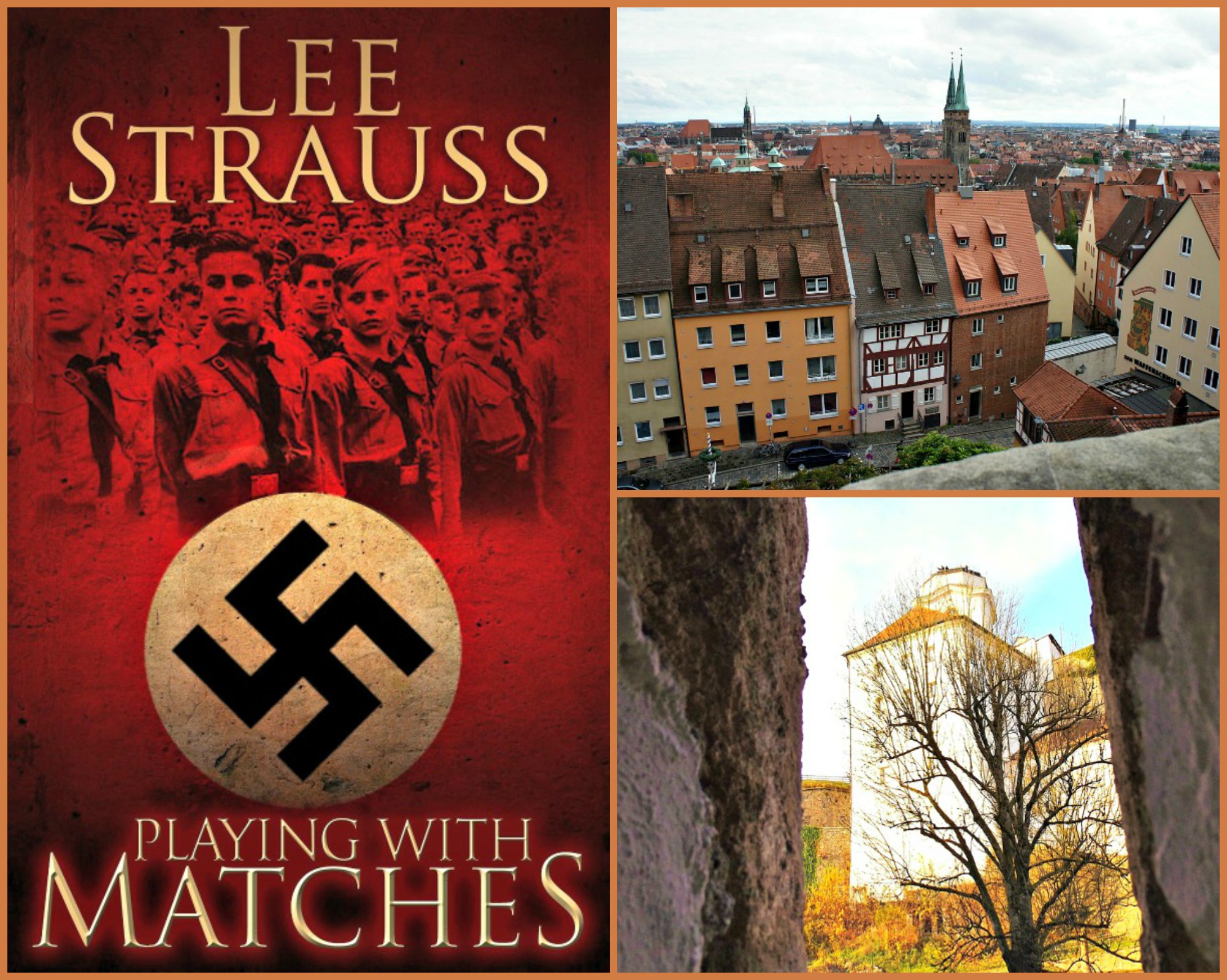
I’ve also written a WW2 historical novel called Playing with Matches, about a group of boys growing up in Hitler Youth. The story takes place in Passau and Nuremberg. Traveling to both cities made a huge difference in getting the setting and ambiance right.

Playing with Matches Collage

Clockwise, left to right: Cover art; Nuremberg citiscape; view of Veste Oberhaus, a 13th-century fortress in Paussau, in lower Bavaria, Germany.

What’s your technique for evoking the atmosphere of a place?

Nothing like living in the middle of it! The street and building in Dresden where we lived are featured in great detail in Sun & Moon and Flesh & Bone. Many readers comment on how they feel like they visited Germany while reading my books.

Which particular features create a sense of location? Landscape, culture, food?

All three. I share a lot of Dresden images on Tumblr, including not just landscape but also food and the local culture.

Can you give a brief example of your work which illustrates place?

Here’s a passage from the Minstrel Series, describing a scene in Dresden:

Katja stood in one of the cutaways on the old stone bridge over the River Elbe that joined the Altstadt with the Neustadt, the old city with the new.

She shivered despite her winter jacket and the scarf wrapped around her neck and strummed her guitar with fingerless gloves. The limestone dome of the Frauenkirche—the Church of our Lady—peaked out over the city’s ancient, baroque skyline. Like all the buildings in the historic center, it had been completely demolished during the Second World War. The entire city was rebuilt to look much like it had before it was destroyed. In essence, the old town was now the new one, and the new town the old one.

It was majestic and awe-inspiring to look upon.

Most days.

Katja’s guitar case lay open at her feet. She’d thrown in the few cents she’d found under the sofa cushions, hoping to lure other donations.

The cold wind kept people hunched over and moving at a fast pace across the bridge, most with chins tucked down and hands shoved into deep pockets. No one took the time to stop and listen, much less drop money in her case.

How well do you need to know the place before using it as a setting?

Spending time living there is the absolute best way. There’s so much you see and learn about a place over time. The second best is to visit in person. After that, talking to people who have lived or visited there along with research and Google Earth.

Which writers do you admire for the way they use location?

Maeve Binchy has a wonderful way of pulling the reader deep into Ireland. (My next book in The Minstrel Series will be set in Ireland and Boston, where I’ve lived.) Susan Grafton does the same for Southern California with her Alphabet Mystery series, set in the fictional city of Santa Teresa, based on Santa Barbara.

* * *

Readers, if this interview has piqued your curiosity about Lee Strauss and her creative array of fiction works, we encourage you to visit her author site.

JJ Marsh grew up in Wales, Africa and the Middle East, where her curiosity for culture took root and triggered an urge to write. After living in Hong Kong, Nigeria, Dubai, Portugal and France, JJ finally settled in Switzerland, where she is currently halfway through her European crime series, set in compelling locations all over the continent and featuring detective inspector Beatrice Stubbs.

STAY TUNED for the next fab post!

If you enjoyed this post, we invite you to register for The Displaced Dispatch, a round up of weekly posts from The Displaced Nation, with weekly updates and much, much more. Register for The Displaced Dispatch by clicking here!

Related posts:

The Displaced Nation’s 4 wishes for birthday number 4 (no foolin’!)

Happy 4th Birthday to the Displaced Nation!

Photo credit: “Today I’m 4 years old,” by Emran Kassim via Flickr (CC BY 2.0).

Greetings Displaced Nationers, old and new.

How many of you have been with us from the beginning, could I see a show of hands?

Hmmm… Are there one or two hands out there? Thanks for sticking around! We’ve come a long way together since the Displaced Nation’s humble beginnings on April Fool’s Day 2011.

Actually, can you believe it’s been four years and we still haven’t run out of things to say about the displaced life?

We can’t!

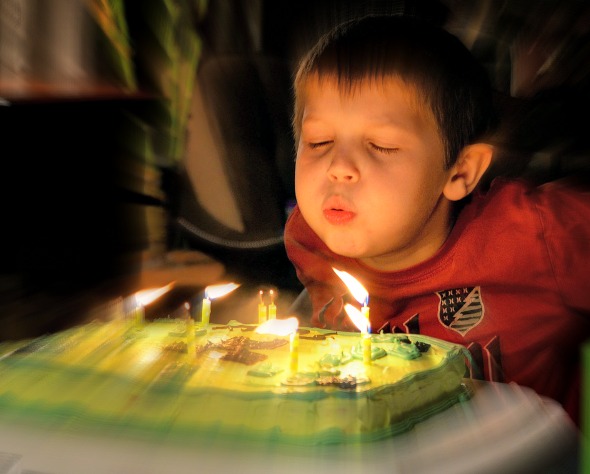
Still, today is not for introspection. It’s a special occasion, a day to celebrate with cake!

Photo credit: AlainAudet via Pixabay

Photo credit: AlainAudet via Pixabay.

And, although it’s not customary to do so, I’d like to reveal my four wishes for the coming year:

1) Reach a new milestone of 500 followers on Facebook.

For some reason we never tried very hard during these four years to get FB followers, and our numbers reflect this insouciance: we are now at 467. If any of you can help us find 33 more “likes”, we’d deeply appreciate. Of course we’d like to have even more than 500, but we’d be happy with that milestone for now. (We post on FB twice a day, and always strive to be amusing and/or thought-provoking…)

2) Have more people discover the new and much improved (if we say so ourselves!) Displaced Dispatch.

If you’re a subscriber, you’ll know that we’ve already celebrated our birthday in last Sunday’s issue by sharing the Danish idea of April Fool’s (no fooling’). Seriously (actually, I am serious), the Dispatch is now like chunky ice cream. It goes down smoothly but also contains six tasty morsels:

  • What to celebrate this week: Holidays and other commemorative occasions around the world.
  • While we were all on social media: New book releases and other milestones in the lives of international creatives.
  • TDN updates: Our past week’s posts.
  • Alice Obsession: Our latest discovery about Alice in Wonderland, whom we see as our muse.
  • Matters of debate: Contentious issues raised by various expat and travel bloggers over the past few weeks.
  • Surprising discoveries: Stuff we didn’t know before sifting through said sources. (Turns out: there’s a lot we don’t know!)

3) Deliver a fitting commemoration to Alice in Wonderland on behalf of the 150th birthday of Lewis Carroll’s celebrated book.

One hundred and fifty years, really? That puts our four years in perspective! As long-time readers will know, the Displaced Nation has treated Alice in Wonderland as our special muse from the very start, beginning with Kate Allison’s brilliant “5 lessons Wonderland taught me about the expat life, by Lewis Carroll’s Alice.” For the past three years, we gave out monthly Alice Awards to a number of international creatives. For that matter, we also have a thriving Alice in Wonderland Pinterest board. But for this special year in Alice’s life, we are planning a special “wonderlanded” series, to be rolled out starting this month. (Know anyone who would be game to channel Alice from the perspective of someone leading a life of global residency and travel? We are open to suggestions. Send to ml@thedisplacednation.com.)

4) Introduce a new look to the site.

Good news: I already have a theme picked out! Not-so-good news: I can’t seem to find the time to transfer the contents, resize the photos, and so on. (Blame the day job!)

* * *

And assuming I get another wish, to grow on, that one will be that we can always have a rich crop of international creatives as columnists.

Speaking of which, I’d like to give the first pieces of our birthday cake to Beth Green, Lisa Liang, JJ Marsh, Joanna Masters-Maggs, HE Rybol, and Shannon Young: The Displaced Nation would have little to celebrate were it not for the seven of you!!!

And if anyone out there is still with me, you deserve some cake as well. Thanks so much for your support.

Photo credit: blickpixel via Pixabay.

Photo credit: blickpixel via Pixabay.

Bottoms up, cheers, kampai—oh and thanks for all the prezzies! What prezzies, you may ask? Well, I assume that from now you’re going to:

And with that final pitch, I’m off to fetch another glass of champagne. Huzzah!!

STAY TUNED for more fab posts.

If you enjoyed this post, we invite you to register for The Displaced Dispatch, a round up of weekly posts from The Displaced Nation, and much, much more. Register for The Displaced Dispatch by clicking here!

Related posts:

DIARY OF AN EXPAT WRITER: Shifting base to literary London, where it all began

DiaryExpatWriterAn American expat newlywed in Hong Kong, Shannon Young took the momentous decision last summer to quit her day job and launch out as a full-time writer. She’d given herself until Chinese New Year to see if she could make a living but has now postponed the decision until the end of next month—which we’re actually rather glad about as it means she’s still with us!

—ML Awanohara

Dear Displaced Diary,

It’s a blustery morning here in London and time for another update on my life as an expat writer. You may remember that I do not, in fact, live in London. I’m taking a break from my writing life in Hong Kong for a visit that combines the Easter holidays with my husband’s business trip.

I am still making the most of not having a day job by staying in the UK for nearly three weeks.

Of course the work never stops for a working writer. I spent the first four days of the holiday finishing up the final revisions of Seaswept, the sequel to my post-apocalyptic adventure at sea called Seabounda job that can be done anywhere, really!

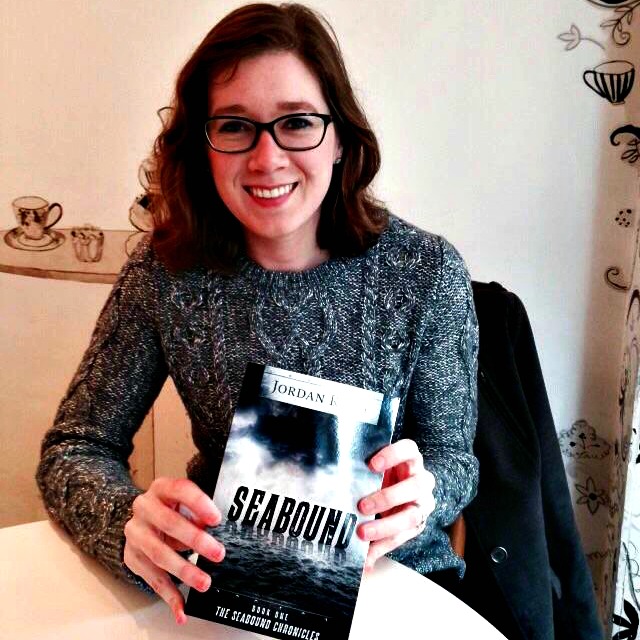
Jordan Rivet in London

Shannon Young aka Jordan Rivet showing off her first book on a tea break in London; photo credit: Shannon Young.

As I mentioned in my last post, the revisions on Seaswept were a bit of a slog, but I really got into the groove by the final pass. I have to admit it was kind of magical to wake up with the sun (or clouds) in this famous literary city, write for a few hours, go for a walk, and then do a bit more writing before the jet lag knocked me out. London has always been a source of inspiration for me, and the setting somehow seemed right for ending my work on this book.

In addition to the beautiful buildings, blue historical plaques, and bridges (have I ever told you, dear diary, how much I love bridges?), I’ve found another source of inspiration in London: a friend from Hong Kong.

Expat connections are everywhere

As Displaced Nation readers know, we expats have a tendency to move on often, either to a new country or back to where we came from. Expat life is a constant rotation of hellos and goodbyes. While it’s sad when friends leave, it’s pretty cool to acquire connections all over the world.

A friend from my writers’ group in Hong Kong returned to the UK nearly two years ago, but she has maintained her link with the group and her role as true cheerleader for my work. Recently, she decided to embark on a similar literary adventure by taking time off work to write!

I met up with her at the cafe and bookshop run by the London Review of Books and spent nearly four hours writing and talking about writing together. (I also ate hummus on toast that came with real worms on the side, but that’s another story.) It was a joy to have a friend in a city thousands of miles away from both my home country and my country of residence, all thanks to this expat life.

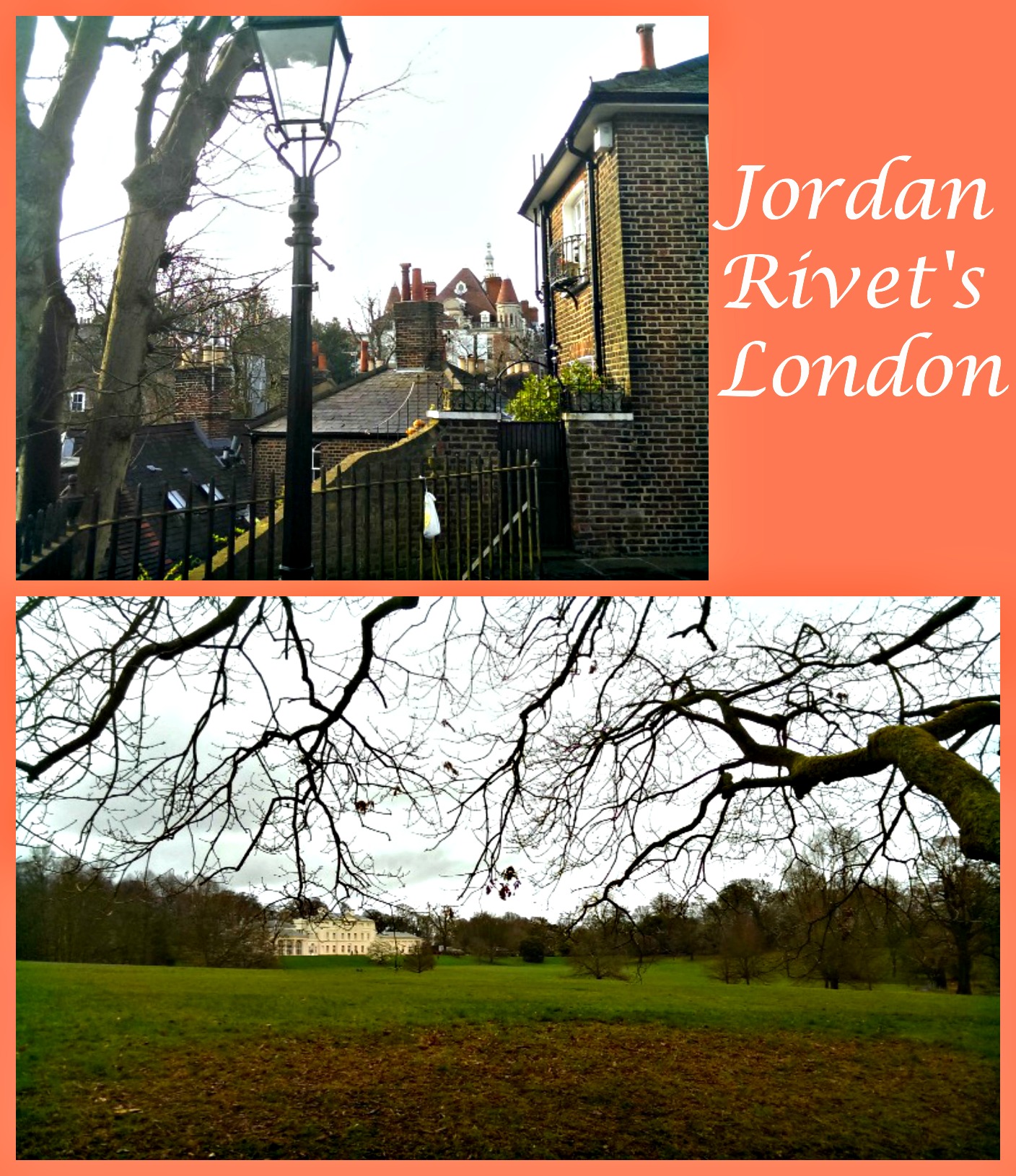
The day I sent the final draft of Seaswept to my editor, my Hong Kong friend took me on a literary tour of Highgate and Hampstead—and, of course, a trek across the rain-soaked trails of Hampstead Heath. In between breaks for tea and hot cross buns, she showed me the home of Samuel Coleridge (and the alley where he bought his laudanum), a garden straight out of a Jane Austen novel, and a pub visited by many notable figures throughout its 200-year history. As we walked, I was reminded again and again of just how old this city is and just how much has happened in its streets. It’s the setting for some of my favorite novels, novels that made me want to be a writer myself.

Photo souvenirs from Jordan Rivet's London walks. At bottom: Hampstead Heath with a view of Kenwood House, a former stately home.

The houses of Highgate and the expanses of Hampstead Heath, with former stately home Kenwood House in distance. Photo credit: Shannon Young.

As my writing journey continues across the globe in Hong Kong, it’s nice to remember its origins and to soak in a bit of history in the company of someone who is just as excited about it as I am.

Beginnings, revisited

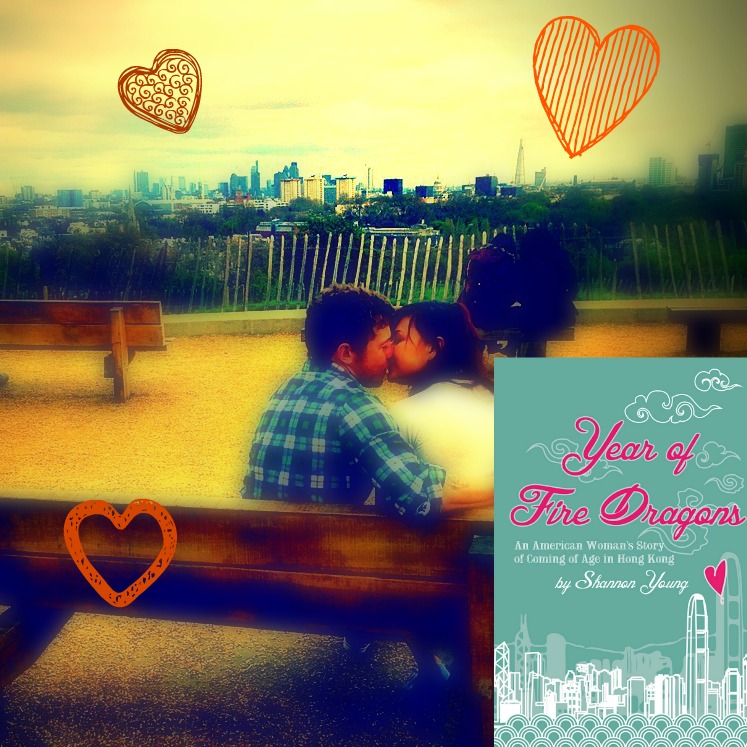
During my time in London, I’m also revisiting the origins of my own expat life. As you may recall, Dear Diary, I met my husband in London during a semester abroad. We ended up in Hong Kong, but our early romance took place here. The memories have been flooding back over the past few days as we walk by all the places where we shared sweet moments: first meeting, first date, first kiss.

I wrote about our romance in the first book I ever started, Year of Fire Dragons. It’s mostly about Hong Kong, but I can’t tell my Hong Kong story without starting in London.

Hong Kong tends to change very quickly, with restaurants and shops going in and out of business all the time. Buildings are torn down and rebuilt completely in the space of months. But London seems largely the same. Back in this place with this man, it’s easy to remember why I decided to follow him across the world.

LondonKiss+Year of Fire Dragons

A firey romance in London led Shannon to the land of Fire Dragons and her first book, a memoir (photo credit: pixabay).

What’s on the horizon?

Well, the sun is breaking through the clouds over the city. I’d better head out to make the most the sunshine before the rain and wind return.

I have two weeks to go in London. During that time, my editor will be working on Seaswept, which should be ready to launch by April 30th. Meanwhile, I’m looking ahead to my next project: the prequel to the Seabound Chronicles. Then it will be time to finish Book 3.

But I’m already working on my next series. I’ve written a rough outline and the first 10,000 words. While I’m enjoying the flood of inspiration and nostalgia in London, perhaps I’ll tap out a few more chapters. If there’s one thing I’ve learned on this expat writing journey, it’s that places have power. I don’t want to miss out on anything London has to offer in the next few weeks.

Thanks for following along on my writing journey around the world.

Yours,

Shannon Young/Jordan Rivet
www.shannonyoungwriter.com

P.S. If you like dystopian fiction and writing Amazon reviews, shoot me an email and I’ll send you a book or two!

* * *

Readers, Shannon’s diary post this month has made me nostalgic for my own days of living in London. Sigh! It sounds as though she’s making the most of her time in the Big Smoke with walks on the Health and so on, but if you have any further recommendations for her remaining two weeks (any bridges you think she should see?), do let her know in the comments!

STAY TUNED for more fab posts!

If you enjoyed this post, we invite you to register for The Displaced Dispatch, a round up of weekly posts from The Displaced Nation and much, much more. Register for The Displaced Dispatch by clicking here!

Related posts:

TCK TALENT: Maya Evans, Poet, Writer, Teacher, Translator, Consultant & Transition Facilitator

Maya Evans for TDN

Maya Evans (own photo)

Elizabeth (Lisa) Liang is back with her column featuring interviews with Adult Third Culture Kids (ATCKs) who work in creative fields. Lisa herself is a prime example. A Guatemalan-American of Chinese-Spanish-Irish-French-German-English descent, she has developed her own one-woman show about growing up as a TCK, called Alien Citizen, which premiered nearly two years ago and is still going strong. In fact, she is now raising funds to take the production to Valencia, Spain, and Capetown, South Africa, later this year.

—ML Awanohara

Greetings, readers. Today’s interviewee is Maya Evans, a poet and writer, transition facilitator, international education consultant, and translator based in Boston, Massachusetts. She is also my fellow ATCK author in the anthology Writing Out of Limbo, in which her poem “Le Français” appears. Currently, she is working on a memoir about her extraordinary life, which took her from the Middle East to Europe to South America and finally to her current home of the United States.

* * *

Welcome to The Displaced Nation, Maya. I understand that you were born to a Francophone Jewish Egyptian-Hungarian family in Alexandria, Egypt, and that you grew up there and in Caracas, Venezuela. Please tell us why your family moved.
My family moved from Alexandria, Egypt, in 1958 after what history termed the Suez Crisis, which is to say the nationalization of the Suez Canal. Built by the French in 1869, and jointly controlled by the British and French until 1956, the Canal was of strategic importance to Western powers. Egyptian President Gamal Abdel Nasser‘s actions to nationalize it provoked a brief war—a lot like the wars carried out presently in the Middle East. Nasser wanted to end Egypt’s colonization. We left because Jews were no longer welcome in Egypt. The revolutionary government confiscated Jewish properties and bank accounts, even expelling some Jewish people holding French or British passports. My father was demoted, the bank where he worked was taken over by the authorities, and clearly his career was finished. His brothers, sisters, and their families mostly went to Brazil, although some ended up in France, but none in Hungary, where they’d come from originally. (At the time, Hungary was occupied by the Soviet Union.) When we left, I was 12-and-a-half—and still have vivid memories.

Did your mother’s family leave as well?
My mother’s family, rooted in the area for generations, did not leave. My grandmother refused to leave her house. My uncles and one of my mother’s sisters, who were very close, all stayed, not daring to contradict their mother.

Where did your family end up going?
For a brief time we lived in Paris, scattered among relatives. We also stayed in Genoa, Italy, for a couple of months waiting for my father to clear his affairs and obtain a visa for emigrating to Venezuela. We were “stateless” at the time, having left Egypt with a travel document valid for one trip with no return. My father had managed to “transfer” money out of Egypt to Switzerland, which was needed to buy our passages to South America. This is a story on its own, one I’m attempting to describe in my memoir.

Achieving happiness in the midst of displacement

I find your story moving as it’s about exile, not the usual voluntary migration for TCK families (voluntary for the parents at least). Still, your moves from North Africa to Europe to the Americas is very relatable for this ATCK. Were you happiest in a certain place at a certain time?
I can recall the exact time when I realized I was truly happy. It was at Brenau College (now Brenau University), in Gainesville, Georgia. It took one year to convince my father to allow me to go to college in the U.S. He thought that a girl had to stay home and go to the university nearest to where her family lives which in my case would have been the Universidad Central de Venezuela (UCV), a 15-minute ride from our home in Caracas. The problem was that the Venezuelan government did not recognize my high school degree from Colegio Internacional de Caracas (CIC)—the school is only accredited in the United States. Besides, my Spanish was not at a high enough level for the entrance exam. A solution would be to transfer to the UCV from an accredited school in the U.S., after a year of university-level courses. Reluctantly, my father agreed as long as I went to a “girls only” school, properly chaperoned during my trip to the States. I was fortunate enough to meet a trustee of Brenau College at a tea sponsored by the American Association of University Women. She traveled with me from Caracas to Atlanta, and drove me to her college. For a variety of reasons, among them the lack of money, neither my father nor mother could have made the trip at that time.

What was it like being in a small southern town after living in Caracas?
At Brenau, I was one of a handful of international students. Besides Venezuela, there were also girls from Norway and Taiwan. Luckily, two Hungarian sisters from Venezuela, in their third and last year of college respectively, took me under their wing. Both were intelligent and poised, which made me a “cool girl” by association. Suddenly, there was no need to explain why French was my native language but I wasn’t French, etc. It was easy to say: “I am from Venezuela.” Period. I had a distinct identity, foreign but also exotic. It was also wonderful to be far from the dramas of home. I had postponed the moment of reckoning, which would occur upon my return to Venezuela, when I would find out what it would be like to be a university student in Caracas who had attended an American high school full of students with tenuous ties to the country.

Maya Universities

From studying at Brenau in Georgia to getting a degree at Universidad Central Caracas Venezuela to working at Harvard…

Eventually, though, you moved back to the United States. Why was that?
I was just starting to feel Caraqueña (from Caracas)—finding my bearings as a journalism student at the UCV by night and as a bilingual assistant in an export company by day, enjoying 80-degree Fahrenheit weather year-round, living in a beautiful apartment facing the mountain—when I met my husband, an American. (We met in Caracas.) We moved to the States in the early 1970s. His job moved us to Boston; then to Stanford, Connecticut, where our first child was born; and then back to Boston.

Allow me to bridge cultures, people and dreams…

At what point did you start your career…or careers I should say, as I know you’ve had more than one.
After the birth of my second child, I was determined to find a job that would link me to the Latino community, or better yet, send me on frequent trips to Latin America. I found that job at Harvard, in a department facilitating studies in the United States for professors and business executives from Latin America. I traveled all over Latin America, and in the mid-90s, was assigned to a project in Venezuela sponsored by Petróleos de Venezuela (PDVSA) to train a cadre of executives for studies in the United States. I left Harvard shortly after and worked directly as a consultant for PDVSA. I also trained as an interpreter, working for the Massachusetts courts, and taught Spanish at the University of Massachusetts.

Consultant, trainer, interpreter, teacher: your careers seem to have been influenced by your peripatetic upbringing…
True. I would slide in and out of professions just as I slid in and out of countries, and adjust like the chameleon I’d become. I was always being uprooted but then would find ways to adapt. This in turn led me to my life’s “calling”: to facilitate transitions for others. Whether working with foreign students at American universities, or with international researchers trying to find the right department to pursue their research, or with companies wanting to train their personnel to live somewhere else, I would bridge cultures and languages in an effort to help others ease into their new surroundings.

Who am I? Where am I from?

Have you found that “your people” tend to be Adult TCKs or other cross-cultural people?
Undoubtedly, I feel comfortable with other Adult TCKs as well as multicultural people. I am actually uncomfortable with monocultural, monolingual people, regardless of their education level or accomplishments. I find that I have little in common with them, or that I have to “explain” myself again—and at a certain stage in life, it gets tiresome. I also feel a kinship with artists and people who are a bit out of the mainstream. Like Adult TCKs, they tend to look at the world from the outside. For the longest time, I felt outside, looking in. Even now, that feeling hasn’t left me completely.

Not only for your sake but for the rest of us ATCKs, I’m happy you are now working on your memoir, a few parts of which I was privileged to hear you read. What inspired you to start writing it, and how far along are you in the process?
Thank you for your kind words. It’s been a long and tortuous road. For the longest time, from my days as a journalism student, I wanted to tell stories. Stories I heard around the world, and stories of my relatives who happen to be an eclectic bunch of multinational people. But I am always escaping into work, travel, poetry writing, whatever other excuse I can find. Now I’ve decided to work less and, while I still can conjure the memories, dedicate more time to writing what I like to call a “romanticized memoir,” with characters loosely built on the stories I heard about Egypt and on the memories I have of the places where we lived. I am still at the beginning of the process, and need to speed it up, lest it get buried alongside other writings.

Attempting to “capture all the voices in my head without sounding schizophrenic”

On top of all of this, you are a published poet. Is there a particular poem of yours that expresses your feelings of transience or loneliness or instability—or freedom or curiosity or love of travel—that you are most proud of? If so, could you share it with us?
Two years ago, a poem of mine I like the best, “Voz Ajena” (“Alien Voice”), was published in Spanish in the New England Translators Association’s newsletter. Although I translate other people’s work, I cannot translate my own. I don’t hear it in any other language but Spanish. In that poem, I attempted to capture all the “voices” in my head without sounding schizophrenic. To me, it is interesting to note that I can do this only in Spanish, which was the third language I acquired, after which it became my “go to” language. Even though French is rooted in me, Spanish carries Latin America with its music and colors, which trumps all others! I’ll give you that poem, but for those who don’t read Spanish, I’ll first give you a poem I wrote in English:

Notebook with a Missing Language

Only English is missing
in these familiar lines
that stretch quietly on a
tidy little notebook
filled in French with spatters of Spanish;
scents of places and of people long gone
leaving behind tender thoughts,
silent melodies, objects of desire,
histories of exiles and commencements
of lenities and humiliations,
of successes and exonerations;
tales of lost places, warm embraces,
mute voices, empty houses,
doors shut on bygone worlds.

door_shut_maya_poetry

The last line of “Notebook with a Missing Language,” a poem by Maya Evans


And now for those who read Spanish:

Voz Ajena

Le preguntó un día por su acento opaco,
esa manera que tiene ella
de tropezar con las erres,
saltar continentes al azar,
atar letras sin más sabor
en un ritmo extraño, ritmo de blanco.

Son recuerdos de otras voces,
las vivencias de mi memoria
de crêpe georgette y chantilly,
dijo ella con voz de seda, voz de sirena.

Yo no sabía de los fantasmas que te habitan,
No sabía de Egipto, España,
Francia y Hungría,
No sabía que te comían noche y día,
ocultándote la luz, clamando por aire,
y todos con ese afán de ser.

Y más aún le dijo ella,
tocan tambores y hacen ruidos,
se contorsionan en las tinieblas
por estallar en mil estrellas,
dejar arañas y demás vainas,
ser lentejuelas, champaña fino, jamón ibérico,
Ravel de fuego, Maria Callas reencarnada,
vistiendo toga, comiendo astros, tragando mundos.

Maya
Boston, 19 de abril de 2010

* * *

It’s been a pleasure, Maya, hearing about your many professional accomplishments and “romanticized memoir” in progress. And thank you so much for sharing two of your poems! Readers, please leave questions or comments for Maya below.

STAY TUNED for next week’s fab posts!

If you enjoyed this post, we invite you to register for The Displaced Dispatch, a round up of weekly posts from The Displaced Nation, and so much more! Register for The Displaced Dispatch by clicking here!

Related posts:

CULTURE SHOCK TOOLBOX: Tired of constant adjustments? TCKs and expats, just be yourself!

Olivia Charlet for Culture Shock ToolboxIt’s turning into Third Culture Kid Week at the Displaced Nation! Today our newest columnist H.E. Rybol, who has a German dad and a French mom and is a self-described “transitions enthusiast,” interviews a fellow adult TCK, with a French dad and a Belgian mom, about the tools she used to face the inevitable culture shocks during her family’s many moves. Later in the week, TCK Talent columnist Lisa Liang will be interviewing the poet Maya Evans, who was displaced from Egypt as a child. And you know something else? H.E. recently interviewed Lisa on her own blog. Though not a TCK myself, I always learn a lot from this rather tightly-knit group. I expect you will, too.

—ML Awanohara

Hello, Displaced Nationers! This month I am proud to introduce my first guest to the Culture Shock Toolbox column: Olivia Charlet, a fellow adult TCK and the founder of TCK Dating, a site that explores how our multicultural backgrounds influence our relationships. Olivia is fascinated by questions like: Are we TCKs happier with partners who share a similar nomadic background, or do opposites attract and we gravitate towards those who’ve lived in the same place their whole lives?

Today she has kindly agreed to answer my questions about the culture shocks she has experienced, along with tools she has used to overcome the feeling of not belonging. Here’s what she had to say…

* * *

Hi, Olivia. Thanks for joining me. First, can you tell us a little more about your background: which countries you’ve lived in and for how long? 

Sure! I was born in Tokyo, Japan and lived there for my first four years. I then lived in Düsseldorf, Germany for two years. We later moved to Johannesburg, South Africa, for six-and-a-half years. Finally, I spent middle school in Vienna, Austria, for almost four years. I completed my last two years of high school in Hamburg, Germany, and then went to university in Boston, Massachusetts, for three years, after which I lived in Auckland, New Zealand, for six months. I have now been living in London for around five years. 

That’s a lot of moving! And now we should move on to the topic of my column: cultural transitions. Can you recall any memorable occasions where you “put your foot in,” so to speak, during your many moves?

I still feel like I’m doing that, as an adult TCK here in London, especially when spending time with people who grew up in this part of the world. When I’m with a group of internationals, who are often my friends, this doesn’t happen as often since there’s this shared understanding that we all have slightly different cultural backgrounds. Let’s see… I think it mostly happens when I’m simply being outspoken—when I say things like “I love this!” or “This is amazing” or “It was terrible.” I picked up these expressions from American schools, I think. British people tend to be more understated. They’re more likely to say things like “Yeah, it’s alright” or “She’s nice.” It’s not so intense. 

How do you tend to handle those inevitably awkward situations when you feel people may have misinterpreted you?

When I was younger I would have tried to mold into what they believed to be “normal” or “appropriate” behavior. But unfortunately (or fortunately?), I’ve become less and less likely to do this as I’ve gotten older. I want to be able to me. And express my difference. I don’t like pretending and I need to be authentic. If I’m trying to please them by saying what they want me to say, I won’t be genuine. Growing up outside of my passport country, I spent years learning how to adapt quickly and meet new friends. However, every year that goes by in London, I realise I can find people in the city that won’t expect me to be something else. They’re just fine with me being me (crazy mix of customs and all!).

Looking back, can you recall any situations that you handled with surprising finesse? Why do you think that was? 

Well, that’s really my point. Having grown up moving around so much, I became really good at mimicking customs and behaviours—but not because of any natural ability. I just wanted to fit in. For instance, I played on a German football team in high school, and none of the girls spoke a word of English. They saw me as one of them after only a couple of months. Likewise, while attending university in the United States, I honed in on what the American students and professors needed to see for me to blend into their culture.

If you had to give advice to TCKs or new expats, what’s the tool you’d tell them to develop first?

Strangely, I don’t think I would have said this six months ago, but basically my advice is to truly know yourself. Who are you? What do you love to do? What do you not like to do? How do you like to behave? Are you loud? Are you soft-spoken? Extroverted? Be you. Because really, as much as we try to fit into another world, the truth is you’ll find people in no matter what culture who “get” you and understand you just the way you are. The more you try to change and adapt to what other people want you to be, the more you’ll lose a sense of who you are. And the most important thing (at least for me) about living in a different country is to not lose your core of self. What are your goals? What is your purpose? Who are you? That’s what should matter. And with that will follow meeting people who match that.

Thank you so much, Olivia, for sharing your stories and reminding us that, regardless of where we are, we’ll meet others who “get us.” In a sense your tool consists of putting away the toolbox when it’s a question of remaining true to ourselves.

* * *

Readers, what do you make of Olivia’s advice? Hopefully, it has you “fixed” until next month!

Until then. Prost! Santé!

H.E. Rybol is a TCK and the author of Culture Shock: A Practical Guide and Culture Shock Toolbox. She loves animals, piano, yoga and being outdoors. You can find her on Twitter, Linkedin and Goodreads. She is currently working on her new Web site and her second book.  

STAY TUNED for Lisa Liang’s interview with Maya Evans.

If you enjoyed this post, we invite you to register for The Displaced Dispatch, a round up of weekly posts from The Displaced Nation—and much, much more! Register for The Displaced Dispatch by clicking here!

Related post:

For this up-and-coming visual storyteller and lover of travel, a picture says…

Jamie March 2015 collage

Canon zoom lens, photo credit: Morguefiles; Jamie in Bangkok, Thailand, for the Loy Krathong festival (November 2013).

James King is back with his ever-popular “A picture says…” column. English by birth, James is now semi-retired in Thailand. If you like what you see here, be sure to check out his blog, Jamoroki.

My March guest is 22-year-old Singaporean Jamie Chan. She shares stories and images from her travels on her blog, No Foreign Lands, while shooting or writing for clients in the photography, lifestyle or travel genres.

Ever since she started photography in 2009, Jamie is rarely seen without a camera. Named one of Singapore’s 10 Best Young Photographers, she is an ardent traveler and enjoys documenting local cultures and lifestyles.

A specialist volunteer for Singapore International Foundation and various animal welfare groups, Jamie also finds time for good causes.

In addition, she sings in Schola Cantorum Singapore and plays the cello. She has clearly been allotted more hours than me in a day!

* * *

Hi, Jamie, and welcome to TDN. I’ve been looking forward to this interview since I first saw your street photography. For one so young you have travelled a fair bit and captured some great images. Can you tell us where you were born and when you spread your wings to start travelling?
I was born and raised on the sunny island of Singapore. My first solo trip was to Indonesia, when I was selected to be a photojournalist delegate of Singapore for the ASEAN Cultural Youth Camp of 2011, held in Yogyarkarta. At the time I was doing my final year project for my degree in Visual Communications (I majored in photography). After the camp finished, I decided to spend an entire month travelling around and documenting the culture and lifestyle of the peoples of Central Java. It was a big learning curve and stretched my photographic skills. I did not have the luxury of an editor to tell me what to look out for, and it was hard to get feedback from my lecturers because getting a wifi spot with Internet was like hitting the jackpot. The experience taught me to reflect, make decisions and work with what I had. I had to figure out how to shape and edit down my stories.

You were only 19 then. How did your parents feel about your decision to travel solo?
They were of course worried sick but came around eventually and even joined me for some parts of the trip. After all, what better way to spend time with your parents than on the back of a motorcycle going at God-only-knows what speed—’cause the speedometer was broken!

That must have been some trip! So once you caught the travel bug, where else did you go?
As a visual storyteller, I am always on the lookout for subjects that would make interesting photo essays. My blog, No Foreign Lands, started as a way to tell my mother that I was still alive while on the road. It has now become a platform for me to tell my stories and share my images with the world. Asia is one of my favourite places to travel. There is an incredible amount of interconnected history among the various countries. I am always learning.

I agree. Asia is a treasure trove for us storytellers and photography buffs. I only wish I had started my travels at an earlier age. So which countries have you visited so far?
There is a quote from Robert Louis Stevenson that goes:

I travel not to go anywhere, but to go. The great affair is to move.

When I got back to Singapore after my Indonesia trip, I could not keep still. I was hooked on travelling, exploring and waking up to something new every day. I needed to move; soon after I graduated I booked my next trip—and I’ve never looked back since. Off the top of my head, I’ve been to Vietnam, Thailand, Malaysia, Nepal, Indonesia, India, China and Australia.

That’s eight countries in less than four years; a lot more than most people visit in a lifetime. So tell us about where you are right now and why.
I’m actually back home in Singapore! I’ll mostly be based here for the remainder of 2015. That said, I can never stay put for long—I’ve taken three trips out of the country this year and it is only March! I am in the midst of getting a certification for my Japanese-language studies which I hope to finish by next year. Once that’s done, I intend to work and stay in Japan if possible.

“As a person who deals with visuals before words…”

I’ll keep my fingers crossed for you. I do believe Japan is a beautiful country which offers photographers some great opportunities. So now let’s see a few of your photos that capture some of your favourite memories.
One of the first stories I did in Indonesia involved visiting various “home industries” for a glimpse of what villagers do for a living. This man was performing a rather mundane job cranking out tiles with this old machine. It requires so much strength (I tried turning it and it barely budges):

Indonesia_machine

This Central Javenese man makes 500 tiles by hand every day using a cranky manual machine; photo credit: Jamie Chan.

I photograph Thaipusam, a Hindu festival celebrated by Tamil communities, almost every year in Singapore; I took this picture in 2014. There is something about the spirit of the festival that never ceases to amaze me each time I document it:

The unforgettable Chetty Pusam in Singapore; photo credit: Jamie Chan.

Singapore’s unforgettable Chetty Pusam; photo credit: Jamie Chan.

I was very fortunate to be able to make it down to the final few performances of the Melbourne Docklands Blues Festival and photographed a set by Jimi Hocking.He is an incredible musician and performer and this image just reminds me of Guitar Gods and their worshippers:

Can Jimi the Human be real? Photo credit: Jamie Chan.

Can Jimi the Human be real? Photo credit: Jamie Chan.

My favourite places to take photos so far are India, Nepal and Australia—but picking three pictures to illustrate this was really hard as each of these countries has so many amazing places to shoot… Anyway, let me start with the Great Ocean and its apostles. While it may seem like a tourism pilgrimage, when you actually stay and watch the light, you will see that every moment reveals a new side to the gorgeous apostles:

The Great Ocean Road in Australia; photo credit: Jamie Chan.

A couple of the Twelve Apostles along Australia’s Great Ocean Road; photo credit: Jamie Chan.

This is a stunning picture, Jamie. You have made a simple composition with no clutter and very imposing subjects. I love it.
Moving on to Kathmandu. Where do I begin? Within the valley wherever you are, the Himalayan mountain line is always watching you. I felt a sense of peace throughout my stay in Nepal. It is kind of hard to describe the feeling. I recommend you go there yourself. Here is one memento:

Kathamandu; photo credit: Jamie Chan.

One of Kathamandu‘s peaceful oases; photo credit: Jamie Chan.

Ayuthaya in Thailand is incredible. I was fortunate enough to gain access to its inner chambers to photograph some of the world’s oldest paintings—an incredibly humbling moment. Here’s an external shot of the ruins that were left after the Burmese invasion:

Ayuthaya; photo credit: Jamie Chan.

The ancient Siamese kingdom of Ayuthaya; photo credit: Jamie Chan.

The more-than-a-thousand-year-old Khmer temples of northeast Thailand are really impressive and give us a glimpse of how the Khmer Empire stretched from Cambodia into what is now a large area of Thailand. Tell me, do you feel reserved about taking photos of people, particularly when they are conscious of you doing so?
I try my best to observe and read a person’s body language. My camera is always with me and there is always a silent communication of sorts whenever I lift it to my eye. But there is actually nothing to feel reserved or shy about as the most that can happen is that your subject will say no or even hit you(!) if you are really obnoxious.

“I also happen to speak two and a half languages. The half language is Mandarin.”

I mainly do landscape but when I do shoot people I am the same. I hate to take “posed for” photos so I hardly ever get into a discussion. I take the pic or I don’t. Do you ever ask permission before taking people’s photographs? How do you get around any problem of language?
Since I am always reading a person’s body language before I shoot, I generally do not ask for permission. If I do ask and do not speak their language, I rely on improvised sign language—pointing to my camera and nodding with a big smile on my face. It’s worked so far.

Would you say that photography and the ability to be able to capture something unique which will never be seen again is a powerful force for you?
Yes, most definitely. As cliché as this may sound, the camera allows us to stop time for a split second and record the moment, preserve a memory.

So when did you realise the power of photography, and how has it changed you?
It happened by accident, like so many things in life, while I was looking through old photos of my family. I realised then that if no one had taken these photos, I would never have remembered how my mum looked like all those years ago.

“Who says the iPhone can’t photograph the moon!”

I know what you mean. For me, a picture is a diary of an event in visual form. The photographer “writes” about it in a way no one else could.Now for the technical stuff. What kind of camera and lenses you use?
I work with a rangefinder, the Leica M-E. My 35mm Summilux lens is stuck to the camera body most of the time as it is just such a beautiful focal length which allows me to respond quickly to different situations. On certain occasions, maybe twice a year, I will use the 50mm Summilux just to get a tighter shot. Other than that, my iPhone 5s takes wicked macro shots.

That’s interesting because although I have become attached to the versatility of my 18–55mm Canon lens there are times when I can’t get in close enough, so I need to add say a 70–200mm to my kit. And now I need an iPhone 5s!!!!! And which software do you use for post-processing?
I use Lightroom for post processing as I shoot entirely in raw image format.

“The perfect camera is the one with you.”

Join the club. Finally, do you have any advice for wannabe photographers who are traveling or living abroad?
I’m not sure what advice I can give for wannabe photographers, though that hoary old chestnut “Don’t quit your day job” has just now floated into my mind. I say that because I sense that the golden age of photography is mostly over. Having said that, if you have the passion and perseverance to live, breathe and eat photography, press on and live it. But also remember that technology has made it so much easier to learn a new creative skill. Try your hand at video, writing or music. Use your creativity, mash them all together, and see what you come up with. At the end of the day, as long as your art moves someone and you are able to live comfortably with what you have, you know you are on the right track.

I actually think that is very good non-technical advice Jamie and I’d like to thank you for taking the time to tell your story so far in this interview. I am sure you will, undoubtedly, inspire other young and maybe not so young people.

Editor’s note: All subheds are excerpted from Jamie’s blog.

* * *

Readers, what do you make of Jamie’s experiences? If you have any questions for her on his travels and/or photos, please leave them in the comments!

If you want to get to know Jamie and her creative works better, I suggest you visit her photography site and check out her posts on her photography/travel blog, No Foreign Lands. You can also follow her on twitter and Instagram and/or like her blog’s Facebook page.

(If you are a travel-photographer and would like to be interviewed by James for this series, please send your information to ml@thedisplacednation.com.)

STAY TUNED for next week’s fab posts!

If you enjoyed this post, we invite you to register for The Displaced Dispatch, a round up of weekly posts from The Displaced Nation and much, much more! Register for The Displaced Dispatch by clicking here!

Related posts:

BOOKLUST, WANDERLUST: When what happens in a third culture refuses to stay there: Allen Kurzweil’s “Whipping Boy”

Booklust Wanderlust Collage

Left: Oleh Slobodeniuk (CC BY-NC-SA 4.0); right: Beth Green (her own photo).

Attention displaced bookworms! Our book review columnist, Beth Green, an American expat in Prague (she is also an Adult Third Culture Kid), is back with a rather unusual selection: a memoir that reads like crime fiction. The author, but of course, is an international creative. Enjoy!

—ML Awanohara

Hello again, Displaced Nationers!

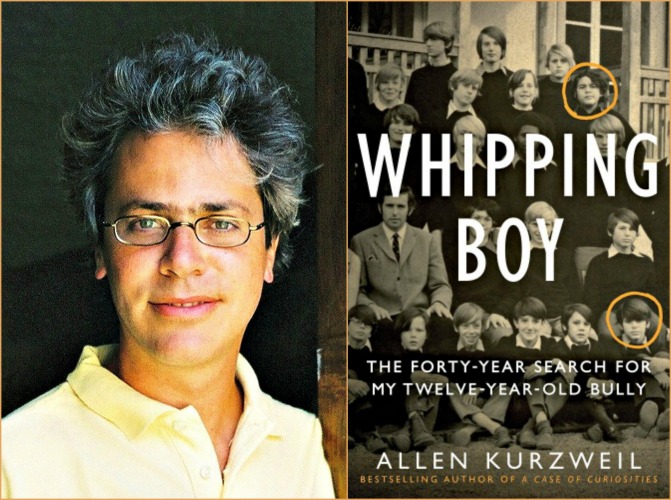
Our Booklust, Wanderlust roundtable series left me with such a wide selection of books to read that I’m only just now coming up for air. This month I’d like to tell you about Whipping Boy: My Forty-Year Search for My Twelve-Year-Old Bully, by the bestselling novelist Allen Kurzweil—which our own ML named as one of the books on her radar in early 2015.

Well, Whipping Boy is out, and it’s a cracking (so to speak) read!

"Allen Kurzweil Wiki2007," by Allen Kurzweil - an image provided by Allen Kurzweil. Transferred from en.wikipedia by SreeBot. Licensed under CC BY-SA 3.0 via Wikimedia Commons.

TCK author Allen Kurzweil & his memoir. Photo credits: “Allen Kurzweil Wiki2007,” by Allen Kurzweil – an image provided by Allen Kurzweil. Transferred from en.wikipedia by SreeBot. Licensed under CC BY-SA 3.0 via Wikimedia Commons.

Kurzweil has produced a memoir that deals with deep emotions dating back to his displaced youth—but that still manages to flow fast and fun like an international thriller. As marketing whiz Kat Gordon put it in a recent tweet:

Hanging on every word of @AllenKurzweil memoir “Whipping Boy.” A whodunit + fairytale in one.

In the fairy tale portion, we watch as our hero, age ten, attends a British-style boarding school perched on an alpine meadow high above Geneva. All goes well until he meets the dastardly Cesar (full name Cesar Augusto Viana), who torments him mercilessly. When our hero grows up, he resolves to track down and confront his childhood nemesis, however long it takes…

The whodunit starts the moment Kurzweil discovers that Cesar has become a leading figure in an international fraud scheme. At that point he converts into an investigative journalist, leaving no stone unturned in his quest to find out how many victims the adult Cesar has racked up.

Before saying anything more about the book, I should point out that Kurzweil is an adult Third Culture Kid. His parents were Jewish émigrés from Vienna to New York City. The family relocated to Milan, Italy, when Kurzweil was young, but he spent his teen years back in New York. He got his education at Yale and the University of Rome and then worked for ten years as a freelance journalist in France, Italy, and Australia before settling back in the United States with his French wife and son.

Kurzweil’s previous works include two novels and a children’s book inspired by his son’s preschool bully. The Whipping Boy has also been excerpted and condensed in the New Yorker.

“In 1971, I met a boy who changed my life forever.”

Kurzweil roomed with Cesar—a burly Filipino rumored to be the son of Ferdinand Marcos’s head of security—at the exclusive Aiglon College, in Villars, Switzerland, for the better part of a year, while Kurzweil’s mother was “test-driving her third husband.” (Kurzweil’s father died of cancer when he was five.)

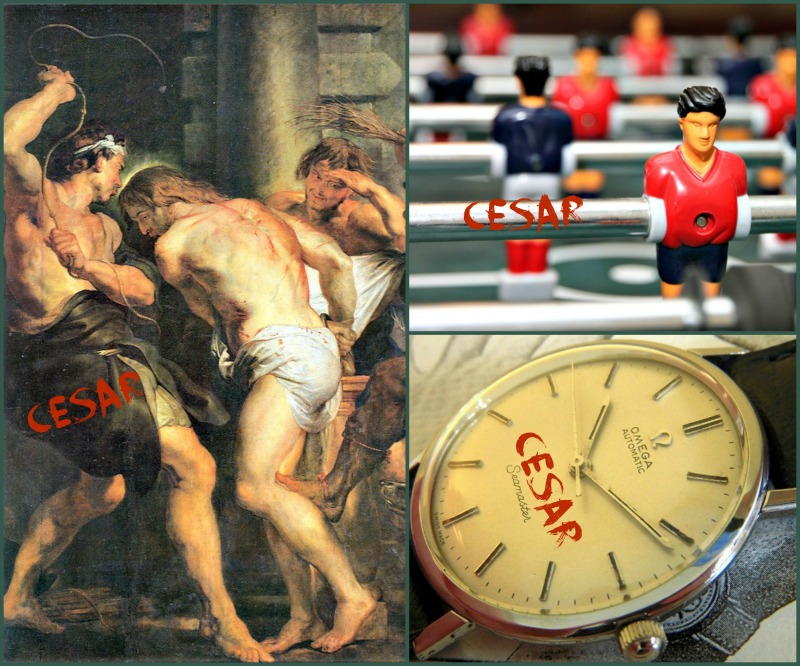
Kurzweil loved the idea of the school—his deceased father had adored the Alps and mountaineering. But he hated boarding, particularly at night, when Cesar and his stooges would subject him to all manner of hazing. They forced him to eat hot pepper sauce, stole his things (including his most prized possession, his father’s Omega Seamaster watch), taunted him with anti-Semitic slurs, and at one point whipped him with a belt while playing “The 39 Lashes” from Jesus Christ Superstar (Kurzweil was Jesus).

Some form of bullying in schools is universal, but when the kids are internationals, and boarders—dealing with the losses of worlds they have loved (which in Kurzweil’s case was tied to the loss of his dad)—things can get even more intense, something non-TCKs may not appreciate.

Fortunately, though, Kurzweil has a sense of humor. In this book he never misses a chance to point out that life, even when traumatizing, has its comic moments.

“It didn’t take long to shed the habits I’d picked up in Switzerland.”

After a year at the school, Kurzweil moves back to New York City, and quickly re-acculturates:

“[My mother and I] returned to New York, where the plimsolls, anoraks and rucksacks I wore at Aiglon reverted to sneakers, parkas and backpacks. I no longer had to address my teachers as sir and ma’am.”

But while Kurzweil displays the TCK’s resilience in adjusting back to life in the U.S., happy to get rid of the crossbars on his “7s” and scuttle his schooner-sail “4s”, he cannot let go of his memories of Cesar so easily. He harbors an obsession, which grows worse with the years, even (especially?) after he finds success as a writer.

When he learns that his boyhood enemy is most probably a con man working for a shady “royal”-family-led corporation named Badische (pronounced “Baddish,” Kurzweil notes slightly gleefully) that runs investment “schemes” for hard-up New York one-percenters, Kurzweil becomes unstoppable:

Obsessives tend to have obsessions. Cesar wasn’t my first fixation, and I’m sure he won’t be the last. Baseball cards, Matchbox cars, Pez dispensers—I’ve always been a collector…my point is I tend to go overboard. I investigated Cesar and Badische the same way I collected Lincoln pennies—intent on filling every void.

“…I began to acknowledge the obvious: Cesar had taken over my life.”

His investigations span decades and continents, and throughout it all he is haunted by memories of Cesar:

At the back of a dingy bar in Alice Springs, a pair of drunks playing foosball recalled my ex-roommate’s unstoppable bank shot. In Vienna, hanging on the wall of the Kunsthistoriches Museum, a Flagellation of Christ reinvoked the musical whipping. Hot sauce, Andrew Lloyd Weber tunes, Ferdinand Marcos, Montblanc fountain pens, and more than anything else, vintage Omegas, had me reaching for the journal.

The Ubiquitous Cesar. Photo credits (clockwise from left): “Flagellation-of-christ-Rubens” by Peter Paul Rubens (licensed under CC BY-SA 3.0 via Wikimedia Commons); foosball, byrev via Pixabay; Omega watch, ephotographythemes via Pixabay.

Kurzweil shares with the reader his mixed emotions when he at last finds Cesar, wondering what to say to someone who may not even remember him. And then the fear returns—the fear that he experienced as a shy boy being whipped with a belt in his dorm room…only now it is morphing into an adult fear as Kurzweil realizes he has tracked down an actual criminal:

Fake knights. False banks. Imaginary kingdoms. These guys travelled on bogus passports. They hosted lavish dinner parties at five-star hotels. They performed knighting ceremonies. (When I interviewed the assistant U.S. attorney who filed the initial charges, he summed up the crime as Dirty Rotten Scoundrels meets Clue.)

“So, basically, I’m being blamed for your memories?”

Whipping Boy was a quick, satisfying read. I loved the truth-is-stranger-than-fiction details that Kurzweil unearths about Cesar and his company’s schemes.

I loved his humor.

I also enjoyed the quiet pauses when Kurzweil would describe personal moments having nothing to do with the hunt for Cesar: for example, when he met his wife in outback Australia:

A French anthropologist named Françoise Dussart spotted me wandering toward a sacred site off limits to visitors. Concerned for my safety, she drove up and warned me away. She was sitting in the cab of a Toyota Land Cruiser and cradling a baby kangaroo. How could I not fall in love?

And then:

She flew west, from Alice. I flew east, from New York. We met each other halfway, in Paris, broke and in love.

Juanchito via Pixabay[http://pixabay.com/en/kangaroo-australia-jump-creature-250873/]; talitaraquel via Pixabay[http://pixabay.com/en/eiffel-tower-paris-france-tower-350453/]. License: CC0 Public Domain[http://pixabay.com/en/service/terms/#download_terms]

From kangaroo love to love in the City of Light. Photo credits: Australian kangaroo, Juanchito via Pixabay; Eiffel Tower, talitaraquel via Pixabay. License: CC0 Public Domain

I further appreciated his candor in admitting that two people can remember the details of an event differently, particularly when one of them is a psychopath with a chip on his shoulder. As Cesar puts it when they finally meet up again for the first time:

“I recall a lot… But just in bits and pieces. There are some things that people have told me about that I really don’t remember. You might need to prod me a bit.”

I would particularly recommend the book to those who like stories about heists or con artists—the movie American Hustle has some parallels—as well as to anyone who has harbored a fantasy of facing down a childhood bully.

Kurzweil may be beaten but he isn’t conquered, and that’s an inspiration to victims everywhere.

But most of all I appreciated Kurzweil’s understanding that for us TCKs, what happens in a third culture doesn’t always stay in a third culture. Some readers may wonder why Kurzweil couldn’t leave his bullying experience behind, particularly as it happened overseas, in a country to which he had limited personal ties. But for Third Culture Kids, the floating world of the expat is as real as it gets. And, as Kurzeil’s story shows, what happens there can have a life-long impact.

* * *

Fellow TCKs, do you have a Cesar or other skeletons in your cupboard dating back to your school days, at an international school or boarding school? Do tell!

Till next time!

Editor’s note: All subheds are quotes taken from Allen Kurzweil’s New Yorker article.

Beth Green is an American writer and English teacher living in Prague, Czech Republic. She grew up on a sailboat and, though now a landlubber, continues to lead a peripatetic life, having lived in Asia as well as Europe. Her personal Web site is Beth Green Writes, and she is about to launch a new site called Everyday Travel Stories. To keep in touch with her in between columns, try following her on Facebook and Twitter. She’s a social media nut!

STAY TUNED for the next fab post!

If you enjoyed this post, we invite you to register for The Displaced Dispatch, a round up of weekly posts from The Displaced Nation, and much, much more. Register for The Displaced Dispatch by clicking here!

Related posts:

Ten years after “Expat Harem,” foreign women will have another say on expat life in Turkey

Tea in Gülhane Park[http://www.flickr.com/photos/wneuheisel/6493228113/ ], Istanbul, by William Neuheisel via Flickr (CC BY 2.0).

Tea in Gülhane Park, Istanbul, by William Neuheisel via Flickr (CC BY 2.0).

When the Displaced Nation first started, Anastasia Ashman, an American living in Istanbul, was running a blog tailored to the needs of the “thinking expat.”

It seemed almost too good to be true: a group of women who were passionate about telling stories that illustrated the impact of the expat life on a person’s psyche. Had Anastasia rubbed a magic lamp to conjure up a kind of foreign harem? After all, her site was called Expat+HAREM.

In fact, as we soon discovered, the core contributors to the site had also been contributors to a book Anastasia had co-edited with Jennifer Eaton Gokmen, Tales from the Expat Harem: Foreign Women in Modern Turkey, which came out in 2005.

Anastasia has since moved on from Turkey, the expat life and the Expat+HAREM project. As she reported in a post to the Displaced Nation three-and-a-half years ago, she and her Turkish husband traded Istanbul for her native San Francisco because they thought that life in America’s high-tech city would “more closely align with a future we want to live in.”

Yet the work she created on the basis of her Turkish expat life has lived on in her wake.

And now two American expats in Turkey, Rose Margaret (Rose) Deniz and Katherine (Katie) Belliel, have announced their intention to produce a kind of sequel to Expat Harem, which is scheduled to be published later this year, to coincide with its 10th anniversary.

The title of the new anthology will be Sofra: A Gathering of Foreign Voices Around the Turkish Table.

As that title suggests, we’re shifting metaphors: from the harem to food. But no need for me to go on any further as Katie and Rose are joining us today to discuss their plans for the new volume. (Note to female expats who have lived in Turkey for at least a year: the window for submissions closes on April 1st!)

 * * *

Sofra Editors Horizontal

Meet Sofra editors Katie Belliel (left) and Rose Margaret Deniz. Photo credit: Journey Collective

Hi, Rose and Katie, and welcome to the Displaced Nation. Before we talk about your plans for a sequel, let’s go back to the original work. Katie, I understand that you contributed a story to Tales from the Expat Harem. What did you write about?

KATIE: “A heart-broken Michigan girl finds closure in Bursa at an ancient Ottoman bath, nurtured by her would-be Turkish sister-in-law.” This line that introduces my story in the book sums up my piece nicely. It is about how my first journey to Turkey was for love. My return was also for love—but not for my failed relationship. It’s the story of how I returned for closure, but stayed for my true love, Turkey the country. At least, that is what I hope people understand when they read my piece 😉

How about you, Rose? I believe you were active in the book’s companion blog and online community?

ROSE: I was a frequent writer for expat+HAREM, the companion site for the book (it was Anastasia Ashman’s brainchild). For example, I facilitated a roundtable discussion that included nine female cultural ambassadors from around the world, called Dialogue2010. It was a live conversation on art, culture, and hybrid identity inspired by my post to expat+HAREM called Mapping the Imagination. We sought to create a living definition of hybrid identity and how one’s worldview literally shifts as a result of location.

Am I right in surmising there was something very special about the Expat Harem experience?

KATIE: Being a part of Harem was an incredible experience from beginning to end. I knew I could trust the editors with my story; we had a wonderful relationship. They inspired confidence in me, and really gave me the courage to keep writing even well after Expat Harem was published. I also find that I keep going back to the book, as different stories speak up at different times in my life. Right now, as a mother, I am particularly drawn to Maria Orhon’s story about her daughter. Two years ago, when we bought our new house, Annie Prior Özsaraç’s story about their house problems gave me a much needed laugh amongst our then house troubles.

ROSE: I remember reading the book around the time I moved to Turkey. So many of the stories struck a chord, especially as I was getting my bearings those first few years. It made a big impression on me.

The Harem book features stories by expat women, and this new book you’re working on, Sofra: A Gathering of Foreign Voices around the Turkish Table, is likewise calling for female contributors. What’s the thinking behind the “women only” approach?

KATIE: Both Rose and I were heavily involved in the sisterhood of Expat Harem: all-female writing groups, entrepreneurial initiatives, and other spin-offs. It seemed natural for Sofra to be another book featuring women expat writers.

ROSE: Yes, as Sofra is following in the footsteps of Expat Harem, we thought it important to continue the tradition of honoring women writers.

But are men’s voices unwelcome?

KATIE: We mean no offense to the guys. I’m sure they have wonderful stories, which we hope to incorporate in the Expat Sofra community. In fact, we want to open Expat Sofra’s companion blog to expats from around the world, male and female. Stay tuned, as these plans are evolving.

I understand that sofra means “feast,” and you are proposing to make the new anthology at least partly about food. I’m curious: what was your own food journey like in Turkey? Did you take to the food right away?

Turkish food

(Clockwise from left): Kokoreç, by William Neuheisel via Flickr (CC BY 2.0); big black Turkish [figs] , by naturalflow via Flickr (CC BY-SA 2.0) ; Istanbul: Ayran, by tomislav medak via Flickr (CC BY-SA 2.0).

KATIE: I was really hesitant about Turkish food at first, but then I just dove right in. Kind of like how I fell in love! There was no going back. There are still some things I just can’t eat or drink, like ayran (a milky yogurt drink) and kokoreç (intestines, usually lamb). I still try them on occasion, but they are just not for me! I have many favorites. Fresh figs are at the top—I look forward to fig season at the end of August/early September each year. Pazı, a kind of green, leafy chard, is my favorite vegetable, I eat it sauteed with onions and yogurt.

ROSE: Turkish cuisine is definitely a leap from the standard Midwestern fare of my native Wisconsin. I love cooking, though, and embraced the challenge of learning new dishes but adding a twist from my roots. My least favorite food experience would have to be the amount of service required when having guests over. It is more tiring at times than the meal! However, now I can say that my Turkish friends and family appreciate buffet style big meals at my house, and I don’t stress about every detail being perfect as I did in the past. My favorite food experiences are cooking with my friends and family. Nothing flavors my sofra better! Another thing I enjoy is sourcing my food locally. We get milk, butter, and eggs from our neighbors’ farm, and even turkey and chicken from time to time!

You are also conceiving of food as a metaphor for the expat life in Turkey, which can be sweet, bitter, tangy, or spicy. Regarding your own Turkey experience: what percent has been each of these taste sensations?

KATIE: Good question. I would argue that my experience here has been an equal part of all the tastes. There are beautiful and not-so-great parts of each flavor. But that is life, right? Even bitterness becomes a taste we crave if denied it for too long. So, I believe in appreciating the full flavor of whatever is put in front of me in the moment. Appreciating all parts of it for even if I don’t understand the taste then, I will understand it much later.

ROSE: Hmmm, I would say my life here has parts of each. Similar to motherhood, there are wonderful, sweet moments, and moments that are bitter. I would also add the combo of bittersweet to the mix! We are challenging our writers to pick one experience and match it with a flavor. You will have to wait until the book comes out to see which flavor I picked to portray.

On my one and only trip to Istanbul, I came away with a copy of the letters written by Lady Mary Wortley Montagu, wife of the British ambassador to the Ottoman Empire in the 18th century. As Anita Desai writes in the introduction, Although Lady Mary was well traveled,

it was Turkey and her first experience of a non-European, non-Christian civilization that provoked her most open and heart-felt admiration.

Do you see your book as having a further purpose of helping to explain Turkey to the West?

"Liotard Lady Montagu," by Jean-Étienne Liotard. Licensed under Public Domain via Wikimedia Commons.

“Liotard Lady Montagu,” by Jean-Étienne Liotard. Licensed under Public Domain via Wikimedia Commons.

KATIE: I am currently re-reading Lady Mary Wortley Montagu’s The Turkish Embassy Letters. I read them before moving to Turkey. It’s nice to re-read them after living here for over a decade! Our book definitely seeks to show a different side of Turkey than is commonly portrayed by the media. What is the main thing every tourist says after their first visit here? “It’s not what I expected.” We want to show people a deeper, richer side of Turkey. In my opinion, the true side of Turkey.

ROSE: This region is still largely portrayed in a negative light. Expat Harem successfully challenged that by showing a different side, and we hope to continue that with Sofra. Not everything is positive, of course, we don’t want this book to be all cakes and flowers. We want to show a deeper side, an open portrayal of even bitter experiences that give lessons or show growth.

Who is the book’s primary audience?

KATIE: Our primary audience extends from the armchair traveler to the seasoned expat. The foodie to the culinary newbie. A little something for everyone, we hope.

Thank you, both. Talking so much about Turkish food has made me peckish. I look forward to seeing what you cook up in this new book. After our exchange, I’m anticipating a rich stew!

* * *

Readers, if this interview has piqued your curiosity about the Sofra anthology, or even if you simply wish to know how sofra is defined, I encourage you to visit the Expat Sofra site and/or follow the book’s progress on Twitter. And if you’re a woman who has had the pleasure of living (and eating!) in Turkey as an expat, then why not submit a piece to the new anthology? Only don’t forget, the deadline is coming soon: APRIL 1.

STAY TUNED for next week’s fab posts!

If you enjoyed this post, we invite you to register for The Displaced Dispatch, a round up of weekly posts from The Displaced Nation, with seasonal recipes, book giveaways and other extras. Register for The Displaced Dispatch by clicking here!

Related posts: