The Displaced Nation

A home for international creatives

Tag Archives: UK

LOCATION, LOCUTION: Trish Nicholson, a writer whose talents have blossomed in unusual places

Location Locution
Columnist Lorraine Mace, aka Frances di Plino, is back with her latest interview guest.

My guest this month, Trish Nicholson, is something of an exotic plant—the kind one discovers flowering profusely in a far-flung part of the world.

Trish’s birthplace, the Isle of Man, sounds remote to many of us—but not so for Trish, who, despite being half Manx (a mix of Celtic and Nordic), wasn’t able to bloom where she was planted. Following in the footsteps of some of her intrepid ancestors, she left her birthplace and hasn’t looked back.

Her first destination was the UK, in pursuit of higher education and a career. Trish is also half-Scottish, but, though she lived in Scotland for 12 years, her roots did not prove deep enough and she moved on to Europe and much further afield…transplanting herself to Papua New Guinea!

Yes, Trish was stationed in the West Sepik (Sandaun) Province of Papua New Guinea for five years working on aid and development projects while also serving as Honorary Consul for the British High Commission. Rest assured, conditions here were exotic enough for Trish not only to put down roots but to blossom and thrive. As she attests in the travel memoir she published last month, PNG contains the wildest places in the tropics. Among other challenges, she had to contend with crocodiles (the book is titled Inside the Crocodile), sorcery and near-fatal malaria.

Photo credits (clockwise from upper left): Mooragh Park Lake, Ramsey (Isle of Man), by Tony Hisgett via Flickr (CC BY 2.0); Trisha Nicholson (supplied); Explosions (in PNG), by Taro Taylor via Flickr (CC BY 2.0) .

Photo credits (clockwise from upper left): Mooragh Park Lake, Ramsey (Isle of Man), by Tony Hisgett via Flickr (CC BY 2.0); Trisha Nicholson (supplied); Explosions (in PNG), by Taro Taylor via Flickr (CC BY 2.0) .

The so-called Land of Surprises must have been a hard act to follow, but Asia Pacific being Trish’s most nurturant habitat, she soon found other challenges—the next one being to direct the Voluntary Service Overseas (VSO) operations in the Philippines while completing her doctorate in social anthropology. After the Philippines, she obtained a research grant to study indigenous tourism in Vietnam and Australia.

And I mustn’t forget to mention that along the way there have also been frequent trips to South America and Africa, along with treks in Bhutan, Tibet and Nepal.

Trish did return to England eventually—only to decide the time had come to try transplanting herself to the “winterless” far north of New Zealand, where, as she says in her blog:

native trees grow even more in winter than summer because they have more moisture.

Hmmm… sounds a little like Trish?

And now let’s talk about Trish’s body of works. A compulsive scribbler, she has produced plenty of what she calls “creative nonfiction”—from articles for mainstream media to a book on responsible travel tourism—as well as short stories during her twenty years of wandering the globe.

More recently, since moving to New Zealand, she has published a series of e-books on her travels—one of the most popular of which is the illustrated travelogue Journey in Bhutan: Himalayan Trek in the Kingdom of the Thunder Dragon. And now there is the aforementioned Inside the Crocodile: The Papua New Guinea Journals.

Trish’s nonfiction output also includes a volume on creative reading/writing as well as a guide to becoming a non-fiction author. And let’s not forget the historical anthology of storytelling, which she intends to sit down and write now that she’s settled on a quiet New Zealand hillside. That’s when she’s not hiding in her tree house or blogging. Her blog is called, appropriately enough, “Words in the Treehouse.”

* * *

Welcome, Trish, to Location, Locution. I know that your travels have led to much of your writing, but which tends to come first, story or location?

Thank you for inviting me, Lorraine.

It depends on what kind of writing I’m doing, of course. For short stories it’s usually character that comes first for me, but it’s close because characters are an integral part of their setting. In building up the story, character and setting feed upon each other. Location can affect a character’s mood, sometimes their whole outlook on life, and a change of location can be a turning point. But, as I said, it’s a two-way influence; people can also have an impact on their surroundings.

For my travelogues, experience of location came first, but the same principle applies: people feed off setting and vice versa. In this case, of course, the “characters” are actual people I met along the way.

Notably, you were right in saying that my travels led to my writing. I did not set out to write a book at the beginning of either of the two travelogues I have produced. I was inspired to visit Bhutan by an article in a 1914 National Geographic magazine my aunt had left me in a box of dusty old books. It was full of the most amazing photographs of mist threaded mountains, exotic architecture, and distinguished looking men wearing what appeared to be navy blue dressing gowns with broad white cuffs… Papua New Guinea, as you explained in your introduction, was a five-year work assignment, fulfilling a teenage dream to work overseas. Only afterwards did these locations compel me to write about them.

What techniques do you use for evoking the atmosphere of a place? After all, you’ve faced the challenge of describing places very few of the rest of us have visited.

I’m not sure if it’s a technique because it’s not something I do consciously as I write, but your question made me think about it. It’s not so easy to explain, but I seem to identify a feature that is characteristic of a particular place and use my senses to link to it emotionally—trying to recreate in words what I felt when I was there. It’s not simply “place” though, but more a series of “moments-in-place.” The atmosphere of a place changes depending on time of day, seasons and events. It’s possible to keep track of these changes if you maintain a detailed journal as I always do—scraps of information about everything I see, hear, smell and feel. With buildings and landscapes, for example, I record how light and weather affect them. A grey stone wall, for instance, may look hard and forbidding in Scotland, but under a tropical sun it feels surprisingly soft and warm. I note sounds and snippets of overheard conversation, clothes, colours, rhythms of people’s movements—all of which suggest place. Scribbling is a bit of an obsession with me, perhaps a way of hanging on to something I don’t want to end. My other obsession is photography, probably for the same reason. In my early travelling days I used Kodachrome but film was expensive; now you can take large memory cards and click away without a thought. When I’m writing, I scroll through my images and they recall whole scenes for me. The jottings and photographs aid my memory for those sensuous details that I believe evoke atmosphere.

Two of Trish's tools for capturing the details of places. Photo credits: (top) Notebook collection, by Dvortygirl via Flickr (CC BY-SA 2.0); Kodachrome, by Pittaya Sroilong via Flickr (CC BY 2.0).

Two of Trish’s tools for capturing the details of place. Photo credits: (top) Notebook collection, by Dvortygirl via Flickr (CC BY-SA 2.0); Kodachrome, by
Pittaya Sroilong via Flickr (CC BY 2.0).

Which particular features create a sense of location? Landscape, culture, food?

They all can, of course, depending on the story and a writer’s personal interests. I’m certainly no foodie, but even I can feel the tropical heat of Papua New Guinea when recalling drinking kulau (Tok Pisin for “juice from a young green coconut”) straight from a young coconut—the rough, dry shell on my lips, the smooth sweet coolness dribbling down my chin. Language, too, has always been a significant feature for me. Many writers avoid using dialect or foreign words in dialogue so as not to stress the reader, but there are ways of making it easier, and readers enjoy a little challenge. I write dialect or local language in short stories and in travelogues because it draws readers closer to people. And if I want to create the sense of a very specific location, I focus on whatever features are found only in that one place—for example, in Bhutan, the painted red bands around a building that tells you there are sacred relics inside, or in Australia, the surreal landforms of the Bungle Bungles that seem to stride across the landscape enacting their own primordial drama.

Which of your works provides the best illustration of place, and can you give us a brief example?

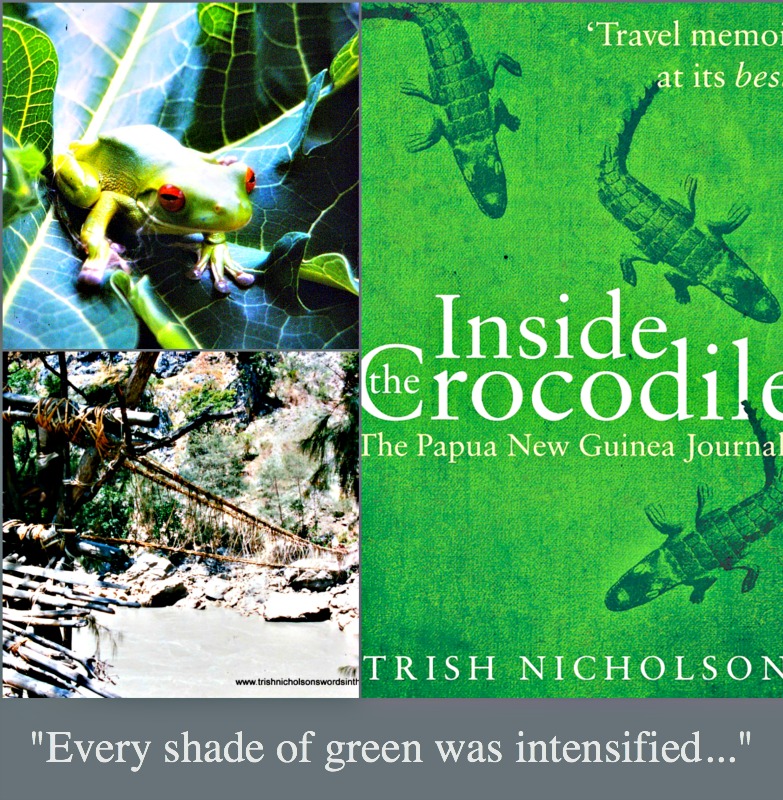
From Inside the Crocodile, a jungle moment on the hair-raising trek from Oksapmin to Lake Kopiago:

The heavy shower was reduced to drizzle under the canopy and it invigorated the forest; every shade of green was intensified, glistening and vivid. Lazy drops of water glided along leaves, dripping silently onto moss beneath. Fine hairs on the ribs of fern fronds, usually invisible, were lit-up by tiny twinkling water droplets like miniature fairy lights. And the air was filled with the fecund mustiness of moist earth seasoned with the tang of wet foliage … the forest stood in strange, expectant silence, muffled by the press of growing, spreading vegetation all around us. Yet every surface, especially the dark underside, was teeming with life we could not see, or would not recognise if we did, and we couldn’t see beyond the next tree trunk or veil of hanging moss. The sense of being enclosed, entrapped within an unknowable multitude, was overpowering.
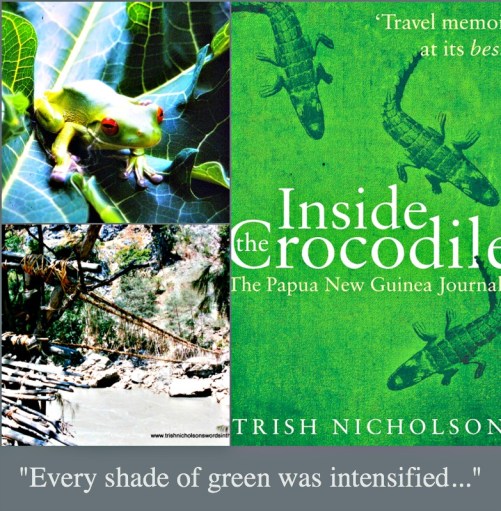
Photo credits: (top) A frog inside the papaya tree, one of many critters found in PNG; one of many disintegrating bamboo bridges in PNG (by Trish Nicholson, supplied).

Photo credits: (top) A frog inside the papaya tree, one of many critters found in PNG; one of many disintegrating bamboo bridges in PNG (by Trish Nicholson, supplied).

And if I’m allowed another little one, from Journey in Bhutan, my journal entry the evening after we visited the ancient temple of Kyichu Lhakhang:

… I want to remember how it felt when I first entered the lhakhang – the dark wooden floor, polished and worn into grooves by centuries of calloused feet; distant chanting heard through a haze of incense; Buddhas lustrous in the flickering light of butter lamps – thirteen centuries of reverence are distilled in that room creating an almost palpable sanctity. I feel the balm of its atmosphere as I write – it’s almost like a presence.

Photo credits: (clockwise from top left) Rinpung Dzong, a large dzong (Buddhist monastery and fortress) found in Paro District, Bhutan; book cover art; ancient religious relics inside the lhakhang (all photos supplied by Trish Nicholson).

Photo credits: (top) Rinpung Dzong, a large dzong (Buddhist monastery and fortress) found in Paro District, Bhutan; book cover art; ancient religious relics inside the lhakhang (by Trish Nicholson, supplied).

How well do you need to know a place before using it as a setting?

This is a particularly interesting question because I believe one can be in a location too long. The point is not how much time is spent in a place, but how well we “see” it. In an urban setting, I can spend an hour leaning against a wall on a street corner, or a day walking the streets at random, and gather a huge number of impressions and factual details. In remote areas it takes longer because the changing elements have a greater affect on atmosphere. But this may be enough for the setting of a single story. Obviously, for a travelogue, longer immersion is necessary to reach a depth of understanding across time and seasons. But it depends also on how one writes about a place, the scope of the account. I was in Bhutan for a month, much of that time trekking, so although I included monasteries and temples, and carried out a lot of research on cultural and historical background, Journey in Bhutan focuses on the trek rather than trying to cover the whole country superficially. So, how long is too long? After a few years in Papua New Guinea I noted in my journal:

I’m losing all sense of “normal”.

I began taking for granted what seemed extraordinary to a visitor. Fortunately, I had recorded early events that revealed my astonishment and joy and alienation as a greenhorn during those first months. Without the journals, Inside the Crocodile would have lacked that perspective on the location because, after a while, we cease to “see” so clearly.

Which writers do you admire for the way they use location?

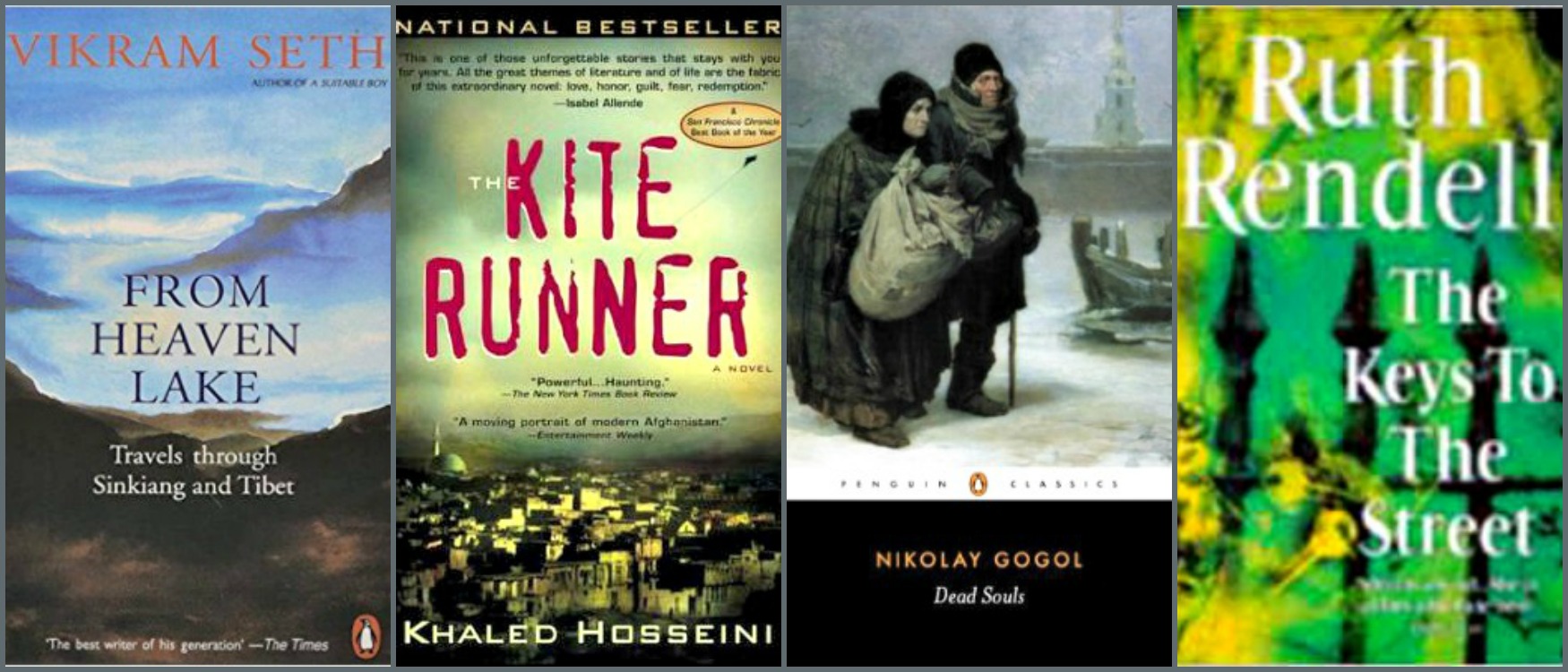
Hard to pick a few from so many: Vikram Seth for his depiction of India—but his first book, From Heaven Lake, was a vivid travelogue of Sinkiang and Tibet; he was still a student but the novelist is already burgeoning in those pages. Khaled Hosseini, who so cleverly weaves his characters into the texture of place in The Kite Runner, and Nikolai Gogol, especially in Dead Souls, where his detailing of personal possessions in a room reveals not only a distinctly Russian steppes atmosphere, but also a character’s past and present. And one more: Ruth Rendell appears to break all the “rules” in The Keys to the Street by opening with almost two pages describing London’s ornamental iron railings—but in such a way that with the first paragraph we are already anxious about those spikes.

Trish's picks for writers who have mastered the art of writing about place.

Trish’s picks for writers who have mastered the art of writing about place.

Thanks so much, Trish! I can easily see why one reviewer described you as “full of humour, adventure, and iron determination…”

* * *

Readers, any questions for Trish Nicholson? Please leave them in the comments below before she disappears back into her treehouse.

And if you’d like to discover more about Trish, why not visit her author site. She also chirps on twitter at @TrishaNicholson.

Until next month!

Lorraine Mace writes for children with the Vlad the Inhaler books. As Frances di Plino, she writes crime in the D.I. Paolo Storey series. She is a columnist for both of the UK’s top writing magazines, has founded international writing competitions and runs a writing critique service, mentoring authors on three continents.

STAY TUNED for the next fab post!

If you enjoyed this post, we invite you to register for The Displaced Dispatch, a round up of weekly posts from The Displaced Nation, with weekly updates and much, much more. Register for The Displaced Dispatch by clicking here!

Related posts:

Photo credits (top of page): The World Book (1920), by Eric Fischer via Flickr; “Writing? Yeah.” by Caleb Roenigk via Flickr (both CC BY 2.0).

Wonderlanded with Rosie Milne, Asian Books blogger and author of a new historical novel about two early expat wives

Alice goes through the looking glass[https://www.flickr.com/photos/centralasian/5485576189/], illustration by John Tenniel, uploaded to Flickr by Central Asian (CC BY 2.0)https://creativecommons.org/licenses/by/2.0/; book cover art; Rosie Milne in Singapore with her papier-mâché Alice (supplied).

Alice goes through the looking glass, illustration by John Tenniel, uploaded to Flickr by Central Asian (CC BY 2.0); book cover art; Rosie Milne in Singapore with her papier-mâché Alice (supplied).

Welcome back to the Displaced Nation’s Wonderlanded series, being held in gratitude for Lewis Carroll’s Alice’s Adventures in Wonderland, which turns 150 this year and, despite this advanced age, continues to stimulate and reassure many of us who have chosen to lead international, displaced, “through the looking glass” lives.

This month we travel
d
o
w
n
the hole with Rosie Milne, an Englishwoman who has lived in various places, mostly within Asia, but right now can be found in Singapore.

I first discovered Rosie Milne through an article she worte for Telegraph Expat about romantic novelists who’ve been inspired by their expat surroundings. I noticed in her bio blurb that she runs the Asian Books Blog.

Then recently I had the pleasure of her getting in touch with me to feature a description of the Displaced Nation for the Blog’s Sunday Post.

As Rosie and I began backing and forthing by email, I spontaneously decided it might be fun to be wonderlanded with her.

Now, having spent many years living in Asia myself, Singapore, where Rosie lives now, isn’t exactly my idea of wonderland. I know it comes out tops for expat destinations on various surveys, but for me Singapore is a nice place to visit (great food and shopping) but for living? Much too safe and predictable; Asia Lite.

But Rosie has lived all over Asia, including in my former home of Tokyo (Asia Heavy!). She has also thought deeply about what it’s like for women to “pass through the looking glass” into Asia, having just completed a novel, Olivia and Sophia: a fictionalized account of the adventures of Sir Thomas Stamford Raffles, the founder of Singapore, as seen through the eyes of his first and second wives. (It’s due out in November from Monsoon Books.)

We’ll get to read a couple of excerpts from that work in the next post, but first let’s find out what it’s like to be wonderlanded with Rosie!

* * *

Rosie Milne: Thank you, ML, and greetings, Displaced Nation readers. To give you a little more of my background: I was born in London. I worked in publishing there before moving to New York, where I wrote my first novel, How To Change Your Life, about an editor of self-help books trying to follow the advice in a self-help book.

I then moved to Hong Kong where I wrote my second novel, Holding the Baby, about four sisters with differing attitudes to motherhood—one of them, unable to have biological children, adopts from China.

I then had short spells in Sydney and Tokyo, before moving to my current home, Singapore, where I wrote my new novel, Olivia & Sophia, which features two early forerunners of a type of modern expat woman: the trailing spouse.

“I don’t understand you,” said Alice. “It’s dreadfully confusing!”

In Tokyo language was impenetrable—I did try to learn, but more-or-less never got beyond being able to give my address. There was a big earthquake within a few days of my arrival. There were young adults on the streets dressed as cartoonish characters. I had my first, and last, taste of sashimi chicken – the most revolting food I ever tasted….

Lost in Tokyoland. Photo credits (clockwise from top left): Untitled[https://www.flickr.com/photos/bernatagullo/89651149/], by Bernat Agullo via Flickr (CC BY-SA 2.0)[https://creativecommons.org/licenses/by-sa/2.0/]; Japanese city at night[https://www.flickr.com/photos/photones/6471199389/], by Takuma Kimura via Flickr (CC BY-SA 2.0); Untitled[https://www.flickr.com/photos/kylehase/3458873955/], by Kyle Hasegawa via Flickr (CC BY 2.0)[https://creativecommons.org/licenses/by/2.0/]; 鶏のたたき (chicken sashimi),[https://www.flickr.com/photos/spilt-milk/4578639904/] by yoppy via Flickr (CC BY 2.0)[https://creativecommons.org/licenses/by/2.0/].

Lost in Tokyoland. Photo credits (clockwise from top left): Untitled, by Bernat Agullo via Flickr (CC BY-SA 2.0); Japanese city at night, by Takuma Kimura via Flickr (CC BY-SA 2.0); Untitled, by Kyle Hasegawa via Flickr (CC BY 2.0);
鶏のたたき
(chicken sashimi), by yoppy via Flickr (CC BY 2.0).

“Consider anything, only don’t cry!” said the Queen.

I think expats, amongst the luckiest people on the planet, should resist succumbing to pools of tears.

“No,” said Alice. “I don’t even know what a Mock Turtle is.”

I am quite often wary about fish, but usually, when I try the dish, or fish, in question, I enjoy it.

Recipe for a Mad Hatter’s Tea Party

I would serve vodka and gherkins. As to the guest list…how about Jesus, and Richard Dawkins. The Buddha and Darwin. The Ayatollah Khomeini and Einstein…should make for interesting conversation, although language might be a bit of a problem.

Language might be a bit of a problem at Rosie Milne's tea party. Photo credits (clockwise from top left): Ice cocktail[https://pixabay.com/en/ice-cocktail-glass-drink-alcohol-681547/] via Pixabay; Alice's Adventures in Wonderland (Illustrator: Rackham, 1907) The Mad Tea-party[https://www.flickr.com/photos/43021516@N06/4382428537/], by Special Collections Toronto via Flickr (CC BY-SA 2.0)[https://creativecommons.org/licenses/by-sa/2.0/]; Sad pickle[https://www.flickr.com/photos/healthserviceglasses/3382360977/], by John Bell via Flickr (CC BY-SA 2.0)[https://creativecommons.org/licenses/by-sa/2.0/]. Insets: Albert Einstein during a lecture in Vienna in 1921[https://commons.wikimedia.org/wiki/File:Albert_Einstein_1921_by_F_Schmutzer.jpg]; Ayatollah Khomeini[https://commons.wikimedia.org/wiki/File:Mehdi_Bazargan_Ayatollah_Khomeini.jpg], by Alain DeJean—both images via Wikimedia Commons (CC0 1.0)[https://creativecommons.org/publicdomain/zero/1.0/deed.en].

Language might be a bit of a problem at Rosie Milne’s “tea” party. Photo credits (clockwise from top left): Ice cocktail via Pixabay; Alice’s Adventures in Wonderland (Illustrator: Rackham, 1907) The Mad Tea-party, by Special Collections Toronto via Flickr (CC BY-SA 2.0); Sad pickle, by John Bell via Flickr (CC BY-SA 2.0). Insets: Albert Einstein during a lecture in Vienna in 1921; Ayatollah Khomeini, by Alain DeJean—both images via Wikimedia Commons (CC0 1.0).

“Then it doesn’t matter which way you go,” said the Cat.

I am terrible at giving advice.

Alice had begun to think that very few things indeed were really impossible…

If I hadn’t lived in Singapore I doubt I’d have written Olivia & Sophia—an account of the life of Sir Thomas Stamford Raffles, the founder of Singapore, told through the fictionalised diaries of his two wives. Olivia & Sophia predate Alice, but they must often have felt wonderlanded. In an era when the voyage from Europe to Asia took anything up to ten months, when letters were the only means of communication with Home, when Europeans died like flies in the East, their sojourns abroad saw them fall down the rabbit hole far more comprehensively than any modern expat. I hoped to use the novel to explore parallels between an early age of globalisation, and our own age, between the effects of a financial crisis then, and of the recent crises in the global economy, between the lives of expats then, and expats now, and so on…

Bonus: Alice as manga character

Why not make Alice Japanese? She could cultivate kawaii. And the white rabbit could be kawaii, too. The setting could be Tokyo, the rabbit hole could be the Tokyo subway…

Photo credits: Tumbling down the rabbit hole…[https://www.flickr.com/photos/luxtonnerre/2482551243/], by LuxTonnerre via Flickr (CC BY 2.0)[https://creativecommons.org/licenses/by/2.0/]; Pink bunny-shaped roadblock (Narita)[https://commons.wikimedia.org/wiki/File:Pink_bunny-shaped_roadblock.jpg] via Wikimedia Commons (CC0 1.0)[https://creativecommons.org/publicdomain/zero/1.0/deed.en]. Inset: Through the Rabbit Hole[https://www.flickr.com/photos/ipdegirl/8197732984/], by Jenni C via Flickr (CC BY-SA 2.0)[https://creativecommons.org/licenses/by-sa/2.0/].

Photo credits: Tumbling down the rabbit hole…, by LuxTonnerre via Flickr (CC BY 2.0); Pink bunny-shaped roadblock (Narita) via Wikimedia Commons (CC0 1.0). Inset: Through the Rabbit Hole, by Jenni C via Flickr (CC BY-SA 2.0).

* * *

Thank you, Rosie! Being wonderlanded with you was a curious experience, that’s for sure! Readers, please leave your responses to Rosie’s story in the comments. And stay tuned for her writing samples showing what it was like to be wonderlanded back in the day of Sir Stamford Raffles! ~ML

STAY TUNED for the next fab post: an example of how Rosie writes about a wonderlanded experience.

If you enjoyed this post, we invite you to register for The Displaced Dispatch, a round up of weekly posts from The Displaced Nation, and much, much more. Register for The Displaced Dispatch by clicking here!

Related posts:

LOCATION, LOCUTION: The Way of expat author Joan Fallon lies in writing about the Camino and other Spain-related themes

Location Locution
Columnist Lorraine Mace, aka Frances di Plino, is back with her latest interview guest.

The theologian Richard Niebuhr once wrote:

Pilgrims are poets who create by taking journeys.

In that sense, today’s author, Joan Fallon, can be considered a modern-day pilgrim, of the kind often encountered within the Displaced Nation. She may not have walked the Camino de Santiago—but the path she took in her life led her to a place where she could write a novel about someone who did.

Joan was born with a foot in two cultural camps: her father was Irish and her mother, Scottish. Her first journey into a brand new culture was made as a child, when her family moved from Dumfries, Scotland, to the south of England, which many Celts consider to be a foreign country.

Joan went on to spend her formative years in England. She married, had a family (a son and a daughter), and worked as a teacher while also earning a BA from the Open University in History and Literature.

But in England, Joan was still a pilgrim; she hadn’t yet found the Way. In fact, she lost her way for some time after her son dropped dead unexpectedly when he was only 17. She abandoned her career in teaching (she couldn’t bear being around kids his age) to become a management trainer.

Soon, though, it was time to don her pilgrim’s boots again, this time for a journey into southern Spain. When her husband took early retirement, the couple set off just before the start of the new millennium for their new home in Benajarafe, a coastal village that is a few miles east of Málaga, in Andalusia.

This journey, which brings us to where we find Joan now, led her to the goal she was seeking all along: an opportunity to try out the life of full-time writer. As she put it in a recent interview:

It is something that I had been waiting all my life to do.

Joan completed an Open University course in creative writing, but it wasn’t until she’d spent six years taking journeys within Spain, learning the language and talking to people, that she would embrace her destiny fully. (She was also settling in, finding out how to cope with Spanish bureaucracy and generally dealing with the numerous everyday things that we take for granted in our home country or don’t need: obtaining an identity card, a social security card, becoming a tax resident, registering at the town hall, changing to Spanish number plates, making friends, finding a hairdresser that you like, a new dentist, a new doctor, a vet, a plumber…)

Eventually, her immersion in the Spanish language and local culture paid off. Always interested in social history, Joan decided to interview a number of older Spanish women about how their lives had changed since Franco had died in 1975. She translated the interviews into English, which led to her first published book, Daughters of Spain.

The research for this book also produced two novels:

Joan Fallon's writing career has flowered in Benajarafe, initially with books set in the Franco era

Joan Fallon’s writing career has flowered in Benajarafe, initially with books set in the Franco era. Photo credits: Joan Fallon’s author photo and book covers (supplied); Benajarafe, by Tony Bowden (CC BY-SA 2.0).

One of Joan’s subsequent novels grew out of her experiences of mixing with both Spanish and foreign nationals: Loving Harry, a story about two women in love with the same man, set in expat Spain.

Joan’s frequent visits to other parts of Spain have also inspired books. It was a trip to Galicia that gave her the idea of writing Santiago Talesabout a woman whose life is in tatters and who decides to walk the Camino de Santiago seeking solutions.

Likewise a visit to the Moorish ruins at Madinat al Zahra near Córdoba inspired her to research and write The Shining City, a novel set in Moorish Spain during 10th century.

All of Joan’s novels feature strong women as their heroineswomen who face some kind of difficulty and have to overcome it.

* * *

Welcome, Joan, to Location, Locution. Spain clearly has had a powerful effect on your writing, but which comes first, story or location?

Thank you for inviting me, Lorraine. It depends on the book I am writing whether location or story is the most important. Santiago Tales, as you’ve explained, was set on the Camino de Santiago in northern Spain—location was essential to the story. Spanish Lavender is a love story set in the Spanish Civil War, but it takes place specifically in Málaga, a city I know very well—and therefore I started with the location. In another of my books, The Only Blue Door, which you didn’t mention, I wrote about three children sent to Australia during wartime. Never having been to Australia, I found it hard to write about a place I did not know personally so had to rely on my research. In this case, it was the story that was predominant, not the location.

It sounds as though you like to know the place very well before using it as a setting?

Yes, I prefer to write about places I know. If I don’t know the location well, then I will visit it a number of times noting the layout, the atmosphere and anything else I can put into my writing. Sometimes I will interview someone about a place when I know that they have a greater knowledge of the location than I do. This is what I did with Santiago Tales. I knew the area well but not from the point of view of a pilgrim, so I interviewed a woman who had walked the 800 km of the Camino and was delighted to tell me of her exploits. This gave me the little details that I needed to make my story credible.

Photo credits: Puente rústico, by José Antonio Gil Martínez via Flickr (CC BY 2.0) .

Photo credits: Puente rústico, by José Antonio Gil Martínez via Flickr (CC BY 2.0); book cover art (supplied).

What’s your technique for evoking the atmosphere of a place?

I try to remember as many details as I can, imagining that I am there again and then imagining the character in the location as I knew it. If my story is set somewhere that I have only visited on a few occasions, then it needs more effort to conjure up the required atmosphere, and I will read about the location and look at photographs. Sometimes it is something as simple as knowing if there are hills in the area that the character has to climb or rivers that he has to cross or when he sits down what he can see. All this helps to transport the reader to the location that you have chosen. For me it is a mixture of combining what I know the place is like with the atmosphere I am trying to convey for the story.

Which of your works provides the best illustration of place, and can you give us a brief example?

Place is an especially important factor in The Shining City, which I wrote after visiting the ruins of a city near Córdoba called Madinat al Zahra. I was fascinated by the place and the fact that, although it was once a very prosperous and cultured city, it was abandoned and fell into complete disrepair after only 70 years. It seemed the ideal place to set a historical novel about the Moors in Spain.

Here is a passage from my book, depicting a character from England’s West Country who is following the French Way of the Way of St. James:

The Galician countryside is distinctive. It reminds her a little of her own West Country, with its small fields and dry-stone walls. The change was obvious as soon as she reached O’Cebreiro, set in the green, rolling hills across the border from León, and saw the round stone houses of the area, with their straw roofs and Iron Age design. She has even passed Celtic crosses at the roadside, so like the ones in Cornwall, and fields of fat, contented brown and white cattle. Just like the west coast of Britain and Ireland, Galicia receives its fair share of Atlantic wind and rain and this is evident in the verdure of its countryside. No, she is no longer walking through the dry Meseta; this part of Spain is very different and, to her, feels more like home.

Photo credits: Book cover art (supplied); Medina Azahara - Cordoba, by Roberto Venturini via Flickr (CC BY 2.0).

Photo credits: Book cover art (supplied); Medina Azahara – Cordoba, by Roberto Venturini via Flickr (CC BY 2.0).

Is landscape the only feature you look at to create a sense of location? What about culture, or even food?

All of those and more, depending on the location. Returning to the example of The Shining City, about a place that I had visited when it was a ruin, I had to do a lot of research into what it would have been like when it was a thriving city. I needed to know what food was available at the time, what they grew and what they imported, what type of housing people lived in, how they dressed and what the climate was like. Although this is a historical novel, set in 10th-century Spain, the fact that I live in Spain and know the area well made it so much easier to create the right atmosphere; I knew from experience what the weather was like at different times of the year, which flowers were in bloom and when; and I could imagine easily what the roads to the city were like then from what I could see today.

Which writers do you admire for the way they use location?

I read a book by John Lanchester called Capital, which was the story of a street in London told through the lives of the people who lived there. He used location very well and made it the central pivot for his novel. Donna Tartt also uses location very well and creates a rich and detailed background to her novels. Another writer that gives great importance to location in her novels is Barbara Kingsolver, and Elena Ferrante’s Neapolitan novels about two girls growing up in Naples recreate the atmosphere of that wild-child city beautifully.

Fallon Faves

Joan’s picks for writers who have mastered the art of writing about place

Thanks so much, Joan!

* * *

Readers, any questions for Spain-obsessed Joan Fallon? Please leave them in the comments below.

And if you’d like to discover more about Joan, why not visit her author site +/or her site dedicated to her books that are set in Spain, A Spanish Notebook. You can also follow her on twitter at @joan_fallon and @notesonspain +/or like her Facebook page.

Until next month!

Lorraine Mace writes for children with the Vlad the Inhaler books. As Frances di Plino, she writes crime in the D.I. Paolo Storey series. She is a columnist for both of the UK’s top writing magazines, has founded international writing competitions and runs a writing critique service, mentoring authors on three continents.

STAY TUNED for the next fab post!

If you enjoyed this post, we invite you to register for The Displaced Dispatch, a round up of weekly posts from The Displaced Nation, with weekly updates and much, much more. Register for The Displaced Dispatch by clicking here!

Related posts:

Photo credits (top of page): The World Book (1920), by Eric Fischer via Flickr; “Writing? Yeah.” by Caleb Roenigk via Flickr (both CC BY 2.0).
GLOBAL FOOD GOSSIP: Back in Britain, I can’t find a strong cup of black tea to save my constitution

Global Food Gossip 062315
Serial expat—and now repat!—Joanna Masters-Maggs is back with some tasty global food gossip to share, this time about England’s favo(u)rite drink.

“I’m not doing this again if you can’t stop going on about the tea,” declared my husband with a generous dose of irritation.

“But, really, it’s terrible,” I said. I couldn’t stop myself, you see, and his outrage was by now fully stirred.

“Okay, I’m leaving, that’s it.” He got up and headed for the door.

So ended our little tea break experiment.

Now that we have returned to England, my husband is working a great deal at home. It was my idea that, since he is talking to people around the world a lot in the evenings, we take a tea break together during the quieter mornings.

Though we are living in rural South Somerset, there are plenty of places we can choose. Our local pub does morning coffee and afternoon tea, with scones if you please. And there are little tea shops and cafes scattered around neighbouring villages.

I was ready to enjoy myself sampling them all.

Only now it seems I will do so alone, or not at all.

Food, glorious food! Sandwiches, cakes, full breakfasts…

Many of these places are serving wonderful sandwiches on hand sliced granary or flavourful white, chock full of local hams, cheeses, sausages and bacon.

Homemade cakes, too, are the order of the day.

Also noteworthy is how many of our local establishments realizing the potential in serving early breakfasts to those on their way to work. No longer is a “full English” only to be found in hotels or transport cafes, now you can enjoy one on shabby chic china while sitting at a distressed French provençal style table on a Cath Kidston cushion. You find people of all professions—from drivers to office workers, farmers to solicitors.

Breakers sandwiches cakes oh my

Photo credits (clockwise from top left): Georgian Tearoom, Topsham, by BazzaDaRambler via Flickr (CC BY 2.0); All-day yummy English breakfast via Pixabay; High tea for two at Tallula’s Tearooms, by Jessica Spengler via Flickr (CC BY 2.0).

It’s a lovely thing, but this brings me back to the tea. Surely, sandwiches, cakes—and now bacon-and-eggs with their many accompaniments—demand hot and strong tea? My husband believes I am the one out of step in being so unhappy with a spineless brew. But I cannot believe, I just cannot. What has happened to my compatriots in the years I have been away? Why are we accepting such mean servings of tea in our pots—and paying for it, too? Where is our backbone, our firm upper lip?

All I want is a good cup of spine-bracing black tea!

Keep calm and drink strong tea

Photo credits: Keep calm and drink tea! by Graham Hills; English Breakfast Tea, by Mark Hillary—both images via Flickr (CC BY 2.0).

Nowadays, instead of getting a nice pot of tea, we are offered a menu of teas: green ones, black ones, Chinese, Indian… We are told that these are special and tend to feel a little uneasy about demanding a little more of them. Perhaps two teabags in a pot is a little greedy, gross even.

There is, of course, a place for different tea from different places made with different temperatures of water and intended to be less bodied and more fragrant that the black teas I am primarily talking of. And the English are very interested in food and drink from far flung places and get much pleasure from experimenting with it.

But surely that doesn’t mean that we should allow our own food culture to be degraded?!

I’ve been away too long to know when the current tea culture sprung up, but to me it seems a little awkward. Extensive menus with flowery language makes me uncomfortable, and certain paraphernalia seems to try just too hard—muslin muslin tea bag with a stick instead of a string anyone?

Give me loose leaves and a little tea strainer any day! I truly believe, that as free chickens give better eggs, liberated leaves will give us happy tea. Leaves need space to develop. We must take time to give our tea leaves the correct environment to do their work.

Give Me a Tea Strainer Any Day

Photo credit: Straining, by Dave Crosby via Flickr (CC BY-SA 2.0).

The Americanization of British tea culture

What bothers me most is the uncomfortable realization that all this fancy talk and tea hides the truth that the American way has for some incomprehensible reason, taken over our own.

How have we fallen for this? America simply is not a tea-drinking culture.

How well I remember my first pot of American university tea. Tea warmed in the coffee maker and a cheap tea bag removed from its individual yellow paper back and hopefully dunked in the water and dangled in the vain hope it would tint and flavour the water.

Except for the presence of a spotty badly dressed student, tea is now made like this worldwide—even in Britain. We, too, are making tea like an 18-year-old American student whose only electrical appliance is a cheap coffee maker.

Interestingly, the only person I knew in my year at college in America did a fine job with a tea bag, but she knew well the need for a quick addition of boiling water. When I discovered her father was from Yorkshire, it all began to make sense—particularly her deft “mashing” technique with the back of a spoon. You see, a tea bag can be rescued if you remain mindful of the important things.

For the record, here’s what works (and why)

For me the recipe for a fine cup of tea was, and still is, a spoonful of tea leaves per person and one for the warmed pot. Onto this would be poured, boiling water, boiling. The pot would be lidded so it could be covered and left for a good five minutes before pouring.

The addition of milk and sugar is a personal thing, but the tea itself has to be strong, with a deep colour—and body.

Aunties Tea Shop Menu

Photo credit: Auntie Eileen’s Tea Shop, by Duncan Hall via Flickr (CC BY 2.0).

Back here in the England of 2015, cafes and hotels seem to think it elegant to offer our tea in a gimmicky and deconstructed manner. A pot of hot water and a paper-wrapped tea bag on a saucer. But in all that show the importance of boiling water is lost. Bring it quickly to the boil, warm the pot and then use it. Don’t boil and re-boil or boil for protracted period of time—but do make sure it is boiled and recently so.

While I’m in full flow, I’d like to add a quick grumble about the tea bags and strings. Why are these so often twisted around the handle of the pot? First, the leaves are confined to a bag then the bag itself is prevented from moving freely.

How in all of this can the tea properly infuse? It can’t.

A “No More Tea Bags” Manifesto

Since my husband has long since taken refuge from this rant, let me finally call for an end to the tea bag, particularly the irritatingly trendy ones, along with kettles that boil. Let me also call for a generous amount of tea in the pot.

Let’s say goodbye to tea that looks as though it has had a fright and welcome back to the kind of tea you need when you have had a nasty shock or need a comforting and strong arm, which happens to all of us at some point…

Call for an end to teabags

Photo credit: Last of Mom’s Tea, by Alan Levine via Flickr (CC BY 2.0).

* * *

Readers, we invite you to continue the food gossip! Can you relate to Joanna’s disappointment at finding England’s tea a shadow of its former self? Be sure to let us know in the comments!

Joanna Masters-Maggs was displaced from her native England 17 years ago, and has since attempted to re-place herself in the USA, Holland, Brazil, Malaysia, Venezuela, Saudi Arabia, and France. She describes herself as a “global food gossip”, saying: “I’ve always enjoyed cooking and trying out new recipes. Overseas, I am curious as to what people buy and from where. What is in the baskets of my fellow shoppers? What do they eat when they go home at night?”

STAY TUNED for next week’s fab posts!

If you enjoyed this post, we invite you to register for The Displaced Dispatch, a round up of weekly posts from The Displaced Nation—and much, much more! Register for The Displaced Dispatch by clicking here!

Related posts:


BOOKLUST, WANDERLUST: The story of Jo Parfitt and her expat press, Summertime Publishing

booklust-wanderlust-2015

Attention displaced bookworms! As our book review columnist, Beth Green, an American expat in Prague (she is also an Adult Third Culture Kid), is still honeymooning (literally—congratulations, Beth!), we have loaned her space this month to seasoned expat and freelance writer Ana McGinley, who will tell us the story of a well-known international creative in the expat book world: Jo Parfitt, founder of Summertime Publishing.

Hello, readers, and thanks Displaced Nation for this opportunity to talk about Jo Parfitt. A journalist, editor, writer, speaker and teacher, Jo has lived abroad for 26 years—in France, Dubai, Oman, Norway, the Netherlands, Brunei and now Malaysia. She is the founder of Summertime Publishing, which specializes in publishing books by and for people living abroad.

Eighteen years ago, Jo published A Career in Your Suitcase, her guide to creating a portable career. Now in its 4th edition, the book continues to grow in popularity as the number of expat accompanying partners, mostly women, find themselves seeking new mobile careers to replace the jobs and careers relinquished to embark on a global relocation.

Jo Parfitt and A Career in a Suitcase

Jo Parfitt on Bankastraat, Den Haag, Netherlands, one of many former homes; book cover art for her bestseller, A Career in a Suitcase, now in its 4th edition.

Jo’s own career in a suitcase

The success of that book inspired Jo to set up her own business mentoring expats in search of suitable career opportunities. Having written 31 books herself, Jo decided to extend her training to include writing skills guidance for new authors. Several of them have partnered with her to publish their works, and Summertime Publishing—which she’d first set up to publish her cookbook, Dates, written while living in Oman—took off.

After nearly two decades, Summertime has a catalogue of over 100 publications covering many facets of expat life, including:

Summertime Top Five

Jo recruits her dream team…

A year ago, Jo enlisted the help of former Displaced Nation columnist Jack Scott, he of Jack the Hack fame. Jack had published his book, Perking the Pansies (a memoir based on his popular expat blog of that name), with Jo (he now has a sequel out: Turkey Street).

In addition to Jack, Jo has hired Jane Dean (who was Jack’s editor).

Jo, Jane and Jack have British roots, although Jane is now a US citizen, yet all three are based in different global locations: Jo in Kuala Lumpur; Jack in Norwich, UK; and Jane in The Hague, Netherlands. All three have in common the experience of relinquishing previous careers to accompany their partners—and establishing successful portable careers in the publishing world.

(Left to right) Jo Parfitt, Jack Scott and Jane Dean (supplied).

(Left to right) Jo Parfitt, Jack Scott and Jane Dean (supplied).

Today Jo takes care of sales and marketing, business growth, client intake, big-picture edits and manuscript assessment at Summertime Publishing. Jane is the chief editor and production manager, and Jack is responsible for royalties, administration, digitization and social media.

Business is conducted digitally via computer networking and bi-monthly business meetings on Skype—and regular Skype meetings with their team of designers. The three aim to physically meet each year for the company annual general meeting.

Jo says that the recent expansion of her business is directly related to the growth in the globally mobile workforce. As more people relocate to new locations, the thirst for knowledge about expat issues, both unique and common to specific destinations, increases. Expats tend to be well-educated individuals capable of resettling in unfamiliar places and adjusting to new cultures, without losing their own cultural identity. By necessity expat partners often dive deep into the culture of their new destination, interacting with local people and services daily. These accrued experiences, good and bad, can form a strong basis for a good story.

The summertime—& sunshine—of the expat life

Anyone who is familiar with Jo has noticed a theme running through her life and work having to do with summertime and sunshine. Jo says she named her press “Summertime” after the song by Gershwin, which she sees as her theme tune. “I am a positive person and love the optimism and hope in the lyrics,” she says.

Having spent ten years in the intense sunshine of the Middle East, Jo has also published a novel called Sunshine Soup, about expat life in Dubai, and she currently keeps a blog about the life she leads with her husband in Malaysia, called Sunny Interval, because after postings in Europe they get to enjoy the sunshine again.

Photo credit: A Sunny Interval[http://sunnyinterval.com/2014/11/23/life-ocean-microwave/]

Photo credit: A Sunny Interval.

There is also, of course, Jo’s sunny disposition to consider. “I am an optimist at heart and like to see the good in everyone,” she says, adding that, since setting up her press, “my motto has been Sharing What I Know to Help Others to Grow.”

Further to which, in closing I’d like to share some tips Jo has for expats who dream of writing a book:

• Do your own market research to see whether books covering your topic already exist. Most mainstream bookstores do not have a specified section for expatriate books—so look online.

• Visit Expat Bookshop and Summertime Publishing. (Interested in publishing with us? Send a message via the contact form on the site.)

• Download the free booklets offered by Summertime Publishing:

• Consider the practical aspects of publishing a book. Writers who enter a contract with Summertime Publishing will be offered editing, printing and promoting services tailored to suit their individual needs.

• Most importantly, assess your available time and lifestyle and evaluate the real possibilities of being able to regularly focus on your book project. writing a book demands a high level of focus.

And now for Jo’s parting pearls:

I believe everyone has a story in them. I tell someone that if their story is likely to inspire, support, inform or entertain another person then it is worth telling.

* * *

Thank you, Ana, for introducing us to Jo Parfitt. Her dedication to the cause of publishing expat works, along with her sunny disposition, has extended the feeling of summertime for me a little longer! Readers, how about you? Any questions for Ana +/or Jo?

STAY TUNED for the next fab post!

Born in Australia, Ana McGinley has now lived in seven countries in 15 years, so more than qualifies as a serial expat. She writes, edits, reviews and researches articles for various online publications, including serving as the review coordinator for Summertime Publishing—all of which distracts her from finishing her book about caring for ageing parents from abroad, a topic related to her previous work as a social worker with older people. She currently lives in the Netherlands with her Canadian husband and four children, all born on different continents. To get to know Ana better, please follow her HuffPost column. You can also view her portfolio of published works here.

If you enjoyed this post, we invite you to subscribe to The Displaced Dispatch, a weekly round up of posts from The Displaced Nation and much, much more. Sign up for The Displaced Dispatch by clicking here!

Related posts:

LOCATION, LOCUTION: For Stephanie Patterson, the role of expat historical novelist seems to have been predestined

Location Locution
Columnist Lorraine Mace, aka Frances di Plino, is back with her latest interview guest.

Hello again, readers. Last month I introduced you to expat writer Oliver Tidy, who found his calling in writing crime novels set in the UK once he became an expat in Turkey. For my guest this month, Stephanie Patterson, it was the other way around. Stephanie developed an early passion for places other than her home country of Germany, and for the English and Scottish medieval periods. In other words, it seemed almost predestined that she would move to the UK and write historical novels set in these places and times.

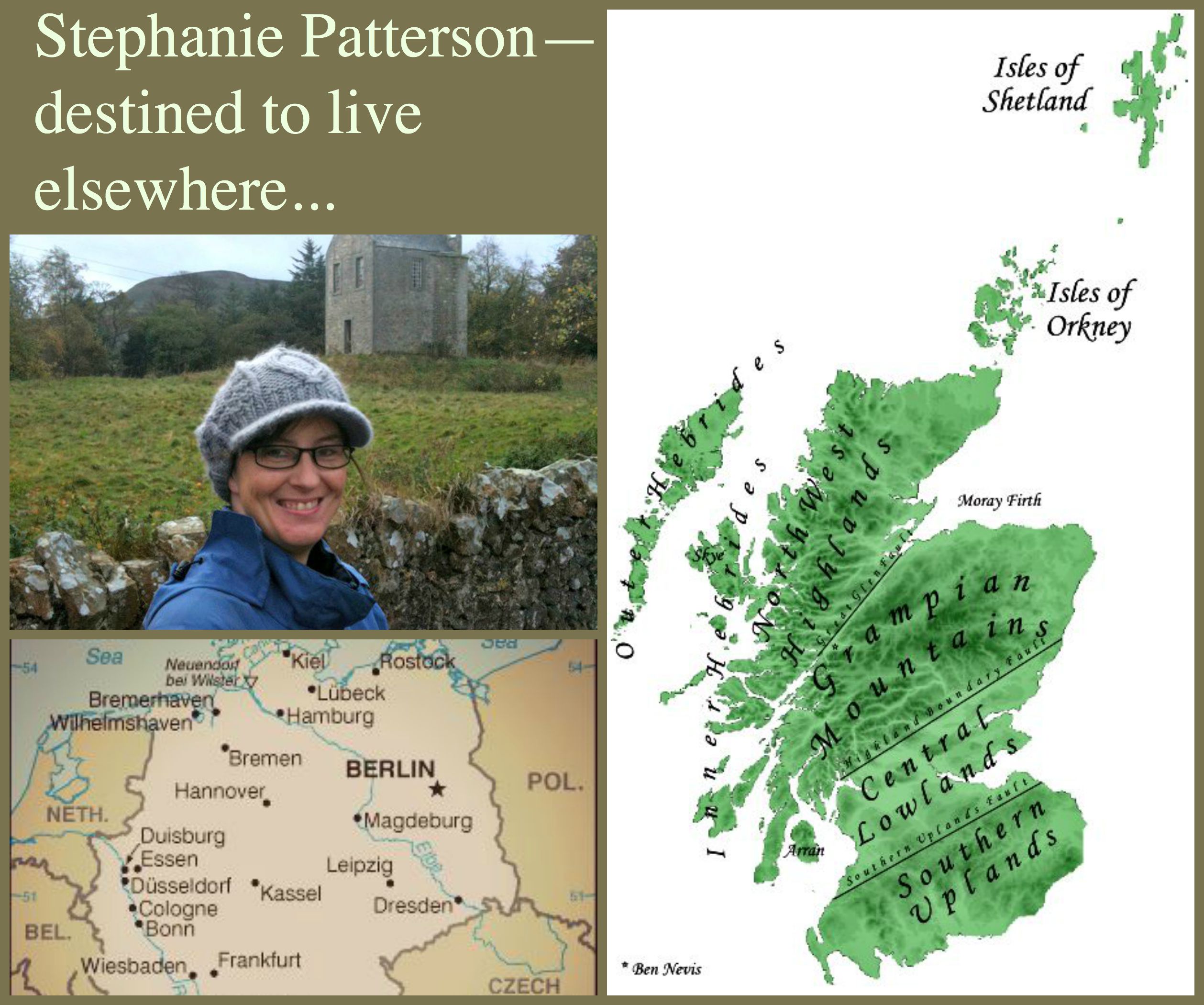
Although Stephanie first lived in Kent when she arrived in the UK 18 years ago, she relocated to Aberdeen and then, after a stint in Wales (Cardiff), where she met her British husband, Laurence, has lived in Edinburgh for the past 10 years.

Stephanie Patteson destiny

Photo credits (left): Stephanie Patterson in her beloved Scottish Highlands (supplied); Map of Germany, by Central Intelligence Agency; The main geographical divisions of Scotland, by SFC9394—both images via Wikimedia Commons (CC BY-SA 3.0).

Not surprising, given her proclivities, Stephanie believes the key to settling into a new country is total immersion. In her case this technique greatly improved her grasp of the language (she is a certified translator of English to German). It has also enabled her to write romantic suspense and adventure set in Scotland, England and Normandy under the pen name of Cathie Dunn.

In 2011, Stephanie and Laurence set up Crooked Cat Publishing on the model of an independent US publisher. To date, Crooked Cat has published over eighty paperbacks and e-books with authors across the world, several of which have won (or been shortlisted for) prizes. It has quickly developed a reputation for producing quality fiction.

As Cathie Dunn, Stephanie has two historical novels published with Crooked Cat:

  • Highland Arms, a romantic Scottish adventure (originally released through Wild Rose Press), set in Stephanie’s favourite area of the Scottish Highands: Lochaber. It’s the first in her Highland Chronicles series.
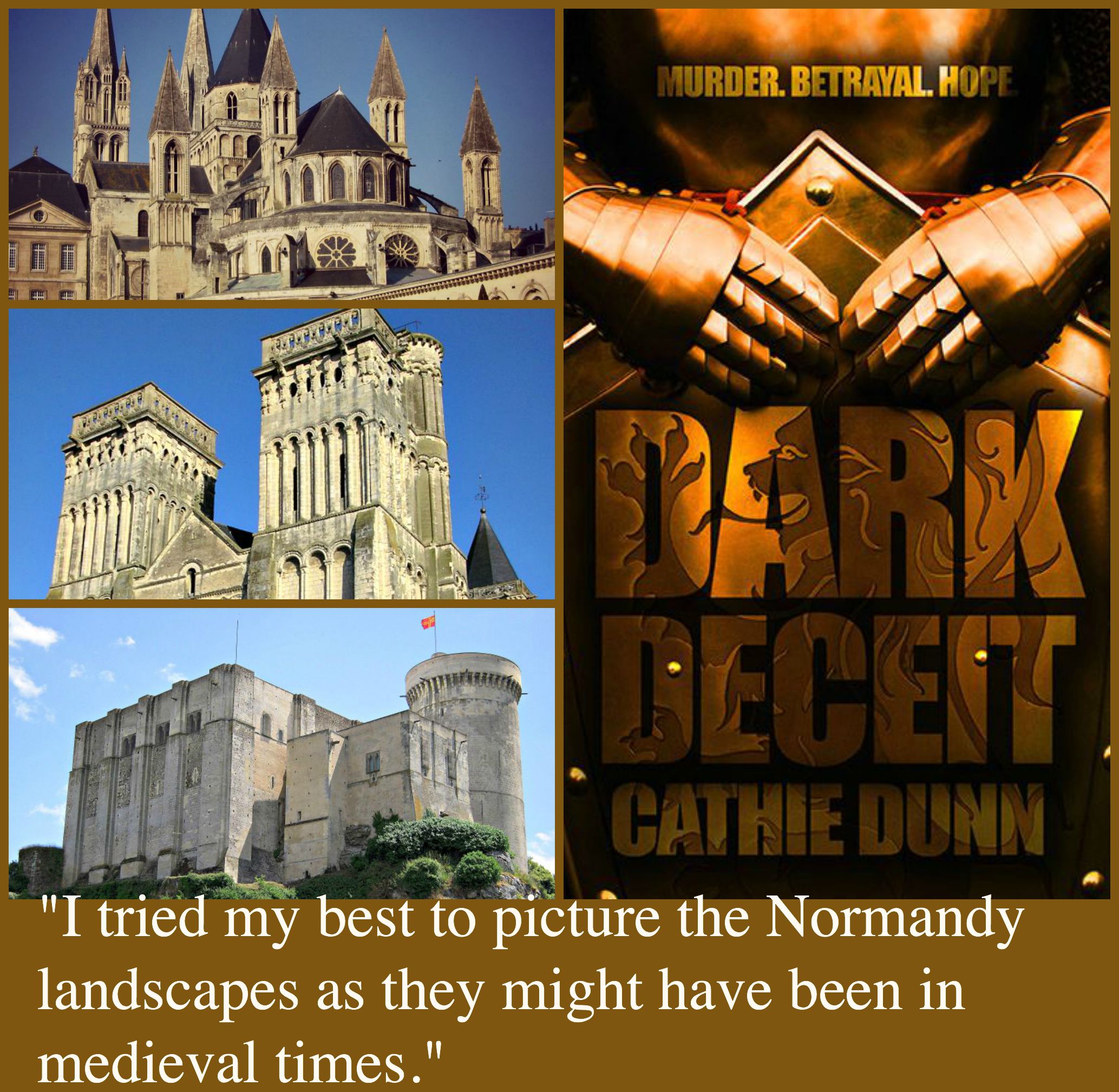
  • Dark Deceit, the action of which takes place in 1140s England and Normandy, when a brutal civil war is taking place. It’s the first in her Anarchy Trilogy, set mainly in medieval Normandy.

She has also self-published Silent Deception, a romantic paranormal novella set in Victorian Cornwall.

When she isn’t writing, editing or publishing, Stephanie is visiting castles, towns and cathedrals throughout the UK. A hobby historian, she has taken university modules in Tudor Studies and Scottish Studies. While in Wales, she took part in medieval re-enactment (the medieval and Jacobite eras being her favorites).

Stephanie’s love for medieval Norman history saw her back in Normandy for a holiday in July. Ultimately, she (and her husband) would not rule out moving to France one day, and, yes, she is currently studying French to improve her knowledge of language and culture.

* * *

Welcome, Stephanie, to the Displaced Nation. I think I can guess the answer but I’ll ask you anyway: which comes first, story or location?

Yes, as you probably guessed, I’m usually inspired by location and/or architecture first, which I then combine with potential plot ideas. My Scottish romance, Highland Arms, was born when I travelled through Glencoe and along the dramatic Loch Linnhe in the Scottish Highlands. The forbidding scenery (helped by the adverse weather of sleet, rain and fog) was the perfect setting for an adventure set in the 1720, featuring a smuggler. I always carry a notepad, and on that occasion I found it very useful for jotting down ideas.

Photo credits (clockwise from top left): Highland Arms cover art; A view of Glencoe, by Ronhjones via Wikimedia Commons[https://commons.wikimedia.org/wiki/File:Gleann_comhainn.jpg] (CC BY-SA 3.0) [http://creativecommons.org/licenses/by-sa/3.0/]. Loch Linnhe, by Moralist via Wikimedia Commons[https://commons.wikimedia.org/wiki/File:Vy_i_skottland.JPG](CC BY-SA 3.0) [http://creativecommons.org/licenses/by-sa/3.0/].

Photo credits (clockwise from top left): Highland Arms cover art; A view of Glencoe, by Ronhjones; Loch Linnhe, by Moralist. Both images via Wikimedia Commons (CC BY-SA 3.0).

What’s your technique for evoking the atmosphere of a place?

For Highland Arms, I was fortunate enough to find booklets by local historians about the era, which allowed me to paint a more realistic picture. This, in combination with a number of visits during different seasons, allowed me to set the scene quite realistically. I did the same for Dark Deceit, which is partly set in Gloucestershire and partly in Normandy. I took hundreds of photos during a holiday in Normandy and kept going back to my travel diary for pointers. I prefer to write about areas I’ve visited. If I can convey my own feelings and impressions, it helps create the atmosphere.

Is landscape the only feature you look at to create a sense of location? What about culture, or even food?

As I write historical adventures, I tend to focus on history and landscape. I found Normandy hugely inspiring for its medieval history and the buildings that have survived from that era. The castles and cathedrals paint a vivid picture of 12th-century life, and I try my best to capture it and convey it into my stories. As you mentioned, I consider myself a hobby historian and have bookshelves full of history tomes, in English and French. It helps that I love the culture.

Can you give a brief example of your work which illustrates place?

Here is a passage from Highland Arms:

Catriona nodded. “Thank you, Mr MacKinnon. I wasn’t looking forward to scaling those peaks.” Her gaze scanned the shimmering surface high up, so glaringly white against the deep blue morning sky. Hidden under layers of cloud the day before, the steep hillsides now presented themselves in all their dangerous glory. Stunned by the beauty yet relieved she did not have to cross them, Catriona smiled as she gazed across crags as sharp as a dagger’s edge.

Relaxing in the stillness of her surroundings, she was surprised at her own reaction. Instead of the misery that held her in its grasp for the last few weeks, a new sense flowed through her.

A feeling of…belonging?

She shook her head in disbelief. What brought this on? The eerie stillness should unnerve her, but instead it calmed and steadied her. Taking a deep breath, she gave her mare a nudge with her heel. Perhaps this journey was going to be good for her after all. No longer banishment, but rather an escape. Perhaps even a fortunate escape.

By the time they reached a small settlement by the shore of Loch Linnhe, the sun had crossed its zenith. Melted snow, and the footfalls of men and horses, turned the ground into a muddy slush. A handful of cottages stood scattered along the path, their walls covered in a thick layer of mud to repel the winds. Smoke swirled through holes in the roofs, filling the air with the smell of peat.

Catriona took a deep breath, enjoying the dusky scent. While she waited for MacKinnon to return from a cottage he’d entered on their arrival, she nudged her mare to the water’s edge to let her drink. Her gaze roamed over the large loch, to the far shore and back to where a narrow arm of water branched off into Loch Leven, disappearing from sight between high peaks behind her. The rugged beauty pulled her in.

How well do you need to know the place before using it as a setting?

Though not always possible, I find it easier to describe a setting once I’ve visited it for long enough to develop a “feel” for the location. For Dark Deceit, I developed an impression of what life was like in that region during medieval times by exploring the abbeys in Caen and Falaise Castle, among other monuments from that era. The book’s hero is originally from a town called Mortagne, in today’s southern Normandy. During our holiday, we drove down to the town and had a wander through it. I took in the surrounding forests (which haven’t changed too much since the 1100s) and ignored the more modern aspects. I try my best to picture the landscapes as they might have been.

Which writers do you admire for the way they use location?

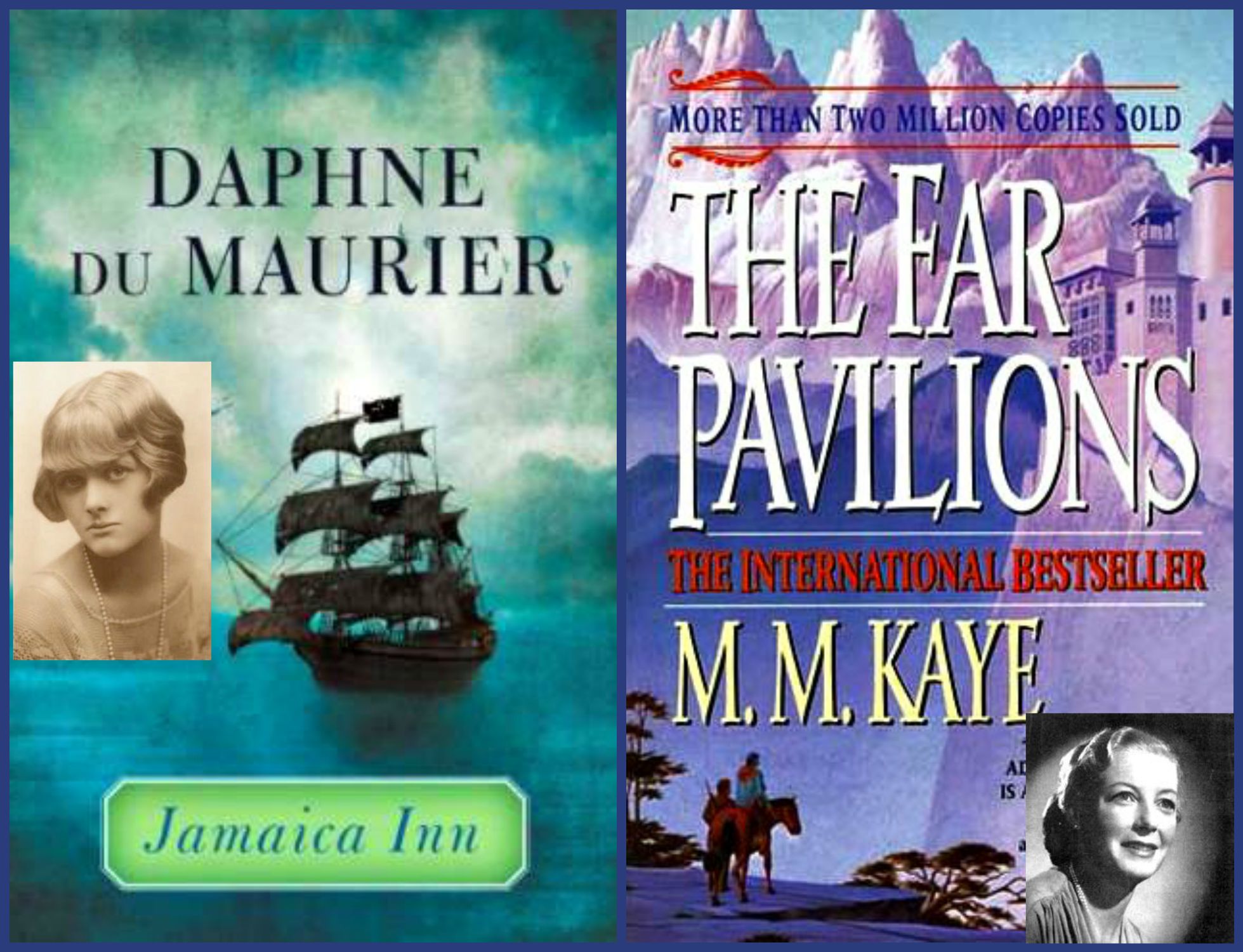
One of my favourite novels is Daphne du Maurier’s Jamaica Inn. The way she describes the desolate landscape, the remoteness of the location, is compelling. You have a real sense of being there. I also enjoy reading MM Kaye’s novels, mostly set in India and Africa. A Third Culture Kid (she was born in Simla and lived all over the world as an adult), Kaye evoked a sense of place that many other authors writing about those areas don’t manage in quite the same way.

Patterson faves

Photo credits: Cover art; insets: Young Daphne du Maurier (about 1930), by The Chichester Partnership via Wikimedia Commons (CC BY-SA 3.0); M.M. Kaye via goodreads.

Thanks so much, Stephanie!

* * *

Readers, any questions for the intrepid Stephanie Patterson? Please leave them in the comments below.

And if you’d like to discover more about Stephanie, why not visit her author site. You can also follow her on twitter at @cathiedunn.

Until next month!

Lorraine Mace writes for children with the Vlad the Inhaler books. As Frances di Plino, she writes crime in the D.I. Paolo Storey series. She is a columnist for both of the UK’s top writing magazines, has founded international writing competitions and runs a writing critique service, mentoring authors on three continents.

STAY TUNED for the next fab post!

If you enjoyed this post, we invite you to register for The Displaced Dispatch, a round up of weekly posts from The Displaced Nation, with weekly updates and much, much more. Register for The Displaced Dispatch by clicking here!

Related posts:

Photo credits (top of page): The World Book (1920), by Eric Fischer via Flickr; “Writing? Yeah.” by Caleb Roenigk via Flickr (both CC BY 2.0).


GLOBAL FOOD GOSSIP: To ease the stress of yet another international move, tea all round and some jammie biscuits?

Global Food Gossip 062315
Serial expat (and soon to be repat!) Joanna Masters-Maggs is back with some tasty global food gossip to share.

As I write this, we are in the middle of packing for our eighth international move.

By the way, I don’t count moves within countries as an actual move. Indeed, when people complain about having to move from one house to another, I have an unpleasant tendency to judge them for being just a little, well, weak.

Call me strange, but I have almost come to enjoy the stress because I know how deeply the memories will be imprinted as a result.

I especially relish the sweaty dirtiness of a move in a hot climate. You look dreadful and just don’t care. The joy of the dirt sloughing off you in the shower at the end of the day, is unspeakably satisfying. As they say, you never appreciate water until you have experienced thirst.

Memories set to the soundtrack of masking tape being torn from the roll and objects being wrapped in rustling paper—I have a few, including:

  • Watching the Malaysian movers slip on and off their shoes as the moved in and out of our house, no matter how heavy their load.
  • Spying the Brazilian workers taking a siesta under the removal van.
  • Above all, enjoying the sight of my children playing for days with empty boxes.

Tea, all round?

Tea all round

Photo credits: (clockwise from top left) “We’re Moving!” by David Goehring via Flickr (CC BY 2.0); Moving Day, by Cambodia4kids.org via Flickr (CC BY 2.0); Allied Movers, allied Moving Truck, by Mike Mozart via Flickr (CC BY 2.0); (overlay) Tea time, by Daniela Vladimirova via Flickr (CC BY 2.0).

In England it is customary to offer tea to anyone who comes to work around your house. It politely defines their status as providers of services rather than servants.

I have come to associate removal men with strong, sweetened tea and a biscuit to go with it. No move has ever been complete without these accompaniments—and my biscuit of choice under the circumstances is the Jammie Dodger.

A Jammie Dodger comprises two vanilla biscuits sandwiched together with a red jam and possibly buttercream, too. The upper biscuit boasts a little cut out to reveal a little filling—what a tease!

Jammie Dodgers are freely available in English supermarkets. The store-bought version used to do the trick, but I am afraid I have, like an addict, come to demand something more refined as my drug of choice.

No dodging the Jammie Dodger

Years ago, while living in Virginia as a student, I started to make my own Jammie Dodgers, craving as I did a taste of home. Come on, I had to tolerate Lipton Yellow Label tea, which lacks the body I demand. If I couldn’t magic up a suitable English blend, at least there was something I could do about the biscuit situation.

Jammie Dan[https://www.flickr.com/photos/lacuna007/3399511720/], by Andrea Black via Flickr (CC BY-SA 2.0)[https://creativecommons.org/licenses/by-sa/2.0/]

Jammie Dan, by Andrea Black via Flickr (CC BY-SA 2.0).

I hit on a good combination of a shortbread style biscuit and a good-quality jam. Imagine my surprise on discovering these were so much better than the factory version—so much so that I have never again willingly returned to the supermarket to buy them. I was young, remember. I still am. As the years passed I have tweaked that recipe until nothing surpasses it.

Arriving in France I was astonished discover that there was a chain of French bakeries that came very close to my recipe. What a disaster for my thighs! They could no longer look forward to being given a respite on the days when I don’t have time to bake.

Even the French can’t resist!

Known as sablé (literally, sand) for their sandy, crumbly texture, these confiture-filled delights are uncharacteristically large for a French pâtisserie. I relish the idea that even the French find them difficult to resist despite being a nation of “Oui, mais only one”.

I understand their dilemma. The sablé’s crumbly, buttery, shortbread-like texture offers what food technicians call “mouth fill”.

Talking of fillings, the French version comes generally in raspberry or chocolate as well as the ill-advised Nutella. Hm.. France really ought to give the concept of the Nutella sablé a rethink. This biscuit calls for a contrasting texture, so non merci to Nutella, here at least.

Photo credits: flickr black day[https://www.flickr.com/photos/29233640@N07/11273242073/], by Robert Couse-Baker (CC BY 2.0)[https://creativecommons.org/licenses/by/2.0/] ; nutella cookies[https://www.flickr.com/photos/ginnerobot/7095126765/], by Ginny via Flickr (CC BY-SA 2.0)[https://creativecommons.org/licenses/by-sa/2.0/]

Photo credits: flickr black day, by Robert Couse-Baker (CC BY 2.0); nutella cookies, by Ginny via Flickr (CC BY-SA 2.0).

Apart from the size, the other difference in a French Jammie dodger is that instead of one hole cut in the upper biscuit to expose the filling there can be as many as three. Alors, the French can actually do vulgar excess it would seem!

Personally, I love the idea of the French ditching the restrained elegance we are so used to seeing from them. I also love that it is a jammie biscuit that drove them to it.

Cate the Cake: She’s the biscuit!

This move is the most special of all my international moves, because this time, my daughter is providing the Jammie Dodgers that fuel us. Since arriving in France, Catherine has developed first an interest in baking and then in patisserie—developments that have made my heart sing a special version of the 1812 Overture.

Instead of the “La Marseillaise” being quieted by the Russian national anthem, we have a case of “God Save the Queen” being, if not crushed by the French anthem, at least over-laid and dusted down with a Gallic flourish.

Cate the Cake (a weak nickname, but I can’t resist) has taken courses in all sorts of things from éclairs to crème brûlée. She has brought a certain French flair to my Jammie Dodger, making them even more irresistible, if that were possible.

Cate the Cake She's the biscuit

Having the patience and perfectionism I so entirely lack, she is willing to stare through the oven door until just the right shade of pale delicacy is reached that ensures the texture is melting, but not cloying. Adhering strictly to butter only, the flavor is delectable and well worth an extra few centimeters to the waistline. These beauties scream for a strong cup of English blend tea made with leaves, not a bag, and steeped a full five minutes.

Talking of which, I think I’ll nip in to the kitchen before the teapot is packed and give the packers a cultural experience to remember. After all, it’s the presence of workmen in the house that provides the impetus (or excuse?) for an extra-special tea-and-biscuits ritual.

*****************************

Jammy Dodgers/Sablés

Ingredients
• 250g plain flour
• 200g butter, cut into small cubes
• 100g icing sugar
• pinch of salt
• 2 free-range egg yolks
• Raspberry or Strawberry Jam

Method
1. Preheat the oven to 170C/325F
2. Place the flour, butter, icing sugar and salt into a bowl. Using your fingertips, rub the ingredients together until the mixture resembles breadcrumbs.
3. Add the egg yolks and mix until a dough forms. Turn out onto a lightly floured work surface and roll out to a thickness of about 0.5cm. Cut out shapes using a 4cm cutter.
4. Divide the sablés in half. Using a 2cm, fluted cutter, make a hole in the middle of half of the sablé biscuits and discard the dough. Place all the sablés on a baking tray.
5. Liberally dust the tops with icing sugar passed through a fine sieve.
6. Bake the sablés for 10-12 minutes, or until pale golden-brown and crisp. Remove and transfer to a wire rack to cool.
7. Using a teaspoon, place a small dollop of jam on a whole sablé. Place a sablé (with a hole) over the whole sablé biscuit.

* * *

Readers, we invite you to continue the food gossip! Can you relate to Joanna’s instinct for strong tea and Jammie Dodgers? And can you offer any other food tips to alleviate the stress of an international move? Be sure to let us know in the comments!

Joanna Masters-Maggs was displaced from her native England 17 years ago, and has since attempted to re-place herself in the USA, Holland, Brazil, Malaysia, Venezuela, Saudi Arabia, and now France. She describes herself as a “global food gossip”, saying: “I’ve always enjoyed cooking and trying out new recipes. Overseas, I am curious as to what people buy and from where. What is in the baskets of my fellow shoppers? What do they eat when they go home at night?”

STAY TUNED for the next fab post!

If you enjoyed this post, we invite you to register for The Displaced Dispatch, a round up of weekly posts from The Displaced Nation—and much, much more! Register for The Displaced Dispatch by clicking here!

Related posts:

CULTURE SHOCK TOOLBOX: Expats, if you hammer away at something long enough, you might just get used to it!

Culture Shock Toolbox Valerie Hamer
For her column this month, transitions enthusiast H.E. Rybol interviews displaced creative Valerie Hamer about her culture shock memories and coping strategies.

Hello Displaced Nationers! The moment I learned that this month’s guest, Valerie Hamer, goes by the moniker of “Faraway Hammer,” I knew she had to be on this column. After all, no toolbox worth its salt would be complete without a hammer, even a cultural one!

Forgive me for hamming it up, but I really believe that Valerie, who is “British by birth and a nomad by choice,” will have some great insights for us.

But before we get into that, let’s go over why she has chosen to go by the name of Faraway Hammer. As it turns out, that’s how people pronounce “Valerie Hamer” in Asia, where Valerie has lived for over fifteen years. She loves how her name sounds with an Asian accent, so much so that she decided to name her writing site after it. Head on over there and you’ll discover that although Val has been a “world citizen” for some time now, she still loves her native Britain, and although her passport says teacher, her heart says says writer—of non-fiction, because she thinks the lives of “ordinary, everyday, regular people” are “richer and more interesting than any fictional character.”

Further to which, Val is the author of two non-fiction books with amusing titles:

And now it’s time for the toolbox part. Valerie has kindly agreed to share some of her culture shock experiences with us. Here’s what she had to say…

* * *

Hi, Valerie, and welcome back to the Displaced Nation. Now, I understand you were born and raised in the UK. But what about your alter-ego, Faraway Hammer? Where has she lived?

In Japan for seven years, Vietnam for a couple of months, and currently in year seven in South Korea.

In the context of transitioning from England to various Asian countries, did you ever put your foot in your mouth? Can you share any memorable stories?

I find language learning in a new country to be the thing that will get me into bother, usually when two words sound very similar. That’s how in Japan I once asked a shop assistant if there was poop inside the cakes instead of red beans!

Photo credit: Dorayaki, by Emran Kassim via Flickr (CC BY 2.0).

Photo credit: Dorayaki, by Emran Kassim via Flickr (CC BY 2.0).

Here’s another example. On public transport in Asia it’s normal to take and hold the bags of those standing, whether stranger or friend, if you are lucky enough to get a seat. The first time that happened to me I wrestled with the old lady trying to be helpful. I just assumed I was being mugged.

What does one do in a situation like that?

With my language gaffes I found people laughed as they actually appreciated my effort to speak. Having said that, such rookie mistakes have put me off learning Korean to any great extent. I don’t have the patience to go through that stage again. With the “bag helping” incident I would probably react the same way again in a new country/culture. Strangely, nothing I read or heard prepared me for that moment in Korea—perhaps people forget about such things when they adapt to a place, and forget to mention them?

Photo credit: Seoul Subway by Dale Ellerm via Flickr (CC BY 2.0).

Photo credit: Seoul Subway by Dale Ellerm via Flickr (CC BY 2.0).

Looking back on your transition from the UK to Asia, can you recall any situations that you handled with surprising finesse?

I can’t think of any. As I said, I continue to remain stubbornly “western” in many ways, but it’s also true to say that I’ve adapted to many things and no longer think about them. If you hammer away at something for long enough…

If you had to give advice to someone who just moved to a new country, what’s the tool you’d tell them to develop first and why?

Develop a keen eye. You can learn a lot by being aware of ordinary interactions between locals.

Thank you so much, Valerie! I think you’ve hit the nail soundly on the head, so to speak. Language gaffes can be icebreakers if you don’t mind people laughing at your expense. And donning your safety specs to observe the details of everyday life before you plunge in: that’s an excellent way to smooth the rough edges of a cultural transition. But of course there will also be times when you just have to hammer away at it; progress isn’t always immediate.

* * *

Readers, what do you make of Valerie’s advice? If you like it and appreciate her sense of humor, I suggest you visit her writing site and/or follow her on Facebook and Twitter.

Well, hopefully this has you “fixed” until next month.

Until then. Prost! Santé!

H.E. Rybol is a TCK and the author of Culture Shock: A Practical Guide and Culture Shock Toolbox. She loves animals, piano, yoga and being outdoors. You can find her on Twitter, Linkedin and Goodreads. She is currently working on her new Web site and her second book.  

STAY TUNED for next week’s fab posts.

If you enjoyed this post, we invite you to register for The Displaced Dispatch, a round up of weekly posts from The Displaced Nation—and much, much more! Register for The Displaced Dispatch by clicking here!

Related post:

LOCATION, LOCUTION: An expat life in Istanbul frees Oliver Tidy to write crime novels set in places he knows well (and Turkey, too!)

Location Locution
Columnist Lorraine Mace, aka Frances di Plino, is back with her second interview guest: fellow crime writer Oliver Tidy.

Hello, readers. My guest this month is Oliver Tidy, who on his author site refers to himself as a “semi-professional fantasist” and an “attention seeking vanity publisher” who is “living in exile.”

He also says he has a “yearning for yarning”—so how much of this is true and how much an exaggeration?

Well, it’s patently true he is a self-published author, currently with nine books available for download through Amazon:

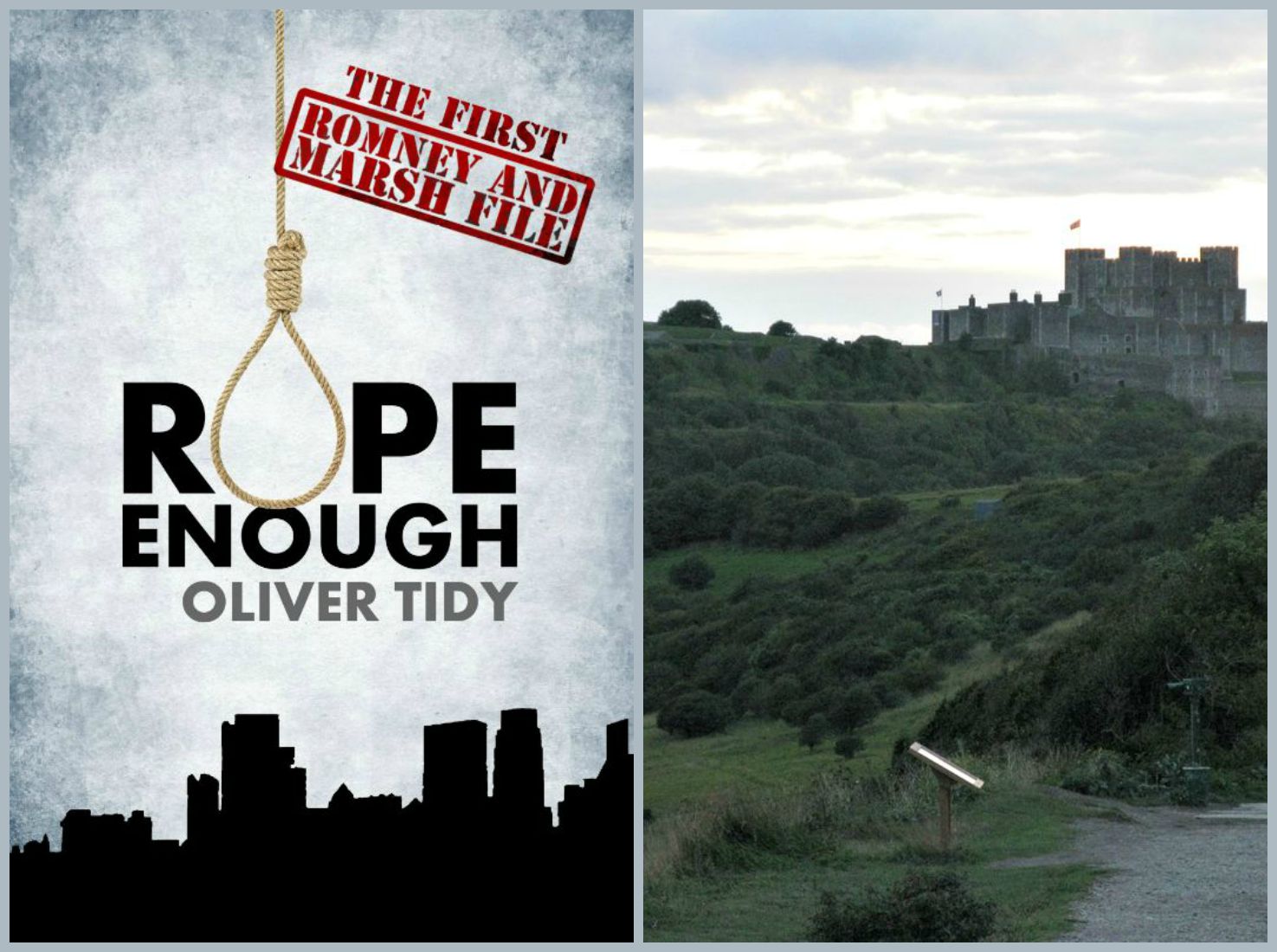
  • four in his Romney and Marsh Files British police procedural series. Newly promoted Detective Sergeant Joy Marsh is shipped out to Dover on the Kent coast to work under Detective Inspector Romney, a cantankerous copper who nevertheless is good at his job…
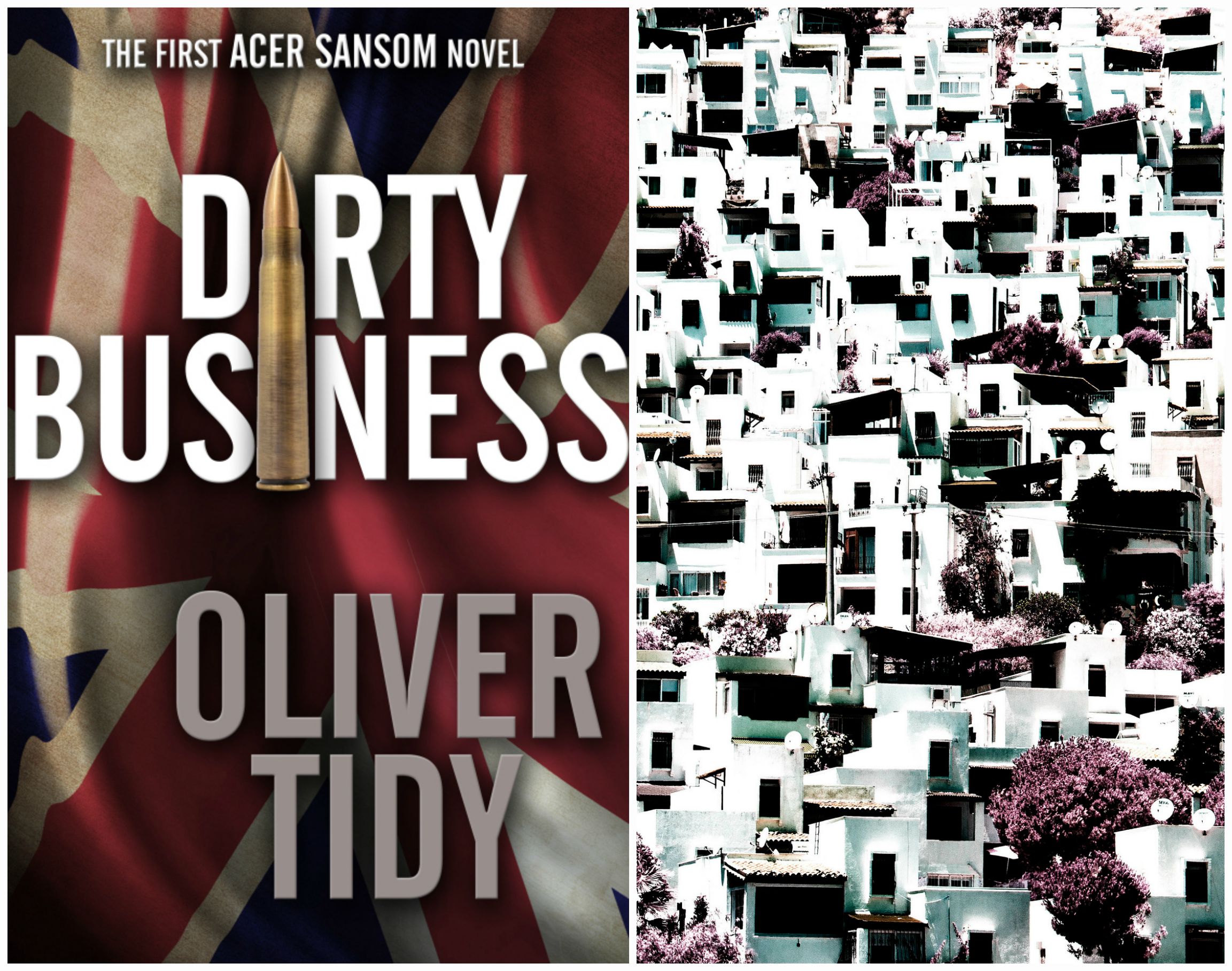
  • three in his Acer Sansom thriller series. British soldier Acer Sansom resurfaces a year after the world thought he was dead, possessed with a single-minded need for vengeance…
  • two in his Booker & Cash mystery story series. An unlikely detective team, David Booker and Jo Cash, solve mysteries in Romney Marsh, a wetland area in southeast England…

As for the “exile” part, Oliver tells me he left the UK in 2009 looking for change and ended up in Istanbul, where he “got change in spades.”

He is currently working in a Turkish school teaching English as a foreign language to young learners. It’s a job that affords him enough time for writing, something he deeply appreciates:

When I lived in the UK, I tried a couple of times to write, but with the responsibility of property and family and work, and the distractions of television and radio and newspapers and people I never got anywhere with it. One of the many things that I have learned about writing is that you have to sit down and write—often.

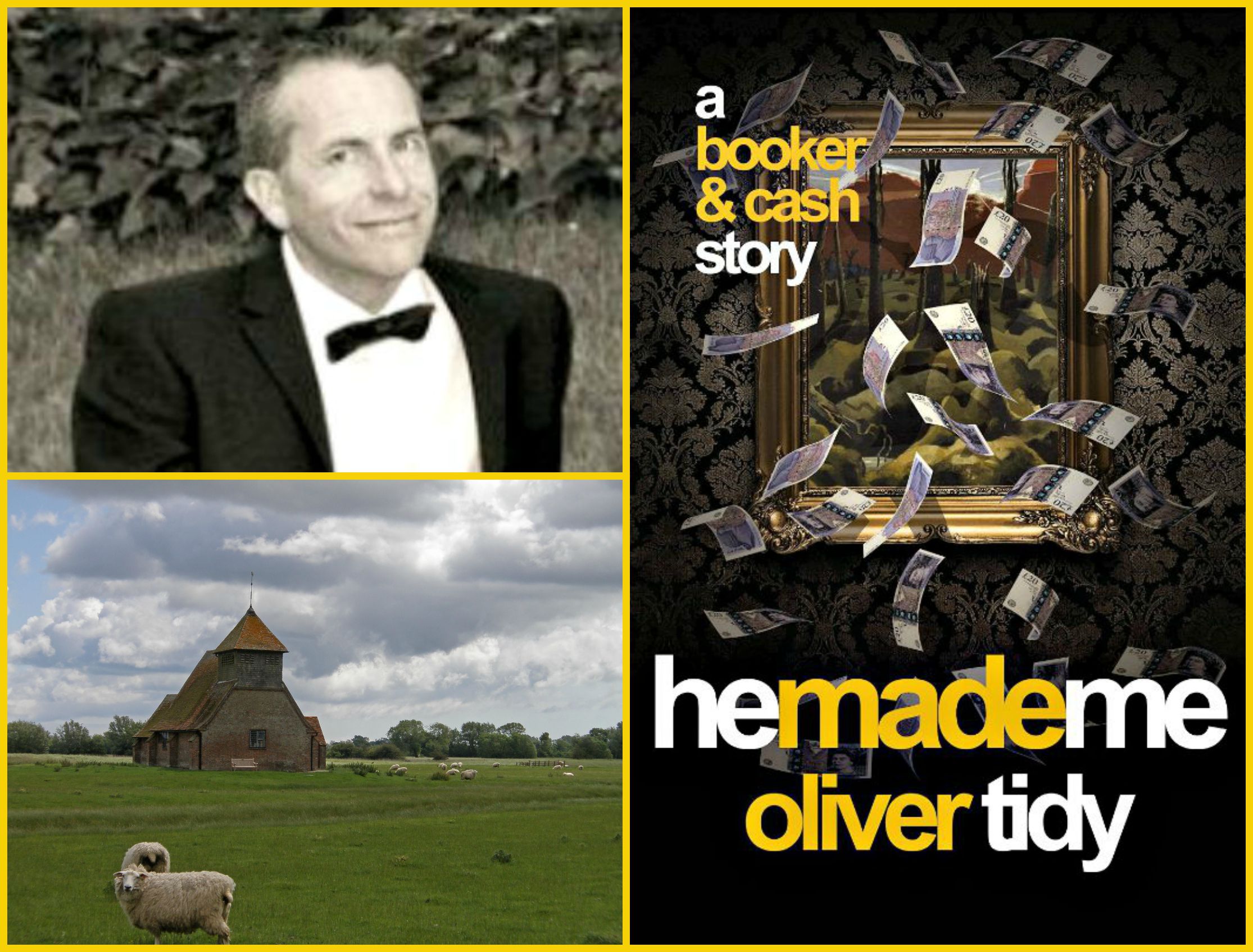
Now that he lives in Istanbul, Turkey, Oliver Tidy is able to write stories set in his homeland, the most recent one being He Made Me. Photo credits: (clockwise) Oliver Tidy (supplied) and book cover art; St Thomas Becket, Fairfield, Kent, by Amanda Slater via Flickr (CC BY-SA 2.0).

Living in Istanbul, Turkey, Oliver Tidy has been able to write books set in the place where he was born and bred, the most recent one being He Made Me, which takes place in Romney Marsh, UK. Photo credits: (clockwise) Oliver Tidy (supplied) and book cover art; St Thomas Becket, Fairfield, Kent, by Amanda Slater via Flickr (CC BY-SA 2.0).

As for the vanity publishing, Oliver also confesses he initially tried to get a literary agent because he never wanted to self-publish, believing that self-publishing was tainted with shades of ego-tripping.

“How wrong I was,” he said. “How wonderful and liberating self-publishing truly is. If I had not taken the step to self-publish, my readership would still be limited to my mum and me—and I’m sure that mum skim-reads most of my stuff.”

Judging by the Amazon reviews he receives, his audience extends far beyond his mum—and what his fans seem to love the most about his writing is its “local colour,” “sense of place,” and “wonderful descriptions of settings.”

Let’s find out how he does it, shall we?

* * *

Which comes first, story or location?

Why does this make me think of chickens and eggs? Such a hard opening question. I hope they’re not all going to be like this. I much prefer questions about my favourite things: raindrops on roses and whiskers on kittens, that sort of thing.

Anyway, here goes. As you mentioned in you kind introduction, I write three different series of books: one is set in Dover, Kent—The Romney and Marsh Files; one is set on Romney Marsh—Booker & Cash Stories; and one where, in three books so far, my central protagonist has shot up several different countries on a variety of continents—the Acer Sansom novels. (Acer is a great advert for Brits abroad. Bit of a one-man stag party.)

With the Romney and Marsh Files, story and location had an equal weighting in development. With the Booker and Cash stories it was certainly location first—I am Romney Marsh born and bred. As for the Acer Sansom novels, the first, Dirty Business, involved him visiting Istanbul, a city that I’d been living in for about a year. Acer went from Istanbul to Bodrum, a seaside resort town in Turkey that I’d spent the summer in. That book was definitely heavily influenced by my geographical experiences. The subsequent two books were predominantly plot led.

What’s your technique for evoking the atmosphere of a place?

Tumble weed moment. In six years of writing I’m yet to experience writer’s block…until now. Give me a minute. I’ll come back to this one at the end. (I came back to it at the end and I still couldn’t answer it. Sorry.)

Which particular features create a sense of location? Landscape, culture, food?

These questions are providing an opportunity to really reflect on my writing—something I’m feeling I don’t do enough of.

I don’t write much about what my characters eat. I write a little more than nothing on the cultures of my settings. Physical geography features more than either of the other two in all of my series. As far as my globe-trotting Acer Sansom novels go, after the first book—where I did have experience of the locations involved—I have to say a massive thank you to the Internet, especially Google maps, Google earth, Google street view. Maybe I should just say thanks Google. I’ve also obtained good insight from some travel blogs. Some of those are a wonderful resource for armchair writers.

Can you give a brief example of your work which illustrates place?

I’ll use a short passage from the first Acer Sansom novel. One of my characters has driven from Istanbul to Bodrum.

Oliver Tidy’s first Acer Sansom thriller, Dirty Business, is set partly in Bodrum, Turkey, where he lived for a year. Photo credit: Cover art; The best place to live! by Tuncay Coşkun via Flickr (CC BY 2.0).

Before long the vista opened up before her. As she sometimes had in the years that she had driven to Bodrum, she pulled into a loose gravel pocket at the side of the road and got out of the car.

From her lofty vantage point high up in the hills that embraced the area, she was able to look down at the sprawling panorama of the holiday capital of Turkey. Little enclaves of white boxes, taking advantage of the best geography, were packed so tightly together in places that they might have been one huge solid mass of concrete.

The steep hills that backed these separate little communities demonstrated both the developers’ greed and the sun-seekers’ need for yet more building as newer communities sprang up, patching the arid landscape white like some poorly-designed chess board.

At this time of year Bodrum would be heaving not just with the Turks who could afford to escape the suffocating heat and humidity of the bigger cities but also thousands of holidaymakers of all ages and nationalities.

Once, she thought, the place must have looked like paradise from where she stood—before Man’s concrete assault paradoxically began the ruination of the very environment that made him invest in the area. Would it always be only a matter of time and money before the need to develop areas of outstanding natural beauty outstripped Man’s admiration for them? Thank goodness there were still some idyllic pockets of the area where the authorities had elected to cease development. She felt grateful, if a little hypocritical, that her family owned a villa in one of them.

Her gaze took in the superb sweep of the Aegean, glistening in the early morning light, stretching out towards Greek territory; the differing hues of green and blue combined to create the most inviting scene. She tried to make out details of the ships anchored across the bay but was too far away.

How well do you need to know the place before using it as a setting?

Having lived on Romney Marsh for over forty years has made the two stories—the third is under construction—in my Booker & Cash series much easier in the penning-the-setting stakes. My memories of the place are vivid and unshakeable and I return there for a few weeks each year in the summer which allows me to top them up.

I know Dover fairly well, having spent a lot of time there a few years ago. When I return to the UK I like to jump on the bus from my home on Romney Marsh to Dover for the day just to refresh my memory and see what’s new.

Cover art of Rope Enough, first in police procedural series set in Dover; Dover Castle, by Andrew and Annemarie (CC BY-SA 2.0).

Cover art for Rope Enough, first in Tidy’s “Romney and Marsh File” police procedural series set in Dover; Dover Castle, by Andrew and Annemarie (CC BY-SA 2.0).

As I mentioned, in the first Acer Sansom book I used Istanbul and Bodrum for my exotic locations—two places that I felt I had enough experience of to write convincingly about them. Most of Acer’s locations in the subsequent two books I have never visited. I’m always waiting to be taken to task by readers who have personal and insightful experiences of the places I’ve depicted. What can you do sometimes? You need to write about somewhere you’ve never been. You log on, do some research and then your best.

Which writers do you admire for the way they use location?

CJ Sansom for the way he portrays London in Tudor times; Michael Dibdin and Andrea Camilleri for their descriptions of Italy, and the unbeatable Patrick O’Brian for his depictions of any location, be it land or sea, that he touches upon in any of his Aubrey/Maturin novels. What a writer.

A few of Tidy's favorite authors, who know how to handle "location, locution."

A few of Tidy’s favorite authors, who have demonstrated a mastery of “location, locution.”

Thanks so much, Oliver!

* * *

Readers, any questions for the jolly Oliver Tidy? Please leave them in the comments below.

And if you’d like to discover more about Oliver Tidy, why not pay a visit to his author site. You can also follow him on twitter at @olivertidy.

Until next month!

Lorraine Mace writes for children with the Vlad the Inhaler books. As Frances di Plino, she writes crime in the D.I. Paolo Storey series. She is a columnist for both of the UK’s top writing magazines, has founded international writing competitions and runs a writing critique service, mentoring authors on three continents.

STAY TUNED for the next fab post!

If you enjoyed this post, we invite you to register for The Displaced Dispatch, a round up of weekly posts from The Displaced Nation, with weekly updates and much, much more. Register for The Displaced Dispatch by clicking here!

Related posts:

Photo credits (top of page): The World Book (1920), by Eric Fischer via Flickr; “Writing? Yeah.” by Caleb Roenigk via Flickr (both CC BY 2.0).
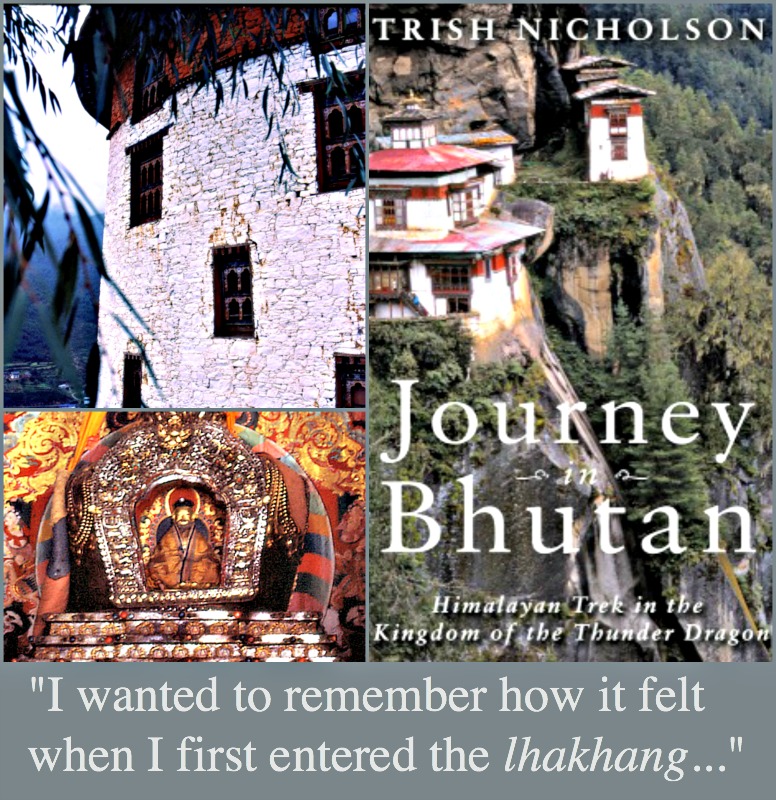
 

LOCATION, LOCUTION: Nik Morton draws from his nomadic expat life to author genre fiction

Location Locution
Columnist Lorraine Mace, aka Frances di Plino, is back with her very first interview guest, the extraordinary Nik Morton. (Nik, thank you for giving the Displaced Nation a shout-out in one of your recent posts!)

Hello, readers. This month we have the delight of discovering how Nik Morton, a British-born resident of Spain who is also a prolific author, handles location, locution.

Although Nik has fifty years of writing experience, having sold hundreds of articles and more than a hundred short stories, he came late to being a published author. His first novel, a western, came out in 2007. This year he will publish his twenty-second book—Catacomb, the second in his Avenging Cat crime series. (The first was Catalyst and the third will be Cataclysm. All are named for the series’ protagonist, the Avenging Catherine Vibrissae.)

In addition to this contemporary crime series, which he publishes with Crooked Cat (there’s that feline theme again!), Nik has written:

  • westerns (Black Horse series, under the pseudonym Ross Morton, published by Robert Hale)
  • fantasy (co-written with Gordon Faulkner under the pseudonym Morton Faulkner, published by Knox Robinson)
  • Cold War thrillers (the Tana Standish series, which Crooked Cat will reissue).

Nik has run writing workshops and chaired writers’ circles, and has been a magazine editor, a publisher’s editor, and even an illustrator. His writing guide, Write a Western in 30 Days: With Plenty of Bullet-Points!, is said to be useful for all genre writers, not only writers of westerns.

Spain, where he currently lives, was the inspiration for the stories collected in Spanish Eye.

Spain is one of several inspiration sources for the well-travelled writer Nik Morton.

Nik was displaced, incidentally, long before he and his wife retired to Alicante. He spent 23 years in the Royal Navy, during which he had the chance to visit many exotic places—among them Rawalpindi, the Khyber Pass, Sri Lanka, Tokyo, Zululand, Mombasa, Bahrain, Tangier, Turkey, Norway, Finland, South Georgia and the Falklands. He has also travelled widely in his private life, giving him a wealth of places to draw on in his works in addition to his current home of Spain.

* * *

Which comes first, story or location?

This is a tough question, and the answer is ‘it depends’. For my seven western novels, the character and the story came first; the location for each required research for the period and the State, usually Dakota Territory.

Yet location definitely comes first for my Cold War thrillers featuring psychic spy Tana Standish: The Prague Papers, The Tehran Text and the third, a work in progress, The Khyber Chronicle. Each adventure in the series is based around actual historic events, so the location is crucial.

I’ve always hankered after writing about exotic places, and as you mentioned in your introduction, I’ve been fortunate enough to travel widely, both privately and with the Royal Navy. My wife and I lived for 20 months in Malta and out of that location emerged a cross-genre novel, a modern-day vampire romantic thriller, now out of print.

We’ve visited Tenerife on five separate occasions and from that evolved my romantic thriller, Blood of the Dragon Trees.

Having lived in Spain for over 11 years, I’ve absorbed quite a bit about the politics and crime situation here and have had 22 short stories published set in Spain, collected in Spanish Eye—exploring the human condition as seen through the eyes of Leon Cazador, half-English, half-Spanish private eye, written ‘in his own words’.

For my latest crime series about ‘the avenging cat’, Catherine Vibrissae, the story definitely came first: but the exotic locations were a close second—Barcelona (Catalyst), Morocco (Catacomb) and Shanghai (Cataclysm).

What’s your technique for evoking the atmosphere of a place?

Place is important in almost every scene; I want the reader to see the characters in the scene, so the place needs to be described in relation to them. Character point of view can provide an emotional appreciation of the scene too. The rugged, inhospitable High Atlas of Morocco, for example, can be strengthened by the character experiencing the intense heat and the almost preternatural silence of the place.

Technique: be there, in the scene. Of course you can’t overburden the story with too much description, but the weather, the flora and maybe even fauna, the landscape as character, all have their input at various times. If I can’t visualise the scene through my characters’ eyes, then there’s little chance that the reader will. I may not always succeed, but that’s what I strive towards—using all of the character’s senses.

Which particular features create a sense of location? Landscape, culture, food?

All of the above, depending on the dramatic content of the scene. People have to eat to live, so it’s natural that my characters eat from time to time. I don’t want to labour the point for the reader, but if I simply wrote ‘Corbin ate a meal at the hotel and then went out,’ then we’re in the realms of ‘tell’ not ‘show’; which has its place from time to time, but perhaps mentioning some particular food can make it more ‘real’ and show more of the character, such as:

Stomach full with Chili de Sangre Anaranjada, Corbin read the local newspaper in the hotel lounge, allowing the beef and pork to digest. He had complimented the chef, a Swede by the moniker of Iwan Morelius. Apparently, Morelius had been on the staff of Baron Ernst Mattais Peter von Vegesack, who had been given leave to fight for the Union. While the baron returned to Sweden after the war, Morelius stayed and Mr Canaan, the hotel manager, was vociferously proud of his culinary acquisition.

—From The $300 Man, by Ross Morton (p. 84)

Culture is definitely relevant if the story takes place abroad—whether that’s Prague or Shanghai. And we’ve already touched upon landscape, which can become a character that tests individuals to the limit.

Can you give a brief example of your work which illustrates place?

This cafe in Tenerife will soon be populated by characters from Nik Morton's imagination. Photo credit: Tenerife, Canary Islands, by Carrie Finley-Bajak[https://www.flickr.com/photos/cruisebuzz/8158748971] via Flickr (CC BY 2.0)

This cafe in Tenerife will soon be populated by characters from Nik Morton’s imagination. Photo credit: Tenerife, Canary Islands, by Carrie Finley-Bajak via Flickr (CC BY 2.0)

In Blood of the Dragon Trees, Laura has come to Tenerife to teach a couple of Spanish children. I wanted to create an ambiance while moving her through the story. She is waiting for Andrew Kirby, a mystery man who attracts her:

Clutching her Corte Inglés shopping bag, Laura arrived at the square about fifteen minutes early and, as usual, the adjoining roads were jammed with delivery trucks and a variety of taxis: Mercedes, Toyota, Seat, Peugeot. She was lucky and grabbed a café’s outdoor table with two vacant chairs. She sat and politely fended off the attentive waiter, explaining in Spanish that she would order when her friend joined her. Friend?

In the meantime, she waited, idly studying the antics of the men at the taxi rank in front of a series of phone booths. One of them was pushing his car along the rank, rather than switch on the engine, as the row moved forward. The taxis sported a colorful and distinctive coat of arms.

Sitting on the corner of the street was a blind man selling lottery tickets. She doubted if that would be possible in any town or city in England; the poor man would be mugged in seconds.
Most of the people at the other tables appeared to be businessmen and women, though there were some exceptions. An overdressed elderly woman sat with her Pekinese dog on her lap, feeding it biscuits while sipping her Tío Pepe. At the table next to her, a large bull of a man was glancing through the newspaper, El Día; he possessed a Neanderthal jaw and crewcut dark brown hair. For a second she thought she’d seen him before, but shook off the idea. Andrew Kirby was making her unreasonably suspicious!

—from Blood of the Dragon Trees, by Nik Morton (p. 116)

So, besides the observation of little details going on around her—and the suspenseful hint for the reader that we’ve seen the man with the Neanderthal jaw before—there’s the compelling influence that Andrew is exerting on her.

How well do you need to know the place before using it as a setting?

Ideally, travel to the place. But even then additional back-up research is necessary. Of course you can’t hope to travel to every exotic place you write about. I’ve been to many of the places in my novels and short stories, but not all—and I must then concentrate on research.

Sadly, non-fiction reference books can quickly become out-of-date—bus colours might change, customs may once have been quaint only to be replaced by adopted globalised traits. (Yes, it has happened to me!)

Any piece of fiction set in the past requires research; yes, you can travel the battlefields, visit the ancient cities; but you can’t experience that time, only imagine it.

Official map of the territory of Dakota[https://www.flickr.com/photos/normanbleventhalmapcenter/14009763855/], by http://maps.bpl.org via Flickr (CC BY 2.0) [https://creativecommons.org/licenses/by/2.0/]

Some places can’t be visited, only researched. Official map of the territory of Dakota, by http://maps.bpl.org via Flickr (CC BY 2.0).

Fiction requires a writer to be bold, to do research and then re-imagine the place, with its sights, smells and sounds. The bottom line is, it’s fiction, which means an approximation of the real world. If a critic blithely dismisses writers who make a few errors in their research because they haven’t travelled there, then that critic is misguided.

Which writers do you admire for the way they use location?

Some books could be set anywhere; location is not significant to the story. Others, the location is vital to the story. The old practitioners Desmond Bagley, Hammond Innes, Nevil Shute, and Alistair Maclean described the location their main characters found themselves in, and you believed every word. Bernard Cornwell’s Sharpe novels thrust you into a period and a place that seems real while you’re reading. Donna Leon’s Italy is real.

A few of the writers Nik Morton admires for their depiction of place in their novels.

A few of the novelists Nik Morton admires for their skill with depicting location.

Thanks so much, Nik!

* * *

Readers, any questions for my first guest? Please leave them in the comments below.

And if you’d like to discover more about Nik, why not pay a visit to his author site; his blog, called Writealot (no exaggeration in his case); and the archives of Auguries, a science fiction, fantasy and horror magazine Nik edited from 1983 to 1994. You can also follow Nik on twitter at @nik_morton.

Until next month!

Lorraine Mace writes for children with the Vlad the Inhaler books. As Frances di Plino, she writes crime in the D.I. Paolo Storey series. She is a columnist for both of the UK’s top writing magazines, has founded international writing competitions and runs a writing critique service, mentoring authors on three continents.

STAY TUNED for the next fab post!

If you enjoyed this post, we invite you to register for The Displaced Dispatch, a round up of weekly posts from The Displaced Nation, with weekly updates and much, much more. Register for The Displaced Dispatch by clicking here!

Related posts:

Photo credits (top of page): The World Book (1920), by Eric Fischer via Flickr; “Writing? Yeah.” by Caleb Roenigk via Flickr (both CC BY 2.0).