The Displaced Nation

A home for international creatives

Tag Archives: Southeast Asia

And the May 2013 Alices go to … these 4 international creatives

 © Iamezan | Dreamstime.com Used under license

© Iamezan | Dreamstime.com
Used under license

As subscribers to our weekly newsletter will hopefully have noticed by now, each week our Displaced Dispatch presents an “Alice Award” to a writer who we think has a special handle on the curious and unreal aspects of the displaced life of global residency and travel. Not only that, but this person has used their befuddlement as a spur to creativity. He or she qualifies as an “international creative.”

Today’s post honors May’s four Alice recipients, beginning with the most recent and this time including citations.

So, without further ado: The May 2013 Alices go to (drumroll…):

1) ADAM GROFFMAN, travel blogger and expat

Source: “How a children’s book inspired my wanderlust” in Travels of Adam
Posted on: 13 April 2013
Snippet:

You see, what I loved about this book as a kid is the focus on architecture and food in this utopian society. Each family is responsible for bringing a country’s culture to the island nation.

Citation: Many of us at the Displaced Nation attribute our abilities to tolerate and even embrace life abroad (the strange foods and drinks, the loneliness, the largely incomprehensible rules) from having taken to heart Alice’s Adventures in Wonderland and its sequel, Through the Looking Glass, as kids. A good dose of literary nonsense has taken us a long way, and even to this day, we appreciate having recourse to Lewis Carroll’s great works to make sense of our rather curious lifestyles in countries other than those in which we were born.

Adam, we understand that you quit your job in Boston to travel the world and that you trace your own wanderlust to the 1947 American children’s book The Twenty-One Balloons, by William Pène du Bois, a story that in some ways is even more fanciful than Alice’s.

For those who don’t know it: The book begins when a schoolteacher, Professor William Waterman Sherman, becomes bored with his life and sets off on a journey in a hot air balloon called The Globe. He hopes the wind will blow him and his balloon all around the world. But instead he has a crash landing on the mysterious island of Krakatoa (Indonesia), where he discovers a utopian society started up by a group of wealthy families. Each family owns a restaurant of different types of foreign foods and all members of the island eat together at a different house, full of fantastic inventions, every night. Krakatoa being a volcanic island, the families are aware of the danger that the volcano could erupt at any moment (in fact its volcanoes erupted in 1883). Their escape plan consists of a platform made of balloons…

Adam, we love the idea of emulating a fictional character who favors balloon travel—the kind that begins without regard to speed and without a destination in mind. It’s also romantic to think that you expect to find, at best, utopianism, at worst, good food, in the course of your world wanderings. Perhaps it accounts for why you’ve landed your own “balloon” in Berlin, Germany’s creative capital and a city renowned for its architecture (only, how is the food there?).

2) TRACY SLATER, expat writer, author and blogger

Source: “What Does Home Mean When You Live Abroad?” in The Good Shufu
Posted on: 8 May 2013
Snippet:

I know how easy it is, when we live overseas, to lose our gimlet eye about home: to romanticize it, to see it as a kind of lost Eden, a place where we wouldn’t suffer the same disappointments or lonelinesses or defeats that we suffer in our expat lives.

Citation: Tracy, we would add to that something we learned from Alice, which is that part of the reason for cherishing the memory of home so much is that you can’t easily share what you love about it with the people you encounter in your new place. Alice experiences this when trying to talk about her beloved cat, Dinah, with the Wonderland creatures:

“I wish I hadn’t mentioned Dinah!” she said to herself in a melancholy tone. “Nobody seems to like her, down here, and I’m sure she’s the best cat in the world! Oh, my dear Dinah! I wonder if I shall ever see you any more!” And here poor Alice began to cry again, for she felt very lonely and low-spirited.

We also find inspiring your quote from the Egyptian writer and thinker André Aciman, that all exiles impulsively look for their homeland abroad. Even poor Alice suffered from that affliction—recall her trying to make herself at home at the Mad Hatter’s tea party, only to discover it is a less than civil gathering to what she is used to. First she is told there is no room for her at the table; then when she sits anyway, that her hair needs cutting. She is offered wine even though there isn’t any, and told to take more tea even though she hasn’t had any.

In fact, some of us can relate quite directly to this need to feel at home via a good cup of tea. TDN writer Kate Allison, for instance, has lived in the United States for many years but to this day fails to understand why Americans give her a cup of lukewarm water and a tea bag when she orders tea. And ML Awanohara, who lived in England before becoming an expat in Japan, often longed for English tea while sitting through the Japanese tea ceremony.

Tracy, we very much look forward to your forthcoming book, The Good Shufu: A Wife in Search of a Life Between East and West (Putnam, 2015), to help us make sense of such classic expat predicaments.

3) DANIELLA ZALCMAN, photojournalist

Source: “London + New York: A double exposure project”—an interview with Daniella by Austin Yoder on Matador Network
Posted on: 22 April, 2013
Snippet:

When [Daniella] moved from New York to London, she decided to create a series of double exposures to marry the spirit of both cities based on a combination of negative space, color, and contrast. Daniella’s double exposures create beautiful imaginary landscapes, and are captured entirely with her iPhone 4s.

“When I got to London, I knew that I wanted to capture not just the sensation of leaving NYC, but also of exploring a new city and making that environment feel like home.”

Citation: Daniella, we are enchanted by your idea of creating a composite of your beloved home city (New York) with your adopted city (London) to come up with an imaginary landscape. Indeed, we think it must be akin to the process Lewis Carroll used when creating Alice’s Wonderland—blending the bucolic English countryside surrounding Alice (she is sitting on the river bank considering making a daisy chain when the White Rabbit first appears) with the curious world that exists at the bottom of the rabbit hole, the familiar with the unfamiliar. When Alice awakens and reports her dream to her sister, the sister “half-believes” herself to be in Wonderland—if only she can suspend her disbelief for long enough to the sheep-bells tinkling in the distance as rattling teacups, the voice of the shepherd boy as the Queen’s shrill cries, and the lowing of the cattle in the distance as the Mock Turtle’s heavy sobs…

4) “SARAH SOMEWHERE”, world traveler and blogger

Source:On Freedom” in Sarah Somewhere blog
Posted on: 29 April 2013
Snippet:

I am not, by nature, a free spirit. I’m a worrier, a control freak and a chronic people pleaser. Letting go and trusting in the universe’s plan for me is not my default setting, nor is being content with what I have rather than continually striving for more. I still need some practice.

Citation: Sarah, your struggle with living life in the moment in Mexico puts us in mind of Alice, who, is constantly worrying about the impression she is leaving on the Wonderland residents, and finds it a challenge to enjoy the moment in a place as curious as Wonderland. We wish you luck in finding that sweet spot between total personal freedom and societal obligations. And, taking our cue from Alice’s sister, we envision a day when you’ll be telling stories about your adventures in Southeast Asia, China, Mexico and India to a group of children and inspiring them to follow their unique destinies:

she pictured to herself how this same little sister of hers would, in the after-time, be herself a grown woman; and how she would keep, through all her riper years, the simple and loving heart of her childhood: and how she would gather about her other little children, and make their eyes bright and eager with many a strange tale, perhaps even with the dream of Wonderland of long ago: and how she would feel with all their simple sorrows, and find a pleasure in all their simple joys, remembering her own child-life, and the happy summer days.

* * *

So, readers, do you have a favorite from the above, and do you have any posts you’d like to see among June’s Alice Awards? We’d love to hear your suggestions! And don’t miss out on these weekly sources of inspiration. Get on our subscription list now!

STAY TUNED for tomorrow’s post, another Jack the Hack column…

Writers and other international creatives: If you want to know in advance whether you’re one of our Alice Award winners, sign up to receive The Displaced Dispatch, a round up of weekly posts from The Displaced Nation, with news of book giveaways, future posts, and of course, our weekly Alice Award!. Register for The Displaced Dispatch by clicking here!

Related posts:

6 Alice-in-Wonderland themes for creatives abroad to explore in their works

 © Iamezan | Dreamstime.com Used under license

© Iamezan | Dreamstime.com
Used under license

Call us zany, but when we first started this site two years ago, someone (no, not me!) had the bright idea of picking a literary or historical figure and using that person as a source of inspiration for a month-long series of posts.

June 2011, for instance, was Alice in Wonderland month; July, Pocahontas month; September, Robert Persig month; and October, Julia Child month.

You’ll never guess which one of these themes proved most popular: why, Alice of course! What international traveler or expat hasn’t experienced the sensation of stepping through the looking glass or falling down the rabbit hole? Like Alice, those of us who venture beyond borders must furiously navigate the new environments we uncover. Also like Alice, we are prone to feeling lonely and a bit sorry for ourselves on occasion.

Most expats can also relate to Alice’s gradual loss of self-identity. As she confesses to the Caterpillar:

“I can’t explain myself, I’m afraid, Sir, because I’m not myself, you see.”

In today’s post, I propose to revisit Lewis Carroll’s masterpiece for themes that are worth exploring from a creative angle. Here are six that I find myself thinking about a lot, when trying to parse my own expat experience (an American, I lived first in England and then in Japan). WARNING: Tongue-in-cheek, but only somewhat!

1) The old adage about trusting your gut doesn’t always work when it comes to your actual gut.

ALICE PASSAGE: In Alice’s Wonderland, a jar labeled “Orange Marmalade” is not actually a jar full of orange marmalade.
APPLIES TO: Expats in Japan, who are always biting into pastries in the hopes of tasting chocolate and tasting azuki bean paste instead. Indeed, should you ever be in need of an Alice-like culinary experience, Japan has got to be your place. There’s the wasabi Kit Kats, of course. And how about the time when Carole Hallett Mobbs’s friend in Tokyo bought a sandwich with a lumpy filling? As Carole reported in her guest post for us:

A gentle squeeze sent a whole cooked potato shooting across the room.

ANOTHER ALICE FOOD PASSAGE: Fearing the contents of the “Drink Me” bottle may be poison, Alice is pleasantly surprised:

it had, in fact, a sort of mixed flavour of cherry-tart, custard, pine-apple, roast turkey, toffee, and hot buttered toast.

APPLIES TO: International travelers who venture to remote spots and are pleasantly surprised by the local cuisine. Actually, you don’t even have to be somewhere remote. Tokyo was where I developed a fondness for hirezake (hot sake with fugu fin) — talk about poisonous cocktails! And travel author Janet Brown told us she dreaded trying fried grasshoppers while living in Bangkok,  only to find she liked them as much as popcorn! But even dedicated locavores, such as Jessica Festa, can have an Alice moment from time to time. I’ll never forget the story about her first experience eating cuy (guinea pig) in Ecuador. As she tells it, she saw it on the grill and thought it resembled her childhood pet, Joey. Repressing her better instinct not to eat anything she grew up playing with, she took a bite and said: “Holy crap, this is delicious!”

2) Communications with others and in general are far from satisfactory.

ALICE PASSAGE: When Alice is “opening out like the largest telescope that ever was, saying good-bye to her feet, she cries “Curiouser and curiouser!”—and then feels surprised that “for the moment she quite forgot how to speak good English.”
APPLIES TO: Native English speakers living in a non-English speaking country. Their English inevitably morphs into the version the locals speak; spelling, too, deteriorates, and doesn’t come back.

ANOTHER ALICE MISCOMMUNICATION: Alice repeatedly offends the creatures in Wonderland without even trying.
APPLIES TO: Anyone who finds themselves “tone deaf” in Bangkok, as the aforementioned Janet Brown once did. (NOTE: Applies equally to those struggling to learn other Asian tonal languages such as Mandarin Chinese.) As she explained in her interview with us:

The most common mistake for foreigners is to tell someone their baby is beautiful, while actually announcing that the infant is bad luck.

3) Committing to another country can sometimes mean altering your body size (or wishing you could).

ALICE PASSAGE: When Alice first lands in Wonderland, she finds herself too large for the doorway out of the dark hall into the beautiful garden.
APPLIES TO: Anyone over 5’5″ living in Japan, Korea or Southeast Asia, who has to keep their head down when entering traditional dwellings for fear of getting a concussion.

ANOTHER BODY-CHANGING ALICE MOMENT: At the instruction of the Caterpillar, Alice tries eating portions of mushroom he’s been sitting on, which make her grow and shrink.
APPLIES TO: Repeat expats, or rex-pats, who find themselves going back and forth between the obesity epidemic in United States and almost anywhere else in the world, where people simply eat less and walk more. While living in Tokyo I soon reached my lowest body weight ever without even trying: all those meals of clear soup, rice, veggies and fish. Now that I’m back in America, I weigh ten pounds more, while in England I was somewhere in between…

4) People in other countries have their own relationships with Father Time.

ALICE PASSAGE: Alice experiences the full gamut: from the White Rabbit dashing about with his stopwatch for fear of being late for an important date, to the slackers at the Mad Hatter’s tea party, who waste time “asking riddles that have no answers.”
APPLIES TO: Repeat expats, or rex-pats, who’ve had the chance to live in Southern Europe, South America, or other places notorious for their laid-back approach to time, as well as in Germany, Switzerland or Japan where people pride themselves on their punctuality. Compared to Japan, I found England a Southern European country. When I was living in Tokyo and visiting the UK during summers, I was always late to appointments because I’d forgotten that trains don’t run on time (or at all). And most of the time, I had their sympathies. Whereas in Japan, I swear a White Rabbit must be in charge of public transport. You can set your watch by the trains! No excuses for lateness…

5) The laws and practices of another land can take some getting used to.

ALICE PASSAGE:

“No, no!” said the Queen. “Sentence first—verdict afterwards.”
“Stuff and nonsense!” said Alice loudly. “The idea of having the sentence first!”

APPLIES TO: Anyone who displaces themselves to a country with a radically different life philosophy. For instance, as an American I found that one of the biggest challenges of getting used to England and then Japan, the two small-island nations where I lived, was that I could never quite accept the natives’ stoicism. As I wrote in the first of my “Lessons from Two Small Islands” posts:

Where the citizens of each of these countries saw grace, strength, endurance, and perseverance, I saw passivity, masochism, fatalism and pain. “Why is everyone bowing so readily to their fates?” I would ask myself repeatedly.

And, though I never committed an act of “queue rage” while standing in line at the post office in the English town where I lived, I came pretty close—especially when watching others who’d come in after I did get served before me.

On those occasions, I felt like crying out: why don’t we try a serpentine line instead?

And what about all those expats living in countries with byzantine immigration laws? Apparently, Alice’s own home, the UK, is among the worst. As we learned from interviewing New Zealander Vicki Jeffels, it essentially tells any wannabe immigrants: “Off with your heads!” Even if you’re from the Commonwealth! Still, at least they no longer discriminate… (Jeffels sorted out her visa problems in the end but has since repatriated.)

6) “Pool of tears” moments eventually build resilience.

ALICE PASSAGES: Alice goes from “shedding gallons of tears, until there was a large pool all round her, about four inches deep” to holding her own in Wonderland (see #5).
APPLIES TO: Well, really all of us. In the previous incarnation of the Displaced Nation, I had a Random Nomads column in which I would interview expats or veterans of international travel and ask them to describe their “most displaced” and “least displaced” moments. Many had difficulty with the former request, I guess because they felt uncomfortable going down the Rabbit Hole and examining their hearts more closely. The American Brian MacDuckston, though, was the rare exception. His “pool of tears” moment was his very first day of work as an English teacher in Japan. He somehow managed to get on the wrong train (every foreigner in Japan’s nightmare) and ended up in a “depot storage yard with an attendant yelling at me in a language I didn’t understand.” He was late for his first class and wanted to quit. Since then, however, he has emerged as one of the leading experts on Japanese ramen. Last we heard, he’d been offered a few gigs on Japanese TV shows as a “ramen reporter” and successfully pitched his first magazine article about a best-of-ramen list. Way to go, Brian, in treating that screaming railway worker as a Jack of Spades!

* * *

So, are you ready to inject a bit of Alice into your Great Work on the voluntarily displaced life? And can you think of any more inspirational passages from Lewis Carroll? (No doubt there are more, and I will think of some of them as soon as I post this.)

Meantime, the Displaced Nation will continue its tradition of awarding “Alices” to writers who capture the curious, unreal side of the displaced life—only we will now be awarding one per week, via our Displaced Dispatch. What, not a subscriber yet? CLICK HERE NOW—or off with your head! Recommendations of posts (your own, other bloggers’) for Alices are also warmly appreciated. Please send to ML@thedisplacednation.com.

STAY TUNED for tomorrow’s post, another in our Old World/New World series.

If you enjoyed this post, we invite you to register for The Displaced Dispatch, a round up of weekly posts from The Displaced Nation, with seasonal recipes, book giveaways and other extras. Register for The Displaced Dispatch by clicking here!

Related posts:

Catching up with this year’s Random Nomads over the holidays (3/3)

RandomNomadXmasPassportIt’s Christmas Day and the holiday party continues for the expats and other global voyagers who washed up on the Displaced Nation’s shores in 2012. Remember all those Random Nomads who proposed to make us exotic meals based on their far-ranging meanderings? Not to mention their suitcases full of treasures they’d collected and their vocabularies full of strange words… How are they doing these days, and do they have any exciting plans for the holidays? Third in a three-part series (see also Part One and Part Two).

During the final third of 2012, we met some expats and intrepid world travelers who, I think it’s fair to say, have developed some rather unusual hobbies and eating habits. The two are one and the same in the case of Brian MacDuckston, who was featured on our site this past August. He has made a habit of eating ramen in as many Tokyo venues as possible — a hobby that was quirky enough to attract the attention of the New York Times. In addition to Brian — a San Franciscan who originally went to Japan to teach English — we encountered:

  • Liv Gaunt, an Englishwoman who became an expat accidentally, while pursuing her love of scuba diving and underwater photography. Now based in Australia, she told us she has a passion for sharks but would happily do without sea urchins.
  • Mark Wiens, an American third culture kid who now lives in Thailand and travels all over — he feels least displaced when sampling other countries’ street foods.
  • Jessica Festa, an American traveler who loves to venture off the beaten track and eat locally — she did not hesitate to eat cuy in Ecuador (even though it reminded her of her pet guinea pig, Joey, named after a school crush).
  • Larissa Reinhart, a small-town Midwesterner who lived in Japan for several years and, since repatriating, has taken up the pen as a crime novelist. She is now living in small-town Georgia but hopes to go abroad again. She provides recipes for Asian fried chicken, among other delicacies, on her blog about life as an ex-expat.
  • Patricia Winton, an American who responded to 9/11 by giving up her comfortable life in Washington to become an expat crime writer in Rome. She also invested in a pasta-making machine…
  • Bart Schaneman, a Nebraskan who wanted to see the world and has made his home in Seoul, where he is an editor for an English-language newspaper and author of a travelogue on the Trans-Siberian railway. He is a huge fan of kimchi.

Three of this esteemed group are with us today. What have they been up to since a few months ago, and are they cooking up anything special for the holidays, besides chatting with us?

Brian with Ramen_Xmas1) BRIAN MACDUCKSTON

Have there been any big changes in your life since we last spoke?
I’ve been offered a few gigs on Japanese TV shows as a “ramen reporter” and successfully pitched my first magazine article about a best-of-ramen list. A start! I also started a ramen class aimed at non-Japanese speakers. Check it out!

How will you be spending the holidays this year?
A nice staycation in Tokyo.

What’s the thing you most look forward to eating, dare I ask?
I’m trying to eat more high-class sushi, but I’ll probably just stick to a lot of ramen for the next few weeks.

Can you recommend any books or films you came across in 2012 that speak to the displaced life?
I really enjoyed Jiro Dreams of Sushi, a documentary about the most revered sushi chef in the world. [Editor’s note: The film has been available on Netflix since last August.]

Do you have any New Year’s resolutions for 2013?
I want to train myself to stop using double spaces after periods when I write. Not a big goal, but important for someone who has an interest in being paid for my writing.

A worthy goal, imho! (I’ve had to correct quite a few in my time…) So, any upcoming travel plans?
My father will visit Japan, so I am planning a luxury week-long trip of eating and relaxing in hot springs. Two things I’m good at!

LarissaReinhart&Reinhart2) LARISSA REINHART

Any big developments in your life since we last spoke?
My second Cherry Tucker Mystery, Still Life in Brunswick Stew, has a release date of May 21, 2013. [Editor’s note: As mentioned in Larissa’s interview, the first in her Cherry Tucker series, Portrait of a Dead Guy, came out this year.]

How will you be spending the holidays this year?
We travel to visit my family in Illinois and St. Louis after Christmas through New Year’s.

What’s the thing you most look forward to eating?
There’s this Italian grocery, Viviano’s, in the Italian district of St. Louis, called The Hill in St. Louis, that I really look forward to visiting. I’ll stock up on cheap wine and Italian staples for the coming year.

Can you recommend any books or films you came across in 2012 that speak to the displaced life?
Yes, two Japanese films:

  1. The fascinating documentary Jiro Dreams of Sushi. I highly recommend — even for non-sushi fans. The film is beautifully shot and reveals what it takes to be a true master at something. Incredible.
  2. The gorgeous The Secret World of Arrietty (aka The Borrower Arrietty), scripted by Hayao Miyazaki. We were excited to see Arrietty because we saw the ads for the movie when we were still living in Japan (and I’m a big fan of Mary Norton’s The Borrowers, on which the film is based, as well as of Miyazaki).

Have you made any New Year’s resolutions for 2013?
To spend less time on social media and more time writing. I love chatting online, but I need to be more disciplined about getting away from the “water cooler” and back to work.

Any upcoming travel plans?
Disney World for spring break! Woot! And we’re hoping to get back overseas soon, but no definite plans yet.

PatriciaWintonwithholly3) PATRICIA WINTON

Any big changes in your life since we last spoke a couple of months ago?
The month after you featured me, I put my long-time WIP in the bottom drawer for a while and started a new one. I’ve written about 30,000 words. This one, also a mystery, is set in Florence. It takes place during the 500th anniversary celebration of the world’s first culinary society.

Meanwhile, my blog partners at Novel Adventurers are working on an anthology of long short stories. We are an adventurous group comprising (besides me):

  • an Australian who has lived in South America
  • an American of Swiss-German origin who is married to a man from Iran, where they frequently travel
  • an American with close family ties in India, where she frequently travels
  • an American specializing in things Russian, who is married to a Kyrgyz
  • a former Peace Corps volunteer who writes about the Caribbean
  • an American who grew up on a sailboat traveling the world and has lived as an adult in many countries.

We’ll be writing about travel and adventure from international perspectives. It will be some time before it sees publication, but I’ll keep you posted. I think it will interest the Displaced Nation!

Where will you be spending the holidays this year?
I’m spending the holidays quietly at home. I plan to visit a friend in the country for New Year’s weekend. The holidays here last almost three weeks, ending on January 6. Nativity scenes are a big deal here, and I plan to visit various churches to view, and photograph, them as I usually do. I’ll write about them on my blog, Italian Intrigues, on January 3rd.

What’s the thing you most look forward to eating?
Christmas Eve in Italy is devoted to eating fish — usually seven fish dishes from antipasto onward. I’m trying out a new recipe for sea bass stuffed with frutta del mare (non-fin fish). I’m using clams, mussels, shrimp, squid and baby octopus, all well laced with garlic. And I always make the holiday custard that comes from my Tennessee childhood.

Can you recommend any books you came across in 2012 that speak to the displaced life?
The Lacuna, by Barbara Kingsolver. While it was published in 2010, I didn’t read it until this year, and I think it’s a masterpiece. It’s about a man with one foot in Mexico and the other in the US — but that’s a vast oversimplification. After the young man’s Mexican mother dies, he works for Frida Kahlo and Diego Rivera while Leon Trotsky is staying with them. He later moves to the US to join his American father. He eventually becomes a successful writer caught up in the McCarthy witch hunt. I don’t want to include spoilers here, but it’s fabulous. The boy/man is a foreigner in both countries and speaks both languages with an accent.

Do you have any New Year’s resolutions for 2013?
Not that I want to share.

Last but not least, do you have any upcoming travel plans?
No concrete travel plans at the moment. While composing these answers, I received an email about a tour of Uzbekistan that sounds really alluring. And I will probably go to the US to attend a mystery writers conference.

* * *

Readers, any questions for this rather motley (one former expat and two current ones) but highly creative bunch?

STAY TUNED for tomorrow’s post — expat Anthony Windram’s musings on spending Boxing Day in a country that associates boxing with punching, not (Christmas) punch.

If you enjoyed this post, we invite you to register for The Displaced Dispatch, a round up of weekly posts from The Displaced Nation, with seasonal recipes, book giveaways and other extras. Register for The Displaced Dispatch by clicking here!

Related posts:

Images: Passport photo from Morguefiles; portrait photos are from the nomads (Larissa Reinhart’s shows her family in front of one of their favorite Japanese manga characters, Shin-chan, a sort of Bart Simpson of Japan — the creator, Yoshito Usui, had recently died).

Grim Reapers around the globe: 7 creatures that say “Time’s up!”

Before we had civil lawsuits, and lawyers wanting to find someone to take the fall for all Life’s misfortunes, we had mythological creatures to take the blame and who couldn’t be subpoenaed.

This Halloween, in the interests of banishing our modern litigious society, perhaps we should consider reintroducing some of these ancient ghouls to replace the ambulance-chasing variety.

1) Banshee (Ireland)

A fairy woman — omens of death are nearly always women — who weeps and wails when someone is about to die. Usually appears as an old hag, but can be a beautiful woman of any age. Or a hooded crow or hare. Or a stoat. Or a weasel.

Evidently a creature that hedges its bets.

The ever-practical Scots have a version called the bean sìth, who makes herself useful by washing the blood-stained clothes or armour of the nearly dead.

2) Aswang (Philippines)

A generic term for witch/vampire/shapeshifter, etc, responsible for various human misfortunes, including but not limited to:

  • Grave robberies
  • Miscarriages
  • Kidnappings
  • Any mildly strange incidents reported in the local tabloids that would benefit from supernatural sensationalism.

Certain areas of the Philippines have a high prevalence of the neurological disorder dystonia; one theory is that this disease, with its characteristic involuntary muscle contractions, gave rise to the belief in the aswang.

3) Rusalka (Slavic mythology)

Another mythological, wily, conniving female; the unquiet spirit of, say, a jilted woman or unmarried mother who has committed suicide, or a drowned, unbaptized baby.

The rusalka lives at the bottom of a river, emerging in the middle of the night to dance and sing and thus lure unsuspecting males back to the river for a watery death.

Nothing to do with the unsuspecting males having one pint too many at the local hostelry and falling in the river on the way home, then.

4) Sihuanaba (Central America)

Seen from the back, she’s an attractive woman with long hair; from the front, it’s a horse. (No jokes about Sex and the City, please.) Another female creature that lures innocent men astray, this time to lose them in deep canyons.

All very Freudian.

5) Bäckahästen, or Brook Horse (Scandinavia)

A white horse, appearing near rivers. Not a good idea to catch a ride on this creature, because once you’re aboard, you can’t get off. The horse will jump in the river and you’ll drown.

But hey. At least this one isn’t a woman.

6) Hellhound (Europe)

Fierce black dog of super strength and speed, who often has the job of guarding entrances to the underworld, such as graveyards. Why this is mystical, I don’t know. There’s nothing mystical about a dog hanging around a place full of buried bones.

Its howl is an omen, or even cause, of death. Stare into its glowing red/yellow eyes three times or more and you will die, for sure. The mythology books don’t specify what you will die of, though.

Rabies, is my guess.

7) La Sayona (Venezuela)

A beautiful woman from the jungle, appearing to guys who are indulging in extra-curricular love activities, or even just idly contemplating having a bit on the side.

Depending on which story you believe, she either takes the errant man into the jungle to eat or mangle him, or she covers his nether regions with an eruption of boils that he has to explain away later to his wife.

“Look, I’d run out of toilet paper, OK? The only thing handy was poison ivy.”

At this point, the errant husband is probably wishing he’d met the kind of sayona that eats and mangles.

.

STAY TUNED for Wednesday’s Random Nomad, another crime writer!

If you enjoyed this post, we invite you to register for The Displaced Dispatch, a round up of weekly posts from The Displaced Nation, with seasonal recipes, book giveaways and other extras. Register for The Displaced Dispatch by clicking here!

Related posts:

Image: The Banshee (Wiki Commons)

RANDOM NOMAD: Jessica Festa, Backpacker, Offbeat Traveler & Locavore

Place of birth: Long Island, New York, USA
Passport: USA — but I’m planning on starting the papers for my Italian passport soon (my grandparents were born there).
Overseas history: Australia (Sydney): 2008. I’ve also backpacked through western Europe (for partying and food!), South America (for surreal landscapes and hiking trails), and Southeast Asia/China and Ghana (for volunteer projects).
Occupation: Freelance travel writer. I have my own site and also write for Gadling, Viator and Matador, among others.
Cyberspace coordinates: Jessie on a Journey — Taking you beyond the guidebook (travel-zine); @JessonaJourney (Twitter handle); Jessie on a Journey (FB page for backpacking community); and Jessie on a Journey (Pinterest).

What made you leave the United States for the Land of Oz?
I chose Australia for studying abroad because I wanted to be able to communicate in English — it was my first time going abroad alone.

On your site you describe yourself as a “natural backpacker.” How did you find living in one country?
It’s so different living somewhere than just traveling to it. When you have a part-time job, class schedule, gym membership, local hangout, go-to grocery store, etc, you really begin to feel a strong connection to a place. Sydney is such a great city. That said, I did not give up my backpacking habit entirely. I also traveled a lot through Australia when studying!

Tell me about the moment on your travels when you felt the most displaced.
I had many moments like that when I did a homestay for a month in Ghana, in West Africa. I was doing orphanage work, and absolutely loved the experience — but the culture is just completely different. Especially in city areas, it’s very loud and chaotic, and people will shout at you and grab your skin to feel if it’s real. They don’t get many tourists, so they’re just curious and wanting to get to know you — but sometimes it got a little too intense.

When have you felt the most comfortable?
In Sydney. I actually called my family crying the night before my flight back to New York, saying I had a new home and would not be returning. I had this camaraderie with my neighbors and so many connections to the community, I really felt like a local.

You may bring one curiosity you’ve collected from each of the countries where you’ve traveled or lived into The Displaced Nation. What’s in your suitcase?
My collection of paintings, jewelry and handcrafted items:

  • Ghanaian artwork and wooden masks
  • Handmade jewelry from Sydney and Bolivia
  • A handwoven purse from Peru
  • Alpaca socks from Ecuador
  • Banksy artwork from the UK
  • Masapán (bread dough art) from Calderón, Ecuador
  • A hand-sewn water-bottle holder from Thailand

You are also invited to prepare one meal based on your travels for other members of The Displaced Nation. What’s on the menu?

Appetizer: Locro, a thick soup with potatoes, avocado, cheese and vegetables from the Andes.
Main: A pesto pasta with some kind of meat mixed in from the Cinque Terre in Italy.
Dessert: Salzburger Nockerl, a sweet soufflé from Austria.
Drink: Malbec wine from Argentina.

I wonder if you could also add a word or expression from one or more of the countries you’ve visited to the Displaced Nation’s argot.
“No worries” from Australia. Such a great phrase for life. I have it tattooed on my foot!

This week you received a “Food Alice” from the Displaced Nation for your post about the first time you tried cuy, or guinea pig, in Ecuador — you said your dinner reminded you of your pet guinea pig, Joey, named after a school crush. So, does food play a big role in your travels?
For me it’s about trying new things. It doesn’t need to be in the fanciest restaurant or prepared by a Michelin chef, just something truly local. For example, in South America while many of the other backpackers went to guidebook-rated restaurants, I always opted for the tiny, simple, dimly-lit local hangouts. I ate 2- and 3-course meals for a $1, and the food was fresh and local. It was exactly what everyday people in the community were having, and that was important to me.

If you were to design a world tour based on food, what would be your top five recommendations?
1) Mendoza, Argentina — try asado (barbecued meat) with a glass of Malbec.
2) Cinque Terre, Italy — try the pesto pasta that I served to you in my meal!
3) Naples, Italy — try the pizza.
4) Cuzco, Peru — try the cuy (guinea pig) or, if you’re too squeamish, the lomo saltado: strips of marinated steak served over white rice and with French fries.
5) Munich, Germany — try the brätwurst. It is like no other sausage I’ve ever tasted, and tastes so much better in Germany!

To be honest, I’m not so sure about going to Cuzco for cuy.
Really? I love it. I’m planning to go back, and possibly move, to Peru or Ecuador in March. I’m already looking forward to getting my fill of cuy again!

Readers — yay or nay for letting Jessica Festa into The Displaced Nation? At least she’s not planning to serve us guinea pig for dinner — that’s a mercy! (Note: It’s fine to vote “nay” as long as you couch your reasoning in terms we all — including Jessie — find amusing!)

STAY TUNED for tomorrow’s post, which will most likely be on food. (No, we haven’t finished gorging ourselves yet!)

If you enjoyed this post, we invite you to register for The Displaced Dispatch, a round up of weekly posts from The Displaced Nation, with seasonal recipes, book giveaways and other extras. Register for The Displaced Dispatch by clicking here!

Related posts:

img: Jessie Festa enjoying one of the biggest and best empanadas in all of Peru, at the Point Hostels in Máncora (May 2012).

RANDOM NOMAD: Mark Wiens, Traveling Entrepreneur and Street Food Addict

Place of birth: Phoenix, Arizona, USA
Passport: USA
Overseas history: France (Albertville): 1990–91); Democratic Republic of Congo (Tandala): 1991–94; Kenya (Nairobi): 1995–2004; Thailand (Bangkok): 2009 – present.
Occupation: Freelance writer, blogger, video blogger, and food lover.
Cyberspace coordinates: Migrationology — Cultural Travel and Street Food Around the World (blog); Eating Thai Food (blog); @migrationology (Twitter handle); Migrationology (Facebook); and Migrationology (YouTube channel).

What made you leave your homeland in the first place?
I grew up traveling and living overseas with my parents, who are Christian missionaries. So after returning to the United States to attend university, I was ready to get back to traveling again.

Is anyone else in your immediate family “displaced”?
My parents are now residing in Tanzania. My father is now in leadership so he ventures into remote parts of Africa frequently and gets to see some pretty cool things!

As a Third Culture Kid, you’ve grown up living in several different countries. Tell me about the moment when you felt the most displaced.
What makes me feel out of place? Showing up at the airport, train station or bus station of a new city and not knowing how to get to the city center. That happened a lot when I first began solo traveling. I didn’t do enough initial research before arriving in a country.

One time I flew into Clark Airport in the Philippines thinking it was in Manila, but in reality it’s located about three hours from the city, and there’s no easy way to get to Manila center. I should have known this before arriving and getting lost!

I now still don’t do a lot of planning, but I always do a bit of research to figure out the best way to get from the airport (or station) to the city center!

Wow, you sound pretty comfortable in the big wide world out there, if you don’t even bother doing research before a trip. When have you felt the most comfortable?
Whenever I’m eating delicious food cooked by a local — that’s when I feel the least displaced. In Sri Lanka, for instance, I got into the habit of stopping to eat food along the side of the road. I would always be greeted by genuinely friendly and hospitable people. So in addition to delicious food, I would be connecting with others. That’s how I feel at home in a foreign place.

You may bring one curiosity you’ve collected from your travels into The Displaced Nation. What’s in your suitcase?
Durian from Southeast Asia — the most amazing fruit in the world! It makes me very happy!

And now you are invited to prepare one meal based on your travels for other members of The Displaced Nation. What’s on the menu?

Appetizer: Poke, the Hawaiian sashimi: cubed pieces of raw fish marinated in onions, soy sauce, and sea salt.
Main: Sichuan fish hot pot, known as Shuizhuyu. It’s the signature dish in Sichuan cooking.
Dessert: Either Thai-style sticky rice with durian, or just plain durian fruit.
Drink: Stoney, a strong ginger soda from East Africa that burns going down.

I wonder if you could also add a word or expression from one or more of the countries you’ve lived in to The Displaced Nation argot.
From Kenya: Sema boss, a slang term for greeting the person who is in charge. It’s a good way to connect.
From Thailand: Mai pen rai, how Thais say “don’t worry about it” or “no problem.” It’s a polite phrase.
From Mexico: Pansa llena, corazón contento: “Stomach full, heart is happy.” When I lived in the US, I had many friends from Mexico who would use that expression with me as they knew I loved to eat. I also have visited northern Mexico a number of times.

This month we’ve been exploring the idea of organizing one’s travels around the wish to try particular foods. I understand that many of your travels are motivated by food interests?
Yes, nowadays just about all my travels are motivated by food. I do travel to see other countries and meet new people, but my main passion is food and that’s what I enjoy searching for. I would be very happy to fly to a destination and not do any of the normal tourist attractions, but just eat. A few months ago I took just a short 24-hour trip to Malaysia with a strict mission to eat. It was an amazing food binge!

Are you more motivated by the idea of trying new foods or by finding the very best of particular foods?
I’d say I’m equally motivated to try new foods and to find the very best foods that I’ve already eaten previously. I’m always excited to try something I’ve never seen or heard of before, but at the same time if I hear about the best bowl of Thai boat noodles, or the most amazing seafood restaurant, I’m quite tempted too!

If you were to design a world tour based on food, what would be your top five stops/foods to try?
I couldn’t narrow it down to five, so here are six:
1) Thailand — try the gaeng som (sour spicy soup), som tam (green papaya salad), and boo pad pongali (crab yellow curry).
2) Malaysia — try the nasi campur (mixed curry and rice), nasi lemak (rice and toppings), and roti canai (roti bread with curry).
3) China — try the Sichuan hot pot and all kinds of exotic delicacies.
4) India — try the thali (rice with a variety of curries), dhosa (pancake with curries) and home-cooked curries.
5) Mexico — try the tacos, burritos, mole (chocolate curry), carne asada (grilled meat), and ceviche (seafood salad).
6) Ethiopia — try the mahaberawi, a platter that includes injera (white spongy bread) topped with a variety of spicy curries.

Readers — yay or nay for letting Mark Wiens into The Displaced Nation? He’s an adventuresome eater, that’s for sure, but can you stand the smell of what’s in his suitcase? (Note: It’s fine to vote “nay” as long as you couch your reasoning in terms we all — including Mark — find amusing!)

STAY TUNED for tomorrow’s episode in the life of our fictional expat heroine, Libby. (What, not keeping up with Libby? Read the first three episodes of her expat adventures.)

If you enjoyed this post, we invite you to register for The Displaced Dispatch, a round up of weekly posts from The Displaced Nation, with seasonal recipes, book giveaways and other extras. Register for The Displaced Dispatch by clicking here!

Related posts:

img: Mark Wiens in the act of trying, for the first time, to cut open a durian fruit, on his balcony in Bangkok.

Living La Dolce Vita with Food Writer and World Explorer Robyn Eckhardt

Veteran travel and food journalist Robyn Eckhardt is here. A few months ago, she shared some insights on Southeast Asian cooking with Displaced Dispatch subscribers, but for this post I’ve asked her to supply a recipe for La Dolce Vita, or the Sweet Life — drawing the ingredients from her extensive world travels and their sensory delights — along with an easy version anyone can try!

Robyn Eckhardt’s Personal Recipe for La Dolce Vita

Mix together the following:

3 heart-stopping sights

1) The Bund, Shanghai, in 1990 before the city underwent its construction boom. It was of those moments when you realize that a place you know by heart from books (I studied Chinese history in college and grad school) is actually real.
2) Istanbul’s Blue Mosque from a taxi at 1:00 a.m. on a crisp, clear February night. It was my first time in Turkey; I’d just arrived from Shanghai, where I was living at the time. The combination of jetlag and being somewhere so foreign and utterly different to the place that I called home was like a slap in the face, in a good way.
3) When I was 17 I saw the Statue of Liberty up close on a Circle Line tour. Even though I was your typical cynical, jaded teenager, my jaw kind of dropped. I imagined the thousands and thousands of immigrants to the US arriving by ship and having that same view. It’s still a pretty amazing sight, I think.

11 intoxicating scents

1) In most any neighborhood in Chengdu (capital of China’s Sichuan province) at around 5:00-6:00 p.m., the scent of dried chilies hitting hot rapeseed oil.
2) Just-off-the-boat anchovies grilling in Sinop, on the Turkish Black Sea.
3) Chicken barbecuing anywhere in Thailand.
4) Chòu dòufu, or “stinky beancurd,” in Taipei — funky yet beguiling.
5) Jasmine flowers in bloom on a hot summer ‘s (which is actually in September or October) evening in the San Francisco Bay Area.
6) On winter evenings in Santa Fe, burning piñon tree branches in a hundred fireplaces.
7) The seafood section in the market in Butuan, Mindanao in the Philippines, which smells like nothing but seawater — it smelled so good we didn’t mind eating kinilaw (the Philippine “ceviche”) prepared by a fish vendor, right smack in the middle of the market.
8) In any Turkish town or city very early in the morning, the first whiff of rising dough and baking bread from any bakery.
9) The enveloping, almost chokingly overwhelming scent of spices freshly ground in huge quantities at an old, Indian-run spice shop in George Town, Penang.
10) The dining room at a tiny osteria in Calosso, Piemonte, which my husband and I frequented four years in a row. It didn’t matter what was on the menu that day, as soon as I walked in the I knew that I was going to eat wonderful foods, drink good wines and leave very, very happy.
11) Last but not least, the smell of China. You smell it as soon as you get off an airplane. What is it? I’m not really sure. It’s certainly not magnificent but it is intoxicating to me because it never fails to transport me in a single second to my 21-year-old self, abroad and on her own for the first time, arriving in Chengu. Lots of emotions there.

4 dreamy sounds

1) The call to prayer one late afternoon as I sat on a hill overlooking the ruins of the theater at Aspendos, on Turkey’s Mediterranean coast. One muezzin started, then another from the opposite direction began, then another and another, from mosques in nearby villages. Their voices alternately intertwined and competed — one of those incredible moments that leaves you almost gasping for breath.
2) The sound of calling/singing/chanting vendors at wet markets. Especially when they get into a groove, sing-songing the same phrase over and over again. Like at Pudu Market in Kuala Lumpur: satu ringgit satu ringgit satu ringgit satu ringgit satu ringgit satu ringgit! When I hear a great call from a market vendor I just stop and listen while the market frenzy continues around me.
3) The sound of the rain forest waking up on Langkawi Island from the vantage point of the top of a hill, above the forest canopy. I arrived to perfect stillness; as the sky began to lighten there was movement in the trees — creakings and squawks and chirps and rumbles and knocks and grinding noises. Just before I left, ten or so hornbills simultaneously rose from their perches, making a tremendous, wonderful racket with their wide wingspans. It sounded like a jet flying low overhead — whoo whoo whoo whoo. I could feel that noise in my gut. Incredible.
4) A trio of genggong (Jew’s harp) players on the front porch of a cottage on the edge of a rice field in northern Bali. Bali is magical to begin with. This was an unexpected treat.

A particularly delicate flavoring

Normally, I’m attracted to bold flavors, but as this is La Dolce Vita, I’ll probably throw in the sap from the cut flower of an aren palm, which I tasted when I went out at dawn with a palm sugar maker in northern Sumatra to get the sap he was collecting in bamboo tubes from dozens of trees. It was sweet and flowery but in a very, very restrained way — what’s incredible is that after just three hours of boiling it becomes one of the most intensely flavored sugars in the world.

An extraordinary physical sensation

For this recipe I’ll include the most amazing physical sensation I can remember: riding an elephant bareback and solo, which I did last year in northern Thailand near the border with Burma. Grabbing its leathery ear to pull myself up, palming the spiky, hair-sprinkled knobs of its massive forehead to keep my balance, feeling its shoulders move under me when it walked — something I will never, ever forget.

A memorable encounter with strangers

My husband and I ended up eating lunch with an elderly Turkish couple in their traditional timber farmhouse on the Black Sea. The experience sticks with me, for many reasons. Rather than retell the story here, let me point you to the relevant post on our blog, EatingAsia.

A place that stimulates all five senses

For me, this can be anywhere unfamiliar, or where I haven’t visited for a long time. Right now, especially, it’s eastern Turkey, which I’ve been getting to know in bits and pieces over the last two years.

The food is new (to me) and surprising — interesting twists on familiar Turkish dishes and curve balls out of nowhere, like dolma made with cherry tree leaves(!) or dough spirals seasoned with copious amounts of ground poppy seeds that taste like cacao.

I love the way the Turkish language sounds; I speak enough to get by but am nowhere near even half-fluency. I desperately want to be better at it, so when I’m traveling there my ears and brain are hyper alert to conversations around me; I’m constantly trying to understand what I hear, writing down unfamiliar words, trying (and often failing) to communicate well with strangers. That’s fun in a certain way, though ultimately exhausting — but it’s a level of engagement with everything that is going on around me that I don’t always have.

Outside Turkish cities the sky is big and the population sparse. To me — a resident of Southeast Asia — that is incredible and wonderful. When my husband and I go, we rent a car and do long, long road trips. I’m always eager for what’s around the next bend in the road or over the next pass because in two or three hours the terrain can change tremendously.

I can never get over the scent of air in that part of the world: nothing but air, clean fresh air! We make it a point to go once or twice a year when it’s cold; this past February temperatures in Eastern Anatolia averaged about 10 degrees Fahrenheit and there was lots of snow. It was that kind of cold where the hairs in your nose freeze as soon as you walk outdoors and ice cracks under foot and snow crunches with an especially hard “c”. I loved it.

And I’ve had so many great people experiences there — strangers opening their homes and kitchens to me. Even though I’m always a wee bit tentative in that way that you get when you are among strangers somewhere unfamiliar, eastern Turkey is probably the place where I travel with my heart the most open. When I arrive there I take a deep breath and just relax and let whatever is going to happen, happen. I can’t and don’t always let my guard down like that when I travel, so it’s lovely to be somewhere where I can.

Art by 2 artists who understand La Dolce Vita

1) Well, I am biased, but this recipe definitely calls for my husband Dave Hagerman‘s portraits and people-focused street photography because they often capture, I think, that moment when a subject decides to just let it go. Those sorts of photographs only come when a photographer is willing to extend his or herself, take a risk and show utmost respect to his or her subject.
2) I also love the work — paintings especially — of California realist John Register. The empty-room paintings, the diners-at-night paintings. I can’t say much about his heart or his soul when he was painting them, but to me they show that mundane things can evoke emotion. That is beautiful.

An inspiring travel quote

“The first condition of understanding a foreign country is to smell it.”
– Rudyard Kipling

As one who travels most of the time on her stomach, I can especially identify with this sentiment.

* * *

After adding a pinch of salt to all of the above, Robyn is living the sweet life. And if you’re not as well traveled as she is, not to worry. Robyn offers this simple recipe to try at home.

Robyn’s recipe for living La Dolce Vita at home

You don’t have to physically get on a plane or train or bus to travel. Do something unfamiliar in the place you know best, your home:
1) Go to a neighborhood you don’t usually frequent, go to a museum if you are an outdoors person or to a park if you’re an indoors type.
2) If you are not an early riser, go out before dawn and watch your town or city or neighborhood wake up, or if you’re an early-to-bed sort of person, take a nap in the evening and then go out late and see what where you live looks and sounds and feels like when you’re usually asleep.
3) Ride a bus or some other form of public transport if you’re always in your car.
4) Try a new restaurant or bakery or cafe, or shop at a farmer’s market if you usually buy your food at the big box or grocery store.

Penang-based freelance food and travel journalist Robyn Eckhardt is a contributing writer at Travel+Leisure Southeast Asia, a contributor at ZesterDaily and to publications like The New York Times Travel Section, Saveur and SBS Feast. With her photographer husband David Hagerman, she publishes the food-travel blog EatingAsia. As this interview hits interwebs, the two are hiking village-to-village in far northeastern Turkey, learning about beekeeping and cow-herding and tasting lots of honey and cheese.
Final note from ML Awanohara: Extra points will be awarded to anyone who recalls Robyn’s husband, David, being featured in the series I ran at the end of last year: “The 12 Nomads of Christmas.” He’s just as extraordinary as Robyn says!

STAY TUNED for Wednesday’s post, an interview with Laura Graham, author of Down a Tuscan Alley, a semi-autobiographical novel about her mid-life move to Tuscany. (Ah, la dolce vita!)

If you enjoyed this post, we invite you to register for The Displaced Dispatch, a round up of weekly posts from The Displaced Nation, with seasonal recipes, book giveaways and other extras. Register for The Displaced Dispatch by clicking here!

Related posts:
Img: Robyn Eckhardt writing in Tokat, Turkey (by David Hagerman).

THE DISPLACED Q: What’s the most intoxicating scent you’ve encountered on your travels?

It’s Friday here at the Displaced Nation — La Dolce Vita time!

For the past couple of weeks, I’ve been doing a series of posts in aid of living the sweet life — even if you’re feeling displaced! The key, of course, lies in cultivating an approach to travel involving the five senses.

We began with the eyes and the ears, and we’re now moving on to the nose. Have you ever had the experience of catching a whiff of something and instantly being transported back to a specific moment in time — to a memory so sharp and clear you can picture it exactly? And then it’s gone, almost as quickly, as the smell wafts away and your other senses take over again, feeding the real world back into the loop…

Smell is the oldest sense, it touches the most emotional part of the brain.

– Roja Dove, the world’s sole Professeur de Parfums

Smell, like taste, is tied very closely to memory. Actually smell and taste are almost the same sense, but we won’t get into that right now — largely because we’d be talking about how in order to smell something, you have to get tiny particles of it up your nose. And that particular conversation rarely ends well…

Because smells create such strong associations with individual memories, your ideas and my ideas of an intoxicating smell are probably rather different.

Ah, the smell of…Thai petrol?!

For example, everyone loves the smell of freshly mown grass; but how many of you like the smell of petrol (gasoline, for those of you across the pond)?

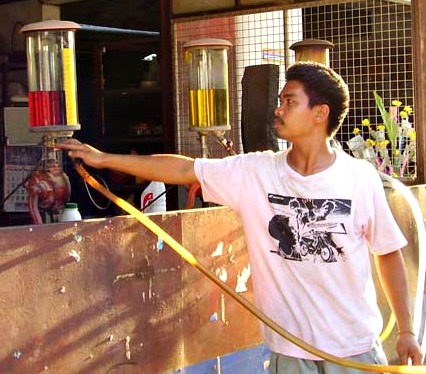
I love it. I associate it with long, busy days in Thailand, running errands for the animal clinic where I was volunteering, driving around looking for stray dogs in need of vaccinating — on my tiny little Yamaha motor scooter.

I could always smell the petrol when filling up the scooter tank — because most of the gas stations had only one barrel of the stuff, with a hand-pump and a rubber hose just long enough to reach your tank.

So that smell always brings back happy memories…even though it’s not widely considered a delicate fragrance!

The most noxious of odors — bread?!

Here’s another odd one. I’ll say it slow, in case anyone is likely to faint from pure, unadulterated, lust: Freshly. Baked. Bread.

Mmmmmm! Right?

Wrong. For me, anyway! To afford my trip to Thailand (and Fiji), I had a job working shifts in a bread factory in Australia, where that gorgeous smell permeated the whole building 24 hours a day. Perhaps because I was the only guy, and therefore resilient (or expendable?), I got to be in charge of the enormous, stainless-steel walk-in ovens. I put the bread trolleys in and, twenty minutes later, took them out again. It’s a process that has to be done quickly, or else the oven loses too much heat — but the trolleys themselves get rather warm in the process, and of the four of them, two had broken wheels.

You know how hard it is to steer a supermarket shopping trolley with a jammed wheel, right? Now imagine trying to do it fast — very fast — with a trolley approaching 200 degrees Celsius…and for 12 hours straight. Even my burns had burns.

I survived a whole two weeks in that job, and then as soon as my paycheck hit the bank, I fled straight to Bali to spend it!

To this day I can’t smell baking bread without thinking that pain — the kind that accompanies searing, scorching flesh — is about to follow…

Another smell to avoid: live jaguar!

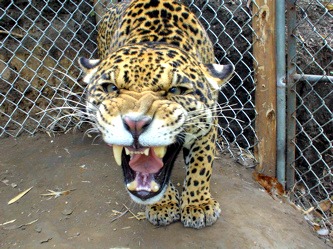
Now I’ll tell you something you don’t ever want to smell: anywhere a jaguar is living! When a jaguar is confined in, say, a remote mountain-top rescue centre in Ecuador (such as the one I worked in and on which my book is based), you have to clean the enclosure out pretty regularly. Now what goes into a jaguar — especially when you’re doing this on behalf of a nonprofit that’s operating on a shoe-string budget — isn’t particularly wholesome.

To begin with, the jaguar’s body odor isn’t noted for its appeal, unless perhaps you’re another jaguar. And of course they scent-mark everything.

But what comes out of them? Bearing in mind they are pure carnivores, living exclusively (in captivity) on carrion. It’s not…I mean, it’s just…. Look. Just don’t ever go there. Trust me on this!

And now for some winners!

Okay, back to the good. Toward the top of my list of intoxicating smells is that of the traditional Australian Sausage Sizzle. Usually held as a fund-raiser for some charity or other, they never fail to rake in the dough because the smell — of frying meat and frying onions — is utterly delicious, utterly irresistible, and carries for miles.

Now that I’m living as an expat in Perth, I get to experience this smell on a regular basis, as there’s a Sausage Sizzle held directly opposite the entrance to my gym every Saturday morning.

The moment I finish my hard-core workout, I come outside and walk full-tilt into that heavenly smell…at just the point when my body is starting to crave sustenance.

It’s almost as though those cooks are waging a personal crusade against my willpower. And my waistline.

And you know what? They win every bloomin’ time.

But my absolute favorite? I’ve got to tell you mine, right? Then you can tell me yours… It’s food again (of course!): the aroma of fresh donuts!

This dense, cakey scent takes me right back to one small stand in Morecambe Bay, in the north of England, where I went on holiday as a child. Yes, to one of my very earliest trips with my parents. I loved that I could get three donuts for £1! And, if I ate them quickly enough, I could pretend as thought I’d never had them, and convince my parents to give me another pound to buy three more! Ah, happy days indeed.

So there you have it. Now it’s your turn to describe the most delicious smells you’ve encountered on your travels — meadows, Himalayan incense, sunlight on rainbows…? Tell us in the comments! And if you happen to have a photo to illustrate this intoxicating scent, send it to me at tony@thedisplacednation.com. Yes, I may make that “la dolce vita” slideshow I’ve been promising before too long…

STAY TUNED for Monday’s post, when expat Anthony Windram recalls some chance encounters with “locals” that have enhanced his sense of the bittersweetness of life in his adopted home.

If you enjoyed this post, we invite you to register for The Displaced Dispatch, a round up of weekly posts from The Displaced Nation, with seasonal recipes, book giveaways and other extras. Register for The Displaced Dispatch by clicking here!

Related posts:

Images: photos of the gas pump and the jaguar are from Tony James Slater’s personal collection.

How to throw a party for a bunch of global nomads

One year has passed since our first random nomad, Anita McKay, crashed through the gates of The Displaced Nation, bribing the guards with chicken tikka masala and cranachan and shouting “bollocks” at several of us who tried to stop and question her.

And now there are 40 such nomads within our ranks — the latest being Annabel Kantaria, who insisted on bringing an alarm clock that looks like a miniature mosque — it rings every morning with the call to prayer. (Note to other founders: perhaps we need to find guards who aren’t so easily intimidated when travelers show a bit of temerity…)

Still, as we now have 40 nomads, randomly selected, why not make the best of the situation and throw a party? And what better excuse than The Displaced Nation’s 1st birthday — which, as announced by Kate Allison in a post a couple of days ago, took place on April 1 (no fooling!).

Further to that end, I’ve come up with a Party Primer that I think should work for this group — as well as for similar gatherings.

PARTY PRIMER FOR DISPLACED NOMADS

Click on the headlines below to go to each section:

  1. INVITATIONS
  2. DRESS CODE
  3. DECORATIONS
  4. MUSIC
  5. TABLE ASSIGNMENTS
  6. FOOD
  7. TOPICS FOR SMALL TALK
  8. PHOTOGRAPHY
  9. GAMES
  10. SONGS

INVITATIONS

As this party marks a special occasion (who ever thought we’d make it to be one year old?), a deluxe printed invitation is in order. The only thing is, our invitees are a bunch of nomads! We’ll be lucky if we can catch them on email, let alone at a fixed address. Let’s compromise on an attractively designed message: see mock-up at top of this page.

DRESS CODE

As some of you may know, Cleopatra recently paid a visit to The Displaced Nation. Based on her observations of today’s international travelers, we’ll be doing well if we can get the men to shower and change before joining us. As for the women, well, allow me to offer these pearls of wisdom from Jennifer Scott — the American guru of Parisian chic who was featured on this blog last week. Jennifer says:

There are certain occasions that always warrant dressing up. Generally any gathering … where others went to a lot of effort for your sake.

DECORATIONS

The theme is easy: the wide wide world! (Rather the opposite of Disney’s “It’s a small world after all” concept.) This calls for tablecloths imprinted with the world map (to make it easy for guests to point out where exactly “Moldova” etc is); globe-patterned balloons (can we coin a new term: globalloons?); and for the centerpieces, flags from each of the adopted country represented at the table in question.

Optional extras include party hats, noisemakers and loot bags. It’s fun when the loot contains some surprises. Given all the items our nomads have insisted upon carrying into The Displaced Nation, we should have plenty to choose from, eg:

  • mosque alarm clocks (thanks, Annabel!)
  • hairy coo fluffy toys (thanks, Nerissa!)
  • fake Harry Potter glasses (thanks, Charlotte!)
  • boomerangs (thanks, Kim & Vicki!)
  • brie bakers (thanks, Toni!)

MUSIC

As Todd Lyon, author of a number of party and lifestyle books, puts it:

Without music, a party isn’t a party. It might be an assembly, a meeting, or a bee, but it can never be a shindig, a bust-up or a ball unless there’s fine tunes that never stop.

Not being a party tunes buff myself, I’ve consulted with The Displaced Nation’s resident music expert, Kate Allison, about the kind of soundtrack that would cultivate just the right ambience. Her suggestions include:

Everybody all around the world, gotta tell you what I just heard
There’s gonna be a party all over the world…

TABLE ASSIGNMENTS

8-10 person tables work well. Since we’ll have 40 guests, I’ve decided on five tables of eight people each, and to mix everyone up as much as possible. Hostesses must also, of course, take steps to reduce the risk of a “silent table,” where people just eat and don’t talk. To be honest, I don’t there is too much risk of that with this crowd — have you ever watched a bunch of expats try to outdo each other with stories of their (cross-cultural, linguistic and travel) adventures? But just in case, I’m offering some “hostess notes” for each table (the hostess’s job being to introduce everyone and make sure the conversation keeps flowing!).

TABLE 1
Matthew Chozick (American expat in Japan)
Tom Frost (American expat in China)
Lyn Fuchs (American expat in Mexico — Sacred Ground Travel Magazine)
Turner Jansen (American canine in Holland)
Annabel Kantaria (English expat in Dubai — Telegraph Expat blog)
Kirsty Rice (Australian expat in Qatar — 4 kids, 20 suitcases and a beagle)
Jack Scott (English expat in Turkey — Perking the Pansies)
Karen van der Zee (Dutch/American expat in Moldova — Life in the Expat Lane)
Hostess notes: Introduce Tom Frost to Matthew Chozick — Tom used to live in Japan and speaks Japanese. Kirsty Rice should sit next to Turner Jansen, as she travels around with a beagle. Annabel Kantaria, Jack Scott and Kirsty all have in common life in the Middle East. Karen van der Zee and and Lyn Fuchs should find each other fascinating, as both have had some extraordinary adventures (Karen could entertain Lyn with her crocodile tale and Lyn, keep Karen amused talking about the time he went paddling with orcas.)

TABLE 2
Balaka Basu (Indian American in New York City)
Santi Dharmaputra (Indonesian expat in Australia)
Michelle Garrett (American expat in UK — The American Resident)
Robin Graham (Irish expat in Spain — a lot of wind)
Anita McKay (Indonesian expat in Australia — Finally Woken)
Brian Peter (Scottish expat in Brazil — A Kilt and a Camera)
Kate Reuterswärd (American expat in Sweden — Transatlantic Sketches)
Wendy Tokunaga (Former American expat in Japan)
Hostess notes: You might want to break up Santi Dharmaputra and Anita McKay, who are the same nationality (Indonesian) and already friends. Anita should definitely be introduced to Brian Peter, who like her hubby, is Scottish, and will probably be amused by her stories of toasting oatmeal in whisky. And make sure Anita also talks to Wendy Tokunaga — I know from personal experience how intrigued Anita is by stories of Western woman marrying Asian men. To be honest, everyone at this table should really be socializing with everyone else, as each and every one of them has a partner of a different nationality! (Now if that isn’t a talking point, I don’t know what is…)

TABLE 3
Kim Andreasson (Swedish expat in Vietnam)
Jo Gan (American expat in China– Life behind the wall)
Jennifer Greco (American expat in France — Chez Loulou)
David Hagerman (American expat in Malaysia — SkyBlueSky)
Helena Halme (Finnish expat in UK — Helena’s London Life)
Vicki Jeffels (Kiwi expat in UK — Vegemite Vix)
Janet Newenham (Irish internationalist — Journalist on the run)
Adria Schmidt (former Peace Corps worker in the Dominican Republic)
Hostess notes: Seat David Hagerman next to Jennifer Greco — since his wife is a well-known food writer and expert cook, he’ll find nothing strange in her quest to sample all the known French cheeses. Janet Newenham should be near Adria Schmidt and Kim Andreasson as they are all interested in international affairs. Vicki should be introduced to Helena as I’m sure the latter would love to hear about her recent spa experience in Cyprus. Jo Gan, too, should meet Vicki as she is now experiencing visa problems with the Chinese authorities — on a level that may even surpass Vicki’s own nightmare experience in Britain.

TABLE 4
Aaron Ausland (American expat in Colombia — Staying for Tea)
Emily Cannell (American expat in Japan — Hey from Japan)
Charlotte Day (Australian expat in UK)
Toni Hargis (English expat in USA — Expat Mum)
Vilma Ilic (Former aid worker in Uganda)
Jennifer Lentfer (Former American expat in Africa — How Matters)
Camden Luxford (Australian expat in Argentina — The Brink of Something Else)
Piglet in Portugal (English expat in Portugal — Piglet in Portugal)
Hostess notes: Aaron Ausland will naturally gravitate towards Jennifer Lentfer as they are both deeply involved in global aid and development. Make sure you introduce the pair of them to Piglet in Portugal — she’ll ask them some thought-provoking questions about whether it’s better to save the world or cultivate your own garden. Jennifer should also be near Vilma as the two will want to share their Africa experiences, and you might urge Emily Cannell to join that conversation as well — she has such an adventuresome spirit! Along with Toni Hargis, who runs her own charity supporting a school in Ghana. As for Camden Luxford, she’s an easy one: a social butterfly! Perhaps she could take fellow Aussie Charlotte Day under her wing (ha ha) and make sure she gets plenty of material to write about for her courses at Oxford next year!

TABLE 5
Lei Lei Clavey (Australian expat in New York City)
Matt Collin (American expat in UK)
Megan Farrell (American expat in Brazil — Born Again Brazilian)
Liv Hambrett (Australian expat in Germany — A Big Life)
Mardi Michels (Australian expat in Canada — eat. live. travel. write | culinary adventures, near and far)
Iain Mallory (English adventurer — Mallory on Travel | Making Everyday an Adventure)
Nerissa Muijs (Australian expat in Holland — Adventures in Integration)
Simon Wheeler (English expat in Slovakia — Rambling Thoughts of Moon)
Hostess notes: As soon as Lei Lei Clavey, Liv Hambrett, Mardi Michels and Nerissa Muijs discover they all have Australia in common, they will be blabbing away — just hope it doesn’t turn into an Ozfest! Also, make sure Mardi connects with Matt — I suspect he may need her counseling about how to seek creative refuge from academia. Iain Mallory and Simon Wheeler will form a natural pair, exchanging stories of their travel adventures and perhaps even breaking into a rousing chorus of “Jerusalem.” But should their antics get too raucous, ask Mardi to step in: she teaches cooking classes to 9-11-year-old boys in Canada. Megan Farrell should connect with Nerissa and Simon on the topic of what it’s like to raise a child in a nationality (and language) other than your own.

FOOD

One of the purposes of gathering together nomads from the four corners of the earth has to be eating, especially if each of them brings along some of their favorite dishes. For our party, we will have a dazzling tableaux brimming over with rare and exotic foods. (We know that because our Random Nomads have already described their faves to us in their interviews.)

Shall we go over the list? (Warning: Don’t read on an empty stomach, or if on a restricted diet!)

NIBBLES/STARTERS

  • Guacamole & chips (Kim — recipe provided)
  • Selection of mezze with pita bread (Annabel Kantaria)
  • Assorted pinchos (Megan Farrell)
  • Avocado & mango salad (Matt Collin)
  • Bhelpuri (Tom Frost)
  • Satay sticks (Nerissa Muijs)
  • Four kinds of eggs: tea eggs, thousand-year-old eggs, fried eggs with tomato, and boiled salted eggs with a chicken embryo inside (Jo Gan)
  • Shrimp & grits (Lei Lei Clavey)
  • Vietnamese caramelized chili prawns (Mardi)
  • Ceviche (Camden Luxford)
  • Bluff oysters from New Zealand (Vicki Jeffels)
  • Gravad lax with Finnish rye bread (Helena Halme)
  • Tuna sashimi with ponzu sauce (Emily Cannell)

COCKTAILS

  • Traditional Bloody Marys (Lei Lei Clavey)
  • Caipirinhas (Megan Farrell)
  • Margaritas (Kirsty Rice)

WINE

  • Rich red wines from Lebanon (Annabel K)
  • Red wine from Macedonia (Vilma Ilic)
  • Malbec wine from Argentina (Camden Luxford)
  • Shiraz from Australia (Vicki Jeffels)
  • White wine from Australia (Simon Wheeler)
  • Chilled sake (Tom Frost)
  • Rice wine (Jo Gan)

BEER

  • Carlsberg browns (Matt Collin)
  • Cusqueña beer (Camden Luxford)
  • Mexican Pacifico (Tom Frost)
  • Harbin beer (Jo Gan)
  • Coopers beer (Simon Wheeler)

MAINS
Meat dishes:

  • Carne de Porco a Alentejana (Piglet in Portugal)
  • Schnitzel served with rotkohl (Liv Hambrett)
  • Bondiola-chevre-basil wraps and nattō (Tom Frost)
  • Fried chicken sandwiches with hand-cut fries (Lei Lei Clavey)
  • Chicken tikka masala (Anita McKay)
  • Libyan soup (Kirsty Rice — recipe provided)
  • Cuban ropa vieja (Mardi)
  • Argentinian steak cooked rare (Camden Luxford)
  • Tapola black sausage with lingonberry jam (Helena Halme)
  • Barbecued steak, snags & lamb chops (Nerissa Muijs)

Fish dishes:

  • Paella Valenciana (Megan Farrell)
  • Llish in mustard and chili paste, smoked in banana leaves (Balaka Basu)
  • Chambo curry with nsima (Matt Collin)
  • Moreton Bay bugs (Vicki Jeffels)
  • Grilled salmon on a plank (Emily Cannell)
  • Sushi (Simon Wheeler)

Vegetarian offerings:

  • Peanut butter vegetable stew (Jennifer Lentfer)
  • Overcooked spaghetti with carnation milk, canned tomatoes and corn (Adria Schmidt)

DESSERTS

  • Summer pudding (Toni Hargis)
  • Apple crumble (Matt Collin)
  • Cranachan (Anita McKay)
  • Hot fudge sundaes (Lei Lei Clavey)
  • Blackberry gelato (Balaka Basu)
  • Caramel cheesecake (Kirsty Rice)
  • Bread pudding with Bourbon sauce (Jennifer Greco)
  • Île flottante (Mardi)
  • Molotof cake (Piglet in Portugal)
  • Mouse de maracujá (Megan Farrell)
  • Tiramisu (Camden Luxford)
  • Homemade Slovakian cream cakes (Simon Wheeler)
  • Dutch waffles (Turner Jansen)
  • Oblande, tulumbe, kadaif & krempite (Vilma Ilic)
  • Umm Ali (Annabel Kantaria)
  • Sigara borek (Jack Scott)
  • Juustoleipä with fresh cloudberries and cream (Helena Halme)
  • Yangmei fruit (Jo Gan)
  • Languedoc cheese: Roquefort, Pélardon and Tomette des Corbières (Jennifer Greco)

AFTER-DINNER DRINKS

  • Chlicanos (Camden Luxford)
  • Rakija (Vilma Ilic)
  • Fernet (Tom Frost)
  • Homemade Slivovica (Simon Wheeler)
  • Dragon-wall green tea (Jo Gan)
  • Espresso (Balaku Basu)
  • Large “flat whites” (Charlotte Day)

FOR THE TOAST(S):
New Zealand champenoise (Vicki Jeffels)

NOTE: Charlotte Day will be cooking a Sydney-style breakfast for diehards who care to linger to the next morning. (And Nerissa Muijs will be frying up some bacon!)

TOPICS FOR SMALL TALK

There are some topics that should be avoided at all costs. As style writer Rita Konig puts it,

It is very dull to talk about journeys. Once you have arrived somewhere, try to keep quiet about how long it took you to get there.

Should you notice anyone engaging in this, put the kibosh on it by asking them to help with pouring drinks, or with putting away coats in the spare room.

PHOTOGRAPHY

Fortunately, there’s usually one great photographer or two in a group of global nomads, thereby saving unnecessary expenditure. (We will ask David Hagerman — he’s sensational!)

GAMES

Games are a great ice breaker. Here are a few that might be appropriate for a well-traveled crowd:
1) Musical countries: Draw a big map on a piece of vinyl (back of a Twister mat might do), and give everyone a flagpole. When the music stops, they must place the flagpole on a country, Anyone whose flagpole ends up in the ocean is out.

2) Variation on “Pin the Donkey”: Pin the rudder on the 747! (Contributed by Kate Allison.)

3) Word games: As we’ve found out from our interviews, global nomads pick up words and expressions from here and there. Taking some of these and mixing them together, we can come up with some pretty strange exchanges. (Prizes for anyone who manages to decipher!)

A: Prego, could you get me a ba ba ba? Kippis!
B: Inshallah, a barbie would also be awesome. And how about la ziq?
A: Avustralyalılaştıramadıklarımızdanmışsınızcasına.
B: So desu ne!

A: Tudo bem? You look a bit daggy.
B: Life can be arbit sometimes.
A: Zvakaoma.

A: Hey.
B: Hey. Das stimmt, sorry to be such a Debbie Downer but I’m knackered after all this work.
A: Bless!
B: Zikomo.

A: Oh la vache! You are lost. Siga, siga. Ni chifan le ma?
B: Bollocks! [Sucking air through gritted teeth.] I think I got lost in the wopwops.
A: Well, there’s the big ol’ tree out the front.
B: Bula! Okay-la. Le bon ton roule!

TOASTS

Toasts should be made repeatedly throughout the latter half of the dinner. Just in case no one feels inspired, prepare one or two classics for the host or hostess to offer, eg:

I’d rather be with all of you than with the finest people in the world.

SONGS

Songs can be sung in several languages. In this case, a stirring rendition of “Happy Birthday” is called for, sung not only in English but in:
Dutch (Karen, Nerissa)
Finnish (Helena)
French (Jennifer, Mardi)
Indonesian (Anita & Santi)
Japanese (Emily, Matthew, Tom, Wendy)
Spanish (Aaron, Adria, Camden, Lyn, Megan, Robin)
Swedish (Kate, Kim)
Woof-woof (Turner)

Finally, the party should end with the Displaced Nation founders treating the guests to a round of:

For you are all jolly good fellows, for you are all jolly good fellows,
For you are all jolly good fellows…
Kate, Anthony, Tony: And so say all of us!
ML: Which nobody can deny!

* * *
Have I left out any important details? Any tweaks you can suggest? Your turn!!! Let’s work together to make this the most awesome gathering of global nomads ever. Onegaishimasu, shokran — and all that!

STAY TUNED for tomorrow’s installment from our displaced fictional heroine, Libby. She is expecting a visitor: her own mother, who is — in theory — coming to help as her due date gets closer. Will Granny Jane be an improvement on Sandra, the MIL from hell — or will she prove to be one more spanner in the works for our poor displaced heroine? (What, not keeping up with Libby? Read the first three episodes of her expat adventures.)

If you enjoyed this post, we invite you to register for The Displaced Dispatch, a round up of weekly posts from The Displaced Nation, with seasonal recipes, book giveaways and other extras. Register for The Displaced Dispatch by clicking here!

Related posts:
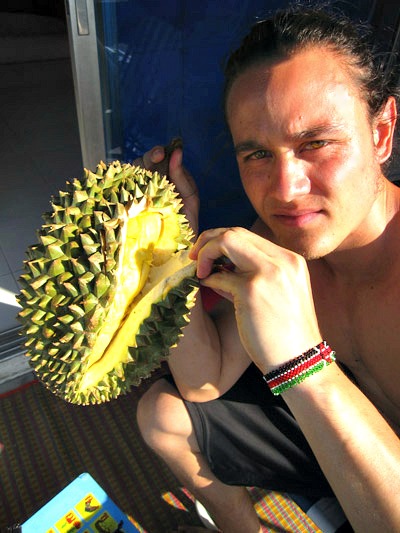
10 expat books ripe for movie adaptations

Those who have been following this blog for some time are probably all too aware of my unhealthy preoccupation as to what constitutes an expat or travel book.

Is it, as often seems the case when I browse the expat blogosphere, that expat books must occupy themselves with the oh-so-amusing hi-jinks of expat life? The result almost invariably of such approach is that we are depressingly left with another third-rate knock-off of Bill Bryson for us to throw on the bonfire.

So when considering which expat books are ripe for movie adaptations, my first thought is that the film world, not to mention the world in general — at least, the one I want to live in — really doesn’t need any more travesties such as Under the Tuscan Sun, A Good Year or — most horrifying of all — Eat, Pray, Love. So with that in mind I will nominate the following 10 expat books as being ripe for interesting adaptations.

10. A Moveable Feast (1964, revised 2009)

Author: Ernest Hemingway
Synopsis: Hemingway’s posthumously published memoir detailing his years as a young American expat in Paris socializing with the likes of F. Scott Fitzgerald, Gertrude Stein and Ezra Pound.
Film pitch: Perhaps now is the perfect time for an adaptation of A Moveable Feast. The surprising success of Woody Allen‘s Midnight in Paris will perhaps have whetted Hollywood’s appetite for a more serious take on the same subject matter.

9. One Fat Englishman (1963)

Author: Kingsley Amis
Synopsis: Inspired by a year Amis spent teaching at Princeton, One Fat Englishman follows the badly behaved Roger Micheldene with Amis’s typical brio. An English gentleman who is affronted by everything on the American scene, Roger fails to see how his presence might adversely affect Anglo-American relations.
Film pitch: Cast Timothy Spall as Roger and watch the fireworks.

8. A Burnt Out Case (1960)

Author: Graham Greene
Synopsis: A man named Querry arrives at a leper colony in the Congo. He assists the colony’s doctor, who diagnoses him as suffering depression. It is revealed that Querry is in fact a world-famous architect, though he is hiding other secrets, too.
Film pitch: Perhaps Greene’s bleakest work — which may explain why it hasn’t been filmed previously despite being optioned twice by Otto Preminger (Greene was said to be thankful that it was never made). I would argue, however, that it has all the material for a fascinating film.

7. Travels through France and Italy (1766)

Author: Tobias Smollett
Synopsis: After the sad death of his daughter, Tobias Smollett and his wife left England for a tour of France and Italy. Detailing the quarrels Smollett has on his journey with those pesky Continentals, this is a very funny book.
Film pitch: Yes, I am suggesting that someone should make a movie based on an 18th-century travelogue. If Robbie Coltrane and John Sessions can turn Boswell and Johnson’s tour of the Hebrides into a delightful TV movie then I think the same could be done with this.

6. The Long Day Wanes: A Malayan Trilogy (1956-59)

Author: Anthony Burgess
Synopsis: Burgess’s first three novels are concerned with the character of Victor Crabbe, a teacher in a village in Malaya (now Malaysia). Based upon Burgess’s own experiences as a British civil servant in Malaya, the three novels that make up The Long Day Wanes detail the death of Empire and the birth pains of a newly independent nation.
Film pitch: Other than A Clockwork Orange, whose adaptation Burgess had strong misgivings over, Burgess’s work often seems overlooked for movie adaptations. It really shouldn’t be.

5. The Thousand Autumns of Jacob de Zoet (2010)

Author: David Mitchell
Synopsis: Until Commodore Perry in 1853 anchored four warships off the Japanese coast and so opened up Japan to western trade, Japan had been a “locked country” (sakoku) where it was illegal for a foreigner to enter Japan and for a Japanese subject to leave. The exception to this was at Dejima, in Nagasaki, where trade with some select foreign powers was allowed. This fascinating piece of history is the basis for David Mitchell’s latest novels. Set in 1799, The Thousand Autumns of Jacob de Zoet details a young Dutch trader who has come to Dejima to make his fortune though he discovers a lot more.
Film pitch: The book has all the makings of a wonderful historical epic.

4. Up Above the World (1966)

Author: Paul Bowles
Synopsis: Dr and Mrs Slade are an American couple touring Central America. A chance encounter with an elderly woman leads to a tense and gripping chain of events.
Film pitch:A disturbing and intense work typical of Bowles, it would make for a deeply compelling thriller.

3. Burmese Days (1934)

Author: George Orwell
Synopsis: Similar to Burgess’s The Long Day Wanes, this novel is concerned with the dying days of Empire. Orwell, who was himself an officer in the Indian Imperial Police Force in Burma, paints a depressing picture of expatriate life that is based around the stultifying social hub of the European club.
Film pitch: Orwell’s first novel and while certainly not his best work, even a bad Orwell novel is still worthy of consideration.

2. Henderson the Rain King (1959)

Author: Saul Bellow
Synopsis: Eugene Henderson is a rich American with an unfulfilled desire. Not knowing quite what it is, he hopes he will discover it by going to Africa. Through a series of misadventures Eugene Henderson finds himself away from his original group and in the village of Wariri in Africa. After performing a feat of strength, Eugene is adopted by the villagers as the Wariri Rain King.
Film pitch: Bellow’s funniest book, Henderson the Rain King could be pitched as an intellectual Joe Versus the Volcano (or maybe not — that’s a terrible pitch).

1. Turkish Embassy Letters (1763)

Author: Lady Mary Wortley Montagu
Synopsis: An important writer in her own right, Lady Mary Wortley Montagu was the wife of Edward Wortley Montagu, who was appointed as the ambassador at Constantinople. Accompanying her husband just after recovering from contracting smallpox marring her famed beauty, Lady Wortley Montagu wrote about her observations in numerous letters. These letters form a fascinating look at the Ottoman Empire — from how they inoculated against smallpox to the zenanas, special areas of the house reserved for women — as observed by an aristocratic English woman of the time.
Film pitch: Just think what a great biopic you could make about her.

Note: If you click on the book titles in the above list, you’ll be taken to Amazon, where the books can be purchased — except in the case of Tobias Smollett’s travelogue, which goes to Gutenberg, where he can be read FOR FREE!!

STAY TUNED for tomorrow’s post, an interview with first-time novelist Meagan Adele Lopez, and her plans for turning the book into a film.

If you enjoyed this post, we invite you to register for The Displaced Dispatch, a round up of weekly posts from The Displaced Nation, with seasonal recipes, book giveaways and other extras. Register for The Displaced Dispatch by clicking here!

Related posts: