The Displaced Nation

A home for international creatives

Tag Archives: South America

For this peripatetic Sardinian writer who has settled down (for now) in Rome, a picture says…

KONICA MINOLTA DIGITAL CAMERAGreetings, Displaced Nationers who are also photography buffs! “A Picture Says…” columnist James King is still away, so I am filling in again.

My guest this month is Angela Corrias, a well-traveled freelance writer who was born in the Italian island of Sardinia.

There’s a lot about Angela’s story that captivates me. For a start, there’s this photo of her on her Chasing the Unexpected blog’s About Me page, where she’s wearing a head scarf and looks Middle Eastern.

I had seen her “I heart my city” article on the National Geographic Traveler‘s site, which was all about Rome (where she now lives), so I assumed she was Italian… But was my assumption incorrect?

I also knew from her NatGeo article that she has traveled extensively and been an expat several times.

Hmm…that still doesn’t explain why she’s wearing a head scarf.

As I read more about Angela, I became even more intrigued. “[W]hat I like the most when I travel,” she writes on her About page, “is to dig deep into other countries’ culture, traditions, social customs and explore them in all their idiosyncrasies. I’ve always tried to avoid filling my posts with the basic information available by performing a simple Google search, and strived to publish more personal impressions instead.”

Something new I learned from her blog was that she is also a “wannabe photographer.”

It was at that point I knew that we had to feature Angela in “A Picture Says…,” and luckily she was “angel” enough to oblige!

Angela Corrias in Jiasalmer, India, one of the many stops in her travels (photo supplied)

In front of India’s Golden City, Jaisalmer, stands Angela Corrias, the woman who finds gold in all her travels. (Photo supplied)

* * *

Hi, Angela, and welcome to the Displaced Nation. I’d like to start by asking: where were you born, and when did you spread your wings to start traveling?
Hi, ML, and thank you for inviting me to take part in this column. And just to clear up your confusion, no, I’m not Middle Eastern. I was born in Sardinia, Italy’s second biggest island off the coast of Rome, and while my first international trip was to nearby France to visit relatives when I was just three years old, I’ve always considered my travel initiation to have been the first time I crossed the equator at the age of 13 to go to Brazil. It was my first long-haul flight and very first immersion in a culture different from mine. Maybe that’s why I’ve always had a soft spot for Brazil.

Now, I know from reading that Nat Geo article that, since reaching adulthood, you’ve traveled far and wide and also been an expat. What are some of the countries you’ve been to, and which have you actually lived in?
I’ve traveled extensively around Europe, living for two years each in Dublin and London. I’ve visited countries like Spain, France, Germany, Poland, Finland, Romania, Turkey and even Monte Carlo (once). In the Middle East, I’ve been to Lebanon, the UAE and Iran (many times). I’ve also spent a great deal of time in Asia. I lived for one year in China (Shanghai) and was able to travel around visiting countries like India, Sri Lanka, Thailand, Singapore and Cambodia. And I mustn’t forget Brazil. I’ve traveled there many times with a quick jaunt to Argentina once—the only two countries I’ve visited in South America so far.

Ah, so THAT explains the head scarf! All those trips to Iran… Where are you living right now and why?
After almost ten years of the expat and nomadic lifestyle, I decided two years ago to come back to Italy and live in Rome. While I’m not ruling out completely another expat/nomadic experience, I’m liking it here so far. The city is extremely lively and constantly inspires me for writing and taking pictures. And it has an international airport, which makes it easy for me to book flights to any destination.

“To one that watches, everything is revealed.” —Italian proverb

Moving right along to the part we’ve all been waiting for: a chance to appreciate a few of your photos. Can you share with us three photos that capture some of your favorite memories of what has clearly been for you a “displaced” life of global travel? And for each photo, can you briefly tell us the memory that the photo captures, and why it remains special to you?
I’ll start with a photo that I took last year at the beautiful Imam Square at the center of Isfahan, Iran, a city that boasts an amazing history, impressive architecture and one the world’s most beautiful bazaars. Recently Iran has become for me one of the countries where I feel most at home—not just because locals actually mistake me for an Iranian and refuse to believe that I don’t speak Persian, but because I feel I can just unwind and enjoy what the country has to offer, from its stunning art to its beautiful and diverse nature to the warmth of its people.

The vast Iman Square in Iran, an important historical site. Photo credit: Angela Corrias (supplied).

The vast Iman Square, an important historical site in Iran. Photo credit: Angela Corrias (supplied).

Another place where I feel at home is my actual home, Sardinia. I left it some 17 years ago and go back far less than I would like to. I took this photo in the lovely coastal town of Bosa this past August, when I treated myself with a full 12-day stay after years of never visiting for more than a week. Sardinia is actually the kind of place where many people, including foreigners, can easily feel comfortable, and eventually settle down. A quiet, laid-back and relaxed lifestyle, its own cuisine, and a hospitable atmosphere—these are just a few of the features that can make anyone feel at home.

Fishing plays an important role in the economy of Basa, Sardinia. Photo credit: Angela Corrias (supplied).

Fishing plays an important role in the economy of Basa, Sardinia. Photo credit: Angela Corrias (supplied).

I took this third photo at a tea market in Shanghai, when living in China. For me it represents a truly traditional Chinese moment. Before moving to China, I had lived in Dublin for two years and in London for another two years, but neither of these cities made me feel I wanted to stay, and from the beginning I knew I would leave once I’d had the experience I was looking for. This changed in China. Despite the initial culture shock, once I started Chinese-language classes and began to speak with the locals, who are always very happy to see foreigners making the effort to learn their extremely difficult language, I instantly felt comfortable and as though I could settle for some time.

Sampling Chinese tea culture in Shanghai. Photo credit: Angela Corrias (supplied).

Sampling Chinese tea culture in Shanghai. Photo credit: Angela Corrias (supplied).

Wow, you’ve taken us from a vast square in Iran to an intimate setting of a tea house in Shanghai, which gives me a clear idea of the breadth of your travels. And that photo of the insides of a fishing boat in your native Sardinia—it seems so intimate. I can tell how much you know and love your homeland, or should I say “homeisland”?

“It all ends with biscuits and wine.” —Italian proverb

Having seen these first three photos, I expect it’s a bit of a tough choice, but which are the top three locations you’ve most enjoyed taking photos in—and can you offer us an example of each?
Everywhere I go, one of the first places I visit are the local markets. I took this photo at a market in the town of Roulos in Cambodia, near Siem Reap, where most vendors lay out their products and merchandise on the ground. Witnessing this feast of fruits, veggies and different local fish being sold by locals to locals was a great way to soak up the local atmosphere and sense of community.

The market in Roulos, Cambodia. Photo credit: Angela Corrias (supplied).

Roadside market in Roulos, Cambodia (not far from Ankor Wat). Photo credit: Angela Corrias (supplied).

Iran is also a place where I very much enjoy taking photos. First of all, the people are always willing to be photographed and they often take it as a chance to strike up a conversation, which is the best possible outcome of a day out as a traveler. Secondly, it’s not very hard to take nice photos thanks to the beauty of its historical landmarks, architecture, parks and bazaars. Finally, Iranian style has a certain opulence, which translates into lavish meals, sophisticated art and loud gatherings. I took this photo at my friend’s house in the city of Lahidjan, in Gilan Province, Iran (on the Caspian Sea). Her mother had prepared some traditional dishes so that I could sample the local cuisine.

An Iranian feast. Photo credit: Angela Corrias (supplied).

A sumptuous feast of traditional foods in Lahijan, Iran. Photo credit: Angela Corrias (supplied).

Maybe because I live here now, but Rome is also one of my favorite places to capture with my camera. It offers many diverse subjects and situations, ranging from ancient Roman baths and villas to the traditional life of the Garbatella area, the industrial archaeology of the Ostiense neighborhood or the urban pop art that is gradually turning Rome’s suburbs into open-air museums. The photo I chose is from an area called Quadraro, once mainly considered a working-class district and now revamped thanks to a street art project that has taken over most walls around the neighborhood.

Street art livens up Quadraro, a neighborhood in Rome’s southeast periphery. Photo credit: Angela Corrias (supplied).

Street art livens up Quadraro, a neighborhood in Rome’s southeast periphery. Photo credit: Angela Corrias (supplied).

Wow, that last one makes me think of an Italian Alice in Wonderland! And the two food photos were amazing, each in their own way.

“When in Rome…” —early Christian proverb (now universal)

I wonder: do you ever feel reserved taking photos of people, particularly when they are conscious of your doing so? How do you handle it?
Yes, I do feel I need to be cautious when taking photos of people as I’m essentially capturing a moment of their life. I must admit, I love taking photos of the locals as they add to the value of the image and give a great sense of place, but obviously if I’m close and have the chance to converse, I always try to get familiar and make them feel more at ease. I also try not to point my lens directly in anyone’s face.

In Cambodia, for example, I had the opportunity to visit two floating villages, Kompong Khleang near Siem Reap and Phsar Krom on the way to Phnom Penh, and while I understand that tours are organized to make visitors experience life on the water and show them how Cambodians live, I sometimes felt as if we were invading their private space. I could imagine the locals wondering why tourists were so interested in their daily life—a life that seemed to me a never-ending struggle for survival.

Here is a photo from that trip, which perhaps helps to demonstrate my point:

Kompong Khleang, considered the most authentic of the three floating villages around Siem Reap, Cambodia. Photo credit: Angela Corrias (supplied).

Kompong Khleang, a floating village near Siem Reap, Cambodia, and home to around 1,800 families. Photo credit: Angela Corrias (supplied).

“Take pleasure in your dreams…” —Giotto di Bondone

When did you become interested in photography?
Ever since I decided to work as a freelance writer, I’ve taken photos to accompany my articles. Gradually, however, especially after I took a course on reportage photography in Rome, photography has became more of a passion and a source of inspiration, so much so that I’m starting to think about focusing on photography alone and having an exhibition one day. I enjoy devoting a whole day to taking pictures. And of course, the more I take photos the better I do with my writing. It gives me ideas for blog posts.

What is it about this art form that drew you in?
Sometimes with a camera you can capture moments, looks, colors that maybe you don’t notice and you realize only afterwards, when looking at the photos. I also like the way images can be interpreted differently depending on the viewer’s perspective. We need words, too, to avoid misunderstandings, but when it comes to art forms, an image can convey emotions and a kind of poetry that speaks to other people.

And now switching over to the technical side of things: what kind of camera, lenses, and post-processing software do you use?
After seven years of Nikon D50, I upgraded my photo gear with a Nikon D7100 last year, and I love it. I have four lenses: the normal 18-55 that I bought with my first camera and that I’m about to replace with one with bigger aperture; a Nikon 70-200; a Sigma 10-20; and a Nikon 50mm. While I started as a self-learner, I eventually felt the need to take a course, during which I improved a lot, especially when it comes to choosing the appropriate lens for particular subjects and situations. For post-processing software I use Adobe Photoshop—an early version, though, which I might need to upgrade.

“Either learn, or leave.” —Roman proverb

Finally, can you offer a few words of advice for wannabe photographers who are traveling the world or living abroad?
My advice would be to take time to interact with locals as much as possible. Understanding the host culture is crucial in order to take the pictures that will capture the essence of a place. Another piece of advice that I always try to follow myself, even though I know it’s not as straightforward as it may sound, is to get out of your comfort zone, even if this means feeling confused at first. You will adapt eventually; human beings always do. Finally, never be so arrogant to travel with the idea of imposing your own lifestyle and values on others, because it’s hardly ever the case that one culture is superior. It’s always better to travel with the idea of learning rather than teaching.

Thank you, Angela! I appreciate your sharing a selection of photos that show us how deeply you connect with the local scenery and people on your travels into various parts of the world. You seem to take the opposite approach to that of the Roman statesman Julius Caesar, he of veni, vidi, vici (I came, I saw, I conquered) fame. At the same time, you clearly feel a strong connection with your native Sardinia and your new home of Rome. Your travels appear to have made you appreciate Italy’s own brand of beauty. Thank you again for doing this interview. Essere uno stinco di santo.

* * *

Readers, what do you make of Angela’s peripatetic life and her photography advice? Please leave any questions or feedback for her in the comments!

If you want to get to know Angela Corrias and her creative works better, I suggest you visit her author site, where if you sign up for her e-newsletter, you’ll receive a free photo ebook on the Venice Carnival. Going to Rome any time soon? Visit Angela’s other site, Rome Actually, about her Roman adventures. You can also follow her on Facebook, Twitter, and Instagram.

NOTE: If you are a travel-photographer and would like to be interviewed for this series, please send your information to ml@thedisplacednation.com.

STAY TUNED for more fab posts!

If you enjoyed this post, we invite you to register for The Displaced Dispatch, a round up of weekly posts from The Displaced Nation and SO much more! Register for The Displaced Dispatch by clicking here!

Related posts:

EXPAT ART AS THERAPY: Works that capture unexpectedly beautiful moments of life in other countries

ExpatArtasTherapy_principle_no_two

As the summer wears on—and I’m wondering what I am doing working long hours in a big city while everyone else seems to have escaped to beaches or mountains or on other adventures—I’m returning to my series based on the ideas of pop philosopher Alain de Botton. As those familiar with his work will recall, de Botton maintains that art can provide relief from as well as solutions to one’s angst.

But does the art we expats produce play a role in improving people’s lives? That’s what this series of posts explores.

No doubt, the works of international creatives has some appeal to what global soul Pico Iyer has called the great floating tribe of people “living in countries not their own.” (Expats currently number around 230 million, or about 3 percent of the world’s population.)

But are the works expats produce too specific to their own situations, or do these works, too, speak to broader life problems?

De Botton outlines six specific ways art can respond to human needs. My last post examined his first principle, that art can compensate for the fact that we have bad memories. I offered some examples of how international creatives have preserved precious moments of their lives in other countries in their works, not only for themselves but for posterity.

Today let’s look at de Botton’s

PRINCIPLE #2: Art can give us hope. Simple images of happiness touch us. We tend to be moved by small expressions of beauty—not because we are sentimental but precisely because so much of life is not pretty.

The example de Botton cites is Claude Monet’s Water Lilies, (or Nymphéas), a series of around 250 oil paintings that depict the French impressionist’s garden at Giverny. Monet painted the series during the last years of his life, while suffering from cataracts.

Claude_Monet_Nympheas_1915_Musee_Marmottan_Paris

Nymphéas, 1915, Musée Marmottan Monet, Paris. via Wikimedia Commons (public domain).

De Botton is of course stirring it up by insisting that beautiful art serves an important purpose. Artists of today seem to be in a race to outdo each other in the outrageous stakes. I’m thinking of Damien Hirst, who built his reputation on artworks displaying dead animals, or their parts, in formaldehyde tanks. Providing a respite from the ugliness of life is the last thing on his mind. Likewise for Jen Lewis, who uses her own menstrual blood to create abstract designs. Provocative, yes, but not my idea of beauty.

Returning to de Botton’s second principle: which expat artists have excelled at producing the kind of beauty that provides relief from life’s less pleasant aspects? (Who are our displaced Monets?)

By way of an answer I’ve arranged a small “exhibition” of works by four visual artists, three painters and one photographer, all of whom have been affiliated in some way with the Displaced Nation. As de Botton has done at several museum exhibitions, I’ve added post-it notes describing the therapeutic effects I’ve experienced upon viewing these artists’ works.

#1: “Lost on a Mountaintop,” by Candace Rose Rardon

Lost_on_a_Mountaintop_by_candace-rardon_800x

POST-IT: Those of us who have traversed international boundaries carry in our hearts the fear that we may someday lose our way—literally, of course, but even figuratively, with no family or old friends around to serve as mentors or sounding boards. Candace Rose Rardon shows us the flip side: how glorious to be lost on the top of a mountain range with the world stripped down to pines, sun, wind and hills, ready for you to paint your own scenes on it. Even a stay-at-home curmudgeon could be struck down with wanderlust, at such a prospect. Candace is a writer, sketch artist and illustrator without a location. She tells stories about the world through her words and watercolors.
OUR CONNECTION: Candace was the recipient of one of our Alice Awards.
SEE ALSO: Candace’s blog, The Great Affair; and her first book of travel sketches: Beneath the Lantern’s Glow: Sketches and stories from Southeast Asia and Japan.

#2: Les Mimosas de Mesubenomori,” by Julie Harmsworth

les-mimosas-de-mesubenomori-2013-800x-acrylique-et-pastel-c3a0-lhuile-sur-papier
POST-IT: My first (and only) visit to Nagasaki, made while I was living in Japan, had a lasting impact. To this day I carry around images of the damage wreaked on that city from my visit to the Atomic Bomb Museum. But for Julie, who moved to Nagasaki from the United States to teach English, the city was the place of her rebirth as an artist. She often walked to this local park, and this painting is her tribute to its flowering mimosa trees. For a moment her painting makes me forget the pain this city endured, along with the horror for war it engenders. Though one can never lose sight of the darkness, it’s possible to be touched by these simple, beautiful trees.
OUR CONNECTION: We are mutual blogging admirers. Julie, btw, has now moved to France, where she continues her work as a fine artist (hence the French title of her painting).
SEE ALSO: Julie’s portfolio site.

#3: “Russian Market—Phnom Penh,” by A. Spaice

Russian-Market-PhnomPenh_framed
POST-IT: I’ve never been to Phnom Penh but imagine it might be a variation on other Southeast Asian cities (Bangkok, Kuala Lumpur, Jakarta, Saigon) I’ve visited. From reading descriptions of the Russian Market, which lies in the southern part of Cambodia’s capital city, I can certainly picture it: a narrow warren of stalls, crowded, busy and sweltering, full of the kinds of goods you see in all of the markets in that part of the world (though apparently at better prices), everything from handicrafts to fake Swiss watches to pirated software to designer clothes considered unfit to be shipped abroad because of small flaws. The global economy at its finest! But what does writer and sometime photographer A. Spaice offer us? A glimpse of a splendidly isolated flower and flower-to-be. Such a beautiful reminder that the “I shop therefore I am” credo of Asia isn’t all there is to life!
OUR CONNECTION: A. Spaice was our first international creative to be “wonderlanded” (read her interview and an excerpt from her short book, Bangkok).
SEE ALSO: A. Spaice’s Design Kompany site and weekly e-zine.

#4: “End of the Drought,” by Antrese Wood

Endofthedrought_Antrese_Wood
POST-IT: The Pampas grasslands of Argentina are one of the most fertile areas in the world. When a drought occurs and its crops are destroyed, not only farmers—but also does the rest of the world—suffers, as world food prices are nudged higher. Antrese’s painting of the grasslands landscape “after the drought” reminds us that even when nature gives the earth and its inhabitants a terrible beating, the rain returns eventually and the beauty of the landscape is restored. If a glimpse of such beauty helps us forget the pain even for a moment, then perhaps it is possible to regroup and carry on. (Note to self: Come back to this painting once the dog days of August have arrived.) An American married to an Argentinian, Antrese has been living in Argentina since 2011.
OUR CONNECTION: Antrese was one of the interviewees in our long-running Random Nomad series. At that time she was about to embark on an ambitious project, “A Portrait of Argentina.”
SEE ALSO: Her portfolio site and her podcast series for artists, SavvyPainter.

Note: All four artists’ works are reproduced here with their permission.

* * *

So, readers, what do you think of the above “exhibition” of works that capture unexpected moments of appreciation for life’s beauty? I know that writing about these works helped to lift me out of my late-July funk, but did you, too, find it therapeutic? And are there other expat works you would recommend for this reason? Do tell in the comments.

STAY TUNED for the next fab post.

If you enjoyed this post, we invite you to register for The Displaced Dispatch, a round up of weekly posts from The Displaced Nation, with Alice nominations, book giveaways, and other extras. Register for The Displaced Dispatch by clicking here!

Related posts:

WONDERLANDED: “Bewildered, Bewitched & Bothered,” by expat writer Sally Rose

bewildered bewitched and bothered

Photo credits: (Row 1) Cheshire Cat, by thethreesisters via Flickr (CC BY 2.0); (Row 2) Alice in Wonderland Cosplay, by Michael Miller via Flickr (CC BY 2.0). Other photos supplied.

A couple of days ago we were Wonderlanded in Santiago, Chile, with American expat writer Sally Rose. She nearly had us twirling in teacups as she took us on a tour of the curiouser and curiouser aspects of her adopted home.

Today we have a chance to sample Sally’s writing and its distinctly wonderlanded quality with this excerpt from her recently published memoir, A Million Sticky Kisses, which recounts her early days as a volunteer English teacher at a not-so-well-off school in Santiago. How does Sally write about being a stranger in a strange land? NOTE: For the purposes of this post, I’ve titled this passage “Bewildered, Bewitched & Bothered” as that seemed an apt way to describe the scenes Sally depicts.

AMillionStickyKisses_cover_pm

* * *

Bewildered, Bewitched & Bothered (Part 2, Chapter 7 of A Million Sticky Kisses, by Sally Rose):

I got up early the next morning because the supervisor had granted me permission to attend the meeting which started at 8:00am. I was at the Metro station by 7:30, where the free newspaper hawkers were setting out stacks of papers. As I walked by, I started to take one from a stack. The male hawker slapped his hand on top of the paper to hold it down. I looked at him as he let out a rapid stream of Spanish, but I had absolutely no idea what he was saying. I tugged again at the paper. “¡No!” He would not let me have it.

“No entiendo. ¿Por qué?” I don’t understand.

From the corner of his eye, he glanced at me. ¡Gringa! I saw him almost relent for a second before tightening his stance as he started explaining again. I listened hard, but without success. He was one of those Chileans that I could not understand at all.

Finally, the woman, who was guarding the other free paper, came over to me and, like she might explain to a 5-year-old who was just learning how to tell time, she pointed to my watch and made a quarter circle with her finger. I understood her, but couldn’t believe it.

“¿Ocho menos cuarto?” 7:45? I had to wait until 7:45 before I could take one of their free papers? She nodded her head.

I realized that it wouldn’t do any good to try and finagle it. This was one of those mysterious Chilean customs that made no sense to a gringa, especially a gringa living in New York, where the papers sat in huge stacks and you could take as many as you liked.

As I walked away, bewildered, I noticed that there were several people already forming a line, willing to wait 15 minutes so that one of the hawkers could hand them a newspaper. They watched our exchange closely to make sure that I didn’t get a newspaper before they did.

I couldn’t wait 15 minutes, not if I wanted to be on time for the meeting. Not that I expected it to actually start at 8:00, but She-Who-Can-Never-Be-Late didn’t want to risk it. I descended the Metro steps without getting my newspaper after all.

"Out of time" street art, which has now been painted over (supplied).

Sally may be in Chile but she doesn’t want to be late! Photo credits: “Out of time” street art, which has now been painted over (supplied); Suivez le lapin blanc, by thierry ehrmann via Flickr (CC BY 2.0)

Incredibly, the meeting started at 8:05. The supervisor was a no-nonsense Chilean who spoke excellent English. I mostly just listened, but Marisol [Sally’s colleague, a Chilean English teacher] told me later, “I think she was nervous around you.”

Then, she added, “Jacqueline [another gringa English teacher] would really like it if you went to her classes today. The supervisor has given her another bad mark. She has received bad marks all year. Without telling her that they will not have her back next year, they have interviewed three other people to replace her. Yesterday, BAY-ACHAY-ESSAY [nickname for Victor Hugo Salinas, head of the English volunteer program] knocked at her door and told her that someone else would be teaching her classes that day. Then, a job applicant took over her classes while poor Jacqueline had to stand and watch.”

Her teaching skills needed improvement, but I almost could not comprehend the cruelty of this. I trudged off to find Jacqueline. Her classes, and now her career at this school, were a lost cause.

After school, I was invited to go with the chorus to the annual Christmas concert at a nearby cathedral. Students from each of The Network’s schools participated. My kids were partnered with girls from the adjacent high school.

We left in a large van from the school, zigging and zagging down narrow backstreets to arrive at the church just in time. We hurried the kids in to find our pews. In the 90-degree heat, my clothes clung to me, but inside the church, it was blissfully cool and smelled of candle wax and furniture polish.

I sat with one of the mother chaperones and kept an eye on the kids. In our chorus were eighteen girls and one boy. They were the only ones wearing their “every day” uniforms, the same gray sweat suits that they wore to school. Choir members from the other schools had on school uniforms, as well, but they were cleaner, dressier, and more expensive.

White shirts, navy pants for boys and white shirts with navy jumpers for girls. I had never seen my kids in any uniform except the sweat suit and I wondered if my school might be the poorest in The Network.

Behind me, I heard commotion and turned to find little girls pushing off and sliding from one end of the well-buffed pew to the other. I gave them a look that included an arched eyebrow and they settled down again, giggling.

The concert began with “It Came upon a Midnight Clear,” in Spanish. My kids were next. I didn’t recognize their song, but it was beautiful with their voices echoing strong in the vaulted cathedral. They accompanied the song by clapping their hands in flamenco-style rhythm while the youngest girl pinged on a triangle.

Sally doesn't mind her kids being in sweat suits when they perform well (photo supplied).

Sally doesn’t mind her kids being in sweat suits when they sing beautifully (photo supplied).

Out of the twenty or more songs, I only recognized five. The rest were traditional Chilean Christmas songs.

Afterward, going home later than usual, the train was crowded. A man entered after me and moved past me. Then, he called attention to himself by bumping into me as he moved in front of me again. “Permiso,” he said as he circled around. I thought he would be getting off at the next station since he stood by the door, but instead of facing the door, he turned around to face me.

All this moving around put me on guard. I was holding my purse, my school bag, and my sweater when I felt something funny going on with my purse. I looked down and saw a sweater hanging over the top of it. His sweater. Then, I felt something fiddling with the zipper. His hand?

Quickly, I moved away to the middle of the car, out of his range. Keeping my eyes on his, I felt around inside my purse to make sure everything was still there. I glared at him with mal de ojo, the evil eye, until he jumped off at the next stop.

Metro and evil eye

You have to have an evil eye on the Santiago Metro if you don’t want to be pickpocketed. Photo credit: Metro Universidad de Chile, by Guillermo Perez via Flickr (CC BY 2.0).

* * *

Thanks, Sally! I love it, especially the section where you descend into the Metro muttering the equivalent of: “I’m late, I’m late, for an important date.” And your mal de ojo (evil eye) powers must be on a par with the Queens of Hearts’s “Off with your head!” Also, I’m glad your version of Wonderland includes children’s music.

Readers, what do you think? Has this excerpt from Sally’s book made you want to read more? If so, you can order A Million Sticky Kisses from Amazon or Good Reads. You can also visit Sally’s author site, where she keeps a blog and/or stay social with Sally by following her on Twitter, Facebook, Pinterest, and Instagram. And of course you can also express appreciation for Sally in the comments below. ~ML

STAY TUNED for next week’s fab posts.

If you enjoyed this post, we invite you to register for The Displaced Dispatch, a round up of weekly posts from The Displaced Nation, and much, much more. Register for The Displaced Dispatch by clicking here!

Related posts:


Wonderlanded in Santiago with Sally Rose, expat writer, teacher and (above all) learner

Photo credits: Santiago (top) and New York City via Pixabay; Sally in Chile & Sally's Alice in Wonderland  painting by Russian artist. (supplied).

Being Wonderlanded with Sally Rose means going from the City That Never Sleeps to the City of Madhouse Parties. Photo credits: Santiago (top) and New York City via Pixabay; Sally in Chile & Sally’s Alice in Wonderland painting by Russian artist. (supplied).

Welcome back to the Displaced Nation’s Wonderlanded series, being held in gratitude for Lewis Carroll’s Alice’s Adventures in Wonderland, which turns 150 this year and, despite this advanced age, continues to stimulate and reassure many of us who have chosen to lead international, displaced, “through the looking glass” lives.

This month we travel
d
o
w
n
the hole with Sally Rose to Santiago, Chile.

At first glance, Sally may not seem to have a strong connection to Alice in Wonderland, having been born and bred in the piney woods of East Texas. But I assure you her life has taken the kinds of twists and turns that would give Alice some serious competition.

First, Sally faced the struggle of getting out of a conservative small town in Texas, which simply didn’t have enough Mad Hatters in it to satisfy her curiosity. As she says in the introduction to her recently published memoir:

At night, I’d lie awake and listen to the whistle of the midnight train as it passed through like clockwork. I always pondered where it might be going. In my imagination, it was always somewhere “exotic” and exciting. Where to tonight? Chicago? New York? Out West?

Once she was old enough to leave home, Sally tried living in the Cajun Country of Louisiana, the plains of Oklahoma, and the “enchanted” land of New Mexico—only to make her way, eventually, to the East Coast and New York City, where she dreamed of writing the Great American Novel.

But even the Big Apple wasn’t enough to sate her restless, adventuresome spirit. Soon it was time to expand her horizons again and go abroad. Having been to Chile on a holiday, she signed up for a volunteer program teaching English in Santiago.

At last she had stepped though the looking glass! From the moment she arrived to live in Santiago, she found herself struggling with both language and culture, along with a whole host of unfamiliar characters—from avaricious school owners to boisterous school kids. She was a “stranger in a strange land.” Would she get out alive and unharmed, with her wallet safe (no joke!). Perhaps if she hadn’t been the recipient of a million sticky kisses, as her memoir is titled, she would have exited her Alice in Wonderland story by now, screaming “Off with their heads!”

But instead she embraced the adventure and has now become a permanent resident of Santiago, a displaced creative. In addition to A Million Sticky Kisses, which chronicles her earliest encounters with her Chilean students, Sally has also produced a children’s book, Penny Possible, about a Golden Retriever named Penny who trained for two years to become a therapy dog for an Iraq war veteran (proceeds are donated to Warrior Canine Connection). It has been a No.1 bestseller on Amazon.

Oh, but wait! A rabbit just darted by. Let’s follow Sally and hear about her Adventures as a Gringa Teacher in the Wonderland of Santiago de Chile…

* * *

Sally Rose: Thanks, ML, and thanks, Displaced Nation readers, for accompanying me on this trip to my special version of Wonderland. As ML mentioned, I was born and raised in East Texas, in a tiny little town. That means the northeast corner between Dallas and Texarkana. I’m not sure why I chose to incarnate in small-town Texas because I always had the feeling that I was a big-city girl, and I’ve since discovered that to be true.

My path to becoming a displaced national went like this: Texas-Louisiana-Texas-Louisiana-Oklahoma-Louisiana-Texas-New Mexico-Texas-New Mexico-New York-Chile.

I’d always wanted to try living in New York, and I’d always thought I’d live overseas. Everything before that was only practice.

“Who in the world am I? Ah, that’s the great puzzle!”

I must have felt disoriented from the moment I was born. Though there were differences in each of the original four states (Texas, Louisiana, Oklahoma, New Mexico), my life before New York was fairly homogenous, but nowhere felt like “home.” Now, I realize that most of my moves have been based on trying to find my tribe. Asking myself, “Where do I fit in?”

Though many people become disoriented by being “down the rabbit hole,” I thrive on feeling that little edge of uncertainty, on feeling puzzled.

Living in New York meant getting used to high rent-tiny apartments, walking and public transit vs. car culture, different (read: NY) attitudes, too many choices, and 7,999,999 other people, yet not being connected to any of them.

Once I got into the rhythm and pace of the city, I found it exhilarating. I called New York my temperamental mistress, but I eventually felt less disoriented there than anywhere else I’d ever lived.

In 2008, I came to Chile on a vacation. Call it karma, fate, or the planets aligning—but the moment I set foot in that strange land, I knew the time had come to follow my heart and make my dream of teaching abroad a reality.

I moved to Chile on March 1, 2011, ready to conquer the world and make a difference in someone’s life.

“Curiouser and curiouser…”

Three years before I made the move, I did several stints of volunteer teaching in low-income schools where the students were considered to be “at risk.” Vulnerables. My book, A Million Sticky Kisses, covers that initial period.

I learned so much about myself that, most of that time, I wondered who was teaching whom.

In Santiago, Sally is teacher but above all learner (photo supplied).

In Santiago, Sally is teacher but above all learner (photo supplied).

“But she went on all the same, shedding gallons of tears, until there was a large pool all round her, about four inches deep…”

Once I decided to relocate to Chile, I had many moments of doubt, starting as the plane sat on the runway at JFK. Buckled in and staring out the airplane window, I had a moment of utter, can’t breathe, panic. What in the world was I doing? Leaving everything behind and moving overseas where I knew almost no one and barely spoke the language, what was I thinking?

Most “pool of tears” moments were followed by elation, the “I did it!” moments. Making the move, finding an apartment, getting my residency visa, opening a bank account, finally understanding enough Spanish to have a phone conversation, all counted as triumphs.

“If everybody minded their own business,” the Duchess said in a hoarse growl, “the world would go round a deal faster than it does.”

I haven’t changed my personal clothing style, which tends to be tailored and conservative. I actually enjoy wearing what I think of as the “Chilean granny uniform.” Wool skirt, wool sweater, wool scarf in neutral tones. And let’s not forget the sensible flats.

My short, red hair has earned me some long looks and possibly some judgment.

For young Chilean women, the hair style is long. Period. There are few exceptions. Once a woman is over 50, it’s acceptable to have shorter hair, but not spiky, red hair, like mine. This leads to suspicions that one is a lesbian, whether it’s true or not.

Sally doesn't care what Chileans think of her granny clothes & short red hair. Or does she? (Photos supplied)

Sally doesn’t care what Chileans think of her granny clothes & short red hair. Or does she? (Photos supplied)

“You’ll get used to it in time,” said the Caterpillar; and it put the hookah into its mouth and began smoking again.

It took me a long time to realize that you cannot be direct with Chileans. If you approach things openly and directly, they will often be embarrassed or offended.

This happened to me the first year that I was here. A teaching colleague had invited me to an asado, a BBQ, for Chile’s national independence day, Fiestas Patrias, September 18.

She invited me, but there were no details. What time did the party start? Would it be at her house or at her sister’s? Could she give me directions?

I sent her an email, asking these questions, but it went unanswered. I tried phoning her. She didn’t pick up. I texted her, Facebook messaged her, and phoned again, multiple times. She never responded to me and I ended up with no plans for the biggest Chilean holiday of the year.

Gringa alone on Fiestas Patrias. Photo credit: Bailando en la fonda, by Osmar Valdebenito via Flickr (CC BY-SA 2.0).

Gringa alone on Fiestas Patrias. Photo credit: Bailando en la fonda, by Osmar Valdebenito via Flickr (CC BY-SA 2.0); inset: Sally Rose (supplied).

The following week at school, she was polite, but not friendly like she’d been before. When I finally found her alone one day, I asked her what had happened. “I waited to hear from you about the BBQ. Why didn’t you respond to my messages?”

Lo que pasa es…” What had happened is that her baby had been sick and the car broke down. Then, her sister had decided not to have the party, and so on and so forth.

“I understand difficult family situations,” I told her. “What I don’t understand is why you didn’t let me know.”

She couldn’t explain this, didn’t seem to understand why it mattered nor why I felt disappointed.

Our relationship never recovered from this incident, and I was never invited again. She became distant; she avoided me. I lost a friend, but learned a lesson. To maintain Chilean friendships, I had to be less direct, or even silent, about many things, which is not my usual style.

“Well, I’ll eat it,” said Alice…

A Chilean food I love? That’s a strong word. I’ve tried octopus—too rubbery. Cochayuyo (dried seaweed)—rubbery and sticky. No love lost there. I’d have to say that my favorite Chilean dish is Pastel de Jaiba. This is a crab casserole baked in an individual clay bowl. ¡Rico!

Pastel de Jaiba, Sally's favorite Chilean dish (photo supplied).

Pastel de Jaiba, Sally’s favorite Chilean dish (photo supplied).

“Take some more tea,” the March Hare said to Alice, very earnestly.

Since my current home is approximately 55m, and my dining room table seats four people, this would be an intimate party. I would host a traditional Chilean once, with a twist or two.

Once is tea time in Chile. Not everyone observes this tradition, but many still do. Once has its roots in friends getting together for a nip in the late afternoon. In some stories, it was soldiers who began the tradition. In other stories, it was older ladies. Either way, they wanted to keep it a secret, so they called it once. The word in Spanish means eleven, after the eleven letters in aguardiente, fire water.

These days, alcohol is not usually served at once. Traditional once includes tea, bread with butter and jam, sometimes ham and cheese, and on special occasions, a cake. Chileans love sweets, and many cakes here are layered with manjar, a tooth-aching, caramelized milk filling, similar to dulce de leche.

I would use my best tablecloth and my English teapot. Manjar‘s too sweet for me, so I would serve a gooey, dark chocolate confection instead, and since I’m a gringa, I would serve a dry, bubbly espumante, in addition to the tea.

Wearing hats might be involved. Gloves, optional.

Is Sally Alice or the Mad Hatter here? (Photo supplied)

Is Sally Alice or the Mad Hatter here? (Photo supplied)

“I almost wish I hadn’t gone down that rabbit-hole—and yet—and yet—it’s rather curious, you know, this sort of life!”

My identity shift began in New York and has continued here in Chile. There is something empowering about moving into the unknown. When you start to have small victories, like navigating the subway or ordering in Spanish at a restaurant, you feel a heady success.

On the flip side, your mettle is tested on an almost-daily basis. Once you have proved to yourself that you can survive, evolve, adapt, and thrive, you get a glimpse of who you really are.

Sally in Disneyland teacup, in the days before she was wonderlanded (photo supplied).

Sally in Disneyland teacup, foreshadowing her experience of being wonderlanded (photo supplied).

Advice for those who have only just stepped through the looking glass

It’s okay to not know where you belong. Change course if necessary. Accept that you may never fit in. If something doesn’t work, be flexible. Try something else. Reinvent yourself. The good news is that you’ve already done it once, and you can do it again.

“Alice had begun to think that very few things indeed were really impossible.”

Ironically, I often work best when I am confused, challenged, or depressed. Since none of these is the case at the moment, I’m distracted by life, in general, but I have two specific projects in mind.

The first is an illustrated children’s book. It will be based in Chile, using iconic settings, and the theme will revolve around two of Santiago’s one million street dogs. I call them Bruno and Roger.

I am also in the process of reviewing and editing a former project titled Well, Why Was I Born: The Romance that Never Was. Publication goal: 2017.

sally rose books

Sally’s great works: two in the bag and two to come.

* * *

Thank you, Sally! That was a jolly good trip, both entertaining and thoughtful. Readers, I wonder if you feel like me, that there was something very special about the experience of being “wonderlanded” with Sally in Santiago? Please let us know in the comments. ~ML

STAY TUNED for the next fab post: an example of how Sally writes about place.

If you enjoyed this post, we invite you to register for The Displaced Dispatch, a round up of weekly posts from The Displaced Nation, and much, much more. Register for The Displaced Dispatch by clicking here!

Related posts:

BOOKLUST, WANDERLUST: Beach bound? Check out summer reading recommendations from featured authors (2/2)

booklust-wanderlust-2015

Attention displaced bookworms! Our book review columnist, Beth Green, an American expat in Prague (she is also an Adult Third Culture Kid), empties the remainder of her treasure chest that she brought to us two days ago, stuffed with recommended reads to take you through the summer.

Hello again. As explained in Part One of this post, I reached out to some of my bookish friends as well as a few of the authors whose books I’ve recently reviewed to see what books they recommend taking on vacation. I asked them to tell me:

Summer Reading 2015

Photo credits: Amazon Kindle PDF, by goXunuReviews via Flickr (CC BY 2.0); beach chair and sandy feet via Pixabay.

Here are the rest of the recommendations I received, including a few from yours truly and ML Awanohara (Displaced Nation’s founding editor) at the end. Enjoy!

* * *

MARK ADAMS, best-selling travel writer and author of Meet Me In Atlantis (which we reviewed in May): My recommendations are a classic travelogue, a biography of an intrepid traveler, and an adventure novel.

The-Snow_Leopard_cover_300xThe Snow Leopard, by Peter Matthiessen (Viking Press, 1978)
Shortly before he died, I had the honor of interviewing Matthiessen at his home on Long Island. I was surprised by how concerned he seemed, knowing that his death was rapidly approaching, that he would be remembered less as a novelist than as the author of The Snow Leopard. I went back to reread it for the first time in twenty years and was amazed by how good it was—a moving story about a man’s search for meaning through Zen Buddhism after the death of his young wife, intertwined flawlessly with a thrilling narrative about an incredible journey through the Himalayas. So fresh and evocative it could have been published yesterday.

Bruce-Chatwin_A-Biography_cover_300xBruce Chatwin: A Biography, by Nicholas Shakespeare (Anchor, 2001)
Chatwin, of course, is one of the great travel writers of all time; he practically reinvented the genre with books like In Patagonia and The Songlines. But as Shakespeare’s brilliant biography demonstrates, Chatwin’s greatest creation may have been the globetrotting persona that he carefully presented to the world. The descriptions—decodings might be a better term—of how Chatwin assembled his literary works will be absolutely riveting to anyone who has tried his or her hand at trying to pin down the essence of a place using only words.

State-of-Wonder_cover_300xState of Wonder, by Ann Patchett (HarperCollins, 2011)
I once heard Ann Patchett on the radio, talking about the job of a novelist. She described it as “creating a world.” No one creates worlds with quite the skill that Patchett does. Reading her descriptions of pharmaceutical research being conducted in the Amazon is like being dropped into the jungle—you can feel the sweat beading on your forehead and the buzz of malarial mosquitoes preparing to land on the back of your neck. And you know what? Patchett’s Bel Canto, which takes place in Lima, Peru, is an equally brilliant tale that performs the magic tricks that only great fiction can, allowing you to read minds and travel through time and space.


MARIANNE C. BOHR, Displaced Nationer and author of the soon-to-be-published Gap Year Girl: A Baby Boomer Adventure Across 21 Countries: My summer reads are usually of the meaty kind because as a teacher, I have more time in July and August to pay close attention and savor every word. As one who suffers wanderlust daily, my three choices all have to do with travel. They are very different books, but each grabs my heart in a different way and I could read them over and over, each time discovering something new.
Bohr Collage

The Drifters, by James A. Michener (Random House, 1971)
This book takes me back to my youth and the thirst for exotic adventure that goes along with being young.

Nothing to Declare: Memoirs of a Woman Traveling Alone, by Mary Morris (Houghton Mifflin Harcourt, 1998)
I wanted to head straight to Mexico when I read this heart-wrenching book and also felt like the author was a new friend when I finished.

An Italian Affair, by Laura Fraser (Vintage, 2001)
What a guilty pleasure immersing myself in this book of islands, romance, lust and longing is. I could read it again and again.


SHIREEN JILLA, adult TCK and former expat and author of The Art of Unpacking Your Life (which we reviewed in May) and Exiled (which we featured in 2011): I would pack three very different books:
Jilla Collage

Red Dust: A Path Through China, by Ma Jian (Vintage, 2002)
Dissident artist Ma Jian’s diary of his walk across China in the wake of his divorce and threatened arrest is utterly enlightening, moving, profound and playful. Walking is clearly an under-rated pastime.

Look at Me, by Jennifer Egan (Anchor, 2009)
A powerful, beautiful novel about the crazed nature of modern urban life, it elevates Egan to one of the greats of American literature.

Paris Stories, by Mavis Gallant (NYRB Classics, 2011)
A regular writer for the New Yorker, Gallant penned these short stories about expats and exiles in Europe particularly Paris. They are brilliantly laid bare. (Born in Montreal, Gallant moved to Paris when she was 28 determined to be a full-time writer. She lived there until her death in 2014.)


BETH GREEN, writer, expat, TCK and BOOKLUST, WANDERLUST columnist: Here are my three picks, one of which I’ve not read and two that I have:

The-Messenger-of-Athens_cover_300xThe Messenger of Athens by Anne Zouroudi (Reagan Author Books, 2010)
Summer is the best time to really sink into a mystery series. I love taking a few titles from an established series and binge reading them on the beach or by the pool. Previously, I’ve done this with Elizabeth George’s Inspector Lynley novels, Janet Evanovich’s Stephanie Plum books and Charlaine Harris’ Southern Vampire mysteries. This year I’ll be spending some time on the beach in Greece, so I’ve got my eyes set on British writer Anne Zouroudi’s Greek Inspector mysteries, which depict ugly crimes based on the seven deadly sins in beautiful Mediterranean surroundings. The series now has seven books, of which Messenger is the first. (Born in England, Zouroudi worked in the UK and the USA before giving it all up to live on a Greek island. She married a Greek as well.)

swamplandia_coverSwamplandia! by Karen Russell (Vintage, 2011)
This darkly fascinating and somewhat magical story of a girl and her siblings abandoned in a run-down theme park in Florida fascinated me when I read it a few years ago. It’s both a chilling odyssey into a swampland netherworld and an exploration of subcultures of the kind rarely seen in American books. For me it had the right amount of tension to keep you turning pages and the right amount of whimsy to keep the potentially depressing material light enough for a summer read.

Daughter-of-Fortune_cover_300xDaughter of Fortune, by Isabel Allende, trans. by Margaret Sayers Peden (Harper, 2014)
Summer is a time for voyages—or at least reading about them! I can name a whole bagful of road trip books I’d happily re-read over summer, but for pure swashbuckling joy I have to recommend Isabel Allende’s historical cross-cultural adventure Daughter of Fortune. An upper-class girl raised in an English enclave in Chile in the 1800s stows away to follow her lover to the gold fields of California. I haven’t read the sequel, Portrait in Sepia, yet, but I’m guessing it’s also worth adding to that beach bag. (Born in Peru and raised in Chile, Allende lives in California.)


ML AWANOHARA, former expat and Displaced Nation founding editor: We are constantly reporting on new displaced reads in the Displaced Dispatch, which comes out once a week. Just to give you a taste of the kinds of things we feature, here is a selection. As you can see, it comprises a work of historical nonfiction that reads like a novel, a memoir with elements of Nordic myth, and a novel by a once-displaced poet, all with beach-bag potential.

Daughters_of_the_Samurai_cover_300xDaughters of the Samurai: A Journey from East to West and Back, by Janice P. Nimura (W.W. Norton, May 2015)
Call it the early Japanese version of our gap year or junior year abroad. The story begins in 1871, after Commodore Perry’s ships opened Japan to the outside world, when five young women were sent to the United States on a mission to learn Western ways and help nurture a new generation of enlightened Japanese leaders. Three of them stayed for ten years and returned to Japan determined to revolutionize women’s education. Several critics have said the book reads like a modern fairy tale. But if the women faced many hurdles in the course of their unusual journey, the tale doesn’t necessarily end happily ever after. “I cannot tell you how I feel,” one of them remarked upon her return to her native land, “but I should like to give one good scream.” Janice Nimura, an American who is married to a Japanese, has spent time living in Japan.

Passage-of-the-stork_cover_300xPassage of the Stork: One Woman’s Journey to Self-Realization and Acceptance, by Madeleine Lenagh (Springtime Books, March 2015)
Madeleine Lenagh is American but spent her first five years as an expat child in Europe, after which she grew up in Connecticut. Rebelling against her mother’s interference in her love life, she set out to travel across Europe alone. Arriving in the Netherlands broke, she took a job as an au pair—and the rest is history. She has now been living in the land of cheese and tulips for over four decades and speaks fluent Dutch. But that’s her travel history. Her own personal history remained repressed until she wrote this memoir. One of the things that interests me about it is that Lenagh chose to weave together the narrative using Nordic mythology. (As long-term followers of the Displaced Nation will know, we are fond of doing the same with the Alice in Wonderland story.) Passage of the Stork is a publication of Springtime Books, the new fledgling of Summertime Publishing, which specializes in books by expats and for expats and is the brainchild of global nomad Jo Parfitt.

hausfrau_coverHausfrau, by Jill Alexander Essbaum (Random House, March 2015)
This novel by Texas-born American poet Jill Alexander Essbaum, her first, depicts an American woman in a cross-cultural marriage to a Swiss banker. They are living with their three young children in a postcard-perfect suburb of Zürich. In the spirit of Essbaum’s erotic poetry, Anna (yes, the name is a nod to Tolstoy’s heroine) engages in a series of messy affairs. Now, is this book the expat answer to Fifty Shades? Actually, the answer to that question interests me less than the fact that Essbaum herself was once a hausfrau in Dietlikon, near Zürich, where she moved with her first husband, an American interested in studying Jungian psychoanalysis. Like Anna, she experienced intense loneliness and isolation—albeit no torrid affairs. Who would have guessed?

* * *

Thank you so much for your recommendations, ML and everyone else! Readers, it’s your turn now. What books are you looking forward to popping in the book bag this summer? And, for our friends in the Southern Hemisphere, what books are getting you through the winter?

Also, can I echo ML’s contribution by urging you to sign up for the DISPLACED DISPATCH, which has at least one Recommended Read every week. And please feel welcome to make recommendations for books to be featured in the Dispatch, and in this column, by contacting ML at ML@thedisplacednation.com.

STAY TUNED for next week’s fab posts!

Beth Green is an American writer living in Prague, Czech Republic. She grew up on a sailboat and, though now a landlubber, continues to lead a peripatetic life, having lived in Asia as well as Europe. Her personal Web site is Beth Green Writes. She has also launched the site Everyday Travel Stories. To keep in touch with her in between columns, try following her on Facebook and Twitter. She’s a social media nut!

If you enjoyed this post, we invite you to subscribe to The Displaced Dispatch, a weekly round up of posts from The Displaced Nation and much, much more. Sign up for The Displaced Dispatch by clicking here!

Related posts:

TCK TALENT: Maya Evans, Poet, Writer, Teacher, Translator, Consultant & Transition Facilitator

Maya Evans for TDN

Maya Evans (own photo)

Elizabeth (Lisa) Liang is back with her column featuring interviews with Adult Third Culture Kids (ATCKs) who work in creative fields. Lisa herself is a prime example. A Guatemalan-American of Chinese-Spanish-Irish-French-German-English descent, she has developed her own one-woman show about growing up as a TCK, called Alien Citizen, which premiered nearly two years ago and is still going strong. In fact, she is now raising funds to take the production to Valencia, Spain, and Capetown, South Africa, later this year.

—ML Awanohara

Greetings, readers. Today’s interviewee is Maya Evans, a poet and writer, transition facilitator, international education consultant, and translator based in Boston, Massachusetts. She is also my fellow ATCK author in the anthology Writing Out of Limbo, in which her poem “Le Français” appears. Currently, she is working on a memoir about her extraordinary life, which took her from the Middle East to Europe to South America and finally to her current home of the United States.

* * *

Welcome to The Displaced Nation, Maya. I understand that you were born to a Francophone Jewish Egyptian-Hungarian family in Alexandria, Egypt, and that you grew up there and in Caracas, Venezuela. Please tell us why your family moved.
My family moved from Alexandria, Egypt, in 1958 after what history termed the Suez Crisis, which is to say the nationalization of the Suez Canal. Built by the French in 1869, and jointly controlled by the British and French until 1956, the Canal was of strategic importance to Western powers. Egyptian President Gamal Abdel Nasser‘s actions to nationalize it provoked a brief war—a lot like the wars carried out presently in the Middle East. Nasser wanted to end Egypt’s colonization. We left because Jews were no longer welcome in Egypt. The revolutionary government confiscated Jewish properties and bank accounts, even expelling some Jewish people holding French or British passports. My father was demoted, the bank where he worked was taken over by the authorities, and clearly his career was finished. His brothers, sisters, and their families mostly went to Brazil, although some ended up in France, but none in Hungary, where they’d come from originally. (At the time, Hungary was occupied by the Soviet Union.) When we left, I was 12-and-a-half—and still have vivid memories.

Did your mother’s family leave as well?
My mother’s family, rooted in the area for generations, did not leave. My grandmother refused to leave her house. My uncles and one of my mother’s sisters, who were very close, all stayed, not daring to contradict their mother.

Where did your family end up going?
For a brief time we lived in Paris, scattered among relatives. We also stayed in Genoa, Italy, for a couple of months waiting for my father to clear his affairs and obtain a visa for emigrating to Venezuela. We were “stateless” at the time, having left Egypt with a travel document valid for one trip with no return. My father had managed to “transfer” money out of Egypt to Switzerland, which was needed to buy our passages to South America. This is a story on its own, one I’m attempting to describe in my memoir.

Achieving happiness in the midst of displacement

I find your story moving as it’s about exile, not the usual voluntary migration for TCK families (voluntary for the parents at least). Still, your moves from North Africa to Europe to the Americas is very relatable for this ATCK. Were you happiest in a certain place at a certain time?
I can recall the exact time when I realized I was truly happy. It was at Brenau College (now Brenau University), in Gainesville, Georgia. It took one year to convince my father to allow me to go to college in the U.S. He thought that a girl had to stay home and go to the university nearest to where her family lives which in my case would have been the Universidad Central de Venezuela (UCV), a 15-minute ride from our home in Caracas. The problem was that the Venezuelan government did not recognize my high school degree from Colegio Internacional de Caracas (CIC)—the school is only accredited in the United States. Besides, my Spanish was not at a high enough level for the entrance exam. A solution would be to transfer to the UCV from an accredited school in the U.S., after a year of university-level courses. Reluctantly, my father agreed as long as I went to a “girls only” school, properly chaperoned during my trip to the States. I was fortunate enough to meet a trustee of Brenau College at a tea sponsored by the American Association of University Women. She traveled with me from Caracas to Atlanta, and drove me to her college. For a variety of reasons, among them the lack of money, neither my father nor mother could have made the trip at that time.

What was it like being in a small southern town after living in Caracas?
At Brenau, I was one of a handful of international students. Besides Venezuela, there were also girls from Norway and Taiwan. Luckily, two Hungarian sisters from Venezuela, in their third and last year of college respectively, took me under their wing. Both were intelligent and poised, which made me a “cool girl” by association. Suddenly, there was no need to explain why French was my native language but I wasn’t French, etc. It was easy to say: “I am from Venezuela.” Period. I had a distinct identity, foreign but also exotic. It was also wonderful to be far from the dramas of home. I had postponed the moment of reckoning, which would occur upon my return to Venezuela, when I would find out what it would be like to be a university student in Caracas who had attended an American high school full of students with tenuous ties to the country.

Maya Universities

From studying at Brenau in Georgia to getting a degree at Universidad Central Caracas Venezuela to working at Harvard…

Eventually, though, you moved back to the United States. Why was that?
I was just starting to feel Caraqueña (from Caracas)—finding my bearings as a journalism student at the UCV by night and as a bilingual assistant in an export company by day, enjoying 80-degree Fahrenheit weather year-round, living in a beautiful apartment facing the mountain—when I met my husband, an American. (We met in Caracas.) We moved to the States in the early 1970s. His job moved us to Boston; then to Stanford, Connecticut, where our first child was born; and then back to Boston.

Allow me to bridge cultures, people and dreams…

At what point did you start your career…or careers I should say, as I know you’ve had more than one.
After the birth of my second child, I was determined to find a job that would link me to the Latino community, or better yet, send me on frequent trips to Latin America. I found that job at Harvard, in a department facilitating studies in the United States for professors and business executives from Latin America. I traveled all over Latin America, and in the mid-90s, was assigned to a project in Venezuela sponsored by Petróleos de Venezuela (PDVSA) to train a cadre of executives for studies in the United States. I left Harvard shortly after and worked directly as a consultant for PDVSA. I also trained as an interpreter, working for the Massachusetts courts, and taught Spanish at the University of Massachusetts.

Consultant, trainer, interpreter, teacher: your careers seem to have been influenced by your peripatetic upbringing…
True. I would slide in and out of professions just as I slid in and out of countries, and adjust like the chameleon I’d become. I was always being uprooted but then would find ways to adapt. This in turn led me to my life’s “calling”: to facilitate transitions for others. Whether working with foreign students at American universities, or with international researchers trying to find the right department to pursue their research, or with companies wanting to train their personnel to live somewhere else, I would bridge cultures and languages in an effort to help others ease into their new surroundings.

Who am I? Where am I from?

Have you found that “your people” tend to be Adult TCKs or other cross-cultural people?
Undoubtedly, I feel comfortable with other Adult TCKs as well as multicultural people. I am actually uncomfortable with monocultural, monolingual people, regardless of their education level or accomplishments. I find that I have little in common with them, or that I have to “explain” myself again—and at a certain stage in life, it gets tiresome. I also feel a kinship with artists and people who are a bit out of the mainstream. Like Adult TCKs, they tend to look at the world from the outside. For the longest time, I felt outside, looking in. Even now, that feeling hasn’t left me completely.

Not only for your sake but for the rest of us ATCKs, I’m happy you are now working on your memoir, a few parts of which I was privileged to hear you read. What inspired you to start writing it, and how far along are you in the process?
Thank you for your kind words. It’s been a long and tortuous road. For the longest time, from my days as a journalism student, I wanted to tell stories. Stories I heard around the world, and stories of my relatives who happen to be an eclectic bunch of multinational people. But I am always escaping into work, travel, poetry writing, whatever other excuse I can find. Now I’ve decided to work less and, while I still can conjure the memories, dedicate more time to writing what I like to call a “romanticized memoir,” with characters loosely built on the stories I heard about Egypt and on the memories I have of the places where we lived. I am still at the beginning of the process, and need to speed it up, lest it get buried alongside other writings.

Attempting to “capture all the voices in my head without sounding schizophrenic”

On top of all of this, you are a published poet. Is there a particular poem of yours that expresses your feelings of transience or loneliness or instability—or freedom or curiosity or love of travel—that you are most proud of? If so, could you share it with us?
Two years ago, a poem of mine I like the best, “Voz Ajena” (“Alien Voice”), was published in Spanish in the New England Translators Association’s newsletter. Although I translate other people’s work, I cannot translate my own. I don’t hear it in any other language but Spanish. In that poem, I attempted to capture all the “voices” in my head without sounding schizophrenic. To me, it is interesting to note that I can do this only in Spanish, which was the third language I acquired, after which it became my “go to” language. Even though French is rooted in me, Spanish carries Latin America with its music and colors, which trumps all others! I’ll give you that poem, but for those who don’t read Spanish, I’ll first give you a poem I wrote in English:

Notebook with a Missing Language

Only English is missing
in these familiar lines
that stretch quietly on a
tidy little notebook
filled in French with spatters of Spanish;
scents of places and of people long gone
leaving behind tender thoughts,
silent melodies, objects of desire,
histories of exiles and commencements
of lenities and humiliations,
of successes and exonerations;
tales of lost places, warm embraces,
mute voices, empty houses,
doors shut on bygone worlds.

door_shut_maya_poetry

The last line of “Notebook with a Missing Language,” a poem by Maya Evans


And now for those who read Spanish:

Voz Ajena

Le preguntó un día por su acento opaco,
esa manera que tiene ella
de tropezar con las erres,
saltar continentes al azar,
atar letras sin más sabor
en un ritmo extraño, ritmo de blanco.

Son recuerdos de otras voces,
las vivencias de mi memoria
de crêpe georgette y chantilly,
dijo ella con voz de seda, voz de sirena.

Yo no sabía de los fantasmas que te habitan,
No sabía de Egipto, España,
Francia y Hungría,
No sabía que te comían noche y día,
ocultándote la luz, clamando por aire,
y todos con ese afán de ser.

Y más aún le dijo ella,
tocan tambores y hacen ruidos,
se contorsionan en las tinieblas
por estallar en mil estrellas,
dejar arañas y demás vainas,
ser lentejuelas, champaña fino, jamón ibérico,
Ravel de fuego, Maria Callas reencarnada,
vistiendo toga, comiendo astros, tragando mundos.

Maya
Boston, 19 de abril de 2010

* * *

It’s been a pleasure, Maya, hearing about your many professional accomplishments and “romanticized memoir” in progress. And thank you so much for sharing two of your poems! Readers, please leave questions or comments for Maya below.

STAY TUNED for next week’s fab posts!

If you enjoyed this post, we invite you to register for The Displaced Dispatch, a round up of weekly posts from The Displaced Nation, and so much more! Register for The Displaced Dispatch by clicking here!

Related posts:

A valentine to displaced creatives: Let a thousand friendships flourish!

Valentine_Displaced_Friendships

Photo credit: PublicDomainPictures via Pixabay.

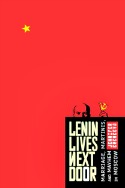
In my nearly four years of managing the Displaced Nation, I’ve had about as many face-to-face meet-ups with the creatives I’ve “met” on this site. Let me see…the last one was was about eight months ago, when the delightful Jennifer Eremeeva and I had coffee. Among many other things, we talked about her autobiographical novel based on her two decades of living in Russia: Lenin Lives Next Store: Marriage, Martinis and Mayhem in Moscow (don’t you love the alliteration?).

I suppose it’s not surprising how rare these real-life encounters are, given that, by definition, displaced creatives tend to be on the move and/or opt to live in far-flung corners of the globe. (Jennifer was on her way to her summer home—or dacha, as she jokingly referred to it—in Northampton, Massachusetts, when we met, but would soon be heading “home” to Russia.)

Still, putting a gravatar to a name is one thing, putting an actual face to a name quite another. It cements your friendship in a way that nothing else can.

No doubt that’s why I was so thrilled to learn that another such meet-up has taken place between two writers who first encountered each other here: Cinda MacKinnon, author of the novel A Place in the World, and Rita Gardner, author of the memoir The Coconut Latitudes.

Both Cinda and Rita have kindly agreed to answer a few questions about their flourishing friendship (there’s that alliteration again!). This being February, I offer it as a kind of valentine to the pair of them, who have been great friends not only to each other but to TDN, as well as what they represent about the site’s potential to be a haven from the storm of the displaced life, a “home”.

* * *

Rita and Cinda, welcome back to the Displaced Nation! Why don’t we start by having you recount how you discovered each other on this site?

Cinda&Rita
RITA: I first discovered Cinda when she posted a comment on James King’s interview with me in his delightful “A Picture Says” column for the Displaced Nation. I immediately responded to her and we began our online friendship, which evolved into our discovering we were practically neighbors in the San Francisco Bay Area—and subsequent in-person get-togethers.

CINDA: It is ironic to think that James, who lives in Thailand, is responsible for connecting two writers who now live in the San Francisco Bay Area. James’s blog, Jamorocki, and the Displaced Nation are my two favorites.

Thank you for that lovely compliment, Cinda! We’ll be sure to pass on to James… Tell us, what was the thing that immediately drew you the two of you together?

CINDA: We were both expats who grew up in Latin American and her story reminded me of other foreigners I knew, whose parents exchanged a comfortable life for a more adventurous, exotic one…but sometimes with devastating consequences—have you read/seen Mosquito Coast? Actually, I told Rita that Cocoloco—the name of her family’s coconut finca (plantation) in the Dominican Republic—would have served as an apt alternative title for her book. She said it was her working title but then she changed it to The Coconut Latitudes just before publication.

RITA: Besides the obvious—that Cinda was an expat and a TCK who grew up in Latin America—I was intrigued that she’d written a novel that is set in Colombia.

Cinda, you’ve also been a guest of James King’s photography column. Can each of you tell me what which photo of each other’s you liked best?

Rita & Cinda Fave Pix
RITA: My favorite photo of Cinda’s was “A Profusion of Wildflowers in Arvin.” I liked the subtle angles and composition and it reminded me of the unexpected beauty that can be encountered everywhere flowers bloom.

CINDA: I think the “Wading Chairs.” That is so Latino! You can just picture a couple of islanders lounging there and keeping their feet cool.

By now, I assume you’ve read each other’s books. What were your impressions?

Cinda&Rita covers
RITA: I read the TDN interview with Cinda before reading her book. The first line struck a chord, about how her fiction “was a way to revisit homes she has cherished.” I also appreciated learning about Cinda’s life and her writing process and her list of favorite books, many of which mirrored my own. Once I got to reading the novel itself: I loved so much about it! The first thing was its sensory lushness; I could see, smell, taste, and feel the cloud forest setting and the coffee finca. I felt for Alicia, the main character, as she ached to find her own place in that world amid complicated relationship struggles. It was a satisfying read.

CINDA: I loved reading Rita’s memoir. The honesty—a lot of soul searching went into this work. Although her upbringing was difficult and her entry into adult life harsh, the writing is straightforward. And I have to say, her mother must have done a marvelous job with home schooling. For those who aren’t aware: Rita mostly taught herself to write, I believe. The results are extremely impressive.

One of you chose to write a novel based on your TCK life, whereas the other wrote a memoir. Do you think those were the right choices?

CINDA: If Rita had written this story as fiction, we would have assumed that she was exaggerating any real life background that went in to it. It is a haunting and compelling memoir.

RITA: I wondered of course if Cinda’s novel was autobiographical (which I’ve learned it is not, other than being influenced by her South American roots and her love of botany). I thought it was perfect as fiction. A memoir would not have produced A Place in the World—and since I liked this book just as it is, I’m glad she chose that route. However, I’d love to see her write a memoir, too!

Both of you grew up as Third Culture Kids, which gives you something in common right away, though not all adult TCKs become fast friends, of course. What are the closest parallels you’ve discovered?

RITA: Goodness—the parallels are uncanny: We both grew up in families that roamed the world before settling in Latin America. We both love nature, writing, photography, many of the same authors and books. We both wrote our books as ways to revisit our own past. We both arrived in the U.S. as teens, wearing “the wrong clothes” and struggled to basically “become” North Americans. I could go on!

CINDA: I could immediately relate to this line in Rita’s author bio: “She continues to dream in Spanish and dance the merengue.” Like many TCKs we are multilingual and have a tolerance for and interest in other cultures. Both of us had parents that were somewhat negligent and we were on our own by the time we were 18 (maybe 17 for Rita—and I did have some encouragement elsewhere).

You almost sound like the Bobbsey Twins, but I guess you also have some differences?

CINDA: One major difference is that as children, Rita lived in a very isolated village, home-schooled and restricted to certain contacts, whereas I went to international schools with a mélange of teachers and friends. My siblings and I didn’t see our parents as often as most kids, but they were stable individuals. Also, between the ages of 6 and 12, I spent a month every summer stateside with my cousins and affectionate aunts; this helped me both emotionally and gave me a glimpse of American life.

RITA: Also in terms of our adult lives: Cinda pursued a life as an environmental scientist and has had a successful academic career. She possesses a deep knowledge of botany and geology I’ll never have. I’m sure there are a lot of other differences—and look forward to continuing our friendship and discovering more about each other, whether differences or connections.

Finally, can you each tell me something about the other you think might be interesting to Displaced Nation readers?

CINDA: Rita is not just as a writer but has had a big job reporting to the Vice Chancellor of Administration at UC Berkeley. She also garnered a good review from the acclaimed Dominican American author/professor Julia Alvarez, who declared her an “honorary Dominicana”. Rita is an accomplished artist as well; supporting the TDN theory of the creativity of expats .

RITA: Cinda has a generous heart—evident both in person and through her blog posts. For example: Through her blog I’ve learned about a Cuban musician who defected to the US and now is in the San Francisco Bay Area; she did an excellent interview with him and included links to his music. In ways like that, she expands everyone’s horizons. Likewise, she has gotten the word out to friends and readers about my book, and has introduced me to other writers in the area. Oh, and she loves Burmese food!

* * *

Thank you, Cinda and Rita! Readers, be sure to check out their books if you haven’t already! Any further questions for these two writers and adult third culture kids? Any of your own meet-ups to report?! Let a thousand friendships bloom!! As usual, please let us know in the comments…

STAY TUNED for PART 2 of our 2014-2015 reads!

If you enjoyed this post, we invite you to subscribe to The Displaced Dispatch, a weekly round up of posts from The Displaced Nation, plus some extras such as seasonal recipes and occasional book giveaways. Sign up for The Displaced Dispatch by clicking here!

Related posts:

TCK TALENT: Gene Bell-Villada, literary critic, Latin Americanist, novelist, translator and TCK memoirist

Gene B-V TCK Talent

Professor Gene Bell-Villada (own photo)

Elizabeth (Lisa) Liang is here with her first column of 2015. For those who haven’t been following: she is building up quite a collection of stories about Adult Third Culture Kids (ATCKs) who work in creative fields. Lisa herself is a prime example. A Guatemalan-American of Chinese-Spanish-Irish-French-German-English descent, she has developed her own one-woman show about growing up as a TCK, which is receiving rave reviews wherever it goes.

—ML Awanohara

Happy New Year, readers! Today I’m honored to be interviewing Gene Bell-Villada, author of the Third Culture Kid memoir Overseas American: Growing Up Gringo in the Tropics and co-editor of my first published essay in the TCK/global-nomad anthology: Writing Out of Limbo. Gene grew up in Latin America and “repatriated” to the USA for college and beyond; he is a Professor of Romance Languages (Spanish), Latin American Literature, and Modernism at Williams College in Williamstown, Massachusetts. He is also a published writer of fiction and nonfiction.

* * *

Welcome to The Displaced Nation, Gene. Like me, you’re an Adult Third Culture Kid of mixed heritage. Since you were born in Haiti and grew up in Puerto Rico, Cuba, and Venezuela as the son of an Asian-Polynesian mother from Hawaii and a WASP father from Kansas, your identity development was complex and nuanced, as you make clear in your memoir.  Can you tell us how you identify yourself these days?
Like the title of my memoir, I identify myself as an Overseas American, of mixed WASP and Chinese-Filipino-Hawaiian ethnicity, with a Caribbean-Hispanic upbringing. I wrote my memoir in great measure to disentangle and explain that background—for myself and others! More broadly, in my middle 20s, it dawned on me that, by default, I happened to be a cosmopolitan, and that I couldn’t feel “local” even if I wished to. And so, I set out to make the best of that cosmopolitanism and build on it.

OverseasAmerican_cover

Tell us two things you miss about each of your childhood countries.
From my three childhood countries, I miss mostly the Latin informality and warmth…and salsa dancing! From Puerto Rico, I’ve fond memories of the University campus that was next door to my first home in Río Piedras, and where my mother would take us for walks. From Cuba I miss the richness of the music and folk culture. About Caracas, 3,000 feet above sea level, I remember its mild climate and “eternal spring.”

“Puerto Ricans do a lot of hugging, Dickie reflected. His parents and relatives almost never did.”

Your TCK childhood had extra upheaval due to your parents’ divorce and your two years at a military school in Cuba while your parents each lived in other countries. I imagine that affected your feelings about where you lived.
I must admit, I don’t “miss” most of what I lived in my 17 years in the Spanish Caribbean. I had a very difficult childhood, in which I never really “belonged” to any of those countries, had little contact with the expat community, and was leading a painful, dysfunctional family life. Since my brother and I were put away in a military school in Cuba, it’s not a place that I would “miss.” The circumstances of my upbringing have made childhood nostalgia an elusive sentiment for me.

After a young adulthood in New Mexico (briefly), Arizona, California, Massachusetts, and New York—and some trips to Europe—you settled in Williamstown, MA.  When did you come to feel that it was home, inasmuch as any place can be for an ATCK?
My wife and I actually have had homes in two locations in Massachusetts: Williamstown and Cambridge. So we lived both in the city, where we had our home life, and the country, where I taught. And I guess I realized sometime in the 1970s that New England had become my home. The place had enough cultural density, layered history, and overall cosmopolitanism for me to feel at ease in those parts. (I’d also earned my Ph.D at Harvard.) I even turned down a job offer from UCLA in 1976 because by then I felt attached enough to Massachusetts to stay there. Plus, I didn’t look forward to living in my car on the LA freeways, or putting up with Los Angeles pollution, which was fairly serious back then!

“‘Ah, but you speak such good Spanish…'”

Have you returned to any of the Latin American countries in which you grew up? 
I’ve been back to Puerto Rico and to Venezuela, always experiencing those mixed feelings. When I visited my old neighborhood in Hato Rey, PR, in 2012, I found it largely changed. Moreover, during a previous visit to San Juan in 1985, I went for a stroll at the University grounds. At the sight of the palm trees at the entrance and the tower looming above it all, I fell to the ground, crying. It was a reminder that much of my youth there, when I’d believed that I was an “American” boy in the tropics, had been illusory.

As for Cuba, I could only go back under very specific conditions—not because of the regime, which I’m not against, but owing to my painful personal memories of the place. I worry that seeing certain streets and buildings might elicit a wrenching sadness in me.

Since you’re a professor of Latin American literature and have written about the heavyweights in the field, I presume you’ve also visited quite a few countries in the region at this point. What were your impressions?
Inasmuch as I’ve written books and articles about Borges, García Márquez, Vargas Llosa, and Mexican literature, I’ve been more than once to Argentina, Colombia, Perú, and Mexico. Going to and traveling in those countries brought insight into their literary works that one cannot get simply from reading them in one’s study. On the other hand, my Latin American and Caribbean background proved enormously helpful in accessing the culture and the society of those places. Indeed, García Márquez’s world is the Caribbean coast of Colombia; exploring that area in 1982 and 1988 was a lot like being back in San Juan and Havana! Writing about it was fun, a bit like a return to my childhood, without the pain.

“She was from New York. Didn’t people from New York listen to classical music?”

Although you have always had a passion for classical and Latin music, you ultimately found ways to express yourself through writing fiction and nonfiction. Does music still play a big role in your life? 
Music is my first love. If I hadn’t had a late start at the piano (a fact that unfortunately set me back several years), I might have stayed with it. I turned to literature, in some measure, because it didn’t require advanced hand-muscle skills! But once I got involved with the written word, I strived to make my prose style as artistic, expressive, and fun as music can be, and I worked to give it rhythm and melody. (Someone has remarked that I write like a musician.) I still play piano, though.

Is there a particular work that you are most proud of having written, and if so, why?
I feel equally attached to all of them! Each one has had its role in my life. My books on Borges and García Márquez (which have sold well and gone through second editions) are used in AP courses, and are consulted by general readers, here and abroad. From early on, I had set out to be a “cultural mediator” between Latin American literature and U.S. readers, and those volumes serve that purpose.

My book Art for Art’s Sake and Literary Life, on the other hand, grew out of my cosmopolitanism and my desire to deal with the uses of art as both escape and expression. (In some subliminal way, it’s autobiographical.) The volume covers the phenomenon of aestheticism in Europe, the U.S., and Latin America. I felt vindicated when the thing was a finalist for the 1997 National Book Critics Circle Award (there I was, sharing space with Cynthia Ozick and William H. Gass). It also got translated into Serbian and Chinese! When I asked my two translators just what had drawn them to the book, they both replied that what I’d said about Latin American aestheticism was also applicable to analogous 19th-century movements in Serbia and Taiwan. So my cosmopolitanism had shed light on some corners elsewhere in this world.

My two books of fiction focus in part on TCK issues, plus such cultural-specific matters as American relativism or the seductive influence of Ayn Rand.

But I finally turned to memoir because I felt it was the way to confront head-on the question of my crazy, mixed-up background, to make sense out of it all and give it a living shape. The process of remembering that past, and crafting it and getting it out there, has proved enormously therapeutic. It also led to my meeting Nina Sichel and, then, you, Lisa, via our essay collection, Writing Out Of Limbo!

My latest volume is a kind of experiment, starting with its very title: On Nabokov, Ayn Rand and the Libertarian Mind: What the Russian-American Odd Pair Can Tell Us about Some Values, Myths and Manias Widely Held Most Dear. Besides dissecting the two authors, I tease out my troubled relationship to them, delve once again into my own life history, and finally move on to the larger problem of a rising, spreading libertarianism in this country. There’s even an Appendix in which I throw in a number of spoofs of my own of hard-line libertarians! (I’ve been playing with satires of something or other ever since I was in middle school in Puerto Rico…)
on-nabokov-ayn-rand-and-the-libertarian-mind_cover

You’re a true international creative, with works that run the entire gamut! Tell us, what’s next? Fiction? Nonfiction? Something else?
I have stuff in the works, but am in the process of rethinking my projects in the wake of my wife’s death in 2013. (Widowerhood does things to your mind and spirit, alas.)

Where can people find your works?
All my books are available from Amazon and local bookstores, as well as from any good library!

Thank you, Gene, for sharing your wonderfully inspiring story with the Displaced Nation. So, readers, any questions or comments for Gene? Be sure to leave them in the comments!

Editor’s note: All subheadings are taken from Gene’s book The Pianist Who Liked Ayn Rand: A Novella & 13 Stories.

STAY TUNED for our next fab post.

If you enjoyed this post, we invite you to register for The Displaced Dispatch, a round up of weekly posts from The Displaced Nation, with seasonal recipes, book giveaways and other extras. Register for The Displaced Dispatch by clicking here!

Related posts:

BOOKLUST, WANDERLUST: Best of 2014 in expat books (1/2)

Best of Expat Books 2014

Kindle Amazon e-reader by Unsplash via Pixabay (CC0 1.0)

Seasons greetings, Displaced Nationers. That special time of the year is here again, when we publish our selection of this year’s books with meaningful connections to expats, Third Culture Kids, global wanderers, and others of us who have in some way led “displaced lives”.

Having assembled this list on my own in years past, I am pleased to be joined this year by Beth Green, our BOOKLUST, WANDERLUST columnist, who has also graciously agreed to sign over her column space for the month.

Let’s give Beth the floor:

Happy holidays, all! Preparing for this yearly special, I went back through all of the books I’ve read since January—not such an easy task; I read a lot!—and realized that I hadn’t actually read all that many that were published in 2014. I just now took a look at my TBR list, to which I’m constantly adding—and saw it includes a few that were written a couple of hundred years ago!

As is the case I suspect for many a well-traveled reader, I read most often on my Kindle, which means that I don’t often look at the title and publication pages to see when the book came out. Probably the book that has stayed with me for the longest this year is The Tiger’s Wife, the debut novel by Téa Obreht, an American writer of Bosniak/Slovene origin. But that came out in 2011!

* * *

And now for some 2014 picks in these three categories (stay tuned for a follow-up post with THREE MORE CATEGORIES!!):

  1. TRAVEL
  2. MEMOIRS
  3. CROSS-CULTURAL CHALLENGES

A few points to note:

  • Books in each category are arranged from most to least recent.
  • Unless otherwise noted, books are self-published.
  • Contributions by Beth are (appropriately enough!) in green.

* * *

TRAVEL

My_Gutsy_story_cover_smallMy Gutsy Story Anthology: Inspirational Short Stories About Taking Chances and Changing Your Life (Volume 2) (October 2014)
Compiled by: Sonia Marsh
Synopsis: Marsh celebrates the gutsy in each of us with this collection of stories from 64 authors who found the courage to face their fears and live their dreams.
Expat credentials: Born to a Danish mother and British father, who brought her to live in West Africa at the age of three months, Marsh has lived in many countries—Demark, Nigeria, France, England, the U.S. and Belize—and considers herself a citizen of the world. With a degree in environmental science from the University of East Anglia, U.K., she is currently living in Southern California with her husband but in 2015 intends to start a new chapter as a Peace Corps volunteer.
How we heard about: We have long enjoyed Marsh’s collection of “gutsy” travel stories and have followed her on Twitter for some time.

Luna_Tango_Cover_smallLuna Tango (The Dance Card Series Book 1) (Harlequin Mira, July 2014)
Author: Alli Sinclair
Genre: Romance
Synopsis: Tango is a mysterious—and deadly—influence in journalist Danni McKenna’s life. She looks for answers about her mother’s and grandmother’s lives, and finds romance in the process.
Expat credentials: Alli Sinclair is from Australia but lived for many years in South America, where she worked as a mountain and tour guide. She considers herself a citizen of the world.
How we heard about it:  I used to blog with Alli on the now-retired Novel Adventurers and have enjoyed hearing about her book’s path to publication. I was especially thrilled when Luna Tango won Book of the Year in the inaugural AusRom Today Reader’s Choice Awards last month. Congratulations, Alli!

Slow-Train-final-cover_smallSlow Train to Switzerland (Nicholas Brealey Publishing, April 2014)
Author: Diccon Bewes
Genre: Travel history
Synopsis: Bewes follows “in the footsteps” of Miss Jemima Morrell, a customer on Thomas Cook’s first guided tour of Switzerland in 1863, and discovers how this plucky Victorian woman helped shape the face of modern tourism and Switzerland itself, transforming it into the Cinderella of Europe.
Expat creds: An Englishman who grew up in “deepest Hampshire”, Bewes worked for ten years at Lonely Planet and the UK consumer magazine Which? Travel, before moving to Bern, Switzerland, where he is now a full-time writer. He considers himself a “permanent expat.”
How we discovered: I came across Bewes’s blog through a Google Alert and was impressed by how prolific he is. I also liked the fact that he admits to being a chocolate lover. (No wonder he has a thing for Switzerland!)


Kamikaze_kangaroos_cover_smallKamikaze Kangaroos!: 20,000 Miles Around Australia. One Van,Two Girls… And An Idiot (February 2014)
Author: Tony James Slater
Synopsis: Tony James Slater knew nothing about Australia. Except for the fact that he’d just arrived there. The stage is set for an outrageous adventure: three people, one van, on an epic, 20,000-mile road trip around Australia. What could possibly go wrong?…
Expat credentials: As a former writer for the Displaced Nation, what more creds does Tony need?
How we heard about: The Displaced Nation is committed to tracking Tony’s progress as a writer. We are especially fond of his ability to make fun of himself! He wears his travels lightly, you might say…


MEMOIRS

Year_of_Fire_Dragons_cover_smallYear of Fire Dragons: An American Woman’s Story of Coming of Age in Hong Kong (Blacksmith, forthcoming June 2015; available for pre-order)
Author: Shannon Young
Synopsis: When 22-year-old Shannon follows her Eurasian boyfriend to his hometown of Hong Kong, she thinks their long distance romance is over. But a month later his company sends him to London. The city enchants her, forcing her to question her plans. Soon, she will need to choose between her new life and the love that first brought her to Asia.
Expat creds: Shannon is an American twenty-something currently living in Hong Kong. (Reader, she married him!)
How we knew about: Shannon writes our “Diary of an Expat Writer” column and has also been sharing “chunks” from an anthology she edited of writings by women expats in Asia (see listing below: under “Crosscultural Challenges”).


Coming_Ashore_cover_smallComing Ashore (October 2014)
Author: Catherine Gildiner
Synopsis: The third and final in a series of best-selling memoirs by this American who has worked for many years as a psychologist in Toronto and writes a popular advice column in the Canadian women’s magazine Chatelaine. The book begins with Gildiner’s move to Canada in 1970 to study literature at the University of Toronto, where she ends up rooming with members of the FLQ (Quebec separatists), among other adventures.
How we heard about: Book #2 in Chatelaine’s 7 must-read books for November.

I_stand_corrected_cover_smallI Stand Corrected: How Teaching Manners in China Became Its Own Unforgettable Lesson (Nan A. Talese, October 2014)
Author: Eden Collinsworth
Synopsis: Collinsworth tells the story of the year she spent living among the Chinese while writing an advice manual covering such topics as personal hygiene (non-negotiable!), the rules of the handshake, and making sense of foreigners. (She has since returned to live in New York City.)
How we heard about: Book #3 in Conde Nast Traveler’s 7 Books to Get You Through Travel Delays, Bad Company.


Seven_Letters_from_Paris_cover_smallSeven Letters from Paris: A Memoir (Sourcebooks, October 2014)
Author: Samantha Vérant
Synopsis: At age 40, Samantha Verant’s life is falling apart—she’s jobless, in debt, and feeling stuck…until she stumbles upon 7 old love letters from Jean-Luc, the sexy Frenchman she’d met in Paris when she was 19. She finds him through a Google search, and both are quick to realize that the passion they felt 20 years prior hasn’t faded with time and distance.
How we heard about: From an interview with Vérant by British expat in Greece Bex Hall on her new blog, Life Beyond Borders.


Becoming_Home_cover_smallBecoming Home: A Memoir of Birth in Bali (October 2014)
Author: Melinda Chickering
Synopsis: Though born in small-town USA, Melinda never felt quite at home there. As an adult, her search for herself led her to the Indonesian island of Bali, where she found herself living a life she hadn’t anticipated, becoming a housewife and mother. This memoir of her experience with pregnancy and birth offers a window on life for a western woman living in an Asian culture that respects the forces of darkness as well as the light.
Expat credentials: Originally from Iowa, Chickering has settled in Bali.
How we heard about it: Displaced Nationer Melinda contacted me earlier this year to tell us the exciting news that her memoir was being published. Congratulations, Melinda!
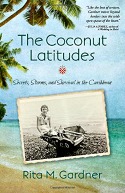

The_Coconut_Latitudes_cover_smallThe Coconut Latitudes: Secrets, Storms, and Survival in the Caribbean (September 2014)
Author: Rita M. Gardner
Synopsis: Rita is an infant when her father leaves a successful career in the US to live in “paradise”—a seaside village in the Dominican Republic. The Coconut Latitudes is her haunting, lyrical memoir of surviving a reality far from the envisioned Eden—and of the terrible cost of keeping secrets.
How we heard about: Displaced Nation columnist James King interviewed Rita for “A picture says”.

At_home_on_Kazakh_Steppe_cover_smallAt Home on the Kazakh Steppe: A Peace Corps Memoir (August 2014)
Author: Janet Givens
Synopsis: The story a middle-aged grandmother who left behind a life she loved and forged a new identity as an English teacher, mentor, and friend in Kazakhstan, a newly independent country determined to find its own identity after generations under Soviet rule.
How we heard about: Recommended by the We Love Memoirs Facebook Community.


Good_Chinese_Wife_cover_smallGood Chinese Wife: A Love Affair with China Gone Wrong (Sourcebooks, July 2014)
Author: Susan Blumberg-Kason
Synopsis: A shy Midwesterner, Blumberg-Kason spent her childhood in suburban Chicago dreaming of the neon street signs and double-decker buses of Hong Kong. She moved there for graduate school, where she fell for Cai, the Chinese man of her dreams. As they exchanged vows, she thought she’d stumbled into an exotic fairy tale, until she realized Cai—and his culture—where not what she thought. One of our featured authors, Wendy Tokunaga, says: “A fascinating, poignant and brutally honest memoir that you won’t be able to put down. Good Chinese Wife is riveting.”
How we heard about: We had known about the book for some time but hadn’t realized it came out this year Jocelyn Eikenburg tipped us off in her comment below. She, too, highly recommends.

Into_Africa_cover_smallInto Africa: 3 kids, 13 crates and a husband (June 2014)
Author: Ann Patras
Synopsis: Patras was born and raised in Burton-upon-Trent, in the English Midlands. When her husband, Ziggy, is offered a two-year contract as site manager for building a new cobalt plant in Zambia, they discuss the pros and cons of leaving luxuries and England behind—and then decide it could be an “interesting” family adventure. They end up raising three kids, countless dogs and living in Africa for over thirty years. (She and Ziggy now live in Andalucía, Spain, and have absolutely no intention of ever moving again. Hmmm…have they encountered Charlotte Smith yet? See next item.)
How we heard about: E-book promotion.

PawPrintsinOman_cover_smallPaw Prints in Oman: Dogs, Mogs and Me (April 2014)
Author: Charlotte Smith
Synopsis: Smith was born, raised and lived in West Sussex, UK, until her persuasive husband, Nick, swept her and their youngest daughter off to live in mystical Oman. Her love of animals helped her to shape an extraordinary life in the Middle East—her first step being to convince a local veterinary clinic to employ her. (Note: Smith now lives in Andalucía, in southern Spain.)
How we heard about: Recommended by the We Love Memoirs Facebook community. The book was also on the New York Times best-seller list (“animals”) in October.


loveyoubye_cover_smallLoveyoubye: Holding Fast, Letting Go, And Then There’s the Dog (She Writes Press, April 2014)
Author: Rossandra White
Synopsis: A collision of crises on two continents forces Rossandra White to face the truth. Just as her American husband disappears to Mexico, her brother’s health crisis calls her back home to Africa, and her beloved dog receives a fatal diagnosis. She faces down her demons to make a painful decision: stay in a crumbling marriage, or leave her husband of 25 years and forge a new life alone.
How we heard about: Through a Facebook share of White’s Good Reads giveaway.

Lost_in_Spain_cover_smallLost in Spain: A Collection of Humorous Essays (March 2014)
Author: Scott Oglesby
Synopsis: Scott Oglesby moved to Spain to start over. When he discovered he was still the same person, now six thousand miles from home, the result was dysfunction, delusion, chaos and this book, which many readers have described as “hilarious” and “brilliant”.
How we heard about: E-book promotion.


Journey_to_a_Dream_cover_smallJourney to a Dream: A voyage of discovery from England’s industrial north to Spain’s rural interior (February 2014)
Author: Craig Briggs
Synopsis: Craig, his wife Melanie and their dog, Jazz, left their home town of Huddersfield, in England’s industrial north, and set off for Galicia: a remote and little-known autonomous province in the northwest corner of Spain. And so began their Journey to a Dream…
How we heard about: E-book promotion, as a result of which I am currently reading this on my Kindle. It’s very well written and entertaining.


Paris_Letters_cover_smallParis Letters: One woman’s journey from the fast lane to a slow stroll in Paris (February 2014)
Author: Janice Macleod
Synopsis: MacLeod found herself age 34 and single, suffering from burn-out and dissatisfaction. So she abandoned her copywriting job and headed off to Europe, where she ended up finding love and freedom in a pen, a paintbrush…and Paris! Macleod says her journey was inspired by The Artist’s Way, written by Julie Cameron.
How we heard about: From an interview with MacLeod by American expat in Paris Lindsey Tramuta, which appeared on Lindsey’s blog, Lost in Cheeseland.


lenin_smallLenin Lives Next Door: Marriage, Martinis, and Mayhem in Moscow (Small Batch Books, January 2014)
Author: Jennifer Eremeeva
Synopsis: Based on Eremeeva’s two decades in Russia, Lenin Lives Next Door is a work of self-described “creative nonfiction.” It knits together vignettes of cross-cultural and expatriate life with sharp observation, historical background, and humor. Each chapter explores an aspect of life in today’s Russia, told with the help of a recurring cast of eccentric Russian and expat characters, including HRH, Eremeeva’s Handsome Russian Husband (occasionally a.k.a. Horrible Russian Husband), and their horse-mad daughter.
How we heard about: Eremeeva sent me a review copy and we met up for coffee at Columbia University. I found her a delightful conversationalist. No wonder several reviewers have likened her style to Jane Austen’s.


CROSS-CULTURAL CHALLENGES

Soundimals_cover_smallSoundimals: An illustrated guide to animal sounds in other languages (November 2014)
Author/illustrator: James Chapman.
Synopsis: In English, we say dogs go WOOF, but in Romanian they go HAM HAM. Chapman regularly publishes illustrations of onomatopoeia and animal sounds in other languages on his Tumblr blog. This book (available through his Etsy shop) collects some of those plus a lot of new sounds that weren’t in the original comics, and a few new animals that haven’t been posted at all.
Expat creds: None that we know of; would love to hear more about how he got started collecting these sounds.
How we heard about: Pinterest.

The_Devil_in_us_cover_smallThe Devil in Us (CreateSpace, October 2014)
Author: Monica Bhide
Genre: Literary fiction
Synopsis: Short stories that carry you to a far away place, amidst people seemingly very foreign to you, but somehow create a connection—from the Indian-American cancer survivor escaping her pain and finding passion in Mumbai, to the Japanese teen in Georgetown discovering forbidden love. Bhide is known for her writings about Indian food. This is her first work of fiction.
Expat creds: Monica is originally from Delhi, India, but has lived in Bahrain ad now in the United States.
How we found out about: Pinterest.


Japanese_Husband_cover_smallMy Japanese Husband Thinks I’m Crazy! The comic book: Surviving and thriving in an intercultural, interracial marriage in Tokyo (October 2014)
Author: Grace Buchelle Mineta
Genre: Comics/manga; humor
Synopsis: The autobiographical misadventures of a native Texan freelancer and her Japanese “salaryman” husband, in comic book form.
Expat credentials: Mineta grew up mostly in Texas, but also spent her teenage years in Accra, Ghana and Sapporo (Hokkaido), Japan. She now lives in Tokyo with her Japanese husband (they got married in January) and blogs at Texan in Tokyo.
How we found out about: From a guest post by Mineta on Jocelyn Eikenburg’s blog, Speaking of China, titled The “Dark Side” to Moving Across the World for Love.

Kurinji_Flowers_cover_smallKurinji Flowers (October 2014)
Author: Clare Flynn
Genre: Historical romance
Synopsis: Set in South India during World War II and India’s struggle for independence, the book is centered on a young British colonial, Ginny Dunbar, who has arrived in India for a new start in life. She has to battle her inner demons, the expectations of her husband, mother-in-law, and colonial British society, and her prejudices towards India and its people.
Expat credentials: Flynn is a repeat expat, having lived for two years each in Paris and Brussels, three years in Milan, and six months in Sydney, though never in India. She now lives in London but spends as much time as she can in Italy. Almost needless to say, Flynn loves travel and her idea for this book came while she was on holiday in Kerala, India.
How we knew about: Flynn was interviewed by JJ Marsh for the latter’s popular column, LOCATION LOCUTION.

The_Haiku_Murder_cover_smallThe Haiku Murder (Josie Clark in Japan mysteries Book 2) (October 2014)
Author: Fran Pickering
Genre: Expat mystery series
Synopsis: A haiku-writing trip turns to tragedy when a charismatic financier falls from the top of Matsuyama castle. But was he pushed? Expat Londoner Josie Clark thinks he was, and that’s when the trouble starts…
Expat credentials: Pickering has lived and worked in Tokyo, and though she is now back in London (literally next door to where she was born), she travels back to Japan frequently to visit friends and do research for the Josie Clark mystery series.
How we heard about: Pickering was interviewed by JJ Marsh for the latter’s popular column, LOCATION LOCUTION.

LostinTranslation_cover_smallLost in Translation: An Illustrated Compendium of Untranslatable Words from Around the World (September 2014)
Author: Ella Frances Sanders
Genre: Illustration/Translation
Synopsis: Did you know that the Japanese language has a word to express the way sunlight filters through the leaves of trees? Or that there’s a Finnish word for the distance a reindeer can travel before needing to rest? This book is an artistic collection of more than 50 drawings featuring unique, funny, and poignant foreign words that have no direct translation into English.
Expat credentials:  A self-described “intentional” global nomad, Sanders has lived all over the place—most recently Morocco, the United Kingdom, and Switzerland.
How we heard about: From a post about the book by Maria Popova on her much-acclaimed Brain Pickings site.


Everything_I_Never_Told_You_cover_smallEverything I Never Told You (Penguin, June 2014)
Author: Celeste Ng
Genre: Thriller
Synopsis: A mixed-race family in the 1970s tries to unravel a family tragedy.
Expat credentials: Celeste Ng isn’t an expat, but she has a deep understanding of what it means to feel displaced. Her work deals with multiculturalism and race issues in the United States.
How we heard about it: It was voted the Amazon Book of the Year.

TheBook_Of_Unknown_Americans_smallThe Book of Unknown Americans (Knopf, June 2014)
Author:  Cristina Henríquez
Genre: Literary fiction
Synopsis: Arturo and Alma Rivera have lived their whole lives in Mexico. One day, their beautiful fifteen-year-old daughter, Maribel, sustains a terrible injury, one that casts doubt on whether she’ll ever be the same. And so, leaving all they have behind, the Riveras come to America with a single dream: that in this country of great opportunity and resources, Maribel can get better.
Expat credentials: Henríquez isn’t an expat, but her father was—he came to the US from Panama to attend university.
How we heard about it: Henríquez’s novel was Amazon’s No. 1 bestseller this year in the Hispanic American Literature & Fiction category.


TheOtherLanguage_cover_smallThe Other Language (Pantheon, April 2014)
Author: Francesca Marciano
Synopsis: A collection of short stories involving women who are confronted by radical change or an old flame, in locations that range from New York to India to Kenya to southern Italy.
Expat credentials: Marciano is an Italian novelist who left Rome at age 21 to live in the United States. She later moved to Kenya, where she lived for a decade. Although Italian is her first language, she chooses to write in English.
How we found out: From an essay by William Grimes in the New York Times Book Review: “Using the Foreign to Grasp the Familiar: Writing in English, Novelists Find Inventive New Voices.”


Dragonfruit_cover_smallHow Does One Dress to Buy Dragon Fruit: True Stories of Expat Women in Asia (April 2014)
Editor: Shannon Young
Genre: Expat non-fiction; anthology
Synopsis: In this collection, 26 women reveal the truth about expatriate life in modern East Asia through original works of memoir and creative non-fiction.
Expat credentials: To qualify for inclusion in the volume, writers had to be able to say they were, or had once been, expats.
How we heard about: We have followed Shannon Young ever since she contributed to the Displaced Nation on the topic of the London Olympics. She currently writes a column for us about being an expat writer, and we’ve been sharing “chunks” from her Dragonfruit anthology for the past few months.


Chasing_Athens_cover_smallChasing Athens (April 2014)
Author: Marissa Tejada
Genre: Romance
Synopsis: When Ava Martin’s new husband unexpectedly ditches her months after they’ve relocated across the world to Greece, the heartbroken American expat isn’t sure where home is anymore. On the verge of flying back to the States with her tail between her legs, she makes an abrupt decision to follow her gut instead and stay on in Greece, until a crisis back home forces her to decide where she truly belongs.
Expat credentials: A Native New Yorker, Tejada is an author, writer and journalist based in Athens, Greece. Living the expat life in Europe inspired her to write her debut novel.
How we heard about it: Again, from an interview conducted by British expat in Greece Bex Hall on her blog, Life Beyond Borders.


Moving_without_Shaking_cover_smallMoving Without Shaking: The guide to expat life success (from women to women) (April 2014)
Author: Yelena Parker
Genre: Guidebook-meets-memoir
Synopsis: Parker draws from the experiences and views of 9 women who have lived across 12 countries, to craft a resource for those who are dreaming of—or already facing—relocation abroad.
Expat creds: Parker herself is originally from Eastern Ukraine but has lived and worked in the US, Switzerland, the UK and Tanzania. She has chosen London as her latest expat location.
How we heard about: From a Google Alert.

QueenOfCloudPirates_cover_smallQueen of the Cloud Pirates (Crossing the Dropline Book 1) (March 2014)
Author: Andrew Couch
Genre: Fantasy novella
Synopsis: Far to the North of the Iron League core cities lies the Dropline. Beyond this line of cliffs the power of elemental Air rules supreme. The crucial region is threatened and two young men stand at the tipping point. In order to survive, they must learn to work together and rise above their own shortcomings. Oh yeah, and escape from pirates. Don’t forget the pirates….
Expat credentials: An American abroad, Couch lives with his wife in Freiburg, Germany. He says that much of the inspiration for the worlds he writes about is a mix of a wild and crazy imagination (he grew up reading fantasy books) and his travels around the world.
How we found out about: Couch contributes the HERE BE DRAGONS column to the Displaced Nation, focusing on the connection between the displaced life and fantasy writing (more powerful than any skeptics out there might think!).


What_Happens_in_Nashville_cover_smallWhat Happens in Nashville (March 2014)
Author: Angela Britnell
Genre: Romance (“choc lit”)
Synopsis: Claire Buchan, a straight-laced barrister from Exeter, UK, flies to Nashville, Tennessee, to organize her sister Heather’s bridal bash—and quickly finds herself out of her comfort zone and into the arms of a most unsuitable beau…
Expat credentials: Britnell grew up in a small Cornish village in southwestern England. She served in the Royal Navy for almost six years, culminating in an assignment in Denmark, where she met her American husband. Thus began a chronic expat life. The couple, now empty nesters, have settled in Brentwood, Tennessee.
How we heard about: Rosie Milne wrote about Britnell in an article that appeared on Telegraph Expat: “Expat romantic novelists inspired by real life.” (Milne btw lives in Singapore and runs Asian Books Blog.)


Monsoon_Memories_cover_smallMonsoon Memories (January 2014)
Author: Renita D’Silva
Genre: Literary fiction
Synopsis: Sometimes the hardest journeys are the ones that lead you home. Exiled from her family in India for more than a decade, Shirin and her husband lead a comfortable but empty life in London. Memories of her childhood fill Shirin with a familiar and growing ache for the land and the people that she loves. With the recollections, though, come dark clouds of scandal and secrets. Secrets that forced her to flee her old life and keep her from ever returning…
Expat credentials: Now living in the UK, Renita grew up in a picturesque coastal village in South India.
How we heard about: Amazon.

The_Shaping_of_Water_cover_smallThe Shaping of Water (December 2013—we’re letting it squeak in!)
Author: Ruth Hartley
Genre: Literary fiction
Synopsis: The story concerns the overlapping lives of several different people, expats and locals or some mix, who are connected to a ramshackle cottage by a man-made lake in Central Africa during the Liberation wars across its region.
Expat credentials: Hartley grew up on her father’s farm in Zimbabwe, which at that point was known as Rhodesia, at a time when struggles for independence in European-ruled African territories were spreading like a wave. As a young woman, she moved to South Africa to study art and then had to escape to England because of her political activities. She later moved back to Africa, as an expat. She now lives in Southern France.
How we heard about: I discovered Hartley via one of my social networks and then decided to approach her about being interviewed for the Displaced Nation.

* * *

Your turn readers: Have you read any of the above works and if so, what did you think of them? And can you suggest other works to add to the list? Beth and I look forward to reading your comments below!

From Beth:
Intrigued by some of these titles? Go on, download a few! ‘Tis the season to support the output of other international creatives!

Finally, please note: Beth and I may repeat this exercise in six months (summer reads!). But if you can’t wait until then, I suggest that you sign up for our DISPLACED DISPATCH, which has a Recommended Read every week, and also follow our Pinterest board: DISPLACED READS.

STAY TUNED for PART 2 of this post: IT’S FOOD!, THIRD CULTURE KIDS & COUNTRY GUIDES/TRIBUTES.

If you enjoyed this post, we invite you to subscribe to The Displaced Dispatch, a weekly round up of posts from The Displaced Nation, plus some extras such as seasonal recipes and occasional book giveaways. Sign up for The Displaced Dispatch by clicking here!

Related posts:
TCK TALENT: Nina Sichel, writer, editor, and guiding light on the Third Culture Kid experience

Nina Sichel_TCK TalentElizabeth (Lisa) Liang is back with her monthly column about Adult Third Culture Kids (ATCKs) who work in creative fields, Lisa herself being a prime example. A Guatemalan-American of Chinese-Spanish-Irish-French-German-English descent, she has developed her own one-woman show about growing up as a TCK, which she has taken all over the country. In fact, she turned up as the convocation speaker at Carleton College on October 31st, where my niece, now a Carleton freshman, had the pleasure of watching her perform some excerpts!

—ML Awanohara

Welcome back, readers! Today I’m honored to be interviewing Nina Sichel, co-editor of the seminal TCK / global-nomad anthology Unrooted Childhoods, which includes essays by several famous TCK writers such as:

  • Pico Iyer: “I fold up my self and carry it round with me as if it were an overnight case”;
  • Isabel Allende (she fled her homeland for political survival); and
  • Military brat Pat Conroy: “Each year I began my life all over again . . . and I think it damaged me.”

In addition, she co-edited the TCK / global-nomad anthology Writing Out of Limbo—to which I contributed. Thank you, Nina, for the hard work you did on my first published essay!

Nina grew up in Venezuela and “repatriated” to the USA for college and beyond; she is a writer, editor, and leader of memoir-writing workshops in Virginia.

* * *

Welcome to The Displaced Nation, Nina. I understand that you grew up in a multicultural household as a TCK in Caracas—the daughter of an American mom and a German-Jewish dad. With Thanksgiving around the corner, my thoughts are turning to the upcoming holidays. Did any particular holiday traditions or celebrations take precedence over others in your household as you were growing up?
My father had to leave Germany when he was 11 and grew up in Uruguay. He seldom spoke about his childhood. He came to the U.S. for college, and, after marrying my mother, lived in Puerto Rico and the Dominican Republic before settling in Venezuela. After all of those moves, his identity was not at all tied to nationality, and, like so many other choices in his life, citizenship was a matter of practicality. So national holidays were completely unimportant.

What about your mother?
My mother was a nostalgic American—more so when she was in Venezuela than when she was anywhere else. But she was an expat, and U.S. national holidays were not celebrated in that country. My parents’ friends were multinationals—our social circle was not defined by nationality. And, even though my father’s sister and mother, Uruguayan citizens by then, lived in Caracas, close by, we were secular Jews, only going to synagogue on the High Holidays and mostly not even then. We had an abbreviated seder, we lit candles at Chanukah. That Jewish identity, more ethnic, perhaps, than religious, was important to my parents. Yet we had very little religious training. I think things were assumed more than instructed… I remember going to summer camp in the States with Jewish girls from Long Island—and feeling I had absolutely nothing in common with them.

Did you celebrate other holidays?
We had a Christmas tree with lots of presents and sang carols. Santa Claus came till we were too old for him, but there were still gifts afterwards. We dressed up for carnaval, and the Easter bunny came to visit us. Hmmm… I’ve given you a long answer to what should be a simple question—but then, some things are not so simple. Like composite identities.

I was raised with no real roots, an American child in Venezuela…

Writing_Out_of_Limbo_coverWhich brings us to your wonderful essay, “Outsider,” which appears in Writing Out of Limbo. You mention in that piece that there was a lot of turnover among your friends at your international schools. Can you tell us a little more about what that was like?
I never knew, from one school year to the next, which of my classmates would actually be back. I don’t remember ever talking about it; this was normal, nothing remarkable. I remember a few friends who left with advance notice, and I tried to keep in touch with them—pen pals during a time when letters would take one or two weeks to reach their destinations. Those friendships faded over time. Quite a few friends were sent away to boarding school once they reached high school; sometimes they’d be back for summer vacations, but by then I’d usually be in the States. There were also, of course, quite a few children whose parents would stay in Venezuela indefinitely, till retirement and after. And then there were the kids who rotated in and out every couple of years, many of whom were Americans. Recently, I’ve been thinking a lot about how different the ones who stayed as long-term residents were from the ones who rotated in and out. And how difficult it is to make general statements about any of this—there are layers and layers of outsiderness, not just one sort of expat or TCK identity.

Have you still got friends from that period?
I’ve kept strong ties to some friends from my youth, and to me this is very special—they are more like family than friends now. I’ve learned to invest deeply in relationships I hope will last, perhaps because the chances are so fleeting. I’ve felt incredibly lucky to be able to contact some people from my past via the Internet, and rekindle friendships from long ago, and learn how TCK life has affected them, their choices, their lives.

Our memories are the part of life we get to keep and take with us…

After an entire adulthood in the USA, tell us what you still miss about Venezuela. I’m also curious to know how many of those things can still be found there, and how many are connected to memories of family and/or friends who are no longer there?
Though I have lived my adulthood in the U.S., my parents remained in Venezuela, and I went back often to visit until they passed away. The place changed—all places do—and I also changed. My memories now are interwoven with nostalgia for what was or might have been. But there are also tangible things. Venezuela is a beautiful country, and there are things about nature I miss. I miss smells—that thick Caribbean salt air, the tangy grass. I miss tropical light, and will miss it more and more now that we’re approaching winter here.

Nowadays, do you feel at home in the United States?
I do feel “at home” in the States in general; just not rooted in any particular place. As you know from my essays, I’ve lived in several places. I lived in a small town in upstate New York, then Manhattan; I lived in the Deep South two different times; in rural Michigan; in West Palm Beach and then urban Miami; and now I live outside Washington, DC. In the smaller towns, what I missed was diversity—of language, ethnicity, experience, culture. I had to seek it out in the people I befriended and the kind of work I chose to do. But even in the cities, I felt outside the mainstream. Remember, coming to the States was not coming home for me; it was immersion in a different culture.

Unrooted_Childhoods_coverIn Unrooted Childhoods, your co-editor, Faith Eidse, writes about her yearning “for thick gumbo-limbo roots.” Do you sometimes wish your roots were deeper in this country?
I remember being fascinated by a friend’s roots in the Deep South that went back many generations. As my family does not have that history, it was something new and rather foreign to me, an oddity. But it was not something I wanted, as it felt too confining, to be defined by your predecessors that way.

Do you have “itchy feet,” which still make you want to move frequently? Or are you the kind who prefers to have a home base and travel only for pleasure?
Yes yes yes. All of the above. o I have to choose?

You mentioned longing to find other people with the experience of having lived overseas. Have you found that “your people” tend to be other ATCKs in creative fields—or does it really depend on the individual and what s/he evokes in you, whether it’s a resonance that’s artistic or political or personality-related or life-experience related, etc.?
I tend to fall in love with people, with aspects of people, and am constantly surprised that all my friends don’t automatically feel the same about each other as I feel about each of them! So, yes, I think it’s about that resonance that you mentioned, but it’s a different resonance in each person, a different connection I respond to. In any case, I never knew about TCKs or ATCKs until I began to work on Unrooted Childhoods.

I want to choose and gather the markers by which to remember our years here…

Like other ACTKs including myself, you were drawn to the craft of writing as a means of self-expression. Is there a particular piece that you think expresses your feelings of transience or loneliness or instability—or freedom or curiosity or love of travel—that you are most proud of? And where can we read it?
I’m not going to choose among my babies, but anyone who is interested can read my essays in Unrooted Childhoods and Writing Out of Limbo. I also wrote much of the introductory material in both books. There was an essay of mine published recently in Brain, Child Magazine, titled “Leaving,” which many of the readers of this column will surely respond to. And I’ve been posting short blogs on the Children’s Mental Health Network website, to inform readers about issues concerning TCKs.

We both lead workshops for people who want to write about their own lives. Tell us what got you started as a memoir workshop leader.
I’ve always felt torn between creative expression and nurturing others—as though I had to choose, as though the work I’d always done (teaching, counseling, raising children) wasn’t already a combination of the two. When I moved to the Washington, DC area, I developed the memoir and other writing programs I currently offer and am always expanding the menu of choices. The workshops are theme-based, and range in topic from creative change and transformation to intercultural exchange to turning points to writing about place to parenting to… I had a program that I developed once specifically for au pairs, which I’d like to offer again at some point. I keep the workshops small, intimate, supportive. We do not engage in critiquing—most of my writers are beginners in memoir, and need to both give and receive positive feedback to grow into the writers they are becoming. I feel honored by their trust, in bearing witness to their journeys.

It’s wonderful that you enjoy helping others make the most of this genre. Of course a good example of that is Unrooted Childhoods, which is a book of memoirs by people who grew up in multiple countries.
Memoir is a wonderful genre, open to many forms, and helping writers find their voices, their unique expression, their subject, is a joy for me. There are strands in life that one thinks of as separate, and I have figured out a way to braid them together. There is so much self-discovery in the process—I can’t tell you how many times students have told me, “I had no intention of writing about that. And I’m so glad I did.”

Where can people find those workshops?
My regular memoir-writing workshops are offered through Northern Virginia Community College in Annandale, outside Washington, DC. I’ve offered other types of reflective writing programs in various community and art centers in the area, and am open to offers elsewhere. I’m happy to share more detailed information upon request.

Thank you, Nina, for sharing the story of your creative life with readers at the Displaced Nation. So, any questions or comments for Nina? Be sure to leave them in the comments!

*All subheds are quotes from Nina’s essay for Brain, Child Magazine, “Leaving” (April 2014).

STAY TUNED for our next fab post.

If you enjoyed this post, we invite you to register for The Displaced Dispatch, a round up of weekly posts from The Displaced Nation, with seasonal recipes, book giveaways and other extras. Register for The Displaced Dispatch by clicking here!

Related posts: