The Displaced Nation

A home for international creatives

Tag Archives: Memoir | Travel | Food Writers

Wonderlanded in Berlin with British expat Paul Scraton, founding editor of the new “Elsewhere” journal

Welcome to the Displaced Nation’s Wonderlanded series, being held in gratitude for Lewis Carroll’s Alice’s Adventures in Wonderland, which turns 150 this year and, despite this advanced age, continues to stimulate and inspire many of us who lead international, displaced, “through the looking glass” lives.

This month we travel
d
o
w
n
the hole with Paul Scraton to Berlin.

Paul Scraton Wonderlanded for TDN 3

Paul says he isn’t intimately familiar with Lewis Carroll’s classic work—this despite having had a mainly English childhood. He was born and spent his early years in a market town just north of Liverpool; and, though his family moved around a fair bit in Paul’s early years—Wales, Canada, the south of England—they settled in Lancashire once he reached school age. At 18, he crossed the north–south divide to attend the University of Leeds.

But I feel justified in including Paul in this series first because he is most certainly displaced. Upon graduation from Leeds, he moved to Berlin, Germany, which is where we find him today, living with his German partner, Katrin, and their daughter. Apart from a summer spent in Dublin, the German capital has been Paul’s “home” for the past 14 years.

In addition, having studied Paul’s creative output, I think it is fair to say that for him, “elsewhere”—by that he seems to mean the great outdoors—is a kind of Wonderland. He never tires of exploring the area where he lives. He has served as a tour guide for Slow Travel Berlin and written two short books based on walks he has led in and around his adopted city.

Another place to which he has formed a deep attachment is Germany’s Baltic coast. Katrin spent much of her childhood on the the island of Rügen and in the Hanseatic city of Stralsund, and for about a decade, Paul has accompanied her on trips to the region.

Paul writes a regular series of “dispatches” about his various outdoor adventures—whether in Germany or the UK (which he still visits frequently)—for his blog, under a grey sky…

And now he has just released the very first issue of Elsewhere: A Journal of Place, of which he is the founding editor.

Without further ado, let’s find out what it’s like to be “wonderlanded” with Paul.

* * *

Paul Scraton: Although it was quite a few years ago now, I can remember what it was like when I first arrived in Berlin and needed help with everything, from registering an apartment to opening a bank account. It was certainly challenging, even though Berlin is a city where many people speak English. And it is often only in the moving that you realise what aspects of life are different or not easily accessible compared to “back home”…and that can certainly make you feel lonely in a new city, a new country.

I did not have an internet connection in my first couple of Berlin apartments, and the English newspapers were expensive, so I relied a lot on BBC World Service. It is funny that this is not that long ago, but I imagine it is a different experience now with widespread internet access, social media and Skype.

I think the reason I first resisted the idea of Berlin or my life in another country as “wonderland”, besides a lack of familiarity with the books, is that by the definition of the Displaced Nation I am so often in this wonderland that it would never occur to me to frame it in that way. What I mean by this: when I am in Berlin I feel like I don’t quite belong, but when I go “back” to England having lived abroad for 14 years then I feel just as out of place. So it is something of a permanent state.

Despite this I can recognise that there are elements of life and my experience in Berlin (and beyond) after all these years that I still find curious…

“The question is,” said Alice, “whether you CAN make words mean so many different things.”

Having just finished university with no real idea of what I wanted to do except to write, I did wonder whether Berlin was the right place for me in the sense that I felt a long way away from any community or other people doing something similar in English. But several of us built our own little network, and, with the influx of still more international creatives over the years, there is now a small but thriving community of English-language writers and other like-minded folk.

“But what did the Dormouse say?” one of the jury asked.

One of the reasons I was drawn to Berlin was its history and the stories contained within these streets. One of the questions I would often ask people when I met them was whether or not they had grown up in the east or the west, and their experiences of living in a divided city and country and also what they thought about the process of reunification. In more recent years I was involved with running eyewitness history talks with people who told their personal stories of living in the city during the Nazi era or the Second World War, or living under communism in East Germany or in the “island city” that was West Berlin. Sometimes people in the audience, who were mainly visitors from outside Germany, would ask questions that would make me worry that the speaker would be offended, but actually it never happened. The Germans were happy to answer even difficult questions about their past or that of their families. In general, this is one of the strengths of the German society—the extent to which they have acknowledged, come to terms with, and discussed, debated and learned from their history; and you see it with individuals as well.

“Curiouser and curiouser…”

I think what really struck me about moving to Germany was not any sense of culture shock, but that the differences to back home were subtle and needed time to be discovered. In Berlin especially people can be very direct… there is very little tip-toeing around the subject, which can be a bit disconcerting. The main thing I still haven’t really fathomed is Schlager music, and the assorted television shows that showcase it. Finding yourself in the middle of something like that is one of those moments where you really realise you are living in a place where there are certain cultural traditions you have no grasp of, and to which you may never have access.

Acquired tastes Paul Scraton

German tastes you may never fully acquire. Photo credits: “Wenn die Musi spielt,” by Bad Kleinkirchheim via Flickr (CC BY 2.0); Giant gherkins, by Caitriana Nicholson via Flickr (CC BY-SA 2.0).

“Well, I’ll eat it,” said Alice…

My partner introduced me to good German pickled gherkins, and without her prompting I doubt I would ever have touched them. Now I quite like them.

“Will you walk a little faster?” said a whiting to a snail…

I am fascinated by Germany’s Baltic coast. One of the reasons is that I am fascinated by the coast in general, I think because it is a place that combines (a) the sense of escape that comes with family holidays, the seaside resorts, and the break with everyday life; and (b) the danger, myths and legends of the sea itself. Most seaside towns have both beaches where people have spent many, many happy hours, as well as memorials to shipwrecks and lifeboat crews… This contrast or contradiction applies, by the way, to the coast of the UK as much as here in Germany. (See for instance my blog post about our visit to Lindisfarne, Northumbria.)

The allure of the coast: Heimat, Germany (top) and Lindisfarne, Northumbria, UK. Photo credits: Paul Scraton and K.

The allure of the coast: Heimat, Germany (top) and Lindisfarne, Northumbria, UK. Photo credits: Paul Scraton and Katrin Schönig.

Another reason the Baltic is special is that it’s the place where my partner grew up. In the past ten years or so she has been taking me and my daughter up there. We are writing new stories for ourselves in a place that was very much a part of her childhood.

“Take some more tea,” the March Hare said to Alice, very earnestly.

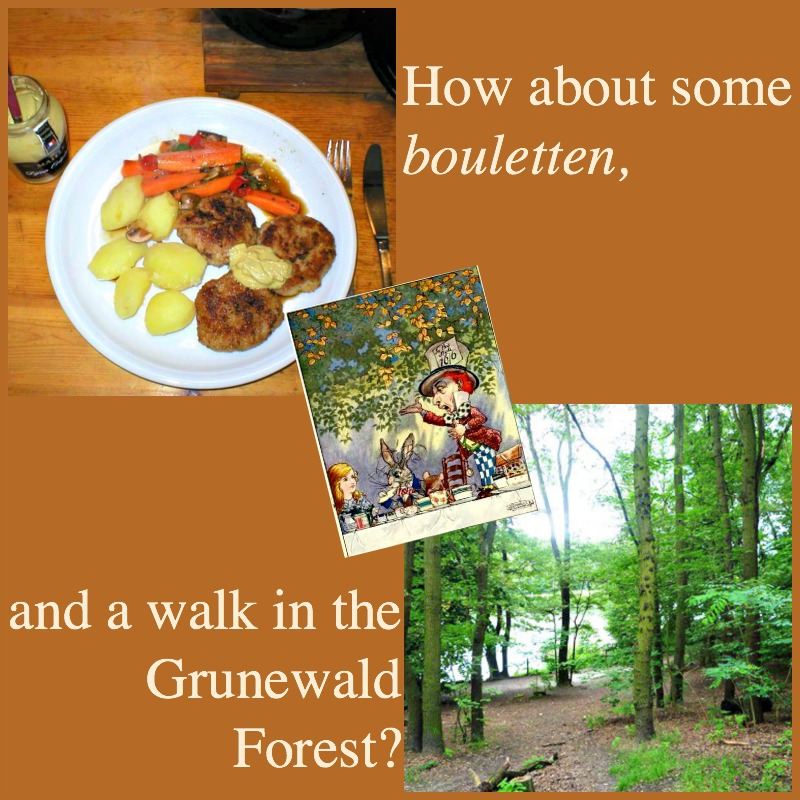
Now that you’re Wonderlanded with me, I must throw you a Mad Hatter’s tea party. This being Berlin, I will serve beer and bouletten (meat balls), a Berlin specialty, at the big table in our living room. We will listen to music and chat…and the guests will be friends, those who I don’t see enough of because of the way life seems to be. Not only those who are in England, and who I don’t see because of distance, but also those who live in the same city but somehow life gets in the way. But before we sat down for beer and meatballs we would have done a long walk together through the city or perhaps out at the lakes and the forests on the edge.

Bouletten and a walk. Photo credits: Bouletten mit Senf, by  Michael Fielitz (CC-BY SA 2.0); Grunewalk Forest by Paul Scraton.

Bouletten and a walk. Photo credits: Bouletten mit Senf, by
Michael Fielitz (CC-BY SA 2.0); Grunewalk Forest by Paul Scraton.

“Who in the world am I? Ah, that’s the great puzzle!”

Inevitably, you are a different person at 36 years old than at 22, and these changes would have no doubt happened whether I was in Berlin or had stayed in England. And if anything, being with my partner and our child probably had a more profound impact that simply the act of moving away. But I would say that work wise, in my writing and in creating our journal, Elsewhere, living in Berlin has been an endless source of inspiration. The number of interesting places and the stories they contain feels inexhaustible. I don’t think I would have become the writer I am, pursued the projects I am doing, or developed my work in the direction I have, without living in this city for the past decade and a half.

Advice for those who have only just stepped through the looking glass

If you are like me, you will find yourself feeling out of place in your new home and out of place when you return to the old one. But there is nothing wrong with being slightly on the edge of the scene…that’s where the interesting stuff happens.

“I wonder if I shall fall right through the earth!”

Paul Scraton books and journal

Paul Scraton’s two short books and the first issue of the new journal he edits, Elsewhere.

Aside from the journal, the first issue of which we are launching this week, I am writing a book about memory, exploration and imagination on the German Baltic coast. As I mentioned, this is the area where Katrin grew up, and so the book combines my own travels and discoveries in the area with the myths and stories of the places along the coast as well as Katrin’s family history. I think coming at these places and stories as an “outsider” gives me a different perspective that informs and shapes the writing. Ultimately everything I am working on right now is concerned with the idea of “place”, and again, I think this interest has developed as a result of never quite feeling I belong wherever I may be…

* * *

Readers, I wonder if you feel like me, that you’ve enjoyed being “elsewhere” with Paul so much you feel a bit bereft now that our “tour” has ended… Do you agree the time went quickly? And what did you make of his Wonderlanded story? Please let us know in the comments. ~ML

STAY TUNED for the next fab post: an example of how Paul writes about place.

If you enjoyed this post, we invite you to register for The Displaced Dispatch, a round up of weekly posts from The Displaced Nation, and much, much more. Register for The Displaced Dispatch by clicking here!

Related posts:

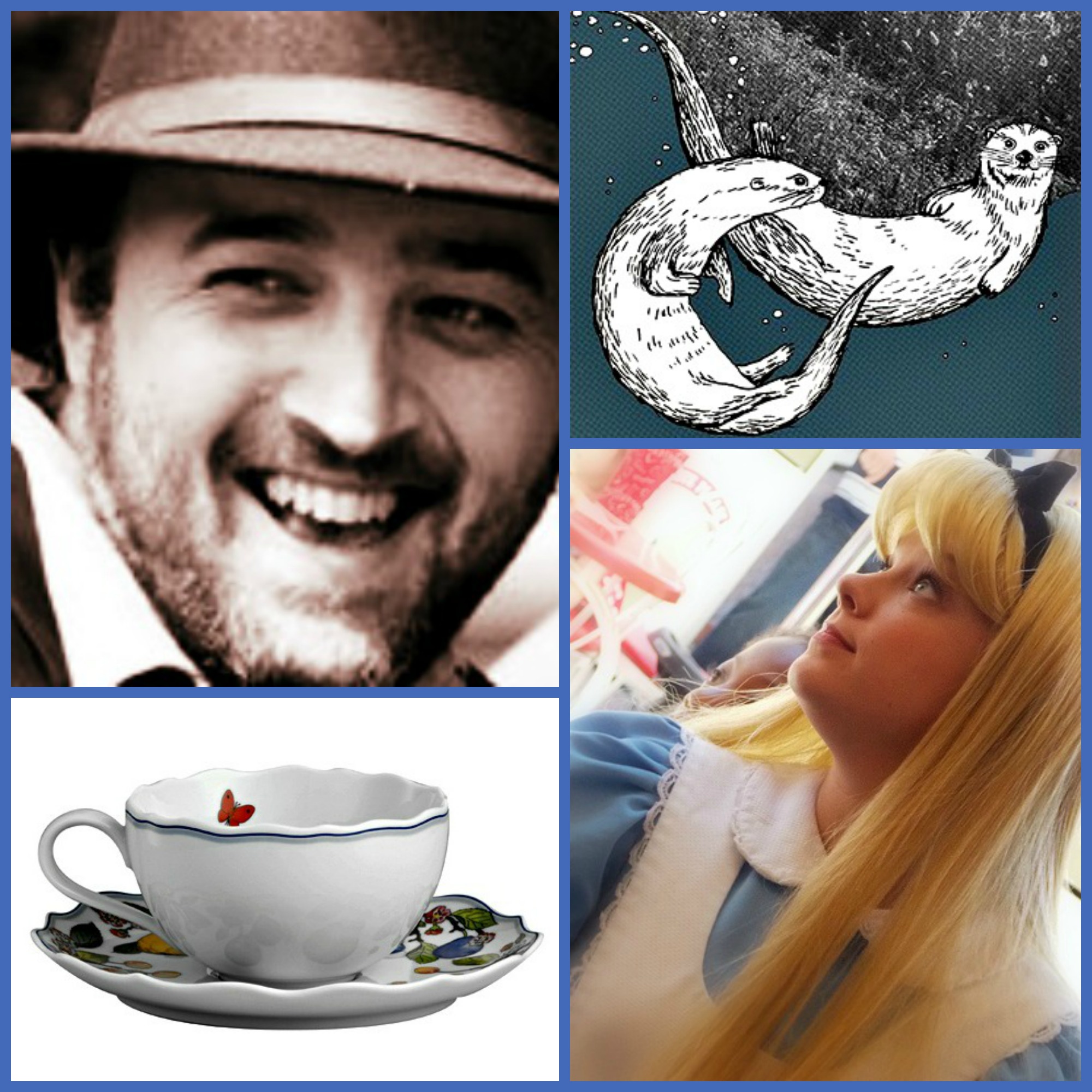
Photo credits for opening image (clockwise from top left): Paul Scraton (supplied); image from “A line of wild suprise: Prespa, Greece,” one of the articles on the first issue of Elsewhere; “Alice,” by Jennie Park via Flickr (CC BY 2.0); Hutschenreuther Garten Eden Cup & Saucer via Chinacraft.

CULTURE SHOCK TOOLBOX: Expats, don’t throw away your old coping tools—they may come in handy for your new life abroad

For her column this month, transitions enthusiast H.E. Rybol interviews displaced creative Jessica Lipowski about her culture shock memories and coping strategies.

June 2015 Jessica Libowksi Culture Shock Toolbox
Hello, Displaced Nationers! I’m excited to introduce you to road-less-traveled (#TRLT) buff and foodie Jessica Lipowski. Originally from Detroit, Michigan, Jessica moved to Amsterdam in February 2011 to be with her Dutch boyfriend, Matthijs. She has worked in a variety of jobs related to travel and is currently writing a non-fiction book that documents the stories of 83 entrepreneurs from 50 different countries who live in Amsterdam. They all have in common that they own restaurants in the city.

Jessica, who appreciates Amsterdam’s wide range of cuisines, has developed a curiosity about how all of these people ended up in the same industry, in the same city and with similar passions. As she writes on her site:

Why Amsterdam and how did so many people from every corner of the world end up in this small capital city? What drew them to the land of tulips and windmills?

But our focus today is not these expat restauranteurs but Jessica herself. While sampling Amsterdam’s rich cultural stew, has she ever had to put down her spoon owing to culture shock? And what tools did she use to restore her appetite?

* * *

Hi, Jessica, and welcome to the Displaced Nation. Can you tell us a little about your background?

I am originally from the United States, born and raised in the metropolitan Detroit area. I spent the first 23 years of my life in Michigan, apart from the two summer internships I completed in Washington D.C. In February 2011, I moved to the Netherlands and have resided in Amsterdam for the past four years.

In the context of transitioning from the United States into Europe, did you ever put your foot in your mouth? Can you share any memorable stories?

While working in sales and marketing for an online group travel platform, I often had to attend business meetings and conferences in Europe. I was a regular at one of these events, which took place four to six times a year. I soon developed a friendship with another regular, a Dutch woman, whom I’d always look forward to seeing. On one occasion when we met, she complimented me on the dress I was wearing. I thanked her and then, as I leaned in to share with her where I purchased the dress (I wanted to tell her I’d paid a relatively cheap price), she cut me off and said: “Oh, Jessica, you should never tell someone details like that.” I honestly thought she would appreciate hearing my story, but it turned out to be the kind of information that is supposed to be shared only with close friends.

I got a bargain! Shhh... Photos via Pixabay.

I got a bargain! Shhh… Photo credits: “Street signs of the nine Straatjes” on Wikimedia by JSpijer via Wikimedia Commons (CC BY-SA 3.0); other two photos via Pixabay.

What lessons can you offer to the rest of us from this story?

Instead of being offended, I smiled and apologized. I told my Dutch business acquaintance how much I appreciated that she’d corrected me, and I meant it sincerely, as it would keep me from making the same mistake again in future. I think a smile and an apology can go a long way in such situations. Of course it might have helped if I’d done more research beforehand on social customs and norms in various European countries. But if you haven’t done your research, then don’t be too proud to rely on business colleagues or local friends for advice.

Looking back on your transition from the United States to Holland, can you recall any situations that you handled with surprising finesse?

I surprised myself with my commitment to learning Dutch. My first exposure to the language occurred when I met Matthijs, who is now my partner. When we started dating, I used Rosetta Stone intermittently; but then, once I made the move to Holland, I started taking private lessons once a week. Expats can get by quite easily in Amsterdam speaking just English as the Dutch start learning English at a young age and many speak the language quite well. However, I felt it was important to learn Dutch so that I could speak it with my partner’s family. It’s not easy but can be done. It all comes down to practice, practice, practice.

If you had to give advice to someone who just moved to a new country, what’s the tool you’d tell them to develop first and why?

I guess it would be pack some of your old tools. Because one of the most important things to do when you first arrive is to establish a routine. A routine will help you settle into a new country and feel at home. For instance, if you used to work out or do yoga, search for a gym or studio. Or maybe you always looked forward to grabbing a cup of coffee on the way to work. So find a favorite coffee house en route. Did you used to have an active social circle? Then make a point of joining a local meet-up group, a sports team, classes or other activities where it’s relatively easy to make friends and develop a support system. It will make the transition that much easier.

Thank you so much, Jessica, for taking the time to share your culture shock stories with us. Leaning on local friends for advice and re-establishing small personal rituals or routines: those are two nifty tools that can ease the initial stress of changing countries.

* * *

Readers, what do you make of Jessica’s advice? Have you ever found yourself in a situation in your life abroad where you thought, “I should have done more research”? Do tell!

If you like what you heard from Jessica, be sure to check out her writer’s site and/or follow her on Facebook, Twitter and Instagram.

Well, hopefully this has you “fixed” until next month.

Until then. Prost! Santé!

H.E. Rybol is a TCK and the author of Culture Shock: A Practical Guide and Culture Shock Toolbox. She loves animals, piano, yoga and being outdoors. You can find her on Twitter, Linkedin and Goodreads. She is currently working on her new Web site and her second book.  

STAY TUNED for next week’s fab posts.

If you enjoyed this post, we invite you to register for The Displaced Dispatch, a round up of weekly posts from The Displaced Nation—and much, much more! Register for The Displaced Dispatch by clicking here!

Related post:

DIARY OF AN EXPAT WRITER: After the hard slog of producing second book in series, the rush that comes with boost to sales

Diary of an Expat WriterAmerican expat in Hong Kong Shannon Young quit her day job last year to become a full-time writer. Here is her latest entry in her expat writer’s diary.

Dear Displaced Diary,

Last month, I told you all about my writing process—all the work that goes into a book before it ever shows up in an editor’s inbox. It’s a slow process requiring perseverance and many hours sitting in a chair every day. And then there’s copyediting, formatting, and a final proofread, after which I finally hit publish.

That’s when things get interesting.

This month, I would even say amazing.

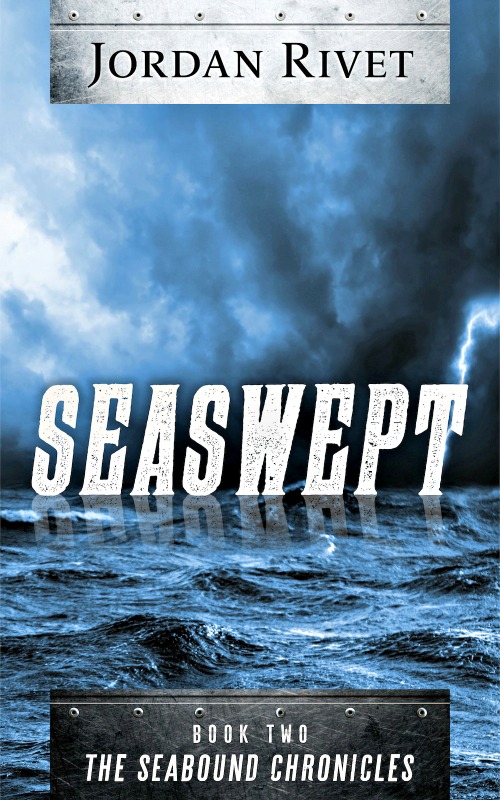
But we’ll get to that. First, let me refresh your memory on where we are. Diary, as you will recall from previous entries, I’ve been writing my post-apocalyptic series, the Seabound Chronicles, under my Jordan Rivet pen name for two-and-a-half years now. The first book, Seabound, came out in November. Sales have been modest, with complimentary reviews but rankings that won’t set the world on fire.

My intention has always been to put out Book Two before doing bigger promotions and (hopefully) seeing bigger results. With the publication of the sequel, Seaswept, at the beginning of this month, I finally had the chance to set that plan in motion.

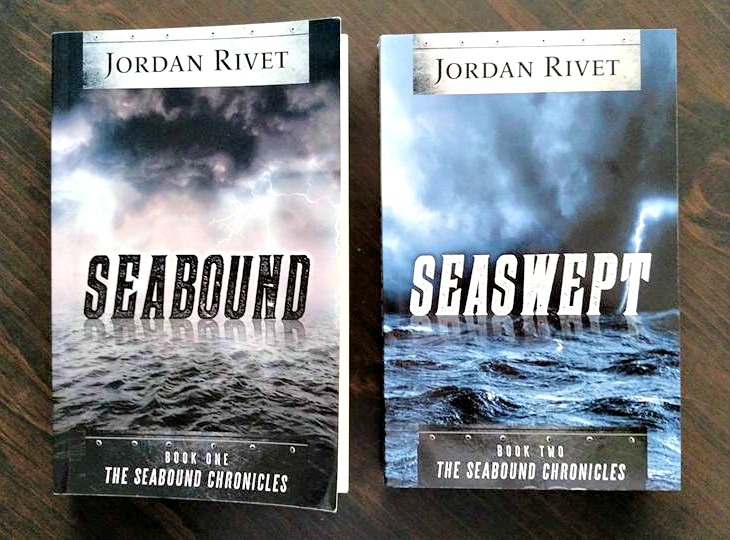
Seaswept and Seabound Paperbacks

Jordan Rivet’s Seabound Chronicles is now a real series, with the publication of Book Two, Seaswept, earlier this month.

She’s got high hopes…

Here’s how it went down. When I released the second installment in the series, it generated sales and a bit of attention for the first book. A few days after Seaswept came out, I put Seabound on sale for $0.99 and advertised it with a couple of book recommendation sites.

My hopes were high, especially as soon I’ll need to decide whether or not to get a new day job. Displaced Diary, as you’ve been following my expat writer journey for a while, you’ll know my big goal is to make a full-time living as a writer, and I’ve been working hard under my own name and a pen name to achieve this. But my savings are running low, and Hong Kong isn’t exactly famous for its low cost of living.

The sale on Seabound lasted five days. For the first two, I booked smaller promo sites—some free, some charging a few dollars for the ads. The sales were similarly modest: 10 on day one and 14 on day two.

To be honest, I was disheartened. Even though these results were consistent with the reach of the smaller promotional sites, I’d hoped for more. If I couldn’t get the ball rolling with multiple books out, maybe it was time to polish up my CV. Failure would mean going back to teaching or hoping for a job opening in Hong Kong’s tiny publishing industry.

For those two days I felt . . . underwhelmed. I dug into the draft of another book to keep from obsessing over my sales graphs, but found myself clicking over at least once an hour anyway. More often than not, nothing had changed.

On the third day…

It was time to bring in the big guns. I’d booked ads on such sites as eReader News Today, Free Kindle Books and Tips, and BookSends. These sites were supposed to get my discounted title in front of tens of thousands of additional readers. And some of those readers decided to buy.

On Day Three, I woke early to over 60 sales. It was already my best sales day ever, and I hadn’t even had my coffee. I spent most of the day glued to my computer, watching the spike tick upward. The numbers climbed and climbed, finishing with a three-digit total.

Throughout the weekend of the promotion, I refreshed my sales dashboard regularly. For three straight mornings I woke to sales multiple times better than my previous best day.

I had scheduled lunches with friends and spent Sunday afternoon on a boat—but snuck off to the restroom to check my ranking every chance I got. Seabound reached the top 1,800 overall in the Kindle store and ranked in the highly competitive Dystopian and Post-Apocalyptic categories for the first time. It even took the #1 spot in Sea Adventures for a little while.

My angst of the previous days was starting to look a bit silly.

Checking sales of self-pubbed books on Amazon

Checking Amazon sales becomes an obsession for self-published authors.

High apple pie in the sky…sales!

It turns out it’s a real rush to see my books climbing the rankings. I experienced a bit of this when my Kindle Single, Pay Off launched with prime placement on Amazon, but sales of the Seabound Chronicles have now surpassed those of the Single. My goal of making a living off my Jordan Rivet pen name feels more and more possible.

The promo has ended but the sales haven’t. This has been the best month of my career. In fact, it has been so good that May sales of Seabound and Seaswept, are double the Seabound sales for the previous six months, and we still have a week to go. I’ll be able to press on to the summer before making any decisions about new jobs or new careers.

Diary, I’m reporting this good news in case you were feeling a little anxious after last month’s post. That one was all about the work: sitting in a chair, outlining, writing and rewriting and rewriting and rewriting. The work is 99 percent of this job. But every once in a while you get to watch the results rolling in—and it’s kind of awesome.

A writer’s “One Percent”

Next month I’m going to see a different set of results, when my traditionally published travel memoir launches worldwide and in e-book (it has been out in Hong Kong since November). This is the very first book I ever sat down to write, so I’m proud that it’ll finally be out in the world. But I’m also proud that I’ve taken what I’ve learned and kept writing. I’m sitting down to start the fourth draft of the Seabound prequel right now.

And so it goes.

Thanks for enjoying this 1 percent event with me as well cheering me on through the 99 percent days, Displaced Diary.

Here’s to many more Mays for us both!

Until next time,

Shannon Young
AKA Jordan Rivet
www.shannonyoungwriter.com
JordanRivet.com

* * *

Readers, it’s encouraging to hear that light can be at the end of the expat writer’s tunnel. Any words of congratulations for Shannon, thoughts on this recent sales experience, or questions for her on marketing techniques, please leave in the comments. And be sure to do so soon, before she gets swept up in the excitement of her memoir coming out next month!

STAY TUNED for next week’s fab posts!

If you enjoyed this post, we invite you to register for The Displaced Dispatch, a round up of weekly posts from The Displaced Nation and much, much more. Register for The Displaced Dispatch by clicking here!

Related posts:

CULTURE SHOCK TOOLBOX: How to pry open your mind to new cultures—and keep them all sorted

Yelena Parker for CST Displaced Nation Columnist H.E. Rybol never saw a culture clash she didn’t want to fix. A “transitions enthusiast,” she credits her Third Culture Kid upbringing with giving her a head start in this department. That said, H.E. is always on the lookout for shiny new tools, and toward that end has been interviewing other displaced creatives about their culture shock memories and coping strategies. Today she speaks to Yelena Parker, a Ukrainian expat, executive coach, and writer who, through her many international moves, claims to have mastered the art of “moving without shaking.”

—ML Awanohara

Hello, Displaced Nationers! I’d like you to meet today’s guest, businesswoman and author Yelena Parker. Yelena is Ukrainian but has lived in the United States, Switzerland, Tanzania and now the United Kingdom, and has conducted business in many more countries. Last year she published a book titled Moving without Shaking, which made the Displaced Nation’s “Best of 2014 in Expat Books” list. Described as a “guidebook-meets-memoir,” it aims to help women “who are interested in building their new global life styles whether through working, studying, volunteering or simply living abroad.”

One of Yelena’s contentions is:

Once you are on a serial expat path, new relocations get easier.

Can we take this to mean it’s possible to get better at handling culture shock?

Let’s find out by asking Yelena to describe a few of her own culture shock experiences. She may advocate for moving without shaking; but how does that line up with her own adventures? Has she never shaken like a leaf at some point during her various international moves?

* * *

Hi, Yelena! First can you please tell us which countries you’ve lived in and for how long?

I came to California from Ukraine in my 20s to get an MBA and ended up living there for more than nine years. I didn’t make it till the very end of year 10 as an opportunity came along to relocate to Switzerland for work. After two years in Geneva I moved to London to continue working in tech. I’ve now lived in the UK for four years, only interrupted by a four-month volunteering stint in Tanzania, with a Kilimanjaro climbing break in between.

You’ve certainly made your fair share of cultural transitions. Did you ever put your foot in your mouth? Any memorable stories?

I travel to Moscow frequently for work. During the last trip the taxi driver asked me where I was from. This question is always complicated since, like many here at the Displaced Nation, I now feel as though I’m from everywhere and nowhere in particular. I tend to focus on the most recent location when giving an answer. To be polite, I share where I am coming from literally (versus where I am from). On this occasion, the last port of call was St. Petersburg, which in Soviet times was known as Leningrad. Some wires in my brain must have crossed as I blurted out: “From Leningrad.” The driver said “Really???” We ended up engaging in a much longer conversation, about my Soviet childhood in Ukraine and so on. I think I had a reverse culture shock reaction after being away from where I grew up for so long.

What lessons can you offer to the rest of us from this story?

It’s a bit of a strange example, but what I am trying to get across is that keeping your life truly connected to multiple worlds is very difficult. You are bound to lose some of your identity, forget the basics, replace them with new realities and then, perhaps, come full circle as you find yourself back in your good old comfort zone. You and your memories have many layers now. It can be challenging to keep them sorted. That toolbox of yours needs to have quite a few compartments!

Looking back on your many cultural transitions, can you recall any situations that you handled with surprising finesse?

Moving to Tanzania, I was surprised at how quickly I embraced the pole pole (slowly-slowly) way of life. Until I went on this amazing adventure, I had always been a workaholic. But then I found myself living enjoying the most beautiful sunsets and spending a lot of time talking to people in front of me instead of using various digital ways to connect with people remotely. I didn’t complain about the lack of speedy or efficient services anywhere as I no longer expected that kind of thing. I was not rushed or overwhelmed so wasn’t concerned about being late or other people being late or not showing up to meetings. I just enjoyed every moment of this new experience: no deadlines, no crazy work hours, only things I truly wanted to do. You could say I felt burnt out after working non-stop (or being in school) for 23 years. I do believe, however, that something in that culture was appealing to my natural preferences, which had been suppressed by years of working in the corporate world. I also realized that I wanted to teach again. My first career was in teaching English at a university level in Ukraine—work I’d chosen to abandon when I took a degree in business. That said, I am back on the corporate path again.

If you had to give advice to new expats, what’s the tool you’d tell them to develop first
and why?

I guess it would be some kind of crowbar to pry open your mind to new experiences, no matter how many times you relocate. Learn everything you can about your new home country. Explore it thoroughly. If you end up moving back home, you will regret that you didn’t do enough. If you stay, the more you learn, the easier your assimilation into your new life is going to be.

Thank you so much, Yelena, for taking the time to share your experiences and reminding us that keeping an open mind and a willingness to learn about other cultures can be effective tools, sometimes in unexpected ways! I love your example of becoming immersed in an East African culture and learning more about your own (suppressed) natural preferences as a result. And I of course love the idea of moving without shaking! That’s what this toolbox is for…

* * *

Readers, what do you make of Yelena’s advice? Have you ever found yourself having a Rip-Van-Winkle moment like hers? How about discovering your “true self” in a vastly different culture? Do tell!

If you like what you heard from Yelena, be sure to check out her author site and follow her on Facebook and Twitter.

Well, hopefully this has you “fixed” until next month.

Until then. Prost! Santé!

H.E. Rybol is a TCK and the author of Culture Shock: A Practical Guide and Culture Shock Toolbox. She loves animals, piano, yoga and being outdoors. You can find her on Twitter, Linkedin and Goodreads. She is currently working on her new Web site and her second book.  

STAY TUNED for next week’s fab posts.

If you enjoyed this post, we invite you to register for The Displaced Dispatch, a round up of weekly posts from The Displaced Nation—and much, much more! Register for The Displaced Dispatch by clicking here!

Related post:

BOOKLUST, WANDERLUST: Meet me in Atlantis—Mark Adams’ globetrotting search of the ultimate ancient mystery

Booklust Wanderlust Collage

Left: Oleh Slobodeniuk (CC BY-NC-SA 4.0); right: Beth Green (her own photo).

Attention displaced bookworms! This month our book review columnist, Beth Green, an American expat in Prague (she is also an Adult Third Culture Kid), is exploring a new book in one of her favorite genres, mystery—only this time the mystery has to do with an ancient place and travel.

—ML Awanohara

Hello again, Displaced Nationers!

Here in Europe, the spring weather has me in a mood for getting outdoors and exploring—but, alas, I’ve been inside submerged in this month’s book pick, Meet Me in Atlantis: My Obsessive Quest to Find the Sunken City, by Mark Adams, which has just the right ingredients to appeal to international creatives. After all, didn’t we all venture abroad looking to solve at least one mystery and/or locate a utopian society?

Adams, who spent his career editing adventure and travel magazines, says he thrives on combining “travel writing with deep research and reporting.” (He is the bestselling author of two previous nonfiction books: Turn Right at Machu Picchu and Mr. America, a biography of “muscular millionaire” Bernarr Macfadden.)

Meet Me in Atlantis came out in March, and, yes, Adams does take a deep dive into uncovering the real story behind this fabled sunken city! As he puts it:

…this is a detective story, one that starts in ancient Greece and follows a twisting path through (to list just a few locations) Pharaonic Egypt, Nazi Germany, and contemporary Saint Paul, Minnesota.

Sinking one’s teeth into the Atlantis story

The mystery Adams is trying to solve isn’t so much a “who” or a “where” as a “why” and a “how”. Why do people keep trying to find the legendary city of Atlantis? And how did it get lost, anyway?

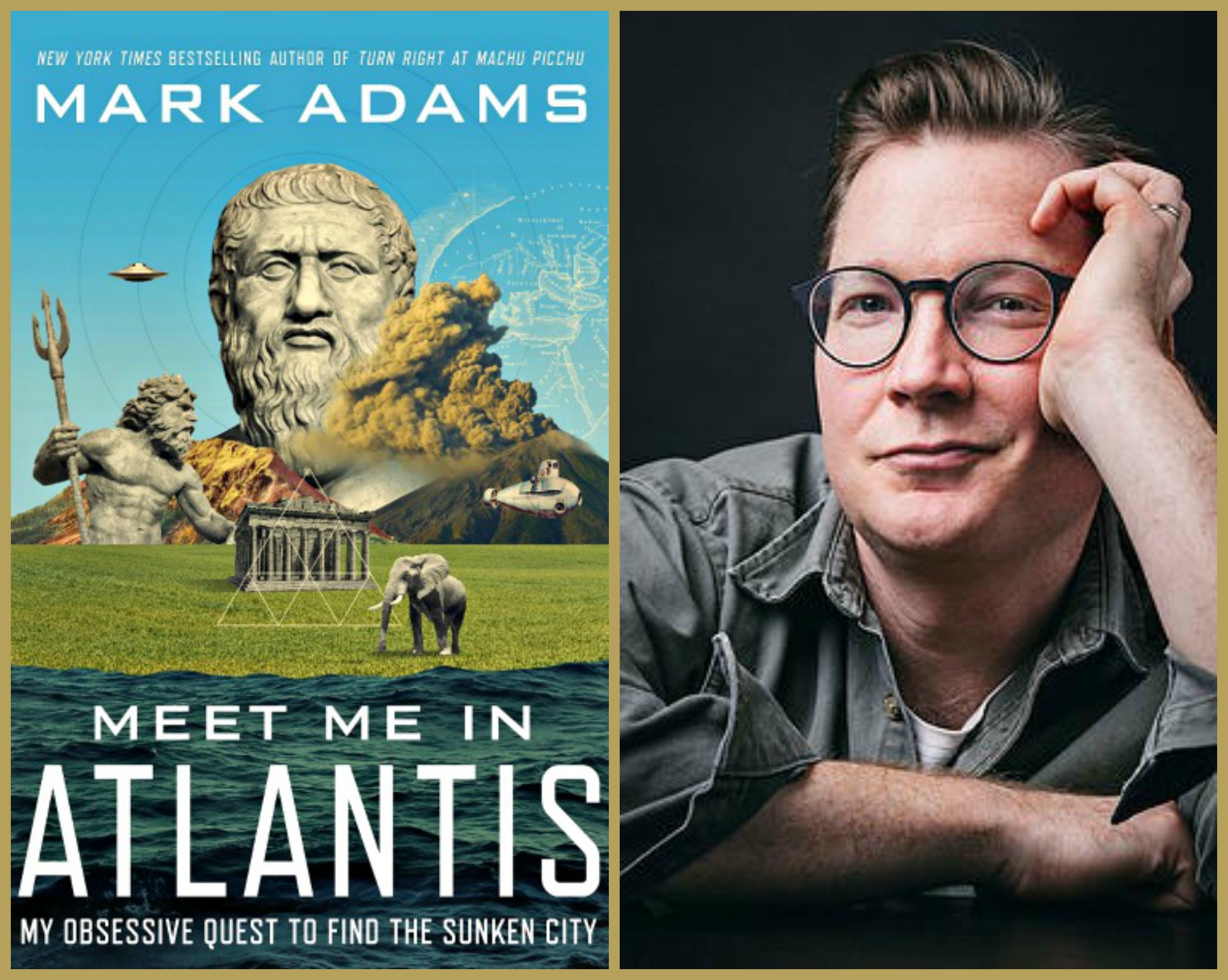
Book cover; author photo: Joshua Scott.

Book cover; author photo: Joshua Scott.

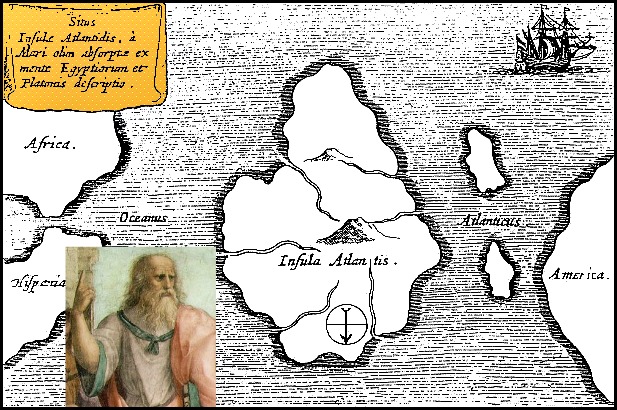
Adams starts off, as any good detective would, at the scene of the crime—two dialogues written by Plato more than 2,000 years ago, Timaeus and Critias. According to Plato, Atlantis represents the antagonist naval power that besieges “Ancient Athens”—the pseudo-historic embodiment of Plato’s ideal state. Athens is able to repel the Atlantean attack, thereby proving its superiority.

Inset: Raphael's Plato.

German scholar Athanasium Kircher’s map of Atlantis, in the middle of the Atlantic Ocean (south is at top). From Mundus Subterraneus. 1669. Inset: Raphael’s Plato (detail). Both photos licensed under Public Domain via Wikimedia Commons.

Plato’s descriptions of the society—lost even when he wrote about it—serve as a textual treasure map. Among the features mentioned are “the rings, the earthquakes, the elephants, the location outside the Pillars of Heracles.”

It’s these seemingly concrete details that have enticed a whole group of people, known as Atlantologists, to search for the ruins of the island nation, which, as legend has it, fell out of favor with the gods and submerged into the Atlantic Ocean. And it’s the absence of other sources—every single clue comes from Plato—that makes the search so hard, some would say infuriating.

Meet today’s Atlantis sleuthhounds

Atlantologists (doesn’t exactly trip off the tongue!) are more numerous than I’d realized. Adams’ interviewees range from historians, archeologists and geologists whose work loosely concerns Atlantis, to laypeople who find themselves caught up in the mystery of the lost city.

Now, I’m the kind of person who loves to seek out obscure places that catch my attention for some reason. Once when I was living as an expat in China, I spent a few days with my partner without a map or Internet access trying to find packed-mud forts built hundreds of years ago by Hakka clans in the Guangdong countryside. Another time, in Inner Mongolia, we took a bus 10 hours across the desert each way to find a specific grove of poplar trees my partner had once heard about at a dinner party three years before. (How we even managed to remember the trees after the beer consumed at the dinner is another mystery!)

But I digress. Returning to Adams’ book: for me, the most entertaining aspect are the people. I appreciated his light-hearted touch when presenting the cast of modern-day characters who continue searching for Atlantis.

For instance, he describes one of the historians he interviews as follows:

Coleman looked like a Broadway casting director’s idea of a state librarian—tall, white-haired, tie askew. His office was as comically perfect as a stage set, too: precarious piles of ancient hardbound books, sepia maps of Minnesota on the walls…

Another Atlantologist is so intent on explaining data, he misses Adams’ repeated requests to use the restroom. Several characters he interviews don’t want to be known as Atlantologists at all—it’s regarded as pseudoscience by many academics.

“The great Egyptian age is but a remnant of the Atlantian culture…” (from the song “Atlantis,” by Donovan Leitch)

But wait, Adams isn’t writing a spoof but an exhaustive book on the Atantis myth. Light-hearted he may be, but it soon becomes clear he wants his readers to care as much as he does about the whether or not Atlantis existed. He includes sections on Pythagoras, on warring peoples, on ancient catastrophes, and on the question of whether an ancient scribe could have transposed numbers. And, though it would be satisfying to suddenly debunk the Atlantis myth as a series of typos or an allegory using math as symbols, Adams remains skeptical. He also doesn’t give much credence to the new theories about Atlantis that have cropped up in the last 10 years (more than in the past 2,400 years thanks to tools like GoogleEarth).

Adams wouldn’t approve, but my personal favorite is the one that was propagated by a 19th-century ex-U.S. congressman from Minnesota. Sometimes referred to as the “father of the 19th-century Atlantis revival,” Ignatious Donnelly published a pseudo-scientific book Atlantis: The Antediluvian World forwarding the idea that the existence of Atlantis would explain supposed similarities between ancient civilizations of the Old and New Worlds. As Adams recounts:

Pyramids stretching from Egypt to Peru to India to Mesoamerica indisputably share an Atlantean source despite their having been built in hugely different styles over thousands of years. The use of bronze, mummification of the dead similarities of language—Donnelly assembled every available scrap of evidence to support his diffusionist idea of a benevolent ur-Atlantis spreading its wisdom to the far corners of the globe.

Adams has no time for a theory that says all the sophistication found in the world descends from a single Mother Culture. And of course he is right. Donnelly must have been a bit of a kook, and a condescending one at that.

Getting that sinking feeling…this mystery may never be solved!

Like all good detectives, Adams sticks close to the original source, Plato, and tries to make sense of the 2,000-year-old evidence.

After a conversation particularly dense with particulars and logical arguments, one interviewee brushes off one of Adams’ questions with a smile. “I think Plato maybe made a joke,” he tells him.

But Adams doesn’t agree. He sets out to visit Tony O’Connell, an Irishman who runs a project called The Atlantipedia. He ends up spending a week with Tony in rural Ireland, during which they narrow down the number of plausible theories about the location of Atlantis to four: southern Spain, Malta, Santorini, or Morocco. Notably, none of them are in the Atlantic Ocean, the original Platonic setting.

In sum Meet me in Atlantis is worth reading not only for its insights on the culture of Atlantology but also for the way Adams weaves philosophy, archeology, recorded history, geology and more into his investigation. I enjoyed the book’s sections on map-making, sea trade and old legends, but the part that really got my imagination going was the discussion of natural disasters. If there was an Atlantis, what happened to it? Was it wiped out by a volcanic explosion? Slammed by a tsunami? Swallowed by an earthquake? Devastated by plague? Warfare? Or, simply, did the society decline until it was no longer known by its former glory? Could Atlantis still be thriving—under another name?

By the end I wanted more. As Adams said in a recent Ask Me Anything (AMA) discussion on Reddit: “The thing about a topic like Atlantis is that you come across so many ‘holy crap’ moments that you can’t fit them all in a book.”

And perhaps that’s the best kind of mystery, the head-scratcher that may never be solved, that always leaves you wanting to search for one more piece of evidence. Adams had that kind of mystery in Manchu Picchu: the structure whose purpose no one can explain. And he has found it again in Atlantis: the kingdom for which we have a description but no physical evidence.

* * *

That’s all for this month, Displaced Nationers! Have you ever read a book that references an obscure site and been inspired to go on a madcap quest to find it? Do tell in the comments!

Beth Green is an American writer and English teacher living in Prague, Czech Republic. She grew up on a sailboat and, though now a landlubber, continues to lead a peripatetic life, having lived in Asia as well as Europe. Her personal Web site is Beth Green Writes, and she is about to launch a new site called Everyday Travel Stories. To keep in touch with her in between columns, try following her on Facebook and Twitter. She’s a social media nut!

STAY TUNED for the next fab post!

If you enjoyed this post, we invite you to register for The Displaced Dispatch, a round up of weekly posts from The Displaced Nation, and much, much more. Register for The Displaced Dispatch by clicking here!

Related posts:

DIARY OF AN EXPAT WRITER: My writing process, now being applied to a shiny new book series

DiaryExpatWriterAn American expat newlywed in Hong Kong, Shannon Young took the momentous decision last summer to quit her day job and launch out as a full-time writer. She’d given herself until Chinese New Year to see if she could make a living but has now postponed the decision—something we’re actually rather glad about as her expat writer’s diary can continue!

—ML Awanohara

Dear Displaced Diary,

It’s a hazy, jet-lagged time for me right now. Ever since I returned to Hong Kong from London last week, I’ve been awake through the night and struggling out of bed at noon or later. One advantage of setting my own schedule is that I can afford these late starts and still get plenty of work done during the afternoons and evenings (and in the hours past 3:00 a.m., it turns out). On the other hand, I don’t have a boss and a required start time to get me back on track—so could be on London time for a while yet.

But the work goes on no matter what time it is or where in the world I happen to find myself. I’m currently waiting for Seaswept, the second book in the Seabound Chronicles, to come back from my editor.

The cover for Jordan Rivet's latest book

The cover for Jordan Rivet’s latest book

As soon as it arrives I’ll jump into the final stages of proofreading and publication.

In the meantime, I’m working on my next book series.

That next book will be the first installment, which I’m aiming to release upon completion of the Seabound Chronicles.

It has been a while since I began an all-new project with all-new characters set in an all-new world. I’m trying to apply the same writing process I’ve been using for the Seabound books to the new idea.

So far it’s going well!

Since you, Dear Diary, are the vessel for my intimate thoughts about the writing process, today I want to share with you how I approach a new book. I developed this method while working on the four books in the Seabound Chronicles. As you know, all four are now completed—but in vastly different stages. Book 1 is published. Book 2 is finished and with the editor. Book 3 (the prequel) is in the third draft. Book 4 is a rough draft.

You may think I have too many projects on the go at once, but this in fact is the key to my writing process, as you’ll soon see.

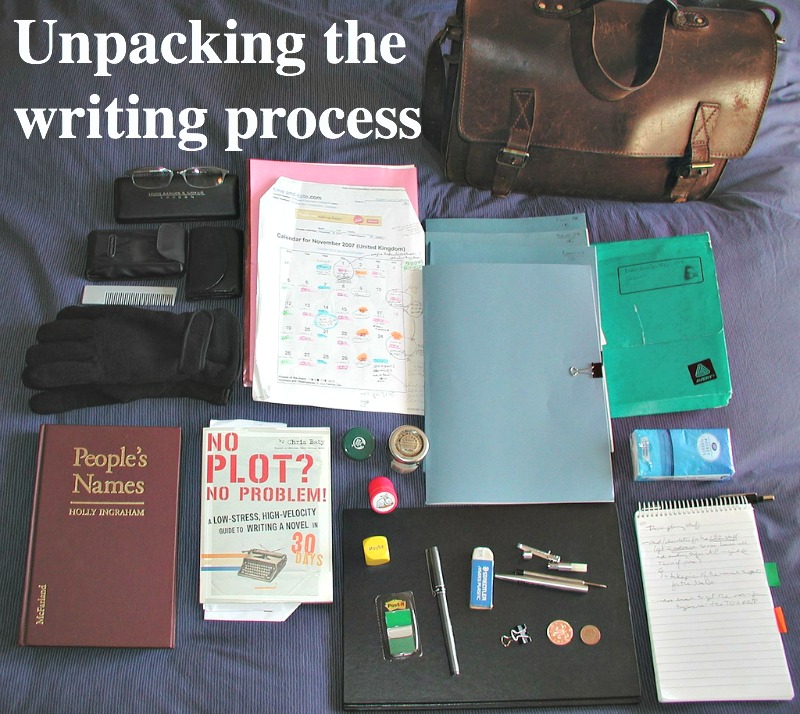
"Emptying the NaNo bag at last," by  Anne-Lise Heinrichs via Flickr ().

“Emptying the NaNo bag at last,” by Anne-Lise Heinrichs via Flickr (CC BY 2.0).

STEP ONE: The Idea

You can’t force yourself to come up with an amazing concept for a new book, but you can help the inspiration process along. Before producing Seabound, I knew I wanted to write a fast-paced story with high stakes and cool world-building, probably science fiction or fantasy, but I needed an idea. Then one day I hopped on a boat and spotted the cruise ship that inspired my post-apocalyptic Seabound series. It took more than just seeing a cruise ship, of course, for the concept to take hold. It took leaving my mind open and not forcing things, so that my subconscious could oblige.

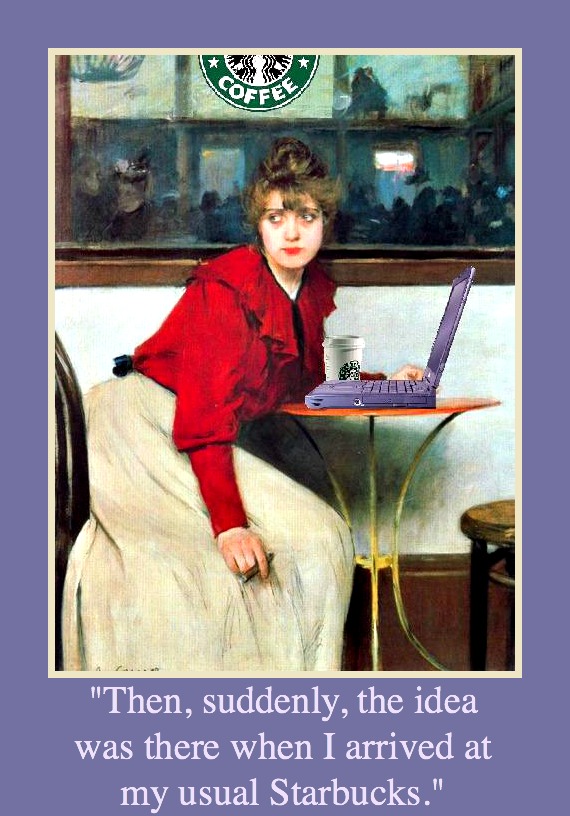
With the Seabound Chronicles under way, the hope entered my mind of coming up with another fantasy project to work on; but this time I wanted an original take or some kind of cool mash-up. I held that thought for months and cycled through various ideas (a secret agent in a fantasy world? a fantasy apocalypse?); but none of them felt quite right. Then, suddenly, the idea was there when I arrived at my usual Starbucks. I could see it plain as day. I was actually supposed to be working on Seaswept edits, but instead I opened up a new Word doc and hammered out notes for several hours.

STEP TWO: Characters and Worlds

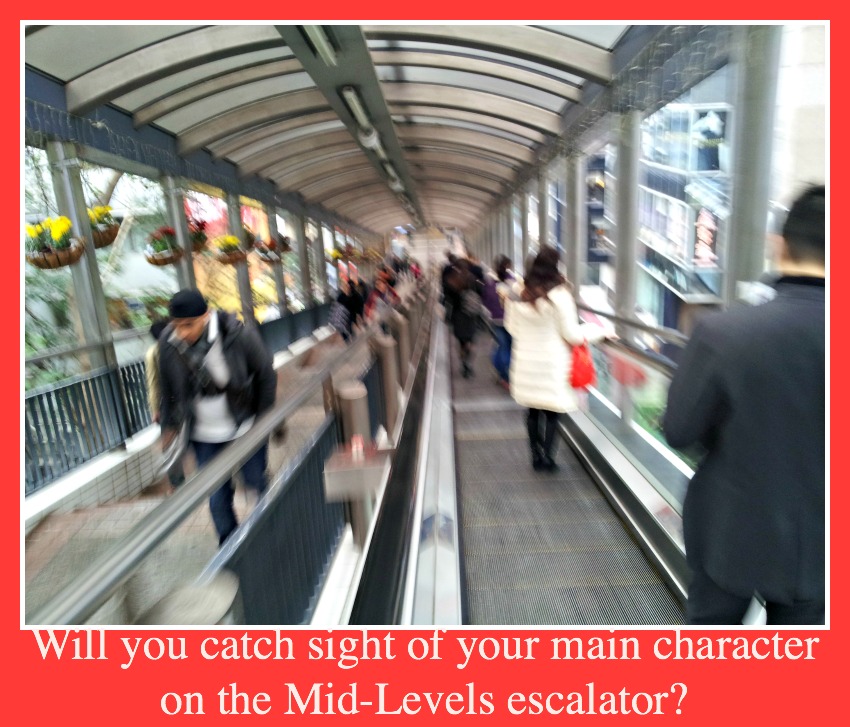
Once I had the concept of the world, the characters followed quickly on its heels. For some of these characters, I used a method similar to the one described above, where I had a general sense of what the person should be like, and then when I saw someone who matched the idea in my head, fleshed out my portrayal. (I spotted “Esther” walking down the Mid-Levels escalator with a camera around her neck that became a pair of storm goggles; “David Hawthorne” walked into one of my regular coffee shops dressed like an investment banker and wearing memorable black-framed glasses.)

"Mid-levels escalator blur," by Maureen Didd via Flickr.

“Mid-levels escalator blur,” by Maureen Didde via Flickr (CC BY 2.0).

For other characters, I started with people I’ve encountered as a jumping off point to develop key aspects of their personalities, appearances, and roles they would play in the story. I spent several writing sessions scribbling notes on the characters and describing the basic structure of the world they inhabit. I held off on writing the first chapter for as long as possible because I wanted to give the ideas time to mature. I also worked out the world’s magic system, which I’m treating differently than in a typical fantasy novel.

STEP THREE: The Rough Outline

As my ideas for the story became more concrete, I wrote a rough outline of the plot. This is a back and forth process. As I developed more ideas for the story I’d go back and flesh out the existing characters or create new ones. My outlines typically follow a three-act structure and they absolutely must include the main conflict and climactic scene. Outlines are essential for my process, but I don’t do a strict chapter-by-chapter plan at this stage.

For the new fantasy project, I’ve now written a very rough outline for a five-book series. Even so, I’ll have to get further into the first book before I know whether the story will support all five books in the plan.

STEP FOUR: The Rough Draft

I am now 16,000 words into the rough draft for my newest book. I’m a huge believer in writing fast, messy first drafts.

I wrote three of the four rough drafts for the books in the Seabound Chronicles during three consecutive National Novel Writing Months. I didn’t worry about whether they would be any good at this stage. I told myself I can always take things out and rewrite as needed. This method really helped me keep up the story’s pace.

Seaswept is the only one of the Seabound books for which I wrote the first draft over a longer period (about six months, during which I took a break to rewrite my memoir, Year of Fire Dragons). The edits for this volume were actually more difficult than for the other titles.

Writing the first draft is a bit like watching a movie play out—it’s best if you can do it without too many gaps.

STEP FIVE: Rest and Repeat

As soon as I finish a draft I put it away, something Stephen King recommends in his book On Writing. The work needs to sit for a bit and I need to get some distance from it before I can rewrite effectively. But I don’t stop writing. At this stage, I’ll start the next book.

Go back to Step One and repeat!

STEP SIX: Read and Rewrite

With another rough draft under my belt, I’ll go back to the first one, print it out, and read the whole thing. I’ll make tons of notes as I go, but I won’t rewrite until I’ve completed a full read-through.

At this stage, I also create a more detailed outline. My rough drafts follow a basic plot structure, but sometimes they take unexpected twists, and I like to leave room for those in the new outline. Other times, I find gaps or pacing issues that I’m not aware of until I step back and look at the book as a whole.

When I do my first read-through, I plug the events of the rough draft into a storyboard. I use this one, which covers a classic plot progression over twenty chapters. I write the basic plot points in where they occur, paying attention to gaps in the storyboard. Then I may plan additional chapters for my next draft.

Stories are actually quite similar in structure, so the books often fit quite neatly into the storyboard with only a bit of tweaking. I don’t like doing this at the outset because I want to leave room for those unexpected twists—let the ideas come out once I’m really living in the draft.

After I’ve worked out what changes need to be made based on my read-through and storyboard, I rewrite the book from the beginning. I do all this in the same document and keep a lot of the first draft, but I also add thousands of words, fleshing out scenes and filling in chapters. At this stage, I’m still not worried about how neat the actual writing is.

STEP SEVEN: Rest and Repeat

I put that new draft away and then go back to do the second draft of the second book. Or the first draft of the third book. Or the third draft of the last book in the last series. You get the picture. It gets complicated from here, and this is why I have so many books on the go at once. Each time a draft needs to rest, I’ll have something else to work on.

And so on!

My process continues like this, and the books get better with each draft. I also become a better writer with each draft. By the time I wrote the final draft of Seaswept last month, I was far better writer than when I wrote the first draft in early 2013.

After I’ve done at least two, usually three, drafts, I ask other people to read the book and give me feedback. Then there will be more notes, more drafts, more hours spent sitting in the chair and refining the story and the prose.

Some problems are just easier to solve on the second (or third or fourth) rewrites.

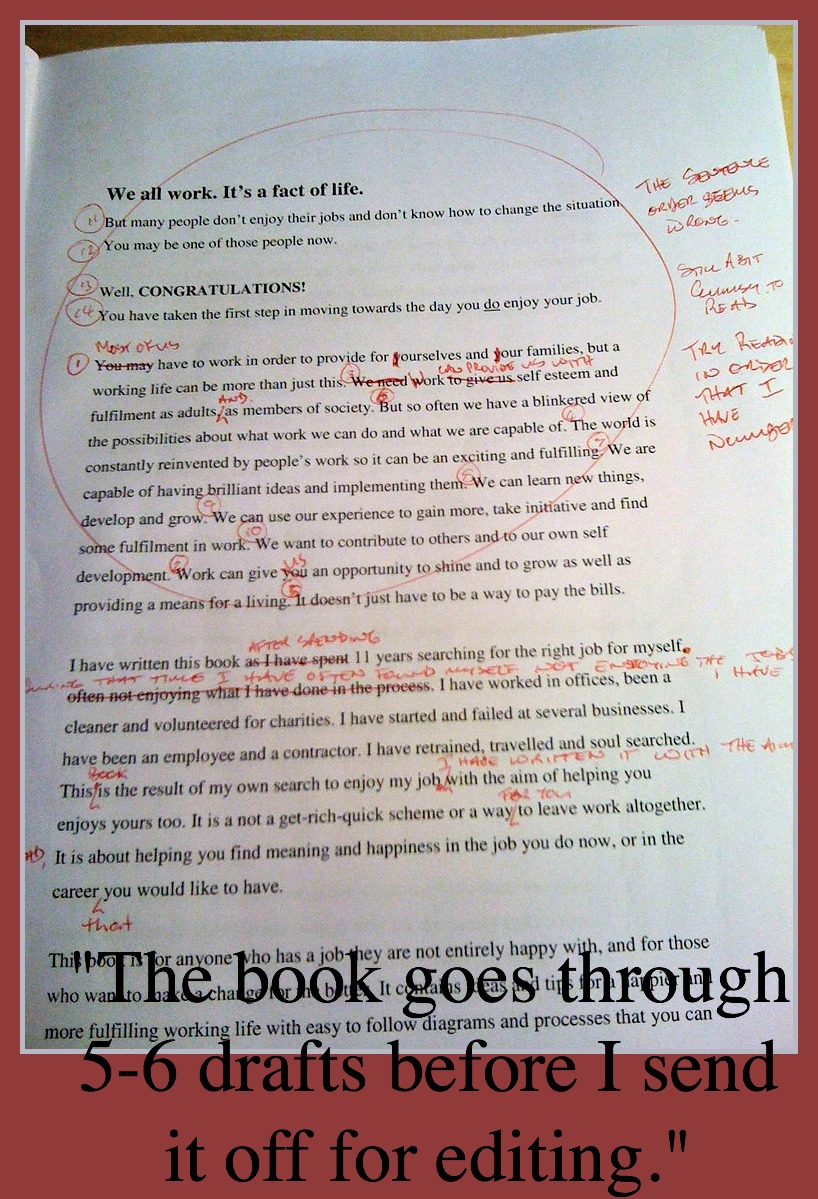
I estimate that each book goes through five or six drafts before I send it off for editing. I’m hoping that as I become a better writer it’ll take fewer drafts to get the book where I want it, but the important thing is that I try not to get bogged down by worrying whether any one draft is good enough. Taking this approach is liberating, and it allows me to get a lot of work done.

"Edited Version of First Book," by Joanna Penn via Flickr (CC BY 2.0).

“Edited Version of First Book,” by Joanna Penn via Flickr (CC BY 2.0).

So, Dear Diary, this is my writing process as it exists so far. I’m having fun applying it to my shiny new project.

Seaswept will be out soon and then I’ll be doing another draft of Burnt Sea, the prequel, but in the meantime it’s exciting to have another series on the go!

Thanks for following along on my writing journey. I hope this glimpse at my process might be helpful for another budding writer or two. It is certainly helping me get my brain back in order so I can get back to work

I remain yours,

Shannon Young/Jordan Rivet
www.shannonyoungwriter.com
JordanRivet.com

* * *

Readers, Shannon has graciously shared her writing process with us this month. By breaking it all down, she almost makes it seem easy! (You can tell that she’s been a teacher.) So, what do you think—any responses to her methods, questions, words of encouragement for her next endeavor? Do let her know in the comments!

STAY TUNED for next week’s fab posts!

If you enjoyed this post, we invite you to register for The Displaced Dispatch, a round up of weekly posts from The Displaced Nation and much, much more. Register for The Displaced Dispatch by clicking here!

Related posts:

DIARY OF AN EXPAT WRITER: Shifting base to literary London, where it all began

DiaryExpatWriterAn American expat newlywed in Hong Kong, Shannon Young took the momentous decision last summer to quit her day job and launch out as a full-time writer. She’d given herself until Chinese New Year to see if she could make a living but has now postponed the decision until the end of next month—which we’re actually rather glad about as it means she’s still with us!

—ML Awanohara

Dear Displaced Diary,

It’s a blustery morning here in London and time for another update on my life as an expat writer. You may remember that I do not, in fact, live in London. I’m taking a break from my writing life in Hong Kong for a visit that combines the Easter holidays with my husband’s business trip.

I am still making the most of not having a day job by staying in the UK for nearly three weeks.

Of course the work never stops for a working writer. I spent the first four days of the holiday finishing up the final revisions of Seaswept, the sequel to my post-apocalyptic adventure at sea called Seabounda job that can be done anywhere, really!

Jordan Rivet in London

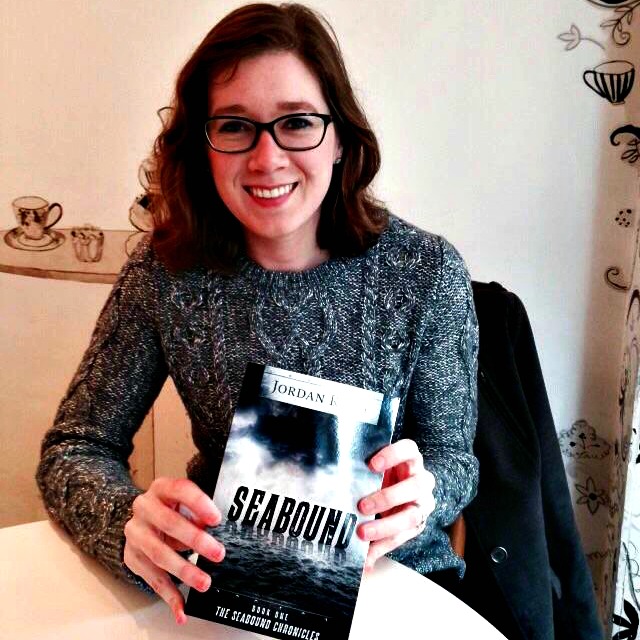
Shannon Young aka Jordan Rivet showing off her first book on a tea break in London; photo credit: Shannon Young.

As I mentioned in my last post, the revisions on Seaswept were a bit of a slog, but I really got into the groove by the final pass. I have to admit it was kind of magical to wake up with the sun (or clouds) in this famous literary city, write for a few hours, go for a walk, and then do a bit more writing before the jet lag knocked me out. London has always been a source of inspiration for me, and the setting somehow seemed right for ending my work on this book.

In addition to the beautiful buildings, blue historical plaques, and bridges (have I ever told you, dear diary, how much I love bridges?), I’ve found another source of inspiration in London: a friend from Hong Kong.

Expat connections are everywhere

As Displaced Nation readers know, we expats have a tendency to move on often, either to a new country or back to where we came from. Expat life is a constant rotation of hellos and goodbyes. While it’s sad when friends leave, it’s pretty cool to acquire connections all over the world.

A friend from my writers’ group in Hong Kong returned to the UK nearly two years ago, but she has maintained her link with the group and her role as true cheerleader for my work. Recently, she decided to embark on a similar literary adventure by taking time off work to write!

I met up with her at the cafe and bookshop run by the London Review of Books and spent nearly four hours writing and talking about writing together. (I also ate hummus on toast that came with real worms on the side, but that’s another story.) It was a joy to have a friend in a city thousands of miles away from both my home country and my country of residence, all thanks to this expat life.

The day I sent the final draft of Seaswept to my editor, my Hong Kong friend took me on a literary tour of Highgate and Hampstead—and, of course, a trek across the rain-soaked trails of Hampstead Heath. In between breaks for tea and hot cross buns, she showed me the home of Samuel Coleridge (and the alley where he bought his laudanum), a garden straight out of a Jane Austen novel, and a pub visited by many notable figures throughout its 200-year history. As we walked, I was reminded again and again of just how old this city is and just how much has happened in its streets. It’s the setting for some of my favorite novels, novels that made me want to be a writer myself.

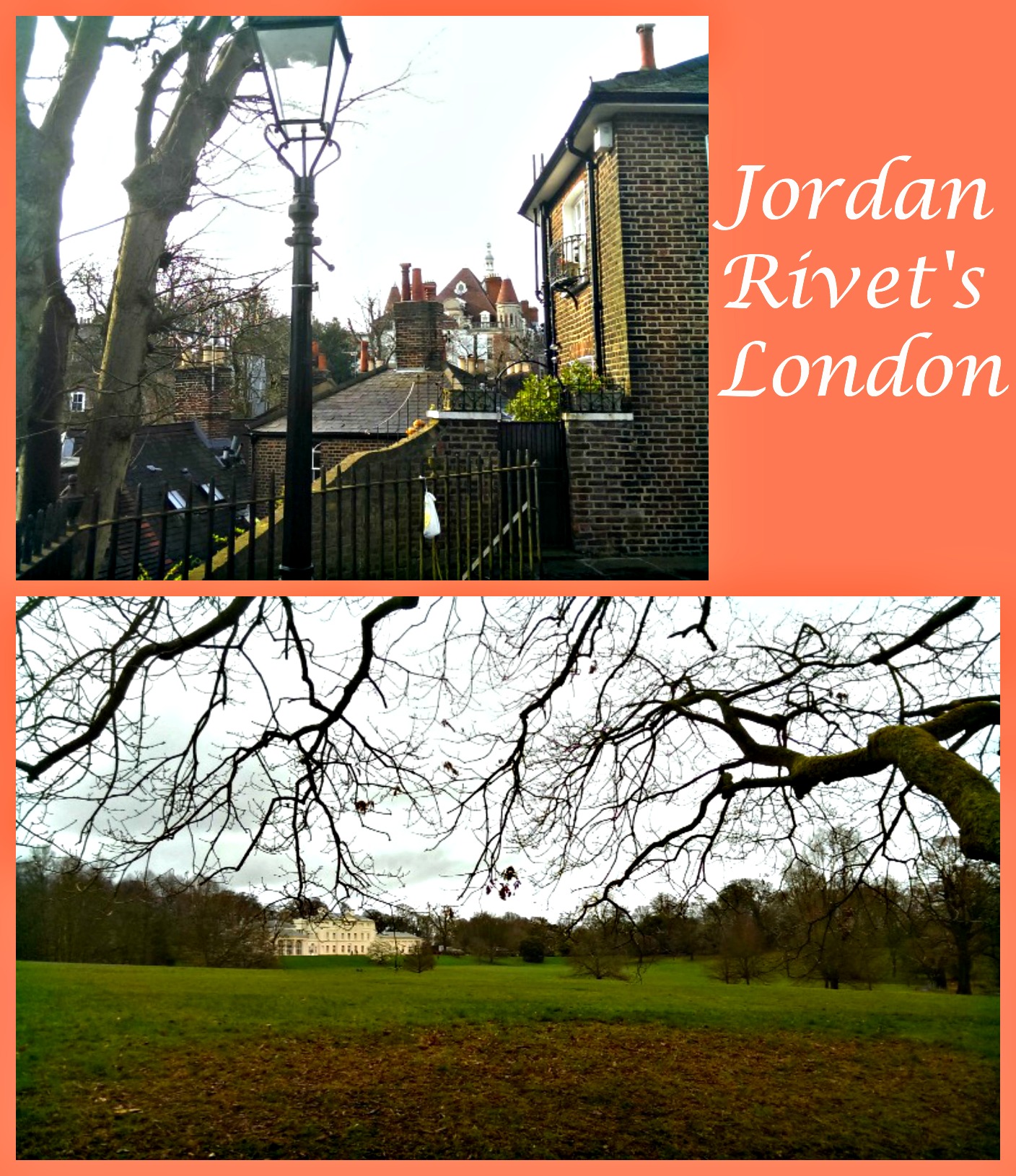
Photo souvenirs from Jordan Rivet's London walks. At bottom: Hampstead Heath with a view of Kenwood House, a former stately home.

The houses of Highgate and the expanses of Hampstead Heath, with former stately home Kenwood House in distance. Photo credit: Shannon Young.

As my writing journey continues across the globe in Hong Kong, it’s nice to remember its origins and to soak in a bit of history in the company of someone who is just as excited about it as I am.

Beginnings, revisited

During my time in London, I’m also revisiting the origins of my own expat life. As you may recall, Dear Diary, I met my husband in London during a semester abroad. We ended up in Hong Kong, but our early romance took place here. The memories have been flooding back over the past few days as we walk by all the places where we shared sweet moments: first meeting, first date, first kiss.

I wrote about our romance in the first book I ever started, Year of Fire Dragons. It’s mostly about Hong Kong, but I can’t tell my Hong Kong story without starting in London.

Hong Kong tends to change very quickly, with restaurants and shops going in and out of business all the time. Buildings are torn down and rebuilt completely in the space of months. But London seems largely the same. Back in this place with this man, it’s easy to remember why I decided to follow him across the world.

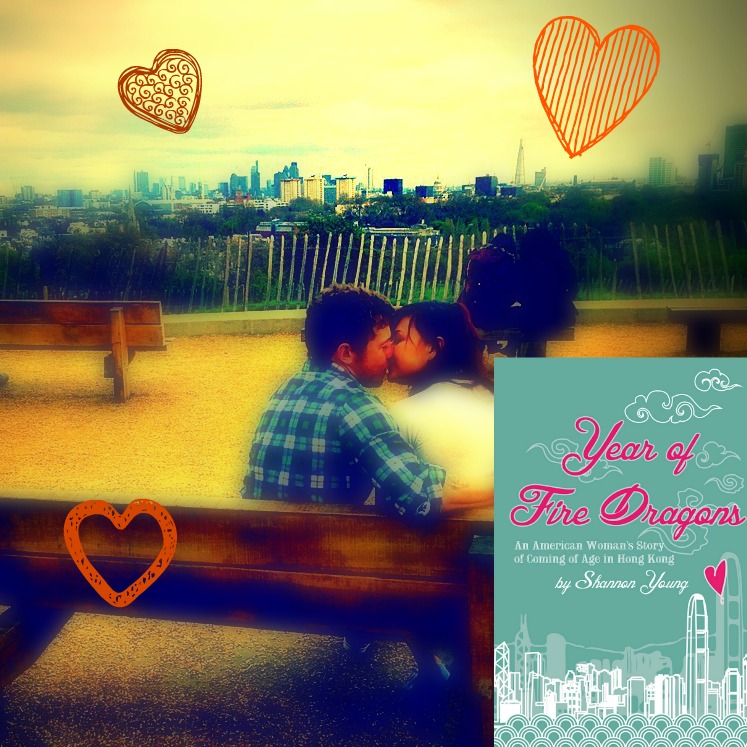
LondonKiss+Year of Fire Dragons

A firey romance in London led Shannon to the land of Fire Dragons and her first book, a memoir (photo credit: pixabay).

What’s on the horizon?

Well, the sun is breaking through the clouds over the city. I’d better head out to make the most the sunshine before the rain and wind return.

I have two weeks to go in London. During that time, my editor will be working on Seaswept, which should be ready to launch by April 30th. Meanwhile, I’m looking ahead to my next project: the prequel to the Seabound Chronicles. Then it will be time to finish Book 3.

But I’m already working on my next series. I’ve written a rough outline and the first 10,000 words. While I’m enjoying the flood of inspiration and nostalgia in London, perhaps I’ll tap out a few more chapters. If there’s one thing I’ve learned on this expat writing journey, it’s that places have power. I don’t want to miss out on anything London has to offer in the next few weeks.

Thanks for following along on my writing journey around the world.

Yours,

Shannon Young/Jordan Rivet
www.shannonyoungwriter.com

P.S. If you like dystopian fiction and writing Amazon reviews, shoot me an email and I’ll send you a book or two!

* * *

Readers, Shannon’s diary post this month has made me nostalgic for my own days of living in London. Sigh! It sounds as though she’s making the most of her time in the Big Smoke with walks on the Health and so on, but if you have any further recommendations for her remaining two weeks (any bridges you think she should see?), do let her know in the comments!

STAY TUNED for more fab posts!

If you enjoyed this post, we invite you to register for The Displaced Dispatch, a round up of weekly posts from The Displaced Nation and much, much more. Register for The Displaced Dispatch by clicking here!

Related posts:

TCK TALENT: Maya Evans, Poet, Writer, Teacher, Translator, Consultant & Transition Facilitator

Maya Evans for TDN

Maya Evans (own photo)

Elizabeth (Lisa) Liang is back with her column featuring interviews with Adult Third Culture Kids (ATCKs) who work in creative fields. Lisa herself is a prime example. A Guatemalan-American of Chinese-Spanish-Irish-French-German-English descent, she has developed her own one-woman show about growing up as a TCK, called Alien Citizen, which premiered nearly two years ago and is still going strong. In fact, she is now raising funds to take the production to Valencia, Spain, and Capetown, South Africa, later this year.

—ML Awanohara

Greetings, readers. Today’s interviewee is Maya Evans, a poet and writer, transition facilitator, international education consultant, and translator based in Boston, Massachusetts. She is also my fellow ATCK author in the anthology Writing Out of Limbo, in which her poem “Le Français” appears. Currently, she is working on a memoir about her extraordinary life, which took her from the Middle East to Europe to South America and finally to her current home of the United States.

* * *

Welcome to The Displaced Nation, Maya. I understand that you were born to a Francophone Jewish Egyptian-Hungarian family in Alexandria, Egypt, and that you grew up there and in Caracas, Venezuela. Please tell us why your family moved.
My family moved from Alexandria, Egypt, in 1958 after what history termed the Suez Crisis, which is to say the nationalization of the Suez Canal. Built by the French in 1869, and jointly controlled by the British and French until 1956, the Canal was of strategic importance to Western powers. Egyptian President Gamal Abdel Nasser‘s actions to nationalize it provoked a brief war—a lot like the wars carried out presently in the Middle East. Nasser wanted to end Egypt’s colonization. We left because Jews were no longer welcome in Egypt. The revolutionary government confiscated Jewish properties and bank accounts, even expelling some Jewish people holding French or British passports. My father was demoted, the bank where he worked was taken over by the authorities, and clearly his career was finished. His brothers, sisters, and their families mostly went to Brazil, although some ended up in France, but none in Hungary, where they’d come from originally. (At the time, Hungary was occupied by the Soviet Union.) When we left, I was 12-and-a-half—and still have vivid memories.

Did your mother’s family leave as well?
My mother’s family, rooted in the area for generations, did not leave. My grandmother refused to leave her house. My uncles and one of my mother’s sisters, who were very close, all stayed, not daring to contradict their mother.

Where did your family end up going?
For a brief time we lived in Paris, scattered among relatives. We also stayed in Genoa, Italy, for a couple of months waiting for my father to clear his affairs and obtain a visa for emigrating to Venezuela. We were “stateless” at the time, having left Egypt with a travel document valid for one trip with no return. My father had managed to “transfer” money out of Egypt to Switzerland, which was needed to buy our passages to South America. This is a story on its own, one I’m attempting to describe in my memoir.

Achieving happiness in the midst of displacement

I find your story moving as it’s about exile, not the usual voluntary migration for TCK families (voluntary for the parents at least). Still, your moves from North Africa to Europe to the Americas is very relatable for this ATCK. Were you happiest in a certain place at a certain time?
I can recall the exact time when I realized I was truly happy. It was at Brenau College (now Brenau University), in Gainesville, Georgia. It took one year to convince my father to allow me to go to college in the U.S. He thought that a girl had to stay home and go to the university nearest to where her family lives which in my case would have been the Universidad Central de Venezuela (UCV), a 15-minute ride from our home in Caracas. The problem was that the Venezuelan government did not recognize my high school degree from Colegio Internacional de Caracas (CIC)—the school is only accredited in the United States. Besides, my Spanish was not at a high enough level for the entrance exam. A solution would be to transfer to the UCV from an accredited school in the U.S., after a year of university-level courses. Reluctantly, my father agreed as long as I went to a “girls only” school, properly chaperoned during my trip to the States. I was fortunate enough to meet a trustee of Brenau College at a tea sponsored by the American Association of University Women. She traveled with me from Caracas to Atlanta, and drove me to her college. For a variety of reasons, among them the lack of money, neither my father nor mother could have made the trip at that time.

What was it like being in a small southern town after living in Caracas?
At Brenau, I was one of a handful of international students. Besides Venezuela, there were also girls from Norway and Taiwan. Luckily, two Hungarian sisters from Venezuela, in their third and last year of college respectively, took me under their wing. Both were intelligent and poised, which made me a “cool girl” by association. Suddenly, there was no need to explain why French was my native language but I wasn’t French, etc. It was easy to say: “I am from Venezuela.” Period. I had a distinct identity, foreign but also exotic. It was also wonderful to be far from the dramas of home. I had postponed the moment of reckoning, which would occur upon my return to Venezuela, when I would find out what it would be like to be a university student in Caracas who had attended an American high school full of students with tenuous ties to the country.

Maya Universities

From studying at Brenau in Georgia to getting a degree at Universidad Central Caracas Venezuela to working at Harvard…

Eventually, though, you moved back to the United States. Why was that?
I was just starting to feel Caraqueña (from Caracas)—finding my bearings as a journalism student at the UCV by night and as a bilingual assistant in an export company by day, enjoying 80-degree Fahrenheit weather year-round, living in a beautiful apartment facing the mountain—when I met my husband, an American. (We met in Caracas.) We moved to the States in the early 1970s. His job moved us to Boston; then to Stanford, Connecticut, where our first child was born; and then back to Boston.

Allow me to bridge cultures, people and dreams…

At what point did you start your career…or careers I should say, as I know you’ve had more than one.
After the birth of my second child, I was determined to find a job that would link me to the Latino community, or better yet, send me on frequent trips to Latin America. I found that job at Harvard, in a department facilitating studies in the United States for professors and business executives from Latin America. I traveled all over Latin America, and in the mid-90s, was assigned to a project in Venezuela sponsored by Petróleos de Venezuela (PDVSA) to train a cadre of executives for studies in the United States. I left Harvard shortly after and worked directly as a consultant for PDVSA. I also trained as an interpreter, working for the Massachusetts courts, and taught Spanish at the University of Massachusetts.

Consultant, trainer, interpreter, teacher: your careers seem to have been influenced by your peripatetic upbringing…
True. I would slide in and out of professions just as I slid in and out of countries, and adjust like the chameleon I’d become. I was always being uprooted but then would find ways to adapt. This in turn led me to my life’s “calling”: to facilitate transitions for others. Whether working with foreign students at American universities, or with international researchers trying to find the right department to pursue their research, or with companies wanting to train their personnel to live somewhere else, I would bridge cultures and languages in an effort to help others ease into their new surroundings.

Who am I? Where am I from?

Have you found that “your people” tend to be Adult TCKs or other cross-cultural people?
Undoubtedly, I feel comfortable with other Adult TCKs as well as multicultural people. I am actually uncomfortable with monocultural, monolingual people, regardless of their education level or accomplishments. I find that I have little in common with them, or that I have to “explain” myself again—and at a certain stage in life, it gets tiresome. I also feel a kinship with artists and people who are a bit out of the mainstream. Like Adult TCKs, they tend to look at the world from the outside. For the longest time, I felt outside, looking in. Even now, that feeling hasn’t left me completely.

Not only for your sake but for the rest of us ATCKs, I’m happy you are now working on your memoir, a few parts of which I was privileged to hear you read. What inspired you to start writing it, and how far along are you in the process?
Thank you for your kind words. It’s been a long and tortuous road. For the longest time, from my days as a journalism student, I wanted to tell stories. Stories I heard around the world, and stories of my relatives who happen to be an eclectic bunch of multinational people. But I am always escaping into work, travel, poetry writing, whatever other excuse I can find. Now I’ve decided to work less and, while I still can conjure the memories, dedicate more time to writing what I like to call a “romanticized memoir,” with characters loosely built on the stories I heard about Egypt and on the memories I have of the places where we lived. I am still at the beginning of the process, and need to speed it up, lest it get buried alongside other writings.

Attempting to “capture all the voices in my head without sounding schizophrenic”

On top of all of this, you are a published poet. Is there a particular poem of yours that expresses your feelings of transience or loneliness or instability—or freedom or curiosity or love of travel—that you are most proud of? If so, could you share it with us?
Two years ago, a poem of mine I like the best, “Voz Ajena” (“Alien Voice”), was published in Spanish in the New England Translators Association’s newsletter. Although I translate other people’s work, I cannot translate my own. I don’t hear it in any other language but Spanish. In that poem, I attempted to capture all the “voices” in my head without sounding schizophrenic. To me, it is interesting to note that I can do this only in Spanish, which was the third language I acquired, after which it became my “go to” language. Even though French is rooted in me, Spanish carries Latin America with its music and colors, which trumps all others! I’ll give you that poem, but for those who don’t read Spanish, I’ll first give you a poem I wrote in English:

Notebook with a Missing Language

Only English is missing
in these familiar lines
that stretch quietly on a
tidy little notebook
filled in French with spatters of Spanish;
scents of places and of people long gone
leaving behind tender thoughts,
silent melodies, objects of desire,
histories of exiles and commencements
of lenities and humiliations,
of successes and exonerations;
tales of lost places, warm embraces,
mute voices, empty houses,
doors shut on bygone worlds.

door_shut_maya_poetry

The last line of “Notebook with a Missing Language,” a poem by Maya Evans


And now for those who read Spanish:

Voz Ajena

Le preguntó un día por su acento opaco,
esa manera que tiene ella
de tropezar con las erres,
saltar continentes al azar,
atar letras sin más sabor
en un ritmo extraño, ritmo de blanco.

Son recuerdos de otras voces,
las vivencias de mi memoria
de crêpe georgette y chantilly,
dijo ella con voz de seda, voz de sirena.

Yo no sabía de los fantasmas que te habitan,
No sabía de Egipto, España,
Francia y Hungría,
No sabía que te comían noche y día,
ocultándote la luz, clamando por aire,
y todos con ese afán de ser.

Y más aún le dijo ella,
tocan tambores y hacen ruidos,
se contorsionan en las tinieblas
por estallar en mil estrellas,
dejar arañas y demás vainas,
ser lentejuelas, champaña fino, jamón ibérico,
Ravel de fuego, Maria Callas reencarnada,
vistiendo toga, comiendo astros, tragando mundos.

Maya
Boston, 19 de abril de 2010

* * *

It’s been a pleasure, Maya, hearing about your many professional accomplishments and “romanticized memoir” in progress. And thank you so much for sharing two of your poems! Readers, please leave questions or comments for Maya below.

STAY TUNED for next week’s fab posts!

If you enjoyed this post, we invite you to register for The Displaced Dispatch, a round up of weekly posts from The Displaced Nation, and so much more! Register for The Displaced Dispatch by clicking here!

Related posts:
BOOKLUST, WANDERLUST: When what happens in a third culture refuses to stay there: Allen Kurzweil’s “Whipping Boy”

Booklust Wanderlust Collage

Left: Oleh Slobodeniuk (CC BY-NC-SA 4.0); right: Beth Green (her own photo).

Attention displaced bookworms! Our book review columnist, Beth Green, an American expat in Prague (she is also an Adult Third Culture Kid), is back with a rather unusual selection: a memoir that reads like crime fiction. The author, but of course, is an international creative. Enjoy!

—ML Awanohara

Hello again, Displaced Nationers!

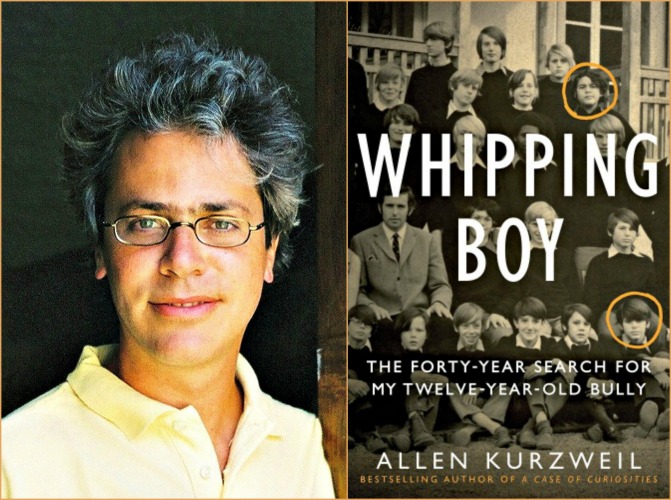
Our Booklust, Wanderlust roundtable series left me with such a wide selection of books to read that I’m only just now coming up for air. This month I’d like to tell you about Whipping Boy: My Forty-Year Search for My Twelve-Year-Old Bully, by the bestselling novelist Allen Kurzweil—which our own ML named as one of the books on her radar in early 2015.

Well, Whipping Boy is out, and it’s a cracking (so to speak) read!

"Allen Kurzweil Wiki2007," by Allen Kurzweil - an image provided by Allen Kurzweil. Transferred from en.wikipedia by SreeBot. Licensed under CC BY-SA 3.0 via Wikimedia Commons.

TCK author Allen Kurzweil & his memoir. Photo credits: “Allen Kurzweil Wiki2007,” by Allen Kurzweil – an image provided by Allen Kurzweil. Transferred from en.wikipedia by SreeBot. Licensed under CC BY-SA 3.0 via Wikimedia Commons.

Kurzweil has produced a memoir that deals with deep emotions dating back to his displaced youth—but that still manages to flow fast and fun like an international thriller. As marketing whiz Kat Gordon put it in a recent tweet:

Hanging on every word of @AllenKurzweil memoir “Whipping Boy.” A whodunit + fairytale in one.

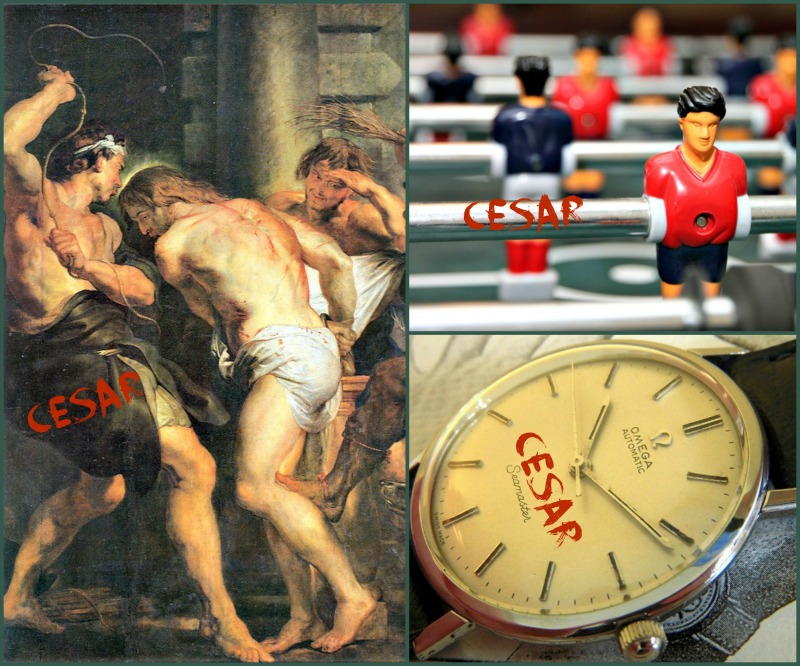
In the fairy tale portion, we watch as our hero, age ten, attends a British-style boarding school perched on an alpine meadow high above Geneva. All goes well until he meets the dastardly Cesar (full name Cesar Augusto Viana), who torments him mercilessly. When our hero grows up, he resolves to track down and confront his childhood nemesis, however long it takes…

The whodunit starts the moment Kurzweil discovers that Cesar has become a leading figure in an international fraud scheme. At that point he converts into an investigative journalist, leaving no stone unturned in his quest to find out how many victims the adult Cesar has racked up.

Before saying anything more about the book, I should point out that Kurzweil is an adult Third Culture Kid. His parents were Jewish émigrés from Vienna to New York City. The family relocated to Milan, Italy, when Kurzweil was young, but he spent his teen years back in New York. He got his education at Yale and the University of Rome and then worked for ten years as a freelance journalist in France, Italy, and Australia before settling back in the United States with his French wife and son.

Kurzweil’s previous works include two novels and a children’s book inspired by his son’s preschool bully. The Whipping Boy has also been excerpted and condensed in the New Yorker.

“In 1971, I met a boy who changed my life forever.”

Kurzweil roomed with Cesar—a burly Filipino rumored to be the son of Ferdinand Marcos’s head of security—at the exclusive Aiglon College, in Villars, Switzerland, for the better part of a year, while Kurzweil’s mother was “test-driving her third husband.” (Kurzweil’s father died of cancer when he was five.)

Kurzweil loved the idea of the school—his deceased father had adored the Alps and mountaineering. But he hated boarding, particularly at night, when Cesar and his stooges would subject him to all manner of hazing. They forced him to eat hot pepper sauce, stole his things (including his most prized possession, his father’s Omega Seamaster watch), taunted him with anti-Semitic slurs, and at one point whipped him with a belt while playing “The 39 Lashes” from Jesus Christ Superstar (Kurzweil was Jesus).

Some form of bullying in schools is universal, but when the kids are internationals, and boarders—dealing with the losses of worlds they have loved (which in Kurzweil’s case was tied to the loss of his dad)—things can get even more intense, something non-TCKs may not appreciate.

Fortunately, though, Kurzweil has a sense of humor. In this book he never misses a chance to point out that life, even when traumatizing, has its comic moments.

“It didn’t take long to shed the habits I’d picked up in Switzerland.”

After a year at the school, Kurzweil moves back to New York City, and quickly re-acculturates:

“[My mother and I] returned to New York, where the plimsolls, anoraks and rucksacks I wore at Aiglon reverted to sneakers, parkas and backpacks. I no longer had to address my teachers as sir and ma’am.”

But while Kurzweil displays the TCK’s resilience in adjusting back to life in the U.S., happy to get rid of the crossbars on his “7s” and scuttle his schooner-sail “4s”, he cannot let go of his memories of Cesar so easily. He harbors an obsession, which grows worse with the years, even (especially?) after he finds success as a writer.

When he learns that his boyhood enemy is most probably a con man working for a shady “royal”-family-led corporation named Badische (pronounced “Baddish,” Kurzweil notes slightly gleefully) that runs investment “schemes” for hard-up New York one-percenters, Kurzweil becomes unstoppable:

Obsessives tend to have obsessions. Cesar wasn’t my first fixation, and I’m sure he won’t be the last. Baseball cards, Matchbox cars, Pez dispensers—I’ve always been a collector…my point is I tend to go overboard. I investigated Cesar and Badische the same way I collected Lincoln pennies—intent on filling every void.

“…I began to acknowledge the obvious: Cesar had taken over my life.”

His investigations span decades and continents, and throughout it all he is haunted by memories of Cesar:

At the back of a dingy bar in Alice Springs, a pair of drunks playing foosball recalled my ex-roommate’s unstoppable bank shot. In Vienna, hanging on the wall of the Kunsthistoriches Museum, a Flagellation of Christ reinvoked the musical whipping. Hot sauce, Andrew Lloyd Weber tunes, Ferdinand Marcos, Montblanc fountain pens, and more than anything else, vintage Omegas, had me reaching for the journal.

The Ubiquitous Cesar. Photo credits (clockwise from left): “Flagellation-of-christ-Rubens” by Peter Paul Rubens (licensed under CC BY-SA 3.0 via Wikimedia Commons); foosball, byrev via Pixabay; Omega watch, ephotographythemes via Pixabay.

Kurzweil shares with the reader his mixed emotions when he at last finds Cesar, wondering what to say to someone who may not even remember him. And then the fear returns—the fear that he experienced as a shy boy being whipped with a belt in his dorm room…only now it is morphing into an adult fear as Kurzweil realizes he has tracked down an actual criminal:

Fake knights. False banks. Imaginary kingdoms. These guys travelled on bogus passports. They hosted lavish dinner parties at five-star hotels. They performed knighting ceremonies. (When I interviewed the assistant U.S. attorney who filed the initial charges, he summed up the crime as Dirty Rotten Scoundrels meets Clue.)

“So, basically, I’m being blamed for your memories?”

Whipping Boy was a quick, satisfying read. I loved the truth-is-stranger-than-fiction details that Kurzweil unearths about Cesar and his company’s schemes.

I loved his humor.

I also enjoyed the quiet pauses when Kurzweil would describe personal moments having nothing to do with the hunt for Cesar: for example, when he met his wife in outback Australia:

A French anthropologist named Françoise Dussart spotted me wandering toward a sacred site off limits to visitors. Concerned for my safety, she drove up and warned me away. She was sitting in the cab of a Toyota Land Cruiser and cradling a baby kangaroo. How could I not fall in love?

And then:

She flew west, from Alice. I flew east, from New York. We met each other halfway, in Paris, broke and in love.

Juanchito via Pixabay[http://pixabay.com/en/kangaroo-australia-jump-creature-250873/]; talitaraquel via Pixabay[http://pixabay.com/en/eiffel-tower-paris-france-tower-350453/]. License: CC0 Public Domain[http://pixabay.com/en/service/terms/#download_terms]

From kangaroo love to love in the City of Light. Photo credits: Australian kangaroo, Juanchito via Pixabay; Eiffel Tower, talitaraquel via Pixabay. License: CC0 Public Domain

I further appreciated his candor in admitting that two people can remember the details of an event differently, particularly when one of them is a psychopath with a chip on his shoulder. As Cesar puts it when they finally meet up again for the first time:

“I recall a lot… But just in bits and pieces. There are some things that people have told me about that I really don’t remember. You might need to prod me a bit.”

I would particularly recommend the book to those who like stories about heists or con artists—the movie American Hustle has some parallels—as well as to anyone who has harbored a fantasy of facing down a childhood bully.

Kurzweil may be beaten but he isn’t conquered, and that’s an inspiration to victims everywhere.

But most of all I appreciated Kurzweil’s understanding that for us TCKs, what happens in a third culture doesn’t always stay in a third culture. Some readers may wonder why Kurzweil couldn’t leave his bullying experience behind, particularly as it happened overseas, in a country to which he had limited personal ties. But for Third Culture Kids, the floating world of the expat is as real as it gets. And, as Kurzeil’s story shows, what happens there can have a life-long impact.

* * *

Fellow TCKs, do you have a Cesar or other skeletons in your cupboard dating back to your school days, at an international school or boarding school? Do tell!

Till next time!

Editor’s note: All subheds are quotes taken from Allen Kurzweil’s New Yorker article.

Beth Green is an American writer and English teacher living in Prague, Czech Republic. She grew up on a sailboat and, though now a landlubber, continues to lead a peripatetic life, having lived in Asia as well as Europe. Her personal Web site is Beth Green Writes, and she is about to launch a new site called Everyday Travel Stories. To keep in touch with her in between columns, try following her on Facebook and Twitter. She’s a social media nut!

STAY TUNED for the next fab post!

If you enjoyed this post, we invite you to register for The Displaced Dispatch, a round up of weekly posts from The Displaced Nation, and much, much more. Register for The Displaced Dispatch by clicking here!

Related posts:
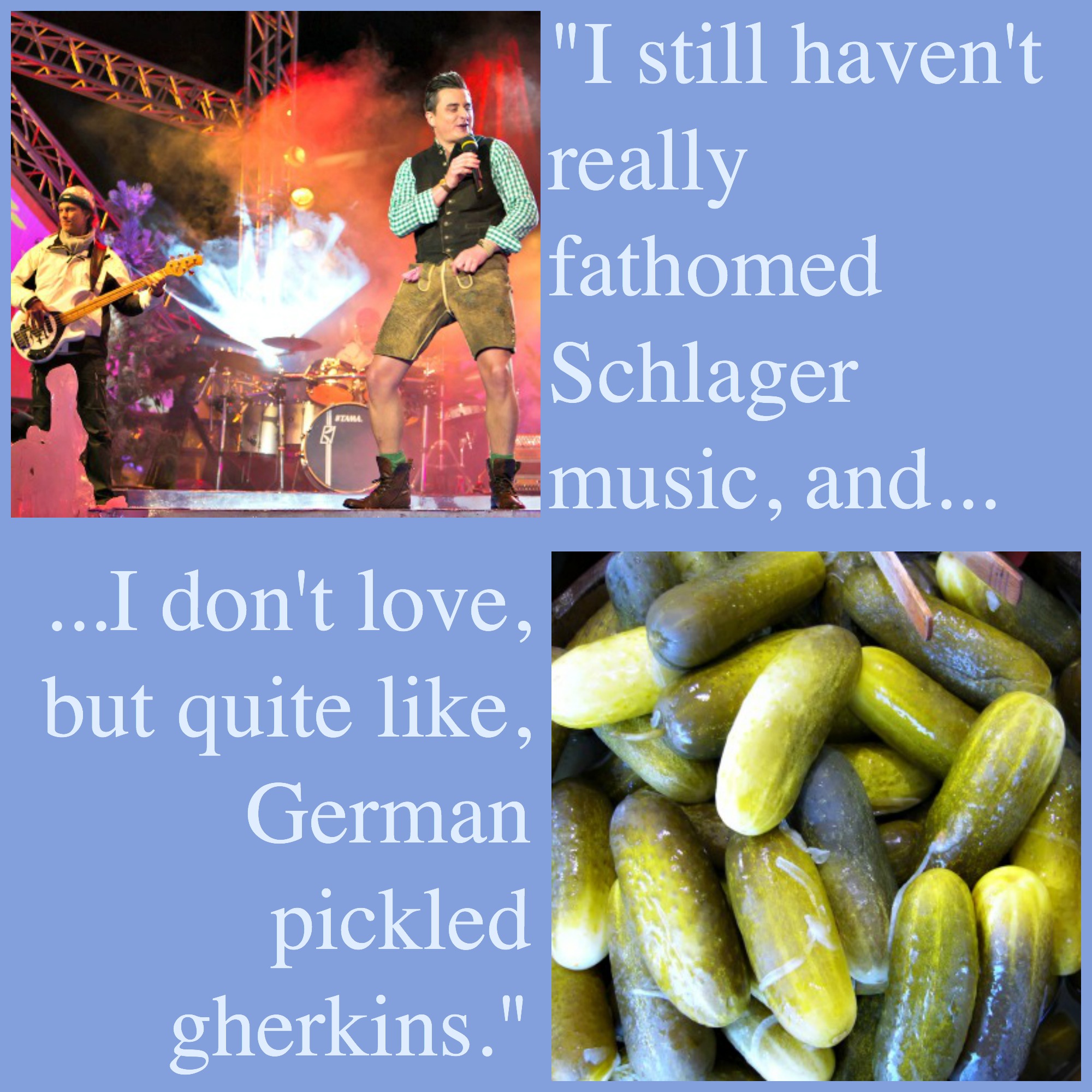
Ten years after “Expat Harem,” foreign women will have another say on expat life in Turkey

Tea in Gülhane Park[http://www.flickr.com/photos/wneuheisel/6493228113/ ], Istanbul, by William Neuheisel via Flickr (CC BY 2.0).

Tea in Gülhane Park, Istanbul, by William Neuheisel via Flickr (CC BY 2.0).

When the Displaced Nation first started, Anastasia Ashman, an American living in Istanbul, was running a blog tailored to the needs of the “thinking expat.”

It seemed almost too good to be true: a group of women who were passionate about telling stories that illustrated the impact of the expat life on a person’s psyche. Had Anastasia rubbed a magic lamp to conjure up a kind of foreign harem? After all, her site was called Expat+HAREM.

In fact, as we soon discovered, the core contributors to the site had also been contributors to a book Anastasia had co-edited with Jennifer Eaton Gokmen, Tales from the Expat Harem: Foreign Women in Modern Turkey, which came out in 2005.

Anastasia has since moved on from Turkey, the expat life and the Expat+HAREM project. As she reported in a post to the Displaced Nation three-and-a-half years ago, she and her Turkish husband traded Istanbul for her native San Francisco because they thought that life in America’s high-tech city would “more closely align with a future we want to live in.”

Yet the work she created on the basis of her Turkish expat life has lived on in her wake.

And now two American expats in Turkey, Rose Margaret (Rose) Deniz and Katherine (Katie) Belliel, have announced their intention to produce a kind of sequel to Expat Harem, which is scheduled to be published later this year, to coincide with its 10th anniversary.

The title of the new anthology will be Sofra: A Gathering of Foreign Voices Around the Turkish Table.

As that title suggests, we’re shifting metaphors: from the harem to food. But no need for me to go on any further as Katie and Rose are joining us today to discuss their plans for the new volume. (Note to female expats who have lived in Turkey for at least a year: the window for submissions closes on April 1st!)

 * * *

Sofra Editors Horizontal

Meet Sofra editors Katie Belliel (left) and Rose Margaret Deniz. Photo credit: Journey Collective

Hi, Rose and Katie, and welcome to the Displaced Nation. Before we talk about your plans for a sequel, let’s go back to the original work. Katie, I understand that you contributed a story to Tales from the Expat Harem. What did you write about?

KATIE: “A heart-broken Michigan girl finds closure in Bursa at an ancient Ottoman bath, nurtured by her would-be Turkish sister-in-law.” This line that introduces my story in the book sums up my piece nicely. It is about how my first journey to Turkey was for love. My return was also for love—but not for my failed relationship. It’s the story of how I returned for closure, but stayed for my true love, Turkey the country. At least, that is what I hope people understand when they read my piece 😉

How about you, Rose? I believe you were active in the book’s companion blog and online community?

ROSE: I was a frequent writer for expat+HAREM, the companion site for the book (it was Anastasia Ashman’s brainchild). For example, I facilitated a roundtable discussion that included nine female cultural ambassadors from around the world, called Dialogue2010. It was a live conversation on art, culture, and hybrid identity inspired by my post to expat+HAREM called Mapping the Imagination. We sought to create a living definition of hybrid identity and how one’s worldview literally shifts as a result of location.

Am I right in surmising there was something very special about the Expat Harem experience?

KATIE: Being a part of Harem was an incredible experience from beginning to end. I knew I could trust the editors with my story; we had a wonderful relationship. They inspired confidence in me, and really gave me the courage to keep writing even well after Expat Harem was published. I also find that I keep going back to the book, as different stories speak up at different times in my life. Right now, as a mother, I am particularly drawn to Maria Orhon’s story about her daughter. Two years ago, when we bought our new house, Annie Prior Özsaraç’s story about their house problems gave me a much needed laugh amongst our then house troubles.

ROSE: I remember reading the book around the time I moved to Turkey. So many of the stories struck a chord, especially as I was getting my bearings those first few years. It made a big impression on me.

The Harem book features stories by expat women, and this new book you’re working on, Sofra: A Gathering of Foreign Voices around the Turkish Table, is likewise calling for female contributors. What’s the thinking behind the “women only” approach?

KATIE: Both Rose and I were heavily involved in the sisterhood of Expat Harem: all-female writing groups, entrepreneurial initiatives, and other spin-offs. It seemed natural for Sofra to be another book featuring women expat writers.

ROSE: Yes, as Sofra is following in the footsteps of Expat Harem, we thought it important to continue the tradition of honoring women writers.

But are men’s voices unwelcome?

KATIE: We mean no offense to the guys. I’m sure they have wonderful stories, which we hope to incorporate in the Expat Sofra community. In fact, we want to open Expat Sofra’s companion blog to expats from around the world, male and female. Stay tuned, as these plans are evolving.

I understand that sofra means “feast,” and you are proposing to make the new anthology at least partly about food. I’m curious: what was your own food journey like in Turkey? Did you take to the food right away?

Turkish food

(Clockwise from left): Kokoreç, by William Neuheisel via Flickr (CC BY 2.0); big black Turkish [figs] , by naturalflow via Flickr (CC BY-SA 2.0) ; Istanbul: Ayran, by tomislav medak via Flickr (CC BY-SA 2.0).

KATIE: I was really hesitant about Turkish food at first, but then I just dove right in. Kind of like how I fell in love! There was no going back. There are still some things I just can’t eat or drink, like ayran (a milky yogurt drink) and kokoreç (intestines, usually lamb). I still try them on occasion, but they are just not for me! I have many favorites. Fresh figs are at the top—I look forward to fig season at the end of August/early September each year. Pazı, a kind of green, leafy chard, is my favorite vegetable, I eat it sauteed with onions and yogurt.

ROSE: Turkish cuisine is definitely a leap from the standard Midwestern fare of my native Wisconsin. I love cooking, though, and embraced the challenge of learning new dishes but adding a twist from my roots. My least favorite food experience would have to be the amount of service required when having guests over. It is more tiring at times than the meal! However, now I can say that my Turkish friends and family appreciate buffet style big meals at my house, and I don’t stress about every detail being perfect as I did in the past. My favorite food experiences are cooking with my friends and family. Nothing flavors my sofra better! Another thing I enjoy is sourcing my food locally. We get milk, butter, and eggs from our neighbors’ farm, and even turkey and chicken from time to time!

You are also conceiving of food as a metaphor for the expat life in Turkey, which can be sweet, bitter, tangy, or spicy. Regarding your own Turkey experience: what percent has been each of these taste sensations?

KATIE: Good question. I would argue that my experience here has been an equal part of all the tastes. There are beautiful and not-so-great parts of each flavor. But that is life, right? Even bitterness becomes a taste we crave if denied it for too long. So, I believe in appreciating the full flavor of whatever is put in front of me in the moment. Appreciating all parts of it for even if I don’t understand the taste then, I will understand it much later.

ROSE: Hmmm, I would say my life here has parts of each. Similar to motherhood, there are wonderful, sweet moments, and moments that are bitter. I would also add the combo of bittersweet to the mix! We are challenging our writers to pick one experience and match it with a flavor. You will have to wait until the book comes out to see which flavor I picked to portray.

On my one and only trip to Istanbul, I came away with a copy of the letters written by Lady Mary Wortley Montagu, wife of the British ambassador to the Ottoman Empire in the 18th century. As Anita Desai writes in the introduction, Although Lady Mary was well traveled,

it was Turkey and her first experience of a non-European, non-Christian civilization that provoked her most open and heart-felt admiration.

Do you see your book as having a further purpose of helping to explain Turkey to the West?

"Liotard Lady Montagu," by Jean-Étienne Liotard. Licensed under Public Domain via Wikimedia Commons.

“Liotard Lady Montagu,” by Jean-Étienne Liotard. Licensed under Public Domain via Wikimedia Commons.

KATIE: I am currently re-reading Lady Mary Wortley Montagu’s The Turkish Embassy Letters. I read them before moving to Turkey. It’s nice to re-read them after living here for over a decade! Our book definitely seeks to show a different side of Turkey than is commonly portrayed by the media. What is the main thing every tourist says after their first visit here? “It’s not what I expected.” We want to show people a deeper, richer side of Turkey. In my opinion, the true side of Turkey.

ROSE: This region is still largely portrayed in a negative light. Expat Harem successfully challenged that by showing a different side, and we hope to continue that with Sofra. Not everything is positive, of course, we don’t want this book to be all cakes and flowers. We want to show a deeper side, an open portrayal of even bitter experiences that give lessons or show growth.

Who is the book’s primary audience?

KATIE: Our primary audience extends from the armchair traveler to the seasoned expat. The foodie to the culinary newbie. A little something for everyone, we hope.

Thank you, both. Talking so much about Turkish food has made me peckish. I look forward to seeing what you cook up in this new book. After our exchange, I’m anticipating a rich stew!

* * *

Readers, if this interview has piqued your curiosity about the Sofra anthology, or even if you simply wish to know how sofra is defined, I encourage you to visit the Expat Sofra site and/or follow the book’s progress on Twitter. And if you’re a woman who has had the pleasure of living (and eating!) in Turkey as an expat, then why not submit a piece to the new anthology? Only don’t forget, the deadline is coming soon: APRIL 1.

STAY TUNED for next week’s fab posts!

If you enjoyed this post, we invite you to register for The Displaced Dispatch, a round up of weekly posts from The Displaced Nation, with seasonal recipes, book giveaways and other extras. Register for The Displaced Dispatch by clicking here!

Related posts: