The Displaced Nation

A home for international creatives

Tag Archives: Memoir | Travel | Food Writers

Living La Dolce Vita with Food Writer and World Explorer Robyn Eckhardt

Veteran travel and food journalist Robyn Eckhardt is here. A few months ago, she shared some insights on Southeast Asian cooking with Displaced Dispatch subscribers, but for this post I’ve asked her to supply a recipe for La Dolce Vita, or the Sweet Life — drawing the ingredients from her extensive world travels and their sensory delights — along with an easy version anyone can try!

Robyn Eckhardt’s Personal Recipe for La Dolce Vita

Mix together the following:

3 heart-stopping sights

1) The Bund, Shanghai, in 1990 before the city underwent its construction boom. It was of those moments when you realize that a place you know by heart from books (I studied Chinese history in college and grad school) is actually real.
2) Istanbul’s Blue Mosque from a taxi at 1:00 a.m. on a crisp, clear February night. It was my first time in Turkey; I’d just arrived from Shanghai, where I was living at the time. The combination of jetlag and being somewhere so foreign and utterly different to the place that I called home was like a slap in the face, in a good way.
3) When I was 17 I saw the Statue of Liberty up close on a Circle Line tour. Even though I was your typical cynical, jaded teenager, my jaw kind of dropped. I imagined the thousands and thousands of immigrants to the US arriving by ship and having that same view. It’s still a pretty amazing sight, I think.

11 intoxicating scents

1) In most any neighborhood in Chengdu (capital of China’s Sichuan province) at around 5:00-6:00 p.m., the scent of dried chilies hitting hot rapeseed oil.
2) Just-off-the-boat anchovies grilling in Sinop, on the Turkish Black Sea.
3) Chicken barbecuing anywhere in Thailand.
4) Chòu dòufu, or “stinky beancurd,” in Taipei — funky yet beguiling.
5) Jasmine flowers in bloom on a hot summer ‘s (which is actually in September or October) evening in the San Francisco Bay Area.
6) On winter evenings in Santa Fe, burning piñon tree branches in a hundred fireplaces.
7) The seafood section in the market in Butuan, Mindanao in the Philippines, which smells like nothing but seawater — it smelled so good we didn’t mind eating kinilaw (the Philippine “ceviche”) prepared by a fish vendor, right smack in the middle of the market.
8) In any Turkish town or city very early in the morning, the first whiff of rising dough and baking bread from any bakery.
9) The enveloping, almost chokingly overwhelming scent of spices freshly ground in huge quantities at an old, Indian-run spice shop in George Town, Penang.
10) The dining room at a tiny osteria in Calosso, Piemonte, which my husband and I frequented four years in a row. It didn’t matter what was on the menu that day, as soon as I walked in the I knew that I was going to eat wonderful foods, drink good wines and leave very, very happy.
11) Last but not least, the smell of China. You smell it as soon as you get off an airplane. What is it? I’m not really sure. It’s certainly not magnificent but it is intoxicating to me because it never fails to transport me in a single second to my 21-year-old self, abroad and on her own for the first time, arriving in Chengu. Lots of emotions there.

4 dreamy sounds

1) The call to prayer one late afternoon as I sat on a hill overlooking the ruins of the theater at Aspendos, on Turkey’s Mediterranean coast. One muezzin started, then another from the opposite direction began, then another and another, from mosques in nearby villages. Their voices alternately intertwined and competed — one of those incredible moments that leaves you almost gasping for breath.
2) The sound of calling/singing/chanting vendors at wet markets. Especially when they get into a groove, sing-songing the same phrase over and over again. Like at Pudu Market in Kuala Lumpur: satu ringgit satu ringgit satu ringgit satu ringgit satu ringgit satu ringgit! When I hear a great call from a market vendor I just stop and listen while the market frenzy continues around me.
3) The sound of the rain forest waking up on Langkawi Island from the vantage point of the top of a hill, above the forest canopy. I arrived to perfect stillness; as the sky began to lighten there was movement in the trees — creakings and squawks and chirps and rumbles and knocks and grinding noises. Just before I left, ten or so hornbills simultaneously rose from their perches, making a tremendous, wonderful racket with their wide wingspans. It sounded like a jet flying low overhead — whoo whoo whoo whoo. I could feel that noise in my gut. Incredible.
4) A trio of genggong (Jew’s harp) players on the front porch of a cottage on the edge of a rice field in northern Bali. Bali is magical to begin with. This was an unexpected treat.

A particularly delicate flavoring

Normally, I’m attracted to bold flavors, but as this is La Dolce Vita, I’ll probably throw in the sap from the cut flower of an aren palm, which I tasted when I went out at dawn with a palm sugar maker in northern Sumatra to get the sap he was collecting in bamboo tubes from dozens of trees. It was sweet and flowery but in a very, very restrained way — what’s incredible is that after just three hours of boiling it becomes one of the most intensely flavored sugars in the world.

An extraordinary physical sensation

For this recipe I’ll include the most amazing physical sensation I can remember: riding an elephant bareback and solo, which I did last year in northern Thailand near the border with Burma. Grabbing its leathery ear to pull myself up, palming the spiky, hair-sprinkled knobs of its massive forehead to keep my balance, feeling its shoulders move under me when it walked — something I will never, ever forget.

A memorable encounter with strangers

My husband and I ended up eating lunch with an elderly Turkish couple in their traditional timber farmhouse on the Black Sea. The experience sticks with me, for many reasons. Rather than retell the story here, let me point you to the relevant post on our blog, EatingAsia.

A place that stimulates all five senses

For me, this can be anywhere unfamiliar, or where I haven’t visited for a long time. Right now, especially, it’s eastern Turkey, which I’ve been getting to know in bits and pieces over the last two years.

The food is new (to me) and surprising — interesting twists on familiar Turkish dishes and curve balls out of nowhere, like dolma made with cherry tree leaves(!) or dough spirals seasoned with copious amounts of ground poppy seeds that taste like cacao.

I love the way the Turkish language sounds; I speak enough to get by but am nowhere near even half-fluency. I desperately want to be better at it, so when I’m traveling there my ears and brain are hyper alert to conversations around me; I’m constantly trying to understand what I hear, writing down unfamiliar words, trying (and often failing) to communicate well with strangers. That’s fun in a certain way, though ultimately exhausting — but it’s a level of engagement with everything that is going on around me that I don’t always have.

Outside Turkish cities the sky is big and the population sparse. To me — a resident of Southeast Asia — that is incredible and wonderful. When my husband and I go, we rent a car and do long, long road trips. I’m always eager for what’s around the next bend in the road or over the next pass because in two or three hours the terrain can change tremendously.

I can never get over the scent of air in that part of the world: nothing but air, clean fresh air! We make it a point to go once or twice a year when it’s cold; this past February temperatures in Eastern Anatolia averaged about 10 degrees Fahrenheit and there was lots of snow. It was that kind of cold where the hairs in your nose freeze as soon as you walk outdoors and ice cracks under foot and snow crunches with an especially hard “c”. I loved it.

And I’ve had so many great people experiences there — strangers opening their homes and kitchens to me. Even though I’m always a wee bit tentative in that way that you get when you are among strangers somewhere unfamiliar, eastern Turkey is probably the place where I travel with my heart the most open. When I arrive there I take a deep breath and just relax and let whatever is going to happen, happen. I can’t and don’t always let my guard down like that when I travel, so it’s lovely to be somewhere where I can.

Art by 2 artists who understand La Dolce Vita

1) Well, I am biased, but this recipe definitely calls for my husband Dave Hagerman‘s portraits and people-focused street photography because they often capture, I think, that moment when a subject decides to just let it go. Those sorts of photographs only come when a photographer is willing to extend his or herself, take a risk and show utmost respect to his or her subject.
2) I also love the work — paintings especially — of California realist John Register. The empty-room paintings, the diners-at-night paintings. I can’t say much about his heart or his soul when he was painting them, but to me they show that mundane things can evoke emotion. That is beautiful.

An inspiring travel quote

“The first condition of understanding a foreign country is to smell it.”
– Rudyard Kipling

As one who travels most of the time on her stomach, I can especially identify with this sentiment.

* * *

After adding a pinch of salt to all of the above, Robyn is living the sweet life. And if you’re not as well traveled as she is, not to worry. Robyn offers this simple recipe to try at home.

Robyn’s recipe for living La Dolce Vita at home

You don’t have to physically get on a plane or train or bus to travel. Do something unfamiliar in the place you know best, your home:
1) Go to a neighborhood you don’t usually frequent, go to a museum if you are an outdoors person or to a park if you’re an indoors type.
2) If you are not an early riser, go out before dawn and watch your town or city or neighborhood wake up, or if you’re an early-to-bed sort of person, take a nap in the evening and then go out late and see what where you live looks and sounds and feels like when you’re usually asleep.
3) Ride a bus or some other form of public transport if you’re always in your car.
4) Try a new restaurant or bakery or cafe, or shop at a farmer’s market if you usually buy your food at the big box or grocery store.

Penang-based freelance food and travel journalist Robyn Eckhardt is a contributing writer at Travel+Leisure Southeast Asia, a contributor at ZesterDaily and to publications like The New York Times Travel Section, Saveur and SBS Feast. With her photographer husband David Hagerman, she publishes the food-travel blog EatingAsia. As this interview hits interwebs, the two are hiking village-to-village in far northeastern Turkey, learning about beekeeping and cow-herding and tasting lots of honey and cheese.
Final note from ML Awanohara: Extra points will be awarded to anyone who recalls Robyn’s husband, David, being featured in the series I ran at the end of last year: “The 12 Nomads of Christmas.” He’s just as extraordinary as Robyn says!

STAY TUNED for Wednesday’s post, an interview with Laura Graham, author of Down a Tuscan Alley, a semi-autobiographical novel about her mid-life move to Tuscany. (Ah, la dolce vita!)

If you enjoyed this post, we invite you to register for The Displaced Dispatch, a round up of weekly posts from The Displaced Nation, with seasonal recipes, book giveaways and other extras. Register for The Displaced Dispatch by clicking here!

Related posts:
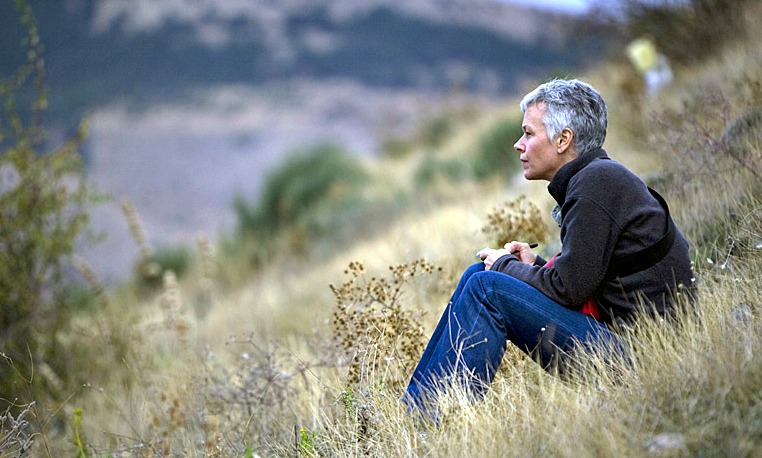
Img: Robyn Eckhardt writing in Tokat, Turkey (by David Hagerman).

THE DISPLACED Q: What’s the most delicate flavor you’ve sampled on your travels?

In a month where many of our posts have explored La Dolce Vita, I’ve been posing a series of questions to nomadic types on the sensory delights the wider world has to offer.

Week after week, we’ve seen that if there’s such a thing as a formula for The Sweet Life — La Dolce Vita — it lies in learning how to take pleasure in simple things.

And, bless my little cotton socks, I happen to be a very simple sort.

Confession: I’m a bit taste-bud challenged!

As this is our week for taste, I was tempted to make a rather tasteless joke — but then thought better of it. Instead I will quote from displaced Chinese writer Lin Yutang, author of The Importance of Living (aptly titled, given our theme):

What is patriotism but the love of the food one ate as a child?

As much as I love travel, I’m one of those who finds it challenging to sample new tastes. It does not help matters that people seem to detect this about me right away and like to take the mickey by tricking me into trying new things.

The worst instance of that was in an Egyptian bazaar. One of the vendors encouraged me to taste the bright blue powder that was piled up enticingly in bowls identical to the cumin and crushed garlic you see on every spice stall in virtually every Middle Eastern bazaar. He pantomimed that I should wet the tip of my finger and dip it in for a sample…then chortled like mad as my face screwed up and my tongue shot out in disgust. It tasted like soap! Indeed, it was soap — laundry detergent, to be precise, which they sell by weight.  (Well, you’ve got to get your kicks from something! Actually, I think if I had to work all day long in a spice stall, I’d be playing tricks on tourists, too.)

Nothing like a Big Mac fix…

And now let us turn to the words of another wise man, the ancient Greek philosopher Socrates:

The best seasoning for food is hunger.

For me this is borne out every time I hit the supermarket whilst hungry. Everything on the shelves sounds so delicious…far more so than when I discover it weeks later mouldering in the back of my cupboard, wondering why on earth I bought it.

It’s taught me never to go shopping on an empty stomach — a luxury that, for millions of people around the world, isn’t an option…

But back to Socrates. Hunger can certainly make anything taste better. After one particularly long (two-month) hike in Australia, where I lived almost exclusively on instant noodles, two-minute pasta packets, bread and water (and okay, a fair bit of chocolate!), I craved nothing so much as the rich, additive-laden satisfaction of a Big Mac. Even my wife agreed! The moment we reached Albany, Western Australia, the town the end of the trail, we didn’t even stop to rest our feet — just hiked straight through into McDonalds, and ordered about a thousand calories of heart-attack in a paper bag for each of us.

You know something? That burger tasted better than anything has ever tasted in any restaurant anywhere, ever. I mean it! I only wish I could have eaten more, but after a thousand kilometers on fairly limited rations, neither of us could finish more than half the meal. (For which I’m sure our arteries are still thanking us!)

…or a simple Thai stir-fry

In Thailand I was always at my hungriest after a full day’s diving. Diving seems like such a relaxing sport, but leading two dives a day gave me the most voracious appetite I’d ever known. I’d blast through the jungle on my little blue scooter with just one thought in mind: get to the market NOW!

Though I’d acquired a taste for quite spicy food, I always made a beeline for the same stall: a friendly old bloke with a wok and burner fastened to the sidecar of his motorbike. He served up thinly-sliced chicken on fried rice, with a small bowl of flavored water that I thought must be soup or tea, but was never quite sure which.

Whatever.

His stir-fries were plain, fresh, and SO delicious — I almost always went back for another serving! After I’d been going there for a couple of weeks, I didn’t even have to ask; the stall holder had a second portion ready for me as soon as I’d finished the first! I dread to think what happened to his takings when I left.

But the most delicate flavor of them all…

But there was something even more simple that attracted my taste buds while I was living in Thailand — so simple that it didn’t even involve cooking! I refer to the fruit salad I used to have for breakfast (on the rare mornings when I wasn’t diving) at the Thai resort where I lived. The resort owner, who was also the chef, was one of those people who whip up anything, and it was all fantastic. Pad Thai with crushed peanuts, various other noodle dishes, and deep-fried dumpling what-nots even the Thais can’t describe — so call them “no-names”!

But this woman’s fruit salad outdid them all — even though I had no idea what most of the fruits were! You can honestly taste the difference when you’re eating something that’s been picked less than fifty meters away. That fruit was so juicy, moist and colorful, it’s ruined me for fruit from anywhere else!

It just doesn’t taste the same when it comes from a supermarket down the road. Or maybe it did, before it was flash-frozen for transport and crossed an ocean or two.

It’s nothing to do with my carbon-footprint conscience, or a decision to support local industries. It Just Tastes Better.

Does that make me a snob?

It certainly makes me borderline malnourished.

Because I don’t get my 5 A Day. Not regularly. I just wait until my next trip to Thailand, where I try and eat my year’s supply of fresh fruit in two weeks.

As for what that does to my system…well, it’s not exactly delicate!

So tell me: what is the most delicate (or delicious) flavor(s) you’ve encountered on your travels? You can tell me in the comments, or jump on Twitter and drop a line to me @TonyJamesSlater +/or @DisplacedNation. And if you happen to have a mouthwatering photo to accompany your story, be sure to send it to me at tony@thedisplacednation.com. I’m working on the promised “la dolce vita” slideshow! 🙂

Bon appétit!

STAY TUNED for Monday’s post, an entertaining poll asking you to vote on which celebrities are most in need of a mid-life gap year! (Something fun for the holiday weekend…)

If you enjoyed this post, we invite you to register for The Displaced Dispatch, a round up of weekly posts from The Displaced Nation, with seasonal recipes, book giveaways and other extras. Register for The Displaced Dispatch by clicking here!

Related posts:

I

BOOK REVIEW: “The Chalk Circle,” by Tara L. Masih, Ed.

TITLE: The Chalk Circle
AUTHOR: Tara L. Masih (Editor)
LITERARY AWARDS: 2012 Skipping Stones Honor Award
AUTHOR’S CYBER COORDINATES:
Website: www.taramasih.com
PUBLICATION DATE: May 2012 (Wyatt-MacKenzie Publishing)
FORMAT: Ebook (Kindle) and Paperback
GENRE: Anthology/Autobiography
SOURCE: Review copy from author

Author Bio:

Tara L. Masih, a native of Long Island, N.Y., is the editor of The Rose Metal Press Field Guide to Writing Flash Fiction (a ForeWord Book of the Year) and The Chalk Circle: Intercultural Prizewinning Essays, and the author of Where the Dog Star Never Glows: Stories (a National Best Books Award finalist). She has published fiction, poetry, and essays in numerous anthologies and literary magazines (including ConfrontationHayden’s Ferry ReviewNatural Bridge,The PedestalNight Train, and The Caribbean Writer); and several limited edition illustrated chapbooks featuring her flash fiction have been published by The Feral Press. Awards for her work include first place in The Ledge Magazine‘s fiction contest and Pushcart Prize, Best New American Voices, and Best of the Web nominations.

(Source: Author’s website)

Summary:

Award-winning editor Tara L. Masih put out a call in 2007 for intercultural essays dealing with the subjects of  “culture, race, and a sense of place.” The prizewinners are gathered for the first time in a ground-breaking anthology that explores many facets of culture not previously found under one cover. The powerful, honest, thoughtful voices — Native American, African American, Asian, European, Jewish, White — speak daringly on topics not often discussed in the open, on subjects such as racism, anti-Semitism, war, self-identity, gender, societal expectations.

(Source: Amazon.com book description)

Review:

I’ll be honest: anthologies are not what I head for when I enter a bookshop. My gripe is that the tales are too short, and that just as you are getting into the swing of a story, it ends.

This collection of real-life snapshots, on the other hand, is different. Like most other writers, I have an addiction to people-watching and surreptitious eavesdropping, so an anthology of confessions on multicultural issues, by prize-winning writers, is right up my alley.

Because of the book’s broad topic of “culture, race, and a sense of place,” the essay subjects range widely, as each writer offers his or her own perspective on the topic. Not all of the pieces are about living abroad in another country. One such essay, which also struck me as the most poignant, was “A Dash of Pepper in the Snow,” by Samuel Autman. An African-American who grew up in an all-black neighbourhood of St. Louis, Missouri, Autman became the first black reporter for the Salt Lake Tribune in Utah during the early 1990s. His recollections of that time show, clearly, that one does not need to cross oceans to feel like a fish out of water in the worst possible way.

The essay that will probably strike the loudest chord with TDN readers is “Fragments: Finding Center,” by Sarah J. Stoner. An American-born writer who, until the age of 18, had never lived in the country of her passport but had grown up in Uganda, Morocco, Belgium, and Thailand, Stoner writes of her first days at college. This pivotal life experience also coincided with her first days of living in America, a country she can technically call “home” but which feels like anything but:

A pronounced British accent or status as an exchange student would work wonders for me in this moment. But my bland and unremarkable exterior offers no such grace. I appear deceptively American.

Because everyone’s experiences are unique, different essays will appeal to different readers. A solitary person myself, I was fascinated by “Connections,” by Betty Jo Goddard, in which the 78-year-old writer describes her isolated existence in Alaska, and her feelings about using modern technology to stay connected to the world.

Everyone, though, will be touched by “Tightrope Across the Abyss,” by Shanti Elke Bannwart, a woman born in Germany at the start of World War II. In this piece, Bannwart tells the story of her neighbor, Bettina Goering. Goering is the great-niece of Herman Göring, right-hand man of Adolf Hitler, who swallowed cyanide two hours before he was due to be hanged at Nuremberg. Her  struggles to reconcile herself with her Nazi ancestry have already been documented in the film Bloodlineswhere she “seeks redemption by facing Holocaust survivor and artist Ruth Rich in Sidney, Australia.” Bannwart, with her own 70-year burden of having a Nazi father decorated by Hitler, meets her neighbor Goering, and in doing so finds the nugget of peace and self-forgiveness that has evaded her for so long.

Words of wisdom:

On the convenience of the label “TCK”:

Yes. I’m a Third Culture Kid.

I was relieved to finally have a shortened version of, “Well, I am American but I never lived in America until college. I went to high school in Thailand and before that I lived in Belgium and then Morocco before that. Yes, I was born in the U.S., but we left for Uganda when I was seventeen days old.”

(From “Fragments: Finding Center,” by Sarah J. Stoner)

On getting to know a place:

Places are best soaked in through the tongue, sent stomach-ward, digested and incorporated into the body. To know a place is to visit local markets, order things with unpronounceable names, and eat street food no matter the time of day.

(From “Assailing Otherness” by Katrina Grigg-Saito)

On using technology to stay in touch:

Such connections [phone and email]…are available even to “hermits” living on a ridge-top at the end of nowhere. Are they needed? No. But they enrich my life. My life is full of potential connections.

(From “Connections,” by Betty Jo Goddard)

Verdict:

Although this anthology of autobiographical experiences is a slight departure from the usual books we review at Displaced Nation, it’s a valuable and high quality addition to our stable of “displaced reading.” The sheer variety of experiences depicted in the book means that all readers, wherever they hale from and wherever they are at present, will find something that resonates.

“The Chalk Circle” can be purchased here. 

STAY TUNED for Thursday’s trip to Woodhaven, where Libby is feeling more and more like an exhibit on  the Jerry Springer Show.

Image:  Book cover – “The Chalk Circle”

If you enjoyed this post, we invite you to register for The Displaced Dispatch, a round up of weekly posts from The Displaced Nation, with seasonal recipes, book giveaways and other extras. Register for The Displaced Dispatch by clicking here!

Related posts:

Staring at the sun — and 3 little “nothing” moments in my displaced life

Yesterday in San Francisco, at the corner of Folsom and 8th, I saw a middle-aged man holding up a sheet of dark glass and staring at the sun through it. “It’s beautiful,” he said to me as I passed him on the sidewalk, “so beautiful.”

I smiled in reply to him, secretly wary that he just another cracked, panhandling prophet in a city full of them.

“Do you want to look at the sun through it?” he asked, indicating his sheet of glass. I looked at him confused. “It’s welder’s glass,” he said by way of explanation.

Yes, he must be mad, I thought, and just before I was about to smile a “no, thank you,” and carry on walking, albeit at a hurried pace, he held the glass up at me, and through it, like some wonderful magic trick, the sun appeared as dark disc apart from a brilliant cresent of light at the bottom. That there was a partial solar eclipse had completely passed me by. I hadn’t been able to see the effect with the naked eye, the sun looked larger, a little hazier, but nothing out of the ordinary and it would have passed me by, but here on this particularly street corner was this happy, smiling man performing what at first seemed like a magic trick, and making sure that a small moment of joy wouldn’t pass me. So I took hold of this stranger’s sheet of glass and looked straight at the sun through it, and he was right — it was so beautiful.

This week, The Displaced Nation asked if I could write about three chance encounters experienced in my adopted homeland that I found moving or bittersweet. Moments like I experienced yesterday on Folsom and 8th.

This ties in with an idea that has long interested me, and inspires my personal blog, Culturally Discombobulated — it’s what I think of as little moments of nothing*. Moments that on the surface may seem mundane, or insignificant, but that move you or are the catalyst for deeper thoughts. My own little dipped madeleines.

As this is something I do at times on my personal blog, I am going to reproduce here three little moments of nothing that I have already been posted over there.

—————————————————————————————————————————————————-

1) A rock and a hard place

A garage forecourt in Kingman, Arizona is not the sort of place you expect to visit on a sightseeing tour. But a sightseeing tour is precisely what I am on, and a garage forecourt in Kingman, Arizona, is precisely where I find myself. In fact, this is the second time today I’ve found myself on this same depressing patch of asphalt.

To be fair, I should clarify that I have been on a bus tour of the Grand Canyon and now, late in the day, we are making our way back to Nevada. We’re certainly not stopping in Kingman for reasons of historical interest. We are not here to learn that it was in Kingman that Clark Gable and Carole Lombard were married. Gable driving the two of them all the way here from Hollywood in his cream-colored roadster during a break in the filming of Gone with the Wind. In the town they purchased a marriage license from a dumb struck clerk named Viola Olsen before being married by the nearest Methodist Minister they could find. We are not here to learn about the town’s connection with Route 66. We are not here to learn that it was in Kingman that Timothy McVeigh renounced his US citizenship, turned his home into a bunker and began making homemade bombs.

No, this is a purely pragmatic stop; a convenient place on the I40 to stretch the legs, grab a bite to eat, and empty the bladder. In the morning on our way out to the Canyon we stopped here. I bought a ham sandwich at a Chevron garage as I couldn’t stomach the thought of my other option — McDonald’s — that early. The women working in the garage were pleasant, hefty, corn-fed girls. All three had the same hairstyle, an architectural triumph of ringlets and hairspray piled high atop their heads, it looked like it belonged in a 1987 High School Prom. Once back outside on the forecourt a number of men tried to pan-handle me. There was, I thought, something off about the place. By its very nature, you expect a stop like this to be full of folks on the move, but instead there was an unsettling stillness. A number of the people gave off the impression that they’ve been standing around in this same forecourt all their adulthood. It could be that some of the sketchier elements in the town have a rough idea of what the sightseeing bus’s itinerary is — and they come especially and try and get some change out of the tourists.

And now after a long day, we’re back. A bus load of predominantly foreign tourists, here to pay a brief visit like some cut-price UN delegation: Japanese, Thai, Italian, Canadian, French, Australian and British make up our contingent. Some of us are loud and overbearing, and some of us think that everything needs to be documented by our cameras, and some of us have spent all day complaining, and some of us have spent all day gushing in delight, and some of us — if the snoring has been anything to go by — have spent all day asleep, and we are all thoroughly sick of the sight of each other.

Thanks to the evening breeze, the forecourt smells even more strongly of gasoline, pitch and fried grease than it did earlier. Off we all trot, against my better judgment, to the McDonald’s. Every night it’s a different cast, but it’s always the same show that the locals get to enjoy when the sightseeing tour stops here: a tired group of hungry tourists that mewl and bark and garble in their strange tongues and accents. We soon take over and overwhelm the McDonald’s; we create long lines for the toilets, even longer lines for the food along with a white noise of strongly accented English and misunderstood orders.

It’s all too much for one Arizonian. I think it’s one of the men that pan-handled me early in the day. He has a similar looking beard, the same sun-blistered complexion, and the same jittery demeanor.  He is angry with the Frenchman queuing behind him for what he perceives as an invasion of his personal space, and he is getting irate with how long it is taking the Turkish family in front of him to order, but their English is poor and they and the cashier are struggling to make themselves understood. When he finally gets to place his order and is waiting for his chicken McNuggets, he scans carefully all of the other people waiting in line, and scowls at these interlopers with their ridiculous anoraks and backpacks. He takes his McNuggets and barges his way out through the line, needlessly aggressive. As he passes, he elbows me. “F***in’ furriners,” he mutters.

——————————————————————————————————————————————

2) “In my father’s house.”

The shoes of the man sat opposite me on the “E” train are made from black leather, long since scuffed to grey. They are on the whole unexceptional, but for a large fleur-de-lis that has been embossed below the lacing. Their one time appropriateness for special occasions has been worn away.

On the subway and on the underground I often find myself staring intently at the shoes of my fellow passengers. It is not from a fetish, it is just that I keep my eyes on the floor, avoiding eye contact with those around me, or I keep my eyes on the page of a book I am reading. A few minutes before, when we pulled into a station, I stopped reading, put my book on my lap, and cast my eyes to the floor. Occasionally a glance is stolen, such as the one I make at the man wearing the fleur-de-lis shoes. He is a thin, middle-aged black man wearing a blue suit that like his shoes is faded by wear.  He sings “In my father’s house.” Well, he sort of sings “In my father’s house.” It is not the whole hymn that he regales the train with, it is just that one phrase — half-sung, half-shouted every thirty seconds or so. Looking up I see that most of the other passengers have their eyes to the ground, particularly when he sing/shouts “In my father’s house,” though every time he does that he looks around. I don’t feel he looks around for a reaction, but for recognition. Perhaps feeling that things have descended again into commuter quietness, he again sing/shouts “In my father’s house.” I put my eyes to the floor and look at the fleur-de-lis pattern.

Queens Plaza is his stop. As he leaves the train, he notices the book in my lap — God: A Biography, by Jack Miles. He seems happy with my reading material and looking at me, he sings/shouts “In my father’s house” as if I’m the only of his “E” train flock that understands the importance and virtue of his ministry. Then he leaves the train before I have time to explain that reading a book called God does not make me virtuous as he might think it does, and that the book is a critical look at the Old Testament. It considers God a literary character and so casts him in the light of literary theory. Not that I would have said that if I had the time.

————————————————————————————————————————————————–

3) Angels and iced tea

In this almost empty coffee shop three elderly women, lifelong friends perhaps, crowd round a table and converse over iced tea. They talk at length about their new pastor, about his energy and his youthfulness. They talk at length about angels, about their unwavering belief in them and their experiences of them. The loudest of the women, her hair an unconvincing shade of red, starts to talk about her youngest granddaughter — about how she’s as sharp as a tack, but hasn’t she started asking the trickiest of questions. The red-haired woman confides to her two companions that she has spoken with their youthful and energetic pastor about how to respond to these questions.

For instance, she tells the other two, only the other day the granddaughter had said, “Grandma, why do we have to go to Church?”

She was, she freely admits, flummoxed by how to answer, but then she remembered the pastor’s words. “Aw, sweetie, that’s a matter of faith.”

Yesterday, she continues, when she was driving her granddaughter home from school the girl had asked, “Grandma, why do we call trees trees?”

She once again patiently said to her granddaughter, “Aw, sweetie, that’s a matter of faith.”

In the almost empty coffee shop the three women gently laugh at the ridiculous things that children say, take a sip of iced tea, and start talking about angels again.

*The film director Max Ophüls once wrote about art: “Details, details, details! The most insignificant, the most unobtrusive among them are often the most evocative, characteristic and even decisive. Exact details, an artful little nothing, make art.” Most of my life I seem to spend in search of moments of little nothings that I end up attaching great importance to. It probably makes me a nightmare to deal with it as a friend or companion.

STAY TUNED for tomorrow’s post, an account of la dolce vita from a fresh perspective!

If you enjoyed this post, we invite you to register for The Displaced Dispatch, a round up of weekly posts from The Displaced Nation, with seasonal recipes, book giveaways and other extras. Register for The Displaced Dispatch by clicking here!

Related posts:
THE DISPLACED Q: What’s the most intoxicating scent you’ve encountered on your travels?

It’s Friday here at the Displaced Nation — La Dolce Vita time!

For the past couple of weeks, I’ve been doing a series of posts in aid of living the sweet life — even if you’re feeling displaced! The key, of course, lies in cultivating an approach to travel involving the five senses.

We began with the eyes and the ears, and we’re now moving on to the nose. Have you ever had the experience of catching a whiff of something and instantly being transported back to a specific moment in time — to a memory so sharp and clear you can picture it exactly? And then it’s gone, almost as quickly, as the smell wafts away and your other senses take over again, feeding the real world back into the loop…

Smell is the oldest sense, it touches the most emotional part of the brain.

– Roja Dove, the world’s sole Professeur de Parfums

Smell, like taste, is tied very closely to memory. Actually smell and taste are almost the same sense, but we won’t get into that right now — largely because we’d be talking about how in order to smell something, you have to get tiny particles of it up your nose. And that particular conversation rarely ends well…

Because smells create such strong associations with individual memories, your ideas and my ideas of an intoxicating smell are probably rather different.

Ah, the smell of…Thai petrol?!

For example, everyone loves the smell of freshly mown grass; but how many of you like the smell of petrol (gasoline, for those of you across the pond)?

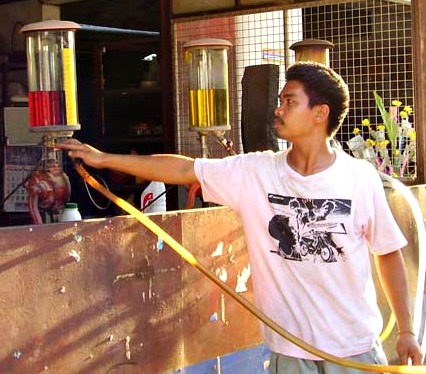
I love it. I associate it with long, busy days in Thailand, running errands for the animal clinic where I was volunteering, driving around looking for stray dogs in need of vaccinating — on my tiny little Yamaha motor scooter.

I could always smell the petrol when filling up the scooter tank — because most of the gas stations had only one barrel of the stuff, with a hand-pump and a rubber hose just long enough to reach your tank.

So that smell always brings back happy memories…even though it’s not widely considered a delicate fragrance!

The most noxious of odors — bread?!

Here’s another odd one. I’ll say it slow, in case anyone is likely to faint from pure, unadulterated, lust: Freshly. Baked. Bread.

Mmmmmm! Right?

Wrong. For me, anyway! To afford my trip to Thailand (and Fiji), I had a job working shifts in a bread factory in Australia, where that gorgeous smell permeated the whole building 24 hours a day. Perhaps because I was the only guy, and therefore resilient (or expendable?), I got to be in charge of the enormous, stainless-steel walk-in ovens. I put the bread trolleys in and, twenty minutes later, took them out again. It’s a process that has to be done quickly, or else the oven loses too much heat — but the trolleys themselves get rather warm in the process, and of the four of them, two had broken wheels.

You know how hard it is to steer a supermarket shopping trolley with a jammed wheel, right? Now imagine trying to do it fast — very fast — with a trolley approaching 200 degrees Celsius…and for 12 hours straight. Even my burns had burns.

I survived a whole two weeks in that job, and then as soon as my paycheck hit the bank, I fled straight to Bali to spend it!

To this day I can’t smell baking bread without thinking that pain — the kind that accompanies searing, scorching flesh — is about to follow…

Another smell to avoid: live jaguar!

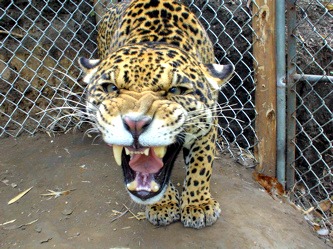
Now I’ll tell you something you don’t ever want to smell: anywhere a jaguar is living! When a jaguar is confined in, say, a remote mountain-top rescue centre in Ecuador (such as the one I worked in and on which my book is based), you have to clean the enclosure out pretty regularly. Now what goes into a jaguar — especially when you’re doing this on behalf of a nonprofit that’s operating on a shoe-string budget — isn’t particularly wholesome.

To begin with, the jaguar’s body odor isn’t noted for its appeal, unless perhaps you’re another jaguar. And of course they scent-mark everything.

But what comes out of them? Bearing in mind they are pure carnivores, living exclusively (in captivity) on carrion. It’s not…I mean, it’s just…. Look. Just don’t ever go there. Trust me on this!

And now for some winners!

Okay, back to the good. Toward the top of my list of intoxicating smells is that of the traditional Australian Sausage Sizzle. Usually held as a fund-raiser for some charity or other, they never fail to rake in the dough because the smell — of frying meat and frying onions — is utterly delicious, utterly irresistible, and carries for miles.

Now that I’m living as an expat in Perth, I get to experience this smell on a regular basis, as there’s a Sausage Sizzle held directly opposite the entrance to my gym every Saturday morning.

The moment I finish my hard-core workout, I come outside and walk full-tilt into that heavenly smell…at just the point when my body is starting to crave sustenance.

It’s almost as though those cooks are waging a personal crusade against my willpower. And my waistline.

And you know what? They win every bloomin’ time.

But my absolute favorite? I’ve got to tell you mine, right? Then you can tell me yours… It’s food again (of course!): the aroma of fresh donuts!

This dense, cakey scent takes me right back to one small stand in Morecambe Bay, in the north of England, where I went on holiday as a child. Yes, to one of my very earliest trips with my parents. I loved that I could get three donuts for £1! And, if I ate them quickly enough, I could pretend as thought I’d never had them, and convince my parents to give me another pound to buy three more! Ah, happy days indeed.

So there you have it. Now it’s your turn to describe the most delicious smells you’ve encountered on your travels — meadows, Himalayan incense, sunlight on rainbows…? Tell us in the comments! And if you happen to have a photo to illustrate this intoxicating scent, send it to me at tony@thedisplacednation.com. Yes, I may make that “la dolce vita” slideshow I’ve been promising before too long…

STAY TUNED for Monday’s post, when expat Anthony Windram recalls some chance encounters with “locals” that have enhanced his sense of the bittersweetness of life in his adopted home.

If you enjoyed this post, we invite you to register for The Displaced Dispatch, a round up of weekly posts from The Displaced Nation, with seasonal recipes, book giveaways and other extras. Register for The Displaced Dispatch by clicking here!

Related posts:
Images: photos of the gas pump and the jaguar are from Tony James Slater’s personal collection.

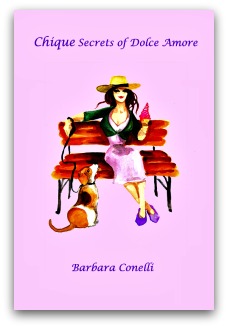
BOOK REVIEW: “Chique Secrets of Dolce Amore” by Barbara Conelli

TITLE: Chique Secrets of Dolce Amore
AUTHOR: Barbara Conelli
AUTHOR’S CYBER COORDINATES:
Website: www.barbaraconelli.com
Twitter: @BarbaraConelli
Facebook: www.facebook.com/AuthorBarbaraConelli
PUBLICATION DATE: May 2012
FORMAT: Ebook (Kindle) and Paperback, available from Amazon
GENRE: Travel
SOURCE: Review copy from author

Author Bio:

Born in London to an Austrian mother and an Italian father, Barb now splits her time between Milan and New York. Her first book, Chique Secrets of Dolce Vita, was published in 2011. She is the host of  Chique Show at Blog Talk Radio, where she interviews authors and talks about life in and her passion for Italy.

Summary:

Fascinating, enthralling and seductive travel and life tales about unexpected encounters with the capricious, unpredictable and extravagant city of Milan, its glamorous feminine secrets, the everyday magic of its dreamy streets, the passionate romance of its elegant hideaways, and the sweet Italian art of delightfully falling in love with your life wherever you go.

(Amazon product description)

Review:

In their instructions for describing someone’s appearance, “How To Write” gurus advise you not to reel off physical characteristics in a shopping list. Don’t write “blond hair, brown eyes, even teeth”, they say, but focus on a couple of arresting features: stripy but chipped nail polish, or a wrist laden with silver bangles.

By describing in detail only personal, quirky aspects of the whole, these teachers rightly insist, you create a vivid picture for your readers.

This is exactly how Barb Conelli brings to life the Milan she knows and loves.

Instead of reciting a shopping list of Places You Must See, which you could find in any guide to Milan, Conelli figuratively takes you by the hand and says, “Forget the official tour. Let me show you my Milan, the people and places I love.”

On this off-the-beaten-track tour of Milan’s streets, we visit The Paradise of Pink Feathers: the garden in Via die Cappuccini number nine, with its many flamingos, whose owner’s identity nobody really knows. We eat panettone at Marchesi’s, while Conelli relates the fascinating legends behind the pastry’s origin. (Tip: you should first try it on 3rd February, because on this day panettone has magic powers. Who knew?) On one day, she brings you along to visit the studio of an artist friend; on another, we go to the ballet school of Annamaria Bruno and her daughter Liliana to live out our dreams and become ballerinas in point shoes for a day. We meet the ghost of Mrs. Giuseppina Luini, an enterprising baker from Puglia who came to Milan in 1949, and turned the family recipe of Panzerotti into a Milanese legend.

Milan’s beauty, Conelli says, does not just lie in its breathtaking architecture, but in its inhabitants, past and present.

To me, the city is not an inanimate cluster of buildings and their architectural elements; the city is a living organism boiling with energy, its features are being recreated every day by the people who walk its streets.

It’s a city full of secret corners and quiet clusters of serenity; of shadows of people long dead, and the vibrance of those living today.

In taking a walk with Barbara, we discover the magic that is Milan.

Words of wisdom:

In order to see the world, you must know how to look at it.

~

When the streets of Milan ask you to dance, there’s nothing else to do but put on your ballet shoes and surrender with confidence to the arms of the city.

~

As an Italian, [my father] had rich experience with diabolic temptation and enjoyed surrendering to it very often and with great delight.

~

Despite its fickleness, vanity, unpredictability, and fancy for sophisticated elegance, Milan is an immensely simple city whose inhabitants know that real joy means seeing miraculous moments in everyday ordinariness.

Verdict:

At 76 pages, this book is a short but very satisfying read. If you have not been to Milan, it will make you want to visit; if you’re not a newcomer to the city, you will want to rediscover it.

Chique Secrets of Dolce Amore can be purchased here.

Or you can register for The Displaced Dispatch and hope you’ll be one of this month’s lucky winners!

Editor’s note: Kate Allison interviewed Barbara Conelli in March: “An Italian with a passion: How to live the Dolce Vita, with Barbara Conelli,” which is what inspired this month’s Displaced Nation theme of La Dolce Vita.

STAY TUNED for Wednesday’s Random Nomad interview with mid-life gap year expert, Jeff Jung.

If you enjoyed this post, we invite you to register for The Displaced Dispatch, a round up of weekly posts from The Displaced Nation, with seasonal recipes, book giveaways and other extras. Register for The Displaced Dispatch by clicking here!

Image:  Book cover – “Chique Secrets of Dolce Amore”

Related posts:

THE DISPLACED Q: What’s the most delightful sound you’ve heard on your travels?

Have you ever just stopped and listened — really listened, I mean? Yes, of course you have! Because you’re Displaced Nation readers, which automatically means you’re closely in touch with all five senses. After all, that’s what travel is all about!

But just in case those ears of yours have been missing some vital input — of the kind that would help you to appreciate life’s sweetness — let’s do an exercise in aural comprehension and memory.

Yes, it’s time to pay some attention to those great big flappy things on the sides of your head — you know, the ones that help cartoon elephants to fly? Yes, friends (Romans and countrymen), I’m asking you to lend me your ears. Don’t worry — I’ll give them back. And, by the time I do, you will understand why there’s a photo of wet grapes on this page!

Today, in the service of living a fuller Dolce Vita, our question is: What is the dreamiest, most beautiful sound you’ve heard in the course of your travels?

Beauty in serendipity

Now, because La Dolce Vita is all about finding beauty in unexpected things, I won’t wax lyrical about waves lapping on foreign shores, morning birdsong in uninhabited fields, or other somewhat clichéd ideas of a “dreamy sounds.”

True, it was incredibly sweet to hear my girlfriend say “yes” when I asked her to marry me; I’m sure the same is true for everyone who’s been through this stage in their life. In fact, I hardly heard her at all because she was crying so much. (I was crying too as it happens, but that was because I was kneeling in an ants’ nest at the time and Australian ants really hurt when they bite! Damn them!)

Now, I’m the sort of person who takes great delight in discovering life’s hidden treasures in the moments you’d least expect them. And I take even greater delight in pointing them out to everyone else, which apparently is one of the most annoying qualities a person can have. Especially if you’re having a bad day.

So, what’s the most delightful sound you’ve heard recently? Is it some gentle-voiced stranger, mentioning how bright and sunny the day is, even though the train is making you horribly late for work? Or is it the sound of someone telling that well-spring of positivity to shut the f@&8 up and p*$$ off?!

I apologize in advance for being that guy. I should try to keep my happy-happy joy-joy observations to myself more often!

But in terms of the most wondrous sounds I have come across, I’ve decided not to opt for the obvious — the soft harp music at my wedding in England; the sound my footstep makes in deep, fresh snow at 10,000 feet; or the poignant jingling of a Spanish music box, dearly remembered from my childhood, which I inherited from my granddad when he passed last month.

Instead I’ll go for the unexpected: the sound of rain on my tent.

Raindrops are falling on my tent!

After three months of living under canvas, doing agricultural work in the hope of extending my Australian Working Holiday visa, hearing that particular sound would fill my entire being with joy. Why did it have such an effect on me, you may ask? Was I looking forward to soggy clothes on the washing line or to a cold, wet sprint to the block of toilets? No, even a cheerful person like me isn’t that much of a glutton for punishment.

For me, the sound of raindrops simply meant…FREEDOM!

Because as any budding grape-picker knows, you can’t pick ’em when they’re wet — so any downpour of sufficient strength to wake me meant a day off work, for sure! No hours of bending over in the scorching summer sun; no cuts and prickles of delicate fingertips; no hauling of endless buckets, boredom, drudgery and indelible purple juice on everything. (Trust me, there are parts of you that just shouldn’t be purple — ever.)

Most of all it meant 6:00 a.m. was not the time to be wriggling out of bed, out of a nice warm sleeping bag into the miserable grey dawn — and into a set of filthy work clothes. No! 6:00 a.m., when the rain fell, rattling the flysheet and threatening to overwhelm its scant moisture resistance, meant only one thing: time to go back to sleep.

For me, that hard, driving rain was the world’s most blissful lullaby!

So there you have it. No magnificent concertos, no first cries of your first-born baby — even though no one will dispute the loveliness of those sounds.

My challenge to you today is to think of a sound that holds an interesting story about your travels abroad. What’s a sound that struck you as the dreamiest and most beautiful, but that’s unique to your own wanderings?

Let me know in the comments! And if you have a photo that accompanies that sound, send it to me at tony@thedisplacednation.com. As mentioned in last week’s post, I hope to be staging a “la dolce vita slideshow” before too long!

STAY TUNED for Monday’s post — a contrarian view of La Dolce Vita by none other than Anthony Windram!

If you enjoyed this post, we invite you to register for The Displaced Dispatch, a round up of weekly posts from The Displaced Nation, with seasonal recipes, book giveaways and other extras. Register for The Displaced Dispatch by clicking here!

Related posts:
 

THE DISPLACED Q: What’s the most heart-stopping view you’ve seen on your travels?

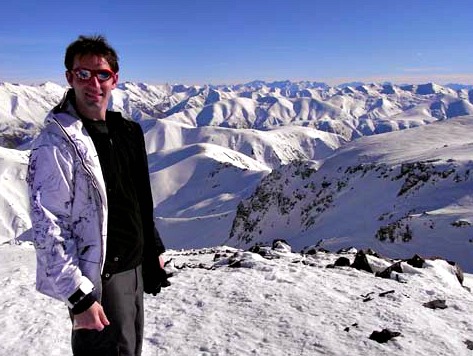
It was the perfect day. The weather was incredible. We’d looked beyond the ski area boundary signs before, of course, but this — the crystal clear visibility — meant we could see for hundreds of miles.

From this high up — the very pinnacle of Mount Hutt, in the New Zealand Alps — we could actually see the curvature of the earth. And it looked like the snow-wrapped mountains extended the whole way there.

The photo at right can’t come close to doing the view justice — especially as some idiot couldn’t resist parking himself in the frame! (Sorry, folks!)

Every time I look at this picture I well up, not because it’s good but because the memory — of unspoilt nature at its most breathtaking — is so special. I was living what The Displaced Nation likes to call la dolce vita.

Today and for the remainder of the month, I’ll be urging you to live la dolce vita as well, by conjuring up the sensory aspects of travel.

This week, I’m talking up the need to train your eyes to see the beauty all around you when you travel. In my case, in fact, this requirement of la dolce vita comes rather naturally. I see beauty everywhere I go — in nature, in ancient structures, even in the occasional female of the species(!). In 1878, the Irish writer Margaret Wolfe Hungerford coined the following phrase in her novel Molly Bawm:

Beauty is in the eye of the beholder.

One of the meanings I take from it is that you see what you look for; so, look for beauty and you’ll find it almost everywhere. (The reverse, of course, is also true.)

But that’s just my tin-pot philosophy, and this week we’re asking you to come up with the most heart-stopping view from your travels. Now that narrows it down considerably, because for me a “view” means a landscape — and I find there are elements a landscape has to have for me to really put it up on that pedestal:

1) It has to be isolated. Maybe that’s just me, but I love the wilderness, that connection to nature, that feeling that this view may not have changed for a thousand years or more.

2) It has it be high-up. I love to be high (no double entendre intended!). A bit of altitude can reveal the magnificence of even a tortured landscape. How peaceful does the Earth look from space, eh?

3) It has to be dramatic. What separates one pretty landscape from another? In my humble opinion, there needs to be some drama, something visually astounding: the scale of the place; the way color dominates it; the patterns of light and dark; the capture of elemental forces at work… Drama is in most places if you look for it.

I very rarely take pictures — which doesn’t exactly lend itself well to a life of writing and blogging. I’d been in Thailand for six months and taken only one photo when my parents (in despair!) sent me a camera for Christmas. It was great! I gave it to a friend.

Luckily, I am now married to one of the afore-mentioned beautiful women — and the pictures I don’t take, she makes up for in spades. Seriously. She has been known to take over a hundred pictures just to ensure having one good one (but she keeps them all). She takes photos of flowers! Of swans! Of cows! And of yours truly! Thank goodness — otherwise, I wouldn’t have been able to share with you the above alpine view, except with words.

So, please — tell us about your favorite views! Where is the most beautiful, jaw-dropping place you’ve seen with your own two eyes? I’d especially love to know, as I plan on visiting a few of them :0)

Please tell all in the comments! In addition, I urge you to send me a photo of that view: tony@thedisplacednation.com. With the help of my better half, I may be staging a “la dolce vita slideshow” before long!

STAY TUNED…for Monday when The Displaced Nation’s agony aunt, Mary-Sue Wallace, will be addressing cross-cultural quandaries and travel-related confusion.

If you enjoyed this post, we invite you to register for The Displaced Dispatch, a round up of weekly posts from The Displaced Nation, with seasonal recipes, book giveaways and other extras. Register for The Displaced Dispatch by clicking here!

Related posts:

Img: Tony James Slater in the New Zealand Alps, taken at the top of Mount Hutt (December 2009).

BOOK REVIEW: “Picky, Sticky or Just Plain Icky?” by Valerie Hamer

TITLE: Picky, Sticky, or Just Plain Icky? A Blind Date Conversation: Korea
AUTHOR: Valerie Hamer
AUTHOR CYBER COORDINATES:
Website: http://www.farawayhammerwriting.com
Twitter: @Farawayhammer
Facebook: http://www.facebook.com/Farawayhammer
PUBLICATION DATE: 2012
FORMAT: Ebook in various formats (Available from Smashwords)
GENRE: Biography
SOURCE: Review copy from author
AUTHOR BIO: Valerie Hamer is a British teacher and writer who has lived in Asia since summer 2000.

Summary:

“Can you imagine shopping for a husband or wife the same way you would go looking for shoes or something for dinner? In South Korea marriage is still often approached in this way: especially by men and women who are still single in their late twenties. This book tells the true life story of one Korean woman’s search for a spouse. Through a series of in-depth interviews she shared her blind dating history and experiences with me. Through stories which are in turn funny, moving and shocking an often hidden aspect of Asian culture is revealed.”

(From Smashwords description by the author)

Review:

The title of this book derives from the type of men this young Korean, Su-jin, has been unfortunate enough to meet on her many blind dates (around 100 in the last ten years.) The Picky — men who consider themselves prize marriage catches; The Sticky — the over-clingy and needy; and the Plain Icky, who all need an intensive course on dating etiquette.

Conversations between the author and Su-jin are recorded pretty much verbatim. Hamer says: “…in order to retain [Su-jin’s] voice, I have only edited for comprehension.”

The result for the reader is a clear mental picture of this young woman, eliciting sympathy, indignation, and not a little horror at the farcical dating situation she is in. Hamer herself describes it as “straight from the pages of a Jane Austen novel” in that:

Most of the Korean women I have got to know are victims of the philosophy that marriage is the only road to achieving legitimate female nirvana.

Su-jin is 29 and broke up with her long-term boyfriend two years ago. At the end of her relationship, he helpfully told her:

“If you want to meet really nice guy you’d better get plastic surgery on your breasts.”

Sadly, this was not an isolated line at which I spluttered out my coffee, not quite believing what I’d just read.

It turned out to be one of the lesser insults that Su-jin has had to endure in her quest for a husband.

Words of wonderment from Su-jin:

On her dreams:

I want to meet a really nice guy, because these days I really want to get married with someone…just someone who has a really good personality and who cares about me.

On first dates:

Even though it was the first time to meet together he asked me “How many babies can you give a birth? How much money did you save for your future?”

On blind dates made by friends:

When I met the blind date guys who were my friend’s co-worker it was really difficult because if I made small mistake it could influence on my friend as well.

Verdict:

The book is very short and an easy read, but that’s not the reason it’s a page-turner: I kept flicking the pages over, thinking that sometime, surely, luck would have to change for Su-jin.

“And did it?” you ask.

Sorry. No book review spoilers at Displaced Nation.

“Picky, Sticky or Just Plain Icky?” can be purchased here.

STAY TUNED for tomorrow’s Random Nomad post.

If you enjoyed this post, we invite you to subscribe to The Displaced Dispatch, a weekly round up of posts from The Displaced Nation, plus some extras such as seasonal recipes and occasional book giveaways. Sign up for The Displaced Dispatch by clicking here!

Related posts:

“We read to know we’re not alone”: 1st-ever litfest for expats & random nomads

The displaced writer Hazel Rochman once said that reading “makes immigrants of us all”:

Reading takes us away from home, but more important, it finds homes for us everywhere.

That must be why author interviews have played such an important role in the entertainment mix provided by The Displaced Nation since our founding one year ago.

A book that enables us to escape to a new world without buying a plane ticket? Bring it on!

A book that makes us feel at home in another part of the world? There’s nothing we crave more.

We’ve also taken authors into our confidence who, as St. Augustine once advised, treat the world as their book, rather than staying put and reading only one page. Because of their own peripatetic ways, these writers have much to say to the rest of us nomadic types about how to make sense of feelings of isolation, ennui and displacement.

As C.S. Lewis once said:

We read to know we’re not alone.

In honor of The Displaced Nation’s first anniversary, as well as in the spirit of World Party Month, I would like to propose the first-ever Displaced Nation literary festival featuring authors who have been interviewed or in some way featured on the site during the past year.

“We read to know we’re not alone”: THE FIRST-EVER LITERARY FESTIVAL FOR EXPATS AND RANDOM NOMADS
Note: The following is a tentative line-up. It includes previews of the kinds of insights we can expect to glean from such an extraordinary gathering of expat literati.

We anticipate the festival to extend from a Sunday night to a Thursday morning, with an opening night gala and a couple of closing events. Click on the headlines to go to the event descriptions for each segment:

OPENING NIGHT GALA EVENT

It seems only fitting that we offer something totally mad on our opening night. We will screen Alice in Wonderland, the 1903 British silent film directed by Cecil Hepworth and Percy Stow, which was partially restored by the British Film Institute and released in 2010. (NOTE: You can see portions of the film in a video specially made by Anthony Windram during The Displaced Nation’s “Alice in Wonderland” theme month.)

The film is memorable for its use of special effects: Alice’s shrinking in the Hall of Many Doors, and then growing too large in the White Rabbit’s home, getting stuck and reaching for help through a window.

The film matches our theme of “We read to know we’re not alone” — could anyone ever feel lonelier than Alice did at such moments?

But here’s the new twist: the screening will feature a live accompaniment by Seremedy, the displaced Swedish visual kei band this is now making such a sensation in Japan, reacting musically and without any rehearsal beforehand, to the silent film in front of them. Unique, spontaneous — and perhaps even terrifying, given that the band’s (male) lead guitarist, Yohio, looks like an anime version of Alice.

DAY ONE: “We’re not alone” — We have each other

Iranian Childhoods, Inspiring Stories

TONY ROBERTS and ASHLEY DARTNELL each spent portions of their childhood in Iran. Roberts has produced a novel based on his memories of that time, Sons of the Great Satan, which we featured on this blog about a year ago. Dartnell, who has yet to be featured (we hope she will!), released her memoir, Farangi Girl, last year (it was recently issued in paperback).

Roberts and Dartnell have in common the status of being so-called third culture kids — growing up in a third culture not common to their parents (Roberts’ parents were American and Dartnell was the product of an American mother and British father). They also have in common that they were enjoying their lives in Tehran until something terrible happened — the memory of which affects them to this day.

In Dartnell’s case, it was the sudden collapse of her father’s business (her parents subsequently split up), whereas for Roberts, it was the experience of being evacuated because of the American hostage crisis — suddenly, he was back at the family’s small farm town in Kansas, having no idea of where his friends had gone.

TCKs experience such traumas in isolation (Roberts continued to feel isolated well into his adulthood). Roberts and Dartnell, who have never met before, welcome the opportunity to forge a new connection over their common displacement.

PERFORMANCE: “The White Ship,” by Ethan Kenning

Ex-folk singer Ethan Kenning — known as GEORGE EDWARDS when performing with the former psychedelic rock band H.P. Lovecraft — will give a special performance of “The White Ship,” a song based on a mystical tale by horror writer H.P. Lovecraft (from whom the band took its name), about a vessel sailing on a sea of dreams. Critics have described it as “baroque, Middle Eastern-flavored psychedelia at its finest.”

Multicultural Marriage Boot Camp

Two Wendys — WENDY WILLIAMS and WENDY TOKUNAGA — will answer questions about the benefits as well as challenges involved in marrying someone from another culture.

Wendy Williams is the author of The Globalisation of Love and has coined a term, “GloLo,” to refer to this phenomenon. She was last week’s Random Nomad and has also been a contributor to The Displaced Nation with the post: “Why expat is a misleading term for multicultural couples” — a topic big enough to be a festival theme in its own right!

Wendy Tokunaga, who was one of The Displaced Nation’s 12 Nomads of Christmas, recently published Marriage in Translation: Foreign Wife, Japanese Husband, consisting of interviews with 14 Western women involved in cross-cultural relationships.

GloTinis will be served — those in particularly challenging unions may wish to order theirs straight up.

Romance Across Borders: Fairytale or Myth?

JANE GREEN, a prolific writer and one of the founders of chick literature, will interview MEAGAN ADELE LOPEZ and MICHELLE GORMAN — both of whom have produced first novels exploring the idea of looking for romance in other cultures. Lopez is the author of Three Questions: Because a quarter-life crisis needs answers (self-published, October 2011), about a cross-cultural romance that blossoms through the asking of three questions; and Gorman, of Single in the City: One girl, one city, one disaster waiting to happen (Michael Joseph, 2010), about an American who goes to London in search of love and the perfect life.

The Displaced Nation recently featured Lopez on our site and will feature her tomorrow in a guest post. We have yet to interview Gorman but would like to — especially as she recently self-published Misfortune Cookie, about a young woman who moves to Hong Kong to be with her boyfriend.

Both women relied heavily on their own autobiographies to produce these first novels. As Lopez said in her interview with Tony James Slater:

Hey — they always say to write about what you know, so that’s what I did!

But is it the stuff of chick lit? No one is better placed to judge this than the displaced author Jane Green (she is now an expat living in Connecticut). As early readers of The Displaced Nation will recall, Green “came in” for a chat during our coverage of last year’s Royal Wedding — she had just produced a multimedia book celebrating the young royals as an example of a “modern fairytale.”

Though Kate and Will aren’t from different cultures, they might as well have been since Kate — unlike the Prince’s mother, Diana — does not come from a royal lineage. But from Green’s point of view, this is what is makes the couple modern — and why their marriage is likely to last:

I loved discovering just how unusual William and Kate are: grounded, humble, and thoroughly modern, eschewing much of the pomp and circumstance that surrounded the wedding of Charles and Diana.

One Person’s Home — Another Person’s Nightmare?

BARBARA CONELLI, who lives in Manhattan for half of the year and Milan for the other half, will interview SHIREEN JILLA, whose first novel was set in the Big Apple.

Thanks in large part to the influence of her Italian grandmother, Conelli qualifies as the ultimate Italophile. Last year she published Chique Secrets of Dolce Vita last year — her first book in a three-part series about the Italian grasp of the “good life.” When asked by Kate Allison to explain the differences between her two homes of Milan and New York City, Conelli said that New Yorkers need to learn the Italian art of taking the time to actually live:

We need to stop and smell the roses more often.

On this point, Jilla would certainly concur. After spending three years in New York as an expat when her husband was BBC’s North America correspondent, Jilla came away thinking that “New York is a city populated by control freaks.”

But, unlike Conelli, Jilla found this control freakery sinister — which was what inspired her to write a novel that depicts the city as, as one critic said, “a teeming pit of vipers, only just covered with a finely buffed veneer of sophistication.”

In the online discussion we hosted of Exiled, Jilla commented on how culturally different New York and London are — despite New York not being seen as a particularly adventurous posting among the expat crowd. She went on:

New York in fact reminds me a lot more of Rome than London. Passion is lived out on the street, for good and bad.

Hmmm… It will be interesting to see what Conelli, whose series includes a book on Rome’s joyful idleness, makes of that!

Are Expats Defined by Their Boundaries — or the Lack? James Joyce Unplugged

One of The Displaced Nation’s founders, ANTHONY WINDRAM, and the novelist JOANNA PENN will join forces to discuss the topic of whether being an expat necessarily entails producing “expat” literature. In a post published last year on The Displaced Nation, Windram noted that although James Joyce spent most of his adult life in continental Europe, he continued to write about his home, Ireland:

If we were to be glib, we might say that Finnegans Wake was conceived in Dublin, but Paris was its midwife.

Likewise, Joanna Penn, who has been a TCK and an expat, does not self-identify as an expat writer and sets her novels at least partly in Oxford, the city she calls home. She does feel, however, that wanderlust is a big part of what fuels her to write thrillers set in various countries, as she explained in a comment on a post deconstructing a post of hers on what “home” means to writers.

DAY TWO: “We’re not alone” — Global activism

Travel for a Purpose

For this event, we hope to engage the world-famous novelist BARBARA KINGSOLVER to interview ROBIN WISZOWATY, who is Kenya program director for the Canadian charity Free the Children and the author of a memoir targeted at young adults on her own experience of living in Kenya, My Maasai Life.

Kate Allison interviewed Wiszowaty during the month when The Displaced Nation explored the topic of global philanthropy.

Around the same time, Allison also wrote a post on Kingsolver, exploring the idea that her novel The Poisonwood Bible was intended an allegory for what happens when you barge into someone else’s culture thinking you know everything and they know nothing.

Notably, Wiszowaty could almost have been a Kingsolver character in the following incident that occurred during her initial two months in Nairobi, as reported to Allison:

One street man nearby…said in Swahili, “What are you doing in Kenya, if you can’t help us?”

Despite my halting comprehension of the language, I understood his question. What was I doing here? Was I here to help Kenyans? I couldn’t remember any sort of altruistic impulse as my reason for being me here. I only pictured myself three months earlier, curled up on my family room couch reading books on cultural sensitivity, or shopping in neighborhood department stores for appropriate clothing, thinking this was a chance for me to enlarge my experience and pick up others’ points of view. I’d been driven simply by a desire to escape, not to improve the lives of these poor people.

Wiszowaty, of course, came around and now thinks constantly about what she can do for Kenya. We expect that Kingsolver, who funds a prize for authors of unpublished works that support social change, will approve; but will she also offer a critique?

PERFORMANCE: “The Boy with a Thorn in His Side,” by Pete Wentz

Fall Out Boy’s PETE WENTZ will do a performance in which he puts passages from his 2004 book, The Boy with a Thorn in His Side, to music. The book chronicles the nightmares he had as a child.

Wentz is a supporter of Invisible Children, Inc., an organization dedicated to helping the cause of child refugees in Uganda. He once participated in an event called “Displace Me,” in which 67,000 activists throughout the United States slept in the streets in makeshift cardboard villages.

(Notably, Wentz has also earned his chops as world traveler. Before Fall Out Boy went on hiatus in late 2009, it made an unsuccessful bid to the only band to play a concert on all seven continents in less than nine months — unfortunately, weather conditions prevented them from flying to Antarctica.)

Why Feisty Heroines Need Not Always Be Named Pollyanna, Calpurnia or Hermione

Melbourne-based author GABRIELLE WANG writes books under the Penguin label targeted at young adults in Australia. Her heroines are always non-white, Chinese or some mix. They are culturally marginalized.

Wang, who fell into writing accidentally — she had planned to be a book illustrator — loves to use her imagination to create characters who are historically plausible yet never show up in history books. One such character is Mimi, who feels ashamed of being Chinese until she has a magical, transformative experience that makes her proud of her cultural heritage.

Another such character is Poppy, a half-Chinese, half-Aborigine girl who lived in the 19th century.

Wang told us she was able to draw on her own background to portray how Poppy might have felt:

I think I was able to imagine the Aboriginal child’s situation quite easily because I know what it feels like to be an outsider, and to suffer racial prejudice. I was the only Asian child in my school in Melbourne and I only saw white faces in the street.

The Search for Paradise

The search for paradise has been underway for as long as human history. Understood as an idyllic realm located at an exact spot somewhere on the earth, and yet as a place separated from the world, the possibility of reaching paradise has aroused the curiosity of travelers over many centuries and continues to do so.

MARK DAMAROYD, who has lived in Thailand for the past several years, subscribes to the idea that paradise is indeed what many men have claimed it to be since time immemorial: life on an exotic island, with sandy beaches, coral reefs and coconut trees, and with an exotic, much younger girlfriend. That is why, as he told us in an interview last summer, he had Koh Samui in mind when creating the island setting for his first novel — the aptly named Pursuit to Paradise.

Coming from a somewhat different direction is JACK SCOTT, whose memoir — Perking the Pansies: Jack and Liam Move to Turkey — was reviewed at the end of last year by Kate Allison.

In it, Scott tells the story of how he and his civil partner, Liam, left the rat race in London behind to live in Bodrum, Turkey. A picturesque spot on the Mediterranean with a temperate climate, the city was their vision of paradise.

Naturally, though, things were not that simple. The couple soon encountered another rat race — the expat one. To quote directly from Scott’s book:

Sad people, bad people, expats-in-a-bubble people. They hate the country they came from; they hate the country they’ve come to. This was my social life. This is what I gave everything up for. This was Liam’s bloody Nirvana. We were the mad ones, not them.

PERFORMANCE: “Red Right Hand,” by Nick Cave

NICK CAVE is a distinguished musician and songwriter from Down Under. He took the title of this song from a line in John Milton’s epic Paradise Lost, referring to the vengeful hand of God. According to the lyrics: “You’re one microscopic cog in his catastrophic plan.”

Cave has also occasionally dabbled in literature. As one reviewer put it, his first novel “reads like a logical extension of the dark world his music has already created.”

Ghosts of Nations Past and Future

In honor of Dickens’ bicentenary, Displaced Nation contributor ANTHONY WINDRAM will give a spirited reading of his favorite passages from A Christmas Carol (already explored in a post), followed by a discussion of whether Scrooge’s displacement could inspire the planet’s wealthiest people to behave more humanely. To quote from one of the comments made on Windram’s original post:

If such a man as Scrooge can displace his lust for money with a love of humankind — and an awareness of other people’s suffering — then does that mean there’s hope for the 1%?

Through the Looking Glass: Delhi & Bangkok

JANET BROWN, author of the travelogue Tone Deaf in Bangkok, and DAVE PRAGER, author of the travelogue Delirious Dehli, will discuss the need for travelers to do more than the usual amount of preparation when entering cultures that are very different from one’s own, on a par with Alice’s Wonderland.

As Brown explained in her interview with us, travelers to Thailand can be “tone deaf” because Thai is a tonal language and it’s easy to make mistakes. But they can also be “tone deaf” when it comes to figuring out the Thais’ communication style:

“You looked so beautiful yesterday” probably means today you resemble dog food and ought to go home and rectify that at once.

Whereas for Prager, one of the points about living in Dehli is that you may end up deaf as there are always people, animals and vehicles around.

In conversation with Anthony Windram, Prager admitted that getting used to America again — he and his wife now live in Denver — hasn’t been easy:

What’s struck me is that the US just seems so empty. It’s not that India is always intensely crowded; rather, it’s that India you’re never completely alone.

WRITING LAB: What (Not) to Write

Expat writing coach par excellence KRISTEN BAIR O’KEEFFE will explore techniques to develop your writing skills and help you find which world, of your many worlds, you want to write about, and how to get started.

Last summer’s post “6 celebrated women travel writers with the power to enchant you” was officially dedicated to O’Keeffe for delivering these pearls of writerly wisdom during her “Expat Writing Prompts” series:

Writing a multi-volume treatise is NOT the answer. Of this, I am sure.
Instead find a nugget. A moment. A single object. One exchange. One epiphany. One cultural revelation.
Find one story and tell it.
Just it.

DAY THREE: “We’re not alone” — Eat, drink, be merry & look good

Classy and Fabulous: French Style as Universal Norm

The French may be under fire for how they treat immigrants, but expats continue to thrive there. For this event, the classy and fabulous JENNIFER SCOTT, author of Lessons from Madame Chic: The Top 20 Things I Learned While Living in Paris — which has been a runaway success (it’s now under contract by a major publisher!) — will set out to prove, as she did last month in an interview with us, that no one can edit down their clothes and belongings as well as the French can.

The equally classy and fabulous ANASTASIA ASHMAN, co-editor of The Expat Harem: Foreign Women in Modern Turkey — and participant in our “Cleopatra for a Day” series last month — will serve as discussant. Two of the cultural influences for Ashman’s wardrobe are Southeast Asia (she once lived in Malaysia) and Turkey (she was an expat in Istanbul for several years). She does, however, adore French perfume!

Which Came First, Story or Recipe?

It’s food — so that means France again! ELIZABETH BARD, an American who lives in France with her French husband, and her opposite number, CORINE GANTZ, a Frenchwoman who lives near LA with her American husband, will explore why food is so central to the works each of them produces.

Bard is the author of the best-selling Lunch in Paris: A Love Story with Recipes. So did she ever think of writing it the other way around: recipes with a love story? Here’s what she told ML Awanohara in their conversation last autumn:

When I sat down to think about the moments that really helped me discover French life, I kept coming back to the dinner table, the markets, the recipes — so it seemed natural to structure Lunch in Paris around those experiences.

Gantz can no doubt relate. When we featured her novel, Hidden in Paris, last summer, here’s what she said when the topic of food came up:

For me, writing a novel is a barely disguised way for me to talk about food — the novel being a vehicle for food just as grilled toast is a vehicle for foie gras.

Fans of Hidden in Paris, please note: Gantz has just now released a playful cookbook featuring 20 delicious dishes that were described in mouth-watering details in the novel.

Moderating the discussion between Bard and Gantz will be the well-known novelist JOANNE HARRIS. Harris, who was born over a sweet shop in Yorkshire to a French mother and an English father, rarely misses an opportunity to bring food and drink into her novels — the most famous example being Chocolat.

Displaced Storytelling Circle

Verbal antics, stories, music and more. Highlights include readings by

  1. Displaced Nation contributor TONY JAMES SLATER, from his highly entertaining travelogue, That Bear Ate My Pants! Adventures of a Real Idiot Abroad.
  2. Displaced Nation interviewee ALLIE SOMMERVILLE, from her wry memoir Uneasy Rider: Confessions of a Reluctant Traveller. (Allie, please read the passage about the campervan being too wide for one of the Spanish streets!)
  3. Displaced Nation nomad KAREN VAN DER ZEE, from her collection of expat stories. (Miss Footloose, please tell us the ones about the crocodile and the couple in the Roman restaurant!)
  4. Founder KATE ALLISON, from The Displaced Nation’s weekly fiction series, Libby’s Life, which as you may have noticed, is now up to 46 episodes. (Kate, be sure to read the one where you introduce Sandra, Libby’s MIL from hell!)

The Art of Drink: Ian Fleming

One of The Displaced Nation’s founders, ANTHONY WINDRAM, will talk about the role of food (and especially drink) in Ian Fleming’s James Bond novels, on which he did a post last year:

The Bond of the novels isn’t solely a martini drinker. He’s always one to try anything local that’s on offer. In Jamaica he’ll drink a glass of Red Stripe, in the US he’ll have a Millers Highlife beer. Throughout the novels Fleming uses food and drink to convey an alien culture, demonstrate social status, show Bond’s mood and his sophistication and ease with the world.

An array of drinks — not only shaken martinis but also bottles of Heineken!– will be served. Green figs and yogurt, along with coffee (very black), will be made available to anyone who is still suffering from jetlag.

Enchanted by Wisteria: Elizabeth Von Arnim Unveiled

Displaced Nation founder (and the author of this post!) ML AWANOHARA will read her favorite passages from the collected works of travel writer Elizabeth von Arnim, on whom she wrote a post last year. As she pointed out then, Von Arnim was fond of the idea of a woman escaping her marital, motherly and household duties in the pursuit of simple pleasures such as gardens and wisteria. A magical Italian castle — such as the one featured in her best-known novel, The Enchanted April — can also be a tonic.

CLOSING NIGHT + BONUS EVENT

To close the festival, we will screen both the Swedish and Hollywood versions of The Girl with the Dragon Tattoo, followed by a critique from CHRIS PAVONE, author of the new novel The Expats. Pavone will discuss whether:

  1. it was really necessary for Hollywood to produce its own (non-subtitled) version; and
  2. all the female-perpetrated violence cropping up in film and on TV of late presages a “fourth wave” of feminism.

Pavone is well qualified to judge the latter as his novel (not yet featured on TDN!) is an offbeat spy story with a female protagonist — a burned-out CIA operative who moves to Luxembourg. Apparently, this was the kind of thing Pavone thought about when he was trailing his spouse in that cobblestoney old town.

And, just when you thought it was all over, we bring you a final treat: a chance to hear from the historian SUSAN MATT, who recently published Homesickness: An American History to much fanfare in the thinking media. Matt disputes the stereotype of Americans as westward wanderers by showing that Americans are returning to their homeland in greater numbers — that’s if they ever leave at all. (Our ancestors must be turning over in their graves!)

* * *

So, shall I sign you up? And can you think of any additional topics/authors/performers who ought to be featured? I look forward to reading your suggestions in the comments.

STAY TUNED for tomorrow’s guest post from Meagan Adele Lopez, on the differences between American and British wedding celebrations.

If you enjoyed this post, we invite you to subscribe for email delivery of The Displaced Dispatch, a round up of the week’s posts from The Displaced Nation. Sign up for The Displaced Dispatch by clicking here!

Related posts: