The Displaced Nation

A home for international creatives

Tag Archives: China

DIARY OF AN EXPAT WRITER: Testing one, two, three…Can anybody hear me?

DiaryExpatWriterToday we welcome a brand new columnist, the up-and-coming author Shannon Young. This past summer, Shannon announced she’d cut 18 inches off her hair, quit her day job to become a full-time writer, and given herself a pen name for her new series of adventure novels. And, yes, she is an expat, a kind of love refugee, living in Hong Kong. She has generously agreed to chronicle her writing adventure for us.

—ML Awanohara

Dear Displaced Diary,

In this column, I’ll be recording my experiences as a full-time expatriate writer. Officially, this is only a test.

Let’s start with a bit of background: I have been an expat, an American in Hong Kong, for four years and one month. For the past four years, I taught English in a local primary school while harboring a desire to work in book publishing.

Originally, I wanted to be an editor, to find talented writers and help them get their work into the world. I didn’t think I had stories of my own. Then, I moved to Hong Kong. In my new expatriate life, I found stories: personal dramas, bewildering worlds, opportunities for stimulating observations, and even ideas for fiction.

So, I started writing…

I discovered I love the process: mulling over half-formed ideas, stealing character descriptions from people I saw on the street, scribbling outlines on everything, and sitting down in coffee shops for hours at a time to actually do the work.

Four years later, I’ve completed a number of projects composed of bytes and bits of code, of pages and ink, of words and stories. Each project has taught me to look closer at the world around me. Each project has challenged me to be more diligent and to look for opportunities to write something that will matter.

One of those projects, a Kindle single called Pay Off, discusses how my teaching job in Hong Kong enabled me to pay off my large student loans from a US university. I’ve been debt free since December 2013 so have been able look seriously at other occupations.

I want to keep writing…

My teaching contract ended in July 2014. By that time I had accrued some savings, some complete or nearly complete books, and a husband with permanent residency. Instead of continuing to teach, I realized that now was the time to try to make it as a writer.

This is only a test. If I am not bringing in enough money from my writing (or worse, not enjoying the work) around Chinese New Year, I will start looking for a new job.

For now, I’m jumping in with both feet, seeing if this dream is feasible.

Like becoming an expat all over again…

Quitting a day job to write full-time is a lot like moving to a new country. You might know a bit about what to expect and what to pack. You do your homework; you find stories of people who’ve done it successfully, who love their new lives. You also find stories of people who’ve failed, who didn’t gel with the new place for any number of reasons. Most expats fall somewhere in between, learning to live with the difficulties while also enjoying many good moments.

Some people say it isn’t possible to make a living as a writer. They cite the successes and insist such people are outliers: exceptionally good or exceptionally lucky. As with moving to a new country, I suspect the truth lies somewhere in between. All I can do is take the leap and see if I can make it work.

But, just as I wouldn’t move to a new country without a suitcase, I am not starting this writing journey with a blank Word document and “Once upon a time…”

I have a strategy!

Here’s what I’m “packing” for my full-time writing life:

1) A portfolio of published works—comprising not just the student debt Kindle single but also the anthology How Does One Dress to Buy Dragonfruit: True Stories of Expat Women in Asia, which I edited for a small Hong Kong publisher. It came out earlier this year.* Neither of these works is a huge moneymaker, but sales can add up slowly. More importantly, these two publications have given me valuable publishing experience.

2) A book deal. My memoir of my first year in Hong Kong, Year of Fire Dragons, is being published by Blacksmith Books, an independent Hong Kong publisher, at the end of October. Hong Kong is a small market and even healthy sales won’t pay my rent, but at least I have a book to launch and a tangible opportunity to build my career.

3) A genre series in the works. This is the essential part of my strategy, the heavy winter coat, if you will, that I’m packing as you never quite know, once you become an expat, where you might end up. (I’m in Hong Kong now, but as I never could have predicted that, shouldn’t I be prepared for the day when I move to, say, Finland?) Since late 2012 I have had the wild pleasure of working on a series of post-apocalyptic adventure novels set at sea called The Seabound Chronicles (under the pen name Jordan Rivet). I’ve planned for a four-book series and written drafts of three of the titles. Book One, Seabound, is currently with the copy editor and should be ready to launch in November. I plan to self-publish this series as e-books and POD paperbacks and, frankly, hope to make some money.

4) Last but not least, reasonable expectations. While I am hopeful that the combination of my publishing experience so far, my existing works, and a highly commercial series will enable me to continue doing what I love, I am also realistic. I don’t expect to get rich. The goal here is to build up an audience—and a long tail of sales—that will eventually enable me to pay my rent and buy the occasional plane ticket home to see my family. But my primary expectation is that I will work hard, produce the best books I can, and try to learn as I go.

“If you want a pearl, you must dive for it.”—Chinese proverb

I realize I’m taking a risk by forgoing a steady income and living on savings in order to give myself more time to write. But taking risks is second nature to expats. We leave behind everything we know, and there are never any guarantees about how things will turn out.

My own jump into expat life occurred when I followed the man I loved to his home country. At the time, I didn’t even know if we would get along when we finally lived in the same country. At first, it looked like everything would fall to pieces because a month after I arrived in Hong Kong my boyfriend’s company sent him to London. I had a year on my own in Asia, fearing that my risk had been in vain.

That story has a happy ending: that boyfriend is now my husband—and I love Hong Kong. It was a risk that paid off, but it could have gone very wrong. Now, I hope the risk I’m taking will turn out at least half as well.

And can I tell you a secret, diary? Since I stopped working and started focusing on writing full time, I’ve been deliriously happy. I love having hours to myself each day to sit down and work on my own creative projects. I love reading about the publishing industry and studying other people’s books and careers. I’m trying hard not to become an obnoxious friend who only talks about their own work because it’s all I think about these days.

Yes, I know this honeymoon period won’t last forever, but at least allow me to say: it’s been wonderful so far!

And yes, I sometimes struggle with prioritizing, but that’s because there are so many things I want to do! But I’m gradually getting used to my new routines and performing triage on my to-do lists. I’m developing the daily habits of a writer. I want to use this period well.

Each month, I’ll share a bit more with you about where this journey is taking me. I hope you’ll come along for the ride.

Thanks for reading!

Yours,

Shannon Young
www.shannonyoungwriter.com

*From now until the end of the year, Shannon will be sharing excerpts from Dragon Fruit. Stay tuned!

* * *

Readers, it’s your turn. What is a risk you’ve taken in order to follow a dream? Was it becoming an expat or something even more daring, like becoming a full-time writer? What are some difficulties you faced along the way? Let me know in the comments!

STAY TUNED for next week’s fab posts!

If you enjoyed this post, we invite you to register for The Displaced Dispatch, a round up of weekly posts from The Displaced Nation, with snippets of worldly wisdom, exclusive book giveaways and our nominees for the monthly Alice Awards. Register for The Displaced Dispatch by clicking here!

Related posts:

BOOKLUST, WANDERLUST: Peter Hessler’s “Country Driving” is a pleasure cruise for Western expats in China

Booklust Wanderlust Collage

Left: Oleh Slobodeniuk (CC BY-NC-SA 4.0); right: Beth Green (her own photo).

All hail, displaced bookworms! Our book review columnist, Beth Green, is back. An American who lives in Prague, Beth is an intrepid traveler and voracious reader, who mixes booklust with wanderlust in equal measures. In other words, she has the perfect background for reviewing recent book releases on behalf of international creatives. Hmmm…but will we enjoy her reviews more than the actual works?

—ML Awanohara

Hello again, Displaced Nationers! As a long-time traveler and reader, I’m drawn to books set somewhere I’ve lived in or gotten to know well. Reading an absorbing travel tale covering ground I once knew intimately, I am lingering again on the streets I once walked, recapturing the taste of meals I once savored, and recalling tiny details about a place that, until that moment, had been lost to memory.

country-driving_cover_pmThis month’s book is the third in Peter Hessler’s award-winning trilogy on China, called Country Driving: A Chinese Road Trip. I was excited about reading it as I’ve lived in China twice.

Any of you who are China hands will be familiar with Peter Hessler. Originally from Columbus, Missouri, he initially went to China with the Peace Corps and taught English and American literature at a teachers college located in Fuling, a small city on the Yangtze River. Along with a fellow teacher, he was the first foreigner to be in this part of Sichuan province for 50 years.

After the Peace Corps, Hessler settled in Beijing for about a decade, producing articles and books on the socioeconomic upheavals he observed all around him in China.

I devoured Hessler’s first two memoirs on China: River Town: Two Years on the Yangtze (based on his Peace Corps experience) and Oracle Bones: A Journey Through Time in China. Peter Hessler CollageI read the first just before moving to China and the second, right in the middle of my stay. Like other China-based expats, I found that Hessler’s descriptions of teaching English in Sichuan Province, along with his detailed portraits of the people he met all across China, helped me understand—and even anticipate—many of the experiences common to Western foreigners in China.

Country Driving follows suit, weaving together stories from the many road trips Hessler took while on assignment for several Western publications: National Geographic, The Wall Street Journal, and The New Yorker.

“Reading ten thousand books is not as useful as traveling ten thousand miles.” — Chinese proverb

Country Driving is divided into three sections. In the first, which was also my favorite, Hessler chronicles his 7,000-mile trip across northern China, following the Great Wall all the way from the East China Sea to the Tibetan Plateau, in a rented two-wheel-drive SUV he’s not supposed to take out of Beijing. The reader accompanies him through rush hour traffic, dings and scrapes with other drivers, roadside scams, rutty roads and the wide-open desert leading to the Tibetan Plateau.

As he introduces the reader to the chaos of Chinese roads, he quotes the often bizarre multiple choice questions Chinese driving students are forced to answer, e.g.:

When overtaking another car, a driver should pass
a) on the left.
b) on the right.
c) wherever, depending on the situation.

When passing an elderly person or child, you should
a) slow down and make sure you pass safely.
b) continue at the same speed.
c) honk the horn to tell them to watch out.

When he picks up hitchhikers, who are a common sight on rural highways where there’s often a shortage of direct buses, he tells us their ages, describes their appearances, and reports what their occupations and, often, aspirations are. For instance, in a passage about taking a hairstylist and her grandfather to a city near or in Shaanxi province, Hessler writes:

The old man wore a weathered cap and rough blue cotton clothes. He was mostly toothless: a wispy beard hung from his chin. His traveling companion was the most strikingly pretty woman I ever saw in the north. She was twenty years old, with hair that had been dyed a light red; her lipstick was bright pink and a tiny beauty mark had been tattooed between her eyebrows.

About halfway through the first section of the book, I realized I was reading unusually slowly. Country Driving is a meaty 400 plus pages but Hessler’s prose is smooth enough to make those pages zoom by like one of the tinted-window “cadre cars” he avoids on the highway.

What was happening?

I started paying more attention—and realized that, instead of focusing on Hessler’s descriptions, I was busy daydreaming about China stories of my own. This passage, for instance, really rang home for me:

…(We) continued on foot to the gridlock, where drivers explained what had happened. It all started with a few trucks whose fuel lines had frozen. The trucks stalled…truckers had crawled beneath their rigs, where they lit road flares and held them up to frozen fuel lines. The tableau had a certain beauty: the stark snow-covered steppes, the endless line of black Santanas, the orange fires dancing beneath blue Liberation trucks.

Except in my story it’s not a truck that has the frozen fuel line, it’s a bus. And I’m not admiring the beauty of the landscape; I’m on the bus. And the flares were straw, the bus caught fire, and soon I (and my parents, who were visiting) had to hitch a ride on a different bus.

“If you want happiness in a lifetime, help someone else.” — Chinese proverb

In the second section of the book, “The Village,” Hessler zooms in on Sancha, a rundown village north of Beijing near the Great Wall, where he and a friend end up renting a small house. Whereas before, Hessler was entertaining us with road rules, now he is regaling us with stories of small-town politics. Hessler becomes good friends with his entrepreneurial landlord, and we hear all about this man’s business ventures and political campaigning.

The landlord has a sickly son, to whom Hessler is “Uncle Monster.” At the time Hessler’s rented car is the only reliable transportation in the village, and at one point the story becomes more emotional, when Hessler helps to save the boy’s life in a medical emergency.

Hessler is particularly good at illuminating tiny nuances of Chinese culture and life for the sake of us clueless Westerners. He provides literal translations of road signs and propaganda slogans for our amusement, and he is careful to let us in on passing conversations that point to larger issues.

“Be not afraid of growing slowly, be afraid only of standing still.” — Chinese proverb

The third part of the book, “The Factory,” loses some of the intimacy built up in the first two sections. We go from travelogue to investigative reporting as Hessler ventures down into the mountainous coastal region of Zhejiang to observe a newly industrialized area, one virtually unknown to the outside world, where single cities produce single products.

What he loses in personal perspective, he makes up with research, interviews, and some great anecdotes. It’s only one third of the book, but could have stood alone.

The stories Hessler tells of the individuals working in this province are some of the most memorable in the whole book: stories whose subjects range from migrants seeking their fortune—at pennies an hour—on the East Coast, to the 50,000 residents of a river valley about to be dammed, to bosses under pressure to build a viable business. One entrepreneur he meets is planning to make his fortune by manufacturing the tiny rings that appear on every bra strap.

StrangeStones_bookcovrCountry Driving was excellent. It captures a lot of the aspects of China I enjoyed while living there—the plucky optimistic people I met, the amazing scenery and some of the wacky, like-nowhere-else experiences I had—but it also shines a light on many of the reasons I decided that my second time living in China would be my last: pollution, decisions made based on “face” or convenience rather than practicality or legality, arbitrary and changing rules.

Last year Hessler has published a fourth book, a collection of previously published stories, called Strange Stones: Dispatches from East and West, and although I’ve already read a few of the stories, I’ll be picking it up for a browse soon.

* * *

Thanks, Beth, for another fascinating column! I almost feel as though I’ve been on a whirlwind trip to China, which is saying a lot, given the vastness of the territory. Readers, are you like Beth: do you like to read about places where you’ve lived as an expat? Why or why not?

Beth Green is an American writer and English teacher living in Prague, Czech Republic. She grew up on a sailboat and, though now a landlubber, continues to lead a peripatetic life, having lived in Asia as well as Europe. Her personal Web site is Beth Green Writes, and she is about to launch a new site called Everyday Travel Stories. To keep in touch with her in between columns, try following her on Facebook and Twitter. She’s a social media nut!

STAY TUNED for the next fab post!

If you enjoyed this post, we invite you to register for The Displaced Dispatch, a round up of weekly posts from The Displaced Nation, with seasonal recipes, book giveaways and other extras. Register for The Displaced Dispatch by clicking here!

Related posts:

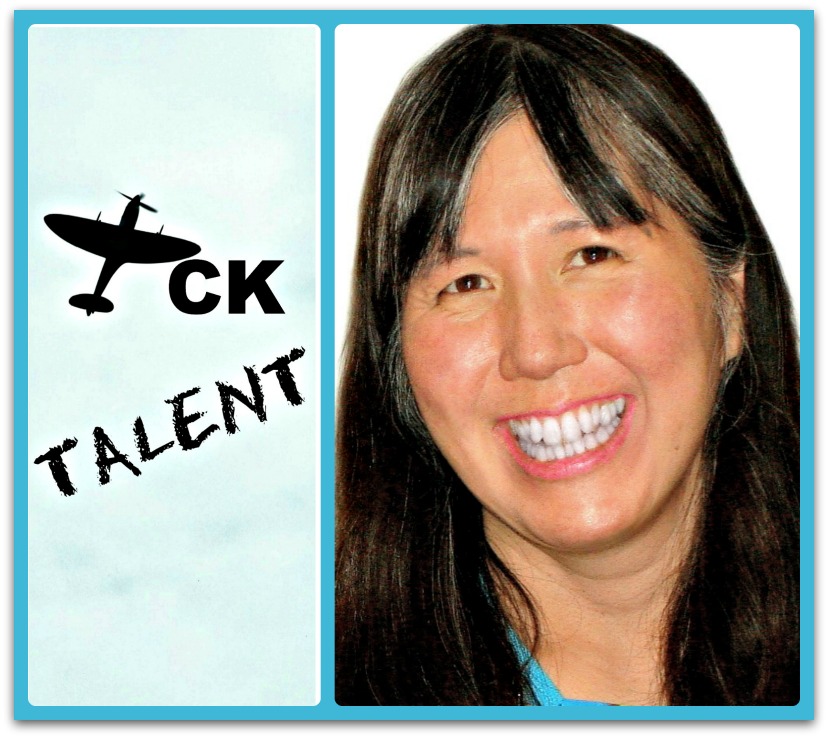
TCK TALENT: Alice Shu-Hsien Wu, Cultural Bridge Builder and Global Nomad Videographer

Alice Wu TCK TALENT Collage

Alice Shu-Hsien Wu (her own photo).

Elizabeth (Lisa) Liang is back with her monthly column about Adult Third Culture Kids (ATCKs) who work in creative fields, Lisa herself being a prime example. A Guatemalan-American of Chinese-Spanish-Irish-French-German-English descent, she has developed her own one-woman show about being a TCK, which was the closing keynote at this year’s Families in Global Transition (FIGT) conference.

—ML Awanohara

Happy summer/winter/rainy season, international readers! As some of you may recall, last month I talked to Cathleen Hadley, a fellow ATCK contributor to the anthology Writing Out of Limbo, dedicated to telling the stories of those of us who grew up among different countries. Today I’m interviewing another Limbo contributor, Alice Shu-Hsien Wu. An intercultural communication consultant and lecturer at Cornell University, Alice is particularly interested in intercultural adjustment and in internationally mobile families. She has produced two acclaimed videos about college students who have led internationally mobile, nomadic lives, in which the students themselves discuss such challenges as transition, cultural identity, and rootlessness.

* * *

Welcome to The Displaced Nation, Alice. I understand that you were internationally mobile while growing up, living in England, Finland and Sweden in addition to the United States.
Yes, my father was a biochemistry professor and had sabbaticals in various places. We went from New York City to Palo Alto, California, when I was 6 and to Upstate New York when I was 7, and then to England when I was 11 and back to New York State when I was 12. We also sometimes traveled to various countries where my father had meetings. I was a Rotary exchange student in Finland when I was 17; went to college and grad school in New York; and then, at age 26, went to Sweden to study and work, returning two years later to Ithaca, New York, where I still live.

Were you happiest in a certain place at a certain time?
I’ve been happy in many places—one of my favorites was California because of the sunny weather, fruit trees and flowers in my yard, and sand in the playgrounds (I was 6 then, remember). This was a welcome change from living in NYC—where the playgrounds were concrete and you weren’t allowed to walk on the small amounts of grass.

“Then when I got here it was a big adjustment identity thing: I didn’t feel American…” – Lynn, US

How did you find your various “repatriation” experiences?
My repatriation from Sweden was probably the most challenging—since I had lived there longer and gotten more immersed in the culture through school, work, and friends. I remember thinking American TV newscasters smiled and laughed too much compared to Swedish commentators and that college and grad students in the United States dressed very informally compared to students in Stockholm. Everything in the U.S. seemed bigger than I had become accustomed to in Sweden—gigantic tableware and portions in restaurants (especially in California), huge shopping carts and vast numbers of products in supermarkets. Also, I was surprised by the general lack of discussion about current world events in the U.S., compared to the amount and frequency of these discussions in Europe.

Now you sound like the other Alice: in Wonderland! (I mention because she’s the Displaced Nation’s mascot.) As an instructor at Cornell, you’ve made two important documentaries about global nomads/TCKs, Global Nomads: Cultural Bridges for the Future (1994) and Global Nomads: Cultural Bridges for the New Millennium (2001). What did you like best about the creative process?
Meeting the students and getting to know them—they were fascinating, honest, and articulate. I screened the first global nomads video for the student interviewees at the end of the school year, and they liked it so much they decided to form a global nomads club. They asked me to be their advisor and I ended up working with them for the next three years. They were amazingly creative, active, and energetic and brought a lot to the campus community.

“Global Nomads have the ability to educate others…” – Liliona, Ghana

What attracted you to the documentary format? I have talked to other ATCK actors like myself and to novelists and artists, but you are my first videographer.
Clearly, there are many effective ways to portray the GN/TCK experience, but I was more familiar with the documentary format since I’d used it in teaching. For example, I’d used videos during intercultural training sessions for students and staff at Cornell to introduce topics like cultural adjustment, culture shock, and reentry shock. I also videoed international students as well as first-generation Americans who were participating in panels about aspects of American culture, as well as some international students who were teaching and doing role-plays. So I was very comfortable with the format. I really like being able to feature students’ own words and impressions—especially when I can capture them interacting with other students. In the first video, all of the students were from Cornell. In the second video, the students were from six different schools across the United States: San Diego State University, Colorado State University, The College of Wooster, George Mason University, Syracuse University, and Cornell.

Limbo_coverIn your essay in Writing Out of Limbo, you describe the impact of the videos not only on the college students who participated in them but also on the TCKs in your audiences. You produced these two documentaries in the era before social media. How did the news spread?
I showed the videos to as many groups at Cornell as I could: students, including Resident Advisors in dorms and the members of an international student discussion group, as well as groups of staff. I also screened them at international and intercultural conferences. Also, the students who appeared in the first video were great with promotions. They showed it to their dorm-mates to help them understand the GN experience, as well as at an initial meeting of their global nomads club to introduce prospective members to the concept. And they traveled together to a Global Nomads International (GNI) collegiate conference in Virginia where they screened it for GNs and TCKs from other colleges. Audience members who’d been TCKs/GNs could really relate to the students on screen, and word soon spread.

“I never wanted to put down roots…”- Brian, US

Did making these videos help you to better understand yourself as an ATCK?
I could relate to many things that the students talked about, and making the videos helped me think about some of my own experiences such as leaving my friends many times and having friends in many different places.

Do you identify most with a particular culture or cultures? Or are you like many TCKs who are more likely to identify with people who have similar interests and perhaps similar cross-cultural backgrounds? (And of course it’s not a given that we’ll identify with them!)
I identify with some aspects of Nordic cultures like Sweden and Finland, some aspects of Chinese culture (due to my family background), and some aspects of American culture. I always seem to meet global nomads and Third Culture Kids wherever I go: I really enjoy it. After learning about the concept of global nomads and Third Culture Kids at the Summer Institute for Intercultural Communication and from the late, great David Pollock, I realized that a lot of the friends I’d made at college were global nomads (and they were very interested in learning more once I’d informed them).

As an ATCK, do you want to move frequently, or do you prefer to have a home base and only travel for pleasure?
My suitcase is always partly packed so it is easy to go on the next trip. On a recent trip to the West Coast, I was thinking about how much I love seeing all the gates listing flights to various parts of the world. I like to imagine what it would be like to jump on one of these planes and end up in a new part of the world. That said, I also enjoy having a home base, especially since I have kids who are quite rooted and don’t like me to be away for very long.

Are you working on a new TCK video project?
Yes. This spring I filmed three panels of Cornell students at Cornell’s Language House. This time I am looking at the influence of technology on the global nomad/TCK experience and how this compares to the experiences of GN/TCK students in my previous two videos. In addition, I am making a video that follows up on some of the students who participated in my first two films, and am planning to use social media tools.

* * *

Thank you, Alice! Readers, if you’re interested in learning more about Alice’s work or obtaining a copy of either of her documentaries, you can go to the Families in Global Transition (FIGT) website. And, to reiterate, you can read her chapter describing her work in Writing Out of Limbo: International Childhoods, Global Nomads and Third Culture Kids. The subheds above are all quotes from the students featured in her second documentary. Please leave any questions or comments for Alice below.

STAY TUNED for our next fab post!

If you enjoyed this post, we invite you to register for The Displaced Dispatch, a round up of weekly posts from The Displaced Nation, with seasonal recipes, book giveaways and other extras. Register for The Displaced Dispatch by clicking here!

Related posts:

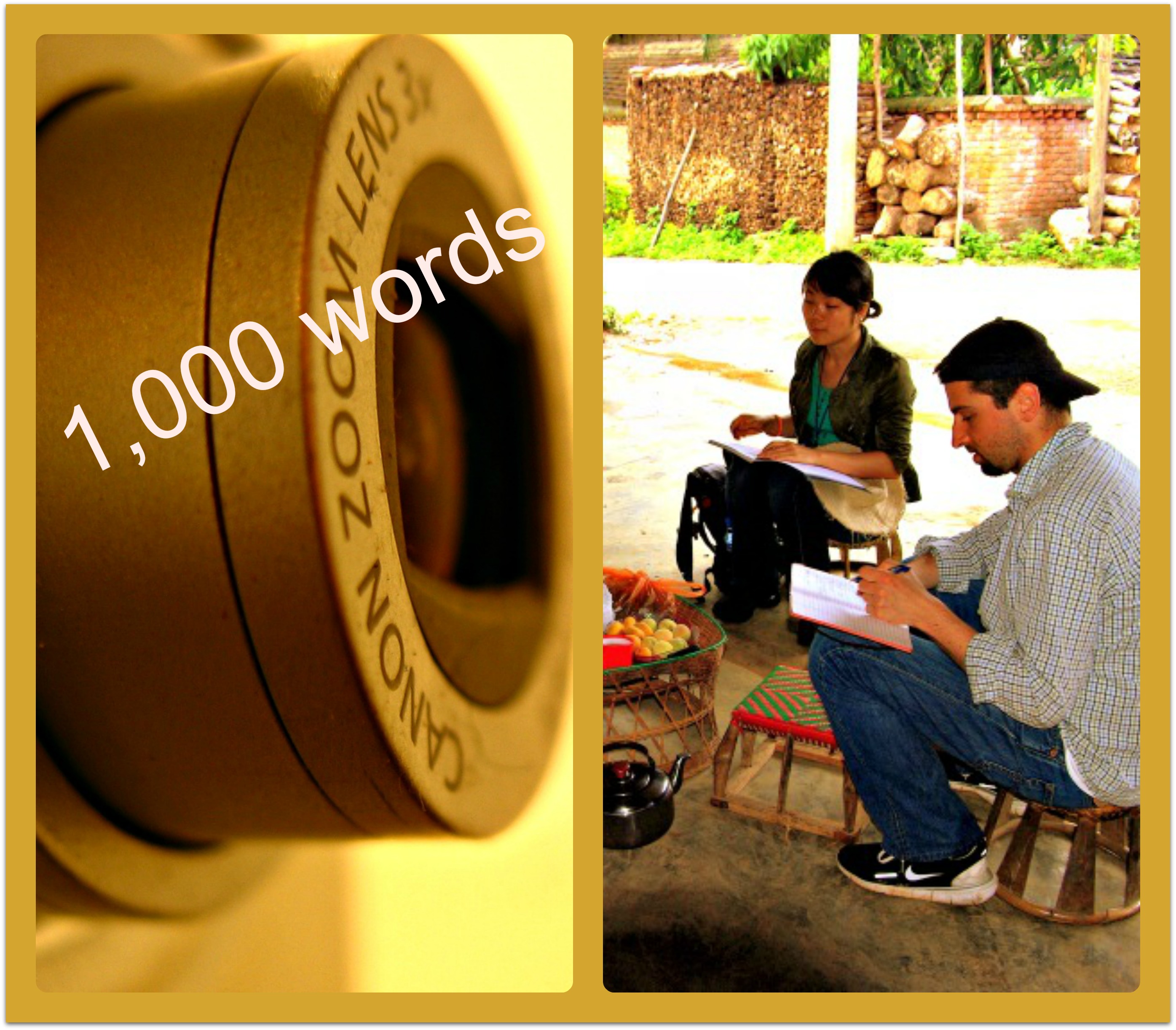
For this globe drifter and Adult Third Culture Kid, a picture says…

Rachel Kanev Collage

Canon zoom lens; photo credit: Morguefiles; Rachel (right) with her friend Sara experimenting with make-up and photography with the help of a bottle of wine (or two?) and some props (photo credit: Rachel Kanev).

Welcome to our monthly series “A picture says…”, created to celebrate expats and other global residents for whom photography is a creative outlet. The series host is English expat, blogger, writer, world traveler and photography enthusiast James King, who thinks of a camera as a mirror with memory. If you like what you see here, be sure to check out his blog, Jamoroki.

My guest this month is 24-year-old Rachel Kanev. She has a Bulgarian father and German Jewish mother but grew up in England, where she studied French and Chinese languages. She feels she got “…caught somewhere in between” these many cultures:

With my Jewish nose, Bulgarian skin and English accent, I at once belong to British, East German, Bulgarian, Jewish, French and Chinese cultures and yet to none of them at all.

Her grandmother, by contrast, lived in Berlin for decades but was more English than Tetley tea.

Indications of Rachel’s escalating identity crisis are borne out in the images that bombard you upon reaching her engaging blog, Global Drifting, in which she says she is drifting across the globe in hopes of stumbling upon enlightenment…

* * *

Hi, Rachel. I’m pleased your globe-drifting has taken you to the shores of the Displaced Nation, which gives us the opportunity to discuss your photo-travel experiences. For one so young you’ve travelled a fair bit, but where were you actually born?
I was born in my mother’s hometown of Berlin, at the traffic lights on the way to hospital. My mother said I looked like a hedgehog that day, and my family still calls me Igel (“Hedgehog” in German). A few months later, the Berlin Wall came down and one year after that, we all moved to England.

So you were a Third Culture Kid in Britain. When did you spread your wings to start travelling?
My nursery and primary school classes were filled with international children. Eugenia—a Spanish girl from Madrid with long black hair and a passion for witchcraft and the Greek goddess Athena—soon became my best friend. In the momentary way that often strikes a child, I was devastated when she left me to return home for good. So, at the tender age of nine, I boarded a plane alone, in my size 1 shoes, to visit Eugenia in Spain. As I began my first solo journey, I experienced a thirst for discovery, which, as yet, has not been quenched. Since that first adventure, I have visited Italy, Holland, France, Austria, Switzerland, Réunion Island and China. I plan to step (in my now size 5 shoes) into Morocco and perhaps Israel this coming summer.

What do you love so much about travel?
I love travel because everything is new and unknown; we share no past and perhaps no future with the things we see and people we meet. The errant wanderer therefore has no choice but to revel in the present.

Will I ever get over the pull I feel to both of these places?

Despite your age, I think I can put you in the category of seasoned traveller. Tell me, what inspires your decision to travel to particular places?
My inspiration comes partly from a love of languages and partly from the idealistic images of France I painted in my head when watching French films and listening to French music, which I did while revising for my exams at university. Aided by the amazing Erasmus, that towering figure of the Renaissance, I had taken a university year abroad in the island paradise of Réunion, near Africa. It’s a French overseas department so qualifies for the European Union’s Erasmus Programme, which finances students to spend up to a year of their university courses in a university in another European country. But it wasn’t until after finishing university that I had a chance to visit France itself. I meandered through southern French villages like an aimless hippie, reveling in its rural chic.

I understand you also have a passion for China?
Chinese was my third language at university. After graduating, I remained in England saving pennies as a waitress to finance spending a year in the land of silk. I lived in a city about an hour from Beijing.

I’m curious: where are you right now and what are you up to?
Right now I’m back living in my English hometown of Cambridge, selling nutritional products to vitamin-mad French and German customers—and saving up for my next Chinese/Moroccan/Spanish/Israeli adventure this summer. As I look out of the window, I am visualizing being there already, far from the Land of Vitamins C and D!

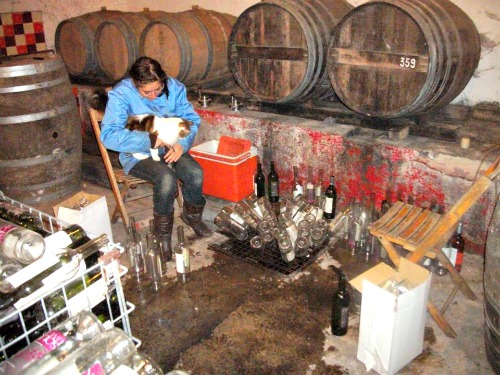
RK_SouthofFrance

No use crying over spilled wine! Rachel in the cellar of a now-defunct winery near Perpignan, France; photo credit: Rachel Kanev.

Hmmm… I think I detect something of the entrepreneur in you, alongside your intrepid traveller’s spirit! And now let’s have a look at a few of your favorite photos from your travels to France and China.
Sure! I took this first photo in a wine cellar in a small hamlet near Perpignan, some way off the coast of southern France. I’d been helping out, but it was late December, and there was very little work left. Besides, the winemaker, whose name was Bernard, had gone bankrupt due to the stresses of organic farming. Our main task for the day, as his helpers, was to pour bottle upon bottle of wine down the drain as he looked on bemoaning the demise of the modern world. It proved a good way to get skillful with a corkscrew!! And I think poor Bernard appreciated our efforts quite a lot. Just think if he’d drunk all that wine in his cellar, it would have sent him spiraling into an even deeper fit of depression…

RK_dragonriceterraces

China’s Longji (Dragon’s Backbone) Terraced Rice Fields are so named because of their resemblance to a dragon’s scales; photo credit: Rachel Kanev.

The next photo provides a glimpse of the glorious Dragon rice terraces of Longshen, in China’s Guangxi province. Amazing terraces stretch as far as the eye can see. I visited some years ago and remember being in awe at the combination of nature’s beauty and the skillfulness of the human hand. I had quite an adventure ambling through the fields with two of my Chinese friends. We got lost and at one point envisaged spending a cold night cuddled up to the cows. In the end we reached our hostel, at the top of the terraces, by nightfall. I returned again last year and was saddened to see that the beauty of the fields has been marred by the greedy hand of tourism. Huge plastic cable cars now transport visitors to the top, and the local villagers are paid to dress in traditional clothes.

RK_AnotherBernard

A French farmer, another Barnard; photo credit: Rachel Kanev.

Last in this series we have another Bernard who stumbled into my traveller’s path. This Bernard is an 80-year-old farmer with whom I lived on my own for a week. His farm is an hour away from the nearest town and is completely self-sufficient. He grows his own organic vegetables and was fit enough to hack up the ground with a pickaxe when the underwater pipes burst (ironically, I had left the home of Bernard number 1 because his pipes had burst and the water system needed to be repaired, only to be faced with more burst pipes at the home of Bernard number 2!).

I love the first photo just because it looks as though you’ve broken into someone’s cellar and are drinking all the wine!! The dragon terraces appear so surreal to me because they are so different to the flat rice fields of Thailand, where I live. I wish I could see them one day. I know you take a lot of photos and these next four, I believe, have a special significance for you. Can you explain?

Not all who wander are lost…

The following is a photo I took of a photo of Bernard number 2, which was taken some fifty years ago, when his newly polished army boots took their very first steps away from the small village on the outskirts of the Pyrenees, where he was born. He bid farewell to the farm he’d grown up on and to the parents who’d raised both him and the thriving trees and crops that had formed the backdrop to his childhood. By the time I encountered Bernard, nature had outlived his parents but their legacy remained. He is now a beekeeper and organic vegetable farmer, tending to the very same trees and plants that his father and his father’s father had cared for. Though he has no human family, the trees you see in my other photo of Bernard (above) appear to me to be his forefathers; they are equally his children.

Bernard as a young man

The French farmer Bernard as a young soldier; photo credit: Rachel Kanev.

The next photo was a fluke as I managed to capture an ad for Longines watches showing Kate Winslet just as the sun was setting. In that fleeting instant, one can see Shanghai’s varied transportation, high-rise buildings and red lanterns—that curious amalgamation of Western modernity and Chinese traditionalism that is everywhere around you in the city.

RK_ShanghaiSunset

A British beauty, a Swiss watch and a Shanghai sunset; photo credit: Rachel Kanev.

Cambridge is my home town and I think of it much like a family member, having watched it age and evolve just as it has silently witnessed me grow and change. I love its grandiose architecture, endless greenery, and the way winter and spring intertwine in front of the University’s palace-like structures that are fit for if not a queen then the rulers of academia, to which I never belonged.

RK_CambridgeUK

The dreaming spires of Cambridge; photo credit: Rachel Kanev.

Here my sister explores the labyrinth-like forestry of a park near where we live in Cambridge. It has amazing multi-coloured plants I have never seen anywhere else before and huge trees that watch over you like silent giants. I like this photo because she looks like Alice in Wonderland with her long, thick flowing locks!

RK_SisterinPark

The great outdoors near Cambridge, UK; photo credit: Rachel Kanev.

Is photography sometimes a moral decision?

I love your explanations as they show us the profound effects a picture can have on its creator, something the viewer can never fully appreciate. Tell me, do you ever feel reserved about taking photos of people, particularly when they are conscious that you are doing so?
For me, the morality of taking photos of strangers has always been ambiguous. I think of it whenever I see photos of human suffering. I believe I have the right to use my camera to record the world but without intruding on it. At what point does the power of images and the need for education and understanding through the push of a button and flash of a light become intrusive and affect the lives of others in a negative way? I’ll give you an example from my own experience. The Western media has focused almost exclusively on China’s explosive economic growth when in fact 1.6 million people (11.8 percent of the population) still live below the poverty line. When taking the train, part of me would like to photograph the dirt-covered, barefooted children asleep on newspapers or the train door frozen from the inside as passengers are left to deal with the icy temperatures of the North (-37°C). But feeling intrusive, I refrain.

Do you also feel self-conscious in Asia?
It’s difficult being subtle, given the colour of my hair and skin, and the stamp on my passport. Noticing me walking the streets of China, many Chinese will assume, quite rightly, that I am Western but quite wrongly that I must therefore have dollar bills rolling from my body like a central bank printing press. Often I do not wish to fuel their prejudices by whipping out a digital camera, however small, before their eyes.

As a resident in Thailand, I can empathize with those views, especially the general Asian misconception that all Westerners are rich. Although this can be annoying, I do believe these views are changing for the better, as the younger generation becomes more socially aware through travel and better education. Now let’s turn to the technical stuff. Some of our readers may want to know what kind of camera and lenses you use.
I have a small Samsung camera that fits neatly in the palm of my hand. It’s nothing fancy and often leaves something to be desired in terms of quality, but it was a birthday gift years ago and has sentimental value, having been my only travel partner across unknown lands. Whatever it lacks in lens quality, Windows Photo Gallery makes up for in magical editing power!

Finally, do you have any advice for wannabe photographers who are traveling or living abroad?
Wander through villages, peel garlic with a farmer, shake hands with a prince, run through jungles, leap into waterfalls, swing across the rainforest wilderness and lose a leg to the marble rocks—see the world and allow the world to be seen. Travel, live, eternalize what you see with a photo.

Great non-technical advice, Rachel, that’s right up my street! I’d like to thank you for taking the time to tell your fascinating story in this interview.

* * *

Readers, what do you make of Rachel’s experiences and her photography advice? And do you have any questions for her on her photos or her travels? Please leave them in the comments!

And if you want to know more about Rachel Kanev, don’t forget to visit her blog, Globe Drifting. You can also follow her on Twitter or even shoot her an email.

(If you are a photographer and would like to be interviewed by James for this series, please send your information to ml@thedisplacednation.com.)

STAY TUNED for next week’s fab posts!


If you enjoyed this post, we invite you to register for The Displaced Dispatch, a round up of weekly posts from The Displaced Nation, with seasonal recipes, book giveaways and other extras. Register for The Displaced Dispatch by clicking here!

Related posts:

For this Swiss ethnographer with a fondness for remote parts of China, a picture says…

Gaetan in China Collage

Canon zoom lens; photo credit: Morguefiles. Gaetan Green doing fieldwork in Xishuangbanna, a region of Southwest China squeezed between Laos and Burma; photo credit: Gaetan Green.

Welcome to our monthly series “A picture says…”, created to celebrate expats and other global residents for whom photography is a creative outlet. The series host is English expat, blogger, writer, world traveler and photography enthusiast James King, who thinks of a camera as a mirror with memory. If you like what you see here, be sure to check out his blog, Jamoroki.

My guest this month is 33-year-old Swiss national Gaetan Green, who has spent the last 12 years between China, Europe and North America. After graduating university, Gaetan studied and conducted ethnographic research in remote parts of China. He went back to do field work in the country’s ethnic borderland when pursuing a master’s degree in geography at a university in Vancouver.

For the past three years Gaetan has lived in one of China’s mega-cities, but he always grabs the opportunity to travel in the countryside, where he can indulge in his current passion for the  ancient and ethnic villages of south and southwest China, with a “minor focus on Guangzhou and the Pearl River Delta.”

Gaetan keeps a fascinating blog, Travel Cathay. He posts about his off-the-beaten-path travels to parts of China most of us wouldn’t know existed.

* * *

Hi Gaetan. I have been following your blog for a while now and am very pleased to have the opportunity to interview you for the Displaced Nation. Let’s start with some background on you, shall we? Where were you born, and when did you spread your wings to start traveling?
I grew up in a ski resort in the middle of the Swiss Alps and I started travelling as soon as my parents would allow it. My first trips were to Southern and Eastern Europe with classmates—that started when we were around 16 years old. But my travels became a lot more serious when I left Switzerland for my first trip around the world, at age 20. This trip changed my life for good.

So your wanderlust dates from an early age. Why do you think that was?
There were essentially two things that inspired me to travel. The first was a map of the world that I discovered at home when I was an inquisitive eight-year-old. The map made me realize the world was much bigger than the valley surrounded by big snow-capped mountains where we lived. I was itching to discover the reality behind all the exotic place names. The second source of inspiration was my home country. With its pure air, snow-capped mountains, green valleys and quaint mountain villages, Switzerland is beautiful—but way too small. The boy I was then saw a world so big, I knew I had to leave.

Which countries did you travel to?
Besides southern and eastern Europe, I visited Australia, Peru, Bolivia, Ecuador, Malaysia, Philippines, and Singapore. And of course, eventually, China.

And now China has become a second home for you.
Although I have traveled to other countries, China is the one I know best because that is where I have spent most of my time so far, and I have only five provinces left to discover. My love story with China started at age 20: I spent three months of my round-the-world trip traveling within its vast terrain. When I returned home, I started to learn Mandarin (some of my friends thought I was seriously deranged!!). Then one thing lead to another: I studied for two years in Chongqing (a city of 15 million people in central China), worked as an ethnographer in remote parts of Yunnan province, taught English in Kunming, and conducted academic research between Vancouver and Xishuangbanna. Although China is a country, it gives the impression of being a continent because it is very diverse. Contrary to what many people think, China does not have a monolithic culture. I speak Mandarin, so that makes travel easier. I can venture into the countryside knowing I’ll be understood.

“Let’s all go up to the mountain to be close to the flowers and songs.” – Dong folk ballad

I’m sure that speaking the language gives you a huge advantage. Tell us more about the life you now lead in China.
I am currently working as a sourcing agent and living in one of China’s megacities. Recently I have developed mixed feelings about the megacity life. Megacities can be convenient places to live, providing easy access to food, entertainment, communication and transportation; but I find them overcrowded. Dangerous levels of pollution and food hygiene are growing concerns and also the reasons why some of my expat friends have already left.

Old woman in a Tibetan Catholic community; photo credit: Gaetan Green.

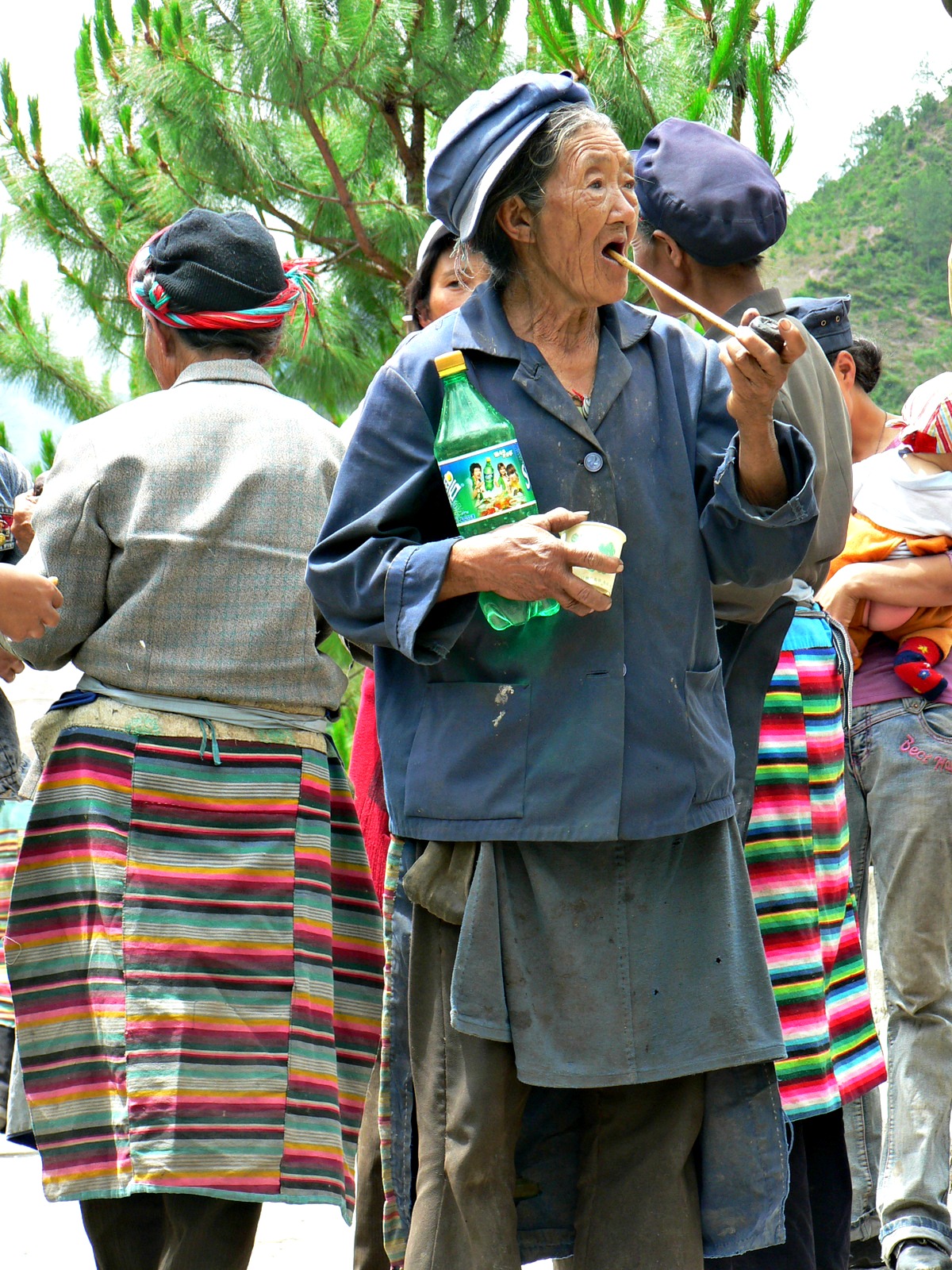
An elderly woman pushing barley alcohol in north Yunan; photo credit: Gaetan Green.

Some friends of mine have recently moved to China to work in Shanghai but they refuse to live in the city for the same reasons you mention. But let’s get away from the megacity and take a look at your first three photos, which take us far away from that scene. Can you tell us what makes each of these photos so special?
This first photo reminds me of the time when I was doing ethnographic research about Tibetan Catholic communities in remote regions of north Yunnan province. On that particular occasion, I had the opportunity to witness a ceremony during which villagers prayed that it would rain on the graves of French missionaries who’d been assassinated at the beginning of the 20th century during anti-Christian violence in the region. There was a steep hike to reach the graves. At end of the ceremony, this woman started giving everyone barley alcohol in a paper cup. I remember going back to the village half-drunk after she challenged me to a second glass of firewater.

Wind and Rain Bridge, Tondao. Photo credit: Gaetan Green

Blown away by the Puxiu Wind and Rain Bridge in Tondao; photo credit: Gaetan Green

The second photo was taken after I’d missed the last afternoon bus and got stuck in the small town of Tongdao (southwest Hunan province), which I’d never heard of. I eventually ended up hiring a taxi driver for the afternoon to show me around. We went to a few ethnic villages and by 4:00 p.m., we had arrived by this amazing covered bridge, which is an example of a “wind and rain” (fengyu) bridge common to the Dong ethnic minority region. Missing my bus was the best thing that happened to me that day.

Taoist Temple, Macau; photo credit: Gaetan Green.

The Jade Emperor’s generals on their joss paper thrones; photo credit: Gaetan Green.

The third photo records the time I got lost in Macau somewhere between the Ruínas de São Paulo and the Camões Garden, I went to a Taoist temple. In one hall, I noticed that some statues had uneven stacks of joss paper (spirit money) under them. I asked the temple caretaker: “Why?” He explained that there were, in that particular hall, the statues of the 60 heavenly generals who help the Jade Emperor to supervise human life on earth. There is one heavenly general for each birth year, and the more joss paper there is under the statues that matches your birth year, the luckier you will get. I decided to boost my luck and bought stacks of joss paper to boost my heavenly general higher. The temple caretaker gave me three sticks of incense to burn; he said a long prayer in Cantonese and gave me a red talisman. I definitely enjoyed doing business with the gods, though I didn’t feel any luckier afterwards.

“Who can rob me of the songs I learned?” – Dong folk ballad

I love all three photos, and, yes, you are right, missing the bus and staying in Tondau must have been divine providence. Now, I’m keen to know where your favourite places to take photographs are, and why these places inspire you and how that shows in your next three photos?
Now that I live in a big Chinese city, the places that inspire me the most are the ethnic and ancient villages. In the cities, many historical buildings and old streets have been knocked down to give way to shopping malls and skyscrapers. Ethnic and ancient villages are real windows on the past and the cultural diversity of China. I chose the next three photos to make this point.

Cizhong Catholic Church; photo credit: Gaetan Green.

A Roman Catholic Church in an unexpected spot: by the Lancang (Mekong) River at Cizhong; photo credit: Gaetan Green.

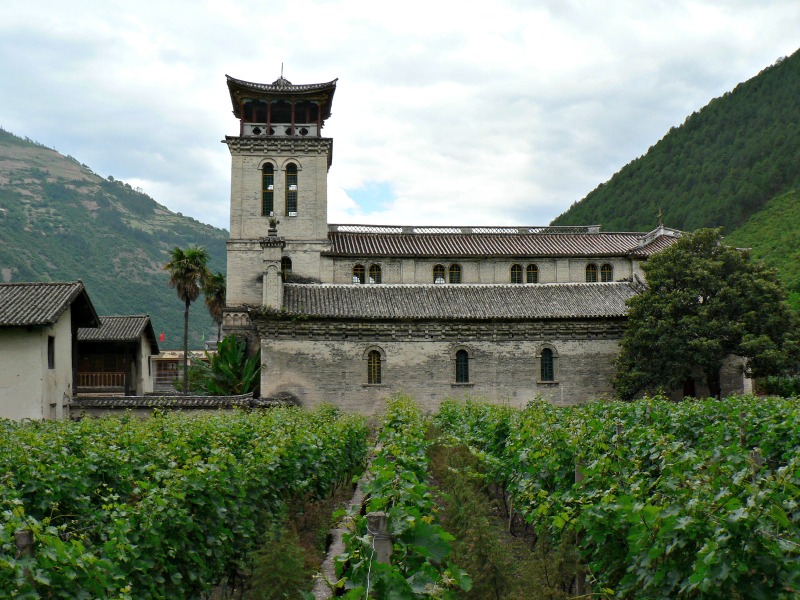
The first is of the Catholic church at Cizhong, a remote village of north Yunnan province that is home to a community of Tibetan Catholics who were converted by French missionaries more than 100 years ago. The church seems out of place in this land of Buddhism. The mountains surrounding the village make it a picturesque spot.

Yunnanyi Gaetan Green

If these walls could talk: Yunnanyi village on the Tea Horse Road; photo credit: Gaetan Green.

The second photo is of Yunnanyi village, in Yunnan province, which was an important stop on the Tea Horse Road that linked Southeast Asia to the Tibetan plateau. Horse caravans carrying tea, spices and other goods stopped in Yunnanyi. In 1936, the communist armies of Mao Zedong stopped in Yunnanyi to rest during the Long March. Then, during WWII, the rice fields behind the village were transformed into a U.S. airfield. Planes that had flown from India over the Himalayas (to avoid the Japanese-controlled Burmese airspace) landed in Yunnanyi with supplies for the Chinese armies. The history of this unknown village is inspiring. The mud-brick courtyard houses have seen a lot. I wish these walls could talk.

Stepping back in time in Qianyang; photo credit: Gaetan Green.

Stepping back in time in Qianyang; photo credit: Gaetan Green.

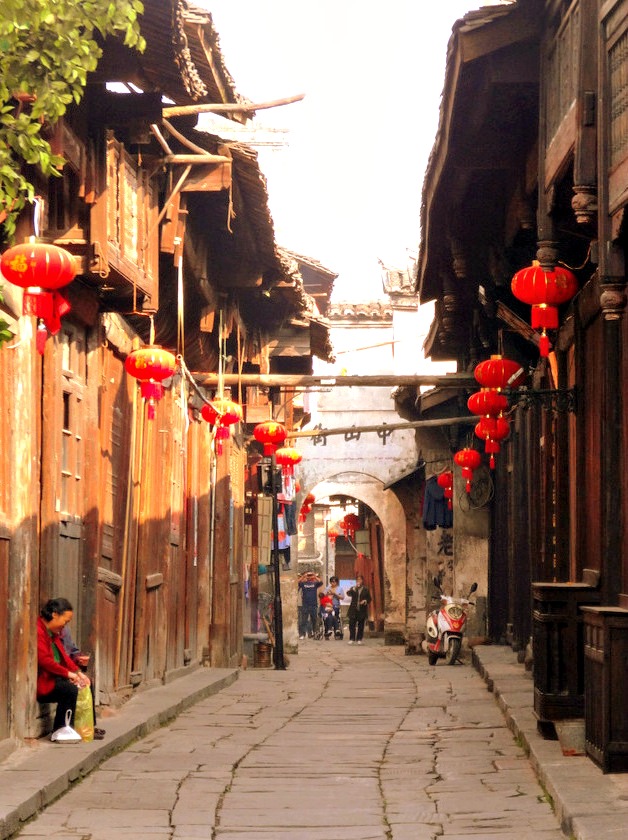
The final photo is of Qianyang, in Shaanxi, an ancient regional political centre that has been forgotten in China’s rush to develop. The streets are lined with dozens of temples, an ancestral hall, and courtyard mansions that belonged to local officials. Most of the city’s walls and four out of fives gates are still standing. There were no tourists when I visited. It felt like stepping back in time and taking a walk in China’s past.

What I find amazing in these pictures is the beautiful architecture and the pristine condition of such old buildings and the cleanliness of the streets. Tell me something, I notice that many of your photos are of buildings or streets. Do you feel reserved about taking photos of people, particularly when they are conscious that you are doing so?
I do feel reserved about taking pictures of other people so I rarely do. The exception is when I have the opportunity to witness a ceremony or special event.

I know this is a similar question but do you ask permission before taking people’s photographs and how do you get around any problem of language?
Since I now travel mostly in China, I ask in Chinese. If I am in a region where people do not speak Mandarin, a hand gesture is usually enough.

Would you say that photography and the ability to be able to capture something unique which will never be seen again is a powerful force for you?
It is indeed. I would add that photography also has the ability to monitor change. In a country like China where everything is growing and changing so fast, photography can be a tool to record how the landscape is transforming.

That’s a very pertinent point, particularly when applied to China. Was there a particular moment when you realized that?
I thought about it a lot while on a business trip to Ningbo, a city of nine million people that is just a couple of hours by train from Shanghai. I had been able to take an afternoon off and wander in the city. I discovered an entire neighbourhood of stone houses built during the late Qing Dynasty (late 19th century), all of which were empty. They were going to be knocked down to build a shopping mall and high-density residential buildings. In China I am constantly thinking that what I see today may be different or not even exist tomorrow.

If someone wants to learn from me, I’ll teach him songs as melodious as cicadas.” – Dong folk ballad

I know exactly what you mean. It almost feels like you are running out of time. I have many old pre-digital photos (35 years old and more). I didn’t realise until now how precious they are. Moving on to the technical stuff (I’m not too good at tech but getting better). Some of our readers will want to know what kind of camera and lenses you use.
I use a very simple point-and-shoot Sony camera.

I must say it works really well and the shooter has a good eye! Finally, do you have any advice for wannabe photographers who are traveling or living abroad?
I think I am in the same position as you. I need advice.

Gaetan, I’d like to thank you for taking the time to tell the story of your exciting journey and for sharing so much interesting information. You may not consider yourself to be a good photographer, but your “point and shoot” pictures embellish your narrative beautifully. Keep following your way and I am sure you will inspire other young people to travel the globe as you are doing. I, for one, will be checking your progress.

* * *

Readers, what do you make of Gaetan’s experiences? Do you have any questions about his photos or his travels? Please leave them in the comments!

And if you want to know more about Gaetan, don’t forget to visit his excellent blog, Travel Cathay. You can also follow him on Twitter: @TravelCathay.

(If you are a photographer and would like to be interviewed by James for this series, please send your information to ml@thedisplacednation.com.)

STAY TUNED for tomorrow’s fab post!

If you enjoyed this post, we invite you to register for The Displaced Dispatch, a round up of weekly posts from The Displaced Nation, with seasonal recipes, book giveaways and other extras. Register for The Displaced Dispatch by clicking here!

Related posts:

TCK TALENT: Laura Piquado, New York City Actress & One Well-Traveled Kid!

Laura Piquado Collage FINALWelcome to Elizabeth (Lisa) Liang’s monthly column about Adult Third Culture Kids (ATCKs) who work in creative fields, Lisa herself being a prime example. A Guatemalan-American of Chinese-Spanish-Irish-French-German-English descent, she recently debuted her one-woman show about being a TCK, which I had the pleasure of seeing during its too-short run in New York City in September of last year: stupendous!

—ML Awanohara

Happy new year, readers! Let’s start today’s interview by plunging right in. My guest is Laura Piquado, a professional actress based in New York who grew up in six countries, including Egypt, where we were drama classmates in high school.

* * *

Welcome to The Displaced Nation, Laura. It’s wonderful to reconnect with a Cairo classmate! I know you grew up as the daughter of a pair of teachers who were full of wanderlust. Can you give us a run-down of the countries you lived in as a kid?
My mother always told me that her earliest dream memory was of wanting to move to Africa. And as soon as she graduated from university in Canada, that’s what she did. She met my father in Sierra Leone in the mid 1960s. He was there with the Peace Corps, while she was being sponsored by CUSO (Canadian University Service Overseas)—a Peace Corps-style organization. They left when my mother was six months pregnant with my brother. My mother is tall, almost 5’11”, but at that time weighed only 120 lbs. I think having parasites, or the occasional bout of malaria was commonplace, but the risk to her health became too great.

After my (healthy) brother was born in Washington, DC, my parents decided to go overseas again. The first job my dad got was as an English teacher in a small village in northern Newfoundland, where I was born. Less than a year later, we moved to Beirut, Lebanon. Four years after that, when war broke out, we were evacuated to Shahin-Shahr, Iran, for almost four years. War broke out again, and we were evacuated again. The next stop was São Paulo, Brazil, for two years. My mom and dad hated the city, and we left every other weekend and holiday to get away from it. Consequently, my memories of Brazil are of travel, and of everywhere but São Paulo. After Brazil, we lived for four years in Bontang, Indonesia, which is in the province of East Kalimantan on the island of Borneo. After seventh grade we moved again, to Cairo, Egypt, where I graduated high school. That’s where you and I first met! My parents then moved on to Ecuador and China for 16 more years.

My parents loved being overseas, and at no point did they yearn to “come home.” They wanted their lives to be as teachers in international schools, and for 40 years that’s what they did. They retired a few years ago to a small town in New Hampshire.

A hard landing into adulthood

How did you feel about living in so many places?
I loved it, actually. Adjusting to new environments, new friends, new cultures, languages, was never difficult for me. I don’t know why. Perhaps I just got used to it. But I don’t think you ever get used to leaving friends and people you love—that’s always hard.

As an adult, do you find yourself drawn to other TCKs?
I definitely identify with other TCKS, though it’s not always a given we will hit it off. In fact, I used to be magnetically drawn to anyone who was a visible minority. “You’re from Indonesia?! I used to live in Indonesia!” “Hey, you’re Alexandrian! I lived in Cairo for 5 years!” I was always wanting to make a connection with a world that was no longer mine—and maybe never was mine, if I adhere to the rules of 3rd culture. But just because someone grew up all over the world as I did, or just because they are an actor like me, doesn’t guarantee I’ll be friends with that person—but it’s a starting point. And if a person grew up in different countries, at least their eyes won’t glass over when I answer the question, “Where are you from?”

You now live in New York City. How do you find life in the USA?
I’ve lived in the United States longer than I’ve lived anywhere else. Yet it’s the first place I’ve ever lived that doesn’t feel like home. For the first 20 years of my life I played with my friends, explored the jungle, hiked the Andes, swam in the Red Sea and the East Timor Straights, climbed salt flats, made forts in the desert, went horse-back riding around the Great Pyramids, woke to gibbon songs and the muezzin’s call to prayer. And then I came back here to go to school, get some degrees, get a job, and try to figure things out… I had this exhilarating childhood, and then this less-than-thrilling transition to adulthood.

Does your identity revolve around any one particular culture that you’ve lived in?
I am Dyak and atheist, Muslim, Christian, Bahá’í, Jain, Egyptian, Italian, Canadian—there is nowhere in the world that has ever felt foreign to me. I am all of these things, and none of them. After moving to the United States for the first time for college, being able to be all of them at the same time was what mattered the most. I was striving to understand who I was and what my life had been, and trying to share that with others, even if I couldn’t articulate it to myself. It’s taken a long time, and I suppose I’m still working at it. That said, I love meeting the kind of person who, unlike me, was raised in the same town he or she was born in, and still goes back there for family visits and holidays. I am attracted to the sense of being anchored somewhere, to a particular place. That perceived sense of belonging somewhere: it’s something I just don’t have; I don’t know what it feels like.

From an actor on the global stage, to an actor on a real stage

Tell us what you studied in college and how you made the leap to pursuing an acting career.
I did my master’s degree in Islamic Studies at McGill University in Montreal. I wanted, as an adult, to understand the cultural, political, and social environments in which I grew up. On some level I was looking for a path that would take me overseas again, which I was aching to do. I wanted to work in the development of women’s education in post-conflict societies because it was work that I was passionate about.

Just as I was finishing my degree, and thinking about streamlining into a doctoral program, I went back to Cairo. I hadn’t been back since high school. For a whole month I walked through the streets of my old neighborhood, saw my friends, went to mosques and bazaars and the Red Sea, and smelled and ate and absorbed Egypt again. It was glorious. But something changed in me after that, and made it okay for me to move on.

When I came back to Montreal, I started applying to drama schools. Although I had been involved in theatre since I was a kid, I hadn’t wanted to study it as an undergrad. There were other things in my life that I needed to address before I embarked on that.

But now I was ready for drama school—I enrolled in the London Academy of Music and Dramatic Art. At LAMDA, I felt like I was flying. I was so happy. To allow myself the ability to change horses mid stream, and for it to feel natural and fluid and right—that was tremendous. I don’t think any of us is just one person, and we aren’t the same person at 15, 25, 35, 55. We have multiple loves and lives and wants, and finding ways to marry them all, if we’re lucky enough to know what they are in the first place, can be overwhelming.

How did your family react to your decision to pursue an acting career?
I’ve only ever had a supportive family. So instead of calling me a flake, or accusing me of lacking any sense of stick-to-itiveness when I told them I wanted to go to drama school, they became, again, my most enthusiastic supporters.

I think our peripatetic childhoods trained us to be actors—to observe, listen, and adjust our behavior to our surroundings. Do you agree?
I do agree, for the most part. But I also think personality has a lot to do with it. Just because you grew up all over the world doesn’t de facto make you a keen observer, or an astute listener, and not all kids who move around a lot are able to adjust to their changing environment. On the other hand, if you have had a peripatetic life, and you also happen to be a good listener, observer, etc., it seems it can only enrich your depths as an actor (and certainly as a human being). For me, adaptability became a defining aspect of my personality.

I think that for us TCKs, the challenge of convincing a casting director that you truly can be this other person is made easier because of all of those things we bring to the table—listening, observing, adjusting, maybe even having lived or known the character’s life. But also for that reason, many of us find it even harder to put up with being typecast.

Which sorts of roles are you attracted to, and do you think your upbringing influenced this?
I’m usually attracted to damaged characters, or quirky ones. And accents are always juicy! I’ve always been a mimic, and am grateful for that gift as it makes it easier to play a variety of roles. Why I’m drawn to quirky characters is less apparent. Does it have something to do with my upbringing? That’s an interesting thought. I’ve never made that correlation, but it makes complete sense.

So which parts have been your faves?
I loved playing Goneril in King Lear with the Texas Shakespeare Festival. I’ve always thought that she’s been inappropriately maligned as a character. Lear is not the easiest father—demanding, impulsive—and to require his daughters to prove, to prove, their undying love for him—for the sole purpose of measuring it against their inheritance—makes him something of a jerk in my book.

Playing the painter in Ionesco‘s The Painting with the Phoenix Theatre Ensemble was pretty great as well. Aside from the play’s absurdism, the part was perverse because of the the vocal and physical qualities we decided on. It’s not often that you get to play grotesque and obsequious, mismanage your voice, throw out your back, and sprain your jaw because the part demands it. Fantastic! 🙂

And a role on the damaged front, I suppose, was Charlotte in Sharr White‘s Sunlight, for its world premiere with the New Jersey Rep. While I’m less attracted to straightforward, modern dramas (though in truth, I love it all), the whole premise for who Charlotte is, for what motivates and oppresses her, is her having been in the Towers on September 11th and losing her child as a result of the trauma. And while that’s not what the play’s about (thank God!), it defines who she is able to become (or not become) in the ensuing decade.

* * *

Wow, that’s an impressive list! Thank you, Laura! I wish you the very best in your career and hope to see you on stage and/or screen soon. Readers, please leave questions or comments for Laura below.

STAY TUNED for tomorrow’s post, from our Global Food Gossip!

If you enjoyed this post, we invite you to register for The Displaced Dispatch, a round up of weekly posts from The Displaced Nation, with seasonal recipes, book giveaways and other extras. Register for The Displaced Dispatch by clicking here!

Related posts:

TCK TALENT: Amber Godfrey, Diplomatic Kid Turned Performer-Writer

Amber Godfrey Collage

Photo credits: left: RoganJosh (MorgueFiles); right: Amber Godfrey, from her portfolio.

Welcome to Elizabeth (Lisa) Liang’s monthly column about adult Third Culture Kids (TCKs) who work in creative fields. Lisa is herself a prime example. A Guatemalan-American of Chinese-Spanish-Irish-French-German-English descent, she recently debuted her one-woman show about being a TCK, which I had the pleasure of seeing during its too-short run in New York City in September: stupendous!

—ML Awanohara

Happy Thanksgiving, readers! I’m thankful to be bringing you today’s guest, a kindred spirit of mine. She is Amber Godfrey, an actress-writer who, like me, has written and performed her own solo show about growing up as a TCK of mixed heritage.

* * *

Welcome to The Displaced Nation, Amber! I’m happy to have met another solo performer whose TCK story parallels my own. Since your dad is a Canadian diplomat, you grew up in eight countries. Can you tell us which ones?
Besides Canada, I’ve lived in the USA, Ecuador, Trinidad, India, Hong Kong, Sri Lanka and England.

Growing up, which of these countries do you identify most strongly with?
I identified, and continue to identify, strongly as a Canadian probably because of my dad’s job and the fact that we always connected with the Canadian expat community wherever we went. I also heard on more than one occasion (usually when I was being busted for some rebellious act): “You represent Canada!!” I’ve spent most of my adult life in Canada and the US, so I feel very “North American” at this point. At the same time, though, I do feel like a “citizen of the world,” and the bond that I feel with other TCKs is unique.

“Are you adopted?”

Your family is particularly diverse. Let’s see if I can get this right. You are the daughter of an Ecuadorian mom and an African American father, but you were raised by your mom and a Caucasian-Jewish Canadian stepdad, who then had your brother, David. Was your family’s status ever challenged by strangers, like mine was? In grade school, no one believed my brother was my brother, and people asked my mom if I was adopted.
Yes! This still happens all the time. When the four of us go out for dinner, servers will assume my brother and I are a couple. If I check into a hotel with my Dad, we get stares. When I was in fifth grade, I had to go to the school nurse and, when she realized who my brother was, she asked pointedly: “Are you adopted?” I panicked and said “Yes,” even though that wasn’t the whole truth. Looking back—what an inappropriate question to ask a 10-year-old!

Do you feel offended when that happens?
Honestly, it sort of tickles me that people don’t know what to make of us. I figure, that’s their problem and it doesn’t have to ruin my day. As an actor, I get irritated by the under-portrayal of mixed-race families on stage and in film. When I was auditioning a lot, I became really frustrated realizing I would most likely not be considered for “sister of” so-and-so because the other actor had already been cast as white.

Love the place you’re in

I completely relate! So, with such a mixed background, which culture(s) form the core of your identity?
I grew up with a lot of focus on Jewish history, tradition and heritage, which I resisted up to a point—I chose not to be Bat Mizvah’d—but to which I also really connected. As a pre-teen I was obsessed with The Diary of Anne Frank and wrote short stories about young Jewish girls in the Nazi era. In my early 20s, the combination of acting roles I was being sent out for and my burgeoning adulthood piqued a stronger curiosity in the African-American side of me, which ultimately led to me reaching out to find my birth father. Now, in my 30s, I find myself seeking to connect with my Latin American roots. Of course I also identify with the cultures of the countries I grew up in! I think the quest to understand my “identity” is ongoing…

Were you happiest in a certain place at a certain time?
I guess the short answer is: I aim to be happiest in the moment I am in. Every place I went to had its good and bad moments…

What were your school experiences like growing up?
I went to private school in California, international schools in India, HK and Sri Lanka, and the local public school in Canada. During high school I had to contend with three completely different school systems, which was a challenge to say the least.

How about college?
I went back to Canada for college: I studied theatre at Acadia University, in Nova Scotia. It was hard to get good information back then (the Internet was just a baby!), but my Dad pointed out that as a small school in a small town, it might be an easier transition than if I went to a big school in a bigger city like Toronto. And Acadia has a good theatre program.

“It’s all in me…”

Did your TCK upbringing influence your desire to become a performer?  
Being in school plays or performance groups was a good way to get involved and make friends when moving from place to place. But I also think that portraying characters on stage allowed different parts of myself to come forth and was a way for me to work out my identity. I’m laughing because I’m thinking of Whitney Houston’s “I’m Every Woman”—I’m a hippy at heart and believe we are all one and connected. Seeking to experience and understand life/truth from multiple viewpoints is an essential part of who I am.

Before we get into your solo show, let’s talk about your series of performances of Anna Deavere Smith‘s solo show Fires in the Mirror, a docudrama for a solo performer about the racial tensions that erupted between blacks and Jews in Brooklyn in 1991.
I was asked to do Fires in the Mirror by Jesse Freedman, a fellow performer and prolific director, whom I met in a SITI Company Suzuki/Viewpoints workshop. I jumped at the chance to engage with this epic piece because it is constructed so thoughtfully and allows me to play with my Black/Jewish roots. I initially performed Fires in the Mirror at the Limmud Conference, which took place in Coventry, England. Then the Jewish Theatre Workshop in Baltimore requested the show as part of an initiative to continue dialogue between Blacks and Jews who share space in that community. I also had a short run in NYC at the New Yiddish Repertory Company Theatre.

Moving over to your autobiographical solo show: why did you create DipKid?
I’d been thinking for many years about telling my story but couldn’t decide which way to tell it. After taking a Soulo-Show Workshop with Tracey Erin Smith, I finally started writing. I submitted a proposal to a small festival in NY, and when I got in, I realized it was time to start making the show! My efforts resulted in a short but sweet twenty-minute piece (you can watch it here).

How was it received?
The reaction was fascinating. I had assumed my story was unique, but it seemed that people could relate to it, and wanted more! That’s where the struggle began for me. I didn’t know how to finish the piece because I felt I wanted it to link up with my current situation—but that kept changing! The next time I performed the show, I expanded it to 45 minutes but felt less satisfied. I’d watched the video of my first performance so many times I felt sort of stuck in the past. I also found myself listening to many differing opinions on where my show should go and how it should be crafted—my vision got a little lost in the din. Finally, the festival format was crazy-making—especially as I was holding down a full-time job. Trying to write and rehearse this piece all for just one evening was too much pressure. My dream would be to take the show to the countries I lived in and beyond. I’d love to perform it at international schools and for expat communities worldwide.

As the interviewer, I think I can permit one question that’s of particular interest to me, which is: how do you like solo performing?
Solo performance is relatively new for me and I do miss getting to work with other actors on stage. That said, the medium allows me to be a bit more in control of the work and my approach. And it’s wonderfully vulnerable!

I understand you’re planning to film a documentary. What will it be about?
The focus will be on other children of diplomats (i.e., “dip kids”) and how their lives have been shaped by their upbringing and the jobs of their parent(s). I plan to tell the story from my perspective and also weave in my experiences as a mixed-race individual who continues to search for an understanding of and connection to my identity, heritage and all the parts that I am made of.

Do you have any other projects coming up?
I am writing a memoir that will delve deeper into the stories I reveal in DipKid.

Best and worst (Canadian) Thanksgiving memories

Canadian Thanksgiving was in October, but since American Thanksgiving is today, please share with us your best and worst Thanksgivings.
The best occurred when we were living in New Delhi. We were invited to the Official Residence of the High Commissioner for a Canadian Thanksgiving celebration. It was a big party with live music and food sprawled out on the grounds. At dusk everyone looked up and gasped as hundreds of bats swarmed the sky. It was the coolest thing I had ever seen!

I think the worst was my first Thanksgiving away from home. My parents were in Sri Lanka and I was in Wolfville, Nova Scotia (where Acadia U is). Everyone I knew at school had family nearby, but it was only October and I hadn’t bonded with anyone enough to get an invite. I ate Pop-Tarts and drank Dr. Pepper and felt homesick for my family and a bit sorry for myself…

* * *

Thank you, Amber, for being you, a fellow TCK theatre-maker! Readers, please leave questions and comments for Amber below. And if you want to keep up with her creative undertakings, I suggest you also follow her on Twitter: @DipKidAmber.

STAY TUNED for next week’s/month’s fab posts!

If you enjoyed this post, we invite you to register for The Displaced Dispatch, a round up of weekly posts from The Displaced Nation, with seasonal recipes, book giveaways and other extras. Register for The Displaced Dispatch by clicking here!

Related posts:

TCK TALENT: Alaine Handa choreographs her way to festivals in Toronto and now Edinburgh (2/2)

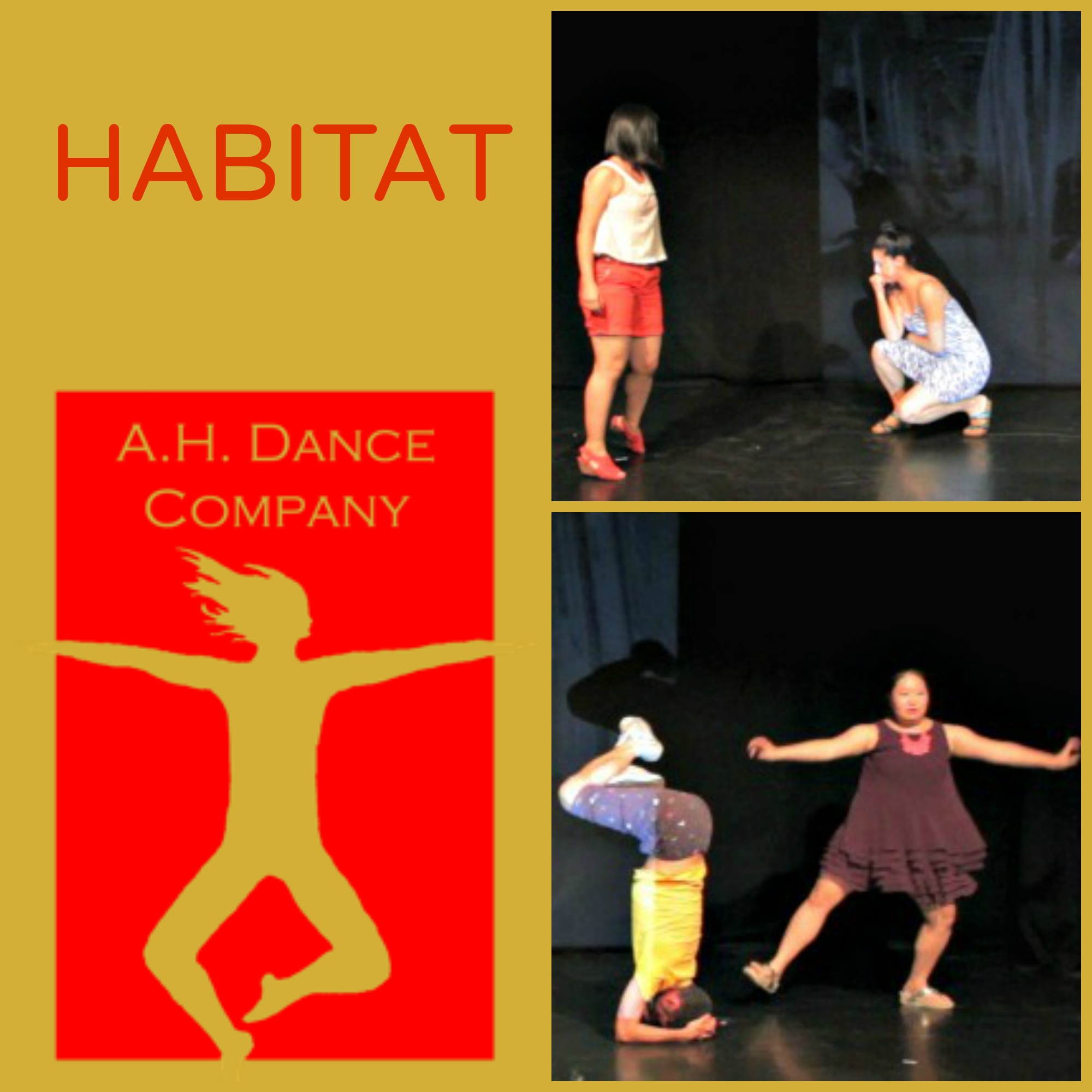
Habitat CollageNew columnist Elizabeth (Lisa) Liang continues her conversation with fellow TCK performing artist Alaine Handa. (Be sure to check out Part 1 if you haven’t already.)

—ML Awanohara

Hi, everyone! Yesterday, I talked to Alaine Handa about her Third Culture Kid background and what led her to produce her first international touring show, Chameleon. Today we’ll finish up our Chameleon conversation and move on to talking about Alaine’s brand new show, Habitat, which is having its world premiere at the Edinburgh Fringe Festival. (If you happen to be in Edinburgh, scroll down to the bottom of this post for details.)

* * *

Act 2: Chameleon, continued…

Welcome back, Alaine. I can relate to so much of what you said about Chameleon. The creative/rehearsal process can be so fulfilling that the performance itself is often the icing on the cake for the performer-creator. Whom did you have in mind for the wider audience?
As a proud TCK and Global Citizen, I felt the stories of TCKs needed to have a voice that supports all the research, books, blogs, and memoirs that have been written on our lives—yet can transcend boundaries of spoken language through dance and movement, something all cultures can understand. Perhaps my ideas were grandiose, but I really hoped that productions of Chameleon would touch the lives of all those who identify with living cross-culturally and existing as cultural mixes.

It sounds as though Chameleon provided a voice for a cross-section of nomadic, mixed-heritage, intercultural people, not to mention everyone who has ever felt unheard or unseen—which is everyone at some point in their lives. I did the same with Alien Citizen and am wondering if we should create a TCK festival for performing artists like us… But, back to you! How was the performance received?
Every single performance of Chameleon had at least one person in tears because they identified so much with it. After each performance, we spent quite a lot of time talking to audience members. I made a lot of new friends around the world!

Were there any surprises?
The biggest surprise for me came from the TCK student performance at Utahloy International School, in Guangzhou. The students were very receptive and open to sharing their TCK stories with me, as well as on stage. It brought tears to my eyes.

Did you learn anything about yourself in the process?
By telling my story and other TCK/CCK stories, not only did I come to understand myself better, but I also felt a strong sense of community among the globally mobile citizens of the world.

Act 3: Preparing a new show, Habitat, for the Edinburgh Fringe

And now you have a new show, Habitat. Is this your first time at the Edinburgh Fringe?
Yes! We are very excited. One of my dancers has performed in the Fringe before so he will be super helpful during the festival.

In your promotional materials for Habitat, you have the following statement:


Our personal space is the environment in which we confine ourselves to become our truest selves.


Can you explain?
As a TCK, I am constantly meeting people of different backgrounds, and I change my behavior and mannerisms accordingly. Thinking about this, I wanted to explore the transition to one’s personal habitat, where you can finally relax and just “be” who you are.

Who is the intended audience, and is it different than the audience from the one you had in mind for Chameleon?
This piece is more universal. It shows how different people from different backgrounds change the way they behave around others and when they are alone.

I see the cast is multicultural, with dancers from Singapore, USA, Portugal, and Indonesia. Was it a challenge to bring together a cast from so many different places?
To be honest, although it’s “easier” to label the cast by our passport countries, we are, in fact, a collection of multicultural individuals who have lived in different parts of the world at various times. Right now, two of us live in Singapore and the other two in New York. The biggest challenge we faced was rehearsing on separate continents, given the time difference. We relied heavily on email and YouTube, and later on Skype. As the choreographer, I faced the challenge of conveying what I wanted to see from the 2-D perspective of video. Slowly but surely, the show has come together piece by piece, like a jigsaw puzzle.

How did you find the other dancers?
I’ve worked with Laura on Chameleon and was working with her on the creation of draft material prior to my move back to Singapore last year. I met Ezekiel in Singapore; we both teach dance for the same company. Belinda and I are friends from New York; she and I met at an audition for a choreographer I danced for while living there. We found out that we trained with the same jazz dance instructor while I was growing up here in Singapore and took the same classes.


Are the other dancers also TCKs or “displaced” in some way?
I think I’m the only TCK, but of the other three cast members, two are expats and the other is bi-cultural, with both parents originating from different countries and cultures. I guess you could say we are a “displaced” group. I knew I wanted to work with a multicultural cast again because it made for such an interesting group dynamic with Chameleon—although in this case, the cast has not worked together before.

You’re now in Edinburgh. What’s it been like so far?
When we first arrived, we had about 20 hours of rehearsal (including tech and dress rehearsals). The pieces are gradually falling into place.

Act 4: Life after Edinburgh?


Do you have plans to take Habitat anywhere else?
Yes, we are encouraging theatre venue producers, programmers, agents, etc. to come see Habitat during the Fringe in hopes it can be produced in other venues around the world.

Where do you think the show will go next?
I’m not sure—I’d like to bring it down to Australia. I also really enjoyed Toronto Fringe a couple years ago and might bring Habitat there. We are also looking to get this show booked for different venues across Europe, Asia, and North America.

* * *

If you happen to be in Edinburgh, here are the details for Alaine’s show:

  • Number of performers: four, including Alaine
  • Show length: 45 minutes
  • When and where: July 31 – August 13, 2013 @ C Venues (Venue 34), Adam House, Chambers Street, Edinburgh, United Kingdom.
  • Time: 1:50 pm every day.
  • Purchase tickets here.
  • Trailer:

Habitat in Edinburgh Fringe Festival from Alaine Handa on Vimeo.

Questions for Alaine? Be sure to leave them in the comments section!

STAY TUNED for next week’s fab posts.

If you enjoyed this post, we invite you to register for The Displaced Dispatch, a round up of weekly posts from The Displaced Nation, with seasonal recipes, book giveaways and other extras. Register for The Displaced Dispatch by clicking here!

Related posts:

img: Video Stills by Kevin Tadge, taken from preview performances of Habitat at the Edinburgh Fringe (2013).

TCK TALENT: Alaine Handa choreographs her way to festivals in Toronto and now Edinburgh (1/2)

AlaineHanda_pmToday we introduce a new monthly column by Elizabeth (Lisa) Liang. Remember that Guatemalan-American of Chinese-Spanish-Irish-French-German-English descent who was putting on a one woman show in LA about being a Third Culture Kid? You know, she “came out” as a TCK on stage, and lived to write a post about it? Lisa will be searching for other TCK talents to interview for the series. She debuts with a two-part conversation with fellow TCK performing artist Alaine Handa (pictured). Part 2 is here.

—ML Awanohara

Third Culture Kids (TCKs) are making headlines these days for their creative output. We see them being featured in established news outlets and online magazines, as well as on popular blogs. I suspect that the emergence of Barack Obama as national and global leader—he is an Adult TCK (ATCK)—has contributed to the phenomenon.

Still, ATCKs in the performing arts remain relatively rare, so as an ATCK actress-writer I’m always happy to learn of fellow ATCK performing artists like Alaine Handa, a second-generation TCK who works as a choreographer/dancer.

Alaine was born in Singapore. She spent her childhood in Jakarta and adolescence in Singapore. She went to college in Los Angeles, California, and then moved to New York, where she formed her own troupe in December 2007: A.H. Dance Company.

She has since moved back to Singapore, where she has lived for the last year.

In this, the first of a two-part interview, I ask Alaine to tell us about her company, her TCK background, and her first internationally touring show, Chameleon: The Experiences of Global Citizens. In Part Two of the interview, to be posted tomorrow, we’ll move on to talking about her production that is about to premiere (!) at the Edinburgh Fringe Festival.

* * *

Hi, Alaine. I’m curious: what led you to form your own dance company?
Ever since I was a young teenaged dancer, I aspired to have a professional dance company that toured the world performing in different venues, festivals and theaters. I think it was because I longed to have my own choreographic voice to create dance pieces that meant something to me. Still, the decision wasn’t easy to go from dancer/choreographer to choreographer first and dancer second. After moving to New York, I continued performing for other choreographers and project-based dance companies. I only decided at the end of 2009 to focus solely on choreography while performing occasionally. I guess you could say I never lost my determination to make that happen.


Can you tell us more about your background as a second-generation Third Culture Kid?
Both my parents are TCKs. My heritage is mostly Hakka Chinese (with a bit of mix in there somewhere along the lineage). My grandparents and great-grandparents were Chinese immigrants from somewhere in China who settled in Jakarta. My mom attended an English school until it was shut down due to political pressure. She then was sent to boarding schools in Hong Kong and Sydney, and she graduated from an Australian university outside of Sydney. Meanwhile, my Dad attended a Chinese school in Jakarta before it was shut down. He helped his parents for a couple of years and then was sent to Singapore to learn English. After a year, he went to London to attend university and then to Boston to obtain a doctoral degree in optometry.

Which culture do you most identify with?
I attended American international schools in Jakarta and Singapore so I’d say I’m culturally very American. I majored in dance through UCLA’s Department of World Arts & Cultures, which looked at dance and the arts in a sociological-anthropological way and as a community-building catalyst. And then I spent seven years performing, teaching, choreographing, living, creating, loving, and building a community of TCKs in New York.

ACT 1: Chameleon goes to the Toronto Fringe Festival


A couple of years ago, your company put on a show at the Toronto Fringe Festival entitled Chameleon: The Experiences of Global Citizens. I enjoyed watching the video clip of your performance. Please tell us more about it.
Chameleon, the Experiences of Global Citizens is a full dance production with a rotating cast of three to six dancers using film, spoken word, jewelry design, music, and photography, to support the personal stories of TCKs, Cross-Cultural Kids (CCKs), and Global Citizens. Each dancer performs a solo in the production in addition to dancing in the group sections.

The video excerpt is only one section of the production: my solo. (Thanks for watching!) I layered together three different poems for the sound:

  1. “Uniquely Me,” by Alex Graham James from Ruth Van Reken and David C. Pollock’s book, Third Culture Kids: Growing up Among Worlds.
  2. “De Främmande Länderna” by Edith Södergran (translated into English), a Swedish poet I studied while attending UCLA.
  3. Last but not least, “Eulogy to my multi-racial / Multi-cultural ancestors / Also known as the anti-eulogy / To my multi-racial / Multi-cultural ancestors,” by Leilani Chan, an Asian-American theatre director in LA.

It sounds as though you’ve rolled TCK and CCK art into one cohesive piece—much like a TCK or CCK individual is the sum of many seemingly disparate parts, creating a vivid, unique entity. What was the thought process that produced this art?
Hmmm…my thought process in creating Chameleon was a lengthy one as it is very personal to me. A little trip down memory lane is probably the best way to describe it.

I graduated high school in 2001 and then moved to Southern California to attend Pitzer College. 9/11 happened a couple of weeks in. Everyone in the States was in patriotic mode. I didn’t quite fit in. Many journal entries, tears, frustrations, and conversations later, I wrote about my experience as an outsider/insider and drafted a dance piece about my mixed up cultural identity that I wanted to choreograph for my senior project. I transferred to UCLA for my third and fourth year. I experienced bouts of severe depression and several anxiety attacks throughout my college years and began to see the “light” at the end of the dark tunnel my final year.

A friend told me about the Third Culture Kids book in 2003, and a life-changing epiphany happened. I returned to my journal entries and found my ideas to create a dance piece about my experience as a TCK for my senior project. I cast a multicultural group of dancers, interviewed TCKs I knew for my very first documentary film “I am a TCK,” and rented a theatre in L.A. for my senior project and titled the piece “Third Culture Kids.” The first part of the production was the half-hour documentary film followed by a 20-minute dance piece that was autobiographical in nature. This would become the very first draft of Chameleon.

After graduation from UCLA, I was burnt out and moved to New York to pursue a career in dance. I knew that my TCK dance piece needed to be re-created again at some point. I performed for a bunch of independent choreographers, dance companies, and was teaching dance in the public schools in Brooklyn. I formed A.H. Dance Company at the end of 2007 and we had two performing seasons before I decided the time was right to tackle the stories and experiences of TCKs again. I cast dancers that were cross-cultural or TCKs, a TCK actress, a TCK jewelry designer (who created our prop pieces that were an amalgamation of HER TCK experiences), and TCK/CCK/TCA photographers submitted their work to be used as backdrops for the dance sections. I also extended and re-edited the film “I am a TCK” by interviewing even more TCKs. We premiered the piece at University Settlement in New York as part of their Spring Season in 2010, after receiving some funding from Singapore International Foundation, which also funded the performance at the Toronto Fringe Festival.

ACT II: Chameleon travels widely and goes global

We toured the production to festivals and organizations with community programming. I even presented portions of the piece, including the rehearsal process, twice at the annual Families in Global Transitions (FIGT) conference, where I met Ruth Van Reken, Tina Quick, Apple Gidley, Jo Parfitt, Julia Simens, Judy Rickatson, and many more of the TCK researchers, expat writers/bloggers, international educators, and more.

I am very proud of this work and how it has traveled around the world. Currently, Chameleon has taken on a more educational approach. I’ve re-set portions of the piece for student TCK dancers from Singapore American School and they performed it in Kuala Lumpur as well as in Singapore. In January this year, I traveled to Guangzhou to re-set a simpler version on TCK students (a lot of them were non-dancers) at the Utahloy International School for a week-long residency that culminated in a performance. The rehearsal process of telling the personal stories of TCKs through movement and dance with spoken word was equally as rewarding as the student performance itself.

* * *

This just in from Alaine at the Edinburgh Festival: The preview performances of her latest production, Habitat, have been going well, and they’ve even received a recommendation from a local newspaper, behind famous greats like Carlos Acosta and the Bolshoi Ballet (which are actually playing in London). Kudos, Alaine!

Tomorrow we’ll talk to Alaine about how this production came about. Any questions for her, meantime?

STAY TUNED for Part 2 of Lisa Liang’s conversation with Alaine Handa.

If you enjoyed this post, we invite you to register for The Displaced Dispatch, a round up of weekly posts from The Displaced Nation, with seasonal recipes, book giveaways and other extras. Register for The Displaced Dispatch by clicking here!

Related posts:

img: Alaine Handa, by Anthony Schiavo, courtesy A.H. Dance Company.

Getting carried away with author Lisa Egle on a magic carpet, or is it a chicken bus? (Win a copy of her travel memoirs!)

Lisa E Collage for TNBack in the days when my nieces were small—and I’d just repatriated to the United States after quite a few years abroad—I got to know them again through long bouts of playing make-believe at my mother’s (their grandmother’s) house.

We particularly enjoyed Magic Carpet. We had our own home-made version. Adorning ourselves in Grandma’s silk scarves, we would plonk down on her quilted bedspread for a flight of fancy, à la Arabian Nights (not for us the Disney version!):

Whoever sitteth on this carpet and willeth in thought to be taken up and set down upon other site will, in the twinkling of an eye, be borne thither, be that place nearhand or distant many a day’s journey and difficult to reach.

I trust this anecdote will explain why I’m so excited about hosting new author Lisa Egle today. It’s Magic Carpet time again, and this time I get to be the kid, listening to Egle tell of the off-the-beaten-track adventures that are captured in her travel memoirs, Magic Carpet Seduction.

Hey, we even have prizes! Two of our readers will be the lucky recipients of a copy of Egle’s book (see giveaway details below). The giveaway is now over! 😦

Hmmm… The only thing is, I suspect that before we board the Magic Carpet, Egle will ask us to ride on a chicken bus. (Leave the silk scarves at home, girls!)

* * *
MagicCarpetSeduction_cover_pmHi, Lisa! I won’t need too much persuasion to be seduced by your writing. I’m already a follower of your travel blog, ChickyBus. And I know you’re an American like me, living in New Jersey. Why made you decide to travel in the first place?
After taking short solo trips in the U.S. back in the 1990s, I went on a two-week group tour of Egypt and thought it was the most exciting thing I’d ever done. I then went on another tour, of Ecuador, which turned out to be a life-changing experience (for many reasons, including the fact that I moved there a few months later). While living in Ecuador, I began to travel independently and realized how much I enjoyed it. From that point on, I entered the ranks of “travel addicts.”

How many countries have you been to at this point?
In total, I’ve been to 36 countries, on five continents. I was an expat twice: in Ecuador for a year and half and in Spain for a year. Recently, I spent two months in Indonesia.

And home is now New Jersey?
Yes. I’m a full-time ESL professor at a two-year college in Bloomfield.

I don’t get it. Is a “chicken bus” magical?

Where does the epithet “Chicky Bus” come from?
“Chicky Bus” is the name of one of the stories in my book. It’s about a quirky 12-hour “chicken bus” ride I took in Central America that led me to have epiphanies about living in the moment. When I started my blog, I thought “ChickyBus” would be a cool domain name—one that related to travel and one that people would remember. I also liked it as a blog concept. I’m the “driver” taking readers—”passengers”—on “rides” with me, allowing them to experience the same random moments and unexpected journeys that I do.

There’s also a deeper meaning, however. “Chicky bus” is a metaphor for my unique style of travel—being in the moment while venturing off the beaten path and taking risks (nothing too crazy, of course). It refers to that place of magic and self-discovery that I find wherever I go.

Why did you decide to publish some of your travel stories as a book?
Years ago, while blogging about general topics on a site called http://www.gaia.com, I began sharing travel tales. The feedback was incredibly positive; people were inspired and entertained by what I wrote and said they felt like they were right there with me. After a while, I decided to go all the way with it, to write more stories and to compile them into a book—four major “rides” to different regions of the world (and a total of 9 countries: China, Nicaragua, El Salvador, Guatemala, Mexico, Turkey, Jordan, Syria and Lebanon).

Are any of your chapters based on blog posts?
Interestingly, none of the stories are based on blog posts. I wrote most of the book before I started ChickyBus. There are, however, a few stories (simplified versions) on the blog that came from the book.

Mostly magical connections

We like to talk about “displaced moments” on the Displaced Nation. We can see you’ve experienced your fair share: from close encounters with Carpet Casanovas in Turkey, to meeting with a hermit in the Lebanese mountains, to experiencing political intrigue in a Chinese classroom, to receiving a marriage proposal on that infamous chicken bus in Nicaragua. But we still have to ask you: which is the MOST displaced moment that you’ve included in this book?
The moments you mention were truly unique ones and—believe it or not—I didn’t feel as displaced as one might think. Because I was in the moment and going with the flow, I felt quite comfortable and that I was where I needed to be.

There were a few instances, however, in which I did have that “displaced” feeling—the most extreme of which occurred in China.

It was 1999 and I was teaching English at a university in Changsha in Hunan Province, which was definitely considered off the beaten path back then. For most of my time there, I was in a deep state of culture shock. I struggled with many things, from freedom of speech issues to getting to know my students. There were many “displaced moments”—and even days. Fortunately, after a while, things leveled out and went more smoothly.

So from what you’ve just said, I guess there is a lot of competition for your LEAST displaced moment, when you felt you actually belonged with all of these characters you discovered off the beaten track?
One of my least displaced moments (and possibly favorite) was when a friend and I ended up spending the night with a Mexican family we barely knew. They’d invited us over for lunch. We were planning to take a bus to another city that night because we had to fly home from there the next day. It got later and later and because we were so comfortable, we didn’t want to leave. We ended up staying (and sleeping in two very tiny beds, slightly larger than coffins) and having a wonderful time being part of the family.

P.S. A little Boone’s Farm wine went a long way in helping make us even more comfortable…

Don’t exit until the rug has made a complete stop!

Okay, time to get off that chicken bus and onto that magic carpet. On your post announcing the book’s publication, you say:

So imagine that my book is the equivalent of an invitation to a Bedouin lounge of sorts. If you decide to join me, we’ll get comfy on the cushions and share some tea (or coffee or whichever beverage you like). When you’re ready, I’ll start telling you my favorite travel tales—and together, we’ll take a magic carpet ride.

Why did you choose this metaphor, and indeed use “magic carpet” in your title?
When I was a kid, my friends and brother and I used to sit on the front porch and listen to my mother telling us stories. Years later, I found myself doing the same thing with friends and later, on a blog. Then, I spent time with the Bedouins in Wadi Rum, Jordan. We told our own stories while sharing tea and sitting on the sand under a tent or on a cushion inside a house. In retrospect, I believe that the “invitation” into the Bedouin lounge has something do with each of these experiences.

Re: the title, when people see the words “magic carpet,” the freedom to travel anywhere, magically, usually comes to mind. Also, “Magic Carpet Seduction” is the name of one of the stories in the book. It’s about two men, seemingly different, trying to sell me a carpet and what happens I see through their each one’s sales pitch/ploy.

Also in your blog post announcing the book’s publication, you confess to being exhausted. (I confess to having had similar feelings after long games of Magic Carpet with my nieces!) What was the most challenging part of the writing process?
Mostly, it was finishing the book, editing it and formatting it while maintaining my blog and my full-time teaching job, and being on social media. At times, it was difficult to prioritize and I often felt burnt out.

Overall, however, I would say that editing took a lot out of me. There were a few times when I thought I was finished with a certain stage of the process; then, I’d realize that I wasn’t. Having said this, that is where I learned the most and what helped me become a better writer. So, in the end, it was a positive experience.

Capturing the magic of self-publishing

Why did you self-publish the book?
I took this route mostly because I wanted creative control; I believe the book is unique and slightly nichey. Also, I didn’t want to have to spend a lot of time pursuing an agent and traditional publisher. Mostly, I wanted to get the book done my own way and on my own schedule.

Can you offer any tips for others who are contemplating going down this path?
My best tips for anyone who’d like to self-publish are:

• Hire a professional editor and a proofreader—two (even three) people. Also, get a critique done before you pass the manuscript on to an editor. It’s important because each editor has his/her own specialty and will probably catch something another didn’t.

• Have a cover professionally designed. I know there are ways to do this cheaply or yourself, but it’s worth spending money to do this right since the cover is first thing that people see when searching for a book.

• Have your blog (and social media accounts) set up/established before you publish the book. I’ve seen many people do it the other way around. They finish and publish their book, then set up a blog and join Twitter. Many aren’t sure what to do—they just tweet about their book and don’t interact with others. This tends to hurt them more than help them.

• Don’t give up. I can’t begin to tell you how many times I wanted to quit just because of the sheer amount of work (blog, social media, the book itself, etc.) You can burn out very easily and, if you’re not careful, your health can suffer. Keep going, though, and you’ll cross that finish line!

What audience did you have in mind when writing the book?
I’ve always envisioned the audience as:

  • armchair travelers and those who take tours and fantasize about breaking away
  • other independent travelers/expats
  • non-travelers with an interest in countries often in the news
  • anyone curious about the cultural perspective/insights of a female American traveler.

Is it reaching those readers?
I don’t know the customer demographics yet, but I know that a few men have written reviews on Amazon—and that makes me happy. As is the case with ChickyBus, the book is for people of all ages and both genders. It’s definitely not just for women.

I see you’ve opened your own publishing company and are working on some more ambitious travel-cum-writing projects. Can you tell us some more about that?
I set up a small publishing company for a number of reasons, including accounting and taxes. More than that, I thought it made sense because I will be publishing more books and hopefully, a collection of travel tales written by others. This is a longer-term goal, but definitely something I’m considering for the future.

Are you already working on your next book?
I’m currently working on a trilogy about Native American-style healing journeys in the U.S. (in the Northeast and the Southwest). After that, I’ll hopefully wrap up the rough draft of a book about life-changing experiences I had in Ecuador. That, like the trilogy, would fall under a “spiritual travel” genre.

10 Questions for Lisa

Finally, I’d like to ask a series of questions that I’ve asked some of our other featured authors, about your reading and writing habits:
1. Last truly great book you read: Grey Wolves and White Doves, by John Balian
2. Favorite literary genre: Political thrillers; travel literature.
3. Reading habits on a plane: (what kinds of things do you tend to read and by what means?) Now, because I own a Kindle, this is much easier. I usually have several books to choose from: one I’m sure I’ll love and lose myself in and—a few that I’m curious about. One thing I love to do on a plane (and during my trip) is keep a journal. During my return flight, I re-read the journal and re-experience the trip. I almost always do that and love it!
4. The one book you’d require President Obama to read, and why: Hmmm. That’s a tough question. Maybe my book? I’d want him to see that there are Americans who embrace the rest of the world, despite the media’s distortions of it. Also, I think my book would show him how travel, the way I approach it—focusing mostly on meeting the locals—can help people to connect in a very real way and to overcome cultural misconceptions, ultimately helping make world peace more attainable. Another reason I’d want him to read it is because I think it would provide good escapism since it’s quite humorous. He’s got a tough job and might enjoy it for the entertainment value alone.
5. Favorite books as a child: The Outsiders, a coming-of-age novel by S.E. Hinton; and Go Ask Alice, by Beatrice Sparks.
6. The writer, you’d most like to meet, who is no longer living: Aldous Huxley
7. The writer, you’d most like to meet, who is still alive today: Daniel Keyes
8. Your reading habits: I have a pretty short attention span, so there are many books that I start to read that I don’t finish. However, if a book really gets my attention, then I can’t stop. It becomes something I look forward to and put aside other things to do. Unfortunately, since I started my blog a few years ago, I’ve been reading less than previously. I spend more time reading other blogs and articles than reading actual books. When I seem to read the most is when I’m traveling and find myself without Internet. I end up loving it, too.
9. The book you’d most like to see made as a film: A cyber suspense I’ve written about two women who “meet” on the Internet and what happens when the bond they’ve formed takes a dysfunctional and frightening turn. It’s now in rough draft form (about 15,000 words), but I’m hoping to publish it on Amazon (just for Kindle) in a few months.
10. The book you plan to read next: Actually, there’s a book I’m itching to finish reading—and that’s Shantaram. I always start it and then get interrupted. It’s a very long book (over 900 pages). I think Gregory David Roberts is an awesome writer. His storytelling ability—the way he writes dialogue, how he describes characters, settings and situations, and the way he uses metaphor—makes his experiences incredibly real to me.

* * *

Thanks so much, Lisa! That was absolutely magical, a carpet ride to write home (to my nieces) about! And that chicken bus? It wasn’t half bad! 🙂

What about you, readers? Has she seduced you?

Lisa Egle writes a blog, Chicky Bus, the concept of which is “finding yourself off the beaten path.” Over the past three years, it has been recognized on two “Top 100” lists of independent travel blogs. Egle is also Assistant Professor of ESL at Passaic County Community College in Paterson, New Jersey, where she teaches students from all over the world, especially Latin America and the Middle East. She holds a BA in Social Sciences from New York University and an MA in TESOL (Teaching English to Speakers of Other Languages) from Fairleigh Dickinson University. Lisa recently published a humorous piece in OH SANDY! An Anthology of Humor for a Serious Purpose (sales of which help victims of Hurricane Sandy), and an article on one of her quirkier adventures in Indonesia in LifeLift, the Oprah.com blog. She received an honorable mention in the 77th Annual Writer’s Digest Contest, in the Inspirational category.

STAY TUNED for tomorrow’s post, by guest blogger Elizabeth Liang, who will be updating us on her one-woman play about the TCK life, Alien Citizen.

If you enjoyed this post, we invite you to register for The Displaced Dispatch, a round up of weekly posts from The Displaced Nation, with seasonal recipes, book giveaways and other extras. Register for The Displaced Dispatch by clicking here!

Related posts:

Images (clockwise, starting top left): Lisa at the home of her Cirassian-Jordanian friend, Souzan, with whom she was staying before the latter’s move to New Jersey(!) [this photo is in the book]; Lisa at a wedding in a Minangkabau village in Sumatra (hey, you can’t attend without posing with the bride and groom); Lisa camping in San Blas, Panama, during rainy season and a full moon (a displaced moment, to be sure, as the local Kuna indigenous believe that a full moon equals a curse); and Lisa after being recruited to be on a famous TV show in Damascus, which aired during Ramadan afforded an opportunity to meet one of the most famous actors in Syria—Qusai Khouli (she is wearing a late 1800s outfit, in case you were wondering). The painting in the center is “The Flying Carpet,” by Viktor Vasnetsov (1880), courtesy Wikipedia.