The Displaced Nation

A home for international creatives

Category Archives: Cool Columns

DIARY OF AN EXPAT WRITER: Back in full-time writing mode and full of resolution(s) for 2016!

Diary of an Expat Writer
We haven’t heard from American expat in Hong Kong and aspiring writer Shannon Young for a while. Does that mean she’s thrown in the towel on the full-time writing gig? Read on to find out…

Dear Displaced Diary,

It has been a few months since my last entry. When we left off, I had just completed the final book in my post-apocalyptic Seabound Chronicles, and I was working a part-time job that had me trekking to a different corner of Hong Kong each week to teach a reading program in local schools.

Well, it’s a new year, Dear Diary, and I’m starting fresh in a big way. The four titles in the Seabound Chronicles are now out in ebook and paperback, and they are being read by an ever-growing number of people. I’m back to full-time writing, with an even greater appreciation for the beauty of uninterrupted time. My sales ranks and income are trending in a decidedly positive direction.

My New Year’s resolution is to continue writing in a full-time capacity without needing to take piecemeal teaching work. If my calculations are correct, another two strategically positioned novels and a box set of the Seabound Chronicles will put me firmly into “don’t need to get a new job” territory.

Seabound Chronicles Collage

It’s more than a resolution: it’s my mission.

I’ve planned ahead a bit, so I already had rough drafts of the two novels in question when the year started.

Here’s the game plan for 2016:

  1. Finish and publish Ferry Tale, a love story set in Hong Kong, under the name Shannon Young.
  2. Compile and publish a box set of the Seabound trilogy.
  3. Finish and publish Duel of Fire, the first book in my new fantasy series, under the name Jordan Rivet.

There’s just one catch: I need to do all of these things by April!

I have three months before I may need to start looking at job openings again, and I don’t intend to waste them. Having limited time throughout the fall has given me new motivation to make the most of every hour.

So the challenge is there, and the stakes are set.

Here’s how it’s going to happen:

January is a serious writing and revision month. That means 7-8 hours a day at Starbucks for the writing, and more time at home for research and publishing miscellany. That means eating, sleeping, and breathing my stories. That means working some weekends. That means staying focused.

It has been awesome so far. I finished up the second draft and polished off the third draft of Duel of Fire and sent it my first round of readers in the first week of January. I did the same with the first and second drafts of Ferry Tale in the second week (it’s much shorter, in all fairness).

While my diligent and self-sacrificing beta readers are going through Duel of Fire and Ferry Tale, I started the sequel to Duel of Fire, which is tentatively titled King of Mist.

In Week 3, I wrote 50,000 words. That is one full NaNoWriMo.

I know the characters, used an outline, and spent a minimum of eight hours writing each day, which is the only way I could manage to reach that word count. I expect to complete the rough draft in the first half of the fourth week in January, around the time you are reading this.

One thing I learned from the Seabound Chronicles is that sales increase exponentially with multiple books out in a series and quick releases, so I’m aiming to have the sequel ready for publication by May.

But back to my game plan:

February, the month for love, is the month for Ferry Tale. The plan is to finish the final draft and publish in time for Valentine’s Day.

The Seabound box set will launch in March, three months after the publication of the final book in the series. Hopefully this will give it a nice boost while I prepare for the launch of the new Jordan Rivet series.

Meanwhile, work on Duel of Fire and its sequel will continue throughout February and March. I’ve booked an editor for March 9th, leaving no room to mess around. (The cover should be coming back from the designer around then as well, and it’s going to be wicked cool!) Pub Day should happen around April 1st—no fooling! I’m hoping that by the time the sequel launches I’ll have earned another few months in No-Day-Job Land.

Shannons Game Plan 2016

Doing whatever it takes.

It may sound like I’m rushing these books. But the honest truth is I’m still going to end up doing four to five drafts of each one, just like for the Seabound series. I’m simply spending more hours in the chair. It’s a far sight better than writing on a minibus as it swerves all over the New Territories, which is what I did during my teaching contract!

I’ve also found that—shockingly—I’m getting better at this. The more I write the easier it is. I’m creating increasingly detailed outlines for my books in advance, which makes the writing itself faster and the books better. My prose needs less polishing because it’s getting down on the page in better shape. And the knowledge that I am capable of completing books makes completing books less daunting.

So the plan for 2016 is to work harder, work smarter, work for more hours each day, and get these stories out into the world. I’m excited about the possibilities.

2015 was the warm-up. 2016 is going to be big.

By the way, Diary, if you see me at Starbucks too long after dark, you should probably tell me to go home.

Shannon go home

Yours,

Shannon Young
AKA Jordan Rivet

* * *

Wow, Shannon, I’m inspired! In fact, though I know your game plan reflects how indie book sales work, it makes me think of Victorian times, when novels appeared not all at once but in parts or installments, over a space of time. All of Charles Dickens’s novels were published that way, most of them in stand-alone monthly parts. Are we going back to the era of serial fiction? In which case, may you keep up your Dickensian pace. That said, when you’re burning too much of the midnight oil, please remember Dickens slept from midnight until seven in the morning every day. Readers, any more advice or words of encouragement for Shannon in achieving her ambitious goals of 2016? ~ML

STAY TUNED for more fab posts!

If you enjoyed this post, we invite you to register for The Displaced Dispatch, a round up of weekly posts from The Displaced Nation and much, much more. Register for The Displaced Dispatch by clicking here!

Related posts:

Photo credits:

CULTURE SHOCK TOOLBOX: Expats, start the year off right: build something of value in your adopted culture

Transitions enthusiast H.E. Rybol has enlisted the help of her latest interview guest for advice on having a “constructive” 2016.
Culture Shock Toolbox January 2016
Happy new year, Displaced Nationers! It’s January, the month of new year’s resolutions, mentoring (yes, January is National Mentoring Month!), and curling up on the couch with a blanket, yummy tea and a good book.

To be honest, the idea of new year’s resolutions always felt a little random to me. Turns out, the date is actually “completely arbitrary,” making nothing more than a timekeeping convention. But according to American psychologist George Ainslie, it still matters because it provides “a clean line between our old and new selves.”

So, in the spirit of new goals and motivations, we’re kicking off 2016 with motivational speaker and personal brand strategist Shade Adu. Shade has worked in Kazakhstan, Ghana and the United States, and is particularly interested in empowering women entrepreneurs.

Originally from the United States, Shade stumbled upon an opportunity to move to Kazakhstan to teach English. She traded her comfortable life in Newark, New Jersey, for the majesty—and quirkiness—of life in Astana, Kazakhstan’s capital city. Keep reading to find out what happened…

* * *

Hi, Shade, and welcome to Culture Shock Toolbox. Tell us, which countries have you lived in and for how long?

I’ve lived in the Republic of Kazakhstan for three years. I was in the capital, Astana, for one year and now I’m in the smaller southern city of Taldykorgan, which is about 150 kilometers outside of the country’s former capital city, Almaty.

In the course of your transition to a Central Asian culture, have you ever ended up with your foot in your mouth?

All the time, as I’ve tracked on my blog, Kazakh Nights. When I first arrived in Kazakhstan, I told my students to “write” an assignment in their notebooks in Russian. Instead of saying the Russian word for “write”, I said “pee” and the entire class began to laugh at me. In Russian both words sound very similar.

How did you handle that situation? Would you handle it any differently now?

I shook my head. But it was funny then and it’s still funny now. I suppose I could see if there is a world record for butchering the most languages. I would be a shoe-in for first place. I have a working knowledge of Russian, Kazakh, French, & Spanish. Of those, my Russian is probably the best.

Can you think of a situation you handled with finesse, and why do you think that was?

As an African American woman in the former Soviet Union, I naturally stand out. It makes me the target of unwanted attention daily. When I went to the market, I stood out. If I went to restaurant, parade, wedding, local museum or event I was the center of attention.

During my first year in Kazakhstan, one of my amazing colleagues invited me to her wedding in a small Kazakh city outside of the capital. This wedding lasted all day and night with three venue changes. I was the center of attention. Everyone wanted to take pictures with me. It was uncomfortable—but I didn’t want to alarm my friend or ruin her big day. One of the guests said that I may be the first and the last black person some of these people see. This sent chills down my spine. But I handled the day and multiple photos (200+) like a champ, if I say so myself.

Kazakh wedding center of attention

If you had any advice for someone moving abroad for the first time, what tool would you suggest they develop first?

Don’t go into another country and culture with preconceived notions. I gave myself permission to live each day with a clean slate from what happened the previous day. I looked for opportunities to grow as a person. Also make an attempt to learn the language of the people. This skill has been extremely valuable to me. In addition to learning the dominant language, Russian, I’ve learned a couple of words in the local language, too. I felt it was important to learn Kazakh out of respect for my students and their families. Being able to say “hello” to my Kazakh neighbors or to one of my students’ elderly grandparents has been priceless. Last but far from least: always remember to add value—build something helpful with those tools of yours—and be willing to learn. That’s how to make the most of your experience.

Thank you so much, Shade. I love the idea of approaching interactions with the intention to add value. Our tools aren’t just for ourselves but for building relationships with others as well. It’s a great concept to keep in mind when you’re outside your comfort zone—and in everyday life as well. We couldn’t do better for a new year’s resolution!

* * *

Readers, what do you make of Shade’s advice? If you like what she has to say, I recommend you visit her blog and her business site for further inspiration. You are also welcome to contact her with questions about life in Kazakhstan, and can follow her on Twitter.

Well, hopefully this has you “fixed” until next month.

Until then. Prost! Santé!

H.E. Rybol is a TCK and the author of Culture Shock: A Practical Guide and Culture Shock Toolbox. She loves animals, piano, yoga and being outdoors. You can find her on Twitter, Linkedin and Goodreads. She recently launched a new Web site and is now working on her second book.  

STAY TUNED for more fab posts.

If you enjoyed this post, we invite you to register for The Displaced Dispatch, a round up of weekly posts from The Displaced Nation—and much, much more! Register for The Displaced Dispatch by clicking here!

Related post:

Photo credits for opening image: Shade Adu (supplied, by Nicholas Chen) with a man who asked to have a photo taken with her, at a mosque in Ekibastuz, Kazakhstan.

LOCATION, LOCUTION: Uprooted from life in the UK, Vanessa Couchman writes novels about people with roots

Location Locution
Columnist Lorraine Mace, aka Frances di Plino, is back with her latest interview guest.

This month’s guest, Vanessa Couchman, was uprooted from her native UK in 1997, when she moved, with her husband (who is Swedish) to an 18th-century farmhouse in the Midi-Pyrénées region, in southwest France. Between the pair of them (he has lived in France twice and in the UK) they have clocked up nearly 60 years of living abroad!

Like many Scandinavians, her better half is fluent in several languages, but Vanessa has done her best to catch up. “My French was hopeless when we first moved here,” she told me, “but, by force of perseverance, I am now almost fluent.”

She still enjoys occasional visits to London for art galleries, bookshops and museums, but in general, she says, England makes her feel like a fish out of water. As she puts it on Life on La Lune, the blog she keeps about her life in France:

I love living here, even if aspects of French life are still unfathomable.

As for work, like my guest last month, Rachel Abbott, Vanessa is a refugee from corporate life in the UK (she worked first in publishing and then in public sector auditing and research). Unlike Rachel, she still has a day job: running her own copywriting business and writing magazine and journal articles about aspects of French life.

But being an expat has also enabled her to become what she calls on her writer’s blog a “young author” of fiction (“young” because she started comparatively late): specifically, historical fiction, which harks back to one of her great passions in life (she read history at Oxford University). She produced her first novel, The House at Zaronza, a year-and-a-half ago with Crooked Cat Publishing.

Thanks to modern technology, Vanessa can live in rural France without being cut off from other English-language writers. She belongs to Writers Abroad, an online community of expat writers based in countries from Nova Scotia to Australia. “This is a great support network and has helped improve my writing no end,” she says. “The members have all become friends, even though I may never meet some of them.”

And these days there are more English-language writers in her local area—enough for Vanessa to help establish, in 2013, an annual Franco-British literary festival in the nearby village of Perisot.

But I mustn’t gloss over an extremely important detail about this expat author’s story. Although she has written short stories set in rural France, Vanessa chose to set her first novel in early 20th-century Corsica. As she told another interviewer:

Corsica is almost a character in its own right in “The House at Zaronza” and a lot of people have remarked that it comes over strongly. I ought to be getting commission from the Corsica Tourist Board!

Vanessa Cushman France and Corsica

Living in one place while dreaming of another. Photo credits: (top row) Midi-Pyrénées region in southwest France, where Vanessa Couchman lives (via Pixabay); the square tower of the Château of Cornusson, in Parisot, by Thérèse Gaigé via Wikimedia (CC BY-SA 3.0); (middle row) Vanessa Couchman and Nonza Paoline Tower, Corsica (both supplied); (bottom row) Corsican village and Filitosa IX stern face captured in granite (both supplied).

Corsica?! What’s more, the novel explores a topic that seemingly has not been nearly as important to Vanessa as it is to her characters: “how centuries of Corsican history and culture remain deeply rooted in people, even if they move away,” as she puts it. We see this dynamic in her main character, Maria, when she leaves Corsica to serve as a military nurse on the Western Front during World War I. Unlike her creator, Maria feels displaced.

So what has drawn Vanessa Couchman so powerfully to this particular location? Perhaps there is something about this Mediterranean island’s own displacement that appeals to her? Annexed by France in 1769, Corsica retains a distinctly Italian flavor. Vanessa, too, is some kind of mix: an Oxford-trained historian who feels more at home in the French countryside than in the UK, a “young author” of historical fiction…

But instead of speculating, let’s see what Vanessa herself has to say on the topic of location, locution.

* * *

Welcome, Vanessa, to Location, Locution. I can vouch for the fact that you have a strong sense of place in your writing, but tell us, which tends to come first, story or location?

Thank you for inviting me, Lorraine.

For my first novel, The House at Zaronza, story and location came together, really. As you said, it is set mostly on Corsica. In fact it is based on a true story my husband and I came across on holiday there. The owners of the B&B found some old love letters hidden in a niche in the attic when they restored the house. They were from the local schoolmaster to the daughter of the house in the 1890s. Her parents would have disapproved, so they met in secret. She was required to marry a cousin to keep the family property together, which was common in Corsica into the 20th century.

The story kept nagging at me, so I had to write it. I’m very attached to the Mediterranean island of Corsica, with its rugged and majestic scenery—we’ve visited six times! And so it made perfect sense to set the novel there, especially as it has distinct cultural and historical elements that I was able to use in the story. The house and the village of the title are loosely based on real life, which enabled me to visualise the place as I wrote it, although I changed a number of aspects, including the name. The name of the village in the title of my book, Zaronza, is invented.

The House at Zaronza_cover_pm

As you hinted in your introduction, Corsica won’t leave me alone and so my second novel—a work in progress—is set there, too. A third is in my head, also against the backdrop of the island.

That said, I do also want to set novels in southwest France, where I live, one day. As you also mentioned, a number of my short stories are already set here.

What techniques do you use for evoking the atmosphere of Corsica?

I believe it’s important for readers to feel they are there so that they get fully involved with the characters and their surroundings. That means evoking a complete sensory picture of the place. I went to a great workshop about creating a world for your novel. We were told to go outside for 10 minutes and make notes of what we saw, touched, heard, smelled and even tasted. This heightened sensory awareness is very valuable when describing a place.

I also think that using particular objects or landmarks in a novel gives them symbolic significance and helps to add depth to the setting. So, in The House at Zaronza, the front door often catches on the flagstones, a ruined tower on top of a hill is a place the heroine, Maria, always goes to think, and her father’s stylet (a Corsican dagger) becomes a symbol of him.

Which particular features have you used to create a sense of what clearly is to you a special location? Landscape, culture, food?

All of those things are important to me and I try to weave them into my writing. When it comes to Corsica, I am particularly interested in its culture. I’ve been greatly influenced by a wonderful book called Granite Island: Portrait of Corsica, by Dorothy Carrington, who first visited Corsica just after World War II. She was so taken with it that she eventually lived there and became an international authority on its history and culture. I wish I could have met her, but she died aged 91 in 2002.

Despite being French since 1768, and Genoese before that, Corsica has always been a land apart. It has been invaded, conquered and occupied from prehistoric times, so the island was a cultural melting pot, and as you speculated at the outset, I think that appeals to me. Different traditions have overlaid one another, such as Christianity on top of paganism. The hairs on the back of my neck stood up when we visited a megalithic site at Filitosa, where standing stones carved with stern human faces have been excavated.

Until very recently, the Corsicans had strong superstitious beliefs, some of which I am writing into my second novel. The geography of this mountainous island and the isolation of many of the villages also led to the development of solid clan bonds. The concept of honour is very deep-seated and to infringe someone’s honour was a serious matter that could lead to vendettas of long duration. I find all this fascinating, though it’s easy for people to parody it.

Which of your works provides the best illustration of place, and can you give us a brief example?

Here’s a short extract from The House at Zaronza. A young British woman has come to Corsica for the first time to find out more about her Corsican forebears:

She moved to the other window and opened it. A salt-laden breeze wafted in. For a moment, the sight of the purple-tinged mountains on the other side of the bay made her hold her breath. The sun’s lengthening rays tinted the sea with red and gold. Another scent prickled her nostrils, aromatic and dry like sun-baked mud. She closed her eyes and breathed it in. This was the unique aroma of Corsica, that many Corsicans claim they can detect miles out to sea: part of the magic of the island, the Circe that had enchanted many a traveller before Rachel.

VanessaCouchman_quotes_small

Photo credits: (left) Corsica Ferries, by Conan via Flickr (CC BY 2.0); The witch Circe poisons Odysseu’s men, by Alessandro Allori (1580), Wikimedia Commons (CC BY-SA 3.0).

How well do you need to know a place before using it as a setting?

I wouldn’t advise using a real place as a setting if you don’t know it at all. There are exceptions— the summit of Everest, for example, or the South Pole—which most people are unlikely ever to visit; and there are plenty of descriptions of them to draw on. Having said that, the novelist Rosie Thomas has been to both of those extreme locations and is a distinct example of someone who has visited all the exotic places she writes about. But if you really want your readers to get inside a place, I believe you have to know it yourself. I would feel uneasy trying to describe somewhere I have never been.

Having said that, I do think it’s possible to know a location too well. If you write about the place you live in, there’s a danger that you start taking for granted what visitors see as fresh and new. I try to prevent this by visiting places I know well in SW France, finding out new things about them and then recording them on my French life blog.

I also take many photos, both of Corsica when we are there and of my region in France. These visual prompts help me a lot when I’m writing.

Which writers do you admire for the way they use location?

There are so many! But some stand out for me and have influenced my own writing. Hannah Kent‘s first novel Burial Rites is set in 19th-century Iceland, and she evokes brilliantly the uncompromising landscape and climate, the hard and unforgiving life of the people and the plight of unmarried women at that time. Jessie Burton‘s The Miniaturist is set in 17th-century Amsterdam, a time when the city was wealthy and thriving but stifled by the strict morality that prevailed. They both evoke a strong sense of place in these two very different novels. This is challenging in any novel, but particularly in an historical novel, where you have to describe locations that may have changed significantly over time. Khaled Hosseini‘s novels set in Afghanistan have given me a much deeper insight into that troubled country and its modern history.

Vanessa Inspirational Reads

Vanessa’s picks for novelists who have mastered the art of writing about place

Thanks so much, Vanessa!

* * *

Readers, any questions for Vanessa Couchman? Please leave them in the comments below before she immerses herself in all things Corsican again…

And if you’d like to discover more about Vanessa, why not visit her site about living in France, Life on La Lune, as well as her author site. You can also follow her on twitter at @Vanessainfrance and Facebook.

Until next month!

Lorraine Mace writes for children with the Vlad the Inhaler books. As Frances di Plino, she writes crime in the D.I. Paolo Storey series. She is a columnist for both of the UK’s top writing magazines, has founded international writing competitions and runs a writing critique service, mentoring authors on three continents.

STAY TUNED for the next fab post!

If you enjoyed this post, we invite you to register for The Displaced Dispatch, a round up of weekly posts from The Displaced Nation, with weekly updates and much, much more. Register for The Displaced Dispatch by clicking here!

Related posts:

Photo credits (top of page): The World Book (1920), by Eric Fischer via Flickr; “Writing? Yeah.” by Caleb Roenigk via Flickr (both CC BY 2.0).

For this precocious global adventurer, videographer and committed expat, a picture says…

KONICA MINOLTA DIGITAL CAMERAGreetings, Displaced Nationers who are also photography buffs! “A Picture Says…” columnist James King promises to be back in the new year, so this may be my last column for a while. We’ll see! (James like to keep us guessing…)

In any event, I’m super excited about today’s guest, Andrew Marston. Andrew first flashed across my screen when an exploit of his got featured on Rocket News 24, the English-language blog that reports interesting, strange, and random news items from Asia.

According to the report, Andrew had made a video, “Mt. Fuji: Sea to Summit,” about climbing to the top of Mt. Fuji with a few of his expat mates.

Now, reaching the summit of Japan’s sacred mountain in and of itself wouldn’t merit special news coverage. Fuji-san is, after all, the most ascended peak in the world, and people of all ages, including some centenarians, go to the top every year. Their numbers also include expats, some of whom view it as a rite of passage into Japanese culture. It’s said that a foreigner shouldn’t leave the country without having attempted to climb Mt Fuji once—with the emphasis on “once.” If you remember nothing else from this introduction, remember this:

A wise man will climb Mt Fuji once; a fool will climb Mt Fuji twice.

But I digress. What exactly had Andrew and his friends done to attract the attention of reporters? They had upped the ante, starting at Japan’s lowest point, at the sands of Taganoura Beach in Shizuoka Prefecture—50 kilometers (31 miles) away from and 3,776 meters (12,388 feet) below their destination—to reach its highest point, a journey of some 27 hours. And then they stayed at the top long enough to watch the sun rise, a storied tradition in the Land of the Rising Sun.

As I did a little more research on Andrew, I discovered he describes himself as a “creative freelancer,” who has been making a living doing photo shoots, films, graphic and Web design for clients. As his sea-to-summit Fuji trek attests, he has a passion for producing travel videos about Japan. He also enjoys watching samurai dramas and running.

Andrew Marston doing a "palm jump" in Indonesia (supplied).

Andrew Marston doing a “palm jump” in Indonesia (supplied).

But let’s talk to him about his photography, shall we, before he dashes off on another of his madcap adventures?

* * *

Hi, Andrew, and welcome to the Displaced Nation. I’d like to start by asking: where were you born, and when did you spread your wings to start traveling?
Hi, ML, and thank you for inviting me to take part in this column. I was born in Portland, Maine, USA. My family took a lot of road trips up and down the east coast when I was growing up. It wasn’t until I went to university that the travel bug bit me hard. When I was 19 I went to Japan for the summer on my own. I think this cemented my love of travel and discovery.

Wow, you traveled to Japan on your own at age 19? That’s pretty gutsy! I didn’t get there until I was an adult, and that was challenging enough. What did you do once you arrived?
I volunteered as a maintenance man at an ESL camp in far western Tokyo prefecture.

And Japan, I understand, was just the beginning. Which countries have you visited thus far?
Japan, South Korea, Indonesia, Malaysia, Philippines, Cambodia, India, Singapore, Ecuador, Mexico, Canada, USA… so only 12.

Ha! “Only 12,” he says, modestly. Which of these countries have you lived in and for how long?
I lived in Singapore for 2 years, and Japan for three years total. The rest of my life I’ve lived in the US.

Where are you living right now?
Nagoya, which is in the center of Japan. My wife, who is also American, and I arrived here last summer. We both love living in Japan. We travel a lot domestically. We’ve got no plans to move away. For work I make Japan travel videos, and she is a science teacher at an international school.

百聞は一見に如かず(hyakubun wa ikken ni shikazu): Hearing about something one hundred times is not as good as seeing it once

Now, I know you’re into moving images, but this column focuses on photography, which is also a passion of yours. Can you share with us three photos that capture some of your favorite memories of the so-called “displaced” life of global residency and travel and tell us about the memory each photo captures, and why it remains special to you?
We took an end-to-end cycle tour of Japan one month after the 2011 earthquake there. (You can see the whole documentary of the trip, Japan by Bicycle, and download the accompanying e-book.) This first photo was taken about mid-way through the tour, right after waking up and putting away our tents after camping for a night in a bamboo forest.

Photo credit: Andrew Marston (supplied).

Photo credit: Andrew Marston (supplied).

My first paid photography job was literally the day after graduating university. We went to Ecuador to photograph a hat production facility in the Andes Mountains.

Photo credit: Andrew Marston (supplied).

Photo credit: Andrew Marston (supplied).

In Japan society really goes out of their way to appreciate each season. This shot of people sitting quietly observing the fall foliage was taken in a Zen temple famous for its stone garden, located in Dazaifu, Fukuoka.

Photo credit: Andrew Marston (supplied).

Photo credit: Andrew Marston (supplied).


Ever since living in Japan myself, I’ve adored the look and feel of bamboo, and the photo you took of that bamboo forest shows just how enchanting it can feel. The photo of the hat maker in Ecuador is simply amazing: a window into another world. And I really like that you’ve done the photo of the Zen garden in Fukuoka in black and white, which is much more Zen, so to speak, than color would be. It tells me that, even though the people in the temple are gazing at the colorful autumn leaves, they are in a quiet, contemplative mood.

住めば都 (Sumeba miyako): Wherever you live, you come to love it

Having seen these first three photos, I am guessing Japan will make the list, but which are the top three locations you’ve most enjoyed taking photos in—and can you offer us an example of each?
Yes, Japan is obviously one of the places. Specifically, the Japanese Alps. Here is a photo I took of the snowy rustic village of Shirakawa:

Photo credit: Andrew Marston (supplied).

Photo credit: Andrew Marston (supplied).

Another favorite Japan location is Ōhara, a rural town nestled in the mountains of northern Kyoto, which is famous for the Sanzen-in Temple, especially in autumn, though it’s beautiful any time of year:

Photo credit: Andrew Marston (supplied).

Photo credit: Andrew Marston (supplied).

Besides Japan, I will pick my home state. Here’s one of the lighthouses of Maine, USA:

Photo credit: Andrew Marston (supplied).

Photo credit: Andrew Marston (supplied).

Wow, that first one would make a dramatic Christmas card! I never got to that particular temple in Kyoto when I lived in Japan, but your photo has taken me there. And I like that you still see beauty in your homeland as well as in your adopted country.

見ぬが花 (Minu ga hana): Reality can’t compete with the imagination

Your photos are very artistic. What drew you into pursuing photography as an art form?
Communicating through images transcends language and can quickly evoke a deep connection with a person or place. Photography and video are both passions of mine, but lately I’ve been concentrating on the dynamism that video provides by allowing the images I was used to capturing and creating with photography, to move. I find moving images fascinating.

I wonder: do you ever feel reserved taking photos of people, particularly when they are conscious of your doing so? How do you handle it??
Yes, this can be uncomfortable. Usually if they notice me pointing the camera at them, I just ask if it’s okay. If they say no, then I don’t.

Switching over to the technical side of things: what kind of camera, lenses, and post-processing software do you use?
My main camera body is a Nikon D750, but I’m hoping soon to switch to a mirrorless system because they travel better. I also have Canon and Sony point and shoots as well as a few GoPros. For editing I use the Adobe Creative Cloud…so Photoshop and Lightroom when I’m working on photos.

はやかれおそかれ (hayakare osokare): Sooner or later…

Finally, can you offer a few words of advice for wannabe photographers who are traveling the world or living abroad?
I would encourage every “wannabe photographer” to think of themselves as a “photographer who isn’t fully funded yet.” Often, enthusiasts are already taking shots that are pro-quality, they just aren’t being paid for it. If this is you and you’re hoping to turn your hobby into a career, I suggest contacting and networking with as many semi-pro and professionals in the photography and travel industry as possible. It won’t happen overnight, but if you consistently produce amazing work and diligently grow your connections, you’ll eventually hit pay dirt somehow.

Thank you, Andrew! As I was once an expat in Japan, I get very nostalgic for that part of the world—especially this time of year, when I can clearly remember how festive it feels, with everyone preparing for their end-of-year celebrations. So for me, your photos of Japan are exquisitely well timed. Thank you for that vicarious travel experience! Plus your lighthouse photo made me think I should visit Maine again, now that I’m back in the States. Last time I was there, I was a kid, and couldn’t appreciate the beauty…

* * *

Readers, what do you make of Andrew’s adventuresome life and his photography advice? Did they arouse any particular feelings or emotions, as they did for me? Please leave any feedback or questions for him in the comments!

If you want to get to know Andrew Marston and his latest creative works better, I suggest you check out his YouTube channel, Happy in Japan. You can also follow him on Twitter.

NOTE: If you are a travel-photographer and would like to be interviewed for this series, please send your information to ml@thedisplacednation.com.

STAY TUNED for next week’s fab posts!

If you enjoyed this post, we invite you to register for The Displaced Dispatch, a round up of weekly posts from The Displaced Nation and SO much more! Register for The Displaced Dispatch by clicking here!

Related posts:

TCK TALENT: As 2016 approaches, Lisa Liang dares to dream big for her one-woman show, “Alien Citizen”

LisaLiang_onFilm

Photo credit (top right): Lights, camera, action! by Portable Antiquities Scheme via Flickr (CC BY 2.0).

In a year that took her to Spain and South Africa for performances of her play Alien Citizen, columnist Lisa Liang is already making big plans for 2016. You go girl!

Hello, dear readers. This month’s column is devoted to my recent experience filming my one-woman show, Alien Citizen: an earth odyssey, in Los Angeles, California. The show is about growing up a TCK of mixed heritage.

Two years ago, I had Alien Citizen video-recorded so that I could

I had no budget and will be forever grateful to my friend, filmmaker Rod Bradley, for giving the video such high-caliber image quality. For readers who may be unfamiliar with my show, here is what we produced:

Taking it up a level

This year I wanted to film the show at an even higher level in order to…well, that’s the thing: I have many dreams for it. I want to sell it to individual customers and institutions. I also want to send it to the Sundance Channel, IFC, and PBS on the chance that they might like it enough to want to reshoot it as a “special” with a much higher budget. I would love for it to catch the attention of an off-Broadway producer who would give it a proper several-weeks run in Manhattan. I would love for it to inspire a studio to hire me to draft a screenplay or TV pilot based on it. I would love to get great stage and screen acting jobs from it. I would love for it to entice professional producers to come on board for my next solo show. I would love for it to get me great writing gigs.

I want a lot. I’m not sure how to pursue any of it. But I will try.

This all means that I need a filmed version that looks and sounds really good. So I took my ridiculously meager budget (at least I had a budget this time!) and rented a venue where years ago I was in the audience for the greatest live performance of a solo show I’ve ever seen.

Last month, at this tiny theatre, I produced as professional a film shoot as I could under the ultra-low-budget circumstances. We shot over two nights with two extremely high-end digital cameras on both nights—I got great deals on the cameras and equipment, largely thanks to my friend Rod again. I hired a DP (director of photography), a camera operator, and a professional sound recordist (who set up five microphones, including the lavalier attached to my sternum, for truly good sound quality).

My husband, Dan, ran the projections and sound cues, and I hired a stage manager to also hang lights, program the light board, and run lights.

My director, Sofie Calderon, worked tirelessly with the crew and me, having to “slate” the clapboard herself because we had no PA (production assistant) to do the job for her. She was wonderful.

Taking direction Alien Citizen

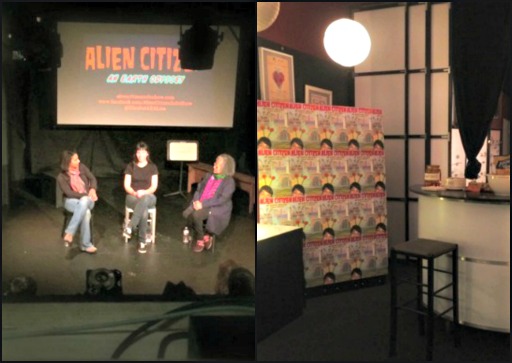
Director Sophie Calderon puts her all into helping Lisa Liang with the filming of Alien Citizen in November (photos supplied).

We had no audience on the first night when we shot close-ups and medium shots; we had a full audience on the second night of close-ups and wide shots.

This is what I’ll say about performing a solo show for cameras but without an audience, starting and stopping for technical and performance adjustments: it’s utterly exhausting. We were at the venue for a good eight hours that night and we must have shot for at least four-and-a-half of those hours. This meant that I had to perform alone for close to five hours. No costar to work off of, no audience to bounce off of, nobody but the silent cameras, the silent crew, and me. Mind you, doing the 80-minute show nonstop is already a tremendous workout. I always say it’s like doing a sprint triathlon while emoting—and I would know because I’ve done a sprint tri. So now imagine doing it for 270 minutes.

Gah!!!

Drama needs an audience

The next night’s shoot was much more fun, thanks to the warm, enthusiastic audience. They were mostly friends and friends-of-friends who were happy to be there, which made all the difference. I enjoyed myself and the performance felt “full.” We had to “hold” a few times due to sirens passing just outside the theatre—the bane of filming in a big city. But the audience was good humored and supportive throughout.

Afterward we had a Q&A moderated by one of my associate producers, Karen Smith, and people asked smart questions. I’ll include the Q&A on the DVD as an “extra” and maybe put it on YouTube as a promo. People stuck around for wine and goodies after that, and it was absolutely lovely to continue receiving support and enthusiasm well into the evening.

Alien Citizen Talkback

Associate producer Karen Smith conducts a talk back with Lisa and Sophie for a DVD “extra”; the lobby is decked out before the public show with an Alien Citizen backdrop for interviews later (photos supplied).

Have I mentioned that I performed with four injuries? I accidentally hurt my lower back in January, and the problem has flared up intermittently throughout the year. My left shoulder/neck area started bothering me over the summer. My right clavicle was injured accidentally at a chiropractic session for the first two injuries (!). And I hurt my right leg during a performance of an excerpt of the show in September. I’ve been doing all I can to take care of these problems: chiropractor, massage, acupuncture, cupping, at-home physical therapy, hot tub, you name it.

Stress with a capital “S”

So I can only think that the reason they all flared up (especially my back) with a vengeance in the weeks leading up to the shoot was: stress. It’s stressful to produce a film, even when it only shoots over two nights. If you’re the only actor in it, and it’s your “baby,” and you’re literally recording it for posterity, then the stress increases exponentially. So I felt more wrecked than usual on the mornings after both performances, and I laid low for a few days afterward. Luckily, Thanksgiving was soon upon us, so I used the holiday weekend as an excuse to stay in.

I look forward to editing the digital version of the show with my director’s input, and then sending it out into the world. The world has been very kind to Alien Citizen so far, so I’m allowing myself to hope for its future.

Meanwhile, my next live performance will be at Smith College on January 30, and my Asia-Pacific debut will be in Singapore in late April. The show still has legs and I’m so grateful to every single person who has supported it.

Since I’ve posted several entries about the show’s adventures in 2015, and you’ve been very indulgent of that, I’m pleased to announce that the first TCK Talent posting of the new year will be an interview of a wildly impressive creative ATCK. Happy holidays, all, and stay tuned!

* * *

Thank you, Lisa! It’s been quite a year for you and your solo show. I’m amazed you still had energy for a film shoot, especially given your injuries. You’re amazing! I think I speak for all the Displaced Nation readers in wishing the brightest of futures for Alien Citizen, in 2016…and beyond! —ML Awanohara

STAY TUNED for the next fab post!

If you enjoyed this post, we invite you to register for The Displaced Dispatch, a round up of weekly posts from The Displaced Nation, with news, book giveaways and other extras. Register for The Displaced Dispatch by clicking here!

Related posts:

WORLD OF WORDS: At least know the meaning of “gauche” before you travel abroad

Marianne Bohr in the Luxembourg Gardens in Paris—is she reading or indulging in reveries about words?

Marianne Bohr in the Luxembourg Gardens in Paris—is she reading or indulging in reveries about French words?

Columnist Marianne Bohr, whose first book, Gap Year Girl, came out in September with She Writes Press, recounts some of the bad elements she and her husband encountered during their travels.

When living in or even just briefly visiting a country not your own, bad behavior often involves words. Or sometimes, the lack of them.

Over the course of the adult gap year I took with my husband to explore Europe, we frequently witnessed what we considered bad behavior by expats or tourists. There’s no excuse for being in a country without learning the basics of its culture and at least a modicum of words for pleasantries. To do otherwise selfishly places you and your mother tongue at the center of the language universe and disrespects the country and the people you’ve chosen to visit.

Rude Americans in the City of Light

Our 365 days of travel began with a month in Paris. In the space of two evenings, we observed very different, yet equally disappointing, back-to-back dining experiences. The food was terrific but our neighbors were not. Both incidents involved Americans in the City of Light for long stays.

Parisian cafe bad elements

Photo credit: Parisian bistro at night, by La Citta Vita via Flickr (CC BY-SA 2.0).

The first took place in a bright busy bistro where we were seated next to a retired married couple from Reno, Nevada. They had been coming to Paris for six weeks at the end of every summer for several years.

The second was in a dim crêperie where we sat across from a middle-aged man and woman from U.S. parts unknown (although her accent gave her away as coming from the deep south). He taught something somewhere to students in Paris and she stated indignantly as we ordered our drinks that she, “could not take another year over here—twelve months was more than enough.” Everyone has a story.

Some of the two couples’ background they shared with us and other bits we overheard. What absolutely amazed me—in fact made me wince—was that none of these four Americans even attempted to speak French to the wait staff.

I completely identify with not knowing a language; we traveled through multiple countries whose languages eluded me, yet we always learned to say hello, please, thank you and you’re welcome.

But all four of these people had spent significant time in France. Would it have been so difficult to read off the menu and say, “la salade” and ”le poulet” instead of “the salad” and “the chicken?” Could the guy who’s been teaching here for a year at least have learned to say, “l’addition, s’il vous plaît” instead of “the check, please?” Might they all have been able replace, “Thank you—goodbye,” with “Merci—au revoir?”

I’m sympathetic towards tourists who travel for brief visits, but after six weeks every year and a full twelve months in Paris, there’s simply no excuse. That’s behaving badly in my book.

Blatant bad behavior in Aix

Well into our sabbatical year having traveled through 20 additional countries, we were back in the pleasures of France. And yet again, we found ourselves observing a more blatant brand of bad behavior.

We had settled in the stylish university town of Aix-en-Provence at the height and in the heat of a south-of-France summer. One of our favorite pastimes was sitting for long mornings under the dense shade of sycamores—les platanes—their green canopies arching over appealing squares filled with tiny bistro tables. The unique mosaic of the sycamores’ peeling bark intrigued us—uneven patterns of pastel yellows, tawny russets, avocado greens and dull grays—and we never tired of studying the colors.

Aix plantanes

But on one morning, our idyllic interlude under royal sycamores was marred by the manners of plebeians.

Enjoying cafés au lait, croissants, and the daily chatter of French summer school students in the outdoor shade, we were startled when an Eastern European quartet of two tanned Moms and their Mini-Me daughters, each one more rude than the other, unceremoniously marched onto the terrace.

There were no “bonjours” and no smiles in response to the sweet greetings of the waitress. The women’s bravado more than upset the drowsy morning ambience.

All were similarly clad in skinny jeans, patent leather stilettos and Jackie-O shades with “spoiled” plastered across heavily made-up faces. Distressed that the cafe served no food for breakfast and when politely urged, as we had been, to run up the street to the local boulangerie for croissants, the most vocal of the four retorted brusquely and loudly in accented English, “What, the French don’t eat breakfast? Ridiculous.”

We so wanted to see her wobble up the cobblestoned hill in search of pastries in those heels.

stilettos in Aix

Rather than rebuke the vocal twenty-something for bad behavior and creating a scene, however, her mother barked an order for orange juice—“freshly squeezed.” The OJ not forthcoming, they settled loudly for espressos, plopped down in their chairs and insolently picked up their Blackberries with identical pouts.

Bad-mannered people come from all corners of the world, and, unfortunately, they sometimes chose to sit next to us.

* * *

Thank you, Marianne, for sharing these horror stories! I agree, more people need to join your world of words!

Readers, have you ever met the tourists from hell, and were they using English in a non-English-speaking country at the time? We’d love to hear about it in the comments!

Marianne C. Bohr is a writer, editor and French teacher whose book, Gap Year Girl: A Baby Boomer Adventure Across 21 Countries, was published in early September (She Writes Press). She married her high school sweetheart and travel partner, and with their two grown children, follows her own advice and travels at every opportunity. Marianne lives in Bethesda, Maryland, where after decades in publishing, she has followed her Francophile muse to teach French. She has an author site where she keeps a blog, and is active on Facebook and Twitter.

STAY TUNED for the next fab post!

If you enjoyed this post, we invite you to register for The Displaced Dispatch, a round up of weekly posts from The Displaced Nation, and SO much more. Register for The Displaced Dispatch by clicking here!

Related posts:

CULTURE SHOCK TOOLBOX: Expats, when you find yourself out of tune with the local language/culture, throw back your head and laugh it off!

Byron Williams, Jr. with one of his performers (supplied).

Byron Williams, Jr. with one of his performers (supplied).

Transitions enthusiast H.E. Rybol is in holiday mode with her latest interview guest.

Season’s greetings, Displaced Nationers! You may be in full hibernation mode by now or, if you live in the Southern Hemisphere, perhaps you’re ready to hit the beach! Either way, I’d like to offer you some holiday cheer through this month’s column. My guest is singer, song-writer and long-term expat Byron Williams, Jr. Byron grew up in Miami, Florida, and Portland, Maine, before moving to Europe in the 1990s.

He started singing in a gospel choir when he was eight years old—and has been singing ever since. Since 1998 he has made his home in Fredrikstad, Norway, where he performs soul, jazz and rhythm ‘n’ blues with his duo/trio at all kinds of events: parties, anniversaries, festivals and more. He can go from Frank Sinatra to Barry White and everything in between.

During this cold and grey season, Byron has been spreading comfort and joy with his concert series “Christmas Joy N’ Soul.” Talk about holiday spirit!

Byron kindly agreed to share some of his culture shock experiences with us. Tune in as we talk about mistaken identities, language classes, mispronounced words and what to pack to get through awkward moments. Actually, as it’s the holidays, why not literally tune in to Byron? Click here to hear him croon…while you read on.

* * *

Hi, Bryon. Welcome to Culture Shock Toolbox. I know you were born in Miami and then went all the way north to Portland, Maine. Where have you lived abroad?

Spain (Mallorca) for three years and Norway (Fredrikstad) for almost 17 years.

In the course of your transitions into European cultures, have you ever ended up with your foot in your mouth?

When I moved to Norway back in 1998, I was getting off the train in Oslo and heading towards the central station, when a man approached me asking me something in Norwegian. And I, being the polite American, told him “No, I’m sorry and continued on my way to the station. He continued to ask me questions and I replied: “No, I do not have any money to give you.” As I was getting closer to the entrance to the station, he told me that he was a customs agent and needed to see my passport. I apologized to him for thinking that he was a beggar.

How did you handle that situation?

We both laughed and went our separate ways 🙂

Can you think of a situation you handled with finesse, and why do you think that was?

When I began to take Norwegian classes, I mispronounced the word for “brick” in English and what came out sounded like the Norwegian word for murder. Back then the words sounded the same to me and didn’t notice it. Then my teacher started laughing and told me that the words meant two totally different things 🙂 I laughed it off by saying that that’s what happens when you learn a new language.

You have to have a sense of humor in life.

If you had any advice for someone moving abroad for the first time, what tool would you suggest they develop first?

Carry a smile in your culture shock toolbox, it will take you further 🙂 And stock up on those smiley face stickers and emoticons for when you need a reminder!

smiley face toolbox

Thank you so much, Bryon, for taking the time to do this interview! As newbies in another culture, we aren’t always as inconspicuous as we’d like to be. Humor will definitely see us you through those awkward moments and make you feel more in harmony with yourself and your surroundings. Especially in this holiday season, why not crack a smile and try putting one on someone else’s face?!

* * *

Readers, what do you make of Byron’s advice? If you like what he has to say, I recommend you visit his site, where you can peruse his music. You can also find him on Facebook and Twitter.

And to keep you in that holiday spirit, listen to Byron’s tribute to Barry White:

As always, thanks for reading, Displaced Nationers! Well, hopefully this has you “fixed” until next month/year. See you in 2016!

Until then. Prost! Santé!

H.E. Rybol is a TCK and the author of Culture Shock: A Practical Guide and Culture Shock Toolbox. She loves animals, piano, yoga and being outdoors. You can find her on Twitter, Linkedin and Goodreads. She recently launched a new Web site and is now working on her second book.  

STAY TUNED for more fab posts.

If you enjoyed this post, we invite you to register for The Displaced Dispatch, a round up of weekly posts from The Displaced Nation—and much, much more! Register for The Displaced Dispatch by clicking here!

Related post:

LOCATION, LOCUTION: Rachel Abbott, proof positive it’s never too late to become a best-selling novelist—and expat

Location Locution
Columnist Lorraine Mace, aka Frances di Plino, is back with her latest interview guest.

My guest this month, Rachel Abbott, did not start out as a writer, though she claims she always had a novel in her head. Born in Manchester, she trained as a systems analyst but then ended up founding her own interactive media company, where, as managing director, she wrote everyday but mostly board reports, user manuals, and creative treatments for clients.

Around 15 years ago, she sold the company and moved with her husband to Le Marche, in central Italy. The pair set to work on renovating a ruined small monastery, where they lived for several years.

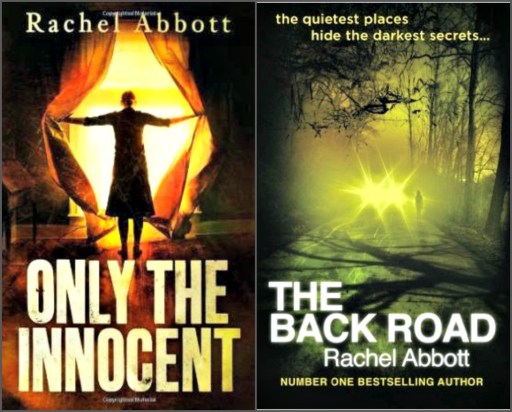
When six-foot snowdrifts prevented her from leaving the house for a couple of weeks, Rachel started writing and found she couldn’t stop. She self-published her first novel just over four years ago, a psychological thriller called Only the Innocent, which is set very briefly in Italy but mostly takes place in rural Oxfordshire.

Only the Innocent reached the number 1 spot in the Kindle store just over three months later and went on to become the second highest selling self-published title in 2012. It was subsequently published by Thomas and Mercer in the USA, where in just a few months it achieved number 1 in the US charts, making Rachel’s debut a number one bestseller on both sides of the Atlantic.

The Guardian newspaper dubbed Rachel “the e-publishing sensation of 2012” while The Observer stated “self-published authors such as Rachel Abbott are the trade’s hottest property.”

That’s how this Mancunian fell into a brilliant new career. Two years after her break-out success, Rachel released her long-awaited second novel, The Back Road—which quickly reached number 2 on the UK Kindle chart and has over 450 five-star reviews. (The back road of the title is in a made-up village called Little Melham, in the heart of the English countryside.)

Rachel's first two psychological thrillers, both international bestsellers.

Rachel’s first two psychological thrillers, both of which rapidly became international bestsellers.

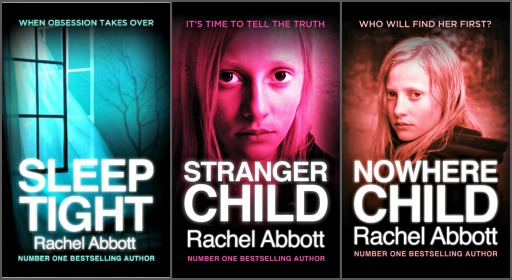
Her latest works, Sleep Tight (partially set in Anglesey, one of the Channel Islands, which Rachel visited as a child), Stranger Child and Nowhere Child have followed the same pattern of success. All of them take place mainly within Rachel’s hometown of Manchester.

Rachel's latest three books. Stranger Child, a stand-alone novella but featuring the same characters as Stranger Child, came out in October.

Rachel’s latest three books. The very latest, Nowhere Child, came out in October. It’s a stand-alone novella but features the same characters as Stranger Child.

As far as the expat life goes, Rachel now divides her time between Italy (where she lives in her second property, an apartment in an old fort, which overlooks the sea) and Alderney, in the Channel Islands, which is just off the coast of France. She explains her decision to spend time on this beautiful island as follows:

“There are so many wonderful aspects of living in another country—not least getting to understand their culture. Italians are extreme in their emotions, and that—for me—was a joy to watch, even when they are shouting at each other (because it usually doesn’t last). I did, however, struggle with the language. I can now speak reasonable Italian, but as a writer I found it difficult not to be speaking English all the time! I discovered that from time to time I struggled to remember the correct English words, and I felt it was time to move back to an English-speaking country if I was to continue to write. So I moved to Alderney. Not quite the UK, but close. It’s a wonderful island, and life here is as perfect as it gets.”

Despite her new-found worldliness, Rachel insists she remains a Lancastrian at heart.

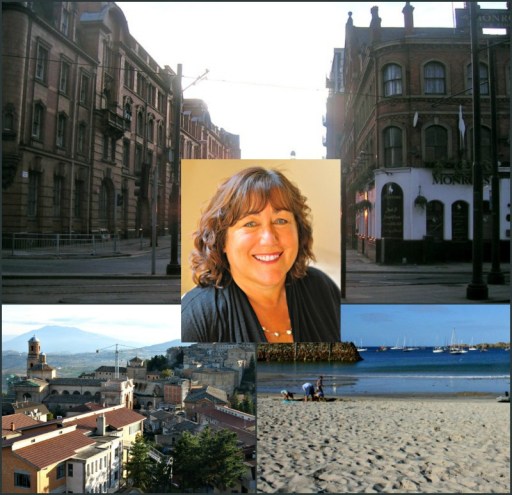
Photo credits: Rachel Abbott (inset); Whitworth Street, Manchester, by Mikey via Flickr (CC BY 2.0) ; Montalto delle Marche, by Sgobbone via Flickr (CC BY-SA 2.0); and Braye Beach (Alderney, Channel Islands), by TheOnlyMoxey via Flickr (CC BY 2.0) .

Photo credits: Rachel Abbott (inset, supplied); Whitworth Street, Manchester, by Mikey via Flickr (CC BY 2.0); Montalto delle Marche, by Sgobbone via Flickr (CC BY-SA 2.0); and Braye Beach (Alderney, Channel Islands), by TheOnlyMoxey via Flickr (CC BY 2.0) .

* * *

Welcome, Rachel, to Location, Locution. It seems your writing career and your expat life developed in tandem, but which comes first when you are writing, story or location?

Thank you for inviting me, Lorraine.

In all cases, my story has come first. My most recent books are set in Manchester, but the locations within Manchester are determined by the story. My concern is that I am going to run out of spooky places for the strange goings on that I need in my stories!

What techniques do you use for evoking the atmosphere of a place?

I have a very visual imagination, and in every major location in any of my books, I know exactly what it looks like. That’s my starting point. I can wander the halls of houses, or creep along canal banks at night. So I know what I can see. I then start to think about what it might smell like—and much of that is determined by what is happening. A house can smell of baking cakes, or of rotting food—so I imagine myself there, and think how it might smell. Finally, I listen. What will the sounds be like? Where is the location—outdoors or indoors? What are the surroundings like—are there trains nearby, or a distant motorway? I close my eyes, and I am there—feeling what my characters are feeling.

Which particular features create a sense of location? Landscape, culture, food?

It depends on the stage in the story. The character might be walking along a country lane, but if she is scared, the overhanging trees, dripping with rain from the recent storm would be the features to focus on. If it’s a happy day, it might be the cows munching contentedly on the grass in the fields. With this in mind, any feature can help to create that sense of the location.

Which of your works provides the best illustration of place, and can you give us a brief example?

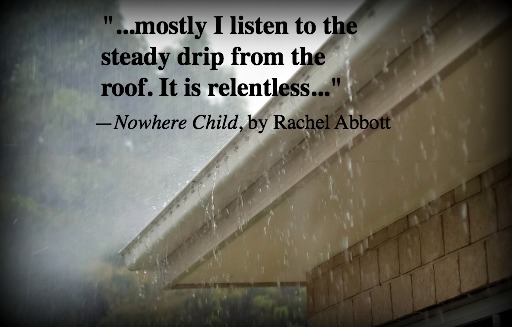
Here’s a passage from my latest, Nowhere Child:

The freezing November wind is bouncing off the damp walls, hitting us in icy blasts as if someone keeps opening and closing a door. But there isn’t any door—just a gaping black hole. There are four or five groups of us down here, sitting in twos and threes huddled around our feeble fires. We keep to ourselves mostly. I can see the odd face, lit from below by the weak yellow flames, features hovering, disembodied, against the black walls, the eyes hollow pits. I can hear the occasional murmur of conversation but mostly I listen to the steady drip from the roof. It is relentless, and I’m not surprised when Andy says that dripping water is used as a form of torture. Another drop joins in, this time with a slightly different tone. There is a pause, and for a second I wonder if it’s stopped. But of course it hasn’t. Drip-drop. Drip-drop.

Nowhere_child_quote

How well do you need to know a place before using it as a setting?

Some settings exist in my imagination. Others have to be realistic. I am currently writing a story about an area of Manchester that I didn’t know existed—even though I lived there for a large proportion of my life. I have been unable to visit it myself in time to write the first draft of the book, but my sister lives nearby. So she has been out on research trips for me, taking photos and videos. I have used to map to pinpoint the places that I want her to take pictures of, and I’ve also used Google Maps—in walkabout mode—to get me close enough. I have studied this place in as much detail as possible without an actual visit, and I will visit it myself before the final version is written.

Which writers do you admire for the way they use location?

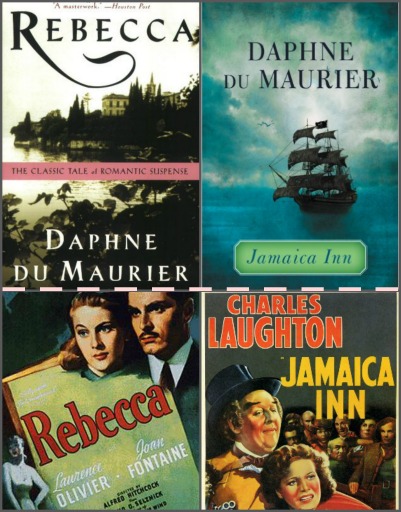
I love the sense of location in Daphne Du Maurier’s books—in particular, Rebecca and Jamaica Inn. One is set in a magnificent, if malevolent old property, the other a run down and gloomy inn, which is never open to the public. The locations are so vivid in these books that a mental image is formed even before seeing them on the big screen!

The locations of these two Daphne du Maurier classics are so vivid, you don't even need to see Hitchcock's films!

The locations of these two Daphne du Maurier classics are so vivid, you don’t even need to see Hitchcock’s films!

Thanks so much, Rachel!

* * *

Readers, any questions for Rachel Abbott? Please leave them in the comments below before she jets off to one of her exotic locales…

And if you’d like to discover more about Rachel, why not visit her author site. You can also follow her on twitter at @RachelAbbott.

Until next month!

Lorraine Mace writes for children with the Vlad the Inhaler books. As Frances di Plino, she writes crime in the D.I. Paolo Storey series. She is a columnist for both of the UK’s top writing magazines, has founded international writing competitions and runs a writing critique service, mentoring authors on three continents.

STAY TUNED for the next fab post!

If you enjoyed this post, we invite you to register for The Displaced Dispatch, a round up of weekly posts from The Displaced Nation, with weekly updates and much, much more. Register for The Displaced Dispatch by clicking here!

Related posts:

Photo credits (top of page): The World Book (1920), by Eric Fischer via Flickr; “Writing? Yeah.” by Caleb Roenigk via Flickr (both CC BY 2.0).

BOOKLUST, WANDERLUST: Giving thanks for expat and repat writers whose novels have an international flavor

booklust-wanderlust-2015

Attention displaced bookworms! Our book review columnist, Beth Green, an American expat in Prague (she is also an Adult Third Culture Kid), is back with several recommended reads!

Hello again, Displaced Nationers!

This week is Thanksgiving in the USA. Many Americans abroad skip this holiday for one reason or another—one main reason being the cost of frozen turkey (a friend in Thailand recently posted a picture of one selling for $200 at the expat grocery store!).

But I always try to do something a little bit special. The way I see it, there can never be enough occasions to sit down with friends to a table full of good food!

In addition to planning for Thanksgiving and the holiday season, I’ve been cruising through the rest of my 2015 To-Be-Read list. This month, I’ve been feasting, so to speak, on three books by current or former expats who write fiction set against international landscapes. Two of them are first-time novels and the other is a thriller. One came out with a small press, and the other two are self-pubbed. Take a look!

1) Summer on the Cold War Planet, by Paula Closson Buck (Fomite, 2015)

Summer Cold War Buck

A first novel about expats in late 1980s Berlin, written by a former Fulbright fellow who has written poems and short stories about her travels? Sounds like a perfect choice for the Displaced Nation! Paula Closson Buck directs the creative writing program at Bucknell University in Pennsylvania, and is currently at work on a novel set in Venice—keep your eyes open for a review of that book, too, when it publishes.

Summer on the Cold War Planet tells the story of Lyddie, a young American woman who is living in Berlin a few years before reunification and studying architecture. She encounters a trio of German artists/activists and also meets her future husband, an American botanist named Phelps.

Most of the action takes place, as the title suggests, the summer before the Berlin Wall falls. At that time, Phelps disappears while conducting botanical research in Kurdistan and so Lyddie, now pregnant, returns to Berlin to examine her feelings for the absent Phelps—and rediscover who she is.

Buck brings the period to life through gorgeous details such as:

In the simple way the young East German at the border touched Lyddie’s face, tipping her chin this way and that as he scrutinized her features in relation to her passport, Lyddie felt she understood the meaning of Cold War. He returned her passport with a hint of a smirk and nodded her release.

But, although I was transported to the intense atmosphere of 1989 Berlin, I often felt at arm’s length from Lyddie, I think because, especially in the flashback scenes, she seemed to be letting others make choices for her.

Later, when the action shifts to the Cycladic Islands in Greece, Lyddie becomes more relatable. My favorite character in the novel, I’d like to add, is another point-of-view character, a Greek painter who learns to paint canvases underwater. A new thing to try next time I go scuba diving!

2) A Decent Bomber, by Alexander McNabb (November 2015)

McNabb Decent Bomber

This book also ticked two boxes for inclusion in this column—an expat author and an internationally relevant plot. Alexander McNabb is a former journalist who has lived abroad—mostly in the Middle East—for about 30 years. He is author of several other international thrillers, including the “Levant Cycle” books, all three of which were featured on the Displaced Nation.

The action of McNabb’s previous international thrillers centers on the Middle East, but he sets A Decent Bomber in Europe, mostly in Ireland.

Now, I find it fun to read thrillers (“fun” in that kind of macabre sense), and this one has an enjoyable premise. A retired, reformed bomb-maker for the Irish Republican Army reluctantly agrees to build new bombs, this time for African terrorists—and then tries to save the day before his bombs explode. McNabb keeps the pacing tight, the action scenes believable, and the violence just on this side of gruesome.

Perhaps because of recent current events, I was also impressed with how delicately he handles the multiculturalism of present-day Ireland, as well as the long, contentious history between the English and Irish. Take, for example, the following scene, set in a mosque in Northern Ireland:

“Welcome. I am Abdelkader Ul-Haq.”

“Hello, Father. My name’s Pat.”

Abdelkader hobbled to behind the desk and lowered himself into the wooden armchair. “I am not your father. May I sit?”

“Of course. I’m not holding you up. And father is we call our priests.”

“I know. I was joking with you. It is always best to joke with men who have guns, I am finding.”

“What gun?”

“I know the shapes guns make in clothes, Mister Pat. I come from a troubled place.’

“Well you’ve certainly hopped out of the frying pan into the fire.”

“Belfast? It is peaceful now. Before, there were troubles. No more. How may I be of assistance to you?”

Lest you be put off by the idea of following the adventures of a lone cowboy (indeed, Pat is such a cowboy that he actually owns cows), I should mention that our hero is rarely alone. He is joined on the chase by his college-student niece along with a group of police officers and politicians from both the Republic of Ireland and Northern Ireland, all of whom provide moments of comic relief. As we know from the Displaced Nation’s previous encounters with McNabb, he has a sense of humo(u)r.

3) I Have Lived Today, by Steven Moore (October 2014)

I have lived today Moore

I included this book in this particular round-up because of the author’s international credentials, and because it has received 130+ five-star reviews on Amazon. Steven Moore is the man behind the visually stunning travel blog, Twenty First Century Nomad (he also has an author site). He has been working and traveling abroad for at least twenty years. He now lives in Mexico, and one suspects his adventures aren’t over yet!

But, now, let’s burrow into the pages of Moore’s book, his first. Although the novel does have scenes both in the UK and in New York City, it is principally a coming-of-age story about a boy whose travels have to do with discovering his own conscience. I Have Lived Today takes place in the 1960s and follows the turbulent journey of Tristan Nancarrow, a boy so badly treated by his alcoholic father that he was never allowed to attend school.

Tristan’s mother is forced to run for her life, and not long after, Tristan makes his escape from the isolated island where the family lives. He spends the bulk of the book trying to reunite with his mother—having plenty of adventures, along with his share of small triumphs and bitter tragedies, along the way.

I especially enjoyed the parts of the novel when Tristan discovers what he was missing out on while under his father’s control. One of the first things he does after escaping is go to a bookstore and buy an atlas:

Tristan turned the pages delicately, as if he was looking at a priceless and ancient manuscript. To him it was an object of beauty, a treasure from a museum, and indeed the musty old store had a museum feel about it, or at least that’s how Tristan imagined a museum would seem, having never been to one.

There are times in I Have Lived Today when the tone takes on a moralistic edge and the pacing becomes steady and unrushed in a manner reminiscent of a Grimm’s fairy tale (though, to be sure, without any witches or other supernatural beings).

Our hero, Tristan, despite his father’s brutal abuse, remains an innocent who chooses to embrace a white-knight moral code even as the world shows him how cruel it can be. Through switches in point of view, Moore lets the reader peek into other characters’ motivations, but the focus is always on Tristan and his choice to reject his personal demons. This hero has resilience—the quality that we expats need—in spades.

* * *

So, Displaced Nationers, if you’re lucky enough to have a few moments to yourself over Thanksgiving or before the holiday season gets into full swing, you might want to check out these three books. They’re as different as the sides at a potluck Thanksgiving, and no less delicious for that!

p.s. And, since it’s Thanksgiving, may I say a hearty thank you to my readers! Please keep in touch and let me or ML know if you have any suggestions for books you’d like to see reviewed here! Last but not least, I urge you to sign up for the DISPLACED DISPATCH, which has at least one Recommended Read every week.

STAY TUNED for next week’s fab posts!

Beth Green is an American writer living in Prague, Czech Republic. She grew up on a sailboat and, though now a landlubber, continues to lead a peripatetic life, having lived in Asia as well as Europe. Her personal Web site is Beth Green Writes. She has also launched the site Everyday Travel Stories. To keep in touch with her in between columns, try following her on Facebook and Twitter. She’s a social media nut!

If you enjoyed this post, we invite you to subscribe to The Displaced Dispatch, a weekly round up of posts from The Displaced Nation and much, much more. Sign up for The Displaced Dispatch by clicking here!

Related posts:

GLOBAL FOOD GOSSIP: Upon repatriation, a chance to hatch my first farm-to-table plan (the coop came first!)

Global Food Gossip 062315
Serial expat—and now repat—Joanna Masters-Maggs is back with some tasty global food gossip to share—this time a rather entertaining chicken-and-egg story (but the coop came first).

“Right, that’s it, no more chickens,” muttered my husband darkly as he finished putting in the last stake supporting the electric fence which now circled a large part of our garden. “You’d think these eggs were gold plated.”

I had always wanted chickens and, returning to the English countryside after nearly twenty years of living abroad, I seized the opportunity, investing in a proper, farm-style coop. No silly Dutch barns or Irish caravans for me—this was to be serious stuff.

“What kind of chickens do you keep?” asked the friendly guy from the animal feed shop from whom I was buying a vast bag of hay and a substantial sack of layers meal (poultry feed).

“Er, well,” I muttered with embarrassment.“I don’t actually have any yet…but soon.”

“Well,” he smiled kindly, “you’d do worse than looking up Andy at Oak Farm, he’s got all sorts.”

The chickens arrived a week later. All went well, two more arrived and the eggs began to come….until…

The Girls...minus poor Abby (supplied).

The Girls…minus poor Abby (supplied).

Why did the chicken cross the road? (Don’t ask…)

One afternoon, I went out to check on my girls, to discover that one, Abby (a Wyandotte), was missing—and so too was Sophie, my gorgeous German Shepherd.

Nearly hysterical by now as I couldn’t possibly contemplate life without Sophie, I ran up and down the road in front of the house and down the lane calling and calling the dog. She always comes.

But this time it took fifteen minutes. When she at last emerged from the ditch behind the hedge—quiet but gleaming and bright eyed—I knew.

We never found traces of Abby and it was easy to convince ourselves that a fox had stolen the unfortunate bird, but, hours later, my husband caught Sophie, red in tooth and claw, with Keira, a light Sussex.

Dinner that night was chicken. “It’s not Keira, honestly.”

The atmosphere was bleak. Something had to be done and so the electric fence was organized. We now rest easy that Sophie won’t help herself to another expensive free-range chicken lunch. She clearly remembers her meal with relish—and I still occasionally catch her gazing wistfully at The Girls. But she now knows, and an electric shock serves to reinforce the lesson.

But the flavor? Just eggs-traordinary!

The eggs are worth all the trouble. Unless you have tasted an egg straight from nesting box to plate, you have not, I am sad to say, tasted egg.

A feast of poached eggs on toast at Joanna's house (supplied).

A feast of poached eggs on toast at Joanna’s house (supplied).

In England it isn’t easy to buy battery eggs any more. Free range is the thing in all supermarkets; many only stock free range.

Should you decide to stand firm against spending extra for your eggs, you might feel it prudent to hide the box under some curly kale as you complete your perambulations around the aisles, such is the disapproval you might attract.

Hardly a nest egg…

Yes, I have eaten my share of free-range eggs and so feel myself qualified, albeit poorly, to make two observations:

1) A free-range egg from a supermarket is not the same as the eggs The Girls produce. I think it may have more to do with freshness than free-rangeness. Freshly laid, my girls produce eggs with thick whites, which do not spread when they are cracked. It is very easy to poach them perfectly since they hold together well. Of course, it goes without saying that the yolks are deeper in colour and of a more unctuous texture.

2) It’s simply not clear how free-range eggs can be produced for any profit, even at the prices supermarkets charge. I have—thank you, Sophie—nine chickens. I am lucky if I get four eggs a day. Four. I have to feed these girls both regular feed and little treats and put cider vinegar in their water for strong shells. Then I must buy them straw, which I like to change daily both for hygiene and for their comfort and dignity—they are ladies, please. Then there is the cost of the coop and galvanized feeders and water dispensers. Then, of course, the electric fence. My girls aren’t even close to paying me back in eggs. Not close.

I suppose if I was of a suspicious mind, I would question how free range does a chicken need to be for her eggs to be sold as such. Does she range wantonly over the garden trampling peonies and pecking at pyrocantha with shameless disregard, or she rather more constrained? If so, exactly how constrained? Does she live outdoors, indoors? I just don’t know. The frightening thing is that, like so many others standing in the egg section of Waitrose, I’m not alone in not knowing what, precisely, is meant by “free range”.

There is also the matter of the moulting season, during which hens lay few eggs in order to conserve all protein for the growth of a new winter feathers. As my friends said, “Moulting season? But there are always eggs in Waitrose.”

He makes a fair point. How does that work? I’ll tell you how it works in Hambridge: I get no eggs, but I carry on caring for the princesses.

Still, let’s not brood over it!

Happily, like my chooks, I don’t have to exhaust myself worrying about these things. I have The Girls, the eggs, the sheer joy of feeling connected to food production albeit in such a small way. It feels so wholeseome to watch my family enjoy our own eggs. It is so snobbishly gratifying, too, to know we are eating probably amongst the world’s most expensive hens’ eggs.

Where’s is the champagne, darling?

colorful bountiful eggs

* * *

Readers, we invite you to continue the food gossip! What do you make of Joanna’s eggs-perience? Of course if you’re American your thoughts will be turning to turkey at this point, but surely you, too, can spare a few moments to think of the humble chicken? Let us know in the comments…

Joanna Masters-Maggs was displaced from her native England 17 years ago, and has since attempted to re-place herself in the USA, Holland, Brazil, Malaysia, Venezuela, Saudi Arabia, and France. She describes herself as a “global food gossip”, saying: “I’ve always enjoyed cooking and trying out new recipes. Overseas, I am curious as to what people buy and from where. What is in the baskets of my fellow shoppers? What do they eat when they go home at night?”

STAY TUNED for more fab posts!

If you enjoyed this post, we invite you to register for The Displaced Dispatch, a round up of weekly posts from The Displaced Nation—and much, much more! Register for The Displaced Dispatch by clicking here!

Related posts: