As reported here last month, Elizabeth Liang spent the month of May performing, at a venue in Los Angeles, a one-woman show about being a Third Culture Kid, or TCK. As some readers may recall, Liang is a self-described Guatemalan-American business brat of Chinese-Spanish-Irish-French-German-English descent. She was brought up by peripatetic parents in Central America, North Africa, the Middle East, and Connecticut. Many of us were curious about not only how she could pack all of that personal history into a solo stage performance, but also how the (mostly American) audiences would respond. Today is the day we get to find out. Take it away, Elizabeth!
—ML Awanohara
I had no idea what to expect from audiences when I opened my solo show, Alien Citizen, in Hollywood, California, on May 3rd (it closed June 1st).
Since the show is about my upbringing as a dual citizen of mixed heritage in six countries, I assumed it would appeal mainly to Adult Third Culture Kids (ATCKs) and people of mixed heritage—the people I wrote it for, since we rarely see our stories portrayed on stage or screen.
I wanted the show to be funny, but wasn’t sure if the humor would translate.
And I wanted people to be moved by the story.
Some pleasant surprises
As it turned out: 1) I was happily surprised by the composition of the audience. People of all backgrounds, ethnicities, and ages came to see my performance. Some were Americans who had never left their home state until college, others had moved domestically countless times as kids. By the same token, I was pleased that the audience did include ATCKs, global nomads, people of mixed heritage, expats, and immigrants.
2) Many of the houses were full. I had tentatively hoped the story would resonate with enough people to fill the house because the play is about identity, which everyone grapples with. That said, I didn’t expect everyone to empathize with my lifelong experience as an outsider of some kind and even feared that this experience would alienate some audience members… The full houses suggested that the show was actually resonating with most people. For this I must give credit to my director, Sofie Calderon, because she guided me to a brave and inclusive performance. I also take pride in the script, which I worked on for two years.
3) The audience laughed in the right places, mostly. I was astounded at the number of laughs I got in my preview performance. It was wonderful. This continued once the play got under way, although I did have a few quiet nights, when the audience was listening intently and smiling rather than laughing. (Then there was the night when a man in the front row fell asleep. This thickened my skin…after I considered quitting!)
4) The audiences were moved—not only at the end of the play where it was intended, but throughout the performance. People told me that they oscillated between tears and laughter for a large part of the performance—the highest praise I could have hoped for.
Nights to remember
The performance that stands out most for me was the first time my parents, brother, and aunt came to watch me. They had all traveled internationally or cross-country to see it.
My parents and brother are characters in the show, so I was unsure of how they might react. That night got some of the biggest laughs, and my family told me afterward that while they certainly laughed, they also wept throughout the performance because I was telling their story, too. The show brought back experiences they hadn’t thought of in years.
Opening and closing nights were wildly different and weirdly similar. I performed in abject terror on opening weekend, and while I kept it hidden from the audience, it was difficult to enjoy myself on stage. Through the run, I gained heaps of confidence, and was able to relax and “play” more.
However, the final show was reminiscent of opening night in that it wasn’t my best. An actor’s performance is like a speeding train with no seats—ideally, the actor makes a flying leap to catch it, hangs onto the rails, and rides it without falling. Sometimes, though, the actor has to sprint for some time to catch the train, using every skill s/he has—and then keeps slipping from the handrails and grabbing them again, never able to “coast” and enjoy the ride.
I was sorry that my closing night wasn’t a great ride for me, but the good thing about performing for different groups of people each night is that the audience has no idea of what to expect, yet the story remains the same. So closing night still managed to get a standing ovation, as had other nights.
Lessons learned from “coming out” on stage
Performing Alien Citizen was a “coming out” for me. Although I told the story as entertainingly as possible, the play explores the darker aspects of having a peripatetic childhood, being a child of color and mixed heritage in the socially segregated USA of my youth, and being a girl blooming into womanhood on the hostile sidewalks of North Africa and the cold campus of a women’s college in the States.
I had never told these stories publicly (and rarely in private) because I didn’t want to seem ungrateful for all of the wondrous experiences I’d had as a TCK (including life in North Africa and at college), but also because I’m accustomed to listeners failing to understand my point. Hearing negative stories, people tend to conclude that a peripatetic childhood is terrible, or that the country in question is not worth visiting. But that isn’t what I’m trying to say.
Alien Citizen was my attempt to pronounce that:
Being a nomad, a kid of mixed heritage, and a girl can be hard.
This doesn’t nullify the glorious experiences to be had from having any or all of these selves.
The accompanying stories—positive and negative—have a right to be told. They are rarely told, they validate many people’s experiences, and they make a good yarn.
The overwhelmingly positive response of my audiences, night after night, taught me that my story is relatable and interesting, and that it’s a testament to my own strength as a human being, something I hadn’t known would be the case.
Doing the show also confirmed my belief that if a story is told with humor, people will listen to the darker side of it, and empathize.
I’ve been approached by universities in and out of state, as well as venues in Central America, to perform the show and teach workshops on how to create a solo show.
I hope to take the show all over the world.
I’m profoundly grateful that the world premiere of Alien Citizen has led to so many opportunities. I will also teach workshops in Los Angeles starting this fall.
* * *
Readers, I feel moved by this report even though I didn’t get to witness Elizabeth Liang’s deeply moving performance. (Elizabeth, please bring the show to New York so that I can see it!) How about you—any further questions for this brave and bold artist?
STAY TUNED for next week’s posts, featuring yet more international creatives as well as the latest episode in our fictional expat series, Libby’s Life.
If you enjoyed this post, we invite you to register for The Displaced Dispatch, a round up of weekly posts from The Displaced Nation, with seasonal recipes, book giveaways and other extras. Register for The Displaced Dispatch by clicking here!
Today we welcome expat crime writer JJ Marsh to the Displaced Nation. JJ grew up in Wales, Africa and the Middle East, where her curiosity for culture took root and triggered an urge to write. Having at this point lived in Hong Kong, Nigeria, Dubai, Portugal and France—she finally settled in Switzerland—JJ certainly belongs in our midst! But what makes her even more special is that she has offered to impart her knowledge to other international creatives about the portrayal of “place” in one’s works.
Currently halfway through her European crime series, set in compelling locations all over the continent and featuring detective inspector Beatrice Stubbs (on loan from Interpol), today JJ begins a new series for us, entitled “Location, Locution.” In the opening post, she will answer the questions she plans to ask other displaced authors in future posts.
JJ, we are positively THRILLED (in more ways than one!) to have you as a new columnist. Welcome! And now to get to know you a little better…
Which comes first, story or location?
Story, always. Or at least the bare bones of the plot. Then I audition various places before beginning to write. I have to know the setting, even before populating the novel with characters. The place IS a character. For example, once I knew the victims would be corporate Fat Cats in Behind Closed Doors, the first in my Beatrice Stubbs series, I looked around for a financial centre with the right kind of atmosphere. Turns out my home town of Zürich fitted the bill and even gave me the title.
How do you go about evoking the atmosphere of a place?
I’d say by really looking at it and digging deep. Not only that, but try to look at it from the perspective of your reader. It’s no coincidence that in many European languages, one asks for a description using the word “How”.
Como é?
Wie war es?
Yet in English, we say “What is it like?” We want comparisons to what we know. I actively chose to use a foreigner arriving in a strange country/city, so as to look at it with new eyes.
Which particular features create a sense of location? Landscape, culture, food?
I start with the senses. We notice sights, sounds and smells first, and add to our impressions with tastes and textures, all the while comparing them to our expectations. Food and drink are essential, as they reveal something of the region but also much about the characters. Cultural differences have to be treated with great care in fiction. Lumpen great dumps of information are poison to pace. But subtle observations can be woven into the story, provided they are relevant. I’ve just abandoned a book set in Rome which was clumsily pasted chunks of guidebook against a sub-par Eat, Pray, Love plot. The reader wants to be immersed in the world of the book, not subjected to the author’s holiday snaps.
While I am awed by that achievement, I don’t think I could do it. I need to ‘feel’ the place and also, to understand the people.
My nomadic past and interest in culture led me to study the work of Geert Hofstede and Fons Trompenaars. One of their models is to analyze culture like an onion. The outer layer is Symbols—what represents the country to outsiders/its own people? The next is Heroes—who do the people worship and venerate? Peel that away and explore its Rituals—on a national and personal level. At the centre of the Onion, you will find its values, the hardest part of a culture to access. But that’s where the heart is.
Could you give a brief example from your work which you feel brings the location to life?
The recent UK horsemeat scandal amused me, as it’s part of the average menu in Switzerland. Here my combative detectives, one Swiss, one British, have just finished lunch.
Beatrice patted her mouth with her napkin. “Herr Kälin, your recommendation was excellent. I thoroughly enjoyed that meal.”
“Good. Would you like coffee, or shall I get the bill?”
“I’ve taken up enough of your time. Let’s pay up and head for home.” Beatrice finished her wine.
Kälin hailed the waitress. “I wasn’t sure you’d like this kind of farmer’s food.”
“Farmer’s food is my favourite sort. Solid and unpretentious. Not the sort of fare they would serve in those crisp white tents at the polo park.”
Kälin let out a short laugh. Beatrice cocked her head in enquiry.
“It would definitely be inappropriate at the polo park, Frau Stubbs. We’ve just eaten Pferdefleisch. Horse steak.”
Thank you, JJ! Readers, any further questions to JJ on her portrayal of “place”, or authors you’d like to see her interview in future posts? Please leave your suggestions in the comments. You may also enjoy checking out the first three books in JJ Marsh’s Beatrice Stubbs series:
Behind Closed Doors: Takes place in Zürich, where someone is bumping off bankers.
Raw Material: Takes place between London and Pembrokeshire. Here Beatrice is joined by wannabe sleuth, Adrian. Amateur detectives and professional criminals make a bad mix.
Tread Softly: Unfolds in the Basque Country of Northern Spain. Beatrice is supposedly on sabbatical, but soon finds herself up to her neck in corruption, murder and Rioja.
STAY TUNED for tomorrow’s interview with Lisa Egle, author of Magic Carpet Seduction, two copies of which we’ll be giving away!
If you enjoyed this post, we invite you to register for The Displaced Dispatch, a round up of weekly posts from The Displaced Nation, with seasonal recipes, book giveaways and other extras. Register for The Displaced Dispatch by clicking here!
At the height of my own repeat expat experience—when I had a foot in Asia (Japan), Europe (UK) and North America (United States)—I often thought of this line from Shakespeare’s King Lear:
Who is it that can tell me who I am?
—King Lear (Act I, Scene 4)
Prone to being somewhat melodramatic and hyperbolic (yes, I know I don’t have three feet!), I decided I’d peaked out too early. After all, Lear was an old man when he cast himself out and then had to grapple with what it feels like not to have a home or identity, whereas I was still a young woman.
It’s a good thing I was never a Third Culture Kid, or TCK—that’s all I can say, or else we’d be in for some MAJOR drama on this site. Instead we can leave that to someone much more suited: the actress Elizabeth Liang, who is the subject of today’s post. A self-described Guatemalan-American business brat of Chinese-Spanish-Irish-French-German-English descent, Liang was brought up by peripatetic parents in Central America, North Africa, the Middle East, and Connecticut.
Having faced the existential question of “Who are you when you’re from everywhere and nowhere?” practically from the moment of birth, Liang has channeled her thoughts into the creation of a one-woman show, Alien Citizen, which will have its world premiere in Los Angeles with performances this coming Friday and Saturday, May 3-4 (closing June 1). It’s being presented by Liang’s own company, HapaLis Productions, in association with the Multiracial Americans of Southern California.
Any TCKs reading this post (and/or their parents) should be happy to hear that Lliang’s play is not a tragedy. According to the press release, which she shared by email last night, Alien Citizen has both funny and poignant moments:
It weaves humorous stories about growing up as an Alien Citizen abroad with American commercial jingles providing [Elizabeth’s] soundtrack through first love, language confusion, culture shock, Clark Gable, and sandstorms.
Hmmm… Clark Gable?
Though Liang is busy preparing for Friday’s opening, she was kind enough to answer a couple of my questions. Naturally, I wanted to hear more about why she’d written the play and the audience she had in mind for it. Here’s what she told me:
I wrote Alien Citizen for my fellow global nomads and TCKs, because we rarely see our stories portrayed on stage or screen. I also wrote it because I kept being asked if I was from the Midwestern USA and I wanted to set the record straight: my story is unusual, and, I hope, interesting. The play is about identity, which everyone grapples with, but I especially hope that everyone who has lived a cross-cultural life—anyone who has felt like a bridge or an island or both—will relate to it.
Aha, I knew it! It’s for the likes of me as well! And probably you, too, reader, if you’re a Displaced Nation regular. We could use a little drama in our lives…
A few choice lines from the drama
I also asked Liang to share some lines from the play. She obliged with the following list:
“We’re Guatemalan when I’m little.”
“Nobody on TV looks like me…except maybe Spock on the Star Trek reruns.”
“Fairfield County, Connecticut. With four whole seasons, including winter! And the people are even colder than the winters.”
“Morocco is like the moon to us at first.”
“I love Egypt so much in that moment, it knocks the wind out of me. And I’m just this useless teenager from… Well, I’m not from here.”
“And I make friends! Because in the theatre, everybody’s weird.”
“I’m not from a place, I’m from people.”
I must say, I like that one about everyone in the theatre being weird. Maybe I should have tried my hand at acting after repatriating? (Except at this point I’d choose to be a Korean soap opera star—yes, I know I’m displaced!)
Questions for Elizabeth, calls for encores? (Should we invite her to submit a post on how the play was received?) Please leave them below. And on Friday evening LA time, let’s all shout out, from wherever we are in the world, “Break a leg, Elizabeth!”
If you enjoyed this post, we invite you to register for The Displaced Dispatch, a round up of weekly posts from The Displaced Nation, with seasonal recipes, book giveaways and other extras. Register for The Displaced Dispatch by clicking here!
Welcome to another “Capital Ideas” – our somewhat idiosyncratic, ever so slightly tongue-in-cheek guide to various world cities, perfect for the ever discerning readership of this blog. We know our readers are always visitors, never tourists (an important distinction).
Do feel free to contribute your own ideas or suggestions in the comments section, we’d love to hear your thoughts, too.
Capital: Singapore.
Wait a moment, isn’t that an island? Well, it’s actually made up of 63 islands, but Singapore is, in fact, a city state.
Like the Vatican? There’s fewer Cardinals, but yes, the Vatican is an example of another city state.
All I know about Singapore is that chewing gum is illegal. As a confessed chewing gum addict, I think I’ll have to pass on this one. Some forms of therapeutic gum is allowed.
So I can get hold of gum? If a doctor or dentist sells it to you for health purposes, then yes.
What else is banned? Candy? No, in fact, when I was last there I noticed that Singapore immigration put out bowls of hard candy as you went through passport control.
That’s definitely preferable than dealing with Homeland Security.Isn’t it?
This still isn’t quite explaining why I should visit. Well, being a well developed, self-contained city state, it’s easy to get a sense of Singapore quickly and it’s easy to get around.
So I should go because it’s convenient? No . . . Well. . . Yes, I suppose it is. Everything is easy and doable. You won’t have aggressive taxi drivers trying to trick you over fares as you leave the airport. It’s a very well-run state. That’s interesting to see, and it means some of the more stressful elements of travelling, aren’t such a problem here.
Wouldn’t that be primarily due to Singapore’s soft authoratinism? Hey, I thought you only knew about the gum?
I’m smarter than I look. Considering your looks, that’s not too difficult, but to answer your earlier question, yes, Singapore’s laws can be draconian at times, and it’s these laws that make it, on the surface, a well-run state that you’ll feel very safe in for the duration of your visit.
What else do I need to know? Well, being a financial and business center for the region means that there’s a large number of European, American, and Australian expat communities in Singapore. 40% of Singapore’s residents are foreigners. Accordingly, no matter where you’re from, you’ll find something or someone to remind you of home. What’s also useful to remember is that English is one of Singapore’s four official languages. Don’t assume that that means that everyone speak it, but a large number of Singaporeans do, which does make it a more convenient destination in terms of being understood than most other Asian destinations.
Will I be able to understand Singlish? You’ll have better luck understanding a drunk tramp screaming at you on Sauchiehall street. The Singapore government strongly discourages Singlish, but personally we find it charming and a rich part of Singapore’s identity.
Okay, so if I do decide to go, what should I do there? If you’re with young children then you need to make a visit to the Singapore zoo? They do an amazing night safari.
Really? The zoo? I was expecting an answer a little more imaginative than that. It is a nice zoo, though. You can also visit the botanical gardens that houses one of the world’s largest orchid collections.
Orchids? Don’t mock. You can see an orchid dedicated to Princess Di AND one dedicated to Margaret Thatcher.
Umm. . .sounds thrilling. The must-do is checking-out Orchard Road.
What’s that? It’s the main road through Singapore. It’s the social epicenter where people come to…and forgive me for using this phrase…shop til they drop.
Are they that into shopping in Singapore? Yes. Orchard road isn’t shop after shop, it’s high-end mall after high-end mall. It needs to be seen to be believed. For a not quite so high-end retail experience, but just as fascinating, visit the Mustafa Centre in Little India. You’ll be able to find anything in this department
I thought this site had cultural pretensions. All I’m hearing about is shopping, zoos, and flowers dedicated to Maggie bloody Thatcher. One of our favorite museums can be found in Singapore.
What would that be? The National Museum of Singapore. They really do an excellent job of presenting the island’s history. It will you a marvellous grounding in the Singapore. Once you’ve finished there you can head over to Raffles for a Singapore Sling.
Wasn’t Raffles a gentleman thief? You’re thinking of a different chap. This Raffles, is Sir Thomas Stamford Raffles a member of the East India Company who founded the city of Singapore. The Raffles Hotel is named after him. It’s an ornate colonial hotel that is worth a visit. It was also here that the cocktail the Singapore Sling was invented.
What’s in it? Gin, Cherry Heering, Bénédictine, and fresh pineapple juice. It’s a very attractive pink color. Drink it in the Long Bar. Bowls of peanuts are also provided in the bar, you’re expected – nay encouraged – to throw the peanut shells on the bar floor. It’s the only place in Singapore you’re allowed to litter. The Long Bar was a favoured hang-out of Ernest Emmingway and Somerset Maugham.
What other food should I try? Kaya toast is my favorite. Kaya is a fruit curd made from coconut and sugar, spread it on hot buttered toast and at with a runny, soft-boiled egg – it’s heaven. Also, if anything is made with pandan – be it bread or cakes – then gobble it down. Pandanus leaves make the most mundane item delicious. You should also go to Clarke Quay to try Chilli Crab, and Little India for some Fish Head Curry.
Fish Head Curry? Sounds gross. It’s an experience, and one I didn’t find unpleasant, though I don’t think I’d want to make a habit of it. The eyes are the best bit.
Should I eat durian? I would say, yes. It’s an experience, you should try it.
What’s it like? Initially, it tastes rather pleasant. There’s a creamy custard taste. It’s the second taste that may make you retch. I’d describe that second taste as being a mix of raw onions, halitosis, and burnt dog hair. In my experience, you may want to try it first as an ice cream flavor before you build up to the real deal.
What should I read? For fiction, A Many-Splendoured Thing by Han Suyin, King Rat by James Cavell, and Far Eastern Tales by Somerset Maugham. For history, try A history of Singapore, 1819-1988 by C.M. Turnbull.
Thanks, I’m off to try and find some durian ice cream. I’ve had garlic ice cream, can it be any worse? Careful what you wish for.
STAY TUNED for a new Displaced Nation post tomorrow.
If you enjoyed this post, we invite you to register for The Displaced Dispatch, a round up of weekly posts from The Displaced Nation, with seasonal recipes, book giveaways and other extras. Register for The Displaced Dispatch by clicking here!
Don’t miss our 4 polls below! Results to be announced in March 2nd Displaced Dispatch! Enjoy!
When I first repatriated to the United States, I relished the chance to watch the Oscars again. For some reason — I’m not sure why, particularly as I was never a big movie buff — I regretted missing out on the pinnacle of Hollywood glamour during my years of living overseas, first in England and then in Japan.
It did not take long, however, before the novelty wore off. I grew bored with the dresses — they all seemed so same-y. And a tux is a tux is a tux.
I also grew bored with the selection of films. Typically, Oscar-nominated films take place within a single country’s borders — and when people cross these borders, it is in the service of maintaining them (IT’S WAR!!!). Apart from when Sofia Coppola was singled out for her Lost in Translation screenplay, the plots do not exactly speak to me and my prior situation of displacement.
Case-in-point: 2013 Oscar nominees
A great example of what I’m talking about are the two historical — or, more accurately, historically informed — movies that are up for this year’s Oscars:
Steven Spielberg’s Lincoln — the quintessential American biographical period piece that the Academy loves (it is predicted to win five Oscars, including best director for Spielberg).
Les Misérables, the film of the musical theatre adaptation — which in turn is based on an historical novel by Victor Hugo (1862), depicting life in the aftermath of the French Revolution. (Les Mis is likely to win for its score, sound mixing, makeup and hair styling, and best supporting actress for Anne Hathaway.)
Actually, make that three historical films, as Quentin Tarantino’s Django Unchained (up for best picture, cinematography and best original screenplay) can come under that rubric as well. The first half is a mock Western and the second, a mock-revenge melodrama about slavery. At least, though, it has one foreign character: German bounty hunter King Schultz (Christoph Waltz). Posing as a dentist, he gallivants around Texas, speaking perfect English. And you’ll never guess what? He’s a villain. He does have manners — but does that mitigate or enhance his villainy? One can never tell with Mr Tarantino…
Likewise, Argo (likely to win best picture along with some other prizes) and Zero Dark Thirty (likely to win for best original screenplay) depict epic events in the — albeit much more recent — American past. And although each of these films portrays Americans abroad, it shows them acting in the service of president and country — with the aim of protecting other Americans. Nothing too displaced about that.
The comedy-drama Silver Linings Playbook (likely to win Best Actress for Jennifer Lawrence) is about two people who bond over shared neuroses — could anything be more American? Not to mention their common love of pro-football (no, Andy, not the soccer kind!).
Perhaps the best of this year’s films for anyone with a proclivity for venturing across borders is Life of Pi (likely to win for best original score and visual effects). The story is about an Indian family that is emigrating to Winnipeg, Canada. Yet, as even those of us who haven’t seen the film know by now, Pi Patel (Suraj Sharma) gets stranded on a lifeboat in the Pacific with a Bengal tiger. (That’s after the steamliner carrying his family’s zoo is pulled underwater during a freak storm.)
Over the course of months, the two unlikely castaways must depend on each other to survive — a scenario that provides an occasion for reflecting on cross-spiritualism, not cross-culturalism. (Pi, who was born a Hindu, loves Jesus and practices Islam.)
It also provides an occasion for displaced Taiwanese filmmaker Ang Lee to try his hand at 3D storytelling.
Why are we trying so hard to fit in when we were born to stand out?
WELCOME TO THE 2013 DISPLACED OSCARS. If we don’t fit into the Hollywood version, we may as well host our own event. We invite you to vote on your favorite films in the four categories we have created below. Preliminary results were announced in the Displaced Dispatch that came out on Saturday, February 23rd. Final results will appear in the Dispatch that comes out on Saturday, March 2nd. Be sure to sign up if you haven’t already!
1) Best Film Exploring Themes of Interest to Expats & International Travelers
This category honors the films that put cross-cultural themes right at the center. And the nominees are:
1) Shanghai Calling (2012, dir. by Daniel Hsia) SUMMARY: Manhattanite Sam (Daniel Henney), an arrogant young lawyer, is transferred to his firm’s Shanghai office. He bungles his first assignment and finds his career in jeopardy. With the help of his beautiful relocation specialist, among others, he just might be able to save his job and learn to appreciate the wonders that Shanghai has to offer. WHAT CRITICS ARE SAYING: How often do we get to see Shanghai on the big screen? That said, the plot is somewhat shallow and fails to make the most of Sam’s background as a Chinese American.
2) The Best Exotic Marigold Hotel (2012, dir. by John Madden) SUMMARY: A group of British retirees — played by British acting greats like Judi Dench, Maggie Smith and Bill Nighy — have outsourced their retirement, attracted by the less expensive and seemingly exotic India. They are enticed by advertisements about the newly restored Marigold Hotel and given false dreams of a life with leisure. WHAT CRITICS ARE SAYING: At the 2012 Mumbai Film Festival, the film was honored for showcasing Indian filming locations — a view not necessarily shared by viewers outside the subcontinent. Some of us feel that India was slighted by being treated as the shimmering background to a story about retirement-age self-renewal.
3) The Imposter (2012, dir. by Bart Layton) SUMMARY: Thirteen-year-old Nicholas Barclay disappeared from his home in San Antonio, Texas, in 1994. Three and a half years later, he is allegedly found alive, thousands of miles away in a village in southern Spain with a story of kidnapping and torture. His family is overjoyed to bring him home. But all is not quite as it seems. The boy bears many of the same distinguishing marks he always had, but why does he now have a strange accent? Why does he look so different? This British documentary concerns the 1997 case of French serial imposter Frédéric Bourdin. WHAT CRITICS ARE SAYING: By common consensus, The Imposter is one of the year’s most provocative pictures. Certainly, Displaced Nation writer Anthony Windram found it that way. In one of our most popular posts of last year, he mused that Bourdin’s story is not entirely unfamiliar to expats, all of whom have chameleon-like qualities.
CAST YOUR VOTE HERE!
2) Best Foreign Displaced Film
This category honors films about displacement that take place in non-English speaking countries and therefore require English speakers to read subtitles while learning about other cultures. And the nominees are:
1) Tabu (2012, dir. by Portugal’s Miquel Gomes) SUMMARY: The action in this experimental fiction ranges from contemporary Lisbon to an African colony in the distant past, in what was Portuguese Mozambique. First we are introduced to a cantankerous elderly Portuguese lady with a gambling addition. Then we flashback to her youth as a beautiful young woman living a kind of White Mischief existence at the foot of Mount Tabu, where she falls in love with a handsome adventurer…(Notably, the film’s title references the 1931 German silent film of that name, which took place in the South Seas.) WHAT CRITICS ARE SAYING: The film shows what happens to expats who live too long — there are no remnants of “paradise” left. But some — e.g., A.O. Scott of the New York Times — have faulted the director for glossing over the issues of colonialism in the film in favor of simple aestheticism.
2) Clandestine Childhood (2011, dir. by Benjamín Ávila) SUMMARY: A cinematic memoir drawn from Ávila’s own experiences, the film paints an unsettling portrait of families affected by military dictatorships. The year is 1979, five years after Perón’s death, and the family of 12-year-old Juan, who have been living in exile in Cuba, returns secretly to Argentina. Juan’s parents are members of an underground organization and for sake of their cover, he must assume the name of “Ernesto” and pretend to be a newcomer from northern Argentina. WHAT CRITICS ARE SAYING: Juan’s parents aren’t fleeing the law because of their past misdeeds but are trying violently to overthrow a current dictatorship. The film therefore raises the question: do urban guerrillas make good parents? After all, they are asking their son, a Third Culture Kid, to act the part of a native in the homeland he never knew, for the sake of their political ideals. But while this question is intriguing, the story is driven almost entirely by clichés. As one critic remarked:
[T]he writing needs to be sharper to avoid feeling like a generic coming-of-ager.
3) Let My People Go (2011, dir. by Mikael Buch) SUMMARY: French immigrant Reuben (Nicolas Maury) is living in fairytale Finland — where he got his MA in “Comparative Sauna Cultures” — with his gorgeous Nordic boyfriend Teemu (Jarkko Niemi). He works as the mailman in a neighborhood whose colorful houses look like Scandinavian Skittles. Then, after a misunderstanding involving a parcel full of Euros, Teemu casts his lover out of Eden, sending him back to where he came from: Paris. WHAT CRITICS ARE SAYING: Ruben’s return to Paris — where he finds his family weathering various crises as well as emotional instability — demonstrates why he left in the first place. (Aren’t most expats escaping something?) However, the scenes with his wacky, feuding family members soon become tedious. As one critic puts it:
The movie’s labored attempt at creating comedy mostly means lots of scenes with Ruben cringing as relatives shout.
CAST YOUR VOTE HERE!
3) Most Displaced Director
This category honors the director who has shown the most chutzpah in raiding the literature of other cultures to make a commercially successful movie (note: they do not cast the natives!). This year’s nominees are:
1) Joe Wright for doing a British version of Anna Karenina (2012), casting his muse (Keira Knightly) in the titular role WHAT CRITICS ARE SAYING: Some enjoyed Wright’s bold new interpretation of this classic Russian novel, while others felt that he did Tolstoy a terrible injustice — for instance, New Yorker critic Richard Brody had this to say:
Wright, with flat and flavorless images of an utterly impersonal banality, takes Tolstoy’s plot and translates it into a cinematic language that’s the equivalent of, say, Danielle Steel, simultaneously simplistic and overdone.
2) Tom Hooper for casting a bunch of Aussies, Brits and Americans in Les Misérables WHAT CRITICS ARE SAYING: Since Hooper previously won the Best Director Oscar for the terribly English drama The King’s Speech (historical drama, yay!), many found it odd that he would choose to take on this sprawling French story, and beloved musical, to create what he calls “an oil tanker of a picture.” But for what it’s worth, Hooper had no qualms about directing a film having to do with French history instead of his own. He is persuaded that Victor Hugo’s story speaks to issues of concern today:
Hugo’s story of populist uprising in 1832 Paris resounds in an era of the Arab Spring, the Occupy protests and general frustration over economic inequality.
3) Korean director Hur Jin-ho for making an Asian version of Dangerous Liaisons (2012) — which was originally an 18th-century novel by Pierre Choderlos de Laclosset — and setting it in 1930s Shanghai WHAT CRITICS ARE SAYING: Many have complimented Hur Jin-ho’s decorous adaptation, saying it was clever of him to swap the insular, decadent world of de Laclos’ book, which takes place pre-French Revolution, with the similarly gilded cage of Chinese aristocrats just prior to the Japanese invasion. But the film isn’t particularly sophisticated on a political or historical level. As one critic writes: “It’s all just window-dressing: pretty, but substance-free.”
CAST YOUR VOTE HERE!
4) Most Displaced Actor/Actress
This category honors the actor who has performed this year’s greatest feat of playing a role that requires them to take on a whole new nationality. We’re talking Versatility Plus! And the nominees are:
1) Daniel Day-Lewis, the Anglo-Irish actor who portrayed Abe Lincoln in Lincoln WHAT CRITICS ARE SAYING: Apparently, there was no American actor good enough to play one of the most exceptional presidents the nation has ever known as critics have had nothing but praise for Day Lewis’s performance. Here is a sampling:
His Lincoln is tall and tousled and bent over with the weight of melancholy responsibility in the fourth year of the Civil War.
[Day-Lewis] manages to inject so much quiet humour into what could have been a very reverential portrait.
[The actor] inhabits the ageing figure of the 16th President of the United States with exquisite poise, intellect and grace.
2) Anne Hathaway for playing saintly prostitute Fantine in Les Misérables WHAT CRITICS ARE SAYING: Many find it impressive that Hathaway, cast as the tragic Fantine, sings the show-stopping “I Dreamed a Dream” in one take. (Tom Hooper’s contribution to the genre was having the actors sing rather than lip synch.) And some say that her willingness to have her locks shorn off on screen shows her commitment to her craft. That said, her performance is not to everyone’s taste. “Rarely have the movies seen such an embarrassingly naked plea for applause,” writes Australian film critic Jake Wilson — the implication being the Victor Hugo’s Fantine would have had more dignity.
3) Swedish actress Alicia Vikander for taking on two non-Swedish roles: Caroline Matilda of Great Britain (she served as Queen of Denmark and Norway in the 18th century) in A Royal Affair (2012); and Kitty in Anna Karenina (2012) WHAT CRITICS ARE SAYING: Vikander’s “moxie” is apparently what landed her both of these parts. According to A Royal Affair director Nikolaj Arcel, every actress in Denmark wanted the role of Mathilde, but only Vikander had the requisite “regal quality.” She even went to Copenhagen two months before shooting began to learn to speak Danish fluently. Likewise, Anna Karenina director Joe Wright saw in her the qualities to play Kitty, a flirtatious young woman who believes the dashing Count Vronsky is her Prince Charming, only to find love with a kind-hearted farmer named Levin. It is not uncommon for movie-goers to remark that she outshines Kiera Knightly’s Anna.
CAST YOUR VOTE HERE!
* * *
Are we missing out on any films/categories? Please leave your suggestions in the comments below.
If you enjoyed this post, we invite you to register for The Displaced Dispatch, a round up of weekly posts from The Displaced Nation, with seasonal recipes, book giveaways and other extras. Register for The Displaced Dispatch by clicking here!
Welcome to another “Capital Ideas” – our somewhat idiosyncratic, ever so slightly tongue-in-cheek guide to various world cities, perfect for the ever discerning readership of this blog. We know our readers are always visitors, never tourists (an important distinction). As it’s Valentine’s Day we thought it only right to take a look at the world capital of romance – Paris (not very original — ed.).
Do feel free to contribute your own ideas or suggestions in the comments section, we’d love to hear your thoughts, too.
Don’t be too quick to judge. I hear it’s lovely. I’m sure it is. I liked the movie, if that helps.
Not really. So I guess you’re this is all about the other Paris — the city of love? That’s the one.
Ahh, so this is an easy Valentine’s Day tie-in post? I’m disappointed. Could you have not gone with something a little more left-field for a romantic destination? Such as?
I dunno. Cardiff? Sacramento? Sometimes it’s best to stick with the tried and tested.
Why should I go? I think the British expat writer Lawrence Durrell put it well when he wrote the following about Paris:
The national characteristics … the restless metaphysical curiosity, the tenderness of good living and the passionate individualism. This is the invisible constant in a place with which the ordinary tourist can get in touch just by sitting quite quietly over a glass of wine in a Paris bistro.
But I heard Paris can send a man mad. You’re probably thinking about the likes of Toulouse-Lautrec and the perils of consuming too much absinthe.
No, I mean modern-day tourists. Ah, then you’re probably thinking about Paris Syndrome; it is, in the words of Wikipedia, a transient psychological disorder encountered by some individuals (primarily Japanese tourists) when they visit Paris. It is characterized by a number of psychiatric symptoms such as acute delusional states, hallucinations, feelings of persecution (perceptions of being a victim of prejudice, aggression, or hostility from others), derealization, depersonalization, anxiety, and also psychosomatic manifestations such as dizziness, tachycardia, sweating, and others.
Sounds weird. It is. One of the contributing factors is that many Japanese visitors have an idealized image of Paris as the city of romance and sophistication and trying to reconcile that image with the rude and noisy metropolis they instead encounter is simply overwhelming.
Um, so you’ve written a guide extolling me to go to Paris as it’s Valentine’s Day and Paris is the city of romance and at the very same time you’re also telling me if I go with that expectation I could break down with a psychological disorder? Amazing. You know this would never happen in Sacramento. True, they are no reported cases of Paris Syndrome affecting visitors to Sacramento.
Well, if I go — and I manage not to break down with a psychological disorder — what should I do? The obvious tourist checklist is taking a walk along the Seine, having a wander around Montmartre, making a visit to Notre Dame, climbing the Eiffel Tower, and catching an unsatisfactory glance of the Mona Lisa at the Louvre.
But I thought this site (and this nascent series) prided itself on shying away from the obvious? We do, we do. If you’re looking to uncover the “hidden” Paris you can take that suggestion literally and go to the Catacombs.
I see what you did there.Merci beaucoup! Catacombes de Paris were built following the removal and evacuation of the Saints Innocents Cemetery (Cimetière des Innocents) in the late 18th century as the medieval cemetery was no longer sanitary and was considered the cause of numerous infections in the area. On a related note, you may want to read Pure (2011), by the somewhat displaced English novelist Andrew Miller — about the breaking up of the cemetery.
Thanks for that, but can we move onto a different topic? I don’t think visiting catacombs is a particularly romantic move on my part. Do you have any romantic suggestions? I know a couple who spent the weekend trying to find the best macaroons in the city. If you’ve got a sweet tooth, you may want to give that a try. Laudree is famous for theirs — in fact, they claim to have invented them, so you may want to start there. Another macaroon purveyor definitely worth trying is Pierre Herme. Indeed you’ll do well to resist eating all their pastries and sweets.
You’re going to try and convince me to go on a guided walk, aren’t you? You seem obsessed with them. I do think walking around a city rather than hopping from metro to taxi is a better way of getting to grips with a city, and if you can do that with a knowledgeable guide, so much the better. I’ve heard good things about Paris Walks, so you may want to give them a try. Alternatively, we are living in the age of smart phones. If you don’t want to be with a tourist crowd (and I totally understand why that may be the case), then why not download a walking tour direct to your phone? Invisible Paris offers three walking tours for you to download that are absolutely free. The walks highlight aspects of the city that other guides ignore.
What’s a must-do? Embrace the cliche and go for an evening stroll along the Seine.
And where’s good to eat? Any recommendations? It’s Paris. You won’t struggle for decent places to eat. You know the drill when it comes to avoiding tourist traps.
What should I read? If you want to brush up on Paris, then you may want to give Graham Robb‘s Parisians: An Adventure History of Paris (2010) a try. Also worth a look for the befuddled foreigner trying to make sense of the city is The Sweet Life in Paris, by displaced American food writer David Lebovitz — it tells the story of his move to Paris. For a solid historical overview of France’s capital city, try The Seven Ages of Paris (2002), by British historian and TCK Alistair Horne. And for a work of fiction sometimes the obvious is the most appropriate — and that’s The Hunchback of Notre-Dame (Notre-Dame de Paris, “Our Lady of Paris”), by Victor Hugo.
What should I watch? You can go all New Wave cool and watch The 400 Blows (1959, dir. François Truffaut), Breathless (1960, dir. by Jean-Luc Godard), or Bande à part (1964, also dir. by Jean-Luc Godard). The antithesis of these is the Old Hollywood glamor of An American in Paris (1951, dir. Vincente Minnelli). Of course, what I’d really advise you to watch is one of my all-time-favourite movies — Les Enfants du Paradis (1945, dir. Marcel Carné). In fact, as it’s Valentine’s Day today, watch it tonight!
But I have reservations at the Sizzler tonight! The Sizzler?
Hey, it’s Valentine’s. I thought, why not splurge? Hmmm, maybe Paris isn’t right for you after all.
STAY TUNED for a new Displaced Nation post on Monday.
If you enjoyed this post, we invite you to register for The Displaced Dispatch, a round up of weekly posts from The Displaced Nation, with seasonal recipes, book giveaways and other extras. Register for The Displaced Dispatch by clicking here!
Greetings, Displaced Nation-ers! Ready for a little more intellectual stimulation?
A couple of weeks ago, I wrote about Great Thinkers who can help with task of embracing the well-traveled life and teasing out its deeper meaning, in the new year.
And today I will address the needs of those who have resolved to tackle a major writing project in 2013.
It’s a well-known fact that many of us who live in foreign lands aspire to write novels, memoirs and travelogues about our overseas adventures. But many of us also live in isolated situations (by definition).
So who can aid us, provide our inspiration?
Why, the muses of course!
Tell us, O muses, how to tell our stories…
And we don’t even have to look heavenwards to invoke them! The 10 Muses (that’s one more than the ancients got!) of Expat and International Travel Writing are right in our midst. They have already shared the joys, wonders and value of writing with Displaced Nation readers:
Barbara Conelli, author of the Chique Travel Book series, filled with the charm, beauty, secrets and passion of Italy…
Martin Crosbie, who is writing a trilogy entitled My Temporary Life; in December of last year, he published Book Two: My Name Is Hardly.
Helena Halme, author of the novel The Englishman (2012)
Laura Graham, author of the novel Down a Tuscan Alley (2011)
Matt Krause, author of the memoir A Tight Wide-open Space: Finding love in a Muslim land (2011)
Meagan Adele Lopez, author of the novel Three Questions: Because a quarter-life crisis needs answers (2011)
Edith McClintock, author of the mystery novel Monkey Love and Murder (2013)
Alexander McNabb, who is writing the Levant Cycle, a trilogy of books about the Middle East; he released the second book, Beirut — An Explosive Thriller, last September.
Tony James Slater, erstwhile regular at the Displaced Nation and author of a two-book series: The Bear That Ate My Pants: Adventures of a real idiot abroad (2011) and Don’t Need the Whole Dog!, which came out in December.
Wendy Nelson Tokunaga, author of Marriage in Translation: Foreign Wife, Japanese Husband (2011) and of several novels that explore cross-cultural themes between the United States and Japan.
Over the past year on our site, if you were listening closely, these heaven-sent muses were singing a number of tunes. Here are their five top hits:
SONG #1: “Yes, it’s hard; yes it’s uphill. But you’re living the dream, which makes writing a thrill!”
In one of the Displaced Nation’s most popular posts of the past year, Tony James Slater tried to make it out that the life of an expat writer is far from glamorous. Don’t believe him. He was pulling your leg, as usual — or singing off key, to continue the metaphor.
Alexander McNabb has the more accurate rendition. Here’s his account of the prep for his latest thriller, Beirut:
While writing it, I spent hours walking around the city, along the curving corniche and up into the busy streets that cling to the foothills rising from the coast up to the snow-capped mountains. Walking with friends, walking alone — day and night, spring and summer. From the maze of funky little bars of Hamra to the boutiques of Verdun, from the spicy Armenian groceries of Bourj Hammoud to the cafés overlooking the famous rocks at Raouché…
Barbara Conelli is another inspirational example. She explores every nook and cranny of Milan so as to take the reader on an armchair journey. And now she is doing the same with Rome, which will be the subject of her third book in the Chique Travel series.
Great work, if you can get it!
SONG #2: “It’s time to make your creative debut — so why not make it all about you?”
These days it’s hard to tell the difference between a heavily autobiographical novel and a memoir, though one of our muses, Helena Halme, insists that there is a distinction. When questioned about her decision to write The Englishman as a novel — it’s about a young Finnish woman, Kaisa, who meets a dashing British naval officer, a plot that echoes very closely her own life story — she had the following to say:
I tried to write a memoir, but couldn’t! Much of this story is, however, true — but I didn’t think I could call it a memoir as some things were pure fiction. I am a novelist and just keep making stories up.
Hmmm… By that reckoning, perhaps Tony James Slater should be a novelist, too? As regular readers of this blog will know, his favorite topic consists of his own, rather daring but also bumbling, world adventures.
But did a bear really eat his pants, or is he exaggerating for comic effect?
The mind boggles…
But whatever the form, the point is that quite a few of our muses have found plenty of material in their own life experiences. Besides Halme and Slater, we have
Martin Crosbie: His protagonist, Malcolm, leaves Scotland for Canada at a formative age, just as he did.
Laura Graham: Her protagonist, Lorri, arrives in Italy as a forty-something single and finds a younger Italian man, just as she did.
Matt Krause: He has written a memoir on the portion of his life that involved meeting a Turkish woman on a plane and following her back to Turkey. (Reader, he married her!)
Meagan Adele Lopez: The protagonist of her debut novel, Del, is offered three questions by her British fiancé (just as Lopez was offered three questions by hers).
Edith McClintock: Her protagonist, Emma, works as a researcher in the very Amazonian rainforest where she once conducted her own research.
To conclude, the old adage is alive and well, even (especially?) in expat and travel writing: “Write about what you know and care for…”
SONG #3: “Looking for inspiration from above? The answer lies in cross-cultural love.”
Another theme running through the works of several of our muses is the love that takes place across cultures, usually resulting in marriage. I just now referred to the cross-cultural love stories at the heart of the books produced by Helena Halme (Finnish woman, English man), Laura Graham (Englishwoman, Italian man), Matt Krause (American man, Turkish woman) and Meagan Adele Lopez (American woman, Scotsman).
To this list should be added Wendy Nelson Tokunaga, who has written about Western women getting involved with Japanese men — one of the stranger of all possible unions, to be sure! 😉 — in both fiction and nonfiction (the latter being a bit of a self-help book).
SONG #4: “As your brainstorming proceeds apace, never forget the appeal of place.”
Since travel is a constant for all of us, it should come as no surprise that particular places can become a pull for certain expat writers. They cannot rest until they’ve depicted a place they’ve experienced so that others can live vicariously. Several of our muses represent this principle:
Barbara Conelli and her love for “capricious, unpredictable” Milan. To quote from her book: “When the streets of Milan ask you to dance, there’s nothing else to do but put on your ballet shoes and surrender…”
Alexander McNabb and his obsession with Beirut. “There can be few places on earth so sexy, dark, cosmopolitan and brittle…,” he writes in his Displaced Nation post.
Edith McClintock and her preoccupation with the rainforest and a place called Raleighvallen in the Central Suriname Nature Reserve. As her main character, Emma, says:
I fell completely and irretrievably in love with the rainforest that week — the deep rich smells of dirt and decay and teeming, thriving life; the warm soft light of the rocky moss-covered paths hidden beneath layers of climbing and tumbling lianas and roots; soaring tree trunks wrapped in colorful bromeliads, orchids, moss, and lichens; and the canopy of leaves of every conceivable size and shape….
SONG #5: “Growing weary of fruitless writing sessions? Time to take some acting lessons!”
Four of our ten muses could double as the muses of acting and entertainment:
Tony James Slater and Meagan Adele Lopez trained as actors (Lopez actually starred in a bad horror film!) before embarking on their world travels.
Laura Graham enjoyed a long career as a stage actress in Britain, working for the Royal Shakespeare Company and the Young Vic, and on television, before setting herself up as an expat in Tuscany.
Wendy Nelson Tokunaga first went to Japan because she won a prize in a songwriting contest sponsored by Japan Victor Records. She is an accomplished karaoke artist who can sing jazz as well as j-pop and enka, a type of sentimental ballad.
Why are so many of the Muses of Expat Writing multi-talented, you may ask? Does a former acting/singing career work to one’s advantage when it comes to overseas travel and writing? I like to think so.
Just as Dickens used to act out the dialogue of his characters, I like to think of Tony James Slater reenacting his wild adventures on the road, in the confines of his flat in Perth…
And sometimes this versatility can add a further dimension to the writing. Last we heard from Lopez, she had created a trailer for her book and was trying to convert it to a screenplay. Tokunaga composed and sang an enka to accompany her novel Love in Translation. (It’s impressive!)
Plus these four could always hew to the tradition of wandering minstrel, one of the oldest careers in the book, if their works don’t sell. (Hey, it’s never a bad idea to have a fallback option when you’re a long ways away from family and friends…)
* * *
So, writers out there, did our 10 Muses sing to you? And will you listen to some of their songs again as you face the blank page in 2013? Let me know in the comments. (Only, be careful of criticizing the Muses — they have been known to be vengeful!)
If you enjoyed this post, we invite you to register for The Displaced Dispatch, a round up of weekly posts from The Displaced Nation, with seasonal recipes, book giveaways and other extras. Register for The Displaced Dispatch by clicking here!
Images: Our Ten Muses (left to right, top to bottom) — Edith McClintock, Barbara Conelli, Tony James Slater; Laura Graham, Martin Crosbie, Helena Halme, Alexander McNabb; Meagan Adele Lopez, Wendy Nelson Tokunaga, Matt Krause.
We all know what it feels like to venture across borders to travel and/or live. But how often do we stand back and look at the trees? Or, as Burt Bacharach and Hal David put it in their theme song for the 1966 British film starring Michael Caine:
What’s it all about, Alfie?
To help us figure it out, I propose that we turn to the works of Big Thinkers. I’m talking about the kinds of people who take the kind of life we lead — living here, there and everywhere — for granted, and are more interested in questions of what we’re all doing on this planet and can learn from each other and from ourselves, for that matter.
Against that rather dramatic background, here are 5 displaced — and displacing — reads for your consideration:
1) Mastermind: How to Think Like Sherlock Holmes (Viking, January 2013)
Author: Maria Konnikova Genre: Self-Help; Cognitive Psychology Synposis: A primer on increasing one’s mindfulness, based on the lessons imparted by British master sleuth Sherlock Holmes. Author’s displaced credentials: Born in Russia, Konnikova arrived in the United States at age 4. Though a Third Culture Kid, she has adapted very well to the American scene. She was educated at Harvard, writes the “Literally Psyched” blog for Scientific American, and is doing a PhD at Columbia University in psychology. That said, she has found a muse in an unexpected place: in the fictional works of the terribly Victorian Sir Arthur Conan Doyle. Why it’s stimulating: So many of us are caught up in the literal idea of travel that we forget that the most interesting voyage of them all lies in exploring the inner workings of our own minds. But Konnikova takes us one step further. She suggests displacing ourselves into the mind of the hyper-observant Sherlock Holmes. To show us how, she does a bold thought experiment — something that most of us, especially those who are living in isolation from family and friends, would find anathema: she downloads Freedom, a program that blocks Internet access completely for a specified amount of time, and sees how it affects her writing. She is shocked by the results. Her conclusion:
Thinking like Sherlock Holmes isn’t just a way to enhance your cognitive powers. It is also a way to derive greater happiness and satisfaction from life.
2) The World Until Yesterday: What Can We Learn from Traditional Societies? (Viking, December 2012)
Author: Jared Diamond Genre: Social History Synposis: An account of how people in traditional societies — the New Guinea Highlanders, the Inuit, the Amazonian Indians, the Kalahari San — live and what they can teach the rest of us. Author’s displaced credentials: A polymath and one of the foremost writers of popular science, Diamond was born in the United States, got a degree from Cambridge University, and has had careers in physiology, ecology (specializing in New Guinea and nearby islands), and geography. With the publication of Guns, Germs, and Steel: The Fates of Human Societies, his most popular work to date, he became known for his mastery of global history. Why it’s stimulating: Diamond displaces us to our (not-so-distant) past by taking us to remote corners of the earth — from the New Guinea Highlands and the Amazon rainforest, to Africa’s Kalahari Desert and the Arctic Circle — where it’s possible to encounter people who are managing without air travel, telecommunications and other fruits of modernity. Pointing out that such accoutrements are extremely recent, he asks: what can traditional peoples teach those of us who live in “complex” societies about how we might live better today? As it turns out, Diamond says, we may be better off dialing down the complexity and living closer to our ancestors:
We get ideas about how to bring up our children. We get ideas about how to have a better old age. We get ideas about how not to die of cancer, heart attacks and stroke.
3) The Immigrant Advantage: What We Can Learn from Newcomers to America about Health, Happiness, and Hope (Free Press, October 2011)
Author: Claudia Kolker Genre: Social Sciences; Immigration Synposis: An examination of some of the customs imported by America’s newest residents. Author’s displaced credentials: A journalist and Third Culture Kid (her mother was from Mexico and father from Ukraine), Claudia Kolker once worked as a freelance reporter in El Salvador from 1992 to 1995, where she covered the Salvadoran postwar recovery as well as social issues throughout Central America, Cuba, Haiti and the Dominican Republic. She has also reported from Japan and India. She now lives in Houston. Why it’s stimulating: Kolker was spurred to do her research after discovering that most immigrants to the United States, even those from poor or violence-wracked countries, are physically and mentally healthier — they actually live longer! — than most native-born Americans. In a work that in some ways parallels Jared Diamond’s (#2 above), her book takes us on a tour of immigrant households in the United States — Mexican, Hispanic, Chinese, Korean, Vietnamese, Jamaican, etc. — and shows us that there are things about their values we should not only respect but emulate. I don’t know about you, but I find it refreshing to think that privileged Americans like us, who choose to displace ourselves to other lands, could stand to learn some major life lessons from the forcibly displaced. Kudos to Kolker for turning the tables! How we heard about it: From a recent interview with Kolker on PBS Newshour.
4) On the Map: A Mind-expanding Exploration of the Way the World Looks (Gotham, December 2012)
Author: Simon Garfield Genre: Social Sciences; Human Geography Synposis: A history of mankind’s love affair with maps, beginning with Ptolemy’s world map (one of the 100 diagrams that changed the world); moving through the “cartographic dark ages,” which lasted for about a thousand years; and culminating in our modern obsession with maps, which in fact dates from 1450s Venice, when the atlas became a craze. Author’s displaced credentials: By splitting his life between London and St. Ives, Cornwall, Garfield could be described as a “domestic expat” within the UK. Why it’s stimulating: “Displacement” of the sort we talk about in this blog requires constant rewriting and editing of the map you were born with — both figuratively and literally. Garfield shows us that while some of our cases may be extreme (the Displaced Nation being a prime example, with our “Here Be Dragons” obsession), mapmaking is something we humans can’t get enough of:
Maps relate and realign our history. They reflect our best and worst attributes — discovery and curiosity, conflict and destruction — and they chart our transitions of power. Even as individuals, we seem to have a need to plot a path and track our progress, to imagine possibilities of exploration and escape.
How we heard about it: From a 1 Jan 2013 post by Maria Popova on her Brain Pickings blog.
5) Cosmopolitanism: Ethics in a World of Strangers (W.W. Norton, 2007)
Author: Kwame Anthony Appiah Genre: Politics; Philosophy; Ethics; Globalization Synposis: An examination of the ancient philosophy of “cosmopolitanism” — the idea that all human ethnic groups belong to a single community based on a shared morality — and the influence it has had on the Enlightenment, the French Revolution, and the UN’s Universal Declaration of Human Rights. Author’s displaced credentials: Appiah is the product of a cross-cultural union: his mother was an English author and daughter of the statesman Sir Stafford Cripps, and his father a Ghanaian barrister and politician, who was constantly exhorting his children to remember that they were “citizens of the world.” Raised in Ghana and educated in England, Appiah has taught philosophy on three continents and is now a professor at Princeton University. Why it’s stimulating: Whether we realize it or not, those of us who venture across borders are making a step towards reducing our culturally isolation. We are opening our minds to seeing the world outside our own contextual walls. But how far can we actually take this? Pretty far, claims Appiah, pointing out that we humans are an inter-cultural, intertwined, and interdependent species, just like every other on the planet — replete with cross-pollinations of language, religion, art, dress, rites, metaphysical outlooks, and progeny. But if Appiah rejects the Sam Huntington view of an inevitable clash of civilizations, he is also not a universalist:
Cosmopolitans suppose that all cultures have enough overlap in their vocabulary of values to begin a conversation. But they don’t suppose, like some Universalists, that we could all come to agreement if only we had the same vocabulary.
Whoa, are you still with me? That was quite a Head Trip! Readers, any responses to this list — any other works to suggest? Much obliged for your input! I think I’ve had a little too much stimulation for one blog post and need to give my brainbox a rest…
If you enjoyed this post, we invite you to register for The Displaced Dispatch, a round up of weekly posts from The Displaced Nation, with seasonal recipes, book giveaways and other extras. Register for The Displaced Dispatch by clicking here!
Expats and other world adventurers, let me guess. You have you spent the past week making resolutions about
staying positive about your new life in Country X;
indulging in less of the local stodge;
giving up the smoking habit that no one is nagging you about now that you’re so far away from home;
and/or taking advantage of travel opportunities within the region that may never come your way again
— while also knowing full well that at some point in the not-distant future, you’ll end up stuffing your face with marshmallows (metaphorically speaking).
Never mind, it happens to the best of us, as psychologist Walter Mischel — he of the marshmallow experiment — recently told Abby Hunstman of the Huffington Post. Apparently, it has something to do with the way impulses work in the brain. The key is to trick the brain by coming up with strategies to avoid the marshmallow or treat it as something else.
Today I’d like to propose something I found to be one of the most effective strategies for turning away from the marshmallows you’ve discovered in your new home abroad or, for more veteran expats, turning these marshmallows into something new and exotic. My advice is to find a mentor or a muse in your adopted land — someone who can teach you something new, or who inspires you by their example to try new things…
Trust me, if you choose the right mentor +/or muse, benefits like the following will soon accrue:
1) More exotic looks — and a book deal.
Back when I lived abroad, first in England and then in Japan, I was always studying other women for style and beauty tips. I made a muse of everyone from Princess Diana (I could hardly help it as her image was being constantly thrust in front of me) to the stewardesses I encountered on All Nippon Airways. Have you ever seen the film Fear and Trembling, based on the autobiographical novel of that name, by the oft-displaced Amélie Nothomb? On ANA flights, I behaved a little like the film’s young Belgian protagonist, Amélie, who secretly adulates her supervisor Miss Fubuki. I simply couldn’t believe the world contained such attractive women…
The pay-off came upon my repatriation to the US. With such a wide array of fashion and beauty influences, I’d begun to resemble Countess Olenska in The Age of Innocence — with my Laura Ashley dresses, hair ornaments, strings of (real) pearls, and habit of bowing to everyone.
Is it any wonder my (Japanese) husband-to-be nicknamed me the Duchess? (Better than being the sheltered May Welland, surely?)
My one regret is that I didn’t parlay these style tips into a best-seller — unlike Jennifer Scott, one of the authors who was featured on TDN this past year. While studying in Paris, Scott was in a mentoring relationship with Madame Chic and Madame Bohemienne. (The former was the matriarch in her host family; the latter, in her boyfriend’s host family.) Mme C & Mme B took her under their wing and taught her everything she knows about personal style, preparation of food, home decor, entertaining, make-up, you name it…and is now imparting to others in her Simon & Schuster-published book.
2) More memorable dinner parties.
As mentioned in a previous post, I adopted actress and Indian cookbook writer Madhur Jaffrey as my muse shortly after settling down in the UK. I was (still am) madly in love with her, her cookbooks, even her writing style.
And her recipes do me proud to this day.
Right before Christmas I threw a dinner party for 10 featuring beef cooked in yogurt and black pepper, black cod in a coriander marinade, and several of her vegetable dishes.
It was divine — if I say so myself! To be fair, the guests liked it, too…
3) Improved language skills.
Now the ideal mentor for an adult seeking to pick up a new foreign language is a boyfriend or girlfriend in the local culture — preferably one with gobs of patience. The Japanese have the perfect expression for it: iki jibiki, or walking dictionary.
After seeing the film Lost in Translation, I became an advocate for expats giving themselves intellectual challenges. Really, there’s no excuse for ennui of the sort displayed by Scarlett Johansson character, in a well-traveled life.
It was while living in the UK as a grad student that I discovered the extraordinary scholar-writer Marina Warner, who remains an inspiration to this day. Warner, who grew up in Brussels and Cambridge and was educated at convent school and Oxford University, is best known for her books on feminism and myth.
After reading her book Monuments and Maidens, I could never look at a statue in the same way again!
In her person, too, she is something of a goddess. Though I’d encountered women of formidable intellect before, I found her more appealing than most, I think because she wears her learning lightly and has an ethereal presence, like one of the original Muses.
Booker prizewinner Julian Barnes has written of her “incandescent intelligence and Apulian beauty” (she is half Italian, half English). The one time I met her — I asked her to sign my copy of her Booker Prize-shortlisted novel, The Lost Father — I could see what he meant.
I was gobsmacked.
Major girl crush!
(Don’t have a girl crush? Get one! It will enrich your life immeasurably.)
5) Greater powers of mindfulness — and a book deal.
Third Culture Kid Maria Konnikova was born in Moscow but grew up and was educated in the US. She has started the new year by putting out a book with Viking entitled Mastermind: How to Think Like Sherlock Holmes. Who would guess that a young Russian-born woman would use Conan Doyle’s fictional creations, Holmes and Watson, as her muses? But, as she explains in a recent article in Slate, she has learned everything she knows about the art of mindfulness from that master British sleuth:
Mindfulness allows Holmes to observe those details that most of us don’t even realize we don’t see.
So moved is she by Holmes’s example — and so frustrated by her own, much more limited observational powers — Konnikova does the boldest of all thought experiments: she gives up the Internet…
So does her physiological and emotional well-being improve as a result? Does her mind stop wandering away from the present? Does she become happier? I won’t give it away lest you would like to make Konnikova this year’s muse and invest in her book. Hint: If you do, we may not see you here for a while. 😦
6) The confidence to travel on your own.
We expats tend to be a little less intrepid than the average global wanderer: we’re a little too attached to our creature comforts and may need a kick to become more adventuresome. But even avid travelers sometimes lose their courage, as Amy Baker recently reported in a post for Vagabondish. She recounts the first time she met a Swedish solo traveler in Morocco, who had lived on her own in Zimbabwe for 10 years. This Swede is now her friend — and muse:
She was level-headed, organized and fiercely independent — all characteristics that I aim to embody as a female traveler.
With this “fearless Swedish warrior woman” in mind, Amy started venturing out on her lonesome — and hasn’t looked back.
* * *
Readers, the above is not intended as an exhaustive list as I’m hoping you can contribute your own experiences with mentors and muses abroad: What do you do to avoid the “marshmallows” of the (too?) well-traveled life? Who have you met that has inspired you to new creative, intellectual, or travel heights? Please let us know in the comments. In the meantime, I wish you a happy, healthy — and most of all, intellectually stimulating — new year!
STAY TUNED for next week’s posts.
If you enjoyed this post, we invite you to register for The Displaced Dispatch, a round up of weekly posts from The Displaced Nation, with seasonal recipes, book giveaways and other extras. Register for The Displaced Dispatch by clicking here!
Welcome back to the holiday party we are throwing for the expats and other global voyagers who washed up on our shores in 2012. Remember all those Random Nomads who proposed to make us exotic meals based on their far-ranging meanderings? Not to mention their suitcases full of treasures they’d collected and their vocabularies full of strange words… How are they doing these days, and do they have any exciting plans for the holidays? Second in a three-part series (Part One here).
The second third of 2012 brought quite an intriguing (albeit as random as ever) bunch of nomads our way — intriguing because most of them have had experience with spouses from other cultures, suggesting that the point made by one of their number, Wendy Williams, about the globalization of love has some validity. They are:
Wendy Williams, the Canadian who is as happy as Larry living with her Austrian husband and their daughter in Vienna.
Suzanne Kamata, an American writer who went to Japan on the JET program, married a Japanese man, and made her home on Shikoku Island.
Isabelle Bryer, a French artist who feels as though she’s on a permanent vacation because of landing in LA — she’s lived there for years with her American husband and family.
Jeff Jung, formerly of corporate America but now an entrepreneur who promotes career breaks from his new base in Bogotá, Colombia.
Lynne Murphy, the lovely lexicologist who landed in — I want to say “London” for the alliteration, but it’s Sussex, UK. And yes, despite not being the marrying type, she now treasures her wedding ring of Welsh gold!
Melissa Stoey, the former expat in Britain who, despite no longer living in the UK, has a half-British son and remains passionate about all things British.
Antrese Wood, the American artist who is busy painting her way around Argentina, having married into the culture.
I’m happy to say that three of this esteemed group are with us today. What have they been up to since nearly a year ago, and are they cooking up anything special for the holidays?
1) WENDY WILLIAMS
Have there been any big changes in your life since we last spoke?
Yes, I’ve spent less time at my desk and more time travelling since the publication of my book, The Globalisation of Love. Given the title, I guess I should have expected it.
Where will you be spending the holidays this year?
Since I have “gone native” in Austria, I will be skiing during the holidays. Yipppeeee!
What do you most look forward to eating?
I most look forward to eating a Germknödel, which is a big ball of dough filled with plum sauce and covered in melted butter. Apparently, it has 1,000 calories and I savour every last one. If no one is looking, I lick the plate.
Can you recommend any books you came across in 2012 that speak to the displaced life?
Mint Tea to Maori Tattoo!, by Carolina Veranen-Phillips, an account from a fearless female backpacker — is there anywhere she hasn’t been?!
Secrets of a Summer Village, by Saskia Akyil: an intercultural coming-of-age novel for young adults, but a cute read for adults, too.
Have you made any New Year’s resolutions for 2013?
More time with friends & family and more writing, the two of which are completely counter-productive in my case.
Any upcoming travel plans?
I am only happy when I have a plane ticket in my pocket so there are always trips planned. Didn’t René Descartes write, “I travel, therefore I am” — or something like that? The year will start with Germany, Ukraine, Spain and Canada.
2) SUZANNE KAMATA
Have there been any big changes in your life since we last spoke?
I sold my debut YA novel, Gadget Girl: The Art of Being Invisible, about a biracial (Japanese/American) girl who travels to Paris with her sculptor Mom, to GemmaMedia. It will be published in May 2013. I was also honored to receive a grant for my work-in-progress, a mother/daughter travel memoir, from the Sustainable Arts Foundation.
How will you be spending the holidays?
We are planning a little jaunt to Osaka between Christmas and New Year’s, but mostly, we’ll be staying at home.
What’s the thing you most look forward to eating?
I’m looking forward to eating fried chicken and Christmas cake, which is what we traditionally have here in Japan on Christmas Eve. There are all kinds of Christmas cakes, but my family likes the kind made of ice cream.
Can you recommend any books you came across in 2012 that speak to the displaced life?
The Girl with Borrowed Wings is a beautifully written contemporary paranormal novel featuring a biracial Third Culture Kid. The author herself, Rinsai Rossetti, is a TCK. She wrote this book when she was a student at Dartmouth. It’s unique and lovely and captures that in-between feeling of those who live in lots of different countries.
Do you have any New Year’s resolutions for 2013?
Hmmm. Exercise more (same as last year). Also, I resolve to finish a draft of my next novel.
Last but not least, any upcoming travel plans?
Yes! I’m planning on taking my daughter to Paris.
3) JEFF JUNG
Have there been any big changes in your life since we last spoke?
Since the interview, I launched my first book, The Career Break Traveler’s Handbook. It’s available online at most major book stores in both print and e-versions. And, we’re on the verge of launching Season 1 of our TV show, The Career Break Travel Show, internationally. It includes adventures in South Africa, Spain, New Zealand and Patagonia. We’re just waiting for the new channel to launch.
How will you be spending the holidays this year?
After spending a quiet Christmas in Bogotá, I’ll head off to Washington, DC for my best friend’s wedding on New Year’s Eve. Then I’m off to Texas to see my parents for about ten days.
What’s the thing you most look forward to eating?
As far as food goes, I’m most looking forward to turkey and my dad’s award-winning BBQ.
Can you recommend any books you came across in 2012 that speak to the displaced life?
This year I read Dream. Save. Do., by Betsy and Warren Talbot. It’s a great book to help people achieve whatever goal they have.
Speaking of goals, any New Year’s resolutions for 2013?
Personally, I need to drop a bit of weight. I spent too much time writing and editing in 2012! Professionally, I want to see The Career Break Travel Show find its audience so we can head out to film Season 2!
Last but not least, any exciting travel plans?
I plan to travel for the filming of our second season (countries still to be determined). I also have the chance to go to Romania to volunteer at a bear rescue with Oyster Worldwide. It’ll be a mini-career break for me. I can’t wait.
* * *
Readers, this lot seems just as productive, if not more so, than the last one! Any questions for them — don’t you want to know their secret?
STAY TUNED for tomorrow’s post by the Displaced Nation’s agony aunt, Mary-Sue — she wraps up 2012 by paying a visit to several of this year’s questioners: did they take her advice?!
If you enjoyed this post, we invite you to register for The Displaced Dispatch, a round up of weekly posts from The Displaced Nation, with seasonal recipes, book giveaways and other extras. Register for The Displaced Dispatch by clicking here!
CLICK HERE TO REGISTER for THE DISPLACED DISPATCH. It’s delivered to your inbox and features:
* new works by expats or other international creatives;
* debate-worthy topics in the expat realm;
* surprising discoveries expats have made; &
* a couple of the latest Displaced Nation posts. SIGN UP NOW. (On temporary hiatus; next issue to appear in Spring 2018)
FOR, BY & ABOUT DISPLACED CREATIVES
We have interviewed many displaced creatives: memoirists, novelists, entrepreneurs & artists of various kinds. Check out the collection for possible soulmates!
About The Displaced Nation
The founders of The Displaced Nation share a passion for what we call the "displaced life" of global residency and travel—particularly when it leads to creative pursuits, be it writing, art, food, business or even humo(u)r.


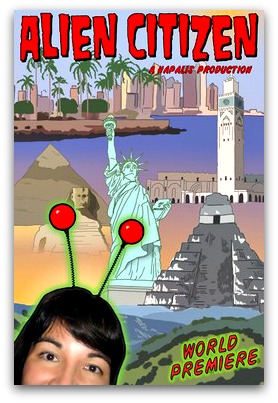


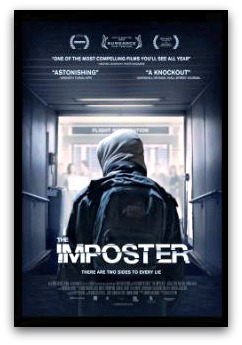

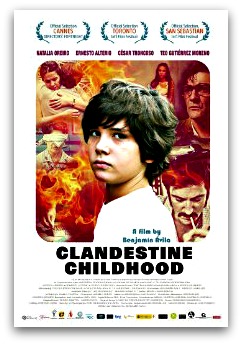
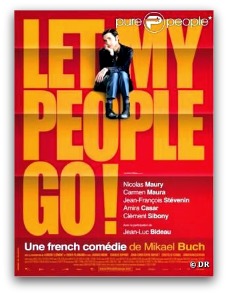
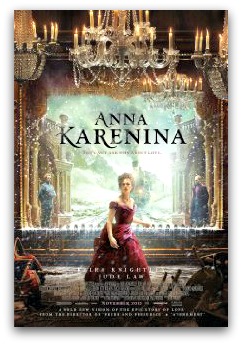


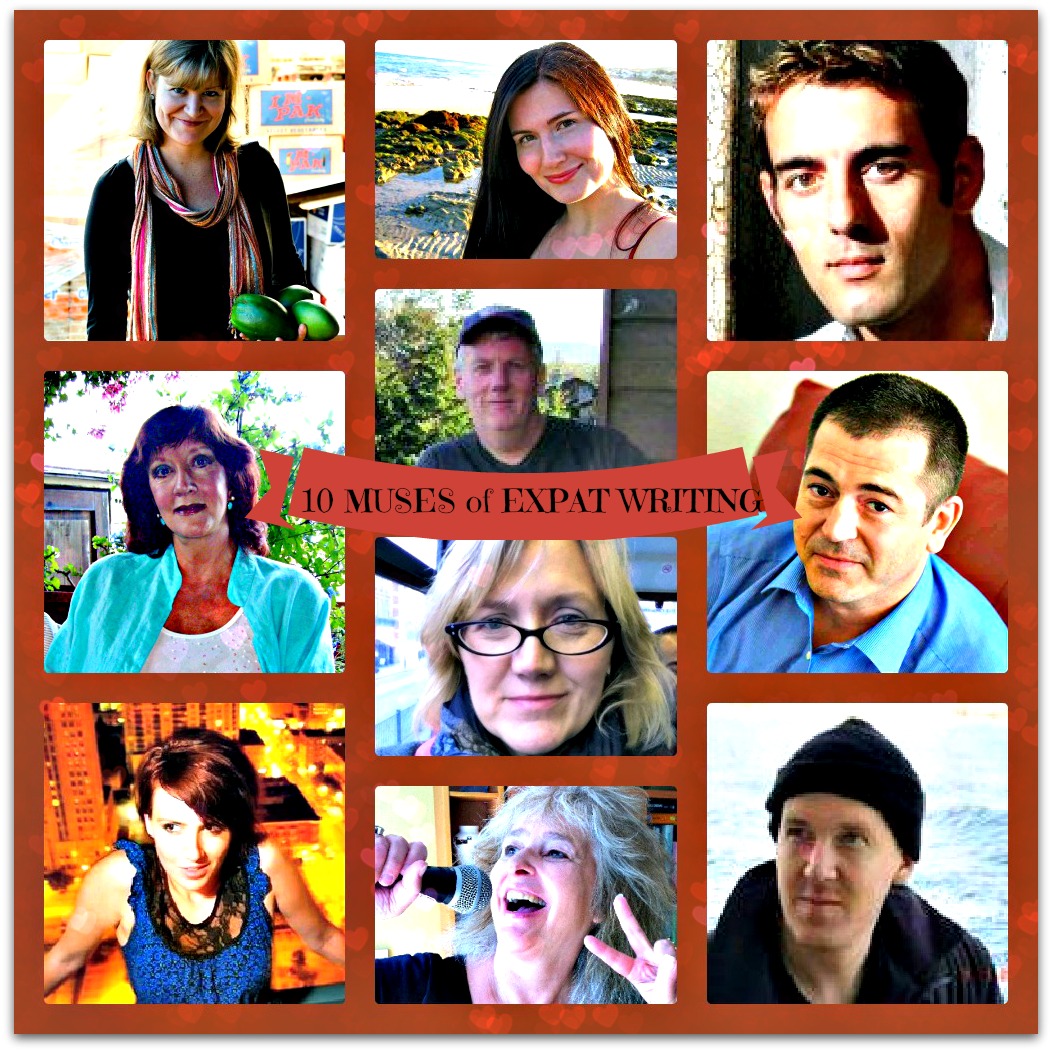
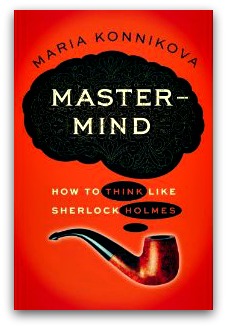









 The Displaced Nation