The Displaced Nation

A home for international creatives

Tag Archives: Italy

Living La Dolce Vita with Food Writer and World Explorer Robyn Eckhardt

Veteran travel and food journalist Robyn Eckhardt is here. A few months ago, she shared some insights on Southeast Asian cooking with Displaced Dispatch subscribers, but for this post I’ve asked her to supply a recipe for La Dolce Vita, or the Sweet Life — drawing the ingredients from her extensive world travels and their sensory delights — along with an easy version anyone can try!

Robyn Eckhardt’s Personal Recipe for La Dolce Vita

Mix together the following:

3 heart-stopping sights

1) The Bund, Shanghai, in 1990 before the city underwent its construction boom. It was of those moments when you realize that a place you know by heart from books (I studied Chinese history in college and grad school) is actually real.
2) Istanbul’s Blue Mosque from a taxi at 1:00 a.m. on a crisp, clear February night. It was my first time in Turkey; I’d just arrived from Shanghai, where I was living at the time. The combination of jetlag and being somewhere so foreign and utterly different to the place that I called home was like a slap in the face, in a good way.
3) When I was 17 I saw the Statue of Liberty up close on a Circle Line tour. Even though I was your typical cynical, jaded teenager, my jaw kind of dropped. I imagined the thousands and thousands of immigrants to the US arriving by ship and having that same view. It’s still a pretty amazing sight, I think.

11 intoxicating scents

1) In most any neighborhood in Chengdu (capital of China’s Sichuan province) at around 5:00-6:00 p.m., the scent of dried chilies hitting hot rapeseed oil.
2) Just-off-the-boat anchovies grilling in Sinop, on the Turkish Black Sea.
3) Chicken barbecuing anywhere in Thailand.
4) Chòu dòufu, or “stinky beancurd,” in Taipei — funky yet beguiling.
5) Jasmine flowers in bloom on a hot summer ‘s (which is actually in September or October) evening in the San Francisco Bay Area.
6) On winter evenings in Santa Fe, burning piñon tree branches in a hundred fireplaces.
7) The seafood section in the market in Butuan, Mindanao in the Philippines, which smells like nothing but seawater — it smelled so good we didn’t mind eating kinilaw (the Philippine “ceviche”) prepared by a fish vendor, right smack in the middle of the market.
8) In any Turkish town or city very early in the morning, the first whiff of rising dough and baking bread from any bakery.
9) The enveloping, almost chokingly overwhelming scent of spices freshly ground in huge quantities at an old, Indian-run spice shop in George Town, Penang.
10) The dining room at a tiny osteria in Calosso, Piemonte, which my husband and I frequented four years in a row. It didn’t matter what was on the menu that day, as soon as I walked in the I knew that I was going to eat wonderful foods, drink good wines and leave very, very happy.
11) Last but not least, the smell of China. You smell it as soon as you get off an airplane. What is it? I’m not really sure. It’s certainly not magnificent but it is intoxicating to me because it never fails to transport me in a single second to my 21-year-old self, abroad and on her own for the first time, arriving in Chengu. Lots of emotions there.

4 dreamy sounds

1) The call to prayer one late afternoon as I sat on a hill overlooking the ruins of the theater at Aspendos, on Turkey’s Mediterranean coast. One muezzin started, then another from the opposite direction began, then another and another, from mosques in nearby villages. Their voices alternately intertwined and competed — one of those incredible moments that leaves you almost gasping for breath.
2) The sound of calling/singing/chanting vendors at wet markets. Especially when they get into a groove, sing-songing the same phrase over and over again. Like at Pudu Market in Kuala Lumpur: satu ringgit satu ringgit satu ringgit satu ringgit satu ringgit satu ringgit! When I hear a great call from a market vendor I just stop and listen while the market frenzy continues around me.
3) The sound of the rain forest waking up on Langkawi Island from the vantage point of the top of a hill, above the forest canopy. I arrived to perfect stillness; as the sky began to lighten there was movement in the trees — creakings and squawks and chirps and rumbles and knocks and grinding noises. Just before I left, ten or so hornbills simultaneously rose from their perches, making a tremendous, wonderful racket with their wide wingspans. It sounded like a jet flying low overhead — whoo whoo whoo whoo. I could feel that noise in my gut. Incredible.
4) A trio of genggong (Jew’s harp) players on the front porch of a cottage on the edge of a rice field in northern Bali. Bali is magical to begin with. This was an unexpected treat.

A particularly delicate flavoring

Normally, I’m attracted to bold flavors, but as this is La Dolce Vita, I’ll probably throw in the sap from the cut flower of an aren palm, which I tasted when I went out at dawn with a palm sugar maker in northern Sumatra to get the sap he was collecting in bamboo tubes from dozens of trees. It was sweet and flowery but in a very, very restrained way — what’s incredible is that after just three hours of boiling it becomes one of the most intensely flavored sugars in the world.

An extraordinary physical sensation

For this recipe I’ll include the most amazing physical sensation I can remember: riding an elephant bareback and solo, which I did last year in northern Thailand near the border with Burma. Grabbing its leathery ear to pull myself up, palming the spiky, hair-sprinkled knobs of its massive forehead to keep my balance, feeling its shoulders move under me when it walked — something I will never, ever forget.

A memorable encounter with strangers

My husband and I ended up eating lunch with an elderly Turkish couple in their traditional timber farmhouse on the Black Sea. The experience sticks with me, for many reasons. Rather than retell the story here, let me point you to the relevant post on our blog, EatingAsia.

A place that stimulates all five senses

For me, this can be anywhere unfamiliar, or where I haven’t visited for a long time. Right now, especially, it’s eastern Turkey, which I’ve been getting to know in bits and pieces over the last two years.

The food is new (to me) and surprising — interesting twists on familiar Turkish dishes and curve balls out of nowhere, like dolma made with cherry tree leaves(!) or dough spirals seasoned with copious amounts of ground poppy seeds that taste like cacao.

I love the way the Turkish language sounds; I speak enough to get by but am nowhere near even half-fluency. I desperately want to be better at it, so when I’m traveling there my ears and brain are hyper alert to conversations around me; I’m constantly trying to understand what I hear, writing down unfamiliar words, trying (and often failing) to communicate well with strangers. That’s fun in a certain way, though ultimately exhausting — but it’s a level of engagement with everything that is going on around me that I don’t always have.

Outside Turkish cities the sky is big and the population sparse. To me — a resident of Southeast Asia — that is incredible and wonderful. When my husband and I go, we rent a car and do long, long road trips. I’m always eager for what’s around the next bend in the road or over the next pass because in two or three hours the terrain can change tremendously.

I can never get over the scent of air in that part of the world: nothing but air, clean fresh air! We make it a point to go once or twice a year when it’s cold; this past February temperatures in Eastern Anatolia averaged about 10 degrees Fahrenheit and there was lots of snow. It was that kind of cold where the hairs in your nose freeze as soon as you walk outdoors and ice cracks under foot and snow crunches with an especially hard “c”. I loved it.

And I’ve had so many great people experiences there — strangers opening their homes and kitchens to me. Even though I’m always a wee bit tentative in that way that you get when you are among strangers somewhere unfamiliar, eastern Turkey is probably the place where I travel with my heart the most open. When I arrive there I take a deep breath and just relax and let whatever is going to happen, happen. I can’t and don’t always let my guard down like that when I travel, so it’s lovely to be somewhere where I can.

Art by 2 artists who understand La Dolce Vita

1) Well, I am biased, but this recipe definitely calls for my husband Dave Hagerman‘s portraits and people-focused street photography because they often capture, I think, that moment when a subject decides to just let it go. Those sorts of photographs only come when a photographer is willing to extend his or herself, take a risk and show utmost respect to his or her subject.
2) I also love the work — paintings especially — of California realist John Register. The empty-room paintings, the diners-at-night paintings. I can’t say much about his heart or his soul when he was painting them, but to me they show that mundane things can evoke emotion. That is beautiful.

An inspiring travel quote

“The first condition of understanding a foreign country is to smell it.”
– Rudyard Kipling

As one who travels most of the time on her stomach, I can especially identify with this sentiment.

* * *

After adding a pinch of salt to all of the above, Robyn is living the sweet life. And if you’re not as well traveled as she is, not to worry. Robyn offers this simple recipe to try at home.

Robyn’s recipe for living La Dolce Vita at home

You don’t have to physically get on a plane or train or bus to travel. Do something unfamiliar in the place you know best, your home:
1) Go to a neighborhood you don’t usually frequent, go to a museum if you are an outdoors person or to a park if you’re an indoors type.
2) If you are not an early riser, go out before dawn and watch your town or city or neighborhood wake up, or if you’re an early-to-bed sort of person, take a nap in the evening and then go out late and see what where you live looks and sounds and feels like when you’re usually asleep.
3) Ride a bus or some other form of public transport if you’re always in your car.
4) Try a new restaurant or bakery or cafe, or shop at a farmer’s market if you usually buy your food at the big box or grocery store.

Penang-based freelance food and travel journalist Robyn Eckhardt is a contributing writer at Travel+Leisure Southeast Asia, a contributor at ZesterDaily and to publications like The New York Times Travel Section, Saveur and SBS Feast. With her photographer husband David Hagerman, she publishes the food-travel blog EatingAsia. As this interview hits interwebs, the two are hiking village-to-village in far northeastern Turkey, learning about beekeeping and cow-herding and tasting lots of honey and cheese.
Final note from ML Awanohara: Extra points will be awarded to anyone who recalls Robyn’s husband, David, being featured in the series I ran at the end of last year: “The 12 Nomads of Christmas.” He’s just as extraordinary as Robyn says!

STAY TUNED for Wednesday’s post, an interview with Laura Graham, author of Down a Tuscan Alley, a semi-autobiographical novel about her mid-life move to Tuscany. (Ah, la dolce vita!)

If you enjoyed this post, we invite you to register for The Displaced Dispatch, a round up of weekly posts from The Displaced Nation, with seasonal recipes, book giveaways and other extras. Register for The Displaced Dispatch by clicking here!

Related posts:

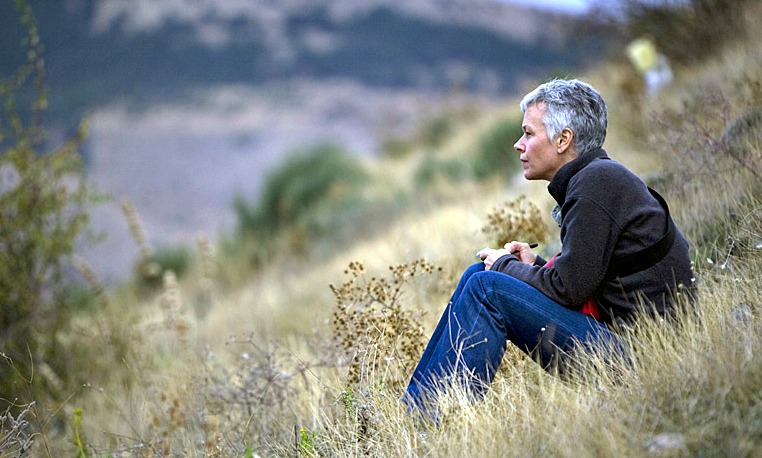
Img: Robyn Eckhardt writing in Tokat, Turkey (by David Hagerman).

BOOK REVIEW: “Chique Secrets of Dolce Amore” by Barbara Conelli

TITLE: Chique Secrets of Dolce Amore
AUTHOR: Barbara Conelli
AUTHOR’S CYBER COORDINATES:
Website: www.barbaraconelli.com
Twitter: @BarbaraConelli
Facebook: www.facebook.com/AuthorBarbaraConelli
PUBLICATION DATE: May 2012
FORMAT: Ebook (Kindle) and Paperback, available from Amazon
GENRE: Travel
SOURCE: Review copy from author

Author Bio:

Born in London to an Austrian mother and an Italian father, Barb now splits her time between Milan and New York. Her first book, Chique Secrets of Dolce Vita, was published in 2011. She is the host of  Chique Show at Blog Talk Radio, where she interviews authors and talks about life in and her passion for Italy.

Summary:

Fascinating, enthralling and seductive travel and life tales about unexpected encounters with the capricious, unpredictable and extravagant city of Milan, its glamorous feminine secrets, the everyday magic of its dreamy streets, the passionate romance of its elegant hideaways, and the sweet Italian art of delightfully falling in love with your life wherever you go.

(Amazon product description)

Review:

In their instructions for describing someone’s appearance, “How To Write” gurus advise you not to reel off physical characteristics in a shopping list. Don’t write “blond hair, brown eyes, even teeth”, they say, but focus on a couple of arresting features: stripy but chipped nail polish, or a wrist laden with silver bangles.

By describing in detail only personal, quirky aspects of the whole, these teachers rightly insist, you create a vivid picture for your readers.

This is exactly how Barb Conelli brings to life the Milan she knows and loves.

Instead of reciting a shopping list of Places You Must See, which you could find in any guide to Milan, Conelli figuratively takes you by the hand and says, “Forget the official tour. Let me show you my Milan, the people and places I love.”

On this off-the-beaten-track tour of Milan’s streets, we visit The Paradise of Pink Feathers: the garden in Via die Cappuccini number nine, with its many flamingos, whose owner’s identity nobody really knows. We eat panettone at Marchesi’s, while Conelli relates the fascinating legends behind the pastry’s origin. (Tip: you should first try it on 3rd February, because on this day panettone has magic powers. Who knew?) On one day, she brings you along to visit the studio of an artist friend; on another, we go to the ballet school of Annamaria Bruno and her daughter Liliana to live out our dreams and become ballerinas in point shoes for a day. We meet the ghost of Mrs. Giuseppina Luini, an enterprising baker from Puglia who came to Milan in 1949, and turned the family recipe of Panzerotti into a Milanese legend.

Milan’s beauty, Conelli says, does not just lie in its breathtaking architecture, but in its inhabitants, past and present.

To me, the city is not an inanimate cluster of buildings and their architectural elements; the city is a living organism boiling with energy, its features are being recreated every day by the people who walk its streets.

It’s a city full of secret corners and quiet clusters of serenity; of shadows of people long dead, and the vibrance of those living today.

In taking a walk with Barbara, we discover the magic that is Milan.

Words of wisdom:

In order to see the world, you must know how to look at it.

~

When the streets of Milan ask you to dance, there’s nothing else to do but put on your ballet shoes and surrender with confidence to the arms of the city.

~

As an Italian, [my father] had rich experience with diabolic temptation and enjoyed surrendering to it very often and with great delight.

~

Despite its fickleness, vanity, unpredictability, and fancy for sophisticated elegance, Milan is an immensely simple city whose inhabitants know that real joy means seeing miraculous moments in everyday ordinariness.

Verdict:

At 76 pages, this book is a short but very satisfying read. If you have not been to Milan, it will make you want to visit; if you’re not a newcomer to the city, you will want to rediscover it.

Chique Secrets of Dolce Amore can be purchased here.

Or you can register for The Displaced Dispatch and hope you’ll be one of this month’s lucky winners!

Editor’s note: Kate Allison interviewed Barbara Conelli in March: “An Italian with a passion: How to live the Dolce Vita, with Barbara Conelli,” which is what inspired this month’s Displaced Nation theme of La Dolce Vita.

STAY TUNED for Wednesday’s Random Nomad interview with mid-life gap year expert, Jeff Jung.

If you enjoyed this post, we invite you to register for The Displaced Dispatch, a round up of weekly posts from The Displaced Nation, with seasonal recipes, book giveaways and other extras. Register for The Displaced Dispatch by clicking here!

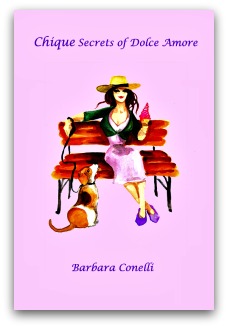
Image:  Book cover – “Chique Secrets of Dolce Amore”

Related posts:

Kidding yourself over La Dolce Vita

As you are doubtless aware, this month’s theme is la dolce vita, an Italian phrase meaning the sweet life. It would be remiss of us to choose that theme without referring to Fellini’s 1960 masterpiece of the same name.

Regular readers of The Displaced Nation may not be surprised to learn that I was a somewhat pretentious teenager. A thin youth, callow and pallid, I could be found most nights ensconced in my bedroom reading the novels of Thomas Hardy or writing in a notebook my own cringe-worthy poetry. However, I would sometimes, late at night, usually on a Friday, descend from my literary lair and head down to the living room where I would turn the TV to BBC2 or Channel 4 to watch some classic foreign film that I felt I ought to know about.

Though my teenage years aren’t that far behind me (the late 90s, if you must know) they exist in another epoch, a time of old media, where nobody normal blogged, where there was no twitter and there was most definitely no streaming online of every movie you could ever wish to watch. Instead my cultural endevours were rationed. The northern town that I grew up in had no bookstore (unless we rather generously classify W.H. Smith as a bookstore) or cinema, so I found myself spending a lot of my time in my local library or scanning the Radio Times to see what (if any) interesting examples of world cinema where being shown on either of the two niche channels (BBC2 and C4). Invariably, something was being shown late most Friday nights. It was in these circumstances that I first came across Fellini’s La Dolce Vita.

I can’t in all honesty say that I “got it” when watching it for the first time that night, but on a superficial level, I loved it. More particularly, I loved the effortlessly cool, brooding Marcello Mastroianni who anchors the film. This, I reasoned, was how manhood should be, how I should live my life: apertifs in the cafes, dances at the Cha-Cha-Cha Club, a midnight wade into the Trevi Fountain with an Anita Ekberg figure, two lonely souls enjoying a fleeing moment of warmth.

So I pondered about how one goes about affecting a similar style to Mr Mastroianni. The problems quickly became apparent. My clothes came from Marks and Spencer’s men’s department and gave me more the appearance of a Mormon missionary than Italian heartthrob. Then there was the impossibility of finding in Hartlepool a Cha-Cha-Cha Club that played the music of Nino Rota — now, the Bikini Fun Bar played 2Unlimited, but between you and me that wasn’t quite the same. Most disappointingly, I had no Anita Ekberg; none of the girls in school would take up my invitation to wade with me in the duck pond in Ward Jackson Park.  So the attempt to give my teenage years a Fellini spin were dashed. I couldn’t recreate the Rome of 1960 as seen through Fellini’s lens in the Hartlepool of 1998 (hardly a surprise).

But if I stopped pretending to act like I’d stepped out of a Fellini film, still I think this might have been when I was unknowingly inoculated with wanderlust — and the thought that somewhere out there is a place where cafes serve apertifs, not sausage rolls, where the club plays Nino Rota, not 2Unlimited, and where Anita Ekberg is waiting. That’s the sweet life.

STAY TUNED for tomorrow’s post, Kate Allison’s review of Chique Secrets of Dolce Amore, by Barbara Conelli — the book that inspired this month’s theme!

If you enjoyed this post, we invite you to register for The Displaced Dispatch, a round up of weekly posts from The Displaced Nation, with seasonal recipes, book giveaways and other extras. Register for The Displaced Dispatch by clicking here!

Related posts:

Living La Dolce Vita with Susan Ross Donohue, Canadian Artist & Francophile

The artist Susan Ross Donohue revels in city life, art, literature and anything that makes her laugh. She lives physically in Montreal but mentally in Paris. As she has such a good handle on La Dolce Vita, I asked her to share the sensory highlights of her travels and some advice on enjoying the sweet life even if you stay at home…

Most heart-stopping sight

Our first visit to Paris. My husband and I were very young, and this was our first time abroad. Upon arrival, we took the métro to Charles de Gaulle Étoile, the station closest to where our hotel was located. We walked up the stairs et voilà — there was the Arc de Triomphe just as I imagined it would be, only better. I was stunned. Speechless actually. But I have to say that this still applies. The Arc and the Eiffel still bring tears to my eyes, I’m not sure why.

Most intoxicating scent

The flowers — jasmine, lavendar, roses — in Grasse, in the south of France. Grasse is considered France’s perfume capital as it produces over two-thirds of the natural aromas used in perfumes. Touring Parfumerie Molinard is an education in itself. I thought I knew scents until I took the tour but then I found out how much more there is to learn! But, you don’t have to be an expert to appreciate the aromas of this area. Just breathe in and enjoy.

Dreamiest sound

This is strange — it wasn’t in France! My husband and I had driven from Nice to Sanremo, Italy, just across the border. While wandering through the town, we heard strains of a violin coming from the art gallery (which is what we were looking for in the first place). We went in to check out the art work only to discover the music was “live.” A girl was practicing the violin and she continued to play while we looked at the exhibition. No one in the gallery, which was called Tunnel Dell’Arte, spoke English or French, and our Italian is nil — but we did manage to understand she was practicing for a concert that night. We bought a small painting and the owner mimed that he could send it to us by air (with much flapping of the arms to get the idea across).

Most delicate flavors

It’s a toss-up between the hot dogs at Harry’s New York Bar in Paris and a white wine served at a dinner in the Loire Valley (unfortunately, I can’t remember the name).

Softest physical sensations

Walking in the Tuileries one day, we came across a man feeding the birds out of his hand. We were watching him when he motioned to me to put my hand out, and he filled it with seeds. Sure enough, these tiny little birds landed on my fingers to have their lunch. This was an amazing feeling. Very delicate, very soft, very special.

Most interesting unexpected encounter with another human being

There is no one particular person that I can single out because we’ve always had nothing but good experiences with people during our travels — I’m remembering, for instance, an entire café full of people trying to find a street address for us.

A place that stimulates all five senses

Montmartre stimulates all five senses with the mixture of music, art and restaurants. Further up the hill in Montmartre is the local vineyard, the wonderful restaurant La Maison Rose and the Lapin Agile cabaret, with its fascinating history. I couldn’t go to Paris without some time in Montmartre. I especially like going on a week night, when it’s a bit quieter, and I can picture Picasso, Modigliani or Utrillo sitting at a café talking about art. Bliss.

Favorite contemporary artist with a sense of dolce vita

The American pop artist Jim Dine is a favorite. I’ve loved his work for years and have met him a few time at exhibition openings. He is equally talented in printmaking, painting and sculpture. His work is very personal, but the viewer doesn’t feel like an intruder.

Favorite historical artist

Who had more heart and soul than Van Gogh? To see a real Van Gogh is a totally different experience from seeing a reproduction. This is something else that led me to tears the first time I saw one of his canvases. (Truly, I don’t cry a lot — Paris seems to do that to me!)

Favorite travel quote

″A traveler without observation is a bird without wings.”
– Moslih Eddin Saadi

We travel to open our minds and hearts, and to learn from the experience. For me observation is the whole point of traveling.

Advice for living la dolce vita at home

La dolce vita is whatever you want it to be. Try evenings with a particular country theme — a Spanish night with paella, a Parisian evening with raclette, French wine and music. All the information you need is on the Internet: recipes, lessons for learning a foreign language, instructions for adding a foreign touch to your decor… The possibilities are endless.

Susan Ross Donohue is an artist who lives in Montréal, Canada. She makes frequent trips to Paris, a city she considers her second home. Her travels are recorded in her blog Life, Laughter and Paris, and you can see her artwork — much of which is inspired by the sights and sounds of Paris — at her art site, Susan Ross Donohue. Follow Susan on Twitter (@srossdon) and on Facebook.

STAY TUNED for tomorrow’s bulletin from Woodhaven, where our fictional heroine, Libby, is not so much courting trouble as dragging it handcuffed to the altar. (What, not keeping up with Libby? Read the first three episodes of her expat adventures.)

If you enjoyed this post, we invite you to register for The Displaced Dispatch, a round up of weekly posts from The Displaced Nation, with seasonal recipes, book giveaways and other extras. Register for The Displaced Dispatch by clicking here!

Related posts:

Images: Susan Ross Donohue in her favorite city;  “L’Accordéoniste,” one of her paintings.

7 worldwide ways to avoid, forget, or celebrate Friday 13th!

Not being superstitious myself, I tend to scoff at today’s date and treat it like any other. Then again, I once knew someone who had been involved in only two car accidents in her life, both of which occurred on Friday 13th. On a larger transportation scale, the ill-fated Apollo 13  launched at 13:13 (admittedly on April 11th) and exploded on April 13th. And a 1993 study found that the number of hospital admissions from traffic accidents were likely to be 52% higher on Friday 13th than on any other day.

That’s enough to make anyone superstitious about the date, so I won’t think too hard about the fact that, even as I type, my nearest and dearest is somewhere over the Atlantic ocean at 37,000 feet. Nevertheless, I’d like to hazard a guess that the increase in road accidents might be related to the increase in rosary beads and good luck charms hanging from rear view mirrors, thereby obscuring drivers’ visions.

Facts, figures, logic.

The fear of Friday 13th is known variously as friggatriskaidekaphobia, triskaidekaphobia, and paraskevidekatriaphobia. (Too bad if you also suffer from sesquipedaliophobia.) While the combo of Friday and 13 as a double whammy of misfortune is a relatively new invention — the first English reference wasn’t until 1869 — Friday and 13 have always had a bad rap separately.

Think positively about that, all you triskaidekaphobics: instead of being fearful every seven or thirty days, at least the prophets of doom have streamlined the calendar so that now you need only live in terror for two or occasionally three days a year.

Sadly, 2012 is a year with three Friday 13ths. Bad luck.

But take heart!  TDN, with its usual brand of helpfulness, is coming to the rescue of readers still cowering under their duvets and waiting for Saturday to arrive.

You could:

1. Travel to Spain or Greece.

But do it on a Wednesday. While Spanish-speaking countries consider Tuesday 13th to be unlucky, Greece considers Tuesdays in general to be unlucky. Travel on Wednesday, and you should have your bases covered.

2. Travel to Italy.

Friday 17th is unlucky there. Unfortunately, due to the external influence of a dozen Jason movies, Friday 13th is now also seen as unlucky.

So if you’re the type to chuck salt over your shoulder while you’re having a bad day in the kitchen,  maybe you should stay away from Italy — mid-month, at least.

3. Take your mind off it — kiss someone.

Or maybe that’s why you’re still under the duvet? Yesterday, Twitter users decreed that Friday April 13th should be (Inter)National Kissing Day…even though the official date is nearly three months away on July 6th.

4. Celebrate New Year.

Today also happens to be the Tamil New Year,  Puthandu, which falls on either April 13th or 14th of the Gregorian calendar, and is celebrated by Tamils in Tamil Nadu, in Pondicherry in India, and by the Tamil population in Malaysia, Singapore, Reunion Island, and Mauritius.

Tamils mark the day with a feast, decorate their house entrances with kolams, while neem flowers and raw mangoes symbolize growth and prosperity.

If you’re not in any of those countries and you don’t normally celebrate this festival, maybe you should be less ambitious with your own preparations. Buy some mango sorbet.

5. Don your helmet and leathers and go biking.

PD13 is a big celebration for motorcyclists at Port Dover in Ontario, and has been held every Friday 13th since 1981.

If you’re not a biker, ride pillion with one who is. If nothing else, the insects smashing at high speed against your teeth will take your mind off the fact that it’s Friday 13th.

6. Buy a lottery ticket.

On Friday March 13, 2009, Isabel Zaleya of Suffolk County, New York, won a jackpot of $26 million after his friends urged him not to play the lottery that day…because of the date.

7. It’s World Party Month! Throw a party!

Release the Halloween decorations from the basement, and have a Halloween party in April. Come on — did you really need an excuse?

STAY TUNED for some reminiscing on Monday, when we look back at our top posts and themes from our first year.

If you enjoyed this post, we invite you to subscribe for email delivery of The Displaced Dispatch, a round up of the week’s posts from The Displaced Nation. Sign up for The Displaced Dispatch by clicking here!

Related posts:

Image: Victor Habbick / FreeDigitalPhotos.net

RANDOM NOMAD: Wendy Williams, Canadian Expat in Austria

Place of birth: Northern Ontario, Canada
Passport: Canadian, and apparently I can live in Austria forever now with my unlimited Aufenhaltsbewilligung.
Overseas history: Austria (present), Germany, Switzerland, Slovak Republic, UK. I have also worked on a project basis for extended periods in Sweden, Tunisia, Holland and Estonia.
Occupation: Author*
Cyberspace coordinates: The Glolo Blog; The Globalisation of Love (Facebook page); and @WilliamsGloLo (Twitter handle)
*Wendy Williams is the author of The Globalisation of Love, one of the top books for expats in 2011.

What made you leave your homeland in the first place?
Burning curiosity! I just love to know what is around the next corner — and the corner after that, too. My grandparents are all immigrants to Canada from Europe, and I guess listening to their stories about their homelands got me thinking that “home” can be very different and it can be anywhere.

Is anyone else in your family “displaced” besides your grandparents?
I am the only of my siblings who went back across the pond, as my grandmother would say — though they certainly come to visit me in Austria (and to ski!).

You’ve lived in quite a few places in Europe before moving to Vienna with your Austrian husband. Does any one moment of that time abroad stand out as your “most displaced”?
While vacationing on one of the Canary Islands, which belong to Spain, I fell ill and required an injection in my, ahem, gluteus maximus. It was 1995, when the so-called Turbot War took place between Canada and Spain — a dispute over fishing rights along the coast of Canada that challenged international diplomatic relations between the two countries. The doctor held up the rather long needle and said, “So, you’re from Canada are you? You like to fish?” I remember thinking, “Uh-oh, this is going to hurt!” It may be conjecture, but I felt the jab of the needle was particularly forceful.

Is there any particular moment that stands out as your “least displaced”?
It happens all the time while skiing in Austria. I grew up skiing on a tiny little bump of a hill and always dreamed about the long alpine slopes of Austria. I was lucky enough to marry an Austrian who is also a passionate skier, and we ski frequently throughout the winter. I feel right at home as I swish, swish down the slopes. I enjoy the après ski, too!

You may bring one curiosity you’ve collected from your adopted country into The Displaced Nation. What’s in your suitcase?
From Georgia in the Caucasus: Antique brass candle holders
From Murano, a series of islands in the Venetian Lagoon: A red Murano chandelier
From Morocco: An onyx stone bathroom sink
From Austria: An 18th-century Tyrolean kitchen table
From France: A yellow ceramic Pernot jug
My house is a diary of my travels through life, and as you can see, I plan to continue living that way on The Displaced Nation — even though it will entail dragging in a rather large and heavy suitcase!

You are invited to prepare one meal based on your travels for other members of The Displaced Nation. What’s on your menu?

Appetizer: My husband’s pumpkin soup with 100% pure Austrian pumpkin seed oil
Salad: Arugula mixed salad with blue cheese, grapes, cranberries, pear and pistachios — as served at the Loriot in Washington, D.C.
Main course: Viennese Schnitzel with potato salad … of course!
Dessert: My mom’s lemon meringue pie
Drinks: Bubbly to start — Crémant d’Alsace is one of my favourites; and for the main course, red wine from Burgenland in Austria.

And now you may add a word or expression from the country where you live in to The Displaced Nation argot. What will you loan us?
Actually, I would like to loan you an expression that my husband picked it up while living in Australia: Happy as Larry. (I picked it up from him while living in Austria.)

This month we are looking into parties and celebrations abroad. What has been your most memorable party or celebration since you became “displaced” from your native land?
The celebration of my 10th wedding anniversary, in 2008! My husband and I had about 50 friends in a small restaurant in Vienna that served elegant, locally-sourced organic food. An opera singer sang “‘O Sole Mio” so beautifully we thought the wine glasses would burst like in a cartoon. We gave a speech about our 10 years together and then announced what we had planned for the upcoming years — I was four months pregnant. The crowd went wild with excitement and gave a 10-minute standing ovation amongst congratulatory hugs, tears and high fives. It was total kitsch and corny Hollywood romance — and we loved every minute of it!

The Displaced Nation has just turned one year old. Can you give us some advice on themes to cover in our second year — anything you think should be on our radar?
Multicultural couples — what I call GloLo couples — usually meet in interesting ways. Chance and coincidence often conspire to bring two people together. It would be fun if The Displaced Nation could feature some stories from GloLo couples about how they met — and whether their displaced lives brought them together — and how they worked things out so they can stay together.

Editor’s note: In February Wendy Williams contributed a post to The Displaced Nation that has remained very popular: Why “expat” is a misleading term for multicultural couples.

Readers — yay or nay for letting Wendy William into The Displaced Nation? Tell us your reasons. (Note: It’s fine to vote “nay” as long as you couch your reasoning in terms we all — including Wendy — find amusing.)

STAY TUNED for tomorrow’s installment from our displaced fictional heroine, Libby, as she discovers that Oliver’s mum and her own mother have more in common than she’d realized. (What, not keeping up with Libby? Read the first three episodes of her expat adventures.)

If you enjoyed this post, we invite you to register for The Displaced Dispatch, a round up of weekly posts from The Displaced Nation, with seasonal recipes, book giveaways and other extras. Register for The Displaced Dispatch by clicking here!

Related posts:

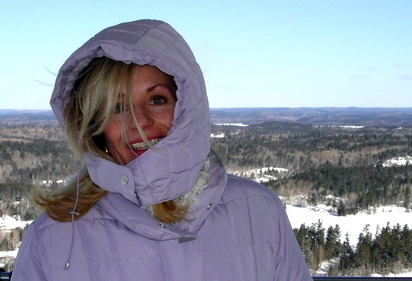
img: Wendy wrapped up against the elements — but is she in Austria, her adopted home, or Northern Ontario, her birthplace? (Hint: It was minus 25 degrees Celsius.)

Ask Mary-Sue: Dyngus Day and other great excuses for partying

Mary-Sue Wallace, The Displaced Nation’s agony aunt, is back. Her thoughtful advice eases and soothes any cross-cultural quandary or travel-related confusion you may have. Submit your questions and comments here, or else by emailing her at thedisplacednation@gmail.com.

Well, hello there, Mary-Suers. Hope you and yours had an EGGciting Easter (or Passover, though forget the egg-pun if that was the case).

I have to admit to being pooped by Easter weekend! It was one thing after the other in the Wallace household, and that means plenty of work for me, with hubby Jake nowhere to be seen (if the Easter bunny gave away charcoal to the undeserving, like a certain Mr Claus does, then that’s what hubby Jake would have gotten yesterday). So I was left to cook the ham, supervise the little ones when they made a total mess with the egg dying, and organize the egg hunt that we put on in our garden for all the neighborhood kids. Jake just kept watching the golf on TV, telling me someone called Bubba had won — I was unimpressed, let me tell you. If we had a dog house (we don’t, the dogs sleep on the bed with us), that’s where Jake would have been last night.

Anyhoo, you’ve probably had enough of my yapping when there’s your problems to solve, so let’s get on with them — two on this month’s theme of partying, and one a holdover from last month, when I was bombarded with questions on fashion and beauty.

__________________________________________

Dear Mary-Sue,

I am an American living in Poland. I’ve found it interesting to celebrate Easter here, though to be honest, I have my doubts about Dyngus Day, which is celebrated the Monday after Easter (what we used to call Easter Monday back in the town where I grew up in Kansas). On Dyngus Day, the men chase after the ladies with squirt guns, buckets, or other containers of water. They also  hit them on the legs with switches or pussy willows. Ladies allegedly get their revenge the following day by throwing crockery at the men.

What do you make of this custom? I think it all sounds rather pagan — more like a rite of spring than a proper Easter celebration. Would love to get your opinion.

Wendy from Wichita via Warsaw

Dear Wendy,

I’ll be honest, I’m not impressed. Sounds like the sort of shenanigans that my younger, trashy brother Dan and his wife Sandy get up to in Ringling. Dan’s always off getting drunk at the local dive bars, I know for a fact he and his buddies there have organized wet T-shirt competitions. Put Dan near a pert, pretty thing and he’ll bring out his water gun.

Once she finds out, his wife Sandy lets him know precisely what she thinks of him. I wouldn’t be surprised to learn that she’s thrown a fair few pieces of crockery in her time. Can’t say I blame her, but my sympathies end when one of them comes asking if I can “loan” them the money to bail the other one out.

Is Warsaw like Ringling, Wendy? Think I may have to give it a miss, or open a bail bond there — sounds like I’d make a fortune!

Mary-Sue

———————————-

Dear Mary-Sue,

I’m an English expat in the US — an experience that to be honest has made me even prouder of my British heritage. I’ve just now learned that today is Winston Churchill Day in the US, to celebrate the day in 1963 when our great PM was made an honorary US citizen (posthumously). Looking around, though, I don’t see much sign of celebration, and I’d like to do my part in changing that, for instance, by hanging up a Union Jack flag outside my house. Can you suggest any other measures I could take that would appeal to my new American friends? Perhaps a little party might be in order?

Harry from Harrow on the Hill via Hoboken, NJ

Dear Harry,

Own it completely. Organize a shindig centered around Sir Winston. Perhaps you could hit a cigar bar where you could all smoke like ol’ Winny and maybe indulge in a few brandies. When nicely lubricated, you could then, in the spirit of greater national understanding and that there’s no hard feelings, head to your nearest German restaurant for bratwurst, wiener schnitzel and beer.

Mary-Sue

———————————-

Dear Mary-Sue,

I can’t sleep! I recently spent a week in Rome and did some serious window shopping and all I saw was bald mannequins! Just have a look here

I have a hair appointment tomorrow: Should I go bald?

Anon

Dear Anon,

As George Santayana so wisely put it, “those who cannot remember the past are condemned to repeat it.”

Do we really want to repeat the mistakes of the early 1990s?

I lived through Sinéad O’Connor once, I won’t do so again. If I catch you, Anon, all bald and tearing up a photo of the Pope on Letterman, I will be VERY disappointed.

Mary-Sue
___________________________________________

Anyhoo, that’s all from me readers. I’m so keen to hear about your cultural issues and all your juicy problems. Do drop me a line with any problems you have, or if you want to talk smack about Delilah Rene.

Mary-Sue is a retired travel agent who lives in Tulsa with her husband Jake. She is the best-selling author of Traveling Made Easy, Low-Fat Chicken Soup for the Traveler’s Soul, The Art of War: The Authorized Biography of Samantha Brown, and William Shatner’s TekWar: An Unofficial Guide. If you have any questions that you would like Mary-Sue to answer, you can contact her at thedisplacednation@gmail.com, or by adding to the comments below.

STAY TUNED for Tuesday’s post. Mary-Sue has heard it’s going to be great.

If you enjoyed this post, we invite you to register for The Displaced Dispatch, a round up of weekly posts from The Displaced Nation, with seasonal recipes, book giveaways and other extras. Register for The Displaced Dispatch by clicking here!

Related posts:


An Italian with a passion: How to live the Dolce Vita, with Barbara Conelli

Barbara Conelli is a woman on a mission — a mission to bring, as she puts it on her website, “Fantastic Fearless Feminine Fun into women’s lives.”

A prolific writer, with one book already published (Chique Secrets of Dolce Vita, a journey through Italy), another coming out in May, and other writing credits galore, Barb “invites women to explore Italy from the comfort of their home with elegance, grace and style, encouraging them to live their own Dolce Vita no matter where they are in the world.”

While many of you will be familiar with her writing and blog, others will know Barb from her popular Chique Show at Blog Talk Radio, where she interviews authors and talks about life in and her passion for Italy.

Today, though, it’s Barb’s turn to be interviewed.

Thank you, Barb, for agreeing to be interviewed! Can you tell us a bit about your background — where you were born, where you grew up, where you studied?
I was born in London to an Austrian mother and an Italian father. My background was incredibly multicultural and the fact that I had relatives in different countries who spoke different languages encouraged me to start learning the languages they spoke, and when I did, I realized some of the relatives were much nicer when I didn’t understand them. But it was too late; at that time I was already speaking eight languages and traveling around the globe, a passion that turned out to be totally incurable. I tried hard to be a homebody but it never worked.

A chronic gatherer of knowledge, I studied at several universities in Spain, Portugal, Italy and the US, and when I got my second PhD I realized the academic career was totally killing my creativity and my soul. (As you can see, realizing important stuff too late was a pattern in my 20s.)

Although I’ve had many homes away from home, Italy has always been my real home. Grandma Lily, my paternal grandmother, made sure I grew up to be a real Italian – food-loving, high-spirited, untameable, capricious and addicted to shoes. I frequently visited my cousins in Italy already when I was a kid, and when I got my heart-broken by an Italian at the age of sixteen, I knew there was no turning back. I was an Italian. Until today I’m not sure whether it’s a blessing or a curse. (Thanks, Grandma Lily!)

You split your time between New York and Milan, correct? When did you move to Milan, and why there in particular?
That’s right! Grandma Lily was born in Milan. She left the city and the country with her parents when she was a little girl and she never went back. However, the city stayed in her heart. I visited Milan many, many times, but I decided to actually get a place there and make it my home when I started to think about writing a book about the city. I wanted to really live it, breathe it, be it. I couldn’t live in Tuscany and write about Milan. That would have made me a tourist, not a Milanese. And I wanted to be one with the city and become familiar with its many faces.

Your first book, Chique Secrets of Dolce Vita, was published last year, and your second, Chique Secrets of Dolce Amore, is due to be published in May. Can you tell us a little about your new book?
Yes, I’d love to! I’m so excited because my editor has just sent me the final version of the manuscript, and I’m totally in love with the book! In Chique Secrets of Dolce Amore, I share my unexpected encounters with the capricious, unpredictable and extravagant city of Milan, its glamorous feminine secrets, the everyday magic of its dreamy streets, the passionate romance of its elegant hideaways, and the sweet Italian art of delightfully falling in love with your life wherever you go. This book is very informative and contains lots of factual information about the city, but at the same time it’s very poetic, lyrical and romantic. It shows that Milan is the perfect city to have a love affair with.

And what happens after Dolce Amore? Another book? Can you give us any hints?
There are several exciting projects I’m working on. Later this year, I’m planning to publish a collection of selected articles and essays I’ve written about Milan and published in magazines and on my blog. I’m also putting together a travel anthology that’s going to be released in the fall, with travel essays and short stories written by sixteen amazing, wonderful authors.

As far as my Chique Book series is concerned, with Chique Secrets of Dolce Amore I’m leaving Milan and venturing into Rome. The next book is titled Chique Secrets of Dolce Far Niente, and in this book I’m going to reveal the hidden face of Rome and share with my readers the Roman art of pleasant, carefree idleness.

My books always have a deeper message and I love using the city I write about as “the stage of life”, a creative space where we can learn, grow and get to know ourselves. Milan is about loving your life and finding beauty in simple, everyday things. Rome is about being fully present in your life instead of exhaustingly focusing on doing, doing, doing.

Something that comes across loud and clear in the reviews of Dolce Vita is your talent for writing descriptive prose and storytelling. What made you decide to write non-fiction rather than a novel?
A good question! I’ll be honest with you: I am working on a novel (okay, looks like I’ve just come out of the closet and admitted I’m a shadow novelist). However, I find writing fiction much less appealing. I love exploring the real world, I love talking to people, I enjoy discovering their stories, understanding what makes them tick. I’m incredibly curious and inquisitive, and I always look deeper, beyond the obvious, the visible. My readers often say that when they read my book, they feel they’re actually there with me, experiencing the same things, tasting the food, submerging themselves in the atmosphere. My books are like a magic carpet that takes you to beautiful places enabling you to live a beautiful adventure sitting in an armchair and wearing your jammies. I truly believe that being able to give this to the reader through the pages of my book is a miracle, and it makes me endlessly happy.

What audience did you have in mind for Dolce Vita when you first wrote it, and did you end up attracting those sorts of readers?
It’s an interesting question. I write primarily for women and I wanted my book to appeal to experienced, avid travelers as well as to those who dream of Italy and desire to explore this beautiful country. I definitely succeeded in connecting with my audience and I’m very grateful for my fabulous readers and fans from all around the world who give me lots of love, support, encouragement and wonderful feedback. However, I was very surprised to see that my book attracted also many male readers who totally enjoyed my writing. I just love that.

To which aspects of your writing have readers responded the most?
When you read the reviews, there seems to be one strong common denominator: “I felt I was really there with the author.” I’ve been so touched by this, and I feel very blessed because it means I’ve been able to get my message across and bring Italian beauty, charm and grace into the lives of many women. This is my definition of success – doing what you love and touching other people’s hearts by sharing your passion with them.

Have you written anything else?
I have two previously published books on relationships and self-love, based on my coaching career. I have also written screenplays for TV shows and scripts for TV talk shows. And I’m a movie translator – I have translated and subtitled over 800 feature films, shows and documentaries for major movie studios, TV channels and distribution companies. I have also translated several fiction and poetry books. Yes, I’m a typical “slasher” – a multi-talented person with many careers. But if you ask me who I truly am, my answer is I’m a writer and traveler. That’s my soul’s calling.

I first heard you — and heard of you! — on your blog talk radio show, the Chique Show. How long has the Chique Show been running?
Chique Show has been broadcasting for about a year. It has gained incredible momentum and today, just 12 months later, we have over 5,500 listeners, recently adding more than one hundred new listeners every week.

Is a radio talk show something you have always wanted to do?
When it all started, it really wasn’t my goal or dream to be a radio hostess, although I had always found this medium fascinating. Chique Show was meant to be just another platform to promote my new book but I immediately fell in love with it, and today it’s much bigger than I ever imagined. Chique Show is a great connector, a wonderful opportunity to meet new people, and my way of giving back and bringing authors closer to their readers.

How would you like to see it evolve?
I would love Chique Show to become a featured, branded show that would broadcast every day on a variety of topics. You know, one of my mottos is the words of Donald Trump: “If you’re going to think anyway, think big.” And Eleanor Roosevelt’s: “You must do the thing you think you cannot do.” I’m a visionary, and there’s not just a branded radio show on my vision board, but also a magazine and TV channel. I love challenging myself and pushing my own boundaries. My mum says I decided I was going to be a success story already as a toddler. I’ve always been stubbornly creative and free-spirited.

You’ve had a lot of guests on the show. Have there been any particularly memorable moments?
You know, I really love those moments when my guest and I totally click. When we find a topic we’re both fascinated about, we chat, we laugh. There’s a fantastic vibe and irresistible energy that totally fill the radio waves, and our listeners can feel it. We are just wonderfully connected.

I’ve also had deeply moving moments on the show when my guests opened up and talked about their life experiences, their struggles, their pain, and how they managed to overcome adversity and follow their dreams.

One of my favorite shows is the interview with author Lyn Fuchs that you featured here on Displaced Nation a couple of months ago. I love smart, talented, open-minded and humble people who are not afraid to do their thing and stand out from the crowd. Lyn is one of those people and having him on the show has been a real pleasure.

Is there anyone you would *love* to interview on your show — a “fantasy” interviewee, as it were, be they alive or dead?
Leonardo da Vinci: the most fantastic “slasher” in history. I wrote about his years in Milan in Chique Secrets of Dolce Vita, and I find him fascinating. I believe his genius is still undervalued. Madeleine Albright, a lady who epitomizes feminine power and wisdom. And Grandma Lily — the sage of my family.

With March being Fashion Month, many of our recent posts have been fashion- and style-related. Now, if you’ve actually read any of those posts, you’ll have realized that three of us anyway are the last people on earth who should be advising on fashion. I poke fun at haute couture, Anthony’s fashion advice begins and ends with chinos and a shirt, and Tony’s staple apparel is shorts and T-shirts. As someone who has made her home in two of the world’s fashion capitals, can you give us any tips about where a couture-challenged person can start?
Okay, my fantasy’s running wild here. Chinos make me think of Indiana Jones (a.k.a. Harrison Ford at his best). And shorts and a t-shirt? Matthew McConaughey. Hot, sexy, juicy! (May I join your team like right now?)

I love fashion because to me it’s yet another expression of creativity and art. It’s also one of the easiest ways to say who you are. You can use fashion to make a statement and I’m totally non-judgmental when it comes to people’s choices.

The best piece of advice is, be yourself. You don’t need to choose one style or color palette and stick with it forever. Fashion is a game and it’s meant to be played and enjoyed. Fashion is not created by designers, it’s created by you, every single morning.

In my closet, you’d find little black dresses and faded jeans, pantsuits and colorful skirts, white shirts and t-shirts with wild patterns. Lots of scarves and hats and other accessories. My wardrobe has as many faces as I do because I may be different every day but I always insist on being myself.

To sum it up, stop flipping through fashion magazines and show the world how beautifully unique you are!

OK, so we’re following your advice and doing a bit of retail therapy in two continents. Where would you suggest as first stop for shopping in Milan?
I suggest you leave your Lonely Planet Guidebook in your bag and start exploring. I love Milanese vintage stores, visiting them is a real adventure. I can recommend “Cavalli e Nastri” in Via Brera, or Oplà in Via Vigevano. For original jewelry, Vigano in Galleria Vittorio Emanuelle. And a Borsalino hat is a must!

And then we take a transatlantic flight and go shopping in New York…where’s our first stop there?
Tiffany & Co., of course! Okay, just kidding. The Tiffany store in both Milan and New York plays a very important role in the last chapter of Chique Secrets of Dolce Amore where it turns into a spicy matchmaker. Plus, I love Breakfast at Tiffany’s.

I almost never shop for clothes in New York but I love New York bookstores. I live on Broadway and I’m addicted to the Strand Book Store at the corner of Broadway and 12th Street.

And on Saturdays, I love going to the Greenmarket at Union Square, the most wonderful outdoor market in New York whose atmosphere reminds me of Italy.

Splitting your time between two countries as you do, do you find it difficult to settle into the ways of one country after a length of time in the other?
Actually, it’s funny because when I come to Milan, my friends usually tell me: “Stop being so American!” It takes me a few days to slow down and return to the spirit of la dolce vita. It always reminds me how fast we actually live in the States, and how we allow life to just pass us by.

When I return to New York, it takes me about a week or two to get used to the bustle of the city. I love New York, it’s an incredibly vibrant city, but it can truly wear you down. You need to manage your energy really well and set your boundaries. Although New York is said to be the city that never sleeps, a New Yorker needs to get some sleep at least every now and then.

What aspect of Italy would you like to transplant to New York life — and why?
The art of taking the time to actually live. Experiencing life with gratitude and a sense of awe. The sweetness of human experience. Achieving great things is wonderful, but your life needs to be balanced, and that’s what New York sometimes misses. We need to stop and smell the roses more often.

What about vice versa? Any aspect of New York life you would like to transplant to Italy?
The glitz, the flashiness and the flamboyance. New York is a self-confident brat and it would be fun to see more of that in the easy-going, laid-back Italian way of life.

You’ve traveled extensively — have you discovered any other places where you’d like to live for a while?
After living in Middle East, Africa, in the Australian outback, in stunning European cities and wonderful metropolises of this world, I would like to create one more home-away-from home in French Polynesia. Sleep, eat, dance, swim in the ocean and write books. My idea of writer’s heaven.

Your suggestion about joining the TDN team? Yes — on condition we can all descend upon your new home in French Polynesia… Heaven indeed. Thanks, Barb, for talking so honestly to us!

We will hear more about Barbara Conelli in a few weeks, when we review her new book, Chique Secrets of Dolce Amore, and subscribers to the Displaced Dispatch can look forward to another exciting giveaway!
If you enjoyed this post, we invite you to subscribe for email delivery of The Displaced Dispatch, a round up of the week’s posts from The Displaced Nation. Sign up for The Displaced Dispatch by clicking here!

Related posts:

Image: Barbara Conelli
CLEOPATRA FOR A DAY: Fashion & beauty diary of expat Helena Halme

Today we introduce a new feature: “Cleopatra for a Day.” Displaced citizens open their little black books and spill the fashion and beauty secrets they’ve collected on their travels. First up is Helena Halme. One of TDN’s Random Nomads, Halme is a Finnish expat in London and a self-professed fashion maven.

BEAUTY

When my husband (“The Englishman”) and I did a house-swap in Los Angeles in the nineties, I discovered Origins, then a skin care range that wasn’t universally available here in the UK. Anything close to nature was an upcoming trend, and the Origins shops in LA looked quite revolutionary — all wooden flooring and straw shopping baskets. I still use a lot of Origins products and couldn’t live without their foot cream, Reinventing the Heel.

Some time ago, an English friend recommended that I try Elizabeth Arden’s Eight Hour cream — I couldn’t live without it now. If I’d ever end up on a desert island, this would be the one luxury item I’d crave for.

HAIR

When I’d only lived in the UK for a matter of months, I cut my hair very, very short. The Englishman was away at sea and when he came back he was quite shocked to see my blonde locks all gone. But, gentleman that he is, he told me the new style suited me. (I’m not so sure it did!) Much more recently, I’ve discovered the the Brazilian blow dry, a luxurious treatment that makes my thick Nordic locks gleam. I feel like a film star!

FASHION

A few years ago on an annual girls’ trip with my school friends, this time to Rome, I bought a long down coat which has been my winter staple ever since. It was weird shopping for warm winter wear in the humid late summer heat in Rome, but it was great to have the style advice of good friends. I understand that the Displaced Nation has been been debating whether down coats can be fashionable. I’d be curious to hear your verdict on my Roman find!

LINGERIE

I seem to always run out of underwear when on holiday, so I have bought some in Rome, New York, Stockholm, Seville… Now what I bought — that would be telling!

JEWELRY

When on holiday in Puglia, Italy, a few years ago, I bought a set of plastic beads. I love them so much I still wear them. They’re a wonderful color that goes with everything.

WEARING RIGHT NOW

Crickey! It’s a miserably cold and rainy Sunday here in London so I’m in my favorite beige-colored Uniqlo jeans, an All Saints double layer t-shirt (bought at their London store in Spitalfields) and my blonde cashmere poncho from Plum. Underwear is Marks and Spencer (it is the one and only store for underwear for me) and there are warm & cozy Ugg boots on my feet.

DAILY FASHION FIX

There are two magazines I cannot live without: Vogue and Grazia. Vogue is for trying to keep up to date with high fashion, Grazia for street style and gossip. I’m also an avid follower and reader of blogs. My favorites are:

STYLE ICON

I don’t really have style icons — I believe that style is a very individual thing; but one person who I really admire is Helena Bonham-Carter. She used to come into the bookshop I worked at in North London and always looked wonderful, in her extremely unique way. However, I could not pull off her style.

STREET FASHION

Two great places to people watch are Selfridges on Oxford Street and Liberty’s on Regent Street. There are lovely cafes in both stores where you can sip your latte and feel as though you’re on the front row of a Mulberry or McQueen show.

TOP BEAUTY/STYLE LESSONS FROM TRAVELS

1) When on holiday to Greece, I learned to try saving my fair skin from burning through the application of sunscreen and after-sun moisturizer.
2) From watching French and Italian women on my trips to Paris or Rome, I learned about how to use a splash of color when wearing neutrals.
3) From my trips to New York I learned about simple lines, neat tailoring, and the chicness of one color (black) or two (eg, beige turtleneck with black trouser suit) — as perfected by designers like Michael Kors, Donna Karan and Ralph Lauren.

Helena Halme blogs at Helena’s London Life and tweets at @HelenaHalme. She will soon be releasing a digital book based on a popular series of her posts, “How I came to be in England,” entitled The Englishman.

STAY TUNED for tomorrow’s post, a male perspective on how to travel and look good.

If you enjoyed this post, we invite you to register for The Displaced Dispatch, a round up of weekly posts from The Displaced Nation, with seasonal recipes, book giveaways and other extras. Register for The Displaced Dispatch by clicking here!

Related posts:

Images: (clockwise beginning with main photo) Helena Halme modeling her Italian down coat in Harrod’s food hall; posing with The Englishman in Italy, just after picking up the beloved beaded necklace; showing off her hair after a Brazilian blow dry in London; staying warm and stylish in London in her blonde cashmere poncho, just a few days ago.

6 beauty and fashion lessons for world travelers, by Cleopatra

It’s March, and fashion and beauty have arrived at The Displaced Nation. To help us introduce the new theme, may we present the Queen of the Nile, Isis Personified, Cleopatra VII Philopator, who has agreed to impart some travel-oriented beauty and fashion advice.

Greetings, my subjects — for I cannot help but think of you that way, having lived my entire life as Queen of the Nile.

Meantime, I understand that the descendents of those who were once my subjects are fighting for democracy. How times have changed.

Or have they?

As for me, I’m stretching the limits of my tolerance for democracy by addressing you in a tongue full of Latinate words — Latin of course being the language of many of your, and my own nation’s, conquerors.

Still, at least I conquered two of their warlords, Julius Caesar and Mark Antony, with my not inconsiderable charms. The former restored me to my throne, while the latter joined me in fighting off the Romans.

The details of my affair with Antony are well known thanks to the efforts of your foremost literary genius, William Shakespeare. (In more recent times, there was that film starring Elizabeth Taylor and Richard Burton — verbose, muddled, lumbering, lacking in style and, worst of all, not even entertaining! Still, I get some consolation from knowing that it nearly bankrupted the film studio that tried so hard to undermine my reputation.)

But enough about me. I am here today to focus on the needs of my supplicants. The powers-that-be at The Displaced Nation have informed me that you’re all world travelers, just as I was — having traveled twice to Rome during my reign. But, unlike me, you don’t take the matter of your appearance seriously enough.

Well, never fear, Mother Isis is here, friend of slaves, sinners, artisans and the downtrodden — which, as I can see from a quick glance around, is how some of you have chosen to present yourselves to the world. I will now impart six key lessons on beauty, clothing and comportment, which have stood the test of millennia…

1) Outward appearances count, especially when visiting other cultures.

Can it be true that some of you would venture into other countries unshaven, unkempt and unwashed? I can only assume that this is not by choice but rather the lack of a servant/travel companion to look after you. (For what would I have done without my Iras?)

To be welcomed with open arms, allow ample time for grooming. Your initial appearance will inspire wonder and awe rather than revulsion.

This lesson also applies, by the way, to you men out there: do you think I, a goddess personified, would have taken Mark Anthony into my bed had he arrived in Alexandria looking like a homeless person?

2) Become an ambassador for your home nation’s styles.

Though it has taken more than a millennium for their fashions to evolve, Italy is now a fashion leader. Well, how do you think that came about? When summoned to Rome in 46 BC, I dazzled everyone with the latest Egyptian designs, both clothing and accessories. Alexandria was at that time the fashion center of the world, and I saw myself as a conduit. (Even when the time came to take my own life, I made sure the asps on my breast were artfully arranged, in my belief that it’s important to die as one has lived — with style.)

3) Study the women of other nations for their beauty and fashion secrets.

Imagine the excitement of female travelers to Egypt upon discovering that with the help of a bit of pigment, they could enhance their eyes — for I knew about smokey eyes long before most, and had taken them to another level. As for me, though I benefited very little from studying Roman ladies — togas aren’t exactly seductive (Fulvia looked particularly dumpy in hers!) — the experience was useful in that it taught me a lesson in what not wear.

4) Beauty on its own is never enough; cultivate a little something extra.

My own “little something” was wit, charm, multiple languages and a musical voice. What’s yours — telling cross-cultural jokes, spinning travel yarns, holding forth on issues of the importance to our planet? Glamming up is fine, but hardly sufficient.

5) On that same note, never be afraid to project an aura of mystery.

Age cannot wither her, nor custom stale
Her infinite variety: other women cloy
The appetites they feed: but she makes hungry
Where most she satisfies; for vilest things
Become themselves in her: that the holy priests
Bless her when she is riggish.

— Antony and Cleopatra, by William Shakespeare (1606)

I’ve watched for two thousand years as artists and writers have tried to capture my allure — watched, and laughed, because they never quite grasped it. The latest to try is Pulitzer Prize-winning biographer Stacy Schiff. She had a good go, but even she, with her formidable intellect, didn’t fully get what you today might call my “attitude problem.” Why do we always have to tell others what we think? Why do we have to be consistent? In my — rather wide-ranging — experience, a little artifice never hurt anyone, and the plea for straightforward cross-cultural communications is vastly overdone.

6) Pearls are a girl’s best friend.

I once possessed the most valuable pearls in the world, worth a villa each — and ended up swallowing one of them in order to win a bet, after first dissolving it in a glass of vinegar. What a hoot that was! I’ve been told that one of your more famous sex goddesses had the same to say but about diamonds. That was a woman after Isis’s own heart: smarter than she looks! As a global nomad, you never know what kind of predicament you might be in, and jewels have the advantage of being edible as well as portable.

* * *

Thank you, Cleopatra. Readers, any questions or comments for the Egyptian queen before she turns back into a golden statue?