Joanna Masters-Maggs, our resident Food Gossip, is back with her monthly column for like-minded food gossips.
Today’s topic for discussion in the kitchen is something very dear to Joanna’s heart: English food.
Before I left the shores of England over 16 years ago, I never gave a thought to British recipes and ingredients as long as I had a supply of strong English teabags. And once I left England and adopted a “displaced” lifestyle, not being able to find ingredients for familiar English recipes simply meant an opportunity to try something new and wonderful, because I love cooking. I tasted and cooked my way around the world and lost touch with food from home.
Now, some people might be unkind enough to suggest that this was for the best, given England’s reputation for lacklustre food. How unfair! A difficult century of war and rationing, followed by the arrival of new convenience foods had an adverse affect on home cooking and restaurants alike. If I had to collect my rations for weeks in order to make a cake, I would probably lose interest within days. The new packets and tins must have seemed welcome relief from the effort of thinking about how to put a meal together. But that’s another story. For now, take it from me that properly cooked English food made with quality ingredients and which doesn’t substitute homemade for pre-packed, is a wonderful thing. It is a wonderful thing.
However. Back to me, living overseas: I felt it was important to learn to cook the local food, and I took this task very seriously. So seriously, in fact, that one day the realization hit me that, in eight years of motherhood, I couldn’t recall having made a single traditional English dish for my kids. Why on earth not? This was the culinary equivalent of refusing to speak to your child in your native tongue, and potentially just as psychologically damaging.
We had just arrived in Malaysia. Kuala Lumpur has a large expat population, and a certain supermarket, Hock Choon, caters to it shamelessly. During one expedition there, I picked up a distinctive green and gold tin of Golden Syrup.
“What’s that?” asked my kids, crowding around, eager to look at this strange foreign product.
Oh dear. What woeful ignorance of an iconic British product. My own children didn’t know that Golden Syrup is to foie graswhat corn syrup is to Spam.
Clearly there was some cultural awareness to be taught.
A taste of home
On the drive home I began to feel a tingle of excitement. A quest had begun. A project is a good thing to have in the difficult first few months in a new country. It keeps you from mourning over your lost life elsewhere. I determined that I would cook English favourites for my kids and I would cook them well. No corner cutting, no packets, and certainly no shop bought pastry—one thing thankfully, that was conspicuous by its absence at Hock Choon.
That Sunday I produced my kids’ first-ever Sunday roast. It was simple stuff: just chicken, roast potatoes and green beans, but I just felt such a damn capable mother as I carried it to the dining table. Steamed syrup pudding came next, and custard too — the real deal, made with cream, eggs and a steady nerve.
My children stared with fixed intensity as I lifted the dish to reveal the pudding in its full golden glory. Accustomed to tarts and tortes, they were unsure what they were facing.
“Umm…what is it called?” asked six-year-old Isabel, as I poured custard on her serving.
Seconds later she discovered what everyone does when they try this delight of English baking. The name gives no hint of its tender lightness. It doesn’t swamp the vanilla delicacy of custard. Here was something that looked as though it could break storefronts for ram raiders, but which in reality was a frou-frou pussycat of buttery, light delight. With relief, I surveyed the smiles of my family. There would be no pudding mutiny that night.
Over the months that came, aided by the marvelously stocked Hock Choon, I mastered steak and kidney pie with homemade suet pastry, roast racks of lamb, and liver and onions. On the pudding side, Bakewell tart became a firm favourite and more than adequate British competition for a tarte au citron.
Bravely, I served English food for my children’s Korean and Japanese friends and found they delighted in the names of some of the dishes. I lost count of the number of children who couldn’t wait to tell their parents they had eaten “toads” and that they were delicious. Toad in the Hole, if the fat and oven are hot enough, is a glorious combination of light and golden batter, meaty sausages and sweet onion gravy. I remember one lovely Chinese mum being genuinely disappointed to learn that it was a pork dish and not a spin on frog legs.
Now, my children have favourites recipes from England and are fiercely defensive of their national dishes. Criticism is met with an invitation home for dinner and on those nights I cook with extra care. I am happy to report that we have enjoyed quite a lot of success. No longer are we bashful when our food or produce is knocked—we talk back. That’s important. Food forges a sense of belonging to somewhere.
One more thing before I go: Clotted Cream
England is rightly famous for its dairy products, king of which is clotted cream. It hails from South West England, particularly Devon, but also Dorset and South Somerset. This is the stuff traditionally served with scones and for which ‘cream tea’ is named. I like to serve it with fruit tarts at dinner and — oh, let’s be frank, this is the cream that goes anywhere. Just don’t waste it in cooking.
It’s quite difficult to find outside Britain, but not to worry—you can make your own.
RECIPE FOR CLOTTED CREAM
You need “raw” cream. It can be called heavy, whipping, double or single cream, just as long as it isn’tUHT (ultra heat treated). UHT won’t separate, and you need to separate the cream from the milk.
Now put that cream in an ovenproof dish and cover. Place it in an oven preheated to 180°F or 80°C and leave for 8-12 hours—yes, you read that correctly.
When a thick, yellowish crust of mascarpone-like consistency has been achieved, remove the dish, wait for it to cool, then refrigerate for a minimum of 8 hours. Scoop it in to jars, cover and eat within a few days.
That should be the easiest part of all.
Joanna was displaced from her native England 16 years ago, and has since attempted to re-place herself and blend into the USA, Holland, Brazil, Malaysia, Venezuela, Saudi Arabia, and now France. She describes herself as a “food gossip”, saying: “I’ve always enjoyed cooking and trying out new recipes. Overseas, I am curious as to what people buy and from where. What is in the baskets of my fellow shoppers? What do they eat when they go home at night?”
Fellow Food Gossips, share your own stories with us!
STAY TUNED for tomorrow’s post!
If you enjoyed this post, we invite you to register for The Displaced Dispatch, a round up of weekly posts from The Displaced Nation, with seasonal recipes, book giveaways and other extras. Register for The Displaced Dispatch by clicking here!
Call us zany, but when we first started this site two years ago, someone (no, not me!) had the bright idea of picking a literary or historical figure and using that person as a source of inspiration for a month-long series of posts.
You’ll never guess which one of these themes proved most popular: why, Alice of course! What international traveler or expat hasn’t experienced the sensation of stepping through the looking glass or falling down the rabbit hole? Like Alice, those of us who venture beyond borders must furiously navigate the new environments we uncover. Also like Alice, we are prone to feeling lonely and a bit sorry for ourselves on occasion.
Most expats can also relate to Alice’s gradual loss of self-identity. As she confesses to the Caterpillar:
“I can’t explain myself, I’m afraid, Sir, because I’m not myself, you see.”
In today’s post, I propose to revisit Lewis Carroll’s masterpiece for themes that are worth exploring from a creative angle. Here are six that I find myself thinking about a lot, when trying to parse my own expat experience (an American, I lived first in England and then in Japan). WARNING: Tongue-in-cheek, but only somewhat!
1) The old adage about trusting your gut doesn’t always work when it comes to your actual gut.
ALICE PASSAGE: In Alice’s Wonderland, a jar labeled “Orange Marmalade” is not actually a jar full of orange marmalade. APPLIES TO: Expats in Japan, who are always biting into pastries in the hopes of tasting chocolate and tasting azuki bean paste instead. Indeed, should you ever be in need of an Alice-like culinary experience, Japan has got to be your place. There’s the wasabi Kit Kats, of course. And how about the time when Carole Hallett Mobbs’s friend in Tokyo bought a sandwich with a lumpy filling? As Carole reported in her guest post for us:
A gentle squeeze sent a whole cooked potato shooting across the room.
ANOTHER ALICE FOOD PASSAGE: Fearing the contents of the “Drink Me” bottle may be poison, Alice is pleasantly surprised:
it had, in fact, a sort of mixed flavour of cherry-tart, custard, pine-apple, roast turkey, toffee, and hot buttered toast.
APPLIES TO: International travelers who venture to remote spots and are pleasantly surprised by the local cuisine. Actually, you don’t even have to be somewhere remote. Tokyo was where I developed a fondness for hirezake (hot sake with fugu fin) — talk about poisonous cocktails! And travel author Janet Brown told us she dreaded trying fried grasshoppers while living in Bangkok, only to find she liked them as much as popcorn! But even dedicated locavores, such as Jessica Festa, can have an Alice moment from time to time. I’ll never forget the story about her first experience eating cuy (guinea pig) in Ecuador. As she tells it, she saw it on the grill and thought it resembled her childhood pet, Joey. Repressing her better instinct not to eat anything she grew up playing with, she took a bite and said: “Holy crap, this is delicious!”
2) Communications with others and in general are far from satisfactory.
ALICE PASSAGE: When Alice is “opening out like the largest telescope that ever was, saying good-bye to her feet, she cries “Curiouser and curiouser!”—and then feels surprised that “for the moment she quite forgot how to speak good English.” APPLIES TO: Native English speakers living in a non-English speaking country. Their English inevitably morphs into the version the locals speak; spelling, too, deteriorates, and doesn’t come back.
ANOTHER ALICE MISCOMMUNICATION: Alice repeatedly offends the creatures in Wonderland without even trying. APPLIES TO: Anyone who finds themselves “tone deaf” in Bangkok, as the aforementioned Janet Brown once did. (NOTE: Applies equally to those struggling to learn other Asian tonal languages such as Mandarin Chinese.) As she explained in her interview with us:
The most common mistake for foreigners is to tell someone their baby is beautiful, while actually announcing that the infant is bad luck.
3) Committing to another country can sometimes mean altering your body size (or wishing you could).
ALICE PASSAGE: When Alice first lands in Wonderland, she finds herself too large for the doorway out of the dark hall into the beautiful garden. APPLIES TO: Anyone over 5’5″ living in Japan, Korea or Southeast Asia, who has to keep their head down when entering traditional dwellings for fear of getting a concussion.
ANOTHER BODY-CHANGING ALICE MOMENT: At the instruction of the Caterpillar, Alice tries eating portions of mushroom he’s been sitting on, which make her grow and shrink. APPLIES TO: Repeat expats, or rex-pats, who find themselves going back and forth between the obesity epidemic in United States and almost anywhere else in the world, where people simply eat less and walk more. While living in Tokyo I soon reached my lowest body weight ever without even trying: all those meals of clear soup, rice, veggies and fish. Now that I’m back in America, I weigh ten pounds more, while in England I was somewhere in between…
4) People in other countries have their own relationships with Father Time.
ALICE PASSAGE: Alice experiences the full gamut: from the White Rabbit dashing about with his stopwatch for fear of being late for an important date, to the slackers at the Mad Hatter’s tea party, who waste time “asking riddles that have no answers.” APPLIES TO: Repeat expats, or rex-pats, who’ve had the chance to live in Southern Europe, South America, or other places notorious for their laid-back approach to time, as well as in Germany, Switzerland or Japan where people pride themselves on their punctuality. Compared to Japan, I found England a Southern European country. When I was living in Tokyo and visiting the UK during summers, I was always late to appointments because I’d forgotten that trains don’t run on time (or at all). And most of the time, I had their sympathies. Whereas in Japan, I swear a White Rabbit must be in charge of public transport. You can set your watch by the trains! No excuses for lateness…
5) The laws and practices of another land can take some getting used to.
ALICE PASSAGE:
“No, no!” said the Queen. “Sentence first—verdict afterwards.”
“Stuff and nonsense!” said Alice loudly. “The idea of having the sentence first!”
APPLIES TO: Anyone who displaces themselves to a country with a radically different life philosophy. For instance, as an American I found that one of the biggest challenges of getting used to England and then Japan, the two small-island nations where I lived, was that I could never quite accept the natives’ stoicism. As I wrote in the first of my “Lessons from Two Small Islands” posts:
Where the citizens of each of these countries saw grace, strength, endurance, and perseverance, I saw passivity, masochism, fatalism and pain. “Why is everyone bowing so readily to their fates?” I would ask myself repeatedly.
And, though I never committed an act of “queue rage” while standing in line at the post office in the English town where I lived, I came pretty close—especially when watching others who’d come in after I did get served before me.
On those occasions, I felt like crying out: why don’t we try a serpentine line instead?
And what about all those expats living in countries with byzantine immigration laws? Apparently, Alice’s own home, the UK, is among the worst. As we learned from interviewing New Zealander Vicki Jeffels, it essentially tells any wannabe immigrants: “Off with your heads!” Even if you’re from the Commonwealth! Still, at least they no longer discriminate… (Jeffels sorted out her visa problems in the end but has since repatriated.)
6) “Pool of tears” moments eventually build resilience.
ALICE PASSAGES: Alice goes from “shedding gallons of tears, until there was a large pool all round her, about four inches deep” to holding her own in Wonderland (see #5). APPLIES TO: Well, really all of us. In the previous incarnation of the Displaced Nation, I had a Random Nomads column in which I would interview expats or veterans of international travel and ask them to describe their “most displaced” and “least displaced” moments. Many had difficulty with the former request, I guess because they felt uncomfortable going down the Rabbit Hole and examining their hearts more closely. The American Brian MacDuckston, though, was the rare exception. His “pool of tears” moment was his very first day of work as an English teacher in Japan. He somehow managed to get on the wrong train (every foreigner in Japan’s nightmare) and ended up in a “depot storage yard with an attendant yelling at me in a language I didn’t understand.” He was late for his first class and wanted to quit. Since then, however, he has emerged as one of the leading experts on Japanese ramen. Last we heard, he’d been offered a few gigs on Japanese TV shows as a “ramen reporter” and successfully pitched his first magazine article about a best-of-ramen list. Way to go, Brian, in treating that screaming railway worker as a Jack of Spades!
* * *
So, are you ready to inject a bit of Alice into your Great Work on the voluntarily displaced life? And can you think of any more inspirational passages from Lewis Carroll? (No doubt there are more, and I will think of some of them as soon as I post this.)
Meantime, the Displaced Nation will continue its tradition of awarding “Alices” to writers who capture the curious, unreal side of the displaced life—only we will now be awarding one per week, via our Displaced Dispatch. What, not a subscriber yet? CLICK HERE NOW—or off with your head! Recommendations of posts (your own, other bloggers’) for Alices are also warmly appreciated. Please send to ML@thedisplacednation.com.
STAY TUNED for tomorrow’s post, another in our Old World/New World series.
If you enjoyed this post, we invite you to register for The Displaced Dispatch, a round up of weekly posts from The Displaced Nation, with seasonal recipes, book giveaways and other extras. Register for The Displaced Dispatch by clicking here!
As some readers may know, before the Displaced Nation, I had my own blog, called “Seen the Elephant” — which I used as an outlet while struggling to readjust to life in America after having lived abroad, in England and Japan, for quite a few years. (The name for the blog came from the expression used by Victorian travelers: “Been there, done that, seen the elephant.” Which is how I felt…)
And when I found out she was a Frenchwoman living in Chicago, I was intrigued. What did she make of the city of broad shoulders, jazz, and deep-dish pizza?
I asked her this and a host of other questions in an interview for my blog. For starters, she said that she and her family — her husband is a French diplomat and they have two young daughters — were gradually finding their feet in Chicago. (She did not, however, mention she was planning to write a book of that title!) She didn’t entirely approve of America’s throw-away society and still cooked every day for her family — she even offered her recipe for “real” vinaigrette in the comments. She also reported she’d seen plenty of elephants while living in Sri Lanka (her husband’s second assignment, after Norway).
Véronique leads life in the fast lane. A little over three years since our conversation, I find that she has written the definitive expat guide to Chicago: Finding Your Feet in Chicago — The essential guide for expat families (Summertime, 2012). And she is already putting her feet down in a brand new city, one of the world’s trendiest… Here is our exchange:
Bonjour, Véronique! When we last spoke, toward the end of 2010, you told me you’d arrived in Chicago with hopes of getting a job, but then the recession hit, so you’d started up your own writing business. When did you hatch the plan to write a book for expats in the Windy City?
I was already thinking about it when we connected. After witnessing several incidences of culture shock at my daughters’ school, I realized I wasn’t alone in having troubles. Several families from different parts of the world had moved to Chicago around the same time. All of us were in need of information and advice. Meanwhile, I’d started up my blog, Expat Forever, to share my experiences about Chicago — tips on where to settle, which schools to choose, etc. I looked around for local guidebooks to recommend — but there was nothing. So I decided to write one myself.
That reminds me of the famous quote by Toni Morrison: “If there’s a book that you want to read, but it hasn’t been written yet, then you must write it.” How long did it take you to produce the book?
From the idea to holding the book in my hands, it took one year and a half! Writing the book directly in English was difficult at the beginning, since English is not my native language. But after a while, I got used to it.
Besides writing in English, what was the most challenging part of the process?
Editing the manuscript. I decided to hire an editor to help with the task.
I know from our previous conversation that having fresh, healthy food is important to you — after all, that’s part of being French! I also seem to recall that you were not a fan of Chicago pizza. You said it was too heavy. But did you cover it in your book?
Of course! I have a chapter dedicated to “Having fun in Chicago,” which includes a section on family-friendly dining out. Before giving my top 10 Chicago child-friendly restaurants, I explain what the Chicago specialties are and insist that children (and their parents) MUST try them. That includes Chicago-style pizza and Chicago-style hot dogs.
What has been the response thus far?
Rather good, I think. I’ve gotten only five-stars comments on Amazon!
Which sections are the most popular?
Readers say they like having so much practical information on family-related topics — not just the advice itself, but all the personal anecdotes and testimonials I include from expat parents. I talked to lots of them and wrote up their stories as “blog posts” or interviews. The stories really speak to the kinds of anxieties most expats have — and they make the book an easy, fun read.
And now your husband has moved on to a diplomatic post in Shanghai! Tell me, does ANYTHING about China remind you of the United States, or are these two countries poles apart?
The United States and China are definitely different cultures — but one similarity struck me right away. Both are consumerist societies. In the US, everything is done to make you purchase and there are plenty of opportunities for you to part with your money. Here in Shanghai, it seems that the only occupation is “shopping.” It’s the only activity people urge you to do from the moment you arrive — visit malls, markets, supermarkets and so on. And I can tell you they have tons of malls, tons of markets (from traditional, the kinds that sell crickets and flowers, to modern, selling electronics, furniture, shoes, and so on), and many, many supermarkets.
How did you prepare yourself and your two daughters for the move?
We didn’t have the chance to make a look-see visit. But six months before moving to Chicago, I’d gone to Shanghai on business, so I had a picture of what to expect: a very urbanized and polluted city. That is also why we decided to settle in the new and “green” development area of Shanghai that is called Pudong.
Did your daughters have any idea of the change they were in for?
My husband and I found some videos about the city on the Internet for them to watch. Fortunately, they’d studied some Mandarin at their American elementary school, so already knew a lot about Chinese traditions and stories. To be honest, I think we learned as much from them about cultural matters as they learned from us on the practical aspects. It was real team work!
I know it’s still early days, but what have you enjoyed the most about living in Shanghai?
Perhaps surprisingly, the fact I can bike! In Pudong, there are a lot of protected biking trails, so it allows me to discover independently this part of the city, and it’s much faster than by foot. But I don’t bike in Puxi (the other side of the Huangpu River, which divides the city into two regions: Pudong, where I live, and Puxi, the city’s historic center). It’s too dangerous.
What is the feature you enjoy the least?
Shanghai is extremely urbanized and I miss greenery. Also, it is very polluted, though less so than Beijing.
What is the top piece of advice you’d give to anyone thinking of becoming an expat in that part of the world — particularly a trailing spouse?
I have five — and actually, they’re for anywhere, not just Shanghai:
1) Learn the language.
2) Get involved in your local community.
3) Keep doing your (or start new) hobbies and/or sports.
4) Discover your surroundings little by little, and you’ll eventually come to know the city as well as the content of your pocket.
5) If you are an accompanying spouse and cannot work locally, go back to school and get new skills, or volunteer to do something you can use professionally upon returning home for good.
And now I have to ask you the obvious question: any plans to write Finding Your Feet in Shanghai?
Many people have indeed asked me that question. And I must admit, the idea was in the back of my mind when I first started my book for expats in Chicago. I thought to myself, this can be the first in a collection, and the next one will be about the city where my husband gets posted next. But at least at this point, I don’t think I’ll write an expat guide to Shanghai. One reason is that there are already lots of books, magazines as well as Web sites for expats in this city. There isn’t the same need as there was in Chicago. But another reason is that my time here is so limited. My husband’s post is for just three years. I’d have to spend all of my time doing research and interviews, getting to know the city like my pocket. And that’s before I can start writing. My book on Chicago was released a couple of weeks after I left to fly to Shanghai — which didn’t give me any time for promoting it locally. I found that very frustrating and wouldn’t want to repeat the experience. Books these days have to be promoted like crazy, and although you can do a lot of it online, I don’t think online promotions can replace interacting with readers in person.
But surely you’ll write another book?
I may not write another book for expat families living in Shanghai, but I already know I will write another book about expatriation. Actually, I have already started it. But I cannot say much more. It is too early.
Aha! You are always so mysterious… Last but not least, I’d like to ask a series of questions that I’ve asked some of our other featured authors, about your reading and writing habits: 1. Last truly great book you read:Rien Ne S’oppose a la Nuit (Nothing Holds Back the Night), by Delphine de Vigan. 2. Favorite literary genre: Memoirs — but also novels, illustrated books like the ones of Danny Gregory (I love his writings and drawings), and carnets de voyage (travel journals). And I have to confess that I still read a lot of children books, especially picture books. My dream is to write and illustrate one. 3. Reading habits on a plane: Something fun and easy to read on my Kindle! I travel light. 4. The one book you’d require the president of France to read, and why: My book, of course! I’m joking. I would like him to read Les mots pour le dire (The Words to Say It), by Marie Cardinal. Everyone should read it. 5. Favorite books as a child:Astérix and Obélix comic book stories, by René Goscinny (illustrated by Albert Uderzo) and Le Petit Prince (The Little Prince), by Antoine de Saint Exupéry. 6. Favorite heroine:Anna Karenina 7. The writer, alive or dead, you’d most like to meet: There are several — all alive and all women: Robin Pascoe, the author of four books about expatriation; Anne Lamott; Annie Ernaux; and the aforementioned Delphine De Vigan. 8. Your reading habits: Every evening, at least one hour, and Sundays as much as I can. 9. The book you’d most like to see made as a film:Hidden in Paris, by Corine Gantz 10. The book you plan to read next:The Help (but I got the French translation), by Kathryn Stockett.
* * *
Wow, what a stimulating list! Readers, any questions or comments for Véronique while we have her attention? Ce qu’est une femme extraordinaire — I think you’ll agree!
If you enjoyed this post, we invite you to register for The Displaced Dispatch, a round up of weekly posts from The Displaced Nation, with seasonal recipes, book giveaways and other extras. Register for The Displaced Dispatch by clicking here!
Don’t miss our 4 polls below! Results to be announced in March 2nd Displaced Dispatch! Enjoy!
When I first repatriated to the United States, I relished the chance to watch the Oscars again. For some reason — I’m not sure why, particularly as I was never a big movie buff — I regretted missing out on the pinnacle of Hollywood glamour during my years of living overseas, first in England and then in Japan.
It did not take long, however, before the novelty wore off. I grew bored with the dresses — they all seemed so same-y. And a tux is a tux is a tux.
I also grew bored with the selection of films. Typically, Oscar-nominated films take place within a single country’s borders — and when people cross these borders, it is in the service of maintaining them (IT’S WAR!!!). Apart from when Sofia Coppola was singled out for her Lost in Translation screenplay, the plots do not exactly speak to me and my prior situation of displacement.
Case-in-point: 2013 Oscar nominees
A great example of what I’m talking about are the two historical — or, more accurately, historically informed — movies that are up for this year’s Oscars:
Steven Spielberg’s Lincoln — the quintessential American biographical period piece that the Academy loves (it is predicted to win five Oscars, including best director for Spielberg).
Les Misérables, the film of the musical theatre adaptation — which in turn is based on an historical novel by Victor Hugo (1862), depicting life in the aftermath of the French Revolution. (Les Mis is likely to win for its score, sound mixing, makeup and hair styling, and best supporting actress for Anne Hathaway.)
Actually, make that three historical films, as Quentin Tarantino’s Django Unchained (up for best picture, cinematography and best original screenplay) can come under that rubric as well. The first half is a mock Western and the second, a mock-revenge melodrama about slavery. At least, though, it has one foreign character: German bounty hunter King Schultz (Christoph Waltz). Posing as a dentist, he gallivants around Texas, speaking perfect English. And you’ll never guess what? He’s a villain. He does have manners — but does that mitigate or enhance his villainy? One can never tell with Mr Tarantino…
Likewise, Argo (likely to win best picture along with some other prizes) and Zero Dark Thirty (likely to win for best original screenplay) depict epic events in the — albeit much more recent — American past. And although each of these films portrays Americans abroad, it shows them acting in the service of president and country — with the aim of protecting other Americans. Nothing too displaced about that.
The comedy-drama Silver Linings Playbook (likely to win Best Actress for Jennifer Lawrence) is about two people who bond over shared neuroses — could anything be more American? Not to mention their common love of pro-football (no, Andy, not the soccer kind!).
Perhaps the best of this year’s films for anyone with a proclivity for venturing across borders is Life of Pi (likely to win for best original score and visual effects). The story is about an Indian family that is emigrating to Winnipeg, Canada. Yet, as even those of us who haven’t seen the film know by now, Pi Patel (Suraj Sharma) gets stranded on a lifeboat in the Pacific with a Bengal tiger. (That’s after the steamliner carrying his family’s zoo is pulled underwater during a freak storm.)
Over the course of months, the two unlikely castaways must depend on each other to survive — a scenario that provides an occasion for reflecting on cross-spiritualism, not cross-culturalism. (Pi, who was born a Hindu, loves Jesus and practices Islam.)
It also provides an occasion for displaced Taiwanese filmmaker Ang Lee to try his hand at 3D storytelling.
Why are we trying so hard to fit in when we were born to stand out?
WELCOME TO THE 2013 DISPLACED OSCARS. If we don’t fit into the Hollywood version, we may as well host our own event. We invite you to vote on your favorite films in the four categories we have created below. Preliminary results were announced in the Displaced Dispatch that came out on Saturday, February 23rd. Final results will appear in the Dispatch that comes out on Saturday, March 2nd. Be sure to sign up if you haven’t already!
1) Best Film Exploring Themes of Interest to Expats & International Travelers
This category honors the films that put cross-cultural themes right at the center. And the nominees are:
1) Shanghai Calling (2012, dir. by Daniel Hsia) SUMMARY: Manhattanite Sam (Daniel Henney), an arrogant young lawyer, is transferred to his firm’s Shanghai office. He bungles his first assignment and finds his career in jeopardy. With the help of his beautiful relocation specialist, among others, he just might be able to save his job and learn to appreciate the wonders that Shanghai has to offer. WHAT CRITICS ARE SAYING: How often do we get to see Shanghai on the big screen? That said, the plot is somewhat shallow and fails to make the most of Sam’s background as a Chinese American.
2) The Best Exotic Marigold Hotel (2012, dir. by John Madden) SUMMARY: A group of British retirees — played by British acting greats like Judi Dench, Maggie Smith and Bill Nighy — have outsourced their retirement, attracted by the less expensive and seemingly exotic India. They are enticed by advertisements about the newly restored Marigold Hotel and given false dreams of a life with leisure. WHAT CRITICS ARE SAYING: At the 2012 Mumbai Film Festival, the film was honored for showcasing Indian filming locations — a view not necessarily shared by viewers outside the subcontinent. Some of us feel that India was slighted by being treated as the shimmering background to a story about retirement-age self-renewal.
3) The Imposter (2012, dir. by Bart Layton) SUMMARY: Thirteen-year-old Nicholas Barclay disappeared from his home in San Antonio, Texas, in 1994. Three and a half years later, he is allegedly found alive, thousands of miles away in a village in southern Spain with a story of kidnapping and torture. His family is overjoyed to bring him home. But all is not quite as it seems. The boy bears many of the same distinguishing marks he always had, but why does he now have a strange accent? Why does he look so different? This British documentary concerns the 1997 case of French serial imposter Frédéric Bourdin. WHAT CRITICS ARE SAYING: By common consensus, The Imposter is one of the year’s most provocative pictures. Certainly, Displaced Nation writer Anthony Windram found it that way. In one of our most popular posts of last year, he mused that Bourdin’s story is not entirely unfamiliar to expats, all of whom have chameleon-like qualities.
CAST YOUR VOTE HERE!
2) Best Foreign Displaced Film
This category honors films about displacement that take place in non-English speaking countries and therefore require English speakers to read subtitles while learning about other cultures. And the nominees are:
1) Tabu (2012, dir. by Portugal’s Miquel Gomes) SUMMARY: The action in this experimental fiction ranges from contemporary Lisbon to an African colony in the distant past, in what was Portuguese Mozambique. First we are introduced to a cantankerous elderly Portuguese lady with a gambling addition. Then we flashback to her youth as a beautiful young woman living a kind of White Mischief existence at the foot of Mount Tabu, where she falls in love with a handsome adventurer…(Notably, the film’s title references the 1931 German silent film of that name, which took place in the South Seas.) WHAT CRITICS ARE SAYING: The film shows what happens to expats who live too long — there are no remnants of “paradise” left. But some — e.g., A.O. Scott of the New York Times — have faulted the director for glossing over the issues of colonialism in the film in favor of simple aestheticism.
2) Clandestine Childhood (2011, dir. by Benjamín Ávila) SUMMARY: A cinematic memoir drawn from Ávila’s own experiences, the film paints an unsettling portrait of families affected by military dictatorships. The year is 1979, five years after Perón’s death, and the family of 12-year-old Juan, who have been living in exile in Cuba, returns secretly to Argentina. Juan’s parents are members of an underground organization and for sake of their cover, he must assume the name of “Ernesto” and pretend to be a newcomer from northern Argentina. WHAT CRITICS ARE SAYING: Juan’s parents aren’t fleeing the law because of their past misdeeds but are trying violently to overthrow a current dictatorship. The film therefore raises the question: do urban guerrillas make good parents? After all, they are asking their son, a Third Culture Kid, to act the part of a native in the homeland he never knew, for the sake of their political ideals. But while this question is intriguing, the story is driven almost entirely by clichés. As one critic remarked:
[T]he writing needs to be sharper to avoid feeling like a generic coming-of-ager.
3) Let My People Go (2011, dir. by Mikael Buch) SUMMARY: French immigrant Reuben (Nicolas Maury) is living in fairytale Finland — where he got his MA in “Comparative Sauna Cultures” — with his gorgeous Nordic boyfriend Teemu (Jarkko Niemi). He works as the mailman in a neighborhood whose colorful houses look like Scandinavian Skittles. Then, after a misunderstanding involving a parcel full of Euros, Teemu casts his lover out of Eden, sending him back to where he came from: Paris. WHAT CRITICS ARE SAYING: Ruben’s return to Paris — where he finds his family weathering various crises as well as emotional instability — demonstrates why he left in the first place. (Aren’t most expats escaping something?) However, the scenes with his wacky, feuding family members soon become tedious. As one critic puts it:
The movie’s labored attempt at creating comedy mostly means lots of scenes with Ruben cringing as relatives shout.
CAST YOUR VOTE HERE!
3) Most Displaced Director
This category honors the director who has shown the most chutzpah in raiding the literature of other cultures to make a commercially successful movie (note: they do not cast the natives!). This year’s nominees are:
1) Joe Wright for doing a British version of Anna Karenina (2012), casting his muse (Keira Knightly) in the titular role WHAT CRITICS ARE SAYING: Some enjoyed Wright’s bold new interpretation of this classic Russian novel, while others felt that he did Tolstoy a terrible injustice — for instance, New Yorker critic Richard Brody had this to say:
Wright, with flat and flavorless images of an utterly impersonal banality, takes Tolstoy’s plot and translates it into a cinematic language that’s the equivalent of, say, Danielle Steel, simultaneously simplistic and overdone.
2) Tom Hooper for casting a bunch of Aussies, Brits and Americans in Les Misérables WHAT CRITICS ARE SAYING: Since Hooper previously won the Best Director Oscar for the terribly English drama The King’s Speech (historical drama, yay!), many found it odd that he would choose to take on this sprawling French story, and beloved musical, to create what he calls “an oil tanker of a picture.” But for what it’s worth, Hooper had no qualms about directing a film having to do with French history instead of his own. He is persuaded that Victor Hugo’s story speaks to issues of concern today:
Hugo’s story of populist uprising in 1832 Paris resounds in an era of the Arab Spring, the Occupy protests and general frustration over economic inequality.
3) Korean director Hur Jin-ho for making an Asian version of Dangerous Liaisons (2012) — which was originally an 18th-century novel by Pierre Choderlos de Laclosset — and setting it in 1930s Shanghai WHAT CRITICS ARE SAYING: Many have complimented Hur Jin-ho’s decorous adaptation, saying it was clever of him to swap the insular, decadent world of de Laclos’ book, which takes place pre-French Revolution, with the similarly gilded cage of Chinese aristocrats just prior to the Japanese invasion. But the film isn’t particularly sophisticated on a political or historical level. As one critic writes: “It’s all just window-dressing: pretty, but substance-free.”
CAST YOUR VOTE HERE!
4) Most Displaced Actor/Actress
This category honors the actor who has performed this year’s greatest feat of playing a role that requires them to take on a whole new nationality. We’re talking Versatility Plus! And the nominees are:
1) Daniel Day-Lewis, the Anglo-Irish actor who portrayed Abe Lincoln in Lincoln WHAT CRITICS ARE SAYING: Apparently, there was no American actor good enough to play one of the most exceptional presidents the nation has ever known as critics have had nothing but praise for Day Lewis’s performance. Here is a sampling:
His Lincoln is tall and tousled and bent over with the weight of melancholy responsibility in the fourth year of the Civil War.
[Day-Lewis] manages to inject so much quiet humour into what could have been a very reverential portrait.
[The actor] inhabits the ageing figure of the 16th President of the United States with exquisite poise, intellect and grace.
2) Anne Hathaway for playing saintly prostitute Fantine in Les Misérables WHAT CRITICS ARE SAYING: Many find it impressive that Hathaway, cast as the tragic Fantine, sings the show-stopping “I Dreamed a Dream” in one take. (Tom Hooper’s contribution to the genre was having the actors sing rather than lip synch.) And some say that her willingness to have her locks shorn off on screen shows her commitment to her craft. That said, her performance is not to everyone’s taste. “Rarely have the movies seen such an embarrassingly naked plea for applause,” writes Australian film critic Jake Wilson — the implication being the Victor Hugo’s Fantine would have had more dignity.
3) Swedish actress Alicia Vikander for taking on two non-Swedish roles: Caroline Matilda of Great Britain (she served as Queen of Denmark and Norway in the 18th century) in A Royal Affair (2012); and Kitty in Anna Karenina (2012) WHAT CRITICS ARE SAYING: Vikander’s “moxie” is apparently what landed her both of these parts. According to A Royal Affair director Nikolaj Arcel, every actress in Denmark wanted the role of Mathilde, but only Vikander had the requisite “regal quality.” She even went to Copenhagen two months before shooting began to learn to speak Danish fluently. Likewise, Anna Karenina director Joe Wright saw in her the qualities to play Kitty, a flirtatious young woman who believes the dashing Count Vronsky is her Prince Charming, only to find love with a kind-hearted farmer named Levin. It is not uncommon for movie-goers to remark that she outshines Kiera Knightly’s Anna.
CAST YOUR VOTE HERE!
* * *
Are we missing out on any films/categories? Please leave your suggestions in the comments below.
If you enjoyed this post, we invite you to register for The Displaced Dispatch, a round up of weekly posts from The Displaced Nation, with seasonal recipes, book giveaways and other extras. Register for The Displaced Dispatch by clicking here!
Today’s guest blogger, Kristin Bair O’Keeffe, is a cultural spelunker. With a husband from Ireland, a daughter from Vietnam, nearly five years as an expat in Shanghai, China, and an insatiable appetite for place, how could she not be? She’s also an author with an MFA degree in fiction writing, 18 years of experience as a writing instructor, a writerhead passionista, and the curator of #38Write, a monthly series of online writing workshops for place-passionate culture junkies around the world. Let’s listen up and hear why Kristin thinks Thanksgiving is a time for us displaced writers to shine!
— ML Awanohara
On Thursday, November 22, friends and families all over the United States (as well as oodles of displaced/replaced U.S.-ians around the world) will gather together to celebrate Thanksgiving. While this holiday can be traced back to the English Reformation and Henry VIII, it is now a secular holiday during which participants are expected to do just three simple things:
eat turkey and pumpkin pie until we groan and bloat up like petrified puffer fish.
endure our Great Aunt Pru, who smells like mothballs and passes out linty lozenges that look like they’ve been in the bottom of her purse since the Reformation.
give thanks.
Writers of all ilk love this holiday. After all, it’s a day for us to shine! A day for us to show off by expressing our thanks far more eloquently than the neighbor who is slouched in front of his television in a tryptophan-induced haze.
We do, of course, have a lot to live up to:
“Thanksgiving Day, a function which originated in New England two or three centuries ago when those people recognized that they really had something to be thankful for—annually, not oftener—if they had succeeded in exterminating their neighbors, the Indians, during the previous twelve months instead of getting exterminated by their neighbors, the Indians.” ~ Mark Twain
“There is one day that is ours…Thanksgiving Day is the one day that is purely American.” ~ O. Henry [except, Mr. Henry forgot to add, those damn Canadians a bit to our north, who horn in on our gratefulness territory and dare to give thanks of their own, albeit on a different day]
“I come from a family where gravy is considered a beverage.” ~ Erma Bombeck
But no matter how splendid the thanks of those who came before us, this is a day on which writers can strut their best stuff!
So whether or not you’re American (U.S. American, that is), grab this opportunity to make a list of things for which you are thankful. Hurl yourself into the craft of thanks! Then, when your Thanksgiving host pauses just before cutting the first slice of turkey and says, “Would anyone like to share a thing or two for which you’re grateful?” you can whip out that slip of paper, clear your throat, and in your best writerly voice, make ’em weep in their cranberry sauce.
Here are a handful of mine:
1) Despite my great love for China, I am wildly thankful I will not be sitting face to face with the still-raw, almost-gobbling, dripping-blood, trying-to-limp-away turkey I once faced in Shanghai (ordered weeks in advance, mind you, from a fancy, well-respected, Western-y hotel and for which we paid a pretty-pretty RMB). All hail the year of mashed potatoes as the main dish! (We should have stuck with jiaozi.)
2) I am so, so, so grateful I am not living during the English Reformation and that I am not required to wear contraptions like this on my head:
4) I am thankful for my amazing family and friends from Ireland, Vietnam, Germany, India, China, the U.S., the U.K., and so many more places—all those who guide me, teach me, love me, and put up with me in my best and worst moments as a human being.
5) I am thankful and excited and inspired that writers around the world are flocking to my #38Write workshops and that my vision for contributing—and helping other writers contribute—to the global conversation of story is being realized. Whoop! Whoop!
6) I am grateful that there are writers all around the globe (like you!) who are driven to explore, write stories about the cultures and places in which they live, and connect.
Your turn! What are you thankful for?
CONNECT: If you’d like to learn more or if you’d like to register for one of Kristin Bair O’Keeffe’s #38Write workshops, grab a cup of coffee and pop over to her Web site and blog WRITERHEAD. Registration for December’s #38Write workshop is now open. You can Tweet Kristin at @kbairokeeffe, friend her on Facebook, and/or check out the #38Write group boards on Pinterest.
STAY TUNED for tomorrow’s post, Part 2 of Zeynep Kilic’s search for love in her adopted country.
If you enjoyed this post, we invite you to register for The Displaced Dispatch, a round up of weekly posts from The Displaced Nation, with seasonal recipes, book giveaways and other extras. Register for The Displaced Dispatch by clicking here!
Place of birth: Long Island, New York, USA Passport: USA — but I’m planning on starting the papers for my Italian passport soon (my grandparents were born there). Overseas history:Australia (Sydney): 2008. I’ve also backpacked through western Europe (for partying and food!), South America (for surreal landscapes and hiking trails), and Southeast Asia/China and Ghana (for volunteer projects). Occupation: Freelance travel writer. I have my own site and also write for Gadling, Viator and Matador, among others. Cyberspace coordinates:Jessie on a Journey — Taking you beyond the guidebook (travel-zine); @JessonaJourney (Twitter handle); Jessie on a Journey (FB page for backpacking community); and Jessie on a Journey (Pinterest).
What made you leave the United States for the Land of Oz?
I chose Australia for studying abroad because I wanted to be able to communicate in English — it was my first time going abroad alone.
On your site you describe yourself as a “natural backpacker.” How did you find living in one country?
It’s so different living somewhere than just traveling to it. When you have a part-time job, class schedule, gym membership, local hangout, go-to grocery store, etc, you really begin to feel a strong connection to a place. Sydney is such a great city. That said, I did not give up my backpacking habit entirely. I also traveled a lot through Australia when studying!
Tell me about the moment on your travels when you felt the most displaced.
I had many moments like that when I did a homestay for a month in Ghana, in West Africa. I was doing orphanage work, and absolutely loved the experience — but the culture is just completely different. Especially in city areas, it’s very loud and chaotic, and people will shout at you and grab your skin to feel if it’s real. They don’t get many tourists, so they’re just curious and wanting to get to know you — but sometimes it got a little too intense.
When have you felt the most comfortable?
In Sydney. I actually called my family crying the night before my flight back to New York, saying I had a new home and would not be returning. I had this camaraderie with my neighbors and so many connections to the community, I really felt like a local.
You may bring one curiosity you’ve collected from each of the countries where you’ve traveled or lived into The Displaced Nation. What’s in your suitcase?
My collection of paintings, jewelry and handcrafted items:
You are also invited to prepare one meal based on your travels for other members of The Displaced Nation. What’s on the menu? Appetizer:Locro, a thick soup with potatoes, avocado, cheese and vegetables from the Andes. Main: A pesto pasta with some kind of meat mixed in from the Cinque Terre in Italy. Dessert:Salzburger Nockerl, a sweet soufflé from Austria. Drink: Malbec wine from Argentina.
I wonder if you could also add a word or expression from one or more of the countries you’ve visited to the Displaced Nation’s argot. “No worries” from Australia. Such a great phrase for life. I have it tattooed on my foot!
This week you received a “Food Alice” from the Displaced Nation for your post about the first time you tried cuy, or guinea pig, in Ecuador — you said your dinner reminded you of your pet guinea pig, Joey, named after a school crush. So, does food play a big role in your travels?
For me it’s about trying new things. It doesn’t need to be in the fanciest restaurant or prepared by a Michelin chef, just something truly local. For example, in South America while many of the other backpackers went to guidebook-rated restaurants, I always opted for the tiny, simple, dimly-lit local hangouts. I ate 2- and 3-course meals for a $1, and the food was fresh and local. It was exactly what everyday people in the community were having, and that was important to me.
If you were to design a world tour based on food, what would be your top five recommendations? 1) Mendoza, Argentina — try asado (barbecued meat) with a glass of Malbec. 2) Cinque Terre, Italy — try the pesto pasta that I served to you in my meal! 3) Naples, Italy — try the pizza. 4) Cuzco, Peru — try the cuy (guinea pig) or, if you’re too squeamish, the lomo saltado: strips of marinated steak served over white rice and with French fries. 5) Munich, Germany — try the brätwurst. It is like no other sausage I’ve ever tasted, and tastes so much better in Germany!
To be honest, I’m not so sure about going to Cuzco for cuy.
Really? I love it. I’m planning to go back, and possibly move, to Peru or Ecuador in March. I’m already looking forward to getting my fill of cuy again!
Readers — yay or nay for letting Jessica Festa into The Displaced Nation? At least she’s not planning to serve us guinea pig for dinner — that’s a mercy! (Note: It’s fine to vote “nay” as long as you couch your reasoning in terms we all — including Jessie — find amusing!)
STAY TUNED for tomorrow’s post, which will most likely be on food. (No, we haven’t finished gorging ourselves yet!)
If you enjoyed this post, we invite you to register for The Displaced Dispatch, a round up of weekly posts from The Displaced Nation, with seasonal recipes, book giveaways and other extras. Register for The Displaced Dispatch by clicking here!
Place of birth: Phoenix, Arizona, USA Passport: USA Overseas history:France (Albertville): 1990–91); Democratic Republic of Congo (Tandala): 1991–94; Kenya (Nairobi): 1995–2004; Thailand (Bangkok): 2009 – present. Occupation: Freelance writer, blogger, video blogger, and food lover. Cyberspace coordinates:Migrationology — Cultural Travel and Street Food Around the World (blog); Eating Thai Food (blog); @migrationology (Twitter handle); Migrationology (Facebook); and Migrationology (YouTube channel).
What made you leave your homeland in the first place?
I grew up traveling and living overseas with my parents, who are Christian missionaries. So after returning to the United States to attend university, I was ready to get back to traveling again.
Is anyone else in your immediate family “displaced”?
My parents are now residing in Tanzania. My father is now in leadership so he ventures into remote parts of Africa frequently and gets to see some pretty cool things!
As a Third Culture Kid, you’ve grown up living in several different countries. Tell me about the moment when you felt the most displaced.
What makes me feel out of place? Showing up at the airport, train station or bus station of a new city and not knowing how to get to the city center. That happened a lot when I first began solo traveling. I didn’t do enough initial research before arriving in a country.
One time I flew into Clark Airport in the Philippines thinking it was in Manila, but in reality it’s located about three hours from the city, and there’s no easy way to get to Manila center. I should have known this before arriving and getting lost!
I now still don’t do a lot of planning, but I always do a bit of research to figure out the best way to get from the airport (or station) to the city center!
Wow, you sound pretty comfortable in the big wide world out there, if you don’t even bother doing research before a trip. When have you felt the most comfortable?
Whenever I’m eating delicious food cooked by a local — that’s when I feel the least displaced. In Sri Lanka, for instance, I got into the habit of stopping to eat food along the side of the road. I would always be greeted by genuinely friendly and hospitable people. So in addition to delicious food, I would be connecting with others. That’s how I feel at home in a foreign place.
You may bring one curiosity you’ve collected from your travels into The Displaced Nation. What’s in your suitcase? Durian from Southeast Asia — the most amazing fruit in the world! It makes me very happy!
And now you are invited to prepare one meal based on your travels for other members of The Displaced Nation. What’s on the menu? Appetizer:Poke, the Hawaiian sashimi: cubed pieces of raw fish marinated in onions, soy sauce, and sea salt. Main:Sichuan fish hot pot, known as Shuizhuyu. It’s the signature dish in Sichuan cooking. Dessert: Either Thai-style sticky rice with durian, or just plain durian fruit. Drink:Stoney, a strong ginger soda from East Africa that burns going down.
I wonder if you could also add a word or expression from one or more of the countries you’ve lived in to The Displaced Nation argot. From Kenya:Sema boss, a slang term for greeting the person who is in charge. It’s a good way to connect. From Thailand:Mai pen rai, how Thais say “don’t worry about it” or “no problem.” It’s a polite phrase. From Mexico: Pansa llena, corazón contento: “Stomach full, heart is happy.” When I lived in the US, I had many friends from Mexico who would use that expression with me as they knew I loved to eat. I also have visited northern Mexico a number of times.
This month we’ve been exploring the idea of organizing one’s travels around the wish to try particular foods. I understand that many of your travels are motivated by food interests?
Yes, nowadays just about all my travels are motivated by food. I do travel to see other countries and meet new people, but my main passion is food and that’s what I enjoy searching for. I would be very happy to fly to a destination and not do any of the normal tourist attractions, but just eat. A few months ago I took just a short 24-hour trip to Malaysia with a strict mission to eat. It was an amazing food binge!
Are you more motivated by the idea of trying new foods or by finding the very best of particular foods?
I’d say I’m equally motivated to try new foods and to find the very best foods that I’ve already eaten previously. I’m always excited to try something I’ve never seen or heard of before, but at the same time if I hear about the best bowl of Thai boat noodles, or the most amazing seafood restaurant, I’m quite tempted too!
If you were to design a world tour based on food, what would be your top five stops/foods to try?
I couldn’t narrow it down to five, so here are six: 1) Thailand — try the gaeng som (sour spicy soup), som tam (green papaya salad), and boo pad pongali (crab yellow curry). 2) Malaysia — try the nasi campur (mixed curry and rice), nasi lemak (rice and toppings), and roti canai (roti bread with curry). 3) China — try the Sichuan hot pot and all kinds of exotic delicacies. 4) India — try the thali (rice with a variety of curries), dhosa (pancake with curries) and home-cooked curries. 5) Mexico — try the tacos, burritos, mole (chocolate curry), carne asada (grilled meat), and ceviche (seafood salad). 6) Ethiopia — try the mahaberawi, a platter that includes injera (white spongy bread) topped with a variety of spicy curries.
Readers — yay or nay for letting Mark Wiens into The Displaced Nation? He’s an adventuresome eater, that’s for sure, but can you stand the smell of what’s in his suitcase? (Note: It’s fine to vote “nay” as long as you couch your reasoning in terms we all — including Mark — find amusing!)
If you enjoyed this post, we invite you to register for The Displaced Dispatch, a round up of weekly posts from The Displaced Nation, with seasonal recipes, book giveaways and other extras. Register for The Displaced Dispatch by clicking here!
As regular readers will know, The Displaced Nation has some special connections to Britain. We therefore held our collective breath when the Olympic ceremony opened on Friday evening in London. How would the Brits measure up to the Chinese extravaganza of four years ago? Britain is after all a declining power — which is not exactly true of China! Today we turn to guest poster Shannon Young, an expat in Hong Kong who has written a book about her firsthand experience of attending the Beijing Games, for a verdict.
Four years ago, 2,008 drummers opened the Summer Olympics in Beijing with a thunderous rhythm heard ’round the world. Spectacular feats of coordination, drama and energy followed, wowing the world with the precision and ambition of the production.
Heralded as the greatest live performance in history, Beijing’s opening ceremony was a tough act to follow.
It was a tough act for me to follow as well. I’d been in the stands as the rumble of the drums swelled through Beijing’s Bird’s Nest stadium. But as the opening ceremony of the London Games was about to begin, I found myself at the kitchen table of my grandparents’ home in Oregon (I am back in the United States for a visit) watching a live stream on my computer.
Oh we can be heroes…just for one day
A landscape that looked rather like a shire appeared, complete with sheep and idyllically dressed country folk. The agrarian scene was quickly replaced with the frenetic energy of the Industrial Revolution, but the contrast was obvious: London was not trying to “beat” China.
Quirky, funny and nuanced. Those three words characterize the July 27th, 2012, ceremony. It displayed the heart and humor for which the British are famous — especially in the form of Rowan Atkinson (Mr. Bean), whose rendition of “Chariots of Fire” completely stole the show.
London brought the opening ceremony of the Summer Olympics back down to a human level. It was no Beijing, but it was the kind of show that speaks to people.
Like many other spectators around the world, I loved the short film in which James Bond picked up Queen Elizabeth in a helicopter, which they (or their stunt doubles) proceeded to jump out of, for their “entrance” into the stadium.
There were other nods to cinematography throughout the production, including to Boyle’s own films, mixing the mediums of live performance and cinema. The costumes were intricate when viewed through a zoomed-in camera, but I had to wonder how much of this was for the camera and not the live audience. The spectators in the stands may not have been able to enjoy the details.
Only rock ‘n roll (but I like it)
There was a rock-and-roll feeling to the show. The dance numbers were more like big parties than expertly timed performances. They were full of mini-storylines and surprises.
The segment that began with a nightmare of the villains of children’s literature ended with the raucous defeat of a gigantic Lord Voldemort by none other than Mary Poppins.
The soundtrack was fun and familiar, liberally paying homage to Britain’s many contributions to culture.
A high-octane production like the Olympics opening ceremony needs to have quiet moments, too.
In Beijing there were eerie performances, such as a single dancer gliding across a glowing scroll.
In London, the quiet moments were solemn. There was a moving dance performance dedicated to the victims of the July 7th bombings on London transport, and a moment of silence for those who fell in the two world wars.
New takes on old classics
The Parade of Nations was faster than usual, bringing 204 teams into the stadium in record time.
The production culminated in the lighting of the torch, which was done in a particularly elegant fashion. David Beckham delivered the torch to retired British rower Sir Stephen Redgrave in a neon speedboat on the Thames.
In a touching act, Britain’s venerated Olympian then delivered the torch to seven promising young athletes, who lit the torch together. The torch itself was composed of many copper petals which rose together on long stems to create the Olympic cauldron.
London’s opening ceremony drew many laughs and perhaps a few tears. There weren’t as many breathtaking moments as in Beijing, but the show was like the British: quirky, personable, and utterly self-assured.
EDITOR’S NOTE: We will be giving away several copies of Shannon Young’s mini travel memoir of the Beijing Olympics this month. The first will go to a commenter on this post — please share your favorite moment from London’s opening ceremony, or a memorable moment from a previous Olympics.
STAY TUNED for tomorrow’s Expat Moment with Anthony Windram!
If you enjoyed this post, we invite you to register for The Displaced Dispatch, a round up of weekly posts from The Displaced Nation, with seasonal recipes, book giveaways and other extras. Register for The Displaced Dispatch by clicking here!
Images: A London Olympics sign courtesy e-costa on Flickr; author Shannon Young and two of her photos from the opening ceremony of the 2008 Summer Olympics in Beijing.
Since Travelex helps travelers with their foreign currency needs, they were particularly interested in finding out not only where people are traveling internationally but also how they are financing their vacations.
I thought I’d go over some of their findings and see if it helps me to understand this Big Wide World of Travel.
Really? Did I? Or did I do something altogether more irresponsible, and just pull it apart for my own amusement? Well, you all know me by now. You decide…
What’s up with international travel?
More people are doing it now than ever before. Even in the most parochial parts of England, folk are pulling the ferrets out of their trousers, staring at glossy magazine adverts and dreaming of something more glamorous than a weekend caravanning in Skegness.
Rumor has it that almost ten percent of Americans now own a passport; even more significantly, some of them have actually used them!
Yes, travel beyond one’s borders is growing — but so is the human race. So it’s only to be expected, right? (The numbers of people going abroad did decline, however, in 2008 due to the global recession, but in 2009 the upwards trend resumed.)
And now for some stereotype-busting!?
I’m not sure how much the survey tells us that we didn’t already know, to be honest — but I’m willing to be persuaded otherwise, if one of you is a better statistician than I am.
Where do the Brits go on holiday? Hmm. Tough one.
If you guessed Spain, you can give yourself a pat on the back. It is Spain. For two weeks. The survey doesn’t tell us this, but most of them spend the entire fortnight lying lobster-red on the beach before heading for the nearest bar. Had the survey asked what they ate, the finding would have been 85 percent fish and chips, of which most would have been washed down with beer — the local variety of course, because it’s so staggeringly cheap.
The destination that comes in second for the Brits? Right again! France. The main surprise is how few are going to the United States nowadays: just nine percent (versus over fifty percent to Spain and France).
The Americans? They head to Mexico and Canada. Goodness, that’s a revelation! And if they venture any further, it’s usually to Europe, especially the UK and Italy, or to the Caribbean. That said, there are a few brave American souls visiting China these days.
The survey doesn’t report this, but most Americans when they go abroad eat burgers and fries, even when sitting in an Italian restaurant. They drink beer, too — but the good stuff, because it’s still cheap, and imported, which makes everything taste better!
Noticed any Chinese tourists lately?
Thanks to its booming economy, China gets pride of place in this survey. (The Japanese used to be the most well-traveled of all Asians, but I’m afraid they’ve been displaced!)
Interestingly, the 1.3 billion Chinese are represented by a sample of 20,000; anyway, for most of them the average length of holiday is six days. Perhaps it’s not surprising, then, that they end up going to Hong Kong — which I’m not sure counts as foreign these days. (Didn’t my country transfer sovereignty to China in 1997, or have I misremembered something?)
Chinese mostly use credit cards to pay their way, despite almost a third of those being refused. Which is a shame, though I can’t say it surprises me. Would you take a Chinese credit card? Be honest.
And a surprising number, about a third, travel by boat. Still trying to puzzle that one out, given how short their vacations are. Fear of flying, perhaps? I’ve heard some nightmare stories about China Airlines.
How about Brazilians?
Another booming emerging economy is Brazil, which is the fourth country to be featured in a big way in the survey. Guess where most Brazilians go? You got it, their wealthy neighbor to the North, the United States!
But what I’d really like to know is whether the five percent of Brazilians who had their bank cards stolen were the same ones that said they traveled by rail — in which case, it serves ’em right. Everyone knows that if you take a train in Brazil, you get robbed — it’s, like, common knowledge.
International holiday central
Australia, my adopted and much beloved homeland, makes a brief appearance in the statistics for “how long they stay.” We’re at the top of the charts. Did you know that Aussies having the longest holidays IN THE WORLD, by almost a week?
The survey doesn’t tell you how often we go abroad and where we go, however. Because if you knew that every man, woman, child and most of the sheep here take a foreign holiday every single year — and that the vast majority spend it in Bali — you’d have perished of jealousy by now (or else looking into emigrating!).
As it is, I’m worried that if the Chinese see that Aussie vacations are almost three times longer than theirs, it will trigger a revolt, for which Australia will somehow be blamed! 🙂
Herzlichen Glückwunsch!
In their write-up of the survey findings, Travelex said:
We were surprised to find that the most consistent destination for international travel seems to be Germany. That’s right! Germany. We guesslederhosen and lagers hold a certain amount of appeal no matter what native language you speak.
It’s a fair point — who’da thunk it? Even the Chinese went to Germany. Well, 1.9 percent of them did. (Which, out of the 20,000 vacationers surveyed, means at least 382 out of a country of 1.3 billion.) Germany must be thrilled at this news of its new-found popularity across cultures.
I suppose another surprising finding is that while Chinese are busy having their credit cards turned down, Brits tend to err on the side of caution, doing their money exchanges before they leave, while many Americans are still getting away with using dollars — despite the recent talk of abandoning the U.S. dollar as the single major reserve currency.
* * *
It’s often said that statistics can be made to say whatever you want them to say. And then of course, there’s the old truism that 97.6 percent of statistics are made up on the spot…
Not that I’m saying Travelex did any of this, of course. Far be it from me to cast aspersions on their information-gathering tactics. I’m just wondering if something like this can tell us much. Still, it’s a pretty infographic — the designer of which has certainly earned a vacation overseas, in my opinion!
Please talk to me in the comments. Are you into travel surveys? Have I missed something earthshaking in this one? Am I being too flippant? I’d love to know your thoughts!
STAY TUNED for Tuesday’s post reviewing some books by expats in Dubai.
If you enjoyed this post, we invite you to register for The Displaced Dispatch, a round up of weekly posts from The Displaced Nation, with seasonal recipes, book giveaways and other extras. Register for The Displaced Dispatch by clicking here!
Veteran travel and food journalist Robyn Eckhardt is here. A few months ago, she shared some insights on Southeast Asian cooking with Displaced Dispatch subscribers, but for this post I’ve asked her to supply a recipe for La Dolce Vita, or the Sweet Life — drawing the ingredients from her extensive world travels and their sensory delights — along with an easy version anyone can try!
Robyn Eckhardt’s Personal Recipe for La Dolce Vita
Mix together the following:
3 heart-stopping sights
1) The Bund, Shanghai, in 1990 before the city underwent its construction boom. It was of those moments when you realize that a place you know by heart from books (I studied Chinese history in college and grad school) is actually real.
2) Istanbul’s Blue Mosque from a taxi at 1:00 a.m. on a crisp, clear February night. It was my first time in Turkey; I’d just arrived from Shanghai, where I was living at the time. The combination of jetlag and being somewhere so foreign and utterly different to the place that I called home was like a slap in the face, in a good way.
3) When I was 17 I saw the Statue of Liberty up close on a Circle Line tour. Even though I was your typical cynical, jaded teenager, my jaw kind of dropped. I imagined the thousands and thousands of immigrants to the US arriving by ship and having that same view. It’s still a pretty amazing sight, I think.
11 intoxicating scents
1) In most any neighborhood in Chengdu (capital of China’s Sichuan province) at around 5:00-6:00 p.m., the scent of dried chilies hitting hot rapeseed oil.
2) Just-off-the-boat anchovies grilling in Sinop, on the Turkish Black Sea.
3) Chicken barbecuing anywhere in Thailand.
4) Chòu dòufu, or “stinky beancurd,” in Taipei — funky yet beguiling.
5) Jasmine flowers in bloom on a hot summer ‘s (which is actually in September or October) evening in the San Francisco Bay Area.
6) On winter evenings in Santa Fe, burning piñon tree branches in a hundred fireplaces.
7) The seafood section in the market in Butuan, Mindanao in the Philippines, which smells like nothing but seawater — it smelled so good we didn’t mind eating kinilaw (the Philippine “ceviche”) prepared by a fish vendor, right smack in the middle of the market.
8) In any Turkish town or city very early in the morning, the first whiff of rising dough and baking bread from any bakery.
9) The enveloping, almost chokingly overwhelming scent of spices freshly ground in huge quantities at an old, Indian-run spice shop in George Town, Penang.
10) The dining room at a tiny osteria in Calosso, Piemonte, which my husband and I frequented four years in a row. It didn’t matter what was on the menu that day, as soon as I walked in the I knew that I was going to eat wonderful foods, drink good wines and leave very, very happy.
11) Last but not least, the smell of China. You smell it as soon as you get off an airplane. What is it? I’m not really sure. It’s certainly not magnificent but it is intoxicating to me because it never fails to transport me in a single second to my 21-year-old self, abroad and on her own for the first time, arriving in Chengu. Lots of emotions there.
4 dreamy sounds
1) The call to prayer one late afternoon as I sat on a hill overlooking the ruins of the theater at Aspendos, on Turkey’s Mediterranean coast. One muezzin started, then another from the opposite direction began, then another and another, from mosques in nearby villages. Their voices alternately intertwined and competed — one of those incredible moments that leaves you almost gasping for breath.
2) The sound of calling/singing/chanting vendors at wet markets. Especially when they get into a groove, sing-songing the same phrase over and over again. Like at Pudu Market in Kuala Lumpur: satu ringgit satu ringgit satu ringgit satu ringgit satu ringgit satu ringgit! When I hear a great call from a market vendor I just stop and listen while the market frenzy continues around me.
3) The sound of the rain forest waking up on Langkawi Island from the vantage point of the top of a hill, above the forest canopy. I arrived to perfect stillness; as the sky began to lighten there was movement in the trees — creakings and squawks and chirps and rumbles and knocks and grinding noises. Just before I left, ten or so hornbills simultaneously rose from their perches, making a tremendous, wonderful racket with their wide wingspans. It sounded like a jet flying low overhead — whoo whoo whoo whoo. I could feel that noise in my gut. Incredible.
4) A trio of genggong (Jew’s harp) players on the front porch of a cottage on the edge of a rice field in northern Bali. Bali is magical to begin with. This was an unexpected treat.
A particularly delicate flavoring
Normally, I’m attracted to bold flavors, but as this is La Dolce Vita, I’ll probably throw in the sap from the cut flower of an aren palm, which I tasted when I went out at dawn with a palm sugar maker in northern Sumatra to get the sap he was collecting in bamboo tubes from dozens of trees. It was sweet and flowery but in a very, very restrained way — what’s incredible is that after just three hours of boiling it becomes one of the most intensely flavored sugars in the world.
An extraordinary physical sensation
For this recipe I’ll include the most amazing physical sensation I can remember: riding an elephant bareback and solo, which I did last year in northern Thailand near the border with Burma. Grabbing its leathery ear to pull myself up, palming the spiky, hair-sprinkled knobs of its massive forehead to keep my balance, feeling its shoulders move under me when it walked — something I will never, ever forget.
A memorable encounter with strangers
My husband and I ended up eating lunch with an elderly Turkish couple in their traditional timber farmhouse on the Black Sea. The experience sticks with me, for many reasons. Rather than retell the story here, let me point you to the relevant post on our blog, EatingAsia.
A place that stimulates all five senses
For me, this can be anywhere unfamiliar, or where I haven’t visited for a long time. Right now, especially, it’s eastern Turkey, which I’ve been getting to know in bits and pieces over the last two years.
The food is new (to me) and surprising — interesting twists on familiar Turkish dishes and curve balls out of nowhere, like dolma made with cherry tree leaves(!) or dough spirals seasoned with copious amounts of ground poppy seeds that taste like cacao.
I love the way the Turkish language sounds; I speak enough to get by but am nowhere near even half-fluency. I desperately want to be better at it, so when I’m traveling there my ears and brain are hyper alert to conversations around me; I’m constantly trying to understand what I hear, writing down unfamiliar words, trying (and often failing) to communicate well with strangers. That’s fun in a certain way, though ultimately exhausting — but it’s a level of engagement with everything that is going on around me that I don’t always have.
Outside Turkish cities the sky is big and the population sparse. To me — a resident of Southeast Asia — that is incredible and wonderful. When my husband and I go, we rent a car and do long, long road trips. I’m always eager for what’s around the next bend in the road or over the next pass because in two or three hours the terrain can change tremendously.
I can never get over the scent of air in that part of the world: nothing but air, clean fresh air! We make it a point to go once or twice a year when it’s cold; this past February temperatures in Eastern Anatolia averaged about 10 degrees Fahrenheit and there was lots of snow. It was that kind of cold where the hairs in your nose freeze as soon as you walk outdoors and ice cracks under foot and snow crunches with an especially hard “c”. I loved it.
And I’ve had so many great people experiences there — strangers opening their homes and kitchens to me. Even though I’m always a wee bit tentative in that way that you get when you are among strangers somewhere unfamiliar, eastern Turkey is probably the place where I travel with my heart the most open. When I arrive there I take a deep breath and just relax and let whatever is going to happen, happen. I can’t and don’t always let my guard down like that when I travel, so it’s lovely to be somewhere where I can.
Art by 2 artists who understand La Dolce Vita
1) Well, I am biased, but this recipe definitely calls for my husband Dave Hagerman‘s portraits and people-focused street photography because they often capture, I think, that moment when a subject decides to just let it go. Those sorts of photographs only come when a photographer is willing to extend his or herself, take a risk and show utmost respect to his or her subject.
2) I also love the work — paintings especially — of California realist John Register. The empty-room paintings, the diners-at-night paintings. I can’t say much about his heart or his soul when he was painting them, but to me they show that mundane things can evoke emotion. That is beautiful.
An inspiring travel quote
“The first condition of understanding a foreign country is to smell it.”
– Rudyard Kipling
As one who travels most of the time on her stomach, I can especially identify with this sentiment.
* * *
After adding a pinch of salt to all of the above, Robyn is living the sweet life. And if you’re not as well traveled as she is, not to worry. Robyn offers this simple recipe to try at home.
Robyn’s recipe for living La Dolce Vita at home
You don’t have to physically get on a plane or train or bus to travel. Do something unfamiliar in the place you know best, your home:
1) Go to a neighborhood you don’t usually frequent, go to a museum if you are an outdoors person or to a park if you’re an indoors type.
2) If you are not an early riser, go out before dawn and watch your town or city or neighborhood wake up, or if you’re an early-to-bed sort of person, take a nap in the evening and then go out late and see what where you live looks and sounds and feels like when you’re usually asleep.
3) Ride a bus or some other form of public transport if you’re always in your car.
4) Try a new restaurant or bakery or cafe, or shop at a farmer’s market if you usually buy your food at the big box or grocery store.
Penang-based freelance food and travel journalist Robyn Eckhardt is a contributing writer at Travel+Leisure Southeast Asia, a contributor at ZesterDaily and to publications like The New York Times Travel Section, Saveur and SBS Feast. With her photographer husband David Hagerman, she publishes the food-travel blog EatingAsia. As this interview hits interwebs, the two are hiking village-to-village in far northeastern Turkey, learning about beekeeping and cow-herding and tasting lots of honey and cheese. Final note from ML Awanohara: Extra points will be awarded to anyone who recalls Robyn’s husband, David, being featured in the series I ran at the end of last year: “The 12 Nomads of Christmas.” He’s just as extraordinary as Robyn says!
STAY TUNED for Wednesday’s post, an interview with Laura Graham, author of Down a Tuscan Alley, a semi-autobiographical novel about her mid-life move to Tuscany. (Ah, la dolce vita!)
If you enjoyed this post, we invite you to register for The Displaced Dispatch, a round up of weekly posts from The Displaced Nation, with seasonal recipes, book giveaways and other extras. Register for The Displaced Dispatch by clicking here!
CLICK HERE TO REGISTER for THE DISPLACED DISPATCH. It’s delivered to your inbox and features:
* new works by expats or other international creatives;
* debate-worthy topics in the expat realm;
* surprising discoveries expats have made; &
* a couple of the latest Displaced Nation posts. SIGN UP NOW. (On temporary hiatus; next issue to appear in Spring 2018)
FOR, BY & ABOUT DISPLACED CREATIVES
We have interviewed many displaced creatives: memoirists, novelists, entrepreneurs & artists of various kinds. Check out the collection for possible soulmates!
About The Displaced Nation
The founders of The Displaced Nation share a passion for what we call the "displaced life" of global residency and travel—particularly when it leads to creative pursuits, be it writing, art, food, business or even humo(u)r.

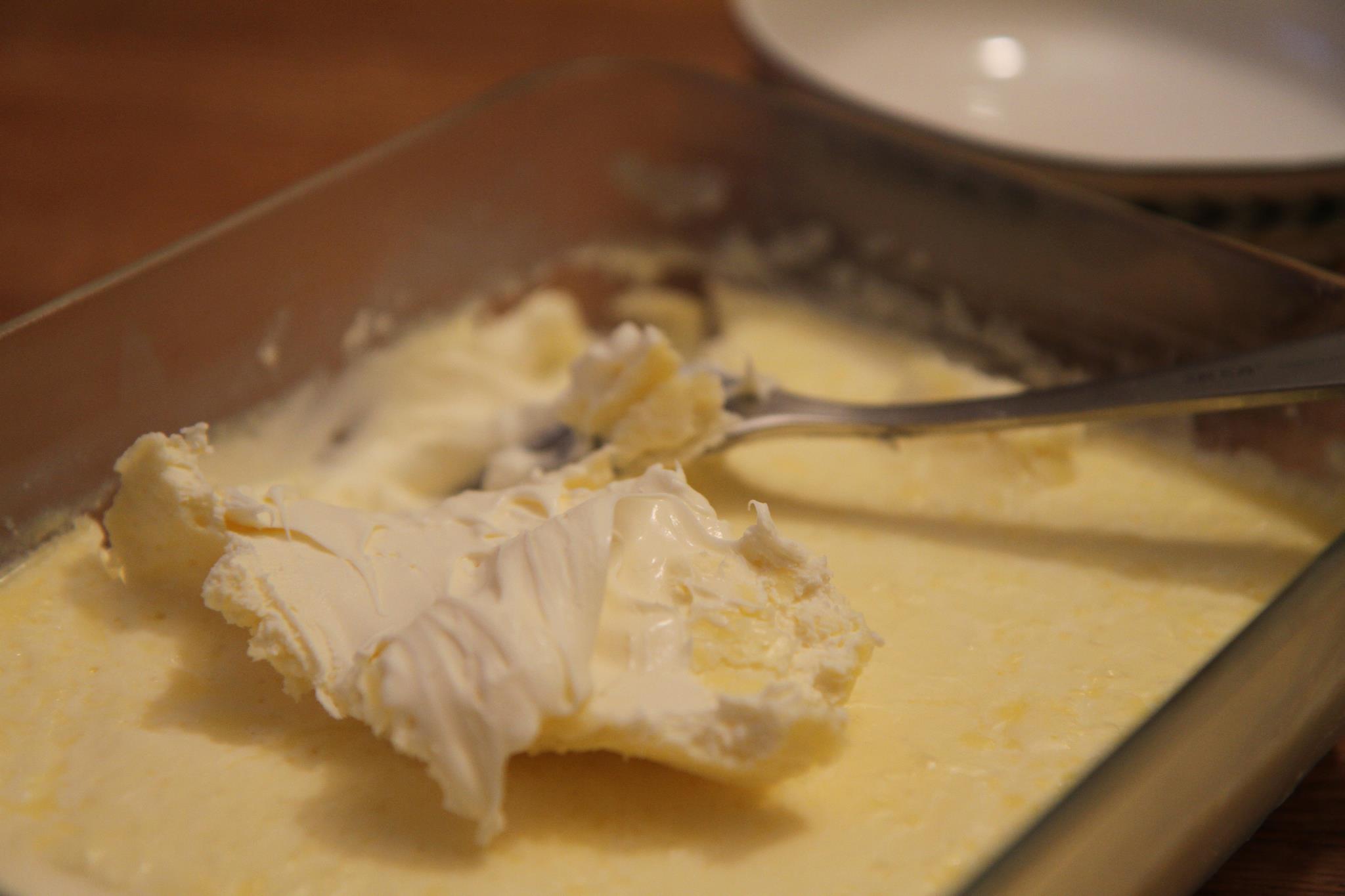

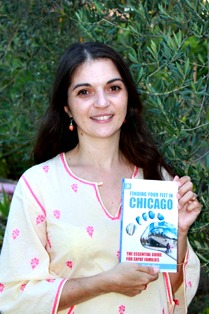
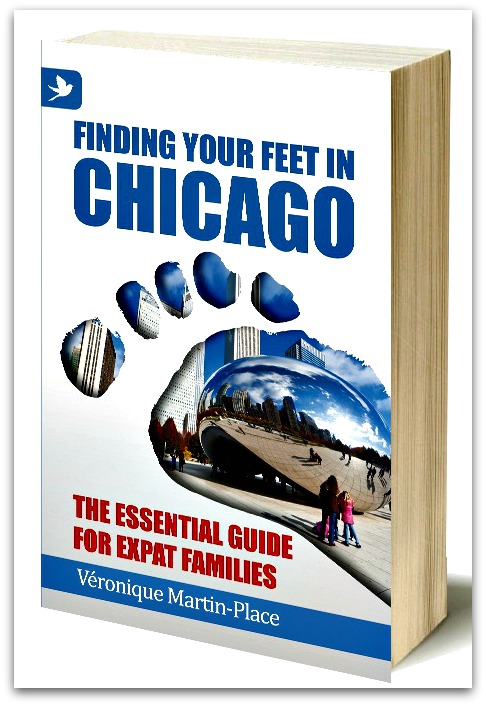


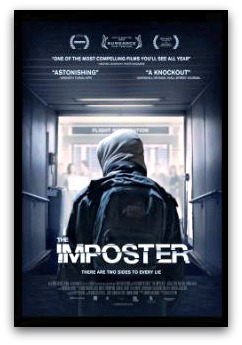

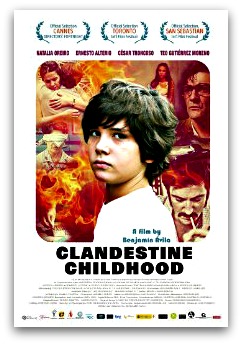
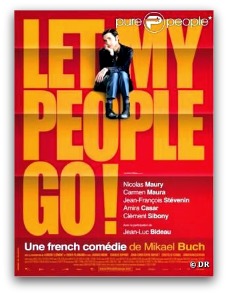
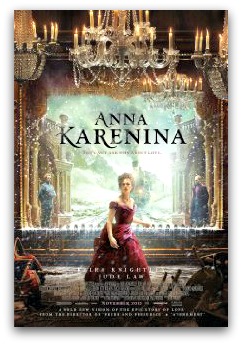




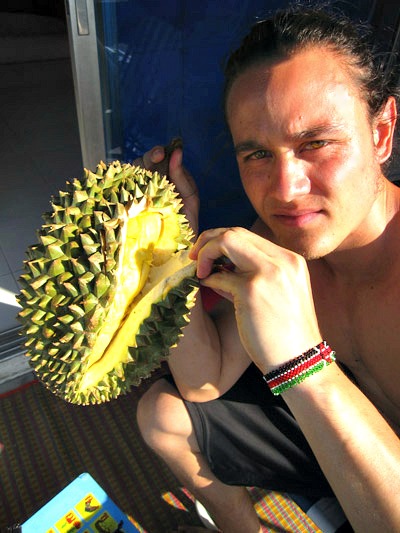








 The Displaced Nation