The Displaced Nation

A home for international creatives

Tag Archives: ATCK

BOOKLUST, WANDERLUST: 2014–2015 books recommended by expats & other international creatives (1/2)

Global Bookshelf Part OneHello Displaced Nationers! Looking back at the our popular series Best of 2014 in expat books, published at the end of last year, I decided we should continue the fun at the start of the year—and managed to convince our redoubtable editor, ML Awanohara, that the pair of us should canvass our “displaced” contacts to see what they’d enjoyed reading from last year’s crop of new books, as well as books they’re looking forward to reading in 2015.

A “best reads” roundtable, if you will.

In Part One, which appears below, several of my bookworm friends from a previous blog, Novel Adventurers, along with ML and JJ Marsh (JJ writes the Location, Locution column for Displaced Nation), discuss their favorite 2014 reads.

In Part Two, a similar group of us will talk about releases we’re hotly anticipating this year.

Having already shared my 2014 faves in last year’s series, I’ll concede the floor to others, beginning with ML.

—Beth Green

* * *

ML AWANOHARA: Thanks, Beth. These days, I seem to be more of a collector than a reader (I simply can’t keep up with all the titles I hear about!). If you’ll allow me to bend the rules, I’d like to highlight five more 2014 books I’ve discovered since our Best of 2014 in expat books went live. While I can’t personally recommend any of these titles, I feel justified in presenting them as an addendum to our series.

I’ll start with these four “displaced” novels, listed from most to least recent:

IHaveLivedToday_cover_300x200I Have Lived Today (October 2014)
Author: Steven Moore
Synopsis: Having barely survived his Dickensian childhood in 1960s Britain, Tristan Nancarrow sets out on a journey that will take him through the alleys of London and New York, to the rocky shores of ancient islands, and on pub crawls in dark and gloomy ports. The book is a classic coming-of-age adventure.
Expat creds: Originally from England, Moore is a writer, photographer, traveler and part-time ESL teacher who splits his time between Mexico, Korea and the world.
How we learned about: From his blog, Twenty-first Century Nomad.

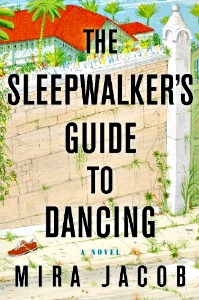
SleepwalkersGuide_cover_300x200The Sleepwalker’s Guide to Dancing (Random House, July 2014)
Author: Mira Jacob
Synopsis: This debut novel takes us on a journey that ranges from 1970s India to suburban 1980s New Mexico to Seattle during the dot.com boom. It follows the fortunes of the Eapens, an Indian American family dealing with tragedy and loss. Alternating between past and present, it shows the family’s transition from India to the United States. As one Indian critic writes, the story is “firmly rooted in an immigrant home, its peculiar methods and madness.”
Expat creds: Jacob is an Adult Third Culture Kid, whose Syrian Christian parents came over from Kerala, India, to New Mexico, in the 1960s. She now lives in Brooklyn with her Jewish American husband and son.
How we found out about: Recommended by Condé Nast Traveler as a book to read on a plane.

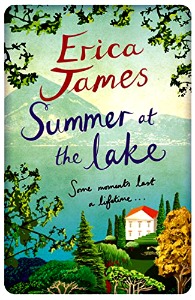
SummerattheLake_cover_300x200Summer at the Lake (Orion, June 2014)
Author: Erica James
Synopsis: An Oxford Tour guide, Floriana, a property developer, Adam, and Esme, an elderly woman who lives next door to a recent purchase by Adam, meet by chance and develop a lovely friendship, which takes them from the glittering spires of Oxford to the balmy shores of Lake Como. The story blends the tale of an old romance with a modern love affair.
Expat creds: James divides her time between living in Cheshire, UK, in a small rural hamlet and Lake Como, Italy, giving her plenty to draw upon in her books.
How we heard about: Pinterest.

TheBalladofaSmallPlayer_cover_300x200The Ballad of a Small Player: A Novel (Deckle Edge, April 2014)
Author: Lawrence Osborne
Synopsis: Lord Doyle decamps from the stuffy legal courtrooms of London to the smoky back-alley casinos of Macau, where he tries to capitalize on the ill-gotten gains that forced his flight from his homeland. But can he game the system at the island’s glitzy baccarat tables? With its expat angst and debauched air of moral ambiguity set amid the sinister demimonde of the Far East’s corrupt gambling dens, the book is an introspective study of decline and decay.
Expat creds: Lawrence Osborne was born in England and lives in New York City. A widely published and widely traveled journalist, he has lived a nomadic life in Mexico, Italy, France, Morocco, Cambodia and Thailand, places that he draws on in his fiction and non-fiction. His first novel was The Forgiven, which Beth Green reviewed for the Displaced Nation last year.
How we learned about: From Amazon.

Lastly, I have another expat memoir that was issued in 2014 and I think deserves a spot on our shelves:

FallinginHoney_cover_300x200Falling in Honey: How a Tiny Greek Island Stole My Heart (Sourcebooks, March 2014)
Author: Jennifer Barclay
Synopsis: Barclay first visited the tiny Greek island of Tilos, in the south Aegean, with friends, including a lover with promising prospects. In her mid-thirties when those prospects fell apart, she decides to reconnect with herself by returning to Tilos for a month and immersing herself in Greek culture, food, language, and dance. Emotionally healed and recharged, she returns to England, where she meets a man who wants what she wants, only to discover… (I won’t ruin it for you.)
Expat creds: Born in Manchester, UK, Barclay subsequently grew up on the edge of the Pennines—but has lived in Greece, Canada and France, with longish stays in Guyana and South Korea. She now lives mostly on Tilos. Notably, she previously produced a memoir about life in South Korea, amusingly titled Meeting Mr. Kim: Or How I Went to Korea and Learned to Love Kimchi.
How we learned about: Barclay’s “Gathering Road” podcast interview with Elaine Masters.


TheShadowoftheWind_coverJJ MARSH, crime series author and Displaced Nation columnist (Location, Locution): My best book of 2014 is The Shadow of the Wind, by Carlos Luis Záfon. All booklovers will fall hopelessly in love with this tale of a boy and a book he swears to protect after he is taken to the Cemetery of Forgotten Books by his bookseller father. Which of us could resist doing the same? Readers know how a story can act as a portal to otherwhere. This is the most perfect example, not to mention illuminating Barcelona in addition to the Franco dictatorship, love, loyalty and growth.


TheLie_coverHEIDI NOROOZY, adult TCK, translator and author (@heidinoroozy): One of the most remarkable and memorable books I’ve read recently is The Lie, by Hesh Kestin. Set in Israel, it features a Jewish human rights lawyer whose commitment to her principles is put to the test when her soldier son is kidnapped by Arab militants and whisked over the border to Lebanon. I love stories that explore the human spirit and are set against a backdrop of real-life events. The heart of this novel is the question of how far a mother is willing to go to save her child. Very chilling at times, heartbreaking at others and masterfully told overall.


PointofDirection_cover_300x200KELLY RAFTERY, translator and writer: In 2014, I loved Point of Direction, by Rachel Weaver. A starkly beautiful tale set in the Alaskan outback, it reads like a cross-cultural adventure. Most expats will recognize the feelings of culture shock, disorientation and unreality that haunt Anna, a woman on the run from her own ghosts. The sharp writing style perfectly mirrors the jagged mountains and rough seas that inhabit the novel as surely as another character.


SUPRIYA SAVKOOR, editor and mystery writer: I haven’t read many memoirs, but in recent months, I read two that blew me away. The first, Not My Father’s Son, by Alan Cumming, is a must-read, even if celebrity memoirs aren’t your thing or you don’t know much about this Scottish actor, now a dual American-British citizen based in New York City. NotMyFathersSon_cover_300x200Cumming, it turns out, is a genius storyteller, and he takes us on an extraordinary journey through two juicy family mysteries across four countries and three time periods. It is, in turns, emotional, tragic, exciting, suspenseful, and funny. The colorful cast of characters, with names like Tommy Darling and Sue Gorgeous, are real people. Along the way, you’ll learn all kinds of fascinating little tidbits, much of it cross-cultural, about genealogy, history, pop culture, language, psychology. Even Cumming’s anecdotes about his life as a TV and film star are surprisingly interesting, largely because of the author’s clear-eyed, honest wisdom. (I also highly recommend the audiobook, narrated by Cumming himself. Alongwayhome_cover_300x200 His lovely Scottish accent and intonations are an additional treat.)

A Long Way Home: A Memoir, by Saroo Brierley, is another great read. The story is simple but powerful: a five-year-old boy in rural India gets lost, is ultimately adopted to a family in Australia, then, as an adult, tracks down his birth family and reunites with them. How he pieces together his past and finds his roots is one of several beautiful mysteries in this small book. Loss and identity are obvious themes, but not just for the author. A truly unique story. (Side note: Modern technology is one of this book’s heroes.)


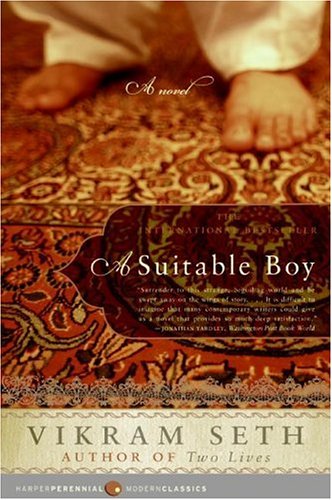
ASuitableBoy_coverALLI SINCLAIR, world traveler and novelist (www.allisinclair.com): I recently re-read A Suitable Boy by Vikram Seth. It was released way back in 1993 and caused quite a stir in the literary world as it was one of the longest novels ever to be published in English (1,349 pages hardcover). I first read it then, and, while it’s highly unusual for me to give a book a second or third read, every few years I return to this wonderful novel rich with Indian history, family saga, and a heartbreaking romance. It’s set in post-partition India and explores the political issues at the time (1950s), along with the Hindu-Muslim issues and the caste system. It’s quite an undertaking to read this book but I enjoy revisiting the characters I love. I am very fond of stories written by Indian authors as there is a beautiful style and interesting points of view I find appealing. There’s a sequel in 2016—I can’t wait!

* * *

Thank you, ML, JJ and guests! Readers, have you read any of the above or do you have further 2014 recommendations? Please leave a comment below. And stay tuned for Part Two of this post, books to look forward to in 2015!

Finally, please be sure to sign up for the DISPLACED DISPATCH, which has a Recommended Read every week. You can also follow the Displaced Nation’s DISPLACED READS Pinterest board.

STAY TUNED for PART 2 of this post: 2015 reads!

If you enjoyed this post, we invite you to subscribe to The Displaced Dispatch, a weekly round up of posts from The Displaced Nation, plus some extras such as seasonal recipes and occasional book giveaways. Sign up for The Displaced Dispatch by clicking here!

Related posts:

TCK TALENT: Gene Bell-Villada, literary critic, Latin Americanist, novelist, translator and TCK memoirist

Gene B-V TCK Talent

Professor Gene Bell-Villada (own photo)

Elizabeth (Lisa) Liang is here with her first column of 2015. For those who haven’t been following: she is building up quite a collection of stories about Adult Third Culture Kids (ATCKs) who work in creative fields. Lisa herself is a prime example. A Guatemalan-American of Chinese-Spanish-Irish-French-German-English descent, she has developed her own one-woman show about growing up as a TCK, which is receiving rave reviews wherever it goes.

—ML Awanohara

Happy New Year, readers! Today I’m honored to be interviewing Gene Bell-Villada, author of the Third Culture Kid memoir Overseas American: Growing Up Gringo in the Tropics and co-editor of my first published essay in the TCK/global-nomad anthology: Writing Out of Limbo. Gene grew up in Latin America and “repatriated” to the USA for college and beyond; he is a Professor of Romance Languages (Spanish), Latin American Literature, and Modernism at Williams College in Williamstown, Massachusetts. He is also a published writer of fiction and nonfiction.

* * *

Welcome to The Displaced Nation, Gene. Like me, you’re an Adult Third Culture Kid of mixed heritage. Since you were born in Haiti and grew up in Puerto Rico, Cuba, and Venezuela as the son of an Asian-Polynesian mother from Hawaii and a WASP father from Kansas, your identity development was complex and nuanced, as you make clear in your memoir.  Can you tell us how you identify yourself these days?
Like the title of my memoir, I identify myself as an Overseas American, of mixed WASP and Chinese-Filipino-Hawaiian ethnicity, with a Caribbean-Hispanic upbringing. I wrote my memoir in great measure to disentangle and explain that background—for myself and others! More broadly, in my middle 20s, it dawned on me that, by default, I happened to be a cosmopolitan, and that I couldn’t feel “local” even if I wished to. And so, I set out to make the best of that cosmopolitanism and build on it.

OverseasAmerican_cover

Tell us two things you miss about each of your childhood countries.
From my three childhood countries, I miss mostly the Latin informality and warmth…and salsa dancing! From Puerto Rico, I’ve fond memories of the University campus that was next door to my first home in Río Piedras, and where my mother would take us for walks. From Cuba I miss the richness of the music and folk culture. About Caracas, 3,000 feet above sea level, I remember its mild climate and “eternal spring.”

“Puerto Ricans do a lot of hugging, Dickie reflected. His parents and relatives almost never did.”

Your TCK childhood had extra upheaval due to your parents’ divorce and your two years at a military school in Cuba while your parents each lived in other countries. I imagine that affected your feelings about where you lived.
I must admit, I don’t “miss” most of what I lived in my 17 years in the Spanish Caribbean. I had a very difficult childhood, in which I never really “belonged” to any of those countries, had little contact with the expat community, and was leading a painful, dysfunctional family life. Since my brother and I were put away in a military school in Cuba, it’s not a place that I would “miss.” The circumstances of my upbringing have made childhood nostalgia an elusive sentiment for me.

After a young adulthood in New Mexico (briefly), Arizona, California, Massachusetts, and New York—and some trips to Europe—you settled in Williamstown, MA.  When did you come to feel that it was home, inasmuch as any place can be for an ATCK?
My wife and I actually have had homes in two locations in Massachusetts: Williamstown and Cambridge. So we lived both in the city, where we had our home life, and the country, where I taught. And I guess I realized sometime in the 1970s that New England had become my home. The place had enough cultural density, layered history, and overall cosmopolitanism for me to feel at ease in those parts. (I’d also earned my Ph.D at Harvard.) I even turned down a job offer from UCLA in 1976 because by then I felt attached enough to Massachusetts to stay there. Plus, I didn’t look forward to living in my car on the LA freeways, or putting up with Los Angeles pollution, which was fairly serious back then!

“‘Ah, but you speak such good Spanish…'”

Have you returned to any of the Latin American countries in which you grew up? 
I’ve been back to Puerto Rico and to Venezuela, always experiencing those mixed feelings. When I visited my old neighborhood in Hato Rey, PR, in 2012, I found it largely changed. Moreover, during a previous visit to San Juan in 1985, I went for a stroll at the University grounds. At the sight of the palm trees at the entrance and the tower looming above it all, I fell to the ground, crying. It was a reminder that much of my youth there, when I’d believed that I was an “American” boy in the tropics, had been illusory.

As for Cuba, I could only go back under very specific conditions—not because of the regime, which I’m not against, but owing to my painful personal memories of the place. I worry that seeing certain streets and buildings might elicit a wrenching sadness in me.

Since you’re a professor of Latin American literature and have written about the heavyweights in the field, I presume you’ve also visited quite a few countries in the region at this point. What were your impressions?
Inasmuch as I’ve written books and articles about Borges, García Márquez, Vargas Llosa, and Mexican literature, I’ve been more than once to Argentina, Colombia, Perú, and Mexico. Going to and traveling in those countries brought insight into their literary works that one cannot get simply from reading them in one’s study. On the other hand, my Latin American and Caribbean background proved enormously helpful in accessing the culture and the society of those places. Indeed, García Márquez’s world is the Caribbean coast of Colombia; exploring that area in 1982 and 1988 was a lot like being back in San Juan and Havana! Writing about it was fun, a bit like a return to my childhood, without the pain.

“She was from New York. Didn’t people from New York listen to classical music?”

Although you have always had a passion for classical and Latin music, you ultimately found ways to express yourself through writing fiction and nonfiction. Does music still play a big role in your life? 
Music is my first love. If I hadn’t had a late start at the piano (a fact that unfortunately set me back several years), I might have stayed with it. I turned to literature, in some measure, because it didn’t require advanced hand-muscle skills! But once I got involved with the written word, I strived to make my prose style as artistic, expressive, and fun as music can be, and I worked to give it rhythm and melody. (Someone has remarked that I write like a musician.) I still play piano, though.

Is there a particular work that you are most proud of having written, and if so, why?
I feel equally attached to all of them! Each one has had its role in my life. My books on Borges and García Márquez (which have sold well and gone through second editions) are used in AP courses, and are consulted by general readers, here and abroad. From early on, I had set out to be a “cultural mediator” between Latin American literature and U.S. readers, and those volumes serve that purpose.

My book Art for Art’s Sake and Literary Life, on the other hand, grew out of my cosmopolitanism and my desire to deal with the uses of art as both escape and expression. (In some subliminal way, it’s autobiographical.) The volume covers the phenomenon of aestheticism in Europe, the U.S., and Latin America. I felt vindicated when the thing was a finalist for the 1997 National Book Critics Circle Award (there I was, sharing space with Cynthia Ozick and William H. Gass). It also got translated into Serbian and Chinese! When I asked my two translators just what had drawn them to the book, they both replied that what I’d said about Latin American aestheticism was also applicable to analogous 19th-century movements in Serbia and Taiwan. So my cosmopolitanism had shed light on some corners elsewhere in this world.

My two books of fiction focus in part on TCK issues, plus such cultural-specific matters as American relativism or the seductive influence of Ayn Rand.

But I finally turned to memoir because I felt it was the way to confront head-on the question of my crazy, mixed-up background, to make sense out of it all and give it a living shape. The process of remembering that past, and crafting it and getting it out there, has proved enormously therapeutic. It also led to my meeting Nina Sichel and, then, you, Lisa, via our essay collection, Writing Out Of Limbo!

My latest volume is a kind of experiment, starting with its very title: On Nabokov, Ayn Rand and the Libertarian Mind: What the Russian-American Odd Pair Can Tell Us about Some Values, Myths and Manias Widely Held Most Dear. Besides dissecting the two authors, I tease out my troubled relationship to them, delve once again into my own life history, and finally move on to the larger problem of a rising, spreading libertarianism in this country. There’s even an Appendix in which I throw in a number of spoofs of my own of hard-line libertarians! (I’ve been playing with satires of something or other ever since I was in middle school in Puerto Rico…)
on-nabokov-ayn-rand-and-the-libertarian-mind_cover

You’re a true international creative, with works that run the entire gamut! Tell us, what’s next? Fiction? Nonfiction? Something else?
I have stuff in the works, but am in the process of rethinking my projects in the wake of my wife’s death in 2013. (Widowerhood does things to your mind and spirit, alas.)

Where can people find your works?
All my books are available from Amazon and local bookstores, as well as from any good library!

Thank you, Gene, for sharing your wonderfully inspiring story with the Displaced Nation. So, readers, any questions or comments for Gene? Be sure to leave them in the comments!

Editor’s note: All subheadings are taken from Gene’s book The Pianist Who Liked Ayn Rand: A Novella & 13 Stories.

STAY TUNED for our next fab post.

If you enjoyed this post, we invite you to register for The Displaced Dispatch, a round up of weekly posts from The Displaced Nation, with seasonal recipes, book giveaways and other extras. Register for The Displaced Dispatch by clicking here!

Related posts:

The Displaced Nation responds to France’s 9/11

Solidarity with Solidarite

SOLIDARITE, by Patrick Janicek via Flickr (CC BY 2.0).

Time and again, the Displaced Nation has featured the works of displaced creatives who have been captivated by Paris, a city that has been beloved of expats for longer than anyone can remember. For today’s post, a few of us offer some responses to the terrorist attacks that beset the city last week. Our thoughts are with those expats who remain in the city as it attempts to move forward in the wake of disruption and tragedy, what some have labeled France’s 9/11. We express solidarity with your solidarité.

—ML Awanohara

ML_for_blogML AWANOHARA, Displaced Nation founding writer/editor: My first two experiences with terrorism occurred when I was living abroad: first in Britain, where I always felt the threat of an IRA attack when traveling into central London for my studies; and then in Japan: I was living just up the street from one of the subways that Aum Shinrikyo attacked with sarin gas.

Then, not long after I repatriated and moved to New York City, 9/11 occurred: a spectacle almost beyond belief. I still remember the gamut of emotions I felt in the weeks and months that followed, everything from practical considerations (should I take the bus since a rumor is flying about another attack on the subway today?) to large questions: why do they hate us so much?

Although in each of these cases the terrorists were tied to religion (even Aum Shinrikyo espoused a “new religion”), when I first heard about the Parisian attacks, I felt that something different was taking place. It sounds grand to call it a clash of civilizations, but that’s been my impression, this time around.

I spent my formative years in Britain, you see, where I learned to appreciate irreverent humor, so much so that I’ve had a tough time adjusting back to life back here in the U.S., where people take themselves a lot more seriously. Though I don’t think I’m Charlie (I draw the line at the kind of irreverence that magazine was up to), I do feel that artists should be free to explore the boundaries…

In fact, isn’t that what the Displaced Nation is about? My fellow founders, Kate Allison and Anthony Windram, and I conceived of this site as a space where one could be irreverent about the expat life (within certain limits, of course—and we occasionally argued about that). Humo(u)r and sending things up has been our stock-in-trade.

On that note, and in the spirit of artistic freedom, allow me to offer one final thought. In the days after the terrorists struck, I have also been thinking that, in a strange kind of way, I’m not unlike the perpetrators. I went abroad to be exposed to new ideas and in some sense I became “radicalized”—emerging from my European experience as more secular, more aware of the world, and with more of a social conscience than I’d developed while growing up in America.

That’s where the comparison ends, of course. Having a European, secular mindset means I’m much more afraid of my fellow Americans waging war on me with their fundamentalist beliefs, Biblical literalism and guns than the other way around. No doubt that’s why I now live in New York City—though ironically, this location makes me more vulnerable to terrorists with an axe to grind against this country.

I look to the Displaced Nation as a source of community while also knowing it cannot guarantee my safety. No nation can do that, not even one built in cyberspace. (I’m thinking of the Sony hackers.)

Rita GardnerRITA GARDNER, Adult Third Culture Kid, memoirist, and interviewee for the Displaced Nation’s “A Picture Says…” column: I am outraged and scared that the acts of a small group of radicals just shook the world. It’s not just Paris that is reeling from this blow. The number of lives affected spiral out widely beyond those who lost their lives, crossing continents and oceans, the pain an ever-expanding circle. When I first heard about the Paris attacks, my first instinct was to go into denial – and pull into a cocoon of self-protection. Selfishly, I can turn off the TV and not see the horror. It’s happening “somewhere else”, not in my immediate world. I realize hiding is just a defense mechanism. I think that because expats have had the experience of living far from our “passport country”, none of us can cocoon into unconsciousness for long. We have been in that “somewhere else”—we know this attack could have happened to any of us, any place on the globe. And yet—we must live, we must manage somehow to reconcile the fact that evil and good exist within mankind. That’s the hardest idea to contemplate or absorb at this time. Maybe all we can do right now is attempt to be good ambassadors wherever we find ourselves, and add love to that ever-expanding spiral.

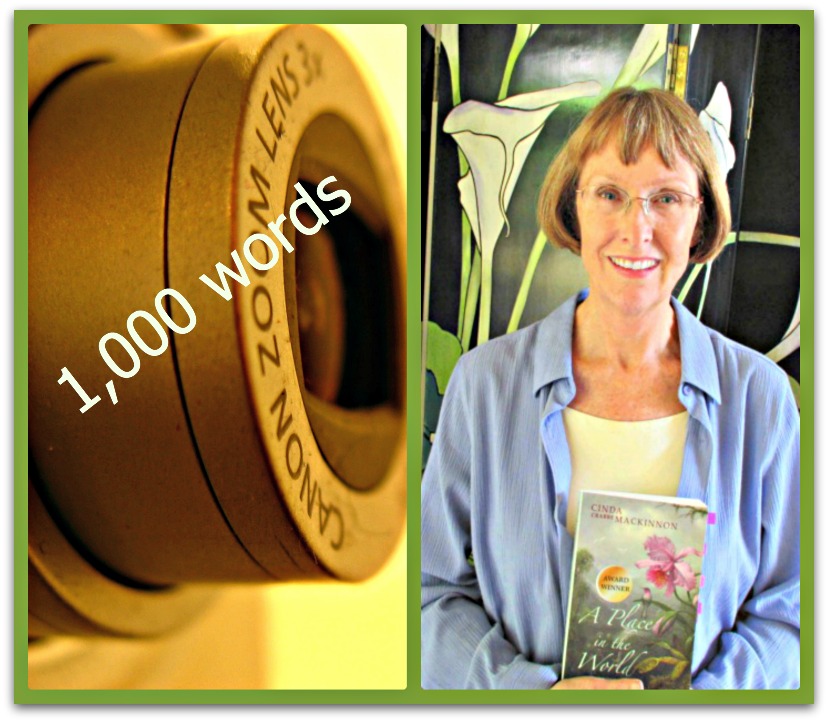
Cinda MacKinnon_300x300CINDA MACKINNON, ATCK, novelist, and subject of one of our writer interview features: I wanted to write something profound, but what words can you say about terrorists? It is shocking and senseless. No cause can justify terrorism, yet hardly a week goes without innocent people being slaughtered. There is a feeling that the real target in Paris is Western civilization and values (and some say freedom of speech). The French are united in their grief, and they joined us after 9/11 when the newspaper Le Monde wrote: “Nous sommes tous Américains.” In response I would like to say: “Nous sommes tous Françaises.

Joanna_Masters_Maggs_300 x 300JOANNA MASTERS-MAGGS, Displaced Nation (“Global Food Gossip”) columnist and expat in France: I talked to my children, who’ve spent six years on their young lives in Muslim countries, about what happened. As I explained in yesterday’s post, I’m never shocked by terrorism as I knew it existed at an early age. When the attacks in Paris happened and my kids asked about it, I didn’t sugar the pill for them. I told them I didn’t have the definitive answer. I don’t know why people do this sort of thing. I can’t imagine caring that much about anything. I think I would shoot someone who hurt my kids, but for an idea, a belief? I told them not to get so uptight about things themselves and never say something as embarrassing as “Well, I’ve never been so insulted in all my life”. Get over yourself. The victims in last week’s attacks died for nothing. It was a waste of life. That’s what I tell them. Because someone had a gun and a shaky ego. That’s the truth. That’s what terrorism is.

While I was talking to my kids, I was thinking about the historian Niall Fergusson’s book on WWI. He says the war went on as long as it did for many reasons, not least that young men are turned on by danger. “Going over the top” gives them a massive adrenaline charge, which becomes addictive, and they can’t really believe “it” will happen to them. When I read this, it was a light bulb moment. I suddenly understood why the working-class boys I witnessed in Belfast growing up (I’m half Irish) turned to paramilitary groups: it gave them a sense of power and authority and purpose. There appears to be a limitless supply of such young men. The current situation in Syria makes me think of all the young British idealists who went to Spain to fight in the Civil War. Sometimes I wonder if National Service might actually fill the need for thrills in a safer way? My father for example did two years in Northern Ireland in the Intelligence Corps, and my father-in-law spent his youth in the Malaysian jungle during the insurgency. Aren’t we all turned on at times, by the gun-toting hard guy? Hollywood thrives on it!

* * *

Readers, do you have anything to add, or any comments on these heart-felt responses? We’d love to hear from you!

STAY TUNED for tomorrow’s Location, Locution post!

If you enjoyed this post, we invite you to register for The Displaced Dispatch, a round up of weekly posts from The Displaced Nation, with Alice nominees, exclusive book giveaways and other extras. Register for The Displaced Dispatch by clicking here!

Related posts:

BOOKLUST, WANDERLUST: Best of 2014 in Expat Books (2/2)

Best of Expat Books 2014 Part 2Season’s greetings again, Displaced Nationers. And welcome back to our end-of-the-year bookfest!

Pass the eggnog!! (She takes a swig…)

Moving right along (hic!). In the first part of this BOOKLUST WANDERLUST series, posted yesterday, our BOOKLUST, WANDERLUST columnist Beth Green and I presented a list of 2014 expat books in the categories of Travel, Memoirs, and Cross-cultural Challenges.

In Part Two, we present our last three categories (hic, hic—hey, it’s the holidays!):

  1. IT’S FOOD!
  2. THIRD CULTURE KIDS
  3. COUNTRY GUIDES/TRIBUTES


A few points to note:

  • Books in each category are arranged from most to least recent.
  • Unless otherwise noted, books are self-published.
  • Contributions by Beth are in green (most appropriate, given her surname!).

* * *

IT’S FOOD!

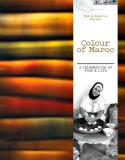
Colour_of_Maroc_cover_smallColour of Maroc: A Celebration of Food and Life (Murdoch Books, October 2014)
Authors: Rob Palmer and Sophie Palmer
Synopsis: A collection of Moroccan recipes, both traditional and contemporary, interwoven with stories and anecdotes inspired by people, food and travel experiences as seen through the eyes of Rob, an Australian photographer, and Sophia, his French/Moroccan wife.
Expat Credentials: Rob first met Sophia in Sydney, who had freshly arrived in Australia from France. They were both on a food photo shoot for an ad agency. Fascinated by her half-Moroccan (she was born in Casablanca), half-French heritage, he was only too happy to join her on an extended tour of Morocco, which resulted in both marriage and this book.
How we heard about: Social media.


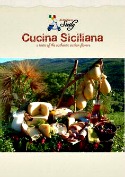
Cucina_Siciliana_cover_smallCucina Siciliana: A taste of the authentic Sicilian flavors (August 2014)
Author: Wanita
Synopsis: Wanita shares recipes she has collected from her elderly neighbor, her mother-in-law, and Italian friends she has made during her six years in Sicily—recipes that have passed down from generations, several of which, she suspects, have never been outside Sicily!
Expat creds: Wanita met her Sicilian husband on the Internet. After a 3-month online romance, he visited her in California; two weeks later, she accompanied him back to Sicily to get married. They now have an infant daughter.
How we found out about: We’ve pinned several of her Sicilian recipes to our IT’S FOOD! board.


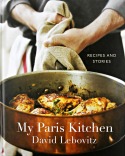
My_Paris_Kitchen_cover_smallMy Paris Kitchen: Recipes and Stories (Ten Speed Press, April 2014)
Author: David Lebovitz
Synopsis: A collection of 100 sweet and savory recipes that reflect the way modern Parisians eat today, combined with Lebovitz’s personal stories of life in the world’s culinary capital. The book also features lush photos of Paris and of Lebovitz’s kitchen.
Expat creds: Lebovitz is an American pastry chef who has been living the sweet life in Paris for a decade. Before moving to France, he made his name at Chez Panisse in Berkeley, California, with celebrity chef Alice Waters as his mentor.
How we found out about: We are among his throngs of followers, keeping up with him any way we can: Facebook, Twitter, Pinterest, his monthly e-newletter… My Paris Kitchen (his 7th book!) has been named best cookbook of the year by Amazon.


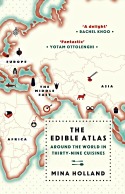
The_Edible_Atlas_cover_smallThe Edible Atlas: Around the World in 39 Cuisines (Canongate, March 2014)
Author: Mina Holland
Genre: International cookery
Synopsis: Not just a cookbook, The Edible Atlas introduces readers to the cultures behind the flavors and looks at why people eat what they do.
Expat credentials: Mina Holland, from the UK, has lived both in the USA and in Spain. She’s the acting editor of Guardian Cook.
How we heard about: Titles about food always catch our eye, and the idea of traveling around the world a mouthful at a time? Tantalizing! A review in Guardian Books first brought it to my attention.


THIRD CULTURE KIDS

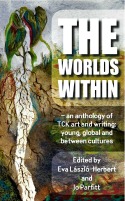
TheWorldsWithin_cover_smallThe Worlds Within, an anthology of TCK art and writing: young, global and between cultures (Summertime, November 2014)
Editors: Jo Parfitt and Eva László-Herbert
TCK Credentials: As the editors point out, that this is a rare book BY third culture kids, not about them.
Synopsis: Your mother is Swiss, your father is from the Philippines and you have so far lived in five countries, none of them your passport country. Who are you? Where are you from? Where is home? And what did you eat for breakfast? If you are a friend, this book will guide you. If you are a teacher, it will enlighten you. If you are a parent, it will spell it out for you and if you are an employer, it will convince you. Here they are, the cultural chameleons, the young global nomads, the TCKs—Third Culture Kids—from around the world, telling you their story.
How we heard about it: Initially from a Facebook post. Word is spreading fast on social media. One of the coolest things about this book? It features TCK art as well as writing.


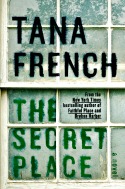
The_Secret_Place_cover_smallThe Secret Place (Dublin Murder Squad Book 5) (Penguin, August 2014)
Author: Tana French
Genre: Mystery
Synopsis: In Book 5 of the Dublin Murder Squad series, two detectives are given new information about a cold case—a boy’s murder on the grounds of an exclusive school for girls.
(A)TCK credentials: Tana French was born in Ireland but grew up in Italy, the USA, and Malawi during the years her family traveled with her father’s career as a development economist.
How we heard about it: I’m an avid reader of murder mysteries and fell in love with this series by French last year. In fact, I wrote about her Dublin Murder Squad series , and how it deals with issues of displacement, for my first Booklust, Wanderlust column.


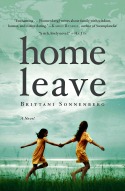
Home_Leave_sonnenberg_cover_smallHome Leave (Hachette, June 2014)
Author: Brittani Sonnenberg
Genre: Expat fiction
Synopsis: In a story that mirrors the author’s own life as a TCK, an expat family’s daughters search for their own identity and confront tragedy.
(A)TCK credentials: Sonnenberg was born in the USA but lived in the UK, Germany, China and Singapore as a child and teenager. She now lives in Berlin and treats Hong Kong as her second home.
How we heard about it: ML is always on the hunt for a good book about TCKs, so when she mentioned having read a review of the book last summer in the New York Times, I agreed to write a column about it.


COUNTRY GUIDES/TRIBUTES

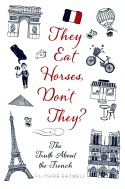
They_Eat_Horses_cover_smallThey Eat Horses, Don’t They? The Truth about the French (Thomas Dunne Macmillan, December 2014)
Author: Piu Marie Eatwell
Genre: Multicultural nonfiction
Synopsis: A series of entertaining mini-essays examines the stereotypes of French life, so beloved of the British in particular, only to discover that many are completely false.
Expat credentials: Eatwell, of mixed Asian and British descent, went to France for a long weekend one August summer holiday many years ago, and never left (how could she, with a surname like that?). After graduating from Oxford University, she trained first as a BBC television producer and then as a lawyer. Over the years she has worked as a documentary film maker, barrister, teacher, mother, and—most recently—full-time writer, both in London and Paris. They Eat Horses, Don’t They? is her first book.
How we heard about: Eatwell’s book is the winner of the 2014 Next Generation Indie Book Award in Amazon’s Multicultural Non-Fiction category.


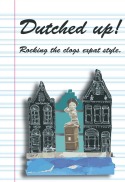
Dutched_Up_cover_smallDutched Up! Rocking the Clogs Expat Style (November 2014)
Authors: Various
Genre: Anthology
Synopsis: A compilation of stories by expat bloggers in the Netherlands.
Expat credentials: Too numerous to relay.
How we heard about: From a tweet by one of the contributors, Australian expat in Almere Nerissa Muijs. Once upon a time, Muijs was featured on our site as a Random Nomad. (She definitely rocks—we can vouch for it!)


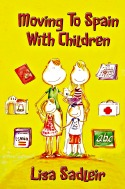
Moving_to_Spain_cover_smallMoving to Spain with Children: Essential reading for anyone thinking about moving to Spain (November 2014)
Author: Lisa Sadleir
Genre: Expat self-help
Synopsis: Spiced with the author’s own heart-warming anecdotes, the book aims to help you arrive at the same place her own family is now—but in half the time: living and loving family life in Spain!
Expat credentials: British born Lisa Sadleir is mother to two young, bilingual children. Educated in the UK and France, she has been a resident in Spain for over 23 years. She works as an independent relocation advisor and personal property finder.
How we heard about: Social media.


Paris_in_Love_cover_smallParis in Love (Chronicle Books, November 2014)
Author: Nichole Robertson
Genre: Photography
Synopsis: A photographic love letter to Paris from the author of the best-selling Paris in Color, capturing the hidden corners and secret moments that make Paris the most romantic city in the world.
Expat credentials: After a successful career in New York City as a writer and creative director for ad agencies, Robertson moved to Paris, which rekindled her love of photography and led to creating a series of prints and now books celebrating her relationship with the City of Light.
How we heard about: Social media.


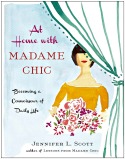
At_Home_with_Madame_Chic_cover_smallAt Home with Madame Chic: Becoming a Connoisseur of Daily Life (Simon & Schuster, October 2014)
Author: Jennifer L. Scott
Genres: Beauty/Fashion, How-to, Home Improvements
Synopsis: In this follow-up to her best-selling Lessons from Madame Chic, Scott has divided the book into two sections: 1) Chez Vous: exploring how to get your home in order and how to love it again; 2) Les Routines de la Journée: covering the pleasures of the morning, the pleasures of the afternoon, and the pleasures of the evening.
Expat credentials: Once upon a time, Scott was a college student living with a “chic” family in Paris, France, and her books represent her attempt to translate all that she learned from that European experience into her American lifestyle.
How we heard about: I interviewed Scott about her first book just before it was picked up by Simon & Schuster, and have been a big fan of hers ever since. (Her interview still gets lots of hits!)


How_to_live_in_Denmark_coverHow to Live in Denmark: A humourous guide for foreigners and their Danish friends (July 2014)
Author: Kay Zander Mellish
Synopsis: Life as a foreigner in Denmark, one of the world’s most homogenous countries, isn’t always easy. In this book, based on her popular podcast series, Kay Xander Mellish offers a fun guide to Danish culture and Danish manners, as well as tips on how to find a job, a date, someone to talk to or something to eat.
Expat credentials: An Wisconsin-born journalist, Mellish has lived in Denmark for more than a decade.
How we heard about: Mellish’s humorous and somewhat irreverent take on expat life caught our attention about a year ago, when she posted a story about the first woman to guard the Royal Palace at Amalieborg, who was fired not for being a prostitute but for refusing to follow orders and stop moonlighting—a post for which Mellish earned her one of our coveted (?!) Alice Awards. We were pleased to learn she’d published a book, and plan to feature it soon.


SoYou're_Moving_to_Australia_cover_smallSo, you’re moving to Australia?: The 6 essential steps to moving Down Under (June 2014)
Author: Sharon Swift
Genre: Self-help
Synopsis: Swift has distilled her formula for a successful international relocation into a 6-step process, outlined in this book for those making the big leap from the UK to Australia.
Expat credentials: Since her birth in Singapore to a British father and Singaporean mother, Swift has lived across five continents, experiencing life and cultures of 14 countries. Her move to Sydney from London in 2005 was her 18th international relocation. She lives in Sydney Inner West with her husband, both now Australian citizens.
How we heard about: Pinterest.

* * *

Your turn again, readers! Have you read any of the above works and if so, what did you think of them? And can you suggest other works to add to these three categories or to the ones presented yesterday? Beth and I look forward to reading your comments below.

From Beth:
Intrigued by some of these titles? Go ahead, download a few! ‘Tis the season to support the output of other international creatives.

In closing, please note: Beth and I may repeat this exercise in six months (summer reads). But if you can’t wait until then, I suggest that you sign up for our DISPLACED DISPATCH, which has a Recommended Read every week, and also follow our Pinterest board: DISPLACED READS.

Without further ado, we thank you for making this year great and wish you a season full of mirth and good cheer, along with the odd quiet moment for a displaced read or two!

(Oh, and pass that eggnog!!)

STAY TUNED for more fab posts.

If you enjoyed this post, we invite you to subscribe to The Displaced Dispatch, a weekly round up of posts from The Displaced Nation, plus some extras such as seasonal recipes and occasional book giveaways. Sign up for The Displaced Dispatch by clicking here!

Related posts:

And the November 2014 Alices go to … these 3 international creatives

 © Iamezan | Dreamstime.com Used under license

© Iamezan | Dreamstime.com
Used under license

If you are a subscriber to our weekly newsletter, the Displaced Dispatch, you’re already in the know. But if you’re not, listen up. (Hey, why aren’t you? Off with your head!)

Every week, when that esteemed publication comes out, we present contenders for a monthly “Alice Award,” most of whom are writers or other kinds of international creatives who appear to have a special handle on the curious and unreal aspects of being a global resident or voyager.

Not only that, but this person tries to use this state of befuddlement as a spur to greater creative heights.

Today’s post hono(u)rs our three Alice recipients for November. Listed in order of most to least recent, they are (drumroll…):

1) Becky Ances, American expat in China and creator behind the Moo-Cow Fan Club, an award-winning children’s magazine & book series

For her post: “No I DO NOT Want to Drink F&%#%$ Hot Water,” to her personal blog, Writer Traveler Tea Drinker: Doing all three in China
Posted on: 18 November 2014
Queen Alice Drink CollageAlice Connection:

“Drink more hot water”
This is the most annoying piece of advice you hear ALL THE TIME when living in China. My friend smashed her elbow, the bone, and went to the hospital. Their recommendation? Drink hot water.

Citation: Becky, please forgive us for having found your post about what happened when you came down with a “major disgusting, hocking, snotty nose, bleary-eyed” case of flu in your adopted home of China highly amusing. That is actually a compliment, coming from us! We also think, moreover, that you may have overreacted slightly to being told repeatedly by Chinese students and friends to drink hot water. We refer you to the “Queen Alice” chapter in Through the Looking Glass, specifically the section where Alice, having found herself wearing a golden crown, arrives at a party being held in her honor. She is surprised to be serenaded by a solo singer with a shrill voice pretending to be her stand-in. She is even more surprised when the hundreds of looking-glass creatures (animals, birds, even a few flowers) who are attending as guests join in a refrain that proposes concocting drinks full of cats and mice, treacle and ink, etc., for a special toast. Looping back to your situation in China: Be grateful it was only hot water they were prescribing (besides, isn’t hot water safer to drink in China?). Under other circumstances, your Chinese friends might have been foisting snake wine or other therapeutic drinks on you as curatives. You are absolutely right, however, to avoid people who sneeze and don’t cover their mouths. And we hope you are also sensible enough to know that if someone offers you a  bottle labeled 我喝 to pour the contents into a flower pot when no one’s looking. (The flowers will thank you for it!) Get well soon, Becky. We wish to read more of your posts!

2) Ruth Van Reken, Adult Third Culture Kid writer, editor, and lecturer; and author of the memoir Letters Never Sent

For her interview: “Exploring Her Third Culture Through Journaling with Ruth Van Reken,” by Eric for geodip
Posted on: 3 November 2014
Alice Connection:
Alice Cheshire Cat Collage

It is from this frequent changing of worlds and communities that the two main challenges of growing up global form. The question of identity: Which of my many selves am I? and the matter of unresolved grief. With so many cycles of transition, if people don’t process the inevitable losses as they happen, the grief that is inherent in losing things that we love will have to go somewhere deep inside.

Citation: Ruth, reading about your struggle to embrace your multiple identities and channel your grief at saying so many goodbyes at a young age—well, let’s say it makes Alice’s confession of an identity crisis to the Cheshire Cat seem a bit of a cake walk. Alice presumably had only one other self, that of a well-behaved Victorian girl, to reconcile with the adventuresome spirit she’d become in Wonderland. You by contrast have had to deal with multiple selves after spending your first 13 years in Nigeria with your missionary parents. We must say, it was brilliant of you to use journaling as your Cheshire Cat when you found yourself, in your late thirties, suffering from a depression about these unresolved emotions. Translating feelings of loss, grief and confusion into the written word has clearly been a tonic. It has left you with a grin about your cross-cultural life, which you’ve generously shared with others through your memoir and other writings. Kudos, Ruth, and thank you.

3) Hannah Reyes, photographer, travel enthusiast, Filipina expat in Phnom Penh, Cambodia, and National Geographic Young Explorer

For her interview: “I Heart My City: Hannah’s Phnom Penh,” in Beyond the Guidebook, a feature of NationalGeographic.com’s Intelligent Travel section.
Posted on: 22 October 2014
Tweedle Dums Collage

The most random thing about my city is the quantity of people going about their workdays dressed in matching, printed pajamas.

Citation: Hannah, our first concern, after reading your engrossing interview post, is whether there’s a way to tell “dee” from “dum” when you see two people wearing identical pajamas—and if not, would they consider embroidering their names on their collars? Also, the concept of wearing pajamas during the workday sounds most unusual to those of us who know Japan, where pajama costumes might be worn to the hot springs bath but certainly not to work. Finally, we are curious about the print on the pajamas. Most uniforms we’ve seen, including those for Tweedle Dum and Tweedle Dee, don’t involve prints (apart, that is, from the stripes on their caps). We hope for your sake that the print is subtle rather than garish. Otherwise, there might be too much “ditto”, as Tweedledum might say, or “ditto ditto” as Tweedle Dee would respond. To sum up, Hannah, your interview has left us curiouser and curiouser. Well done!

*  *  *

So, readers, do you have a favorite from the above, or have you read any recent posts you think deserve an Alice Award? We’d love to hear your suggestions! And don’t miss out on the shortlist of Alice contenders we provide in each week’s Dispatch, which are sources of creative thought if nothing else! Get on our subscription list now!

STAY TUNED for more fab posts.

Writers and other international creatives: If you want to know in advance the contenders for our monthly Alice Award winners, sign up to receive The Displaced Dispatch, a round up of weekly posts from The Displaced Nation, with news of book giveaways, future posts, and of course, our weekly Alice Award!. Register for The Displaced Dispatch by clicking here!

Related posts:

TCK TALENT: Nina Sichel, writer, editor, and guiding light on the Third Culture Kid experience

Nina Sichel_TCK TalentElizabeth (Lisa) Liang is back with her monthly column about Adult Third Culture Kids (ATCKs) who work in creative fields, Lisa herself being a prime example. A Guatemalan-American of Chinese-Spanish-Irish-French-German-English descent, she has developed her own one-woman show about growing up as a TCK, which she has taken all over the country. In fact, she turned up as the convocation speaker at Carleton College on October 31st, where my niece, now a Carleton freshman, had the pleasure of watching her perform some excerpts!

—ML Awanohara

Welcome back, readers! Today I’m honored to be interviewing Nina Sichel, co-editor of the seminal TCK / global-nomad anthology Unrooted Childhoods, which includes essays by several famous TCK writers such as:

  • Pico Iyer: “I fold up my self and carry it round with me as if it were an overnight case”;
  • Isabel Allende (she fled her homeland for political survival); and
  • Military brat Pat Conroy: “Each year I began my life all over again . . . and I think it damaged me.”

In addition, she co-edited the TCK / global-nomad anthology Writing Out of Limbo—to which I contributed. Thank you, Nina, for the hard work you did on my first published essay!

Nina grew up in Venezuela and “repatriated” to the USA for college and beyond; she is a writer, editor, and leader of memoir-writing workshops in Virginia.

* * *

Welcome to The Displaced Nation, Nina. I understand that you grew up in a multicultural household as a TCK in Caracas—the daughter of an American mom and a German-Jewish dad. With Thanksgiving around the corner, my thoughts are turning to the upcoming holidays. Did any particular holiday traditions or celebrations take precedence over others in your household as you were growing up?
My father had to leave Germany when he was 11 and grew up in Uruguay. He seldom spoke about his childhood. He came to the U.S. for college, and, after marrying my mother, lived in Puerto Rico and the Dominican Republic before settling in Venezuela. After all of those moves, his identity was not at all tied to nationality, and, like so many other choices in his life, citizenship was a matter of practicality. So national holidays were completely unimportant.

What about your mother?
My mother was a nostalgic American—more so when she was in Venezuela than when she was anywhere else. But she was an expat, and U.S. national holidays were not celebrated in that country. My parents’ friends were multinationals—our social circle was not defined by nationality. And, even though my father’s sister and mother, Uruguayan citizens by then, lived in Caracas, close by, we were secular Jews, only going to synagogue on the High Holidays and mostly not even then. We had an abbreviated seder, we lit candles at Chanukah. That Jewish identity, more ethnic, perhaps, than religious, was important to my parents. Yet we had very little religious training. I think things were assumed more than instructed… I remember going to summer camp in the States with Jewish girls from Long Island—and feeling I had absolutely nothing in common with them.

Did you celebrate other holidays?
We had a Christmas tree with lots of presents and sang carols. Santa Claus came till we were too old for him, but there were still gifts afterwards. We dressed up for carnaval, and the Easter bunny came to visit us. Hmmm… I’ve given you a long answer to what should be a simple question—but then, some things are not so simple. Like composite identities.

I was raised with no real roots, an American child in Venezuela…

Writing_Out_of_Limbo_coverWhich brings us to your wonderful essay, “Outsider,” which appears in Writing Out of Limbo. You mention in that piece that there was a lot of turnover among your friends at your international schools. Can you tell us a little more about what that was like?
I never knew, from one school year to the next, which of my classmates would actually be back. I don’t remember ever talking about it; this was normal, nothing remarkable. I remember a few friends who left with advance notice, and I tried to keep in touch with them—pen pals during a time when letters would take one or two weeks to reach their destinations. Those friendships faded over time. Quite a few friends were sent away to boarding school once they reached high school; sometimes they’d be back for summer vacations, but by then I’d usually be in the States. There were also, of course, quite a few children whose parents would stay in Venezuela indefinitely, till retirement and after. And then there were the kids who rotated in and out every couple of years, many of whom were Americans. Recently, I’ve been thinking a lot about how different the ones who stayed as long-term residents were from the ones who rotated in and out. And how difficult it is to make general statements about any of this—there are layers and layers of outsiderness, not just one sort of expat or TCK identity.

Have you still got friends from that period?
I’ve kept strong ties to some friends from my youth, and to me this is very special—they are more like family than friends now. I’ve learned to invest deeply in relationships I hope will last, perhaps because the chances are so fleeting. I’ve felt incredibly lucky to be able to contact some people from my past via the Internet, and rekindle friendships from long ago, and learn how TCK life has affected them, their choices, their lives.

Our memories are the part of life we get to keep and take with us…

After an entire adulthood in the USA, tell us what you still miss about Venezuela. I’m also curious to know how many of those things can still be found there, and how many are connected to memories of family and/or friends who are no longer there?
Though I have lived my adulthood in the U.S., my parents remained in Venezuela, and I went back often to visit until they passed away. The place changed—all places do—and I also changed. My memories now are interwoven with nostalgia for what was or might have been. But there are also tangible things. Venezuela is a beautiful country, and there are things about nature I miss. I miss smells—that thick Caribbean salt air, the tangy grass. I miss tropical light, and will miss it more and more now that we’re approaching winter here.

Nowadays, do you feel at home in the United States?
I do feel “at home” in the States in general; just not rooted in any particular place. As you know from my essays, I’ve lived in several places. I lived in a small town in upstate New York, then Manhattan; I lived in the Deep South two different times; in rural Michigan; in West Palm Beach and then urban Miami; and now I live outside Washington, DC. In the smaller towns, what I missed was diversity—of language, ethnicity, experience, culture. I had to seek it out in the people I befriended and the kind of work I chose to do. But even in the cities, I felt outside the mainstream. Remember, coming to the States was not coming home for me; it was immersion in a different culture.

Unrooted_Childhoods_coverIn Unrooted Childhoods, your co-editor, Faith Eidse, writes about her yearning “for thick gumbo-limbo roots.” Do you sometimes wish your roots were deeper in this country?
I remember being fascinated by a friend’s roots in the Deep South that went back many generations. As my family does not have that history, it was something new and rather foreign to me, an oddity. But it was not something I wanted, as it felt too confining, to be defined by your predecessors that way.

Do you have “itchy feet,” which still make you want to move frequently? Or are you the kind who prefers to have a home base and travel only for pleasure?
Yes yes yes. All of the above. o I have to choose?

You mentioned longing to find other people with the experience of having lived overseas. Have you found that “your people” tend to be other ATCKs in creative fields—or does it really depend on the individual and what s/he evokes in you, whether it’s a resonance that’s artistic or political or personality-related or life-experience related, etc.?
I tend to fall in love with people, with aspects of people, and am constantly surprised that all my friends don’t automatically feel the same about each other as I feel about each of them! So, yes, I think it’s about that resonance that you mentioned, but it’s a different resonance in each person, a different connection I respond to. In any case, I never knew about TCKs or ATCKs until I began to work on Unrooted Childhoods.

I want to choose and gather the markers by which to remember our years here…

Like other ACTKs including myself, you were drawn to the craft of writing as a means of self-expression. Is there a particular piece that you think expresses your feelings of transience or loneliness or instability—or freedom or curiosity or love of travel—that you are most proud of? And where can we read it?
I’m not going to choose among my babies, but anyone who is interested can read my essays in Unrooted Childhoods and Writing Out of Limbo. I also wrote much of the introductory material in both books. There was an essay of mine published recently in Brain, Child Magazine, titled “Leaving,” which many of the readers of this column will surely respond to. And I’ve been posting short blogs on the Children’s Mental Health Network website, to inform readers about issues concerning TCKs.

We both lead workshops for people who want to write about their own lives. Tell us what got you started as a memoir workshop leader.
I’ve always felt torn between creative expression and nurturing others—as though I had to choose, as though the work I’d always done (teaching, counseling, raising children) wasn’t already a combination of the two. When I moved to the Washington, DC area, I developed the memoir and other writing programs I currently offer and am always expanding the menu of choices. The workshops are theme-based, and range in topic from creative change and transformation to intercultural exchange to turning points to writing about place to parenting to… I had a program that I developed once specifically for au pairs, which I’d like to offer again at some point. I keep the workshops small, intimate, supportive. We do not engage in critiquing—most of my writers are beginners in memoir, and need to both give and receive positive feedback to grow into the writers they are becoming. I feel honored by their trust, in bearing witness to their journeys.

It’s wonderful that you enjoy helping others make the most of this genre. Of course a good example of that is Unrooted Childhoods, which is a book of memoirs by people who grew up in multiple countries.
Memoir is a wonderful genre, open to many forms, and helping writers find their voices, their unique expression, their subject, is a joy for me. There are strands in life that one thinks of as separate, and I have figured out a way to braid them together. There is so much self-discovery in the process—I can’t tell you how many times students have told me, “I had no intention of writing about that. And I’m so glad I did.”

Where can people find those workshops?
My regular memoir-writing workshops are offered through Northern Virginia Community College in Annandale, outside Washington, DC. I’ve offered other types of reflective writing programs in various community and art centers in the area, and am open to offers elsewhere. I’m happy to share more detailed information upon request.

Thank you, Nina, for sharing the story of your creative life with readers at the Displaced Nation. So, any questions or comments for Nina? Be sure to leave them in the comments!

*All subheds are quotes from Nina’s essay for Brain, Child Magazine, “Leaving” (April 2014).

STAY TUNED for our next fab post.

If you enjoyed this post, we invite you to register for The Displaced Dispatch, a round up of weekly posts from The Displaced Nation, with seasonal recipes, book giveaways and other extras. Register for The Displaced Dispatch by clicking here!

Related posts:

BOOKLUST, WANDERLUST: Brittani Sonnenberg’s gem of a novel about an expat family for whom home is everywhere–and nowhere

Booklust Wanderlust Collage

Left: Oleh Slobodeniuk (CC BY-NC-SA 4.0); right: Beth Green (her own photo).

Attention displaced bookworms! Our book review columnist, Beth Green, is back. An American who lives in Prague, Beth mixes booklust with wanderlust in equal measures, which gives her just the right background for reviewing recent book releases on behalf of international creatives.

—ML Awanohara

November greetings, Displaced Nationers! I’ve been reading up a storm lately (including Tana French’s latest addition to the Dublin Murder Squad series that I reviewed here this past summer—another great book!). But as I contemplated which work to pull down from my digital bookshelf for this month’s review, my attention came to rest on a super example of Third Culture Kid fiction: Home Leave, the debut novel from Brittani Sonnenberg, which came out earlier this year.
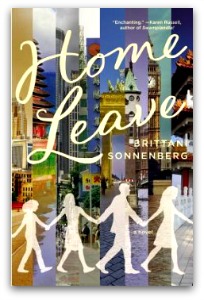
Home_Leave_coverPerhaps I was attracted to this book because the story Sonnenberg tells, about a globetrotting family, reminds me of my own. As some of you may know, I grew up on a boat and spent most of my life before high school outside the US—we were seven years in the Caribbean and two in the South Pacific.

But if it’s my story, it’s also Sonnenberg’s. She spent her childhood alternating between her native US and the UK, Germany, China, and Singapore, and, like many of us TCKs, has opted to become a “chronic expat” in her adulthood. She has worked as a journalist in Germany, China, and throughout Southeast Asia. (Currently, she resides in Berlin but is also a visiting lecturer in Hong Kong.)

Until Home Leave, Sonnenberg was known primarily for her short stories and NPR commentaries about life in Berlin.

In fact, her novel started as a memoir, but then one of her agents encouraged her to try re-approaching the material through fiction.

There must be more to life than having everything!”—Maurice Sendak

Home Leave concerns an American nuclear family, the Kriegsteins. The parents, Chris and Elise, determine to escape their dreary lives in the US by living and working overseas as expats. As Chris pursues a career at several international companies, their two daughters, Leah and Sophie, learn what it is to feel at home abroad and a stranger “at home” in the US. They revel in their uniqueness, but they also sometimes long for putting down roots and living like kids back home.

Sonnenberg makes a creative decision not to have a single character as the protagonist. Each of the Kriegsteins is a main character, and there are multiple narrators.

But for me, the book did have a star, and that was Leah. Sonnenberg links Leah’s emotional and personal success as a young adult to her peripatetic childhood, delivering in her a multifaceted portrait of a Third Culture Kid to whom other TCKs can relate.

“Home is where one starts from.”—T.S. Eliot

Leah is the elder daughter, and her toddler years abroad insert themselves into her identity almost from the moment when the family moves back to the US for a few years. As Sonnenberg writes:

Even Leah, with eleven-year-old pretensions of grandeur, craved a “next,” though her memories of “before” Atlanta were limited to the backyard in London, fish and chips, and falling blossoms in a British park…Leah grumbled that they always went to the airport to pick people up but never went anywhere themselves.

Her wish is granted when the family departs to Asia, where they begin a tradition of going on home leave back to the United States:

Like Persephone’s annual permitted return to her mother aboveground, by the gods in Olympus, the powers that be at Chris’s company will grant the Kriegstein women “home leave” once a year, each summer, when they will stay with friends and relatives, the flights covered by the company. In September they will be forced to leave again, back to China. This habit of home leave will cement Atlanta as “home” in their minds, since they always fly back to the Atlanta airport.

Of course, the price to pay for home leave is a complicated definition of where “home” is. As Sonnenberg writes:

When the Kriegsteins leave Atlanta for Shanghai in 1992…they are desperate to be overseas again. After three months in Shanghai, they will be desperate to return home.

And once Leah is an adult, she faces the classic Adult Third Culture Kid dilemma—how to answer the unanswerable: “Where’s home?” Speaking for myself, I never seem to answer it the same way twice in a row!

But what if one must re-start from tragedy?

There is a further twist to the Kriegsteins’ story, which is that Leah’s younger sister, Sophie, dies unexpectedly in their teen years—another parallel to Sonnenberg’s own life (she lost her own sister, Blair).

If you haven’t read the book yet, please note: to tell you about Sophie’s death is not a spoiler. Her death is referred to in the book before it happens, and at one point, her ghost actually narrates the story.

Now, Leah’s strongest relationship is with Sophie—something any TCK out there will understand. As children in foreign places, Leah and Sophie are sometimes each other’s only playmate. As preteens, they look out for each other in Shanghai and share a conspiracy to run away back to Atlanta—a plan only foiled when airport staff won’t accept their father’s credit card without their dad present.

Not surprisingly, Sophie’s death breaks the teenaged Leah, influencing how she perceives her place in the world and reality for years afterward:

Was Sophie’s death a foregone conclusion in any geography, a heart failure built into her system that would have struck her down on any continent? Later, the doctors would say, “There was nothing you could have done. Undetectable heart conditions are just that: undetectable. You mustn’t blame yourselves.” But because the death will happen in Singapore, its occurrence will be unimaginable anywhere else. Thus, in the parallel (irrational) universe, where they stay in Atlanta, where the good years never end, Sophie never dies.

Likewise, Sophie’s abandonment of Leah comes to affect her definition of “home”:

Years later, as an adult, when asked where she is from, Leah will always say “Atlanta,” as if we come from our joy, as if, aside from their goodness, there was anything to say about the good years.

Living in not-so-splendid isolation

The late, great David Pollock, a recognized authority on TCKs, once wrote*:

The TCK frequently builds relationships to all of the cultures, while not having full ownership in any. Although elements from each culture may be assimilated into the TCK’s life experience, the sense of belonging is in relationship to others of similar background.

Sonnenberg gives us a sense of the disjointedness of the TCK upbringing, and the many identity issues this results in, by having each chapter of Home Leave read like its own short story, with its own narrator. Thus we go from Elise delivering an electric first-person narration of how she coped with her daughter’s death, to therapist appointments written like scenes in a play, to a first-person-plural foray into describing how a group of young TCK women experience university.

Although this style can be jarring for the reader—the book you pick up in the afternoon doesn’t feel like the same book you put down in the morning—taken as a whole, Home Leave feels as fragmented as a life abroad sometimes feels.

Most importantly of all, Sonnenberg’s book does not shy away from the irony of the TCK experience, which is that although a family may travel abroad to broaden its horizons, none of its members ends up having any long-standing relationships except with each other. And, in the case of the family she depicts in Home Leave, even those relationships are uncertain. As the novel’s action unfolds, the older Kriegsteins are shown to be deeply flawed people whose naivety toward the world, and indifference to the needs of their own children, is sometimes astounding.

Home Leave left me feeling sorry for the Kriegsteins: they appear to have been impoverished by their life abroad, not enriched. Throughout the story, I kept wishing they might form a real connection to the places they inhabit and the people they encounter. But, except for the touching scene when Elise is pregnant in Germany, Chris’s ambitions and their own dysfunction buffers them from opportunities to create authentic bonds.

The sections about Shanghai seemed particularly sad, though perhaps that’s only because we see the city partially through the lens of an awkward, pubescent Leah.

But, although not all TCKs will find that the Kriegsteins’ experiences are close to their own, Home Leave is a gem of story suitable for anyone with international experience. And the quality of Sonnenberg’s writing is such that I’m really looking forward to seeing what she produces next.

* * *

Now for a parting thought for my fellow TCKs, some of whom may be feeling rather wistful after reading this review:

Home life is no more natural to us than a cage is natural to a cockatoo.

—George Bernard Shaw

Till next month!

*Third Culture Kids: Growing Up Among Worlds, by David Pollock and Ruth Ven Reken (2009, rev. 2010).

* * *

Thanks, Beth! I note that the New York Times reviewer of Home Leave concluded that in putting Leah at the book’s emotional core, not her parents, Sonnenberg has opened the door for the next generation of international creatives, no mean feat! Readers, any thoughts or responses?

Beth Green is an American writer and English teacher living in Prague, Czech Republic. She grew up on a sailboat and, though now a landlubber, continues to lead a peripatetic life, having lived in Asia as well as Europe. Her personal Web site is Beth Green Writes, and she is about to launch a new site called Everyday Travel Stories. To keep in touch with her in between columns, try following her on Facebook and Twitter. She’s a social media nut!

STAY TUNED for next week’s fab posts!

If you enjoyed this post, we invite you to register for The Displaced Dispatch, a round up of weekly posts from The Displaced Nation, with Alice nominations, exclusive book giveaways and other extras. Register for The Displaced Dispatch by clicking here!

Related posts:
EXPAT ART AS THERAPY: Works that capture precious memories of life in other countries

ExpatArtasTherapy_Principle1As explained in my introductory post to this series, the Swiss-British philosopher (and Adult Third Culture Kid) Alain de Botton argues that art of all kinds can be a form of therapy, providing powerful solutions to many of life’s dilemmas.

But is that also true of expat works? Does our art benefit humanity more broadly, or are we creating things—memoirs, novels, films, dance and stage performances, social enterprises—that will only ever speak to people like ourselves: what fellow global soul Pico Iyer has called the great floating tribe of people “living in countries not their own”? (We currently number around 230 million, or just over 3 percent of the world’s population.)

SEND IN THE CLOUDS: "London from Hampstead Heath," by John Constable (British Museum)

SEND IN THE CLOUDS: “London from Hampstead Heath,” by John Constable (British Museum). Photo credit: John Constable, via Wikimedia Commons.

In his “Art as Therapy” lecture, de Botton specifies 6 ways art can answer human needs.

The remainder of this series will look at whether, and to what extent, these observations apply to the works of international creatives, beginning with…

Principle #1: Art can compensate for the fact that we have bad memories.
De Botton cites John Constable and his paintings of clouds above Hampstead Heath as an example of how an artist can sometimes capture something significant yet fragile they have experienced and don’t want to forget.

Will the John Constables among us please stand up? Seriously, it strikes me that we international creatives are well positioned to preserve the memories of the daily wonders we’ve encountered in far-flung parts of the world, our knowledge of which accrues over time. (Not for us the Wonders of the World, when there are so many intrepid world travelers around, eager to conquer them.)

Back in the days when I lived first in England and then in Japan, I always felt like the poor cousin of the anthropologist—I wasn’t an area specialist but that left me free to approach life with an Alice-like curiosity, never quite losing the sensation of having fallen through the rabbit hole. And to convey that to others…

But let’s look at some examples, shall we? Each of the visuals below is inspired by or belongs to the work of an international creative that has featured on this site in some way. I selected these four individuals because of their ability to conjure up an image of something rather precious within their new landscape—the expat equivalent of a dramatically shaped cloud. And, as de Botton has been invited to do at several museums, I’ve added post-it notes describing the therapeutic effects I experienced.

#1: Parabéns: We’re All Mad Here

Parabens

Photo credit: Marbela via Flickr (CC BY-SA 2.0)

OBJECT LABEL: Parabéns: We’re All Mad Here, inspired by Megan Farrell (aka Maggie Foxhole) and her book, American Exbrat in São Paulo.
ML’S POST-IT: I have never been to Brazil, but reading Farrell’s step-by-step guide for foreigners who are living (or planning to live) in São Paulo piqued my curiosity. I particularly enjoyed her vivid account of the Brazilian birthday party. What a palava! Far beyond my wildest imaginings. But what is even more curious to me is the Sweet Table, sitting in splendid isolation until the very end of the festivities. According to Farrell:

“The design of the Sweet Table is on the same level of importance for the birthday party as is the set design for a Broadway performance. It consists of hundreds of sweets, strategically placed around the other decorations. But most importantly, NO ONE TOUCHES the Sweet Table until the birthday candles have been blown out at the end of the party. No one. An interesting objective when you have anywhere from thirty to fifty children running around wild and free.”

I rather like the thought of deprivation in the midst of so much decadence: does that make the brigadeiro, when you finally get one, taste even sweeter?
FURTHER READING: Our interview with Megan Farrell, by Andy Martin: Why exbrats in São Paulo need their own book to appreciate life in Brazil’s largest city.

#2: Are Acacia Trees Humans in Disguise?

Acacia Trees

Photo credit: Gezira Sporting Club, by Jorge Láscar via Flickr (CC BY 2.0).

OBJECT LABEL: Are Acacia Trees Humans in Disguise?, inspired by Alice Award nominee Kathleen Saville‘s description of these trees in Zamalek, Gezira Island (Cairo, Egypt) in a post for her personal blog.
ML’S POST-IT: The thought of living in Egypt scares me, and I’ve been avoiding most trees ever since Hurricane Sandy. But after reading Saville’s description of Egyptian acacias—

I see folds and twists in the trunks like nothing I have ever seen in another tree. Each tree looks like a long thin body or leg covered with support hose. It’s odd because the appearance is almost human like.

—I feel calmer. Might I have a tree-hugging future?
FURTHER READING: Saville’s blog, Water Meditations, focusing on her water travels.

#3: Elephant Road Trip

Elephant Road Trip
OBJECT LABEL: Elephant Road Trip, inspired by Ruth Hartley and her novel about Africa, The Shaping of Water (Hartley grew up in that part of the world).
ML’S POST-IT: Hartley’s novel begins with the construction of the Kariba Dam, one of the largest dams in the world, over the Zambezi, the fourth-longest river in Africa, flowing into the Indian Ocean. As much as I enjoyed Hartley’s book, I could never quite wrap my head around the scale of what she describes, whether talking about the dam, a massively ambitious project, or about the problems Africa faces as it attempts to shake off the colonial yoke. Perhaps that’s why I took comfort in Hartley’s description of elephants serving as the continent’s original bulldozers:

The roads over the escarpment follow for the main part the old migratory routes taken year after year for millennia by elephants. Elephants, who for all those thousands of years would roam, not just around Zimbabwe, or just around Kenya, but all the way up sub-Saharan Africa from south to north and back again. Now human governments have decreed that elephants must obey human laws and stay within the bounds of national boundaries drawn by straight-edged rulers on maps. In the time before colonization, a mere 150 years ago, elephants travelled where they always travelled, and they walked across mountains with consummate skill and ease, always finding the most direct routes through the least difficult of the passes.

In the midst of a man-against-nature, man-against-man story, I found it a restorative to imagine these pre-colonial times when the elephant, such a magnificent beast, could be relied on to forge trails through the dense brush and trees.
FURTHER READING: Coming soon: our interview with Ruth Hartley about her book.

#4: Shanghai Mix

Shanghai Mix

Photo credit: Rachel Kanev.

OBJECT LABEL: Shanghai Mix, consisting of a photo taken by globe drifter Rachel Kanev, which she chose to feature in her iinterview with James King for our site’s “A Picture Says…” column.
ML’S POST-IT: Rachel has captured a memory of an experience I’ve had several times myself but had nearly forgotten: namely, what it’s like actually to witness Asian economic development rather than pontificate about it. As Rachel puts it in her chat with James:

In that fleeting instant, one can see Shanghai’s varied transportation, high-rise buildings and red lanterns, as well as Kate Winslet—that curious amalgamation of Western modernity and Chinese traditionalism that is everywhere around you in the city.

Perhaps because she snapped the photo just as the sun was setting, it fills me with sweet nostalgia. (I’m not remembering the smog, for a change…)
FURTHER READING: Rachel Kanev’s blog, Globe Drifting

* * *

So, readers, what do you think of the above “exhibition” of works that touch on expat experiences and emotions. Did you find it therapeutic? And are there other expat works you would recommend for this reason? Do tell in the comments.

STAY TUNED for next week’s fab posts.

If you enjoyed this post, we invite you to register for The Displaced Dispatch, a round up of weekly posts from The Displaced Nation, with Alice nominations, book giveaways, and other extras. Register for The Displaced Dispatch by clicking here!

Related posts:

TCK TALENT: Alaine Handa’s fringe fest dance performance immortalized on the big screen

One year later (August 2014), Alaine Handa finds herself dancing in Spain. (Photo credit: Alaine Handa)

One year after her Edinburgh Fringe adventure, Alaine Handa finds herself in the land of flamenco: Valencia, Spain to be precise. (Photo credit: Eveline Chang, July 2014)

Elizabeth (Lisa) Liang started up this column in summer 2013 with a two-part conversation with today’s guest, fellow TCK performing artist Alaine Handa. By the end, I for one had come to believe in the truth of Martha Graham’s assertion: “The body says what words cannot.”

—ML Awanohara

Welcome back, readers! It’s a pleasure to have choreographer/dancer and adult third culture kid Alaine Handa back with us at the Displaced Nation. As ML says, Alaine was my very first interviewee when this column made its debut last year.

I am circling back to Alaine to see what happened with her dance performance at the Edinburgh Fringe and also because, rumor has it, one of the performers has made a short documentary about this artistic adventure.

Dance and film: that’s quite a pas de deux!

* * *

Welcome back, Alaine! When we spoke to you last year you were about to premiere your newest show, Habitat, at the Edinburgh Festival Fringe. The piece “shows how different people from different backgrounds change the way they behave around others and when they are alone.” How was it received at the fest?
The Fringe is the largest arts festival in the world, so we worked very hard to get the word out about our production. We blasted out press releases, distributed physical flyers everywhere (and befriended some local shopkeepers!), and performed excerpts at the venue. All of these promotional efforts starting paying off in audience numbers as the festival progressed. The feedback from audience members was mostly positive—the stories portrayed on stage were relatable. Our negative feedback was that the performance should be longer! I guess that isn’t really a bad thing: to have the audience wanting to see more.

As I recall, the members of your multicultural ensemble lived in different countries during rehearsals, so you relied on Skype, YouTube, and email a lot. What was it like to finally rehearse and perform the piece together at Edinburgh?
I rented a studio from Dance Base in Edinburgh a week before we opened for intensive rehearsals. We also lived together for the duration of the festival run so got more comfortable with each other. The rehearsal process through the 2-D medium of video was frustrating, to be quite honest. The time difference of 12 hours between New York and Singapore meant that feedback via email would be received hours later. The rare moments when we Skyped during rehearsal, we would run into problems with connectivity. I rehearsed weekly with another dancer based in Singapore and videotaped everything to send to the other dancers in New York. By the time we came together physically, it was a dream come true but also a whirlwind. We had to fit together all the puzzle pieces and find the missing links. It proved a bit of a challenge.

One of your dancers, Laura Lamp, is also a filmmaker who made a documentary short, Dreaming to Escape, about taking Habitat to Edinburgh while also exploring your philosophical and aesthetic approach to dance. Please tell us what it was like to be the subject of a documentary when you were in the middle of premiering a new work.
Laura partnered with Kevin Tadge, who runs the film company Nesby Darbfield, to make the film. They shot a lot of their material on stage, backstage, in rehearsal, at warm-ups before the performances, during dinners, in taped interviews, and everything in between. I was a bit self-conscious at first, but after a while, I just learnt to ignore the camera like a reality TV star! Upon seeing the short, I realized I should’ve cared a bit more about my appearance during rehearsals!

Where is Dreaming to Escape being screened?
Here’s what Laura reports:

“We hope to take it to documentary and dance film festivals around the world. It would be great if it screens at the Singapore Film Festival later this year. We’ve really only begun to send it out… It’s a bit of a slow process, but we’re excited to share it with everyone.”

Alaine, I understand you have relocated back to Singapore, where you were born and spent your adolescence. What has been the best part, the worst part, and the biggest surprise about living in Singapore again?
Reverse culture shock has been hitting me hard, living back in Southeast Asia. It’s been a little over two years now and I still go through culture shock every single day I am here. Singapore has changed so much in the 2000s. I barely recognized the country when I returned. The biggest surprise is how expensive it’s gotten to live here. The cost of living has gone up tremendously!

I know one of the things you’ve been doing in Singapore is teaching dance. Please tell us where prospective students can find your classes.
Yes, I’ve been teaching at multiple locations around the island. The best way to learn more is to join my mailing list by sending me an email at ahdancecompany@gmail.com and/or join my Facebook group.

Thanks, Alaine! Readers, here is a tiny taste of what you might see in Laura Lamp’s short documentary, the trailer created last year for Habitat:

Questions or comments for Alaine? Be sure to leave them in the comments section!

STAY TUNED for Thursday’s fab post.

If you enjoyed this post, we invite you to register for The Displaced Dispatch, a round up of weekly posts from The Displaced Nation, with seasonal recipes, book giveaways and other extras. Register for The Displaced Dispatch by clicking here!

Related posts:

For this global nomad, botany buff and blossoming novelist, a picture says…

Cinda 1000 Words CollageWelcome to our monthly series “A picture says…”, created to celebrate expats and other global residents for whom photography is a creative outlet. The series host is English expat, blogger, writer, world traveler and photography enthusiast James King, who thinks of a camera as a mirror with memory. If you like what you see here, be sure to check out his blog, Jamoroki.

My guest this month is Cinda MacKinnon, an American who grew up overseas and is the author of an award-winning novel set in one of her former homes, Colombia. Called A Place in the World, the book was featured almost exactly a year ago on the Displaced Nation.

Cinda shoots mainly “macro” (extremely close up) pictures, a habit she developed because of her interest in nature and plants—especially wildflowers. A writer, former university lecturer, and environmental scientist, Cinda is trained in geology and has also nurtured a life-long passion for botany. It’s telling that the protagonist of her novel is a botanist!

Cinda enjoys hunting down rare plants and taking photos that show their minute details, such as the number of anthers (the part of the stamen that contains pollen), so that botanists will be able to identify them.

She now lives in northern California, where the California Native Plant Society has become a fan of her photos and sometimes asks her to supply a few of them for their newsletters and exhibits. Who knew?

* * *

Hi, Cinda. Welcome back to the Displaced Nation. I’m pleased to have the opportunity to discuss your photo-travel experiences. When I first started following your blog, I assumed you were a writer—but then was delighted to discover that you’ve also taken some excellent photos. I know you’ve already been over some of this ground in your interview with ML Awanohara, but can you tell me where you were born and when you spread your wings to start traveling on your own?
I was born on an Air Force base in Louisiana, but lived there only a week. My dad was already stationed in Greece, and my mother followed him as soon as she was able to travel. I lived in Greece and Germany as a pre-schooler and then in Colombia when my father changed his job and began working as a military attaché for U.S. embassies. Having fallen in love with Latin America, my parents retired in Costa Rica when I was in seventh grade so, happily, I was able to stay in that part of the world through high school…and beyond. After college in the United States, I moved to New Zealand with my husband (back then, they told us we had to get married to immigrate together!). We came to California when he finished his PhD. And here we’ve been ever since, although I view that move to California—I was in my thirties—as the first time I actually lived in the States. Even though my passport said I was a citizen, it has taken me a while to feel like I belong here.

You have been an expat almost since birth—what is known as a Third Culture Kid. Would you say that your wanderlust comes from your nomadic upbringing?
Once I grew up, I wanted to see more of Latin America and as a young family we could do that cheaply. Next I visited Europe to see some of the places I’d lived with my parents, but like so many others ended up falling in love with Italy and France. I think language had as much to do with it as the culture and people. Growing up speaking Spanish, it was fairly easy for me to be understood in Italian, and I found French so beautiful that I have become a perennial student. Recently, my husband and I explored Central Europe along the Danube River, from southern Germany to Budapest. That splendid trip provided fodder for at least five blog posts.

Mais oui. I have always loved the French language, too. Where exactly do you live in northern California?
We live in a semi-rural area nestled in the hills and yet are only 30 minutes from San Francisco—an unusual situation due to geography, which insures our immediate surroundings will never be developed.

“Are not flowers the stars of the earth…”—A.J. Balfour 

And now let’s have a look at a few of your shots that capture favorite memories. Can you tell us the story behind each of them, what makes them so special?
This is one of the first wildflowers I photographed and is still a great favorite of mine: a shooting star, or Dodecatheon clevelandii:

Dodecatheon clevelandii, aka shooting star. Photo credit: Cinda MacKinnonn.

Dodecatheon clevelandii, aka shooting star. Photo credit: Cinda MacKinnonn.

The next photo is of the odd-looking Tiburon Lily, Calochortus tiburonensis, which blooms only a few weeks a year and is quite rare; it evolved on serpentine soils, which gives rise to unusual plants that can tolerate this somewhat toxic chemistry. Indeed, you can find this little lily in only one place: on Ring Mountain (a single hill really), north of San Francisco:

Calochortus tiburonensis. Photo credit: Cinda MacKinnon.

Calochortus tiburonensis, found only on Ring Mountain. Photo credit: Cinda MacKinnon.


Another peculiar wildflower is C. tolmiei, nicknamed “pussy ears”. It is challenging to capture the tiny hairs and other features as it is barely 2.5 cm across—plus it tends to grow on coastal slopes where the wind wreaks havoc with your focus!
Calochortus tolmiei, aka pussy ears. Photo credit: Cinda MacKinnon.

Calochortus tolmiei, aka pussy ears. Photo credit: Cinda MacKinnon.


I’ve taken quite a few photos of wild flowers without having a clue what their names were. I’m getting a real lesson in flora here. Thank you, Cinda. I can see why they call botany the “science of beauty.”

“I perhaps owe having become a painter to flowers.”—Claude Monet

I know you have photos of scenery, too, and these next four, I believe, have a special significance for you.
I mentioned I am a bit of a Francophile and a favorite region of mine is the Dordogne Valley. This is a place with history, from Richard the Lionheart to Joan of Arc; pre-history (the Cro-Magnon cave paintings); and beauty. I talked my husband into renting a canoe and we paddled down the Dordogne River, past castles, ancient bridges and towns. This photo with the medieval Château de Castelnaud in the background is a memento of that glorious day:

Canoeing on the Dordogne in glorious weather. Photo credit: Cinda MacKinnon.

Canoe with a view, la rivière Dordogne. Photo credit: Cinda MacKinnon.


Next, I’d like to show you a photo of a very different place, in California. Actually, I can give you a choice of two: would you rather see the California desert before a rain storm or one of Arvin, a city in southern California? Arvin is interesting because it’s set in hilly grassland that half of the year is dry and dormant but explodes into wildflowers in the spring (if the winter is wet). What’s your pleasure?

Can I have both?
Mais oui! Here’s the Sierras:

The stormy Sierras. Photo credit: Cinda MacKinnon.

The stormy Sierras. Photo credit: Cinda MacKinnon.


And now for Arvin in all of its glory:
A profusion of wildflowers in Arvin. Photo credit: Cinda MacKinnon.

A profusion of wildflowers in Arvin. Photo credit: Cinda MacKinnon.

Both photos are so lovely! That’s why I decided to give you this bonus. But if I really was forced to choose, the desert before the rain is so dramatic. I think you should turn it into a photo-painting using Topaz Adjust or Impression. What’s your last shot?
Another California landscape I’m fond of is Monterey County. When I was a teenager, I read all of John Steinbeck’s novels, never dreaming I would live in California much less end up working in the Salinas Valley as a hydro-geologist for several years. On arriving I felt as though I’d been there before. The town of Monterey itself has become a tourist attraction, but if you go out into the countryside there are still scenes like this one, with the adobe house on the hill:

An enchanted realm near Monterey, California. Photo credit: Cinda MacKinnon.

An enchanted realm near Monterey, California. Photo credit: Cinda MacKinnon.


Please God, don’t let them turn it into another orchard or development!

Here here! I noticed you haven’t included any photos of people. Do you feel reserved about taking photos of strangers?
Yes , and I don’t like portraits to look overly posed. So first I try to take photos surreptitiously. If that’s not possible, I try to be respectful by asking if it’s okay– preferably in their own language. No matter where I travel, I learn some basic phrases in the language of the country (Hungarian was the hardest so far!), but I’ve found that “okay?” seems to be a universal word.

You are right: “okay” seems to have been adopted by most of the planet, though it’s origins are unclear. One theory is that it was derived from a shorthand way foreign-born Americans in the 1830s developed for writing “all correct”—only they’d spelled it “korrect”!

“I will touch a hundred flowers/And not pick one.”–Edna St. Vincent Millay

What motivates you to record what you see through photographs? Is it the ability to capture something unique, which will never be seen again?
Hmmm… I barely think of myself as a photographer; it is one of several hobbies! But certainly, what you say is true of fleeting blooms, and photos do help to preserve memories of wonderful places, whose beauty could vanish. But I think what really led me to photography was my interest in plant nomenclature. I like to block out weeks of time every year to hike in hills, valleys and deserts and search for rare blooms. It is a bit of a treasure hunt, and my photos of evidence of the riches I uncover.

Your modesty is charming, but I think you definitely have an artist’s eye and many of your photographs could be transformed into beautiful pictures with a little more post processing. Which leads me to the technical stuff. Some of our readers may want to know what kind of camera and lenses you use, and how you handle post-processing.
I use a Canon Digital Rebel XT SLR with a macro lens when I am looking for wildflowers in the spring. But for traveling I’ve started to just put my trusty Canon PowerShot in my pocket. I usually use Photoshop for post-processing, but as you’ve pointed out, I’m not adept at all the advanced features. I use “auto” first, and that is generally all I need, except I often crop a shot and, if needed, adjust the lightning or clean up stray blemishes.

Finally, do you have any advice for wannabe photographers who are traveling or living abroad?
It is not the equipment—it is in the eye. Some of my better pictures were taken with a point and shoot. I asked a professional photographer friend if he thought I should buy some filters or another lens, and he said his best shots are sometimes with his cell phone! I guess the motto is “be prepared” for something that catches your eye—be ready for the special moment when the light is right. Make sure your subject doesn’t appear to have an antenna sprouting out of his head at that moment. Don’t use the “sharpen” feature for portraits as it accentuates flaws (unless you want that for character) and can give a severe look. And don’t make your friends look at 200 mediocre photos of your vacation—please cull out the unappealing or out-of-focus ones! (My rule of thumb for talks is 1 to 1.5 slides per minute—that’s 60 to 90 per hour—nobody wants to see more than that.)

Very succinct and good advice, Cinda—right up my street. I’d like to thank you for taking the time to tell your fascinating story in this interview.

* * *

front-cover-place-in-worldReaders, what do you make of Cinda’s close-up photos of exotic plants and her photography advice? I find it curious that she writes about people looking for their place in the world, yet is obsessed with the kinds of flowers that bloom where they are planted. As Georgia O’Keefe once put it:

“When you take a flower in your hand and really look at it, it’s your world for the moment.”

Please leave any questions or comments for Cinda in the comments!

Meanwhile, I suggest that you check out Cinda’s Pinterest boards for more of her botany photos. You can also get to know her better by visiting her author site and blog, and liking her Facebook page. And don’t forget to read her book if you haven’t done so yet, many glowing reviews for which can be found here.

(If you are a photographer and would like to be interviewed by James for this series, please send your information to ml@thedisplacednation.com.)

STAY TUNED for next week’s fab posts!

If you enjoyed this post, we invite you to register for The Displaced Dispatch, a round up of weekly posts from The Displaced Nation, with Alice nominees, exclusive book giveaways and other extras. Register for The Displaced Dispatch by clicking here!

Related posts: