The Displaced Nation

A home for international creatives

Tag Archives: ATCK

BOOKLUST, WANDERLUST: Meet me in Atlantis—Mark Adams’ globetrotting search of the ultimate ancient mystery

Booklust Wanderlust Collage

Left: Oleh Slobodeniuk (CC BY-NC-SA 4.0); right: Beth Green (her own photo).

Attention displaced bookworms! This month our book review columnist, Beth Green, an American expat in Prague (she is also an Adult Third Culture Kid), is exploring a new book in one of her favorite genres, mystery—only this time the mystery has to do with an ancient place and travel.

—ML Awanohara

Hello again, Displaced Nationers!

Here in Europe, the spring weather has me in a mood for getting outdoors and exploring—but, alas, I’ve been inside submerged in this month’s book pick, Meet Me in Atlantis: My Obsessive Quest to Find the Sunken City, by Mark Adams, which has just the right ingredients to appeal to international creatives. After all, didn’t we all venture abroad looking to solve at least one mystery and/or locate a utopian society?

Adams, who spent his career editing adventure and travel magazines, says he thrives on combining “travel writing with deep research and reporting.” (He is the bestselling author of two previous nonfiction books: Turn Right at Machu Picchu and Mr. America, a biography of “muscular millionaire” Bernarr Macfadden.)

Meet Me in Atlantis came out in March, and, yes, Adams does take a deep dive into uncovering the real story behind this fabled sunken city! As he puts it:

…this is a detective story, one that starts in ancient Greece and follows a twisting path through (to list just a few locations) Pharaonic Egypt, Nazi Germany, and contemporary Saint Paul, Minnesota.

Sinking one’s teeth into the Atlantis story

The mystery Adams is trying to solve isn’t so much a “who” or a “where” as a “why” and a “how”. Why do people keep trying to find the legendary city of Atlantis? And how did it get lost, anyway?

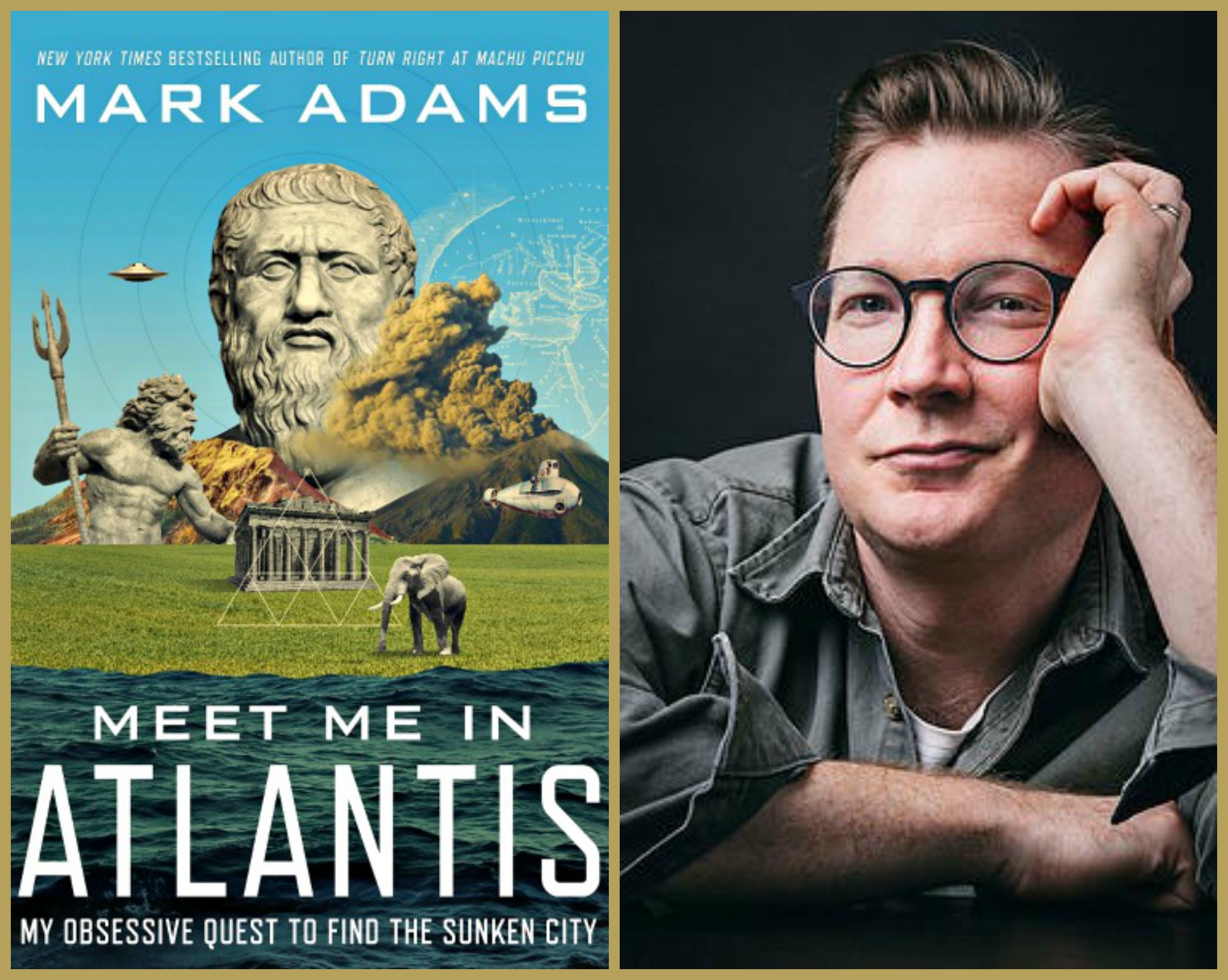
Book cover; author photo: Joshua Scott.

Book cover; author photo: Joshua Scott.

Adams starts off, as any good detective would, at the scene of the crime—two dialogues written by Plato more than 2,000 years ago, Timaeus and Critias. According to Plato, Atlantis represents the antagonist naval power that besieges “Ancient Athens”—the pseudo-historic embodiment of Plato’s ideal state. Athens is able to repel the Atlantean attack, thereby proving its superiority.

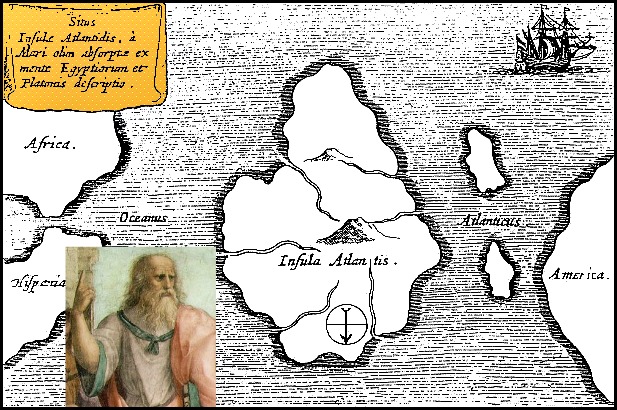
Inset: Raphael's Plato.

German scholar Athanasium Kircher’s map of Atlantis, in the middle of the Atlantic Ocean (south is at top). From Mundus Subterraneus. 1669. Inset: Raphael’s Plato (detail). Both photos licensed under Public Domain via Wikimedia Commons.

Plato’s descriptions of the society—lost even when he wrote about it—serve as a textual treasure map. Among the features mentioned are “the rings, the earthquakes, the elephants, the location outside the Pillars of Heracles.”

It’s these seemingly concrete details that have enticed a whole group of people, known as Atlantologists, to search for the ruins of the island nation, which, as legend has it, fell out of favor with the gods and submerged into the Atlantic Ocean. And it’s the absence of other sources—every single clue comes from Plato—that makes the search so hard, some would say infuriating.

Meet today’s Atlantis sleuthhounds

Atlantologists (doesn’t exactly trip off the tongue!) are more numerous than I’d realized. Adams’ interviewees range from historians, archeologists and geologists whose work loosely concerns Atlantis, to laypeople who find themselves caught up in the mystery of the lost city.

Now, I’m the kind of person who loves to seek out obscure places that catch my attention for some reason. Once when I was living as an expat in China, I spent a few days with my partner without a map or Internet access trying to find packed-mud forts built hundreds of years ago by Hakka clans in the Guangdong countryside. Another time, in Inner Mongolia, we took a bus 10 hours across the desert each way to find a specific grove of poplar trees my partner had once heard about at a dinner party three years before. (How we even managed to remember the trees after the beer consumed at the dinner is another mystery!)

But I digress. Returning to Adams’ book: for me, the most entertaining aspect are the people. I appreciated his light-hearted touch when presenting the cast of modern-day characters who continue searching for Atlantis.

For instance, he describes one of the historians he interviews as follows:

Coleman looked like a Broadway casting director’s idea of a state librarian—tall, white-haired, tie askew. His office was as comically perfect as a stage set, too: precarious piles of ancient hardbound books, sepia maps of Minnesota on the walls…

Another Atlantologist is so intent on explaining data, he misses Adams’ repeated requests to use the restroom. Several characters he interviews don’t want to be known as Atlantologists at all—it’s regarded as pseudoscience by many academics.

“The great Egyptian age is but a remnant of the Atlantian culture…” (from the song “Atlantis,” by Donovan Leitch)

But wait, Adams isn’t writing a spoof but an exhaustive book on the Atantis myth. Light-hearted he may be, but it soon becomes clear he wants his readers to care as much as he does about the whether or not Atlantis existed. He includes sections on Pythagoras, on warring peoples, on ancient catastrophes, and on the question of whether an ancient scribe could have transposed numbers. And, though it would be satisfying to suddenly debunk the Atlantis myth as a series of typos or an allegory using math as symbols, Adams remains skeptical. He also doesn’t give much credence to the new theories about Atlantis that have cropped up in the last 10 years (more than in the past 2,400 years thanks to tools like GoogleEarth).

Adams wouldn’t approve, but my personal favorite is the one that was propagated by a 19th-century ex-U.S. congressman from Minnesota. Sometimes referred to as the “father of the 19th-century Atlantis revival,” Ignatious Donnelly published a pseudo-scientific book Atlantis: The Antediluvian World forwarding the idea that the existence of Atlantis would explain supposed similarities between ancient civilizations of the Old and New Worlds. As Adams recounts:

Pyramids stretching from Egypt to Peru to India to Mesoamerica indisputably share an Atlantean source despite their having been built in hugely different styles over thousands of years. The use of bronze, mummification of the dead similarities of language—Donnelly assembled every available scrap of evidence to support his diffusionist idea of a benevolent ur-Atlantis spreading its wisdom to the far corners of the globe.

Adams has no time for a theory that says all the sophistication found in the world descends from a single Mother Culture. And of course he is right. Donnelly must have been a bit of a kook, and a condescending one at that.

Getting that sinking feeling…this mystery may never be solved!

Like all good detectives, Adams sticks close to the original source, Plato, and tries to make sense of the 2,000-year-old evidence.

After a conversation particularly dense with particulars and logical arguments, one interviewee brushes off one of Adams’ questions with a smile. “I think Plato maybe made a joke,” he tells him.

But Adams doesn’t agree. He sets out to visit Tony O’Connell, an Irishman who runs a project called The Atlantipedia. He ends up spending a week with Tony in rural Ireland, during which they narrow down the number of plausible theories about the location of Atlantis to four: southern Spain, Malta, Santorini, or Morocco. Notably, none of them are in the Atlantic Ocean, the original Platonic setting.

In sum Meet me in Atlantis is worth reading not only for its insights on the culture of Atlantology but also for the way Adams weaves philosophy, archeology, recorded history, geology and more into his investigation. I enjoyed the book’s sections on map-making, sea trade and old legends, but the part that really got my imagination going was the discussion of natural disasters. If there was an Atlantis, what happened to it? Was it wiped out by a volcanic explosion? Slammed by a tsunami? Swallowed by an earthquake? Devastated by plague? Warfare? Or, simply, did the society decline until it was no longer known by its former glory? Could Atlantis still be thriving—under another name?

By the end I wanted more. As Adams said in a recent Ask Me Anything (AMA) discussion on Reddit: “The thing about a topic like Atlantis is that you come across so many ‘holy crap’ moments that you can’t fit them all in a book.”

And perhaps that’s the best kind of mystery, the head-scratcher that may never be solved, that always leaves you wanting to search for one more piece of evidence. Adams had that kind of mystery in Manchu Picchu: the structure whose purpose no one can explain. And he has found it again in Atlantis: the kingdom for which we have a description but no physical evidence.

* * *

That’s all for this month, Displaced Nationers! Have you ever read a book that references an obscure site and been inspired to go on a madcap quest to find it? Do tell in the comments!

Beth Green is an American writer and English teacher living in Prague, Czech Republic. She grew up on a sailboat and, though now a landlubber, continues to lead a peripatetic life, having lived in Asia as well as Europe. Her personal Web site is Beth Green Writes, and she is about to launch a new site called Everyday Travel Stories. To keep in touch with her in between columns, try following her on Facebook and Twitter. She’s a social media nut!

STAY TUNED for the next fab post!

If you enjoyed this post, we invite you to register for The Displaced Dispatch, a round up of weekly posts from The Displaced Nation, and much, much more. Register for The Displaced Dispatch by clicking here!

Related posts:

TCK TALENT: Neil Aitken, Computer Gaming Whiz Kid Turned Award-Winning Poet

Neil Aitken Poet

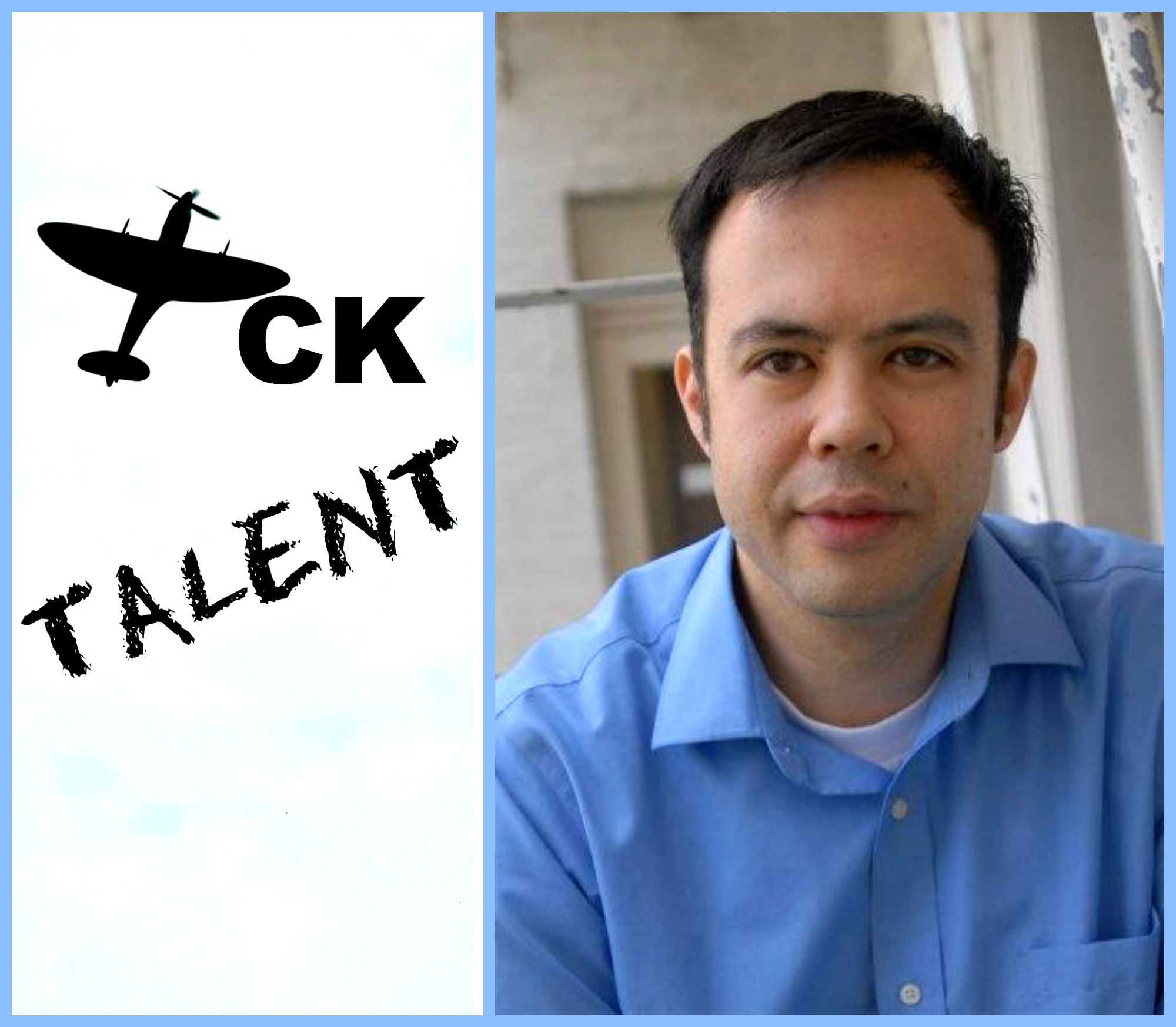
Neil Aitken (photo supplied)

Elizabeth (Lisa) Liang is back with her column featuring interviews with Adult Third Culture Kids (ATCKs) who work in creative fields. Lisa herself is a prime example. A Guatemalan-American of Chinese-Spanish-Irish-French-German-English descent, she has developed her own one-woman show about growing up as a TCK, called Alien Citizen, which premiered nearly two years ago and is still going strong. In fact, she will soon be taking the production to Valencia, Spain, and Capetown, South Africa!

—ML Awanohara

Welcome back, readers! Today’s interviewee is poet Neil Aitken: winner of the prestigious Philip Levine Prize for Poetry for his book of poems, The Lost Country of Sight and founding editor of Boxcar Poetry Review. Neil and I met at the Mixed Roots Literary & Film Festival in 2009. I am so pleased to have the chance to interview him this month for TCK Talent.

* * *

Welcome to The Displaced Nation, Neil. I understand that you’re a multi-ethnic ATCK like me! Please tell us about your heritage.
My father was born in the Okanogan Valley in British Columbia, Canada, of Scottish and English descent. My mother was born on Hainan Island, south of China, in the midst of the conflict between the Nationalists and the Communists in China. Shortly after her birth, her parents—her father was a high-ranking officer in the Nationalist Army and her mother, the daughter of one of the elite island families—fled to Taiwan to escape the Communists. Despite growing up a world apart, my parents met in the middle, Hawaii, while both attending university there.

Where were you born, and where did you live growing up?
I was born in Vancouver. My father’s bachelor’s degree was in Linguistics & ESL. His first job took us to Dhuhran, Saudi Arabia, where he taught English in the oil universities. But then my mother developed severe asthma due to the extreme heat and dust, and the doctors warned her that if she stayed any longer, she would be putting her life in peril. So she took my younger sister and me (I was four, my sister two-and-half) to Taiwan to live with relatives while my father completed the last nine months of his teaching contract. While in Taiwan, my sister and I forgot all our English, switched completely to Mandarin Chinese, and attended a Chinese-speaking pre-school. When my father finally arrived to pick us up, apparently we were so frustrated in our inability to communicate with him, we refused to speak Chinese until we relearned English. By the time we returned to Canada, we’d made the switch—but lost our Chinese in the process. My father returned to school in Vancouver, concluding that it was too hard to raise a family as an ESL professor. He completed a Masters in Library Science degree at the University of British Columbia and, when I was eight, we moved to North Battleford, Saskatchewan, a small city surrounded by farmland in the northern part of the province. Later we moved to Regina, the province’s capital and a much more vibrant multicultural center, where my father took his dream job as the supervisor over a special book collection focused on local, regional, and family histories of the Central Plains and Prairie Provinces. I completed elementary school and high school there.

“It is dark always, then someone opens a door./Then another. Then another.” —Neil Aitken from “Prodigal”

Fascinating! Did you stay in Canada for college?
No, I moved to Provo, Utah, to attend Brigham Young University, but I took a two-year break from school to serve as a missionary in Taiwan, relearning Mandarin in the process and re-immersing myself in culture, family, and place. When I returned, I completed my studies and then returned to Canada—to Calgary, Alberta. I looked for work for a year and eventually landed a job in Los Angeles.

I understand that just as your background spans two very different cultures, your academic background spans two very different disciplines?
Yes, as an undergraduate I studied Computer Engineering with a minor in Mathematics. I also took a number of graduate courses in Creative Writing. My first job was working in the computer games industry, but after five years, I left programming to pursue an MFA in Creative Writing and then returned to Canada for a year to look for work and to care for my father, who was in rapid decline from ALS. I also spent that year writing and finishing my first book of poetry and then applying to PhD programs. I received a number of excellent offers from all over the US, but in the end chose to return to Los Angeles and pursue a PhD in Literature and Creative Writing at the University of Southern California. I’ve been here in Los Angeles ever since, but now, on the threshold of graduating, am likely to be packing up and moving again to somewhere as yet undetermined.

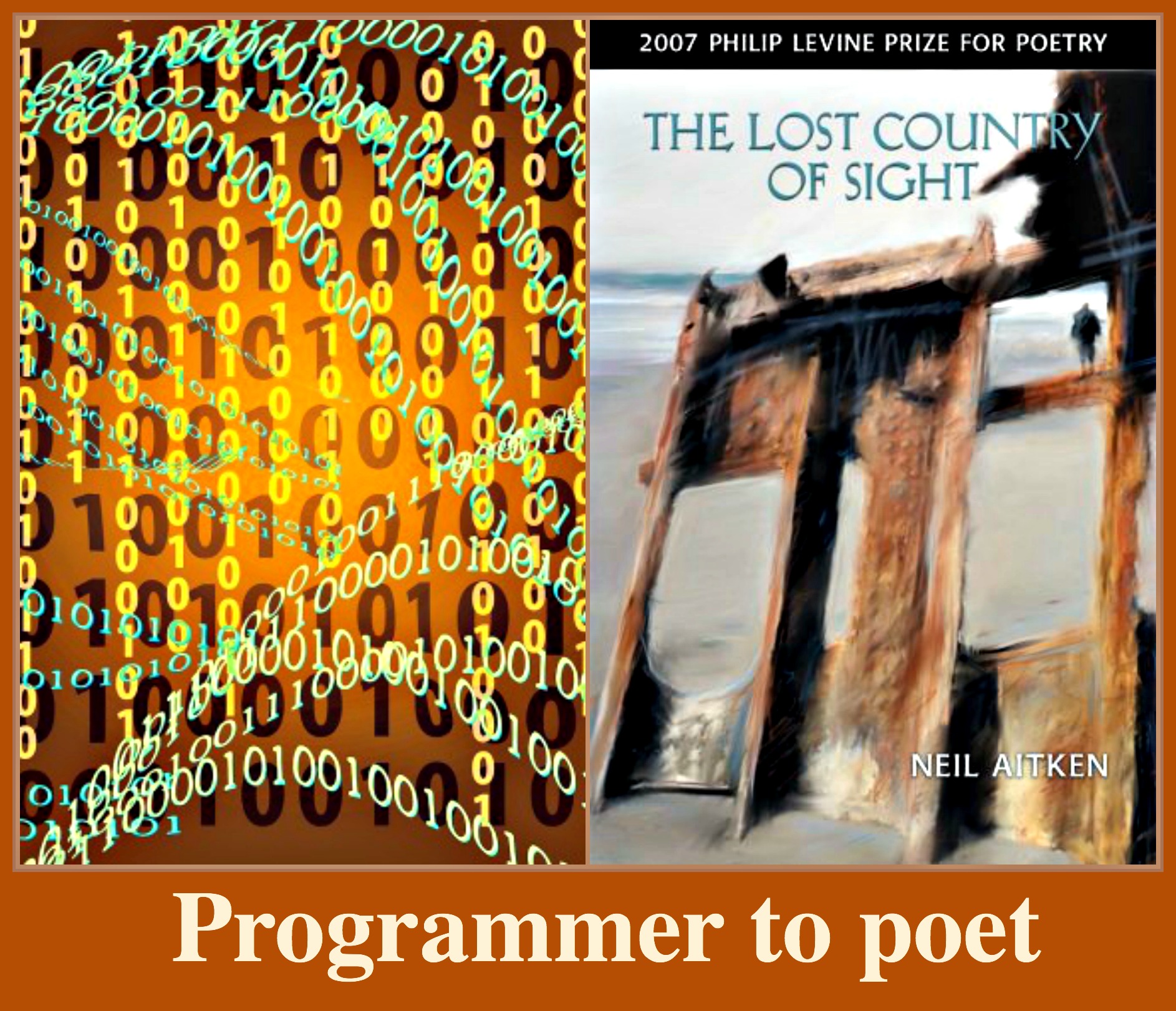
Binary code via Pixabay; cover art.

Binary code via Pixabay; cover art.

What has the transition been like, going from computer programmer to poet?
In truth, I’ve been writing poetry almost as long as I’ve been programming. I started writing poetry in earnest when I was around 10, about the same time my father brought home an IBM PC Jr with GW-BASIC on it. One of my very first original programs was a haiku generator that produced pretty awful haiku. Even as an undergraduate studying computer science, I sought permission to take creative writing classes at the graduate level. For a long time, I thought I could juggle writing poetry with computer programming. Eventually, however, programming lost its luster and I stopped loving the work, despite still being good at what I did. I knew at some point I needed to jump ship—I couldn’t bear the thought of spending my life in a field that no longer held my attention or affection. Working full time as a computer games programmer, I found myself putting in 60-, 70-, 80-, and occasionally 94-hour weeks. It was just too much. It was time to find a way out. At the same time, it was important to me that I avoid going into debt for my poetry degree, so I had to wait for the right offer. All the while, I continued programming and when possible, spent my evenings at open mic poetry venues, listening to all sorts of poets read their works. Eventually, I received a call from UC Riverside offering me a generous full-ride MFA scholarship, which made the transition possible.

“I wake already longing for those whom I soon will leave—” —Neil Aitken, from “Kundiman”

One of the judges for the Philip Levine Prize said that “Traveling Through the Prairies, I Think of My Father’s Voice” struck him as being a “perfectly made poem.” Was your family close?
I have many fond memories of time spent as a family together, whether it was picking through a coal seam at the side of a mountain highway with my father searching for fossils, or gathering together as a family on the eve of my graduation—the photo of which is the only family photo where we’re all smiling naturally, unrehearsed, unburdened by life’s later challenges and sorrows—or just simply lazing around the house at Christmas, listening to my father read Dylan Thomas’ A Child’s Christmas in Wales to us with his usual gusto and dramatic flair.

Where have you been happiest as an adult?
My happiest moments in recent years have been tied to my friends and fellow poets whom I met through Kundiman, an organization dedicated to the creation and cultivation of Asian American literature. The three years I attended the Kundiman Poetry Retreat set in motion lifetime friendships and bonds with people that, to this day, I count as my closest poetry kin—I was unprepared for how deeply and completely I would fall in love with the community, and how this group of Asian American poets would come to be a second family. When I showed up for my first Kundiman retreat in 2005, I was convinced that there had been an error—how had they let me in? What use could they have for a Chinese-Scottish-English Canadian poet who rarely wrote about identity, at least not directly? But on the first day, as we made our introductions in a classroom at the University of Virginia, I soon realized that many of the other participants felt the same way I did. We had all arrived convinced that our lives and our writing were somehow outside of what was expected and permitted—only to discover that what was happening on the front lines of Asian American literature was much more diverse and vibrant, much more compelling and dynamic, much more inclusive than whatever we had been led to believe from the anthologies we’d read and the classes we’d taken. To this day, I love running into a fellow Kundiman and can’t wait to hear about their work and discover what they have to offer to the conversation.

Your Kundiman experience sounds like a quintessentially good TCK experience. In general, do you find that “your people” tend to be other ATCKs, or cross-cultural people, or creative folk?
It varies quite a bit, but generally speaking I’ve found myself most at home with other Asian American writers (especially those I’ve met through Kundiman), other editors of literary journals, and other people who negotiate the fragile yet fertile space between faith, science, and compassion. On a broader level, I find my people are those who share a love of language and literature, whose eyes are on the forgotten spaces and figures of the world, and whose efforts and desires pointed outwards, with the ambition to make more room at the table. I love surrounding myself with people who are building bridges and tearing down arbitrary walls, who are not afraid to speak against the structures of oppression and forgetting, and who challenge themselves to do more and be more than who they were yesterday.

“There is always something that refuses to be contained…” —Neil Aitken in “Encapsulation”

On top of working toward your PhD, you won the DJS Translation Award for your co-translations of poetry from Mandarin to English. How do you feel about your two “native” languages? Do you prefer one to the other?
I love the strange and omnivorous nature of English. English is constantly devouring other languages, incorporating new terms into its lexicon, and expanding with each passing year and succeeding social revolution. In terms of tone, music, and range, very few languages can compete with English. That being said, I also have a big place in my heart for Mandarin Chinese, a language I learned once when I was very young, forgot, then relearned at 19.

What is it like to translate from Chinese into English?
The two languages could not be more different. Chinese is a language traditionally learned by the memorization of classical and literary texts. It relies heavily on allusion, each word and phrase carrying with it a wealth of cultural association and literary reference. It moves not just sonically but also visually, evoking the elements—fire and water, air and earth—and connecting words and ideas that share some common philosophical history. The act of translation is a humbling experience—I’m constantly reminded of how fluid concepts and relationships are between ideas once they are unshackled from one’s mother tongue. And yet, there is great pleasure in it as well. I enjoy puzzles—I enjoy this bit of creative play where the translator searches for a way to create an equivalent experience and gesture in a new language for something that they have encountered in the original. My childhood experiences with Chinese left a deep imprint in my mind that manifests itself now as a type of intuition when it comes to finding the right equivalent phrase or understanding the cultural impact or resonance of the original line. It’s an imperfect intuition, but one that nevertheless guides me through tricky places in the poems and helps me feel still a part of the Chinese culture.

Finally, I’d like to congratulate you on winning of the prestigious Philip Levine Prize for Poetry for The Lost Country of Sight. Is there a particular poem from that collection that expresses your feelings of transience or loneliness or instability—or freedom or curiosity or love of travel—that you are most proud of, and could you share it with us?
In many respects, my entire first book of poetry, The Lost Country of Sight, grapples with these themes and, therefore, it’s actually pretty hard to settle on just one poem. I’m going to suggest two, if I may:

In the Long Dream of Exile

You are counting the dark exit of crows
in the rear view mirror, or from the top of an overpass
looking back into the last flames of cloud.
Your car, steel to the world of flint, rests listless
with its windows wide, the stars slipping in
and settling down for the night.
Now, what you could not leave rides in boxes
heavy with numbers and places you’ve already
turned into poems. There is nothing left
in your pockets, your clothes worn down
to this list of miles taking you out of the known earth.
Outside your open window, the dark repeats
like the wind in late fall, twisting the names
of familiar back roads into a long rope of sighs.
You could lower yourself down with such longing.
It could be a woman or a young girl, the way the light
clings to that body like a sheet of immaculate heat,
invisible to the eye, but something, you are certain,
something that must be on the verge of love.

driving_abstractly

In the Country I Call Home

I have two countries, Cuba and the night.
~ José Marti

There is no Cuba, no other half of night.
No dark woman in her deep robe of grief,
no wooden doors flung open to emptiness. Nothing
of music. No city in flames. All this absent.

In me, there are as many countries as names.
As many versions of the world.

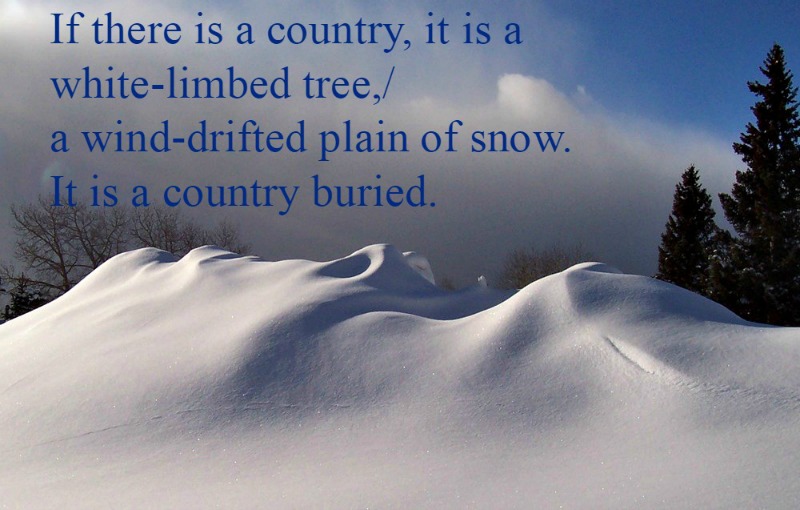
If there is a country, it is a white-limbed tree,
a wind-drifted plain of snow. It is a country buried.
Or a man holding a camera to his eye. Or a silence.

If there is a country, there are two countries.
A double exposure. The other world ghosting the first.
The second full of dark-haired strangers. Ink ground
from charcoal pressed to stone. Hard as raw rice.

If there are two countries, a third always rises.
Life preserver on the waves. A ship without reference.
Anywhere. Everywhere. A nation of one.

If there are three, there must be a fourth.
I will find it in your skin. Hear it resonate in your bones.
A ringing echo. Something of sound. It will be small.
Almost a hut. A thatched roof shack in the wilderness.
A hermitage for two. A boat in a river. Almost a home.

snowdrift

“Wind shapes,” by John Holm via Flickr (CC BY 2.0).

* * *

Thank you, Neil, for these two lyrical offerings. Again, congratulations on your numerous accomplishments in poetry and translation, and best of luck with post-PhD life! Readers, please leave questions or comments for Neil below.

STAY TUNED for more fab posts!

If you enjoyed this post, we invite you to register for The Displaced Dispatch, a round up of weekly posts from The Displaced Nation, and so much more! Register for The Displaced Dispatch by clicking here!

Related posts:

CULTURE SHOCK TOOLBOX: How to be a diva in another culture–by not being one!

Culture Shock Toolbox April 2015 Rossi Columnist H.E. Rybol never saw a culture clash she didn’t want to fix. She calls herself a “transitions enthusiast” and credits her Third Culture Kid upbringing for giving her a head start in that department. That said, H.E. is always looking for new tools to add to her kit, and toward that end has been interviewing other displaced creatives about their culture shock experiences. Today she speaks to Kristen Rossi, a New Yorker who is on a mission to spread the Golden Age of Broadway/jazz throughout Asia. Okay, H.E. and Kristen, time to paint the town and all that jazz!

—ML Awanohara

Hello, Displaced Nationers! Today I am delighted to introduce Kristen Evelyn Rossi to Culture Shock Toolbox readers. Kristen is an American actress, singer and voice over artist based in Southeast Asia. Besides being a talented performer, she is an entrepreneur and, while living in Bangkok, has co-founded two organizations: Broadway Babe, an endeavor to bring Broadway style to the Thai capital, and Musical Theatre for KIDS, which offers Broadway musical and theatre workshops for Asian youth.

I was lucky enough to catch up with Kristen recently and ask her a few questions about her somewhat unusual life of crooning her way around Asia, while also teaching others how to traipse the Broadway boards. I can see from the YouTube videos on her Website that she has racked up many successful performances; but I wanted to know: have there been any cultural flops?

Here’s what she had to say…

* * *

Hi, Kristen, and welcome to the Displaced Nation. Can you tell us which countries you’ve lived in and for how long?

I have lived in London (UK) for just under a year; about seven years in Bangkok, Thailand; Hanoi, Vietnam for the past four months; and I will call Macau home in May.

That is quite a few cultural transitions! You are a singer, so I’m not sure if this is the right question, but did you ever put your foot in your mouth? Any memorable stories?

As an entertainer I meet people from all over the world. One common mistake I make is in judging a guest’s nationality. In particular I find it hard to tel the difference between Japanese and Koreans. Sometimes I can tell the difference and sometimes it is hard, especially when they come in their business suits! Several times I have said, “oh are you from ___” and they will just say “no, we are ____” and then look at me very seriously. Awkward.

Another occasional mistake related to nationality is that I don’t always know what the people of a country are called. I remember the first time I was speaking with a diplomat from Qatar. I was about to refer to the people…and hesitated. It made me feel a little embarrassed. (Of course I know now it’s Qatari!)

How do you usually handle these situations?

I try to quickly move on to something I do know and like about the country or culture in question. For example, with Koreans I always say, “Oooh, I just love makgeolli (an alcoholic beverage native to Korea).” Once I say this, I usually get smiles and “ooooh!” and laughs. I’ve found that it helps to learn a few positive facts about the nation and its culture—so you can always change the subject quickly.

In general, how do you think you have handled your many cultural transitions?

Most of my transitions have been positive and quite easy I think because I’m a performer by nature. I just get out there. I walk around, I interact, I am patient, I smile a lot. I figure out how to make the best of the situation.

If you had to give advice to someone who just moved to a new country, what’s the tool you’d tell them to develop first and why?

Engage with the culture. I can only speak on behalf of Southeast Asia/Asia, but what I have found is people want to share their culture with you. They want to be good “hosts”; embrace this. Ask your colleagues or new friends to show you their favorite local artists (music, gallery, etc). Ask them to take you to their favorite coffee spot or their favorite place to get their favorite local dish. Most of the time, they will be flattered you are interested in them, happy to share their culture—and you’ll probably end up making new friends. Another important tool is language. Make an effort to learn even a few words in the local language. You can practice simple words at home and then go into the office and ask your local colleagues if you are saying the words right. They will LOVE IT, I promise!

Thank you so much, Kristen, for taking the time to share your experiences. It’s wonderful to hear that a Broadway diva knows when not to be a diva. And I think you’ve hit the nail soundly on the head in advising that the best way to handle culture shock is to engage with the culture head on. Show interest and ask questions; learn the language and ask for feedback.

* * *

Readers, what do you make of Kristen’s advice? Do you agree with my impression that she’s brought some of the energy of the “city that never sleeps” to this column?

If you like what you heard, be sure to check out Kristen’s site and follow her on Facebook and Twitter.

Well, hopefully this has you “fixed” until next month.

Until then. Prost! Santé!

H.E. Rybol is a TCK and the author of Culture Shock: A Practical Guide and Culture Shock Toolbox. She loves animals, piano, yoga and being outdoors. You can find her on Twitter, Linkedin and Goodreads. She is currently working on her new Web site and her second book.  

STAY TUNED for next week’s fab posts.

If you enjoyed this post, we invite you to register for The Displaced Dispatch, a round up of weekly posts from The Displaced Nation—and much, much more! Register for The Displaced Dispatch by clicking here!

Related post:

TCK TALENT: Maya Evans, Poet, Writer, Teacher, Translator, Consultant & Transition Facilitator

Maya Evans for TDN

Maya Evans (own photo)

Elizabeth (Lisa) Liang is back with her column featuring interviews with Adult Third Culture Kids (ATCKs) who work in creative fields. Lisa herself is a prime example. A Guatemalan-American of Chinese-Spanish-Irish-French-German-English descent, she has developed her own one-woman show about growing up as a TCK, called Alien Citizen, which premiered nearly two years ago and is still going strong. In fact, she is now raising funds to take the production to Valencia, Spain, and Capetown, South Africa, later this year.

—ML Awanohara

Greetings, readers. Today’s interviewee is Maya Evans, a poet and writer, transition facilitator, international education consultant, and translator based in Boston, Massachusetts. She is also my fellow ATCK author in the anthology Writing Out of Limbo, in which her poem “Le Français” appears. Currently, she is working on a memoir about her extraordinary life, which took her from the Middle East to Europe to South America and finally to her current home of the United States.

* * *

Welcome to The Displaced Nation, Maya. I understand that you were born to a Francophone Jewish Egyptian-Hungarian family in Alexandria, Egypt, and that you grew up there and in Caracas, Venezuela. Please tell us why your family moved.
My family moved from Alexandria, Egypt, in 1958 after what history termed the Suez Crisis, which is to say the nationalization of the Suez Canal. Built by the French in 1869, and jointly controlled by the British and French until 1956, the Canal was of strategic importance to Western powers. Egyptian President Gamal Abdel Nasser‘s actions to nationalize it provoked a brief war—a lot like the wars carried out presently in the Middle East. Nasser wanted to end Egypt’s colonization. We left because Jews were no longer welcome in Egypt. The revolutionary government confiscated Jewish properties and bank accounts, even expelling some Jewish people holding French or British passports. My father was demoted, the bank where he worked was taken over by the authorities, and clearly his career was finished. His brothers, sisters, and their families mostly went to Brazil, although some ended up in France, but none in Hungary, where they’d come from originally. (At the time, Hungary was occupied by the Soviet Union.) When we left, I was 12-and-a-half—and still have vivid memories.

Did your mother’s family leave as well?
My mother’s family, rooted in the area for generations, did not leave. My grandmother refused to leave her house. My uncles and one of my mother’s sisters, who were very close, all stayed, not daring to contradict their mother.

Where did your family end up going?
For a brief time we lived in Paris, scattered among relatives. We also stayed in Genoa, Italy, for a couple of months waiting for my father to clear his affairs and obtain a visa for emigrating to Venezuela. We were “stateless” at the time, having left Egypt with a travel document valid for one trip with no return. My father had managed to “transfer” money out of Egypt to Switzerland, which was needed to buy our passages to South America. This is a story on its own, one I’m attempting to describe in my memoir.

Achieving happiness in the midst of displacement

I find your story moving as it’s about exile, not the usual voluntary migration for TCK families (voluntary for the parents at least). Still, your moves from North Africa to Europe to the Americas is very relatable for this ATCK. Were you happiest in a certain place at a certain time?
I can recall the exact time when I realized I was truly happy. It was at Brenau College (now Brenau University), in Gainesville, Georgia. It took one year to convince my father to allow me to go to college in the U.S. He thought that a girl had to stay home and go to the university nearest to where her family lives which in my case would have been the Universidad Central de Venezuela (UCV), a 15-minute ride from our home in Caracas. The problem was that the Venezuelan government did not recognize my high school degree from Colegio Internacional de Caracas (CIC)—the school is only accredited in the United States. Besides, my Spanish was not at a high enough level for the entrance exam. A solution would be to transfer to the UCV from an accredited school in the U.S., after a year of university-level courses. Reluctantly, my father agreed as long as I went to a “girls only” school, properly chaperoned during my trip to the States. I was fortunate enough to meet a trustee of Brenau College at a tea sponsored by the American Association of University Women. She traveled with me from Caracas to Atlanta, and drove me to her college. For a variety of reasons, among them the lack of money, neither my father nor mother could have made the trip at that time.

What was it like being in a small southern town after living in Caracas?
At Brenau, I was one of a handful of international students. Besides Venezuela, there were also girls from Norway and Taiwan. Luckily, two Hungarian sisters from Venezuela, in their third and last year of college respectively, took me under their wing. Both were intelligent and poised, which made me a “cool girl” by association. Suddenly, there was no need to explain why French was my native language but I wasn’t French, etc. It was easy to say: “I am from Venezuela.” Period. I had a distinct identity, foreign but also exotic. It was also wonderful to be far from the dramas of home. I had postponed the moment of reckoning, which would occur upon my return to Venezuela, when I would find out what it would be like to be a university student in Caracas who had attended an American high school full of students with tenuous ties to the country.

Maya Universities

From studying at Brenau in Georgia to getting a degree at Universidad Central Caracas Venezuela to working at Harvard…

Eventually, though, you moved back to the United States. Why was that?
I was just starting to feel Caraqueña (from Caracas)—finding my bearings as a journalism student at the UCV by night and as a bilingual assistant in an export company by day, enjoying 80-degree Fahrenheit weather year-round, living in a beautiful apartment facing the mountain—when I met my husband, an American. (We met in Caracas.) We moved to the States in the early 1970s. His job moved us to Boston; then to Stanford, Connecticut, where our first child was born; and then back to Boston.

Allow me to bridge cultures, people and dreams…

At what point did you start your career…or careers I should say, as I know you’ve had more than one.
After the birth of my second child, I was determined to find a job that would link me to the Latino community, or better yet, send me on frequent trips to Latin America. I found that job at Harvard, in a department facilitating studies in the United States for professors and business executives from Latin America. I traveled all over Latin America, and in the mid-90s, was assigned to a project in Venezuela sponsored by Petróleos de Venezuela (PDVSA) to train a cadre of executives for studies in the United States. I left Harvard shortly after and worked directly as a consultant for PDVSA. I also trained as an interpreter, working for the Massachusetts courts, and taught Spanish at the University of Massachusetts.

Consultant, trainer, interpreter, teacher: your careers seem to have been influenced by your peripatetic upbringing…
True. I would slide in and out of professions just as I slid in and out of countries, and adjust like the chameleon I’d become. I was always being uprooted but then would find ways to adapt. This in turn led me to my life’s “calling”: to facilitate transitions for others. Whether working with foreign students at American universities, or with international researchers trying to find the right department to pursue their research, or with companies wanting to train their personnel to live somewhere else, I would bridge cultures and languages in an effort to help others ease into their new surroundings.

Who am I? Where am I from?

Have you found that “your people” tend to be Adult TCKs or other cross-cultural people?
Undoubtedly, I feel comfortable with other Adult TCKs as well as multicultural people. I am actually uncomfortable with monocultural, monolingual people, regardless of their education level or accomplishments. I find that I have little in common with them, or that I have to “explain” myself again—and at a certain stage in life, it gets tiresome. I also feel a kinship with artists and people who are a bit out of the mainstream. Like Adult TCKs, they tend to look at the world from the outside. For the longest time, I felt outside, looking in. Even now, that feeling hasn’t left me completely.

Not only for your sake but for the rest of us ATCKs, I’m happy you are now working on your memoir, a few parts of which I was privileged to hear you read. What inspired you to start writing it, and how far along are you in the process?
Thank you for your kind words. It’s been a long and tortuous road. For the longest time, from my days as a journalism student, I wanted to tell stories. Stories I heard around the world, and stories of my relatives who happen to be an eclectic bunch of multinational people. But I am always escaping into work, travel, poetry writing, whatever other excuse I can find. Now I’ve decided to work less and, while I still can conjure the memories, dedicate more time to writing what I like to call a “romanticized memoir,” with characters loosely built on the stories I heard about Egypt and on the memories I have of the places where we lived. I am still at the beginning of the process, and need to speed it up, lest it get buried alongside other writings.

Attempting to “capture all the voices in my head without sounding schizophrenic”

On top of all of this, you are a published poet. Is there a particular poem of yours that expresses your feelings of transience or loneliness or instability—or freedom or curiosity or love of travel—that you are most proud of? If so, could you share it with us?
Two years ago, a poem of mine I like the best, “Voz Ajena” (“Alien Voice”), was published in Spanish in the New England Translators Association’s newsletter. Although I translate other people’s work, I cannot translate my own. I don’t hear it in any other language but Spanish. In that poem, I attempted to capture all the “voices” in my head without sounding schizophrenic. To me, it is interesting to note that I can do this only in Spanish, which was the third language I acquired, after which it became my “go to” language. Even though French is rooted in me, Spanish carries Latin America with its music and colors, which trumps all others! I’ll give you that poem, but for those who don’t read Spanish, I’ll first give you a poem I wrote in English:

Notebook with a Missing Language

Only English is missing
in these familiar lines
that stretch quietly on a
tidy little notebook
filled in French with spatters of Spanish;
scents of places and of people long gone
leaving behind tender thoughts,
silent melodies, objects of desire,
histories of exiles and commencements
of lenities and humiliations,
of successes and exonerations;
tales of lost places, warm embraces,
mute voices, empty houses,
doors shut on bygone worlds.

door_shut_maya_poetry

The last line of “Notebook with a Missing Language,” a poem by Maya Evans


And now for those who read Spanish:

Voz Ajena

Le preguntó un día por su acento opaco,
esa manera que tiene ella
de tropezar con las erres,
saltar continentes al azar,
atar letras sin más sabor
en un ritmo extraño, ritmo de blanco.

Son recuerdos de otras voces,
las vivencias de mi memoria
de crêpe georgette y chantilly,
dijo ella con voz de seda, voz de sirena.

Yo no sabía de los fantasmas que te habitan,
No sabía de Egipto, España,
Francia y Hungría,
No sabía que te comían noche y día,
ocultándote la luz, clamando por aire,
y todos con ese afán de ser.

Y más aún le dijo ella,
tocan tambores y hacen ruidos,
se contorsionan en las tinieblas
por estallar en mil estrellas,
dejar arañas y demás vainas,
ser lentejuelas, champaña fino, jamón ibérico,
Ravel de fuego, Maria Callas reencarnada,
vistiendo toga, comiendo astros, tragando mundos.

Maya
Boston, 19 de abril de 2010

* * *

It’s been a pleasure, Maya, hearing about your many professional accomplishments and “romanticized memoir” in progress. And thank you so much for sharing two of your poems! Readers, please leave questions or comments for Maya below.

STAY TUNED for next week’s fab posts!

If you enjoyed this post, we invite you to register for The Displaced Dispatch, a round up of weekly posts from The Displaced Nation, and so much more! Register for The Displaced Dispatch by clicking here!

Related posts:

CULTURE SHOCK TOOLBOX: Tired of constant adjustments? TCKs and expats, just be yourself!

Olivia Charlet for Culture Shock ToolboxIt’s turning into Third Culture Kid Week at the Displaced Nation! Today our newest columnist H.E. Rybol, who has a German dad and a French mom and is a self-described “transitions enthusiast,” interviews a fellow adult TCK, with a French dad and a Belgian mom, about the tools she used to face the inevitable culture shocks during her family’s many moves. Later in the week, TCK Talent columnist Lisa Liang will be interviewing the poet Maya Evans, who was displaced from Egypt as a child. And you know something else? H.E. recently interviewed Lisa on her own blog. Though not a TCK myself, I always learn a lot from this rather tightly-knit group. I expect you will, too.

—ML Awanohara

Hello, Displaced Nationers! This month I am proud to introduce my first guest to the Culture Shock Toolbox column: Olivia Charlet, a fellow adult TCK and the founder of TCK Dating, a site that explores how our multicultural backgrounds influence our relationships. Olivia is fascinated by questions like: Are we TCKs happier with partners who share a similar nomadic background, or do opposites attract and we gravitate towards those who’ve lived in the same place their whole lives?

Today she has kindly agreed to answer my questions about the culture shocks she has experienced, along with tools she has used to overcome the feeling of not belonging. Here’s what she had to say…

* * *

Hi, Olivia. Thanks for joining me. First, can you tell us a little more about your background: which countries you’ve lived in and for how long? 

Sure! I was born in Tokyo, Japan and lived there for my first four years. I then lived in Düsseldorf, Germany for two years. We later moved to Johannesburg, South Africa, for six-and-a-half years. Finally, I spent middle school in Vienna, Austria, for almost four years. I completed my last two years of high school in Hamburg, Germany, and then went to university in Boston, Massachusetts, for three years, after which I lived in Auckland, New Zealand, for six months. I have now been living in London for around five years. 

That’s a lot of moving! And now we should move on to the topic of my column: cultural transitions. Can you recall any memorable occasions where you “put your foot in,” so to speak, during your many moves?

I still feel like I’m doing that, as an adult TCK here in London, especially when spending time with people who grew up in this part of the world. When I’m with a group of internationals, who are often my friends, this doesn’t happen as often since there’s this shared understanding that we all have slightly different cultural backgrounds. Let’s see… I think it mostly happens when I’m simply being outspoken—when I say things like “I love this!” or “This is amazing” or “It was terrible.” I picked up these expressions from American schools, I think. British people tend to be more understated. They’re more likely to say things like “Yeah, it’s alright” or “She’s nice.” It’s not so intense. 

How do you tend to handle those inevitably awkward situations when you feel people may have misinterpreted you?

When I was younger I would have tried to mold into what they believed to be “normal” or “appropriate” behavior. But unfortunately (or fortunately?), I’ve become less and less likely to do this as I’ve gotten older. I want to be able to me. And express my difference. I don’t like pretending and I need to be authentic. If I’m trying to please them by saying what they want me to say, I won’t be genuine. Growing up outside of my passport country, I spent years learning how to adapt quickly and meet new friends. However, every year that goes by in London, I realise I can find people in the city that won’t expect me to be something else. They’re just fine with me being me (crazy mix of customs and all!).

Looking back, can you recall any situations that you handled with surprising finesse? Why do you think that was? 

Well, that’s really my point. Having grown up moving around so much, I became really good at mimicking customs and behaviours—but not because of any natural ability. I just wanted to fit in. For instance, I played on a German football team in high school, and none of the girls spoke a word of English. They saw me as one of them after only a couple of months. Likewise, while attending university in the United States, I honed in on what the American students and professors needed to see for me to blend into their culture.

If you had to give advice to TCKs or new expats, what’s the tool you’d tell them to develop first?

Strangely, I don’t think I would have said this six months ago, but basically my advice is to truly know yourself. Who are you? What do you love to do? What do you not like to do? How do you like to behave? Are you loud? Are you soft-spoken? Extroverted? Be you. Because really, as much as we try to fit into another world, the truth is you’ll find people in no matter what culture who “get” you and understand you just the way you are. The more you try to change and adapt to what other people want you to be, the more you’ll lose a sense of who you are. And the most important thing (at least for me) about living in a different country is to not lose your core of self. What are your goals? What is your purpose? Who are you? That’s what should matter. And with that will follow meeting people who match that.

Thank you so much, Olivia, for sharing your stories and reminding us that, regardless of where we are, we’ll meet others who “get us.” In a sense your tool consists of putting away the toolbox when it’s a question of remaining true to ourselves.

* * *

Readers, what do you make of Olivia’s advice? Hopefully, it has you “fixed” until next month!

Until then. Prost! Santé!

H.E. Rybol is a TCK and the author of Culture Shock: A Practical Guide and Culture Shock Toolbox. She loves animals, piano, yoga and being outdoors. You can find her on Twitter, Linkedin and Goodreads. She is currently working on her new Web site and her second book.  

STAY TUNED for Lisa Liang’s interview with Maya Evans.

If you enjoyed this post, we invite you to register for The Displaced Dispatch, a round up of weekly posts from The Displaced Nation—and much, much more! Register for The Displaced Dispatch by clicking here!

Related post:

BOOKLUST, WANDERLUST: When what happens in a third culture refuses to stay there: Allen Kurzweil’s “Whipping Boy”

Booklust Wanderlust Collage

Left: Oleh Slobodeniuk (CC BY-NC-SA 4.0); right: Beth Green (her own photo).

Attention displaced bookworms! Our book review columnist, Beth Green, an American expat in Prague (she is also an Adult Third Culture Kid), is back with a rather unusual selection: a memoir that reads like crime fiction. The author, but of course, is an international creative. Enjoy!

—ML Awanohara

Hello again, Displaced Nationers!

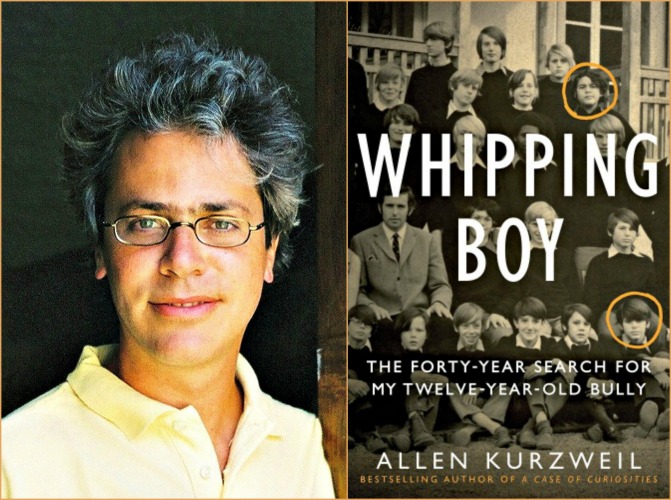
Our Booklust, Wanderlust roundtable series left me with such a wide selection of books to read that I’m only just now coming up for air. This month I’d like to tell you about Whipping Boy: My Forty-Year Search for My Twelve-Year-Old Bully, by the bestselling novelist Allen Kurzweil—which our own ML named as one of the books on her radar in early 2015.

Well, Whipping Boy is out, and it’s a cracking (so to speak) read!

"Allen Kurzweil Wiki2007," by Allen Kurzweil - an image provided by Allen Kurzweil. Transferred from en.wikipedia by SreeBot. Licensed under CC BY-SA 3.0 via Wikimedia Commons.

TCK author Allen Kurzweil & his memoir. Photo credits: “Allen Kurzweil Wiki2007,” by Allen Kurzweil – an image provided by Allen Kurzweil. Transferred from en.wikipedia by SreeBot. Licensed under CC BY-SA 3.0 via Wikimedia Commons.

Kurzweil has produced a memoir that deals with deep emotions dating back to his displaced youth—but that still manages to flow fast and fun like an international thriller. As marketing whiz Kat Gordon put it in a recent tweet:

Hanging on every word of @AllenKurzweil memoir “Whipping Boy.” A whodunit + fairytale in one.

In the fairy tale portion, we watch as our hero, age ten, attends a British-style boarding school perched on an alpine meadow high above Geneva. All goes well until he meets the dastardly Cesar (full name Cesar Augusto Viana), who torments him mercilessly. When our hero grows up, he resolves to track down and confront his childhood nemesis, however long it takes…

The whodunit starts the moment Kurzweil discovers that Cesar has become a leading figure in an international fraud scheme. At that point he converts into an investigative journalist, leaving no stone unturned in his quest to find out how many victims the adult Cesar has racked up.

Before saying anything more about the book, I should point out that Kurzweil is an adult Third Culture Kid. His parents were Jewish émigrés from Vienna to New York City. The family relocated to Milan, Italy, when Kurzweil was young, but he spent his teen years back in New York. He got his education at Yale and the University of Rome and then worked for ten years as a freelance journalist in France, Italy, and Australia before settling back in the United States with his French wife and son.

Kurzweil’s previous works include two novels and a children’s book inspired by his son’s preschool bully. The Whipping Boy has also been excerpted and condensed in the New Yorker.

“In 1971, I met a boy who changed my life forever.”

Kurzweil roomed with Cesar—a burly Filipino rumored to be the son of Ferdinand Marcos’s head of security—at the exclusive Aiglon College, in Villars, Switzerland, for the better part of a year, while Kurzweil’s mother was “test-driving her third husband.” (Kurzweil’s father died of cancer when he was five.)

Kurzweil loved the idea of the school—his deceased father had adored the Alps and mountaineering. But he hated boarding, particularly at night, when Cesar and his stooges would subject him to all manner of hazing. They forced him to eat hot pepper sauce, stole his things (including his most prized possession, his father’s Omega Seamaster watch), taunted him with anti-Semitic slurs, and at one point whipped him with a belt while playing “The 39 Lashes” from Jesus Christ Superstar (Kurzweil was Jesus).

Some form of bullying in schools is universal, but when the kids are internationals, and boarders—dealing with the losses of worlds they have loved (which in Kurzweil’s case was tied to the loss of his dad)—things can get even more intense, something non-TCKs may not appreciate.

Fortunately, though, Kurzweil has a sense of humor. In this book he never misses a chance to point out that life, even when traumatizing, has its comic moments.

“It didn’t take long to shed the habits I’d picked up in Switzerland.”

After a year at the school, Kurzweil moves back to New York City, and quickly re-acculturates:

“[My mother and I] returned to New York, where the plimsolls, anoraks and rucksacks I wore at Aiglon reverted to sneakers, parkas and backpacks. I no longer had to address my teachers as sir and ma’am.”

But while Kurzweil displays the TCK’s resilience in adjusting back to life in the U.S., happy to get rid of the crossbars on his “7s” and scuttle his schooner-sail “4s”, he cannot let go of his memories of Cesar so easily. He harbors an obsession, which grows worse with the years, even (especially?) after he finds success as a writer.

When he learns that his boyhood enemy is most probably a con man working for a shady “royal”-family-led corporation named Badische (pronounced “Baddish,” Kurzweil notes slightly gleefully) that runs investment “schemes” for hard-up New York one-percenters, Kurzweil becomes unstoppable:

Obsessives tend to have obsessions. Cesar wasn’t my first fixation, and I’m sure he won’t be the last. Baseball cards, Matchbox cars, Pez dispensers—I’ve always been a collector…my point is I tend to go overboard. I investigated Cesar and Badische the same way I collected Lincoln pennies—intent on filling every void.

“…I began to acknowledge the obvious: Cesar had taken over my life.”

His investigations span decades and continents, and throughout it all he is haunted by memories of Cesar:

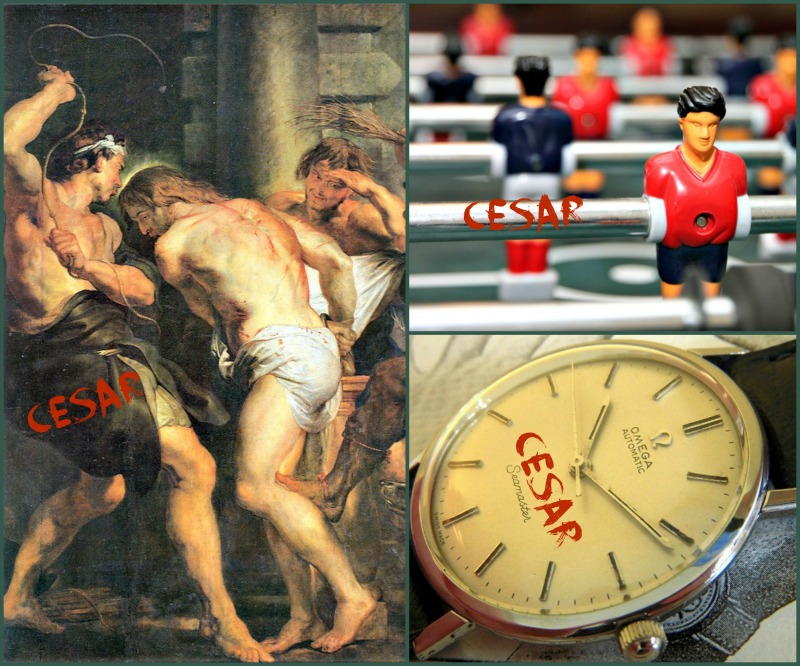
At the back of a dingy bar in Alice Springs, a pair of drunks playing foosball recalled my ex-roommate’s unstoppable bank shot. In Vienna, hanging on the wall of the Kunsthistoriches Museum, a Flagellation of Christ reinvoked the musical whipping. Hot sauce, Andrew Lloyd Weber tunes, Ferdinand Marcos, Montblanc fountain pens, and more than anything else, vintage Omegas, had me reaching for the journal.

The Ubiquitous Cesar. Photo credits (clockwise from left): “Flagellation-of-christ-Rubens” by Peter Paul Rubens (licensed under CC BY-SA 3.0 via Wikimedia Commons); foosball, byrev via Pixabay; Omega watch, ephotographythemes via Pixabay.

Kurzweil shares with the reader his mixed emotions when he at last finds Cesar, wondering what to say to someone who may not even remember him. And then the fear returns—the fear that he experienced as a shy boy being whipped with a belt in his dorm room…only now it is morphing into an adult fear as Kurzweil realizes he has tracked down an actual criminal:

Fake knights. False banks. Imaginary kingdoms. These guys travelled on bogus passports. They hosted lavish dinner parties at five-star hotels. They performed knighting ceremonies. (When I interviewed the assistant U.S. attorney who filed the initial charges, he summed up the crime as Dirty Rotten Scoundrels meets Clue.)

“So, basically, I’m being blamed for your memories?”

Whipping Boy was a quick, satisfying read. I loved the truth-is-stranger-than-fiction details that Kurzweil unearths about Cesar and his company’s schemes.

I loved his humor.

I also enjoyed the quiet pauses when Kurzweil would describe personal moments having nothing to do with the hunt for Cesar: for example, when he met his wife in outback Australia:

A French anthropologist named Françoise Dussart spotted me wandering toward a sacred site off limits to visitors. Concerned for my safety, she drove up and warned me away. She was sitting in the cab of a Toyota Land Cruiser and cradling a baby kangaroo. How could I not fall in love?

And then:

She flew west, from Alice. I flew east, from New York. We met each other halfway, in Paris, broke and in love.

Juanchito via Pixabay[http://pixabay.com/en/kangaroo-australia-jump-creature-250873/]; talitaraquel via Pixabay[http://pixabay.com/en/eiffel-tower-paris-france-tower-350453/]. License: CC0 Public Domain[http://pixabay.com/en/service/terms/#download_terms]

From kangaroo love to love in the City of Light. Photo credits: Australian kangaroo, Juanchito via Pixabay; Eiffel Tower, talitaraquel via Pixabay. License: CC0 Public Domain

I further appreciated his candor in admitting that two people can remember the details of an event differently, particularly when one of them is a psychopath with a chip on his shoulder. As Cesar puts it when they finally meet up again for the first time:

“I recall a lot… But just in bits and pieces. There are some things that people have told me about that I really don’t remember. You might need to prod me a bit.”

I would particularly recommend the book to those who like stories about heists or con artists—the movie American Hustle has some parallels—as well as to anyone who has harbored a fantasy of facing down a childhood bully.

Kurzweil may be beaten but he isn’t conquered, and that’s an inspiration to victims everywhere.

But most of all I appreciated Kurzweil’s understanding that for us TCKs, what happens in a third culture doesn’t always stay in a third culture. Some readers may wonder why Kurzweil couldn’t leave his bullying experience behind, particularly as it happened overseas, in a country to which he had limited personal ties. But for Third Culture Kids, the floating world of the expat is as real as it gets. And, as Kurzeil’s story shows, what happens there can have a life-long impact.

* * *

Fellow TCKs, do you have a Cesar or other skeletons in your cupboard dating back to your school days, at an international school or boarding school? Do tell!

Till next time!

Editor’s note: All subheds are quotes taken from Allen Kurzweil’s New Yorker article.

Beth Green is an American writer and English teacher living in Prague, Czech Republic. She grew up on a sailboat and, though now a landlubber, continues to lead a peripatetic life, having lived in Asia as well as Europe. Her personal Web site is Beth Green Writes, and she is about to launch a new site called Everyday Travel Stories. To keep in touch with her in between columns, try following her on Facebook and Twitter. She’s a social media nut!

STAY TUNED for the next fab post!

If you enjoyed this post, we invite you to register for The Displaced Dispatch, a round up of weekly posts from The Displaced Nation, and much, much more. Register for The Displaced Dispatch by clicking here!

Related posts:

CULTURE SHOCK TOOLBOX: No apfelstrudel? Try some Schwarzwälder Kirschtorte!

CST apfelstrudel collageToday we welcome a new columnist, H.E. Rybol, to the Displaced Nation. The product of a German dad and a French mom, H.E. has lived in the United States, Luxembourg, England, Spain, Switzerland and Singapore. (She currently resides in Luxembourg.) After 16 years of the Third Culture Kid life, she feels well equipped to handle any culture shock challenge that may come her way, and recently compiled these tools in an e-book. In her column for us, H.E. will be sharing some tips for handling the inevitable through-the-looking-glass moments every international faces—albeit with a certain finesse—through excerpts from her own writings and interviews with other cross-cultural experts.

—ML Awanohara

Thanks, ML, and greetings, Displaced Nation readers!

Today I’m going to be talking about how our expectations shape our experiences. While that is something we all might know, we may not always be aware of it when it comes living life in other lands.

I am reminded of when I spent a bit of time in Dortmund, Germany. I spent my afternoons writing in a small boat-like cafe: blue sky and fluffy clouds were painted in the “portholes” on the back wall and ceiling, there were railings, two fake palm trees, maritime decorations carved out of wood: a seagull, a lighthouse, a sailboat.

Corny maybe, but I loved it.

One day, two women walked in with immaculate haircuts and fancy jewelry, conversing. They seemed excited, as if they’d really been looking forward to this moment. They ordered, merry faced and with their arms firmly planted on the table….an apfelstrudel.

The waiter, a young German-Egyptian, seemed bewildered: “A what?”

Apfelstruuuudel.”

Apfelkuchen?”

“No, no!” The women insisted.

This place offered an array of creamy and luscious cakes, but not apfelstrudel.

The women were incredulous. They turned to me, and said: “Apfelstrudel is SO German! How can they not have it?!”

They tried a different cake but kept shaking their heads in disbelief. They were disappointed. It seemed like in their minds, a cafe in Germany that didn’t serve apfelstrudel just didn’t fit.

Of course there’s nothing inherently wrong with this scenario. We have all had moments where we set our minds on something we didn’t get. Consider this though: How would the experience of the two ladies that afternoon have changed, had they let go of their idea and simply embraced what they had found?

Dear readers, may I ask what would you would do in this situation?

Toolbox Time!

Now, were any of you at all inclined to select the first answer? Be honest! Because it’s time for me to get out my toolbox.

Why is it a good idea to leave preconceived notions behind?

1. (She powers up her blowtorch.) It’s more exciting! Of course it’s a good idea to prepare, but once you’re on the plane (train/bus/bike), let go of those ideas. Replace expectations with anticipation.

2. (She exchanges vise grip pliers for needle nose pliers.) Let go to avoid disappointment. I think it’s a great idea to try local specialties and show interest in another country’s culinary traditions. But be flexible. If there’s no apfelstrudel, try a black forest cake (Schwarzwälder Kirschtorte) or any other local specialty. (Or if your heart is still set on apfelstrudel, why not ask people on the streets or in shops or restaurants for apfelstrudel recommendations?)

3. (She picks up the crescent wrench.) It helps us be more open. We don’t travel to confirm an image that we have. We travel to learn and grow as human beings. We travel to connect. In order to do that we have to let go of stuff we don’t need…such as preconceived notions. It helps us embrace new experiences and see things we wouldn’t notice otherwise.

4. (She turns on the overhead light.) Reality is often so much more interesting and stimulating than what we picture in our minds….and if we cling to the picture, we miss out. Culture shock is already a lot to deal with, we don’t need to add roadblocks by clinging to preconceived ideas.

5. (She invites a German-Egyptian carpenter to do a demo.) As travelers our expectations shape our experiences, but we should remember that the reverse is also true. Other people’s preconceptions also have an impact. Be open, flexible and learn from each other.

I hope that has you fixed until next month.

Prost! Santé!

* * *

Readers, what do you make of H.E.’s advice about developing some flexibility from those times when you’re feeling displaced? Or is that too tall an order when you had always pictured yourself eating apple strudel in a boat-themed German café?

H.E. Rybol is a TCK and the author of Culture Shock: A Practical Guide and Culture Shock Toolbox. She loves animals, piano, yoga and being outdoors. You can find her on Twitter, Linkedin and Goodreads. She is currently working on her new Web site and her second book.  

STAY TUNED for another fab post.

If you enjoyed this post, we invite you to register for The Displaced Dispatch, a round up of weekly posts from The Displaced Nation—and much, much more! Register for The Displaced Dispatch by clicking here!

Related posts:

TCK TALENT: Rahul Gandotra, Oscar-shortlisted filmmaker

Rahul Gandotra CollageElizabeth (Lisa) Liang is back with her column featuring interviews with Adult Third Culture Kids (ATCKs) who work in creative fields. Lisa herself is a prime example. A Guatemalan-American of Chinese-Spanish-Irish-French-German-English descent, she has developed her own one-woman show about growing up as a TCK, which receives rave reviews wherever it goes.

—ML Awanohara

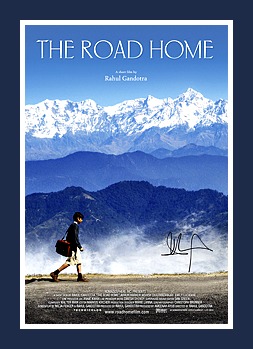
Hello again, dear readers. Today’s interviewee is filmmaker Rahul Gandotra, whose short film, The Road Home, has played in over 60 festivals around the world and won over 20 awards, including the Student Film Academy Award and British Independent Film Award, and was shortlisted for the 2012 Oscar nominations.

The film beautifully depicts a Third Culture Kid story; it also catapulted Rahul into the shortlist of up-and-coming filmmakers.

RoadHome_posterHere is the film synopsis:

Growing up in England, ten-year old Pico never wanted to go to boarding school in the Himalayas, and despite the beauty there, he struggles to fit in. When he’s bullied for insisting he’s British in spite of his Indian heritage, he runs away, determined to return to his home in London. As he journeys through a country foreign to him, Pico encounters others who mistake him for an Indian boy, forcing him to face the painful truth that the world does not see him the way he sees himself.

* * *

Welcome to The Displaced Nation, Rahul. I understand that you were born in Belfast, Northern Ireland, and grew up in eight countries across Europe, the Middle East, Asia, and the Americas. Why did your family move so much, and to which countries?
A lot of my moving around happened because of my father’s job—he was a doctor looking for new opportunities in different parts of the world. While it gets complicated with all the cities I’ve lived in, the general overview is: after being born in Belfast, I spent the first six years of my life in all four parts of the UK (England, Northern Ireland, Scotland, Wales). Then we moved to Saudi Arabia, where I spent three years before attending a boarding school in the Himalayas (in Northern India) for seven years.

How about college and beyond?
I received my undergraduate degree in the United States, where I lived for eleven years. After that I was in the Czech Republic for one year. Since moving to London for my graduate degree, I’ve been in England for the last ten years.

“If you want to see the Himalayas, they’re that way.” —Pico to a British couple touring India

Were you happiest in a certain place at a certain time, and if so, why?
Tough question. My happiest memories stem from when I was living in Saudi Arabia from age 6 to 9. Perhaps it was because I was a child? Perhaps it was because I was still with my parents (my mum was a homemaker) before I went to the boarding school in the Himalayas?

I just remember having happy memories in Saudi Arabia. I think my time at my boarding school was also quite enjoyable after I adjusted to life there.

Come to think about it, I’ve had good memories in places where there was a TCK-like / international environment. The more monocultural the environment was, the less I enjoyed the place.

What led you to become a filmmaker, and did it have anything to do with your peripatetic upbringing?
I don’t know if my moving around pushed me into filmmaking. I think the moving around has given me many gifts that I use in filmmaking. The ability to see things from different points of view, for example, helps me in seeing an actor’s point of view—especially when it’s different from mine.

Looking back, I learned a lot of my storytelling from my mother with all the stories she told me. I guess the patterns and rhythms of storytelling just seeped into me, as she recounted one story after the other!

At what point did you pick up the technical skills that turned you into a filmmaker?
That came from a combination of “doing it myself,” formal education, and a lot of reading!

“But I don’t feel Indian inside!” —Pico to an Indian taxi driver

Have you found that “your people” tend to be other Adult TCKs in creative fields or does it really depend on the individual and what s/he evokes in you, whether it’s a resonance that’s artistic or political or personality-related or life-experience related, etc.?
I seem to gravitate to people who are either TCKs or people who have done a significant amount of traveling. They don’t necessarily have to be in the creative fields though.

Congratulations on all the accolades your short film, The Road Home, has won! What inspired you to tell this story?
The plot was a fiction but the themes were autobiographical in nature. The idea of looking like you belong to a particular region because of your skin colour but feeling inside that you belong somewhere else is something that I wanted to illuminate in the short film.

Here is the trailer:

And if your readers would like to watch The Road Home, they may do so here.

I understand you are now making a feature-length version of The Road Home. Where are you in the pre-production phase?  
I’m in the financing stage where I’m hoping all the investments will be in place so I can shoot the feature film soon. (If there are any interested investors, please do contact me!)

“Why not speaking Hindi, huh? Important your knowing your mother tongue.” —Taxi driver to Pico

Are you working on other projects?
My screenwriting partner and I have been writing other screenplays but those are bigger in scope, and we’ll present those to the world when I’ve completed my first feature.

You’ve been directing commercials. Where are they airing and can we see them online?
I’ve just started directing commercials. Some of them have aired in the UK, while others have aired in India. The funny thing is that the commercial that was shot in the UK aired in India. And the commercial shot in India aired only in the UK! Here is one that was shot in India, for Rajah’s garam masala:


You can see more here.

Congratulations again, Rahul, on the success of The Road Home, all of the commercial work you’ve been doing, and the screenplays you’ve been writing. You’re a true “ATCK creative” and we’re hereby nominating you as Best Up-and-Coming Director for our Displaced Oscars!

Readers, please leave questions or comments for Rahul below.

STAY TUNED for next week’s fab posts!

If you enjoyed this post, we invite you to register for The Displaced Dispatch, a round up of weekly posts from The Displaced Nation, and so much more! Register for The Displaced Dispatch by clicking here!

Related posts:

BOOKLUST, WANDERLUST: 2014–2015 books recommended by expats & other international creatives (2/2)

Globe Bookshelf Part TwoHello Displaced Nationers! As those who caught Part One of this post last week will know, we are continuing the party we had at the end of last year in publishing a Best of 2014 in expat books list by soliciting various international creatives and other “displaced” contacts for more recommended books.

In Part One, several of my bookworm friends from a previous blog, Novel Adventurers, along with ML and JJ Marsh (JJ writes the Location, Locution column for Displaced Nation), revealed their favorite 2014 reads.

In Part Two, below, kicking off with yours truly, we talk about releases we’re hotly anticipating this year.

A “forthcoming reads” roundtable, if you will.

—Beth Green

* * *

BETH GREEN: I actively search out books by Elizabeth George, the American author of the Inspector Lynley mystery novels set in Britain, and Elizabeth Gilbert, who achieved fame with her travel memoir, Eat, Pray, Love. 2015 is a great year for me as both Elizabeths have books coming out.

A_Banquet_of_Consequence_300s_coverA Banquet of Consequences (Inspector Lynley Book 19), by Elizabeth George, due out in October.
Synopsis: Lynley and Havers are drawn from Cambridge to London to the windswept town of Shaftesbury during one of their most complex cases yet: the murder of a feminist writer and speaker.
Why I’m excited: Though actually not in the “expat” realm, I have to confess it’s the book I’m most looking forward to reading. I’m a huge fan of George’s diverse characters and elaborate stories.

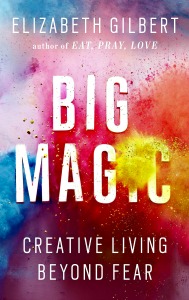
BigMagic_cover_300Big Magic: Creative Living Beyond Fear, by Elizabeth Gilbert, due out in September.
Synopsis: Gilbert digs deep into her own creative process to share her wisdom and unique perspective about creativity.
Why I’m excited: As some readers may recall, I reviewed her novel The Signature of All Things last fall for this column. It seems that Gilbert is now turning her hand to self-help/motivational books for us creatives. I’m intrigued, and I figure other international creatives should be as well.

Three other upcoming books, by authors I’ve not come across before, have also caught my eye:

Displacement_cover_300Displacement, by Lucy Knisley, due out February 8th.
Synopsis: A graphic-novel-style/comic-book travelogue reporting on a cruise ship trip to the Caribbean Knisley took with her grandparents.
What interests me: Even though I seldom read graphic novels, I’m curious to pick it up, especially given its title(!). Knisley has two previous travelogues in graphic form: French Milk (her six-week trip to Paris to celebrate a milestone birthday) and An Age of License (her all-expenses trip to Europe/Scandinavia).
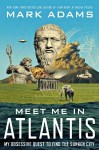
Meet_Me_in_Atlantis_cover_300Meet Me in Atlantis: My Obsessive Quest to Find the Sunken City, by Mark Adam, due out in March
Synopsis: A few years ago, travel writer Mark Adams made a strange discovery: everything we know about the lost city of Atlantis comes from the work of one man, the Greek philosopher Plato. Then he made a second, stranger discovery: amateur explorers are still actively searching for this sunken city all around the world, based entirely on the clues Plato left behind. Adams decides to track these people down. He reports on what he learns from scientists and amateur historians who all share his curiosity about the facts and fiction surrounding the “lost city.”
What interests me: Count me in that curious group!

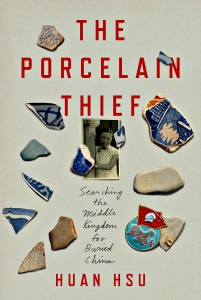
The Porcelain Thief: Searching for the Middle Kingdom in Buried China, by Huan Hsu (forthcoming in March).
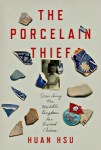
The_Porcelain_Thief_cover_300Synopsis: The author, raised in Utah, goes back to his ancestral homeland in China, in part to look for porcelain and other treasures his great-great-grandfather may have buried before the family fled the Sino-Japanese War.
What interests me: As a former expat in China, I love anything about this part of the world, and this displaced family saga sounds particularly fascinating!


ML AWANOHARA: I am always on the lookout for books that could be of interest to the Displaced Nation readership. (Whether I end up reading them or not is a different matter!) I’m sure this is just the tip of the iceberg, but thus far in 2015 I have my eye on one novel and several memoirs.

First, the novel:

The_Art_of_Unpacking_Your_Life_cover_300The Art of Unpacking Your Life, by Shireen Jilla (forthcoming in March)
Synopsis: A million miles away from their daily concerns, on a safari in the Kalahari Desert, two women who were once best friends see if they can reconnect.
What interests me: We featured Jilla’s first novel, Exiled, on the Displaced Nation shortly after we started the site as we were curious to as to why, after her own expat life in New York City, she had produced such a dark, dysfunctional family psychodrama concerning a British expat family living on the Upper East Side of New York. (Her answer was extremely satisfying!)

As to memoirs, here are three that were issued in January:
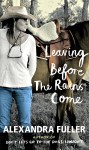
Leaving_Before_the_Rains_Come_cover_300Leaving Before the Rains Come, by Alexandra Fuller (came out in January)
Synopsis: A child of the Rhodesian wars and daughter of two deeply complicated parents, Alexandra Fuller is no stranger to pain. But the disintegration of her own marriage leaves her shattered. Looking to pick up the pieces of her life, she finally confronts the tough questions about her past, about the American man she married in hopes of being saved from the madness of her early life, and about the family she left behind in Africa.
What interests me: I so enjoyed Fuller’s first memoir, Don’t Let’s Go to the Dogs Tonight, about growing up in a white family during the Rhodesian Bush War, I have come to think of her as a modern-day displaced heroine, or goddess: larger than life, an extraordinary mix of beauty and brains, out of this displaced world… (Hmmm… No wonder her marriage to a mere mortal didn’t last.)

Russian_Tattoo_cover_300Russian Tattoo: A Memoir, by Elena Gorokhova
SYNOPSIS: In her first memoir, A Mountain of Crumbs, Gorokhova detailed her life growing up with an iron-willed mother in Soviet-era St. Petersburg. In this follow-up, she escapes both mother and country by entering into an unsuitable marriage with an American. When her husband first brings her to live in Austin, Texas, the culture shock is extreme. He then ships her off to Princeton to live with his psychotherapist mother. There she meets her second husband and a happier future.
WHAT INTERESTS ME: Maybe because I lived abroad for so long and then had to readjust to life in the U.S., I identify very closely with immigrant stories. And for personal reasons, I’m always attracted to stories that revolve around the challenges of cross-cultural marriage.

Whipping_boy_cover_300Whipping Boy: The Forty-Year Search for My Twelve-Year-Old Bully, by Allen Kurzweil
SYNOPSIS: As a 10-year-old American shipped to a Swiss boarding school, Kurzweil endured a year of torment. Years later he set out to search for the chief bully, Cesar, who, it turned out, had gone to prison twice, having become a professional con man. In circling the globe to find Cesar, Kurzweil stands up for all who’ve been the victim of bullies.
WHAT INTERESTS ME: As we’ve always recognized on this site, some of us who are “displaced” have gothic tales to tell. Thank goodness in this case the villain picked on a man who was destined to become a world-class writer, hence able to exact an exquisite revenge.

Finally, I just now heard about another memoir whose title alone has me panting to know more: The Dead Ladies Project: Exiles, Ex-Pats and Ex-Countries, by litblog founder and book reviewer Jessa Crispin, who moved to Berlin in 2009. It’s due out in September; no book cover yet.


JJ MARSH, crime series author and Displaced Nation columnist (Location, Locution): I have a novel and a poem on my list, along with one publishing house.

A_Spool_of_Blue_Thread_300A Spool of Blue Thread: A Novel, by Anne Tyler (forthcoming this month).
Synopsis: It’s not an expat story but rather the opposite: a domestic family saga. The family, Whitshanks, have lived in Baltimore for several generations.
What interests me: Tyler wrote The Accidental Tourist (about the ultra-insular Leary family, who also live in Baltimore) and I’m curious.

“Sentenced to Life”, by Clive James (James, for those who don’t know, is an Australian writer and personality who has long lived in Britain.)
Synopsis: It’s one of James’s recent poems, published in May of last year, and can be read in full on her author site.
What interests me: I heard James on the radio talking about writing poetry about facing death and it humbled me.

I also look forward to whatever Galley Beggar Press puts out because they’re exciting and adventurous and try things other publishers will not. This strategy paid off with their Baileys Prize success of A Girl is a Half-Formed Thing by Eimear McBride last year.


The_Tutor_of_History_cover_300HEIDI NOROOZY, adult TCK, translator and author (@heidinoroozy): This year I’ve resolved to read more books in translation and stories from far-flung parts of the world. And, as I enjoy novels set in foreign locations that are told in local voices, I’ve got these two on my list:

The Tutor of History, written in English by the Nepali author Manjushree Thapa
SYNOPSIS: One of South Asia’s best-known writers, Thapa follows the lives of a variety of characters in the lead-up to local and national elections in a small town in central Nepal.
NOTE: This novel came out in 2012, but I haven’t gotten round to reading it yet.

The_Little_Paris_Bookshop_cover_300The Little Paris Bookshop, by the German author Nina George (forthcoming in English in June).
SYNOPSIS: Monsieur Perdu calls himself a literary apothecary. From his floating bookstore in a barge on the Seine, he prescribes novels for the hardships of life. The only person he can’t seem to heal through literature is himself…but will he manage to do that on a mission he takes to the south of France, with an Italian chef as his companion?
NOTE: I already read the novel in German. In Germany it spent over a year on the bestseller lists.


My_Fellow_Prisoners_cover_300KELLY RAFTERY, translator and writer: In 2015, I am looking forward to being able to read Mikhail Khodorkovsky’s collection of short stories entitled My Fellow Prisoners. Already available in Europe, it is due to have its U.S. release in late February. Convicted on thinly disguised, politically motivated charges, Mikhail Khodorkovsky went from being Russia’s richest man to a labor camp inmate in Siberia. In the decade of his incarceration, Khodorkovsky scribbled short sketches of the men he encountered, jailers and prisoners alike.


SUPRIYA SAVKOOR, editor and mystery writer: In the last roundtable, I mentioned having recently read two gripping memoirs: Not My Father’s Son, by Alan Cumming, and A Long Way Home, by Saroo Brierley. In 2015 I’m looking forward to more books that surprise me as these two did, particularly ones in which the new stories are intertwined with the old ones and make me see the grander scheme of things.

Rebel_Queen_cover_300ALLI SINCLAIR, world traveler and novelist (www.allisinclair.com): I’m a huge fan of Michelle Moran’s books and any book of hers is an automatic buy for me. Moran has an interesting story. Born in Southern California, she was a public high school teacher before becoming a writer, using her summers to travel around the world. It was her experiences as a volunteer on archaeological digs that inspired her to write historical fiction. Moran’s upcoming work, Rebel Queen, will be released in March. It’s about Queen Lakshmi—also known as India’s Joan of Arc because she stood up to the British invasion of her beloved Kingdom of Jhansi. The queen raises two armies—one male and one female—and they go into battle against the well-prepared British.

Moran’s books are rich in historical facts but the stories are so enthralling it never feels like a history lesson. Another reason I’m a fan is because she usually chooses the point of view of someone not so well known. For example, in this story the main character is Sita, one of the Queen’s trusted soldiers and companions, a device that serves to paint a less-biased picture of the more famous Queen Lakshmi.

* * *

Thank you, ML, JJ and guests! Readers, do you have any further 2015 recommendations? Please leave a comment below. And then let’s get our noses back into our books!

Finally, please be sure to sign up for the DISPLACED DISPATCH, which has a Recommended Read every week. You can also follow the Displaced Nation’s DISPLACED READS Pinterest board.

STAY TUNED for next week’s fab posts!

If you enjoyed this post, we invite you to subscribe to The Displaced Dispatch, a weekly round up of posts from The Displaced Nation, plus some extras such as seasonal recipes and occasional book giveaways. Sign up for The Displaced Dispatch by clicking here!

Related posts:

A valentine to displaced creatives: Let a thousand friendships flourish!

Valentine_Displaced_Friendships

Photo credit: PublicDomainPictures via Pixabay.

In my nearly four years of managing the Displaced Nation, I’ve had about as many face-to-face meet-ups with the creatives I’ve “met” on this site. Let me see…the last one was was about eight months ago, when the delightful Jennifer Eremeeva and I had coffee. Among many other things, we talked about her autobiographical novel based on her two decades of living in Russia: Lenin Lives Next Store: Marriage, Martinis and Mayhem in Moscow (don’t you love the alliteration?).

I suppose it’s not surprising how rare these real-life encounters are, given that, by definition, displaced creatives tend to be on the move and/or opt to live in far-flung corners of the globe. (Jennifer was on her way to her summer home—or dacha, as she jokingly referred to it—in Northampton, Massachusetts, when we met, but would soon be heading “home” to Russia.)

Still, putting a gravatar to a name is one thing, putting an actual face to a name quite another. It cements your friendship in a way that nothing else can.

No doubt that’s why I was so thrilled to learn that another such meet-up has taken place between two writers who first encountered each other here: Cinda MacKinnon, author of the novel A Place in the World, and Rita Gardner, author of the memoir The Coconut Latitudes.

Both Cinda and Rita have kindly agreed to answer a few questions about their flourishing friendship (there’s that alliteration again!). This being February, I offer it as a kind of valentine to the pair of them, who have been great friends not only to each other but to TDN, as well as what they represent about the site’s potential to be a haven from the storm of the displaced life, a “home”.

* * *

Rita and Cinda, welcome back to the Displaced Nation! Why don’t we start by having you recount how you discovered each other on this site?

Cinda&Rita
RITA: I first discovered Cinda when she posted a comment on James King’s interview with me in his delightful “A Picture Says” column for the Displaced Nation. I immediately responded to her and we began our online friendship, which evolved into our discovering we were practically neighbors in the San Francisco Bay Area—and subsequent in-person get-togethers.

CINDA: It is ironic to think that James, who lives in Thailand, is responsible for connecting two writers who now live in the San Francisco Bay Area. James’s blog, Jamorocki, and the Displaced Nation are my two favorites.

Thank you for that lovely compliment, Cinda! We’ll be sure to pass on to James… Tell us, what was the thing that immediately drew you the two of you together?

CINDA: We were both expats who grew up in Latin American and her story reminded me of other foreigners I knew, whose parents exchanged a comfortable life for a more adventurous, exotic one…but sometimes with devastating consequences—have you read/seen Mosquito Coast? Actually, I told Rita that Cocoloco—the name of her family’s coconut finca (plantation) in the Dominican Republic—would have served as an apt alternative title for her book. She said it was her working title but then she changed it to The Coconut Latitudes just before publication.

RITA: Besides the obvious—that Cinda was an expat and a TCK who grew up in Latin America—I was intrigued that she’d written a novel that is set in Colombia.

Cinda, you’ve also been a guest of James King’s photography column. Can each of you tell me what which photo of each other’s you liked best?

Rita & Cinda Fave Pix
RITA: My favorite photo of Cinda’s was “A Profusion of Wildflowers in Arvin.” I liked the subtle angles and composition and it reminded me of the unexpected beauty that can be encountered everywhere flowers bloom.

CINDA: I think the “Wading Chairs.” That is so Latino! You can just picture a couple of islanders lounging there and keeping their feet cool.

By now, I assume you’ve read each other’s books. What were your impressions?

Cinda&Rita covers
RITA: I read the TDN interview with Cinda before reading her book. The first line struck a chord, about how her fiction “was a way to revisit homes she has cherished.” I also appreciated learning about Cinda’s life and her writing process and her list of favorite books, many of which mirrored my own. Once I got to reading the novel itself: I loved so much about it! The first thing was its sensory lushness; I could see, smell, taste, and feel the cloud forest setting and the coffee finca. I felt for Alicia, the main character, as she ached to find her own place in that world amid complicated relationship struggles. It was a satisfying read.

CINDA: I loved reading Rita’s memoir. The honesty—a lot of soul searching went into this work. Although her upbringing was difficult and her entry into adult life harsh, the writing is straightforward. And I have to say, her mother must have done a marvelous job with home schooling. For those who aren’t aware: Rita mostly taught herself to write, I believe. The results are extremely impressive.

One of you chose to write a novel based on your TCK life, whereas the other wrote a memoir. Do you think those were the right choices?

CINDA: If Rita had written this story as fiction, we would have assumed that she was exaggerating any real life background that went in to it. It is a haunting and compelling memoir.

RITA: I wondered of course if Cinda’s novel was autobiographical (which I’ve learned it is not, other than being influenced by her South American roots and her love of botany). I thought it was perfect as fiction. A memoir would not have produced A Place in the World—and since I liked this book just as it is, I’m glad she chose that route. However, I’d love to see her write a memoir, too!

Both of you grew up as Third Culture Kids, which gives you something in common right away, though not all adult TCKs become fast friends, of course. What are the closest parallels you’ve discovered?

RITA: Goodness—the parallels are uncanny: We both grew up in families that roamed the world before settling in Latin America. We both love nature, writing, photography, many of the same authors and books. We both wrote our books as ways to revisit our own past. We both arrived in the U.S. as teens, wearing “the wrong clothes” and struggled to basically “become” North Americans. I could go on!

CINDA: I could immediately relate to this line in Rita’s author bio: “She continues to dream in Spanish and dance the merengue.” Like many TCKs we are multilingual and have a tolerance for and interest in other cultures. Both of us had parents that were somewhat negligent and we were on our own by the time we were 18 (maybe 17 for Rita—and I did have some encouragement elsewhere).

You almost sound like the Bobbsey Twins, but I guess you also have some differences?

CINDA: One major difference is that as children, Rita lived in a very isolated village, home-schooled and restricted to certain contacts, whereas I went to international schools with a mélange of teachers and friends. My siblings and I didn’t see our parents as often as most kids, but they were stable individuals. Also, between the ages of 6 and 12, I spent a month every summer stateside with my cousins and affectionate aunts; this helped me both emotionally and gave me a glimpse of American life.

RITA: Also in terms of our adult lives: Cinda pursued a life as an environmental scientist and has had a successful academic career. She possesses a deep knowledge of botany and geology I’ll never have. I’m sure there are a lot of other differences—and look forward to continuing our friendship and discovering more about each other, whether differences or connections.

Finally, can you each tell me something about the other you think might be interesting to Displaced Nation readers?

CINDA: Rita is not just as a writer but has had a big job reporting to the Vice Chancellor of Administration at UC Berkeley. She also garnered a good review from the acclaimed Dominican American author/professor Julia Alvarez, who declared her an “honorary Dominicana”. Rita is an accomplished artist as well; supporting the TDN theory of the creativity of expats .

RITA: Cinda has a generous heart—evident both in person and through her blog posts. For example: Through her blog I’ve learned about a Cuban musician who defected to the US and now is in the San Francisco Bay Area; she did an excellent interview with him and included links to his music. In ways like that, she expands everyone’s horizons. Likewise, she has gotten the word out to friends and readers about my book, and has introduced me to other writers in the area. Oh, and she loves Burmese food!

* * *

Thank you, Cinda and Rita! Readers, be sure to check out their books if you haven’t already! Any further questions for these two writers and adult third culture kids? Any of your own meet-ups to report?! Let a thousand friendships bloom!! As usual, please let us know in the comments…

STAY TUNED for PART 2 of our 2014-2015 reads!

If you enjoyed this post, we invite you to subscribe to The Displaced Dispatch, a weekly round up of posts from The Displaced Nation, plus some extras such as seasonal recipes and occasional book giveaways. Sign up for The Displaced Dispatch by clicking here!

Related posts: