The Displaced Nation

A home for international creatives

LIBBY’S LIFE #74 – Quarterly accounts

April 1, 2013.
One quarter of the way through the year. Time to check in with those New Year’s Resolutions. In the wee hours of January 1st while being kept awake by the neighbours’ illuminated, inflatable Christmas decorations, I promised myself I would do certain things this year.

In no particular order:

1. Talk to Maggie about her taking permanent custody of Fergus.
Check. Not only did I talk to Maggie, but the mission was successful. Maggie and Fergus are happy, I am happy, and as Jack is no longer snacking on high-calorie, gourmet dog biscuits, the paediatrician is also happy. Jack, however, still suffers from Fergus-withdrawal symptoms. Would a goldfish or two fill the pet void, I wonder? Or is Jack merely suffering from dog-biscuit-withdrawal symptoms? We could give the goldfish a try, I suppose. If it turns out it’s pet food Jack misses, he’ll have a hard time putting on weight if he starts pinching Goldie’s fish food.

Unless Sandra comes to visit and she buys him a piran—

No. Don’t even think about it.

2. Check out the local elementary school and enrol Jack for kindergarten.
Another tick in another box. Jack will start kindergarten after Labor Day, just six months from now. After last week’s school assembly for the parents of prospective kindergarteners, when we were all assured our offspring were Special And Important, we were herded into a series of classrooms where we sat on miniature chairs, banged our knees on miniature desks, and handed over paperwork to assorted admin assistants, to enlist our children in the academia sausage machine enrol our children in the Class of 2026.

The admin assistant to whom I gave my paperwork was, not to put too fine a point on it, not very bright.

She had a clipboard with a sheet of paper that said “Kindergarten Registration Checklist.” Nothing complicated on the list, until we came to the item that requested “US Birth Certificate.”

I handed her Jack’s, which, as he was born in Milton Keynes, was issued in the UK.

She looked at it, turned it over and back again, then asked, “Which state was he born in?”

Assuming she meant “State” in the sovereign sense, I said, “United Kingdom.”

A pause while she held the certificate up to the light.

“Is that like Puerto Rico or Guam?”

“No. It’s like England or Scotland.”

This time, a frown.

“So, it’s, like, not a state in the USA?”

“No, it’s Great Britain.”

“Britain? You mean British?”

I nodded, daring to hope we were getting somewhere. Silly me.

She jabbed at the clipboard with her pen. “I need a US birth certificate.”

“But I can’t give you one.”

“Then I can’t complete the registration form. Can you get a US birth certificate?”

For the love of God. I saw the Principal walking by and called out to him:

“Could you please explain to this lady why I haven’t got an American birth certificate for my son and why I’m unable to get one, and why it doesn’t matter?”

Eventually we got it sorted out.

As I signed the forms that condemned Jack to thirteen years of compulsory schooling with no parole, I asked the woman, “Do you work here?”

The idea that our local taxes paid her to work among impressionable children was quite alarming.

She shook her head. “I’m on the PTA, just volunteering tonight.”

That was a relief.

“So you know Jodee Addison?” I asked.

“Of course! We did our realtor training together.”

Realtor? Aha! It was all becoming clear now.

“What about Melissa Harvey Connor? Do you know her as well?”

A beaming smile. “Everyone knows Melissa! Is she a friend of yours?”

I tucked all Jack’s paperwork carefully in a manilla folder, then stood up to let the next person in the queue have their turn in the torture chair.

“Absolutely not,” I said.

Talking of Melissa: 3. Find another house.
Yes, we really should get round to finding somewhere else. It would mean paying two lots of rent if we found somewhere now, though, because Melissa won’t release us from the lease early.

The cow.

4. Make friends based on their personalities rather than nationalities.

And — check! My new friend from kindergarten registration evening, Willow Reeves, is not English, but as American as they get.

After we’d both finished being tortured by the PTA, Willow said to me “Got time for a coffee?”

Only she didn’t say “coffee.” She said “cawfee.”

“Sure,” I said. Because I can say things like “sure” now and not feel like a Brit trying to be American.

“Maxwell Plum?” she said. “The owners are friends of mine.”

Willow Reeves and Anna Gianni. Yes, that made sense.

5. Go to England and see what sort of a dog’s dinner Sandra has made of our house.
Over Maxwell Plum espressos — not a good idea, in retrospect; those babies pack more caffeine than a Red Bull reduction, and it was already 8 p.m. — Willow and I exchanged life stories. She’s originally from Brooklyn, New York, which is why we were having cawfee together instead of coffee.

“So you’re telling me,” she said, “that your mother-in-law, who gave you food poisoning at Thanksgiving, regifted you a pit bull for your wedding anniversary, and bought a tarantula for your three-year-old, is living in your house in England? And you haven’t checked on that house since she moved in?”

I gazed down into my espresso. “Yep.”

Willow leaned back in her chair. “Looks are so deceptive,” she said. “You don’t seem insane on the outside, but you must be. Aren’t you worried about your home?”

“Of course,” I said. “But what can I do? I’m 3000 miles away, and she’s my husband’s mother, not mine.”

“You need to visit,” Willow insisted. “I had some friends who sublet their apartment in New York while they went travelling for a year, and the subtenants did all kinds of shit to the apartment. Guess who had to pay to put it right? Not the subtenants.”

“What sort of ‘shit’?” I asked.

“The absolute literal kind. These guys kept adopting stray cats. When the ASPCA went in, there were 37 in this one-bedroomed apartment and only two litter trays.”

I shuddered.

“And you say your monster-in-law likes animals?” Willow said. “Well, honey, I just don’t know why you’re sitting here having cawfee. If it was me, I’d be heading over to Logan for the next plane home.”

April 5.
For the last few days, have been thinking over what Willow said. She’s right. It’s time for another trip home.

Oliver and I need a little talk.

.

Next post: LIBBY’S LIFE #75 – Glass houses

Previous post: LIBBY’S LIFE #73  – Stuck in my craw(fish) 

Read Libby’s Life from the first episode

Want to read more? Head on over to Kate Allison’s own site, where you can find out more about Libby and the characters of Woodhaven, and where you can buy Taking Flight, the first year of Libby’s Life — now available as an ebook.

 STAY TUNED for Tuesday’s post!

If you enjoyed this post, we invite you to subscribe for email delivery of The Displaced Dispatch, a round up of the week’s posts from The Displaced Nation. Sign up for The Displaced Dispatch by clicking here!

Image: Travel – Map of the World by Salvatore Vuono / FreeDigitalPhotos.net

Ahoy, mateys! Splice the mainbrace. The Displaced Nation has spotted some treasure!!

OLYMPUS DIGITAL CAMERAAhoy me hearties! Two years ago on Monday, The Three Pirateers — how I like to refer to Anthony Windram, Kate Allison and myself, the Displaced Nation’s founding contributors — swashbuckled our way into this site and declared it a home for ourselves and anyone else who has ever felt “displaced”.

Land ho! we cried, thinking we’d finally found a place to settle our poor, restless souls. No foolin’! (Hm, I wish I were sometimes!)

But as time went on, we were less confident about the nomenclature we’d selected:

Our debates always ended with one of us saying: “Let’s drink grog before the fog.” And a bottle of rum would be passed around … after which we’d conclude that even if we couldn’t find a satisfactory descriptor for our state of mind, international travel had changed us into a bunch of scallywags.

By that I mean, people who’ve taken the road less traveled by — which, ironically, means we’ve traveled more than most. Certainly more than our kith and kin. Indeed, a significant number of us come from families where we are the only ones leading the so-called displaced life.

Our not-so-hidden booty

Avast ye!

We were so busy navel (hahaha) gazing for our first two years that we missed the treasure that was right in front of us.

It wasn’t even buried!

Our treasure, of course, consists of those creative geniuses who’ve produced something remarkable out of the displaced life — be it a novel, a travelogue, an artwork, a business or a social enterprise.

Blow me down! We are a site for international creatives, that’s what we are.

Blimey, how come it took so long for us to figure it out?

Our second incarnation

“Aaaarrrrgggghhhh!” I can hear some of you saying. “I don’t give a crusty stocking for your second incarnation. I like the Displaced Nation just the way it is.”

To which I may respond: “It ain’t healthy fer a ship to sail too long without off loadin’ some cargo, lest it start to fester, aye?”

That said, to call this a second incarnation may be going a tad overboard.

Particularly as we still have a category “just for laughs.”

Indeedy deed. We will continue to shelter anyone whose travels have helped them to cultivate a cutlass-sharp sense of humor.

We’ve still got our black pirate hearts…

Besides, we aren’t clearing the deck completely. That wench Libby — and her crawfish! — will still be here. But on the weeks when she isn’t published, we will have posts full of observations on England versus New England (the stuff that matters when navigating the globe!).

And we’ll still have Capital Ideas — only the treasure hunts will be even richer.

And we’ll of course have even more writers and artists on board.

Last but far from least, we’ll be rolling out some new columns. I’m not giving anything away here, but one of our new mateys is the infamous Cap’n Jack! (Now if that isn’t a hook, I don’t know what is!!)

Aye, plenty of booty for ye!

* * *

Okay, I’ve got two pistols, one plank and I’m out of patience. Any questions?! Seriously, if you have comments or suggestions as we proceed into our third year, let us know! And every time you run across a creative work by a displaced person, please email me (or one of my mateys)! I don’t know about the rest of ’em, but I can be reached at ml [at] thedisplacednation [dot] com.

Until then, may fair winds and good grog come yer way — and never forget that from now on, ye know where “home” is!

STAY TUNED for tomorrow’s post, some musings on the fine art of photography in an international travel setting by Andy Martin.

If you enjoyed this post, we invite you to register for The Displaced Dispatch, a round up of weekly posts from The Displaced Nation, with seasonal recipes, book giveaways and other extras. Register for The Displaced Dispatch by clicking here!

Related posts:

Image: MorgueFile

International dictionary of Chics

Chic: it’s the je ne sais quoi element of style. It’s hard to pin down, but you know it when you see it: Jackie Kennedy had it; the Kardashians not so much.

The Oxford English Dictionary defines chic as:

“Elegantly and stylishly fashionable.”

while Urban Dictionary’s most popular definition is:

“A classy, sophisticated manner, much like Audrey Hepburn. It is classy, glamorous, without being a pushover, and without being flashy. It’s an element of class.”

Not many of us can emulate the style of Audrey Hepburn or Jackie Kennedy, but as it’s desirable to be considered “chic”, sub-definitions have sprung up. Eco Chic, for example, means wearing eco-friendly fabrics such as organic cotton. Other types of chic are, frankly, oxymoronic. Heroin chic, with sunken cheeks and dark circles under the eyes? Prairie chic, with flat caps, and aprons over jeans? Would Jackie and Audrey have endorsed these looks, and if so, would these ladies still bear the tag of “chic”?

But no matter. It seems that any look can be “chic” merely by using the word as a suffix.

So today we’re bringing you a list of chics as they relate to the international traveller. Some are genuine, the invention of fashion designers and stylists. Others are homegrown; variations of Displaced Nation Chic.

Beach Chic

The title of a 2006 article by Times fashion editor Lisa Armstrong, Beach Chic is the class of accessories to be worn with a bikini, such as kaftan, hat, and fake tan — subtle, of course, so as not to make the wearer look like a WAG.*

*Wife or Girlfriend of footballer. Most of them seem to have missed the memo about trying to be like Audrey Hepburn after her transformation by Professor Higgins, rather than before.

Carousel Chic

That interim look after your luggage failed to make its way to the baggage reclaim carousel and instead is taking a 10,000 mile detour. A combination of making do with whatever emergency items you had packed in your hand luggage — if you were smart, you’d at least have put some spare underwear in there — plus hurriedly bought clothes at a local, cut price store. Colors you wouldn’t normally choose, styles that aren’t as flattering or well-fitting as those currently in your wanderlusting suitcase. T-shirts that run and shrink in the wash. Shoes that skin the backs of your heels because they didn’t have exactly your size, but never mind — it’s only for three days, isn’t it?

First Class Chic

Based on the sleep outfits issued in the first class section of flights. Baggy pyjamas that are too wide and too short. Towelling slippers that are too long or too short, but always too wide. For maximum effect, when putting these items of clothing on, place a kitchen chair in a shower cubicle, shut the shower door, and get changed in there.

Kiss-Me-Quick Chic

Named after the British seaside tradition of souvenir hats, Kiss-Me-Quick Chic involves anything with a place name on it. Hats, mugs, cushions, T-shirts, teddy bears, umbrellas, towels, tote bags, dinner services. Not only your person, but your entire home can be chic in this style.

Marzahn Chic, AKA Lichtenberg Chic

I found this on Wiki, and am not convinced the writer isn’t having a joke:

“Refers to the clothing style seen in some eastern and northern parts of Germany. It is composed of sweatpants or tracksuits, basecaps and running shoes. Commonly in bright colors like neon pink or yellow.”

I’m rechristening it “Ali G Chic“.

Nikon Chic

The style of a certain age in busy tourist attractions. Nikon cameras slung around necks, with shiny tracksuits (unisex), slightly short, beige trousers and short-sleeved checked shirt (men), or pastel polyester trousers — preferably peach or aqua — and crocheted or loose-knit top. All-white, brand new Reeboks are mandatory.

Parisian Chic.

Anything to do with Paris. You can have Parisian Chic even if you’re not French. Kristin Scott Thomas lives in Paris, and apparently she has it. Beware of crossing into the Kiss-Me-Quick genre, though. Eiffel Tower necklaces, for example, unless they’re Tiffany (yes, Tiffany does one) in which case you might be able to pass them off as Rich Girl Chic.

Relo Chic

The-shipment-just-arrived look. Upturned packing cases making do as bedside tables and coffee tables. Cardboard wardrobes holding all your clothes because this house has no closets. Because of its recycling nature, Relo Chic is a close relative of Eco Chic.

And lastly — with apologies to ML Awanohara —

Seen The Elephant Chic

Kind of like Kiss-Me-Quick Chic, but more subtle. It tells visitors to your house that you’re a traveller, without (literally) spelling it out. African masks on the walls, miniature Buddhas, wall-hanging prayer rugs. The beauty of this chic is you can have it without actually travelling. A quick visit to the Amazon (website, not river) should do the trick.

.

STAY TUNED for next week’s posts!

Image: Retro Girl Travel – courtesy of sattva/FreeDigitalPhotos.net

If you enjoyed this post, we invite you to register for The Displaced Dispatch, a round up of weekly posts from The Displaced Nation, with seasonal recipes, book giveaways and other extras. Register for The Displaced Dispatch by clicking here!

Related posts:

Image: MorgueFile

Eight months into my expat life, two roads diverged and I — I took the one home

Kat Collage_dropshadowToday we welcome back Kat Selvocki to the Displaced Nation. She wrote for us once before: a travel yarn about spending Christmas in Europe with friends. She had just been toiling in the farmlands of Iceland as a volunteer, and was about to head Down Under to begin a new life as a yoga instructor in Sydney. Now, just over a year later, she is back in the United States. What happened? Here is Kat’s repatriation story.

— ML Awanohara

As my year-long working holiday visa for Australia began to wane, I started considering my options.

Or rather, my option.

I teach yoga: a career that doesn’t generally allow for work sponsorship. I also had a rocky relationship with my Australian boyfriend.

The only I way I could feasibly stay in Sydney was to enroll in a course.

I’d heard tales from other expats of reasonably-priced options — reasonably-priced meaning anything under $8,000 a year — but knew in my heart it wasn’t going to work. I no longer had that kind of cash in the bank, and even if I had, you wouldn’t catch me spending it on some ridiculous “business basics” class.

It wasn’t that I necessarily wanted to stay; I just wasn’t sure I wanted to uproot my life after spending just eight months building a new life in Australia. There were places I still wanted to visit in that vast country, things I still wanted to do. And I loved the classes I was teaching.

But then I got glandular fever — commonly known in the US as mono, or the kissing disease. A month into fighting overwhelming exhaustion, all I wanted was for things to be easy again. In the end, it was having a such a debilitating illness that drove me over the edge.

I bought a plane ticket home.

The three emotions of repatriation

First came relief:

  • No more comments about how my tattoos, taste in music, or style were “too American.”
  • No more complicated calculations to figure out when friends or family would be available to Skype.
  • No more job rejections on the basis of not being a citizen.
  • And most importantly: central heating in abundance — finally, I’d stop getting sick so often!

Self-doubt followed. I’d spent years wanting to live as an expat, and when I finally had the opportunity, I’d been utterly miserable.

Had I failed, or not tried hard enough?

Should I have fought to stay longer, or at least until the end of my visa?

Were my reasons for leaving the right ones?

Why hadn’t I applied for that job working at a roadhouse waitress in the Outback, so that I’d at least seen more of the country?

Next up: fear. As I headed off to Oxford, UK, at the end of last year, to spend Christmas with friends before returning to the States to seek work, the wheel had come full circle. As reported on this blog in December 2011, I’d spent my first Christmas away from family, in Europe, on my way to a new life in Australia.

Whereas before I’d been full of excitement and anticipation, this time I was full of worry. I worried about how welcoming people would be when I returned. So many of my relationships had disintegrated while I was away, and I wasn’t sure if that was because of distance or because people were fed up with my use of Aussie slang in our conversations … or was it all my whining about being so bloody tired? (Hm, there’s that slang again!)

I had no idea whether finding work would actually be any easier, especially considering the much higher unemployment rate in the US.

I didn’t know how to talk about my time in Sydney without sounding bitter or depressed — but was also afraid that even if I sounded upbeat, people wouldn’t care to hear about it.

Old habits die hard…

I’d always believed that if something doesn’t work, you can simply head back to the place you were before.

Suddenly, I wasn’t so sure about that.

I had decided to move back to Seattle, a city where I’d lived eight years earlier. But would that be a terrible mistake? I pictured trying — and failing — to recreate the life I’d loved before.

Last time I wrote for the Displaced Nation, I reminisced about the four months I’d spent living in Prague on a study abroad. What I didn’t report was the depression and reverse culture shock I battle against upon returning to the United States.

If that were true after a mere four months, what impact would a year-and-a-half away have? Would I be feeling even more out of place? I dreaded the long readjustment.

I also worried about money, and whether I had enough to get settled again quickly.

…or do they?

As it turned out, I needn’t have worried. (Except for the money concerns. Then again, I’m convinced that no matter how much I’d saved before returning, I still would have worried.)

From the moment I stepped off the plane, it was as if someone had flipped a switch inside of me. Even though things had changed — something that was particularly evident in New York City, which I passed through on the way to the West Coast (I’d lived there after Seattle) — it all felt normal. Easy. Almost as if I’d never left. My internal map and compass worked again; I knew where I was and where I was going.

And I still believe that — even though, two months after returning to the States, I continue to look the wrong way when crossing the street.

* * *

Thanks, Kat, for sharing your story. I found it very moving. Readers, any comments, questions for Kat — any similar stories to share?

Kat Selvocki — badass yoga instructor, photographer, writer and traveler — is currently kicking ass and taking names in Seattle after returning from her expat adventures. Learn more about her on her Web site: KatSelvocki.com. You can also follow her on Twitter: @katselvocki.

STAY TUNED for the final post in our fashion and style series, by the ever-so-stylish Kate Allison! (Well, she certainly has flair!)

If you enjoyed this post, we invite you to register for The Displaced Dispatch, a round up of weekly posts from The Displaced Nation, with seasonal recipes, book giveaways and other extras. Register for The Displaced Dispatch by clicking here!

Related posts:

images: (clockwise, starting top left) Chelsea Market, NYC; Capitol Hill, Seattle; Circular Quay, Sydney; Chelsea Market, NYC; The Rocks, Sydney; in the air when flying from Sydney to Melbourne; Pioneer Square, Seattle. Center shot of Kat Selvocki was taken in Seattle. All photos are Kat’s with the exception of the Circular Quay in Sydney, which came from Morguefiles.

Citizenship limbo: How long-term expat life has impacted my status back home

England-Korea_ValerieAh, the no-man’s land of the expat life — if you don’t know what I’m talking about, then you haven’t been abroad for long enough. Nor would you, I’m afraid, qualify for Displaced Nation citizenship. One person who does know what I’m talking about, and would more than qualify, is Valerie Hamer. She likes to refer to herself “British by birth and a nomad by choice.” Here is her bittersweet tale of where that attitude has taken her…

— ML Awanohara

Having lived in Asia for nearly 13 years, I’ve grown accustomed to the standard opening line: “Where are you from?”

However, as the years have passed, my factual auto response of “England” has made me uneasy.

I consider myself a global nomad: an international citizen, albeit one with a passport identifying my roots in the Commonwealth realm.

Plus, I dislike labels of any kind because they invoke stereotypes: and when it comes to nationality there are only so many questions — do you have afternoon tea at 4:00? do English gentlemen really wear bowler hats? — a person can take!

Not British any more…except at the core!

The truth is, I don’t feel particularly British (whatever that really means) anymore.

In fact, I’m so out of touch I have to spend time online researching current UK news on weather, music, sport fashion and politics — because knowing these things is what is expected of me.

Foreign is what I am all about after all, and that isn’t ever going to change.

The blurring of one’s national identity happens over time. In the first couple of years of the expat life, we crouch on the edge of our host culture, secure in the knowledge that the familiar is only a plane ride away. We make cross-cultural comparisons, some of them invidious; have adventures; reminisce; and sometimes escape for brief periods of intense reunion with the motherland. The possibility is always open for ending the foreign adventure and resuming the life left behind.

Over time, however, the attachment to the homeland fades and in the process, most long-term expats mutate into something closer to the global citizen. Take my case: I am now a quasi-fraudulent impersonation of a bona fide English woman.

But, even though I have lived abroad for over a decade, I have never seriously doubted my citizenship. Great Britain is, after all, the place where I was born and raised. The island I could return to on my terms, without fear of any impositions on my status or freedom.

After all, I continue to be a British citizen, right?

No right to investment

Not quite, as it turns out, for while I have been busy living as a temporary resident of South Korea, times have been a-changing back home in Britain.

A standing joke amongst my family and friends is that I manage to devalue the currency of any country I choose to live in. I have the same effect on UK interest rates, too, which is why I’ve made a habit of checking out the best deals and making the necessary transfers every time I visit.

Suddenly, though, this became impossible! New government rules have outlawed British non-residents from investing their cash in the country. How dare we?!

I chose a Korean bank instead, where thankfully I haven’t confronted similar issues — though it should be no surprise to hear that the interest rate dropped by half during my first year in the scheme!

Little right to health care

I rarely get ill, but sometimes I’ll make a quick trip to the doctors when back in England. Most health care services are free at source, and even temporary visitors can make use of any emergency facility. Those of us with family in England can see a general practitioner as long as a family member is on the books.

It’s never been a problem until now.

Last summer I called the office of the GP my father uses and was interrogated quite fiercely by the receptionist. I won’t bore you with the details: suffice to say, as a non-resident I need to be close to death before the medical profession will give me the time of day.

I can’t complain about being denied access to a system I don’t pay into, but the experience further defined me as an alien in a place where I used to belong.

No right to drive?!

One area that shouldn’t be a problem is driving in the UK, right? Last summer I decided to hire a car for my visit. I hadn’t been behind the wheel for ten years but had kept my license updated, registered to my family’s UK address.

After shelling out for a couple of refresher lessons and an expensive insurance policy, I felt confident that all was good — and it was, that is, until I discovered quite by accident that the insurance had actually been useless.

Who knew that my UK license grants only permanent residents the right to drive? Living outside the country means you forfeit the permission to use, or even renew, the license.

It makes sense when you think about it — but the assumption that we are good to go without an international permit is pretty widespread among us British expats.

* * *

These are just a few examples of show how ignorant I was of the gradual erosion of my rights to access UK services and systems — an ignorance I suspect I share with many other displaced Brits.

Ultimately, those of us who occupy a liminal space between two cultures need to come to terms with the idea that we may truly belong in neither.

* * *

Readers, any comments or questions for Valerie? Can you relate to her “floating world” status?

Valerie Hamer is a global nomad with a severe coffee addiction and a love of the written word. Her first book, Picky, Sticky or Just Plain Icky? A Blind Date Conversation: South Korea, came out last year; we gave it a two thumbs up. Hamer writes a popular blog, Faraway Hammer Writing, which is named for how people in Asia tend to pronounce “Valerie Hamer”. You can also follow her by that moniker on Twitter: @Farawayhammer.

STAY TUNED for another guest post, by Kat Selvocki. Last time we heard from her, she was on her way to start a new life in Australia. And now…

If you enjoyed this post, we invite you to register for The Displaced Dispatch, a round up of weekly posts from The Displaced Nation, with seasonal recipes, book giveaways and other extras. Register for The Displaced Dispatch by clicking here!

Related posts:

images: (clockwise, starting top left) Ploughman’s lunch (courtesy Flickr); traditional Korean meal; Korean marchers; Seoul (courtesy Flickr); Thames view of London; Queen’s Guards marching; Valerie Hamer. (Non-Flickr photos from Morguefiles.)

LIBBY’S LIFE #73 – Stuck in my craw(fish)

Beth is in possession of her wooden box again. I, however, am in possession of a new enemy. Ah well. I suppose it’s about time.

Last week I met Crystal’s mom, Jodee Addison. In the nursery school parking lot, we returned our respective offspring’s stolen Valentine gifts as if exchanging ransom and hostage — each of us with a different opinion of which item was hostage, of course. Ms. Addison, whom I was liking less and less each minute, was determined to have the last word.

“Crystal was heartbroken this morning when I told her she had to give the box back,” she said, holding tightly onto said box even as I tried to take it from her. “She wouldn’t get dressed or eat her breakfast, so I ran her a bubble bath to soothe her, but bless her heart, she was so upset about the box she threw all her American Girl dolls and their clothes in the bathtub.”

Jack has had a lucky escape from this girl, if you ask me. I’d just seen her going into school wearing a pink plastic tiara and a T-shirt with the word “Princess” on the front. While I object to calling small girls “princess” on the grounds they need no further encouragement in that department (“Princess” is merely a euphemism for “Spoiled Brat”) it was Crystal’s Coach handbag that bothered me. All the other children at nursery school have Angry Birds or Dora The Explorer backpacks, but no — Crystal has a Coach handbag. It might be a cast-off from her mother, but I wouldn’t bet on it.

And I’m meant to feel sympathetic because she can’t have one of my own daughter’s Christmas gifts?

“Perhaps she needs some help,” I suggested, firmly taking hold of Beth’s wooden box.

Jodee sighed and raked French-manicured nails through her ash-blonde extensions. Carefully, so as not to pull them loose. “She has anger issues.” (Trendy-Mom-speak for “Temper tantrums”.) “I hear there’s a really good paediatric therapist in town. Maybe I should contact her.”

I nodded, with what I hoped was a sincere expression on my face. “On the other hand, I hear Supernanny is doing a new series. Maybe you should contact her instead.”

It took a few seconds for the penny to drop, by which time I was safely locked in my car.

Well. Honestly.

*  *  *

So, that was last week. This week, it’s time to set a new era in motion: tonight, I am going to the local elementary school for Kindergarten Registration Evening.

Kindergarten in American schools is what they used to call Reception Class when I was Jack’s age. It’s ABCs, 123s, fingerpainting, and nap-time. The children start when they’re five-going-on-six, and only do half a day for the first year, so the daily routine won’t be much different from how it is at the moment. Nevertheless, I feel quite emotional at the prospect. My baby is going to Big School.

I get ready with more care than usual, and even remember to put makeup on. When you’ve lived in Woodhaven long enough, you know not to turn up at public events in the first rags that come out of your closet, because all the other parents will be sizing you up and making decisions about whether, based on his mother’s appearance, your child will be a suitable playmate for their child.

It’s very stressful for a slob like me.

I find the school OK; I’ve driven past it numerous times in the last eighteen months on the way to the supermarket. This is the first time I’ve been inside the school gates, however, never mind inside the building itself, and although I’ve arrived in plenty of time before the official start of 6pm, there’s already a Mom-war going on for prime parking spaces. I find a space easily enough at the back of the car park, and stay there, watching the power struggle.

The parking lot is a heaving mass of SUVs. Small Subarus driven by mousy moms are being bullied by outsize Lincoln Navigators — everyone round here has a 4-wheel-drive car because of the Massachusetts winters — which in turn are looked down upon by Porsche Cayennes. “I’m a mother of three so I have to drive a big car, but at least it’s a Porsche” is what those cars say. Lincoln Navigators generally have bumper stickers advertising the local high school lacrosse team, and are driven by only-just-right-side-of-forty blondes with a cellphone permanently attached to one ear. Occasionally, a large pickup truck with plumbing advertising decals comes along, and all other cars stop and let it pass. You don’t argue with pickup trucks. They’re the T-rexes of Car World.

As I sit in my nondescript Ford, a monster black SUV pulls into a slot two rows in front, and, true to stereotype, a woman with blonde hair extensions gets out with a cellphone stapled to the side of her head. I idly gaze at her for a moment before realising who it is; then I swear loudly (eliciting a startled look from the man who is getting out of the car next to me), slink down behind the steering wheel, and hope Jodee Addison doesn’t notice me.

For some reason, it didn’t occur to me that other parents from Jack’s nursery school would be here tonight, but now I think about it, everyone from his current school and also from Patsy Traynor’s, where he went last year, will be registering for kindergarten this evening.

After a few minutes, I peep cautiously over the dashboard. It’s a couple of minutes before six, and the parking lot is magically empty except for a few parents power walking towards the school’s front door. I clamber out of the car and attempt to power walk too, but my high-heeled boots won’t go faster than a teetering hobble.

Inside the school, I follow the other straggling parents to the gymnasium, where all the seats are taken and the noise is intense. Front rows are occupied by the hair-extension types, Jodee Addison included, still yapping on their cellphones; middle rows are full of married couples, the men in their work suits, looking stiff and uncomfortable and trying to loosen their ties, here to show that they are caring fathers who take an interest but really longing to be at home with a Michelob and ESPN; and the back rows are occupied by mothers on their own with two or three small children in tow. The children are either crying, crumbling Goldfish crackers on the floor, or bobbing up and down on their seats to play peek-a-boo with the people behind them. I send up a silent “thank you” that Oliver was able to leave work early today, and I don’t have to join this throng of RMS Titanic third-class inmates.

And then, at the very back, in the “standing room only” section, are people like me who didn’t quite make it on time. We are doomed; classified already as parents who aren’t as serious as we should be about our children’s education.

A bearded man approaches the lectern at the other end of the gym and introduces himself as Dr. Felix Roth. He is the Principal of this establishment, he says, and has been an Educator for forty years now.

The woman standing next to me, a curly redhead about my age with heavy eye makeup and an armful of silver bangles, shuffles impatiently.

“We believe your children are the most precious resource we have,” Dr. Roth is saying. “They are all special. We truly believe that. We nurture that sense of being special, that self-esteem, that feeling of being important to the community, in every single child.”

He introduces the head of the PTA, and I’m not surprised to see that it’s Jodee Addison. She must have older kids here.

“Special and important,” she begins, as she adjusts the lectern’s microphone. “That’s how this school makes our kids feel. It’s how my kids feel.” Yes. I know this already. “Every morning, the teachers at this school do affirmations with our kids to make them believe the world is their oyster.”

The redhead snorts softly, and I glance sideways at her. She smiles apologetically and leans across to whisper.
“Last year, that PTA woman got it wrong. She said ‘lobster’ instead of ‘oyster’. The sad thing is, I think I was the only one who noticed.”

Jodee’s finished her little seafood speech, and plays a Powerpoint presentation of five-year-olds with gappy mouths and inky fingers doing various kindergarten activities. Then she cuts to a short video of them chorusing “We are all Special and Important.”

My neighbour covers her mouth with her hand, but not before a giggle escapes. I meet her eyes, and can’t help giggling too.

“Did you ever hear such a crock?” she says as a round of applause bursts from the more earnest parents. “And they wonder why kids today are such entitled narcissists.”

I like you, I think. Another voice of sanity in Woodhaven.

I hold out my hand. “Libby Patrick,” I say. “I couldn’t agree more with you.”

She takes my hand and shakes it.

“Willow Reeves,” she says, and smiles. “Thank God for a like-minded parent.”

So, although I might have made a new enemy this week, I think I made a new friend as well.

Hey. Win some, lose some.

.

Next post: LIBBY’S LIFE #74 – Quarterly accounts

Previous post: LIBBY’S LIFE #72  – Puppy Love

Read Libby’s Life from the first episode

Want to read more? Head on over to Kate Allison’s own site, where you can find out more about Libby and the characters of Woodhaven, and where you can buy Taking Flight, the first year of Libby’s Life — now available as an ebook.

 STAY TUNED for Tuesday’s post!

If you enjoyed this post, we invite you to subscribe for email delivery of The Displaced Dispatch, a round up of the week’s posts from The Displaced Nation. Sign up for The Displaced Dispatch by clicking here!

Image: Travel – Map of the World by Salvatore Vuono / FreeDigitalPhotos.net

Marry a diplomat, travel the world and write expat guides: Talking to new author Véronique Martin-Place

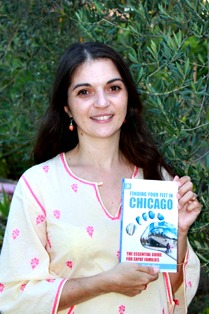
Veronique and her bookAs some readers may know, before the Displaced Nation, I had my own blog, called “Seen the Elephant” — which I used as an outlet while struggling to readjust to life in America after having lived abroad, in England and Japan, for quite a few years. (The name for the blog came from the expression used by Victorian travelers: “Been there, done that, seen the elephant.” Which is how I felt…)

It was because of that blog that I got to know today’s guest, Véronique Martin-Place, since she, too, was quite active in the expat blogging world.

And when I found out she was a Frenchwoman living in Chicago, I was intrigued. What did she make of the city of broad shoulders, jazz, and deep-dish pizza?

I asked her this and a host of other questions in an interview for my blog. For starters, she said that she and her family — her husband is a French diplomat and they have two young daughters — were gradually finding their feet in Chicago. (She did not, however, mention she was planning to write a book of that title!) She didn’t entirely approve of America’s throw-away society and still cooked every day for her family — she even offered her recipe for “real” vinaigrette in the comments. She also reported she’d seen plenty of elephants while living in Sri Lanka (her husband’s second assignment, after Norway).

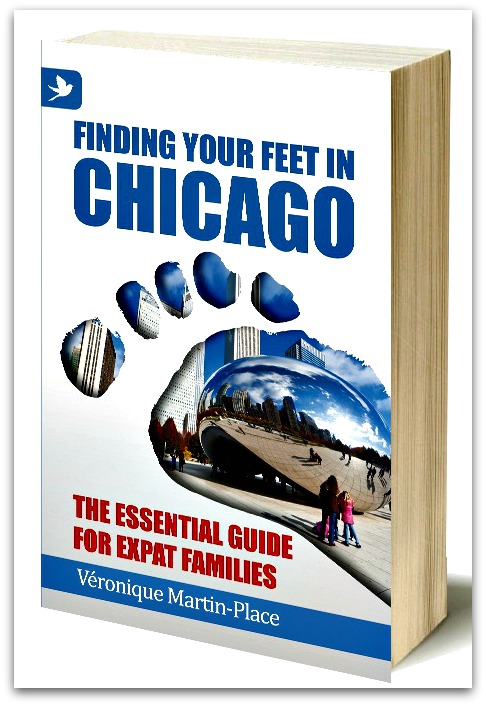
Véronique leads life in the fast lane. A little over three years since our conversation, I find that she has written the definitive expat guide to Chicago: Finding Your Feet in Chicago — The essential guide for expat families (Summertime, 2012). And she is already putting her feet down in a brand new city, one of the world’s trendiest… Here is our exchange:

Bonjour, Véronique! When we last spoke, toward the end of 2010, you told me you’d arrived in Chicago with hopes of getting a job, but then the recession hit, so you’d started up your own writing business. When did you hatch the plan to write a book for expats in the Windy City?
I was already thinking about it when we connected. After witnessing several incidences of culture shock at my daughters’ school, I realized I wasn’t alone in having troubles. Several families from different parts of the world had moved to Chicago around the same time. All of us were in need of information and advice. Meanwhile, I’d started up my blog, Expat Forever, to share my experiences about Chicago — tips on where to settle, which schools to choose, etc. I looked around for local guidebooks to recommend — but there was nothing. So I decided to write one myself.

finding-your-feet-in-chicago-3D-Book CoverThat reminds me of the famous quote by Toni Morrison: “If there’s a book that you want to read, but it hasn’t been written yet, then you must write it.” How long did it take you to produce the book?
From the idea to holding the book in my hands, it took one year and a half! Writing the book directly in English was difficult at the beginning, since English is not my native language. But after a while, I got used to it.

Besides writing in English, what was the most challenging part of the process?
Editing the manuscript. I decided to hire an editor to help with the task.

I know from our previous conversation that having fresh, healthy food is important to you — after all, that’s part of being French! I also seem to recall that you were not a fan of Chicago pizza. You said it was too heavy. But did you cover it in your book?
Of course! I have a chapter dedicated to “Having fun in Chicago,” which includes a section on family-friendly dining out. Before giving my top 10 Chicago child-friendly restaurants, I explain what the Chicago specialties are and insist that children (and their parents) MUST try them. That includes Chicago-style pizza and Chicago-style hot dogs.

What has been the response thus far?
Rather good, I think. I’ve gotten only five-stars comments on Amazon!

Which sections are the most popular?
Readers say they like having so much practical information on family-related topics — not just the advice itself, but all the personal anecdotes and testimonials I include from expat parents. I talked to lots of them and wrote up their stories as “blog posts” or interviews. The stories really speak to the kinds of anxieties most expats have — and they make the book an easy, fun read.

And now your husband has moved on to a diplomatic post in Shanghai! Tell me, does ANYTHING about China remind you of the United States, or are these two countries poles apart?
The United States and China are definitely different cultures — but one similarity struck me right away. Both are consumerist societies. In the US, everything is done to make you purchase and there are plenty of opportunities for you to part with your money. Here in Shanghai, it seems that the only occupation is “shopping.” It’s the only activity people urge you to do from the moment you arrive — visit malls, markets, supermarkets and so on. And I can tell you they have tons of malls, tons of markets (from traditional, the kinds that sell crickets and flowers, to modern, selling electronics, furniture, shoes, and so on), and many, many supermarkets.

How did you prepare yourself and your two daughters for the move?
We didn’t have the chance to make a look-see visit. But six months before moving to Chicago, I’d gone to Shanghai on business, so I had a picture of what to expect: a very urbanized and polluted city. That is also why we decided to settle in the new and “green” development area of Shanghai that is called Pudong.

Did your daughters have any idea of the change they were in for?
My husband and I found some videos about the city on the Internet for them to watch. Fortunately, they’d studied some Mandarin at their American elementary school, so already knew a lot about Chinese traditions and stories. To be honest, I think we learned as much from them about cultural matters as they learned from us on the practical aspects. It was real team work!

I know it’s still early days, but what have you enjoyed the most about living in Shanghai?
Perhaps surprisingly, the fact I can bike! In Pudong, there are a lot of protected biking trails, so it allows me to discover independently this part of the city, and it’s much faster than by foot. But I don’t bike in Puxi (the other side of the Huangpu River, which divides the city into two regions: Pudong, where I live, and Puxi, the city’s historic center). It’s too dangerous.

What is the feature you enjoy the least?
Shanghai is extremely urbanized and I miss greenery. Also, it is very polluted, though less so than Beijing.

What is the top piece of advice you’d give to anyone thinking of becoming an expat in that part of the world — particularly a trailing spouse?
I have five — and actually, they’re for anywhere, not just Shanghai:
1) Learn the language.
2) Get involved in your local community.
3) Keep doing your (or start new) hobbies and/or sports.
4) Discover your surroundings little by little, and you’ll eventually come to know the city as well as the content of your pocket.
5) If you are an accompanying spouse and cannot work locally, go back to school and get new skills, or volunteer to do something you can use professionally upon returning home for good.

And now I have to ask you the obvious question: any plans to write Finding Your Feet in Shanghai?
Many people have indeed asked me that question. And I must admit, the idea was in the back of my mind when I first started my book for expats in Chicago. I thought to myself, this can be the first in a collection, and the next one will be about the city where my husband gets posted next. But at least at this point, I don’t think I’ll write an expat guide to Shanghai. One reason is that there are already lots of books, magazines as well as Web sites for expats in this city. There isn’t the same need as there was in Chicago. But another reason is that my time here is so limited. My husband’s post is for just three years. I’d have to spend all of my time doing research and interviews, getting to know the city like my pocket. And that’s before I can start writing. My book on Chicago was released a couple of weeks after I left to fly to Shanghai — which didn’t give me any time for promoting it locally. I found that very frustrating and wouldn’t want to repeat the experience. Books these days have to be promoted like crazy, and although you can do a lot of it online, I don’t think online promotions can replace interacting with readers in person.

But surely you’ll write another book?
I may not write another book for expat families living in Shanghai, but I already know I will write another book about expatriation. Actually, I have already started it. But I cannot say much more. It is too early.

Aha! You are always so mysterious… Last but not least, I’d like to ask a series of questions that I’ve asked some of our other featured authors, about your reading and writing habits:
1. Last truly great book you read: Rien Ne S’oppose a la Nuit (Nothing Holds Back the Night), by Delphine de Vigan.
2. Favorite literary genre: Memoirs — but also novels, illustrated books like the ones of Danny Gregory (I love his writings and drawings), and carnets de voyage (travel journals). And I have to confess that I still read a lot of children books, especially picture books. My dream is to write and illustrate one.
3. Reading habits on a plane: Something fun and easy to read on my Kindle! I travel light.
4. The one book you’d require the president of France to read, and why: My book, of course! I’m joking. I would like him to read Les mots pour le dire (The Words to Say It), by Marie Cardinal. Everyone should read it.
5. Favorite books as a child: Astérix and Obélix comic book stories, by René Goscinny (illustrated by Albert Uderzo) and Le Petit Prince (The Little Prince), by Antoine de Saint Exupéry.
6. Favorite heroine: Anna Karenina
7. The writer, alive or dead, you’d most like to meet: There are several — all alive and all women: Robin Pascoe, the author of four books about expatriation; Anne Lamott; Annie Ernaux; and the aforementioned Delphine De Vigan.
8. Your reading habits: Every evening, at least one hour, and Sundays as much as I can.
9. The book you’d most like to see made as a film: Hidden in Paris, by Corine Gantz
10. The book you plan to read next: The Help (but I got the French translation), by Kathryn Stockett.

* * *

Wow, what a stimulating list! Readers, any questions or comments for Véronique while we have her attention? Ce qu’est une femme extraordinaire — I think you’ll agree!

STAY TUNED for tomorrow’s post, another installment in the life of our fictional expat heroine, Libby. (What, not keeping up with Libby? Read the first three episodes of her expat adventures.)

If you enjoyed this post, we invite you to register for The Displaced Dispatch, a round up of weekly posts from The Displaced Nation, with seasonal recipes, book giveaways and other extras. Register for The Displaced Dispatch by clicking here!

Related posts:

Images: Véronique Martin-Place with her Chicago book; the book cover in 3D (author’s own photos).

EXPAT BOOK REVIEW: “Trucking in English” by Carolyn Steele

Image.ashx

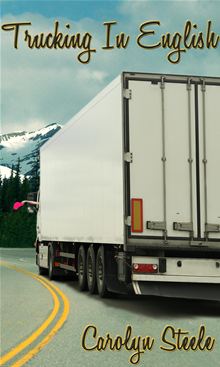
Today we review Carolyn Steele’s Trucking in English: a memoir of being a woman in what is very much a man’s world: that of long-haul tractor-trailor driving in North America.  A Londoner born and bred, Carolyn is now a Canadian citizen and lives in Kitchener, Ontario, where she ran a Bed & Breakfast for five years before trying her hand at negotiating 18-wheelers. Depending on who is asking,  she “maintains that she is either multi-faceted or easily bored”. Confirming this, her résumé states that, in addition to being a lady trucker, she has also been a psychologist and a London Ambulance Service paramedic, while her hobbies include tatting, a form of lace-making.

Trucking in English is available from SmashwordsAmazon (Canada, USA, UK), and Barnes & Noble, but this week we at TDN are in luck: Carolyn is giving away 3 ebook copies to Displaced Nation readers! (Details below.)

TITLE: Trucking in English
AUTHOR: Carolyn Steele
AUTHOR’S CYBER COORDINATES:
Blog: Trucking in English
Website: Carolyn Steele
Twitter: @Trucking_Lady
Facebook: Trucking in English
PUBLICATION DATE: November 2012
FORMAT: Paperback, Ebook (Kindle)
GENRE: Memoir
SOURCE: Review copy from author

Amazon Summary:

“So here’s the plan. I’m going to train to drive a truck and go long-haul. I can get paid and maybe write a book at the same time. What do you reckon?” “Go for it Mum, how bad can it be?” This is the tale of what happens when a middle-aged mum from England decides to actually drive 18-wheelers across North America instead of just dreaming about it. From early training (when it becomes apparent that negotiating 18 wheels and 13 gears involves slightly more than just learning how to climb in) this rookie overcomes self-doubt, infuriating companions and inconsiderate weather to become a real trucker. She learns how to hit a moose correctly and how to be hijacked. She is almost arrested in Baltimore Docks and survives a terrifying winter tour of The Rockies. Nothing goes well, but that’s why there’s a book. Trucking in English began as a blog from the cab and became a popular podcast before taking book form. It is part of Carolyn’s ‘Armchair Emigration’ series.

Review:

“Why would a fifty-something, nicely brought-up mother suddenly decide to go trucking?”

Indeed. Until I read this book, I’d considered trucks to be part of the roads’ parallel universe: menacing beasts that slow you down going uphill, hurtle dangerously fast behind you downhill, or who scatter remnants of blown tires across three lanes, strategically positioned to rip open your door skins like sardine cans.

Carolyn Steele, however, has given me a glimpse inside this parallel universe, and I’ll say this: she’s braver than I’ll ever be.  If I announced to my own family my intention of learning to drive one of these shiny monsters, the reaction would be unflattering: “You?” (Cue gales of incredulous laughter.) “You can’t even reverse a Mini.”  I’m not one of Life’s natural drivers, which makes me all the more admiring of people who are, particularly “fifty-something, nicely brought-up mothers.”

Trucking in English starts at Carolyn’s pipe dream to become a truck driver:

Why not get paid to see North America? I’d driven for a living before, I’d seen little of Canada and nothing of the States, how hard could it be?

— takes us through the training period which was more demanding than she’d anticipated:

I’d assumed it was merely a matter of getting used to where the corners were and developing a technique for climbing in.

— and recounts Carolyn’s adventures once she was let loose on the road.

These long-haul expeditions across Canada and the USA are peppered with frustrations deriving from red tape (seriously — Campbell’s Chicken Soup requires a Customs’ Meat Inspection certificate before it can cross the border?) and the sexism, both unintentional and blatant, that a female truck driver will encounter.

Red-faced squaddie escorted us outside and managed not to look too confused when we [Carolyn and her male co-driver] headed for the wrong sides of our vehicle and it became horribly apparent that I was driving.

Throughout the book shines Carolyn’s good humor, frankness, and sense of the ridiculous.  The characters and events she encounters are described so vividly that they seemed as real to me as they were to her, and in such a way that I had to stifle snorts of laughter if I was reading my Kindle in a public place.

Finally, as March is Style and Beauty Month at TDN, it would be remiss of me not to share a few of Carolyn’s style tips for lady truck drivers:

1. Do not go anywhere without a large supply of baby wipes. You never know when or where your next shower will be.

2. Use a bathroom whenever you see one, even if you don’t need to. (Ever wondered what happens when truckers are taken short in the middle of nowhere during a Canadian blizzard?)

3. Most important of all — dress androgynously. Do not, under any circumstances, let other truck drivers on the road know you are a woman.

A chap in a slower truck does not like to be overtaken by a woman and some of them can get quite snippy about it…With a cap over my eyes (so long as it isn’t pink) hair tucked up into it, large sunglasses and a golf-shirt I can just about pass for anybody… I left the cap off one day due to being so hot that even my hair was sweating. Overtook a truck just south of Toledo and he tried extremely hard to run [me] off the road.

And now it’s your chance to ENTER OUR DRAW TO WIN A FREE  COPY!!!  You can either:

1) Leave a comment on this post, saying why you’d like your own copy of Trucking in English, or

2) Head across to Twitter and tweet the following:

“I want a copy of Trucking in English by Carolyn Steele: http://wp.me/p11cxT-55G via @Trucking_Lady @DisplacedNation”

Don’t forget, you double your chances if  you’re a Displaced Dispatch subscriber!!!

The winner will be announced in our Displaced Dispatch in April.

.

STAY TUNED for tomorrow’s author interview!

Image: Book cover — “Trucking in English”

If you enjoyed this post, we invite you to register for The Displaced Dispatch, a round up of weekly posts from The Displaced Nation, with seasonal recipes, book giveaways and other extras. Register for The Displaced Dispatch by clicking here!

Related posts:

Pay no mind to the travel experts — beauty is in the eye of the beholder!

Matador Network published an article last month bemoaning “travel pornography” — in other words, the kinds of photos one often sees in polished travel guides, making an exotic place look so much better than it does in reality.

This is significant because many of us make our decisions about where or where not to go on the basis of travel Web sites, guidebooks and even Pinterest boards — with their slick photography and accompanying reviews.

As the Swiss-born British philosopher Alain de Botton noted in his book The Art of Travel:

Where guidebooks praised a site, they pressured a visitor to match their authoritative enthusiasm, and where they were silent, pleasure or interest seemed unwarranted.

Case-in-point: São Paulo vs Rio

In Brazil the travel experts have influenced and help perpetuate contrasting perceptions about the country’s two biggest cities: São Paulo (where I live with my Brazilian wife) and Rio de Janeiro.

In most instances you’ll read that Rio is the jewel in the nation’s metaphorical crown, the princess; whereas São Paulo is the ugly stepsister that is best avoided at all costs.

To be honest, when I moved to São Paulo just over a year ago, my own first impressions were not much different. It struck me as a place with ugly skylines, overwhelming traffic and polluted rivers. However, as time went by and I got to know the city better, those impressions changed.

And when I recently went traveling around Brazil with a visiting friend from London, I discovered something quite interesting — I was actually becoming as defensive of São Paulo as the natives.

The bad rap on SP

I started to notice this shift when my friend and I encountered other travelers. Anyone who has traveled recently will know that it’s common to meet all sorts. Typically, your first interactions — long before you decide to become best friends and end up downing shots of tequila in some godforsaken bar (even though you’ll probably never see each other again) — consist of small talk along the lines of:

“Where do you come from?”
“What do you do?”
“How long will you be in [insert city, town, country, etc]?”
“Which football team do you support?”
“Who the hell are Gillingham?”

On this trip, when the mundanities came my way, I had to explain why I resided in São Paulo rather than in London. Then I would get the inevitable “Why the hell are you there?” along with repeated denouncements of São Paulo and how it is a city of doom and gloom, a modern day Sodom and Gomorrah:

“I couldn’t live there” | “I don’t like the sound of living there” [delete phrase depending upon whether you’ve actually been to São Paulo].
“There’s too much/many…. [insert one of the following: traffic|pollution|cars|people].”
“It’s not a tourist city, there’s nothing to do or see.”
“It’s just a big, ugly city.”
“It’s too dangerous.”

There is, of course, an element of truth to most of these points. However, don’t these criticisms (apart from the lack of tourist sights) reflect the reality of 21st-century urban life the world over? I mean, isn’t the debate a matter of degrees?

I blame the travel pornography/travel guidebooks. Cities like São Paulo are constantly maligned because no one has taken the time to dig beneath the surface, or because they are not as immediately captivating as their outwardly attractive neighbors (namely, Rio).

Is beauty an illusion?

But whilst anyone can see that Rio is beautiful, it takes a keener to eye to observe beauty or virtue where it is embodied in less obvious forms. You need to become an explorer of the sort James Murray described in his post of yesterday.

Besides, as is the case of many places that are subject to so-called travel porn, Rio may not actually be as stunning as you first thought. It’s often said of that much-visited city that it is beautiful from afar but rather less so when you get up close.

Copacabana, for example, with its world-famous beach, may have once been the home of the glamorous, but today it’s tatty and parts of it, especially at night, are seedy and not massively safe.

And São Paulo?

Well, if Rio is beautiful from afar but less so up close, then I’d say SP is the opposite. As you approach Brazil’s largest city, its skyline advances towards and then engulfs you in its beige blandness, overwhelming and unending — an effect made more noticeable due to the city’s ban on outdoor advertising.

That said, once you get used to it, SP’s vastness actually becomes one of its marvels.

SP at its most splendid

When I moved here just over a year ago, I vividly remember my sister-in-law saying that living and working in São Paulo makes her feel like a “citizen of the world” — like a small part of something big and important.

What she said is true. Whilst I love venturing into the wild, I am more fascinated by cities — mainly because they are man-made and hence symbolize the complexity of the human condition (I’m a typical sociology graduate!).

Returning to our friend de Botton: he introduces the notion of the sublime in his book on travel, pointing out that certain landscapes can provoke sublime thoughts. Places, he says, can “gently move us to acknowledge limitations that we might otherwise encounter with anxiety or anger in the ordinary flow of events.” (He sees this as a kind of substitute for traditional religious worship.)

For most people, the sight of a desert, canyon or rainforest is enough to elevate them to the sublime, helping to put their daily woes into perspective. But for me it has taken an encounter with a mega-city like São Paulo.

And then there’s that street art!

Whenever I start feeling this way — that SP has put me in touch with something sublime — I begin to appreciate the beauty in the things around me. (I’d missed those things before because of feeling overwhelmed.)

For example, I became acutely aware of the quantity and quality of São Paulo’s street art, which I think must rank amongst the finest, if not the finest, anywhere in the world. You can find fascinating street art everywhere and if you exclude pichação (wall writings done in angry protest), then on the whole it enhances one’s enjoyment of the city’s neighborhoods.

In my view, the street art alone is a good enough reason to visit São Paulo.

But if street art doesn’t take your fancy, rest assured the city also offers plenty of good food, culture and entertainment. Indeed, I cannot think of a place I’ve been to in the continent with as wide a range of quality museums and art galleries.

At weekends you can go for a walk in Parque Ibiraquera (SP’s Central Park), watch a top South American football team, catch a film at an IMAX or, if culture is more your thing, go to a play, opera or ballet. And if you’re a music fan, you’re in luck. Artists who tour South America usually have São Paulo as one of the first dates on their itinerary.

The thing about São Paulo is that whilst it can be intimidating and is perennially frustrating, it’s also pretty cool. As displaced actress Marlene Dietrich once said:

Rio is a beauty — but São Paulo, ah … São Paulo is a city.

And for me, there’s something rather exciting, not to mention awe-inspiring, about that.

STAY TUNED for Tuesday’s post.

If you enjoyed this post, we invite you to register for The Displaced Dispatch, a round up of weekly posts from The Displaced Nation, with seasonal recipes, book giveaways and other extras. Register for The Displaced Dispatch by clicking here!

Related posts:


I’m an explorer — not a traveler

This week, the Displaced Nation is drifting away from March’s initial theme of beauty/fashion tips picked up from world travels. Hardly surprising, given that all of this week’s writers are males! Today’s guest poster, James Murray, a displaced Brit in Boston, is a prime example. The only new fashion he’d like to start would be replacing the word “travel” with “explore.” Sounds pedantic, right? Well, see what you think!

— ML Awanohara

I was never really one for traveling. When all the kids went on their gap years before college, I called them on it: I knew it was a waste of money; a way to delay the inevitable intrusion of the Real World into their lives — in short, I didn’t see the point.

Receiving emails from abroad about how wonderful these experiences were and how life-affirming and eye-opening and incredible the world was, I simply smiled to myself.

How naïve they were, I thought.

Whereas I would be a year ahead; a year closer to a job; a year closer to money, and a year closer to actual freedom.

I did not see work as some black hole into which you pour all of your efforts with no hope of ever getting anything back. On the contrary, I thought it would be pretty good to have a job and a flat and friends and the cash to support a lifestyle I could be comfortable with.

Travel for travel’s sake

I still think that. In fact, I’m not entirely sure I was ever wrong on this point. Sorry to disappoint. And particular apologies to Jeff Jung, whose book on career-break travel was favorably reviewed on this site at the end of last month.

Don’t get me wrong. Yes, I’ve traveled and, yes, I love being “elsewhere,” doing things differently, as much as the next displaced nation resident. In fact I’m a bit of a neophile when it comes to food and culture…

But being enamored of the new doesn’t mean you have to travel.

Travel provides a set of obvious novelties: new tastes; new currencies; new transport; climate; a different view from the window.

But just being somewhere different doesn’t make you an explorer; in order to get that badge, you need to set foot outside your comfort zone, step away from the hotel, the package tour, the guidebook — and look with your own eyes.

Cross that one off the list!

That Facebook app that challenges you to prove you’re a world traveler by listing all the countries you’ve visited irrespective of how long you were there or where exactly you were: what does it really show? It makes a three-day hotel stay in Shanghai look as though you’ve conquered the entirety of mainland China, and it reduces that beautiful holiday in Wales — you know, the one that reminded you what it was like when shops closed on a Sunday — to a complete non-event.

The way we think of travel is all wrong: the political boundaries on the map say that I now live in the USA, but that doesn’t really say anything about where I actually live or the aspects of American culture that I’ve actually experienced.

My life would be completely different if, say, I lived in the desert or the mountains — it would even be different if I lived in New York instead of Boston.

I don’t anticipate ever being able to say that I’ve seen it all.

Explore, for heaven’s sake!

Exploring as opposed to traveling is a question of quality against quantity. I did a lot of exploring in London and Edinburgh that opened my eyes just as much as wandering around Thailand and Romania.

A few curiously exploratory examples:

  • Getting a haircut at a weird little barber’s in Shepherd’s Bush. It was an all-male barber’s, where men could “come along and say what they like in whatever language they like,” as the proprietor put it. I remember being very quiet amid a torrent of very macho conversation. Not a totally unpleasant experience, but I never went back.
  • With my flatmate, laying Russian roulette with the pastries at Vanna Patisserie, a Chinese bakery in Shepherd’s Bush. They were either sugary and delicious or curiously tough with a peculiar secret ingredient. There was no way of telling from the outside.
  • Spotting a Portobello (Edinburgh) art exhibition displayed outside people’s homes that featured, amongst other things, a fat-and-seed bird feeder in the shape of the artist’s head, hung from a tree, where it was gradually and gruesomely pecked to pieces.

These bizarre titbits are the wages of the explorer but not necessarily the traveler, who might see only those accepted “landmarks” to which his eyes are directed.

Avenues for exploration are everywhere. In fact, when I first moved to London, I was so inspired by the tube stops that I wanted to develop a guide to each one.

My idea was that I would use some algorithm to pick a different tube stop each weekend, go there and simply wander around in a roughly spiral shape from that stop, looking carefully at architectural details, stopping in parks and perhaps interviewing the proprietors of particularly interesting local businesses.

I would document these things not so much as a guide for others to visit exactly the same places, but in hopes of inspiring them to look at their own neighborhoods with new eyes.

Exploring the New World

I try to do the same kind of thing in Boston, although I confess I find it a bit harder — there’s the sheer fact that London is 1) massive and 2) very, very old that makes it rather easier to find the gems at the ends of the nooks and crannies.

But I’m not discouraged — I’ve still barely explored the North End with its windy little streets and ample opportunities for getting lost (I don’t have one of those phones that tells me where I’m going).

And just the other day we were introduced to a bar not five minutes down the road, which will make a superb local, with its walls plastered in kitschy tut. I’m sure I’ve passed it before, but, like all the best things, it’s a bit hard to spot.

In amongst these streets are histories, idiosyncrasies and mythologies — of that I have little doubt. Finding them is just a matter of retiring my traveler’s shoes and donning an explorer’s hat.

* * *

So, world travelers — sorry, I meant to say “explorers” — what do you think? Is James right in saying that all of this obsession with the quantity of travel (how many countries, etc.) is misguided? And what do you think of his assertion that Edinburgh can be as fascinating as Bangkok, if you take an explorer’s approach? Please leave your thoughts in the comments…

James Murray is a self-described “itinerant Brit.” After a stint in New Zealand, and some travel in Southeast Asia, he and his American girlfriend — now wife — are practicing “staying put” in Boston, where James is pursing a career as a wordsmith for marketing and fiction, and as a non-professional theatre director. He is also a Utopian idealist and SingStar enthusiast. You can find more about his views by reading his blog, Quaint James, and/or following him on Twitter: @quaintjames.

STAY TUNED for tomorrow’s post by Andy Martin, about a unusual source of beauty in his new home town of São Paulo.

If you enjoyed this post, we invite you to register for The Displaced Dispatch, a round up of weekly posts from The Displaced Nation, with seasonal recipes, book giveaways and other extras. Register for The Displaced Dispatch by clicking here!

Related posts:

img: MorgueFile