The Displaced Nation

A home for international creatives

Category Archives: Cool Columns

LOCATION, LOCUTION: An expat life in Istanbul frees Oliver Tidy to write crime novels set in places he knows well (and Turkey, too!)

Location Locution
Columnist Lorraine Mace, aka Frances di Plino, is back with her second interview guest: fellow crime writer Oliver Tidy.

Hello, readers. My guest this month is Oliver Tidy, who on his author site refers to himself as a “semi-professional fantasist” and an “attention seeking vanity publisher” who is “living in exile.”

He also says he has a “yearning for yarning”—so how much of this is true and how much an exaggeration?

Well, it’s patently true he is a self-published author, currently with nine books available for download through Amazon:

  • four in his Romney and Marsh Files British police procedural series. Newly promoted Detective Sergeant Joy Marsh is shipped out to Dover on the Kent coast to work under Detective Inspector Romney, a cantankerous copper who nevertheless is good at his job…
  • three in his Acer Sansom thriller series. British soldier Acer Sansom resurfaces a year after the world thought he was dead, possessed with a single-minded need for vengeance…
  • two in his Booker & Cash mystery story series. An unlikely detective team, David Booker and Jo Cash, solve mysteries in Romney Marsh, a wetland area in southeast England…

As for the “exile” part, Oliver tells me he left the UK in 2009 looking for change and ended up in Istanbul, where he “got change in spades.”

He is currently working in a Turkish school teaching English as a foreign language to young learners. It’s a job that affords him enough time for writing, something he deeply appreciates:

When I lived in the UK, I tried a couple of times to write, but with the responsibility of property and family and work, and the distractions of television and radio and newspapers and people I never got anywhere with it. One of the many things that I have learned about writing is that you have to sit down and write—often.

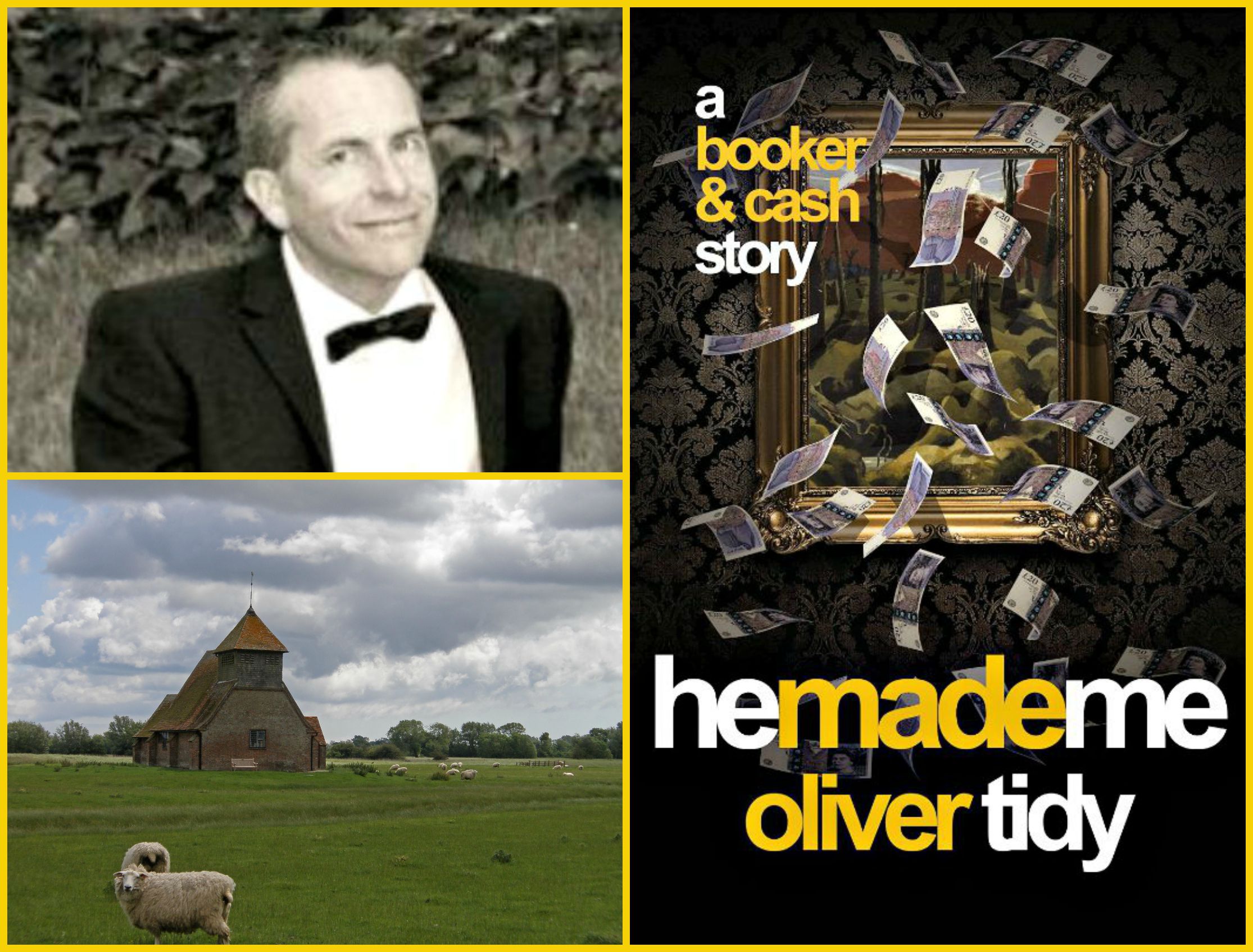
Now that he lives in Istanbul, Turkey, Oliver Tidy is able to write stories set in his homeland, the most recent one being He Made Me. Photo credits: (clockwise) Oliver Tidy (supplied) and book cover art; St Thomas Becket, Fairfield, Kent, by Amanda Slater via Flickr (CC BY-SA 2.0).

Living in Istanbul, Turkey, Oliver Tidy has been able to write books set in the place where he was born and bred, the most recent one being He Made Me, which takes place in Romney Marsh, UK. Photo credits: (clockwise) Oliver Tidy (supplied) and book cover art; St Thomas Becket, Fairfield, Kent, by Amanda Slater via Flickr (CC BY-SA 2.0).

As for the vanity publishing, Oliver also confesses he initially tried to get a literary agent because he never wanted to self-publish, believing that self-publishing was tainted with shades of ego-tripping.

“How wrong I was,” he said. “How wonderful and liberating self-publishing truly is. If I had not taken the step to self-publish, my readership would still be limited to my mum and me—and I’m sure that mum skim-reads most of my stuff.”

Judging by the Amazon reviews he receives, his audience extends far beyond his mum—and what his fans seem to love the most about his writing is its “local colour,” “sense of place,” and “wonderful descriptions of settings.”

Let’s find out how he does it, shall we?

* * *

Which comes first, story or location?

Why does this make me think of chickens and eggs? Such a hard opening question. I hope they’re not all going to be like this. I much prefer questions about my favourite things: raindrops on roses and whiskers on kittens, that sort of thing.

Anyway, here goes. As you mentioned in you kind introduction, I write three different series of books: one is set in Dover, Kent—The Romney and Marsh Files; one is set on Romney Marsh—Booker & Cash Stories; and one where, in three books so far, my central protagonist has shot up several different countries on a variety of continents—the Acer Sansom novels. (Acer is a great advert for Brits abroad. Bit of a one-man stag party.)

With the Romney and Marsh Files, story and location had an equal weighting in development. With the Booker and Cash stories it was certainly location first—I am Romney Marsh born and bred. As for the Acer Sansom novels, the first, Dirty Business, involved him visiting Istanbul, a city that I’d been living in for about a year. Acer went from Istanbul to Bodrum, a seaside resort town in Turkey that I’d spent the summer in. That book was definitely heavily influenced by my geographical experiences. The subsequent two books were predominantly plot led.

What’s your technique for evoking the atmosphere of a place?

Tumble weed moment. In six years of writing I’m yet to experience writer’s block…until now. Give me a minute. I’ll come back to this one at the end. (I came back to it at the end and I still couldn’t answer it. Sorry.)

Which particular features create a sense of location? Landscape, culture, food?

These questions are providing an opportunity to really reflect on my writing—something I’m feeling I don’t do enough of.

I don’t write much about what my characters eat. I write a little more than nothing on the cultures of my settings. Physical geography features more than either of the other two in all of my series. As far as my globe-trotting Acer Sansom novels go, after the first book—where I did have experience of the locations involved—I have to say a massive thank you to the Internet, especially Google maps, Google earth, Google street view. Maybe I should just say thanks Google. I’ve also obtained good insight from some travel blogs. Some of those are a wonderful resource for armchair writers.

Can you give a brief example of your work which illustrates place?

I’ll use a short passage from the first Acer Sansom novel. One of my characters has driven from Istanbul to Bodrum.

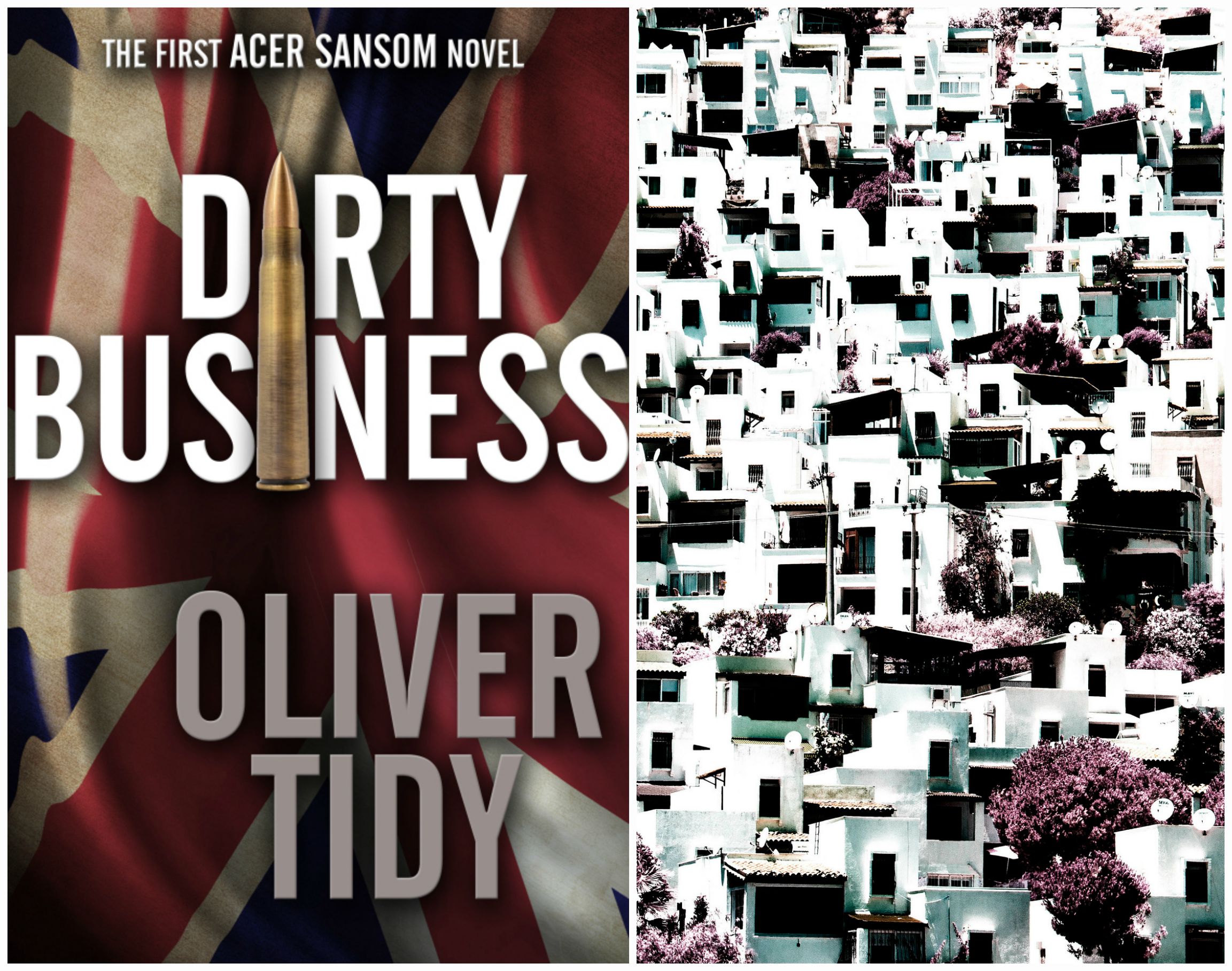
Oliver Tidy’s first Acer Sansom thriller, Dirty Business, is set partly in Bodrum, Turkey, where he lived for a year. Photo credit: Cover art; The best place to live! by Tuncay Coşkun via Flickr (CC BY 2.0).

Before long the vista opened up before her. As she sometimes had in the years that she had driven to Bodrum, she pulled into a loose gravel pocket at the side of the road and got out of the car.

From her lofty vantage point high up in the hills that embraced the area, she was able to look down at the sprawling panorama of the holiday capital of Turkey. Little enclaves of white boxes, taking advantage of the best geography, were packed so tightly together in places that they might have been one huge solid mass of concrete.

The steep hills that backed these separate little communities demonstrated both the developers’ greed and the sun-seekers’ need for yet more building as newer communities sprang up, patching the arid landscape white like some poorly-designed chess board.

At this time of year Bodrum would be heaving not just with the Turks who could afford to escape the suffocating heat and humidity of the bigger cities but also thousands of holidaymakers of all ages and nationalities.

Once, she thought, the place must have looked like paradise from where she stood—before Man’s concrete assault paradoxically began the ruination of the very environment that made him invest in the area. Would it always be only a matter of time and money before the need to develop areas of outstanding natural beauty outstripped Man’s admiration for them? Thank goodness there were still some idyllic pockets of the area where the authorities had elected to cease development. She felt grateful, if a little hypocritical, that her family owned a villa in one of them.

Her gaze took in the superb sweep of the Aegean, glistening in the early morning light, stretching out towards Greek territory; the differing hues of green and blue combined to create the most inviting scene. She tried to make out details of the ships anchored across the bay but was too far away.

How well do you need to know the place before using it as a setting?

Having lived on Romney Marsh for over forty years has made the two stories—the third is under construction—in my Booker & Cash series much easier in the penning-the-setting stakes. My memories of the place are vivid and unshakeable and I return there for a few weeks each year in the summer which allows me to top them up.

I know Dover fairly well, having spent a lot of time there a few years ago. When I return to the UK I like to jump on the bus from my home on Romney Marsh to Dover for the day just to refresh my memory and see what’s new.

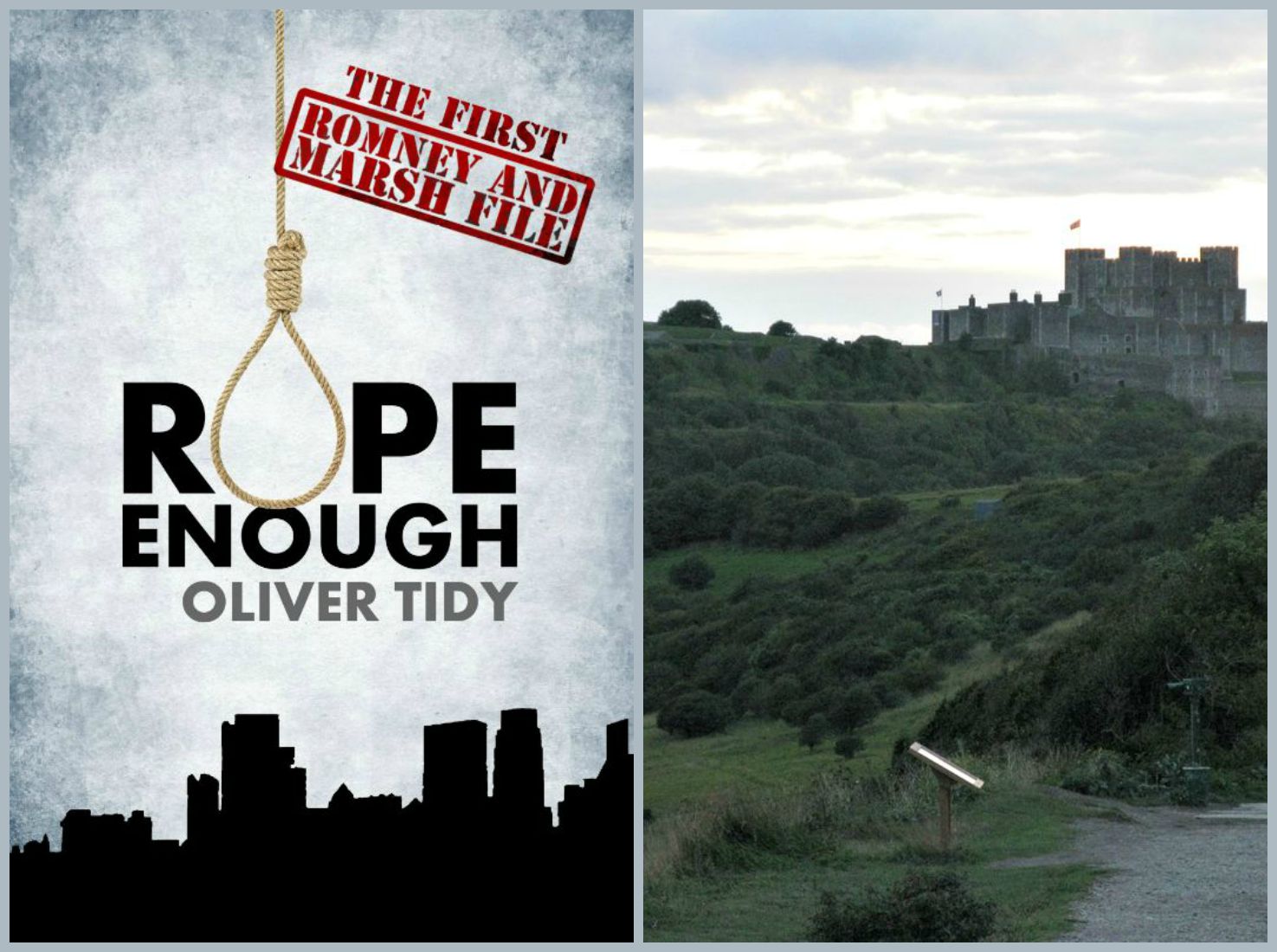
Cover art of Rope Enough, first in police procedural series set in Dover; Dover Castle, by Andrew and Annemarie (CC BY-SA 2.0).

Cover art for Rope Enough, first in Tidy’s “Romney and Marsh File” police procedural series set in Dover; Dover Castle, by Andrew and Annemarie (CC BY-SA 2.0).

As I mentioned, in the first Acer Sansom book I used Istanbul and Bodrum for my exotic locations—two places that I felt I had enough experience of to write convincingly about them. Most of Acer’s locations in the subsequent two books I have never visited. I’m always waiting to be taken to task by readers who have personal and insightful experiences of the places I’ve depicted. What can you do sometimes? You need to write about somewhere you’ve never been. You log on, do some research and then your best.

Which writers do you admire for the way they use location?

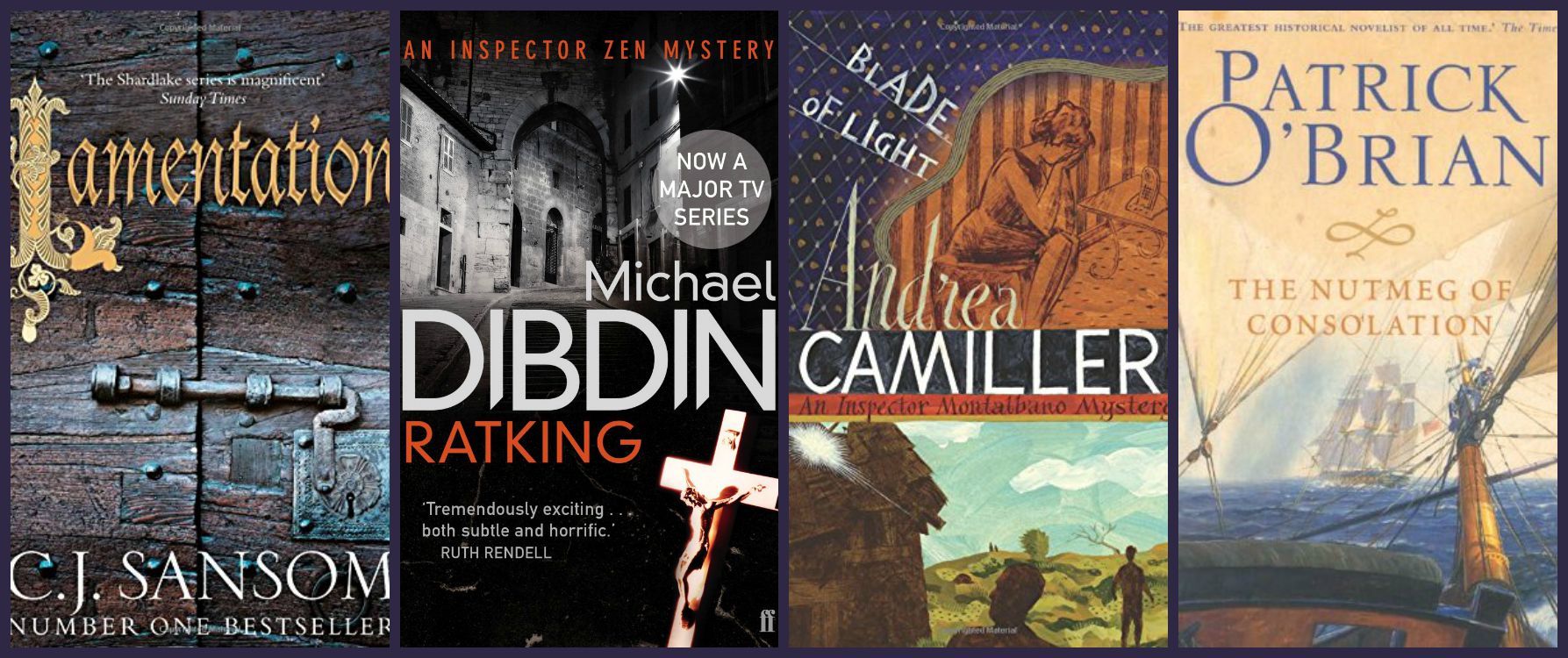
CJ Sansom for the way he portrays London in Tudor times; Michael Dibdin and Andrea Camilleri for their descriptions of Italy, and the unbeatable Patrick O’Brian for his depictions of any location, be it land or sea, that he touches upon in any of his Aubrey/Maturin novels. What a writer.

A few of Tidy's favorite authors, who know how to handle "location, locution."

A few of Tidy’s favorite authors, who have demonstrated a mastery of “location, locution.”

Thanks so much, Oliver!

* * *

Readers, any questions for the jolly Oliver Tidy? Please leave them in the comments below.

And if you’d like to discover more about Oliver Tidy, why not pay a visit to his author site. You can also follow him on twitter at @olivertidy.

Until next month!

Lorraine Mace writes for children with the Vlad the Inhaler books. As Frances di Plino, she writes crime in the D.I. Paolo Storey series. She is a columnist for both of the UK’s top writing magazines, has founded international writing competitions and runs a writing critique service, mentoring authors on three continents.

STAY TUNED for the next fab post!

If you enjoyed this post, we invite you to register for The Displaced Dispatch, a round up of weekly posts from The Displaced Nation, with weekly updates and much, much more. Register for The Displaced Dispatch by clicking here!

Related posts:

Photo credits (top of page): The World Book (1920), by Eric Fischer via Flickr; “Writing? Yeah.” by Caleb Roenigk via Flickr (both CC BY 2.0).


For this expat writer who has photographed everything from the Gulf of Alaska to her own back garden, a picture says…

KONICA MINOLTA DIGITAL CAMERAGreetings, Displaced Nationers who are also photography buffs! “A Picture Says…” columnist James King is still away, so I am filling in again. But the good news is, he approves of the columns I’ve produced thus far! I know I’ve enjoyed spending time with the previous two guests, fearless and feisty photography pro Steve Davey and fine-art photographer Dave Long.

And today I’m excited to introduce Madeleine Lenagh, an American who, having lived in Holland for more than four decades, has made it her base for an impressive range of creative pursuits.
Madeleine Lenagh moeraki

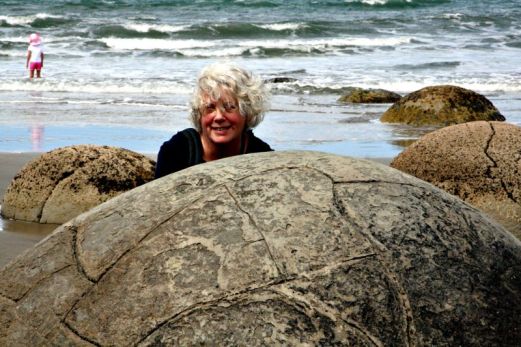
A photo of Madeleine Lenagh taken in New Zealand, among the magnificent Moeraki Boulders.

I first heard about Madeleine from Springtime Books, which published her memoir, Passage of the Stork, Delivering the Soul: One Woman’s Journey to Self-Realization and Acceptance, several months ago.

As those who perused our summer reading recommendations may know, Madeleine’s book was one of my picks. I was intrigued that she chose to tell her life story using poetic vignettes and commentary by archetypes from Nordic mythology and fairy tales.

From the title of the book alone, it’s possible to discern that that Madeleine is in touch with nature at an almost spiritual level. She looks to the stork to deliver her soul (in ancient Egypt, a drawing of the stork served as the hieroglyphic for “soul”). And if you read the book’s prologue, you’ll see that her view of nature includes mermaids—as evidenced by the prologue’s very first sentence:

Three mermaids play in the huge rolling waves, splashing and diving in the curling spray.

It comes as little surprise, then, to discover that besides being an author and blogger, mother and grandmother, and life coach and counselor, Madeleine is a shamanic practitioner. She has been influenced by Dutch shamanic teacher Daan van Kampenhout, whose method fosters connections with helping spirits and ancestors.

What I didn’t realize, though, is how much Madeleine loves to travel and take photographs. She even has her own photography site.

Now let’s see what other worlds Madeleine can conjure up for us with her photos!

* * *

Hi, Madeleine, and welcome to the Displaced Nation. I’ll start the same way as James, by asking: where were you born, and when did you spread your wings (an apt metaphor in your case, given your fondness for storks) to start traveling?
Hi, ML, thank you for inviting me to take part in this column. In answer to your first question: I grew up in Westport, Connecticut. When I was two years old, my stepfather was sent to Europe as a Naval attaché to the NATO. For three years, we lived in Paris, Bad-Homburg, and London. We returned to Westport when I was five. Although I have few memories of those early years, I believe my love of traveling was born then.

So you didn’t end up being raised as a Third Culture Kid?
No, I didn’t leave the United States again until I was 21, when I coaxed my family into giving me a trip to Europe for my 21st birthday. I traveled all around Western Europe and down into former Yugoslavia. At the end of the summer, I was in The Netherlands and my money was running out. I didn’t want to go home yet and found an au-pair job for six months.

Which countries have you visited thus far, and of those, which have you actually lived in?
My travels have taken me all through Europe, as well as to India (Rajasthan), Indonesia (Java and Bali), Costa Rica, and New Zealand (South Island). I believe that Canada and Alaska deserve a separate mention as they are beautiful and remote parts of the world. But, apart from those few years when I was a small child, I have only lived in the United States and The Netherlands.

It’s interesting to me that you chose to make The Netherlands your home for your adult life. What made you settle there in particular?
When I became an au pair in The Netherlands 45 years ago, I sold my return trip ticket to buy winter clothing. Somehow I never got around to leaving. It often amazes me that I, a lover of wild places in nature, could feel so comfortable in this relatively “tame” country. There were key moments in my life when I asked myself, so where am I going now? But there was always more reason to stay than to go. Passage of the Stork, Delivering the Soul describes, among other things, my struggle to put down roots and find a sense of permanency.

“She will always love the sea…” —from the Prologue to Passage of the Stork

Moving right along to the part we’ve all been waiting for: a chance to appreciate a few of your photos. Can you share with us three photos that capture some of your favorite memories of the so-called “displaced” life of global travel? And for each photo, can you briefly tell us the memory that the photo captures, and why it remains special to you?
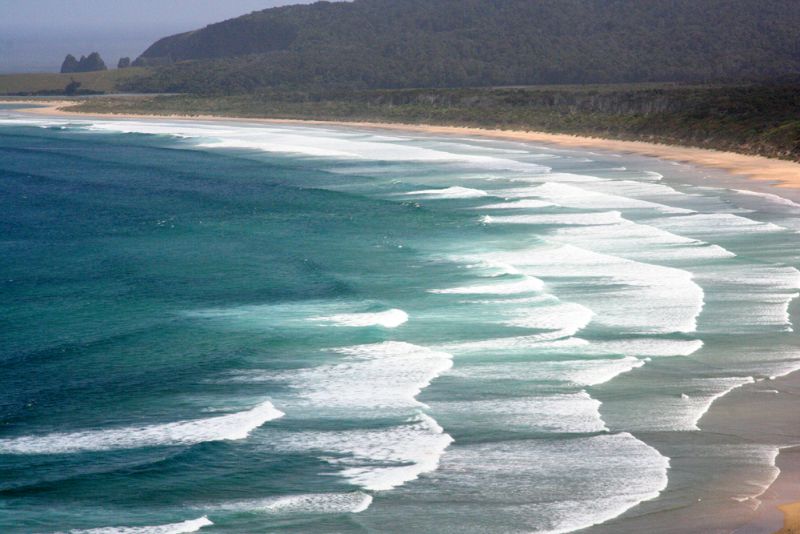
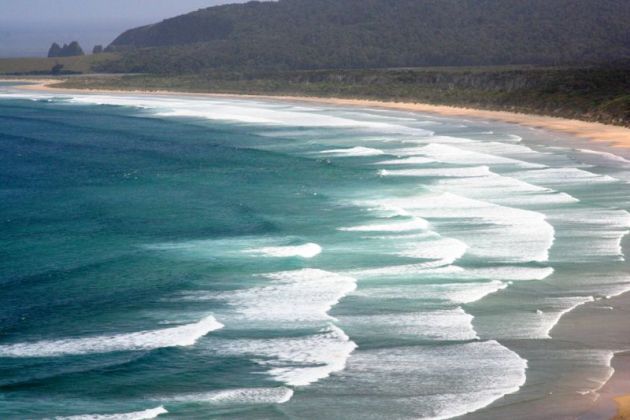
Occasionally I arrive somewhere and think, I could live here. One of those places was South Island, New Zealand. I love the wild remote land, the warm friendliness of the people, and the ever-changing scenery. The photo I have chosen here is the perfect arch of a totally deserted beach in the Catlins, way down on the southern end of the island.
catlins_800x

Untainted by the modern world, the Catlins are the kind of place where a mermaid might appear. Photo credit: Madeleine Lenagh

Wow, that’s the kind of place where it would be easy to imagine mermaids! I have only been to New Zealand’s Northern Island, but even there, I felt that it attracts people who want to get away from it all…
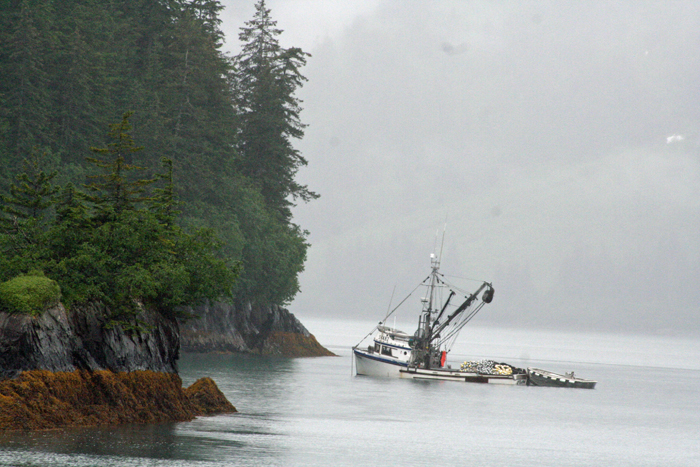
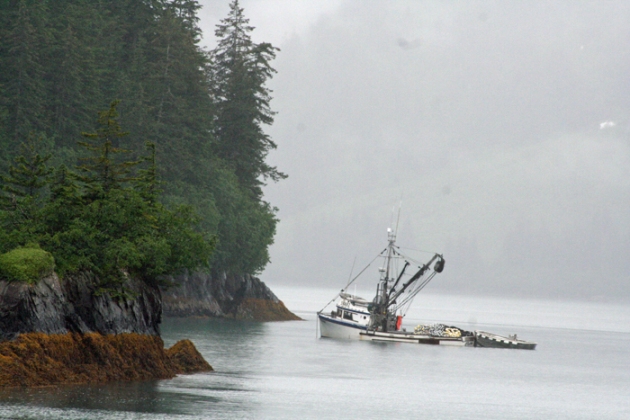
Along the same lines, another place I would be seriously tempted to live, if it weren’t so cold and dark in the winter, is Alaska. I love the pioneer spirit of the people who live there. My brother runs nature tours out of Paxson, which is located in one of the prettiest spots in the state. To the north of the Denali Highway, one sees the dramatic Alaska Range, with its snow-capped peaks and glaciers. An outstretched tundra lies to the south. However, the photo I have chosen, of a fishing boat near the shore, was taken down on Prince William Sound, during a day cruise in 2010. I like the muted colors, with only the bright splash of red on the boat to off-set the fog.
alaska77

While cruising through the calm, protected—and mysterious—waters of Prince William Sound. Photo credit: Madeleine Lenagh

Ooh, I really like this photo. So moody and atmospheric… Though I’ve never been to Alaska, I picture it as having this kind of mystique. Where are you taking us next?
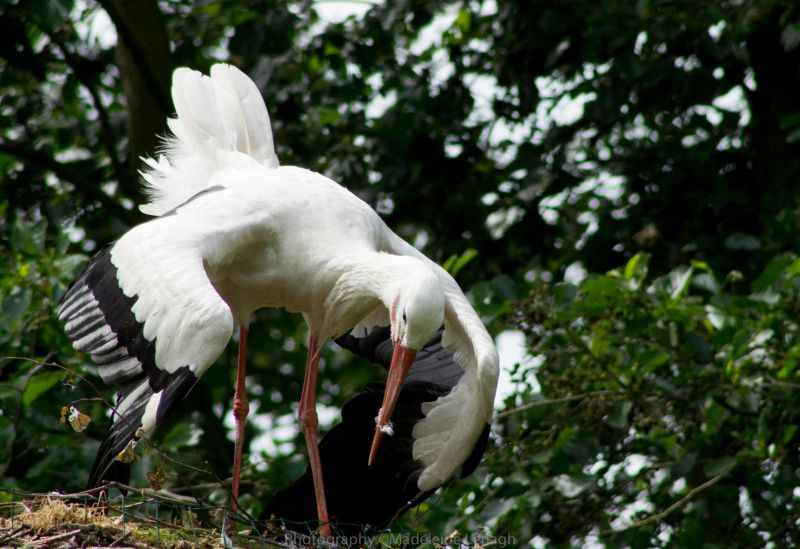
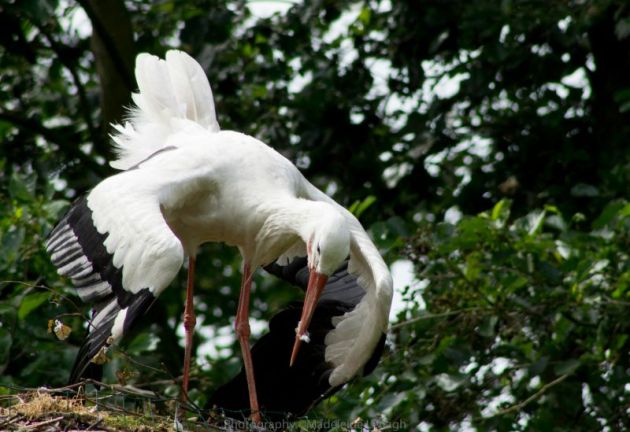
This summer I traveled back to the New England of my youth. I realized how much at home I feel there, in spite of having left 45 years ago. Those of you who have read my book know that I have a special relationship with storks. One of the things they reflect about me is their migratory nature, feeling at home in more than one place. I love this photo of a white stork, taken near my home in The Netherlands, doing its special bill-clacking dance as it returns to the nest.
stork-s_800x

Time for a spot of beak-clapping, says this Dutch stork. Photo credit: Madeleine Lenagh

Hm, until now I have always associated storks with the arrival of babies. But after hearing what you have to say, I may start thinking of them as the avian counterpart of the serial expat!

“I lie on my stomach, hearing gossamer wings rush by.” —from the Prologue to Passage of the Stork

Having seen your first three photos, I expect it’s a bit of a tough choice, but which are the top three locations you’ve most enjoyed taking photos in—and can you offer us an example of each?
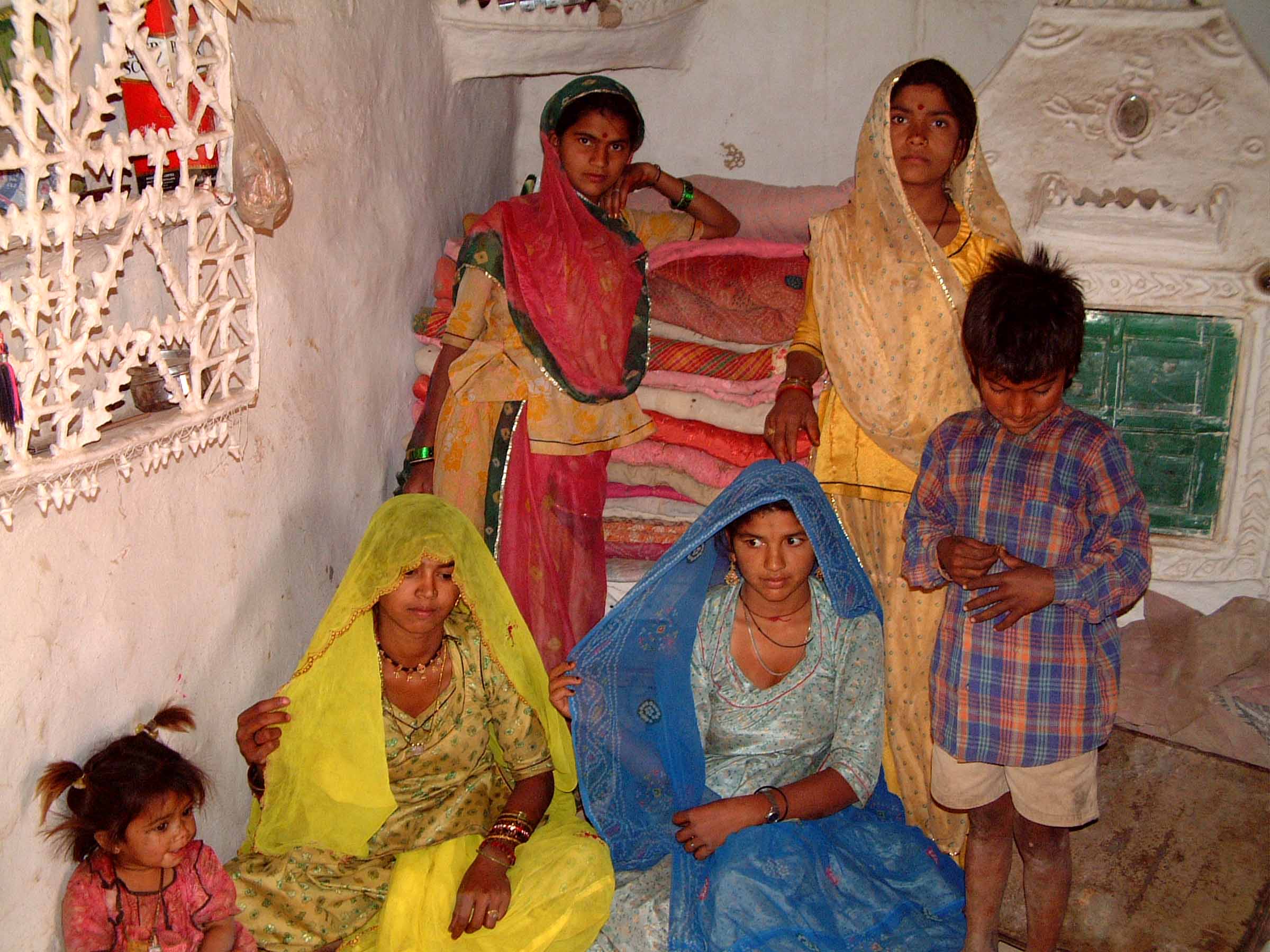
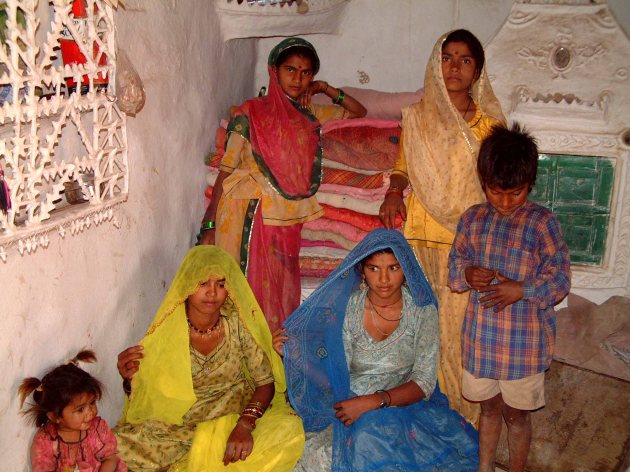
I’m actually going to pick three new places for you. The first one is India. It is a riot of color and ornate decorations, a photographer’s paradise. The photo I have chosen illustrates this perfectly: a group of children posing for me in the “best room” of their desert compound near Jaisalmer.
212_desert

Colorful life in India’s Thar desert. Photo credit: Madeleine Lenagh

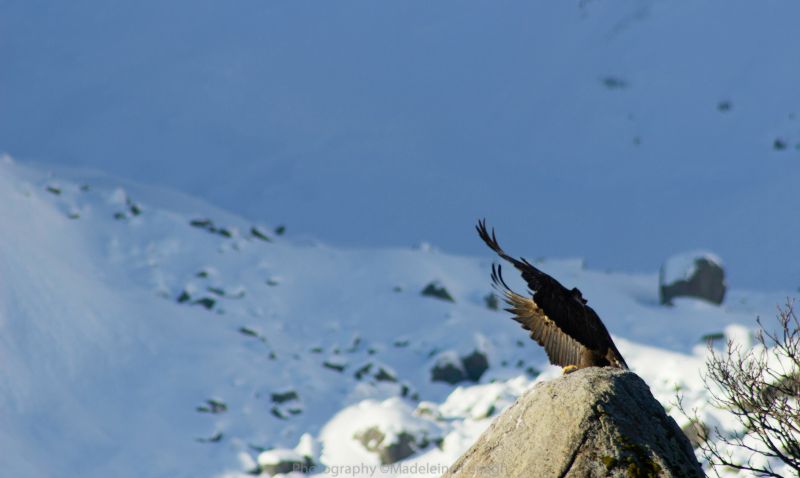
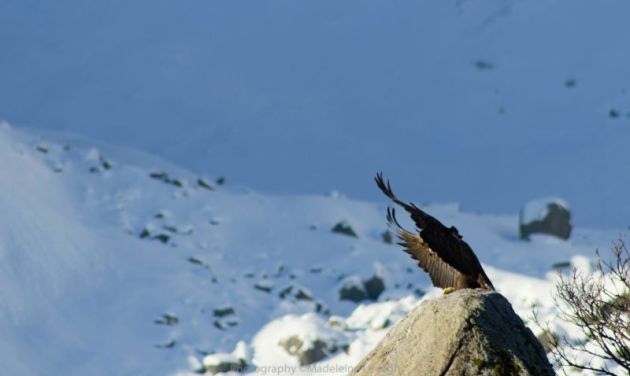
I also have a special relationship with Norway (disclosed in my book) and I love photographing birds. Up in the Lofoten archipelago, I had the unique opportunity to photograph white-tailed sea-eagles. I’m very proud of this shot, catching the bird just as it had landed on a rock.
eagle_800x

A white-tailed sea-eagle touches down on this untouched land within the Arctic Circle. Photo credit: Madeleine Lenagh

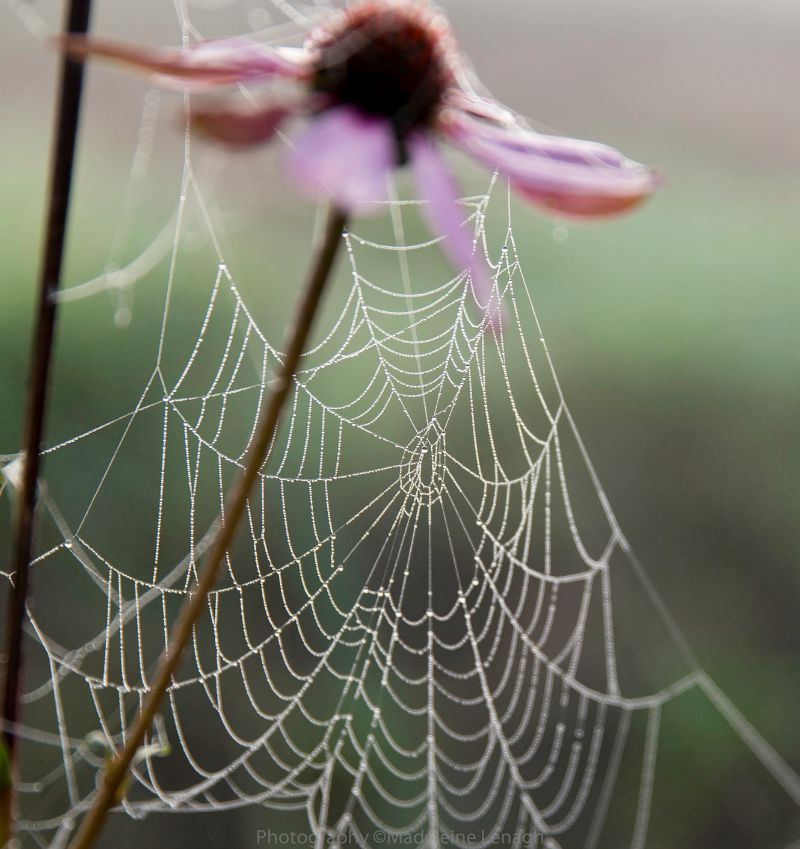
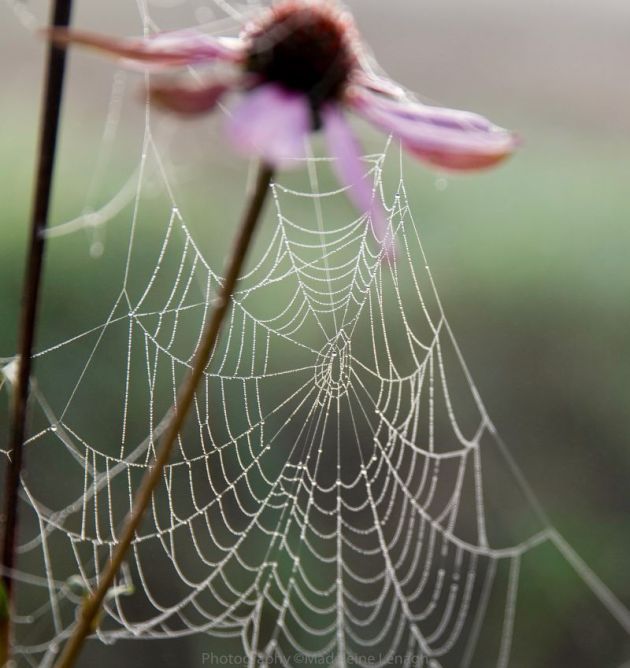
Finally, though I’ve taken you far afield, my last pick for favorite photography locations is my own garden! I love the simple beauty of the nature I find there. A perfect illustration is this photo of a spider web covered with droplets of fog.
spiderweb-s_800x

Is it a spider web or the finest lace? Photo credit: Madeleine Lenagh

I love that you’ve taken us back to your own garden! It makes me think of a fellow New Englander of yours, Emily Dickinson, who took companionship as well as inspiration from her garden in Amherst.

“You can cage a bird, but you can’t make him sing.” (French-Jewish saying)

Going back to your photo of the children in India, I wonder: do you ever feel reserved taking photos of people, particularly when they are conscious of your doing so? How do you handle it?
I am very reserved about taking photos of people, especially in other cultures, and will only do so if they have given me permission. Usually, asking people if you can take their photograph is a wonderful way of making contact with them and often leads to spectacular portraits. The photograph of the children in India is a good example. I love how the two sitting girls (unmarried and therefore veiled) unveiled their faces for the photo.

When did you become interested in photography and what is it about this art form that drew you in?
I believe I have photography encoded in my DNA. My grandfather was taking brilliant photographs in the 1920s. My mother never went anywhere without her 1953 Leica. My Norwegian father (caution: book spoiler!) was a cinematographer. I started taking photographs (and working in a darkroom) when I was about 18 years old. I believe that I was originally drawn in by the fact that it required no real motor skills and I was dreadful at drawing! I’ve always had the urge to express my feelings in some creative fashion, whether it be writing, photography, painting, or dance. Currently, my greatest motivation to photograph is to share the beauty of the natural world with others; to draw them into the same sense of awe and majesty that I feel when I’m in touch with nature.

“Listen to all, plucking a feather from every passing goose, but, follow no one absolutely.” (Chinese saying)

And now switching over to the technical side of things: what kind of camera, lenses, and post-processing software do you use?
Most of these photos were taken with earlier cameras but, at the moment, I use a Canon EOS 6D, a full-frame camera. My favorite lens is a 70-200mm f 2.8 lens. I have been using a 2x extender to get up to 400mm, but recently decided that it slows down the focus too much so I will be looking for a good telephoto lens soon. I find that, as my experience grows, I grow more and more fussy about my equipment! I photograph in RAW format and process the images in Adobe Lightroom.

Finally, can you offer a few words of advice for wannabe photographers who are traveling the world or living abroad?
I suppose the most important advice is just to go out and photograph the things you love. Good photography takes practice and more practice. Study the manual of your camera and don’t be afraid to experiment with settings. Study paintings and sculpture by the artists you admire, to develop a sense for light and composition. As I develop as a photographer I find myself growing more and more critical of my work. It’s not just about showing the things I’ve seen or taking good photos. It’s about taking great photos that show a unique moment.

And I think the most important advice to any aspiring photographer was voiced by Pablo Picasso:

“Learn the rules like a pro, so you can break them like an artist.”

Thank you, Madeleine! I appreciate your sharing a selection of photos that illustrate your deep connection with nature. I’m impressed that you can find so much beauty and wonder on your own doorstep as well as on your travels to the world’s most unpopulated and unspoiled places.

* * *

Readers, what do you make of Madeleine’s travel-photo experiences and her photography advice? Please leave any questions or feedback for her in the comments!

If you want to get to know Madeleine and her creative works better, I suggest you visit her author site and her photography site. You can also follow her on Facebook (she posts her latest photos) and Twitter. But to really get to know Madeleine, I recommend getting her book, Passage of the Stork, Delivering the Soul. You’ll never look at storks, or mermaids, in the same way again!

NOTE: If you are a travel-photographer and would like to be interviewed for this series, please send your information to ml@thedisplacednation.com.

STAY TUNED for next week’s fab posts!

If you enjoyed this post, we invite you to register for The Displaced Dispatch, a round up of weekly posts from The Displaced Nation and SO much more! Register for The Displaced Dispatch by clicking here!

Related posts:

DIARY OF AN EXPAT WRITER: How far I have come in a year…and what’s next

Diary of an Expat Writer
American expat in Hong Kong Shannon Young quit her day job last year to become a full-time writer. Here’s the latest entry in her expat writer’s diary.

Dear Displaced Diary,

I write to you on the occasion of my one-year full-time writing anniversary!

One year ago I quit my job as an English teacher to write full-time. As I’m wrapping up my anniversary month, I’m taking some time to reflect on what I’ve learned and accomplished. I’ve described for you many of the details of my work over the past year, but in this missive I want to step back and consider the big picture.

One thing I’ve gone on about at some length is my affection for outlines and checklists, so before talking about what’s next, I’ll share a few lists: overarching goals I set at the beginning, struggles along the way, milestones achieved.

Intense! Shannon's to-do list, displaying just a few months of her year of full-time writing.

Intense! Shannon’s to-do list for February to May of this year.

Taking stock of Year One

Goals set at the beginning:
-Write full-time for at least six months.
-Complete the Seabound Chronicles (post-apocalyptic series) and publish it independently.
-Promote the release of my traditionally published travel memoir.

Challenges I encountered along the way:
-Establish a daily routine.
-Manage my expectations after a slow start to sales.
-Block out sales stats and reviews to focus on writing.
-Settle in for the long haul.

Milestones achieved:
-Completed three of the novels in the Seabound series: Seabound, Seaswept, and Burnt Sea (launches August 30th).
-Wrote early drafts of two novels (Seafled, a new book), one short non-fiction project (TBA), along with numerous articles and posts.
-Promoted the Hong Kong release (November) and worldwide release (July) of my memoir, Year of Fire Dragons.
-Stretched savings to keep writing for an additional six months.
-First 100-sales day.
-First 10,000-word writing day.

COMING SOON: Burnt Sea, the prequel for Shannon Young's Seabound Chronicles, due out in September.

COMING SOON: Burnt Sea, the prequel for Shannon Young’s Seabound Chronicles, due out in September.

Coming to an assessment

Overall, this has been a very positive year. I love the work, and I’m seeing a steady rise in sales. I’m learning a lot about the business and how to actually move books. Some of the things I’ve learned are helping me to streamline my strategy for the coming year (price promotions supported by advertising sell more books than blog tours, for example, and take WAY less time away from writing). My writing process is becoming more efficient, and the more I write the more ideas I have. But there’s another facet to any career change that needs to be addressed . . .

The money!

I haven’t reached my income targets yet. Although I am writing full-time, I am not making a full-time living (an amount that is different for each individual; I live in an expensive city, but we have no children). I’ve been living on the money I saved during the nine months between when I paid off my last student loan and when I got my last teaching paycheck.

Amazon now sends me a decent check every month and I’m seeing promising and consistent sales trends. I estimate that my monthly sales will produce enough income for me to continue writing full-time by Christmas.

What’s next?

At this point I’m close enough to the tipping point that it doesn’t make sense to look for a new permanent job. However, my savings are running low so I’ve decided to take a ten-week part-time teaching contract to get me through to that tipping point, beginning in October.

My new challenge over those ten weeks will be to maintain my writing momentum with a different schedule. I’ll only be teaching for two hours a day, but it will require a new routine and renewed focus during the rest of the working day.

I don’t yet know the details of my new post. Just in case it turns out to be more disruptive than anticipated, I’m doubling down during the two months between now and the start of the contract. I plan to finish the rewrites for Seafled, the final book in the Seabound Chronicles, by the end of September to make sure my publication schedule continues uninterrupted. While I’m doing the part-time work, I’ll use the rest of the day to write rough drafts for my next series!

I’m looking forward to getting out and about in Hong Kong a bit. Hopefully the ideas will flow and the more constrained schedule will push me to new levels of productivity. I completed all the books published under my Shannon Young name and wrote early drafts of three of the four Jordan Rivet novels while working full-time, so I know I can do this.

That’s it for now, dear Diary. I talk about my writing anniversary in a new video here if you’d like to take a look.

Thanks for everything!

Shannon Young
AKA Jordan Rivet
www.shannonyoungwriter.com
JordanRivet.com

* * *

It must be a sign of aging but for me it seems like only yesterday that Shannon embarked on this writing adventure, and my, she has accomplished a lot! But, alas, money is a perennial concern for creative types of any ilk, including those who live in far-flung places like Hong Kong (that’s an expensive city!). Readers, any thoughts, words of encouragement or other kinds of responses to Shannon’s latest diary entry? Please leave in the comments. ~ML

STAY TUNED for next week’s fab posts!

If you enjoyed this post, we invite you to register for The Displaced Dispatch, a round up of weekly posts from The Displaced Nation and much, much more. Register for The Displaced Dispatch by clicking here!

Related posts:
TCK TALENT: Lisa Liang takes her show back on the road; second stop: Cape Town, South Africa (1/2)

TCK Talent columnist Lisa and her husband (and techie), Dan, head to Cape Town. Photo credits: (from left) Alien Citizen poster; Lisa and Dan in front of Little Theatre on University of Cape Town campus; and view of xxx through bus window (supplied).

TCK Talent columnist Lisa and her husband (and techie), Dan, head to Cape Town. Photo credits: (from left) Alien Citizen poster; Lisa and Dan in front of Little Theatre on University of Cape Town campus (supplied, by Daniel Lawrence); and view of Table Mountain through bus window (supplied, by Lisa Liang).

For the second month running, our TCK Talent columnist Elizabeth (Lisa) Liang updates us on her own creative life. This is the first of a two-part post on her South African experience.

Howzit, dear readers—molweni!

I’m devoting this month’s column to the experience of taking  Alien Citizen: an earth odyssey, my one-woman show about growing up as a Third Culture Kid (TCK) of mixed heritage, to Cape Town, South Africa.

The occasion was the 2015 Women Playwrights International (WPI) Conference, held June 29–July 3. WPI has brought together women playwrights and allied theatre artists, cultural workers, and scholars since 1988. It facilitates communication and collaboration among the international community of women in theatre by holding conferences every three years.

In last month’s column I remarked: “It sounds like my kind of crowd.”

Well…it was!!

It felt enormously special to be at the conference’s 10th assembly and its first gathering on the African continent—my first time back in Africa since I graduated from high school, and my first visit to Cape Town. I’ll always be grateful to the donors who financed the trip via my online crowd-funding campaign.

Into Africa

It takes a gajillion hours to get from Los Angeles, California, where I live, to Cape Town (with a layover at Heathrow). My husband (and techie), Dan, and I can’t sleep on planes (!) so were jet lagged on arrival—and only too glad to reach our lodging at Graça Machel Hall at the University of Cape Town (a residence hall, or dorm), the cost of which was generously covered by a housing grant from the Writers’ Guild of Norway.

The room and especially the communal bathrooms gave us flashbacks to our college years—except this dorm was cleaner and full of adult delegates to WPI and other conferences, which we appreciated. We were also happy that the bathrooms provided a good hot shower—and were taken aback (but ultimately impressed) by the free condoms offered in every bathroom on campus.

Note to travelers: If you visit Cape Town in winter (May–July), be warned: indoors is colder than outdoors. Virtually no one has heating or insulation, so bring thermal socks and long johns to wear beneath your pajamas at night, and a thick sweater for any day you lounge indoors—and you’ll be fine. I also recommend gloves and winter hats, unless you’re from a below-freezing-in-winter climate, in which case you’ll likely shake your head and chuckle at all the other tourists complaining of the cold. (The Canadian delegates seemed to be the most bemused by the rest of us.)

The conferencing experience

Every day Dan and I rode the shuttle taking WPIC delegates to the conference site on UCT’s Hiddingh Campus. During the 15-minute drive along the highway, we thrilled at the sight of Table Mountain, Lion’s Head, Devil’s Peak, the harbor, and the Atlantic. It’s impossible to miss the mountains—they loom over, or cradle (depending on your perspective), Cape Town and are magnificent.

My conferencing mornings began with a fantastic keynote by an African theatremaker or a fascinating panel of mostly African playwrights, all women. This was followed by a tea/coffee/yummy-snack break, then workshops led by theatremakers from all over the world, and then a tasty lunch provided by WPIC. Then: readings of excerpts from plays written by playwrights from everywhere and read by South African actors of every race/ethnicity, doing accents from all over Africa and the English-speaking world. Then another tea break, more readings, then panels/sessions/networking/presentations, then supper break (not provided, and we learned that we could not get a bad meal in Cape Town—every dinner out was delicious). The evenings ended with full-length performances.

I was conferencing 12–13 hours daily, and there was usually a smorgasbord of offerings from which to choose in any given hour.

She's really there! Typical beak between conference sessions 9selfie); conference poster on campus (supplied, by Daniel Lawrence).

She’s really there! Photo credits: Typical break between conference sessions (supplied, selfie); conference poster on campus (supplied, by Daniel Lawrence).

Prep for show time

Dan, meanwhile, toured around Cape Town—but joined me for the two technical rehearsals for Alien Citizen in the Little Theatre on campus. After the classroom debacle learning experience at SIETAR Europa in Valencia in May, we were so happy to be in an actual theatre again! The theatre was a bit run down, but it had a booth, professional lighting grid, and Sean (WPIC15’s excellent production manager), so we were stylin’.

If you’ve been following this column for at least a year, then you know what happened with my first old-fashioned slide projector in Iceland. (Woe.) Well, it nearly happened again. I forgot to attach the slide projector to the voltage converter that I bought expressly for Valencia and Cape Town. Instead, I plugged the projector to the wall with a little plug adapter…and it roared as a burning-wires-and-plastic smell permeated the air.

Gah!!!!

I unplugged everything, made adjustments, replaced the bulb, et voila! The projector worked normally…as long as you could ignore the lingering odor of burned something-or-other.

Conferencing highlights

After making sure that my laptop could communicate with the theatre’s screen projector (EVERY venue’s screen projector is its own special starflake), Dan went back to his Cape Town exploring while I attended another conference lunch. Lunches tended to be three quarters sociable (talktalktalk) and one quarter zombie apocalypse (many of us on iPads/iPhones while digesting). At every lunch, I sat with new people, all of whom were interesting and amiable and from everywhere. That was one of my favorite aspects of the conference.

Other highlights of the conference included:

  • the opening keynote by Zambian-born Mwenya Kabwe, who spoke humorously and eloquently about theatre and being an African woman theatremaker.
  • the performance of Walk: South Africa, which taught us a grim statistic, that half of all South African women will be raped in their lifetimes.
  • Kenyan actress-playwright Mũmbi Kaigwa’s reading of an excerpt from her smart, funny, and moving solo show, They Call Me Wanjikũ.
  • a panel of extraordinary South African theatremakers who told us that all theatre in South Africa in the 1980s was held in protest to Apartheid, but nowadays the theatre scene has become very segregated—it has regressed.
  • the workshop on Community Play Creation lead by Hope McIntyre of Sarasvàti Productions in Canada.
  • countless amazing women, including another ATCK playwright who grew up in many more countries than I did, and an Egyptian professor who was a budding playwright, which brought back happy memories of Egypt.
  • the final keynote by the incredibly accomplished Napo Masheane of South Africa. She spoke of working in a jewelry store as a teen, where adult white men would come in and immediately say: “Can I please talk to someone more intelligent?” She ended her speech with a poem that had a beautiful refrain, which she repeated with evocative gestures more and more quietly until she was only mouthing the words while making the gestures, and it made me cry:

    Do not shut your temple doors, whatever you seek seeks you, whatever you want wants you, whatever you need needs you.

    Do not shut your temple doors, there is enough space for all of us to shine, let us dance with fire under the stars.

SouthAfricatheatreconference_arrow

The delegates to the 2015 Women Playwrights International Conference, in Cape Town. Photo credit: Nardus Englebrecht Photography.

Show time!

After the final keynote, Dan and I had another tech rehearsal for Alien Citizen to program the lights. Sean gave the sandstorm-in-Casablanca a nice effect with upstage lights flickering, and the high-school-dance-in-Cairo was even more humorous because he spotlit me in purple with white polka dots that shimmied back and forth, reminiscent of a disco ball’s reflection.

And then it was showtime. After my experience in Valencia, I couldn’t help but have doubts over whether we would have a decent audience. But while I was waiting in the wings I heard delegates enter and sing along to some pre-show music (“Dancing Queen” and “Stand by Me”). I was glad they were getting into the mood, and it sounded like there were a lot more than 20! When I began the performance I could see that it was a “good house” (theatre jargon for “numerous seats filled”) and there were lots of laughs (which sounded slightly surprised, probably because most of the other shows at the conference had been about harrowing subject matter).

Afterwards I received amazing feedback from delegates from South Africa, Canada, Lebanon, Sweden, Egypt, India, Indonesia, Germany, Hungary, New Zealand, USA, Australia, Spain, Singapore, Kenya, Brazil, Jamaica, and more. Several said that the show was a great way to end the conference. I felt relieved, gratified, and honored.

That night, we met with other delegates at Addis in Cape for tasty Ethiopian food (and a cosmo for me). I’m always slightly braindead after performing, but it was lovely to “wind down” with other theatremakers who were very positive about the show. The next morning at breakfast, and again as we checked out of the dorm, more delegates praised Alien Citizen, which was the best way to end the conference for me.

Before, during, after the show. Photo credits: Drama of the slide projector (selfie by Lisa Liang, supplied); the show, which closed the conference; post-show cosmo at Addis in Cape Town (the latter two by Daniel Lawrence, supplied).

Can’t get over Africa

Thank you for reading, and stay tuned next month for Part 2 of Alien Citizen: an earth odyssey’s trip to Cape Town, to include tours of the winelands, the Cape Peninsula, Robben Island (where Nelson Mandela was imprisoned for 18 of the 21 years he served behind bars), District Six Museum (a tribute to the 60,000 inhabitants of District Six, a former residential area of Cape Town, who were displaced by the apartheid regime), the aforementioned Table Mountain, and more! Until then…hamba kahle!

* * *

Thank you, Lisa! Once again, you’ve taken us on a vicarious journey—not only into a part of the world to which I’ve never been but also into the midst of theatre people, your creative tribe! I found it fascinating, as I’m sure others will as well. Readers, please leave questions or comments for Lisa below.

STAY TUNED for the next fab post!

If you enjoyed this post, we invite you to register for The Displaced Dispatch, a round up of weekly posts from The Displaced Nation, with news, book giveaways and other extras. Register for The Displaced Dispatch by clicking here!

Related posts:
WORLD OF WORDS: For writer Marianne Bohr, travel is a way to indulge a craving for language

Marianne Bohr in the Luxembourg Gardens in Paris—is she reading or indulging in reveries about words?

Marianne Bohr in the Luxembourg Gardens in Paris—is she reading or indulging in reveries about words?

Today we welcome new columnist Marianne Bohr, whose first book, Gap Year Girl, is about to come out. Marianne contributes a post showing how her love of languages intersects with her love of travel.

At age 55, my husband and I took a “senior year abroad.” We quit our jobs, sold the house, the car and most of our belongings to travel across Europe in search of adventure.

Part of that adventure was physical. Highlights of our 12-month sojourn across 21 countries included running the Paris Marathon and doing a seven-day hike along the Tour du Mont Blanc.

Part of it was about meeting new people and trying new foods.

But for me the adventure also had to do with words. Having always been a “word” person, I was fascinated by the myriad languages we encountered. So often I’ve wondered: Is it possible to overstate the importance of language in forging friendships across borders? And my response has always been, I don’t think so.

Language itself can be a window on the world, one that opens wide when either a common tongue is shared or you look behind the vocabulary of a language other than your own.

In future posts, I’ll look at specific words and expressions, especially those in French, since I’m a Francophile through and through. But for now, I have adapted a few passages from my book that contain a few observations about language that I made during our year abroad. Enjoy!

* * *

The trip from Grindelwald, Switzerland to Chamonix, France, requires four train changes and one bus. As the crow flies, the distance isn’t far, but crossing the Alps can be a multilegged, many-houred proposition.

On one of the neat and tidy Swiss mountain trains, a Japanese couple traveling alone takes their places across from a dapper, middle-aged local gentleman on the banquette seats next to ours. He jumps up to help them with their luggage and once the bags are in place, proceeds to initiate a friendly conversation in Japanese. The look of pure, unadulterated joy on the couple’s faces lights up the train. They’re on their own, far from home, and the serendipity of selecting seats next to someone who speaks their mother tongue is priceless.

Lively conversation among the three fast friends ensues as the Swiss gentleman moves over to sit facing the twosome. He animatedly points to features of the surrounding peaks and comments on the houses we pass by as our train proceeds down the valley. I’m transfixed by the exchange. The travelers laugh, heads nodding and smiles widening, and my heart warms as I imagine the talk turning from our magnificent Alpine surroundings to families, travel, and Japan.

When the train slows for the native son’s stop, they exchange cards and, hands at their sides, quickly bow their goodbyes. Surely the encounter will be one of the most memorable of the visiting couple’s trip.

*

In Grindelwald, where we’ve arrived for eight days of hiking, we attend an evening barbecue at our hotel in the shadow of the Eiger and meet a couple that hails from Dresden, in the former East Germany. They speak passable English (which was significantly better than our almost nonexistent German). They tell us that nowadays, all schoolchildren learn English from a very early age, but that they didn’t take it up until they were adults. They apologize for their lack of fluency, acknowledging that Russian was the requirement when they were growing up. Subjugators, of course, demand that the subjugated learn their language in a decisive power play.

We end up thoroughly enjoying our outdoor buffet in the company of our new friends, having learned much about their formative years behind the Iron Curtain—all because our companions have breached the language barrier.

*

Language is key for forging ties across boundaries but it’s a delicate art. We were also amused on occasion during our gap year by the quirky use of English by some of the people we meet.

  • I overhear an Italian traveler in a quiet Roman museum triumphantly exclaim when his English friend caught up with him, “The bull has now entered into the china store.”
  • Our pretty young guide in Dubrovnik, after she asked us if we were familiar with an anecdote she shared about her city and St. Blaise inquires, “Is that bell not ringing for you?”

Such endearing errors highlight the subtle nature of language and the translation of idioms in particular, but they shouldn’t inhibit us from giving another tongue our best effort. Learning other languages has always helped me listen to and use my own language more carefully and to pay closer attention to expressions that could be difficult to understand by non-native speakers.

*

I snap back from my linguistic reverie as our Swiss train slows and we pull into the station near the French border. It’s time to transfer to the next train that will drop us at the bus depot for the final leg to Chamonix. We are our way to Provence, where we’ll retreat for the summer.

My heart flutters knowing we’ll soon be back in the promised land of the quintessential romance language—my beloved French—where once again my language window will be open on the world. I may at times speak it like a bull that’s entered into the china store, but le français will always help keep my language bell ringing.

* * *

Thank you, Marianne! How about the rest of you out there? How do you look at languages other than your native tongue: are they an impediment or a lure for overseas travel and/or living adventures? Do let us know in the comments!

Marianne C. Bohr is a writer, editor and French teacher whose book, Gap Year Girl: A Baby Boomer Adventure Across 21 Countries, will be published in September 2015 (She Writes Press). She married her high school sweetheart and travel partner, and with their two grown children, follows her own advice and travels at every opportunity. Marianne lives in Bethesda, Maryland, where after decades in publishing, she has followed her Francophile muse to teach French. She has an author site where she keeps a blog, and is active on Facebook and Twitter.

STAY TUNED for the next week’s fab posts!

If you enjoyed this post, we invite you to register for The Displaced Dispatch, a round up of weekly posts from The Displaced Nation, and SO much more. Register for The Displaced Dispatch by clicking here!

Related posts:
EXPAT ART AS THERAPY: Works that capture unexpectedly beautiful moments of life in other countries

ExpatArtasTherapy_principle_no_two

As the summer wears on—and I’m wondering what I am doing working long hours in a big city while everyone else seems to have escaped to beaches or mountains or on other adventures—I’m returning to my series based on the ideas of pop philosopher Alain de Botton. As those familiar with his work will recall, de Botton maintains that art can provide relief from as well as solutions to one’s angst.

But does the art we expats produce play a role in improving people’s lives? That’s what this series of posts explores.

No doubt, the works of international creatives has some appeal to what global soul Pico Iyer has called the great floating tribe of people “living in countries not their own.” (Expats currently number around 230 million, or about 3 percent of the world’s population.)

But are the works expats produce too specific to their own situations, or do these works, too, speak to broader life problems?

De Botton outlines six specific ways art can respond to human needs. My last post examined his first principle, that art can compensate for the fact that we have bad memories. I offered some examples of how international creatives have preserved precious moments of their lives in other countries in their works, not only for themselves but for posterity.

Today let’s look at de Botton’s

PRINCIPLE #2: Art can give us hope. Simple images of happiness touch us. We tend to be moved by small expressions of beauty—not because we are sentimental but precisely because so much of life is not pretty.

The example de Botton cites is Claude Monet’s Water Lilies, (or Nymphéas), a series of around 250 oil paintings that depict the French impressionist’s garden at Giverny. Monet painted the series during the last years of his life, while suffering from cataracts.

Claude_Monet_Nympheas_1915_Musee_Marmottan_Paris

Nymphéas, 1915, Musée Marmottan Monet, Paris. via Wikimedia Commons (public domain).

De Botton is of course stirring it up by insisting that beautiful art serves an important purpose. Artists of today seem to be in a race to outdo each other in the outrageous stakes. I’m thinking of Damien Hirst, who built his reputation on artworks displaying dead animals, or their parts, in formaldehyde tanks. Providing a respite from the ugliness of life is the last thing on his mind. Likewise for Jen Lewis, who uses her own menstrual blood to create abstract designs. Provocative, yes, but not my idea of beauty.

Returning to de Botton’s second principle: which expat artists have excelled at producing the kind of beauty that provides relief from life’s less pleasant aspects? (Who are our displaced Monets?)

By way of an answer I’ve arranged a small “exhibition” of works by four visual artists, three painters and one photographer, all of whom have been affiliated in some way with the Displaced Nation. As de Botton has done at several museum exhibitions, I’ve added post-it notes describing the therapeutic effects I’ve experienced upon viewing these artists’ works.

#1: “Lost on a Mountaintop,” by Candace Rose Rardon

Lost_on_a_Mountaintop_by_candace-rardon_800x

POST-IT: Those of us who have traversed international boundaries carry in our hearts the fear that we may someday lose our way—literally, of course, but even figuratively, with no family or old friends around to serve as mentors or sounding boards. Candace Rose Rardon shows us the flip side: how glorious to be lost on the top of a mountain range with the world stripped down to pines, sun, wind and hills, ready for you to paint your own scenes on it. Even a stay-at-home curmudgeon could be struck down with wanderlust, at such a prospect. Candace is a writer, sketch artist and illustrator without a location. She tells stories about the world through her words and watercolors.
OUR CONNECTION: Candace was the recipient of one of our Alice Awards.
SEE ALSO: Candace’s blog, The Great Affair; and her first book of travel sketches: Beneath the Lantern’s Glow: Sketches and stories from Southeast Asia and Japan.

#2: Les Mimosas de Mesubenomori,” by Julie Harmsworth

les-mimosas-de-mesubenomori-2013-800x-acrylique-et-pastel-c3a0-lhuile-sur-papier
POST-IT: My first (and only) visit to Nagasaki, made while I was living in Japan, had a lasting impact. To this day I carry around images of the damage wreaked on that city from my visit to the Atomic Bomb Museum. But for Julie, who moved to Nagasaki from the United States to teach English, the city was the place of her rebirth as an artist. She often walked to this local park, and this painting is her tribute to its flowering mimosa trees. For a moment her painting makes me forget the pain this city endured, along with the horror for war it engenders. Though one can never lose sight of the darkness, it’s possible to be touched by these simple, beautiful trees.
OUR CONNECTION: We are mutual blogging admirers. Julie, btw, has now moved to France, where she continues her work as a fine artist (hence the French title of her painting).
SEE ALSO: Julie’s portfolio site.

#3: “Russian Market—Phnom Penh,” by A. Spaice

Russian-Market-PhnomPenh_framed
POST-IT: I’ve never been to Phnom Penh but imagine it might be a variation on other Southeast Asian cities (Bangkok, Kuala Lumpur, Jakarta, Saigon) I’ve visited. From reading descriptions of the Russian Market, which lies in the southern part of Cambodia’s capital city, I can certainly picture it: a narrow warren of stalls, crowded, busy and sweltering, full of the kinds of goods you see in all of the markets in that part of the world (though apparently at better prices), everything from handicrafts to fake Swiss watches to pirated software to designer clothes considered unfit to be shipped abroad because of small flaws. The global economy at its finest! But what does writer and sometime photographer A. Spaice offer us? A glimpse of a splendidly isolated flower and flower-to-be. Such a beautiful reminder that the “I shop therefore I am” credo of Asia isn’t all there is to life!
OUR CONNECTION: A. Spaice was our first international creative to be “wonderlanded” (read her interview and an excerpt from her short book, Bangkok).
SEE ALSO: A. Spaice’s Design Kompany site and weekly e-zine.

#4: “End of the Drought,” by Antrese Wood

Endofthedrought_Antrese_Wood
POST-IT: The Pampas grasslands of Argentina are one of the most fertile areas in the world. When a drought occurs and its crops are destroyed, not only farmers—but also does the rest of the world—suffers, as world food prices are nudged higher. Antrese’s painting of the grasslands landscape “after the drought” reminds us that even when nature gives the earth and its inhabitants a terrible beating, the rain returns eventually and the beauty of the landscape is restored. If a glimpse of such beauty helps us forget the pain even for a moment, then perhaps it is possible to regroup and carry on. (Note to self: Come back to this painting once the dog days of August have arrived.) An American married to an Argentinian, Antrese has been living in Argentina since 2011.
OUR CONNECTION: Antrese was one of the interviewees in our long-running Random Nomad series. At that time she was about to embark on an ambitious project, “A Portrait of Argentina.”
SEE ALSO: Her portfolio site and her podcast series for artists, SavvyPainter.

Note: All four artists’ works are reproduced here with their permission.

* * *

So, readers, what do you think of the above “exhibition” of works that capture unexpected moments of appreciation for life’s beauty? I know that writing about these works helped to lift me out of my late-July funk, but did you, too, find it therapeutic? And are there other expat works you would recommend for this reason? Do tell in the comments.

STAY TUNED for the next fab post.

If you enjoyed this post, we invite you to register for The Displaced Dispatch, a round up of weekly posts from The Displaced Nation, with Alice nominations, book giveaways, and other extras. Register for The Displaced Dispatch by clicking here!

Related posts:
CULTURE SHOCK TOOLBOX: Expats, if success in another country is what you’re after, throw the tools away and go for total immersion

Fiona Citkin for Culture Shock Toolbox
For her column this month, transitions enthusiast H.E. Rybol interviews displaced creative Fiona Citkin about her culture shock memories and coping strategies.

Hello, Displaced Nationers! Today I’m excited to introduce you to Fiona Citkin, who is a professional “diversiculturalist.” She runs her own consultancy on intercultural business competence and has written a major work on the link between intercultural competency and diversity in business, for which she was named Champion of Diversity in 2012.

Lately she has turned her attention to women leaders in the United States who are immigrants. These women came from other countries and “made” it in the world’s most competitive society, despite facing what Fiona calls “quadruple jeopardy”: 1) being women; 2) being mothers; 3) being ambitious; and 4) being foreign born. Fiona’s book is called Cracking the Code: How American Immigrant Women Leaders Achieve Success under Stress. If you’re curious to find out more, I urge you to follow her Huffington Post column, where she provides monthly reports on her research findings.

Fiona has experienced no small measure of that immigrant stress, and success, herself. She grew up and was educated in the Ukraine but has now made the leap to New Jersey.

Though Fiona is constantly on the go, I was able to catch up with her and ask her a few questions about her own culture shock experiences and tools for dealing with them. Here’s what she had to say…

* * *

Hi, Fiona, and welcome to the Displaced Nation. Can you tell us a little about your background?

I was born in Ukraine and lived there most of my life. I started a family; defended two doctorates; wrote an academic book on terminology and translation science; and became head of the English Department at Uzhgorod State University in Transcarpathia (Western Ukraine). I was a visiting professor at the Universities of Budapest, Hungary; Vienna, Austria; Bern, Switzerland, etc.—and have attended many linguistic conferences all over Europe. The longest time I stayed abroad while living in Ukraine was for a teacher-study semester at the University of Edinburgh in Scotland. In short, I knew the taste of success in my homeland. And then I became a Fulbright Scholar to the United States, which gave me the experience of what it means to have one’s old life burn down and try to be a phoenix in a foreign land. As a newcomer in America, I have reinvented myself more than once.

In the context of transitioning from Europe to the United States, did you ever put your foot in your mouth? Can you share any memorable stories?

Here’s a story: I’ve been taught British English, like everybody in Europe. Learning the differences between the British and the American English seems funny now—but wasn’t then. For example, my co-worker Hugh, a friendly guy, suddenly started paying compliments to me, like “Oh, your pants are beautiful” – “Another pair of pretty pants, Fiona” – “I wish my fiancé had such nice pants as yours.” I felt confused and didn’t respond, because in Britain “pants” typically denotes ladies’ underwear…what does he want, I thought? Finally, a girlfriend explained to me that Hugh meant to praise my choice of what in Britain is referred to as “trousers.”

He likes my pants

Photo credit: Pixabay.

What does one do in a situation like that?

When I am not sure what to say, I say nothing and just smile.

Looking back on your transition from the Ukraine to the East Coast of the U.S., can you recall any situations that you handled with surprising finesse?

I hate to brag about “finesse” in cultural matters. No amount of time you live in your new/adopted country can guarantee your 100% integration and “finesse”—because deep down you’ll always be yourself, have a soft spot for your native land, and retain some inborn traits of your original culture. For my upcoming book I have interviewed 50 outstanding American women achievers who happen to be first-generation immigrants, so I have not only my own experience but also their accumulated know-how of how to handle cultural transition. The main fact is: cultural integration is a must for those who want to succeed in a new country.

If you had to give advice to someone who just moved to a new country, what’s the tool you’d tell them to develop first and why?

First, focus on strategies rather than tools, or tactics, because first things should come first, right? After twenty years of living and working in the United States, I have some worthy advice to share—and my books’ subjects have even more. To put it in a nutshell:

  1. Get the best education you can, hopefully in the field that’s most desirable in the host country (high-tech is the best for the USA).
  2. Learn the language BEFORE you come as an immigrant—but remember that culture trumps language, e.g., cultural integration is more important.
  3. Learn to be outgoing, friendly, and helpful to others; participate in the work of your local community.
  4. Be entrepreneurial—as this is the best way to sustain yourself: immigrants experience difficulties in getting jobs, everywhere.
  5. Last but not the least, use whatever your cultural heritage equipped you with to your best advantage.
American Flag and immigrant women successes

Photo credits: Ivana Trump, by Lloyd Klein via Flickr (CC BY 2.0); Firma de Isabel Allende, by Pedro Cambra via Flickr (CC BY 2.0); Gloria Estefan, by Louise Palanker via Flickr (CC BY-SA 2.0). American flag by Pixabay.

Finally, before my book comes out, you can pick up ideas and pieces of advice from my monthly blogs at the Huffington Post.

Thank you so much, Fiona, for taking the time to share your culture shock stories. Developing an outgoing personality—but also knowing when to smile and say nothing—sounds to me like the kind of gauge or caliper we could all use in our cultural transitions. And if you’re in it to win it, so to speak, then it’s time to throw the toolbox away and immerse yourself, hook, line and sinker!

* * *

Readers, what do you make of Fiona’s advice? It would be particularly interesting to hear from those who meet her quadruple stress test (woman, mother, ambitious, foreign) but still have managed to achieve some success: do you have anything to add to Fiona’s prescriptions?

Well, hopefully this has you “fixed” until next month.

Until then. Prost! Santé!

H.E. Rybol is a TCK and the author of Culture Shock: A Practical Guide and Culture Shock Toolbox. She loves animals, piano, yoga and being outdoors. You can find her on Twitter, Linkedin and Goodreads. She is currently working on her new Web site and her second book.  

STAY TUNED for next week’s fab posts.

If you enjoyed this post, we invite you to register for The Displaced Dispatch, a round up of weekly posts from The Displaced Nation—and much, much more! Register for The Displaced Dispatch by clicking here!

Related post:

LOCATION, LOCUTION: Nik Morton draws from his nomadic expat life to author genre fiction

Location Locution
Columnist Lorraine Mace, aka Frances di Plino, is back with her very first interview guest, the extraordinary Nik Morton. (Nik, thank you for giving the Displaced Nation a shout-out in one of your recent posts!)

Hello, readers. This month we have the delight of discovering how Nik Morton, a British-born resident of Spain who is also a prolific author, handles location, locution.

Although Nik has fifty years of writing experience, having sold hundreds of articles and more than a hundred short stories, he came late to being a published author. His first novel, a western, came out in 2007. This year he will publish his twenty-second book—Catacomb, the second in his Avenging Cat crime series. (The first was Catalyst and the third will be Cataclysm. All are named for the series’ protagonist, the Avenging Catherine Vibrissae.)

In addition to this contemporary crime series, which he publishes with Crooked Cat (there’s that feline theme again!), Nik has written:

  • westerns (Black Horse series, under the pseudonym Ross Morton, published by Robert Hale)
  • fantasy (co-written with Gordon Faulkner under the pseudonym Morton Faulkner, published by Knox Robinson)
  • Cold War thrillers (the Tana Standish series, which Crooked Cat will reissue).

Nik has run writing workshops and chaired writers’ circles, and has been a magazine editor, a publisher’s editor, and even an illustrator. His writing guide, Write a Western in 30 Days: With Plenty of Bullet-Points!, is said to be useful for all genre writers, not only writers of westerns.

Spain, where he currently lives, was the inspiration for the stories collected in Spanish Eye.

Spain is one of several inspiration sources for the well-travelled writer Nik Morton.

Nik was displaced, incidentally, long before he and his wife retired to Alicante. He spent 23 years in the Royal Navy, during which he had the chance to visit many exotic places—among them Rawalpindi, the Khyber Pass, Sri Lanka, Tokyo, Zululand, Mombasa, Bahrain, Tangier, Turkey, Norway, Finland, South Georgia and the Falklands. He has also travelled widely in his private life, giving him a wealth of places to draw on in his works in addition to his current home of Spain.

* * *

Which comes first, story or location?

This is a tough question, and the answer is ‘it depends’. For my seven western novels, the character and the story came first; the location for each required research for the period and the State, usually Dakota Territory.

Yet location definitely comes first for my Cold War thrillers featuring psychic spy Tana Standish: The Prague Papers, The Tehran Text and the third, a work in progress, The Khyber Chronicle. Each adventure in the series is based around actual historic events, so the location is crucial.

I’ve always hankered after writing about exotic places, and as you mentioned in your introduction, I’ve been fortunate enough to travel widely, both privately and with the Royal Navy. My wife and I lived for 20 months in Malta and out of that location emerged a cross-genre novel, a modern-day vampire romantic thriller, now out of print.

We’ve visited Tenerife on five separate occasions and from that evolved my romantic thriller, Blood of the Dragon Trees.

Having lived in Spain for over 11 years, I’ve absorbed quite a bit about the politics and crime situation here and have had 22 short stories published set in Spain, collected in Spanish Eye—exploring the human condition as seen through the eyes of Leon Cazador, half-English, half-Spanish private eye, written ‘in his own words’.

For my latest crime series about ‘the avenging cat’, Catherine Vibrissae, the story definitely came first: but the exotic locations were a close second—Barcelona (Catalyst), Morocco (Catacomb) and Shanghai (Cataclysm).

What’s your technique for evoking the atmosphere of a place?

Place is important in almost every scene; I want the reader to see the characters in the scene, so the place needs to be described in relation to them. Character point of view can provide an emotional appreciation of the scene too. The rugged, inhospitable High Atlas of Morocco, for example, can be strengthened by the character experiencing the intense heat and the almost preternatural silence of the place.

Technique: be there, in the scene. Of course you can’t overburden the story with too much description, but the weather, the flora and maybe even fauna, the landscape as character, all have their input at various times. If I can’t visualise the scene through my characters’ eyes, then there’s little chance that the reader will. I may not always succeed, but that’s what I strive towards—using all of the character’s senses.

Which particular features create a sense of location? Landscape, culture, food?

All of the above, depending on the dramatic content of the scene. People have to eat to live, so it’s natural that my characters eat from time to time. I don’t want to labour the point for the reader, but if I simply wrote ‘Corbin ate a meal at the hotel and then went out,’ then we’re in the realms of ‘tell’ not ‘show’; which has its place from time to time, but perhaps mentioning some particular food can make it more ‘real’ and show more of the character, such as:

Stomach full with Chili de Sangre Anaranjada, Corbin read the local newspaper in the hotel lounge, allowing the beef and pork to digest. He had complimented the chef, a Swede by the moniker of Iwan Morelius. Apparently, Morelius had been on the staff of Baron Ernst Mattais Peter von Vegesack, who had been given leave to fight for the Union. While the baron returned to Sweden after the war, Morelius stayed and Mr Canaan, the hotel manager, was vociferously proud of his culinary acquisition.

—From The $300 Man, by Ross Morton (p. 84)

Culture is definitely relevant if the story takes place abroad—whether that’s Prague or Shanghai. And we’ve already touched upon landscape, which can become a character that tests individuals to the limit.

Can you give a brief example of your work which illustrates place?

This cafe in Tenerife will soon be populated by characters from Nik Morton's imagination. Photo credit: Tenerife, Canary Islands, by Carrie Finley-Bajak[https://www.flickr.com/photos/cruisebuzz/8158748971] via Flickr (CC BY 2.0)

This cafe in Tenerife will soon be populated by characters from Nik Morton’s imagination. Photo credit: Tenerife, Canary Islands, by Carrie Finley-Bajak via Flickr (CC BY 2.0)

In Blood of the Dragon Trees, Laura has come to Tenerife to teach a couple of Spanish children. I wanted to create an ambiance while moving her through the story. She is waiting for Andrew Kirby, a mystery man who attracts her:

Clutching her Corte Inglés shopping bag, Laura arrived at the square about fifteen minutes early and, as usual, the adjoining roads were jammed with delivery trucks and a variety of taxis: Mercedes, Toyota, Seat, Peugeot. She was lucky and grabbed a café’s outdoor table with two vacant chairs. She sat and politely fended off the attentive waiter, explaining in Spanish that she would order when her friend joined her. Friend?

In the meantime, she waited, idly studying the antics of the men at the taxi rank in front of a series of phone booths. One of them was pushing his car along the rank, rather than switch on the engine, as the row moved forward. The taxis sported a colorful and distinctive coat of arms.

Sitting on the corner of the street was a blind man selling lottery tickets. She doubted if that would be possible in any town or city in England; the poor man would be mugged in seconds.
Most of the people at the other tables appeared to be businessmen and women, though there were some exceptions. An overdressed elderly woman sat with her Pekinese dog on her lap, feeding it biscuits while sipping her Tío Pepe. At the table next to her, a large bull of a man was glancing through the newspaper, El Día; he possessed a Neanderthal jaw and crewcut dark brown hair. For a second she thought she’d seen him before, but shook off the idea. Andrew Kirby was making her unreasonably suspicious!

—from Blood of the Dragon Trees, by Nik Morton (p. 116)

So, besides the observation of little details going on around her—and the suspenseful hint for the reader that we’ve seen the man with the Neanderthal jaw before—there’s the compelling influence that Andrew is exerting on her.

How well do you need to know the place before using it as a setting?

Ideally, travel to the place. But even then additional back-up research is necessary. Of course you can’t hope to travel to every exotic place you write about. I’ve been to many of the places in my novels and short stories, but not all—and I must then concentrate on research.

Sadly, non-fiction reference books can quickly become out-of-date—bus colours might change, customs may once have been quaint only to be replaced by adopted globalised traits. (Yes, it has happened to me!)

Any piece of fiction set in the past requires research; yes, you can travel the battlefields, visit the ancient cities; but you can’t experience that time, only imagine it.

Official map of the territory of Dakota[https://www.flickr.com/photos/normanbleventhalmapcenter/14009763855/], by http://maps.bpl.org via Flickr (CC BY 2.0) [https://creativecommons.org/licenses/by/2.0/]

Some places can’t be visited, only researched. Official map of the territory of Dakota, by http://maps.bpl.org via Flickr (CC BY 2.0).

Fiction requires a writer to be bold, to do research and then re-imagine the place, with its sights, smells and sounds. The bottom line is, it’s fiction, which means an approximation of the real world. If a critic blithely dismisses writers who make a few errors in their research because they haven’t travelled there, then that critic is misguided.

Which writers do you admire for the way they use location?

Some books could be set anywhere; location is not significant to the story. Others, the location is vital to the story. The old practitioners Desmond Bagley, Hammond Innes, Nevil Shute, and Alistair Maclean described the location their main characters found themselves in, and you believed every word. Bernard Cornwell’s Sharpe novels thrust you into a period and a place that seems real while you’re reading. Donna Leon’s Italy is real.

A few of the writers Nik Morton admires for their depiction of place in their novels.

A few of the novelists Nik Morton admires for their skill with depicting location.

Thanks so much, Nik!

* * *

Readers, any questions for my first guest? Please leave them in the comments below.

And if you’d like to discover more about Nik, why not pay a visit to his author site; his blog, called Writealot (no exaggeration in his case); and the archives of Auguries, a science fiction, fantasy and horror magazine Nik edited from 1983 to 1994. You can also follow Nik on twitter at @nik_morton.

Until next month!

Lorraine Mace writes for children with the Vlad the Inhaler books. As Frances di Plino, she writes crime in the D.I. Paolo Storey series. She is a columnist for both of the UK’s top writing magazines, has founded international writing competitions and runs a writing critique service, mentoring authors on three continents.

STAY TUNED for the next fab post!

If you enjoyed this post, we invite you to register for The Displaced Dispatch, a round up of weekly posts from The Displaced Nation, with weekly updates and much, much more. Register for The Displaced Dispatch by clicking here!

Related posts:
Photo credits (top of page): The World Book (1920), by Eric Fischer via Flickr; “Writing? Yeah.” by Caleb Roenigk via Flickr (both CC BY 2.0).

BOOKLUST, WANDERLUST: Beach bound? Check out summer reading recommendations from featured authors (2/2)

booklust-wanderlust-2015

Attention displaced bookworms! Our book review columnist, Beth Green, an American expat in Prague (she is also an Adult Third Culture Kid), empties the remainder of her treasure chest that she brought to us two days ago, stuffed with recommended reads to take you through the summer.

Hello again. As explained in Part One of this post, I reached out to some of my bookish friends as well as a few of the authors whose books I’ve recently reviewed to see what books they recommend taking on vacation. I asked them to tell me:

Summer Reading 2015

Photo credits: Amazon Kindle PDF, by goXunuReviews via Flickr (CC BY 2.0); beach chair and sandy feet via Pixabay.

Here are the rest of the recommendations I received, including a few from yours truly and ML Awanohara (Displaced Nation’s founding editor) at the end. Enjoy!

* * *

MARK ADAMS, best-selling travel writer and author of Meet Me In Atlantis (which we reviewed in May): My recommendations are a classic travelogue, a biography of an intrepid traveler, and an adventure novel.

The-Snow_Leopard_cover_300xThe Snow Leopard, by Peter Matthiessen (Viking Press, 1978)
Shortly before he died, I had the honor of interviewing Matthiessen at his home on Long Island. I was surprised by how concerned he seemed, knowing that his death was rapidly approaching, that he would be remembered less as a novelist than as the author of The Snow Leopard. I went back to reread it for the first time in twenty years and was amazed by how good it was—a moving story about a man’s search for meaning through Zen Buddhism after the death of his young wife, intertwined flawlessly with a thrilling narrative about an incredible journey through the Himalayas. So fresh and evocative it could have been published yesterday.

Bruce-Chatwin_A-Biography_cover_300xBruce Chatwin: A Biography, by Nicholas Shakespeare (Anchor, 2001)
Chatwin, of course, is one of the great travel writers of all time; he practically reinvented the genre with books like In Patagonia and The Songlines. But as Shakespeare’s brilliant biography demonstrates, Chatwin’s greatest creation may have been the globetrotting persona that he carefully presented to the world. The descriptions—decodings might be a better term—of how Chatwin assembled his literary works will be absolutely riveting to anyone who has tried his or her hand at trying to pin down the essence of a place using only words.

State-of-Wonder_cover_300xState of Wonder, by Ann Patchett (HarperCollins, 2011)
I once heard Ann Patchett on the radio, talking about the job of a novelist. She described it as “creating a world.” No one creates worlds with quite the skill that Patchett does. Reading her descriptions of pharmaceutical research being conducted in the Amazon is like being dropped into the jungle—you can feel the sweat beading on your forehead and the buzz of malarial mosquitoes preparing to land on the back of your neck. And you know what? Patchett’s Bel Canto, which takes place in Lima, Peru, is an equally brilliant tale that performs the magic tricks that only great fiction can, allowing you to read minds and travel through time and space.


MARIANNE C. BOHR, Displaced Nationer and author of the soon-to-be-published Gap Year Girl: A Baby Boomer Adventure Across 21 Countries: My summer reads are usually of the meaty kind because as a teacher, I have more time in July and August to pay close attention and savor every word. As one who suffers wanderlust daily, my three choices all have to do with travel. They are very different books, but each grabs my heart in a different way and I could read them over and over, each time discovering something new.
Bohr Collage

The Drifters, by James A. Michener (Random House, 1971)
This book takes me back to my youth and the thirst for exotic adventure that goes along with being young.

Nothing to Declare: Memoirs of a Woman Traveling Alone, by Mary Morris (Houghton Mifflin Harcourt, 1998)
I wanted to head straight to Mexico when I read this heart-wrenching book and also felt like the author was a new friend when I finished.

An Italian Affair, by Laura Fraser (Vintage, 2001)
What a guilty pleasure immersing myself in this book of islands, romance, lust and longing is. I could read it again and again.


SHIREEN JILLA, adult TCK and former expat and author of The Art of Unpacking Your Life (which we reviewed in May) and Exiled (which we featured in 2011): I would pack three very different books:
Jilla Collage

Red Dust: A Path Through China, by Ma Jian (Vintage, 2002)
Dissident artist Ma Jian’s diary of his walk across China in the wake of his divorce and threatened arrest is utterly enlightening, moving, profound and playful. Walking is clearly an under-rated pastime.

Look at Me, by Jennifer Egan (Anchor, 2009)
A powerful, beautiful novel about the crazed nature of modern urban life, it elevates Egan to one of the greats of American literature.

Paris Stories, by Mavis Gallant (NYRB Classics, 2011)
A regular writer for the New Yorker, Gallant penned these short stories about expats and exiles in Europe particularly Paris. They are brilliantly laid bare. (Born in Montreal, Gallant moved to Paris when she was 28 determined to be a full-time writer. She lived there until her death in 2014.)


BETH GREEN, writer, expat, TCK and BOOKLUST, WANDERLUST columnist: Here are my three picks, one of which I’ve not read and two that I have:

The-Messenger-of-Athens_cover_300xThe Messenger of Athens by Anne Zouroudi (Reagan Author Books, 2010)
Summer is the best time to really sink into a mystery series. I love taking a few titles from an established series and binge reading them on the beach or by the pool. Previously, I’ve done this with Elizabeth George’s Inspector Lynley novels, Janet Evanovich’s Stephanie Plum books and Charlaine Harris’ Southern Vampire mysteries. This year I’ll be spending some time on the beach in Greece, so I’ve got my eyes set on British writer Anne Zouroudi’s Greek Inspector mysteries, which depict ugly crimes based on the seven deadly sins in beautiful Mediterranean surroundings. The series now has seven books, of which Messenger is the first. (Born in England, Zouroudi worked in the UK and the USA before giving it all up to live on a Greek island. She married a Greek as well.)

swamplandia_coverSwamplandia! by Karen Russell (Vintage, 2011)
This darkly fascinating and somewhat magical story of a girl and her siblings abandoned in a run-down theme park in Florida fascinated me when I read it a few years ago. It’s both a chilling odyssey into a swampland netherworld and an exploration of subcultures of the kind rarely seen in American books. For me it had the right amount of tension to keep you turning pages and the right amount of whimsy to keep the potentially depressing material light enough for a summer read.

Daughter-of-Fortune_cover_300xDaughter of Fortune, by Isabel Allende, trans. by Margaret Sayers Peden (Harper, 2014)
Summer is a time for voyages—or at least reading about them! I can name a whole bagful of road trip books I’d happily re-read over summer, but for pure swashbuckling joy I have to recommend Isabel Allende’s historical cross-cultural adventure Daughter of Fortune. An upper-class girl raised in an English enclave in Chile in the 1800s stows away to follow her lover to the gold fields of California. I haven’t read the sequel, Portrait in Sepia, yet, but I’m guessing it’s also worth adding to that beach bag. (Born in Peru and raised in Chile, Allende lives in California.)


ML AWANOHARA, former expat and Displaced Nation founding editor: We are constantly reporting on new displaced reads in the Displaced Dispatch, which comes out once a week. Just to give you a taste of the kinds of things we feature, here is a selection. As you can see, it comprises a work of historical nonfiction that reads like a novel, a memoir with elements of Nordic myth, and a novel by a once-displaced poet, all with beach-bag potential.

Daughters_of_the_Samurai_cover_300xDaughters of the Samurai: A Journey from East to West and Back, by Janice P. Nimura (W.W. Norton, May 2015)
Call it the early Japanese version of our gap year or junior year abroad. The story begins in 1871, after Commodore Perry’s ships opened Japan to the outside world, when five young women were sent to the United States on a mission to learn Western ways and help nurture a new generation of enlightened Japanese leaders. Three of them stayed for ten years and returned to Japan determined to revolutionize women’s education. Several critics have said the book reads like a modern fairy tale. But if the women faced many hurdles in the course of their unusual journey, the tale doesn’t necessarily end happily ever after. “I cannot tell you how I feel,” one of them remarked upon her return to her native land, “but I should like to give one good scream.” Janice Nimura, an American who is married to a Japanese, has spent time living in Japan.

Passage-of-the-stork_cover_300xPassage of the Stork: One Woman’s Journey to Self-Realization and Acceptance, by Madeleine Lenagh (Springtime Books, March 2015)
Madeleine Lenagh is American but spent her first five years as an expat child in Europe, after which she grew up in Connecticut. Rebelling against her mother’s interference in her love life, she set out to travel across Europe alone. Arriving in the Netherlands broke, she took a job as an au pair—and the rest is history. She has now been living in the land of cheese and tulips for over four decades and speaks fluent Dutch. But that’s her travel history. Her own personal history remained repressed until she wrote this memoir. One of the things that interests me about it is that Lenagh chose to weave together the narrative using Nordic mythology. (As long-term followers of the Displaced Nation will know, we are fond of doing the same with the Alice in Wonderland story.) Passage of the Stork is a publication of Springtime Books, the new fledgling of Summertime Publishing, which specializes in books by expats and for expats and is the brainchild of global nomad Jo Parfitt.

hausfrau_coverHausfrau, by Jill Alexander Essbaum (Random House, March 2015)
This novel by Texas-born American poet Jill Alexander Essbaum, her first, depicts an American woman in a cross-cultural marriage to a Swiss banker. They are living with their three young children in a postcard-perfect suburb of Zürich. In the spirit of Essbaum’s erotic poetry, Anna (yes, the name is a nod to Tolstoy’s heroine) engages in a series of messy affairs. Now, is this book the expat answer to Fifty Shades? Actually, the answer to that question interests me less than the fact that Essbaum herself was once a hausfrau in Dietlikon, near Zürich, where she moved with her first husband, an American interested in studying Jungian psychoanalysis. Like Anna, she experienced intense loneliness and isolation—albeit no torrid affairs. Who would have guessed?

* * *

Thank you so much for your recommendations, ML and everyone else! Readers, it’s your turn now. What books are you looking forward to popping in the book bag this summer? And, for our friends in the Southern Hemisphere, what books are getting you through the winter?

Also, can I echo ML’s contribution by urging you to sign up for the DISPLACED DISPATCH, which has at least one Recommended Read every week. And please feel welcome to make recommendations for books to be featured in the Dispatch, and in this column, by contacting ML at ML@thedisplacednation.com.

STAY TUNED for next week’s fab posts!

Beth Green is an American writer living in Prague, Czech Republic. She grew up on a sailboat and, though now a landlubber, continues to lead a peripatetic life, having lived in Asia as well as Europe. Her personal Web site is Beth Green Writes. She has also launched the site Everyday Travel Stories. To keep in touch with her in between columns, try following her on Facebook and Twitter. She’s a social media nut!

If you enjoyed this post, we invite you to subscribe to The Displaced Dispatch, a weekly round up of posts from The Displaced Nation and much, much more. Sign up for The Displaced Dispatch by clicking here!

Related posts:
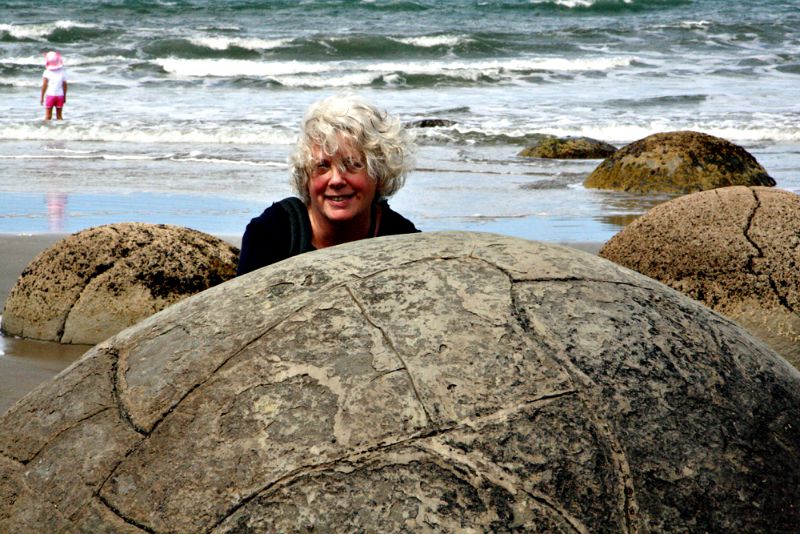
BOOKLUST, WANDERLUST: Beach bound? Check out summer reading recommendations from featured authors (1/2)

booklust-wanderlust-2015

Attention displaced bookworms! Our book review columnist, Beth Green, an American expat in Prague (she is also an Adult Third Culture Kid), has arrived with a treasure chest full of recommended reads to take you through the summer. NOTE: Check out Part Two here.

Hello again, Displaced Nationers!

Summer is upon us—well, for readers in the northern hemisphere, that is! And for those in the United States, Fourth of July weekend is coming shortly. Even if you’re not beach bound, perhaps you are at least picturing yourself sitting in a beach chair feeling the sand through your toes, the waves pounding towards you, the fresh, bracing sea air filling your lungs…

And what’s that you have in your hand—a book or a Kindle?

I find the sound of the waves and the ocean breeze the perfect conditions for escaping into other worlds that writers conjure up for us in their books. This summer, I’ve already been to a few local parks with my e-reader, and I’ll soon be topping it up with some of the books from our best-of-2014 list for an overseas trip. But I’m always on the look-out for fresh new material, and as there are miles to go before I can flop down on the beach of my dreams, I fear I’ll run out of prime reading matter by then. With this eventuality in mind, I decided to reach out to a few of the authors whose books I’ve recently read or reviewed, along with a few of my bookish friends, to see what books they recommend taking on vacation. I asked them to tell me:

Summer Reading 2015

Photo credits: Amazon Kindle PDF, by goXunuReviews via Flickr (CC BY 2.0); beach chair and sandy feet via Pixabay.

They responded with recommendations that seem tailor made for an audience of international creatives. Enjoy! Part 2 will be posted on Friday.

* * *

ALLI SINCLAIR, world traveler, Australian romance author and former co-blogger at Novel Adventurers: I recommend that you bring one travel book, one classic, and one novel. The following make a good combination:

ChasingtheMonsoon_cover_x300Chasing the Monsoon: A Modern Pilgrimage Through India, by Alexander Frater (Henry Holt & Co, May 1992)
There are some books that touch something in your soul that stays with you forever. For me, Chasing the Monsoon falls into that category. Originally published in the early nineties (and thankfully, still available!), Alexander Frater follows the monsoonal rains from the Kerala backwaters in southern India to Cherrapunji, in northern India—known as the wettest place on earth. Frater connects beautifully with the people he meets and he writes for all senses, giving the reader a full immersion into one of the most captivating countries on Earth.

The Ascent of Rum Doodle_cover_x300The Ascent of Rum Doodle, by W.E. Bowman (Vintage Classics, 2010)
Originally published in 1956 but still in print, this book is one of the most celebrated mountaineering stories of all time. The 1950s saw some of the world’s highest mountains successfully climbed (including Everest), and this book is a parody of mountaineering at it’s finest…er, worst. There’s a route finder who is constantly lost, a diplomat who continually argues, and a doctor who is always ill. Rum Doodle will most definitely appeal to fans of Bill Bryson, who wrote the introduction to the book’s international edition (published in 2010).

HellofromtheGillespies_cover_x300Hello From The Gillespies, by Monica McInerney (Penguin, 2014)
I’m a long time fan of Monica McInerney’s books, maybe because Monica is a “displaced” person: having grown up in Australia, she has split her time between Australia and Ireland for the past 20 years. This book is mostly set in outback Australia but with ties to England. Angela Gillespie, a mother of four adult children, has sent out a regular Christmas letter to friends and family for thirty years. The notes are always cheery and full of good news but this year, her note details the unsettling truth of how her family has fallen apart. If you enjoy family sagas with humour and heart, you can’t go wrong with this book. (True, some people recommend it for the holidays, but it’s summer in Australia at Christmas time, remember?)


BRITTANI SONNENBERG, adult TCK, current expat and author of Home Leave (which we reviewed in November): I would pack the following books (assuming I’d be packing it for someone else, who hadn’t read them yet).
Sonnenberg_collage

The Dog, by Joseph O’Neill (Vintage, September 2014)
It’s a devilish, compelling take on cosmopolitan and expat life by the TCK author of Netherland. (Joseph O’Neill was born in Cork, Ireland, in 1964 and grew up in Mozambique, South Africa, Iran, Turkey, and Holland. He now lives in New York City.)

Ghana Must Go, by Taiye Selasi (Penguin, 2014)
This is an intimate examination of a splintered family, set in Accra, Lagos, London, and New York.

All My Puny Sorrows, by Miriam Toews (McSweeney’s, 2014)
One of the saddest and funniest books I’ve ever read; an honest, moving portrayal of sisters and mental illness.


CHRISTINE KLING, author of travel- and sailing-related thrillers: I’ve just finished up the edits on a the third novel in my Shipwreck Adventure series, and I’m looking forward to taking a bit of time off from writing and working at reading my way through some of the long list of books I’ve been wanting to read. The three books I’d take in my beach bag include two novels and a combination cookbook/memoir/travelogue.

The-Janissary-Tree_cover_x300The Janissary Tree, by Jason Goodwin (Sarah Crichton Book, 2006)
My husband and I are contemplating building a new boat in Turkey, and after our recent visit, I’ve fallen in love with the country. Jason Goodwin has written travel books, histories, and thrillers, and I’ve been waiting for the chance to begin reading his work. The Janissary Tree, winner of the 2007 Edgar Award for Best Novel, is the first in what is now his five-book series set in in the waning days of the Ottoman Empire’s Istanbul. The series features a very unique protagonist Yashim Togalu, a eunuch guardian. In this book, Yashim is called upon to investigate a series of crimes including murder and theft of jewels.

Marina_cover_x300Marina by Carlos Ruiz Zafón (Little, Brown Books for Young Readers, 2014)
The first book I read by this author was The Shadow of the Wind, which I often cite as one of my favorite books of all time. I knew Zafón had written a young adult novel that was published in 1999 and became a “cult classic” in Spanish, and since I enjoy good YA novels like the Harry Potter series and the Hunger Games, I was happy to see this book finally released in English in 2014. Marina is set in Barcelona around 1980 at the end of Franco’s regime. This gothic tale is touted as containing elements of mystery, romance and horror as a young boarding school boy meets the exotic, dark Marina. Together they embark on a series of adventures where they meet the kind of grotesque Barcelona characters Zafón does so well.

Sea-Fare_cover_x300Sea Fare: A Chef’s Journey Across the Ocean, by Victoria Allman (Norlightspress Com, 2013)
Years ago I worked as a chef on our owner-operated charter sailboat, and I know what it is like to have to create meals for demanding guests. Victoria Allman is in an entirely different category as she trained as a chef and has worked your years on multi-million dollar yachts. In Sea Fare, Allman has combined the tales from her beginning as a green Canadian chef looking for a job in the charter yacht industry to the joys of shopping in exotic markets from Italy to Vietnam. From the descriptions of her experiences on board the yacht, dealing with crew problems and falling in love with the captain, the stories are grand, but the recipes and the outstanding color photos of the food, will probably cut my trip to the beach short as I head home to try some new dish.


HEIDI NOROOZY, adult TCK, translator and author of multicultural fiction: I just returned from a research trip to Germany, and my choices seem to reflect that! (I went there because I’m writing a novel about an East German detective, Johannes Christian Alexander Freiherr von Maibeck—I know, it’s a bit of a mouthful—I created for a short story I once wrote. The setting is Leipzig, German Democratic Republic, 1981.)

The-Leipzic-Affair_cover_x300The Leipzig Affair, by Fiona Rintoul (Aurora Metro Press, May 2015)
Set in 1985, this novel tells the story of a Scottish student at Leipzig University who falls in love with an East German girl and stumbles into a world of shifting half-truths. Well written and fast paced, the story captures the atmosphere of its setting very well, a world where nothing is ever quite what it seems. As one reviewer writes: “The book is expertly written and seems to me to be a very comprehensive picture of what it was like to live in the East German state.” (Rintoul, a Scot who lives in Glasgow, gathered her material for the book by visiting East Germany and meeting a woman who had been imprisoned. She also looking at extracts of STASI files on people she met.)

Zoo-Station_cover_x300Zoo Station: Adventures in East and West Berlin, by Ian Walker (Atlantic Monthly Press, 1988)
British journalist Ian Walker, who once covered Central America for the Observer (and never managed to write his promised volume on Nicaragua), produced this travelogue on the two Berlins back in 1988. It depicts bohemian life in the once-divided city, where everyone seemed to be from somewhere else: West Berlin was full of Brits, Asians, Danes, Turks and East German exiles; East Berlin, of Anglo-Austrian expats. Walker’s descriptive narrative and reflections on the broader social issues of the day are what make this book stand out. As one of Amazon reviewer puts it:

Having read “Zoo Station”, I was able to understand why some people regarded East Germany as a pinnacle of socialist achievement, much more preferable to its capitalist twin in the West. It is good travel writing, and is both politically and culturally astute.

The-One-That-Got_Away_cover_300xThe One That Got Away, by Simon Wood (Thomas & Mercer, 2015)
Okay, this one isn’t about Germany, and I haven’t read it yet—but it’s at the top of my summer book bag. Tag line: “She escaped with her life, but the killer’s obsessed with the one that got away.” The story of two grad students in California who decide to take a road trip to to Las Vegas, this suspense novel deals with survivor’s guilt and is bound to be a thrilling ride. (Originally from England, Simon Wood lives in California with his wife.)

* * *

Readers, that’s it for this round; we’ll have another round on Friday (update: check it out here). Meanwhile, have you read any of the above and/or do you have summer reading recommendations to add? Please leave in the comments!

And if you need more frequent fixes, I urge you to sign up for the DISPLACED DISPATCH, which has at least one Recommended Read every week.

STAY TUNED for PART 2 of this post on July 3rd!

Beth Green is an American writer living in Prague, Czech Republic. She grew up on a sailboat and, though now a landlubber, continues to lead a peripatetic life, having lived in Asia as well as Europe. Her personal Web site is Beth Green Writes. She has also launched the site Everyday Travel Stories. To keep in touch with her in between columns, try following her on Facebook and Twitter. She’s a social media nut!

If you enjoyed this post, we invite you to subscribe to The Displaced Dispatch, a weekly round up of posts from The Displaced Nation and much, much more. Sign up for The Displaced Dispatch by clicking here!

Related posts: