The Displaced Nation

A home for international creatives

Trevi Fountain blesses American woman’s coins, granting her true love, a new life abroad, and now a book (we’re giving it away!)

Catherine Tondelli book signing photoWhile an expat in Japan, I mastered the ritual of tossing coins into the offering box, or saisenbako, at the Shinto shrine or Buddhist temple while clapping twice (to attract divine attention) and then making a short prayer.

In the West, of course, we toss coins into fountains and make a wish, but I’d never been one for doing that.

I might start trying it, though, now I’ve read Catherine Tondelli’s memoir, Three Coins in the Fountain, which recounts the luck she had in finding a mate the moment she tossed three coins into the Trevi fountain in the Città Eterna.

Sounds like a pitch for a Hollywood film, doesn’t it? Except, wait a minute, that film has already been done (in the 1950s)!

And it’s real life we are talking about here, not the movies.

Besides, Tondelli has kindly granted me three wishes:

  1. She will answer some questions about her memoir as well as her writing process (see below).
  2. She will GIVE AWAY TWO COPIES (hard copy or Kindle) to the two readers who toss in the best comment below.
  3. She will make the book available for free download for a short period—to be revealed at some point in our weekly Displaced Dispatch. (What? Not a subscriber? SIGN UP NOW!)

Before we start, I should mention that Tondelli’s book has been likened to another book recounting travels in the wake of divorce: Eat, Pray, Love, by Elizabeth Gilbert. But for me, a half-Italian American, Tondelli’s more restricted itinerary makes a a lot more sense. Who needs India and Bali when you can easily get the whole package—great food, a renewed faith in relationships and family, and love—in Bella Italia?

Like me, Tondelli is half-Italian, and I like to think it’s that ancestry that made her realize the truth of Madonna Louise Ciccone’s assertion: “Italians do it better.”

* * *

3-Coins-in-Fountain-by-Catherine-Tondelli_dropshadowWelcome, Catherine. I read your book not long after I’d finished Imperfect Pairings, by Jackie Townsend, which we featured in this space this past November. But that was an autobiographical novel based on Jackie’s marriage to an Italian man. So here’s my question: did you ever consider telling your story as fiction, or perhaps using it to develop a film script for a romantic comedy?
I originally thought about writing it as a novel, but my story was so unique and it gave so much hope to women who have given up all hope of ever finding the man of their dreams after 40 years old. Most people would never believe that stories like this really do happen and that true love will find you as easily as tossing some coins in a fountain. I also felt that many people could relate to my crazy stories of growing up in a large family. In the 1960s it was normal to have families of seven or more children; but, with the exception of Cheaper by the Dozen, there is very little written about large families. You have a lot of crazy stories when you grow up with ten siblings!

Yes, I noticed in the press release for the book that you grew up in Chicago as one of 11 kids who were left behind by a deadbeat, jazz musician dad. Can you tell us a little more about your relationship with the man who bequeathed you the surname “Tondelli”? After all, he features in the book quite a bit as well.
I had a very challenging relationship with my father and harbored resentment towards him for many years. I was only 12 years old when he walked out on my mother. It had a huge impact on the relationships I had and the men I chose. A daughter’s first bonding with any man is with her father: he is her first boyfriend, role model for the men she chooses. We often repeat what we know rather than what we want: we need “familiar,” even if it’s unhealthy. I kept choosing unsuitable men until fate stepped in and finally tossed me a “get a good man” coin to throw in the Trevi fountain.

Did you and your father ever reconcile?
I didn’t speak to him for twenty years. We finally reunited when I was attending a conference in Las Vegas and he was a musician playing on the strip. I called him and we had dinner together. We hugged and kissed at the end of the evening: it was a huge healing moment in my life. I was never as close to him as I was to my mother but we had a good relationship up until the day he passed away one year ago. Writing about him also helped me to heal.

Sono pazzo di te (I’m crazy about you…or am I just crazy?!)

Now turning to the man who would become your husband, the handsome and irrepressible Fausto. Since romance is a big part of what your book is about, I’d like to recount the first moment when the pair of you set eyes on each other. Newly divorced, you were traveling in Italy with your mom and had by that time reached Rome and the Fontana di Trevi, where your mother handed you three coins and urged you to wish for a nice man to come into your life. At that very moment, you heard an Italian man say: “Eeffa you wanta your wish to comb true, you avv to trow the coins witah your layft (h)and as eet’s closer to your (h)art…”
Yes, and then he asked if I knew “de meaning of da tree coins”:

“Da first coin, you find your love in Rome, da second coin, you return to Rome and the t(h)ird coin, you marry in Rome.”

And that’s what happened: he and I fell in love, I returned, and we got married.

Chi ama me, ama il mio gatto (Whoever loves me, loves my cat)

Jackie Townsend entitled her book “Imperfect Pairings” because she thinks Americans have an idyllic view of cross-cultural marriage with Europeans, thinking it sounds very romantic—whereas the reality tends to be culture clash after culture clash. You seem to believe in the romance while also acknowledging there were hurdles along the way. After you got over assuming Fausto was gay, you suspected you might be just one in a long line of fountain pick-ups. And even after he at last won your trust, you and he had to struggle to get used to each other’s habits. He did not take well at first to sleeping with your beloved Siamese cats, for instance.
Three Coins is not your stereotypical girl-on-holiday-meets-man-of-her-dreams-and-lives-happily-ever-after. Yes, we did meet on my trip to Italy, but falling in love and moving to Italy was the last thing I’d expected. I came to Italy only after I had worked for three years in London and only when finding a good job in Rome. And when he proposed, I called my sister.

I like that you put a map at the beginning of the book, showing all the destinations you and Fausto traveled to together, before you decided to live in the same place. I presume Italy and Italian culture were an adjustment?
Even though I grew up in an Italian American household, the cultural learning curve for me was huge.
My mother descends from Irish stock, and Fausto couldn’t believe his ears when I told him my Irish grandmother had put money aside in her will to host a luncheon following her funeral for all her friends and family. When his father passed away, we went down to the morgue to say our last goodbye and then off to the church and finally the cemetery, all within two hours. No lunch, no funeral home, no photographs—it was all too fast, no time to mourn to grieve with family or friends. A real Mork & Mindy moment for me.

Was that your most displaced moment: when you thought, what’s a nice girl like me doing with an Italian?
That’s one, and another would be the Christmas after we moved into our new palazzo in Rome. I went to our five neighbors in the building and brought them Christmas cookies I made and a bottle of Spumante. Fausto looked at me with all my plates of cookies and bottles of Asti in my hand and said: “My love, what are you doing??” I went on to explain that we always bring something over to the next door neighbors in America for Christmas. He just stood there and smiled and said “We don’t do that in Italy.” I said, well, we’re going to start now!

Can you also pinpoint your least displaced moment, the first time you realized you felt much more comfortable with him and in Italy than you do with a man from your own culture in the U.S.?
I think it was when there was a Lazio (Rome) football game on TV and instead he took me to see a classical music concert at the Auditorium. He wasn’t telling me all night how much he was giving up for me…he really enjoyed the concert! I am a big baseball fan, not soccer. I was thrilled.

Non si serra mai una porta che non se n’apra un’altra (When one door closes another opens)

Moving on to the writing of the book: What was the most difficult part of the writing process?
Being constantly turned down by traditional publishers. Also, people I knew who already had books published weren’t very encouraging. Luckily, I didn’t let them get me down. After shopping it around for about six months, I decided to self publish. I realized with all my marketing and PR experience I could do a better job then they could in promoting my book in getting it to the right audience.

I see that you’ve listed Francesca Maggi as a co-author. How did that relationship work?
I was lucky as she was an editor and also an author and a friend. She had just published Burnt by the Tuscan Sun, and I asked for her help on the editing process. I gave her my manuscript and she polished and refined it pointing out my weaknesses and suggested options to strengthen those areas. She was instrumental in getting the flow right and helped with the technical elements. She was a natural choice for me as we share a common love of Italy and America, and she knew my husband well.

Can you offer any advice for others who are writing memoirs and hoping to publish them?
Don’t get discouraged. Publishing a book is not easy but if you have a good story, you now at least have options to get it out there. I love this quote by women’s fiction writer Jennifer Weiner:

The difference between people who believe they have books inside of them and those who actually write books is sheer cussed persistence—the ability to make yourself work at your craft, every day—the belief, even in the face of obstacles, that you’ve got something worth saying.

What audience did you have in mind for the book, and has it been reaching those people?
I really thought the target would be women between 20 and 60 (I do get a lot of emails from women like myself, and am happy they can relate), but I have been amazed at how many men also have written to me to say how much they enjoyed reading it. Obviously anyone who loves Italy, old-time romance, or stories of expat life in Europe would find it entertaining.

What do men like about the book?
I’ve had some nice comments from men who said that they were taking notes on Fausto’s techniques… Many of them also grew up in a large family. Also, Fausto was still a bachelor at 50. His story, too, can be inspiring!

Living La Dolce Vita

In your book you question whether Americans have their values in the right place given that we take so little vacation compared to people in Europe. Have you continued to feel this way about the U.S. since marrying Fausto and settling down in Rome?
Two years ago I decided to live like the Romans do and started working for myself so I could spend more time in the US visiting family and friends and also have more time to enjoy La Dolce Vita.

Do you think you could come back to live in the United States? What would be the adjustments?
After living in Italy for more than 12 years it would be very difficult for me to return to live in the US. Fausto and I have discussed moving back to California as he also acts in film and there are many more opportunities, but then we thought: how can we go and live in a city where they close the restaurants at ten o’clock? It would be very difficult to replace our lifestyle in the US. That said, I would love to transport the US postal office here as Italy still doesn’t have postal stamp machines. I bring my book and my computer now when I go to the post office as I know I’ll be spending the day there.

10 Questions for Catherine Tondelli

Finally, I’d like to ask a series of questions that I’ve asked some of our other featured authors, about your reading and writing habits:
1. Last truly great book you read: Blood from a Stone, by Donna Leone, part of her crime series set in Venice.
2. Favorite literary genre: Biographies or autobiographies: real-life stories are always so much more interesting than anything you could make up. That said, I also enjoy reading fiction.
3. Reading habits on a plane: I usually have long flights as my mother lives in San Diego and I fly from Rome three or four times per year to see her couple that with all the travel I do for my work (am working on events in Dubai, Nairobi, Singapore and London at the moment). I always have three or four books in my library at home that I wait eagerly to put in my carry-on bag for my long, hopefully peaceful journey. I am old fashioned and still like to feel the paper when i read a book.
4. The one book you’d require President Obama to read, and why: Jimmy Carter’s book Our Endangered Values: America’s Moral Crisis. I believe that Jimmy Carter has been one of our great leaders yet he is so humble. He was my 95-year-old grandmother’s favorite president. He tells us that for example the USA gives far less foreign aid to developing countries than most people imagine. And, much of this aid goes to certain select countries whose loyalty we are trying to buy rather than because we want to help the poor. The book opened up my eyes to understand how we are perceived internationally. It will give Obama a good reminder that values and morals are more important than being powerful.
5. Favorite books as a child: Charlotte’s Web, The Adventures of Tom Sawyer
6. Favorite heroine: I have many but at the moment it is Malala, the girl who stood up for education and was shot by the Taliban and survived.
7. The writer, alive or dead, you’d most like to meet: Beatrix Potter. I loved her books as a child, and she was also one of the early pioneer woman who broke the male barrier in publishing.
8. Your reading habits: I like to read in bed with my two Siamese cats (Stella and Luisa) on my lap.
9. The book you’d most like to see made as a film: Three Coins in the Fountain, of course!
10. The book you plan to read next: E-Squared: Nine Do-It-Yourself Energy Experiments That Prove Your Thoughts Create Your Reality, by Pam Grout. She provides experiments that prove our thoughts really do create our reality.

* * *

Thanks so much, Catherine. Readers, your turn! Any COMMENTS or QUESTIONS for Catherine? What would YOU wish for with your three coins, having heard her story? Come on, Valentine’s Day is coming! Surely, someone out there aspires to be the next heart wearing the valentine of the Frank Sinatra song?

STAY TUNED for tomorrow’s TCK TALENT column, by Lisa Liang.

If you enjoyed this post, we invite you to register for The Displaced Dispatch, a round up of weekly posts from The Displaced Nation, with seasonal recipes, book giveaways and other extras. Register for The Displaced Dispatch by clicking here!

Related posts:

2013 Holiday Special: Notable books for, by and about expats

Looking for last-minute gifts—or have your holiday celebrations brought you to the point where you might need an escape for yourself?

In the tradition of looking back at the past year’s highlights, I present, on behalf of the Displaced Nation team, a list of books for, by, and about expats that were featured in some way on this site in 2013.

Click on the category that interests you:

  1. FICTION
  2. MEMOIRS
  3. HANDBOOKS & GUIDEBOOKS
  4. COOKBOOK (singular because we have only one!)
  • Books in each category are arranged from most to least recent.
  • Unless otherwise noted, books are self-published.

Go on, download a few! It’s the time of the year to be generous to one’s fellow human beings. That said, on the Displaced Nation it’s always the season to support the creative output of those who’ve embraced the life of global residency and travel.

* * *

Fiction

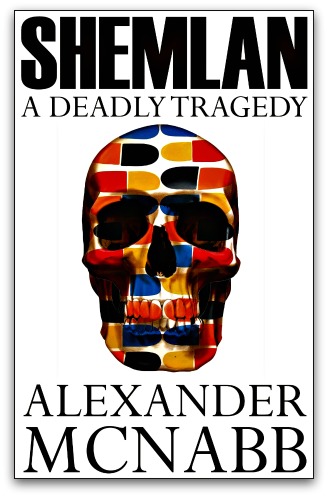
Shemlan Ebook_coverShemlan: A Deadly Tragedy (November 2013)
Author: Alexander McNabb
Genre: International thriller
Synopsis: The third in McNabb’s Levant Cycle, Shemlan tells the story of a retired British foreign service officer who, dying from cancer, returns to Beirut in hopes of meeting the Lebanese love of his youth one last time. But then his past catches up with him, threatening to do him in before the disease does—until British spy Gerald Lynch gallops to the rescue…
Expat credentials: Born in London, McNabb has lived in the Middle East for more than a quarter century. He often receives praise for getting the historical and cultural details right in his books.
How we heard about: We encountered McNabb a year ago when we were doing a series of food posts! We love his books and are giving away Shemlan this month, as well as doing an offer for Displaced Dispatch subscribers on all three books in the cycle. Check it out!

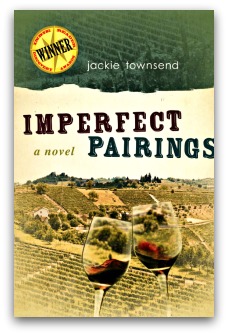
ImperfectPairings_cover_pmImperfect Pairings (May 2013)
Author: Jackie Townsend
Genre: Women’s fiction
Synopsis: American career woman Jamie had not intended to fall in love—and to a foreigner no less, a man who tells her his name is Jack, short for John, but it’s really short for Giovanni. Insanely handsome and intense but unreadable, Giovanni has left a complicated family life back home in Italy. Is this more than Jamie signed up for?
Displaced credentials: In real life, Townsend is married to an Italian and has spent 16 years backing and forthing to her husband’s family in Italy.
How we heard about: ML Awanohara, who rightly or wrongly considers herself something of an expert on cross-cultural marriage, read the book on her Kindle and was so impressed with its depiction of cross-cultural relationship woes that she asked Townsend to be our featured author of November. Read the interview.

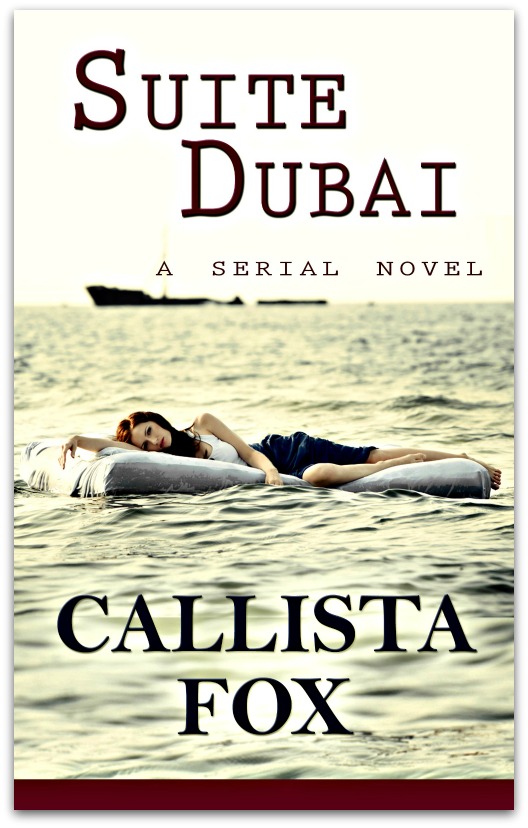
SuiteDubai-cover_dropshadowSuite Dubai (April 2013)
Author: Callista Fox
Genre: “New adult” lit
Synopsis: As Callista tells it, the book grew out of a story that entered her head that wouldn’t go away: “There was this girl, young, vulnerable, naive, walking along a concourse in an airport, among men in white robes and checkered scarves and woman in black gauzy material. Where was she going? What would happen to her there?”
Expat credentials: Fox moved to Saudi Arabia when she was eight and lived there off and on until turning 19. She went to boarding schools in Cyprus and Austria. Now back in the United States, she thinks of herself as an adult Third Culture Kid, or TCK.
How we heard about: Noticing our fondness for serial fiction (see Kate Allison’s book below), Fox sent us a note saying she’d written a serial novel reflecting her experience of growing up in the Middle East. We responded by asking if we could publish her series in even smaller parts. Part 1 and Part 2 have already gone up, and there are six more parts to come in 2014. Warning: Highly addictive!

Libby'sLifeTakingFlight_coverLibby’s Life: Taking Flight (April 2013)
Author: Kate Allison
Genre: Women’s fiction
Synopsis: 30-something Libby Patrick is just regaining some post-baby control over her life when a change in husband’s job means they must move from their English home to Woodhaven, a town in rural Massachusetts. The book is Libby’s journal covering the first year of her life as trailing spouse.
Expat credentials: Born and raised in Britain, Kate has lived in the United States with her family for almost two decades.
How we heard about: We were the first to know! Kate is a founding member of the Displaced Nation and has been publishing regular episodes of Libby’s Life (on which the book is based) since the blog began. She has accrued countless fans, the most faithful of whom is Janice. (Libby to Janice: xoxo for your support in 2013!)

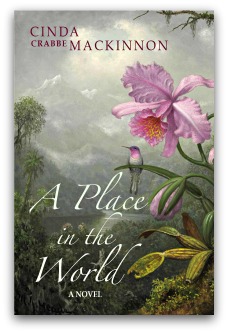
APlaceintheWorld_coverA Place in the World (March 2013)
Author: Cinda Crabbe MacKinnon
Genre: Romance
Synopsis: Third Culture Kid Alicia meets a young Colombian man at college in the United States. She follows him to Bogotá and the pair end up marrying and settling on his family’s remote coffee finca (farm) in the Andes. Educated as a biologist, Alicia revels in the surrounding cloud-forest. But then her idyllic life starts to unravel…
Expat credentials: Crabbe MacKinnon grew up in several countries as a military brat and diplomatic kid and, though she has since repatriated to the United States, still thinks of Latin America as home.
How we heard about: Crabbe MacKinnon commented on one of Elizabeth Liang’s “TCK Talent” posts and ended up becoming October’s featured author. Read the interview. We love her and her work, and are sure you will, too!

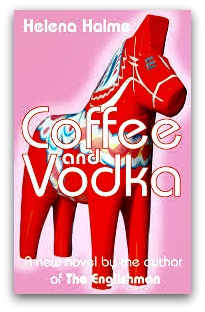
CoffeeandVodka_coverCoffee and Vodka (March 2013)
Author: Helena Halme
Genre: Women’s fiction
Synopsis: A Finnish family emigrate to Sweden in the 1970s and find themselves in turmoil, caused partly by the displacement, but also by the cracks in family dynamics. At its heart, the book reveals what it is like for a young girl to be uprooted and transplanted to a country where she doesn’t speak the language and is despised for her nationality.
Expat credentials: Halme grew up in Tampere, central Finland, and moved to Britain at the age of 22 via Stockholm and Helsinki, after marrying “The Englishman” (how she always refers to him on her blog, Helena’s London Life). She spent her first ten years in Britain working as journalist and translator for the BBC. She and The Englishman now live in North London.
How we heard about: Halme is a big favorite of ours! She was one of our earliest Random Nomads as well as serving as an expat style icon back in the days when we covered fashion. More recently, Kate Allison reviewed Halme’s first book: The Englishman: Can Love Go the Distance?, and we did a giveaway of Coffee and Vodka. And that’s not all: Halme’s latest book, The Red King of Helsinki, received an “Alice” Award in July. (As noted then, the Alices could hardly ignore a book of that title!)

MonkeyLoveAndMurder_dropshadowMonkey Love and Murder (February 2013)
Author: Edith McClinton
Genre: Adventure mystery
Synopsis: A jungle environment in Suriname (spider monkeys and all) is the setting for a closed-door mystery surrounding the death of the renowned director of the International Wildlife Conservation followed by the machete murder of one of the researchers. None of this bodes well for poor Emma Parks, who has joined the research project on a whim. (So much for that budding primatologist career!)
Expat credentials: MacClintock volunteered for the Peace Corps in Suriname for two years, and joined a monkey research project afterwards.
How we heard about: One of our Random Nomads, Patricia Winton, referred us to the now-defunct blog Novel Adventurers, where Edith was one of the writers. We invited her to guest blog for us about the muses behind her monkey mystery.

ArchangelofMercy_dropshadowArchangel of Mercy (Berkley – Penguin Group, December 2012)
Author: Christina Ashcroft
Genre: Paranormal romance
Synopsis: The first storyline in Ashcroft’s new series focusing on a group of angels and archangels and the lives of the people they come in contact with every day.
Expat credentials: Ashcroft is an expat Brit who now lives in Western Australia with her high school sweetheart and their three children.
How we heard about it: We encountered Christina online and asked her to be one of our Random Nomads for a Valentine’s Day special. In that interview, she said she attributes her success as a writer at least in part to her expat status: “I’ve often wondered whether my career would have followed the same route if we’d stayed in the UK. While I’ve always loved writing it wasn’t until we moved to Australia that I decided to to write with the aim of publication.”

SpiritofLostAngels_dropshadowSpirit of Lost Angels (May 2012)
Author: Liza Perrat
Genre: Historical novel
Synopsis: Set against a backdrop of rural France during the French Revolution, the story centers on Victoire Charpentier, a young peasant woman whose mother was executed for witchcraft and who herself suffers abuse at the hands of a nobleman. Can she muster the bravery and skill to join the revolutionary force gripping France, and overthrow the corrupt aristocracy?
Expat credentials: Liza grew up in Wollongong, Australia, where she worked as a general nurse and midwife for fifteen years. When she met her French husband on a Bangkok bus, she moved to France, where she has been living with her husband and three children for twenty years.
How we heard about: The redoubtable JJ Marsh (see below) interviewed Perrat on writing a location to life, for her monthly column, “Location, Locution.”

BehindClosedDoors_dropshadowBehind Closed Doors (June 2012)
Author: JJ Marsh
Genre: Crime mixed with literary fiction
Synopsis: A smart, technologically sophisticated mystery set in Zürich and surrounding countries, featuring a bipolar detective named Beatrice Stubbs, and quite a few surprises… NOTE: JJ Marsh was listed in the Guardian “readers’ recommended self-published authors” this year, for Behind Closed Doors.
Expat credentials: JJ Marsh grew up in Wales, Africa and the Middle East, where her curiosity for culture took root and triggered an urge to write. After living in Hong Kong, Nigeria, Dubai, Portugal and France, she has finally settled in Switzerland.
How we heard about: We owe displaced author Helena Halme (see above) a king’s ransom for telling us about JJ, who since April has been contributing a monthly “Location, Locution” column. Don’t miss her posts under any circumstances! Highly stimulating and cerebral.

snowdrops_dropshadowSnowdrops (Anchor/Random House, February 2011)
Author: AD Miller
Genre: Literary fiction
Synopsis: Lawyer Nick Platt trades his dull British life for pushing paper in Moscow at the turn of the 21st century. He is soon seduced by a culture he fancies himself above. Snowdrops was shortlisted for the Man Booker Prize in 2011.
Expat credentials: British born and educated at Cambridge and Princeton, Andrew Miller joined The Economist and was appointed, in 2004, to become their Moscow correspondent. He covered, among other things, the Orange Revolution in the Ukraine.
How we heard about: JJ Marsh interviewed AD this past July about bringing foreign locations to life in fiction.

odessa_brit_cover_smallMoonlight in Odessa (Bloomsbury, August 2010)
Author: Janet Skeslien Charles
Genre: Women’s fiction
Synopsis: With an engineering degree and perfect English, Daria longs for a life beyond Odessa, Ukraine. And then she moonlights for a dating agency that facilitates hasty, long-distance matches between lustful American men and impoverished Ukrainian women. Her big chance?
Expat credentials: Skeslien Charles went to Odessa, Ukraine, as a Soros Fellow, living through blackouts, heatless winters, corruption and so on. She stayed for two years before returning to the U.S. Then she found a job in France and met her husband. She now lives in Paris but leads a multicultural life. As she puts it: “The novel is set in Odessa, Ukraine. My agent is English. My editor’s assistant is Japanese-Danish, my copy editor is from New Zealand. I’m American. The book was written in France and typeset in Scotland. My first fan letter came from a Swede.”
How we heard about: JJ Marsh picked Skeslien Charles’s brain on “location, locution”, in her November column.

Memoirs

AddictedtoLove_cover_dropshadowAddicted to Love (April 2013)
Author: Lana Penrose
Synopsis: Penrose is the kind of Australian who throws herself wholeheartedly into adventure, which is why her years spend living in Europe have merited not one but three memoirs! This one is the third. In the first memoir (published by Penguin/Viking), To Hellas and Back, she marries the love of her life, an Australian Greek, and accompanies him back to Greece, only to find him becoming increasingly Greek and herself increasingly isolated. In the second, Kickstart My Heart, she moves to London, single and desperate to find love again. And in this third memoir, she returns to Greece, where she encounters a seemingly perfect man named Adonis. (Hey, she never gives up!)
Expat credentials: From Sydney originally (she is back there now), Penrose lived in Athens for five years before moving to London.
How we heard about it: We happened across Penrose online and asked her to guest-post for us a year ago on what it was like to spend Christmas in Greece. At that time, we also did a giveaway of her first memoir. We invited her back this past April to write about Addicted to Love.

MagicCarpetSeduction_cover_pmMagic Carpet Seduction: Travel Tales Off the Beaten Path (May 2013)
Author: Lisa Egle
Synopsis: Travel with the author to China, Latin America, Turkey and the Middle East, and watch while she takes risks off the beaten path, and dances with strangers in strange lands…
Expat credentials: Egle characterizes herself as a lover of offbeat travel. She’s been to 36 countries on five continents and has been an expat twice: in Ecuador for a year and half, and in Spain for a year.
How we heard about: We got to know Egle first through her blog, Chicky Bus, and when we heard she’d put out a book, asked her to be one of our featured authors. Read the interview.

Pilgrimage-Cover_pmRunning the Shikoku Pilgrimage: 900 Miles to Enlightenment (Volcano Press, January 2013)
Author: Amy Chavez
Synopsis: After losing her job at a Japanese university, Chavez undertakes a solo journey running Japan’s 900-mile Buddhist pilgrimage, a distance equal to running from San Diego, California to Oregon. A Buddhist priest who is also a friend gives her “cosmic tools” to take with her.
Expat credentials: American expat Amy Chavez has been a columnist for Japan’s oldest English-language newspaper, The Japan Times, since 1997. She lives with her husband and cat on Shiraishi Island in Japan’s Seto Inland Sea.
How we heard about: We interviewed Chavez about her pilgrimage, and what it took to write the book, in April.

Don'tNeedtheWholeDog_dropshadowDon’t Need the Whole Dog! (December 2012)
Author: Tony James Slater
Synopsis: In the summer of 2004, Slater went to Ecuador, thinking that the experience would turn him into a man. He went back to his native England fueled by a burning desire to do something that mattered—and, ideally, to get the heck out of England in the process. He dreamed of going to Thailand and becoming a professional diver. This is the story of what happened next.
Expat credentials: A Brit, Slater now lives in Perth, Australia, with his Australian wife.
How we heard about: Slater made himself known to us for failing to include his first book, The Bear That Ate My Pants: Adventures of a Real Idiot Abroad, about his time volunteering at an animal shelter in Ecuador, in our 2011 holiday round-up. He probably should have left well enough alone, though, as next thing he knew, we had him writing for the Displaced Nation. His post on the world’s best parties remains one of our most popular!

TruckinginEnglish-dropshadowTrucking in English (December 2012)
Author: Carolyn Steele
Synopsis: This is the tale of what happens when a middle-aged mum from England decides to actually drive 18-wheelers across North America instead of just dreaming about it. Nothing goes well, but that’s why there’s a book.
Expat credentials: Born and bred in London, Carolyn and her son are now Canadian citizens and live permanently in Kitchener, Ontario.
How we heard about: One of our featured authors in 2012, Martin Crosbie, sent Steele our way, and Kate Allison reviewed her book in March. Steele later contributed an amusing post to our “New vs Olde World” series, about the difficulties of mastering the Canadian “R”.

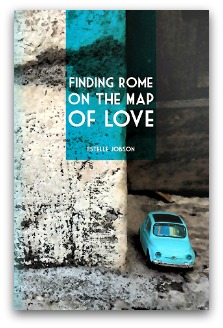
Finding-Rome-on-the-Map-of-Love_dropshadowFinding Rome on the Map of Love (September 2012)
Author: Estelle Jobson
Synopsis: When her Italian diplomat boyfriend gets posted to Rome, Jobson throws up her career in publishing in her native South Africa to accompany him. There, she reinvents herself as Signora Stella, a casalinga (housewife). The book captures a year’s worth of quirky observations about life amongst the Italians.
Expat credentials: Originally from South Africa, Jobson now lives in Geneva, where she works as a writer and editor.
How we heard about: Jobson was our featured author in February. Her book and sense of humor are terrific!

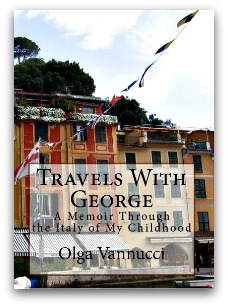
Travels with George Book CoverTravels with George: A Memoir Through the Italy of My Childhood (April 2012)
Author: Olga Vannucci
Synopsis: In five separate trips to Italy with her young son, George, in tow, Vannucci strolls and hikes through the landscapes of her Italian childhood. She looks at Italy both as local native and awed visitor.
Expat credentials: Born in Italy, Vannucci lived in Brazil and came to the United States to attend Brown University. She lives in rural New Jersey with her son.
How we heard about: Vannucci was our featured author in September. Read the interview. We loved this quote from her son: “Where are we going? How much longer? I have something in my shoe. I want to go back. Why are we doing this? Do you know where we are? Do you know where we’re going? Mammaaaaaaa!”

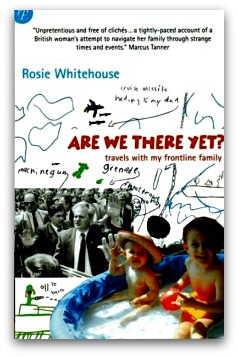
AreWeThereYet_cover_dropshadowAre We There Yet? Travels with My Frontline Family (May 2009)
Author: Rosie Whitehouse
Synopsis: A vivid, funny, and very human account of the author’s travels with her family through war-torn Europe.
Expat credentials: Whitehouse spent five years as a housewife in the war-torn Balkans married to a correspondent of The Economist, caring for their growing family.
How we heard about: We happened across Whitehouse’s work online and asked her to be a featured author last summer. Read the interview. She’s absolutely fascinating, as one might expect of the kind of woman who trails her spouse into a war zone.

HoneyfromtheLion_coverHoney from the Lion: An African Journey (Dutton Adult, 1988)
Author: Wendy Laura Belcher
Synopsis: Brought up in Africa, Belcher returned to Ghana in the early 1980s to work with a “national linguistic group” that is spreading literary into rural areas by translating the Bible into native languages. A coming-of-age story that was called “lyrical” by the New York Times when first issued.
Expat credentials: An adult Third Culture Kid, Belcher grew up in East and West Africa, where she became fascinated with the richness of Ghanaian and Ethiopian intellectual traditions. She is now an assistant professor of African literature at Princeton.
How we heard about: Elizabeth Liang interviewed Belcher for her TCK Talent series.

Handbooks & Guidebooks

cathy_feign_coverKeep Your Life, Family and Career Intact While Living Abroad, 3rd Ed. (Stvdio Media, September 2013)
Author: Cathy Tsang-Feign
Synopsis: A survival manual for those who are living abroad, with real-life examples and easy-to-understand explanations about the unique issues faced by expats: from preparing to move, to daily life overseas, to returning home.
Expat credentials: Tsang-Feign is an American psychologist who lives in Hong Kong, specializing in expat psychology and adjustment issues. She has also lived in London.
How we heard about: When Kate Allison learned about the book, she decided it merited one of our “Alice” awards for the understanding displayed of the “through the looking glass” complex.

realitycheck_bookcoverReality Check: Life in Brazil through the eyes of a foreigner (September 2013)
Author: Mark Hillary
Synopsis: Targeted at those who plan on living, working or just visiting Brazil, it covers issues such as the difficulties of finding new friends, using a new language, and finding a job. Also provided is some background on the fast-changing society in Brazil that resulted in extensive street protests during 2013.
Expat credentials: Hillary is a British writer who moved to Brazil in 2010, bought a home, started a company, and has experienced both difficulties and joys.
How we heard about it: Andy Martin, another Brit in Brazil and a writer for the Displaced Nation in 2013, is a friend of Hillary’s and was jealous he’d produced a book that is not only a practical guide but also provides much of the cultural backdrop an international resident needs for a country as complex as Brazil. The next best thing, Martin thought, would be to do an interview with Hillary, which he delivered in two parts. Read Part 1 and Part 2.

TERE_cover_dropshadowThe Emotionally Resilient Expat: Engage, Adapt and Thrive Across Cultures (Summertime, July 2013)
Author: Linda A. Janssen
Synopsis: A guide for those facing the challenge of cross-cultural living, with candid personal stories from experienced expats and cross-culturals, and a wealth of practical tools, techniques and best practices for developing the emotional resilience for ensuring a successful transition.
Expat credentials: Janssen lived for several years in the Netherlands while her husband, an adult TCK, worked in the Hague. She recently repatriated to the United States.
How we heard about: We’ve had many satisfying interactions with Janssen since starting the Displaced Nation and were thrilled to hear about her new book—a natural for one of this year’s “Alice” awards, particularly as Janssen has been running a popular blog called Adventures in Expatland.

AmericanExbratinSaoPaulo_cover_pmAn American Exbrat in São Paulo: Advice, Stories, Tips and Tricks for Surviving South America’s Largest City (May 2013)
Author: Maggie Foxhole (Megan Farrell)
Synopsis: Aimed at those who are moving or traveling to São Paulo, it is designed to be a companion on the journey through the ups and down, ins and outs, and the curious roundabouts of life in that city.
Expat credentials: Megan/Maggie moved to Brazil with her Brazilian husband and their daughter. She keeps a blog: Born Again Brazilian.
How we heard about: Farrell/Foxhole was one of our early Random Nomads. She kept in touch and we were very pleased to learn about her book, which ML Awanohara read and admired for its comprehensiveness. Andy Martin, a Brit who also lives in São Paulo with a Brazilian spouse, reviewed the book for our site this past July.

101reasons_dropshadow101 Reasons to Live Abroad and 100 Reasons Not to (March 2013)
Author: Chris Alden
Synopsis: Targeted at the wannabe expat, the aim is to help you discover if living abroad is right for you. It’s an uplifting guide to the positive sides of life as an expatriate and a reality check about the challenges that relocation brings.
Expat credentials: A professional writer, Alden lived for three years in a beautiful village in the Troodos foothills of Cyprus, which resulted in his first travel guidebook: 250 Things to Do in Cyprus on a Sunny Day.
How we heard about: Alden was the recipient of one our “Alice” awards for this book. We were impressed that he offered a final, 101st reason to live abroad for those of us who, having been offered as many as a hundred reasons both for and against, still find ourselves dithering…

career-break-travelers-handbook_dropshadowThe Career Break Traveler’s Handbook (September 2012)
Author: Jeffrey Jung
Synopsis: Intended to inspire people to go for it and take the break they’ve been seeking from their jobs and go travel, with tips and tricks Jung learned from his own and other career breakers’ experiences.
Expat credentials: Having left the corporate ladder, Jung now lives in Colombia, where he founded his own business to help others do the same: CareerBreakSecrets.com.
How we heard about: Jung was one of our Random Nomads. He let us know about his book, and we reviewed it this past February. Not that he needed our help—it also got a shout-out in Forbes!

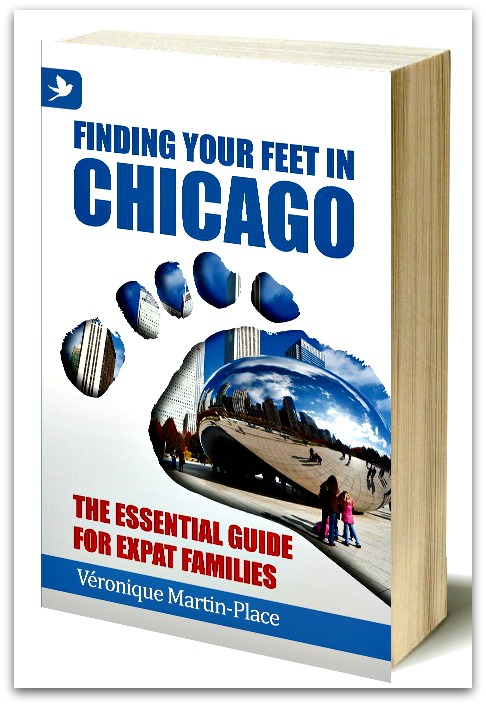
finding-your-feet-in-chicago-3D-Book CoverFinding Your Feet in Chicago: The Essential Guide for Expat Families (Summertime Publishing, August 2012)
Author: Véronique Martin-Place
Synopsis: A down-to-earth pocket guide to help expats settle into the USA’s third largest city with their families.
Expat credentials: As the wife of a French diplomat (they have two daughters), Martin-Place is accustomed to moving around the world. Chicago was one of her more enjoyable stops, but she also enjoyed Sri Lanka(!). The family is now in Shanghai.
How we heard about: ML Awanohara had interviewed Martin-Place on her blog, Seeing the Elephant. She had fun interviewing her again, this time about the process of composing a guidebook.

Cookbook

FromtheGlobalScottishKitchen_cover_tdnFrom the Global Scottish Kitchen (Self-published, November 2012)
Author: Sharon Lorimer
Genre: Cooking
Synopsis: Recipes based on Scottish cuisine but influenced by the restaurants and other kinds of cuisines Lorimer has experienced as an expat: e.g., Cock a’ Leekie Udon!
Expat credentials: Born in Scotland, Lorimer now lives in New York City and is married to an Asian American.
How we heard about it: We interviewed Lorimer about her decision to start up Doshebu, a business providing training to company employees being sent abroad on the “art” of being an expat.

* * *

Questions: Have you read any of the above works and if so, what did you think of them? And can you suggest other works to add to the list? My colleagues and I look forward to reading your comments below!

STAY TUNED for some upcoming posts, though we’ll be taking a bit of a break over the holidays!

If you enjoyed this post, we invite you to subscribe to The Displaced Dispatch, a weekly round up of posts from The Displaced Nation, plus some extras such as seasonal recipes and occasional book giveaways. Sign up for The Displaced Dispatch by clicking here!

Related posts:

Never fear, Santa McNabb is here, with a sack full of Middle Eastern spy thrillers!

Alexander_McNabb_santa

Expat author Alexander McNabb (his own photo)

I’ve always thought of international creative Alexander McNabb as a person who wears many hats, including (but hardly limited to) those of software package salesman, magazine publisher, journalist, radio commentator, literary conference chair, digital communications strategist, and writer of international thrillers. Wait, I almost forgot: talented chef. (In fact, I first discovered him through his now-defunct collective foodie blog, The Fat Expat. Note: The recipes are still available.)

And to this lengthy list I must now add a fur-trimmed Santa hat.* As faithful readers may recall, Alexander visited the Displaced Nation around this time last year, bearing gifts consisting of his first two Middle Eastern spy thrillers: Olives: A Violent Romance and Beirut: An Explosive Thriller.

And here we are again, mid-December, and there he is trudging towards us with a huge sack full of shiny new toys, consisting of the third and final book in what he has branded as his Levant Cycle: Shemlan: A Deadly Tragedy.

What is more, he’ll be GIVING AWAY ONE COPY to the reader who makes the best comment below, as well as DISCOUNTING ALL THREE BOOKS on December 21 and 22 (code available only to Dispatch subscribers).

Readers, I have just finished reading Shemlan, and I can heartily endorse it as a PERFECT READ for the holidays: well written, well paced, and as one of his readers put it in her Amazon review “so very le Carré.” And if you’re a person who loves international travel, you will find yourself learning quite a lot about a part of the world that for many remains a black box.

But enough of the hype. The time has come to welcome the Wise Man and let him do the honors of presenting his latest offerings.

* Alexander, if you don’t like what I’ve done to this photo, I’ll remove the beard, but the hat stays!

* * *

McNabb Giveaway CollageTwo olives, and some extra-dry wit

Hello again, Alexander. First I want to congratulate you on producing three thrillers on the Middle East in relatively rapid succession: Olives, Beirut and now Shemlan. When you first started writing Olives, did you have any idea that two more books would follow?
No idea at all.

Can you remind us of the Olives plot?
Olives centers on a character called Paul Stokes, a young British journalist who travels to Jordan to work on a contract magazine project for the Jordanian Ministry of Natural Resources, which is working on privatizing Jordan’s water network. He falls in love with Aisha, his “minder” from the Ministry. Her brother is bidding against the British for the privatization. Gerald Lynch, a British Secret Intelligence Service officer, turns up and blackmails Paul into spying on Aisha’s family.

As I began to envision a second book, I had in mind a sort of interlinear gloss to Olives, which I was going to call (don’t ask me why!) The Olive Line, showing Lynch’s side of the story. In Olives we always see Lynch through Paul’s very jaded eye (rarely do we like those blackmailing us), while there is a whole other story in there of Lynch negotiating with the Israelis and Jordanian intelligence and figuring out how all three intelligence agencies with vested interests in the water resource issue (the Israeli, British and Jordanians) can work on this together.

But then Beirut happened, almost by accident. All my books have started with dreams, which is sort of cool.

Hmmm… I rather like the idea of The Olive Line.
I’m messing around with a screenplay of Olives, which incorporates some of that material, but it’s on the back burner ‘cos I’ve started writing another book. I can’t stop, it’s like a bad habit.

Somehow that doesn’t surprise me! So tell me: has writing three books based around the Middle East, where you’ve lived for 25 years, helped you to process your own experiences in the region, or is it complete escapism?
I’m sure a lot of my experiences have filtered in there in one way or another, but it’s really about escapism. I’ve stolen people, situations, scenery and feelings of course. It’s true that writing makes thieves of us. But I’ve never been shot at or killed any Albanian hookers, let alone slept with gorgeous madams from Rue Monot [a nightlife street in Beirut]. The world is probably a safer place now I’ve got all that stuff out of my system, but there’s more in there pounding on the gates to get out.

Yes, I can definitely sense that writing has brought out your suppressed desires, especially when it comes to the character of Gerald Lynch, that gritty British spy who appears in all three books and has some definite Bond-like traits. For example, he appears to enjoy women, food and drink, and never meets a firearm he doesn’t excel at using.
Bond? Nah. My British spy in Olives was originally a Terry-Thomas kind of character called Nigel Soames, a sort of gingery spook. He’s got a cameo in Shemlan. This character wasn’t working for me, and I had a business meeting with a big Irish businessman from a rural background in Dubai called Gerald who, during the meeting, uttered the immortal line: “I don’t like being called Gerry. I’ve been twenty years escaping Gerry blablabla” (I can’t tell you his surname). I left the meeting punching the air—Gerald Lynch had just come into being. He’s the anti-Bond. He never uses gadgets, and his idea of sophistication is a servee [shared taxi] and a beer in a shady bar… And he has got SUCH a big authority problem…

401px-James_Nesbitt_July_2008

James Nesbitt. Photo credit: Richard Redshaw, Wikimedia Commons.

You said you’re writing a screenplay for Olives: have you got anyone in mind to play Lynch?
I played a game of “Which film stars would play your protagonists?” with some writer friends a couple of years ago and it was then I realized the only person who could play Lynch would be Irish actor James Nesbitt. Nesbitt is very good at portraying the dark, violent side of characters, and since we played that damn game, he and Lynch have morphed.

Gold, frankincense—and now myrhh

Moving on to Shemlan, which I’ve just finished and very much enjoyed: did you find it any easier to write than the other two books? Did you learn things that you were able to apply?
Oh, yes, you learn. When Olives was published, I was forced to come to the realization that not only was there a third person suddenly involved with my relationship with my books, but that I wasn’t actually welcome in the room anymore!

It’s about you—the reader—and the book, if it works, should never reveal any mark of my passing. It’s like hotel rooms. Every day someone is living in that room, frequently someone new each day—but you never, ever want to see any trace of the others. That hair in the bath, that stain on the sheets. Revolting. Books are the same deal—if you ever catch sight of me, I’ve failed—and you’ve been rudely yanked out of the misty springtime mountainside above Beirut back to wherever you are sitting and wanting not to be…

I’ve been amazed at how much people question books as well—I’d never been conscious of it myself, despite being a lifelong bookworm—but people ask me questions like “Why did Lynch do this?” or “How did Paul do that?” or “Why did you kill so and so?” and you realize they have immersed themselves, invested of themselves, in the world you made up. That’s pretty humbling, to tell the truth.

I’ve also learned loads from my editors. You get to come to terms with your quirks and bad habits and eradicate them. I have a list of lazy words and silly phrases I use too much and I do a search for them and find better ways of putting it.

Let’s talk about Shemlan the place, “a Christian village in a Druze area” as you explain in the book. Can you translate that for the uninitiated?
Shemlan is a village in the Chouf mountains above Beirut. Like many other villages in this area, it is inhabited by Druze families, which is a form of Islam that diverged from the mainstream centuries ago, but also Christian families and perhaps Sunni Muslims. Lebanon is a patchwork of faiths and sectarianism is really part of the national DNA—to the point where even the roles of the national leadership are assigned on sectarian lines.

Why did you name the novel after that place?
Purely because the Middle East Centre for Arab Studies (MECAS) was there—the “British spy school.” It really existed! (I was originally going to call the book “Hartmoor”, but heard of Sarah Ferguson’s plan to release a novel of that name and thought I’d be best getting out of her way.) It’s also the only one of the three novels with decent search engine results built in—I own “Shemlan” on Amazon, for instance, when you search for it. Crespo owns “olives”—I’ll never forgive them for it!

In the latter part of the book, we travel with Lynch to Estonia.
Estonia sort of just happened because of the man Lynch is chasing: Dmitri, a Russian military intelligence operative turned modern-day hood. I made him Estonian, and then I went there on holiday and fell in love, love, love. Tallinn is magnificent, fun, sexy and gloriously historic.

A window on the Middle East

The events you portray in Shemlan are extremely violent. The Middle East is of course known for its violence, and it’s said that all major Western empires have become unraveled there. Why do you think the area brings out the worst in everyone so to speak?
It’s Lebanon’s tragedy to possess remarkable beauty and wealth and constantly squander both. The wealth is agricultural as well as creative and intellectual. I think it’s the washing up of the world’s revealed religions, the clash of interests over resources such as water and, of course, the thorny issue of Israel (and the side effects of America’s involvement in that country and the region as a whole). Add corrupt, lazy governance, some good old-fashioned despotism and a legacy of home-made post-colonial lines slashed on a map and you’ve got yourself a nice potboiler! I’m amazed I seem to be one of very few people setting novels in an area as fascinating, complex and just plain screwed up, to be honest!

Your readers who are based in the Middle East, including some natives, have praised your novels for getting the political details right. Did you do a lot of research?
There’s a lot of research there, but not so much into the politics, which is something that’s just a part of everyday life and conversation in these parts, but certainly into whizzbangs [firearms]. The water crisis that drives Olives is very real, for instance—as are the Oka missile warheads in Beirut—the Soviets actually “lost” 180-odd of the blasted things—and so is MECAS (the “spy school” in Shemlan). You can land a helicopter with no engine, kill someone using champagne and drive a two-tonne truck across the Baltic Sea—all of these are true and the result of quite a bit of research. I do try hard not to let that show too much—I’ve always hated books where the hero hefts his 8.2 calibre Poon and Nargle semi-automatic gas-powered carbine with the double hefted shoulder randomizers—you know, where the research is paraded with a pub bore’s infinite, dreary precision.

Leaving aside the whizzbangs for a moment (I’m way out of my depth), I’d like to move on to the love affair between the British diplomat, Jason Hartmoor, and a Lebanese woman from Shemlan, Mai. When Jason leaves Beirut because of the Civil War, he also leaves Mai, to his everlasting regret. He writes her letters, in which he pours out his heart out, including all his work frustrations. Believable?
There are two romances in the books, that between Paul and Aisha and then that between Jason and Mai. In Jason’s case, it’s as much about frustration with his subsequent marriage to a fellow Brit, Lesley, which is just horrible. And it’s about his yearning, his sense of loss at having left Beirut and being in the situation where he can’t go back. Mai understands him, is sympathetic and an intelligent correspondent who is easy to talk to, where Jason’s own wife is contemptuous of him. But —of course—as we find out, things are never quite as simple as they seem…

Words to the wise on self-publishing

I noticed on your blog that you decided to end your relationship with your agent because of his feedback on this book (or the lack). Can you say a little more about that?
He didn’t feel he could “shop” the book to publishers and I thought that was pretty useless. I mean, not even trying. What’s the point of having an agent who basically says he can’t be bothered to try and sell your book? If he doesn’t feel he can sell a thriller set in the Middle East, then we’re never really going to get on, are we?

I know you worked in editing. What is your editorial process?
I always do a number of edits, both by myself and in response to beta readers and then, of course, it goes for professional editing. In the case of Shemlan, Gary Smailes at Bubblecow did the edit and a fine job he did, too. He also cut 30,000 words from the manuscript, which left some reconstruction work to do, but he had made a valid structural point and I accepted that yes, I had to rebuild the West Wing if the house was going to work. My best beta reader (now everyone else is going to hate me) is a chap called Bob Studholme, who is actually an English lecturer in a university here. He’s very good at “yep, that works; nope, that doesn’t gel” feedback, which is what you really want. And Katie Stine proofread the edited MS and found no less than 230 flubs still in there. She’s a fantastic proofreader. And, yes, it takes all that to polish a manuscript if you’re going to take publishing seriously!

Now that you’ve finished The Levant Cycle, what’s next? And can we look forward to your return here next December?
I’ve just started on a new book that’s set in the UK, about a woman who can’t remember what happened to her when she was working as a teacher in Iraq (that might change to Southern Lebanon). She comes back to the UK to teach here in an institute for talented kids and finds her life starts to unravel as the amnesia fades. Her friend is a journalist who sets out to find out what happened to her before she loses her mind completely. I might junk it after a few chapters and move on to something else, but that’s the current plan and I’m enjoying writing it so far!

10 Questions for Alexander McNabb

Finally, I’d like to ask a series of questions that I’ve asked some of our other featured authors, about your reading and writing habits:
1. Last truly great book you read: I’ve just finished re-reading The True Deceiver, by Tove Jansson. Oh me oh my but that book is glorious. Stark, brooding and oppressive—but glorious!
2. Favorite literary genre: I don’t really have one. I’ll read almost anything – except dystopian paranormal chick lit with vampires. I avoid that.
3. Reading habits on a plane: I tend to watch films on the plane and never at any other time. 99% of my reading now is on my Kindle.
4. The one book you’d require PM Cameron to read, and why: Ulysses by James Joyce. Because it would cause him great pain and therefore gladden me.
5. Favorite books as a child: Oh dear. Confesses. I loved Enid Blyton‘s Famous Five books. By the time I was eight I’d moved on to The Bridge over The River Kwai. I was a terrible bookworm. I once got a detention for reading Scottish author Alister Maclean‘s The Way to Dusty Death during an English class. It had a lurid cover and I hadn’t even bothered to cover it in brown paper. I recently re-read the book, incidentally, and was angered at how utterly crap it was. Awful, awful stuff. Proper shocked at just how bad a piece of writing had become a big bestseller back then.
6. Favorite heroine/hero: I always liked Smilla in the Danish novel Miss Smilla’s Feeling for Snow, and Kristen Scott Thomas in the film version of The English Patient… For heroes: Bertie Wooster.
7. The writer, alive or dead, you’d most like to meet: Lawrence Durrell. He was an atrocious human but a writer of genius. And an expat, though he preferred to be thought of as cosmopolitan.
8. Your reading habits: Kindle all the way. Capricious. I’ll read a good book anywhere. Waiting rooms, toilets, bed, hanging upside down from a tree, I don’t care.
9. The book you’d most like to see made as a film: Olives, without a doubt! As mentioned, I’m working on it…
10. The book you plan to read next: There are several lined up on my Kindle and it could be any one of them—or something I stumble across on Amazon. That’s the wonderful thing about Kindles—the next book is just a click away!

* * *

Thanks so much, Santa McNabb. Does anyone have any COMMENTS for this right jolly old elf? Hurry, before these special offers go up the chimney! The winner of Shemlan (for best comment) will be announced in our January 3rd Displaced Dispatch. And the CODE FOR ALL THREE BOOKS will be in the Dispatch published this weekend, on Saturday the 21st, GOOD FOR JUST TWO DAYS: DEC 21 & 22!!!

STAY TUNED for tomorrow’s post, some last-minute suggestions for expat and international travel e-books to buy for the holidays, including, of course, this one!

If you enjoyed this post, we invite you to register for The Displaced Dispatch, a round up of weekly posts from The Displaced Nation, with seasonal recipes, book giveaways and other extras. Register for The Displaced Dispatch by clicking here!

Related posts:

Repeat expat Manal Khan lives in fact, in fiction–and everywhere in between

ManalinSpain

Manal Khan, taken by her husband on a day trip to Segovia.

The Displaced Nation is on a mission to celebrate the contributions made by borderless travelers and global residents to creative pursuits.

Owing to our Western bias, we tend to feature Westerners who have ventured to other parts of the world, but there are plenty of other internationals who, too, deserve kudos—I refer to our counterparts in the less developed world, many of whom flock to the United States and Europe for higher education and employment opportunities, and in the course of that, find their own creative paths.

Is that because they feel as displaced as we do?

Perhaps I’ll uncover some answers in today’s post. I’ll be talking to journalist, poet, essayist, photographer, and storyteller Manal A. Khan, who says that she lives in fact, in fiction—and everywhere in between. Born in Pakistan, Manal has a journalism degree from Berkeley and has worked for an independent news organization in New York City.

I discovered Manal’s magnificent blog, “Windswept Words.”, around the time the Displaced Nation started and have been eager to interview her ever since. But when I tried contacting her, she’d just repatriated to Pakistan. She did not see my request until recently, when she and her husband (also Pakistani) moved abroad again, this time to Europe.*

I am so pleased to be able to catch up with Manal in her latest port of call: Madrid, Spain. I predict that you, too, dear reader, will be as blown away, so to speak, as I was by her windswept words…

* Ironically, on the very day when Manal answered my request, she was awarded one of our Alices for a recent blog post that expresses, at one and the same time, her love for her native Pakistan as well as her discomfort with its social inequalities and excessive religiosity.

* * *

Greetings, Manal. It’s so good to have the chance to catch up with you at long last. I’d like to start by quoting from one of your poems, called “Foreigner”:

sometimes, i wish
i didn’t feel like such a foreigner
in my own country
among my own people
that i wouldn’t be polite,
embarrassed, awkward
that punjabi or urdu would flow from my mouth
as effortlessly as english…

What led you to compose these words?
I wrote “Foreigner” eight years ago, during my college days in my hometown, Lahore. Pakistan is an extremely socially-divided country. If you happen to be born “privileged,” chances are you will get the best lifestyle, the best education, and the best work opportunities that the country has to offer. And if you happen to be born outside of that tiny privileged class—the middle-class barely exists in Pakistan—chances are you will be struggling most of your life just to put food on the table. I happened to be born into the former class, and while I know that I was fortunate, that terrible divide is something I could never reconcile myself with.

And it was not just about money, or wealth. It was about culture, and language, and a sense of belonging. Pakistan used to be a British colony, and gained independence in 1947, along with the rest of the Indian subcontinent. But in many ways, we remain “colonized” by the English language. English is still the language of the powerful, of the elite, and a huge divider of class, culture and people.

So all these different things were swimming in my head when I wrote the poem. You could say that I felt “displaced,” even when I lived in my native country.

I can relate—and I was born in America! Another poem of yours I enjoyed was this short one: “Not Being,”. Allow me to share the first two lines:

If home is where the heart is, my heart is forever moving, a gypsy
If a piece of cloth and a stadium slogan is a test of nationalism, I have no nation…

“Not Being” was written in New York. It was inspired by many different things, but the theme of not belonging, or not quite fitting in—in this case, to Pakistani society—is similar to “Foreigner.” For instance, the definition of a “good” Pakistani, according to accepted norms, is basic and black-and-white: intensely patriotic, passionate about cricket, virulent about America, and careful about fasting in Ramadan and attending Friday prayers; somebody who is dutiful to family, loyal to friends, lives up to expectations, and sticks to his or her roots. I was getting a lot of pressure, directly and indirectly, to be this sort of person from people I knew back home, and from feedback on my blogs published in The Express Tribune. I felt confused. I didn’t agree with or conform to any of those norms, so did that make me a “bad” Pakistani? The poem was an expression of that conflict.

Was the audience you intended for these poems primarily Pakistani?
To be honest, I intended no audience. I published “Foreigner” on Windswept Words a few years ago—it had been sitting in an old notebook till then; and “Not Being” only reached my regular blog readers. But now you mention it, I may submit the poems to one of the Pakistani blog sites I write for. It would be interesting to see people’s reactions.

“Embrace the day with laughing heart…”

Did writing about these themes help you to process the peripatetic life you’ve led as a young Pakistani woman who went to j-school in California and has lived in New York City?
Not only the poems, but most of the writing on my blog over the past few years has revolved around these themes. It’s interesting to see how one’s feelings of displacement evolve over time. Initially, when you are “fresh off the boat,” a foreigner in a foreign land, you feel compelled to uphold a sense of distinction, your separate identity (see my post “When in America, do as the Americans don’t”). At another level, you also want to assimilate, because you don’t to be viewed as an outsider forever (“Change”). And then there is that other level, when you stop waxing nostalgic and start viewing your own country critically (“The Freedom to Be”).

Is writing therapeutic?
Oh yes, definitely. My experience living abroad has changed me inalterably, and writing about it helps to make sense of things, to sift through the good and the bad of places, situations.

LakeSaifulMalook_MK

Photo credit: Manal Khan

You also translate Pakistani stories into English: I’m thinking of your work-in-progress “The Legend of Saif-ul-Malook.” Can you tell us how that got started, and the audience you hope to reach with these tales?
Oh yes! Saif-ul-Malook is the name of a beautiful lake located in the Himalayas, in the northwestern province of Pakistan. It’s a breathtaking region, full of snow-capped mountains, lush pine forests, and startlingly blue lakes. When I was growing up, our family would travel to the mountains every summer, driving from the torrid heat of flat and dusty Lahore to the cool green valleys of Kaghan, Swat, Nathiagali. I first visited Saif-ul-Malook when I was 12 and fell in love with the place for its beauty and for the enchanting legend associated with it, a fairytale that has been penned in several local languages but never in English. So, the next time I went there (four years ago), I was sure to take an audio recorder and capture the full version of the story in the words of the resident raconteur.

This I transcribed, translated into English, and re-wrote with my own little additions (see “The Legend of Saif-ul-Malook Part I”). I have still to write the last part, the epilogue.

But the response I’ve received to the story has been truly wonderful, and so encouraging. English-speaking Pakistanis are thrilled to find this favorite tale of theirs in an accessible form.

I want to continue this sort of storytelling, translating and transforming Pakistani fairytales, many of them unwritten, into English, for an English-speaking audience. I have a few stories in mind, told to me in childhood by an old lady called Bua, who used to work for my grandmother and later lived with my family for many years. She was the quintessential storyteller, silver-haired and toothless, with fabulous tales at the tip of her tongue and a different twist each time she narrated one. (See my profile of Bua.)

Where did you meet your husband, and does he share your feelings of being between cultures?
I met my husband in Lahore many years ago. Like me, he grew up in Lahore, though his family is originally from a Pashtu-speaking tribal region of northwest Pakistan. He also studied in the U.S., and we both lived and worked there together, so, yes, he does share many of my feelings about being in between cultures. But he does not dwell on it as much as I do; he is quite at peace with himself, wherever he is and whatever he is doing. I, on the other hand, have to think and think and write and write before I am able to find that peace, that balance, the position where I stand and where I am comfortable! Still, it helps a lot to be able to discuss these things with him. He is also always my first reader!

“My heart is forever moving…”

In your search for that peace and balance, as you put it, do you recall one moment in particular when living in America that stands out as your most displaced?
I can’t think of any one moment in the U.S. when I felt especially displaced. I think it’s because I lived in such big, multicultural cities (San Francisco Bay Area and New York City), where people were mostly very tolerant and open-minded, and where there were always so many “ethnic” options. In New York if I missed Pakistani food, I could quickly hop over to Haandi or Lahori Kabab Restaurant on Lexington Ave for a hearty, spicy, almost-authentic meal; if I missed the music and dancing, there was no shortage of Bhaṅgṛā– or Bollywood-themed dance clubs; and if I missed Urdu conversation, Pakistani jokes, or just reminiscing about home, there were many lovely people from Pakistan whom I knew from before or had met in the U.S.; and we congregated quite regularly for these chai-biscuit sessions.

How about in Madrid?
In Spain, the experience has been a little bit different. There is hardly any Pakistani or Indian community in Madrid. The American or British expats mostly hang out within their own cliques. Madrilenos are very warm and welcoming, but language is the biggest barrier to cross before you can really feel like a part of the city. Still, we are very new, I’ve started learning Spanish, and we’ve already met some terrific people. So I am not too worried about settling in!

And during your repatriation?
During our recent year and a half in Pakistan, one thing I could not bring myself to get accustomed to was our culture of live-in servants. Even though I had grown up in that environment—and we were always taught to be extremely courteous with the domestic staff—it was very difficult to go back to it after living independently for so long. I think I experienced moments of displacement every single day, in my interaction with the servants in my parents’-in-laws home, where we lived. A part of me abhorred the idea of making a distinction between “them” and “us”—the employers, the masters. But the practical part of me knew that even the servants would consider it wrong, or strange and awkward, if I was to behave in any other way, outside of the conventional master-servant relationship.

I also remember certain conversations, with friends or family, in which somebody would innocently discuss: “Where should the new servant girl sleep? Not in that empty bedroom upstairs, no—she may steal something. Perhaps in the hallway?” To be followed by: “I bought a gorgeous new outfit from so-and-so designer’s store the other day—only Rs. 30,000 (US$280) on sale!”—probably ten times the servant girl’s monthly salary. I always felt so uncomfortable, and so out-of-place, for feeling uncomfortable—yet powerless to do anything or say anything that would make any difference.

What was your least displaced moment, when the peripatetic life made sense, and you felt as though you belonged in the Western world?
For me, feeling at home somewhere is all about making meaningful connections with people, and being free to be yourself. It doesn’t matter where you are, and it need not necessarily be the land of your birth.

One of the places I felt most at home at was the International House in Berkeley, California. A six-story dormitory for both American and foreign students at UC Berkeley, the I-house was a cozy, colorful, microcosmic universe in itself. There we were, young people from every corner of the world, each with our own unique culture, language, background, story, sharing the singular experience of studying and learning in a foreign land, a new place; a place that was beautiful and accepting of our differences, that celebrated our diversity. Even an ordinary meal in the I-house cafeteria—notorious for its tasteless food—was an adventure. I could be sitting next to a Lebanese civil engineer on one side, a Japanese-American graphic artist on the other; an Italian composer and a Korean mathematician in front; and conversation never ran dry. We laughed a lot, and learnt much from each other; and we never felt alone. That life wasn’t “real,” I know; it was and could only be a temporary phase. But I cherish those memories everyday. My one-year fellowship at Democracy Now in New York was a similar experience. We were a diverse, energetic team, united by a shared vision; and we all loved our fair-trade coffee and double-chocolate cupcakes!

How about during your recent sojourn in Pakistan: despite your conflicted feelings, were there moments when you felt entirely at home?
As for Pakistan—it is and always will be home, home at the end of the day. What I loved most during our recent sojourn was traveling within Pakistan. We explored the Karakorum Mountains, the Hindukush, the Himalayas, the Salt Range. We camped by flowing white rivers, under dazzlingly starry skies. We ate unbelievably delicious chapli kababs at nameless roadside restaurants, washing them down with steaming cups of sweet kaava. We tracked brown bears and chased golden marmots in the second-highest plateau in the world. We had tea with a jeep-driver and his eight daughters in their warm three-room cottage on the hillside. I discovered a Pakistan that I had never known before—a Hindu Pakistan, a Buddhist Pakistan, an animist Pakistan, the ancient Pakistan of the Indus Valley Civilization. A much richer Pakistan. And being outside of Lahore, outside of the noisy, constricted city, I felt at home. I felt like another character in the sweeping history of this aged and beautiful land that I loved, yet did not conventionally fit into.

A picture says…

Lahore_MK

Photo credit: Manal Khan

I understand you also use photography as a creative outlet. Can you share some examples with us?
I took this photo in the Old City of Lahore last summer. It was early evening, and the moon had just come up. All the different sources of light—the full moon, the halogen lights in the shops, the headlights of the motorbike behind the tonga—gave the scene a very magical, unreal feel. I love the lights, the shadows and silhouettes in this photo, as well as the depth of the crisscrossing cables overhead, fading away into mist.


Gypsies_MK

Photo credit: Manal Khan

I agree, it’s enchanting, and the cables are an amazing juxtaposition. I believe you have one more photo to share?
Yes, one that I took this summer in Deosai Plains, the second-highest plateau in the world, located in the remote Baltistan region of Pakistan. This region is also home to K2, second-highest mountain in the world. We were crossing the plains in jeeps, when we came upon a caravan of gypsies, traveling in the opposite direction with their children, mules, dogs and horses. I cannot find any information about these people, where they come from, what their destination is, even what language they speak. But they make the trek across Deosai Plains every summer. I love the clarity of this photo, the crispness of the colors; and generally I loved the mystery of these people, in this remote, unpeopled part of the world.

What are your writing plans for the coming year? Will you attempt to put some of your writings together in a book?
I wish! Writing a book, either a novel or a collection or short stories or essays, is definitely something I hope to achieve within the next five years. For the coming year, I want to focus on writing regularly on my blog, about my adventures and experiences in Spain, from multiple perspectives of displacement! I also want to continue the translation, or “transformation” of Pakistani fairy tales into English.

10 Questions for Manal A. Khan

Finally, I’d like to ask a series of questions that I’ve asked some of our other featured authors, about your reading and writing habits:
1. Last truly great book you read: Samarkand, by French-Lebanese writer Amin Maalouf
2. Favorite literary genre: Magical realism, historical and fantasy fiction, creative nonfiction, short stories
3. Reading habits on a plane: I always take one book with me, normally a novel, slim enough to stuff into a handbag, easily readable but thought-provoking: e.g., The White Tiger, by Aravind Adiga.
4. The one book you’d require Mamnoon Hussain to read, and why: He is so new to the Pakistani political scene that I really don’t know much about him! But I would recommend every Pakistani leader to read Jinnah, Pakistan and Islamic Identity, a revisionist biography of Pakistan’s founding father, by Akbar S. Ahmed.
5. Favorite books as a child: The Anne of Green Gables series, by L.M. Montgomery; The Faraway Tree Stories and The Famous Five series, by Enid Blyton; Chronicles of Narnia, by C.S. Lewis; all of Road Dahl; abridged versions of Jules Verne.
6. Favorite heroines: Anne Shirley of Anne of Green Gables and Scheherazade of The Arabian Nights.
7. The writers, alive or dead, you’d most like to meet: Gabriel García Marquez, J.R.R. Tolkien, Ismat Chughtai
8. Your reading habits: I read mostly at night, before bed, or while traveling, or on lazy afternoons curled up on the sofa with a cup of tea.
9. The books you’d most like to see made as a film: One is a novella by celebrated Indian-Muslim authoress Ismat Chughtai, translated from Urdu as The Heart Breaks Free. The other is a collection of satirical short stories by Naguib Mahfouz, titled Arabian Nights & Days. I would love to see both these works as short films, and maybe even produce them myself one day!
10. The book you plan to read next: Don Quixote—because I am in Spain!

* * *

Thank you, Manal! I must say, I love how you combine the spirit and creativity of Anne of Green Gables with the story-telling power of Scheherazade! Like most gifted writers, you are still a child at heart!

Readers, do you have any further questions or comments for Manal? Once again, if you want to read more of her insights, be sure to check out her blog, Windswept Words.

STAY TUNED for Monday’s post, another episode in the life of Libby, our fictional expat heroine…

If you enjoyed this post, we invite you to register for The Displaced Dispatch, a round up of weekly posts from The Displaced Nation, with seasonal recipes, book giveaways and other extras. Register for The Displaced Dispatch by clicking here!

Related posts:

Main image at top of page: Manal Khan, taken by her husband on a day trip to Segovia. All other images are by Manal Khan, and are posted here with her permission.
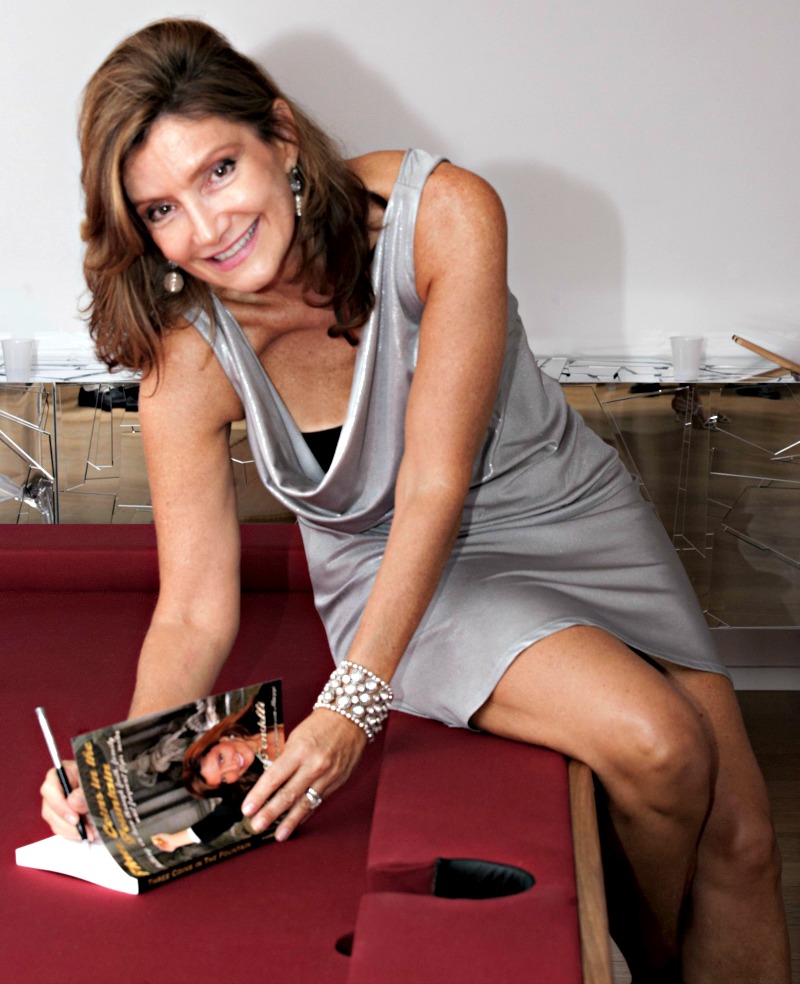
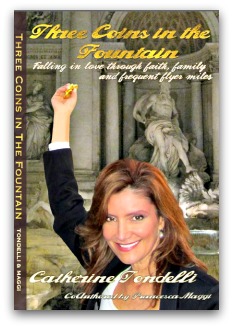
Jackie Townsend’s novel examines a cross-cultural relationship up close, imperfections and all

Jackie_Townsend

Jackie Townsend in Rome (photo used with her permission)

As a veteran of cross-cultural relationships (I am now on my second marriage to someone from another country), I tend to fancy myself as something of an expert on the topic. On the one hand, I know the joys of living in an intimate relationship with someone from another culture. On the other, I am only too aware of the pitfalls, a few of which I listed in an early post that still gets lots of hits: “Cross-cultural marriage: Four good reasons not to rush into it.”

I was therefore delighted to come across the novel Imperfect Pairings, by Jackie Townsend. From the outset of the book, I could see that here is a writer who understands that marrying someone from another country not only means marrying the family—but marrying the culture, by which one means the REAL culture, not the tourist version.

The imperfect pairing at the center of Jackie’s novel are Jamie, an American career woman, and Jack/Giovanni, who received his education at MIT but is from an old Italian family. The reason he has two names? Because, when he gets to Italy, he “literally turns into another person with another name,” as Jamie informs her mother at one stage.

Unsure of the relationship at first, Jamie finds herself powerfully drawn to Jack/Giovanni. Not only is he physically attractive, but he’s a man of hidden depths, who seems to understand her better than anyone else.

Eventually, the pair get married—but it’s not a fairytale wedding in the Italian countryside. Rather, it happens in city hall—Jamie has offered to help Jack get his green card. But despite this rather unromantic beginning, the couple grow close, and Jamie gradually immerses herself in Giovanni’s life, especially after he quits his job in the United States to help out with resurrecting the vineyards on his family’s estate.

As one reviewer said of Jackie’s novel:

It’s a brilliantly-written small gem, with exquisite detail and equally exquisite crafting of language, by an American author with her own Italian husband and her own Italian experience. It’s a guidebook to Italy, and a guidebook to how Italians really live their lives.

So can love cross borders? Fortunately, Jackie has agreed to answer some questions about her own life and the book. And she has kindly offered to GIVE AWAY ONE FREE E-COPY to the person who leaves the most interesting comment!

* * *

ImperfectPairings_cover_pmHi / ciao, Jackie. Thanks so much for agreeing to be our featured author this month. First can you tell us what made you decide to write a novel focusing on a cross-cultural relationship between an American woman and an Italian man?
I am 16 years married to an Italian who came to the U.S. for university and stayed.

And you called the novel “Imperfect Pairings”–why?
I got tired hearing all the oohs and ahs: “Oh you’re married to an Italian, how wonderful!” It’s so much more complex than that, and I wanted to dispel the notion of the romantic Italian love story, but in a real and true way, which means also dispelling the romanticism of relationships. The novel is about a couple dealing with real issues and real life, and learning to love each other even more in the midst of all that.

Did writing the book help you to process your own experience of getting into a cross-cultural relationship?
My own experience of being married to a foreigner exposed me to the parallels between cultural differences and marital differences. Entering a foreign country can be like entering a relationship and vise versa. To get to know someone, to understand them, you need the cross the border into their country, the country of their mind and soul. But even if you do eventually learn their “language,” you will never speak their native tongue, not really anyway. Which leaves the question, “Is it possible to ever really know the person you love?”

How much of the book is autobiographical?
Only about thirty percent of the story is autobiographically based. It took me much longer than Jamie to truly open myself up to my Italian family. Part of my writing the book, is homage to that, and them.

The Italian wine-making industry figures large in the novel. Did that emerge from an actual experience?
My husband’s family lives outside Turin, in Northern Italy, not far from the Barolo region. They did once have a summer villa there, where they made wine, and this is what inspired me to use wine and the resurrection of the family vineyard as a catalyst for the story. I love the way Italians treat wine, casually, like a member of the family, an old friend. Wine is a relationship. It requires love and care and tending to if it’s going to survive and grow, and, still, you don’t know what that wine will ultimately be, how it will taste. It became the perfect metaphor for the book.

Why a novel and not a memoir?
I’ve always written fiction, that’s the genre that comes naturally to me. I like the freedom, the idea of letting the characters take the story where they want to go, as when Jamie and Giovanni head to Southern Italy, to Napoli, at the end of the story.

Staying on the theme of your own life and travels, how and where did you meet your Italian husband?
My husband grew up in Italy, Australia, and Bangkok. He moved to the United States for college. We met four years later at business school in Berkeley. I had no idea he was Italian. He was raised in international schools and learned English very early on and worked hard to fit in, to have no Italian accent. But in Italy, he’s the opposite, staunchly Italian and working hard to rid himself of his American accent because he needs this sense of heritage, of home.

The inner nuances of Italian life

In the book you describe Jamie’s many displaced moments: her initial discomfort at being thrown into a physically demonstrative family that loves sitting down to home-cooked meals; her surprise at discovering that her American values of self-reliance and a can-do spirit do not really register with Giovanni’s people; and, perhaps most shockingly of all, her perception that her husband’s allegiance to football trumps all else. At one point she actually wonders if she and he have been “raised on different planets.” What was your most displaced moment when visiting Italy with your husband?
In the beginning of our relationship, it was knowing that he might be embarrassed my me, and my rather bawdy Americanism.

That reminds me of the first time Jamie and Giovanni visit Italy, not long after they’ve met, and she suggests that he sleep in her room. He gets angry and says: “It’s just not something you do here.” I know that you and your husband live in New York City. Have you ever considered moving to Italy?
Early on we had lofty dreams about living in Italy. The idea sounded romantic, but the reality was that the more and more we visited, the more and more I realized that moving to Italy would mean essentially moving in with his family—more disconcertingly his mother, a lovely kind woman, but also, well, I’ll let you imagine. The other reality was that it’s not easy to move to Italy and work. Job opportunities there just can’t compete with those in the States. Will we give it all up some day and move there? We’ll see.

What was your least displaced moment, when the Italian way of life made sense, and you felt as though you belonged in that part of the world—or as Jamie puts it when she comes to tolerate football, “accidentally entered some alternative universe”?
Three years ago our Roman cousin (the inspiration for the character Silvestro) asked me to be the godmother to his third child. Italians take this duty seriously, and I was very touched that he asked me, for Romans can often be all about Rome, and yet he skipped over all these other family members, even my husband, for the Americana. I’ve never felt so naturally a part of things (this, after 12 years)—standing in this magnificent church in the center of Rome, holding his baby in my arms as the priest christened him, trying not to shake or trip or fumble, surrounded by all of our Italian family, those who had so easily and truly made me part of their lives. I think I finally let myself believe it. It takes time, years, for cultural barriers to fall down, to really get to know someone from another country. But what I’ve learned is that you can. It’s something I would never have believed earlier on in my relationship with my in-laws.

That’s a touching story. Does having a non-American husband make you look at life in the United States any differently? In the book, Jamie comes to reappraise her sister and brother-in-law’s values after being exposed to a different part of the world.
Absolutely. It gives me perspective. My husband’s view is always global, from the outside in, sometimes infuriatingly so. While my view, the view of most Americans, will be from the inside out. We are the center of the world. But in fact, we are not. You can’t get this perspective, I don’t believe, unless you are intimately involved with another country, you “marry” them. I feel so lucky to have this experience and perspective in my life.

Self-publishing, a Writer’s Digest prize & praise from Italian Americans

Moving on to the book: What was the most difficult part of the book-writing process?
My writing is very subtle. I want my readers to read between the lines, to feel what’s going on in the quiet places. In as such, bringing out the romance between Jamie and Giovanni proved difficult. Because I believe that love is very personal and private, between two people only, and so to expose Jamie and Giovanni’s love felt like I was tainting it. I had to get past this. Knowing when to let love surface, getting the balance right, was difficult. It took a lot of time, and many of rewrites.

What was your path to getting it published?
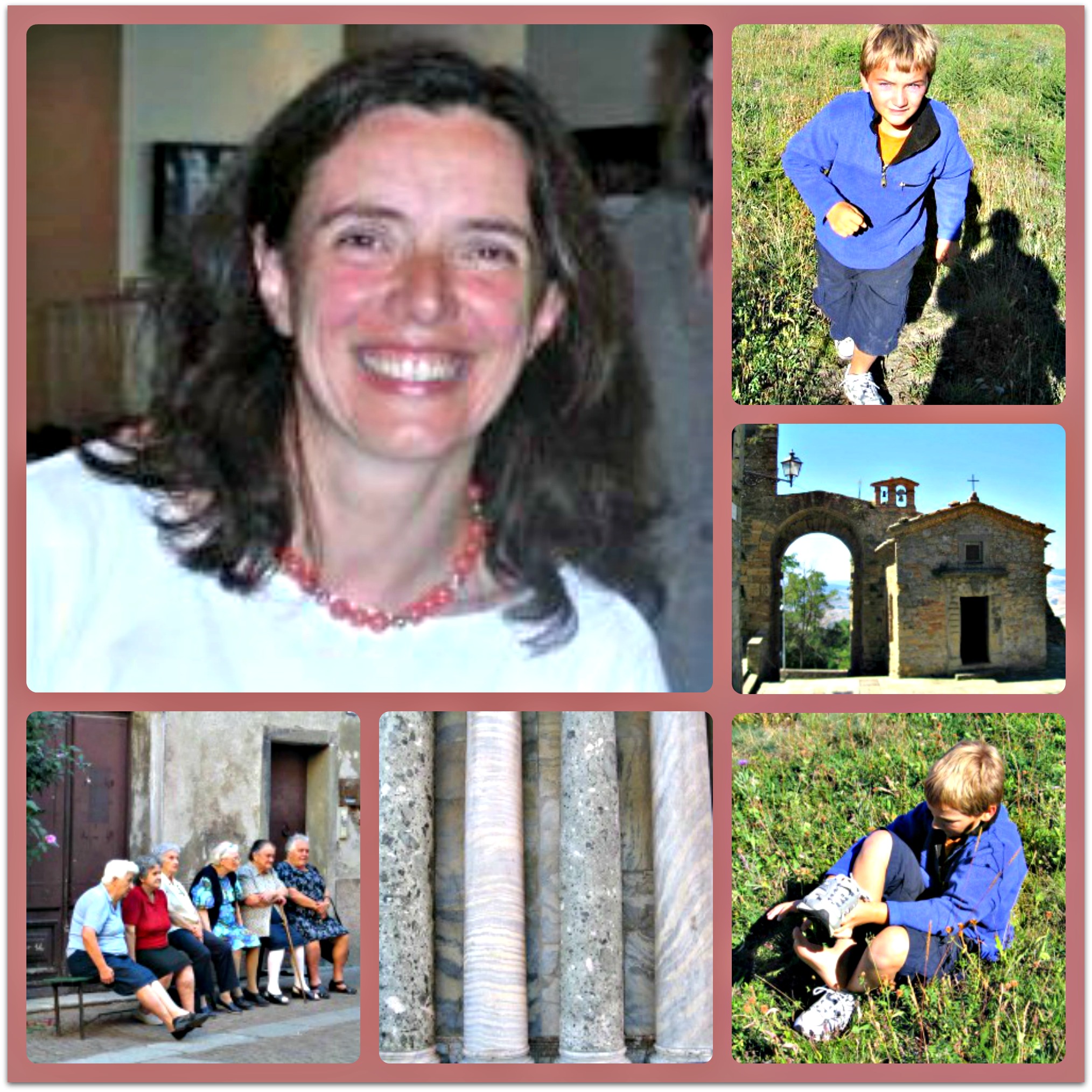
I self-publish my novels through my own imprint, Ripetta Press. It’s a decision I came to a few years back when my first novel, Reel Life, came close but ultimately had no success in finding a publisher. When Imperfect Pairings came along, I didn’t even bother trying to find a publisher. I became accustomed to the freedom of being able to do what I wanted with the book. And I was going to have to market it myself anyway.
Are you comfortable with indie publishing—is it working for you?
It’s become relatively easy to self-publish, though it might not be for everyone. In my case, I’m able to garner enough press and sales to sustain myself and find inspiration. Speaking of self-publishing, Imperfect Pairings just won an honorable mention award for literary fiction in the Writer’s Digest Self-Published Book awards, which of course I was very pleased about. My plan is to have the book translated, first in Italian, and work to find an international distributer.

Wow, congratulations! And well deserved. I must say, was impressed by how elegantly and lyrically you write. So what audience did you have in mind for the book? Has it been reaching those people?
Some people from the pure Romance genre got a hold of my book early on, and were wildly disappointed. This is not your typical Italian love story, and far from your steamy romance. It’s an adult romance, and people who get that really enjoy it.

The best reception of the book has been from the Italian American community, people who have some connection with Italy, second or third generation transplants. Many of those readers can really relate to the idea of an Italian’s displacement and the differing cultural dynamics between America and Italy.

I noticed your first book was about sisters, and this book has a sister relationship at its heart. Are you working on the next book now? What is about, and will it have a pair of sisters?
Funny you should ask. Yes, my next book has a sister theme. Two young adult women from different countries and cultures—one is Italian and one is American—will discover that they have the same father.

I presume you have a sister or sisters in real life?
Yes, I have two sisters (and a brother) who drive me crazy. But I love them. They provide inspiration for a lot of material!

10 Questions for Jackie Townsend

Finally, I’d like to ask a series of questions that I’ve asked some of our other featured authors, about your reading and writing habits:
1. Last truly great book you read: Hologram for a King, by Dave Eggers.
2. Favorite literary genres: Fiction, novels and short story collections, both classical and contemporary.
3. Reading habits on a plane: I travel frequently, and often far. Planes are my excuse to spend uninterrupted hours getting lost in a novel. I travel with my Kindle. It gives me this sense, tucked into my purse, that I’m traveling with all my books.
4. The one book you’d require President Obama to read, and why: 1984, by George Orwell but only because I couldn’t think of anything else.

5. Favorite books as a child: To Kill A Mockingbird; Catcher in the Rye.
6. Favorite heroine: Dorothea in Middlemarch
7. The writer, alive or dead, you’d most like to meet: Joan Didion
8. Your reading habits: At night, before bed, but I will also sometimes get up and read in the morning, for inspiration. I am always inspired to write when I read great fiction.

9. The book you’d most like to see made as a film: Mine.

10. The book you plan to read next: The Lowland, by Jhumpa Lahiri

* * *

Thank you, Jackie! As mentioned, I loved the book—everything from the big picture of the cross-cultural relationship to the little details, like Jamie having to get used to the fact that Italians don’t snack between meals. I also love something you said just now: “Entering a foreign country can be like entering a relationship and vise versa.” I believe there’s something in this book for every expat or serious traveler.

Readers, how about you? Any further questions for Jackie, or comments? Remember that if you leave a comment, you’ll be eligible to receive a free e-copy of the book! So, comment away! Extra points, as always, if you’re a Displaced Dispatch subscriber!

The winner will be announced in our Displaced Dispatch on November 30, 2013.

Can’t wait to read the book? You can always order a copy at Amazon.

STAY TUNED for next week’s fab posts!

If you enjoyed this post, we invite you to register for The Displaced Dispatch, a round up of weekly posts from The Displaced Nation, with seasonal recipes, book giveaways and other extras. Register for The Displaced Dispatch by clicking here!

Related posts:

Images: Jackie Townsend in Rome; book cover art.

For semi-retired expat blogger James King, a picture says…

Welcome back to our series “A picture says…”, which we created to celebrate those for whom photography is a creative outlet—who rely on a camera to register the look, character, and ambiance of the people and places that capture their fancy as they move around the globe.

Today’s guest is English expat, blogger, writer, world traveler and photography enthusiast James King. From December onwards, James will take over the hosting of this column from Andy Martin and publish it monthly.

As James plans to ask his interviewees to provide a selection of photos that help to tell their personal travel stories, it seems only fair that we require him to undergo the same exercise. What pix would he use to illustrate his peripatetic life of the past 25 years?

Indeed, “peripatetic” seems an apt descriptor for James. Semi-retired and now living in Chiang Mai, Thailand, he has traveled to over twenty countries. He lived in South Africa for a couple of decades and Thailand for the past five years. Here, in summary, are his vital travel stats:
Place of birth: England, UK
Passports: UK and EU (British citizen)
Resident in: UK (Bristol): 1942 to 1995; South Africa (Durban, Johannesburg, Cape Town): 1995 to 2008; Thailand (Chiangmai): 2008 to present.
Main countries visited: France, Spain, Greece, Italy, Morocco, Gambia, Kenya, Botswana, South Africa, USA, Thailand, Malaysia, West Indies.
Business interests: Majority shareholder in WestJewel (Pty) Ltd., a Cape Town jewelry wholesaler he founded in 2004.
Social media coordinates:
Twitter: @JimKing28265666
Facebook: Jim King
Linkedin: James King
Google+: jamoroki@gmail.com
Blog: Jamoroki.com

* * *

A bloomin’ late bloomer!

Hi, James. I see you were born in England during World War II. When did you actually start traveling?
Life was pretty austere after the war, we had rationing and people lived a fairly simple life. There were very few restaurants and I don’t actually remember ever going out to eat with my parents. Don’t get me wrong, we weren’t on the “bread line”; but it just didn’t happen in those days. We had TV for the first time in 1953, and it wasn’t until I was 24 that I first traveled overseas; to Paris in fact. When I got into my thirties, then I really started to spread my wings but I was very busy trying to make a living so I didn’t have the freedom I gained later in life. Only then was the adventurous side of me given wings, so to speak. Eventually, at the age of 53, I packed my bags and emigrated to South Africa after a few sorties there in the three years before.

SouthAfricanBeach_JK

Photo credit: James King

Okay, time to see your first photo. What’s the story behind this one?
This guy wears many hats and makes a living selling his wares on the beach at Bloubergsands, which is close to the house that I bought (and am now trying to sell!) in Table View in Cape Town. Generally these traders are not South African. They often travel a very long way from neighboring countries such as Zimbabwe, Zambia and Mozambique. Many of them dodge border posts by hiding in the back of goods trucks. They all hope to make a new life in South Africa after escaping from oppressive regimes or poverty. Some of them are intelligent, articulate and well educated, as I remember this guy was.

What do you like most about this shot?
I like that it highlights the harshness of Cape Town light. The ozone layer is so thin there—I had to be far more careful of the sun than I do in the tropics. I also like the photo because at that time, I wasn’t into photography at all and had even less idea about what I was doing than I do now. I always have to be aware of what harsh light can do to my pics.

Okay, let’s move along to another photo that speaks to your South Africa experience.
Can I have two shots, please? One of the Cape of Good Hope and the other of Table Mountain, with Cape Town below.

EndoftheEarth_JK

Photo credit: James King

TableMountain

Photo credit: James King

For me, these photos bring back memories of how wonderful the landscape is in that part of the world. So overwhelming, you really have to experience it in person. Just think, we are at the Cape of Good Hope, the bottom of Africa! And, despite how beautiful it looks, you don’t want to know how cold that water is. Naked you may survive ten minutes in there!

What particularly appeals to you about the Table Mountain photo?
I love how the clarity changes as soon as you hit the shore line below the mountain. It really is like that and not a cock-up on my part. It won’t win awards, but it is very personal so I love it.

How did you end up in Cape Town?
How long have you got? Things went a bit wrong for me in England after I got divorced, and then I met a guy who used to live in Durban and still had some business interests there. His wife had died the previous year so we were both single and hit it off. He had to go to South Africa again, so we decided to go and work together. That’s the “nutshell” version.

Semi-retirement in the Thai tropics

And now 20 years later you are in Thailand. How did that happen?
I’ll have to get the “nutshell” out again. In 2004, with some backing, I bought a jewelry wholesale business. Most of our silver is sourced and manufactured in Thailand, and I took on the responsibility of buying overseas. So I started traveling to Bangkok to meet suppliers and go to the Gems and Jewelry Fair in March and September. I met so many new people and also took a couple of holidays in Phuket before going back to Cape Town. Gradually I got a taste for SE Asia and, after a few years, decided to stay for four months getting to know more whilst still working remotely. That was it. Semi-retirement in the tropics beckoned and I was hooked!

I imagine it’s all been plain sailing since you moved to Thailand. Just kidding! I see from your blog you’ve had your struggles.
It is very difficult to précis my life over the last four years. I wrote my first book, the memoir MASK, to try and show the different sides to Thailand, its people and their culture. The book isn’t everybody’s cup of tea, but it was a cathartic exercise and helped me a lot. I should add that I didn’t include everything in it. The rest may come out later. But now I have a new lease of life and am so pleased I found blogging and photography because I believe the two go hand in glove. Writing, which has been a passion of mine for a long time, can embellish the photos and photos can enhance the writing, so in blogging you have the best of both worlds.

You say that photography gives you the ability to be able to capture something unique, which will never be seen again. What brought you to this realization?
I have always admired great photography while not having time to pursue it because I was working. Now, through my blog, I am learning how to incorporate photos into my posts. It’s fair to say my appreciation is growing as I hope will my knowledge. Writing is still my primary passion, but I now have another tool in my observation box. Although late in life for me, we are so lucky to be living in a technological age where we have the tools to enable us to express ourselves like never before. Sorry to take over the interviewing, but don’t you think it is so amazing?

Thailand2_JK

Photo credit: James King

But of course! Getting back to you and the photos that capture special memories: what do you choose next?
Actually, on my “to do” list is scanning some of the photos from my pre-digital collection, beginning in the 1970s, a number of which carry powerful memories and should help to create some rather interesting blog posts. In the meantime I have selected three of my more recent favorites for you.

The first one shows this guy and his wife who live in their little house at the end of Kata Noi, a beach on Koh Phuket. Every grain of sand is polished every day, they welcome everyone whether you want a drink or something to eat or just to say hello. They have a few beach loungers as well if you want to relax there. If you can have a more simple stress free existence, I’d like to know about it. On this particular day, I visited early one morning before the tourists woke up, and they made me feel most welcome.

Thailand3_JK

Photo credit: James King

This little seven-year-old boy lives in my village in Chiang Mai. As you can imagine he is very naughty and the older children tease him unmercifully. So he comes to my house at weekends to annoy me and get chocolate and biscuits. He always wants me to take his pic, and on this occasion I caught him waiting for the school bus. He felt very proud.

Let’s not get technical

What kind of camera and lenses do you use?
Please don’t ask me anything technical. It says on the bottom “Canon PC1130” and on the front “Power Shot S2 IS”. One fixed lens 12x Optical Zoom with lots of numbers on it. It has lots of settings but I don’t know what they are for so I leave it on auto-pilot and hope for the best. Oh, and most importantly, the rechargeable batteries are held in with an elastic band. I haven’t got a clue whether it is any good or not: I just shoot and ask questions afterwards. But sometimes I do worry that my photos are not so good when I see many accomplished photographers blogs. I just console myself I must work extra hard on the subject matter.

ThaiWhiteTemple_jk

Photo credit: James King

I think you have one more Thai photo?
Yes, this one: the white temple in the forest, which can be viewed from my village. This is very special because most of the time, although I know it is there, I can’t see it for mist or haze. Then one evening it was there and so was I with my camera!

Where have been your very favorite places to take photographs?
On safari in Kenya, Mykonos Island in Greece, and here in Chiang Mai where, even though I say it myself, I’ve managed to capture some beautiful morning and evening landscapes.

MykonosTown_JK

Photo credit: James King

Do you have a shot that’s your all-time favorite?
I pick this one, of a house in Mykonos Town, taken in 2005. I think it will always be one of my favorites.

A few parting shots

Do you feel reserved about taking photos of people, particularly when they are conscious that you are doing so?
It’s a very good question because I am always conscious that they may be shy and so I try and make a quick judgement call. But I do have an aversion to posed photos in the natural environment, so getting the balance right is important to me.

Do you ask permission before taking people’s photographs?
I just try and feel how they feel if they are aware I want to shoot them. I prefer to take them when they are unaware, then smile and say thanks. Otherwise I don’t get the naturalness I want. Look, I’m not experienced so I am not over-confident and I need all the advantages I can get. I find people will show you pretty quickly if they don’t want their picture taken.

But how do you get around problems of language?
Funnily enough I find not speaking the same language gives me an excuse not to ask. I have a smattering of Thai so the people here know I’m not a tourist, which definitely helps a bit.

Finally, do you have any advice for wannabe photographers who are traveling or living abroad?
In a nutshell (there I go again!), here are two pieces of advice:

  1. Never leave your camera at home or you may miss the shot of a lifetime out of nowhere. (Up until recently I have regretted not taking my camera on so many occasions. Now I hardly go anywhere without it, so much so that I often feel like a Japanese tourist. Believe it or not, most of my best shots were taken when I forgot to put in the SD card!)
  2. If, like me, you are not proficient, use other skills such as writing and storytelling or bizarre scenes, so that the photos don’t have to stand alone, to be judged naked.

* * *

Thank you, James! Readers, what do you make of James’s experiences and his photography advice? And do you have any questions for him on his photos and/or travels? Please leave them in the comments! (If you are a photographer and would like to be interviewed by James for this series, please let me know: ml@thedisplacednation.com.)

Once again, if you want to read more of James, be sure to check out his blog, Jamoroki.com. (Hmmm…I suspect there’s a story in that name!)

STAY TUNED for tomorrow’s post, an interview with November’s featured author, a novelist!

If you enjoyed this post, we invite you to register for The Displaced Dispatch, a round up of weekly posts from The Displaced Nation, with seasonal recipes, book giveaways and other extras. Register for The Displaced Dispatch by clicking here!

Related posts:

Main image at top of page: Camera lens from Morguefile; James King at the Khao Panong Rung Khmer Temple near Buriram, NE Thailand. All other images by James King.

Talking to Sharon Lorimer about starting up a business on the art of being an expat

Sharon Lorimer CollageAnyone who has been an expat has probably thought about, at some time or another, starting up a business to help ease other expats into the notion that they are now international residents. But how many of us have the knowhow and the guts to act on these thoughts?

Sharon Lorimer, a Scot who lives in New York City with her American husband, did not think of herself as having an entrepreneurial mindset until she went to business school. One thing led to another, and almost before she knew it, she’d founded doshebu, a business providing services to various kinds of clients looking to go global.

Now let’s meet Sharon and talk to her about this turn of events in her life. We know that the force of love took her to New York, but what swept her down the path of launching her own business venture?

* * *

Hi, Sharon! It’s always good to talk to a fellow New Yorker, especially a displaced one! What brought you here from Scotland originally?
I fell in love with an American. After a long-distance love affair, we had to have the big talk about where we wanted to live. We were both just out of school and thought there would be more opportunities in New York than in our hometowns of Edinburgh (mine) or DC (his). So I came to New York to get married.

What was the first chapter of your life in the Big Apple?
We joined the dotcom boom: I worked for an Internet advertising agency, and my husband, Kim Khan, has done a variety of jobs, including establishing a bureau for CNBC.com in London. We were in our late 20s and had a vibrant, creative life, with lots of international friends. But then came the dotcom bust, and we started to reassess our lives and the extent to which the dotcom model aligned with our values. I searched for the right business for me but couldn’t find a fit. In 2004, I decided to get an MBA and after graduation in 2008 I started doshebu.

What kinds of services does doshebu offer?
While still in business school, I conducted primary research in International Human Resource Management. The services doshebu provides—to corporate leaders, individuals and families, businesses (human resource units), governments and NGOs, and importers/exporters looking to go global—are based on the gaps I identified in the market. I’ve designed an individual program for each market sector. Expats who are interested can find more information on our Services page. And our online learning site has lots of free resources. We want to build a community there and are continually adding information that you can access for free.

You’ve been out of Scotland for some time. Do you ever feel “displaced”?
I feel most displaced in the places where I’m supposed to be feeling most at home. I find it tough to relate to people who don’t have similar life experiences. Sometimes other Scots don’t even believe I’m Scottish. How do you convince someone you’re not pulling their leg and are actually from the same place as them?

Do you feel more comfortable abroad than in the UK?
Usually when I strike up a conversation with someone who’s traveling the world or living abroad, I find we have lots in common. My husband is the same way. If we encounter foreign tourists in the city, we always want to tell them about really cool places to go and the history behind those places.

Expats as “warriors”

Where did your idea for “doshebu” come from?
Doshebu is an expression of my life experience. When I first moved abroad, I had no idea of how difficult it would be. I packed my suitcase, got my flight, and turned up at my fiancé’s house. It took me a while to realize how unprepared I had been. While I didn’t think of myself as an immigrant, I experienced the loss of status that immigration causes. Lots of expats approach international assignments in that way. Whenever I reach out to talk to others, I can see there is a lot of work to do to help us all understand what moving abroad has done to our lives. These days, I like to think of myself as a pioneer and imagine myself living in a “boundaryless” world, where people live where they want and do what they feel is meaningful to them.

I understand the name for the business is based on the Japanese samarai moral code, Bushidō?
Kim is a black belt in the martial arts. Both of us have experienced the trauma of moving countries (Kim is from Virginia originally but has lived and worked in the UK and Singapore), and we think that living abroad requires something of a warrior mindset. While most people anticipate having a change in lifestyle, they are unprepared for the idea that not everything will be straightforward. For instance, some locals may not appreciate you or your values. Warriors are trained to go into hostile situations, and doshebu’s products address that possibility by educating you and discussing methods of coping. Thus the “way of the warrior” has become the “art of the expat.”

Was opening up your own business something you always wanted to do?
No, I was totally daunted. Although I’d witnessed my grandmother and mother start businesses, and admired them for that, I always shied away from taking that kind of responsibility. But now I feel the desire to build something of my own that wouldn’t exist if it weren’t for my efforts and dedication.

What has been the biggest challenge?
There are two main challenges I face:
1. Limited resources. It’s always tough no matter how big the company is, but it’s really tough when you’re a start-up.
2. Motivation. When you have to motivate yourself and there isn’t a reward at the end of the day, it’s tough to figure out how to keep going. I have to keep reminding myself of how far the company has come—it is no longer a research project but a living company; and I dream of a future when other people think it’s a great company, too.

Expats as artists

The most fulfilling aspect?
Doshebu is an Internet business and there is a lot of technical work behind the scenes. But we called it the “art of the expat” because we find that people who go abroad tend to become more creative and have more diverse interests. I enjoy trying to foster a sense of this in our clients and their families. It can be an advantage to their companies—for instance, if they make a more creative presentation on their work; but it can also be about one’s personal journey, connecting you with your creativity.

If you could do anything else, what would it be?
I’d love to make movies. I wrote a screenplay a while back, and as a photographer and writer, I love movies.

FromtheGlobalScottishKitchen_cover_tdnI see that you’ve created some cookbooks and photobooks under the Art of the Expat brand. My favorite is The Global Scottish Kitchen, with recipes for things like Cock A’ Leekie Udon.
Yes, my next book will also be a cookbook, called Coop du Monde. It’s a step-by-step guide to spicing up the traditional British Sunday Roast. It’s also about helping you be creative in the kitchen by explaining how to experiment with flavors.

In addition, I’m working on another photography book—about graffiti. I want to explore the idea of street art, the photographer and the graffiti artist as being the same person.

You can check out my various books on Blurb.

What’s on your bucket list?
I want to buy a small island and build a house on it. I like the idea of being able to build an environmentally-friendly house. But we’d have to have liquor—Kim and I have also written a book about home-style cocktails, based on our world travels and conversations with bartenders, bon vivants and drinkers. AliasNickandNorasHomestyleCocktails_cover_tdnHmmm…maybe I could sell moonshine in the local market?

* * *

Ah, said like a true entrepreneur, Sharon! Thanks so much for talking to me about your work. I must say, I find your take on “going global” truly refreshing. Readers, any questions for Sharon on what it’s like to be an expat doing a business on behalf of other expats? Fire away! Or if you want to recommend a home-style cocktail for her collection, I’m sure she’d appreciate that, too. For that matter, aren’t cocktails part of the recipe for a successful expat adventure?!

STAY TUNED for the next episode in the online expat novel, Libby’s Life, to appear tomorrow.

If you enjoyed this post, we invite you to register for The Displaced Dispatch, a round up of weekly posts from The Displaced Nation, with seasonal recipes, book giveaways and other extras. Register for The Displaced Dispatch by clicking here!

Related posts:

Images (clockwise from left): Sharon trying out her Bushidō technique(?!) outside of Gaudí’s cathedral in Barcelona; being a tourist in Venice; enjoying a stein of beer at the Oktoberfest in Munich (on the cover of her photography book Oktoberfest); and how the table looked for her and Kim’s 10th-anniversary celebration (note the tartan tablecloth!).

For TCK writer Cinda MacKinnon, fiction is a way to revisit “homes” she has cherished

Cinda MacKinnon CollageWhen I first returned to the United States after my extended expat journey, I remember humming to myself:

There’s a place for me,
Somewhere a place for me.

But then last month, when I went to see our monthly columnist Elizabeth Liang perform her one-woman show, Alien Citizen, I realized that my displacement, which took place as an adult, does not compare to that of Third Culture Kids. Most expats have been global residents by choice, whereas TCKs had no choice in being dragged around the globe by their parents. They and they alone have earned the epithet of “global nomad”.

Elizabeth has found a place for herself in theatrical circles. And today we talk to another adult TCK, Cinda Crabbe MacKinnon, who has found a place in fiction writers’ groups. Based on the first novel she produced, tellingly entitled A Place in the World, it seems fair to say that Cinda thrives on creating fictional characters whose lives resemble her own in some way, and then placing them in a part of the world where she has fond memories of spending some portion of her formative years, as a TCK.

In brief, A Place in the World centers around a young American woman named Alicia, who marries a Colombian and goes to live on his family’s remote coffee finca in the “cloud” forests of the Andes Mountains. Calamities strike one after another and Alicia ends up running the finca alone.

According to the book description, A Place in the World is a romantic adventure story, with a multicultural cast of characters, in the same vein as Isak Dineson’s Out of Africa.

Unlike Dineson’s work, however, it is not a memoir. Cinda may have loved her time in Colombia, but she didn’t marry a Colombian. And though she always wanted to be a biologist, she became an environmental scientist instead.

Well, enough from me. Let’s find out more about Cinda, why she wrote the book, and the book-writing process. And don’t forget to comment at the end of the interview! As Cinda has agreed to be this month’s featured author, we will be giving away ONE FREE E-COPY of her book to the person who leaves the most interesting comment!

* * *

APlaceintheWorld_coverCinda, pura vida. Thanks so much for agreeing to this interview. Let’s begin at the beginning: what made you decide to write a novel about an American woman who lives in the cloud forests of Colombia?
Well, like all writers the story was simply in my head. Contrary to what I’d been told to do, I wrote for myself, without the idea of publishing—at least when I first got started. But I guess there were also some motivating factors. As you mentioned, I grew up as a Third Culture Kid, or TCK. My family lived in Greece, Germany, Colombia, and Costa Rica because my father was in the United States Air Force and then worked as an attaché to American embassies. I spent my formative years—and by far the longest time—in Colombia and Costa Rica. I wanted to be a rainforest biologist. That didn’t happen, but I’ve been able to live this dream through my protagonist, Alicia. Writing the book gave me an excuse to visit and study tropical nature in several places.

What impact did writing about the experience have on you overall—did it help you process what you’d been through as a TCK?
I love Latin America—the setting and culture are comfortable to me. The book gave me a chance to write about the people in that part of the world who were enormously kind to me. Growing up as a girl without a country, I came “home” for the first time to the States for college and felt totally out of place. Writing gave expression to some of this unanticipated culture shock.

What kinds of books have influenced you as a writer?
When I look at my Goodreads list of top 40 favorite books I see there is a definite multicultural theme: 30 are set in other countries, written by foreign authors or about expats. A few eclectic examples:

  • The Poisonwood Bible, by Barbara Kingsolver
  • Crime and Punishment, by F. Dostoyevsky
  • Zorba the Greek, by N. Kazantzakis
  • Tortilla Curtain, by T.C  Boyle
  • Small Kingdoms, by A. Hobbet
  • How the García Girls Lost Their Accents, by J. Alvarez
  • Eva Luna, by I. Allende
  • Caravans and Hawaii, by James Michener
  • The Thorn Birds, by C. McCullough
  • Pillars of the Earth, by K. Follett;
  • The Paris Wife, P. McLain;
  • Lost in Translation (different from the movie), by N. Mones
  • Dreaming in Cuban, by C. Garcia.

A fish out of water…

As you know, we like to talk about “displacement” on this site. When you were growing up as a TCK, what was your most displaced moment?
When I was working in New Zealand as a young adult. I’d lived in four or five different countries and could make myself understood in several languages so wasn’t expecting that to be a problem in NZ. I remember being with a colleague trying to order a milkshake, and the lady behind the counter asked me to repeat myself. “A chocolate milkshake, please,” I said as clearly as I could. She looked at me blankly and said, “Say it one more time dear, I’m trying very hard to understand you, but your accent is so thick.” As we left the shop, I told my work mate, “I don’t know what I got, but it sure isn’t chocolate!” Alistair smiled and replied, “I thought you asked for ‘banahnah’”!  Go figure!

Yes, having been to New Zealand, I can kind of imagine that! What was your least displaced moment, when you felt that the peripatetic life suited you, and you were at “home”?
As an eighth grader arriving in Costa Rica from Colombia. My first week I was accepted as part of the class and invited to a party. I spoke Spanish and felt I fit in. Costa Ricans are a hospitable people, but I think I was also especially lucky to have been in that particular class. They were—and are—an exceptionally nice group of people; they still meet every month or so for dinner, and any classmate who happens to be in town is invited to drop in. I found life in Costa Rica to be nurturing.

You mentioned the counter culture shock you experienced when coming back to America for college. What was the biggest challenge you faced at that moment?
Well, it wasn’t one thing but all the little things: I was dressed “wrong”, didn’t know the music, had never been to a football game… I just really felt like a fish out of water and wanted to go back to Costa Rica—so, after a couple years, I did! (For a while…)

Clearing the writing & publishing hurdles

Moving on to A Place in the World: what was the most difficult part of the book-writing process?
Beginnings are the most difficult for me, as well as writing synopses for agents and publishers. In general, however, the answer is: time. Finding time to write while I was still working; finding time to meet my indispensable writing critique group; and once edited and published, finding time to speak at bookstores, do interviews, and write posts for my own blog!

What was your path to publishing?
Like any previously unpublished author, I had a difficult time. I had one agent hold onto my novel for six months as we discussed strategies and then (with the downturn in the markets) told me they had decided not to handle unpublished writers anymore. This has become a mantra with traditional publishers. (J.K. Rowlings was turned down dozens of times before finding a publisher for Harry Potter.) After a couple of years (during which time I was polishing the manuscript with my critique group), I decided to “indie” publish. There is a range of providers between traditional publisher and self publishing; and my publisher, VirtualBookworm, is one of those in the middle. I paid for my own editor (she was great—an expat who married a Latino) and a very small fee towards printing; but I get a bigger percentage per book than with a big publisher. I’ve been happy with all the support they have given me and would do it again.

What audience did you intend for the book? Has it been reaching those people?  Can other kinds of expats, who haven’t lived in Latin America, relate to Alicia’s story as well?
I think of it as “mainstream” fiction that will appeal to anyone who likes to read about other places and cultures; but yes, it has been popular with expats. I rather thought that alumni from the overseas schools I went to would be interested, and that has been the case. I’m heartened and amazed at the support and e-mails I’ve received from adults of all ages.

Are you working on any other writing projects?
Yes (she says hesitantly). Hesitantly because, as you might guess from what I’ve already told you, I’m working pretty much FT—and finding time for creative writing is harder than usual! I do have several ideas that I’ve started: one set in Hawaii, another in Costa Rica, and a third in Europe. This last might be of interest to your followers, as it will be about a group of kids in an international school in Switzerland written from the point of view several different characters, taking their experiences into adulthood. And then my writers group thinks I should do a memoir. So I don’t know which of these schemes will “win”, but I intend to set priorities before the New Year.

10 Questions for Cinda MacKinnon

Finally, I’d like to ask a series of questions that I’ve asked some of our other featured authors, about your reading and writing habits:
1. Last truly great book you read: The Help, by Kathryn Stockett, comes to mind, but how great is great? I could go back to Zorba the Greek, by Nikos Kazantzakis.
2. Favorite literary genre: Literary and mainstream—especially multicultural or historical.

3. Reading habits on a plane: Anything—even the airline magazine in a pinch, but I usually take my Kindle with a good novel. Also, planes provide great down time to write!

4. Book(s) you would recommend to other TCKs, expats: Other than my “multicultural” fiction list above, it would be two books: Tales of Wonder, a fascinating autobiography about growing up in China almost a century ago, by Huston Smith; and I’m a Stranger Here Myself—Bill Bryson’s funny take on coming home after years abroad.

5. Favorite books as a child: Fairy Tales, by Brothers Grimm. When I was a little older, the Nancy Drew mysteries and I enjoyed reading Dr. Seuss to my little brother.
6. Favorite heroine: In fiction: Nancy Drew? In real life: There are too many to choose just one.

7. The writer, alive or dead, you’d most like to meet: Barbara Kingsolver and John Steinbeck.
8. Your reading habits: I take a break every afternoon and I get a little reading in, and then my husband and I always read before turning out the light.
9. The book you’d most like to see made as a film: A Place in the World! Seriously, two fans have suggested this and I love the idea. I visualize the opening as the cloud forest seen from the air and then zooming in to the tiled roof house with the veranda and bougainvillea. (This is actually a possibility! A colleague of mine is a script writer and mentioned that it would make a good movie.)
10. The book you plan to read next:  I just started Flight Behavior, by Barbara Kingsolver. Then I’ll probably read The Old Way: A Story of the First People, by Elizabeth Marshall Thomas, or Cristina García’s new novel, King of Cuba.

* * *

Thanks, Cinda! Though I’ve never been to Colombia, I find myself enamoured of the idea of finding a place for myself in a cloud forest. It’s actually an apt metaphor for how many of us “displaced” types live: with our heads in the clouds, pretending we are somewhere else half the time.

Readers, how about you? Is your head in the cloud (forest) after listening to Cinda? BTW, if you’re as new to Colombian cloud forests as I am, I suggest that you check out Cinda’s Pinterest boards. You can also get to know her better by visiting her author site and blog, and liking her Facebook page.

And don’t forget to comment on this post! Extra points, as always, if you’re a Displaced Dispatch subscriber!

The winner will be announced in our Displaced Dispatch on November 2, 2013.

NOTE: If you can’t wait to read the book, you can always get a softcover copy here and the e-book version in various formats on Smashwords or Amazon.

STAY TUNED for tomorrow’s post, when monthly columnist JJ Marsh talks “location, locution” with best-selling Brazilian author Paulo Coelho.

If you enjoyed this post, we invite you to register for The Displaced Dispatch, a round up of weekly posts from The Displaced Nation, with seasonal recipes, book giveaways and other extras. Register for The Displaced Dispatch by clicking here!

Related posts:

Images (left to right): Valle de Cocora in Columbia, with wax palms towering over the cloud forest, courtesy McKay Savage on Flickr (Creative Commons license CC BY 2.0); Cinda MacKinnon as a child in Colombia; Cinda MacKinnon now (she lives in northern California); and Cinda with her husband in front of Monserrate, a mountain that dominates the city center of Bogotá, Colombia, taken just this past summer.

FOOTLOOSE & FANCIFUL: Margaret Drabble’s “The Red Queen”

Welcome to Footloose & Fanciful, an occasional series of posts where we talk about books, films or other art forms that have inspired us to travel to new places or appraise familiar places with fresh eyes.

I’m probably not the best person to kick off this series. As much as I adore fiction, I’m not one to travel on a whim, because of something I read in a book. Especially not these days, when my expat years, spent in England and Japan, are behind me and I have to take time off from work. Typically, I arrive at my destination and collapse in a heap of exhaustion. It’s not until I’ve had a good rest that I am able to take in my surroundings. I peer out the window and say: “Really, I’m in xxx?!”

At that point I go to the other extreme, manically trying to find out as much as possible about where I’ve landed, visiting bookstores with an English-language section to stock up on translated novels, expat memoirs, the lot…

The second time I went to Seoul, South Korea, though, was different, and I’ll make that the subject of today’s post. That trip marked a rare time when a book had piqued my interest in a country to the point of influencing what I wanted to do and see and talk about during my stay.

Finding the soul of Seoul

I said my second visit to Seoul. The first had occurred a few years before. It followed the typical pattern. I arrived tired and unprepared, although on that occasion, I got an immediate lesson in the local culture.

Just as my husband and I were landing in Incheon International Airport, the news was breaking that Dr. Hwang Woo Suk—a veterinary researcher who had achieved world fame by cloning an Afghan hound named Snuppy—had falsified his latest results to make it look as though he’d made advances in human cloning.

“It’s a very Korean story,” some Korean friends of my husband’s informed us. I wasn’t sure what they meant, but little by little, I pieced it together. The Korean government, desperate to project a modern, high-tech face to the world, had turned Dr. Hwang into a national hero. He appeared in many of their promotional campaigns. The post office sold stamps to commemorate his research, and Dr and Mrs Hwang enjoyed a decade of first-class tickets on Korea Air, because of his status as “national treasure.”

Interestingly, our Korean friends were reluctant to condemn him outright. He’d been under a phenomenal amount of pressure to produce results and bring his country greater glory. If you were under that much pressure, you’d probably be tempted to skip a few rounds of clinical trials, too, they seemed to be saying.

I had to think about that for a while. Already, I was inclined to feel sorry for the Koreans because I knew how they’d suffered under Japanese rule. They are the Central Europeans of Asia, if you will. Just as the Hungarians, Poles and Czechs have had to put up with Germany and Russia, the Koreans, due to being sandwiched between China and Japan, have had to put up with incursions from both.

Gradually, I came round to the Korean point of view. My thought process went something like this:

Okay, the Koreans have been victims of some bad geography. But then why do they make things so much worse for themselves by setting such impossibly high standards? What Dr. Hwang did was wrong, a violation of ethical standards in medical research. But, okay, if I can feel sorry for all the Korean schoolchildren cramming like crazy for exams, I guess I can spare a bit of sympathy for Snuppy’s creator…

After arriving home from that trip, I was eager to read more about the country (I hadn’t found much in translation in Seoul’s bookstores).

That was when I happened upon the novel The Red Queen, by Margaret Drabble.

Seeing Korea in shades of red

A novel on Korean history by one of the writers I’d most admired when living in the UK: what could be a more perfect bridge between the two parts of my expat life?

The Red Queen of the book’s title refers to Lady Hyegyong, a Korean woman who lived in the 18th and early 19th centuries. She was plucked from obscurity to marry the Crown Prince of Korea, Sado, who turned out to be…a HOMICIDAL MANIAC, I kid you not.

The reason we know all of this is that Lady Hyegyong left behind a diary, and Part 1 of the novel is Drabble’s version of that document, which she based on JaHyun Kim Haboush’s translation of The Memoirs of Lady Hyegyong: The Autobiographical Writings of a Crown Princess of Eighteenth-Century Korea.

In Part 1, the Crown Princess tells us about what it was like to live with a husband and in a court where daily, several dead bodies would be carried out of the palace (whenever Sado felt agitated or depressed, he would seek relief by murdering his servants) or reports would arrive of another court lady being raped. After he murders his concubine, he starts harassing his own sister, too.

At about this point, I concluded that the only thing worse than discovering you’re married to psychopath would be to find out you’re confined with him in a palace, from which there’s no escape. Terror within a claustrophobic setting must be the worst kind there is!

The story has a further twist. The Crown Prince’s father, King Yongjo, turns out to have been deeply Confucian. He is the kind of Korean parent who sets impossibly high standards for his son, which—it is hinted in the Crown Princess’s diaries—may be part of what triggers the son’s madness.

In the end, the cruel father proves more than the psycho son’s match. On a hot day in July 1762, he summons Sado and orders him to get into a heavy wooden chest, ordinarily used for storing rice or grain. The lid is shut and locked, and Sado is left to starve. It takes eight days.

The Crown Princess is traumatized all over again at witnessing her father-in-law execute her husband in such a cruel manner.

In part 2 of the book, an Oxford academic travels to Seoul with the Crown Princess’s diary in hand (which has been sent to her anonymously via Amazon.com) and finds parallels between her own life and hers. Professor Halliwell feels that the Princess “has entered her, like an alien creature in a science-fiction movie.” She becomes possessed by her—just as I was by the end of the book, just as I’m sure Drabble was, which was what inspired her to create (in her words) this “transcultural tragi-comedy.”

More questions than answers

I went back to Korea for a second time not long after reading the novel, accompanying my husband on some work he had there. So moved had I been by Drabble’s book that I was determined to find a way to pay tribute to the Red Queen, so called because of all the blood that flowed during her husband’s reign.

But here’s the strange thing. All of my attempts to find out about Lady Hyegyong came to naught. My Korean friends said I needed special permission to visit Changgyeong Palace, where this tragic series of events took place. They did not seem to want to engage in a conversation about this period of their history.

I left Korea with more questions than answers: Do Koreans repress this part of their past, and if so, what does that tell us about them? Is my previous view of them as helpless victims all wrong? Did other countries walk in and take over because Korea had weakened itself through its impossibly high Confucian ideals, which had led to total anarchy by the end of the 18th century?

But the weirdest thing is, I wasn’t that surprised by the Korean reaction. While the Western part of me applauds Drabble for resurrecting Lady Hyegyeong as feminist hero, one who lived long enough to write her tale (the existence of her memoirs, incidentally, served to refute later attempts to restore Sado to a position of honor in Korean history books), the Asian part thinks that poor Lady Hyegyeong must feel displaced in Drabble’s novel. Relationships are, after all, a central theme to Confucianism. The husband is the head of the household and the wife is obedient to him, full stop.

This inner dilemma of mine, along with the spirit of Lady Hyegyeong, which Drabble portrays so vividly in her novel, still haunts me to this day…

* * *

Readers, have you ever read a book that has colored your impressions of a place in weird ways? Also, if you would like to contribute to this new series—perhaps an uplifting tale of being inspired by a book set in the idyllic Tuscan countryside would be in order after this rather macabre story?—please don’t hesitate to get in touch: ml@thedisplacednation.com.

STAY TUNED for next week’s fab posts!

If you enjoyed this post, we invite you to register for The Displaced Dispatch, a round up of weekly posts from The Displaced Nation, with seasonal recipes, book giveaways and other extras. Register for The Displaced Dispatch by clicking here!

Related posts:

Don Quixote & Sancho, John Steinbeck & Charley…Olga & George? A travelogue for the expat annals (plus we’re giving away a copy!)

Olga Vannucci CollageWhen I first stumbled across Olga Vannucci’s memoir, Travels with George, I wondered whether the title alluded to John Steinbeck’s book Travels with Charley, about his road trip across America in the company of his French standard poodle, Charley.

Turns out, I got it right. Born in Italy, Olga went to Brown University and currently lives in rural New Jersey. As she tells it, she was driving through Doylestown, Pennsylvania, one day when Steinbeck’s travelogue popped into her head, and she knew she wanted to call her book “Travels with George.” When she announced this to her son (the “George” of the title), he said: “So I’m the dog?”

As you can gather from this story, mother and son make quite a pair.

Olga says she’s no Steinbeck, though she does prefer a plain and honest writing style. Also like Steinbeck, she had the desire to see her native land again.

So, how did she find the Italy of today: did she still fit in? And what did her sidekick, George, the blonde all-American kid, make of his mammina‘s homeland? Did he enjoy these escapades or feel puzzled by his mother’s motives? Perhaps the story he saw himself in wasn’t Steinbeck’s at all, but a modern Italian version of Don Quixote, in which he occupied the role of a skeptical Sancho Panza?

Olga has kindly agreed to give away one copy of the book to the reader who is keenest to find out the answers to these questions (see giveaway details below).

But before we get into that, let’s talk to Olga and hear some more about the travels that inspired her to put pen to paper…

* * *

Travels with George Book CoverCiao, Olga! Let’s begin at the beginning. Tell us more about your decision to take a trip to Italy with your young son and write about it.
I was born in Italy (Milano), lived in Brazil two different times as a child, and came to the United States to attend college. I’ve been here ever since. When my son was seven years old, I realized suddenly that I hadn’t been back to Italy in ten years, and I went, taking him along. I thought he would learn about Italy and acquire a feel for what it’s like. I also hoped he would learn some Italian. I don’t know how much of that was accomplished, but I loved showing him around. We went back four more times over the course of six years (he is now 14). I wrote the book about those trips: a mix of travelogue, personal history, and little anecdotes, with some humor.

What impact did writing about the experience have on you—did it help you process your childhood memories?
It was wonderful to see the locales of my childhood again. At this point, my memories are either indelibly fixed or just gone—for instance, I can remember clearly sitting on the steps with my friends Sassello, in Ligurio, as I recount here:

[My sister and I] had two friends in Sassello, two girls the same age as [us]—Paola and Maria Elena. They spent their summers thirty meters from where we spent ours, and we spent hours and hours of every day together.

[George and I] walk by the steps where we used to sit. I expect to see them, I expect them to be there, but they’re not. No one is. It’s all the same, but it isn’t.

Did you also learn something about yourself, in taking these excursions down Memory Lane?
I did find out about my current self through the book, but primarily from what others told me my words said about me—for example that I’m kind, funny, and honest. It was also interesting to hear from others about the things that they could relate to in the book, ranging from the more profound to the totally mundane situations. That was amazing, to realize that what I wrote spoke to others.

George’s ordeal

Do you think it will help George someday, in understanding part of his heritage that might not otherwise be accessible?
George has not read the book because, he says, “I was there, I don’t need to read about it.” I do hope and trust that both the experience and the writing will be a part of him, that he will consider the book a gift.

What was your most displaced moment when you & George were touring Italy, when you thought of yourself as a stranger within your homeland?
I always struggle with whether I am Italian or, at this point, American, or, more likely, not really either one. What makes me feel at home in Italy is the fact that it’s largely so unchanged. What makes me feel displaced is that the people of the older generation, my parents’ generation, who are the people I particularly associate with Italy, are passing. They’re my biggest connection with Italy, and they will soon be gone. After that, I may feel displaced…

I gather you don’t feel nearly as comfortable with younger generations of Italians?
Yes. I’m not sure why not. Possibly because the younger generation is doing its own thing and is more all over the place, unlike the older, which has stayed put.

What was your least displaced moment, when it all seemed to make sense for you and George to be there—that you fit right in?
On all the trips we visited my aunt, my mother’s sister, and stayed at her house, where we slipped naturally into being part of the family. I had coffee with her in the morning, we planned meals, I helped her water her garden, George fed her goldfish, and we watched television in the evening.  There was not an ocean or even a smidge of formality between us.

I love the description you provide of your aunt in the book:

My aunt is a lovely person, she’s beautiful and she likes to dress well. She’s 80 now, and she still looks good in her clothes, she wears fashionable clothes. She is cheerful and tells funny stories. She loves to do stuff and see people, she’s chatty. She’s fun to be around.

In that same passage, you mention the “recurring nightmare” of finding food that George likes to eat. What was the most challenging thing about traveling with a young child?
I did not realize how jarring the experience would be for George. To me, Italy is pleasant, and while I knew it would all be new to him, I didn’t realize how different it really was. Being in a completely unrecognizable place where he didn’t understand the language was way outside his comfort zone. I also probably didn’t verbalize things enough. I could have prepared him more and explained things better.

The other thing about traveling with a small child is that I, as the adult, had to be “on” 100% of the time.  Not only did I have to plan and handle everything, but I also had to manage him and make sure I didn’t lose him, which was something I actually worried about, and when I became stressed I had to try to hide it so he wouldn’t become stressed, which I didn’t do very well. He’s very perceptive.

What do you think he took from the experience?
The knowledge that he can survive a terrible ordeal… Possibly I took him on a few too many hikes up hills. It wasn’t always fun and idyllic. I do believe that the trips will serve as a foundation for him to understand that the world is large and diverse and for him to appreciate differences.

The potential perils of writing about one’s offspring

What was the most difficult part of the book-writing process?
It was hard to write about others and protect their privacy at the same time, particularly with my son. I find him very amusing, but he doesn’t intend to amuse me, and he is sensitive to it. He thinks I’m making fun of him, basically. So I’m always walking that line, writing about him, but trying to be respectful of him.

I understand you decided to self-publish the book. Why is that, and do you have any advice for other writers who opt for self-publishing?
I made some attempts to get an agent but ultimately I went with self-publishing because I didn’t have the patience to wait. What I like about self-publishing is that it’s all mine, I created the book cover, I chose the font, I decided to favor the comma over all other punctuation, and it’s been incredibly fun and very rewarding.

There are so many options today to publish and distribute and get the word out, and it can be done without a big financial investment. All you need is the investment of time. Given that this is your passion, you want to spend your time on it anyway. And there are so many people who are open to help. I would encourage other writers not to be afraid to ask. Putting your thoughts out there to share with others is a gift, and people respond very kindly.

What audience did you intend for the book, and has it been reaching those people?
I thought it was a mother/son book, which it is, but it’s very much a book for people who love Italy, who have been there, or who plan to go. My writing is very direct and the book is written in the present tense, so readers feel like they’re there along with me. It combines some very personal time in Italy–with family or revisiting places of personal significance—with visits to the big tourist destinations like Venice and Rome.

Are you working on any other ambitious writing projects?
I am working on a book about traveling with George in America. It’s not an organized itinerary, it’s just places we’ve been or will go to. Mostly in the northeast, plus San Fran and Arizona. It’s still in the infant stages, this project. But I promise it will be extra funny!

10 questions for Olga Vannucci

Finally, I’d like to ask a series of questions that I’ve asked some of our other featured authors, about your reading and writing habits:
1. Last truly great book you read: Don’t Let’s Go to the Dogs Tonight, by Alexandra Fuller, about growing up in Africa.
2. Favorite literary genre: Definitely travel!
3. Reading habits on a plane: I don’t like to fly so I bring an easy-reading book that I know will keep me engaged, and paperback so it’s lightweight.
4. The one book you’d require President Obama to read, and why: He has such a tough job. I would wish, not require exactly but only wish, for him to read a book that his daughters like, so he can have a topic of conversation that they can share and enjoy. He will then tackle his job rejuvenated.
5. Favorite book as a child: Mary Poppins—the P.L. Travers book and the Disney movie, too. I think I had it in both languages. It was just magical, different, not at all like my daily life with my mother and sister.
6. Favorite heroine: Martha Gellhorn, who was a great journalist and writer. She was married to the literary giant Ernest Hemingway yet always retained a strong sense of herself.
7. The writer, alive or dead, you’d most like to meet: I would like Calvin Trillin to take me out to eat in New York, in the Village, to all his favorite eating places. It might take several days because he has a lot of favorite eateries. I would like to hear all about Alice, about his daughters, and about his long and brilliant career.
8. Your reading habits: I read in bed every single night, and I have been reading more during the day recently. I’ve been deliberate about carving out more time in the day, when it’s otherwise easy to get caught up in other activities.
9. The book you’d most like to see made as a film: Any book that takes place overseas, so I can see the place in which the events take place.
10. The book you plan to read next: Hard to tell… I have a stack of some thirty books in my bedroom, and I’m not sure which one is next. I may need to devise a lottery system to determine the reading order…

* * *

Grazie tanto, Olga! Your story certainly sounds amusing while also saying something profound about parent-child relationships and the quest to go home again. Something to rival the wisdom of Steinbeck or Miguel de Cervantes, for sure.

Readers, it’s time for you to ENTER OUR DRAW TO WIN A FREE COPY of Olga Vannucci’s book, by entering a comment below. Olga says she will favor comments that tell her why you’d like to read about her and George’s adventures.

Extra points, as always, if you’re a Displaced Dispatch subscriber!

The winner will be announced in our Displaced Dispatch on September 28, 2013.

To read more excerpts from Travels with George, go to Olga Vannucci’s author site. You can also keep up with her on the book’s very active Facebook page. Also feel free to order the book from Amazon.com.

STAY TUNED for tomorrow’s quota of Global Food Gossip. Rumor has it, Joanna Masters-Maggs has something particularly tasty in store for us!

If you enjoyed this post, we invite you to register for The Displaced Dispatch, a round up of weekly posts from The Displaced Nation, with seasonal recipes, book giveaways and other extras. Register for The Displaced Dispatch by clicking here!

Related posts:

Images: Olga Vannucci and George, interspersed with Italian scenery. Of the George photos, Olga writes:

Let me provide the audio from George: “Where are we going? How much longer? I have something in my shoe. I want to go back. Why are we doing this? Do you know where we are? Do you know where we’re going? Mammaaaaaaa!”