The Displaced Nation

A home for international creatives

Tag Archives: What a Displaced World

Ghoulies, ghosties, long-leggedy beasties, and expat horror stories that go bump in the night

Welcome to October in the Displaced Nation —  a month of night terrors and gruesome tales, all with a global spin.

While most us regard telling horror stories round the campfire as just a bit of harmless fun, some unfortunate souls find the experience too close for comfort. Many global travelers, when they first embark upon an expat lifestyle, see the change as a way to escape past events. And why not? New surroundings can mean a chance to reinvent yourself, to live the dream.

Sadly, as these news stories attest this week, the dream can sometimes become a nightmare:

  1. A 41-year-old French businessman in Dubai is on trial, accused of holding a woman prisoner and using white magic to persuade her to marry him;
  2. A British man in Turkey was convicted of murdering his Russian wife after he discovered she used to be a man;
  3. A Thai woman plundered her British husband’s bank account to pay a hitman to kill him;
  4. A British expat in Spain drowned in the freak floods last week.

The last incident seems particularly sad in its irony: leaving rainy Britain for sunny Spain, only to perish in Spanish floods.

Often underlying the media stories such as these is the insinuation that, had these unfortunate people never strayed from their homelands, the situations wouldn’t have arisen. True enough in case number 1 — it’s difficult to be accused of practicing white magic in France.  But the others? They could happen anywhere.  Homegrown horror stories are every bit as bad as those cultivated abroad.

Although — thankfully — most of our misfortunes are not as extreme as the examples above, we’ve probably all had moments when we’ve thought, “This wouldn’t have happened if…” Yet how helpful is that train of thought, really?

So, to travel or not to travel? To take risks at home — or abroad? If you’re asking this, you’re already halfway there. Perhaps at this point you should turn to C.S Lewis’s The Magician’s Nephew,  where Digory and Polly have found themselves in a strange world, in front of a mysterious bell and hammer bearing the following message:

Make your choice, adventurous Stranger;
Strike the bell and bide the danger
Or wonder, till it drives you mad,
What would have followed if you had.

Have your travels brought you regrets, or can you only regret the things you haven’t done? Take part in our poll!

If you enjoyed this post, we invite you to register for The Displaced Dispatch, a round up of weekly posts from The Displaced Nation, with seasonal recipes, book giveaways and other extras. Register for The Displaced Dispatch by clicking here!

Related posts:

Image: MorgueFile

EXPAT MOMENTS: Decorative Gourds

So summer ends, at least where we are, and we mark that with another Expat Moments.

The debate over whether aesthetics are universal or encultured is answered definitively in the high aesthetic value North American women place in “decorative” gourds.

Bubonically bucolic, these hideous, misshapen vegetables appear in supermarkets and at farm stands every autumn. The gourds I’m looking at have ridges, bumps and warts that cover the rind completely. Staring at these, my thoughts aren’t of pumpkins and butternut squashes, but of a diseased, pustule-covered body part. The talon-like stem of the gourd is dark, almost black. These . . . things . . . these devil squash would be better placed in a jar of formalin and displayed in the Hunterian alongside Charles Byrne’s skeleton and other morbid curiosities, instead they are arranged into wicker baskets and called seasonal centerpieces.

This post was first published on Culturally Discombobulated.

STAY TUNED for next Monday’s post.

If you enjoyed this post, we invite you to register for The Displaced Dispatch, a round up of weekly posts from The Displaced Nation, with seasonal recipes, book giveaways and other extras. Register for The Displaced Dispatch by clicking here!

Related posts:

Image: MorgueFile

The accidental repatriate

Last time Sezin Koehler wrote for us, she was bidding farewell to “strange, Lovecraftian” Prague, where she and her husband had lived for four years. Also in the Czech Republic, Koehler succeeded in producing her first (horror) novel, American Monsters. After a short stint in Germany, the couple is now saying hello to sunny, but bugbear-filled, Florida. Koehler describes the emotional transition.

When I left the US for Europe in 2002 I had no intention of ever again living in America. Violence, backwards politics, a horrible job market, and a provincial outlook on the world made an extreme contrast with my global, Third Culture Kid background. I am half American, half Sri Lankan, and my mother worked for UNICEF, so the family lived all over the world.

Not to mention I was suffering from extreme post-traumatic stress disorder after witnessing the murder of a dear friend when the two of us were robbed at gunpoint by a gang banger in Hollywood.

Ten years later and a forced repatriation determined by economics rather than desire, I am at a loss for how much worse off this country is since I left. I know a decade is a long time — but surely not long enough to usher in political rhetoric that would take this nation back to pre-1950s? My mind boggles.

One big dark nation

Gun violence has ever increased — to the point where we find so-called Stand Your Ground laws that allow citizens to kill each other with impunity, under the guise of “I felt threatened” — even when that threat consists merely of a young African-American boy, armed with nothing but iced tea and a bag of Skittles.

I’m back in the world of mad gunmen going on shooting sprees. Sikhs mistaken for Muslims and murdered. Women getting abducted and raped at gunpoint while waiting for a bus — this happened just recently not far from where I live.

Post-9/11 America has seen the sharpest increase in the infringement of civil liberties as matters of homeland security and anti-terrorism. The arrests of journalists covering Occupy Wall Street events brought the US’s rank of journalistic freedom down 27 points, putting the country at 47, just behind Comoros and Romania.

Xenophobia abounds as states pass laws against the teaching of ethnic studies, and even literature written by Native and Mexican Americans, in schools. Such developments are exponentially more ironic when considering that this country’s immigrant history.

The worst (and rudest!) of times

After college it took me almost a year to get a proper job. Upon returning, I’ve had trouble securing even a retail job: all applications are now submitted online and don’t give you an option to upload a cover letter or even your full resume. Not only are American jobs outsourced to China, the application process has been tech-sourced to boot, as machines vet your application — even if you live right down the street from the store to which you’re applying.

I was shocked to find that retail jobs pay exactly what they did a whole ten years ago. Way to move forward, America.

America might have progressed in terms of technology; I see a smart phone in every hand. However, common courtesy has gone out the window as people text, Facebook, Tweet, right in the middle of an actual face-to-face interaction, without even a twinge of remorse.

Call me old fashioned, or a kindred spirit to Hannibal Lecter, in believing it’s the epitome of rude to fiddle with one’s phone (or any other such object of distraction) whilst another human being is talking to you.

The wheels on the bus go back-backwards.

Monsters are the best friends I ever had

To add insult to injury, I find myself in a particularly devoid area of Florida, easily one of the most vapid places on the planet. Plastic people who can spend an hour telling you about their lunch salad are the antithesis of the cultured individuals with whom I spent my time while living elsewhere.

Who would have thought the rabbit hole I fell down when I left Prague would lead to a place scarily resembling Hell, with its torturous circles and its staggering temperatures?

Each day I force myself to review the positives:

It seems incredible that the America I left ten years ago — the one that traumatized me so badly — is actually a better version than the one in which I live now.

So frustrated have I been by absurd American conservatism and the zombie hordes of consumerism around me, I’ve resorted to a new persona: Zuzu Grimm, a creature who writes wicked dystopic visions of where this country is headed if it continues down this current path of willful ignorance and fear mongering.

Bored now

But that’s not been the only struggle: For years I defined myself as an expat. My blog was filled with anthropological tales of living in Switzerland, France, Spain, Turkey, the Czech Republic and Germany. More than that: stories of growing up in Sri Lanka, Zambia, Thailand, Pakistan, India.

While I’m still a Third Culture Kid — never really at home anywhere — my expat identity became a cornerstone of who I was. It worked, and was so much less confusing to explain. The expat label made me feel ultimately more interesting. Writing a novel in Prague sounds infinitely more exotic than writing from an essentially retiree community of ten thousand.

Oy vey.

Accepting that this is who I am now, and this is where I am, has been even harder than the absolute culture shock upon repatriation.

Being an expat gives a person a sense of uniqueness that may or may not be deserved. Yes, you’re a foreigner who must negotiate language/cultural/social barriers. But it’s also your choice. And for many people economics determines whether you can or can’t participate.

Kind of like having kids. You can complain all you want about how hard it is, but it’s something you elected to do, not something that was forced upon you.

(Well…unless Republicans head up the White house; with their insane ideas on abortion there’ll be thousands more women forced to carry rapists’ babies to term. Disgusting. Terrifying. Yet another grotesque example of the New America I find on return.)

I’m nobody, who are you?

My former life as an expat has taken on so many more shades of meaning as I consider how it must have seemed to those in my position right now: How glamorous. How decadent. How lucky. How dare they criticize my government when they’ve jumped ship. I have to live here. I’m thousands of dollars in debt. I don’t have the luxury of leaving.

Maybe one day when my husband wins the lottery, that’s just what we’ll do. Leave. Maybe for Buenos Aires, or Addis Ababa. Maybe in the meantime we’ll find a better city in the US, one that offers more by way of creativity, culture, and history — the things I miss most about life in Europe.

Until then, I have to make peace with being plain old Sezin Koehler who lives in and writes from Florida. Hopefully some time soon I’ll be okay with that. Any minute now. It’s going to happen.

That’s fine. I’ll wait.

And pray I don’t get sick in the meantime, because even with Obamacare, I still can’t afford health insurance.

Sezin Koehler, author of American Monsters, is a woman either on the verge of a breakdown or breakthrough writing from Lighthouse Point, Florida. Culture shock aside, she’s working on four follow-up novels to her first, progress of which you can follow on her Pinterest boards. Her other online haunts are Zuzu’s Petals‘, Twitter, and Facebook — all of which feature eclectic bon mots, rants and raves.

STAY TUNED for tomorrow’s post, another displaced Q from anti-foodie Tony James Slater.

If you enjoyed this post, we invite you to register for The Displaced Dispatch, a round up of weekly posts from The Displaced Nation, with seasonal recipes, book giveaways and other extras. Register for The Displaced Dispatch by clicking here!

Related posts:

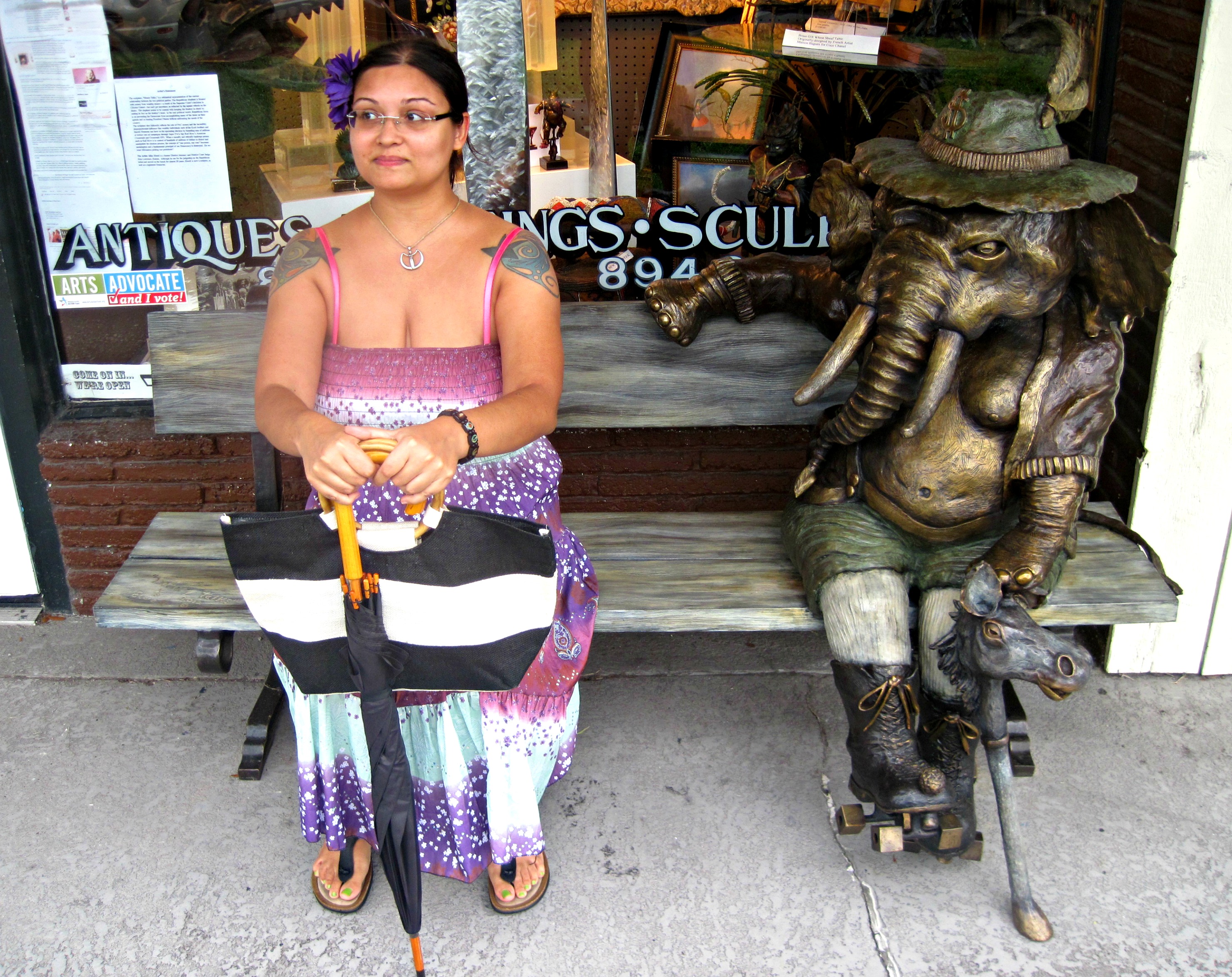
img: Sezin Koehler in St. Petersburg, Florida, by Steven Koehler (2012).

EXPAT MOMENTS: Finding your tongue

Continuing our food-themed posts of September, here’s an Expat Moments post on unexpected encounters with local cuisine.

Kyoto reveals itself to you, a source of delight for the curious of spirit. Alien yet unintimidating, you lose yourself in this ancient city, confused and disoriented as only a contented traveler can be.

But with all that wandering comes hunger. You look around for a restaurant to try. You aren’t entirely sure where precisely you are. It’s not that you’re lost, you know you are somewhere near the centre. You can see in the mid-distance Kyoto Tower. You know you only have to walk in the direction of the tower to find yourself back at your hotel. It’s by no means late, but everything here seems to close unfathomably early. Nothing appears to be open. You had expected the streets at night to be awash with neon advertising hoardings in kanji, but that is not the case here. Your assumptions again proved incorrect.

You spot a salaryman, the only other person on the street apart from you, and see him go into a small building. You follow, but stop at the doorway of the building. There are no windows for you to peer through. There is no sign. You can smell something intoxicating inside, but is it a restaurant? Is it the entrance to an apartment complex that the salaryman lives in? Is it something altogether more illicit that you would be ill-advised from entering? Curiosity combined with hunger gets the better of you and you step into the building.

Walking through the hallway, you discover that it is a restaurant, a tiny one. In the center of the restaurant is an open kitchen where a chef cooks. Who you immediately assume (though why you assume this, you’re not entirely sure) is his daughter serves the food. Three salarymen are sitting there, eating and smoking. The assumed daughter smiles at you. She goes over to the side of the room and rummages through her menus looking for that English copy that they had made. When she has finally located it, she hands it to you with a smile and the only English phrase she will say to you other than a “thank you” as you leave. “For you,” she says, and hands you a laminated menu.

You take the laminated menu. Reading through it, you notice that there is only the one ingredient that they cook – beef tongue (gyutan). Not what you were expecting, or what your stomach was grumbling for. The assumed daughter smiles expectantly at you. You smile back and pick from one of the dozen gyutan dishes available and you wait. The smell of the cigarette smoke from the salarymen irritates you, gets in your chest. As you wait, you read through that laminated menu again and notice that they have included a print-out of the English language Wikipedia page on gyutan, saying hat it only became popular during the occupation after World War 2. You read on, irritated that the Japanese still allow smoking in restaurants, not knowing that you are about to eat one of the most unassuming — but most delicious — meals in your life. Beef tongue, grilled and served with rice.

Assumed daughter and father will say “thank you” as you leave, but you have no Japanese to tell them how much you loved what they offered. All you can give is awkward smile and utter an even more awkward, tongue-tied attempt at “sayonara”.

STAY TUNED for next Monday’s post.

If you enjoyed this post, we invite you to register for The Displaced Dispatch, a round up of weekly posts from The Displaced Nation, with seasonal recipes, book giveaways and other extras. Register for The Displaced Dispatch by clicking here!

Related posts:

Image: MorgueFile

BOOK REVIEW: “The Elopement: A Memoir” by Dipika Kohli

TITLE: The Elopement
AUTHOR: Dipika Kohli
AUTHOR’S CYBER COORDINATES:
Website: kismuth.com
Twitter: @DipikaKohli
Kismuth on Facebook
PUBLICATION DATE: July 2012
FORMAT: Ebook (Kindle) available from Amazon
GENRE: Memoir
SOURCE: Review copy from author

Author Bio:

A former journalist, raised in America by her Indian parents, Dipika Kohli has previously lived in Japan and Ireland, and now lives in Durham, NC, with her husband and son. The third volume in her Kismuth series will be published in October 2012.

Summary:

When American-born Karin Malhotra elopes to Ireland with her college sweetheart, she botches the dreams her parents had for her when they left New Delhi with a stalwart philosophy on what a good life “ought” to be. “Opportunity,” her father said, “is in the U.S. That’s why we came.”

But finding herself in Ireland, juxtaposed in not one, but two additional cultures (her new husband is Japanese), Karin finds herself thinking about the early years of her own parents’ married lives, and wondering if, like her, they questioned their decision to leave everything familiar for the mere promise of a better life.

She tumbles headlong without any preparation into a small village in the corner of Ireland. Not only does she have to contend with a new suite of social mores, she wonders what it would have been like had she not quit home.

(Source: Amazon.com book description)

Review:

The Elopement is the second book in a four-part memoir series, Kismuth, which, in Hindi, means “destiny”. Karin’s grandmother defined destiny as:

We’re all meant to be someplace…And when we get there, wherever it is, that’s what’s supposed to happen.

This implies a passiveness about the process, a casting off of responsibility for our futures, yet many would argue that destiny is of our own making. You reap what you sow, is another way of putting it.

Karin Malhotra’s ambitious parents left Delhi in search for a new life, for better opportunities for them and their children. Sadly, by forcing their own ambitions onto Karin, they sowed what they would later reap: an unhappy daughter, rejecting her family’s strict expectations by following her heart and searching for her own “better opportunities”. Her interpretation of the phrase, unfortunately, did not agree with that of her parents, who refused even to acknowledge Karin’s relationship with Japanese boyfriend Yoshi.

Little wonder that, when Karin finds the acceptance from Yoshi’s parents that she never had from her own, elopement seems an attractive, fairytale-like option. But of course, everyone knows that not all fairytales have happy endings. And while it might be possible to create one’s own destiny, the lesson we can learn from this book is that it is folly to try to create someone else’s.

The Elopement is a fascinating read, beautifully and eloquently written. Dipika Kohli’s next book, The Dive, starts where The Elopement ends. I am already counting the days until its publication on October 10.

Notable quotes:

On being a TCK:

[My parents’] choices, and the consequences that arose, ought not affect my own. If they didn’t think the trade was worth it — the one where they gave up everything in a familiar context in India to take a chance on a new opportunity abroad — well, that wasn’t my problem, was it?

On interculteral relationships:

Our summer of trying out…this intercultural relationship thing, felt like wearing a happened-upon outfit I’d never imagined could fit, but thought, once in a while, why not break that one out? …This “once in a while” was about to become my new look.

On Ireland:

Ireland had the kinds of places and people that would make you stop what you were doing, and sit up and pay full attention, to the degree that you felt really aware and present, maybe for the first time in your life.

.

STAY TUNED for Thursday’s post!

Image: Book cover – “The Elopement”

If you enjoyed this post, we invite you to register for The Displaced Dispatch, a round up of weekly posts from The Displaced Nation, with seasonal recipes, book giveaways and other extras. Register for The Displaced Dispatch by clicking here!

Related posts:

TRAVEL YARN: Two madcap Indonesian ladies in weird & wonderful Japan (2/2)

Japan — the country that many Westerners have likened to Lewis Carroll’s “wonderland” for its quality of wacky unpredictability. But what about for other Asians — do they feel as displaced and disoriented there as we do? Our very first Random Nomad, Anita McKay, ventured into the Land of the Rising Sun for the first time this summer, in the company of another Indonesian, P, who had been there once before as a student. This is Part 2 of the pair’s adventures. (See also Part 1.)

After Tokyo and Kyoto, P and I headed to Kobe — with Kobe beef as our main target. We’re Indonesians, remember? Which means we’re always looking forward to our next meal.

Gluttons for gourmet food

Our hotel in Kobe had booked us a table at Mouriya, a restaurant that prides itself on serving superior quality beef from the Kobe Cow and the Tajima Cow. Mmmm…

The meat was really delicious, but not long afterwards, I was craving sushi again. Fortunately, I was able to indulge in some serious sushi eating one last time with my blogging buddy from Yokohama, whom we met on our way back up to Tokyo. She and I went out for a meal at Kyubey, a high-end sushi restaurant in the Ginza. (P couldn’t join as she actually had to work in Tokyo for her Indonesian company for the last two days of our trip.)

Kyubey, which is actually two restaurants across the street from each other, doesn’t take bookings and always has a long queue. Luckily, my friend and I were able to get a table — and, to our delight, the chef had rather fluent English.

He patiently explained to us about the fish we were eating. One particular sushi had to be held with chopsticks in a certain way and nibbled at from the side, not the front.

We told the chef that both of us weren’t too keen on tuna, as the tuna we’d tried had been chewy or smelled too fishy — so we preferred salmon instead. He smiled and then put some tuna on our plates and told us to try it. We soon realized that this might be the best thing we’d ever eaten — melted like butter in our mouths.

Our nine-course lunch, which included eel (unagi), tuna, scallop, and squid, cost only about AUD 50 (around the same in US$). I would happily go back to Kyubey again and again and again.

P, upset at being stuck in the office while my friend and I were feasting on sushi, insisted that we go to Tsukiji market on our last morning in Japan. We got to the market just after 6:00 a.m. — but by then had already missed the tuna auction.

Still, we took a good look around at all the weird and wonderful sea creatures for sale, and then decided to have a sushi assortment for breakfast. While at the sushi restaurant, I discovered that different parts of the tuna are sold at different prices. I also came to realize that tuna costs 2-3 times more than salmon. Remembering what I’d told the chef at Kyubei about salmon and tuna, I think he must have been laughing at us!

Sex (and hugs), please, we’re Japanese!

Our first night in Kobe, P and I had wandered around looking for a place to have a drink after dinner. It was only 9:00 p.m., but outside nearly every club were girls in miniskirts handing out pamphlets.

(If guys, not girls, were standing outside the clubs, it was to advertise that “go go dancing” was on offer. Hmmm…is that a euphemism?)

We passed one big place claiming to be an Arabian club (actually, the building did have a Middle Eastern look), with a big banner of three Japanese girls dressed as nurses and “A Whole New World” blasting loudly.

We passed a couple who looked as though they were in their mid-50s and had had too much fun too early. The lady was leaning against a tree and wrenching; not exactly the picture of elegance!

We decided just to go back to our hotel instead.

Later, when we joined my blogging buddy for some shopping at the Yokohama Red Brick Warehouse, we rested over coffee as she regaled us with some stories she’d collected of strange and rather lewd behavior engaged in by Japanese men.

And then, as if to illustrate her story, something rather creepy happened. Ever the snap-happy tourist, P had decided to take a parting shot of me and my blogging buddy with the Red Brick Warehouse in the background. There was a young couple doing the same thing, who turned out to be Indonesians, sent by their companies for a training session in Yokohama.

While we were busy exchanging e-mails and phone numbers, a young Japanese man popped up out of nowhere.

He shook my hand, asked my name (in English), and mumbled something I couldn’t understand. He then walked over to my blogging buddy, repeated the same series of gestures — and then hugged her. He walked over to P and did the same thing. And then it was the turn of the young Indonesian couple.

By then, all of us had realized there was something “not right” about this guy — but as he seemed harmless enough, we waited patiently until he finished hugging the last person in the group.

At that point, he walked back to my blogging buddy and hugged her again.

I laughed a little because it seemed so strange — also because I was the only one he hadn’t hugged so felt safe.

But then, to my horror, he came back to me, shook my hand again, asked my name again, and then really hugged me and wouldn’t let go.

My blogging buddy, seeing the expression on my face, started walking away as fast as she could. The rest of us followed her. I broke free and followed her as well. As we looked back at Hugger Boy, he just waved and started laughing.

Another funny, weird, horrifying tale for my blogging buddy’s collection!

Some seriously good people watching

As our time in Japan drew to a close, I entertained myself by staring at the Frank Lloyd Wright wall in Tokyo’s Imperial Hotel, spying on a wedding procession at Meiji Shrine — and, best of all, people watching.

As I was sitting on the subway, I noticed two very pretty girls sitting right in front of me. Their hair was almost light brown (a favorite color in Japan), very long and slightly wavy (favorite style in Japan). They also wore fake eyelashes, but there was something about them that made me keep staring at them. After a few minutes I realized that their eyeballs were unusually large, more like dolls than human.

Later I consulted with Google and found that Japanese girls sometimes wear special contact lens that do make their irises look bigger. Odd…

More odd stuff: both P and I had been wondering why so many young Japanese men carry bags just like us girls. There was one guy in the subway who carried a black Dior tote bag. And if that wasn’t weird enough, I saw a guy carrying a brown city messenger bag by Balenciaga. (Google the bag and your jaw will drop, just as mine did.) Oh, and there was also a man with matching red tote bag and shoes in Bvlgari’s Il Café in Omotesandō, where P and I stopped for martinis.

Still, I did enjoy watching that particular man, who was accompanied by his two pooches. One dog kept begging from the cute girl at the next table, while the other kept demanding food from him.

Meow — or should it be nyan?!

Actually, I’m more of a cat person — so before we flew home I wanted to visit the Calico Cat Café in Shinjuku, where people can enjoy coffee or tea in the company of real cats. P still had to work so I went by myself. I didn’t even get lost!

The café has two floors and charges the guest by the first hour, then per 15 minutes. I saw a wide variety of cat breeds: Maine Coon, Abyssinian, Ragdoll, Persian, Scottish Fold, and so on. No Sphinx, though.

The café has strict rules about entering the cat area: you have to change your shoes to slippers, clean your hands with disinfectant, and not take any photos with a flash.

All of the cats seemed rather spoiled. They refused to be petted unless you gave them a snack first. A Scottish Fold named Apollo apparently thought he was the cashier, so he sat at the cashier counter, looking at us lazily.

One hour passed by so quickly that I wished I could spend at least another day in Tokyo! P, meanwhile, wished she didn’t have to work so she could experience the cat café as well.

A fond sayonara

We spent our last minutes at the airport buying Tokyo bananas and green-tea Kit Kats for friends and family back home. I was pondering about buying sake, but then all of a sudden, it was time for boarding!

P is determined to go back again, and I, too would love to go back. But as the seat belt sign went off, we looked at the world map spread in our screen, and started day-dreaming about our next adventure…

* * *

Readers, any questions or comments for Anita? Where do you think she’ll go next?!

Anita McKay is a property consultant, travel junkie, cat lover, food enthusiast. She resides in Perth with her Scottish husband but is still searching for a place called home. To learn more about her, check out her blog, Finally Woken, and/or follow her on Twitter: @finallywoken.

STAY TUNED for tomorrow’s review of an expat memoir of a cross-cultural elopement.

If you enjoyed this post, we invite you to register for The Displaced Dispatch, a round up of weekly posts from The Displaced Nation, with seasonal recipes, book giveaways and other extras. Register for The Displaced Dispatch by clicking here!

Related posts:

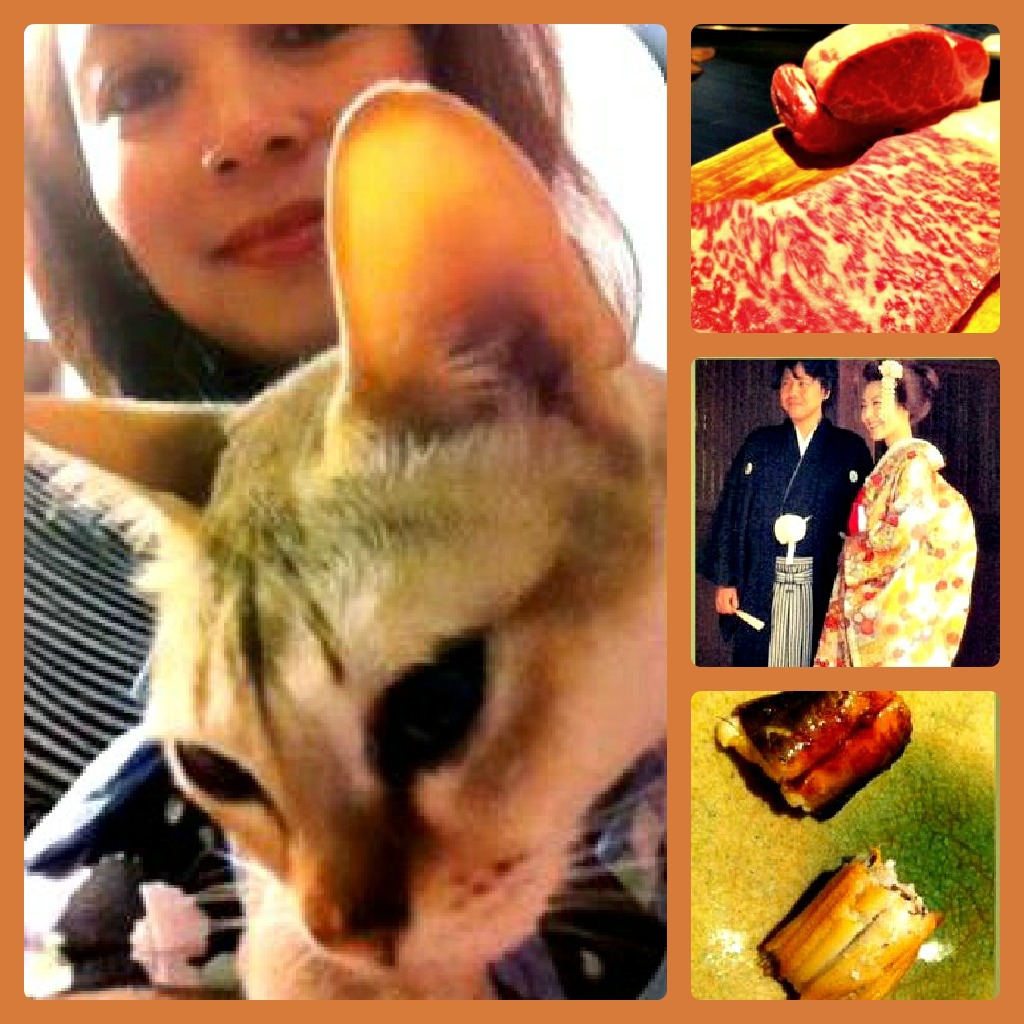
Images (clockwise): Anita McKay making a feline friend in Café Calico in Shinjuku, Tokyo; the marble-ous Kobe beef; the bride and groom at a Japanese wedding at the Meiji Shrine; and Kyubey sushi (all from Anita McKay’s extensive collection).
Repatriating from paradise — and breaking all the rules

One of our earliest Random Nomads, Jack Scott, drank deeply of the cup of expat life. He and his civil partner, Liam, moved to their version of paradise: Bodrum, Turkey. This decision enabled Jack to become a writer, parlaying his popular blog, Perking the Pansies, into a book, which was published about a year ago and reviewed on this blog. After so much success, why have the pair traded in Bodrum for Norwich, in East Anglia? Yes, that’s right, they’ve repatriated!

In the beginning there was work and work was God. After 35 years in the business, the endless predictability made me question the Faith.

I wrote those words on the 8th October 2010 — the opening sentence of my debut post on a brand new blog, Perking the Pansies, about a couple of silly, cynical old queens who decided to jump the good ship Blighty and wade ashore to Asia Minor.

For a minority report, the blog’s done rather well. Then there was a book. That’s done rather well too. Remarkable. Both crept up behind me unexpectedly, without hint or herald. Sometimes I wonder if we should have listened to the early advice from our playground peers; maybe we should have kept our backs to the wall. Too late now.

At the time, we had a plan — well, a plan of sorts. We would stay in Turkey for a good few years, slowly descend into memory loss and erectile dysfunction (both disguised by a haze of alcohol) and eventually paddle back to Blighty for the liver transplant and the Grim Reaper’s call.

It was not to be. I wanted to do author things and keep the pennies (and believe me I do mean pennies) rolling in. I could do neither in Turkey. Added to this, serious family issues beckoned us back from paradise and we wanted to do our bit.

Decision #1: Leaving Bodrum

When we first announced our intention to up sticks and become “repats,” we were taken aback by the reaction in our little corner of expatland.

There was a strong sense that some gang members felt badly let down, betrayed even. It was as if our decision to leave reflected badly on their decision to stay.

Some even suggested that we’d soon be back, presumably with our tail between our legs and begging to re-join the fold.

You see, our particular expat ghetto was meant to be the final destination, a place to retire and expire. We were breaking the unspoken rules.

Ironically, when we first left Blighty for our place in the sun, our friends and family, the people with whom we have the deepest roots, simply wished us well and promised to visit.

Decision #2: Picking Norwich

So, the first big decision was to leave. The second was where next to lay our hatboxes. We were adamant that we wouldn’t revert to the world of coffees-on-the-run, nose-to-nipple commutes, kiss-my-arse bosses and treadmill mortgages. So, London was off the agenda.

After much heated debate and pins on maps, we settled on Norwich, a small cathedral city in Eastern England, a two hour drive northeast of the Smoke. Our choice was met with a wall of incredulity, both at home and away. To be fair, all I really knew of Norwich was the classic seventies game show “Sale of the Century”, Bernard Matthews gobbling turkeys at his farm in Norfolk, and the acronym (k)Nickers Off Ready When I Come Home, first used in the BBC Radio show “Just a Minute” in 1979. (I’ve often used the latter in text messages to Liam, but that’s another story…)

By common consent, the former Anglo-Saxon kingdom of East Anglia is full of inbreds fiddling with their siblings and marrying their cousins. That’s the myth peddled by the urban pretentious. In reality, Norwich is a sparkling jewel hidden in the rural flatlands of England’s gobbling breadbasket with more art houses, wines bars and fancy restaurants than you could shake a stick at. As the most complete medieval city in England and home to a thriving university, Norwich is where the old and the young are blended in perfect harmony.

We were delighted to join the north folk of Norfolk as neo-Norwichians (not to be confused with Norwegians who, as Vikings, did a bit of raping and pillaging in this flat part of our Sceptred Isle).

No regrets…

Our time in the sun was a magical experience. We don’t regret a single second, not even those cold winter days huddled under a duvet and fighting over the hot water bottle as torrential rain battered the house. Thank you, Turkey. Thank you for breaking the umbilical cord between wages and lifestyle, and teaching us to make do with less. Thank you, for giving me the time and space to write. Thank you, for handing me a story on a plate. One day, we may return. But, for now, there will be no going back on going back.

* * *

Readers, any thoughts on, reactions to Jack Scott’s rule-breaking move back home? Can you relate at all?

STAY TUNED for tomorrow’s episode in the life of our fictional expat heroine, Libby. (What, not keeping up with Libby? Read the first three episodes of her expat adventures.)

If you enjoyed this post, we invite you to register for The Displaced Dispatch, a round up of weekly posts from The Displaced Nation, with seasonal recipes, book giveaways and other extras. Register for The Displaced Dispatch by clicking here!

Related posts:

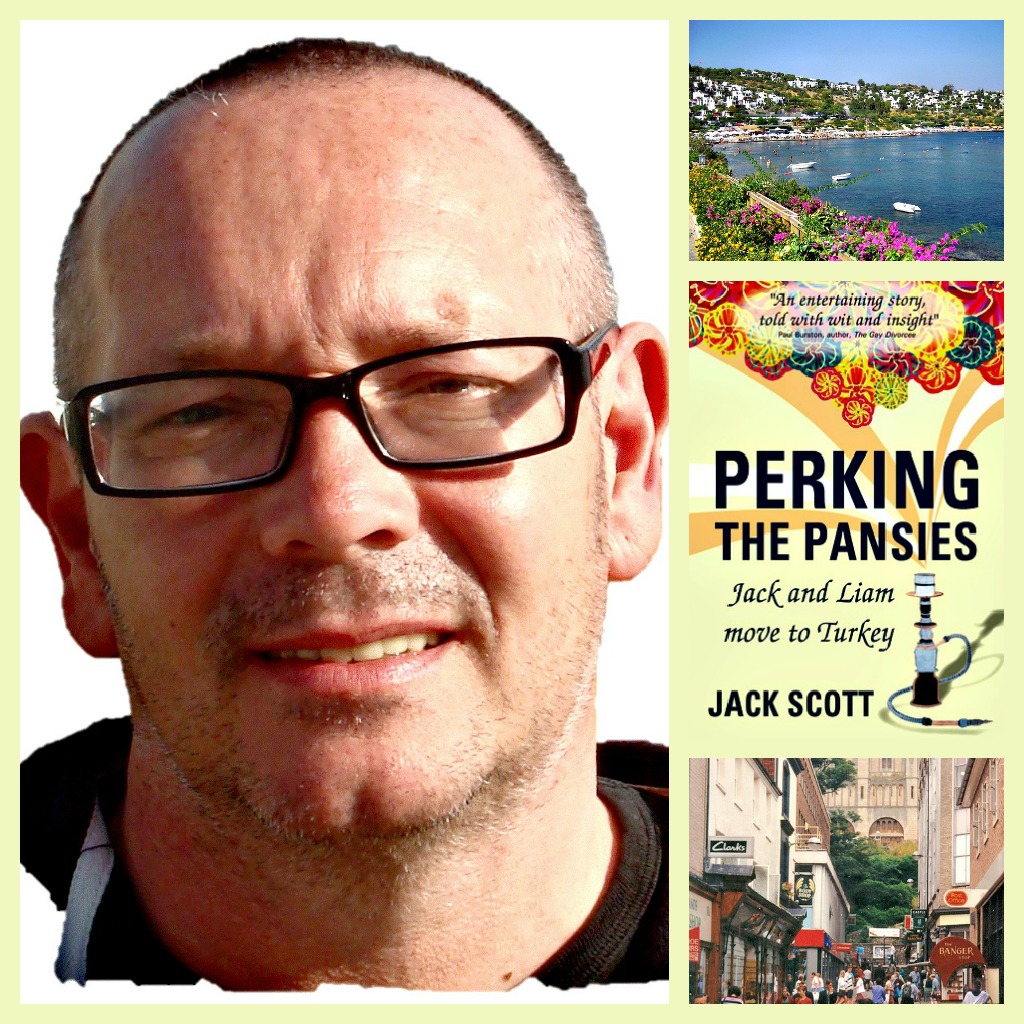
Images (clockwise from left): Jack Scott; Bodrum, Turkey, courtesy Yilmaz Ovunc (Flickr) Creative Commons CC BY-SA 2.0; Perking the Pansies book cover; Norwich, England, courtesy Roger Wollstadt (Flickr) Creative Commons CC BY-SA 2.0.

DEAR MARY-SUE: Can you tell me how to stomach other countries’ bizarre food obsessions?

Mary-Sue Wallace, The Displaced Nation’s agony aunt, is back. Her thoughtful advice eases and soothes any cross-cultural quandary or travel-related confusion you may have. Submit your questions and comments here, or else by emailing her at thedisplacednation@gmail.com.

Well, this month I’ve been asked to deal with your food-based queries. That’s pretty easy for this gal! I love to chow down. Not in a Paula Deen kinda way, you understand, but I sure do love a refined meal and am pretty well known on the Tulsa culinary scene.

****************************************************************************************

Dear Mary-Sue,

Fermented salted herring — how does that sound to you as a national dish? [Not great. Think roadkill cooked up in the finest Ozarks tradition sound preferable, if I’m being honest – M-S]  As an American living in Northern Sweden, I have yet to acquire the taste let alone abide the smell. However, a friend at my new church has invited me to a party where they’ll be serving surströmmingsklämma — that’s a sandwich made with slices of surströmming (the name for this fish — quite a mouthful, too, though at least it’s not fermented!) between two pieces of the hard and crispy kind of bread they love so much up here. The bread is buttered and there is a further layer of boiled and sliced or else mashed potatoes.

What to do? Do I accept my friend’s invitation or pretend to be busy “settling in”?

– Mary-Louise from Umeå, Sweden

Dear Mary-Louise,

You don’t have to pretend to be Anthony Bourdain if you don’t want to be. Look at Samantha Brown, she travels all the world and never once leaves her comfort zone or experiences something new.

Also, you’re in Sweden, not some village in the third world where they are honoring you by offering you a slice of roast anteater rump. I’m sure you won’t be insulting anyone by politely declining. Just be graceful and say you’re not big into fish.

Mary-Sue

*****************************************************************************************

Dear Mary-Sue,

I know you’re very pro-USA, but as an English expat who has just spent his first summer in the United States, I haven’t been able to get the hang of some of your summer desserts.

Take, for instance, strawberry shortcake — overly sweetened strawberries on a sweet biscuit, which should actually be called a scone. Whose bright idea was that? I guess that person hadn’t heard of strawberries and cream?

Moving right along to that traditional American Girl Scout favorite, s’mores. The chocolate and graham crackers are fine, but a roasted marshmallow — that’s OTT. Please, sir, can I have no-more?

I could go on about the American obsession with eating ice cream in a wide variety of sickening flavors, when there’s absolutely nothing wrong with chocolate and vanilla (okay, strawberry, too, if you like) — but I’ll stop there.

Here’s the thing, old girl [??????? M-S]. I would love to tell my various American hosts that nothing beats a tall glass of Pimm’s on a summer’s day, and a slice of summer pudding, but I’m guessing that wouldn’t go down too well.

Nigel of Nevada

Dear Nigel,

Old girl??! Why, aren’t you a little slice of honey pie? I’d certainly like to beat you with a tall glass of Pimms. It actually isn’t too difficult to get hold of a Pimms cup here in the land of the free. As for the rest of your letter: yeah, we like our desserts to be sweet. What a surprise!

Mary-Sue

********************************************************************************************************

Dear Mary-Sue,

I’m originally from Winnipeg, in Manitoba, Canada, and am teaching English in Korea. The other day one of my students went so far as to tell me that the reason the Korean economy has gotten strong is because they all eat so much kimchi.

I wanted to tell him that I think there’s something strange about a nation being so obsessed with what is essentially spicy fermented cabbage.

I mean, can’t they think of anything else to brag about?

– Sally from Seoul

Dear Sally,

First Mary-Louise’s problems with fermented fish and now this. I don’t know what it is with foreigners and fermentation — seems crazy to me. The Mary-Sue rule is that unless you’re fermenting something that I can make into a mimosa or margarita, then it’s best not to bother.

My hubby, Jake, is always going off to the Korean barbeque in town. If the owner is sending back all the money he makes off dear ol’ hubby, well, it’s probably that that’s keeping the Korean economy strong.

Mary-Sue

********************************************************************************************************

Dear Mary-Sue,

Oh. My. God. Do people really eat this stuff? I’m an American student staying with a British family as part of a semester abroad, and they SERIOUSLY just offered me the most foul-tasting stuff imaginable on toast. I thought I was going to spit it out. I mean, it was soooo salty! And then they presented the jar to me as a GIFT! What am I supposed to do with it?!?!?!?

– Patti in Plymouth

Dear Patti,

I’m assuming you’re talking about Marmite. I wouldn’t worry too much, it probably won’t make it past customs when you return to the land of milk and honey.

Mary-Sue

___________________________________________

Anyhoo, that’s all from me readers. I’m so keen to hear about your cultural issues and all your juicy problems. Do drop me a line with any problems you have, or if you want to talk smack about Delilah Rene.

Mary-Sue is a retired travel agent who lives in Tulsa with her husband Jake. She is the best-selling author of Traveling Made Easy, Low-Fat Chicken Soup for the Traveler’s Soul, The Art of War: The Authorized Biography of Samantha Brown, and William Shatner’s TekWar: An Unofficial Guide. If you have any questions that you would like Mary-Sue to answer, you can contact her at thedisplacednation@gmail.com, or by adding to the comments below.

STAY TUNED for tomorrow’s post by Jack Scott.

If you enjoyed this post, we invite you to register for The Displaced Dispatch, a round up of weekly posts from The Displaced Nation, with seasonal recipes, book giveaways and other extras. Register for The Displaced Dispatch by clicking here!

Related posts:


EXPAT MOMENTS: A Question of Sport

As this summer, for me at least, has been a summer of sport, I thought I would continue this Expat Moments series with a post I originally put in 2010 on my own blog Culturally Discombobulated. They are thoughts I had while watching a San Francisco giants baseball game. That season the giants would go on to win the World Series, and the fans celebrating outside my apartment elicited a sound like that of a dying whale.


I’m in AT&T Park, San Francisco. It’s the top of the 4th innings and the San Francisco Giants trail the Arizona Diaomondbacks 6 – 1. It is little surprise therefore that the atmosphere in the stadium is tetchy. The main object of the crowd’s impatience is the Giant’s pitcher Barry Zito who to use a British expression is “having a ‘mare.” Even to me – a man who could write everything he knows about the art of pitching on the back of a postage stamp – it is apparent that Zito is a player struggling with confidence and that’s affecting his ability to settle into a rhythm. Within minutes of the game starting he had allowed Arizona to wrest the initiative. That disaster of a first innings would see Arizona score 6 quick runs – now they’re hoping to add more. Zito is in trouble again as he preps himself to pitch at Reynolds. Young has already walked and LaRoche hit a single. There’s an unpleasant air of expectancy in the ground as Zito pulls his left arm back readying himself to throw. It doesn’t feel as if the crowd expect much from this pitch – at least not heroics from Zito. There’s a palpable feeling of a crowd readying itself for disappointment, a collective anxiety over the failure they anticipate. Crack!! It’s a sweet hit from Reynolds. The crowd groans in anguish. Jesus, they knew it, they just knew it was going to happen. As the groan turns into boos, Young, LaRoche and Reynolds pass home plate. Arizona Diamondbacks 9 – San Francisco Giants 1.

A few minutes later and Zito is “relieved”, to use a baseball term, by Ramirez, another of the Giants’ pitchers. Relieved: to free from anxiety, fear, pain – that sounds about right. Zito trudges off the field disappointed. Some of the crowd feel the need to make their feelings known. “You suck, Zito!!” Despite the anger of those shouting, as someone used to English soccer fans, the language the baseball fans employ is clean – unimaginative even. For me, I am disappointed that Zito is off. He is one of the few players I’d bothered to read about before the game and was vital in my attempt to try and pass as being vaguely knowledgable about the Giants. I feel disconnected from the rest of the crowd; alone in the communal. Various things have confused me. I don’t get why the National Anthem was performed by a guitarist who looks Will Ferrell done up as a generic rock star for an SNL sketch. I don’t get why the Giants came out to Radiohead’s Idoteque; surely the oddest choice of song to get 30,000 people pumped up? And then there’s the game itself, following it takes effort. Though I think of myself as a sports fan, this game is not my sporting heritage and mythology. I am having to start from scratch, learning new rules and new idols. Though some aspects of the game are familiar, for me it is still the Other, it is still foreign. I feel like a Christian pilgrim worshipping in a mosque. This feeling is made worse (or better) by the opportunity for contemplation and reflection that the game allows. It is in that respect that I find baseball most like cricket – quick bursts of action punctuated by long periods of anticipation, the moments where it pleases me to sit and think.

And as I think, I’m reminded of an old teacher of mine. He was American, first-generation. Possessing both an Ivy League and Oxbridge education he was smart, but not overbearing about it, and though now mature in his years he had the height and broad shoulders of a man who back in college must have made for a hell of a footballer. To my mind, he was like a character out of a Philip Roth novel. And here at AT&T Park, I am reminded of a conversation I once had with him, a conversation that hadn’t really registered much with me at the time, but now a few years later is striking a chord. Like so many American stories, it centres around a child’s grievances against their father. In this case, my teacher told me about how he had unfairly resented his immigrant father for not understanding or enjoying the same sports as he did. Unlike his friends’ fathers, his didn’t play catch with him in the backyard or explain the rules of baseball or football. When it came to sport they spoke different languages: the son spoke in the vernacular of the New World, of Red Sox and Yankees, of touchdowns and home runs; the accented father could only speak of the weird and unknown – of Dynamos and Red Stars. And so my teacher, as a boy, would observe his friends and their fathers and how they bonded over sport. Fathers teaching sons how best to catch, how best to bat. When they did this, they would mention how the Babe gripped the bat, how DiMaggio hit the ball, without knowing it they were passing down an ocular history of American sport, a sense of identity ever bit as important as tales of Washington or Lincoln. To my teacher’s young self, his father was failing in the very purpose a father was meant for. He wasn’t giving him this rites of passage that all the other fathers were giving their sons. Heck, if a father can’t show you how to throw a curveball, just what use is he? Today, I feel like that father.

For me, dealing with sport in America is like having a whole idiom and vocabulary removed; I feel emasculated even. All those useless little facts and figures that I know about sport are useless here. No one knows of Dixie Dean or has an opinion on the relative merits of the Duke ball against the Kookaburra ball. Where once I was confident with the sports round in a pub quiz or in a game of trivia pursuit, it’s now my weakest subject and to be avoided at all costs. When a discussion turns to Roger Clemens or Brett Favre I have to Wikipedia them to remind myself just who they are and what sport they play. I try to learn a few facts so I have something that I can at least talk about. For this Giants game, by rote I have learnt the following: that the Giants were until 1957 the New York Giants after which they oved to San Francisco; that since leaving New York they have failed to add to their tally of five World Series; that game 3 of the 1989 World Series against local rivals Oakland Athletics was disrupted by the Loma Prieta earthquake; that Giants pitcher Barry Zito has a teddy bear collection and is the nephew of Dallas actor Patrick Duffy. But they’re just random facts that I have learnt, it’s not as if I have an opinion about any of these sports. And if you don’t have dumb sports opinions then it is difficult to connect with 90% of American males. What noticeable about my time here is that I’ve found that I don’t get along with American men as much as American women. Put a group of men together and talk quickly descends into discussing the minutiae of sport. When that happens I find I have little to say and so for the most part keep quiet.

I am going to try and change that. I often feel that I’m only in America when I step out of my apartment. Thanks to the web, my apartment remains de facto British soil where I can still listen to British radio, read the British papers and watch British sport. By that token, I remember coming across a photograph of Kim Philby; it had been taken late in his life when he was exiled in Moscow. Behind him, you could clearly see a bookshelf, and on the shelf where fat, yellow volumes of Wisden – the cricket lovers bible. That image has stuck with me. Though Philby had defected to the USSR and had betrayed his country, he still couldn’t escape the trappings of his Britishness – nor I guess did he have any intention of. I imagine Philby struggling to explain to his KGB handlers about just how important Test cricket is and resenting them for their indifference. And I’m guilty of that too, isolating myself culutrally from those around me. I need to make a concerted effort to change that and understand American sports better. With the baseball season getting to its interesting stage and the football season about to start, it seems an opportune time to make a greater effort to learn this new (for me) language though I will still, from time to time, talk of Dynamos and Red Stars.

STAY TUNED for Monday’s post where Kate will be reviewing a chocolate app.

If you enjoyed this post, we invite you to register for The Displaced Dispatch, a round up of weekly posts from The Displaced Nation, with seasonal recipes, book giveaways and other extras. Register for The Displaced Dispatch by clicking here!

Related posts:

Images: by Anthony Windram.

Lessons from Two Small Islands — 4) Keep Calm and Focus on Your Core

Keep calm and focus on your core — it sounds as though I’m about to lead a Pilates class!

Is that what life on two small islands taught me — the value of doing daily sit-ups and push-ups?

Hardly. I wasn’t into exercise routines in either England or Japan, the two small islands where I lived for almost as long as I’d (consciously) lived in my birth country, the United States.

It was only after repatriating that I ventured into my first Pilates class — and ended up cursing Joseph Pilates for developing, in essence, a set of military exercises for civilians. Hup two! Hup two!

I asked around at the class but no one seemed to have a clue who the founder of this torture had been. I did some investigation and discovered, somewhat to my surprise, that Mr Pilates had led a displaced life not dissimilar from mine.* He was descended from a family of Greeks who’d emigrated to Germany — German kids would taunt him for being “Christ’s killer” because they thought “Pilates” sounded like “Pontius Pilate.” Still, he had something going for him: an athletic physique. His father having been a prize-winning gymnast, Pilates Junior was a gymnast, a diver and a body-builder. He moved to England in 1912 to earn a living as a professional boxer and circus performer. Eventually, he would emigrate to the United States, where he set up his first exercise studio for professional dancers and other performers, offering them a routine that focused on core postural muscles.

What impressed me the most about Mr Pilates’s life, though, was that at his most displaced moment, his instinct was to think about his core. That moment occurred few years after he arrived in England. World War I broke out, and because of being German, he was rounded up and sent to an internment camp on the Isle of Wight. In great physical condition himself, he wanted to help the other prisoners, who included some wounded German soldiers, stay in shape, too. He thoughht it would lift their spirits. The exercises he developed for them, for strengthening the core, were the precursors of what we now call the Pilates routine. (See, I wasn’t so far from the mark: military exercises for civilians!)

No core, no cry

I thought about my core a lot, too, when leading my life of displacement first in England and then in another shimaguni (island country), Japan.

To begin with, I was convinced that it was my very lack of a cultural core that enabled me to live in other cultures for as long as I did. What does it mean to be an American from Delaware, of all places? I didn’t have any clear cultural identity — yet it didn’t really bother me. It meant I could go with the flow.

I still remember my first job in Tokyo, which involved working as an editor in the research department of a British stockbrokers that had been taken over by a major Swiss bank.

Being a displaced person myself after several years of living in the UK, I looked forward to working in what I thought would be a mini-UN: Brits, Swiss and Japanese.

It did not take long to disabuse me of that fantasy. The Brits and the Swiss were always clashing, and the Japanese kept themselves to themselves (they probably wished they’d never allowed foreign bankers into their country!).

There were three or four of us Yanks in the department, and we tended to be the ones who tried to be pleasant to everyone else and didn’t bear grudges. A couple of us (not including me) were great speakers of Japanese so were often called on to facilitate when “war” broke out.

“Why can’t we all get along?” was our motto. “Go with the flow.”

But that was then…

By the time I got back to the United States, however, I envied the residents of the two island nations where I’d lived for knowing what they were about — for having such a strong sense of core, or self. Which, when you think about it, is no easy feat in the face of globalization!

Not only did I envy them, but I was grateful for the bits of each nation’s core that I’d picked up on my travels. These are the principles I keep going back to in times of stress, particularly when I’m struggling to readjust to life in my native U.S. — which is what this series is about.

Indeed, if it weren’t for those core pieces I’ve borrowed from other countries, I think I’d now feel like the tin man wishing for a heart, the scarecrow wondering what it would be like to have a brain, the lion yearning for courage… (Boy, did L. Frank Baum ever understand his native country!)

England would not be England without…

A couple of months ago, a group of Britophiles and Brits were debating the essence of Britishness on our site. They were responding to a list created by the gardening journalist Alan Titchmarsh (could there be any more British name than that?) beginning with “England would not be England without…”

Some were disputing the items on the list as being hopelessly out of date and romanticized — Miss Marple, daisies in the lawn, and cucumber sandwiches without crusts. Come on, what century is he living in?

Meanwhile, the author of the post, Kate Allison, maintained that Britain had become more like a mini-US in recent years.

But I didn’t agree with any of that. After spending so many years in the UK, I am ALWAYS overjoyed when encountering someone else who “gets” the part of me that’s anglicized. It means they share my need to discuss politics over a beer, my love of creamy desserts, my preference for baths not showers, my excitement at seeing fresh rhubarb and gooseberries at the green market, or my passion for public transport and national healthcare.

Now if I, a quasi-Brit, feel this way, how much more so must the true natives feel?

Japan would not be Japan without…

Likewise in Japan — or perhaps even more so, as that nation adopted a policy of isolating itself from the outside world, which lasted over two centuries. Plenty of time to develop a core of Japanese-ness.

Again, I am not a true Japanese — but I was the only foreigner in a Japanese office for four years, when I was more or less adopted by the group and taught their code of ethics. I used to joke with my colleagues and say, “I’m a bad Japanese,” as they often had to nudge me about some protocol I’d forgotten.

Still, they trained me well. To this day, I can rattle off a long list of what it means to be Japanese. Surely, Japan would not be Japan without sakura (cherry blossoms) set lunches, soba, slurping soba, sushi, sashimi, shiatsu, shinkansen, and sumo? And that’s just the “s”es. Japanese traits run the gamut from A (amae) to Z (“Zen”).

Even tonight, when I was walking down 9th Street in the East Village and heard the sound of obon music in front of one of the Japanese restaurants, I longed to hear the beat of taiko and join in a traditional dance… Now that’s at the very core of Japanese culture — and I happily went there, still would!

America would not be America without…

What is the American core? Despite Joseph Pilates’s efforts, I don’t see much of one. Here is my attempt to brainstorm a list.

America would not be America without:

  • wide highways chockerblock with traffic (at least here on the East Coast, where it’s one person, one car)
  • gas-guzzling cars
  • poor people using the Emergency Room for their health care
  • shooting sprees every so often by young men who are too easily able to buy guns
  • racial incidents/slurs (even against the president — we still seem to be fighting the civil war)
  • rudeness and the blame game (there’s so much rage here!)
  • supersized food portions
  • junk food of all kinds
  • children with obesity/diabetes
  • mindless popular culture as represented by Kate Perry, Lindsay Lohan, Britney Spears…
  • gridlocked politics and a Supreme Court with a political agenda
  • men in power who think they know what’s best for women
  • men in power who act like cowboys
  • religious nuts who home-school their kids so that they won’t learn evolution

Of course I know there are good things about being American — such as the freedom and openness we represent to oppressed people, our generosity in helping strangers, our inventiveness, our can-do attitude (not for us “ten reasons why not” as it was for many of the people in both of my small-island homes), Hollywood, jazz, and of course the old stand-bys of baseball and apple pie — can we also throw in some Sonoma Valley wine?!

But several of these positive aspects were breaking down when I left this country to live abroad, and now the situation seems so much worse! Indeed, our much-vaunted openness to outsiders seems to be in question now that so many states are threatening to send hard-working  immigrants back to their countries. (Strange, given that such immigrants are among the few left who carry some core-building potential…)

Why don’t we have a proper core, on which we continue to build an identity? Is it because we are too big or too new? Size probably has a lot to do with it — and the fact that we are divided into states.

Several cities/states/regions have stronger cores — I’m thinking of New York, Vermont, Texas, Silicon Valley, the Deep South — than the nation as a whole.

But our national core seems to be as hallow as the European Union’s is proving to be.

Newness, too, could be the reason our core is underdeveloped. Both England and Japan have lived through hard times, which have given their people a sense of who they are. Thus far our hard times — e.g., 9/11 — bring us together only for a brief respite, after which we are more divided than ever.

Readers, please tell me that I’m wrong — that America has a sound core, but I just haven’t seen it?

Next time I do Pilates, I’m going to breathe in thought the nose, out through the mouth, so that I can keep calm, and focus not only on strengthening my own core, but on what we citizens can do to strengthen that of our native land…
* I herewith nominate Joseph Pilates for the Displaced Nation’s Displaced Hall of Fame!

STAY TUNED for Thursday’s post, another in our “Expat Moments” series, by Anthony Windram.

If you enjoyed this post, we invite you to register for The Displaced Dispatch, a round up of weekly posts from The Displaced Nation, with seasonal recipes, book giveaways and other extras. Register for The Displaced Dispatch by clicking here!

Related posts: