The Displaced Nation

A home for international creatives

Tag Archives: The Netherlands

LOCATION, LOCUTION: Amanda Hodgkinson, author of “22 Britannia Road” and “Spilt Milk”

OLYMPUS DIGITAL CAMERA

Author photo – Amanda Hodgkinson

In this month’s “Location, Locution”, expat crime writer JJ Marsh interviews Amanda Hodgkinson, author of 22 Britannia Road and Spilt Milk.

Born in Somerset but raised in a village on the Blackwater estuary in Essex, Amanda has childhood memories of  shingle beaches and mudflats, grey-green heather, salt marshes, messing about in boats, gangs of rowdy kids playing all day along the sea-walls, and the ever-present cries of seagulls.

As an adult, she moved inland to Suffolk. She took an MA in Creative Writing at the University of East Anglia and after the MA, she and her husband, with two young daughters, upped sticks and bought a property in south west France. She intended to write a novel but spent the first few years of their new life mixing concrete to fix their house. She also had to learn French, settle her daughters into school and deal with the ups and downs of living in a country miles away from friends and family. Finally though, the family made a home in France. And she finished the novel…

22 Britannia Road became an international bestseller. Spilt Milk came out in February 2014 (Penguin Books) and a novella Tin Town (Grand Central Penguin US) will be published this summer. Meanwhile Amanda has begun work on a third novel. You can find out more about Amanda at her website, www.amandahodgkinson.com

Which came first, story or location?

With Spilt Milk, I was inspired by a location. I was visiting friends in rural Suffolk. It was late October, that lovely, damp time of year when the smell of leafmould is everywhere in the country. We went walking and ended up on the banks of a small river. I knew there and then that I wanted it to be the location for my next novel. I was amazed by the stillness of the place. The river had a timelessness to it. I suppose the slow moving waters suited the themes I was interested in writing about – the passing of time in families, the stories we keep and the ones we allow to slip away from us. By the time we’d walked back home, I had the beginnings of the novel in my head.

What’s your technique for evoking the atmosphere of a place?

When I am writing about a time and a place I find evoking colour, smell and the sounds of that place help create mood. I know it’s considered old-fashioned to use landscape to create mood and emotional intensity but I not only love writing which evokes emotion in that way, I also believe there is a strong connection between our identities and the geographic landscapes we inhabit.

Which particular features create a sense of location? Landscape, culture, food?

All those but also I find the light is important. I adore Edward Hopper’s paintings for his use of light and I find writing can experiment in a similar way with light, creating mystery or clarity and deepening character.

Can you give a brief example of your work which illustrates place?

In the following passage set in 1970, Nellie, who is a very old lady, watches her family as they picnic together by the river that she has known since she was a small child.

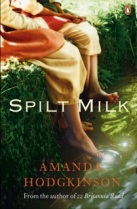
SpiltMilkNellie sat in the shade of summer-green willows, watching the procession of men, women and children making their way down to the riverbank, one after the other, their hands drifting through the day’s fragile bloom of field poppies, all the new-born crimson petals falling at their touch.

Slowly, the murmur of voices, the greetings and talk turned to seasons remembered, harvests and ploughing, days long gone. They discussed winters whose legendary harshness were in retrospect to be marvelled at and even doubted a little, particularly this deep in the year when the barley fields were pale gold and in the distance beyond the farm, the village with its church spire shimmered into the vagueness of a heat haze.

Black and white farm dogs lay low, eyeing Tupperware boxes of sandwiches and sausage rolls. The transistor radio announced cricket scores. A tartan rug was spread out by the bulrushes, and a baby in its frilly white knickers and matching bonnet wriggled and laughed while the women cooed over her. Sunburnt men sprawled in the grass with bottled beers, straw hats tipped low across their brows. Oh, heavens, Nellie thought, eyeing the new baby. And how did I get to be so old?

How well do you need to know the place before using it as a setting?

A place can inspire a novel but I don’t think it is necessary (at least not for me as a writer) to know a place intimately before I begin a story. It is a starting point and as both my books have been set in the past, my research has also been looking at photographs, old films and reference books.

It feels liberating to be able to know a landscape physically and than allow it to become a place of the imagination. I recently wrote a historical novella for an anthology and spent a day exploring an old World War Two airfield which I then used as the basis for the story. While I stuck very closely to the layout of the airfield in the story, I still had to imagine how it must have been back in the 1940s. As in my novels, the landscape was a starting point for my fiction.

Which writers do you admire for the way they use location?

Lots! Thomas Hardy, DH Lawrence, Toni Morrison, Annie Proulx, Paul Harding, Marilynne Robinson, John Steinbeck, Robert Macfarlene, Tracy Chevalier, Jane Smiley, to name a few.

Author bio and photograph from Amanda’s website

Next month’s Location, Locution:  Jill interviews Andrea Cheung, whose Hungarian/Chinese heritage informs her multicultural prize-winning children’s stories.

 * * *

_(75_of_75)JJ Marsh grew up in Wales, Africa and the Middle East, where her curiosity for culture took root and triggered an urge to write. After living in Hong Kong, Nigeria, Dubai, Portugal and France, JJ finally settled in Switzerland, where she is currently halfway through her European crime series, set in compelling locations all over the continent and featuring detective inspector Beatrice Stubbs.

STAY TUNED for our next post!

If you enjoyed this post, we invite you to register for The Displaced Dispatch, a round up of weekly posts from The Displaced Nation, with seasonal recipes, book giveaways and other extras. Register for The Displaced Dispatch by clicking here!

Related posts:

LOCATION, LOCUTION: Chris Pavone, author of “The Expats”, on why story and location are inseparable

Cover art "The Accident; Author photo Chris Pavone; Author photo JJ Marsh

Cover art “The Accident; Author photo Chris Pavone; Author photo JJ Marsh

In this month’s “Location, Locution”, expat crime writer JJ Marsh interviews author Chris Pavone, whose  first novel, The Expats, was published in 2012, and was a New York Times and international bestseller, with nearly twenty foreign editions and a major film deal.

The Expats was nominated for a Los Angeles Times Book Prize and a Macavity, and awards from the Strand Magazine Critics Circle, the Mystery Booksellers Association, and the International Thriller Writers. It received the 2013 Edgar Award and the 2013 Anthony Award for Best First Novel.

Pavone’s new book, The Accident, will be published in March 2014.


Which comes first, story or location?
For some books I think the story and location are inextricably intertwined: the story is about the location. My thriller The Expats is one of those, defined by taking place in a country that’s not the protagonist’s home. The plot is driven by this situation, by her sense of disassociation and isolation, by the necessity of her reinvention.

How do you go about evoking the atmosphere of a place?
I love walking around cities, looking around at the architecture and the shops and the restaurants, at the people and their pets. My characters do the same, using all their senses to inhabit the world around them. Of course walking around, in and of itself, isn’t the type of action that does much to drive a plot forward, so characters should also be doing something else while walking around. Something such as spying…

Which particular features create a sense of location? Landscape, culture, food?
On the written page, I think the clearest evocation is via the physical landscape, especially when it echoes the culture. New York is the big brashness of skyscrapers and noise; London is the polite order of elegant uniformity; Rome is cheerful dilapidated chaos.

How well do you need to know the place before using it as a setting?
As much as my characters. If they’re only in a city for a day, they don’t know that much about the place, and I don’t need to either. Both The Expats and my next book, The Accident, use a variety of locations, and the amount of time the characters spend in placesLuxembourg, Paris, the Alps, Amsterdam, London, Zurich, Los Angeles, etc.is roughly proportionate to the amount of time I’ve spent there.

Could you give a brief example from your work which you feel brings the location to life?
This is the final sentence of The Expats . . .

Kate watches them merge into the flow of the dense crowd, all the streetlights and lamplights ignited in the Carrefour de l’Odeon, a little red Fiat beeping at a bright green Vespa that’s weaving in the traffic, the policeman oblivious while he continues to flirt with the pretty girl, cigarette smoke wafting from the tables filled with wineglasses and tumblers and carafes and bottles, plates of ham and slabs of foie-gras terrine and napkin-lined baskets of crusty sliced baguette, women wearing scarves knotted at the neck and men in plaid sport jackets, peals of laughter and playful smirks, hand-shaking and cheek-kissing, saying hello and waving good-bye, in the thick lively humanity of early night in the City of Light, where a pair of expats is quickly but quietly disappearing.

Which writers do you admire for the way they use location?
Hemingway was not only a master of evoking location, but also of using physical atmosphere as emotional metaphor. Empty barges on the Seine can represent a lot more than just boats.

Next month on Location, Locution:  award-winning author Amanda Hodgkinson.

 * * *

JJ Marsh grew up in Wales, Africa and the Middle East, where her curiosity for culture took root and triggered an urge to write. After living in Hong Kong, Nigeria, Dubai, Portugal and France, JJ finally settled in Switzerland, where she is currently halfway through her European crime series, set in compelling locations all over the continent and featuring detective inspector Beatrice Stubbs.

STAY TUNED for our next post!

If you enjoyed this post, we invite you to register for The Displaced Dispatch, a round up of weekly posts from The Displaced Nation, with seasonal recipes, book giveaways and other extras. Register for The Displaced Dispatch by clicking here!

Related posts:

And the August 2013 Alices go to … these 3 international creatives

 © Iamezan | Dreamstime.com Used under license

© Iamezan | Dreamstime.com
Used under license

As subscribers to our weekly newsletter know, our Displaced Dispatch presents a weekly “Alice Award” to a writer or other kind of creative person who we think has a special handle on the curious and unreal aspects of the displaced life of global residency and travel. Not only that, but this person likes to use their befuddlement as a spur to creativity.

Today’s post honors August’s three Alice recipients. Beginning with the most recent, they are (drumroll…):

1) CALLISTA FOX, TCK blogger and author of the serial novel Suite Dubai

Source: “Friday Night Lights vs. The Eurotrash Girl on CallistaFox.com
Posted on: 26 June 2013
Snippet:

Our boarding school offered cheer leading as an afternoon activity… I signed up because it sounded better than typing or drafting and my parents wouldn’t pay for dressage. We knew only a handful of cheers. None of us could name a proper jump, let alone do one. We wore white tennis skirts and blue sweatshirts and any color of hightop Reebok we owned. When we ran out onto the field to do our pathetic cartwheels the audience was quiet, a few laughed. True, the grass was wet and my roommate Samantha slipped and skidded on her chin. We didn’t have our routine perfected.

Citation: Who stole the tarts, Callista? Who stole the tarts? Your account of your bout with cheer leading at a boarding school in Austria suggests that you were in a classic Alice-in-Wonderland situation, perhaps without even realizing it. Because no young American woman in her right mind would cheer an Austrian team playing Australia in American-style football on a field marked for soccer, unless they’d stepped through the looking glass. Indeed, your description is missing some crucial details, for instance:

  1. Were the teams using a koala bear as the ball? Koalas being to Austria what flamingos are to England—namely, more New World than Old. (Notably, koalas like to eat the leaves of the eucalyptus tree, which doesn’t exactly thrive in The Land of Long-needled Pines.)
  2. Did anyone propose a trial for all of those unruly fans in the half-filled stands who were throwing things at you and the other cheerleaders?

All of which brings us back to our original question: was it an Aussie or an Ausie, the Knave who stole the tarts? That’s what we (and presumably your all-American Texan husband) would most like to know.

Still, we did find amusing the tales of ThirdCultureKid-land that you told to your better half. Clearly your quintessentially TCK life had its moments, including the time you watched a guy eat glass in a bar in Nicosia, Cyprus, when you were only 14.

Is it any wonder that when your parents moved you back to Norman, Oklahoma, when you were 20, you felt exactly like Alice, who told her sister: “Oh, I’ve had such a curious dream!” (You did make a lot of it up, right?)

2) CHRIS ALDEN, British expat; author and journalist

For his book: “101 Reasons to Live Abroad…and 100 Reasons Not To”
Published: March 2013
From the book description:

Do you dream of living abroad? If so, you’re in good company. Tens of thousands of people every year emigrate from the UK—leaving behind the security of work, family and friends for the promise of better weather (hopefully), better prospects (sometimes) and a carefree existence (keep dreaming).

So is now the time to leave Britain and start life as an expat? Or have you already started planning the big move overseas?

101 Reasons to Live Abroad … & 100 Reasons Not To helps you discover if living abroad is right for you. It’s an uplifting guide to the positive sides of life as an expatriate—and a reality check about the challenges that relocation brings.

Citation: Chris, we understand that you’re also the author of 250 Things to Do in Cyprus on a Sunny Day, so would encourage you at some point to compare notes with your fellow Alice awardee, Callista Fox. In the post cited above, Callista reports that, when attending boarding school in Nicosia, she and her friends particularly enjoyed hanging out in a bar drinking Carlsberg with UN soldiers (they were there to keep the peace between Cypriots and Turks). We’re genuinely curious: does this particular activity rank in your Top 250? Or perhaps you think it’s better left for a rainy day? (Actually, does Cyprus even have rainy days? Oh, that’s right: it’s only semi-arid.)

Anyway, we’re awarding you an Alice because, like Lewis Carroll’s little heroine, you appear to appreciate both the positive and negative aspects of turning one’s life upside down, with the balance tipped every so slightly towards the positive. We believe Alice would be impressed that you offer a final, 101st reason to live abroad for those who, having been offered as many as a hundred reasons both for and against, still find themselves dithering. After all, when Alice’s sister urges her to run inside to get her tea, she obliges her “thinking while she ran, as well she might, what a wonderful dream it had been.”

3) LINDA JANSSEN, writer, speaker, consultant, global adventurer and cultural enthusiast

For her book: “The Emotionally Resilient Expat”
Published: 22 June 2013
From the book description:

Linda A. Janssen combines candid personal stories from experienced expats and cross-culturals, with a wealth of practical tools, techniques and best practices from emotional, social and cultural intelligence, positive psychology, mindfulness, stress management, self-care and related areas.”

Citation: Linda, as you know, we’ve been an avid follower of yours on Adventures in Expatland, which has helped to stimulate many of our own “through the looking glass” insights. And now we see you’ve contributed a tome to the discourse on what to do when you fall through the rabbit hole and feel culturally discombobulated. According to your book, which is sprinkled with expat stories and anecdotes, the answer lies in calling on (or developing) reserves of emotional resilience—a quality Alice had in spades, so to speak. Upon hearing of the Queen of Heart’s intention to have her decapitated, she retorted thus:

You’re nothing but a pack of cards!

At which point

the whole pack rose up into the air, and came flying down upon her: she gave a little scream, half of fright and half of anger, and tried to beat them off, and found herself lying on the bank, with her head in the lap of her sister, who was gently brushing away some dead leaves that had fluttered down from the trees upon her face.

Now if that isn’t resilience, what is?

From now on, we look forward to reading about your Adventures in Repatland, which as we noticed from your last post, are only just beginning:

At long last I’m beginning to surface, coming up for air in a new stage in a new place in a country and culture which seem familiar yet I don’t always recognize.

Hey, if it helps to know, we’ve got your back on this one!

* * *

So, readers, do you have a favorite from the above, or have you read any recent posts you think deserve an Alice Award?  We’d love to hear your suggestions! And don’t miss out on these weekly sources of inspiration. Get on our subscription list now!

STAY TUNED for our next post!

Writers and other international creatives: If you want to know in advance whether you’re one of our Alice Award winners, sign up to receive The Displaced Dispatch, a round up of weekly posts from The Displaced Nation, with news of book giveaways, future posts, and of course, our weekly Alice Award!. Register for The Displaced Dispatch by clicking here!

Related posts:

And the Alices go to … these 7 writers for their revealing posts on food and world travel

 © Iamezan | Dreamstime.com Used under license

© Iamezan | Dreamstime.com
Used under license

Autumn is finally here, and those of us who lost our appetite during the onslaught of this summer’s heat and humidity find that we can breathe — and eat — again!

Accordingly, the Displaced Nation has turned its attention to food — though in a way that conjures up the magical dreamscape of Alice in Wonderland rather than a blog populated by posts on typical and traditional world cuisines.

On the one hand, we’ve heard from the Top Hatter — I refer to Anthony Windram’s avatar — on the pleasures of indulging in beef tongue at a Kyoto restaurant. On the other, we’ve encountered Duchess Kate (Allison) just as she was pronouncing on the Queen’s favorite chocolate and inviting us to join her in a chocolate cocktail.

Last week when Tony James Slater appeared on the site, he was looking for all the world like Lewis Carroll’s Caterpillar, smoking his hookah and talking in short, somewhat rude sentences. His topic was the time he became violently ill (to use more polite language than he did) on mansaf on his visit to Jordan.

And personally I’ve yet to recover from last week’s encounter with the curious and curiouser Mark Wiens, who said he

would be very happy to fly to a destination and not do any of the normal tourist attractions, but just eat.

What’s more, he had the cheek to propose serving durian to The Displaced Nation! Off with his nose!!!

While putting together this menu of “It’s food!” posts, I’ve found it entertaining to read as many foodie posts as possible on other expat, repat, and travel blogs. And today I’d like to acknowledge some of their writers for what they’ve taught me about food and world travel.

A year-and-a-half ago, I had the pleasure of handing out the Displaced Nation’s Alice Awards to 7 writers who clearly understand — and aren’t afraid to reveal — the curious, unreal side of international travel.

Today I will hand out another set of Alices — you might call them the “Foodie Alices” — to writers who share the Displaced Nation’s down-the-rabbit-hole disposition toward world cuisines, i.e., who aren’t afraid to try mushrooms that make you grow, potions that make you shrink, tea parties where they don’t serve tea, and also feel duty bound to report these experiences to the rest of us.

So, without further ado, the Alices go to (in reverse chronological order):

1) AMANDA VAN MULLIGEN

Awarded for: “Do I Not Like Mushy Peas”, in A Letter from the Netherlands (personal blog about life as an Englishwoman in Holland)
Posted on: 19 September 2012
Choice morsel:

[Regular readers will know I am a fan of the Great British fish and chips.] However, there is no way, no how, I will eat fish and chips with mushy peas. They are vile. Foul. By far, mushy peas are … [t]he most disgusting monstrous green mess that has ever passed my lips. They turn my stomach.

Citation: Amanda, we award you this Food Alice or the feat of turning the typical “foods I miss from home” post on its head. That’s what it means to step through the looking glass. You’re a smart cookie and the rest of us would do well follow your example and focus on the “evil” accompaniments to our native cuisines that for health reasons alone, we’re lucky to have escaped from.

2) ANDREW COUCH

Awarded for: “Making Pancakes from a Bottle,” in Grounded Traveler (personal blog covering expat life in Germany), Posted on: 21 September 2012
Choice morsel:

We do not have a griddle. I imagine very few Germans have a griddle, at least not one useful for pancakes. So I get a set of 3 in a pan and the whole bottle [of Mondamin Pfannkuchen Teig-Mix] makes 12 or so, so I was doing several batches. … It works great, but well.. umm.. the Celsius temperatures still seem hard to understand for me. So while I didn’t overcook the cakes, I did almost burn my finger…

Citation: Andrew, you showed derring-do in experimenting with using bottled German pancake mix (and no griddle) to produce one of your favorite breakfast foods from home. Such bravery merits an Alice as does your acknowledged befuddlement over temperatures in Celsius, the vagaries of baking soda performance across the globe, and the extortionate prices of maple syrup. (Hey, we’ve all been there…)

3) KATE BAILWARD

Awarded for: “Sunday Supper,” in Driving Like a Maniac (personal blog about life as an Englishwoman in Sicily), part of her “Eating like a maniac” series.
Posted on: 3 September 2012
Choice morsel:

A Sunday night chuck it together kind of a lazy supper for one, to use up whatever you’ve got left in the fridge. I had a medium aubergine, a small courgette and some ricotta, as well as a jar of passata vellutata. You could say it was a very bastardised version of parmigiana alla melanzana, or you could just take it on its own merits and call it courgette, ricotta and aubergine rolls in tomato sauce. Or something else entirely. Whatever takes your fancy.

Citation: Kate — Katja, if we may — we give you an Alice for your versatility in writing foodie posts. Just after you published this piece, you wrote a post for Travel Belles on the joys of rustling up one’s own caponata, which you described as the “very essence of traditional Sicilian food.” Clearly, your training as an actor has borne fruit (and veggies!) if you can segue from harried EFL teacher chucking together a pseudo-Italian dinner, to full-fledged cookery expert. (What’s wrong with trifle, btw?)

4) JESSICA FESTA

Awarded for: “Eating My First Pet in Ecuador,” in Jessie on a Journey (personal travel blog)
Posted on: 24 August 24 2012
Choice morsel:

The body is sliced down the middle, opened like a thick book, on top of sizzling coals. Tiny hands, still with finger nails, reach into the air as if their last plea for help had gone completely unnoticed. Bright white teeth gleam out of mouths open in a scream and faces twist in agony. Apparently, the miniature murder scene I am witnessing is about to be my dinner.

Despite having been excited to try the popular Ecuadorian meal, something inside me feels a bit uneasy. My mind wanders back to my first pet, a guinea pig I named Joey after a school crush.

Citation: Jessica, we award you this Alice for your refusal to let “mental discomfort” stop you from ordering cuy, a popular South American dish, just because it resembles your Joey. (I for one never let sentiment get in the way of my enjoyment of koi, or goldfish, in Japan.) You’ve more than delivered on your promise to take us “beyond the guidebook.” We’re also very pleased that you found the dish delicious. Another one to add to our “must try” list, alongside Anthony Windram’s beef tongue.
COMING ON WEDNESDAY: A Random Nomad interview with the cuy-eating Jessie!

5) GERALDINE

Awarded for: “7 Badass Bavarian Foods You Must Try,” in The Everywhereist (personal blog about a trailing spouse’s adventures)
Posted on: 8 May 2012
Choice morsel:

Do you want to eat Bavarian food? OF COURSE YOU DO. It is rich and doughy and filling and is the only thing on the planet that can soak up German beer. Every other fare will simply hide in the corner of your stomach, petrified at the sheer awesomeness of the brew that resides in there with it, and it will never get digested.

In short: if you don’t eat Bavarian food while in Germany, you could die.

Citation: Geraldine, you’re full o’ beans, but we love you for that. Most “10 best foods” posts are about Southeast Asia or, more specifically, Thailand, home of cheap, tasty yet healthy food. But you realized that the market was already satiated for such posts and that it was time to give “badass Bavarian” food — of the kind that puts hairs on one’s chest — more of a chance. Not only that but you persuaded us. Pass the schweinshaxe.

6) & 7) MICHAEL HARLING & TONY HARGIS

Awarded for: “Is America too Sweet or Britain too Bland?” in Pond Parleys (joint blog, now defunct)
Posted on: 13 March 2011
Choice morsel:

Mike: I was surprised, on our recent visit, at how sweet America was: the beer, the bread, the pretzels (sugar-coated pretzels—honest to God) and even, oddly enough, the candy. And if it wasn’t infused with sugar, it was too salty and/or covered in cinnamon. After nearly ten years in UK, I found it all a bit too cloying.
Toni: While I do agree that American food has some strange stuff added to it, I wouldn’t call British food particularly bland. Rather than sweet, there is often a surprisingly savoury taste when you least expect it. While Cumberland sausage can have a peppery bite to it, Americans actually build their sweetness into the sausage, with maple syrup mixed right in.

Citation: Mike and Toni, we know you aren’t publishing Pond Parleys any more, but surely this post goes down in the annals and therefore deserves an Alice. I commented on it at the time it was published, wrote a post about it on TDN, and here I am writing about it again. The pair of you had a genius for pinpointing the kinds of things that routinely throw off American expats in Britain and vice versa, without their even knowing it. In the case of this food post, it turns out that we Yanks, just like the Duchess in Alice’s Adventures in Wonderland, may be allergic to all that pepper in the sausage! And who would have guessed that the sweets-loving Brits would recoil from our foods for their high sugar content?

* * *

So, readers, do you have a favorite from the above, and do you have any other writers/posts to nominate for our next round of Alices? I’d love to hear your suggestions!

STAY TUNED for tomorrow’s post, another Displaced Q focused on food by the anti-foodie Tony James Slater!

If you enjoyed this post, we invite you to register for The Displaced Dispatch, a round up of weekly posts from The Displaced Nation, with seasonal recipes, book giveaways and other extras. Register for The Displaced Dispatch by clicking here!

Related posts:

How to throw a party for a bunch of global nomads

One year has passed since our first random nomad, Anita McKay, crashed through the gates of The Displaced Nation, bribing the guards with chicken tikka masala and cranachan and shouting “bollocks” at several of us who tried to stop and question her.

And now there are 40 such nomads within our ranks — the latest being Annabel Kantaria, who insisted on bringing an alarm clock that looks like a miniature mosque — it rings every morning with the call to prayer. (Note to other founders: perhaps we need to find guards who aren’t so easily intimidated when travelers show a bit of temerity…)

Still, as we now have 40 nomads, randomly selected, why not make the best of the situation and throw a party? And what better excuse than The Displaced Nation’s 1st birthday — which, as announced by Kate Allison in a post a couple of days ago, took place on April 1 (no fooling!).

Further to that end, I’ve come up with a Party Primer that I think should work for this group — as well as for similar gatherings.

PARTY PRIMER FOR DISPLACED NOMADS

Click on the headlines below to go to each section:

  1. INVITATIONS
  2. DRESS CODE
  3. DECORATIONS
  4. MUSIC
  5. TABLE ASSIGNMENTS
  6. FOOD
  7. TOPICS FOR SMALL TALK
  8. PHOTOGRAPHY
  9. GAMES
  10. SONGS

INVITATIONS

As this party marks a special occasion (who ever thought we’d make it to be one year old?), a deluxe printed invitation is in order. The only thing is, our invitees are a bunch of nomads! We’ll be lucky if we can catch them on email, let alone at a fixed address. Let’s compromise on an attractively designed message: see mock-up at top of this page.

DRESS CODE

As some of you may know, Cleopatra recently paid a visit to The Displaced Nation. Based on her observations of today’s international travelers, we’ll be doing well if we can get the men to shower and change before joining us. As for the women, well, allow me to offer these pearls of wisdom from Jennifer Scott — the American guru of Parisian chic who was featured on this blog last week. Jennifer says:

There are certain occasions that always warrant dressing up. Generally any gathering … where others went to a lot of effort for your sake.

DECORATIONS

The theme is easy: the wide wide world! (Rather the opposite of Disney’s “It’s a small world after all” concept.) This calls for tablecloths imprinted with the world map (to make it easy for guests to point out where exactly “Moldova” etc is); globe-patterned balloons (can we coin a new term: globalloons?); and for the centerpieces, flags from each of the adopted country represented at the table in question.

Optional extras include party hats, noisemakers and loot bags. It’s fun when the loot contains some surprises. Given all the items our nomads have insisted upon carrying into The Displaced Nation, we should have plenty to choose from, eg:

  • mosque alarm clocks (thanks, Annabel!)
  • hairy coo fluffy toys (thanks, Nerissa!)
  • fake Harry Potter glasses (thanks, Charlotte!)
  • boomerangs (thanks, Kim & Vicki!)
  • brie bakers (thanks, Toni!)

MUSIC

As Todd Lyon, author of a number of party and lifestyle books, puts it:

Without music, a party isn’t a party. It might be an assembly, a meeting, or a bee, but it can never be a shindig, a bust-up or a ball unless there’s fine tunes that never stop.

Not being a party tunes buff myself, I’ve consulted with The Displaced Nation’s resident music expert, Kate Allison, about the kind of soundtrack that would cultivate just the right ambience. Her suggestions include:

Everybody all around the world, gotta tell you what I just heard
There’s gonna be a party all over the world…

TABLE ASSIGNMENTS

8-10 person tables work well. Since we’ll have 40 guests, I’ve decided on five tables of eight people each, and to mix everyone up as much as possible. Hostesses must also, of course, take steps to reduce the risk of a “silent table,” where people just eat and don’t talk. To be honest, I don’t there is too much risk of that with this crowd — have you ever watched a bunch of expats try to outdo each other with stories of their (cross-cultural, linguistic and travel) adventures? But just in case, I’m offering some “hostess notes” for each table (the hostess’s job being to introduce everyone and make sure the conversation keeps flowing!).

TABLE 1
Matthew Chozick (American expat in Japan)
Tom Frost (American expat in China)
Lyn Fuchs (American expat in Mexico — Sacred Ground Travel Magazine)
Turner Jansen (American canine in Holland)
Annabel Kantaria (English expat in Dubai — Telegraph Expat blog)
Kirsty Rice (Australian expat in Qatar — 4 kids, 20 suitcases and a beagle)
Jack Scott (English expat in Turkey — Perking the Pansies)
Karen van der Zee (Dutch/American expat in Moldova — Life in the Expat Lane)
Hostess notes: Introduce Tom Frost to Matthew Chozick — Tom used to live in Japan and speaks Japanese. Kirsty Rice should sit next to Turner Jansen, as she travels around with a beagle. Annabel Kantaria, Jack Scott and Kirsty all have in common life in the Middle East. Karen van der Zee and and Lyn Fuchs should find each other fascinating, as both have had some extraordinary adventures (Karen could entertain Lyn with her crocodile tale and Lyn, keep Karen amused talking about the time he went paddling with orcas.)

TABLE 2
Balaka Basu (Indian American in New York City)
Santi Dharmaputra (Indonesian expat in Australia)
Michelle Garrett (American expat in UK — The American Resident)
Robin Graham (Irish expat in Spain — a lot of wind)
Anita McKay (Indonesian expat in Australia — Finally Woken)
Brian Peter (Scottish expat in Brazil — A Kilt and a Camera)
Kate Reuterswärd (American expat in Sweden — Transatlantic Sketches)
Wendy Tokunaga (Former American expat in Japan)
Hostess notes: You might want to break up Santi Dharmaputra and Anita McKay, who are the same nationality (Indonesian) and already friends. Anita should definitely be introduced to Brian Peter, who like her hubby, is Scottish, and will probably be amused by her stories of toasting oatmeal in whisky. And make sure Anita also talks to Wendy Tokunaga — I know from personal experience how intrigued Anita is by stories of Western woman marrying Asian men. To be honest, everyone at this table should really be socializing with everyone else, as each and every one of them has a partner of a different nationality! (Now if that isn’t a talking point, I don’t know what is…)

TABLE 3
Kim Andreasson (Swedish expat in Vietnam)
Jo Gan (American expat in China– Life behind the wall)
Jennifer Greco (American expat in France — Chez Loulou)
David Hagerman (American expat in Malaysia — SkyBlueSky)
Helena Halme (Finnish expat in UK — Helena’s London Life)
Vicki Jeffels (Kiwi expat in UK — Vegemite Vix)
Janet Newenham (Irish internationalist — Journalist on the run)
Adria Schmidt (former Peace Corps worker in the Dominican Republic)
Hostess notes: Seat David Hagerman next to Jennifer Greco — since his wife is a well-known food writer and expert cook, he’ll find nothing strange in her quest to sample all the known French cheeses. Janet Newenham should be near Adria Schmidt and Kim Andreasson as they are all interested in international affairs. Vicki should be introduced to Helena as I’m sure the latter would love to hear about her recent spa experience in Cyprus. Jo Gan, too, should meet Vicki as she is now experiencing visa problems with the Chinese authorities — on a level that may even surpass Vicki’s own nightmare experience in Britain.

TABLE 4
Aaron Ausland (American expat in Colombia — Staying for Tea)
Emily Cannell (American expat in Japan — Hey from Japan)
Charlotte Day (Australian expat in UK)
Toni Hargis (English expat in USA — Expat Mum)
Vilma Ilic (Former aid worker in Uganda)
Jennifer Lentfer (Former American expat in Africa — How Matters)
Camden Luxford (Australian expat in Argentina — The Brink of Something Else)
Piglet in Portugal (English expat in Portugal — Piglet in Portugal)
Hostess notes: Aaron Ausland will naturally gravitate towards Jennifer Lentfer as they are both deeply involved in global aid and development. Make sure you introduce the pair of them to Piglet in Portugal — she’ll ask them some thought-provoking questions about whether it’s better to save the world or cultivate your own garden. Jennifer should also be near Vilma as the two will want to share their Africa experiences, and you might urge Emily Cannell to join that conversation as well — she has such an adventuresome spirit! Along with Toni Hargis, who runs her own charity supporting a school in Ghana. As for Camden Luxford, she’s an easy one: a social butterfly! Perhaps she could take fellow Aussie Charlotte Day under her wing (ha ha) and make sure she gets plenty of material to write about for her courses at Oxford next year!

TABLE 5
Lei Lei Clavey (Australian expat in New York City)
Matt Collin (American expat in UK)
Megan Farrell (American expat in Brazil — Born Again Brazilian)
Liv Hambrett (Australian expat in Germany — A Big Life)
Mardi Michels (Australian expat in Canada — eat. live. travel. write | culinary adventures, near and far)
Iain Mallory (English adventurer — Mallory on Travel | Making Everyday an Adventure)
Nerissa Muijs (Australian expat in Holland — Adventures in Integration)
Simon Wheeler (English expat in Slovakia — Rambling Thoughts of Moon)
Hostess notes: As soon as Lei Lei Clavey, Liv Hambrett, Mardi Michels and Nerissa Muijs discover they all have Australia in common, they will be blabbing away — just hope it doesn’t turn into an Ozfest! Also, make sure Mardi connects with Matt — I suspect he may need her counseling about how to seek creative refuge from academia. Iain Mallory and Simon Wheeler will form a natural pair, exchanging stories of their travel adventures and perhaps even breaking into a rousing chorus of “Jerusalem.” But should their antics get too raucous, ask Mardi to step in: she teaches cooking classes to 9-11-year-old boys in Canada. Megan Farrell should connect with Nerissa and Simon on the topic of what it’s like to raise a child in a nationality (and language) other than your own.

FOOD

One of the purposes of gathering together nomads from the four corners of the earth has to be eating, especially if each of them brings along some of their favorite dishes. For our party, we will have a dazzling tableaux brimming over with rare and exotic foods. (We know that because our Random Nomads have already described their faves to us in their interviews.)

Shall we go over the list? (Warning: Don’t read on an empty stomach, or if on a restricted diet!)

NIBBLES/STARTERS

  • Guacamole & chips (Kim — recipe provided)
  • Selection of mezze with pita bread (Annabel Kantaria)
  • Assorted pinchos (Megan Farrell)
  • Avocado & mango salad (Matt Collin)
  • Bhelpuri (Tom Frost)
  • Satay sticks (Nerissa Muijs)
  • Four kinds of eggs: tea eggs, thousand-year-old eggs, fried eggs with tomato, and boiled salted eggs with a chicken embryo inside (Jo Gan)
  • Shrimp & grits (Lei Lei Clavey)
  • Vietnamese caramelized chili prawns (Mardi)
  • Ceviche (Camden Luxford)
  • Bluff oysters from New Zealand (Vicki Jeffels)
  • Gravad lax with Finnish rye bread (Helena Halme)
  • Tuna sashimi with ponzu sauce (Emily Cannell)

COCKTAILS

  • Traditional Bloody Marys (Lei Lei Clavey)
  • Caipirinhas (Megan Farrell)
  • Margaritas (Kirsty Rice)

WINE

  • Rich red wines from Lebanon (Annabel K)
  • Red wine from Macedonia (Vilma Ilic)
  • Malbec wine from Argentina (Camden Luxford)
  • Shiraz from Australia (Vicki Jeffels)
  • White wine from Australia (Simon Wheeler)
  • Chilled sake (Tom Frost)
  • Rice wine (Jo Gan)

BEER

  • Carlsberg browns (Matt Collin)
  • Cusqueña beer (Camden Luxford)
  • Mexican Pacifico (Tom Frost)
  • Harbin beer (Jo Gan)
  • Coopers beer (Simon Wheeler)

MAINS
Meat dishes:

  • Carne de Porco a Alentejana (Piglet in Portugal)
  • Schnitzel served with rotkohl (Liv Hambrett)
  • Bondiola-chevre-basil wraps and nattō (Tom Frost)
  • Fried chicken sandwiches with hand-cut fries (Lei Lei Clavey)
  • Chicken tikka masala (Anita McKay)
  • Libyan soup (Kirsty Rice — recipe provided)
  • Cuban ropa vieja (Mardi)
  • Argentinian steak cooked rare (Camden Luxford)
  • Tapola black sausage with lingonberry jam (Helena Halme)
  • Barbecued steak, snags & lamb chops (Nerissa Muijs)

Fish dishes:

  • Paella Valenciana (Megan Farrell)
  • Llish in mustard and chili paste, smoked in banana leaves (Balaka Basu)
  • Chambo curry with nsima (Matt Collin)
  • Moreton Bay bugs (Vicki Jeffels)
  • Grilled salmon on a plank (Emily Cannell)
  • Sushi (Simon Wheeler)

Vegetarian offerings:

  • Peanut butter vegetable stew (Jennifer Lentfer)
  • Overcooked spaghetti with carnation milk, canned tomatoes and corn (Adria Schmidt)

DESSERTS

  • Summer pudding (Toni Hargis)
  • Apple crumble (Matt Collin)
  • Cranachan (Anita McKay)
  • Hot fudge sundaes (Lei Lei Clavey)
  • Blackberry gelato (Balaka Basu)
  • Caramel cheesecake (Kirsty Rice)
  • Bread pudding with Bourbon sauce (Jennifer Greco)
  • Île flottante (Mardi)
  • Molotof cake (Piglet in Portugal)
  • Mouse de maracujá (Megan Farrell)
  • Tiramisu (Camden Luxford)
  • Homemade Slovakian cream cakes (Simon Wheeler)
  • Dutch waffles (Turner Jansen)
  • Oblande, tulumbe, kadaif & krempite (Vilma Ilic)
  • Umm Ali (Annabel Kantaria)
  • Sigara borek (Jack Scott)
  • Juustoleipä with fresh cloudberries and cream (Helena Halme)
  • Yangmei fruit (Jo Gan)
  • Languedoc cheese: Roquefort, Pélardon and Tomette des Corbières (Jennifer Greco)

AFTER-DINNER DRINKS

  • Chlicanos (Camden Luxford)
  • Rakija (Vilma Ilic)
  • Fernet (Tom Frost)
  • Homemade Slivovica (Simon Wheeler)
  • Dragon-wall green tea (Jo Gan)
  • Espresso (Balaku Basu)
  • Large “flat whites” (Charlotte Day)

FOR THE TOAST(S):
New Zealand champenoise (Vicki Jeffels)

NOTE: Charlotte Day will be cooking a Sydney-style breakfast for diehards who care to linger to the next morning. (And Nerissa Muijs will be frying up some bacon!)

TOPICS FOR SMALL TALK

There are some topics that should be avoided at all costs. As style writer Rita Konig puts it,

It is very dull to talk about journeys. Once you have arrived somewhere, try to keep quiet about how long it took you to get there.

Should you notice anyone engaging in this, put the kibosh on it by asking them to help with pouring drinks, or with putting away coats in the spare room.

PHOTOGRAPHY

Fortunately, there’s usually one great photographer or two in a group of global nomads, thereby saving unnecessary expenditure. (We will ask David Hagerman — he’s sensational!)

GAMES

Games are a great ice breaker. Here are a few that might be appropriate for a well-traveled crowd:
1) Musical countries: Draw a big map on a piece of vinyl (back of a Twister mat might do), and give everyone a flagpole. When the music stops, they must place the flagpole on a country, Anyone whose flagpole ends up in the ocean is out.

2) Variation on “Pin the Donkey”: Pin the rudder on the 747! (Contributed by Kate Allison.)

3) Word games: As we’ve found out from our interviews, global nomads pick up words and expressions from here and there. Taking some of these and mixing them together, we can come up with some pretty strange exchanges. (Prizes for anyone who manages to decipher!)

A: Prego, could you get me a ba ba ba? Kippis!
B: Inshallah, a barbie would also be awesome. And how about la ziq?
A: Avustralyalılaştıramadıklarımızdanmışsınızcasına.
B: So desu ne!

A: Tudo bem? You look a bit daggy.
B: Life can be arbit sometimes.
A: Zvakaoma.

A: Hey.
B: Hey. Das stimmt, sorry to be such a Debbie Downer but I’m knackered after all this work.
A: Bless!
B: Zikomo.

A: Oh la vache! You are lost. Siga, siga. Ni chifan le ma?
B: Bollocks! [Sucking air through gritted teeth.] I think I got lost in the wopwops.
A: Well, there’s the big ol’ tree out the front.
B: Bula! Okay-la. Le bon ton roule!

TOASTS

Toasts should be made repeatedly throughout the latter half of the dinner. Just in case no one feels inspired, prepare one or two classics for the host or hostess to offer, eg:

I’d rather be with all of you than with the finest people in the world.

SONGS

Songs can be sung in several languages. In this case, a stirring rendition of “Happy Birthday” is called for, sung not only in English but in:
Dutch (Karen, Nerissa)
Finnish (Helena)
French (Jennifer, Mardi)
Indonesian (Anita & Santi)
Japanese (Emily, Matthew, Tom, Wendy)
Spanish (Aaron, Adria, Camden, Lyn, Megan, Robin)
Swedish (Kate, Kim)
Woof-woof (Turner)

Finally, the party should end with the Displaced Nation founders treating the guests to a round of:

For you are all jolly good fellows, for you are all jolly good fellows,
For you are all jolly good fellows…
Kate, Anthony, Tony: And so say all of us!
ML: Which nobody can deny!

* * *
Have I left out any important details? Any tweaks you can suggest? Your turn!!! Let’s work together to make this the most awesome gathering of global nomads ever. Onegaishimasu, shokran — and all that!

STAY TUNED for tomorrow’s installment from our displaced fictional heroine, Libby. She is expecting a visitor: her own mother, who is — in theory — coming to help as her due date gets closer. Will Granny Jane be an improvement on Sandra, the MIL from hell — or will she prove to be one more spanner in the works for our poor displaced heroine? (What, not keeping up with Libby? Read the first three episodes of her expat adventures.)

If you enjoyed this post, we invite you to register for The Displaced Dispatch, a round up of weekly posts from The Displaced Nation, with seasonal recipes, book giveaways and other extras. Register for The Displaced Dispatch by clicking here!

Related posts:

CLEOPATRA FOR A DAY: Fashion & beauty diary of former expat Anastasia Ashman

Continuing our feature, “Cleopatra for a Day,” we turn to Anastasia Ashman, an American whose love of the exotic led her to Southeast Asia (Malaysia) and Istanbul, Turkey to live (she also found a Turkish husband en route!). Having just moved back home to California, Ashman opens her little black book and spills the fashion and beauty secrets she has collected over three decades of pursuing a nomadic life.

BEAUTY STAPLES

Like Cleopatra, I’m into medicinal unguents and aromatic oils. My staples are lavender and tea tree oil for the tropical face rot you can get in hot, humid places — and for all other kinds of skin complaints, stress, headaches, jet lag, you name it — and Argan oil for skin dryness. I take them everywhere. I also spray lavender and sandalwood on my sheets.

When living in Southeast Asia I liked nutmeg oil to ward off mosquitoes. (I know that’s not beauty per se but bug-bitten is not an attractive look, and it’s just so heavenly smelling too, I suppose you can slather it on your legs and arms for no reason at all.)

I didn’t even have to go to Africa to become dependent on shea butter for lips and hands, and I like a big block of cocoa butter from the Egyptian Bazaar in Istanbul for après sun and gym smoothing — less greasy than shea butter, which I usually use at night.

I’m not really into branded products. When you move around it’s hard to keep stocking your favorite products and I find companies are always discontinuing the things I like so I’ve become mostly brand agnostic.

I just moved from Istanbul to San Francisco, and I got rid of almost everything I owned so I’m seeing what basics I can live with. Because to me, basics that do a wonderful, multifaceted job are the definition of luxury. You’ve got to figure out what those basics are for you.

Oh, and when I am in Paris, I buy perfume. Loved this tiny place in Le Marais that created scents from the plants on the island of Sardinia. And wouldn’t you know it, the second time I went they’d gone out of business. Crushing.

My favorite perfume maker in Paris at the moment — very intriguing perspective, lots of peppery notes and almost nicotiney pungencies — is L’Artisan Parfumeur. I’ve got my eye on their Fou d’Absinthe.

In another life, past or present, I know I was involved with perfume…

BEAUTY TREATMENTS

Believe Cleopatra would drink them dissolved in vinegar? In Malaysia I used to get capsules of crushed pearls from a Chinese herbalist down the street from my house — apparently they’re good for a creamy-textured skin.

I’ll take a facial in any country. I like Balinese aromatic oil massages when I can get them, too, and will take a bath filled with flowers if I’ve got a view of the jungle. Haven’t yet had my chance to do a buttermilk bath. I also do mud baths and hot springs where ever they’re offered, in volcanic areas of the world.

Another indispensable: the Turkish hamam. It’s really great for detoxification, relaxation and exfoliation. When living in Istanbul, I’d go at least once a season, and more often in the summer. It’s great to do with a clutch of friends. You draw out the poaching experience by socializing in the steamy room on heated marble benches, and take turns having your kese (scrub down) with a rough goat-hair mitt. You hire a woman who specializes in these scrubs, and then she massages you with a soapy air-filled cotton bag, and rinses you off like a mother cat washes her kitten.

Soap gets in the eyes, yes.

I own all the implements now, including hand-crocheted washcloths made with silverized cotton, knitted mitts, oil and laurel oil soaps, copper hamam bowls (for rinsing), linen pestemal (wraps or towels), and round pumice stones. (For haman supplies, try Dervis.com.)

DENTAL CARE

I’ve had dental work done in Malaysia and Turkey and was very satisfied with the level of care and the quality and modernity of the equipment and techniques. I got used to state-of-the-science under-the-gum-line laser cleanings in Malaysia (where my Taiwanese dentist was also an acupuncturist) and worry now that I am back to regular old ineffective cleanings. I’ve had horrific experiences in New York, by the way, so don’t see the USA as a place with better oral care standards.

In general, I like overkill when it comes to my teeth. I’ll see oral surgeons rather than dentists, and have my cleanings from dentists rather than oral hygienists.

ENHANCEMENTS

Turkey apparently has a lot of plastic surgery, as well as Lasik eye surgery. One thing to consider about cosmetic procedures is the local aesthetic and if it’s right for you. I didn’t appreciate the robot-like style of eyebrow shaping in Istanbul (with a squared-off center edge) — so I’d be extra wary of anything permanent!

HAIR

I’ve dyed my hair many colors — from black cherry in Asia to red to blonde in Turkey — and had it styled into ringlets and piled up like a princess and blown straight like an Afghan hound. That last one doesn’t work with my fine hair, and doing this style before an event on the Bosphorus would make it spring into a cotton candy-like formation before I’d had my first hors d’oeuvre.

I’ve had my hair cut by people who don’t know at all how to handle curly hair. That’s pretty daring.

I looked like a fluff ball for most of my time in Asia, because I tried to solve the heat and humidity problem with short hair and got tired of loading it up with products meant for thick straight Asian hair.

Now that I’ve relocated to San Francisco (which, even though it’s close to my hometown of Berkeley where I haven’t lived in 30 years, I still consider “a foreign country”), I’m having my hair cut by a gardener, who trims it dry, like a hedge. Having my hair cut by an untrained person with whatever scissors he can find is also pretty daring!

FASHION

On the fashion front, I have an addiction to pashmina-like shawls from Koza Han, the silk market in Bursa, the old capital of the Ottoman empire and a Silk Road stop. I can keep wearing them for years.

I also have a small collection of custom-made silk kebayas from Malaysia, the long, fitted jacket over a long sarong skirt on brightly hand-drawn and printed batik, which I pull out when I have to go to a State dinner and the dress code is formal/national dress. (It’s only happened once, at Malacañan Palace, in Manila!)

I have one very tightly fitting kebaya jacket that is laser-cut velvet in a midnight blue which I do not wear enough. Thanks for reminding me. I may have to take out the too-stiff shoulder pads.

LINGERIE

I like state-of-the-art stuff that does more than one thing at once and find most places sell very backward underthings that are more about how they look than how they fit, feel, or perform. Nonsense padded bras, bumpy lace, and stuff that is low on performance and high on things I don’t care about.

I got an exercise racerback bra at a Turkish shop and had to throw it away it was so scratchy and poorly performing. No wicking of sweat, no staying put, no motion control. But it had silver glittery thread — and (unnecessary) padding!

JEWELRY

I like most of the jewelry I’ve acquired abroad and am grateful to receive it as gifts, too. All of my pieces have some kind of story — and some attitude, too.

From Turkey: Evil-eye nazar boncuğu pieces in glass and porcelain; silk-stuffed caftan pendants from the Istanbul designer Shibu; Ottoman-style enameled pieces; and an opalized Hand of Fatima on an impossibly fine gold chain. This last piece is what all the stylish women in Istanbul are wearing at the moment.

From China: White pearls from Beijing, pink from Shanghai and purple from Shenyang.

From Malaysia: I got an tiny tin ingot in the shape of a turtle in Malacca, which I was told once served as currency in the Chinese community. I had it mounted in a gold setting and wear it from a thick satin choker.

From Holland: A recent acquisition from Amsterdam are gold and silver leather Lapland bracelets with hand-twinned pewter and silver thread and reindeer horn closures. They’re exquisite and rugged at the same time.

WEARING RIGHT NOW

Today’s a rainy day of errands so I’m wearing a fluffy, black cowl-necked sweater with exaggerated sleeves, brown heathered slacks, and black ankle boots. They’re all from New York, which is where I’ve done the most shopping in recent years.

My earrings are diamond and platinum pendants from Chicago in the 1940s, a gift from my grandmother.

I’ve also got on my platinum wedding and engagement rings. They’re from Mimi So in New York.

DAILY FASHION FIXES

I liked FashionTV in Turkey, which was owned by Demet Sabanci Cetindogan, the businesswoman who sponsored my Expat Harem book tour across America in 2006.

The segment of Turkish society interested in fashion is very fashion forward. I enjoyed being able to watch the runway shows and catch interviews with the designers.

If I could draw and sew I’d make all my own clothes but I am weak in these areas. In another life, when I get a thicker skin for the fashion world’s unpleasantries, I’ll devote myself to learning these things and have a career in fashion design.

STREET STYLE

In Istanbul, Nişantaşi is somewhere you’d see some real fashion victims limping along in their heels on the cobblestones and Istiklal Caddesi, the pedestrian boulevard in Beyoğlu, would be a place to see a million different looks from grungy college kids to young men on the prowl, with their too-long, pointy-toed shoes.

TOP BEAUTY/STYLE LESSONS FROM TRAVELS

In fact, I’m still assimilating everything — and everywhere — I’ve experienced in terms of fashion and beauty, but here are a few thoughts:

1) Layering: I learned from Turkish women to layer your jewelry and wear a ton of things at the same time. Coco Chanel would have a heart attack! But the idea is not to wear earrings, necklace, bracelet and rings all at once, but lots of necklaces or lots of bracelets or lots of rings at the same time.

2) Jewelry as beach accessory: During the summer Turkish wear lots of ropy beaded things on their wrists during a day at the beach — nothing too valuable (it’s the beach!) but attractive nonetheless. Jewelry stands feeding this seasonal obsession crop up at all the fashionable beach spots. Dangly charms and evil eyes and little golden figures on leather and paper ropes.

3) A little bling never hurts: I’ve also been influenced by the flashiness of Turkish culture, and actually own a BCBG track suit with sequined logos on it. This is the kind of thing my Turkish family and I would all wear on a plane or road trip. Comfortable and sporty, but not entirely unaware of being in public (and not at the gym). Coming from dressed-down Northern California, it was difficult to get used to being surrounded by glitzy branded tennis shoes and people wearing watches as jewelry, but I hope I’ve been able to take some of the better innovations away with me. I know I’m more likely to wear a glittery eye shadow now that I’ve lived in the Near East.

4) The need for sun protection: It was a shock to go from bronzed Los Angeles to can’t-get-any-paler Asia and then to the bronzed Mediterranean. In Asia I arrived with sun damage and then had lots of people helping me to fix it — I even used a parasol there. Then in Turkey everyone thought I was inexplicably pale and I let my sun protection regimen slip a bit. I’m back on the daily sunblock.

5) What colors to wear: I also used to get whiplash from trips back and forth between California and Southeast Asia in terms of color in clothing. In Malaysia the colors were vivid jewel tones — for the Malays and the Tamils especially. The louder the print, the better. Around the same time I was living in that part of the world, I witnessed a scuffle between shoppers at C.P. Shades in my hometown Berkeley, fighting over velvet granny skirts in moss, and mildew and wet cement colors. That kind of disconnect wreaks havoc on your wardrobe, and your sense of what looks good. Right now I’m trying to incorporate bright colors into my neutral urges. I’m still working it out.

Anastasia Ashman is founder of GlobalNiche.net, a work-life initiative for cultural creatives and mobile progressives that she calls “creative self enterprise for the global soul.” (Global Niche recently held a Webinar “Dressing the Inner You,” featuring psychologist and author Jennifer Baumgartner talking about the cultural displacement that shows up in one’s dressing style.) A Californian with 14 years of expatriatism under her belt, Ashman was the director of the online neoculture discussion community expat+HAREM and coeditor of the critically- and popularly-acclaimed expat lit collection that inspired this community, Tales from the Expat Harem: Foreign Women in Modern Turkey. Catch her tweeting on Pacific Standard Time at @AnastasiaAshman.

STAY TUNED for tomorrow’s post, a contrarian perspective by Anthony Windram on this month’s fashion and beauty conversation.

If you enjoyed this post, we invite you to register for The Displaced Dispatch, a round up of weekly posts from The Displaced Nation, with seasonal recipes, book giveaways and other extras. Register for The Displaced Dispatch by clicking here!

Related posts:

Images: (clockwise beginning with top left): Anastasia Ashman holding her own with the ever-glamorous Princess Michael of Kent, in Turkey; with her sister Monika, rocking the traditional Turkish Telkari silver jewelry, Anatolian shawl and requisite deep Bodrum tan; displaying her hamam collection — including traditional silver hamam bowl and hand-loomed linen pestemal towels; and sporting ringleted hair (along with some fashion flair!) at the Istanbul launch of Tales from the Expat Harem.

10 expat books ripe for movie adaptations

Those who have been following this blog for some time are probably all too aware of my unhealthy preoccupation as to what constitutes an expat or travel book.

Is it, as often seems the case when I browse the expat blogosphere, that expat books must occupy themselves with the oh-so-amusing hi-jinks of expat life? The result almost invariably of such approach is that we are depressingly left with another third-rate knock-off of Bill Bryson for us to throw on the bonfire.

So when considering which expat books are ripe for movie adaptations, my first thought is that the film world, not to mention the world in general — at least, the one I want to live in — really doesn’t need any more travesties such as Under the Tuscan Sun, A Good Year or — most horrifying of all — Eat, Pray, Love. So with that in mind I will nominate the following 10 expat books as being ripe for interesting adaptations.

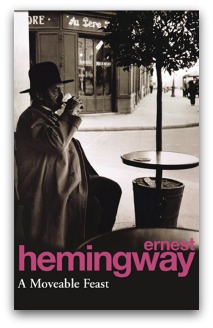
10. A Moveable Feast (1964, revised 2009)

Author: Ernest Hemingway
Synopsis: Hemingway’s posthumously published memoir detailing his years as a young American expat in Paris socializing with the likes of F. Scott Fitzgerald, Gertrude Stein and Ezra Pound.
Film pitch: Perhaps now is the perfect time for an adaptation of A Moveable Feast. The surprising success of Woody Allen‘s Midnight in Paris will perhaps have whetted Hollywood’s appetite for a more serious take on the same subject matter.

9. One Fat Englishman (1963)

Author: Kingsley Amis
Synopsis: Inspired by a year Amis spent teaching at Princeton, One Fat Englishman follows the badly behaved Roger Micheldene with Amis’s typical brio. An English gentleman who is affronted by everything on the American scene, Roger fails to see how his presence might adversely affect Anglo-American relations.
Film pitch: Cast Timothy Spall as Roger and watch the fireworks.

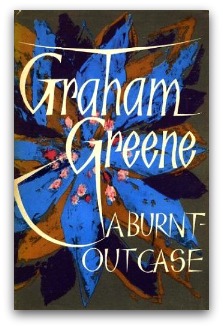
8. A Burnt Out Case (1960)

Author: Graham Greene
Synopsis: A man named Querry arrives at a leper colony in the Congo. He assists the colony’s doctor, who diagnoses him as suffering depression. It is revealed that Querry is in fact a world-famous architect, though he is hiding other secrets, too.
Film pitch: Perhaps Greene’s bleakest work — which may explain why it hasn’t been filmed previously despite being optioned twice by Otto Preminger (Greene was said to be thankful that it was never made). I would argue, however, that it has all the material for a fascinating film.

7. Travels through France and Italy (1766)

Author: Tobias Smollett
Synopsis: After the sad death of his daughter, Tobias Smollett and his wife left England for a tour of France and Italy. Detailing the quarrels Smollett has on his journey with those pesky Continentals, this is a very funny book.
Film pitch: Yes, I am suggesting that someone should make a movie based on an 18th-century travelogue. If Robbie Coltrane and John Sessions can turn Boswell and Johnson’s tour of the Hebrides into a delightful TV movie then I think the same could be done with this.

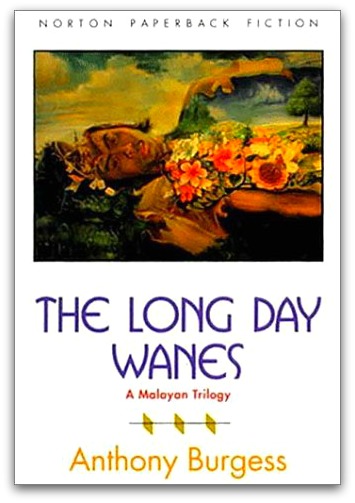
6. The Long Day Wanes: A Malayan Trilogy (1956-59)

Author: Anthony Burgess
Synopsis: Burgess’s first three novels are concerned with the character of Victor Crabbe, a teacher in a village in Malaya (now Malaysia). Based upon Burgess’s own experiences as a British civil servant in Malaya, the three novels that make up The Long Day Wanes detail the death of Empire and the birth pains of a newly independent nation.
Film pitch: Other than A Clockwork Orange, whose adaptation Burgess had strong misgivings over, Burgess’s work often seems overlooked for movie adaptations. It really shouldn’t be.

5. The Thousand Autumns of Jacob de Zoet (2010)

Author: David Mitchell
Synopsis: Until Commodore Perry in 1853 anchored four warships off the Japanese coast and so opened up Japan to western trade, Japan had been a “locked country” (sakoku) where it was illegal for a foreigner to enter Japan and for a Japanese subject to leave. The exception to this was at Dejima, in Nagasaki, where trade with some select foreign powers was allowed. This fascinating piece of history is the basis for David Mitchell’s latest novels. Set in 1799, The Thousand Autumns of Jacob de Zoet details a young Dutch trader who has come to Dejima to make his fortune though he discovers a lot more.
Film pitch: The book has all the makings of a wonderful historical epic.

4. Up Above the World (1966)

Author: Paul Bowles
Synopsis: Dr and Mrs Slade are an American couple touring Central America. A chance encounter with an elderly woman leads to a tense and gripping chain of events.
Film pitch:A disturbing and intense work typical of Bowles, it would make for a deeply compelling thriller.

3. Burmese Days (1934)

Author: George Orwell
Synopsis: Similar to Burgess’s The Long Day Wanes, this novel is concerned with the dying days of Empire. Orwell, who was himself an officer in the Indian Imperial Police Force in Burma, paints a depressing picture of expatriate life that is based around the stultifying social hub of the European club.
Film pitch: Orwell’s first novel and while certainly not his best work, even a bad Orwell novel is still worthy of consideration.

2. Henderson the Rain King (1959)

Author: Saul Bellow
Synopsis: Eugene Henderson is a rich American with an unfulfilled desire. Not knowing quite what it is, he hopes he will discover it by going to Africa. Through a series of misadventures Eugene Henderson finds himself away from his original group and in the village of Wariri in Africa. After performing a feat of strength, Eugene is adopted by the villagers as the Wariri Rain King.
Film pitch: Bellow’s funniest book, Henderson the Rain King could be pitched as an intellectual Joe Versus the Volcano (or maybe not — that’s a terrible pitch).

1. Turkish Embassy Letters (1763)

Author: Lady Mary Wortley Montagu
Synopsis: An important writer in her own right, Lady Mary Wortley Montagu was the wife of Edward Wortley Montagu, who was appointed as the ambassador at Constantinople. Accompanying her husband just after recovering from contracting smallpox marring her famed beauty, Lady Wortley Montagu wrote about her observations in numerous letters. These letters form a fascinating look at the Ottoman Empire — from how they inoculated against smallpox to the zenanas, special areas of the house reserved for women — as observed by an aristocratic English woman of the time.
Film pitch: Just think what a great biopic you could make about her.

Note: If you click on the book titles in the above list, you’ll be taken to Amazon, where the books can be purchased — except in the case of Tobias Smollett’s travelogue, which goes to Gutenberg, where he can be read FOR FREE!!

STAY TUNED for tomorrow’s post, an interview with first-time novelist Meagan Adele Lopez, and her plans for turning the book into a film.

If you enjoyed this post, we invite you to register for The Displaced Dispatch, a round up of weekly posts from The Displaced Nation, with seasonal recipes, book giveaways and other extras. Register for The Displaced Dispatch by clicking here!

Related posts:

12 NOMADS OF CHRISTMAS: Karen van der Zee, Dutch/American expat in Moldova (8/12)

Current home: Chișinău, Moldova
Past overseas locations: Kenya, Ghana, Indonesia, Palestine, Ghana (again), Armenia, Moldova. (For years I was also an expat in the USA, my husband’s home country, and have dual — Dutch and American — citizenship.)
Cyberspace coordinates: Life in the Expat Lane — Foreign Fun in Exotic Places (blog) and @missfootloose (Twitter handle)
Recent posts: “Life Abroad: Of Red Undies, Sugary Pigs, and Freezing Waters” (December 31, 2011); “Expat Foodie: What to Do with Goose Fat?” (December 27, 2011); “Expat Life: Holiday Greetings from Afar” (December 26, 2011)

Where are you spending the holidays this year?
In Moldova. It will be the first time ever that my husband and I will not be spending it with the rest of our family.

What do you most like doing during the holidays?
Besides spending time with family, I enjoy decorating and cooking. This year I will cook dinner for expat friends who are also not going home. We can cry on each other’s shoulders, or perhaps just have a good time.

Will you be on or offline?
The computer will be on. We may be able to Skype.

Are you sending any cards?
I send only a few snailmail paper cards. Mostly I write short personal emails, using in part a few paragraphs of prepared text, but no newsletters. Newsletters never seem to quite fit for everybody the same way.

What’s the thing you most look forward to eating?
I wish I had something exotic to tell you about here, but actually, I just love having a good Christmas dinner and some decadent dessert. Normally I don’t eat much sugary food.

Can you recommend any good books other expats or “internationals” might enjoy?
Two works of nonfiction:

1) The Last Resort: A Memoir of Mischief and Mayhem on a Family Farm in Africa, by Douglas Rogers (Crown, 2009): A tragic-comic account of the author’s (white) parents’ life in Zimbabwe in the last 15 years and the trials and tribulations of running and holding on to their resort while all around them farms of white owners are being stolen and the country is falling apart. Great read.

2) Almost French: Love and a New Life in Paris, by Sarah Turnbull (Gotham, 2003): An Australian journalist falls in love with a Frenchman, moves to Paris, and culture shock ensues. I always enjoy culture shock stories, and Paris is a great setting for culture shock.

And one novel:

Finding Nouf, by Zoë Ferraris (Houghton Mifflin Harcourt, 2008): A murder mystery set in Jeddah, Saudi Arabia, with Saudi Arabian characters. I love this book because it offers an intimate look into the culture and lives of men and women in the very closed society of the Kingdom. Fascinating.

If you could travel anywhere for the holidays, where would it be?
I must be a terrible bore, but spending the holidays anonymously with strangers in some exotic place doesn’t appeal to me. However, I would love to live in the highlands of Bali!

What famous person do you think it would be fun to spend New Year’s Eve with?
What a fun question! Let me think. How about New Year’s Eve with Whoopi Goldberg? Why? Well, she’s unconventional, creative, fun, and loves to hang loose. What else do you need in a person to have some fun?

What’s been your most displaced holiday experience?
When we lived in Indonesia with our two young daughters. It was difficult to create a Christmas atmosphere in the sweltering tropics because we were used to a cold Christmas in the northern hemisphere. The year after that, while still living in Indonesia, we visited friends in Australia over the holidays. It was better, but still, it was summer there. It just wasn’t quite right!

How about the least displaced experience — when you’ve felt the true joy of the season?
I honestly cannot pick just one. I’ve had so many Christmasses and they’ve always been good one way or another.

How do you feel when the holidays are over?
Usually it’s a bit of a drag to take down the tree and pack up all the decorations and the house looks so bare and boring, but then I get busy and get on with life. I do not go into a major funk or depression, fortunately.

In the past, we would be returning from the US to wherever we were living, in the tropics or elsewhere, and that sort of took care of the transition to normal life.

On the first day of Christmas, my true love said to me:
EIGHT WHOOPHIS WHOOPING,
SEVEN SKIERS A-PARTYING,
SIX SPOUSES TRAILING,
FIVE GOOOOOOOFY EXPATS.
FOUR ENGLISH CHEESES,
THREE DECENT WHISKIES,
TWO CANDY BOXES,
& AN IRISHMAN IN A PALM TREE!

STAY TUNED for tomorrow’s featured nomad (9/12) in our 12 Nomads of Christmas series.

If you enjoyed this post, we invite you to register for The Displaced Dispatch, a round up of weekly posts from The Displaced Nation, with seasonal recipes, book giveaways and other extras. Register for The Displaced Dispatch by clicking here!

Related posts:

12 NOMADS OF CHRISTMAS: Santi Dharmaputra, Indonesian expat in Australia (6/12)

Current home: Sydney, Australia
Past overseas locations: Germany, USA, The Netherlands, Syria
Cyberspace coordinates: Trilingual: Indonesian, French, English | world trotters raising two multilingual kids (blog)
Most recent post: “”A Woman’s Work” (my article in The Jakarta Globe)” (December 23, 2011)

Where are you spending the holidays this year?
At my parents’ house in Indonesia.

What will you do when you first arrive?
Hugging and kissing my parents.

What do you most like doing during the holidays?
Spending time with family and old friends.

Will you be on or offline?
Online.

Are you sending any cards?
I usually write greetings on my FB wall or my blog.

What’s the thing you most look forward to eating?
Any kind of Indonesian food. Pineapple tarts (a festive Indonesian cookie) and kastengel (Indonesian cheese sticks) are among my favorite guilty-pleasures.

Can you recommend any good books other expats or “internationals” might enjoy?
Trailing wives — regardless of whether they are sojourners or seasoned expats — might appreciate:
1. A Broad Abroad: The Expat Wife’s Guide to Successful Living Abroad, by Robin Pascoe (The Expatriate Press, 2009)
2. A History of the Wife, by Marilyn Yalom (Harper, 2001)
These are two among many books that have made me feel more empowered. By reading widely, I’ve come to understand that (trailing) wives everywhere and in every era have struggled to find happiness, just as I have. 🙂

What’s been your most displaced holiday experience?
I spent part of my childhood in The Netherlands. I loved it when Sinterklaas visited our school and gave us presents. When my family moved to Syria, I was disappointed: no Sinterklaas! By the time I returned to Indonesia at age 11, I didn’t believe in Santa. To this day, though, I believe that Sinterklaas is the only real Santa (LOL).

How about the least displaced experience — when you’ve felt the true joy of the season?
Tricky. I’m an adult TCK married to another adult TCK, and we’ve continued moving around the globe in our adulthood. I can feel both displaced and part of a place at the same time. But if I had to pick one occasion, it would be when I witnessed my trilingual children celebrating the holidays with their paternal relations in Alsace, France. Their granny and great-granny spoiled them, and it was lovely to see my kids so happy. I felt very at home in my husband’s French family. At the same time, though, I felt displaced — I was missing my own family in Indonesia.

How do you feel when the holidays are over?
Also tricky, as it depends on where we happen to be. Last year we spent the holidays on our own, just the four of us. My husband was too busy working and had only two days off. I was left to entertain the kids during their six-week school break (in Australia, Xmas break is the equivalent of the long summer break in the Northern Hemisphere). At that time, we’d been living in Sydney for less than a year, so we spent most of the time exploring the beach.

When we were living in Munich, we spent two Christmases with my husband’s family in Alsace, and it was sad each time we left. As adult TCKs ourselves, my husband and I are used to living with our nuclear families, so it was a novelty to spend those two Xmases with the extended family, including my husband’s siblings and their kids. Our kids were even happier with their grannies and cousins around, and the same was also true of us (at least during holiday seasons ;)).

When living in Chicago, we tended to use the time between Xmas and New Year for road trips. Sometimes we were traveling in snowstorms — so were happy and relieved to arrive back home safely.

While we were in Holland, I worked as a lawyer and used to enjoy the Xmas dinner held by the office along with the generous Xmas bonus. But when I had to return to the office after the New Year, I did so rather reluctantly — LOL.

The last time I spent New Years in Jakarta was in 2001. My brothers, husband and I (we didn’t have kids yet) stayed at a hotel to celebrate New Year’s Eve. It was kind of sad to leave Jakarta to return to the winter season in Europe (we were in Holland then).

This year, we traded in Australian summer for the Indonesian rainy season. Temperature wise, though, there’s almost no difference. I guess our kids will be sad to leave their Indonesian grandparents and cousins when we go back to Sydney.

On the first day of Christmas, my true love said to me:
SIX SPOUSES TRAILING,
FIVE GOOOOOOOFY EXPATS.
FOUR ENGLISH CHEESES,
THREE DECENT WHISKIES,
TWO CANDY BOXES,
& AN IRISHMAN IN A PALM TREE!

STAY TUNED for tomorrow’s featured nomad (7/12) in our 12 Nomads of Christmas series.

If you enjoyed this post, we invite you to register for The Displaced Dispatch, a round up of weekly posts from The Displaced Nation, with seasonal recipes, book giveaways and other extras. Register for The Displaced Dispatch by clicking here!

Related posts:

RANDOM NOMAD: Turner Jansen, American Canine in Holland

Date & place of birth: November 2004, probably West Virginia*
Countries, states, cities lived in: West Virginia (Berkeley): 2004-05; Maryland (Knoxville): 2005-08; The Netherlands (Utrecht): 2008-11; (Amersfoort): 2011 – present.
Canine parentage: Boxer, Chinese Shar-Pei, Great Pyrenees, Retriever, Italian Spinone, English Springer Spaniel…any other guesses?!
Human parentage: Tiffany & Bram Jansen
Cyberspace coordinates: Clogs and Tulips | An American in Holland and @clogsandtulips (mother’s blog** and Twitter handle) ; @turnerinNL (my Twitter handle)
*I was dumped at a shelter when I was only a baby.
**She even has a post about me: “Expat’s Best Friend”

Tell us, how did you get the name Turner?
My brother and I were dropped off at the shelter in West Virginia together, and our two-legged caretakers named us Turner and Hooch after the Tom Hanks movie by the same name (for those who don’t know it, it’s a comedy!). Hooch was adopted before I was, so my mother, Tiffany, never got to meet him. She thought about changing my name, but in the end she decided that Turner was a unique name for a dog — and that it fit me somehow. /(^.^)\

What made you leave your homeland in the first place?
My dad is from the Netherlands, so after my parents got married, Mommy and I moved to be with him.

Describe for us the moment when you felt most displaced — when you asked yourself the question: what’s a nice dog like me doing in a place like this?
The first time I walked around the city of Utrecht. I came from the countryside in the US, and wasn’t used to all the people and cars. And there are so many bicycles here — bikes are scary!

Describe for us the moment when you felt least displaced — when you felt more at home in an adopted homeland than you had in the land of your birth.
We recently moved from an apartment in busy Utrecht to a house in quiet Amersfoort — with a backyard! Our house is a nice size — not too big, not too small. I love when we have friends or family over to visit, and I can show them my backyard and all my toys. Amersfoort is all the things I loved about living in Maryland plus all the things I loved about living in Utrecht.

You may bring one curiosity you’ve collected from each of your adopted countries into the Displaced Nation. What’s in your suitcase?
I have a squeaky toy that looks like the Dutch birthday cake tompouce that I love to play with. I would also bring my doggie musical chairs trophies from the US. They don’t have games like that for dogs here and I am very proud of the fact that I have so many of them!

The Displaced Nation will fix you a welcome meal. What would you like us to serve you?
I LOVE bread (croissants, krentenbollen, bagels, whole wheat bread) and French and Dutch cheeses. Here in the Netherlands, dishes where you boil and mash together vegetables with potatoes are very popular and I love them! The only one I can’t have is zuurkool stamppot (sauerkraut-and-potato mash with bacon) because sauerkraut makes dogs very very sick (my parents and I found that out the hard way!).

Have you learned any commands in other languages since going abroad, and if so can you give us an example?
Daddy talks to me in Dutch only if I’m being bad, so I don’t really care for the language. I have learned how to “shake” on both the English and Dutch commands of “paw” and “poot.” But for some reason, I only sit when given the command in English, even though the Dutch zit sounds almost the same. Mommy says I have a disease called Selective Hearing.

Have you made any new friends with canines or other creatures in your adopted land?
I don’t really play much with other dogs. I prefer being with humans and cats. I have seen my first hedgehogs since coming here and I love them! I just wish they weren’t so afraid of me. They always curl up so I can’t talk to them.

I see you’re already kitted out for the holidays. Where will you be celebrating?
I’m getting a (human) little sister in December, so we’re staying at home in the Netherlands.

That’s very exciting! I presume you’re looking forward to spending the holidays in your new home?
I love when friends and family come to visit, and I love getting presents and treats. We just now celebrated Sinterklaas, and I feasted on those special little ginger/spice cookies called pepernoten. My Dutch grandparents always get me my own bag! I also like seeing my Christmas stocking hung up next to Mommy’s and Daddy’s and listening to Christmas carols once Sinterklaas is over. And on Christmas morning, Mommy always makes waffles and even gives me a small waffle or two of my own mixed with milk and syrup! <:@)

Readers — yay or nay for letting Turner into The Displaced Nation? Tell us your reasons. (Note: It’s fine to vote “nay” as long as you couch your reasoning in terms we all — including Turner and his parents — find amusing.)

img: Turner Jansen under the table at Café Olivier Utrecht — taken in September 2009 but jazzed up for this post. (Turner’s comment: “Not sure I like this hat. Woof!”)

STAY TUNED for tomorrow’s installment from our displaced fictional heroine, Libby, who is still recovering from the shock of her mother-in-law’s body piercing. (What, not keeping up with Libby? Read the first three episodes of her expat adventures.)

If you enjoyed this post, we invite you to register for The Displaced Dispatch, a round up of weekly posts from The Displaced Nation, with seasonal recipes, book giveaways and other extras. Register for The Displaced Dispatch by clicking here!

Related posts: