The Displaced Nation

A home for international creatives

Tag Archives: Middle East

The 10 Muses of Expat & International Adventure Writing and their 5 most popular tunes

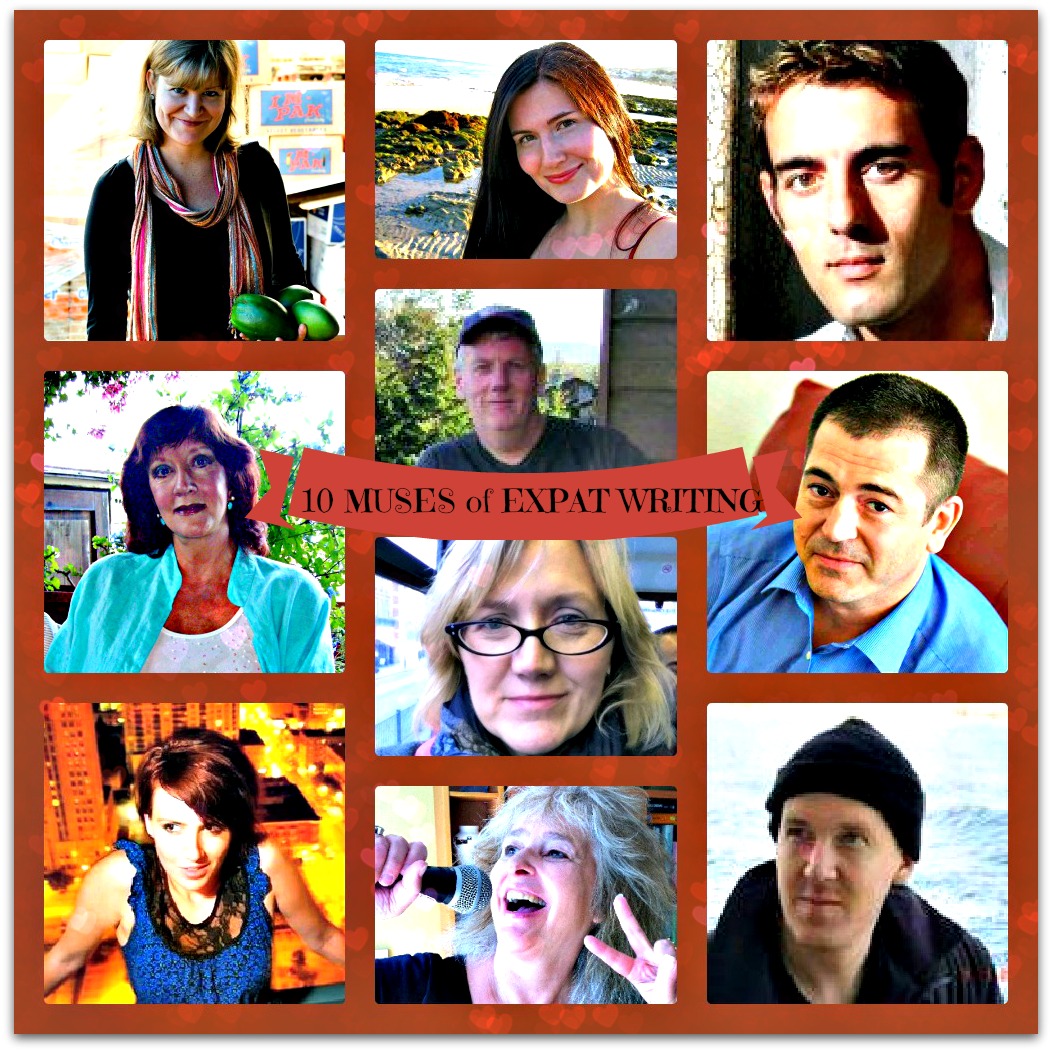
10 muses collageGreetings, Displaced Nation-ers! Ready for a little more intellectual stimulation?

A couple of weeks ago, I wrote about Great Thinkers who can help with task of embracing the well-traveled life and teasing out its deeper meaning, in the new year.

And today I will address the needs of those who have resolved to tackle a major writing project in 2013.

It’s a well-known fact that many of us who live in foreign lands aspire to write novels, memoirs and travelogues about our overseas adventures. But many of us also live in isolated situations (by definition).

So who can aid us, provide our inspiration?

Why, the muses of course!

Tell us, O muses, how to tell our stories…

And we don’t even have to look heavenwards to invoke them! The 10 Muses (that’s one more than the ancients got!) of Expat and International Travel Writing are right in our midst. They have already shared the joys, wonders and value of writing with Displaced Nation readers:

  1. Barbara Conelli, author of the Chique Travel Book series, filled with the charm, beauty, secrets and passion of Italy…
  2. Martin Crosbie, who is writing a trilogy entitled My Temporary Life; in December of last year, he published Book Two: My Name Is Hardly.
  3. Helena Halme, author of the novel The Englishman (2012)
  4. Laura Graham, author of the novel Down a Tuscan Alley (2011)
  5. Matt Krause, author of the memoir A Tight Wide-open Space: Finding love in a Muslim land (2011)
  6. Meagan Adele Lopez, author of the novel Three Questions: Because a quarter-life crisis needs answers (2011)
  7. Edith McClintock, author of the mystery novel Monkey Love and Murder (2013)
  8. Alexander McNabb, who is writing the Levant Cycle, a trilogy of books about the Middle East; he released the second book, Beirut — An Explosive Thriller, last September.
  9. Tony James Slater, erstwhile regular at the Displaced Nation and author of a two-book series: The Bear That Ate My Pants: Adventures of a real idiot abroad (2011) and Don’t Need the Whole Dog!, which came out in December.
  10. Wendy Nelson Tokunaga, author of Marriage in Translation: Foreign Wife, Japanese Husband (2011) and of several novels that explore cross-cultural themes between the United States and Japan.

Over the past year on our site, if you were listening closely, these heaven-sent muses were singing a number of tunes. Here are their five top hits:

SONG #1: “Yes, it’s hard; yes it’s uphill. But you’re living the dream, which makes writing a thrill!”

In one of the Displaced Nation’s most popular posts of the past year, Tony James Slater tried to make it out that the life of an expat writer is far from glamorous. Don’t believe him. He was pulling your leg, as usual — or singing off key, to continue the metaphor.

Alexander McNabb has the more accurate rendition. Here’s his account of the prep for his latest thriller, Beirut:

While writing it, I spent hours walking around the city, along the curving corniche and up into the busy streets that cling to the foothills rising from the coast up to the snow-capped mountains. Walking with friends, walking alone — day and night, spring and summer. From the maze of funky little bars of Hamra to the boutiques of Verdun, from the spicy Armenian groceries of Bourj Hammoud to the cafés overlooking the famous rocks at Raouché…

Barbara Conelli is another inspirational example. She explores every nook and cranny of Milan so as to take the reader on an armchair journey. And now she is doing the same with Rome, which will be the subject of her third book in the Chique Travel series.

Great work, if you can get it!

SONG #2: “It’s time to make your creative debut — so why not make it all about you?”

These days it’s hard to tell the difference between a heavily autobiographical novel and a memoir, though one of our muses, Helena Halme, insists that there is a distinction. When questioned about her decision to write The Englishman as a novel — it’s about a young Finnish woman, Kaisa, who meets a dashing British naval officer, a plot that echoes very closely her own life story — she had the following to say:

I tried to write a memoir, but couldn’t! Much of this story is, however, true — but I didn’t think I could call it a memoir as some things were pure fiction. I am a novelist and just keep making stories up.

Hmmm… By that reckoning, perhaps Tony James Slater should be a novelist, too? As regular readers of this blog will know, his favorite topic consists of his own, rather daring but also bumbling, world adventures.

But did a bear really eat his pants, or is he exaggerating for comic effect?

The mind boggles…

But whatever the form, the point is that quite a few of our muses have found plenty of material in their own life experiences. Besides Halme and Slater, we have

  • Martin Crosbie: His protagonist, Malcolm, leaves Scotland for Canada at a formative age, just as he did.
  • Laura Graham: Her protagonist, Lorri, arrives in Italy as a forty-something single and finds a younger Italian man, just as she did.
  • Matt Krause: He has written a memoir on the portion of his life that involved meeting a Turkish woman on a plane and following her back to Turkey. (Reader, he married her!)
  • Meagan Adele Lopez: The protagonist of her debut novel, Del, is offered three questions by her British fiancé (just as Lopez was offered three questions by hers).
  • Edith McClintock: Her protagonist, Emma, works as a researcher in the very Amazonian rainforest where she once conducted her own research.

To conclude, the old adage is alive and well, even (especially?) in expat and travel writing: “Write about what you know and care for…”

SONG #3: “Looking for inspiration from above? The answer lies in cross-cultural love.”

Another theme running through the works of several of our muses is the love that takes place across cultures, usually resulting in marriage. I just now referred to the cross-cultural love stories at the heart of the books produced by Helena Halme (Finnish woman, English man), Laura Graham (Englishwoman, Italian man), Matt Krause (American man, Turkish woman) and Meagan Adele Lopez (American woman, Scotsman).

To this list should be added Wendy Nelson Tokunaga, who has written about Western women getting involved with Japanese men — one of the stranger of all possible unions, to be sure! 😉 — in both fiction and nonfiction (the latter being a bit of a self-help book).

SONG #4: “As your brainstorming proceeds apace, never forget the appeal of place.”

Since travel is a constant for all of us, it should come as no surprise that particular places can become a pull for certain expat writers. They cannot rest until they’ve depicted a place they’ve experienced so that others can live vicariously. Several of our muses represent this principle:

  • Barbara Conelli and her love for “capricious, unpredictable” Milan. To quote from her book: “When the streets of Milan ask you to dance, there’s nothing else to do but put on your ballet shoes and surrender…”
  • Alexander McNabb and his obsession with Beirut. “There can be few places on earth so sexy, dark, cosmopolitan and brittle…,” he writes in his Displaced Nation post.
  • Edith McClintock and her preoccupation with the rainforest and a place called Raleighvallen in the Central Suriname Nature Reserve. As her main character, Emma, says:

    I fell completely and irretrievably in love with the rainforest that week — the deep rich smells of dirt and decay and teeming, thriving life; the warm soft light of the rocky moss-covered paths hidden beneath layers of climbing and tumbling lianas and roots; soaring tree trunks wrapped in colorful bromeliads, orchids, moss, and lichens; and the canopy of leaves of every conceivable size and shape….

SONG #5: “Growing weary of fruitless writing sessions? Time to take some acting lessons!”

Four of our ten muses could double as the muses of acting and entertainment:

  • Tony James Slater and Meagan Adele Lopez trained as actors (Lopez actually starred in a bad horror film!) before embarking on their world travels.
  • Laura Graham enjoyed a long career as a stage actress in Britain, working for the Royal Shakespeare Company and the Young Vic, and on television, before setting herself up as an expat in Tuscany.
  • Wendy Nelson Tokunaga first went to Japan because she won a prize in a songwriting contest sponsored by Japan Victor Records. She is an accomplished karaoke artist who can sing jazz as well as j-pop and enka, a type of sentimental ballad.

Why are so many of the Muses of Expat Writing multi-talented, you may ask? Does a former acting/singing career work to one’s advantage when it comes to overseas travel and writing? I like to think so.

Just as Dickens used to act out the dialogue of his characters, I like to think of Tony James Slater reenacting his wild adventures on the road, in the confines of his flat in Perth…

And sometimes this versatility can add a further dimension to the writing. Last we heard from Lopez, she had created a trailer for her book and was trying to convert it to a screenplay. Tokunaga composed and sang an enka to accompany her novel Love in Translation. (It’s impressive!)

Plus these four could always hew to the tradition of wandering minstrel, one of the oldest careers in the book, if their works don’t sell. (Hey, it’s never a bad idea to have a fallback option when you’re a long ways away from family and friends…)

* * *

So, writers out there, did our 10 Muses sing to you? And will you listen to some of their songs again as you face the blank page in 2013? Let me know in the comments. (Only, be careful of criticizing the Muses — they have been known to be vengeful!)

STAY TUNED for tomorrow’s post, another installment in the life of our fictional expat heroine, Libby. (What, not keeping up with Libby? Read the first three episodes of her expat adventures.)

If you enjoyed this post, we invite you to register for The Displaced Dispatch, a round up of weekly posts from The Displaced Nation, with seasonal recipes, book giveaways and other extras. Register for The Displaced Dispatch by clicking here!

Related posts:

Images: Our Ten Muses (left to right, top to bottom) — Edith McClintock, Barbara Conelli, Tony James Slater; Laura Graham, Martin Crosbie, Helena Halme, Alexander McNabb; Meagan Adele Lopez, Wendy Nelson Tokunaga, Matt Krause.

Do refugees and migrants have anything in common with us expats? No, and yes…

displacedvdisplacedBelieve it or not, the Displaced Nation has occasional qualms about whether “displaced” is the right word to describe a group of expats and internationalists. What does a group of privileged travelers have in common with refugees or migrants who’ve had no choice but to leave their homelands? We thought we’d begin the new year by touching on this vexed question, this time with the help of a mentor, Andy Martin. Andy is now an expat in Brazil, but he previously worked with refugees in London.

— ML Awanohara

Before moving to Brazil in February 2012 I worked with refugees as a social worker in the UK, and my last job entailed supporting unaccompanied minors: children as young as 11 who flee conflicts and persecution in countries such as Afghanistan — on their own.

And it is of them that I remind myself when I reflect upon my own struggles and anxieties at being “displaced” from my own country. Suddenly, my tongue-in-cheek British moans about uncomfortable buses and lopsided pavements (yes, pavements), or my frustrations with struggling to learn Portuguese, seem trivial when contrasted with the experiences of the young people I worked with.

Given this, it would seem bizarre for a rich (relatively) migrant like myself to even contemplate comparing my experiences of displacement with those who flee poverty, persecution or some other unimaginably unfortunate situation that most of us will thankfully never have to experience.

Or is it?

Well, I guess the differences are probably easier to distinguish — for example:

1) The reasons for the migration

Whilst refugees are forcibly displaced through circumstances outside of their control, more fortunate gringos like myself possess far greater agency when it comes to the motives for our movements: love, jobs, travel, etc.

2) The journey itself

Forcibly displaced people often leave their homes unexpectedly with no belongings, or else hurriedly sell whatever possessions and land they have in order to fund their flight, whilst my wife and I had carefully planned our move for over two years (well, we read a few books and, to be fair, she is Brazilian herself — which helps).

What’s more, the route a refugee takes is often perilous, taking months or even years, and in turn may comprise many different means of movement: on foot, by car, on overcrowded boats, airtight lorries or refrigerated trucks. On top of that, their destinies also usually lie in the hands of people smugglers.

My wife and I, though, as middle-earners in the UK, booked our flight with a click of our laptop, and the path from our flat in London to our new life in São Paulo was no more than a day’s inconvenience — and a relatively smooth and comfortable one at that.

I had the cabin crew to serve me unlimited amounts of Cabernet Sauvignon and my biggest anxiety was which of the in-flight films to watch: Moneyball or Midnight in Paris?

3) The arrival at the new destination

Refugees are typically at the complete mercy of the host countries they successfully manage to reach. Most likely, they are from countries for which there are strict immigration controls and they are typically confronted not with empathy but with a culture of disbelief — yes, 11-year-old kids from Afghanistan with no family.

A British citizen like myself meanwhile, merely through my place of birth, possesses a passport that requires one of the fewest number of visas to travel around the world. Even when there is a requirement, particularly to live or work, it’s often pretty straightforward.

Refugees, though, even if they are granted some form of status, will by the nature of their former lives typically have to start from scratch, their qualifications often meaningless (that’s if they can even prove them) — and thus with access to only menial jobs and bottom-of-the-rung housing.

And then, once they’re settled, the mental scars from the trauma they’ve experienced will slowly emerge.

Fortunately for me — with the education I’ve received, the qualifications I’ve gained and the work experience I’ve accumulated — I’ll be in a far better position to start my dream life abroad.

Just take me to the beach already!

* * *

So far, so different then.

Is it really possible then that the experiences of forcibly displaced people can ever be compared to those whose displacement is chosen?

Well, yes, I think they can. Here’s a couple of ways we are similar:

1) The requisite adjustments to a new culture

One of the fascinating things about my job back in London was listening to people describe their reactions and adjustments to their strange new worlds. And, as you can imagine, the youthful frankness of the kids I worked with often made these accounts hilarious and, perhaps, more honest.

For example, I remember one young person seemed bemused as to why on one particularly hot day (well, relatively anyway) in London, so many people were stripping off their clothes and heading to the local park to sunbathe. He only realized why when by the next time I had seen him, there had been subsequently been 20 successive days of rain in London.

“Welcome to the UK,” I joked.

2) The occasional bouts of homesickness

It wasn’t, of course, just the things they were discovering which were intriguing, it was also what they were missing. For some it was their homelands, for others it was speaking their language, whilst often it was specific things like their mother’s home cooking, although most commonly it was the weather — of course.

However, a common and I guess obvious sadness amongst all of them was missing people — whether that be their friends, family or both.

* * *

In sum, writing my blog over the past year has made me realize that despite our very many differences all migrants share some common behaviors: that of exploring, adjusting and, inevitably, comparing (in my case moaning), as well as reflecting upon the losses we have to make in order to get to where we are.

At the same time, I’ve also acknowledged that my own anxieties are not trivial just because they might seem so in comparison. They are real and probably shared by many people. However, thinking about those kids back in the UK just gives me the motivation to try even harder.

Thank you, Andy, for that reality check! Readers, what did you think of Andy’s analysis?

British by birth and slowly becoming a little more Brazilian each day after moving to São Paulo a year ago with his Brazilian wife, Andy Martin is also a qualified social worker in the UK, who specialized in supporting refugees in negotiating the process of displacement. Now, as a migrant himself, he is finding out whether any of the advice he gave them was of any use in the first place. Andy is also known to drink tea, warm beer and play cricket, none of which Brazilians seem to be massively convinced by. You can learn more about him by following his blog, The book is on the table, and/or following him on Twitter: @andyhpmartin.

STAY TUNED for next week’s posts.

If you enjoyed this post, we invite you to register for The Displaced Dispatch, a round up of weekly posts from The Displaced Nation, with seasonal recipes, book giveaways and other extras. Register for The Displaced Dispatch by clicking here!

Related posts:

Images: The photo of the boy is from Morguefiles; the other photo is of Andy Martin (his own).

An expat author on why he can’t get enough of Beirut — and your chance to win his thriller named for that city!

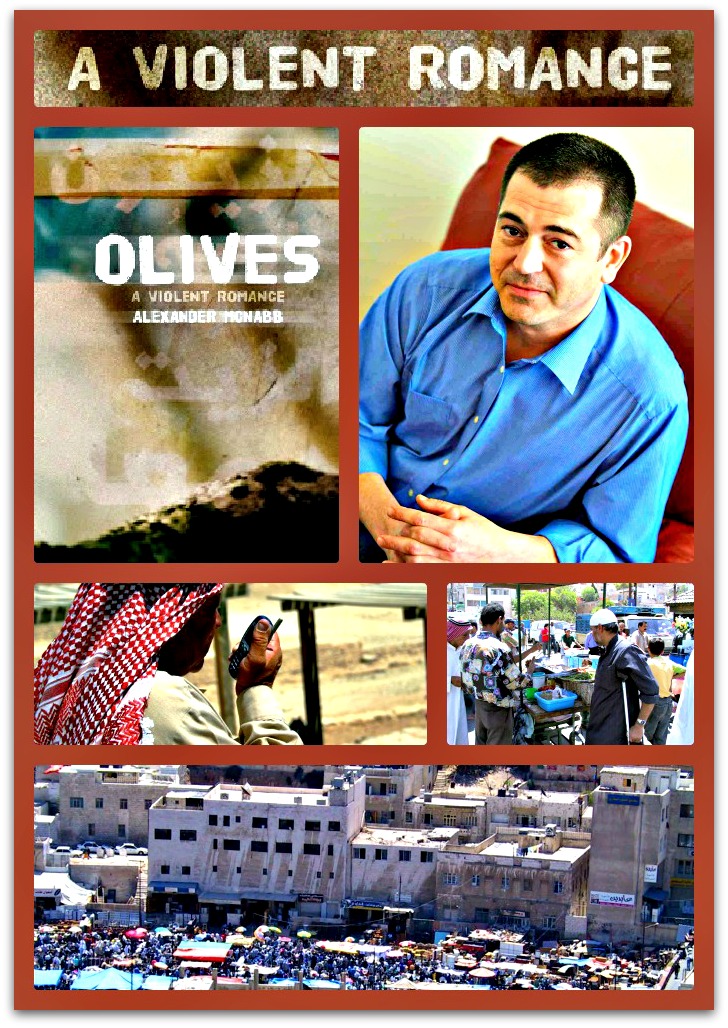
Beirut Collage 3We here at the Displaced Nation simply can’t get enough of the displaced thriller-writer Alexander McNabb. Last month he gave away his first book in his Levant series, Olives — A Violent Romance, to several lucky Displaced Nation readers. (Yes, they were thrilled!) And today we announce a couple of more McNabb giveaways, including of his second book, Beirut (see below). But before we explode with excitement, let’s hear what Alexander has to say about that notoriously dangerous city…

— ML Awanohara

To start off, I’d like to present a passage from my new book, Beirut, that I hope captures the flavor of this historic and extremely dynamic Middle Eastern city. The scene centers on the displaced Gerald Lynch, the British Secret Intelligence Service officer we encountered in Olives:

It was late in the afternoon as Gerald Lynch hopped along the uneven paving that lined Gouraud Street, the heart of Beirut’s bustling Gemayze area. He wore jeans and a leather jacket against the chill spring air, his hands in his pockets as he squeezed between the parked cars.
Gouraud’s bars, as ever, welcomed those who wanted to party and forget the woes of a world where violence and conflict were a distant memory but a constant worry. Orphaned by Belfast’s troubles, Lynch appreciated Beirut’s fragile peace and sectarian divides, the hot embers under the white ash on the surface of a fire that looked, to the casual observer, as if it had gone out. Lynch scowled as he passed a poster carrying Michel Freij’s smiling face, encircled in strong black script: “One Leader. One Lebanon.”

There can be few places on earth so sexy, dark, cosmopolitan and brittle as Beirut. At night the city celebrates with a vigour that borders on the manic. Louche young things puff cigarette smoke up into the air, DJs make music, poets dream and artists stencil the walls with the painful irony of youth. Drinkers drink, dancers dance. They celebrate life there as only people who realize how slender the tightrope they walk is — as only a people who collaborated in a 15-year-long enterprise designed to wipe themselves, and their country, off the face of the earth can.

But first, the country

It’s important to understand that Lebanon is a country of divides: north and south; mountain and coast; Shia, Sunni, Christian and Druze.

The country was born out of Greater Syria and the collapse of the Ottoman Empire following World War II. The French as the reigning colonial power created it by cobbling together communities who had been in conflict since the Crusades and legislating their way through ancient attitudes and rivalries.

Lebanon’s answer? To enshrine the sectarianism in its constitution, with each religious sect being given its own proscribed role.

Beirut, the Monte Carlo of the East

From its early days as Roman Berytus, Beirut — Lebanon’s capital and largest city — has been a city with greatness in her heart. Surrounded by lush Mediterranean countryside, the verdant Chouf mountains and the glorious fecundity of the Bekaa Valley, served by the sea and a history of maritime trade going back to the Phoenicians, Beirut developed in the course of the 20th century into a major financial center and trade entrepôt.

It was “the Monte Carlo of the East,” the jewel of the Mediterranean. Rich Arab playboys tossed cash around them like leaves; mean-eyed British spies clung to the hotel bars, trading waspish observations and gathering undiplomatic innuendoes. And the women! The olive-skinned beauties of the Levant, like Beirut itself, were so welcoming, so corrupting!

The impact of the Lebanese Civil War (1975-1990)

Lebanon tore itself apart in a war as senseless as any other, admirably abetted by the Palestine Liberation Organization, Syria and Russia, America and Israel. It’s always the outsiders who throw kindling on the hot passions of Lebanon’s divisions. And then the Lebanese pay a heavy price for their lack of moderation and willingness to invite those outsiders in.

After the war, Beirut dragged itself wearily to its feet, slowly but surely rebuilding its commercial heart — the efforts to rebuild dogged by constant conflict, corruption and terrible old men who weave together influence and fear to maintain their profitable status quo.

When the war finally ended, in 1990, the travel magazines were starting to gush about Beirut again — its stunning restaurants, funky bars and glorious sights.

But the potential for violence remains. As you may recall, a deadly car bomb attack occurred in October of this year. It tore a busy square in Ashrafiyeh apart, killing the head of Lebanese intelligence.

A bomb as big as the monstrous blast that had taken the life of Rafiq Hariri in 2005, the man who had led the effort to rebuild Beirut — an explosion big enough to make the Syrians finally quit Lebanon.

Both of these car-bomb assassinations left three-meter craters.

The book Beirut

Although Beirut — An Explosive Thriller is set across a swathe of Europe and not just Beirut, the book is about Beirut at its core. It’s about sectarianism and power, corruption and sex. It’s about wealth and poverty, love and betrayal.

While writing it, I spent hours walking around the city, along the curving corniche and up into the busy streets that cling to the foothills rising from the coast up to the snow-capped mountains.

Walking with friends, walking alone — day and night, spring and summer. From the maze of funky little bars of Hamra to the boutiques of Verdun, from the spicy Armenian groceries of Bourj Hammoud to the cafés overlooking the famous rocks at Raouché, I have long reveled in the city’s beautiful wealth and its grim poverty.

How can you not write books set in the Levant? I’m only amazed I’m in such scant company. As a playground for spies and powerful men, beautiful women and deadly conflicts you can’t beat it. And yet, as a writer of novels, I have it pretty much to myself.

* * *

Now it’s time for the freebies! Displaced Nation readers, you can get your very own copy of my latest book. Here are 2 ways to do so:

1) For TDN readers with an iPad or ePub compatible reader (Nook, Sony, Kobo, Android etc): Get your copy of Beirut — An Explosive Thriller free of charge (and save $4.99) on Smashwords. But first, you’ll need to sign up for the DISPLACED DISPATCH to get the code (it will come in the issue delivered this Saturday, December 8). NOTE: The code is valid ONLY FROM THIS SATURDAY, DECEMBER 8th TO MONDAY DECEMBER 10 — and then, pfft, it’ll disappear. Dear readers, you are MORE than welcome to share that code with family, friends, strangers, dogs in the street — even lawyers.

2) For TDN readers with Kindles: Leave a comment on this post with your e-mail, and I will send a Kindle file and instructions how to install it. Best I can do, I’m afraid — Amazon doesn’t let me do freebies! Do remember to use “name dot name at domain dot com” so the spambots don’t find you! Or you can hit me up directly at @AlexanderMcNabb on Twitter.

If you miss out on these opportunities and/or would like to read something else I’ve written, my first novel, Space (a spoof of international spy thrillers), is available for free download on Amazon from today onwards for three days.

TO ALL READERS: If anyone wants to add their voice (whichever way it leans) about my books on Amazon or Goodreads, that’s welcome feedback. The more people know they exist, the merrier! 🙂

Finally, congrats to Apple Gidley, who left an engaging comment on my last post and will be getting a print copy of Olives by post!

STAY TUNED for tomorrow’s post, consisting of some 2012 highlights from the Anthony Windram series, Expat Moments.

If you enjoyed this post, we invite you to register for The Displaced Dispatch, a round up of weekly posts from The Displaced Nation, with seasonal recipes, book giveaways and other extras. Register for The Displaced Dispatch by clicking here!

Related posts:

Images (of the book, of Beirut): All from Alexander McNabb.

An expat author on what it’s like to write “controversial” books — and your chance to win one!

The London-born Alexander McNabb has spent nearly half of his life in the United Arab Emerites. Last month we interviewed him about his series of books on Middle Eastern themes, the first of which, Olives — A Violent Romance, has been sparking some controversy. (“Bring it on!” he told us.) Alexander is back at the Displaced Nation to share some good news: He is giving away several copies of Olives to our readers!! (See details below.) He is also here to discuss: does the book deserve its notoriety?

The Jordanian Web site Albawaba did a lovely interview with me in which they played up the “controversial novelist” angle quite nicely — I am, apparently, “scandalous.” Now, as any fule kno, if you want to sell books a whiff of scandal is quite handy.

That said, I have always shied away from that sales strategy — at least in part born of my dislike of the way the British author Geraldine Bedell’s publisher attempted to hijack the first Emirates Airline Festival of Literature (which I usually attend) to promote her mediocre book, The Gulf Between Us. Penguin claimed the festival organizers had tried to ban the book for its inclusion of a homosexual sheikh. (For more details, go to my post on this story.)

And yet bucketloads of controversy have dogged me since Olives — A Violent Romance was published a year ago. It’s much easier to be a “controversial author” in the Middle East than it is in the West these days.

Where is speech truly free?

We tend to forget how the film Monty Python’s Life of Brian (1979) was picketed by Christian groups, and how in 1988 Scorsese’s Last Temptation of Christ an adaption of a 1953 novel, was picketed and banned in some countries.

Let alone Lady Chatterley’s Lover (an unexpurgated edition could not be published in the UK until 1960), Frankie Goes to Hollywood (their controversial single, “Relax”) or many other shameful bans on music and literature in my own country in my own lifetime.

We think of ourselves as secular, tolerant and free-minded — yet our recent history has been filled with our failing to come to terms with free speech and literature that brings up topics we find uncomfortable.

Imagine how it is, then, in the Middle East, a region not only more sensitive to discussion of religious, cultural and social issues but with many more taboos to play with.

Some inconvenient truths

In Olives, my first book, a Muslim family is depicted drinking alcohol. This caused considerable comment online and from reviewers in the region, some of whom thought this was unnecessary and meretricious. A few tried to portray this scenario as unrealistic, but that didn’t really wash. Alcohol and the Arab world have a fraught — and frequently secretive — relationship.

Even more controversy followed with the fact that a Muslim woman sleeps with a British, Christian, man in the book. This was a humdinger that sparked debate about my motivations, the possibility this could happen and, once again, why I had to include such unsavory behavior.

Talk about inconvenient truth.

But the money shot was my decision to use real names in the book: real Jordanian and Palestinian family names. It wasn’t much of a decision, really, more of a no-brainer — you wouldn’t set a novel in the Highlands of Scotland and call characters MacShuggy or MacSquarepants because you were afraid of the clans, would you? And yet that expectation very much exists in Jordan today!

One member of a family with the same name as the female protagonist, Dajani, posted a comment on the Olives blog on behalf of the whole family demanding that the name be changed:

It would have been entirely feasible for you as an author to have contrived/fabricated a fictional name which does not infringe or violate our good family’s history and reputation and [we] do not believe that you have exercised good judgement in this choice.

The row spilled over to Facebook and other platforms and quickly got out of hand. One commenter on Jordanian blog 7iber (pronounced “hiber”) noted:

…this would be worth some honor killings if these names were abused.

Umm, that’s a death threat. (No matter that it’s probably something silly typed by an anonymous pimply onanist showing off, it does tend to stop one in the old tracks when you first read it.)

Worse, distributors in Jordan had refused to carry the print edition, citing concerns over the book’s use of that prominent Palestinian family name. Olives wasn’t banned in Jordan by government censors — but it was blocked by what a sympathetic commentator quite rightly called “a more insidious form of censorship.”

Fact vs fiction

Why has this been happening — because people in the Middle East can’t separate fact from fiction? Absolutely! It’s a real issue in the region. There is all too little fiction produced in and about the region: people simply don’t read very much in the main. A bestselling Arabic novel might sell a few thousand copies at most — the vast majority of Arabic writers pay to have their books printed.

So quite a few people, not unsurprisingly, find it hard to separate fiction from fact. Strangely enough, another branch of the Dajani family (which is very large and widespread, part of the reason I used the name) is passionately pro Olives — and I have to say the same thing to them: “Guys, it’s fiction!”

But the fact remains, my book set in Jordan can’t be sold in the country it’s set in.

As I said, it’s all too easy to be scandalous in the Middle East. Mind you, wait ‘till they see Beirut – An Explosive Thriller

*  *  *

Now it’s time for the freebies! Displaced Nation readers, you can get your very own copy of the book that’s been making waves in my part of the world. Here are 3 ways to do so:

1) For TDN readers with an iPad or ePub compatible reader (Nook, Sony, Kobo, Android etc): Get your copy of Olives — A Violent Romance free of charge (and save $4.99) on Smashwords. But first, you’ll need to sign up for the DISPLACED DISPATCH to get the code (it will come in the issue delivered this Saturday). NOTE: The code is valid until 1st December — and then, pfft, it’ll disappear. Dear readers, you are MORE than welcome to share that code with family, friends, strangers, dogs in the street — even lawyers.

2) For TDN readers with Kindles: Leave a comment on this post with your e-mail, and I will send a Kindle file and instructions how to install it. Best I can do, I’m afraid — Amazon doesn’t let me do freebies! Do remember to use name dot name at domain dot com so the spambots don’t find you! Or you can hit me up directly at @alexandermcnabb on Twitter…

3) For TDN readers who still like shiny PRINT books: If anyone would like to win Olives — A Violent Romance in print, delivered to their doorsteps anywhere in the world, just leave a comment and let us know where, if you could move to live anywhere on earth tomorrow, you’d go — and why!

TO ALL READERS: Olives — A Violent Romance has (wonderfully) met with considerable critical acclaim — if anyone wants to add their voice (whichever way it leans) on Amazon or Goodreads, that’s welcome feedback. The more people know the book exists, the merrier! 🙂

STAY TUNED for tomorrow’s post, the first in a two-part series on an expatriate’s love life.

If you enjoyed this post, we invite you to register for The Displaced Dispatch, a round up of weekly posts from The Displaced Nation, with seasonal recipes, book giveaways and other extras. Register for The Displaced Dispatch by clicking here!

Related post:

Images: All from Alexander McNabb.

Oblivious to controversy, this expat author stirs up tales of violence, romance and tragedy in the Middle East

Alexander McNabb isn’t afraid of ghoulies, ghosties, long-leggedy beasties, and things that go bump in the night — which, as Kate Allison announced the week before last, is this month’s theme at the Displaced Nation.

How do I know he isn’t afraid? Because he is too busy tuning into other sources of thrills, chills and excitement for his books — namely, Middle Eastern politics and intrigue.

Though he doesn’t seek controversy, he doesn’t shy away from it either. His books are violent, explosive, and deadly. One has actually been banned in Jordan.

I now have the pleasure of giving Mr McNabb the floor to tell us more about his affinity for such dastardly topics. Don’t worry, he doesn’t have fangs but is a gentle sort with a great sense of humo(u)r… He is also a lively conversationalist, with his own radio show in Dubai, and a cook.

Welcome, Alexander. Shall we start out with what should be a basic question (though it rarely is for us displaced types): where are you from?
I was born in London, in Edgware General Hospital, which they have since knocked down, presumably to stop lightning striking twice. I grew up in various countryside areas north of London and was unwillingly educated at The Haberdashers’ Aske’s Boys’ School in Elstree.

When did you first go to the Middle East?
In 1986. I was selling an insanely visionary software package put together by a directory publisher that had the wonderful idea of selling its information as an integrated database. I presented this to a number of puzzled Saudis who lost no time in introducing me to their most junior members of staff and leaving me there. It taught me an important lesson — Gulf Arabs never say “no,” it’s considered rude. And “not no” doesn’t mean “yes”!

How did you end up living in Dubai?
When that project and, ultimately, the company failed I got involved in the publishing side of things. And so in 1993 I moved out to Dubai to start a subsidiary of the publishing company I worked for. And got myself shut down by the Ministry of Information. But that’s another story…

We will talk about your trio of books set in the Middle East shortly. But first: do you have any other published works?
The first book I wrote was a spoof of international spy thrillers, called just Space. I re-read the manuscript a couple of months ago and it made me laugh a lot, so I published that as a $2.99 Kindle-only book. I worked for ten years as an editor and publisher and for longer than that as a writer and journalist, so there are millions of my words out there — lost and crying out plaintively…

No need for them to mourn as you’ve just now published Beirut — An Explosive Thriller, which is the second in three books you are writing that are set in the Middle East, called The Levant Cycle. The first was Olives — A Violent Romance and the third will be Shemlan — A Deadly Tragedy. Could you say a little more about the Levant Cycle?
The Levant Cycle was never meant to be — the three books just happen to be set in the same region, contain some of the same characters and be roughly contiguous. But they are very different. Olives is really a novel — the story follows young British journalist, Paul Stokes as he arrives in Jordan and quickly falls afoul of the law — while Beirut is a hardcore international spy thriller. And they’re independent works in themselves. I had always thought of a book that would form an interlinear to Olives, a telling of that story from another perspective, possibly that of Gerald Lynch, the British Secret Intelligence Service officer that Paul encounters. Beirut wasn’t meant to follow on from Olives and then it just did, sort of taking up from when Paul moves to Beirut. And of course Beirut shows a very different Gerald Lynch, because in Olives you only see Lynch from Paul’s somewhat jaundiced perspective. So the books can be grouped, but I didn’t want a trilogy — a cycle seemed more appropriate.

Are you now working on the third book?
Yes, I’m about halfway through Shemlan and loving it. It’s a great deal darker than the other two books. It’s about a retired diplomat who’s dying of cancer going back to his past and finding that past is likely to kill him before the disease does.

What does “shemlan” mean?
Shemlan is a tiny village high in the hills above Beirut. It’s a little-known fact that Shemlan was for many years home to the Middle East Centre for Arabic Studies, where the British government taught its diplomats — and its spies — Arabic. A lot of my research for the book has consisted of taking friends and colleagues up there for lunch at Al Sakhra (The Cliff House), the lovely Arabic restaurant in the village. I know, it’s hard…

What made you decide to center the action of your books around the politics of the Middle East?
No one else was writing fiction centered on this region. There hasn’t been an interesting Middle Eastern spy thriller since Eric Ambler’s The Levanter. Olives was intended to introduce a Western audience that doesn’t care very much to some of the more complicated aspects of life in that part of the world — to some of the human issues that lie behind the glib headlines.

I presume you aren’t afraid of controversy?
Bring it on! Actually, I was amazed at the “controversy” that Olives provoked because of my having depicted Muslims drinking alcohol and Arab women having sex with foreigners. These things never happen in the Arab World! And then the Great Naming Scandal, when my use of a real Palestinian name (Dajani, for the Palestinian family Paul gets involved with) was deemed by distributors in Jordan to make the book too hot for them to handle. It still can’t be sold there!

How about Beirut?
I was truly blown away when the UAE’s National Media Council granted the necessary “Permission to Print” for Beirut. I’m sure someone, somewhere will find some aspect of the book controversial, but I think that’s more a product of the lack of narrative literature in the region than it is any quest for controversy on my part. And yes, you do actually have to get permission to print a book here — and government clearance to import books into any country in the region.

What audience did you have in mind for Olives?
Olives was written for a British audience but has appealed broadly across Europe and the US as well as in the Arab World. I’ve been more than pleased at Western readers who have enjoyed Olives and said, “I didn’t know about all that stuff.” And, because I thought I might lose Arab friends, I have been truly overjoyed that so many Palestinian and Arab readers have loved it.

At one point in Olives, Paul, the British journalist, becomes romantically involved with his Palestinian coworker, Aisha Dajani. Do you think Westerners can have successful relationships with Arabs and live happily ever after?
I really don’t see it as a “Westerner/Arab” thing at all – it’s an awful cliché, but love transcends nationality, culture and, yes, religion. I have seen relationships founder on that particular rock, where the partners can’t clear the hurdle of converting to or from Islam, but I have also seen couples deal with that. And, of course, there are still a great number of Christians in the Arab world and Muslims in the West. East and West doesn’t have to be about Islam, even if it often is.

Did you base the hero, Paul, on anyone in particular?
Paul Stokes is modeled on a number of callow Brits I have encountered arriving in the Middle East over the years, most of them journalists. You get a lot of credit in the Arab World for having tried to understand things, for actually bothering to learn something about the region and its people before you go leaping in blindly, as Paul does. I have often been highly amused at the way Arab friends have reacted to the behavior of British people new to the region — funny little things like different approaches to generosity, family, children and manners. I remember once walking into the office to be met by horrified glares from the girls, all trying to catch my attention and draw it to the new Brit who was happily — and loudly — clipping his nails at his desk. Or the British staffer who labelled her things in the office fridge. To the Arabs, you just share and if we’re out of something, you get it — someone labeling a bottle of milk was a source of appalled amusement.

Paul becomes “localized,” even becomes a smoker, which is why he is so torn between “home,” represented by his girlfriend Anne, and “away,” which of course is Aisha. And she, of course, is the hero of the book. You’re not actually supposed to like Paul, really. Perhaps sympathize with him…

You characterize Olives as a “violent romance.” What does that mean exactly?
The book’s working title for years was just “Olives.” The problem with that is that when you google “Olives,” you get Crespo, cookbooks or restaurants. So I decided on a defining subtitle — and nothing else seemed to suit other than “violent romance.” Olives is both a romance and a spy thriller. Thriller readers would find it too slow or romantic, romance readers would find it a little rough was the general concern. I hate how publishing brackets and pigeonholes us like that. The love story part of it has been popular, for sure — but a lot of people didn’t know about the region’s water crisis and learned about it from Olives, which has been cool.

Will Beirut attract the same readers?
Beirut is a totally different book and I was perhaps a little gleeful at how Olives readers would react to its much more hardcore spy thriller nature, particularly female readers. I was also a little scared, because I was setting out to kill what little fan base Olives has won for me. Readers, including females, have loved Beirut so far, which has me slack-jawed to be honest. But then it shows how wrong those traditional publishing preconceptions are — women actually reading a thriller? Oh, the shock of it all!

Is that why you are self-publishing The Levant Cycle — because the books do not fit in traditional publishing categories? I ask because quite a few expat authors we’ve featured on The Displaced Nation have self-published their works.
Let’s start with 250 rejections from agents for, respectively, Space, Olives and Beirut. When London agent Robin Wade signed me, it was for Beirut. I thought I was made, I really did. 250 rejections — and then an agent comes along and makes like a scrooch owl! Robin shopped Beirut around to 14 top publishers (there’s an image of the list I had of them, one after another struck off as the news came in, posted up on the Beirut site) and they, to a man, rejected it.

Why do you think that happened?
The ignorance about the Middle East from agents and editors alike has been shocking: “We have terrorism here at home, I don’t think people want to read about that” and “This novel, set in war-torn city Beirut” were two low points. But the worst was the editor who praised Beirut’s pace, setting, style and dialogue, compared it to Le Carré — but said he didn’t think it would fly in supermarkets. After that, I decided to see what readers thought without waiting for the gatekeepers. I am so glad I did.

Funnily enough, I discovered your books last month, when the Displaced Nation was dedicating itself to a series of food posts and I happened upon your collective blog about food, The Fat Expat.
Blogging became an outlet for me between frustrated bouts of writing. My partner in foodie crime, Simon “HalfManHalfBeer” McCrum, and I tried bringing others on board — but in the end The Fat Expat was doomed to tempus fugit failure. Still, I loved it while it lasted. I used to run a food magazine so am quite experienced in food preparation, photography and so on — and I love cooking.

Last month we were asking all of our interviewees: would you travel for food?
Damn right I would! Sweden this year, stunning food at stunningly high prices but you haven’t lived until you’ve eaten sour cream and crayfish on toast for breakfast. Estonia last year, a gorgeous holiday of art, museums and culture interspersed with the world’s largest, cheapest Martinis and top class cuisine — pelmeni in chicken stock, venison in red wine! But you want to really eat? There are stunning restaurants in Jordan — puffed up flatbreads fresh from the brick oven, potato pan-fried with egg and Mediterranean herbs. And, of course, Beirut — French food that makes Parisians blush alongside mountains of mezze, splashes of Armenian spice and of course Lebanese wines. I had to edit out my descriptions of Château Musar from Beirut because they crossed that threshold between what matters in a book and what readers need to know. But Musar is one of the world’s great wines. And the rosé from Château Ksara? Barmy, quite barmy. Do not, if you have the chance, neglect Massaya — a lovely wine from the achingly beautiful Bekaa Valley.

Next month’s Displaced Nation theme will be expats and politics — in honor of the U.S. elections. Do you have a horse in that particular race?
Obama. I don’t think anyone should forget that the people behind Romney are the people who took America to war against Iraq for no reason other than profit and dominance. There were never any WMDs and there was no link whatever between the murderously secular Saddam and the New Caliphate of Al Qaeda. Over a million people have died, the Middle East is lurching from crisis to crisis — and those old men are still doing three-martini lunches and planning their next move to make the world a safer place. At least Obama represents a hope of inclusion and reason.

Do you think expats should stay in touch with their home country’s politics? Do you?
Living in the Middle East, US politics are something you tend to follow because it pretty much shapes the region. I follow British politics to a degree, but it’s hard to be passionate about a system that has become so centrist and messaged. It’s something of a sitcom really.

What’s next, after the Cycle is finished?
I can’t even begin to think about what’s next, but there are plenty of contenders for next project, including a book set in Ireland and one about a traumatized teacher coming back from Iraq. Neither feature Mr. Lynch.

Readers, why not give those witches, ghosts, zombies, werewolves and vampires of yours a break and try Alexander McNabb’s wonderful cocktails of romance, intrigue, and high-stakes international politics instead?

STAY TUNED for tomorrow’s episode in the life of our fictional expat heroine, Libby. (What, not keeping up with Libby? Read the first three episodes of her expat adventures.)

If you enjoyed this post, we invite you to register for The Displaced Dispatch, a round up of weekly posts from The Displaced Nation, with seasonal recipes, book giveaways and other extras. Register for The Displaced Dispatch by clicking here!

Related posts:

Images: Alexander McNabb author image and book covers.

THE DISPLACED Q: On your travels … have you ever seen a ghost?

Tony+ScaryBoy_collageOn your travels, have you ever seen a ghost?

And if you have — who ya gonna call?

I know, I know, you saw that one coming!

Seriously, though, for today’s Displaced Q, I’m asking about your supernatural experiences. Between all of us, we’ve been to a lot of places. So if there’s any truth in spooks and spirits, some of us are bound to have seen them, right?

Getting into the spirit of things

Well, I’ve never seen a ghost; but that could well be because I’m about as psychic as a cheese. Seriously — I’m not what you’d call particularly sensitive. Even to the physical world around me, as my body can attest; it’s constantly covered in bruises from walking into walls, chairs, doors — anything that regular people have sufficient grace to avoid.

But I digress. Our topic today is ghosts, and I’m a big believer in them. Why is that, you may wonder — given that I haven’t had a particularly spooky encounter of my own? I’ve visited (allegedly) haunted pubs, and creepy castles by the bucketload (being a Brit has its advantages in this regard).

I’ve also been in tombs of many different kinds — from the long barrows of the old Celtic peoples to the chiseled-out mausoleums of Petra in Jordan, to the pyramids and underground catacombs of Egypt.

And … not a sausage!

You wouldn’t believe…

Yes, I’ve had those strange, hard-to-explain occurrences that I think everyone has at some point or other: doors opening on their own, things moving from one place to another; one time I was looking right at a mirror when it fell off the wall and smashed to pieces, after over a decade of hanging there unmoving!

More recently at my wedding, there were two important guests who were no longer with us. We invited them anyway, with our hearts and minds. Both were ladies who shared an obsession with butterflies, so we felt blessed by their presence when a pair of butterflies danced over our heads all the way through the ceremony!

And yet, I know such experiences are easy to explain. Maybe I want them to be paranormal in origin, but the logical part of my brain is too active. It soon rationalizes these kind of happenings until I feel foolish even mentioning them … so, generally, I don’t. (Unless of course, the Displaced Nation is doing a series of ghostie posties.)

The multilingual (and TCK) actor Robert Stack served as host of the TV program Unsolved Mysteries. As he once said:

I don’t mind UFOs and ghost stories, it’s just that I tend to give value to the storyteller rather than to the story itself.

Do ghosts escape from dreams?

But I do have dreams. Sometimes, when things happen, I swear I’ve already dreamt about them at least once. And then, just occasionally, I have dreams when I’m visited by the spirits of people I’ve lost.

Earlier this year I had to make that journey every expat dreads — back to my home country of England, all the way from Australia, to help look after a dying relative. It was my granddad, and we weren’t sure he was dying at the time, but whilst keeping vigil with him I had a dream that rang with prophecy. His wife — my grandmother — who had passed on almost ten years earlier, showed up in my dream, wandering about his house and looking under things. When I asked her what she was looking for, she replied that she was here to find her other half, and that it was somewhere in the room.

It was a curious dream, and a thought-provoking one, but not unpleasant. I had the presence of mind to tell my family about it as we prepared for another day caring for Gramp.

The doctors at the time were discussing weeks versus months, but he clearly had received his marching orders. He died that evening.

This isn’t the first time I’ve experienced this, although I hope it will be the last; at least for a while. To have dreams of lost ones you first have to lose someone — and I’ve lost enough people this year to last me a lifetime.

That being said, I don’t think ghosts are evil, or vengeful spirits: just souls left behind, looking for something — or someone — they needed or cared for in life.

* * *

What do you think? Am I crazy?

To think that after all of my world travels, the most ghostly encounters I’ve had anywhere occurred back in my childhood home, in my bed.

Now that IS spooky!

So what about you folks? I’d love to hear your tales of what goes bump in the night. We’re coming up on Halloween, after all! In your travels, have you ever come across any restless spirits? Or had any experiences which made you think twice about them? Let me know in the comments!

Alternatively you can hit me up on Twitter: @TonyJamesSlater +/or @displacednation. I look forward to hearing from you!

STAY TUNED for Wednesday’s post, an interview with a Random Nomad who writes books about dead bodies!

If you enjoyed this post, we invite you to register for The Displaced Dispatch, a round up of weekly posts from The Displaced Nation, with seasonal recipes, book giveaways and other extras. Register for The Displaced Dispatch by clicking here!

Related posts:

Image: Tony (L) and  Scary boy from MorgueFile (R)

THE DISPLACED Q: On your world travels, have you ever downright refused to try a new food?

Well, I’ve developed a reputation for having a cast-iron stomach as I’ve traveled around. I’ve never been shy to try new things, even though my own taste in food is pretty poor.

I ate a peculiar insect dipped in soy sauce in Thailand — mostly because I’d just finished telling my friends about this cast-iron stomach of mine, and they felt inclined to put me to the test.

On this occasion I passed — despite the stall holder who’d sold me the thing waiting until I’d taken a good healthy bite before pointing out that I wasn’t supposed to eat the wings and carapace. So why did he leave them on? Sadist. They tasted — and felt — like eating fingernails. Dipped in soy sauce, of course.

But I survived, and since then have graciously accepted all manner of disgusting foods — most notably, vegetables of all kinds, including (horror of horrors!) Brussels sprouts and broccoli. Blech!

I personally feel that there needs to be a very good reason before I refuse to at least try something. What would be cause for turning a food down? I’ll go with Woody Allen’s principle:

I will not eat oysters. I want my food dead — not sick, not wounded — dead.

Known for my stomach of iron…

In many cultures, especially those found in Africa and Asia, refusing food (or drink) is considered to be an insult to the host. Well, I’m never one to insult my host — at least, not intentionally. What comes out of my mouth does enough damage by accident without me refusing to shove something into it.

Generally, I don’t refuse food.

I didn’t even refuse mansaf. At least, not the first time.

I was in Jordan with my wife, doing the touristy thing, seeing the sights. It seemed appropriate to try the local cuisine, especially as I’m all about embracing new experiences whilst traveling. Jordan was the first country I visited in the Middle East, and it promised to be something entirely different from what I was used to.

So we found a nice local restaurant, all tricked out with low benches and huge long tables for communal eating. The proprietor was waiting on us himself because it was a small, family-run establishment. I liked that — made me feel comfortable and safe.

He asked what we wanted to eat, and I told him I’d like to try something traditional, something that the local people ate. The menu was in English, but mostly featured Western food like burgers and pizza. I figured since I was in an authentic setting, I should try some authentic grub. The owner was more than happy to suggest something, and ordered me mansaf.

When it arrived, I caught a slight snigger from my wife, who had just been served her pancakes. In truth, it looked utterly revolting. But I had every confidence my iron stomach would prevail, and I’d soon be one cultural notch up on her and ready to boast about it!

…until it broke down!

The lamb (or possibly goat), still on the bone, was stringy and gelatinous. It had the consistency of those bits you cut off and throw away, the ones you can’t even bring yourself to feed to the dog because the very thought of them being eaten turns your stomach. It was a like a large knuckle joint, all sinew and cartilage and tendons… I had a feeling I’d been given a leg — Which, if you’ve seen a sheep lately, doesn’t do much to whet the appetite. But I ate as much of it as I could ferret off the bone, and then started in on the sauce.

The sauce was made of rancid yogurt. I’m serious – it said “rancid yogurt sauce” on the English menu, although I’m sure it translates into something less off-putting in Arabic. I didn’t want to think about how it was made, or about how impossible it would be to concoct something along these lines whilst adhering to any sort of health-and-safety principles. I just ate the stuff — or, as much of it as I could get down.

That night, my wife mocked me through the door to our en-suite bathroom as I locked myself in for the long-haul. I’d barely made it back to our hotel in time for the first heave.

Whatever it was I’d put into my body, it didn’t appreciate it and was doing it’s best to get rid of it; I spent the rest of the night kneeling on the bathroom tiles — you can get the picture.

Was the mansaf cooked right? Who knows? Was it poisonous? Well, my body seemed to think so. Will I try it again…?

Hm.

A few nights later, mansaf became the only food I have ever officially refused, on the grounds that there is no fun at all in projectile vomiting for several hours straight.

***

So! I’ve shown you mine, now show me yours! Do you have any qualms about refusing the foods offered to you on your travels? Have you ever done so? Or were you too much of a good sport so didn’t refuse — and regretted it later? (And what happened? Apart from, you know, the obvious…) Let me know in the comments!

STAY TUNED for Wednesday’s post, an interview with a Random Nomad who doesn’t eat to travel but travels to eat!

If you enjoyed this post, we invite you to register for The Displaced Dispatch, a round up of weekly posts from The Displaced Nation, with seasonal recipes, book giveaways and other extras. Register for The Displaced Dispatch by clicking here!

Related posts:


A classic TCK dilemma: Which of my 3 heritages counts for the Olympics?

We welcome back Third Culture Kid Tiffany Lake-Haeuser to the Displaced Nation. (She last joined us during fashion month.) Born in the United States to German parents, Tiffany returned “home” to Frankfurt when she was six. But then at age 13, she moved with her family to Abu Dhabi, UAE. Now back in Frankfurt, this 16-year-old divides her time between this city and Paris, where her father currently resides. So which team(s) does Tiffany support in the Olympics? That’s the million-euro (or is it dollar?) question.

I was never really very interested in sports. This year, during the Olympics, that changed. You still won’t find me glued to the television to see all the events, but I’m definitely more interested than in the past.

Then of course, there is the somewhat confusing decision of which country to cheer for. Do I support my heritage and the country I now live in, Germany? Or do I support the country I was born in and often associate with, the USA? Well for me it was easy to decide. You see, I am extremely competitive and enjoy cheering for the country that wins, which for the most part leads to me cheering for the USA.

I watched the pre-Olympic trials for the American gymnastics team when I was in the United States visiting childhood friends earlier this summer. I was gobsmacked — not only by the amazing talent of the athletes, but also by the enthusiasm shown by the spectators.  I think that’s when I caught the Olympic bug. Suddenly I was eager to see the team compete for gold in London.

German apathy

But when I got back in Germany, there was barely any sign that the Games were fast approaching. Maybe I was just in the wrong environment, but no one was even talking about it. Even when the Games started, it felt like no one cared. The most excitement I observed was a small promotional program by a pharmacy(!). Unless I was on some social networking site, I barely ever exchanged views with anyone about what was happening at the Olympics.

While waiting for the Games to start, I did some research and found out that since the modern Olympic Games began, the USA has always been in the top three countries when it came to the number of medals won.

This history made me even more inclined to support my other “home” country. I love cheering for countries that are doing well. I love being a fan.

Go USA! Hmmm…unless it’s soccer?

As anyone who read my March interview with The Displaced Nation knows, I’m something of a fashionista. I love the idea of showing some pride for the US team by wearing red, white and blue. It may seem petty, but half the fun of watching the Olympics for a non-athlete like me is getting dressed up and painting your face in your team’s colors.

That’s something I picked up from Germany, in fact. Germans get truly pumped up for one thing: soccer. It’s our pride and joy. During the European Cup or the World Cup, Germany is transformed into a black, red and golden country. While in the USA people have flags hanging by their doors all year long, in Germany that happens only during these major soccer events.

One test of which side I was on in the Olympics came when a friend tried to bug me by saying that Germany was being beaten by his country in some sport. To be honest, I didn’t mind that much. All I could think about how well Gabby Douglas was doing in gymnastics.

Does this mean I am not proud of my German heritage? It definitely doesn’t; by the next soccer game you will see me losing my voice for cheering on Germany.

So it really isn’t that straightforward or clear. You never truly stop cheering for a country that means something to you. All you can really hope for is that the two countries’ teams never play against each other…

Go women athletes!

On a different note, I was excited to hear about how every country sent women to the Olympics this year. I wouldn’t call myself a feminist, but I do think gender equality is important, and that a country that is sending its women athletes to compete in the Olympics for the first time is taking a big step. I hope that gender equality in sports can become the new standard. Some day, perhaps, it will be considered so normal it won’t even make the headlines.

Having lived for three years in Abu Dhabi, I was particularly interested in the news about Saudi Arabian women participating in the Games. I know from experience how easy it is for us Westerners to look at Arab women wearing the hijab and think they are less liberated than we are. When I saw the Saudi women walking behind the men during the London opening ceremony, I was not surprised so much as humbled. Not everyone sees equality in the same way as we Westerners do.

Likewise, I didn’t think it was fair for the International Olympic Committee to consider banning the judo wrestler Wodjan Ali Seraj Abdulrahim Shahrkhani from dressing according to the traditions by which she was raised.  (In the end, they compromised on a cap for her to wear instead of the hijab.) To some degree, I admire Saudi Arabia for insisting upon preserving its cultural identity and traditions in face of the influence of Westernization.

By the time the Games end on Sunday, I think my favorite part will not be about having supported a particular country. The best part, in my opinion, has been seeing the people who rise to the occasion and do phenomenally well. It sounds cheesy, but you can see in their eyes the joy and relief that all their hard work and training has finally paid off — in the moment that counted, they were able to be the best they could be.

* * *

Readers, any thoughts on or reactions to Tiffany Lake-Haeuser’s dilemma? Please put them in the comments. You can also follow what she is up to on her blog, Girl on the Run.

STAY TUNED for tomorrow’s episode in the life of our fictional expat heroine, Libby. (What, not keeping up with Libby? Read the first three episodes of her expat adventures.)

If you enjoyed this post, we invite you to register for The Displaced Dispatch, a round up of weekly posts from The Displaced Nation, with seasonal recipes, book giveaways and other extras. Register for The Displaced Dispatch by clicking here!

Related posts:


CLEOPATRA FOR A DAY: Fashion & beauty diary of Third Culture Kid Tiffany Lake-Haeuser

Let’s all line up and curtsy to the 16-year-old German-American Tiffany Lake-Haeuser, who has just disembarked on the shores of The Displaced Nation. Born in New York City to German parents, this Third Culture Kid returned “home” to Germany when she was six and then at age 13, moved with her family to Abu Dhabi, UAE. Now back in Frankfurt, she divides her time between this city and Paris, where her father currently resides. Today she will play the role of Queen of the Nile and let us in on the fashion and beauty secrets she’s collected from her travels.

BEAUTY STAPLES

I’ve become a big fan of black eyeliner after living in the Middle East. (The real Cleopatra would approve!) The more conservative Arab women in Abu Dhabi and the rest of the UAE don’t wear eyeliner, but those who are more modern or Westernized often wear quite a lot. They all have such nice eyes and long eye lashes, so it always looks striking. Eyeliner easily takes an ordinary make-up to something special.

BEAUTY TREATMENTS

Living in the Middle East also taught me that eyebrow shaping helps frame the face and makes people look elegant. Even though it’s painful, I get my eyebrows done regularly.

And from my various travels, I’ve learned how important it is to take care of one’s skin and hair, especially since those are two things people notice right away when they they meet you.

HAIR

My hair has been very long, but I recently had it cut to much shorter. I have pretty much done everything with my hair from long to short to all different kinds of bangs. The only thing I haven’t done is dye my hair, because I am afraid it will be damaged.

FASHION

My favorite piece of clothing from my travels is not so exotic. It’s a big dark blue woolly cardigan that I bought at the Urban Outfitters in London. I love that sweater because it is so comfortable. Sometimes it can be hard to combine with an outfit, but I’ve discovered some ways I think work well.

LINGERIE

I have never bought lingerie in any country other than my own but I would imagine South America to have nice lingerie so I would definitely keep an eye out for that if I ever travel there.

JEWELRY

My favorite piece of jewelry is a ring my mom bought me at a market in Sharjah (the capital city of Sharjah, one of the emirate states). It has a black smooth stone and a silver frame; the stone is slightly bigger, too. I really like the fact that it doesn’t come from a store that mass produces their stuff, but instead it’s different and individual.

WEARING RIGHT NOW

I am wearing a pair of black jeggings, which I recently got at the German clothing store People’s Place. In my opinion, they are flattering and you can never really go wrong with a comfy pair of skinny jeans. I am also wearing a light green sweatshirt, which is the softest piece of clothing I own (also from People’s Place), and a slightly cropped pastel-pink shirt. It’s also amazingly soft — it’s from a Roman boutique called Brandy Melville, their store in New York City. For accessories I have on a feather necklace from the Urban Outfitters in Frankfurt and a black flower ring that comes from a small jewelry store on the outskirts of Frankfurt.

DAILY FASHION FIXES

I always read Glamour magazine, especially since it has so many versions: German, British, American and Australian. I like to see the differences in fashion around the globe. (British and French magazines have the most cutting-edge fashions, though.) And I read a lot of fashion blogs: for instance, Birds of a feather flock together — by Cailin Klohk, an 18-year-old half-Irish, half-German girl who lives near Frankfurt — and Snakes Nest (an American one).

Actually, I created my own blog at the end of last year as my dream now is to become a fashion journalist. It’s called Girl on the Run. I chose the name because of my many moves and travels, which makes me feel like life never stands still and I am constantly discovering new things.

STYLE ICON

Alexa Chung is very present across Europe — I think she has a beautiful and individual style. She mixes some pieces no one would think of to mix, yet they work so wonderfully together. Also, she seems to follow her own instincts instead of being a slave to current fashion trends.

STREET FASHION

I like to go to the Zeil/Hauptwache area in Frankfurt to people watch; there are so many different kinds of people and fashion-forward styles. I especially like to look at people’s bags as I have a slight obsession with bags.

TOP BEAUTY/STYLE LESSON FROM TRAVELS

From all my travels, I have learned that it is important to follow one’s own tastes and cultivate one’s own style instead of just mimicking fashion trends. There are so many beautiful ways to dress in the world, and seeing them has really opened my eyes and made me open to experimenting with what really suits me.

Tiffany Lake-Haeuser is an 11th-grade student at Frankfurt International School with an ambition to become a fashion journalist some day. For more of her fashion impressions and beauty advice, follow her blog, Girl on the Run, which she plans to update regularly now that it’s spring break!

STAY TUNED for Monday’s post, a celebration of The Displaced Nation’s one-year anniversary!

If you enjoyed this post, we invite you to register for The Displaced Dispatch, a round up of weekly posts from The Displaced Nation, with seasonal recipes, book giveaways and other extras. Register for The Displaced Dispatch by clicking here!

Related posts:

Images: (clockwise beginning with large picture on left): Tiffany Lake-Haeuser on the balcony of her father’s apartment in Paris, sporting her shorter hairdo; applying eyeliner; her Emerati ring (a gift from her mother); and a side view of her beloved cardie from London (Urban Outfitters).

An Italian with a passion: How to live the Dolce Vita, with Barbara Conelli

Barbara Conelli is a woman on a mission — a mission to bring, as she puts it on her website, “Fantastic Fearless Feminine Fun into women’s lives.”

A prolific writer, with one book already published (Chique Secrets of Dolce Vita, a journey through Italy), another coming out in May, and other writing credits galore, Barb “invites women to explore Italy from the comfort of their home with elegance, grace and style, encouraging them to live their own Dolce Vita no matter where they are in the world.”

While many of you will be familiar with her writing and blog, others will know Barb from her popular Chique Show at Blog Talk Radio, where she interviews authors and talks about life in and her passion for Italy.

Today, though, it’s Barb’s turn to be interviewed.

Thank you, Barb, for agreeing to be interviewed! Can you tell us a bit about your background — where you were born, where you grew up, where you studied?
I was born in London to an Austrian mother and an Italian father. My background was incredibly multicultural and the fact that I had relatives in different countries who spoke different languages encouraged me to start learning the languages they spoke, and when I did, I realized some of the relatives were much nicer when I didn’t understand them. But it was too late; at that time I was already speaking eight languages and traveling around the globe, a passion that turned out to be totally incurable. I tried hard to be a homebody but it never worked.

A chronic gatherer of knowledge, I studied at several universities in Spain, Portugal, Italy and the US, and when I got my second PhD I realized the academic career was totally killing my creativity and my soul. (As you can see, realizing important stuff too late was a pattern in my 20s.)

Although I’ve had many homes away from home, Italy has always been my real home. Grandma Lily, my paternal grandmother, made sure I grew up to be a real Italian – food-loving, high-spirited, untameable, capricious and addicted to shoes. I frequently visited my cousins in Italy already when I was a kid, and when I got my heart-broken by an Italian at the age of sixteen, I knew there was no turning back. I was an Italian. Until today I’m not sure whether it’s a blessing or a curse. (Thanks, Grandma Lily!)

You split your time between New York and Milan, correct? When did you move to Milan, and why there in particular?
That’s right! Grandma Lily was born in Milan. She left the city and the country with her parents when she was a little girl and she never went back. However, the city stayed in her heart. I visited Milan many, many times, but I decided to actually get a place there and make it my home when I started to think about writing a book about the city. I wanted to really live it, breathe it, be it. I couldn’t live in Tuscany and write about Milan. That would have made me a tourist, not a Milanese. And I wanted to be one with the city and become familiar with its many faces.

Your first book, Chique Secrets of Dolce Vita, was published last year, and your second, Chique Secrets of Dolce Amore, is due to be published in May. Can you tell us a little about your new book?
Yes, I’d love to! I’m so excited because my editor has just sent me the final version of the manuscript, and I’m totally in love with the book! In Chique Secrets of Dolce Amore, I share my unexpected encounters with the capricious, unpredictable and extravagant city of Milan, its glamorous feminine secrets, the everyday magic of its dreamy streets, the passionate romance of its elegant hideaways, and the sweet Italian art of delightfully falling in love with your life wherever you go. This book is very informative and contains lots of factual information about the city, but at the same time it’s very poetic, lyrical and romantic. It shows that Milan is the perfect city to have a love affair with.

And what happens after Dolce Amore? Another book? Can you give us any hints?
There are several exciting projects I’m working on. Later this year, I’m planning to publish a collection of selected articles and essays I’ve written about Milan and published in magazines and on my blog. I’m also putting together a travel anthology that’s going to be released in the fall, with travel essays and short stories written by sixteen amazing, wonderful authors.

As far as my Chique Book series is concerned, with Chique Secrets of Dolce Amore I’m leaving Milan and venturing into Rome. The next book is titled Chique Secrets of Dolce Far Niente, and in this book I’m going to reveal the hidden face of Rome and share with my readers the Roman art of pleasant, carefree idleness.

My books always have a deeper message and I love using the city I write about as “the stage of life”, a creative space where we can learn, grow and get to know ourselves. Milan is about loving your life and finding beauty in simple, everyday things. Rome is about being fully present in your life instead of exhaustingly focusing on doing, doing, doing.

Something that comes across loud and clear in the reviews of Dolce Vita is your talent for writing descriptive prose and storytelling. What made you decide to write non-fiction rather than a novel?
A good question! I’ll be honest with you: I am working on a novel (okay, looks like I’ve just come out of the closet and admitted I’m a shadow novelist). However, I find writing fiction much less appealing. I love exploring the real world, I love talking to people, I enjoy discovering their stories, understanding what makes them tick. I’m incredibly curious and inquisitive, and I always look deeper, beyond the obvious, the visible. My readers often say that when they read my book, they feel they’re actually there with me, experiencing the same things, tasting the food, submerging themselves in the atmosphere. My books are like a magic carpet that takes you to beautiful places enabling you to live a beautiful adventure sitting in an armchair and wearing your jammies. I truly believe that being able to give this to the reader through the pages of my book is a miracle, and it makes me endlessly happy.

What audience did you have in mind for Dolce Vita when you first wrote it, and did you end up attracting those sorts of readers?
It’s an interesting question. I write primarily for women and I wanted my book to appeal to experienced, avid travelers as well as to those who dream of Italy and desire to explore this beautiful country. I definitely succeeded in connecting with my audience and I’m very grateful for my fabulous readers and fans from all around the world who give me lots of love, support, encouragement and wonderful feedback. However, I was very surprised to see that my book attracted also many male readers who totally enjoyed my writing. I just love that.

To which aspects of your writing have readers responded the most?
When you read the reviews, there seems to be one strong common denominator: “I felt I was really there with the author.” I’ve been so touched by this, and I feel very blessed because it means I’ve been able to get my message across and bring Italian beauty, charm and grace into the lives of many women. This is my definition of success – doing what you love and touching other people’s hearts by sharing your passion with them.

Have you written anything else?
I have two previously published books on relationships and self-love, based on my coaching career. I have also written screenplays for TV shows and scripts for TV talk shows. And I’m a movie translator – I have translated and subtitled over 800 feature films, shows and documentaries for major movie studios, TV channels and distribution companies. I have also translated several fiction and poetry books. Yes, I’m a typical “slasher” – a multi-talented person with many careers. But if you ask me who I truly am, my answer is I’m a writer and traveler. That’s my soul’s calling.

I first heard you — and heard of you! — on your blog talk radio show, the Chique Show. How long has the Chique Show been running?
Chique Show has been broadcasting for about a year. It has gained incredible momentum and today, just 12 months later, we have over 5,500 listeners, recently adding more than one hundred new listeners every week.

Is a radio talk show something you have always wanted to do?
When it all started, it really wasn’t my goal or dream to be a radio hostess, although I had always found this medium fascinating. Chique Show was meant to be just another platform to promote my new book but I immediately fell in love with it, and today it’s much bigger than I ever imagined. Chique Show is a great connector, a wonderful opportunity to meet new people, and my way of giving back and bringing authors closer to their readers.

How would you like to see it evolve?
I would love Chique Show to become a featured, branded show that would broadcast every day on a variety of topics. You know, one of my mottos is the words of Donald Trump: “If you’re going to think anyway, think big.” And Eleanor Roosevelt’s: “You must do the thing you think you cannot do.” I’m a visionary, and there’s not just a branded radio show on my vision board, but also a magazine and TV channel. I love challenging myself and pushing my own boundaries. My mum says I decided I was going to be a success story already as a toddler. I’ve always been stubbornly creative and free-spirited.

You’ve had a lot of guests on the show. Have there been any particularly memorable moments?
You know, I really love those moments when my guest and I totally click. When we find a topic we’re both fascinated about, we chat, we laugh. There’s a fantastic vibe and irresistible energy that totally fill the radio waves, and our listeners can feel it. We are just wonderfully connected.

I’ve also had deeply moving moments on the show when my guests opened up and talked about their life experiences, their struggles, their pain, and how they managed to overcome adversity and follow their dreams.

One of my favorite shows is the interview with author Lyn Fuchs that you featured here on Displaced Nation a couple of months ago. I love smart, talented, open-minded and humble people who are not afraid to do their thing and stand out from the crowd. Lyn is one of those people and having him on the show has been a real pleasure.

Is there anyone you would *love* to interview on your show — a “fantasy” interviewee, as it were, be they alive or dead?
Leonardo da Vinci: the most fantastic “slasher” in history. I wrote about his years in Milan in Chique Secrets of Dolce Vita, and I find him fascinating. I believe his genius is still undervalued. Madeleine Albright, a lady who epitomizes feminine power and wisdom. And Grandma Lily — the sage of my family.

With March being Fashion Month, many of our recent posts have been fashion- and style-related. Now, if you’ve actually read any of those posts, you’ll have realized that three of us anyway are the last people on earth who should be advising on fashion. I poke fun at haute couture, Anthony’s fashion advice begins and ends with chinos and a shirt, and Tony’s staple apparel is shorts and T-shirts. As someone who has made her home in two of the world’s fashion capitals, can you give us any tips about where a couture-challenged person can start?
Okay, my fantasy’s running wild here. Chinos make me think of Indiana Jones (a.k.a. Harrison Ford at his best). And shorts and a t-shirt? Matthew McConaughey. Hot, sexy, juicy! (May I join your team like right now?)

I love fashion because to me it’s yet another expression of creativity and art. It’s also one of the easiest ways to say who you are. You can use fashion to make a statement and I’m totally non-judgmental when it comes to people’s choices.

The best piece of advice is, be yourself. You don’t need to choose one style or color palette and stick with it forever. Fashion is a game and it’s meant to be played and enjoyed. Fashion is not created by designers, it’s created by you, every single morning.

In my closet, you’d find little black dresses and faded jeans, pantsuits and colorful skirts, white shirts and t-shirts with wild patterns. Lots of scarves and hats and other accessories. My wardrobe has as many faces as I do because I may be different every day but I always insist on being myself.

To sum it up, stop flipping through fashion magazines and show the world how beautifully unique you are!

OK, so we’re following your advice and doing a bit of retail therapy in two continents. Where would you suggest as first stop for shopping in Milan?
I suggest you leave your Lonely Planet Guidebook in your bag and start exploring. I love Milanese vintage stores, visiting them is a real adventure. I can recommend “Cavalli e Nastri” in Via Brera, or Oplà in Via Vigevano. For original jewelry, Vigano in Galleria Vittorio Emanuelle. And a Borsalino hat is a must!

And then we take a transatlantic flight and go shopping in New York…where’s our first stop there?
Tiffany & Co., of course! Okay, just kidding. The Tiffany store in both Milan and New York plays a very important role in the last chapter of Chique Secrets of Dolce Amore where it turns into a spicy matchmaker. Plus, I love Breakfast at Tiffany’s.

I almost never shop for clothes in New York but I love New York bookstores. I live on Broadway and I’m addicted to the Strand Book Store at the corner of Broadway and 12th Street.

And on Saturdays, I love going to the Greenmarket at Union Square, the most wonderful outdoor market in New York whose atmosphere reminds me of Italy.

Splitting your time between two countries as you do, do you find it difficult to settle into the ways of one country after a length of time in the other?
Actually, it’s funny because when I come to Milan, my friends usually tell me: “Stop being so American!” It takes me a few days to slow down and return to the spirit of la dolce vita. It always reminds me how fast we actually live in the States, and how we allow life to just pass us by.

When I return to New York, it takes me about a week or two to get used to the bustle of the city. I love New York, it’s an incredibly vibrant city, but it can truly wear you down. You need to manage your energy really well and set your boundaries. Although New York is said to be the city that never sleeps, a New Yorker needs to get some sleep at least every now and then.

What aspect of Italy would you like to transplant to New York life — and why?
The art of taking the time to actually live. Experiencing life with gratitude and a sense of awe. The sweetness of human experience. Achieving great things is wonderful, but your life needs to be balanced, and that’s what New York sometimes misses. We need to stop and smell the roses more often.

What about vice versa? Any aspect of New York life you would like to transplant to Italy?
The glitz, the flashiness and the flamboyance. New York is a self-confident brat and it would be fun to see more of that in the easy-going, laid-back Italian way of life.

You’ve traveled extensively — have you discovered any other places where you’d like to live for a while?
After living in Middle East, Africa, in the Australian outback, in stunning European cities and wonderful metropolises of this world, I would like to create one more home-away-from home in French Polynesia. Sleep, eat, dance, swim in the ocean and write books. My idea of writer’s heaven.

Your suggestion about joining the TDN team? Yes — on condition we can all descend upon your new home in French Polynesia… Heaven indeed. Thanks, Barb, for talking so honestly to us!

We will hear more about Barbara Conelli in a few weeks, when we review her new book, Chique Secrets of Dolce Amore, and subscribers to the Displaced Dispatch can look forward to another exciting giveaway!
If you enjoyed this post, we invite you to subscribe for email delivery of The Displaced Dispatch, a round up of the week’s posts from The Displaced Nation. Sign up for The Displaced Dispatch by clicking here!

Related posts:

Image: Barbara Conelli