The Displaced Nation

A home for international creatives

Tag Archives: Italy

WORLD OF WORDS: For writer Marianne Bohr, travel is a way to indulge a craving for language

Marianne Bohr in the Luxembourg Gardens in Paris—is she reading or indulging in reveries about words?

Marianne Bohr in the Luxembourg Gardens in Paris—is she reading or indulging in reveries about words?

Today we welcome new columnist Marianne Bohr, whose first book, Gap Year Girl, is about to come out. Marianne contributes a post showing how her love of languages intersects with her love of travel.

At age 55, my husband and I took a “senior year abroad.” We quit our jobs, sold the house, the car and most of our belongings to travel across Europe in search of adventure.

Part of that adventure was physical. Highlights of our 12-month sojourn across 21 countries included running the Paris Marathon and doing a seven-day hike along the Tour du Mont Blanc.

Part of it was about meeting new people and trying new foods.

But for me the adventure also had to do with words. Having always been a “word” person, I was fascinated by the myriad languages we encountered. So often I’ve wondered: Is it possible to overstate the importance of language in forging friendships across borders? And my response has always been, I don’t think so.

Language itself can be a window on the world, one that opens wide when either a common tongue is shared or you look behind the vocabulary of a language other than your own.

In future posts, I’ll look at specific words and expressions, especially those in French, since I’m a Francophile through and through. But for now, I have adapted a few passages from my book that contain a few observations about language that I made during our year abroad. Enjoy!

* * *

The trip from Grindelwald, Switzerland to Chamonix, France, requires four train changes and one bus. As the crow flies, the distance isn’t far, but crossing the Alps can be a multilegged, many-houred proposition.

On one of the neat and tidy Swiss mountain trains, a Japanese couple traveling alone takes their places across from a dapper, middle-aged local gentleman on the banquette seats next to ours. He jumps up to help them with their luggage and once the bags are in place, proceeds to initiate a friendly conversation in Japanese. The look of pure, unadulterated joy on the couple’s faces lights up the train. They’re on their own, far from home, and the serendipity of selecting seats next to someone who speaks their mother tongue is priceless.

Lively conversation among the three fast friends ensues as the Swiss gentleman moves over to sit facing the twosome. He animatedly points to features of the surrounding peaks and comments on the houses we pass by as our train proceeds down the valley. I’m transfixed by the exchange. The travelers laugh, heads nodding and smiles widening, and my heart warms as I imagine the talk turning from our magnificent Alpine surroundings to families, travel, and Japan.

When the train slows for the native son’s stop, they exchange cards and, hands at their sides, quickly bow their goodbyes. Surely the encounter will be one of the most memorable of the visiting couple’s trip.

*

In Grindelwald, where we’ve arrived for eight days of hiking, we attend an evening barbecue at our hotel in the shadow of the Eiger and meet a couple that hails from Dresden, in the former East Germany. They speak passable English (which was significantly better than our almost nonexistent German). They tell us that nowadays, all schoolchildren learn English from a very early age, but that they didn’t take it up until they were adults. They apologize for their lack of fluency, acknowledging that Russian was the requirement when they were growing up. Subjugators, of course, demand that the subjugated learn their language in a decisive power play.

We end up thoroughly enjoying our outdoor buffet in the company of our new friends, having learned much about their formative years behind the Iron Curtain—all because our companions have breached the language barrier.

*

Language is key for forging ties across boundaries but it’s a delicate art. We were also amused on occasion during our gap year by the quirky use of English by some of the people we meet.

  • I overhear an Italian traveler in a quiet Roman museum triumphantly exclaim when his English friend caught up with him, “The bull has now entered into the china store.”
  • Our pretty young guide in Dubrovnik, after she asked us if we were familiar with an anecdote she shared about her city and St. Blaise inquires, “Is that bell not ringing for you?”

Such endearing errors highlight the subtle nature of language and the translation of idioms in particular, but they shouldn’t inhibit us from giving another tongue our best effort. Learning other languages has always helped me listen to and use my own language more carefully and to pay closer attention to expressions that could be difficult to understand by non-native speakers.

*

I snap back from my linguistic reverie as our Swiss train slows and we pull into the station near the French border. It’s time to transfer to the next train that will drop us at the bus depot for the final leg to Chamonix. We are our way to Provence, where we’ll retreat for the summer.

My heart flutters knowing we’ll soon be back in the promised land of the quintessential romance language—my beloved French—where once again my language window will be open on the world. I may at times speak it like a bull that’s entered into the china store, but le français will always help keep my language bell ringing.

* * *

Thank you, Marianne! How about the rest of you out there? How do you look at languages other than your native tongue: are they an impediment or a lure for overseas travel and/or living adventures? Do let us know in the comments!

Marianne C. Bohr is a writer, editor and French teacher whose book, Gap Year Girl: A Baby Boomer Adventure Across 21 Countries, will be published in September 2015 (She Writes Press). She married her high school sweetheart and travel partner, and with their two grown children, follows her own advice and travels at every opportunity. Marianne lives in Bethesda, Maryland, where after decades in publishing, she has followed her Francophile muse to teach French. She has an author site where she keeps a blog, and is active on Facebook and Twitter.

STAY TUNED for the next week’s fab posts!

If you enjoyed this post, we invite you to register for The Displaced Dispatch, a round up of weekly posts from The Displaced Nation, and SO much more. Register for The Displaced Dispatch by clicking here!

Related posts:

BOOKLUST, WANDERLUST: Beach bound? Check out summer reading recommendations from featured authors (2/2)

booklust-wanderlust-2015

Attention displaced bookworms! Our book review columnist, Beth Green, an American expat in Prague (she is also an Adult Third Culture Kid), empties the remainder of her treasure chest that she brought to us two days ago, stuffed with recommended reads to take you through the summer.

Hello again. As explained in Part One of this post, I reached out to some of my bookish friends as well as a few of the authors whose books I’ve recently reviewed to see what books they recommend taking on vacation. I asked them to tell me:

Summer Reading 2015

Photo credits: Amazon Kindle PDF, by goXunuReviews via Flickr (CC BY 2.0); beach chair and sandy feet via Pixabay.

Here are the rest of the recommendations I received, including a few from yours truly and ML Awanohara (Displaced Nation’s founding editor) at the end. Enjoy!

* * *

MARK ADAMS, best-selling travel writer and author of Meet Me In Atlantis (which we reviewed in May): My recommendations are a classic travelogue, a biography of an intrepid traveler, and an adventure novel.

The-Snow_Leopard_cover_300xThe Snow Leopard, by Peter Matthiessen (Viking Press, 1978)
Shortly before he died, I had the honor of interviewing Matthiessen at his home on Long Island. I was surprised by how concerned he seemed, knowing that his death was rapidly approaching, that he would be remembered less as a novelist than as the author of The Snow Leopard. I went back to reread it for the first time in twenty years and was amazed by how good it was—a moving story about a man’s search for meaning through Zen Buddhism after the death of his young wife, intertwined flawlessly with a thrilling narrative about an incredible journey through the Himalayas. So fresh and evocative it could have been published yesterday.

Bruce-Chatwin_A-Biography_cover_300xBruce Chatwin: A Biography, by Nicholas Shakespeare (Anchor, 2001)
Chatwin, of course, is one of the great travel writers of all time; he practically reinvented the genre with books like In Patagonia and The Songlines. But as Shakespeare’s brilliant biography demonstrates, Chatwin’s greatest creation may have been the globetrotting persona that he carefully presented to the world. The descriptions—decodings might be a better term—of how Chatwin assembled his literary works will be absolutely riveting to anyone who has tried his or her hand at trying to pin down the essence of a place using only words.

State-of-Wonder_cover_300xState of Wonder, by Ann Patchett (HarperCollins, 2011)
I once heard Ann Patchett on the radio, talking about the job of a novelist. She described it as “creating a world.” No one creates worlds with quite the skill that Patchett does. Reading her descriptions of pharmaceutical research being conducted in the Amazon is like being dropped into the jungle—you can feel the sweat beading on your forehead and the buzz of malarial mosquitoes preparing to land on the back of your neck. And you know what? Patchett’s Bel Canto, which takes place in Lima, Peru, is an equally brilliant tale that performs the magic tricks that only great fiction can, allowing you to read minds and travel through time and space.


MARIANNE C. BOHR, Displaced Nationer and author of the soon-to-be-published Gap Year Girl: A Baby Boomer Adventure Across 21 Countries: My summer reads are usually of the meaty kind because as a teacher, I have more time in July and August to pay close attention and savor every word. As one who suffers wanderlust daily, my three choices all have to do with travel. They are very different books, but each grabs my heart in a different way and I could read them over and over, each time discovering something new.
Bohr Collage

The Drifters, by James A. Michener (Random House, 1971)
This book takes me back to my youth and the thirst for exotic adventure that goes along with being young.

Nothing to Declare: Memoirs of a Woman Traveling Alone, by Mary Morris (Houghton Mifflin Harcourt, 1998)
I wanted to head straight to Mexico when I read this heart-wrenching book and also felt like the author was a new friend when I finished.

An Italian Affair, by Laura Fraser (Vintage, 2001)
What a guilty pleasure immersing myself in this book of islands, romance, lust and longing is. I could read it again and again.


SHIREEN JILLA, adult TCK and former expat and author of The Art of Unpacking Your Life (which we reviewed in May) and Exiled (which we featured in 2011): I would pack three very different books:
Jilla Collage

Red Dust: A Path Through China, by Ma Jian (Vintage, 2002)
Dissident artist Ma Jian’s diary of his walk across China in the wake of his divorce and threatened arrest is utterly enlightening, moving, profound and playful. Walking is clearly an under-rated pastime.

Look at Me, by Jennifer Egan (Anchor, 2009)
A powerful, beautiful novel about the crazed nature of modern urban life, it elevates Egan to one of the greats of American literature.

Paris Stories, by Mavis Gallant (NYRB Classics, 2011)
A regular writer for the New Yorker, Gallant penned these short stories about expats and exiles in Europe particularly Paris. They are brilliantly laid bare. (Born in Montreal, Gallant moved to Paris when she was 28 determined to be a full-time writer. She lived there until her death in 2014.)


BETH GREEN, writer, expat, TCK and BOOKLUST, WANDERLUST columnist: Here are my three picks, one of which I’ve not read and two that I have:

The-Messenger-of-Athens_cover_300xThe Messenger of Athens by Anne Zouroudi (Reagan Author Books, 2010)
Summer is the best time to really sink into a mystery series. I love taking a few titles from an established series and binge reading them on the beach or by the pool. Previously, I’ve done this with Elizabeth George’s Inspector Lynley novels, Janet Evanovich’s Stephanie Plum books and Charlaine Harris’ Southern Vampire mysteries. This year I’ll be spending some time on the beach in Greece, so I’ve got my eyes set on British writer Anne Zouroudi’s Greek Inspector mysteries, which depict ugly crimes based on the seven deadly sins in beautiful Mediterranean surroundings. The series now has seven books, of which Messenger is the first. (Born in England, Zouroudi worked in the UK and the USA before giving it all up to live on a Greek island. She married a Greek as well.)

swamplandia_coverSwamplandia! by Karen Russell (Vintage, 2011)
This darkly fascinating and somewhat magical story of a girl and her siblings abandoned in a run-down theme park in Florida fascinated me when I read it a few years ago. It’s both a chilling odyssey into a swampland netherworld and an exploration of subcultures of the kind rarely seen in American books. For me it had the right amount of tension to keep you turning pages and the right amount of whimsy to keep the potentially depressing material light enough for a summer read.

Daughter-of-Fortune_cover_300xDaughter of Fortune, by Isabel Allende, trans. by Margaret Sayers Peden (Harper, 2014)
Summer is a time for voyages—or at least reading about them! I can name a whole bagful of road trip books I’d happily re-read over summer, but for pure swashbuckling joy I have to recommend Isabel Allende’s historical cross-cultural adventure Daughter of Fortune. An upper-class girl raised in an English enclave in Chile in the 1800s stows away to follow her lover to the gold fields of California. I haven’t read the sequel, Portrait in Sepia, yet, but I’m guessing it’s also worth adding to that beach bag. (Born in Peru and raised in Chile, Allende lives in California.)


ML AWANOHARA, former expat and Displaced Nation founding editor: We are constantly reporting on new displaced reads in the Displaced Dispatch, which comes out once a week. Just to give you a taste of the kinds of things we feature, here is a selection. As you can see, it comprises a work of historical nonfiction that reads like a novel, a memoir with elements of Nordic myth, and a novel by a once-displaced poet, all with beach-bag potential.

Daughters_of_the_Samurai_cover_300xDaughters of the Samurai: A Journey from East to West and Back, by Janice P. Nimura (W.W. Norton, May 2015)
Call it the early Japanese version of our gap year or junior year abroad. The story begins in 1871, after Commodore Perry’s ships opened Japan to the outside world, when five young women were sent to the United States on a mission to learn Western ways and help nurture a new generation of enlightened Japanese leaders. Three of them stayed for ten years and returned to Japan determined to revolutionize women’s education. Several critics have said the book reads like a modern fairy tale. But if the women faced many hurdles in the course of their unusual journey, the tale doesn’t necessarily end happily ever after. “I cannot tell you how I feel,” one of them remarked upon her return to her native land, “but I should like to give one good scream.” Janice Nimura, an American who is married to a Japanese, has spent time living in Japan.

Passage-of-the-stork_cover_300xPassage of the Stork: One Woman’s Journey to Self-Realization and Acceptance, by Madeleine Lenagh (Springtime Books, March 2015)
Madeleine Lenagh is American but spent her first five years as an expat child in Europe, after which she grew up in Connecticut. Rebelling against her mother’s interference in her love life, she set out to travel across Europe alone. Arriving in the Netherlands broke, she took a job as an au pair—and the rest is history. She has now been living in the land of cheese and tulips for over four decades and speaks fluent Dutch. But that’s her travel history. Her own personal history remained repressed until she wrote this memoir. One of the things that interests me about it is that Lenagh chose to weave together the narrative using Nordic mythology. (As long-term followers of the Displaced Nation will know, we are fond of doing the same with the Alice in Wonderland story.) Passage of the Stork is a publication of Springtime Books, the new fledgling of Summertime Publishing, which specializes in books by expats and for expats and is the brainchild of global nomad Jo Parfitt.

hausfrau_coverHausfrau, by Jill Alexander Essbaum (Random House, March 2015)
This novel by Texas-born American poet Jill Alexander Essbaum, her first, depicts an American woman in a cross-cultural marriage to a Swiss banker. They are living with their three young children in a postcard-perfect suburb of Zürich. In the spirit of Essbaum’s erotic poetry, Anna (yes, the name is a nod to Tolstoy’s heroine) engages in a series of messy affairs. Now, is this book the expat answer to Fifty Shades? Actually, the answer to that question interests me less than the fact that Essbaum herself was once a hausfrau in Dietlikon, near Zürich, where she moved with her first husband, an American interested in studying Jungian psychoanalysis. Like Anna, she experienced intense loneliness and isolation—albeit no torrid affairs. Who would have guessed?

* * *

Thank you so much for your recommendations, ML and everyone else! Readers, it’s your turn now. What books are you looking forward to popping in the book bag this summer? And, for our friends in the Southern Hemisphere, what books are getting you through the winter?

Also, can I echo ML’s contribution by urging you to sign up for the DISPLACED DISPATCH, which has at least one Recommended Read every week. And please feel welcome to make recommendations for books to be featured in the Dispatch, and in this column, by contacting ML at ML@thedisplacednation.com.

STAY TUNED for next week’s fab posts!

Beth Green is an American writer living in Prague, Czech Republic. She grew up on a sailboat and, though now a landlubber, continues to lead a peripatetic life, having lived in Asia as well as Europe. Her personal Web site is Beth Green Writes. She has also launched the site Everyday Travel Stories. To keep in touch with her in between columns, try following her on Facebook and Twitter. She’s a social media nut!

If you enjoyed this post, we invite you to subscribe to The Displaced Dispatch, a weekly round up of posts from The Displaced Nation and much, much more. Sign up for The Displaced Dispatch by clicking here!

Related posts:

BOOKLUST, WANDERLUST: 2014–2015 books recommended by expats & other international creatives (2/2)

Globe Bookshelf Part TwoHello Displaced Nationers! As those who caught Part One of this post last week will know, we are continuing the party we had at the end of last year in publishing a Best of 2014 in expat books list by soliciting various international creatives and other “displaced” contacts for more recommended books.

In Part One, several of my bookworm friends from a previous blog, Novel Adventurers, along with ML and JJ Marsh (JJ writes the Location, Locution column for Displaced Nation), revealed their favorite 2014 reads.

In Part Two, below, kicking off with yours truly, we talk about releases we’re hotly anticipating this year.

A “forthcoming reads” roundtable, if you will.

—Beth Green

* * *

BETH GREEN: I actively search out books by Elizabeth George, the American author of the Inspector Lynley mystery novels set in Britain, and Elizabeth Gilbert, who achieved fame with her travel memoir, Eat, Pray, Love. 2015 is a great year for me as both Elizabeths have books coming out.

A_Banquet_of_Consequence_300s_coverA Banquet of Consequences (Inspector Lynley Book 19), by Elizabeth George, due out in October.
Synopsis: Lynley and Havers are drawn from Cambridge to London to the windswept town of Shaftesbury during one of their most complex cases yet: the murder of a feminist writer and speaker.
Why I’m excited: Though actually not in the “expat” realm, I have to confess it’s the book I’m most looking forward to reading. I’m a huge fan of George’s diverse characters and elaborate stories.

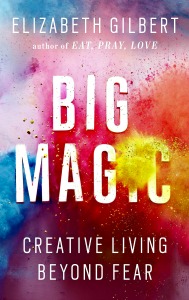
BigMagic_cover_300Big Magic: Creative Living Beyond Fear, by Elizabeth Gilbert, due out in September.
Synopsis: Gilbert digs deep into her own creative process to share her wisdom and unique perspective about creativity.
Why I’m excited: As some readers may recall, I reviewed her novel The Signature of All Things last fall for this column. It seems that Gilbert is now turning her hand to self-help/motivational books for us creatives. I’m intrigued, and I figure other international creatives should be as well.

Three other upcoming books, by authors I’ve not come across before, have also caught my eye:

Displacement_cover_300Displacement, by Lucy Knisley, due out February 8th.
Synopsis: A graphic-novel-style/comic-book travelogue reporting on a cruise ship trip to the Caribbean Knisley took with her grandparents.
What interests me: Even though I seldom read graphic novels, I’m curious to pick it up, especially given its title(!). Knisley has two previous travelogues in graphic form: French Milk (her six-week trip to Paris to celebrate a milestone birthday) and An Age of License (her all-expenses trip to Europe/Scandinavia).
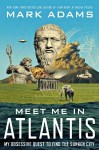
Meet_Me_in_Atlantis_cover_300Meet Me in Atlantis: My Obsessive Quest to Find the Sunken City, by Mark Adam, due out in March
Synopsis: A few years ago, travel writer Mark Adams made a strange discovery: everything we know about the lost city of Atlantis comes from the work of one man, the Greek philosopher Plato. Then he made a second, stranger discovery: amateur explorers are still actively searching for this sunken city all around the world, based entirely on the clues Plato left behind. Adams decides to track these people down. He reports on what he learns from scientists and amateur historians who all share his curiosity about the facts and fiction surrounding the “lost city.”
What interests me: Count me in that curious group!

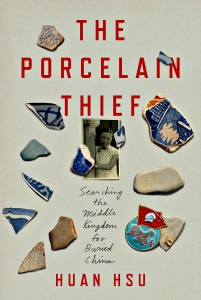
The Porcelain Thief: Searching for the Middle Kingdom in Buried China, by Huan Hsu (forthcoming in March).
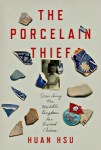
The_Porcelain_Thief_cover_300Synopsis: The author, raised in Utah, goes back to his ancestral homeland in China, in part to look for porcelain and other treasures his great-great-grandfather may have buried before the family fled the Sino-Japanese War.
What interests me: As a former expat in China, I love anything about this part of the world, and this displaced family saga sounds particularly fascinating!


ML AWANOHARA: I am always on the lookout for books that could be of interest to the Displaced Nation readership. (Whether I end up reading them or not is a different matter!) I’m sure this is just the tip of the iceberg, but thus far in 2015 I have my eye on one novel and several memoirs.

First, the novel:

The_Art_of_Unpacking_Your_Life_cover_300The Art of Unpacking Your Life, by Shireen Jilla (forthcoming in March)
Synopsis: A million miles away from their daily concerns, on a safari in the Kalahari Desert, two women who were once best friends see if they can reconnect.
What interests me: We featured Jilla’s first novel, Exiled, on the Displaced Nation shortly after we started the site as we were curious to as to why, after her own expat life in New York City, she had produced such a dark, dysfunctional family psychodrama concerning a British expat family living on the Upper East Side of New York. (Her answer was extremely satisfying!)

As to memoirs, here are three that were issued in January:
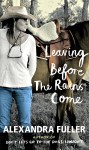
Leaving_Before_the_Rains_Come_cover_300Leaving Before the Rains Come, by Alexandra Fuller (came out in January)
Synopsis: A child of the Rhodesian wars and daughter of two deeply complicated parents, Alexandra Fuller is no stranger to pain. But the disintegration of her own marriage leaves her shattered. Looking to pick up the pieces of her life, she finally confronts the tough questions about her past, about the American man she married in hopes of being saved from the madness of her early life, and about the family she left behind in Africa.
What interests me: I so enjoyed Fuller’s first memoir, Don’t Let’s Go to the Dogs Tonight, about growing up in a white family during the Rhodesian Bush War, I have come to think of her as a modern-day displaced heroine, or goddess: larger than life, an extraordinary mix of beauty and brains, out of this displaced world… (Hmmm… No wonder her marriage to a mere mortal didn’t last.)

Russian_Tattoo_cover_300Russian Tattoo: A Memoir, by Elena Gorokhova
SYNOPSIS: In her first memoir, A Mountain of Crumbs, Gorokhova detailed her life growing up with an iron-willed mother in Soviet-era St. Petersburg. In this follow-up, she escapes both mother and country by entering into an unsuitable marriage with an American. When her husband first brings her to live in Austin, Texas, the culture shock is extreme. He then ships her off to Princeton to live with his psychotherapist mother. There she meets her second husband and a happier future.
WHAT INTERESTS ME: Maybe because I lived abroad for so long and then had to readjust to life in the U.S., I identify very closely with immigrant stories. And for personal reasons, I’m always attracted to stories that revolve around the challenges of cross-cultural marriage.

Whipping_boy_cover_300Whipping Boy: The Forty-Year Search for My Twelve-Year-Old Bully, by Allen Kurzweil
SYNOPSIS: As a 10-year-old American shipped to a Swiss boarding school, Kurzweil endured a year of torment. Years later he set out to search for the chief bully, Cesar, who, it turned out, had gone to prison twice, having become a professional con man. In circling the globe to find Cesar, Kurzweil stands up for all who’ve been the victim of bullies.
WHAT INTERESTS ME: As we’ve always recognized on this site, some of us who are “displaced” have gothic tales to tell. Thank goodness in this case the villain picked on a man who was destined to become a world-class writer, hence able to exact an exquisite revenge.

Finally, I just now heard about another memoir whose title alone has me panting to know more: The Dead Ladies Project: Exiles, Ex-Pats and Ex-Countries, by litblog founder and book reviewer Jessa Crispin, who moved to Berlin in 2009. It’s due out in September; no book cover yet.


JJ MARSH, crime series author and Displaced Nation columnist (Location, Locution): I have a novel and a poem on my list, along with one publishing house.

A_Spool_of_Blue_Thread_300A Spool of Blue Thread: A Novel, by Anne Tyler (forthcoming this month).
Synopsis: It’s not an expat story but rather the opposite: a domestic family saga. The family, Whitshanks, have lived in Baltimore for several generations.
What interests me: Tyler wrote The Accidental Tourist (about the ultra-insular Leary family, who also live in Baltimore) and I’m curious.

“Sentenced to Life”, by Clive James (James, for those who don’t know, is an Australian writer and personality who has long lived in Britain.)
Synopsis: It’s one of James’s recent poems, published in May of last year, and can be read in full on her author site.
What interests me: I heard James on the radio talking about writing poetry about facing death and it humbled me.

I also look forward to whatever Galley Beggar Press puts out because they’re exciting and adventurous and try things other publishers will not. This strategy paid off with their Baileys Prize success of A Girl is a Half-Formed Thing by Eimear McBride last year.


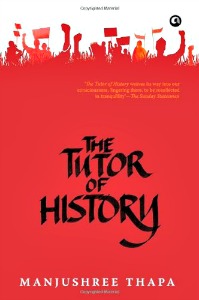
The_Tutor_of_History_cover_300HEIDI NOROOZY, adult TCK, translator and author (@heidinoroozy): This year I’ve resolved to read more books in translation and stories from far-flung parts of the world. And, as I enjoy novels set in foreign locations that are told in local voices, I’ve got these two on my list:

The Tutor of History, written in English by the Nepali author Manjushree Thapa
SYNOPSIS: One of South Asia’s best-known writers, Thapa follows the lives of a variety of characters in the lead-up to local and national elections in a small town in central Nepal.
NOTE: This novel came out in 2012, but I haven’t gotten round to reading it yet.

The_Little_Paris_Bookshop_cover_300The Little Paris Bookshop, by the German author Nina George (forthcoming in English in June).
SYNOPSIS: Monsieur Perdu calls himself a literary apothecary. From his floating bookstore in a barge on the Seine, he prescribes novels for the hardships of life. The only person he can’t seem to heal through literature is himself…but will he manage to do that on a mission he takes to the south of France, with an Italian chef as his companion?
NOTE: I already read the novel in German. In Germany it spent over a year on the bestseller lists.


My_Fellow_Prisoners_cover_300KELLY RAFTERY, translator and writer: In 2015, I am looking forward to being able to read Mikhail Khodorkovsky’s collection of short stories entitled My Fellow Prisoners. Already available in Europe, it is due to have its U.S. release in late February. Convicted on thinly disguised, politically motivated charges, Mikhail Khodorkovsky went from being Russia’s richest man to a labor camp inmate in Siberia. In the decade of his incarceration, Khodorkovsky scribbled short sketches of the men he encountered, jailers and prisoners alike.


SUPRIYA SAVKOOR, editor and mystery writer: In the last roundtable, I mentioned having recently read two gripping memoirs: Not My Father’s Son, by Alan Cumming, and A Long Way Home, by Saroo Brierley. In 2015 I’m looking forward to more books that surprise me as these two did, particularly ones in which the new stories are intertwined with the old ones and make me see the grander scheme of things.
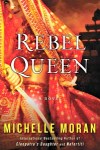

Rebel_Queen_cover_300ALLI SINCLAIR, world traveler and novelist (www.allisinclair.com): I’m a huge fan of Michelle Moran’s books and any book of hers is an automatic buy for me. Moran has an interesting story. Born in Southern California, she was a public high school teacher before becoming a writer, using her summers to travel around the world. It was her experiences as a volunteer on archaeological digs that inspired her to write historical fiction. Moran’s upcoming work, Rebel Queen, will be released in March. It’s about Queen Lakshmi—also known as India’s Joan of Arc because she stood up to the British invasion of her beloved Kingdom of Jhansi. The queen raises two armies—one male and one female—and they go into battle against the well-prepared British.

Moran’s books are rich in historical facts but the stories are so enthralling it never feels like a history lesson. Another reason I’m a fan is because she usually chooses the point of view of someone not so well known. For example, in this story the main character is Sita, one of the Queen’s trusted soldiers and companions, a device that serves to paint a less-biased picture of the more famous Queen Lakshmi.

* * *

Thank you, ML, JJ and guests! Readers, do you have any further 2015 recommendations? Please leave a comment below. And then let’s get our noses back into our books!

Finally, please be sure to sign up for the DISPLACED DISPATCH, which has a Recommended Read every week. You can also follow the Displaced Nation’s DISPLACED READS Pinterest board.

STAY TUNED for next week’s fab posts!

If you enjoyed this post, we invite you to subscribe to The Displaced Dispatch, a weekly round up of posts from The Displaced Nation, plus some extras such as seasonal recipes and occasional book giveaways. Sign up for The Displaced Dispatch by clicking here!

Related posts:

BOOKLUST, WANDERLUST: 2014–2015 books recommended by expats & other international creatives (1/2)

Global Bookshelf Part OneHello Displaced Nationers! Looking back at the our popular series Best of 2014 in expat books, published at the end of last year, I decided we should continue the fun at the start of the year—and managed to convince our redoubtable editor, ML Awanohara, that the pair of us should canvass our “displaced” contacts to see what they’d enjoyed reading from last year’s crop of new books, as well as books they’re looking forward to reading in 2015.

A “best reads” roundtable, if you will.

In Part One, which appears below, several of my bookworm friends from a previous blog, Novel Adventurers, along with ML and JJ Marsh (JJ writes the Location, Locution column for Displaced Nation), discuss their favorite 2014 reads.

In Part Two, a similar group of us will talk about releases we’re hotly anticipating this year.

Having already shared my 2014 faves in last year’s series, I’ll concede the floor to others, beginning with ML.

—Beth Green

* * *

ML AWANOHARA: Thanks, Beth. These days, I seem to be more of a collector than a reader (I simply can’t keep up with all the titles I hear about!). If you’ll allow me to bend the rules, I’d like to highlight five more 2014 books I’ve discovered since our Best of 2014 in expat books went live. While I can’t personally recommend any of these titles, I feel justified in presenting them as an addendum to our series.

I’ll start with these four “displaced” novels, listed from most to least recent:

IHaveLivedToday_cover_300x200I Have Lived Today (October 2014)
Author: Steven Moore
Synopsis: Having barely survived his Dickensian childhood in 1960s Britain, Tristan Nancarrow sets out on a journey that will take him through the alleys of London and New York, to the rocky shores of ancient islands, and on pub crawls in dark and gloomy ports. The book is a classic coming-of-age adventure.
Expat creds: Originally from England, Moore is a writer, photographer, traveler and part-time ESL teacher who splits his time between Mexico, Korea and the world.
How we learned about: From his blog, Twenty-first Century Nomad.

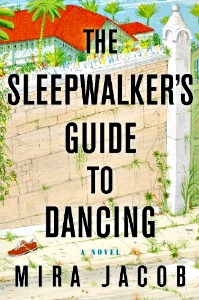
SleepwalkersGuide_cover_300x200The Sleepwalker’s Guide to Dancing (Random House, July 2014)
Author: Mira Jacob
Synopsis: This debut novel takes us on a journey that ranges from 1970s India to suburban 1980s New Mexico to Seattle during the dot.com boom. It follows the fortunes of the Eapens, an Indian American family dealing with tragedy and loss. Alternating between past and present, it shows the family’s transition from India to the United States. As one Indian critic writes, the story is “firmly rooted in an immigrant home, its peculiar methods and madness.”
Expat creds: Jacob is an Adult Third Culture Kid, whose Syrian Christian parents came over from Kerala, India, to New Mexico, in the 1960s. She now lives in Brooklyn with her Jewish American husband and son.
How we found out about: Recommended by Condé Nast Traveler as a book to read on a plane.

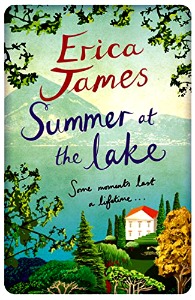
SummerattheLake_cover_300x200Summer at the Lake (Orion, June 2014)
Author: Erica James
Synopsis: An Oxford Tour guide, Floriana, a property developer, Adam, and Esme, an elderly woman who lives next door to a recent purchase by Adam, meet by chance and develop a lovely friendship, which takes them from the glittering spires of Oxford to the balmy shores of Lake Como. The story blends the tale of an old romance with a modern love affair.
Expat creds: James divides her time between living in Cheshire, UK, in a small rural hamlet and Lake Como, Italy, giving her plenty to draw upon in her books.
How we heard about: Pinterest.

TheBalladofaSmallPlayer_cover_300x200The Ballad of a Small Player: A Novel (Deckle Edge, April 2014)
Author: Lawrence Osborne
Synopsis: Lord Doyle decamps from the stuffy legal courtrooms of London to the smoky back-alley casinos of Macau, where he tries to capitalize on the ill-gotten gains that forced his flight from his homeland. But can he game the system at the island’s glitzy baccarat tables? With its expat angst and debauched air of moral ambiguity set amid the sinister demimonde of the Far East’s corrupt gambling dens, the book is an introspective study of decline and decay.
Expat creds: Lawrence Osborne was born in England and lives in New York City. A widely published and widely traveled journalist, he has lived a nomadic life in Mexico, Italy, France, Morocco, Cambodia and Thailand, places that he draws on in his fiction and non-fiction. His first novel was The Forgiven, which Beth Green reviewed for the Displaced Nation last year.
How we learned about: From Amazon.

Lastly, I have another expat memoir that was issued in 2014 and I think deserves a spot on our shelves:

FallinginHoney_cover_300x200Falling in Honey: How a Tiny Greek Island Stole My Heart (Sourcebooks, March 2014)
Author: Jennifer Barclay
Synopsis: Barclay first visited the tiny Greek island of Tilos, in the south Aegean, with friends, including a lover with promising prospects. In her mid-thirties when those prospects fell apart, she decides to reconnect with herself by returning to Tilos for a month and immersing herself in Greek culture, food, language, and dance. Emotionally healed and recharged, she returns to England, where she meets a man who wants what she wants, only to discover… (I won’t ruin it for you.)
Expat creds: Born in Manchester, UK, Barclay subsequently grew up on the edge of the Pennines—but has lived in Greece, Canada and France, with longish stays in Guyana and South Korea. She now lives mostly on Tilos. Notably, she previously produced a memoir about life in South Korea, amusingly titled Meeting Mr. Kim: Or How I Went to Korea and Learned to Love Kimchi.
How we learned about: Barclay’s “Gathering Road” podcast interview with Elaine Masters.


TheShadowoftheWind_coverJJ MARSH, crime series author and Displaced Nation columnist (Location, Locution): My best book of 2014 is The Shadow of the Wind, by Carlos Luis Záfon. All booklovers will fall hopelessly in love with this tale of a boy and a book he swears to protect after he is taken to the Cemetery of Forgotten Books by his bookseller father. Which of us could resist doing the same? Readers know how a story can act as a portal to otherwhere. This is the most perfect example, not to mention illuminating Barcelona in addition to the Franco dictatorship, love, loyalty and growth.


TheLie_coverHEIDI NOROOZY, adult TCK, translator and author (@heidinoroozy): One of the most remarkable and memorable books I’ve read recently is The Lie, by Hesh Kestin. Set in Israel, it features a Jewish human rights lawyer whose commitment to her principles is put to the test when her soldier son is kidnapped by Arab militants and whisked over the border to Lebanon. I love stories that explore the human spirit and are set against a backdrop of real-life events. The heart of this novel is the question of how far a mother is willing to go to save her child. Very chilling at times, heartbreaking at others and masterfully told overall.


PointofDirection_cover_300x200KELLY RAFTERY, translator and writer: In 2014, I loved Point of Direction, by Rachel Weaver. A starkly beautiful tale set in the Alaskan outback, it reads like a cross-cultural adventure. Most expats will recognize the feelings of culture shock, disorientation and unreality that haunt Anna, a woman on the run from her own ghosts. The sharp writing style perfectly mirrors the jagged mountains and rough seas that inhabit the novel as surely as another character.


SUPRIYA SAVKOOR, editor and mystery writer: I haven’t read many memoirs, but in recent months, I read two that blew me away. The first, Not My Father’s Son, by Alan Cumming, is a must-read, even if celebrity memoirs aren’t your thing or you don’t know much about this Scottish actor, now a dual American-British citizen based in New York City. NotMyFathersSon_cover_300x200Cumming, it turns out, is a genius storyteller, and he takes us on an extraordinary journey through two juicy family mysteries across four countries and three time periods. It is, in turns, emotional, tragic, exciting, suspenseful, and funny. The colorful cast of characters, with names like Tommy Darling and Sue Gorgeous, are real people. Along the way, you’ll learn all kinds of fascinating little tidbits, much of it cross-cultural, about genealogy, history, pop culture, language, psychology. Even Cumming’s anecdotes about his life as a TV and film star are surprisingly interesting, largely because of the author’s clear-eyed, honest wisdom. (I also highly recommend the audiobook, narrated by Cumming himself. Alongwayhome_cover_300x200 His lovely Scottish accent and intonations are an additional treat.)

A Long Way Home: A Memoir, by Saroo Brierley, is another great read. The story is simple but powerful: a five-year-old boy in rural India gets lost, is ultimately adopted to a family in Australia, then, as an adult, tracks down his birth family and reunites with them. How he pieces together his past and finds his roots is one of several beautiful mysteries in this small book. Loss and identity are obvious themes, but not just for the author. A truly unique story. (Side note: Modern technology is one of this book’s heroes.)


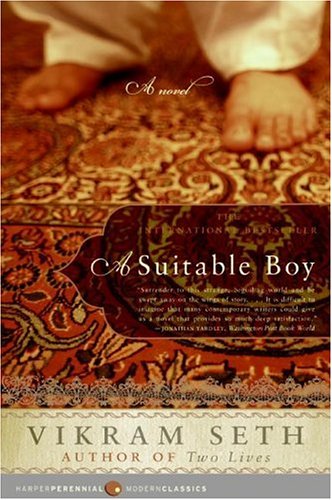
ASuitableBoy_coverALLI SINCLAIR, world traveler and novelist (www.allisinclair.com): I recently re-read A Suitable Boy by Vikram Seth. It was released way back in 1993 and caused quite a stir in the literary world as it was one of the longest novels ever to be published in English (1,349 pages hardcover). I first read it then, and, while it’s highly unusual for me to give a book a second or third read, every few years I return to this wonderful novel rich with Indian history, family saga, and a heartbreaking romance. It’s set in post-partition India and explores the political issues at the time (1950s), along with the Hindu-Muslim issues and the caste system. It’s quite an undertaking to read this book but I enjoy revisiting the characters I love. I am very fond of stories written by Indian authors as there is a beautiful style and interesting points of view I find appealing. There’s a sequel in 2016—I can’t wait!

* * *

Thank you, ML, JJ and guests! Readers, have you read any of the above or do you have further 2014 recommendations? Please leave a comment below. And stay tuned for Part Two of this post, books to look forward to in 2015!

Finally, please be sure to sign up for the DISPLACED DISPATCH, which has a Recommended Read every week. You can also follow the Displaced Nation’s DISPLACED READS Pinterest board.

STAY TUNED for PART 2 of this post: 2015 reads!

If you enjoyed this post, we invite you to subscribe to The Displaced Dispatch, a weekly round up of posts from The Displaced Nation, plus some extras such as seasonal recipes and occasional book giveaways. Sign up for The Displaced Dispatch by clicking here!

Related posts:

BOOKLUST, WANDERLUST: Best of 2014 in Expat Books (2/2)

Best of Expat Books 2014 Part 2Season’s greetings again, Displaced Nationers. And welcome back to our end-of-the-year bookfest!

Pass the eggnog!! (She takes a swig…)

Moving right along (hic!). In the first part of this BOOKLUST WANDERLUST series, posted yesterday, our BOOKLUST, WANDERLUST columnist Beth Green and I presented a list of 2014 expat books in the categories of Travel, Memoirs, and Cross-cultural Challenges.

In Part Two, we present our last three categories (hic, hic—hey, it’s the holidays!):

  1. IT’S FOOD!
  2. THIRD CULTURE KIDS
  3. COUNTRY GUIDES/TRIBUTES


A few points to note:

  • Books in each category are arranged from most to least recent.
  • Unless otherwise noted, books are self-published.
  • Contributions by Beth are in green (most appropriate, given her surname!).

* * *

IT’S FOOD!

Colour_of_Maroc_cover_smallColour of Maroc: A Celebration of Food and Life (Murdoch Books, October 2014)
Authors: Rob Palmer and Sophie Palmer
Synopsis: A collection of Moroccan recipes, both traditional and contemporary, interwoven with stories and anecdotes inspired by people, food and travel experiences as seen through the eyes of Rob, an Australian photographer, and Sophia, his French/Moroccan wife.
Expat Credentials: Rob first met Sophia in Sydney, who had freshly arrived in Australia from France. They were both on a food photo shoot for an ad agency. Fascinated by her half-Moroccan (she was born in Casablanca), half-French heritage, he was only too happy to join her on an extended tour of Morocco, which resulted in both marriage and this book.
How we heard about: Social media.


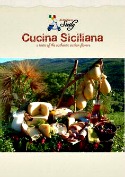
Cucina_Siciliana_cover_smallCucina Siciliana: A taste of the authentic Sicilian flavors (August 2014)
Author: Wanita
Synopsis: Wanita shares recipes she has collected from her elderly neighbor, her mother-in-law, and Italian friends she has made during her six years in Sicily—recipes that have passed down from generations, several of which, she suspects, have never been outside Sicily!
Expat creds: Wanita met her Sicilian husband on the Internet. After a 3-month online romance, he visited her in California; two weeks later, she accompanied him back to Sicily to get married. They now have an infant daughter.
How we found out about: We’ve pinned several of her Sicilian recipes to our IT’S FOOD! board.


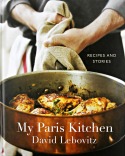
My_Paris_Kitchen_cover_smallMy Paris Kitchen: Recipes and Stories (Ten Speed Press, April 2014)
Author: David Lebovitz
Synopsis: A collection of 100 sweet and savory recipes that reflect the way modern Parisians eat today, combined with Lebovitz’s personal stories of life in the world’s culinary capital. The book also features lush photos of Paris and of Lebovitz’s kitchen.
Expat creds: Lebovitz is an American pastry chef who has been living the sweet life in Paris for a decade. Before moving to France, he made his name at Chez Panisse in Berkeley, California, with celebrity chef Alice Waters as his mentor.
How we found out about: We are among his throngs of followers, keeping up with him any way we can: Facebook, Twitter, Pinterest, his monthly e-newletter… My Paris Kitchen (his 7th book!) has been named best cookbook of the year by Amazon.


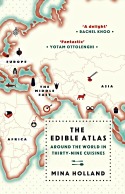
The_Edible_Atlas_cover_smallThe Edible Atlas: Around the World in 39 Cuisines (Canongate, March 2014)
Author: Mina Holland
Genre: International cookery
Synopsis: Not just a cookbook, The Edible Atlas introduces readers to the cultures behind the flavors and looks at why people eat what they do.
Expat credentials: Mina Holland, from the UK, has lived both in the USA and in Spain. She’s the acting editor of Guardian Cook.
How we heard about: Titles about food always catch our eye, and the idea of traveling around the world a mouthful at a time? Tantalizing! A review in Guardian Books first brought it to my attention.


THIRD CULTURE KIDS

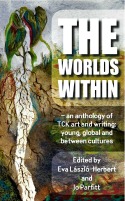
TheWorldsWithin_cover_smallThe Worlds Within, an anthology of TCK art and writing: young, global and between cultures (Summertime, November 2014)
Editors: Jo Parfitt and Eva László-Herbert
TCK Credentials: As the editors point out, that this is a rare book BY third culture kids, not about them.
Synopsis: Your mother is Swiss, your father is from the Philippines and you have so far lived in five countries, none of them your passport country. Who are you? Where are you from? Where is home? And what did you eat for breakfast? If you are a friend, this book will guide you. If you are a teacher, it will enlighten you. If you are a parent, it will spell it out for you and if you are an employer, it will convince you. Here they are, the cultural chameleons, the young global nomads, the TCKs—Third Culture Kids—from around the world, telling you their story.
How we heard about it: Initially from a Facebook post. Word is spreading fast on social media. One of the coolest things about this book? It features TCK art as well as writing.


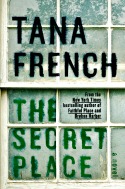
The_Secret_Place_cover_smallThe Secret Place (Dublin Murder Squad Book 5) (Penguin, August 2014)
Author: Tana French
Genre: Mystery
Synopsis: In Book 5 of the Dublin Murder Squad series, two detectives are given new information about a cold case—a boy’s murder on the grounds of an exclusive school for girls.
(A)TCK credentials: Tana French was born in Ireland but grew up in Italy, the USA, and Malawi during the years her family traveled with her father’s career as a development economist.
How we heard about it: I’m an avid reader of murder mysteries and fell in love with this series by French last year. In fact, I wrote about her Dublin Murder Squad series , and how it deals with issues of displacement, for my first Booklust, Wanderlust column.


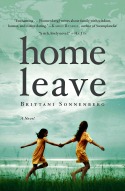
Home_Leave_sonnenberg_cover_smallHome Leave (Hachette, June 2014)
Author: Brittani Sonnenberg
Genre: Expat fiction
Synopsis: In a story that mirrors the author’s own life as a TCK, an expat family’s daughters search for their own identity and confront tragedy.
(A)TCK credentials: Sonnenberg was born in the USA but lived in the UK, Germany, China and Singapore as a child and teenager. She now lives in Berlin and treats Hong Kong as her second home.
How we heard about it: ML is always on the hunt for a good book about TCKs, so when she mentioned having read a review of the book last summer in the New York Times, I agreed to write a column about it.


COUNTRY GUIDES/TRIBUTES

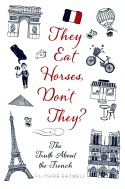
They_Eat_Horses_cover_smallThey Eat Horses, Don’t They? The Truth about the French (Thomas Dunne Macmillan, December 2014)
Author: Piu Marie Eatwell
Genre: Multicultural nonfiction
Synopsis: A series of entertaining mini-essays examines the stereotypes of French life, so beloved of the British in particular, only to discover that many are completely false.
Expat credentials: Eatwell, of mixed Asian and British descent, went to France for a long weekend one August summer holiday many years ago, and never left (how could she, with a surname like that?). After graduating from Oxford University, she trained first as a BBC television producer and then as a lawyer. Over the years she has worked as a documentary film maker, barrister, teacher, mother, and—most recently—full-time writer, both in London and Paris. They Eat Horses, Don’t They? is her first book.
How we heard about: Eatwell’s book is the winner of the 2014 Next Generation Indie Book Award in Amazon’s Multicultural Non-Fiction category.


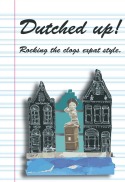
Dutched_Up_cover_smallDutched Up! Rocking the Clogs Expat Style (November 2014)
Authors: Various
Genre: Anthology
Synopsis: A compilation of stories by expat bloggers in the Netherlands.
Expat credentials: Too numerous to relay.
How we heard about: From a tweet by one of the contributors, Australian expat in Almere Nerissa Muijs. Once upon a time, Muijs was featured on our site as a Random Nomad. (She definitely rocks—we can vouch for it!)


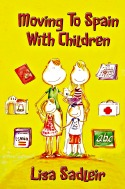
Moving_to_Spain_cover_smallMoving to Spain with Children: Essential reading for anyone thinking about moving to Spain (November 2014)
Author: Lisa Sadleir
Genre: Expat self-help
Synopsis: Spiced with the author’s own heart-warming anecdotes, the book aims to help you arrive at the same place her own family is now—but in half the time: living and loving family life in Spain!
Expat credentials: British born Lisa Sadleir is mother to two young, bilingual children. Educated in the UK and France, she has been a resident in Spain for over 23 years. She works as an independent relocation advisor and personal property finder.
How we heard about: Social media.


Paris_in_Love_cover_smallParis in Love (Chronicle Books, November 2014)
Author: Nichole Robertson
Genre: Photography
Synopsis: A photographic love letter to Paris from the author of the best-selling Paris in Color, capturing the hidden corners and secret moments that make Paris the most romantic city in the world.
Expat credentials: After a successful career in New York City as a writer and creative director for ad agencies, Robertson moved to Paris, which rekindled her love of photography and led to creating a series of prints and now books celebrating her relationship with the City of Light.
How we heard about: Social media.


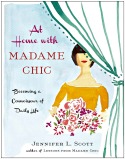
At_Home_with_Madame_Chic_cover_smallAt Home with Madame Chic: Becoming a Connoisseur of Daily Life (Simon & Schuster, October 2014)
Author: Jennifer L. Scott
Genres: Beauty/Fashion, How-to, Home Improvements
Synopsis: In this follow-up to her best-selling Lessons from Madame Chic, Scott has divided the book into two sections: 1) Chez Vous: exploring how to get your home in order and how to love it again; 2) Les Routines de la Journée: covering the pleasures of the morning, the pleasures of the afternoon, and the pleasures of the evening.
Expat credentials: Once upon a time, Scott was a college student living with a “chic” family in Paris, France, and her books represent her attempt to translate all that she learned from that European experience into her American lifestyle.
How we heard about: I interviewed Scott about her first book just before it was picked up by Simon & Schuster, and have been a big fan of hers ever since. (Her interview still gets lots of hits!)


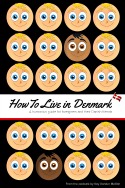
How_to_live_in_Denmark_coverHow to Live in Denmark: A humourous guide for foreigners and their Danish friends (July 2014)
Author: Kay Zander Mellish
Synopsis: Life as a foreigner in Denmark, one of the world’s most homogenous countries, isn’t always easy. In this book, based on her popular podcast series, Kay Xander Mellish offers a fun guide to Danish culture and Danish manners, as well as tips on how to find a job, a date, someone to talk to or something to eat.
Expat credentials: An Wisconsin-born journalist, Mellish has lived in Denmark for more than a decade.
How we heard about: Mellish’s humorous and somewhat irreverent take on expat life caught our attention about a year ago, when she posted a story about the first woman to guard the Royal Palace at Amalieborg, who was fired not for being a prostitute but for refusing to follow orders and stop moonlighting—a post for which Mellish earned her one of our coveted (?!) Alice Awards. We were pleased to learn she’d published a book, and plan to feature it soon.


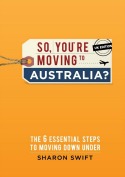
SoYou're_Moving_to_Australia_cover_smallSo, you’re moving to Australia?: The 6 essential steps to moving Down Under (June 2014)
Author: Sharon Swift
Genre: Self-help
Synopsis: Swift has distilled her formula for a successful international relocation into a 6-step process, outlined in this book for those making the big leap from the UK to Australia.
Expat credentials: Since her birth in Singapore to a British father and Singaporean mother, Swift has lived across five continents, experiencing life and cultures of 14 countries. Her move to Sydney from London in 2005 was her 18th international relocation. She lives in Sydney Inner West with her husband, both now Australian citizens.
How we heard about: Pinterest.

* * *

Your turn again, readers! Have you read any of the above works and if so, what did you think of them? And can you suggest other works to add to these three categories or to the ones presented yesterday? Beth and I look forward to reading your comments below.

From Beth:
Intrigued by some of these titles? Go ahead, download a few! ‘Tis the season to support the output of other international creatives.

In closing, please note: Beth and I may repeat this exercise in six months (summer reads). But if you can’t wait until then, I suggest that you sign up for our DISPLACED DISPATCH, which has a Recommended Read every week, and also follow our Pinterest board: DISPLACED READS.

Without further ado, we thank you for making this year great and wish you a season full of mirth and good cheer, along with the odd quiet moment for a displaced read or two!

(Oh, and pass that eggnog!!)

STAY TUNED for more fab posts.

If you enjoyed this post, we invite you to subscribe to The Displaced Dispatch, a weekly round up of posts from The Displaced Nation, plus some extras such as seasonal recipes and occasional book giveaways. Sign up for The Displaced Dispatch by clicking here!

Related posts:

HERE BE DRAGONS: And much else besides! A fantasy-laden Halloween paves way for NaNoWriMo

http://www.flickr.com/photos/taymtaym/15520387690/

Left: Lucca comics & games 2014, by taymtaym via Flickr (CC BY 2.0); the “dragons” of Lucca, by Andrew Couch (October 2014).

For the past few months expat Andrew Couch has been helping us make the connection between a life of international travel and fantasy writing. This month he reports on how he spent Halloween. After you read it, I have only one question: train trip or mind trip or both?

—ML Awanohara

While my compatriots were out trick or treating, I was having my own kind of Halloween adventure over here in Europe, one that took me beyond my wildest imaginingssaying a lot for a fantasy writer!

Naturally, it had people in all manner of costumes wandering about. But it also presented opportunities to hear from a grown man about why he loves writing stories from the point of view of talking mice, and to explore a medieval walled city.

By now fellow geeks should be able to guess that I was attending a comic and games convention: the one that took place in Lucca, Italy, over Halloween weekend. Lucca, a city in Tuscany, is an hour from Florence and half an hour from Pisa.

Now, Lucca may not be able to boast of having a Uffizi Gallery or a leaning tower, but it does have church towers, clock towers, winding streets and odd-shaped plazas, all within a set of Renaissance-era city walls. So many fantasy stories feature towns inside of walls, and there are not many cities that still have them. I had a blast walking around on top of them. Here’s the view it yielded:

Photo credit: Andrew Couch (October 2014).

Aerial view of Lucca. Photo credit: Andrew Couch (October 2014).

You know, being an expat in Europe does have its advantages besides being able to spend Halloween in Tuscany. When in the United States, I never lived in a place big enough to have a decent Con, but in Europe, size doesn’t matter so much, and good train connections make it less of a hassle to attend (no parking woes, and maybe no need for overnight accommodations). This was my first time in Lucca, but for a few years in row now, I’ve been attending the Essen games in Germany, where I live. My first year I took a four-hour train to and from the convention on the same day. At Lucca I noticed someone buying a train ticket home to Turin, which isn’t so close either.

The costumes were a treat

It’s been seven years since I’ve seen any trick-or-treaters as Halloween isn’t widely indulged in Germany (as in other European countries, November 1, All Saint’s Day, is the holiday). But this year it didn’t matter as I had plenty of cosplayers to distract me. Cosplay, short for costume play, is a kind of performance art where we geeks dress up as our favorite characters or ideas.

Similar to Halloween, there are those who create their own original costumes around themes and those who don meticulous real-life facsimiles of 2-D drawings in a comic, game or movie.

I had fun watching both groups.

Since so much of what I like to read and write is steam punk (my fantasy world employs steam power), I enjoyed running into a troop of steam punk people:

SteampunkParade

Steampunk parade. Photo credit: Andrew Couch (October 2014).

Articulated metal hands and fancy goggles blending with romantic ideas of Victorian clothing—it’s definitely fantasy but not as over-the-top as anime and game characters. The mix of reality and fantasy is different, too. For many of the steam punk designs, you could imagine the mechanisms actually working, whereas the fellow on the other side of the street encased in red leather from head to foot? He can barely walk, let alone swing one of his many swords.

A real-life fantasy simulation

Perhaps even more helpful from my writer’s perspective was the chance to observe all of these characters circulating in the convention crowds. Writers, particularly fantasy writers, are free to create all manner of craziness—physics be damned. But seeing some of these ideas in the flesh wandering around was a reality check. The character who carries his signature 7-foot sword around on his back everywhere he goes really sticks out—even in a crowd full of people sporting wings and carrying all kinds of swords and staffs.

Wings, too, are interesting. Out of necessity they create a wider concept of personal space in a society, and potentially the need for wider doors…

So even my crowd watching was a source of reflection. Whether I want to write an over-the-top action story or a more realistic fantasy, I have an idea of what it looks like for various characters to wander around in a city. Because I’ve seen it.

Of Mice and Comics

I chose to attend this year’s Lucca Comics and Games primarily because of an American, the comic book creator David Petersen. He is the author and artist of Mouse Guard, an awesome set of comics (and a role-playing game) about talking mice in a medieval world. I waited in line for an hour to get my book signed (totally worth it!). I also sat in a old Italian church and watched him draw and listen to him talk about his creative process.

Asked about what inspires his drawings, Petersen told a story of being a young boy going with his family to a church in the States with rich wood carvings and decorative elements. He talked about how craftsmanship affected him. He liked the idea that functional items could still be beautiful and wanted his mice characters to have that.

He went on to say that he developed his storyteller muscles as a teen, when engaging in a lot of role-playing games. And he talked about the physical format of the comic book, allowing for dramatic shots and pacing. He said that the British film maker David Lean had inspired him to conceive of the comic book in these terms.

So Petersen takes part of his inspiration from movies. Who knew? And one day my written-word fantasy stories may take inspiration from comic books like his. Why not?

There was something rather stunning about Petersen talking about all this in the setting of a church, with stained glass behind him and a carved wooden ceiling above. My thoughts wandered briefly to the cathedral in Freiburg:

FreibergMinster

Inside the Freiburg Minster II, by orestART via Flickr (CC BY-SA 2.0)

The original Freiburg Minster was built in the Middle Ages, before people believed the world wasn’t round. That is still mind boggling to me as an American.

* * *

In the end I found the Lucca event so stimulating I only went two of the four days. After being in such enormous crowds, I was happy to be quiet and retreat into the introverted part of my self.

And yet those two days got me thinking more about my own stories, a good thing. I definitely felt ready to write when I got back on the train. I started NaNoWriMo (see my profile) last week along with many others and am already 10K words into the new story (with my second novella nearing completion as well). This is partly due to having a plot pre-planned and partly due to the rich stew of images generated by my time in Lucca, more nourishing for geeks like me than your average Halloween witch’s broth.

Andrew Couch has been a fantasy book nut since childhood; he really has not grown up much since then. After struggling to write his own games for years, he is now creating fantastical worlds in a series of novellas that echo the TV shows, anime and role-playing games of his youth. Beyond fantasy he is an avid blogger and a world traveler who resides in Germany. To learn more about Andrew, check out his blog, Grounded Traveler, and follow him on Twitter: @groundedtravelr.

STAY TUNED for our next fab post!

If you enjoyed this post, we invite you to register for The Displaced Dispatch, a round up of weekly posts from The Displaced Nation, with seasonal recipes, book giveaways and other extras. Register for The Displaced Dispatch by clicking here!

Related posts:

For this adult TCK writer with an ocean-loving soul and a passion for travel, a picture says…

Canon zoom lens; photo credit: Morguefiles. Rita Gardner at home in California.

Canon zoom lens; photo credit: Morguefiles. Rita Gardner at home in California.

Welcome to our monthly series “A picture says…”, created to celebrate expats and other global residents for whom photography is a creative outlet. The series host is English expat, blogger, writer, world traveler and photography enthusiast James King, who thinks of a camera as a mirror with memory. If you like what you see here, be sure to check out his blog, Jamoroki.

My guest this month is 67-year-old Rita Gardner, who grew up on her expatriate family’s coconut farm in a remote seaside village in the Dominican Republic. Her father declared them to be the luckiest people on earth. In reality, the family was in the path of hurricanes and in the grip of a brutal dictator, Rafael Trujillo.

But if life was far from the Eden her father had envisioned, Rita developed a set of childhood passions that sustains her to this day: writing, traveling, hiking—and photography.

TheCoconutLatitudes_cover_dropshadowShe may no longer live in the Dominican Republic but she continues to dream in Spanish, dance the merengue, and gather inspiration from nature and the ocean. Her favorite color is Caribbean blue.

And now Rita has written a memoir about her life as a Third Culture Kid in República Dominicana. Due out from She Writes Press in September, the book is evocatively titled The Coconut Latitudes: Secrets, Storms and Survival in the Caribbean.

Rita contacted me because she is enjoying “A Picture Says…” I am pleased that she can be this month’s featured guest.

* * *

Hi, Rita, and welcome to the Displaced Nation. I’m delighted to hear you’re enjoying “A Picture Says…” and to have the opportunity to do this interview. Before we get down to the nitty gritty, can you tell me a little more about how your family ended up living in the Caribbean?
My father was an electrical engineer and traveled all over the world installing hydro-electric dams. I think my travel wings must have sprouted in the womb since my parents were in Uruguay on a job site when my mother got pregnant. They flew back to the U.S. so I could be born, and six weeks later we were on another plane, this time to an engineering job in the Dominican Republic. My parents fell in love with that Caribbean island nation, and my father quit his engineering job and “went off the grid” to become a coconut farmer on an isolated beach on the country’s northern coast. It became our permanent home for the next 19 years, and, as you already mentioned, our Caribbean life is the subject of my forthcoming memoir, The Coconut Latitudes.

I guess that being born into an expat family was a passport, so to speak, to a life of travel?
That’s true. It influenced me in other ways as well. I tend to travel “close to the ground,” getting to know the people where I’m visiting. I also travel light as I want to be free to immerse myself (to the extent possible) in other cultures, exploring commonalities as well as differences. Most of my travels have been within Latin America, where I’ve been able to put my Spanish-language skills to use.

And I gather that growing up where you did, on a Caribbean island, you sometimes encountered real adventurers? Did they inspire you as well?
Yes. Those who made it as far as our isolated coconut farm were pretty intrepid and would have stories to tell. Because they were so rare, these visitors made a big impression on me, and their stories made me thirst for the day when I could venture out into the wider world myself. In my new memoir I chronicle one such encounter with a group of strangers who shipwrecked near our farm, and turned out to be not who they appeared to be. Someone else who inspired me was my older sister. By the time she was in her fifties, she’d traveled to over seventy countries.

Wow, she does sound adventuresome. How about you—which countries have you visited?
Most of the islands in the Caribbean, several of them by sailboat, plus Mexico, Costa Rica, Argentina, and Uruguay. In Europe I’ve been to Italy (where I attempted to speak Italian but it came out Spanish), France, and Greece (island-hopping by small boat plus a side trip to Athens).

A day at the beach restores the soul…

South America is a part of the world I have never been but the three weeks I spent in Trinidad more than thirty years ago gave me an idea of what it may be like. I’m sure you have some wonderful memories and I look forward to reading them soon in The Coconut Latitudes. I see you now live in North America. Can you tell us where?
I’m in northern California, right on San Francisco Bay. I found my way here a few decades ago. I’ve always chosen to live near the ocean. Like most people, I had to earn a living, so travel was only an option during vacations. Luckily, I’ve recently retired so have more to time to travel, take pictures, and write.

RG1 Smoking Bride

The smoking bride; photo credit: Rita M. Gardner.


Photo credit: Rita M. Gardner.

Wading chairs; photo credit: Rita M. Gardner.


Photo credit: Rita M. Gardner.

A sitting duck; photo credit: Rita M. Gardner.

Speaking of taking pictures, let’s have a look at a few in your collection that capture favorite memories. Can you describe the story behind each one and what makes them so special?
I visited France for the first time last year with a dear friend, and one of our favorite things to do was meander about. We saw this bridal couple in Monmartre. The bride’s leg-baring gown and the cigarette struck me as being improper yet fun.

She obviously stepped out of the part for a while, which makes for a lovely scene—almost like an actor taking a break on a film set. What else do you have for us?
The next one is from Boca Chica Beach, in the Dominican Republic, whose pastel turquoise waters I had loved since the time I was a small child. I recently went back to the Dominican Republic to attend a friend’s mother’s 100th birthday party. A group of us decided to pay a visit to this beach. I liked the whimsy of the chairs in the shallows, as if they were bathing.

So you didn’t put the chairs there yourself?
No—it was un-staged! The third photo won “Best of Show” earlier this year in a camera club I belong to. If you look closely, you’ll see a small duck in the foreground, which I didn’t notice when I got the shot. The ship itself is one of the last Liberty ships that had been built for action in World War II by the Kaiser Shipyards, near where I now live. At the peak of the war, ships were being turned out at the rate of one almost every week! It’s now “mothballed”, and volunteers, some of whom saw action in that war, maintain it. They’re getting pretty old…

“Seas” the day!

That may not be such a small duck but it certainly is a big ship. And now can you share some examples of your favorite places to take photographs? What is it about these places that inspires you?
It’s a bit of a mixture really. One of my favorite subjects is nature. Growing up on a Caribbean island, I saw the entire range, from watching in awe as thundering waves destroyed our pier and pitch-poled fishing boats, to contemplating sunsets that painted calm seas with exuberant color, to enjoying the deep chorus of frogs announcing rain. To this day, I love to take pictures out of doors. I enjoy finding unusual patterns in nature and looking for images that are “hidden in plain sight.” My other favorite subject is people: I am endlessly curious. Sometimes I plunge into crowds in hopes of getting opportunities for candid people shots.

This photo was taken in the midst of a parade in Santo Domingo, where the child’s attention was riveted to the action beyond the scene.

Photo credit: Rita M. Gardner.

Out of this displaced world; photo credit: Rita M. Gardner.

I took the next photo, of leaf patterns, at nearby Phoenix Lake during a hike with friends. I love the variety of colors and shapes.

Photo credit: Rita M. Gardner.

Leaf patterns; photo credit: Rita M. Gardner.

This third photo, taking in Mykonos, combines my love of nature and people. It feels meditative to me; clearly the fisherman is at one with his environment.

Photo credit: Rita M. Gardner.

Fishing for serenity of mind; photo credit: Rita M. Gardner.

I particularly love the fisherman shot because I have had many wonderful holidays in Mykonos, where I’ve taken photos—but never witnessed a scene like this one. In fact it is one that most people would not associate with Mykonos. Moving on, I know some people feel reserved about taking photos of people, particularly when they are conscious that they are doing so. What’s your feeling about this?
I feel respect more than reserve, and if it seems that taking pictures would not be a welcome experience, I back away from doing it.

In that case, do you ask permission before taking people’s photographs? And how do you get around any problem of language?
I’m a pretty friendly person, so if I’ve caught someone’s eye,I might engage them in a brief conversation and ask if it’s OK if I take their picture. I find smiles break through a lot of language barriers. Also, most people I meet like to practice their English, so language is not usually a problem. That said, some of the best photos are candid ones. Sometimes I try to capture a shot without the subject being aware—I don’t engage in conversation in those instances.

Would you say that photography and the ability to be able to capture something unique which will never be seen again is a powerful force for you and has changed the way you look at life?
I consider myself extremely lucky when I’ve managed to capture an image that is unusual and unlikely to be photographed again. I don’t think the experience changes me. My chief emotion is to feel grateful that I have an eye for images that others may lack.

Sea-ing the light

Photographers never tire of discussing cameras and lenses. What kind of equipment do you use?
I gave up my SLR and its array of lenses for the convenience of a small digital camera. I use a Canon PowerShot and my i-Phone. Both fit in pockets, so I can travel light. Also, I prefer to shoot in natural light rather than use a flash (unless it’s absolutely necessary). So I guess I could say I travel light, and I shoot “light.” How’s that for a quick summary of my style?

Well said! I see nothing wrong with using smaller cameras. Their power and versatility is improving all the time, so unless you need big images for printing they do a great job, sufficient for posting on websites and social media. What is your take on post-processing?
I don’t manipulate my photos other than with the standard tools for cropping, adjusting exposure, etc. I don’t use Photoshop or any the other software products available. Okay, I have to confess I just discovered some apps for the i-Phone camera which I’m having fun with, but mostly “what I see is what I get.” That said, I’m not a purist; I may get into photo software at some point in the future.

The results are good so don’t tell anyone!!! Finally, do you have any advice from your experiences for wannabe photographers who are traveling or living abroad?
Given the ability to erase unwanted images on digital cameras, just shoot away, assuming you get a photo card with enough memory that it doesn’t fill up quickly. Always carry an extra battery and extra film card, because it does you no good to have those items tucked away in your suitcase, or wherever you are lodging! Oh, and do have a battery charger if you are on a long trip so you don’t have to worry about running out of juice. So to speak.

Thanks so much for all these practical tips and for sharing these photos, Rita, and may I take this opportunity to wish you the very best when you launch The Coconut Latitudes this coming month.

* * *

Readers, what do you make of Rita’s experiences and her photography advice? And do you have any questions for her on her photos and/or travels? Please leave them in the comments!

And if you want to know more about Rita, don’t forget to visit her author site and like her author page on Facebook. You can also follow her on Twitter and Pinterest.

Last but not least, I would highly recommend that you pre-order a copy of Rita’s Dominican memoir, The Coconut Latitudes, from Amazon.

(If you are a photographer and would like to be interviewed by James for this series, please send your information to ml@thedisplacednation.com.)

STAY TUNED for next week’s fab posts!

If you enjoyed this post, we invite you to register for The Displaced Dispatch, a round up of weekly posts from The Displaced Nation, with seasonal recipes, book giveaways and other extras. Register for The Displaced Dispatch by clicking here!

Related posts:

HERE BE DRAGONS: All those cities you’ve visited on your travels? They’re the lego bricks for cityscapes in fantasy writing

Citiscapes Collage

(Clockwise from top) Detail of the medieval map Carta marina; the Speicherstadt (warehouse district) in Hamburg, Germany (photo credit: Andrew Couch); tram in Naples (photo credit: Andrew Couch); legos (photo credit: Morguefiles).

HERE BE DRAGONS is back, a column produced by fantasy writer Andrew Couch, an American expat in Germany. We at the Displaced Nation have long been aware of the strong connection between fantasy (think Alice in Wonderland) and a life of international travel and residency. And now Andrew has got us pondering the idea of turning our adventures into fantasy stories!

—ML Awanohara

Last month on HERE BE DRAGONS, we talked about landscapes: the soaring mountains, unusual geographical formations, torrential storms, and other distinctive natural phenomena that can be used to build a whole new world for a fantasy story.

This month we move to cityscapes: the landscape’s urban counterpart, which has been largely shaped by the hands of man (or beast, depending on your story).

One thing I am learning while writing fantasy novellaswhich has only been reinforced by the posts for this columnis how much I’ve been influenced by my expat life and international travels when attempting to construct my own worlds.

When the bricks stick together, great things can be accomplished…

After living in Europe for several years, I now have a catalog of cityscapes to draw on, from grungy parts of London to quiet Parisian parks to industrialized Hamburg. What’s more, each area of every city has its own distinct sights, sounds and smells. And I’ve come to think of these various parts as my lego bricks for assembling the fantasy cityscape that features in my novellas.

I have heard that the second book is often harder for writers than the first. I am definitely finding this to be the case, but mostly due to character and plot, not setting. The setting of my next few novellas is the city of Resholm, which is perched on the line of cliffs called the Dropline. In creating Resholm I was heavily influenced by my impressions of Hamburg, a city in northern Germany that has a long history of being a free port. Resholm, too, is a port:

QueenOfCloudPirates_cover

A skyline of towers along the ridge watched over the cargo and warehouse districts which dripped down the side of the steep slope, nearly to the edge of the cliffs themselves. Soaring arches piled on soaring arches cut the area in various places to hold up the docking piers. A handful of ships were moored across the area.

Hamburg also has the Speicherstadt, an area where goods could come and go without having to pay customs. I got to thinking, what would a city feel like if it had been created solely for the purpose of moving goods and not for the people in it? Resholm grew from this contemplation. In the stories, the police force exists primarily to safeguard the movement of goods in and out of the port, not to protect residents from harm:

“I don’t know,” Arnhelm said. An hour had passed since the officers of the Teeth had shuffled Jason and him into separate rooms. “Why don’t you ask her? Why are you even hounding my uncle and me? One of her goons nearly killed us and blew up a building in the docks.”

“Listen here, sonny,” the man said. “First off, neither the town nor its populace is in our jurisdiction. Resholm survives on its free port and our duty is to keep it safe. Safe for goods, safe for money and safe for free trade. In my experience, people take care of themselves. If they are smart.”

He leaned forward, picked up a piece of paper from the table between them and began to read. “Endangering goods in the warehouses. Bypassing a checkpoint. Reckless endangerment of transport. And that is before we even talk about the destroyed building in the docklands.”

Could I have created Resholm by studying photos of cityscapes found on the Internet? Probably, but I don’t think the result would have been as rich. Walking around a city is the best way to pick up its sounds, smells and sensations. Building a fantasy city from such memories, you become aware of the details that need to be included. For instance, I decided to include Hamburg’s tall, red-brick warehouses in the Speicherstadt, complete with their cranes and rails to move goods, in Resholm as well. The architecture so happens to date back to the late 1800s, which is the time period I am aiming to replicate in my story.

Sometimes it doesn’t matter what you are building…as long as you’re enjoying the fantasy!

Of course, Hamburg is on water and isn’t dripping down the side of a cliff with airships docked at each level, but hey, it’s fantasy, which means I have the freedom to do what I want:

Only one bulb remained lit and he and Lucia left the tram car. They walked up a set of steps to the road which ran along the level five terrace. The smell of engine exhaust, unwashed humanity and a hint of damp stone assaulted Lors’ nose. The constant wind he had gotten used to didn’t seem to penetrate the row of buildings enough to clear the miasma. Despite the lack of wind, the street was cold. The docklands were in perpetual shadow on the northern slope. He could see the sky between the airships docked at the level above, but its light was so weak that lamps on poles shed he needed the scattered poles with their glowing globes to see anything in the eternal twilight.

A pair of tracks ran down the center of the road. Men stood on carts which ran back and forth controlling them with long handles. Sidings led off to both sides at each building. There was plenty of space to walk on either side, but they had to dodge carts and step carefully to make much headway. This was a place built for shipping goods. People served the crates they carried, not the other way around.

By no means does a fantasy city have to be built from a single real world city. The town square of Resholm is based on my memories of Poznań, Poland. The funiculars that service the docklands are from a day I spent wandering in Naples, Italy, and became fascinated with its tramway network. There are also some pieces of the city that owe to my meanderings in New York. But again, these are my lego bricks that I used to construct a stage for my characters to act upon and interact with each other.

Although my books fall more into the adventure—the characters must traverse a wide terrain—there is an entire genre of urban fantasy set solely in cities. If this kind of thing intrigues you, check out the following works:

* * *

Wannabe fantasy writers who are also travel buffs, how about you? Have you collected some cityscapes on your wanderings you think will affect your writing one day, or perhaps already has? Let me know in the comments. Also, if you’ve been fantasizing about particular topics, let me know, and I’ll attempt to stretch my imagination to discuss in a future post.

Andrew Couch has been a fantasy book nut since childhood; he really has not grown up much since then. After struggling to write his own games for years, he is now creating fantastical worlds in a series of novellas that echo the TV shows, anime and role-playing games of his youth. Beyond fantasy he is an avid blogger and a world traveler who resides in Germany. To learn more about Andrew, check out his blog, Grounded Traveler, and follow him on Twitter: @groundedtravelr.

STAY TUNED for next week’s fab posts!

If you enjoyed this post, we invite you to register for The Displaced Dispatch, a round up of weekly posts from The Displaced Nation, with seasonal recipes, book giveaways and other extras. Register for The Displaced Dispatch by clicking here!

Related posts:

And the May 2014 Alices go to … these 3 international creatives

 © Iamezan | Dreamstime.com Used under license

© Iamezan | Dreamstime.com
Used under license

If you are a subscriber to our weekly newsletter, the Displaced Dispatch, you’re already in the know. But if you’re not, listen up. (Hey, why aren’t you? Off with your head!)

Every week, when that esteemed publication comes out, we present contenders for a monthly “Alice Award,” most of whom are writers or other kinds of international creatives who appear to have a special handle on the curious and unreal aspects of being a global resident or voyager.

Not only that, but this person tries to use this state of befuddlement as a spur to greater creative heights.

Today’s post honors May’s three Alice recipients. They are (drumroll…):

1) CHRISTINE GILBERT, blogger, American traveling mom & expat in Barcelona

For her post:  “Why it must suck to be a parent in the US,” on her blog, Almost Fearless
Posted on: 16 May 2014
Snippet:

So we’re traveling across the US after living in Mexico for nearly a year and half, on our way to Europe. … [W]hen we drive to New Orleans it starts. Suddenly I am a bad parent.

… I admit, I am a permissive parent. My basic rules are this: it has to be safe and it can’t infringe on other people. … In short, my children are feral beasties but if required they can sit nicely and say “Please and Thank You” (or at least I try to get them to do that).

But I’m an American, so I have strong opinions about the idea that I have the RED WHITE AND BLUE, PATRIOTIC RIGHT to raise my children however I see fit, whether that’s homeschooling them and teaching them to speak in Klingon or letting them climb trees and juggle knives. Back off.

Citation: Christine, we never cease to enjoy a good round of the old debate about moral relativism (because no parenting method is objectively right or wrong, we ought to tolerate the behavior of all parents) versus moral universalism (a universal parenting norm applies to ALL parents regardless of age, background, ethnicity, etc.)—especially when relayed from the perspective of an expat, and one that writes as entertainingly as you do. While our own inclination is towards tolerance, we would ask you to bear in mind Alice’s “agony of terror” when she first meets the Duchess and her pig-baby. An “unusually large” saucepan flies by the baby’s head and almost take its ear off. “Oh, PLEASE mind what you’re doing!” Alice cries, to which the Duchess responds, in a hoarse growl:

“If everybody minded their own business, the world would go round a deal faster than it does.”

Now, do you identify with Alice or the Duchess? It’s a bit of a moral quandary, correct? What’s more, we’d be curious to hear if your views change at all after living with your family in Barcelona, Spain, for a while. One of us has learned firsthand of a case of an American who is bilingual in Spanish. She brought her two young daughters to Spain last summer to learn Spanish, only to discover, to her considerable consternation, that they were less obedient than Spanish kids in the playground. (No saucepans, please! We’re simply trying to make the world go round faster…)

2) Jon Langford, blogger at BBC America’s “Mind The Gap” and British expat in Manhattan

For his post: Are You Australian?: A British Expat Discusses Mistaken Nationality in America
Posted on: 5 May 2014
Snippet:

Communicating effectively with Americans through a thick Yorkshire accent on a daily basis can be both confusing and traumatizing.

Even though my life would be made significantly easier if I adapted my speech a little, I simply can’t bring myself to say things like war-der, toe-may-do and vie-dah-min. Not that there’s anything wrong with speaking this way, it’s just I’d rather wade through the conversational swamp than surrender my Yorkshire tongue for the sake of convenience.

Citation: Jon, your take-no-prisoners attitude towards preserving your Yorkshire accent, even at the expense of being misunderstood, strikes us as being a trifle, if we may be so bold, bloody minded. (Hey, they don’t call it Yorkshire-stubborn for nothing!) While we can appreciate your need to hold up the side for God’s Own Country, we wonder if you are coming across almost like the Hatter does in Alice in Wonderland. As you may recall, Alice feels “dreadfully puzzled” when he makes a remark that seems “to have no sort of meaning in it, and yet it was certainly English.” But while her response is to say, as politely as she can, “I don’t quite understand you,” our fear is that New Yorkers may dispense with such courtesies and simply blurt out: “You talkin’ to me?” As you have no doubt discovered by now, they take pride in being found the rudest of all rude peoples of America. (Hmmm….has the Yorkshireman met his match?)

3) NIENKE KROOK, blogger and Dutch expat in London

For her post: Bologna Italy: Why you don’t need a map to explore this city, on her blog, The Travel Tester
Posted on: 29 April 2014
Snippet:

Ditch the map in Bologna. Like any classic Italian city, the whole joy of a visit to Bologna is getting lost and losing track of time and space.

Citation: Nienke, we congratulate you for being so willing to let go of your Type A personality while traveling in Italy. especially when exploring a city of Bologna’s ample charms. We would, however, suggest just one small addition to your declaration: “Ditch the map and the watch in Bologna.” If one must carry a timepiece in Italy, let it be the Hatter’s, not the White Rabbit’s! As you may recall from reading Alice in Wonderland as a kid (they read it in Holland, right?), the Hatter and Time do not get along. His watch is frozen at six o’clock. Fascinated by this revelation, Alice says: “Is that the reason so many tea-things are put out here?” Yes, indeed, it is, Alice. In Wonderland you can always have tea and cakes, while in Italy you can always feast on a bit of the sweet life, or la dolce vita, just as long as all five senses are open to the possibility. To repeat (which we think may be necessary for a Type A person), pleasure and indulgence do not come from checking one’s watch!

*  *  *

So, readers, do you have a favorite from the above, or have you read any recent posts you think deserve an Alice Award? We’d love to hear your suggestions! And don’t miss out on the shortlist of Alice contenders we provide in each week’s Dispatch, which are sources of creative thought if nothing else! Get on our subscription list now!

STAY TUNED for more fab posts.

Writers and other international creatives: If you want to know in advance the contenders for our monthly Alice Award winners, sign up to receive The Displaced Dispatch, a round up of weekly posts from The Displaced Nation, with news of book giveaways, future posts, and of course, our weekly Alice Award!. Register for The Displaced Dispatch by clicking here!

Related posts:

And the January 2014 Alices go to … these 3 international creatives

 © Iamezan | Dreamstime.com Used under license

© Iamezan | Dreamstime.com
Used under license

If you are a subscriber to our weekly newsletter, Displaced Dispatch, you’re already in the know. But if you’re not (and why aren’t you? off with your head!), listen up.

Every week, when that esteemed publication comes out, we present contenders for a monthly “Alice Award,” most of whom are writers or other kinds of international creatives who appear to have a special handle on the curious and unreal aspects of being a global resident or voyager.

Not only that, but this person tries to use this state of befuddlement as a spur to greater creative heights.

Today’s post honors January’s three Alice recipients. Starting with the most recent, they are (drumroll…):

1) AMBER PAULEN, American freelance writer and copyeditor based in Rome, and blogger at Descriptedlines

For her post: “Paesaggio Interiore” (Interior Passages)
Posted on: 17 January 2014
Snippet:

Dreamers are thought to be opposite of the practical, yet I see no difference. Imagining is a practicality that we use in order to survive—an imagined outcome may prevent us from a certain action—but it also makes our lives better. Imagination is the begetter of empathy and the foundation of utopias. It is also, on a minute basis, a way of interpreting the world—the wider these interpretations span, the farther the imagination sees, the more adaptable we are, one of the human race’s single best attributes. Try to find an intelligent mind with a small imagination.

Citation: Amber, we could not agree more with you about the practicality of dreaming, and about the need to put greater value on the life of the mind. Scrolling through the endless photos of man-made and natural scenery that occupy so many travel blogs and Pinterest boards these days can have a numbing effect, reducing life to a set of exterior images—in denial of the fact that each of us possesses some pretty vivid, not to say revealing, internal scenery. What’s more, we believe that the imagination is an extremely powerful, as well as much under-rated, survival tool for expats—the key to our adaptability, as you might put it. On the days when your new life in X country is looking rather grim or mundane, you can always slip into a fantasy land, pretending you’re a royal or a hungry hyena, just as Lewis Carroll’s Alice was wont to do:

And here I wish I could tell you half the things Alice used to say, beginning with her favourite phrase “Let’s pretend.”

She had had quite a long argument with her sister only the day before—all because Alice had begun with “Let’s pretend we’re kings and queens;” and her sister, who liked being very exact, had argued that they couldn’t, because there were only two of them, and Alice had been reduced at last to say, “Well, YOU can be one of them then, and I’LL be all the rest.”

And once she had really frightened her old nurse by shouting suddenly in her ear, “Nurse! Do let’s pretend that I’m a hungry hyaena, and you’re a bone.”

2) DRAKE BAER, contributing writer at Fast Company and co-author of Everything Connects

For his post: “Why weird people are often more creative,” in Fast Company
Posted on: 10 January 2014
Snippet:

In a 2003 study, Carson found that eminent creative achievers were seven times more likely to to have low rather than high latent intelligence scores. That insight prompted her to form a hypothesis: that cognitive disinhibiting allows for way more info to enter into your conscious mind–which you can then tinker with and recombine. The result: creative ideas.

Citation: Drake, we commend you for marshalling the evidence to support something that Lewis Carroll knew intuitively, without the benefit of Carson’s (or anyone else’s) study. Indeed, the world Alice discovers when she steps through the looking glass is teeming with flaming weirdos who, while they may seem rather dim witted at times, let’s face it, are super creative. Take this encounter with Humpty Dumpty, for example, in Through the Looking Glass:

“You seem very clever at explaining words, Sir,” said Alice. “Would you kindly tell me the meaning of the poem called ‘Jabberwocky'”?’

“Let’s hear it,” said Humpty Dumpty. “I can explain all the poems that were ever invented—and a good many that haven’t been invented just yet.”

3) MILDA RATKELYTE, writer, photographer and a budding filmmaker based in Singapore

For her post: “Lessons from 2013,” in her blog, Milda Ratkelyte Photography
Posted on: 1 January 2014
Snippet:

This year I am starting with one simple resolution—slow down and find the time every single day to smell the roses. Although 2013 was probably the hardest year in my life, I am grateful to all the strength it gave me and all the invaluable lessons I’ve learnt along the way…Never take your loved ones for granted, because life is so fragile that you never know if you will get a chance to see them again. Pick up the phone, tell them you love them NOW, not tomorrow or next week. Trust me it will make a huge difference.

Citation: Milda, we have appreciated your lens on the wider world ever since we featured you and some of your photographs in our monthly column “A Picture Says…” And now that you are learning the price of a peripatetic life—living far away from your loved ones, who may be suffering—we appreciate your emotional honesty. As Alice herself discovered when parted from her beloved cat, Dinah:

Down, down, down. There was nothing else to do, so Alice soon began talking again. “Dinah’ll miss me very much to-night, I should think!” (Dinah was the cat.) “I hope they’ll remember her saucer of milk at tea-time. Dinah my dear! I wish you were down here with me! There are no mice in the air, I’m afraid, but you might catch a bat, and that’s very like a mouse, you know.”

While Alice’s concerns are trivial compared to those currently confronting you, we wish that like her, you discover a garden of red roses (only in your case, may they not smell of fresh paint!).
 

*  *  *

So, readers, do you have a favorite from the above, or have you read any recent posts you think deserve an Alice Award?  We’d love to hear your suggestions! And don’t miss out on the shortlist of Alice contenders we provide in each week’s Dispatch, which are sources of creative thought if nothing else! Get on our subscription list now!

STAY TUNED for tomorrow’s post, an interview with some American entrepreneurs in Senegal.

Writers and other international creatives: If you want to know in advance the contenders for our monthly Alice Award winners, sign up to receive The Displaced Dispatch, a round up of weekly posts from The Displaced Nation, with news of book giveaways, future posts, and of course, our weekly Alice Award!. Register for The Displaced Dispatch by clicking here!

Related posts: