The Displaced Nation

A home for international creatives

Tag Archives: Historical Fiction

BOOKLUST, WANDERLUST: Expat creatives recommend books for the (not quite) end of summer

End of Summer 2016 Reads

Attention displaced bookworms! Our book review columnist, Beth Green, has canvassed several international creatives for some recommendations of books that suit the various end-of-summer scenarios those of us who live in the Northern Hemisphere will soon be in (if we aren’t already!).

Hello Displaced Nationers!

I’ve traveled quite a bit this summer, and now I’m wondering what I can do, as summer slides into autumn here in Prague, to bask in those prized last few moments of glory before the days get shorter and a chill enters the air.

I decided to canvas fellow international creatives about the books they would recommend for those of us who are:

  • Striving for one last beach read;
  • Stranded at an airport on our way “home”; and/or
  • Getting back to work/school/reality as autumn sets in.

There was just one catch: I asked if they would please recommend books that qualify as “displaced” reads, meaning they are for, by, or about expats or other internationals and so speak to members of our “tribe” (see ML Awanohara’s contribution below).

And now let’s check out their picks (correction: I should say “our” as I’m a contributor this time)—it’s an eclectic mix, but I predict you’ll be tempted by quite a few!

* * *

JENNIFER ALDERSON, expat and writer

TheGoodThiefsGuidetoParis_coverWhen I read on the beach, the story’s got to be light and quirky or it goes back in my tote bag. The Good Thief’s Guide to Paris (2009), by Chris Ewan—or really any of the other four books in Ewan’s popular series of mysteries about a globetrotting thief-for-hire—fits the bill perfectly. I actually dislike the much-displaced Charlie Howard immensely—yet somehow end up rooting for him along the way. An Englishman, he doesn’t feel at home anywhere and travels the world to get inspired to write his next novel—and then ends up involved in criminal activities that mirror his fictitious plots. Each novel revolves around Charlie’s bungled robbery of an artwork or antiquity in yet another famous tourist destination: Amsterdam, Paris, Venice, Las Vegas, Berlin… Ewan’s descriptions of each city are spot on and quite beautiful, in contrast to the wonderfully sarcastic tone of the novels themselves. The capers are silly, absurd constructions involving the shadiest of characters, which inevitably leave a smile on my face. I’ve already finished Paris and Amsterdam. The Good Thief’s Guide to Venice is next.

The City of Falling Angels_coverI actually have two suggestions for books I wish I’d had in my carry-on when stranded en route, both set in one of my favorite countries in the world: Italy! A few days before my husband and I set off for a week-long holiday in Venice, I popped into a local secondhand bookstore and spotted John Berendt’s The City of Falling Angels (2005). I absolutely loved Midnight in the Garden of Good and Evil, so I bought it without even reading the description on the back. Imagine my surprise when I pulled it out of my suitcase and realized it was all about the same magical city I’d just arrived in! It is an absorbing, magnificent novel that effortlessly blends fact and fiction. (Berendt moved to Venice in 1997, just three days after the city’s Fenice opera house burned down during a restoration—accident or arson?) The fabled city and many of her more eccentric residents form the soul of this book; art, opera and architecture are the main ingredients. Let yourself get lost in Berendt’s unique, almost conversational prose and follow along on his deliciously slow journey through one of the prettiest (and most mysterious) places on the planet.

BridgeofSighs_coverMy other pick is the captivating historical novel, Bridge of Sighs and Dreams (2015), by former expat Pamela Allegretto. The story follows one Italian family through the 1930s and 1940s, when Mussolini and later Hitler ruled the land. It is a sometimes gritty, sometimes romantic, tale of betrayal, intrigue and—above all—survival. The author’s beautiful yet compact descriptions of the landscape, people and culture effortlessly transport the reader to this fascinating and complex period in Italian (and European) history. I highly recommend it.

Whichever of these two books you choose, you’ll wish your flight was delayed indefinitely.

The Disobedient Wife_coverI’ve only read the first two chapters of The Disobedient Wife (2015), by Annika Milisic-Stanley, yet I’m already hooked—and would recommend it for anyone trying to get back into work/school mode. It’s such an eloquent description of the expat experience; from the first sentence I felt as if I was reading a soulmate’s description of how it feels to move on to a new destination after building up a life in a foreign country: we say goodbye while wondering what, if any, lasting impact we’ve had on our temporary homes. [Editor’s note: This book also made the Displaced Nation’s “best of expat fiction” list for 2015.]

The official synopsis reads:

The Disobedient Wife intertwines the narratives of a naïve, British expatriate, Harriet, and that of her maid, Nargis, who possesses an inner strength that Harriet comes to admire as their lives begin to unravel against a backdrop of violence and betrayal.

In the first chapter, Harriet is thinking back to her last post in Tajikistan: about the friends she’d willingly left behind and about her home, inhabited by another family only days after her own departure:

“All traces will be erased until the Dutch tulips I laid last September rise above the earth to bloom in April and pronounce that I really was there. The language, learned and badly spoken, is already fading from my dreams…”

These sentences stirred up so many memories for me of people left behind and as well as adventures past. I sometimes wish I could go back—even for a moment—to all of the places I’ve been in this crazy world and just say hello to the people I once knew there and remind them that I’m still around and do think of them once in a while. I cannot wait to finish this book. [Beth’s note: I did NOT mention to Jennifer that Annika is also participating in this column’s roundup—quite a coincidence!]

Jennifer S. Alderson has published two novels, the recently released A Lover’s Portrait: An Art Mystery and Down and Out in Kathmandu (2015), which cover the adventures of traveler and culture lover Zelda Richardson. An American, Jennifer lives in the Netherlands with her Dutch husband and young son.


ML AWANOHARA, Displaced Nation founding editor and former expat

Inspired by the new BBC One TV miniseries, at the beginning of the summer I downloaded War and Peace (new translation by Richard Pevear and Larissa Volokhonsky) onto my Kindle. And, reader, I finished it! And now I’m having trouble finding any novels that hold my attention. By comparison to Tolstoy’s masterwork, they all seem too narrow in scope, and their characters aren’t as beautifully developed. Sigh!

Tribe_coverI’m thinking I should turn to nonfiction until the W&P spell wears off. Right now I have my eye on Sebastian Junger’s latest work, Tribe: On Homecoming and Belonging—which I think could serve any of the purposes Beth has outlined above, though perhaps is best applied to the third condition (getting back to reality). Junger has been compared to Hemingway for his adventure non-fiction and war reporting, but this book is more of an anthropological look at the very human need to belong to a tribe. Though we expats have left our original tribes, I don’t think that this decision eradicates our tribal instincts. On the contrary, we are attracted to tribes of fellow expats; and some of us even find new homes in cultures more tribal than ours—where the people value qualities like loyalty and belonging more than we do in the West.

Junger provides an example to which I can personally relate. Recounting the history of 18th-century America, he says that no native Americans defected to join colonial society even though it was richer, whereas many colonials defected to live with the Indian tribes. They apparently appreciated the communal, caring lifestyle of the latter. That’s how I felt after I’d lived in Japan for several years. I really didn’t fancy returning to my native society, which I’d come to see as overly individualistic and centered on self to the exclusion of little else. To this day (and especially during election years like this one!) I struggle with America’s you’re-on-your-own ethos. Wealth doesn’t necessarily translate into well-being: why can’t my compatriots see that? It’s something I can feel in my bones because of the more tribal life I had in Asia. Could this book help me understand the roots of my displacement?

ML Awanohara, who has lived for extended periods in the UK and Japan, has been running the Displaced Nation site for five years. She works in communications in New York City.


BETH GREEN, Displaced Nation columnist and writer

Hotel_Kerobokan_coverI tend to pick beach books by the setting. So if I am going to the Caribbean, I’ll pick something set in the Caribbean. My last beach destination was Bali, and the book I wish I’d taken with me was Hotel Kerobokan: The Shocking Inside Story of Bali’s Most Notorious Jail (2009), a sharply observed account of life inside Indonesia’s most notorious prison, by Australian journalist Kathryn Bonella. Also great is her subsequent nonfiction title, Snowing in Bali (2012), a graphic look at Bali’s cocaine traffickers. Stories that depict true-life crime in unexpected settings (isn’t Bali supposed to be paradise?) automatically go on my to-read list—but I forgot to pick up Bonella’s book when we were at the airport and then wasn’t able to find in the area around my hotel. I know, most people go to the beach for good weather and strong cocktails; but for me, a holiday isn’t a holiday until I can peel back the veneer and peer at something darker underneath.

The Bat_coverWhat I actually ended up reading was in fact very good—Jo Nesbo’s thriller The Bat, in which he introduces his hard-headed detective Harry Hole and sends him to Australia to pursue a serial killer—but I wish I’d planned ahead and got something that blended with the scenery.

It’s a terrible feeling to get to the boarding gate and realize you don’t have enough chapters left in your book to get you through takeoff. (This is one reason I love my e-reader and try to have it loaded with dozens of books at all times.) For air travel especially, I look for the fattest, longest reads possible.

The Mountain Shadow_coverFor my next long flight, I’m hoping to read Gregory David Robert’s The Mountain Shadow, which came out last year and is the sequel to his equally weighty Shantaram (2003). At 880 pages, this book will take even a fast reader like me a while! Set in Mumbai, India, it continues the story of an escaped Australian prisoner who finds a new niche as a passport forger—but also a better self—in the underbelly of the South Asian crime world. Engrossing and beautifully written, I think it’s the perfect companion for marathon flights. Even if you did manage to finish it mid-flight, you can spend the rest of the trip wondering how close the story is to the author’s real-life history as an escaped convict. Roberts spent 10 years in India as a fugitive after escaping a maximum security prison in Australia, and his first novel, at least, is rumored to be autobiographical.

CatKingofHavana_coverFor the goal of channeling our more serious selves as autumn approaches, how about a fun read by the peripatetic Latvian author Tom Crosshill (he spent several years studying and working in the United States, as well as a year learning traditional dances in Cuba). Crosshill will release The Cat King of Havana (2016) this month. The eponymous Cat King is a half-Cuban American teenager who gets his nicknames from the cat videos he posts online. When he invites his crush to Havana to learn about his heritage and take salsa lessons, he discovers Cuba’s darker side…

Beth Green is the Booklust, Wanderlust columnist for the Displaced Nation. Her bio blurb appears below.


HELENA HALME, novelist and expat

Murder in Aix_coverFor a last hurrah on the beach, I’d recommend Murder in Aix (2013), Book 5 in a mystery series by Susan Kiernan-Lewis, an ex-military dependent who is passionate about France, travel and writing. One of my secret pleasures in life is to settle down with a cozy murder mystery; I also have a passion for the South of France. So when I found The Maggie Newberry Mystery Series, consisting of nine books that featured an expat protagonist-sleuth who solves mysteries in and around Aix-en-Provence, I couldn’t wait to download the whole series onto my Kindle. In the fifth book, Maggie Newberry is heavily pregnant but that doesn’t stop her as she finds herself scrambling to prove the innocence of a dear friend arrested for the murder of an abusive ex-boyfriend. Her partner, a ruggedly handsome French winemaker, doesn’t approve of Maggie’s involvement in the case. “It’s too dangerous,” he tells her.

The novel is pure bliss—a feeling enhanced if you can read it by a pool or on a beach, preferably accompanied by a glass of chilled rosé!

TheBreathofNight_coverFor those inevitable airport delays, I’d recommend The Breath of Night (2013), by Michael Arditti, a much-neglected English author. The first book I read by him, Jubilate, said to be the first serious novel about Lourdes since Zola’s, is one of my all-time favorites, so I was delighted when The Breath of Night came out soon after. This is a story of the murder of one Julian Tremayne, a Catholic priest from England who was working as a missionary in the Philippines in the 1970s. Since their son’s tragic death, Julian’s parents have pursued a campaign to have him declared a saint. The story is told partly through letters from Julian to his parents and partly through an account by a friend of the family, Philip Seward, who has gone to Manila 30 years later to find out the truth about the miracles he is said to have performed. Did Julian lead “a holy life of heroic virtue”—one of the conditions for canonization? While telling an intriguing and captivating tale of life in the Philippines, the book provides a broader commentary on love and faith.

TheParisWife_coverWhen the time comes to settle back into your routine, I would suggest a read of The Paris Wife, by Paula McLain (2011). It’s a fictionalized story of Hemingway’s first years as a struggling writer in Paris in the 1920s, told from the point of view of his first wife, Hadley, a naive Southern girl who suddenly finds herself suddenly plunged into a life of drunken debauchery in the French capital. McLain’s writing is precise and beautiful; her background as a poet comes through in her careful choice of words. Her descriptions of Hemingway when Hadley first meets him are particularly ingenious:

“He smiles with everything he’s got…”

“I can tell he likes being in his body…”

“He seemed to do happiness all the way up and through.”

It’s a brilliant read that will take you somewhere completely different and keep the challenges (boredom?) of work or school at bay a little longer.

Helena Halme is a Finnish author of Nordic women’s and romantic fiction. She lives with her English husband in London. Her works include the best-selling autobiographical novel The Englishman (reviewed on the Displaced Nation), its sequel The Navy Wife, Coffee and Vodka (about which she wrote a guest post for us) and The Red King of Helsinki (for which she won one of our Alice Awards). The Finnish Girl, her latest novella, is the prequel to The Englishman.


MATT KRAUSE, writer and expat

A Time of Gifts_coverFor any of those circumstances, I would recommend A Time of Gifts, by Patrick Leigh Fermor (1977; reissued in 2011 with an introduction by Jan Morris). At the age of 18, Fermor dropped out of school to walk from the heart of London to Constantinople, and his account of that journey—which started in December 1933, not long after Hitler has come to power in Germany, and ended just over two years later—is hailed as a classic of British travel writing. Hitler’s abuses were not yet evident, and Fermor describes drinking beers with Nazis once he reaches Germany. But I particularly enjoyed his account of a luxurious extended weekend in Geneva (or some city, I don’t remember) with a couple of girls he met along the way. I read this book as part of my research before walking across Turkey in 2012–2013, and really liked it.

Matt Krause is a communications coach based in Istanbul. He is the author of the memoir A Tight Wide-Open Space (reviewed on the Displaced Nation) and is working on a book about his walk across Turkey.


ANNIKA MILISIC-STANLEY, ATCK, expat, painter, campaigner and writer

two more book picks_Aug2016When I am on the beach, I get no longer than half an hour of uninterrupted reading time. For that reason, I took a book of short stories with me this year: Angela Readman’s Don’t Try This At Home (2015), which has stories set in the UK, USA, France and elsewhere. Brilliantly engaging, with an amazing use of language, alternately fun and fantastical, this debut, award-winning collection is well worth a read.

Some of you may not be short story fans, in which case I’d recommend The White Tiger (2008), by Aravind Adiga. The “white tiger” of the book’s title is a Bangalore chauffeur, who guides us through his experience of the poverty and corruption of modern India’s caste society. two book picks_Aug2016_515xThe novel won the 2008 Booker, but don’t let that put you off. It is surprisingly accessible and a real page-turner: funny, horrifying and brilliant.

For an agonizing airport wait, I have two suggestions: Atticus Lish’s Preparation for the Next Life (2015) and Sanjeev Sahota’s The Year of the Runaways (also 2015). Both feature immigrants describing their former lives, their motive for departure from their countries of origin, and the harshness of life in a new country as illegals.

CentresofCataclysm_coverAnd once you’re back at the desk, I would recommend giving Centres of Cataclysm (2016, Bloodaxe Books) a try. Edited by Sasha Dugdale and David and Helen Constantine, it’s an anthology celebrating fifty years of modern poetry in translation—full of beautiful gems from poets from around the world. Profits go to refugee charities.

Raised in Britain by Swedish and Anglo-German parents, Annika Milisic-Stanley has worked on humanitarian aid projects in Nepal, Kenya, Somalia, South Sudan, India, Burundi and Egypt as well as living in Tajikistan for several years. She currently lives in Rome with her family. In addition to writing and painting, she works as a campaigner to raise awareness on the plight of refugees in Southern Europe. The Disobedient Wife, about expatriate and local life in Tajikistan, is her debut novel and was named the Cinnamon Press 2015 Novel of the Year. Annika invites you to like her book page on Facebook and follow her on Twitter.


PAMELA JANE ROGERS, expat and artist/author

Saving Fish from Drowning_coverFor that last trip to the beach, I’d recommend Amy Tan’s Saving Fish from Drowning (2005). A group of California travelers decide to go on their planned trip to the Burma (its southern Shan State) without their (deceased) travel director, and in their total ignorance of the customs and religion of that part of the world, create havoc—and commit what is considered a heinous crime. I was directing a travel group in Greece when I read it, which may be why it seemed quite plausible, as well as darkly hilarious.

If you haven’t read it yet (though most on this site probably have), an absorbing read for when you get stuck in an airport is Barbara Kingsolver’s The Poisonwood Bible (1998)The Poisonwood Bible_cover, about a fierce, evangelical Baptist who takes his family and mission to the Belgian Congo in 1959. Between the evangelical Christian father wanting his converts to “gather by the river” in Africa for their baptisms, to the chapters written by his wife and daughters at different ages—the reader is in for a rollicking, sometimes absurd, sometimes sad and sobering, ride.

And when it’s time to face work again, I recommend the book I’m reading now: Passage of the Stork, Delivering the Soul (Springtime Books, 2015), by Madeleine LenaghPassage of the Stork_cover, an American who has lived in the Netherlands since 1970. This is her life story. [Editor’s note: Madeleine Lenagh and her photography have been featured on the Displaced Nation.]

Pamela Jane Rogers is an American artist who has adopted the Greek island of Poros as her home. She has written a memoir of her adventures, which she recently re-published with a hundred of her paintings as illustrations: GREEKSCAPES: Illustrated Journeys with an Artist.


JASMINE SILVERA, former expat and writer

The Best of All Possible Worlds_coverFor the beach I would recommend The Best of All Possible Worlds (2013), by Barbadian author Karen Lord. It’s what many people call “social science fiction” because the story is less obsessed with technological advances than with their interpersonal ramifications. The book opens after a cataclysmic event destroys the home planet of an entire civilization, rendering everyone who managed to be off-world at the time of destruction displaced. It follows the journey of a leader of a group of survivors, who decides to team up with an “assistant biotechnician” to find a suitable replacement home on a colony planet. I know what you’re thinking: it doesn’t sound like a rollicking good time! But it reads a bit like a “he said, she said” travelogue; and one of the two narrators has delightfully funny moments (I’ll let you decide which one). There is humor and sweetness, a bit of intrigue, and a satisfyingly happy ending.

The Pilgrimage_coverFor an absorbing read suitable for a long wait in an airport lounge, try The Pilgrimage (1987), by Brazilian writer Paulo Coelho. [Editor’s note: He was once featured on the Displaced Nation’s Location, Locution column.] I’ll be honest, my experience of the Camino de Santiago was nothing like the one depicted in this book (more technical fabrics and guidebooks, less overt mysticism); but I still find Coelho’s account evocative and moving. Like the work considered to be his masterpiece, The Alchemist, it’s part engaging adventure, part allegory—and a wonderful story. It’s a good one to transport you elsewhere when you’re “stuck” in a place you don’t want to be in.

Committed_coverIf the Way of St. James isn’t your thing, then I might recommend Elizabeth Gilbert’s Committed (2010) for an absorbing read. I can’t imagine what it would be like to attempt a follow-up to a book that was a huge commercial success, let alone a direct “sequel.” But that’s what Gilbert did with Committed. People love or hate the book for all sorts of reasons. But it’s a good one to stick with, IMHO, because it explores not only the byzantine banalities of bureaucratic regulations (something all displaced persons deal with at some point in their adventures) but also the innermost workings of one’s heart as you navigate knowing when to go and when to, well, commit. And while Gilbert occasionally allows herself to navel gaze in less charming a fashion than in Eat, Pray, Love, overall this book is an honest, thoughtful exploration of what marriage and commitment means in a world of divorce, infidelity, and the “best friending” of one’s partner. The book starts out with a decision made and then backtracks through the process—but it’s the journey that counts, after all. [Editor’s note: Hmmm… Will she write a sequel now that she is divorcing her husband of 12 years?]

Kinky Gazpacho_coverFor getting back into your groove at work, I’d recommend Kinky Gazpacho: Life, Love & Spain (2008), by Lori Tharps. There are relatively few travel memoirs written by people of color, so a book full of observations around how race is experienced in different cultures is a rare treasure. As a black woman from the United States, I have found race to be an intrinsic part of my experience in traveling and living abroad. From being stared at, to being touched, to stumbling on some unexpected bit of exported racism where I least expect it, I would say it’s an oversimplification to think that race is something we only struggle with in the land of my birth (that said, I’ve known a few African Americans whose decision to live abroad was based in no small part on the gravity of the struggle for racial equality in America). Nowhere is perfect, and Tharp explores what happens when the fantasy and the reality collide during her year of study abroad in Spain, as she attempts to reconcile that country’s problematic past with its present. She also extends her adventures beyond those of a traveler to become an expat (this is not a spoiler: she marries a Spaniard). I enjoyed Eat, Pray, Love, but this book resonated with my personal experience of travel and life abroad much more deeply.

A world traveler and former expat who remains a California girl at heart, Jasmine Silvera will release her debut, Prague-inspired novel Death’s Dancer in October (it was recently selected for publication by Kindle Press). Follow her on Facebook and Instagram.

* * *

Thanks, everyone, for participating! Readers, what books would you recommend? Let us know in the comments!

Till next time and happy reading!

As always, please let me or ML know if you have any suggestions for books you’d like to see reviewed here! And I urge you to sign up for the DISPLACED DISPATCH, which has at least one Recommended Read every week.

STAY TUNED for next week’s fab posts!

Beth Green is an American writer living in Prague, Czech Republic. She grew up on a sailboat and, though now a landlubber, continues to lead a peripatetic life, having lived in Asia as well as Europe. Her personal Web site is Beth Green Writes. She has also launched the site Everyday Travel Stories. To keep in touch with her in between columns, try following her on Facebook and Twitter. She’s a social media nut!

If you enjoyed this post, we invite you to subscribe to The Displaced Dispatch, a weekly round up of posts from The Displaced Nation and much, much more. Sign up for The Displaced Dispatch by clicking here!

Related posts:

LOCATION, LOCUTION: Under pseudonym A.J. MacKenzie, Canadian expat couple set crime fiction series in 18th-century Kent village

Location Locution Mackenzie
Tracey Warr is back, this time with a Canadian couple who are practically British—to the point where they have even started writing quintessentially British crime fiction! **Who would like to win a wonderfully atmospheric murder mystery set in Romney Marsh? Two copies on offer. Details below.**

My guests this month, Marilyn Livingstone and Morgen Witzel, have written more than twenty non-fiction books between them, on subjects ranging from doing business in China and managing for success (Morgen) to medieval warfare and economic history (Marilyn). They are also the joint authors of The Road to Crécy: The English Invasion of France, 1346.

But today we’ll be talking about a work of fiction they have produced. The Body on the Doorstep is their first novel as a couple—and the fulfilment of a long-held dream. Fiction writing is where their heart lies, and this novel is just the beginning of a planned series featuring a pair of unlikely sleuths: the tipsy Reverend Hardcastle and the widow, Amelia Chaytor.

Marilyn grew up in Ontario, in the suburbs of Toronto, while Morgen’s family come from northern British Columbia. They met at the University of Victoria, where both were studying history, and married two years later, taking two years out from university to work and travel in Europe before returning to complete their degrees. They were determined to come back to Britain and settle there if possible. “From almost the first moment of arrival, I felt at home here,” says Marilyn.

They came back to Britain in 1987, living in London and then for 12 years in Kent before moving to Devon in 2000. After nearly thirty years living in Britain, both are a little confused by the question, “What is it like to live abroad?”

For them, England is home; Canada is abroad, even though both still have strong family ties in the latter. Questions of ethnicity and belonging, for them, are complex. While both feel that Devon and England are home, they are also very much aware of being Canadians, immigrants.

That sense of being an immigrant, of being from somewhere else, was helpful when it came to the two lead characters of The Body on the Doorstep. Reverend Hardcastle knows his smuggling parishioners well, but is well aware he is not one of them. Amelia Chaytor is also an outsider, a widow still bitterly grieving, and craving solitude. The immigrant experience, say Marilyn and Morgen, taught them about the self-reliance and self-sufficiency, qualities they have passed on to their characters.

Growing up in northern Canada in the 1960s, Morgen lived an essentially pre-modern lifestyle without electricity, running water or most of the conveniences of modern life. That, he says, makes it easier to empathise with people living their lives by candlelight and drawing water from wells in late 18th-century England. Whereas Marilyn feels a little displaced: how did a medievalist end up writing novels set in the late 18th century? She is still looking for an answer.

* * *

Welcome, Morgen and Marilyn, to Location, Locution. Can I ask which came first, story or location?

We had to stop and think about this one, because we couldn’t remember! But probably it was the location, Romney Marsh, because that is so crucial to the book. Romney Marsh is a very distinctive and particular space, a flat open plain jutting out into the sea and fenced off from the rest of Kent by hills. In the early 19th century the Reverend Barham nicknamed the Marsh “the Fifth Continent” because it was so obviously different from the land around it.

This is a historical novel, set during the time of the French Revolution, and the themes involve smuggling, spying and the threat of imminent invasion. You couldn’t ask for a better location for this story; and to a large extent, the location shaped the story and became part of it.
Body on the Doorstep_cover_400x

What techniques do you use for evoking place in your novel? After all, the action takes place long ago.

For us, the key thing is to engage the senses. We like to do more than just describe the visual image of a place. We try to engage as many of the senses as possible, to make the reader feel as if they are actually there.

Sound is vital: the hiss of wind in trees, the suck and roar of waves on shingle beaches, the bleating of sheep, the sound of bees, the rattle of silver in the dining room. Sounds evoke very powerful images, as do smells: of mud, dung, fine wine, perfume, gunsmoke. One feels the glow of a fire, the hot sun on one’s face that causes sweat to break out, the bitter tang of a north wind bearing snow. And taste too: on a stormy day by the sea you taste salt spray on your lips. You taste the food you eat, from stale ship’s biscuit to quails with Madeira sauce. Combining all the senses can make people feel they are part of the scene, not just onlookers, and that is what we try to do.

Also, we tend not to stop and engage in long descriptions of landscape or scene. Most of our descriptions of the landscape/location are made while characters are on the move. Their interaction with the location is key. Those are okay if the landscape or scene is particularly important, or dramatic, but there is always a risk that you will interrupt the flow. We try to introduce a sense of movement into our descriptions.

Ideally, the scene should be dynamic, not static. Even it is just lambs jumping and playing in a meadow, there is something happening so that readers can focus their attention. Just as with the sensory details, the aim is to make readers feel like they have stepped through the looking glass. They are not just watching, they are there, participating.

Which particular features create a sense of location? Landscape, culture, food?

Everything. We’re historical novelists, and everything about people’s lives can be used to give a sense of place, and most importantly, of place-in-time; that is, a particular place at a defined moment in time. So it is landscape, culture, food, dress, methods of transport, housing, drugs, servants, weapons; all the things that tell readers where and when the action is happening.

We also find weather an important scene-setter because weather affects mood so much; it can impact on the mood of the characters, and if we get it right, even the readers. Again, as historical novelists, weather is even more important because, except for the very well-to-do, there was no escape from it. There was no central heating, no rubber boots, no Gortex. People lived with the weather and in the weather, and experienced and felt it far more than we do now.

That said, it is really important not to go overboard and start sounding like an encyclopedia when describing a location. We have a term we use when we think we are indulging in too much description: “Reykjavik”.

Yes, we’d better explain that, hadn’t we? While travelling in Europe on honeymoon, during a very cold winter many years ago, we both read a thriller that happened to be lying around. In the course of the story, the hero is travelling on a plane from Washington to Moscow. Midway through the journey the plane lands in Reykjavik. There then follows a short essay on Iceland, its geography, history, economy, politics, culture and so on, all very accurate and detailed. We waited to see how the story would unfold in Iceland. Instead, the plane refuelled and took off again, without the hero setting foot on the ground! So, “Reykjavik” is code for “interesting detail which does not actually set the scene or advance the story”.
Reykjavic code

Can you give a brief example from your writing that illustrates place?

We’ll offer two, if we may, each of which illustrates a particular way of how we (try to) do it. In the first, the two heroes, Mrs Chaytor and Reverend Hardcastle, are driving back to St Mary in the Marsh. Mrs Chaytor has the reins.

They trotted briskly through Brenzett, and once past the village she whipped up on the long straight to Old Romney. The gig flew down the road, so fast that the rector had to hold onto his hat.

‘What puzzles you now?’ she called over the noise of iron-shod hooves and iron-rimmed wheels.

‘Two men died that night, half a mile apart and within five minutes of each other.’

‘I see. You wonder if the two events might be related. Either your killer, or your victim, or both, might have had some connection with the smugglers.’

‘What other reason would either have for being out on the Marsh on the night of a new moon?’

‘I see your point,’ said his companion thoughtfully, shaking the reins and urging the horse to further speed. ‘It does not feel like a coincidence, does it?’

‘Over the years, I have learned to distrust the very idea of coincidence,’ said the rector, clutching again at his hat. ‘My dear Mrs Chaytor, there is a dray in the road ahead.’

There was indeed a dray in the road ahead, loaded with timber and drawn by two plodding horses. Mrs Chaytor touched the reins to guide the pony and, without slackening speed, pulled around the dray on the outside, one wheel running onto the grass verge, and then swerved back onto the road. The driver of the dray, startled out of his doze, yelled abuse after her. The rector stared at his companion, wondering where she had learned to drive. Thereafter he concentrated on holding his seat as they shot through Old Romney at a speed that left chickens squawking indignantly in the road behind them, and raced on towards the coast. Only on the outskirts of St Mary did she slacken speed, and she trotted the gig sedately up the high street towards the church.
Hold your seat Old Romney

Here, we’re trying to keep things moving. The emphasis is on both picture and speed; that’s the dynamic aspect we talked about.

In contrast, here is the scene where a group of smugglers are ambushed on the Marsh:

From somewhere up ahead there was a hissing noise, like a snake preparing to strike. Suddenly light exploded across the Marsh, an eerie, shivering, unearthly blue light that showed the scene before them in garish contrast. The light glowed off a column of men making their way silently across the Marsh, masked and hooded men with weapons cradled in their arms. Nearer at hand, other men crouched in the grass or in a ditch, their own weapons levelled.

The imperative here is different. Something very violent is about to happen. The scene is deliberately static; we give you detail of what you can see, so that you have it clear in your heads before everything explodes. We use the blue light of the flare to make the scene shocking and disturbing.

In general, how well do you think you need to know a place before using it as a setting?

Very well, but not too well. You have to know it well enough to appreciate its distinctiveness, for your purposes, the things that make it stand out. That means visiting the place, of course, and not just driving through it. It is really important to get out and walk the ground, get your boots dirty, as anthropologists say. Look at the landscapes and the buildings, and talk to people: they will give you all sorts of details you will find nowhere else.

As historical novelists, we also need to get to know that place-in-time, which means stripping away the veneer of roads and bridges and power stations and housing estates and trying to work out what the places looked like in 1796. Documentary sources are a great help with this, as are maps. For example, Romney Marsh today is crossed by modern, tarmacked roads. In our period, as the geographer Hasted writes, apart from the high road from Appledore to New Romney and on to Dymchurch, most roads on the Marsh were distinguished from their surrounding fields only by the presence of a fence on either side.

But you can get to know a landscape almost too well. Again, there comes the urge to describe it in such intimate detail that you lose sight of the story. When that happens: time to call “Reykjavik!”

Which writers do you admire for the way they use location?

Lindsey Davis does a marvelous job with ancient Rome. Fountain Court, where her detective hero, Falco, lives, comes alive; we can see it, and hear its sounds, and smell its smells (she is particularly good with smells). Dorothy Dunnett made the Scottish borders feel like an old friend long before we ever visited them; years after first reading The Game of Kings, walking in Yarrowdale we expected to see Lymond and his horsemen sweeping over the hills. Dick Francis makes you absolutely feel like you are on the back of a horse. Andrea Camilleri evokes Sicily in the same way that Donna Leon evokes Venice; reading their books, you can close your eyes and you are there. But the master is Tolstoy. Be it a battlefield, a ball or a sleigh ride in a winter forest, he does it with both artistry and craft. He puts you there, in the middle of it all, as a participant. One can only admire.

Fave Books Mackenzie

AJ MacKenzie’s picks for novelists who have mastered the art of writing about place

Thanks so much, Marilyn and Morgen, for your thoughtful answers.

* * *

Readers, any questions for Marilyn and Morgen? Please leave them in the comments below.

And if you would like to discover more about A.J. MacKenzie, you can visit their author site and blog. You can also follow them on Twitter.

BOOK GIVEAWAY***********
I have two free copies of A.J. MacKenzie’s new novel to give away to the first two readers to send the correct answer to the question: How many wheels does an 18th-century gig have? Please email your answers ASAP to traceykwarr@gmail.com
***********************

À bientôt! Till next time when my guest will be a Finnish novelist who lives in England, and writes about the future.

* * *

Thank you so much, Tracey! I love the way AJ MacKenzie bring the past alive in the Kent marshes. And to think, they are both Canucks! —ML Awanohara

Tracey Warr is an English writer living mostly in France. She has published two medieval novels and her forthcoming novel, Conquest: Daughter of the Last King, set in 12th century Wales and England, will be published by Impress Books in the autumn.

STAY TUNED for next week’s fab posts!

If you enjoyed this post, we invite you to register for The Displaced Dispatch, a round up of weekly posts from The Displaced Nation, with weekly updates and much, much more. Register for The Displaced Dispatch by clicking here!

Related posts:

Photo credits: Top of page: The World Book (1920), by Eric Fischer via Flickr (CC BY 2.0); “Writing? Yeah.” by Caleb Roenigk via Flickr (CC BY 2.0). All other photos supplied by the authors or downloaded from Pixabay, with the exception of: Two Gigs in Trouble, a painting by Thomas Rowlandson, located at Yale Center for British Art, via Wikimedia Commons (public domain)..

LOCATION, LOCUTION: Deborah Lawrenson’s latest novel is inspired by the beautiful and dramatic Algarve coast—plus she’s giving away a copy!

Tracey Warr is back with her latest interview guest, the novelist Deborah Lawrenson, who started out life as a diplomatic kid (in America we call them “foreign service brats,” with “brat” being used in a good way). **NOTE: Deborah is giving away a copy of her latest book, 300 Days of Sun. Details below.**

My guest this month is British novelist Deborah Lawrenson—who, as the child of diplomatic service parents, was displaced from an early age, spending her childhood moving from Kuwait to China, Belgium, Luxembourg and Singapore.

After graduating from Cambridge University, Deborah worked as a journalist in London, the highlight of which was working under gossip columnist Nigel Dempster, until she built up her confidence to start writing novels. She has now produced eight, including:

  • The Lantern, a modern gothic tale set in the lush countryside of Provence, in the tradition of Daphne de Maurier’s Rebecca; has been a bestseller on both sides of the Atlantic; featured on Channel 4’s TV Book Club (watch discussion HERE).
  • The Art of Falling, which was chosen for the prestigious WHSmith Fresh Talent promotion (2005)—set mostly in Italy, past and present.
  • The Sea Garden, consisting of three novellas set in southern France.
  • Songs of Blue and Gold, a love story set in a lush, richly imagined Corfu, inspired by the life of British writer Lawrence Durrell (incidentally, ITV recently screened a hit drama series based on the Durrells’ expat life in Corfu).

Deborah’s latest novel, 300 Days of Sun, which came out in April, is an atmospheric tale of spies and lies set in Portugal.

Deborah lives in Kent with her husband and daughter—though the family spends as much time as possible at a crumbling hamlet in the Luberon region of Provence, France.

* * *

Welcome, Deborah, to Location, Locution. Can I ask which came first, story or location?

In the case of my new novel, 300 Days of Sun, it was definitely location (though this isn’t always the case with my books). I went to Faro, in southern Portugal, to accompany my 17-year-old daughter when she enrolled in a two-week Portuguese course in the town. While she got to grips with a new language, I wandered around the old town with my notebook and camera, and let my imagination flow. Once I was inspired by the setting, I began to research the history of the country—and was drawn to the fascinating years of the Second World War when Portugal, as a neutral country, was a cauldron of intrigue, spies, enemies, opportunists and double-dealers. Since then, the beautiful and dramatic Algarve coast has become known as a wonderful, friendly place to spend time in the sun—three hundred days of it a year—but there have been some dark events there too, in particular, a notorious case of child abduction.

What techniques do you use for evoking place in your stories? After all, the action takes place long ago.

I’m quite a visual person, so I will always try to paint a vivid picture of the landscapes and immediate surroundings of my characters. Recently someone very kindly—and perceptively—told me that when I evoke a sense of place, it should more accurately be termed “the senses” of place. That is what I try to do: to write sensuously, to make the narrative conjure up the sounds and feel, and the smells, of the story. It’s the details that help the reader feel immersed in a place or time, and I do carefully research to make the transportation as accurate as possible.

Which particular features create a sense of location? Landscape, culture, food?

It’s all of these. You could argue that they are all interlinked anyway, as the culture of a place develops from its unique landscape. Whether that’s the harsh pragmatism of a people scratching a living from the soil of the Provençal uplands, or the geographical situation of Portugal that made it an historically outward-looking seafaring nation and the last escape hatch of Europe during WWII, the physical attributes of a place will influence the character and achievements of its inhabitants. If there was one unifying factor in the novels I write, it would probably be that. And food is simply another aspect of it: fish by the sea; cheese in the mountains from the goats and sheep that are the most viable form of livestock; endless variety in the melting pots of the great cosmopolitan cities.

Can you give a brief example from your writing that illustrates place?

Here are a couple of paragraphs setting the scene in Faro, from the opening pages of 300 Days of Sun:

“My first few days in the country, I was astonished by how many Russian tourists there were here, chattering in the shops and streets. Then I realised: to the uninitiated, Portuguese sounds like Russian. The language is nothing like the soft singsong of Spanish or Italian. The sounds shush and slip around like the shining, sliding cobblestones under your feet.”

“The temperature was climbing. The air was heavy with orange dust from the Sahara that fell like a sprinkling of paprika powder over the town’s white sills and ledges. I walked down to the ferry, needing to get out over water to catch some fresh wind. As the boat ploughed through green salt marshes, I did breathe more easily.”

"The air [in Faro] was heavy with orange dust from the Sahara..."

“The air [in Faro] was heavy with orange dust from the Sahara…”

In general, how well do you think you need to know a place before using it as a setting?

Obviously, knowing a place well will give a novel real depth, as I hope I achieved in The Lantern and The Sea Garden, both set in the South of France, which is my second home. However, I do think it’s possible to visit somewhere relatively briefly but to look hard and use what you see as the basis of a setting, so long as you do some decent research as well. After all, the characters in a novel might only visit a particular place once, and in that case, first impressions will be very useful.

The Lantern and The Sea Garden are both set in the South of France, Deborah's second home.

The Lantern and The Sea Garden are both set in the South of France, Deborah’s second home.

Which writers do you admire for the way they use location?

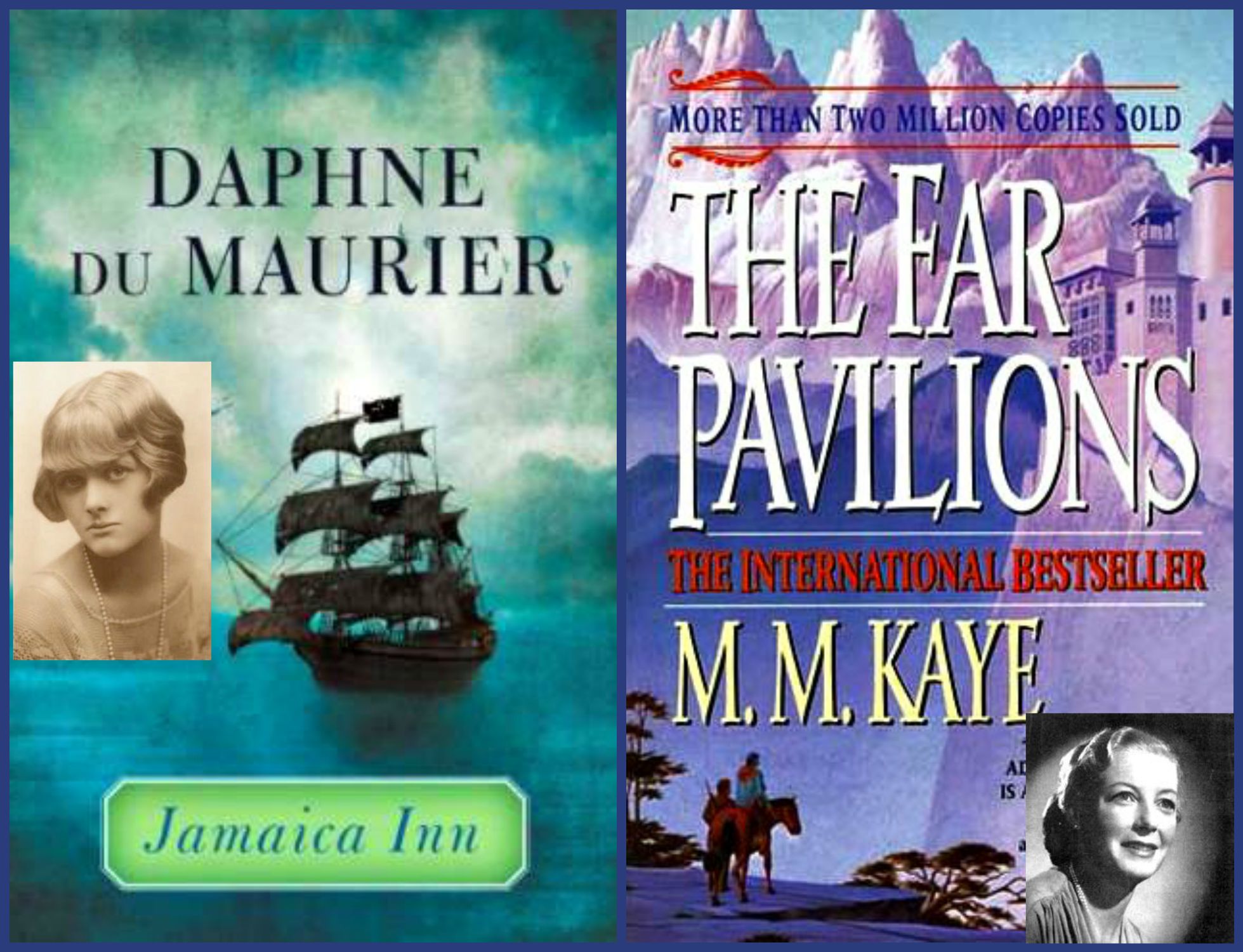
For me, Lawrence Durrell is the undisputed master. I also love the way Mary Stewart and Daphne du Maurier combined evocative locations with romantic suspense.

Deborah's picks for novelists who have mastered the art of writing about place

Deborah’s picks for novelists who have mastered the art of writing about place

Thanks so much, Deborah.

* * *

Readers, any questions for Deborah? Please leave them in the comments below.

And if you would like to discover more about Deborah you can visit her author site and blog, where she writes not only about her books but all things inspired by the South of France. You can also follow her on Twitter and Instagram.

BOOK GIVEAWAY*******************************
Deborah is offering a free copy of her new novel as a prize. To enter the competition please “Like” Deborah Lawrenson’s Facebook page. Then find the link on her page to this interview and enter a comment underneath.
***************************************************

À bientôt! Till next time when my guests will be a Canadian husband and wife team who write novels together about a pair of unusual sleuths in an 18th-century Kent village, and who are themselves displaced inhabitants there.

* * *

Thank you so much, Tracey! I note that one of the Channel 4 reviewers raved about Deborah’s first book for its “extraordinary description of place and descriptions of smell”; and readers have asked her if they can get the perfume, Lavande de Nuit, she describes in that work. (As it turns out, it exists only in her imagination!) —ML Awanohara

Tracey Warr is an English writer living mostly in France. She has published two medieval novels and her forthcoming novel, Conquest: Daughter of the Last King, set in 12th century Wales and England, will be published by Impress Books in the autumn.

STAY TUNED for next week’s fab posts!

If you enjoyed this post, we invite you to register for The Displaced Dispatch, a round up of weekly posts from The Displaced Nation, with weekly updates and much, much more. Register for The Displaced Dispatch by clicking here!

Related posts:

Photo credits: Top of page: The World Book (1920), by Eric Fischer via Flickr (CC BY 2.0); “Writing? Yeah.” by Caleb Roenigk via Flickr (CC BY 2.0). All other photos supplied by the author, apart from those of Kuwait and Cambridge, which are from Pixabay.

LOCATION, LOCUTION: Scottish expat writer Clare Kane’s novel immerses readers in 1930s Shanghai—plus we’re giving away her book and Donna Leon’s latest!

New columnist Tracey Warr arrives with her first interview guest, the displaced Scottish writer, Clare Kane. **NOTE: Help celebrate her opening column by becoming one of the lucky readers to win Clare’s book and Donna Leon’s latest. Details below.**

My guest this month is novelist Clare Kane. She was born in Scotland but has lived most of her life elsewhere. After studying Chinese at Oxford and working as a Reuters journalist in Madrid, she is currently living in Shanghai, where she works in marketing for TNS (she has a fellowship with WPP, the world’s largest communications services group). She spends her free time exploring the city’s past which she vividly evokes in her debut novel, Electric Shadows of Shanghai.

(And when she’s not writing about the past or researching markets, she’s writing about fashion and why we wear what we wear.)

Electric Shadows of Shanghai creates a fascinating world populated by British diplomats and wives, American journalists, glamorous stars of the Chinese silent film and Russian taxi-dancers turned ballerinas. It poignantly captures how the dreams and desires of these expat and Chinese inhabitants of the city lead them to interact and clash.

Electric-Shadows-high-res-cover-400x

Clare and I share a publisher, Impress Books, but have never met.

Let’s meet her now and hear her views on location, locution.

* * *

Welcome, Clare, to Location, Locution, and thank you for agreeing to be my very first guest. Can I ask which came first, story or location?

Location without a doubt. I’ve always been fascinated by China, and most of my short fiction writing is set there. But time also plays a part. As you pointed out in your introduction, my novel Electric Shadows of Shanghai is set in the 1930s, a particularly rich era in Shanghai’s history when as a free port it attracted people from all over the world: Jews fleeing Nazi Germany, White Russians escaping the Bolsheviks and plenty of adventurers looking to make their fortune.

The story couldn’t have taken place anywhere but Shanghai in the 1930s. Plots are built on conflict and the tensions that existed then helped shaped the story. China was pushing towards modernity, women were bobbing their hair and young men were returning from overseas educations to promote foreign ideas of democracy but these advances were overshadowed by political tensions, the constant threat of Japan and inequalities between rich and poor.

I knew I wanted to write about Shanghai, which has long been my favourite place in the world. Prior to living here each visit was a jolt to the senses, a reminder I was alive. The novel was also driven by my interest in Ruan Lingyu, a silent film actress from the time popular for her modern fashions, progressive ideas and films tackling tough social realities. I also wanted to write about the Russians who came to Shanghai, aristocrats who found themselves working as bodyguards and nightclub dancers (and those were the lucky ones). And I’d long had an idea in my head about a British couple coming to the city and it tearing their marriage apart (as it still does to this day). I pulled these various threads together into one plot and that is Electric Shadows of Shanghai

What techniques do you use for evoking place in your stories? After all, the action takes place long ago.

First, I have to get a hold on the atmosphere myself. With Shanghai it’s easy: I live here. Evoking the past is harder, but not impossible. The city is full of Art Deco haunts almost unchanged from their glory days in the 1930s, where for a moment you can feel like you’ve travelled in time. I also think that despite all the changes that have taken place over the last century, Shanghai probably feels very much as it did in the 1930s. A place of possibility, drawing eclectic characters from around the world. The seedy underbelly that existed then is still here now. And the clash of high and low living—cocktail bars next to noodle stalls—is still very much present.

But I don’t think you should bore the reader with lengthy descriptions of place. It’s about building on any impressions they may already have of a place by weaving in details to the narrative and letting their imaginations do the rest. No reader is a blank slate and I’ve found that even people who have never been to Shanghai nor given the place much thought have an impression of exoticism and glamour when they hear “Shanghai”. It’s my job to build on that, encouraging certain ideas and tearing down others.

Which particular features create a sense of location? Landscape, culture, food?

Tapping into senses other than sight is vital. Descriptions of buildings and landscapes get dull very quickly. I find it’s the snippets of sound, the wafts of smell, that really build a place in the mind. But the people are perhaps most indicative of a place. Not in terms of what it looks like on a map but in how it shapes people. When I look at the characters in my novel many of them are striving, determined to build something in the city, while others are more dissolute, giving in to the sleaze and losing themselves to the night. Each type—and no character is completely clear-cut—reflects their surroundings in their actions.

Can you give a brief example from your writing that illustrates place?

These are the opening lines of Electric Shadows of Shanghai:

Over a million women in Shanghai and one in thirteen a prostitute. Another myth of the Orient, Will thought, when Rollo told him a couple of hours earlier. But he recalled it now on the threshold of the Paradise, its neon promise reflected on the cobbles of the alleyway darkening in milky dusk. They were right on the edge of the International Settlement now, where the sombre society of the Bund gave way to the sweet tang of the night that made the two syllables of Shanghai so thrilling to the foreign ear.

I wanted to plunge the reader into Old Shanghai right away, and I tried to do this both through literal description and by inviting the reader to recall their own impressions of Shanghai (“so thrilling to the foreign ear”).

You live in Shanghai and describe yourself as a Chinese history geek. IN general, how well do you think you need to know a place before using it as a setting?

I have written about places I’ve never visited and I don’t think writers should rule somewhere out just because they aren’t personally familiar with it. Writing is about imagination, after all. It depends on how key place is to the story, how much knowing where this street meets that one impacts on the plot. You run the risk of offending people if you misrepresent a place and doubly so if you’ve never even been there. But if it’s the mood of the place that matters—the bustle of New York in the 1980s, the bleakness of the North Korean countryside—rather than the reality of it, I don’t think we should be precious about places. But research is always key. If you’re not going to research a place, why use it? Just invent a place instead.

Which writers do you admire for the way they use location?

One of my favourite authors is Janice Y K Lee, who has written two novels about Hong Kong. Both are incredibly evocative. She captures the place on every level: the physical look and feel of it and the society that populates the islands. She very gently unravels all the tensions of the place and I love that in her latest book, The Expatriates, she does that through the stories of various women living there.

I’m also a big fan of Chimamanda Ngozi Adichie. I know absolutely nothing about Nigeria but she brings it to life with every word. She makes the reader feel totally comfortable, unveiling place and history as part of an engaging story. I love that she weaves the stories of everyday people into huge historical events. She humanises history. And like Lee, place is key to her novels. They couldn’t take place anywhere else.

Clare's picks for novelists who have mastered the art of writing about place

Clare’s picks for novelists who have mastered the art of writing about place

Thanks so much, Clare.

* * *

Readers, any questions for Clare? Please leave them in the comments below.

And if you would like to discover more about Clare, you can visit her author site. You can also follow her on twitter.

*******************************BOOK GIVEAWAY*******************************
To celebrate the launch of this new series of interviews, I am giving away:

1) A copy of Donna Leon’s new Brunetti novel, The Waters of Eternal Youth, the 25th in this excellent series, available for the first two readers (US addresses only for this one I’m afraid!) to email Tracey with the names of Brunetti’s wife and children. Answers to traceykwarr@gmail.com

2) A free ebook (via Apple iBooks store) of Clare Kane’s Electric Shadows of Shanghai for the first two readers (anywhere) to email Tracey with the name of the main river that flows through Shanghai. Answers to traceykwarr@gmail.com
****************************************************************************

À bientôt! Till next time when my guest will be an English novelist living part-time in France and writing about Portugal in her new novel.

* * *

Thank you so much, Tracey! Shanghai in the 1930s was its own kind of displaced nation, so what a great choice of author/book to kick off the series. And that giveaway—it’s fabulous! —ML Awanohara

Tracey Warr is an English writer living mostly in France. She has published two medieval novels and her forthcoming novel, Conquest: Daughter of the Last King, set in 12th century Wales and England, will be published by Impress Books in the autumn.

STAY TUNED for next week’s fab post!

If you enjoyed this post, we invite you to register for The Displaced Dispatch, a round up of weekly posts from The Displaced Nation, with weekly updates and much, much more. Register for The Displaced Dispatch by clicking here!

Related posts:

Photo credits: Top of page: (LOCATION ROW) Author photo and book cover (supplied); The World Book (1920), by Eric Fischer via Flickr (CC BY 2.0). (LOCUTION ROW) “Writing? Yeah.” by Caleb Roenigk via Flickr (CC BY 2.0); 24 Shanghai street scene, by mksfca via Flickr (CC BY-NC-ND 2.0); Shanghai street scenes 1, by Wolfgang Staudt via Flickr (CC BY-NC-ND 2.0).

LOCATION, LOCUTION: Writer Tracey Warr is a troubadour of medieval life, telling stories she collects from roaming far and wide

Location Locution
Columnist Lorraine Mace, aka Frances di Plino, is back with her latest, and last(!), interview guest.

My guest this month is Tracey Warr, a writer of fiction and nonfiction who was born in London and lived there for a substantial portion of her life—but these days can be found in Pembrokeshire, in the south west of Wales; on the Aveyron in southern France; or in transit.

Actually, Tracey is more than just a guest; from next month onwards, she will be assuming the reins of the Location, Locution column. I’ve enjoyed my time interviewing a variety of talented expat authors, and I thank you all for your comments and for being part of my writing life.

I know you will be in good hands with Tracey, who already has lots of interesting interviews lined up for you. But first, like Jill Marsh and I before her, Tracey will introduce herself and her writing by answering the Location, Locution interview questions.

Tracey has enjoyed two illustrious careers. Her day job for many years was as an academic specialist in contemporary art history and theory. She studied English Literature at Oxford University and holds a PhD in Art History. She held the post of senior lecturer for 15 years, teaching art history and theory in not only the UK but also Germany and the Netherlands. She has been involved in art curation projects all over the world, including in Australia, the USA, Spain, Lithuania, Norway and Finland. She has a long list of published books and articles and contributes art book reviews to Times Higher Education. Her most recent publication in the contemporary art field is the edited volume Remote Performances in Nature and Architecture, which came out last year with Routledge.

But if Tracey’s head is in the world of contemporary art, her heart belongs to historical fiction. After earning an MA in Creative Writing at University of Wales Trinity St Davids in Carmarthen, she entered her second career: writing fiction and biographies inspired by the landscapes and medieval histories of southern France and south west Wales.

If Tracey’s head is in the world of contemporary art, her heart belongs to historical fiction. Photo credits: (top row) The mind via Pixabay; cover art for Warr’s recent book; (middle row) Tracey Warr author photo; Map bastides in 1271, by FRAMYJO, Wikimedia Commons (public domain); (bottom row) Hearts via Pixabay; Ramon Berenguer I and his wife, Almodis de la Marche, counting out 2,000 ounces of gold coins, via Wikimedia Commons (public domain).

Thus far Tracey has published two novels set in early medieval France, Spain and Wales: Almodis the Peaceweaver (2011) and The Viking Hostage (2014). Her new novel, Conquest: Daughter of the Last King, due out later this year, focuses on the 12th-century Welsh princess Nest ferch Rhys and the Welsh resistance to the Normans. In addition, Tracey is working on a biography entitled Three Female Lords, charting the lives and interactions of three medieval sisters who ruled in 11th-century southern France and Catalonia.

Tracey has already garnered numerous awards in her new career as a novelist and biographer. I won’t go on to list them because I am eager to get to our interview, but I urge you to read about her accolades on the page created by her publisher, Impress Books.

And now let’s meet Tracey Warr and hear her views on location, locution.

* * *

Welcome, Tracey, to Location, Locution, a column that will soon be yours! You have a strong sense of place in your historical novels, but tell us, which comes first, story or location?

Thank you, Lorraine, for hosting me and I look forward to assuming the column reins next month. In answer to your question: location! I was staying in a friend’s house in a remote village in the Tarn Valley in southern France for four months during a very cold winter. I visited the nearby medieval castle and village of Brousse-le-Château with my nephew, who was around 10 at the time and asked me to write a story about the castle. He loved it when I made up stories, and actually had me under a “contract” to write him at least one story a year—a hard task-master! During my research I came across an extraordinary real woman, Almodis de La Marche—and realised she would make a fascinating adult novel. The incidents of her life astonished me and I had to become a self-taught historian to discover more and more about her and then imagine what had happened during the gaps in the historical evidence. The landscape in this part of France is littered with spectacular castles and medieval bastide towns clustered around hilltops and connected by rivers, which served as highways in medieval times, so it became a process of location initiating and then feeding the development of the story.

Almodis inspiration

During her research on the castle, Tracey Warr came across an extraordinary real woman, Almodis de La Marche. Photo credits: Brousse-le-Château and Almodis cover art (supplied).

I’m particularly fascinated by watery landscapes—rivers, estuaries, coasts and islands. My second novel and the third one I’m working on now also began with landscapes—the Welsh islands off the coast of Pembrokeshire and the great triple river estuary at Carmarthen Bay.

What techniques do you use for evoking place in your stories? After all, the action takes place long ago.

If possible go there, take photographs, experience it, make notes on how it smells, sounds, feels, looks. The small details you gain from walking the ground are invaluable. The novel I’m writing at the moment centres around a number of medieval castles in Wales. I spent a few days staying in the village of Llansteffan near one of the castles, walking the cliffs and looking down on the spectacular river estuary and the dangerous tides and sandbanks of Carmarthen Bay. Watching birds hovering in the wind, seeing the weather lowering and rain coming in fast—I’ve used all those details in the novel. Although I’m writing historical fiction and many things have changed in a place, there are also many things that don’t change.

Which particular features create a sense of location? Landscape, culture, food?

I use all of those, with landscape probably dominating, but I also use objects in museums, the literature of the times and places and medieval cookery books to help me evoke places. My characters need to eat, sleep, work, travel, use the garderobe and observe the rhythms of medieval life. A map of 11th-century Toulouse, a model of Viking Dublin, a Viking serpent brooch, medieval objects such as the Dunstable Swan Jewel, a medieval book of hours, the poetry of the female troubadours—all have been vital in helping me to create my fictional locations.

The Viking Hostage influences

Medieval objects such as the Dunstable Swan Jewel have been vital in helping Tracey create her fiction. Photo credits: (clockwise from top left) The Viking Hostage cover art, Dunstable Swan Jewel (British Museum), print from a Viking brooch (all supplied); Labors of the Months: May, from a Flemish Book of Hours (Bruges) via Wikimedia Commons (public domain).

Books such as medieval historian Ian Mortimer’s The Time Traveller’s Guide to Medieval England, which treats that distant time like the Rough Guide series, are full of helpful details on everyday life. I do a lot of historical, literary, material culture and visual research, picking out details that I can use and adapt to my story to create a credible world for my readers to step into. I started writing medieval fiction as a kind of holiday in time away from my academic work with contemporary art, so I try to recreate that experience for the reader. I hope that when they have their noses in my books, sitting on the Tube in London, on a train going to Birmingham, in their modern bedrooms and living rooms or on a crowded beach, they find themselves travelling with my characters to 11th-century Barcelona, 10th-century Tallinn (in Estonia), 12th-century Pembroke—or they are on a Viking ship or a medieval passenger boat plying up and down the Thames.

Can you give a brief example from your writing that illustrates place?

In The Viking Hostage I used my knowledge of traditional markets in France and modern-day Tallinn to help me create the opening scene in the 10th-century Tallinn slave market:

A list of items for sale was called out in the marketplace. I was described as one female Northchild, but my name is Sigrid Thorolfsdottir. I am for sale along with my brothers, Thorgils and Olafr, who stand either side, holding my hands.

‘Ease up Sigrid,’ Thorgils whispers to me, ‘you’re crunching the bones of my hand. It will be alright.’

I try to relax my grip on his knuckles and look out at the few buyers staring up at the platform where we stand barefoot. Most of the crowd have gone since we are the last and least interesting item. Around the edges of the market square tall, thin houses are painted in gay colours. Awnings above the stalls flap in the slight breeze, their colours leached out by sun. Apples, nuts and cheeses are carefully arranged in small mounds and circles. Chickens are panicking in wooden cages. If I squint my eyes I can just see the sun sparkling on the sea in the distance, beyond the square and the buildings, and the buyers.

‘Three fine children of the Northmen, already growing muscled and hard-working,’ Klerkon, the slaver, shouts to the sparse audience, pushing up the grimy sleeve of Thorgils’ shift and pinching the flesh of his bicep, leaving white fingerprints against the brown skin. I glance up at the angry muscle shifting in my brother’s cheek.

Medieval markets

“A list of items for sale was called out in the marketplace. I was described as one female Northchild…” Photo credits: Talinn, Estonia (Old Town) via Pixabay; Villefranche-de-Rouergue market (supplied).

Later on in the novel my heroines are held hostage by Vikings on a Welsh island. I blended together the real Welsh islands of Caldey and Skomer, which were actually occupied by Vikings, to create my fictional island.

We climb the hill in the direction Thorgils indicated. As we move up the path we alarm plump brown curlews with long curving beaks like darning needles that are nesting in the brilliant green bracken. Large dragon-flies fly towards us swerving at the last minute. From the top of the hill we can discern the rough diamond shape of the island, cliffs spearing out erratically into the blue sea on all sides and ravines full of white flowers. Our eyes crease against the brightness of the light reflecting from the surrounding water. There is an overwhelming sense of space. The grey cliffs are dotted with short bright green grass and yellow lichen. To the left comes the regular boom of the sea in a rocky blow-hole. The white foam of waves studded with black boulders look like a thin necklace slung around the coast. Thick green and yellow seaweed rolls back and forth on the strand. The irregular patchwork of fields established by the monks where the thralls now labour, blanket the rocks and undulations of the island. Planes of colour are visible in the sea—greens, dark blues, grey-blues, grey-greens and blacks. Strings of other islands in the distance look as if they have been dropped out of the sky from a giant’s hand.

The island is teeming with life. Raucous screeching seabirds wheel around us, sit on nests on the narrow ledges of the guano-streaked cliffs like a great shrieking city, skid across the surface of the ocean carrying flapping fish in their beaks, plunge-dive at dark clouds of mackerel. Aina and I lay on our bellies on the edge of the cliff, watching the birds. There are fat black and white birds with striped beaks and long talons like the fingers of a lute player.

Blend of two islands

“Planes of colour are visible in the sea—greens, dark blues, grey-blues, grey-greens and blacks.” Photo credits: (top) Sea cave right through Skomer; view of the sea through Llansteffan Castle (both supplied).

How well do you need to know a place before using it as a setting?

It helps to know a place well from living there or visiting and making detailed research. But I also sometimes completely imagine a place without going there, or I transpose my knowledge and experiences of one place to somewhere else. In my first novel I had to write about a journey across the Pyrenees. At the time I’d never been there so I used maps together with experiences of the Scottish Highlands to conjure it. Now I have spent quite a lot of time in writing residencies in the Pyrenees and would probably write it differently—but I hope the ‘Scottish’ version still worked in the novel for the readers. I find that if I really imagine a place or a building in my own head, such as the Norman motte-and-bailey castle at Cardiff that I’m writing about at the moment, this can drive the plot. Certain scenes and events happen because of the layout of a place, because I’m imagining moving through that place with my characters.

Which writers do you admire for the way they use location?

Donna Leon—in her Commissario Brunetti series, she makes me feel that I am in Venice, wandering the streets, riding boats in the canals with Brunetti, dropping into a corner bar for a glass of wine or a quick coffee, accompanying him on his way home for a delicious lunch with his smart, Henry-James-loving wife. Being in Venice with Brunetti is at least 60 percent of the charm of reading those books, and the murder mystery is the rest. British historical crime writer Antonia Hodgson—her 18th-century London in her recent novel, The Devil in Marshalsea, is absolutely believable and alarming. And Wilkie Collins—in The Moonstone, he creates a vivid landscape and mansion that his story unfolds within, and he infuses place with emotions and suspense.

Fave books for place Tracey Warr

Tracey’s picks for novelists who have mastered the art of writing about place

Thanks so much, Tracey!

* * *

Readers, any questions for Tracey? Please leave them in the comments below.

And if you’d like to discover more about Tracey before she begins her column next month, why not visit her author site. You can also follow her on twitter.

And with that, I bid you a fond adieu!

* * *

Thanks, Lorraine! You’ve introduced us to so many fabulous writers, an experience that has touched all of us who have been inspired by the landscapes we’ve visited, or in many cases, have made into our homes. We hope you’ll drop by the Displaced Nation every so often and see what we’re up to. Don’t be a stranger!! —ML Awanohara

Lorraine Mace writes for children with the Vlad the Inhaler books. As Frances di Plino, she writes crime in the D.I. Paolo Storey series. She is a columnist for both of the UK’s top writing magazines, has founded international writing competitions and runs a writing critique service, mentoring authors on three continents.

STAY TUNED for the next fab post!

If you enjoyed this post, we invite you to register for The Displaced Dispatch, a round up of weekly posts from The Displaced Nation, with weekly updates and much, much more. Register for The Displaced Dispatch by clicking here!

Related posts:

Photo credits: Top of page: The World Book (1920), by Eric Fischer via Flickr; “Writing? Yeah.” by Caleb Roenigk via Flickr (both CC BY 2.0).

LOCATION, LOCUTION: Uprooted from life in the UK, Vanessa Couchman writes novels about people with roots

Location Locution
Columnist Lorraine Mace, aka Frances di Plino, is back with her latest interview guest.

This month’s guest, Vanessa Couchman, was uprooted from her native UK in 1997, when she moved, with her husband (who is Swedish) to an 18th-century farmhouse in the Midi-Pyrénées region, in southwest France. Between the pair of them (he has lived in France twice and in the UK) they have clocked up nearly 60 years of living abroad!

Like many Scandinavians, her better half is fluent in several languages, but Vanessa has done her best to catch up. “My French was hopeless when we first moved here,” she told me, “but, by force of perseverance, I am now almost fluent.”

She still enjoys occasional visits to London for art galleries, bookshops and museums, but in general, she says, England makes her feel like a fish out of water. As she puts it on Life on La Lune, the blog she keeps about her life in France:

I love living here, even if aspects of French life are still unfathomable.

As for work, like my guest last month, Rachel Abbott, Vanessa is a refugee from corporate life in the UK (she worked first in publishing and then in public sector auditing and research). Unlike Rachel, she still has a day job: running her own copywriting business and writing magazine and journal articles about aspects of French life.

But being an expat has also enabled her to become what she calls on her writer’s blog a “young author” of fiction (“young” because she started comparatively late): specifically, historical fiction, which harks back to one of her great passions in life (she read history at Oxford University). She produced her first novel, The House at Zaronza, a year-and-a-half ago with Crooked Cat Publishing.

Thanks to modern technology, Vanessa can live in rural France without being cut off from other English-language writers. She belongs to Writers Abroad, an online community of expat writers based in countries from Nova Scotia to Australia. “This is a great support network and has helped improve my writing no end,” she says. “The members have all become friends, even though I may never meet some of them.”

And these days there are more English-language writers in her local area—enough for Vanessa to help establish, in 2013, an annual Franco-British literary festival in the nearby village of Perisot.

But I mustn’t gloss over an extremely important detail about this expat author’s story. Although she has written short stories set in rural France, Vanessa chose to set her first novel in early 20th-century Corsica. As she told another interviewer:

Corsica is almost a character in its own right in “The House at Zaronza” and a lot of people have remarked that it comes over strongly. I ought to be getting commission from the Corsica Tourist Board!

Vanessa Cushman France and Corsica

Living in one place while dreaming of another. Photo credits: (top row) Midi-Pyrénées region in southwest France, where Vanessa Couchman lives (via Pixabay); the square tower of the Château of Cornusson, in Parisot, by Thérèse Gaigé via Wikimedia (CC BY-SA 3.0); (middle row) Vanessa Couchman and Nonza Paoline Tower, Corsica (both supplied); (bottom row) Corsican village and Filitosa IX stern face captured in granite (both supplied).

Corsica?! What’s more, the novel explores a topic that seemingly has not been nearly as important to Vanessa as it is to her characters: “how centuries of Corsican history and culture remain deeply rooted in people, even if they move away,” as she puts it. We see this dynamic in her main character, Maria, when she leaves Corsica to serve as a military nurse on the Western Front during World War I. Unlike her creator, Maria feels displaced.

So what has drawn Vanessa Couchman so powerfully to this particular location? Perhaps there is something about this Mediterranean island’s own displacement that appeals to her? Annexed by France in 1769, Corsica retains a distinctly Italian flavor. Vanessa, too, is some kind of mix: an Oxford-trained historian who feels more at home in the French countryside than in the UK, a “young author” of historical fiction…

But instead of speculating, let’s see what Vanessa herself has to say on the topic of location, locution.

* * *

Welcome, Vanessa, to Location, Locution. I can vouch for the fact that you have a strong sense of place in your writing, but tell us, which tends to come first, story or location?

Thank you for inviting me, Lorraine.

For my first novel, The House at Zaronza, story and location came together, really. As you said, it is set mostly on Corsica. In fact it is based on a true story my husband and I came across on holiday there. The owners of the B&B found some old love letters hidden in a niche in the attic when they restored the house. They were from the local schoolmaster to the daughter of the house in the 1890s. Her parents would have disapproved, so they met in secret. She was required to marry a cousin to keep the family property together, which was common in Corsica into the 20th century.

The story kept nagging at me, so I had to write it. I’m very attached to the Mediterranean island of Corsica, with its rugged and majestic scenery—we’ve visited six times! And so it made perfect sense to set the novel there, especially as it has distinct cultural and historical elements that I was able to use in the story. The house and the village of the title are loosely based on real life, which enabled me to visualise the place as I wrote it, although I changed a number of aspects, including the name. The name of the village in the title of my book, Zaronza, is invented.

The House at Zaronza_cover_pm

As you hinted in your introduction, Corsica won’t leave me alone and so my second novel—a work in progress—is set there, too. A third is in my head, also against the backdrop of the island.

That said, I do also want to set novels in southwest France, where I live, one day. As you also mentioned, a number of my short stories are already set here.

What techniques do you use for evoking the atmosphere of Corsica?

I believe it’s important for readers to feel they are there so that they get fully involved with the characters and their surroundings. That means evoking a complete sensory picture of the place. I went to a great workshop about creating a world for your novel. We were told to go outside for 10 minutes and make notes of what we saw, touched, heard, smelled and even tasted. This heightened sensory awareness is very valuable when describing a place.

I also think that using particular objects or landmarks in a novel gives them symbolic significance and helps to add depth to the setting. So, in The House at Zaronza, the front door often catches on the flagstones, a ruined tower on top of a hill is a place the heroine, Maria, always goes to think, and her father’s stylet (a Corsican dagger) becomes a symbol of him.

Which particular features have you used to create a sense of what clearly is to you a special location? Landscape, culture, food?

All of those things are important to me and I try to weave them into my writing. When it comes to Corsica, I am particularly interested in its culture. I’ve been greatly influenced by a wonderful book called Granite Island: Portrait of Corsica, by Dorothy Carrington, who first visited Corsica just after World War II. She was so taken with it that she eventually lived there and became an international authority on its history and culture. I wish I could have met her, but she died aged 91 in 2002.

Despite being French since 1768, and Genoese before that, Corsica has always been a land apart. It has been invaded, conquered and occupied from prehistoric times, so the island was a cultural melting pot, and as you speculated at the outset, I think that appeals to me. Different traditions have overlaid one another, such as Christianity on top of paganism. The hairs on the back of my neck stood up when we visited a megalithic site at Filitosa, where standing stones carved with stern human faces have been excavated.

Until very recently, the Corsicans had strong superstitious beliefs, some of which I am writing into my second novel. The geography of this mountainous island and the isolation of many of the villages also led to the development of solid clan bonds. The concept of honour is very deep-seated and to infringe someone’s honour was a serious matter that could lead to vendettas of long duration. I find all this fascinating, though it’s easy for people to parody it.

Which of your works provides the best illustration of place, and can you give us a brief example?

Here’s a short extract from The House at Zaronza. A young British woman has come to Corsica for the first time to find out more about her Corsican forebears:

She moved to the other window and opened it. A salt-laden breeze wafted in. For a moment, the sight of the purple-tinged mountains on the other side of the bay made her hold her breath. The sun’s lengthening rays tinted the sea with red and gold. Another scent prickled her nostrils, aromatic and dry like sun-baked mud. She closed her eyes and breathed it in. This was the unique aroma of Corsica, that many Corsicans claim they can detect miles out to sea: part of the magic of the island, the Circe that had enchanted many a traveller before Rachel.

VanessaCouchman_quotes_small

Photo credits: (left) Corsica Ferries, by Conan via Flickr (CC BY 2.0); The witch Circe poisons Odysseu’s men, by Alessandro Allori (1580), Wikimedia Commons (CC BY-SA 3.0).

How well do you need to know a place before using it as a setting?

I wouldn’t advise using a real place as a setting if you don’t know it at all. There are exceptions— the summit of Everest, for example, or the South Pole—which most people are unlikely ever to visit; and there are plenty of descriptions of them to draw on. Having said that, the novelist Rosie Thomas has been to both of those extreme locations and is a distinct example of someone who has visited all the exotic places she writes about. But if you really want your readers to get inside a place, I believe you have to know it yourself. I would feel uneasy trying to describe somewhere I have never been.

Having said that, I do think it’s possible to know a location too well. If you write about the place you live in, there’s a danger that you start taking for granted what visitors see as fresh and new. I try to prevent this by visiting places I know well in SW France, finding out new things about them and then recording them on my French life blog.

I also take many photos, both of Corsica when we are there and of my region in France. These visual prompts help me a lot when I’m writing.

Which writers do you admire for the way they use location?

There are so many! But some stand out for me and have influenced my own writing. Hannah Kent‘s first novel Burial Rites is set in 19th-century Iceland, and she evokes brilliantly the uncompromising landscape and climate, the hard and unforgiving life of the people and the plight of unmarried women at that time. Jessie Burton‘s The Miniaturist is set in 17th-century Amsterdam, a time when the city was wealthy and thriving but stifled by the strict morality that prevailed. They both evoke a strong sense of place in these two very different novels. This is challenging in any novel, but particularly in an historical novel, where you have to describe locations that may have changed significantly over time. Khaled Hosseini‘s novels set in Afghanistan have given me a much deeper insight into that troubled country and its modern history.

Vanessa Inspirational Reads

Vanessa’s picks for novelists who have mastered the art of writing about place

Thanks so much, Vanessa!

* * *

Readers, any questions for Vanessa Couchman? Please leave them in the comments below before she immerses herself in all things Corsican again…

And if you’d like to discover more about Vanessa, why not visit her site about living in France, Life on La Lune, as well as her author site. You can also follow her on twitter at @Vanessainfrance and Facebook.

Until next month!

Lorraine Mace writes for children with the Vlad the Inhaler books. As Frances di Plino, she writes crime in the D.I. Paolo Storey series. She is a columnist for both of the UK’s top writing magazines, has founded international writing competitions and runs a writing critique service, mentoring authors on three continents.

STAY TUNED for the next fab post!

If you enjoyed this post, we invite you to register for The Displaced Dispatch, a round up of weekly posts from The Displaced Nation, with weekly updates and much, much more. Register for The Displaced Dispatch by clicking here!

Related posts:

Photo credits (top of page): The World Book (1920), by Eric Fischer via Flickr; “Writing? Yeah.” by Caleb Roenigk via Flickr (both CC BY 2.0).

WONDERLANDED: Will I have a hard or a soft landing?—two excerpts from “Olivia and Sophia,” by expat novelist Rosie Milne

Will I have a hard or a soft landing? Photo credits: Like Alice in Wonderland you can go into the rabbit hole, by expat painter Frank Schwarz via Wikimedia Commons (CC BY-SA 3.0). Inset: Book cover (supplied).

Yesterday we were Wonderlanded with Rosie Milne, a veteran member of the publishing world, a blogger on Asian books, and a novelist in her own right. This post, which I’ve titled “Will I have a hard or a soft landing?”, consists of two excerpts from Rosie’s about-to-be-published historical novel, Olivia and Sophia, which concerns the lives of the first and second wives of the founder of the British trading post of Singapore, Sir Thomas Stamford Raffles. 

Set in London, Java, Sumatra and Singapore, against the backdrop of the Napoleonic Wars—the story takes the form of two fictionalized diaries, one by each of Raffles’s wives. They are:

  • Olivia Devinish, a raffish beauty with a scandalous past. Born in India and raised in Ireland, Olivia accompanied Raffles, who was her second husband, to West Java, where he was serving as governor. She got ill from the island’s harsh conditions and died at age 43. Raffles erected a memorial to her that stands to this day, in what is now the Bogor Botanical Gardens.
  • Sophia Hull, no beauty, but curious and intelligent and eager to embrace the opportunity of an exciting life abroad. Born in London, of Irish descent, she met and married Raffles when he was on leave in England after becoming a widower. The couple then sailed for Bencoolen (Sumatra), where Raffles had been appointed governor general—making Sophia the first white woman to venture into the Sumatran interior. This was the period when Raffles founded the British trading post of Singapore. The couple returned to England in August 1824 because of Raffles’s ill health. He died two years later, one day before his 45th birthday. Sophia then dedicated herself to writing his biography.

According to the book description, Rosie Milne “takes us away from the cold, damp confines of Georgian London to the muggy, hostile tropics and to the titillations and tribulations of a life far away from home.”

And, importantly, for us Displaced Nationers, she also provides a sense of what it was like to be a trailing spouse in an earlier era. Do these two Victorian ladies feel as though they were falling down a rabbit hole, uncertain of where they’d land and whether the landing would be hard or soft? Let’s find out…

* * *

Excerpt from Olivia’s diary

Olivia writes this diary entry on board the Ganges, the ship on which she is sailing from London to India. I think it expresses her sense of having fallen down a rabbit hole in a self-explanatory way.

Sometime, someplace on the ocean

I remain confident the year is 1805, and I am aboard the Ganges, but I write as my heading sometime, someplace on the ocean ’cause sailing across the nothing, nothing, nothing, and yet more nothing of the sea has addled me about both calendar and map. The map I have quite lost track of. At dinner I say my daily toast to happy sight of the next land, and I think: where is that next land? Which is to say: where are we? With no landmarks to watch for by day, and, by night, not being able to read the stars, I am as ignorant now of place as must be the fishes swimming in the waters beneath me. The calendar too, is becoming hazy to me. The tyranny of breakfast at eight, dinner at two, tea at six, and supper at nine keeps me abreast of the hours, but when I think of day and date ’tis as if one of our chilly sea fogs has reached its fingers into my mind, so I no more know whether ’tis Monday, Saturday, Wednesday, or Sunday, than I c’d say our position on the globe.

Olivia Raffles as Alice

Photo credits (top to bottom): Frigate in fog via Pixabay; detail of Here be Dragons map; Down the Rabbit Hole, by thepeachpeddler via Flickr (CC BY 2.0); Olivia Raffles portrait.


Excerpt from Sophia’s diary

Sophia writes this diary entry on board the Mariner, the ship on which she is sailing home from India. It, too, expresses her sense of having fallen down a rabbit hole…

August 1824, the Mariner, off the Cornish Coast

And, behold, I am with thee, and will keep thee in all places whither thou goest, and will bring thee again into this land … I have had my first sight of Home for nigh on seven years. Tho’ in the Eastward Old England sometimes seemed to me unreal, like a dream of Home, and not a literal place on the globe, Cornwall is now crouched in the angry sea to our starboard, and is just as real as sharp granite rocks will allow. I hardly know how to say how I’ve changed since last I saw England. I sometimes feel so disunited from that Lady Raffles who sailed eastward on the Lady Raffles I can scarce think we are the same person – I cannot recall her, it sometimes seems, and must judge she was mistaken to think she ever could return Home. More, I scarcely know how to say who I am now, what I am, what manner of person? As for Tom, now turned of forty, lit now only by shadows of his youthful fires, he says he feels just as wearily jumbled as me, just as uncertain how to begin to make sense of all that has happened these past seven years, if indeed any sense can be made of our lives at all, and he says it is a puzzle to know whether his two sojourns in the Eastwood enabled him to put on, at various times, a new self, as a man may put on a new coat, or if, while in foreign climes, he became more than ever the man who first left, and now returns, to Old England.

Photo credits: Land's End, Cornwall[https://pixabay.com/en/ocean-rock-waves-wind-stormy-826155/] via Pixabay; Sophia Raffles portrait; Down the rabbit hole by Colin Smith[] via the Geograph Britain and Ireland Project (CC BY-SA 2.0) [http://creativecommons.org/licenses/by-sa/2.0/].

Photo credits: Land’s End, Cornwall via Pixabay; Sophia Raffles portrait; Down the rabbit hole, by Colin Smith via the Geograph Britain and Ireland Project (CC BY-SA 2.0).

* * *

Thank you so much, Rosie! I like the way you’ve juxtaposed these two excerpts, one showing the first wife setting out on a Far Eastern adventure, the other showing the second wife confronting the prospect of going home again. In fact, Sophia writes something that is extraordinarily akin in spirit to Alice’s statement:

I could tell you my adventures—beginning from this morning; but it’s no use going back to yesterday, because I was a different person then.

Readers, what do you think? Do these trailing spouses have it harder than their modern-day counterparts, or can you draw a reasonably straight line to today? And have these two excerpts from Rosie’s new novel made you want to read more? Olivia & Sophia, published by Monsoon Press, will be available as a paperback in Asia and Australia on November 1. You can also visit Rosie’s Asian Books Blog and/or stay social by following her on Twitter. And of course you can also express appreciation for Rosie in the comments below. ~ML

STAY TUNED for next week’s fab posts.

If you enjoyed this post, we invite you to register for The Displaced Dispatch, a round up of weekly posts from The Displaced Nation, and much, much more. Register for The Displaced Dispatch by clicking here!

Related posts:


LOCATION, LOCUTION: The Way of expat author Joan Fallon lies in writing about the Camino and other Spain-related themes

Location Locution
Columnist Lorraine Mace, aka Frances di Plino, is back with her latest interview guest.

The theologian Richard Niebuhr once wrote:

Pilgrims are poets who create by taking journeys.

In that sense, today’s author, Joan Fallon, can be considered a modern-day pilgrim, of the kind often encountered within the Displaced Nation. She may not have walked the Camino de Santiago—but the path she took in her life led her to a place where she could write a novel about someone who did.

Joan was born with a foot in two cultural camps: her father was Irish and her mother, Scottish. Her first journey into a brand new culture was made as a child, when her family moved from Dumfries, Scotland, to the south of England, which many Celts consider to be a foreign country.

Joan went on to spend her formative years in England. She married, had a family (a son and a daughter), and worked as a teacher while also earning a BA from the Open University in History and Literature.

But in England, Joan was still a pilgrim; she hadn’t yet found the Way. In fact, she lost her way for some time after her son dropped dead unexpectedly when he was only 17. She abandoned her career in teaching (she couldn’t bear being around kids his age) to become a management trainer.

Soon, though, it was time to don her pilgrim’s boots again, this time for a journey into southern Spain. When her husband took early retirement, the couple set off just before the start of the new millennium for their new home in Benajarafe, a coastal village that is a few miles east of Málaga, in Andalusia.

This journey, which brings us to where we find Joan now, led her to the goal she was seeking all along: an opportunity to try out the life of full-time writer. As she put it in a recent interview:

It is something that I had been waiting all my life to do.

Joan completed an Open University course in creative writing, but it wasn’t until she’d spent six years taking journeys within Spain, learning the language and talking to people, that she would embrace her destiny fully. (She was also settling in, finding out how to cope with Spanish bureaucracy and generally dealing with the numerous everyday things that we take for granted in our home country or don’t need: obtaining an identity card, a social security card, becoming a tax resident, registering at the town hall, changing to Spanish number plates, making friends, finding a hairdresser that you like, a new dentist, a new doctor, a vet, a plumber…)

Eventually, her immersion in the Spanish language and local culture paid off. Always interested in social history, Joan decided to interview a number of older Spanish women about how their lives had changed since Franco had died in 1975. She translated the interviews into English, which led to her first published book, Daughters of Spain.

The research for this book also produced two novels:

Joan Fallon's writing career has flowered in Benajarafe, initially with books set in the Franco era

Joan Fallon’s writing career has flowered in Benajarafe, initially with books set in the Franco era. Photo credits: Joan Fallon’s author photo and book covers (supplied); Benajarafe, by Tony Bowden (CC BY-SA 2.0).

One of Joan’s subsequent novels grew out of her experiences of mixing with both Spanish and foreign nationals: Loving Harry, a story about two women in love with the same man, set in expat Spain.

Joan’s frequent visits to other parts of Spain have also inspired books. It was a trip to Galicia that gave her the idea of writing Santiago Talesabout a woman whose life is in tatters and who decides to walk the Camino de Santiago seeking solutions.

Likewise a visit to the Moorish ruins at Madinat al Zahra near Córdoba inspired her to research and write The Shining City, a novel set in Moorish Spain during 10th century.

All of Joan’s novels feature strong women as their heroineswomen who face some kind of difficulty and have to overcome it.

* * *

Welcome, Joan, to Location, Locution. Spain clearly has had a powerful effect on your writing, but which comes first, story or location?

Thank you for inviting me, Lorraine. It depends on the book I am writing whether location or story is the most important. Santiago Tales, as you’ve explained, was set on the Camino de Santiago in northern Spain—location was essential to the story. Spanish Lavender is a love story set in the Spanish Civil War, but it takes place specifically in Málaga, a city I know very well—and therefore I started with the location. In another of my books, The Only Blue Door, which you didn’t mention, I wrote about three children sent to Australia during wartime. Never having been to Australia, I found it hard to write about a place I did not know personally so had to rely on my research. In this case, it was the story that was predominant, not the location.

It sounds as though you like to know the place very well before using it as a setting?

Yes, I prefer to write about places I know. If I don’t know the location well, then I will visit it a number of times noting the layout, the atmosphere and anything else I can put into my writing. Sometimes I will interview someone about a place when I know that they have a greater knowledge of the location than I do. This is what I did with Santiago Tales. I knew the area well but not from the point of view of a pilgrim, so I interviewed a woman who had walked the 800 km of the Camino and was delighted to tell me of her exploits. This gave me the little details that I needed to make my story credible.

Photo credits: Puente rústico, by José Antonio Gil Martínez via Flickr (CC BY 2.0) .

Photo credits: Puente rústico, by José Antonio Gil Martínez via Flickr (CC BY 2.0); book cover art (supplied).

What’s your technique for evoking the atmosphere of a place?

I try to remember as many details as I can, imagining that I am there again and then imagining the character in the location as I knew it. If my story is set somewhere that I have only visited on a few occasions, then it needs more effort to conjure up the required atmosphere, and I will read about the location and look at photographs. Sometimes it is something as simple as knowing if there are hills in the area that the character has to climb or rivers that he has to cross or when he sits down what he can see. All this helps to transport the reader to the location that you have chosen. For me it is a mixture of combining what I know the place is like with the atmosphere I am trying to convey for the story.

Which of your works provides the best illustration of place, and can you give us a brief example?

Place is an especially important factor in The Shining City, which I wrote after visiting the ruins of a city near Córdoba called Madinat al Zahra. I was fascinated by the place and the fact that, although it was once a very prosperous and cultured city, it was abandoned and fell into complete disrepair after only 70 years. It seemed the ideal place to set a historical novel about the Moors in Spain.

Here is a passage from my book, depicting a character from England’s West Country who is following the French Way of the Way of St. James:

The Galician countryside is distinctive. It reminds her a little of her own West Country, with its small fields and dry-stone walls. The change was obvious as soon as she reached O’Cebreiro, set in the green, rolling hills across the border from León, and saw the round stone houses of the area, with their straw roofs and Iron Age design. She has even passed Celtic crosses at the roadside, so like the ones in Cornwall, and fields of fat, contented brown and white cattle. Just like the west coast of Britain and Ireland, Galicia receives its fair share of Atlantic wind and rain and this is evident in the verdure of its countryside. No, she is no longer walking through the dry Meseta; this part of Spain is very different and, to her, feels more like home.

Photo credits: Book cover art (supplied); Medina Azahara - Cordoba, by Roberto Venturini via Flickr (CC BY 2.0).

Photo credits: Book cover art (supplied); Medina Azahara – Cordoba, by Roberto Venturini via Flickr (CC BY 2.0).

Is landscape the only feature you look at to create a sense of location? What about culture, or even food?

All of those and more, depending on the location. Returning to the example of The Shining City, about a place that I had visited when it was a ruin, I had to do a lot of research into what it would have been like when it was a thriving city. I needed to know what food was available at the time, what they grew and what they imported, what type of housing people lived in, how they dressed and what the climate was like. Although this is a historical novel, set in 10th-century Spain, the fact that I live in Spain and know the area well made it so much easier to create the right atmosphere; I knew from experience what the weather was like at different times of the year, which flowers were in bloom and when; and I could imagine easily what the roads to the city were like then from what I could see today.

Which writers do you admire for the way they use location?

I read a book by John Lanchester called Capital, which was the story of a street in London told through the lives of the people who lived there. He used location very well and made it the central pivot for his novel. Donna Tartt also uses location very well and creates a rich and detailed background to her novels. Another writer that gives great importance to location in her novels is Barbara Kingsolver, and Elena Ferrante’s Neapolitan novels about two girls growing up in Naples recreate the atmosphere of that wild-child city beautifully.

Fallon Faves

Joan’s picks for writers who have mastered the art of writing about place

Thanks so much, Joan!

* * *

Readers, any questions for Spain-obsessed Joan Fallon? Please leave them in the comments below.

And if you’d like to discover more about Joan, why not visit her author site +/or her site dedicated to her books that are set in Spain, A Spanish Notebook. You can also follow her on twitter at @joan_fallon and @notesonspain +/or like her Facebook page.

Until next month!

Lorraine Mace writes for children with the Vlad the Inhaler books. As Frances di Plino, she writes crime in the D.I. Paolo Storey series. She is a columnist for both of the UK’s top writing magazines, has founded international writing competitions and runs a writing critique service, mentoring authors on three continents.

STAY TUNED for the next fab post!

If you enjoyed this post, we invite you to register for The Displaced Dispatch, a round up of weekly posts from The Displaced Nation, with weekly updates and much, much more. Register for The Displaced Dispatch by clicking here!

Related posts:

Photo credits (top of page): The World Book (1920), by Eric Fischer via Flickr; “Writing? Yeah.” by Caleb Roenigk via Flickr (both CC BY 2.0).

LOCATION, LOCUTION: For Stephanie Patterson, the role of expat historical novelist seems to have been predestined

Location Locution
Columnist Lorraine Mace, aka Frances di Plino, is back with her latest interview guest.

Hello again, readers. Last month I introduced you to expat writer Oliver Tidy, who found his calling in writing crime novels set in the UK once he became an expat in Turkey. For my guest this month, Stephanie Patterson, it was the other way around. Stephanie developed an early passion for places other than her home country of Germany, and for the English and Scottish medieval periods. In other words, it seemed almost predestined that she would move to the UK and write historical novels set in these places and times.

Although Stephanie first lived in Kent when she arrived in the UK 18 years ago, she relocated to Aberdeen and then, after a stint in Wales (Cardiff), where she met her British husband, Laurence, has lived in Edinburgh for the past 10 years.

Stephanie Patteson destiny

Photo credits (left): Stephanie Patterson in her beloved Scottish Highlands (supplied); Map of Germany, by Central Intelligence Agency; The main geographical divisions of Scotland, by SFC9394—both images via Wikimedia Commons (CC BY-SA 3.0).

Not surprising, given her proclivities, Stephanie believes the key to settling into a new country is total immersion. In her case this technique greatly improved her grasp of the language (she is a certified translator of English to German). It has also enabled her to write romantic suspense and adventure set in Scotland, England and Normandy under the pen name of Cathie Dunn.

In 2011, Stephanie and Laurence set up Crooked Cat Publishing on the model of an independent US publisher. To date, Crooked Cat has published over eighty paperbacks and e-books with authors across the world, several of which have won (or been shortlisted for) prizes. It has quickly developed a reputation for producing quality fiction.

As Cathie Dunn, Stephanie has two historical novels published with Crooked Cat:

  • Highland Arms, a romantic Scottish adventure (originally released through Wild Rose Press), set in Stephanie’s favourite area of the Scottish Highands: Lochaber. It’s the first in her Highland Chronicles series.
  • Dark Deceit, the action of which takes place in 1140s England and Normandy, when a brutal civil war is taking place. It’s the first in her Anarchy Trilogy, set mainly in medieval Normandy.

She has also self-published Silent Deception, a romantic paranormal novella set in Victorian Cornwall.

When she isn’t writing, editing or publishing, Stephanie is visiting castles, towns and cathedrals throughout the UK. A hobby historian, she has taken university modules in Tudor Studies and Scottish Studies. While in Wales, she took part in medieval re-enactment (the medieval and Jacobite eras being her favorites).

Stephanie’s love for medieval Norman history saw her back in Normandy for a holiday in July. Ultimately, she (and her husband) would not rule out moving to France one day, and, yes, she is currently studying French to improve her knowledge of language and culture.

* * *

Welcome, Stephanie, to the Displaced Nation. I think I can guess the answer but I’ll ask you anyway: which comes first, story or location?

Yes, as you probably guessed, I’m usually inspired by location and/or architecture first, which I then combine with potential plot ideas. My Scottish romance, Highland Arms, was born when I travelled through Glencoe and along the dramatic Loch Linnhe in the Scottish Highlands. The forbidding scenery (helped by the adverse weather of sleet, rain and fog) was the perfect setting for an adventure set in the 1720, featuring a smuggler. I always carry a notepad, and on that occasion I found it very useful for jotting down ideas.

Photo credits (clockwise from top left): Highland Arms cover art; A view of Glencoe, by Ronhjones via Wikimedia Commons[https://commons.wikimedia.org/wiki/File:Gleann_comhainn.jpg] (CC BY-SA 3.0) [http://creativecommons.org/licenses/by-sa/3.0/]. Loch Linnhe, by Moralist via Wikimedia Commons[https://commons.wikimedia.org/wiki/File:Vy_i_skottland.JPG](CC BY-SA 3.0) [http://creativecommons.org/licenses/by-sa/3.0/].

Photo credits (clockwise from top left): Highland Arms cover art; A view of Glencoe, by Ronhjones; Loch Linnhe, by Moralist. Both images via Wikimedia Commons (CC BY-SA 3.0).

What’s your technique for evoking the atmosphere of a place?

For Highland Arms, I was fortunate enough to find booklets by local historians about the era, which allowed me to paint a more realistic picture. This, in combination with a number of visits during different seasons, allowed me to set the scene quite realistically. I did the same for Dark Deceit, which is partly set in Gloucestershire and partly in Normandy. I took hundreds of photos during a holiday in Normandy and kept going back to my travel diary for pointers. I prefer to write about areas I’ve visited. If I can convey my own feelings and impressions, it helps create the atmosphere.

Is landscape the only feature you look at to create a sense of location? What about culture, or even food?

As I write historical adventures, I tend to focus on history and landscape. I found Normandy hugely inspiring for its medieval history and the buildings that have survived from that era. The castles and cathedrals paint a vivid picture of 12th-century life, and I try my best to capture it and convey it into my stories. As you mentioned, I consider myself a hobby historian and have bookshelves full of history tomes, in English and French. It helps that I love the culture.

Can you give a brief example of your work which illustrates place?

Here is a passage from Highland Arms:

Catriona nodded. “Thank you, Mr MacKinnon. I wasn’t looking forward to scaling those peaks.” Her gaze scanned the shimmering surface high up, so glaringly white against the deep blue morning sky. Hidden under layers of cloud the day before, the steep hillsides now presented themselves in all their dangerous glory. Stunned by the beauty yet relieved she did not have to cross them, Catriona smiled as she gazed across crags as sharp as a dagger’s edge.

Relaxing in the stillness of her surroundings, she was surprised at her own reaction. Instead of the misery that held her in its grasp for the last few weeks, a new sense flowed through her.

A feeling of…belonging?

She shook her head in disbelief. What brought this on? The eerie stillness should unnerve her, but instead it calmed and steadied her. Taking a deep breath, she gave her mare a nudge with her heel. Perhaps this journey was going to be good for her after all. No longer banishment, but rather an escape. Perhaps even a fortunate escape.

By the time they reached a small settlement by the shore of Loch Linnhe, the sun had crossed its zenith. Melted snow, and the footfalls of men and horses, turned the ground into a muddy slush. A handful of cottages stood scattered along the path, their walls covered in a thick layer of mud to repel the winds. Smoke swirled through holes in the roofs, filling the air with the smell of peat.

Catriona took a deep breath, enjoying the dusky scent. While she waited for MacKinnon to return from a cottage he’d entered on their arrival, she nudged her mare to the water’s edge to let her drink. Her gaze roamed over the large loch, to the far shore and back to where a narrow arm of water branched off into Loch Leven, disappearing from sight between high peaks behind her. The rugged beauty pulled her in.

How well do you need to know the place before using it as a setting?

Though not always possible, I find it easier to describe a setting once I’ve visited it for long enough to develop a “feel” for the location. For Dark Deceit, I developed an impression of what life was like in that region during medieval times by exploring the abbeys in Caen and Falaise Castle, among other monuments from that era. The book’s hero is originally from a town called Mortagne, in today’s southern Normandy. During our holiday, we drove down to the town and had a wander through it. I took in the surrounding forests (which haven’t changed too much since the 1100s) and ignored the more modern aspects. I try my best to picture the landscapes as they might have been.

Which writers do you admire for the way they use location?

One of my favourite novels is Daphne du Maurier’s Jamaica Inn. The way she describes the desolate landscape, the remoteness of the location, is compelling. You have a real sense of being there. I also enjoy reading MM Kaye’s novels, mostly set in India and Africa. A Third Culture Kid (she was born in Simla and lived all over the world as an adult), Kaye evoked a sense of place that many other authors writing about those areas don’t manage in quite the same way.

Patterson faves

Photo credits: Cover art; insets: Young Daphne du Maurier (about 1930), by The Chichester Partnership via Wikimedia Commons (CC BY-SA 3.0); M.M. Kaye via goodreads.

Thanks so much, Stephanie!

* * *

Readers, any questions for the intrepid Stephanie Patterson? Please leave them in the comments below.

And if you’d like to discover more about Stephanie, why not visit her author site. You can also follow her on twitter at @cathiedunn.

Until next month!

Lorraine Mace writes for children with the Vlad the Inhaler books. As Frances di Plino, she writes crime in the D.I. Paolo Storey series. She is a columnist for both of the UK’s top writing magazines, has founded international writing competitions and runs a writing critique service, mentoring authors on three continents.

STAY TUNED for the next fab post!

If you enjoyed this post, we invite you to register for The Displaced Dispatch, a round up of weekly posts from The Displaced Nation, with weekly updates and much, much more. Register for The Displaced Dispatch by clicking here!

Related posts:

Photo credits (top of page): The World Book (1920), by Eric Fischer via Flickr; “Writing? Yeah.” by Caleb Roenigk via Flickr (both CC BY 2.0).