The Displaced Nation

A home for international creatives

Tag Archives: Gothic tales

RANDOM NOMAD: Christina Ashcroft, British Expat, Australian Citizen, and Writer of Hot Paranormal Romance

Christina Ashcroft Tiara WriterPlace of birth: Croydon*, South London, United Kingdom
Passport: Australia (My UK passport expired a few years ago.)
Overseas history: Australia (just outside Perth, Western Australia): 1998 – present. “I live five minutes from the beach!”
Occupation: Writer of steamy historical and paranormal romance for Penguin and Ellora’s Cave.
Cyberspace coordinates: Christina Ashcroft: Welcome to my dark world of archangelic eroticism (author site) and @ChristinaAsh_ (Twitter handle).
*I always get very excited whenever I see Croydon mentioned in a book (which isn’t very often!)

Before moving to Australia, you lived in England all of your life. What made you take the leap to Down Under?
My husband and I were high school sweethearts — he, too, comes from South London (Upper Norwood). We had talked about moving to Australia off and on for several years. We used to watch the programs on the TV of expats, and it all seemed very exotic and exciting. The decider came when my brother made the move to Perth, WA, in 1994. We visited him in ’96 when he got married (to the girl he’d gone to Uni with in the UK). Despite being chased by the biggest cockroach in the history of cockroaches, we fell in love with the country. We arrived home in early January to ice and snow, and within a couple of weeks we filed our application! We moved out here with our three kids.

So your brother is also “displaced”?
Yes, he, his wife and two daughters live about an hour from us.

In your 15 years in Oz, when have you felt the most displaced — apart from the time when you were literally displaced by that cockroach?
Only when there’s a big family get together in the UK and we know we can’t make it. We used to have great family parties and I really miss them. Apart from that I’ve honestly never felt displaced, except for the first month or so when I did get a bit homesick… 🙂

When have you felt the least displaced?
When I’m spending time in front of my laptop, lost in the mystical worlds of my characters. I’ve made a lot of writer friends online but I’ll never forget the first time I met up with my two critique partners (CPs) in the “real world.” It was just magic. I had found my tribe, and even though I’d had to travel to the other side of the world before we found each other, it was completely worth it. Funnily enough one of my CPs is also an expat from the UK who moved to New Zealand, but now lives in Australia. The other one is an Australian who was living in the UK when we first met online but she has now moved back to Oz.

It sounds as though you credit the move to Australia with your decision to become an author.
I’ve often wondered whether my career would have followed the same route if we’d stayed in the UK. While I’ve always loved writing it wasn’t until we moved to Australia that I decided to to write with the aim of publication. The support, encouragement and friendship I’ve found in the Romance Writers of Australia has been phenomenal. I also don’t think I would have met up with my CPs, and they are the ones who originally suggested I should try writing erotic romance.

ArchangelofMercyCoverAll this talk of erotic romance is helping to put us in the mood for Valentine’s Day. Can you tell us a little more about the plots of your books?
My paranormal romances feature fallen bad ass Archangels and the women who capture their hearts. I’m thrilled that my first Archangel book, Archangel of Mercy, was a finalist in the 2012 Australian Romance Readers Award for Favorite Paranormal Romance.

Wow, congratulations! And don’t you write historical romances as well?
My historical romances are set during the first century when Rome invaded Britain. There are sexy warrior heroes, magical Druid heroines and powerful goddesses.

You may bring one curiosity you’ve collected while living in Australia into The Displaced Nation. What’s in your suitcase besides your books?
Well, I’ve not brought a suitcase, I’ve brought a traveling basket with my three adorable kitties! 🙂 I’d always had cats in England, but we were here for 12 years before I finally adopted two sisters. One of them had four kittens but unfortunately only one survived. We spoil him terribly!

You are invited to prepare a meal for the Displaced Nation, based on your travels. What’s on the menu?

It would have to be a barbeque, of course! Not only can you cook practically anything on the BBQ but it always tastes a lot better than having to cook it in the kitchen. Plus it means I don’t have to actually do any cooking, since my husband and son take over with tongs and fork — always a bonus!

Since lamb is very popular here, we could have lamb and capsicum kebabs with salad and fresh crusty bread, washed down with a local wine and cold beer. Seeing as I’m from the UK, I should only ever drink warm beer, but I have to confess I’ve joined the Dark Side on that one!

For dessert — what could be yummier than a mango cheesecake?

Can you donate an Aussie word or expression to the Displaced Nation’s argot?
One of the best expressions in Australia is “No worries.” While my children take great delight in telling me I still sound “so British,” I do love saying “no worries.” It’s just so laid back and zen and also rolls off the tongue very easily!

Returning one last time to this month’s Valentine’s Day theme, what’s your idea of a romantic evening for two? Has it changed since the time when you were still living in Britain?
Room service in a fabulous hotel with a gorgeous view of the ocean. We’d eat our meal on the balcony as we watched the sun set and later we’d crack open a bottle of bubbly in the private spa. Although we’ve only managed this romantic getaway a couple of times in recent years, we never did anything like it in Britain.

Readers — yay or nay for letting Christina Ashcroft into The Displaced Nation? She drinks cold beer yet her children accuse her of being “so British.” And, though we might enjoy her erotic tales of fallen archangels and the women who capture their hearts around Valentine’s Day, would we benefit from a steady diet of this out-of-this-displaced-world fare? (Note: It’s fine to vote “nay” as long as you couch your reasoning in terms we all — including Christina — find amusing!)

STAY TUNED for tomorrow’s post, another in our “Capital Ideas” series — focusing on one of the world’s most romantic cities (but of course!).

If you enjoyed this post, we invite you to register for The Displaced Dispatch, a round up of weekly posts from The Displaced Nation, with seasonal recipes, book giveaways and other extras. Register for The Displaced Dispatch by clicking here!

Related posts:

img: Christina Ashcroft looking a little bit displaced(?) at the Romance Writers of Australia conference held in August 2012. Christina says: “My critique group call ourselves the Tiara Girls, so we take along our tiaras and wear them at the Friday night conference cocktail party. It’s just a bit of fun!”

Is it cooler to be married to someone from another country? Yes, particularly if they’re Brazilian!

Is it cooler being married to someone from another country? In my experience, it’s often everyone else who seems to think so, although maybe that’s because I happen to be married to someone from a country whose people are perennially voted the coolest nationality on the planet.

Typically, as soon as I mention that I’m married to a Brazilian the almost universal reaction is:

“Cool! I’ve always wanted to go to Brazil!”

Such reactions inevitably tend to be informed by the idealized images most people have about Brazil and Brazilians:

  • Carnaval
  • Samba
  • Football
  • Exotic beaches frequented by beautiful people wearing minuscule pieces of beach attire.

Brazil is, of course, far more complex than this. It’s as equally well-known for its

  • Favelas
  • Drugs
  • Gang violence
  • And…errr…films about favelas, drugs and gang violence.

Naturally though, people tend to assume that I probably haven’t married a gun-wielding, drug-pusher from the favelas, and so it’s the cool, beach-loving Brazilians they tend to envisage whenever I mention my marital status.

So, in everyone else’s eyes at least, my story of marrying the Brazilian girl I met in Argentina is way cooler than that about the girl they met in their local boozer in London.

And to be fair, it is a pretty cool story.

Cool as in mind-expanding

Yes, the samba, the beaches and the football (especially the football!) make life exciting, but what’s even cooler is that marriage to a Brazilian woman has been a life-changer — in a good way. For instance:

1) My horizons have been broadened immeasurably.
I’ve learned to view things through the eyes of someone who’s experienced them within another country and culture. Thus, things you may have previously found exotic, unusual or irrational become familiar, normal and logical.

2) I now see “cultural differences” in a positive light.
True, cultural differences have the potential to make a relationship fractious. But in our case, these cultural differences help to fill in certain gaps that we’d always looked for in the people we’d dated.

As a self-conscious Brit (British stereotype No 1: tick), I find it appealing to have a naturally sociable and confident wife (Brazilian stereotype No 1: tick), who is able to take control of social situations in which I’d otherwise feel uncomfortable. Her effortless sociability is the perfect counterbalance to my stuttering inability to engage in anything other than mindless small talk with most strangers.

By the same token, she appears to have found it a pleasant surprise to encounter a man who was a little less “forward” than what she had been used to in Brazil.

That, and the fact that I was the only man she’d ever met who could cook, I imagine.

3) I also think that cultural differences are often overdone.
Despite the perceived and real differences between our countries and cultures, there are occasions when I realize that in many ways, my wife and I aren’t all that different. As a football geek, I’ve found my wife’s interest in watching football one of life’s great blessings (Brazilian stereotype No. 2: tick; British stereotype No. 2: tick). I’ve lost count of the number of times I’ve come home to find her watching a game on the telly.

Cool as in constant adventure

Another cool thing about marrying someone from another country is that life becomes more adventurous — at times rather literally. For example:

1) I’ve had the opportunity to learn and explore a culture and country with what effectively amounts to having a free tour guide.
And, let’s face it, where would you rather go when you have to go and visit the in-laws: Brazil or another boring town in England?

2) I’ve now embarked on the adventure of learning another language.
This is something I’d always wanted to do but was too lazy. Also, language schooling is pretty appalling in the UK — I can barely remember any of the French of German that I learnt all those years ago.

Whilst it’s still a work in progress, my Portuguese is now at least functional — and improving everyday.

3) I’ve been able to do something I always wanted to do, live abroad.
Indeed, my language learning has been significantly aided by our recent relocation from London to São Paulo. Would I have done this without my wife? Maybe not, because of circumstances and/or apprehension of moving countries on my own. For me, the option to live in Brazil was instantly made more manageable by my wife being from the country we moved to — my own personal relocation advisor if you will. As explained it my Random Nomad interview, it makes me feel a lot less displaced.

But, not always as cool as it sounds

However, despite how cool all this sounds it’s not to say that marrying someone from another country doesn’t come without its own particular challenges. Here are two that really stand out for me:

1) The early days weren’t easy.
Once we’d both returned home, following what was effectively a holiday romance, there was the little issue of us both living in different continents — a mere 6,000 miles apart.

And then, once we’d decided to give the whole (very) long-distance relationship a go, there was the feeling, similar to the one expressed by fellow Brit James Murray in his column last month, that the few weeks here and there we occasionally managed to spend together consisted mainly of getting re-acclimatized, rather than enjoying each other’s company.

And, of course, there were the usual issues that complicate long-distance relationships: loneliness, uncertainty, jealousy, lack of communication, etc. Fortunately, we had the Internet — a relationship like ours would have been unimaginable 15 years ago.

2) UK immigration laws — need I say more?
When my wife made the crunch decision to move to the UK, there was the added complication of the navigating a Kafka-esque immigration system that does its best to keep out anyone deemed to be from a “developing country.” Four years, various visa refusals, threats of deportation and thousands of pounds later, my wife was finally able to settle her status permanently in the UK.

Rather ironically, as soon as she received permanent status, we scarpered from the economic crisis in Europe to the relative calm in Brazil — where they’ve been far happier to accept me as a resident.

But hey! That’s pretty cool, too.

* * *

Readers, having witnessed Andy’s valentine to his Brazilian wife, what do you think? Are you in a cross-cultural relationship and if so, do you perceive similar benefits? Or are you more jaded than he is — suspecting that the challenges can outweigh the benefits once the “cool factor” wears off? Please leave your thoughts in the comments!

STAY TUNED for tomorrow’s post, when a Random Nomad with a finely-tuned sense of romance joins us!

If you enjoyed this post, we invite you to register for The Displaced Dispatch, a round up of weekly posts from The Displaced Nation, with seasonal recipes, book giveaways and other extras. Register for The Displaced Dispatch by clicking here!

Related posts:

5 movies for expats and world travelers looking to stir up romance this Valentine’s Day

Editor’s note: Today we are happy to welcome a new member to the Displaced Nation team, Andy Martin. His debut post introduces our two favorite February’s themes: Valentine’s Day (aka expat love) and displaced movies (in honor of Oscar season). For those who haven’t read Andy’s Random Nomad interview with us, it’s worth knowing that he’s a UK-qualified social worker who now lives in Brazil with his Brazilian wife, and a self-professed football geek.

One of the things I discovered when I moved to Brazil is that Valentine’s Day is not actually celebrated here until 12th June, where it is instead known as Dia dos Namorados (Boyfriend’s/Girlfriend’s Day). The reasoning for this is that 12th June is the eve of St. Anthony’s Day, the saint otherwise known as “the marriage saint.”

Additionally, what the rest of us know as Valentine’s Day (14th February) typically falls during or around the time of Carnaval, and anyone who knows anything about the excesses of Carnaval knows that a holiday to celebrate fidelity may probably be best left until later in the year — say, June time.

Anyhow, seeing as my wife has lived in the UK and now openly embraces British culture she’s suggested that it would only be proper to celebrate both the British and Brazilian holidays — she’s a clever one! And what more traditional way to celebrate than a trip to the cinema?

Bearing this in mind, I’ve made a list of 5 films that couples like us — multicultural, expat, glolo and/or nomadic — might like to watch this coming Valentine’s Day, to stir up the romance of travel that brought you together in the first place…

The one about adventure

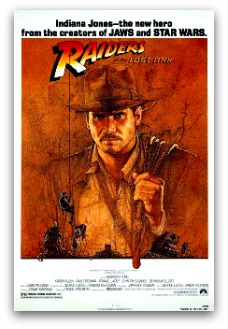
IndianaJones_small1) Indiana Jones and the Raiders of the Lost Ark (1981), dir. Steven Spielberg
An action-adventure drama that pits Indiana Jones (played by Harrison Ford) against a group of Nazis who are searching for the Ark of the Covenant because Adolf Hitler believes it will make their army invincible.

Why I like it: The original Indiana Jones trilogy was released between 1981 and 1989, and despite the pointless release of Indiana Jones and the Kingdom of the Crystal Skull in 2008, it will forever remain, for my generation at least, what introduced us to the potential excitement of exploring the unknown.

Personal note: I love my in-laws but they neglected their parenting duties in one pretty big way: their failure to introduce my wife to Indiana Jones (a situation that has, thankfully, now been rectified).

Most stunning aspect: Let’s face it, any film that can make archaeology seem like the coolest profession in the world has got to be doing something right hasn’t it?

The ones with the romantic clichés

The traveler is often accused of being a romantic, an idealist and of someone who is running away from life and all the problems and commitments that go with it. The alternative argument is that the traveler is actually taking life by the scruff of the neck and living it to the full.

Either way, two films that best capture this dialectic are the two that often most lionized by today’s generation of travelers:

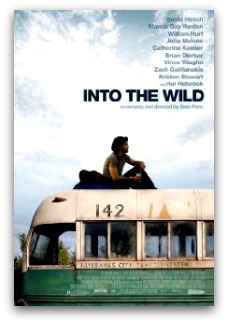
IntotheWild_small2) Into the Wild (2007), dir. Sean Penn
An adaptation (also by Penn) of the book of the same name, by Jon Krakauer, depicting the true story of Chris McCandless, a 24 year-old American and persistent wanderer whom believed that there was more to life than settling for the 9-5 grind in an office.

Why I like it: My wife introduced me to it (her riposte to my Indiana Jones exasperation). She had watched it early on in our relationship, when she was in Brazil and I was in London — a genuinely long distance relationship.

Personal note: She said that the film’s protagonist, Chris McCandless, reminded her of me — although fortunately our story has had a bit of a happier ending than his (I’ll say no more in order not to ruin it for you).

No half-measures: Boy did McCandless walk the walk, giving away his $24,000 college fund to charity before hitchhiking to Alaska and plunging into the wilderness, gradually seeking the means to remove himself from the “real world. ”

TheMotorcyleDiaries_small3) The Motorcycle Diaries (Spanish: Diarios de motocicleta) (2004), dir. Walter Salles
A biopic of Ernesto “Che” Guevara as a young man, representing an adaptation of Che’s memoir of the same name, recounting the trip he made around South America with his best friend, Alberto Granado.

Why I like it: Whatever you view of Che is, there is actually relatively little politics in the film, although one is introduced to some of the experiences that started to inform what he later became in life. Instead, for the most part, this is a film which perfectly captures what is to be young and curious of the world outside your own town or city. Che and Alberto chase beautiful landscapes and beautiful people, but also volunteer their time to those less fortunate than themselves.

Personal note: This film was the tipping point in inspiring me to travel around South America.

Memorable scene: There’s a great scene that highlights the dichotomy between the travel romanticized by “travelers” and that which is driven by the needs of most other migrants around the world — the topic of my guest post last month for The Displaced Nation. In it Che and Alberto meet an indigenous couple who have been forced from their lands and who are traveling in order to find work. When the couple ask Alberto and Che why they are traveling, they reply: “We travel just to travel.” Confused, the wife replies: “God bless you.”

The one about being displaced

Lost_in_Translation_small4) Lost in Translation (2003), dir. Sofia Coppola
The story of the unlikely bond between an aging movie star, played by the awesome Bill Murray, and a trailing spouse (Scarlett Johansson), after they meet in the bar of their five star hotel in Tokyo.

Why I like it: Life as a nomad is not all about romantic adventures and life-changing experiences — there are also just as many challenges and struggles: homesickness, culture shock and loss being just some of them. Lost in Translation is, perhaps, one of the films that best explores some of these issues.

Additional benefits: The story is poignant, and the film is beautifully shot.

The one that’s not actually about travel or expats

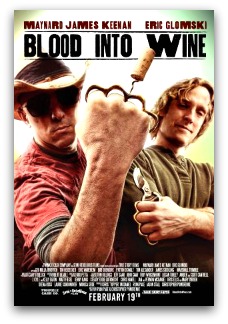
Blood_into_Wine_small5) Blood Into Wine (2010), dirs. Ryan Page & Christopher Pomerenke
A documentary about the Northern Arizona wine industry focusing on the musician Maynard James Keenan and Eric Glomski and their winery, Caduceus Cellers.

Why I like it: This film doesn’t really have anything to do with either travel or expat life, but I’m including it here because it’s about one of my favorite artists: Maynard James Keenan. A slightly biased choice perhaps, but I think it deserves a merit for the way it encapsulates the spirit of those people who have dreams and then act upon them to make them happen — a spirit which, I think, drives many of us travelers and expats.

Maynard’s dream: Maynard dreams of starting a vineyard in Arizona. Yes, Arizona. Despite the doubts and concerns of the experts he consulted Maynard invested almost his entire fortune, made from working with the bands Tool and A Perfect Circle, to start a vineyard in Arizona — a state entirely unknown for growing wine.

Does he succeed? You’ll have to watch it, I guess… And don’t forget to invite a date!

* * *

Readers, what do you think of Andy’s suggestions? Are these the sorts of films that make you feel romantic, or do you think he’s bonkers? We’re open to any and all comments…as well as to further recommendations of films likely to bring out the romantic side in us glomads!

STAY TUNED for tomorrow’s post from our monthly columnist, James Murray, who right now can be found in front of his fireplace in Boston — and not because he’s in a romantic mood! Far from it…

If you enjoyed this post, we invite you to register for The Displaced Dispatch, a round up of weekly posts from The Displaced Nation, with seasonal recipes, book giveaways and other extras. Register for The Displaced Dispatch by clicking here!

Related posts:

A once-displaced author on muses, monkeys & murder — and your chance to win her new book!

EdithmcclintockOur first featured author of the new year, Edith McClintock, is today’s guest. Her post should help to alleviate the January doldrums and this “brass monkey” weather. By way of introduction, I should point out that even though she does write mysteries, she herself is a bit of a mystery. Tee hee-hee ha-ha! On the one hand, she is a former Peace Corps worker, and has worked to preserve rainforests. On the other, she has harbored dreams of killing off her fellow researchers in the Amazon! Indeed, working with Edith sounds about as much fun as a barrel of monkeys! But let’s find out more about her creative muses, shall we, before leaping to any conclusions…

— ML Awanohara


I can’t pinpoint the moment I decided to write a novel. The idea percolated for years starting in my early teens. I did, however, always know — to the extent I even understood book categories, which was not much — that my first book would be a mystery, heavy on romantic suspense, and definitely a touch gothic.

Maybe a modern-day version of M.M. Kaye’s light mysteries (before she wrote The Far Pavilions), each set in an exotic locale.

And maybe a little Barbara Michaels mixed with Elizabeth Peters’ humor.

They were all early muses.

But so was travel. I knew the setting would have to be international, exotic…romantic. I wanted my characters to be trapped in a confined setting — like the best Agatha Christie.

From my first trip to Spain when I was thirteen, across Europe and Central and South America in my twenties, I contemplated castles, ruins, plunging cliffs, and remote islands based on their novelistic setting potential.

We are not aMUSEd: “Writing is hard”

But I needed more than a muse to write a book. I needed an obsession. For me, that’s the only way it could have happened, because writing Monkey Love and Murder was hard. Writing is hard. The rejection was crushing.

I cried. My sister cried. The rewriting and rewriting and rewriting again often felt meaningless. More sacrifice than joy. Sometimes exhilarating. More often tedious and lonely.

The truth is the time lost probably wasn’t worth it. I had demanding, more than full-time jobs. I wrote on weekends and evenings. My friends and family were celebrating, playing, gathering, the sun shining. I was hunched over a computer screen talking to my make-believe world.

It takes a certain arrogance to believe you can even write a book. To believe it will get published. To believe people will actually like it. Maybe love it. I had that in the beginning. For years, really. I had to love the idea, the place, the characters.

The place as muse

Because it took an obsession to keep writing and rewriting, in my case probably much longer than I should have. But it wasn’t a person that grabbed me and wouldn’t let go. My muse, my obsession, was the rainforest and a place called Raleighvallen in the Central Suriname Nature Reserve.

MonkeyLoveAndMurder_dropshadowI think my protagonist, Emma, expresses it best:

Even with all the frustrations, I fell completely and irretrievably in love with the rainforest that week — the deep rich smells of dirt and decay and teeming, thriving life; the warm soft light of the rocky moss-covered paths hidden beneath layers of climbing and tumbling lianas and roots; soaring tree trunks wrapped in colorful bromeliads, orchids, moss, and lichens; and the canopy of leaves of every conceivable size and shape. Each day was a new adventure, new wildlife (some good, some terrifying) and ever changing forest, from the sunlit traveling palm groves to the dense, swampy marshes near the river; to the rocky, open forests with the towering trees the spider monkeys loved. I enjoyed watching the spider monkeys too, but I could have been just as happy watching any number of wildlife. It was simply being in the rainforest I loved most.

Like Emma, I spent two years as a Peace Corps volunteer in Suriname living in the capitol, Paramaribo. Unlike her, I joined a monkey research project post-Peace Corps simply because I wanted to spend more time in the rainforest — and chasing monkeys through the jungle seemed like fun.

It was. Hot, frustrating, itchy and wonderful.

I was there for six months, ideas percolating, but I didn’t begin writing until I came home. That’s when I moved beyond the idea of writing as abstract concept and into deep obsession.

Ignorance plus arrogance — a lethal combo?

I came home to the United States, spent three months working full-time and decided I couldn’t continue. Not yet. I was in the throes of a typical angst-ridden readjustment process combined with the initial bubbling of obsession. So I quit my job and drove cross-country to housesit for my sister and then a friend while I pounded out that first draft. I finished and returned to full-time work again, sure my first draft was destined for the bestseller lists.

I clearly had the arrogance. Unfortunately, I also had heaps of ignorance. I still do. I don’t understand publishing. I may never understand publishing.

Nine years later, following hundreds of rejections, countless rewrites, frequent tears and regular quitting (for months, even a year), my first novel is finally published. People, friends, strangers, will read it. Judge it.

It’s wonderful and scary and it took a passionate, often-painful obsession. But still, I’d do it again. I am doing it — I’ve just finished my second mystery (I hope). I have a plan for the next and the next and the next.

As for Monkey Love and Murder, thankfully, I’m finally over that obsession. And it turns out the best thing about finally being published is that I NEVER have to read or rewrite it again!

But still, I hope you’ll read it. I hope you’ll like it. I certainly did. For years.

* * *

Whoop! Whoop! Thank you, Edith! Readers, to whet your taste even more, here are a couple of reviews for Edith’s debut novel, Monkey Love and Murder:

Kirkus Review:

This debut from McClintock, who served in the Peace Corps and worked on a monkey research project, has the ring of authenticity, along with romance and a mystery that keeps you guessing.

Library Journal Review:

This romantic-suspense debut is perfect for those seeking adventure mixed in with their mystery. McClintock creates a vivid jungle environment, a perfect venue for a closed-room mystery. Her characters run a little larger than life, making the story feel like a reality TV show. With a bit of Scott Smith’s tone, this would work for Hilary Davidson fans too.

And let’s not forget the blurb:

Emma Parks joins a monkey research project deep in the South American rainforest on a whim. She refuses to admit it might have something to do with a close friend’s death from which she hasn’t recovered, but it’s certainly not because she knows anything about spider monkeys, least of all what they look like. She’s barely arrived when International Wildlife Conservation’s renowned director drowns during a party celebrating the group’s controversial takeover of the park. Tension mounts following the machete murder of a researcher, threatening Emma’s budding primatology career, her secret romance with an Australian zoologist, and more importantly — her life.

Can’t wait to read it? Why not download the first chapter?

I know, I know, one chapter isn’t the same as reading the whole book. SO ENTER OUR DRAW TO WIN A FREE COPY — in 3 easy steps:
1) Comment on Edith’s post
2) Like her book’s Facebook page
3) Subscribe to our Displaced Dispatch
Yes, of course you can take just one of these steps, or two — but do all three and you’ll have an even greater chance of winning!!! @(‘_’)@

The winners will be announced in our Displaced Dispatch (and on Edith’s Facebook page) on Feb. 2, 2013. She will contact you for your address and is open to shipping anywhere in the world.

NOTE: If you’re not lucky enough to win one of Edith’s books, you can always order it from Amazon, Barnes and Noble, or The Book Depository.

Born in a school bus in the Tennessee woods on the largest commune to come out of the sixties, Edith McClintock works in the conservation and development field and blogs about travel on Novel Adventurers. Although a lifelong reading addict, she didn’t write fiction until post–Peace Corps, when she joined a monkey research project deep in the Amazon. Trapped in a tiny jungle cabin for six months, there was little to do but imagine creative ways to kill off her fellow researchers (all of whom were too nice to make it into her first novel, despite their begging). To find out more about Edith, visit her author’s blog.

STAY TUNED for tomorrow’s post, also on expat writing.

If you enjoyed this post, we invite you to register for The Displaced Dispatch, a round up of weekly posts from The Displaced Nation, with seasonal recipes, book giveaways and other extras. Register for The Displaced Dispatch by clicking here!

Related posts:

Images: Edith McClintock’s author photo (yes, that’s her — in Chinatown in Seattle, buying mangoes) and book cover.

Catching up with this year’s Random Nomads over the holidays (3/3)

RandomNomadXmasPassportIt’s Christmas Day and the holiday party continues for the expats and other global voyagers who washed up on the Displaced Nation’s shores in 2012. Remember all those Random Nomads who proposed to make us exotic meals based on their far-ranging meanderings? Not to mention their suitcases full of treasures they’d collected and their vocabularies full of strange words… How are they doing these days, and do they have any exciting plans for the holidays? Third in a three-part series (see also Part One and Part Two).

During the final third of 2012, we met some expats and intrepid world travelers who, I think it’s fair to say, have developed some rather unusual hobbies and eating habits. The two are one and the same in the case of Brian MacDuckston, who was featured on our site this past August. He has made a habit of eating ramen in as many Tokyo venues as possible — a hobby that was quirky enough to attract the attention of the New York Times. In addition to Brian — a San Franciscan who originally went to Japan to teach English — we encountered:

  • Liv Gaunt, an Englishwoman who became an expat accidentally, while pursuing her love of scuba diving and underwater photography. Now based in Australia, she told us she has a passion for sharks but would happily do without sea urchins.
  • Mark Wiens, an American third culture kid who now lives in Thailand and travels all over — he feels least displaced when sampling other countries’ street foods.
  • Jessica Festa, an American traveler who loves to venture off the beaten track and eat locally — she did not hesitate to eat cuy in Ecuador (even though it reminded her of her pet guinea pig, Joey, named after a school crush).
  • Larissa Reinhart, a small-town Midwesterner who lived in Japan for several years and, since repatriating, has taken up the pen as a crime novelist. She is now living in small-town Georgia but hopes to go abroad again. She provides recipes for Asian fried chicken, among other delicacies, on her blog about life as an ex-expat.
  • Patricia Winton, an American who responded to 9/11 by giving up her comfortable life in Washington to become an expat crime writer in Rome. She also invested in a pasta-making machine…
  • Bart Schaneman, a Nebraskan who wanted to see the world and has made his home in Seoul, where he is an editor for an English-language newspaper and author of a travelogue on the Trans-Siberian railway. He is a huge fan of kimchi.

Three of this esteemed group are with us today. What have they been up to since a few months ago, and are they cooking up anything special for the holidays, besides chatting with us?

Brian with Ramen_Xmas1) BRIAN MACDUCKSTON

Have there been any big changes in your life since we last spoke?
I’ve been offered a few gigs on Japanese TV shows as a “ramen reporter” and successfully pitched my first magazine article about a best-of-ramen list. A start! I also started a ramen class aimed at non-Japanese speakers. Check it out!

How will you be spending the holidays this year?
A nice staycation in Tokyo.

What’s the thing you most look forward to eating, dare I ask?
I’m trying to eat more high-class sushi, but I’ll probably just stick to a lot of ramen for the next few weeks.

Can you recommend any books or films you came across in 2012 that speak to the displaced life?
I really enjoyed Jiro Dreams of Sushi, a documentary about the most revered sushi chef in the world. [Editor’s note: The film has been available on Netflix since last August.]

Do you have any New Year’s resolutions for 2013?
I want to train myself to stop using double spaces after periods when I write. Not a big goal, but important for someone who has an interest in being paid for my writing.

A worthy goal, imho! (I’ve had to correct quite a few in my time…) So, any upcoming travel plans?
My father will visit Japan, so I am planning a luxury week-long trip of eating and relaxing in hot springs. Two things I’m good at!

LarissaReinhart&Reinhart2) LARISSA REINHART

Any big developments in your life since we last spoke?
My second Cherry Tucker Mystery, Still Life in Brunswick Stew, has a release date of May 21, 2013. [Editor’s note: As mentioned in Larissa’s interview, the first in her Cherry Tucker series, Portrait of a Dead Guy, came out this year.]

How will you be spending the holidays this year?
We travel to visit my family in Illinois and St. Louis after Christmas through New Year’s.

What’s the thing you most look forward to eating?
There’s this Italian grocery, Viviano’s, in the Italian district of St. Louis, called The Hill in St. Louis, that I really look forward to visiting. I’ll stock up on cheap wine and Italian staples for the coming year.

Can you recommend any books or films you came across in 2012 that speak to the displaced life?
Yes, two Japanese films:

  1. The fascinating documentary Jiro Dreams of Sushi. I highly recommend — even for non-sushi fans. The film is beautifully shot and reveals what it takes to be a true master at something. Incredible.
  2. The gorgeous The Secret World of Arrietty (aka The Borrower Arrietty), scripted by Hayao Miyazaki. We were excited to see Arrietty because we saw the ads for the movie when we were still living in Japan (and I’m a big fan of Mary Norton’s The Borrowers, on which the film is based, as well as of Miyazaki).

Have you made any New Year’s resolutions for 2013?
To spend less time on social media and more time writing. I love chatting online, but I need to be more disciplined about getting away from the “water cooler” and back to work.

Any upcoming travel plans?
Disney World for spring break! Woot! And we’re hoping to get back overseas soon, but no definite plans yet.

PatriciaWintonwithholly3) PATRICIA WINTON

Any big changes in your life since we last spoke a couple of months ago?
The month after you featured me, I put my long-time WIP in the bottom drawer for a while and started a new one. I’ve written about 30,000 words. This one, also a mystery, is set in Florence. It takes place during the 500th anniversary celebration of the world’s first culinary society.

Meanwhile, my blog partners at Novel Adventurers are working on an anthology of long short stories. We are an adventurous group comprising (besides me):

  • an Australian who has lived in South America
  • an American of Swiss-German origin who is married to a man from Iran, where they frequently travel
  • an American with close family ties in India, where she frequently travels
  • an American specializing in things Russian, who is married to a Kyrgyz
  • a former Peace Corps volunteer who writes about the Caribbean
  • an American who grew up on a sailboat traveling the world and has lived as an adult in many countries.

We’ll be writing about travel and adventure from international perspectives. It will be some time before it sees publication, but I’ll keep you posted. I think it will interest the Displaced Nation!

Where will you be spending the holidays this year?
I’m spending the holidays quietly at home. I plan to visit a friend in the country for New Year’s weekend. The holidays here last almost three weeks, ending on January 6. Nativity scenes are a big deal here, and I plan to visit various churches to view, and photograph, them as I usually do. I’ll write about them on my blog, Italian Intrigues, on January 3rd.

What’s the thing you most look forward to eating?
Christmas Eve in Italy is devoted to eating fish — usually seven fish dishes from antipasto onward. I’m trying out a new recipe for sea bass stuffed with frutta del mare (non-fin fish). I’m using clams, mussels, shrimp, squid and baby octopus, all well laced with garlic. And I always make the holiday custard that comes from my Tennessee childhood.

Can you recommend any books you came across in 2012 that speak to the displaced life?
The Lacuna, by Barbara Kingsolver. While it was published in 2010, I didn’t read it until this year, and I think it’s a masterpiece. It’s about a man with one foot in Mexico and the other in the US — but that’s a vast oversimplification. After the young man’s Mexican mother dies, he works for Frida Kahlo and Diego Rivera while Leon Trotsky is staying with them. He later moves to the US to join his American father. He eventually becomes a successful writer caught up in the McCarthy witch hunt. I don’t want to include spoilers here, but it’s fabulous. The boy/man is a foreigner in both countries and speaks both languages with an accent.

Do you have any New Year’s resolutions for 2013?
Not that I want to share.

Last but not least, do you have any upcoming travel plans?
No concrete travel plans at the moment. While composing these answers, I received an email about a tour of Uzbekistan that sounds really alluring. And I will probably go to the US to attend a mystery writers conference.

* * *

Readers, any questions for this rather motley (one former expat and two current ones) but highly creative bunch?

STAY TUNED for tomorrow’s post — expat Anthony Windram’s musings on spending Boxing Day in a country that associates boxing with punching, not (Christmas) punch.

If you enjoyed this post, we invite you to register for The Displaced Dispatch, a round up of weekly posts from The Displaced Nation, with seasonal recipes, book giveaways and other extras. Register for The Displaced Dispatch by clicking here!

Related posts:

Images: Passport photo from Morguefiles; portrait photos are from the nomads (Larissa Reinhart’s shows her family in front of one of their favorite Japanese manga characters, Shin-chan, a sort of Bart Simpson of Japan — the creator, Yoshito Usui, had recently died).

And the Alices go to … these 3 expat writers for their Hurricane Sandy posts

 © Iamezan | Dreamstime.com Used under license

© Iamezan | Dreamstime.com
Used under license

My husband and I have a habit of going on holiday just before some major world crisis occurs — after which we have no choice but to spend several days holed up in our hotel room watching the events unfold on CNN. Twice it was a crisis involving water: the deadly Hurricane Katrina and the 2004 Boxing Day tsunami.

But for Hurricane Sandy, we were very much on the scene — ensconced in our apartment in NYC’s East Village, and with no television to watch, not even a radio to listen to! As those who read my post of earlier this month are aware, we were deprived not only of power but also water, communications and public transportation for several days, and displaced from our home for one night — an inconvenience that, while somewhat traumatic, turned out to be minor compared to what others had suffered in harder-hit areas.

As I mentioned then, the experience gave me a chance to test this blog’s basic premise: that forcible displacement at some level compares with the kind of displacement one has when living in a country that is not your home. And if so, can a former expat like me draw on the strengths gained from living overseas to keep calm and carry on?

While pondering these fundamental questions, I came across three posts by expats on Hurricane Sandy that gave me some fresh insights — not only on Sandy but on the down-the-rabbit hole nature of international travel and the expat life.

Thus I’d like to hand out three “Alices” today to (in reverse chronological order):

1) PETE LAWLER

Awarded for: Clouds from the Past: My Reflections on Sandy, Gloria and the Jersey Shore, in his personal blog: The American Londoner
Posted on: 3 November 2012
Moving passage:

But here and now, when things are raw, when my cousins have been without power for a week and my parents are cooking with a propane tank and a Coleman portable grill even high up in the Pocono Mountains of Pennsylvania, I mourn. My heart goes out to those suffering and I mourn for that place of childhood sunshine and wish it a good and steady recovery in the coming months.
All the best, Jersey. I am thinking of you.

Citation: Pete, before Sandy, you probably weren’t thinking that much about “that place of childhood sunshine,” the Jersey shore — because, after eight years in London, you try not to think too much about sunshine any more. But then Sandy plunged you into mourning for all the good times you had as an all-American kid — the “long sunny days spent lazily frolicking through waves, collecting shells, and cautiously avoiding jellyfish.” It even made you think with some nostalgia of Hurricane Gloria, which you rather enjoyed as a seven-year-old. Absence, plus tragedy, can indeed make the heart grow fonder… What’s more, I sense how bad you must have felt about being powerless, from a distance, to help your parents and your cousin in their time of need — a guilt that’s at the hard core of the expat life. Just ask Linda Janssen — I’m thinking of her aptly titled “Down the Rabbit Hole” post of last summer, about her father’s illness.

2) MADELINE GRESSEL

Awarded for: Hurricane Sandy and the unspoken attraction of disaster, in Matador Abroad
Posted on: 1 November 2012
Thought-provoking passage:

Now, as New York City is sloshed by a record-breaking 13ft wall of water, it is I sitting comfortably in a café in Hong Kong watching the light October rain outside. … My friends post photos on Facebook of candlelit dinners, submerged cars, and the powerless, darkened skyline.

And I wish I were there with them. Not because I’m afraid for their safety (I’m not), but because I’m missing a moment of New York history. I’ll never be able to say, “Remember the flood of 2012? That was insane.” I feel jealous at the pictures, like I’ve seen a photo of an ex-lover with his new flame.

Citation: Maddie, I wonder why it is, as we also learned on this blog this month, so few American expats feel the need to connect with their homeland during a presidential election — which, too, provides a chance to be “part of history,” especially if the race is closely contested? I think the answer may lie in your rather astute observation: people love a disaster. Come to think of it, a friend of mine has confessed that during Sandy, she had the overwhelming urge to go outside — in the storm! (Even though it was expressly forbidden by Mayor Bloomberg.) In addition, your post reminded me of another old expat adage: out of sight, (afraid of being) out of mind…

3) RUTH MARGOLIS

Awarded for: “I wasn’t afraid of Superstorm Sandy — until the lights went out,” in Telegraph Expat
Posted on: 31 October 2012
Moving passage:

Forty-eight hours ago, I was relishing my role as stoic, cynical Brit, refusing to bow down to an impending crisis. I bashed out jokey emails to friends and family noting that it was “a bit blustery”…

…my husband and I — plus my visiting younger sister — spent much of Sunday and Monday quite enjoying the commotion. Like kids playing an imaginary game, we stocked up on all the (un)necessaries: crisps mainly, and garish American junk foods…

Then, something strange happened: the lights went out in Manhattan. … “Ah,” we thought, followed by a shaky: “Hmm”. … Eventually, we went to bed, with the radio on. No one got much sleep.

When the next storm hits, I expect I’ll ditch the cockiness sooner.

Citation: Ruth, there I was, trying to conjure up the “keep calm and carry on” ethos that I’d learned (rather begrudgingly) from nearly a decade of living in Britain, when, had I known you were down in Brooklyn, I could have asked for a refresher course (ah, yes, the junk foods and the jokey emails!). Still and all, I’m glad to know that even for a native-born Brit, there are limits, one of which is seeing the lights go out in lower Manhattan… (From now on, I won’t be too hard on myself!) I can also relate to what you said about these disasters having a cumulative effect (made worse by the fact that you’re living far away from your homeland and already feeling somewhat displaced). As you point out in your post, Sandy was the second time since emigrating that you’ve “had to assume the brace position,” the first being Irene. I can recall feeling something similar when living in Tokyo — first there was the Aum Shinrikyo attack on the subway and then the massive earthquake in Kobe, after which I decided that the stoicism required for this situation hadn’t yet been invented! (Bloomin’ heck, why was it I’d told everyone at “home” that Japan was so much safer?)

* * *

So, readers, do you have a favorite from the above, any comments on these bloggers’ ruminations, or any further posts to suggest? I’d love to hear your suggestions!

STAY TUNED for tomorrow’s post, some comforting advice and (hopefully) words of wisdom from The Displaced Nation’s resident agony aunt, Mary-Sue Wallace.

If you enjoyed this post, we invite you to register for The Displaced Dispatch, a round up of weekly posts from The Displaced Nation, with seasonal recipes, book giveaways and other extras. Register for The Displaced Dispatch by clicking here!

Related posts:

Images: All from Morguefiles.

A veteran of the expat life, I thought I knew displacement…but then along came Hurricane Sandy!

The topic of today’s post is Hurricane Sandy. We’ll get to that soon. But first I want to tell you how I’m feeling today, one week after this monster storm struck.

I’m feeling like Joy in the Flannery O’Connor short story, “Good Country People.”

Joy — in fact, she calls herself “Hulga” in an act of rebellion against her simple-minded mother. With a Ph.D. in philosophy, Joy fancies herself the intellectual superior of her mother and the rest of the country bumpkins around them. (Although 32, she still lives at home because of being handicapped — a childhood hunting accident cost her one of her legs.)

But Joy’s advanced degree doesn’t help one iota when, out of the blue, a Bible salesman pays them a visit. In fact he’s a con man and cons Joy into giving him her prosthetic leg. For all her smarts, Joy is left stranded in the barn loft, immobilized.

I’ll tell you something — you ain’t so smart!

As one of the founders of the Displaced Nation — and as a long-time expat who has now repatriated to my native U.S. — I thought I knew displacement. I even considered myself something of an expert on the feelings one has when living in someone else’s place instead of your own.

But did this background in displacement help me at all when, like Joy/Hulga, I met my nemesis, Hurricane Sandy? Sandy left me, along with my husband and our two dogs, stranded without power, water or communications for four whole days.

Instead of sophisticated urbanites, my husband and I were no better than cave dwellers, Neanderthals. Our daily routine entailed going up dark stairwells, through dark halls and into a dark apartment, where we would gather around the fire (our gas stove still worked) and make tea and cobble together some dinner from the food that would otherwise spoil (but without opening the fridge door too much).

No longer seeing the light

I will never forget the moment the lights went off, and we were plunged into this unreal netherworld. We were eating chicken pot pie and Greek salad when it happened. I’d made us a proper dinner thinking that even though Frankenstorm’s monster was on its way, we may as well “keep calm and carry on” — a lesson I’d mastered from living on two other small islands before Manhattan: England and Japan.

We kept calm enough and carried on for the rest of that evening. After finishing the meal, we headed down one floor with our trusty flashlights to the apartment of another couple, with whom I’d communicated just before the blackout. Another couple from a higher floor joined us.

The six of us sat around a flashlight — that was the closest we could get to simulating a camp fire — and kept each other entertained while waiting out the storm.

“Bailing” out

The next day, however, the excitement of camping out in the city wore off rather quickly, especially as we no longer had any water. I’d followed the advice of the Weather Channel and filled the bathtub — but it’s no fun stumbling about in the dark to get a pan full of water when you need to flush the toilet.

It is also no fun going up and down 12 flights of stairs with two dogs in a pitch-dark stairwell, made only slightly brighter by your average flashlight. Note to self: Get one of the those miners-style flashlight headbands for the next time. Dorky they may be, but it’s so much easier to have two hands available.

After three days, like most East Villagers, we bailed — something I’m not very proud of, but my office (at Columbia University) had opened again and I was having a dickens of a time getting there and back using buses — there were no subways running.

A kind colleague with a spare room made an offer we couldn’t refuse. She doesn’t mind dogs (has one herself).

What have I learned from being — literally — displaced?

So, is “displacement” a good metaphor for international travel and the expat life? Does it hold water, so to speak?

Here are three quick lessons I’ve derived from the experience:

1) You know all those expat sites that talk about developing resilience? Well, that’s not such a crackpot notion after all, when it comes to real displacement. Now, I was never someone who admired the Brits for their stiff upper lip, or the Japanese for their gaman. But I ended up imbibing these traits by osmosis, as explained in a previous post — and I’m so glad I did.

New Yorkers like to brag about how great they are at weathering crises, but in this particular instance, they seemed like a bunch of wimps! (They were far more stoical in the wake of 9/11.)

Take for instance the downtown fashion set — including Anna Wintour, Carine Roitfeld, Pat McGrath and Marc Jacobs — and celebs like Naomi Watts and Liev Schrieber. As the Wall Street Journal reported, they immediately sought refuge in the Mark Hotel on E. 77th St., to await the return of power and water and normalcy.

The younger crowd, led by Emma Watson, were at the Carlyle.

C’mon, guys, I got through three nights!

Another prime example were the bus drivers who refused to take any of us cave dwellers south of 26th St. because it was “too dark.”

As a result of their intransigence, I found myself walking down nearly 20 blocks of darkened streets in the company of another East Villager — a young woman from New Orleans who’d already had the misfortune of having been evacuated during Hurricane Katrina. Two flashlights are better than one under these circumstances, and together we dodged rogue vehicles that were taking advantage of the no-traffic-lights chaos. All for the pleasure of, in my case, climbing up 12 flights of stairs to my little cave. Gaman shita.

2) My priorities are in the wrong place. As it turns out, I’d be better off doing fewer blog posts on developing a “core” of self while living abroad and more Pilates, developing an actual core. This is of course assuming I continue to live a dozen flights up in a high-rise apartment building.

Likewise, I’ve been placing too great a priority on hyper-communications. Even though I’m the first to feel offended when someone texts while I’m talking to them, I can’t describe how elated I felt when I at last managed to exchange texts with outside world.

When I was an expat, I could be happy in my own company for days on end. What happened?

3) I’m not sure it matters if you’re at home or abroad when you become forcibly displaced. I used to think differently, as I pointed out in my post about what happens when reality bites for expats.

But as it turns out, displacement is a God-awful experience no matter where you happen to be — and in some ways, being able to understand the language and the culture makes it worse.

You’re planning to hold the New York City marathon, Mayor Bloomberg, really? I can’t tell you how agitated I became upon hearing that announcement. Yes, I knew it meant a colossal loss of income to the city. But at a time when many of us were leading disrupted lives, did we need yet another reminder that life goes on uptown, where no one really suffered?

And did any of us really want an influx of entitled outsiders into the city at a time when our own people are in need?

Thank goodness he saw sense in the end and called the thing off.

And don’t get me started on the debates we ought to be having — but won’t — on climate change as well as the need to re-engineer New York’s waterfront to withstand storms of this nature. I feel incensed — not so much because of what I’ve personally endured, but on behalf of the some 40,000 New Yorkers who are still displaced.

* * *

Readers, do you have any Sandy experiences, impressions, or insights to share? Do tell! People who are truly displaced love community! And please hurry! They’re forecasting a northeaster on Wednesday. When it rains, it pours…

STAY TUNED for tomorrow’s post, a poll about, of all things, expat voting…

If you enjoyed this post, we invite you to register for The Displaced Dispatch, a round up of weekly posts from The Displaced Nation, with seasonal recipes, book giveaways and other extras. Register for The Displaced Dispatch by clicking here!

Related posts:

Image: MorgueFile

19 more films that depict the horrors of being abroad, or otherwise displaced

Readers, we have to confess, ever since horror novelist, former expat and Third Culture Kid Sezin Koehler suggested 15 horror films on travel and the expat life, we’ve become rather addicted — and have invited her back here today for another hit. Go ahead and indulge yourselves — it’s Halloween, after all!

Being the horror-obsessed film nut that I am — and loving how my expat/traveller life has collided with my scary movie self — I offer here are a few more honorable mentions within the three sub-genres I presented in last week’s post:

  1. The expat.
  2. The world traveler.
  3. The otherwise displaced.

1. Expat Horror: Caveat expat, or expat beware (or in some cases, beware of the expat!).

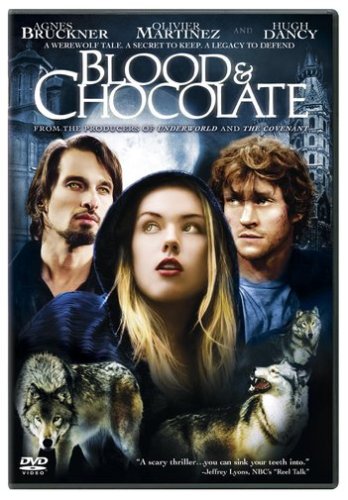
1) Blood and Chocolate, about an American orphan who goes to live with her aunt in Bucharest. Oh, and the orphan is a werewolf.


2) Drag Me To Hell, in which a Romany shaman in the US is evicted from her home and takes her rage out on the lowly loan officer who refused to give her a mortgage.


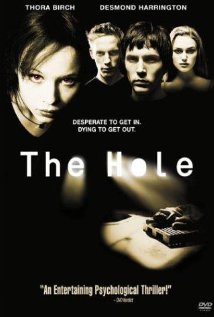
3) In The Hole we find an American student in a British boarding school who gets trapped in a World War II bomb shelter with a few classmates. So we’re led to think…


4) In The Grudge, Sarah Michelle Gellar gets far more than she ever bargained for living and working in Japan as a nurse, when a malevolent creature in her house begins an awful campaign of harassment, mayhem and torture.


5) Orphan finds us with a family interested in adopting a young Russian girl, only the longer she’s with them the more the mother suspects she’s not the child she claims to be.


6) + 7) The Joss Whedon marvels Buffy the Vampire Slayer and Angel, both of
which feature a number of prominent expats — a few are slayer trainers sent over to California from the Old World (Britain), a few are expat vampires who’ve decided the anonymity of the United States better suits their feeding habits.


2. Traveler Horror: “Let your suitcases gather dust!”, cry these films.

8) In Shrooms, a group of young Americans go to meet their Irish friend on his home turf in order to experience the hallucinogenic mushrooms indigenous to the fairylands of Ireland’s bonnie green forests. He forgot to tell them that their chosen “tripping” site is also the home of a haunted and abandoned insane asylum. And that not all the mushrooms are the magic type.


9) In Open Water, two Carribbean cruise snorkelers are left behind, to be tormented by a shark. Based on a true story — and one of many reasons why I keep my feet on dry land despite now living in Florida.


10) In the same vein we have Piranha 3D, in which half-naked spring-breakers are set upon by prehistoric piranha that have been released through an underground fault.


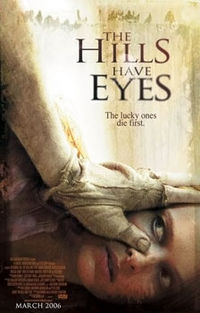
11) The Hills Have Eyes features a family on a road trip through the post-nuclear testing New Mexico desert are set upon by a group of psychopaths who live in the hills.


12) Worlds collide in From Dusk Till Dawn when a reverend on a road trip to Mexico with his children is hijacked by two ruthless killers on the lam from the law after a series of brutal murders and robberies. They find themselves like fish out of water when their rest-stop bar turns out to be a haven for vampires.


13) When a group of friends go white water rafting in Appalachia, the idylic back country scene turns nightmare when a group of inbred locals terrorizes the group, and one of its members in particular. Deliverance is not for the faint of heart.


I could keep going with this sub-genre, but surely you get the point by now. Stay home!

3. Displaced Horror: “Think twice about moving or taking a sojourn outside the ‘hood” is the moral here.

14) Rosemary’s Baby, in which Mia Farrow discovers that her new Manhattan residence is also the home to a group of mad Satanists who’ve got their sights on her unborn baby.


15) The slasher musical Don’t Go In the Woods features a band on the verge of a breakthrough go camping to write some new tunes. Only, there’s something else in there with them that’s picking them off one by one.


16) Every incarnation of the Alien series brings us a group of Earth’s citizens in outer space, battling a wretched and basically unkillable xenomorph. Keep your feet on land. Save yourself the trouble.


17) In Friday the 13th, a group of summer-camp goers are stalked by a relentless killer. Man, this one makes me glad I never went to summer camp, even though growing up I always wanted to.


18) A writer on a summertime retreat to a supposedly peaceful cabin is brutalized by a gang of locals. One of my personal favorites, I Spit On Your Grave is a grotesque revenge fantasy come to life and suggests one might be better off simply working from home.


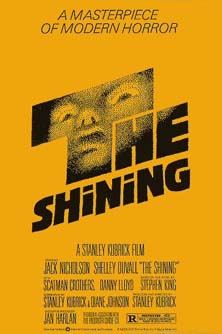
19) And we can’t forget one of the most iconic examples of Displaced Horror: The Shining, in which Jack Torrance, temporary caretaker of the historically creepy and ever haunted evil Overlook Hotel, goes mad and tries to murder his family. All work and no play makes Jack a dull boy, eh?

Happy Hallowe’en!

* * *

So, are you ready to burn your passport and throw away all your travel gear yet? 😉

And while we’re still at it, do you have any other films you’d add to Sezin’s best-of abroad horror list?

Sezin Koehler, author of American Monsters, is a woman either on the verge of a breakdown or breakthrough writing from Lighthouse Point, Florida. Culture shock aside, she’s working on four follow-up novels to her first, progress of which you can follow on her Pinterest boards. Her other online haunts are Zuzu’s Petals, Twitter, and Facebook — all of which feature eclectic bon mots, rants and raves.

STAY TUNED for tomorrow’s post, in which our fictional expat heroine, Libby Oliver, checks in and lets us know how she’s doing back at “home” in Merry Olde.

If you enjoyed this post, we invite you to register for The Displaced Dispatch, a round up of weekly posts from The Displaced Nation, with seasonal recipes, book giveaways and other extras. Register for The Displaced Dispatch by clicking here!

Related posts:

EXPAT MOMENTS: The Doll Collection

As Halloween is nearly upon us time to return to Expat Moments for something a little more unnerving.

“You must have been very proud of her,” said the hotel owner.

I never knew her.

“We’re all proud of her,” she continued. “This is just my little tribute.”

“That’s nice,” I said. I didn’t mean it, obviously.

There mounted on the wall of the sitting room was the subject of our awkward conversation – a shelf on which the hotel owner kept her prized collection of “individually authenticated” Princess Diana dolls.

“She would have been so excited about Will and Kate’s wedding, don’t you think?”

“I guess.”

The hotel owner certainly kept them all in good condition, there was no disputing that. I pictured her on a step ladder on her tip-toes, reaching out unsteadily as she tries to grab a doll to bring down for its once a week dusting. I couldn’t take my eyes off the collection. I had noticed them as I left the hotel bar for my room and I found myself stopping and staring intently at what I thought a strange collection. It seemed to me so odd to find in a New England hotel, until the elderly owner of the collection appeared by my shoulder.

“They get lots of admirers,” she said.

“Yes, I’m sure.” On hearing my accent, the hotel owner was doubly keen to talk to me about the “People’s Princess” and politeness forced me to stand there listening as she told me about the many, many Princess Diana books she owned, and how upset she had been when she died, but I found it hard to concentrate on what she was saying as ten doll’s eyes stared blankly back at me.

“Has anyone ever said that they find them…” I was unsure how wise I was in broaching this, “…just a little unnerving?”

“Are you one of those,” she said, her tone frostier. “Did you not like her? Well, I like you,” she said, addressing the dolls.

I didn’t sleep well that night. The whisky I had drank in the bar to warm me from the New England winter disagreed with me and I lay miserable in bed listening to the creaking of the old hotel.

Outside my door, I could swear I could hear the scratching of something trying to get in. The hotel owner must have a cat, I reasoned, I actually concluded that she probably owned half-a-dozen felines – and no doubt all named after British royalty.

When I did sleep, in my dreams I saw those ten doll’s eyes staring impassively at me. I dreamt of the dolls. Of one of them entering into my room, a knife in its hand, a reimagining of Chucky for genteel PBS watching old women. The doll stood on my chest and plunged its knife down. The princess of our hearts had come to claim mine…

The next morning groggy from the previous night’s drinking and poor sleeping, I went to check-out from the hotel. As I closed the door to my room I noticed a number of scratch marks towards the bottom of the door. Strange, I thought, I didn’t notice them before.  I hoped that I wouldn’t see the owner as I had no desire to listen to another inane conversation about Royalty or even worse have her claim that I was the one responsible for scratching the door.

I was relieved to see not the owner but a young girl on reception.

“How was your stay?” she said.

“Fine,” I said.

Carrying my bag out to my car I passed the sitting room and I couldn’t help but look to the mounted shelf on which the collection of Diana dolls was housed, and there where they had been five dolls were now just four.

STAY TUNED for next tomorrow’s Halloween post – we’re sure you’ll go batty for it.

If you enjoyed this post, we invite you to register for The Displaced Dispatch, a round up of weekly posts from The Displaced Nation, with seasonal recipes, book giveaways and other extras. Register for The Displaced Dispatch by clicking here!

Related posts:

Img: by awindram.

TRAVEL YARN: Just a regular expat girls’ night out in Kenya…um, right?

Today, as many of us await the very real horror of Hurricane Sandy, it may be helpful to have a distraction in the form of a scary travel tale. Guest blogger Amy Lucinda Jones, an Englishwoman who lives in Italy, has obliged with this story about an unsettling experience she had while volunteering in Africa.

If I had a pound, or even a penny, for every person who told me that it was dangerous to go to Kenya on my own, well…I would have been able to afford to take a friend with me, too.

Have you heard about all those terrible things that happen to people who go there? And you’re going alone! And you’re a WOMAN!

But, I shrugged off these (somewhat sexist, and racist) warnings and went to Kenya anyway, fresh out of university, ready to face a new part of the world and a new adventure. I had decided to take part in a volunteer programme, helping children in the local community. And while the experience was one of the most interesting, eye opening and rewarding things I have ever done, it was definitely challenging.

The heat for one thing. Then the million tablets I had to take to stop me getting malaria (which, in turn, gave me terrible indigestion…and some other, ahem, more “personal” side effects that I won’t mention).

Oh, and the fact that I found lots of little white ants crawling all over my toothbrush one morning. They were in the breakfast jam, too. After a few days I grew tired of picking them out. Extra protein and whatnot.

But despite the creepy crawlies and the questionable hygiene, nothing compared to the experience I had with my fellow volunteers, one Saturday night.

What an excellent night for…

We’d decided to let off some steam after a tiring week, due to hard work and challenging projects. After having had a few Smirnof Ices (yes, alcopops are still pretty big over there) at a local bar where we lived in Mombasa, we decided to take the party elsewhere. There was a “discotheque” several miles away, where we could drink more sugary alcohol and dance under the stars.

The only problem was getting there.

We approached a taxi driver and bartered with him for a while. There were about eight of us, so two taxis were needed, and the guy suggested we go with his somewhat shifty looking friend. Please don’t let me be in his taxi, I silently prayed, as one of the other girls pulled me in the direction of said taxi driver’s car.

As we got in, though, everything seemed fine. He drove through the city calmly, without saying too much. I didn’t blame the guy for staying so quiet when he had a group of women who were squealing as though they were 13 again, in his back seat.

But then we reached the edge of the city. It was pitch black — a whole load of nothing was surrounding us. I began to feel just a little uneasy, but none of the other girls seemed to be in the slightest bit bothered.

That was until the driver slowed right down. He crawled along the road, looking around him. We all looked at each other. We had done this journey before, and the road was straightforward. It should not be taking this long.

Oh, yes, there will be blood!

“You do know the way to the disco, right?” One of us asked.

“Mmm.”

Well, of course that response filled us with a whole load of confidence. We repeated the question but were met with an even less helpful silence.

I’m sure he’s just lost and feels embarrassed about it, I told myself, noticing that I was starting to sweat a little bit, even though it wasn’t that hot. We all fell silent as he continued to creep along, still surveying his surroundings.

Suddenly a petrol station loomed into view. Our driver pulled over and silently got out of the car. As he closed the door behind him, we erupted into a state of panic.

“Oh my God, what’s he doing?!”

Followed by:

“Who’s that weird man he’s now talking to?!”

And then, the slightly more alarming:

“I actually think he’s going to chop us into little pieces!”

After this last statement I instinctively placed my fingers on the door handle to assess our possible escape option.

“OH MY GOD — THE DOORS ARE LOCKED!!!”

The other girls frantically tried their doors, too, but to no avail. The driver was talking with the attendant and beckoning towards the car. Probably explaining about how he had four young women captive in the back seat, and he was planning to take us to his rickety old house and, of course, chop us all into little pieces.

I seriously started to panic.

After a few more horrific minutes, he ambled back to the car. In a slow, Leatherface-like way. Albeit without the chainsaw (although he could have had one of those in the boot).

He got into the driver’s seat and pulled away. Still driving at an agonizingly slow speed and saying nothing. He took another turning, which was again unknown to us.

We were in silence now — all secretly wondering if we should pounce on him to try and take him out. Grab the steering wheel or something equally as reckless.

Help me! Help meeeee!

We continued to crawl along. I could hear one of the girls whimpering. Or maybe it was me. I don’t remember. I thought back to those who had warned me about the dangers of traveling. Although to be honest, I think their concerns were more along the lines of avoiding being mugged, or catching typhoid from ice cubes. I’m pretty sure they hadn’t imagined me being stuck in the back of a taxi with a murderer.

Okay, that was harsh. Maybe he wasn’t the actual murderer. Maybe he just “found” innocent, unsuspecting people and took them to his “boss,” who would do the torturing and killing. Maybe he was actually a really nice guy who was stuck in this horrid job. I almost started to feel sorry for him.

He pulled over again. This time at the side of the road. In the middle of nowhere. We clung to each other for dear life as he got out and talked into his mobile phone. He’d probably lost the address to the House for Killing Unsuspecting Foreign Women.

After another five minutes of driving, one of the girls squealed. With a voice barely containing her excitement, she pointed out that she recognized the road. “We are two minutes away from the disco,” she said.. We bounced about in the back seat as the driver pulled into the car park. People! Noise! No Killing Houses!

We threw some money at him and escaped the moment he brought the car to a stop.

The other girls were waiting by the entrance. They looked incredibly annoyed by our lateness. But we just didn’t care.

Because we were ALIVE.

Amy Lucinda Jones is an English teacher, keen traveler, food fanatic, and occasional follower of fashion. Currently, she is living in Puglia (Apulia) and discovering southern Italy one gelato at a time… You can keep up with her adventures by visiting her blog, Sunshine and Tomatoes, and/or following her on Twitter: @BritInItaly. She was recently interviewed about her adventures by Expats Blog.

STAY TUNED for tomorrow’s post, an Expat Moment involving creepy Princess Di dolls, by Anthony Windram.

If you enjoyed this post, we invite you to register for The Displaced Dispatch, a round up of weekly posts from The Displaced Nation, with seasonal recipes, book giveaways and other extras. Register for The Displaced Dispatch by clicking here!

Related posts: