The Displaced Nation

A home for international creatives

Tag Archives: Fiction Writers

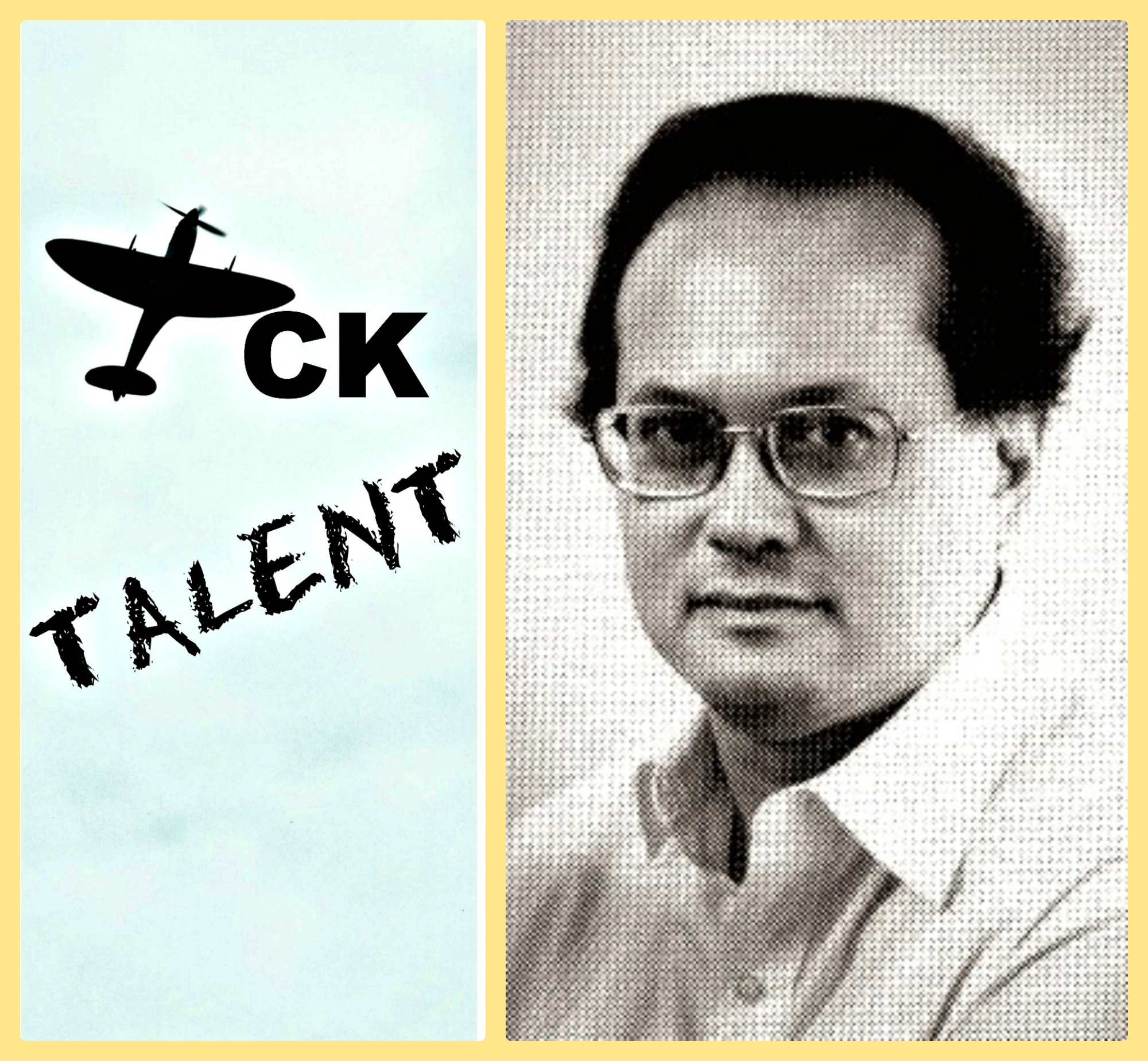
TCK TALENT: Gene Bell-Villada, literary critic, Latin Americanist, novelist, translator and TCK memoirist

Gene B-V TCK Talent

Professor Gene Bell-Villada (own photo)

Elizabeth (Lisa) Liang is here with her first column of 2015. For those who haven’t been following: she is building up quite a collection of stories about Adult Third Culture Kids (ATCKs) who work in creative fields. Lisa herself is a prime example. A Guatemalan-American of Chinese-Spanish-Irish-French-German-English descent, she has developed her own one-woman show about growing up as a TCK, which is receiving rave reviews wherever it goes.

—ML Awanohara

Happy New Year, readers! Today I’m honored to be interviewing Gene Bell-Villada, author of the Third Culture Kid memoir Overseas American: Growing Up Gringo in the Tropics and co-editor of my first published essay in the TCK/global-nomad anthology: Writing Out of Limbo. Gene grew up in Latin America and “repatriated” to the USA for college and beyond; he is a Professor of Romance Languages (Spanish), Latin American Literature, and Modernism at Williams College in Williamstown, Massachusetts. He is also a published writer of fiction and nonfiction.

* * *

Welcome to The Displaced Nation, Gene. Like me, you’re an Adult Third Culture Kid of mixed heritage. Since you were born in Haiti and grew up in Puerto Rico, Cuba, and Venezuela as the son of an Asian-Polynesian mother from Hawaii and a WASP father from Kansas, your identity development was complex and nuanced, as you make clear in your memoir.  Can you tell us how you identify yourself these days?
Like the title of my memoir, I identify myself as an Overseas American, of mixed WASP and Chinese-Filipino-Hawaiian ethnicity, with a Caribbean-Hispanic upbringing. I wrote my memoir in great measure to disentangle and explain that background—for myself and others! More broadly, in my middle 20s, it dawned on me that, by default, I happened to be a cosmopolitan, and that I couldn’t feel “local” even if I wished to. And so, I set out to make the best of that cosmopolitanism and build on it.

OverseasAmerican_cover

Tell us two things you miss about each of your childhood countries.
From my three childhood countries, I miss mostly the Latin informality and warmth…and salsa dancing! From Puerto Rico, I’ve fond memories of the University campus that was next door to my first home in Río Piedras, and where my mother would take us for walks. From Cuba I miss the richness of the music and folk culture. About Caracas, 3,000 feet above sea level, I remember its mild climate and “eternal spring.”

“Puerto Ricans do a lot of hugging, Dickie reflected. His parents and relatives almost never did.”

Your TCK childhood had extra upheaval due to your parents’ divorce and your two years at a military school in Cuba while your parents each lived in other countries. I imagine that affected your feelings about where you lived.
I must admit, I don’t “miss” most of what I lived in my 17 years in the Spanish Caribbean. I had a very difficult childhood, in which I never really “belonged” to any of those countries, had little contact with the expat community, and was leading a painful, dysfunctional family life. Since my brother and I were put away in a military school in Cuba, it’s not a place that I would “miss.” The circumstances of my upbringing have made childhood nostalgia an elusive sentiment for me.

After a young adulthood in New Mexico (briefly), Arizona, California, Massachusetts, and New York—and some trips to Europe—you settled in Williamstown, MA.  When did you come to feel that it was home, inasmuch as any place can be for an ATCK?
My wife and I actually have had homes in two locations in Massachusetts: Williamstown and Cambridge. So we lived both in the city, where we had our home life, and the country, where I taught. And I guess I realized sometime in the 1970s that New England had become my home. The place had enough cultural density, layered history, and overall cosmopolitanism for me to feel at ease in those parts. (I’d also earned my Ph.D at Harvard.) I even turned down a job offer from UCLA in 1976 because by then I felt attached enough to Massachusetts to stay there. Plus, I didn’t look forward to living in my car on the LA freeways, or putting up with Los Angeles pollution, which was fairly serious back then!

“‘Ah, but you speak such good Spanish…'”

Have you returned to any of the Latin American countries in which you grew up? 
I’ve been back to Puerto Rico and to Venezuela, always experiencing those mixed feelings. When I visited my old neighborhood in Hato Rey, PR, in 2012, I found it largely changed. Moreover, during a previous visit to San Juan in 1985, I went for a stroll at the University grounds. At the sight of the palm trees at the entrance and the tower looming above it all, I fell to the ground, crying. It was a reminder that much of my youth there, when I’d believed that I was an “American” boy in the tropics, had been illusory.

As for Cuba, I could only go back under very specific conditions—not because of the regime, which I’m not against, but owing to my painful personal memories of the place. I worry that seeing certain streets and buildings might elicit a wrenching sadness in me.

Since you’re a professor of Latin American literature and have written about the heavyweights in the field, I presume you’ve also visited quite a few countries in the region at this point. What were your impressions?
Inasmuch as I’ve written books and articles about Borges, García Márquez, Vargas Llosa, and Mexican literature, I’ve been more than once to Argentina, Colombia, Perú, and Mexico. Going to and traveling in those countries brought insight into their literary works that one cannot get simply from reading them in one’s study. On the other hand, my Latin American and Caribbean background proved enormously helpful in accessing the culture and the society of those places. Indeed, García Márquez’s world is the Caribbean coast of Colombia; exploring that area in 1982 and 1988 was a lot like being back in San Juan and Havana! Writing about it was fun, a bit like a return to my childhood, without the pain.

“She was from New York. Didn’t people from New York listen to classical music?”

Although you have always had a passion for classical and Latin music, you ultimately found ways to express yourself through writing fiction and nonfiction. Does music still play a big role in your life? 
Music is my first love. If I hadn’t had a late start at the piano (a fact that unfortunately set me back several years), I might have stayed with it. I turned to literature, in some measure, because it didn’t require advanced hand-muscle skills! But once I got involved with the written word, I strived to make my prose style as artistic, expressive, and fun as music can be, and I worked to give it rhythm and melody. (Someone has remarked that I write like a musician.) I still play piano, though.

Is there a particular work that you are most proud of having written, and if so, why?
I feel equally attached to all of them! Each one has had its role in my life. My books on Borges and García Márquez (which have sold well and gone through second editions) are used in AP courses, and are consulted by general readers, here and abroad. From early on, I had set out to be a “cultural mediator” between Latin American literature and U.S. readers, and those volumes serve that purpose.

My book Art for Art’s Sake and Literary Life, on the other hand, grew out of my cosmopolitanism and my desire to deal with the uses of art as both escape and expression. (In some subliminal way, it’s autobiographical.) The volume covers the phenomenon of aestheticism in Europe, the U.S., and Latin America. I felt vindicated when the thing was a finalist for the 1997 National Book Critics Circle Award (there I was, sharing space with Cynthia Ozick and William H. Gass). It also got translated into Serbian and Chinese! When I asked my two translators just what had drawn them to the book, they both replied that what I’d said about Latin American aestheticism was also applicable to analogous 19th-century movements in Serbia and Taiwan. So my cosmopolitanism had shed light on some corners elsewhere in this world.

My two books of fiction focus in part on TCK issues, plus such cultural-specific matters as American relativism or the seductive influence of Ayn Rand.

But I finally turned to memoir because I felt it was the way to confront head-on the question of my crazy, mixed-up background, to make sense out of it all and give it a living shape. The process of remembering that past, and crafting it and getting it out there, has proved enormously therapeutic. It also led to my meeting Nina Sichel and, then, you, Lisa, via our essay collection, Writing Out Of Limbo!

My latest volume is a kind of experiment, starting with its very title: On Nabokov, Ayn Rand and the Libertarian Mind: What the Russian-American Odd Pair Can Tell Us about Some Values, Myths and Manias Widely Held Most Dear. Besides dissecting the two authors, I tease out my troubled relationship to them, delve once again into my own life history, and finally move on to the larger problem of a rising, spreading libertarianism in this country. There’s even an Appendix in which I throw in a number of spoofs of my own of hard-line libertarians! (I’ve been playing with satires of something or other ever since I was in middle school in Puerto Rico…)
on-nabokov-ayn-rand-and-the-libertarian-mind_cover

You’re a true international creative, with works that run the entire gamut! Tell us, what’s next? Fiction? Nonfiction? Something else?
I have stuff in the works, but am in the process of rethinking my projects in the wake of my wife’s death in 2013. (Widowerhood does things to your mind and spirit, alas.)

Where can people find your works?
All my books are available from Amazon and local bookstores, as well as from any good library!

Thank you, Gene, for sharing your wonderfully inspiring story with the Displaced Nation. So, readers, any questions or comments for Gene? Be sure to leave them in the comments!

Editor’s note: All subheadings are taken from Gene’s book The Pianist Who Liked Ayn Rand: A Novella & 13 Stories.

STAY TUNED for our next fab post.

If you enjoyed this post, we invite you to register for The Displaced Dispatch, a round up of weekly posts from The Displaced Nation, with seasonal recipes, book giveaways and other extras. Register for The Displaced Dispatch by clicking here!

Related posts:

LOCATION, LOCUTION: Author and part-time expat Susan Jane Gilman, who plunders her life for memoir and fiction

JJ Marsh Susan Jane GilmanWe welcome JJ Marsh back to the Displaced Nation for her first “location, locution” column of the new year, in which she talks to current authors about their methods for portraying place in their works.

My guest this month is the precocious and prolific Susan Jane Gilman. She is the author of three acclaimed nonfiction works:

  1. A travel memoir, Undress Me in the Temple of Heaven
  2. A memoir of her upbringing in New York City Hypocrite in a Pouffy White Dress, and
  3. An advice book, Kiss My Tiara.

And now she has a novel, a work of historical fiction called The Ice Cream Queen of Orchard Street, which came out in February of last year.

Gilman has also contributed to numerous anthologies, worked as journalist, and written for many well-known publications including the New York Times, Los Angeles Times, Real Simple, and Us magazine. And she claims to have opened the Susan Jane Gilman Institute for Advanced Gelato Studies here in Geneva.

Oh, did I mention she is an expat?

Though made, born, and raised in New York City, and educated at Brown University and the University of Michigan (MFA in Creative Writing), Gilman currently divides her time between Switzerland and the United States.

Perhaps she developed her wanderlust through exposure to her high school English teacher (she went to Stuyvesant), the Pulitzer Prize-winning Irish-American memoirist Frank McCourt. In any event, she holds him accountable for her decision to become a writer.

Now let’s find out how Gilman perceives the connection between location and locution.

* * *

Which comes first, story or location?
Before I sit down to write, I need a sense of narrative, of a who-what-where, but so often, story and location are intertwined. Undress Me in the Temple of Heaven, for example, is the true story of a disastrous backpacking trip I made through the People’s Republic of China in 1986. To separate the story from the place is simply impossible; so much of what made the trip horrific was the poverty and totalitarianism of China itself; I can’t imagine that my travel companion and I would have disintegrated in the same way at, say, the Canyon Ranch Spa or a luxury resort in the Maldives. Similarly, my novel, The Ice Cream Queen of Orchard Street, is a rags-to-riches-to-indictment story that begins with a child immigrating to the USA in 1913. New York City was simply the logical place to have it begin. It is not only my hometown but, of course, the great immigrant gateway to America.

location locution gilman

Lower East Side New York City @1910, credited to the Brown Brothers [Public domain], via Wikimedia Commons; cover art.

What’s your technique for evoking the atmosphere of a place?
First, I usually describe vivid, visual details so that readers can see a place in their mind’s eye. Then I go for are the smells. Smell is the most evocative of all the senses. It brings a place to life more potently than anything else. Add sounds, and there you are. I’m afraid I’m sounding glib in the way that I’m saying this—”use all the senses”—it sounds easy, and it sounds like a recipe. But it’s not. I really struggle and strive to conjure a place, be it a roadside restaurant, a German city, an abandoned tenement, using incisive, significant details. I’m always on “cliche alert.”

Which particular features create a sense of location? Landscape, culture, food?
Background noises, cooking smells, shadow and light, voices, architecture…there are no given particulars. I try to find what is most unique and evocative and go with it.

How well do you need to know the place before using it as a setting?
Saul Bellow wrote a whole novel set in Africa, apparently without having set foot once on the continent. I find this presumptuous. That said, I have written about places that I’ve only been in briefly, or glimpsed, or created out as a composites of other places I’ve been. But I like to have a feel for a place; I need to be able imagine it throughly, to exist in it. Often, if a character needs to be in a place that I’ve never been to, I research it as much as possible. The Internet is a godsend; I find old photographs or use Google Earth. I try to travel there in whatever way I can.

Can you give a brief example of your work which illustrates place?
I don’t have any of my books in front of me because I’m on the road, but read the very first paragraph of The Ice Cream Queen of Orchard Street and you’ll immediately find yourself on the Lower East Side of Manhattan in 1913. Read the first page of Undress Me in the Temple of Heaven and you’re on board a plane plummeting into Hong Kong; the next six pages take you right into downtown Kowloon at night, with all its lurid traffic, neon, and squalor. I’ve been told by readers that these sections have utterly transported them…

Gilman Kowloon Undress_medium

“Typical street scene in downtown Kowloon,” by VasenkaPhotography via Flickr (CC BY 2.0); cover art.

Which writers do you admire for the way they use location?
I love the way Richard Ford conjures up the American West, John Cheever the Connecticut suburbs, Junot Díaz the Dominican community in New York City and Dominica. That said, I usually don’t admire writers so much as specific books, eg:

And, in a different way, I have always admired Anne Tyler for the way she conjures up so well these cosy, fraught, detailed middle class American households. She is stunning in her ability to make you see rooms, houses, offices—small, intimate tableaux—in such a rich way.

Locations need not be exotic or epic, just alive and relevant.

* * *

Readers, if this interview has piqued your curiosity about Susan Jane Gilman and her writings, I encourage you to visit her author site. You can also follow her on Twitter.

JJ Marsh grew up in Wales, Africa and the Middle East, where her curiosity for culture took root and triggered an urge to write. After living in Hong Kong, Nigeria, Dubai, Portugal and France, JJ finally settled in Switzerland, where she is currently halfway through her European crime series, set in compelling locations all over the continent and featuring detective inspector Beatrice Stubbs.

STAY TUNED for next week’s fab posts!

If you enjoyed this post, we invite you to register for The Displaced Dispatch, a round up of weekly posts from The Displaced Nation, with seasonal recipes, book giveaways and other extras. Register for The Displaced Dispatch by clicking here!

Related posts:

3 anti-New Year’s resolutions for expat creatives, courtesy of the Lord of Misrule

LordofMisrule

“Lord of Misrule,” by _william via Flickr (CC BY-SA 2.0).

The start of a new year, and I’ve been struggling to think of just the right blessing, words of encouragement or meditation to inspire you (and myself for that matter) in the climb to reach new summits in your creative pursuits of 2015.

But here it is, the last day of Christmas, what some of us refer to as Three Kings Day or Epiphany—and I find myself with, well, no epiphanies.

Rather, my mind seems to have been taken over by the Lord of Misrule, a figure of mischief who presided over medieval celebrations of the 12th day of Christmas, or Twelfth Night—known to the Romans in pre-Christian times as Saturnalia (the Celts had their own version: Samhain).

* * *

Wait just a second… The Lord of Misrule is dragging me into the Feast of Fools and offering me a tankard of wassail. He has invited me to give a speech to the assembly. Well, here goes:

“Lords and ladies of the Feast, I am enjoying this occasion when we all have license to behave as fools.

In that spirit, I’d like you join with me in cursing—you heard it right, CURSING—my compatriot Clement Clarke Moore, who wrote a poem about St. Nicholas. I think it should have ended here:

And mamma in her ‘kerchief, and I in my cap,
Had just settled down for a long winter’s nap…

I ask you: Was it really necessary for St. Nick to bound down the chimney just as that poor couple was finally getting some rest?

In that same vein, let us also condemn whoever it was who invented the New Year’s custom of making resolutions!

Surely, what most of us want to do on January 1 is get back to that long winter’s nap and hibernate for a bit?

Where I live, we are now preparing for a second Arctic blast, even colder than the first.

Under these conditions, I would be doing well to get the dog out for a walk and myself to the office—especially as it has just started snowing. Indeed, the last thing I need at this point is one of those lists of 52 goals to accomplish in 2015.

I’ll be lucky if I can remember where I stored my old snow boots.”

* * *

Okay, here I am again. (They gave me a standing ovation, btw. If they ask for an encore, I’ll bring up my new campaign to refer to the Year of the Sheep as the Year of the Alpaca instead, so much cuter!)

But listen, I haven’t completely abrogated my duty of leaving you with some thoughts at the start of the 2015.

At the encouragement of my new best friend, the Lord of Misrule, I present 3 anti-New Year’s resolutions, which you’d do well to heed:

1) There’s nothing wrong with easing in to the new year.

Readers who follow us closely will remember that we recently posted an excerpt from a contribution made by Philippa Ramsden, a Scot who lives in Burma, to columnist Shannon Young’s Dragonfruit anthology. Philippa talks about finding out she has cancer as she reaches the Tropic of Cancer. Well, as her first post of the year to her blog, Feisty Blue Gecko, suggests, she plans not to lean in but to ease in to 2015. I see nothing wrong with that, particularly for those of us, myself included, who found 2014 difficult year because of health issues or losses in their families (not for everyone Facebook’s “Year in Review” app!). Easy, easy, one day at a time. Resolutions can wait.

2) Read what you want to, not what you have to, for a while.

To illustrate this point, allow me to spin a quick travel yarn. My husband and I spent Christmas-into-New Year’s in the arty little town of Hudson, New York, staying in this house with a Parisian-style mansard roof (who knew?):
Hudson_House
It was the kind of house that made you want to sit by the window with a good book, but for one problem: I forgot to pack my Kindle! At first I was in despair: what’s a poor Kindle-less girl to do? That was before I discovered that the Hudson Valley has a wealth of abandoned books. In nearby Greenport, I found a regency romance by Georgette Heyer (deliciously frothy) and J.B. Priestly’s novel Lost Empires, which, in telling the story of the early 20th-century English music hall, paints some extraordinarily vivid characters. Reading two books I’d encountered by chance, I was reminded of my grad student days, when I would read widely as a break from writing my thesis. I was also reminded of why I chose to live in England so long: I was, and remain, enamored of the way they write novels.

3) Be open to finding inspiration in the most unlikely of places.

In the era of social media, there are countless gurus who tell us how to write, offering writing prompts or daily inspiration—when the truth is, the best inspiration usually comes when you least expect it. To continue with my travel yarn: During our stay in Hudson, we decided to visit the Olana State Historic Site, the home of Frederic Church, one of the major figures in the Hudson River School of landscape painting. I went there thinking I would learn something more about this quintessentially American style of painting, only to find that Church was ONE OF US: an early example of an international creative! Yes, he was American and attached to the Hudson Valley, but he also traveled extensively through Europe and the Middle East—Beirut, Jerusalem, and Damascus—with his wife and children and, before marriage, had explored South America. Fittingly, the house he and his wife designed is a mash-up of Victorian, Persian and Moorish styles:

"Olana2006 3 edit1" by Rolf Müller - Own work. Licensed under CC BY-SA 3.0 via Wikimedia Commons - http://commons.wikimedia.org/wiki/File:Olana2006_3_edit1.jpg#mediaviewer/File:Olana2006_3_edit1.jpg

“Olana2006 3 edit1” by Rolf Müller – Own work. Licensed under CC BY-SA 3.0 via Wikimedia Commons.

My goodness, I thought to myself, did they design this place anticipating it would one day be visited by displaced people like us?!

* * *

Okay, the Lord of Misrule is signaling that it’s time to get back to the old wassail bowl and sing a tune for the 12th-night crowd.

Here goes:

With a hey-ho and the snow and the wind,
May you build your own Olana in 2015,
But that’s all one, this post is done.

STAY TUNED for our next post!

If you enjoyed this post, we invite you to register for The Displaced Dispatch, a round up of weekly posts from The Displaced Nation, with Alice nominees, exclusive book giveaways and other extras. Register for The Displaced Dispatch by clicking here!

Related posts:

LOCATION, LOCUTION: Anthony St. Clair, author of urban fantasies whose plots are globally sourced

JJ Marsh Anthony St Clair

Columnist JJ Marsh (left) talks to “rucksack” urban fantasy writer Anthony St Clair about how he translates his travels into works of fiction.

In this month’s Location, Locution, JJ Marsh talks to Anthony St. Clair, author of the Rucksack Universe books, a series of urban fantasy travel novels set in Hong Kong, India and Ireland. When he’s not concocting the kind of fiction that thrills, delights and bewilders in the spirit of Neil Gaiman, Terry Pratchett, Douglas Adams and Tom Robbins, St. Clair is making a living as a copywriter, blogger and editor. He loves writing about business and anything related to craft beer, homebrew, travel (he’s a self-described globe-trotter), food, and the Pacific Northwest.

Which comes first, story or location?
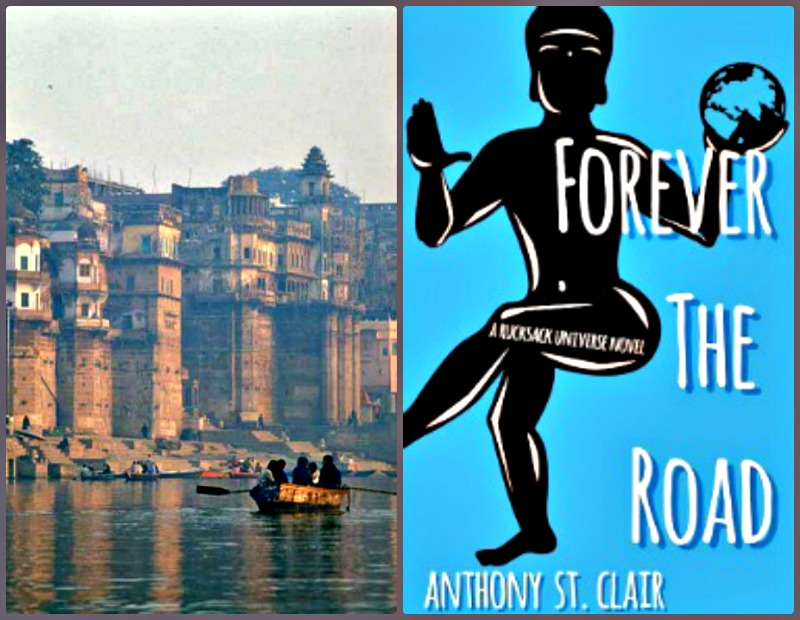
Location. My original idea for Forever the Road, the most recently published book in my Rucksack Universe series, came to me in 2003, when I spent two months traveling through India. As the story took shape, I created a fictional city and river, both called Agamuskara, which is Hindi for “smiling fire.” Both the river and the city are pivotal to the action of the story and what happens with the book’s various characters. But I don’t think I could have come up with either the story or the location without having also traveled through India, especially the city of Varanasi, the holy city on the banks of the Ganges, which Agamuskara is based on.

Photo credit: "Ganges River, Varanasi, Uttar Pradesh, India," by Babasteve via Flickr (CC BY 2.0).

Photo credit: “Ganges River, Varanasi, Uttar Pradesh, India,” by Babasteve via Flickr (CC BY 2.0); Forever the Road cover art.

What’s your technique for evoking the atmosphere of a place?
Have you ever noticed that when you go somewhere new, it’s like you notice everything and experience it more intensely? It’s like our guard comes down. We see, hear, smell, taste, and touch with an intensity and openness that we don’t usually bring to our day-to-day encounters with the world outside ourselves. I try to relate the atmosphere of a place by evoking all the senses. Is the place hot or cold? Crowded or sparse? What does it smell like? What does the food taste like? What are the colors? Sense helps us get to know a place, and evoking the senses works just as well in a book as it does in actual travel.

Which particular features create a sense of location? Landscape, culture, food?
All of the above. Landscape, culture, and food affect each other. What the land is like affects the food that can be available. Place shapes culture, because place drives so much of our experiences. Likewise, food has an influence on how culture connects and evolves. After all, how many of our most pivotal experiences have to do with a meal, or a particular moment in a new place, or by experiencing and trying to understand an aspect of a different culture?

Can you give a brief example of your work which illustrates place?
This excerpt is from Chapter 2 of Forever the Road, which was released September 8th in e-book, all formats, and trade paperback (more information here).

The rattling truck moved so fast that the world passed in a blur, but Jay marveled at all he saw. Countless people wore brilliant colors and smiled from weathered, driven faces. They defied the washed-out landscape and the humid mat of the air. Every village had been here before time was time, it seemed. Each village also brought a glimpse of temples and shrines, elephant-headed gods, bulls, monkeys, multi-limbed deities rendered in brick, stone, concrete, and reverence.

Approaching Agamuskara, Jay now understood that India was four things: heat, humans, history, and gods. They shaped India not so much into a country or a culture but a world. India was all of the world, all of time in every passing moment, and every emotion, every depravity and transcendence, every hope realized and every futility suffered, of all the human race.

And, gods, was India heat. Humid, blazing, sopping heat. India felt as if wet blankets had been baked for an hour in a pot of water, then, steaming and boiling, wrapped around the country. Even Jay’s sweat glands felt sluggish. The humidity jellied the will. It softened the wood of the few meager trees. Even the concrete blocks of houses and shacks seemed to sag, drip, and simmer in the midday, clear-sky blaze of sunlight.

The truck turned onto a highway, renown throughout northeastern India for being maintained. The road reminded Jay of the interstate highways of his left-long-ago home, except that as far as the traffic was concerned, the four lanes were simultaneously one lane, three lanes, twenty lanes, and no lanes. Still, the truck’s consistent speed and motion brought a soothing breeze to Jay’s skin, and the smooth road took him from a blazing sear to a nearly gentle simmer.

For once, Jay’s tenderized rump stayed in one merciful, bounceless spot. After a few kilometers, he relaxed like a roast chicken resting after coming out of the oven.

How well do you need to know the place before using it as a setting?
I want to visit a place before I write about it, and so far all my stories draw on places I’ve visited. Whether or not I’ve traveled there, I also use substantial research to try to understand a place as best I can, but there is no substitute for having been there. Nothing compares with eating the food, walking the quiet streets at dawn, observing the tiny everyday details that make a place its own.

Which writers do you admire for the way they use location?
I’ve spent many a time immersed in the works of Bill Bryson and Pico Iyer, and I try to bring their mix of place and experience into my own style. However, when it comes to using location in story, I admire Terry Pratchett the most. His long-running Discworld, a comic fantasy book series, is not only full of funny, richly told fantasy stories, but he clearly works hard to weave the setting into the story. Whether a book is set in a city or the mountains, it is always clear that a sense of place is key to the characters and events unfolding in the book. I try to evoke a similar connection in my own work. There’s an old saying that character is destiny, but I would add that place shapes character.

Thank you, Anthony! That was fascinating. Readers, if this interview has piqued your curiosity about Anthony and his writings, I encourage you to visit his author site. You can also follow him on Twitter.

* * *

Next up on Location, LocutionSusan Jane Gilman, Geneva resident and author of the New York Times bestseller The Ice Cream Queen of Orchard Street. Until then, I wish you happy holidays. See you next year!

JJ Marsh grew up in Wales, Africa and the Middle East, where her curiosity for culture took root and triggered an urge to write. After living in Hong Kong, Nigeria, Dubai, Portugal and France, JJ finally settled in Switzerland, where she is currently halfway through her European crime series, set in compelling locations all over the continent and featuring detective inspector Beatrice Stubbs.

STAY TUNED for our next fab post!

If you enjoyed this post, we invite you to register for The Displaced Dispatch, a round up of weekly posts from The Displaced Nation, with seasonal recipes, book giveaways and other extras. Register for The Displaced Dispatch by clicking here!

Related posts:

BOOKLUST, WANDERLUST: Best of 2014 in expat books (1/2)

Best of Expat Books 2014

Kindle Amazon e-reader by Unsplash via Pixabay (CC0 1.0)

Seasons greetings, Displaced Nationers. That special time of the year is here again, when we publish our selection of this year’s books with meaningful connections to expats, Third Culture Kids, global wanderers, and others of us who have in some way led “displaced lives”.

Having assembled this list on my own in years past, I am pleased to be joined this year by Beth Green, our BOOKLUST, WANDERLUST columnist, who has also graciously agreed to sign over her column space for the month.

Let’s give Beth the floor:

Happy holidays, all! Preparing for this yearly special, I went back through all of the books I’ve read since January—not such an easy task; I read a lot!—and realized that I hadn’t actually read all that many that were published in 2014. I just now took a look at my TBR list, to which I’m constantly adding—and saw it includes a few that were written a couple of hundred years ago!

As is the case I suspect for many a well-traveled reader, I read most often on my Kindle, which means that I don’t often look at the title and publication pages to see when the book came out. Probably the book that has stayed with me for the longest this year is The Tiger’s Wife, the debut novel by Téa Obreht, an American writer of Bosniak/Slovene origin. But that came out in 2011!

* * *

And now for some 2014 picks in these three categories (stay tuned for a follow-up post with THREE MORE CATEGORIES!!):

  1. TRAVEL
  2. MEMOIRS
  3. CROSS-CULTURAL CHALLENGES

A few points to note:

  • Books in each category are arranged from most to least recent.
  • Unless otherwise noted, books are self-published.
  • Contributions by Beth are (appropriately enough!) in green.

* * *

TRAVEL

My_Gutsy_story_cover_smallMy Gutsy Story Anthology: Inspirational Short Stories About Taking Chances and Changing Your Life (Volume 2) (October 2014)
Compiled by: Sonia Marsh
Synopsis: Marsh celebrates the gutsy in each of us with this collection of stories from 64 authors who found the courage to face their fears and live their dreams.
Expat credentials: Born to a Danish mother and British father, who brought her to live in West Africa at the age of three months, Marsh has lived in many countries—Demark, Nigeria, France, England, the U.S. and Belize—and considers herself a citizen of the world. With a degree in environmental science from the University of East Anglia, U.K., she is currently living in Southern California with her husband but in 2015 intends to start a new chapter as a Peace Corps volunteer.
How we heard about: We have long enjoyed Marsh’s collection of “gutsy” travel stories and have followed her on Twitter for some time.
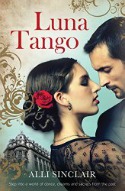

Luna_Tango_Cover_smallLuna Tango (The Dance Card Series Book 1) (Harlequin Mira, July 2014)
Author: Alli Sinclair
Genre: Romance
Synopsis: Tango is a mysterious—and deadly—influence in journalist Danni McKenna’s life. She looks for answers about her mother’s and grandmother’s lives, and finds romance in the process.
Expat credentials: Alli Sinclair is from Australia but lived for many years in South America, where she worked as a mountain and tour guide. She considers herself a citizen of the world.
How we heard about it:  I used to blog with Alli on the now-retired Novel Adventurers and have enjoyed hearing about her book’s path to publication. I was especially thrilled when Luna Tango won Book of the Year in the inaugural AusRom Today Reader’s Choice Awards last month. Congratulations, Alli!
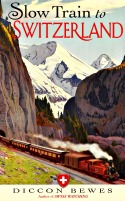

Slow-Train-final-cover_smallSlow Train to Switzerland (Nicholas Brealey Publishing, April 2014)
Author: Diccon Bewes
Genre: Travel history
Synopsis: Bewes follows “in the footsteps” of Miss Jemima Morrell, a customer on Thomas Cook’s first guided tour of Switzerland in 1863, and discovers how this plucky Victorian woman helped shape the face of modern tourism and Switzerland itself, transforming it into the Cinderella of Europe.
Expat creds: An Englishman who grew up in “deepest Hampshire”, Bewes worked for ten years at Lonely Planet and the UK consumer magazine Which? Travel, before moving to Bern, Switzerland, where he is now a full-time writer. He considers himself a “permanent expat.”
How we discovered: I came across Bewes’s blog through a Google Alert and was impressed by how prolific he is. I also liked the fact that he admits to being a chocolate lover. (No wonder he has a thing for Switzerland!)


Kamikaze_kangaroos_cover_smallKamikaze Kangaroos!: 20,000 Miles Around Australia. One Van,Two Girls… And An Idiot (February 2014)
Author: Tony James Slater
Synopsis: Tony James Slater knew nothing about Australia. Except for the fact that he’d just arrived there. The stage is set for an outrageous adventure: three people, one van, on an epic, 20,000-mile road trip around Australia. What could possibly go wrong?…
Expat credentials: As a former writer for the Displaced Nation, what more creds does Tony need?
How we heard about: The Displaced Nation is committed to tracking Tony’s progress as a writer. We are especially fond of his ability to make fun of himself! He wears his travels lightly, you might say…


MEMOIRS
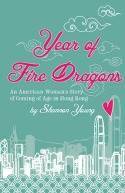
Year_of_Fire_Dragons_cover_smallYear of Fire Dragons: An American Woman’s Story of Coming of Age in Hong Kong (Blacksmith, forthcoming June 2015; available for pre-order)
Author: Shannon Young
Synopsis: When 22-year-old Shannon follows her Eurasian boyfriend to his hometown of Hong Kong, she thinks their long distance romance is over. But a month later his company sends him to London. The city enchants her, forcing her to question her plans. Soon, she will need to choose between her new life and the love that first brought her to Asia.
Expat creds: Shannon is an American twenty-something currently living in Hong Kong. (Reader, she married him!)
How we knew about: Shannon writes our “Diary of an Expat Writer” column and has also been sharing “chunks” from an anthology she edited of writings by women expats in Asia (see listing below: under “Crosscultural Challenges”).


Coming_Ashore_cover_smallComing Ashore (October 2014)
Author: Catherine Gildiner
Synopsis: The third and final in a series of best-selling memoirs by this American who has worked for many years as a psychologist in Toronto and writes a popular advice column in the Canadian women’s magazine Chatelaine. The book begins with Gildiner’s move to Canada in 1970 to study literature at the University of Toronto, where she ends up rooming with members of the FLQ (Quebec separatists), among other adventures.
How we heard about: Book #2 in Chatelaine’s 7 must-read books for November.
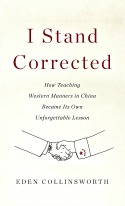

I_stand_corrected_cover_smallI Stand Corrected: How Teaching Manners in China Became Its Own Unforgettable Lesson (Nan A. Talese, October 2014)
Author: Eden Collinsworth
Synopsis: Collinsworth tells the story of the year she spent living among the Chinese while writing an advice manual covering such topics as personal hygiene (non-negotiable!), the rules of the handshake, and making sense of foreigners. (She has since returned to live in New York City.)
How we heard about: Book #3 in Conde Nast Traveler’s 7 Books to Get You Through Travel Delays, Bad Company.


Seven_Letters_from_Paris_cover_smallSeven Letters from Paris: A Memoir (Sourcebooks, October 2014)
Author: Samantha Vérant
Synopsis: At age 40, Samantha Verant’s life is falling apart—she’s jobless, in debt, and feeling stuck…until she stumbles upon 7 old love letters from Jean-Luc, the sexy Frenchman she’d met in Paris when she was 19. She finds him through a Google search, and both are quick to realize that the passion they felt 20 years prior hasn’t faded with time and distance.
How we heard about: From an interview with Vérant by British expat in Greece Bex Hall on her new blog, Life Beyond Borders.


Becoming_Home_cover_smallBecoming Home: A Memoir of Birth in Bali (October 2014)
Author: Melinda Chickering
Synopsis: Though born in small-town USA, Melinda never felt quite at home there. As an adult, her search for herself led her to the Indonesian island of Bali, where she found herself living a life she hadn’t anticipated, becoming a housewife and mother. This memoir of her experience with pregnancy and birth offers a window on life for a western woman living in an Asian culture that respects the forces of darkness as well as the light.
Expat credentials: Originally from Iowa, Chickering has settled in Bali.
How we heard about it: Displaced Nationer Melinda contacted me earlier this year to tell us the exciting news that her memoir was being published. Congratulations, Melinda!
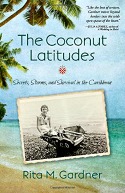

The_Coconut_Latitudes_cover_smallThe Coconut Latitudes: Secrets, Storms, and Survival in the Caribbean (September 2014)
Author: Rita M. Gardner
Synopsis: Rita is an infant when her father leaves a successful career in the US to live in “paradise”—a seaside village in the Dominican Republic. The Coconut Latitudes is her haunting, lyrical memoir of surviving a reality far from the envisioned Eden—and of the terrible cost of keeping secrets.
How we heard about: Displaced Nation columnist James King interviewed Rita for “A picture says”.
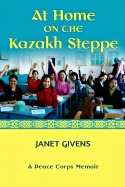

At_home_on_Kazakh_Steppe_cover_smallAt Home on the Kazakh Steppe: A Peace Corps Memoir (August 2014)
Author: Janet Givens
Synopsis: The story a middle-aged grandmother who left behind a life she loved and forged a new identity as an English teacher, mentor, and friend in Kazakhstan, a newly independent country determined to find its own identity after generations under Soviet rule.
How we heard about: Recommended by the We Love Memoirs Facebook Community.


Good_Chinese_Wife_cover_smallGood Chinese Wife: A Love Affair with China Gone Wrong (Sourcebooks, July 2014)
Author: Susan Blumberg-Kason
Synopsis: A shy Midwesterner, Blumberg-Kason spent her childhood in suburban Chicago dreaming of the neon street signs and double-decker buses of Hong Kong. She moved there for graduate school, where she fell for Cai, the Chinese man of her dreams. As they exchanged vows, she thought she’d stumbled into an exotic fairy tale, until she realized Cai—and his culture—where not what she thought. One of our featured authors, Wendy Tokunaga, says: “A fascinating, poignant and brutally honest memoir that you won’t be able to put down. Good Chinese Wife is riveting.”
How we heard about: We had known about the book for some time but hadn’t realized it came out this year Jocelyn Eikenburg tipped us off in her comment below. She, too, highly recommends.
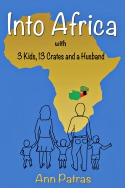

Into_Africa_cover_smallInto Africa: 3 kids, 13 crates and a husband (June 2014)
Author: Ann Patras
Synopsis: Patras was born and raised in Burton-upon-Trent, in the English Midlands. When her husband, Ziggy, is offered a two-year contract as site manager for building a new cobalt plant in Zambia, they discuss the pros and cons of leaving luxuries and England behind—and then decide it could be an “interesting” family adventure. They end up raising three kids, countless dogs and living in Africa for over thirty years. (She and Ziggy now live in Andalucía, Spain, and have absolutely no intention of ever moving again. Hmmm…have they encountered Charlotte Smith yet? See next item.)
How we heard about: E-book promotion.
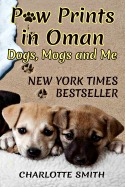

PawPrintsinOman_cover_smallPaw Prints in Oman: Dogs, Mogs and Me (April 2014)
Author: Charlotte Smith
Synopsis: Smith was born, raised and lived in West Sussex, UK, until her persuasive husband, Nick, swept her and their youngest daughter off to live in mystical Oman. Her love of animals helped her to shape an extraordinary life in the Middle East—her first step being to convince a local veterinary clinic to employ her. (Note: Smith now lives in Andalucía, in southern Spain.)
How we heard about: Recommended by the We Love Memoirs Facebook community. The book was also on the New York Times best-seller list (“animals”) in October.


loveyoubye_cover_smallLoveyoubye: Holding Fast, Letting Go, And Then There’s the Dog (She Writes Press, April 2014)
Author: Rossandra White
Synopsis: A collision of crises on two continents forces Rossandra White to face the truth. Just as her American husband disappears to Mexico, her brother’s health crisis calls her back home to Africa, and her beloved dog receives a fatal diagnosis. She faces down her demons to make a painful decision: stay in a crumbling marriage, or leave her husband of 25 years and forge a new life alone.
How we heard about: Through a Facebook share of White’s Good Reads giveaway.
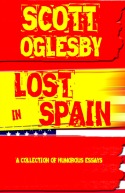

Lost_in_Spain_cover_smallLost in Spain: A Collection of Humorous Essays (March 2014)
Author: Scott Oglesby
Synopsis: Scott Oglesby moved to Spain to start over. When he discovered he was still the same person, now six thousand miles from home, the result was dysfunction, delusion, chaos and this book, which many readers have described as “hilarious” and “brilliant”.
How we heard about: E-book promotion.


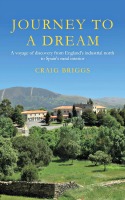
Journey_to_a_Dream_cover_smallJourney to a Dream: A voyage of discovery from England’s industrial north to Spain’s rural interior (February 2014)
Author: Craig Briggs
Synopsis: Craig, his wife Melanie and their dog, Jazz, left their home town of Huddersfield, in England’s industrial north, and set off for Galicia: a remote and little-known autonomous province in the northwest corner of Spain. And so began their Journey to a Dream…
How we heard about: E-book promotion, as a result of which I am currently reading this on my Kindle. It’s very well written and entertaining.


Paris_Letters_cover_smallParis Letters: One woman’s journey from the fast lane to a slow stroll in Paris (February 2014)
Author: Janice Macleod
Synopsis: MacLeod found herself age 34 and single, suffering from burn-out and dissatisfaction. So she abandoned her copywriting job and headed off to Europe, where she ended up finding love and freedom in a pen, a paintbrush…and Paris! Macleod says her journey was inspired by The Artist’s Way, written by Julie Cameron.
How we heard about: From an interview with MacLeod by American expat in Paris Lindsey Tramuta, which appeared on Lindsey’s blog, Lost in Cheeseland.


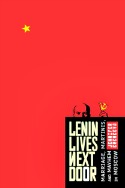
lenin_smallLenin Lives Next Door: Marriage, Martinis, and Mayhem in Moscow (Small Batch Books, January 2014)
Author: Jennifer Eremeeva
Synopsis: Based on Eremeeva’s two decades in Russia, Lenin Lives Next Door is a work of self-described “creative nonfiction.” It knits together vignettes of cross-cultural and expatriate life with sharp observation, historical background, and humor. Each chapter explores an aspect of life in today’s Russia, told with the help of a recurring cast of eccentric Russian and expat characters, including HRH, Eremeeva’s Handsome Russian Husband (occasionally a.k.a. Horrible Russian Husband), and their horse-mad daughter.
How we heard about: Eremeeva sent me a review copy and we met up for coffee at Columbia University. I found her a delightful conversationalist. No wonder several reviewers have likened her style to Jane Austen’s.


CROSS-CULTURAL CHALLENGES
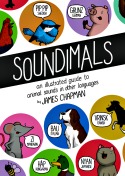
Soundimals_cover_smallSoundimals: An illustrated guide to animal sounds in other languages (November 2014)
Author/illustrator: James Chapman.
Synopsis: In English, we say dogs go WOOF, but in Romanian they go HAM HAM. Chapman regularly publishes illustrations of onomatopoeia and animal sounds in other languages on his Tumblr blog. This book (available through his Etsy shop) collects some of those plus a lot of new sounds that weren’t in the original comics, and a few new animals that haven’t been posted at all.
Expat creds: None that we know of; would love to hear more about how he got started collecting these sounds.
How we heard about: Pinterest.
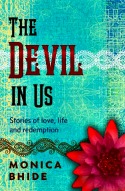

The_Devil_in_us_cover_smallThe Devil in Us (CreateSpace, October 2014)
Author: Monica Bhide
Genre: Literary fiction
Synopsis: Short stories that carry you to a far away place, amidst people seemingly very foreign to you, but somehow create a connection—from the Indian-American cancer survivor escaping her pain and finding passion in Mumbai, to the Japanese teen in Georgetown discovering forbidden love. Bhide is known for her writings about Indian food. This is her first work of fiction.
Expat creds: Monica is originally from Delhi, India, but has lived in Bahrain ad now in the United States.
How we found out about: Pinterest.
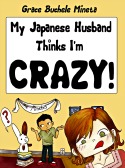

Japanese_Husband_cover_smallMy Japanese Husband Thinks I’m Crazy! The comic book: Surviving and thriving in an intercultural, interracial marriage in Tokyo (October 2014)
Author: Grace Buchelle Mineta
Genre: Comics/manga; humor
Synopsis: The autobiographical misadventures of a native Texan freelancer and her Japanese “salaryman” husband, in comic book form.
Expat credentials: Mineta grew up mostly in Texas, but also spent her teenage years in Accra, Ghana and Sapporo (Hokkaido), Japan. She now lives in Tokyo with her Japanese husband (they got married in January) and blogs at Texan in Tokyo.
How we found out about: From a guest post by Mineta on Jocelyn Eikenburg’s blog, Speaking of China, titled The “Dark Side” to Moving Across the World for Love.
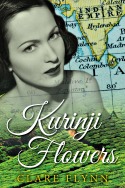

Kurinji_Flowers_cover_smallKurinji Flowers (October 2014)
Author: Clare Flynn
Genre: Historical romance
Synopsis: Set in South India during World War II and India’s struggle for independence, the book is centered on a young British colonial, Ginny Dunbar, who has arrived in India for a new start in life. She has to battle her inner demons, the expectations of her husband, mother-in-law, and colonial British society, and her prejudices towards India and its people.
Expat credentials: Flynn is a repeat expat, having lived for two years each in Paris and Brussels, three years in Milan, and six months in Sydney, though never in India. She now lives in London but spends as much time as she can in Italy. Almost needless to say, Flynn loves travel and her idea for this book came while she was on holiday in Kerala, India.
How we knew about: Flynn was interviewed by JJ Marsh for the latter’s popular column, LOCATION LOCUTION.
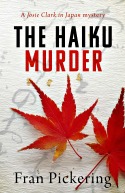

The_Haiku_Murder_cover_smallThe Haiku Murder (Josie Clark in Japan mysteries Book 2) (October 2014)
Author: Fran Pickering
Genre: Expat mystery series
Synopsis: A haiku-writing trip turns to tragedy when a charismatic financier falls from the top of Matsuyama castle. But was he pushed? Expat Londoner Josie Clark thinks he was, and that’s when the trouble starts…
Expat credentials: Pickering has lived and worked in Tokyo, and though she is now back in London (literally next door to where she was born), she travels back to Japan frequently to visit friends and do research for the Josie Clark mystery series.
How we heard about: Pickering was interviewed by JJ Marsh for the latter’s popular column, LOCATION LOCUTION.
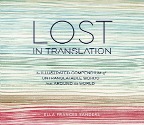

LostinTranslation_cover_smallLost in Translation: An Illustrated Compendium of Untranslatable Words from Around the World (September 2014)
Author: Ella Frances Sanders
Genre: Illustration/Translation
Synopsis: Did you know that the Japanese language has a word to express the way sunlight filters through the leaves of trees? Or that there’s a Finnish word for the distance a reindeer can travel before needing to rest? This book is an artistic collection of more than 50 drawings featuring unique, funny, and poignant foreign words that have no direct translation into English.
Expat credentials:  A self-described “intentional” global nomad, Sanders has lived all over the place—most recently Morocco, the United Kingdom, and Switzerland.
How we heard about: From a post about the book by Maria Popova on her much-acclaimed Brain Pickings site.


Everything_I_Never_Told_You_cover_smallEverything I Never Told You (Penguin, June 2014)
Author: Celeste Ng
Genre: Thriller
Synopsis: A mixed-race family in the 1970s tries to unravel a family tragedy.
Expat credentials: Celeste Ng isn’t an expat, but she has a deep understanding of what it means to feel displaced. Her work deals with multiculturalism and race issues in the United States.
How we heard about it: It was voted the Amazon Book of the Year.
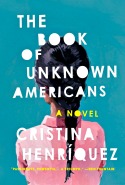

TheBook_Of_Unknown_Americans_smallThe Book of Unknown Americans (Knopf, June 2014)
Author:  Cristina Henríquez
Genre: Literary fiction
Synopsis: Arturo and Alma Rivera have lived their whole lives in Mexico. One day, their beautiful fifteen-year-old daughter, Maribel, sustains a terrible injury, one that casts doubt on whether she’ll ever be the same. And so, leaving all they have behind, the Riveras come to America with a single dream: that in this country of great opportunity and resources, Maribel can get better.
Expat credentials: Henríquez isn’t an expat, but her father was—he came to the US from Panama to attend university.
How we heard about it: Henríquez’s novel was Amazon’s No. 1 bestseller this year in the Hispanic American Literature & Fiction category.


TheOtherLanguage_cover_smallThe Other Language (Pantheon, April 2014)
Author: Francesca Marciano
Synopsis: A collection of short stories involving women who are confronted by radical change or an old flame, in locations that range from New York to India to Kenya to southern Italy.
Expat credentials: Marciano is an Italian novelist who left Rome at age 21 to live in the United States. She later moved to Kenya, where she lived for a decade. Although Italian is her first language, she chooses to write in English.
How we found out: From an essay by William Grimes in the New York Times Book Review: “Using the Foreign to Grasp the Familiar: Writing in English, Novelists Find Inventive New Voices.”


Dragonfruit_cover_smallHow Does One Dress to Buy Dragon Fruit: True Stories of Expat Women in Asia (April 2014)
Editor: Shannon Young
Genre: Expat non-fiction; anthology
Synopsis: In this collection, 26 women reveal the truth about expatriate life in modern East Asia through original works of memoir and creative non-fiction.
Expat credentials: To qualify for inclusion in the volume, writers had to be able to say they were, or had once been, expats.
How we heard about: We have followed Shannon Young ever since she contributed to the Displaced Nation on the topic of the London Olympics. She currently writes a column for us about being an expat writer, and we’ve been sharing “chunks” from her Dragonfruit anthology for the past few months.


Chasing_Athens_cover_smallChasing Athens (April 2014)
Author: Marissa Tejada
Genre: Romance
Synopsis: When Ava Martin’s new husband unexpectedly ditches her months after they’ve relocated across the world to Greece, the heartbroken American expat isn’t sure where home is anymore. On the verge of flying back to the States with her tail between her legs, she makes an abrupt decision to follow her gut instead and stay on in Greece, until a crisis back home forces her to decide where she truly belongs.
Expat credentials: A Native New Yorker, Tejada is an author, writer and journalist based in Athens, Greece. Living the expat life in Europe inspired her to write her debut novel.
How we heard about it: Again, from an interview conducted by British expat in Greece Bex Hall on her blog, Life Beyond Borders.


Moving_without_Shaking_cover_smallMoving Without Shaking: The guide to expat life success (from women to women) (April 2014)
Author: Yelena Parker
Genre: Guidebook-meets-memoir
Synopsis: Parker draws from the experiences and views of 9 women who have lived across 12 countries, to craft a resource for those who are dreaming of—or already facing—relocation abroad.
Expat creds: Parker herself is originally from Eastern Ukraine but has lived and worked in the US, Switzerland, the UK and Tanzania. She has chosen London as her latest expat location.
How we heard about: From a Google Alert.
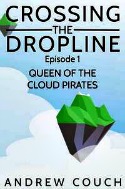

QueenOfCloudPirates_cover_smallQueen of the Cloud Pirates (Crossing the Dropline Book 1) (March 2014)
Author: Andrew Couch
Genre: Fantasy novella
Synopsis: Far to the North of the Iron League core cities lies the Dropline. Beyond this line of cliffs the power of elemental Air rules supreme. The crucial region is threatened and two young men stand at the tipping point. In order to survive, they must learn to work together and rise above their own shortcomings. Oh yeah, and escape from pirates. Don’t forget the pirates….
Expat credentials: An American abroad, Couch lives with his wife in Freiburg, Germany. He says that much of the inspiration for the worlds he writes about is a mix of a wild and crazy imagination (he grew up reading fantasy books) and his travels around the world.
How we found out about: Couch contributes the HERE BE DRAGONS column to the Displaced Nation, focusing on the connection between the displaced life and fantasy writing (more powerful than any skeptics out there might think!).
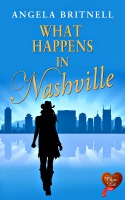

What_Happens_in_Nashville_cover_smallWhat Happens in Nashville (March 2014)
Author: Angela Britnell
Genre: Romance (“choc lit”)
Synopsis: Claire Buchan, a straight-laced barrister from Exeter, UK, flies to Nashville, Tennessee, to organize her sister Heather’s bridal bash—and quickly finds herself out of her comfort zone and into the arms of a most unsuitable beau…
Expat credentials: Britnell grew up in a small Cornish village in southwestern England. She served in the Royal Navy for almost six years, culminating in an assignment in Denmark, where she met her American husband. Thus began a chronic expat life. The couple, now empty nesters, have settled in Brentwood, Tennessee.
How we heard about: Rosie Milne wrote about Britnell in an article that appeared on Telegraph Expat: “Expat romantic novelists inspired by real life.” (Milne btw lives in Singapore and runs Asian Books Blog.)


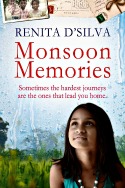
Monsoon_Memories_cover_smallMonsoon Memories (January 2014)
Author: Renita D’Silva
Genre: Literary fiction
Synopsis: Sometimes the hardest journeys are the ones that lead you home. Exiled from her family in India for more than a decade, Shirin and her husband lead a comfortable but empty life in London. Memories of her childhood fill Shirin with a familiar and growing ache for the land and the people that she loves. With the recollections, though, come dark clouds of scandal and secrets. Secrets that forced her to flee her old life and keep her from ever returning…
Expat credentials: Now living in the UK, Renita grew up in a picturesque coastal village in South India.
How we heard about: Amazon.
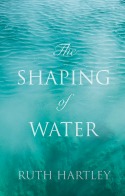

The_Shaping_of_Water_cover_smallThe Shaping of Water (December 2013—we’re letting it squeak in!)
Author: Ruth Hartley
Genre: Literary fiction
Synopsis: The story concerns the overlapping lives of several different people, expats and locals or some mix, who are connected to a ramshackle cottage by a man-made lake in Central Africa during the Liberation wars across its region.
Expat credentials: Hartley grew up on her father’s farm in Zimbabwe, which at that point was known as Rhodesia, at a time when struggles for independence in European-ruled African territories were spreading like a wave. As a young woman, she moved to South Africa to study art and then had to escape to England because of her political activities. She later moved back to Africa, as an expat. She now lives in Southern France.
How we heard about: I discovered Hartley via one of my social networks and then decided to approach her about being interviewed for the Displaced Nation.

* * *

Your turn readers: Have you read any of the above works and if so, what did you think of them? And can you suggest other works to add to the list? Beth and I look forward to reading your comments below!

From Beth:
Intrigued by some of these titles? Go on, download a few! ‘Tis the season to support the output of other international creatives!

Finally, please note: Beth and I may repeat this exercise in six months (summer reads!). But if you can’t wait until then, I suggest that you sign up for our DISPLACED DISPATCH, which has a Recommended Read every week, and also follow our Pinterest board: DISPLACED READS.

STAY TUNED for PART 2 of this post: IT’S FOOD!, THIRD CULTURE KIDS & COUNTRY GUIDES/TRIBUTES.

If you enjoyed this post, we invite you to subscribe to The Displaced Dispatch, a weekly round up of posts from The Displaced Nation, plus some extras such as seasonal recipes and occasional book giveaways. Sign up for The Displaced Dispatch by clicking here!

Related posts:
LOCATION, LOCUTION: Clare Flynn, a well-traveled novelist who specializes in geographical displacement

JJ Marsh Clare Flynn

LOCATION, LOCUTION columnist JJ Marsh (left) talks to the novelist Clare Flynn.

In this month’s LOCATION, LOCUTION, expat crime writer JJ Marsh interviews Clare Flynn, the author of A Greater World and the just now published Kurinji Flowers.

Born in Liverpool, the eldest of five children, Clare Flynn read English Language and Literature at Manchester University, although spent most of her time exploring the city’s bars and nightclubs and founding the Rock ‘n’ Roll Society.

For many years she worked in consumer marketing, serving as the international marketing director for big global companies selling detergents, diapers, tuna fish and chocolate biscuits. This included stints in Paris, Brussels, Sydney and Milan.

She began her novel A Greater World, which is set in the Blue Mountains of New South Wales, in 1998, after the first of many visits to Australia. When Clare had almost completed the first draft, burglars stole her computer. Determined that they would not get the better of her, she sat down and wrote it all again.

Her second novel, Kurinji Flowers, is set in a tea plantation in South India in the 1930s. The inspiration for the book came during a sleepless night in a hotel in Munnar in Kerala. The kurinji flowers of the title grow across this region and are renowned for flowering only once in every 12 years.

Both novels are about people being displaced. In A Greater World Elizabeth Morton and Michael Winterbourne are unwilling emigrants from England for Australia, driven away by tragic events. Ginny Dunbar in Kurinji Flowers, following a scandal that wrecks her future, is catapulted from her life as a debutante into the world of colonial India. None of these people is equipped to deal with what lies ahead.

Which came first, story or location?

Definitely location. My latest book, Kurinji Flowers, is set in a small hill town in South India. While on holiday in Kerala, in 2011, the plot came to me one sleepless night. By morning I’d mapped out the basic elements although, as always when writing, it’s changed radically since then. It’s set in the 1930s in a fictional hill town called Mudoorayam, loosely based on Munnar. After I’d finished the first draft I went back, alone, to the area and stayed in a former plantation manager’s bungalow in the midst of the tea gardens. As well as writing, I sketched and painted (then decided my main character would paint, too).

Kurinji Flowers Collage

Photo credit: Kurinji flowers by Suresh Krishna (CC BY-SA 2.0); book cover art.

What’s your technique for evoking the atmosphere of a place?

Definitely being there. I try to walk in my characters’ steps. A Greater World is set mainly in the Blue Mountains and Sydney. I was lucky enough to work there for six months—the perfect opportunity to imbibe a place. I went back after the first draft was written—again, alone, and just went everywhere, taking photographs and making notes. I do a lot of research as well—and gather pictures, both online and in books. As my novels are historical, old photographs are invaluable.

A Greater World Collage

Photo credit: The Three Sisters, Katoomba, New South Wales, Australia, by JJ Harrison (CC BY-SA 3.0); book cover art.


Which particular features create a sense of location? Landscape, culture, food?

I think they all do. Plus sounds and smells—when the heroine of Kurinji Flowers, Ginny Dunbar, arrives in Bombay from England, the scene is evoked with six different sounds, eleven smells and loads of colours. I also use trees, flowers, birds, architecture—anything that makes the place special and takes you there. Writing about London is hard for me as it’s so familiar—but the fact that my plots are historical helps: I have to do a bit of time-travelling. I try to use place as part of the narrative, not as add-on description—it has to have a fundamental impact on the plot.

Can you give a brief example of your work which illustrates place?

From Kurinji Flowers:

We went back to England and a bungalow on the downs outside Eastbourne, where after a while I started to become fond of the sheep, the curving contours of the landscape and the grey-green, chalky sea. But I missed Muddy. I missed the warmth of the late afternoon sun, the intensity of the rains, the bustle of the market, the vast undulating expanse of the tea plantations, the gentle cry of the Nilgiri pigeons, the sluggish, murky river, the blue of the morning glory, and the patchwork of the tea gardens in more shades of green than my palette could do justice.

How well do you need to know the place before using it as a setting?

You don’t need to know it well, but you have to feel strongly enough about it to bring it to life on the page. There are people who write beautifully about places they’ve never visited—finding inspiration in other literature, in photographs and art. Shakespeare never left England as far as I know and it didn’t stop him writing about distant places real and imagined. And you can always use some artistic licence if you rename the place, as I did with my hill town.

Which writers do you admire for the way they use location?
So many—but I’ll pick Dickens and Chapter 1 of Bleak House, which gives a fabulous evocation of smoggy, muddy, London in “implacable November weather,” with a whole page devoted to describing the fog. Read that and you can’t help but be there trudging through those streets and coughing up that filthy air. And what’s great about it is that the depiction of the fog is also an extended metaphor for the impenetrable fog that is the Court of Chancery.

* * *

Next month’s Location, LocutionThe Rucksack Universe series author Anthony St. Clair, with his travel fantasy books set in Hong Kong, India and Ireland.

JJ Marsh grew up in Wales, Africa and the Middle East, where her curiosity for culture took root and triggered an urge to write. After living in Hong Kong, Nigeria, Dubai, Portugal and France, JJ finally settled in Switzerland, where she is currently halfway through her European crime series, set in compelling locations all over the continent and featuring detective inspector Beatrice Stubbs.

STAY TUNED for our next post!

If you enjoyed this post, we invite you to register for The Displaced Dispatch, a round up of weekly posts from The Displaced Nation, with seasonal recipes, book giveaways and other extras. Register for The Displaced Dispatch by clicking here!

Related posts:

BOOKLUST, WANDERLUST: Brittani Sonnenberg’s gem of a novel about an expat family for whom home is everywhere–and nowhere

Booklust Wanderlust Collage

Left: Oleh Slobodeniuk (CC BY-NC-SA 4.0); right: Beth Green (her own photo).

Attention displaced bookworms! Our book review columnist, Beth Green, is back. An American who lives in Prague, Beth mixes booklust with wanderlust in equal measures, which gives her just the right background for reviewing recent book releases on behalf of international creatives.

—ML Awanohara

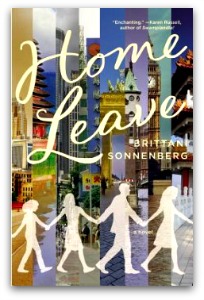
November greetings, Displaced Nationers! I’ve been reading up a storm lately (including Tana French’s latest addition to the Dublin Murder Squad series that I reviewed here this past summer—another great book!). But as I contemplated which work to pull down from my digital bookshelf for this month’s review, my attention came to rest on a super example of Third Culture Kid fiction: Home Leave, the debut novel from Brittani Sonnenberg, which came out earlier this year.

Home_Leave_coverPerhaps I was attracted to this book because the story Sonnenberg tells, about a globetrotting family, reminds me of my own. As some of you may know, I grew up on a boat and spent most of my life before high school outside the US—we were seven years in the Caribbean and two in the South Pacific.

But if it’s my story, it’s also Sonnenberg’s. She spent her childhood alternating between her native US and the UK, Germany, China, and Singapore, and, like many of us TCKs, has opted to become a “chronic expat” in her adulthood. She has worked as a journalist in Germany, China, and throughout Southeast Asia. (Currently, she resides in Berlin but is also a visiting lecturer in Hong Kong.)

Until Home Leave, Sonnenberg was known primarily for her short stories and NPR commentaries about life in Berlin.

In fact, her novel started as a memoir, but then one of her agents encouraged her to try re-approaching the material through fiction.

There must be more to life than having everything!”—Maurice Sendak

Home Leave concerns an American nuclear family, the Kriegsteins. The parents, Chris and Elise, determine to escape their dreary lives in the US by living and working overseas as expats. As Chris pursues a career at several international companies, their two daughters, Leah and Sophie, learn what it is to feel at home abroad and a stranger “at home” in the US. They revel in their uniqueness, but they also sometimes long for putting down roots and living like kids back home.

Sonnenberg makes a creative decision not to have a single character as the protagonist. Each of the Kriegsteins is a main character, and there are multiple narrators.

But for me, the book did have a star, and that was Leah. Sonnenberg links Leah’s emotional and personal success as a young adult to her peripatetic childhood, delivering in her a multifaceted portrait of a Third Culture Kid to whom other TCKs can relate.

“Home is where one starts from.”—T.S. Eliot

Leah is the elder daughter, and her toddler years abroad insert themselves into her identity almost from the moment when the family moves back to the US for a few years. As Sonnenberg writes:

Even Leah, with eleven-year-old pretensions of grandeur, craved a “next,” though her memories of “before” Atlanta were limited to the backyard in London, fish and chips, and falling blossoms in a British park…Leah grumbled that they always went to the airport to pick people up but never went anywhere themselves.

Her wish is granted when the family departs to Asia, where they begin a tradition of going on home leave back to the United States:

Like Persephone’s annual permitted return to her mother aboveground, by the gods in Olympus, the powers that be at Chris’s company will grant the Kriegstein women “home leave” once a year, each summer, when they will stay with friends and relatives, the flights covered by the company. In September they will be forced to leave again, back to China. This habit of home leave will cement Atlanta as “home” in their minds, since they always fly back to the Atlanta airport.

Of course, the price to pay for home leave is a complicated definition of where “home” is. As Sonnenberg writes:

When the Kriegsteins leave Atlanta for Shanghai in 1992…they are desperate to be overseas again. After three months in Shanghai, they will be desperate to return home.

And once Leah is an adult, she faces the classic Adult Third Culture Kid dilemma—how to answer the unanswerable: “Where’s home?” Speaking for myself, I never seem to answer it the same way twice in a row!

But what if one must re-start from tragedy?

There is a further twist to the Kriegsteins’ story, which is that Leah’s younger sister, Sophie, dies unexpectedly in their teen years—another parallel to Sonnenberg’s own life (she lost her own sister, Blair).

If you haven’t read the book yet, please note: to tell you about Sophie’s death is not a spoiler. Her death is referred to in the book before it happens, and at one point, her ghost actually narrates the story.

Now, Leah’s strongest relationship is with Sophie—something any TCK out there will understand. As children in foreign places, Leah and Sophie are sometimes each other’s only playmate. As preteens, they look out for each other in Shanghai and share a conspiracy to run away back to Atlanta—a plan only foiled when airport staff won’t accept their father’s credit card without their dad present.

Not surprisingly, Sophie’s death breaks the teenaged Leah, influencing how she perceives her place in the world and reality for years afterward:

Was Sophie’s death a foregone conclusion in any geography, a heart failure built into her system that would have struck her down on any continent? Later, the doctors would say, “There was nothing you could have done. Undetectable heart conditions are just that: undetectable. You mustn’t blame yourselves.” But because the death will happen in Singapore, its occurrence will be unimaginable anywhere else. Thus, in the parallel (irrational) universe, where they stay in Atlanta, where the good years never end, Sophie never dies.

Likewise, Sophie’s abandonment of Leah comes to affect her definition of “home”:

Years later, as an adult, when asked where she is from, Leah will always say “Atlanta,” as if we come from our joy, as if, aside from their goodness, there was anything to say about the good years.

Living in not-so-splendid isolation

The late, great David Pollock, a recognized authority on TCKs, once wrote*:

The TCK frequently builds relationships to all of the cultures, while not having full ownership in any. Although elements from each culture may be assimilated into the TCK’s life experience, the sense of belonging is in relationship to others of similar background.

Sonnenberg gives us a sense of the disjointedness of the TCK upbringing, and the many identity issues this results in, by having each chapter of Home Leave read like its own short story, with its own narrator. Thus we go from Elise delivering an electric first-person narration of how she coped with her daughter’s death, to therapist appointments written like scenes in a play, to a first-person-plural foray into describing how a group of young TCK women experience university.

Although this style can be jarring for the reader—the book you pick up in the afternoon doesn’t feel like the same book you put down in the morning—taken as a whole, Home Leave feels as fragmented as a life abroad sometimes feels.

Most importantly of all, Sonnenberg’s book does not shy away from the irony of the TCK experience, which is that although a family may travel abroad to broaden its horizons, none of its members ends up having any long-standing relationships except with each other. And, in the case of the family she depicts in Home Leave, even those relationships are uncertain. As the novel’s action unfolds, the older Kriegsteins are shown to be deeply flawed people whose naivety toward the world, and indifference to the needs of their own children, is sometimes astounding.

Home Leave left me feeling sorry for the Kriegsteins: they appear to have been impoverished by their life abroad, not enriched. Throughout the story, I kept wishing they might form a real connection to the places they inhabit and the people they encounter. But, except for the touching scene when Elise is pregnant in Germany, Chris’s ambitions and their own dysfunction buffers them from opportunities to create authentic bonds.

The sections about Shanghai seemed particularly sad, though perhaps that’s only because we see the city partially through the lens of an awkward, pubescent Leah.

But, although not all TCKs will find that the Kriegsteins’ experiences are close to their own, Home Leave is a gem of story suitable for anyone with international experience. And the quality of Sonnenberg’s writing is such that I’m really looking forward to seeing what she produces next.

* * *

Now for a parting thought for my fellow TCKs, some of whom may be feeling rather wistful after reading this review:

Home life is no more natural to us than a cage is natural to a cockatoo.

—George Bernard Shaw

Till next month!

*Third Culture Kids: Growing Up Among Worlds, by David Pollock and Ruth Ven Reken (2009, rev. 2010).

* * *

Thanks, Beth! I note that the New York Times reviewer of Home Leave concluded that in putting Leah at the book’s emotional core, not her parents, Sonnenberg has opened the door for the next generation of international creatives, no mean feat! Readers, any thoughts or responses?

Beth Green is an American writer and English teacher living in Prague, Czech Republic. She grew up on a sailboat and, though now a landlubber, continues to lead a peripatetic life, having lived in Asia as well as Europe. Her personal Web site is Beth Green Writes, and she is about to launch a new site called Everyday Travel Stories. To keep in touch with her in between columns, try following her on Facebook and Twitter. She’s a social media nut!

STAY TUNED for next week’s fab posts!

If you enjoyed this post, we invite you to register for The Displaced Dispatch, a round up of weekly posts from The Displaced Nation, with Alice nominations, exclusive book giveaways and other extras. Register for The Displaced Dispatch by clicking here!

Related posts:

HERE BE DRAGONS: And much else besides! A fantasy-laden Halloween paves way for NaNoWriMo

http://www.flickr.com/photos/taymtaym/15520387690/

Left: Lucca comics & games 2014, by taymtaym via Flickr (CC BY 2.0); the “dragons” of Lucca, by Andrew Couch (October 2014).

For the past few months expat Andrew Couch has been helping us make the connection between a life of international travel and fantasy writing. This month he reports on how he spent Halloween. After you read it, I have only one question: train trip or mind trip or both?

—ML Awanohara

While my compatriots were out trick or treating, I was having my own kind of Halloween adventure over here in Europe, one that took me beyond my wildest imaginingssaying a lot for a fantasy writer!

Naturally, it had people in all manner of costumes wandering about. But it also presented opportunities to hear from a grown man about why he loves writing stories from the point of view of talking mice, and to explore a medieval walled city.

By now fellow geeks should be able to guess that I was attending a comic and games convention: the one that took place in Lucca, Italy, over Halloween weekend. Lucca, a city in Tuscany, is an hour from Florence and half an hour from Pisa.

Now, Lucca may not be able to boast of having a Uffizi Gallery or a leaning tower, but it does have church towers, clock towers, winding streets and odd-shaped plazas, all within a set of Renaissance-era city walls. So many fantasy stories feature towns inside of walls, and there are not many cities that still have them. I had a blast walking around on top of them. Here’s the view it yielded:

Photo credit: Andrew Couch (October 2014).

Aerial view of Lucca. Photo credit: Andrew Couch (October 2014).

You know, being an expat in Europe does have its advantages besides being able to spend Halloween in Tuscany. When in the United States, I never lived in a place big enough to have a decent Con, but in Europe, size doesn’t matter so much, and good train connections make it less of a hassle to attend (no parking woes, and maybe no need for overnight accommodations). This was my first time in Lucca, but for a few years in row now, I’ve been attending the Essen games in Germany, where I live. My first year I took a four-hour train to and from the convention on the same day. At Lucca I noticed someone buying a train ticket home to Turin, which isn’t so close either.

The costumes were a treat

It’s been seven years since I’ve seen any trick-or-treaters as Halloween isn’t widely indulged in Germany (as in other European countries, November 1, All Saint’s Day, is the holiday). But this year it didn’t matter as I had plenty of cosplayers to distract me. Cosplay, short for costume play, is a kind of performance art where we geeks dress up as our favorite characters or ideas.

Similar to Halloween, there are those who create their own original costumes around themes and those who don meticulous real-life facsimiles of 2-D drawings in a comic, game or movie.

I had fun watching both groups.

Since so much of what I like to read and write is steam punk (my fantasy world employs steam power), I enjoyed running into a troop of steam punk people:

SteampunkParade

Steampunk parade. Photo credit: Andrew Couch (October 2014).

Articulated metal hands and fancy goggles blending with romantic ideas of Victorian clothing—it’s definitely fantasy but not as over-the-top as anime and game characters. The mix of reality and fantasy is different, too. For many of the steam punk designs, you could imagine the mechanisms actually working, whereas the fellow on the other side of the street encased in red leather from head to foot? He can barely walk, let alone swing one of his many swords.

A real-life fantasy simulation

Perhaps even more helpful from my writer’s perspective was the chance to observe all of these characters circulating in the convention crowds. Writers, particularly fantasy writers, are free to create all manner of craziness—physics be damned. But seeing some of these ideas in the flesh wandering around was a reality check. The character who carries his signature 7-foot sword around on his back everywhere he goes really sticks out—even in a crowd full of people sporting wings and carrying all kinds of swords and staffs.

Wings, too, are interesting. Out of necessity they create a wider concept of personal space in a society, and potentially the need for wider doors…

So even my crowd watching was a source of reflection. Whether I want to write an over-the-top action story or a more realistic fantasy, I have an idea of what it looks like for various characters to wander around in a city. Because I’ve seen it.

Of Mice and Comics

I chose to attend this year’s Lucca Comics and Games primarily because of an American, the comic book creator David Petersen. He is the author and artist of Mouse Guard, an awesome set of comics (and a role-playing game) about talking mice in a medieval world. I waited in line for an hour to get my book signed (totally worth it!). I also sat in a old Italian church and watched him draw and listen to him talk about his creative process.

Asked about what inspires his drawings, Petersen told a story of being a young boy going with his family to a church in the States with rich wood carvings and decorative elements. He talked about how craftsmanship affected him. He liked the idea that functional items could still be beautiful and wanted his mice characters to have that.

He went on to say that he developed his storyteller muscles as a teen, when engaging in a lot of role-playing games. And he talked about the physical format of the comic book, allowing for dramatic shots and pacing. He said that the British film maker David Lean had inspired him to conceive of the comic book in these terms.

So Petersen takes part of his inspiration from movies. Who knew? And one day my written-word fantasy stories may take inspiration from comic books like his. Why not?

There was something rather stunning about Petersen talking about all this in the setting of a church, with stained glass behind him and a carved wooden ceiling above. My thoughts wandered briefly to the cathedral in Freiburg:

FreibergMinster

Inside the Freiburg Minster II, by orestART via Flickr (CC BY-SA 2.0)

The original Freiburg Minster was built in the Middle Ages, before people believed the world wasn’t round. That is still mind boggling to me as an American.

* * *

In the end I found the Lucca event so stimulating I only went two of the four days. After being in such enormous crowds, I was happy to be quiet and retreat into the introverted part of my self.

And yet those two days got me thinking more about my own stories, a good thing. I definitely felt ready to write when I got back on the train. I started NaNoWriMo (see my profile) last week along with many others and am already 10K words into the new story (with my second novella nearing completion as well). This is partly due to having a plot pre-planned and partly due to the rich stew of images generated by my time in Lucca, more nourishing for geeks like me than your average Halloween witch’s broth.

Andrew Couch has been a fantasy book nut since childhood; he really has not grown up much since then. After struggling to write his own games for years, he is now creating fantastical worlds in a series of novellas that echo the TV shows, anime and role-playing games of his youth. Beyond fantasy he is an avid blogger and a world traveler who resides in Germany. To learn more about Andrew, check out his blog, Grounded Traveler, and follow him on Twitter: @groundedtravelr.

STAY TUNED for our next fab post!

If you enjoyed this post, we invite you to register for The Displaced Dispatch, a round up of weekly posts from The Displaced Nation, with seasonal recipes, book giveaways and other extras. Register for The Displaced Dispatch by clicking here!

Related posts:

LOCATION, LOCUTION: Fran Pickering, London-based crime writer and Japanophile

Fran PickeringIn this month’s “Location, Locution”, expat crime writer JJ Marsh interviews Fran Pickering, a London-based crime and mystery writer who has lived and travelled extensively in Japan. Her experiences there provide the inspiration for her Josie Clark in Japan mystery series. She also writes about London art and events with a Japanese connection on her blog, Sequins and Cherry Blossom. Her latest Josie Clark book, The Haiku Murder, has just come out, on 13th October. Find out more at franpickering.com.

Which came first, story or location?

Location. I wanted to share my love of Japan in a way that would be interesting and non-academic, so I started writing murder mysteries about an expat Londoner in Tokyo.

What’s your technique for evoking the atmosphere of a place?

I know Japan so well now, I have to think myself back into the mind of a person encountering it for the first time and remember how strange and foreign it seemed to me originally. I go for the little, easily forgotten details – the smell of the drains in Tokyo, the sound of the mechanical cuckoo on the pedestrian crossings in Takarazuka, the complexities of different shoes and socks for different surfaces in a traditional inn. It’s the small things that bring a place alive.

Which particular features create a sense of location? Landscape, culture, food?

Food is very big for me. Japanese people are obsessed with food – they talk about it all the time – but so many people in the West think sushi and noodles is all there is to Japanese cuisine. As Josie investigates the latest murder she needs to ask a lot of questions, and the easiest way to do that is in cafes (she spends a lot of time in Starbucks) or over meals. The sort of meals people eat and where they eat them gives a clue to their character too.

Can you give a brief example of your work which illustrates place?

Here’s an excerpt from The Cherry Blossom Murder:

It was just after nine o’clock. The streets of Akasaka were crowded and noisy. A gaudily decorated pachinko parlour blasted out an advertisement for their new pinball machines, accompanied by an irritating advertising jingle; inside the parlour Josie could see people staring zombie-like at the pachinko machines as the tiny silver balls spun and fell, spun and fell, endlessly fed from the bowl beside each player.The Cherry Blossom Murder

A group of young men and women passed her, the girls in short skirts, one of them loping along drunkenly as the boys held her upright. Behind them came a group of salarymen, still in their work suits, noisily discussing their golf handicaps. They barged Josie unthinkingly off the pavement.

A fortune teller sitting on the pavement behind a table plastered with pictures of hands called to Josie to come and have her future read. For a moment she was tempted, but then she walked on, past Denny’s and Johnny’s and Cozy Corner, all brightly lit and full of people, to the familiar yellow sign of Doutor’s coffee house.

How well do you need to know the place before using it as a setting?

If it’s a real place, then you need to have been there and looked at it carefully. I try and revisit places I write about to make sure I’ve got it absolutely right, and to pick up on aspects I may have overlooked the first time. It’s remarkable how memory can play you tricks, or leave you with a superficial impression. I take photographs of key settings to refer to later.

Which writers do you admire for the way they use location?

Lee Child. He’s an English writer whose books are set in the States with an American protagonist. He really nails it; the flavour of the country leaps off the page. And Ben Aaronovitch, whose Rivers of London series takes you into every nook and cranny of Covent Garden and makes you almost believe that a building on the south side of Russell Square actually does contain the Folly.

* * *

Next month’s Location, Locution: Clare Flynn, whose books are set in Australia and India.

_(75_of_75)


JJ Marsh grew up in Wales, Africa and the Middle East, where her curiosity for culture took root and triggered an urge to write. After living in Hong Kong, Nigeria, Dubai, Portugal and France, JJ finally settled in Switzerland, where she is currently halfway through her European crime series, set in compelling locations all over the continent and featuring detective inspector Beatrice Stubbs.

STAY TUNED for our next post!

If you enjoyed this post, we invite you to register for The Displaced Dispatch, a round up of weekly posts from The Displaced Nation, with seasonal recipes, book giveaways and other extras. Register for The Displaced Dispatch by clicking here!

Related posts:

For this global nomad, botany buff and blossoming novelist, a picture says…

Cinda 1000 Words CollageWelcome to our monthly series “A picture says…”, created to celebrate expats and other global residents for whom photography is a creative outlet. The series host is English expat, blogger, writer, world traveler and photography enthusiast James King, who thinks of a camera as a mirror with memory. If you like what you see here, be sure to check out his blog, Jamoroki.

My guest this month is Cinda MacKinnon, an American who grew up overseas and is the author of an award-winning novel set in one of her former homes, Colombia. Called A Place in the World, the book was featured almost exactly a year ago on the Displaced Nation.

Cinda shoots mainly “macro” (extremely close up) pictures, a habit she developed because of her interest in nature and plants—especially wildflowers. A writer, former university lecturer, and environmental scientist, Cinda is trained in geology and has also nurtured a life-long passion for botany. It’s telling that the protagonist of her novel is a botanist!

Cinda enjoys hunting down rare plants and taking photos that show their minute details, such as the number of anthers (the part of the stamen that contains pollen), so that botanists will be able to identify them.

She now lives in northern California, where the California Native Plant Society has become a fan of her photos and sometimes asks her to supply a few of them for their newsletters and exhibits. Who knew?

* * *

Hi, Cinda. Welcome back to the Displaced Nation. I’m pleased to have the opportunity to discuss your photo-travel experiences. When I first started following your blog, I assumed you were a writer—but then was delighted to discover that you’ve also taken some excellent photos. I know you’ve already been over some of this ground in your interview with ML Awanohara, but can you tell me where you were born and when you spread your wings to start traveling on your own?
I was born on an Air Force base in Louisiana, but lived there only a week. My dad was already stationed in Greece, and my mother followed him as soon as she was able to travel. I lived in Greece and Germany as a pre-schooler and then in Colombia when my father changed his job and began working as a military attaché for U.S. embassies. Having fallen in love with Latin America, my parents retired in Costa Rica when I was in seventh grade so, happily, I was able to stay in that part of the world through high school…and beyond. After college in the United States, I moved to New Zealand with my husband (back then, they told us we had to get married to immigrate together!). We came to California when he finished his PhD. And here we’ve been ever since, although I view that move to California—I was in my thirties—as the first time I actually lived in the States. Even though my passport said I was a citizen, it has taken me a while to feel like I belong here.

You have been an expat almost since birth—what is known as a Third Culture Kid. Would you say that your wanderlust comes from your nomadic upbringing?
Once I grew up, I wanted to see more of Latin America and as a young family we could do that cheaply. Next I visited Europe to see some of the places I’d lived with my parents, but like so many others ended up falling in love with Italy and France. I think language had as much to do with it as the culture and people. Growing up speaking Spanish, it was fairly easy for me to be understood in Italian, and I found French so beautiful that I have become a perennial student. Recently, my husband and I explored Central Europe along the Danube River, from southern Germany to Budapest. That splendid trip provided fodder for at least five blog posts.

Mais oui. I have always loved the French language, too. Where exactly do you live in northern California?
We live in a semi-rural area nestled in the hills and yet are only 30 minutes from San Francisco—an unusual situation due to geography, which insures our immediate surroundings will never be developed.

“Are not flowers the stars of the earth…”—A.J. Balfour 

And now let’s have a look at a few of your shots that capture favorite memories. Can you tell us the story behind each of them, what makes them so special?
This is one of the first wildflowers I photographed and is still a great favorite of mine: a shooting star, or Dodecatheon clevelandii:

Dodecatheon clevelandii, aka shooting star. Photo credit: Cinda MacKinnonn.

Dodecatheon clevelandii, aka shooting star. Photo credit: Cinda MacKinnonn.

The next photo is of the odd-looking Tiburon Lily, Calochortus tiburonensis, which blooms only a few weeks a year and is quite rare; it evolved on serpentine soils, which gives rise to unusual plants that can tolerate this somewhat toxic chemistry. Indeed, you can find this little lily in only one place: on Ring Mountain (a single hill really), north of San Francisco:

Calochortus tiburonensis. Photo credit: Cinda MacKinnon.

Calochortus tiburonensis, found only on Ring Mountain. Photo credit: Cinda MacKinnon.


Another peculiar wildflower is C. tolmiei, nicknamed “pussy ears”. It is challenging to capture the tiny hairs and other features as it is barely 2.5 cm across—plus it tends to grow on coastal slopes where the wind wreaks havoc with your focus!
Calochortus tolmiei, aka pussy ears. Photo credit: Cinda MacKinnon.

Calochortus tolmiei, aka pussy ears. Photo credit: Cinda MacKinnon.


I’ve taken quite a few photos of wild flowers without having a clue what their names were. I’m getting a real lesson in flora here. Thank you, Cinda. I can see why they call botany the “science of beauty.”

“I perhaps owe having become a painter to flowers.”—Claude Monet

I know you have photos of scenery, too, and these next four, I believe, have a special significance for you.
I mentioned I am a bit of a Francophile and a favorite region of mine is the Dordogne Valley. This is a place with history, from Richard the Lionheart to Joan of Arc; pre-history (the Cro-Magnon cave paintings); and beauty. I talked my husband into renting a canoe and we paddled down the Dordogne River, past castles, ancient bridges and towns. This photo with the medieval Château de Castelnaud in the background is a memento of that glorious day:

Canoeing on the Dordogne in glorious weather. Photo credit: Cinda MacKinnon.

Canoe with a view, la rivière Dordogne. Photo credit: Cinda MacKinnon.


Next, I’d like to show you a photo of a very different place, in California. Actually, I can give you a choice of two: would you rather see the California desert before a rain storm or one of Arvin, a city in southern California? Arvin is interesting because it’s set in hilly grassland that half of the year is dry and dormant but explodes into wildflowers in the spring (if the winter is wet). What’s your pleasure?

Can I have both?
Mais oui! Here’s the Sierras:
The stormy Sierras. Photo credit: Cinda MacKinnon.

The stormy Sierras. Photo credit: Cinda MacKinnon.


And now for Arvin in all of its glory:
A profusion of wildflowers in Arvin. Photo credit: Cinda MacKinnon.

A profusion of wildflowers in Arvin. Photo credit: Cinda MacKinnon.

Both photos are so lovely! That’s why I decided to give you this bonus. But if I really was forced to choose, the desert before the rain is so dramatic. I think you should turn it into a photo-painting using Topaz Adjust or Impression. What’s your last shot?
Another California landscape I’m fond of is Monterey County. When I was a teenager, I read all of John Steinbeck’s novels, never dreaming I would live in California much less end up working in the Salinas Valley as a hydro-geologist for several years. On arriving I felt as though I’d been there before. The town of Monterey itself has become a tourist attraction, but if you go out into the countryside there are still scenes like this one, with the adobe house on the hill:

An enchanted realm near Monterey, California. Photo credit: Cinda MacKinnon.

An enchanted realm near Monterey, California. Photo credit: Cinda MacKinnon.


Please God, don’t let them turn it into another orchard or development!

Here here! I noticed you haven’t included any photos of people. Do you feel reserved about taking photos of strangers?
Yes , and I don’t like portraits to look overly posed. So first I try to take photos surreptitiously. If that’s not possible, I try to be respectful by asking if it’s okay– preferably in their own language. No matter where I travel, I learn some basic phrases in the language of the country (Hungarian was the hardest so far!), but I’ve found that “okay?” seems to be a universal word.

You are right: “okay” seems to have been adopted by most of the planet, though it’s origins are unclear. One theory is that it was derived from a shorthand way foreign-born Americans in the 1830s developed for writing “all correct”—only they’d spelled it “korrect”!

“I will touch a hundred flowers/And not pick one.”–Edna St. Vincent Millay

What motivates you to record what you see through photographs? Is it the ability to capture something unique, which will never be seen again?
Hmmm… I barely think of myself as a photographer; it is one of several hobbies! But certainly, what you say is true of fleeting blooms, and photos do help to preserve memories of wonderful places, whose beauty could vanish. But I think what really led me to photography was my interest in plant nomenclature. I like to block out weeks of time every year to hike in hills, valleys and deserts and search for rare blooms. It is a bit of a treasure hunt, and my photos of evidence of the riches I uncover.

Your modesty is charming, but I think you definitely have an artist’s eye and many of your photographs could be transformed into beautiful pictures with a little more post processing. Which leads me to the technical stuff. Some of our readers may want to know what kind of camera and lenses you use, and how you handle post-processing.
I use a Canon Digital Rebel XT SLR with a macro lens when I am looking for wildflowers in the spring. But for traveling I’ve started to just put my trusty Canon PowerShot in my pocket. I usually use Photoshop for post-processing, but as you’ve pointed out, I’m not adept at all the advanced features. I use “auto” first, and that is generally all I need, except I often crop a shot and, if needed, adjust the lightning or clean up stray blemishes.

Finally, do you have any advice for wannabe photographers who are traveling or living abroad?
It is not the equipment—it is in the eye. Some of my better pictures were taken with a point and shoot. I asked a professional photographer friend if he thought I should buy some filters or another lens, and he said his best shots are sometimes with his cell phone! I guess the motto is “be prepared” for something that catches your eye—be ready for the special moment when the light is right. Make sure your subject doesn’t appear to have an antenna sprouting out of his head at that moment. Don’t use the “sharpen” feature for portraits as it accentuates flaws (unless you want that for character) and can give a severe look. And don’t make your friends look at 200 mediocre photos of your vacation—please cull out the unappealing or out-of-focus ones! (My rule of thumb for talks is 1 to 1.5 slides per minute—that’s 60 to 90 per hour—nobody wants to see more than that.)

Very succinct and good advice, Cinda—right up my street. I’d like to thank you for taking the time to tell your fascinating story in this interview.

* * *

front-cover-place-in-worldReaders, what do you make of Cinda’s close-up photos of exotic plants and her photography advice? I find it curious that she writes about people looking for their place in the world, yet is obsessed with the kinds of flowers that bloom where they are planted. As Georgia O’Keefe once put it:

“When you take a flower in your hand and really look at it, it’s your world for the moment.”

Please leave any questions or comments for Cinda in the comments!

Meanwhile, I suggest that you check out Cinda’s Pinterest boards for more of her botany photos. You can also get to know her better by visiting her author site and blog, and liking her Facebook page. And don’t forget to read her book if you haven’t done so yet, many glowing reviews for which can be found here.

(If you are a photographer and would like to be interviewed by James for this series, please send your information to ml@thedisplacednation.com.)

STAY TUNED for next week’s fab posts!

If you enjoyed this post, we invite you to register for The Displaced Dispatch, a round up of weekly posts from The Displaced Nation, with Alice nominees, exclusive book giveaways and other extras. Register for The Displaced Dispatch by clicking here!

Related posts: