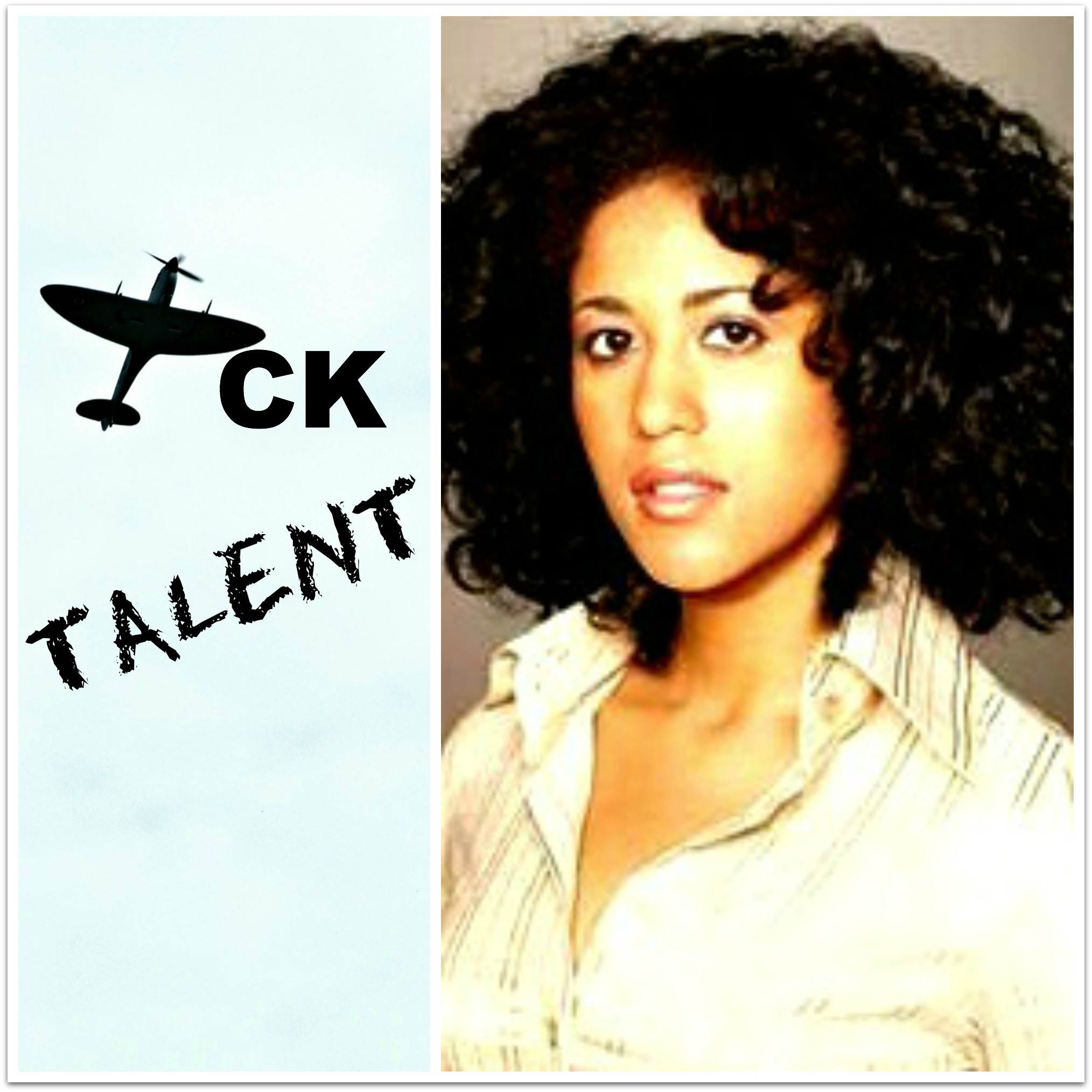
Photo credits: left: RoganJosh (MorgueFiles); right: Amber Godfrey, from her portfolio.
Welcome to Elizabeth (Lisa) Liang’s monthly column about adult Third Culture Kids (TCKs) who work in creative fields. Lisa is herself a prime example. A Guatemalan-American of Chinese-Spanish-Irish-French-German-English descent, she recently debuted her one-woman show about being a TCK, which I had the pleasure of seeing during its too-short run in New York City in September: stupendous!
—ML Awanohara
Happy Thanksgiving, readers! I’m thankful to be bringing you today’s guest, a kindred spirit of mine. She is Amber Godfrey, an actress-writer who, like me, has written and performed her own solo show about growing up as a TCK of mixed heritage.
* * *
Welcome to The Displaced Nation, Amber! I’m happy to have met another solo performer whose TCK story parallels my own. Since your dad is a Canadian diplomat, you grew up in eight countries. Can you tell us which ones?
Besides Canada, I’ve lived in the USA, Ecuador, Trinidad, India, Hong Kong, Sri Lanka and England.
Growing up, which of these countries do you identify most strongly with?
I identified, and continue to identify, strongly as a Canadian probably because of my dad’s job and the fact that we always connected with the Canadian expat community wherever we went. I also heard on more than one occasion (usually when I was being busted for some rebellious act): “You represent Canada!!” I’ve spent most of my adult life in Canada and the US, so I feel very “North American” at this point. At the same time, though, I do feel like a “citizen of the world,” and the bond that I feel with other TCKs is unique.
“Are you adopted?”
Your family is particularly diverse. Let’s see if I can get this right. You are the daughter of an Ecuadorian mom and an African American father, but you were raised by your mom and a Caucasian-Jewish Canadian stepdad, who then had your brother, David. Was your family’s status ever challenged by strangers, like mine was? In grade school, no one believed my brother was my brother, and people asked my mom if I was adopted.
Yes! This still happens all the time. When the four of us go out for dinner, servers will assume my brother and I are a couple. If I check into a hotel with my Dad, we get stares. When I was in fifth grade, I had to go to the school nurse and, when she realized who my brother was, she asked pointedly: “Are you adopted?” I panicked and said “Yes,” even though that wasn’t the whole truth. Looking back—what an inappropriate question to ask a 10-year-old!
Do you feel offended when that happens?
Honestly, it sort of tickles me that people don’t know what to make of us. I figure, that’s their problem and it doesn’t have to ruin my day. As an actor, I get irritated by the under-portrayal of mixed-race families on stage and in film. When I was auditioning a lot, I became really frustrated realizing I would most likely not be considered for “sister of” so-and-so because the other actor had already been cast as white.
Love the place you’re in
I completely relate! So, with such a mixed background, which culture(s) form the core of your identity?
I grew up with a lot of focus on Jewish history, tradition and heritage, which I resisted up to a point—I chose not to be Bat Mizvah’d—but to which I also really connected. As a pre-teen I was obsessed with The Diary of Anne Frank and wrote short stories about young Jewish girls in the Nazi era. In my early 20s, the combination of acting roles I was being sent out for and my burgeoning adulthood piqued a stronger curiosity in the African-American side of me, which ultimately led to me reaching out to find my birth father. Now, in my 30s, I find myself seeking to connect with my Latin American roots. Of course I also identify with the cultures of the countries I grew up in! I think the quest to understand my “identity” is ongoing…
Were you happiest in a certain place at a certain time?
I guess the short answer is: I aim to be happiest in the moment I am in. Every place I went to had its good and bad moments…
What were your school experiences like growing up?
I went to private school in California, international schools in India, HK and Sri Lanka, and the local public school in Canada. During high school I had to contend with three completely different school systems, which was a challenge to say the least.
How about college?
I went back to Canada for college: I studied theatre at Acadia University, in Nova Scotia. It was hard to get good information back then (the Internet was just a baby!), but my Dad pointed out that as a small school in a small town, it might be an easier transition than if I went to a big school in a bigger city like Toronto. And Acadia has a good theatre program.
“It’s all in me…”
Did your TCK upbringing influence your desire to become a performer?
Being in school plays or performance groups was a good way to get involved and make friends when moving from place to place. But I also think that portraying characters on stage allowed different parts of myself to come forth and was a way for me to work out my identity. I’m laughing because I’m thinking of Whitney Houston’s “I’m Every Woman”—I’m a hippy at heart and believe we are all one and connected. Seeking to experience and understand life/truth from multiple viewpoints is an essential part of who I am.
Moving over to your autobiographical solo show: why did you create DipKid?
I’d been thinking for many years about telling my story but couldn’t decide which way to tell it. After taking a Soulo-Show Workshop with Tracey Erin Smith, I finally started writing. I submitted a proposal to a small festival in NY, and when I got in, I realized it was time to start making the show! My efforts resulted in a short but sweet twenty-minute piece (you can watch it here).
How was it received?
The reaction was fascinating. I had assumed my story was unique, but it seemed that people could relate to it, and wanted more! That’s where the struggle began for me. I didn’t know how to finish the piece because I felt I wanted it to link up with my current situation—but that kept changing! The next time I performed the show, I expanded it to 45 minutes but felt less satisfied. I’d watched the video of my first performance so many times I felt sort of stuck in the past. I also found myself listening to many differing opinions on where my show should go and how it should be crafted—my vision got a little lost in the din. Finally, the festival format was crazy-making—especially as I was holding down a full-time job. Trying to write and rehearse this piece all for just one evening was too much pressure. My dream would be to take the show to the countries I lived in and beyond. I’d love to perform it at international schools and for expat communities worldwide.
As the interviewer, I think I can permit one question that’s of particular interest to me, which is: how do you like solo performing?
Solo performance is relatively new for me and I do miss getting to work with other actors on stage. That said, the medium allows me to be a bit more in control of the work and my approach. And it’s wonderfully vulnerable!
I understand you’re planning to film a documentary. What will it be about?
The focus will be on other children of diplomats (i.e., “dip kids”) and how their lives have been shaped by their upbringing and the jobs of their parent(s). I plan to tell the story from my perspective and also weave in my experiences as a mixed-race individual who continues to search for an understanding of and connection to my identity, heritage and all the parts that I am made of.
Do you have any other projects coming up?
I am writing a memoir that will delve deeper into the stories I reveal in DipKid.
Best and worst (Canadian) Thanksgiving memories
Canadian Thanksgiving was in October, but since American Thanksgiving is today, please share with us your best and worst Thanksgivings.
The best occurred when we were living in New Delhi. We were invited to the Official Residence of the High Commissioner for a Canadian Thanksgiving celebration. It was a big party with live music and food sprawled out on the grounds. At dusk everyone looked up and gasped as hundreds of bats swarmed the sky. It was the coolest thing I had ever seen!
I think the worst was my first Thanksgiving away from home. My parents were in Sri Lanka and I was in Wolfville, Nova Scotia (where Acadia U is). Everyone I knew at school had family nearby, but it was only October and I hadn’t bonded with anyone enough to get an invite. I ate Pop-Tarts and drank Dr. Pepper and felt homesick for my family and a bit sorry for myself…
* * *
Thank you, Amber, for being you, a fellow TCK theatre-maker! Readers, please leave questions and comments for Amber below. And if you want to keep up with her creative undertakings, I suggest you also follow her on Twitter: @DipKidAmber.
STAY TUNED for next week’s/month’s fab posts!
If you enjoyed this post, we invite you to register for The Displaced Dispatch, a round up of weekly posts from The Displaced Nation, with seasonal recipes, book giveaways and other extras. Register for The Displaced Dispatch by clicking here!
Every two weeks, the Displaced Nation publishes an episode in the life of fictional expat Libby Patrick, a 30-something British woman who has relocated with her spouse to a town outside Boston. Her diary, Libby’s Life, by Kate Allison, is replete with observations about life in New England vs. England. In the weeks when Libby isn’t published, we are featuring posts by writers who are sensitive to the subtle yet powerful differences between new and “olde” worlds. Today Bobbi Leder, an American trailing spouse, responds to Claire Bolden’s post of two weeks ago, in which she claimed that a tour in the United States inevitably entails a ten-pound weight gain. Turns out, it goes both ways!
It’s an honor another country can have as far as I’m concerned, but when America was the fattest in the land I was truly perplexed.
Yes, you heard that right: perplexed. Now I know there’s a lot of unhealthy food in the States (e.g., BBQ ribs, deep-fried everything-you-can-possibly-think-of, junk food galore) and many Americans are addicted to their sugar, fat and salt. But conversely there’s also a lot of very healthy food available in the States.
At the end of the day, it’s about making a choice.
When I expatriated to the UK over a decade ago—I moved from the Washington, D.C., metro area to Southampton, on the south coast of England—I didn’t have many healthy choices. Over a decade ago, that part of England simply didn’t have health food stores, nor were there restaurants catering to those of us who sought out low-fat, low-salt meals. As for vegetarian dishes, these were practically non-existent.
It was impossible to find a sandwich where the bread wasn’t smothered in butter or the fillings weren’t loaded with fatty meats or (full fat) mayonnaise. I found it very difficult to eat well because the food options I was used to simply weren’t available.
Cheery bye to Size 2!
Before moving to England I was thin, some would even say skinny at a size 2 (an American size 2 that is); but after living in Southampton for a few months, my weight crept up on me like a burglar in the night, and before I knew it, I was two sizes heavier.
And if you think I was binging on fish and chips, think again. I never touched any of the stereotypical British foods because they loaded with saturated fat. I still remember never being able to eat breakfast at the Southampton airport because all they served was the greasy English breakfast. The sight of a full English breakfast made me nauseous: back bacon, sausages, beans, two fried eggs, mushrooms, and fried bread, all cooked in grease—and they say America is the capital of fried food?
There was a reason why we went out for Thai food every Friday. It was the only place we could find that didn’t serve fatty meals and they’d alter any dish to suit their customers. Forget about trying to find a healthy item on the typical pub menu or in the food court of the local mall.
Even in the supermarkets I couldn’t find the healthy choices I was used to, like veggie burgers, soy cheese, and low-calorie bread.
Before moving to Southampton, I’d eaten a mostly ovo-vegetarian diet, with the occasional lean poultry and fish. When I wanted “junk food,” I would buy lower calorie options like baked potato chips.
After the move, I felt as if I had no choice but to start eating ingredients I never would have eaten otherwise including pork, beef and cheese. And food prices were higher compared to the States, which made grocery shopping a challenge—even at Asda, a British supermarket chain owned by Walmart. The produce was often not up to par, and grocery costs were higher than we’d budgeted for.
So I found myself eating things that made me gain weight—despite going to the gym four times a week, and either walking or biking to most places—and I wasn’t happy about it.
New diet, new regimen
After receiving an invitation to my cousin’s wedding in the States, I knew I had to lose weight in just a few months, so I did something I never had the time to do before: I learned how to cook.
I looked for low-fat recipes online that included ingredients I could realistically obtain. I took charge of what I was eating despite my location and its limitations.
Eventually, the weight came off, and after living in Southampton for a year and a half, we moved to London, where healthier food choices were more readily available.
I even took my cooking to the next level after watching British culinary shows—I knew the Brits could make healthy food—and began to make gourmet meals that were not only tasty but low in calories and fat.
After London we moved to Wales and wound up being in the United Kingdom for six years. Not once during that time did I have:
fish and chips (deep fried fish, usually cod, and French fries)
I did, however, have one British staple: the Sunday roast, which consists of roasted vegetables, potatoes and lean beef or chicken.
It was actually one of my favorite meals.
My cup of tea
Today, after moving a few more times (ah, the life of a trailing spouse!), I live in St. John’s, Newfoundland, where I’m fortunate that the times have changed and health food as well as vegetarian options are the norm in most supermarkets and restaurants.
I have no idea if Southampton now offers healthier choices in their restaurants and supermarkets—one can only hope so for the sake of the university students who make up a large population of its city.
The moral of my story is that even though you might move to a country (or an area of that country) where fatty food is the staple, it doesn’t mean you have to eat it.
Looking back, I’m grateful for my experience in Southampton because even though I saw beef and cheese as the enemy when I first moved there, I still eat both today (just in moderation alongside my usual healthy diet), which makes life so much easier when dining out and moving around the globe as an expat.
* * *
Thanks, Bobbi, for making us realize that America is not the only country that fosters weight gain. Readers, what do you make of her observations? Are we global nomads destined to balloon in size as we move around the globe—has that been your experience? Do tell! (A good thing Bobbi hasn’t ended up in Mexico yet, that’s all I can say…)
Bobbi Leder, 43, is originally from New York and grew up in New Jersey. She has moved at least 11 times (she lost count after the fifth move) in the last 18 years thanks to her husband’s job in the oil and gas industry. Leder is a freelance writer and the author of the children’s book, The Secret Police-Dog, but her most important roles are those of cocker mom (to her very high maintenance English cocker spaniel or just cocker spaniel to everyone outside of North America) and wife to her workaholic husband. Leder still exercises several times a week, eats well most of the time—hey, a gal has to treat herself every now and then—and does something British daily: she drinks tea.
STAY TUNED for next week’s fab posts!
If you enjoyed this post, we invite you to register for The Displaced Dispatch, a round up of weekly posts from The Displaced Nation, with seasonal recipes, book giveaways and other extras. Register for The Displaced Dispatch by clicking here!
Regular readers of the Displaced Nation are treated every other week to a new episode in the life of fictional expat Libby Patrick, a 30-something British woman who has relocated with her spouse to a town outside Boston. Her diary, Libby’s Life, by Kate Allison, is replete with observations about life in New England vs. England. In the weeks when Libby isn’t published, we are featuring posts by writers who are sensitive to the subtle yet powerful differences between new and “olde” worlds. Today we hear from a new contributor, Claire Bolden, a Brit who lives in the Washington, D.C., area and blogs regularly on such matters. She is also a fitness expert, which, as you will see, explains a lot!
—ML Awanohara
* * *
We Brits call it the “Ten Pound Tour.” You’re here in the United States for three years; expect to gain ten pounds, that’s what they say.
I’m in the USA for three years; how is this possible? Well, let me tell you…pull up a chair and grab a cup of tea (hot is preferable—none of that iced nonsense) and a biscuit (that is a BISCUIT, not a cookie or any other sweet treat, which will be pumped full of sugar and additives).
Firstly, I’m British, so our culinary delights are much to be sniffed at. Especially boiled cabbage, I find. We’re partial to fish and chips, but it has to be soaked in vinegar and wrapped in yesterday’s news (not fake newspaper, like a fake British pub in the USA deigned to provide me with recently) and curries.
Yes, yes, I know curries are not traditional British fare, but they’ve become so ingrained in our eating out and eating in culture, that I think they are now a fully-fledged, ghee-butter-infused part of the British diet.
Just thinking of growing fat…
In the USA…hmm, what culinary delights was I to chance upon? Pulled pork. I’ll have some of that.
Corn dogs…sigh, this batter-wrapped-sausage-thing-on-a-stick filled me first with joy, then dread, then Zantac.
Less a feast on a stick; more a beast on a stick. A beast of untold gastronomic consequences.
But the real devil in disguise is hidden away, tucked and folded and processed beyond belief into many, many of the foods in the Land of the Free. High Fructose Corn Syrup (HFCS).
This is not, as I understand it, part of the UK diet. Then what on earth is it doing being fed to millions of Americans? And how did I chance upon it?
The American version of “sweetbread”
Here’s the tale:
“There is sugar in bread,” a friend told me whilst I was chomping on a sandwich.
“Surely not,” I replied.
“There bloody well is,” she confirmed with vigour (she’s British, hence the “bloody” and the “u” in “vigour”).
She’s right, don’t you know. I looked more closely at the contents…
In a normal UK loaf there is stuff and nonsense, of course there is. But no sugar.
By comparison, an American grocery store’s loaf of bread ingredients will wrack up a whole host on unpronounceable allsorts, with the dearly beloved HFCS topping out as Ingredient No. 3!
And the blighter is everywhere!
HFCS has reared its nasty, cavity-making, gut-increasing syrupy head since I’ve been in the USA, and I’m not liking it too much…
What is it? Basically, HFCS goes in processed foods and is said to rot your teeth. It causes many health and obesity issues in the USA.
And so, to the cupboard to see what’s what in the food I have obtained since being in the USA. Yes, it is true, this sweetener is in all sorts of stuff.
“Out, damn HFCS. Be gone!” I’ve gone all Lady Macbeth about it
So, I see now why an expat stint in the USA has been christened the “Ten Pound Tour”—Americans might like to think of it as the “Expat 10,” after their expression the “Freshman 10” (actually it’s now the Freshman 15 as most freshmen put on at least 15 pounds during their first year of college).
Food glorious food: don’t care what it looks like!
Add to this the food porn issue. When I first heard of “food porn,” I thought it might refer to food that:
a) is so big it would make your eyes water,
b) is difficult to swallow, and/or
c) is indecent to look at, let alone put in one’s mouth.
But as my first encounter with The Cheesecake Factory (this place tops the list for calorie content) proved—it is all about the size, and, to set the record straight, size does matter.
We all know American portions are large, but in this restaurant chain, they are HUGE. My Asian chicken salad was the size of my husband’s head AND his sideburns AND his fluffy hair after he’s been swimming. That is V V V large.
Everyone eats as much as they can stuff their faces with and then takes the rest home in take-out boxes, because there is enough left for three more meals and you could potentially invite the neighbors, if they’re not already drowning in their own quagmire of take-out food porn and HFCS-infused products themselves.
So, take the food porn home. Indulge in the privacy of your own home—go on, no one’s watching…
Our senses go reeling…
As already mentioned, we’re no angels in the UK with our food and eating habits. On the healthier side, I crave a roast dinner now and then…roast lamb with all the trimmings.
Food is so much an inherent part of our cultures. It helps define us, but as expats we have to sample and pig out on what’s available in the country in which we reside.
That’s only right, is it not?
If I were in China, I’d certainly want to take advantage of the cuisine on offer there. Now, I wonder if they call it “Ten Pound Tour” in Bejing…?
American food and the custom of eating out makes the previous fortnightly little treat in the UK of a Value Meal curry for two from Tesco’s seem a right measly affair.
But maybe one day, when I return to my homeland, I will savour stabbing that plastic cover of the curry before I microwave it and pouring the egg cup-sized portion of “meat” into a dish and spooning in some hard-as-nails rice and enjoy every mouthful.
Just maybe…
* * *
Thanks, Claire, for reminding us about the dangers of high fructose corn syrup, which is lurking inside so many American foods! Readers, do you have anything to add to Claire’s observations? Also, is 10 pounds really enough—isn’t it more like 20 these days?
Claire, 38, left the UK shores a year ago in August and is living with her husband and son near Washington, D.C. They will be there for three years and have a bucket list of things to do and see in the USA during that time. Though a Brit, Claire is a flip-flop-wearing, cowboy-hat-totin’ sun worshipper who has already sampled a lot of US cuisine, including corn dogs and crab, but she still enjoys a Rich Tea biscuit with a cuppa. She spends her time talking to Americans and confusing them with her British colloquialisms, as well as writing her blog ukdesperatehousewifeusa, which takes a light-hearted look at the cultural differences between the USA and the UK.
STAY TUNED for next week’s series of posts!
If you enjoyed this post, we invite you to register for The Displaced Dispatch, a round up of weekly posts from The Displaced Nation, with seasonal recipes, book giveaways and other extras. Register for The Displaced Dispatch by clicking here!
Regular readers of the Displaced Nation are treated every other week to a new episode in the life of fictional expat Libby Patrick, a 30-something British woman who has relocated with her spouse to a town outside Boston. Her diary, Libby’s Life, by Kate Allison, is replete with observations about life in New England vs. England. In the weeks when Libby isn’t published, we are featuring posts by writers who are sensitive to the subtle yet powerful differences between new and “olde” worlds. Today we hear from an occasional contributor, Kym Hamer, whose thoughts on the topic immediately drifted to the ten winters she has spent in her adopted home of London. Hmm…is that because her native Melbourne now has highs of 8°C, or 46°F (and overnight lows of -1°C, or 30°F)?
—ML Awanohara
As an Australian who moved to the UK in 2004 and who continues to make London her home almost ten years on, I can’t really afford to have any quarrel with the weather.
It is one of the quintessential British-isms, this obsession with weather, and it is the question I find myself in the midst of most debate about—always at the first meeting and often well into several years of cross-cultural friendship.
The stereotype of Australia’s big blue skies, fresh-faced outdoorsy-ness and neighbourly games of cul-de-sac cricket prevails so strongly in the British psyche, that any suggestion that all is not what it appears Down Under comes across as churlish, un-conversational and bordering on arrogant ungraciousness.
It’s not worth arguing: the Brits like to be right about this.
But what has struck me most about these conversations is that they usually occur in overheated pubs, lounge-rooms, Tube carriages and lifts with the protagonists sitting or standing around in their shirtsleeves complaining about the cold.
I have never met a nation so unwilling to put a jumper on.
(Which reminds me of a rather bad joke: what do you get when you cross a kangaroo and a sheep? A woolly jumper!)
Wrap up warm, but not too warm
I’ve been caught out myself, rugging up [putting on lots of clothes in anticipation of going somewhere bl**dy freezing] upon leaving the house on a chilly morning. Silently congratulating myself on my toasty (sometimes even thermal) attire, I find myself wishing I could dispense with three quarters of it half an hour later.
And let me tell you, it’s a royal pain to carry around a heavy winter coat and quite embarrassing to sit sweating profusely in a job interview because everything you could have possibly taken off—and still remain decent, let alone remotely “put together”—has been shed.
So I’ve learnt to avoid the thermal underwear and to dress in layers. More or less like a pass the parcel parcel.
Tuning into the daily weather forecast on the radio as I open one sleepy eye each morning, I’ve learnt that it pays to double check that the light spring coat hanging at the ready should not be replaced by something more…or less.
Accessorize!
But the biggest lesson I’ve learnt is this: it’s the extremities that matter and the right hat, scarf and gloves can make all the difference.
As the temperature and wind chill factor pas de deux through London during any given month, the right “weight” of this essential triumvirate can have me either swanning about in a state of slightly disheveled fabulous-ness or looking as though I’ve been dragged through a damp hedge backwards.
As such I have acquired:
several right “hats”
a range of pashminas—from warm woolly to just to keep the chill off on a “summer” evening
many suitable scarves (they are defined by being more slender in shape than a pashmina)
not one but two perfect pairs of gloves—a heavy-duty, super-warm pair and a lightweight purple leather set.
Which reminds me how hacked off I was to lose one of the heavy duty duo in January—and must make a note to myself to buy the perfect replacement pair. I’ve learnt that’s harder than it sounds. Who knew such things would become so important to me?
And then there’s the bag. My handbag grew exponentially into a “tote” during my first few years in London, becoming big enough to stuff in one or any combination of this trio as I climbed up/down Tube escalators, entered offices and interview rooms, got on and off buses and hugged friends in the doorways of their toasty digs.
Thank goodness other essentials—phones, umbrellas, (e)books—have gotten smaller.
“Bring something warm—if it’s dry we’ll be sitting outside!”
But when I am at home and the climate is just my own again, slippers and cozy throws abound, whether I’m curled up on the couch in the lounge room, cooking up a frenzy in the kitchen or tucked under the duvet in my bedroom. The heating does get turned on but only when a jumper just isn’t enough.
I am famous (or infamous?) for invitations tagged with “bring something warm—if it’s dry we’ll be sitting outside.” Guests laugh knowingly and remark about taking the girl out of Australia and all of that.
But baby, when it’s cold outside, quite frankly you should already know the drill:
Put a bl**dy jumper on!
* * *
Thanks, Kym, for that impassioned account of what it’s like for an Aussie to live in the midst of limeys who’d prefer to moan about the cold instead of taking practical measures. And speaking of whingeing limeys, you’ve given us Yanks yet another reason to feel pleased that we declared our independence from Britain on this day 237 years ago!
Born and raised in Melbourne, Kym Hamer has worked in London in sales and marketing for nearly ten years. She writes the popular blog Gidday from the UK. Also follow Kym on Twitter: @giddayfromtheuk.
STAY TUNED for next week’s series of posts—and a Happy 4th of July Weekend, meanwhile, to US-based readers!
If you enjoyed this post, we invite you to register for The Displaced Dispatch, a round up of weekly posts from The Displaced Nation, with seasonal recipes, book giveaways and other extras. Register for The Displaced Dispatch by clicking here!
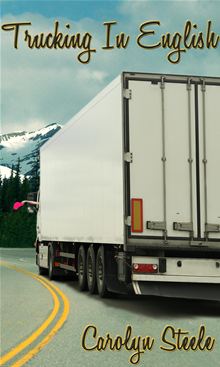
Today we review Carolyn Steele’s Trucking in English:a memoir of being a woman in what is very much a man’s world: that of long-haul tractor-trailor driving in North America. A Londoner born and bred, Carolyn is now a Canadian citizen and lives in Kitchener, Ontario, where she ran a Bed & Breakfast for five years before trying her hand at negotiating 18-wheelers. Depending on who is asking, she “maintains that she is either multi-faceted or easily bored”. Confirming this, her résumé states that, in addition to being a lady trucker, she has also been a psychologist and a London Ambulance Service paramedic, while her hobbies include tatting, a form of lace-making.
Trucking in English is available from Smashwords, Amazon (Canada, USA, UK), and Barnes & Noble, but this week we at TDN are in luck: Carolyn is giving away 3 ebook copies to Displaced Nation readers! (Details below.)
“So here’s the plan. I’m going to train to drive a truck and go long-haul. I can get paid and maybe write a book at the same time. What do you reckon?” “Go for it Mum, how bad can it be?” This is the tale of what happens when a middle-aged mum from England decides to actually drive 18-wheelers across North America instead of just dreaming about it. From early training (when it becomes apparent that negotiating 18 wheels and 13 gears involves slightly more than just learning how to climb in) this rookie overcomes self-doubt, infuriating companions and inconsiderate weather to become a real trucker. She learns how to hit a moose correctly and how to be hijacked. She is almost arrested in Baltimore Docks and survives a terrifying winter tour of The Rockies. Nothing goes well, but that’s why there’s a book. Trucking in English began as a blog from the cab and became a popular podcast before taking book form. It is part of Carolyn’s ‘Armchair Emigration’ series.
Review:
“Why would a fifty-something, nicely brought-up mother suddenly decide to go trucking?”
Indeed. Until I read this book, I’d considered trucks to be part of the roads’ parallel universe: menacing beasts that slow you down going uphill, hurtle dangerously fast behind you downhill, or who scatter remnants of blown tires across three lanes, strategically positioned to rip open your door skins like sardine cans.
Carolyn Steele, however, has given me a glimpse inside this parallel universe, and I’ll say this: she’s braver than I’ll ever be. If I announced to my own family my intention of learning to drive one of these shiny monsters, the reaction would be unflattering: “You?” (Cue gales of incredulous laughter.) “You can’t even reverse a Mini.” I’m not one of Life’s natural drivers, which makes me all the more admiring of people who are, particularly “fifty-something, nicely brought-up mothers.”
Trucking in English starts at Carolyn’s pipe dream to become a truck driver:
Why not get paid to see North America? I’d driven for a living before, I’d seen little of Canada and nothing of the States, how hard could it be?
— takes us through the training period which was more demanding than she’d anticipated:
I’d assumed it was merely a matter of getting used to where the corners were and developing a technique for climbing in.
— and recounts Carolyn’s adventures once she was let loose on the road.
These long-haul expeditions across Canada and the USA are peppered with frustrations deriving from red tape (seriously — Campbell’s Chicken Soup requires a Customs’ Meat Inspection certificate before it can cross the border?) and the sexism, both unintentional and blatant, that a female truck driver will encounter.
Red-faced squaddie escorted us outside and managed not to look too confused when we [Carolyn and her male co-driver] headed for the wrong sides of our vehicle and it became horribly apparent that I was driving.
Throughout the book shines Carolyn’s good humor, frankness, and sense of the ridiculous. The characters and events she encounters are described so vividly that they seemed as real to me as they were to her, and in such a way that I had to stifle snorts of laughter if I was reading my Kindle in a public place.
Finally, as March is Style and Beauty Month at TDN, it would be remiss of me not to share a few of Carolyn’s style tips for lady truck drivers:
1. Do not go anywhere without a large supply of baby wipes. You never know when or where your next shower will be.
2. Use a bathroom whenever you see one, even if you don’t need to. (Ever wondered what happens when truckers are taken short in the middle of nowhere during a Canadian blizzard?)
3. Most important of all — dress androgynously. Do not, under any circumstances, let other truck drivers on the road know you are a woman.
A chap in a slower truck does not like to be overtaken by a woman and some of them can get quite snippy about it…With a cap over my eyes (so long as it isn’t pink) hair tucked up into it, large sunglasses and a golf-shirt I can just about pass for anybody… I left the cap off one day due to being so hot that even my hair was sweating. Overtook a truck just south of Toledo and he tried extremely hard to run [me] off the road.
And now it’s your chance to ENTER OUR DRAW TO WIN A FREE COPY!!! You can either:
1) Leave a comment on this post, saying why you’d like your own copy of Trucking in English, or
2) Head across to Twitter and tweet the following:
“I want a copy of Trucking in English by Carolyn Steele: http://wp.me/p11cxT-55G via @Trucking_Lady @DisplacedNation”
The winner will be announced in our Displaced Dispatch in April.
.
STAY TUNED for tomorrow’s author interview!
Image: Book cover — “Trucking in English”
If you enjoyed this post, we invite you to register for The Displaced Dispatch, a round up of weekly posts from The Displaced Nation, with seasonal recipes, book giveaways and other extras. Register for The Displaced Dispatch by clicking here!
Host of the new global TV show, The Career Break Travel Show, and publisher of CareerBreakSecrets.com, Jeff Jung is the world’s leading career break expert. Originally from Fredericksburg, Texas, Jeff became an international traveler at the age of sixteen with his first trip to Australia and, when he left a successful marketing career for his own career break, became a “true citizen of the world.” He lives in Bogotá, Colombia.
Summary:
“The Career Break Traveler’s Handbook is your indispensable tool for dreaming, planning, and finally taking your trip of a lifetime. Filled with tips, stories, and photos from around the world, the Career Break Traveler’s Handbook will both excite you and prepare you.”
(Source: Amazon.com book description)
Review:
Six years ago, Jeff Jung, like many other people, was experiencing dissatisfaction with corporate life. Business trips abroad racked up frequent flyer miles and provided a temporary escape from the office cubicle and constant phone calls, but those were the only benefits of his adult experiences of travelling. Faced with years more of a work-life balance teetering heavily on the “work” side of the scale, Jeff wondered if he had
“made a bargain with the devil, building a successful career while sacrificing a satisfying personal life?”
More to the point:
“How was I ever going to engage with the things that really mattered to me: time for myself, for my family and friends, time to pursue my personal passions?”
A throwaway question from two friends provided the catalyst he needed to do something about this unsatisfactory state of affairs.
“What’s it going to take to make you happy?”
In answer, Jeff quit his job four weeks later, although it was several months before he set off on his trip. Planning is all — which is where this book comes in. It’s one thing to dream about getting away from it all, and another thing to do it right.
Based on Jeff’s own experiences, plus those of other seasoned travelers, this book offers advice on aspects from the mundane (budgeting and saving for both the trip and your return, when you might be out of work for a while) to the slightly morbid (make a will; go through details of insurance and finance with a close family member or friend; appoint someone to have power of attorney). There are tips on emotional aspects, too: how to stop talking yourself out of this wild idea, or how to deal with people who, out of concern or jealousy, aren’t as enthusiastic about this adventure as you are.
As you would expect, much of the book covers advice on preparations and the trip itself, such as managing money on the road, dealing with unexpected loneliness, and adjusting to being free again. It also includes specific tips such as “White headphones are an unmistakable marker of an iPod. Replace them with black ones” which might not occur to you at the packing stage and won’t be much use occurring to you when a mugger is running away with your iPod and unsaved photographs.
The final part of the book deals with your return trip, your re-entry into your old life, and how you can turn that “dreaded résumé gap” to your advantage.
It’s worth noting, however, that after their life-changing travels many career-breakers — including the author — don’t re-enter their old life at all but instead make a new one.
Word of wisdom:
On persuading yourself:
You only get one shot at life. Are you really sure you can’t take less than 3 percent of your working life to do what you want to do, to reconnect with yourself and pursue personal passions?
On reasons for going:
This is not a time to run away. It’s a time to run to something.
TDN verdict:
With many companies starting to see the benefits in offering paid sabbaticals to their employees — nearly one-quarter of Fortune’s 2012 “Best 100 Companies To Work For” do so — career breaks, we hope, will become more common. This book will help you make the most of yours.
STAY TUNED for next week’s posts!
Image: Book cover — “The Career Break Traveler’s Handbook”
If you enjoyed this post, we invite you to register for The Displaced Dispatch, a round up of weekly posts from The Displaced Nation, with seasonal recipes, book giveaways and other extras. Register for The Displaced Dispatch by clicking here!
Don’t miss our 4 polls below! Results to be announced in March 2nd Displaced Dispatch! Enjoy!
When I first repatriated to the United States, I relished the chance to watch the Oscars again. For some reason — I’m not sure why, particularly as I was never a big movie buff — I regretted missing out on the pinnacle of Hollywood glamour during my years of living overseas, first in England and then in Japan.
It did not take long, however, before the novelty wore off. I grew bored with the dresses — they all seemed so same-y. And a tux is a tux is a tux.
I also grew bored with the selection of films. Typically, Oscar-nominated films take place within a single country’s borders — and when people cross these borders, it is in the service of maintaining them (IT’S WAR!!!). Apart from when Sofia Coppola was singled out for her Lost in Translation screenplay, the plots do not exactly speak to me and my prior situation of displacement.
Case-in-point: 2013 Oscar nominees
A great example of what I’m talking about are the two historical — or, more accurately, historically informed — movies that are up for this year’s Oscars:
Steven Spielberg’s Lincoln — the quintessential American biographical period piece that the Academy loves (it is predicted to win five Oscars, including best director for Spielberg).
Les Misérables, the film of the musical theatre adaptation — which in turn is based on an historical novel by Victor Hugo (1862), depicting life in the aftermath of the French Revolution. (Les Mis is likely to win for its score, sound mixing, makeup and hair styling, and best supporting actress for Anne Hathaway.)
Actually, make that three historical films, as Quentin Tarantino’s Django Unchained (up for best picture, cinematography and best original screenplay) can come under that rubric as well. The first half is a mock Western and the second, a mock-revenge melodrama about slavery. At least, though, it has one foreign character: German bounty hunter King Schultz (Christoph Waltz). Posing as a dentist, he gallivants around Texas, speaking perfect English. And you’ll never guess what? He’s a villain. He does have manners — but does that mitigate or enhance his villainy? One can never tell with Mr Tarantino…
Likewise, Argo (likely to win best picture along with some other prizes) and Zero Dark Thirty (likely to win for best original screenplay) depict epic events in the — albeit much more recent — American past. And although each of these films portrays Americans abroad, it shows them acting in the service of president and country — with the aim of protecting other Americans. Nothing too displaced about that.
The comedy-drama Silver Linings Playbook (likely to win Best Actress for Jennifer Lawrence) is about two people who bond over shared neuroses — could anything be more American? Not to mention their common love of pro-football (no, Andy, not the soccer kind!).
Perhaps the best of this year’s films for anyone with a proclivity for venturing across borders is Life of Pi (likely to win for best original score and visual effects). The story is about an Indian family that is emigrating to Winnipeg, Canada. Yet, as even those of us who haven’t seen the film know by now, Pi Patel (Suraj Sharma) gets stranded on a lifeboat in the Pacific with a Bengal tiger. (That’s after the steamliner carrying his family’s zoo is pulled underwater during a freak storm.)
Over the course of months, the two unlikely castaways must depend on each other to survive — a scenario that provides an occasion for reflecting on cross-spiritualism, not cross-culturalism. (Pi, who was born a Hindu, loves Jesus and practices Islam.)
It also provides an occasion for displaced Taiwanese filmmaker Ang Lee to try his hand at 3D storytelling.
Why are we trying so hard to fit in when we were born to stand out?
WELCOME TO THE 2013 DISPLACED OSCARS. If we don’t fit into the Hollywood version, we may as well host our own event. We invite you to vote on your favorite films in the four categories we have created below. Preliminary results were announced in the Displaced Dispatch that came out on Saturday, February 23rd. Final results will appear in the Dispatch that comes out on Saturday, March 2nd. Be sure to sign up if you haven’t already!
1) Best Film Exploring Themes of Interest to Expats & International Travelers
This category honors the films that put cross-cultural themes right at the center. And the nominees are:
1) Shanghai Calling (2012, dir. by Daniel Hsia) SUMMARY: Manhattanite Sam (Daniel Henney), an arrogant young lawyer, is transferred to his firm’s Shanghai office. He bungles his first assignment and finds his career in jeopardy. With the help of his beautiful relocation specialist, among others, he just might be able to save his job and learn to appreciate the wonders that Shanghai has to offer. WHAT CRITICS ARE SAYING: How often do we get to see Shanghai on the big screen? That said, the plot is somewhat shallow and fails to make the most of Sam’s background as a Chinese American.
2) The Best Exotic Marigold Hotel (2012, dir. by John Madden) SUMMARY: A group of British retirees — played by British acting greats like Judi Dench, Maggie Smith and Bill Nighy — have outsourced their retirement, attracted by the less expensive and seemingly exotic India. They are enticed by advertisements about the newly restored Marigold Hotel and given false dreams of a life with leisure. WHAT CRITICS ARE SAYING: At the 2012 Mumbai Film Festival, the film was honored for showcasing Indian filming locations — a view not necessarily shared by viewers outside the subcontinent. Some of us feel that India was slighted by being treated as the shimmering background to a story about retirement-age self-renewal.
3) The Imposter (2012, dir. by Bart Layton) SUMMARY: Thirteen-year-old Nicholas Barclay disappeared from his home in San Antonio, Texas, in 1994. Three and a half years later, he is allegedly found alive, thousands of miles away in a village in southern Spain with a story of kidnapping and torture. His family is overjoyed to bring him home. But all is not quite as it seems. The boy bears many of the same distinguishing marks he always had, but why does he now have a strange accent? Why does he look so different? This British documentary concerns the 1997 case of French serial imposter Frédéric Bourdin. WHAT CRITICS ARE SAYING: By common consensus, The Imposter is one of the year’s most provocative pictures. Certainly, Displaced Nation writer Anthony Windram found it that way. In one of our most popular posts of last year, he mused that Bourdin’s story is not entirely unfamiliar to expats, all of whom have chameleon-like qualities.
CAST YOUR VOTE HERE!
2) Best Foreign Displaced Film
This category honors films about displacement that take place in non-English speaking countries and therefore require English speakers to read subtitles while learning about other cultures. And the nominees are:
1) Tabu (2012, dir. by Portugal’s Miquel Gomes) SUMMARY: The action in this experimental fiction ranges from contemporary Lisbon to an African colony in the distant past, in what was Portuguese Mozambique. First we are introduced to a cantankerous elderly Portuguese lady with a gambling addition. Then we flashback to her youth as a beautiful young woman living a kind of White Mischief existence at the foot of Mount Tabu, where she falls in love with a handsome adventurer…(Notably, the film’s title references the 1931 German silent film of that name, which took place in the South Seas.) WHAT CRITICS ARE SAYING: The film shows what happens to expats who live too long — there are no remnants of “paradise” left. But some — e.g., A.O. Scott of the New York Times — have faulted the director for glossing over the issues of colonialism in the film in favor of simple aestheticism.
2) Clandestine Childhood (2011, dir. by Benjamín Ávila) SUMMARY: A cinematic memoir drawn from Ávila’s own experiences, the film paints an unsettling portrait of families affected by military dictatorships. The year is 1979, five years after Perón’s death, and the family of 12-year-old Juan, who have been living in exile in Cuba, returns secretly to Argentina. Juan’s parents are members of an underground organization and for sake of their cover, he must assume the name of “Ernesto” and pretend to be a newcomer from northern Argentina. WHAT CRITICS ARE SAYING: Juan’s parents aren’t fleeing the law because of their past misdeeds but are trying violently to overthrow a current dictatorship. The film therefore raises the question: do urban guerrillas make good parents? After all, they are asking their son, a Third Culture Kid, to act the part of a native in the homeland he never knew, for the sake of their political ideals. But while this question is intriguing, the story is driven almost entirely by clichés. As one critic remarked:
[T]he writing needs to be sharper to avoid feeling like a generic coming-of-ager.
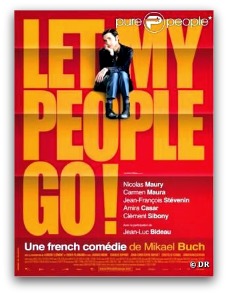
3) Let My People Go (2011, dir. by Mikael Buch) SUMMARY: French immigrant Reuben (Nicolas Maury) is living in fairytale Finland — where he got his MA in “Comparative Sauna Cultures” — with his gorgeous Nordic boyfriend Teemu (Jarkko Niemi). He works as the mailman in a neighborhood whose colorful houses look like Scandinavian Skittles. Then, after a misunderstanding involving a parcel full of Euros, Teemu casts his lover out of Eden, sending him back to where he came from: Paris. WHAT CRITICS ARE SAYING: Ruben’s return to Paris — where he finds his family weathering various crises as well as emotional instability — demonstrates why he left in the first place. (Aren’t most expats escaping something?) However, the scenes with his wacky, feuding family members soon become tedious. As one critic puts it:
The movie’s labored attempt at creating comedy mostly means lots of scenes with Ruben cringing as relatives shout.
CAST YOUR VOTE HERE!
3) Most Displaced Director
This category honors the director who has shown the most chutzpah in raiding the literature of other cultures to make a commercially successful movie (note: they do not cast the natives!). This year’s nominees are:
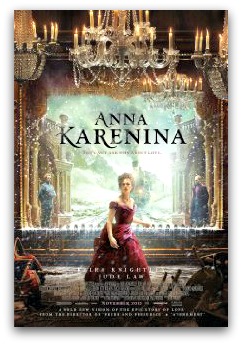
1) Joe Wright for doing a British version of Anna Karenina (2012), casting his muse (Keira Knightly) in the titular role WHAT CRITICS ARE SAYING: Some enjoyed Wright’s bold new interpretation of this classic Russian novel, while others felt that he did Tolstoy a terrible injustice — for instance, New Yorker critic Richard Brody had this to say:
Wright, with flat and flavorless images of an utterly impersonal banality, takes Tolstoy’s plot and translates it into a cinematic language that’s the equivalent of, say, Danielle Steel, simultaneously simplistic and overdone.
2) Tom Hooper for casting a bunch of Aussies, Brits and Americans in Les Misérables WHAT CRITICS ARE SAYING: Since Hooper previously won the Best Director Oscar for the terribly English drama The King’s Speech (historical drama, yay!), many found it odd that he would choose to take on this sprawling French story, and beloved musical, to create what he calls “an oil tanker of a picture.” But for what it’s worth, Hooper had no qualms about directing a film having to do with French history instead of his own. He is persuaded that Victor Hugo’s story speaks to issues of concern today:
Hugo’s story of populist uprising in 1832 Paris resounds in an era of the Arab Spring, the Occupy protests and general frustration over economic inequality.
3) Korean director Hur Jin-ho for making an Asian version of Dangerous Liaisons (2012) — which was originally an 18th-century novel by Pierre Choderlos de Laclosset — and setting it in 1930s Shanghai WHAT CRITICS ARE SAYING: Many have complimented Hur Jin-ho’s decorous adaptation, saying it was clever of him to swap the insular, decadent world of de Laclos’ book, which takes place pre-French Revolution, with the similarly gilded cage of Chinese aristocrats just prior to the Japanese invasion. But the film isn’t particularly sophisticated on a political or historical level. As one critic writes: “It’s all just window-dressing: pretty, but substance-free.”
CAST YOUR VOTE HERE!
4) Most Displaced Actor/Actress
This category honors the actor who has performed this year’s greatest feat of playing a role that requires them to take on a whole new nationality. We’re talking Versatility Plus! And the nominees are:
1) Daniel Day-Lewis, the Anglo-Irish actor who portrayed Abe Lincoln in Lincoln WHAT CRITICS ARE SAYING: Apparently, there was no American actor good enough to play one of the most exceptional presidents the nation has ever known as critics have had nothing but praise for Day Lewis’s performance. Here is a sampling:
His Lincoln is tall and tousled and bent over with the weight of melancholy responsibility in the fourth year of the Civil War.
[Day-Lewis] manages to inject so much quiet humour into what could have been a very reverential portrait.
[The actor] inhabits the ageing figure of the 16th President of the United States with exquisite poise, intellect and grace.
2) Anne Hathaway for playing saintly prostitute Fantine in Les Misérables WHAT CRITICS ARE SAYING: Many find it impressive that Hathaway, cast as the tragic Fantine, sings the show-stopping “I Dreamed a Dream” in one take. (Tom Hooper’s contribution to the genre was having the actors sing rather than lip synch.) And some say that her willingness to have her locks shorn off on screen shows her commitment to her craft. That said, her performance is not to everyone’s taste. “Rarely have the movies seen such an embarrassingly naked plea for applause,” writes Australian film critic Jake Wilson — the implication being the Victor Hugo’s Fantine would have had more dignity.
3) Swedish actress Alicia Vikander for taking on two non-Swedish roles: Caroline Matilda of Great Britain (she served as Queen of Denmark and Norway in the 18th century) in A Royal Affair (2012); and Kitty in Anna Karenina (2012) WHAT CRITICS ARE SAYING: Vikander’s “moxie” is apparently what landed her both of these parts. According to A Royal Affair director Nikolaj Arcel, every actress in Denmark wanted the role of Mathilde, but only Vikander had the requisite “regal quality.” She even went to Copenhagen two months before shooting began to learn to speak Danish fluently. Likewise, Anna Karenina director Joe Wright saw in her the qualities to play Kitty, a flirtatious young woman who believes the dashing Count Vronsky is her Prince Charming, only to find love with a kind-hearted farmer named Levin. It is not uncommon for movie-goers to remark that she outshines Kiera Knightly’s Anna.
CAST YOUR VOTE HERE!
* * *
Are we missing out on any films/categories? Please leave your suggestions in the comments below.
If you enjoyed this post, we invite you to register for The Displaced Dispatch, a round up of weekly posts from The Displaced Nation, with seasonal recipes, book giveaways and other extras. Register for The Displaced Dispatch by clicking here!
Today’s guest blogger, Zeynep Kilic, did not come to the United States in 1993 looking for love. Turkish born and bred, she was here for an overseas adventure (she worked as an au pair for a year in New Jersey) and to pursue graduate studies (she went on to earn a PhD in sociology at Arizona State). But then, two failed marriages to Turkish men later (they were also expats), she changed her tune about American men — and was looking for love…in the desert.
— ML AWANOHARA
I am not as much a foreigner as I was before. Not any more, right? After all, I have been living in the United States for almost fifteen years. I get the references to popular culture, politics or religion; I went to graduate school here, I taught here, worked here, established close friendships here, annnnnnd I can cook the traditional dishes served during holidays.
Plus I am an American citizen. What else is there?
Except — and here is where culture shock sets in, 15 years too late — I have no clue how Americans perceive me.
Chapter 1 of my single life: Arizona 2007
It is 2007 — time I date an American already. This may be due in large part to my two failed marriages with Turkish men, along with my hope that I may be more acceptable to an American mother-in-law.
Not to mention my even more fervent hope that American men aren’t as attached to their mothers as Turkish men are.
After the first divorce, I have become an undesirable partner for any Turkish mother’s precious son. After the second, I’m considered an untouchable. I may as well be wearing the red letter D on my forehead, forewarning all Turkish families about the dangers of an educated woman who thinks that no man can come up to her standard.
(Actually, did I really think those things about my own people — I, a sociologist, who teaches students about the pitfalls of stereotyping and blanket generalizations? For shame!)
Maybe I shouldn’t worry about the man’s family right away, I tell myself, particularly his mother. Let the cultural weirdness enter the picture a bit later. At least that’s my plan.
I will ask my American friends to set me up with their American friends. Luckily, I am already a citizen and no one can blame me for being after a green card. This should work. Except, none of my friends have any single friends to introduce me to. Must I really endure the Internet? I am overweight; no one is going to email me back.
I come up with a strategy: put all my fat-angle pictures up to give potential suitors a slightly worse, but still realistic, version of who I am. Then, if they still want to meet me, they will be pleasantly surprised.
This goes against everybody else’s strategy on the Internet but I think it should work. Maybe I’ve found the loophole?
After much dragging of feet I tell myself what they say in the Black Sea:
Once you get up to join the horon (folk dance), you must shake your ass!
So here I come, timidly jiggling my metaphorical ass on the Internet dating sites with a profile that says — too much really. I guess my tendency to speak too much in the classroom translates very well into writing too much on the profile. I am a consistently verbose woman.
To my surprise, over a period of time, I meet a few men.
Candidate #1
The first guy I meet is a handsome Latino with a very well-groomed beard. He says he likes the curves. Okay, we are good. Then he says he likes the wavy hair. “Very exotic,” he says with a wink.
I change the subject to his kids and job. I am a very serious academic after all. Enough with the objectification…
I don’t see him again but keep thinking about his comment on my exotic hair. Am I supposed to feel good about this?
The next day, I meet my friend Jill for a run. I recount the story and tell her I am slightly bothered by the “exotic hair” comment. She assures me that it was meant to be a compliment, to suggest that I looked different than a “generic” American — which is not a bad thing.
I glance at her fine blond hair blowing in the morning desert breeze and wonder if her hair is the generic American hair. Let’s not make a mountain out of a molehill, I tell myself.
Candidate #2
The second guy doesn’t work out either, though we have a pleasant lunch. He is wearing ripped, skin-tight jeans and sporting a bleached ponytail. I am wearing the opposite — literally and metaphorically. As he says goodbye, he leans in for a kiss on the cheek, sighs and says:
It would have been hot to add Turkish to my list.
I recount this to Jill on another run, telling her that I never thought that the major thing these men would notice about me would be my non-Americanness, which I seem to exude in spades.
I’ve been feeling quite at home in Arizona, especially after a 13-year-long residence, exactly as long as my life in Ankara, where I went to college. Sure, my name always invites questions about its origin, and people sometimes remark how “pretty” it is and all that. But I don’t have the thickest accent and I certainly do not talk about my differences all the time, especially not with a stranger.
It dawns on me that nobody sees an American when they look at me. This is a surprise because nobody made any comments about it before. I guess exoticizing someone is not cool in a non-dating context. The subtext of racism makes it too politically incorrect to bring up.
Jill stops my ranting to say, a little apprehensively, that she always liked that I was Turkish. I am different than her other friends. I cook different things, and she loves my slight accent. She also loves saying my name, and receiving wonderfully “authentic” gifts from my visits back home, such as evil eye beads I gave to her babies. It is not a bad thing, she says — it is a good thing.
Okay, I must enjoy this and use it to my advantage, I say to myself — make the wave in my hair even wavier. Onwards, to the next encounter!
Candidate #3
Guy #3 does not work out either. He makes a lot of references to his parents though he has not actually seen them in the last year and a half. He also does not speak to his brother. He shrugs and says, “You know how it is.” I don’t actually, so I just smile tentatively.
When silence falls on the conversation, he reiterates that I am so exotic — something refreshing in his desert dating experience. “Scottsdale types,” he adds.
I think he means he’s been seeing mostly blonde, tanned woman with straight hair and French manicures.
Finally, I ask: “What do you mean by that, what makes me exotic exactly?”
A little taken aback, he says I have interesting, chunky jewelry. I haven’t heard that one before. Do American women not wear chunky jewelry? I glance at Jill next time I see her and notice her diamond pendant the size of a pea and her very small hoop earrings.
Candidate #4
The fourth one is a clean-cut guy from Chicago. He is very particular about his finances and is investing in a large house even though he lives alone (but we all know he will have a family populating the rooms some day soon!).
He assures me that he dated a lot of “ethnic” women — like when he was in Korea, he had Korean girlfriends. He then proceeds to tell me how he will never forget that time in a baseball field’s dugout with two friends…
I am not sure if he is expecting a pat on the back. I don’t.
* * *
Readers, tune in next week to Part 2 of Zeynep’s story — covering her decision to leave the deserts of Arizona for the frozen grounds of Alaska — to find out how the story ends. Meanwhile, do you have any stories about the process of self-discovery when seeking love abroad? Please leave them in the comments. We’d love to hear them…
Zeynep Kilic is an assistant professor of sociology at the University of Alaska Anchorage, where she is navigating the treacherous waters of tenure. You can find her on Google+ and on Twitter: @zeynepk
If you enjoyed this post, we invite you to register for The Displaced Dispatch, a round up of weekly posts from The Displaced Nation, with seasonal recipes, book giveaways and other extras. Register for The Displaced Dispatch by clicking here!
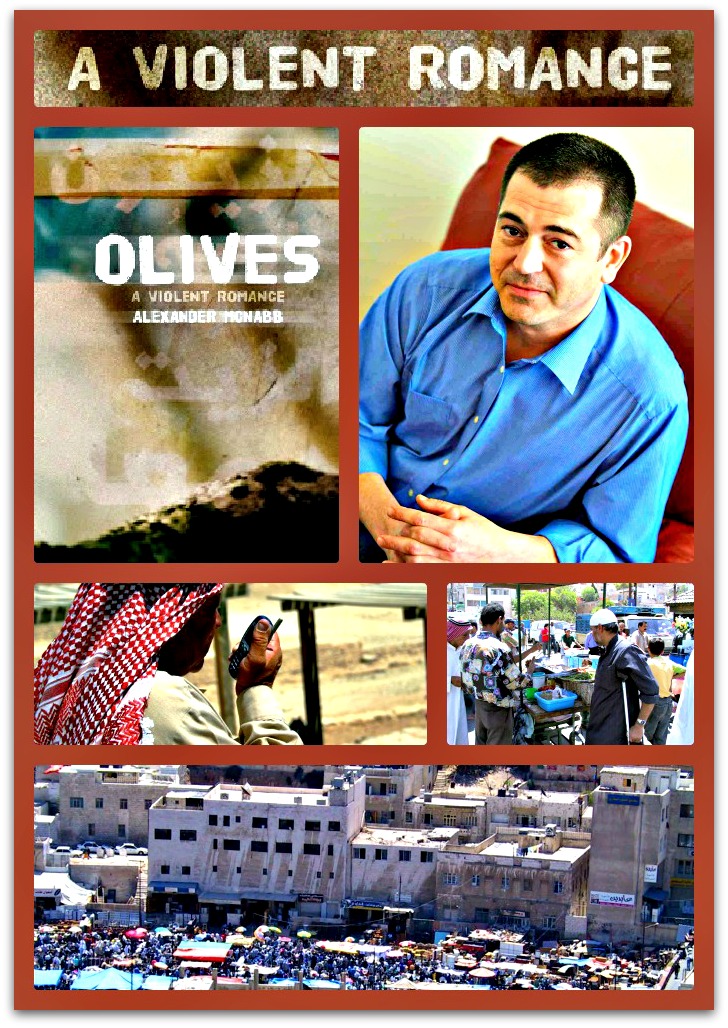
The London-born Alexander McNabb has spent nearly half of his life in the United Arab Emerites. Last month we interviewed him about his series of books on Middle Eastern themes, the first of which, Olives — A Violent Romance, has been sparking some controversy. (“Bring it on!” he told us.) Alexander is back at the Displaced Nation to share some good news: He is giving away several copies of Olives to our readers!! (See details below.) He is also here to discuss: does the book deserve its notoriety?
The Jordanian Web site Albawaba did a lovely interview with me in which they played up the “controversial novelist” angle quite nicely — I am, apparently, “scandalous.” Now, as any fule kno, if you want to sell books a whiff of scandal is quite handy.
That said, I have always shied away from that sales strategy — at least in part born of my dislike of the way the British author Geraldine Bedell’s publisher attempted to hijack the first Emirates Airline Festival of Literature (which I usually attend) to promote her mediocre book, The Gulf Between Us. Penguin claimed the festival organizers had tried to ban the book for its inclusion of a homosexual sheikh. (For more details, go to my post on this story.)
And yet bucketloads of controversy have dogged me since Olives — A Violent Romance was published a year ago. It’s much easier to be a “controversial author” in the Middle East than it is in the West these days.
Where is speech truly free?
We tend to forget how the film Monty Python’s Life of Brian (1979) was picketed by Christian groups, and how in 1988 Scorsese’s Last Temptation of Christ, an adaption of a 1953 novel, was picketed and banned in some countries.
Let alone Lady Chatterley’s Lover (an unexpurgated edition could not be published in the UK until 1960), Frankie Goes to Hollywood (their controversial single, “Relax”) or many other shameful bans on music and literature in my own country in my own lifetime.
We think of ourselves as secular, tolerant and free-minded — yet our recent history has been filled with our failing to come to terms with free speech and literature that brings up topics we find uncomfortable.
Imagine how it is, then, in the Middle East, a region not only more sensitive to discussion of religious, cultural and social issues but with many more taboos to play with.
Some inconvenient truths
In Olives, my first book, a Muslim family is depicted drinking alcohol. This caused considerable comment online and from reviewers in the region, some of whom thought this was unnecessary and meretricious. A few tried to portray this scenario as unrealistic, but that didn’t really wash. Alcohol and the Arab world have a fraught — and frequently secretive — relationship.
Even more controversy followed with the fact that a Muslim woman sleeps with a British, Christian, man in the book. This was a humdinger that sparked debate about my motivations, the possibility this could happen and, once again, why I had to include such unsavory behavior.
Talk about inconvenient truth.
But the money shot was my decision to use real names in the book: real Jordanian and Palestinian family names. It wasn’t much of a decision, really, more of a no-brainer — you wouldn’t set a novel in the Highlands of Scotland and call characters MacShuggy or MacSquarepants because you were afraid of the clans, would you? And yet that expectation very much exists in Jordan today!
One member of a family with the same name as the female protagonist, Dajani, posted a comment on the Olives blog on behalf of the whole family demanding that the name be changed:
It would have been entirely feasible for you as an author to have contrived/fabricated a fictional name which does not infringe or violate our good family’s history and reputation and [we] do not believe that you have exercised good judgement in this choice.
The row spilled over to Facebook and other platforms and quickly got out of hand. One commenter on Jordanian blog 7iber (pronounced “hiber”) noted:
…this would be worth some honor killings if these names were abused.
Umm, that’s a death threat. (No matter that it’s probably something silly typed by an anonymous pimply onanist showing off, it does tend to stop one in the old tracks when you first read it.)
Worse, distributors in Jordan had refused to carry the print edition, citing concerns over the book’s use of that prominent Palestinian family name. Olives wasn’t banned in Jordan by government censors — but it was blocked by what a sympathetic commentator quite rightly called “a more insidious form of censorship.”
Fact vs fiction
Why has this been happening — because people in the Middle East can’t separate fact from fiction? Absolutely! It’s a real issue in the region. There is all too little fiction produced in and about the region: people simply don’t read very much in the main. A bestselling Arabic novel might sell a few thousand copies at most — the vast majority of Arabic writers pay to have their books printed.
So quite a few people, not unsurprisingly, find it hard to separate fiction from fact. Strangely enough, another branch of the Dajani family (which is very large and widespread, part of the reason I used the name) is passionately pro Olives — and I have to say the same thing to them: “Guys, it’s fiction!”
But the fact remains, my book set in Jordan can’t be sold in the country it’s set in.
As I said, it’s all too easy to be scandalous in the Middle East. Mind you, wait ‘till they see Beirut – An Explosive Thriller…
* * *
Now it’s time for the freebies! Displaced Nation readers, you can get your very own copy of the book that’s been making waves in my part of the world. Here are 3 ways to do so:
1) For TDN readers with an iPad or ePub compatible reader (Nook, Sony, Kobo, Android etc): Get your copy of Olives — A Violent Romance free of charge (and save $4.99) on Smashwords. But first, you’ll need to sign up for the DISPLACED DISPATCH to get the code (it will come in the issue delivered this Saturday). NOTE: The code is valid until 1st December — and then, pfft, it’ll disappear. Dear readers, you are MORE than welcome to share that code with family, friends, strangers, dogs in the street — even lawyers.
2) For TDN readers with Kindles:Leave a comment on this post with your e-mail, and I will send a Kindle file and instructions how to install it. Best I can do, I’m afraid — Amazon doesn’t let me do freebies! Do remember to use name dot name at domain dot com so the spambots don’t find you! Or you can hit me up directly at @alexandermcnabb on Twitter…
3) For TDN readers who still like shiny PRINT books: If anyone would like to win Olives — A Violent Romance in print, delivered to their doorsteps anywhere in the world, just leave a comment and let us know where, if you could move to live anywhere on earth tomorrow, you’d go — and why!
TO ALL READERS:Olives — A Violent Romance has (wonderfully) met with considerable critical acclaim — if anyone wants to add their voice (whichever way it leans) on Amazon or Goodreads, that’s welcome feedback. The more people know the book exists, the merrier! 🙂
STAY TUNED for tomorrow’s post, the first in a two-part series on an expatriate’s love life.
If you enjoyed this post, we invite you to register for The Displaced Dispatch, a round up of weekly posts from The Displaced Nation, with seasonal recipes, book giveaways and other extras. Register for The Displaced Dispatch by clicking here!
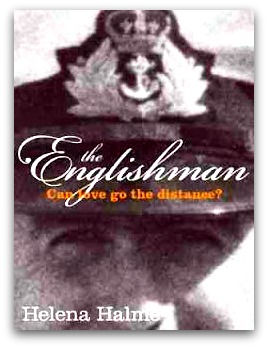
Today we are delighted to review Helena Halme’s book, The Englishman. Helena is a regular visitor to The Displaced Nation, where she has been featured both as a Random Nomad, and as Cleopatra For The Day.The Englishman is available from Amazon (UK and US) — and for a limited time this week, is free to download as a Kindle ebook!
TITLE: The Englishman AUTHOR: Helena Halme AUTHOR’S CYBER COORDINATES: Blog: Helena’s London Life Twitter: @HelenaHalme PUBLICATION DATE: August 2012 FORMAT: Ebook (Kindle) GENRE: Fiction SOURCE: Review copy from author
Author Bio:
Helena Halme grew up in Finland and Sweden, and left Finland for good when she married her English husband. She now lives in London. The Englishman is her first book.
Summary:
At the age of twenty, Kaisa has her life mapped out. After university in Helsinki, she’s going to marry her well-to-do fiancé, Matti, and live happily ever after. But in October 1980, she’s invited to a British Embassy cocktail party, and meets a dashing Naval officer. In the chilly Esplanade Park the Englishman and Kaisa share passionate, secret kisses and promise to meet up again. But they live thousands of miles apart – and Kaisa is engaged to be married.
At the height of the Cold War the Englishman chases Russian submarines whilst Kaisa’s stuck in a country friendly with the Soviet Union. Will their love go the distance?
(Source: Amazon.com book description)
Review:
The Englishman is semi-autobiographical, based on the author’s blog posts on How I came to be in England, which, after an enthusiastic response from readers, she was inspired to turn into a fully fledged novel.
It is a love story: the account of the long-distance romance between English Naval officer Peter and Finnish student Kaisa, as this star-crossed couple discovers that Shakespeare’s words are still true, even in the 1980s, and the course of true love never runs smooth. Together, they contend with a broken engagement, long separations, the Falklands War, inevitable cultural differences, and the small matter of a member of the British armed forces wanting to marry a citizen of a country bordering the Soviet Union.
No matter where you are from, or even if you and your partner are from the same cultural background – if you’ve ever been in a long-distance relationship, The Englishman will strike a chord. Loving from afar in the early 1980s was a different matter than it is now: no Skype, no Facebook, no texting, but instead the sweet agony of waiting for letters in the mail and for the landline telephone to ring. Kaisa and her Englishman remind us of the forgotten pleasures of delayed, rather than immediate, gratification.
TDN verdict:
Especially recommended for romantics who grew up listening to Chrissie Hynde and wearing leg warmers the first time they were in fashion.
“The Englishman” can be purchased from Amazon.co.uk and Amazon.com, and from October 8 – 12 is available to download free of charge.
STAY TUNED for tomorrow’s ghosty posty, a spooky Displaced Q from Tony James Slater!
Image: Book cover — “The Englishman”
If you enjoyed this post, we invite you to register for The Displaced Dispatch, a round up of weekly posts from The Displaced Nation, with seasonal recipes, book giveaways and other extras. Register for The Displaced Dispatch by clicking here!
CLICK HERE TO REGISTER for THE DISPLACED DISPATCH. It’s delivered to your inbox and features:
* new works by expats or other international creatives;
* debate-worthy topics in the expat realm;
* surprising discoveries expats have made; &
* a couple of the latest Displaced Nation posts. SIGN UP NOW. (On temporary hiatus; next issue to appear in Spring 2018)
FOR, BY & ABOUT DISPLACED CREATIVES
We have interviewed many displaced creatives: memoirists, novelists, entrepreneurs & artists of various kinds. Check out the collection for possible soulmates!
About The Displaced Nation
The founders of The Displaced Nation share a passion for what we call the "displaced life" of global residency and travel—particularly when it leads to creative pursuits, be it writing, art, food, business or even humo(u)r.















 The Displaced Nation