The Displaced Nation

A home for international creatives

Tag Archives: Acquired tastes

Catching up with this year’s Random Nomads over the holidays (3/3)

RandomNomadXmasPassportIt’s Christmas Day and the holiday party continues for the expats and other global voyagers who washed up on the Displaced Nation’s shores in 2012. Remember all those Random Nomads who proposed to make us exotic meals based on their far-ranging meanderings? Not to mention their suitcases full of treasures they’d collected and their vocabularies full of strange words… How are they doing these days, and do they have any exciting plans for the holidays? Third in a three-part series (see also Part One and Part Two).

During the final third of 2012, we met some expats and intrepid world travelers who, I think it’s fair to say, have developed some rather unusual hobbies and eating habits. The two are one and the same in the case of Brian MacDuckston, who was featured on our site this past August. He has made a habit of eating ramen in as many Tokyo venues as possible — a hobby that was quirky enough to attract the attention of the New York Times. In addition to Brian — a San Franciscan who originally went to Japan to teach English — we encountered:

  • Liv Gaunt, an Englishwoman who became an expat accidentally, while pursuing her love of scuba diving and underwater photography. Now based in Australia, she told us she has a passion for sharks but would happily do without sea urchins.
  • Mark Wiens, an American third culture kid who now lives in Thailand and travels all over — he feels least displaced when sampling other countries’ street foods.
  • Jessica Festa, an American traveler who loves to venture off the beaten track and eat locally — she did not hesitate to eat cuy in Ecuador (even though it reminded her of her pet guinea pig, Joey, named after a school crush).
  • Larissa Reinhart, a small-town Midwesterner who lived in Japan for several years and, since repatriating, has taken up the pen as a crime novelist. She is now living in small-town Georgia but hopes to go abroad again. She provides recipes for Asian fried chicken, among other delicacies, on her blog about life as an ex-expat.
  • Patricia Winton, an American who responded to 9/11 by giving up her comfortable life in Washington to become an expat crime writer in Rome. She also invested in a pasta-making machine…
  • Bart Schaneman, a Nebraskan who wanted to see the world and has made his home in Seoul, where he is an editor for an English-language newspaper and author of a travelogue on the Trans-Siberian railway. He is a huge fan of kimchi.

Three of this esteemed group are with us today. What have they been up to since a few months ago, and are they cooking up anything special for the holidays, besides chatting with us?

Brian with Ramen_Xmas1) BRIAN MACDUCKSTON

Have there been any big changes in your life since we last spoke?
I’ve been offered a few gigs on Japanese TV shows as a “ramen reporter” and successfully pitched my first magazine article about a best-of-ramen list. A start! I also started a ramen class aimed at non-Japanese speakers. Check it out!

How will you be spending the holidays this year?
A nice staycation in Tokyo.

What’s the thing you most look forward to eating, dare I ask?
I’m trying to eat more high-class sushi, but I’ll probably just stick to a lot of ramen for the next few weeks.

Can you recommend any books or films you came across in 2012 that speak to the displaced life?
I really enjoyed Jiro Dreams of Sushi, a documentary about the most revered sushi chef in the world. [Editor’s note: The film has been available on Netflix since last August.]

Do you have any New Year’s resolutions for 2013?
I want to train myself to stop using double spaces after periods when I write. Not a big goal, but important for someone who has an interest in being paid for my writing.

A worthy goal, imho! (I’ve had to correct quite a few in my time…) So, any upcoming travel plans?
My father will visit Japan, so I am planning a luxury week-long trip of eating and relaxing in hot springs. Two things I’m good at!

LarissaReinhart&Reinhart2) LARISSA REINHART

Any big developments in your life since we last spoke?
My second Cherry Tucker Mystery, Still Life in Brunswick Stew, has a release date of May 21, 2013. [Editor’s note: As mentioned in Larissa’s interview, the first in her Cherry Tucker series, Portrait of a Dead Guy, came out this year.]

How will you be spending the holidays this year?
We travel to visit my family in Illinois and St. Louis after Christmas through New Year’s.

What’s the thing you most look forward to eating?
There’s this Italian grocery, Viviano’s, in the Italian district of St. Louis, called The Hill in St. Louis, that I really look forward to visiting. I’ll stock up on cheap wine and Italian staples for the coming year.

Can you recommend any books or films you came across in 2012 that speak to the displaced life?
Yes, two Japanese films:

  1. The fascinating documentary Jiro Dreams of Sushi. I highly recommend — even for non-sushi fans. The film is beautifully shot and reveals what it takes to be a true master at something. Incredible.
  2. The gorgeous The Secret World of Arrietty (aka The Borrower Arrietty), scripted by Hayao Miyazaki. We were excited to see Arrietty because we saw the ads for the movie when we were still living in Japan (and I’m a big fan of Mary Norton’s The Borrowers, on which the film is based, as well as of Miyazaki).

Have you made any New Year’s resolutions for 2013?
To spend less time on social media and more time writing. I love chatting online, but I need to be more disciplined about getting away from the “water cooler” and back to work.

Any upcoming travel plans?
Disney World for spring break! Woot! And we’re hoping to get back overseas soon, but no definite plans yet.

PatriciaWintonwithholly3) PATRICIA WINTON

Any big changes in your life since we last spoke a couple of months ago?
The month after you featured me, I put my long-time WIP in the bottom drawer for a while and started a new one. I’ve written about 30,000 words. This one, also a mystery, is set in Florence. It takes place during the 500th anniversary celebration of the world’s first culinary society.

Meanwhile, my blog partners at Novel Adventurers are working on an anthology of long short stories. We are an adventurous group comprising (besides me):

  • an Australian who has lived in South America
  • an American of Swiss-German origin who is married to a man from Iran, where they frequently travel
  • an American with close family ties in India, where she frequently travels
  • an American specializing in things Russian, who is married to a Kyrgyz
  • a former Peace Corps volunteer who writes about the Caribbean
  • an American who grew up on a sailboat traveling the world and has lived as an adult in many countries.

We’ll be writing about travel and adventure from international perspectives. It will be some time before it sees publication, but I’ll keep you posted. I think it will interest the Displaced Nation!

Where will you be spending the holidays this year?
I’m spending the holidays quietly at home. I plan to visit a friend in the country for New Year’s weekend. The holidays here last almost three weeks, ending on January 6. Nativity scenes are a big deal here, and I plan to visit various churches to view, and photograph, them as I usually do. I’ll write about them on my blog, Italian Intrigues, on January 3rd.

What’s the thing you most look forward to eating?
Christmas Eve in Italy is devoted to eating fish — usually seven fish dishes from antipasto onward. I’m trying out a new recipe for sea bass stuffed with frutta del mare (non-fin fish). I’m using clams, mussels, shrimp, squid and baby octopus, all well laced with garlic. And I always make the holiday custard that comes from my Tennessee childhood.

Can you recommend any books you came across in 2012 that speak to the displaced life?
The Lacuna, by Barbara Kingsolver. While it was published in 2010, I didn’t read it until this year, and I think it’s a masterpiece. It’s about a man with one foot in Mexico and the other in the US — but that’s a vast oversimplification. After the young man’s Mexican mother dies, he works for Frida Kahlo and Diego Rivera while Leon Trotsky is staying with them. He later moves to the US to join his American father. He eventually becomes a successful writer caught up in the McCarthy witch hunt. I don’t want to include spoilers here, but it’s fabulous. The boy/man is a foreigner in both countries and speaks both languages with an accent.

Do you have any New Year’s resolutions for 2013?
Not that I want to share.

Last but not least, do you have any upcoming travel plans?
No concrete travel plans at the moment. While composing these answers, I received an email about a tour of Uzbekistan that sounds really alluring. And I will probably go to the US to attend a mystery writers conference.

* * *

Readers, any questions for this rather motley (one former expat and two current ones) but highly creative bunch?

STAY TUNED for tomorrow’s post — expat Anthony Windram’s musings on spending Boxing Day in a country that associates boxing with punching, not (Christmas) punch.

If you enjoyed this post, we invite you to register for The Displaced Dispatch, a round up of weekly posts from The Displaced Nation, with seasonal recipes, book giveaways and other extras. Register for The Displaced Dispatch by clicking here!

Related posts:

Images: Passport photo from Morguefiles; portrait photos are from the nomads (Larissa Reinhart’s shows her family in front of one of their favorite Japanese manga characters, Shin-chan, a sort of Bart Simpson of Japan — the creator, Yoshito Usui, had recently died).

Catching up with this year’s Random Nomads over the holidays (2/3)

RandomNomadXmasPassportWelcome back to the holiday party we are throwing for the expats and other global voyagers who washed up on our shores in 2012. Remember all those Random Nomads who proposed to make us exotic meals based on their far-ranging meanderings? Not to mention their suitcases full of treasures they’d collected and their vocabularies full of strange words… How are they doing these days, and do they have any exciting plans for the holidays? Second in a three-part series (Part One here).

The second third of 2012 brought quite an intriguing (albeit as random as ever) bunch of nomads our way — intriguing because most of them have had experience with spouses from other cultures, suggesting that the point made by one of their number, Wendy Williams, about the globalization of love has some validity. They are:

  • Wendy Williams, the Canadian who is as happy as Larry living with her Austrian husband and their daughter in Vienna.
  • Suzanne Kamata, an American writer who went to Japan on the JET program, married a Japanese man, and made her home on Shikoku Island.
  • Isabelle Bryer, a French artist who feels as though she’s on a permanent vacation because of landing in LA — she’s lived there for years with her American husband and family.
  • Jeff Jung, formerly of corporate America but now an entrepreneur who promotes career breaks from his new base in Bogotá, Colombia.
  • Lynne Murphy, the lovely lexicologist who landed in — I want to say “London” for the alliteration, but it’s Sussex, UK. And yes, despite not being the marrying type, she now treasures her wedding ring of Welsh gold!
  • Melissa Stoey, the former expat in Britain who, despite no longer living in the UK, has a half-British son and remains passionate about all things British.
  • Antrese Wood, the American artist who is busy painting her way around Argentina, having married into the culture.

I’m happy to say that three of this esteemed group are with us today. What have they been up to since nearly a year ago, and are they cooking up anything special for the holidays?

Wendy_Williams1) WENDY WILLIAMS

Have there been any big changes in your life since we last spoke?
Yes, I’ve spent less time at my desk and more time travelling since the publication of my book, The Globalisation of Love. Given the title, I guess I should have expected it.

Where will you be spending the holidays this year?
Since I have “gone native” in Austria, I will be skiing during the holidays. Yipppeeee!

What do you most look forward to eating?
I most look forward to eating a Germknödel, which is a big ball of dough filled with plum sauce and covered in melted butter. Apparently, it has 1,000 calories and I savour every last one. If no one is looking, I lick the plate.

Can you recommend any books you came across in 2012 that speak to the displaced life?

  1. A Nile Adventure — cruising and other stories, by Kim Molyneaux — a light-hearted story of one family’s journey to and adventures in Egypt, both ancient and modern.
  2. Mint Tea to Maori Tattoo!, by Carolina Veranen-Phillips, an account from a fearless female backpacker — is there anywhere she hasn’t been?!
  3. Secrets of a Summer Village, by Saskia Akyil: an intercultural coming-of-age novel for young adults, but a cute read for adults, too.

Have you made any New Year’s resolutions for 2013?
More time with friends & family and more writing, the two of which are completely counter-productive in my case.

Any upcoming travel plans?
I am only happy when I have a plane ticket in my pocket so there are always trips planned. Didn’t René Descartes write, “I travel, therefore I am” — or something like that? The year will start with Germany, Ukraine, Spain and Canada.

SuzanneKamata_festive2) SUZANNE KAMATA

Have there been any big changes in your life since we last spoke?
I sold my debut YA novel, Gadget Girl: The Art of Being Invisible, about a biracial (Japanese/American) girl who travels to Paris with her sculptor Mom, to GemmaMedia. It will be published in May 2013. I was also honored to receive a grant for my work-in-progress, a mother/daughter travel memoir, from the Sustainable Arts Foundation.

How will you be spending the holidays?
We are planning a little jaunt to Osaka between Christmas and New Year’s, but mostly, we’ll be staying at home.

What’s the thing you most look forward to eating?
I’m looking forward to eating fried chicken and Christmas cake, which is what we traditionally have here in Japan on Christmas Eve. There are all kinds of Christmas cakes, but my family likes the kind made of ice cream.

Can you recommend any books you came across in 2012 that speak to the displaced life?

  1. The Girl with Borrowed Wings is a beautifully written contemporary paranormal novel featuring a biracial Third Culture Kid. The author herself, Rinsai Rossetti, is a TCK. She wrote this book when she was a student at Dartmouth. It’s unique and lovely and captures that in-between feeling of those who live in lots of different countries.
  2. I also enjoyed I Taste Fire, Earth, Rain: Elements of a Life with a Sherpa, by Caryl Sherpa, an American woman who went on a round-the-world trip and fell in love with a Sherpa while trekking in Nepal.
  3. Oh, and Harlot’s Sauce: A Memoir of Food, Family, Love, Loss, and Greece, by Patricia Volonakis Davis.

Do you have any New Year’s resolutions for 2013?
Hmmm. Exercise more (same as last year). Also, I resolve to finish a draft of my next novel.

Last but not least, any upcoming travel plans?
Yes! I’m planning on taking my daughter to Paris.

Jeff at Turkish Embassy3) JEFF JUNG

Have there been any big changes in your life since we last spoke?
Since the interview, I launched my first book, The Career Break Traveler’s Handbook. It’s available online at most major book stores in both print and e-versions. And, we’re on the verge of launching Season 1 of our TV show, The Career Break Travel Show, internationally. It includes adventures in South Africa, Spain, New Zealand and Patagonia. We’re just waiting for the new channel to launch.

How will you be spending the holidays this year?
After spending a quiet Christmas in Bogotá, I’ll head off to Washington, DC for my best friend’s wedding on New Year’s Eve. Then I’m off to Texas to see my parents for about ten days.

What’s the thing you most look forward to eating?
As far as food goes, I’m most looking forward to turkey and my dad’s award-winning BBQ.

Can you recommend any books you came across in 2012 that speak to the displaced life?
This year I read Dream. Save. Do., by Betsy and Warren Talbot. It’s a great book to help people achieve whatever goal they have.

Speaking of goals, any New Year’s resolutions for 2013?
Personally, I need to drop a bit of weight. I spent too much time writing and editing in 2012! Professionally, I want to see The Career Break Travel Show find its audience so we can head out to film Season 2!

Last but not least, any exciting travel plans?
I plan to travel for the filming of our second season (countries still to be determined). I also have the chance to go to Romania to volunteer at a bear rescue with Oyster Worldwide. It’ll be a mini-career break for me. I can’t wait.

* * *

Readers, this lot seems just as productive, if not more so, than the last one! Any questions for them — don’t you want to know their secret?

STAY TUNED for tomorrow’s post by the Displaced Nation’s agony aunt, Mary-Sue — she wraps up 2012 by paying a visit to several of this year’s questioners: did they take her advice?!

If you enjoyed this post, we invite you to register for The Displaced Dispatch, a round up of weekly posts from The Displaced Nation, with seasonal recipes, book giveaways and other extras. Register for The Displaced Dispatch by clicking here!

Related posts:

Images: Passport photo from Morguefiles; portrait photos are from the nomads.

The 12 Stodges of Christmas: Global foods to pack on the pounds this December!

ID-100101223

Today, we bring you a helpful list of the most stodgy, calorie-intense dishes that make their way onto holiday dinner tables around the world.

The way we see it, if you’re going to eat celery and spend all January on a treadmill — and it’s pretty much the law that you do — you might as well make December’s crime fit January’s punishment..

On the 1st day of Christmas my true love sent to me…

A Christmas Pudding from England. Also known as Plum Pudding or Plum Duff, although plums do not feature in the  approved list of ingredients, which includes assorted nuts and dried fruits, suet, and a small keg of brandy. The pudding is steam-cooked for approximately four days before being doused in more brandy and set alight at the dinner table. Accompanied by brandy sauce, brandy butter, and the contents of a fire extinguisher.

My True Love only sent one of these because of their extreme density. If Christmas Puddings were chemical elements, they would lie somewhere between osmium and iridium.

On the 2nd day of Christmas…

Two bowls of Kutia from Ukraine. Often the first dish in the traditional 12-dish Christmas Eve supper served in many Eastern European cultures, Kutia is traditionally made from wheatberries, poppy seeds, nuts, raisins, and honey. Apparently,  it should be made about two weeks in advance. Presumably by the time it is ready it has begun the fermentation process and so adds to the seasonal merriment.

On the 3rd day of Christmas…

Three servings of Julgrøt from Norway. Christmas rice pudding, made from rice, sugar, cream, ground almonds, and containing a single whole almond. The person who finds the almond wins a prize…perhaps a crash course in how to perform the Heimlich Maneuver.

On the 4th day of Christmas…

Four pieces of Stollen from Germany. It’s fruit cake, people. Fruit cake gets a bad press, particularly in the USA, as Anthony Windram pointed out on his own blog this week, but if you call it Stollen, it’s all Bavarian and Christmassy and wonderful.

On the 5th day of Christmas…

Five Mince Pies. A Christmas delicacy from Britain: small pies containing dried fruit, sugar, a healthy dose of brandy, and, if you’re going to do it properly, that weird ingredient suet again. Americans find it very difficult to wrap their heads around the idea of fatty bird fodder going into foods for human consumption, so when I offer my American friends my homemade mince pies, filled with made-from-scratch mincemeat, I wait until they’ve eaten a few before enlightening them that they’ve just eaten the contents of their bird feeder.

On the 6th day of Christmas…

Six buckets of KFC from Japan. Orders are placed two months in advance, and people line up outside the Colonel’s place to get their hands on this delicacy, which over the last 40 years has become a Christmas tradition in Japan.

“Our holiday sales are five to ten times higher than other months,” said spokesman Sumeo Yokokawa. “In Japan, Christmas equals KFC.” (ABC News)

A miracle of marketing by KFC, if nothing else.

On the 7th day of Christmas…

Seven Karelian Pasties from Finland. Originally from Russian Karelia, these pasties have a thin crust of rye or rye/wheat and a filling of barley, potato, buckwheat, or rice (the most popular modern filling.) Toppings include cheese, ham, shrimp, and slices of reindeer.

Yes, reindeer. I guess the buck — and Santa Claus — stops in Finland.

On the 8th day of Christmas…

Eight bibingka from the Philippines – a traditional Christmas dessert made from rice flour and coconut milk, baked in banana leaves. A generously-sized bibingka would serve four people. The bibingka made by residents of Mandaue in Cebu, in May 2011, would serve considerably more. It contanined 50 sacks of rice, 50 sacks of sugar, and the milk from 13,500 coconuts.

Now there’s a town that takes its holiday stodge seriously.

On the 9th day of Christmas…

Nine bread puddings from Puerto Rico. Bread Pudding can be found in many variations around the globe; this Puerto Rican version, made with coconut milk and sliced mango, manages to make the ultimate stodgy pudding into something exotic.

Having hankered after a Caribbean Christmas for more years than I can remember, I fear this dessert only serves to strengthen my resolve.

On the 10th day of Christmas…

Ten Bolo Rei from Portugal. Bolo Rei – King Cake. Crown-shaped cakes, encrusted with raisins, nuts, and crystallized fruit. Contains a small metallic toy and a fava bean. Whoever finds the fava bean is supposed to pay for the bolo rei the following year — talk about adding insult to injury.

On the 11th day of Christmas…

Eleven lussekatter from Sweden. These saffron and quark buns are eaten to celebrate Saint Lucy’s Day, the shortest day of the year which, according to the Julian Calendar, was December 13th. When the Gregorian Calendar changed this to December 21st, Saint Lucy’s Day defiantly remained on the 13th. The Swedes’ cavalier attitude to dates and solstices is why I don’t feel too bad about suggesting you eat these delicious morsels on January 4th.

On the 12th day of Christmas…

And finally, if your True Love has really showered you with all these carbs, the only thing he should be giving you on Day 12 is a year’s subscription to Weight Watchers.

.

STAY TUNED for more Random Nomad highlights from 2012!

If you enjoyed this post, we invite you to register for The Displaced Dispatch, a round up of weekly posts from The Displaced Nation, with seasonal recipes, book giveaways and other extras. Register for The Displaced Dispatch by clicking here!

Related posts:

Image: Woman Standing on Weighing Scale – stockimages / FreeDigitalPhotos.net

Expats and travelers, the adage is true: There’s no place like home for the holidays

“I’ll be home for Christmas if only in my dreams” — Bing Crosby’s closing line has special meaning for best-selling Australian author Lana Penrose. As reported below, she will never forget spending the holidays in Europe during her decade-long stint as an expat, beginning in Greece — highlights from which are chronicled in two memoirs: To Hellas and Back and Kickstart My HeartNOTE: As a special gift to Displaced Nation readers, Lana is giving away a print copy of To Hellas and Back! See details below.

— ML Awanohara

It’s that time again: Christmas, where the cynical amongst us are found warbling, “‘Tis the season to be melancholy.” For the displaced expat, this period really can be an odd time. If you’re remaining in your adopted country, you may catch yourself yearning for your friends, family and homeland. Somehow drunken Uncle Ernie who likes to lick your neck vanishes from memory.

Yes, there’s no place like home, particularly on Christmas Day. I know this because (a) I lived as an expat in Athens for 5 years; (b) I also lived as an expat in London for 5 years; and (c) I’ve written books about it, one a bestseller titled To Hellas and Back (see what I did there?).

So I get it. I truly do.

And I’m no stranger to grappling with the unfamiliar during the festive season. Actually, make that most celebratory occasions.

Hell yeah!

I believe it all started when I was encouraged to join “The Circle.” No, it wasn’t a cult (arguably), although there was a noticeable absence of Kool-Aid and Nike trainers.

I was attending a Greek boyfriend’s cousin’s engagement party in my native country of Australia. It was to be my first head-on collision with Hellenic culture. I distinctly recall being led by the hand towards my beau’s extended family. And as Greek folk music wailed from tinny speakers, I watched relatives dance around and around connected by tightly clutched handkerchiefs.

The leg-scissoring madness was mesmerizing — and there was nothing else for it but to clap along as though attending a barn dance, get hitched and relinquish my country for at least half a decade.

As the years passed, I swallowed more foreign tradition than I did dolmades. I was now living in Greece. And as I’d done so many times before, come Easter I was straddling yet more unfamiliar customs. There I was ingesting mageiritsa soup, traditionally made from lambs’ tongue, lungs, liver and intestines.

It seemed all about innards as my own sighed dejectedly.

A misplaced gift

I also remember a Christmas where I was presented with a gift from a bone fide Athenian native. I excitedly opened a grey velvet box — and there, inside, was a flashy faux gold necklace of the type preferred by gangland hos.

It kind of made sense considering he’d once also given me a birthday present in the form of a pair of black and gold shoes and a fluffy white vest.

At the end of the day, the gesture was beautiful and I couldn’t wait to try everything on as an ensemble … and submit a job application to the Black Eyed Peas.

Food — a substitute for love?

But that stuff’s plain amusing. The toughest part about spending auspicious occasions away from home is missing the people you love most, which thankfully at Christmas usually means the perfect excuse for unprecedented weight gain (if you’re in a country that celebrates such things).

In contrast to Easter, for me Greek Christmases meant hoovering up* delicious fare — including egg and lemon chicken, rice soup, roast pork, turkey stuffed with ground beef, spinach and cheese pies, stuffed cabbage leaves and salads of every description, followed by sesame baklava and cinnamon melomakarona.

My standout memory of a Christmas abroad, however, is the time that an older Greek couple lamented how sorry they were that I wasn’t able to spend the festive season with my family. They “got” it. Because they’d lived as expats, too.

That couple promised to do all in their power to make my day happy, and they succeeded simply by being mindful, considerate and absolutely lovely.

The sentiment was so touching that it will stay with me forever.

So, yeah, the pros and cons of celebrating Christmas abroad. The anomalies are hardly going to kill you, but sometimes you just want to click your shiny red shoes and declare, “There’s no place like home.”
*Canadian slang for “eat very fast and too much.” (Lana, where and when did you pick that up?!)

* * *

And now to that giveaway! Readers, Lana Penrose has offered to send a copy of her best-selling memoir, To Hellas and Back, to the person who leaves the best comment in answer to the question:  Where are you spending the holidays this year, and will you feel at home or displaced? To tempt you even more, consider the fact that To Hellas and Back, which was first published by Penguin, has been described as an “Eat, Pray, Love face-ploughing into a steaming pile of moussaka.” Its dedication coincidentally reads: “For the displaced.” So if you’re tired of reading about the joys of successfully renovating Tuscan homes and the like, this book might be for you!

Sydney-based (and no longer displaced!) author Lana Penrose has had various incarnations, including music journalist, record company promotions gal, music television producer and personal assistant to an iconic pop sensation whose name shall never be revealed unless she’s subjected to Chinese water torture. She also once worked with the now-infamous Simon Cowell, which she today finds really odd. You can read more about her and her works on her author blog and/or follow her on Twitter: @LanaPenrose

STAY TUNED for tomorrow’s post, when we’ll be checking in on some of our Random Nomads from earlier in the year and find out what they’re up to for the holidays and beyond.

If you enjoyed this post, we invite you to register for The Displaced Dispatch, a round up of weekly posts from The Displaced Nation, with seasonal recipes, book giveaways and other extras. Register for The Displaced Dispatch by clicking here!

Related posts:


LESSONS FROM TWO SMALL ISLANDS — 5) Keep calm and pour some tea

Teatime CollageDecember greetings, everyone! Can you see us twinkling? The Displaced Nation wants to be part of your Festival of Lights this December — a source of brightness and enLIGHTenment during the dark days of winter. (Unless, of course, you reside in the Southern Hemisphere, in which case, you should be helping all of us to feel brighter!)

But before we get to that — Kate Allison will be delivering some tips tomorrow on generating holiday cheer regardless of location — do you fancy what the Brits would call a cuppa?

If you said no, that you’d prefer coffee or cold beverage, I suspect you may be a compatriot of mine. Once upon a time, I was an American like you — I didn’t drink any caffeinated beverages apart from Diet Coke. But then I traveled to Europe and Asia, and now I can’t imagine a life without tea. As the Chinese lady who owns Ching Ching Cha, a traditional Chinese tea house in Georgetown, DC, once remarked to me, when I told her how much I’d grown to like tea from my travels: “For me, tea is a way of life.”

Those who already know what I’m talking about may read no further. But for the unconvinced, here are 10 lessons I learned while living in two major tea-drinking nations, Britain and Japan, for many years. (If you’re the bucket-list-keeping type, think of it is as 10 reasons to develop a tea-drinking habit before you die!)

1) Even if coffee is more your cup of tea, so to speak, give tea a chance.

Coffee is great for that jolt to the system. One of its most effective uses, apart from first thing in the morning when you’re going to work, is for the jet lag that occurs after a really long international flight — say between the United States and Japan. (Japanese, btw, love coffee as much as the English do — and perhaps thanks to German influence, can make an even better cup than anyone in the UK or the USA.) But unlike coffee, tea is what keeps you going day in day out, putting one foot in front of the other. It’s the sustenance beverage for the marathon known as life.

2) I mean tea, not tisanes.

I apologize to those expats who’ve spent their formative years in France. I have nothing against those herbal drinks with medicinal qualities. I just think it would be a shame to miss out on the kind of caffeine that tea has to offer — the kind that produces sustained mental alertness. Not to mention tea’s own medicinal qualities — all of those lovely antioxidants. Why do you think the Japanese live so long, with all their bad habits of smoking, drinking to excess and overwork? Likewise, the English writer, George Orwell, was able to sustain himself on cups of tea when living “down and out” in Paris and London.

3) Tea has a special role to play in the holiday season.

It’s the perfect libation to help you recover when your feet are aching after a full day of shopping and wrapping gifts (surely, the bane of any adult female’s existence this time of year!) or when you think your hand will drop off if you have to write one more Christmas card. It’s also the perfect drink to serve, because so convivial and relaxing, when meeting up with friends or family you haven’t seen in a long time.

4) Tea is a primary aid for developing a more stoical attitude towards life.

As explained in the very first post in this series, I found it a bit of a challenge to adapt to the brand of stoicism-cum-fatalism both of these small islands, England and Japan, have cultivated over the centuries. But the day I worked out the connection between tea-drinking and stoicism marked the beginning of the end of my struggle. If only I’d paid closer attention to Orwell, who said:

All true tea lovers not only like their tea strong, but like it a little stronger with each year that passes.

5) Tea may also be the key to a philosophical approach to life.

The process of drinking a cuppa slows you down for long enough to clear your head of pressing thoughts and work out what is important. Strangely, I found Brits to be almost as insistent on the importance of a regular tea-drinking habit as the Japanese — even though it’s the latter who are renowned for their Zen approach to tea. Take these words of Rudyard Kipling’s, for example:

We haven’t had any tea for a week…
The bottom is out of the Universe

It reads like a haiku, doesn’t it? Certainly, his sentiments are not far removed from the Japanese proverb:

If man has no tea in him, he is incapable of understanding truth and beauty.

6) The rituals are just as important as the tea itself.

After nearly a decade of living in Britain, I had it all down to a fine art: boiling water to serve tea, heating the pot, putting the milk in the cup first, and pouring the tea without spilling. To this day, I cannot imagine making a pot of tea without pouring hot water in it first to heat the pot. The water and the pot need to be at the right temperature to brew the tea properly. Imagine the affront I experienced upon returning to this country and being served a cup of either semi-warm water or boiling water with a Lipton’s tea bag on the side. And though I found some of the Japanese tea-drinking rituals a bit obscure, especially those related to the tea ceremony — twirl the cup around three times, really? — I still took delight in the spectacle.

7) Tea should be served with something sweet.

“Tea and biccies, anyone?” as they say in England — usually meaning the chocolate-coated digestive biscuits. And the perfect way to offset the super bitter green tea (macha) of the Japanese tea ceremony is with the almost sickeningly sweet kashi and wagashi — confections that are usually served beforehand. A tad of sugar helps this most medicinal of teas go down. Not only that but it’s a beautiful combination, as anyone who has sampled green tea ice cream, by now a classic flavor, will attest.

8) Tea should be served in an aesthetically pleasing cup — never paper or plastic!

Part of the pleasure of taking tea at Fortnum & Mason’s or the Ritz is the bone china it is served in. If the world had a treasure chest, surely it would contain a full set of Wedgwood or Royal Doulton? In Japan, by contrast, it is the roughness and imperfection of the tea cup that provides aesthetic pleasure, or, if you’re drinking Western tea (usually served with lemon, not milk), the sheen of a fine china tea cup — either English (Wedgwood Wild Strawberry is very popular there) or a Japanese version (eg, Noritake). Can’t be bothered with china? At the very least, make your tea in a proper mug.

9) Tea is the ultimate social drink.

Perhaps the British writer known as Saki (yes, he was born in the Far East) put it best when he wrote:

Find yourself a cup of tea; the teapot is behind you. Now tell me about hundreds of things.

Japanese may not be as fond of having a natter when they take tea; nevertheless, they see it as a custom that fosters social harmony.

10) No one should ever be too busy for a tea break.

My fellow Americans, are you still with me? This pointer is particularly for you — particularly those of you who are always crazy busy — although as Tim Kreider pointed out on the New York Times‘s Opinionator blog, it’s often not clear why what you’re doing is so important. Perhaps if you took time out for a regular tea break, you would slow down a bit — see 5) — and find an escape from your self-imposed “busy trap.”

****

And now I must leave you as the clock says ten to three — only, is there still honey for my tea?

Readers, do you agree that tea may be the answer? Or is this just another of my moonbat pronouncements that’s put you in need of a strong cup of Joe?!

STAY TUNED for tomorrow’s post from Kate Allison.

If you enjoyed this post, we invite you to register for The Displaced Dispatch, a round up of weekly posts from The Displaced Nation, with seasonal recipes, book giveaways and other extras. Register for The Displaced Dispatch by clicking here!

Related posts:

Img: Collage made of two photos available on Flickr via Creative Commons: (left) “High tea,” by John Heaven, and “Japanese tea ceremony,” by JoshBerglund19.

RANDOM NOMAD: Bart Schaneman, Experience-hungry Newspaper Editor in Seoul

Place of birth: Scottsbluff, Nebraska, USA — I was raised on a farm nine miles east of town. I had an incredible childhood.
Passport: USA
Overseas history: South Korea (Jeonju, Seoul, Jeonju, Seoul): 2006-08; 2008-09; 2010-11; 2011 – present.
Occupation: National editor for the Korea JoongAng Daily, an English newspaper in Seoul; and author of Trans-Siberian, a travelogue about a trip on the the world’s longest railway.
Cyberspace coordinates: Bart Schaneman (Tumblr blog) and @bartschaneman (Twitter handle).

What made you abandon your homeland for Korea?
I left because I wanted experiences. I wanted material to write about. I wanted to travel and get out of America. I didn’t want a mortgage. I didn’t want to get trapped. I didn’t want to wait until I was too old to see the world.

Was anyone else in your immediate family displaced?
I’m the only person in my immediate family who doesn’t live in the region called the Great Plains.

Tell me about the moment during your stay in Korea when you felt the most displaced.
I don’t really have a moment like that. Korea’s an exceptional place. It’s safe. The people are kind and educated. It gets easier to live here as a Westerner all the time. I’m here by choice — it gets lonely, and I miss my family, but I don’t really question why I’m here. There were minor annoyances about how things are done differently than what I was used to when I first got here. I don’t really notice those anymore. People here move to their left on the sidewalks. That’s not too hard to get used to.

When did you feel the least displaced?
Every time I go home I remember how lucky I am to live in a foreign country. Not that Nebraska or the Midwest is a bad place. I love it and I hope I’ll be lucky enough to get to live there again someday. It’s just very familiar. Difficult to find interesting. In Asia, I’m rarely bored with my surroundings. I value that more and more as I get older.

You may bring one curiosity you’ve collected from each of the countries where you’ve traveled or lived into The Displaced Nation. What’s in your suitcase?
Kimchi. But only from Korea. It’s not right anywhere else.

We are therefore looking forward to the meal you are invited to prepare for Displaced Nation members, based on your travels. What’s on the menu?

I’m going to serve you all a bowl of chamchi kimchi jjiggae: tuna and kimchi soup. It will make you feel like you can flip over cars after you eat it. Great when you’re sick or hungover.

And now can you offer a Korean word or expression for the Displaced Nation’s argot?
The most important word to understand in Korean culture, to my mind, is jeong. It doesn’t translate directly, but the closest way to describe it is as a type of deep bond that is formed between people over time that helps you care for someone. You might not see an old friend frequently any more, or you might not be romantic with your partner, but you have jeong for them so you still want to help them when they need you. It explains a lot about the Korean mind and Korean society.

Earlier this month we did a poll on expat voting. Do you still follow your home-country politics?
I work as a journalist so I pay attention to American politics. Koreans pay attention as well. I’ve heard it said by people here that when the U.S. coughs the whole world gets sick. Most of my co-workers are from the U.S. and very well informed.

Do you vote despite living abroad?
I vote when I like the candidates, but I don’t vote if I don’t like what’s offered.

Were you surprised at the 2012 outcome?
I’m always surprised at how divided America seems around election time. People I love and trust can think about the world in an extremely different way than I do. That’s more surprising to me than who won the election.

The American Thanksgiving took place last week. What do you feel most thankful for in your life right now?
I’m lucky to have the life I have. I’m healthy. I’m alive. I don’t need much more than that. No complaints from me.

Readers — yay or nay for letting Bart Schaneman into The Displaced Nation? He may have us all eating kimchi, but at least he can amuse us with tales of the Trans-Siberian! (Note: It’s fine to vote “nay” as long as you couch your reasoning in terms we all — including Bart — find amusing!)

STAY TUNED for another episode in the life of our fictional expat heroine, Libby.  Yes, this time she really is posting! Last week, the washing up after her Thanksgiving dinner took longer than expected…! (What, not keeping up with Libby? Read the first three episodes of her expat adventures.)

If you enjoyed this post, we invite you to register for The Displaced Dispatch, a round up of weekly posts from The Displaced Nation, with seasonal recipes, book giveaways and other extras. Register for The Displaced Dispatch by clicking here!

Related posts:

Img: Bart Schaneman in the Boseong Tea Fields in Boseong, South Korea (May 2011).

DEAR MARY-SUE: 6 jolly holiday tips for expats (& other global wanderers)

Image courtesy of bulldogza / FreeDigitalPhotos.net

Image courtesy of bulldogza / FreeDigitalPhotos.net

Mary-Sue Wallace, The Displaced Nation’s agony aunt, is back. Her thoughtful advice eases and soothes any cross-cultural quandary or travel-related confusion you may have. Submit your questions and comments here, or else by emailing her at thedisplacednation@gmail.com

Woo! That’s Thanksgiving over and I am still full to busting. Oh readers, your Mary-Sue has been one greedy piggy, she is one stuffed turkey — but it was all worth it as she had a lovely time with her family. Yes, she is one mucho happy Mary-Sue.

My oldest child and middle child were back home for the holidays and so I got to feed them and my three lovely grandkids — bliss. Even my youngest was able to extract himself from World of Warcraft and his basement room to join us for dinner.

We had a great time watching Macy’s Thanksgiving Parade on NBC. Other than the Kermit balloon, my favorite part was watching those delightful Kidz Bop Kids sing on a float. Don’t you just want to feed their adorable little faces full of cranberries and mashed potatoes? I do!

And then there’s Matt Lauer hosting the parade. Mmmmh, mmmmh. I know what I am giving thanks for this year. . . Matt’s dreamy eyes. After watching SkyFall this weekend, I think that when Daniel Craig hangs up his tux, Matt’s the guy to replace him. Not only has he got the looks, but you believe he can kill a man. . . with his bare arms!

Anyhoo, enough with my wild thoughts and on with all your problems!

Based on the thousands of similar questions I receive this time of year, this time I am doing something a little different, spicing things up, by issuing a list of six tips for any of you expats and others out there who find the holidays befuddling.

Here we go! Mary-Sue’s top 6 tips for having an amazing holiday!

1) FOOD — BE CREATIVE WITH YOUR LEFTOVERS

Dear Mary-Sue,

We are still trying to work out what to do with all this leftover turkey from our first American Thanksgiving. We’ve got turkey sandwiches coming out of our ears at this point. Can you think of anything more creative?

— A Swedish family in New England

Yes, nothing gets you out of the holiday spirit than eating dreary leftovers. Try and think outside the box. Why just have the leftovers for food? That’s the sort of dreary thinking of a Rachel Ray. Sandwiches, curry, it’s all boring. What you could do with your leftover turkey is use it to make an arts and craft project. It’s a great way of getting the kids or grandkids involved in the holidays, too. Think of the turkey carcass as your canvas and really go to town on it with some acrylic paint. Or why not take that turkey and make a seasonal ottoman with it — the perfect way to put your feet up while watching Hallmark Christmas movies!  

*****************************************************************

2) WEATHER — HOW TO GET THAT CHRISTMAS FEELING

Dear Mary-Sue,

I’m finally in the Northern hemisphere for Christmas, and it doesn’t feel much different than this time of year in Perth, where I come from in Australia. Temps have yet to get below freezing; and as I’m sure you know, we had a hurricane in late October.

Sigh! Will I ever be able to have a white Christmas?

– Aussie in Baltimore

Living in Oklahoma, I can relate to this. To really get that fun, cosy Christmas feeling when temps aren’t as low as you would like, do what I do: wear tops that expose your midriff. When you get a kidney chill, that’s when you know you’re doing things right.

****************************************************************************

3) ROMANCE — FOR A TRULY GREAT HOLIDAY, KEEP THINGS ROMANTIC

Dear Mary-Sue,

My Japanese girlfriend keeps hinting that I should give her a ring on Christmas Eve. By that I don’t mean a telephone call but a diamond. I told her I’m not Japanese (they have a thing about getting engaged at the end of the year), but she says Christmas engagements are also popular in the West.

Actually I always thought of her as my iki jibiki (walking dictionary — Japanese is an extremely difficult language), but if I do decide to get engaged, should I be using their cultural norms? What’s wrong with her learning ours?

Then again, there is the Cold Stone Christmas Cake I could get…

– American in Tokyo

Ah, nothing like getting pressurized into a proposal — that always works out for all involved. I like this Cold Stone Christmas cake idea, but I suggest you do an old-school version of it. I know that it is traditional in England to hide coins in the Christmas pudding and then a child eating the pudding either chokes to death, cuts open their mouth or ends up a penny richer. I suggest you do something like that and hide the ring deep into a seasonal, suet-y pudding. If she chokes, breaks any teeth or cuts her mouth, then you’ll know it wasn’t meant to be, and can renege on the proposal.

***************************************************************************

4) GIFTS — DON’T BE A SCROOGE McDUCK

Dear Mary-Sue,

I was looking forward to being in the US instead of the UK for Christmas as I thought it might mean buying fewer gifts for friends and relations, but now I learn that everyone expects a hand-out in New York City, from the doorman to the garage guy to the hairdresser. Who knew? And how much do I owe all these people I don’t know?

– Newbie British expat in New York

You can give them an actual gift instead of money. I find signed copies of my book (“Treat Every Day Like It Counts. . .because it does” by Mary-Sue Wallace, published by PublishAmerica) and a signed, framed photograph does the trick. Don’t have your own book published? That’s okay, you can just give them a copy of mine.  

********************************************************************************

5) TRAVEL — USE THE HOLIDAYS TO VISIT FAMILY

Dear Mary-Sue,

We are expats in Singapore, and my husband thinks we should use the week off between Christmas and New Year’s to travel within Southeast Asia, instead of going home to the United States to be with our families. But isn’t that what Christmas is about — family? And how can we possibly celebrate Christmas in a non-Christian country?

– The better half of an American exec in Singapore (we’re originally from Georgia)

Actually, it’s about baby Jesus, not your family in Georgia. However, I begrudgingly take your point that it’s nice to be with your family when thinking about baby J.C. You can travel to your family over the holidays, not away from them.  

**************************************************************************

6) HOLIDAY ENTERTAINMENT — WHEREVER YOU ARE IN THE WORLD, CONSULT YOUR LOCAL LISTINGS

Dear Mary-Sue,

I’m an American in the UK and would like to experience the best of Christmas/New Year’s traditions here. Besides Scrooge, what are they?

– Linda of London

I live in Tulsa, OK. Do they not have Time Out in London? They probably have some tradition with those Beefeaters at the Tower. Yeah, they eat beef at the Tower every Christmas Eve. It’s a very quaint ceremony — be sure to go to it — or, whatever.

* * *

That’s your dose of Mary-Sue for November. God bless y’all!

STAY TUNED for tomorrow’s Random Nomad, a chap who is ever-thankful for his expat lifestyle.

If you enjoyed this post, we invite you to register for The Displaced Dispatch, a round up of weekly posts from The Displaced Nation, with seasonal recipes, book giveaways and other extras. Register for The Displaced Dispatch by clicking here!

Related posts:

THE DISPLACED Q: Expats, repats, what’s the most outlandish tweak you’ve made to your Thanksgiving menu?

Since my repatriation to America, Thanksgiving has become my very favorite holiday here. This is partly because of a tweak that I make to the menu, but we’ll get to that later.

I wasn’t always so thankful for Thanksgiving. I only celebrated this American holiday twice while living abroad for many years, first in England and then in Japan — and to be honest, I didn’t really miss it.

Both celebrations took place when I was pursuing graduate studies at a British university.

The first time was for my very first Thanksgiving away from my family. I joined several other American grad students in preparing a traditional Thanksgiving dinner to serve in the dorm. Our guests were mostly other international students who were curious to experience an authentic version of this quintessentially American custom — as I recall, there were very few Brits.

At one point, a rather bitter argument erupted between Anna, a Harvard-educated woman who was pursuing a higher degree in feminist studies, and Andy, a Georgetown-educated man who was doing an M.A. in politics.

Andy didn’t like the fact that Anna was carving the turkey, proclaiming to the assembled guests:

It can’t be Thanksgiving if a WOMAN is carving the turkey.

I don’t really remember what happened after that — whether Andy insisted upon taking over, or Anna stormed out of the room. But it did cast a bit of a pall over the proceedings.

The food, though, was a close facsimile to the meals I’d enjoyed at home. And the arguing part? That was something I could relate to as well.

And there was snow, which we could see through the huge dorm windows, covering the panoramic Constable (literally) landscape below.

Thanksgiving-on-the-Hill

The only other time occurred a few years later, when an American friend came to live in North London on a teaching exchange with the Harrow School.

He, too, was spending his first Thanksgiving away from home, so decided to host a potluck Thanksgiving dinner in his living quarters.

Again, I think the food was good, but as I recall, the guests, most of whom were English, thought that potluck was a funny way to do a formal dinner. And the setting wasn’t exactly conducive to re-creating a New World feast. Walking from Harrow-on-the-Hill station, we passed by boys in the quaint Harrow uniform, including black ties (allegedly they are still in mourning for Queen Victoria!).

My Thankgiving-less years

After that rather harrowing (sorry, couldn’t resist) experience, I stopped doing Thanksgiving. I married a Brit and we invariably went to his family for Christmas dinner, which — probably not coincidentally — resembles the Thanksgiving meal enjoyed by the Pilgrims. Turkey is the most popular main, cranberry sauce and all. (No pumpkin pie, though!)

Even when we moved to Japan, where there were more Americans, I didn’t reinstate the custom. It seemed too much like hard work competing at the international grocery stores for vastly overpriced frozen turkeys (specially imported for the occasion) and cans of pumpkin.

What’s more — and I probably should have mentioned this earlier — I’ve never been especially keen on turkey. Once, when I was an early teen, I got food poisoning from an undercooked bird, a memory I’ve found hard to erase.

Something else I forgot to mention is that although I enjoy cooking, I’m not a roaster or a baker. I have never achieved the requisite culinary skills to produce a Thanksgiving dinner on my lonesome — even to this day, when I’m living in the U.S. again.

Nor did I especially enjoy the production such a big meal entails. If I’m going to spend a lot of time in the kitchen, I’d prefer to be producing something a little less bland than a roasted turkey, such as a Madhur Jaffrey Indian spread.

New thought: Maybe going abroad gave me the chance to escape from Thanksgiving? I wonder…

Giving thanks for Thanksgiving…but for one tweak!

So it is strange, the inordinate fondness I now have for this late November holiday. I like it because, unlike Christmas, it’s secular, so you don’t have to hesitate in wishing someone a happy Thanksgiving. It’s also less commercial, consisting primarily of an elegant meal with family and friends (I’m good at tuning out football).

I even enjoy eating turkey more than I used to — especially the dark meat. According to the Wall Street Journal, it’s the sides that American people sometimes tweak. But I like the sides. My absolute favorites are the stuffing and mashed potatoes, in that order.

All of that said, I do feel compelled to make one major tweak because of my hybrid background. Instead of turkey sandwiches the day after, I prefer chirashi-turkey-zushi!!!

Chirashi is Japanese for “scattered” — a scattered bowl of assorted fresh ingredients. Most likely you have tried chirashizushi: a bowl of sushi rice topped with a variety of sashimi (raw fish) and other garnishes. (See #2 in the photo.)

What my (second) husband, who is Japanese, and I like to do, on the day after Thanksgiving, is to substitute leftover turkey for the raw fish.

Chirashi-turkey-zushi is tasty, fast, and easy to make — particularly if you can get ahold of:

  • microwavable Japanese rice (use two or three packets for four people)
  • chirashi seasoning mix, containing five vegetables — typically, carrots, lotus, bamboo shoots, and shiitake mushrooms — sushi vinegar, seasoning, and nori (seaweed).
  • Kizami nori (shredded seaweed), to use as a topping.

There are no hard and fast rules as long as you get the seasoning right. And in my (admittedly rather biased) view, turkey goes as well with that seasoning as raw fish does!

* * *

Okay, your turn to tell me: what’s your idiosyncratic contribution to America’s national feast? Or if you’re not American, what do you do to internationalize your native festive spreads this time of year? I’m all ears, and tastebuds…!

STAY TUNED for another Thanksgiving post, by guest blogger Kristin Bair O’Keeffe.

If you enjoyed this post, we invite you to register for The Displaced Dispatch, a round up of weekly posts from The Displaced Nation, with seasonal recipes, book giveaways and other extras. Register for The Displaced Dispatch by clicking here!

Related posts:

 

5 travel situations that spell H-O-R-R-O-R!

Overseas travel can be a dangerous business. Casting yourself out into the wide world — into a foreign culture, possibly alone and thousands of miles from home — is always going to present challenges and perils aplenty.

Sometimes everything goes all right, or almost — sure, you lose your hat at the beach, or your taxi driver struggles to find the right address; but otherwise, everything is fine.

And then there are those moments when something goes terribly amiss — and your stomach feels like it’s dropped into your shoes!

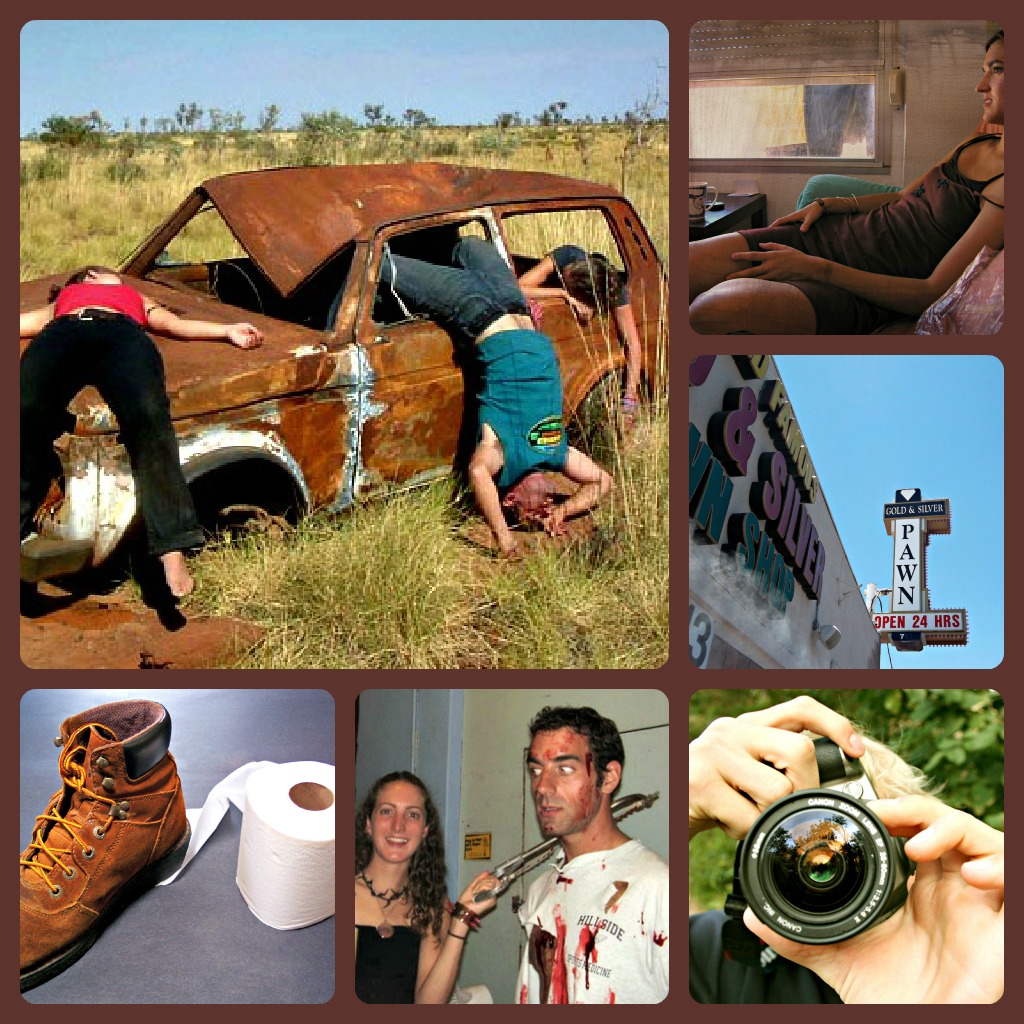
This post is devoted to those H-O-R-R-I-F-Y-I-N-G moments…beginning with five of mine, hand picked from dozens. And I’d like you all to share yours!

1) Your accommodation is not as described.

Now this is a common enough problem. As a broke backpacker, I’ve stayed in some seriously nasty places, but there was one that took the biscuit — or would have, had I dared to eat it in there. I refer to the last two beds left anywhere in Perth — which served my sister and I right for waiting till we arrived to arrange a place to stay. It was coming up to Christmas, and the place looked okay on the Web site. Cheap and cheerful, just like us! Only the rooms stank. They were knee deep in the occupants’ clothes, and it was clear some of them had been hanging out in there for a while. My room, bizarrely, was all girls apart from me — with sarongs hanging from the top bunks as privacy screens. That seemed like a good idea, as I certainly didn’t want to see what was going on — not judging by what I could hear…

Yep, you guessed it. Turned out that place was being used as a brothel, with the owner taking a cut to look the other way. We lasted two nights before thankfully finding more salubrious accommodation. I guess I should have been grateful that our beds weren’t charged by the hour…

2) Your money is suddenly all gone.

Been there, done that! Haven’t we all? When living on a small island in Thailand, I discovered to my horror one day that my bank account was almost empty. A closer inspection revealed a series of withdrawals — always the maximum amount possible, all transacted on the mainland over five hours away by boat.

Something didn’t add up. I got in touch with my bank and took the last of my cash out — only to have it stolen in a bungalow break in the following night! Luckily, I’d made a lot of friends, and they supported me until the bank agreed I’d been defrauded, and gave me all the money back.

(Interestingly enough, years later, it occurred to me that around the time of those withdrawals I’d been buying a lot of diving gear for cash…and of course, my island was too small to process its own transactions, so they all showed up as being made on the mainland…)

3) You drop your camera.

People get very attached to their photos — and we travelers more so than most. Hardly a week goes by without some friend pleading on Facebook for pictures of a night out that got inexplicably wiped from memory. So dropping your camera is potentially a huge disaster — and one that, thankfully, I’ve never done. No, I’ve never owned a camera, because I am death to gadgets. I’m terminally clumsy, which is why no one trusts me — except my poor wife, who paid the ultimate price. She handed her camera to me for safekeeping only for a minute, while she went back to lock the door of our traditional Fijian hut. Now I never thought of concrete as traditionally Fijian, but that is what the path was made of. So when I fumbled and dropped the camera, it shattered into about a thousand pieces.

We were able to claim it on insurance — not ours, as we hadn’t bought any, but my mother’s, since she was kind enough to pretend it was her camera I’d destroyed.

The photos, however, were gone for good. And seeing as how I was wearing a bikini in some of them, maybe that’s for the best…

4) You eat a dodgy curry!

Eating something that doesn’t agree with you and developing a pain, quite literally, in the backside only gets worse when you’re miles from home. And unfortunately, it also gets way more likely. Especially if, like me, you have a habit of eating food from wherever is cheapest! I never found out what caused my illness in Ecuador, but it resulted in my own Night of the Living Dead, in which I, zombie like, spent twelve hours weaving between my bed in a crummy hostel dorm and the nearest toilet two floors away — where (ignore the rest of this sentence if you’re squeamish) I was vomiting more blood than I’d ever seen outside my body. I honestly thought I was going to die that night — a good thing I was already dead!

And last but by no means least:

5) You discover there is no toilet paper…

Whether it’s electronically controlled and plays music at you, or a rough wooden plank over a hole in the ground, you know you’ll have to use the facilities at some point, and when that moment comes, will adapt somehow — you haven’t really got a choice. In one extreme case I’d left it as long as humanly possible — by which point there was no thought in my head beyond getting out of the restaurant in time! Once I’d made it to the toilet round the back, I felt much better. Until, that is, I felt in my pocket and remembered I was wearing new jeans — and hadn’t transferred over the stash of TP…

I won’t go into any more detail, apart from to say that for the rest of that meal, I adopted the local practice of only eating with my right hand.

* * *

So, now it’s your turn! Travel horror stories, if you please! And as always, you can catch me and the rest of the crew on Twitter: @TonyJamesSlater +/or @displacednation.

Thanks for reading!

STAY TUNED for Wednesday’s post, an interview with a displaced author of a violent romance!

If you enjoyed this post, we invite you to register for The Displaced Dispatch, a round up of weekly posts from The Displaced Nation, with seasonal recipes, book giveaways and other extras. Register for The Displaced Dispatch by clicking here!

Related posts:

Images (clockwise, left to right): Horror image from Tony’s personal collection: fooling around with an abandoned vehicle near Wolfe Creek, Northern Territory (2007); sexy woman, pawn shop and Canon camera all from MorgueFile; Tony’s “undead” photo from a Halloween in Perth, Australia (2008); toilet paper and travel boot from MorgueFile.

RANDOM NOMAD: Larissa Reinhart, Former Expat, Midwestern Southern Belle & Crime Novelist

Place of birth: Silvis, Illinois USA (I’m actually from nearby Andover, but it’s too small to have a hospital!)
Passport: USA only — but I’m on my third edition!
Overseas history: Japan (Yokohama, Kameoka, Nagoya): 1995-96; 1998-99; 2008-10.
Occupation: Mother and author of the Cherry Tucker Mystery Series. I’m also working on a mystery series set in contemporary Japan.
Cyberspace coordinates: The Expat Returneth — Sharing my life overseas, my life at home, and the other world that lives between my head and paper (blog); Larissa Reinhart: Writing mysteries and romance south of the sweet tea line (author site) @riswrites (Twitter handle); Larissa Reinhart (FB page); and Larissa Reinhart (Good Reads).

What made you leave the United States to live in a faraway land?
I’ve always wanted to live overseas. Before I got the chance to do it physically, I traveled through books — for instance, The Crane Maiden, by Miyoko Matsutani, and The Laughing Dragon, by Kenneth Mahood (I have passed them to my children). When I got older, I loved Elizabeth Peters mysteries, which are set in Egypt.

Was anyone else in your immediate family displaced?
My family is firmly rooted in Illinois, but was always interested in other cultures. My father was a history teacher, and I had a good understanding of geography and world history from him. I also had a grandfather who loved to travel. As a kid, I read his National Geographic collection and was fascinated by the countries he visited, particularly Egypt. He probably would have loved to have been displaced, but had to wait until retirement to travel.

Tell me about the moment during your various stays in Japan when you felt the most displaced.
My husband had a scholarship from the Monbu-shō to study at Keio University, so I applied to the JET (Japan Exchange and Teaching) Programme — and ended up getting to Japan a few weeks before he did. I lived with a homestay family. They spoke no English. I spoke no Japanese. They were very sweet, but they swung between helicopter-parent smothering and leaving me for long periods of time alone in a tatami room. I had horrible jet lag and felt so isolated and helpless. Once I moved into an apartment, my jet lag abated and I began enjoying myself. I had traveled to Egypt previously — but hadn’t experienced that kind of debilitating jet lag that comes with a 13-hour time difference. It’s a killer!

When did you feel the least displaced?
We have two young daughters from China. Four years ago, we took them to Nagoya to live for a couple of years. We saw it as a chance for them to experience life in Asia at a time in their lives when it was still easy to move around and adjust. They loved Japan. By the end of our two years, we all wanted to stay, but unfortunately couldn’t. There is no one particular instance, but lots of little, everyday moments we hark back to and can’t seem to reproduce back here — our family living comfortably in our tiny house, walking to shops and restaurants in the neighborhood, my children riding their bikes with the local kids to play at the neighborhood park…

You may bring one curiosity you’ve collected from each of the countries where you’ve traveled or lived into The Displaced Nation. What’s in your suitcase?
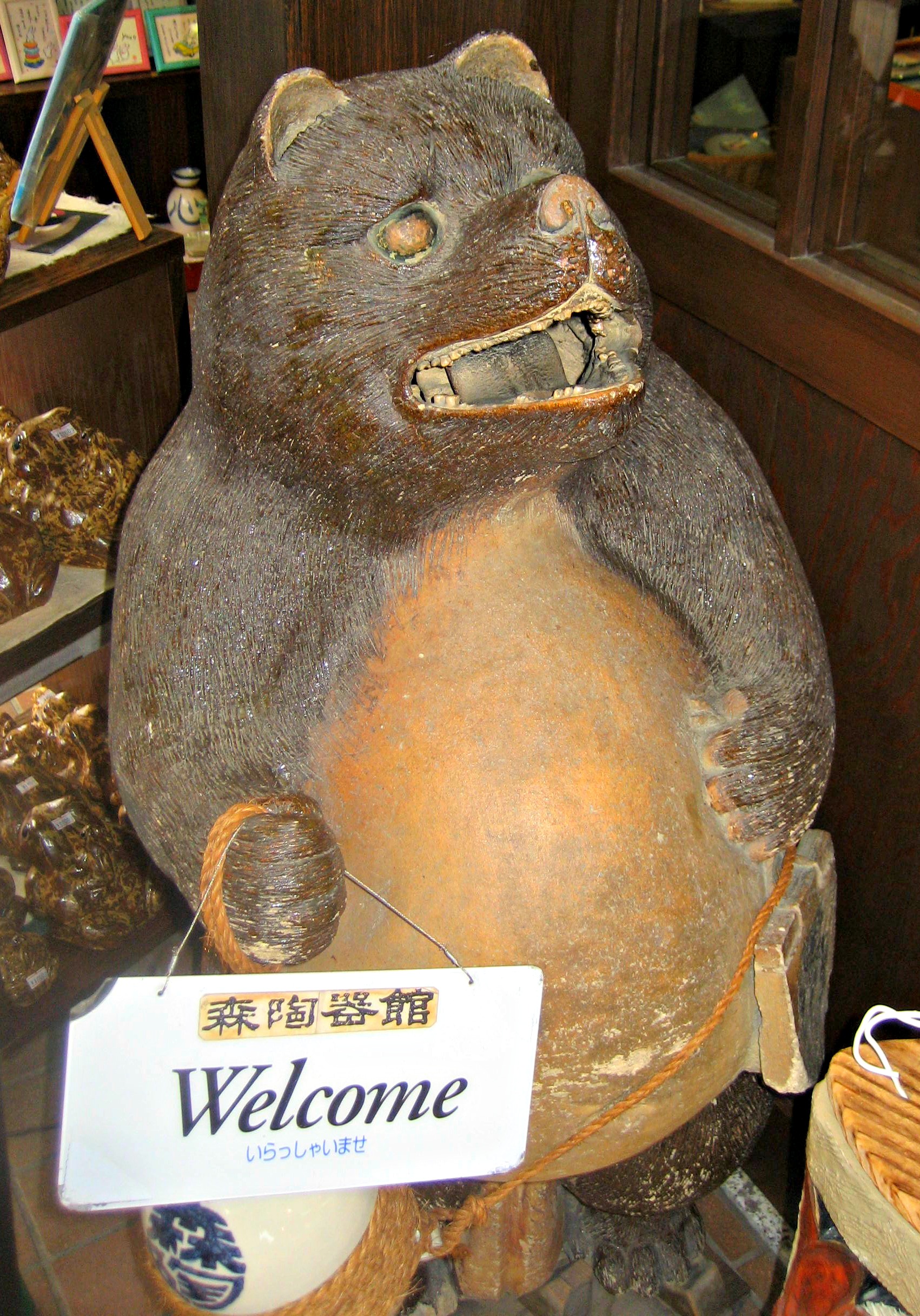
A ceramic tanuki (Japanese raccoon-dog). Japanese families and businesses keep them in front of their doors to welcome guests. It’s similar to the Maneki-neko (beckoning cat), but more fun because of their sake bottle and large kintama (golden testicles), which are meant to bring good fortune.

Hmmm…moving right along: You are also invited to prepare one meal based on your travels for other members of The Displaced Nation. What’s on the menu?

I like Japanese bar food, so we’ll have a meal based on that.
Appetizer: Edamame (boiled & salted green soy beans) and a Grapefruit Sour to drink. My favorite bars in Japan will give you a glass of ice, seltzer, and shōchū (grain alcohol) and a half-grapefruit with a strainer for you to squeeze the juice into the glass. Really refreshing.
Main: A bunch of Japanese tapas dishes — yaki-gyōza (fried potstickers), tebasaki (grilled wings), pari pari renkon chips (spicy, deep fried lotus root), tsukune (grilled chicken meatballs), and yakitori (skewered grilled chicken)
Dessert: Japan isn’t big into dessert, so we’ll have a savory bowl of ramen instead. And maybe another Grapefruit Sour. Or two.

Yum, you’ve brought me back to my own izakaya days… And now can you please suggest a Japanese word or expression for the Displaced Nation’s argot?
Chuto-hanpa. It literally means half-measure, but is used to describe doing something half-assed. I love this word.

We’re getting into a bit of a Halloweeny mood at the Displaced Nation. Tell me, did you keep the American Halloween tradition alive while living in Japan?
We did celebrate Halloween in Japan with our children. It’s becoming popular there in terms of decorations and parties (we even found an American-type pumpkin for $20), but trick-or-treating is an oddity. You don’t request gifts from people — certainly not door-to-door. Our neighbors would deliver snacks in a plastic jack-o-lanterns to our house instead. One expat friend arranged a trick-or-treating excursion for the children as part of a Halloween party. But first we mothers delivered bowls of candy to the businesses and homes in the area so that, when we brought the children round to trick-or-treat, they would have something to give them. People probably thought we were crazy, but at least they found the children in costume adorable.

Also in keeping with the season, we’ve started exchanging expat horror stories on the site. What’s the creepiest situation you’ve encountered on your travels?
It was on a trip to Thailand. My husband and I hung out on a beach at Koh Samui for a few days. To get back to the mainland, we had to hike across the island to catch a boat. We were proceeding along the dirt road, chatting…when I felt something grab my arm. Without breaking stride, I glanced down and saw a monkey, teeth bared, ready to bite me. Suddenly it flew off my arm, and I screamed. It had been chained to the side of the road, and was ripped away as it reached the end of its tether. Its vicious eyes and sharp teeth will forever be burned in my memory. That nasty monkey must have been someone’s pet. My husband saw it standing next to its stake before it jumped on my arm. Too busy talking, I totally missed it and walked within its perimeter. You can bet I have remained vigilant for monkeys ever since. I had a close call with some snow monkeys in Nagano, as well. I am not a fan.

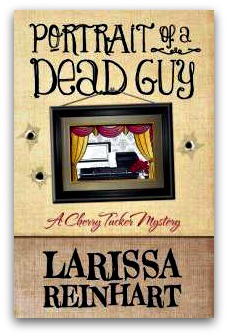
The first book in your Cherry Tucker mystery series is called Portrait of a Dead Guy. That sounds a little creepy. Is it?
It’s actually a humorous mystery, but the idea of painting a coffin portrait is creepy even for my heroine, a sassy Southern artist named Cherry Tucker. However, she’s desperate for a commission, which is why she offers her services. The dead guy has been murdered, and his stepmother felt that a final portrait would be a fitting commemoration. Cherry ends up as another potential victim of the murderer because of her proximity to the corpse. That said, she does have one spooky scene at night in a funeral home, alone with the dead body, which ends badly.

Painting a portrait of a dead man — how did you think that one up?
In truth, coffin portraits are not all that unusual, depending on your culture. Many cultures use a portrait of the deceased with their memorialization. I know a family friend who was asked to photograph a coffin portrait to send to the deceased’s family in Asia. They would probably place the photo in a family shrine and burn incense for a specific number of days along with other rites.

Tell me about your plans for the Japanese mystery series.
I’m a humorous mystery writer, so I look at the lighter side of crime. Did you know that the Japanese love mysteries? I think it’s because they have so little crime. I have another Southern heroine for the Japanese series, which will bring an interesting cross-cultural twist. I love the interplay of cultures.

Say, what is this thing about you and Southern ladies? Aren’t you an Illinois girl? Is this another displacement?
It is another displacement! We moved to Georgia between trips to Japan, about fifteen years ago. Small town South is very similar to small town Midwest, except for the Southerner’s extravagant use of hyperbole and simile in conversation. I can’t imagine living anywhere else in the U.S. now, although I can place myself in some foreign spots quite easily. 🙂

Readers — yay or nay for letting Larissa Reinhart into The Displaced Nation? She has an affinity for dead bodies, true — but in a humorous sense! And she doesn’t monkey around… (Note: It’s fine to vote “nay” as long as you couch your reasoning in terms we all — including Larissa — find amusing!)

STAY TUNED for tomorrow’s post, an interview with another former expat author.

If you enjoyed this post, we invite you to register for The Displaced Dispatch, a round up of weekly posts from The Displaced Nation, with seasonal recipes, book giveaways and other extras. Register for The Displaced Dispatch by clicking here!

Related posts:

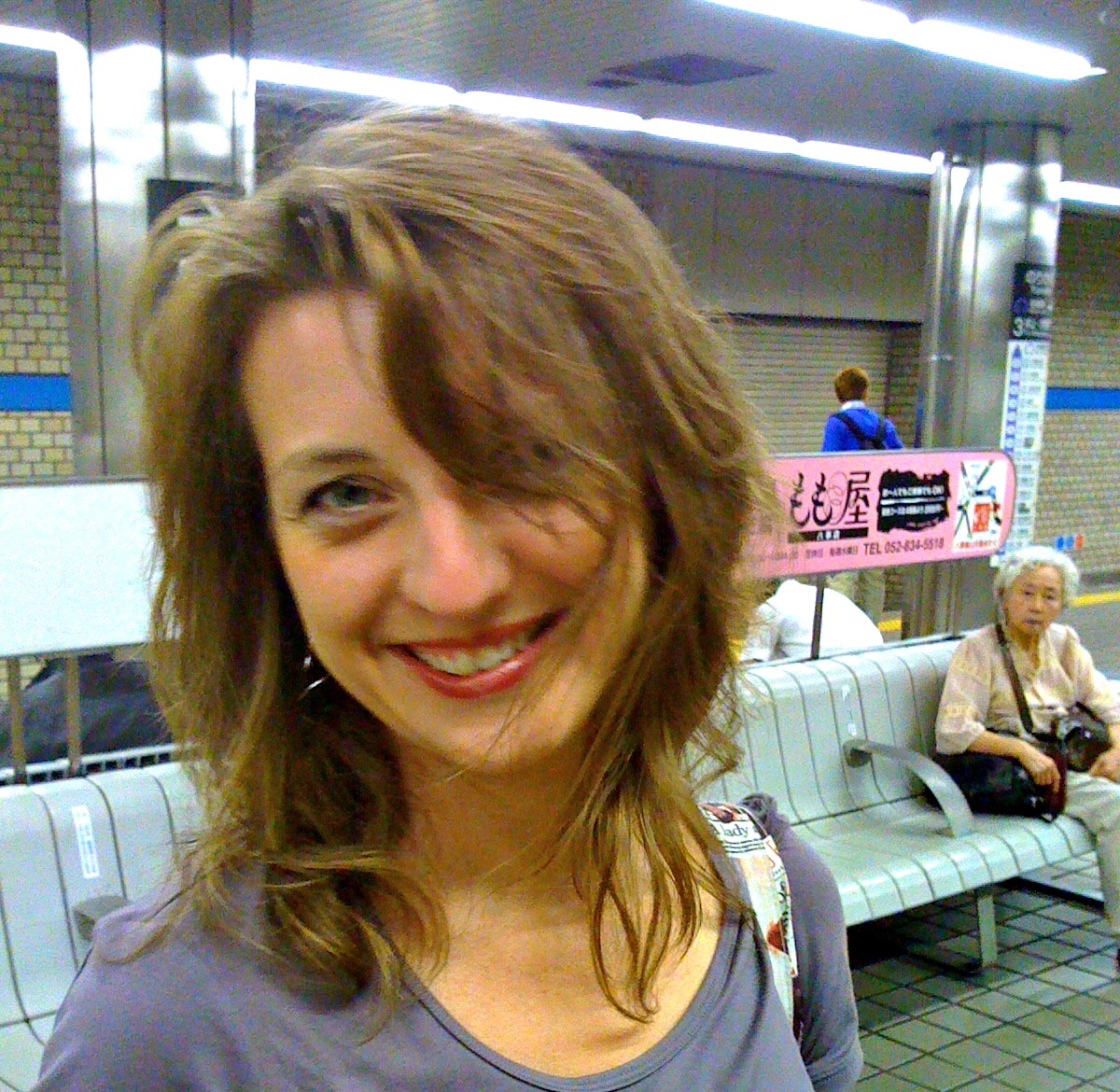
Images: Larissa Reinhart inside a subway station in Nagoya; her favorite tanuki (cute or creepy?); her book cover.