The Displaced Nation

A home for international creatives

Welcome to May: A month of living La Dolce Vita

After a month of partying, we’re ready for a quieter life. Fewer late nights and hangovers, and more self-TLC: more sleep, more relaxation, more stopping to smell the roses, more broccoli on our dinner plates…

OK. Maybe not the broccoli. You can have too much of a good thing.

But the sleep, relaxation, and sniffing the roses — they’re all part of living a good life.

A sweet life.

In other words: La dolce vita.

A gateway to the sweet life

A “displaced” life, by definition, is a gateway into experiences we probably wouldn’t have had if we’d stayed home: new places, new people, new perspectives.

While for some this means pushing excitement and new experiences out of your personal comfort zone somewhere into the moon’s orbit — yes, Tony James Slater, I’m thinking of you! — for others, this gateway is one that leads to la dolce vita.

A life of self-indulgence, or indulging yourself in Life?

How do we define la dolce vita?

It’s a phrase that entered the English language after the 1960 Federico Fellini film of the same name, and literally translates to “The sweet life.” It sounds harmless enough, if a little vague.

The Merriam-Webster dictionary takes a more Puritanical view of the translation, and condemns it as “a life of indolence and self-indulgence.”

For our purposes this month, however, we’re going with the definition Barbara Conelli gives at the beginning of her book, Chique Secrets of Dolce Vita:

To live a dolce vita means living with an open heart and soul, indulging in life with all your senses. It means having the eyes to see real beauty, having the nose to smell intoxicating scents, having the ears to hear dreamy sounds, having the mouth to taste delicate flavors, having the body to perceive soft sensations. It means being aware of yourself, of your emotions and desires. It means finding happiness in ordinary yet unique things.

What sort of things are we talking about? Well, I guess it depends on the person.

Respite. Sleep. A massage. Meals you don’t have to cook or cater. Looking up at a different sky. Heart-stopping views. Silence. Walking barefoot on the beach at sunrise. Or sunset. Or midnight.

Another way of putting it?  “A life that caters to the pleasures of the senses” — that’s the definition of “Hedonism.”

How TDN will be living la dolce vita in May

Later this month, we will be reviewing Barbara Conelli’s new book, Chique Secrets of Dolce Amore, and interviewing best-selling author Douglas Kennedy, whose book Temptation reveals downsides of the materialistic dolce vita. We will also be talking to several global nomads about how they define, and live, their own dolce vita.

One of these Random Nomads will be Jeff Jung. Many people who’ve reached mid-life realize that they haven’t smelled the roses in a while, and some are now taking time out of the rat race in order to do just that.  Jeff, who specializes in mid-life gap years, is now settled in Bogota, Columbia, where he markets instructional videos for people preparing for career breaks.  You can read more about Jeff and his philosophy on mid-life gap years here.

Until tomorrow’s interview with another Random Nomad, though, I’ll leave you with more words from Barbara Conelli:

Live your own dolce vita no matter where you are in the world. Because la vita e bella, life is beautiful, and the most amazing wonders of this world often hide in the simplest things.

STAY TUNED for Wednesday’s Random Nomad interview with artist Isabelle Bryer, French expat in the City of Angels.

If you enjoyed this post, we invite you to register for The Displaced Dispatch, a round up of weekly posts from The Displaced Nation, with seasonal recipes, book giveaways and other extras. Register for The Displaced Dispatch by clicking here!

Related posts:

THE DISPLACED Q: What is the weirdest multi-cultural celebration you’ve ever attended?

So here’s today’s Displaced Question: “What is the weirdest multi-cultural celebration you’ve ever attended?”

Now, when two or more cultures collide you’re bound to get some strange combinations. Nowhere is this more apparent than at gatherings or celebrations, especially if they’re traditionally part of one culture as opposed to the others… and boy can they lead to friction! It’s that old traveller’s saw; do you eat all the food because it’s delicious, or do you leave some to show they served you enough?

I’ve drunk kava in Fiji in a very uncomfortable situation – invited by a  worker at our resort, we met the Chief to hear his legendary tales of the arrival of White Man. Of course, he can’t talk to us – he has to tell his right-hand man, who can then lean over and tell us. Or rather – he can tell me. Not the two women who are with me – not even the second-in-command can stoop low enough to talk to a woman whilst drinking kava!

And let’s not even get started on the two French girls that were also invited by the same worker. They were on a bit of a party holiday, and neither of them seemed to have brought anything less revealing than hot pants and bikinis… Yes, that was a tense evening. I wouldn’t have minded, if I’d been drunk – but kava, a rather bitter brown liquid, pounded (in a sock!) from roots, has only a mildly narcotic effect. So mild, I was painfully aware of every awkward glance – and the intense silence – which dominated that gathering. I’ve never wished so hard for a bottle of vodka in my life!

Perhaps stranger though, was a ceremony I got invited to by a Native American man, whilst checking out the artefacts in his store in Sedona, Arizona. He described it as a mass, much like I would have attended during my Christian upbringing. I was intrigued, and couldn’t really pass up the chance, so I went along on Sunday morning to a small room above his shop. There, the proprietor led us in chants and prayers offered up to Allah, Shiva, Buddha, The Earth Goddess, Jesus, Mary and the Spirits of the Dreamtime – all simultaneously! The small crowd, people from all walks of life, all colours and clearly all creeds, all seemed delighted with the equality shown to the reigning deities. If only the rest of the world could be like this, I thought!

And whilst I’m on the topic of Native American celebrations, I once took part in a ‘sweat lodge’. This is an awesome shamanic tradition, involving the building of a special domed hut of logs and sticks – kind of like an igloo. It’s then covered over with mud to fill in all the gaps. A fire pit is dug in the centre and lit, and all the participants – enough to completely fill the structure – squeeze in… naked.

Yup – I said it! Naked you go in, and the drumming and chanting begins… it’s like a sauna in there, incredibly hot and sweaty, with the chanting and the previously consumed herbal tea helping to turn your ears into wings! It was an incredible experience. Slightly odd, in that it was the only time I’ve sat naked next to my Mum and my sister – but the reality of the ceremony was so far beyond that, beyond such earthly concepts as clothing and embarrassment. It was… well, spiritual. I felt so pure, so cleansed, so in touch with the divine. If I ever get the chance again, I will go for it without reservation. But probably not with my family present  :0)

SO! The time has come for you all to spill the beans – what is the strangest experience you’ve had with a celebration of some kind? Where have the cultural boundaries blurred unexpectedly – or come sharply into focus? It’s a weird, weird world out there – what have YOU seen? Tell us in the comments!

.

STAY TUNED…for tomorrow’s post, where we introduce the new theme for May: La Dolce Vita!

Image: Tony drinking Kava in Fiji, 2009

If you enjoyed this post, we invite you to register for The Displaced Dispatch, a round up of weekly posts from The Displaced Nation, with seasonal recipes, book giveaways and other extras. Register for The Displaced Dispatch by clicking here!

Related posts:

In honor of Obscura Day, a tribute to 5 obscure treasures near places I’ve called home

It’s been a month of celebration for The Displaced Nation, beginning with the announcement of our very first birthday on April 1 (no fooling!).

We may be nearing the end of the month, but the festive spirit continues unabated. In fact, in today’s post I’m hosting my own little celebration of Obscura Day, which takes place tomorrow, April 28.

As you may know — or maybe not, since by definition, it’s a little obscure! — Obscura Day is where people all over the world get to show off the unusual and little-known places of interest near wherever they call home. Locals volunteer to give guided tours of such spots — and it’s all organized by the folks who’ve set up Atlas Obscura, a user-generated and editor-curated compendium of the world’s wonders, curiosities and esoterica.

To do my part in enhancing the Obscura Day cause, I’ve rounded up the 5 most interesting and unusual places near the various towns and cities I’ve called home in the past five years.

1. Sail Rock (Hin Bai), off Koh Phangan, Thailand

I happened upon this rock, which for me is one of the foremost world treasures, when living in Thailand in 2007. I was staying in Thong Sala, on the island of Koh Phangan, to train as a professional diver.

This small rock protruding from the Gulf of Thailand doesn’t look like much from the surface, but it’s a world-class diving site — and a comparatively undiscovered one, as it lies off a tiny island famed more for its party scene than its underwater exploration.

There is a vertical tunnel through part of the rock which is absolutely teeming with aquatic life.

I had to earn my way in there by learning enough control over my diving gear and techniques to keep the descent smooth and calm. My boss was very concerned that this place would be preserved for future generations of divers, and he knew how clumsy I was out of the water!

But at long last the day came when I was allowed to enter. I drifted gently downwards, spinning slowly in place to take it all in. I was in a tube filled with corals and sponges, surrounded by weird and colorful creatures like nothing on land. Tendrils waved, lethal looking spikes and spines protruded, fur-like coverings rippled. All in brilliant shades of blue, green, yellow…it was the closest I can imagine to being on some alien planet in a galaxy far, far away!

And yet this amazing world had been right underneath my boat the whole time!

2. Lookout Trees near Pemberton, in the South West region of Western Australia

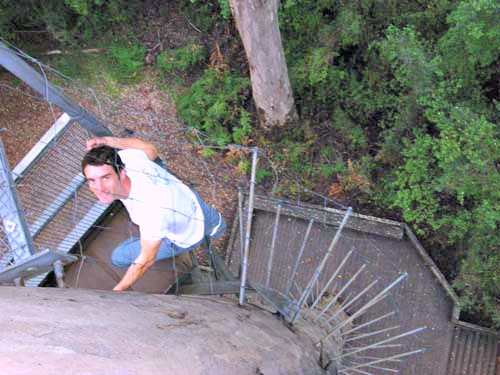
It was not long after I started living in Perth (where I still am!) that I discovered the Lookout Trees near Pemberton — unimaginably tall trees that had been used as look-out posts for vigilant fire-spotters for almost fifty years. Now they can be climbed, just for the hell of it, by anyone who is a) curious, and b) has the balls of a concrete elephant!

It’s a long — LONG — way to climb on steel rungs driven into the side of the trees, 58 meters (or 190 feet!) to the viewing platform, perched rather precariously above the forest canopy. You can see for hundreds of miles from this towering vantage point, which is all the well; you certainly need something to take your mind off the twin thoughts that a) you’re ridiculously exposed, insanely high and supported only by a single tree, and b) you’re going to have to climb back down…

If you do make it up, you’ll be amazed. At your own bravery as much as the view. If you don’t…well, you’re not alone. More than three quarters of the people who try it never make the top.

3. Cheddar Gorge, Somerset, England

My list wouldn’t be complete without an obscure-ish (nothing is truly obscure any more on the overdeveloped British Isles) sight that’s near my original hometown of Highbridge, in Somerset. I speak of the Cheddar Gorge, a 137m-deep split in the Earth’s crust revealing a fantastic labyrinth of caves extending nearly half a kilometre under the ground.

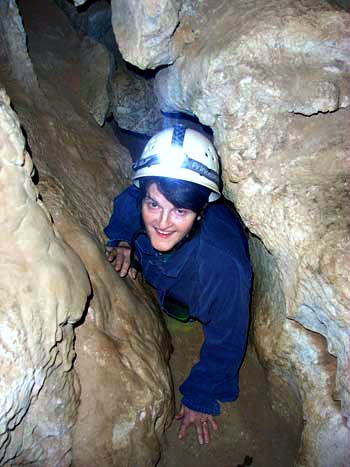
It wasn’t until I was visiting last year that I made the effort to tour the gorge. There’s a company that runs a caving experience for any level of tourist — so I took my Mum! Bless her, she did have fun slithering across ledges, abseiling down underground cliff faces, and best of all — squeezing through tight tunnels carved by water flowing through the caves.

My favorite part was making her laugh by describing the look of just one end of her protruding from the tunnel. She found it so funny that she couldn’t stop laughing to pull herself any further, and was stuck half-in, half-out for quite some time!

Thankfully, there were experienced guides helping us along and tough overalls and wellies — every part of us was encrusted with mud by the time we saw the sun again.

It was quite a relief to emerge from the darkness, especially after the ritual of turning off our helmet lights in the deepest recess of the cave — experiencing an absence of light so profound I could touch my own eyeball without seeing my finger. Spooky…and awesome!

4. Knife-making in Barrytown, New Zealand

An unassuming little bay on the rugged northwestern coast of New Zealand’s South Island, you could be forgiven for thinking there is nothing in Barrytown at all. You’d mostly be right — I passed through there on a road trip in 2010, trying to get a better sense of the island I was living on (yes, I was living in Christchurch at the time).

I checked into a completely empty backpackers hostel (a novelty itself in tourist-mad New Zealand) and noticed a lone advertising flyer on the wall…which is how I came to meet Robyn and Steve, a couple of modern-day artisans, in their home-based knife-making workshop.

Steve is a self-taught blacksmith. Under his tutelage, I heated and hammered metal, ground and sharpened a blade, carved and polished a handle… and within the day I had created a perfect steel knife like something right out of Lord of the Rings!

It was a fantastic feeling to know I’d hand-crafted something so beautiful and unique — well, okay, I had a bit of help from the expert! As a skill, it was highly addictive.

I quizzed him late into the night about just how difficult it would be to make a sword the same way — and got the feeling I wasn’t the first person to ask him that!

If you ever get chance, do this. Obscure? Check! And absolutely fascinating.

5. Sedlec Ossuary, near Prague, Czech Republic

Okay, I wasn’t really living in Prague — I was just passing through in 2006 — but for obscure treasures, this one takes the biscuit!

Not too far from the city — in a suburban part of Southern Bohemia — lies a small Roman Catholic chapel beneath a small cemetery, known as the Sedlec Ossuary or Bone Chapel, as it’s decorated entirely in human bones. There are bones everywhere one looks, from streamers and chandeliers made from complete skeletons, artfully rearranged, to giant pyramids of skulls on display in the four corners. Altar statues and wall decorations are also fashioned completely from bones — it’s estimated that over 40,000 bodies have contributed to the décor!

Perhaps more macabre is that this isn’t some ancient monument to the grotesque, a product of some long-forgotten civilization like the Mayans; no, this is modern work. Although many of the remains date back to the Black Death in the 14th century, the artful sculpting and artistic arrangement of the bones happened just over a century ago!

It really has to be seen to be believed. Especially as photos aren’t allowed — unless you’re very persuasive, and happen to be in there on your own (which is exceedingly creepy)…and happen to have 100 Czech koruna ($4) to bribe the curator!

***

So. What’s unusual about where you live? Are there any undiscovered gems nearby — cool places, crazy things to do, strange legends? Tell, tell! We want to know! Let us know all about them in the comments. Cheers to obscurity!

STAY TUNED for Monday’s post, another expat book review by Kate Allison.

If you enjoyed this post, we invite you to register for The Displaced Dispatch, a round up of weekly posts from The Displaced Nation, with seasonal recipes, book giveaways and other extras. Register for The Displaced Dispatch by clicking here!

Related posts:

Images: Tony Slater’s own photos

Me and my shadow: LIBBY’S LIFE #48 – Hospital visiting hours

Kate here. Sorry. No journal entry from Libby today, so I’m writing it for her — but I think you’ll agree she has a good excuse.

Three days ago on Monday, April 23rd, at 2:02pm and 2:11pm, Libby’s twins entered the world.

Understandably, Libby has been a little preoccupied  since then.

~ ~ ~

It’s a little over a year since I first met Libby. We were both browsing in Waterstones last March — or rather, I was browsing and she was buying self-help books by the truckload, desperately trying to make the best of her enforced expatriation. Over a couple of Danish pastries, I gave her the idea of writing this blog, and I’ve been surprised by her doggedness in the endeavour.

Admittedly, I’ve also been taken aback by her candid accounts of life in small town America. Presumably her landlady and husband don’t read the blog. Not to mention her mother-in-law.

As it happened, I’ve been in Albany on business this month, crossing my fingers that my time here would coincide with the birth of Libby’s twins. When I got a text from her on Tuesday, announcing their arrival the previous day, I was thrilled. She’d beaten the system and had the twins before her scheduled C-section.

“Twins r here! Overjoyed! Visit us!” her first text said, exuding that post-birth hormonal high. I remembered it well.

The next text, twelve hours later, was less high. It said: “Pls bring Boston Cremes and decaf iced coffee. Or normal coffee but don’t tell nurse at desk.”

I duly arrived at the maternity ward — “Family Birth Center” — clutching a box of the requested doughnuts and clandestine joe, and was given lots of suspicious looks by a nurse who appeared to have been trained by the TSA.  When I’d convinced her that I was here to see a friend and her new babies, that I wasn’t going to abduct said babies, that I hadn’t imported TB from Europe, and hinted that it was none of her damned business if I intended to stuff six Boston Cremes down my throat in front of my friend, she grudgingly allowed me to knock on Libby’s door.

The rooms in American hospitals compared with English hospital wards are…Well. Think “Waldorf Astoria.” Then think “Youth hostel.”

Libby’s room contained two beds, and she sat on one with her back to me, chatting on the phone. She seemed to be the only occupant, which is just as well because the spare half of the room was taken up with a flock of helium balloons and the contents of the local garden centre. I felt rather silly with my modest pot of one pink and one blue hyacinth, but took consolation at the sight of an empty Dunkin Donuts cup by the wastepaper basket, which indicated my food offering would be more welcome.

She heard me enter and turned around. “Just a minute,” she mouthed at me before plastering a fake smile on her face.

“No, Mum,” I heard her say. “You put maple syrup on pancakes, and peanut butter on toast. No, not the other way round. Yes, I’m sure. Marmite is fine on American bread, Jack will eat that too — he didn’t? That’s unusual…Oh. Well, I suppose Marmite doesn’t taste too good on cinnamon toast, so — look, just give him a banana now, and Oliver will sort him out later. Mmm-hmm. Mmm-hmm. I’ll be home tomorrow. Hang in there, OK?”

Libby clicked the Off button on the phone. The fake smile disappeared.

“Jesus wept!” she shouted. “I leave the house at 9:30 on Monday morning to give birth to twins five hours later — without an epidural, I’ll have you know — and she can’t even cope with the correct topping for cinnamon toast?”

She breathed in deeply, then let it out slowly. Five times she did this. She’d obviously had lots of practice at this quite recently — whether in labour or while trying to cope with her mother, I couldn’t tell.

“Anyway,” she said eventually, this time with a genuine smile. “You came to see us! That’s lovely.”

“I brought these.” I set the flowers and coffee on one of the bedside tables, and fished around in my tote bag. “Baby clothes. M&S.”

“How cute is that!” She’d adopted some of the American vernacular since our last meeting, I noticed. “They’ll look very sweet in these little vests, won’t you, my babies?” she cooed in the direction of the balloons.

I glanced around the room, peering into the depths of the flowers and balloons for evidence of cribs and newborns.

“Libs? Where are the babies?”

She looked alarmed for a moment, then relaxed. “Oh! That’s right, they’re not here. They’re in the nursery. The nurses keep running off with them when they haven’t got enough to do, which is quite often. There’s only me and two other women in the unit at the moment. Quite surprising, when you consider the circumstances of the conception. Then again, I suppose I was early.”

I was confused for a moment, then remembered. Hurricane Irene. Not much else in the way of entertainment when the electricity is out for a week. In a couple of weeks, this place would be a lot fuller.

“And how are Sam and Megan doing?” I asked.

She tilted her head on one side. “Who?”

I frowned, wondering if the old saying about losing your brain cells in the maternity ward was doubly applicable when you had twins.

“The bay-bies?” I said, enunciating slowly.

Libby laughed.

“Didn’t I tell you? They’re not Sam and Megan any more. They’re George and Elizabeth. They were born on Saint George’s Day,” she explained, “so Oliver and I thought that something more English, more regal, might be in order. And of course Elizabeth is my real name, but we’re going to call her Beth — Oh, look! Here they are!”

Two nurses wheeled two trolleys topped with clear plastic cribs. In each little crib — bassinet, I think they call them here — lay a tightly wrapped bundle with a stripy hat perched on one end.

One pink hat, one blue.

Libby sighed. “They’re hungry again. Especially George. George is always hungry.”

She shuffled around on the bed, twiddling with controls that raised the head into a backrest. One of the nurses propped a couple of pillows in front of her and handed her a baby. Libby tucked it under her left arm, and then tucked the other baby under her right. She nodded at the two nurses, and they left the room.

The babies fed, their eyes closed. One of them  — the pink hat; Beth, I assumed — worked a fist loose from the swaddling and waved it around. The fist bashed the owner’s face, and she stopped feeding and howled at the unprovoked attack by a strange flying object.

“Silly baby,” Libby murmured affectionately.

Beth twisted her head from side to side, looking for the food source again. Libby helped her find it.

“You’re very pro at this already,” I said, impressed. Feeding two babies at once; one had seemed complicated enough, as I remembered. But Libby seemed a different person from the uncertain little mouse I’d met a year ago. This Libby was confident, efficient…

I’d spoken too soon.

Libby’s eyes filled with tears, which ran down her cheeks unchecked because both her hands were occupied, holding the twins.

I stood up, plucked a tissue from the box by the bed, and wiped her face.

“Did I say something wrong?” I asked.

She shook her head and sniffed.

“It’s nothing. The baby blues — remember those?”

I nodded. They’re not easily forgotten, those third-day blues.

“Remember wondering how you’re going to cope at home on your own?”

I pondered. As I recalled, I was overjoyed to leave the noisy NHS hospital, where six mothers in the same ward insisted on “rooming in” with their squawking babes.

“I was glad to get home for some sleep.”

“But it’s different here! They wait on you, hand, foot and finger! I don’t have to do a thing — not even change nappies! And tomorrow I’m going to go home, and my mother will want nursemaiding because she doesn’t understand how the shower works or something, and I’m going to be all…alone!”

She wailed, and one of the babies — Blue Hat — lifted its head and wailed in sympathy. Pink Hat followed suit. All three Patricks wailed together.

“Can’t you stay?” she pleaded.

“I thought I’d stay a couple of hours — ”

“No. I mean, stay with me. At our house. Just for a few days. My mother is useless, and I’ve asked too much of Maggie already, and Oliver means well, but… We have internet, you could work from Oliver’s den. It would mean so much to me, just to have someone sane and female around the house until I get my act together.”

I thought. I only had one more meeting tomorrow morning, and would be working at home in Milton Keynes after that for a week. It would make no difference to anyone else if Home was MK or Woodhaven.

“I can probably change my flight,” I said, although it did occur to me that perhaps Oliver might not be overjoyed at this arrangement.

Libby leaned back against the headrest, and sighed shakily.

“Thank you so much.”

Then she sat up again.

“And guess what! You can write my blog again next week!”

.

Next: LIBBY’S LIFE #49: An unwelcome blast from the past

Previous: LIBBY’S LIFE #47 – Showered with affection

Stay tuned for Friday’s celebration of Obscura Day!

If you enjoyed this post, we invite you to subscribe for email delivery of The Displaced Dispatch, a round up of the week’s posts from The Displaced Nation. Sign up for The Displaced Dispatch by clicking here!

Img: Map of the World – Salvatore Vuono

RANDOM NOMAD: Suzanne Kamata, American Expat in Japan

Place of birth: Grand Haven, Michigan, a charming tourist town on the shores of Lake Michigan.
Passport: USA
Overseas history: France (Avignon): 1985; Japan (various towns + now Aizumi, Tokushima Prefecture, Shikoku Island): 1988 – present.
Occupation: Author* and TEFL teacher
Cyberspace coordinates: Suzanne Kamata (author site); @shikokusue (Twitter handle)
*Suzanne Kamata is the author of a novel, Losing Kei; a short story anthology, The Beautiful One Has Come (listed on The Displaced Nation’s top books for, by and about expats in 2011); and a picture book, Playing for Papa — all of which concern bicultural relationships and/or families. She is the editor of several anthologies — the most recent being Call Me Okaasan: Adventures in Multicultural Mothering.

What made you leave your homeland in the first place?
A sense of adventure! I wanted to see the world, which I’d glimpsed through reading novels set in other countries, and I wanted to gather up interesting, exotic experiences for the stories and books I would one day write.

Toward the end of my college career, I planned on going into the Peace Corps to teach English in Cameroon. As a fallback, my brother suggested a new program he’d read about in the newspaper. The Japanese government had set up the Japan Exchange and Teaching (JET) Programme to get native English speakers into public schools. I’d studied Asian history in college, and had an interest in Japan (especially the Heian Age, when nobles communicated via poetry), so I applied. After rigorous interviews for both, I was accepted into both the Peace Corps and the JET Program. I decided to go to Japan first, because the JET Program was a one-year program. I figured I’d do a two-year stint in the Peace Corps later, but then I wound up meeting a Japanese guy…

Is anyone else in your immediate family “displaced”?
My brother spent a year in Germany as an exchange student during high school. I think I was influenced a bit by his experience.

You’ve lived in Japan for a long time. Does any one moment stand out as your “most displaced”?
When I was about to give birth to my twins via C-section. My mother and father were on the other side of the world, and my husband was out in the waiting room. I was surrounded by Japanese-speaking strangers. I wondered if I would be able to remember how to speak Japanese during the operation. I think entering motherhood is like going into another country for everyone, but it’s especially surreal in a foreign hospital.

Is there any particular moment that stands out as your “least displaced”?
No one moment but all the moments when I’m with my children. Whenever I spend time with them, I feel completely at home. My children have never lived in my native country, and they have Japanese passports. When I’m away from them I feel a little bit lost.

Do your kids ever go to the United States for visits?
My kids have been to the States numerous times. Most recently, my son went on a school trip to Hawaii, where, for once in his life, he blended in perfectly. There are many mixed race kids in Hawaii. I think my kids feel pretty comfortable in the States, but being on vacation is different from actually living there.

You may bring one curiosity you’ve collected from your adopted country into The Displaced Nation. What’s in your suitcase?
A furoshiki — a Japanese wrapping cloth — dyed with locally grown indigo. It will be easy to tuck into my suitcase, and I’m sure I’ll find ways to use it during my stay at The Displaced Nation. In Japan, I use wrapping cloths to carry books, covered dishes, and oddly shaped parcels. They’re durable and more attractive and ecological than paper or plastic bags. The color will remind me of the area where I’ve lived for over twenty years. The name of the town where I now live is Aizumi, which means “indigo dwelling place.”

You are invited to prepare one meal based on your travels for other members of The Displaced Nation. What’s on your menu?

Starter: A few slices of sea bream sashimi from the straits of Naruto, with a squeeze of sudachi and soy sauce mixed with wasabi on the side for dipping.
Main course: Cubes of grilled Kobe beef strewn with fresh herbs (julienned shiso leaves, coriander, parsley, slivers of ginger root), steamed barley and rice, and miso soup made with fresh wakame — served with a nice Côtes du Rhône wine.
Dessert: Sudachi pie (my own creation: it’s Key lime pie made with sudachi juice instead of lime), served with espresso. I’d also put a plate of sliced Asian pears on the table.

And now you may add a word or expression from the country where you live in to The Displaced Nation argot. What will you loan us?
I like the Japanese word natsukashii, which refers to nostalgia or a longing for things of the past. I don’t think there’s a perfect equivalent in English. At any rate, Americans don’t go around saying “I’m feeling nostalgic!” whereas natsukashii is frequently used in Japan. If someone brings up a memory from the past, another person, filled with nostalgia, might say, “Natsukashii!”

Today, appropriately enough, is “East Meets West Day.” can you tell us about any parties or celebrations you’ve held since you becoming displaced from your native land, that in some way illustrate this theme?
In Japan, only children’s birthdays are celebrated, usually with a store-bought cake. In our family, everyone, including the adults, gets a birthday party. Typically, we have a meal with celebratory dishes such as rice with red beans, or everybody’s favorite sushi, with a homemade birthday cake for dessert. We sing “Happy Birthday to You” in English, and the birthday person makes a wish before blowing out the candles on the cake. (The Japanese have adopted the custom of candles on a child’s birthday cake, but not the making of wishes.)

The Displaced Nation has just turned one year old. Can you give us some advice on themes to cover in our second year — anything you think should be on our radar?
You might consider interviewing Edward Sumoto, who runs a variety of events for Mixed Race/Third Culture individuals in Japan, and the filmmakers/photograhers/writers involved in the Hafu Project. I believe their long-awaited documentary will debut this year.

Readers — yay or nay for letting Suzanne Kamata into The Displaced Nation? Tell us your reasons. (Note: It’s fine to vote “nay” as long as you couch your reasoning in terms we all — including Suzanne — find amusing!)

STAY TUNED for a diversion from the usual updates from life in Woodhaven. In tomorrow’s post, Kate Allison will be reporting on her latest meeting with Libby. (What, not keeping up with Libby? Read the first three episodes of her expat adventures.)

If you enjoyed this post, we invite you to register for The Displaced Dispatch, a round up of weekly posts from The Displaced Nation, with seasonal recipes, book giveaways and other extras. Register for The Displaced Dispatch by clicking here!

Related posts:

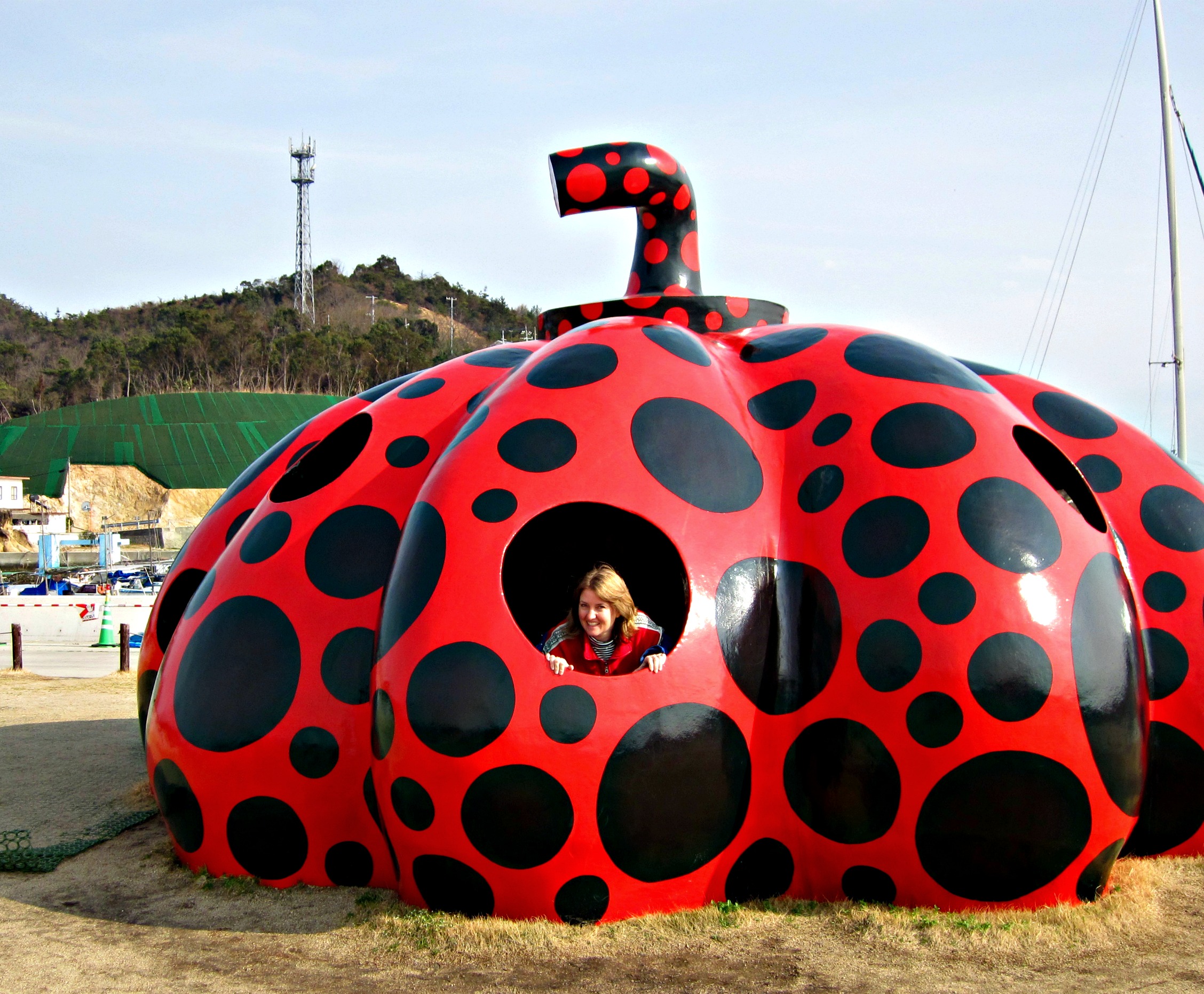
img: Suzanne Kamata standing inside a pumpkin sculpture on the Japanese island of Naoshima (March 2011). The sculpture was created by the well-known artist Yayoi Kusama, who was herself an expat for awhile. (She lived in New York City in the 1960s.)

BOOK REVIEW: “Picky, Sticky or Just Plain Icky?” by Valerie Hamer

TITLE: Picky, Sticky, or Just Plain Icky? A Blind Date Conversation: Korea
AUTHOR: Valerie Hamer
AUTHOR CYBER COORDINATES:
Website: http://www.farawayhammerwriting.com
Twitter: @Farawayhammer
Facebook: http://www.facebook.com/Farawayhammer
PUBLICATION DATE: 2012
FORMAT: Ebook in various formats (Available from Smashwords)
GENRE: Biography
SOURCE: Review copy from author
AUTHOR BIO: Valerie Hamer is a British teacher and writer who has lived in Asia since summer 2000.

Summary:

“Can you imagine shopping for a husband or wife the same way you would go looking for shoes or something for dinner? In South Korea marriage is still often approached in this way: especially by men and women who are still single in their late twenties. This book tells the true life story of one Korean woman’s search for a spouse. Through a series of in-depth interviews she shared her blind dating history and experiences with me. Through stories which are in turn funny, moving and shocking an often hidden aspect of Asian culture is revealed.”

(From Smashwords description by the author)

Review:

The title of this book derives from the type of men this young Korean, Su-jin, has been unfortunate enough to meet on her many blind dates (around 100 in the last ten years.) The Picky — men who consider themselves prize marriage catches; The Sticky — the over-clingy and needy; and the Plain Icky, who all need an intensive course on dating etiquette.

Conversations between the author and Su-jin are recorded pretty much verbatim. Hamer says: “…in order to retain [Su-jin’s] voice, I have only edited for comprehension.”

The result for the reader is a clear mental picture of this young woman, eliciting sympathy, indignation, and not a little horror at the farcical dating situation she is in. Hamer herself describes it as “straight from the pages of a Jane Austen novel” in that:

Most of the Korean women I have got to know are victims of the philosophy that marriage is the only road to achieving legitimate female nirvana.

Su-jin is 29 and broke up with her long-term boyfriend two years ago. At the end of her relationship, he helpfully told her:

“If you want to meet really nice guy you’d better get plastic surgery on your breasts.”

Sadly, this was not an isolated line at which I spluttered out my coffee, not quite believing what I’d just read.

It turned out to be one of the lesser insults that Su-jin has had to endure in her quest for a husband.

Words of wonderment from Su-jin:

On her dreams:

I want to meet a really nice guy, because these days I really want to get married with someone…just someone who has a really good personality and who cares about me.

On first dates:

Even though it was the first time to meet together he asked me “How many babies can you give a birth? How much money did you save for your future?”

On blind dates made by friends:

When I met the blind date guys who were my friend’s co-worker it was really difficult because if I made small mistake it could influence on my friend as well.

Verdict:

The book is very short and an easy read, but that’s not the reason it’s a page-turner: I kept flicking the pages over, thinking that sometime, surely, luck would have to change for Su-jin.

“And did it?” you ask.

Sorry. No book review spoilers at Displaced Nation.

“Picky, Sticky or Just Plain Icky?” can be purchased here.

STAY TUNED for tomorrow’s Random Nomad post.

If you enjoyed this post, we invite you to subscribe to The Displaced Dispatch, a weekly round up of posts from The Displaced Nation, plus some extras such as seasonal recipes and occasional book giveaways. Sign up for The Displaced Dispatch by clicking here!

Related posts:

Is there a common theme — or better yet meme — for the expat life?

After writing, planning, commissioning, and editing posts for this site for just over a year — many of which were centered on the keyword “expat” — I have become rather fixated on that word of late.

Yes, we’re back to that old chestnut, but kindly indulge me while I rake it over the coals again and crack it open to take another look.

Back when I myself could have been considered an expat — first in England and then in Japan — I assiduously avoided describing myself in that way. It made me think of the kinds of people who go into a siege mentality, circle the wagons and say: “Right, it’s just us now.” I’m sure you know the kind of expats I mean, the ones who live in a colony or compound, or socialize as if they do. They hang out at the pool drinking G&Ts, exuding a sense of cultural superiority — along with great pride in having remained unassimilated.

After all, if you’re an expat, it means you come from the richer part of the world; otherwise, you’d be an immigrant.

Nowadays, I’m an American living in America, but I simply tell people that I used to live abroad. If I use the word “expat” at all to refer to myself, it’s in inverted commas: “Yes, I suppose I was an ‘expat’ for all those years. And now I’m a ‘repat.’ Hahaha…”

What about you? If you are reading this, chances are you are (or have been) someone who has ventured across borders to travel and/or live. How do you refer to your predicament? (BTW, my choice of “predicament” is the result of cultivating a British sense of humor over many years of living on that sceptered isle — no, not as an expat, but as an international resident!!!)

Maybe unlike me, you don’t have any hang-ups about calling yourself an expat — and think that people of my sort are inverse snobs for rejecting the label?

As the blogger Tabitha Carvan (The City That Never Sleeps In) has written:

To the Vietnamese who live around me, it’s clear where I fit in here: I don’t. The differences between us are as plain as the enormous nose on my big fat face.

So is it fair to say we’re all “displaced”?

One of the other founders of The Displaced Nation, Kate Allison, is an Englishwoman who has lived in the United States for more than 15 years. I sometimes think of her as an immigrant, except that she tells me she keeps a foot on each side of the Atlantic.

Strangely, I did not wince at all when Kate Allison proposed the word “displaced” as a descriptor for our common situation, when she and I were first chatting about starting up this site.

Well, perhaps I winced just slightly. I know from my studies of international affairs that “displaced” is often used for people who are forcibly removed from their homes by natural disaster, famine, civil wars and other tragedies.

In this narrow sense, “displaced” in no way applies to me, Kate or others of our ilk, who have led privileged lives.

But in a broader sense, I had to agree with Kate that “displaced” seems a good fit. As the Italian poet Cesare Pavese once said:

Traveling is a brutality. It forces you to trust strangers and to lose sight of all that familiar comfort of home and friends. You are constantly off balance. Nothing is yours except the essential things – air, sleep, dreams, the sea, the sky — all things tending towards the eternal or what we imagine of it.

If there is any common theme that applies to all of us, surely it’s that sense of being “constantly off balance,” as Pavese so aptly puts it. By trotting off to investigate — and live in — far-flung corners of the globe, we are casting off the balance of our lives and choosing a life where, for a while, the only things we have in common with anyone else are the basics: air, sea, sky, sleep, dreams — a life of displacement, in other words…

And in some cases — Kate’s would be an example — we are trailing others who have made this choice on our behalf, or on behalf of family and kids. (See her “Libby’s Life” series.)

Always look on the bright side of life!

In an article last month for the FT, Edwin Heathcote had this to say about what he called “a life less ordinary”:

The expat experience combines a cocktail of the thrill of the new and the ennui of global alienation, of displacement and dislocation.

Readers may wonder why the founders of The Displaced Nation have chosen to emphasize the negative ingredients of this cocktail. After all, the meaning of “displaced” is only a shade or two away from “misplaced” or “out of place.”

Why not look at the bright side instead — the allure and the thrill of a life overseas?

Well, the fact is, the founders of The Displaced Nation don’t necessarily see displacement as a negative. As shown in numerous ways on this site over the past 12 months, it’s a necessary first step in making the leap beyond the known to the unknown — to feeding what for many of us is, or soon becomes, an insatiable hunger for new ways to knowledge.

By becoming displaced, we open up our minds to new forms of

Now if that isn’t the bright side, we don’t know what is!

Keep ’em laughing as you go

As far as our site stats go, readers have most enjoyed the series of posts where we’ve explored the good and the bad, the yin and the yang, of the displaced life, with a large helping of humor thrown into the mix.

1. Alice in Wonderland

Top of the charts is the month that we dedicated to the “curious, unreal” aspects of the displaced life with the help of Lewis Carroll’s Alice.

When you stop to think of it, barging into other people’s countries is rather like falling down a rabbit hole: full of adventure but also misadventure, of curious — and sometimes scary (because so incomprehensible) — encounters.

Kate Allison produced two brilliant posts illustrating just how unreal things can sometimes get: “5 lessons Wonderland taught me about the expat life, by Lewis Carroll’s Alice,” and “How many of these 5 expat Alice characters do you recognize?”

Meanwhile, Guest blogger Carole Hallett Mobbs kept us in stitches when describing the scenes of young adults dressed up in furry romper suits, “doormice folk,” and flying potatoes that formed the backdrop to her everyday life in Japan.

2. Pocahontas

Readers also appreciated the month when we recruited the legendary Pocahontas to help us understand, from a native’s point of view, what it’s like to be bombarded with clueless nomads.

In particular, we focused on the cases when displaced types befriend, or even marry, the natives, causing them to lead displaced lives (sometimes to tragic effect — I’m thinking not so much of Pocahontas, but of her tribe!).

I weighed in with a post that was partly based on my own experiences: “Cross-cultural marriage: Four good reasons not to rush into it.” Somewhat to my bemusement, the post proved extremely popular — that is, until it was surpassed by new TDN writer Tony James Slater’s hilarious (but with a hard kernel of truth) “Does love conquer all, even language barriers?”

Counterbalancing Tony’s and my cautious take on such matters was a two-part interview series with two cross-cultural couples — all of whom seemed to find their situation “no big deal.”

That blasé sentiment would later be echoed by Wendy Williams, author of the new work, The Globalisation of Love. In a guest post in honor of Valentine’s Day, she pointed out that in an era of increased international travel, multicultural unions are an inevitability — and even deserve their own label: “GloLo.”

3. Global philanthropy

Another monthly theme that earned high marks from readers was “global philanthropy” — the idea of displacing oneself on behalf of the forcibly displaced.

Readers responded with high praise for Kate Allison’s interview of Robin Wiszowaty, who immersed herself in Maasai culture and now runs development programs in Kenya on behalf of the Canada-based charity Free the Children.

Also popular was a feature on international aid worker and consultant Jennifer Lentfer. (Lentfer has received the most hits of any of the 40 Random Nomads who’ve been featured in the site’s first year.)

But even when covering this seemingly sacrosanct topic, we were hard pressed to prevent a note of skepticism, verging on irreverence, from creeping into the site. Guest blogger Lawrence Hunt stirred things up with his well-received post making fun of gap-year students who think they can save the world in just six months. And I wasn’t far behind with this one, still getting many hits: “7 extraordinary women travelers with a passion to save souls.” (Hey, the current generation isn’t the first to perform good works on behalf of those less fortunate!)

But is it a meme?

First, what is a meme exactly? My dictionary tells me it’s an idea, behavior or style that spreads from person to person within a culture.

Memes are the cultural analogues to genes that get selected and then self-replicate.

Is the kind of “displacement” we talk about on this site a meme? Not in the Internet sense — it hasn’t spread like wild fire throughout social media.

But has it been a meme within our community? You tell us — does “displaced” work for you, or is there some other organizing principle we should be using on this site? Expat, perhaps? (Groan…)

STAY TUNED for tomorrow’s post, a roundup of recent displaced reads by Kate Allison.

If you enjoyed this post, we invite you to register for The Displaced Dispatch, a round up of weekly posts from The Displaced Nation, with seasonal recipes, book giveaways and other extras. Register for The Displaced Dispatch by clicking here!

Related posts:


Keeping yourself earthed: Expats and Earth Day

We should do a post on Earth Day. It fits in with the celebration theme we have for this month, in honor of The Displaced Nation’s first birthday

The brainchild of Gaylord Nelson, a U.S. senator from Wisconsin, Earth Day was established in 1970 — a year that also gifted world culture with bell-bottom trousers and Jon Pertwee’s itineration as the third Dr Who — as a day to engage the public about air and water pollution. From these beginnings it has grown into a day observed by groups and people throughout the world to celebrate the environment and raise awareness of the dangers our planet faces. This Sunday is Earth Day’s 42nd anniversary. The event will be marked with an amusingly inventive doodle on the google homepage and by NBC turning its normally multi-colored peacock logo green. Hallmark will once again fail to capitalize on the day as perhaps they might wish to. This will lead to high-level discussions in the Hallmark marketing department.

it seems to be just the sort of thing that our expat readership would think is a good cause

The vast majority of people agree that not f***ing up the environment is a good idea. Admittedly there may be disagreement over the means by which you do that, and the extent of the problem, but in principle most people would seem to think of Earth Day as  a fairly decent, mostly harmless idea.

…in fact, its just the sort of thing that expats are into. You see, I think expats are more concerned about the environment.

With absolutely no studies to back up the assertion, it was suggested here to me, in the corner of the Internet we call The Displaced Nation, that Earth Day would be a good topic for me to consider writing a post about as expats, so we thought to ourselves, are possibly more attuned to the environment that those mundane muggles known as non-expats.

Theyve just traveled more widely, experienced a bit more.

So I find myself sitting down ready to write this piece. My “notes” if we can call them that, consists of a half-baked observation written on a torn piece of notepaper about all the gas-guzzling trucks people in my current locale (California) seem to love driving. It eloquently reads, “ubiquity of big trucks.”

Added to this is a later notation, a parenthetical thought, where I write that the sights of these unnecessary trucks make me nauseous.

So that’s all I’ve got as I try and knock out this post, but I don’t get far as it seems that this idea that we’re, as I assume if you’re reading this blog you’re an expat, somehow better from my truck-driving neighbors is complete and utter tosh.

Theyre more in tune with whats going on

Now I admit that not all expats are equal, and what I am going to write about doesn’t apply to migrant workers who have left a home country that is undeveloped in a search of a better pay in a more developed country. Neither do I include those individuals who are living in foreign climes doing environmental work. No, what I am concerned about is the self-satisfied expat. You know the type — the sort that decides to start a blog about their experiences because their observations are just so damn important that they need to be read by others. In other words, the likes of me, and, most probably, the likes of you.

and theyre probably better informed.

I was extremely willing to go along with the idea that my expat status confers some sort of wisdom on me. Let’s face it, it’s an intoxicating thought, the idea that living in a different culture from your own automatically transforms you for the better. I guess I must half believe it as I make a point of mentioning on my C.V. that I have lived on three continents, as if that makes me better than a candidate who has only lived on one continent.

Now I do think that there’s a lot to be gained from moving abroad, from leaving your comfort zone, but there should also be an awareness that it is a position of privilege, a privilege conferred — at least on me, I should stop talking on your behalf — by living in the jet age, by ignoring that the life I have chosen, a life that I at times get smug about by being an expat blogger (which really is the smuggest of all expat types) leaves on the world a far greater carbon footprint than my neighbor’s life driving his gas-guzzling truck. And yet I’m the one to feel disdain for him and his environmental choices.

Happy Earth Day.

LIBBY’S LIFE #47 – Showered with affection

Maggie opened her front door, and I handed her a screwdriver set.

“Oliver said you needed this urgently,” I said. “He says there should be one in there that fits, but let him know if there isn’t.”

I tried not to sound irritable, but really — did Maggie require this so urgently that I had to interrupt a nap and traipse here? The last thing on my wish list right now was another needy middle-aged woman. My mother already occupied that job slot, and it seemed that my beloved Maggie was picking up her bad habits. They’d spent a lot of time together over the last few days; in fact, today, Mum had been at Maggie’s house since before lunchtime.

But why stop at blaming middle-aged women? Oliver could have brought it to Maggie himself before his after-work shower, but no: “You take it to her, Libs. I’m shattered.”

And I’m not, of course.

Maggie took the screwdrivers from me. “Come in,” she said, opening the door a little wider.

“No, it’s OK.” I turned to leave. “I have to get back. Jack needs his dinner.”

Maggie reached out and grasped me by the elbow, drawing me back. “Jack will be fine with Oliver for a few minutes. Come on,” she urged. “Your mother just put the kettle on.”

I didn’t want tea. I wanted to give Jack his dinner, put him to bed, and then I wanted to go to bed myself.

“All right,” I said with a sigh, and stepped into the wood-panelled hallway.

“Go and make yourself comfortable,” Maggie said. “I’ll be with you in a moment.” She trotted off towards the back of the house.

Wearily, I turned left, into the living room.

I felt my jaw drop.

* * *

“It’s usual not to have a shower for a second baby,” Maggie said behind me, as I gazed at all the people congregated in the living room. Mum. Charlie, Anita, Julia. A few moms from Jack’s new nursery school. Even Caroline. “But you’re a special case.”

Pink and blue bunting criss-crossed the room. Pastel-wrapped boxes lay piled in one corner. Pink- and blue-iced cupcakes nestled together on a three-tier stand.

Welcome, Twins! said a big banner over the fireplace.

I felt my eyes prickling. “Thank you,” I whispered, looking round at everyone. I hugged Maggie, not quite able to believe that I was the centrepiece of my own surprise baby shower. “Thank you so much.”

Anna appeared from the kitchen and handed me a glass of something that looked like champagne. “Sparkling grape juice,” she said, before I could object. “Although you might want the real thing before the evening’s over,” she murmured, her eyes darting in the direction of my mother, who sat in Maggie’s rocking chair talking earnestly to Charlie.

“Delivery rooms aren’t my scene,” she was saying. “But Libby would like me to be there, I think.”

“No way!” I mouthed at Charlie, any rush of sentiment for my mum receding rapidly.

Charlie’s lips twitched. “Of course, with it being a C-section delivery, they probably won’t let you in.”

Mum took a deep, huffy breath. “That’s not what I’ve seen on A Baby Story. It’s a real family occasion for all those women.”

Heaven preserve us. Mum started channel surfing four days ago, and all her “I didn’t come to America to do this, that and the other” arguments vanished.

Apparently, her raison d’être in America is to watch The Learning Channel all day. If I’ve seen one woman give birth on these dreadful programmes since Sunday, I’ve seen thirty, and believe me, it’s not a good idea when your own birth experience has been scheduled for seven days hence, and your mother has decided that an impromptu family party in the operating theatre would be fun.

Yes. The twins will be extracted from me on April 26th at 9am. My slightly elevated blood pressure was still causing Dr. Gallagher some concern, so he booked me into his busy timetable for next Thursday.

I’m not happy about it, or even convinced that it’s necessary, but what can you do?

Oliver says: Look on the bright side. At least there will be no getting out of bed at three in the morning because your waters have burst and the bed’s a swamp.

Always has a way with words, does my Oliver.

So, as I was saying — what can I do?

Sod it. Enjoy the party. That’s what.

“Cheers, everyone,” I said, raising my glass of grape juice.

* * *

Charlie fetched her car — everyone had parked their cars in the next street so I didn’t get suspicious — and packed all the gifts in the trunk to deliver them to our house. I felt so lucky, so loved. You remember all those things I had returned to the baby shop because they’d cost so much? Maggie had taken note of the items, and now most of them were once again on their way to the babies’ room.

I felt overwhelmed with the generosity, the camaraderie, the shower of affection. No wonder these parties are known as showers.  I felt — far more than I had ever felt in my hometown of Milton Keynes — that I belonged. Belonged to something good.

* * *

“I just wish it didn’t have to be this way,” I said to Maggie as I put my outdoor shoes on, waiting for Anna to bring her car round to drive me the short distance home. “I’ve always dreaded the idea of being sliced open, but I don’t have much option if Dr. Gallagher thinks it’s too risky to let me go on any longer…”

Maggie snorted disbelievingly. “If I know dear Gerry, he’ll have a golf tournament lined up in a couple of weeks that he doesn’t want to miss. Take my word for it, your hospitalization is less to do with your safety, and more to do with keeping his handicap.”

“No!” I was shocked. “He wouldn’t do that — would he?”

“He’ll take very good care of you, don’t worry. Better to do it his way than to have a complete stranger delivering those twins, don’t you think? Imagine — you could end up with that frightful witch, Elspeth Wojcik.”

I shuddered. One visit to that particular obstetrician, whom I’d nicknamed Doctor Death, had been enough. The possibility that in Dr. Gallagher’s absence she could deliver our twins was horrifying. But I still balked at the idea of having my midsection cut open, no matter how unnoticeable the scar would be afterward.

“You need some alone time with Oliver. That’s what you need,” Maggie said.

“But we went out for dinner only last Saturday,” I protested.

“Ribs and fries aren’t going to bring on labour, are they?”

“What?” Maggie’s twists of conversation confused me sometimes. Quite a lot, actually, these days.

“Alone time at home, is what I meant,” she said. “Not alone time at Ruby Tuesday’s.”

The penny dropped.

“Oh!” I’d forgotten about that little trick to bring about labour. And it sure beat swigging castor oil.

Maggie nodded. “Send Jack and your mother round here every lunchtime for the next few days, and see if you and Oliver can spoil Gerry Gallagher’s plans.”

The gravel on Maggie’s driveway crackled as Anna’s Mustang drew up outside.

“You’re on,” I said.

* * *

A Massachusetts spring heatwave. Sun pouring in through our bedroom windows. A chickadee chirping close by.

Oliver feeds me another strawberry. “I should get back to work,” he says. “But I think I’ll call in and say you’re not well.”

“Again? Will they believe you?”

“Don’t care if they do or not.”

“You could always work at home,” I suggest.

“Or do something else at home. Does this old wives’ tale really work? Technically, you’ve still got four weeks to go. ”

“It’s supposed to work. So they say.”

I lie on my side and gaze out of the window, at the slight breeze moving through the tall oak trees at the end of our garden, and I listen to the silence of Woodhaven.

The babies have been very quiet for a couple of days; they’re still, sleeping a lot, getting ready for a big day. Their peace makes me woozy, detached, and I feel myself mentally withdrawing from the world just as they prepare to meet it.

No. It won’t be long. I know it.

.

Next post: LIBBY’S LIFE #48 – Hospital visiting hours

Previous post: LIBBY’S LIFE #46 -A tale of two mothers

Click here to read Libby’s Life from the first episode

STAY TUNED for Friday’s post, when Anthony Windram debates the view that, this Sunday, expats should be the last people celebrating Earth Day.

If you enjoyed this post, we invite you to subscribe for email delivery of The Displaced Dispatch, a round up of the week’s posts from The Displaced Nation. Sign up for The Displaced Dispatch by clicking here!

Image: Travel – Map of the World by Salvatore Vuono / FreeDigit

For the displaced writer Martin Crosbie, a life between two cultures is the stuff of literary fiction

Readers who’ve been paying attention will know that a couple of days ago, in honor of The Displaced Nation’s first birthday, we fleshed out a prospectus for a literary festival for authors who’ve been expats, third culture kids and/or global nomads.

Should this litfest ever happen, this month’s featured author, Martin Crosbie, would make an exciting addition to the line-up.

Last year he published a sensitive, partly autobiographical first novel, My Temporary Life, telling the story of Malcolm, a young half-Scot half-Canadian. As Malcolm informs us towards the start of the book:

I live with a father [in Scotland], who didn’t intend to have a son with no wife, or I spend my summers in Canada, with a mother who forgets that I’m there.
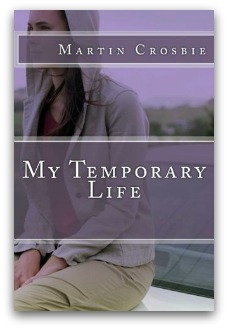
Eventually, circumstances make it impossible for Malcolm to continue this peripatetic life, and he heads to Canada to finish up his schooling. Even then, he feels unsettled:

It really does feel like everything is going to be okay, or at least it might be for a little while. Nothing in my life has ever been forever anyways. Everything is always just temporary, always temporary.

The novel has taken the Amazon charts by storm, garnered rave reviews and turned Crosbie into an overnight publishing sensation.

In fact, I recommend you become part of the storm by reading the book RIGHT NOW — or as soon as you’ve finished this post.

Here’s a link to the book on Amazon: My Temporary Life.

Alternatively, you can sign up for our DISPLACED DISPATCH — and cross your fingers that you’ll be one of this month’s two lucky winners!

And now for some highlights from my exchange with Martin Crosbie…

Is Malcolm Martin?

Hi there, Martin!
Hi, Tony!

Can you tell me a bit about your upbringing — where you were born and how you ended up in Vancouver?
I was born in Aberdeen in Scotland but I was adopted and transplanted to Kilmarnock when I was still an infant. I lived there until I was ten and my family moved us to the west coast of Canada. Other than a few years in Toronto and in Ontario when I was in my twenties, I have always lived here, just outside of Vancouver, British Columbia.

I’ve read your book My Temporary Life, and I loved it. I was particularly impressed by the way your writing flows, which is the mark of a very accomplished writer.
Thanks for saying that, I really appreciate it. This is my first novel and I think one of the reasons that it’s done well is that it went through so many re-writes and revisions. The novel that is out there today is very unlike the first few drafts.

You’ve lived in both Scotland and Canada, the two locations in the book. You also share the main character’s love of running… So I have to ask — how much of this character is autobiographical?
I had a writing teacher who would say “What is truth, in fiction? Write something down!”

Then, he’d sit down and wouldn’t answer any questions until the class had all written something, anything.

Once we shared what we’d written, he’d talk about the fact that when you read something and it “rings true” — in that you get lost in the scene — the reason is that the emotions the writer has conveyed are coming from a true place.

So, I appreciate your question because it means that my story probably worked when you read it.

But did the events in the book really happen — the boy with two parents from two cultures (Malcolm), his best friend whose parents beat him up (Hardly), and his dream woman, who, too, has had an abusive childhood (Heather)?
A lot of the incidents did in fact happen — but to different people at different times. The book is most definitely fictional.

But it is true?
Without wanting to become the next James Frey, yes, on some level it is. I had the daughter of a friend read the novel and really enjoy it, and she asked me if I was Malcolm. I told her that some days I feel like Malcolm and some days I feel like Hardly — lol.

The ups and downs of self-publishing

Quite a few authors in The Displaced Nation’s circle have self-published their works, myself included. Can you tell us what was behind your decision to self-publish My Temporary Life?
I self-published My Temporary Life because I was turned down over one hundred times by agents and publishers. The strange thing, though, was I’d pass my work to readers and they enjoyed it — very few of them didn’t. Oh, there were changes that I made along the way because of readers’ input, but the feedback was almost always decent. And they all wanted to know the same thing: “When’s the next book?”

So I self-published through Amazon, and it’s been an incredible ride. In less than three months 85,000 copies of my book are out there. I say that number and it absolutely astounds me that so many people have taken the time to give My Temporary Life a chance.

Is there a particular group of readers who’ve found particular resonance with your story?
One of the challenges with my novel has been that it doesn’t fit any specific genre, and when that happens you don’t know where to market your work. This has been good and bad. Not knowing whether to call it a coming-of-age story, a romance, or a thriller has been challenging. But not knowing exactly to whom it might appeal has also been a good thing, because I now have women and men readers of all ages.

I guess Malcolm is a reluctant, flawed hero and we can all kind of relate to that.

Self-publishing , as I know from my own experience, can be time consuming, however rewarding it is. Have you found it that way?
Without self-publishing, my story would not have reached anyone. It’s as simple as that. Having said that, the downside is that it’s a lot of work — and I mean, a lot of work. I promote my book anywhere that I can online where I think folks might be interested. Unfortunately, this takes me away from writing my next book, and that’s what I really want to be doing these days.

The positive of self-publishing is that I enjoy interacting with folks who’ve read or are reading My Temporary Life. I’m very accessible. I answer every email. I am on chat loops, Facebook groups, Yahoo groups — anywhere that somebody wants to talk about self-publishing or writing or my work. And, in doing that, I’ve formed some incredible friendships.

You know when you meet someone, whether it’s virtually or in person, and you just know that they’re going to be in your life for a long time? Well, I have met friends like that because of my book.

In the past week, I’ve had instant messages, tweets and emails from all kinds of people. One lady was ribbing me because she had to call in sick after being up all night reading my book. Another woman sent me a barbecued salmon recipe — she’d liked the recipe in my book but thought hers was better. And a gentleman sent me a message who is a huge fan of the book. He said that he’d told his wife that if she didn’t read it, she had to pack her bags, lol.

And, the readers that I am “meeting” are from all over: Taiwan, Luxembourg, lots in Australia, the UK of course, and the US.

It’s an amazing world that we live in that I’m able to experience that, and it’s all because I self-published my book.

Cross-cultural relationships

Malcolm gets involved with Heather, who’s a born-and-bred Canadian from a secluded little town in Northern Ontario. Heather says to Malcolm when they first meet: “You have this Scottish look to you, like you just got off the boat and are still lost; it’s very cute.” What’s your view on cross-cultural relationships? Do you see them as particularly challenging? (Many Displaced Nation readers are in them, which is why I ask…)
It’s funny that you bring that up as I’m trying to address it in my work in progress. I don’t really know if I’m properly qualified to comment… I live in an area of Vancouver where I have friends from pretty much every culture you can imagine. I’m lucky in that respect, and of course because of that, I get to eat lots and lots of different foods. Food is very very important to me, Tony, I do love to eat.

The importance of being Scottish

You’ve lived in Canada a long time. But does Scotland still exert some kind of pull?
Scotland calls me back every few years. Right now it’s been three years since I was there and it’s whispering in my ear again, so I’ll be back there soon.

You see, when you’re a Scot, you’re always a Scot. There are third and fourth generation Scots who live in Canada who still call themselves Scottish.

Well, I was born and bred there and have been back many times, and even though I am a Canadian citizen now, you can’t not be a Scot. It’s more than just being born there. It’s much more than that.

When I arrive at Glasgow airport and present my European passport (yes, I have a Canadian and European one), and the customs agent sees my birthplace and says, “Welcome home, Mr Crosbie,” I always get a tear in my eye.

And, there are many many things that I miss about Scotland.

I miss the passion that they have for football, real football. I miss big sour pickled onions. I miss the way the rain can be lashing in your face and somebody will say to you that it’s a “grand” day. I miss the way that Scottish history is real history, real old history.

The dream of partial repatriation

Would you ever go back to live in Scotland?
I’m fortunate that I can go back from time to time, and in the movie of my life that plays in my head, I do live there part time too. One day I hope to make it happen. I already have the city picked out in Scotland where I’d like to live…

But wouldn’t you have to make some adjustments?
During the months when I’m living in Scotland, I expect I’d miss the mountains that we have here on the Vancouver coast — but I’d sure like to try it for a little while.

If my next book is as successful as My Temporary Life, I might just find a way to fulfill my dream and live part time in both countries.

A Temporary Life — The Sequel

Rumor has it you’ll be doing a sequel following the life of Malcolm’s Scottish friend, Hardly. What can you tell us about this work in progress?
I can tell you that I’ve seldom been as excited about anything as much as I’m excited about my next novel. Yes, it is the story of Hardly. I’m having so much fun writing it.

Just what the final product will look like I don’t really know, so at this point I’ll just say that it’s like the first novel in the sense that it’s an in-depth character study of a man and his motivations, and in terms of how the novel reads, well, I do love plot twists, Tony, and I can absolutely guarantee you that this book will have them.

Sounds fantastic! Thanks so much for your time, Martin.
Thanks for doing this Tony, and of course now I’m going to be dreaming tonight about the wee chip shop in Stewarton, and the farm house that my cousins live in in Inverness, and a multitude of other Scottish things.

* * *

Anyone who’d like to know more about Martin’s life and his work, you can check out his author site and follow his escapades on Twitter: @martinthewriter

And if you have any questions for Martin, please feel free to ask them in the comments!

And don’t forget to sign up for our Dispatch to be eligible for the giveaway of Martin’s book!

STAY TUNED for tomorrow’s installment in the life of our fictional expat heroine, Libby, which will be another party-themed post — this time, of course, it’s a baby shower! (What, not keeping up with Libby? Read the first three episodes of her expat adventures.)

If you enjoyed this post, we invite you to register for The Displaced Dispatch, a round up of weekly posts from The Displaced Nation, with seasonal recipes, book giveaways and other extras. Register for The Displaced Dispatch by clicking here!

Related posts: