The Displaced Nation

A home for international creatives

Expats, do you play with your identities? Are you an imposter or a chameleon?

Pretending to be a dead child is the cruelest trick you could play on a family.

Insinuating yourself into their lives, claiming falsely the intimacy and bonds that only exists between immediate family — mother and son; brother and sister — and to convince them that that son, that brother, that they feared murdered, has returned. There was, it transpires, nothing to worry about all along. You were fine. You are alive.

To succeed in such a deception scarcely seems possible. It sounds like the plot of a mystery novel, but it is, in fact, chillingly true. We have ourselves a real-life Talented Mr Ripley.

This post is concerned with the case of Frédéric Bourdin, a 23-year-old brown-eyed Frenchman who convinced a Texan family, the Barclays, that he was Nicholas, their missing blue-eyed teenage son and brother.

A conman, a fantasist, a sociopath, Bourdin already had a history of impersonating destitute children when in 1997 he convinced authorities in France and the US that he was the unruly child who at aged thirteen had disappeared from the Barclay family in San Antonio, Texas. The police presumed Nicholas was dead until Bourdin concocted a tale that the child had been snatched by a pedophile ring and brought to Europe. Bourdin lived with the Barclay family for three months before a private investigator revealed the truth.

With the release of the documentary film, The Imposter, directed by Bart Layton, the story of Bourdin has returned to the news. The film, a success at Sundance, is now in limited release in the US. Bourdin’s masquerade is so hard to believe, and so stranger than fiction, that it is of little surprise that is perfect material for a documentary.

This is not, however, the first time that the story of Bourdin has been depicted on the cinema screens. In 2010 a fictionalized account entitled The Chameleon was released, directed by Jean-Paul Salomé.

To be honest, The Chameleon is a disappointing film that despite being based on the most compelling of true-life tales is never itself compelling. (For anyone in the US who might be interested, it is available for streaming on Netflix.)

A better use of your time may be spent reading about Bourdin in David Grann’s essay “The Chameleon,” which belongs to his essay collection The Devil & Sherlock Holmes. This is where I first came across the story. The essay is actually available on The New Yorker Web site and I can’t recommend it enough.

Why, however, have we chosen this topic for The Displaced Nation? Well, we think that The Imposter is a film that you may be fascinated by, but we also think that there’s something about Bourdin’s tale, undeniably horrific and callous as it, that resonates with an expat audience. How did this man with his French accent convince others that he was an American teenager? In an interview with The Daily Telegraph, Bourdin stated that there was an unspoken collusion on the part of Nicholas Barclay’s mother, Beverly Dollarhide — that she knew damn well that this was not her son:

Most people who go to church don’t believe in God, very few of them really believe, but somewhere deep inside they try to convince themselves there is a God. It’s the same thing for the Dollarhide family. It happened exactly the same way.

Bourdin throughout his life has cruelly taken playing roles to an extremity. Despite being jailed for identity fraud after it is was revealed that he was not Nicholas Barclay, he continued to pass himself off as teenagers. In 2004 he claimed to be a Spanish adolescent whose mother had been killed in that year’s Madrid train bombings. The next year he again pretended to be a Spanish orphan, this time claiming that he lost his parents in a car accident.

While none of us play roles to that extent, this imposter and chameleon aspect of Bourdain’s personality is — though I am aware that I over-reaching here somewhat to make a point — reflected in many of our lives as expats.

I know that I find myself occupying roles I had previously not thought I would before. Sometimes I am the imposter. I play a role that isn’t me. In my case, it may be exaggerating national characteristics and language that I feel people expect of me, but that I would never use back home. At other times, I find myself trying to be the chameleon. Trying to scrub away my otherness so that no attention is drawn to me because I sound different, or behave differently.

What about you? What sort of an expat do you find yourself to be. In your adopted home, do you find yourself, at time, to be a chameleon? Or are you more an imposter?

STAY TUNED for Tuesday’s post, a list of travel situations that spell H-O-R-R-O-R!

If you enjoyed this post, we invite you to register for The Displaced Dispatch, a round up of weekly posts from The Displaced Nation, with seasonal recipes, book giveaways and other extras. Register for The Displaced Dispatch by clicking here!

Related posts:

Image: MorgueFile 

Talking with author Sonia Taitz about home, abroad, and the healing properties of travel

Today we welcome Sonia Taitz to The Displaced Nation’s interview chair.  Sonia is an author, playwright, and essayist; her writing has been featured in publications such as The New York Times, The New York Observer, and O: The Oprah Magazine. She is also a regular guest on NBC’s TODAY show, CNN, and National Public Radio.

The Watchmaker’s Daughter is Sonia’s third book, published today. A memoir of growing up as the child of European holocaust survivors, The Watchmaker’s Daughter has already received glowing reviews, such as this from New Yorker and Vanity Fair cultural critic James Wolcott:

A heartbreaking memoir of healing power and redeeming devotion, Sonia Taitz’s The Watchmaker’s Daughter has the dovish beauty and levitating spirit of a psalm…A past is here reborn and tenderly restored with the love and absorption of a daughter with a final duty to perform, a last act of fidelity.

Intrigued? So were we. You’ll be happy to hear that Sonia has agreed to participate in this month’s prize draw, and has let us have a copy of The Watchmaker’s Daughter for October’s giveaway. See the end of this interview for details of how to enter the draw!

But now, over to Sonia.

Sonia, welcome to TDN. Could you tell us a little about your early life?
I was born in New York City. My parents had emigrated here from Germany, where they lived as displaced people after World War II.

And what was your parents’ reaction when they first arrived in America? How did the country make them feel?
They felt they had found refuge and harbor at last. When they saw the Statue of Liberty, they understood, for the first time in their adult lives, that they could be safe in the world.

Growing up in America must have been full of cultural contradictions for you. As a TCK and child of Holocaust survivors, did you feel at home in or removed from American culture?
Both. I felt American in contrast to my parents, to whom I had to translate things big and small (various cultural revolutions; why you don’t wear socks with sandals). At the same time, I felt different from American children whose parents were not from somewhere else. There was a deep rift between the “light” attitude shown on television (my strongest link to the culture) and the serious and weighted way my parents tended to see the world. I lived on both sides of that rift. Sometimes it was tiring; sometimes it was exciting.

You helped your parents get over their trauma of being in the concentration camp through travel. Where did you go, and how did you react to the other cultures?
I left my safe milieu in NY (we lived in a cozy Jewish immigrant neighborhood) and crossed the Atlantic to the Old World, Europe. My parents had experienced deep and savage hatred in Lithuania, under the Nazi regime, and both had survived ghettos and concentration camps. They had seen neighbors turn their backs on them, or even turn against them. To my parents, America was free of these horrors. Here, everyone had a chance. Here, no one could ever round you up and kill you. Europe, they felt deeply, was a checkerboard of blood-hatreds, and they had rejected it as much as it had rejected them. So that’s where I went at 21, sure that the world was no longer as bad as they had thought – that it was, in a sense – safe to trust again.

Although I traveled to Germany (and later, to Lithuania), my journey centered on Oxford, England, where I studied for two years. And while I made many close friendships there, I did feel displaced. I was frightened by the depths of snobbery, prejudice, and even hatred that I sometimes felt – not only directed toward Jews like myself but toward blacks, “Asians” (as they indiscriminately called anyone from Pakistan to Polynesia), and even Southern Europeans. I particularly remember the phrase “the wogs start at Calais.” And the student I fell deeply in love with had parents who rejected me as a “Jewess.”

You might be wondering how all this was helpful to my parents. The story is told in my memoir, The Watchmaker’s Daughter, but the upshot is, I married the Englishman, and everyone ended up happy ever after.

You say your journey centered on Oxford, England — in fact, you did a degree at Oxford University. How did you find living in the UK, and what were the biggest adjustments you had to make?
I loved it and I hated it. There was no place more seductive, in the sense of misty fog, the flowing river Isis on which proud swans drifted, dreamy willow trees and – on the inside – fireplaces, hot mulled wine, the tinkling sounds of poetry and a golden sense of age. But it was all very foreign to me. My culture (not only Jewish but American) was louder, franker, more ambitious, less resentful. Where I came from, you openly tried to succeed, and could crow about how and what you did to “make it.” In fact, we cheered the rags-to-riches hero. England liked to dampen this enthusiasm. I got in over my head sometimes, and I remember feeling lost and bereft. My currency wasn’t worth the same in this place. But learning to adapt to another culture was intriguing. Travel can make you feel rootless and alone – but it can also make you soar. Best of all is when you come to feel at home in somewhere you once thought so strange. I did, eventually, come to that place.

I think everyone at this site knows what you mean by that. So — do you still like “soaring”? Do you still like to travel? 
I love to travel, and still feel that it is the best way to understand the world – and the world inside you. Wherever I go, I try to be porous, to float, to leave my safety zone and almost pretend I live somewhere new. I eat the food, listen to the music, even try to speak the language. Being comfortable is not my main goal in life – it is to experience and learn. So I feel exhilarated as a traveler, even with the physical or emotional discomforts that come with it.

Where is your home now — and where do you feel most “at home”?
I feel most at home in my hometown, Manhattan, where all cultures are enthusiastically represented (it’s a world tour in itself). I also love to go to a small lakeside cabin, less than an hour from the city. You don’t need to be in Switzerland or Kenya to feel the overall majesty of the world.

You married a non-Jewish man, an Englishman. How did you both adjust to the religious differences, as well as the cultural ones?
When we met each other, it felt less like a culture “gap” than opposites attracting. The man in question had always been interested in the Jewish Bible, which he knew better than most. He confessed that he had always had “envious aspirations” towards the Jewish people. But in a real sense, even after more than 25 years of marriage, he is still very English (in attitude and accent), and his sense of being Jewish feels different to him than my own. He doesn’t have the weight of being “of immigrant stock,” or of being the child of refugees, castaways. After all, Americans tend to be intimidated by English people, and not the other way around. My husband has been embraced by this culture.

After your own experience, what do you now see as the biggest challenge facing someone who is marrying into a different culture?
The problem usually manifests in the broader family sense. Between the man and woman, there may be only perfect love, but you do have to add parents and, later, children to the mix. My parents were as horrified as his by our romantic “exogamy.” Although they came to love my husband, he was not the “nice Jewish boy” they had dreamed of. And then, when there are children, new questions arise — how do you raise them? That seemed easier in my case; my husband was now Jewish and wanted, as I did, to raise them in that tradition. But even so, his parents had to deal with the fact that we did not celebrate Christmas. Our children have to deal with the paradox that while they are Jewish, their English family is not.

Our October theme is based around the tales of regret by those who travel. Do you have any regrets about traveling or studying abroad? What would you do differently — if anything?
Unlike Edith Piaf, I regret so much. While my parents grew to love my husband, and – most movingly – his parents and mine grew to love each other, my going away caused immediate hurt. I still can feel guilty about my taking that step away. My parents were immigrants with a tiny remnant of a family. Yet, I had sailed off to explore the world, leaving them far behind. On the other hand, that is what children do. Mine are beginning to do the same, and I try not to hold them back.

I also wish I had been more sensitive to my husband’s parents. They didn’t want me for their son, and I thought that made them prejudiced and “bad.” I mixed them up with those who had hurt my parents and millions of other Jews. Now that I have raised children, worried about whom they dated and how it would impact our family, I understand both sets of parents better. Youth makes us callous and cocky, and now, I hope, I am neither.

Could you tell us about your memoir being published today, The Watchmaker’s Daughter? Is this always something you’ve wanted to write?
The memoir is something I had wanted to write since my parents died. For many years after they were gone, I couldn’t put pen to paper about anything. Still, thoughts about our odd and interesting lives began to form. Death gives a shape to existence – a beginning, middle, and a punctuated end – and I began to see a story coming through. A circle away and back home. The classic Ulysses story, but seen from the eyes of a little girl in a Jewish ghetto in New York City, and the larger world she longs to understand. After the voyage, the return.

What made this book almost impossible to write was the duty I felt to be fair to everyone in the story, while doing justice to the story itself. This wasn’t my personal journal either – I wrote it as a coherent work that would resonate with others, regardless of their background. I needed to transmit what I had experienced and learned. I wanted to give the reader a tale of suffering, love, redemption, and renewal.

You have also published a novel, In the King’s Arms, about an American Jewish woman who goes to England and marries into the aristocracy. How much of this was based on your own life? Did you find it easier to write the memoir or the novel, and why?
The novel takes my real trip to Oxford and enhances it with far more dramatic plotlines. Many characters are invented, others are conflated from different people. Much of the drama that happens in that book never happened to me (although funnily, many people assume it did).

I found both the novel and memoir enjoyable to write. Novels are fun; you can play with your characters and make them say or do anything you want. I love this freedom to create a new world. Memoirs are deeply rewarding in that emotional chaos is translated, ideally, into art. It’s a darker assignment, but a deeply satisfying one. Notice that I didn’t respond to the question of which was “easier.” I guess I enjoy intense engagement, which may be why I like travel, or the difficult task of writing.

What audience did you have in mind for In the King’s Arms? Did you end up attracting those sorts of readers, and to which part of the story had the audience responded the most ?
I felt the novel had a universal theme — young love, Romeo and Juliet, the sorrows of the broken heart. All sorts of people have responded to it in all kinds of ways. Some find it very English, comparing it to Evelyn Waugh. Some find it as Jewish as Philip Roth. Some treat it as a satisfying read, and others as a moral fable.

Were you surprised at the book’s reception?
The biggest surprise was that people responded to it at all. The book had almost been published 25 years ago, but the contract had fallen through, and I had thought it would never see the light of day. To see it come back to life, be read, and even garner critical praise, was the biggest and happiest surprise.

Do you hope to attract another kind of audience with The Watchmaker’s Daughter?
I hope to attract a bigger and more diverse audience than a small literary novel tends to. I am now decades older than the author of the novel, and I hope this book reflects that.

You’re a very diverse writer, and have had some theatrical works produced at the Oxford Playhouse and at the National Theatre in Washington, DC. Could you tell us a little about them?
The Oxford experience was one of the greatest ones of my life; I was given license to write a play that would be seen not only by the sophisticated body, but also by the London press. My husband-to-be acted in it (he was part of the Oxford University Dramatic Society), and it was an incomparable experience to watch him onstage giving life to my work. It was my first full-length play, my first public experience as an artist.

The play at the National Theatre was part of a series that took place on Monday nights, when theatres are typically dark. Our troupe – author, actors, director — took the train down from New York, rehearsing all the way. The audience was great — the play was a farce about jealousy, kind of madcap and packed with complicated jokes and stage business – and they responded well to all of it. People who go to see new plays are adventurous, and people who’d go on a Monday night to see one they’d never read about are even more so.

And finally: what next? Are you working on another book or play, and if so, can you tell us anything about it?
My next book is a tragicomic novel based on a real public figure (a very famous actor), but the story is largely invented. Starting with his childhood, I create the background that made this man become an unbalanced anti-Semite. His father abuses him mentally and physically, and is a nightmarish tyrant. As a teenager, the boy falls in love with a Jewish girl from a good family, but something happens that affects both their lives. The novel is called DOWN UNDER, and it’s been a real treat to bring this story to life.

We’re already looking forward to it! Thank you, Sonia, for being so honest and giving us such an insight into your life and your writing. We wish you and The Watchmaker’s Daughter every success.

To win a copy of The Watchmaker’s Daughter, you can:

We will announce all the winners in a couple of weeks!
.

STAY TUNED for Monday’s post, Anthony Windram’s musings on films, horror and the displaced life!

If you enjoyed this post, we invite you to register for The Displaced Dispatch, a round up of weekly posts from The Displaced Nation, with seasonal recipes, book giveaways and other extras. Register for The Displaced Dispatch by clicking here!

Related posts:

Images: Sonia Taitz author photo; The Watchmaker’s Daughter book cover.

RANDOM NOMAD: Larissa Reinhart, Former Expat, Midwestern Southern Belle & Crime Novelist

Place of birth: Silvis, Illinois USA (I’m actually from nearby Andover, but it’s too small to have a hospital!)
Passport: USA only — but I’m on my third edition!
Overseas history: Japan (Yokohama, Kameoka, Nagoya): 1995-96; 1998-99; 2008-10.
Occupation: Mother and author of the Cherry Tucker Mystery Series. I’m also working on a mystery series set in contemporary Japan.
Cyberspace coordinates: The Expat Returneth — Sharing my life overseas, my life at home, and the other world that lives between my head and paper (blog); Larissa Reinhart: Writing mysteries and romance south of the sweet tea line (author site) @riswrites (Twitter handle); Larissa Reinhart (FB page); and Larissa Reinhart (Good Reads).

What made you leave the United States to live in a faraway land?
I’ve always wanted to live overseas. Before I got the chance to do it physically, I traveled through books — for instance, The Crane Maiden, by Miyoko Matsutani, and The Laughing Dragon, by Kenneth Mahood (I have passed them to my children). When I got older, I loved Elizabeth Peters mysteries, which are set in Egypt.

Was anyone else in your immediate family displaced?
My family is firmly rooted in Illinois, but was always interested in other cultures. My father was a history teacher, and I had a good understanding of geography and world history from him. I also had a grandfather who loved to travel. As a kid, I read his National Geographic collection and was fascinated by the countries he visited, particularly Egypt. He probably would have loved to have been displaced, but had to wait until retirement to travel.

Tell me about the moment during your various stays in Japan when you felt the most displaced.
My husband had a scholarship from the Monbu-shō to study at Keio University, so I applied to the JET (Japan Exchange and Teaching) Programme — and ended up getting to Japan a few weeks before he did. I lived with a homestay family. They spoke no English. I spoke no Japanese. They were very sweet, but they swung between helicopter-parent smothering and leaving me for long periods of time alone in a tatami room. I had horrible jet lag and felt so isolated and helpless. Once I moved into an apartment, my jet lag abated and I began enjoying myself. I had traveled to Egypt previously — but hadn’t experienced that kind of debilitating jet lag that comes with a 13-hour time difference. It’s a killer!

When did you feel the least displaced?
We have two young daughters from China. Four years ago, we took them to Nagoya to live for a couple of years. We saw it as a chance for them to experience life in Asia at a time in their lives when it was still easy to move around and adjust. They loved Japan. By the end of our two years, we all wanted to stay, but unfortunately couldn’t. There is no one particular instance, but lots of little, everyday moments we hark back to and can’t seem to reproduce back here — our family living comfortably in our tiny house, walking to shops and restaurants in the neighborhood, my children riding their bikes with the local kids to play at the neighborhood park…

You may bring one curiosity you’ve collected from each of the countries where you’ve traveled or lived into The Displaced Nation. What’s in your suitcase?
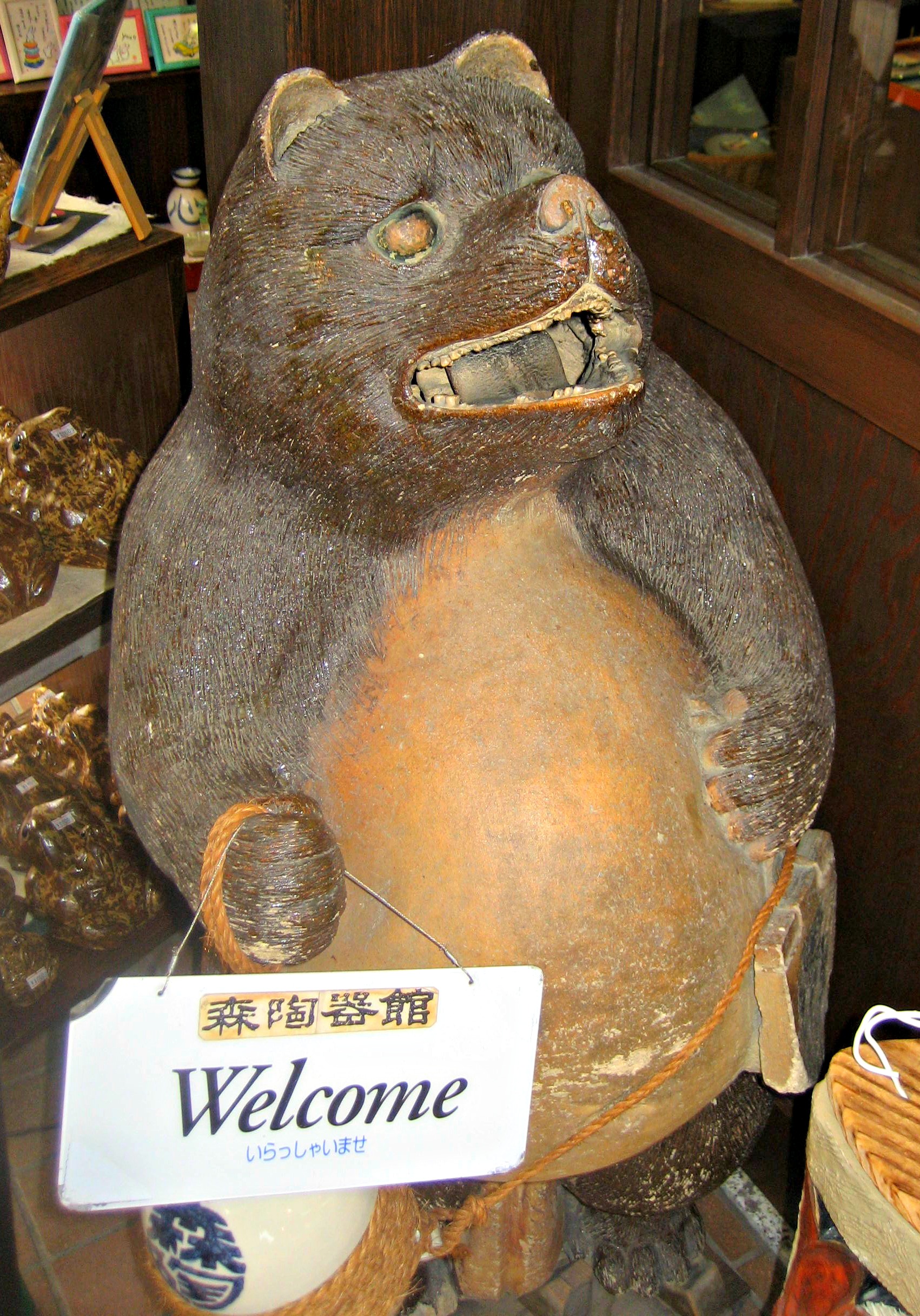
A ceramic tanuki (Japanese raccoon-dog). Japanese families and businesses keep them in front of their doors to welcome guests. It’s similar to the Maneki-neko (beckoning cat), but more fun because of their sake bottle and large kintama (golden testicles), which are meant to bring good fortune.

Hmmm…moving right along: You are also invited to prepare one meal based on your travels for other members of The Displaced Nation. What’s on the menu?

I like Japanese bar food, so we’ll have a meal based on that.
Appetizer: Edamame (boiled & salted green soy beans) and a Grapefruit Sour to drink. My favorite bars in Japan will give you a glass of ice, seltzer, and shōchū (grain alcohol) and a half-grapefruit with a strainer for you to squeeze the juice into the glass. Really refreshing.
Main: A bunch of Japanese tapas dishes — yaki-gyōza (fried potstickers), tebasaki (grilled wings), pari pari renkon chips (spicy, deep fried lotus root), tsukune (grilled chicken meatballs), and yakitori (skewered grilled chicken)
Dessert: Japan isn’t big into dessert, so we’ll have a savory bowl of ramen instead. And maybe another Grapefruit Sour. Or two.

Yum, you’ve brought me back to my own izakaya days… And now can you please suggest a Japanese word or expression for the Displaced Nation’s argot?
Chuto-hanpa. It literally means half-measure, but is used to describe doing something half-assed. I love this word.

We’re getting into a bit of a Halloweeny mood at the Displaced Nation. Tell me, did you keep the American Halloween tradition alive while living in Japan?
We did celebrate Halloween in Japan with our children. It’s becoming popular there in terms of decorations and parties (we even found an American-type pumpkin for $20), but trick-or-treating is an oddity. You don’t request gifts from people — certainly not door-to-door. Our neighbors would deliver snacks in a plastic jack-o-lanterns to our house instead. One expat friend arranged a trick-or-treating excursion for the children as part of a Halloween party. But first we mothers delivered bowls of candy to the businesses and homes in the area so that, when we brought the children round to trick-or-treat, they would have something to give them. People probably thought we were crazy, but at least they found the children in costume adorable.

Also in keeping with the season, we’ve started exchanging expat horror stories on the site. What’s the creepiest situation you’ve encountered on your travels?
It was on a trip to Thailand. My husband and I hung out on a beach at Koh Samui for a few days. To get back to the mainland, we had to hike across the island to catch a boat. We were proceeding along the dirt road, chatting…when I felt something grab my arm. Without breaking stride, I glanced down and saw a monkey, teeth bared, ready to bite me. Suddenly it flew off my arm, and I screamed. It had been chained to the side of the road, and was ripped away as it reached the end of its tether. Its vicious eyes and sharp teeth will forever be burned in my memory. That nasty monkey must have been someone’s pet. My husband saw it standing next to its stake before it jumped on my arm. Too busy talking, I totally missed it and walked within its perimeter. You can bet I have remained vigilant for monkeys ever since. I had a close call with some snow monkeys in Nagano, as well. I am not a fan.

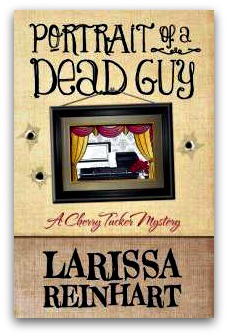
The first book in your Cherry Tucker mystery series is called Portrait of a Dead Guy. That sounds a little creepy. Is it?
It’s actually a humorous mystery, but the idea of painting a coffin portrait is creepy even for my heroine, a sassy Southern artist named Cherry Tucker. However, she’s desperate for a commission, which is why she offers her services. The dead guy has been murdered, and his stepmother felt that a final portrait would be a fitting commemoration. Cherry ends up as another potential victim of the murderer because of her proximity to the corpse. That said, she does have one spooky scene at night in a funeral home, alone with the dead body, which ends badly.

Painting a portrait of a dead man — how did you think that one up?
In truth, coffin portraits are not all that unusual, depending on your culture. Many cultures use a portrait of the deceased with their memorialization. I know a family friend who was asked to photograph a coffin portrait to send to the deceased’s family in Asia. They would probably place the photo in a family shrine and burn incense for a specific number of days along with other rites.

Tell me about your plans for the Japanese mystery series.
I’m a humorous mystery writer, so I look at the lighter side of crime. Did you know that the Japanese love mysteries? I think it’s because they have so little crime. I have another Southern heroine for the Japanese series, which will bring an interesting cross-cultural twist. I love the interplay of cultures.

Say, what is this thing about you and Southern ladies? Aren’t you an Illinois girl? Is this another displacement?
It is another displacement! We moved to Georgia between trips to Japan, about fifteen years ago. Small town South is very similar to small town Midwest, except for the Southerner’s extravagant use of hyperbole and simile in conversation. I can’t imagine living anywhere else in the U.S. now, although I can place myself in some foreign spots quite easily. 🙂

Readers — yay or nay for letting Larissa Reinhart into The Displaced Nation? She has an affinity for dead bodies, true — but in a humorous sense! And she doesn’t monkey around… (Note: It’s fine to vote “nay” as long as you couch your reasoning in terms we all — including Larissa — find amusing!)

STAY TUNED for tomorrow’s post, an interview with another former expat author.

If you enjoyed this post, we invite you to register for The Displaced Dispatch, a round up of weekly posts from The Displaced Nation, with seasonal recipes, book giveaways and other extras. Register for The Displaced Dispatch by clicking here!

Related posts:

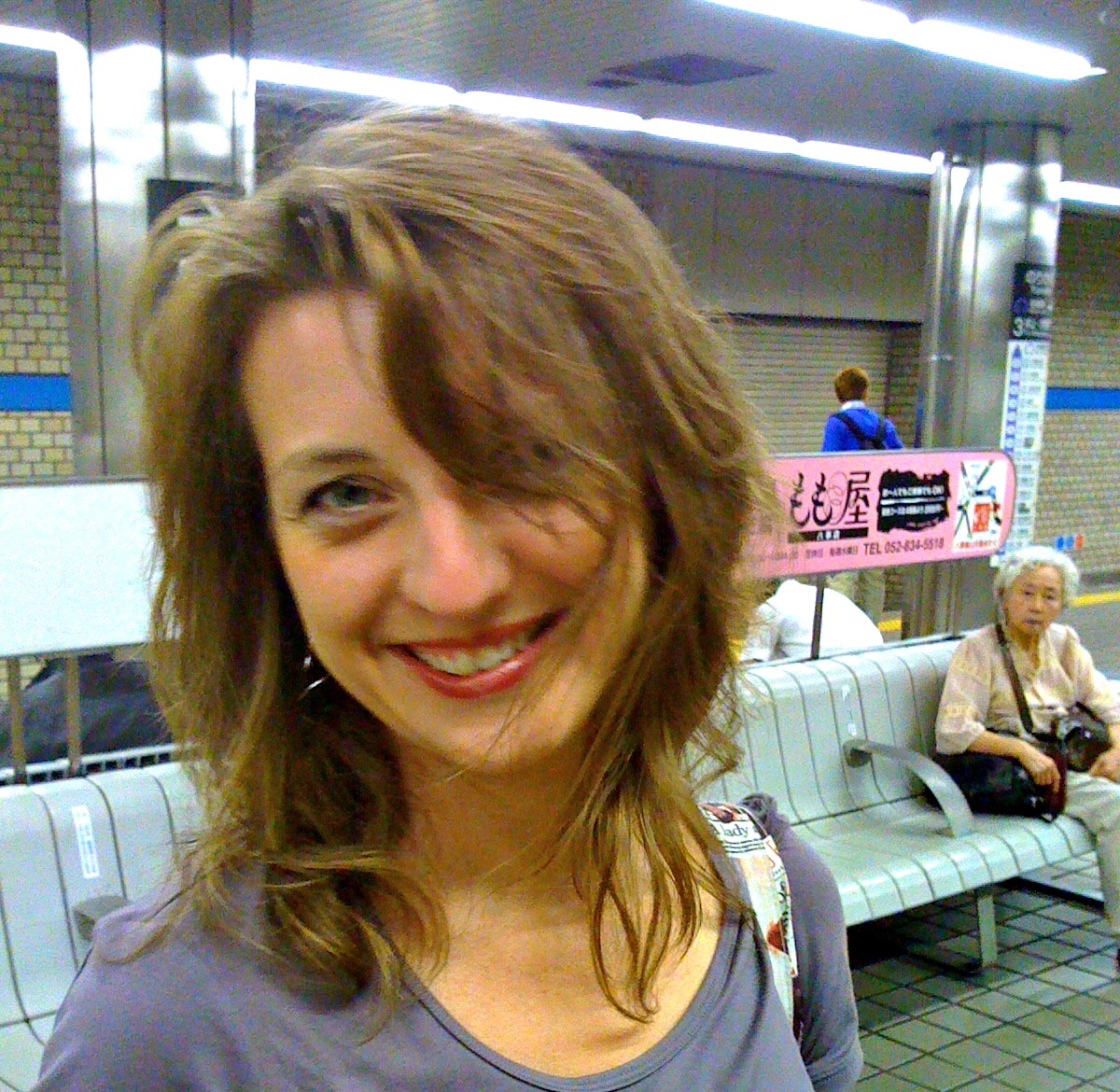
Images: Larissa Reinhart inside a subway station in Nagoya; her favorite tanuki (cute or creepy?); her book cover.

THE DISPLACED Q: On your travels … have you ever seen a ghost?

Tony+ScaryBoy_collageOn your travels, have you ever seen a ghost?

And if you have — who ya gonna call?

I know, I know, you saw that one coming!

Seriously, though, for today’s Displaced Q, I’m asking about your supernatural experiences. Between all of us, we’ve been to a lot of places. So if there’s any truth in spooks and spirits, some of us are bound to have seen them, right?

Getting into the spirit of things

Well, I’ve never seen a ghost; but that could well be because I’m about as psychic as a cheese. Seriously — I’m not what you’d call particularly sensitive. Even to the physical world around me, as my body can attest; it’s constantly covered in bruises from walking into walls, chairs, doors — anything that regular people have sufficient grace to avoid.

But I digress. Our topic today is ghosts, and I’m a big believer in them. Why is that, you may wonder — given that I haven’t had a particularly spooky encounter of my own? I’ve visited (allegedly) haunted pubs, and creepy castles by the bucketload (being a Brit has its advantages in this regard).

I’ve also been in tombs of many different kinds — from the long barrows of the old Celtic peoples to the chiseled-out mausoleums of Petra in Jordan, to the pyramids and underground catacombs of Egypt.

And … not a sausage!

You wouldn’t believe…

Yes, I’ve had those strange, hard-to-explain occurrences that I think everyone has at some point or other: doors opening on their own, things moving from one place to another; one time I was looking right at a mirror when it fell off the wall and smashed to pieces, after over a decade of hanging there unmoving!

More recently at my wedding, there were two important guests who were no longer with us. We invited them anyway, with our hearts and minds. Both were ladies who shared an obsession with butterflies, so we felt blessed by their presence when a pair of butterflies danced over our heads all the way through the ceremony!

And yet, I know such experiences are easy to explain. Maybe I want them to be paranormal in origin, but the logical part of my brain is too active. It soon rationalizes these kind of happenings until I feel foolish even mentioning them … so, generally, I don’t. (Unless of course, the Displaced Nation is doing a series of ghostie posties.)

The multilingual (and TCK) actor Robert Stack served as host of the TV program Unsolved Mysteries. As he once said:

I don’t mind UFOs and ghost stories, it’s just that I tend to give value to the storyteller rather than to the story itself.

Do ghosts escape from dreams?

But I do have dreams. Sometimes, when things happen, I swear I’ve already dreamt about them at least once. And then, just occasionally, I have dreams when I’m visited by the spirits of people I’ve lost.

Earlier this year I had to make that journey every expat dreads — back to my home country of England, all the way from Australia, to help look after a dying relative. It was my granddad, and we weren’t sure he was dying at the time, but whilst keeping vigil with him I had a dream that rang with prophecy. His wife — my grandmother — who had passed on almost ten years earlier, showed up in my dream, wandering about his house and looking under things. When I asked her what she was looking for, she replied that she was here to find her other half, and that it was somewhere in the room.

It was a curious dream, and a thought-provoking one, but not unpleasant. I had the presence of mind to tell my family about it as we prepared for another day caring for Gramp.

The doctors at the time were discussing weeks versus months, but he clearly had received his marching orders. He died that evening.

This isn’t the first time I’ve experienced this, although I hope it will be the last; at least for a while. To have dreams of lost ones you first have to lose someone — and I’ve lost enough people this year to last me a lifetime.

That being said, I don’t think ghosts are evil, or vengeful spirits: just souls left behind, looking for something — or someone — they needed or cared for in life.

* * *

What do you think? Am I crazy?

To think that after all of my world travels, the most ghostly encounters I’ve had anywhere occurred back in my childhood home, in my bed.

Now that IS spooky!

So what about you folks? I’d love to hear your tales of what goes bump in the night. We’re coming up on Halloween, after all! In your travels, have you ever come across any restless spirits? Or had any experiences which made you think twice about them? Let me know in the comments!

Alternatively you can hit me up on Twitter: @TonyJamesSlater +/or @displacednation. I look forward to hearing from you!

STAY TUNED for Wednesday’s post, an interview with a Random Nomad who writes books about dead bodies!

If you enjoyed this post, we invite you to register for The Displaced Dispatch, a round up of weekly posts from The Displaced Nation, with seasonal recipes, book giveaways and other extras. Register for The Displaced Dispatch by clicking here!

Related posts:

Image: Tony (L) and  Scary boy from MorgueFile (R)

BOOK REVIEW: “The Englishman” by Helena Halme

Today we are delighted to review Helena Halme’s book, The Englishman. Helena is a regular visitor to The Displaced Nation, where she has been featured both as a Random Nomad, and as Cleopatra For The Day. The Englishman is available from Amazon (UK and US) and for a limited time this week, is free to download as a Kindle ebook!

TITLE: The Englishman
AUTHOR: Helena Halme
AUTHOR’S CYBER COORDINATES:
Blog: Helena’s London Life
Twitter: @HelenaHalme
PUBLICATION DATE: August 2012
FORMAT: Ebook (Kindle)
GENRE: Fiction
SOURCE: Review copy from author

Author Bio:

Helena Halme grew up in Finland and Sweden, and left Finland for good when she married her English husband. She now lives in London. The Englishman is her first book.

Summary:

At the age of twenty, Kaisa has her life mapped out. After university in Helsinki, she’s going to marry her well-to-do fiancé, Matti, and live happily ever after. But in October 1980, she’s invited to a British Embassy cocktail party, and meets a dashing Naval officer. In the chilly Esplanade Park the Englishman and Kaisa share passionate, secret kisses and promise to meet up again. But they live thousands of miles apart – and Kaisa is engaged to be married.

At the height of the Cold War the Englishman chases Russian submarines whilst Kaisa’s stuck in a country friendly with the Soviet Union. Will their love go the distance?

(Source: Amazon.com book description)

Review:

The Englishman is semi-autobiographical, based on the author’s blog posts on How I came to be in England, which, after an enthusiastic response from readers, she was inspired to turn into a fully fledged novel.

It is a love story: the account of the long-distance romance between English Naval officer Peter and Finnish student Kaisa, as this star-crossed couple discovers that Shakespeare’s words are still true, even in the 1980s, and the course of true love never runs smooth. Together, they contend with a broken engagement, long separations, the Falklands War, inevitable cultural differences, and the small matter of a member of the British armed forces wanting to marry a citizen of a country bordering the Soviet Union.

No matter where you are from, or even if you and your partner are from the same cultural background – if you’ve ever been in a long-distance relationship, The Englishman will strike a chord. Loving from afar in the early 1980s was a different matter than it is now: no Skype, no Facebook, no texting, but instead the sweet agony of waiting for letters in the mail and for the landline telephone to ring. Kaisa and her Englishman remind us of the forgotten pleasures of delayed, rather than immediate, gratification.

TDN verdict:

Especially recommended for romantics who grew up listening to Chrissie Hynde and wearing leg warmers the first time they were in fashion.

“The Englishman” can be purchased from Amazon.co.uk and Amazon.com, and from October 8 – 12 is available to download free of charge.

STAY TUNED for tomorrow’s ghosty posty, a spooky Displaced Q from Tony James Slater!

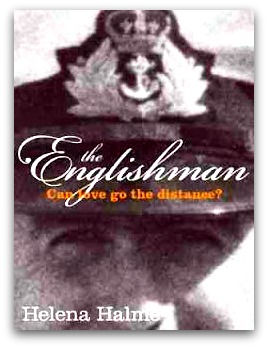
Image: Book cover — “The Englishman”

If you enjoyed this post, we invite you to register for The Displaced Dispatch, a round up of weekly posts from The Displaced Nation, with seasonal recipes, book giveaways and other extras. Register for The Displaced Dispatch by clicking here!

Related posts:

LIBBY’S LIFE #61 – A voice in the dark

Something has woken me. A voice.

I lie in bed and stare around the semi-darkness, wondering if an old, lost spirit lingers in the whitewashed walls of this Georgian cottage. I have no idea what time it is; the only clock in the room is that on Oliver’s cell phone which is lying on the window seat in our bedroom, its little green light flashing every few seconds. With no phone signal in the village, Oliver’s phone has become merely an expensive timepiece. The idea that the Voice might not be of this world discourages me from getting up to check its display, so it could be the middle of the night or nearly dawn for all I know; morning arrives later here than in Massachusetts, and winter, it feels, will not be long coming.

Perhaps one of the children has had a bad dream? I strain to listen for any sounds of wakefulness from the little bedroom next to us, where the three of them are tucked up. Hearing nothing, I decide I must have been dreaming myself, or that the jackdaws who helpfully drop twigs down the chimney into the fireplace are on night duty, cawing and pacing on the roof. I am about to turn over and reclaim some precious sleep when the Voice comes again: outside, under our bedroom window. A hoarse whisper, no doubt fondly intended to be quiet, but in reality raucous enough to awaken the whole street and the dead in the churchyard opposite.

“Yoohoo! Coo-ee! It’s me! Oliver — are you awake?”

I stay still for a second, not believing or wanting to believe what’s outside. Something that shouldn’t have been here for another three days. Should I ignore it? Will the voice and its owner go away if they get no response?

Chance would be a fine thing.

I sigh, resigned to our family’s fate for the rest of the day — the week, even — and nudge Oliver awake less gently than he’d like or is used to.

“Wake up, O dearest one. Rise and shine. Go open the front door. Your mother’s here.”

* * *

“So yesterday I said to this girl in your office, Oliver — Melinda, I think her name was — I said, ‘But he’s not arriving in England until tomorrow, so he must be there with you.’ And she said, ‘No, he definitely left last Sunday and he’s staying in the goonies in the back of beyond for two weeks.”

“Melissa, not Melinda. Boonies, not goonies.”

I shift George onto my other hip, and one-handedly fill the kettle. It had proved impossible to return to sleep once Sandra entered the house, screeching and cackling, so with bad grace I’d got out of bed and dumped some small children on her. If she was going to arrive three days early, she could make herself useful.

“Melissa, that’s it. She sounded like a lovely girl. Anyway, she said Oliver would be here all week, so why didn’t I ring him on his mobile phone? But I couldn’t get through, I just kept getting his answerphone message, so I thought, sod it, I’ll get an early train tomorrow to Bath. It’ll be a nice surprise for them.”

As if I didn’t already have enough reasons to murder Melissa Harvey Connor in cold blood.

I sit George in the rental cottage’s one highchair and get the teapot ready, putting an extra teabag in for Sandra who likes her brew a violent shade of orange.

“Oh, no tea for me, please!”

I turn, surprised. “No?”

“Not unless you’ve got green tea.”

I hold up the box of PG Tips.

“Evil stuff,” she says. She who once gave my three-year-old Red Bull. “Haven’t drunk it for a week now. I’m on a health kick. Green tea only for me, please.”

I pour boiling water into the teapot. “Haven’t got any.” If you’re going to turn up out of the blue and visit people unannounced, you’ve got to have what you’re given. “It’s PG Tips or apple juice. Or you can have the twins’ Cow and Gate if you’re desperate.”

It’s funny, I think — at one time I’d have been polite, even offering to run out and find some in the village. The health food shop at the other end of the high street probably sells green tea, after all, and as it’s now 8:30, the shops will be open.

But after the crisis that Oliver and I have had, all due to Sandra’s insistence upon Oliver’s silence about his family history? Sandra can damn well sing for her green tea.

“Are you sure you don’t want a cup?” I ask.

Sandra leans over to Beth who is kicking one foot in a bouncy chair, and strokes her cheek.

“Evil stuff,” she says again. “Give me a glass of water and I’ll go outside for a smoke.”

* * *

“What are we supposed to do with her?” I ask Oliver in an emergency conference in our bedroom. “We were going to Windsor to Legoland tomorrow, but I really don’t want her tagging along, moaning about nowhere to smoke and them not having herbal tea. Anyway, the car’s not big enough for all of us. Thoughtless woman.”

Oliver opens his mouth then shuts it again. Presumably he was going to defend Sandra, but over the last few weeks he’s learned that my sympathy threshold for his mother has plummeted. Her mention of Melissa only serves to make things worse.

Since we arrived, I have tried to worm information out of Oliver about Melissa, but every time I bring her name up — casually, nothing accusatory, asking about her job — he shoots a hunted, sideways glance at a random object in the room and changes the subject. I am getting nowhere, not to mention frustrated as hell and more suspicious by the minute.

“I could stay here and you take her out with the children. Go round Bath or someth—” He trails off. I imagine my expression reflects the outrage I feel.

“Your mother, your problem,” I say. “How about you take her round Bath and I stay here with the children and go to the park?”

He nods.

At least he’s getting to know when he’s lost an argument.

* * *

They’ve gone. The house is quiet, or as quiet as it gets with a preschooler and two six-month-olds. But it’s significantly quieter than when an overgrown teenager in her fifties is added to the equation.

“Can we go to the park now?” Jack asks.

I smile at him. “Of course. Put your jacket and shoes on while I get the twins ready. I’ll just nip upstairs and get changed.”

I strap Beth and George into their double pushchair, then run up the stairs.

In the bedroom, I pull on a sweatshirt, straighten the bed, then cross to the window to draw back the curtains — and stop. In the few days without a phone signal, Oliver has evidently lost his habit of taking his phone everywhere he goes. The phone is still lying on the window seat, its green light winking.

Because I’ve had to turn the alarm off on it every morning, I know Oliver’s password to unlock it.

I unplug the phone, slip it into my jeans pocket, and run back downstairs.

“Let’s go,” I say to Jack.

*  *  *

.

Next post: LIBBY’S LIFE #62 – Private investigations

Previous post: LIBBY’S LIFE #60 – Cotswold espionage

A note for Libby addicts: Check out Woodhaven Happenings, where from time to time you will find more posts from other characters.  Want to remind yourself of Who’s Who in Woodhaven? Click here for the cast list!

Read Libby’s Life from the first episode.

STAY TUNED for Monday’s post: a review of Helena Halme’s new book, The Englishman.

If you enjoyed this post, we invite you to subscribe for email delivery of The Displaced Dispatch, a round up of the week’s posts from The Displaced Nation. Sign up for The Displaced Dispatch by clicking here!

Image: Travel – Map of the World by Salvatore Vuono / FreeDigitalPhotos.net

DEAR MARY-SUE: One expat’s horror story is another’s delight

Mary-Sue Wallace, The Displaced Nation’s agony aunt, is back. Her thoughtful advice eases and soothes any cross-cultural quandary or travel-related confusion you may have. Submit your questions and comments here, or else by emailing her at thedisplacednation@gmail.com

Shoot! Is it October already? I don’t know how the time flies. I don’t know about you, but I’m not a big fan of fall. Who would be living in Tulsa. It just gets grey here, no burnt ochres like in Vermont. In fact, I wouldn’t know a burnt ochre if I saw one. Is it like a vole (please don’t feel the need to write in. I’m not that stupid. I know it’s not a rodent). Anyhoo, on with this month’s questions.

Dear Mary-Sue,

I can’t resist asking you: how does the Wallace household celebrate Halloween? I can imagine it’s quite an occasion!

– Ian (a British fan of yours) in Iowa

Dear Ian,

Well I can tell you that we don’t celebrate Halloween like the Larsons across the street. She gives out fruit to the kids in the neighborhood. Why would you even do that? It’s just cruel, isn’t it?

No, it’s a time of excess over at the Wallace household. That’s why I wake up the day after Halloween and don’t have to worry about finding the trees outside my house covered in toilet paper.

I buy plenty of Reese’s peanut butter cups because who doesn’t love them? I hear in Europe they have what they call food mountains when they have too much of a particular food source, well let me tell you that the Wallace household ends up with a Reese’s peanut butter cup mountain come Halloween.

You should come along and grab yourself a treat.

***********************************************************

Dear Mary-Sue,

My wife and I have lived in the United States since last May, and I must say, she is throwing herself into the life here with considerable vigour. She is now talking about hosting a Halloween party for some of our fellow expats, and inviting a few of our American neighbors. She has suggested that she and I dress up as an Elephant and a Donkey, in celebration of the American election season. No pun intended, but that would make me feel a bit of, well, an ass, to use the local dialect.

I wonder if I could talk her into going as a Milkman and Pregnant Lady instead? At least that would be true to our native (British) culture.

– Stephen in St. Louis

Dear Stephen,

So let me guess this right regarding your Halloween costumes, your wife was to be satirical and you want to be lewd? Gee, what is it with you Brits. You always think your jokes are funny and yet they always just seem to be about sex. Just go as something horror related and stop trying to over think it. If you really want to be true to your native culture why not go as King George III. Bam! Yes, I went there.

************************************************************

Dear Mary-Sue,

My husband writes mystery books for a living. He and I have decided to live in England for a few years while he does research on his latest story. He insists that we look for an old isolated cottage somewhere deep in the heart of the countryside, where he can be free to write. But I feel certain that those oldy-worldy thatched roof places may be haunted. And what if I have to stay in a house like that on my own, should he be called up to London to meet his agent or give a talk.

Do you think I’m strange to be so afraid of (admittedly English) ghosts?

– Susan of Savannah, Georgia, soon to be of Suffolk, East Anglia

Dear Susan,

If you’re going to be living in East Anglia I’d be more concerned with the living than the dead. They’re a scary in-bred bunch, though coming from Georgia you should be able to handle it. I kid, I kid…well not about East Anglia.

*****
Dear Mary-Sue,

Do Westerners see Western ghosts, Chinese see Chinese ghosts, and Africans see African ghosts, or can we see each other’s?

– Just Curious

And does Just Curious see ghosts of low intelligence?

*****

Dear Mary-Sue,

When I first saw the farmhouse in Tuscany that my husband and I are now renting while we look for a place to live for our retirement, I thought to myself: Frances Mayes, eat your heart out! However, we’ve just now found out from one of our neighbors that a murder took place here about ten years ago — and ever since, the house has always been rented to expats. I’m thinking we should consult with the local Catholic priest about whether he could perform an exorcism — casting out evil spirits and all that. But my husband says, don’t be silly — it just adds to the atmosphere.

What do you advise?

-Victoria of Vulterra (formerly of Wellington, NZ)

Dear Vicky,

First thing I would be doing is renegotiating a lower rental fee and not thinking about calling the local Padre.

*****
Dear Mary-Sue,

In my opinion, Asian ghosts are far freakier — and hence scarier — than Western ones. Especially the Japanese kind. I mean, what’s a vampire compared to a wailing Asian woman with a very pale face and long, jet black hair? Actually, I’m scaring myself even as I write this…

– Ted of Tsukuba (formerly of Texas)

Dear Ted,

Yeah, I mean Casper has nothing on the Krasue from Thai legend. Now that’s freaky. I’d like to see Stephen in St Louis go to his party dressed as that.

STAY TUNED for tomorrow’s episode in the life of our fictional expat heroine, Libby. (What, not keeping up with Libby? Read the first three episodes of her expat adventures.) If you enjoyed this post, we invite you to register for The Displaced Dispatch, a round up of weekly posts from The Displaced Nation, with seasonal recipes, book giveaways and other extras. Register for The Displaced Dispatch by clicking here!

Related posts:


Would I travel for food? It depends…on whether it’s pizza or haggis!

Third Culture Kid Tiffany Lake-Haeuser is back, to tell us what she thinks about gluttony as a motive for travel.

As a Third Culture Kid who was raised in the United States and Abu Dhabi before returning to my native Germany, I’ve learned that every culture has its own traditional foods — but the idea of trying them all? I’ll take that with a pinch of salt, so to speak.  Some of the world’s most celebrated foods are very good; others, not so much.

At my international school in Frankfurt, I’ve found it amusing to walk around at lunchtime and see what the different nationalities are eating. Obviously, we students are somewhat limited by what the cafeteria offers, but once a year on International Day — a day for celebrating all the nationalities at our school — things get a bit more interesting. We get to choose between egg noodles at the Thai stand and the burgers at the U.S. stand, among others…

Food for thought

Would I travel for food? I know that the Displaced Nation has covered this topic obsessively last month. I discussed it with a few of my schoolmates — ironically, during our lunch period — and we agreed that while most of us have a certain sweet or other type of food we make a habit of eating or buying when we are in certain countries, we would not be inclined to go on a food tour.

One of my friends said she makes it a priority to buy “double stuf” oreos in the U.S. Though hardly a delicacy in America, this cookie is seen as an exotic treat at our school.

Other friends mentioned their efforts to avoid certain traditional foods at all costs. For instance, one of them said she loathed eating haggis in Scotland — even though that’s where she is originally from! For those of you who don’t know what haggis is, it is a savory pudding of sheep lung, liver and heart encased with other ingredients in an animal’s stomach. Mmmmm!

Another friend reported she’d found eating snails in France less than appetizing. The snails slimy and chewy, not pleasurable as French people like to claim.

Rice…again!

My own most memorable food experience associated with travel occurred when I was attending international school in Abu Dhabi. I refer to my eighth-grade week-long school trip to Thailand. Every day, we were given plain white rice to eat; it came with every single meal. By the end of the week, we just couldn’t face another bowl of rice! (On the rare occasions when we were served French fries, the students would attack them and within minutes they would be gone.)

However, on the last day of our trip, we were taken to a school and taught how to make chicken curry and spring rolls. Not only was it the best meal I’d had all week (which is of course not biased to the fact that I was the cook!), but I also found it so interesting to see the way these foods were made.

So maybe I would consider a cookery tour one day?

By the way, that still didn’t stop me from refusing to even consider eating rice for another month after that trip!

Pasta & pizza — perfect!

By the time this post goes up, I will be traveling in Italy, which is by far my favorite country to eat in. Pasta and pizza are two of my favorite things to eat in the world — and let’s face it, Italy does these foods better than anywhere else.

Honestly, I don’t even know how I will stop eating, but that’s a different problem.

I guess everyone needs to decide for themselves how far they are willing to travel for scrumptious or adventuresome eats. As for me, I will not be taking the train to Paris (where my dad now lives) every time I want a croissant — even if the original is truly amazing.

* * *

Readers, any thoughts on or reactions to Tiffany Lake-Haeuser’s skepticism about linking international travel to food experiences? Please put them in the comments. You can also follow what she is up to on her blog, Girl on the Run.

STAY TUNED for the Displaced Nation’s agony aunt, Mary-Sue Wallace, who will attempt to offer expat readers solace on their horrifying experiences in tomorrow’s post.

If you enjoyed this post, we invite you to register for The Displaced Dispatch, a round up of weekly posts from The Displaced Nation, with seasonal recipes, book giveaways and other extras. Register for The Displaced Dispatch by clicking here!

Related posts:


Ghoulies, ghosties, long-leggedy beasties, and expat horror stories that go bump in the night

Welcome to October in the Displaced Nation —  a month of night terrors and gruesome tales, all with a global spin.

While most us regard telling horror stories round the campfire as just a bit of harmless fun, some unfortunate souls find the experience too close for comfort. Many global travelers, when they first embark upon an expat lifestyle, see the change as a way to escape past events. And why not? New surroundings can mean a chance to reinvent yourself, to live the dream.

Sadly, as these news stories attest this week, the dream can sometimes become a nightmare:

  1. A 41-year-old French businessman in Dubai is on trial, accused of holding a woman prisoner and using white magic to persuade her to marry him;
  2. A British man in Turkey was convicted of murdering his Russian wife after he discovered she used to be a man;
  3. A Thai woman plundered her British husband’s bank account to pay a hitman to kill him;
  4. A British expat in Spain drowned in the freak floods last week.

The last incident seems particularly sad in its irony: leaving rainy Britain for sunny Spain, only to perish in Spanish floods.

Often underlying the media stories such as these is the insinuation that, had these unfortunate people never strayed from their homelands, the situations wouldn’t have arisen. True enough in case number 1 — it’s difficult to be accused of practicing white magic in France.  But the others? They could happen anywhere.  Homegrown horror stories are every bit as bad as those cultivated abroad.

Although — thankfully — most of our misfortunes are not as extreme as the examples above, we’ve probably all had moments when we’ve thought, “This wouldn’t have happened if…” Yet how helpful is that train of thought, really?

So, to travel or not to travel? To take risks at home — or abroad? If you’re asking this, you’re already halfway there. Perhaps at this point you should turn to C.S Lewis’s The Magician’s Nephew,  where Digory and Polly have found themselves in a strange world, in front of a mysterious bell and hammer bearing the following message:

Make your choice, adventurous Stranger;
Strike the bell and bide the danger
Or wonder, till it drives you mad,
What would have followed if you had.

Have your travels brought you regrets, or can you only regret the things you haven’t done? Take part in our poll!

If you enjoyed this post, we invite you to register for The Displaced Dispatch, a round up of weekly posts from The Displaced Nation, with seasonal recipes, book giveaways and other extras. Register for The Displaced Dispatch by clicking here!

Related posts:

Image: MorgueFile

EXPAT MOMENTS: Decorative Gourds

So summer ends, at least where we are, and we mark that with another Expat Moments.

The debate over whether aesthetics are universal or encultured is answered definitively in the high aesthetic value North American women place in “decorative” gourds.

Bubonically bucolic, these hideous, misshapen vegetables appear in supermarkets and at farm stands every autumn. The gourds I’m looking at have ridges, bumps and warts that cover the rind completely. Staring at these, my thoughts aren’t of pumpkins and butternut squashes, but of a diseased, pustule-covered body part. The talon-like stem of the gourd is dark, almost black. These . . . things . . . these devil squash would be better placed in a jar of formalin and displayed in the Hunterian alongside Charles Byrne’s skeleton and other morbid curiosities, instead they are arranged into wicker baskets and called seasonal centerpieces.

This post was first published on Culturally Discombobulated.

STAY TUNED for next Monday’s post.

If you enjoyed this post, we invite you to register for The Displaced Dispatch, a round up of weekly posts from The Displaced Nation, with seasonal recipes, book giveaways and other extras. Register for The Displaced Dispatch by clicking here!

Related posts:

Image: MorgueFile