The Displaced Nation

A home for international creatives

LOCATION, LOCUTION: Trish Nicholson, a writer whose talents have blossomed in unusual places

Location Locution
Columnist Lorraine Mace, aka Frances di Plino, is back with her latest interview guest.

My guest this month, Trish Nicholson, is something of an exotic plant—the kind one discovers flowering profusely in a far-flung part of the world.

Trish’s birthplace, the Isle of Man, sounds remote to many of us—but not so for Trish, who, despite being half Manx (a mix of Celtic and Nordic), wasn’t able to bloom where she was planted. Following in the footsteps of some of her intrepid ancestors, she left her birthplace and hasn’t looked back.

Her first destination was the UK, in pursuit of higher education and a career. Trish is also half-Scottish, but, though she lived in Scotland for 12 years, her roots did not prove deep enough and she moved on to Europe and much further afield…transplanting herself to Papua New Guinea!

Yes, Trish was stationed in the West Sepik (Sandaun) Province of Papua New Guinea for five years working on aid and development projects while also serving as Honorary Consul for the British High Commission. Rest assured, conditions here were exotic enough for Trish not only to put down roots but to blossom and thrive. As she attests in the travel memoir she published last month, PNG contains the wildest places in the tropics. Among other challenges, she had to contend with crocodiles (the book is titled Inside the Crocodile), sorcery and near-fatal malaria.

Photo credits (clockwise from upper left): Mooragh Park Lake, Ramsey (Isle of Man), by Tony Hisgett via Flickr (CC BY 2.0); Trisha Nicholson (supplied); Explosions (in PNG), by Taro Taylor via Flickr (CC BY 2.0) .

Photo credits (clockwise from upper left): Mooragh Park Lake, Ramsey (Isle of Man), by Tony Hisgett via Flickr (CC BY 2.0); Trisha Nicholson (supplied); Explosions (in PNG), by Taro Taylor via Flickr (CC BY 2.0) .

The so-called Land of Surprises must have been a hard act to follow, but Asia Pacific being Trish’s most nurturant habitat, she soon found other challenges—the next one being to direct the Voluntary Service Overseas (VSO) operations in the Philippines while completing her doctorate in social anthropology. After the Philippines, she obtained a research grant to study indigenous tourism in Vietnam and Australia.

And I mustn’t forget to mention that along the way there have also been frequent trips to South America and Africa, along with treks in Bhutan, Tibet and Nepal.

Trish did return to England eventually—only to decide the time had come to try transplanting herself to the “winterless” far north of New Zealand, where, as she says in her blog:

native trees grow even more in winter than summer because they have more moisture.

Hmmm… sounds a little like Trish?

And now let’s talk about Trish’s body of works. A compulsive scribbler, she has produced plenty of what she calls “creative nonfiction”—from articles for mainstream media to a book on responsible travel tourism—as well as short stories during her twenty years of wandering the globe.

More recently, since moving to New Zealand, she has published a series of e-books on her travels—one of the most popular of which is the illustrated travelogue Journey in Bhutan: Himalayan Trek in the Kingdom of the Thunder Dragon. And now there is the aforementioned Inside the Crocodile: The Papua New Guinea Journals.

Trish’s nonfiction output also includes a volume on creative reading/writing as well as a guide to becoming a non-fiction author. And let’s not forget the historical anthology of storytelling, which she intends to sit down and write now that she’s settled on a quiet New Zealand hillside. That’s when she’s not hiding in her tree house or blogging. Her blog is called, appropriately enough, “Words in the Treehouse.”

* * *

Welcome, Trish, to Location, Locution. I know that your travels have led to much of your writing, but which tends to come first, story or location?

Thank you for inviting me, Lorraine.

It depends on what kind of writing I’m doing, of course. For short stories it’s usually character that comes first for me, but it’s close because characters are an integral part of their setting. In building up the story, character and setting feed upon each other. Location can affect a character’s mood, sometimes their whole outlook on life, and a change of location can be a turning point. But, as I said, it’s a two-way influence; people can also have an impact on their surroundings.

For my travelogues, experience of location came first, but the same principle applies: people feed off setting and vice versa. In this case, of course, the “characters” are actual people I met along the way.

Notably, you were right in saying that my travels led to my writing. I did not set out to write a book at the beginning of either of the two travelogues I have produced. I was inspired to visit Bhutan by an article in a 1914 National Geographic magazine my aunt had left me in a box of dusty old books. It was full of the most amazing photographs of mist threaded mountains, exotic architecture, and distinguished looking men wearing what appeared to be navy blue dressing gowns with broad white cuffs… Papua New Guinea, as you explained in your introduction, was a five-year work assignment, fulfilling a teenage dream to work overseas. Only afterwards did these locations compel me to write about them.

What techniques do you use for evoking the atmosphere of a place? After all, you’ve faced the challenge of describing places very few of the rest of us have visited.

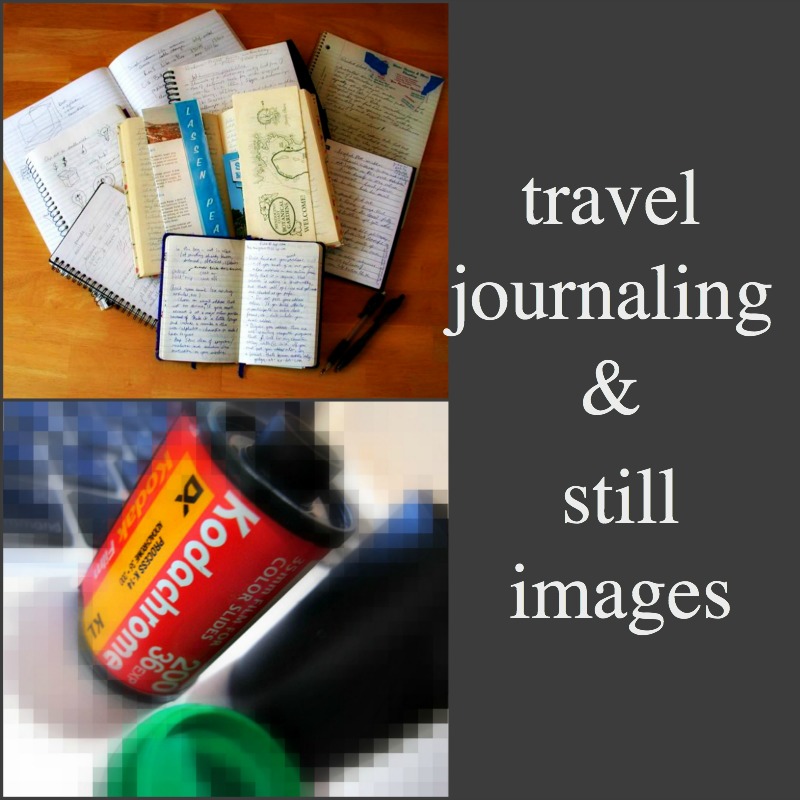
I’m not sure if it’s a technique because it’s not something I do consciously as I write, but your question made me think about it. It’s not so easy to explain, but I seem to identify a feature that is characteristic of a particular place and use my senses to link to it emotionally—trying to recreate in words what I felt when I was there. It’s not simply “place” though, but more a series of “moments-in-place.” The atmosphere of a place changes depending on time of day, seasons and events. It’s possible to keep track of these changes if you maintain a detailed journal as I always do—scraps of information about everything I see, hear, smell and feel. With buildings and landscapes, for example, I record how light and weather affect them. A grey stone wall, for instance, may look hard and forbidding in Scotland, but under a tropical sun it feels surprisingly soft and warm. I note sounds and snippets of overheard conversation, clothes, colours, rhythms of people’s movements—all of which suggest place. Scribbling is a bit of an obsession with me, perhaps a way of hanging on to something I don’t want to end. My other obsession is photography, probably for the same reason. In my early travelling days I used Kodachrome but film was expensive; now you can take large memory cards and click away without a thought. When I’m writing, I scroll through my images and they recall whole scenes for me. The jottings and photographs aid my memory for those sensuous details that I believe evoke atmosphere.

Two of Trish's tools for capturing the details of places. Photo credits: (top) Notebook collection, by Dvortygirl via Flickr (CC BY-SA 2.0); Kodachrome, by Pittaya Sroilong via Flickr (CC BY 2.0).

Two of Trish’s tools for capturing the details of place. Photo credits: (top) Notebook collection, by Dvortygirl via Flickr (CC BY-SA 2.0); Kodachrome, by
Pittaya Sroilong via Flickr (CC BY 2.0).

Which particular features create a sense of location? Landscape, culture, food?

They all can, of course, depending on the story and a writer’s personal interests. I’m certainly no foodie, but even I can feel the tropical heat of Papua New Guinea when recalling drinking kulau (Tok Pisin for “juice from a young green coconut”) straight from a young coconut—the rough, dry shell on my lips, the smooth sweet coolness dribbling down my chin. Language, too, has always been a significant feature for me. Many writers avoid using dialect or foreign words in dialogue so as not to stress the reader, but there are ways of making it easier, and readers enjoy a little challenge. I write dialect or local language in short stories and in travelogues because it draws readers closer to people. And if I want to create the sense of a very specific location, I focus on whatever features are found only in that one place—for example, in Bhutan, the painted red bands around a building that tells you there are sacred relics inside, or in Australia, the surreal landforms of the Bungle Bungles that seem to stride across the landscape enacting their own primordial drama.

Which of your works provides the best illustration of place, and can you give us a brief example?

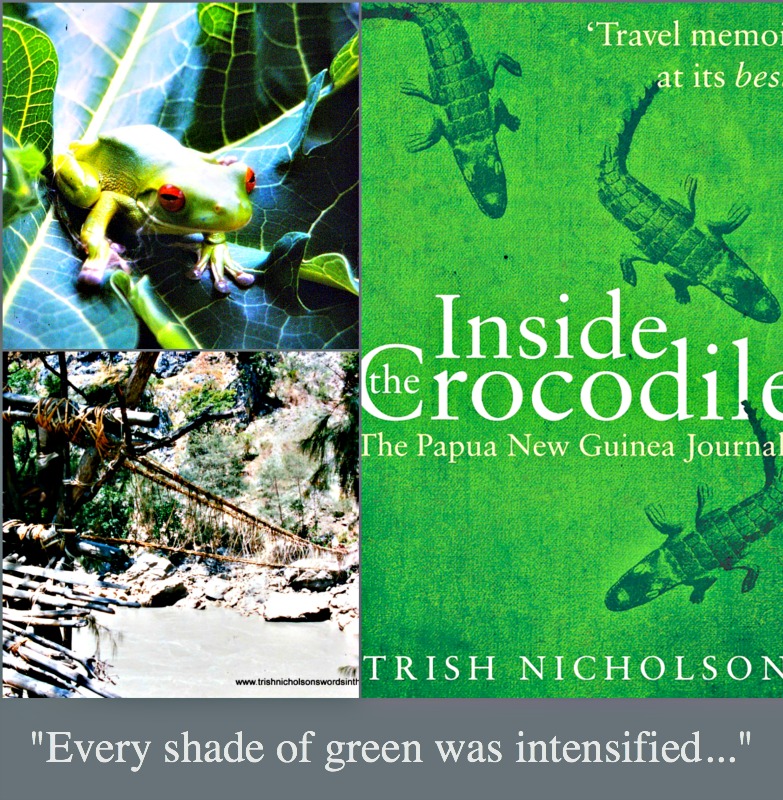
From Inside the Crocodile, a jungle moment on the hair-raising trek from Oksapmin to Lake Kopiago:

The heavy shower was reduced to drizzle under the canopy and it invigorated the forest; every shade of green was intensified, glistening and vivid. Lazy drops of water glided along leaves, dripping silently onto moss beneath. Fine hairs on the ribs of fern fronds, usually invisible, were lit-up by tiny twinkling water droplets like miniature fairy lights. And the air was filled with the fecund mustiness of moist earth seasoned with the tang of wet foliage … the forest stood in strange, expectant silence, muffled by the press of growing, spreading vegetation all around us. Yet every surface, especially the dark underside, was teeming with life we could not see, or would not recognise if we did, and we couldn’t see beyond the next tree trunk or veil of hanging moss. The sense of being enclosed, entrapped within an unknowable multitude, was overpowering.

Photo credits: (top) A frog inside the papaya tree, one of many critters found in PNG; one of many disintegrating bamboo bridges in PNG (by Trish Nicholson, supplied).

Photo credits: (top) A frog inside the papaya tree, one of many critters found in PNG; one of many disintegrating bamboo bridges in PNG (by Trish Nicholson, supplied).

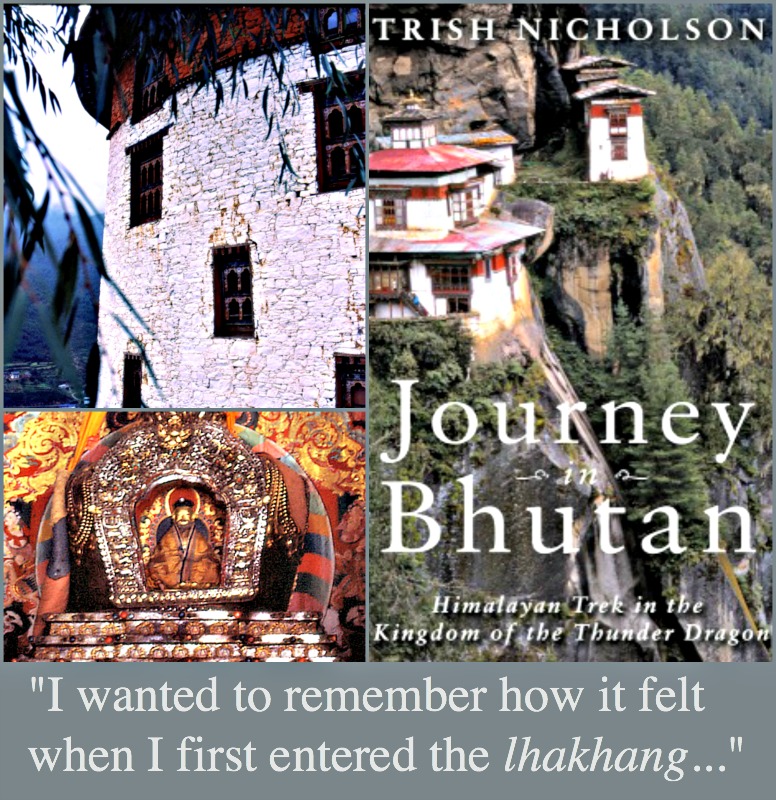
And if I’m allowed another little one, from Journey in Bhutan, my journal entry the evening after we visited the ancient temple of Kyichu Lhakhang:

… I want to remember how it felt when I first entered the lhakhang – the dark wooden floor, polished and worn into grooves by centuries of calloused feet; distant chanting heard through a haze of incense; Buddhas lustrous in the flickering light of butter lamps – thirteen centuries of reverence are distilled in that room creating an almost palpable sanctity. I feel the balm of its atmosphere as I write – it’s almost like a presence.

Photo credits: (clockwise from top left) Rinpung Dzong, a large dzong (Buddhist monastery and fortress) found in Paro District, Bhutan; book cover art; ancient religious relics inside the lhakhang (all photos supplied by Trish Nicholson).

Photo credits: (top) Rinpung Dzong, a large dzong (Buddhist monastery and fortress) found in Paro District, Bhutan; book cover art; ancient religious relics inside the lhakhang (by Trish Nicholson, supplied).

How well do you need to know a place before using it as a setting?

This is a particularly interesting question because I believe one can be in a location too long. The point is not how much time is spent in a place, but how well we “see” it. In an urban setting, I can spend an hour leaning against a wall on a street corner, or a day walking the streets at random, and gather a huge number of impressions and factual details. In remote areas it takes longer because the changing elements have a greater affect on atmosphere. But this may be enough for the setting of a single story. Obviously, for a travelogue, longer immersion is necessary to reach a depth of understanding across time and seasons. But it depends also on how one writes about a place, the scope of the account. I was in Bhutan for a month, much of that time trekking, so although I included monasteries and temples, and carried out a lot of research on cultural and historical background, Journey in Bhutan focuses on the trek rather than trying to cover the whole country superficially. So, how long is too long? After a few years in Papua New Guinea I noted in my journal:

I’m losing all sense of “normal”.

I began taking for granted what seemed extraordinary to a visitor. Fortunately, I had recorded early events that revealed my astonishment and joy and alienation as a greenhorn during those first months. Without the journals, Inside the Crocodile would have lacked that perspective on the location because, after a while, we cease to “see” so clearly.

Which writers do you admire for the way they use location?

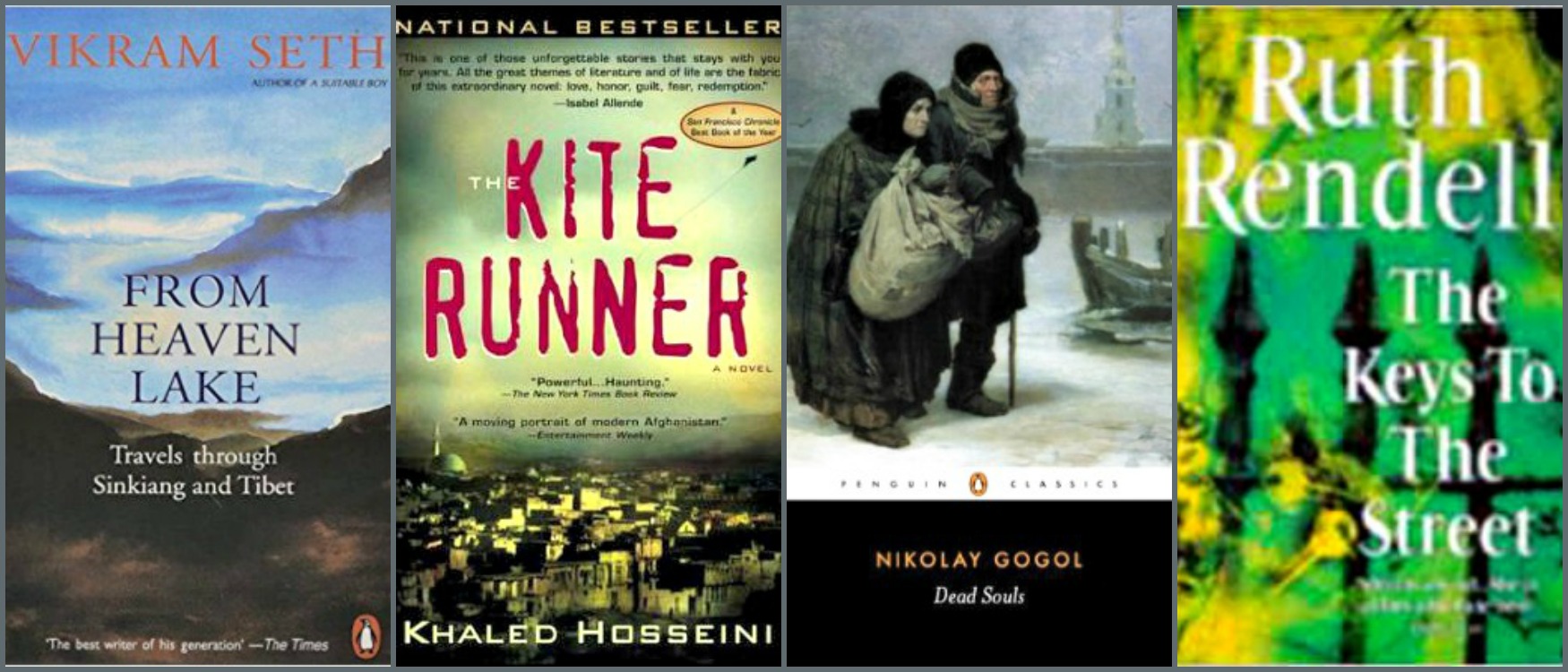
Hard to pick a few from so many: Vikram Seth for his depiction of India—but his first book, From Heaven Lake, was a vivid travelogue of Sinkiang and Tibet; he was still a student but the novelist is already burgeoning in those pages. Khaled Hosseini, who so cleverly weaves his characters into the texture of place in The Kite Runner, and Nikolai Gogol, especially in Dead Souls, where his detailing of personal possessions in a room reveals not only a distinctly Russian steppes atmosphere, but also a character’s past and present. And one more: Ruth Rendell appears to break all the “rules” in The Keys to the Street by opening with almost two pages describing London’s ornamental iron railings—but in such a way that with the first paragraph we are already anxious about those spikes.

Trish's picks for writers who have mastered the art of writing about place.

Trish’s picks for writers who have mastered the art of writing about place.

Thanks so much, Trish! I can easily see why one reviewer described you as “full of humour, adventure, and iron determination…”

* * *

Readers, any questions for Trish Nicholson? Please leave them in the comments below before she disappears back into her treehouse.

And if you’d like to discover more about Trish, why not visit her author site. She also chirps on twitter at @TrishaNicholson.

Until next month!

Lorraine Mace writes for children with the Vlad the Inhaler books. As Frances di Plino, she writes crime in the D.I. Paolo Storey series. She is a columnist for both of the UK’s top writing magazines, has founded international writing competitions and runs a writing critique service, mentoring authors on three continents.

STAY TUNED for the next fab post!

If you enjoyed this post, we invite you to register for The Displaced Dispatch, a round up of weekly posts from The Displaced Nation, with weekly updates and much, much more. Register for The Displaced Dispatch by clicking here!

Related posts:

Photo credits (top of page): The World Book (1920), by Eric Fischer via Flickr; “Writing? Yeah.” by Caleb Roenigk via Flickr (both CC BY 2.0).

DIARY OF AN EXPAT WRITER: Still reeling from reaching the end of my 4-book series in 3 years!

Diary of an Expat Writer
American expat in Hong Kong Shannon Young quit her day job a year ago to become a full-time writer. Here’s the latest entry in her expat writer’s diary.

Dear Displaced Diary,

Yesterday I finished writing the Seabound Chronicles. It’s hard to wrap my head around that sentence:

I…AM…FINISHED…WRITING…THE…SEABOUND…CHRONICLES.

I first got the idea for this series, set on a post-apocalyptic cruise ship called the Catalina, three years ago. I wrote the first words on November 1st, 2012. The series has been my primary writing project ever since, influencing what I read, research, and think about on a daily basis. And now it is complete.

The total word count for the series is 322,000. That works out to 80,000 for Seabound, 73,000 for Seaswept, 73,000 for Burnt Sea, and a whopping 96,000 for Seafled.

Photo credit: Chart via Pixabay.

Photo credit: Chart via Pixabay.

I’ve spent hundreds of hours in this world…

The characters have become increasingly real to me as I’ve figured out how they think, what happens to them, how they react. I’ve lost count of how many dreams I’ve had set on cruise ships. They never take place on the actual Catalina or include characters from the books, but they are often incredibly vivid.

I’ve been walking around for the past day trying to figure out how I feel about this ending. To be honest, I feel hazy, almost hung-over. My reactions are a little slower, lights are a little too bright, and I’m not sure what to do with myself.

Part of this is likely because my week writing the final draft was very intense. I taught five days at two schools far out by the Chinese border. In order to meet my deadline, I stayed at Starbucks until closing several nights that week, and spent eight straight hours writing on both Wednesday (a public holiday) and Sunday.

Except when teaching, I was totally disengaged from the real world. I’m sure I still owe some people some emails.

Trying to get my head around how this feels…

I’m reminded of when I graduated from college. I honestly feel like the three years I spent writing this series was akin to getting a degree. I now have a Masters in Writing Seabound. And like many degrees (my double major in Classical Studies, for example), it’s something I’ll never use again. At least, not directly.

Photo credit: Graduation—my masters degree, by Sarah Stierch via Flickr (CC BY 2.0).

Photo credit: Graduation—my masters degree, by Sarah Stierch via Flickr (CC BY 2.0).

Soon, I’ll be able to look at the lessons I learned from this series and apply them to the next one, which is already in progress.

Soon, I’ll be able to step back and remember that the series isn’t really finished because I still have to format and upload the final book.

Soon, I’ll be able to appreciate that my readers are still deeply engaged in this world and there are more of them out there who haven’t discovered it yet.

Soon, I’ll be able to break this down into a nice takeaway message or two.

But today, I am just absorbing the feelings…

There’s some joy, some sadness, some melancholy, some triumph. Right now all I can do is feel and process. And maybe even write down those feelings. Isn’t that what diaries are for?

Thanks for listening.

Yours,

Shannon Young
AKA Jordan Rivet
www.shannonyoungwriter.com
JordanRivet.com

The Seabound Chronicles is a post-apocalyptic adventure series set on a souped-up cruise ship. It features a prickly female mechanic named Esther. The first three books are out now under the pen name Jordan Rivet. The final book, Seafled, launches on November 30th.

Photo credit: Cruise ship via Pixabay.

Photo credit: Cruise ship via Pixabay.

* * *

Wow, that’s quite a milestone, Shannon—congratulations! It makes sense to me that you feel both happy and relieved as well as numb and somewhat bereft. It’s been an intense three years! Readers who are also writers, can you relate to Shannon’s mixed emotions? Please share your own experiences in the comments. ~ML

STAY TUNED for next week’s fab posts!

If you enjoyed this post, we invite you to register for The Displaced Dispatch, a round up of weekly posts from The Displaced Nation and much, much more. Register for The Displaced Dispatch by clicking here!

Related posts:

WORLD OF WORDS: She spoke in Italian to me, I spoke in English to her, and we had a perfect conversation

Marianne Bohr in the Luxembourg Gardens in Paris—is she reading or indulging in reveries about words?

Marianne Bohr in the Luxembourg Gardens in Paris—is she reading or indulging in reveries about French words?

Columnist Marianne Bohr, whose first book, Gap Year Girl, came out in September with She Writes Press, has a story for us about one of the pleasanter linguistic surprises that occurred during year-long travels. Naturally, it happened on an Italian train!

Sometimes the basics of another language are all you need.

For this month’s post, I’d like to share a story about the time when my husband, Joe, and I were on a train from Naples to Sicily.

* * *

All aboard!

We board the train in Naples behind a pack of uniformed, fully armed carabinieri—images of the Italian Wild West, Michael Corleone and Tony Soprano dancing in our heads. We picture the potential for some seriously illegal transactions on this particular itinerary: Naples bound for Sicily.

Photo credits: Train station sign, by jm3 via Flickr https://www.flickr.com/photos/jm3/960186/ (CC BY-SA 2.0) https://creativecommons.org/licenses/by-sa/2.0/; La Muerte Tenía un Precio, by jablagu via Wikimedia Commons (CC0 1.0)https://creativecommons.org/publicdomain/zero/1.0/deed.en; Man with shotgun in Sicily[https://commons.wikimedia.org/wiki/File:Man_with_shotgun_in_Sicily.jpg], by archer 10 via Wikimedia Commons (CC BY-SA 2.0) https://creativecommons.org/licenses/by-sa/2.0/.

Photo credits: Train station sign, by jm3 via Flickr (CC BY-SA 2.0); La Muerte Tenía un Precio, by jablagu via Wikimedia Commons (CC0 1.0); Man with shotgun in Sicily, by archer 10 via Wikimedia Commons (CC BY-SA 2.0).

Our train travels down the boot to its toe and eventually on to Taormina, our Sicilian destination. The trip will take seven hours including the two-mile ferry trip to the island across the Strait of Messina. We discuss the merits of building a tunnel but it makes no seismic sense, our guidebook says; the earthquake-prone region categorically rules out the possibility. But then we read the real reason is that organized crime controls the crossing—and they like the status quo.

Next station stop: Villa San Giovanni (after which the train will board a ferry to the island of Sicilia!)

We stop at Villa San Giovanni, the town at the western tip of mainland Italy. She, Italian, 30-something, boards the train with great flourish and an oversized valise.

Joe and I are in deep conversation about the logistics of our arrival in Taormina and simply say, “Buongiorno,” after helping her hoist her bag onto the rack overhead.

We finally arrive at the terminal where they split the train into two and roll the cars onto rails in the ferry’s cargo hold. This impressive engineering feat can take some time and during the process, our carriage loses power (no lights or air conditioning), adding an element of the sinister to the experience.

Photo credit: Train ferry to Sicily[https://www.flickr.com/photos/comprock/5292490503/], by Michael Cannon via Flickr (CC BY-SA 2.0) https://creativecommons.org/licenses/by-sa/2.0/.

Photo credit: Train ferry to Sicily, by Michael Cannon via Flickr (CC BY-SA 2.0).


Joe, a ship engineer, ever interested in anything marine, goes off to observe the transfer logistics. I stay in our darkened train compartment to chat with the young woman sitting across from me.

Once it’s just the two of us, she asks brightly, “Dove alloggia lì Sicilia?” She wants to know where we’ll stay once we arrive on Sicily.

“We have a hotel in Taormina,” I reply, “the Bel Soggiorno.” And just like that, we establish an understanding for the conversation that ensues. She will speak in her melodic Italian and I will respond in English, each of us knowing just enough of the other’s language to understand but not speak.

She gushes that she loves the Bel Soggiorno, telling me the views of Mount Etna are spectacular and the terrace looking over the sea is so romantic.

“I’m happy to hear that,” I respond, “because our room is only $80 and I was afraid it would be a bit dumpy.”

“Oh no,” she tells me in Italian. “It’s just that it’s early March and rates are very low.”

Her name is Carolina, the Italian version of our daughter’s name, so I like her right away. She’s of that breed of seriously overweight women who don’t behave like they’re heavy: she’s confident, has perfect makeup, is dressed to the nines in bright colors, wears high-heeled suede boots, and carries herself with panache. She knows what to do with what she has, maximizing her assets, as the Italians like to say, in true Italian bella figura style.

Photo credit: Untitled[https://www.flickr.com/photos/lovemaegan/4532998717/], by Maegan Tintari via Flickr (CC BY 2.0) [https://creativecommons.org/licenses/by/2.0/].

Photo credit: Untitled, by Maegan Tintari via Flickr (CC BY 2.0).

Our conversation is a particularly satisfying lopsided exchange because we manage to share so much in spite of our Italian-English volley. I fill her in on Joe’s and my gap year traveling through Europe, she teaches me the lovely, lilting Italian pronunciation of Sicily (Sicilia–See-CHEE-lya) and I explain the geography of the States.

Like many Europeans, the two places she is most anxious to visit are New York City and California. She asks if she can see them both in a week. I smile, draw a map on the back of her ticket and explain just how far apart they are, suggesting she needs at least three weeks to see them properly.

“It’s almost 3,000 miles from New York to San Francisco,” I tell her and California is a big state.

She responds with a laugh, “Allora, mi prendo tre settimane!” Then I’ll take three weeks!

Passengers may now go on deck to view Straits of Messina…

We leave the train for a quick look at our passage across the water, but the wind is fierce, kicking up whitecaps, and we quickly return to the dim warmth of our compartment. I learn that Carolina lives in Naples—she’s a native Neopolitana—and works in an art gallery. She is headed for a long weekend in Taormina to visit her boyfriend. She makes the trip once a month and he travels north with the same frequency to see her.

I ask if she thinks she’ll marry him and she tells me with a wink that she hopes they’ll get engaged this weekend.

“Bravo,” I respond with a giggle and a clap and then ask about a luna di miele—a honeymoon.

Before I finish asking, she says, “Capri,” accent on the first syllable. “Andiamo a Capri.”

I mentally say a quick thank you to my French and Spanish teachers over the years. Knowing these two Romance languages paved the way for this delightful conversation in Italian.

Photo credit: More gossip[https://www.flickr.com/photos/duncanh1/5893263199/], by DncnH via Flickr (CC BY 2.0) [https://creativecommons.org/licenses/by/2.0/].

Photo credit: More gossip, by DncnH via Flickr (CC BY 2.0).

Next stop: Taormina, Sicily

Joe finally returns to his seat once the train is reconnected in Messina for the last leg of our all-day journey. After another twenty minutes, we descend with Carolina onto Taormina’s platform as she drags her bright pink, hard-shelled suitcase, the travel of choice of so many young Italian women, behind her.

She kisses my cheeks, turns and waves, warbling, “Goodbye,” and I call, “Arrivederci!

She embraces her beloved and then ducks into his red sports car.

I follow Joe to the taxi stand, imagine a honeymoon on the horizon, and soon we’re winding up the hill to the Bel Soggiorno.

Photo credits: Wedding (inside restaurant on Capri)[https://www.flickr.com/photos/aigle_dore/20298529790/], by Moyan Brenn (CC BY-SA 2.0) https://creativecommons.org/licenses/by-sa/2.0/;Waving goodbye[https://www.flickr.com/photos/wherearethejoneses/1341937768/], by The Jones via Flickr (CC BY-SA 2.0) https://creativecommons.org/licenses/by-sa/2.0/; Volcano Etna at sunset[https://www.flickr.com/photos/gnuckx/4692956069/], by gnuckx via Flickr (CC BY 2.0) [https://creativecommons.org/licenses/by/2.0/].

Photo credits: Wedding (inside restaurant on Capri), by Moyan Brenn (CC BY-SA 2.0); Waving goodbye, by The Jones via Flickr (CC BY-SA 2.0); Volcano Etna at sunset, by gnuckx via Flickr (CC BY 2.0).

* * *

Thank you, Marianne, for this enchanting story! I must say, I admire the way you reach across linguistic barriers and find words in common. In situations where others might give up, you are undaunted. I guess that’s the advantage of living in a world of words?

Readers, have you ever, like Marianne, enjoyed a conversation with someone even though you were both speaking in different languages? We’d love to hear about it in the comments!

Marianne C. Bohr is a writer, editor and French teacher whose book, Gap Year Girl: A Baby Boomer Adventure Across 21 Countries, was published in early September (She Writes Press). She married her high school sweetheart and travel partner, and with their two grown children, follows her own advice and travels at every opportunity. Marianne lives in Bethesda, Maryland, where after decades in publishing, she has followed her Francophile muse to teach French. She has an author site where she keeps a blog, and is active on Facebook and Twitter.

STAY TUNED for the next fab post!

If you enjoyed this post, we invite you to register for The Displaced Dispatch, a round up of weekly posts from The Displaced Nation, and SO much more. Register for The Displaced Dispatch by clicking here!

Related posts:


BOOKLUST, WANDERLUST: In “The Porcelain Thief,” ATCK and expat writer Huan Hsu assembles shards of his Chinese heritage

booklust-wanderlust-2015

Attention displaced bookworms! Our book review columnist, Beth Green, an American expat in Prague (she is also an Adult Third Culture Kid), is back with a new recommended read!

Hello again Displaced Nationers!

After a long absence (in which I got to satisfy some wanderlust, go me!), I’m resuming my column just in time for the crisp autumn weather that is conducive to some serious reading.

This month I’m excited to tell you about one book in particular I uploaded to my Kindle since we last met: The Porcelain Thief: Searching the Middle Kingdom for Buried China—a memoir of a journey through Mainland China and Taiwan by Chinese American journalist Huan Hsu.

Photo credits: Top third of an antique Chinese vase (Pixabay); cover art; Huan Hsu's author portrait by Martijn van Nieuwenhuyzen.

Photo credits: Top third of a Chinese antique porcelain vase (Pixabay); cover art; Huan Hsu’s author portrait, by Martijn van Nieuwenhuyzen.

Hsu currently lives in Amsterdam and teaches creative writing at Amsterdam University College, but he grew up in Utah. His parents had immigrated to the US from China via Taiwan. Hsu had never set foot in Asia until, as an adult, he started investigating the family legend that sparked this book.

I think one of the reasons Hsu’s account of his travels within China resonated with me so much is that I returned to the United States this summer after a two-year absence and, as usual, felt disoriented. In my case, of course, it was reverse culture shock. I just couldn’t get over the novelty of understanding everything. I started eavesdropping on conversations not because I wanted to but just because I could! Sometimes when people asked me questions, I would stare at them blankly before realizing I could understand what they were saying and respond. I found all the signs and labels, which I often tune out in my life in Prague, distracting. Man, counter culture shock can be tiring!

But whereas I was going home again, Hsu was recounting his very first journey to his homeland, another kind of (and more challenging, I think) Through-the-Looking-Glass experience.

Hsu goes to Shanghai ostensibly to work in an uncle’s semiconductor chip business, but really he wants to interview his grandmother to see what she knows about the family tale of his great-great grandfather having buried a vast collection of prized antique porcelain just before he and his family fled the town of Xingang, on the Yangtze River, to escape the Japanese occupation.

In a place he’s never been—but which many people expect him to regard as “home”

In Shanghai, Hsu finds himself in a place he’s never been—but which many people expect him to regard as “home.” Coming to China without fluent Mandarin, he’s just as much at-sea as many other American expats; but the people he encounters treat him differently than they do other foreigners. In fact, they don’t really consider him an “expat”; rather, they see him as “Chinese”—as much as he would have been if his family had never left that part of the world.

Invisible foreigner in Shanghai

Photo credits: “Just a ‘Small Crowd,'” by Kyle Taylor via Flickr (CC BY 2.0); invisible man (via Pixabay); middle third of Chinese antique porcelain vase (via Pixabay).

This honorary insider status frequently works to Hsu’s advantage as he tries to uncover the truth—if any is to be found—about the complicated events that led to his ancestor burying his precious porcelain pots before taking flight and becoming displaced.

To be honest, I would have been perfectly happy if Hsu’s entire book had been about his experiences as an American-born Chinese exploring China. As Hsu himself says in an essay published earlier this year just before The Porcelain Thief came out, “while books about the Chinese-American experience in America are plentiful, … the story of Chinese-Americans in China remains unstudied.”

It is a story that interests me personally as my now-husband, who is half Chinese, and I once lived in China, where he could pass for Chinese as long as he didn’t talk too much, whereas I was the visible foreigner. (Now that we live in Prague, our “visibilites” are reversed.)

Hsu talks about the times he had it easier adjusting to China because of his ancestry (fewer stares, more acceptance in some areas), but I was happy to see him also address the down side of this situation:

“…(F)etishization of Westerners was perhaps the most exasperating part of being an ABC [American-Born Chinese] in China…the Chinese still regarded laowai [foreigner] as an ethnicity, not a nationality, so we lacked the necessary skin tone and hair color.”

Likewise, other expats fail to see him:

“…I felt wounded when a fellow expat’s gaze passed over me without acknowledgment. Non-Chinese foreigners seemed to always notice one another on the street, sharing a knowing, conspiratorial glance, and when I tried to catch their eyes, they probably regarded me as just another impolite, ogling local. Though I stood out to the local Chinese, I was also invisible to many of my countrymen.”

Hsu’s refreshing honesty about the difficulties of living in China

One of the dangers of many travel memoirs (one that I sometimes fall prey to in my own writing) is to only write about the trip’s highlights. But perhaps because of his journalist background, Hsu is refreshingly honest. He calls it as he sees it:

“To face the absurdities of daily life, expats in Shanghai keep a mantra: This is China. The Middle Kingdom was not so much a foreign country as it was a parallel universe that managed to offend all five senses plus one more—common.”

Hmm… As I can attest from my own experience, it’s not only expats in Shanghai who feel that way!

And if he is honest about the difficulties of living in China, Hsu is also honest about the difficulties of studying Chinese. Anyone who has signed up for language classes after a move abroad will identify with this passage:

“Their Mandarin sounded familiar, and their speech didn’t seem fast to me, and sometimes I could even understand a good number of the words. But I couldn’t comprehend a thing because I was missing all the important ones, so I would hear something like, ‘Okay, and now we’re going to talk about [blank] and why you [blank] and [blank] because [blank] [blank] [blank] [blank] [blank] [blank] otherwise [blank] [blank] [blank]. Any questions?’”

Good memoirs are a little raw; this one is. Just as Hsu doesn’t pull any punches when describing China, he is equally blunt about owning up to his family’s quirks and talking about his own difficulties surmounting culture shock. Regarding this last, he writes about people having “the same personal space as puppies” on public transportation, and about his cringing embarrassment when he sees people drying their laundry on telephone poles in less-affluent areas of the city. I think anyone who has been an expat in China has made a similar list of initial observations. I can remember doing so after moving to China in 2006.

So much more than just a TCK-experiencing-Culture-One memoir

But in the end, the book is so much more than just a TCK-experiencing-Culture-One memoir. Tsu also introduces the reader to the art of Chinese porcelain, which serves in turn as a kind of symbol of modern China, a nation of fragments.

Photo credit: Chinese antique porcelain vase (Pixabay).

Photo credit: Chinese antique porcelain vase (Pixabay).

In fact the bulk of the book is devoted to Hsu actively searching for any remaining pieces of the family treasure. He flies to Taiwan and Hong Kong to locate the heart of the old porcelain industry. He finally visits the old family property that his great-greats had fled and in so doing turns up long-forgotten shirttail relations.

In the course of this quest, Hsu pieces together beautifully imagined scenes of his family’s escape from the Japanese into the Chinese diaspora.

I enjoyed The Porcelain Thief on all kinds of levels: as memoir, travelogue, art history, and social history. I’d particularly urge anyone who has lived as an expat in China, or who is thinking of doing so, to give it a try.

* * *

So, readers, have you ever had the experience of being an “invisible” expat or know someone who has felt that way? Let us know in the comments. And if you have ideas for books to review for this column, please leave a comment or let me know on Twitter! Last but not least, I urge you to sign up for the DISPLACED DISPATCH, which has at least one Recommended Read every week.

STAY TUNED for next week’s fab posts!

Beth Green is an American writer living in Prague, Czech Republic. She grew up on a sailboat and, though now a landlubber, continues to lead a peripatetic life, having lived in Asia as well as Europe. Her personal Web site is Beth Green Writes. She has also launched the site Everyday Travel Stories. To keep in touch with her in between columns, try following her on Facebook and Twitter. She’s a social media nut!

If you enjoyed this post, we invite you to subscribe to The Displaced Dispatch, a weekly round up of posts from The Displaced Nation and much, much more. Sign up for The Displaced Dispatch by clicking here!

Related posts:


CULTURE SHOCK TOOLBOX: Expats, when it comes to culture shock, it’s best to measure your progress in increments and be patient

Photo credit: Cecilia Haynes at Cappadocia, Turkey (supplied).

Photo credit: Cecilia Haynes at Cappadocia, Turkey (supplied).

For her column this month, transitions enthusiast H.E. Rybol interviews a fellow Adult Third Culture Kid and freelance writer, Cecilia Haynes.

Hello, Displaced Nationers!

I’d like to introduce you to this month’s guest: fellow Adult Third Culture Kid Cecilia Haynes. A self-described “state department brat,” Cecilia is the product of a Chinese mother and an American father. As she writes on the About page for her blog, Unsettled TCK:

Moving is all I have ever known.

Cecilia tells a number of stories about herself in one of her blog’s most popular posts, 10 TCK Quirks. I really like the first one, when she says she’d rather not admit how old she was when she discovered that “Visa” didn’t simply mean “that thing in your passport that allows you to go to different countries.” She says it took her a long while to realized it was a credit card brand as well. For me, this anecdote beautifully illustrates a line I keep seeing on social media that reads:

Collect memories, not things.

As an adult Cecilia continues to travel the world while making her living as a freelance writer, photographer, web moderator and editor. She’s the co-host of the awesome biweekly TCK chat on Twitter where participants discuss all things TCK. Her work has been published in The Worlds Within Anthology, The Places We’ve Been: Field Reports from Travelers Under 35 and Among Worlds.

Cecilia has kindly agreed to share some of her culture shock stories. Read on to find out where this seasoned traveler has lived, what she’s experienced—and the tools she recommends for others who are going through cultural transitions…

* * *

Hi, Cecilia. Welcome to The Displaced Nation! As a TCK and an ATCK, you’ve lived all over world. Tell us a little about those places…
I was born in Hong Kong and then we went to Calcutta, India, before moving to Taipei, Taiwan, for two years and then to Beijing, China, also for two years. That was before going to New Delhi, India, and then Mclean, Virginia, USA, each for four years. Then it was back to India (Chennai) for three years, and then on to Manila, the Philippines, for one year, where I graduated from high school. After high school I went to the University of Virginia for four years before moving to Hong Kong for a year and then backpacking around the Tibetan Plateau and northern India for about a year, after which I spent a year in Alanya, Turkey before finally moving to Florida, where I currently live.

Wow, that’s a lot of transitions! Did you ever accidentally transfer the wrong customs or behaviors to a new culture, thus ending up with your foot in your mouth?
I was brought up in so many cultures that weren’t my own that I was pretty culturally sensitive from an early age. Even in Hong Kong where my mom’s family lives and in Ohio where my dad’s family lives, I’m an outsider. I sometimes have this internal awkwardness as I feel out a new cultural situation. Take off shoes or leave them on? Eat with hands, chopsticks, or knife and fork? Moment of silence before eating—does that mean I have to pretend to pray or say amen? But I can’t really think of a truly humiliating cultural transition story where I acted out of turn. That said, I do have plenty of hilarious misadventure stories, such as sitting between two of the nastiest toilets you can imagine on a third-class train in southern India for eight hours(!).

Say amen take off shoes

Photo credits: (top) The big yawn, by Ali Edwards’s sister via Flickr (CC BY 2.0); Please take off shoes when reading the paper, by antjeverena via Flickr (CC BY-SA 2.0).

It sounds as though you fit in everywhere you go, even on an Indian train! What tools do you use?
I model my toolbox on those around me. I observe the local people and mimic their actions. If I am truly confused, I will just ask since it’s better to err on the side of caution than make a social blunder through being overconfident. My number one rule is to be respectful of other people’s customs.

Indian train misadventures

Indian Railways, by Grey Rocker via Flickr (CC BY-SA 2.0).

Absolutely, respect is paramount. Can you think of a situation you handled particularly well? 
Since I am a mix/hapa, I can blend into much of Southeast and East Asia, which means that local people often assume knowledge I don’t have. When you’re an invisible immigrant, you need some special tools. For instance, I’ve developed a certain finesse for handling the times when people approach me speaking the local language, asking for directions, or even just attempting to bond over food or jokes. Inevitably, they are disappointed when they think I have lost my cultural heritage and become “Americanized”—so I hasten to clarify I’m an outsider to their culture because I am only partially from the United States, the other part being from Hong Kong.

hapa predicament

Parsons Chameleon, by Leonora Enking via Flickr (CC BY-SA 2.0).

If you had any advice for someone moving abroad for the first time, what tool would you suggest they develop first and why?
I would tell them to develop patience. Maybe you need a folding ruler to measure your progress in stages. Be patient while you adjust to your new home as it won’t be the same as your old one. Be patient as you adjust to the customs of the local community because they are likely VERY different from what you are used to. The pace can be slower or faster, you may have access to less, and people’s ideas of personal space vary widely—those are just a few examples. And, most of all, be patient with yourself. It will take you a while to navigate and feel comfortable within a new cultural landscape.

Photo credit: Folding rule via Pixabay.

Photo credit: Folding rule via Pixabay.


Thank you so much, Cecilia! Observing and mimicking are two great tools to smooth over cultural transitions. Plus that’s part of the fun, in a way, to experiment with other kinds of behavior. Who knows? You might change your behavior permanently and maybe even your sense of identity if enough of the culture resonates. And three-pronged (for your home, the culture and yourself) patience will definitely help bring down any walls that may be preventing you from becoming a part of your new community. I love the idea of a folding ruler for measuring progress in increments: great tool!

* * *

Readers, what do you think of Cecilia’s advice about practicing patience and not trying to do everything at once? If you like what she has to say, I recommend you visit her professional site, ceciliahaynes.com, where you can find her blog, Unsettled TCK. You can also, of course, get to know her on Facebook and Twitter.

Well, hopefully this has you “fixed” until next month.

Until then. Prost! Santé!

H.E. Rybol is a TCK and the author of Culture Shock: A Practical Guide and Culture Shock Toolbox. She loves animals, piano, yoga and being outdoors. You can find her on Twitter, Linkedin and Goodreads. She recently launched a new Web site and is now working on her second book.  

STAY TUNED for the next fab post.

If you enjoyed this post, we invite you to register for The Displaced Dispatch, a round up of weekly posts from The Displaced Nation—and much, much more! Register for The Displaced Dispatch by clicking here!

Related post:

WONDERLANDED: Will I have a hard or a soft landing?—two excerpts from “Olivia and Sophia,” by expat novelist Rosie Milne

Will I have a hard or a soft landing? Photo credits: Like Alice in Wonderland you can go into the rabbit hole, by expat painter Frank Schwarz via Wikimedia Commons (CC BY-SA 3.0). Inset: Book cover (supplied).

Yesterday we were Wonderlanded with Rosie Milne, a veteran member of the publishing world, a blogger on Asian books, and a novelist in her own right. This post, which I’ve titled “Will I have a hard or a soft landing?”, consists of two excerpts from Rosie’s about-to-be-published historical novel, Olivia and Sophia, which concerns the lives of the first and second wives of the founder of the British trading post of Singapore, Sir Thomas Stamford Raffles. 

Set in London, Java, Sumatra and Singapore, against the backdrop of the Napoleonic Wars—the story takes the form of two fictionalized diaries, one by each of Raffles’s wives. They are:

  • Olivia Devinish, a raffish beauty with a scandalous past. Born in India and raised in Ireland, Olivia accompanied Raffles, who was her second husband, to West Java, where he was serving as governor. She got ill from the island’s harsh conditions and died at age 43. Raffles erected a memorial to her that stands to this day, in what is now the Bogor Botanical Gardens.
  • Sophia Hull, no beauty, but curious and intelligent and eager to embrace the opportunity of an exciting life abroad. Born in London, of Irish descent, she met and married Raffles when he was on leave in England after becoming a widower. The couple then sailed for Bencoolen (Sumatra), where Raffles had been appointed governor general—making Sophia the first white woman to venture into the Sumatran interior. This was the period when Raffles founded the British trading post of Singapore. The couple returned to England in August 1824 because of Raffles’s ill health. He died two years later, one day before his 45th birthday. Sophia then dedicated herself to writing his biography.

According to the book description, Rosie Milne “takes us away from the cold, damp confines of Georgian London to the muggy, hostile tropics and to the titillations and tribulations of a life far away from home.”

And, importantly, for us Displaced Nationers, she also provides a sense of what it was like to be a trailing spouse in an earlier era. Do these two Victorian ladies feel as though they were falling down a rabbit hole, uncertain of where they’d land and whether the landing would be hard or soft? Let’s find out…

* * *

Excerpt from Olivia’s diary

Olivia writes this diary entry on board the Ganges, the ship on which she is sailing from London to India. I think it expresses her sense of having fallen down a rabbit hole in a self-explanatory way.

Sometime, someplace on the ocean

I remain confident the year is 1805, and I am aboard the Ganges, but I write as my heading sometime, someplace on the ocean ’cause sailing across the nothing, nothing, nothing, and yet more nothing of the sea has addled me about both calendar and map. The map I have quite lost track of. At dinner I say my daily toast to happy sight of the next land, and I think: where is that next land? Which is to say: where are we? With no landmarks to watch for by day, and, by night, not being able to read the stars, I am as ignorant now of place as must be the fishes swimming in the waters beneath me. The calendar too, is becoming hazy to me. The tyranny of breakfast at eight, dinner at two, tea at six, and supper at nine keeps me abreast of the hours, but when I think of day and date ’tis as if one of our chilly sea fogs has reached its fingers into my mind, so I no more know whether ’tis Monday, Saturday, Wednesday, or Sunday, than I c’d say our position on the globe.

Olivia Raffles as Alice

Photo credits (top to bottom): Frigate in fog via Pixabay; detail of Here be Dragons map; Down the Rabbit Hole, by thepeachpeddler via Flickr (CC BY 2.0); Olivia Raffles portrait.


Excerpt from Sophia’s diary

Sophia writes this diary entry on board the Mariner, the ship on which she is sailing home from India. It, too, expresses her sense of having fallen down a rabbit hole…

August 1824, the Mariner, off the Cornish Coast

And, behold, I am with thee, and will keep thee in all places whither thou goest, and will bring thee again into this land … I have had my first sight of Home for nigh on seven years. Tho’ in the Eastward Old England sometimes seemed to me unreal, like a dream of Home, and not a literal place on the globe, Cornwall is now crouched in the angry sea to our starboard, and is just as real as sharp granite rocks will allow. I hardly know how to say how I’ve changed since last I saw England. I sometimes feel so disunited from that Lady Raffles who sailed eastward on the Lady Raffles I can scarce think we are the same person – I cannot recall her, it sometimes seems, and must judge she was mistaken to think she ever could return Home. More, I scarcely know how to say who I am now, what I am, what manner of person? As for Tom, now turned of forty, lit now only by shadows of his youthful fires, he says he feels just as wearily jumbled as me, just as uncertain how to begin to make sense of all that has happened these past seven years, if indeed any sense can be made of our lives at all, and he says it is a puzzle to know whether his two sojourns in the Eastwood enabled him to put on, at various times, a new self, as a man may put on a new coat, or if, while in foreign climes, he became more than ever the man who first left, and now returns, to Old England.

Photo credits: Land's End, Cornwall[https://pixabay.com/en/ocean-rock-waves-wind-stormy-826155/] via Pixabay; Sophia Raffles portrait; Down the rabbit hole by Colin Smith[] via the Geograph Britain and Ireland Project (CC BY-SA 2.0) [http://creativecommons.org/licenses/by-sa/2.0/].

Photo credits: Land’s End, Cornwall via Pixabay; Sophia Raffles portrait; Down the rabbit hole, by Colin Smith via the Geograph Britain and Ireland Project (CC BY-SA 2.0).

* * *

Thank you so much, Rosie! I like the way you’ve juxtaposed these two excerpts, one showing the first wife setting out on a Far Eastern adventure, the other showing the second wife confronting the prospect of going home again. In fact, Sophia writes something that is extraordinarily akin in spirit to Alice’s statement:

I could tell you my adventures—beginning from this morning; but it’s no use going back to yesterday, because I was a different person then.

Readers, what do you think? Do these trailing spouses have it harder than their modern-day counterparts, or can you draw a reasonably straight line to today? And have these two excerpts from Rosie’s new novel made you want to read more? Olivia & Sophia, published by Monsoon Press, will be available as a paperback in Asia and Australia on November 1. You can also visit Rosie’s Asian Books Blog and/or stay social by following her on Twitter. And of course you can also express appreciation for Rosie in the comments below. ~ML

STAY TUNED for next week’s fab posts.

If you enjoyed this post, we invite you to register for The Displaced Dispatch, a round up of weekly posts from The Displaced Nation, and much, much more. Register for The Displaced Dispatch by clicking here!

Related posts:


Wonderlanded with Rosie Milne, Asian Books blogger and author of a new historical novel about two early expat wives

Alice goes through the looking glass[https://www.flickr.com/photos/centralasian/5485576189/], illustration by John Tenniel, uploaded to Flickr by Central Asian (CC BY 2.0)https://creativecommons.org/licenses/by/2.0/; book cover art; Rosie Milne in Singapore with her papier-mâché Alice (supplied).

Alice goes through the looking glass, illustration by John Tenniel, uploaded to Flickr by Central Asian (CC BY 2.0); book cover art; Rosie Milne in Singapore with her papier-mâché Alice (supplied).

Welcome back to the Displaced Nation’s Wonderlanded series, being held in gratitude for Lewis Carroll’s Alice’s Adventures in Wonderland, which turns 150 this year and, despite this advanced age, continues to stimulate and reassure many of us who have chosen to lead international, displaced, “through the looking glass” lives.

This month we travel
d
o
w
n
the hole with Rosie Milne, an Englishwoman who has lived in various places, mostly within Asia, but right now can be found in Singapore.

I first discovered Rosie Milne through an article she worte for Telegraph Expat about romantic novelists who’ve been inspired by their expat surroundings. I noticed in her bio blurb that she runs the Asian Books Blog.

Then recently I had the pleasure of her getting in touch with me to feature a description of the Displaced Nation for the Blog’s Sunday Post.

As Rosie and I began backing and forthing by email, I spontaneously decided it might be fun to be wonderlanded with her.

Now, having spent many years living in Asia myself, Singapore, where Rosie lives now, isn’t exactly my idea of wonderland. I know it comes out tops for expat destinations on various surveys, but for me Singapore is a nice place to visit (great food and shopping) but for living? Much too safe and predictable; Asia Lite.

But Rosie has lived all over Asia, including in my former home of Tokyo (Asia Heavy!). She has also thought deeply about what it’s like for women to “pass through the looking glass” into Asia, having just completed a novel, Olivia and Sophia: a fictionalized account of the adventures of Sir Thomas Stamford Raffles, the founder of Singapore, as seen through the eyes of his first and second wives. (It’s due out in November from Monsoon Books.)

We’ll get to read a couple of excerpts from that work in the next post, but first let’s find out what it’s like to be wonderlanded with Rosie!

* * *

Rosie Milne: Thank you, ML, and greetings, Displaced Nation readers. To give you a little more of my background: I was born in London. I worked in publishing there before moving to New York, where I wrote my first novel, How To Change Your Life, about an editor of self-help books trying to follow the advice in a self-help book.

I then moved to Hong Kong where I wrote my second novel, Holding the Baby, about four sisters with differing attitudes to motherhood—one of them, unable to have biological children, adopts from China.

I then had short spells in Sydney and Tokyo, before moving to my current home, Singapore, where I wrote my new novel, Olivia & Sophia, which features two early forerunners of a type of modern expat woman: the trailing spouse.

“I don’t understand you,” said Alice. “It’s dreadfully confusing!”

In Tokyo language was impenetrable—I did try to learn, but more-or-less never got beyond being able to give my address. There was a big earthquake within a few days of my arrival. There were young adults on the streets dressed as cartoonish characters. I had my first, and last, taste of sashimi chicken – the most revolting food I ever tasted….

Lost in Tokyoland. Photo credits (clockwise from top left): Untitled[https://www.flickr.com/photos/bernatagullo/89651149/], by Bernat Agullo via Flickr (CC BY-SA 2.0)[https://creativecommons.org/licenses/by-sa/2.0/]; Japanese city at night[https://www.flickr.com/photos/photones/6471199389/], by Takuma Kimura via Flickr (CC BY-SA 2.0); Untitled[https://www.flickr.com/photos/kylehase/3458873955/], by Kyle Hasegawa via Flickr (CC BY 2.0)[https://creativecommons.org/licenses/by/2.0/]; 鶏のたたき (chicken sashimi),[https://www.flickr.com/photos/spilt-milk/4578639904/] by yoppy via Flickr (CC BY 2.0)[https://creativecommons.org/licenses/by/2.0/].

Lost in Tokyoland. Photo credits (clockwise from top left): Untitled, by Bernat Agullo via Flickr (CC BY-SA 2.0); Japanese city at night, by Takuma Kimura via Flickr (CC BY-SA 2.0); Untitled, by Kyle Hasegawa via Flickr (CC BY 2.0);
鶏のたたき
(chicken sashimi), by yoppy via Flickr (CC BY 2.0).

“Consider anything, only don’t cry!” said the Queen.

I think expats, amongst the luckiest people on the planet, should resist succumbing to pools of tears.

“No,” said Alice. “I don’t even know what a Mock Turtle is.”

I am quite often wary about fish, but usually, when I try the dish, or fish, in question, I enjoy it.

Recipe for a Mad Hatter’s Tea Party

I would serve vodka and gherkins. As to the guest list…how about Jesus, and Richard Dawkins. The Buddha and Darwin. The Ayatollah Khomeini and Einstein…should make for interesting conversation, although language might be a bit of a problem.

Language might be a bit of a problem at Rosie Milne's tea party. Photo credits (clockwise from top left): Ice cocktail[https://pixabay.com/en/ice-cocktail-glass-drink-alcohol-681547/] via Pixabay; Alice's Adventures in Wonderland (Illustrator: Rackham, 1907) The Mad Tea-party[https://www.flickr.com/photos/43021516@N06/4382428537/], by Special Collections Toronto via Flickr (CC BY-SA 2.0)[https://creativecommons.org/licenses/by-sa/2.0/]; Sad pickle[https://www.flickr.com/photos/healthserviceglasses/3382360977/], by John Bell via Flickr (CC BY-SA 2.0)[https://creativecommons.org/licenses/by-sa/2.0/]. Insets: Albert Einstein during a lecture in Vienna in 1921[https://commons.wikimedia.org/wiki/File:Albert_Einstein_1921_by_F_Schmutzer.jpg]; Ayatollah Khomeini[https://commons.wikimedia.org/wiki/File:Mehdi_Bazargan_Ayatollah_Khomeini.jpg], by Alain DeJean—both images via Wikimedia Commons (CC0 1.0)[https://creativecommons.org/publicdomain/zero/1.0/deed.en].

Language might be a bit of a problem at Rosie Milne’s “tea” party. Photo credits (clockwise from top left): Ice cocktail via Pixabay; Alice’s Adventures in Wonderland (Illustrator: Rackham, 1907) The Mad Tea-party, by Special Collections Toronto via Flickr (CC BY-SA 2.0); Sad pickle, by John Bell via Flickr (CC BY-SA 2.0). Insets: Albert Einstein during a lecture in Vienna in 1921; Ayatollah Khomeini, by Alain DeJean—both images via Wikimedia Commons (CC0 1.0).

“Then it doesn’t matter which way you go,” said the Cat.

I am terrible at giving advice.

Alice had begun to think that very few things indeed were really impossible…

If I hadn’t lived in Singapore I doubt I’d have written Olivia & Sophia—an account of the life of Sir Thomas Stamford Raffles, the founder of Singapore, told through the fictionalised diaries of his two wives. Olivia & Sophia predate Alice, but they must often have felt wonderlanded. In an era when the voyage from Europe to Asia took anything up to ten months, when letters were the only means of communication with Home, when Europeans died like flies in the East, their sojourns abroad saw them fall down the rabbit hole far more comprehensively than any modern expat. I hoped to use the novel to explore parallels between an early age of globalisation, and our own age, between the effects of a financial crisis then, and of the recent crises in the global economy, between the lives of expats then, and expats now, and so on…

Bonus: Alice as manga character

Why not make Alice Japanese? She could cultivate kawaii. And the white rabbit could be kawaii, too. The setting could be Tokyo, the rabbit hole could be the Tokyo subway…

Photo credits: Tumbling down the rabbit hole…[https://www.flickr.com/photos/luxtonnerre/2482551243/], by LuxTonnerre via Flickr (CC BY 2.0)[https://creativecommons.org/licenses/by/2.0/]; Pink bunny-shaped roadblock (Narita)[https://commons.wikimedia.org/wiki/File:Pink_bunny-shaped_roadblock.jpg] via Wikimedia Commons (CC0 1.0)[https://creativecommons.org/publicdomain/zero/1.0/deed.en]. Inset: Through the Rabbit Hole[https://www.flickr.com/photos/ipdegirl/8197732984/], by Jenni C via Flickr (CC BY-SA 2.0)[https://creativecommons.org/licenses/by-sa/2.0/].

Photo credits: Tumbling down the rabbit hole…, by LuxTonnerre via Flickr (CC BY 2.0); Pink bunny-shaped roadblock (Narita) via Wikimedia Commons (CC0 1.0). Inset: Through the Rabbit Hole, by Jenni C via Flickr (CC BY-SA 2.0).

* * *

Thank you, Rosie! Being wonderlanded with you was a curious experience, that’s for sure! Readers, please leave your responses to Rosie’s story in the comments. And stay tuned for her writing samples showing what it was like to be wonderlanded back in the day of Sir Stamford Raffles! ~ML

STAY TUNED for the next fab post: an example of how Rosie writes about a wonderlanded experience.

If you enjoyed this post, we invite you to register for The Displaced Dispatch, a round up of weekly posts from The Displaced Nation, and much, much more. Register for The Displaced Dispatch by clicking here!

Related posts:

For this peripatetic Sardinian writer who has settled down (for now) in Rome, a picture says…

KONICA MINOLTA DIGITAL CAMERAGreetings, Displaced Nationers who are also photography buffs! “A Picture Says…” columnist James King is still away, so I am filling in again.

My guest this month is Angela Corrias, a well-traveled freelance writer who was born in the Italian island of Sardinia.

There’s a lot about Angela’s story that captivates me. For a start, there’s this photo of her on her Chasing the Unexpected blog’s About Me page, where she’s wearing a head scarf and looks Middle Eastern.

I had seen her “I heart my city” article on the National Geographic Traveler‘s site, which was all about Rome (where she now lives), so I assumed she was Italian… But was my assumption incorrect?

I also knew from her NatGeo article that she has traveled extensively and been an expat several times.

Hmm…that still doesn’t explain why she’s wearing a head scarf.

As I read more about Angela, I became even more intrigued. “[W]hat I like the most when I travel,” she writes on her About page, “is to dig deep into other countries’ culture, traditions, social customs and explore them in all their idiosyncrasies. I’ve always tried to avoid filling my posts with the basic information available by performing a simple Google search, and strived to publish more personal impressions instead.”

Something new I learned from her blog was that she is also a “wannabe photographer.”

It was at that point I knew that we had to feature Angela in “A Picture Says…,” and luckily she was “angel” enough to oblige!

Angela Corrias in Jiasalmer, India, one of the many stops in her travels (photo supplied)

In front of India’s Golden City, Jaisalmer, stands Angela Corrias, the woman who finds gold in all her travels. (Photo supplied)

* * *

Hi, Angela, and welcome to the Displaced Nation. I’d like to start by asking: where were you born, and when did you spread your wings to start traveling?
Hi, ML, and thank you for inviting me to take part in this column. And just to clear up your confusion, no, I’m not Middle Eastern. I was born in Sardinia, Italy’s second biggest island off the coast of Rome, and while my first international trip was to nearby France to visit relatives when I was just three years old, I’ve always considered my travel initiation to have been the first time I crossed the equator at the age of 13 to go to Brazil. It was my first long-haul flight and very first immersion in a culture different from mine. Maybe that’s why I’ve always had a soft spot for Brazil.

Now, I know from reading that Nat Geo article that, since reaching adulthood, you’ve traveled far and wide and also been an expat. What are some of the countries you’ve been to, and which have you actually lived in?
I’ve traveled extensively around Europe, living for two years each in Dublin and London. I’ve visited countries like Spain, France, Germany, Poland, Finland, Romania, Turkey and even Monte Carlo (once). In the Middle East, I’ve been to Lebanon, the UAE and Iran (many times). I’ve also spent a great deal of time in Asia. I lived for one year in China (Shanghai) and was able to travel around visiting countries like India, Sri Lanka, Thailand, Singapore and Cambodia. And I mustn’t forget Brazil. I’ve traveled there many times with a quick jaunt to Argentina once—the only two countries I’ve visited in South America so far.

Ah, so THAT explains the head scarf! All those trips to Iran… Where are you living right now and why?
After almost ten years of the expat and nomadic lifestyle, I decided two years ago to come back to Italy and live in Rome. While I’m not ruling out completely another expat/nomadic experience, I’m liking it here so far. The city is extremely lively and constantly inspires me for writing and taking pictures. And it has an international airport, which makes it easy for me to book flights to any destination.

“To one that watches, everything is revealed.” —Italian proverb

Moving right along to the part we’ve all been waiting for: a chance to appreciate a few of your photos. Can you share with us three photos that capture some of your favorite memories of what has clearly been for you a “displaced” life of global travel? And for each photo, can you briefly tell us the memory that the photo captures, and why it remains special to you?
I’ll start with a photo that I took last year at the beautiful Imam Square at the center of Isfahan, Iran, a city that boasts an amazing history, impressive architecture and one the world’s most beautiful bazaars. Recently Iran has become for me one of the countries where I feel most at home—not just because locals actually mistake me for an Iranian and refuse to believe that I don’t speak Persian, but because I feel I can just unwind and enjoy what the country has to offer, from its stunning art to its beautiful and diverse nature to the warmth of its people.

The vast Iman Square in Iran, an important historical site. Photo credit: Angela Corrias (supplied).

The vast Iman Square, an important historical site in Iran. Photo credit: Angela Corrias (supplied).

Another place where I feel at home is my actual home, Sardinia. I left it some 17 years ago and go back far less than I would like to. I took this photo in the lovely coastal town of Bosa this past August, when I treated myself with a full 12-day stay after years of never visiting for more than a week. Sardinia is actually the kind of place where many people, including foreigners, can easily feel comfortable, and eventually settle down. A quiet, laid-back and relaxed lifestyle, its own cuisine, and a hospitable atmosphere—these are just a few of the features that can make anyone feel at home.

Fishing plays an important role in the economy of Basa, Sardinia. Photo credit: Angela Corrias (supplied).

Fishing plays an important role in the economy of Basa, Sardinia. Photo credit: Angela Corrias (supplied).

I took this third photo at a tea market in Shanghai, when living in China. For me it represents a truly traditional Chinese moment. Before moving to China, I had lived in Dublin for two years and in London for another two years, but neither of these cities made me feel I wanted to stay, and from the beginning I knew I would leave once I’d had the experience I was looking for. This changed in China. Despite the initial culture shock, once I started Chinese-language classes and began to speak with the locals, who are always very happy to see foreigners making the effort to learn their extremely difficult language, I instantly felt comfortable and as though I could settle for some time.

Sampling Chinese tea culture in Shanghai. Photo credit: Angela Corrias (supplied).

Sampling Chinese tea culture in Shanghai. Photo credit: Angela Corrias (supplied).

Wow, you’ve taken us from a vast square in Iran to an intimate setting of a tea house in Shanghai, which gives me a clear idea of the breadth of your travels. And that photo of the insides of a fishing boat in your native Sardinia—it seems so intimate. I can tell how much you know and love your homeland, or should I say “homeisland”?

“It all ends with biscuits and wine.” —Italian proverb

Having seen these first three photos, I expect it’s a bit of a tough choice, but which are the top three locations you’ve most enjoyed taking photos in—and can you offer us an example of each?
Everywhere I go, one of the first places I visit are the local markets. I took this photo at a market in the town of Roulos in Cambodia, near Siem Reap, where most vendors lay out their products and merchandise on the ground. Witnessing this feast of fruits, veggies and different local fish being sold by locals to locals was a great way to soak up the local atmosphere and sense of community.

The market in Roulos, Cambodia. Photo credit: Angela Corrias (supplied).

Roadside market in Roulos, Cambodia (not far from Ankor Wat). Photo credit: Angela Corrias (supplied).

Iran is also a place where I very much enjoy taking photos. First of all, the people are always willing to be photographed and they often take it as a chance to strike up a conversation, which is the best possible outcome of a day out as a traveler. Secondly, it’s not very hard to take nice photos thanks to the beauty of its historical landmarks, architecture, parks and bazaars. Finally, Iranian style has a certain opulence, which translates into lavish meals, sophisticated art and loud gatherings. I took this photo at my friend’s house in the city of Lahidjan, in Gilan Province, Iran (on the Caspian Sea). Her mother had prepared some traditional dishes so that I could sample the local cuisine.

An Iranian feast. Photo credit: Angela Corrias (supplied).

A sumptuous feast of traditional foods in Lahijan, Iran. Photo credit: Angela Corrias (supplied).

Maybe because I live here now, but Rome is also one of my favorite places to capture with my camera. It offers many diverse subjects and situations, ranging from ancient Roman baths and villas to the traditional life of the Garbatella area, the industrial archaeology of the Ostiense neighborhood or the urban pop art that is gradually turning Rome’s suburbs into open-air museums. The photo I chose is from an area called Quadraro, once mainly considered a working-class district and now revamped thanks to a street art project that has taken over most walls around the neighborhood.

Street art livens up Quadraro, a neighborhood in Rome’s southeast periphery. Photo credit: Angela Corrias (supplied).

Street art livens up Quadraro, a neighborhood in Rome’s southeast periphery. Photo credit: Angela Corrias (supplied).

Wow, that last one makes me think of an Italian Alice in Wonderland! And the two food photos were amazing, each in their own way.

“When in Rome…” —early Christian proverb (now universal)

I wonder: do you ever feel reserved taking photos of people, particularly when they are conscious of your doing so? How do you handle it?
Yes, I do feel I need to be cautious when taking photos of people as I’m essentially capturing a moment of their life. I must admit, I love taking photos of the locals as they add to the value of the image and give a great sense of place, but obviously if I’m close and have the chance to converse, I always try to get familiar and make them feel more at ease. I also try not to point my lens directly in anyone’s face.

In Cambodia, for example, I had the opportunity to visit two floating villages, Kompong Khleang near Siem Reap and Phsar Krom on the way to Phnom Penh, and while I understand that tours are organized to make visitors experience life on the water and show them how Cambodians live, I sometimes felt as if we were invading their private space. I could imagine the locals wondering why tourists were so interested in their daily life—a life that seemed to me a never-ending struggle for survival.

Here is a photo from that trip, which perhaps helps to demonstrate my point:

Kompong Khleang, considered the most authentic of the three floating villages around Siem Reap, Cambodia. Photo credit: Angela Corrias (supplied).

Kompong Khleang, a floating village near Siem Reap, Cambodia, and home to around 1,800 families. Photo credit: Angela Corrias (supplied).

“Take pleasure in your dreams…” —Giotto di Bondone

When did you become interested in photography?
Ever since I decided to work as a freelance writer, I’ve taken photos to accompany my articles. Gradually, however, especially after I took a course on reportage photography in Rome, photography has became more of a passion and a source of inspiration, so much so that I’m starting to think about focusing on photography alone and having an exhibition one day. I enjoy devoting a whole day to taking pictures. And of course, the more I take photos the better I do with my writing. It gives me ideas for blog posts.

What is it about this art form that drew you in?
Sometimes with a camera you can capture moments, looks, colors that maybe you don’t notice and you realize only afterwards, when looking at the photos. I also like the way images can be interpreted differently depending on the viewer’s perspective. We need words, too, to avoid misunderstandings, but when it comes to art forms, an image can convey emotions and a kind of poetry that speaks to other people.

And now switching over to the technical side of things: what kind of camera, lenses, and post-processing software do you use?
After seven years of Nikon D50, I upgraded my photo gear with a Nikon D7100 last year, and I love it. I have four lenses: the normal 18-55 that I bought with my first camera and that I’m about to replace with one with bigger aperture; a Nikon 70-200; a Sigma 10-20; and a Nikon 50mm. While I started as a self-learner, I eventually felt the need to take a course, during which I improved a lot, especially when it comes to choosing the appropriate lens for particular subjects and situations. For post-processing software I use Adobe Photoshop—an early version, though, which I might need to upgrade.

“Either learn, or leave.” —Roman proverb

Finally, can you offer a few words of advice for wannabe photographers who are traveling the world or living abroad?
My advice would be to take time to interact with locals as much as possible. Understanding the host culture is crucial in order to take the pictures that will capture the essence of a place. Another piece of advice that I always try to follow myself, even though I know it’s not as straightforward as it may sound, is to get out of your comfort zone, even if this means feeling confused at first. You will adapt eventually; human beings always do. Finally, never be so arrogant to travel with the idea of imposing your own lifestyle and values on others, because it’s hardly ever the case that one culture is superior. It’s always better to travel with the idea of learning rather than teaching.

Thank you, Angela! I appreciate your sharing a selection of photos that show us how deeply you connect with the local scenery and people on your travels into various parts of the world. You seem to take the opposite approach to that of the Roman statesman Julius Caesar, he of veni, vidi, vici (I came, I saw, I conquered) fame. At the same time, you clearly feel a strong connection with your native Sardinia and your new home of Rome. Your travels appear to have made you appreciate Italy’s own brand of beauty. Thank you again for doing this interview. Essere uno stinco di santo.

* * *

Readers, what do you make of Angela’s peripatetic life and her photography advice? Please leave any questions or feedback for her in the comments!

If you want to get to know Angela Corrias and her creative works better, I suggest you visit her author site, where if you sign up for her e-newsletter, you’ll receive a free photo ebook on the Venice Carnival. Going to Rome any time soon? Visit Angela’s other site, Rome Actually, about her Roman adventures. You can also follow her on Facebook, Twitter, and Instagram.

NOTE: If you are a travel-photographer and would like to be interviewed for this series, please send your information to ml@thedisplacednation.com.

STAY TUNED for more fab posts!

If you enjoyed this post, we invite you to register for The Displaced Dispatch, a round up of weekly posts from The Displaced Nation and SO much more! Register for The Displaced Dispatch by clicking here!

Related posts:

LOCATION, LOCUTION: The Way of expat author Joan Fallon lies in writing about the Camino and other Spain-related themes

Location Locution
Columnist Lorraine Mace, aka Frances di Plino, is back with her latest interview guest.

The theologian Richard Niebuhr once wrote:

Pilgrims are poets who create by taking journeys.

In that sense, today’s author, Joan Fallon, can be considered a modern-day pilgrim, of the kind often encountered within the Displaced Nation. She may not have walked the Camino de Santiago—but the path she took in her life led her to a place where she could write a novel about someone who did.

Joan was born with a foot in two cultural camps: her father was Irish and her mother, Scottish. Her first journey into a brand new culture was made as a child, when her family moved from Dumfries, Scotland, to the south of England, which many Celts consider to be a foreign country.

Joan went on to spend her formative years in England. She married, had a family (a son and a daughter), and worked as a teacher while also earning a BA from the Open University in History and Literature.

But in England, Joan was still a pilgrim; she hadn’t yet found the Way. In fact, she lost her way for some time after her son dropped dead unexpectedly when he was only 17. She abandoned her career in teaching (she couldn’t bear being around kids his age) to become a management trainer.

Soon, though, it was time to don her pilgrim’s boots again, this time for a journey into southern Spain. When her husband took early retirement, the couple set off just before the start of the new millennium for their new home in Benajarafe, a coastal village that is a few miles east of Málaga, in Andalusia.

This journey, which brings us to where we find Joan now, led her to the goal she was seeking all along: an opportunity to try out the life of full-time writer. As she put it in a recent interview:

It is something that I had been waiting all my life to do.

Joan completed an Open University course in creative writing, but it wasn’t until she’d spent six years taking journeys within Spain, learning the language and talking to people, that she would embrace her destiny fully. (She was also settling in, finding out how to cope with Spanish bureaucracy and generally dealing with the numerous everyday things that we take for granted in our home country or don’t need: obtaining an identity card, a social security card, becoming a tax resident, registering at the town hall, changing to Spanish number plates, making friends, finding a hairdresser that you like, a new dentist, a new doctor, a vet, a plumber…)

Eventually, her immersion in the Spanish language and local culture paid off. Always interested in social history, Joan decided to interview a number of older Spanish women about how their lives had changed since Franco had died in 1975. She translated the interviews into English, which led to her first published book, Daughters of Spain.

The research for this book also produced two novels:

Joan Fallon's writing career has flowered in Benajarafe, initially with books set in the Franco era

Joan Fallon’s writing career has flowered in Benajarafe, initially with books set in the Franco era. Photo credits: Joan Fallon’s author photo and book covers (supplied); Benajarafe, by Tony Bowden (CC BY-SA 2.0).

One of Joan’s subsequent novels grew out of her experiences of mixing with both Spanish and foreign nationals: Loving Harry, a story about two women in love with the same man, set in expat Spain.

Joan’s frequent visits to other parts of Spain have also inspired books. It was a trip to Galicia that gave her the idea of writing Santiago Talesabout a woman whose life is in tatters and who decides to walk the Camino de Santiago seeking solutions.

Likewise a visit to the Moorish ruins at Madinat al Zahra near Córdoba inspired her to research and write The Shining City, a novel set in Moorish Spain during 10th century.

All of Joan’s novels feature strong women as their heroineswomen who face some kind of difficulty and have to overcome it.

* * *

Welcome, Joan, to Location, Locution. Spain clearly has had a powerful effect on your writing, but which comes first, story or location?

Thank you for inviting me, Lorraine. It depends on the book I am writing whether location or story is the most important. Santiago Tales, as you’ve explained, was set on the Camino de Santiago in northern Spain—location was essential to the story. Spanish Lavender is a love story set in the Spanish Civil War, but it takes place specifically in Málaga, a city I know very well—and therefore I started with the location. In another of my books, The Only Blue Door, which you didn’t mention, I wrote about three children sent to Australia during wartime. Never having been to Australia, I found it hard to write about a place I did not know personally so had to rely on my research. In this case, it was the story that was predominant, not the location.

It sounds as though you like to know the place very well before using it as a setting?

Yes, I prefer to write about places I know. If I don’t know the location well, then I will visit it a number of times noting the layout, the atmosphere and anything else I can put into my writing. Sometimes I will interview someone about a place when I know that they have a greater knowledge of the location than I do. This is what I did with Santiago Tales. I knew the area well but not from the point of view of a pilgrim, so I interviewed a woman who had walked the 800 km of the Camino and was delighted to tell me of her exploits. This gave me the little details that I needed to make my story credible.

Photo credits: Puente rústico, by José Antonio Gil Martínez via Flickr (CC BY 2.0) .

Photo credits: Puente rústico, by José Antonio Gil Martínez via Flickr (CC BY 2.0); book cover art (supplied).

What’s your technique for evoking the atmosphere of a place?

I try to remember as many details as I can, imagining that I am there again and then imagining the character in the location as I knew it. If my story is set somewhere that I have only visited on a few occasions, then it needs more effort to conjure up the required atmosphere, and I will read about the location and look at photographs. Sometimes it is something as simple as knowing if there are hills in the area that the character has to climb or rivers that he has to cross or when he sits down what he can see. All this helps to transport the reader to the location that you have chosen. For me it is a mixture of combining what I know the place is like with the atmosphere I am trying to convey for the story.

Which of your works provides the best illustration of place, and can you give us a brief example?

Place is an especially important factor in The Shining City, which I wrote after visiting the ruins of a city near Córdoba called Madinat al Zahra. I was fascinated by the place and the fact that, although it was once a very prosperous and cultured city, it was abandoned and fell into complete disrepair after only 70 years. It seemed the ideal place to set a historical novel about the Moors in Spain.

Here is a passage from my book, depicting a character from England’s West Country who is following the French Way of the Way of St. James:

The Galician countryside is distinctive. It reminds her a little of her own West Country, with its small fields and dry-stone walls. The change was obvious as soon as she reached O’Cebreiro, set in the green, rolling hills across the border from León, and saw the round stone houses of the area, with their straw roofs and Iron Age design. She has even passed Celtic crosses at the roadside, so like the ones in Cornwall, and fields of fat, contented brown and white cattle. Just like the west coast of Britain and Ireland, Galicia receives its fair share of Atlantic wind and rain and this is evident in the verdure of its countryside. No, she is no longer walking through the dry Meseta; this part of Spain is very different and, to her, feels more like home.

Photo credits: Book cover art (supplied); Medina Azahara - Cordoba, by Roberto Venturini via Flickr (CC BY 2.0).

Photo credits: Book cover art (supplied); Medina Azahara – Cordoba, by Roberto Venturini via Flickr (CC BY 2.0).

Is landscape the only feature you look at to create a sense of location? What about culture, or even food?

All of those and more, depending on the location. Returning to the example of The Shining City, about a place that I had visited when it was a ruin, I had to do a lot of research into what it would have been like when it was a thriving city. I needed to know what food was available at the time, what they grew and what they imported, what type of housing people lived in, how they dressed and what the climate was like. Although this is a historical novel, set in 10th-century Spain, the fact that I live in Spain and know the area well made it so much easier to create the right atmosphere; I knew from experience what the weather was like at different times of the year, which flowers were in bloom and when; and I could imagine easily what the roads to the city were like then from what I could see today.

Which writers do you admire for the way they use location?

I read a book by John Lanchester called Capital, which was the story of a street in London told through the lives of the people who lived there. He used location very well and made it the central pivot for his novel. Donna Tartt also uses location very well and creates a rich and detailed background to her novels. Another writer that gives great importance to location in her novels is Barbara Kingsolver, and Elena Ferrante’s Neapolitan novels about two girls growing up in Naples recreate the atmosphere of that wild-child city beautifully.

Fallon Faves

Joan’s picks for writers who have mastered the art of writing about place

Thanks so much, Joan!

* * *

Readers, any questions for Spain-obsessed Joan Fallon? Please leave them in the comments below.

And if you’d like to discover more about Joan, why not visit her author site +/or her site dedicated to her books that are set in Spain, A Spanish Notebook. You can also follow her on twitter at @joan_fallon and @notesonspain +/or like her Facebook page.

Until next month!

Lorraine Mace writes for children with the Vlad the Inhaler books. As Frances di Plino, she writes crime in the D.I. Paolo Storey series. She is a columnist for both of the UK’s top writing magazines, has founded international writing competitions and runs a writing critique service, mentoring authors on three continents.

STAY TUNED for the next fab post!

If you enjoyed this post, we invite you to register for The Displaced Dispatch, a round up of weekly posts from The Displaced Nation, with weekly updates and much, much more. Register for The Displaced Dispatch by clicking here!

Related posts:

Photo credits (top of page): The World Book (1920), by Eric Fischer via Flickr; “Writing? Yeah.” by Caleb Roenigk via Flickr (both CC BY 2.0).

DIARY OF AN EXPAT WRITER: The highs, but also the lows, of the writing life

Diary of an Expat Writer
American expat in Hong Kong Shannon Young quit her day job a year ago to become a full-time writer. Here’s the latest entry in her expat writer’s diary.

Dear Displaced Diary,

As you’ve no doubt noticed over these many months, most of my entries have focused on the good things happening in my life as a writer. I prefer to take an optimistic view of my progress. But there are hard days, too—when I don’t see the results I’d like or accomplish as much as I want. On such days, uncertainty and frustration overwhelm the logic telling me I’m on the right track. Yesterday was an especially low day, so this month I want to share with you a sense of the ups and downs of the expat writer’s day-to-day existence—take you on a kind of roller coaster ride.

One of the worst lows: Comparisonitis

I try not to obsess over how other people’s books are selling (except for research purposes), but the desire to look at a comparable book’s sales rank and wonder why mine isn’t doing as well can creep in like an evil sprite. That can lead to insecurity and jealousy over things that are 100% out of my control.

That way lies madness!

The flip side of comparisonitis is reading a great book and feeling like I’ll never be able to write something as good. I’ll say to myself: “Of course they’re selling better than I am! Their book is gripping and sexy and funny and I can’t put it down! Why can’t I do that!”

Borders in Ann Arbor, by Joanna Poe via Flickr (CC BY-SA 2.0).

Borders in Ann Arbor, by Joanna Poe via Flickr (CC BY-SA 2.0).

How I deal with it: The old adage about the overnight success that takes ten years is absolutely true. Behind every book that takes off like a shot there’s a writer who has put in the time, sweat, and tears to get to that tipping point. I have to remind myself, sometimes on a daily basis, that I’m putting in the work now that will hopefully pay off in a big way later (both from a sales perspective and a skill perspective). This is a craft, and I am still an apprentice in many ways. I also need to remind myself to focus exclusively on the things I can control, such as writing the best books I possibly can—and occasionally stepping away from the Internet.

One of the best highs: Fans!

Yes, I officially have fans. This month I received my first fan letter for the Jordan Rivet books from someone who is in no way connected with me or anyone I know. She wrote me again this week to tell me that she finished Burnt Sea and loved it!

While I was in Arizona, I also got to meet up with two different readers who are friends with my mom (one read Seabound before I ever met her, the second I’ve known for many years). One told me she felt star struck to be having coffee with me. The other had highlighted her favorite passages from Burnt Sea and shared them over Chipotle. To hear that she enjoyed these sentences I’d been poring over for months was incredibly gratifying. Both women made me feel great about my work—and that kind of encouragement can’t be understated, especially on the low days.

Jodan Rivet fans

Stateside Jordan Rivet fans Trine and Julie (photos supplied).

Another low: Rejection

I’ve chosen the indie-publishing road for my Jordan Rivet books, and it comes with its own share of rejection. There are a few promotion sites that are real heavy hitters. I’ve been accepted by some of the big ones, but rejected by the biggest of all (Bookbub). Sometimes this is just a matter of scheduling, but it still stings.

Much of my work as Shannon Young is not self-published, though. I’ve been waiting for a response on a particular piece for six months. This week I finally got an answer: no. It’s time to reassess and decide whether I want to release this particular work as is or develop it into a longer project.

Rejection Mug

Photo credit: “Journal of Universal Rejection” coffee mug, by Tilemahos Efthimiadis via Flickr (CC BY-SA 2.0).

How I deal with it: Even though six months have elapsed since I submitted the piece, I’m realizing I may need to step away from it a bit longer before I can make a clear-eyed decision. There are a lot of emotions tied up in rejection, and I need to make an intelligent decision about whether to move on, keep trying, or do something differently. That takes time and perspective.

A kind of high: Not reading reviews!

This high isn’t what you might guess. The reviews for my work have generally been positive, but for me the real triumph is that I’ve finally gotten to a place where I no longer read my reviews. I’ve come to realize that, at the end of the day, reviews exist for readers, not for writers. They are there to help other people decide whether or not they’ll like a book and to give the reviewers a chance to express their thoughts about it. None of that has anything to do with the author.

If I do read my reviews—including positive ones—here’s what happens: I fixate on the critiques. I can’t help it. I’m an optimistic person, possibly confident to a fault, yet it’s always the critiques I remember. And you know what, diary? There’s absolutely nothing I can do to fix things at that point. The book is done and dusted. I can’t change it. So why obsess over the one thing that didn’t work for a reader who enjoyed the book as a whole?

(Note: I follow my writers’ groups’ critiques like gospel. I’m always trying to improve my work, but when a book is finished and published that no longer applies.)

Thus reading reviews is a recipe for utterly futile stress. So while I am incredibly thankful for people who take the time to write reviews (and they’re essential for the success of a book), I won’t read them. Instead, I’ll focus on making every book better than the last.

Yet another low: Missed deadlines

I’ve mentioned before that I like to make checklists and to-do lists for myself. Crossing off items on time or early never fails to make me happy. On the other hand, if I miss my deadlines it can be equally frustrating.

Case in point: my new part-time teaching job starts on October 5th. The timing of the classes means I’ll have to rework my writing schedule to stay productive. I wanted to finish the final book in the Seabound Chronicles before then. My goal was to finish the current draft on Friday. Well, on Monday the book was 80,000 words. By Friday, it had grown to 86,000 words, but I had only reached the 51,000-word mark in my edit. Adding all those scenes took a lot more time and thought than anticipated, so now I probably won’t finish the draft until Thursday at the earliest. This leaves me with less buffer time than I had hoped before the Great Schedule Shuffle begins.

Photo credit: Pixabay.

Photo credit: Pixabay.

How I deal with it: Like always, I need to glue myself to my chair and just get on with it! The book will be finished when it’s finished, and I’m not going to put out a half-baked project (or even 80% baked). The worst thing I could do would be to let frustration or impatience paralyze me.

The knack of staying on an even keel

This emotional rollercoaster is normal for a full-time writer. It’s important not to let either extreme get in the way of my work. The key is to accept the reality of the lows and to figure out ways to deal with them so as not to become derailed.

Thank you, Displaced Diary, for giving me a chance to process. Sometimes that’s all it takes to get the day turned around and become productive.

Yours,

Shannon Young
AKA Jordan Rivet
www.shannonyoungwriter.com
JordanRivet.com

* * *

Shannon, thank you for giving us such a clear window onto the highs and lows you’ve experienced as a full-time writer. TBH, it brings me back to the days when I was a graduate student in the UK and how frustrated I felt on the days when my thesis-writing wasn’t going well (or at all). When you have to keep producing page after page, you can become very isolated, and you’re already feeling somewhat isolated to begin with as an expat. It’s great you have found such a supportive writers’ community in Hong Kong. You also seem to have a much better ability than I did at the same age, to trust in the process! Readers who are also writers, can you relate to Shannon’s vacillating emotions? Please share your own experiences in the comments. ~ML

STAY TUNED for next week’s fab posts!

If you enjoyed this post, we invite you to register for The Displaced Dispatch, a round up of weekly posts from The Displaced Nation and much, much more. Register for The Displaced Dispatch by clicking here!

Related posts: